Scripture quotations marked (KJV) are taken fromtheKingJamesVersionofthe Bible.
To find more information about quality discipleship resources for all ages, please visit our website at www.GospelPublishing.com or call toll-free 1-855-642-2011. 641141
Evangelism is a privilege. There’s nothing quite so exciting as helping a child accept Jesus as Savior. As you teach, look for opportunities to lead children to Christ. When children respond to a salvation invitation, use this plan to guide them as they accept Jesus as Savior.
Admit you are a sinner.
• Read Romans 3:23 (NLT) with the child:
“For everyone has sinned; we all fall short of God’s glorious standard.”
• Say, “Everyone disobeys God. That is sin.”
• Ask, “Do you understand that you have sinned?”
Believe in Jesus.
• Read John 3:16 (NLT) with the child:
“ For this is how God loved the world: He gave his one and only Son, so that everyone who believes in him will not perish but have eternal life.”
• Say, “God hates sin but loves each of us—even though we all sin. He loves us so much that He gave Jesus, His Son, to die and take the punishment for our sins.”
• Lead the child in the sinner’s prayer:
“Dear Jesus, I am a sinner. I have disobeyed You. Please forgive me. Come into my heart and life. Help me love and follow You. Thank You for the gift of salvation. Amen.”
Confess (or declare) that Jesus is your Lord.
• Read Romans 10:9 (NLT) with the child:
“If you openly declare that Jesus is Lord and believe in your heart that God raised him from the dead, you will be saved.”
• Say, “Asking Jesus into your heart is the start of a new life, a life where Jesus is your Leader—your Lord. He will never leave you alone.”
• Ask, “What has happened to you?” and let the child respond.
• Encourage the child to tell someone about his or her new life with Jesus.
• Tell the child’s guardian the good news of the child’s salvation. Ask if the child would like to be baptized in water as a sign of his or her decision to live for Jesus.
Steps to a Successful Sunday School Class 5
1
2 Start with Curriculum
You’ve made the right choice in choosing this curriculum. It provides solid biblical teaching at a level your middlers will enjoy and understand. The lessons are designed for easy preparation, and the activities will keep your students interested and reinforce your lesson. As you begin your preparation, use the following checklist to keep track of the curriculum pieces you will be using.
Middler Teacher Guide— 13 easy-to-use lessons, plus helpful hints and tips
Middler Resource Packet— lesson helps for your classroom, including downloads
Middler Student Guide— hands-on activities that relate to the lessons
Action Tracks— take-home paper to reinforce the lesson throughout the week
Time—How much class time do you have? Be sure to consider total time as well as actual time (after greeting, transitions, etc.). Estimating the time it will take for each activity will help you decide which ones to use.
Setting—What is your classroom setting like? Is your classroom arranged in lecture style? Do you have a table? Don’t be afraid to get creative in your classroom arrangement. Arrange the chairs in a circle, or bring pillows and have everyone sit on the floor one week. If you have a small space, adapt activities to better fit your needs.
Teachers—How many teachers and helpers do you have? You may want to choose or modify activities based on the amount of supervision required.
Students—Who are your regular attendees? How do they learn best? Do you frequently have visitors? It’s a good idea to plan your lesson for the regular attendees, but be prepared in case of visitors.
Now consider what you know about your regular attendees. You may want to keep notes (sample, right) on each child describing how he or she learns best.
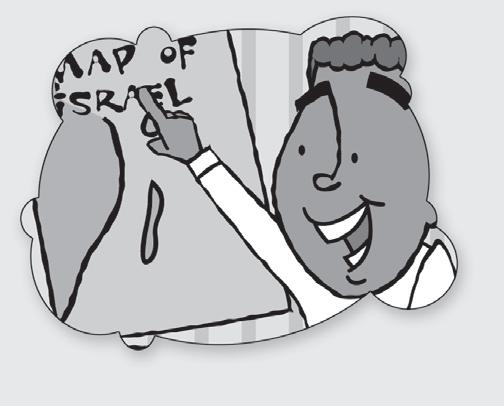
Nate—boy, 9 years old
Learns by seeing & touching. He always looks nice, notices pictures and colors, and likes to draw. He is an enthusiastic participant and friendly to students, old and new.
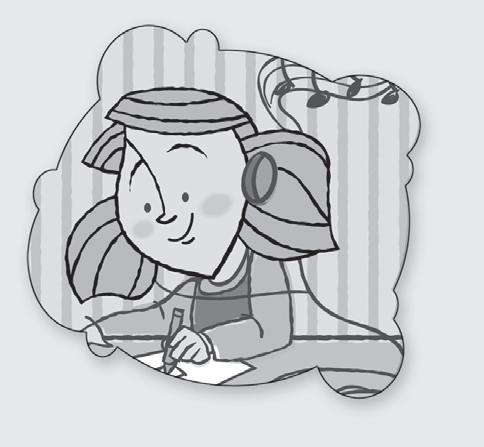
Michaela—girl, 8 years old
Learns by hearing. She gets in trouble for talking, is always the first to answer a question, and loves to listen to and tell stories. She is wary of new activities and always watches before participating.
Amber—girl, 9 years old
Learns primarily by moving and touching. She is always moving, talking, and touching! It’s difficult for her to remain focused on the task at hand. She was diagnosed with ADHD.
Austin—boy, 8 years old
Learns by moving. He’s athletic, enjoys energetic—even rough—play, rarely sits down, etc.
If your regular attendees cover all the learning styles* (like the sample note), you won’t have to plan other activities for less frequent attendees. If your class has primarily one or two learning styles, you may want to have variations or additional activities ready for visitors.
*To learn more about learning styles, see page 5.
The “Teacher Focus” will help you become familiar with the lesson and how it relates to your students. “Life Application” will show you how to apply the lesson theme to your students’ lives. “We Believe” lets you know what doctrine is being reinforced by the lesson.
A. Music (as students arrive)
Seeing and Hearing
As students arrive and get settled, you may want to take a little extra time to talk to your students about what is going on in their lives as well as review last week’s lesson. Asking questions about last week’s lesson will prepare their minds to focus on this week’s theme.
C. Poster Interaction
Seeing and Touching
Displaying posters helps students who learn by seeing. Posters that require interaction help students who learn by touching and moving.
B. Healing Defined Hearing and Seeing
An activity that gets them interacting with each other can help break the ice, especially for newcomers, and start them thinking about the lesson.
APlan Your Lesson
At this point, take your Middler Teacher Guide and adapt the lesson to fit the needs of your class. Highlight, circle, or mark the activities your students will enjoy and, most importantly, will meet their learning styles. Here is a lesson overview with a sample way to teach the lesson. 3
Plan Your Lesson (cont.)
Living
Word
Drama is an excellent teaching tool. Most students enjoy acting; plus, acting out the Bible story helps them learn it better by experiencing it.
E. Healing in My Life Seeing and Hearing
Using activities from the Middler Student Guide and Action Tracks helps students review the Bible lesson and reinforces lesson objectives.
KJV and NLT memory verses
F. Rhythm Verse Touching and Hearing
Handling objects and repeating words to a rhythm helps students retain what they are learning.
G. Making Christ My Savior
If you have students who have not made a commitment to Christ, or you are not sure of the spiritual walk of visitors, it’s a good idea to present the plan of salvation and give them the opportunity to accept Christ. (See page 1 of this teacher guide.) You never know when a student might be ready to make a life-changing decision.
D. Jesus Heals Skit Moving and Hearing
Teach the Lesson 4
As you teach the lesson, constantly evaluate:
• Your middlers—What things are you discovering about them and how they learn?
• Your lesson—Are the students grasping the concept and objective presented in the lesson?
• The activities—Are they working well? Is the order flowing like you’d hoped?
• The time—Do you have extra activities or games planned? Are you keeping your students’ attention? What fun activities can you do to reinforce the lesson?
Evaluate
After each class, evaluate the lesson as a whole using the questions from step four.
Evaluation:
* The lesson went well.
* Glad I had the bonus option activity!
* The students loved the baseball game. Note: Any option to get them up and moving is a winner!
There’s no set formula for a successful Sunday School class, and there’s no guarantee that all your middlers will remember what you teach them and make the life applications. But God promises that His Word will not return void. By following these five simple steps (pages 2 through 5), you can teach biblical principles effectively so that your students will remember and make the applications; that’s what teaching is all about.
Take a closer look at LEARNING STYLES
HOW TO TEACH MIGUEL:
SEEING (visual)
Miguel likes to “see” his world. He enjoys colors, contrast, bulletin boards, and videos. He gets bored when there are no visuals.
• Display posters from the Middler Resource Packet
• Do student guide, Action Tracks, and copy master activities.
• Use object lessons.
HEARING (auditory)
Allison “hears” her world. She loves to hear stories and listens when you tell her to do something. She becomes bored when she hears information she already knows.
HOW TO TEACH ALLISON:
• Tell Bible and life-application stories.
• Use listening and sharing activities.
• Sing songs and listen to skits from the resource packet.
TOUCHING (tactual/tactile)
Stephanie likes to “feel” and “feel good about” her world. She needs to “get in touch” with new concepts and learns best when she can feel and compare information.
HOW TO TEACH STEPHANIE:
• Use interactive posters from the resource packet
• Make lesson-related objects or crafts.
• Draw and create lesson-related pictures or collages.
HOW TO TEACH ZACK:
MOVING (kinesthetic)
Zack loves to experience his world through movement. He moves a lot during class and loves participating in things like dramas, action songs, and plays.
• Act out the Bible story.
• Utilize dramas and skits.
• Play movement games for review or memory work.
All children at this age grow through similar stages. Some characteristics will occur earlier or later. Knowing how children think, feel, and act in general helps you relate to them so that you can plan lessons to help them in their spiritual growth.
COMMON CHARACTERISTICS WHAT THIS SAYS TO THE TEACHER
SOCIAL
Strong sense of fairness and justice
Sensitive to criticism
Will attempt to place blame on others
Can accept responsibilities
Group approval is important
Developing interest in people
More competitive as group members than as individuals
COMMON CHARACTERISTICS
Easiest age to lead to Christ
Teach each student equally. Show what the Bible says about how we should treat others. Show that God is fair and just.
Avoid criticism. When correction is needed, always talk to the individual alone.
Show them the wrongness of placing blame on others for something they choose to do.
Give them a chance to do things for you. Your trust will do much for them.
Have good memories
Interested in Bible stories and characters
Practical in their approach to the Bible
Enjoy attending Sunday School
Relate Bible stories to their own life experiences
Encourage the students to accept each other and visitors in your class. Provide opportunities for students to get to know each other.
A study of real-life missionary characters and biblical heroes will help to satisfy this need.
When planning competitive activities, involve the whole group.
WHAT THIS SAYS TO THE TEACHER
Explain salvation. Provide time for the students to respond to the message of Jesus Christ.
Teach the Bible. Help them memorize Bible verses.
Use drama and role-play. Show them ways to study the Bible. Use Bible games to reinforce the lesson.
Ask questions. Speak plainly. When they ask questions, answer truthfully. If you do not know, say so.
Make every student feel welcome. Keep the class interesting to encourage a positive attitude toward the church.
Give personal application with lessons. Ask them to give examples also.
Full of energy
Enjoy organized games
Release tension through movement
Curious
Limited concepts of time and distance
Limited vocabularies
Take advantage of this energy by using such methods as role-play, drama, Bible games, or active choruses.
Use team games to increase learning and retention. Have clear, simple rules.
Allow them to stretch. Movement is a way of coping with growing pains. Their muscles need to stretch.
WHAT THIS SAYS TO THE TEACHER
Bring things to class they can touch and examine. A nature center or table for investigating objects can be useful.
Explain new concepts or terms. Use pictures when possible. Be patient.
Explain new words. Use language they can understand. Question to see if they understand what you said.
More mature mentally
Eager to learn
Learning games interest them
Like details and unusual information
Watch a lot of TV and listen to the radio
Need adult assurance and recognition
Complainers
Want to do things for themselves
Lead them in memorizing Scripture verses and doing Bible research.
Encourage them to participate in class projects.
Use games to review the lesson or to learn the memory verse.
Encourage them to read the Bible and learn its facts.
They are aware of world events, but cannot always process information received through the media. Fears arise from this.
Are big worriers
Relatively easy to discipline
Quick
shifts
in mood and attitude
Become sensitive to their needs. Offer praise for things well done.
SAYS TO THE TEACHER
Listen to each student and hear what he says. Provide encouragement.
Allow them to do things for themselves. They need to discover their own capabilities.
Listen to what they are worried about. Try to help them. Let them know Jesus can help them with their problems, both real and imagined.
They know when they have done wrong. Accept their apology and don’t overreact.
Wait awhile before you react. Accept them as they are.
Teacher Skill Builders
SUNDAY SCHOOL Can Be a Good experienCe
You reach your classroom on Sunday morning with high hopes for an interesting class where everyone is involved. Your hopes are dashed when your lesson presentation is lost amid classroom chaos. As the last student leaves, you wonder what happened. Did you make a mistake by agreeing to teach? If this sounds familiar, the following tips are for you.
Use variety.
An interesting presentation is crucial for maintaining student attention. An interested class has fewer behavior problems. Practice your presentation during the week. Don’t read the entire lesson to the students. If you do,
• your students will think you don’t know the material,
• you won’t have eye contact,
• you won’t see signs of potential misbehavior.
As you study your lesson, select activities to provide variety and evoke interest and understanding. Lecture has a place among teaching methods, but any method used all the time becomes monotonous. Students will be more interested in the lesson if variety is used in its presentation.
Let the students help set behavior boundaries.
Have an informal class discussion and let the students suggest what behaviors should or should not be permissible in Sunday School. List their suggestions on the whiteboard. Some students may try to be
surprised at how well the students respond to forming their own guidelines for behavior.
Communicate your own behavior expectations.
Children can sense if you want to be their teacher. When they know you want to be with them, misbehavior, apathy, or chaos is diminished and interest and involvement increases.
Tell the students what kind of behavior you expect from them. Explain, for example, that you want them to read their lesson before class or that you don’t want them to interrupt while you or someone else is talking. Telling them what you expect lets them know if their behavior is acceptable.
Reinforce the positive.
A misbehaving student receives attention, while wellbehaved students are often ignored.
funny or shocking in their suggestions, but you will probably get several excellent ideas. Help the students understand that their conduct shows how much they love and respect God. You may be pleasantly
Children like to feel they are noticed and that they are pleasing the people who are important to them. By recognizing good behavior, such as contributions and attentiveness while others are speaking, you are providing examples of how you want all the students to act.
Make your room cheerful.
Attempt to have a bright and cheerful room with interesting items and visuals. Although you
Teacher Skill Builders
may face limitations in decorating as you wish, you can still do things to brighten a room.
• Add brightly colored posters. Purchase inexpensive posters or let the students make them to give them a sense of ownership.
• Work out arrangements with leaders of groups who share the room. Decorate portions of the walls assigned to you.
Enjoy your students.
Children can sense if you want to be their teacher. When they know you want to be with them, misbehavior, apathy, or chaos is diminished and interest and involvement increases.
• Like your students for who they are.
• Consider the strengths or talents of each student.
• What is particularly likable about each student?
• Ask God to help you see positive characteristics in difficult students.
The more you enjoy your students as people, the more you will enjoy your teaching ministry. Your students will also sense they are accepted for who they are and will begin to relax and enjoy the class—and you.
EssEntials for improvEmEnt
There will be days when it seems nothing works. Children are naturally more energetic during holidays or drastic changes in weather (the first snowfall or the first few days of warm weather after winter). It is also impossible to know all the events happening in each student’s personal life. As a teacher who wants to improve, do these things:
Pray
Ask God to help you be the teacher He wants you to be. Ask Him to show you ways to improve your teaching ministry. Seek to be open to the Holy Spirit’s direction as He convicts and deals with students in your class.
Pray for each student individually. You may not know every need each student has, but God does. Pray in your classroom before the students arrive. Dedicate your class time to God to be used for His glory. God can work through your prayers.
Evaluate progress
After every class, evaluate it.
• How did the students react to the lesson topic?
• Did the students identify how the topic related to them?
• Did your presentation keep them interested?
• Did you give the students a chance to respond to the lesson topic?
• Did you begin to lose control of the students? If so, when? By evaluating each lesson, you will become more aware of which ideas work with your particular students and which ideas don’t. This will give you guidelines for future lessons.
Depend on God’s help
God wants you to be a successful teacher. He wants Sunday School to be a good experience for you and your students.
You are never alone in your teaching ministry. God wants you to be a successful teacher. He wants Sunday School to be a good experience for you and your students. Let God help you be the teacher He wants you to be.
Teacher Skill Builders
GROWING SPIRITUALLY
Daily prayer and Bible study are essential for both you and your students. Daily Bible study and prayer can benefit you as a teacher by
• helping your own life to grow spiritually stronger, making you a better role model.
• providing spiritual help for your teaching ministry.
If you have a hard time developing a consistent pattern of Bible study and prayer, perhaps the following points will help.
1. Make an appointment with God. Develop a habit of having your devotions at the same time every day when you can be alone with God. Remember, God spoke to Elijah in a still, small voice (1 Kings 19:11–13). Hearing God speak is easier if your mind is uncluttered with the day’s activities. If necessary, keep a notepad handy. When something you need to remember comes to mind, jot it down, then return to your devotions.
If you begin to have your devotions at the same time each day, this will soon become a normal, yet special, part of your day’s schedule. The day may even seem incomplete if you fail to have some time with God. It is a spiritually uplifting habit.
2. Find a “secret place.” This may be nothing more than sitting beside a certain window or in a favorite chair during your devotions. In your secret place, you can shut yourself away from the problems and trials of daily life and spend quiet and special moments with God.
3. Pray for the Holy Spirit’s guidance. Jesus knew we could not understand His Word by using our minds alone. We need His help to understand spiritual truths. The Holy Spirit provides that help.
Before you read God’s Word, ask the Holy Spirit to help you understand what it says and how you can apply it to your life. Then be sensitive to the Spirit’s direction.
4. Come just as you are. Prayer is a privilege God has given us to express our deepest feelings to Him. Talk honestly with God. He knows how you feel. Psalm 139:4 says, “You know what I am going to say even before I say it, Lord.” God wants you to come to Him as you are. He understands you because He created you.
5. Incorporate praise. Prayer is also a time to praise God for who He is. God deserves our praise and adoration. God can do great things in and for us as we praise Him. He commanded the army of Jehoshaphat to let the singers lead them into battle. When they obeyed, they found their enemy completely destroyed. There is power in praise (2 Chronicles 20:20–24).
6. Include your teaching ministry. As you spend time in prayer, ask God to prepare you for the coming Sunday. Let the Holy Spirit guide you into a deeper understanding of the truths you teach your students. The Holy Spirit may also reveal passages of Scripture that will be useful in teaching your class. Then pray for each student in your class.
7. Share your devotions. Tell your students about some new things you have learned from God’s Word or an answer to prayer you have had in your personal devotions. You will be setting a good example of daily devotions for them to follow. They need to know you practice what you teach.
Use personal devotions as a time for growing in Christ. Let God speak to you as you in turn speak to Him. Then minister to others through your growing, maturing spiritual life.
Jesus Heals
“We believe deliverance from sickness is provided for in the Atonement and is the privilege of all believers.” Jesus bought our healing on the cross. Throughout history, God actively healed His people. He heals today. Students will be challenged to believe God not only has the power, but that He will heal those who come to Him in faith for healing.
UNIT VERSE
The unit memory verse is provided for those teachers who prefer that the students learn one memory verse each unit rather than a new verse each week. The unit memory verse can be learned over the course of an entire unit.
KJV: He was wounded for our transgressions, . . . and with his stripes we are healed. Isaiah 53:5
NLT: He was pierced for our rebellion, . . . He was whipped so we could be healed. Isaiah 53:5
By the end of this unit, your students should be able to
■ state that Jesus has power over all illness and death, ■ tell about several people Jesus healed, ■ tell about people they know whom Jesus has healed, and ■ demonstrate compassion for the sick by praying for them.
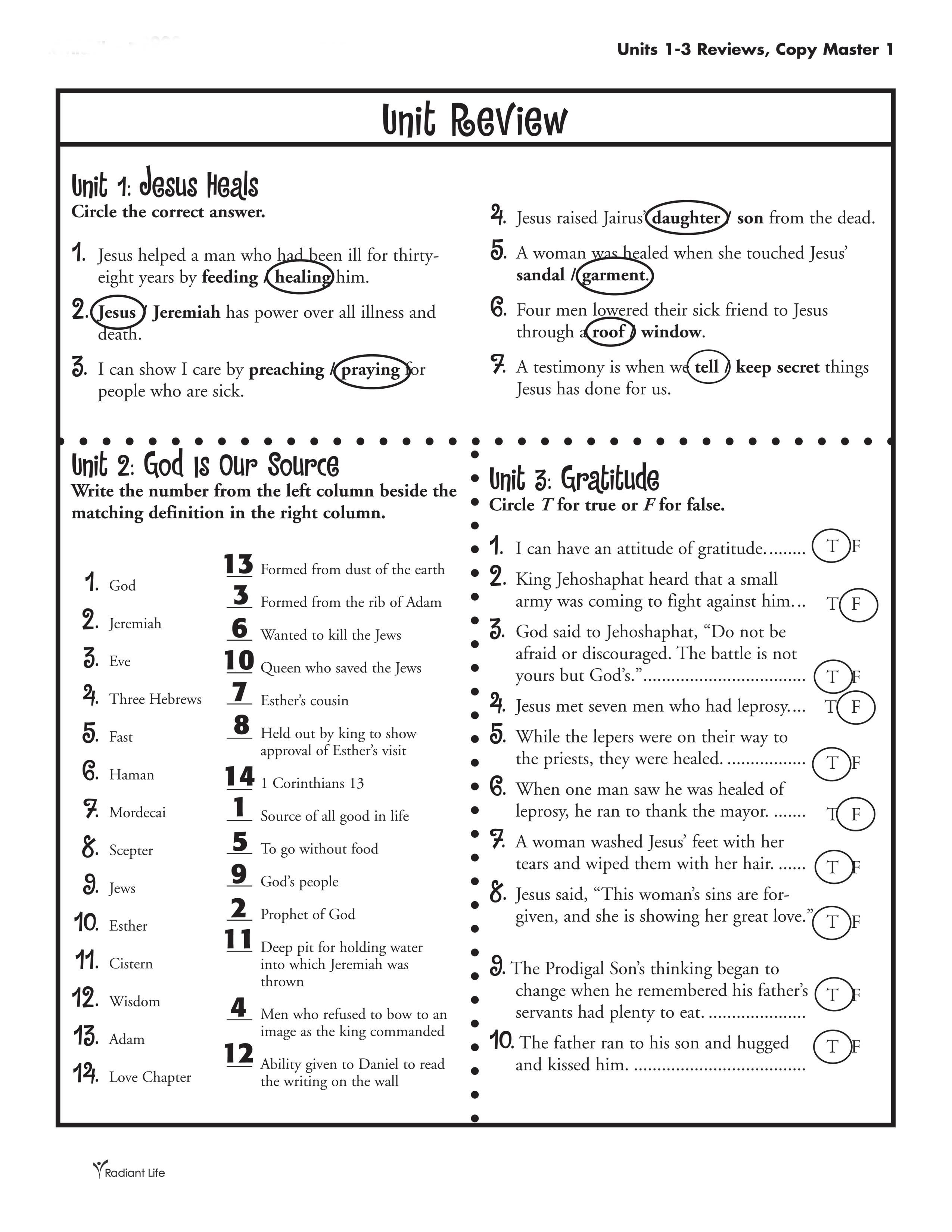
UNIT REVIEW
At the beginning of the unit, give the students the Unit Review from Copy Master 1 to see what they need to learn. Repeat the review at the end of the unit to see what they have learned. Answers are provided below.
CLASS IDEA
Play Dough Recipe
The numbers referenced in the lessons refer to the Bible Fact-Pak Question Cards used with Junior Bible Quiz. These questions correlate with the lessons. For more information, visit www.GospelPublishing.com.
Mix the cornstarch and baking soda in a medium-sized sauce pan until it is blended. Add the water and stir until the mixture is smooth. Cook over medium heat, stirring constantly until it is the consistency of mashed potatoes, then remove from the heat. Turn it out onto a plate and cover it with a damp cloth. When it is cool enough to handle, knead it for a short time. Store the play dough in an airtight container.
Option: Add food coloring to make various colors of play dough. Tip: Experiment with the dough at home to create the consistency
The numbers referenced in the lessons refer to the question numbers from the Bible Fact-Pak, used with Junior Bible Quiz. These questions correlate with the
To order, contact your Radiant Life
Our Source of Life
Bible Text
Genesis 1:26–28; 2:7,8,18,21–23
Teacher Focus
Middler Resource Packet
Copy Master 1
Use this to introduce the unit (preview to see what students know).
Today’s lesson is about creation. God created everything. When He made a man and a woman, He did something different because they were special. He made them in His own image and then breathed life into them. People were created by God, to be loved by Him and to love Him in return.
Objective
The students will be able to describe how people came to live on earth.
Life Application
CreAtiOns
OptiOn: CreAtiOn exHibits ..... our sourCe of life ........
OptiOn: CreAtiOn mOvement ..
wHaT Does iT Mean? .......
OptiOn: Origins Of peOple..... knowing THe BiBle ..........
OptiOn: CreAtiOn illustrAted
Closing Activities MeMory Verse ................ Making CHrisT My saVior reView ............................
bOnus OptiOn: CreAtiOn AlpHAbet gAme ......................
MATERIALS NEEDED
Play dough
Whiteboard, markers LESSON STEP ACTIVITY
Small pet in cage or bowl
Middler Student Guide, page 1, play dough
Downloadable music (without vocals), Bible
Middler Student Guide, pages 2 and 3
Whiteboard, markers
Middler Student Guide, page 4
Paper, pencils, whiteboard, markers
Paper and markers
Student guide covers and stickers
Lesson 4 Poster, mounting putty, blindfold
Page 1
Pages 94–95
Creation of humans: To encourage the students to believe God created the first humans
Memory Verse
God formed man of the dust of the ground, and breathed into his nostrils the breath of life; and man became a living soul. Genesis 2:7 (KJV)
God formed the man from the dust of the ground. He breathed the breath of life into the man’s nostrils, and the man became a living person. Genesis 2:7 (NLT)
We Believe
God: We believe there is one God, existing in three Persons: God the Father, God the Son, and God the Holy Spirit. God is the creator of heaven and earth.
Definitions
Creation—To make; to make out of nothing
Source—The place, person, or thing from which something comes. The source of a river or stream is where it starts.
When a person creates something, he feels proud of what he made. God feels pride in His creation (especially humankind). He loves us.
Music Option Sing “The Source” and “Thank You, Creator” (downloadable). See the resource packet
Review Last week’s Lesson ? How did four men help a friend receive healing? (They made sure he got to Jesus even though there was a great crowd.)
Getting Star ted
is segment gets your students thinking about the lesson concept.
DougH CReations
Give the students play dough. Allow them to shape some of their favorite things in creation. Let the other students guess what was created. Participate in this activity yourself. While you are working with the clay, talk with the students about why they like the things they’ve made.
Today’s lesson is about how people first came to live on earth.
Option
CReation exHibits
An alternative way to introduce the lesson topic is to show, or have someone else show, a pet. Give some background information about the animal and describe what kind of care the animal needs. Explain whether that type of animal is born or hatched. Let the students talk about pets they have or have had.
Today’s lesson is about our source of life—where people came from.
Learning God’s Word
This segment presents students with the Bible lesson.
These questions from the Bible Fact-Pak™ are relevant to this lesson: ##
These Bible Fact-Pak Question Cards are relevant to this lesson: 25, 26, 311
See page 11 for information about the
ouR souRCe of Life
Genesis 1:26–28; 2:7,8,18,21–23
I will read the story on page 1 of the student guide so we can learn how people came to live on earth. (The story is also provided here. While the students listen to you read how people came to live on earth, they can shape play dough into people.)
• God created the earth and plants and animals. Everything was ready for His special creation. This creation would be different
from everything He had created so far. This creation was to be made in His own image.
• God didn’t just speak this part of creation into existence as He had until now. He had a new way. He took some dust from the ground and formed the shape of a man. Then God breathed into the man’s nostrils. It was the breath of life. And the man, Adam, came alive.
• God put the man in the Garden He had planted. And the man worked in the Garden and took care of it.
• God knew it wasn’t good for the man to be alone. He would make a helper for the man.
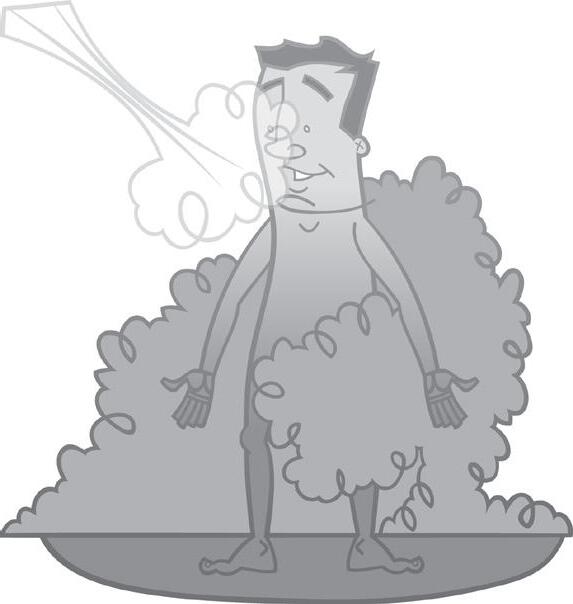
• God had a new way of creating this person, also made in the image of God. This time, God made the man fall into a deep sleep. While Adam slept, God took part of the man’s side to make a woman. He brought the woman, Eve, to the man. Adam realized that Eve was a person like him; now Adam would not be alone.
• God created people, male and female. Then He blessed them and said, “Be fruitful and multiply. Fill the earth and govern it. Reign over the fish in the sea, the birds in the sky, and all the animals that scurry along the ground” (Genesis 1:28).
• God created all of creation before He created people. He prepared a special place for them to live and work and love each other. He made them different from all other creations. They were made in His image, and He had a friendship with them. They were His own children, created to be loved by Him and to love Him in return. God had made everything they needed to live. He was their source of life.
Read or summarize “God’s Image—Male and Female” from the sidebar.
Option
CReation MoveMent
Genesis 1:26–28; 2:7,8,18,21–23
An alternative way to present this story is to read from the Scripture passages for this lesson: Genesis 1:26–28; 2:7,8,18,21–23. Then have the students work in small groups to think of ways to express—without using words—how God created the first man and woman. They can mime it, act it out, or use body movement to symbolize the creation described in the verses. While the students perform the lesson, you may want to play background music from any one of the downloadable songs (without vocals). See the front cover of the resource packet for the download address.
Before Creation
Until creation, nothing existed, not even a single atom. God created the heavens and earth out of nothing.
God Created ...
Day 1—night and day, separated light from dark Day 2—the sky, separated waters above from waters below
Day 3—dry land and plants, separated land and water
Day 4—great lights—sun, moon, and stars
Day 5—birds and water animals
Day 6—land animals and people
God’s Image—Male and Female
Male and female were made in God’s image and God found His creation “good.” God made Adam from the dust of the ground. God made Eve from Adam’s side *. “The woman was made ‘of the same stuff’ as man.” Genesis 2:23 also reveals that Eve was bone of Adam’s bones and flesh of his flesh. The woman was created directly by God, just as the man was.
(Systematic Theology, edited by Stanley M. Horton, Logion Press, pp. 237–238)
*Part of the man’s side is used in the NLT footnotes as an alternative phrase choice for the word rib found in most common Bible versions. (See Gen. 2:21.)
Eve as “Helper”
According to the AG Position Papers, the word ezer (“helper”) is never used in the Hebrew Bible with a subordinate meaning. Eve was created from Adam’s side, but the intent was that she would be a suitable or compatible helper.
The Unity of Humanity
All human beings—man and woman, all races, rich and poor, young and old— were made in God’s image and are equally valuable to God. Men are not better than women. The word “helper” (Genesis 2) is often used of God (Exodus 18) and does not mean a lower status. Also, all races are equal; no race is better than another. Paul said, “From one man he [God] made every nation of men.”
(Adapted from Systematic Theology, edited by Stanley M. Horton, Logion Press, p. 248)
Made in God’s Image
When the Bible says we are made in God’s image, it doesn’t mean we look like God. Because God is a Spirit, He has no body (John 1:18; 4:24; Romans 1:20). When the Bible uses phrases, such as “the finger” or “the arm of God,” these are figures of speech used to give a picture of God’s nature or love.
The image of God is our spirituality: our ability to know, love, and serve God. We are able to think and reason and communicate with God and people in ways animals cannot (Colossians 3:10). Only people choose whether or not they will obey God’s commands (Romans 2:14,15; Ecclesiastes 7:29).
The image of God includes immortality. All those who are “in Christ” will be made alive—forever (1 Corinthians 15:22).
(Adapted from Systematic Theology, edited by Stanley M. Horton, Logion Press, pp. 251–252)
Applying God’s Word
This segment helps the students connect the Bible to their lives.
wHat Does it Mean?
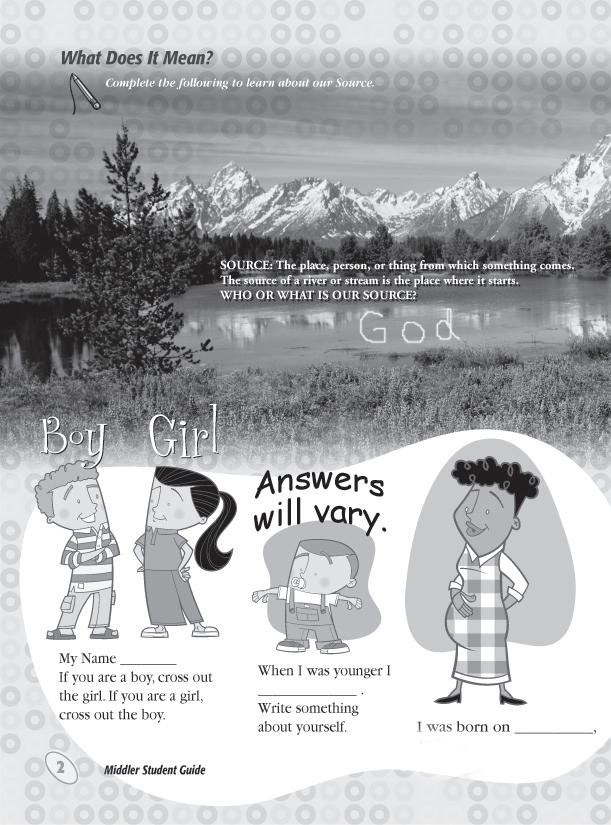
Ask the students to help you define the word source. Then have them turn to “What Does It Mean?” pages 2 and 3 in the student guide. Ask a volunteer to read the definition on page 2. Work through the sequence of pictures on the page. As you move across the page, you will be going backward in time, back to your beginnings.
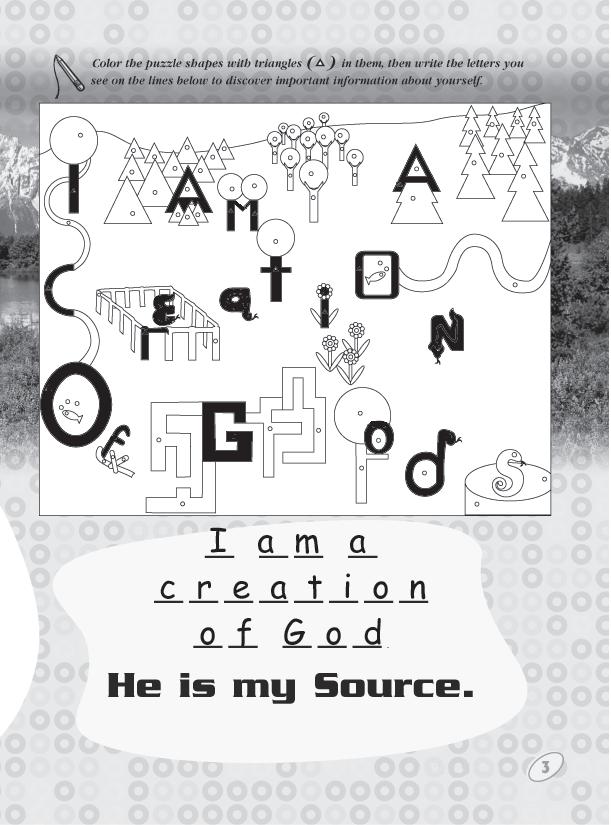
• In Part 1, have girls cross out the boy in the picture and have boys cross out the girl. Have students write their names on the line. Think about what you were like when you were younger. Write something about yourselves on the line. Write the month, day, and year you were born. Then follow the directions for Part 2 on page 3 to discover your Source. (Answer: I am a creation of God.)
Option
oRigins of PeoPLe
An alternative way to help the students understand how people came to live on the earth is to talk about origins. Write the word origin on the board.
Origin means the source of something or the point where something began.
Draw a timeline on the board. Put today’s date on the far right. Also write the names of your students at that point. Move left, make a mark, and write parents . Go back farther to the left, make another mark, and write grandparents Continue making marks along the line until you get all the way to the left. Explain the following as you draw your timeline:
• All people on earth have the same origin. All can be traced back to the beginning, to the first people.
• The Bible describes a special beginning of people. They were made by God, to be loved by Him and to love Him in return.
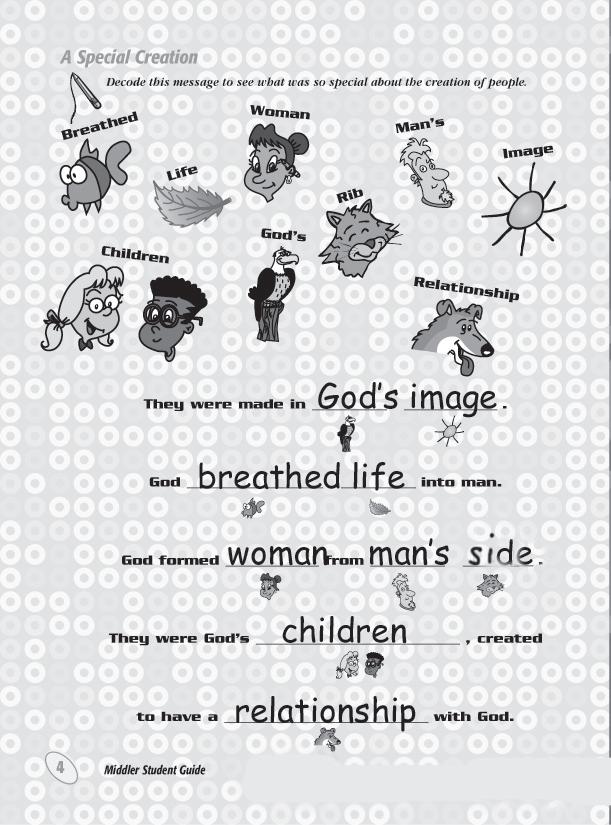
Have the students complete “A Special Creation” on page 4 of the student guide. When they are finished, have the students read their answers aloud in unison. (Answer: They were made in God’s image. God breathed life into man. God formed woman from man’s side. They were God’s children, created to have a relationship with God.)
Living God’s Word
This segment helps students use God’s Word in daily living.
knowing tHe bibLe
? What does the Bible say about how people came to live on earth? (God created people.)
Give each student a sheet of paper and a pencil. On the board write:
I believe the first humans came to earth in this way: Ask the students to write what they believe. Some may write silly responses. To avoid this, ask them to write a serious response now of what they truly believe and then later let them express their more imaginative ideas. Let volunteers share what they wrote.
Option
CReation iLLustRateD
An alternative way to help the students take the belief of creation into their daily lives is to give them paper and markers and have them make a cartoon or comic strip showing the creation of the first humans.
Share your drawings with at least three people this week.
Closing Activities
MeMoRy veRse
Cut out the pictures of Adam and Eve from the right side of the Lesson 4 Poster. Attach the picture of the Garden of Eden to a wall. Put mounting putty on the back of Adam and Eve. Review the memory verse. Then allow students to recite the verse by themselves. After each student says the verse, blindfold the student and position him about five feet from the poster. The student should walk to the wall and try to place the people in the Garden.
Notes
Review
Questions
1. How did God shape the first man? He formed man from the dust of the ground.
2. How did God give the first man life? God breathed into his nostrils.
3. What happened when God breathed into the man? The man came alive.
4. Why did God make the first woman? It wasn’t good for the man to be alone; to be a helper
5. How did God create the first woman? God made the first woman from the man’s side.
6. What did God say to the first man and woman? “Be fruitful and multiply. Fill the earth and govern it. Reign over the fish in the sea, the birds in the sky, and all the animals that scurry along the ground.” (Genesis 1:28)
KJV: God formed man of the dust of the ground, and breathed into his nostrils the breath of life; and man became a living soul. Genesis 2:7
NLT: God formed the man from the dust of the ground. He breathed the breath of life into the man’s nostrils, and the man became a living person. Genesis 2:7
Making CHRist My savioR
God created people who can be adopted into His family.
Invite students to join God’s family by repenting of sin (being sorry for sin and changing their minds to follow God) and believing in Jesus as Savior. See “The ABC’s of Salvation” on page 1 for further assistance.
Review
See pages 94–95 for ideas to use with the questions in the sidebar.
BonusOption
CReation aLPHabet gaMe
If time permits, print the alphabet vertically on the board. Let the students name things God created, one for each letter of the alphabet. Write the word beside the letter. See how many can be named. End with a short prayer of thanks for all the things that God created, especially people. Answers may include the following things God created that begin with each letter of the alphabet:
• Antelope
• Bears
• Clouds
• Dirt
• Elephants
• Frogs
• Goats
• Honey
• Insects
• Jewels
• Kittens
• Light
• Music
• Nuts
• Oceans
• People
• Quail
• Rain
• Steam
• Trees
• Universe
• Valleys
• Wind
• Xenolith (a fragment of one rock embedded in a second rock)
• Yellow
• Zebra
Self-Evaluation:
• Were the students able to describe how people came to live on earth?
• Did the students express belief that God created the first humans? Hand out Action Tracks take-home paper.