
Memorial Day Local reconnects with group to soothe her soul this holiday Page 8
Wilson, Schmilson Principal creates elaborate April Fools’ prank for his students Page 27

Memorial Day Local reconnects with group to soothe her soul this holiday Page 8
Wilson, Schmilson Principal creates elaborate April Fools’ prank for his students Page 27
The founder of this venerable business is credited with “inventing” one of our most iconic holiday traditions: the Temple Square light display.
Have you ever seen a 1943 Lincoln head penny? They’re gray instead of brown, because they’re made of steel rather than copper. These are the only coins ever minted in the United States that can be picked up with a magnet.
How about a 1943 American-made automobile – ever seen one of those? No, you haven’t. Henry Ford and his competitors received Uncle Sam orders to construct tanks and other war apparatus that year, instead.
It seems that pivotal year in the history of our entire planet must have been a challenging, topsy-turvy time to launch a brand-new business. But that’s exactly what J. Leland Behunin did. And now, 83 years later, his daughter-in-law, grandson, granddaughter, great-granddaughter and great-grandson are continuing to operate Taylorsville-based Behu nin Tree.
“My grandpa was pretty well retired by

By Carl Fauver | c.fauver@mycityjournals.com

Korissa Behunin, her father Ben, cousin Ben and grandmother Pauline (L-R) represent three of the four generations that have operated Behunin Tree for some 83 years. (behunintree.com)

the time I was born in 1969,” Ben Behunin said. “But I worked the business side-by-side with my dad (Ben Sr.) for well over 30 years. Dad was in his 80s when he passed away just three years ago. He continued to ride along in
the truck with me to jobs until six weeks before he passed.”
nin Tree with her son. Pauline’s daughter Mi chelle is one of their employees, along with
at least two of her grandkids, Korissa – and a third Ben.
“I grew up in Colorado and met Ben (Sr.) when we were students at BYU,” Pauline Behunin explains. “He was already focused on learning about plant physiology and tree diseases. We married in 1967, moved into our first home in this area in 1972 and built the house I still live in now, in 1977.”
The oldest of five siblings, Ben Jr. graduated from Taylorsville High in 1987. His wife, Julianna, is a 1988 THS graduate.
“I had known Julianna since third grade at Vista Elementary, after her family moved to Utah from Nebraska; but we did not date in high school,” he explained. “We reconnected years later, after we had each served Church missions. We were married in 1998.”
Their marriage came just a few years after a couple of life-changing things happened to Ben Jr., which drew him back into a tree trimming career he had loathed.
“As soon as I was out of elementary






Tired of nagging joint pain dictating your life?
The good news: joint replacement surgery has made significant advancements in recent years. Forget the daunting tales of long hospital stays and arduous recoveries. Surgery today is all about quicker recovery, less pain, and a faster return to the activities you love. This isn’t just about fixing a joint; it’s about reclaiming your freedom, and CommonSpirit is at the forefront of this transformation.
What’s driving this revolution? Minimally invasive techniques. Imagine surgery with smaller incisions and less disruption to your muscles and tissues. This “less is more” approach translates directly into less post-operative pain, reduced blood loss, and significantly shorter hospital stays.
“Joint replacement surgery once meant a long, difficult recovery. Now, thanks to minimally invasive techniques, patients are getting back on their feet and regaining their independence far more quickly, significantly improving their quality of life,” said Michael Blatter, an orthopedic surgeon at Holy Cross Hospital – Davis.
This means you can get back to golfing, gardening, playing with grandkids with renewed vigor. But the journey to rapid recovery begins even
before surgery. We believe in empowering our patients, and that’s why pre-operative education is a cornerstone of our approach. Our comprehensive classes walk you through every step, covering everything from physical therapy exercises and navigating stairs to home safety. We emphasize two crucial rules: no falls and no infections. Patients consistently tell us they feel better prepared and more confident heading into surgery, which dramatically improves their outcomes.
Our commitment to your well-being extends with Enhanced Recovery After Surgery (ERAS) protocols. This isn’t just about the surgery itself; it’s a carefully coordinated care pathway. ERAS focuses on preparing your body for a smoother recovery through optimized nutrition, multimodal pain management that reduces reliance on opioids, and getting you up and moving just hours after surgery. It all works together to reduce complications, enhance your comfort, and get you home safely and sooner.
And speaking of cutting-edge, robot-assisted surgery has become a game-changer. While a surgeon is always in control, robotic systems provide unparalleled precision, allowing for less invasive procedures, greater accuracy in implant
Women’s health care for every stage of you.
placement, and ultimately, quicker recovery times. This advanced technology ensures your joint replacement is tailored with remarkable exactness.
“Many joint replacement procedures can now be done same day. And with our current techniques and technologies, we are able to facilitate a quicker recovery and healing process for joint replacement. Our patients are able to get back to the activities they enjoy more quickly. For many of our patients, joint replacement is a game changer,” said Dr. Kevin Sagers, an orthopedic surgeon at Holy Cross Hospital – Jordan Valley.
At CommonSpirit, we understand that living with joint pain can feel limiting. But with these modern advancements, the path to renewed mobility and a significantly improved quality of life is clearer and more accessible than ever. We’re dedicated to providing not just exceptional medical care, but a supportive and empowering experience that truly makes a difference. If you’re ready to explore how modern joint replacement can transform your life, we invite you to discover the CommonSpirit difference – where your rapid recovery is our priority.
For more information or to find a provider visit mountain.commonspirit.org


Learn more about the services, care providers and mission-driven work of the Holy Cross hospitals and CommonSpirit Health at www.holycrossutah.org.

At CommonSpirit Health, we make the healing presence of God known in our world by improving the health of the people we serve, especially those who are vulnerable, while we advance social justice for all.

Women go through many changes in their lives. And we believe every milestone matters. Our health care experts can help you face your next phase with confidence – because each chapter deserves to be celebrated.
Find care near you at mountain.commonspirit.org.












Common Ground will be a column of rotating viewpoints that highlight specific feelings across the political spectrum, and it will always end with possible ways to come together.
Thousands of Utahns put down their phones from their doomscrolling and rage-baiting, to create vulgar poster boards and attend the No King rallies. Because Salt Lake City found it acceptable to shut down blocks of State Street, I watched the crowd waving their signs and chanting as they made their way to the State Capitol.
It was the weekend, and I wanted to be home. I had no desire to sit behind a police roadblock, watching people chanting and waving their signs. But I was working that day, or at least trying to work.
This was the end of a 60-hour work week for me, making sure we covered expenses and payroll for my business, trying to eke out just enough for me to get my bills covered. Then a question took over, a question that nearly every middle-aged, middle-income man finds themselves asking, “What am I doing here? Why am I working so hard?”
Could it be that I’m working so hard just to pay the bills of others?
Look at the facts. The national debt is $40 trillion. The Utah State Budget is over $31 billion. Salt Lake County increased property taxes by 14.65%, with a budget of over $2 billion.
How did we get here?
Let’s look close to home. Let’s start with Salt Lake County. We have a nine-member council, with five republicans, four democrats and a Democratic mayor.
Collectively (8-1), the council approved a $2 billion budget that significantly raised property taxes.
Earlier this year, Salt Lake County Council Members tried to cut the budget, proposing the shuttering of a county-operated senior center and child care facility. Then, all those who have had their hands out for
TAYLORSVILLE TEAM
The Taylorsville Journal is a monthly publication distributed directly to residents via the USPS as well as locations throughout Taylorsville. The views and opinions expressed in display advertisements do not necessarily reflect or represent the views and opinions held by Loyal Perch Media or the City Journals. This publication may not be reproduced in whole or in part without the express written consent of the owner.
© 2026 Loyal Perch Media, Inc.
John J. Walker Common Ground
years popped out of the cookie-jar, insisting they keep getting their subsidized child care or, in some instances, their jobs.
I watched the parents argue for continued services at below market rates, as if society and the taxpayers were somehow responsible for providing them with subsidized child care.
The same tiny violins were played throughout the legislative session earlier this year, with state legislators lined up to bring bills that would stick the Utah taxpayers with subsidizing or paying more money for child care, more money for property tax deferment/credits and more money for down payments for first-time home buyers, paying more money for Medicaid, more money for the homeless, more money for Title 1 schools, mental health treatments and food pantries.
Have we lost our conservative way of life here in Utah? Are we slowly drifting away from our base and sliding into the pit that California has become?
How much more can we afford? For me the answer is none.
Common Ground: In my late 20s, I asked a friend a question. What is the difference between a Republican and a Democrat? I will never forget his answer, “If you are a Republican in your 20s, you don’t have a heart; if you’re a Democrat in your 30s, you don’t have a brain.” At the time, it made sense; now that I’m in my 40s, it makes a whole lot less sense.
I like to think most of us have brains and hearts, all at the same time.
PUBLISHER
Bryan Scott | bryan.s@thecityjournals.com
EDITOR
Travis Barton | travis.b@thecityjournals.com
ADVERTISING EXECUTIVES
Mieka Sawatzki | mieka.s@thecityjournals.com
Ryan Casper | ryan.c@thecityjournals.com
Marc Davis | marc.d@thecityjournals.com
CLIENT SERVICES
Lydia Rice | lydia.r@thecityjournals.com 385-557-1022
Big expenses for the general population are best paid for by taxes, such as the military or highways. I am happy to pay my share of taxes to build roads and bridges. I surely don’t want to pay fees at a toll booth.
Sometimes having a monopoly makes sense. I guess the city could stop collecting trash and each home could pay a company to pick up the trash from their home. But I would imagine that would be less efficient and more expensive.
I’m curious to know what residents feel is the purpose of local, county and state government. I think most would agree on roads, bridges, trash pick-up, dumps, water infrastructure and more. But how do we really feel about child care, senior centers, golf courses, zoos, museums, and theaters?
My fear is that when the economy is prospering, we vote yes on these expenses, but now that cost of living has increased and people are struggling more, we are less likely to support these governmental expenses. l
Last month, the City Journals launched Common Ground. The column will tackle typically divisive political topics, with a focus to bring the community together. It’s our goal to help community members better understand how their neighbors feel.
We had a large response from readers. With over 100 emails, several mailed letters and phone calls, we consider month one a success. Peri submitted her opinion about local immigration legislation that was proposed during the 2026 legislative session earlier this year. The responses were largely favorable for the Common Ground article, with both supporting and dissenting comments on Peri’s first
submission. Unfortunately, we had some readers who simply were not interested in hearing how their neighbors felt.
The general tone of the dissenting readers was that Peri did not distinguish between legal and illegal immigrants. One commenter wrote, “First, let’s address the elephant in the room. Kinder’s commentary never used the words illegal immigrants…But illegal immigration is the issue the Utah legislature is trying to address.”
Other dissenting views included the large amounts of tax money spent each year supporting and aiding illegal immigrants.
Those who supported Peri’s comments were appreciative of having their views represented, they also commented about how immigration is the “American Way,” a nation built by immigrants. From a workforce perspective, they said our economy needs immigrants and their willingness to take less desirable jobs at lower wages. Others supported immigration from the perspective that fertility rates in the United States are decreasing and our economy is essentially centered on population growth.
Where people did agree was that Congress needs to work together to create effective policies around immigration on a national level, and that those laws need to be consistently enforced and adhered to from administration to administration. One reader wrote, “This is the key to solving our immigration dilemma.”
Hopefully, this fall as we select candidates to represent Utah in Congress, we all remember that we need Congress to fix the immigration issue.
— Bryan Scott
CIRCULATION COORDINATOR
Lindsay Andreasen | lindsay.a@thecityjournals.com Rack locations are also available on our website.
EDITORIAL & AD DESIGN
Stacey LaMont Ty Gorton
TAYLORSVILLE CITY JOURNAL 9500 South 500 West, Suite 205 Sandy, UT 84070
PHONE: 801-254-5974
MISSION STATEMENT
Our mission is to inform and entertain our community while promoting a strong local economy via relevant content presented across a synergetic network of print and digital media.
& Distributed by

money to buy new school clothes,” Behunin said. “So, by the time I went to college – and then on to my mission – I really didn’t care for the family business and had no plans to rejoin it. But that changed in the summer of 1994, when my dad had a chainsaw accident. He cut his left arm three-quarters of the way through.”
In that instant, Behunin faced a key, life decision. He could either continue his BYU studies in accounting, which would likely force his father to sell the family business… or, Ben Jr. could turn his life’s plans on a dime and return to the tree trimming business he had absolutely sworn off.
Right at that most pivotal moment, Behunin says someone intervened. That person was, arguably, the most well-known businessman in Utah history.
“My dad had grown up in the same neighborhood as Larry Miller,” Behunin said. “I literally ran into Larry at a hospital elevator as I was going to visit my dad, right after he nearly lost his arm. Larry pulled me aside and said ‘Your dad really needs you now. If you will take over his family business, I promise you Behunin Tree will have all of the landscaping and tree trimming accounts for all of my properties.’ I took that conversation as a sign and agreed to go back into the tree trimming business.”
Behunin changed his BYU major from accounting to horticulture and never looked back. Twenty years later, he also earned a
graduate degree in horticulture through an online program. He’s not sure what course his life and career might have taken if not for that chance hospital meeting with Miller.
Behunin Tree would continue to be the exclusive provider of all tree trimming and landscape work on Miller Company properties up through Miller’s death in 2009.
“He was always very nice to us,” Ben added. “We got to sit with Larry many times down on the floor, front row, at Jazz games.”
Some 30 years before that career change – and even before Ben Jr. was born – Behunin Tree founder Leland Behunin is also credited with coming up with the original idea to illuminate Salt Lake Temple Square trees during the holiday season.
“My grandfather began trimming the Temple Square trees in the early 1940s,” Behunin explained. “That contract was one of the reasons why he started his business. Several years later, grandpa suggested the tree lighting idea; but the Temple Square head gardener had reservations about it. He was afraid the light bulbs might bring the trees out of their winter dormancy too early. This was all very experimental back then. They would string some lights, overload a circuit, make adjustments and try again, over and over. But my grandfather finally got it right. Behunin Trees put up and took down the Temple Square lights every year from 1964 to 1983.”
Behunin Tree now has five fulltime employees and about a dozen more during their busiest season. Tree transplanting, pruning
• VIGILANT IT
• Canyon View Credit Union
• West Valley City
• AppleOne
• Danone North America
• Terraine Community Council
• Jack In the Box RENEWING MEMBERS:
• Maverik Center
• Mesa Moving and Storage
• PROG Foundation
• Elizabeth’s Custom Catering
• MTS Mobile Staffing
• Easton Salt Lake Archery Center
• Waterpocket Distillery
• FlyLock Security Solutions - Salt Lake City
• Applebee’s Grill + BarWest Valley
• Utah Department of Corrections
• Strong Law Accident and Injury Attorneys
• Pivo Web
• SLF Media Group
• The Christmas Box International
and removal still account for about 60% of their business. But they are also active now designing and building outdoor patio cooking areas as well as waterfalls, landscaping around swimming pools and other features. The company now enjoys gross revenues of about $1million, annually.
“I am so proud of the way Ben (Jr.) has taken over the business,” co-owner Pauline Behunin said of her son. “He has faced some hard times; but has always pushed through the challenges so well. He has so much knowledge about tree diseases. And when he has a tree to cut down, he’s an expert at dropping it exactly where it needs to go to not cause any damage.”
Meantime, Ben Jr. says one of his biggest ongoing challenges is trying to find employees who understand the tree care business.
“I’m talking with Salt Lake Community College now about creating a tree pruning program because schools just aren’t teaching these skills anymore,” Behunin said. “One of our clients serves on the SLCC Board of Trustees. I provided him with an outline on how the school could establish a horticulture course. I also offered to be an instructor. I’m waiting to hear back from them.”
Finally, Ben Behunin is also excited one of his two daughters, Korissa, and his nephew (that third Ben, a Copper Hills High School student) are working with the company now, as fourth generation employees.
“When you devote so many years of your life to something like this, it becomes much more than a job,” Ben Behunin concluded.
“It’s a big part of your heritage – something you take great pride in. When I go to work properties that I recall working with my dad years ago – back when I swore I would never do this for a living – I get very emotional, thinking about him and our time together. I get that feeling of loss all over again.”
To learn more about the now 83-year-old Behunin Tree – and to get tips on how best to care for your own trees, shrubs and other landscape plants – visit behunintree.com. l

Behunin Tree founder J. Leland Behunin is credited with coming up with the original idea to illuminate the Salt Lake Temple Square trees during the holidays. (behunintree.com)

Improvement District Community Investment
• Jordan West Valley Medical Office Building, LLC
• Harmons-West Valley
• Your Employment Solutions- SLC



The road to the LPGA Tour begins with the Epson Tour, and again this month, 132 of the best female golfers on the planet will reconvene for the Copper Rock Championship May 14-16 in Hurricane, Utah. Golfers will compete for $250,000 in prize money and points in the season-long Epson Tour standings.
There were 15 players who gained LPGA status during last year’s Epson Tour season, and 13 of them finished in the top 30 at Copper Rock in 2025. Champion Gina Kim won twice on the Epson last season and is now playing on the LPGA Tour.
Exemptions this year went to four golfers:
Navy Hubbs is a junior at Salem Hills High School who has verbally committed to Boise State University. She started playing golf at the age of 12 and quickly developed a passion for the game. Since then, she has enjoyed competing in both local and national tournaments, gaining valuable experience and continually challenging herself against strong competition.
Hubbs is known for her calm presence on the course and the strong work ethic she brings to improving her game. She approaches competition with focus and determination while enjoying the process of learning and growing as a golfer and developing friendships with others on and off the course.
Maria Jose “MJ” Barragan is a standout collegiate golfer for Brigham Young University, known for her consistency, competitiveness and upward trajectory on the women’s golf scene. A native of Morelia, Mexico, Barragan has quickly become one of BYU’s most impactful players, combining sharp scoring with a calm mindset under pressure. She owns a career-low 18-hole score of 68 (4-under) and a lowest 54-hole score of 210 (−6), achieved at the 2024 Red Raider Invitational where she claimed her best finish with a victory. Barragan has also



Utah golf, recognized for her competitive excellence and advocacy for women’s golf. An inaugural member of the women’s golf team at Dixie State University (now Utah Tech), she was a two-time PacWest Conference Champion, Conference Player of the Year and an All-American.
She competed professionally on the Cactus Tour and is a seven-time Utah PGA Women’s Player of the Year (2019-25), a four-time Women’s Utah PGA Match Play Champion, and the 2025 Utah Section Assistant Professional of the Year. Her career includes numerous Utah Section victories, multiple top-10 finishes in both men’s and women’s events, and an overall championship at The Copper Club Open.
posted strong rounds in key events including the opening rounds of the 2025 San Diego State Classic and the 2025 Dr. Donnis Thompson Invitational, and she played a pivotal role in BYU’s 2025 USF Invitational win with a 72-73-69 (214) performance.
Off the course, Barragan is equally distinguished. She’s majoring in pre-business and has earned recognition for her academic achievements, being named to the 2025 CSC Academic All-District team. In amateur golf, she finished runner-up at the 2025 Women’s Mexico Amateur in a dramatic playoff and represented Mexico at the Pan American Games in Paraguay, showcasing her talent on the international stage.
Gabby Barker is a professional golfer known for her resilience, consistency and purpose-driven approach to the game. A standout junior and collegiate competitor, Barker built her foundation through

years of high-level tournament play before turning professional and committing fully to the grind of tour golf. Since turning pro, Barker has competed across multiple professional circuits, including the Epson Tour and various mini tours, steadily gaining experience at the highest levels of women’s golf.
Her career has been shaped by perseverance, adaptability and a deep belief in long-term growth — both on and off the course. In addition to her competitive career, Barker is the first female Native American professional golfer, a milestone she carries with pride and responsibility. She uses her platform to inspire younger athletes, advocate for representation in golf, and share the realities of pursuing a professional sports career.
Haley Sturgeon is an accomplished golf professional and respected leader in

There are always so many things to enjoy during and around the Copper Rock Championship. On Tuesday, May 12, RAM Aerospace presents the 2026 RAM Women’s Business Luncheon. The theme is “Rising Together: Personal Growth and Professional Influence.” Keynote speaker is Stephanie Palmer, Director of Radio Sales for KSL NewsRadio, FM 100.3, The Arrow and the KSL Sports Zone. Whitney Harris, Director of People and Culture at RAM Aviation, will join in that discussion. The luncheon will run from 11:15 a.m. to 1 p.m.
A free Junior Clinic will be held on Championship Saturday, May 16, at noon. Signups for the clinic and RSVP for the luncheon can be made at Copperrockchampionship.com. There will also be a free photo booth on Championship Saturday, and food trucks will be onsite including Corn Dog Company and Chicharos Tacos.
To get tickets to the tournament go to Copperrockchampionship.com and choose from General Admission, Club 17 or Copper Rock Club tickets, and the website details those options.
Copper Rock is located at 1567 W. Copper Rock Parkway in Hurricane. l




Memorial Day has great significance for three Utah women who have no memories of the fathers they lost in WWII
A Taylorsville woman has reconnected with members of a national support and remembrance group that has helped soothe her “war orphan” soul for decades.
By Carl Fauver c.fauver@mycityjournals.com
Vista resident Susan Perko never met her dad. He wasn’t there for daddy-daughter dances; he didn’t walk her down the aisle; he never fawned over or spoiled her two children – his grandkids.
William Henry Roodenburg wasn’t around for any of it after a German bullet claimed his life in Tunisia, North Africa, in January 1943. Susan – the only child he would ever have – was 18 months old.
While Perko has no memories of her father, she very vividly recalls a childhood filled with humiliation and heartbreak because dad wasn’t around.
“I learned at a very young age not to talk about it,” Perko said. “Kids that age could be so mean. To talk about having no father would be like saying ‘I have leprosy.’ It was a shameful secret shared by many war orphans. Without a man, we became very resourceful, self-reliant and independent. My mother had to create a life very different from the one she had hoped for. In my mind, I had no father –until I turned 50.”
The GI bill did eventually cover onethird of Perko’s college education.
It would take more than a half-century to fully learn she was not alone. In fact, Perko wasn’t yet aware how many World War II orphans there once were, until after she, her husband and their two kids traveled to North Africa for her one and only visit to her father’s grave, on the 50th anniversary of his death, in 1993.
“I kind of had to drag my husband and college-age kids on the trip,” she explained.
“I was in a small grief support group at the time, and felt the trip was very important for my personal growth. Many families had their deceased loved ones returned to the states for burial. But my mother didn’t want that. She wanted distance from that terrible time. So, I felt I needed to go – and I’m glad I did. But I doubt I’ll ever return.”
Perko’s 1993 trip to Africa came only two years after the American WWII Orphans Network was created by Founder Ann Bennett Mix. Walt Linne, of Indianapolis, was among the group’s thirteen “First Founders” who helped raise the organization to a national level. A war Veteran himself (Vietnam), Linne lost his father to WWII in March 1945, when he was 2 ½ years old.
“The first time I ever met a World War II orphan, other than my younger brother, was at a ceremony at Arlington National Cemetery,” Linne said. “While at that ceremony, meeting other war orphans, I decided to become involved with AWON. A group of us became the “First Founders.” While researching VA records, we discovered there were 183,000 World War II orphans. But, in a nutshell, we are now
fading away, just like our dads did. Our ultimate goal is to hand AWON off to our grandchildren – or possibly merge our organization with Korea, Vietnam and Gulf War orphans.”
After Perko learned of AWON, she quickly became active in the group, attending a number of their national conventions from Missouri to California.
“By far my most memorable AWON conference was in St. Louis, when we were led on a tour of some World War II archives that had recently been damaged by fire,” Perko said. “I was handed a singed piece of paper. It still had that burnt smell. It was a military morning report. I found my dad’s name written on it. I’ll never forget that.”
Until just last year, Perko lived in Westchester County, New York, barely north of the five NYC boroughs. She moved cross country – to Summit Vista, in Taylorsville –to be closer to her son and grandson. Her only other child, a daughter, lives in California.
“One of my top priorities after moving here to Utah was to try to connect with any other AWON members living here,” Perko said. “I contacted Walt Linne and eventually got phone numbers for Bonnie Johnson in Murray and Judy Jantz in St. George. Connecting with them was wonderful; and they both seemed excited to receive my call. I had actually met Bonnie’s sister Penny years ago, back in New York.”
American World War II Orphans Network members Bonnie Johnson and Judith Jantz have their own stories to tell about growing up father-less.
Bonnie Johnson, Murray
“I was born July 1941 in Indiana and my father, Thomas Victor Dale was killed in February 1945 on Iwo Jima,” Johnson begins her story. “I have no memories of him. My mom and I – and my older brother Danny and younger sister Penny – moved to Utah in 1947. Mom met a man here and remarried. I graduated from West High School in 1959. Now I have 10 children, 59 grandkids and 79 great grandchildren. We used to have huge holiday parties; but now they’ve moved all over the country.”
Johnson’s sister Penny, who lives in North Carolina, told her big sister about AWON.
“I joined AWON about five years ago, primarily so I could receive their quarterly newsletter (‘The Star’),” she continued. “I helped Penny write an article about our dad that appeared on the front page (Winter 2023, Issue #107). Mom had Dad interred at the Salt Lake City Cemetery in 1948. When she passed, in 2015, she was buried there also. My husband and I go up there all the time to decorate their graves.”
When Johnson was caring for her mother before her passing, she came across a trunk full of family treasures she never knew Mom had been quietly saving for more than 70 years.
“I found 221 letters my dad had written to us – including two, specifically to me –that had never been opened,” Johnson said. “I read them all so quickly – probably in two days. I’ve missed my father all my life. Even now, when I see a father and daughter
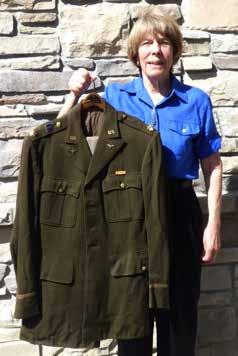


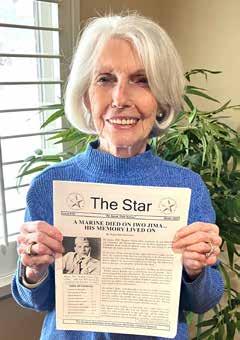
together, I always think ‘What I wouldn’t give to have a dad.’ He’s my hero.”
Judy Jantz, St. George
“I was born June 1941 in Kansas and my father, Arlo Jacob Goebel was killed in battle, in Hurtgen Forest in Germany, in November 1944,” Jantz begins. “My mother had him interred in the Moundridge, Kansas cemetery in about 1948. I lived in Kansas until age 25; and I still get back there every year to visit the family graves.”
Before being returned to the states, Goebel’s remains had been interred at the Netherlands American Cemetery outside of Margraten, a city the Allied forces liberated from the Nazis. On Memorial Day 2005, Jantz and her sister joined an AWON tour and ceremony at the cemetery.
“It was the 60th anniversary of their liberation,” Jantz said. “The people there are so grateful for what the United States did for them in the war. Community members care for the graves, decorating them with flowers,
after all these years. AWON has been such a wonderful organization to help my sister and me to learn more about our dad.”
Jantz’ two-years-older sister Rozanna still lives in Kansas. The girls’ mother remarried, but had no more children.
“I have lived in this St. George retirement community since 2005,” Jantz said. “I married a Kansas farm boy and we were together 62 years, until he died in 2021. I have two daughters, five grandkids and 11 great grandchildren.”
At last word, Perko was working to schedule a lunch with Johnson in the Salt Lake Valley, and possibly a road trip down south to meet Jantz – and perhaps take in Zion National Park.
She’s also not convinced there are only three World War II orphans in all of Utah. Perko believes there are others who have not yet heard of the American WWII Orphans Network. If you are among them – or know someone who is – their web address is an easy one to remember: awon.org. l
Report is compiled ahead of new University of Utah hospital.
By Darrell Kirby d.kirby@mycityjournals.com
Residents in northwestern Salt Lake County are more economically challenged than their counterparts elsewhere in the county and Utah.
The latest fact sheet compiled by Kem C. Gardner Policy Institute at the University of Utah shows that households in the northwestern part of the county, comprised of West Valley City, Magna, Kearns, Magna, Taylorsville and western Salt Lake City, earn less than households in the rest of the county and state.
Median household income in the northwest part of the valley from 2019 to 2023 was about $11,000 below the county as a
whole and $8,500 under the statewide average. These figures were derived as part of the effort to get a better profile of the population of the northwestern part of Salt Lake County ahead of the completion of the new University of Utah hospital now under construction in West Valley City, the first such major medical center on the county’s far west side.
The report shows that northwest county residents had a per capita income of $29,750 compared with $43,393 for the entire county, and $39,240 across all of Utah.
Median household income in northwestern Salt Lake County communities also lagged behind the rest of the county and state. Households in western Salt Lake City earned $68,585 during the period of 2019-23, Kearns $83,335, Taylorsville $85,608, Magna $87,516, and West Valley City $88,604. Throughout the county, household earnings averaged $94,658. Statewide it was $91,750.
Poverty rates in northwestern cities
ranged from 7.8% in Kearns to 12.4% on Salt Lake City’s west side. Countywide it was 8.4% and 8.6% throughout the state. Poverty among children was significantly higher in the west side communities.
Northwest valley residents 16 and older engaged in the labor force by either working or seeking employment was a relatively high 72.5% compared to 72.2% across Salt Lake County and 69.6% in Utah. West Valley City had the largest number of employed residents—42.6%—in the northwestern part of the county, not surprising since it is by far the largest city in the area and second most populous in the state.
These and other economic statistics compiled by the Kem C. Gardner Policy Institute in its most recent report will help form a general picture of area residents to shape expectations of who the university’s new Eccles Health Campus and Hospital at 3750 S. 5600 West will likely serve when it is scheduled to open in 2028. l

Farmington officials also recently toured Centennial Plaza, in front of Taylorsville City Hall, as they consider a similar public art display for their community.
By Carl Fauver c.fauver@mycityjournals.com
Taylorsville sculptor Dan Toone doesn’t get his hands wet with sticky modelling clay when he does his thing.
The father of four and granddad to nine also has no time for a mallet and chisel, like the OG Renaissance man, Michelangelo.
Nope – Toone is more of a “One man’s junk is another man’s treasure” kind of guy.
“I grew up on a farm in Spokane,” Toone begins his story. “Every farm has a ‘resource pile’ somewhere. The rest of the world calls it a ‘junk pile;’ but on a farm, you reuse everything you can. As a boy, I grew to appreciate the unusual shapes of the metal in our resource pile. Certain pieces spoke to me. With a little work, I knew they could be transformed into art.”
A community college art class in Spokane nurtured Toone’s interest in transforming mangled metal into something eye-appealing. The art instructor loved a piece Toone completed with a crank that made six different parts of the sculpture move.
This was way back in the early 1970s – when Watergate was still just a DC hotel, not a political scandal. Now a half-century later, Toone has just completed his largest stainless-steel sculpture ever – for Farmington City, just over the border in south Davis County.
“I absolutely love Dan’s sculpture – and everyone I’ve spoken with who’s seen it does also,” Farmington Parks and Rec-

reation Director Colby Thackeray said. “The sculpture is of a large tree, because that’s our city logo. Dan has been so great to work with all through this process. I laughed when I saw him in his long coat, goggles on, welding the huge pieces together. He reminded me of Doc in ‘Back to the Future.’ This is only our second piece of significant public art in Farmington – and we are thrilled to have it.”
Just to fill in some of that half century – from community college in eastern Washington to Doc Brown and his flux capacitor – Toone met his wife of 50+ years, Janean, in his state… but she was from Utah. So, guess where they live now?
Toone learned welding on the job, as a young man starting a family. He went on to non-welding jobs, but never stopped tinkering with mangled metal entirely. Taylorsville is the only place the Toones have ever lived, in Utah. They’ve been in their current home since they had it built in 1982. They added a large, second building 18 years later.
“We built a 40-by-60-foot workshop next to our home in 2000,” he said. “If I had 3-times that much space, I could have more fun with more tools; but my space is fine. I started to get serious about art in 2007. We hosted an open house for friends and family, where I had 15 art pieces to show them. Not long after that, Janean and I began traveling to farmers markets and art festivals to show pieces.”
Toone first placed one of his sculptures in an official art gallery in 2009. He’s now sold pieces out of eight different galleries in Salt Lake, Park City and some neighboring states. He’s not sure where all his sculptures are now – but he knows they range from Canada to Florida.
Taylorsville City tapped into Toone’s artistic expertise from the very moment the notion of Centennial Plaza was conceived. As the open space south of city hall was being filled with a large, outdoor stage… picnic tables and benches… sidewalks and sod… city officials also wanted their new public space populated with art. They wanted all-weather, metal sculptures – Toone’s wheelhouse.
“I am the city’s Plaza+ Art Program Coordinator and I’ve had at least one of my pieces rotate through on display in Centennial Plaza every year,” Toone said. “My son Joshua has also had a piece in the plaza each year. He and I are not a part of the art selection committee; obviously, that wouldn’t be fair. We’re both proud to have had pieces selected each year.”
The Plaza+ Art display outside city hall began modestly four years ago, with a half dozen sculptures situated throughout Centennial Plaza. This summer there will be about two dozen of them.
The very popular Starry Nights @the Plaza concert and event series will launch its fifth season, Friday, May 15. It continues weekly – with food trucks, live music and sculptures everywhere you turn – through the last Friday of September. That’s when the next crop of sculptures will be unveiled for the 202627 season.
To make the link from much smaller Toone pieces appearing in Centennial Plaza each year… to his massive 34-foot stainless steel tree in Farmington’s new, 11-acre North Cottonwood Commons (550 Innovator Dr.) you need to meet Brent Potter, a landscape architect with Sandy-based blū line designs.
“I first met Dan when he did some custom metal fabrication work for blū line designs on a residential project in Riverton,” Potter said. “I knew the quality of his art and how easy he is to work with. When Farmington officials said they wanted a large public art piece – a tree sculpture to match their city logo – I recommended Dan Toone to them.”
Toone made a small model to share his vision with the Farmington folks. He also quoted them a price.

“It is honestly hard for me to fathom what a great deal Farmington got,” Potter continued. “An all-stainless steel public art piece that size? It was a steal. In fact, I am the White City Community Council Chair and we’re now discussing public art for our community. When the time comes, Dan will be our first call.”
“Our total budget for North Cottonwood Commons –which includes pickle- and basketball courts, obstacle courses, a splash pad and the tallest playground equipment, with the two tallest slides, in northern Utah – was $14.5 million,” Thackeray said. “Dan’s tree sculpture part of the project was $400,000.”
“That was the total cost of everything,” Toone said. “That includes about $100,000 in materials, six to eight months of work – sometimes as many as four of us working on it. That amount also included lighting the tree, which I was not involved in. There was sand blasting and crane rentals. I think Farmington got a pretty good deal.”
Thackeray and other Farmington officials also recently toured Centennial Plaza in Taylorsville to see how the city has incorporated art in their public space. Mayor Kristie Overson was their tour guide.
“I’ve heard from people from many different cities who have walked Centennial Plaza to get ideas of how they might display art the way we do,” Overson said. “But this was the first time we were formally approached by a city for a tour. We told them all about our Plaza+ Art program… about Starry Nights @the Plaza… our process for selecting the sculptures we display… the evening art discussions we host a couple of times each year. They wanted to know all the mechanics of how we make it work.”
Meantime, Toone says the Farmington tree project has stirred his interest in possibly doing more public art.
“I have to be creative; I have to use my hands; it’s fulfilling to me,” Toone concluded. “I enjoy helping with Centennial Plaza. Every year we have new artists who say it’s the best setting they’ve ever had for one of their pieces. And if another offer came along – maybe to create something even bigger than the Farmington tree – I’d love to take it on.” l
Hunter High’s state championship highlights how unified sports brings students of all abilities together, onand off-the-court
By Julie Slama j.slama@mycityjournals.com
In a high school gym, the sounds are familiar — balls bouncing, high tops squeaking on the court and teammates cheering.
But unified basketball is not just a game; it’s a space where students of all abilities come together as teammates, playing together on the floor to build friendships, confidence and community through sports. The focus isn’t only on winning, it’s on inclusion, sportsmanship and connection.
At Hunter High, the spirit carried all the way to the biggest moment of the season, as the team beat cross-valley rival Olympus High in the state championship for their division at the Delta Center. The victory was exciting, but for the players, it meant more than a title.
Hunter High senior Maelie Jorgensen loves “the good environment where everyone has fun playing and being together” while teammate sophomore Bentley Wright said the teammates’ friendships stretch into lunch tables and school dances. On the court, Wright,
like Granger High’s freshman Jhanpeer Macha Dias, loves the celebration after a basket that comes with dance moves and cheers.
Jordan High also won its division for a state title, beating Highland High.
Jordan senior Alejandro Beltran Lopez played with pride and purpose.
“I want to continue my dad’s legacy in playing sports,” he said. “He taught me a little and coach taught me more; Dad’s happy for me.”
Beltran Lopez said unified sports helped pave friendships with his teammates, from eating lunch together to watching the movie, “Elf.”
“We’ve had others at school support us too,” he said. “Unified soccer was fun; we wanted to beat Bingham at state championship (played at America First Field last fall), but it’s OK we lost because being a good sport means accepting defeat.”
His teammate, junior and peer tutor Sawyer Herzog, unified sports extends beyond the court.
“I love this,” he said. “We’ve become friends and I probably wouldn’t have met him if not. We’ve become genuine friends. We hang out, doing puzzles, watching Switch TV, talking, I help with math and ELA (English Language Arts). My whole family loves him.”
At Alta High, senior and peer leadership team member Macey Rockwood sees unified sports as something bigger.

Grief is an individual journey with a path as unique as each one of us. To o er support and hope, we provide various Grief Support Services for those who are mourning a recent or past loss.



helping others succeed.
“It’s satisfying to help others have fun and have a sense of accomplishment,” she said.
Across Utah, with more than 250 Utah high school unified teams, players emphasize the game has given them friendship, growth and joy.
Murray High’s Parker May loves the game, especially shooting the ball, and playing with friends while teammate senior Hayden Gardner added he loves the confidence his teammates have gained over the season.
Murray High senior Ethan Teusher added: “There is simple joy in spending time together whether we’re playing basketball or a game of Uno.”
Nearby Copper Hills High and Skyline High finished second in their respective divisions at state while Herriman High won its division for the state title.
After West Jordan senior Robert West said he hoped his team would practice more early in the season, the Jaguars finished second at state in its division.
“The goal of PLT is to make the community better, so through unified sports, we can support them,” she said. “Everyone deserves a community.”
Rockwood has refereed and ran the score table at unified tournaments and enjoys
West Jordan senior Colton Reid refereed unified basketball last year, but decided to participate this year.
“It’s the greatest thing and something I didn’t want to miss out on,” Reid said. “I’ve made some good friends and great memories playing unified basketball.” l
















Local nonprofit jumps in to help, asking for donations.
By Peri Kinder peri.k@thecityjournals.com
Although Granite School District has some of the lowest school lunch fees in the state, the district’s lunch debt has grown to nearly $1 million. Schools on the west side seem to have been hit the hardest, with West Valley’s Granger High racking up nearly $73,000 and Beehive Elementary in Kearns approaching $15,000.
GSD Director of Child Nutrition Dana Canino oversees the district’s vast lunch program that provides 7,500 breakfasts and 24,500 lunches each day. Even with lunch debt, no child is denied a meal, but Canino wants parents to know they can apply for free or reduced lunch anytime during the year. In fact, for the last decade, students who qualify for reduced lunch have been given meals at no charge.
“We were awarded grant funds to continue doing so through the State of Utah,” she said. “So we’re going to continue that program. We also provide universal free-of-charge breakfast to approximately 80% of our students.”
As GSD’s current school lunch debt exceeds $940,000, the Utah Lunch Debt Relief Foundation is bringing awareness to the problem and raising funds to help cover
some of those costs. The organization just paid off lunch debt for its 41st school and paid off the entire debt for schools in Lehi with a $52,000 donation.
For UTLDR Executive Director DJ Bracken, the GSD situation hits close to home. As a Kearns resident, he discovered many schools in his community have thousands of dollars of lunch debt.
“I understand the incentive the schools have to get this money paid, because if they don’t, it’s the money for teachers, field trips and school supplies,” Bracken said. “That’s the money that ends up covering this debt. Literally, the money that’s paying people salaries. It’s not like they can just magically summon the money.”
GSD does have recourse to recoup some of those costs. Once a student leaves the district, the lunch debt is sent to a third-party debt collector, or if a student’s debt reaches $500, that is also turned over to a collector.
While it is true that seniors cannot walk during graduation if they have lunch debt, GSD uses donations to pay those students’ debts first, so they can walk with their class.
“For the last several years, our senior student balances have mostly been paid off through very generous donations,” Canino said. “When we take in nonspecific donations, donations that aren’t tied to a specific school or specific grade, we concentrate first on applying










those to our graduating seniors to help them.”
GSD has some of the lowest school lunch prices in the state, with daily fees costing $1.50 for elementary schools, $1.65 for junior high and $1.75 for high school. But even with low lunch prices, struggling families deal with an uncertain economy, which contributes to the debt.
Canino said applying for free or reduced lunch is the best way to help families moving forward, and it benefits the district.
“We want parents to apply because it doesn’t just count towards lunch, it can help the schools retain other funding. There are also additional benefits from private companies that offer benefits to families and households that
have qualifying indicators,” she said. “We work hard over here to take care of the students and feed them meals so they can prepare for studying and learning.”
For those who would like to help pay off school lunch debt, visit Utldr.org. Donors can also select a specific school for their donation. Bracken said another way to help is to contact him to organize a fundraising event for a school.
“They can contact me through my website, and often I’m able to get businesses around the state to give 100% matches,” Bracken said. “Maybe we can come together as a community and cover one school at a time until suddenly we’re covering the entire state.” l




2600 West Taylorsville Boulevard • 801-963-5400 May

Dear Friends and Neighbors,
One of our most anticipated summer traditions is almost here, and this year’s celebration is especially meaningful. Taylorsville Dayzz returns June 25, 26 and 27 as we celebrate 30 years with three days of live entertainment, community connection and summertime fun.
This milestone Birthday Bash o ers a wonderful opportunity to celebrate three decades of Taylorsville Dayzz, while also re ecting on how far we’ve come as a city. Taylorsville o cially incorporated on July 1, 1996, becoming a city exactly 100 years after Utah achieved statehood in 1896. That unique distinction is why we are sometimes nicknamed “Utah’s Centennial City,” and it serves as a reminder of both our history and the bright future we continue to build together.
Over the past 30 years, Taylorsville has grown into a vibrant, diverse and welcoming community. We have seen new parks and amenities take shape, businesses open and thrive, and important transportation improvements (like the most recent and long-awaited MVX bus rapid transit line!) enhance how we move across our city. Through it all, one thing has remained constant: the people who make Taylorsville such a special place to call home — all of you.
Taylorsville Dayzz re ects this spirit in every way. This year’s celebration will feature three days of activities and entertainment for all ages, including the parade, carnival rides, food booths, petting zoo, annual 5K and two nights of incredible reworks. Live entertainment will take center stage each night, featuring Always, Adele on Thursday, The Bay Area Bee Gees on Friday and Abbacadabra on Saturday. And, of course, admission is free. (See pages 4 and 5 of this section for the full schedule of events and headliners.)
Events like Taylorsville Dayzz do more than entertain. They bring neighbors together, create lasting memories and strengthen the sense of connection that de nes our community. Whether you have attended for years or are planning to join us for the rst time, I hope you’ll take part in this special 30th anniversary celebration.
Putting on an event of this size takes tremendous e ort, and I express my sincere appreciation to the Taylorsville Dayzz Committee and its chair Jim Dunnigan, our sponsors, volunteers and city sta , particularly TVPD, who work tirelessly to make it possible. It would not happen without these many hands.
So, as we celebrate this important year, I hope you’ll join us in recognizing not only the history of Taylorsville Dayzz, but also the progress and promise of our city. Happy 30th Birthday!
—Mayor Kristie S. Overson
Frequently Called Numbers, Page 2
Council Corner, Page 3
Taylorsville Dayzz, Page 4 & 5
Heritage Remembrances, Page 7 Environment, Page 8
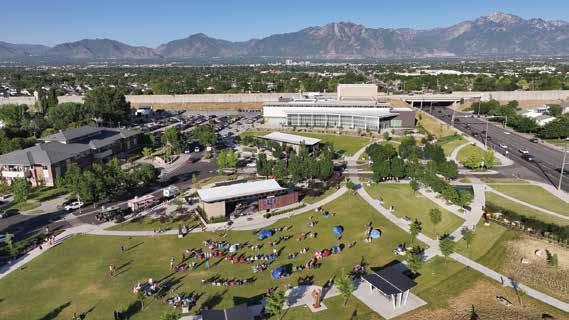
Taylorsville nds its Friday night air again this month as Starry Nights @ the Plaza opens a new season of live music, food trucks and open-air gathering at Centennial Plaza. The weekly series has become a community favorite where residents can ease into the weekend, connect with neighbors and friends and enjoy an evening of spectacular bands and other entertainment, all for free.
This year’s opening night on May 15 sets that tone early, rst with The Alex Elggren Band and its country and southern rock sound fronted by 16-year-old Alex Elggren. The young phenom performs original music written and produced in Nashville.

Then headlining the night, DeNovo promises to keep the momentum going with a high-energy set built on classic rock favorites and select originals. Known for its crowd-friendly style and strong musicianship, the band leans into familiar songs that t naturally into an outdoor vibe.
Of course, the Food Truck League food trucks will serve up delicious eats throughout the night, and Centennial Plaza is designed for exibility, with plenty of room for blankets and lawn chairs. It’s all happening at the plaza, 2600 W. Taylorsville Blvd., every Friday through Sept. 25. See the full season lineup on page 6 of this section and visit www.taylorsvilleut.gov for an interactive schedule featuring band details, music samples and the lineup of food trucks coming each night.

Emergency ...................................................................................................911
Police Department ............................................................... 801-840-4000
Utah 211 resource network 211
988 Suicide & Crisis Lifeline 988
Poison Control Center 1-800-222-1222
Animal Control Shelter ....................................................... 801-965-5800
Animal Control After Hours Dispatch............................ 801-840-4000
Building Inspection 801-955-2030
Chamber West (Chamber of Commerce) 801-977-8755
Fire Department
801-743-7200
Gang Tip Line 385-468-9768
Garbage/Recycle/GreenWaste Pick-up ........................ 385-468-6325
(Wasatch Front Waste & Recycling)
Granite School District
385-646-5000
Health Department 385-468-4100
Highway Conditions (from cell phone) 511
Park Reservations ................................................................. 385-468-7275
Public Works (Salt Lake County) ....................................... 385-468-6101
Dominion Energy 800-323-5517
Rocky Mountain Power 888-221-7070
Salt Lake County Recycling/Land ll 801-974-6920
Taylorsville Bennion Improvement District................. 801-968-9081
Taylorsville Food Pantry ..................................................... 801-815-0003
Taylorsville Senior Center 385-468-3370
Taylorsville Code Enforcement 801-955-2013
Taylorsville Justice Court 801-963-0268
Taylorsville Library ............................................................... 801-943-4636
Taylorsville Recreation Center ......................................... 385-468-1732
Swimming Pool (Memorial Day to Labor Day) 801-967-5006
Taylorsville-Bennion Heritage Center 801-281-0631
UDOT Region 2 801-975-4900
Utah Transit Authority (UTA) 801-743-3882
May 6 & 20 – 6:30 p.m.
City Council Meeting @ City Hall. Watch a livestream of the meeting and nd agendas at www.taylorsvilleut.gov
May 12 & 26 – 6:30 p.m.
Planning Commission Meeting @ City Hall.
May 12 to 7 p.m. – 8:30 p.m.
Evening of Art @ the Mid-Valley Performing Arts Center. Join Plaza +ART for an Evening of Art featuring local artists Rebecca Klundt and Jeanette Lukens. It's a free event!
May 16 – 9 a.m. to 12 p.m.
Cleanup Day @ Taylorsville High. Bring your bulk waste, green waste, glass and recycling, prescription medication and gently used household items and clothing for drop-o .
May 25 – Memorial Day
Memorial Day. City O ces are closed for the holiday, reopening on Tuesday.
May 30 – 10 a.m.
Ride, Roll & Stroll, meet @ Millrace Park. Join the Taylorsville crew for a jaunt along the Jordan River Parkway. No need to register, just show up.
(See the accompanying ad on this page for details).
Upcoming: June 6 – 7:30 p.m.
Taylorsville's Got Talent @ Centennial Plaza. Don’t miss Taylorsville's annual talent show, performed on the outdoor stage at the plaza, 2600 W. Taylorsville Blvd. It’s free to attend!
Find our calendar of events every month on the city’s website, where you can also submit your own events for possible publication. Go to www.taylorsvilleut.gov



WITH YOUR TAYLORSVILLE FRIENDS!
SATURDAY, MAY 30 @ 10 AM
MILLRACE PARK PICKLEBALL COURTS 1150 W 5400 S, TAYLORSVILLE
Who's pumped for summer, a sun-drenched marathon of outdoor fun? We sure are! Let's launch the sunny season with a ride, roll, and stroll extravaganza! Join the Taylorsville crew for a giggle-filled, kid-approved jaunt along the Jordan River Parkway! We'll loop around for a carefree mile and a half, kicking off at the Millrace Park Pickleball Courts. No need to register, just show up! Snacks and water will be provided!



May 1-2
Serena Webb Dance Theater presents Snow White: A Gothic Fairytale
May 3
Bells of Joyful Sound presents Bells in Bloom: A Spring Concert
May 7-9
Utah Dance Institute presents Cinderella
UPCOMING EVENTS
GET TICKETS AT SaltLakeCountyArts.org
May 8-9
SALT Contemporary Dance presents SALT2 In Concert

May 22
May 15

Allegiant Dance Crew presents The Season Finale 4: Commencement
Sonus Productions presents Chain Lightning

May 29

May 23
World Dance Company presents Explorations
Japanese American National Museum presents Defining Courage

By Council Member Curt Cochran
My last article shared about the robotic taxis that some U.S. cities are testing. Closest to home is Las Vegas. This article discusses the fact that ying cars and taxis are closer to a reality than you think.
Utah is positioning itself at the forefront of a new transportation era: ying taxis. These electric aircraft, known as eVTOLs (electric vertical takeoff and landing vehicles), are being developed by companies like Joby Aviation and Archer Aviation. Designed to operate quietly and efficiently from compact “vertiports,” they could o er a practical alternative to traditional road travel.
The push toward air taxis comes at a critical time for Utah. Rapid population growth and increasing congestion — especially along the Wasatch Front — are straining existing infrastructure and lengthening commute times. State leaders and urban planners are actively exploring new mobility solutions, and air taxis have emerged as a promising option. By moving a portion of commuters into the air, o cials hope to relieve pressure on highways while offering faster, more predictable travel.
Beyond urban convenience, the technology could be especially impactful in a geographically diverse state like Utah. Rural and mountainous communities often face long travel times to reach healthcare, business centers or major airports. Air taxis could dramatically improve access, connecting underserved
regions and supporting industries like tourism, where time and accessibility are critical factors.
At the national level, the Federal Aviation Administration is working to safely integrate eVTOL aircraft into U.S. airspace. Certification has proven complex, contributing to delays, but progress is steady. Most industry analysts now point to a realistic window between 2026 and 2029 for initial commercial launches, with limited routes and gradual expansion expected in the early years.
Globally, competition is accelerating. Cities such as Dubai are preparing to roll out ying taxi networks as early as 2026, complete with dedicated vertiports and advanced traffic systems. In the United States, continued testing and development are underway, and major events like the 2028 Los Angeles Olympics are seen as potential opportunities to showcase the technology at scale.
The potential benefits are substantial. Air taxis could reduce congestion on crowded roadways, lower emissions through electric propulsion, and turn hour-long commutes into trips lasting just minutes. However, the path forward is not without challenges. Safety certi cation remains a signi cant hurdle and building the necessary infrastructure — including vertiports and air tra c management systems — will require major investment.
Public acceptance is another key factor. Questions around noise, reliability and safety will need to be addressed before widespread adoption can occur.
Affordability also remains uncertain. Early services will likely target higher-income users, with broader accessibility dependent on scaling production and reducing costs over time.
By stepping forward as a testing hub, Utah is making a strategic bet on the future of mobility. If successful, the state could attract investment, create high-tech jobs, and help shape national transportation policy. Flying taxis may not yet be part of daily life, but in Utah, that future is approaching faster than many expected.

New parking rules aimed at improving safety, visibility and access on local streets are now in place following a City Council vote updating Chapter 11.20 of the municipal code.
The update, approved unanimously on April 15, increases the no-parking buffer near intersections from 20 feet to 30 feet to improve sightlines and reduce conflicts for turning vehicles.
City Engineer Ben White rst presented the proposal during a Feb. 4 City Council meeting, along with other potential updates. He pointed out that many of Taylorsville’s residential streets, particularly in older neighborhoods, were not originally designed to accommodate current parking demands. Narrow roadways, combined with increased vehicle ownership, can create challenges for emergency response vehicles, sanitation services and general tra c circulation.
Public safety officials have expressed support for the change. Vehicles parked too close to intersections or along both sides of narrow streets can hinder emergency response times, fire and police
representatives said. Clearer regulations, they added, would improve both enforcement and compliance while helping to keep streets safer for residents.
City administration also recommended approval of the amendment, noting that e ective parking enforcement plays an important role in tra c safety, emergency access and overall quality of life in the community.
White said implementation will take time as the city focuses rst on public education. “We’re working on the educational campaign and how to alert people about the change,” he said. O cials added that police will initially issue warnings before citations, and the city plans to review the update in the coming months to determine whether adjustments are needed.
As discussion continues on parkingrelated matters, city officials point to the intersection update as a positive first step in an ongoing effort to balance safety, accessibility and neighborhood needs. Additional updates to parking regulations may be considered in the future.



4-11 pm
THURSDAY
Carnival Bon us Nigh t!
All rides onl y $2 (except The To xic)
Food and C ra t Boo ths
7:30 pm


Always, Adele

‘The powerful music and unforgetta le personali ty of Adele that fans love!’





8:30 pm



West Valle y Symphony & Cannonee rs o the Wa satch











‘Get ready for a nigh t of di sco, sparkle and ABBA ’s greatest hits! From ancing ueen to amma ia , the winner takes it all ’



































Come one, come all to the Friday Night Fun-Fest at the Plaza!

2600 W. TAYLORSVILLE BLVD
(IN FRONT OF TAYLORSVILLE CITY HALL) CENTENNIAL PLAZA
FRIDAY, MAY 15
FRIDAY, MAY 22
FRIDAY, MAY 29
FRIDAY, JUNE 5
5:30 PM - Alex Elggren Band Country and Southern Rock
7 PM - DeNovo Classic Rock
6:30 PM - The Groove Pop, R&B and Dance Music
6 PM - Trip Van Winkle (Indie Folk and Pop)
7 PM - Carter Prescott (Multi-Genre Solo Ukulele)
8 PM - Cody Wayne (Country and Alternative)
6 PM - Tyler John Singer-Songwriter Playing Today’s Hits
7 PM - Sonic Duke Classic and Modern Rock, Country Rock & Blues
Dusk - Movie Night - Zootopia 2
FRIDAY, JUNE 12
FRIDAY, JUNE 19
6 PM - Tony Summerhays
One-Man Band Playing R&B, Funk and Soul
7 PM - The Mitch Raymond Trio
Blues Power Trio
6:30 PM - Flynnz Arkade
70's and 80's New Wave
Dusk - Movie Night - Freakier Friday
FRIDAY, JUNE 26 No Food Trucks or Entertainment VISIT TAYLORSVILLE DAYZZ
FRIDAY, JULY 3
FRIDAY, JULY 10
6:30 PM - Lisa and the Missing Pieces Americana with a Twist
5-8 PM - Kids Market
6 PM - Samuel Charles
Singer-Songwriter
7:30 PM - j209
Contemporary Christian A Cappella

Round up your family, friends, and neighbors for an evening of toe-tapping tunes, delicious bites, and lots of fun ! Be sure to pack your blankets and lawn chairs for the ultimate cozy vibe. Unplug, chill out, and kick off your weekend in sty le!
Food trucks serve from 5:30 PM to 8:30 PM, while su pplies last.
Movie Nights will feature open captioning.
FRIDAY, JULY 24
FRIDAY, JULY 31
FRIDAY, AUG. 7
FRIDAY, AUG. 14
FRIDAY, AUG. 21
FRIDAY, AUG. 28
FRIDAY, SEPT. 4
6:30 PM - Monkey Friday Party Cover Band
6:30 PM - Code Blue Revival
Reviving Classic Rock and Roll since 1981
Dusk - Movie Night - Elf (Christmas in July, Wear your Christmas PJ’s!)
6 PM - Night Out Against Crime
6:30 PM - Pop-O-GoGo
Utah’s Best 1960's Party Band
6:30 PM - Bonepile Classic Rock
Dusk - Movie Night - The SpongeBob Movie
6 PM - Stomping Cactus (Folk, Bluegrass, Classic Country and Old-Time Americana)
7 PM - Alli Brown (Pop and Country)
8 PM - Duane (Classic Country and Oldies Rock)
6:30 PM - Blasted Past 60's-90's Classic Rock
5-8 PM - Kids Market
6:30 PM - Route 89
Rock, Pop and Soul from the 60's to the 2000's
FRIDAY, SEPT. 11
FRIDAY, SEPT. 18
7:30 PM - Taylorsville Art’s Council Performance Musical Revue - Broadway Under the Stars
6 PM - Kristy Ballard
Acoustic Folk, Pop and Country Music
6:45 PM - Bridging Betty Americana, Bluegrass, Folk and Rockabilly
FRIDAY, SEPT. 25
6:30 PM - Mark Chaney and Friends
FRIDAY, JULY 17
6 PM - Fusion Fallout (Pop, Rock and Dance Band Mus ic)
7 PM - Streetlight Syndicate (Pop, Rock and Dance M usic)
8 PM - Blue Note Big Band (Jazz, Big Band and Pop)
Dusk - Interactive Movie Night with The County Library’s Taylorsville Branch - National Treasure

Rock, Jazz, Blues and Funk Plaza +ART New Sculpture Art Unveiling -Walk through the Plaza to explore the newly unveiled sculptures!
Schedule subject to change. See the latest at www.taylorsvilleut.gov or scan the QR code:


By Susan Yadeskie
On Oct. 21, 1921, the Murray Auto Co. was open for business. Taylorsville men ran and worked in the auto store. The new company was headed by Samuel J. Lindsay as the owner and manager.
The car dealership was the exclusive retail agent east of the Jordan River. A building had been built exclusively for the new business. Murray Auto Co. was just north of the Murray post o ce on State Street, near 5500 South. The rst week had only six cars on consignment. However, 200 more arrived soon. The rst three buyers of cars were listed in the local newspaper. Joseph also had a dealership in Taylorsville.
Just 11 years after opening, the Murray Auto Co. was the longest-running dealership in Utah. In the beginning, Joseph was the manager, o ce force, salesman and general all-around man with two men in the shop. The business went from 75 sales contracts a year to 350 contracts. At that time Murray Auto also sold tractors and other farm equipment such as combines, thrashers and plows. In 1919 and 1920, two railroad cars full of equipment had been shipped to Pennsylvania.

The employee force grew to 20. Some of those employees were well-known names in the Taylorsville community: S. J. Lindsay, manager; Clyde Marsden, sales manager; A. I. Frame, o ce manager; Zole Thomander, bookkeeper and stenographer; salesmen E. B. Lindsay and Leonard Gerrard; shop men A. D. Frame, Merrill Pixton, Grant Holden and La Marr Lindsay. Over 50 percent of these men working for Murray Auto Co. were employed since 1921.
Edgar Bennion Lindsay was the top sales representative. He owned about 10 Model A. Ford cars of his own at one time.
Come to the Taylorsville-Bennion Heritage Center on Saturday, June 13, from 1 to 4 p.m. for a genuine Model A car show put on by Salty A’s car club. Refreshments will be served.
While the Taylorsville Library is temporarily closed for renovation, there is still plenty to do. See the following details about events The County Library is hosting in the community and at neighboring branches, as well as some additional information about construction at the Taylorsville branch.

RENOVATION — MONDAY, JAN. 5 TO SUNDAY, MAY 31: The County Library's Taylorsville branch will be closed for renovation and construction of the main entrance. Other nearby locations continue to be available for use during the closure. Holds will be transferred to the Kearns branch (4275 W. 5345 South) unless otherwise requested.
The library has nished demolition of the entrance pergola and concrete, and the awning over the front doors. The crew has completed the footing and foundations for the entrance work, the steel and is working on the roof.
Two Taylorsville Library programs held o -site will continue during the closure:
SENIOR BOOK CLUB AT THE TAYLORSVILLE SENIOR CENTER — 4743 Plymouth View Drive. Second Monday of the month, 11 a.m. Join in a lively discussion of a variety of ction and non ction books. Newcomers welcome! The book club will be led by a librarian from the Taylorsville Library. The April title is “The Westing Game” by Ellen Raskin.
WALKING BOOK CLUB AT THE TAYLORSVILLE RECREATION CENTER — 4948 S. 2700 West, Thursdays, 10 to 11:15 a.m. Walking Book Club is for readers interested in a weekly walk session and book discussion. The group reads one book over the course of three weeks, discussing the book in segments. The club meets Thursdays from 10 to 11:15 a.m. Take a 30-minute walk along the paths behind the Recreation Center and then participate in a 30-minute book discussion.
Books will be available to pick-up at the program with a valid Salt Lake County library card.
THE UPCOMING READING SCHEDULE IS:
“The Last Cuentista” by Donna Barba Higuera April 2: Chapters 19 – end “How To Know a Person” by David Brooks
April 16: Chapters 1 – 7
April 23: Chapters 8 – 13
April 30: Chapters 14 – end

Check out the Hunter Branch at 4740 W. 4100 South and the West Valley Branch at 2880 W. 3650 South for more interesting programs.

The Taylorsville Senior Center has planned a variety of classes every month. Classes are free for those over age 60. Among the activities scheduled this month: Recorder’s O ce Visit — May 6, 11 a.m. to 1 p.m. Don’t miss this great opportunity to connect with the Salt Lake County Recorder’s O ce. This is a convenient chance for participants to get important information, ask questions and access helpful resources — all in one place. Take advantage of having these experts onsite and get the answers you need without the hassle of traveling elsewhere.
AARP Driver’s Safety Class — May 15, 10 a.m. to 3 p.m. Stay con dent and safe on the road by joining our AARP Driver’s Safety Class. The cost is $20 for AARP members and $25 for non-members, and it can even save you money. Participants may receive 5% to 7% o their car insurance for up to ve years (check with your insurance provider to con rm). Don’t miss out. This is a smart and valuable course for anyone who spends time on the road. Be sure to sign up, space is limited.

WFWRD is excited to announce an upgrade to its online billing platform with Point & Pay, designed to make managing your account easier, faster and more convenient. The transition has been rescheduled to Monday, May 4, and customers can expect to receive setup emails in early May.

• AutoPay Users – Action Required: If you are currently enrolled in AutoPay, you must re-register and enter your payment information. Because this is a new vendor, existing payment details cannot be transferred.
• Until you receive your setup email, please continue using the current payment system.
The new platform o ers several bene ts for residents, including:
• Faster, more user-friendly online payment experience
• Continued secure and reliable transaction processing
• Flexible and expanded payment options, including AutoPay, scheduled and one-time payments, now including American Express, Google Pay and Apple Pay
• Paperless billing for easier account management
• Text and email reminders so you never miss a payment
• Multiple language options for added accessibility
WFWRD encourages you to act promptly once your setup email arrives to ensure a smooth transition and convenient billing experience for everyone.
E ective May 1, 2026, WFWRD will introduce new residential specialty curbside collection services for bulky waste items that present unique operational, environmental and regulatory challenges. O ered year-round, this program is designed to complement WFWRD’s Seasonal Container Reservation Program (SCRP) by providing convenient and cost-e ective collection options for the following materials:
• Tires* (up to 12 per household, per pickup)
• Mattresses and box springs
• Freon-containing appliances (refrigerators, air conditioners)
• Non-freon-containing appliances (ovens, ranges, hot water heaters, etc.)
* Automotive-sized tires and smaller. Large equipment tires are not eligible for pickup.
Visit WFWRD’s website (www.WFWRDUtah.gov) to request your curbside pickup. Due to liability reasons, WFWRD sta are unable to enter homes, fenced areas or garages. Items must be placed at the curb on your scheduled pickup day, which will be communicated in advance.
Additional items eligible for pickup (i.e., couches, large-screen TVs) may be added over time as the district learns more about the community’s needs.
The overwhelming majority of these items will be recycled, helping to reduce our environmental footprint and preserve valuable land ll space. Tires will be hauled to a waste tire recycling facility, mattresses and box springs to a disassembly and recovery facility, and certi ed specialists will safely recover freon from appliances before they are sent to a scrap metal recycling facility. It’s a win-win for everyone!
At Taylorsville-Bennion Improvement District (TBID), the quality and safety of your water is top priority. TBID is committed to providing water that meets, and often exceeds, all regulatory standards.


TBID’s team follows a rigorous sampling and monitoring process, carefully checking water quality at every stage, from the source to your tap. The district goes beyond minimum requirements to ensure the water delivered supports the health and well-being of our community.
TBID understands how essential clean water is to your daily life. Your trust matters, and it drives the district’s ongoing commitment to strong water management practices and continuous improvement.
You can rely on TBID to provide clean, safe and dependable water, now and into the future. The district remains dedicated to excellence, transparency and service because your well-being is at the heart of everything it does.
If you have any questions, please contact Taylorsville-Bennion Improvement District by calling 801-968-9081 or visiting www.tbid.org. Follow TBID on Facebook and X.





By Peri Kinder
Ranging from $0 to more than $300 for a base license, business licensing fees differ across Salt Lake County.
For entrepreneurs looking to start a company in Salt Lake County, location can shape the cost of opening that business. Licensing fees vary drastically as cities determine costs and define regulations. Fees can fluctuate based on the type of business, number of employees, impact on city services and required inspections.
On one end of the scale is Riverton, which in 2018 became the first city in Utah to eliminate all business licensing fees. The move was orchestrated by the mayor at the time, Trent Staggs, who wanted to let companies know the city was open for business.
“He wanted Riverton to be a business-friendly community,” said Riverton Business Licensing Coordinator Angie Keller. “We’re also very user-friendly when it comes to getting a license. They click on our website and it guides them through the process. I don’t get many phone calls asking for help…I feel like Riverton has gone above and beyond, as far as pointing them in the right direction and giving them all the information they need.”
Draper’s base fee for a commercial license is $82, with additional fees for alcohol or firework sales, sexually-oriented businesses and solicitors. Murray charges $100 for a commercial license with regulatory fees on companies like auto towing, tobacco retailers, tattoo parlors and convalescent homes. Midvale has a base fee of $137 for commercial businesses with add-on charges for industries including bars, hotels, pawn shops and restaurants.
For companies in the county’s new-
ly incorporated areas, including Kearns, Magna and Copperton, the Greater Salt Lake Municipal Services District administers those business licenses. The district charges a $150 base fee for commercial businesses and home-based locations that have customers coming to the home.
On the higher end of the scale, South Jordan charges $337 for a general business license application fee, with additional charges for hotels ($2,700), restaurants ($633), big box stores ($3,331) and entertainment/recreation facilities ($1,727).
Brian Preece serves as South Jordan’s Director of Planning and Economic Development. He said the city’s licensing fee structure wasn’t put together haphazardly, but was based on a feasibility study that determined the cost impact of specific businesses to the city. More fees are placed on businesses that have a higher volume of calls for police or fire services.
“We have a fire inspection for most businesses and that’s part of the [licensing] fees,” Preece said. “Even though Riverton doesn’t have a business licensing fee…it’s being paid for somewhere. The general fund is paying for it.”
South Jordan Public Information Officer Rachael Van Cleave added, “If we weren’t to charge these fees, taxpayer dollars would be subsidizing these costs for businesses. So the fees help to take that off the general taxpayer.”
For home-based businesses, Utah Code states that cities cannot charge a licensing fee unless the business impacts the neighborhood, such as having customers or an unusually high number of home deliveries. However, several cit-

ies, including Taylorsville and South Salt Lake, charge administrative processing fees of $100 and $59, respectively, for home-based businesses.
Riverton requires every home-based business to have a license, but there is no fee. South Jordan does not require home-based businesses to have licenses unless they operate a daycare/preschool or if they have regular clients coming to the home.
“We made the decision to not charge for or even require a home license business,” Preece said. “If somebody wants one, then we’ll get you a license, but you have to go through the regular process, and that’s your choice.”
While getting a business license is
certainly an important step in starting a business, it’s not the only step. Business owners need to make sure that the company is registered with the state and, if sales are involved, with the Utah State Tax Commission. Owners must ensure all licenses and inspections are complete before a business license can be issued. Most cities have license approval completed in two weeks or less.
The wide-ranging business licensing fees and processes across the county impact business owners and municipalities differently. For some entrepreneurs, that difference could be the deciding factor on where they ultimately locate their business.
By Mimi Darley Dutton |
Sean Wilson has owned a Jazzercise franchise for 30 years, survived a recession and a pandemic, and she perseveres because of her passion for the program and its people.
As the Donna Summer song goes, “She works hard for the money.” In this case, that “she” is Seandra “Sean” Wilson, owner of Jazzercise Riverton Fitness Center, and she just celebrated 30 years in business.
Most of the money Wilson works hard for goes right back into the business. In addition to operating her Jazzercise studio, she also cleans houses. But it’s her passion for the fitness program and the people she’s met along the way that keep her working hard.
“I do it for the love of it. And no matter who you are or what phase of life you’re in, you have to exercise. For me, it’s almost healthcare at this point rather than self-care,” she said.
Rewind to 1989. Wilson was a young mom living in West Valley. “I was seeking out exercise after my first baby. Almost the first minute of the first class, I just knew I wanted to be an instructor. I started saving something like $5 per

Sean Wilson discovered Jazzercise as a young mother and loved it from the first class she attended. She saved for the franchise fee and became a certified instructor three decades ago. Today she employs 25 instructors and offers nearly 50 classes weekly at Jazzercise Riverton Fitness Center. “It’s not about leotards and legwarmers anymore…exercise science dictates what we do,” Wilson said. (Mimi Darley Dutton/City Journals)
paycheck for six years to come up with the $600 franchise fee. (Wilson explained you must purchase a franchise to use the Jazzercise name and choreography.) I was a customer first for six years,” she said. “Back in the day,” she remembers working out to the music of both Michael and Janet Jackson, Prince and others. (Now, it’s music by Pitbull, Usher and Taylor Swift.)
In 1994, Wilson and her family moved to Riverton. “There was no Jazzercise, there weren’t even gyms,” she said. She missed the camaraderie and community she’d found working out in West Valley.
Raised in Los Angeles as a child of character actors, Wilson became active with Riverton Community Theatre. Soon after arriving in Riverton, she had saved enough to establish a franchise and passed various certifications required of all Jazzercise instructors including CPR training, physiology, anatomy and choreography tests. She taught her first classes at Riverton Community Center. “I taught five to eight classes per week all by myself,” Wilson said.
Wilson has been active in the Riverton community from the start. In addition to community theatre, she volunteered with the Miss Riverton Scholarship Competition for 25 years. “It’s an educational process I think all young women should go through, teaching them poise, diction and interview skills,” she said. Only in recent years did she step away from volunteering in that capacity. “We have a lot of grandkids and my priorities shifted,” she said.
Fast forward three decades since her move to Riverton and several locations later to accommodate a growing clientele, Wilson now manages a Jazzercise studio with 25 independent contractor instructors offering nearly 50 classes seven days per week. Her customers range in age from 18-84. Along the way, her daughter Alexis also became an instructor.
Rebecca Parker of Herriman has been a customer for four years. Parker said she had foot surgery last year and gained weight as a result, but since returning to Jazzercise, she’s been able to lose the excess weight while adding muscle. “I feel strong and I think that’s key. This is different than going to a gym, there’s no judgment or competition. Sean and her team make the environment amazing. I feel loved and valued here,” Parker said.
Riverton resident Jill Jacobson has been going to the studio for more than three years. “The instructors are upbeat and motivating and I feel better after

are offered seven days each
to choose from. Child care is offered during some classes.
class. I’m so glad my friend introduced me to Jazzercise,” Jacobson said.
Jazzercise was founded 57 years ago by Judi Sheppard Missett. “She invented group fitness. She’s now 82 and still teaches one day a week,” Wilson said. The company is headquartered in Carlsbad, California and has grown to a woman-led global fitness community with 300 studios (like Wilson’s) and 1,200 locations in 16 countries. Missett’s daughter Shanna Nelson currently serves as CEO and Chief Choreographer and Nelson’s daughter Skyla is a third-generation instructor. The program is deeply rooted in dance and designed to support women’s physical and mental well-being with added strength training and jumping to increase bone density. “Jazzercise isn’t stuck in the past. For more than five decades, it is continually renewing itself with current music and exercise science to give strategies to women through life’s stages,” Nelson said in a recent television interview.
Instructors are sent new routines from corporate every month to keep things fresh. Wilson said it can take 15 to 45 minutes just to get choreography down for one new routine. Every class features at least 15 routines designed to work different muscle groups. “When we learn choreography, we also learn the safety features of each movement to show and explain to our customers,” Wilson said. Instructors stand on a stage facing their class, allowing them to cue and demonstrate the moves, meaning they do every movement in a mirror-fashion. When the instructor says “go right” they’re actually going left. “That’s the hardest learning curve for new instructors,” Wilson said.
Wilson’s Jazzercise franchise survived the economic recession of 2008 and the upheaval of Covid, though the latter proved difficult to rebuild from. “Corporate allowed us to do videos from our homes during the pandemic, so I taught classes from my dining room and some instructors taught from their basements,” she said. As a small business owner, Wilson arranges for childcare at the studio, cleans the facility, pays the bills, does taxes and payroll, buys the supplies, schedules instructors for nearly 50 weekly classes, and texts the weekly schedule out to her customers. When necessary, she teaches two classes per day when an instructor calls out sick or has a conflict.
But Wilson’s love and appreciation for Jazzercise has only grown. “It’s not about legwarmers and leotards anymore…it was for a time because that was the trend, but trends change and so do we. Exercise science is so advanced these days. Instead of letting trends dictate how and what we do, it’s science-based. We have a physiologist on staff at corporate who reviews every movement for injury prevention and safety before it’s accepted into choreography,” Wilson said.
Wilson’s customers come from Alpine, Saratoga Springs, Bluffdale, Sandy, Draper, West Jordan, South Jordan, Herriman and Riverton, as far west as Magna and as far east as Cottonwood Heights. “We have more than 100 customers with room for many more,” she said.
The studio is located at 1716 W. 12600 South. If interested in a free trial, call or text 801-828-8694.
By Peri Kinder | peri.k@thecityjournals.com
Six ways to get help starting or growing your business.
Starting a new business can be a massive undertaking. Creating a business plan, obtaining loans and developing marketing strategies can feel overwhelming. But in Utah, several organizations want you to succeed and offer resources, mentoring and connections to help build a sustainable business. Here are six places to start.
Utah Small Business Development Center. Located at Salt Lake Community College Miller Campus in Sandy and in Kaysville at Davis Technical College, the SBDC offers free business consulting. Whether your business is just an idea or a built-out concept, working with SBDC professionals can increase your chance of success.
SBDC also provides information about financing, customer relations, employee management and business accounting through the Entrepreneur Academy, workshops and training classes. It also hosts networking events to build support so your business can thrive. To learn more, visit utahsbdc.org.
Suazo Business Center. Nearly 10% of Utah businesses are owned by Latino or Hispanic entrepreneurs. Suazo Business Center is often a first step for members of underserved communities to help them build and grow a thriving company. Bilingual consultants offer advising appointments to create an understanding of small business while providing guidance and mentorship.
With locations in Salt Lake and Ogden, Suazo Business Center has classes in Spanish and English to cover topics like QuickBooks, business development, legal structure, accounting and financing. It also has a series of workshops to tackle issues from HR to government contracts. For more information, visit suazocenter.org.
SCORE Utah. With free business mentoring and low-cost educational workshops, SCORE Utah can help expand your network and grow your business. Its online courses allow entrepreneurs to explore all areas of business ownership, including e-commerce, customer service, crisis management and online marketing.
SCORE Academy premium courses offer inexpensive training in grant writing, AI for business or sales, and marketing strategy. Additionally, SCORE will provide a free mentor who will partner with you on your business journey. Mentors give advice and educate business owners to help them feel supported. To learn more, visit score.org/utah.
Utah Microloan Fund. For business
owners who might have a low credit score or no access to collateral, the Utah Microloan Fund is a “lender of last resort” that can help entrepreneurs who can’t get traditional business loans. It can offer lending to higher-risk clients because its purpose is about creating impact, not profit.
For 35 years, the organization has funded microloans to help people build their dreams. By providing training and financing to businesses that don’t qualify for traditional funding, the Utah Microloan Fund is a resource for those who have been declined for a bank loan. The microloans are set at a fixed rate, with up to six years for repayment.
Plus, its popular Banking on Women program helps women create a business plan and apply for funding to make it a success. Visit utahmicroloanfund.org/orientation for more information.
Local Chambers of Commerce For advocacy and networking, the local Chamber of Commerce is a great place to connect with like-minded business owners, find opportunities for promotion and get your company involved with volunteer activities.
The Salt Lake Chamber is the biggest in Utah, while the South Valley Chamber represents many communities in Salt Lake County, including Sandy, Draper and Riverton. ChamberWest serves businesses in Taylorsville, West Valley, Kearns and West Jordan, and several smaller chambers serve individual cities, like Murray or South Salt Lake. The Davis Chamber is the primary organization for businesses in Davis County.
There are also specialized chambers, including the Utah Black Chamber, the Utah Hispanic Chamber, the Utah Asian Chamber and the Utah LGBTQ+ Chamber. For a complete list of Chambers of Commerce, visit utahassociationofchambers.com.
Spice Kitchen Incubator. If you have an idea for a food truck or restaurant, but can’t invest in a truck or brick-and-mortar location, the Spice Kitchen Incubator is an answer to your prayers. Spice Kitchen provides hands-on learning for refugees and other disadvantaged community members interested in creating a food business.
Part of the incubation program includes access to affordable kitchen space, plus capital, operations development and technical assistance. Graduates of the program include Bhutan House, IndieGo Coffee, Wings on Wheels and Waterwheel Kitchen. To learn more, visit spicekitchenincubator.org.

ULTIMATE SHINE AND SHIELD
SINGLE WASH $24
UNLIMITED WASH CLUB: $40/MONTH ULTIMATE SHINE
SINGLE WASH $12
UNLIMITED WASH CLUB: $22.50/MONTH
SINGLE WASH $20
UNLIMITED WASH CLUB: $35/MONTH




By Holly Curby | hello@hollycurby.com
For many entrepreneurs, the journey begins with a spark—an idea, a passion or a defining life moment. For me, it started with loss.
In 2019, after my mother passed away, I made her a promise: I’ll write the book. That promise became more than a personal goal, it grew into a business rooted in becoming an eight-time award-winning published author — speaking, podcasting, coaching and consulting. Like many small business owners, my path wasn’t linear. It was built step by step, with research, guidance and a willingness to learn.
My story reflects a larger trend. According to the U.S. Census Bureau, more than five million new businesses were launched in 2025. Yet only about 65% of small businesses become profitable. The message is clear: starting a business is more accessible than ever, but building a successful one takes preparation and persistence.
Start with research—not just passion
Passion is important, but it’s not enough on its own. “Do your research,” advises a representative from Investor.gov. “You may have a bright idea, but before you invest money, make sure it’s viable.”
That means asking hard questions: Is this a true passion or just an interest? Do you have the time and financial stability to
pursue it? Is the timing right?
Timing, in particular, can shape the entire experience. In my case, reduced work hours during the pandemic created an unexpected opportunity to build something new.
Understanding your market is just as critical. Who are your competitors? What makes your idea different? Tools like a SWOT analysis—evaluating strengths, weaknesses, opportunities and threats— can provide a realistic snapshot before you commit.
Build the right foundation
Once your idea is validated, it’s time to make it official. That includes choosing a business name, registering it and selecting a structure that fits your goals.
“Make sure your name is available, not just legally, but online,” says David York, managing partner of York Howell. “That includes checking domain names and social media handles.”
Next comes the operational setup: securing an Employer Identification Number (EIN), registering with your state, and opening a dedicated business bank account. Keeping personal and business finances separate isn’t just good practice— it’s essential.
Tony Wolff of Wolff & Company puts it simply: “Set up your financial system early.


It will save you and your tax advisor a lot of stress later.”
Know your money habits
Your personal relationship with money doesn’t disappear when you start a business—it follows you.
“How you handle money personally will carry over into your business,” says financial coach Sara Fernandes. “Whether you rely on cash, debit or credit, understanding your habits can help you avoid costly mistakes.”
She also emphasizes consistency over complexity: “Set aside time weekly to track expenses and send invoices. Don’t let it pile up.”
Your brand is your first impression
In today’s digital marketplace, your online presence often determines whether a customer engages with your business.
“Don’t wait for your website to be perfect before you launch it,” says Promise Tangeman, owner of GoLive. “Get it live and improve it along the way.”
Clarity matters. Visitors should quickly understand what you offer and who you serve. And when it comes to growth, Tangeman advises focus over reach: “Most people chase reach—the real leaders chase depth.”
That same strategy applies to social media. Choose platforms you can maintain consistently and build trust over time. Protect yourself and communicate clearly

Legal and operational safeguards are essential, even if they’re not the most exciting part of entrepreneurship. Permits, licenses, insurance and contracts all protect your business.
“Communicate, communicate, communicate,” York emphasizes. Clear contracts outlining services, pricing and expectations can prevent issues before they arise.
Getting your first customers
Marketing often starts small. Network-

ing, community involvement and word-ofmouth remain powerful tools.
“Marketing is what you say; branding is what they feel,” says Susan Carlson, owner of Redrig gaming truck. “Make that first feeling count.”
Simple strategies—like creating a Google business profile, joining a local Chamber of Commerce, or building an email list—can help establish visibility and trust.
If there’s one common thread in entrepreneurship, it’s this: success doesn’t come from having everything figured out. It comes from starting, learning and continuing forward.
The journey may feel overwhelming at times, but every business begins with a single step. And sometimes, it begins with a promise, and the courage to follow through.
Learn more from some of these small business owners and others on Holly’s Highlights podcast, available wherever you stream podcasts and at www.HollyCurby.com.
First time homeowners nationally accounted for an all-time low of 21% of the homeownership market.
By Brice Wallace Salt Lake Business Journal
“Runningin place.”
That was a real estate watcher’s assessment of the industry in Salt Lake County in 2025 and also his expectation for 2026.
“The operative notion for this last year really is ‘running in place.’ 2025 was very much like 2024,” James Wood, Ivory-Boyer senior fellow at the Kem C. Gardner Policy Institute, said at a housing forecast event hosted by the Salt Lake Board of Realtors.
“The last couple of years, we’ve been back to the level of sales of the Great Recession period. … It’s a market that’s really holding its own but really running in place.”
Residential sales and the median price of a home in the county saw little change in 2025. Sales were down 2.4% to 11,797 homes, while the median sales price grew 1.9% to $550,000. In 2022-25, the median price grew just 3.8%, from $530,000 to $550,000. Median days on the market grew from 29 in 2024 to 36 in 2025.
Real estate sales per 1,000 population were running at the lowest level in the past quarter-century.
“Sales prices were up but at a pretty meager level, which is really good. We need that to improve affordability,” Wood said.
Prices in the county grew a massive 40% from 2020 to 2022 but cooled unexpectedly in 2023. Price increases have stabilized since then.
“We are catching our breath right now,” Wood said. “It’s taken a couple of years.”
Housing prices, he said, are “sticky,” unlikely to fall except if there is a serious recession, which leads to foreclosures and slipping property values.
Expect stable home prices for two more years, he said.
“The demand is still a bit weak because of affordability, so the prices, I think, are going to struggle for a little while,” Wood said. “And that’s not bad because we are one of the highest-priced markets in the country, in the metropolitan area of Salt Lake….It’s going to be another year, 18 months, before we see much movement in housing prices.”
Wood expects Salt Lake County single-family homes sales this year to rise 2% to 8,600 units. Sales of condos, townhomes and twin homes likely will increase 3% to 3,500 units. Overall, the total is 12,100 units, or 2.5%. Median sales prices should remain flat.
“Just hang in there,” he advised the audience, which consisted of real estate officials. “Better times are ahead,” he said, with 2026 probably mimicking what the county saw the past couple of years. “Plan on about what you did last year. If you do better than
that, congratulations.”
Nonetheless, Jessica Lautz, deputy chief economist and vice president of research at the National Association of Realtors, said Salt Lake City remains a top 10 hot-spot market for housing. Its advantages include a young population, job growth, and in-migration of people from outside the state.
Nationally, the past three years have been sluggish, but the existing-home sales volume, despite still being below the five million mark, should rise 14% this year from a flat 2025, she said. New-home sales likely will grow 5%, compared to a 2% decline last year. And median home prices are expected to jump 4%, compared to 3% last year.
Both Wood and Lautz decried affordability issues preventing young people from getting into homeownership. First-timers nationally accounted for an all-time low of 21% of the homeownership market. It was 44% in 1981 and once was as high as 50%.
Repeat homebuyers have a median age of 62 — it once was 36 — and they also are likely to hold on to their home for 15 to 20 years.
Lautz noted that the median age of firsttime homebuyers is 40, much higher than the traditional 28 to 32. And they aren’t likely to move anytime soon, she said.
Wood said he can relate to the trend. “I’ve got people in my basement,” he said to the audience giggles. “I’m sure I’m not alone.” l





Castro the only three-time honoree among all five Westside schools, dozens of others garnered awards for their work off the field as well as on.
By Brian Shaw b.shaw@mycityjournals.com
Formost kids in high school, being named to an All-State team means that they’ve done the right things, athletically speaking.
But, there are kids that also garner honors off it.
Presley Castro has been doing both.
The Hunter High senior played three sports this past school year. For many, it would become far too difficult to maintain any sort of a courseload and still excel outside the classroom.
Not only did Castro thrive on the field, she did just as well maintaining a 4.0 GPA and achieved high ACT and SAT scores.
Though the Hunter senior was competing on the girls’ soccer team where Castro played fullback, and was on the cheer team where she performed regularly at games as well as competitions now that cheer is a sanctioned high school sport, she was not done.
Castro also featured on the Lady Wol-
verines basketball team and got significant playing time, averaging 2 points, two rebounds and two fouls per game in two years of action. In other words, she was a tenacious defender for head coach Emily Brough’s squad that reached the second round of the 5A state tournament in 2026.
Castro joined a dozen other athletes across the West Side, from Interstate 215 to the Oquirrhs, that were all honored for their academic contributions simply for doing one thing: they entered their grades as required on RegisterMyAthlete, the clearinghouse for all athletics in the Utah High School Athletics and Activities Association—and the UHSAA did the rest, issuing Academic All-State honors to these deserving student-athletes.
Others were nearly as proficient as Castro in the classroom this past year as several other girls even received two honors. Amelia Okeson of Granger earned Academic AllState in girls wrestling and volleyball, as did Lancers Christy Nguyen and Grace Winder in girls swimming and tennis.
There were many girls receiving one Academic All-State nod as well. Hunter earned three more, as Isabelle Miller received one in debate, Gracie Harding one in girls tennis and Madeleine Taylor another in girls cross country.
Cyprus garnered a number of honors as
well. Riley Woodman got one on drill team, and in girls tennis, Lady Pirates Emily Albertsen and Gracie Hunter took home honors, while Brittany Mendez earned hers in girls soccer.
For the boys, Jimmy Nguyen of APA West Valley took home that school’s lone Academic All-State nod in music—though Nguyen also has the unique distinction of being named West Valley City’s only National Merit Scholar this past school year, an award he received at an assembly at the school in March.
For the Kearns Cougars, they were represented by boys swimmer Zackery Kahl while Cyprus’ Beckham Bayles became the only student-athlete on the West side of the valley to receive both an athletic All-State Honorable Mention in boys basketball for Class 5A’s Top-5 ranked Pirates and Academic All-State honors in that sport in the same school year.
The Pirates were also well represented in football, getting two boys on the list in Schuyler Garlitz and Owen Murphy. And, Mason Brown of Cyprus rounded out an impressive list of Academic All-State honorees through the winter. Spring honors will be announced at the conclusion of the 2025-26 school year. l
ANTHONY AND SAMANTHA DIFEDERICO have been associated with DHL for two years. But now they have their own franchise with the global shipping company that has been a top name in the industry for more than 50 years. The Difedericos recently opened the first DHL Express Service Point in Utah and have spent the last six months building a reputation for service, reliability and quality. What products and services do you offer at DHL Express Service Point?
We provide international and domestic shipping, freight shipping, artwork shipping, custom
packing and boxes, mailbox rental, registered agent services, packing, package supplies, printing, large-format printing, package receiving, shredding, storage and fulfillment.
What sets your company apart from your competitors?
Our customer service really makes us stand out. We track each package until it is delivered. Often, we handle issues with foreign governments without the customer even knowing. We just take care of it. With our knowledge, especially when it comes to international shipping, we can’t be beat.

We have the best training and support team. DHL is the best international shipping company with the biggest footprint. We can generally get anywhere in the world within five days with unbeatable rates for the timeframe offered. We recently sent a package to Norway, which took a day-and-a-
Does your business solve a problem for your customers?
We solve many problems for our customers. If they have anything needing to be moved around the country or world, and need it there fast, DHL is the fastest. If you need any physical media for personal or business creation, a physical address for your home-based business, or your precious valuables professionally packed and shipped, we can do that. People often need to send paperwork to their home countries. We are the best, most timely and affordable.
Who is your ideal customer?
Anyone who needs to send goods worldwide, or overnight or 2-day shipping within the United States or missionary families sending items to their children.
How do potential clients choose between you and a competitor?
We provide the best knowledge and customer service while clients are in the store and

Isabelle Miller, Hunter – debate
Jimmy Nguyen, APA West Valley –music
Amelia Okeson, Granger – girls wrestling and volleyball
Christy Nguyen and Grace Winder, Granger – girls swimming and tennis
Zackery Kahl, Kearns – boys swimming
Riley Woodman, Cyprus – drill team
Presley Castro, Hunter – cheer, girls basketball and soccer
Beckham Bayles, Cyprus – boys basketball
Emily Albertsen and Gracie Carter, Cyprus – girls tennis
Gracie Harding, Hunter – girls tennis
Brittany Mendez, Cyprus – girls soccer
Owen Murphy and Schuyler Garlitz, Cyprus – football
Madeleine Taylor, Hunter – girls cross country
Mason Brown, Cyprus – boys cross country
during their shipment. And our rates are great!
What is your best advice for someone considering doing business with you?
DO IT! You won’t get the level of service anywhere else. Our staff is amazing!
What factors should potential customers base their decision on?
They should understand the speed we can provide and the importance of their items being shipped. DHL has a reputation for fast service and we take care of our customers.
What is your service area?
We have people come anywhere from Cedar Hills to Logan, and everywhere in between. Stop in and visit with us. We can help you out.
What is your favorite product/service your company offers?
We provide custom packing and box making, along with international shipping. Also, not everyone knows we can ship domestically out of this DHL Express Service Point. It’s fun to see our customers get excited about that!

Complete with boomerangs, a live wallaby and many kids who believed the hoax to the bitter end, Calvin Smith students enjoyed a day they won’t forget.
By Carl Fauver c.fauver@mycityjournals.com
First-year Calvin Smith Elementary School principal, Dr. Aaron Wilson, stands 6-foot-10 – an inch taller than LeBron James and Karl Malone.
So, who better to come up with an April Fools’ Day “tall tale,” to excite, confuse and educate the 450 K through 5 students who fill the school’s classrooms and recess playgrounds?
For that one day, a month ago, Dr. Wilson was nowhere to be found at the Taylorsville school. Instead, his “long lost, separated at birth, raised in Australia, twin brother” Darren Schmilson was in charge, complete with bushy mustache, Qantas Airlines T-shirt and Crocodile Dundee hat.
With the help of an Australian accent he became acquainted with while serving a church mission “down under” 20+ years ago, Wilson –er, “Schmilson” – let the students try their hand at throwing boomerangs… introduced them to Casper, an albino wallaby from a Grantsville petting zoo… and taught them more about Australia than most of us older folk ever learned… during an energetic school assembly.
“I’ve worked for the Granite School District 17 years as a teacher, basketball coach, vice principal, principal and in the district office,” Wilson explained. “But this is my first time working at an elementary school. I thought we might be able to fool some of these younger kids with a fun, educational April Fools’ Day prank. I always try to teach our kids, it’s important to pay attention and learn – but school should also be fun.”
While Wilson is in his first year at Calvin Smith, Taylorsville City Councilwoman Meredith Harker is finishing her 13th year there. The principal’s third-grade son, Evan, is in her class.
“Dr. Wilson has brought such energy, positivity and fun to our students this year,” Harker said. “His April Fools’ Day prank surprised all of us. But him coming up with it – that doesn’t surprise me at all. Most of my students bought it entirely. They were a little nervous about Darren Schmilson being their principal for the rest of the year.”
The elaborate hoax also involved changing the Taylorsville school’s name. The gag is a bit too elaborate to detail here. But you can see a pair of very entertaining videos about it all, by simply typing four words into Google: “Calvin Smith Elementary YouTube.” On the videos, you’ll see how Wilson involved Granite School District Superintendent Ben Horsley and even Taylorsville Mayor Kristie Overson

like to fill an elementary school position, even before he knew an opening would be available at his kids’ school.
“I loved working at the other schools and at the district office; but I always knew, if I reached retirement without ever working at an elementary school, I would regret it,” Wilson added. “There’s such magic at an elementary school you don’t get anywhere else. These kids are making their first friends… learning to read… just beginning to understand who they are. I wanted that experience – and when I got assigned to my own kids’ school, I felt like I hit the jackpot.”
Wilson earned his bachelor’s and master’s degrees at the University of Utah and his doctorate at Brigham Young. In addition to being principal, he’s also about halfway through his 5-year stint as bishop for his The Church of Jesus Christ of Latter-day Saints ward.
as accomplices.
“Principal Wilson called me to explain what he was doing and what he wanted me to say about the school’s name change; then
known around the school as Mr. Wilson or “that Wilson kid’s dad” for years.
“My wife and I moved to Taylorsville –and into this school boundary area – in 2010,
“A lot of these students are stuck seeing and listening to me five days a week at school, and another day at church,” Wilson concluded. “At school, I spend much more time with them then I do with our teachers. Our staff is so ex-
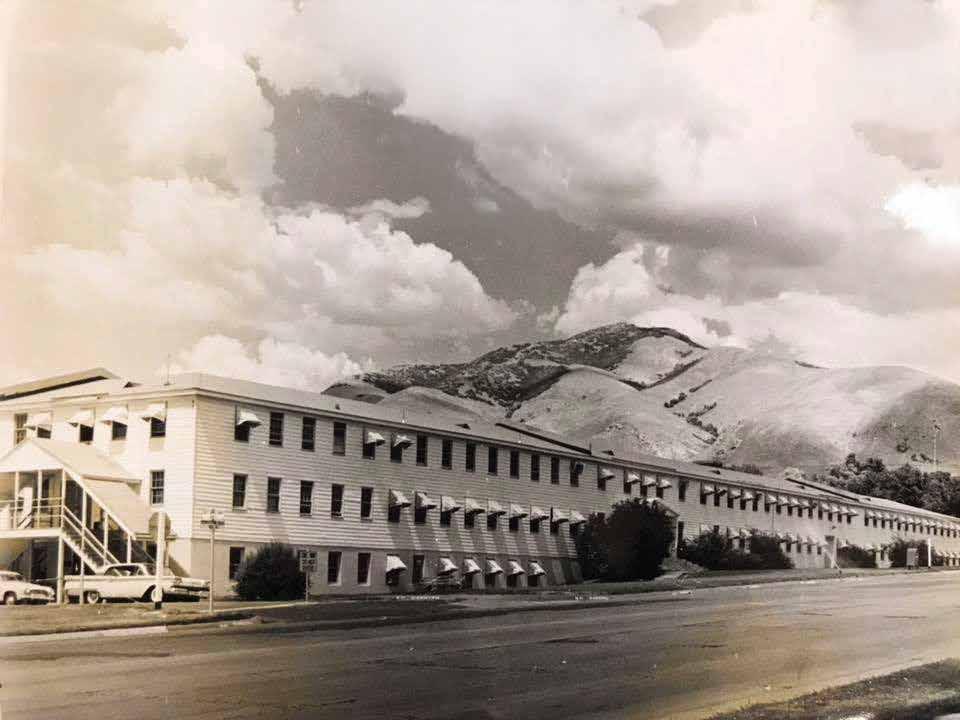
TMS therapy has been shown to help teens suffering from depression.
By Peri Kinder peri.k@thecityjournals.com
As a growing number of teens struggle with depression, some insurance companies are now providing coverage for transcranial magnetic stimulation, a technique proving to be more effective than antidepressant medications.
While the FDA initially approved TMS treatment for teens 15 and older in 2024, increased insurance coverage will allow doctors to help their younger patients in a meaningful way.
“It has been remarkable to see people of all ages find relief from depression and begin to enjoy life after treatment with TMS,” said Dr. Tom Rayner, a psychiatrist with NeuroHealth. “It has also been rewarding to watch them get better without the many debilitating side effects that medications can bring.”
NeuroHealth in South Jordan (10437 S. Temple Drive, Ste. 200) uses the NeuroStar TMS nondrug therapy to treat adult patients. As insurers expand TMS coverage to include teens dealing with depression, Rayner hopes to see young patients find lasting results.
TMS uses a magnetic pulse to activate neurons, increasing activity in the brain area to improve symptoms of depression. It is a noninvasive procedure, similar to an MRI. Many patients see results in less than one month of treatment.
Rayner said the treatment is safe with almost no side effects. Compared to the weight gain, sedation, fatigue,




nausea and diarrhea that commonly occur with antidepressant use, TMS patients might experience a mild to moderate headache during the first few sessions as the brain gets accustomed to the stimulation.
“Rates of depression and anxiety have increased among all ages, especially among teenagers and youth,” Rayner said. “TMS is specifically indicated for teens and other individuals suffering from major depressive disorder, a condition that contributes to sad or irritable moods, feelings of guilt and worthlessness, poor energy, poor motivation, poor sleep and appetite, loss of hope and even suicidal ideations.”
Insurers that now allow adolescent TMS treatment in Utah are United Healthcare, Aetna, Cigna, BCBS Federal Employee Plan, Regence BCBS and Select Health. Other insurance companies are currently holding reviews, evaluations and evidence assessments to determine if their TMS coverage will be expanded to teens.
The health policy team at NeuroStar, a premier manufacturer and developer of TMS technology, continues to educate insurers across the country that have not yet added adolescent TMS coverage. NeuroStar officials said while they can’t provide a specific timeline for expansion, discussions are ongoing and progress is being made.
“Adolescent coverage has already been added to several policies as a direct result of the health policy team’s advocacy efforts,” said NeuroStar Practice Development Manager Jessica Brown. “Some insurers initially expressed hesitancy or indicated they would not move forward with coverage; however, with continued engagement and presentation of clinical evidence, decisions have evolved over time.”

Insurance coverage expands to include TMS treatment for teens. TMS is a noninvasive therapy that uses magnetic pulses to stimulate nerve cells in the area of the brain that controls mood. (Photo courtesy of NeuroHealth)
Approval can’t come quickly enough for families of teens dealing with depression but Rayner is pleased insurance companies are seeing the benefits of TMS and providing assistance to cover the treatment. He advises parents to be proactive in getting their teen into treatment, whether that’s TMS or counseling.
“Don’t wait,” he said. “Get help immediately. TMS, medications or therapy all work more effectively earlier in the course of illness. The longer the treatment is delayed, the more difficult it is to get good treatment responses.”
For more information, visit NeuroHealthUtah.com. l









Warriors boys grab a 1-0 win against Roy March 5 to hand the new Warriors coach his first dub.
By Brian Shaw b.shaw@mycityjournals.com
Havingcoached boys soccer for several years at Cottonwood, the opportunity popped up for Brylee Harvest to take the lead job at Taylorsville last summer.
“I was literally coaching and preparing for another season with Cottonwood just two weeks ago. Ultimately, it came down to starting my life after much sacrifice and putting myself second for many years,” said Harvest last summer in an interview with City Journals.
The longtime Cottonwood coach and alum had just received his degree from the University of Utah a few months before that.
“I never wanted to leave Cottonwood and wish nothing but the best for them,” he added. “I was looking to transition into a teaching role for about a year and, unfortunately, Cottonwood was not in a situation to

provide a teaching job in the timeline I was looking for.”
So the Cottonwood alum accepted the offer from Taylorsville to become its boys and girls coach, along with a position as an educator.
The wild part? Coach Harvest wouldn’t be stalking the sidelines alongside his brother Bryce, who served as Brylee’s assistant on Cottonwood’s boys—and then the two flipped roles during the girls’ season.
The other catch? Taylorsville’s girls soccer season was set to begin within weeks of Harvest’s hiring.
“It’s certainly been surreal putting on blue and taking over the girls program only a month out from the tryouts,” said Harvest last summer.
The new Taylorsville coach still guided the girls to a respectable 6-8 record good for fourth place in a rugged Class 5A Region 4 and earned a No. 20 ranking and state playoff berth—led by three girls that netted eight, six and five goals, respectively.
boys to their first win in just his second game on the job March 5 versus Roy in a 1-0 thriller.
The Warriors boys also grabbed their first win in region play March 13 in a wild shootout, according to Harvest.
“The game had the best high school soccer has to offer. From the passion, drama and school pride in a rivalry, the atmosphere was outstanding,” Harvest said. “Going up two goals then conceding four straight goals tested our group to the brink.” Kearns scored the fourth goal to go up by two goals with just 7:35 minutes left.
“I think about everyone in the whole stadium thought the game was over except our boys,” Harvest said. “The amount of resiliency our boys showcased and the relentlessness to not quit or give in proved all the difference in the game. We knew when we got those two goals late to force overtime, we carried all the momentum heading into overtime and eventually PKs.”
highway that both schools sit on, between the two adjacent towns.
The Warriors lads also grabbed a 2-1 win by scoring late in the second half at West Jordan March 26, marking the first game Taylorsville has won on the road this season.
For Harvest, even if he had to leave his alma mater Cottonwood for professional reasons, this has marked an exciting time in his life.
“It’s been fun being in the building this year as a teacher and getting to spend more time with the kids outside of just soccer season,” said Harvest, who led the Cottonwood boys to several state playoff appearances during his time there.
For the 2025-26 season, the Taylorsville boys soccer team is: Adnan Kadic, Beckham Ford, Michael Scardina, Leo Winward, Luis Rico, Brett Bassett, Tanner Kimball, Javier Zamudio, Jack Tran, Brandon Turner, Geovanni Ruano, Gavin Lynes, Hyrum Palacios, Keenan Paxman, Lucas Celi, Micah Hicks and Angel Lazalde. The team is coached by Harvest and assisted by Leonardo Lazarte. l A new coach, a
Coach Harvest also led Taylorsville’s
Taylorsville (3-6, 2-4 Region 4) took a 4-2 victory in penalty kicks over the Cougs in this rivalry tilt affectionately nicknamed “The War On 54,” signifying the 5400 South









Like many communities across the country, Salt Lake County has felt the impact of the opioid crisis. In recent years, hundreds of people have died from opioid-related overdoses with fentanyl playing a significant role. It has affected families, strained our healthcare and public safety systems, and left too many people searching for a path forward. Opioids have devastated countless lives.
Several years ago, states and local governments across the nation took legal action against pharmaceutical manufacturers, distributors and retailers for the role



they played in fueling the opioid epidemic. Those cases resulted in national settlements totaling more than $50 billion.
Starting in 2021, Salt Lake County expects to receive over $91 million from multiple settlements to help combat the opioid crisis locally. The funds will be distributed over a 17-year period.
Unlike traditional tax dollars, these funds are specifically designated for ad-
the council works closely with the mayor’s office and a specialized opioid task force to evaluate and prioritize programs. Our goal is to invest in solutions that reduce reliance on the criminal justice system and create better long-term outcomes for those struggling with substance use disorders.
Last week, my colleagues and I approved a set of targeted programs designed to address this crisis in meaningful and measurable ways. These investments focus on what we know works and were shaped by input from public health experts, first responders and community organizations.
First, we are investing in prevention and education. This includes expanding school-based programs that help young people avoid substance use in the first place.
Second, we are strengthening treatment and recovery services. We approved funding to expand access to evidence-based care,
overdoses, and funding outreach programs that connect individuals to services before a crisis turns fatal.
These efforts are part of a long-term strategy to address both the root causes and ongoing impacts of opioid misuse in our community. To improve outcomes, we are also strengthening coordination across systems. This includes better data sharing and tracking how people move through law enforcement, jails, courts and other community programs. This will help us identify opportunities to intervene earlier, connect people to treatment and reduce repeat offenses.
To ensure transparency and accountability, a public-facing dashboard will begin to roll out starting June 2026.
The opioid crisis did not happen overnight, and it will not be solved overnight. But this funding from the lawsuit settlement provides an important opportunity to









Whenastronaut Neil Armstrong took those first steps on the moon, I had just celebrated my first birthday. I don’t remember either event, but the entire world held its breath as it watched Apollo 11 land, while I shoved my hands into a birthday cake.
That moon mission used less technology than your bathroom scale. It was basically human calculations, a slide rule and a Rand McNally paper map that guided those astronauts on the first lunar road trip.
We were told that space was the final frontier; space was the future. We learned that, like age and teenagers, space isn’t forgiving.
As a Murray High School senior, my home ec advisor wheeled a TV into the classroom to watch the Space Shuttle Challenger carry the first teacher, Christa McAuliffe, into space. We were speechless when the shuttle blew up at 46,000 feet. In February 2003, I watched the Space Shuttle Columbia disaster unfold as the spacecraft disintegrated on re-entry.
To say I was apprehensive watching the Artemis II mission launch to the moon would be an astronomical understatement.
On April 1, NASA perched the Orion space capsule atop a 300-foot rocket, one of the most powerful ever built. It launched a team of four astronauts 250,000 miles away from Earth, the farthest humans have ever traveled, discounting alien abductions, of course.
Unlike the catapulted station wagon that

somehow got us to the moon during Apollo missions, Orion uses autonomous navigation and extreme precision, carrying astronauts beyond low-Earth orbit for the first time in more than 50 years, traveling at speeds up to 25,000 mph.
It was the 10th manned moon exploration, or for conspiracy theorists, the 10th “faked” moon mission. The entire adventure was livestreamed so we could travel together.
Space exploration is equal parts wonder, technology and angst. During the 10-day moon trip, I endured galactic levels of anxiety. Launch sent my blood pressure soaring. My jaw clenched while they circled the moon on April 6, and my internal organs somersaulted during splashdown on April 10.
I was hyperaware that dreams explode and rockets fall apart.
Apollo missions were built on bravery, and America was racing to beat Russians to the moon. Now, Artemis is an international collaboration, one that should remind us we only sur-

vive this wild ride by working together.
In Greek mythology, Artemis is Apollo’s twin sister and goddess of the moon. It is an apt comparison: while the first moon missions had bro energy, the Artemis program continues the story in a wiser, more thoughtful way.
Women play key roles in the Artemis program. Besides the first female to fly on a moon mission, there are female science officers, mission leads and launch directors. In fact, for the first time in NASA’s history, the current astronaut class has more women than men.
If I could do math while enduring crushing g-forces and the stomach-dropping sensation of freefall, I would definitely have been in the space program. Instead, I appreciate the life of an astronaut from the comfort of my recliner.
Apollo gave us “One giant leap,” Challenger dropped us to our knees and Artemis refocused our gaze. These missions remind us to look to the stars, but also look to our beautiful, blue planet. We only have each other. We should start acting like it.
As I approach my next birthday, one I hope I remember, I raise a glass to the dreamers, the heroes, to the brilliant engineers in mission control and the fearless astronauts who explore new paths. It reminds us that even when the story goes wrong, we need to keep looking up.
Peri Kinder is an award-winning columnist and journalist who has written for The City Journals since 2004. She can be reached at peri.k@thecityjournals.com