See


SSL Mural Fest welcomes 11 new murals to the city.
Over the last nine years, dozens of renowned artists have painted 90 murals in South Salt Lake, with 11 of those added during the 2026 SSL Mural Fest. This year’s festival, on May 9, commemorated public art with the annual citywide celebration.
“We’re on track to hit 100 murals next year,” said SSL Arts Executive Director Britney Helmers.
For the event, SSL partnered with Sweet Streets to provide a bike ride through the city that stopped at each mural location. There were food trucks, vendors, a beer garden and city-sponsored booths for attendees to visit before heading out on the mural route.
The large-scale designs were painted by a range of diverse artists, including Birdcap, Katie Green, Mauricio Ramirez, Naomi Haverland and Shley. As the festival’s popularity grows, many of the muralists applied for several years before being accepted at this year’s SSL Mural Fest.
Illinois-based artist Ramirez brought a new artistic style to the festival, with his clean lines and geometric shapes. His piece, located at Concept Property Management (2801 S. Main St.), is a tribute to family, community and positivity.
“I wasn’t the best in algebra, but I was really good in geometry,” he said. “With this mural, I was aiming to create positive imagery. You know, when you drive by, you just get a good feeling from it. It’s very cheerful, and that’s something I wanted to bring to South Salt Lake.”
Festival goers used an online map to find their way around the new murals, either on foot,













Common Ground will be a column of rotating viewpoints that highlight specific feelings across the political spectrum, and it will always end with possible ways to come together.
There once was a giant sandbox where everyone could play together. It had dump trucks, shovels, sandcastle molds and one corner filled with cigarette butts from the high school teens.
Big Brother (BB) controlled the sandbox. He carried a clipboard and whistle, and discouraged others from playing. Although it belonged to the entire community, BB would chase people away, saying, “That’s just the rules,” which he had made himself, of course.
But Little Brother (LB) wanted to play. He tried to convince BB to give him just a small part of the sandbox to build sculptures with his friends. “What about this spot?” he asked.
BB clutched his clipboard to his chest and gasped. “That’s a very important place. That’s my transportation corridor. You can’t have it.”
Every spot LB suggested, BB drew a new line in the sand and explained why it just wasn’t feasible. That spot was BB’s economic area, and another spot was an important waterway. Soon, all that was left was the ashtray corner, but BB wanted control over that, too.
LB went to find Mom (who represents voters, the judiciary and common sense). She explained to BB that the sandbox belonged to everyone and LB could have his share.
and sand toys ever since, trying to overturn the Court’s decision.
Instead of a sandbox, we’re dealing with voting maps. Gerrymandering has shaped Utah’s leadership for decades, especially in creating congressional districts that look more like a sliced pizza than an equally divided constituency.
We can’t bury our heads in the sand and expect the majority leadership in our state to treat us fairly. In 2018, Utah voters tried to redraw the sandbox lines, approving a ballot initiative that would create an independent redistricting committee to create voting maps to avoid gerrymandering.
But Gov. Cox signed a different map into law that split Salt Lake County into four districts that could easily be controlled by Republicans. The new map ignored the committee’s recommendations, which would give Democrats a possibility of winning a Congressional seat.
Utah’s League of Women Voters filed a lawsuit, claiming the new map was a bunch of baloney. They won that case in 2024 when the Utah Supreme Court ruled that legislators could not override the voice of the people. But the majority leadership has been fighting for its maps
BB was furious and started throwing sand at Mom, calling her a bully. “You’re destroying the integrity of the sandbox!” he screamed. Then he spent the rest of the summer planning to steal back LB’s share.
The South Salt Lake Journal is a monthly publication distributed directly to residents via the USPS as well as locations throughout South Salt Lake. The views and opinions expressed in display advertisements do not necessarily reflect or represent the views and opinions held by Loyal Perch Media or the City Journals. This publication may not be reproduced in whole or in part without the express written consent of the owner.
© 2026 Loyal Perch Media, Inc.
PUBLISHER
Bryan Scott | bryan.s@thecityjournals.com
EDITOR
Travis Barton | travis.b@thecityjournals.com
ADVERTISING EXECUTIVES
Mieka Sawatzki | mieka.s@thecityjournals.com
Ryan Casper | ryan.c@thecityjournals.com
Marc Davis | marc.d@thecityjournals.com
CLIENT SERVICES
Lydia Rice | lydia.r@thecityjournals.com 385-557-1022
Common Ground: Gerrymandering should be illegal in every state because it skews voters’ rights and stacks the deck for whoever the majority party may be. Maybe instead of lawmakers crafting the voting maps, independent commissions can be tasked with creating fair districts for all states.
We’re told that every vote counts, but that’s not the case in gerrymandered states, on both sides of the aisle. Voters feel frustrated and unheard. I think we can agree our system is broken. Majority leaders in states, both Red and Blue, draw the voting maps, create the rules and decide which demographics get representation.
Could Utah take the high road and fix the system? Could we become a beacon of guidance and inspiration for the country in a time that feels heavy and dark? It’s a nice idea, we just need brave leaders willing to adopt meaningful change.
A diverse range of opinions creates effective solutions. Instead of one group deciding the laws, it strengthens our democracy to include voices from differing beliefs and experiences.
Gerrymandering eliminates divergent voices, creating a system of inbred and insipid decisions. That doesn’t sound like fair representation; that sounds like a power grab, no matter the party.
CIRCULATION COORDINATOR
Lindsay Andreasen | lindsay.a@thecityjournals.com Rack locations are also available on our website.
EDITORIAL & AD DESIGN
Stacey LaMont Ty Gorton
SOUTH SALT LAKE CITY JOURNAL
9500 South 500 West, Suite 205 Sandy, UT 84070
PHONE: 801-254-5974
In May, John J. Walker’s Common Ground article, “I can’t afford YOUR tax bill,” sparked a flurry of replies, including one from reader Christine. “I would agree that paying for infrastructure is important and it’s tough when your paycheck doesn’t go very far for all your hard-worked hours. I would disagree, however, about the derogatory generalization of Democrats being the brainless, doom-scrolling, rage-bating, vulgarity-writing party.”
Some commenters said they want their tax dollars spent on things like zoos, parks, and museums, and felt Mr. Walker’s column was “negative and angry.” Others felt people earning over $1 million should pay more into the system.
Readers expressed appreciation for the Common Ground concept, with the focus of bringing the community together, even when we disagree. However, reader Laura felt the tone of Mr. Walker’s op-ed didn’t fit that description. “I don’t see how the rudeness expressed in this article could achieve that goal,” she wrote.
A reader named Tyler summed up a prevailing sentiment when he wrote, “I think the [Common Ground] approach and voice is exactly what our community needs. I firmly believe that informing on political issues is a much-needed thing. I hope that the continued success of the column helps bring our community closer together!”
— City Journals Columnist Peri Kinder
MISSION STATEMENT
Our mission is to inform and entertain our community while promoting a strong local economy via relevant content presented across a synergetic network of print and digital media.
Designed, Published, & Distributed by

HEN YOU THINK OF PARKINSON’S DISEASE, a visible tremor might come to mind. However, the true experience often lies hidden beneath the surface – an “invisible struggle” impacting millions. This article highlights the complexities of Parkinson’s and advancements in care.
A common misconception is that all Parkinson’s patients experience tremors. This isn’t true; up to 20% do not. Additionally, Parkinson’s isn’t just an elderly condition. Young-Onset Parkinson’s Disease (YOPD) affects individuals under 50, with celebrity Michael J. Fox, diagnosed at 29, significantly raising awareness and funding for research.
As Dr. Sunil Rathore, a neurologist at Holy Cross Hospital – Salt Lake, emphasizes, “Many people believe Parkinson’s is solely a motor condition, defined by tremors and rigidity. However, that’s just one piece of a much larger and more complex puzzle. The non-motor symptoms – from sleep disturbances and anxiety to cognitive changes and chronic pain – can often be the most challenging aspects for our patients.”
The “invisible struggle” of Parkinson’s includes a wide array of non-motor symptoms impacting daily life, often appearing years before motor symptoms. These can include loss of smell (anosmia), REM sleep behavior disorder, constipation, depression, anxiety, cognitive changes, and debilitating fatigue. These realities profoundly affect well-being, turning simple tasks like dressing or driving into immense challenges and leading to social isolation.
While there’s no cure, significant advancements are improving symptom management and quality of life. Levodopa remains a cornerstone medication, with ongoing developments to optimize its effectiveness. Advanced therapies like Deep Brain Stimulation (DBS) and focused ultrasound offer new hope by precisely targeting brain areas responsible for motor symptoms. Emerging research explores disease-modifying drugs, gene therapy, and biomarker discovery. The Michael J. Fox Foundation has raised over
Women’s health care for every stage of you.
$2.5 billion for research, accelerating the search for a cure.
Dr. Rebecca H. Reiser, a neurologist at Holy Cross Hospital – Jordan Valley, states, “The landscape of treatment and support is constantly evolving. We’re seeing incredible progress in understanding the disease at a molecular level, leading to more targeted therapies and a renewed sense of hope for better symptom control and ultimately, a cure. Our goal is to empower patients to live full and meaningful lives.”
Living with Parkinson’s is a journey best not taken alone. Our community offers local support groups, specialized exercise classes, and educational events for patients and caregivers. If you or a loved one are experiencing any concerning symptoms, please consult a provider. Early diagnosis and proactive management are key. For more information, visit: mountain.commonspirit.org.
For more information or to find a provider visit mountain.commonspirit.org


Learn more about the services, care providers and mission-driven work of the Holy Cross hospitals and CommonSpirit Health at www.holycrossutah.org.

At CommonSpirit Health, we make the healing presence of God known in our world by improving the health of the people we serve, especially those who are vulnerable, while we advance social justice for all.

Women go through many changes in their lives. And we believe every milestone matters. Our health care experts can help you face your next phase with confidence – because each chapter deserves to be celebrated.
Find care near you at mountain.commonspirit.org.
MOSAIC Inter-Faith Ministries provides a sanctuary for those seeking resources.
By Peri Kinder peri.k@thecityjournals.com
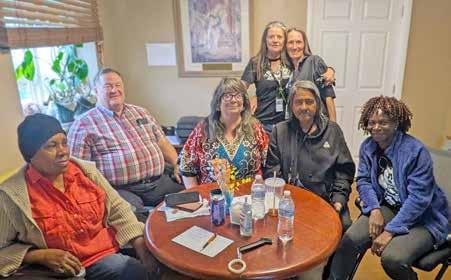
Hundredsof people make their way to the doors of MOSAIC Inter-Faith Ministries each week. The unassuming building in South Salt Lake offers much more than food and community; it’s a place where dignity is restored, worth is valued and hope finds a way.
MOSAIC Associate Director Jose Bonilla describes it as “an oasis, where we serve all continents of the world.”
Rev. Dr. Leslie Whited has been running the ministry for nearly 30 years. By offering community programs like the Manna Market and food pantry, the More Blue Sky Employment Center and the Green Waters Health Center, MOSAIC has become a gathering place for people of all ethnicities, religions and backgrounds.
Serving 1 out of every 25 Utah residents, the nonprofit provides in-home senior services, refugee integration and education basics for college education or employment. Thousands of volunteers dedicate time to build the community for good.
“If you participate in diverse service, you can’t help but love all people. It’s who you come to know and come to love, and I think that’s true here,” Whited said. “When people touch the face of MOSAIC, they’re transformed. Whether they come as a volunteer, a board member, or a client, they experience an uplift in their life.”
Located at 20 W. 2700 South, MOSAIC recently added a new case management focus to help expand services to the thousands of people who visit the nonprofit each year. A funding grant will cover costs for the program that allows MOSAIC to meet basic needs while addressing issues related to housing, employment, health and education.
Enobong Nissi is a community health worker at MOSAIC. She found the organization 10 years ago when her son
was trying to get a bus pass for public transportation. Now, her son has a job that allows him to travel all over the world.
“Education is number one. If we want to help people to live a full life by coming here all the time to get food, we need to talk to them about education and we have to help them get a job,” Nissi said. “Education doesn’t mean you have to go to college. It’s not a full life to come and get food all the time. There’s something better than that and that’s education, and that’s a job.”
MOSAIC’s services are supported by a dedicated group of volunteers who help run the Manna Market Drive Thru and the Manna Pantry, and jump in to assist when needed.
Mary Peery volunteers with MOSAIC. She joined the organization four years ago after retiring from the medical field. She felt isolated during retirement and wanted to contribute her time to a worthy cause.
“It’s a fun place for companionship, for friendships,” Peery said. “We all have different ideas, different ways of living our lives and it’s good to know everybody here.”
Like many service-oriented nonprofits, MOSAIC lost federal funding over the last year and relies heavily on donations from the public and state organizations. Items like new educational toys, blankets, sports equipment, books, household furnishings, healthy foods and cleaning supplies are always needed.
Contributions can be made online at lssu.org, or donations can be dropped off at the South Salt Lake location.
MOSAIC Inter-Faith Ministries is a member of several groups, including the Enriching Utah Coalition, the Salt Lake County Mayor’s Council on Diversity Affairs, the State of Utah Defendant/Offender Workforce Development Task Force and the Utah Voluntary Organizations Active in Disaster.
In 2021, the organization was honored by the Salt Lake Inter-Faith Round Table for its service to create a diverse Utah. It’s just one of a long list of awards for MOSAIC’s decades-long dedication to the community.
“We’re a big advocate for people of all sizes, ages and colors. I believe every generation has a gift to give, and the youth I’m involved with are very diversity-minded,” Whited said. “I’ve lived outside of Utah for several decades, but in Utah, I feel it’s a lot more diversity-oriented and it’s a lot more service-oriented than other places I’ve lived…It’s not transactional. It’s about grace.” l
South Salt Lake youth created a kindness-themed mural.
By Peri Kinder
peri.k@thecityjournals.com
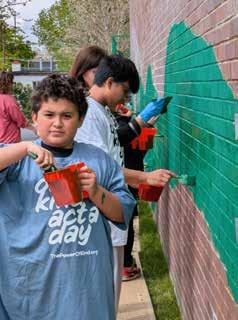
Fromconcept to creation, kids in the Promise South Salt Lake after-school program transformed a blank wall of the Central Park Community Center (2797 S. 200 East) into a spot of vibrant color. With help from local artist Shaandiin Powell, the kids painted the northwest wall of the community center, dedicating it to a celebration of kindness.
The mural’s theme, “Leading with Kindness,” depicts a community helping each other through good deeds. A collaboration with SSL, One Kind Act a Day and the Utah Division of Juvenile Justice and Youth Services aims to encourage the next generation of artists in the city and promote acts of kindness.
Hailey Miner, One Kind Act a Day program manager, said the organization helps coordinate service projects for kids in the Promise SSL program. She was able to assist with the mural design leading up to the painting event.
“Something I love about kindness is the ripple effect of it and how when you do one kind act, it motivates other people to be kind,” she said. “Even those small things make a big difference.”
Powell spearheaded the youth mural project. It was important for the muralist to get all the kids involved and to have them think about large-scale projects. She hoped the youth mural project would inspire students to uplift their community in creative ways.
Kids were allowed to voice their comments, suggest ideas and learn the behindthe-scenes effort it takes to paint murals on a large scale.
“With this being a community center, you want to make sure that everyone has the resources and can feel confident enough to do anything that they want to do,” Powell said. “It’s important for kids to know that they are capable of doing anything. Working with the kids is super awesome. It’s so cool to see what their perspective is on tackling a project like this.”
SSL Mayor Cherie Wood took part in the mural painting, a project that promotes SSL’s
“City of Kindness” status. By encouraging residents to do one kind act each day, Wood hopes the initiative will transform neighborhoods, schools, homes and businesses.
She said Promise SSL exposes kids to different opportunities and career paths, including becoming an artist or muralist. Wood was grateful for Powell’s dedication to working with students in the after-school program.
“We’re grateful she’s willing to take the time and teach the trade or share her art with any of our youth who might think that they’d like to do this when they get older,” Wood said. “It excites me that the kids will be able to see their art here and show their friends or their family. I think it’s something for them to be proud of, something for them to feel part of something bigger.”
The youth mural is one of 11 murals painted during the 2026 Mural Fest, a 10-year SSL initiative to add 100 murals to the city’s downtown neighborhood and surrounding areas. This year, artists from around the globe added their designs to bring the number of finished murals to 90. To see Powell’s art, visit her Instagram page @perhaps.knot. l
Continued from front page
by bike tour or on the free Fun Bus. Murals from previous years lined the route and most of this year’s artists were available to answer questions about their murals.
Haverland, a Florida artist, added her mural to the south side of Element Ring Co. (2890 S. Main St.), a company that handcrafts men’s rings. She wanted her mural, “Mr. Manly,” to give a nod to the business.
“My idea was a male version of a Dis-
ney princess, where he’s charming nature,” she said. “I wanted to have the irony of a super manly, burly man with a delicate butterfly and flowers.”
The creation of two murals included input from students at Woodrow Wilson Elementary and Central Park Community Center. Youth at both locations helped design the mural concepts that revolve around kindness. Students at Woodrow Wilson (2567 S. Main St.) created a variety of colorful characters that muralist Birdcap

painted on the side of their school.
Canadian artist Katie Green describes her art as surreal and fantastical. Her mural, found at Material Art Gallery (2990 S. West Temple), encourages viewers to see themselves in each character to find their own story in the painting.
“You’ll see lots of different characters in relationship with each other, but I like to leave it open for people to imagine themselves inside of it,” Green said. “I like to leave the meaning of it open. I’m really in-
terested in character development.”
Information about all 90 murals and the artists can be found at themuralfest.com.
“[The festival] has been super fun,” Haverland said. “I just love being with other artists at festivals and interacting with them. I learn so much and grow so much when I’m at a festival, because I’m seeing different methods that different artists are using and experimenting with. I end up learning a lot and picking up a lot of tricks.” l



Six county libraries serve meals six days a week.
By Peri Kinder peri.k@thecityjournals.com
Library branches in Salt Lake County aren’t just places for books and reading. Local libraries offer a welcoming community with access to information, technology, lifelong learning and, in some cases, a free meal.
The County Library’s Kids Café program provides a meal to any person 18 and younger, no questions asked. With six locations, the Café serves hundreds of children during a time when food insecurity is rising.
“It’s important to us that children and teens have access to nutritious meals that can support their health and ability to focus and learn,” said The County Library Public Relations Coordinator Marissa Hodges. “It helps to address food insecurity in the community, it provides them a vital resource and it helps parents stretch their budgets a little bit.”
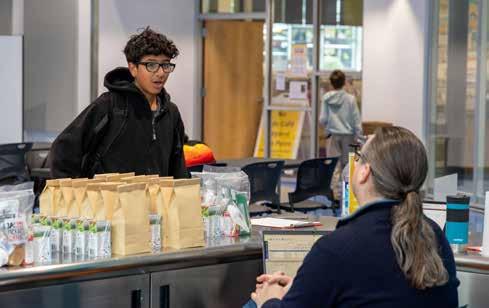
People 18 years and younger can get a free meal at six County Library locations, from Monday through Saturday. The Kids Café program has helped thousands of children over the years. (Jeffery Buydos/The County Library)
In partnership with the Utah Food Bank, the Kids Café is available Monday through Saturday at Midvale’s Tyler Library (8041 S. Wood Dr.), Hunter Library in West Valley (4740 W. 4100 South), Kearns Library (4275 W. 5345 South), West Valley Library (2880 W. 3650 South), Magna Library (2675 S. 8950 West) and Granite Library (3331 S. 500 East) in South Salt Lake.
The Kids Café is open at different times at each location, and some libraries also offer breakfast. Hours of operation can change, so check the County Library website at slcolibrary.org for details.
Hodges said librarians have received
positive feedback on the program, but patrons are sometimes upset that the meals are not available to adults. To address that, Kids Cafés have added a “share bucket” so any community member can access food.
“Sometimes we have extra food and if there’s food that kids don’t want, we have
started what we call a share bucket,” she said. “It’s a place where kids can put those unwanted items for anyone who needs or wants food. It’s available there for them to take. Many branches have started that and now community members contribute to it as well. It’s a way for us to offer food resources to folks beyond the 18 and under limit.”
Besides tracking inventory, staffing volunteers and breaking up the occasional food fight, the Kids Café program is an effective way to bring meals to children. It offers not only nourishment, but a safe place where kids feel a sense of belonging.
Hodges shared a story one of the librarians related to her, about a 12-year-old girl who wanted to give some of her food to a man in need.
“The girl picked up a meal and turned to a nearby homeless man and said, ‘You can get some if you’re hungry,’ she said. We then had to explain to her that the program was only for kids up to age 18. The little girl stared hard into the librarian’s eyes, wordlessly daring her to stop her as she passed her meal to the man. It was very moving.”
Hodges said the program has also strengthened trust in local libraries, opening people’s eyes to the possibilities a library offers. “We really are more than just books and movies. We’re a complete community resource.” l
City calls for a voluntary 10% reduction in usage through limited outdoor irrigation and infrastructure upgrades.
By Linda Petersen l.petersen@mycityjournals.com
Following a dry winter and ongoing drought conditions, South Salt Lake City officials have issued a Level 2 water restriction to align with the Jordan Valley Water Conservancy District. The move aims to protect the community’s water supply by asking all residents and businesses to reduce their total water consumption by 10%.
The current measures emphasize community-wide cooperation over strict mandates.
“This is a voluntary call to action and requires all community members to play their part. The easiest way for people to reduce water use is to reduce the amount of irrigation they are using,” city spokesman Joseph Dane said.
Focus on outdoor irrigation
As summer heat approaches, city officials are targeting outdoor watering as the primary area for savings. In Utah, more
than 60% of residential water use occurs outdoors. To meet the 10% reduction goal, the city is asking residents to water no more than one to two times per week this summer.
For those worried about the aesthetics of their yards, Dane offered reassurance regarding the local climate’s most common grass type.
“The vast majority of our residential grass is cold weather Kentucky bluegrass, which means it goes dormant during the summer months. Just because it browns does not mean it’s dead,” he said.
For those looking for a more permanent solution to high water bills, city officials suggest transitioning to waterwise grass seed, which is available for purchase at City Hall.
Leading by example
The city is also implementing internal changes to mirror the expectations placed on residents. This summer, South Salt Lake is partnering with Slow the Flow to convert 1,500 square feet of nonfunctional turf at the South Salt Lake Community Center into a waterwise landscape. Planting for this project is scheduled for the fall.
Beyond landscaping, the city is aggressively monitoring its own infrastructure. Using the EyeOnWater tool, staff members are monitoring city meters to address

leaks immediately.
Residents may notice more brown grass on city property this year as officials reduce watering on nonfunctional turf, excluding high-traffic recreation areas like Central Park and Fitts Park.
Infrastructure maintenance remains a critical component of the city’s long-term conservation strategy. To prevent water waste from main breaks, the city budgets annually to replace approximately 3,000 feet of aging waterlines.
“New water line helps reduce the likelihood of water main breaks. Waterline replacements are planned for Burton Avenue, 300 West, Utopia Avenue and Truman Ave-
nue, pending funding,” Dane said.
Residents can check the city’s construction page for updates on these projects.
While some neighboring municipalities are enacting strict ordinances such as prohibiting turf in park strips to address ongoing conditions, South Salt Lake is currently sticking to its existing code.
“We are monitoring what other municipalities are doing and considering possible changes,” Dane said.
However, existing rules will be more strictly enforced. The city currently has an ordinance prohibiting outdoor irrigation between 10 a.m. and 6 p.m.
“We are one of few cities that has a daytime outdoor irrigation restriction ordinance, so our Code Enforcement team is monitoring if people are watering outdoors during the day, 10 a.m. to 6 p.m., and will be issuing warnings and citations this year,” Dane said.
Should conditions worsen, the city is prepared to escalate.
“As a member agency of the Jordan Valley Water Conservancy District, South Salt Lake will increase their water restrictions if the district does,” Dane said. “If they move to Level 3 we will follow suit.”
Residents can find resources, including information on rain barrels at www.sslc. gov/water. l
City declares its intent to join the Community Clean Energy Program.
By Linda Petersen l.petersen@mycityjournals.com
South Salt Lake is preparing to join a landmark clean energy initiative that promises to transform how local homes and businesses are powered. Through a formal resolution expressing its intent to join the Community Clean Energy Program, on May 13 the city council signaled its commitment to achieving net-100% renewable electricity for its residents.
The program, also known as Utah Renewable Communities, is a partnership between Rocky Mountain Power, the nonprofit Utah Clean Energy, and 19 other Utah municipalities and counties. These communities have spent years collaborating to create a framework that allows local governments to advocate for cleaner air and sustainable growth without compromising grid reliability.
The groundwork for this program was laid with the Community Renewable Energy Act in 2019. In March 2026, the Utah Public Service Commission officially approved the program’s implementation. With this resolution, South Salt Lake officials have indicated their intent to join the ranks of cities like Salt Lake City, Ogden and West Valley City in this new program.
By participating, the city joins a collective that represents approximately 25% of Rocky Mountain Power’s total market in Utah, creating significant leverage to shift the regional energy mix toward greener sources.
By pooling the demand of thousands of Utahns, the Community Clean Energy Program is designed to fund the construction of massive new wind, solar and geothermal projects across Utah, Idaho and Wyoming. This would replace the need for homeowners to install expensive solar panels on their own roofs.
Instead of relying on existing renewable credits, the program focus is on “additionality”—meaning it directly results in the building of new clean energy infrastructure that would not have existed otherwise. The program’s ultimate goal is “net-100%”—so for every kilowatt-hour of electricity consumed by participating residents in South Salt Lake, an equivalent amount of clean energy would be generated and added to the regional grid. This ensures that while residents still enjoy the stability of the traditional power grid, their total annual energy footprint is offset by carbon-free generation.
Under this change, later this year every Rocky Mountain Power customer in South Salt Lake will receive official notices via mail detailing the program. These notices will explain the new rates and the simple process for opting out. This communication
phase is required by the state to ensure every ratepayer is fully informed of their choices before any changes appear on their monthly statement.
For the average household, the cost of this switch is estimated at an additional $4 per month. Nonresidential and commercial customers will pay a rate based on their usage—approximately $0.00609 per kWh. For a typical medium-sized business, this represents a modest increase of about 5%, a predictable cost that many local businesses see as a worthwhile investment in the state’s environmental health.
By early 2027, the program will officially launch, and customers will be automatically enrolled. Participation is voluntary; those who prefer to remain on their current rate plan can opt out at any time. Organizers emphasize that the transition is entirely administrative for the user—no new equipment, wiring or home visits are required.
A portion of the fees collected will support a low-income credit program so eligible households can participate in the transition to clean energy at no additional cost. This component was a key part of the 2019 legislation, so that the benefits of reduced emissions and modern energy infrastructure would be accessible to all residents, regardless of their economic status. l






Longtime South Salt Lake City resident focuses on advocating for family-friendly neighborhoods and supporting the city’s youth.
By Linda Petersen
l.petersen@mycityjournals.com
South Salt Lake’s District 1 now has a familiar face at the city council table. Joy Glad was appointed on Feb. 25 to fill the seat left vacant by LeAnne Huff after Huff’s resignation. After an interview process that included five candidates—including Aaron Tate, Charles Connelly Jr., Laurie Robinson and Leo Shivers—the council chose Glad to represent the neighborhoods she has called home for over two decades.
Glad is no stranger to the area or to civic service. She and her husband, Max, who works as a radiation technologist at the University of Utah, bought their home in District 1 back in May 2001 and they now live there with their child, Finn, a student at Olympus Junior High. Since moving in, Glad has been a constant presence in the community, leading to her being named South Salt Lake’s Citizen of the Year in 2023. Before joining the council, she spent four years as the chair of the South Salt Lake Civilian Review Board, a role that deepened her understanding of local governance and public trust, she said.
For Glad, stepping into this new role felt like the natural next step in her commitment to her neighbors.
“My primary motivation for applying for this is that I want to be able to work with
the people here,” she told the South Salt Lake Journal. “I understand my community. I’ve talked to them and I want to be there to advocate for them in what this community needs.”
Professionally, Glad has operated her own business, Dynamic Safety and Environmental LLC, out of her home for nearly nine years. As a consultant with a Master’s degree in Occupational Safety and Health, she helps small businesses stay up to date with complex safety and environmental rules. She believes this business background is a major asset for a city leader.
“I understand how to balance budgets, manage resources efficiently, and make decisions that support both growth and sustainability,” Glad said.
She also noted that being a small business owner provides a unique perspective. “I have that perspective of the business owner, and I think it gives me a different way to look at the facts where other people are working in corporations and don’t understand that ‘ground root’ mentality that business owners have.”
Safety is more than just a career for Glad; in her new role as a councilmember, she wants every resident to feel secure in their surroundings, she said. “I believe that people deserve to have safe homes, safe streets to walk on, safe libraries, safe playgrounds.”
This philosophy extends beyond physical infrastructure to the general well-being of every resident, ensuring that the city remains a place where families can flourish and feel a sense of belonging.
Glad is also a staunch advocate for the city’s investment in its younger generation through programs like Promise South Salt
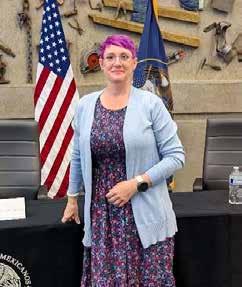
directly from the people she represents. These informal daily interactions allow her to catch the “pulse” of the neighborhood in a way that formal meetings sometimes cannot, she said.
“I love my community. I love the neighbors,” Glad said. “I think they’re some of the most awesome individuals anybody could ever meet, and I do believe that they deserve the best.”
Glad chose to apply for this position to give back to the place that shaped her family’s life. She recalled her interview for the Civilian Review Board when she told officials, “It’s my turn. People have supported me for many years. It’s my turn to support them.”
Glad describes herself as someone who values deep research: she doesn’t like to take projects at face value, preferring instead to dig into the “nuts and bolts.” This analytical approach helps her weigh information carefully before every vote.
Lake. She previously served on a board for the initiative that studied the obstacles preventing students from graduating high school.
“I love that program,” she said. “I think it’s going to help our kids be better off than other generations have been.”
District 1 stands out as one of the most residential sections of South Salt Lake. While two-thirds of the city is dominated by industry, Glad’s “neck of the woods” is filled with families. She spends much of her time walking and running through these streets with her dog, which she says is the best way to hear
Outside of City Hall, Glad is an adventurer who enjoys mountain biking and paddleboarding. She finds that spending time in Utah’s natural beauty helps her maintain the energy and positive attitude she brings to her civic duties.
Glad’s current term runs until Jan. 3, 2028, and she plans to run for the seat officially in the next election. For now, she remains focused on being an open door for her neighbors in District 1.
“I will gratefully listen to their comments and concerns and weigh that information to make sure this district gets what it needs,” she said. “I will always be learning so that there’s improvements, so that I’m always making improvements within myself.” l
Eighth-grader Holland Smith, accompanied by Granite Superintendent and Chief of Staff Ben Horsley, partook in superintendent duties— meetings, socializing and working alongside faculty.
By Lizzie Walje l.walje@mycityjournals.com
Aneighth-grade student from Wasatch Junior High School recently stepped into the role of Granite School District superintendent, when she participated in the district’s’ “Superintendent for a Day” election. In an effort to mirror real-world practices, Granite modeled the selection process after the district’s official hiring procedures. It was through this mock hiring process that Holland Smith was ultimately chosen as Granite’s student superintendent for the day.
Following her nomination, Smith underwent a competitive selection process that included delivering a speech and participating in a formal panel style interview. The interview panel consisted of actual district leaders and members of the Granite Board
of Education. Granite modeled the interview process after that of an actual superintendent candidate in order to further cultivate the legitimacy of the experience.
“During her day in the role, the student will work alongside Superintendent (Ben) Horsley, gaining firsthand experience in district leadership and decision-making. Her schedule will reflect a full day in the life of the superintendent,” Granite School District stated in a release.
Smith began the day alongside her friend and fellow Wasatch student, June Beyon, who she selected to serve as her “Chief of Staff.” The two students stepped into these leadership roles designed to reflect the responsibilities carried out by district administrators on a daily basis.
In reality, superintendents act as the top administrative leaders responsible for managing public school districts, while a chief of staff serves as a senior advisor to the superintendent and often assists with managerial and organizational responsibilities. In Granite School District, Horsley currently holds both superintendent and chief of staff positions, though the roles are typically considered separate.
Smith and Beyon began their day at Wil-
son Elementary School, where they attended a faculty meeting. During the meeting, Smith and Beyon presented checks to outstanding Wilson educators. From there, the day proceeded with a series of meetings, student interactions and conversations with district officials, board members and student body officers.
Later in the day, Smith and Beyon attended a Salt Lake Bees game, where they joined a group of fifth-grade students before handing out souvenir baseballs. Following a lunch at Chickfil-A, Beyon and Smith continued their tour of the district, visiting Calvin Smith Elementary School and Bennion Junior High School. The day’s festivities concluded, as they often do for actual Granite School District superintendents with another meeting.
“This experience provides students with a unique opportunity to see leadership in action and understand the responsibilities of running a large school district,” Horsley said. “We are excited to have such an outstanding student represent her peers in this role.”
Smith spoke positively about her experiences. “Today I’ve been able to be superintendent for the day. It’s been such an amazing experience, learning what goes on
behind the scenes. It’s been such an amazing opportunity, and I’m so glad that I was able to do this today.”l
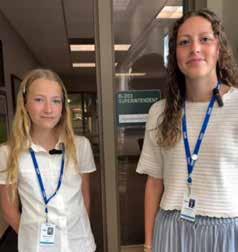
Holland Smith and June Beyon, both students at Wasatch Junior High School, participated in Granite School District’s mock superintendent day where they served as student superintendent and chief of staff, respectively. (Granite School District)



SSL’s Open Air Art Gallery P.2 Volunteer Opportunities P.3 Main Street Improvements P.4
Cherie Wood, Mayor 801-464-6757 mayor@sslc.gov
Monday - Friday • 8 am to 5 pm 801-483-6000
220 E Morris Ave, SSL, UT 84115
City offices and community centers will be closed on June 15 in observance of Juneteenth.
For more info: www.sslc.gov CITY COUNCIL
Wednesdays, June 10 & 17, 7 pm
FY 27 Budget Public Hearing to be held in June.
PLANNING COMMISSION
Thursdays, June 4 & 18, 7 pm
CIVILIAN REVIEW BOARD
Monday, June 1, 6:30 pm COMMUNITY CONNECT
Wednesday, June 17, 9 am
South Salt Lake has too much news for one newsletter.

Sign up for monthly e-newsletters to get the full scoop on the topics that you care about most. Visit sslc.gov or scan the QR code.

For nearly two decades, Promise South Salt Lake has empowered young people across our city to build brighter futures. What began in 2008 as a community response to tragedy has grown into a citywide network of programs that supports our youth and their families each year. Through free afterschool programs, tutoring, mentorship, enrichment activities, and family support services, Promise provides a safe and welcoming environment where young people can learn, grow, and prepare for the future. Every day, students receive homework help, participate in art, STEM, recreation, and service learning activities, and develop the skills and confidence that carry them forward in school and in life.
Promise recently reached an important milestone with the creation of the Promise South Salt Lake Foundation, which now holds a 501(c)(3) designation. This new nonprofit status allows the program to pursue grants and philanthropic funding to expand opportunities and services for our youth and families.
“Advancing Opportunities for Adolescents” is a new, multi-year project made possible through a grant from the Wallace Foundation, a national organization focused on improving outcomes for young people. This investment will reimagine and strengthen a youthcentered system, helping Promise expand its work to better serve middle and high school students during these years. You can learn more about the Promise South Salt Lake Foundation and ways to support this work by visiting the new department website at promise.sslc.gov.
The growth and impact of Promise South Salt Lake are also part of an important conversation happening in our school community. For more than 100 years, Woodrow Wilson Elementary has been a gathering place for families, a center for learning, and a cornerstone of South Salt Lake. Named for the nation’s 28th president, who passed away shortly before the school
opened in 1925, the name has served the school for generations. Now, the Granite School District and the local school community are exploring a new name that reflects the collaborative spirit of education taking place there today.
When the Granite School District reached out for input, we were delighted they were considering Promise Elementary as the new name. The school has been connected to the Promise network since the start, helping support their youth and families.
Promise South Salt Lake was built on the notion that we–as a community–have a responsibility to our youth and that we promise to do everything we can to be there for them and offer them the same opportunities as any other student.
That promise is reflected in the diversity and strength of the families who make up the school community. The collective “promise” represents the idea that every child—no matter their background—deserves access to opportunity, encouragement, and a pathway to success.
The success of Promise is built on partnerships and collaboration between our schools, our city, and the many organizations that support this work, including Promise Partnership Utah and United Way of Salt Lake. Together, we will continue our promise to our youth and to our community!



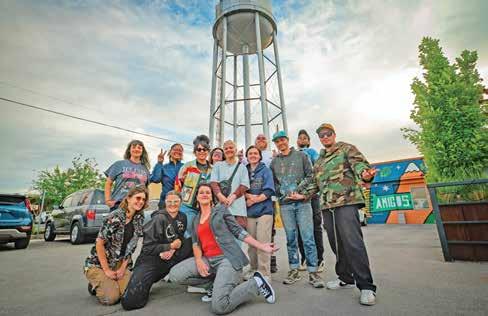
Mural Fest 2026 was a success! This year’s event brought 11 new murals to our city, bringing our grand total to 90. On Saturday, May 9, thousands of people came to downtown South Salt Lake to see the new works of art, listen to live music, and connect with our creative community. This influx provided a boost to our local businesses, and solidified South Salt Lake’s reputation as a cultural destination in the Salt Lake Valley.
Switching your sprinkler heads to rotary nozzles (multi-trajectory, multi-stream) can easily help you reduce grass water use by 30%. Because the water is applied more slowly, more water is able to soak into the soil. This is ideal for the clay soil type in our city. They help prevent runoff, save water, provide more uniform coverage for your lawn, and are better for windy conditions. You can ask us your landscape questions with our online form at sslc.gov/water.

South Salt Lake recognizes residents who go to great lengths to cultivate beautiful, waterefficient yards. Winners of the Beautiful Yard Award will receive an honorary yard sign, a $300 giftcard to Millcreek Gardens, and bragging rights that last all year long. Nominations are now open to recognize a friend, neighbor, or even yourself! Submit a nomination by visiting sslc.gov!



Thank you to all who came out to celebrate public art in South Salt Lake! If you missed this year’s event, you can still find information about all of the 2026 murals, as well as the 79 murals from years past, by visiting sslarts.org/the-murals.









Freedom Fest

Volunteers Needed
Help our shelter animals by weeding and picking up trash. Coffee and bagels provided!



Parade Registration Open Now!
Visit sslc.gov or scan the QR.

Friday, June 12. 9 - 11 AM
South Salt Lake Animal Services
2274 S. 600 W.


Scan the QR or visit sslc.gov to register









Main Street recently received much-needed upgrades in South Salt Lake! The thoroughfare got a micro surfacing treatment to improve longevity of the road, as well as a makeover with new bike lanes and a middle turn lane. These improvements mirror the lane configuration of Salt Lake City on the other side of 2100 South, creating a seamless continuation of bike lanes, and making our road safer for all modes of transportation.


Starting in May and lasting through the end of the year, construction will take place along West Temple from approximately 3900 S to 2700 S to install a new water line. Traffic will be limited to one way northbound, and bike lanes will be closed. Please be safe by slowing down in construction zones and follow traffic control and detour signs. We will work with businesses to accommodate public access points and deliveries. See our construction page at sslc.gov/construction for details and updates on all city construction projects.









Awards ceremony recognizes the dedication of volunteers, school staff and educators.
By Collette Hayes c.hayes@mycityjournals.com
With 80,000 members statewide, PTA volunteers are the superstar volunteer heroes who tirelessly champion all children, helping make every child’s potential a reality by empowering and engaging families and communities.
Utah PTA is the nation’s largest child advocacy group, with 80% of Utah schools participating, which far exceeds the national average of 20% to 30%. Utah PTA members contributed an astonishing $17,237,060 in volunteer service hours in 2025.
This commitment to advocacy and service is evident in Utah PTA’s impact statewide. The Utah PTA’s dedication to supporting public-school children played a significant role in Utah achieving the highest national ranking for community life by the 2025 Social Capital Index (Utah Foundation). The index comprises eight measures, each evaluated on a scale from 1 to 50. Utah ranked first nationwide in charitable donations, volunteerism and neighborhood participation.
Reflecting this statewide spirit of dedication, in March, the Region 5 Cottonwood Council PTA, which serves Granite School District schools, held an awards ceremony at Cottonwood High School to celebrate the commitment of volunteers, school staff and educators who strive to create excellence for every child.
Participants included Granite School District principals from all six schools in the
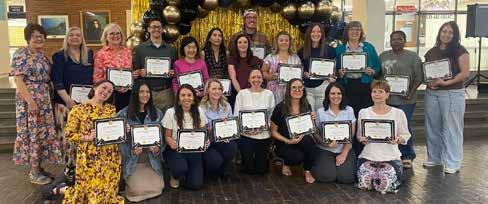
network. In addition, mayor and councilmember representatives from Millcreek, South Salt Lake, Murray and Holladay were present.
Keynote speaker Robyn Ivins shared her 23-year journey as a PTA volunteer beginning from serving on the PTA board at Woodstock Elementary to being a contributing founder and longtime volunteer at the Cottonwood High School food pantry which serves over 100 students each time it opens.
“We opened the food pantry in January 2017,” Ivins said. “We’ve served thousands of students and their families since then. We offer school supplies, hygiene products and food. Parents are also invited, and often kids come with a list from their moms to do the shopping. It’s a magical place.
The Cottonwood Food Pantry and Teen Center came about because regular people in the community cared that kids have access to a place to shower if they don’t have access to a shower, a place to do laundry, and a place to do homework. Kids in need also have access to mental health resourc-
es. Connection to community and school helps kids succeed. An amazing group of people worked hard to secure $750,000 for this facility.”
The evening concluded with remarks from Cottonwood High School Principal Justin Pitcher, who emphasized the significance of the Spirit of Inclusivity Award as one of the PTA’s highest honors. This award recognizes individuals who welcome families, advocate for every child, and collaborate with the school community to support student success. Pitcher explained, “Being a member of the PTA means you are an advocate for academic literacy and support; you care about students’ sense of belonging in their schools, and ultimately you care about ensuring that kids know someone cares about them.”
This year, the PTA honored Lupe Herrera with the Spirit of Inclusivity Award for helping the Moss PTA represent the diverse voices of the Moss Elementary community. Her ongoing commitment ensures families feel respected, seen and supported at Moss. l
The Cottonwood Council PTA award recipients for 2026:
Millcreek
Moss Elementary
Lupe Herrera – Spirit of Inclusivity
South Salt Lake
Woodrow Wilson Elementary
Andrea Arcos – Outstanding Volunteer
Anne Marie Pace – Development
Holladay Oakwood Elementary
Jenette Stewart – Development
Debra Larsen – Outstanding Support Staff
Lu Yan – Outstanding Elementary Educator
Megan Carter – Spirit of PTA
Mistie A’Hearn – Outstanding Volunteer Bonneville Jr. High
Alyssa Longstaff – Outstanding Administrator
James Reese – Outstanding Secondary Educator
Lyndsie Anderson – Outstanding Volunteer
Maren Erickson – Outstanding Support Staff
Stacy Wood – Advocacy
Tiffany Woods – Development
Murray Woodstock Elementary
Melissa McQueen – Outstanding Administrator
Antonia Salinas Ventura – Outstanding Support Staff
Brynn Richards – Outstanding Volunteer
Natalie Bradley – Spirit of PTA
Cottonwood High
Michelle Call – Engagement
Ashley Snarr – Outstanding Administrator
Andrew Strauss – Outstanding Secondary Educator
Melisa Carpenter – Outstanding Volunteer
Teisa Linscott – Spirit of PTA
Local nonprofit jumps in to help, asking for donations.
By Peri Kinder peri.k@thecityjournals.com
Although Granite School District has some of the lowest school lunch fees in the state, the District’s lunch debt has grown to nearly $1 million. Schools on the west side seem to have been hit the hardest, with West Valley’s Granger High racking up nearly $73,000 and Beehive Elementary in Kearns approaching $15,000.
GSD Director of Child Nutrition Dana Canino oversees the District’s vast lunch program that provides 7,500 breakfasts and 24,500 lunches each day. Even with lunch debt, no child is denied a meal but Canino wants parents to know they can apply for free or reduced lunch anytime during the year. In fact, for the last decade, students who qualify for reduced lunch have been given meals at no charge.
“We were awarded grant funds to con-
tinue doing so through the state of Utah,” she said. “So we’re going to continue that program. We also provide universal free-ofcharge breakfast to approximately 80% of our students.”
As GSD’s current school lunch debt exceeds $940,000, the Utah Lunch Debt Relief Foundation is bringing awareness to the problem and raising funds to help cover some of those costs. The organization just paid off lunch debt for its 41st school and paid off the entire debt for schools in Lehi with a $52,000 donation.
For UTLDR Executive Director DJ Bracken, the GSD situation hits close to home. As a Kearns resident, he discovered many schools in his community have thousands of dollars of lunch debt.
“I understand the incentive the schools have to get this money paid, because if they don’t, it’s the money for teachers, field trips and school supplies,” Bracken said. “That’s the money that ends up covering this debt. Literally, the money that’s paying people’s
salaries. It’s not like they can just magically summon the money.”
GSD does have recourse to recoup some of those costs. Once a student leaves the District, the lunch debt is sent to a third-party debt collector, or if a student’s debt reaches $500, that is also turned over to a collector.
While it is true that seniors cannot walk during graduation if they have lunch debt, GSD uses donations to pay those students’ debts first, so they can walk with their class.
“For the last several years, our senior student balances have mostly been paid off through very generous donations,” Canino said. “When we take in nonspecific donations, donations that aren’t tied to a specific school or specific grade, we concentrate first on applying those to our graduating seniors to help them.”
GSD has some of the lowest school lunch prices in the state, with daily fees costing $1.50 for elementary schools, $1.65 for junior high and $1.75 for high school. But even with low lunch prices, struggling families deal with an uncertain economy, which
contributes to the debt.
Canino said applying for free or reduced lunch is the best way to help families moving forward, and it benefits the District.
“We want parents to apply because it doesn’t just count towards lunch, it can help the schools retain other funding. There are also additional benefits from private companies that offer benefits to families and households that have qualifying indicators,” she said. “We work hard over here to take care of the students and feed them meals so they can prepare for studying and learning.”
For those who would like to help pay off school lunch debt, visit Utldr.org. Donors can also select a specific school for their donation. Bracken said another way to help is to contact him to organize a fundraising event for a school.
“They can contact me through my website, and often I’m able to get businesses around the state to give 100% matches,” Bracken said. “Maybe we can come together as a community and cover one school at a time until suddenly we’re covering the entire state.” l
Colts go 15-10 on the season, 10-4 in Region 10 action.
By Brian Shaw b.shaw@mycityjournals.com
To reach 10 wins was something the Cottonwood boys volleyball team did, last season.
To get to 15, though, was a milestone that the Colts had never achieved, reaching it by season’s end.
For this team laden with juniors and seniors, Cottonwood under head coach Jean Sutterfield said it achieved more than it had, ever.
“So proud of these boys and everything they’ve poured into this season,” said Sutterfield in part. “Your hard work, leadership and heart have made a lasting impact on your team and everyone cheering you on.”
The 2025-26 season didn’t begin as smoothly as any of the Colts might have wanted, dropping their first two matches of the season.
The latter was a marathon 25-22, 23-25, 23-25, 25-19 and 12-15 five-set slugfest loss at home against West Jordan March 4 that sent a clear message to everyone that Cottonwood would be one tough veteran bunch to deal with, win or lose.
From there, Cottonwood (14-10, Region 10 10-4) served up four straight wins and veered right into Region 10 play March
12 with a straight-set victory at Park City March 12. That win was as emphatic as anything the Colts had done to that point: 25-22, 25-19, 25-22.
Other than a tough setback against rival Murray on March 17, the Colts kept rolling, reeling off six consecutive victories over the next 10 days to reach 10 wins by March 27.
Going into a weekend nonleague tournament March 28-29, Cottonwood had a 10-4 record overall.
Would they keep it going?
Not immediately. The Colts dropped all three matches that weekend, and another March 31 to Highland in region play.
Aside from having been swept by rival Murray and Highland, Cottonwood did not lose another game in region play the rest of the season. The Colts earned the No. 16 seed and a first-round home game against Cedar, the No. 17 seeded team, in the 4A state tournament.
Cottonwood dropped the first two sets, 18-25 and 14-25. But, the Colts kept their state hopes alive in the third by serving up a 25-15 triumph in do-or-die mode. Their season would end, however, in the fourth set to Cedar, falling by the score of 19-25.
Though it probably wasn’t the kind of ending the Colts hoped for in that 18-25, 1425, 25-15, 19-25 loss to Cedar, Cottonwood grew up as a program, posting its first winning season in school history along with its best-ever record.

Still and all, to end March with a 10-8 record against the caliber of competition Cottonwood had been playing was commendable. To have defeated teams in a higher classification such as Granger and Taylorsville in 5A and allow each school to win one set in doing so and then almost dispatch another 5A team in West Jordan displayed the grit and fight the Colts showed throughout the season.
And then to go 5-2 in April and only lose twice, once in region play and again in the state tournament, and increase their win total by five from the previous year, displayed the upward trajectory this program has had over the past two years.
Seniors told the first part of the story.
Outside hitter Ray Davidson doubled his kills total with 163. Middle blocker Ayden Pluas had 34 blocks. Libero Abdul Asad averaged three digs per set, and setter Brandon Rocha, one ace.
Juniors had their say as well. Outside setter Hunter Engebretsen ranked in Cottonwood’s top three in both total aces and aces per set and led the Colts in assists with 161. Conner Sandusky was second on the team in kills and aces as an outside hitter.
All told, Cottonwood’s versatility showed that the Colts have some real firepower on their roster, and, though they are losing a few key pieces to graduation, they could be a factor next season. l
Mourning personal loss, uncharacteristic fielding errors and player injuries plagued this Colts senior-laden squad for most of the season.
By Brian Shaw b.shaw@mycityjournals.com
Going into Cottonwood’s game against Juan Diego Catholic April 7, the Colts baseball team looked like they were again ready to contend for the Region 10 title.
After giving up two runs to Juan Diego in the top of the first inning, and playing good defensive baseball through the next two innings, Cottonwood poured on five runs in the bottom of the third, including a rare three-run home run from senior Kingston Griffin, only his second all year.
The Colts won by getting six more runs in the bottom of the fifth in a 12-3 victory that felt like they were turning a corner.
The next day is when the horseshoes fell off, for Cottonwood got blanked by Juan Diego 7-0. Held to just two hits, the
Colts coughed up six of their seven runs between the third and sixth innings.
At home against rival Murray April 10, the Colts held their rivals scoreless through four innings and got two runs courtesy of a RBI single from senior Zane Wayman in the bottom of the fourth. Cottonwood seemed to be manufacturing the runs it needed, but in the top of the fifth Murray scored five runs, putting the Colts in a hole they couldn’t climb out from.
Four days later at Murray though, Cottonwood poured on five runs in the top of the fifth and sixth innings to retake the lead at 5-3, April 14. College-bound senior Milo Crayk did enough to keep the Colts in it on the pitcher’s mound allowing nine hits despite watching his team commit six fielding errors, and fellow senior Porter Stonebreaker got the save in Cottonwood’s 5-4 victory.
Those errors tend to catch up with you, however, and that’s exactly what took place at home against East April 15. Playing two in two is always taxing on the body. Despite getting 10 hits and doubles from both
Stonebreaker and sophomore Quinn Mendenhall, and a furious Colts rally in the bottom of the seventh, nine runs, some of those due to Cottonwood errors, were too much to overcome in a 10-5 loss.
The nightmare would continue on April 17 in a 13-1 loss at East and again at home versus Judge Memorial Catholic, a game in which Cottonwood would find itself down early and need to claw back in the bottom of the seventh thanks to RBI from Stonebreaker and Wayman, though it wouldn’t be enough in a 4-3 loss.
Coming up just short was the theme of April and May for the Colts, who lost six of their final nine games to miss out on the state tournament for the first time since 2012 finishing 27th out of 28 schools.
For a program steeped in tradition that is accustomed to sending its players to college programs and sometimes the big leagues, this stung. That said, only four Colts played in all 23 games, they lost a dear friend in the late retired Athletic Director Greg Southwick, and nobody feels worse about missing out on state than the
kids and coaches themselves that have invested their time and energy into the Colts baseball program.
For all five seniors that included team captains Griffin and Wayman, and Stonebreaker, Crayk and Zeland Carpenter, none should be hanging their heads. It is obvious based on all the late-inning rallies that they did all they could to keep Colts hopes alive. Wayman hit .354 with 11 RBI; Griffin .257 with a team-high two home runs. Stonebreaker finished his Cottonwood career with a team-best nine doubles and hit .348. Carpenter appeared in two games this season for the Colts, having spent most of his time on the junior varsity.
Crayk will soon be off to college, having received a scholarship. In the age of name, image and likeness, a time in which college athletes tend to be recycled across the NCAA’s divisions as opposed to having schools recruit high schoolers, that is no small feat, and so Crayk is deserving. He acquitted himself well on the mound, finishing with a 4-3 record and 2.40 ERA during a 7-16 overall season. l
The young Colts earn a shootout win over Juan Diego March 27 and match that with another in regulation April 3 versus Highland.
By Brian Shaw b.shaw@mycityjournals.com
Shortly after Brylee Harvest stepped down, one month before the start of the school year to take a teaching and coaching position at Taylorsville but only after he’d learned Cottonwood did not have a teaching position available at that time, the Colts were left needing a new head boys soccer coach.
Enter Dan Fergusson, hired by new Cottonwood Athletic Director James MacIntyre.
Having last coached at Brighton High School where for several years he manned their junior varsity teams, preparing them for more advanced roles later in their high school careers, Fergusson was already adept at taking much younger kids where they didn’t think they could go in the sport.
It was probably hard for the community to know how coach Fergusson would do in year one at Cottonwood, considering he’d never been a high school varsity coach before.
But, on March 27 the Colts broke through and got their first win, outlasting Juan Diego Catholic 7-6 in a penalty kick shootout. The game was knotted at 0-0 at halftime. In the second half, the Colts got a goal from sophomore Luis Montiel to equal Juan Diego’s, sending the game into overtime.
It was Montiel’s second goal of the season; he would add another in Cottonwood’s other win on the season, a 2-1 victory at home April 3 against Highland.
Aside from that, there were bound to be a lot of growing pains from a Cottonwood team returning just three seniors.
Cottonwood (2-14, 2-12 Region 10) notched two victories in a tough Region 10 loaded with great programs. With additions of schools such as East and Judge Memorial

Catholic—two perennial powerhouse programs—to an already impressive group featuring Murray and Park City, there are no easy games in this league on any given day.
Also, Fergusson and his new staff have made a few changes to the program—as most new high school coaches tend to do.
The first was that Fergusson moved the Colts boys from the grass soccer pitch they typically play on into the school’s football stadium, thus taking advantage of Cottonwood’s athleticism, a tactical move, on the faster FieldTurf.
As anticipated, that move has required adjustments on the fly. On the one hand, Cottonwood did play its game much faster on the smoother surface; on the flip side, the Colts were often left at a disadvantage when playing against teams that had equal or better athletes.
Absorbing twin 8-0 shutouts—such as what was the case against Brighton and Farmington in the preseason—and giving up nine goals against rival Murray March 20 probably caused a bit of a surprise when the Colts rarely gave up that many at home under the previous coach.
The young Colts accepted the lessons that losses like those tend to teach and rebounded at Judge Memorial four days later (March 24) with a better performance. After trailing 3-0 to the Bulldogs at halftime, Cottonwood held Judge scoreless in the second half and kept it at 3-0 at the final whistle.
That led to the shootout win over Juan Diego at home three days after that, marking Fergusson’s first victory at Cottonwood.
Scoring-wise, the Colts were led by Montiel and junior Nuno Rocha, who each had three goals. Kaleb Jakomino, another sophomore, scored once and Risham Junior Biswa, a freshman, rounds out the players that scored for Cottonwood.
The Colts did not qualify for this year’s state tournament under the new coach, marking the first time Cottonwood’s missed the postseason since 2018-19. l









By Travis Barton travis.b@thecityjournals.com
F
rom the end of May until late August, cities throughout the Salt Lake Valley celebrate community spirit with parades and carnivals along with local traditions unique to each summer event. Check out this schedule of festival events and plan your summer fun.
SoJo Summerfest – South Jordan
June 2-6, Highland Park (6050 W. Lake Ave.), Mulligans Golf Course and North City Park (11000 S. Redwood Road) www.sjc.utah.gov/199/SoJo-Summerfest
This year’s festivities run almost all week and will feature a Kite Festival, food trucks, Mulligans mini golf and long drive competitions, root beer garden, chalk art, music festival, parade and fireworks.
“I’ve been coming to SoJo Summerfest for many, many years and it’s still one of my favorite traditions,” South Jordan Mayor Dawn Ramsey writes in the city’s Summerfest booklet. “Whether it’s your first time or you’ve been coming for years, there’s something special about being part of it together. Nearly everything is free, thanks to our amazing sponsors, volunteers and staff who make it all happen.”
WestFest - West Valley City
June 17-20, Centennial Park (3100 S. 5405 West) www.wvc-ut.gov/2034/WestFest
The annual celebration of West Valley City’s incorporation features a carnival, parade, talent showcase, a fun run and fireworks on both Friday and Saturday nights.
Fort Herriman Towne Days
June 19-27, W&M Butterfield Park (6212 Butterfield Parkway) and J. Lynn Crane Park (5373 Main St.)


www.herriman.gov/Towne-Days
Herriman’s grand yearly festival starts Friday June 19 with a 70’s themed Skate the Park, then goes everyday (except Sunday, June 21) until June 27. The fun includes the Herriman Yeti Run, food trucks, car show, speed puzzling tournament, reptile experience, talent show, carnival, Dazzle Dogz, drone show, live music, wiffle ball tournament and fireworks.
Taylorsville Dayzz
June 25-27, Valley Regional Park (5100 S. 2700 West) taylorsvilledayzz.com
It marks 30 years for Taylorsville’s special birthday bash which will feature a parade, petting zoo, carnival, food booths, concerts, 5K, car show and fireworks. Concerts will feature cover bands of Adele, Bee Gees and ABBA. And don’t forget about the skydivers on Saturday night.
Riverton Town Days Rodeo
June 25-27, July 2-4 Riverton Rodeo Arena and Riverton City Park (12830 S. 1300 West) www.rivertonutah.gov/towndays
This three-day rodeo is part of the heart of Riverton’s annual Town Days. Flag skydivers drop as the highly attended rodeo runs through the weekend. The following weekend features Town Days’ events and activities like a cornhole tournament, state entertainment, street hockey and fireworks.
Western Stampede – West Jordan
July 2-4, Veterans Memorial Park (8000 S. Redwood Road) Westernstampede.com
Independence Day weekend starts in style with West Jordan’s Western Stampede. Thursday marks the rodeo kickoff, carnival and outdoor movie of “National Treasure” followed by a Friday featuring a drone show and Taylor Swift tribute band. This year marks the debut of Stampede Slugfest and Sundown at Ron Wood Park—a one-pitch, overnight softball tournament. July Fourth itself will bring the grand parade, K9 demo and fireworks among other events.
Sandy City Fourth of July
July 4, South Towne Promenade (10000 S. Centennial Parkway) www.sandy.utah.gov/715/Fourth-of-July


It runs all day, starting with a flag raising and ending with a firework concert. Inbetween you’ll find a 5K race, fire truck water spray, police K9 show, youth craft fair, mini golf, carnival, BMX bike performers and community entertainment.
Murray Fun Days
July 4, Murray Park (296 E. Murray Park Ave.) www.murray.utah.gov/2115/ Murray-Fun-Days
It started in 1958 and continues to this day. The famous parade along State Street begins at 8:30 a.m. while the rest of the day features a 5K walk/run, children’s race, chalk art contest, plein art contest, games,
car show, food trucks, balance bike race, “Harltey Road” concert and capped with fireworks at 10 p.m.
Freedom Fest Fourth of July –
South Salt Lake
July 4, Fitts Park (3050 S. 500 East)
Freedom Fest begins with a flag ceremony and special rendition of “The Star-Spangled Banner” followed immediately by the parade. This year’s theme commemorates the 250th anniversary of the country. The parade starts at 2280 S. 300 East and ends at Fitts Park where there will be food, entertainment, kid’s activities and more.
Draper Days
July 10-18, Draper City Park (12500 S. 1300 East) www.draperutah.gov/events-programs/community-events/draper-days
If it’s July, then it’s time for Draper Days. The annual event will feature a 5K race, rodeo, parade, car show, children’s bike parade, amphitheater movie night, horse pull, basketball tournament, pickleball tournament and a Strider bike race.
Butlerville Days – Cottonwood Heights July 16-18, Butler Park (7500 S. 2700 East)
Rescheduled and no longer coinciding with Pioneer Day, Cottonwood Heights’ annual festival will still feature its parade down Bengal Boulevard, carnival rides, pickleball tournament, chalk art, stage entertainment, car show and fireworks.
Midvale Harvest Days
July 27-Aug. 1 Midvale City Park (425 W. 6th Avenue) engagemidvale.com/2026harvest-days
Neighborhood block parties kickstart the weeklong celebration on Monday and Tuesday. Wednesday sees the Midvale Arts Council take over with its Hall of Honors and Art Show. A Tyler Library Night comes Thursday before Friday and Saturday shift into top gear with a concert in the park, fun run, pancake breakfast, face painting, Battle Zone, trampoline show, parade and fireworks.
Bluffdale Old West Days
July 30-Aug. 8, Day Ranch Park (15345 S. Puma Mountain Way), Bluffdale City Park (14400 S. 2400 West)
While the Old West Days Rodeo will run July 16-18 at the Bluffdale Equestrian Park, the rest of the festival starts July 30 with the Bluffdale Arts’ production of “The Lightning Thief” until Aug. 3. The pickleball tournament starts July 31. The rest of the week brings a party in the park, youth night, senior dinner, car show, children’s entrepreneur fair, family concert, fireworks and the grand final parade on Aug. 8.
Colts held steady in second half of season to qualify for the 5A state championships for the first time since 2021.
By Brian Shaw b.shaw@mycityjournals.com
WhenCottonwood’s softball team members are old and gray, they’ll remember this season fondly.
Right now, it might sting a little.
The Colts lost 15-0 and 17-1 to Deseret Peak in the first round of the 5A state tournament in May to close the book on their magical season.
And yet, what a season it was. Junior Samanntha Rodriguez finished the year with a .412 batting average, hitting two home runs for the Colts, both team highs. Junior Piper Wilking, a three-year starter who’s been absorbing some of these losses that often ended in the earlier innings in years past, also clubbed two homers.
Then there was Tialer Mounts, the free-spirited senior playing shortstop who hit a homer, had three triples, stole 13 bases, scored 30 runs, had 19 hits and 23 RBI. If someone asked her to mow the lawn at the softball field, it’s likely she would’ve done that, too. A four-year starter at Cottonwood, Mounts was a big part of that first Colt team that didn’t win a single game in 2023, a team that battled like nobody this sports reporter has ever witnessed in his 30 years doing this, to play inspired ball even if the final scores didn’t show it, doing every single little thing they possibly could to score a run.
It reminded this reporter of something head coach Natalie Wonnacott once asked. Did he know how to look beyond a final score and see what was really going on behind the scenes?
The answer to that question was affirmative. You lose, you learn.
Mounts certainly learned; so much so that she is headed to college to play for Keene State College in New Hampshire, this summer.
Cottonwood senior Lola Grover was also a four-year starter. Like Mounts, she endured that 0-20 season four years ago and has improved with every year played. She hit .294, three doubles and 20 RBI and swiped seven bases. Senior Gisel Oxlaj played in eight games and batted 1.000 while scoring 11 runs. And, senior Itzia Lopez Mendoza had a perfect fielding percentage standing deep in the outfield and hit six RBI.
Underclassmen have stepped up over the lean seasons, too. Cottonwood junior Piper Wilking is a three-sport athlete and, as it just so happens, a three-year starter in two of them. She had her best season yet: .312 with 15 hits and 18 RBI. Fellow junior Breeya Busey is a two-year starter and she hit .395 with six doubles, driving in 23 runs. It was the second straight year Busey hit .395 or better for the Colts.
Junior Jane Wonnacott is also a two-year starter and was versatile, enjoying her best
year yet: 12 hits, 14 RBI and seven stolen bases—all while hitting .300 in 40 at-bats. Sophomore Belle Kellywood started for two years, and she played in all of Cottonwood’s games, stole seven bases, had five RBI and pitched. Another junior, Housna Saleh, was also a two-year starter and enjoyed her best season, hitting .250 with 8 RBI.
Junior Kayla Larsen stole a base and scored three runs, senior Melody Hernandez scored a run and sophomore Cecilla Alonso played a larger role than she might be aware of.
Some bitterness is to be expected after falling short at state, but there needn’t be. These 2025-26 Colts far exceeded any expectations that most of us had for them.
For one, losing your ace pitcher in Gretta Lewis to graduation meant there was a giant hole to fill, on top of that circle.
And yet, in stepped senior Savannah Staheli who didn’t skip a beat—and found a new home. All Staheli did was assault the Cottonwood record books as a pitcher, throwing over 150 strikeouts en route to an 11-1 record. She also hit .386 with five doubles and 14 RBI.
An 11-9 season was a testament to the Colts’ ability to keep bouncing back.
If you recall, this Cottonwood team got out to a rough start in region play, losing their first three games: 14-3 at their crosstown rivals Murray, that wild 38-28 defeat at Park City and then an 18-2 thumping taken at home against, well, Murray.
That’s when Cottonwood turned the corner, though, upsetting Corner Canyon 13-12 at home and blasting Judge Memorial Catholic 15-0. The Colts even got swept in their season

series against Juan Diego Catholic, but what made this team one-of-a-kind was how they had the ability to recover from these setbacks.
Two days after dropping a nonleague game in humiliating fashion to Morgan, the Colts won four of their next six to go 8-5 in Region 10 and finish third.
For anyone who watched Cottonwood’s softball team blossom from 0-20 to 3-14 to 4-13 the past three years and then see what they were able to do this season, watching them evolve has been a victory.
“It was a great year,” Natalie Wonnacott said. “We improved so much and had some great team chemistry. It was so fun to coach them and see how much they improved and the confidence that they gained in themselves and in their teammates. They always believed that could win and fought hard. I am so proud of them!” l





Joyce University, a local nursing school, partnered with Swig to celebrate over 6,000 nurses on May 6, National Nurses Day.
National Nurses Week in May served not only a time to celebrate nurses, but a reminder of the pressures it faces across the country.
Joyce University, a nursing and health sciences school based in Draper, recently commissioned a survey of registered nurses that found 74% felt emotionally exhausted from work multiple times a week. More than half, 53%, said they have seriously considered leaving the profession on a monthly basis.
“Nurses and nursing students give so much of themselves in service to others, and National Nurses Day is an important opportunity to recognize that commitment,” said Tami Rogers, dean of nursing at Joyce University, in a press release.
The U.S. Chamber of Commerce report-
ed in 2024 a significant nursing shortage with projected job openings per year until 2032 to be 193,100. But only 177,400 additional nurses are expected to enter the workforce during that same timespan, less than what is needed to fill one year of projected openings. The report stated burnout and an aging population as two of the reasons for the significant gap.
To combat these challenges, Joyce University honored 6,602 nurses and nursing students on May 6, National Nurses Day, by partnering with Swig to offer a free 24 oz. drink or cookie across the state. The university also sent Starbucks gift cards to all regional students and delivered special gifts to its clinical partners, recognizing the broader community that helps support and strengthen the next generation of nurses.
“We were proud to celebrate our nursing community this year and to show our appreciation not only to those already serving on the frontlines, but also to the students and clinical partners helping shape the future of healthcare,” Rogers said. l
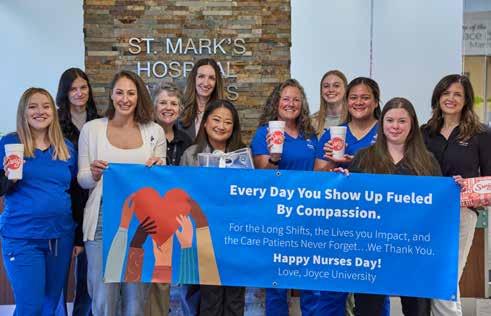
The new Museum of Utah opens June 27, offering a comprehensive look at the people, cultures and events that shaped the state.
By Julie Slama j.slama@mycityjournals.com
Along-awaited addition to Utah’s cultural landscape is getting its finishing touches to welcome the public.
The Museum of Utah will officially open its doors June 27, offering a free, comprehensive look at the state’s history — something Director Tim Glenn said has been missing until now.
“We haven’t had a state history museum that explores the whole history of the state of Utah,” he said. “We’ve got places that tell chunks of history so this will be the first time we’ll have that place.”
Located on the Capitol complex, the museum aims to complement existing institutions in the area, such as the Natural History Museum, Utah Museum of Fine Arts and the Pioneer Memorial Museum.
Rather than organizing the exhibits chronologically, the Museum of Utah is built around four themed galleries: Becoming Utah; Connecting Utah; Building Utah; and Inspiring Utah.
“Within those themes, there are all sorts of stories,” Glenn said. “We’ll talk about everything from the Jarvik heart to Philo T. Farnsworth to the Browning brothers, stories which don’t relate specifically to the themes of some of the other museums.”
Interactive exhibits will include experiences such as “Food is Love,” exploring Utah’s beloved traditions including fry sauce and funeral potatoes, and “Dance like a Utahn,” highlighting dance as cultural expression. Visitors also can explore labor history, outdoor recreation as an industry and creative arts across communities.
The museum was born over many years, but this vision has been in progress the past four years as organizers gathered input across the state.
“It truly was a team effort,” he said. “We went out into the community to talk about this museum and to hear from people.”
From focus groups with educators and community mem-

bers to consulting with all eight federal recognized tribes in Utah to collaborating with cultural organizations and local leaders, the goal was set: ensure every Utahn can see themselves reflected in the museum.
“If you are somebody who is a fifth generation Utahn or you’re somebody who moved here last year, you can find yourself in this space,” Glenn said.
However, with the museum spanning a limited 15,000 square feet, the final building of the original design Richard K.A. Kletting created for the Capitol complex, he said it’s tricky to tell the story in the space.
“When you think about the whole history of this state, the breadth and depth, and then, you try to fit that into a space about the size of a Trader Joe’s, it’s a huge challenge,” Glenn said.
Despite that, visitors will be able to explore a variety of artifacts and exhibits, including Utah’s first state flag; the land speed record car, the Mormon Meteor III; a canvas canoe used by Kanab legislator Dave Rust, a “boss bike” used in the Silver King mine, a mural preserved from the Intermountain Indian School; Olympic memorabilia, a pioneer handcart and Utah trivia, including a rubber chicken representing a Utah company
that produces more than any other place in the world.
The museum also will contain folk art, fine art, performing art and cultural exhibits, with more than 800 objects displayed.
“What we heard from kids is they want to see artifacts,” Glenn said. “Everybody’s got access to information on their phones, but they don’t have access to is the artifacts.”
In addition to permanent galleries, the museum will include a temporary exhibition space which will rotate two or three times per year. The first exhibit, however, will remain for a full year and will bring together America 250 and then the peoples of Utah, a continuation of the original peoples bicentennial project.
“The idea is this museum would be living and always changing,” he said.
He said one of the biggest advantages of the museum is its accessibility with free admission, funded by the Utah Historical Society, and with extended hours for working families. The museum will be open on Mondays, 11 a.m. to 8 p.m.; Tuesdays through Thursdays, 9 a.m. to 8 p.m.; Friday and Saturday, 9 a.m. to 6 p.m. Research access to collections can be made by appointment.
The museum also will serve as a resource for students. Fourth-grade and seventh-grade teachers, who instruct Utah history, already have been scheduling field trips for the upcoming year, he said.
Glenn, who graduated from West Jordan High and the University of Utah, has worked in the Utah cultural sector for more than 15 years. He said while the opening marks a major milestone, it’s just the beginning.
“We’re excited to see people in this space,” he said. “I love how all themes are totally different, but what they have in common is they are places where we come together as a community and gather and learn about ourselves.”
Ultimately, the museum’s goal is simple: spark curiosity, deepen understanding and connect Utahns to their shared history — all under one roof.
“I hope people walk away feeling like they learned something new and are interested in diving deeper,” Glenn said. “Utah has a lot more stories than people think.” l
The workshops will address the opioid issue and educate residents about resources.
By Peri Kinder peri.k@thecityjournals.com
Accidentaloverdose data reveal an alarm-
ing shift among older adults in South Salt Lake. While residents aged 55 to 64 make up only about 10% of the city’s population, they have the highest percentage of overdose deaths at 31.5%, nearly double the rate of those ages 35 to 44.
These numbers are a contrast to patterns in Salt Lake County and across the country, where adults in the 35 to 44 age range usually have the largest percentage of overdose fatalities.
Promise SSL Prevention Manager Carla Locatelli hopes to address those statistics during two workshops scheduled this summer. The free Opioid Public Health Crisis Workshops, scheduled on Wednesday, June 10 and Thursday, July 16, will be held at the Promise SSL Co-op (2531 S. 500 East) from 5:30-6:30 p.m.
“One of the things I share is that the number of overdose deaths in the U.S. since the beginning of this third wave, since 1999, exceeds the number of U.S. service members who have died in battle in all wars fought by the U.S.,” Locatelli said. “So, nearly 1.3 million people have died between 1999 and 2024. It’s about 222 people a day.”

South Salt Lake older adults have high rates of unintentional overdose deaths, compared to other cities. Promise SSL will host summer workshops to address the opioid crisis for residents of all ages. (Adobe stock)
The OPHC workshops will educate residents about the current state of the opioid crisis in SSL, providing clear explanations of what opioids are, how they affect a person’s mental and physical state, and why substance misuse is a disease, not a moral failing. Attendees will also learn about prevention, support and recovery resources.
During the workshops, Salt Lake County Health Department Community Health Educator Veronica Zavala will offer training on how to use Naloxone to quickly reverse an opioid overdose.
“Naloxone saves lives,” Locatelli said.
“It’s easy to use. Naloxone can be used on anybody. You can use it on adults, on kids, on elderly folks, and even on pets. So if there’s any misuse that happened for any reason, Naloxone can save a life. It gives the body enough time to be able to breathe and for the heart to work properly until medical help arrives.”
Locatelli wants the community to understand how opioids affect SSL and hopes these workshops can move the needle from denial of the problem to an awareness that the city has an issue that needs attention. Participants attending each workshop will receive dinner and a $25 gift certificate.
SSL received grant money from the Overdose Data to Action program from the Centers for Disease Control to support the summer workshops, the printing of the SSL Prevention Toolkit and the hiring of interns.
In coordination with the Summer Soccer Prevention Camp, interns will distribute the SSL Prevention Toolkit to young athletes to educate residents about resources available to prevent opioid tragedies.
“The prevention toolkit that we now have is a brochure with important information,” she said. “The interns will also be revising and making sure the information in the toolkit is up to date.”
Because unintentional overdose affects so many in SSL’s older population, Promise SSL created a position for a senior services liaison as part of the family and community engagement team. This person will help educate older adults and give them the information they need to be aware of opioid misuse and overdose.
“I’ve been working closely with them, with what we are going to do specifically for our senior residents,” Locatelli said. “We want to see the data eventually go down, but especially understand what’s going on there. There are a lot of conversations about bringing in different types of mentorship and having folks check in with senior residents who are using opioids and offer medication tracking.”
To register for either workshop, visit sslc.gov/193/Promise-South-Salt-Lake or contact Locatelli at clocatelli@sslc.gov. l

Whatif the most effective way to protect children isn’t just responding after harm occurs—but preventing that harm in the first place?
That question has guided much of my work over the past three and a half years, after Utah Gov. Spencer Cox asked me to help create Utah’s Office of Families. The mission was simple, but deeply important: strengthen families to improve outcomes for children.
At the beginning, I spent time listening to experts, advocates and families across our state. I wanted to understand what the data showed about strong families and how we could replicate those conditions more consistently.
I also had to acknowledge something personal. I grew up in a stable home with two loving parents. I didn’t experience abuse, food insecurity or instability. As a child, I assumed that was normal and that most homes looked like mine. As an adult, I learned that isn’t the case.
Research on Adverse Childhood Experiences (ACEs) shows a clear pattern—the

more trauma a child experiences, the more challenges they face later in life. Health outcomes, education and employment each can be affected. The data doesn’t just tell a story; it points to a path forward. If we want better outcomes, we must reduce trauma early.
That realization led me to one of the most promising, evidence-based solutions I’ve seen: home visiting programs.
Parenting is hard. For many families— especially those facing economic stress, isolation or past trauma—it can feel overwhelming. Home visiting programs meet parents where they are, literally and figuratively. Trained professionals work directly with families, helping them build emotional
regulation skills, develop healthy coping strategies, and strengthen relationships with their children.
Organizations like Salt Lake County Health Department and Prevent Child Abuse Utah are leading this work in our state. They serve hundreds of families each year, helping parents become the parents they want to be. And the results matter— these programs are proven to reduce child abuse and neglect.
The need is real. In 2025, Utah saw more than 51,000 reports of child abuse or neglect. One in seven children will experience sexual abuse before turning 18. And in the vast majority of cases, the harm comes from someone the child knows and trusts— often a parent or relative.
Those numbers are difficult to hear. But they also reinforce why prevention matters.
Years ago, I had the opportunity to serve on the board of Prevent Child Abuse Utah, where I saw another powerful prevention tool in action: school-based education. Through age-appropriate lessons, elementary students are taught how to recognize,
resist and report abuse. These simple but powerful principles give children something invaluable—a voice. And sometimes, that voice is what keeps them safe.
Thanks to changes in state law and the generosity of donors, these programs are reaching more children than ever before. But access is still not universal. Too many children are missing out on the education that could help protect them.
Prevention doesn’t happen by accident. It happens when communities decide to invest in it.
Strong families are not just a private matter—they are a public priority. When we support parents, teach children and invest in early intervention, we change the trajectory of lives. We reduce suffering before it starts.
Each of us has a role to play. Whether it’s giving, volunteering or simply sharing this work with others, small actions add up to meaningful change.
Because every child deserves to understand their worth, their boundaries and their voice. Every child deserves the chance to grow up safe from harm.

















Asteachers pop the champagne and schedule full-body massages, mothers are slowly descending into madness. Summer break stretches ahead like a sunburned, melted-fudgesicle 10K, with lots of family time. So much family time.
As a young mother in the 20th century, summer vacation was a blur of wet towels, lost flip-flops, and popsicle sticks stuck to couch cushions. My daughters spent the days selling Kool-Aid to neighbors, watching hours of PBS’s “Arthur,” and fighting nonstop.
I tried to keep a schedule, but it flew out the window the first day, along with my common sense and sanity. Although we went to parks, pools, hiking trails, libraries, zoos and museums, my daughters were always “sooo bored!” It was like trying to fill a bottomless, thankless pit.
Looking back, I was so lucky. Not because I could spend so much “quality time” with my kids, but because I wasn’t working out of the home. It was absolutely exhausting, but I didn’t have to worry about what my kids would do during the summer.
The school calendar was not created for single mothers, full-time working parents or children who need snacks every five minutes. It was designed for farmers who churn their own butter and rise at dawn to feed chickens.
Today, moms are scrambling to find camps, sitters, daycare and programs to keep

kids occupied during the summer break because many mothers have full-time jobs and can’t take the summer off.
People rarely ask fathers, “What will your kids do all summer? How will you balance your job and family?” Nope. Everything usually falls to moms, most of whom can’t afford camps or additional daycare costs.
I researched “Summer strategies for working moms” and was given ideas like 1) hire a summer nanny, 2) enroll in pricey camps early, or 3) rent children to an influencer.
Who do they think these mothers are? Kardashians? I added a fourth option: quit your job and live in a van by the river.
When my daughters were little, there were several working moms in the neighborhood and their kids would hang out with us all summer. They were part of the noisy, sticky clan, constantly bickering about who got grass in the blow-up pool.
Now, mothers are anxiously waiting for their lottery numbers to hit or a magical Mary

Poppins character to show up and take control of their unruly children. Barring that, there aren’t a lot of viable options, especially in this economy.
Grandparents and other family members alleviate some of the summer schedule strain, but with about 10 weeks of out-of-school time, mothers often resort to late-night spiraling and stress eating.
It’s not all hopeless. Companies are finally realizing they’ll have happier, healthier, more productive female employees if they offer flexibility.
Progressive CEOs provide summer childcare stipends or offer discounts to local camps. Work-from-home options, summer PTO bonuses, flexible start/end times and early-out Fridays would make a mother’s summer a gajillion times easier, as well as fathers who need
scheduling help for the school break.
Maybe that’s the answer! Instead of asking companies to make things easier for moms, let’s say the dads need help. Businesses will immediately build on-site splash pads, create kid-friendly office spaces and partner with local teams to host summer-long sports camps.
Somewhere along the way, summer break turned into a summer breakdown. Parents aren’t asking for luxury vacations, just a bit of time to sit by the pool, yell at kids to stop yelling and maybe even pop some champagne. We should be able to make that work.
Peri Kinder is an award-winning columnist and journalist who has written for The City Journals since 2004. She also hosts the Life & Laughter podcast. Peri can be reached at peri.k@thecityjournals.com.