

SSL elected officials take oath of office
By Peri Kinder | peri.k@thecityjournals.com
South Salt Lake Mayor Cherie Wood started her fifth term with a quote from Margaret Mead. “Never doubt that a small group of thoughtful, committed citizens can change the world; indeed, it’s the only thing that ever has.”
Along with Wood, four city councilmembers took the oath of office on Monday, Jan. 5, promising to support, obey and defend the Constitution of the United States and the Utah State Constitution.
“To the residents of South Salt Lake, thank you for placing your trust in me. That trust is something I carry with humility and purpose,” Wood said. “South Salt Lake is a city defined by its people, by our diversity, our resilience, and our belief that everyone deserves a safe, welcoming place to call home.”
Corey Thomas (District 2) was sworn in for her third term in office, Sharla Bynum (District 3) for her fourth term, and at-large councilmembers Clarissa Williams and Ray deWolfe each took the oath of office for their second terms.
“This is a responsibility that I approach with humility,” deWolfe said. “Public service is fundamentally an act of stewardship. It’s not about holding a position. It’s about caring for something that belongs to all of us, and I intend to carry that responsibility with respect, diligence and a long-term view of what’s best for our city.”
SSL City Council meetings are held on the second and fourth Tuesdays of each month at SSL City Hall (220 E. Morris Ave.) Council meeting agendas and live streaming are available at sslc.gov. l
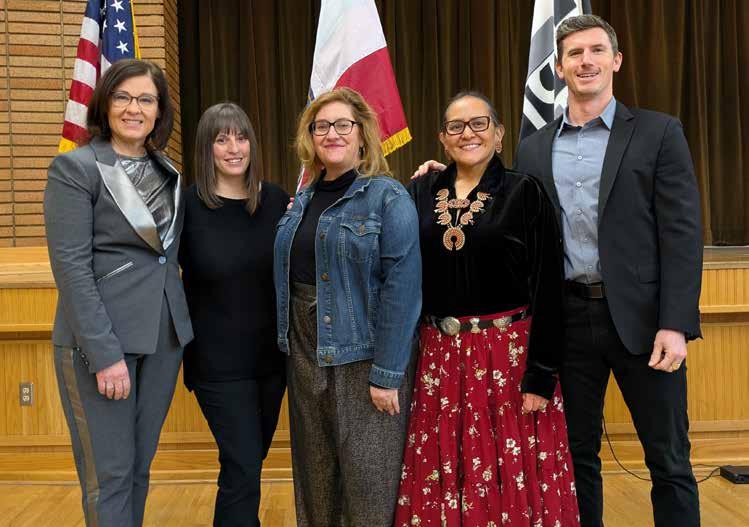


From left, South Salt Lake Mayor Cherie Wood and SSL Councilmembers Corey Thomas (District 2), Sharla Bynum (District 3), Clarissa Williams (at-large) and Ray deWolfe (at-large) were sworn into office in January. (Peri Kinder/City Journals)



Journey for your Heart
An event to celebrate Heart Healthy Month
Join us as we explore insights from leading experts across cardiology and its subspecialties, and learn practical strategies for improving heart health. Engage in interactive discussions and enter to win exciting prizes. Don’t miss this opportunity to celebrate a healthier future!
When: Thursday, February 12th at 4pm - 6pm
Where: Intermountain Medical Center, Doty Auditorium Building 6
Who: Public invited, as well as caregivers, especially cardiovascular caregivers and physicians

Water resource plan updates help ensure adequate water for SSL residents
South Salt Lake is updating its water resource plan to comply with state law by integrating water conservation with land use planning and upgrading aging infrastructure.
By Linda Petersen l.petersen@mycityjournals.com
South Salt Lake City has updated its water resource plan to secure the city’s long-term water supply. These changes were primarily driven by a new state law (SB 110), which required municipalities to integrate water use and preservation planning with land use planning by the end of 2025.
“This update will not propose any immediate changes to the municipal code, but this will serve more as a guidance to provide increased focus for future development and co-amendments to consider and involve water conservation efforts and efficient water usage,” Jed Shum, a community development planner, told the city council at an Oct. 29 work meeting. “Through this update in the general plan, the city will continue to explore and adopt new technologies, best practices and educational programs that are proven to reduce water consumption and demand.”
As it addresses its water needs, South Salt Lake faces two significant challenges: aging distribution pipes—many of which are more than 50 years old—and declining well capacity. To meet current demand, the city must supplement local well production by purchasing water from the Jordan Valley Water Conservancy District, which is significantly more expensive than city-sourced well water.
To address these hurdles, the city has

identified several infrastructure solutions:
New well sites: The city has acquired property for a new well at 150 W. Price Ave. and is considering redeveloping the unused Bolinder Well to support the downtown area. City officials are also considering constructing a new well in the Harmony Park area.
Pipe replacement: An ongoing effort to replace old, galvanized steel pipes with copper has reached a 75% completion rate. This initiative, particularly within city parks, has led to an estimated 15% reduction in water consumption by reducing leaks.
These efforts appear to be yielding
SOUTH SALT LAKE TEAM
The South Salt Lake Journal is a monthly publication distributed directly to residents via the USPS as well as locations throughout South Salt Lake.
For information about distribution please email hello@thecityjournals.com or call our offices. Rack locations are also available on our website. The views and opinions expressed in display advertisements do not necessarily reflect or represent the views and opinions held by Loyal Perch Media or the City Journals. This publication may not be reproduced in whole or in part without the express written consent of the owner. © 2019 Loyal Perch Media, Inc.
SOUTHJORDAN JOURNAL.COM
PUBLISHER
Bryan Scott | bryan.s@thecityjournals.com
EDITOR
Travis Barton | travis.b@thecityjournals.com
ADVERTISING EXECUTIVES
Mieka Sawatzki | mieka.s@thecityjournals.com
Marc Davis | marc.d@thecityjournals.com
Ryan Casper | ryan.c@thecityjournals.com
results; the city has successfully reduced per capita water use by 21% since 2000. However, city officials say there is still room for improvement regarding indoor and outdoor waste. To encourage further conservation, the city will continue to:
Restrict outdoor watering hours: Watering remains prohibited between 10 a.m. and 6 p.m.
Mandate drip irrigation: Required for all non-turf areas.
Develop new ordinances: A commercial landscape ordinance is currently being drafted.
Adjust rates: A new water rate struc-
Connect social media
CIRCULATION COORDINATOR
Lydia Rice | lydia.r@thecityjournals.com 385-557-1022
Rack locations are also available on our website.
EDITORIAL & AD DESIGN
Stacey LaMont
Ty Gorton
SOUTH SALT LAKE CITY JOURNAL 9500 South 500 West, Suite 205 Sandy, UT 84070
PHONE: 801-254-5974
ture was adopted last June to discourage waste, following a minor rate increase in the summer of 2024.
As new high-density and transit-oriented developments enter the city, they will be required to follow strict water-efficient landscaping and irrigation codes. The city has also implemented International Plumbing Code standards for all new construction, mandating the installation of lowflow fixtures.
“We’ll also improve the coordination between water conservation and land use planning to promote sustainable growth,” Shum said.
“That includes coordination between the city’s internal departments like public works, neighborhood and community development on the city water conservation efforts. Through integrated efforts, city departments can become wellversed in optimal approaches to water conservation and efficient water usage across the city’s diverse duties and services.”
“Ultimately, with this update it will help us ensure that South Salt Lake City remains at the forefront of water conservation and continually improving our approach to manage the city’s water resources for both current residents and future generations,” he said. l
Our mission is to inform and entertain our community while promoting a strong local economy via relevant content presented across a synergetic network of print and digital media.
PUBLISHER
Designed, Published, & Distributed by

South Salt Lake updated its water resource plan to secure the city’s water supply long term. (File photo City Journals)





LIMITED TIME OFFER!

LeafFilter came out on a Wednesday, gave me a quote and installed it the next day. Very reasonable price. The installers were professional and cleaned up after themselves. Very pleased with LeafFilter. -Je Farmer.
Have been thinking about having gutter protection installed for a number of years since every year it becomes more of a pain to climb up on the roof and get the clean-out done. Called LeafFilter on a Thursday, the salesman came on Friday and the installation was done the next day. Easy-peasy. -Anthony. 100,000+ Reviews.
Heart care is more than numbers on a
At Intermountain Health, heart care starts with getting to know what’s important to you and building a care plan together. From preventive screenings and lifestyle recommendations, to treating the most complex conditions with advanced technologies, our experts are with you through all of it. In other words, we’ve got your back — and your heart.


Barn dismantling is part of the job for mother-daughter business team
Taking down a barn demands respect for the wood, the craftsmanship and the history.
By Mimi Darley Dutton m.dutton@mycityjournals.com
Tammy Barrow and Julie Adler-Birch
are the friendly, multi-talented, mother-daughter duo behind Got Old Wood in South Salt Lake City. Journal readers were first introduced to them in the April 2025 edition. That story led to their most recent and favorite project thus far, the dismantling of a 150-year-old barn in Meadowville, Utah.
“A man came into the shop with Savvy magazine (a sister publication of City Journals that ran the same article) in hand, turned to the page about Got Old Wood, and asked if we’d be interested in tearing down his family’s barn,” Barrow said.
They agreed to take on the project because the workmanship and history of old barns is something Adler-Birch is drawn to.
“She has respect for the wood and she admires the craftsmanship. She wants to treat it with the same respect the pioneers and the people who built it had, and she creates new projects with the wood with that same respect,” Barrow said about her daughter.
“The stability of it amazed me, like it was pulled off the sawmill yesterday. The wood just speaks to me,” Adler-Birch said.
Every week from August to October, the women drove 2.5 hours to Meadowville where they set up camp and worked Wednesday through Saturday to dismantle the barn and salvage as much wood as possible. Barrow provided the motor home and meals and collected wood and nails while Adler-Birch and her small crew worked on the tear-down, hiring helpers when needed.
A local man offered to work with the crew because he also appreciated the historic barn and the process. Barrow tried to pay him but he insisted she send his check to charity. He just wanted to be part of the experience.
The family that owns the barn doesn’t reside on the property, but they frequently go there to camp and enjoy outdoor activities. Some evenings, Adler-Birch joined them around the campfire.
“We’ve become good friends with them,” Barrow said. Adding to the ambience of the project, Barrow and Adler-Birch were told the Pony Express and the Oregon Trail likely went through the area “back in the day.”
Time was of the essence, especially in October when the weather was changing rapidly. “It was a lot of juggling,

but we moved forward no matter what,” Barrow said.
Every Saturday or Sunday, the wood was hauled back to Got Old Wood’s 6,000-square-foot location in Salt Lake City which has a showroom for their unique creations, indoor storage for all types and sizes of wood, and a quarter-acre lot outside where the wood is sorted, cleaned, cured and processed. Mondays through Wednesdays were spent in the shop tending to the historic wood and working with customers on creative projects to make with it. Adler-Birch said even before the historic barn was torn down, much of the wood from it had been sold for projects including a wood accent wall in a doctor’s office. Assembling wood accent walls is a lot like building a puzzle with various sizes, shapes and colors that all come together beautifully, but only with a combination of carpentry skills and an artful eye like Adler-Birch possesses.
Adler-Birch described the 12-step process of properly dismantling a historic barn. “It’s like Pick up Sticks. You have to use physics in what I do,” she said:
Step 1: Cleaning up all the hay and digging down to the wood.
Step 2: Starting to “skin” the exterior by removing the outer siding.
Step 3: Getting the roof down. “That’s the most dangerous part.”
Step 4: “Skinning” the inside by taking all interior paneling off.
Step 5: Cutting away at all the studs to get to “the bones.”
Step 6: Removal of studs. “You have to do it in increments so no studs collapse
on you.”
Step 7: Pulling up the floor of the hay loft. The Meadowville owners told her their family hosted dances and plays there and she found evidence of that fun in the form of a curtain in the rafters.
Step 8: Back to the bottom level, where the horses and cows were, to break away the “bones.”
Step 9: Pulling up the floorboards and finding historic treasures such as bottles, Coke or tobacco cans, ear tags for cattle, horseshoes, halters, saddle pieces and lots of handmade nails.
Step 10: Sorting the salvaged wood. “So I can bring back what I know I’m going to be needing.”
Step 11: Hauling the wood back to the shop to power wash and cure it before storing it inside to be shown to clients.
Step 12: Selling the wood to customers for their projects which Adler-Birch will build.
“Julie can see what’s out there and available. The customers describe what they’re looking for and she knows right where it is. When the customer comes to get it, it’s exactly what they wanted,” Barrow said.
Back at the shop and showroom is where the magic of the dynamic duo happens. Barrow has a degree in business management and is retired from a 30-year career in government. She’s particularly

Unused barns are dismantled to salvage the wood. (Courtesy image Tammy Barrow Got Old Wood)
Unused barns are dismantled to salvage the wood. (Courtesy image Tammy Barrow Got Old Wood)

skilled at math and working with people. Adler-Birch puts her carpentry certification to work along with her respect and appreciation for the wood combined with an understanding of what her customers envision, whether it’s a mantle or table, a barn door, a wood accent wall inside a home or business or a new exterior for a building using historic barn wood. She even finds uses for smaller salvaged pieces. For Halloween she created wooden pumpkin dec-
orations and for Christmas she built decorative reindeer, all from salvaged wood.
“It’s like gold mining for wood,” Adler-Birch said.
She informs customers of the history of the wood so they can make their own special connection to it. “We like to give them bragging rights to the history of their furniture or the piece they’re buying,” Barrow said.
Come spring, the Got Old Wood crew

will head back up to Meadowville to dismantle a “younger” barn built in the 1920s and owned by the same family.
If you have a barn you’re considering dismantling, Got Old Wood is ready and willing. Thus far, they’ve gone as far as Delta. “We’d go out of state if someone wanted,” Barrow said.
Got Old Wood isn’t limited to barn teardowns or big carpentry projects for homes or businesses. For those who sim-
ply appreciate and admire wood work and would like a piece of history, their showroom offers things like chess boards, shadow boxes, picture frames, keepsake boxes, clocks and even etched-wood signs. One man requested a sign with his name, the name of his fiancée, and the date they got engaged etched onto it. In other words, Got Old Wood just might have the perfectly imperfect, unique Valentine gift you’re seeking for your special someone. aid. l
South Salt Lake adopts 10-year wastewater master plan
Safety-focused infrastructure changes would include new traffic medians and pedestrian bulb-outs.
By Linda Petersen l.petersen@mycityjournals.com
OnJan. 14, the South Salt Lake City Council adopted an updated wastewater collection system master plan, a comprehensive strategy designed to maintain and modernize the city’s sewer systems over the next decade.
The plan was developed by the engineering firm Hansen, Allen & Luce, Inc. following months of evaluation. It covers the city’s existing infrastructure, including its three lift stations. By identifying where the system is most vulnerable, the city can prioritize repairs before they become emergency failures, Jacob Hansen, the city’s wastewater supervisor, told the council.
The heart of the new master plan is an infiltration study conducted in 2021, which analyzed how much “clear water”—such as groundwater or stormwater—is leaking into the sewer pipes. Hanson noted that excess infiltration can strain the system and increase treatment costs.

pipes in the northern sector of the city. Rather than digging up roads for a full replacement, the city would use cured-in-place pipe liners. The consultants and city staff the city weighed the benefits of these “liners”—a process where a new pipe is essentially created inside an old one—versus full pipe replacement, Hanson told the council.
“We discussed the pricing differences [which are] significant [between] the two,” he said. Lining currently costs roughly $75 per linear foot, whereas traditional excavation can be as much as $450 per linear foot. Choosing the liners could save as much as 40-60% overall, Hanson said.
A second proposed project would replace outdated pumps and update the control systems at the city’s primary lift station, ensuring the system doesn’t fail during peak flows or power outages.
The master plan also forecasts a 20-year growth period and identifies projects needed to maintain capacity through the buildout phase to ensure the system can support upcoming development. It outlines a timeline for these improvements and identifies four major projects.
The five-year plan addresses high-risk areas, focusing on urgent repairs and mitigating what is known as “infiltration and inflow,” where groundwater leaks into old, cracked pipes.
The first project, a sewer main rehabilitation, would replace the lining of approximately 2,500 to 3,000 linear feet of aging concrete
Additionally, the 10-year plan aims to improve long-term capacity and maintenance. These proposed projects include upsizing existing sewer mains to accommodate Transit Oriented Development areas near the TRAX lines. A final project would reconfigure the flow of certain neighborhood lines to move waste more efficiently toward the regional treatment facility.
The new plan was approved unanimously by the city council that evening. l
Birdhouses are made from salvaged wood. (Courtesy image Tammy Barrow Got Old Wood)
Carpentry at work as salvaged wood is made into a table. (Courtesy image Tammy Barrow Got Old Wood)
This chart illustrates the city’s inventory of sewer connections, lift stations and mainline infrastructure currently slated for evaluation and rehabilitation under the new 10-year master plan. (Courtesy image South Salt Lake)
City considers safety upgrades as part of ‘Life on State’ project
Safety-focused infrastructure changes would include new traffic medians and pedestrian bulb-outs.
By Linda Petersen l.petersen@mycityjournals.com
At a Jan. 14 public hearing local officials and a resident discussed the next phase of the Life on State project, a series of infrastructure improvements aimed at making State Street safer for pedestrians and drivers alike. The project is funded by a local transportation tax collected by Salt Lake County and focuses on specific traffic control measures between Haven Avenue and Commonwealth Avenue.
Sharen Hauri, Department of Neighborhoods director, presented the city’s proposal to address high-accident areas at Haven Avenue.
The “Life on State” initiative isn’t just about beautification; it’s a data-driven approach to reducing accidents, she said.
Features of the current plan include a new median at the corner of Haven and State Street which will eliminate left-hand turns from Haven onto northbound State Street. This intersection currently requires drivers to cross four lanes of traffic on a seven-lane road, a maneuver which is a


frequent cause of accidents, Hauri said.
To protect those on foot, the city plans to install corner bulb-outs on several side streets, including Windward, Wentworth, Utopia and Commonwealth. These extensions shorten the distance pedestrians must walk to cross the street and slow down vehicles turning onto local roads.

A mid-block refuge (a pedestrian island) is also planned near Parley’s Trail to provide a safe “staging area” for cyclists and pedestrians crossing State Street. City officials are also considering extending the median at Wentworth Avenue to physically prevent illegal left turns that continue to occur despite existing signage.
The public hearing included feedback from Robert Ozarvan, owner of the property at 2312 S. State St. where the Tesla dealership is located who expressed concern that restricting turns out of Haven Avenue might eventually lead the city or UDOT to restrict turns into Haven from State Street.
“I want people to be able to access my property,” Ozarvan said, noting that his business relies on entrances from State, Haven and Truman. “I just want to see language added that they’re not going to take that left turn away from State Street into Haven down the road.”
City officials were quick to offer reassurance.
“We have no intention of closing that off,” Community and Economic Development Director Jonathan Weidenhamer said. City councilmembers echoed this sentiment, reminding the public that any future changes would require a separate, public process.
Construction on these improvements is slated to begin this summer. Most movements (inbound/outbound rights and inbound lefts) will remain at Haven Avenue; only the northbound left-turn exit will be eliminated. l
Suffering from Depression, Anxiety, or OCD?














South Salt Lake City officials are hoping a new median on Haven Avenue will help make State Street safer.
(Courtesy image South Salt Lake)
Every
Jones Center aims to empower ability and independence
brushstroke, recipe and bus ride help students at Granite School District’s Jones Center move closer to living independently.
By Julie Slama j.slama@mycityjournals.com
Beforea student ever greets a customer, rings up a sale or wraps up a craft, learning already has begun at the Jones Center in Granite School District.
It starts with sanding wood smooth, painting with intention and talking about quality and pricing — skills that translate far beyond the walls of the gift shop.
“We give students a lot of opportunity to try different things,” said Andrea Knapp, Jones Center gift shop transition specialist. “I make sure we talk about each skill like when they sand a project from start to finish, I ask, ‘Can you feel it? Does it feel smooth?’”
Students don’t rush through projects. Instead, they learn patience, repetition and pride in craftmanship. Mistakes are part of the process and lesson.
“When we paint, we talk about quality, not quantity. We learn to paint long strokes in one direction. We want to make sure they look nice and we try again if we need to,” she said.
Learning continues when products are priced and sold several times per year. Students talk about budgets, costs and reinvesting their profits back into the program.
“I try to make sure every student has a chance to do a sale,” Knapp said. “We load items into my van, then they take the bus to the District office, and they help me to unload. We set up displays for customers. Everyone has a different job. Some students help with money and bagging, others welcome people at the door and some restock; we all learn to work together as a team, but it’s taking blank wood from start to finish and having people buy what they make that gets them excited.”
A program focused on independence
The Jones Center is home to Granite Transition Services, the District’s primary post-high
school transition program. It serves about 90 students ages 18 to 22. Also housed there are 30 at-risk high school students and another 30 through Granite Peaks Adult Education.
“With our post-high program, we are training students to live as independently as possible,” said first-year Granite Transition Services Principal Michelle Searle.
All transition students, called SCORE students, have an individualized education program and are working toward an alternate high school diploma or certificate of completion.
“Abilities range; most of our students have intellectual disabilities,” she said. “We have students who are nonverbal, deaf or blind, and students with high-functioning autism who need more social communication.”
Despite those differences, students work together, even the at-risk students.
“They do well with our SCORE students. It’s a great opportunity to be with their disabled peers and help them,” Searle said.
Real-world learning
The Jones Center campus reflects real-world learning.
“We’re an archipelago of little buildings,” she said.
Those buildings house job sites that mirror future employment. Hospitality and culinary arts are central as students learn set-up,
customer service and catering for meetings held on campus.
Students also learn behind-the-scenes skills.
“We have a full-service laundry; students learn to launder and press their own uniforms and tablecloths. We teach them these skills so they’re familiar and can do them all,” Searle said.
The culinary program includes a bakery, hot and cold kitchens and café. Students earn food handler permits and learn food safety and health standards.
“At the bakery, they learn to make everything you can think of under the sun. People order items to take home and its especially popular with our holiday menus. People also come to our café where students can make and serve anything from a salad to a hamburger and fries,” she said.
Learning skills in the community
Students also work community job sites from 9:30 a.m. to 12:30 p.m. Mondays through Thursdays at grocery stores, warehouse stores, America Red Cross and other local businesses.
“They’re restocking shelves, hanging garments, stuffing hand-out bags, learning custodial skills—things they can apply to their lives,” Searle said.
Transportation is another part of their training toward independence.
“We train our students how to use UTA so they can become more independent adults,” she said.
Daily lessons in adult living
Each morning begins with an hour-long adult living lesson and a class at the end of the day.
“They learn everything—budgeting, hygiene, workplace communication, even
taxes,” Searle said.
Across the cul-de-sac sits a residential home which serves as a learning lab where students practice laundry, bed-making and cleaning.
“We need to make sure they’re prepared to live as independently as they can. We feel a huge responsibility to help them get to as close to that before they leave us,” she said.
Helping students now and in the future Searle sees the program growing.
“We could definitely increase by 30%,” she said, adding there are two empty classrooms and community job sites could expand.
District administration also is looking to the future.
“We hope to consolidate that program even further, perhaps at one of our closed elementary school sites so we can get them all under one roof,” said Granite School District Superintendent Ben Horsley, adding no decisions has been made nor timeline has been set.
“The problem with the current location is you see a lot of relocatables (portable classrooms). It’s better for students to be under one roof. Jones Center has served us for a long, long time. Now that we have some other available facilities that could potentially provide services for them, we certainly want to take advantage of that.”
Named after Hilda Jones, an assistant superintendent and director of special education, the Jones Center has served students since it opened in 1968.
“We’re here to empower ability,” Searle said. “Our goal is to create independence our students need as adults. We want them to succeed and as we teach them those skills—painting a craft, baking a pie, pressing a tablecloth, riding UTA—they’re learning those skills toward independence.” l
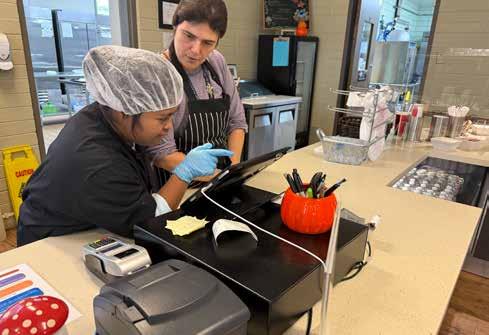
Student Samantha Cruz learns how to ring up a purchase at the café at the Jones Center. (Julie Slama/ City Journals)
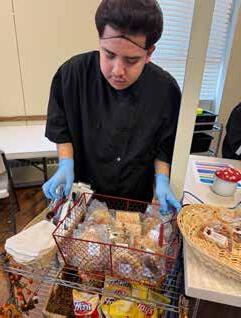
Student Richy Chavez restocks freshly made baked goods at the Jones Center café. (Julie Slama/City Journals)
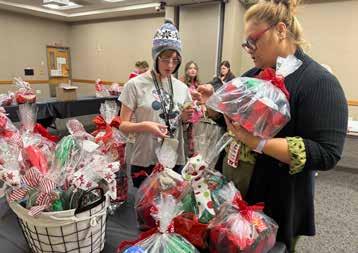
Jones Center students and staff help set up for the gift shop’s annual holiday sale. (Julie Slama/City Journals)
South Salt Lake launches water app to help residents track usage and detect leaks
South Salt Lake has launched the EyeOnWater app to help residents monitor their daily water usage and receive automatic alerts for potential household leaks.
By Linda Petersen l.petersen@mycityjournals.com
In an effort to increase transparency and bolster water conservation, South Salt Lake City has implemented a new digital tool designed to give residents access to utility data.
The system, called EyeOnWater, utilizes third-party software used by water districts nationwide to track usage and detect potential leaks. While the city has been promoting the tool since July, officials are hoping to have more residents enroll in the program.
“We’ve been doing our best to promote it so customers can track their water usage and help take control of their water bills,” city spokesman Joseph Dane said.
How EyeOnWater Works
The system relies on hardware that

residents with charts, week-over-week comparisons and temperature and precipitation overlays.
Preventing Costly Leaks
One of the most vital features of the app is leak detection. The system identifies potential issues by monitoring for 24 consecutive hours of flowing water or water flowing above a specific “continuous flow” threshold.
for growth in the program’s participation.
“We have over 100 customers who are currently using EyeOnWater, but we would love 100% of customers to use it,” Dane said.
Residents without a computer or smartphone can visit the computer lab at the Co-Op, located inside the South Salt Lake Community Center. Staff there are available to help residents set up accounts and activate leak notifications.
“We’re working to remove barriers for customers,” Dane said.
How to Sign Up
uses cellular technology to upload data several times a day. While it provides information on hourly, daily, monthly and yearly consumption, there is a slight delay in the transmission.
“The new hardware uses cell phone technology to upload your data which wakes up a few times a day to submit water usage data. So ‘real-time’ over 24 hours but not exactly minute to minute,” according to the city website. Data uploads typically occur at the same time every day, providing
To benefit from this, customers must manually activate the feature and set their desired threshold. If the water flow exceeds that limit over a 24-hour period, the system sends an automated alert. If the flow drops below that threshold or hits zero at any point during that window, no alert is triggered, preventing false alarms.
Breaking Down Barriers
Currently, city officials see plenty of room
Residents can get started by visiting the city website at sslc.gov or by downloading the EyeOnWater app on any mobile device. To do so, they will need their utility account number (including dashes) as it appears on their bill. Those who do not have access to that information can contact the city’s utility billing department at utility@sslc.gov or call 801-483-6000.
Note for Jordan Valley Customers: Residents served by the Jordan Valley Water Conservancy District should instead use the “My Water” app available at jvwcd.gov/customer/mywater. l
After lengthy interview process, Cottonwood football tabs Mike Ward as new head coach
The former Granger High offensive coordinator guided two different Lancer quarterbacks to record seasons over past two years.
By Brian Shaw b.shaw@mycityjournals.com
After a surprising resignation from now-former Cottonwood High School head football coach Tui Satuala in late 2025, there was a need to get this one right. With new head coach Mike Ward, there is this feeling that Cottonwood administration hit this one out of the park, so to speak.
“We’re ecstatic for the coach Mike Ward era as the head coach of Cottonwood football,” said James MacIntyre, Cottonwood’s athletic director. “Coach Ward has been preparing to lead a program for years, and we’re grateful he chose Cottonwood.”
Ward steps in, having helped guide two different Granger High School quarterbacks to All-State, All-Region and record-setting years—over the past two seasons.
“Mike will tear it up!” said former Granger head football coach Peter Smolin. “He was a huge part of the continued success
at G House. As a player’s coach, he relates well with the kids and is amazing at skill development.”
Before accepting the offensive coordinator job at Granger, Ward spent four years at Cyprus High, leading the Pirates’ running back and defensive line rooms.
Ward played his college football at NCAA Division III Wesley College (Delaware), where he received All-American honors for his efforts as a 6-foot-5-inch, 312-pound defensive tackle.
From there, Ward went undrafted but earned his way onto several Arena Football League rosters, including the Allen (Texas) Wranglers, Utah Blaze and Salt Lake Screaming Eagles.
Ward arrives at The Wood when the football program is in a tumultuous period. One year ago at about the same time, the program’s general manager and several position coaches and alums resigned from their roles at CHS to accept other similar roles at area high schools.
Shortly thereafter, and about a month after the most recent football season had concluded in late 2025, Satuala stepped down, citing family reasons—the same given by
Donovan Malmrose, longtime Cottonwood offensive coordinator and alum, when he stepped down after just one season as Colts head coach in early 2023.
That marked two head coaching resignations in just three years.
Thus, it made perfect sense to Cottonwood’s athletic director—himself new in his role but not to NIL, as that was part of his job description in the University of Utah’s athletic department—that the Colts try to find someone who wants to stay at the school and build something unique here.
Unique is a great way to describe what Ward helped build at Granger; he led two different Lancer quarterbacks to 2,500 yards passing in his two years at the school under coach Peter Smolin. Granger finished third this past season in Class 5A’s Region 4 behind West Jordan and West High schools in the final standings with a 7-5 record, 5-2 in league play. The Lancers also advanced to the second round of the 5A state playoffs, after winning their first-round game against Taylorsville.
The final piece to the puzzle perhaps, is that Cottonwood High has always had a unique student body. As an open enrollment school in the Granite District, replete with
several nationally recognized academic programs including AMES, the school draws kids from all parts of the Salt Lake Valley. In the past, this has even included an Olympic silver medalist in swimming who attended AMES, and dozens of student-athletes that went on to play professionally in several sports.
The catch? Some of these student-athletes haven’t always played their sports at Cottonwood; this is an area in which coach Ward—and what is presumed to be at least some carryover from Granger’s staff—could come in and immediately address, given his recent track record at Granger.
The building of Ward’s staff is to be determined, but for a program that went 0-19 over the past two years, 3-26 over three, and has been in desperate need of a reinfusion of not only numbers but leadership, the new coach could conceivably bring both areas back to Cottonwood.
“Throughout the interview process, it became clear that Coach is a dynamic leader who has an actionable vision for the Cottonwood football program,” MacIntyre said. “He is ready to hit the ground running, and we have no doubt that he will be a great addition to the Cottonwood community.” l
South Salt Lake launched a water app to help residents track usage. The city restricts outdoor watering between 10 a.m. and 6 p.m. (Stock photo via Unsplash)

ON THE MOVE


SSL ‘ON THE MOVE’ HIGHLIGHTS
Supporting our Business
Cherie Wood, Mayor 801-464-6757 mayor@sslc.gov
City Offices
Monday - Friday • 8 am to 5 pm
801-483-6000
220 E Morris Ave, SSL, UT 84115
City Offices and Community Centers will be closed February 16 in observance of Presidents Day.
Public Meetings
For more info: www.sslc.gov CITY COUNCIL
Wednesdays, Feb 11 & 25, 7 pm PLANNING COMMISSION
Thursdays, Feb 5 & 19, 7 pm
CIVILIAN REVIEW BOARD
Monday, Feb 2, 6:30 pm COMMUNITY CONNECT
Wednesday, Feb 18, 9 am
Feeling left out? Sign up for our monthly emails to get the latest City news delivered to your inbox. You decide what news you want: SSL Scoop city updates, Recreation, Arts Council, Mayor, Promise. Visit sslc.gov, or scan the QR code.


Thanks to HTRZ, Downtown SSL is Leveling Up
In 2024, we received approval for our Housing and Transit Reinvestment Zone (HTRZ) proposal – a strategic tool that enables South Salt Lake to claim a portion of incremental tax revenue growth over a period of time. These are crucial funds that allow us to reinvest in our downtown to support city goals–expand affordable housing, connect housing density with public transportation, and grow public amenities like trails and plazas. HTRZ has been a contributing factor behind the rapid growth of our downtown.
The HTRZ, which dictates where the city can invest the funds, is centered around the Central Pointe and South Salt Lake light rail stations, including a quarter-mile radius around both stations. This essentially encompasses our entire downtown area–roughly 200 acres stretching from State St. west to I-15 and 2100 S. south to I-80.
Two months ago, we closed on our first HTRZ bond for $25 million. Because of the city’s fiscal prudence and AA+ bond rating from S&P Global, we received an exceptional interest rate, which added an additional $1 million to the fund total. This is exciting news because it means development projects are taking shape and becoming more visible by the day.

One such project is the upcoming Market Center development by Blaser Ventures. Located in the empty lot on the corner of State St and the S-Line, this project will be the largest and most substantial development in our downtown to date. It will add approximately 500 affordable residential units, a large parking structure with public access, and 20,500 square feet of retail space that opens to Parley’s Trail.
It’s important to note that the bond in no way impacts our residents or business, because the city will pay it back through future downtown tax revenue that would have otherwise ended up with other taxing entities. The money will be split among several downtown projects and used to incentivize developers to add more affordable units and enhance mobility and beautification.
In other exciting downtown news, the section of State Street from 2100 South to I-80 will receive some new traffic medians, safety improvements, and landscaping. This includes the installation of a refuge island in the middle of the road for pedestrians as they cross on Parley’s Trail. This is part of the Life on State project in partnership with Salt Lake City.
Looking back, just 10 years ago when our downtown was an aging industrial zone and seeing the changes taking place today, I am over the moon thinking about the new life and energy being created in the area and what that means for the future of our city! Stay tuned for upcoming announcements on Mural Fest 2026, where several new mural installations will add to the streetscape in this area.

Mayor Cherie Wood
City Officials Renew Commitment at Swearing In Ceremony
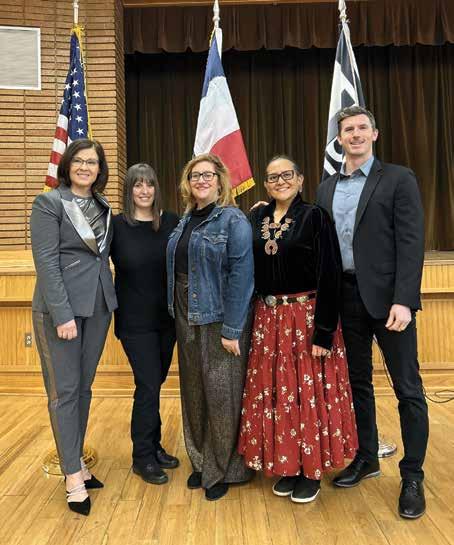

On January 5, our City Recorder swore into office the winners of the 2025 Elections for Mayor and four City Council seats. Each elected official renewed their commitment to the office in which they had been elected and shared their visions for their coming terms.
You can learn which council members represent you and find ways to get in touch with them by visiting sslc.gov.


New 500 East Streetlight Installations

Rocky Mountain Power recently installed 33 new streetlights along 500 E. between 2700 S. and 3900 S. Responding to resident concerns on the lack of lighting and safety along 500 E., the city engaged with RMP to add lights approximately every 150 feet to help consistently light the corridor. These new lights are designed to be dimmer for residential neighborhoods, and are angled slightly backwards to light both the sidewalk and street. This change was a direct result of resident feedback. You can report streetlight outages or request a streetlight by using the Report a Concern button on the city homepage.
E. and
Supporting Our Small Business Community

The South Salt Lake Community & Economic Development Department partnered with the South Salt Lake Chamber of Commerce to award $50,000 to the Utah Microloan Fund. This money will support microloans and technical assistance for residents and small businesses in our city. Thanks to several community partners, small business owners (and aspiring owners) have access to education programs and professional support through the Community Opportunity Center (Co-Op) inside the South Salt Lake Community Center. Find small business resources and loan information at utahmicroloanfund.org.



From left to right: Mayor Cherie Wood; City Council District 2, Corey Thomas; City Council District 3, Sharla Bynum; and City Council members At-large, Clarissa Williams and Ray deWolfe.



















South Salt Lake Police Department Receives Accreditation from Utah Chiefs of Police Association

The South Salt Lake Police Department obtained accreditation from the Utah Chiefs of Police Association (UCOPA), having met or exceeded the rigorous standards set forth by UCOPA. The required standards by the association involved thirtytwo chapters containing 160 detailed individual standards which required proof of compliance for accreditation. The final stage of the accreditation process involved an on-site tour, personal interviews, and an on-site assessment of the Police Department’s policies, procedures, and records. The South Salt Lake Police Department joins the professional ranks of the other accredited agencies in the state of Utah.

Local officer helps launch peer-led support group for first responders
The Watch will offer drop-in, peerled sessions intended to support first responders from across Salt Lake County.
By Shaun Delliskave s.delliskave@mycityjournals.com
Anew peer-led support group aimed at first responders across Salt Lake County will begin meeting in Murray later this month, offering a confidential, non-clinical space for participants to talk with others who understand the unique pressures of the job.
The group, called The Watch, was founded by Murray City Police Officer Benjamin Gregoire, who said the idea grew out of both personal experience and conversations with colleagues across agencies.
A critical incident he experienced in the line of duty last year, Gregoire said, became a turning point and underscored for him how limited accessible, peer-based wellness resources are for first responders in Salt Lake County.
Gregoire said that beyond formal peer support teams, there are few places where first responders can speak openly with others who share similar experiences. He also observed that first responder culture often operates in silos.
“Police tend to stay with police, fire with fire, dispatch with dispatch—even
though we often carry very similar stressors and trauma,” he said. “The Watch grew out of a desire to create a shared space that breaks down those barriers.”
Unlike traditional mental health programs, The Watch is intentionally peer-led and non-clinical. Gregoire emphasized that the group is not designed to replace professional care.
“There are no clinicians, no diagnoses, no notes, and no treatment plans,” he said. “It’s a space grounded in shared lived experience. While professional mental health care is critically important—and encouraged— The Watch is designed to complement those resources, not replace them.”
Sessions are structured to be low-pressure and accessible. Meetings will last one hour and are drop-in, meaning participants can attend as their schedules allow. At the start of each session, guidelines are reviewed to establish expectations and safety. From there, discussion is participant-led.
“If there’s a lull, a simple prompt—such as ‘What brought you here today?’—may be offered,” Gregoire said. “But there is never any pressure to speak. First-time attendees can expect a low-pressure environment where listening is just as welcome as sharing.”
Confidentiality is a central principle of the group. Gregoire said participants verbally agree to keep what is shared within the group confidential and that rank does not factor into the space.

“Rank does not exist within the space—everyone is equal,” he said. “If administrators attend, they are held to the same standards as everyone else.” He added that the confidentiality protections outlined in Utah’s peer support statute apply and are communicated at each meeting.
Murray City has played a supporting role by approving the group, providing meeting space, administrative assistance, and help with outreach and marketing. Gregoire stressed, however, that The Watch remains independent.
“It is not a Murray City Police Department program, nor does it report back to
Don’t ignore signs of the winter
Thousands of Utahns deal with Seasonal Affective Disorder.
By Peri Kinder peri.k@thecityjournals.com
For many people in Utah, the “winter blues” show up as exhaustion, a lack of motivation and low energy. While the dark nights and cold days can make anyone irritable, if symptoms of weariness or sadness last more than two weeks, it could be a sign of Seasonal Affective Disorder.
While the national SAD rate is around 5%, it’s estimated that 10% of Utahns experience SAD each year. Environmental factors like the annual inversion, limited sunlight and disrupted circadian rhythms contribute to an overall emotional slump.
Dr. Jason Hunziker, Division Chief of Adult Psychiatry at the University of Utah, said SAD is a type of depression affected by low light exposure that can heavily impact the way people function. It can show up as low motivation, a higher intake of carbohydrates, excessive sleeping or just feeling off.
“People get up in the morning and it’s dark; they come home from work and it’s
dark, and it affects them,” Hunziker said. “It begins to interfere. You’re getting to work late, you’re not keeping up at work and you’re not getting to school. Your relationships are starting to become fragile, and there are more arguments or isolation. You start to feel hopeless.”
While brief periods of sadness are common, SAD symptoms lasting two weeks or more should be considered serious, and it might be time to talk with a professional, especially if the depression includes thoughts of self-harm or suicidal ideation.
Hunziker said one of the best ways to combat SAD is through movement, outside if possible. Moving the body releases endorphins that provide a sense of well-being and it can take the mind off worry or stress.
“One of the biggest things people forget to do in the winter is move,” he said. “Go out for a walk, go to the gym, run on the treadmill at home, just make sure you’re trying to do something. It’s best if you’re outside because the cold air and the sunlight, all of those things we need are outside.”
Light therapy is another effective way to treat SAD symptoms. Whether you take a 20-minute dog walk or sit in front of a light
any department,” he said. “Murray is hosting and endorsing the effort, but the group itself remains peer-driven and separate from departmental operations.”
Gregoire hopes the group will help address lingering stigma around seeking help, particularly for those who may feel overlooked.
“Dispatch and corrections professionals, in particular, are often overlooked in wellness conversations despite facing significant cumulative stress,” he said. “The Watch aims to create a starting point—normalizing peer support and making it easier for people to show up without fear or judgment.”
The first meeting is scheduled for Jan. 14, and while no sessions have yet been held, Gregoire said early interest has been strong. “We’ve already received strong informal interest from a wide range of agencies and disciplines,” he said.
Looking ahead, Gregoire said success would mean broader cultural change. “Success, to me, would look like peer support becoming more normalized within first responder culture and administrations taking wellness more seriously as a core responsibility—not an afterthought,” he said. He added that he hopes similar groups will eventually form in other counties, noting that “Davis County Sheriff’s Office is beginning something along those lines, which suggests this is a need being felt beyond just Murray or Salt Lake County.” l
blues
therapy lamp, the benefits will pay off in the long run.
Healthy eating plays a big role in how people feel in the colder months. Winter meals and snacks often contain carb-heavy comfort foods but the more fresh produce that can be incorporated into a diet, the bigger the reward. Staying connected to loved ones is another way to improve mental health.
“We isolate in the wintertime but we need to make sure we’re meeting with family and friends, and reaching out to them all the time,” Hunziker said. “There are so many ways that we can help when things start to go the wrong direction. Let’s not let it get too far down the road before we do something.”
For people prone to SAD some pre-winter planning may help. Create an autumn toolkit to help avoid the deep depression associated with the disorder. Set up a therapy appointment in early September and plan on filling anti-depressant medication in early fall, so it has time to work.
Having things to look forward to can help alleviate SAD symptoms. Schedule fun events for the winter or plan a weekend getaway.

Walking outside is a top recommendation for alleviating symptoms of Seasonal Affective Disorder. Taking a proactive approach to seasonal depression can help those who struggle with mental health in the winter. (Adobe stock)
For those who need crisis help, key resources include the 988 Suicide & Crisis Lifeline number and the SafeUT App, an app that allows students to call a licensed counselor for free, at any time of the day or night.
“If you don’t know where to start, start with your primary care doctor and let them know what’s happening,” Hunziker said. “Make sure you’re moving, make sure you’re getting light, make sure we’re taking care of our bodies and keeping our connections. Don’t ignore that stuff.” l
Officer Benjamin Gregorie takes the oath of a police officer. (Photo courtesy Murray Police)
After slow start, Cottonwood girls basketball has since galloped to top spot in Region 10
Under the direction of veteran head coach Tes Soracco, the Lady Colts rode a mixture of youth, experience for a run of nine wins in 10 games.
By Brian Shaw b.shaw@mycityjournals.com
After a slow start, the Cottonwood girls basketball team has settled in.
You had to be wondering how this season was going to turn out—after the Lady Colts went 1-3 to tip off the season.
To their credit though, this squad has ridden through that preseason, and let those horseshoes settle into all their hooves nicely.
Since that perilous point in time in early December, in which Cottonwood lost three of its first four games by 28, 10 and 37 points respectively, the Lady Colts have gone 9-1.
Nine wins, one loss.
How did that happen?
Well, after years of playing as the second or even third option on some great Colts teams that have sent their top players on to college basketball programs, Carley Caton is finally getting her closeup.
It has been a long time in coming for the Cottonwood senior, but it seems like Caton has been waiting for this moment for four years. She’s averaging 15 points and five rebounds per game for a Lady Colts team that has lost exactly once in Region 10 play, a narrow 37-31 loss to the Judge Memorial Catholic Bulldogs on Jan. 9.
In addition to Caton leading the Lady Colts in both points and rebounds, senior Savannah Staheli is scoring the basketball at a


rate of 11 points per game. The transfer is figuratively setting the hoop on fire, shooting 73% from the field.
For Cottonwood (11-4, Region 10 6-1), Staheli isn’t the only newcomer doing serious damage to the opposition.
Freshman Jelena Cecez, known to her teammates as Juju, is averaging 6 points, three rebounds and two steals, and has reminded more than one person of how Caton was when she first arrived on the scene, four years ago.
Like Caton, Cecez is also carrying on a family tradition started when her older sister Jovana and brother Luka first ascended through Cottonwood’s ranks to eventual feature roles.
We have seen this movie before with Luka, who is now becoming a star, benefiting from having had four years under Cottonwood’s high school basketball equivalent of Rick Majerus in head boys basketball coach Marc Miller, a career of Luka’s that has seen multiple deep state tournament runs.
But, there is something special about Luka’s sister Jelena, who even as a freshman reminds some of her versatile older brother and sister.
Lest you think it starts and ends with the Lady Colts’ top three scorers, it does not. Junior Piper Wilking is shooting 42% from threepoint range, junior Le’ila Nu’usila is averaging five points, two rebounds and one steal, sophomore Belle Kellywood 4 points and two rebounds, and freshman A’mya Jones is averaging 4 points, three rebounds per game and one steal.
Honestly, you can just see head coach Tes Soracco in her trademark sweater, standing near the timeline with her palms out, readying her Lady Colts for yet another half-court trap that will lead to easy transition baskets.
The late coach Majerus would be proud,

in more ways than one. What’s left for these Lady Colts that run about 11 players deep is the back half of Region 10 play. While the task is nowhere near complete, we are at the mid-
way point of the league slate. Cottonwood ranked No. 14 at press time in the latest RPI rankings that will eventually seed all the teams in Class 4A for the upcoming state tournament. l
CHOOSE SINGLE WASH OR UNLIMITED WASH CLUB
• STUDENTS NURSES • MILITARY FIRST RESPONDERS
SINGLE WASH $24
UNLIMITED WASH CLUB: $40/MONTH ULTIMATE SHINE
SINGLE WASH $12
UNLIMITED WASH CLUB: $22.50/MONTH
SINGLE WASH $20
UNLIMITED WASH CLUB: $35/MONTH




Freshman Jelena Cecez is a regular contributor in her rookie season. (City Journals)
Carley Caton shoots a free throw during a region game against Highland where she finished with 23 points. (City Journals)
Senior Savannah Staheli is scoring in the double digits per game. (City Journals)
Give Yourself a Valentine This Year: Learn to Decode Messages from Your Heart
When we talk about heart disease, the usual suspects often come to mind: crushing chest pain, shortness of breath, radiating arm discomfort. While these classic symptoms demand immediate attention, your heart often speaks in a more subtle language, a series of whispers and quiet shouts that can easily be dismissed or attributed to other, less serious issues. During Heart Month this February, we want to empower you to become a skilled interpreter of your body’s unique signals, recognizing that early detection can be profoundly life-saving.
Many people are unaware that heart problems don’t always announce themselves with dramatic flair. “We frequently see patients who’ve ignored subtle signs for weeks or even months, often rationalizing them away,” explains Dr. Richard Gelb, a cardiologist at Holy Cross Hospital –Mountain Point. “Especially for women, symptoms can be incredibly nuanced and different from the textbook descriptions often associated with men.”
So, what are these often-overlooked indicators that your heart might be sending out an SOS?
Persistent, Unexplained Fatigue: This isn’t just being tired after a long day. If you
find yourself unusually exhausted after normal activities, or if a simple walk leaves you winded in a way it never did before, your heart might be working harder than it should to pump blood.
This can be a sign of various heart conditions, including heart failure or even blockages.
Discomfort Beyond the Chest: While chest pain is classic, heart-related discomfort can manifest in surprising places. This includes pain, pressure, or aching in your jaw, neck, back, or even your stomach.
“We’ve had cases where patients initially thought they had a bad toothache or indigestion, only to find it was their heart,” says Dr. Bruce Kenwood, a cardiologist at Holy Cross Hospital – Jordan Valley. “Pay particular attention if this discomfort appears during exertion and subsides with rest.

Swelling in Unusual Areas: Swollen feet, ankles, legs, or even your abdomen could be a sign of fluid retention, a common symptom of heart failure. If your heart isn’t pumping effectively, blood can back up in the veins, leading to fluid accumulation. Don’t dismiss persistent swelling, especially if it’s accompanied by weight gain.
Chronic Indigestion or Nausea: While often benign, persistent indigestion, heartburn, or nausea, particularly when coupled with exertion, can sometimes be a


heart attack symptom, especially in women. If antacids aren’t helping and the discomfort seems linked to physical activity, it’s worth investigating further.
Lightheadedness or Dizziness: Occasional lightheadedness can happen for many reasons, but if you frequently feel faint, dizzy, or lightheaded, it could indicate an arrhythmia (irregular heartbeat) or a problem with blood flow to your brain due to a compromised heart.
“By familiarizing yourself with these less obvious signs, you’re taking a proactive step in safeguarding your cardiovascular health. Your body is constantly communicating; the key is to learn its second language,” said Dr. Roja Mulamalla, a cardiologist at Holy Cross Hospital – Davis.
Call to Action: If any of these subtle symptoms resonate with you, or if you’re experiencing anything that just “doesn’t feel right” in your body, please don’t wait. Listen to your heart’s whispers. Schedule an appointment with your primary care physician to discuss your concerns, or if symptoms are sudden and severe, seek emergency medical care immediately. Early detection and intervention are crucial for positive heart health outcomes. Your heart speaks – are you listening?
For more information or to find a provider visit mountain.commonspirit.org


Learn more about the services, care providers and missiondriven work of the Holy Cross hospitals and CommonSpirit Health at www.holycrossutah.org.

At CommonSpirit Health, we make the healing presence of God known in our world by improving the health of the people we serve, especially those who are vulnerable, while we advance social justice for all.
When minutes count, count on our emergency care. Get to know us before you need us. CommonSpirit Health Mountain Region does not discriminate against any person on the basis of race, color, national origin, disability, age, sex, religion, creed, ancestry, sexual orientation, and
When you need emergency care fast, the closest emergency room is a smart thing to know. You never know the level of care you’ll need when an emergency happens and choosing the right ER can make all the difference. And a hospital ER comes with the confidence of additional services right on-site.
CommonSpirit Holy Cross Hospital – Salt Lake has been awarded Chest Pain Center Accreditation from the American College of Cardiology (ACC). Facilities that achieve accreditation meet or exceed an array of stringent criteria for evaluating, diagnosing and treating patients who may be experiencing a heart attack.
Find emergency care close to you at mountain.commonspirit.org
status in admission, treatment, or participation in its programs, services and activities, or in employment. For further information about this policy contact CommonSpirit Health Mountain Region Office of the General Counsel at 1-303-643-1000 (TTY: 711). Copyright © CommonSpirit Health Mountain Region, 2026. ATENCIÓN: Si habla español, tiene a su disposición servicios gratuitos de asistencia lingüística. Llame al 1-303-643-1000 (TTY: 711). CHÚ Ý: N
i số 1-303-643-1000 (TTY: 711).
By Lizzie Walje l.walje@mycityjournals.com
Recently, Granite School District contemplated closing down two of its elementary schools, eventually deciding not to move forward at this time after facing widespread community opposition. Similarly, Utah County’s Alpine School District considered closures of its own, ultimately opting to permanently close Cedar Valley Elementary School following their school board’s vote.
The aforementioned are just two recent examples of a statewide problem: declining enrollment. Utah is undergoing its most significant reduction in K-12 public school enrollment numbers in the past 25 years. As of fall 2025, Utah has 11,478 fewer students than the

see going away in the near future.”
Granite District leaders have parroted Nelson’s sentiments, predicting that enrollment will drop an additional 10% in the next two years. Superintendent Ben Horsley has only been in his current position for a little over a year, yet he has already had to discuss these closures on multiple occasions. In response to criticism, Horsley has said that many of the factors leading to declining enrollment and closures are “outside our ability to control.”
What exactly are the circumstances leading to declining enrollment, and what are the broader implications for the state writ large?
As of 2025, every school district in the state of Utah has faced declining enrollment rates to some extent, except for two outliers, Beaver and Tooele. While Granite’s rapid decline has been particularly notable, so too have Salt Lake and Washington school districts.
At face value, one might wonder why Utah is undergoing such a crisis considering



Photo: Don Polo Photography
tion, one aspect of that growth has dropped off substantially—children. Not only is the birth rate declining nationwide, but in Utah, the cultural trend that previously favored large families, is no longer nearly as prevalent. Economic pressures and exorbitant housing costs are also making it increasingly more difficult for young people to support large families.
While it may be true that Utah’s housing market saw significant periods of growth in the past decade, much of that development favored new apartment buildings and condominiums. Historically speaking, these types of properties typically don’t attract families with school-age children, a fact that continues to be true.
tain our families.”
We seem to be exiting from the constant growth or the constant struggle to deal with the pressures of growth to … this decline that we’re seeing here. Aaron Brough
It also doesn’t help that declining enrollment equals reduced funding from the state. In many cases, that loss in revenue can easily creep into the millions. These cuts can be fatal for certain institutions, considering that operating costs remain the same whether or not funding is decreased.
“It’s not the district’s responsibility to ensure families are growing at a rate to sustain schools,” Horsley added. “We’re here to sus-

No question, these declining rates will continue to pose problems for Utah’s school districts. However, if there is a silver lining to be found, Utah State Superintendent of Public Instruction Molly Hart says that enrollment numbers are up for students from demographics that are historically underserved, such as those with disabilities and first-time English learners. She believes this will translate into an opportunity for public schools to serve populations of students who are most in need, as students from these demographics often unintentionally slip through the cracks. Additionally, the presence of students of color continues to steadily increase, and as of fall 2025, they account for 31.2% of the K-12 public school population, an increase from last year’s 30.6%.
Hart nevertheless maintains that she remains dedicated to serving all students throughout Utah. “Our focus remains,” she said, “on ensuring that every child, in every community, continues to receive a high-quality education, regardless of statewide fluctuations.” l


















After galloping to a 6-1 start, Cottonwood boys basketball has fallen back
Despite this fall from grace, Colts still held high spot in the latest Class 4A RPI ranking.
By Brian Shaw b.shaw@mycityjournals.com
According to Cottonwood High School
boys basketball head coach Marc Miller, it was hard for him to know which way his Colts might go, back in early December.
And in mid-December, the worst things he envisioned took place.
The Colts dropped two of their next four heading into the outset of Region 10 play, including a mind-numbing 55-54 loss to rival Murray at home.
That loss on Dec. 18 kind of proved what Miller thought of this bunch; it was a WIP—a work in progress that, for whatever reason, had not been figured out. Not by players, nor the coaching staff.
After an 11-day break—much needed to calm the nerves of everyone involved— the Colts started winning again. On Dec. 29, they blasted Summit Academy by 20 points, even.
And yet when Cottonwood got back to Region 10 action at East Jan. 6, a sim-
ilar thing happened to the Colts; they lost by four. It marked the second time in two league games that the Colts fell by fewer than five.
In both of those losses, the Colts shot horribly from the field; as a matter of fact, they only knocked down 46%, in each of the two games.
When Cottonwood (11-6, 3-2 Region 10) hits their shots though, this Colts team is darned near impossible to beat. Judge Memorial Catholic, a newcomer to Region 10, found that out on Jan. 8—just two days after Cottonwood lost at East.
The Colts allowed Judge to take the game to overtime. But, in the OT periods, Cottonwood proved too much for the Bulldogs, riding Malei Atem’s 30 points to a 66-60 victory in two overtimes. In addition, the Cottonwood junior had 13 rebounds and five steals.
On Jan. 13, Cottonwood made it two out of two thus far against Salt Lake City’s Catholic private schools, needing zero Hail Mary’s in a 59-49 win over Juan Diego. In this one, junior Luka Cecez poured in 19 points and had four blocks, while three other Colts had 10 in supporting roles.
For this Cottonwood team that seems to still be finding itself, and is in uncharted territory at 3-2 in the league, it is kind of playing out the way that Miller envisioned.
The Colts are still not a team loaded with senior leadership, and so there are games in which they seem to be lacking that one player who can take over a game from both a mental and physical standpoint.
The positives? When you look at the team’s two leading scorers, both are juniors. Cecez is averaging 19 points per game, and is rounding into becoming one of the top big men in Utah. The 6-foot-9-inch, 195 pounder is also capable of playing three positions, and is averaging seven rebounds and four blocks per contest, as a junior.
The team’s second leading scorer, however, may be making the most strides out of anyone from this Cottonwood group. The 6-foot-5-inch, 195-pound junior Atem has seen his points, rebounds, assists and steals explode from 4-4-1-1 to 14-8-3-4 in just one season.
Senior Tengis Bayasgalan is averaging 11 points per game, just a tick up from his numbers last season. He leads the team in 3-point shooting, draining 43% on the year.
One player to keep your eye on, however, is senior Itay Lustgarten. He leads the team with five assists per game. Another Colt putting up his best numbers in a long career is senior Tommy Yates, who is averaging four points, three rebounds and three assists. l

When community infrastructure gets cut, families and seniors pay the price
By Utah Works for Families
The focus of Salt Lake County’s 2026 budget has primarily been on public safety, but they eliminated critical public services, which are the backbone of a functioning society. Instead of diverting millions towards symptoms, we should focus on prevention.
The focus of Salt Lake County’s 2026 budget has primarily been on public safety, but they eliminated critical public services, which are the backbone of a functioning society. Instead of diverting millions towards symptoms, we should focus on prevention.
Salt Lake County Council’s recent decisions to close the county-run childcare centers, cut funding for their pre-apprenticeship program for women, and initially freeze the funding for the 10th East Senior Center—promoted by Council Member Aimee Winder Newton—deserve deeper scrutiny. Importantly, no impact studies or stakeholder meetings were held prior to impromptu votes to defund these programs.
The county-run childcare centers were framed as “too expensive” to maintain. Newton stated that taxpayers spent $6,000$10,000 on each child, but this is misleading. The actual cost amounts to approximately $2.76 per taxpayer per year—less than a specialty drink at Swig, and parents paid for care.
According to James Heckman, Nobel
Prize winning economist, there is a $4-$16 return on investment per $1 spent on early childhood programs. The Utah Legislature’s research shows an ROI of $9 per $1 spent. Newton claims the closure is saving millions, but what about the millions being lost?
The Council was given an opportunity to look into things further when the Larry H. and Gail Miller Family Foundation offered $1.5 million to the program in exchange for keeping it open and exploring long-term viability. Newton then decided to speak for the whole council:
“I told the Millers, ‘No,’” she wrote in texts obtained by the Salt Lake Tribune. In another text thread, she proudly bragged, “I have been a consistent, ‘heck no.’
One member making decisions for the whole council is not ethical. Why was this kept secret until the media obtained it through public records requests?
Newton asserts the county is not responsible for funding childcare — a point that misses the issue entirely. The childcare gap impacts communities not only in Salt Lake County, but across Utah.
Our coalition has produced two detailed white papers showing that a transition from county funding to state funding is possible and realistic. As a senior advisor to Governor Spencer Cox, Newton has influence at the state level, yet she has not engaged in
pursuing this alternative, or any alternative, to support the affected families.
When childcare centers close, the economic fallout will be immediate. Utah businesses consistently cite childcare shortages as one of their top workforce challenges. Without reliable care, employees reduce hours or leave entirely. The impact falls overwhelmingly on women.
Council Member Laurie Stringham claims this isn’t an attack on women, but the data proves otherwise. Utah already has one of the nation’s widest gender wage gaps. When childcare disappears, mothers are the ones most often forced out of the workforce. Women earn less than their male counterparts in nearly every field. Closing centers in a strained care market pushes even more women out of employment and derails their long-term economic mobility.
In their November 18th meeting, the council also cut funding for the Utah Women in Trades pre-apprenticeship program. UWIT partnered with the county to teach women the skills they need to enter trade work. The program provided tests, mentoring, and on-the-job training.
The council initially compounded this issue by deciding to close and then freeze funding for the Tenth East Senior Center. This poor decision was reversed on January 13th, after immense pressure from the public.
Utah Works for Families is thrilled that the council found a creative way to fund the center’s reconstruction. The same efforts were not made to fund the childcare program or pre-apprenticeship program. We believe children and working families deserve the same effort and creativity that the seniors were given and we will continue to push for the restoration of the affordable childcare program.
Budget justifications were presented without fully accounting for what these programs prevent: workforce disruption, economic withdrawal of women, social isolation among seniors, and rising downstream costs to the county.
The question Salt Lake County residents should be asking is:
Why are essential, low-cost community programs being cut at the very moment families need them most? Taxes increase every year, so where are your tax dollars going when services are being eliminated?
County leadership owes the public transparency and accuracy—not narratives that minimize the value of services or inflate their cost. Defunding these services may result in slightly lower taxes, but it destabilizes communities and increases reliance on welfare programs. The cost savings now will result in higher costs in the long run. l
Junior Kayden Poole and the Colts were still highly ranked in mid-January. (City Journals)
Cottonwood High cheerleaders take third place in Dance at 4A Divisionals
Colts went into the competition as the fourth seed from Region 10.
By Brian Shaw b.shaw@mycityjournals.com
It takes a while to build a foundation.
For the Cottonwood cheerleading program, it seems like it’s taken a long while to do.
But, the bricks have been going up for several years.
That slow rebuilding of a once-proud tradition of Colts cheerleading teams culminated in early January when Cottonwood took third place in Dance at the 4A Divisionals.
“Coach Madi Anderson and her assistant coaches have done a terrific job with the cheer team this year,” said Cottonwood athletic director James MacIntyre. “Their success feels like a reward to the high level of commitment every girl on that team has to their team and to our high school.”
At divisionals, the Colts competed against schools such as Green Canyon (Logan), Jordan, Provo and Timpanogos out of Utah County and Sky View (northern Cache County). That is a wide swath of schools to have to be competing against if you’re Cottonwood.
And yet the Colts competed well enough in earlier meets that began in early December 2025, to earn a spot in the 2nd Divisionals, the fourth-highest seeded team from Region 10 going into the divisional round.
This resurgence of Cottonwood cheerleading has been a pet project of head coach Madison Anderson since she first accepted the position.
Anderson was all too aware of Cottonwood’s storied history in cheer; she watched Colts teams in the 2010s compete in, and win trophies on a regular basis, at a national level. The difference is that when they competed, cheerleading was not sanctioned by the Utah High School Athletics and Activities Association, colloquially known as the UHSAA.
That has since changed.
As of 2023, the UHSAA officially recognized competitive cheer as a sport in Utah high schools.
And since that point, Crimson Cliffs out of Washington County in Southern Utah has ruled Class 4A, winning all three state championships thus far.
The next state championships takes place at the UCCU Center on the Utah Valley University campus, bright and early Saturday morning, on Jan. 21.
It was a season that began back at the end of the last school year, but it can be argued that it has been the most rewarding in recent memory.
Individually, Cottonwood was also honored when Piper Pearson won her jump-off at Divisionals and will advance to state.

For a team that even included a first-time participant in the sport this year according to coach Anderson, along with several transfers new to the program, these are incredible honors in such a labor-intensive sport.
Along with the resurgence of the Cottonwood Chaparrals drill team under its head coach Jill Garcia, this Cottonwood cheer squad is beginning to make some noise.
All of this preparation has resulted in having several Colts named to all-tournament squads at the past three Utah Cheer Association camps, designations that included three All-American honors and one state honor, just in 2024 alone.
Though the cards were always going to be stacked in 2025-26 against Cottonwood qualifying as a team for state—let alone finishing in the top five in any category—there is always a possibility for more success in the future, based simply on how the Colts competed at these Divisionals.
With a head coach the girls refer to as “Madi” and a team consistently infused with a steady stream of kindness and positivity, you really have to like these Colts chances, going into the next school year.
The 2025-26 Colts cheer team was: Ada Judd, Alivia Carolan, Alyssa Oshiro, Aniles Holm, Arielle Ziv, Arjeta Avdin, Bailee Anderson, Bayla Linscott, Carla Rivas, Chloe Epperson, Emery Hawkes, Harlowe Telford, Jadalin Trujillo, Lauren Pesantes, London Nelson, Lyrik Brenchley, Mardi Peterson, Piper Pearson, Preston Sirstins, Rylin Anderson, Suzann Lual, Valeria Fajardo and Zenli Carpenter. l







Salt Lake County leads on criminal justice reform bringing a national lens to local solutions
Salt Lake County is responsible for many of the region’s core public safety functions, including jail operations and serving as the behavioral health authority. About 74% of the county’s general fund budget is dedicated to public safety. As the government agency responsible for these essential countywide services, we regularly evaluate our systems to ensure delivery of better outcomes for people, public safety and taxpayers.
That responsibility is what led Salt Lake County to partner with Judge Steve Leifman and The Leifman Group, nationally recognized leaders in behavioral health and criminal justice reform. In Miami-Dade County, Florida, Judge Leifman’s work helped establish one of the nation’s most successful diversion models, the “Miami Model.” The model redirects individuals with serious mental illness from jail into treatment and recovery. That approach led to dramatic reductions in arrests and recidivism, a significant drop in the jail population—saving millions of taxpayer dollars while improving public safety and enhancing lives throughout Miami-Dade County.
Over several months last fall, Salt
Aimee Winder Newton
Salt Lake County
Councilmember
District 3

Lake County convened more than 100 leaders from across the state and region— including state leaders, city officials, courts, law enforcement, service providers, advocates and philanthropy— to learn from the Miami Model and identify ways to implement the model here at home.
This engagement builds on years of work already underway. In 2023, Salt Lake County partnered with the State of Utah and Salt Lake City to advance the Coordinated Homeless Services Plan. In 2024, Salt Lake County Mayor Jenny Wilson launched the County’s first five-year Human Services, Homelessness and Criminal Justice Reform Action Plan, prioritizing early intervention, service coordination and accountability across systems. We’ve

also partnered with Salt Lake City on the planning and implementation of their Public Safety Plan. These efforts reflect a shared understanding that fragmented systems lead to repeated crises—costly for families, communities and taxpayers.
The data drives the need for action. Today, the Salt Lake County jail functions as Utah’s largest mental health provider. Roughly 34% of people leaving the jail exit directly into homelessness. Jail is among the most expensive—and least effective— way to address untreated mental illness and substance use disorders. Diverting individuals with serious mental illness from repeated, low-level incarceration into structured treatment and supervision is not about leniency; it is about accountability, public safety and using public dollars wisely.
Salt Lake County recognizes that simply replicating another community’s model is not what’s needed. Instead, the county is applying proven principles through a local lens—recognizing our specific responsibilities, what our population needs and what will work here. What has emerged clearly is the strength already present here: committed service providers, engaged public safety partners and a

shared willingness to align around practices that work. The Leifman Group’s recommendations focus on better coordination, improved crisis response and using shared data to guide decisions and track what’s actually working.
This work is also about leadership. Because Salt Lake County bears such a large share of public safety costs, we have a strong incentive to lead system improvement. Communities are safer when fewer people cycle through jail and our criminal justice system. Additionally, families are more stable, and taxpayer dollars can be reinvested into solutions that prevent crises before they escalate and that create lasting positive change.
At its core, Salt Lake County’s criminal justice reform work reflects a simple truth: when systems function better, outcomes improve for individuals and for the community as a whole. By leading with data, coordination and evidence-based solutions, Salt Lake County is working to improve public safety, support families in crisis, hold systems and individuals accountable, and ensure public dollars are used effectively for the benefit of the entire community.





The First Amendment now comes with footnotes. Instead of promising not to abridge the freedom of speech, government officials are quietly redlining your opinions like a ruthless book editor holding a grudge.
The erosion of our First Amendment rights should wake you up like a five-alarm fire.
Banned Media. Reporters have been barred from the White House, kicked out of the Pentagon and have lost access to the press secretary’s office. A Washington Post reporter had her house searched by the FBI, relabeling journalists from “democracy watchdogs” to “people of interest.”
The president threatens the media licenses of organizations that don’t paint him in a flattering light. He’s sued networks for billions, ordered shows to be canceled and got Jimmy Kimmel fired. When millions of people canceled Disney and HULU, Kimmel was put back on the air, so I guess free speech can now be bundled with your subscription.
Banned Words. This melting pot we call America has outlawed diversity, equity and inclusion. That’s like taking the heart out of the Tin Man or the soul out of Hozier.
The Head Start early childhood programs were told to remove a list of 200 words in grant applications or the Death Star would blow up their facilities. Words like “belong,” “disability,” and “mental health” will get funding denied, so now applicants have to do an interpre-
Don’t be left speechless
Peri Kinder Life and Laughter

tative dance, acting out “equality” or “diverse.” Government leaders go ballistic if we use pronouns or call a trans person by their chosen name, yet expect the entire country to salute the nonsensical renaming of the Gulf of America or the Trump-Kennedy Center. It costs nothing to respect someone’s pronouns, but rebranding the Department of War will cost taxpayers more than $1 billion.
Banned Books. Having a library card is now an act of defiance. Utah loves a good book ban because nothing prepares kids for real life more than hiding information that makes them feel uncomfortable.
Utah already ranks at the bottom of education funding, but yes, let’s make our kids dumber by discouraging them from learning critical thinking skills or empathy. Reading as exploration is forbidden. Curiosity becomes taboo.
But if kids want to read a book, they’ll find a way to read it. A ban adds extra enticement, like putting chocolate sprinkles on an ice cream

sundae. We’re all for letting 18 year olds carry a rifle into McDonald’s, but heaven forbid they read “The Hate U Give,” which talks about a teen affected by gun violence.
Banned criticism. The First Amendment gives us the right to criticize anyone, even the president. You can slap bumper stickers on your VW, write columns or even burn the flag.
However, professors are being fired for political beliefs, protestors are tear-gassed and shot, and university funding is cut unless courses fall in line with this administration’s doctrine. Freedom of speech is now an extreme sport.
Here’s what’s not free speech: incitement, threats, defamation, obscenity and perjury. The president has threatened talk show hosts, slan-
dered Democratic leaders and there’s strong evidence he’s perjured himself several times.
He is also protected under the First Amendment, but the president walks a Sharpie-thin line between free speech and hateful rhetoric. TrumpActionTracker.info documented 264 actions (as of Jan. 16) taken by the president and his administration during the last year to control information or spread propaganda. He’s all for free speech, as long as it’s only his.
History shows that free speech is as durable as steel, with the propensity to outlast those who violate it. The First Amendment doesn’t promise pleasant agreement but a safe space for necessary debate. Freedom of speech is not silent, and we shouldn’t be either.