“We truly benefited from the support of the community”
4
“We truly benefited from the support of the community”
4
By Peri Kinder | peri.k@thecityjournals.com
City leaders met with protest organizers to promote education and understanding.
In August 2025, Riverton became the first city in Utah to sign a Memorandum of Agreement to participate with an ICE task force, but some residents are concerned about the city’s relationship with ICE and want that agreement rescinded.
By early February, two protests had been organized and several community members attended a recent Riverton City Council meeting to bring their concerns to city leaders.
“I used to be able to say I was a proud Riverton resident, but I cannot say that anymore,” Douglas Hendricks said. “The reason I can’t say that is because of Riverton’s partnership with ICE. That partnership is wrong for many reasons. First of all, it’s wrong just on the basis of human decency. We were told that ICE was going to target the violent criminals. That’s not what’s happening. They’re targeting innocent people.”
Hendricks said he believes ICE is targeting people with brown skin, causing immigrants who live in Riverton to fear deportation. He said these residents are afraid to report crimes to the Riverton Police Department, worrying that the RPD will share their information with ICE.
“This makes our community less safe, not more safe,” Hendricks said.
City leaders, however, see the agreement differently. They say it provides a level of communication that keeps the Riverton Police Department apprised of upcoming ICE activity, and that without the agreement, the city would lose that access.
RPD Chief of Police Shane Taylor said as a law enforcement officer, his main
concern is public safety and the agreement offers information, a network with federal officials and an open dialogue with ICE agents that’s been beneficial to his department and to the community.
“Knowledge is power and that knowledge is coming to me through the communication with ICE,” Taylor said. “As far as what you’re seeing on national media or other media sources, you’re seeing one part of it. You’re not seeing the totality of the circumstances.”
Riverton Mayor Tish Buroker met with protest organizers to help them understand what the agreement does and what it doesn’t do. As a newly-elected official, Buroker also had questions about the agreement, but said after she met with Taylor to discuss the contract, she found value in what it means to the city.
She wants residents, whatever their immigration status, to feel safe and welcome in Riverton. Having watched national footage of ICE activities and protests, she hopes to alleviate concerns that masked agents will run rampant on the city’s streets, taking people without due process.
“It gets down to a deeper level,” Buroker said. “In Riverton, we’re going to be very kind and caring of all of our residents and I would never support that behavior. We’re just not going to go after people. Never.”
Buroker said during her eight-year tenure as a city council member, she’d never seen anyone organize a protest against the city. She is proud of residents who took the initiative to speak up against what they perceive as injustice and she was happy to meet with protestors to explain the city’s stance.
She also mentioned RPD Officer Mike



Ashley, a member of the Community-Oriented Policing program who works directly with the Hispanic community, offering classes that help educate residents about city resources.
While entering the country without correct documentation is a misdemeanor, it becomes a felony if a person is deported and
returns to the U.S. illegally. Taylor said ICE agents working in Riverton target criminals and must have the proper warrants.
“We’re not focusing on people who are residing here,” he said. “If they commit a criminal offense, then we deal with them appropriately. We’re not seeking them out. I wouldn’t allow my officers to do that.”
For many women, pelvic pain is dismissed as “normal” or “just part of being a woman.”
But sometimes that pain is a symptom of a chronic condition called endometriosis that affects millions. It’s a condition where tissue similar to the lining of the uterus grows outside the uterus, causing pain, infertility, and a range of other debilitating symptoms.
Endometriosis isn’t just about bad period cramps. It can lead to significant pain during menstruation, intercourse, bowel movements, and urination. It can also cause chronic pelvic pain, heavy bleeding, fatigue, and is a leading cause of infertility
“The emotional and psychological toll of endometriosis can be immense, especially for women who dismiss their pain and go undiagnosed. This condition han have a profound impact on their relationships, careers, and overall quality of life,” said Lisa Hill, certified nurse midwife at Holy Cross Hospital – West Valley
Endometriosis is surprisingly common. It affects an estimated 1 in 10 women of reproductive age globally. In our local community, this means thousands of women are likely living with endometriosis, many of whom may not even realize they have it. The delay in diagnosis is a critical concern,
with women often waiting an average of 7 to 10 years from the onset of symptoms to receive an accurate diagnosis. This delay can lead to the progression of the disease and increased severity of symptoms. Raising awareness is crucial to shorten this diagnostic journey for future generations.
“While there is currently no cure for endometriosis, effective treatments are available to manage symptoms and improve quality of life. Treatment approaches are highly individualized, depending on the severity of symptoms, the extent of the disease, and whether the woman desires to become pregnant,” said Dr. Christopher Hutchison, an OB/ GYN at Holy Cross Hospital – Jordan Valley Common treatment options include:
• Pain Management: Over-the-counter pain relievers (like NSAIDs) can help with mild pain, while stronger prescription medications may be necessary for severe pain.
• Hormonal Therapies: These treatments aim to slow the growth of endometrial tissue and prevent new implants by regulating or blocking the hormones that fuel their growth.
• Conservative Surgery: Laparoscopic surgery is a minimally invasive procedure where a surgeon can precisely locate and remove endo-
metrial implants while preserving reproductive organs. This can significantly reduce pain and improve fertility outcomes for some women.
• Hysterectomy and Oophorectomy: In severe cases where other treatments have failed and childbearing is complete, removal of the uterus (hysterectomy) and/or ovaries (oophorectomy) may be considered, though this is typically a last resort and does not guarantee complete relief from symptoms.
• Complementary Therapies: Many women find relief through complementary approaches such as acupuncture, physical therapy, dietary changes, and stress management techniques. If you or someone you know is experiencing persistent pelvic pain, unusually heavy periods, or difficulty conceiving, please don’t dismiss these symptoms. Talk to your doctor. Early diagnosis and a comprehensive treatment plan are key to managing endometriosis and living a healthier, more comfortable life. CommonSpirit Health is committed to supporting women’s health and offers resources for diagnosis and treatment of endometriosis.
For more information or to find a provider visit mountain.commonspirit.org


Learn more about the services, care providers and mission-driven work of the Holy Cross hospitals and CommonSpirit Health at www.holycrossutah.org.

At CommonSpirit Health, we make the healing presence of God known in our world by improving the health of the people we serve, especially those who are vulnerable, while we advance social justice for all.

Women go through many changes in their lives. And we believe every milestone matters. Our health care experts can help you face your next phase with confidence – because each chapter deserves to be celebrated.
Find care near you at mountain.commonspirit.org.









These Christ-centered support groups for grief and suicide loss hope to provide support for those needing a safe space to talk about feelings and ways to heal.
By Collette Hayes c.hayes@mycityjournals.com
Suicidebereavement refers to the deep and complex grief experienced by family, friends and others after experiencing the loss of a loved one to suicide. Studies show that those affected often face intense loss, guilt, confusion and stigma. These emotions can lead to prolonged challenges, highlighting the need for compassionate support throughout the grieving process.
Recent research from Western Michigan University indicates that suicide is the 10th leading cause of death in the United States. The Zero Suicide Alliance further reveals that individuals bereaved by the sudden death of a friend or family member are 65% more likely to attempt suicide themselves. These statistics underscore why it is important to support those who are grieving after a suicide.
Three years ago, Mike and Carla Brower experienced the loss of their 23-year-old son Joe, to suicide. This heartbreaking loss initiated the beginning of a healing journey for the Brower family. Their travels toward healing have taken them through various healing programs and support groups. The American Foundation for Suicide Prevention played a key role in their journey, as Mike Brower completed the program and then trained to lead bereavement classes. Mike and Carla Brower also completed a Question Persuade Refer class, which teaches in -
dividuals how to recognize the warning signs of suicidal ideation. Before losing their son, the Browers were already helping others as support group facilitators for The Church of Jesus Christ of Latter-day Saints addiction recovery program.
“When we lost Joe, we truly benefited from the support of the community, but it came to the point that we felt we needed a little more,” Mike Brower said. “We realized that many people get stuck in grief after something like this, and we didn’t want that to happen to us. We wanted to begin to heal so our family attended formal therapy. Carla and I continued our search for healing, finding help through Caring Connection classes at the University of Utah and classes from the National Alliance on Mental Illness. After taking several classes from different organizations, we came to realize what we were missing was the religious part of healing.”
This realization prompted the Browers to offer Christ-centered support for grief and suicide through interfaith bereavement groups for those carrying deep grief or coping with suicide loss. The Brower’s have created a welcoming, judgment-free space where anyone seeking support and healing, regardless of faith tradition, can heal. Brower’s support groups are sponsored by the Foundation for Family Life located in Riverton at 11978 South Redwood Road. The support groups are peerled and do not offer professional therapy support. For those needing a qualified therapist or counselor the Browers are happy to assist with referrals.
“In each of our group meetings, we focus on one of the common emotions that often come with suicide loss,” said Brow -
er. “Losing someone to suicide brings up many strong and complicated emotions. Many people who join our groups say they struggle to talk about these feelings. We give everyone a chance to share their emotions and talk about how they feel. We want people to know they are not alone and that their feelings make sense. Besides grief, people may also feel a lot of guilt. There are many emotions after losing someone to suicide, and they can be very hard to handle. We talk about these feelings and discuss ways to cope.”
There are two ways to participate in group sessions: via Zoom meetings or in-person support groups held at the Foundation for Family Life center. According to the participation guidelines, because these are support groups centered on grief and healing, the facilitators take care to ensure that everyone who joins is participating for the right reasons and feels safe. When someone enters the Zoom waiting room, one of the facilitators will briefly speak with a potential group member in a one-on-one conversation before admitting them to the main group. This helps confirm that potential group members are aware of the group’s purpose, understand guidelines and feel comfortable joining. It’s not structured as an interview—it’s simply a warm check-in to ensure a safe, respectful space for everyone.
It doesn’t matter how positive life may look at the moment for an individual; suicide can affect anyone at any time. The Browers understand the heavy burden of grief and the silent ache it can leave behind.
“In our support groups, we try to offer hope to others,” Brower said. “We want
people to know there is always a place to go when they really need to talk with someone. Even in our deepest valleys, we have discovered hope, peace and healing through Jesus Christ. We are an interfaith community that offers compassion, connection and comfort.”
For more information about joining a grief support group contact Mike Brower: cell: 385-277-5118
email: info@healingthroughthesavior.org
For those who need immediate suicide crisis intervention contact the Suicide and Crisis Lifeline: 988 l
The Riverton Journal is a monthly publication distributed directly to residents via the USPS as well as locations throughout Riverton. The views and opinions expressed in display advertisements do not necessarily reflect or represent the views and opinions held by Loyal Perch Media or the City Journals. This publication may not be reproduced in whole or in part without the express written consent of the owner. © 2026 Loyal Perch Media, Inc.
PUBLISHER
Bryan Scott | bryan.s@thecityjournals.com
EDITOR Travis Barton | travis.b@thecityjournals.com
ADVERTISING EXECUTIVES
Mieka Sawatzki | mieka.s@thecityjournals.com
Ryan Casper | ryan.c@thecityjournals.com Marc Davis | marc.d@thecityjournals.com
CLIENT SERVICES
Lydia Rice | lydia.r@thecityjournals.com 385-557-1022
Lindsay Andreasen | lindsay.a@thecityjournals.com Rack locations are also available on
&
Stacey LaMont Ty Gorton RIVERTON CITY JOURNAL 9500 South 500 West, Suite 205 Sandy, UT 84070
PHONE: 801-254-5974














































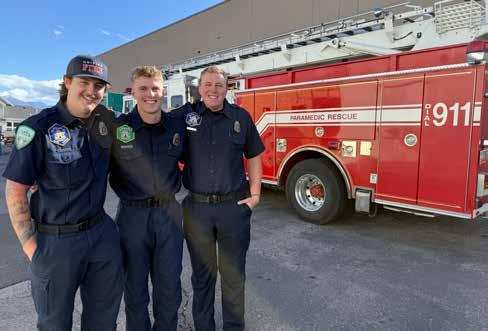
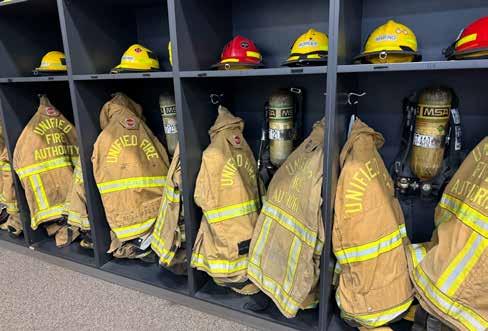
Three students turned hands-on JATC training into lasting friendships while serving their community as firefighters.
By Julie Slama j.slama@mycityjournals.com
WhenDalton Hendricks graduated high school in 2022, he already knew firefighting wasn’t something he wanted to try. It was something he was ready to live.
Hendricks is one of three Jordan School District alumni who recently returned to share they not only found a career, but a lifelong bond through Jordan Applied Technology Center-South’s fire science program. Hendricks, along with Carson Russell and Dalton Timothy, turned the classroom experience into a sense of responsibility, service and family.
For Hendricks, traditional high school felt limiting.
“High school was OK, but when I came here, it became fun because this is what I want to do,” he said. “The instructors are always willing to help you. As students, we wanted to put in the work and they gave us all the tools needed not just for the program, but for our careers.”
It was a recreational league football coach who put him on the path.
“My coach was a firefighter and he was always happy. He loved his schedule of having four days off and it sounded like a fun job so I enrolled here to see what it is like,” Hendricks recalled. “The tools and skills I learned here set me up for camp. We did drills like pulling hoses, doing knots and that helped.”
JATC’s Fire Science program prepares
high school juniors and seniors with training in safety, firefighting, equipment operation, maintenance and the principles of fire science. The coursework is derived from Utah State Fire Fighter Standards, National Fire Protection Association, International Fire Service Accreditation Congress and Unified Fire Authority standards.
Those skills carried Hendricks through EMT training and into wildland firefighting with Unified Fire Authority. He also is hazmat tech certified. Now, Hendricks wants to be an engineer and drive trucks.
“I’ve driven some,” he said. “It’s different where you’re sitting. When you turn, you feel like you’re flying because the wheels are behind you.”
Carson Russell, often called “the chief’s kid” grew up inside fire stations.
“It’s the family business,” said the fifth-generation firefighter. “I spent Sundays and Christmases at the fire station, been there during dinner meetings. I loved hanging out at the fire station; it was the coolest thing ever.”
It was at JATC-South he formed a friendship with Hendricks, nicknamed Baby D, and his friendship with Timothy cemented.
“I met Baby D here; he was a year ahead of us and our class lead. We became friends right out of the gate,” he said.
Timothy, known as “Sticks” since he only weighed 140 pounds when he entered the program, joined Fire Safety after exploring criminal justice.
“Once I got into Fire Science, I knew this is what I wanted to do with my life,” he said.
The brothers in red stayed connected even with different wildland deployments or routes in hazmat specialization and EMT
work. Often, they were stationed at different fire houses across the Wasatch Front.
“We wouldn’t have become as close or stayed as close without this program,” said Carson, who has a younger brother also pursuing the career.
Job reality
Firefighting quickly taught them the weight of responsibility. Hendricks remembers his first major call.
“I was a little nervous,” he admitted. “It was a cardiac arrest for an older gentleman, but I knew my job to do CPR, get compressions done.”
Wildland firefighting added another learning layer.
“We had long hours,” Hendricks said, remembering an overnight fire with 50-mileper-hour winds. “We’re deployed where we were needed.”
Often, that means battling fires across the western states where there are long hours and no phone service.
“When you do wildland, you don’t have summers,” he said. “But I’ve learned a lot about teamwork, managing a team and communication.”
Carson recalled reducing flammable vegetation to decrease wildfires.
“Fuel mitigation work can be pretty grueling,” he said.
The hardest responses, Hendricks said, is a pediatric call because “they have yet to live up to their potential, their whole life is in front of them.”
On the other hand, he cherishes when kids light up when meeting them in non-emergency situations: “I always have firefly stickers in my wallet for them; they love them.”
Firefighter Sean Garrett, who is
JATC’s Fire Science coordinator, said the program teaches the skills as well as the needed mindset.
“They have to have initiative, pay attention to detail, solve problems in different scenarios – that’s what we’re teaching,” he said. “They understand fire behavior, they learn building construction, they practice communication skills.”
Unified Fire Authority Assistant Chief Wade Russell, Carson Russell’s father, said the alliance with JATC has created value to both partners.
“We have more than 50% J-Tech graduates, which has grown over time,” he said about UFA’s 700 employees. “What we found is people we can ‘home-grow’ from high school through wildland, we’re not losing them. The bridge program with JATC has given them a solid foundation they understand and they want to be here.”
JATC’s program also offers students advantages.
“These kids are getting their EMT certification for $500 or less and 16 college credits for $5 a credit,” he said. “They’re getting a great deal and a foot in the door.”
While Hendricks say they’re trained to run toward – not away — from a fire, and it can be a rush, that’s not the best part. It’s belonging.
“The best part is the family we create,” he said.
Timothy agrees.
“Coming through J-Tech and finding a home at work is special,” he said. “I found something important in my life and want to stay here forever and stay with these guys; we’re family, even though we’re not blood, we sweat together and there’s nothing we wouldn’t do for each other.” l
JATC students practiced at regionals and are ready for this month’s state SkillsUSA competition.
By Jet Burnham j.burnham@mycityjournals.com
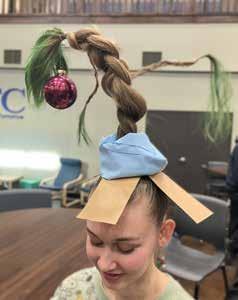
EveryDecember, students in JATC’s nail design and hair design programs work together on a themed challenge which stretches their skills and imaginations.
“They have to think outside the box,” JATC hair design and barbering program instructor Kisty Butcher said. “Within these programs, there’s a very creative element. Even cutting hair is a creative element -- you’re creating art on hair.”
This year, the theme of Christmas movies inspired students to turn hair into trees and fabric and to elaborately decorate nails.
Students had a week of prep and planning and then one hour and 45 minutes to create their look on a model. It was a fun warm-up for students to prepare for SkillsUSA competitions, which challenge students’ skills in preparation for trade, technical and skilled service careers.
There are more than 100 different cate gories in SkillsUSA competitions and JATC programs send teams of students to showcase their technical skills as well as soft skills in top ics ranging from agriculture to food services to welding. Not only are students judged on practical skills, they are rated on leadership, customer service, teamwork, communication, marketing, interpersonal skills and confidence.
“Every program has different standards that they have to follow, so basically they take something right from every part of the program to showcase,” Butcher said. For example, in stead of showing skills in hair sculpture, stu dents will give a presentation about hair color.
Competitions include skills-based catego ries and leadership and communication skills categories for all the career and skills pathways. To help prepare students to compete at the state SkillsUSA competition at the end of March, and nationals competition in June, JATC hosts the SkillsUSA Wasatch South Region Leadership & Communication Contest every February.
“The whole purpose of this is to get the yips out, get them familiar with how the com petition runs, so that they can perform better when it comes to state,” SkillsUSA Utah Con test Manager Blair Jensen said.
At the region contest, CHHS senior Chloie Rock, a senior in the Nail Tech program, com peted in the job demo A event, presenting on a specific skill of nail design- line art. She wasn’t being judged on her work but rather her ability to explain the techniques, products and skills required.
Tech program, competed in the job skills open category in which she had to demonstrate skills outside her program. She chose to teach how to make a boutonniere which exhibited communication, organization and time management skills. She felt good about how she performed at the regional and was preparing for state but wasn’t worried about qualifying for the national competition this summer. “I might go to state but I wouldn’t go to nationals-- it’s the same day as graduation,” she said.
JATC Principal Sonja Burton-Juarez said the regional competition is so beneficial for students. “They can get good feedback, and then they can make changes for the next level so they’ll be prepared at state,” she said.
A team of students in the JATC construction management program competed in jobs skills demos, job interviews and speeches, and medaled in the entrepreneurship skills events.
“I think what we’re getting out of this is a taste of real life, what it’s going to be like in the workforce, maybe, like doing a presentation or
business models and professional communication. “I had a little bit of knowledge, but going more in-depth has really benefited me,” he said. “I will be making changes once I start [my business] back up again.”
Alyanna Patel, a junior from Riverton High School, signed up to participate in SkillsUSA to get some practical experience and gain more confidence. She was put in a role-playing scenario in which she demonstrated her customer service skills as she responded to customers, prioritized tasks and solved problems.
“Working with people has always been something I enjoyed, and I love problem-solving and trying to help people to the best of my abilities,” she said. “I feel like it’s really just a good skill to have--at least from my perspective. I work at a coffee shop. Interacting with people, even on a daily basis, is a very important skill to have. I think it’s very important that they do this, because it really gives students an opportunity in the scholarship realm and just to get really good life skills.”
municate with co-workers, write reports and maybe even give some kind of speech.
JATC students traditionally perform well at SkillsUSA competitions. JATC students earned second and third place medals at last year’s nationals competition. “We always have at least two people that win,” Burton-Juarez said. “We like Skills--it’s what we do.”l
Taylee Steed, a CHHS senior in the Nail
The Riverton City Art of Care and Community Wall will feature a rotation of displays.
By Peri Kinder peri.k@thecityjournals.com
cancer survivor and Riverton City
Arts Administrator Vicki Wartman said as she recovered from cancer, it was art that helped her heal.
“Art is all around us,” she said. “Storytelling is all around us and art can help take the families away from what they’re thinking about for a minute as they’re walking through the halls. Or art can be a healing process, just painting your feelings out.”
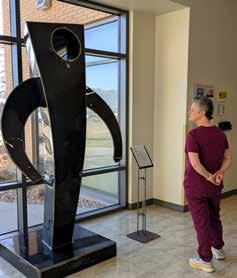
Through a collaboration with Riverton City, Intermountain Health Riverton Hospital (3741 W. 12600 South) officially unveiled the Riverton City Art of Care and Community Wall in the south main hall of the building in January. The rotating art display will feature paintings, photos and sculptures designed to symbolize courage and healing.
The current display includes pieces from Still Standing: The Art of the Fight,
an exhibit that was held at the Old Dome Meeting Hall last year. The art celebrates resilience and strength and depicts how creativity can help those undergoing medical trauma.
Local sculptor Nate Brimhall has two pieces in the hospital exhibit: “Hope” and “Together.”
“Art means communication. It means connection. It means community,” he said. “Art allows us to say things that we can’t express. “Together” is two hands and the energy that we create when we work together. When we work together, we create more energy. And the piece ‘Together,’ you can touch the middle part and it will move. I invite you to always interact with my art.”
His sculpture “Hope,” was inspired by his 19-year-old nephew who ended up needing a heart transplant. Brimhall said he equates hope with faith.
Dawna Miller works at Riverton Hospital and has experienced her own battle with cancer over the last year. She related to Brimhall’s art piece and shared her emotional journey as she completes her cancer treatments.
“It’s about hope, you know,” Miller

said. “It’s having the hope and having the willpower. Obviously, it’s gonna work out one way or the other. But it’s hope and hoping.”
Riverton Mayor Tish Buroker was on hand to help cut the ribbon, officially opening the art exhibit. She said her husband, Brian, is a nurse and photographer who hung photos on the wall at the hospital where he worked because he found it made a difference for patients and their families.
“They had something to look at and something to take their mind off what was happening,” Buroker said. “I was talking to [Riverton Hospital President Todd Neubert] just this morning. He talked about how the nurses and the patients are taking a moment to look at this art and think about it. It takes you a little bit out of yourself and it gives you great hope.”
Riverton Hospital first opened its doors in 2009 and has grown to include a medical staff of more than 250 doctors, representing 30 specialties. The Riverton City Art of Care and Community Wall is the latest addition, designed to inspire, connect and tell a story.
“This project reflects a shared desire


to bring comfort, creativity and moments of calm into a place where they matter deeply,” Wartman said. “This art wall is just the beginning. We look forward to welcoming many future exhibits that continue to bring art and wellness together and strengthen the connection between our city, our hospital and our community.” l

SPECIALIZED MENTAL HEALTH SERVICES:
• PTSD, CPTSD, anxiety, panic, and depression
• Trauma recovery for veterans, active-duty service members, and first responders
• Chronic pain, somatic symptom disorders, nervous system dysregulation
• Ketamine-Assisted Psychotherapy (KAP)
• Disordered eating and intuitive eating support
Individualized, Goal-Directed Mental Health Care Veteran-Owned | 20+ Years Providing


The display features art created by children 18 and under.
By Peri Kinder peri.k@thecityjournals.com
Artlines the walls at the Old Dome Meeting Hall, proving that art isn’t about perfection but creativity, imagination and the courage to put something new into the world.
Riverton’s “Not Your Parent’s Art Show” features nearly 150 pieces created by artists from seven months to 18 years old. It includes paintings, sculpture, photography and drawings that showcase the way children see the world.
“Pablo Picasso said, ‘Every child is an artist,’ and I think that’s true,” said Riverton Arts Administrator Vicki Wartman. “I believe the end of that quote is, ‘The problem is trying to remain the child artist.’ I want kids to color outside the lines, I want them to be creative and not worry about what they’re doing, and I want every kid to be represented without being in a jury of selected, certain pieces. We accept art from every single child.”
One wall of the exhibit features paint-

ings done by children at the Riverton Preschool Academy. Another display hosts dozens of photographs taken by junior high and high school students.
An open house was held in February where kids could bring their families to see their artwork and talk with other young artists.
Rose Creek Elementary student Arya Singh created the drawing “Trying is Better Than Giving Up” to demonstrate the feeling of working toward a goal, even
when it’s hard.
“I like drawing beautiful things,” Arya said. “It shows that you should never give up, and you should always reach for whatever you want to reach for without giving up.”
Madison Lundquist is a 16-year-old homeschooled student from South Jordan who created a clay sculpture of Jesus Christ called “The Freedom of Religion.” She’s been sculpting for several years and likes learning new skills that help her create her best pieces.
She had entered “The Freedom of Reli-
gion” sculpture into the Springville Art Museum religious competition, but it wasn’t selected. Despite her disappointment, Madison said these experiences are opportunities for discovery.
“I found this to be one of my best pieces, but to see that it didn’t get in, and to see things that I personally feel don’t meet up to my own standards get in, it hurts my ego,” Madison said. “But I know that I need to learn from these experiences so I can grow and get better each time.”
The exhibition will be on display at Old Dome Meeting Hall (1452 W. 12600 South) through March 18. It can be viewed Monday through Wednesday from noon to 5 p.m., or by appointment.
“You should come see it because just look at all the diverse art that we have here and all of the different representations,” Wartman said. “My favorite part is reading the tags and learning what the artist meant, because it makes you think a little bit deeper. Especially with the photography. That’s what was in the artist’s mind. Some of these pieces are very deep and very thought-out about why they took the photo. But all the art pieces have that. The art and the artist’s statements are very interesting to look at.” l

It’s not an illusion. Mountain Ridge High School now has a literary magazine.
By Jet Burnham | j.burnham@mycityjournals.com
Mountain Ridge High School students finally have a place to showcase their literary and artistic talent. The first edition of “Echoes from the Ridge,” MRHS’ first ever literary magazine, was published in December and a second issue is already in the works.
Language arts teacher Caitlin Leek was on the literary magazine staff in her high school and loved the experience— that teacher is the reason she is a teacher today—so she wanted to provide that same opportunity for her students. Each semester a staff of students will publish an issue.
“I just have so many students who write and want to show me all their stories and poems, and show everyone their stories and poems and art,” she said.
MRHS senior Kenneth Noyce, who was on last semester’s staff and has returned for this semester, said with the first issue, the staff wasn’t sure what to expect. He was shocked by how many people were
willing to submit their work.
“We got to see a bunch of cool writing and art,” Noyce said. “There was a lot of writing, and I didn’t think there would be as much writing as there was, but there was, and there was a good amount of art.”
Staff members evaluated the submissions and chose 28 poems and short stories and 22 visual art pieces that fit within the issue’s theme “Illusions.” The 136-page book was sold for $10.
“I think it went above my expectations, because it was the first semester and I was just hoping we got something out and it turned out amazing,” Leek said.
She is thrilled to work with such a hard-working staff. In addition to choosing pieces to feature, students also select a theme and design and promote the magazine.
Art Editor Trevor Brown said he thinks the first magazine was well-received by students.
“I know it affected me a lot just being a part of the team and seeing all the amazing submissions,” he said.
Brown, who is on the staff again this semester, has high hopes for this next publication.
“I’m hoping it will be better than the first one—and the first one was pretty

amazing—but we’ve learned a lot since last time,” he said.
Noyce, Brown and Braydon Greer are the three returning staff members, joined this semester by three new students with various experience.
Ryle Diel, who heads up the social media and advertising, has experience as a producer for the school’s news program. She likes being part of creating a safe space for people to share their personal writing and art.
“It lets people be creative and it lets people express themselves,” she said.
Cassidy Rawlings, whose song lyrics were published in last semester’s magazine, is now on the staff and plans to submit more of her work for the upcoming issue. She believes the magazine is a way to preserve this moment in time.
“It’s kind of good as a time capsule-type thing,” she said. “You can look back and see what people’s feelings were at the time, and how your writing and opinions have changed.”
The staff is hopeful that the first issue will inspire more students to submit their work for the upcoming issue (deadline is April 20). Writing is rated on quality of writing, originality, voice and flow, and artwork is judged on visual appeal, creativ-

ity and originality. From the highest rated pieces, the staff will choose work that fits the issue’s theme, “Light in the Window.” l

She values hard work, integrity and the city’s history.
By Peri Kinder peri.k@thecityjournals.com
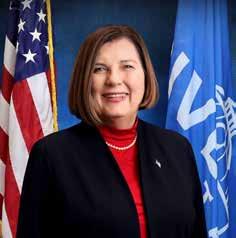
TishBuroker began her term as Riverton’s mayor on Tuesday, Jan. 6, combining her deep respect for the city’s heritage with excitement for the future. A life-long Riverton resident, Buroker hopes people new to the city, as well as long-time residents, find a welcoming community for their families and business endeavors.
Why did you want to run for mayor? I wanted to make Riverton better, where we can be a positive influence on others and help people understand our story. I felt like I had the skills and abilities to get that done.
How did your upbringing prepare you for this role? I grew up in a household of men, and I worked in business for many years. I’m comfortable interacting in professional settings. I think it’s because of my background and the way I learned to communicate when I was growing up. I credit that to living in a competitive household of six brothers. They all played basketball, so I was used to an environment where competition was okay. It wasn’t
something to be afraid of.
I grew up in this community where hard work and being involved were just a way of life, and that’s why I adopted it. I learned about giving back to your community, staying involved in your community and working hard.
How would you describe your leadership style? I’m very collaborative. In my first 30 days in office, I’ve worked to make sure that the employees see me as approachable, personable and human. I make mistakes. You can acknowledge them to me. We can talk about it so we can do better going forward. I ask lots and lots of questions. I’m not one to just accept what’s being told to me. I like to do the research. I have high expectations, but I’m reasonable in the approach to get there.
What challenges does Riverton face in the next few years? A major challenge is the growth, especially on the west side of the city, handling traffic and dense development. Around Mountain View Village there is going to be much more increased density.
I think there are lots of small things we can do that make a difference to residents. A small but important way is making sure our parks have updated signage so that each park has a name. So many of our residents are new. They want to be connected and they

want to understand Riverton. But we have to give them information so they can.
What’s great about Riverton? For me, it starts at City Hall, where I’m sitting in my office, which was my third-grade classroom. This was Riverton Elementary for years, so connecting to that story, that history, has value.
Riverton was a farming community, full of hard-working farmers who didn’t have a lot of money. Those are our roots. I think sharing the message that they were honest, hard-working people is something to be proud of. Any opportunity I have to tell that story, I’m going to share.
What are your top two priorities for your first year? My first priority is creating a culture where city employees feel like they can come and talk. Our budget sessions are probably priority number two. I will be having all the departments come talk about their budgets, talk about their needs. I have asked them not to dilute it. Tell us everything that you think we’re going to need in the next five or 10 years. Challenge us. Make us do our job. Make us make those hard decisions about what we want to spend our money on going forward.
What will success look like for you at the end of your first year? We’ll have an engaged, collaborative, positive council get-
ting accurate information from the city, so that when we work with residents, we know we’re giving them the best information and the best service we can. I’m going to measure success by the relationships I develop with surrounding cities. I want to make sure those relationships are strong and we have opportunities to work together.
What else would you like residents to know? I want them to know I’m accessible. People can always reach out to me. l

Educators are given a day of relaxation, exploration, laughter and connection.
By Jet Burnham j.burnham@mycityjournals.com
For the fifth year, Jordan School District held a Health and Wellness Day the first Friday in February to give students and employees a day to prioritize personal wellness. Schools were closed and no official assignments were given but the district provided a list of suggested activities.
Students were encouraged to focus on sleep, being active, getting sunlight and doing relaxing activities. Employees were invited to participate in optional wellness activities. Each year, more discounts and activities are added, ranging from free Swig drinks, to Zumba classes and art lessons, to BBQ demos, crafting, games and more. This year there were more than 50 activities for employees to do, including a session at Top Golf.
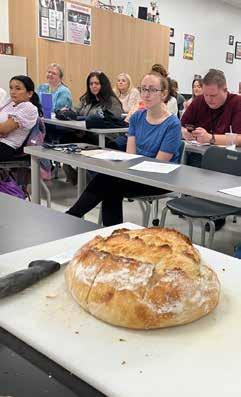
“I look forward to this day every year,” Kristen Jepson said. She and a group of her colleagues from Kauri Sue Hamilton School took a sourdough bread class and enjoyed a wellness therapy session at Ahhhsome Relaxation.
Kallie Timothy, who works with students with special needs, said the opportunity to focus on self-care and wellness awareness helps employees de-stress and recharge, but the benefits ultimately extend to the students. “This helps us refresh so that we can help our students,” she said.
That was the goal for Health and Wellness Day, JSD Board Member Darrell Robinson said. After 40 years of teaching, he understands educators need a boost about this time in the school year. “February is always the hardest month to get through,” he said. While this has not been a normal snowy, dreary winter, JSD employees still appreciated the gesture.
“I really love working for Jordan School District because I know that they care about me as an employee, even though I’m just a staff,” KSHS staff member Tracy Mitchell said. “I feel like I’m cared about and that I matter, and it makes me feel like this is a place I want to work because they provide opportunities like this for us.”
Employees from all levels within the district participated, including full-time teachers, part-time staff, and employees from the district offices, transportation, nutrition services, etc. Some of the activities got people out of their comfort zones and learning new things such as cookie decorating, fly tying, junk journaling and laughter yoga. Others were focused on opportunities to socialize through quilting, hiking, golf-
ing, crafting and role playing games.
The wellness activities gave educators an opportunity to strengthen relationships outside of work and many attended activities with colleagues. Several elementary school cafeteria workers took a line dancing class for a fun team-building experience. A group of elementary school staff members took a class together to learn how to make a salt scrub.
“Just being together, that is what has brought us wellness,” Liz Christensen said.
Her Riverton Elementary School co-worker, Kira Frischknecht, was impressed with the number and variety of wellness activities provided. “It’s cool that the district cares about our wellness this much,” she said.
Megan Napaepae said after taking some classes together, she and her friends planned to make sure their kids got some benefit from Health and Wellness Day, too. “We’re going to go make our kids go outside-- for their wellness,” she said.
Some employees chose to skip the optional employee-only activities and instead used the Wellness Day discounts to take their kids to the bowling alley, escape room, fun center or Stars basketball game. l

Are you a business leader? At no cost, the ElevateHERTM Challenge is easy to accept and will benefit your company. Join businesses across Utah in our mission to elevate the stature of women’s leadership. Take the ElevateHERTM Challenge and stand with other businesses as we pledge to elevate women in senior leadership positions, in boardrooms, on management teams and on politcal ballots.

LEARN MORE: www.wliut.com/elevateher-challenge




By Rebecca Olds | rebecca.o@thecityjournals.com
The Utah Women and Leadership Project, founded by Susan Madsen, is a research pumping machine with a goal of making Utah a better place by empowering women and removing obstacles.
A lone silhouette is a harsh contrast against the glare of a lit monitor.
Before the sun comes up, Susan Madsen sits at her computer: inbox and task list open for the day. While the house is quiet, her inbox starts to fill up for the day.
“Early morning…it’s been invaluable for me,” she said. “I always was up earlier than anybody, and it would be quiet, and I could make sense of the world.”
She uses the slow time to plan out her day and answer each email, following her team standard that “everyone deserves an answer.”
“I have a process of looking at my day, looking at my workload, figuring things out,” she said. “I reprioritize every single day.”
She might even reprioritize multiple times in a day. She’s constantly moving and pushing forward despite the odds and a small team.
Madsen, in addition to her professorship at Utah State University, is the founder of the Utah Women and Leadership Project, which has published 21 research-based white paper reports, 65 research snapshots and infographics, 68 research and policy briefs and hosted 45 “Think Tank” gatherings in Utah since 2010.
Madsen and four full-time employees — associate director Brie Sparks, local outreach and curriculum manager Deborah Lin, marketing and communications coordinator Emmalee Chastain, program assistant Kylie Hollingsworth — have made a

big push to raise awareness of the existing gaps in Utah for girls and women.
“Our work is having an impact across the state, and that is what motivates me,” Lin said. “In my role, I have visited 20 of our 29 Utah counties to get to know residents and build relationships to help with grassroots efforts to raise awareness and impact change around issues facing girls, women and families.”
“Everywhere I have been, men and women recognize the need for change.”
The “change” she is referring to encompasses topics like making more leadership opportunities available for more women, daycare options in the state, and homelessness resources for women.
Currently, the project involves close to 7,000 people statewide, with 500 partners and 300 leaders in different counties and cities, Madsen said.
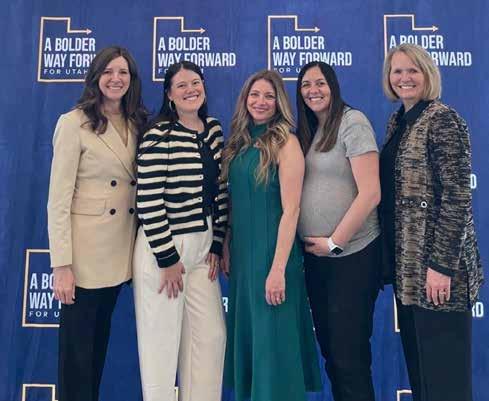
Four counties and seven cities/towns have passed official resolutions to support the project’s initiative they call “A Bolder Way Forward.”
“Our efforts to equip Utah communities with the data and resources needed to help more girls, women and families thrive are just one piece of the way forward,” Sparks said. “Creating lasting change for future generations of girls and women requires a systems-based approach, and I’m honored to help build the strategic connections that make that possible.”
Madsen admits that it hasn’t been
easy for any of them, but she continues in her efforts because she feels called to help women through the best way she knows how: research.
“What has driven me for decades is research,” she said, “and getting it into the hands of people that are making decisions.”
And in the hands of decision makers it is.
Madsen, in addition to her professorship and affiliation with USU, considers herself an activist and encourages others to be too. She is frequently on Capitol Hill
advocating for change with her research and “works alongside legislators.”
“We should all be advocates and into the work of social justice,” she said. “If we care about other people, if we care about our communities, if we care about our state, if we care about our extended family, if we care about any of that, we should be in whatever topic connects with us.”
For the research and recommendations on how to get involved in UWLP for Salt Lake County or any other country in the state, visit www.usu.edu/uwlp/research/what-can-i-do.
By Peri Kinder | peri.k@thecityjournals.com
University of Utah, Chamness landed a job with Salt Lake City, working her way up to become the city’s finance director in 2014.
lenge for several years.”
Most residents don’t think about how cities are run. As long as roads are safe, water is clean and parks are open, city administration rarely crosses their minds.
But behind the scenes, it takes a functional team and deliberate planning to make city services seem effortless. In Holladay, the person coordinating that teamwork is City Manager Gina Chamness, who’s been with the city for 10 years.
Chamness is a rarity in Utah. According to a December 2024 policy brief put out by the Utah Women and Leadership Project, of the 250-plus cities in the state, only 13 of them had women serving as city managers or administrators.
“I think that’s starting to change,” Chamness said. “It feels like there are more women in assistant city manager roles, more women as department heads, but as far as my generation, there haven’t been many of us. I’ve been really lucky.”
Chamness never imagined she’d serve in municipal government. She started her career at the federal level, working for a congressional agency, but political dysfunction persuaded her to look for other opportunities.
With a political science degree and a master’s in public administration from the
When the Holladay city manager position opened, she felt it was the next best move for her career and family, since she and her husband, attorney Ralph Chamness, have lived in Holladay since 2003.
“I saw this position posted and it felt perfect,” she said. “I was excited to apply. The opportunity to serve a community where you live felt like something I could be really excited about.”
Chamness acts as the CEO of the city, managing administrative functions, working with elected officials and ensuring ordinances, policies and rules are observed. When she first started with Holladay, the city was struggling. Aging infrastructure, stunted growth and a lack of direction left Holladay stagnant.
Working with the mayor at the time, Rob Dahle, Chamness held discussions with city residents, elected officials and city staff to prioritize areas of focus.
“Ten years ago, we didn’t have much of a commercial base,” she said. “We were banking on redevelopment of the [Cottonwood] mall and then the great recession set redevelopment back. The question was, how could we build a city that was going to be financially sustainable? That was a big chal-
Investing in infrastructure was another concern. With some parts of the community more than 100 years old, Chamness knew a concerted effort and lots of money had to be allocated to improve infrastructure.
Restructuring the city took patience. Much like turning an ocean liner, it needed a coordinated shift to move something so large and complex.
“Everyone wants to do things quickly. Sometimes people complain about how long the government takes to do things,” Chamness said. “Making sure you have adequate time to listen to residents and making sure elected officials build that conversation into their own planning and into the process is critical. I think we’ve done a pretty good job of that. I wish the residents understood how critical the services we provide are to their day-to-day lives.”
Over the last decade, Holladay has improved road quality, invested in development, attracted businesses that fit the community, expanded the sidewalk system and recently acquired the Spring Lane Elementary property to develop a new park.
Chamness builds bridges between elected officials, residents and city staff, while working with other government agencies, organizations and committees to create a city that residents are proud of.
“I think the best attribute for describing Gina’s success would be ‘trust,’” said
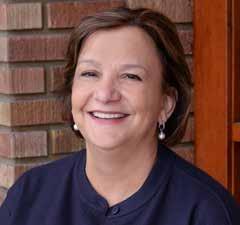
Holladay Mayor Paul Fotheringham. “My colleagues on the council have always felt a keen sense of trust for Gina; trust in her judgment, trust in the depth and breadth of her expertise from budgetary and legal issues to citizen engagement and public policy.”
Chamness admits the job as city manager is stressful, but she’s comfortable with conflict, especially when it leads to a better outcome for Holladay. She encourages women to pursue leadership roles, whether in government or business.
“I tell women, you could absolutely do this,” she said. “I really do feel like I have the best job in the valley.”





By Julie Slama | j.slama@mycityjournals.com
More than 400 high school student-athletes from across the state gathered for a morning focused on teamwork, leadership, mental health and empowerment in girls’ sports.
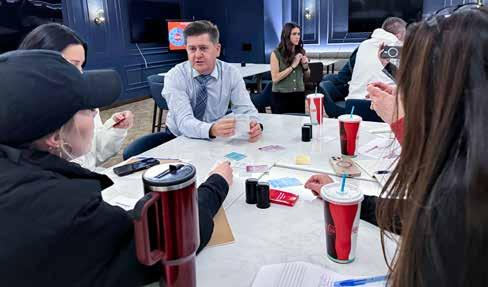
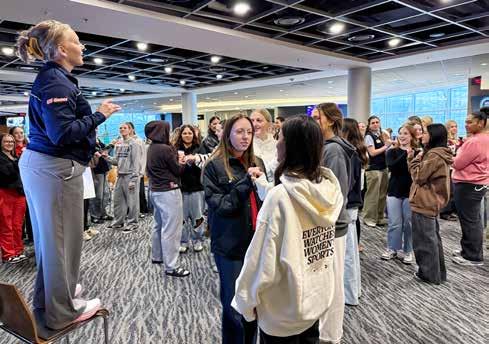
It began as a simple game of rock, paper, scissors, but quickly became a lesson in teamwork. Everyone played at first, then losers backed their opponents until only two players remained. Silence fell as they competed, then cheers erupted when the round ended in a tie. After four rounds, one girl finally emerged victorious.
The exercise wasn’t about winning, but about being a good teammate.
“How does it feel to be celebrated by your peers?” asked Poudre School District (Fort Collins, Colorado) health and physical education coordinator Jo Dixon, who emphasized that every player has a role — scorer, defender, supporter, teammate. “Being a part of someone else’s fan club is just as important and powerful as being in the spotlight, because lifting others up feels awesome.”
The interactive activity was part of a breakout session at the third annual Utah Women’s Day in Sports conference held Feb. 4 at the Delta Center, the day before National Girls & Women in Sports Day.
Dixon continued the partner activities designed to build unity. Student-athletes stood toe-to-toe and told each other: “Everyone is battling something in life, and I’m glad you’re battling with me.” Then, they stood back-to-back and said, “I’m so glad someone has my back — and I have yours.” The activity ended with a pinky promise and the words: “I pinky promise to help you unlock your greatness so the world can see it like I do.”
“We want you to be a good teammate from the inside out,” Dixon said.
The event’s origin began with Andee Bouwhuis, past president of Utah Interscholastic Athletic Administrators Association and Deseret Peak High School athletic director, along with Utah High School Activities Association Assistant Director Jan Whittaker and UIAAA communications coordinator and Cedar Valley High School Athletic Director Sharon Mardesich.
“Our goal is female empowerment; support our female athletes; grow leaders,” Bouwhuis said. “We’re letting these female athletes know that we hear them and we see them. We want them to be successful.”
More than 400 student-athletes statewide attended, supported by about 100 coaches and athletic directors. Participation from each school was limited to ensure broader representation.
“The athletes are charged to take back what they learned and teach it to their teammates,” she said.
Another breakout session focused on nutrition, led by Intermountain Health’s Josseline Kelley, who emphasized fueling, hydration and sleep.
“Our goal is to make sure that we’re eating something every three to four hours as athletes,” she said as she gave the student-athletes specific suggestions. “The worst thing you can do is go into a competition or training session without fueling. Under fueling can be very common in teens.”
University of Utah Assistant Director of Olympic Sport Performance Carly Fehler addressed competing in college athletics.
“Your whole life is going to change
overnight,” Fehler said. “Your city, your bed, your routine, your team and coach. Literally, everything changes. And are you prepared for that? Only nine percent of high school girls will go on to play in college. Two percent of all high school athletes will play Division I.”
While some student-athletes attended workshops, adults participated in a “Coach Beyond” session focused on supporting athlete mental health.
“I’ve been an athlete for my whole life, and I’ve seen the way mental health affects the performances of athletes,” said college athlete and presenter Makayla Pitcher. “Coaches are the front line, so it’s important for them to understand and help.”
Cottonwood High Principal and presenter Justin Pitcher emphasized the need for better training and resources for coaches.
“We need to do better by our athletes here in Utah, he said. “Our data shows over half of every female team has experienced significant sadness or depression. We look at our coaches and their training. Many of them were former athletes so they understand the game well, but they don’t always know how best to handle these tough situations that we’ve been put in.”
Speaker Amy Donaldson highlighted the origins of Title IX and opportunities it presented.
“They drafted a piece of legislation that was unlike today, with 37 words,” she said. “Even though everyone thought it was this little administrative adjustment… they had no idea of (the impact of) that law.”
Donaldson encouraged student-athletes to examine their journey, to be optimistic, to wire their brains for gratitude and forgiveness, to know “no accomplishment is an individual accomplishment.”
Karissa Niehoff, National Federation of State High School Association’s executive director and CEO, challenged the next generation to continue advancing opportunities for women.
“Look at the women who came before us, and look at where we are now, and look at the future of growth in women’s and girls’ sports,” she said. “We’ve come a long way. As a woman CEO in a sports world, I feel blessed, but I challenge you as a younger generation…to carry this forward. We have to be committed to working forward so we continue the growth we need in girls who play sports in Utah.”
UHSAA Assistant Director Jeff Cluff said the progress in girls sports, including expanded championships and the addition of girls wrestling, has helped to equalize opportunities.
“We’re trying to create equal opportunities for the girls that boys have been getting for years,” he said. “We have still more to do and more to change.”
Copper Hills High seniors Brynlee Morton and Kaysha Millet said the conference left a lasting impression.
“I love how inclusive it is,” Morton said. “Everyone has valuable knowledge, and they’re sharing their expertise with us.”
Millet added: “They’re spreading awareness and information; it’s empowering to us as women athletes.”
By Peri Kinder | peri.k@thecityjournals.com
Female mayors move from the exception to the norm.
When South Salt Lake Mayor Cherie Wood was first elected in 2010, she was a notable exception. Along with Midvale Mayor JoAnn Seghini, Wood was only the second female mayor serving in Salt Lake County at the time.
She and other women, including Riverton Mayor Sandra Lloyd, Taylorsville Mayor Janice Auger and Holladay Mayor Liane Stillman, were trailblazers and glass ceiling-breakers, setting the stage for women to take the lead, and it’s paying off.
“It’s always been a passion project for me to make sure we have women at tables where decisions are being made,” Wood said. “So I’m always encouraging women to run for office.”
Entering such a male-dominated field wasn’t easy. While many of their male counterparts offered support and encouragement, the women also encountered misogyny and roadblocks. Learning to navigate their leadership roles took patience, balance and a thick skin in order to stay the course while representing their cities.
Now, many cities in Salt Lake County are led by female mayors, including the new-
ly elected Cottonwood Heights Mayor Gay Lynn Bennion and Riverton Mayor Tish Buroker. Add in Salt Lake City Mayor Erin Mendenhall and Salt Lake County Mayor Jenny Wilson, and female leadership is becoming the norm, rather than the exception.
“It is so important that young women and young men see women in leadership,” Bennion said. “It’s important for them to know that women can do a great job as leaders.”
Organizations like Utah Women Run and the Women’s Leadership Institute have provided training for women who want a leadership role, whether in politics or business. Women are taught to participate on boards, campaign, fundraise, advocate for themselves and develop a platform and voice that others want to follow.
Initiatives like A Bolder Way Forward focus on creating safe spaces for women in boardrooms, education, political office and civic organizations.
WLI’s Director of Programs and Operations, Nicole Carpenter, said the organization’s founder, Pat Jones, is a former Utah Senator who believes women need a seat at the table.
“We need the voices of women in all areas of leadership, particularly on Capitol
Hill, where women can make decisions,” Carpenter said. “It’s important for women to have a vote, but it’s even more important for women to have a voice. To have a voice in those political circles, you need to hold an office, or you need to be a lobbyist, or have some type of political influence. So we encourage women to run for political office.”
It’s not just Salt Lake County; Utah County and Davis County have also had their share of female leaders, including Kaysville Mayor Tami Tran, who was just elected to her second term. Not only is she a political leader, but she’s the CEO of a tech company, Rylex.
“When I became a mayor five years ago, for my first term, there were nine mayors who were new in Davis County, so almost half, since there are 15 cities,” Tran said. “Nine of us were new and three of us were women, so it was awesome to mentor each other and learn from each other. Women can see things in such a unique way, because we bring different perspectives to the room.”
Tran hopes more women run for political office, whether on the local, state or federal level, but acknowledges some women worry about balancing leadership roles with family.
Wood was a single mother, raising two boys, when she became mayor in SSL. She understands the fear and uncertainty, but she found support and people who believed
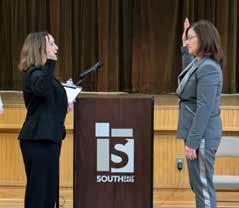
in her. She said behaviors are slowly changing, with more understanding and empathy for women in leadership.
“I know it’s intimidating,” Wood said. “But there’s so much value to having different lived experiences and perspectives on councils and in elected office seats. When you invite all of those perspectives and give them a safe place to be heard, that’s when you’re going to solve big problems.”
For information about running for office, visit UtahWomenRun.org.
By Cassie Goff | c.goff@mycityjournals.com
“Let’s get all the girls together to go get dinner and mammograms!” is the vibe Rena Vanzo is going for with mammogram screenings on The Boob Bus.
One in every eight women will develop breast cancer in her lifetime. For every Utah woman, that translates to about a 12.5% chance of developing cancer.
“Every family, every community, every church group, every book club—all of them will be impacted. Prevention is the best medicine,” said CEO and co-founder of The Boob Bus Rena Vanzo.
The Boob Bus is a mobile unit that offers mammograms, health care screening, breast cancer assessment and other healthcare services to women locally. The main goal of The Boob Bus is to make mammograms more accessible and comfortable.
“Utah women are just not doing their mammograms. We’re way below the national average,” said Vanzo. In 2022, Utah was ranked 48th out of the 50 states in the nation for mammogram screening.
Vanzo and her team have been working to change that statistic by transforming typical health care screenings into modern experiences. The Boob Bus was fully customized as a health care space with neon
pink lights and vaulted ceilings.
“On The Boob Bus, you can expect to feel like an individual,” said driver and Patient Care Coordinator Kayla Pacheco. “Your history, your experiences and your fears are heard.”
An average visit to The Boob Bus begins by checking in to answer medical history questions. The data collected related to menstrual changes, hormones, breast density and personal medical history is used to calculate individual cancer risk.
“Breast density is really becoming more of a topic of conversation,” Vanzo said. “And it should be. Women with dense breasts do have a higher risk of breast cancer.”
Patients are offered heated pink robes instead of hospital gowns during their appointment. Individual women will meet with a licensed certified technologist privately in the mammogram suite for a screening.
Results are within one week. (Vanzo emphasizes that patients may be referred to a hospital for diagnostic screening depending on risk.) Patients leave The Boob Bus with branded lip balm, nail files and educational cards.
The entirely female Boob Bus team emphasizes the importance of destigmatizing women’s health with less shame and embar-
rassment through more conversation.
“I want to live in a world where even the men are saying to their partners ‘Hey, did you get your mammogram yet?’” Vanzo said.
Vanzo and her cofounders started The Boob Bus in 2022 after being personally impacted by individual family members battling cancer diagnoses. It took her two years to get The Boob Bus fully operational.
“I had to learn all of these extra things that are very useful in your life but you wouldn’t think they’d intersect in business,” Vanzo said.
Vanzo needed to get a CDL so she could drive the oversized custom bus. In preparation, she worked for UTA for six months to get trained as a driver in a structured environment.
“Rena is a superstar. I have never met anyone so driven to help others,” said Office and Billing Manager Jen Bartunek.
The Boob Bus primarily meets women for their mammograms all across Salt Lake, Utah and Davis Counties. Through their partnership with the Central Utah Health Department, The Boob Bus also travels to Central Utah.
The Boob Bus works with the Utah Breast and Cervical Cancer Program (UCCP) so uninsured women can still access their mammogram screenings through a voucher program.

The Boob Bus provides heated robes for mammogram appointments so it “feels more like a spa experience,” The Boob Bus founder Rena Vanzo said. (Photo courtesy of Rena Vanzo, The Boob Bus CEO and co-founder.)
El Programa de Detección del Cáncer de Mama y de Cuello Uterino es facilitado por el Departamento de Salud y Servicios Humanos de Utah y está financiado con fondos estatales y federales. El formulario de solicitud está disponible en español a través de lo siguiente: www. cancer.utah.gov
Individual women can book appointments online (even same day) through The Boob Bus website: www.theboobbus.com. Organizations, businesses or school districts can email or call The Boob Bus team (866-747-BOOB) to set up a day for group appointments.
For 140 years, families have come to trust Larkin Mortuary as the leading funeral service provider along the Wasatch Front. Family owned and managed for seven generations, we are committed to providing meaningful, healing experiences for every family who turns to us for guidance.
For over 140 years, families have come to trust Larkin Mortuary as the leading funeral service provider along the Wasatch Front. Family owned and operated for seven generations, we are committed to providing meaningful, healing experiences for every family who turns to us for guidance.



Discover the peace of mind that comes with planning ahead. Learn about the benefits of advance funeral and cemetery planning, and why it makes sense for you and your family.

Heart care is more than numbers on a screen. At Intermountain Health, heart care starts with getting to know what’s important to you and building a care plan together. From preventive screenings and lifestyle recommendations, to treating the most complex conditions with advanced technologies, our experts are with you through all of it. In other words, we’ve got your back — and your heart.


3/13/25 Thursday @ 12 PM
3/17/26 Tuesday @ 12 PM
Larkin Sunset Lawn: 2350 E 1300 S, SLC, 84108
Larkin Sunset Lawn: 2350 E 1300 S, SLC
3/18/25 Tuesday @ 12 PM & 6 PM
3/18/26 Wednesday @ 12 PM
The Chateau at Le Jardin: 1910 E Dimple Dell Rd, Sandy
Larkin Riverton Funeral Home: 3688 W. 12600th S., Riverton
3/26/25 Wednesday @ 12 PM
3/25/26 Wednesday @ 12 PM
Elysium Legal: 1802 W South Jordan Pkwy, South Jordan
The Chateau at Le Jardin: 1910 E. Dimple Dell Rd., Sandy
3/27/25 Wednesday @ 12 PM
3/26/26 Thursday @ 12 PM
Elysium Legal: 1802 W South Jordan Pkwy, South Jordan
The Chateau at Le Jardin: 1910 E. Dimple Dell Rd., Sandy
Space is limited, so please RSVP now!
Learn more or schedule with a primary



The IEP Student Center offers guidance and resources.
By Peri Kinder peri.k@thecityjournals.com
Managing a child’s education can be daunting. That’s made even more difficult when a child needs special education services. Parents often feel overwhelmed by the volume of red tape to get their child the help they need.
Students with special needs or disabilities are eligible for an Individualized Education Program that outlines support and instructions that a team of parents, professionals and educators follow to help children thrive. The plan sets goals, strategies and performance markers to help ensure students can succeed at school.
But what happens when the IEP blueprint isn’t followed? What if there’s a failure of services or a breakdown in communication? That’s when the IEP Student Center can make a difference.
Mark Adamson is an IEP attorney with a unique perspective. As someone who has autism and ADHD, he can see the situation through the child’s eyes to help find creative solutions.
“I’d say probably as many as 60% of my clientele have autism, ADHD or both,” he said. “It’s fascinating for me to be able to explain to parents what’s going on in their kids’ brains, and I can be a positive role model for them.”
Adamson helped establish the IEP Student Center in South Jordan (1682 W. Reunion Ave., Suite 4B), a nonprofit founded by attorneys, educators and parents to foster advocacy for children with special needs or disabilities.

The center provides representation, helps with conflict resolution, supports the rights of parents and students, and maintains accountability for schools to abide by IEP plans.
Adamson, a West Jordan resident, earned his law degree at the University of La Verne and worked with the Disability Rights Legal Center in Los Angeles. He said when a child’s education isn’t going the way it should, there are several options to advocate for students.
Most often, he is contacted when a child is expelled or suspended. If the behavior that got the student in trouble is a manifestation of their disability, Adamson starts a conversation with school officials to walk through the child’s IEP to make sure all issues are being addressed correctly. Often, he finds teachers are overworked, schools are underfunded and parents are ashamed.
“If you’re constantly getting called to the school, maybe your kid is hitting other kids, maybe your kid’s the bully, a parent ends up feeling like it’s a judgment on them,” Adamson said. “I try to strip that embarrassment away and not talk about the situation like it’s a moral judgment.”
He said IEP students are often considered less intelligent than mainstream kids, but his experience has proven that to be false. Adamson points to his own success as an attorney and to Ana Victoria Espino, who, in 2024, became the first person with Down syndrome to graduate with a law degree.
“So guess who’s in college now?” Adamson asked. “A bunch of people that were never going to be in college before because their moms didn’t take no for an answer. They were creative about every single thing that they could come up with, and now we have those kids that are graduating from college, and they’re going to law schools, they’re go-
We are the bridge between businesses and the community in Blu dale, Herriman, and Riverton.

Attend an Event and experience the resources available to help you grow. Become a Member to join a community committed to helping you succeed.
Serve and Sponsor to strengthen your connections for even more growth.


ing to med schools.”
Adamson said the State of Utah is required to assess every student under the age of 20 to determine if they have special needs or a disability, and they’re required to educate them. It’s his job, and the job of the IEP Student Center, to make sure that’s happening.
To further help parents, Adamson is starting a podcast called “Ask an IEP Lawyer Show,” which should be launched this spring. For more information, visit IepStudentCenter.org. l


Funeral arrangements are a deeply personal choice. Preplanning provides you with the time needed to make practical, detailed decisions that reflect your standards, lifestyle, taste and budget. And we assure you and your family that the choices you make will be carried out as planned.
Beauty from Ashes nonprofit emphasizes empowerment for survivors of domestic abuse.
By Holly Curby hello@hollycurby.com
M
arch carries a quiet promise. It’s the month when light stretches a little longer, winter begins to loosen its grip and renewal quietly takes root. For many women navigating trauma or abuse, healing unfolds in much the same way—gradual, unseen at first and requiring immense courage.
Lori Smithson knows this journey intimately. Widowed at 39 and later emerging from a destructive marriage marked by control, isolation and fear, she understands how disorienting trauma can be—especially when you don’t yet have the language to name what’s happening. “I just knew something was off,” she has shared, echoing the experience of countless women who sense danger long before they can articulate it.
Today, Smithson serves with Beauty from Ashes Ministries, a Utah-based nonprofit dedicated to walking alongside survivors of domestic abuse. Founded in 2019 after its director received a call from a woman hiding in her closet, the organization was born from a clear and urgent need:
long-term, compassionate support rooted in truth, dignity and hope.
The statistics are sobering. One in three women will experience abuse in her lifetime. Yet numbers fail to capture the bravery required to reach out for help. At Beauty from Ashes, the first goal is simple but profound—that every woman feels heard, believed and respected. There is no pressure to make immediate decisions, no imposed timelines and no shame. Survivors are met exactly where they are.
What distinguishes Beauty from Ashes is its emphasis on empowerment rather than rescue. Women are not told what to do; they are supported as they reclaim agency over their own lives. Trained advocates walk alongside survivors as they explore options, build safety plans and begin to trust their voices again. Support groups offer something many women have never experienced before: a space where their stories are met with understanding rather than doubt.
Healing often extends beyond emotional wounds. Trauma can fracture trust, relationships and even faith. For some survivors, spiritual manipulation or deep disappointment has made it difficult to reengage with God at all. Beauty from Ashes honors that complexity, allowing women to move at their own pace—whether that means studying scripture together or sim-
ply holding space for grief, anger and unanswered questions. Healing, as Smithson emphasizes, is not a race. It is a long, intentional process.
Hope, however, has a way of appearing in unexpected places. Smithson recalls women facing overwhelming odds—no financial support, limited community and ongoing hardship—
who nonetheless find stability, provision and renewed purpose through faith and connection. Many eventually give back, becoming advocates themselves. These stories are reminders that restoration is not theoretical. It is happening, one life at a time.
March also invites reflection. It asks what must be released for growth to occur. For survivors, that first step might be journaling to recognize patterns, seeking trauma-informed counseling, setting boundaries, or simply speaking the truth aloud. Truth, after all, is often where freedom begins.
Perhaps the most important message is this: no woman has to walk this path alone. Fear thrives in isolation, but healing grows in safe, supportive community. When women are believed, empowered, and surrounded by care, even the deepest wounds can give way to something new.
For those seeking support, or for individuals interested in volunteering or getting
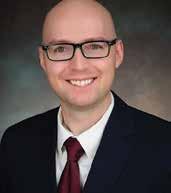

involved, Beauty from Ashes Ministries welcomes connection. Help is available, and no one has to navigate abuse or healing alone. To learn more about services, request support or explore volunteer opportunities, visit www.BeautyfromAshesMinistries.org. To hear more stories like this and learn how women are reclaiming hope and purpose, listen to the Holly’s Highlights podcast wherever you stream podcasts and at www.hollycurby.com. l
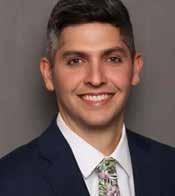



Companies can subscribe to monthly memberships for health care for their employees instead of (or in addition to) buying into insurance costs.
By Cassie Goff cassie.g@thecityjournals.com
Paying a monthly membership is a somewhat expected norm now for services like streaming, deliveries, spas and gyms –but what about health care? Medallus Medical has been reimagining what health care can look like for individuals, families and companies.
“We come up with innovative solutions to help people with high deductibles and companies who have increasing health care costs and reduce those while giving quality care with friendly delivery,” said the founder of Medallus Medical Dr. Rachot Vachathrone.
Working in the healthcare industry since 1997, Vachathrone noticed his patients were waiting until their health was severe before seeking treatment. They would tell him about their stresses and fears of high insurance deductibles and co-pays. Vachathrone began imagining how he might encourage patients to be more proactive with their healthcare if it were more affordable.
“Insurance is supposed to be for major things like surgeries and, God forbid, cancer or any of those diagnoses,” said Chief Business Development Officer Arliss Fernandez. “For everyday things like a cold, strep, bronchitis, pneumonia…stitches, fractures…and x-rays we can take care of that at urgent care clinics.”
Vachathrone’s “aha” moment came when he was reviewing his own personal finances and skimmed over the monthly gym membership charge. What if there was a membership for urgent and primary care? Now, Medallus Medical’s memberships provide patients with predictable access to care at an affordable monthly rate.

third-party companies to offer a handful of new or updated programs for physical and mental health. Medallus Medical is working to offer unlimited telehealth appointments 24 hours a day. Another program available to companies will allow adult employees to have access to three therapy sessions per year. In addition, Medallus Medical offers a prescription savings plan program where patients have zero copays for medications.
“We are growing, improving our services, and expanding our employer programs because we believe families and businesses deserve better options than what traditional healthcare usually provides,” Fernandez said. “Mental health and medications are what people need.”
“Medicine should not be expensive,” Fernandez said. “We are trying to transition where we’re not going to be so reliant on insurance. It gives the opportunity for the provider to have more one-on-one with the patient.”
Medallus Medical offers urgent care and walk-in primary care for individuals, families, school districts, companies and cooperations based on a monthly membership structure. Medallus Medical can treat minor injuries and illnesses to ongoing primary care needs with basic labs and in-office procedures.
“If you look at the local school districts, their insurance is just skyrocketing and it’s out of control. It shouldn’t be that way. We are being an advocate…to structure insurance correctly and give insurance to employees that they’re going to use,” Fernandez said.
“We decided to make it walk-in. That way our day is not scheduled full and patients don’t have to go somewhere else and wait another day,” Vachathrone said.
This year, Medallus Medical is working to partner with
Great workplaces don’t happen by accident. They are nurtured and built to bring out the best in people. If you know of one, nominate it as a Utah Top Workplace.
For the 13th year, employers with outstanding workplace culture in the state will compete for Utah Top Workplaces recognition. This is the first year the award is in partnership with the Salt Lake Business Journal. Any organization with 35 or more employees in the state is eligible to compete for a Top Workplaces award. Standout companies will be honored this fall.
The nomination deadline is April 10. Anyone can nominate an outstanding employer: public, private, nonprofit, a school or even a government agency. To nominate an employer or for more information on the awards, just go to slenterprise.com/nominate or call (801) 8036841.
There is no cost to participate. To qualify as a Utah Top Workplace, employees evaluate their workplace using a short 26-question survey that takes just a few minutes to complete. Companies will be surveyed through late June.
New companies signing up for Medallus Medical’s membership and/or programs can meet with their Patient Advocate Team who will visit with their employees to teach them how to use the Medallus membership and invite them in for their first primary care visit.
“We want you to be proactive,” Fernandez said. “If you’re getting vitals checked or same-day prescription refills – just walk-in. We encourage that.”
Medallus Medical has eight locations throughout the Wasatch Front; all open at 9 a.m. and close at either 7 p.m. or 8 p.m.
Medallus Medical’s urgent care locations can be found in: Holladay (3934 S. 2300 East), Draper (1126 E. Draper Pkwy.), Sandy (7998 S. 1300 East), South Jordan (10433 S. Redwood Road), Riverton (13348 S. Market Center Drive), West Valley City (3451 S. 5600 West), American Fork (476 N. 900 West #C) and Layton (1868 N. 1200 West).
For more information, call Medallus Medical at 877-6339110 or visit their website at: www.MedallusUrgentCare.com
“It’s about making people healthy,” Fernandez said. “We are trying to make medicine simple.” l
“As a people and culture leader, I know the strongest organizations invite honest feedback and use it to get better,” said Elizabeth Sweat, people and culture leader of the City Journals and Salt Lake Business Journal. “Utah Top Workplaces provides leaders with a meaningful way to measure culture, celebrate what’s working and identify opportunities to invest even more intentionally in their people.”
Energage, the Pennsylvania-based research partner for the project, conducts Top Workplaces surveys for media in 65 markets nationwide and surveyed more than 2 million employees at more than 8,000 organizations in the past year.
“Earning a Top Workplaces award is a celebration of excellence,” said Eric Rubino, CEO of Energage. “It serves as a reminder of the vital role a people-first workplace experience plays in achieving success.”
For the 2025 awards, more than 3,500 organizations in Utah were invited to survey their employees. Based on employee survey feedback, 154 earned recognition as Top Workplaces.
The Greater Northern Spelling Bee will be held on Saturday, March 7, at Wasatch Jr. High.
By Peri Kinder peri.k@thecityjournals.com
More than 100 schools will be represented at the Greater Northern Utah Spelling Bee on Saturday, March 7, at 9 a.m. at Wasatch Jr. High in Millcreek (3750 S. 3100 East). Sponsored by the City Journals community newspapers, the winner of the event will travel to Washington, D.C., to compete at the Scripps National Spelling Bee during the final week of May.
Students participating in the regional bee will complete a written test before the competition, and everyone will have the opportunity to spell one word on stage. After finalizing the written test results, the top spellers will be announced and they will compete for the state championship, starting at approximately 11 a.m.
“The spelling bee teaches children the importance of hard work and aiming for the best,” said City Journals People Leader Elizabeth Sweat. “Preparing for an experience like this helps them gain confidence while strengthening language skills that further their education.”
The City Journals has hosted the regional spelling bee since 2014 and covers the trip to Washington, D.C. for the winner and one parent. City Journals Publisher Bryan Scott is proud to host the event each year, allowing these students to shine.
“I’ve been honored to host and sponsor this event for the last 12 years because it’s an investment in future leaders,” Scott said. “It’s been so much fun sending the winner to Washington, D.C., and watching them compete at the highest level. We’ve had some really smart kids come through this program.”
Last year’s winner, Roshan Kaushik from Challenger School Traverse Mountain, won the regional bee and took the stage at the Scripps National Spelling Bee, finishing tied for 36th. Help send the regional champion to Washington, D.C., to compete at the Scripps National Spelling Bee by donating through the QR code. l
Last year’s winner, Roshan Kaushik, won the Northern Utah Regional Spelling Bee presented by the City Journals and went to Washington, D.C., to compete in the national bee. This year’s regional bee will be held on Saturday, March 7. (Peri Kinder/City Journals)






















As a county councilmember, I spend a lot of time listening to concerns from constituents. I hear from parents who are stretched thin, seniors who feel lonely, young people who are anxious about the future, and workers who feel burned out even when they’re doing everything “right.” One thing is clear: many people are searching for happiness, but they aren’t sure where to find it.
Research from social scientists points to a clear answer. Happiness does not come from money alone, social media attention, or having an easier life. Arthur Brooks, a Harvard professor, social scientist and bestselling author teaches the science of happiness. He says that happiness comes from four things: faith, family, friendship and meaningful work.
The first is faith. People are happier when they believe their lives matter and are part of something bigger than themselves. For some, this comes from faith or spiritual beliefs. For others, it comes from serving their community, caring for others or living by strong values. Faith gives people strength during hard times and helps them see challenges as part of a larger purpose. Even small habits—like volunteering, mentoring, or reflecting on what matters most—can build a deeper sense of meaning.
Salt Lake County Councilmember District 3

The second is family. Strong family relationships are one of the most reliable sources of long-term happiness. This doesn’t mean family life is easy. It takes patience, forgiveness and time. But people who invest in their families tend to feel more supported and less alone. Family can mean parents and children, grandparents, chosen family or relatives who show up when it counts. Simple actions— shared meals, regular check-ins or family traditions—can make a big difference.
The third is friendship. Healthy friendships protect people from loneliness and stress. They give us someone to laugh with, talk to and lean on when life gets hard. Yet friendships often get pushed aside by busy schedules and screens. Reaching out, making time for face-to-face connection, and being present for others helps build trust and belonging. Often you will have to be the one to
and frustration–

reach out and make this happen. Communities are stronger when neighbors know each other, not just online, but in real life. Do you know the people who live three houses on either side of you and across the street? If not, make it a point this year to get to know them better. It helps keep your neighborhood safe and builds connection when you can all look out for each other.
The fourth is meaningful work. This does not mean everyone has to love every part of their job. But people are happier when they feel useful and see how their work helps someone else. Whether paid or unpaid, work gives people dignity and purpose. Parents raising children, volunteers, caregivers, students and workers all contribute value. When people feel needed, their confidence and happiness grow.
One important idea connects all four of these areas: happiness is not about chasing pleasure. Pleasure fades quickly. Real happiness builds slowly through effort, relationships and responsibility. It grows when we use things but care for people—not the other way around. Being “happy” doesn’t mean you will never have sadness, anger, frustration or problems. Everyone has hard times. But by focusing on the things that really matter, you increase your opportunities for better

overall happiness.
As a community, we should make it easier for people to build these four foundations. That means supporting families, creating spaces for connection, valuing service and helping people find meaning in their lives. Happiness is not something government can give—but it is something we can support by strengthening the places where people live, work and belong. Make a goal this year to find ways you can help increase your own happiness.


Right now, children in YOUR community are in need of a safe, loving home.

Learn more about why we need more foster parents. openarmsyas.org 801-244-0147







Remember when you thought Mr. Monopoly wore a monocle, or you were convinced Curious George had a tail? Memory is a funny thing.
Or how about when NBC anchor Brian Williams “misremembered” being in a helicopter hit by anti-tank weapons in Iraq? His faulty memory got him suspended.
We all misremember things, but when an entire group does it, it’s called the Mandela Effect, a phenomenon that occurs when millions of people are confidently wrong. Like, remember when we all believed Vladimir Putin was a war criminal? LOL. Good times.
If you’re a Gen Xer, you might remember when the VHS tape got eaten by the VCR and you had to use brain surgeon-style techniques to carefully respool the video. But then the tape always had a wrinkled section where the movie would go wonky for a few seconds. That’s what my memory feels like most days: warped and staticky.
My husband is basically a human computer. He remembers everything. When we meet new people, he lights up like an exploding star. He’s curious about their background, hometown and their connection to any celebrity-type person.
Months later, he’ll say, “Remember at the Yankees game when we met that guy who was married to the cousin of a friend who knows Ryan Reynolds? I think his name was George.”

“No.”
“Yeah, you do. He owned a horse farm outside of Albany and loves the color orange.”
“What are you talking about?”
His memory recall is slightly unsettling. He’ll drop info like, “I remember the 1968 World Series when the Detroit Tigers came from behind to beat the Cardinals. They hadn’t won since 1945 and Mickey Lolich was the MVP.”
And then there’s me, having to watch a recap for a TV show I watched the night before. But then I remember random things, like when Sen. Mike Lee advocated for term limits. Hahahaha. The good ol’ days.
I was playing a “Frozen” matching game with my 9 year old granddaughter, trying to remember where the pair of Olafs were hiding. I kept turning over the same two cards, a Sven and an Elsa, convinced I’d finally cracked the code.
My granddaughter found it hilarious watching her doddering old granny lose a game. But there was a time I was the matching

game champ. At least that’s my recollection.
I can still sing Abba’s entire “Arrival” album from 1976 but I’m not quite sure I actually attended a single day of high school. I used to know dozens of phone numbers, but now I couldn’t call my daughters if the world were ending and I had to use a rotary phone.
When it comes to remembering the names of dogs I met at the dog park, I’ve got it down. But their owners’ names? No clue. I can make my mom’s mac and cheese by heart, but need to read the directions on a cake mix four times before I get it right.
It makes me second-guess my memory, like, do you recall when Gov. Spencer Cox took the side of trans kids? Or was that also the
Mandela Effect?
If you’ve ever had a sibling contradict your side of a story, or you can’t remember your eighth-grade science teacher, you’re not alone. Or maybe you had an existential crisis when you realized C-3PO’s lower right leg was silver, not gold.
Memory isn’t just fleeting, it’s fluid. When time blurs the moments we fell flat on our faces, it’s a reminder that our flashbacks are edited highlight reels, usually with a laugh track.
Peri Kinder is an award-winning columnist and journalist who has written for The City Journals since 2004. She can be reached at peri.k@thecityjournals.com




•
•
•
•
•