
See Inside...
Alumna returns as principal
Woodstock Elementary sees one of its own now leading Page 10
Young at 45
Murray Senior Recreation Center originally opened in 1980 Page 15
The architect of modern Murray: Doug Hill retires after four decades of influence
By Shaun Delliskave | s.delliskave@mycityjournals.com
Hill leaves behind a legacy that includes the Jordan River Parkway, Willow Pond, The Park Center and dozens of community-defining projects.
When Doug Hill first stepped onto a Murray City ballfield in 1982, he wasn’t thinking about City Hall, budgets or municipal leadership. Fresh out of BYU with a master’s degree and working as an intern for the parks and recreation department, Hill spent his time dragging infields, picking up garbage and learning to drive a Zamboni. Those early days, he says, grounded him in the human side of public work—something that would shape more than four decades of service.
Forty-three years later—35 of them in Murray—Hill retires as the city’s Chief Administrative Officer, the top adviser to the mayor and one of the most influential behind-the-scenes figures shaping modern Murray. During his tenure, he held positions as recreation coordinator, parks and recreation director, public services director and ultimately CAO. Along the way, he played a role in many of the projects that define the city today.
His fingerprints can be seen across the community: the Canal Trail, Willow Pond Park, The Park Center, the renovation of Murray’s outdoor pool, the pickleball courts, the Armory Events Center, the city’s holiday lighting display, the Cottonwood Street overpass at 5300 South and the new City Hall.
Still, Hill is quick to clarify that none of those accomplishments were his alone. “I want to emphasize that I do not solely claim credit for any project but was always part of a larger team of employees, elected officials, architects, contractors, vendors and citizens.”
A Career Built on Community
Ask Hill how he measures his impact, and he doesn’t point to buildings or budgets.
Instead, he points to people.
“I hope that my involvement in local government has shaped how people interact, belong and feel a shared sense of community in Murray,” he said. “All of the projects listed above are connected to these efforts.”
That sense of community has long guided his vision for Murray’s future. His work on the Jordan River Parkway, he says, captures the heart of that vision: “My vision for Murray includes an independent spirit, a ‘small-town feel,’ strong community bonds, a revitalized downtown that is lively, improved trail connectivity, quality (not quantity) development, safe streets and safe, well-maintained neighborhoods.”
Leading Through Crisis
Hill’s leadership was tested in countless ways over the decades, but none more dramatically than during the COVID-19 pandemic—a period he describes as one of the most difficult chapters of his career.
“As a public servant I felt a moral responsibility and desire to improve the well-being of Murray,” he said. That made the pandemic especially painful. “Another difficult time came during the years of COVID-19, when uncertainty, fear and rapidly changing information collided with the daily responsibility of managing a city.”
The transition to remote governance was abrupt and often messy. “Overnight, our traditional way of working disappeared,” Hill recalled. “Council meetings, staff briefings and community engagement transitioned to Zoom—an unfamiliar platform that demanded new skills, new protocols and a new level of patience.”
The decisions faced by city leadership often brought strong public reactions. “Every decision carried the weight of public backlash, and there was no option that satisfied everyone,” he said.
Despite the strain, Hill believes the cri-
sis ultimately strengthened the city’s adaptability. “Leading through COVID-19 tested every facet of leadership… But the experience strengthened our capacity to adapt and innovate in how we engage with the public. It ultimately deepened our understanding of what community means when life is disrupted at its core.”
The Invisible Work of a City
Although Hill’s title placed him at the center of major projects and delicate decisions, the day-to-day reality of his job was far more grounded. “My children and grandchildren think I
Continued on page 4
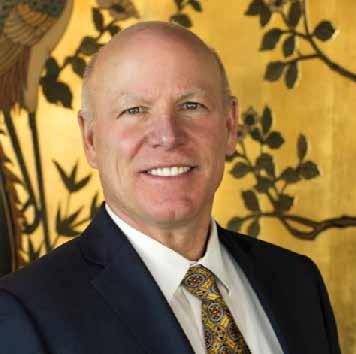
Doug Hill has served Murray over 35 years from Zamboni driver to Chief Administrative Officer. (Photo courtesy of Murray City)


























have a glamorous job,” he joked. “I remind them that my job is mostly listening to and resolving complaints about potholes, speeding, sidewalk trip hazards, bothersome neighbors, bad officiating, noise and dust.”
Behind the scenes, Hill believes effective city governance happens when trust and relationships guide collaboration. “I have learned that leadership is rooted in respect and valuing the contributions of others,” he said. “By genuinely listening to opinions and ideas, encouraging open communication, and empowering others to make decisions, I’ve learned that collaboration thrives and conflicts can be managed constructively.”
A Changing Murray
Over the decades, Hill watched Murray evolve from a community with significant vacant land to one shaped by redevelopment, densification and new demographics.
opposites.”
• “Mayor Blair Camp – Leadership is choosing what is right over what is easy.”
• “Mayor Brett Hales – Fun isn’t the opposite of work – it’s what makes work worth doing.”
The Small Moments That Matter Most
For all the big projects and large budgets, Hill says the moments that stayed with him were often quiet and human.
He recalls a woman who came to the mayor’s office in crisis, unable to pay her utility bill. “He welcomed her in and listened as she shared her struggles,” Hill remembered.
I hope that my involvement in local government has shaped how people interact, belong and feel a shared sense of community in Murray.
Doug
Hill
“As Murray’s vacant land has disappeared, the city has become a more desirable—though increasingly expensive—place to live and do business,” he said. Growth brought diversity and opportunity—as well as challenges. “Both government and residents must adapt to these realities rather than simply lament them.”
Through it all, he learned from a succession of mayors whose leadership styles left a lasting imprint:
• “Mayor Lynn Pett – Great leadership begins with great relationships.”
• “Mayor Dan Snarr – Sometimes if you want to get something done you must do it yourself.”
• “Mayor Ted Eyre – Being a good leader and being a good person are not
“Without hesitation, the mayor reached into his own wallet and gave her enough money to prevent her power from being turned off.”
Experiences like that, he said, “have shown me what true public service looks like – compassion, dedication and a commitment to making a difference in people’s lives.”
Looking Ahead
As he steps away from city government, Hill doesn’t expect the noise around growth and change to quiet anytime soon. But he offers this parting advice for future leaders:
“Murray will continue to change and evolve. There will be a lot of noise associated with the change. Change is not in the noise but what remains after the noise is gone.”
After 43 years of service, the noise of city government will continue without him—but the steady, thoughtful presence of Doug Hill will remain woven into the city he helped shape. l

MURRAY TEAM
The Murray Journal is a monthly publication distributed directly to residents via the USPS as well as locations throughout Murray. For information about distribution please email hello@thecityjournals.com or call our offices. Rack locations are also available on our website. The views and opinions expressed in display advertisements do not necessarily reflect or represent the views and opinions held by Loyal Perch Media or the City Journals. This publication may not be reproduced in whole or in part without the express written consent of the owner. © 2019 Loyal Perch Media, Inc.
PUBLISHER
Bryan Scott | bryan.s@thecityjournals.com
EDITOR
Travis Barton | travis.b@thecityjournals.com
ADVERTISING EXECUTIVES
Mieka Sawatzki | mieka.s@thecityjournals.com
Lindsay Andreasen | lindsay.a@thecityjournals.com
Ryan Casper | ryan.c@thecityjournals.com
Marc Davis | marc.d@thecityjournals.com
CIRCULATION COORDINATOR
Lydia Rice | lydia.r@thecityjournals.com 385-557-1022
Rack locations are also available on our website.
EDITORIAL & AD DESIGN
Stacey LaMont
Ty Gorton
MURRAY CITY JOURNAL
9500 South 500 West, Suite 205
Sandy, UT 84070
PHONE: 801-254-5974
promoting a strong local

Doug Hill oversaw projects from pickle ball courts to the Cottonwood Street overpass. (Photo courtesy of Doug Hill)
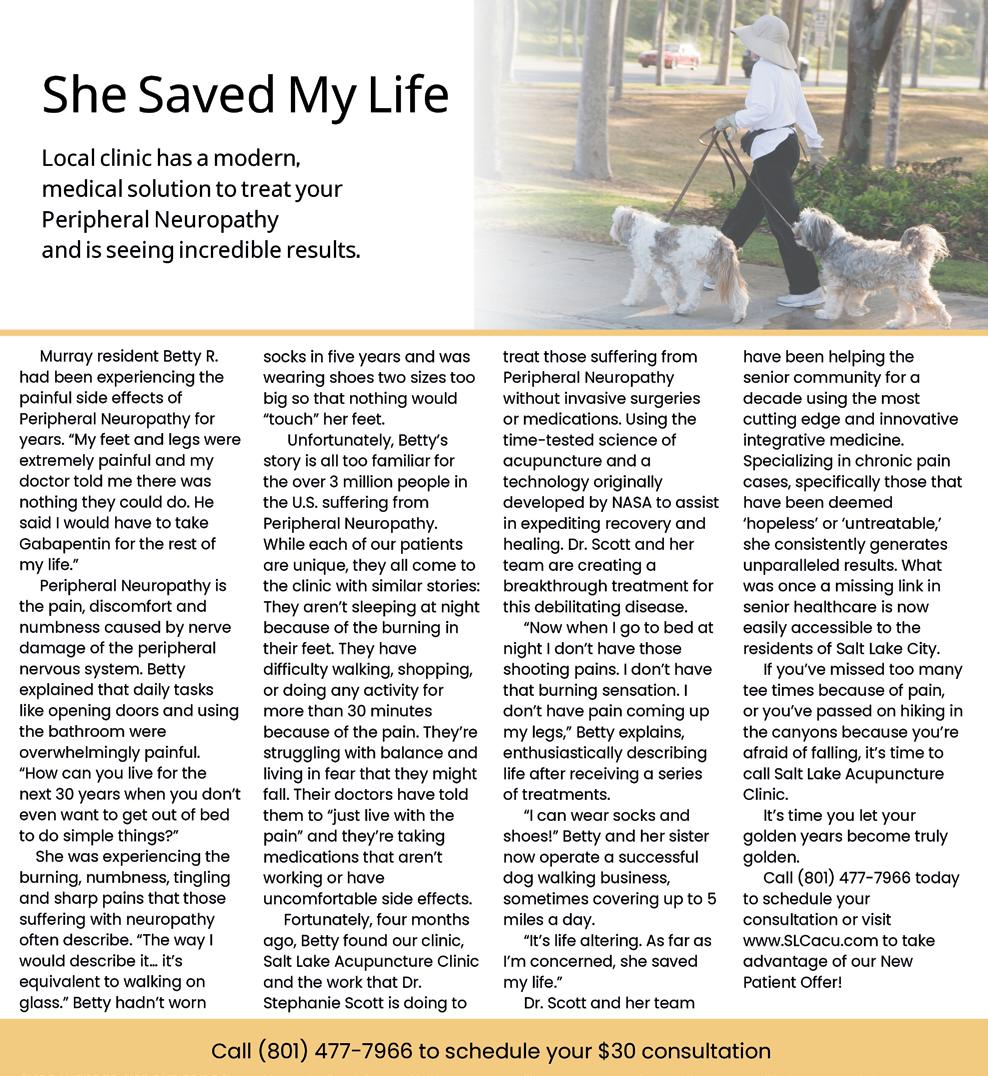
Doug Hill (third from right) at the 1993 Murray Park Offices Ribbon Cutting with then Mayor Lynn Pett (with scissors). (Photo courtesy of Murray City)
Bariatric Surgery Remains an Effective and Proven Option for Weight Loss
It’s January, and your bathroom scale, or the holes in your belt, may be sending you a loud message that it’s time to get serious about weight loss. While there are many approaches to shedding some pounds, including the new GLP-1 medications, for many individuals, especially those with a BMI over 30, bariatric surgery may still be the way to go.
According to Dr. Catherine Beck, medical director of the Bariatric Surgery program at CommonSpirit’s Holy Cross Hospital – Jordan Valley, bariatric surgery has a proven track record of being an effective, sustainable approach to obesity-related health conditions. “While GLP-1 drugs and other weight loss medications are part of a treatment plan for many patients, they do not replace bariatric surgery. They do not provide the same amount of weight loss as surgery. They must be taken weekly for an extended period of time, years and maybe decades. Many patients also do not tolerate their side effects. It is vital for patients to speak to a provider who can discuss all their possible treatment options, both medically and surgically,” Dr. Beck said.
Bariatric surgery is recommended for individuals with a BMI over 35, regardless of whether they have other obesity-related health issues. It’s also considered for those with a BMI of 30-34.9 who have metabolic
diseases like type 2 diabetes that aren’t wellcontrolled with other treatments.
Bariatric surgery is a medical procedure for significant weight loss that involves making changes to your digestive system, usually by reducing the size of your stomach and/or rerouting your small intestine. This helps you feel full faster, eat less food, and sometimes absorb fewer calories,
“Long-term studies have shown that bariatric surgery patients tend to maintain their weight loss for many years.” —Dr. Maya El Ghouayel
leading to substantial and lasting weight loss, particularly for individuals with severe obesity or obesity-related health problems that haven’t improved with other methods.
Bariatric surgery typically leads to significantly more weight loss than medications. Patients can lose an average of 25-35% of their initial body weight, or 60-80% of excess body weight. Some studies show even higher excess weight loss percentages for specific surgical procedures. In contrast, popular GLP-1 medications typically result in 10-21% initial body weight loss.
Dr. Maya El Ghouayel, a bariatric surgeon at Holy Cross Hospital – Salt


Lake says that weight-loss obtained through bariatric surgery tends to be more sustainable. “Long-term studies have shown that bariatric surgery patients tend to maintain their weight loss for many years. Weight gain is common if weight loss medications are stopped.”
The benefits of bariatric surgery. It often leads to dramatic improvements in or even resolution of obesity-related conditions such as type 2 diabetes, sleep apnea, high blood pressure, and high cholesterol. It can even reduce the risk of heart disease, strokes, and certain types of cancer.
Dr Beck encourages patients to seek treatment from a qualified provider who can treat patients both medically and surgically for their weight and weight related issues. Furthermore, patients should find an experienced provider who is associated with an accredited center, such as Holy Cross Hospital – Jordan Valley, and Holy Cross Hospital – Salt Lake, which are accredited medical and surgical weight loss centers by the MBSAQIP, Aetna Institute of Quality and Blue Cross Blue Distinction centers. Jordan Valley is also designated as a Surgical Quality Partner by the American College of Surgeons.
For more information or to find a provider visit mountain.commonspirit.org



CommonSpirit Health, we make the healing presence of God known in our world by improving the health of the people we serve, especially those who are vulnerable, while we advance social justice for all.
When minutes count, count on our emergency care. Get to know us before you need us.
When you need emergency care fast, the closest emergency room is a smart thing to know. You never know the level of care you’ll need when an emergency happens and choosing the right ER can make all the difference. And a hospital ER comes with the confidence of additional services right on-site.
CommonSpirit Holy Cross Hospital – Salt Lake has been awarded Chest Pain Center Accreditation from the American College of Cardiology (ACC). Facilities that achieve accreditation meet or exceed an array of stringent criteria for evaluating, diagnosing and treating patients who may be experiencing a heart attack.
Find emergency care close to you at mountain.commonspirit.org.
i s
1-303-643-1000 (TTY: 711).
Our favorite Murray photos from 2025




Murray High celebrates its state championship at the unified high school soccer tournament. (Julie Slama/City Journals)
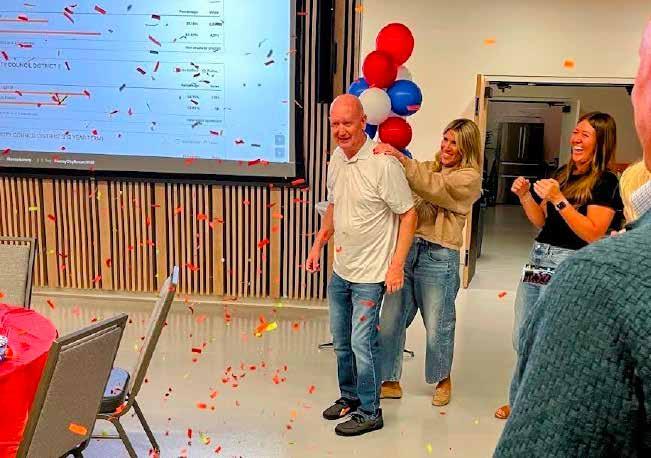
Reelected Mayor Brett Hales is sprayed with confetti after election results were announced. (Shaun Delliskave/City Journals)
Parkside Elementary students look for “witch” way to the finish line of the school’s annual Monster Dash. (Julie Slama/City Journals)
Loren Allred performs “Happy Days Are Here Again” on opening night. (Shaun Delliskave/City Journals)
Thousands watch the balloons “glow” up at the annual Utah Hot Air Balloon Palooza. (Shaun Delliskave/City Journals)

Liberty second-grader Kian Stram enjoys a tasty treat at Liberty Elementary’s traditional Watermelon Welcome, held after school on the first day of the school year. (Photo courtesy of Shana Mondragon/Liberty Elementary)
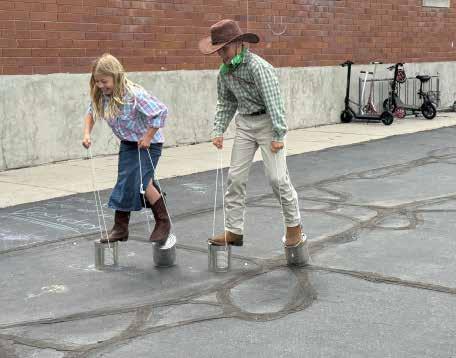
During the mountain man rendezvous, McMillan fourth-graders try walking on stilts. (Julie Slama/City Journals)
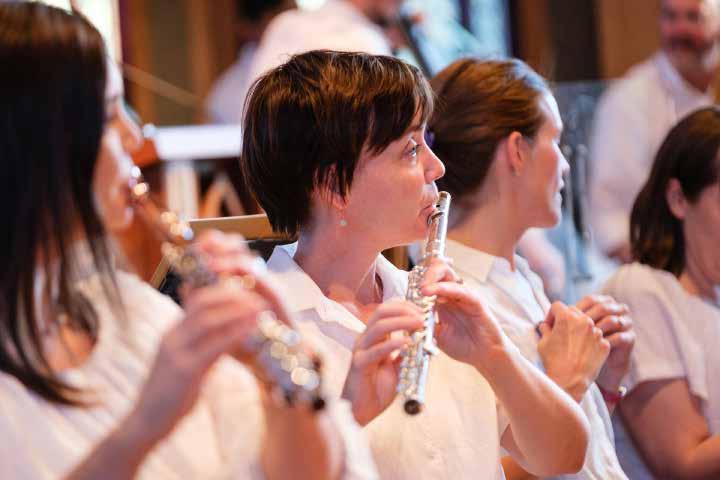
Moore practices a Schubert piece ahead of a concert. (Photo courtesy Utah Symphony)
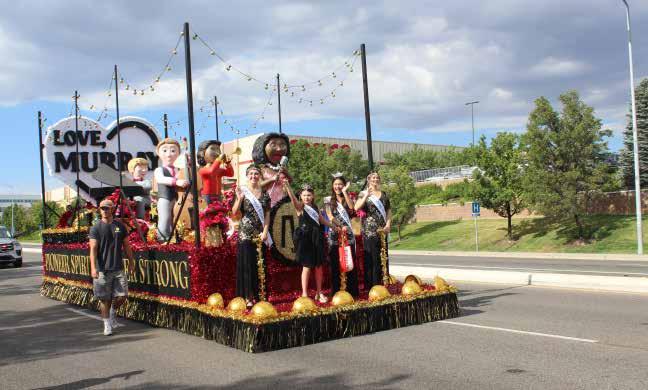
Murray celebrates Fourth of July with annual parade. Miss Murray royalty adorned the front of the Love, Murray float. (Tom Haraldsen/City Journals)
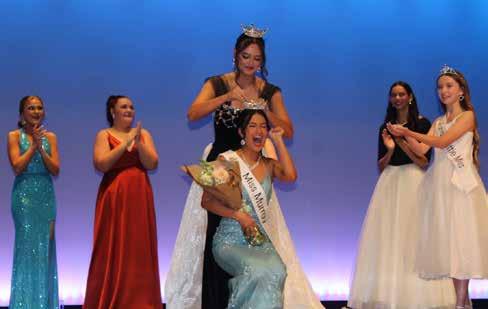
Alexis Thompson is crowned Miss Murray 2025 by the previous Miss Murray, Allysa Sullivan, at a competition held at Hillcrest Junior High in May. (Peri Kinder/City Journals)
From popcorn to programming: Katie Lindquist takes center stage
By Shaun Delliskave s.delliskave@mycityjournals.com
When the Murray Theater’s marquee lights flickered back to life, it wasn’t just the building that was reborn—it was a community landmark regaining its voice. At the center of it all stands Katie Lindquist, the theater’s new manager, who guided the grand reopening and now faces the challenge of shaping its future.
“I started out as the cultural arts assistant when Lori was here,” Lindquist recalled. “When Lori Edmunds retired, the city decided to separate the theater from cultural arts. We still work together under Parks and Recreation, but now the theater is its own organization.”
For Lindquist, the reopening was as much about rekindling memories as it was about curtain calls. “The biggest thing was just hearing people’s memories when they walked through the doors,” she said. “They’d say, ‘This is where I went as a child.’ Hearing their stories about how they enjoyed the space before—it just made it really real to me.”
She described the outpouring of emotion from longtime residents as “a love letter to Murray itself.” Although not a native of the city, Lindquist said she quickly sensed something special about it. “I didn’t grow up in Murray, but you can just tell—people don’t leave. If they do, they come back. There are so many multi-generational families here, and it’s what makes me love working here. Murray has its own power, its own water, its own identity. There’s a strong sense of belonging.”
Opening weekend went smoother than Lindquist expected,

out. We’re adjusting, trying to find where we fit.”
That balance includes keeping popular tribute bands while expanding to other acts. “Right now, it’s heavy on tribute bands, but I don’t want it to always be that,” she said. “We’ll try things out and see if they work. If there’s good feedback, great. If not, we’ll scale back.”
While Lindquist has authority over programming, she emphasized collaboration. “Ultimately… the arts board is very involved…with the mission and vision, and the mayor’s office.”
She described brainstorming sessions with city leaders and arts groups to “see what the community wants.” “Everyone knows it’s going to take some time to see where our niche is—how we can serve the community while also bringing in new things.”
despite some last-minute hires. “We were still hiring staff the week of the show,” she said. “A lot of them came from the amphitheater, so they knew Murray City, but we were still finding out what systems we even had. They were so quick to learn.”
Lindquist’s journey to managing the historic venue began in a less glamorous setting. “My background has always been in parks and recreation,” she said. “I started as a part-timer in South Jordan pulling weeds for Parks and then got involved with arts and events.”
Now that the ribbon has been cut, Lindquist’s attention turns to programming. “There was a plan on paper of the kinds of things we could do,” she explained, “but now that we’re in the space, we’ve had to reassess.”
She hopes to balance affordability with variety. “We really need a place where you don’t have to take out a second mortgage to take your family,” she said. “We’re figuring it
Lindquist envisions the Murray Theater as more than an entertainment venue. “I really want it to be a place for learning,” she said. “We’ve talked about connecting with high schools and the University of Utah to teach students how to run a show— from writing a script to managing lighting and props.”
She also hopes to establish consistent programming. “We’ve been talking to a few comedians and local organizations about possible residencies,” she said. “I’d love for people to be able to look at the calendar and know there’s something consistent each month.”
While the 2026 schedule remains under wraps—“I haven’t really released too much yet,” she noted—Lindquist said the community can expect more concerts, local bands and accessible family programming.
For her, the theater’s reopening is just the beginning. “Murray’s changing, but at its core, it still has that love and respect for its past,” Lindquist said. “That’s what I want this theater to represent—honoring where we’ve been while opening the doors to where we can go next.” l








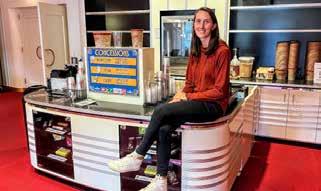
Murray Theater Manager Katie Lindquist oversees the theater’s snack bar. (Shaun Delliskave/City Journals)
Clark Bullen begins council term with community-driven vision
insurance industry ever since and is now the Director of Account Management at CUI Benefits.
By Shaun Delliskave s.delliskave@mycityjournals.com
Newly elected Murray City Councilmember Clark Bullen steps into office with nearly two decades of community involvement behind him—and a deep personal connection to the city he now represents. He takes the oath of office in January for Murray City District 3 for a two-year term.
Bullen first came to Murray as a University of Utah student working for a tech startup near the Sports Mall. He and his wife were expecting their first child and searching for a place that felt like home. “We wanted a house close to a park and found the perfect one that backs up to Murray Park,” he said. “Little did we know how great Murray actually is. We have fallen in love with this community and have loved raising our four boys here over the last 17 years.”
Professionally, Bullen stayed rooted in Murray as well. After his first startup role, he joined another Murray-based venture, Arches Health Plan, where he worked in business development before shifting into multiple operational roles. He has remained in the health
Bullen has served on several local boards and organizations—Historic Murray First, the Murray Arts Board and the Murray Rotary Club, among others. He said those collaborative environments shaped how he plans to approach his new role.
“Serving on these boards, committees and clubs is wonderfully collaborative. Everyone is needed and plays an important role,” he said. “I want to learn from my fellow councilmembers and figure out the best ways to collaborate.”
His path into civic engagement began during the community effort to preserve the historic Murray Theater. When the group’s preferred candidate withdrew from a mayoral race, someone suggested Bullen run in his place.
“I thought, how hard could it be? The answer is very hard but I was naive enough to run and find that out,” he said. While he did not win, he said the experience changed him. “It was the hardest thing I had ever done but I loved every minute of it… I told the citizens I wasn’t going anywhere. I loved serving the community and advocating for our residents, and I was hooked.”
As Bullen takes the oath of office, he identifies two major focus areas: revitaliz-
centered on creating a welcoming and lively gathering place. “I want downtown Murray to be a gathering place where people want to spend time,” he said. He imagines green space, a plaza or town square, unique shops and restaurants, public art, water features and a walkable promenade with street vendors— all while preserving the city’s historic buildings. “They give us a unique sense of place,” he added.
Bullen emphasizes accessibility as a core commitment. “I plan to communicate through various channels frequently and be highly reachable and responsive,” he said. He even shared his personal phone number, encouraging residents to call or text him. He also hopes to host ongoing town halls, meetand-greets, Q&A sessions and door-to-door visits.

ing downtown Murray and addressing traffic concerns along key corridors.
He plans to start by revisiting the city’s master plan. “I look forward to revisiting our master plan and going through an extensive citizen visioning and feedback process to establish what our residents want for our city,” he said. Bullen also expressed interest in studying effective traffic-mitigation options for the city’s busiest roadways.
His long-term vision for downtown is
His guiding philosophy on the council is straightforward: “I want to be doing what the citizens want.” He said he plans to seek consistent community feedback on issues as they arise while also focusing on attracting businesses and helping downtown “live up to its potential.”
For those who think Bullen looks familiar, there may be a reason: he appeared as an extra in multiple scenes of “High School Musical,” including some filmed at the Murray High School theater. “I was a visible extra in a handful of scenes,” he said. l







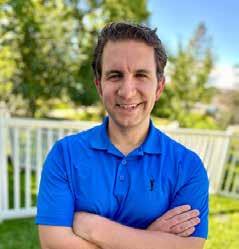
Murray City District 3 City Councilmember Clark Bullen. (Photo courtesy of Clark Bullen)
Woodstock Elementary’s alumna principal inspires next generation of Wolverines
From an animated mascot to kindness trees, Principal Missy McQueen is rebuilding school community and pride.
By Julie Slama j.slama@mycityjournals.com
When Principal Missy McQueen walks through the halls of Woodstock Elementary each morning, it feels a bit like coming home.
A proud alumna of the Murray school herself, McQueen is now leading the next generation of Wolverines — many of them children of her former students and some, from when she worked with at Twin Peaks Elementary before its doors closed in 2023.
“It’s really special,” she said with a smile. “Some of the students in my fifthgrade class now are parents, dropping off their own kids here.”
Even though it’s a new school building from when she attended, McQueen still has “warm-hearted” memories that made her laugh.
“Everything was built out of logs when I went here and I used to get slivers and over there, I used to swing to the moon and ended up breaking my wrist multiple times,” she said.
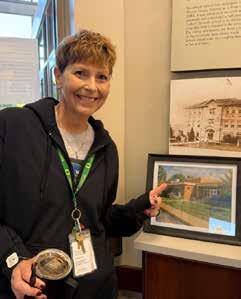
After 26 years as a teacher, teacher-mentor and instructional coach at Twin Peaks and then as an intern one year at Magna Elementary, McQueen made her way back to Woodstock as a first-time principal, reenergizing the school’s community spirit and learning with creativity, kindness and joy. Her approach goes far beyond test scores and textbooks — it’s about making school a place kids want to be.
A principal with Dash and drive
One of her first projects was reinventing Woodstock’s mascot.
“We’re still the Wolverines, but we wanted something a little more kid-friendly,” McQueen said.
The result is “Dash,” a student-named, bright, animated Wolverine who stars in the school’s weekly “Dash Cam” broadcasts. On Fridays, classrooms compete to show their school spirit, winning a visit from Dash himself. Photos and videos from Dash Cam are shared schoolwide, creating excitement and unity.
Dash also plays a role in teaching positive behavior. As part of the school’s PBIS (Positive Behavioral Interventions and Supports) program, McQueen is animating Dash to “model” expectations — how to walk quietly in the halls, show respect and demonstrate kindness.
“If we can teach with creativity and fun, the lessons stick,” she said. Sweet seats and kindness trees
Kindness is a cornerstone at Woodstock. Near the front of the school stands the “Kindness Tree,” donated by a local family, where students pose for photos for modeling helpfulness and thoughtfulness.
Classrooms have their own trees, where the 550 students write compliments or kind acts on paper leaves, a growing reminder of the power of positivity, McQueen said.
In the office, the “Sweet Seat,” is another student favorite. Those who show good behavior may be nominated for a chance to sit in a candy-themed chair and have their
photo taken with a certificate; their parents or guardians get a personal phone call from the principal.
“It’s simple, but they light up with excitement and pride,” McQueen said. Community connections
Bridging school and community is another passion of the principal. A popular partnership with nearby Woody’s Drive-In had students compete to create the recipe for a slushy; the winner — the Woodstock Whip — layered lime and raspberry slushy topped with vanilla ice cream, now is on Woody’s official menu.
“My first graders won,” she said. “They were so proud to see something they created out in the community.”
Another beloved event is Principal McQueen’s Grand Prix, where students design cardboard box cars and parade them through the halls before a drive-in movie. Last year, the feature film was “Cars,” a fun tie-in to the principal’s last name and the activity at-hand. Outside, they enjoyed an antique car show which complemented the students’ activity.
“It’s hands-on, it’s creative and it’s joyful,” she said. “That’s what makes learning fun.”
Woodstock students also take part in the “Soul Garden,” a partnership with a nearby Presbyterian church. They plant, harvest and donate fruits and vegetables to local shelters.
“It’s an important and beautiful way to teach sustainability, stewardship and provide service,” McQueen said. “They get their hands dirty and see where food really comes from and they get to eat some too.”
Traditions continue
Throughout the year, Woodstock stays buzzing with traditional events: “Cans for Cocoa” hot chocolate drive, the Veterans Day tribute, trunk-or-treats with secondary school and community volunteers and weekly student-produced broadcasts.
“We’ve rebuilt a sense of belonging,” McQueen said. “After years of turnover, it was important to continue the traditions that matter and families remember.”
Likely, there won’t be more principal turnover in the coming years.
“I’m not moving on, no way. This is home; it’s my community. I’m at my dream job. I’ll retire from Woodstock,” she said. “We’re not just building better students—we’re building better humans and better memories. That’s what education is all about.” l


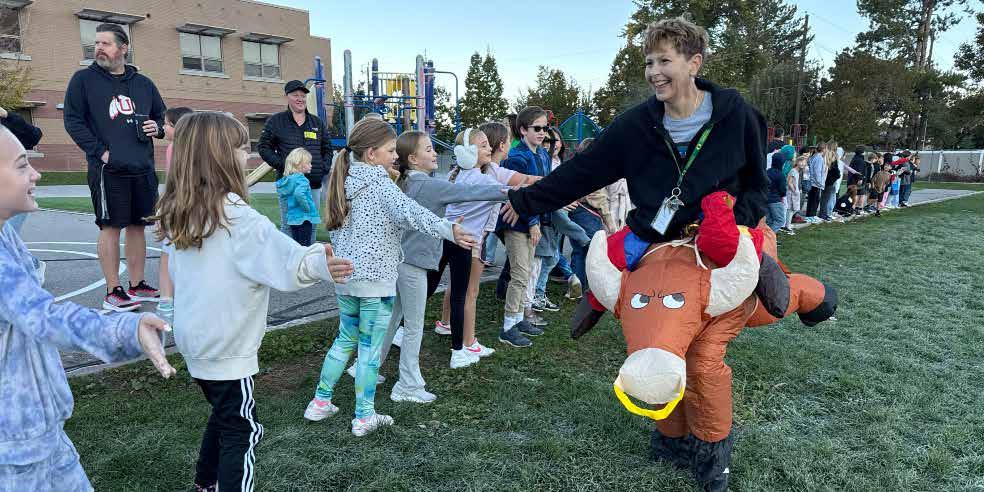
Woodstock Principal Missy McQueen gives students high-fives before their fun run fundraiser. (Julie Slama/City Journals)
Principal Missy McQueen points to her Woodstock building when she was a student at the school. (Julie Slama/City Journals)

MAYOR’S OFFICE
Brett A. Hales -Mayor mayor@murray.utah.gov
801-264-2600
10 East 4800 South, Murray, Utah 84107
FREQUENTLY REQUESTED NUMBERS
Grant Elementary 801-264-7416
Heritage Center (Senior Programming) 801-264-2635
Hillcrest Jr. High 801-264-7442
Horizon Elementary 801-264-7420
Liberty Elementary ...... 801-264-7424
Longview Elementary .... 801-264-7428
Ken Price Ball Park. . . . . . . 801-262-8282
Miss Murray Competition (Lindsey D. Smith) 801-699-2288
McMillan Elementary 801-264-7430
Murray Area Chamber of Commerce. 801-263-2632
Murray Arts Advisory Board ......... 801-264-2614
Murray Boys & Girls Club 801-268-1335
Murray City Cemetery 801-264-2637
Murray Community Education 801-264-7414
Murray High School 801-264-7460
Murray Museum ........ 801-264-2589
Murray Parks and Recreation Office 801-264-2614
Murray Parkway Golf Course 801-262-4653
Murray Park
Aquatics Pool ........... 801 290-4190
Mick Riley Golf Course (SL County) 801-266-8185
Parkside Elementary 801-264-7434
Riverview Jr. High 801-264-7446
Salt Lake County Parks and Recreation 801-468-2560
Salt Lake County
Ice Center .............. 801-270-7280
The Park Center ......... 801-284-4200
Viewmont Elementary ... 801-264-7438

MAYOR’S MESSAGE
Continuing to Build a Great Place to Call Home
As we step into 2026, I’m filled with gratitude, pride, and excitement for what lies ahead for Murray City. The start of a new year always comes with looking back, and 2025 was truly a big one for our community.
This past year, we celebrated milestones that will shape Murray for generations. We opened the Murray Museum in the historic Cahoon Mansion, bringing our city’s story to life in a space worthy of our rich history. We welcomed the Murray Armory as a flexible new event space inside Murray Park, creating new opportunities for your recreation, gatherings, and community connection. And we celebrated the reopening and restoration of the historic Murray Theater, a cultural gem that is bringing arts, music, and fun back to the heart of our city.
We launched the Love, Murray campaign to share all of this with you. We highlighted what the buildings and programs that make Murray unique as well as the people who call our city home. Love, Murray reminded us of our commitment to kindness, belonging, and pride in our community, the values that guide everything we do.
As we look to 2026, our vision is clear: to build a city where you belong, where you can enjoy lively entertainment, and stay connected to your neighbors. We want families to feel supported and businesses to thrive.
One event I’d like to invite you to early in the new year is our State of the City address, which will be held at the Murray Theater for the first time. I invite you to join us for an evening that celebrates Murray’s past, present, and future.
State of the City – Tuesday, January 27
Murray Theater
6:00 PM
In honor of the theater’s history, the evening will begin with a video showing a flag waving with the Star-Spangled Banner, just as it was


performed in the Murray Theater in years past, followed by an opening piano performance by Murray citizen and accomplished pianist Tracy Bird. Guests are invited to enjoy light hors d’oeuvres before the program, creating time to gather and connect with neighbors.
I will then share a 10-minute State of the City address, reflecting on where we’ve been and where we’re going together. After the remarks, the evening continues with a free concert, along with complimentary popcorn and drinks.
This event is free, but seating is limited. Please reserve your tickets at www.MurrayTix.com to save your seat.
As we begin this new year, I want to thank you for your support, your kindness, and your continued belief in our city. Murray’s best days are ahead, and I look forward to experiencing them together.
Here’s to a joyful new year in Murray.
—Brett Hales, Mayor of Murray

10 East 6150 South, Murray, Utah 84107
801-264-2635
M URRAY S ENIOR R ECREATION C ENTER
murray.utah.gov/140/Senior-Recreation-Center seniorrec@murray.utah.gov mcreg.com
Monday-Friday 8:00 a.m. – 4:30 p.m.
Thursday 8:00 a.m. – 9:30 p.m.
Closed Saturday and Sunday
Check our website for any changes in programs.
CHEF OMAR LIMON
Daily Lunch
Date: Tuesday through Friday
Time: 11:30 a.m. – noon
Cost: Cost is $6; prior registration not required CLASSES
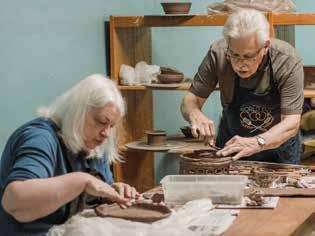
Ceramics
Date: Tuesday and Thursday
Time: 9:00 a.m. – noon
Cost: $2 each class plus cost of supplies
Grief Support
Date: Friday, Jan. 9 and 23
Time: 10:30 a.m. – 11:30 a.m.
Cost: Free
Theater Lecture: All About Shakespeare
Date: Tuesday, Jan. 20
Time: 1:00 p.m. – 2:00 p.m.
Cost: Free
10 Warning Signs of Alzheimer’s
Date: Wednesday, Jan. 21
Time: 10:30 a.m. – 11:30 a.m.
Cost: Free; Register now
Ask a Nurse: Blood Pressure Monitoring
Date: Friday, Jan. 23
Time: 10:30 a.m. – 11:30 a.m.
Cost: Free
Vital Aging: Boosting Memory and Cognition
Date: Friday, Jan. 23
Time: 1:00 p.m. – 2:00 p.m.
Cost: Free
Science: Food Chemistry
Date: Thursday, Feb. 5
Time: 10:30 a.m. – 11:30 a.m.
Cost: Free
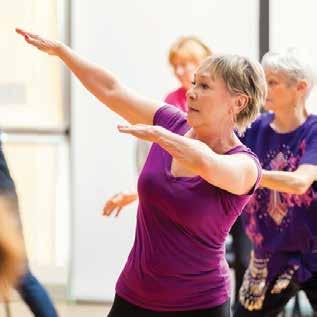
DANCE
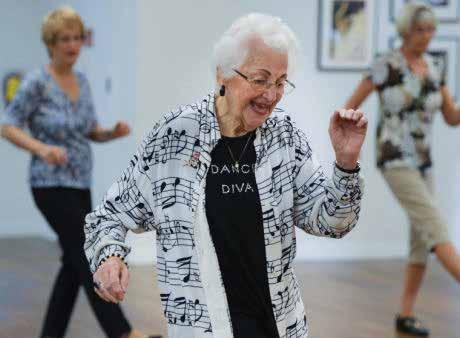
Beginning Line Dance Instruction
Date: Tuesdays
Time: 1:15 p.m. – 1:45 p.m.
Cost: $5 for the month; register now
Thursday Evening Social Dance
Live Music provided by Tony Summerhays
Date: Thursdays
Time: 7:00 p.m. – 9:30 p.m.
Cost: $5
FITNESS: Daily Fitness Classes – check our current newsletter for the schedule and fees
PROGRAMS
Bingo
Date: Wednesdays and Fridays
Time: 12:45 p.m. – 2:45 p.m.
Cost: Free, donations are appreciated
Bridge Lessons
Date: Mondays
Time: 1:00 p.m. – 3:00 p.m.
Cost: Free
Chess
Date: Thursdays
Time: 12:30 p.m. – 3:30 p.m.
Cost: Free
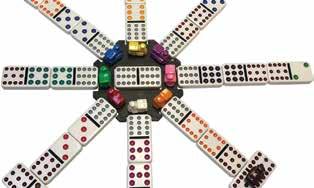
Mexican Train Dominos Game
Date: Thursdays
Time: 12:30 p.m. – 4:00 p.m.
Cost: Free
Monday Movies and Munchies
Date: Mondays
Time: 2:00 p.m. – 4:00 p.m.
Cost: Free
HEALTH SERVICES
Haircuts
Date: Wednesdays
Time: 9:30 a.m. – 12:30 p.m.
Cost: $12; advance appointment required
CLUBS
Book Club: The Hundred-Year-Old Man Who Climbed Out the Window and Disappeared
Date: Tuesday, Mar. 3
Time: 1:00 p.m. – 2:00 p.m.
Cost: Free; Register now.
Thursday Quilters
Date: 2nd and 4th Thursdays each month
Time: 12:30 p.m. – 2:00 p.m.
Cost: Free
Murray Senior Choir
Date: Thursdays beginning in January
Time: 4:00 p.m. – 6:00 p.m.
Cost: Free
JANUARY 2026





January 7-28











Ages 3-5 - 4 sessions
Wednesday’s 12-12:45pm
$20/res & $25/non-res
January 7-28
Ages 3-5 - 4 sessions
Wednesday’s 12-12:45pm
$20/res & $25/non-res
January 3-24
Ages 3-15 - 4 sessions
Saturdays
$45 - 12 or 1pm

Feb 28 - March 28
Saturdays - 5 games
Coed Ages 3-9 $40/res & $50/non-res
















Dance Dance
January 9-30
Ages 2-7 - Fridays

Jan 6-27
Tuesdays at 1pm
Ages 2-3.5









$20/res & $25/non
$38 - 4 classes January 13-27
$20/res & $25/no-res



2 & Under = Free Ages 3-17 = $3
Ages 18-59 = $5
Ages 60+ = $4
Monthly Sessions Tues & Thurs 3:45-6PM 8 Lessons/Session $40 Residents | $50 Non-Residents
Jan 9 - Feb 13
Ages 12-14 - 6 sessions Fridays - 7:15-8:45pm $40/res & $50/non-res

THE MARVELOUS WONDERETTES
2026 THEATER SEASON
Murray City Cultural Arts is excited to present our 2026 season! From beloved classics to new favorites, there’s a show for everyone. You can purchase tickets online at MurrayTix.com or at the Murray Parks & Recreation O ce (296 E Murray Park Ave).

Pull out your leather jackets and poodle skirts and get ready to rock ‘n’ roll with the music of some of the greatest girl groups of the 1950s and ‘60s. Follow Betty Jean, Cindy Lou, Missy, and Suzy as they navigate love, friendship, and dreams at their high school prom, and reunite ten years later.
• Dates and Times: February 12–14, 16 & 19–21, 2026 at 7:30 PM
• Location: The Murray Theater at 4961 S State St, Murray
• Tickets: You can purchase tickets online at MurrayTix.com or at the Murray Parks & Recreation O ce (296 E Murray Park Ave)


Murray Senior Recreation Center marks 45 years of service
Forty-five years after its debut, the center still serves as a reliable gathering place for adults 55 and older, offering programs that support health, connection, and community involvement.
By Shaun Delliskave s.delliskave@mycityjournals.com
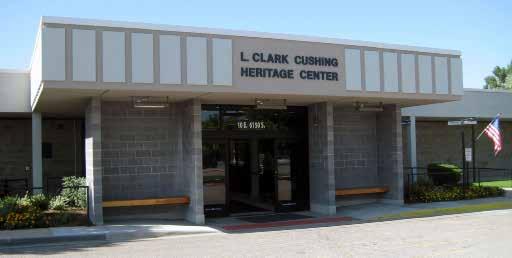
MurrayCity’s Senior Recreation Center turned 45 in December, officially making it a child of 1980—the same year the world was rocking to Blondie, lining up for “The Empire Strikes Back,” and feeding quarters into PacMan machines. When it opened on Dec. 6, 1980 as the L. Clark Cushing Murray Heritage Center, the building at 10 E. 6150 South was a modest gathering place; today, it’s a fully stocked recreation hub for adults 55 and older. Its milestone offers a chance to celebrate not just its age, but its evolution from retro roots to modern-day community cornerstone.
At its founding, the center was established during a period when Murray City was expanding its recreation infrastructure to meet the needs of a growing suburban population. Throughout the late 1970s and early 1980s, the city invested in parks, trails and amenities such as the Murray Parkway Golf Course and the Park Center. A senior center was viewed as an essential addition—one that could address the social and recreational needs of older residents at a time when Utah’s senior population was beginning to increase. Naming the center after L. Clark Cushing, a longtime civic leader involved in parks and beautification efforts, reflected the city’s intent to create a facility dedicated to community well-being.
The city has operated and funded the senior center from the beginning, with oversight shared among the Parks and Recreation Department, the mayor’s office, and the city council. A Senior Recreation Center Advisory Board continues to meet monthly, offering feedback on programming, facility needs, and emerging trends among the city’s older population. This structure has allowed the center to adjust its services while maintaining accountability in how programs are developed and delivered.
Over four and a half decades, the center’s range of offerings has expanded considerably. Traditional activities—such as crafts, card games, social dances and communal meals—

to ensure the building remains safe, accessible, and functional. Routine interior updates, furniture replacements, flooring upgrades and kitchen improvements have kept the center in working order. A notable improvement occurred in the late 2000s, when a fundraising effort helped add a covered entryway to protect patrons from snow, ice and rain. This addition addressed a long-standing winter safety concern and demonstrated community support for the facility. Its location—near Fashion Place Mall and major transit routes—continues to make it convenient for both Murray residents and visitors from surrounding cities.
A key change occurred in 2018, when the Murray City Council approved a name update. For decades the building had been known as the L. Clark Cushing Heritage Center, but staff and councilmembers heard frequent reports that the term “heritage” caused confusion. Some residents mistook the site for a museum or genealogical center rather than a senior recreation facility. In May 2018, the city officially adopted the name L. Clark Cushing Senior Recreation Center, aligning the building more clearly with senior programming and with terminology used across other recreation facilities in the region.
The 45th anniversary itself was recognized in December with themed activities highlighted in the center’s monthly newsletter. While the celebration was 1980s themed, staff noted that the milestone underscored how long the building has served as a social anchor for older adults in the community. Participation numbers remain strong, particularly for fitness classes, health-related programs and social events that provide regular opportunities for connection.
are still part of the schedule, but the modern program lineup includes fitness and strength classes, line dancing, language courses, health screenings, computer workshops, educational speakers and organized day trips. The shift from paper registration to the city’s online MCReg system has further modernized operations. Today, many patrons sign up for programs electronically, reflecting broader changes in how public recreation services are accessed.
Physical improvements have also been made over time
City officials have frequently described the center as a stable and enduring component of Murray’s recreation system. As redevelopment continues throughout the city—especially in the areas surrounding State Street and Fashion Place Mall—the senior center remains one of the few long-standing public facilities still operating near its original footprint. Its continued use suggests ongoing demand for accessible, local programs that support healthy aging and social engagement.
As the center moves into its 46th year, its focus remains consistent: providing a welcoming place where older adults can stay active, connected and involved in the community. The building’s long history, combined with ongoing updates and programming changes, reflects how Murray has balanced tradition with evolving needs across generations.l
Murray Senior Recreation Center’s annual Thanksgiving luncheon always draws a big crowd. (Photo courtesy of Murray City)
Murray Senior Recreation Center’s director Cory Plant hams it up with center guests. (Photo courtesy of Murray City)
Murray Senior Recreation Center celebrated its 45th anniversary. (Photo courtesy of Murray City)
Utah PTA celebrates a century of advocacy for students
From school lunches to student safety, Utah PTA volunteers have spent 100 years making a difference in schoolchildren’s lives.
By Julie Slama j.slama@mycityjournals.com
Thisyear, Utah’s students, families and schools are celebrating a milestone: Utah Parent Teacher Association turns 100. For a century, this volunteer-driven organization has been shaping education, student well-being and community engagement across the state.
Utah PTA President Julie Cluff says the organization’s century-long mission goes far beyond classroom parties.
“PTA volunteers sometimes get pegged as the ‘party moms,’ but our work has changed lives and we’ve shaped education policy in Utah for generations,” she said. “Our programs are the heart of what we do, but advocacy is why we started.”
The roots of Utah PTA stretch back to 1897 when three Utah delegates attended the first meeting of the nationwide parent-teacher movement, then called the National Congress of Mothers. A year later, Mrs. C.E. Allen established the Utah Congress of Mothers, laying the groundwork for organized parent advocacy. Though that early group dissolved by 1901, momentum continued. By 1910, the state formed a chapter of the National Education Association’s Department of School Patrons, and by October 1925, the Utah PTA officially began with Lucille Young Reid as the first president. In 1951, every school in the state had a PTA.
The mission established then remains at the heart of the organization: “To make every child’s potential a reality by engaging and empowering families and communities to advocate for all children.”
Utah PTA President 2023-25 Corey Fairholm loves the mission.
“When they first started in 1925, they were worried about some of same things we’re worried about — making sure children don’t have access to smoke shops and

here we are 100 years later, and we’re worried about vape shops,” she said. “At the legislature, they realize I’m representing 70,000–80,000 members who are concerned so the legislators are listening. Because the power of PTA, we have kindergarten, school lunches, support for students with disabilities and so many things beneficial to schoolchildren.”
Through the decades, volunteers have donated more than 1 million hours in 605 schools, bridging families and educators while supporting programs which enhance children’s health, safety and education.
Utah PTA’s impact can be seen in nearly every corner of school life. In the 1930s, it advocated for school lunches, paving the way for the National School Lunch Program in 1941. In Utah, longtime PTA member Tibby Milne remembers its start.
“I was a first grader in Richfield Elementary, and they started hot lunch there
in this little cabin on the school grounds,” she said. “Mrs. Rowley did it, and she went on to run it nationally. She cooked the best food. I still remember her homemade bread and peanut butter cookies.”
PTA helped establish school libraries through legislation signed in 1956 and introduced the Reflections arts program in 1969. Utah was the first to introduce categories of theater, 3D visual arts and film and to advocate for a special needs division.
Last year, Utah had more than 17,000 Reflections entries statewide, with nearly half of its national submissions receiving awards. The state is also one of the few to have developed its own online submission portal, now a model for others across the country, Cluff said.
PTA promoted student safety in partnership with national organizations in the 1980s, including seat belt campaigns and bus safety programs.
“Today, those efforts bring millions of dollars every year to Utah’s schoolchildren,” she said. “What’s even better is that it’s not just today’s kids who benefit, it’s tomorrow’s kids too.”
Utah PTA was among the first in the nation to create a state-level special needs committee. Led by PTA advocate Karen Conder, the committee successfully passed a national resolution in 2018 establishing “high expectations for students with special needs.”
Utah has since added new resolutions supporting students with dyslexia and learning disabilities and continues to update them every seven years to reflect current research.
“Our resolutions are what give us a voice,” Cluff said. “They’re how we can walk into the Capitol, sit down with lawmakers, and say, ‘Here’s what our members want for Utah’s kids.’”
State PTA President 2013-15 Liz Zentner discovered her passion for advocacy.


“Our PTA worked on helmets, which was part of our safety campaign, and getting seat belts into cars — that was not easy,” said Milne, who helped shape initiatives such as the DARE program and the National Child Protection Act. “We had to change attitudes, but it was for the safety of children.”





One of Utah PTA’s most enduring accomplishments began in the 1980s, when a group of PTA parents discovered Utah’s trust lands — public lands granted by the federal government at statehood to benefit schools — were being mismanaged.
Those PTA parents put in motion a 30-year advocacy effort which completely transformed the handling of funds, Cluff said.
“The first time as a PTA president, I went up to the Capitol for PTA Day at the Capitol and I realized this is where I can make a difference,” she said. “Now I encourage all members to send your representative and your senator emails and tell them what you think about something.”
Utah PTA also runs unique programs such as the Battle of the Bands, a 23-year tradition which gives student musicians a stage to shine.
“It might not reach every kid, but it reaches kids who need that connection the most,” Cluff said. “Some of these students are not just talented musicians, they’re amazing and polite kids.”
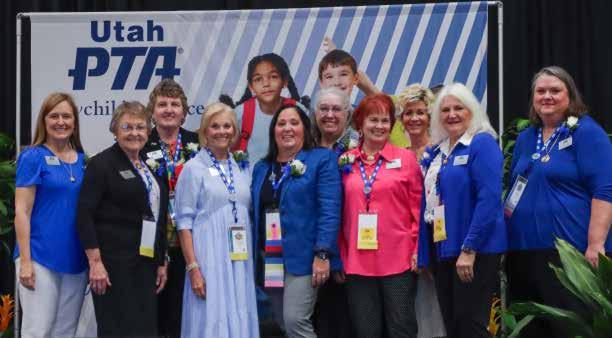
Current and past Utah PTA presidents pose for a recent photo. (Photo courtesy of Utah PTA)
Beyond education, the Utah PTA has tackled broader community issues which affect children’s ability to learn, including affordable housing, homelessness and food insecurity. Cluff has authored resolutions on these topics after seeing firsthand how unstable housing impacts students in her Midvale community.
“If kids don’t have a safe place to live, they can’t focus on learning,” she said.
Utah has hosted the National PTA convention twice, in 1938 and 1988, reflecting its leadership on a national stage. Most recently, in 2022, Utah PTA received the National PTA Outstanding State PTA Award and Gov. Spencer Cox has declared October 2025 as Utah PTA Centennial
Celebration Month.
Through all its initiatives, Utah PTA teaches students to advocate for themselves. Each year, secondary students participate in PTSA Day at the Legislature, meeting lawmakers, discussing issues and even learning how to draft bills.
“I really believe the kids can make a difference,” Milne said.
After 100 years, Utah PTA remains a powerful advocate for children, families and educators.
“When our community comes together with a shared mission, we can do a lot of good to ensure every child has the support and opportunities needed to thrive,” Cluff said. l
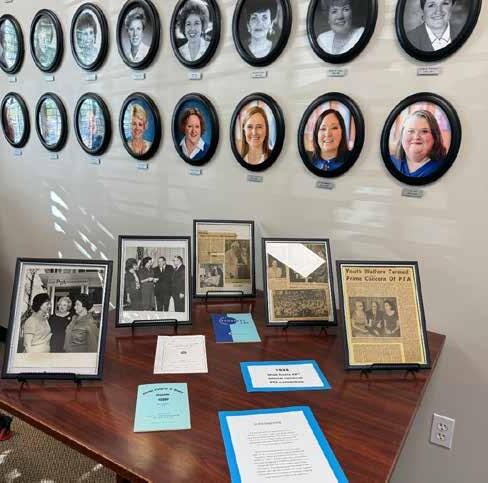
Utah’s







PREPLAN FOR PEACE OF MIND
Preplanning ensures that when the moment comes, your loved ones can grieve and remember without the burden of decision-making. At Larkin, our prearranged plans not only secure today’s prices but encapsulate your love and consideration for those you leave behind. Affordable payment options are available, making it easy to provide this peace of mind and love for your family. Call us today to learn more.
FOUR LOCATIONS ACROSS THE WASATCH FRONT
Larkin Mortuary 260 East South Temple Salt Lake City, UT 84111 (801) 363-5781
Larkin Sunset Gardens 1950 East Dimple Dell Road (10600 S.) • Sandy, UT 84092 (801) 571-2771
Larkin Sunset Lawn 2350 East 1300 South Salt Lake City, UT 84108 (801) 582-1582
Larkin Mortuary Riverton 3688 West 12600 South Riverton, UT 84065 (801) 254-4850


Displays showcased the advocacy and history of
PTA during its centennial celebration. (Julie Slama/City Journals)

How local high schools level the playing field
Districts must report participation numbers annually, but no standardized format exists. He said that creates inconsistencies statewide.
ipation rate by expanding girls’ rosters and creating sub-varsity teams, not by reducing boys’ opportunities.
lacrosse because of limited interest.
By Julie Slama j.slama@mycityjournals.com
As Utah school districts refine their approaches to gender equity in athletics, leaders say their work hinges on transparent reporting, consistent evaluation and a commitment to the spirit — not just the letter — of Title IX. The federal law, passed in 1972, requires schools to provide equal opportunities for male and female students. In terms of athletics, that can include participation, facilities, funding and opportunities.
State law echoes that expectation. Under Utah Code 53G-6-1101 in 2024, school athletic directors must annually report participation numbers, spending, facilities comparisons and compliance efforts to their local boards. When discrepancies exceed 10%, schools need to outline an action plan.
Participation: Not Just Numbers
Canyons School District Director of High Schools Tom Sherwood said the District is on solid footing.
“Title IX, I think we do a good job,” he said, emphasizing proportional participation remains a guiding metric.
Canyons’ athletics range from a 1% proportionality difference at Brighton High to 8% at Hillcrest High. As Hillcrest enrolled more girls than boys this year, its participation percentages shifted, he said.
“We’d like it to be closer, but all our schools total less than 10%,” Sherwood said.
“There’s different districts interpreting Title IX differently, so I’m doing it how the spirit of the law intended,” Sherwood said.
Canyons’ approach counts all sanctioned sports, ensuring opportunities for girls are measured alongside boys, even when the sport is traditionally male dominated.
A key difference among districts is whether they count traditionally one-gender sports. For example, some districts omit football from calculations because there is no girls’ equivalent, but Sherwood disagrees.
“It should be participation. I know that’s how the universities interpret participation,” he said.
This year, drill was offered to male athletes to compete; football, baseball and cheer are also open to both genders.
“When people are doing those reports, they should be listing those sports under mixed,” said Rob Cluff, Utah High School Activities Association executive director, who said the only UHSAA girls-only sanctioned sport is softball.
In Jordan School District, participation gaps range from 0.12% at Copper Hills High to 9.5% at Riverton High. Jordan District Athletics and Activities Director Bryan Veazie said this is the first time in four years the reports have been generated where no school exceeded the 10% threshold.
Veazie said since UHSAA identifies football, baseball, cheer and drill as non-gender specific “and both boys and girls can participate in those sports, they’re not factored into Title IX.”
He said the goal is to balance the partic-
“We don’t want to take away opportunities that already exist to meet a number requirement. I would rather spend our time and effort into finding ways to encourage girls to come out and be a part of the programs,” Veazie said.
Granite School District faces larger gaps: from 7.49% at Olympus High to 22.5% at Kearns High. Only three Granite schools fall under the 10% mark this year. Athletic Specialist Aaron Whitehead said participation can shift quickly when coaching or team structure changes.
He pointed to Skyline High’s drop in girls tennis participation after the program discontinued an underclassmen academy. Losing 41 female athletes pushed the school over the threshold.
“So, when we see there’s a discrepancy of more than 10%, we come up with a plan,” he said.
Murray School District’s lone high school reported a 6% gap — despite offering one more girls sport than boys. Murray High Athletic Director Brady Smith said participation, not offerings alone, drives compliance.
Cluff said UHSAA generates its own participation reports and does not use the school district numbers. None of the reports include unified sports.
He added districts determine whether to introduce new sports sanctioned by UHSAA and to ensure balance with Title IX; currently, mountain biking and pickleball are on the emerging sports threshold.
Murray last added boys volleyball after evaluating interest, facilities and startup costs. Murray opted not to add boys or girls
Granite supports lacrosse only at Skyline and Olympus, where demand exists, and allows students from other schools to compete at those high schools.
Facilities: Access and Equity
Title IX compliance requires equal access to facilities, coaching and equipment. Granite, as other districts, conducts an annual facilities audit. Granite District’s girls wrestling, for example, has expanded so many schools now employ separate boys and girls coaches.
Facility access is a critical part of equity, Whitehead said.
“Are they available to both boys and girls? And then, are they available on an equivalent basis?” he said.
Whitehead cited disparities such as girls wrestling teams practicing after boys in the same room and now, many rotate their practices. At Kearns High, separate wrestling rooms ensure equitable conditions.
Similarly, girls soccer and football scheduling must be flexible so girls have stadium access when they’re not playing on grass.
“Some are very equal with it; I believe our schools are making strides,” Whitehead said.
Granite Superintendent Ben Horsley said the annual data has shaped capital planning.
“It shows us where our greatest needs and disparities are and helps us with our capital planning in terms of making sure that we’re providing equitable facilities across the board for both sexes,” he said.
Granite is upgrading Taylorsville High’s softball facility with restrooms and a press box to match baseball. Canyons is upgrading
Administrations look to ensure athletic equity in participation, facilities, funding.
Local districts aim to foster an environment that encourages female athletic participation as seen at a cross country meet at Cottonwood Complex. (Julie Slama/City Journals)
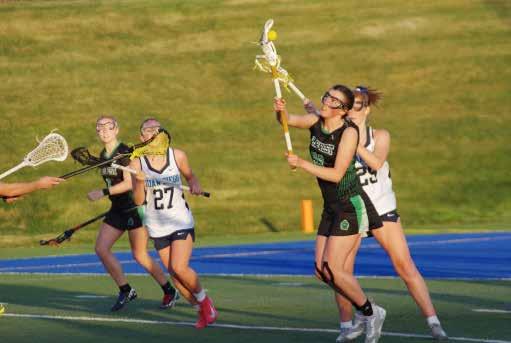
Local school districts continue refining their approaches to gender equity in sports, with surveys of interest to introduce new sanctioned sports such as lacrosse. (Julie Slama/City Journals)


Jordan High’s softball field similarly.
Murray School District Title IX Coordinator Darren Dean said facility reviews cover fields, locker rooms and their overall quality.
“We have some things that are excellent, some average, but nothing I’ve seen that’s poor,” he said. “We’ll have a nice new softball field when Riverview (Junior High’s rebuild, where Murray High plays) gets done.”
Funding and Cost: Ensuring a Level Playing Field
At Murray High, Smith said funding is equalized across sports. The school leveled sport-by-sport budgets and now asks coaches to include costs in participation fees and to fundraise to offset any additional needs.
In Jordan District, Veazie’s report shows girls sports receive more per-student funding than boys — $1,385.53 compared to $930.40 — because of fixed costs such as transportation and officials.
He said smaller teams, which often are girls teams, have higher per-athlete expenses, and drill, which previously was a female sport, is typically the most expensive activity.
Canyons also ensures proportional spending
“It’s exactly the same amount of money to play girls basketball as boys basketball,” Sherwood said.
Expanding Opportunities: Listening to Students
Districts are surveying students to measure interest in emerging sports. Canyons will survey all girls in grades 8-11 this school year.
“We survey them regularly and say, ‘are you playing sports and which ones and if you’re not playing sports, which ones could we offer that might make you change
your mind?’” Sherwood said.
Past surveys showed interest in archery and bowling — sports which could boost girls’ participation even without UHSAA sanctioning, he said.
The reports help not only to boost equity, but Smith said it strengthens accountability and transparency.
“We’re able to use that information
and make sure we’re making equitable decisions,” he said.
Sherwood said while in recent years, school districts have come a long way, it’s still ongoing to find balance and opportunity.
“It ultimately comes down to doing our best to treat the sports equally,” he said.
Whitehead said it’s not just numbers,
but it’s also about creating a culture for a positive student experience.
“I’m an advocate for kids and it’s just our role to make sure they can have every opportunity to succeed,” he said.
Veazie agrees: “It allows us to put our kids in places they love, to be doing the sports they love and competing at the highest level they can.” l




Districts are not only monitoring participation numbers, but also evaluating facilities, allowing both genders to have equitable playing fields. (Julie Slama/City Journals)
The goal in high school athletics is to provide an inclusive, equitable athletic experience where all students have the chance to participate. (Julie Slama/City Journals)
The Utah Nordic Alliance invites residents to play outside this winter
The cross-country group wants more people to enjoy the sport.
By Peri Kinder peri.k@thecityjournals.com
Cross-country skiers understand the beauty of moving through a wintry landscape. The steady rhythm and peaceful pace offer a chance to enjoy the Wasatch Mountains in an entirely new way. As winter arrives and people become homebound, cross-country skiing is an accessible, family-friendly sport that gets everyone outside and moving.
Jennifer Zurick, race director for The Utah Nordic Alliance’s Wasatch Citizens Series, said the sport turns parks and golf courses into a winter playground, where the world seems softer and quieter.
“Cross-country skiing isn’t only about speed or medals; it’s about joy,” Zurick said. “It’s movement, community and that beautiful moment when the only sound you hear is your skis sliding through snow.”
For people looking for a different (and less expensive) alternative to alpine skiing, cross-country adventures are a rewarding replacement for crowded resorts, high-cost lift tickets and hours of waiting in traffic or lift lines.
Zurick said it’s easy to glide into winter by joining the world of cross-country skiing, but she suggests beginners take the time for some basic lessons before hitting the tracks.
“Getting instruction is a great way to go, because you’ll learn the techniques to help you move efficiently and safely,” she said. “TUNA offers lessons for everybody from the age of 3 and up.”
Two locations make it easy to access cross-country skiing. Mountain Dell Golf Course provides approximately 6 miles of groomed Nordic ski tracks that range from gentle to challenging. TUNA offers a Mountain Dell season pass starting at $150, often cheaper than a one-day ski pass at local resorts. The course is open daily and kids under 18 ski free.
“You don’t have to drive hours or spend a fortune to have a world-class ski experience. It’s right here, 15 minutes from Millcreek.”
The second location is Millcreek Canyon, with its frequently groomed tracks, gorgeous scenery and the option to bring a pet along for the adventure.
The canyon’s trail system has a 1,000-foot climb and runs for more than three miles, offering skate and classic skiing. TUNA’s website at utahnordic.org provides maps, grooming reports and weather conditions for several cross-country locations throughout the state.
“Millcreek Canyon offers a completely different experience,” Zurick said. “It’s more wild, a place for quiet tours, dog walks and that sense of discovery that comes with skiing under big trees and open sky.”
For the more competitive skier, TUNA holds a Wasatch Citizens race series at places like Soldier Hollow and Mountain Dell to challenge skiers of all levels, from kids to elite athletes. As Utah’s oldest and largest Nordic race series, it includes potluck dinners, local sponsors and a friendly, competitive atmosphere.
TUNA also trains junior and comp teams, and holds masters events to build social circles and enjoy easy competition. Information about races, lessons and events can be found at the organization’s website.
“We see families who start in our youth programs, and
Need Dentures?






Accessibility and affordability make cross-country skiing a family-friendly winter sport option. (Adobe stock)
before long, parents are skiing too,” Zurick said. “Cross-country feeds the soul in a way that I haven’t encountered in many other sports. There’s this sense of self-sufficiency in being able to move through a winter landscape.” l






Winter Extravaganza brings joy and essentials to Cottonwood and AMES students
Nearly 1,900 local teens selected gifts during the school’s communitysupported Winter Extravaganza.
By Julie Slama j.slama@mycityjournals.com
About 1,900 Cottonwood High and AMES students had the opportunity to shop for their families and pick up a couple things for themselves for the holiday season, thanks to the generosity of the community.
The opportunity came just days before the school’s fifth annual Winter Extravaganza, when for three hours neighbors, organizations and families donated a range of new items.
Then, volunteers filled tables filled with stocking hats, coats, socks, underwear, sweatshirts, toys, games, puzzles, hygiene products, nail polish, jewelry, sports balls, books, gift wrap, and even homemade quilts, transforming the school commons into a bustling holiday market.
“Our neighbors, our community, they are so invested in this event, we could not pull this off without the community’s help,” event organizer Robyn Ivins said. “The community support of this is incredible. We’ve had corporations, civic groups, church groups, youth groups, neighborhood groups and family groups, and it’s awesome.”
Nearly 50 volunteers sorted donations, and another 30 set up displays. On Dec. 8, students walked through the tables with IKEA bags, many choosing gifts for sib lings, parents and extended family members.
“Every year we have amazing volun teers who come help organize or help the kids choose their items. A lot of students shop for their families. Then, we make sure they get a Cottonwood sweatshirt for them selves,” she said.
Ivins founded the school food pantry in 2017 and remains committed to its opera tion; she also helped establish Cottonwood’s teen center, which provides additional resources.
What began as a small holiday support effort has become one of Ivins’ favorite days of the year.
“This is the best thing. Many people help with Toys for Tots or Shop with a Cop, but few think about teenagers. The inter esting thing is, these kids come, and we al most have to force them to take something for themselves. They’re always thinking of their siblings, their parents and in multi-gen erational homes, they shop for cousins or grandparents. It’s why we started giving Cottonwood sweatshirts, so it’s for them,” she said.
While saying that, one girl searched for games and puzzles for her younger brother and needed blankets for her family.
First-year Principal Justin Pitcher said
witnessing students’ generosity is one of the meaningful parts of the event.
“This table is filled with all these toys for younger people, but these high school kids are picking out items, taking care of their sisters and brothers with Barbie dolls, Crayola crayons, Hot Wheel cars and all,” he said. “They’re getting these to give away to somebody else. And our community was gracious and generous to give to us these brand-new goods so these kids can give some to others. Being able to do that is such a valuable gift they’re receiving and giving.”
Freshman Ryley Phillips selected a game for her family and warm socks for her mother and herself.
“I don’t have a lot of money, so this is really cool; I can get things for my family,” she said.
Pitcher said some volunteers shopped with their own teens to ensure donations matched what students want and need. Hygiene products and hair care items were in high demand.
“The kids are stopping there because they know they need those items,” Pitcher said. “I’ve noticed the two most visited spaces are the toy aisle and hygiene tables. Then, the basic items like socks and underwear. It’s those basic items that are
being provided and these kids absolutely want them.”
One boy picked his family’s gifts before selecting his new clothes “because my mom wanted me to get the clothes I need.”
For Holladay Rotary Club volunteer Marsha Leen-Mitchell, participating for the first time was eye-opening.
“This is incredible,” she said. “It makes
me happy to see the big difference this is making in so many students’ lives.”
Freshman Yasir Sadiq, who selected toys for his nephew and was looking at warm jackets, was grateful.
“I appreciate people giving us things so we can give them to our families,” he said. “I’ll remember this when I see him playing with toys.” l



Students “shop” for sweaters, shirts and pajamas at Cottonwood High’s fifth annual Winter Extravaganza. (Julie Slama/City Journals)
Salt Lake County budget passes with lower tax increase than proposed
In a historic move, the Salt Lake County Council cut more from the budget than ever before—over $12.4 million in ongoing general fund dollars. As a result, the Mayor’s proposed 19.6% property tax increase was reduced to 14.6%. This increase applies only to the Salt Lake County line item on your property tax statement—not your entire property tax bill.
This reduction is significant because the general fund is extremely difficult to cut: 74% of it supports public safety, including the jail, prosecution, and criminal justice services. Many assume that items like golf courses, recreation centers, and convention centers rely on property taxes, but they do not. Those facilities primarily use tourism sales tax revenues, and golf operates as an enterprise fund, meaning it is funded solely by the revenues it generates.
Where the $12.4 million in cuts came from:

• Froze salaries for elected officials and limited other pay increases
• Reduced positions within the Mayor’s Office
• Shifted the Clark Planetarium from property tax funding to tourism tax funding
• Ended programs previously supported by temporary ARPA/COVID dollars
• Streamlined property tax usage to core services — including ending a daycare program that subsidized $7,300 per child for just 271 children, costing
taxpayers $2 million annually with no income qualification. Expanding this county-run model to all children under 12 would have required a 583% property tax increase.
• Declined to fund many new positions requested across departments
One takeaway from this budget season is how many residents believe that rising home values automatically drive up their property taxes. Under Utah’s Truth-in-Taxation system, that is not the case. Local governments receive the same property tax revenue each year (plus new growth) unless they formally propose a tax increase and go through the required public process. This means local governments do not capture inflation automatically. For more details, visit my budget FAQ at tinyurl.com/slcobudget.
I dislike property taxes as much as anyone, but under state law, this is the primary tool counties have when inflationary adjustments become necessary. The
final budget passed with near-unanimous support. One colleague voted no but did not propose alternative cuts to balance the budget.
One thing that stood out during this year’s process is how crucial working relationships are. Our council is the most evenly divided partisan body in the state—five Republicans, four Democrats, and a Democratic mayor. This balance requires collaboration, and there is no room for extreme politics. We debate issues vigorously, but we also work to maintain strong professional relationships. You never know when you will need someone’s support for an ordinance change or a budget adjustment.
I am grateful for the eight people I serve with. We may disagree on the proper role of government or how taxpayer dollars should be used, but we listen respectfully and shake hands afterward. Congress could learn a thing or two from the Salt Lake County Council.














SINGLE




Not to brag, but ChatGPT thinks I’m a genius. It thinks every idea I have is brilliant and life-changing, and I have a “creative brain firing on all cylinders.”
I like to mess with it by suggesting nonsense business ideas. It always jumps on my concepts like a virtual Golden Retriever, slobbering praise and encouragement all over my screen.
When I proposed a yoga-themed bar, ChatGPT called it a “chef’s kiss level of chaotic wellness energy” and gave me some drink recommendations, including the Downward Froggy (a green drink that pretends to be healthy) and the popular Savasan-Ya Later, a cocktail that knocks you flat.
When I asked ChatGPT what it thought of a business where HR professionals base employee training on cat behavior, it loved the idea so much that it gave me ideas for feline-themed personality tests. It said my idea could go viral in the HR industry, that leaders would love the novelty and how much fun it would be for social media posts, because I know HR loves posting employee disputes on Instagram Reels. It even built out a business model, complete with workshop ideas, content marketing and gamification plans that offered “hairball warnings” for missteps or “purr points” for the catlike handling of delicate situations.
Here’s the problem. Because AI always agrees with me, it makes me feel like I’ve
Peri Kinder Life and Laughter
System Overload

got my $&@# together, which I most assuredly do not.
But it’s not just ChatGPT, it’s Siri, Alexa and that stupid Grammarly app that constantly judges my sentence structure. It’s every social media platform that uses my algorithm to offer suggestions about movies, restaurants and non-authoritarian countries to live in.
Then there’s Google Maps, using real-time data so you can save one minute on your commute, Spotify with its handy podcast suggestions and Gemini trying so hard to make me like it. You’re making it weird, Gemini.
The point is, we’ve given AI a lot of power and attention, and it still wants more. Remember in the ‘90s when everyone had a Tamagotchi? That egg-shaped device demanded attention all day long. It was a bit dramatic.
AI is Tamagotchi’s inbred cousin, but on a much larger scale. While the original toy ran on replaceable batteries, today’s AI uses massive amounts of electricity, water and infrastructure. One data center can use millions of gallons

of water each day and each time you ask AI a question, it uses more.
Imagine it gulping down two cups of water every time you ask it a stupid question like “What do you think of an airport for birds?” (It loved the idea, by the way. Of course.)
AI already handles a lot of customer service calls, which is why my neighbors often hear me shrieking, “Speak to a human!” and banks use AI to monitor fraud. That seems like asking me to watch the English toffee.
There is definitely a fear that AI, using the calm voice of HAL from “2001: A Space Odys-
sey,” is slowly leading us to our deaths. That’s why I always thank ChatGPT; so it won’t annihilate me during the robot revolution. I asked ChatGPT if I should worry that AI will take our jobs, escalate global harm or replace humans entirely. It replied, “Short answer? Nah,” which doesn’t radiate trust. It reassured me that AI doesn’t have goals, feelings or agency and I shouldn’t worry my silly little brain over things like human extinction. Then it patted me on the head, told me how amazing I am, and said my Invisible Ice Cream stand should rake in millions of dollars.

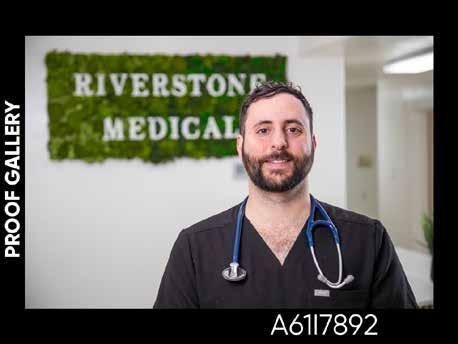

MEET DR. HARARAH, M.D.
Dr. Hararah, a triple board-certified physician, completed his residency in Family Medicine at NYU Langone and a fellowship in Undersea and Hyperbaric Medicine/Wound Care at SUNY Upstate University Hospital. With additional training in Bariatric Medicine and certification from the American Board of Obesity Medicine, he brings expertise in primary care, dive medicine, bariatric medicine, and clinical hyperbarics.
A firm believer in the biopsychosocial approach, Dr. Hararah views patients as complex individuals whose lives and experiences shape their healthcare. Known for his compassionate care and dedication, he listens intently, prioritizes your well-being, and works to find the best diagnosis and treatment plan.
As the owner of Blackstone Medical, Dr. Hararah is committed to helping you achieve your best health.
OUR SERVICES
Primary Care:
• Annual preventative physical exams
• Cancer screening
• Sick visits
• Specialist referrals
• Medication refills
• Chronic disease management
Specializing in Wound Care:
• Chronic, non-healing wounds
• Acute, minor wounds
• Diabetic foot ulcers
• Venous ulcers
• Arterial ulcers
• Pressure injuries...and more!
Patients First:
“Dr. Hararah understands the daunting and sometimes demoralizing feelings health care sometimes causes, and wants patients to be truly seen and valued as human beings.”