
See Inside... Local in “Nutcracker”
Murray’s Lily Dibb will play Clara in Ballet West show Page 8
Familiar faces retain seats
Elections featured three returners, strong financial backing Page 16
‘We’ve never seen anything like this’:
Murray Pantry overwhelmed by soaring demand
By Shaun Delliskave | s.delliskave@mycityjournals.com
Murray Children’s Pantry set to give out 200,000 meals this year.
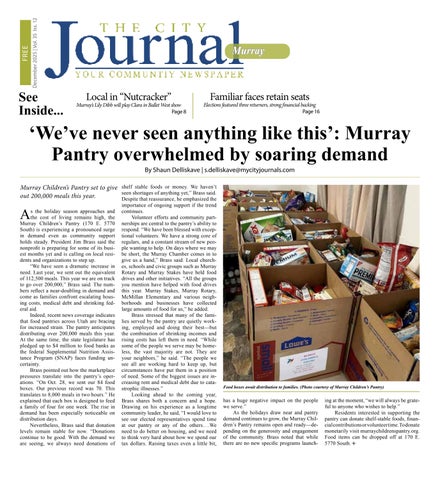
As the holiday season approaches and the cost of living remains high, the Murray Children’s Pantry (170 E. 5770 South) is experiencing a pronounced surge in demand even as community support holds steady. President Jim Brass said the nonprofit is preparing for some of its busiest months yet and is calling on local residents and organizations to step up.
“We have seen a dramatic increase in need. Last year, we sent out the equivalent of 112,500 meals. This year we are on track to go over 200,000,” Brass said. The numbers reflect a near-doubling in demand and come as families confront escalating housing costs, medical debt and shrinking federal aid.
Indeed, recent news coverage indicates that food pantries across Utah are bracing for increased strain. The pantry anticipates distributing over 200,000 meals this year. At the same time, the state legislature has pledged up to $4 million to food banks as the federal Supplemental Nutrition Assistance Program (SNAP) faces funding uncertainty.
Brass pointed out how the marketplace pressures translate into the pantry’s operations. “On Oct. 28, we sent our 84 food boxes. Our previous record was 70. This translates to 8,000 meals in two hours.” He explained that each box is designed to feed a family of four for one week. The rise in demand has been especially noticeable on distribution days.
Nevertheless, Brass said that donation levels remain stable for now. “Donations continue to be good. With the demand we are seeing, we always need donations of
shelf stable foods or money. We haven’t seen shortages of anything yet,” Brass said. Despite that reassurance, he emphasized the importance of ongoing support if the trend continues.
Volunteer efforts and community partnerships are central to the pantry’s ability to respond. “We have been blessed with exceptional volunteers. We have a strong core of regulars, and a constant stream of new people wanting to help. On days where we may be short, the Murray Chamber comes in to give us a hand,” Brass said. Local churches, schools and civic groups such as Murray Rotary and Murray Stakes have held food drives and other initiatives. “All the groups you mention have helped with food drives this year. Murray Stakes, Murray Rotary, McMillan Elementary and various neighborhoods and businesses have collected large amounts of food for us,” he added.
Brass stressed that many of the families served by the pantry are quietly working, employed and doing their best—but the combination of shrinking incomes and rising costs has left them in need. “While some of the people we serve may be homeless, the vast majority are not. They are your neighbors,” he said. “The people we see all are working hard to keep up, but circumstances have put them in a position of need. Some of the biggest issues are increasing rent and medical debt due to catastrophic illnesses.”
Looking ahead to the coming year, Brass shares both a concern and a hope. Drawing on his experience as a longtime community leader, he said, “I would love to see our elected representatives spend time at our pantry or any of the others.…We need to do better on housing, and we need to think very hard about how we spend our tax dollars. Raising taxes even a little bit,

has a huge negative impact on the people we serve.”
As the holidays draw near and pantry demand continues to grow, the Murray Children’s Pantry remains open and ready—depending on the generosity and engagement of the community. Brass noted that while there are no new specific programs launch-
ing at the moment, “we will always be grateful to anyone who wishes to help.”
Residents interested in supporting the pantry can donate shelf-stable foods, financial contributions or volunteer time. To donate monetarily visit murraychildrenspantry.org. Food items can be dropped off at 170 E. 5770 South. l
Food boxes await distribution to families. (Photo courtesy of Murray Children’s Pantry)




















Murray audiologist finds a shared love for sound and sky
Her work bridges hearing health and aviation.
By Peri Kinder peri.k@thecityjournals.com
Dr. Anna Thomas is either an audiologist who moonlights as a flight instructor or a pilot with audiology as her side hustle. Either way, the audiologist-turned-aviator is flying high as she pursues both passions.
Originally from Arkansas, Thomas moved to Utah 10 years ago to play softball for Utah State University, before earning her audiology doctorate at the University of Utah. She currently works with patients at Advanced Hearing & Balance Specialists in Murray, where she treats people with hearing loss.
“At the beginning of my college career, we would do Special Olympics camps,” Thomas said. “A lot of those Special Olympics athletes had either hearing aids or cochlear implants. I was curious about it and I took a communication disorder intro class. I was set from there.”
It was her brother who turned her on to flying. He had returned from a church mission and thought he wanted to be a pilot. He invited Thomas to go on a discovery flight with him to see if he enjoyed flying. He didn’t, but Thomas was hooked.
“It freaked him out,” she said, “being in the little plane. But I felt such a sense of freedom and empowerment.”
With only 5% of U.S. pilots being women, Thomas said she’s faced misogyny within the industry. Other pilots challenge her knowledge or capabilities, sometimes telling her she’s too emotional to handle high pressure situations. Thomas finds that idea funny.
“They’ve actually done research into this that shows women are better at analyz-

MURRAY TEAM
The Murray Journal is a monthly publication distributed directly to residents via the USPS as well as locations throughout Murray. For information about distribution please email hello@thecityjournals.com or call our offices. Rack locations are also available on our website. The views and opinions expressed in display advertisements do not necessarily reflect or represent the views and opinions held by Loyal Perch Media or the City Journals. This publication may not be reproduced in whole or in part without the express written consent of the owner. © 2019 Loyal Perch Media, Inc.
ing and breaking down emergencies than men,” she said. “Men are quick and impulsive, but women are more critical thinkers, and in the end, that’s what saves your life.”
She also looked to her mom for inspiration, who served as a vice president at Walmart. Thomas watched her mom make a name for herself in a predominately male industry and it sparked her own passion to stand out in a male-dominated field.
Aviation started as a hobby but quickly morphed into something more. Thomas has earned her commercial pilot and flight instructor licenses, flying both a Piper Archer III and a Cessna 172 XP, with plans to expand into multiengine airplanes and seaplane training.
She said earning her pilot’s license was harder than her doctorate. It required mastering weather, physics, airspace laws, the mechanics of flight and the hands-on skills to bring it all together.
Now, she teaches other people the love of flying. Thomas is working to earn her airline transport license, which allows her to fly jets, and teaching students at Randon Aviation (out of the South Valley Regional Airport in West Jordan) is a fun way to get her 1,500 required flight hours.
She would eventually like to work as a pilot for Delta, so her schedule is pretty full, but she takes regular hikes with her Wheaten Terrier, Winnie, to relieve stress.
“Flying challenges me in ways nothing else can,” Thomas said. “It requires patience, attention to detail and courage, but it also reminds me to appreciate the journey and celebrate small victories.”
Her passion for aviation helps forge a special bond with many of her audiology patients, especially Air Force veterans. Conversations about flight, aircraft mechanics and even the body’s balance systems have led to deeper discussions about

hearing health.
Thomas loves the challenge of working with patients while flying toward her own goal. It triggers her inner athlete who always needs something to work toward and to improve. She encourages women to pursue their field of interest, even if they’re labeled as “male” industries.
“Trust yourself and trust your abil-
ity,” Thomas said. “If you have unbreakable self-confidence, then nobody can challenge that. Put in the hard work, but then have full, unbreakable confidence in yourself, because people will question you. Welcome them when they question you, because that just proves that you’re capable, and it proves to yourself you’re capable.” l
PUBLISHER
Bryan Scott | bryan.s@thecityjournals.com
EDITOR
Travis Barton | travis.b@thecityjournals.com
ADVERTISING EXECUTIVES
Mieka Sawatzki | mieka.s@thecityjournals.com
Lindsay Andreasen | lindsay.a@thecityjournals.com
Ryan Casper | ryan.c@thecityjournals.com
Marc Davis | marc.d@thecityjournals.com
CIRCULATION COORDINATOR
Lydia Rice | lydia.r@thecityjournals.com 385-557-1022
Rack locations are also available on our website.
EDITORIAL & AD DESIGN
Stacey LaMont Ty Gorton
MURRAY CITY JOURNAL
9500 South 500 West, Suite 205 Sandy, UT 84070
PHONE: 801-254-5974
Our mission is to inform and entertain our community while promoting a strong local economy via relevant content presented across a synergetic network of print and digital media.
PUBLISHER
Designed, Published, & Distributed by

Murray audiologist, Dr. Anna Thomas, earned her commercial pilot and flight instructor licenses, and she’s working to get her license to fly jets for Delta. (Photo courtesy of Anna Thomas)
Murray’s roots and dreams shine in new downtown mural
University of Utah art professor Kim Martinez leads a colorful collaboration that captures Murray’s unity and artistic spirit.
By Shaun Delliskave s.delliskave@mycityjournals.com
Asweeping new mural is transforming the side of the historic Murray Theater into a vibrant symbol of the city’s growth, creativity and unity. Designed under the direction of University of Utah art professor Kim Martinez, the work merges Murray’s past and present into a single visual story—a “tree of life” that celebrates the city’s evolution through art, nature and community.
Located behind the theater, the mural can best be accessed through Vine Street.
“The mural bursts with symbols of Murray City’s vibrant evolution, weaving together art, nature, and community spirit,” Martinez said. “At its heart, a majestic tree of life rises, its branches reaching out as a testament to strength and connection. Figures lift one another skyward, embodying the city’s spirit of support and unity.”
As the mural unfolds, elements of Murray Theater come alive in painted form. The tree’s leaves morph into music notes and bicycles, echoing the city’s new
pedestrian spaces. Dancers twirl atop old theater tickets, a nod to the building’s storied history. Martinez said these touches “fuse echoes of the past with the energy of the present,” portraying Murray as “a city devoted to social justice, creativity and growth.”
Martinez emphasized that the mural was shaped through community input from the beginning. After holding an open meeting to gather ideas, her team created nine concept designs. “Students then brought these visions to life for the mayor and city council, presenting them with energy and creativity, both in words and visuals,” she said.
The process became an open forum, with city officials and residents joining the discussion. “The administration, councilmembers and community members cast their votes for the mural that best captured their spirit,” Martinez explained. “Through this collaborative journey, the project embraced a sense of social justice.”
Unlike her previous We Are Murray project, which engaged hundreds of students, high school students are not participating in this mural due to city liability policies. Even so, Martinez said the piece is a community effort in every sense. “The design process became a true collaboration, inviting ideas from community mem-
bers, a local school, the city council and city employees,” she said. “We wanted to genuinely reflect the community’s unique character and dreams.”
The mural’s vivid color palette was chosen with visibility and symbolism in mind. “Vivid contrasts in color were chosen to make each shape stand out boldly, even from afar,” Martinez said. “The artwork achieves a sense of unity by balancing color intensity and arranging the scene into visually connected zones.”
“Life-size figures draw the viewer in with a sense of presence, while smaller figures recede, inviting the eye to wander deeper into the imagined space,” she added.
Painting on a historic building presented a different kind of challenge. “Unlike schools, which often cater to a specific group, historical buildings invite people from all walks of life,” Martinez said. “The city addressed all the restoration challenges to the building before we started.”
To Martinez, murals are more than decoration—they are dialogue. “Community murals have the power to spark collective action and transform how people feel about their neighborhoods,” she said. “They do more than brighten city blocks— they weave people together.”
She has seen firsthand how murals
“become catalysts for healing, identity and social change.” These large-scale artworks, she said, “invite conversation and reflection, turning walls into canvases for shared stories and hopes.”
The mural is still being completed in stages. Martinez said it will take “layer upon layer of vibrant color, each one building a luminous surface where hidden hues gleam as light dances across it.” The team expects to paint the wall at least five times before the piece reaches its final brilliance.
Martinez hopes the Murray Theater mural will inspire a wave of public art throughout downtown. She has helped lead similar efforts before—in South Salt Lake, where she worked with the city to establish a mural program in 2002. “Our goal was to revitalize an aging industrial area and turn it into a vibrant community mural space,” she said.
Over 10 years, she and local youth artists completed multiple projects there. “As a university professor, I am committed to collaborating with communities to broaden art access and empower future generations through creative expression,” Martinez said.
As the Murray Theater mural nears completion, she hopes it will serve as both a landmark and a mirror—reflecting the heart of a city that continues to grow, connect and create together. l
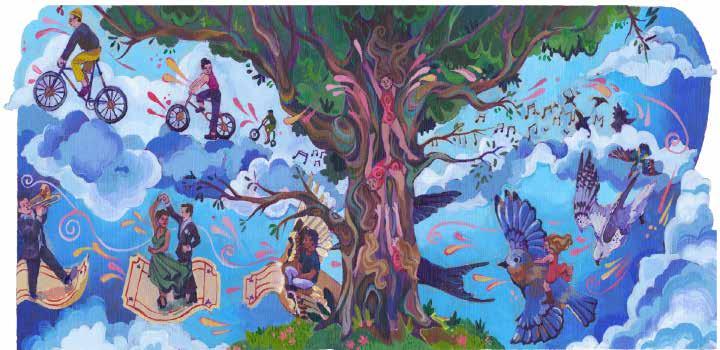
Murray residents selected this mural to be painted on the exterior of the Murray Theater. (Photo courtesy of Murray Theater)
Murray’s Lily Dibb brings Clara to life in Ballet West’s ‘Nutcracker’
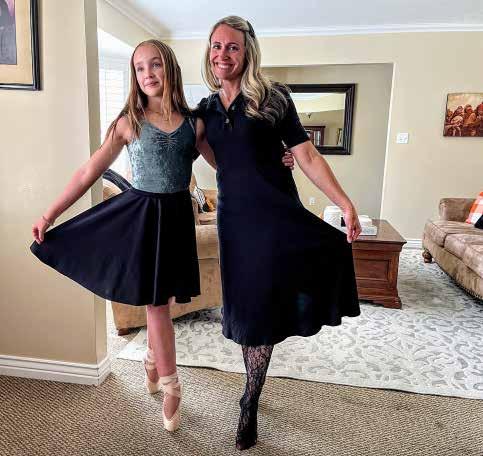
Years of practice and passion pay off for 13-year-old Riverview Junior High student Lily Dibb, who will dance the lead role of Clara in Ballet West’s cherished holiday production of “The Nutcracker.”
By Shaun Delliskave s.delliskave@mycityjournals.com
Whenthe curtain rises on Ballet West’s “The Nutcracker” this holiday season, a Riverview Junior High student will step into the spotlight to live out a dream years in the making. Thirteen-year-old Lily Dibb will play Clara, the wide-eyed girl whose imagination brings the classic ballet to life—a role Lily herself has imagined since she first laced up her ballet slippers at age 2.
That happiness didn’t come without years of hard work. Lily spends about 12 to 15 hours each week in classes at the Utah Dance Institute. “I do ballet technique and pointe classes,” she explained. “I also take jazz and contemporary because that helps me become a stronger dancer overall.”
Her mother, Coreena Dibb, describes her daughter’s dedication simply: “She basically lives the dance. She’s never not dancing—even at home, she dances everywhere she goes.”
Lily’s path to the lead role began years ago with smaller parts in “The Nutcracker.” “I’ve tried out the past four years,” she said.
Her first introduction to ballet came through a neighborhood dance class. “When she first started, she wouldn’t even get up during class,” Coreena said. “She just sat and watched for a month and a half. Then we bought her the costume, and she got up on stage and did the whole dance—having never practiced it in class. That’s when we knew she loved performing.”

you have to show emotions like excitement, sadness or fear. I love that part of it.”
Between rehearsals, schoolwork and a full family life, Lily’s schedule is a balancing act. “I make sure I focus in class and get everything done then, so I don’t have to do it at home because I don’t have time,” she said.
Coreena said, “She’s not allowed to do all of this unless she keeps up her grades. But she loves school, so that helps.”
When she’s not rehearsing, she enjoys drawing and playing basketball with her three brothers. “I really like basketball,” she said. “Sometimes I even beat them.”
worth it when you watch your child do something they absolutely love.”
Lily’s “Nutcracker” season will be busy: she will perform 11 shows, starting at Weber State’s Browning Center in Ogden before moving to Salt Lake City’s Capitol Theatre. “I’m the first Clara,” she said proudly. “There are four of us, and I get to do the opening cast.”
She’ll also perform in a special sensory-friendly show for children and adults with disabilities—something both she and her mom say they’re excited about.
I like that ballet lets me tell a story. There’s a lot of acting in the dancing—you have to show emotions like excitement, sadness or fear. I love that part of it.
Lily Dibb
That love for performance still drives Lily. “I like that ballet lets me tell a story,” she said. “There’s a lot of acting in the dancing—
Getting to dance with Ballet West’s professional company has been a dream for Lily since she was little. “When I first did ‘The Nutcracker’ at my studio, I was an angel,” she remembered. “I would always look at the Clara offstage and think, ‘Oh my gosh, she’s so amazing—I want to be like her.’”
For Coreena, seeing her daughter achieve that dream was an emotional moment. “Honestly, I never knew if she’d actually get it,” she said. “Every year they pick four girls, and it’s hard when you’re from another studio. When she finally did, I was shocked—happy tears. I knew what it meant to her.”
The Dibbs say the production is a family commitment. “It’s a lot of extra time and a sacrifice for our whole family,” Coreena said. “We all have to adjust our schedules. But it’s
Being Clara comes with long rehearsals and big responsibilities. “After school, I go to my studio for technique, then I usually have to leave early to go downtown for Ballet West rehearsal,” Lily said. “It’s usually one to three hours each time.”
Dancing alongside professional ballerinas has been both inspiring and intimidating. “It’s really fun, but it’s also kind of scary because you want to make a good impression,” she said. “Sometimes it’s stressful—but I like it.”
Her favorite moment in “The Nutcracker?” “The party scene,” Lily said. “It’s the most fun because Clara’s the main part. But I also love sitting on the throne in the second act and watching the Sugar Plum Fairy dance.”
Beyond the barre, Lily’s artistic ambitions extend to acting and drawing. “I’ve been in all my school plays,” she said proudly. “I
was Anna in ‘Frozen,’ Gertrude McFuzz in ‘Seussical,’ and Sharpay in ‘High School Musical.’ This year, I’m trying out for ‘Alice in Wonderland.’”
Her mother isn’t surprised by her daughter’s range of talents. “She has a lot of artistic gifts—drawing, acting, dancing. It’s hard for her to pick just one thing because she loves them all.”
Asked about her future, Lily smiled thoughtfully. “I’d like to be a professional dancer,” she said. “Or maybe an artist—or an actor. Maybe I’ll go to Juilliard or the Joffrey Ballet School someday.”
For now, though, she’s focused on savoring her time as Clara—and giving others the same chance one day. “A lot of girls get to be Clara year after year,” Lily said. “I think once you get it, you’ve had your dream. Other girls should get that chance too.”
Her mother agrees. “What’s been amazing to watch is how humble she’s become. She knows how it feels to be disappointed, so she’s kind and supportive to others. She’s growing not just as a dancer, but as a person.”
Ballet West’s “The Nutcracker” runs from Nov. 28 through Dec. 27. Tickets are available at balletwest.org.l
Lily Dibb with her mother Coreena. (Shaun Delliskave/City Journals)
Murray’s Lily Dibb will feature as Clara in Ballet West’s “The Nutcracker.” (Shaun Delliskave/City Journals)
Strike a pose: Murray’s Selfie Museum snaps the fun into focus
A mother-daughter duo brings a splash of color, creativity and confetti to Murray’s State Street with Utah’s first selfie museum—where visitors become part of the art.
By Shaun Delliskave s.delliskave@mycityjournals.com
If you think museums are all “do not touch” signs and hushed tones, Crystal Lopez would like to blow some confetti in your face—literally. Inside her Utah Selfie Museum on State Street in Murray, visitors can push a button and unleash a flurry of glitter, strike a pose with angel wings, or dive into a Froot Loops-themed ball pit big enough to make Toucan Sam jealous.
“It’s an interactive museum where you can come to take pictures and videos,” said owner Lopez. “We have 13 different backgrounds that you can just play with, have a good time, and get some good content while you’re at it.”
Lopez, who calls herself a “serial entrepreneur,” her heart—and her phone’s camera roll—are in the Selfie Museum. “I first experienced one in Seaside, Oregon, called the Upside Down Art Museum,” she recalls. “Then we visited the Museum of Selfies in Vegas. I just thought, ‘This would be fun to bring to Utah.’”
We have 13 different backgrounds that you can just play with, have a good time, and get some good content while you’re at it.
Crystal
Lopez
And so she did. Opening just over a year ago, Lopez and her 13-year-old daughter Sapphire built and painted the entire place themselves—transforming what was once a dark tattoo shop into a bright, cheerful playground of color and creativity.
Sapphire says, “People my age love taking photos and posting on TikTok or Instagram. It’s nice that there’s something like this now.”
Step inside, and it’s easy to see why Sapphire calls it “a fun place for people my age.” Each photo station is more imaginative than the last. “We have a confetti room with a confetti cannon,” Lopez says. “You step in, push the button, and it blows confetti everywhere. There’s a money room with a clawfoot tub, fake gold bars, and a money gun so you can make it rain.”
Visitors can also pose in a retro diner, a boxing ring (“You can put on gloves and join the fight”), a ball pit filled with giant Froot Loops, or even an alien abduction scene—complete with inflatable cows. There’s also a regal “Queen or King Room,” a “Flower Room” and an “Angels and Demons Wall,” where guests can choose their wings.
“Some people bring different outfits—like dresses for the confetti room or even pets,” Lopez says. “We’ve had people bring their dogs and cats. We love it when they get creative.”
So what makes a great photo? “Lighting and angles,” Lopez says. “That’s why we have ring lights at every station. But the real trick is just having fun. It shows in your pictures when you’re really enjoying yourself.”
Most guests use their phones, but Lopez says professionals are welcome, too. “Some bring cameras, but cell phones work great. You can set the timer or do videos. We even have a 360 booth for slow-motion spins.”
Admission is simple: $10 for kids 13 and under, $20 for adults, with one-hour bookings—though Lopez admits, “If they want to stay a little longer, that’s not a problem.”
Lopez describes herself as someone who “thrives in chaos.” Between her multiple businesses and raising Sapphire, she finds joy in keeping busy. “I need lots to do,” she says with a grin. “But this place has been my favorite. It’s creative, it’s fun and it brings people together.”
And Sapphire? She’s the museum’s unofficial creative consultant. “I like the Froot Loops room the best,” she says. “And watching people fight in the boxing ring. It’s fun when they bring costumes.”
Business is growing, Lopez says, thanks to partnerships with Groupon and GetOutPass. “We’re also hoping to work with local high schools for fundraisers and school pictures,” she adds. She’d even love to collaborate with other Murray businesses—maybe bringing “pop-up selfie stations” to local events.
Holiday themes are also in the works. “We’re really festive people—we have like six Christmas trees at home,” Lopez laughs. “We’d love to get Santa in here for photos. Hopefully, we can get some arrangements with the North Pole.”
Until then, visitors can book appointments online at utahselfiemuseum.com for private one-hour sessions between 9 a.m. and 9 p.m.
And yes, Lopez insists, everyone should take at least one selfie before leaving. “You are part of the art,” she says with a wink. “That’s the whole point.”
The Utah Selfie Museum is located at 4889 S. State St. l





Crystal Lopez and her daughter Sapphire hope the Utah Selfie Museum pays off. (Shaun Delliskave/City Journals)
Murray Rotary revamps Operation Santa to help more families
Murray Rotary partners with Murray School District, Fire and Police departments to provide clothes for at-risk children.
By Shaun Delliskave s.delliskave@mycityjournals.com
Asthe festive season approaches, the Murray Rotary Club is gearing up for its annual holiday initiative, Operation Santa, and this year brings a fresh approach to supporting children in need throughout the city. The longtime tradition is being fine-tuned in response to rising costs and growing community demand.
According to Ryan Herath, one of the lead volunteers, this year’s focus centers on a clearer link between donors and beneficiaries. “This year, an individual pair of boots costs $30,” he explained. Rather than asking for broad financial contributions, the club is inviting sponsors to specifically “buy some boots.” As Herath put it, “Instead of sending an indiscriminate amount of funding, you are tied to how many kids’ boots you want to buy.”
The Murray Rotary Club has long served as a civic partner, and its role in Operation Santa has evolved over time. Herath described how the club coordinates with the Murray School District, local businesses and civic groups to identify children and families who can participate. “Rotary is dedicated to help-
ing communities at their request. We generally do not create projects; we ask the community what they need,” he said.
He noted the club’s nearly 20-year tradition of donating dictionaries to all third graders in Murray, before redirecting that effort when the district indicated teachers would prefer a different resource. “It’s the same relationship to identify which children and families can participate in Operation Santa,” he said. “Rotary is a group of civic-minded people who want to help the community, but not all of us can do it full-time.”
The highlight of Operation Santa, Herath said, comes when students arrive and interact with first responders. He recalled a conversation with Murray Fire Chief Joey Mittelman, who said most of his department’s interactions with the public are high-stress and high-stakes.
“The opportunity for the kids to meet first responders in a more personal and less intimidating way is great for both groups,” Herath said, adding with a smile, “Amusingly, all the single moms request a firefighter.”
While preserving the program’s cherished traditions — boot giving, shopping for families and the parade-style escort down State Street — the club is adjusting to economic pressures. “Operation Santa has grown every year. Costs due to inflation and increased participation continue to climb,” Herath said. “We do need additional monetary support to continue expanding the program, but the core program

hasn’t changed much.”
Behind the scenes of the festive spectacle lie complex logistics. Students are bused from schools to the Murray School District headquarters to link up with police and fire escorts.
“The specialized bus routes need to coordinate this early on a Saturday morning is complex,” Herath said. The club also gathers details like each child’s age, sex and shoe size. He recalled one instance when a third grader needed size 13 men’s boots, prompting a Rotarian to rush to a nearby sporting goods store to buy the right pair.
Herath said the event embodies Murray’s small-town spirit. “Murray Rotary Utah’s motto is ‘Fun with Purpose!’ Operation San-
On your mark, get set, dash! at
Inflatable-clad teachers cheered on more than 500 students racing around the field to support school programs.
By Julie Slama j.slama@mycityjournals.com
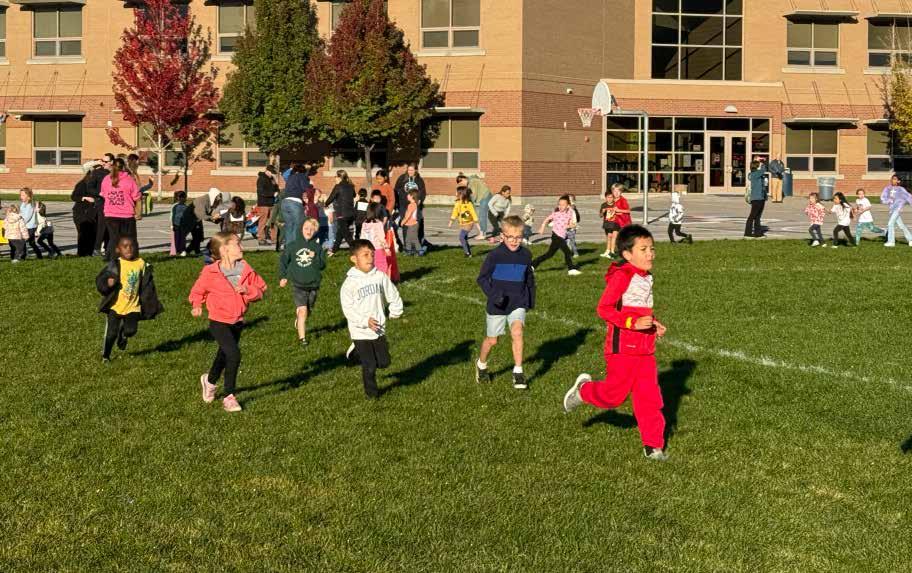
About 550 students gathered outside to watch
Principal Missy McQueen and teachers, all wearing inflatable costumes, take the first sprint on the school’s playground.
“I like all the teachers in inflatables; it’s fun,” said fifth-grader Taggart, who cheered them on. It was the start of the Woodstock Dash, where each grade took turns completing laps around the field during a 15-minute time limit. Volunteers marked the number of laps each student ran, turning fitness and fun into a fundraiser.
Leading up to the run, students had asked family, friends and neighbors to pledge donations for their effort. The goal: raise $10,000 to help pay for buses for field trips, assemblies and school activities.
The students understood the importance of their event.
“We’re raising money for our school fundraiser,” explained fifth-grader Olivia.
“The money is used to make school ‘funner,’” Zainab added.
“And it will pay for things for the teachers to help teach us,” Weston said. l
ta embodies this perfectly.” He described how the event brings together the school district, city council, first responders and more than 40 volunteers. “Every year, we stand at the doors ready, wondering if anyone will show up. It’s amazing when we start hearing the sirens and seeing the lights. Then the kids start streaming off the buses a little sleepy but smiling. It’s completely chaotic, like a large family reunion.”
Looking ahead, Herath hopes to expand the program. “We would love to extend the opportunity to more families and find more corporate sponsors, ideally Murray-based businesses that want to reinvest in the community,” he said. l
Woodstock Elementary
Murray police and firefighters help children find gifts for Christmas. (Photo courtesy of Murray City Police)
Woodstock Elementary students race around their playground to earn money for school programs. (Julie Slama/City Journals)





Murray mother and daughter turn personal struggles into national advocacy for cleft care reform
Murray’s Tiffiny and Kairi Tyler turn their fight against cleft treatment insurance denials into national advocacy for the Ensuring Lasting Smiles Act.
By Shaun Delliskave s.delliskave@mycityjournals.com
When Murray resident Tiffiny Tyler received a letter from her insurance company denying coverage for her newborn daughter’s cleft treatment, she was stunned. “I was still recovering from giving birth, the bills were starting to come in from labor and delivery and for Kairi’s early treatments,” she recalled. “Her doctor wanted her to have nasal stents to preserve her nasal passageways until surgery at three months. We received the letter that the treatment had been denied as ‘not medically necessary’ and ‘experimental.’ I was so shocked.”
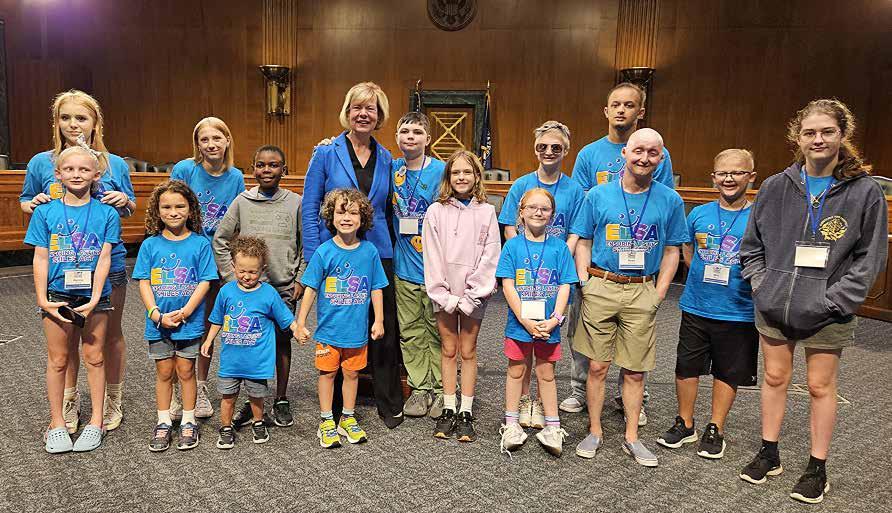
That letter marked the beginning of a years-long struggle for Tiffiny and her daughter, Kairi, both born with clefts, as they fought insurance denials for essential medical care. Now, they are using their experience to push for national change. Earlier this month, the mother-daughter duo returned to Capitol Hill to advocate for the Ensuring Lasting Smiles Act (ELSA)—a bipartisan bill that would require insurance companies to cover medically necessary treatments for congenital anomalies such as cleft lip and palate.
It was their second trip to Washington, D.C., joining Smile Train, the world’s largest cleft-focused organization, and other advocates from across the nation. Their mission: ensure that no family has to face the financial and emotional strain they endured simply to access essential medical care.
Growing up with a cleft herself, Tiffiny said she didn’t fully understand how insurance denials affected her care until she became a mother. “There was a lot of pressure growing up that I needed to have my surgeries done before I turned 18 so that they would be covered,” she said. Her experience of isolation fueled her determination to create a different reality for her daughter. “I did not have a lot of community growing up,” she said. “I did not meet another person with a cleft lip and/or palate until I was 21. When I was pregnant with Kairi, I knew things needed to change and be better for her.”
Through online support groups and outreach, Tiffiny connected with other parents and eventually became involved with Smile Train’s Cleft Community Adviso-
ry Council. This year, she was a featured speaker at Cleft Con, Smile Train’s annual global conference for people affected by clefts. “My biggest message to the cleft community was you are not alone in your advocacy,” she said. “There are people willing to help and support you, but also, no matter how big or small you are, you can advocate.”
For 13-year-old Kairi, advocacy began early. Last year, she joined her mother in D.C. to share her story with lawmakers. “Growing up with a cleft in my life was not that bad,” she said. “Hardly anyone noticed my cleft, and if they did, they never said anything about it. But I had to live with the fact that I was different.”
Her advocacy took on new urgency after experiencing her own denial. “I had a surgery that was pre-approved, and then after the surgery, the insurance company said it was dental and not medically necessary,” she said. “We flew to D.C. to advocate for ELSA last year as well as this year. Why I went to D.C. is because if I went, I could help other people like me.”
This year’s trip, Kairi said, was shorter due to a partial government shutdown.
“We only met with Utah’s two senators and one representative,” she said. “I wrote my speech on my own without help. I think the people we met with responded positively, saying that they would talk to the senators
or representatives about it. Rep. Burgess Owens is a co-sponsor of ELSA.”
For families like the Tylers, the passage of ELSA could mean an end to years of appeals, denials and financial hardship. “For the cleft community, the biggest treatments that are denied or delayed tend to involve teeth, ears and nose,” Tiffiny said. “If the outside of the nose needs to be reshaped to allow for better airflow, it can be denied as ‘cosmetic.’ For Kairi, she had extra teeth and needed a procedure done. Even though it would help with eating and other procedures later in life, they denied it after the procedure was done. It took a year to resolve or pay $7,000.”
ELSA, she said, would ensure that “insurance companies would not get to say that improving a child’s airflow is cosmetic or that a procedure to help a person eat due to a medical condition is a dental issue. This bill puts the power back where it should be, in the hands of a person’s doctor or medical professional.”
Utah has one of the highest rates of babies born with clefts in the nation—one in every 450 births, compared to the national average of one in 1,000. “For Utah, this bill would make a huge difference,” Tiffiny said. “It would guarantee that no matter which private insurance a person has, the medical care related to their congenital anomaly will be covered.”
Advocacy, Tiffiny admits, can be emotionally draining. “The most challenging part is not feeling listened to or receiving difficult feedback,” she said. “It is disheartening to share something so personal with a legislative office and feel as if they would rather be anywhere else. In these moments, there’s the challenge of staying steady and kind. I firmly believe that kindness can make change more than anything else.”
What keeps her motivated, she says, is her daughter. “When progress feels slow, it’s my daughter who keeps me going. She gets so excited—she asks about ELSA all the time. I want things to be better for her and the future. She shouldn’t have to wait nine years for a procedure like I did.”
Kairi hopes her efforts inspire others her age to find their voice. “I want other kids to know what you say matters because a small person can make a big change,” she said. “That they shouldn’t have to fight with insurance to get surgeries approved. That it is OK to be different and stand up for yourself.”
As ELSA continues to move through Congress with bipartisan support, the Tylers plan to keep advocating until the bill becomes law. “When we come together and share our stories, we can make great change,” Tiffiny said. l
Kairi and other young advocates meeting Sen. Tammy Baldwin in Washington, D.C. (Photo courtesy of Tiffiny Tyler)




















Hales, Cotter and Bullen win big—but can locals still run without big backers?
In a year that returned familiar faces to City Hall, the influence of outside dollars—and party endorsements—sparked fresh debate over what “local” really means in local government.
By Shaun Delliskave s.delliskave@mycityjournals.com
InMurray’s 2025 municipal election, voters reaffirmed several familiar names and ushered in a new one to the city council—while reigniting a broader conversation about how much influence outside money and partisan groups should have in local races that, by design, are supposed to be nonpartisan.
When the ballots were counted on Nov. 4, Mayor Brett Hales easily won a second term, defeating challenger Bruce Turner with 62.5% of the vote. On the council, Pamela Cotter retained her District 2 seat with 55.9%, while Clark Bullen captured District 3 with 58.1%. Diane Turner again ran unopposed in District 4, marking the second uncontested race of her political career.
Although the margins were decisive, the campaigns behind them revealed how increasingly difficult it has become to run a local campaign without outside support— from regional trade associations and unions to formal political parties.
Murray voters turned out at roughly 30% during the August primary, according to Salt Lake County election records, and early estimates suggest slightly higher participation in the general election. Hales, who campaigned on continuity, civility and fiscal restraint, extended his wide primary lead into a double-digit victory.
The reelected mayor said during his campaign that maintaining Murray’s identity amid rapid growth was a top priority.
Bruce Turner wrote after the results were posted: “Although it wasn’t the outcome that many hoped for, I am forever grateful for the opportunities that this campaign has given me—to meet with many of you and hear how each of you make Murray a better place every single day.”
District 2’s Cotter expressed her gratitude after winning. “I am deeply honored and humbled that the residents of District 2 have put their faith in me to help lead our city for another four years,” Cotter said. “Whether or not you voted for me, please know that I represent all of you. I urge everyone to stay engaged, ask questions and continue to share your thoughts and concerns with me.”
Her challenger, Jared Eborn, who serves as secretary of the Salt Lake County Democratic Party, congratulated Cotter while encouraging continued civic involvement.
“As a political newbie running against a
fairly popular incumbent, I had a pretty steep hill to climb and in the end my opponent received more votes and will be the victor in this election,” Eborn said. “I encourage everyone out there to get a little bit more involved in your city government—even if just by attending a couple of meetings here and there.”
In District 3, Bullen, a longtime civic volunteer, succeeded appointed incumbent Scott Goodman, and defeated former Salt Lake County Democrat Party Executive Director Ben Peck. At the city’s “Meet the Candidates Night,” Bullen drew laughs when he opened by saying, in self-deprecating fashion, “I am Clark Bullen, and I am addicted to running for municipal office.” After his victory, he expressed gratitude to voters and said public engagement would guide his term.
“I am so immensely grateful for the trust of the citizens of District 3,” Bullen said. “Engaging as many residents as possible in that process and in all our city decisions is my top priority.”
Bullen will need to seek re-election in two years, as his victory completes the unexpired term originally held by Rosalba Dominguez, who left the council after being elected to the legislature. Goodman was appointed to fill her seat until this election.
Campaign-finance filings show how much outside funding now flows into Murray’s once-low-budget city races. According to disclosures filed Oct. 28, 2025, the Salt Lake Board of Realtors made no new cash contributions after the primary but did provide an in-kind donation worth $4,500 to Eborn for campaign materials and consulting. That brought his total Realtor-affiliated support to about $9,000, making him one of the top-funded council candidates of the cycle.
Earlier filings show that the Realtors also contributed to Hales, Cox, Goodman and several other contenders during the primary season, totaling more than $16,000 across Murray races. Labor organizations, meanwhile, backed candidates such as former AFL-CIO president Dale Cox, who finished third in the District 2 primary after reporting more than $20,000 in donations.
Observers note that while contributions from trade groups are legal and fully disclosed, they shift the character of campaigns that were once financed largely through personal loans and neighborhood donations.
Adding another wrinkle, national political organizations and activist groups openly promoted candidates on social media this fall. The Salt Lake County Democratic Party issued election-night statements congratulating its endorsed candidates and emphasizing city-level wins.
“Our supported candidates won in 45 races and there are several more leading in races too close to call,” the party posted. “Thank you to every candidate who stepped

up and ran to improve their city and congratulations to the winners.”
While Murray’s elections are officially nonpartisan, the growing role of partisan entities mirrors trends across Utah, where local issues—especially housing, growth and infrastructure—often divide along broader ideological lines.
The city’s candidate filing period drew a mix of incumbents, newcomers and serial contenders, yet the financial and organizational resources behind each campaign varied widely.
Even in a community known for its neighborly spirit and relatively small electorate, the cost of visibility has risen sharply. Direct mailers, digital advertising and professional campaign consulting—once rare in Murray’s races—are increasingly standard.
The result is a paradox: greater professionalism and reach for candidates, but also greater dependence on external support.
In Murray’s case, the final results offered a mix of continuity and incremental change. The city’s top offices remain in the hands of incumbents or well-known community figures, even as debates over growth, housing affordability and city services intensify.
For now, Murray’s voters appear to value experience and approachability over political alignment. Yet as corporations and national movements increasingly view local elections as gateways to broader policy influence, the line between “community campaign” and “coalition campaign” may continue to blur.l
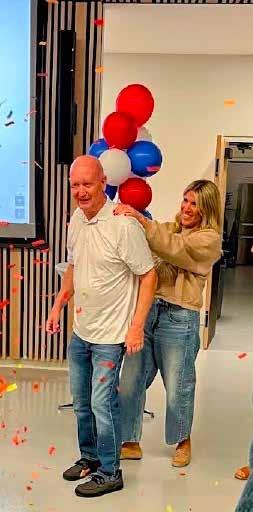
Reelected Mayor Brett Hales is sprayed with confetti after election results were announced. (Shaun Delliskave/City Journals)
Murray municipal results as of press time. (Shaun Delliskave/City Journals)
Love, Murray: Heart for the Holidays brings community together
Murray community invited to share the spirit of giving with local students and families.
By Julie Slama j.slama@mycityjournals.com
This holiday season, the Murray community is coming together in the spirit of love and generosity through the Love, Murray: Heart for the Holidays giving campaign — a partnership between Murray School District, Murray Education Foundation and Fashion Place Mall.
The District and Foundation have joined forces to make sure no child in Murray is left without support this holiday season. In the past, that has been between 150 to 180 students; this year, it has grown to more than 200.
All students live in Murray School District. Referrals for families in need come directly from the District’s school social worker team, “so they know really well which families are in need and in different situations, more intimately than anybody else. They’ve helped us identify families that could use the help the most,” said Doug Perry, Murray District spokesperson and Foundation executive director.
Donors can visit the Love, Murray
giving tree, located between Crate & Barrel and H&M inside Fashion Place Mall to select a tag on the tree. Each tag includes a QR code linking to a SignUpGenius list containing gift wish lists for local students. Donors can choose one or more children to sponsor — and once selected, those names will automatically disappear from the list to avoid duplication.
Participants are asked to purchase items and return them unwrapped to either the mall office or the Murray School District office at 5102 S. Commerce Drive. Each donor will have an identifying code from the SignUpGenius list to match gifts to recipients.
“In the past, we’ve asked families or donors who want to participate provide at least one item of need and one item of wish or want,” Perry said. “Most people want to do more than that — they’ll double it up or even triple it up.”
Needs might include coats, shoes, pants or socks while “wants” range from games and toys to learning tools and books.
The giving tree program will continue through Dec. 3, after which cash donations still will be accepted to help families who move into the District close to the holidays.
Students are contributing their talents to the campaign. Hillcrest Junior High’s after-school ceramics program created hand-





made ornaments for the tree while Murray High’s Sources of Strength organization made paper ornaments. A Nov. 14 kickoff program featured Murray High’s Madrigals and Horizon’s bell choir and high school clubs and teams helped decorate and assisted shoppers.
“We really want to make it student-focused so that they can find meaning in the holiday season through their generous time. We also think it helps shoppers as well,” Perry said.
This year marks the first time the Foundation and District have combined their efforts into one coordinated program. They are also continuing to support Parkside Elementary’s long-standing angel tree tradition.
In addition to Love, Murray giving tree, the Murray Education Foundation will be included in the Church of Jesus Christ of Latter-day Saints’ “giving machines” at City Creek Center — making it the first education foundation in the Salt Lake area to be featured, Perry said.
Donors using the giving machines can contribute to specific items: a bag of socks for $8; school supplies for $25; sponsor an athlete for $50; a winter coat for $60 and a doctor visit for $75.
The giving machines will be available through Jan. 1, 2026. A kickoff event featuring Jenny Oaks Baker was held Nov. 24, with assistance from Murray School District volunteers.
With the community’s support, the Love, Murray: Heart for the Holidays campaign aims to make this season a little brighter for every child in the District.
“The need has been growing every year,” Perry said, who said this is more than a gift drive. “It’s a commitment to ensuring vulnerable children in Murray feel the warmth of our community. We’re grateful for the support. People love doing it, they want to do something meaningful and the spirit of the holidays is strong. It’s a time when people begin to look outside of themselves, feel more gratitude and just want to help.”l
This year, Fashion Place Mall will host an angel tree for about 200 Murray School District students in need. (Courtesy Murray School District)








No translation needed — friendship knows no borders
Cottonwood High students welcome Korean peers for a day of cultural and educational exchange.
By Julie Slama j.slama@mycityjournals.com
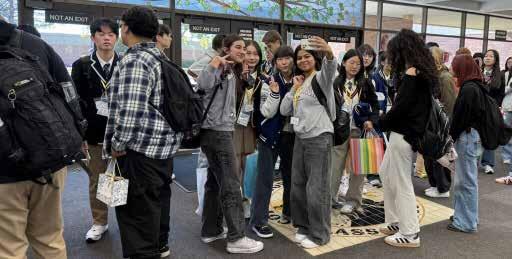
Cottonwood High School recently hosted students from Incheon International High School in South Korea for a day filled with learning, cultural connection and creating friendships that stretch across the globe.
“We had 46 Korean students visiting our school, and they were paired up with Cottonwood students, who volunteered,” said Cottonwood Assistant Principal Ashley Snarr. “We begin by bringing them into the auditorium, where the Korean students are called on stage by their Korean teacher, and Justin (Pitcher, principal) calls our Cottonwood buddy, and they get to meet each other for the first time. We also gave them these really cool Cottonwood mugs with our logo on them so they could use them throughout the day.”
After introductions, the pairs head to first period. The visiting students attend four classes, experiencing firsthand how American classrooms function.
“Our teachers are incredible and do a great job at making sure that they have materials ready for all the students. They participate in all the class activities and assignments just like the Cottonwood students,” she said.
Pitcher said it’s inspiring to watch both groups learn side by side.
“It’s pretty incredible to watch our Kore-
an students sitting in a math class,” he said. “There may be some language proficiency challenges, but they’re working together with the Cottonwood students to get through these problems, because they’re recognizing that, even though it’s taught in English, finding a slope is finding a slope.”
The visiting students were amazed by the range of electives available at Cottonwood, from auto shop and woodworking to theater and choir.
“They had a jaw-dropping experience when they saw the auto shop, and kids actually working on cars,” Pitcher said. “They said they don’t have a lot of electives in their school.”
They also were impressed by the arts programs.
“We went into a theater class where kids were giving monologues; they came out and said, these kids are like professional actors,” he said.
Snarr said many were fascinated by differences in American schools.
“They talked about how they don’t have a swimming class in their schools, and about our tennis and baseball facilities; they were amazed by that,” Snarr said. “They love being able to experience all the new and excitement of the American schools.”
Music also is a common topic, said Steve Perschon, Granite school leadership and improvement director.
“The fun thing right now is K-pop is really popular,” he said. “Our kids get into that and they have fun talking about K-pop and listening to the songs and dancing together.”
During lunch, the students shared a meal that’s quintessentially American.
“We get them Chick-fil-A, because it’s an American meal, and one of our kids’ favorite. They love to share it with the Korean students,” Snarr said.
Students also had a chance to exchange social media contacts and token gifts.
“Our students already are missing them; they’ve said, ‘They were so fun. I love learning from them. We’re already good friends,’” Snarr said. “Our kids enjoy this, and they see this as a super valuable experience for themselves, because they learn so much about the Korean culture of these students and how their school works.”
The exchange program has been running for about a decade.
“It’s a partnership between the University of Utah and Incheon, which is a top honors-level school, so they spend a day at the U before coming to our high schools — Olympus, Taylorsville and Cottonwood,” Perschon said, saying the three schools were selected for teaching Korean or Asian languages and proximity to each other.
In addition, the Korean students visit Boston, New York, Las Vegas and Los Angeles and national parks as part of their twoweek cultural tour.
Perschon said the impact reaches far beyond the classroom.
“This is really good for our students to see that global perspective and to recognize that, in this world, we’re a lot more similar than we are different,” he said.l
A ‘boo-tiful’ day for a run at Parkside Elementary
Parkside Elementary’s Halloween tradition grows to blend in fitness, fun experiences and fundraising.
By Julie Slama j.slama@mycityjournals.com
PTA Volunteer Coordinator Elyse Tate oversaw 20 volunteers helping at Parkside Elementary’s annual Monster Dash where about 455 students in costumes ran routes in Murray Park.
“This is such a fun tradition that Heather (Nicholas, principal) and Merissa (Graves, assistant principal) started and the kids just love it,” Tate said.
Kindergarteners ran a 0.25-mile course, while the other grades paced a 1-mile loop. Teachers joined in with the fun as parents lined the course and finish, cheering on the runners — this year in sweatshirts rather than heavy coats and umbrellas as in the past.
PE teacher Alexis Lucero had prepared students by walking the route with them several times and practicing laps around the playground and in the gym.
“The kids were extremely excited about the run and to show their costumes while running,” she said.
Following the run, some students tried the Skel-
eton Scooter activity in the gym while others may have checked out maggots (rice and raisins), rat intestines (spaghetti), human skin (cabbage) and other items at the school’s Fear Factory.
There were many other individual and class activities — black light party, hot cocoa, extra recess, temporary tattoos, Halloween water bottle stickers, ice skating, pizza party, photo booth, painting nails, pajama day, a visit to the park’s pond and more — some free and others available for purchase as part of the school fundraiser. Students also experienced Murray’s Haunted Woods back tour.
“To ensure equity, most of our things that were sold by class so they got to enjoy activities with their friends,” Nicholas said.
The fundraiser raised $6,300 to support field trips and other educational activities, she said.
Lucero awarded Monster Dash medals she made, featuring cobwebs and Jack-o-lanterns, to the top three male and female runners in each grade.
Tate said the event is a highlight for students each year.
“It’s a fun community they’ve created with fun experiences and core memories,” she said. “I love that all the kids can have experiences that are magical.” l

Cottonwood High and South Korea’s Incheon International High School students attended classes and lunch together for a day as part of a cultural and educational opportunity. (Photo courtesy Ashley Snarr)
Parkside Elementary students look for “witch” way to the finish line of the school’s annual Monster Dash. (Julie Slama/City Journals)
Liberty families grow together with Project CREST
A collaboration between Liberty Elementary, USU and Salt Lake County Health Department helps students and parents strengthen emotional skills, family connections and academic success.
By Julie Slama j.slama@mycityjournals.com
Liberty Elementary School is taking family engagement and student well-being to the next level through Project CREST, a Utah State University Extension initiative in collaboration with the Salt Lake County Health Department.
The program is designed to enhance student resilience, strengthen family connections and improve academic outcomes through community connections, said Amy Torres, Utah State University program coordinator.
“Project CREST stands for creating resilient and engaged student teams,” she said. “Where the schools’ main goal is to help them thrive academically, it takes a lot more than that. We have to help support families and the students.”
Torres said by offering research-based programs tailored to each school’s unique needs, Project CREST helps students and parents develop the social, emotional and behavioral skills that support lifelong learning and success.
“We have a menu of different topics, but we’re going to tailor it to the school the best we can,” she said. “Your issues here are going to be different than they are at another school. We also address how parents support their kids, teaching them skills.”
At Liberty Elementary, Project CREST facilitators are working with the school’s leadership, educators and families to create a collaborative environment where everyone learns together. The program includes family workshops, student activities and parent sessions.
The kickoff focused on emotional regulation, friendship skills and healthy communication.
Topics include self-regulation, naming emotions, friendship-building and understanding brain development — all crucial in helping adults set realistic expectations and guidance for their children.
“We need resources like this to help the school and families connect on how to better serve our kids,” Principal Shana Mondragon said.
Parents attending the workshops agree.
Darla Demann and William Hartman, parents of two fifth graders and a second grader, came to the opening session.
“It was just a good opportunity to maybe have some good family bonding,” Demann said. “I hope what we learn will help us at home.”
Hartman added: “It’s about bonding and see what advice they have.”
After a dinner together, they broke out into sessions — younger and older student groups and one for adults.
During the student breakout sessions, Utah State coordinators Becky Whittaker and Torres worked with students on emotional regulation and friendship skills.
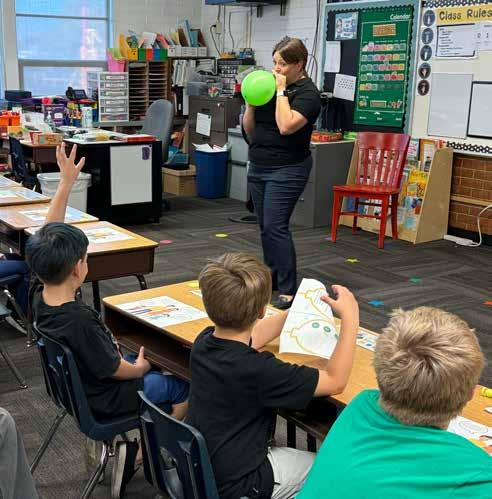
Whittaker guided students through a lesson on managing anger, using a balloon as a metaphor.
“Maybe you get upset and angry, and you feel like you’re going to burst like this balloon,” she said as she filled the balloon with air. “What happens when you need to stop getting angry? How do you let air out of the balloon?”
Students shared strategies such as deep breathing, counting to 10, exercising and taking a break in a safe space.
Whittaker slowly let out the air in the balloon with each answer and said, “It’s totally OK to say, ‘I just need a minute and then we’ll talk.’”
Meanwhile, Torres led another group in a discussion about friendship.
“We are going to learn today what makes
a good friend,” she said.
Students suggested finding a bandage if they get a scrape from falling, cheering someone on, laughing at the friend’s jokes and saying, “I’m sorry.”
Parents in a separate session explored temperament and how personality differences affect friendships and behavior. The instructor encouraged empathy and understanding.
“Sometimes there are things that we literally cannot change about ourselves,” she
said. “I also want parents to understand this because, in a way, you will have empathy for them and help them navigate this.”
Mondragon said the grant-funded partnership has opened new doors for families.
“Through this program, we’re able to provide opportunities for the families to be engaged in what we’re doing at school, and how to support their kids’ social-emotional skills,” she said. “This is the golden ticket to learn all this.” l
Cottonwood homecoming brings everyone aboard the wave
Cottonwood High’s homecoming was a celebration of inclusion and community.
By Julie Slama j.slama@mycityjournals.com
Cottonwood High’s “Under the Wave” homecoming this year brought the school community together in a memorable, inclusive celebration.
“Every school does homecoming dances, but what I loved most about our homecoming experience was our students with special needs that showed up,” Principal Justin Pitcher said. “Many of them came with their peer
mentors and with their class teacher and the students gave them the entire front of the floor to dance in. It was just really a heartwarming experience to see young people making choices to allow for those who are different from them to be part of the group.”
The dance, held in the school’s main commons area, featured thoughtful touches to ensure every student could enjoy themselves, including seating areas with card games and quieter spaces for students who needed a break from the lights and music, Assistant Principal Ashley Snarr said.
“They just went the extra mile for this dance to make it something that every student felt like it was their best dance,” she said.l

Utah State Project CREST program coordinator Becky Whittaker uses a balloon to teach a lesson to students on anger management. (Julie Slama/City Journals)
Cottonwood High’s homecoming dance included all students, including those with special needs. (Photo courtesy Justin Pitcher)
Murray among teams to win unified soccer state title
More than 2,000 student-athletes participated in the largest-ever unified soccer tournament in Utah, showing teamwork and inclusion are the true goals of the game.
By Julie Slama j.slama@mycityjournals.com
More than 2,000 student-athletes from 73 schools comprising of 170 teams took to the field this fall for high school unified soccer, a record-setting number for a program that continues to grow at an incredible pace.
Only a few years ago, unified soccer had about 24 teams competing statewide. This year, 24 teams alone advanced to the finals, held at America First Field in Sandy.
For the first year, unified soccer, which is promoted by both the Utah High School Activities Association and Special Olympics Utah, provided an avenue for 48 $500 scholarships — two per team — for continued education, awarded by America First Charitable Foundation.
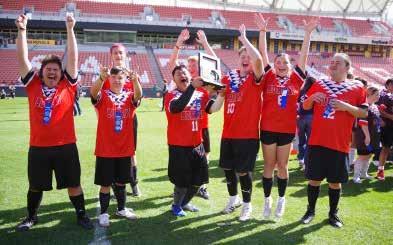
While several area teams won state titles — Bingham, Herriman, Hunter blue, Murray, Skyline — or were runners-up Highland, Hunter gray, Jordan, West Jordan — most participants agree unified soccer is about much more than winning. It’s about inclusion, friendship and giving every student the chance to be part of a team.
Alexis Brown understands that mission, both as a former partner and as a coach of three teams at Riverton High.
“The bigger that it grows, the more it shows that students with disabilities are just as capable of doing things as everyone else,” Brown said. “It gets the gen ed population more involved and less scared of what’s stigmatized about disabilities — they start to see that they’re just normal people having a good time.”
Riverton’s unified club, Wolf Buddies, is central to that effort. “We go to football games, school plays, dances; the goal is to get our students as involved in the high school experience as possible,” Brown said. “High school is fun, and they deserve to be included.”
Senior Kevin Perez said his Riverton team has bonded on and off the field.
“We’re a good team and we prepared,” he said. “We play two times per week. I like scoring goals and kicking the ball. I like my team too — we’re great together.”
Riverton senior Mac Wall, who once played varsity volleyball, said unified sports have meant even more.
“The fun I have in unified sports is way more exciting than anything I found in varsity programs,” Wall said. “The connection between people is completely unmatched. Everyone’s kind; there’s no drama. We’re a
tight-knit group.”
Hillcrest High senior Yadiel Rodriguez said playing unified soccer and basketball “is fun because we play with our friends; we go out to the movies, hang out, go bowling. It’s special to be part of the team.”
His teammate, senior Ella Blackbourn, agreed: “I find a lot of joy being around these people who are always happy and positive; they’re amazing people. The bond we’ve formed is really cool.”
“It’s about being part of something,” said Murray junior Landyn Timms. “They all have heart to play the game — they’re all very skilled too. It just smoothens my heart to see how happy they are when they get to play.”
His teammate, Pit Soe, was excited about the team’s state championship.
“It’s pretty cool; now we get to eat and celebrate,” he said. “It’s a fun team to play on. We help each other playing and at other times.”
West Jordan High coach Sheldon Russell said his team’s second-place finish was more than just a result.
“They’re a tight-knit group because these guys are together a lot of the day,” Russell said. “Many have been in the same class since elementary school. Playing together and playing in the championship I count as a win, especially since our kids don’t get very many wins to begin with. The inclusion and spirit of unified sports really redefine high school sports.” l

Murray High celebrates its state championship at the unified high school soccer tournament. (Julie Slama/City Journals)
Murray’s Turbo Domiguez scores a goal at the state championship. (Julie Slama/City Journals)




Council works to provide taxpayers best value during budget process resulting in tough cuts
In the 12 years I’ve been on the Salt Lake County Council, this was the most intense budget season I’ve ever encountered. It began when Salt Lake County Mayor Jenny Wilson proposed a 19.6% property tax increase. As we see the economy softening, some of us on the council vowed to dig in, realign the county spending with top priorities, and find ways to be more efficient and effective with your tax dollars so we could lower that property tax ask. I’ve since learned that while it may feel good to give people government perks, it is sure painful when it’s time to take them away.
I’ll start with daycare. It’s a big issue throughout the state and while there are fewer daycare waiting lists in Salt Lake County, it’s still unaffordable for many families. Somehow Salt Lake County has been subsidizing four daycares to the tune of $6000-$10,000 per child. That means that property taxpayers, like you, are paying half the tuition for about 271 kids.
I had many people contact me and say they were fine with their tax dollars to go to low-income families, but this program had no income qualifications. We certainly had many families who were making more than
Aimee Winder Newton
Salt Lake County Councilmember District 3

the median household income, yet they were being subsidized by those on low or fixed incomes. We made the decision to get out of the daycare business.
Another tough decision was related to a senior center. We voted to close a senior center on 10th East in SLC that is currently vacant and only 1.8 miles away from another senior center. Not every city has a senior center, so to have two so close did not make sense. It saves taxpayers $6-7 million in one-time costs and $400,000 in ongoing costs each year. The empty building was in the process of being renovated and the $3 million funds spent thus far to remove asbestos would’ve needed to happen regardless of the use.




We hope those who love the 10th East Senior Center will be able to continue attending activities at the Liberty Senior Center, as I’m a big believer in the value of the human connection that seniors can get by interacting with others. We love all of our seniors, and this decision was made recognizing that we have many on fixed incomes who feel that the more we rein in government spending, the better. Our taxpayers have made it clear that they are stretched to the limit and the county needs to focus on core services.
Budgets are tricky and Salt Lake County has one of the most complicated budgets. While the overall budget is $2 billion, $500 million of that is just pass-through taxes that go from the state to cities or UTA. Another $1 billion make up restricted funds, enterprise funds, and tourism taxes – which can only fund certain things or those that are tourist-related. Have you ever wondered why we justify spending money on arts, culture, parks, golf, recreation, and convention centers? Those entire budgets either generate their own revenue sources or they use tourism taxes from hotels, car

rentals and restaurants. They do not use any property tax.
About $500 million of the budget is the General Fund. That is where we have total flexibility to use the funds however we please. This is where your property taxes go -- $220 million from residential property taxes. Currently 74% of our General Fund expenditures are public safety related – jail, prosecution, criminal justice services, etc. The rest covers things like elections, audits, etc. Because we capture the same amount of money as the previous year (minus new construction), the county does tax increases every few years just to keep up with inflation. To read my FAQs about the budget, visit tinyurl.com/SLCObudget
During this year’s budget I’ve tried hard to look at programs that are out of the county’s scope (daycare) or items that seem duplicative or unnecessary (two senior centers within 2 miles of each other). We’ve also cut positions that aren’t fulfilling the county’s overall mission or that we don’t believe are necessary. Rest assured that we are going to bat for you so you can keep more of your hard-earned money.



Life & Laughter - A Christmas Carol: Corporate Edition
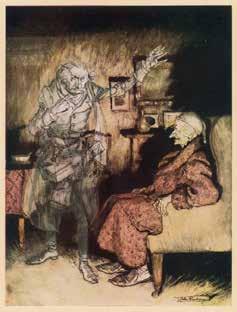
Ebeneezer Scrooge sits on the edge of his vast four-poster bed, wondering what the heck just happened. Three ghosts have shown him his greedy behavior and how, because of his miserly ways, he’ll die hated and alone.
“Oh, well,” he says, as he jumps off the bed and heads to his vault, where he swims through stacks of gold coins like Scrooge McDuck. “It’s not my fault there are poor people.”
Jacob Marley’s ghost hovers nearby, rattling his heavy chains. “Remorse is a heavy burden,” he cries. Scrooge tells him to get lost and skips downstairs to count his money.
The jolly Ghost of Christmas Present jumps out from behind the couch, reminding Scrooge of the two ghastly children hidden in his robes, representing poverty and ignorance. “You have so much,” the ghost says. “You could help so many.”
“They should get jobs,” Scrooge replies. “It’s not my problem.”
The spirit starts to disagree, but Scrooge calls in officers from Interstellar Creature Enforcement to haul the ghost away. Christmas Present mutters something about corporate greed as he gets zip-tied.
Scrooge runs to the window and sees a young boy on the street below. “Hello, fine
Peri Kinder Life and Laughter

fellow! Run to the Cratchit house and tell Bob to come to work. I gave him the day off, but there are debts to collect!”
“But it’s Christmas,” the boy responds.
“Humbug! Christmas is just an excuse for sloth. Remind him that although I didn’t give him a raise or bonus this year, I put a ping-pong table in the break room and, because it’s Christmas, he can use the Keurig one time today. He should be grateful.”
The Ghost of Christmas Past taps Scrooge on the shoulder. “Old Fezziwig shared his wealth with employees and friends. He was greatly mourned.”
“Well, Fezziwig is dead,” Scrooge says. “Where did compassion get him?”
He dismisses the spirit, then calls his maid to bring him weak tea (“I’m not wasting money on sugar!”), plain, toasted bread (“Jam is a luxury!”) and a hard-boiled egg (because it is Christmas, after all).
Scrooge slurps his tea, the sound echoing through the cavernous room as the grandfather clock ticks away the final moments of his miserly life.
Meanwhile, across the city, Bob Cratchit and his family wake up to a vast display of gifts and food. Knowing exactly how stingy Scrooge would be, friends and neighbors quietly pooled their money to create the perfect Christmas morning for the family.
The Cratchit children are awed by the generosity. Peter eagerly opens the latest Dickens novel, Martha admires her fashionable scarf and the baby toddles around with a new doll.
Neighbors even started a GoFundMe for Tiny Tim so he could see a doctor and the town carpenter made him a new crutch. The home is filled with laughter and friendship as everyone roasts Ebeneezer Scrooge with Victorian cocktails. Even the dog gets tipsy.
While Scrooge and Cratchit live just miles apart, their life experiences are vastly different. Although poor, the Cratchits love each other and are cared for by the people around them. Communities take care of each other.
It’s something Scrooge will never understand. All his wealth won’t save him.
He sees the Ghost of Christmas Yet to
Come dramatically using his bony finger to beckon Scrooge to follow. Time’s up.
“Fine,” Scrooge says, “but I’m taking my egg. Eggs are expensive, you know.”
Marley moans from the hall, “Mankind was your business.”
“Gold was my business!” Scrooge yells as he stomps after the ghost, wishing he could roll around in his money just one more time.