
See Inside... Block party expanding
Rising costs, flat revenue: Murray proposes a nearly 10% tax increase
By Shaun Delliskave | s.delliskave@mycityjournals.com
If approved, the 9.8% tax increase would result in a $45.60 a year increase for a $600,000 home.
Murray City leaders are weighing a proposed property tax increase as part of the mayor’s tentative 2027 fiscal year budget, a plan shaped by rising personnel costs, slowing revenue growth and mounting infrastructure needs.
At the center of the proposal is a 9.8% increase in the city’s property tax rate, expected to generate approximately $1.22 million in additional revenue. According to the budget document, the increase would raise Murray City’s property tax rate from .001403 to .001541 and result in an estimated annual increase of $45.60 for a primary residence valued at $602,900.
City officials frame the proposal as necessary to maintain service levels in the face of growing financial pressures.
“To balance the mayor’s budget there is a request for additional property tax revenue of $1,224,135 or 9.802%,” the document states.
State and federal policies place Murray in a tightening financial vise—absorbing unfunded state mandates, losing ground on federal and state support, and operating under tax laws that restrict revenue growth—leaving local officials little choice but to shift more of the burden onto city taxpayers to sustain basic services.
For example, a new state mandate tied to mobile device forensic investigations requires additional police resources, yet “the state did not allocate any funds to accomplish this requirement,” forcing the city to absorb the cost locally. At the same time, federal and state grant funding—captured under intergovernmental revenue—is declining, with that category projected to drop by 16%, reducing outside support for city programs.
Compounding these pressures, Utah’s
property tax system limits automatic revenue growth, meaning cities must formally raise rates through a public process to keep pace with rising costs. Together, these factors create a financial environment where Murray must navigate external mandates and shrinking outside funding while relying more heavily on local taxpayers to maintain services.
The budget outlines clear consequences if the increase is not approved, particularly for public safety.
“A new officer will not be hired…. Overtime will be decreased and there will be less officers available,” the document notes in describing the impact of no tax increase.
Police and fire services together account for nearly half of the city’s General Fund ex-
penditures, underscoring their central role in the budget. The proposal includes funding for a new police officer to meet a state requirement tied to digitalforensics investigations.
“Senate Bill 19 requires that mobile device forensic services be performed in an expedited manner. The state did not allocate any funds to accomplish this requirement,” the budget explains.
That dynamic—state requirements without corresponding funding—adds pressure to local budgets, forcing cities like Murray to either reallocate existing resources or seek additional revenue.
Beyond public safety, the budget is heavily influenced by personnel costs, which make up the majority of city spending.
“Personnel costs comprise 69% of the General Fund budget,” the document states.
Those costs continue to rise due to a combination of factors, including a 2% cost-ofliving adjustment, merit-based step increases and higher benefit expenses. Among the most significant increases ishealth insurance.
“The cost of medical insurance increased this year by 14.7% with no change to the plan,” the budget notes.
While expenses are climbing, revenue growth is more constrained. Sales tax— Murray’s largest revenue source—shows little expansion.
“While the FY2027 budget shows a sales tax increase, the FY2027 budget has no increase from the projected FY2026 actual sales tax collected,” the document states, citing fluctuating economic indicators and the possibility of a recession.
At the same time, some revenue sources are declining. Intergovernmental funding, which includes state and federal grants, is projected to drop significantly.
“Intergovernmental [revenue]… $740,000 … -16%,” the General Fund revenue table shows.
Together, those trends—flat sales tax growth and reduced outside funding—limit the city’s ability to absorb rising costs without adjusting taxes or cutting services.
Another major component of the budget involves utility systems, particularly water. Residents have already seen rate increases, with more built into the coming year.
“The new rate schedule had a 17% rate increase which occurred April 1, 2025, which will be followed by another 17% increase April 1, 2026,” the budget states.
City officials attribute those increases
Continued on page 6
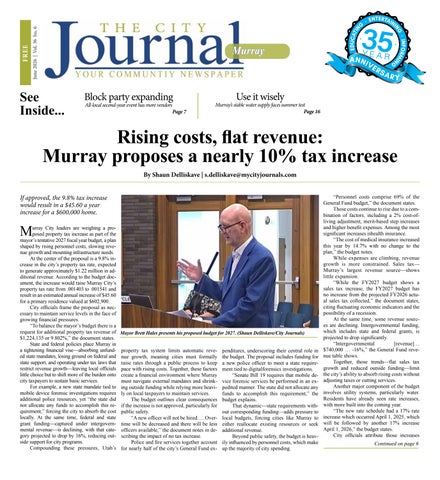
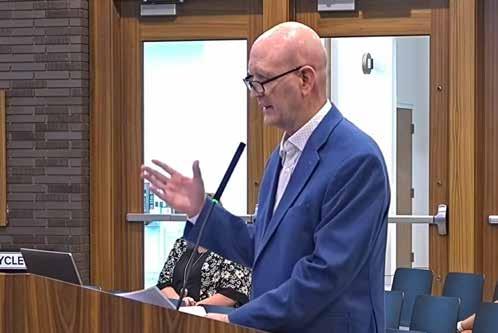
Mayor Brett Hales presents his proposed budget for 2027. (Shaun Delliskave/City Journals)






COMMON GROUND
Play Nice in the Sandbox
Common Ground will be a column of rotating viewpoints that highlight specific feelings across the political spectrum, and it will always end with possible ways to come together.
There once was a giant sandbox where everyone could play together. It had dump trucks, shovels, sandcastle molds and one corner filled with cigarette butts from the high school teens.
Big Brother (BB) controlled the sandbox. He carried a clipboard and whistle, and discouraged others from playing. Although it belonged to the entire community, BB would chase people away, saying, “That’s just the rules,” which he had made himself, of course.
But Little Brother (LB) wanted to play. He tried to convince BB to give him just a small part of the sandbox to build sculptures with his friends. “What about this spot?” he asked.
BB clutched his clipboard to his chest and gasped. “That’s a very important place. That’s my transportation corridor. You can’t have it.”
Every spot LB suggested, BB drew a new line in the sand and explained why it just wasn’t feasible. That spot was BB’s economic area, and another spot was an important waterway. Soon, all that was left was the ashtray corner, but BB wanted control over that, too.
LB went to find Mom (who represents voters, the judiciary and common sense). She explained to BB that the sandbox belonged to everyone and LB could have his share.
BB was furious and started throwing sand at Mom, calling her a bully. “You’re destroying the integrity of the sandbox!”
Peri Kinder Common Ground
he screamed. Then he spent the rest of the summer planning to steal back LB’s share.
Instead of a sandbox, we’re dealing with voting maps. Gerrymandering has shaped Utah’s leadership for decades, especially in creating congressional districts that look more like a sliced pizza than an equally divided constituency.
We can’t bury our heads in the sand and expect the majority leadership in our state to treat us fairly. In 2018, Utah voters tried to redraw the sandbox lines, approving a ballot initiative that would create an independent redistricting committee to create voting maps to avoid gerrymandering.
But Gov. Cox signed a different map into law that split Salt Lake County into four districts that could easily be controlled by Republicans. The new map ignored the committee’s recommendations, which would give Democrats a possibility of winning a Congressional seat.
Utah’s League of Women Voters filed a lawsuit, claiming the new map was a bunch of baloney. They won that case in 2024 when the Utah Supreme Court ruled that legislators could not override the voice of the people. But the majority leadership has been fighting for its maps
and sand toys ever since, trying to overturn the Court’s decision.
Common Ground: Gerrymandering should be illegal in every state because it skews voters’ rights and stacks the deck for whoever the majority party may be. Maybe instead of lawmakers crafting the voting maps, independent commissions can be tasked with creating fair districts for all states.
We’re told that every vote counts, but that’s not the case in gerrymandered states, on both sides of the aisle. Voters feel frustrated and unheard. I think we can agree our system is broken. Majority leaders in states, both Red and Blue, draw the voting maps, create the rules and decide which demographics get representation.
Could Utah take the high road and fix the system? Could we become a beacon of guidance and inspiration for the country in a time that feels heavy and dark? It’s a nice idea, we just need brave leaders willing to adopt meaningful change.
A diverse range of opinions creates effective solutions. Instead of one group deciding the laws, it strengthens our democracy to include voices from differing beliefs and experiences.
Gerrymandering eliminates divergent voices, creating a system of inbred and insipid decisions. That doesn’t sound like fair representation; that sounds like a power grab, no matter the party.
May Follow Up From Readers
In May, John J. Walker’s Common Ground article, “I can’t afford YOUR tax bill,” sparked a flurry of replies, including one from reader Christine. “I would agree that paying for infrastructure is important and it’s tough when your paycheck doesn’t go very far for all your hard-worked hours. I would disagree, however, about the derogatory generalization of Democrats being the brainless, doom-scrolling, rage-bating, vulgarity-writing party.”
Some commenters said they want their tax dollars spent on things like zoos, parks, and museums, and felt Mr. Walker’s column was “negative and angry.” Others felt people earning over $1 million should pay more into the system.
Readers expressed appreciation for the Common Ground concept, with the focus of bringing the community together, even when we disagree. However, reader Laura felt the tone of Mr. Walker’s op-ed didn’t fit that description. “I don’t see how the rudeness expressed in this article could achieve that goal,” she wrote.
A reader named Tyler summed up a prevailing sentiment when he wrote, “I think the [Common Ground] approach and voice is exactly what our community needs. I firmly believe that informing on political issues is a much-needed thing. I hope that the continued success of the column helps bring our community closer together!”
— City Journals Columnist Peri Kinder
MURRAY TEAM
The Murray Journal is a monthly publication distributed directly to residents via the USPS as well as locations throughout Murray.
The views and opinions expressed in display advertisements do not necessarily reflect or represent the views and opinions held by Loyal Perch Media or the City Journals. This publication may not be reproduced in whole or in part without the express written consent of the owner.
© 2026 Loyal Perch Media, Inc.
PUBLISHER
Bryan Scott | bryan.s@thecityjournals.com
EDITOR
Travis Barton | travis.b@thecityjournals.com
ADVERTISING EXECUTIVES
Mieka Sawatzki | mieka.s@thecityjournals.com
Ryan Casper | ryan.c@thecityjournals.com
Marc Davis | marc.d@thecityjournals.com
CLIENT SERVICES
Lydia Rice | lydia.r@thecityjournals.com 385-557-1022
CIRCULATION COORDINATOR
Lindsay Andreasen | lindsay.a@thecityjournals.com Rack locations are also available on our website.
EDITORIAL & AD DESIGN
Stacey LaMont
Ty Gorton
MURRAY CITY JOURNAL
9500 South 500 West, Suite 205 Sandy, UT 84070
PHONE: 801-254-5974
MISSION STATEMENT
Our mission is to inform and entertain our community while promoting a strong local economy via relevant content presented across a synergetic network of print and digital media.
Designed, Published, & Distributed by

Heart care guided by trust and compassion.
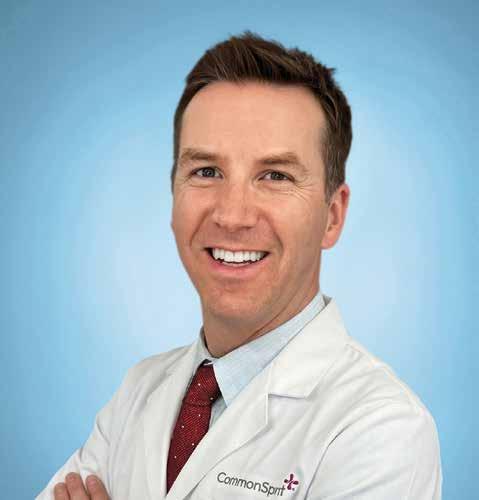
Visit Dr. John Ryan at CommonSpirit Cardiology Salt Lake.
Heart care works best when patients feel heard, informed, and supported. John Ryan, MD, takes a collaborative approach to cardiology care, helping patients better understand their condition and feel confident in their treatment plan. Dr. Ryan provides expert care tailored to each patient’s unique needs and goals.
Special areas of care include:
• Atrial fibrillation
• Hypertension and high cholesterol
• Pulmonary hypertension
• Pericarditis

• Heart failure
• Echocardiography
• Nuclear cardiology
• Preventive heart care
Call (801) 505-5370 to schedule an appointment or scan the QR code to learn more.
CommonSpirit Health Mountain Region does not discriminate against any person on the basis of race, color, national origin, disability, age, sex, religion, creed, ancestry, sexual orientation, and marital status in admission, treatment, or participation in its programs, services and activities, or in employment. For further information about this policy contact CommonSpirit Health Mountain Region Office of the General Counsel at 1-303-643-1000 (TTY: 711). Copyright © CommonSpirit Health Mountain Region, 2026. ATENCIÓN: Si habla español, tiene a su disposición servicios gratuitos de asistencia lingüística. Llame al 1-303-643-1000 (TTY: 711). CHÚ
(TTY: 711).
to long-term infrastructure needs rather than short-term fluctuations.
“The Water Fund has $11.7 million of necessary projects in the four years following this budget and is starting to save for them,” the document explains.
Unlike some municipalities, Murray does not purchase its water supply, meaning fixed system costs remain regardless of usage levels.
The city is also relying on transfers from enterprise funds—such as water, wastewater and power—to support general operations.
“Murray City Corporation intends to transfer funds from the city’s Water, Wastewater and Power enterprise funds to the city’s General Fund to supplement city services,” the document states.
Those transfers total several million dollars and represent a significant piece of the city’s financial structure.
In addition to operational costs, the budget includes a slate of capital improvement projects aimed at maintaining infrastructure and enhancing public amenities. Among the larger investments are:
• $3.1 million for Park Center roof and air handler replacements
• $4.3 million for street improvements and traffic upgrades
• $845,000 for police vehicles and equipment
• $630,950 for fire equipment
• $600,000 for a new “Ninja Course” rec-
reational feature in Murray Park
These projects reflect both ongoing maintenance needs and efforts to improve quality of life for residents.
The budget also highlights a longer-term financial challenge: the eventual loss of a local option sales tax that currently helps fund city operations.
“The city will be losing the .2 city option sales tax in October of 2030, and at that point major budget adjustments will need to be made,” the document states.
That looming change adds urgency to current financial planning, as the city works to balance immediate needs withfuture stability.
Overall, the proposed FY2027 budget reflects a balancing act between maintaining services, addressing infrastructure demands and managing taxpayer impact. While revenues are projected to increase modestly, the combination of rising costs and uncertain economic conditions leaves limited flexibility.
The Murray City Council will review the proposed budget in the coming weeks with a public hearing scheduled before final adoption. Residents will have an opportunity to weigh in on the proposed tax increase and broader spending priorities.
As city leaders consider the proposal, the central question remains whether the additional revenue is necessary to sustain current service levels—or whether adjustments can be made without increasing the tax burden on residents. l





GRIEF HAS NO TIMELINE








Downtown Murray Block Party builds on grassroots momentum
Second annual block party expands with more vendors and events.
By Shaun Delliskave s.delliskave@mycityjournals.com
What began last year as a proof of concept has quickly evolved into a cornerstone community event, as the second annual Downtown Murray Block Party returns with renewed purpose and growing expectations. The Block Party will happen June 13 at City Hall commons.
Organized by the Murray City Downtown District nonprofit, the event continues to emphasize a hyper-local focus, aiming not only to draw crowds but to strengthen longterm connections between residents and the city’s historic core.
For organizer Jenn Kikel-Lynn, success is less about scale and more about sustainability.
“I would hope that the novelty never wears off and that the community and also businesses look forward to this each year,” Kikel-Lynn said. “Success to me will always be focused on finding ways to hold this annually by providing affordable vendor space.”
The block party operates largely through volunteer efforts and private funding. Costs such as licensing, insurance, musicians and infrastructure are paid out of pocket, with support from the city primarily coming in the form of logistical assistance like road closures and public safety.
A defining feature of the event remains its commitment to local participation. Kikel-Lynn said the “100% local” philosophy continues to guide decisions, with only minor flexibility when it comes to food trucks, which may not have a fixed geographic base.
“Always 100% local—that’s a big priority,” she said.
The event’s growth reflects a broader effort to revitalize downtown Murray, a process that Kikel-Lynn acknowledges is gradual but increasingly visible.
“The biggest change downtown is that we have the Murray Theater renovation fin-

ished and open during the block party,” she said. “Having the block party in the historic downtown each year while revitalization is occurring does exactly what I had hoped— bring people to downtown regardless of whether it’s run down or under construction.”
That visibility, she added, is critical in encouraging residents to reengage with the area.
“For some residents, this might be the only time each year that they walk downtown—if that’s the case, we succeeded,” Kikel-Lynn said.
While launching the Downtown District required building a nonprofit from scratch, Kikel-Lynn described both the startup phase and ongoing operations as driven more by purpose than difficulty.
“Honestly, neither has felt ‘hard’ in the traditional sense because I genuinely love this work,” she said. “Building something that supports the community energizes me.”

Still, she noted that early challenges included funding the effort personally and helping others understand the longterm vision. Momentum, she said, has since grown as more people experience the event firsthand.
Community involvement has also expanded, though much of the organizational responsibility remains with a core group of volunteers and business owners.
“We have a few volunteers and business owners who have always been part of this from the beginning,” she said. “There are also new community members who have stepped in, and we’re always welcoming to anyone who wants to be part of this movement.”
Looking beyond a single day of activity, organizers are focused on translating event attendance into sustained economic support for local businesses. A new downtown website is expected to launch this summer, offering a centralized platform to promote yearround engagement.
“We’re creating familiarity, visibility and reasons to come back,” Kikel-Lynn said. “That’s how you turn a great event into sustained economic support.”
As the Downtown District continues to grow, Kikel-Lynn said expansion of programming will come later, with current efforts focused on securing funding and pursuing a Main Street designation that could open additional grant opportunities.
“What we’ve learned about Murray residents is that they show up when something feels inclusive, local and meaningful,” she said.
Looking ahead, Kikel-Lynn said maintaining the block party’s identity will depend on consistency and intention rather than scale.
“I’m not interested in creating just another event—we’re building something that actually represents Murray,” she said. “When something happens year after year in the same place, with the same purpose, it starts to become part of the culture.”
As downtown redevelopment continues, organizers hope the event will remain both a reflection of and a catalyst for the area’s transformation—one that is shaped, funded and sustained by the community itself.l

The Downtown Murray Block Party returns June 13. (Photo courtesy of the Murray City Downtown District)
Local vendors, like Day Murray Music, display instruments to young passersby. (Photo courtesy of the Murray City Downtown District)
Murray businesswoman Jenn Kikel-Lynn heads the Murray City Downtown District. (Photo courtesy of the Murray City Downtown District)
Miss Murray 2026 Sarah Christenson hopes to change attitudes about dental hygiene


She uses her experience as a dental assistant to help kids not fear going to the dentist.
By Shaun Delliskave s.delliskave@mycityjournals.com
MissMurray 2026 Sarah Christenson describes a childhood deeply rooted in the community that raised her. Her parents, David and Katherine Christenson, raised her alongside her three sisters (including Miss Murray 2018 Jessica Christenson); she recalls a close-knit family life that remains central to who she is today. Much of her upbringing was shaped by Murray’s local institutions—from learning to swim at the Murray Rec Center and taking figure skating lessons at the Murray Ice Rink, to participating in the Murray Community Dance program. She also remembers biking to violin lessons near 5600 South and selecting her first lifelong instrument at Day Murray Music, experiences that reflect a strong connection to the city she still calls home.
Q: What inspired you to enter the pageant?
A: During my time at Murray High School, I served on the Student Council. I loved pushing myself out of my comfort zone while running for office and planning events for my peers.
Watching her inspire and positively impact so many of my peers planted a seed in me—I knew I wanted to do the same one day. I have always looked up to her and the incredible role model she is.
Q: What was it like to be named Miss Murray?
A: Being crowned Miss Murray still doesn’t feel real. At times, it feels like a dream I haven’t yet woken up from. When my name was called, I was in disbelief, but I also felt an overwhelming sense of love and support as I heard my family and friends cheering from the crowd. My mind was racing with excitement, pride in the hard work I had put in, and ideas for everything I hope to accomplish this year. To any young girl in Murray City, I can confidently say that this pageant has changed me for the better. I have learned to be comfortable in my own skin, gained confidence in speaking about myself and answering difficult questions, built unbreakable bonds through sisterhood, and so much more.
Q: What is your platform as Miss Murray?







However, after graduating high school and moving into college and my career, I found myself no longer pushing myself in the same way. I became comfortable, settled into a routine and didn’t think twice about it. Running for Miss Murray reignited a spark in me that I didn’t even realize I had lost. I began challenging myself again and putting myself out there.
A: My Community Service Initiative is Oral Hygiene Education. Growing up, I always enjoyed going to the dentist—partly because I inherited my mom’s healthy teeth. I was fortunate to never have a cavity or need braces. Throughout school, I would hear my friends share their negative experiences at the dentist, and I wished they could feel the same comfort and confidence that I did. That desire inspired me to pursue a career as a dental hygienist, where I could help create positive experiences for others.
Q: What inspired your choice of platform?


The initial push to run came from my sister, Jessica Christenson, who was crowned Miss Murray in 2018. During her year, she advocated for suicide prevention and depression awareness. I remember her visiting my junior high and speaking on these important topics.
A: I began by becoming a certified dental assistant through the JTEC program at SLCC, and I soon started working at a pediatric dental office, where I completely fell in love with the field. There is something incredibly fulfilling about helping a nervous child through their very first visit—using a gentle “princess voice,” fun terminology and encouragement to guide them through their exam, cleaning and X-rays.








I genuinely look forward to going to work each day. I have found my purpose in a career I love and hope to share that passion with the Murray community.
Q: Tell us about family and friends who were influential to you, and what are some of the most meaningful things they have done?
A: I am incredibly grateful for the support system I have in my life. I have never had to question whether my parents would be there for me—they always are. My sisters cheer me on unconditionally, even when I make mistakes. My friends lift me up, help me find the silver lining, and always know how to make me laugh when I need it most. I am beyond honored to serve as Miss Murray 2026, and I look forward to every opportunity to give back to this amazing city. l
Miss Murray Sarah Christenson with her attendants Arcadia Habel and Ashlyn Talcott. (Shaun Delliskave/City Journals)
Woodstock Elementary students met the activist behind “All the Way to the Top” and discovered how courage, persistence and advocacy made the world more inclusive.
By Julie Slama j.slama@mycityjournals.com
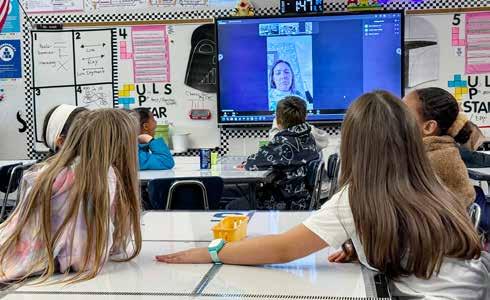
Woodstock Elementary fifth-graders were captivated as Jennifer Keelan-Chaffins described the heat of March 12, 1990, and the moment she, at 8 years old, pulled herself up the 365 stairs of the U.S. Capitol, her wheelchair left behind. As one of the only children participating in the protest, she was determined to make it to the top.
Students had already read their school’s library book “All the Way to the Top” about Keelan-Chaffins introduction to being an activist, but hearing her speak brought history off the page and into their classroom in a powerful and personal way.
Keelan-Chaffins, who was born with cerebral palsy, shared what it was like growing up in Phoenix in a world that was often inaccessible.
“When it came time for me to start kindergarten, the neighborhood school that I could see from my front yard, was not wheelchair accessible,” she told students, adding it also didn’t offer a special education program that met her needs.
Even everyday activities such as riding the bus was not possible, since public transportation lacked working wheelchair lifts.
Her experiences helped students better understand the real-life impact of the Americans with Disabilities Act, a law many students had heard of, but didn’t fully understand.
Keelan-Chaffins became involved in the disability rights movement at age 6, joining protests for accessibility.
“It was the first time I’d ever met other people with disabilities who were just like myself, who were fighting for their civil rights and the right to be treated like everyone else, with dignity and respect and the right to have full and equal access to all areas of society,” she said. “I learned that having a disability could be very empowering. By the end of the weekend, I was leading the protest through the streets of downtown Phoenix.”
That experience sparked a lifelong commitment to advocacy as Keelan-Chaffins traveled city to city and learned from leaders in the movement.
“These were my teachers and my mentors growing up. They taught me how to fight and stand up for my civil rights and the civil rights of others,” she said.
One recounted her role in the historic Capitol Crawl, when activists gathered in Washington, D.C., urging Congress to pass the ADA without further delay. Despite doubts from others, Keelan-Chaffins was unwavering about the climb.
“I was not just representing myself, but
Climbing toward change
I was representing my generation and future generations of kids with disabilities,” she said. “I was more determined than ever to make sure that I reached the top so that all of our voices would be heard.”
Four months later, on July 26, 1990, the ADA was signed into law by President George H.W. Bush, an event Keelan-Chaffins attended.
While progress has been made, she said advocacy is still needed.
“The ADA is not just about physical access; it is also about personal empowerment and what it means to you and how it can empower you to use your voice to exercise and enforce your rights or the rights of your friends and family members. If you are aware that something needs to change in your community due to a lack of accessibility, then a good place to start would be to talk to your parents, your teachers, your city and state leaders and your congressmen and women and make them aware of the issue and why it needs to change,” Keelan-Chaffins said.
Her message, shared through the Sammy’s Buddies Program, resonated with Woodstock students who participate in building friendships and inclusion between general education students and students with disabilities. On a monthly basis, they do activities together.
Fifth-grader Erol Pracic enjoys participating in the program.
“I like to spend time with them; it’s fun and we’re friends,” he said.
Special education teacher Erica Villarreal said the program builds empathy and community.
“Our gen ed kids learn acceptance,” she said. “They learn it’s OK if somebody’s different from them. They learn empathy, my kids are excited to have friends. It builds inclusion and community.”
The virtual presentation also connected to classroom learning. Fifth-grade teacher Kate Axtell encouraged students to compare Keelan-Chaffins’ journey to characters they’ve read about, including Kenny in “The Watsons Go to Birmingham – 1963.”
“They didn’t give up; they both had courage to stand up,” said fifth-grader Havic Duncan.
Axtell said Keelan-Chaffins’ journey with the ADA is important to include in students’ studies.
“It’s part of history that often isn’t studied, but needs to be included to tell our whole story,” she said and added the students were fortunate to virtually meet her.
Utah Executive Director of Sammy’s Buddy Program Anne Kimble said Keelan-Chaffins gives about 10 presentations annually to local schools.
“The goal is to inspire students to use the power of their own voices, to recognize the value of each individual and also to understand that inclusion and belonging,” Kimble said. “We want to help kids understand differences aren’t barriers, but actually strengths
that can help shape our communities at large, and that belonging happens when we actively choose to include, when we work to uplift and stand alongside each other.”
Before the Zoom session concluded, Keelan-Chaffins introduced her service dog, Maya, who assists with daily tasks and medical alerts, much to the delight of students.
She also gave them a message going forward: “You should never be afraid to use your voice to speak up and speak out to create change. You don’t have to be a grown up to change the world.”
For those interested in scheduling a presentation, email Kimble at anne@sammysbuddyprogram.org.l




Woodstock teacher Kate Axtell’s fifth-grade class listens to Jennifer Keelan-Chaffins share how she advocated for rights for people with disabilities. (Julie Slama/City Journals)
Parkinson’s Disease
WBeyond the Tremor: Unveiling the Invisible Struggle of Parkinson’s Disease
HEN YOU THINK OF PARKINSON’S DISEASE, a visible tremor might come to mind. However, the true experience often lies hidden beneath the surface – an “invisible struggle” impacting millions. This article highlights the complexities of Parkinson’s and advancements in care.
A common misconception is that all Parkinson’s patients experience tremors. This isn’t true; up to 20% do not. Additionally, Parkinson’s isn’t just an elderly condition. Young-Onset Parkinson’s Disease (YOPD) affects individuals under 50, with celebrity Michael J. Fox, diagnosed at 29, significantly raising awareness and funding for research.
As Dr. Sunil Rathore, a neurologist at Holy Cross Hospital – Salt Lake, emphasizes, “Many people believe Parkinson’s is solely a motor condition, defined by tremors and rigidity. However, that’s just one piece of a much larger and more complex puzzle. The non-motor symptoms – from sleep disturbances and anxiety to cognitive changes and chronic pain – can often be the most challenging aspects for our patients.”
The Hidden Realities: Non-Motor Symptoms and Daily Impact
The “invisible struggle” of Parkinson’s includes a wide array of non-motor symptoms impacting daily life, often appearing years before motor symptoms. These can include loss of smell (anosmia), REM sleep behavior disorder, constipation, depression, anxiety, cognitive changes, and debilitating fatigue. These realities profoundly affect well-being, turning simple tasks like dressing or driving into immense challenges and leading to social isolation.
Hope on the Horizon: Advancements in Treatment and Research
While there’s no cure, significant advancements are improving symptom management and quality of life. Levodopa remains a cornerstone medication, with ongoing developments to optimize its effectiveness. Advanced therapies like Deep Brain Stimulation (DBS) and focused ultrasound offer new hope by precisely targeting brain areas responsible for motor symptoms. Emerging research explores disease-modifying drugs, gene therapy, and biomarker discovery. The Michael J. Fox Foundation has raised over


$2.5 billion for research, accelerating the search for a cure.
Dr. Rebecca H. Reiser, a neurologist at Holy Cross Hospital – Jordan Valley, states, “The landscape of treatment and support is constantly evolving. We’re seeing incredible progress in understanding the disease at a molecular level, leading to more targeted therapies and a renewed sense of hope for better symptom control and ultimately, a cure. Our goal is to empower patients to live full and meaningful lives.”
Local Expertise and Support Available
Living with Parkinson’s is a journey best not taken alone. Our community offers local support groups, specialized exercise classes, and educational events for patients and caregivers. If you or a loved one are experiencing any concerning symptoms, please consult a provider. Early diagnosis and proactive management are key. For more information, visit: mountain.commonspirit.org.
For more information or to find a provider visit mountain.commonspirit.org


Learn more about the services, care providers and mission-driven work of the Holy Cross hospitals and CommonSpirit Health at www.holycrossutah.org.

At CommonSpirit Health, we make the healing presence of God known in our world by improving the health of the people we serve, especially those who are vulnerable, while we advance social justice for all.
When you need emergency care fast, the closest emergency room is a smart thing to know. You never know the level of care you’ll need when an emergency happens and choosing the right ER can make all the difference. And a hospital ER comes with the confidence of additional services right on-site.
CommonSpirit Holy Cross Hospital – Salt Lake has been awarded Chest Pain Center Accreditation from the American College of Cardiology (ACC). Facilities that achieve accreditation meet or exceed an array of stringent criteria for evaluating, diagnosing and treating patients who may be experiencing a heart attack.
Find emergency care close to you at mountain.commonspirit.org.


Attorney 801-264-2640
Business Licensing
Cemetery
City Council

801-270-2425
801-264-2637
801-264-2603
Finance Department 801-264-2513
Passports 801-264-2660
FIRE DEPARTMENT
Administrative O ce .......... 801-264-2780
Non-Emergency Calls 801-840-4000
General Information ................ 801-264-2525
Human Resources.................... 801-264-2656
Library 801-264-2580
Mayor’s O ce 801-264-2600
Municipal Court....................... 801-284-4280
PARKS AND RECREATION
Administrative O ce .......... 801-264-2614
Recreation Division 801-264-2614
Museum 801-264-2589
Murray Outdoor Pool 801-290-4190
Murray Parkway Golf Course.... 801-262-4653
The Park Center 801-284-4200
Senior Recreation Center ......... 801-264-2635
POLICE DEPARTMENT
Administrative O ce .......... 801-264-2673
Animal Control/SL County 385-468-7387

Code Enforcement 801-264-2673
Non-Emergency Calls ......... 801-840-4000
POWER DEPARTMENT
Administrative O ce .......... 801-264-2730
After Hours Emergency 801-264-9669
PUBLIC SERVICES
Administrative O ce 801-270-2440
Building Inspection 801-270-2431
Green Waste Trailers ........... 801-270-2440
Planning and Zoning 801-270-2430
Solid Waste 801-270-2440
Water, Sewer, Streets .......... 801-270-2440
Zoning Enforcement ........... 801-270-2426
UTILITIES
After Hours Emergency 801-264-9669
MAYOR’S MESSAGE
A LIGHT IN THE DESERT: Murray City Power Brings Hope to Navajo Families
Today, nearly 10,000 families across the Navajo Nation still live without electricity. In many of these homes, children do homework by ashlight or candlelight. Families rely on generators, wood-burning stoves, coolers lled with ice, or long car drives to charge a phone. For most of us, it is di cult to imagine life without something as basic as ipping on a light switch.
This reality inspired the Light Up Navajo project, a partnership between the Navajo Tribal Utility Authority (NTUA) and the American Public Power Association. Each year, the partnership brings utility crews from across the country together to connect homes to the electrical grid for the very rst time. Since the project began in 2019, hundreds of homes have received electricity through the e orts of utility workers who volunteer to participate in the project and share their skills to serve families living in some of the most remote areas of the country.

For the fth time, Murray City Power employees raised their hands to volunteer to be part of this e ort alongside their peers at the NTUA.
Last year, I had the opportunity to travel with our volunteers to see the work in action. Watching the lights come on inside a home for the very rst time was nearly a holy experience.
This year, Murray City’s crew helped energize three homes in the Shiprock District of New Mexico. They worked long days in remote desert conditions installing poles, transformers, and electrical lines alongside volunteers from across the country. Volunteers described meeting families who live without running water, refrigeration, internet access, or even lights, who greet volunteers with kindness and gratitude.
One moment during this year’s appreciation dinner will stay with the Murray crew. A Navajo elder stood before the volunteers and explained that connecting a home is not “just another day of work” to a lineman, to their families it means a better future for their children. Grandchildren who once did homework in dim light would now have electricity for the rst time.
Murray City will be constructing a new storm drain line on 900 East from Woodoak Lane to 5700 South. This project begins the week of May 18 and is expected to last though summer. This project will provide future storm drain connections for the neighborhoods east of 900 East that lack storm drain infrastructure. Delays on 900 East can be expected. For more information or project contacts please reach out to: contact@murray900Estormdrain.com or 801-405-2710.

Billing Questions 801-264-2626 murray.utah.gov
Murray City Public Works is giving old Murray some new love with concrete repairs on Box Elder Street, Regal Street, Miller Street, and Hanauer Street in April and May. Murray’s Street Department will mill and pave Box Elder Street from the 4500 South Frontage Road to 4800 South.
Murray City Engineering is overseeing the mill and pave of Cottonwood Street from 5300 South to 6500 South as well as Winchester Street from 700


Our linemen and utility crews respond when people need help. They restore power during storms and work long nights during emergencies. Light Up Navajo reinforces that public service goes beyond Murray City to help people wherever they may live.
Our volunteers leave behind families, volunteer their personal time, and travel hundreds of miles to work in extremely challenging conditions to improve strangers’ lives.
Thank you to the men and women of Murray City Power for keeping the lights on in Murray City and sharing some of that light beyond.
WHY I KEEP GOING BACK
Justin Larsen is a Murray City Power Line Crew Supervisor and has participated in all ve of Murray City’s Light Up Navajo service trips.
Over the last ve years, I’ve had the opportunity to travel to the Navajo Nation and help build power lines for families who have lived without electricity for generations. It’s something that has left a lasting impact on me.
Many of the people we help live without running water, without lights, and many of the comforts most of us consider normal — yet you never hear complaints. Instead, you’re met with kindness, and strength. I’ve met some of the best people during these trips, and they’ve taught me a lot about perspective and appreciation.
I’m also incredibly grateful to Mayor Brett Hales and our City Council for supporting me and allowing me the opportunity to go help year after year. This work brings opportunity and a better quality of life to people who truly deserve it.
These experiences have meant more to me than I can fully put into words. I’m grateful to have been part of it.
2026 Volunteers
• Justin Larsen – Line Crew Supervisor
• Britton Farr – Journeyman Lineman
• Jacob (Jordin) Hundley – Journeyman Lineman
• Hayden Page – Apprentice Lineman
• Eric Bracewell – Operations Manager
Public Works Project Updates
West to 1300 West. Concrete work has been on-going since early May. These projects will entail milling and repaving a new roadway surface as well as pedestrian and drainage improvements. In addition to contracted work, City crews will mill and pave Castle Creek Drive in late May/early June. Concrete sidewalk repairs begin on 5878 South in June as a precursor to a new waterline and roadway surface.
Murray’s Water Department is completing waterline replacement work on Pontiac Drive from 900 East to Caribbean Way this spring. Following the school year, Murray Water will upgrade and replace the existing waterline on Tripp Lane from 700 West to 800 West. From early to mid-summer, Murray Water will begin replacement of the waterline in Fashion Boulevard from 5700 South to 5900 South. This will be followed by a mill and pave of the roadway in late summer/early fall.
Eric Bracewell of Murray City Power and Deenise Becent of the Navajo Tribal Utility Authority work together during the Light Up Navajo project
MESSAGE FROM THE COUNCIL
Murray City has Bioswales
Did you know that Murray’s City Hall has a Bioswale? You might think that means someone should call an exterminator, but it’s really a good thing. It’s helping to keep our creeks and rivers clean. The Bioswale might look like a small ditch that is only about a foot wide, but it is really doing an important job.
If you heard the thunderstorm in the early hours of May 6th, the Bioswale was hard at work. Every time we get a storm like that or any rain or snow storm, the water that falls picks up things o parking lots, streets and sidewalks. Some of these things like oil, anti-freeze, pet waste, pesticides and fertilizer are harmful to our streams and rivers. In fact, the EPA estimates that 70% of water pollution in our rivers and lakes comes from runo . A storm like that thunderstorm might create about 600 gallons of water that is full of things like these.
The Bioswale around City Hall that looks like a small weedy ditch is a really great water cleaner. The plants in it have been specially selected to be native plants that will grow well in our area have speci c jobs. Some have
roots that will hold the ground together and others are particularly good at absorbing things like metals, organic and inorganic pollution, pathogens and other bad things. It will keep more than 90% of the pollution from the runo in the area from getting into our streams like Cottonwood Creek and the Jordan River.
In addition to cleaning, bioswales help to reduce the impact to our larger creeks and rivers. By slowing the amount of time, it takes to get to the creek it helps to reduce an immediate increase of the water going to the creek. Rapid increase in water levels erodes the bank and that could lead to steeper slopes and habitat erosion for plants and animals. Bioswales help to reduce that runo and slow the water down to a more natural rate of release.
If you would like to learn more about this Bioswale and Bioswales in general, you should take a look at the informational sign that is located on the Northeast side of the building. Now you know that the Murray City Hall is not just a fancy building, but also helps keep our waterways clean!

6150 S, Murray, Utah 84107 801-264-2635
mcreg.com • seniorrec@murray.utah.gov
Mon-Fri 8:00 a.m. – 4:30 p.m. Thurs 8:00 a.m. – 9:30 p.m. • Closed Sat and Sun

Please check our website for a full list of programs and activities with detailed information: murray.utah.gov/140/ Senior-Recreation-Center

CITY COUNCIL

City Council District #1
Paul Pickett
801-743-0911
ppickett@murray.utah.gov
Council District 2
Pam Cotter
801-541-8364
pcotter@murray.utah.gov
Council District 3
Clark Bullen
801-718-2017
cbullen@murray.utah.gov
Council District 4
Diane Turner
801-635-6382
diane.turner@murray.utah.gov
City Council District #5
Adam Hock
801-557-1346
ahock@murray.utah.gov
Executive Director
Jennifer Kennedy Office: 801-264-2622
jkennedy@murray.utah.gov

Telephone Agenda Information 801-264-2525


Murray Senior Recreation Center
—Pam Cotter, Council District #2










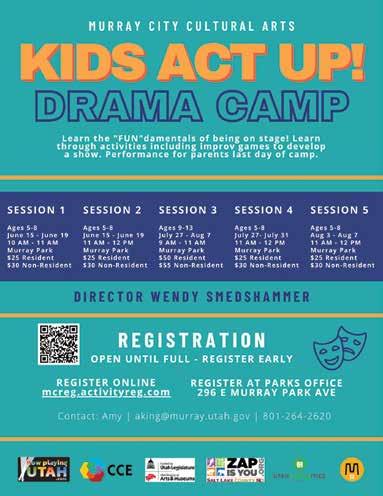

Returning this summer: Kids Act Up Drama Camps!
These fun, supportive camps help young performers explore theater while building con dence, creativity, and teamwork. Campers learn through improv, musical theater, movement, and hands-on activities, all leading to a nal performance for family and friends.
2026 Sessions:
• June 15–19 (Ages 5–8): 10–11 AM or 11 AM–12 PM
• July 27–Aug 7 (Ages 9–13): 9–11 AM
• July 27–31 (Ages 5–8): 11 AM–12 PM
• Aug 3–7 (Ages 5–8): 11 AM–12 PM
Learn more: https://www.murray. utah.gov/274/Drama-Camp


Murray City Presents Charlie and the Chocolate Factory at the Murray Park Amphitheater. June 12-13,15, 18-20| 8:00 PM (Doors open 7:30)
Murray Amphitheater | 495 5300 S $15-20 (Cash). Card payments subject to processing fee.
Based on the famous novel by Roald Dahl, Charlie and the Chocolate Factory features an original score composed by Marc Shaiman with lyrics by Shaiman and Scott Wittman (Hairspray) and a book by David Greig. The score also pays homage to the Leslie Bricusse/Anthony Newley score from the 1971 lm with songs from the motion picture including “The Candy Man,” “I’ve Got a Golden Ticket,” “Oompa Loompa Song,” and “Pure Imagination.”




Use it wisely: Murray’s stable water supply faces summer test
Drought year has officials closely monitoring Murray’s water supply.
By Shaun Delliskave s.delliskave@mycityjournals.com
Even as Murray’s water supply remains stable heading into the summer, city officials say that outlook depends heavily on one key factor: how wisely residents use it. In a region where demand can surge quickly with the heat, conservation isn’t just encouraged — it plays a critical role in keeping the system reliable.
According to Water Superintendent Aron Frisk of Murray City Public Works, the city’s water system is in a strong position, supported by a groundwater-based supply that differs from many other municipalities across the state.
“Murray’s water supply is stable heading into this year,” Frisk said. “The city relies entirely on groundwater, supplied by a system of 19 wells and eight springs. That gives Murray a consistent and reliable source that isn’t directly impacted by annual swings in snowpack or reservoir levels like many other systems in Utah.”
That independence from surface water sources such as reservoirs or snowpack runoff has helped insulate the city from some of the volatility seen elsewhere. Still, officials are
closely monitoring system performance, particularly as seasonal demand begins to climb.
Frisk said the city uses a Supervisory Control and Data Acquisition (SCADA) system to track conditions in real time, including aquifer levels, well production and overall system demand.
“Based on those trends, our aquifers remain healthy and continue to perform as expected,” he said, noting that demand increases significantly during the summer months and requires active management to remain within operational limits.
While statewide indicators such as snowpack are still considered, Frisk emphasized that local data drives day-to-day decision-making.
“We focus primarily on groundwater conditions and system demand,” he said. “Those are monitored in real time…which allows us to track trends and respond quickly if conditions change.”
Despite ongoing drought concerns in the broader region, Murray has not needed to impose mandatory water restrictions in recent years. Instead, the city has relied on voluntary conservation measures, which Frisk said have proven effective.
“We’ve seen that when residents and businesses are informed and mindful, they respond,” he said. “During recent drought messaging, annual water use dropped from about
3.1 billion gallons in 2020 to 2.5 billion gallons by 2022 and 2023. That’s a significant reduction, and the community deserves credit for it.”
Mandatory restrictions would only be considered under more severe conditions, such as sustained peak demand approaching system capacity or operational disruptions like well outages.
“Ultimately, it comes down to system reliability and source redundancy,” Frisk said. “If we see impacts to our ability to consistently meet demand, stronger measures would be considered.”
For now, residents should expect continuity in water use policies. The city will continue enforcing its existing restriction on outdoor watering between 10 a.m. and 6 p.m., aimed at reducing evaporation and inefficiency during the hottest part of the day.
“At this time, there are no major changes anticipated to watering guidelines or enforcement for this season,” Frisk said.
The city is also moving forward with previously approved rate adjustments adopted in 2025, part of a long-term strategy to maintain infrastructure and promote responsible use. In addition, Murray is preparing to roll out new technology to improve communication with customers.
Frisk said the city has partnered with the Central Utah Water Conservancy District and Yoppify to utilize advanced metering infra-
structure (AMI) data.
“This will allow for targeted notifications, including potential leak alerts and conservation messaging,” he said. “The system is expected to be implemented later this summer.”
As Murray continues to grow, city officials say long-term planning remains central to maintaining water sustainability. Development projects are required to fund necessary infrastructure through impact fees and must meet strict design standards.
“Development is not allowed to outpace the system,” Frisk said.
The city updates its water system master plan roughly every five years and has designed its infrastructure to maintain about a 20% capacity reserve at projected buildout in 2065.
For residents, Frisk said the most meaningful conservation efforts remain simple and largely focused on outdoor water use, which accounts for the bulk of summer demand.
“Simple changes make a big difference,” he said. “Watering during cooler hours, making sure irrigation systems are working properly, and avoiding overwatering.”
He added that inefficiencies such as broken sprinkler heads or excessive watering times can lead to significant water loss, but small adjustments across the community can have a measurable impact.
“The goal isn’t to eliminate water use,” Frisk said. “It’s to use it effectively.”l





Murray’s got more than talent — it’s got stars in the making
One stage, 20 acts and one night — Murray recognizes its most talented.
By Shaun Delliskave s.delliskave@mycityjournals.com
Music, dance, comedy and emotional original performances filled the historic Murray Theater’s May 9 evening as residents gathered for this year’s “Murray Has Talent” showcase, part of Murray City’s Free Access Week celebration at the theater.
Hosted by Murray Parks and Recreation, the free community event featured nearly 20 performers divided into two separate showcases — a youth competition followed by an adult division later in the evening.
Families packed the theater as the children’s performances opened the show with a high-energy dance routine from Dodge Dance Troupe, which helped set the tone for the evening. Xander Ortega followed with a dance performance choreographed specifically for the Murray talent competition, while Cali Garcia performed “When I Grow Up” from “Matilda.”
Alaina Godfrey delivered a contemporary dance performance to “All Eyes on Me,” while Marjory Joy Desius performed “Never Enough” from “The Greatest Showman” alongside her mother, creating one of the evening’s more heartfelt family-centered moments.
Eleanor Jarman brought a fast-paced dance performance to the stage with a routine set to “Think,” drawing enthusiastic applause from the audience.
Vocalist Maggie Milton performed


“From the Start” by Laufey, while pianist Alex Su showcased his technical ability with “Once Upon a Journey” by Chee-Hwa Tan.
One of the most memorable youth performances of the night came from Elizabeth Jacobsen, who performed an aerial silks routine suspended above the stage. The performance required specialized rigging inside the theater and combined athleticism with choreography, earning sustained applause from the crowd. Jacobsen ultimately took first place in the children’s division.
Following a brief intermission, the showcase transitioned into the adult competition, where performers presented original music, vocal performances and comedic acts.
Spencer and Gracie opened the adult division with a performance of “Country Roads,” blending piano and vocals. Seth Lloyd followed with an improvised piano performance that highlighted spontaneous musical composition and audience interaction.
Alexander Weyerstall, performing under the stage name “Unpaid Sandwich,” delivered a comedy piano act that mixed humor with original musical material, providing one of the evening’s lighter and more comedic moments.
Benjamin Lloyd also performed a classical piano piece, while Fredrick Brind brought a theatrical performance of “Bring Him Home” from “Les Misérables.” Eva Babb followed with an emotional rendition of “Slipping Through My Fingers” from “Mamma Mia!”
Former Miss Murray Megan Workman performed a contemporary dance routine, while Joshua Jensen closed out the competition with a powerful performance of Puccini’s “Nessun Dorma,” filling the theater with operatic vocals.
Among the night’s standout acts was Christi and Kimball of the band “Old Street,” who performed their original song “All of These Places.” The performance featured acoustic instrumentation, harmonized vocals and reflective songwriting that resonated strongly with both judges and audience members. Their performance ultimately earned first place in the adult division.
Another emotional highlight came from Raymond Jew, who performed his original song “Forever Young,” dedicating the piece to his grandchildren. The personal nature of the performance connected with the audience and earned Jew the event’s Staff Pick Award.
Organizers noted that “Murray Has Talent” has previously featured contestants who later achieved national recognition, including Loren Allred and David Archuleta, both of whom went on to larger performance and recording opportunities after competing in local talent showcases.
Throughout the evening, audience members responded with standing ovations, cheers and enthusiastic support for performers ranging from first-time participants to experienced musicians.
As part of Free Access Week at the Murray Theater, the showcase also high-
lighted Murray City’s continued investment in community arts programming and public performances in the city’s historic downtown venue.
For many contestants, the evening represented more than simply a competition. It was an opportunity to share original work, perform before a live audience and celebrate the growing artistic talent found throughout the Murray community.l

Duet Christi and Kimball (part of the group “Old Street”) performed their original song “All of These Places” and took top prize in the adult showcase. (Shaun Delliskave/City Journals)
Raymond Jew won the Staff Pick award for his performance of his original song, “Forever Young.” (Shaun Delliskave/City Journals)
Aerialist Elizabeth Jacobsen, won the children’s showcase with her aerial silks performance. (Shaun Delliskave/City Journals)

















New district, high stakes: Murray voters face pivotal primary
Murrayites will see new leadership in Congress, House District 34 and Senate District 13.
By Shaun Delliskave s.delliskave@mycityjournals.com
Murray voters heading into the June 23 primary election will face one of the most consequential local ballots in recent years, with a newly drawn congressional district and multiple contested state legislative races shaping the political landscape.
For many residents, the primary — not the general election — will play a decisive role in determining who represents them at both the state and federal levels.
A high-profile congressional primary
At the top of the ballot is Utah’s newly configured first Congressional District, which now encompasses much of Salt Lake County, including Murray. The redrawn district has consolidated communities that were previously split, creating a single race for voters across the area.
With no Republican primary contest, attention has turned to a four-way Democratic race featuring:
• Ben McAdams, a former congressman and Salt Lake County mayor
• Nate Blouin, currently serving in the Utah Senate
• Liban Mohamed, who secured the top position at the party convention
• Michael Farrell, who qualified via signature gathering
The winner will advance to face Riley Owen in November.
Because there is no Republican primary in the district, Murray voters who select a GOP ballot will not see a congressional race in June.
State Senate contests split Murray Murray is divided between two state Senate districts, both of which feature Democratic primaries.
Senate District 13
Sen. Nate Blouin stepped down to run for Congress and vacate his seat. A threeway Democratic primary will determine the nominee in a race that already includes multiple general election candidates. Voters will choose among:
• Silvia Catten
• Evan Done
• Taylor J. Paden
The winner will advance to face Republican Ryan L. Mahoney and Forward Party’s Colin Smith in November, making this one of the few multiparty general election contests affecting Murray voters.
Senate District 14
In contrast, Senate District 14 features a two-candidate Democratic primary between:
• Stephanie Pitcher (incumbent)
• Tayler Khater
No Republican or other candidate has filed for the general election, meaning the winner of the June primary is likely to secure the seat outright.
Multiple House races on the ballot
Murray voters are also split among four Utah House Districts — 34, 35, 40 and 41 — each presenting a different electoral dynamic.
House District 34
Longtime legislator Carol Spackman Moss is retiring. A Democratic primary will determine the next representative, with:
• Erin Jemison
• Julie Jackson
No opposing candidate has filed for the general election, positioning this primary as the decisive contest.
House District 35
Republican voters will choose between:
• Andrew Uz
• Monique I. Ketcham
The winner will face incumbent Rosalba Dominguez, a Democrat, in November.
House District 40
A Democratic primary between:
• Wendy Davis
• Andrew Stoddard (incumbent)
This will determine who advances to the general election against John Jackson of the Forward Party.
House District 41
Republican voters will decide between:
• Darren Croft
• Eryn A. Russo
The winner will move on to face appointed incumbent John Arthur, a Democrat, in the general election.
Primary likely to decide several races
Across the ballot, a clear pattern has emerged: several races affecting Murray voters are effectively being decided in the primary.
In districts without general election challengers — including Senate District 14 and House District 34 — the June vote may determine the eventual officeholder. In others, particularly where only one party holds a primary, the outcome will shape the competitiveness of the November election.
Utah’s primary system allows voters to participate in only one party’s primary, meaning residents must choose which set of contests to engage in.
What Murray voters need to know in order to vote
The deadline to register to vote is Friday, June 12, 2026, by 5 p.m. Residents who are registered by that time will automatically receive a ballot by mail.
For those who miss the deadline, Utah offers a same-day registration option. Voters may still register during early voting or on Election Day, but they must vote in person, provide valid identification and proof of residence, and cast a provisional ballot.
Utah operates under a party-based primary system, meaning voters may participate in only one party’s primary. As a result, some races — including the congressional contest affecting Murray — may appear only on a specific party’s ballot.
Ballots are mailed in advance to active registered voters. Completed ballots can be returned by mail or deposited in designated drop boxes located throughout the county.l
Viewmont students bring decades in motion
By Julie Slama j.slama@mycityjournals.com
About 50 Viewmont students took audiences on a lively journey through time this spring, thanks to a student-centered original musical production, “Dances through the Decades.”
Written and directed by the school’s Beverley Taylor Sorenson art teacher Bryn Swain, the music from 1950s through the 1990s was designed to be both enjoyable and educational for the fourth-, fifth- and sixth-graders.
“We’re doing dances through decades and they’re having fun,” Swain said while the show was still in rehearsal. “A lot of their families will be familiar with the music.”
The show was packed with familiar hits from Elvis tunes in the 1950s and Beach Boys’ favorites in the 1960s to more recent songs, including ABBA’s “Dancing Queen,” Cyndi Lauper’s “Girls Just Want to Have Fun” and NSYNC’s “Bye, Bye,
Bye.” The finale brought everyone together with “Time After Time,” tying together the shows’ musical journey.
“There has been a lot of student choreography,” she said. “Small groups of kids are coming up with the dancing routines and that’s been exciting this year.”
To guide them, Swain and her assistant directors, University of Utah theatre education students Avery Kirksey and Amelia Hunter, have provided reference videos and support as well as encouraged their creativity. Students worked collaboratively to build routines that reflected each decade’s style.
Rehearsals began in January, with many practices structured so each decade had its own dedicated day, allowing students to focus on specific scenes, songs and choreography before bringing the full show together.
Swain wrote the script quickly once she brainstormed the concept.
“It took hold in a couple days,” she said. “I like the flexibility of it because I’m able to
adapt it to my students. Sometimes the kids will want to add a line and since I wrote it, we sure can.”
Beyond the music and dancing, students have learned creativity, collaboration and confidence as they help with many aspects of the show from choreography to visual design.
Sixteen stage crew members helped make scenery, props and oversaw the staging. They also crafted cardboard props to represent each decade and came up with colorful costumes inspired by each era.
“They’re learning how do we put all our ideas together and make something cohesive,” Swain said. “They’re also learning about personal growth, like it’s OK to do scary things, that they’re not always 100% comfortable, but it’s still important to learn and try. It’s prepping them for the real world.”
For some, this is their first time on stage so they’re learning skills such as memorization, voice projection, stage presence and teamwork.

“It’s an introduction to performing in a low-pressure environment, one that is supported by their peers and our staff,” she said. “This will help them when there are hard things in life, they’ll know how to handle them. l
Viewmont students used props along with familiar songs. (Bryn Swain/Viewmont Elementary)
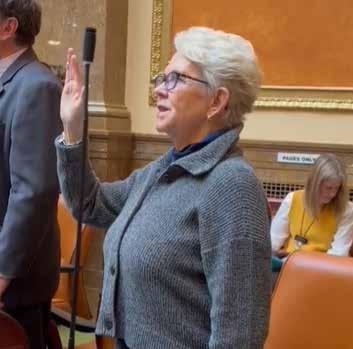
District 34’s Carol Spackman Moss is stepping down after two decades of service. (Photo courtesy of Utah House of Representatives)
Pinnacle Awards honor those who teach, guide and inspire
Murray School District honors its 2026 Pinnacle Award educators who have shaped generations.
By Julie Slama j.slama@mycityjournals.com
In a Viewmont classroom, first-graders were wrapping up calendar time and preparing to visit the Eagle store before going on a science field trip to Riverview Junior High when an announcement crackled over the intercom.
“It said, ‘we need everyone to come down for this quick assembly,’” teacher Vangee Watts said. “So we pivoted; we lined up and headed to the gym. We’ve had other impromptu assemblies before so I thought a student earned an award, but when we got down there, I saw some other students from the junior high. And I’m like, ‘What are they doing here?’ But after that, I didn’t think anything of it.”
Those older students were her former students, not just in recent years, but spanning the 15 years she has been teaching.
In that moment, however, Watts didn’t give it another thought until the curtains opened to reveal her family on stage alongside Murray School District Supt. Jen Covington, Murray Education Foundation members and others.
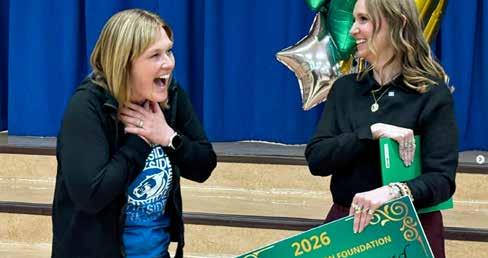
“When they said, ‘we have a special honor,’ I started crying because I knew what it was. It was very tender,” she said.
Watts, a Murray High alumna, was one of several honorees throughout Murray School District to receive the 2026 Pinnacle Awards for Excellence in Education, where honorees were recognized for embodying the theme, “Together We’re Unlimited.”
Along with Watts, other educators were surprised with the honor, often with their families and friends joining in the celebra-
tion. They include Amy Knox of Murray High, known as a “trusted, supportive listener” in her role as head counselor while giving students 37 years of support; Lisa Pearson, a Parkside Elementary teacher recognized for advocating for her special education students; Becky Powell, Longview Elementary’s speech and language technician who helps each student communicate effectively; and Angie Thompson, McMillan Elementary’s fifth-grade teacher dedicated to the district’s gifted and talented program.
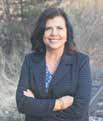

Cris Westerfield was honored as the education support professional for her 18 years supporting multi-language learners and educators as the district’s refugee and alterative language services coordinator; and Denise McDougal, who, after 25 years retired from the school district’s human resources office to continue her service as a volunteer playground supervisor at Horizon Elementary.
While Watts was given the rest of the day off to celebrate with her family, she worried about the time taken away from the field trip. Organizers had already accounted for that. At Riverview Junior High, there was a gathering as well to honor Earl Kauffman as the top administrator, recognizing his calm, steady leadership over 22 years of service to students.
Each honoree received $1,000, a signature bronze statuette, an invitation to a recent gala dinner and other prizes and recognitions from the community.
This year saw a record 180 nominations from the community.
“Each one (is) a touching testament to the dedication found within our schools,” said Doug Perry, Murray Education Foundation executive director. “Reading through them made one thing clear: every single nominee is a hero in their own right. These stories remind us why Murray is such a truly special place for students to learn and teachers to thrive.”l











Parkside Elementary’s Lisa Pearson, like all honorees, was surprised to learn she was named a Pinnacle Award recipient. (Photo courtesy of Murray Education Foundation)
Better Shelves. Custom Solutions.













A game where inclusion is the focus
Murray High’s unified athletes demonstrate their skills at the state championship.
By Julie Slama j.slama@mycityjournals.com
In a high school gym, the sounds are familiar — balls bouncing, high tops squeaking on the court and teammates cheering.
But unified basketball is not just a game; it’s a space where students of all abilities come together as teammates, playing together on the floor to build friendships, confidence and community through sports. The focus isn’t only on winning, it’s on inclusion, sportsmanship and connection.
That spirit carried all the way to the biggest moment of the season for two Murray High athletes. While the team didn’t qualify for the championship game, Murray High’s Jane Gilmore and Olivia Spencer demonstrated their basketball skills during a break in play at the state championships.
Their heartwarming showcase drew smiles and applause from the crowd in the Delta Center.
While Salt Lake Valley teams from Jordan High, Hunter High and Herriman High won state titles in their divisions, the players say playing unified basketball is more than a title.
Across Utah, with more than 250 Utah high school unified teams, other players emphasize the game has given them friendship, growth and joy.
Murray High’s Parker May loves the game, especially




shooting the ball, and playing with friends while teammate senior Hayden Gardner said he loves the confidence his teammates have gained over the season.
Murray High senior Ethan Teusher added: “There is simple joy in spending time together whether we’re playing basketball or a game of Uno.”
Jordan High senior Alejandro Beltran Lopez plays with pride and purpose.
“I want to continue my dad’s legacy in playing sports,” he said. “He taught me a little and coach taught me more; Dad’s happy for me.”
Beltran Lopez said unified sports helped pave friendships with his teammates, from eating lunch together to watching the movie, “Elf.”
“We’ve had others at school support us too,” he said. “Unified soccer was fun; we wanted to beat Bingham at state championship (played at America First Field last fall), but it’s OK we lost because being a good sport means accepting defeat.”
For his teammate, junior and peer tutor Sawyer Herzog, unified sports extends beyond the court.
“I love this,” he said. “We’ve become friends and I probably wouldn’t have met him if not. We’ve become genuine friends. We hang out, doing puzzles, watching Switch TV, talking, I help with math and ELA (English Language Arts). My whole family loves him.”
At Alta High, senior and peer leadership team member Macey Rockwood sees unified sports as something bigger.
“The goal of PLT is to make the community better, so through unified sports, we can support them,” she said. “Everyone deserves a community.” l

Suffering from Depression, Anxiety, or OCD?

















Murray High’s Jane Gilmore and Olivia Spencer pose with the Jazz Bear after being part of the skills demonstration at state. (Julie Slama/City Journals)
Asteachers pop the champagne and schedule full-body massages, mothers are slowly descending into madness. Summer break stretches ahead like a sunburned, melted-fudgesicle 10K, with lots of family time. So much family time.
As a young mother in the 20th century, summer vacation was a blur of wet towels, lost flip-flops, and popsicle sticks stuck to couch cushions. My daughters spent the days selling Kool-Aid to neighbors, watching hours of PBS’s “Arthur,” and fighting nonstop.
I tried to keep a schedule, but it flew out the window the first day, along with my common sense and sanity. Although we went to parks, pools, hiking trails, libraries, zoos and museums, my daughters were always “sooo bored!” It was like trying to fill a bottomless, thankless pit.
Looking back, I was so lucky. Not because I could spend so much “quality time” with my kids, but because I wasn’t working out of the home. It was absolutely exhausting, but I didn’t have to worry about what my kids would do during the summer.
The school calendar was not created for single mothers, full-time working parents or children who need snacks every five minutes. It was designed for farmers who churn their own butter and rise at dawn to feed chickens.
Today, moms are scrambling to find camps, sitters, daycare and programs to keep
Popsicles and pressure
Peri Kinder Life and Laughter

kids occupied during the summer break because many mothers have full-time jobs and can’t take the summer off.
People rarely ask fathers, “What will your kids do all summer? How will you balance your job and family?” Nope. Everything usually falls to moms, most of whom can’t afford camps or additional daycare costs.
I researched “Summer strategies for working moms” and was given ideas like 1) hire a summer nanny, 2) enroll in pricey camps early, or 3) rent children to an influencer.
Who do they think these mothers are? Kardashians? I added a fourth option: quit your job and live in a van by the river.
When my daughters were little, there were several working moms in the neighborhood and their kids would hang out with us all summer. They were part of the noisy, sticky clan, constantly bickering about who got grass in the blow-up pool.
Now, mothers are anxiously waiting for their lottery numbers to hit or a magical Mary

Poppins character to show up and take control of their unruly children. Barring that, there aren’t a lot of viable options, especially in this economy.
Grandparents and other family members alleviate some of the summer schedule strain, but with about 10 weeks of out-of-school time, mothers often resort to late-night spiraling and stress eating.
It’s not all hopeless. Companies are finally realizing they’ll have happier, healthier, more productive female employees if they offer flexibility.
Progressive CEOs provide summer childcare stipends or offer discounts to local camps. Work-from-home options, summer PTO bonuses, flexible start/end times and early-out Fridays would make a mother’s summer a gajillion times easier, as well as fathers who need
scheduling help for the school break.
Maybe that’s the answer! Instead of asking companies to make things easier for moms, let’s say the dads need help. Businesses will immediately build on-site splash pads, create kid-friendly office spaces and partner with local teams to host summer-long sports camps.
Somewhere along the way, summer break turned into a summer breakdown. Parents aren’t asking for luxury vacations, just a bit of time to sit by the pool, yell at kids to stop yelling and maybe even pop some champagne. We should be able to make that work.
Peri Kinder is an award-winning columnist and journalist who has written for The City Journals since 2004. She also hosts the Life & Laughter podcast. Peri can be reached at peri.k@thecityjournals.com.