
Never underestimate the healing power
The nonprofit Savvy’s Stuffies has donated over 800 stuffed animals to emergency first responders and Utah hospitals.
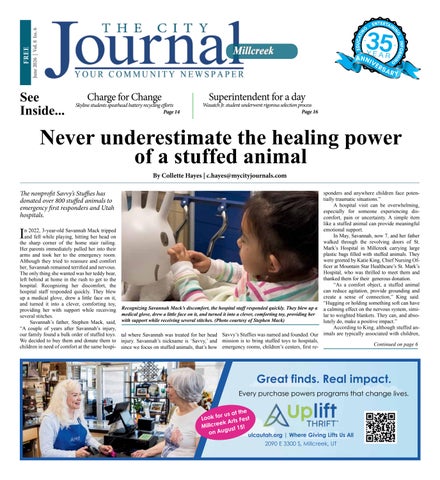
In 2022, 3-year-old Savannah Mack tripped and fell while playing, hitting her head on the sharp corner of the home stair railing. Her parents immediately pulled her into their arms and took her to the emergency room. Although they tried to reassure and comfort her, Savannah remained terrified and nervous. The only thing she wanted was her teddy bear, left behind at home in the rush to get to the hospital. Recognizing her discomfort, the hospital staff responded quickly. They blew up a medical glove, drew a little face on it, and turned it into a clever, comforting toy, providing her with support while receiving several stitches.

Recognizing Savannah Mack’s discomfort, the hospital staff responded quickly. They blew up a medical glove, drew a little face on it, and turned it into a clever, comforting toy, providing her with support while receiving several stitches. (Photo courtesy of Stephen Mack)
Savannah’s father, Stephen Mack, said, “A couple of years after Savannah’s injury, our family found a bulk order of stuffed toys. We decided to buy them and donate them to tal where Savannah was treated for her head injury. Savannah’s nickname is ‘Savvy,’ and













COMMON GROUND
Play Nice in the Sandbox
Common Ground will be a column of rotating viewpoints that highlight specific feelings across the political spectrum, and it will always end with possible ways to come together.
There once was a giant sandbox where everyone could play together. It had dump trucks, shovels, sandcastle molds and one corner filled with cigarette butts from the high school teens.
Big Brother (BB) controlled the sandbox. He carried a clipboard and whistle, and discouraged others from playing. Although it belonged to the entire community, BB would chase people away, saying, “That’s just the rules,” which he had made himself, of course.
But Little Brother (LB) wanted to play. He tried to convince BB to give him just a small part of the sandbox to build sculptures with his friends. “What about this spot?” he asked.
BB clutched his clipboard to his chest and gasped. “That’s a very important place. That’s my transportation corridor. You can’t have it.”
Every spot LB suggested, BB drew a new line in the sand and explained why it just wasn’t feasible. That spot was BB’s economic area, and another spot was an important waterway. Soon, all that was left was the ashtray corner, but BB wanted control over that, too.
LB went to find Mom (who represents voters, the judiciary and common sense). She explained to BB that the sandbox belonged to everyone and LB could have his share.
BB was furious and started throwing sand at Mom, calling her a bully. “You’re destroying the integrity of the sandbox!”
Peri Kinder Common Ground
he screamed. Then he spent the rest of the summer planning to steal back LB’s share.
Instead of a sandbox, we’re dealing with voting maps. Gerrymandering has shaped Utah’s leadership for decades, especially in creating congressional districts that look more like a sliced pizza than an equally divided constituency.
We can’t bury our heads in the sand and expect the majority leadership in our state to treat us fairly. In 2018, Utah voters tried to redraw the sandbox lines, approving a ballot initiative that would create an independent redistricting committee to create voting maps to avoid gerrymandering.
But Gov. Cox signed a different map into law that split Salt Lake County into four districts that could easily be controlled by Republicans. The new map ignored the committee’s recommendations, which would give Democrats a possibility of winning a Congressional seat.
Utah’s League of Women Voters filed a lawsuit, claiming the new map was a bunch of baloney. They won that case in 2024 when the Utah Supreme Court ruled that legislators could not override the voice of the people. But the majority leadership has been fighting for its maps
and sand toys ever since, trying to overturn the Court’s decision.
Common Ground: Gerrymandering should be illegal in every state because it skews voters’ rights and stacks the deck for whoever the majority party may be. Maybe instead of lawmakers crafting the voting maps, independent commissions can be tasked with creating fair districts for all states.
We’re told that every vote counts, but that’s not the case in gerrymandered states, on both sides of the aisle. Voters feel frustrated and unheard. I think we can agree our system is broken. Majority leaders in states, both Red and Blue, draw the voting maps, create the rules and decide which demographics get representation.
Could Utah take the high road and fix the system? Could we become a beacon of guidance and inspiration for the country in a time that feels heavy and dark? It’s a nice idea, we just need brave leaders willing to adopt meaningful change.
A diverse range of opinions creates effective solutions. Instead of one group deciding the laws, it strengthens our democracy to include voices from differing beliefs and experiences.
Gerrymandering eliminates divergent voices, creating a system of inbred and insipid decisions. That doesn’t sound like fair representation; that sounds like a power grab, no matter the party.
May Follow Up From Readers
In May, John J. Walker’s Common Ground article, “I can’t afford YOUR tax bill,” sparked a flurry of replies, including one from reader Christine. “I would agree that paying for infrastructure is important and it’s tough when your paycheck doesn’t go very far for all your hard-worked hours. I would disagree, however, about the derogatory generalization of Democrats being the brainless, doom-scrolling, rage-bating, vulgarity-writing party.”
Some commenters said they want their tax dollars spent on things like zoos, parks, and museums, and felt Mr. Walker’s column was “negative and angry.” Others felt people earning over $1 million should pay more into the system.
Readers expressed appreciation for the Common Ground concept, with the focus of bringing the community together, even when we disagree. However, reader Laura felt the tone of Mr. Walker’s op-ed didn’t fit that description. “I don’t see how the rudeness expressed in this article could achieve that goal,” she wrote.
A reader named Tyler summed up a prevailing sentiment when he wrote, “I think the [Common Ground] approach and voice is exactly what our community needs. I firmly believe that informing on political issues is a much-needed thing. I hope that the continued success of the column helps bring our community closer together!”
— City Journals Columnist Peri Kinder
MILLCREEK TEAM
The Millcreek Journal is a monthly publication distributed directly to residents via the USPS as well as locations throughout Millcreek.
The views and opinions expressed in display advertisements do not necessarily reflect or represent the views and opinions held by Loyal Perch Media or the City Journals. This publication may not be reproduced in whole or in part without the express written consent of the owner.
© 2026 Loyal Perch Media, Inc.
PUBLISHER
Bryan Scott | bryan.s@thecityjournals.com
EDITOR
Travis Barton | travis.b@thecityjournals.com
ADVERTISING EXECUTIVES
Mieka Sawatzki | mieka.s@thecityjournals.com
Ryan Casper | ryan.c@thecityjournals.com
Marc Davis | marc.d@thecityjournals.com
CLIENT SERVICES
Lydia Rice | lydia.r@thecityjournals.com 385-557-1022
CIRCULATION COORDINATOR
Lindsay Andreasen | lindsay.a@thecityjournals.com Rack locations are also available on our website.
EDITORIAL & AD DESIGN
Stacey LaMont Ty Gorton
MILLCREEK CITY JOURNAL
9500 South 500 West, Suite 205 Sandy, UT 84070
PHONE: 801-254-5974
MISSION STATEMENT
Our mission is to inform and entertain our community while promoting a strong local economy via relevant content presented across a synergetic network of print and digital media.
Designed, Published, & Distributed by





hospital staff have observed that adults benefit as well. Pediatric patients often form immediate attachments, but teenagers, adults and even elderly patients may also find unexpected comfort in these items, particularly during vulnerable times. “Whether it’s something to hold onto during a procedure or simply a reminder that someone cares, the emotional impact can be significant across all age groups,” King said.
King continues, “Donations like stuffed animals often become a bridge between our clinical teams and the people we care for at the bedside. When a nurse offers a patient a comfort item, it’s more than a gesture, it’s a moment of human connection. It shows that we see the patient as a whole person. These interactions can help build trust, open communication, and create a more compassionate care environment, which ultimately supports better outcomes.”
Savvy’s Stuffies is a tax-exempt 501(c)(3) nonprofit organization. The family’s not-for-profit business has already donated over 800 stuffed animals and is hoping to continue receiving donations to further its goal of helping children in traumatic situations feel comforted with a stuffed toy when they need it most.
“Hopefully, we will be able to keep delivering stuffed animals to first responders and hospitals,” said Stephen Mack. “Any support we receive helps us continue our mission. We would love to give teddy bears to every hospital
and to kids in challenging situations, so they feel a bit more comfortable. The most rewarding part of it all is seeing the kids’ faces light up when we hand them a teddy bear and knowing we are making a difference.”
King points out that it’s not about the object itself so much as how it’s used.
“Many years ago, as a house supervisor, I was called to the ER to help with a little guy who was pretty sick,” King said. “Our team was having a hard time providing care because he was crying and acting out simply because he was scared. An amazing ER nurse stepped in with a stuffed dinosaur, handing it to the little guy. The young patient grabbed the dinosaur and was clinging to it. The nurse used the dinosaur to connect with him. She then began interacting with the toy instead of addressing her patient directly, using it to explain procedures and reduce fear. The little guy gradually opened up, cooperated with treatment, and became more comfortable with everyone. That dinosaur and that nurse quickly aided in building trust, easing anxiety and improving the overall experience for everyone involved. Moments like this are a reminder of how powerful compassion, paired with simple gestures, can be.”
She added, “Any time we can make our patients feel more at ease, feel safer, more secure and better cared for, especially when you’re working with pediatric patients, it’s a win!”
For further information about Savvy’s Stuffies or to make a donation, visit www.savvysstuffies.org.l
thank
for
A Utah nonprofit has become a global refuge
MOSAIC Inter-Faith Ministries provides a sanctuary for those seeking resources.
By Peri Kinder peri.k@thecityjournals.com
Hundredsof people make their way to the doors of MOSAIC Inter-Faith Ministries each week. The unassuming building in South Salt Lake offers much more than food and community; it’s a place where dignity is restored, worth is valued and hope finds a way.
MOSAIC Associate Director Jose Bonilla describes it as “an oasis, where we serve all continents of the world.”
Rev. Dr. Leslie Whited has been running the ministry for nearly 30 years. By offering community programs like the Manna Market and food pantry, the More Blue Sky Employment Center and the Green Waters Health Center, MOSAIC has become a gathering place for people of all ethnicities, religions and backgrounds.
Serving one out of every 25 Utah residents, the nonprofit provides in-home senior services, refugee integration and education basics for college education or employment. Thousands of volunteers dedicate time to build the community for good.
“If you participate in diverse service, you can’t help but love all people. It’s who you come to know and come to love, and I think that’s true here,” Whited said. “When people touch the face of MOSAIC, they’re transformed. Whether they come as a volunteer, a board member, or a client, they experience an uplift in their life.”
Located at 20 W. 2700 South, MOSAIC recently added a new case management focus to help expand services to the thousands of people who visit the nonprofit each year. A funding grant will cover costs for the program that allows MOSAIC to meet basic needs while addressing issues related to housing, employment, health and education.
Enobong Nissi is a community health worker at MOSAIC. She found the organization 10 years ago when her son
was trying to get a bus pass for public transportation. Now, her son has a job that allows him to travel all over the world.
“Education is number one. If we want to help people to live a full life by coming here all the time to get food, we need to talk to them about education and we have to help them get a job,” Nissi said. “Education doesn’t mean you have to go to college. It’s not a full life to come and get food all the time. There’s something better than that and that’s education, and that’s a job.”
MOSAIC’s services are supported by a dedicated group of volunteers who help run the Manna Market Drive-Thru and the Manna Pantry, and jump in to assist when needed.
Mary Peery volunteers with MOSAIC. She joined the organization four years ago after retiring from the medical field. She felt isolated during retirement and wanted to contribute her time to a worthy cause.
“It’s a fun place for companionship, for friendships,” Peery said. “We all have different ideas, different ways of living our lives and it’s good to know everybody here.”
Like many service-oriented nonprofits, MOSAIC lost federal funding over the last year and relies heavily on donations from the public and state organizations. Items like new educational toys, blankets, sports equipment, books, household furnishings, healthy foods and cleaning supplies are always needed. Contributions can be made online at lssu.org, or donations can be dropped off at the South Salt Lake location.
MOSAIC Inter-Faith Ministries is a member of several groups, including the Enriching Utah Coalition, the Salt Lake County Mayor’s Council on Diversity Affairs, the State of Utah Defendant/Offender Workforce Development Task Force and the Utah Voluntary Organizations Active in Disaster.
In 2021, the organization was honored by the Salt Lake Inter-Faith Round Table for its service to create a diverse Utah. It’s just one of a long list of awards for MOSAIC’s decades-long dedication to the community.
“We’re a big advocate for people of all sizes, ages and colors. I believe every generation has a gift to give, and the youth I’m involved with are very diversity-minded,” Whited said. “I’ve lived outside of Utah for several decades, but in Utah, I feel it’s a lot more diversity-oriented and it’s a lot more service-oriented than other places I’ve lived…It’s not transactional. It’s about grace.”l
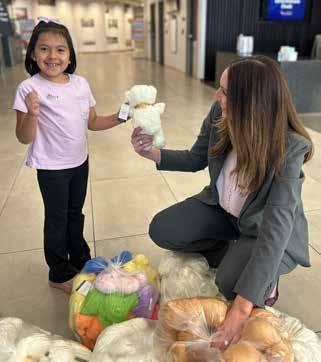
Katie King, Chief Nursing Officer at Mountain Star Healthcare’s St. Mark’s Hospital, was thrilled for the chance to meet Savannah Mack and the opportunity to
her
her generous donation. (Photo courtesy Brittany Glas)
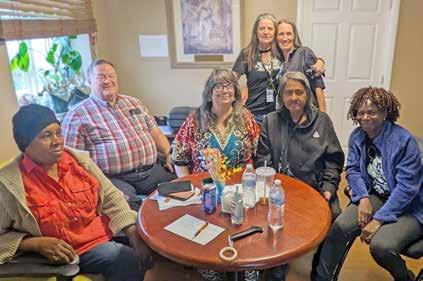
The multi-ethnic leadership team at MOSAIC Inter-Faith Ministries includes (in front, from left) Enobong Nissi, Steve Whited, Rev. Dr. Leslie Whited, Jose Bonilla, Justine Boukari (in back, from left), Mary Peery and Christy Lynn Reilly. (Peri Kinder/City Journals)
A new, high-tech approach to fitness hits Millcreek with The Smart Fit Method studio
A father and son team bring new ways to exercise and recover.
By McKinna Baird m.baird@mycityjournals.com
Earlierthis year, Millcreek became home to one of six Smart Fit Method studios. The studio features several state-of-the-art exercise and recovery machines, health analysis equipment and highly-trained instructors to offer members one-on-one coaching.
The founders are a father and son duo. Rob and Connor Darnbrough started developing The Smart Fit Method after they each suffered life-changing injuries. Connor lived through a broken back and later a neck injury, damaging nerves down the right side of his body, resulting in a complete loss of feeling. Rob, who had been a cyclist in the Canadian National Cycling Team, suffered from an enlarged aortic valve.
“My dad was told never to lift over 30 pounds, never walk up the hill again for the rest of his life,” Connor said. “He just was bedridden, basically for six months because he was so scared to do anything.”
Connor refused to believe that his previously active father would have to accept a sedentary life. This is what inspired the vast amounts of research and experimentation with exercise technology that eventually led to the creation of The Smart Fit Method.
The Darnbroughs first bought a Vasper, an exercise machine developed in collaboration with NASA to provide a high-intensity workout, without the physical impact of traditional exercise. The Vasper is now a staple at all Smart Fit Method studios.
After seeing so much improvement in his father’s cardiovascular health, Connor wanted to take it further.
“We were seeing things go in the right direction, but we
had to start tying in the other areas that we need to focus on: mobility, strength, recovery, capacity and nervous system health,” Connor said.
The research that spread from the initial success with the Vasper included a year of trial and error out of the Darnbrough’s garage with other pieces of equipment. As the experiments continued to yield positive results, Connor left college to educate himself on exercise physiology and health.
“I just went down this long rabbit hole of getting all these different certifications, researching this equipment,” he said. “I wanted to go to the traditional path, but that wasn’t in the cards.”
Connor and Rob opened the first Smart Fit Method studio in Cardiff, California in 2020. Connor credits the expansion of their business to their initial members. “All of our investment was member based,” Connor said, “which I think is kind of cool, as people who have been doing it see the value in it for themselves and [are] expanding it out to places where they live.”
The Smart Fit Method members start their health journey with state of the art 3D body scanning equipment. This equipment analyzes body mass and breath to give members a clear idea of where they are beginning with their fitness. From there, trainers will help members to calibrate exercise equipment for a personalized experience. All workout equipment at The Smart Fit Method is designed to maximize results in a shorter amount of time than traditional gym equipment.
Post-workout, members can choose how they want to maximize their recovery. The studio offers red light therapy, dry saunas and cold plunge baths, among other recovery machines. All of this technology combined is intended to help members feel their best, exercise efficiently and increase their health span.
Visit www.smartfitmethod.com to see membership options at their Millcreek location.l


Millcreek City Council adopts proclamation making April Child Abuse Awareness Month
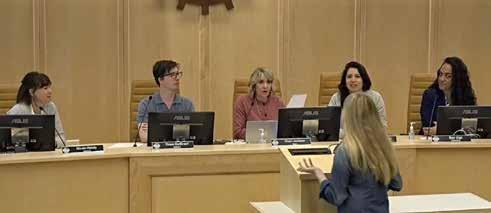
The Millcreek City Council adopted a proclamation to make April Child Abuse Awareness Month. Deondra Brown spoke to the council to thank them for doing so.
By Alexandra Straumann a.straumann@mycityjournals.com
On April 13, the Millcreek City Council adopted a proclamation to dedicate the month of April as Child Abuse Awareness Month.
Child Abuse Awareness Month is recognized across the country and exists to create conversations, spread awareness and teach people about the prevalence of child abuse around the world and how to stop it.
Child abuse impacts the lives of hundreds of thousands of children across the United States. Earlier this year, the Office of the Administration for Children and Families released a Child Maltreatment report to provide an overlook at the prevalence of child abuse across the United States. It found that in 2024, there were 7.2 victims of child abuse
per 1,000 children, with children under 1 year old enduring the highest rate of victimization.
Mayor Cheri Jackson read the proclamation to formally recognize April as awareness month, which received applause from the other councilmembers and attendees. She added, “In Millcreek we are very protective of our children and want to do everything we can to ensure child safety and ensure the
well-being of children and families.”
In attendance was Deondra Brown, who cofounded The Foundation for Survivors of Sexual Abuse with her sister. The foundation aims to provide support to survivors and influence policy surrounding the statute of limitations for crimes of childhood sexual assault. The statute of limitations varies state by state, severely limiting the ability for vic-
tims to seek justice.
In 2014, the foundation helped to pass H.B. 286 in Utah, creating a statewide requirement for child sexual abuse prevention to be taught in schools, and it was Brown who suggested adopting the recent proclamation to Millcreek Councilmember Sylvia Catten.
After the proclamation was adopted, Brown spoke to the council and said, “April is an opportunity for us to plant some important seeds in our community, where children and families understand that not only is it OK to talk about difficult things like child sexual abuse, but that that’s how we make progress.”
Brown concluded her statement by saying, “So many people think that there’s nothing they can do, it’s all about taking responsibility and sharing that load as community members who are adults, making sure that the children know that we are a safe place, and we will do everything in our communities to protect them.”
To learn more about Brown and the work she is doing at The Foundation for Survivors of Sexual Abuse, visit their website survivingabuse.org/. l
The Millcreek City Council listens to Deondra Brown as the adopted a proclamation to make April Child Abuse Awareness Month. (Screenshot)
The Smart Fit Method’s cold plunge station, calibrated for men and women’s ideal temperatures. (McKinna Baird/City Journals)
The dry sauna room at The Smart Fit Method studio. (McKinna Baird/City Journals)
Millcreek City Council listens to and honors local students
The Millcreek City Council heard from a third-grade class from Canyon Rim Elementary and honored eight high school seniors.
By Alexandra Straumann a.straumann@mycityjournals.com
One of the best ways to get a glimpse at the future is to listen to the children.
And, on April 27, the Millcreek City Council did just that. During their meeting, the city council heard from a group of thirdgrade students from Canyon Rim Academy.
Mayor Cheri Jackson explained that a week prior to the council meeting, the third graders had the chance to visit City Hall to learn about municipal government. A component of this was teaching the children how they can make positive impacts in their community.
They talked to the students about Canyon Rim Park, located next to the school, and asked the students to visit the park and think about the things they liked and what things could be better. The students went to the park with their teacher, Paige Pectol, where they cleaned up trash and took notes on their observations.
These notes were compiled into a “Third Grade Report” which was read to the council by the participating students. Pectol explained that the report was entirely written
by the students based on their notes, giving the councilmembers, parents and members of the community the opportunity to hear from voices that are often unnoticed.
Pectol introduced her class and explained that the students enjoyed helping clean up Canyon Rim Park. Each student had the chance to approach the microphone and speak to the council, and regarding their favorite parts, one student said, “The murals are nice, we like the trees and the playground is in good condition.”
The areas of improvement for the park were “a lot of dog poop, benches with slivers, the e-bikes, and the horseshoe area.” The students recommended providing signs
that say to pick up the dog’s poop and providing more pick-up areas. Regarding the bikes, they said, “We are worried about the bikes. The grass is getting torn up in the park. Our suggestion is to create signs that say bikes are only allowed on sidewalks or create fun bike paths for people to use.”
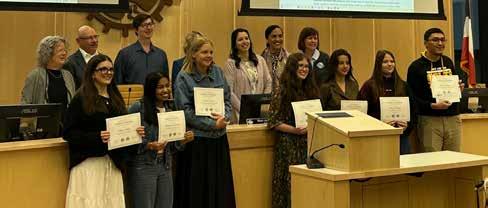
Following the report, the council recognized another group of young people, the Silvestrini Scholars. These high school seniors received the award for their outstanding achievements in the classroom.
The scholarship program is part of Millcreek’s Promise Program and awards the winners with a $1,000 scholarship to put toward their chosen university, college or technical
education program. Students were recognized for their achievement and were awarded with a certificate by former Millcreek Mayor Jeff Silvestrini and his wife Leslie.
The Millcreek Promise Program works to provide Millcreek families, children and residents with resources to better their educational and vocational opportunities, among other things. During his tenure as mayor, Silvestrini helped create the Promise Program, and Mayor Jackson renamed the scholarship in his honor earlier this year.
There were eight recipients from four high schools across Millcreek, and the students are hoping to pursue a variety of careers after graduating, ranging from public service to musical education to welding. Silvestrini praised the students for their hard work and expressed his gratitude to the council for recognizing these students.
The winners, in no particular order, are: Macy Atkin of Skyline High School, Mackenzie Campana of Cottonwood High School, Johnathon Chen of Skyline High School, Ada Frazier of Olympus High School, Rebekah Jordan of Olympus High School, Benazir Mohammadi of Utah International Charter School, Airyn Phillips of Cottonwood High School, and Eloy Salazar of Cottonwood High School.
To learn more about the Millcreek Promise Program visit www.millcreekut.gov/221/ Promise-Program.l













Millcreek honored the Silvestrini Scholars. (Contributed)
Evergreen Junior High hosts annual Cybersecurity Fair
Student-crafted exhibits were designed to bring awareness to internet threats and provide workable solutions.
By Lizzie Walje l.walje@mycityjournals.com
Theinternet has completely revolutionized many facets of our modern existence. This is why events like Evergreen Junior High School’s annual Cybersecurity Fair are essential for teaching children and teenagers how to navigate the internet safely. The annual event was held on the morning of April 14, in Evergreen’s cafeteria.
Attendees were invited to partake in “a dynamic, cross curricular learning expe-

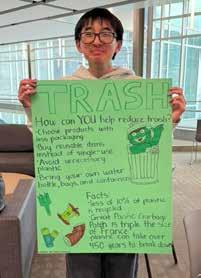
Evergreen Junior High students made and presented their own displays which focused on discussing common internet threats. (Granite School District)
rience designed to engage students and the community in the importance of staying safe online” per the event’s press release.
In 2024, the American Psychological Association (APA) reported that the average U.S. teenager is spending almost five hours a day using social media applications. The most popular applications listed were TikTok, YouTube and Instagram. The APA also found that 37% of teenagers say their internet screentime exceeds five hours daily while 14% said they spend somewhere between four and five hours online each day.
The 60% of teenagers who log excessive daily screen time, also reported low parental monitoring and weak parental relationships. Of those teenagers who engaged in excessive screentime, 22% of them also categorized their relationships with their parents as “poor” with many expressing thoughts of suicide and self-harm.
The internet can be dangerous for individuals in any age group, especially children who are, by nature, easily influenced by what they see online. To help combat the internet’s astronomical influence on its students, Evergreen has integrated internet safety curriculum into many of its courses, specifically, in college and career awareness courses.
“As part of this hands-on project, students are applying their knowledge by creating interactive displays and booths focused

on digital safety topics. These include VPNs, social media safety, hackers, viruses, malware, ransomware and more,” the press release further stated.
The internet has always posed a level of inherent risk; however, as technology continues to become more sophisticated so do the threats associated with it. Cyberattacks are becoming increasingly more targeted, scams are becoming more convincing, and personal data is more accessible than ever before. For many Gen Z and Gen Alpha students raised
with constant access to the digital world, the distinction between safe and unsafe online is not always evident.
Evergreen’s Cybersecurity Fair helped spark a necessary dialogue about online safety, bringing students and community members of all ages together to achieve an important goal—education.
“This event is a powerful example of students extending their learning beyond the classroom and making a meaningful impact in their community,” said event organizers. l


• Be part of the ultimate team sport
• Build strength and edurance
• Make lifelong friends
• Recreational and Racing programs
• No tryouts / No cuts
• Financial assistance available
National Learn to Row Day
Saturday, June 6, 9am to Noon
Competition Team
Monday-Saturday 6:30-8:30am Tuesday/Thursday 5-7pm
Recreational Rowing MWF June 1 - July 17, 8:45-10:45am

Evergreen Junior High hosted their annual Cybersecurity Fair in April. (File photo Granite School District)
Local adult athletes represent Utah at Special Olympics USA Games in June





From
By Julie Slama j.slama@mycityjournals.com
This June, athletes from across the state will represent Utah on a national stage at the 2026 Special Olympics USA Games. For many families, the journey is more than medals.
Held June 2026 in Minneapolis, the Games will bring together 3,000 athletes, 1,500 coaches and thousands of fans from all 50 states. The competition highlights inclusion, pairing athletes with and without intellectual disabilities and showcasing what’s possible through sport.
Team Utah will send 69 delegate members, including 46 athletes, ages 16 and up, and their unified partners, competing in eight of the 16 sports: athletics, bocce, bowling, golf, soccer, swimming, unified basketball (interscholastic) and unified flag football (intercollegiate), said Courtnie Worthen, Special Olympics Utah director of Unified Champion Schools.
Among those heading to Minnesota is swimmer Jordan Barlow, who has set a high goal.
“I want to set the record in the 50 freestyle; I’m going to swim hard,” said the Draper resident who attends Life Skills Academy in Canyons School District.
His mother, Mandy, said his goal is within reach.
“He’s right there with the USA Down Syndrome record around 29 seconds; the Special Olympics record is around 26,” she said. “If he gets in the 28s, we’ll be ecstatic.”
Barlow trains three to four days per week, balancing practices with his Special Olympics team, the Salt Lake Stars; Team Utah trainings and additional time in the pool with former high school swimmers, including his older sister who helps him with his starts, turns and technique.
He will compete in the 50-yard freestyle





and 25-yard backstroke, events he qualified for at last June’s Utah Summer Games.
For his mother, watching her son compete on a national stage will be emotional, even as the Games encourage athlete independence.
“I’ll be there to watch; we’re already so proud of him,” she said. “He’ll fly with the team and will stay in the dorm, so he’s eating and sleeping with the team.”
That independence is a hallmark of Special Olympics as 35-year-old Draper resident Elizabeth Jensen prepares to compete at the USA Games.
She will represent Utah as one of four members in bowling. After winning a gold medal in the state tournament in August 2025, Jensen was selected through a lottery of other athletes who qualified. She also qualified in swimming, but chose bowling, her favorite sport, and trains once or twice per week.
“I like throwing it fast,” Jensen said about her favorite part of bowling. “I’m excited to represent Team Utah in the USA Games.”
To prepare for the Games, she has been walking, lifting weights and pushing through physical challenges. Her father, Blayne, said his daughter has undergone multiple surgeries and has ongoing knee issues.
“Her kneecap will pop and slide off the front of her knee and she’ll fall down,” he said. “We’re looking to get a new brace to see if it helps.”
That is just one of the obstacles Jensen has faced. Her mother, Norma, said her daughter wasn’t expected to live her first day after being life-flighted from a Bountiful hospital to Primary Children’s Hospital. She spent her first two months in the hospital, was nourished through a feeding tube until she was 5 and wasn’t expected to crawl or walk.
Jensen attended schools in West Valley City, where her mother said it wasn’t always easy.
“Sometimes kids were really rude, and even though some were nice, her brothers were there to help her out,” she said.
Jensen prevailed; she is now an accomplished athlete —recently winning the state silver medal in dance — and is an accomplished reader and talented in the arts, painting and playing piano and ukulele.
“She’s been flourishing; she’s shining,” her mother said, adding Special Olympics has provided her daughter a community where she belongs and the confidence to be her best. “Elizabeth has been able to do the things she loves to do through the Special Olympics and will compete at nationals; now, there’s opportunity. It’s gratifying seeing how people with disabilities can do so many things.”
Blayne Jensen sees how meaningful it is to his daughter: “For me, it’s great seeing her be able to do the things her brothers got to do growing up that she didn’t get to do; and to witness how excited she gets now having the chance to compete, it’s exciting.”
In August 2025, Elizabeth Jensen won the state tournament in bowling and will represent Utah at the Special Olympics USA Games. (Photo courtesy of Norma Jensen)
Cottonwood Council PTA honors outstanding volunteers
Awards ceremony recognizes the dedication of volunteers, school staff and educators.
By Collette Hayes c.hayes@mycityjournals.com
With80,000 members statewide, PTA volunteers are the superstar volunteer heroes who tirelessly champion all children, helping make every child’s potential a reality by empowering and engaging families and communities.
Utah PTA is the nation’s largest child advocacy group, with 80% of Utah schools participating, which far exceeds the national average of 20% to 30%. Utah PTA members contributed an astonishing $17,237,060 in volunteer service hours in 2025.
This commitment to advocacy and service is evident in Utah PTA’s impact statewide. The Utah PTA’s dedication to supporting public-school children played a significant role in Utah achieving the highest national ranking for community life by the 2025 Social Capital Index (Utah Foundation). The index comprises eight measures, each evaluated on a scale from 1 to 50. Utah ranked first nationwide in charitable donations, volunteerism and neighborhood participation.
Reflecting this statewide spirit of dedication, in March, the Region 5 Cottonwood Council PTA, which serves Granite School District schools, held an awards ceremony at Cottonwood High School to celebrate the commitment of volunteers, school staff and educators who strive to create excellence for every child.
Participants included Granite School District principals from all six schools in the network. In addition, mayor and councilmember representatives from Millcreek, South Salt Lake, Murray and Holladay were present.
Keynote speaker Robyn Ivins shared her 23-year journey as a PTA volunteer beginning from serving on the PTA board at Woodstock Elementary to being a contributing founder and longtime volunteer at the Cottonwood High School food pantry which serves over 100 students each time it opens.
“We opened the food pantry in January 2017,” Ivins said. “We’ve served thousands of students and their families since then. We offer school

supplies, hygiene products and food. Parents are also invited, and often kids come with a list from their moms to do the shopping. It’s a magical place. The Cottonwood Food Pantry and Teen Center came about because regular people in the community cared that kids have access to a place to shower if they don’t have access to a shower, a place to do laundry, and a place to do homework. Kids in need also have access to mental health resources. Connection to community and school helps kids succeed. An amazing group of people worked hard to secure $750,000 for this facility.”
The evening concluded with remarks from Cottonwood High School Principal Justin Pitcher, who emphasized the significance of the Spirit of Inclusivity Award as one of the PTA’s highest honors. This award recognizes individuals who welcome families, advocate for every child, and collaborate with the school community to support student success. Pitcher explained, “Being a member of the PTA means you are an advocate for academic literacy and support; you care about students’ sense of belonging in their schools, and ultimately you care about ensuring that kids know someone cares about them.”
This year, the PTA honored Lupe Herrera with the Spirit of Inclusivity Award for helping the Moss PTA represent the diverse voices of the Moss Elementary community. Her ongoing commitment ensures families feel respected, seen and supported at Moss. l
The Cottonwood Council PTA award recipients for 2026: Millcreek
Moss Elementary
Lupe Herrera – Spirit of Inclusivity
South Salt Lake
Woodrow Wilson Elementary
Andrea Arcos – Outstanding Volunteer
Anne Marie Pace – Development
Holladay Oakwood Elementary
Jenette Stewart – Development
Debra Larsen – Outstanding Support Staff
Lu Yan – Outstanding Elementary Educator
Megan Carter – Spirit of PTA
Mistie A’Hearn – Outstanding Volunteer
Bonneville Jr. High
Alyssa Longstaff – Outstanding Administrator
James Reese – Outstanding Secondary Educator
Lyndsie Anderson – Outstanding Volunteer
Maren Erickson – Outstanding Support Staff
Stacy Wood – Advocacy
Tiffany Woods – Development
Murray Woodstock Elementary
Melissa McQueen – Outstanding Administrator
Antonia Salinas Ventura – Outstanding Support Staff
Brynn Richards – Outstanding Volunteer
Natalie Bradley – Spirit of PTA Cottonwood High
Michelle Call – Engagement
Ashley Snarr – Outstanding Administrator
Andrew Strauss – Outstanding Secondary Educator
Melisa Carpenter – Outstanding Volunteer
Teisa Linscott – Spirit of PTA

Cottonwood Council PTA award recipients for 2026. (Collette Hayes/ City Journals)
Utah seeks to mandate stackable credentials for high school graduates
The Utah State Board of Education has paired with YouScience, a platform designed to help guide students toward college and career preparedness.
By Lizzie Walje l.walje@mycityjournals.com
InMarch, the Utah State Board of Education announced their new partnership with YouScience, an educational platform designed to help high school students achieve college and career readiness (CCR). Broadly defined, CCR is a framework that was developed to help prepare high school students for the unique challenges that accompany navigating college coursework, and subsequently, securing employment.
The parameters surrounding CCR are somewhat malleable depending on the student in question and their respective collegiate and career goals. However, according to an article written by University of Oregon Professor David T. Conley and published by the U.S. Department of Education, a CCR-certified student is one that is “ready for college and career [and can] qualify for and succeed in entry-level, credit-bearing college courses leading to a baccalaureate or certificate, or career-pathway oriented training programs without the need for remedial or developmental coursework.”
Conley further explained that not every CCR student will require the same level of proficiency in a given subject. Rather, the goal of CCR is to determine relevant pathways forward for individual students based on their goals, aspirations and interests. According to the Conley, “The measure of success should be student success in their chosen field of post-secondary education or post-high school training.”
While CCR isn’t exactly a novel concept, the Utah State Board of Education’s choice to partner with YouScience is decidedly noteworthy. The decision came on the heels of House Bill 260, a bill that originally got its start back in 2025 during the Utah General Session. HB 260, also known as the First Credential Program, was sponsored by Rep. Val Peterson (R-Utah) and Sen. Ann Millner (R-Utah). Original provisions in the bill expressed that the First Credential Program would allow students to earn industry-recognized college credits while still attending high school.
The First Credential Program requires Utah students to graduate with a meaningful “first credential.” This first credential must be stackable, connected to postsecondary credit(s), and aligned to meet the demands of the current workforce. The First Creden-

tial Program expands on routine career exposure initiatives, giving students access to a platform that will help them achieve verified readiness and give them clearer pathways forward, particularly pathways that promote direct enrollment in Utah’s public colleges.
Following the implementation of the First Credential Program, the Utah State Board of Education has decided to use YouScience’s Brightpath program to power a “first-of-itskind statewide platform.” Per their website, YouScience describes Brightpath as an “aptitude-based guidance platform that leverages data and artificial intelligence to help individuals identify their aptitudes, validate their skills, and get matched with educational and career pathways.”
According to data listed on their website, there are currently 11,000-plus schools and organizations using YouScience. Furthermore, over seven million assessments have been completed using their technology, resulting in 87 billion student specified result variations. YouScience heavily emphasizes that Brightpath is designed to test for multiple factors, among them a student’s natural aptitude or skillset. Using this information, Brightpath is able to analyze each student, determining personality traits and academic acumen before suggesting which careers may offer a logical, harmonious fit.
Brightpath operates in five distinct phases, beginning with discovery. The discovery phase is essentially what its name suggests—a phase in which students undergo an assessment that seeks to identify and pinpoint their inherent skills. Following discovery, students enter the plan phase where they are recommended relevant coursework and encouraged to explore
specific secondary-education options. After the planning phase students move onto the certify phase where they can explore various industry-recognized certifications.
Brightpath’s final two phases are referred to as connect and analyze. The former helps students connect with the best-fitting options for university and/or post-secondary programs, work-based learning programs and employers, based on the totality of their Brightpath assessment results. In the final phase, analyze, students are given access to insights, analytics, and reporting that measure the student’s success
In a press release, the Utah State Board of Education explained that by partnering with YouScience students “won’t just graduate with a diploma; they’ll leave with meaningful, stackable credentials tied directly to high-wage workforce demand.” The press release also touched on the Utah’s desire to lead by example, transitioning away from vague career exploration to verified readiness. One part of the overarching goal is to create a “national blueprint” one that can be emulated by other states.
Fortunately, Brightpath has already been deployed across many schools and institutions in Utah. As a part of the First Credential Program, a career mapping tool will be integrated into the existing Brightpath interface. The expanded platform will connect Utah middle and high school students with postsecondary and workforce systems all streamlined into one operating engine that helps simplify the process for the students while actively reducing the administrative burden on staff and faculty.
“This initiative reflects Utah’s commitment to ensuring every student graduates
with verified skills and a clear path to postsecondary success,” said Jonathan Frey, CTE coordinator, Career and Technical Education with the Utah State Board of Education. “By providing a statewide mapping tool to support the requirements of HB 260, we are helping students better align their education with high-demand career opportunities and strengthening the state’s workforce pipeline.”
Through this decision, Utah joins a small cohort of other states that are seeking to roll out similar technologies. Utah believes that their specific model will emerge as one that other states can eventually replicate.
“This is about more than technology,” expressed Edson Barton, the CEO and cofounder of YouScience. “Utah is demonstrating what it looks like to move from policy to practice. By creating a unified, longitudinal system, the state is ensuring students graduate not only with a diploma, but with verified credentials connected to real opportunity. We are proud to partner with Utah to deliver this next phase of Brightpath and help strengthen the state’s education-to-workforce pipeline.”l

YouScience helps students discover potential college and career pathways based on student assessments that focus on aptitude testing. (YouScience)
The Utah State Board of Education hopes to use YouScience to set an example on how to implement college and career readiness curriculum at a statewide level. (Utah State Board of Education)



Charge for Change gives batteries a second life through student-led recycling effort
The local nonprofit maintains four battery drop boxes in the Cottonwood Heights/Millcreek areas with hopes for expansion.
By Lizzie Walje l.walje@mycityjournals.com
For Skyline High School student Hailey Park, an interest in environmentalism existed long before she conceptualized Charge for Change.
Park, currently a sophomore, is the daughter of two South Korean immigrants who own and operate a Salt Lake City restaurant called Mr. Shabu. Growing up around her family’s business, Park began to realize that the restaurant generated a substantial amount of battery waste. After encountering battery recycling stations at both the University of Utah and Salt Lake Community College, Park decided to take the initiative into her own hands, ultimately leading to the creation of Charge for Change.
Like many nonprofit organizations, Charge for Change emerged from humble beginnings. After drawing inspiration from her surroundings, Park channeled substantial energy into researching battery recycling. It was around this same time that she began collecting batteries from her friends and family, before dropping them off at one of Utah’s battery disposal centers. During those drop-offs, which Park herself would facilitate, she routinely inquired about the battery disposal and recycling process. Eventually, Park would use this newfound knowledge as a foundational base for creating Charge for Change.
“It mostly started in December of 2024,” Park said. “That’s when I started actually collecting batteries, not just from the people I knew but from people that I didn’t know
throughout the community. I started at the library by my house, at Whitmore Library, in Cottonwood Heights. That’s where I put my very first collection box and it became so much more popular than I thought it would. Just in the first week, we had [the donation box] filled up.”
Following this unexpected success, Park decided to establish additional donation stations at the Cottonwood Heights City Hall and the Cottonwood Heights Recreation Center. Park’s hard work was beginning to come to fruition; however, she soon realized the project was becoming unmanageable for one person alone. At the time, Park was unable to drive, making it difficult to oversee the logistics associated with the collection process. Her next move was founding a club at Skyline High School. In autumn of 2025, Charge for Change was officially born.
Charge for Change is almost exclusively student-run. For context, all clubs at Skyline are overseen by an adult advisor; in the case of Charge for Change, that advisor is science teacher Malia Groesbeck. However, despite Groesbeck’s support, Charge for Change is very much propelled by students, particularly those in leadership positions. Since the club’s formal registration as a nonprofit, they have recycled 1,270 poundsof batteries.
As of spring 2026, Park has retained her position as founder and president of Charge for Change. The club also features six additional student leadership positions currently held by Lydia Bartholomew, Melanie Wang, Elijah Shen, Nathan Wilkerson Wong, Solomon Kim and Chloe Park. In a little over a year’s time, Charge for Change has grown to 60 students and counting, as it remains open enrollment for students interested in joining. Park stated that while Charge for Change is currently exclusive to Skyline students, the organization leaves the opportunity for students

optimistic that such technology could become more accessible in the future. More broadly, Park hopes to see Utah strengthen its battery recycling initiatives through the addition of supportive legislation. She pointed to California as an example with its extensive battery recycling protocols already in place. Park hopes to see similar legislation and infrastructure implemented in Utah.
at other schools to establish clubs of their own.
Presently, Charge for Change is focused on a handful of different tasks, including managing their four current donation boxes. These donation boxes can be utilized by anyone in the community and are equipped to handle any type of battery, aside from alkaline batteries. Unlike other batteries, alkaline batteries require a different refinement process to become suitable for recycling. While some specialized facilities and hazardous waste programs in Utah are able to process alkaline batteries, the infrastructure for widespread alkaline battery recycling remains limited.
“We’ve talked with [the disposal centers] about recycling alkaline batteries and they’ve agreed to dispose of them in a way that mitigates risk and stops them from going into the landfill with everyone else. So right now, although those aren’t being fully recycled, they’re being disposed of in a way that is a little safer for the environment,” Park said.
Despite the limited availability of alkaline battery recycling in Utah, Park remains
“One thing we did recently, me and a few people from the Charge for Change team was go to the Cottonwood Heights City Hall and we had a meeting with the city’s planners and a few other people to talk about potential next steps. Steps for how we can continue to grow our program with them,” Park said. “So I’m hoping that soon in a few years after our program expands even more, we’ll be able to have a bigger impact by working with various city halls.”
Park is fully committed to Charge for Change and intends to continue growing the program until she graduates. Park cannot say for certain whether she will maintain a position within the organization post-graduation, although she hopes to remain involved in some capacity. For now, Park is focused on ensuring the club is managed effectively while continuing to expand both her team and the number of donation boxes available.
Charge for Change battery donation stations are currently located at the Millcreek Community Library, Cottonwood Heights Recreation Center, Cottonwood Heights City Hall and Whitmore Library in Cottonwood Heights. All types of batteries, including larger batteries such as car batteries, can be donated at any Charge for Change box. The only batteries not accepted for recycling are alkaline batteries and leaking batteries of any kind. To learn more about Charge for Change and stay up to date on its operations, visit its Instagram page, @Charge.For.Change l
The Skyline-led student club and nonprofit organization has grown to 60 members and counting. (Hailey Park)
Charge for Change currently has four donation locations, with hopes to expand in the near future. (Hailey Park)
Charge for Change has collected over 1,200 pounds of batteries and counting. (Hailey Park)
Charge for Change focuses on the recycling of batteries. (Hailey Park)
Parkinson’s Disease
WBeyond the Tremor: Unveiling the Invisible Struggle of Parkinson’s Disease
HEN YOU THINK OF PARKINSON’S DISEASE, a visible tremor might come to mind. However, the true experience often lies hidden beneath the surface – an “invisible struggle” impacting millions. This article highlights the complexities of Parkinson’s and advancements in care.
A common misconception is that all Parkinson’s patients experience tremors. This isn’t true; up to 20% do not. Additionally, Parkinson’s isn’t just an elderly condition. Young-Onset Parkinson’s Disease (YOPD) affects individuals under 50, with celebrity Michael J. Fox, diagnosed at 29, significantly raising awareness and funding for research.
As Dr. Sunil Rathore, a neurologist at Holy Cross Hospital – Salt Lake, emphasizes, “Many people believe Parkinson’s is solely a motor condition, defined by tremors and rigidity. However, that’s just one piece of a much larger and more complex puzzle. The non-motor symptoms – from sleep disturbances and anxiety to cognitive changes and chronic pain – can often be the most challenging aspects for our patients.”
The Hidden Realities: Non-Motor Symptoms and Daily Impact
The “invisible struggle” of Parkinson’s includes a wide array of non-motor symptoms impacting daily life, often appearing years before motor symptoms. These can include loss of smell (anosmia), REM sleep behavior disorder, constipation, depression, anxiety, cognitive changes, and debilitating fatigue. These realities profoundly affect well-being, turning simple tasks like dressing or driving into immense challenges and leading to social isolation.
Hope on the Horizon: Advancements in Treatment and Research
While there’s no cure, significant advancements are improving symptom management and quality of life. Levodopa remains a cornerstone medication, with ongoing developments to optimize its effectiveness. Advanced therapies like Deep Brain Stimulation (DBS) and focused ultrasound offer new hope by precisely targeting brain areas responsible for motor symptoms. Emerging research explores disease-modifying drugs, gene therapy, and biomarker discovery. The Michael J. Fox Foundation has raised over


i số 1-303-643-1000 (TTY: 711).
$2.5 billion for research, accelerating the search for a cure.
Dr. Rebecca H. Reiser, a neurologist at Holy Cross Hospital – Jordan Valley, states, “The landscape of treatment and support is constantly evolving. We’re seeing incredible progress in understanding the disease at a molecular level, leading to more targeted therapies and a renewed sense of hope for better symptom control and ultimately, a cure. Our goal is to empower patients to live full and meaningful lives.”
Local Expertise and Support Available
Living with Parkinson’s is a journey best not taken alone. Our community offers local support groups, specialized exercise classes, and educational events for patients and caregivers. If you or a loved one are experiencing any concerning symptoms, please consult a provider. Early diagnosis and proactive management are key. For more information, visit: mountain.commonspirit.org.
For more information or to find a provider visit mountain.commonspirit.org


Learn more about the services, care providers and mission-driven work of the Holy Cross hospitals and CommonSpirit Health at www.holycrossutah.org.

At CommonSpirit Health, we make the healing presence of God known in our world by improving the health of the people we serve, especially those who are vulnerable, while we advance social justice for all.
When minutes count, count on our emergency care.
When you need emergency care fast, the closest emergency room is a smart thing to know. You never know the level of care you’ll need when an emergency happens and choosing the right ER can make all the difference. And a hospital ER comes with the confidence of additional services right on-site.
CommonSpirit Holy Cross Hospital – Salt Lake has been awarded Chest Pain Center Accreditation from the American College of Cardiology (ACC). Facilities that achieve accreditation meet or exceed an array of stringent criteria for evaluating, diagnosing and treating patients who may be experiencing a heart attack.
Find emergency care close to you at mountain.commonspirit.org.
Eighth-grader Holland Smith, accompanied by Granite Superintendent and Chief of Staff Ben Horsley, partook in superintendent duties—meetings, socializing and working alongside faculty.
By Lizzie Walje l.walje@mycityjournals.com
Aneighth-grade student from Wasatch Junior High School recently stepped into the role of Granite School District superintendent, when she participated in the district’s’ “Superintendent for a Day” election. In an effort to mirror real-world practices, Granite modeled the selection process after the district’s official hiring procedures. It was through this mock hiring process that Holland Smith was ultimately chosen as Granite’s student superintendent for the day.
Following her nomination, Smith underwent a competitive selection process that included delivering a speech and participating in a formal panel style interview. The interview panel consisted of actual district leaders and members of the Granite Board of Education. Granite modeled the interview process after that of an actual su-

Wasatch Junior High student serves as Granite’s ‘Superintendent for a Day’
perintendent candidate in order to further cultivate the legitimacy of the experience.
“During her day in the role, the student will work alongside Superintendent (Ben) Horsley, gaining firsthand experience in district leadership and decision-making. Her schedule will reflect a full day in the life of the superintendent,” Granite School District stated in a release.
Smith began the day alongside her friend and fellow Wasatch student, June Beyon, who she selected to serve as her “Chief of Staff.” The two students stepped into these leadership roles designed to reflect the responsibilities carried out by district administrators on a daily basis.
In reality, superintendents act as the top administrative leaders responsible for managing public school districts, while a chief of staff serves as a senior advisor to the superintendent and often assists with managerial and organizational responsibilities. In Granite School District, Horsley currently holds both superintendent and chief of staff positions, though the roles are typically considered separate.
Smith and Beyon began their day at Wilson Elementary School, where they attended a faculty meeting. During the meeting, Smith and Beyon presented checks to
outstanding Wilson educators. From there, the day proceeded with a series of meetings, student interactions and conversations with district officials, board members and student body officers.
Later in the day, Smith and Beyon attended a Salt Lake Bees game, where they joined a group of fifth-grade students before handing out souvenir baseballs. Following a lunch at Chick-fil-A, Beyon and Smith continued their tour of the district, visiting Calvin Smith Elementary School and Bennion Junior High School. The day’s festivities concluded, as they often do for actual Granite School District superintendents with another meeting.
“This experience provides students with a unique opportunity to see leadership in action and understand the responsibilities of running a large school district,” Horsley said. “We are excited to have such an outstanding student represent her peers in this role.”
Smith spoke positively about her experiences. “Today I’ve been able to be superintendent for the day. It’s been such an amazing experience, learning what goes on behind the scenes. It’s been such an amazing opportunity, and I’m so glad that I was able to do this today.”l
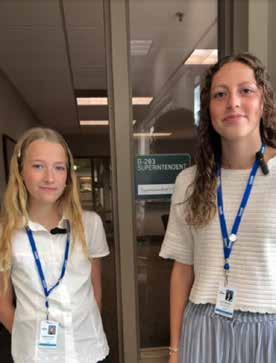
Holland Smith and June Beyon, both students at Wasatch Junior High School, participated in Granite School District’s mock superintendent day where they served as student superintendent and chief of staff, respectively. (Granite School District)
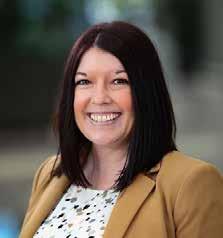
Felicia Wright: Farm Bureau Financial Services
Who is your ideal client/customer?
I love working with young families and business owners.
in home, auto, life, business and farm/ranch insurance, as well as retirement and financial planning.
What sets Farm Bureau Financial Services apart from other insurance agencies?
We are a local company that is out in the community on a daily basis. We’re not an 800 number that you call, we focus on building relationships with our clients to help protect their needs today and plan for the future. We want to make things easier for our clients. Does your business solve a problem for your customers? If so, tell us how.
I’m here to help answer any insurance questions for my clients, whether it’s about liability, life insurance, property coverage or anything in between. My job is to be a resource for my clients and give them the best coverages to fit their needs now and into the future.
How do potential clients normally choose between you or a competitor?
I hope that through educating my clients, they see me as a trusted resource to help with all of their financial needs and not just another insurance person. I value the relationships I build while creating the policies, and my clients deserve my time and attention.
What is your best advice for someone who is considering doing business with you?
You shouldn’t just always look for the cheapest rate when it comes to insurance. You should look for an agent that knows the industry and can get you the best policy to protect you and your families needs and interests. What factors should potential customers be basing their decision on (referring to the above question)?
A big thing that sets me apart is that I
prefer to meet with all of my clients in person on an annual basis. Whether their needs have changed or not, I don’t want them to feel like just another policy. I want them to know I care about them and their financial future.
If you are a service provider, what is your service area?
I can help with insurance needs for anyone in Utah, as well as IA, KS, NE, MN, SD, AZ, and NM.
What is your favorite product/service your Farm Bureau Financial Services offers?
I’m very passionate about life insurance. It’s not a required insurance like auto is, but it’s the most important in order to protect families.

Local golfer Ashley Lam wins titles in college and at a pro-am

Skyline High graduate Ashley Lam continues to win golf tourneys, including a pro-am at Copper Rock.
someday, but if that doesn’t work, I wanted to get a good education and it’s a great school for my major, which is Finance.”
By Tom Haraldsen t.haraldsen@mycityjournals.com
t was quite a month on the links for Westminster University golfer Ashley Lam. The sophomore from Taylorsville, who played at Skyline High School, won the Rocky Mountain Athletic Conference women’s golf title for the second year in a row, leading the Griffins to an overall second-place finish. That was just for starters.
Lam went on to play at the NCAA West Regionals in Pueblo, Colorado, narrowly missing qualifying for nationals, then teamed with fellow Griffin Lily Shin to win the pro-am at the Copper Rock Championship, part of the Epson Tour for women professionals, on May 11 in Hurricane. They partnered with Epson Tour pro Lauren Peter for the title.
“I chose Westminster because I wanted to be close to my family, while also getting a good college golf experience,” she said. “The big goal is to go pro


She said the experience at Copper Rock was great, playing with a pro and “kind of picking her brain to see what she thinks about being on the tour. It definitely gave me a taste of what I’d like to do. I think it would be a fun experience to try if I end up doing it.”
Golf is her goal if her game warrants it. She began playing golf at age 10, following her older brother Sean and her father Dat as they played.
“I sat in the cart and ate snacks and watched them,” she said with a smile. “It was really watching them that got me started.” That meant many trips to Fore Lakes Golf Course in Taylorsville, one of her favorites where she still practices.
For her efforts along with Lily at Copper Rock, they were awarded a pair of FootJoy golf shoes (“A very nice gift.”). She said playing in the pro-am was particularly nice this year “because the course is often windy, but it was really calm and nice the day we played.”
This summer, Lam plans to play in a few Utah Golf Association events, including the Mary Lou Baker Open at Glenmoor in August, as well as the Utah State Amateur and the Utah Women’s Open. l









Lam won the Rocky Mountain Athletic Conference women’s golf title for the second year in a row.
Westminster golfer Ashley Lam, Epson Tour pro Lauren Peter, and Lam’s teammate Lily Shin won the pro-am title at the Copper Rock championship on May 11. (Photo courtesy of Ashley Lam)
From competitors to co-creators of hope: Utah trades launch ‘Trades for Wishes’

By Rebecca Olds r.olds@mycityjournals.com
Business
owners in Utah’s trades are teaming up with Make-A-Wish Utah to help grant children’s wishes in the state and give “the gift of hope” with a program they are deeming “Trades for Wishes.”
Leading the efforts are two would-be competitors — TruePros Heating and Air owner Katy Higgins, A Plus Garage Doors owner Carrie Kelsch, along with ServiceTitan’s brand and marketing lead, Ellen Rohr, and Summer Ehrmann of Make-A-Wish Utah — are joining forces and raising funds that will help grant wishes of Utah children across the state.
“What started as a single moment quickly became something bigger,” Higgins said.
“Other companies began asking how they could be part of it. That’s when we realized this could be more than a one-time effort — it could be a movement.”
That movement was fed by ServiceTitan, a software platform for trades businesses, servicing 13,000 customers across the U.S., Canada and Australia.
Rohr calls Higgins and Kelsch “super ambassadors,” a term she has dubbed for the big potential they have to make a difference with the program. She added that the passion of the trades and the organization of Make-AWish Utah make the whole program possible.

or
•Barks •Colored Mulches •Sand/Gravel •Replenish Compost •Premium Soil Blends • Playground Chips •Landscape Fabric AND MORE! Available in: Small Bag - Bulk (loose) OR Super Big Bag (1 cubic yard)








“Make-A-Wish Utah is very organized and formal about how donations are used, so that it’s equitable,” Rohr said. “Kids get a fair shot.”
By the end of April, 11 companies were involved, Ehrmann said, “with new partners making fundraising commitments each week.”
“This community-led initiative brings our mission to life: to grant life-changing wishes for Utah’s kids fighting critical illnesses,” Ehrmann said. “As Make-A-Wish Utah charges nothing for its services and receives no government funding, we rely on the support of Utah communities to grant Utah wishes.”
TruePros worked with Ehrmann and Make-A-Wish Utah to help grant wishes for kids like Kyson last year. The company raised $25,000, earned by setting aside $25 per install. Kyson’s wish was to go to Walt Disney World.
Kelsch also attended a wish proclamation event for Kyson, hosted by Higgins. Both Higgins and Kelsch have experienced the power of Make-A-Wish Utah, with Higgins’s daughter and Kelsch’s niece and, by extension her daughter, being wish recipients.
Higgins’ 27-year-old stepdaughter, Seattle, had her own wish granted 20 years ago.
Seattle is blind, deaf and mute, and lives full-time with Higgins and her husband. Despite her severe condition, Higgins said they are on “borrowed time” as Seattle is one of the oldest living people with her disease.
Her legacy is cemented at the Make-AWish Utah facility, where her story is featured in the organization’s third scrapbook and her star remains in their ceiling’s constellation.
“The work they do down there is incredible,” Higgins said.
Currently, there are more than 270 Utah children waiting for their wishes to be granted.
The group started “Trades for Wishes” with the conservative goal to raise $100,000 in 2026, $75,000 more than what TruePros raised alone in 2025 for Kyson.
But it has quickly gained traction, and by the end of April, the program has already exceeded Higgins’ starting goal. Now, Kelsch said, they are thinking bigger for the end of the year, closer to the $1 million mark, surpassing all other Make-A-Wish Utah fundraising initiatives.
“I don’t want people to feel like they’re not big enough to contribute, and I don’t want them to feel like they’re too big to contribute,” Higgins said. “This is all about doing your part in your own way and your own time.”
Even after a devastating winter in 2026 due to lack of snow that put financial strain on many small businesses, Higgins is encouraging creative giving, big or small. Each company can work with Make-A-Wish Utah to build a customized fundraising plan tailored to the goals and values of each company.
It’s a way to give back in a different way than Utah’s trade companies are already doing, Kelsch said.
“Think about what the trades have built for you,” Kelsch said. “They build all your houses, they do all the plumbing and the HVAC and the garage doors and roofs — they build communities.”
They are inviting all trade companies in Utah to join “Trades for Wishes” and join in a large celebration on Dec. 12, on the Day of the Trades. At that event, the Trades for Wishes companies and staff will gather to surprise a Utah wish child with the news that their wish will be granted.
Higgins and Kelsch imagine a parking lot full of vans from all trades rounded up, branded apparel everywhere and a grinning kid in the middle of it — really bringing a “human element.”
Ultimately, it comes down to what that grinning kid represents. Medical studies published in the Journal of Pediatric Medicine show that kids who receive wishes do better than kids who don’t. Higgins called it “a gift of hope.”
“We’re the ones taking care of the weather, the sewer, the water, the roofs, the garage doors, the electricity,” Higgins said. “What about the children?” l
Carrie Kelsch, owner of A Plus Garage Doors, and Katy Higgins, owner of TruePros Heating and Air, are teaming up to make children’s wishes come true. (Courtesy Katy Higgins)
Turning the page: What Utah readers are reaching for this summer
By Holly Curby hello@hollycurby.com
As summer settles into the Salt Lake valley, libraries, book clubs and quiet evenings on the porch are filling with stories. But beyond entertainment, summer reading continues to play an important role in learning, growth and connection. According to educators in the Canyons School District, children who don’t read during the summer can lose academic progress, but even small daily habits can make a difference. Utah libraries are working to bridge that gap through statewide programs and local initiatives designed to keep readers engaged.
The Utah State Library Division emphasizes that summer reading programs “help children and teens retain and enhance their reading skills over the summer” and “foster a love of reading” while building confidence and supporting education.
Reading isn’t just about academics; it also supports everyday life skills. Librarian Faye Fischer wrote in her article “Read-a-thons, Reading Goals, and Literacy Initiatives in Libraries” that reading can “lower stress, boost communication skills and keep your brain sharp.” That broader impact is one reason many readers are reaching for books that offer both enjoyment and meaning this summer.
Librarians and reading programs across Utah suggest mixing genres to keep reading fresh:
For inspiration and intentional living:
• “Face-Lift: Embracing Hope Through Your Heartaches” by Holly Curby — A reflective, faith-centered look at overcoming life’s challenges.
For personal growth:
• “The Noticer” by Andy Andrews — A reminder of how perspective can shape life’s challenges.
For leadership and growth:
• “Atomic Habits” by James Clear — A guide to building better habits through small changes.
• “Unreasonable Hospitality” by Will Guidara — Lessons on service, leadership and team culture.
For engaging fiction:
• “Redeeming Love” by Francine Rivers — A bestselling story of love and redemption.
For families and children:
• “The Wild Robot” by Peter Brown — A story of belonging and resilience.
• “Harry Potter” series by J.K. Rowling — A classic series that continues to engage young readers.

Summer starts here — Utah readers’ mustreads, stacked and ready.
Programs like those at Utah State University Libraries even highlight peer recommendations, where one student described a favorite book as “beautifully crafted… a story about love and understanding.”
Libraries are offering creative ways to keep reading engaging. Programs through the Salt Lake County Library and other local systems include reading challenges, story times and prize incentives. The Utah Education Network notes that “reading is more than a great escape: it boosts brain power and feeds curiosity.” Community businesses such as Chuck E. Cheese and bookstores such as Barnes & Noble have often joined in, offering summer reading promotions that encourage families to stay involved. This summer the county libraries will be offering a summer reading program themed “Unearth a Story” from May 29 through July 31. All finishers receive a free book, a coupon sheet for local attractions and entry into a prize drawing. There are also optional bonus round challenges. Visit thecountylibrary.org/calendar for details and more information.
Ultimately, summer reading remains one of the simplest ways to support learning and well-being at any age. Whether it’s a child discovering a new favorite series or an adult finding encouragement in a meaningful book, the impact can last far beyond the season. Utah libraries continue to make that possible as they provide access, programs and opportunities that help turn reading into a lifelong habit. And this summer, across the valley, that story is still unfolding — one page at a time.
Additional book recommendations can be found in the book club on www.HollyCurby.com and Holly’s Highlights podcast season 3 episodes 10 and 11, available wherever you stream podcasts. Happy reading! l

Nurses honored as profession faces potential shortage across the country
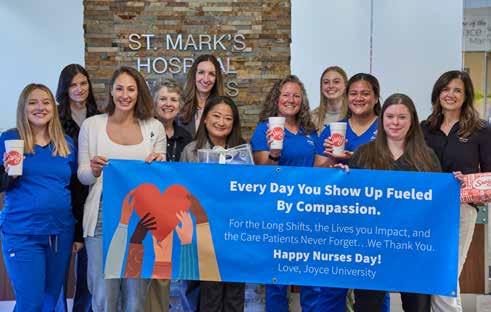
Joyce University, a local nursing school, partnered with Swig to celebrate over 6,000 nurses on May 6, National Nurses Day.
National Nurses Week in May served not only a time to celebrate nurses, but a reminder of the pressures it faces across the country.
Joyce University, a nursing and health sciences school based in Draper, recently commissioned a survey of registered nurses that found 74% felt emotionally exhausted from work multiple times a week. More than half, 53%, said they have seriously considered leaving the profession on a monthly basis.
“Nurses and nursing students give so much of themselves in service to others, and National Nurses Day is an important opportunity to recognize that commitment,” said Tami Rogers, dean of nursing at Joyce University, in a press release.
The U.S. Chamber of Commerce report-
ed in 2024 a significant nursing shortage with projected job openings per year until 2032 to be 193,100. But only 177,400 additional nurses are expected to enter the workforce during that same timespan, less than what is needed to fill one year of projected openings. The report stated burnout and an aging population as two of the reasons for the significant gap.
To combat these challenges, Joyce University honored 6,602 nurses and nursing students on May 6, National Nurses Day, by partnering with Swig to offer a free 24 oz. drink or cookie across the state. The university also sent Starbucks gift cards to all regional students and delivered special gifts to its clinical partners, recognizing the broader community that helps support and strengthen the next generation of nurses.
“We were proud to celebrate our nursing community this year and to show our appreciation not only to those already serving on the frontlines, but also to the students and clinical partners helping shape the future of healthcare,” Rogers said. l

JUNE CONCERT SCHEDULE
June 2: Trey Anasasio and Jeff Tanski, Red Butte Garden
June 3: Pitbull, Utah First Amphitheatre
June 6: Brit Floyd–Pink Floyd Tribute, Maverik Center
June 7: The Moment at The Depot–Pride Afterparty, The Depot
June 9: Kittie with special guest Gore, The Depot
June 11: The Human League with Soft Cell and Alison Moyet, Red Butte Garden
June 12: Garry Allen, Sandy Amphitheater
June 13: Metric, Sandy Amphitheater
June 13: Kid Cudi, Utah First Amphitheatre
June 14: Nitty, Gritty Dirt Band, Sandy Amphitheater
June 15: Pussycat Dolls, Utah First Amphitheatre
June 16: Grace Potter, Red Butte Garden
June 17: Greensky Bluegrass, Red Butte Garden
June 17: Alex Warren, Utah First Amphitheatre
June 19: The Red South with Amigo the Devil, Sandy Amphitheater
June 19: Rod Stewart, Utah First Amphitheatre
June 19: DoKnow, The Depot
June 20: Watchhouse, Sandy Amphitheater
June 22: Corbyn Besson and Soulidified, The Depot
June 23: Ziggy Marley, Red Butte Garden
June 24: Brothers Osborne, Sandy Amphitheater
June 26: MGK with Wiz Khalifa, Utah First Amphitheatre
June 28: John Craigie and Blind Pilot, Red Butte Garden
Locations for concert venues:
Red Butte Garden–2188 Red Butte Canyon Road, Salt Lake City
Sandy Amphitheater–1245 E. 9400 South, Sandy
Utah First Credit Union Amphitheatre–5150 Upper Ridge Road, West Valley City
Maverik Center–3200 S. Decker Lake Drive, West Valley City
The Depot–13 N. 400 West, Salt Lake City
Joyce University honored 6,602 nurses and nursing students on May 6, National Nurses Day, by partnering with Swig to offer a free 24 oz. drink or cookie across the state. (Photo courtesy Joyce University)










Millcreek Common’s Dutch Day Festival-goers celebrate the color orange and more
The celebration also included music, skating, stroopwafels, a bike decorating contest and beer.
By Jolene Croasmun j.croasmun@mycityjournals.com
Millcreek Common was bright orange and loud the last weekend of April as many folks attended the Dutch Day Festival to celebrate Koningsdag or King’s Day. King’s Day is a national holiday in the Netherlands where they celebrate the king’s birthday.
The color orange is the Netherlands country color and during the Dutch Day Festival, Millcreek Common was experiencing the “orange craze.”
Dutch heritage and culture was featured on the plaza while locals danced, drank beer, consumed stroopwafels and witnessed the competition of the best orange decorated bikes.
Sharon Wuolukka owns The Old Dutch Store in Holladay and was working the festival. “I am a Dutch girl born in America,” Wuolukka said. The Old Dutch Store has been around since 1978 and she purchased it in 2003.
“We do kroketten and it’s very Dutch and one of our top sellers. We have a deli counter and we do lunch with soup and salads along with several delicious sandwich offerings including one called the Bavarian with your choice of knackwurst or kielbasa.”
The Dutch Club of Utah was started by Wuolukka’s daughter, Katie Reid.
“People would come into The Old Dutch Store and would ask, ‘Where is the Dutch club? I need a Dutch club!’ So I decided to create one,” Reid said.
“Some people in the club do speak Dutch,” Reid said. “We have two big events, Sinterklaas at the end of November or beginning of December and Koningsdag in April and we planted tulips at the Peach Gardens as a service project.”
Shelley Bullock and her daughter Sky were having a great time. “I just wanted to expose my family to their Dutch heritage and thought what better way to start than to attend the Dutch Day Festival,” Bullock said.
“It’s been a really good turnout,” Wuolukka said. To learn more or join the Utah Dutch Club visit www.dutchsocialclubutah.com.l

Chloe and Iris came out to have fun dressed in orange to celebrate Koningsdag at the end of April at Millcreek Common. (Jolene Croasmun/ City Journals)

Volunteers at Millcreek Common wearing orange and helping out with the Dutch Day Festival.
Croasmun/City Journals)






(Jolene
Asteachers pop the champagne and schedule full-body massages, mothers are slowly descending into madness. Summer break stretches ahead like a sunburned, melted-fudgesicle 10K, with lots of family time. So much family time.
As a young mother in the 20th century, summer vacation was a blur of wet towels, lost flip-flops, and popsicle sticks stuck to couch cushions. My daughters spent the days selling Kool-Aid to neighbors, watching hours of PBS’s “Arthur,” and fighting nonstop.
I tried to keep a schedule, but it flew out the window the first day, along with my common sense and sanity. Although we went to parks, pools, hiking trails, libraries, zoos and museums, my daughters were always “sooo bored!” It was like trying to fill a bottomless, thankless pit.
Looking back, I was so lucky. Not because I could spend so much “quality time” with my kids, but because I wasn’t working out of the home. It was absolutely exhausting, but I didn’t have to worry about what my kids would do during the summer.
The school calendar was not created for single mothers, full-time working parents or children who need snacks every five minutes. It was designed for farmers who churn their own butter and rise at dawn to feed chickens.
Today, moms are scrambling to find camps, sitters, daycare and programs to keep
Popsicles and pressure
Peri Kinder Life and Laughter

kids occupied during the summer break because many mothers have full-time jobs and can’t take the summer off.
People rarely ask fathers, “What will your kids do all summer? How will you balance your job and family?” Nope. Everything usually falls to moms, most of whom can’t afford camps or additional daycare costs.
I researched “Summer strategies for working moms” and was given ideas like 1) hire a summer nanny, 2) enroll in pricey camps early, or 3) rent children to an influencer.
Who do they think these mothers are? Kardashians? I added a fourth option: quit your job and live in a van by the river.
When my daughters were little, there were several working moms in the neighborhood and their kids would hang out with us all summer. They were part of the noisy, sticky clan, constantly bickering about who got grass in the blow-up pool.
Now, mothers are anxiously waiting for their lottery numbers to hit or a magical Mary

Poppins character to show up and take control of their unruly children. Barring that, there aren’t a lot of viable options, especially in this economy.
Grandparents and other family members alleviate some of the summer schedule strain, but with about 10 weeks of out-of-school time, mothers often resort to late-night spiraling and stress eating.
It’s not all hopeless. Companies are finally realizing they’ll have happier, healthier, more productive female employees if they offer flexibility.
Progressive CEOs provide summer childcare stipends or offer discounts to local camps. Work-from-home options, summer PTO bonuses, flexible start/end times and early-out Fridays would make a mother’s summer a gajillion times easier, as well as fathers who need
scheduling help for the school break.
Maybe that’s the answer! Instead of asking companies to make things easier for moms, let’s say the dads need help. Businesses will immediately build on-site splash pads, create kid-friendly office spaces and partner with local teams to host summer-long sports camps.
Somewhere along the way, summer break turned into a summer breakdown. Parents aren’t asking for luxury vacations, just a bit of time to sit by the pool, yell at kids to stop yelling and maybe even pop some champagne. We should be able to make that work.
Peri Kinder is an award-winning columnist and journalist who has written for The City Journals since 2004. She also hosts the Life & Laughter podcast. Peri can be reached at peri.k@thecityjournals.com.