Davis County
Special Section
Family fun in Davis County Page 6
Newly appointed SDMF Chief
Chief Jeff Larsen selected May 18 Page 22

Family fun in Davis County Page 6
Chief Jeff Larsen selected May 18 Page 22
By Becky Ginos | becky.g@thecityjournals.com
North Cottonwood Commons Park in Farmington is the center piece for new growth in the area.
Thingsgot a little soggy on Saturday, May 23 as city officials donned plastic rain coats to cut the ribbon on the splash pad at the new North Cottonwood Commons Park in Farmington. Water rained down on them from a tree sculpture while anxious kids and some adults started running through the squirts of water.
The splash pad is just the beginning, the park boasts the tallest playground slide along the Wasatch Front and the city’s first ninja warrior course. In addition to the park, food trucks are available to grab a bite.
“This park was built to replace a park that was taken for the West Davis Corridor,” said Farmington City Manager Brigham Mellor. “We acquired this property in 2018. It took about a year to design and then we started construction. All the resources that we used to pay for this park are from our deal with UDOT and impact fees.”
Mellor said the city built it so it would be a cool community gathering space. “We’re looking to have
concerts where you get 200-300 people to show up. We’ll just have local bands. We’re probably going to get that set up starting next year. That’s kind of the plan.”
This will be sort of the backyard for a lot of people, he said. “There are some of these developments that are going to be surrounding here. You know 5,000 people will live in this area so we wanted to make sure that it was a really nice park that they could come to.”
With all this construction around this will be the main gathering place, said Mellor. “It’s the center piece for everything. We have a greenway planned that will go the whole way up to the north and it will go all the way to the south.”
That’s why they built the bridge that goes out to the wetlands, he said. “It’s a cool walking path that basically spans all of west Farmington. It’s next to other trails so there’s the energy and everything else.”
It was built so it could be used in all seasons, Mellor said. “So this park, even in winter, we had a lot of people out here.”
Some of this was wetlands up until recently, he said. “This park would have been a lot easier if it sat just five












Common Ground will be a column of rotating viewpoints that highlight specific feelings across the political spectrum, and it will always end with possible ways to come together.
There once was a giant sandbox where everyone could play together. It had dump trucks, shovels, sandcastle molds and one corner filled with cigarette butts from the high school teens.
Big Brother (BB) controlled the sandbox. He carried a clipboard and whistle, and discouraged others from playing. Although it belonged to the entire community, BB would chase people away, saying, “That’s just the rules,” which he had made himself, of course.
But Little Brother (LB) wanted to play. He tried to convince BB to give him just a small part of the sandbox to build sculptures with his friends. “What about this spot?” he asked.
BB clutched his clipboard to his chest and gasped. “That’s a very important place. That’s my transportation corridor. You can’t have it.”
Every spot LB suggested, BB drew a new line in the sand and explained why it just wasn’t feasible. That spot was BB’s economic area, and another spot was an important waterway. Soon, all that was left was the ashtray corner, but BB wanted control over that, too.
LB went to find Mom (who represents voters, the judiciary and common sense). She explained to BB that the sandbox belonged to everyone and LB could have his share.
BB was furious and started throwing sand at Mom, calling her a bully. “You’re destroying the integrity of the sandbox!”
The City Journal is a monthly publication distributed directly to residents via the USPS and our Boutiful office.
The views and opinions expressed in display advertisements do not necessarily reflect or represent the views and opinions held by Loyal Perch Media or the City Journals. This publication may not be reproduced in whole or in part without the express written consent of the owner.
© 2026 Loyal Perch Media, Inc.
Kinder Common Ground
he screamed. Then he spent the rest of the summer planning to steal back LB’s share.
Instead of a sandbox, we’re dealing with voting maps. Gerrymandering has shaped Utah’s leadership for decades, especially in creating congressional districts that look more like a sliced pizza than an equally divided constituency.
We can’t bury our heads in the sand and expect the majority leadership in our state to treat us fairly. In 2018, Utah voters tried to redraw the sandbox lines, approving a ballot initiative that would create an independent redistricting committee to create voting maps to avoid gerrymandering.
But Gov. Cox signed a different map into law that split Salt Lake County into four districts that could easily be controlled by Republicans. The new map ignored the committee’s recommendations, which would give Democrats a possibility of winning a Congressional seat.
Utah’s League of Women Voters filed a lawsuit, claiming the new map was a bunch of baloney. They won that case in 2024 when the Utah Supreme Court ruled that legislators could not override the voice of the people. But the majority leadership has been fighting for its maps
PUBLISHER
Bryan Scott | bryan.s@thecityjournals.com
EDITOR
Becky Ginos | becky.g@davisjournal.com
ADVERTISING EXECUTIVES
Mieka Sawatzki | mieka.s@thecityjournals.com
Ryan Casper | ryan.c@thecityjournals.com
Marc Davis | marc.d@thecityjournals.com
CIRCULATION COORDINATOR
Lindsay Andreasen | lindsay.a@thecityjournals.com Rack locations are also available on our website.
and sand toys ever since, trying to overturn the Court’s decision.
Common Ground: Gerrymandering should be illegal in every state because it skews voters’ rights and stacks the deck for whoever the majority party may be. Maybe instead of lawmakers crafting the voting maps, independent commissions can be tasked with creating fair districts for all states.
We’re told that every vote counts, but that’s not the case in gerrymandered states, on both sides of the aisle. Voters feel frustrated and unheard. I think we can agree our system is broken. Majority leaders in states, both Red and Blue, draw the voting maps, create the rules and decide which demographics get representation.
Could Utah take the high road and fix the system? Could we become a beacon of guidance and inspiration for the country in a time that feels heavy and dark? It’s a nice idea, we just need brave leaders willing to adopt meaningful change.
A diverse range of opinions creates effective solutions. Instead of one group deciding the laws, it strengthens our democracy to include voices from differing beliefs and experiences.
Gerrymandering eliminates divergent voices, creating a system of inbred and insipid decisions. That doesn’t sound like fair representation; that sounds like a power grab, no matter the party. l
CLIENT SERVICES
Lydia Rice | lydia.r@thecityjournals.com 385-557-1022
To subscribe to the weekly Davis Journal: subscribe.davisjournal.net
EDITORIAL & AD DESIGN
Stacey LaMont Ty Gorton
THE CITY JOURNAL
9500 South 500 West, Suite 205 Sandy, UT 84070
PHONE: 801-254-5974
From the Publisher:
Thirty-five years ago the City Journals (South Valley Journal) were created with a vision to stay local and bring the community together. Thirteen years ago when I took over as publisher the name changed. but the vision did not. Today that vision is still true; we want the Journals to be hyperlocal and we want to bring the community together.
Over the last few years, as our nation continues to divide between the right and left, it has become harder and harder to feel like we are bringing our community together. If we write on something that is political, one side will be mad at us, and worse of all we may lose them as readers. This does not feel like we are bringing a community together. This has left our editorial team in a tough position. Do we write on issues and upset our readers, or do we not write on the issues and move forward blind to the issues that are dividing our community. Our solution: Common Ground. A monthly opinion column that will cover issues that we feel are dividing our communities. Each month one of two writers will present an opinion column, one that leans right and one that leans left.
This month Peri Kinder discusses district maps and gerrymandering. We hope that you have enjoyed the first Common Ground.
— Bryan Scott
Our mission is to inform and entertain our community while promoting a strong local economy via relevant content presented across a synergetic network of print and digital media.
& Distributed by

HEN YOU THINK OF PARKINSON’S DISEASE, a visible tremor might come to mind. However, the true experience often lies hidden beneath the surface – an “invisible struggle” impacting millions. This article highlights the complexities of Parkinson’s and advancements in care.
A common misconception is that all Parkinson’s patients experience tremors. This isn’t true; up to 20% do not. Additionally, Parkinson’s isn’t just an elderly condition. Young-Onset Parkinson’s Disease (YOPD) affects individuals under 50, with celebrity Michael J. Fox, diagnosed at 29, significantly raising awareness and funding for research.
As Dr. Sunil Rathore, a neurologist at Holy Cross Hospital – Salt Lake, emphasizes, “Many people believe Parkinson’s is solely a motor condition, defined by tremors and rigidity. However, that’s just one piece of a much larger and more complex puzzle. The non-motor symptoms – from sleep disturbances and anxiety to cognitive changes and chronic pain – can often be the most challenging aspects for our patients.”
The “invisible struggle” of Parkinson’s includes a wide array of non-motor symptoms impacting daily life, often appearing years before motor symptoms. These can include loss of smell (anosmia), REM sleep behavior disorder, constipation, depression, anxiety, cognitive changes, and debilitating fatigue. These realities profoundly affect well-being, turning simple tasks like dressing or driving into immense challenges and leading to social isolation.
While there’s no cure, significant advancements are improving symptom management and quality of life. Levodopa remains a cornerstone medication, with ongoing developments to optimize its effectiveness. Advanced therapies like Deep Brain Stimulation (DBS) and focused ultrasound offer new hope by precisely targeting brain areas responsible for motor symptoms. Emerging research explores disease-modifying drugs, gene therapy, and biomarker discovery. The Michael J. Fox Foundation has raised over
$2.5 billion for research, accelerating the search for a cure.
Dr. Rebecca H. Reiser, a neurologist at Holy Cross Hospital – Jordan Valley, states, “The landscape of treatment and support is constantly evolving. We’re seeing incredible progress in understanding the disease at a molecular level, leading to more targeted therapies and a renewed sense of hope for better symptom control and ultimately, a cure. Our goal is to empower patients to live full and meaningful lives.”
Living with Parkinson’s is a journey best not taken alone. Our community offers local support groups, specialized exercise classes, and educational events for patients and caregivers. If you or a loved one are experiencing any concerning symptoms, please consult a provider. Early diagnosis and proactive management are key. For more information, visit: mountain.commonspirit.org.
For more information or to find a provider visit mountain.commonspirit.org


next. Women’s health care for every stage of you. Learn more about the services, care providers and mission-driven work of the Holy Cross hospitals and CommonSpirit Health at www.holycrossutah.org.

At CommonSpirit Health, we make the healing presence of God known in our world by improving the health of the people we serve, especially those who are vulnerable, while we advance social justice for all.

Find care near you at mountain.commonspirit.org. Nurture
Women go through many changes in their lives. And we believe every milestone matters. Our health care experts can help you face your next phase with confidence – because each chapter deserves to be celebrated.
The annual show will be held June 19, 20 in Bountiful.
By Becky Ginos becky.g@thecityjournals.com
BOUNTIFUL—Model-T’s to high-end sports cars will roll down Main Street in Bountiful Father’s Day weekend to kick off the annual Coats for Kids Car Show. The charity event, put on by the Bountiful Rotary, is in its 28th year of providing children in south Davis elementary schools with warm winter clothes.The Rotary held its kick-off Thursday at Hank’s Garage in North Salt Lake.
In addition to the Cool Car Parade & Cruisin’ Main Street, cars will be burning rubber at the popular, high octane Smokin’ Tire Burn Out. There will be plenty of fun in between with bouncy houses, face painting and good food.
All proceeds go to vouchers for parents in need to use at Walmart so their child can pick out winter coats, gloves and boots without knowing where the money came from.
“I’m a family advocate with the Davis School District,” said Kim Anderson who works at Adelaide Elementary. “Our job is to remove barriers to education, whatever that may be.”
In the case of a coat, if a kid’s walking to and from school and they don’t have a coat, that’s a barrier to education, she said. “If those basic needs aren’t met they can’t learn at school. So our job is to remove those barriers and you guys make it really easy to remove this barrier.”

to his classroom for something and this kiddo had to stand up and show me his coat. He was wearing his coat inside the school on a warm day, but had to show me. He’s like ‘oh no there’s more.’ He had gloves that matched it. He was so excited.”
The Rotary is preserving the dignity of the children, the families and keeping that magic of childhood, Anderson said. “I love what you do.”
“We are incredibly grateful to the Rotary Club for your generosity and continuous support,” said Rose Thatcher, a family advocate at Meadow Brook and Bountiful Elementaries. “One student wore his hoodie throughout the school year because he said it made him feel confident. He was proud that he could choose clothing that reflected his own style and personality.”
Thatcher said she was able to go shopping for a student that couldn’t make it to the store. “It was beautiful to see her eyes light up when she received her new clothing. Her mother had tears in her eyes and said she could hardly believe that people would donate their money to help others in need.”
Anderson said the Rotary helped 125 kids last year at her school alone. “That’s a lot. Adelaide is a Title One school. That means that enough families qualify for free lunch. So lower income.”
A lot of people are going through hard times at Adelaide, she said. “We’ve had parents who have lost jobs, there are domestic violence situations – there’s a lot of tough stuff going on in their homes.”


These parents greatly appreciate the basic needs being taken care of, said Anderson. “The kids love the magic. I love how you guys do this where they get to choose what they love.”
Anderson told a story about one of her students and his coat. “We all know we’ve had kind of a mild winter this year,” she said. “This happened on a day that really wasn’t cold. He probably didn’t need a coat. I went
Between both of her schools, Thatcher said more than 200 students were helped. “Thank you for all you do for our community. It truly takes a village to raise a family and we are so grateful that you are part of our village.” Coats for Kids will be held June 19, 20. Friday night’s festivities are from 5:30 – 10 p.m. on Bountiful Main Street. The fun continues on Saturday, June 20 from 10 a.m. – 4:30 p.m. at Bountiful City Park, 400 N. 200 West. For more information and to donate or volunteer visit https://bountifulrotary.com/ car-show/. l



Cities across the county are making plans to host their own celebrations.
By Becky Ginos becky.g@thecityjournals.com
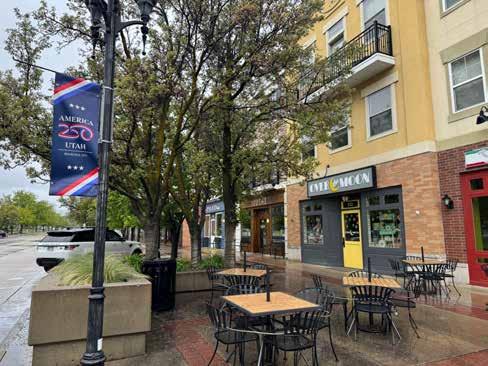
America celebrates 250 years with festivities across the country here at home several cities are hosting their own celebrations. Bountiful City has a whole lineup of activities to take part in the nationwide celebration.
“Like most cities in the state we’re participating in the America250 events,” said Bountiful Mayor Kate Bradshaw. “We’ve organized a committee and we’re working on a number of different areas – celebration, service, health and wellness and education. So we can kind of cover all aspects of our history and heritage to be proud of.”
Bountiful has kind of been in the second half of July with Handcart Days, she said. “We’re going to have some events closer to the 4th of July that we haven’t had in the past.”
On the 4th of July the city will be doing a concert in the park with the Bountiful Phiharmonia, Bradshaw said. “It will be a patriotic concert. We’ll also be doing a kids’ art yard in conjunction with the Bountiful Davis Arts Center who will be putting that on. We’ll also be focusing on the classic hot dogs and pie.”
So that will be a new event the city has generally not had, she said. “Those will be at Bountiful City Park.”
Bradshaw said on July 2 in conjunction with the Farmers Market, that is traditionally on that same Thursday, they’ll be having a kids patriotic bike parade with opportunities to make their bike look fun and patriotic. “The parade starts on 100 East and finishes at
the park for games and prizes.”
There will be the regular Farmers Market, she said. “You’ll have food options and things like that.”
One of the big things the city is working on and as a state is on July 5 there’ll be neighborhood potlucks, Bradshaw said. “These are things we’re asking neighborhoods to help organize and do. It’s an opportunity for neighbors to just get together and spend time together and focus on community.”
There’ll be some toolkits for people to use to invite their neighbors, she said. “You can find all kinds of different ways. You could do the traditional barbecue or different takes on people’s backgrounds.”
From a health and wellness perspective the subcommittee has organized a bunch of different events, Bradshaw said. “One event they’re organizing that’ll be the week of the 4th is June 30. It’s specifically for senior citizen residents. It’s special concerts and activities like yoga and Tai Chi in the Town Square park from 9 – 11 a.m.”
The committee has also arranged 12 different guided hikes and bike rides through the trail system starting in June and going through the end of August, she said. “It’s exploring all of our different trailheads and both new trails and the longtime existing trails. Both bike and hike options for people who want to go on a guided experience and they can log those miles as part of a Red, White and Move campaign.”
The education committee is working on education opportunities, said Bradshaw. “Historical figures for instance will be walking around during the chalk art and are available to talk about different parts of American history.”
There’s an education tool for families,
she said. “There are book reading lists this summer for different age groups that you could tap into that explore different parts of U.S. history.”
There is a new calendar on the Bountiful 250 page, said Bradshaw. “We’re also pushing a lot of them out on the city’s social media and a lot of graphics we’ve put together specific to different events. We would encourage everyone to follow the city’s social media on Facebook or Instagram so that you can see all the things.”
The city website also has a calendar and
then people can click on different events so that’ll give them a little more detail, she said. “What I’m excited about is we already have a lot of traditional summer events. There’s Coats for Kids, Chalk Art Festival, Summerfest and the Farmers Market. The idea was to take some of those events and add twists or connect groups that are both doing good things but wouldn’t naturally connect or might not know about each other.”
For more information about Bountiful’s America250 efforts go to https://www.bountifulutah.gov/America250. l

Incelebration of the state’s pioneer heritage, the Bountiful community is invited to enjoy the annual Handcart Days festivities set for July 24-25 at Bountiful City Park and Main Street for the Handcart Days parade, the second largest parade in Utah.
The theme this year is “Faith and Freedom,” to celebrate the pioneers practicing faith in crossing the plains to enter the Salt Lake Valley on July 24, 1847 and the 250th anniversary of the signing of the Declaration of Independence.
Events kick off on Friday, July 24 with park games, entertainment and food from 5 – 9:30 p.m. (games end at 9 p.m. but food stays open until 9:30 p.m.) At 8 p.m. a Concert in the Park features Jenny Oaks Baker and family performing “American Mosaic.”
Saturday July 25 the Handcart Days Parade will start at 9 a.m. The 1.8 mile parade route starts at 1500 South Main Street and proceeds north to 400 North, then turns west to end near Bountiful City Park, 400 N. 200 West.
Park activities run from 10 a.m. – 3 p.m. and include a fish pond, drone flight, face painting, free game area that includes gunny sack races, 9 square and Corn Hole and more. There will be a huge bubble and T-shirts for sale commemorating the 250th Anniversary.
For more information visit https://handcartdays.org/ l
As the nation prepares to celebrate America 250, West Bountiful will honor the country’s birthday with events that are steeped in tradition.
By Simon Mortensen s.mortensen@davisjournal.com
Though a national holiday, communities celebrate the fourth of July in unique ways. Across the country, individuals gather for fireworks, pool parties, hot dog eating competitions and parades. For residents of West Bountiful, traditions may center around the city’s Independence Day weekend.
“It’s one of those things that kids grow up attending, and it kind of becomes a core memory,” said Shelby Fisher, West Bountiful’s carnival coordinator. “Living on the parade route, I’ve noticed that families sit in their certain spots every year, and they know where to find their neighbors to say ‘hi,’ because their neighbors sit in a certain spot along the route. Even though the carnival and the parade draw people from outside of West Bountiful, I think it’s a fun way to connect with neighbors that maybe you haven’t seen since the last fourth of July event.”
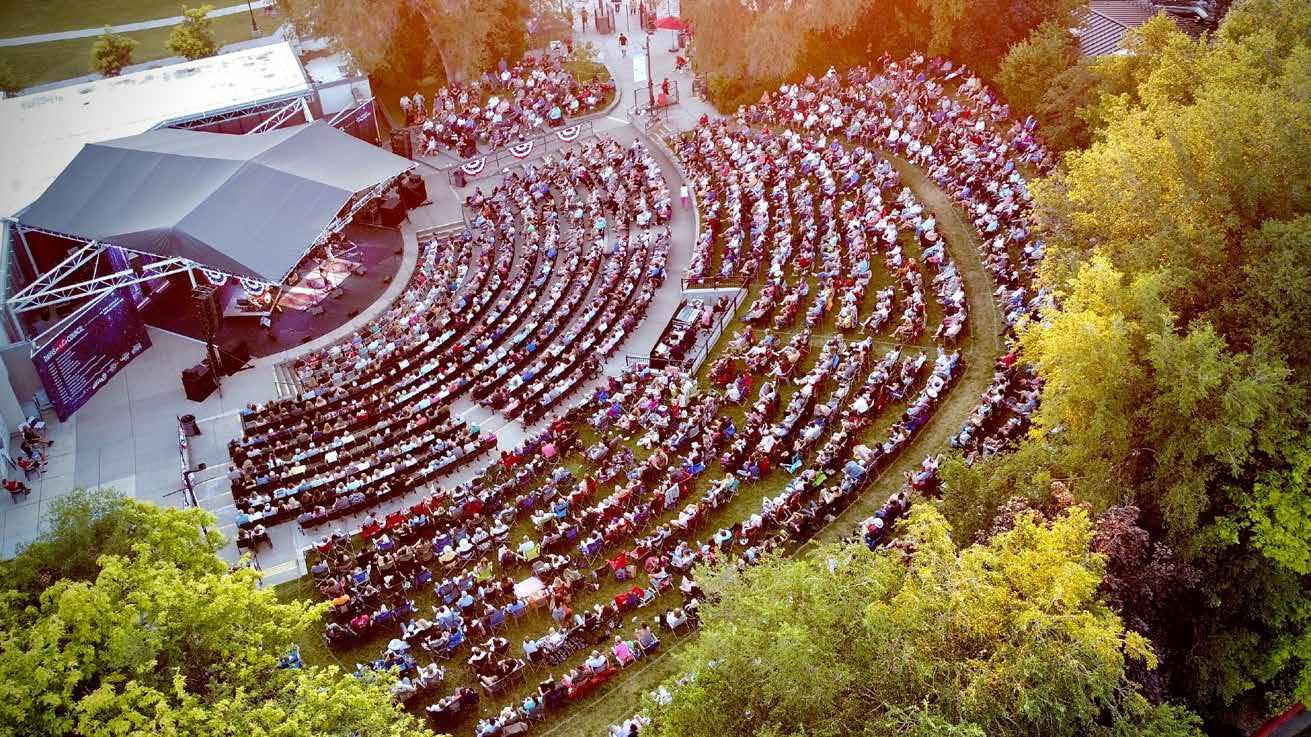
From the evening of July 3 to July 4 at noon, West Bountiful City packs their schedule with an annual carnival, firework show and parade. Similar to prior celebrations, preparations for this year’s events began in January, with responsibilities for permitting, planning and parade participant coordination delegated to elected officials, the youth city council and volunteer residents like Fisher. Together, the committee works to ensure that the festivities
provide families with engaging ways to celebrate America’s birthday.
For Fisher, part of her role entails ensuring that West Bountiful Park is used well for the carnival –which kicks off the weekend. The event not only brings in games for kids, but a bounce house, climbing walls, a clown, a face painter, a cake walk, food trucks and a concert. Attendees are then brought together by a fireworks show at 10 p.m.
The next morning, residents are greeted by a parade –one that runs through 600 West, Pages Lane and 800 West.
“We actually have three different entrance points, or
queue points, where the parade entries come from,” said Fisher. “There’s a group that comes from fourth North, from the east. There’s a group that comes from the west, and then there’s a group that comes along 800 West, and they all kind of converge at that intersection. There’s usually somebody standing there kind of directing everybody to fall in the right spot, and it’s kind of a miracle that it happens.”
West Bountiful’s carnival will begin at 5 p.m. on July 3 at West Bountiful Park, 550 W. 1600 North. As of May 26, registrations to join the parade are open for those interested in participating. l


The City of North Salt Lake is preparing for one of its biggest and most patriotic summers yet as Liberty Fest 2026 returns with community traditions, family activities, and special America250 celebrations honoring the nation’s 250th anniversary.
The festivities begin Saturday, June 27, with “Liberty Fest at Legacy” at Legacy Park. The event will include a patriotic 5K color run, Stars and Spikes Showdown co-ed doubles volleyball tournament, a pancake breakfast, Kids Market, vendors, bounce houses, food trucks, and entertainment throughout the morning.
Continued from front page
feet higher. That would have been great because everything would have drained. But that’s why we built this park where it is. It also acts as the water drainage for all these developments around here.”
The City of North Salt Lake is an official America250 Utah participating city and has incorporated the theme into many of its 2026 events and programs.
Additional event details, schedules, registration information, and updates will be posted throughout the summer on the City’s website and social media pages.
For more information, visit City of North Salt Lake https://www.nslcity. gov/. l
On Thursday, July 2, car enthusiasts from across the region will gather for the Eaglewood Auto Fest at Eaglewood Golf Course. The long-running event has become a Liberty Fest tradition and draws hundreds of classic, Eaglewood Golf Course. Residents are encouraged to bring blankets and lawn chairs and enjoy an evening filled with food trucks, entertainment, patriotic festivities, and one of the region’s largest fireworks shows. Fireworks are scheduled to begin at 10 p.m.

When there’s a big storm, and it’s happened a few times already, all that water runs into where the water basins are, said Mellor. “You want to meter your water going in. You want to be able to detain your water so it doesn’t flood people’s homes.”
Mellor said the water at the splash pad is totally recycled. “That’s why we have the health department come out and they’ll check on it and we check because it’s treated water.”
It also has sensors that when the wind blows more than 10 miles an hour certain elements will shut down so the water isn’t getting blown off the splash pad, he said. “Then when it gets to 20 miles an hour the whole splash pad shuts down. Nothing is operational if the wind’s too high.”
The splash pad automatically shuts






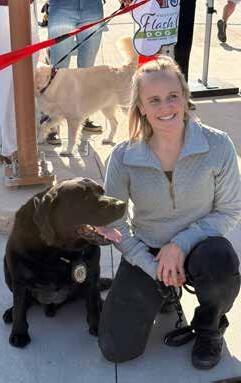
The park is a joint effort between the two cities and named after two police K-9s.
By Becky Ginos becky.g@thecityjournals.com
The wait is over. Dog lovers now have a place to let their pets stretch their legs, wiggle through a concrete pipe and catch a tennis ball all while socializing with other dogs. The Flash Cairo Dog Park in Woods Cross opened on May 11. The park is a joint effort between North Salt Lake City and Woods Cross City.
“The park was named after the two canines,” said Woods Cross Public Works Director Sam Christiansen. “Cairo was a police canine for North Salt Lake City and Flash was a police canine for Woods Cross. Flash is currently working for the State Attorney General’s Office.”
Flash was trained to find electronic storage devices to help, assist and protect the community, especially children from digital crimes, he said. “He works with the Internet Crimes Against Children (ICAC) task force. That’s something Flash has really excelled at, especially in the six years he was with Woods Cross and currently at the State AG’s.”
Cairo was trained for patrol and narcotics


detection, said Christiansen. “In 2013 he was awarded the Rookie Canine of the Year by the Utah Police Officers Association and several other honors throughout his years of work. He retired in 2017 and lived with his handler’s family until he passed away in 2019.”
“Flash Cairo Dog Park stands as a tribute to two remarkable K9 officers, Flash from Woods Cross and Cairo from North Salt Lake who served with loyalty, courage, and an unbreakable bond to their handlers and our community,” said North Salt Lake City Mayor Brian Horrocks. “These dogs were more than partners in public safety, they were symbols of trust, protection, and commitment. Naming this park in their honor ensures their legacy continues in a place built for joy, connection, and community.”
“The park sits on UDOT property,” said Christiansen. “Both cities were about to negotiate a kind of long term minimal cost lease agreement for the cities to use it just for the dog park.”
Christiansen said both areas needed a dog park, especially the communities on the west side of Redwood Road. “Neither city had a dog area in any of their parks so it started as an idea amongst the city managers and it grew from there. We started making a plan and then proposed the idea to both city councils and they were both extremely supportive.”
There are human and dog drinking fountains at each park, said Christiansen. “There are three dog areas including the original dog run as we’re calling it because it’s very narrow and long. One area is for dogs 25 pounds or larger and there’s a small dog area for dogs 25 pounds or less.”
Everything is fenced off, he said. “For the two new areas we have what we call kind of a corral gate so people can walk with their dogs on a leash and enter the first gate, close it and then open the second gate to get in and out. So there’s safe areas for people to leash and unleash their dogs.”
The park will be maintained by city staff as all parks, Christiansen said. “Woods Cross has an irrigation system in two of the areas that are there just for watering trees to help get them established. We want those trees to grow and give some more shade.”
So Woods Cross will be maintaining the trees and the irrigation system and mowing the grasses down twice a month, he said. “North Salt Lake will be doing park cleanup twice a month.”
The park will have poop bags, said Christiansen. “We want dog owners to be responsible and respectful of the parks and if people clean up after their dogs then the park will be there for a very long time and be kept in good condition.”
There will also be a porta potty, he said. “The large dog park area has a shade structure with a bench. There are quite a few logs and a large concrete storm drain pipe that dogs can run through and up and over. Just some things for them to exercise their brains as well as their bodies.”
Owners are legally responsible for the behavior of their dogs, said Christiansen. “We ask that there should be adult owners with their dog and no minor children alone with a dog just so someone is old enough to control their dog.”
There is a limit of three dogs per user, he said. “They must have their up to date rabies vaccination and license tags. We do have some prohibited dogs such as sick or aggressive dogs, unlicensed dogs, dogs in heat and puppies under four months.”
The park is a great feature, Christiansen said. “I think once the trees grow and mature there’ll be quite a bit of shade down there. People are excited in general to have an area, especially on the west side of both cities, to take their dogs.”
The park is open from 5 a.m. – 11 p.m. but closed for maintenance on Thursday mornings. It is located at 2180 W. 2425 South in Woods Cross. l
The project is the first major construction milestone in a long-term, mission-critical modernization effort supporting the Ogden Air Logistics Complex.
By Becky Ginos becky.g@thecityjournals.com
HILLAIR FORCE BASE—Senior leaders and other officials came together May 18 to break ground on a massive, 1 million square foot, 10-year, $1.2 billion F-35/T-7A East Campus Infrastructure project. It is the first major construction milestone in a long-term, mission-critical modernization effort supporting the Ogden Air Logistics Complex.
“As the workload at the complex increases, our infrastructure must expand to meet the demand,” said Col. Dan Cornelius, Commander 75th Air Base Wing. “Today marks the beginning of a massive transformation at Hill AFB. As we build out the foundation of the East Campus, a few years from now this side of the installation will look completely different.”
Phase one of the East Campus project is extensive, he said. “It includes nine miles of electrical lines, a two million gallon water tank and two and a half miles of water and fire suppression lines. We’re also investing in our road network, laying enough pavement to cover four and a half football fields.”
Importantly, all of this infrastructure will tie in toward an existing airfield, said Cornelius. “To do this we are placing concrete for the new airfield taxiways equal to nearly five baseball fields and installing over a mile of taxiway lighting. Finally, we’re installing over a mile of new gas mains to keep operations running.”
This is just the beginning, he said. “In total, this East
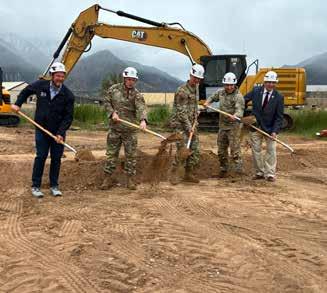
Officials turn dirt to break ground on the F-35/T-7A East Campus Infrastructure project at Hill Air Force Base. This is going to be the only place in the United States where this work can be done. That’s going to make Hill AFB even more important.
Campus project that we’re breaking ground on today represents an engine for growth for Hill AFB, already Utah’s largest single-site employer. This infrastructure will help ensure that when our nation calls, the Air Force Base remains ready to increase the longevity, survivability and lethality of the world’s most advanced aircraft.”
Today’s groundbreaking represents much more than the start of construction, said Col. Robert McTighe, Sacramento District Commander, United States Army Corps of Engineers. “The F-35 and T-7A East Campus Infrastructure project is the first of eight projects, representing more than $1.2 billion.”
These investments establish a mission critical aircraft maintenance campus here at Hill AFB, he said. “This is the first groundbreaking but it’s not just the start. It’s been in execution for a while. The scope and acquisition planning that’s taken place has really set the groundwork for this project to be successful.”
These Hill AFB and the F-35 depot maintenance complexes are top military projects and top priority for Sacramento District, said McTighe. “As such we put our most talented journeyman level employees and master craftsman level employees on this project. We’ve also placed apprentice level employees with just tons of potential that are going to take this project all the way to the finish line.”
“You’re going to see the T-7A come here,” said Brigadier General Hall Sebren, Commander Ogden Air Logistics Complex. “We’re going to pick up that workload here. That means jobs. We’re going to need housing and all those things.”
Sebren said they are also going to move some workload from the other side of the base over to this side of the base. “Right now we do our F-35 workload in a 1940s hangar where we built bombers in World War II. This is going to be purpose built to do the things that we need to do with our fifth and sixth generation aircraft. I think it’s going to be absolutely amazing.”
This is going to be the only place in the United States where this work can be done, he said. “That’s going to make Hill AFB even more important.” l




The conceptual South Davis Greenway would extend through North Salt Lake, Bountiful, Centerville and Farmington.
By Becky Ginos becky.g@thecityjournals.com
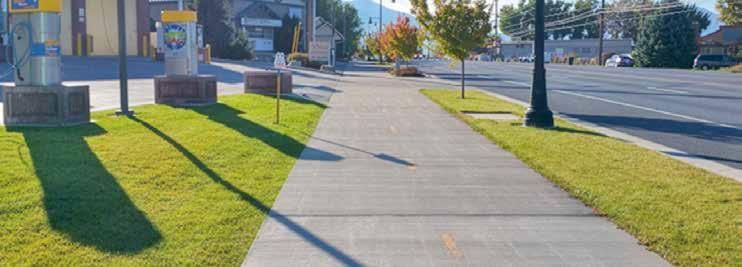
joggers, cyclists and others could soon find a safer way to recreate without the fear of nearby traffic. The South Davis Greenway Feasibility Study is a regional planning effort evaluating the potential for a continuous multi-use trail and pathway corridor separated from traffic that would extend through North Salt Lake, Bountiful, Centerville and Farmington. The proposed corridor is being considered by each city for its feasibility and what it would take to make it happen.
A greenway is usually separated from moving traffic with landscaped buffers, behind the curb or on their own right-of-way.
The Bountiful City Council discussed the proposal during the May 12 work meeting.
“We’ve partnered with Bountiful, Centerville, Farmington and North Salt Lake to focus on improving original connectivity, recreation opportunities and active transportation options through south Davis,” said Planning and Economic Development Director Francisco Astorga. “We’ll evaluate potential alignments,
implementation considerations and long term partnership opportunities.”
The actual feasibility study is being funded through a combination of local and regional contributions, he said. “Each city contributed a $7,500 local match toward the project. The consultant budget totals approximately $145,000 including $115,000 in grant funding through the Wasatch Front Regional Council (WFRC) TLC Connections Program, as indicated on the staff report.”




The greenway concept is consistent with several goals and policies found in the Bountiful City General Plan, said Astorga. “I just want to remind the council and the public that at this stage, the study remains conceptual and exploratory. No final alignment, design or funding commitment or construction schedule has been established. We believe that this study will help us be in a better position should we move forward.”
Representing the consultant team, Brent Crowther, a professional engineer with Kimley-Horn who serves as the project manager gave the presentation.
“I think the best thing about him is he is a North Salt Lake resident and he’s on their trust committee,” said Astorga. “He’s our neighbor here and one of many working on this.”
“We started the project in September of 2025,” said Crowther. “It is a collaboration between the four south Davis communities. The purpose is to identify alignment and the feasibility of a continuous path – a greenway that would extend from US 89 and Eagle Ridge Drive there by Starbucks north all the way to Farmington.”
There are some great opportunities with timing, he said. “The I-15 reconstruction project will construct a new shared path running from Highway 89 and the Starbucks,
taking it all the way past Capitol Hill.”
That will be a separated, dedicated, shared use path, Crowther said. “The project will also reconstruct a portion of the I-15 frontage road near Chase Lane and up in Farmington and Centerville for the northern part. So once those are constructed we just need to fill in the gap in between Centerville and North Salt Lake and then we will have a continuous separated, shared use path all the way from Farmington into downtown Salt Lake City.”
This project is designed to position the South Davis Greenway for consideration for funding by the Utah Trail Network, he said. “We’ve been in coordination and communication with the Utah Trail Network team and they are aware of the project.”
There is a great mountain trail network that the cities have been working on, said Crowther. “What we’re lacking is our active transportation, our ability to move people safely around the city.”
A public outreach and demonstration event about the South Davis Greenway is currently planned for June 26, 2026 during the concert event at Bountiful Park.
For corridor mapping, background information and public engagement materials and conceptual alternatives currently under evaluation visit southdavisgreenway.org. l


The beloved classic is playing now at the CenterPoint Theatre.
By Becky Ginos becky.g@thecityjournals.com
– it’s what guides the little Russian town of Anatevka. Without tradition it’s like being on the precarious perch of a “Fiddler on the Roof.” The beloved classic is playing now at the CenterPoint Theatre.
The story unfolds with Tevye, a poor Jewish milkman and his wife Golde and their five daughters. The town is steeped in tradition and Tevye is steadfast in his ways but things don’t always go as planned and Tevye is soon faced with what he believes and the changing world outside of Anatevka.
Well-known songs such as “Tradition,” “Matchmaker,” “If I Were a Rich Man” and “Sunrise, Sunset,” bring “Fiddler on the Roof” to life.
As is the custom, Tevye’s daughters, Tzeitel, Hodel, Chava, Shprintze and Bielke will be expected to marry a man found by the town’s matchmaker – whether they like him or not. But his oldest daughter Tzeitel is secretly in love with the Motel, the tailor and wants nothing to do with the matchmaker’s match to marry widowed Lazar Wolf – the wealthy local butcher, who is older than Tevye.
As Motel gets up the courage to tell Tevye he wants to marry his daughter, Tevye is at the local inn making an agreement with Lazar to wed Tzeitel. When she finds out, she pleads with her father to reconsider and not make her marry Lazar. Tevye is torn between tradition and his daughter’s happiness.
When Perchik, a student from the university in Kyiv comes to the village and offers to tutor Tevye’s youngest daughters, Tevye takes a liking to him even though he is a bit of a radical, warning them that the world is changing and they have to change with it to survive.
Tevye’s second daughter Hodel and Perchik start spending time with each other. He introduces her to dancing with a man which has been forbidden in their Jewish culture. Soon they fall in love and go to Tevye for his blessing – not permission. Again, he is faced with the dilemma of his faith and love for his daughter.
In the meantime, unrest is brewing and Russian soldiers march into Anatevka and ruin Tzeitel’s wedding, tearing up the traditional canopy and destroying the wedding table.
Time passes and when some gentile youths start teasing Tevye’s third daughter Chava in the street, one of them, Fyedka, stands up for her and before long he wins her heart. When Chava tries to talk to her father about marrying Fyedka Tevye is angry and sick over her decision to leave their faith in order to be with Fyedka.
Somehow, everything Tevye holds dear starts to fall apart. He must decide between the traditions he loves and the family he loves.
The cast is led by Tevye, played by Danny Inkley (MWF) who is also the executive director of CPT. Inkley’s heartfelt portrayal of Tevye gives a glimpse into the man’s devotion to his Jewish faith and what his life is becoming. Tevye’s wife Golde played by Wendy Inkley (MWF) keeps Tevye in line while still recognizing him as the man of the house. The ensemble of other cast members rounds out the show with upbeat music and tender moments.
“Fiddler on the Roof,” is a delightful musical with joys and sorrows that will leave audiences thinking about their own beliefs as they leave the theater.
The show runs now through June 18 Monday – Saturday at 7:30 p.m. with some Saturday matinees. Ticket prices range from $35-$50 and can be purchased online at https:// www.centerpointtheatre.org/ or at the Box Office, 801-298-1302. CenterPoint Theatre is located at 525 N. 400 West, Centerville. l



Centerville is launching a $2.4 million replacement of aging Main Street water pipelines following a Mother’s Day water main break that dumped 2 million gallons of water and underscored the urgent need for infrastructure upgrades before upcoming I-15 construction.
By Linda Petersen l.petersen@mycityjournals.com
recent water main break underscored the need for Centerville City to replace water pipelines in its aging system. In the early hours of Mother’s Day a massive water main break at Main Street and 1500 North sent 2 million gallons of water surging into the streets. The 1:30 a.m. rupture forced the closure of Main Street in both directions and left approximately 60 homes without service for nearly 12 hours.
Public Works Director Mike Carlson commended his staff for their quick response on the holiday.
“I had seven of my staff out who... I thank them every day for being the men that they are and showing up,” Carlson said. “They were there until 1:30 in the afternoon, maybe even 2 in the afternoon away from their significant others. I commend them for their diligence in trying to come in and help out.”
The culprit of the break was an outdated “serpentine” white PVC pipe that has become a recurring nightmare for the city. According to Carlson, the pipe was originally installed with the claim that it required no bedding, but the rocky soil of Centerville has proven otherwise. Over time, rocks move against the pipe, eventually punching through the material.
“It pushes up and then it just, you know, causes the pipe just to blow out,” Carlson explained, comparing the failure to a tire hitting a sharp rock. “They don’t even make the pipe anymore.”
While crews successfully replaced 21 feet of the damaged line and restored water by early afternoon, the incident served as a timely exclamation point to a decision made by the city council just days earlier.
Coincidentally, on May 5 the city council approved a $2.4 million project to replace
the waterline along Main Street from Chase Lane to 1700 North.
During the council’s work session that evening, Public Works official Dave Walker highlighted the urgency of the project, noting that there have been 10 major breaks in this specific corridor in recent years. One past leak alone cost the city $180,000 in repairs and water loss.
“It breaks linearly,” Walker said of the existing PVC. “It can decimate an intersection in a matter of minutes.”
The new project will utilize ductile iron pipe, a much more durable metal alternative.
“In the event of a failure, it has a tendency to break around it, which really localizes your damages typically,” Walker said. “If you had a leak on this 20 years from now, you’re likely talking a 10 by 10 patch, as opposed to intersections and potentially flooding the church building.”
Beyond the immediate need for reliability, the city is racing against a ticking clock involving the Utah Department of Transportation. With major construction planned for I-15 starting in late 2027, Main Street will become a critical alternative thoroughfare. Once that state project begins, UDOT is unlikely to grant permits for non-emergency utility work for several years.
To fund the $2.35 million pipeline project, the city will utilize an inter-fund loan from its Capital Projects Fund to the Water Fund, a move officials say is more cost-effective than seeking outside bonds which carry high issuance fees. By acting now, the city also avoids looming 7 percent price increases for materials and an estimated $1 million in inflationary costs that would accumulate over the next decade.
Residents can expect to see orange cones on Main Street as early as mid-summer. While the work is expected to be finished by a state-mandated deadline of Oct. 15, Carlson noted that much of the construction will occur off the shoulder of the road, which should minimize the impact on daily traffic.
“We were trying to get out in front of it so that we would have a good water main through there,” he said. “It was 100 percent support from the city council... which we deeply appreciate in public works that they believed in the project and gave us the funds to move forward.”l
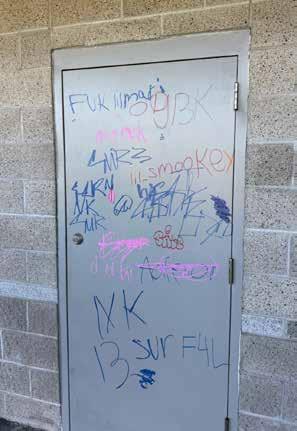
Bountiful City officials say vandalism in public park restrooms has escalated this year, causing thousands of dollars in damage and repeated closures as they seek help from parents, schools and the community to stop the destruction.
By Gail Newbold andersennewbold@gmail.com
Toilets destroyed. Faucets ripped from the wall. Graffiti everywhere. These are the devastating sights confronting the parks director for Bountiful City in public park bathrooms around Bountiful City.
“It’s been a problem since I took the job 12 years ago, but the destruction seems to have ramped up this year starting around March,” said Brock Hill. “We’ve seen everything from minor damage like rolled-up toilet paper on the walls and ceilings and in toilets so they clog up and overflow, to major destruction of the faucets, toilets and so forth. Also, the graffiti has gotten really extensive.”
Restrooms with the most damage tend to be in parks closest to public schools, such as Bountiful Junior High,

Bountiful High School and Mueller Park Junior High. But some of the destruction has migrated to trailheads.
“Sometimes we’ll get a restroom repaired and open, only to have it destroyed again within a day and we have to close it back up,” said Hill. “The trailhead bathroom on Hidden Lake Circle has been closed for three years now because every time we open it, it gets destroyed again. People have lit fires and firecrackers inside it.”
It’s a costly problem without an effective solution at this point.
Hill guesses the cost to the city is approaching $10,000, which includes replacement of parts and clean-up by his staff. “We also have to watch surveillance videos in some locations, and work with the juvenile court system, police and school administrators. It’s time consuming.”
There’s much speculation as to the motivation behind the effacing of the bathrooms including: TikTok videos, adolescent angst, peer pressure, family challenges and boredom, to name a few.
“I’ve lost sleep staring at my ceiling wondering why this is happening,” said Hill. “Is it a dare? A challenge to outdo a friend? Boredom? As park personnel, we don’t get a chance to sit and talk to the
people doing the damage. That’s usually police officers. We report anything that happens to them.”
It’s not just a local problem, it’s a challenge across the nation.
In terms of viable solutions, nothing has worked so far in Bountiful, according to Hill.
“Our hands are a little bit tied when it comes to public restrooms because we have to be really careful about invasion of privacy,” said Hill.
He wishes the school district could change some of its policies that currently either allow or even force students to be off-campus during lunch or at other times, during which time a lot of the damage occurs.
“We need to reach out to parents so they understand what their kids are up to,” continued Hill. “In my opinion, that’s where the solution starts. Parents need to teach kids about the ramifications of their behaviors.
“In my mind, there are three things we need,” said Hill. “We need help from parents. We need help from the school district and we need help from the community. If you see something, say something. Speak up if you witness something, that would be huge. Don’t just post it on Facebook three days after you witnessed it.” l
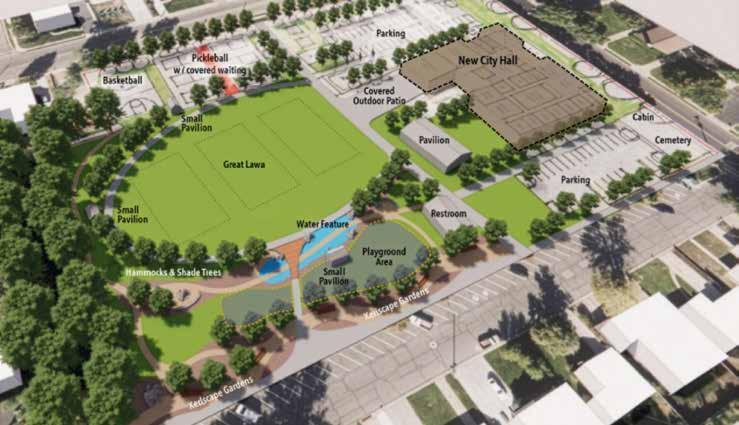
Preliminary cost for both city hall and Hogan Park is estimated at $33 million.
By Becky Ginos becky.g@thecityjournals.com
CROSS—A new Woods Cross City Hall and update to Hogan Park is in the design phase with a potential move in date of 2028. The city has contracted with Hogan Construction and Method Studio Architecture with a preliminary cost of $33 million for both city hall and the park.
“We’ve set that high but we anticipate it will be lower,” said City Administrator Bryce Haderlie. “The question is ‘how is the city going to pay for this?’ Recognizing the expense we’re selling the old post office and the old public works building.”
That will generate a little over $3 million, he said. “We have what is called a RAP tax, some of that money could go toward bond payments. We’re looking at other revenue sources but part of that we’ll also be asking the citizens to support a property tax increase.”
Haderlie said when he got there in 2021, the city council had already been working on some revisions to Hogan Park. “There were some schematic drawings of how they wanted to do a new pavilion and things. Then we realized that city hall was needing attention so we decided to pause on Hogan Park and started working on forming a committee.”
Mayor (Ryan) Westergard wanted to bring a group of citizens together that have a vested interest, said Haderlie. “So we started meeting with that group to share with them the conditions of the building and let them walk through it and see it.”
Haderlie said the city put out an RFP (request for proposal) to solicit companies, both architects and contractors that would team up in what’s called the CMGC (Construction Management, General Contractor) to do a needs assessment.
“It means you have the architect and
the construction company working together from the very beginning,” he said. “We did a needs assessment where we evaluated each department and what those future needs were going to be as the city grows. With that needs assessment the architects worked with the contractor to put together a list of rooms that we would need.”
The original city hall building was built more than 60 years ago, Haderlie said. “It has undergone at least two additions over its lifespan, the most recent more than 20 years ago.”
“I think the building will be hardened,” said Mike Hogan of Hogan Construction. “It will be built to withstand earthquakes and other natural disasters.”




The reason for that is that it needs to operate as an emergency operations center or an EOC, said Curtis Poole, director of community development. “As it stands right now, if we had an earthquake it’s likely this building wouldn’t survive. So we wouldn’t be able to operate that center and have the ability to coordinate resources and response of emergency personnel.”
“Plus the police department will be housed in that stronger, better built and service building,” said Hogan.
“So there’s our challenge,” Haderlie said. “Eighteen million to reinforce the building and not make it any larger or take our new building for around $12 million – $13 million and have it seismically reinforced and then enlarge areas like the community room and future police department areas and other spaces so that we can accommodate the growth we anticipate over the next 50 years.”
Hogan said they would stay in the current building while the new one is being built. “Then this building would become a parking lot for the new building.”
“There are more and more of these types of buildings so that we don’t have to interrupt our services,” said Haderlie.
So far the plans have been well received by the public, Haderlie said. “Residents have suggested a water feature. Not necessarily a splash pad but some type of flowing water where kids can come and play and cool down. Also, a great lawn where citizens can
have activities and things.”
The city will have an open house during the Memorial Day celebration where citizens will be able to come and they’ll have a booth where people can see the information, he said. “We will have the Truth in Taxation process that’s moving concurrently with this and so we will be soliciting input from the public and they’ll have an opportunity to speak to it.”
The police department area needs more space too, said Haderlie. “You bring in witnesses or people to interview and there’s not sufficient space for that. So the new building would include interview rooms and a fenced area that would have a gate so when the police come in with suspects or people, that would give security to make sure they can’t run or things like that.”
Haderlie said the city wants this to be a community place to come and recreate and to have life events like birthday parties and receptions and those kinds of things.”
If everything goes as planned the goal would be to start some of the excavation late fall or winter, he said. “We’d start concrete in the early spring and hopefully we’ll be moving into the building sometime in early 2028.”
It will be a place where families can come and celebrate life, said Haderlie. “It’s just all these opportunities for your kids, your senior citizens to come and celebrate life in this location and we want to make it work and accommodate all those experiences.” l
JENNIFER AND DUSTIN SCHOUTEN
opened Mosquito Shield in August 2023 and have proudly served Northern Utah for four seasons, helping homeowners reclaim their outdoor spaces from mosquitoes and other biting insects. Since launching, they’ve focused on building a reputation for reliability, responsiveness and results in Weber, Davis and Tooele counties.
What services do you offer?
We specialize in mosquito, perimeter pests, grasshopper and tick control through a combination of barrier treatments and targeted solutions. Our core services include: mosquito control (April–October), grasshopper control (May-September), pest control (March-November), special event sprays for weddings and outdoor gatherings, integrated solutions using traditional treatments, innovative tools like In2Care mosquito bait stations, and customized treatment plans based on property size, foliage and environmental conditions.
What sets your company apart?
What differentiates us is our integrated “Push + Pull” strategy and our deep under-
standing of Northern Utah’s unique climate. Many providers rely solely on spraying. We go further by combining perimeter treatments (“push”) with targeted breeding disruption (“pull”). We adjust applications for high UV exposure and low canopy environments, which is critical in this region.
We have fast response times and local customer support, rather than relying on centralized call centers, and we provide mosquito treatments every 10-17 days, targeting the mosquito life cycle.
Does your business solve a problem for your customers?
Absolutely. Mosquitoes don’t just ruin evenings, they limit how people use their property. We solve that by collapsing mosquito populations early in the season, before they peak in June and July. Our approach reduces constant biting and irritation, the risk of mosquito-borne illness and the need to stay inside during outdoor months.
Who is your ideal client?
Our ideal customer is a homeowner who values their outdoor space and anyone who wants
to enjoy their yard without constantly fighting mosquitoes. We love to help commercial, HOAs, and property managers provide pest relief for their customers and residential areas.
How do clients choose between you and a competitor?
Customers often compare based on price, but they quickly shift focus to effectiveness, consistency and trust. Many clients come to us after trying cheaper alternatives that didn’t deliver results, or expensive alternatives whose treatment cycles and poor customer service aren’t worth the extra cost.
What’s your best advice for someone considering doing business with you?
Start early. The biggest mistake we see is waiting until mosquito populations explode. Starting treatment in the early spring allows us to control the population before it becomes a problem, saving you frustration and improving results.
What factors should potential customers base their decision on?
Customers should prioritize effectiveness over time (not just one treatment), our understanding of environmental conditions, respon-
siveness and communication, and a clear treatment strategy, not just “spray and hope.”
Are you running any specials or hosting events?
We run promotions for early sign-ups and offer discounts for customers who commit before peak season. You can find us at the Syracuse and West Point farmers markets and various events throughout the summer.
What is your favorite service?
The combined seasonal program with In2Care stations. It’s the most effective long-term solution because it doesn’t just repel mosquitoes, it disrupts their breeding cycle and spreads control to hidden areas you can’t reach with spraying alone.
What else you would like readers to know about your business?
We’re a local, veteran-owned business. We take pride in delivering results you can actually feel. Our goal isn’t just to reduce mosquitoes and pests, it’s to give you your yard back. Whether it’s a quiet evening or a backyard gathering, we want you to enjoy it.





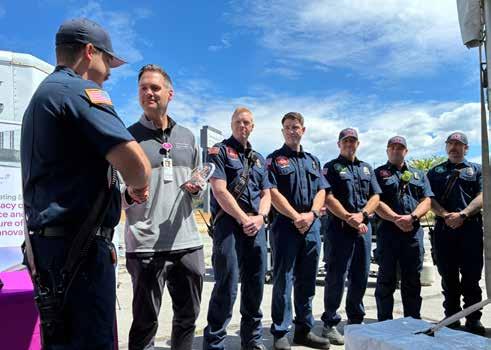
Holy Cross Hospital – Davis presents CommonSpirit Humankindness Hero Award to the Kaysville firefighters.
By Becky Ginos becky.g@thecityjournals.com
Kaysville doctor Layne
Kamalu dropped to the floor in his office suffering a cardiac arrest, his employees jumped into action, giving him CPR before EMS arrived. A crew from the Kaysville Fire Department Station 61 B Shift responded within 90 seconds.
After shocking Kamalu four times they were able to get a heartbeat and transported him to Holy Cross Hospital – Davis where he was rushed to the Cath Lab within 14 minutes and a coronary angiogram was performed. A stent was placed and flow was restored. Against all odds, Kamalu survived the “Widow maker.” He is back to work and doing well.
The hospital held a special luncheon and presentation Wednesday, May 20, to recognize the efforts of the first responders with the CommonSpirit Humankindness Hero Award.
“We are thrilled to honor our EMS partners this week,” said Kyle Brostrom, hospital president. “They are the unsung heroes in our community who quietly respond to people in need every day. What a blessing for our community that they were able to save Dr. Kamalu’s life. I also want to thank our amazing hospital staff who also played a critical role in this amazing story.”
The team moved in and put a LUCAS on Kamalu, said Bascom. “It’s an automated chest pressing machine. It’s almost like a plunger on your chest. So we started that and then we started going through our repetitions, just like what we normally do in cardiac arrest.”
Everyone has a different role, he said. “Some crew members are over the airway, I’m working on IV access to get mediations and putting the LUCAS machine on. We also communicate with the family if they’re there and everyone plays a vital role.”
After that Kamalu was transported to the hospital, said Bascom. “It worked out really well.”
Time plays a huge role, he said. “Whenever we have a cardiac arrest event you always talk time is brain. So we talk about the golden hour. We can get them to the hospital and get into the Cath lab so they can move a blockage or whatever is going on with the coronary artery or an area in their heart.”
The hospital itself was fantastic, Bascom said. “We notified them and as soon as we arrived they were ready with all of their teams, everything that they needed and it was just seamless for us to pass on and they could move forward.”
“We just had a call come out of a cardiac arrest,” said Kaysville Firefighter/Paramedic Ethan Bascom. “When a cardiac arrest call comes out it dispatches our engine, our ambulance and our medic rig. Luckily it ended up being across the street from the fire station so our response time was about 90 seconds.”
Bascom said when they got there, CPR was already started by the facility. “It ended up being a doctor that works and lives in Kaysville. They recalled that it was just out of the ordinary. He just grabbed his chest as he fell down. There were no warning signs or anything prior to that.”
That’s really where all of this comes together, he said. “It’s great in the case where fire came and we did our job when we responded. But it goes so much further than that where the hospital did their job. It takes effort between everybody to make sure that we had this outcome.” l
Centerville is updating its General Plan to manage future growth by pivoting from high-density developments to accessory dwelling units and west-side infrastructure investments, balancing state affordable housing mandates with the preservation of its small-town character.
By Linda Petersen l.petersen@mycityjournals.com
Centerville is getting ready to update its roadmap for the future. Proposed updates to Centerville’s General Plan represent a significant shift in how the city intends to manage its future growth while preserving its identity. On April 7, Community Development Director Mike Eggett presented the City Council with a draft that has been in the works for two years. This document serves as a long-term roadmap, balancing state mandates for affordable housing with the local desire to maintain a small-town atmosphere. The draft is the
result of extensive public outreach, including resident surveys and open houses intended to capture the community’s vision, Eggett said.
A major highlight of the proposal is a pivot in housing strategy.
The city is considering moving away from “First Home Investment Zones,” which required high-density developments of at least 30 units per acre on large plots of land. Instead, the new plan favors accessory dwelling units, or ADUs. These include internal basement apartments or detached backyard cottages. By reducing regulations on ADUs, the city aims to provide more diverse housing options that integrate into existing neighborhoods without the visual impact of large apartment complexes.
The plan also identifies the west side of Centerville as a key area for infrastructure investment. Proposed improvements to roads and utilities are designed to support multi-family housing and a potential mixed-use center near a future FrontRunner station. To encourage home ownership, the city is exploring the creation of specific zones on the west side where a
majority of units would be designated as affordable. The city may also use redevelopment funds to subsidize housing for moderate-income residents, ensuring that young families and essential workers can afford to live in the community.
Community feedback has played a vital role in shaping these discussions, though residents remain divided on certain issues, Eggett said.
During public hearings, many residents emphasized the importance of protecting the city’s traditional character. Some expressed a strong desire to keep the east side primarily for single-family homes and to preserve the hillside from any development. However, other community members argued that evolution is necessary for the city to stay healthy.
“Communities that fail to evolve and adapt often suffer decline,” resident Tyson Creamer said at one of the public hearings.
Another resident, Brita Johnson, shared that she is “supportive of townhomes and the community that they build,” adding that growth is inevitable and must be managed responsibly.
Beyond housing and transportation,
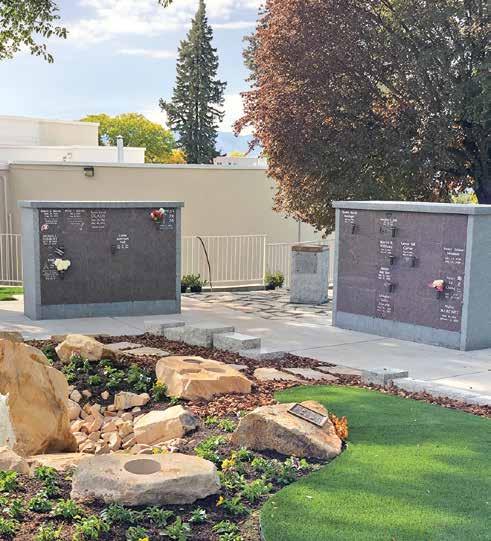
the General Plan addresses several quality-of-life concerns. For example, the city’s cemetery capacity is critically limited, which has prompted a so far unfruitful search for additional land. Residents have also expressed a desire for expanded dining, lodging and entertainment options to boost the local economy.
To ensure these goals are met, the plan introduces a formal monitoring process. The city intends to track building permits, demographic shifts, and housing affordability every year to determine if the strategies are working or if they need to be adjusted.
The city council has not yet taken a final vote on the plan, as several members want to further study how to balance growth with the city’s historic “quaint and charming” aesthetic.
Resident Becki Wright encouraged the council to adopt an updated plan soon, stating that without it, “the city lacks proper guidance for development decisions.”
The council will continue to hold work sessions and public discussions to refine the document before it is officially adopted as the city’s new governing roadmap. l

Bountiful High Band Director Branson Bell was named the Davis School District 2027 Teacher of the Year.
By Becky Ginos becky.g@thecityjournals.com
was excitement in the air as the Bountiful High School band concert got underway May 14 but part way through an even bigger surprise took place as Davis School District administrators walked on stage and announced that Band Director Branson Bell was named the Davis School District 2027 Teacher of the Year. Bell, who is a former student, took over after longtime band director Danny Turnblom retired.
In addition to the award, Bell also received an all-expense paid, one-year lease on a new 2026 Kia Sportage from Young Kia and gas for an entire year. Goldenwest Insurance Services is providing insurance.
“It was a big surprise,” said Bell. “I went backstage during the concert to get equipment and (Superintendent) Dan Linford and Logan Toone and other administrators were huddled back there.”
It’s good for the students to know that the district values the arts, he said. “We have the best equipment, we’re just the best. The administration lets the kids know they care
about them. It’s a breath of fresh air. The music program is so important.”
Bell said it’s not about him. “It’s an incredible experience. I have them then they move on. It’s about them. The reward is getting kids excited. The validation is a blessing in my eyes.”
Teaching music is a juggling act, he said. “It’s a combination of rigor. Providing music that pushes them to success and turns them into incredible musicians.”
It’s also about relationships, said Bell. “If all you had was rigor, it would be lifeless music. Without connection you wouldn’t see progress. You might have Jan Doe over here playing the saxophone with a squeak but she’s proud to play. Then over there is John who is at a higher level. Both need to feel loved to become incredible musicians.”
Bell said they have created an art performing gallery. “We’re playing with the Bountiful Philharmonia and they’ve performed on Veterans Day. It’s nice to see the youth make a meaningful connection with vets. We also collaborate in school.”
That’s what it’s all about, he said. “They can see the fruits of the rigor. They don’t leave the room solving cancer or a math problem. The kids do go off to those things. But the rigor of band class makes them love it. It’s all about finding your passion. That’s what made me who I am after 30 plus years. I’m so thankful.” l










Centerville City is proposing to increase property taxes by approximately 15.5 percent to fund a new police officer and other essential services. The final decision will not be made until a formal “Truth in Taxation” public hearing is held in August.
By Linda Petersen l.petersen@mycityjournals.com
Council
city officials took the first formal steps toward a proposed property tax increase during a May 5 council meeting, citing rising operational costs and the need for additional public safety personnel.
That evening City Manager Brant Hanson, who acts as the city’s budget officer, presented next year’s tentative budget which includes a proposed tax rate increase of approximately 15.5 percent. If approved, the hike is estimated to generate an additional $361,640 in annual revenue for the city.
Under the current proposal, the property tax rate would shift from 0.001200 to 0.001386. For a primary residence valued at
$582,000, this would mean an annual tax increase of approximately $59.61. Local businesses with the same valuation would see an increase of about $108.39 per year.
Hanson noted that these figures are approximations.
“We actually don’t know what that increase will be until we understand what new growth is,” he said, noting that finalized numbers from Davis County are expected in late June.
“Keep in mind that 15.5% is an approximation and it could shift and change. Obviously, in our budget, we saw an increase of more than $361,640...,” he said. “We’re only asking for a property tax increase to cover that $361,000. The other areas that are covering that increase are an increase in sales tax revenue of $100,000 and using fund balance to balance this budget.”
The city provided a detailed “Property Tax Impact Schedule,” a requirement of Utah’s Truth in Taxation laws, to show exactly where the money would go. The bulk of the new revenue is earmarked for public safety:
Police Department ($250,000): Funding for one additional police officer, a new patrol vehicle and associated equipment/ training.

Fire Services ($35,072): To cover the city’s increased assessment for South Davis Metro Fire.
Public Works ($15,860): To address rising electricity costs and maintenance for street lighting.
Administration & Legal ($50,578 total): Funding for a resident communication platform (Yapify), legal interns, outside consultants and rising court prosecution costs.
Community Amenities ($9,500): Maintenance and signage for city trails, as well as mandatory training for the mayor and city council.
The proposal sparked a detailed discussion among council members. Councilmember Rick Bangerter expressed support for the transparency of the new state disclosure laws but urged caution. Residents are already facing potential increases from other entities like the county and the fire district, he said.
“I take very, very seriously the dollars that we’re collecting from our residents and businesses,” Bangerter said, questioning how the staff selected these specific eight items.
While many costs are rising – including medical insurance for employees – the city is using sales tax growth and fund balances to offset as much as possible, Hanson respond-
ed. The property tax increase is focused on “defensible,” ongoing needs that the city cannot otherwise cover without dipping dangerously into reserves, he said.
“The police department would not be able to hire an additional officer... and the city may need to reduce street lighting by turning off lights or delaying repairs [without this increase],” Hanson said during the presentation.
The city council was expected to further discuss the proposed tax increase and formally present the “Taxing Entity’s” perspective – something required by Utah law – on May 19 (after this newspaper’s deadline).
The council’s unanimous vote on May 5 was a procedural acknowledgment that the budget officer has fulfilled his legal obligation to notify the public of the intent to increase taxes, not an indication of how members would vote on the proposed increase.
The city is expected to hold a formal public hearing in August, as required by Utah’s “Truth in Taxation” process, where residents can voice their opinions. During that meeting, the council has the authority to approve the rate as proposed, reduce it, or reject the increase entirely (which would require them to cut the services listed in the impact schedule or find alternative funding). l



Kaysville City took the first step in designing a local skatepark at Barnes Park by approving a professional services agreement for professional design and consulting services. The project represents a collaborative effort between city officials and members of the local skateboarding community following months of public discussion.
By Cindi Mansell c.mansell@mycityjournals.com
The Kaysville City Council has taken the first official step toward building a new public skatepark at Barnes Park, unanimously approving a professional services agreement with Primary Concrete for design and consulting services.
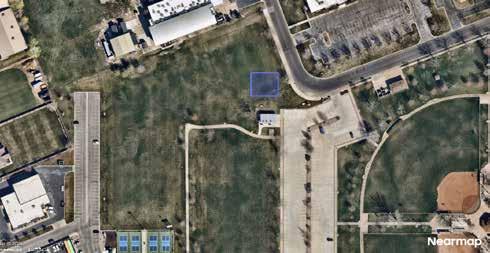
The proposed skatepark, planned for the northwest section of Barnes Park, is intended to provide a professionally designed recreational space for skaters of all ages and skill levels. City leaders say the project would replace a former do-it-yourself skate area with a safer, long-term community asset.
Under the agreement, Primary Concrete will develop concept plans and renderings, technical drawings and specifications, as well as preliminary cost estimates and value-engi-
neering recommendations for the project.
Parks and Recreation Director Cole Stephens said interest in a city skatepark grew after homemade skate features began appearing at Trapper’s Park in December 2025. What started as a few temporary ramps under the pavilion eventually expanded into half-pipes and larger structures. Stephens said the property had been donated to the city by a neighboring homeowners association with restrictions that prohibited a skatepark at that location. After the DIY structures were removed, members of the local skateboarding community met with city staff to
discuss possible alternatives. “They were very professional and continued to meet and have dialogue with city staff,” Stephens said.
The city later formed a committee consisting of two staff members and three representatives from the skateboarding community to explore options for a permanent skatepark. The group issued a Request for Qualifications seeking firms with experience in municipal skatepark planning, design, public engagement and construction administration. Eleven proposals were submitted. After narrowing the field to five finalists and
conducting interviews, the committee selected Primary Concrete as the firm best suited for the project’s size and scope.
Stephens noted that the city has held a $25,000 donation from resident Christian Nelson for approximately eight to 10 years specifically earmarked for a city skatepark. Those funds will be used to begin the design phase. Construction funding, however, would still require City Council approval as part of the fiscal year 2027 budget process.
The total project cost is estimated at approximately $450,000. The city has applied for $150,000 in Recreation, Arts, Museums and Parks (RAMP) tax funding and would like to use $300,000 in park impact fees, which are restricted to park improvements and new park development.
Councilmember Mike Blackham said the skatepark discussion has been ongoing for years and praised the persistence of the local skating community. “The skatepark community came out 10 years ago – this is not just a one-time first ask,” Blackham said. “They have been patient with Kaysville City.”
Blackham added that Barnes Park already has existing infrastructure, including parking and restroom facilities, making it a practical location for the project. “With the RAMP tax added four years ago, to be able to use that for projects like this allows the community to see exactly where that funding is being appropriated,” he said.l

By Becky Ginos becky.g@thecityjournals.com
Larsen, the newly appointed South Davis Metro Fire Chief knew at an early age that he wanted to help people and serve the community. For the last 30 years, he’s done just that. As Fire Chief he plans to continue his passion for service.
Larsen was selected and ratified by the South Davis Metro Fire Service Area Board of Commissioners May 18, 2026. Prior to the appointment he was the Interim Chief and assumed that position after the passing of Fire Chief Greg Stewart.
“I started in EMS (Emergency Medical Services) for (Gold Cross) Ambulance in 1996,” said Larsen. “Then I was hired on with South Davis Fire District as a part-time firefighter in 1997. I continued to work part time at South Davis and attended paramedic school at Weber State in the emergency care and rescue program.”
In 2000, Larsen was hired as a full-time firefighter/paramedic for West Valley City Fire Department. “I worked there for just shy of five years while I continued to work part time for South Davis Fire District,” he said.





2 0 % O F F
T WO ENTR E E S Lunch only (11am-4pm). Dine -in only. Coupon must be present. Expires 7/15/26
(801) 944-0505 • 3176 East 6200 South Cottonwood Heights, UT 84121


“I helped to build a paramedic program in the conception of the consolidation. Then when we consolidated South Davis Fire District and Bountiful City Fire Department I came over as a full-time firefighter/paramedic in April of 2005 and I’ve been here ever since.”
Larsen’s roots run deep in Davis County. “I was born and raised in south Davis County. I attended Jenny P. Stewart Elementary and then in the fourth grade I went up to Hannah Holbrook Elementary. I went to Bountiful Junior High and graduated from Bountiful High School in the class of 1995.”
Ironically, Larsen was born at Lakeview Hospital. “It’s been fun throughout my career and working closely with Lakeview Hospital in our partnership to do what we can for the citizens of south Davis County.”
Larsen said his interest in firefighting and emergency services started with his father. “My dad worked as a part-paid firefighter for South Davis Fire District. I remember as a young child when he would carry around a pager and the pager would go off and I would be with him and he would take me on several occasions to the fire station.”
There were several kids that would just hang out at the fire station while their dads would take off and go take care of the fire, he said. “As I started to grow up a little bit, I had a really strong interest in the EMS side of the job in emergency medicine. I’ve had some really fun opportunities of working in the emergency department up at the University of Utah as an EMT technician and then also had the opportunity to fly as a flight paramedic out of the University of Utah for AirMed.”
In his career, Larsen has seen a lot of hard things. “I’ve had the ability to see the outside perspective of this career, which is we are there to help the situation and to do everything that we can,” he said. “I try to find the good and remember the good calls where the outcomes are successful. I understand that as long as we arrive and we are prepared and we do the best that we can, at the end of the day we can go home away from work and that we can know that we did everything that we could to try to help the situation.”
South Davis Metro Fire passed its 20 year



mark last year, said Larsen. “As we continue to grow and watch the communities continue to grow and transition more to high density housing and to watch the communities evolve it’s exciting for us as an organization.”
Amid the tough calls, there are others that are fulfilling, he said. “Recently we just visited, at University of Utah, with a driver of a large semi truck. He experienced a blown tire down on Legacy Highway in Centerville.”
It was a very complex call and the response was robust from the department, Larsen said. “It was very complex because of the extrication that was required for this gentleman and we had efforts from the University of Utah AirMed and then our department with the extrication.”
That call was in February 2025. “The patient came back,” said Larsen. “Unfortunately, he did have a partial amputation of his leg
due to the accident but he’s been fitted with a prosthetic. He was doing really well and has a unique perspective on life after this accident and has a great outlook and a great attitude.”
As complicated as that incident was at the time it happened, seeing that gentleman come back and watching him interacting with the crews that were taking care of him at the time of the accident, those are the types of stories that are fun, he said.
It’s an incredible honor to be appointed as Fire Chief, said Larsen. “I’m excited for the opportunity to lead this organization. We have an incredible staff of firefighters. I’m excited to serve the communities where my roots are, where I grew up, where I was born and raised.”
It’s incredibly humbling, he said. “To think I started out as a part-time firefighter at the age of 20 and here I am now as the Fire Chief.” l









Lucky Slice moved into the cityowned building on Main Street and renovated it to fit their unique style.
By Becky Ginos becky.g@thecityjournals.com
Slice Pizza, the newest restaurant to open on Main Street, is adding some color and creativity to the shop with a mural installation by artist Jessa Gilbert that will hang inside the store. Lucky Slice moved into the city-owned building and renovated it to fit their unique style.
“I started doing murals about 10 years ago,” said Gilbert. “I’ve been a full-time artist since then.”
Gilbert lives in Squamish, British Columbia. “So up in Canada,” she said. “I split my time between working as a full-time artist and working as a backcountry snowboard guide. The way I look at it, it’s like whether it’s paint or it’s an adventure, it’s curating adventure and joy and bringing people into the awe of the natural world and celebrating wilderness adventure and play.”
The snowboard community is quite tight knit and the Lucky Slice founders are all big snowboarders, said Gilbert. “The goal will be to balance between snowboarder and pizza shop and that little like convergence of things.
They reached out to me because my work is definitely inspired by what it feels like to be on a board and the playfulness of it.”
The murals will hang side by side along the wall, she said. “So as you come in there’ll be some pizza on the right and some artwork on the left and tables to hang out and gather.”
The texture of a place really matters, Gilbert said. “I think that art and color and texture can add to the sort of feeling of the place. I think what they’ve done is created a spot where like minded individuals can come and not only have a slice of pizza but be surrounded by something that has a vibe and an energy too.”
“What I have found great and amazing about Lucky Slice is I was in line the other night to pick up some pizza to take home for our dinner and there were some high school boys in line ahead of me,” said Bountiful City Mayor Kate Bradshaw. “I was kind of eavesdropping on their conversation and they were talking about all the end of school stuff, the summer stuff. I thought this would be so cool for this generation to have a new place that’ll be their high school place to come to.”
The mural was completed and installed Friday, May 15. Regular business hours are Monday through Thursday 11 a.m. – 9 p.m., Friday and Saturday from 11 a.m. – 10 p.m. Sunday 12 - 9 p.m., Lucky Slice is located at 135 S. Main Street, Bountiful. l










As Utah faces growing environmental and public health concerns tied to the Great Salt Lake’s decline, local governments are increasingly being called upon to take a leading role in water conservation.
By Cindi Mansell c.mansell@mycityjournals.com
Whilestate-level action is still critical to the future of the Great Salt Lake, advocates say meaningful change can also begin much closer to home – at the municipal level.
That was the message delivered to the Kaysville City Council by Travis Padilla of Grow the Flow Utah, who recently presented information about the lake’s ongoing decline, and the role local governments can play in reversing it.
Padilla said he has watched one of North America’s most unique natural features steadily disappear during his lifetime. Rivers and streams that once replenished the Great Salt Lake are now heavily diverted for agriculture and to support Utah’s rapidly growing population. Today, approximately 80% of the water that historically flowed into the lake is diverted because of human activity.
Despite the alarming trend, Padilla told council members the situation is not hopeless. “This is a problem municipalities have the power to help fix,” he said. “If communities choose to act, they could become the first people in human history to save an inland saline lake.”
According to Padilla, meaningful change starts with local leadership and informed decisions about water use. He said mayors and city councils have the ability to implement policies that reduce unnecessary consumption and encourage conservation. Experts estimate Utah must return 30% to 50% more water to the lake to place it on a sustainable path before the 2034 Winter Olympics.
The stakes, he said, extend far beyond
the lake itself. As water levels continue to decline, more of the lakebed becomes exposed, creating dangerous dust storms laden with toxins, including arsenic. Scientists warn that the dust can travel as far as 300 miles, threatening the health of more than 2.5 million residents along the Wasatch Front. Exposure has been linked to respiratory illness, cardiovascular disease and other serious health concerns.
The economic consequences could also be severe. A shrinking lake threatens tourism, outdoor recreation, property values and long-term business investment throughout northern Utah. Environmental advocates warn that continued decline could eventually make parts of the Wasatch Front less livable.

The ecological impacts are equally concerning. The Great Salt Lake supports a globally significant ecosystem and serves as a critical habitat for nearly 10 million migratory shorebirds each year. Experts warn that continued water loss could trigger widespread ecological collapse and permanently damage regional biodiversity.
The lake’s decline stems from decades of unsustainable water consumption, compounded by drought, population growth and climate change. Although two recent wet winters temporarily improved lake levels, experts say the underlying problem remains unchanged: Utah continues to consume more water than the watershed can sustain.
Utah currently uses nearly twice the national average of water per capita, with the majority consumed outdoors through lawn watering and landscaping. According
to Padilla, about 96% of municipal water that never reaches the lake is lost through outdoor watering. Indoor water, by contrast, is typically treated and returned to the system.
Padilla encouraged Kaysville leaders to consider measures such as tiered water pricing, water budgets, restrictions on excessive outdoor watering and incentives for drought-resistant landscaping. He also advocated prohibiting nonfunctional turf – grass that serves little recreational or practical purpose – in new developments and major redevelopment projects.
“Water in a desert is not endless,” Padilla said. “When prices reflect the true value of water, conservation follows.” He urged city leaders to act proactively rather than wait for stricter state mandates in the future. “These may seem like small decisions,” he said, “but together they shape the future of the lake.”
Kaysville Mayor Tami Tran said all irri-
gation water in Kaysville comes from snowpack in the Wasatch Range; this year’s snowpack is the lowest on record. The city works closely with all three irrigation companies that serve Kaysville City. She said each irrigation company has its own rules and standards specific to them. This year, regional suppliers have mandated that normal irrigation use must be reduced by at least 20% and the irrigation season will begin later and end earlier than normal. Currently, customers do not pay based on the amount of water used; by 2030, state law requires irrigation companies to implement usage-based billing and at that time, customers who use less water will pay less. Tran said, “the city is doing its best to reduce outdoor water use and I encourage all residents to do the same.”
Visit https://www.kaysville.gov/186/Pressure-Irrigation for information about service areas, rules specific to each irrigation company, conservation tips, and available rebates. l






The volunteer-led Events Committee of North Salt Lake helps to create a sense of unity and fun in the community through free events and parties.
By Megan Fisher m.fisher@davisjournal.com
Funcommunity parties and events put on by North Salt Lake City are meticulously conceived and planned by the volunteers of the Civic Events Committee. A new member has joined the ranks of the Committee.They are Kathleen Kleinman, a long-time resident of North Salt Lake. Nominated by City Councilmember Heidi Smoot, Kleinman’s appointment was sustained by the other council members during a recent meeting. Kathleen Kleinman has lived in the city for almost 26 years, and loves the sense of community that she has found here. She has a bachelor’s degree from Brigham Young University in fashion merchandising and a master’s degree in organizational management from the University of Phoenix. A true Renaissance Woman, she has been a project manager for Japan Airlines, an ice skating coach, Program Manager for foreign students at Weber State University, and freelance makeup artist for Lancôme and Estée Lauder companies. She has done make up for many local politicians. In City Councilmember Heidi Smoot’s mind, the understanding of what goes on behind the scenes at a large event that Kleinman would have gleaned from her time at ice skating competitions made her a perfect candidate for the position. In an interview, Smoot praised Kleinman’s willingness to serve and described her as a well-rounded and organized individual. “I’m
excited for this opportunity,” Kleinman said. “I love North Salt Lake. I’ve been here since May of 2000 … so I’ve seen a lot of growth in the city. I’m excited to be involved and help everyone out.”
Kleinman joins the committee alongside Dallas Golden, Sarah Golden, Catherine Jensen, and City Councilmember Tammy Clayton. The purpose of the committee is to plan events that unite the residents of North Salt Lake and foster a sense of community spirit. They are behind such events as Pride Month celebrations, the Kite Festival, NSL Reads, Winter Lights Fest, Halloween Trot &Treat Spooktacular, and Arbor Day tree planting.
Members of the Civics Events Committee are not government employees, but volunteers bound together through a love of North Salt Lake and a willingness to serve. Meeting once a month, each committee member takes a turn chairing planning the event with the other committee members, members of the city council and youth city council, reaching out to vendors, and publicizing the event on social media. A photographer is present at all city events to preserve them for history. All events are free to attend.
If a resident has an idea for an event, they can present it during the public comment section of the events committee meeting. It will then be voted upon by the committee members, and if it passes it will then be moved up to the city council for a final vote. All city events are approved by the city council.
“I’ve lived in North Salt Lake my whole life, and love the city,” said committee member Tammy Clayton. “The Events Committee is a wonderful way to say that cities don’t just need to be run, they’re also a place to have fun.”l

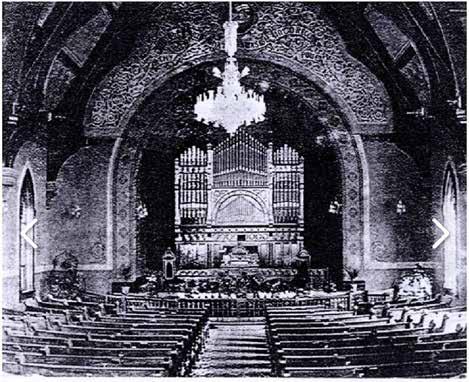
The pipe organ, built by the Farrand & Votey Organ Company of Detroit, Michigan, was installed in the First United Methodist Church in Ogden in 1891. The Bountiful Community Church has acquired the organ and plans to install it in the loft. Photograph from an archival source: Organ History approx. ca. 1891
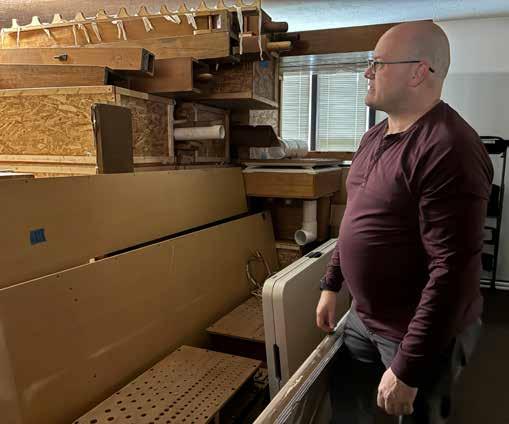
Currently, the organ is in pieces in a storage room at the church and installation will cost more than $200,000 so church organist Jared Gardiner and former Tabernacle Choir Organist Dr. Clay Christiansen are leading the charge to raise the money.
By Becky Ginos becky.g@thecityjournals.com
been over 130 years since a pipe organ, built by The Farrand & Votey Organ Company of Detroit, Michigan, was installed in the First United Methodist Church in Ogden in 1891. In 1993,
it was renovated and enlarged by Mervin G. Brown from two manuals (keyboards) and 17 ranks (sets of pipes).
Nine of those original 1891 ranks were retained and now sit in the organ loft at the Bountiful Community Church. They fell silent in the late 1990s and have been unused since then. However, music will soon fill the loft once again with the church’s acquisition of the entire renovated organ. Upon its installation, it will serve as a central element in Sunday worship services.
Currently, it’s in pieces in a storage room at the church and installation will cost more than $200,000 so church organist Jared Gardiner and former Tabernacle Choir Organist Dr. Clay Christiansen are leading the charge to raise the money.
“It will be the largest organ in Davis




County when it’s all said and done,” said Gardiner. “My goal is to have monthly recitals here during the summer. That will give more exposure to the community. There’s community choirs that come in here during Christmas and Easter and this will enhance their music too.”
The church is very open, he said. “So it (organ) will fit up here (in the loft) and just take over that whole space. I’m going to try to incorporate the old front pipes that are here. All of the pipes are playable but all of the chests need to be rebuilt.”
The organ pipe sits on top of a chest of air, said Gardiner. “When you play a note a valve opens and it lets the air through that pipe. So each pipe is one note.”
It’s going to be a pretty massive instrument, he said. “We’ll have to redo some structure so it can hold it. It’ll be an amazing sound.”
To put it into perspective, there’s about 586 pipes up there now, said Gardiner. “The new organ will have at least 2,069. That’s what it is right now but if I add the ranks here it’ll put it up to like 2,200. Adding the organ pipes from this organ into the new ones is wishful thinking on my part. But it’s also to appreciate what we have and to put it into something new.”
Before the church got the organ it was sitting in a storage unit in the Masonic Temple, he said. “So I got it out of the storage unit because it wasn’t climate controlled or anything. I asked the church council if I could put it here.”
Now the organ sits in crates in a storage
room at the church. “The crates are all full of pipes, and shutters that vary in length from about three quarters of an inch up to 19 feet.” Gardiner said. “Some are wooden pipes but most of the pipes are made of metal.”
There’s two chests sitting on top of each other, he said. “These are the oldest chunks in the organ. I don’t know what kind of condition they’re in. Those control the oldest pipes in the organ from 1890.”
There are bellows and reservoirs that the wind goes into for most of the parts, which expand and contract to regulate the wind and keep it steady, said Gardiner. “The console is in my garage. The console is what you play from.”
Christiansen played for the Tabernacle Choir from 1982 to 2018. “After I retired after 36 years I began to teach again,” he said. “Jared came to me for coaching and instruction and so we’ve been working together. He’s kept me informed about this project and I’ve been eager to do everything I could to help see it happen.”
It’ll take organ playing and the encouragement of the younger generation, regardless of the denomination, in this area up a notch, said Christiansen. “I know there are a number of young people here that play the organ in their wards but they need something better and more inspiring.”
In a situation like this with a beautiful sanctuary that’s available, it’ll be the perfect place to have this, which will really be something unique to Davis County, he said.
The church is located at 150 N. 400 East, across from the Bountiful Food Pantry. l
The West Bountiful City Council thanked individuals who led evacuation efforts, denied a home occupation code change, approved a Youth City Council byline amendment and announced a change to the planning commission during their last meeting.
By Simon Mortensen s.mortensen@davisjournal.com
After managing a limited evacuation in April, the West Bountiful City Council gathered on May 5 to thank city officials as well as discuss policy changes. Here’s a recap of what happened:
Law enforcement and staff thanked for efforts during evacuation
During their meeting on May 5, the West Bountiful City Council took a moment to recognize police chief Brandon Erekson, City Administrator Duane Huffman and Public Works Director Steve Maughan for their efforts in handling a limited evacuation on April 25.
The order – which extended to residents near 1100 West and 1400 North – was issued after police found explosive material while responding to a different issue. South Davis Metro Fire District and Davis County Sher-





iff’s Office Bomb Squad representatives said that the list of items discovered were believed to include dynamite, which was promptly stabilized and disposed of by professionals.
Citizens were alerted about the evacuation through an Amber Alert, as well as law enforcement officials who knocked on doors. Local police made the order at 10 a.m. and closed it shortly after 12 p.m. As county specialists handled the material, city staff oversaw communication needs while public works employees delivered sand bags to the site.
Police booked resident Dwayne Raymond Hughes into the Davis County Jail for possession of explosives, unlawful possession of fireworks and reckless endangerment. The evacuation occurred just 17 days after law enforcement officers apprehended a suspect during a foot pursuit in front of West Bountiful Elementary School.
Council votes 3-2 against home occupation ordinance change
Acting in accordance with the planning commission’s recommendation, the city council voted 3-2 to deny a home occupation ordinance change.
A proposal drafted by resident Jed Fisher, the legislative material would alter West Bountiful Municipal Code 5.28.040(A), which states that all employees of a home oc-

cupation must be a resident of that dwelling. If enacted, the change would have allowed one non-resident employee to work for this type of business, as long as:
• The home occupation business license was held by a resident of the dwelling
• No more than one non-resident service provider would work on the premises at any time
• All services were delivered by appointment only
According to the meeting minutes, the planning commission provided the negative recommendation on the grounds that the new ordinance would be difficult to enforce, and impact surrounding neighborhoods. Councilmembers Jenn Nielsen and James Ahlstrom failed to pass a motion that would’ve asked the commission to further articulate their decision. They were the two “nays” on the passing motion.
Youth City Council amends GPA requirement
Opening the May 5 meeting, Youth City Council Mayor Bo Bartholomew stood at the podium to discuss bylaw amendments with the West Bountiful City Council.
The changes – which were unanimously approved – remove membership requirements related to GPA, and allow individuals to join the council who live outside of the
city but attend Viewmont High School. According to a post on the Youth City Council’s Instagram page, Bartholomew said the amendment comes just in time for application season.
Tyler Payne leaves planning commission
During their meeting on April 28, West Bountiful Planning Commission Member Tyler Payne announced that he will be moving out of the city, and stepped down from his position. Alternate Richmond Thornley has been promoted to commissioner status. l




She kept the records – now she’s telling the stories. After a 33-year career with Kaysville City, former City Recorder Linda Ross has published Legacies of Kaysville, a four-volume history of the community.
By Cindi Mansell c.mansell@mycityjournals.com
WhenLinda Ross began working for Kaysville City in 1983, she had no idea of the effect that old records and her love of history (and Kaysville) would play out into her future. She originally started in an executive secretary position and was promoted to City Recorder after two years. Ross was raised in Bountiful, lived in Kaysville for 40 years, and retired after 33 years in 2016.
A City Recorder is a City Historian tasked with producing, filing, indexing and ultimately digitizing old minutes and records from 1868 – current, as well as keeping official city records. Ross said she would research and read the original hand-written and typeset minutes in search of historical information for city business. During those searches, she started to understand the vast history that Kaysville had. Residents would come to City Hall to pay utility bills and talk about their ancestors and experiences during decades of living in Kaysville. Ross started to write those stories down thinking to herself “one day I will write a book.”
When Ross retired in 2016 and was cleaning out her office and computer, she
took her notes, stories, and historical information collections “just in case she decided to actually do it.” She took a year off (relocating to St. George to be near her daughter and grandchildren) and then got to work, spending nine years of her retirement in producing “Legacies of Kaysville.” She wrote, edited, and published a four-volume history of Kaysville from its earliest days to the present.
During the research (her favorite aspect) and writing process, Ross said it was easy to get lost in the amount of information. She had a collection of first-hand stories but wanted to fact-check her stories to make sure the book reflected accurate history. She used multiple areas of information, including the Utah State Archives, Utah Historical Society, Church History Library, old newspapers or newsletters, libraries, other online and microfilm collections, and even the Presbyterian Historical Society in Philadelphia. The collections include stories and historical photo collections. “Kaysville has so much rich history,” Ross said. “Many do not know this, but Kaysville originally spanned from South Weber to Farmington.”

ors, recorders, treasurers, department heads, and long-serving employees. One volume also features a history of Davis High School, compiled from decades of yearbooks. Another highlights the city’s annually recognized “Unsung Heroes.”




Originally, Ross envisioned a single hardcover volume. However, due to the scope of the material, publishers advised that the manuscript would require multiple books. She instead chose to publish through Amazon’s Kindle Direct Publishing platform, allowing her to expand the project into four volumes –two focused on people and two on places.
The online description for each volume lists some of the people, places and subjects found in each book for ease of purchase. Families interested in earlier generations may want the complete set and can also do a word search in the eBook versions. All four volumes are available in paperback and e-book formats through Amazon. Ross said she priced the books at the lowest level allowed by the platform, with no profit, to ensure accessibility for the community.
The collection includes first-hand accounts, historical photographs, and detailed records of city leadership, including may-
Ross is a walking version of Kaysville’s history. “So many times it became overwhelming and I wanted to quit,” said Ross, “but if I did not complete the publication, it would not get done and I couldn’t live with that.” She even took a class on publishing at the Family History Center so that she could complete the process.
The Kaysville-Fruit Heights Museum of History & Art is excited to help in advertising the availability of the long-awaited historical set. Ross credits the help of Museum Chairperson Fawn Morgan and Kaysville’s beloved historian Bill Sanders to her success. Morgan said “the 250th anniversary of our country’s birth is the perfect year to read about our local history from a thoroughly researched perspective”.
Kaysville Mayor Tami Tran and the City Council recently awarded A Key to the City to Ross “in recognition of her dedication to preserving Kaysville’s history for future generations.” l
Dave and Ali Bell, owners of Dave’s Auto Center, launch new book at Davis Tech.
By Becky Ginos becky.g@thecityjournals.com
Bell wasn’t always a successful businessman. There was a point in his life where he ended up in jail and homeless for a year. Fast forward to 2026 and Bell and his wife Ali own Dave’s Auto Center in Centerville – a thriving business that started in a storage unit.
The Bell’s launched their new book “From Breakdowns to Breakthroughs: A Mechanic’s Guide to Repairing What Matters Most” at Davis Technical College April 28. The Bells are donating 100% of the proceeds from the book to student scholarships. They also have a popular YouTube channel that has millions of followers worldwide.
“Now I’m no auto technician,” said Davis Tech President Darin Brush. “But Dave’s Auto Center videos really appeal to me. I love that they promote the industry and celebrate technical skills and skilled technicians. But I also came to see the subtle lessons Dave teaches about hard work, honesty, passion, teamwork, resilience and integrity, some of the most important skills we can learn.”
“I stand here today, going from jail, drugs – rock bottom,” Dave told the automotive students. “Do you know what’s great about rock bottom? It’s a great place to put a foundation.”
That is a great opportunity, he said. “The option you have is to say ‘this is where I put my foundation right here’ and build from there because you don’t want to build on anything but solid ground. Rock bottom is pretty solid so don’t be afraid of it.”
Dave gave some secrets to success in life and in business. “I’ll help you. The four Cs will fix anything,” he said. “I don’t care what you’re doing. It’s any trade. This will work. It’s Condition, Cause, Correction and Confirm.”
It’s a circle, it never stops, said Dave. “What’s your condition? If the car’s broken the condition is misfire. What’s the cause? Take a moment and look into it and determine what the real cause is. If you don’t know it, get some help.”
Correction, that’s the hard work and it starts piece by piece, he said. “Don’t try to build the whole car. If you build a car don’t tear the whole thing down and spread it out all over the garage. If you start small and you do a little piece at a time and you become a craftsman at that you’ll get good at your craft.”
It’s just like that in life, said Dave. “Then the confirmation is to take a step back and assess, ‘am I better than when I first

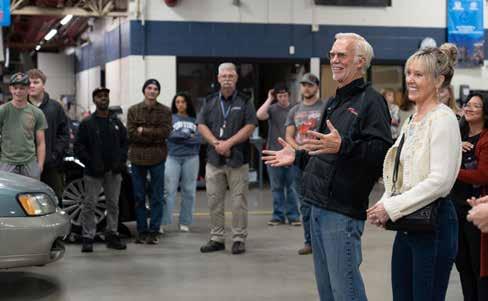
started?’ If not, adjust and keep going. It’s as simple as that.”
An obstacle is an opportunity with the right options to overcome, he said. “Whether it’s a car or it’s your life, obstacles are going to happen your whole life. Train your brain to think, there’s an opportunity here.”
Everything in life is an opportunity, Dave said. “Your job is to figure out how to learn it and how to create it. In your toolbox of life you’ve got tools. They all do the same thing. They can tear down but they can also build up. It’s your decision what you’re supposed to do with them.” l




















Loyd W. Larsen
March 21, 1936 – May 6, 2026
Loyd W. Larsen passed away on May 6, 2026, at his home in Sacramento, California, at the age of 90. He is survived by his wife of 64 years, Betty (Dahlstrom) Larsen; three children, Kirk Larsen (Bonnie) of Portland, Oregon, Kim Pringle (Richard) of Palm Desert, California, and Karen Larsen (Jodi) of Sacramento, California; six grandchildren, Cheryl, Michael, Annastasia, Alexandra, Aidan, and Lucas; three great-grandchildren, Amanda, Brandon, and Cameron; and two great-great-grandchildren, Jamari and Inayah. He was preceded in death by his parents, Orville L. Larsen and Muriel Walker Larsen Wadley, and his sister, Carol Larsen Major. Born on March 21, 1936, Loyd was an Eagle Scout who graduated in 1954 from Davis High School in Kaysville, Utah, followed by two years of service in the U.S. Army. At age 21, he suffered a near-fatal injury in an auto accident that eventually led to the amputation of his right leg below the knee and, decades later, to an aortic aneurysm. This loss did not stop his lifelong love of the outdoors, including hunting, fishing, snowmobiling, and just about any other activity he could figure out how to enjoy with a prosthesis. He was not religious, but he was deeply spiritual, and he considered the family cabin in Mack’s Inn, Idaho, the only church he ever needed. Over the years, Loyd often answered calls to share his experience and hope with fellow amputees.
A naturally gifted salesman, Loyd sold menswear, suits, sprinkler systems, lawn equipment, sporting goods, motorcycles, snowmobiles, recreational vehicles, chainsaws, and other yard and garden equipment over the course of his career. As his career progressed, he mentored and trained many younger sales professionals who became lifelong friends. Above all, he was a great storyteller. His gift for making friends and spinning a “big fish story” was at the heart of his professional success. His jokes and stories were often off-color and sometimes irreverent, but they were always told with love, never cruelty.

The Larsen family home was always filled with music. Loyd loved jazz and loved taking Betty dancing on Friday nights after long weeks on the road for work. He had a beautiful singing voice and enjoyed tight vocal harmonies, even joining a barbershop singing organization for several years.
At the height of his career, Loyd found recovery in Alcoholics Anonymous. As he gave up alcohol and cigarettes, he took up hobbies like candle-making and baking. His pumpernickel and sourdough breads, homemade water bagels, and many cookie recipes were renowned. He was also an avid fan of Mexican food – the spicier, the better – and he made unforgettable homemade salsa. At any potluck he hosted, it was always wise to ask, “How hot is this, Loyd?” even if you were pointing
to a plate of vegetables.
Loyd loved animals of all kinds, and the family always had pets of every variety, cats, dogs, rabbits, and more. As he prepared for retirement, he and Betty bought a five-acre farm in Rio Linda, California. There, they grew fresh vegetables and raised English Setters, Katahdin sheep, llamas, and a pot-bellied pig. The farm became a favorite place for children, grandchildren, great-grandchildren, nieces, nephews, and a boundless number of unofficially adopted kids and adults who became regular visitors. His English Setters were his companions in pheasant hunting, which, along with fishing, brought him some of his happiest times. When you live a life as full as Loyd’s – including the loss of a finger, the loss of a leg, two open-heart surgeries, and years of smoking and drinking – you do not expect to reach 90 years old. He reminded us of that regularly, so we know how lucky we were to have him for as long as we did. Phantom limb pain, chronic headaches, diabetes, and congestive heart failure meant he lived with nearly constant pain for many years. And when Lewy Body Dementia came, we lost much of what we loved about him months before his body finally gave out. We hope and believe he is no longer in pain and is enjoying a beautiful day on the river, with fish biting and one or two of his favorite dogs waiting to sit by the fire with him for the story of the one that got away. There will be a celebration of Loyd’s life later this summer (exact date and location to be announced). Our wish, as a family, is that those who want to honor and remember Loyd consider a donation to either the Children’s Miracle Network, which works to provide prosthetics to young people who need them; or to the Steinberg Institute, which works to identify, build, and support organizations and policies to reform mental and behavioral health in California and across the U.S.
Asteachers pop the champagne and schedule full-body massages, mothers are slowly descending into madness. Summer break stretches ahead like a sunburned, melted-fudgesicle 10K, with lots of family time. So much family time.
As a young mother in the 20th century, summer vacation was a blur of wet towels, lost flip-flops, and popsicle sticks stuck to couch cushions. My daughters spent the days selling Kool-Aid to neighbors, watching hours of PBS’s “Arthur,” and fighting nonstop.
I tried to keep a schedule, but it flew out the window the first day, along with my common sense and sanity. Although we went to parks, pools, hiking trails, libraries, zoos and museums, my daughters were always “sooo bored!” It was like trying to fill a bottomless, thankless pit.
Looking back, I was so lucky. Not because I could spend so much “quality time” with my kids, but because I wasn’t working out of the home. It was absolutely exhausting, but I didn’t have to worry about what my kids would do during the summer.
The school calendar was not created for single mothers, full-time working parents or children who need snacks every five minutes. It was designed for farmers who churn their own butter and rise at dawn to feed chickens.
Today, moms are scrambling to find camps, sitters, daycare and programs to keep

kids occupied during the summer break because many mothers have full-time jobs and can’t take the summer off.
People rarely ask fathers, “What will your kids do all summer? How will you balance your job and family?” Nope. Everything usually falls to moms, most of whom can’t afford camps or additional daycare costs.
I researched “Summer strategies for working moms” and was given ideas like 1) hire a summer nanny, 2) enroll in pricey camps early, or 3) rent children to an influencer.
Who do they think these mothers are? Kardashians? I added a fourth option: quit your job and live in a van by the river.
When my daughters were little, there were several working moms in the neighborhood and their kids would hang out with us all summer. They were part of the noisy, sticky clan, constantly bickering about who got grass in the blow-up pool.
Now, mothers are anxiously waiting for their lottery numbers to hit or a magical Mary

Poppins character to show up and take control of their unruly children. Barring that, there aren’t a lot of viable options, especially in this economy.
Grandparents and other family members alleviate some of the summer schedule strain, but with about 10 weeks of out-of-school time, mothers often resort to late-night spiraling and stress eating.
It’s not all hopeless. Companies are finally realizing they’ll have happier, healthier, more productive female employees if they offer flexibility.
Progressive CEOs provide summer childcare stipends or offer discounts to local camps. Work-from-home options, summer PTO bonuses, flexible start/end times and early-out Fridays would make a mother’s summer a gajillion times easier, as well as fathers who need
scheduling help for the school break.
Maybe that’s the answer! Instead of asking companies to make things easier for moms, let’s say the dads need help. Businesses will immediately build on-site splash pads, create kid-friendly office spaces and partner with local teams to host summer-long sports camps.
Somewhere along the way, summer break turned into a summer breakdown. Parents aren’t asking for luxury vacations, just a bit of time to sit by the pool, yell at kids to stop yelling and maybe even pop some champagne. We should be able to make that work.
Peri Kinder is an award-winning columnist and journalist who has written for The City Journals since 2004. She also hosts the Life & Laughter podcast. Peri can be reached at peri.k@thecityjournals.com.