ournal THE CITY
Davis County
FHS football player succumbs to cancer
Afu Fiefia faced illness with faith and dignity. Page 8
Education Section
A guide to what Davis County offers students Page 15

Afu Fiefia faced illness with faith and dignity. Page 8
A guide to what Davis County offers students Page 15
By Becky Ginos | becky.g@thecityjournals.com
Brooke Facer was eight months pregnant when she finished the murals for Clearfield City.
Anyone driving downtown in Clearfield
will be surprised to see beautiful murals decorating the walls of two buildings, one on Main Street and another on State Street. Artist Brooke Facer was commissioned by Clearfield City to paint both murals to highlight what the city is all about. Facer didn’t let the fact that she was pregnant stop her.
“They initially had a call for artists that I responded to,” said Facer. “I worked on the jets (installations done in 2024). There were three artists and we each did three jets for the city. Then one of the artists ended up falling through so they had two jets that needed to be done kind of in a hurried timeline and so they reached out to me because I had already finished up my three and asked if I could take on two more.”
Facer said she was happy to do it. “So I did a total of five jets and I had been meeting with the city and different representatives for these design meetings so I think I was top of mind. I was just the first person they reached out to when they were considering doing large scale artwork.”
Initially they started the conversation in the winter, she said. “I had just found out I was pregnant the week before and so I said ‘what kind of timeline are we talking about for these murals?’ They told me early spring so I thought that should be doable.”
Facer said she signed on. “Then unfortunately they had some delays with contracts and things and so the projects ended up getting pushed back. So I completed the murals in my third trimester.”
It was very hot every day, Facer said. “Some were about 99 degrees. It was the middle of June and the beginning of July when I completed those. I got them all done and then delivered my baby the last week of August.”
The city gave her some parameters, she said. They wanted one that embodied more of the city’s history and different elements and aspects of living in Clearfield and then one that honored Hill Air Force Base. So that was kind of the direction I was given.”
Facer said she created a couple of different designs and ideas. “Then I worked with the city council to narrow down those design ideas and come up with the final.”
So for the history one Facer said she was given some important milestones in Clearfield’s history or industries that are associated with Clearfield. “They said recreational soccer was a big part of living in Clearfield, also steel manufacturing and the Base and some famous people who were from Clearfield. Then they told me I could choose what I’d like to do.”
Facer lives in Layton now but was a Clearfield resident for nine years. “So I was able to sort of draw on that.”
The mural “Where Dreams Take Flight” all came together inside of the letters that spelled out Clearfield, she said.
The second one, “Utah’s Military City,” was kind of interesting, said Facer. “I am a military wife. When I first submitted the design for the F-35s in formation the feedback that I got was that it was too tough looking. I was surprised by that. I was like, ‘isn’t that the point?’ Drawing on some of my military background as a military spouse we were able to compromise in terms of the design.”
Having the feedback from them made the design even more successful, she said. “We

got more sunset colors in there and I just feel like it all came together really nice with everyone’s feedback.”
One mural is on the south wall of the business complex at 20 N. Main Street and the other is on the south wall of the City Centre Apartments at 70 State Street. “I love the locations they chose,” said Facer. “I think it’s got great visibility and if you’re driving along Main Street you can see them both really great. So overall I was really happy with how they turned out.”
This was the largest project Facer had done. “I had to use a 65 foot Boom Lift and that was new to me,” she said. “When I was finished and the rental company came to pick
it up the operator was like ‘Were you the one driving this?’ I said ‘yep,’ and he said, ‘I have never seen a female operator of this big of a lift before and I said, ‘I bet you’ve never seen a pregnant one either.’”
Besides being pregnant at the time Facer said she had an 18-month-old baby boy at home when she was working on the murals. “So I had my hands full.”
With AI on the rise, Facer said she believes art is something that is very close to people’s hearts. “That’s not something they want a robot doing.”
Facer is looking for art commissions and also has an up-cycler business. You can find her on Instagram @rummageandredeem. l

Brooks Bahr, MD, FAAD, MBA, is double board-certified in dermatology and Mohs micrographic surgery. At Bahr Dermatology, Dr. Bahr works alongside Anthony Johnson, PA-C, and Shanna Acord, PA-C, to provide comprehensive dermatological care to the Davis County community. The team is dedicated to educating patients and delivering personalized, expert treatment.
Skipping sunscreen in the winter and spring
Many people think sunscreen is only for summer, but UV rays are present year-round. They can be stronger when reflected off snow, almost doubling UV radiation during sports like skiing. Many people think cloud cover is sufficient sun protection, but up to 80% of UV rays can penetrate clouds, depending on the type of cloud cover. No matter the season, Dr. Bahr recommends a broad-spectrum SPF 30 or higher sunscreen.
2
Waiting too long to get a spot checked
Patients frequently say, “I noticed this a while ago, but thought I should finally get it checked.” Many spots are harmless, but with skin cancer, early detection makes all the difference. Having personally experienced skin cancer, Dr. Bahr is passionate about detecting and treating skin cancer early. Skin cancers caught early are often highly curable and require less invasive treatments. When it comes to suspicious spots, he recommends patients follow the “ABCDE’s of skin cancer.” (see figure 1) To be safe, Bahr Dermatology recommends annual skin checks for patients.
Social media has made skincare advice more accessible than ever, but not all voices are trustworthy, and not all trends are effective or safe. The Bahr Dermatology team recommends a simple routine that is effective and affordable. They recommend three key products: sunscreen, Vitamin A and Vitamin C, along with gentle cleansers and moisturizers. Sunscreen prevents UV damage, Vitamin A promotes cell turnover, and Vitamin C protects against damage from free radicals.
4
Assuming acne is a teenage problem
Acne is common in adults, especially women in their 20s, 30s, and 40s. Many people struggle with it quietly because they think they should have outgrown it. Regardless of age or gender, there are proven treatment options available to manage acne. Bahr Dermatology sees hundreds of acne patients each year, helping them achieve clear, glowing skin. Their advice is to treat early to avoid potential scarring and to have expert help in creating an effective treatment plan.
5
Conditions like eczema, psoriasis, and rosacea often get brushed off as “sensitive skin.” Symptoms can persist for months or years with over-the-counter trial and error. For sensitive skin, the team at Bahr Dermatology recommends fragrance-free moisturizers, cleansers, and laundry detergents. Both natural and synthetic fragrances can disrupt the skin barrier and cause/worsen rashes. For persistent rashes, Dr. Bahr recommends scheduling an appointment so a provider can accurately diagnose the skin condition and develop a personalized treatment plan.
About Dr. Bahr
Dr. Bahr grew up in Bountiful, graduating from Bountiful High School. After serving a twoyear mission to Mexico, he attended the University of Utah, where he played football and graduated cum laude in biology before earning his MBA and medical degree. He completed his dermatology residency at the University of Southern California, serving as chief resident in his final year. Dr. Bahr joined Stanford University as an Assistant Professor of Dermatology and Clinic Chief. He returned to Bountiful to care for the community in which he was raised. To schedule with Bahr Dermatology, call 801-2981514 or visit bahrdermatology.com.


801-298-1514






Utah is one of eight projects nationwide for the Electric Vertical Takeoff and Landing (eVOTL) Integration Pilot Program.
By Becky Ginos becky.g@thecityjournals.com
LAKE CITY—When the world comes to the 2034 Olympics in Salt Lake City, visitors could be flying to the venues in electric aircrafts. The Utah Department of Transportation (UDOT) in conjunction with 47G | Utah Aerospace and Defense (47G) announced during a press conference March 10, that Utah has been selected by the Federal Aviation Administration (FAA) to lead a federal pilot program to test advanced electric aircraft and other aviation technologies.
Utah is one of eight projects nationwide for the Electric Vertical Takeoff and Landing (eVOTL) Integration Pilot Program.
“This is an exciting day for us,” said Matt Maass, Aerospace Director UDOT.
“What this means for Utah and air mobility is that this enables us to work very closely with the FAA and test the technology that makes up advanced air mobility.”
So the vertical takeoff and landing aircraft that will be used for moving passengers, these aircraft will also be used for moving cargo, medical transport and it’s all going to be done electrically, he said. “These electric aircraft operate so much more efficiently than a fuel fossil powered aircraft. We’ve heard that some of these aircraft operate at roughly $17 an hour, minus the pilot cost.”
Utah is such a fantastic state for this, said Maass. “If they want to test something at high altitude in a snowy environment, right now they can go up to Alta and do some test-

ing. If they need to test something at a lower elevation, in a desert environment, they can also do that here.”
“As you know in Utah we have a great quality of life and that quality of life is going to get better,” said Senate President Stuart Adams. “I have a better quality of life than my parents did and my grandparents did and I want my grandkids to have a better quality of life than I do. This announcement today is going to help with that.”
Adams said about eight years ago on the opening day of the legislature he talked about air taxis being deployed and developed. “My staff had found a video of an air taxi that was actually functioning and I said, ‘one day those air taxis will be flying in Utah. We need to lead this effort.’”
That one day is today, he said. “We are
now leading the effort with other states to bring air mobility to Utah.”
“47G is grateful to help pull us together to form what is now known as Project Alta, the Air Logistics Transportation Alliance (Alta),” said Aaron Starks, president and CEO of 47G. “A public, private coalition focused on advancing this effort for the state of Utah.”
From an infrastructural standpoint, from a software standpoint, from an aircraft maintenance and production standpoint, Utah is front and center now, he said. “This is going to bring with it a lot of jobs and a lot of economic opportunity.”
Starks said he grew up in northern Utah. “I remember as a kid coming down to Salt Lake it was a big deal. You can be in an air taxi in Provo to Moab in 36 minutes. So, say I’m a Jazz fan or I want to go catch an MLV game.
My family can be in Salt Lake and we can be part of what’s happening here in the state.”
Fees for riders haven’t been determined yet, he said. “There are a lot of residents who commute from Cache Valley down to Ogden and Salt Lake every day for work. It would be great if they could pay a subscription fee, get into the air taxi and be in Salt Lake in 18 minutes.”
There’s this tendency to think it’s going to pollute the skies with drones and air tech, said Starks. “That’s not going to be the case at all. You can hear (regular) aircraft but you aren’t going to hear these. So it’s a much better form of flying.”
It will happen in a phased approach, he said. “We’re going to have to work with the FAA to determine where the flights go, flight paths have to be approved. The aircraft won’t be done autonomously.These will be piloted.”
“I talked to Brad Wilson, former Speaker of the House and a good friend who is in Milan for the Paralympics,” said Adams. “They’re having trouble getting around. They’re having trouble moving people to different events. Our goal, our vision, is we hope to have this functioning to be able to show off air taxis delivering people to our Olympic venues. Can you imagine people coming to Utah visiting these Olympic venues in air taxis? Moving people around with the ultimate transportation.”
“I think we’re showing off the state of Utah,” Starks said. “I couldn’t be more proud of what we’ve accomplished. We are one of seven states selected to adopt our mobility technology at a faster and faster accelerated rate.”
Starks said now they have federal approval to do so by the Department of Transportation, the FAA and the White House. “It’s so exciting. We’ve been talking about this for three years but today it became a reality.” l
THE CITY JOURNAL TEAM
The City Journal is a monthly publication distributed directly to residents via the USPS and our Boutiful office.
The views and opinions expressed in display advertisements do not necessarily reflect or represent the views and opinions held by Loyal Perch Media or the City Journals. This publication may not be reproduced in whole or in part without the express written consent of the owner. © 2026 Loyal Perch Media, Inc.
PUBLISHER
Bryan Scott | bryan.s@thecityjournals.com
EDITOR
Becky Ginos | becky.g@davisjournal.com
ADVERTISING EXECUTIVES
Mieka Sawatzki | mieka.s@thecityjournals.com
Ryan Casper | ryan.c@thecityjournals.com
Marc Davis | marc.d@thecityjournals.com
CIRCULATION COORDINATOR
Lindsay Andreasen | lindsay.a@thecityjournals.com Rack locations are also available on our website. CLIENT SERVICES Lydia Rice | lydia.r@thecityjournals.com 385-557-1022
Our mission
To subscribe to the weekly Davis Journal: subscribe.davisjournal.net
EDITORIAL & AD DESIGN Stacey LaMont Ty Gorton
THE CITY JOURNAL 9500 South 500 West, Suite 205 Sandy, UT 84070 PHONE: 801-254-5974
inform and entertain our community while promoting a strong local economy via relevant content presented across a synergetic network of print and digital media.
& Distributed by









Vacation rentals offer both short-term and long-term Stay and
Arrivingat Copper Rock, you might be torn as to what to do first. There’s the world-class golf course, voted best in Southern Utah for five straight years, with its lush fairways and greens weaving through the stunning red rocks.
There’s the beauty of the Hurricane Valley, with trails beckoning hikers or nature lovers anxious to watch a sunrise or sunset. And there’s the amazing resort itself, with a clubhouse grill, pools, golf pro shop and close proximity to Zion National Park.
With more than 300 days of sunshine each year, it’s become one of Southern Utah’s most desirable addresses for golfers and vacationers and part of a master-planned development that has redefined luxury living in the region.
In addition to amazing real estate options, Copper Rock is a source for luxury vacation rentals that are perfect for families or large groups offering short-term rentals, but also aim to build long-term relationships with those we serve by maintaining constant support before, during and after your stay. And in May, we will once again host the LPGA Epson Tour Copper Rock Championship, welcoming top rising stars in women’s professional golf. That event will be held May 14-16. It fills a hope that developers dreamt about—that Copper Rock would be more than just a golf course—it would be a destination.
“When we broke ground on Copper Rock nearly two decades ago, we carried with us a bold vision: to build a worldclass golf course in Southern Utah—a course that could not only showcase the beauty of our desert landscape but also stand proudly alongside some of the best in the country,” said Darcy Horman, director of operations at Copper Rock. “We imagined a destination for connection and shared experiences for our community and guests from around the world.”
Opened in 2020, Copper Rock has already established itself as a premier golf and resort community. What was once a vast expanse of farmland has now been thoughtfully transformed into a vibrant, 1,000-acre resort community centered around that award-winning 18-hole championship course. The 7,227-yard layout winds across natural sand dunes and native sagebrush, offering a challenging and exhilarating round of golf. The design integrates seamlessly with the rugged Copper Rock, and the surrounding area seals the deal.
“Everything about this course from start to finish was excellent,” one golfer wrote. “Service was great, tee box and fairway conditions were excellent, pure greens, interesting hole layouts with some challenging but fun blind shots and water hazards here and there, and landscape views that can’t be beat. I’ve played multiple top rated golf courses in Southern Utah and this one was my favorite by a long shot.”
Another wrote, “I enjoyed everything about the day. Pro shop staff were very helpful and worked with our threesome to alleviate a previous scheduling snafu. We were escorted to the practice facility and I have to say the practice facility was top
notch…putting green, chipping green and an excellent driving range. The course itself was in excellent condition. All aspects of course management were superior. The views on the course were just amazing.”
Just minutes from downtown Hurricane and less than 30 minutes from St. George, residents enjoy quick access to shopping, dining and healthcare, as well as Southern Utah’s endless outdoor recreation options. Those include boating and fishing at Sand Hollow Reservoir and mountain biking on the Gooseberry Mesa trails that are all within easy reach. And once you’ve returned to Copper Rock, you can enjoy golf lessons, a grill and pro shop, an online store and private spas.
“It’s a place where our community can come together,” Horman said. “A place that continues to grow and give back while showcasing the unique beauty and spirit of Southern Utah to the world.”
Freelance writer Michael Zuccarello who specializes in Utah sports businesses recalled his visit to the resort in an article published before last year’s Epson event.
“Evening falls on the 11th fairway at Copper Rock Golf Course, and the summer heat is making its peace with a soft evening breeze. Bullfrogs croak in the distance. The fading sunlight beams golden off the sandstone cliffs, backlighting the residences lining the right side of the fairway, while just left of the 11th green, the sun is about to plunge below the Pine Valley Mountains.
“This is what I see as I chip in my flip flops, trying to hold a quick green that demands a pre-meditated landing spot and the kind of precision execution that can be challenging for this 15-handicapper. It’s after 9 p.m. now, and my wife, “Callaway,” and I have a 7:20 a.m. tee time, but I want to finish with three close ones before I walk back through the neighborhood to the gleaming glass house on Torrey Pines Road, a place barely three years old with four bedrooms, five bathrooms, a pool table, and a private pool and spa.”
He said walking past modern, angular homes with huge glass windows, each home seemed to appeal to different groups for their next stay-and-play vacation.
“One home has a water slide, another a bowling alley, and still others have putting greens and basketball courts,” he wrote. “Every last one of them has a private pool. Copper Rock, truth be told, is as much a vision today as it is a living golf community.”
He said Copper Rock is “the place you and your golf friends come to play a course the pros play, with tee boxes as flat and smooth as pool tables, pristine fairways that reward accurate drives with generous rolls, and greens that roll true and fast. I have it on good authority that you can play your way out of the desert sand and sagebrush that line the fairways, just punishment indeed but not round-killing.”
“We’re really excited that the locals once again voted Copper Rock the best golf course in Southern Utah,” said Penny

James-Garcia, Copper Rock’s event coordinator. “Copper Rock was built to be a championship course, and golfers find it both highly challenging and highly playable.”
As Copper Rock continues to grow and evolve, the vision for the community includes expanded resort offerings, walking trails and enhanced hospitality experiences—all designed to elevate the lifestyle of every resident and guest. Whether you’re drawn by the championship golf, the stunning views, or the potential of owning in one of Utah’s most exciting new communities, Copper Rock is more than a place to live—it’s a place to thrive.
“We’re certainly excited about all our future amenities and developments,” Horman said, “but we understand the importance of realistic expectations. We’re lasered in on what makes Copper Rock special. At this moment, it’s a chance to stay in a beautifully equipped modern home and play at a premier championship golf course.”
Copper Rock is located at 1567 West Copper Rock Parkway in Hurricane, Utah. For tee times, vacation rentals, homesites, and stay and plays, visit copperrock.com. For more information on the Epson Tour stop in Southern Utah including tickets, go to copperrockchampionship.com. l

Afu Fiefia succumbs after four-year battle with rare cancer.
By Darrell Kirby d.kirby@mycityjournals.com

Afu Fiefia’s presence and spirit is still felt by his family – despite passing away after a valiant battle with cancer. The Farmington teen died Feb. 24, the end of four-year-long fight to overcome soft-tissue sarcoma.
Afu leaves behind his parents and six siblings. But his father, David Fiefia, the head football coach at Farmington High School, says he’s not far away.
In August 2021, Afu began feeling pain in his left calf. It wasn’t given much thought at the time other than perhaps the result of his being active in football, basketball, and track in high school. His dad said it got to the point where they had it examined. “It turned out to be cancer,” namely soft-tissue sarcoma.
About 900 children and adolescents are diagnosed with that form of cancer each year in the United States, according to information from Boston Children’s Hospital. The disease generally originates in the arms, legs, chest, and abdomen of young people, especially in the “tissues that connect, support, or surround” those organs and structures. The hospital says sarcomas make up less than 1 percent of all new cancer cases each year.
Afu underwent chemotherapy in hopes of reining it in. It showed signs of working.
“He had been in remission a couple times,” David said. The first time around, the cancer pulled back for three months. The second goround it receded for a period of 21 months, heightening optimism that Afu would beat it. So much so that he was able to play his junior

and senior years of football – and very productively, too – for the Phoenix. He capped off his prep career during the 2024 season.
“He was really optimistic about life, definitely a fighter,” his father said. “That’s just the true competitive nature of who he was as an athlete and as a person, too.”
During his senior year of high school, Afu looked forward to serving a mission for The Church of Jesus Christ of Latter-day Saints, whether that was a proselyting mission somewhere or a service mission close by to accommodate his condition and treatment regimen. He was given approval to serve away from home, although he never got the chance to go.
Fiefia said his son, the first boy and third
oldest out of seven kids, was a handful as a young boy, but matured into a responsible, focused young man, especially as the cancer took hold.. “Regardless of where he was in treatment, he was always talking and planning for the future.” As it became more apparent, Afu eventually accepted his fate with strength and courage that God had His own plans for him. With the Fiefia family’s faith in Jesus Christ, they look forward to reuniting with Afu on the other side one day.
The Fiefias are grateful for the support of family, friends, and the Farmington High School community. “It’s been amazing to be able to be a recipient of that,” David said. “He (Afu) definitely had an effect on people.” l
Another great year for the Feed Davis food drive spearheaded by the Bountiful Food Pantry, with more than 24,000 volunteers helping fill two warehouse locations with donations.
By Tom Haraldsen
t.haraldsen@mycityjournals.com
Theannual Feed Davis food drive for local pantries was held on March 14, and it was a rousing success for the Bountiful Food Pantry, Open Doors in Layton, Fishes N’ Loaves, the Hope Center and the Center of Hope. The food drive, coordinated with volunteers from The Church of Jesus Christ of Latter-day Saints and other community groups and run by the Bountiful Food Pantry, saw over 193,000 pounds of food collected.
“We estimate that it took over 24,000 volunteers from more than 400 congregations to deliver flyers and pick up the food,” said Rebekah Anderson, executive director of the Bountiful Food Pantry. “We saw over 700 vehicles drop off food to locations across the county. We had 338 volunteers at nine drop-off locations donate nearly 1,300 hours to make sure the drop-offs flowed smoothly.”

during the annual Feed Davis drive on March 14, filling dozens of metal bins with items.
Large metal bins, called Gaylords, were placed at the drop off locations, filled with donated food, then transported to the Bountiful Pantry warehouse and one other location off site. Literally dozens of them were filled in the Pantry parking lot alone on March 14.
The other smaller pantries also received donations from the drive.
“I’m amazed to see the work that can be
accomplished when so many come together toward a common goal,” Anderson said. She thanked all the volunteers and the many, many donors who gave food for the drive.
The neighboring Bountiful Community Church, which is where the Bountiful Food Pantry got its start, was also collecting new and used shoes as a fundraiser the same day. Many who came to drop off food donations

Over 193,000 pounds of food was collected for use in five different food pantries in the county. More than 24,000 volunteers helped with promotion of the drive and collection of donations. Photos by Tom
also brought shoes. That effort collected well over 300 pairs of shoes.
In August, the Bountiful Food Pantry is planning its annual Pantry Packs in the Park event. Tentatively set for Aug. 8 at Bountiful Community Park, the project will allow volunteers to fill Pantry Packs with food for school children in need in the county. More details on that project will be forthcoming.
It’s never too
Legacy House of Park Lane in Farmington recently launched an initiative called the No Regrets Club where residents can fulfill their lifelong wishes.
By Becky Ginos becky.g@thecityjournals.com
Standing up in front of a crowd and trying to make them laugh can be intimidating even for professional comedians but 73-year-old Cherry Jones didn’t let that stop her from making her debut at Wiseguys Comedy Club.
Jones is a resident at Legacy House of Park Lane in Farmington and she’s always wanted to do stand-up comedy. Now, because of a recently launched initiative at Legacy House called the No Regrets Club, her dream came true.
“We want to make sure that we are capturing all of the lifelong wishes and dreams that residents have,” said Executive Director Shauna Chavez. “Just because they’re older doesn’t mean that they can’t do what they’ve always wanted to do. So we came up with this club.”
It’s based on what a resident wants and they put in what they want to do, she said. “For example, we have Cherry that wanted to do stand-up her whole life. So she got to fulfill that dream. We have another resident who has Parkinson’s who has always wanted to race in a NASCAR race.”
Chavez said they were able to set up a connection with salt flats and make that happen. “He’ll be riding with a driver and doing that. We have another resident that is a bit younger and he’s disabled and he’s always wanted to skydive so we’re going to make that something he’ll be able to do.”
“I’ve always been a storyteller,” said Jones. “If I can get anybody to listen to me I’m going to talk. I like to tell funny stuff that’s happened to me over a period of time. I taught school for 32 years so you’re just an automatic storyteller when you teach elementary school.”
Jones said they’re stories that really happened to her. “I just get up there (on stage) and tell the story of what happened. I don’t have any set pieces. I’ve told them several times to some of the residents here and they’ve said ‘you’ve got to do that as a comedy routine somewhere.’”
Jones said she has no filter. “My sister teases me. She says ‘Cherry, if it goes through your head it does not have to come out your mouth’ but it usually does.”
Her twang adds to her funny delivery. “We’re from Texas. We moved here to be close to our grand babies.”
Some of the residents came with her to

Cherry Jones takes the stage at Wiseguys Comedy Club. Jones is a resident at Legacy House of Park Lane in Farmington and she’s always wanted to do stand-up comedy and finally got her chance. Courtesy
the show. “I was really nervous at first. We got in there and watched the others (comedians) and listened to them, some of them were funny and some were not. What was funny about mine was that it was stuff that actually happened to me. It wasn’t just telling jokes.”
One of her stories was about marijuana. “I’ve had a lot of back surgeries,” she told the audience. “My friend came from Texas to see us in Utah and she brought me a bunch of marijuana. I had it for a couple of months before I was going to try and take it. One day I was hurting a lot and I was at home by myself. I thought, ‘I’m just going to go over there and get that candy’ and I took a big piece of the marijuana.”
Jones continued her story and told the crowd that she started to feel funny. “I called my son and he said ‘what in the … did you do?’ I told him I took it and he said to go sit in a chair and stay still.”
They seemed to really like it, she said. “There was a group there, I didn’t know who they were, they hollered at me and said ‘we saw you on TV and you were so funny we decided we were going to all get together and come see you.’ So that was fun.”
“She had the crowd rolling,” said Chavez. “It was a wonderful experience for all to witness. They asked her to come back so it’s a definite possibility because at the end of the day, age is only a number.” l





9:00 am @ Jim’s Family Restaurant (9236 Village Shop Dr, Sandy, 84070) 4/3/25 9:00 am @ Jim’s Family Restaurant (9236 Village Shop Dr, Sandy, 84070) 4/10/25 12:00 pm @ Larkin
By Linda Petersen l.petersen@mycityjournals.com
Local resident TJ Riley came to the Feb. 17 city council meeting armed with data hoping to sway city officials to move forward in addressing the housing affordability crisis in the city.
Riley and his wife Talia would like to see Centerville City allow what are known as detached accessory dwelling units, smaller self-contained residential structures located on the same lot as a primary single-family home in the city. Centerville already allows

attached ADUs, but so far has not approved the detached version.
“Allowing detached ADUs would provide an additional strategy for the city to meet the state requirements for addressing moderate income housing,” he said.
Centerville already allows attached ADUs but so far has not approved the detached version.
The Rileys, who have lived in Centerville for several years, are planning for the future and would like for their adult children to be able to live in the city. They have just under an acre of property.
“We need to think about where we want to be in the next few years with a growing family and seeing what our options are,” TJ Riley said. “I just want to use my land to build my forever home without tearing down the home that I’ve raised my family in.”
A new ordinance allowing detached ADUs in Centerville is needed, he said. “I think with the housing crisis we’re all in and the cost of homes, it’s a viable option for cities to really consider this and I think it would benefit the city and its residents.”
Riley, who is the parks superintendent for North Salt Lake, said he had done his research and spoken to several knowledgeable



staff members there to gain an understanding of the issue.
“I understand probably a little bit more than just the average resident,” he said.
Riley stated six reasons external ADUs should be allowed in Centerville: allowing detached accessory dwelling units helps Centerville comply with state mandates for addressing moderate-income housing while offering an alternative for elderly parents who wish to remain near family. This would also enable owners of deep, landlocked lots to realize the financial potential of their property, which would reduce overall water consumption and waste.
These units would have a minimal impact on city services, he said. Additionally, by proactively passing its own ordinance now, Centerville can establish local standards for setbacks and aesthetics rather than being forced to implement more rigid, state-mandated rules in the future.
Riley brought data to back up his argument that such a change would have only minimal impact on housing in Centerville.
In North Salt Lake, “out of 8,468 dwelling units, there are a total of 68 ADUs, which is .07 of the total housing units; averaging about eight units per year,” he said. “Centerville has 5,786 housing units and would likely add ADUs at a similar or lower rate. Even matching the NSL rate at 0.1 per year, it would amount to only five to six units per year, and most of those would be basement units allowed. External ADUs would likely occur at a rate of one per year.”
City officials seemed impressed by the presentation.
“This information is fabulous,” said Mayor Clark Wilkinson, who is the Rileys’ neighbor. “It’s not something that we can get into a big discussion about tonight because of the need to let residents know, but it’s obviously something that could be put on the agenda. And I know with the housing situation in Utah that we need to address these issues. So, for me, it’s a priority and hopefully for the council.”
“Excellent presentation, great points for us to address,” Councilmember Rick Bangerter added.
The city is currently updating its master plan, and this information will be helpful during that process, he said.l
When you hear the word “stroke,” what image comes to mind? For many, it’s an elderly relative, perhaps a grandfather, suddenly incapacitated. But local neurologists are clear: that outdated image is a dangerous myth. Strokes can strike anyone, at any age, and often without warning, making awareness and rapid response absolutely critical.
“The idea that strokes are an ‘old person’s disease’ is incredibly harmful,” says Dr. Mohammad Shoari, a neurologist at Holy Cross Hospital – Jordan Valley, Salt Lake and Mountain Point. “We are seeing strokes in younger adults, even teenagers, with increasing frequency. Lifestyle factors, genetics, and even certain medical conditions can put anyone at risk. This isn’t just about grandpas anymore; it’s about protecting our entire community.”
A stroke occurs when blood flow to part of the brain is interrupted, either by a clot (ischemic stroke) or a burst blood vessel (hemorrhagic stroke). When brain cells are deprived of oxygen, they begin to die, leading to potential long-term disability or even death. The good news? Many strokes are treatable, but time is brain.
This is why recognizing the warning signs is
paramount. Healthcare professionals use the acronym F.A.S.T. to help people remember:
SAFFace Drooping: Does one side of the face droop or is it numb? Ask the person to smile. Is the smile uneven?
Arm Weakness: Is one arm weak or numb? Ask the person to raise both arms. Does one arm drift downward?
Speech Difficulty: Is speech slurred, are they unable to speak, or are they hard to understand? Ask the person to repeat a simple sentence.
TTime to call 911: If someone shows any of these symptoms, even if the symptoms go away, call 911 immediately. Note the time when symptoms first appeared.
“Every minute counts when someone is having a stroke,” emphasizes Dr. Rebecca Reiser, a neurologist at Holy Cross Hospital – Jordan Valley.
“The quicker a patient receives specialized medical attention, the higher their chances of a full recovery. Don’t second-guess or wait for symptoms
to worsen. Call 911 immediately.”
Our hospitals are equipped with advanced treatments to combat stroke. For ischemic strokes, our team can administer clot-busting medications like TNK (tenecteplase) if the patient arrives within a critical time window. Holy Cross Hospital – Jordan Valley also offers thrombectomy, a procedure where a specialized device is used to physically remove large blood clots from the brain.
“Beyond immediate intervention, our comprehensive stroke centers focus on post-stroke care, including rehabilitation services that are crucial for regaining function and improving quality of life,” adds Dr. Reiser. “Our multidisciplinary teams work tirelessly to help patients navigate their recovery journey.”
From emergency response to rehabilitation, our community has vital resources. But the first line of defense is you. By understanding that stroke doesn’t discriminate by age and by remembering F.A.S.T., you can be the hero who helps save a life – perhaps even your own.
For more information or to find a provider visit mountain.commonspirit.org


Learn more about the services, care providers and mission-driven work of the Holy Cross hospitals and CommonSpirit Health at www.holycrossutah.org.

At CommonSpirit Health, we make the healing presence of God known in our world by improving the health of the people we serve, especially those who are vulnerable, while we advance social justice for all.
SPONSORED CONTENT

Women go through many changes in their lives. And we believe every milestone matters. Our health care experts can help you face your next phase with confidence – because each chapter deserves to be celebrated.
Find care near you at mountain.commonspirit.org.
MaKenzie Wood, an employee at Fresh Market in Layton takes second at national best bagger competition.
By Becky Ginos becky.g@thecityjournals.com
MaKenzieWood started as a bagger at Fresh Market in Layton when she was 15. Five years later, she used her years of experience to compete in the National Grocers Association’s Best Bagger Competition held in Las Vegas earlier this month. Wood took second place and received a $5,000 cash prize. To qualify for the National competition, Wood competed in the Utah Food Industry Association’s Best Bagger Competition where she took first place.
“I was introduced to this bagging competition through my manager, Desiree,” said Wood. “She said ‘do you want to go and compete at our company competition? It’s lots of fun and you might win some money.’”
The company picks 10 people to go to the state competition, she said. “So if you place in the top 10 spots from our company you get to go to the state competition.” Wood won the state competition in 2024.
“For the national competition they pick one person randomly from each state to be

there,” said Wood. “I think this year only 18 other states competed so they kind of split us into a group of 54 and then into other groups of four.”
They have five check stands, she said. “They tell you when to go up and you see what your items are when you get up on stage. Then you just bag them. You want to stay under 53 seconds for full points because every couple of seconds after that points are deducted for time.”
Participants are judged in four areas: speed (10 points), proper bag-building technique (10 points), distribution of weight be-

tween bags (5 points) and style, attitude and appearance (5 points).
Wood said she did a lot of practicing before the competition. “Bagging at home I”d pick out different items, so a random assortment, because you never know what’s going to be at the competition. So it’s a surprise of what you’ll see.”
Then Wood said she laid it out on the table. “Then you have your three bags and you want to try and distribute all of your items in your three bags to get to the closest weights possible because they deduct points if one
bag is a lot heavier than another bag.”
A lot of the items they switch out most frequently in the competition are things like soda items or other heavier items, she said. “Those weights vary from like a 2-liter plastic bottle to a six pack of bottles. Those two are completely different weights and that can really throw you off if you haven’t practiced with both.”
It was pretty nerve-wracking on the day of the competition, she said. “The day before I just tried to stay as calm as possible and the morning of, I practiced before the competition so I was kind of in my groove and ready to bag. When I got up on stage I was just like ‘OK, I’ve got this. I can do this.’ I was just trying to pump myself up.”
Wood said her favorite thing about working at a grocery store is the community engagement. “I like getting to know the people in my community and even the people that just come in from other states and other countries.”
It’s fantastic to hear a bunch of different stories, she said. “We do have quite a few customers that just give us little tidbits of their life and it’s been fun to learn about new people and the people I get to work with are just awesome.”
Wood is attending Weber State University studying criminal justice with a concentration on crime scene investigation. That’s the path she wants to follow for a career but in the meantime she’ll keep bagging her way to the top. l


















The team is a mix of freshman, sophomores, juniors and seniors and for the first time one boy after drill became a coed sport this year.
By Becky Ginos becky.g@thecityjournals.com
Aftercountless hours of hard work, the Bountiful High Mandonelles won three titles at the West Coast Elite Dance Nationals drill competition held in Long Beach, California March 5-7. High school drill teams from all over the country come to compete.
“We were very impressed with a lot of the teams that were there,” said head coach Alba Butler. “Especially the California dance teams there were phenomenal. But after our girls won Military (category) at state and came in second at state finals they wanted to compete one more time and showcase the team.”
They set out to compete at nationals, she said. “Honestly that is very challenging and hard to do after state. Just having the momentum to keep going after you’ve gone for so long in the season when all the other teams are just done and can relax and go on vacation.”
The kids put in another month of prac-

tices and perfecting their routines for nationals, said Butler. “We did make some tweaks and changes as well and they went to nationals and they won in all three categories, Jazz routine, Military and Character for their show routine. So they’re three time national champions now.”
Drill takes a lot of dedication, she said. “The season is kind of a 12 month sport. There’s no pause or break to it. They start with auditioning in March and then they start their spring practices in May, all the way through summer practices. Then they perform at all the football games and basketball games. So they’re really performing and going to community events while squeezing in hours to practice their competition routines.”
There are 26 kids on the team. “There’s a mix of freshman, sophomores, juniors and seniors,” Butler said. “This year we have our first boy to ever compete at the state finals. It’s been so fun because drill is a coed sport this year.”
The 2025/26 season was the first year it passed, she said. “It’s been something we’ve been fighting for, for a long time. We just couldn’t get enough votes, but we were finally able to. The board is made up of UHSAA representatives, coaches and principals.”
Butler said other schools in the district have coed teams now too. “I believe there’s one boy in 6A and there’s one in 4A and then Aiden is the one (on our team) in 5A.”
He’s a junior so he’ll be back next year, she said. “He wants to dance in college. So when drill became coed it was a perfect opportunity for him to get extra training and get more of a collegiate training.”
The Show category the team won is essentially a character hip hop routine, said Butler. “All the teams have to have a character aspect to it or a theme with costuming and music that all had to go together and it had to be hip hop. So we chose to be gladiators and our music was very gladiator with excerpts from the movie ‘Gladiator.’”
Butler believes the team beat out the competition because of their hard work and training. “I think the kids nowadays are just trained so much better,” she said. “They have to do so much at the same time – they’re


training hard.”
They’re going to dance studios until 10 or 11 at night, Butler said. “They have to keep up their grades. They’re just expected to do so much more than before so I think putting them in a position or in a situation to compete against such great talent – they just rose to the occasion.”
They had to push harder, dance bigger, do more and it came like second nature to them, she said. “It was nothing they were not used to already.”
It didn’t matter how we placed at com-
petitions, said Butler. “They just came back to practice every day and they just ultimately set out to do the very best they could, regardless if the judges agreed or not.”
The girls are inspiring, she said. “I think they’ve learned so many life lessons besides winning and being great dancers. They have truly learned how to work hard and push past their limits and not second guess their abilities. I’m just proud of the people they are becoming. I think when a kid graduates from the Mandonelle program they have all the tools to excel in life.” l




By Gail Newbold | andersennewbold@gmail.com
A mother and daughter who’ve spent 52 combined years teaching share the same passion for student success despite their different teaching styles.
Jan Davis never imagined her daughter Kelly Davis Avalos would follow her into teaching. Neither did she know their styles would be so different.
“I’m more loving,” Jan says. “Relationships are really important to me.” She spent her career at Holbrook Elementary School building relationships with fourth graders and their parents, connecting on a personal level.
Kelly, now at Diamond Ridge High School, operates from the opposite end
of the spectrum. “I don’t really like young kids,” she says frankly. “I prefer logic and negotiation.” She’s also taught at South Davis Junior High, Woods Cross High School, and at a private high school in Mexico City.
Their contrasting styles became clear when one of Jan’s former students ended up in Kelly’s classroom as a junior. Upon discovering who Kelly’s mother was, he said, “Your mom is so much nicer than you.”
Kelly wasn’t offended. Same but different, is how this mother and daughter describe their collective 52 years in public education. Different styles but the same passion for the importance of public education.
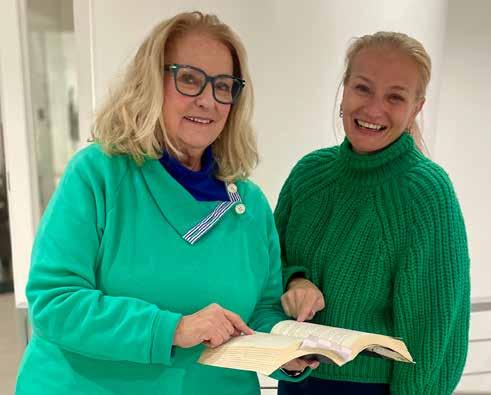
a moral society
“Public education is about creating a decent and moral society by allowing everyone the same opportunities,” said Kelly. “Even if you don’t have kids in the public school system, you still pay taxes in hopes of living in a better world.”
Another area of similarity is their desire to build up their students. Jan tells a story about running into the older sister of a former student. As the two women chatted, the older sister texted her younger sister to say she was visiting with Jan. She texted back, “Mrs. Davis was my favorite teacher because she told me I was smart.”
“That kind of blew my mind a little bit,” said Jan. “I mean it was a compliment but it almost broke my heart because all of us as teachers should be telling these kids they can do whatever they put their minds to. Every kid should feel they’re smart.”
Teaching kids to be the best they can be
Kelly also builds up her students in her dual role as teacher as well as advisor in Latinos in Action. She was only the second teacher in the Davis district to implement the national program that has made a huge difference in the lives of its members. Its goal is to offer support, serve the community and help students become successful leaders. A few years ago, the organization awarded Kelly Teacher of the Year.
Former LIA member Diana Marroquin said her teacher, Mrs. Avalos had been a big part of her life at Woods Cross. “She’s like a mother to all of us.”
Kelly’s philosophy mirrors her mom’s: She wants each of her students to be the best that they can be. “I want my kids to know that I love and care about them,” said Kelly. “At the end of each class period, I say, ‘I love you appropriately. See you tomorrow.’”
More respect needed for teachers
Kelly and Jan also share the same desire to be treated as the professionals they are.
“It’s not OK to show up on my doorstep or text me at 11:30 p.m.,” said Kelly. “Would you show up at your doctor’s home? I would never treat a doctor or someone else the way some parents think it’s OK to treat me. Don’t just walk in my classroom and talk to me while I’m teaching. Some people treat us like we’re an extension of their family but not in a nice way.”
Now retired but a frequent substitute teacher, Jan said she wanted parents to feel she was approachable, but at a decent time. “Parents were not always respectful of boundaries,” she said. “Maybe your child needs something different, but as teachers we’re always trying to do what’s best for the entire group.”
She also wishes parents understood how dedicated teachers are to helping their child learn. “Everything we do is designed to help a child. Everything. And it takes hours and hours and hours. I always went back into my class about four weeks before school started to get everything ready – decorating bulletin boards, having supplies on hand for kids who didn’t come prepared and much more.”
Each admires the other’s strengths. “My mom is so kind and loving, and knows and remembers every single one of her kids’ names,” said Kelly. “It’s pretty amazing to watch her.”
Jan said, “I admire Kelly’s strength and knowledge of how to teach. She’s so efficient, organized and succinct. She just really knows her stuff.”
Regardless of their differing styles and ages of students, these mother-daughter educators find needed support in each other. They share resources and advice. But most importantly, they understand each other.
“As much as I love my husband, he doesn’t get it, but my mom does,” said Kelly. “She understands the hard days.”
By Becky Ginos | becky.g@thecityjournals.com
Operated by the Davis School District, Davis Connect has become one of Utah’s most successful and innovative public online learning programs.
In this busy world, students and parents need learning options that are flexible enough to adjust to their daily schedules. Davis Connect Online School, operated by the Davis School District, has become one of Utah’s most successful and innovative public online learning programs.
Since expanding to a comprehensive K12 model in 2019, Davis Connect has
• Davis Connect is one of Utah’s largest and most successful public online education programs, serving approximately 15,000 students annually.
• Independent review by Eide Bailly in 2025-26 confirmed the program delivers high-quality online education with strong academic rigor and competitive outcomes.
• Elementary students demonstrate strong academic growth and achievement, including 54.8% science proficiency and 56.7% science growth on state Rise Testing.
• Davis Connect ranks among the top statewide SOEP providers, including the highest Reading and Language Arts Aspire proficiency rates on USBE measures.
• Based on current trends, Davis Connect expects to exceed last year’s 0.25 credit completions (53,844 credits earned in 2024-25) by more than 5,000 credits, demonstrating continued growth and demand.
provided flexible, high quality education designed to meet the diverse needs of Utah students by Utah teachers.
“It started around 2011 with the idea that kids could take online classes for credit,” said Ryan C. Hansen, PhD, Director of Digital Learning, Davis School District. “It wasn’t called Davis Connect back then, it was just an online program and then eventually we merged with some other large school districts around the Salt Lake Valley. It became what we called Utah Students Connect.”
So they would put some classes in, he said. “We would put some classes in and we would share teachers. That went from 2013 to 2018. But we had so many kids start to access it, it didn’t make sense for us to coordinate with so many districts. That’s when we became our own program.”
In 2019, the school board voted to make it a school, said Hansen. “That was the November before COVID hit. When COVID hit we became the online option for Davis School District. That summer enrollment went from about 100 kids to about 6,000. That happened in about a month.”
Hansen said they got through that year with distance learning. “We kind of settled in and it became more of a routine for us in 2020. Then we kind of moved away from just being a COVID response back to what we intended back in 2019 which is a full menu of online options for students.”
It started in Davis County, he said. “Just last year we really started to offer these classes to kids across the state of Utah through what is called the Statewide Online Education Program (SOEP). So this year we’ve had about 1,000 to 2,000 kids from across the state.”
Spring enrollment shows that the number of students will double with kids from across the state next year, said Hansen. “They’ve enrolled in about 4,000 different classes already for next fall.”
Enrollment is mostly kids that are en-

rolled at their traditional schools, he said. “For example, a student from Viewmont or Davis will have most of their classes at their school and then they’ll take classes from us.”
Most students/families participate in online schools to increase social opportunities for the student rather than decrease it, said Hansen. “Flexible online options allow students to take more music and fine/arts (i.e. drama, choir and band), get better jobs, have more experiences in athletics, keep seminary classes in their scheduled school day, participate in school when significant health complications restrict it otherwise (cancer),
graduate early for missions or military, etc. There are lots of good reasons.”
Davis Connect Elementary School (Grades K-6) has 118 current enrollments, he said. “In our elementary school, students are live online with teachers every day for multiple hours. Instruction is delivered directly to the student via Zoom/ Teams Meetings. Generally, students do not move through an online curriculum without the direct support of the teacher in these classes.”
It’s still about connecting with kids, said Hansen. “We want to build that trust and those relationships.That’s the goal. Good teaching is still good teaching.”




By Becky Ginos | b.ginos@mycityjournals.com
Money goes into a my529 account post tax and earnings on that investment are tax free both federal and state if it’s used for qualified educational expenses.
Most parents aren’t thinking about college when they welcome their newborn but it’s never too early to start saving for the future. There’s a way to do that through the my529 program, Utah’s official nonprofit 529 educational savings plan, a tax advantaged way to save for the cost of higher education.
“my529 has been around for 30 years,” said my529 Marketing Specialist Jenny Sass. “We’re celebrating our 30th anniversary this year. We’re quasi-governmental, so we actually reside under the Utah System of Higher Education.”
Money goes in post tax and earnings on that investment are tax free both federal and state if it’s used for what is termed qualified educational expenses, she said. “That could be anything like tuition, fees, books, room and board, supplies, equipment, computers, etc. In recent years there’s been additional things added such
as registered apprenticeships and student loan repayment up to $10,000.”
Most recently, there’s been some addition of different credentialing and certificate courses, Sass said. “For Utah residents there is also the opportunity to take advantage of a state tax credit. So for owners that open accounts for beneficiaries who are under 18 years of age they have the ability to receive a tax credit which makes it a little more appealing for our Utah residents to get involved with the program.”
The funds can be used in state, she said. “They can also be used out of state. They can be used for community college, for a traditional four year school and they could also be used for a tech college.”
There’s really a lot of flexibility, said Sass. “With the passing of SECURE 2.0 there’s also now the ability to roll over up to $35,000 of leftover funds into the beneficiary’s Roth IRA. The guidance on that has been if the account is open for at least 15 years, you have the ability to do that because one of the questions we’ll often get is, ‘what if my child doesn’t go to school?’ So this is just providing more flexibility that way.”

Set
The advantage of it being post tax when someone takes the money out there is no tax on the earnings portion, she said. “Probably by far the biggest selling point of a my529 plan is that tax free growth.”
Utah has been fortunate to have a great plan, Sass said. “We’re the third largest direct sold in the country and we have consecutively received the Morning Star gold rating. They’re an independent financial company that rates all of the 529 plans across the United States. We’re the
only plan to have that distinction for 15 years running as the top spot (gold) in recent years here.”
my529 recently announced a new program called IncentiFive, said Sass. “It’s specifically for new Utah parents. So it’s for newborns and it’s a five year saving incentive program. It’s really designed to help Utah families start an education savings habit early.”
The way it works is if a family has a baby born between Sept. 1, 2025 and Aug. 31, 2026 they’re eligible to participate, she said. “For the next five consecutive years if you put in $100 each of those years in years one through four you’re eligible for a $100 incentive contribution from my529 and in year five you would receive $529. So you have the ability over the course of five years to get $929 of incentive contributions from my529. All together that’s at least $1,429 in contributions to a child’s education savings account by the time they reach kindergarten.”
It’s free to open a my529 account and there is no minimum deposit or account balance. For more information about my529 go to https://my529.org/. To enroll in the incentiFive program visit https:// my529.org/incentifive/.
By Becky Ginos | b.ginos@mycityjournals.com
The Information Technology and Networking and Cybersecurity program prepares students with the skills needed to enter the workforce.
Breaking into a field or trying to start that perfect career can be daunting but Davis Technology College provides the training and skills needed to step into industry right out of school or to go on and get a four year degree. Two programs growing in popularity are Information Technology and Networking and Cybersecurity. Depending on the student’s pace they can complete the courses in 18 months or less and be out the door ready to look for a job.
“The information technology (IT) program is designed to give students the necessary skills, knowledge and abilities to be successful in an entry level IT career,” said Jeremy Black, a cyber security faculty member. “Students will be doing things like working on computers, working in companies, managing computers, both hardware and software, doing all of those things that would be expected of a junior level technician for that.”
The networking and cyber security program builds on that, he said. “Then on top of that it also gives an introduction to cyber security and some more advanced
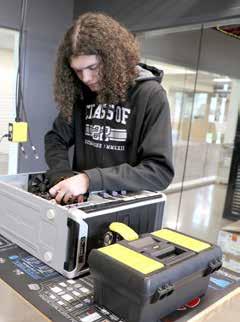
a network technician or if they want to try to get into cybersecurity then we get them started on the path for that.”
The programs start every two weeks, said Black. “We have groups of students that will start together. We have people sign up in those cohorts, go to the orientation for their cohort and then they can start after that.”
Black said they try to give students hands-on experience to prepare them for jobs in the field. “We’ve been doing final labs for each course so that when they go interview for jobs they can say ‘maybe I don’t have two years of experience in this career field but I have done this task, this task and this task.’”
“This program is catered to folks who do not have any background in IT or cyber security,” said Carey Anson, program lead for the Information Technology and Cybersecurity program. “It starts out with the fundamental courses and then it moves on to more advanced courses. Some of our courses include introduction to IT and introduction to networking.”
for the skills that the students come out with. Our students are highly sought after in terms of when they graduate from our program.”
Some of the biggest employers are the (Hill Air Force) Base and also health care industries, software and IT companies in Salt Lake City, he said.
“Most of our students are adults who are pivoting from one career to another and as a result they’re looking for something that they can get a good value for the money and a good return on their investment,” said Anson. “So within 18 months they’re able to find a job where they can make a living wage.”
Students also learn soft skills, he said. “Things like how do you work in an environment that is going to communicate with a lot of people? You’re working as a team, how do you prepare for that environment?”
computer networking. There are courses and certifications where if someone wanted to be more specialized instead of just a general IT technician then they could be
Anson said one thing that’s different in their courses is that they don’t require students to take certifications. “But we do require them to attempt it. We prepare them to take these certifications so that when the students graduate and go into industry they look at this as a verification
It’s technical but the people on the other end are humans, Anson said. “They’re users who may not have the technical knowledge. That’s who we’re preparing students to work with. Students need to have soft skills. That’s one of the things that is very sought after in the industry.”
“One thing about our program is that it’s hard,” said Black. “It’s one of the harder programs but it will be worth it.”
By Becky Ginos | becky.g@thecityjournals.com
Students can still get involved in their local school with sports or clubs, bands, those types of things. So they’re not missing out on opportunities at the local school.
Technology has made it possible for students to learn wherever they are. Nowadays online schools can connect kids with their teachers to learn the core curriculum they would in a traditional setting. Utah Online Academy (UCA) offers such an opportunity for students statewide. It is a tuition-free, accredited online public school.
“We are a K-12 virtual charter school available to serve all students in the state of Utah,” said Dr. Mollie McBroom, School Leader at Utah Connections Academy. “All of our curriculum is online and it is developed by Pearson.”
UCA offers synchronous instruction with certified teachers and asynchronous coursework with flexible pacing, said McBroom. “Flexibility is within the time frame of the week’s work needing to be done. Meaning, we offer opportunities for students like athletes or those with severe medical needs or students wanting to have advanced course work.”
So for example, there might be a family
that prefers to work Wednesday, Thursday, Friday, Saturday and take Sunday through Tuesday to travel or to work on their athletics or whatever, she said. “Just like any other public school we offer academic interventions and student support services serving students with special needs, 504 students and English learners. We offer everything that a typical brick and mortar would offer except from the comfort of your home or where you choose to do your school work – which could be anywhere.”
Under Utah’s law for assessment because UCA is 100% virtual, summative assessments are done virtually, McBroom said. “So they don’t need to travel to other locations to take the end of year assessments like RISE or Utah Aspire Plus.”
McBroom said their families are quite diverse. “We have the typical 2.5 child to parent household but we also have single parents. We have grandparents serving as learning coaches, aunts, uncles and friends. It’s an opportunity to connect education with family dynamics that may not be doable in other situations.”
Something people might not know is even though students are enrolled with UCA, students can get involved in their local school, she said. “Things like sports





or clubs, bands, those types of things. So they’re not even really missing out on opportunities at the local school. They just can’t be enrolled in their local school and our school at the same time.”
For those families that are looking to build a school community and connection among students UCA offers that virtually, said McBroom. “We offer that not just virtually like within our homeroom live lessons or within academic live lessons but we also offer opportunities for field trips across the state.”
McBroom said recently they had skating parties around the state. “Everybody was invited to attend. We rented out some skating rinks across the state and our teachers were there. The parents and students were able to join and so they were able to interact with people in their area.”
UCA’s curriculum is based on state standards, she said. “They are assigned the lessons each day. That’s what they’re required to complete each day. The flexibility comes in not to allow them to just say ‘well I’m just not going to work for a couple of weeks’ it’s
not that flexible. But if they decided ‘I’m not going to work in math today but I’m actually going to really focus on my language arts and social studies that can be done.’ That’s the flexibility offered there.”
McBroom said UCA has interventionists and opportunities for support through live lessons with the teachers. “They’re not left alone just to get the material. They are presented with the material and they work with the teacher to master it. The teachers are available for calls or to meet one-onone if the families have questions.”
UCA serves a lot of students, especially in secondary level, who are not really having great success in other areas in other schools, she said. “So they come to us like ‘OK we’ve got to make this happen’ and we help them make it happen. We’re working to make sure that we’re also offering them opportunities to leave us and start their lives.”
Enrollment for the 2026-27 school year is now open. To learn more or to begin the enrollment process visit UtahConnectionsAcademy.com or call 833-591-0251.

By Kerry Angelbuer | k.angelbuer@mycityjournals.com
Performance automotive, with four dealerships in Bountiful and Woods Cross, offers a whole spectrum of auto technician training. Basic courses for those just starting out as service technician, to advanced courses leading to specialized certifications.
Dominating an area of Bountiful and Wood Cross, the Performance Automotive dealerships, provide a valuable local resource for buying cars and repairing them. Bountiful Toyota, Bountiful Honda, Ford and Ford Truck Country are all under the same Performance Automotive umbrella. It is also a good place to work with many in leadership positions who started out at the bottom. “Plenty of growth available in this company,” said Jen Collins, the talent acquisitions recruiter at Toyota Bountiful, “with a good work culture, many of our employees have been here since the 90s.”
One of the ways employees can grow is by taking part in the numerous educational opportunities provided by the company.
“One thing that never changes in the automotive business,” said Collins, “is that there is always change.” New cars with more tech or electric drives rather than gas. When a need comes up, the company puts together a continuing education course on the topic and invites some of their employees to attend. For example, when it seems like those that know their way around an engine swap are getting scarce, they hold a class that can remedy that lack.
While all auto service employees are encouraged to take part in continuing education, the new recruits get a paid sixeight week course teaching all the basics. Danny Hatch, a master technician that has been with the company for almost 30
years, leads the class. The first half of the day is spent in the classroom with computers and live instruction. The second half of these educational days is spent in an auto shop set aside for this purpose where actual cars are used to practice maintenance and simpler repairs in a supervised setting.
After the introductory course, the students can be attached to one of the master technicians in an apprentice role.
The master technicians have their pictures displayed in the shop with their specialties and certifications listed. The service technicians usually develop a knack for certain types of repairs. They do a few of the same repairs and recognize that they are good at that particular part of the car and the journey begins where continuing education could lead to their own tenure and master technician in various areas.
They will hold a continuing education class for just a few students, but usually try to include a few more that could benefit. Five years experience along with certain certifications are required to obtain tenure as a master technician. Despite the longevity of many employees, the company is always striving to expand opportunities. A basement area at Toyota Bountiful is currently being renovated to provide more work bays as needed.
Collins recruits her talent from local high schools and Wyotech in Wyoming. They occasionally hold workshops for high school students in the school part of the business to highlight the opportunities available. “It is helpful to have a little expe rience, like Jiffy Lube or Grease Monkey,” said Collins, “but we also hire people with no experience.” Everyone here grows at a different pace, she said, but the opportuni ties are available to really shine.


Automation Technology
Composites
Drafting and Design
Information Technology
Machining Technology
Networking and Cybersecurity
Pharmacy Technician
Software Development

















APRIL SWEIGART is a Global Real Estate Advisor
with Summit Sotheby’s International Realty, helping buyers and sellers throughout the market. What she enjoys most about real estate isn’t just the homes themselves, but the people and stories behind them.
For sellers, April loves helping bring a home to market in a way that honors everything the owners have loved about living there. From thoughtful preparation to showcasing a property’s unique character, she enjoys helping homeowners tell the story of their home so the next owner can see its full potential.
She also has a special place in her heart for firsttime homebuyers. “Their excitement is contagious,” she says. “Buying your first home is such an important milestone, and I love being able to guide people through that process, answer their questions, and help them feel confident every step of the way.”
What sets your company apart?
Summit Sotheby’s International Realty combines the power of a globally recognized brand with a deeply connected international network. That means homes listed here are not just marketed locally — they’re showcased to buyers across the country and around the world.
Through the Sotheby’s brand, listings receive elevated marketing that highlights lifestyle as much as the property itself. Professional photography, videography, and thoughtful storytelling allow each home to be presented at its very best. The goal is simple: give every property the exposure and presentation it deserves.
Does your business solve a problem for your customers?
Buying or selling a home can feel overwhelming,
especially in today’s market. My role is to make that process feel clear, manageable, and even enjoyable.
Many clients come to me unsure about where to begin — whether it’s deciding if the timing is right, understanding the process, navigating a competitive market, or simply wanting reassurance that they’re making the right decisions.
I see my job as helping people move forward with clarity and confidence. Whether it’s helping sellers position their home for the strongest possible outcome or helping buyers succeed in a competitive environment, my goal is always the same: great results with as little stress as possible. How do potential clients choose between you and a competitor?
Real estate is ultimately about trust. Clients should feel comfortable asking questions and taking the time to understand how an agent approaches the process.
A good place to start is looking at how an agent markets homes, how they communicate, and how they guide clients through decisions. Reading reviews, asking about their process, and having an honest conversation can help people find someone who truly aligns with their needs.
Every agent approaches the business a little differently, so finding someone whose style fits your goals and personality can make a big difference in the experience.
What factors should potential customers base their decision on?
For sellers, it’s important to understand how your home will be prepared and marketed. A




thoughtful marketing plan, professional presentation, and an agent who understands your specific market can have a meaningful impact on the outcome.
For buyers, the process should start with education. Understanding the steps, the financing process, and the strategy needed in today’s market helps buyers feel confident and prepared when the right home comes along.
What is your advice for someone considering doing business with you?
Start with a conversation. Every situation is different, and sometimes a quick conversation can help bring clarity to what might feel like a big decision.
I’m always happy to answer questions, talk through the market, or simply offer guidance — whether someone is ready to move soon or just beginning to explore their options.
Anything else you’d like readers to know?
I view my role as much more than helping with a single transaction. My goal is to be a long-term resource for my clients — someone they can call anytime they have questions about the market, their home, or future plans.
Many of the relationships I’ve built through real estate have turned into lasting friendships, which is one of the most rewarding parts of the work. We also host several client appreciation events throughout the year, which are a fun way to stay connected with the people and families I’ve had the privilege to help.
At the end of the day, real estate is about people, and being trusted to help guide someone through such an important moment in their life is something I never take for granted.








Lawmakers consider more than 1,000 bills.
By Becky Ginos becky.g@thecityjournals.com
The 2026 Legislative Session ended March 6. More than 1,016 bills were introduced and lawmakers passed 541. Some drew attention while others went through without much fanfare.
HJR 30, a resolution that passed on the last day, comes after years of a dispute between the federal government and the state over 22,000 acres of land on the north end of the Great Salt Lake.
“This was exciting news that happened kind of overnight,” said Sen. Scott D. Sandall, R-Tremonton. “It’s the result of over 20 years of litigation. The federal government has agreed to sell that. I’m proud to announce that there will be an excess of $60 million that will come back to the state of Utah to help in and around things of the Great Salt Lake.”
Sandall said they are going to use as much science as possible to get the best outcome for the money. “It’s land going from the state to the federal government and they’re going to pay us for it.”
This is land that has been in dispute, said Sandall. “It’s been counted as federal land, counted back as state land and finally the resolution to the dispute allows it to go back to federal land. I will tell you that public access is available completely and does not go away.”
“That’s a big deal,” said Senate President J. Stuart Adams. “A lot of our federal land they try to restrict access to. It’s funny, it’s the people’s ground but they don’t want the people on it.”
“This makes sure that people are able to access this new settled federal land and it will be open for that,” Sandall said. “It’s a lot of wetlands. It’s right on the edge of the Bear River Bird refuge.”
Here are a few bills that passed:
SB69
This bill adds to legislation from the 2025 Session regarding cellphones. SB69 School Device Revision, sponsored by Sen. Lincoln Fillmore, R-Salt Lake, calls for a “bell-to-bell” policy prohibiting the use of cellphones from when the first bell rings until the last bell when school ends. It will be the state’s default policy but preserves the option for the Local Education Agency (LEA) to set its own device policy.
SB134 (Court Amendments)
The governor signed this bill early in the session despite some controversy. SB134 calls for “statutory provisions related to judges and justices for Utah Courts.”
• Increases the number of Utah Supreme Court justices from five to seven.
• Increases the number of Utah Court of Appeals judges from seven to nine.

Sen. Scott D. Sandall, R-Tremonton (center) on the Senate floor. Sandall ran HRJ 30, a settlement with the federal government that will bring $60 million back to the state for the Great Salt Lake. Courtesy/Utah Senate
• Increases the number of Utah District Court judges, adding three judges in each District Court in Districts 3, 4 and 5.
SB60
Reduces the personal and corporate income tax rate from 4.5% to 4.45%. This is the sixth year of income tax cuts for the state, with the goal of lowering the tax burden on families and corporations.
HB190/HB290 child tax credit related bills
HB190
Engages employers in addressing child care shortages by stacking state and federal credits. Large employers can receive up to 50% and small businesses up to 80% back on qualified child care expenses such as operating costs for employer-owned child care facilities, according to a Policy Project release.
HB290
Raises the income eligibility threshold for Utah’s Child Credit by $7,000 which allows more working families to qualify. This change could benefit an estimated 12,000 to 20,000 additional families and support 19,000 to 31,000 more children ages 0 to 5, the release said.
AI bills HB276, HB273 and SB275
There were several bills considered dealing with AI and digital privacy
HB276
“Enacts provisions related to counterfeit intimate images and digital content provenance standards.”
HB273
“This bill requires the State Board of Education to create model policies on the use of technology and artificial intelligence in a public school classroom.”
SB275
Creates the State-Endorsed Digital Identity Program.
The bills have now been sent to the governor’s desk. For more information about the bills that passed during the 2026 session go to https://le.utah.gov/.

Students with special needs will compete in April. Last year’s group won a Silver Medal in 2025 and hope to win a Gold in 2026.
By Becky Ginos becky.g@thecityjournals.com
LAYTON—A group of dancers are headed
to the Utah Special Olympics to perform pieces they have been practicing for weeks. The students are all special needs ranging from 15 to 28 and ready to show off their skills at the statewide event April 25.
“This will be our third year participating,” said Krista Derington, owner of Premier, Ballroom and Dance Academy that has the class. “I was asked to judge the first Special Olympics that they had for dance in Utah three years ago. After I got done judging I just realized we needed to be part of this as a dance studio.”
There have been a couple of dance studios in Utah that had a special needs class but there had never really been an official Olympic thing here in Utah for dance, she said. “I knew the person who helped get all that started and when they asked me to come judge I just fell in love with it.”
Derington also had some personal reasons for getting involved. “I have a special needs son myself,” she said. “I was sitting there judging and I thought ‘oh my gosh, if my son, a special needs kiddo, ever wants to dance in the future, there would be a place like this for him which I loved.”
The seed for the idea came while Derington was attending Brigham Young University in dance education with a minor in ballroom. “There was a dancer who was part of the Miss Utah program and she decided to make one of her projects for being in a pageant all about providing special needs dancers with dance.”
They invited all of the college students to come and dance with the special needs dancers, she said. “That’s probably when it really sparked my interest. I always thought to myself if I ever have a chance in the future, if I’m ever in charge of a program myself and do anything with special needs and dance I would love to. That was the first time I’d ever heard of anyone holding a special needs dance class specific to them.”
Derington said she went on with her life and then had her son and found out he was special needs. “He’s autistic. Then I was invited to judge and I’m just like ‘OK this is my sign it’s time.’”
There are other studios around, she said. “I don’t know if there are any around us that do it currently. I have thought they should start a class because it’s so needed. It’s something parents tell me all the time.”
They’re just so grateful that this even exists, said Derington. “Because if you think about it, if you have a special needs child that will never be able to live on their own and they’re living with mom and dad until they pass away or until their parents pass away there’s just not a lot for them.”
Maja White is the dance instructor for the class. “I got started when I did some vol-

unteer work with the Tanner dance up at the U and they do lots of dance classes for kids with special needs,” she said. “We actually had a student at Premiere who had an older sister with some special needs and she always wanted to dance and so I kind of started this group with her in mind for older ages.”
The youngest is 15, said White. “I’ve worked a lot with preschoolers and kindergarteners in the school district with special education so this has actually been really fun for me to kind of get to know the older side of special needs and how to work with them. That’s been really fun.”
White said she has a brother with some special needs. “So working with them felt natural. I like working with kids with special needs in particular. I find it really enjoyable and especially forming connections with them.”
When things click for these kids it’s awesome, she said. “That’s what makes everything worth it.”
The Special Olympics will be held April 25 at Cottonwood High School at 11 a.m. Cottonwood High is located at 5715 S. 1300 East, Murray. For more information about the program at Premiere visit https://www. premierballroomacademy.com/. l
Despite a $7 million voter-approved bond, Centerville leaders remain deadlocked over a potential cemetery location.
By Linda Petersen l.petersen@mycityjournals.com
Centerville City officials have spent nearly six years searching for a site to build a new city cemetery. Although a 2021 voter-approved bond gave the council authority to spend up to $7 million on the project, they have had trouble locating a suitable site.
Now the need to find at least five acres for the proposed cemetery is becoming urgent: the current city cemetery is full, and those officials are anxious to provide a spot where local residents can be buried.
On Feb. 17 Mayor Clark Wilkinson gave the city council an update on how the search was going. In 2019 Wilkinson formed a cemetery exploratory group with several resi-
dents, city staff and two of the city council, he said. They talked with a local mortuary, Fruit Heights and Farmington to consider a joint venture but, for various reasons, none were interested. They also contacted The Church of Jesus Christ of Latter-day Saints regarding underutilized ball fields and reached out to several private landowners of parcels larger than five acres to no avail.
One remaining option is to utilize 160 acres of city-owned land on the hillside directly east of the city, often referred to by local resident as Freedom Hills area or the Bonneville Shoreline trail area, but that might be unpopular with many residents because of how the hillside is used recreationally.
Councilmember Rick Bangerter, who is new to the discussion, having been on the council only since January, argued that the hillside should remain under consideration, noting that a cemetery road could serve as a fire break and improve access for emergency responders. He also pointed to the public’s financial commitment to the project following the 2021 bond.
“The majority voting in favor of doing this by putting their money where their mouth is... they were willing at that time to bond up to $7 million,” he said.
Proponents, including local excavation expert Rob Vandergrift, who had been asked to evaluate the site last year, also spoke in favor of that option arguing the site is stable and offers significant aesthetic value.
“It has the potential in my opinion to be one of the most beautiful cemeteries in the state because of the setting,” Vandergrift said.
However, several council members expressed concerns that such development could invite further residential expansion on the foothills.
“People don’t want the hillside touched,” Councilmember Robyn Mecham said. “I feel like we need to not be promoting any type of development up there... a cemetery would be something that might be that impetus for starting that trend.”
Councilmember Gina Hirst noted the high cost of infrastructure, including water lines and snow removal for funeral access on
steep terrain. She highlighted the conflict between the need for burial space and the desire for preservation.
“People want a cemetery and they don’t want anything higher on the hillside. So people would be very concerned if we get a road up there,” Hirst said.
City Manager Brant Hanson addressed the long-term importance of managing any new burial space the city eventually acquires.
“If we have a pretty strict policy like we do now, then it will last forever,” he said.
While the council previously chose not to fund a geotechnical study of the hillside due to cost and environmental concerns, some now suggested the idea should be “kept in consideration” as other options are weighed.
Despite a lengthy discussion, no ideal option was found, leaving the proposed project in limbo still.
At the end of the meeting, the council moved into a closed session for what Wilkinson said would be an update about various properties the city has looked at for a cemetery site. l


FAMILY PROTECTION
• Special Needs Trusts
• Guardianships
• Pre & Post-nuptial Agreements
• Adoptions
• Domestic Partner Trusts
• Name Changes
• Pet Trusts
• Asset Protection
PROBATE & ESTATES
• Letters Testamentary
• Formal & Informal Probate
• Intestate Succession (No Will)
• Small Estate A davits
• Survivorship A davits
• Spousal Claims
DISPUTE RESOLUTION
• Mediation
• Elder Care Disputes
• Estate & Trust Disputes
• Elder Exploitation & Abuse
• Estate & Trust Litigation



TRUSTS & WILLS
• Living & Family Trusts
• Simple & Complex Wills
• Trust Administration
• Irrevocable Trusts
• Assist Trustees, Executors & Heirs
• Trust Review Service
BUSINESS PROTECTION
• Corporations
• Partnerships
• Limited Liability Companies
• Non-pro t Organizations
• Buy-Sell Agreements
• Quiet Title Actions
ELDER LAW
• Powers of Attorney



• Guardianships
• Conservatorships
• Living Wills
• Competency Issues
• Medicaid Planning
• VA Aid & Attendance Planning

Centerville City officials recently honored retiring school crossing guard Debi Harvey for her 12 years of dedicated service and praised her commitment to protecting local children in that capacity.
By Linda Petersen l.petersen@mycityjournals.com
On Feb. 17 Police Chief Allen Ackerson, Mayor Clark Wilkinson and the city council honored retiring school crossing guard Debi Harvey for her 12 years of service.
They recognized Harvey’s long tenure and her commitment to the safety of local children, and Anderson specifically noted her decade of work at the busy corner of Parrish and Main. He presented Harvey with a certificate of recognition, a department shoulder patch and a challenge coin representing honor and character.
“I’ve been pondering on school crossing guards and their importance and the difficulty in finding quality crossing guards that have a lot of longevity to them,” Ackerson said. “It got me thinking about the nobility of the work and the kind of person it takes to go out, morning and afternoon, and literally place themselves between the children and the cars and do so without much recognition at all.”
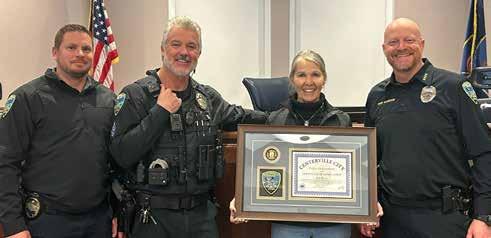
Ackerson pointed out that many drivers are often frustrated and place a higher importance on their morning commute than the safety of the children crossing the street. Despite this, Harvey remained a constant, positive presence at her post, he said.
Addressing Harvey directly, Ackerson highlighted the emotional impact of her work.
“One of the things that struck me is you have the opportunity for many of these children to give them their first good morning,” he told her. “The first ‘have a good day’ and kind of send them off into school. I thank you for all
your years of spending your time sacrificing yourself at times for the sake of the children.”
For the past decade, Harvey has been a fixture at the corner of Parrish and Main, an area she described as a “nightmare” due to the volume of traffic and the inattentiveness of drivers near the Wells Fargo Bank.
When invited to share her story, Harvey said after a long career in dentistry, upon retiring from that field, she found herself restless. She had already spent more than two decades volunteering for the Festival of Trees, which she described as her first love, but she
Who is Weber Basin Water?
The Weber Basin Water Conservancy District is the regional water provider for Davis, Weber, Morgan and Summit counties. The District was created on June 26, 1950 under the guidelines of the Utah Water Conservancy Act. The District was formed to act as the local sponsor of the federal project (the Weber Basin Project) to develop and manage water resources for the population within its service area. Weber Basin Water was established to manage the water in the Ogden and Weber River drainages and continue to plan for and develop water to meet the future water needs of a growing population.
How is the District Governed?
The District is governed by a nine-member Board of Trustees who represent the ve geographical areas within its boundaries. They are each nominated by the counties and appointed by the Governor of Utah.
What Does the District Do for the Average Resident?
The District delivers approximately 230,000 acre-feet of water each year. This includes treated municipal water, wholesale and retail agricultural irrigation water, wholesale, and retail secondary irrigation water, and treated and untreated industrial water. Over 700,000 residents within the District service area bene t from the water that is delivered to their communities, which is then delivered to their homes. In one way or another, every resident is a recipient of water that has been developed, managed, and delivered by Weber Basin Water Conservancy District.
The District operates seven large storage reservoirs, three hydro-power generation plants, 21 wells, four water treatment plants, and hundreds of miles of canals, tunnels, aqueducts, and pipelines. All of this is done to accomplish 2 main objectives:
1. To provide reliable and quality water to residents within our service area. That happens as the District manages stream ows, treats water, delivers water and keeps systems updated.
2. Teach water management, conservation and e ciency to the public through free classes, marketing, rebates, and programs with the end goal of stretching existing water supplies to meet all the demands now and into the future.
What Water Conservation Tools or Resources Do You Provide to the Public?
3. Learning Garden: Free to visit for plant and yard ideas
4. Free Landscape Classes: registration is requested
5. Customer Portal for Secondary Water Users
6. Incentives & Rebates: Detail on website
7. Free Do-it-yourself Sprinkler System Audit Kits
What We Hope Residents Will Do to Manage and Be E cient With Water?
• Each homeowner has the responsibility to be accountable for their own water use.
• Use the tools and resources provided by the District to learn about your water supply and take individual steps to be water e cient in your lifestyle.
• Outdoor water use has the highest demand and greatest potential for savings of all municipal water use. Changing your yard to water-smart landscaping can reduce water use by two-thirds. Consider changing your yard to eliminate some areas of non-essential lawn and adjust irrigation systems and scheduling to become more e cient, which will result in signi cant water use reductions.
• Direct District secondary water customers need to log into the portal and use the available tools for better water management.
needed a way to fill her daily schedule.
“When I decided to retire from that, I was like, what am I going to do?” Harvey said. She turned to her daughter, who was already serving as a crossing guard in Centerville, for advice. Her daughter encouraged her to apply to be a crossing guard herself. Harvey laughed as she remembered her response. “I’m like, ‘Oh, OK, I will do that.’ And so then I became a crossing guard.”
Over the years, the job became much more than a way to fill her time. It became a way to protect the children in her care during the brief times they crossed the streets, she said.
“It was just so rewarding to be able to help the kids get to school safely,” she said. “Many times I could have sat on a car, they got that close to me, but I would rather it be me than the kids. And so, I really hope that this program will continue.”
The rewards of the job often came from small gestures of kindness from the students she protected.
“More than anything is when I see these little kids out and about and they don’t know my name, but they know I’m the crossing guard and they will say hi to the crossing guard and that’s so rewarding to me,” she said.
As she prepares to hang up her reflective vest, Harvey is looking forward to more time for travel and her continued work with the Festival of Trees.l


We can all do a little to make signi cant improvements to how we use water which will bene t our entire region when it comes to planning, growth, and the overall management and maintaining an adequate water supply.
Where Can You Find the District?
2837 E Hwy 193, Layton, UT 84040 801-771-1677
ONLINE: Weberbasin.gov Facebook, Instagram, X, and YouTube: Weberbasinwater
4:30
Kaysville
By Cindi Mansell c.mansell@mycityjournals.com
Kaysville City officials are considering placing a General Obligation Bond on the November ballot to fund construction of a new fire station on the city’s west side, a project intended to improve emergency response coverage as the area continues to grow. The proposed station would likely be built on city-owned property off Burton Lane, which fire officials say would improve response-time coverage in four of the six west side response zones.
During a recent City Council meeting, Fire Chief Paul Erickson presented data on service demand, response times and projected costs, explaining that emergency calls have increased about 18.6% in recent years and have remained elevated since the COVID-19 pandemic. National standards recommend emergency crews reach incidents within about six minutes in 90% of calls. Erickson said Kaysville does not currently meet that benchmark in parts of the west side, where response times can range from seven to 12 minutes or longer, depending on call volume and unit availability. “Brain injury can begin within four minutes without oxygen, and cardiac arrest survival rates decrease significantly with each passing minute,” Erickson said, noting that faster response improves outcomes in both fire and medical emergencies.
City staff evaluated several potential sites using response-time modeling and insurance-rating guidance. Erickson said the Burton Lane property provided the best coverage and roadway access compared with other options near the city operations center and along 200 North.
Preliminary estimates place construction and site work at about $15.9 million to $16 million. City Manager Jaysen Christensen said a General Obligation Bond backed by property taxes could provide lower interest rates than other financing methods. Estimated annual debt service on the bond would be $1.1 million to $1.2 million, or about $114.90 annually for a home valued at $690,000. Added operational costs, including staffing and equipment, are estimated at about $195 annually per average home, for a combined estimated cost of about $310 per household.
Erickson said the station would help maintain current service levels as the city grows rather than expand services beyond existing standards. Annual staffing costs are
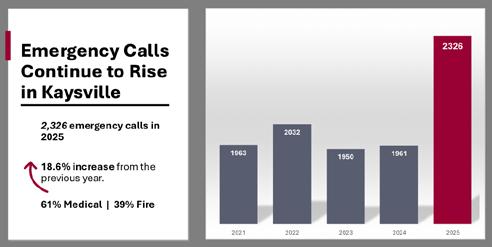
earlier discussions about forming a regional fire district with neighboring cities had not moved forward.
On March 5, the City Council determined to conduct added work meetings to consider placing a General Obligation Bond on the ballot. Tran emphasized that discussion this evening did not represent a final decision on funding or ballot placement. Christensen said state law requires ballot language to be finalized at least 75 days before an election, meaning the council would need to act by August for the measure to appear on the November ballot.
projected at $2 million to $2.2 million for firefighters, paramedics and benefits. Existing apparatus could initially support the new station, though additional engines will eventually be required as equipment ages. Erickson noted that fire engine manufacturing timelines have increased to 46–50 months, according to manufacturer Pierce.
Councilmember John Swan Adams asked whether a smaller satellite facility staffed by fewer personnel could reduce costs while still improving response times for med-
ical calls. Erickson said national standards require a minimum number of firefighters on scene and that splitting existing crews between two locations would reduce response capability. He added that a small satellite station staffed by one or two personnel would not meet fire-response requirements or provide adequate coverage.
Mayor Tamara Tran said the city has discussed building a station on the west side for several years as development has increased in that area. She also noted that
Public comments during the meeting reflected differing opinions on how the city should proceed. Resident John Sanders urged council members to decide rather than placing the issue before voters. Sanders, who lives on the west side, said he is concerned about response times and potential liability if emergency services cannot reach residents quickly.
Resident David Airhart said discussions about building a second fire station have taken place for nearly six years and expressed concern that the project could stall if voters reject the bond. He encouraged the council to pursue alternative funding options if that occurs. If voters approve the bond, design work would begin first, with construction potentially starting in late summer 2027 and taking 10 to 13 months, based on comparable projects. l



Spring
By Stephanie Morales s.morales@davisjournal.com
Aftermonths of cold weather, darker days, and busy winter schedules, spring arrives with something many of us didn’t realize we needed – a reset.
The longer days, warmer temperatures, and fresh air offer the perfect opportunity to slow down, clear out what no longer serves us, and start fresh in small but meaningful ways. While many people think of spring cleaning as simply organizing closets or dusting shelves, a true “spring reset” can go much deeper.
One of the easiest ways to embrace the season is by refreshing your home. Studies show that cluttered spaces can increase stress and make it harder to focus. Taking time to declutter – even one room – can make a noticeable difference in mood and productivity.
Start small. Choose a drawer, a closet, or even just your kitchen counter. Donate items you no longer use, recycle what you can, and organize what remains. Many people find that creating a clean, open space helps them feel calmer and more energized.
Opening windows, letting in fresh air, and adding simple touches of spring – like flowers, lighter fabrics, or brighter colors – can also make your home feel renewed.
Spring is also a great time to reset mentally. After a long winter, many people experience burnout or emotional fatigue. Taking time to reconnect with yourself can help
restore balance. Simple practices like journaling, spending time outside, or limiting screen time can help clear mental clutter. Even something as simple as a daily walk can improve mood, reduce stress, and increase creativity.
Mental health professionals often encourage people to check in with themselves regularly. Ask yourself: What has been weighing on me? What do I want more of in my life this season? What can I let go of?
Spring reminds us that growth often begins by releasing what we no longer need.
As the weather warms up, many people naturally feel more motivated to move their bodies and build healthier habits. This doesn’t mean drastic changes or intense routines. Instead, focus on simple, sustainable steps – taking evening walks, stretching in the morning, or cooking fresh seasonal foods. Farmers markets begin reopening in many communities during spring, making it a great time to add fresh fruits and vegetables into meals.
Hydration, sleep, and sunlight also play a major role in physical well-being. Even a short amount of sunshine each day can boost mood and help regulate sleep patterns. Perhaps the most powerful part of a spring reset is the reminder that it’s never too late to start again. Just as trees begin to bud and flowers return after months of dormancy, people also have the opportunity to grow, change, and refresh their lives.
You don’t need a perfect plan or a dramatic life overhaul. Sometimes the most meaningful resets begin with small steps. Clearing a space, taking a breath of fresh air, or simply deciding that this season will be a little lighter. Spring, after all, is nature’s way of reminding us that new beginnings are always possible. l






MALAYNA FELIX OLIVER

com






MALAYNA FELIX OLIVER loves bookkeeping. After handling the finances for her real estate company, she decided to start her own bookkeeping business in 2025, obtaining her QuickBooks ProAdvisor certification.
Malayna is not just someone who can “do the numbers.” She’s invested in her clients to provide clear, reliable financial information so they can make confident business decisions. Malayna provides accuracy, transparency and communication, and treats each client’s needs like her own.
What sets your company apart?
I am someone who values confidentiality, meets deadlines, and keeps you informed year-round, not just at tax time. I can organize transactions, reconcile accounts, and produce financial reports. I’m an independent bookkeeper, so I don’t work for a firm and can charge less than larger firms. No job is too small!
Does your business solve a problem for your customers?
Yes! It takes a lot of stress and confusion off a business owner’s shoulders and provides clarity and
security. I work with small businesses, freelancers, and anyone who needs help organizing their finances.
How do clients choose between you and a competitor?
Clients choose between a competitor and me based on three main things. First, trust. I focus on being transparent, responsive, consistent, and providing excellent service.
Second, value. I’m intentional about understanding what the client needs; I’m not just selling a service. I tailor my approach so they’re getting something that truly solves their problem, not a one-size-fits-all package.
And third, connection. Clients aren’t just hiring a company; they’re hiring me. They choose the person they feel heard by, understood by, and comfortable working with. Call, text or email me to set up a consultation and let’s discuss the services I provide to help you the most.
What factors should potential customers base their decision on?
Potential customers should base their decision on more than just price. They should consider the quality of
service, the provider’s experience and credibility, how clearly and professionally they communicate, and whether they feel confident and comfortable working with them.
At the end of the day, some clients will choose based on price, some on experience, and some on personality. The clients who value communication, care, and customized service are the ones who tend to choose me.
What is your favorite service provided by your company?
I love taking messy finances and organizing them so that business owners can have peace of mind and make informed financial decisions. Because I work remotely, I can assist anyone in the United States.
Also, if you have fallen behind on your bookkeeping, that can be a massive stress on your time and energy. I can look through your records and clean things up so you can start fresh! It’s such a relief for clients to have that done.
I’m happy to work through Zoom or, if you’re in the area, we can meet in person so I can get an accurate understanding of your business needs. I’m excited to meet you!



April 23, 1938 – Feb. 26, 2026
Longtime Kaysville resident Jeannine Swaner Horne was born April 23, 1938 in Salt Lake City to Francis Carl Swaner and Edna Savage. She passed away Feb. 26, 2026 at McKay-Dee Hospital in Ogden, due to complications from the blood cancer MDS at the age of 87. She married Marvin Horne on March 31, 1961 in the Salt Lake Temple and they were happily married for nearly 65 years.
Jeannine grew up in Farmington, Utah and spent most of her childhood at home at Lagoon in the old Bamberger train station. Her father was Lagoon’s head gardener, and she grew to love the flowers. She had a great imagination and had many adventures in this setting. They raised goats and she would help tend to them including helping to bring them home when the midway at Lagoon caught fire in 1953. They also had dogs and other pets that she loved and included in some of her adventures.
She grew up in love with art and took up painting and photography. She has blessed many lives with her artistic talents although she would always say she wasn’t very good. There is no way to count all the pictures that she has taken of family and nature. She especially loved the mountains and enjoyed backcountry trips when Marvin would have to frequently stop for her to take pictures. Later pictures from trips and many of the family would become calendars that she gave out every Christmas to family.
She was blessed with great compassion and service and chose nursing as a career. As an RN she worked in San Francisco, St. Marks in Salt Lake, South Davis Hospital and then Lakeview where most of her career was spent. She did spend a short period of time doing home health and hospice care. Her compassion and love of family and others was always more important to her than taking care of herself. She also worked on The Church of Jesus Christ of Latter-day Saints, Salt Lake Stake Church farm with the family. She truly tackled any kind of job with a work effort that she would give it her all. Her ability to care for injured animals was always amazing.
Mom’s faith as a member of The Church of Jesus Christ of Latter-day Saints was the guiding light in her life. Over the years Mom had many callings in the Church. She taught Primary and Relief Society, was a cub scout leader for many years, and served in the library. She served three service missions with Marvin. One to Cove Fort where she took care of the flowers and cleaned artifacts and the grounds. The other mission was to Promontory Ranch where they watched for wildfires and did overall repairs and maintenance. The third mission was in the Joseph Smith Building where they served as hosts and guides. Mom loved being so near the Salt Lake Temple

and being able to photograph and walk the grounds.
While serving at Promontory Ranch, Marvin and Jeannine became involved in the reenactment of the Golden Spike. This would keep them busy every weekend and holiday during the summer months. Mom would eventually take over the position as the telegraph operator. This continued for many years until the drive and standing became overwhelming. Family was everything to Jeannine and always her priority. This love of family extended into family history as well. She spent many hours scanning pictures and documents and assembling them into memory books. These were then given to her children as birthday presents. They are priceless treasures. There were also many Fourth of July parties and Christmas parties for an ever-growing family. Many memories were created and centered around her.
Jeannine is survived by her husband Marvin Horne of Kaysville; children; Tammy Owens (Rodney) of Kaysville, Kent Horne (Kelly) of Syracuse, Carl Horne (Miranda) of Kaysville, Colette Mitchell of Kaysville, Joe Horne (Wendy) of Roy, Troy Horne of Kaysville, and foster son Dave McClure of Bountiful. She had 15 grandchildren, six foster grandchildren, and six step grandchildren; she also had 17 great grandchildren, seven foster great grandchildren, and four step great grandchildren. She has been proceeded in death by her parents Carl and Edna Swaner, her sister June, brother Laddie, first grandson James “Jimmy” Dee Hamblin in 1982 and step grandson Dane Kartchner in 2003.
Funeral services were held Friday, March 6. Internment at the Kaysville City Cemetery.
Dec. 15, 1930 – Feb. 25, 2026
Lorraine Thornton Young loving wife, wonderful mother and grandmother, died peacefully Feb. 25, 2026, surrounded by those who loved her, after a long life of joy and service.
Lorraine was born Dec. 15, 1930, in American Falls, Idaho. She was the seventh child of Elva Thomas and George Dunn Thornton. Shortly after her birth the family moved to North Logan Utah where Lorraine grew up. She spent her youth with family and friends. She loved to ride her horse ‘Brownie” and play with her dolls and cats. She participated in 4-H in sewing, cooking, and outdoor work. She graduated from South Cache High School, and seminary. She earned her “Honor Bee” (Latter-day Saint girls certificate of award). Later she earned the Golden Gleaner award.
She married Alva Allen Young Aug. 23, 1957. They lived in Salt Lake City in the Avenues then bought their first home in Rose Park. A few years later, they moved to Abraham Utah to the Alva Allen Young family farm. After a few rough years of farming, they moved back to the Wasatch Front and settled in Bountiful, Utah. Lorraine taught school so Alva could earn a BS degree in electrical engineering. They spent many happy times together boating, singing, camping, planning and remodeling their house in Bountiful, Utah.
They had four children, Laurie – deceased (Mike Romriell), Elva (Stuart Maughan), Steven Allen (Gina Stubbs Wardell, Jeni Holton – deceased,), and Thomas LeRoy (Kim Yergensen). Both Alva and Lorraine loved their children and did everything they could to help them improve. Lorraine spent hours sewing clothes and dance costumes for her children. She drove them to and supported them in endless lessons, performances, sports, and tutored them during the summers. Each day she would prepare dinner and spend time cleaning the house in preparation for Alva coming home from work. The family would eat dinners together each night. They were blessed with 15 grandchildren, two step grandsons, and at this moment 23 great-grandchildren, and seven step-great-grandchildren.
Lorraine loved to sing. Through high school and college she sang in a trio with her friends Helen Peterson Hill and Lavona Gillgan Dickinson. They performed on KVNU radio multiple times and at the Utah State Fair. She also sang solos, and was part of the Cache County school choirs and sang as one of the lead singers in “Tulip Time” and in the chorus of several musicals at school and church. After marriage she participated in the Mountain View Chordettes choir as well as church choirs. She loved singing with her daughters and harmonizing with her husband. When the family traveled in the car, they sang. Lorraine’s beautiful soprano voice will be missed. She graduated from Utah State University with a Batchelor’s degree in elementary education and child development. She also graduated from the LDS Institute. She loved teaching children and spent many years teaching second grade. Because she had a degree in child development she was able to teach kindergarten in the summers before she
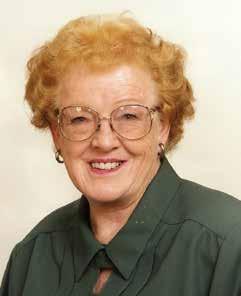
had children. She often had some kind of pet in her room for the children to care for, learn about and write about. She used activities to teach the children how to use the skills they learned at school. On Valentine’s Day she set up a post office so the children could practice math when they had a turn to be Post Master, spelling, and writing as they created and delivered Valentines to each other.
She loved her home and yard and loved taking care of it. She spent her summers gardening, and preserving the things she grew by canning or freezing fruits and vegetables. She generously shared fruits, vegetables and canned goods with friends and neighbors. After coming home from a vacation, the first thing she usually did, was start watering dry spots in the yard. If not working in the yard, she was in the house cleaning, doing laundry, or mopping floors on hands and knees because she didn’t think a mop would do the job effectively. In her later years she became an avid reader. She also shared her love with a multitude of family pets including dogs, cats, bunnies and birds.
She loved serving others in her community but especially in her own home. She helped others by tending their children. She took meals for others when they were in need and served food to those who came to visit. She served as a member of The Church of Jesus Christ of Latter-day Saints as Relief Society president, and Primary president. She taught various classes, and served with her husband as cub scout and Webelos leaders. She and Alva served as senior missionaries in the Russia, Rostav-na-Donu mission.
She is preceded in death by her husband (Alva Allen Young), daughter (Laurie Young Romriell), daughter-in-law (Jenifer Holton Young), siblings (Elva Ann Thornton, Norma Enez Thornton, George Thomas Thornton, Howard Thomas Thornton, Grace Thornton, Preston Thomas Thornton, and Mary Louis Thornton McKinley).
Funeral services were held on Wednesday, March 4, 2026, at the North Canyon 2nd Ward Chapel.
April 22, 1937 – March 20, 2026
On March 20, 2026, the first day of spring, Loya Stutznegger Moscon passed away peacefully while at home with family.
Loya was born April 22, 1937, in Tooele, Utah, to Dr. Rex Dale and Helen Gledhill Stutznegger. As a young girl she loved science, adventures, and the natural world; traits that would remain with her throughout her life. She enjoyed camping in Zion, watching the moon, and learning about the constellations from her Papa. A gifted student, she graduated from high school after just two years and entered the University of Utah as a Ford Scholar in pre-med. Asked whether she would prefer to register in the nursing program, she responded, “No – I don’t want a bunch of men telling me what to do.” That same year she met and quickly married Frank Allen Moscon. Soon they had their first son, Allen Samuel “Rocky” Moscon, and moved to Japan with the US Air Force. Upon returning to the U.S., daughter Karin Linn Moscon was born and Loya gave up her education and career to pursue what she viewed as her highest vocation – being a mother. Daughter Keli Jean Moscon Stokes and sons Bret Jon “Duke” Moscon and David Matthew “Matt” Moscon followed.
Though a full-time mother of five, Loya’s love of the outdoors and her pioneer ancestry only grew. She volunteered her time as a docent and tour guide at the Utah Museum of Natural History, the Museum of the Daughters of Utah Pioneers, and at the Antelope Island Visitor Center where she shared her love of history, science, fossils, and beautiful vistas with others.
Loya was a voracious reader and loved to spend time at her family’s cabin in Ophir, Utah, sitting on the deck reading. She loved to travel and crossed the globe from Asia to Europe and North and Central America. In each location she was more interested in the natural scenery than big cities.
Her love for adventure extended into every aspect of her life. Once when she proposed a trip to Brazil with Frank, he responded, “What? You could buy a motorcycle with that kind of money!” And so, she did. Neighbors would see her riding her 1973 Yamaha around Bountiful with curlers in her hair, as she said she preferred that to sitting under a hair dryer.
Nothing scared Loya. Whether jeep rides with her Papa on what could barely be called roads, being the first in line to ride the tallest roller coaster with
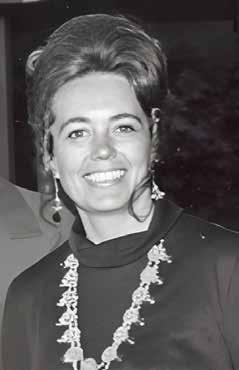
the most loops, or facing daunting health challenges in her later years, she saw everything as an opportunity and faced it all with great optimism.
A lifelong member of The Church of Jesus Christ of Latter-day Saints, she had, as one described it, “all the callings.” Primary teacher and president, Sunday School teacher and coordinator, Young Women teacher and president, Relief Society teacher and president, chorister, librarian, Temple worker, and serving with her husband Frank as Mission President in Virginia from 1977 -80, Loya held every position available to her.
Loya owned the same house in Bountiful from 1959 until her death and lived in it nearly all of her adult life. There she loved to read, watch sunsets, the stars, and the moon from her balcony.
Loya is survived by her children Rocky (Reagan) of Georgia; Gidget of Washington; Keli (Richard) of Nevada; Duke (Melissa) of Kentucky, and Matt (Michelle) of Utah; Brothers Ivo and Jed Stutznegger of Utah; 23 grandchildren and 32 great grandchildren. She died just one month short of her 89th birthday, a life well lived while being well loved.
Memorial Services will be held at 1 p.m. on Saturday, April 18, 2026, at the Bountiful 23rd Ward, 650 East 2150 South, Bountiful, Utah. Funeral Directors: Russon Mortuary.
In honor of Loya’s love of dark skies, pretty sunsets, open spaces, and her life of service, the Visitor’s Center at Antelope Island State Park will be placing a bench and plaque in her honor on a trail on the island. Friends and family pausing to rest there certainly will be able to hear her whisper about the view of snow on distant peaks, the full moon, or about her beloved family members. In lieu of flowers, any wishing to contribute to her memory are encouraged to donate in her name to www.antelopeislandfriends.org.




The Daughters of Utah Pioneers was established in 1902.
By Becky Ginos becky.g@thecityjournals.com
Itwas 125 years ago, April 11, 1901, that a group of women gathered at their home and established the Daughters of Utah Pioneers (DUP). That organization was made up of women who were first generation descendants of the pioneers. Some of those members were pioneers themselves.
The idea for DUP came a few years later at a 1897 jubilee celebrating the 50th anniversary of the arrival of the pioneers in Salt Lake, said Julie Thompson, DUP vice president of the executive board. “There was a huge celebration and they had a relic call. They asked people to bring relics and artifacts and memorabilia from the previous 50 years.”
When they did that there was an amazing collection, she said. “Then most people just abandoned their things and didn’t take them back with them, including Brigham Young’s council wagon that he arrived in when they reached the valley.”
Rather than just discard them permanently, feelings started to build that there should be some way to memorialize this, Thompson said. “They also wanted to collect their histories and stories and so four years
later in 1901, Annie Taylor Hyde, who was the daughter of John Taylor got her friends together and established DUP.”
It’s been a continuous organization for 125 years, she said. “Just last year we accepted our 100,000th member. There are members participating in groups all across the United States and in Canada.”
Thompson said their headquarters are at the Pioneer Memorial Museum in Salt Lake. “So we run the museum. It was built largely with funds raised by DUP women. During World War II fundraising was at its peak and it was dedicated in 1950. So the museum celebrated its 75th anniversary last year.”
The administration is at the museum, she said. “We oversee the activities of the groups all over the country and Canada. They each have local leadership as well. So just like the pioneers when they traveled they were assigned to companies and camps. That’s how our organization is set up as well.”
The women meet in small groups, usually a neighborhood, said Thompson. “It’s kind of geographically and then their camps are organized into a company.”
In Utah they dot the landscape, she said. “But California and the west coast are full of groups. So all along the west coast there’s a heavy presence.”
Thompson said the museum also oversees 600 historic markers throughout the




lection continues to grow. “The Church History Museum doesn’t have room for a lot of large artifacts and the small ones that we’ve had room for over the years,” said Thompson. “Families that have pieces that have been passed down from generation to generation and to their posterity become so huge that it might be on display in one person’s home or even in a closet where it can’t be appreciated by the family as a whole. So they’ll donate it so that family members can come and see it.” Collections and donations come from all over, Thompson said. “Typically they’re from the pioneer era, which is defined as 1847 to 1869 when the railroad was completed.”
The museum has many interesting things, she said. “We have a gold scale that was used during the gold rush at Sutter’s Mill by a member of the Mormon Battalion. Also, everyone always wants to see the two headed calf.”

United States. “I think there are seven international locations in Europe. We also have satellite museums, cabins and cemeteries that we oversee scattered throughout the West.”
The DUP owns the property where they sit, she said. “Some cemeteries have been deeded to DUP and buildings and cabins. There are certain parts of some city buildings that have been designated as DUP museums so we oversee those collections.”
The Pioneer Memorial Museum’s col-
Thompson said she believes the DUP brings a connection to those who have gone before. “It’s not just pioneers, when we connect to our ancestors sometimes we look at their stories and think ‘oh, I could never do that.’ But we feel like our association helps us see that we have a lot of their same characteristics and we face things that test us to our very limits as well. So we can draw on that legacy for strength.”
The museum is located at 300 N. Main Street in Salt Lake City. Hours are Monday-Friday from 9 a.m. – 4 p.m. l




Ifthere’s one thing that makes you question your life choices, it’s sitting at a child’s outdoor soccer game in April.
Clutching Stanley mugs filled with coffee, whisky, or both, parents and grandparents sit on wobbly camp chairs, huddled under musty blankets while trying not to be too conspicuous about checking the time.
The idea is sound: help kids understand the concepts of a sport and learn teamwork. In reality, it’s about which kid brought the best treats or if we’re going to catch pneumonia and die before the game ends.
Utah’s spring is a weather roulette that can have you freezing at 9 a.m. and sweltering by noon. The cold wind, constant trickle of rain and glacial temperatures give way to heat stroke and sunburn before halftime.
My four daughters played softball every spring for what felt like 75 consecutive years. Each year, we’d bundle up in coats, gloves, scarves and earmuffs to watch them play. We shoved handwarmers into pockets and told them to “Think warm thoughts.”
It was often torture. Not only do you watch your child strikeout, but strikeout in 45-degree weather. They’d hold the bat with frozen hands, waiting for the impact to snap their fingers off at the knuckles.
Now, my grandkids enjoy soccer, which is played no matter the weather, and everything is mud. The only thing running faster than my granddaughter is my nose. Except when it’s treat time, then the whole team

finds a burst of adrenaline to snatch up granola bars and Capri Suns. Don’t even think about bringing oranges or bananas. Who are you? Someone who hates kids?
Each spring, hope wears shin guards and batting helmets. It’s a fresh start, a chance to learn skills and an opportunity for new coaches to lower their expectations.
You can spot a new coach by their optimism. They come prepared with drills, practice schedules and intricate plays, but by the end of the season, they’re just happy to have players who can identify a soccer ball and run in the right direction.
They also have to deal with parents. There’s always that person who believes their child is the next Lionel Messi or Aaron Judge. They memorize the rule book and counter every official’s call. “Blue! Were you the lookout on the Titanic?” or “Hey, Ref! Are we keeping you awake?”
They scream at their child to “Run!” for 45 minutes straight and call their 6-year-old over between innings to explain baseball defense.
Yet, even in drizzly, cold weather,

spring sports thrive. There’s just something about watching a child finally hit the ball off a tee or score their first goal. We see coaches kindly redirect a player’s attention from doing cartwheels to protecting third base.
When your granddaughter makes a great pass, she looks to the sidelines to see if you saw it happen. You did.
Although we complain about the mud, the temperature, the uncomfortable seating and wonder if the other team altered the birth certificate of their star player, there’s something inherently human about watching young people navigate sportsmanship. It’s not about winning. It’s about show-
ing up for the kids you love. You watch them fall on their faces, sometimes literally, and get back up. You watch them strike out, kick the ball in the wrong goal or drop an easy fly ball, and wince along with them.
If there’s one thing that makes you question your life choices, it shouldn’t be watching a child you love run past you with a big grin on their face. Even wrapped in quilts, chugging espresso, you’re exactly where you’re supposed to be.
Peri Kinder is an award-winning columnist and journalist who has written for The City Journals since 2004. She can be reached at peri.k@thecityjournals.com