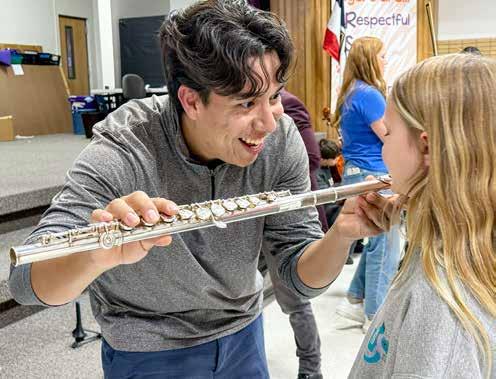
By the time the final note fades at Butler Middle School’s holiday concert, students weren’t the only ones glowing with pride. Standing at the front of the auditorium was Enrique Tellez, whose own recognition was announced.
Tellez, Butler’s band and orchestra teacher, has been named a Yamaha 40 under 40 Music Educator for 2026, an honor awarded to 40 teachers nationwide who demonstrate excellence, innovation and leadership in music education.
“At first, it didn’t hit me as being a big deal until I told my boss and he kind of freaked out,” Tellez said. “He said, ‘That’s a world brand, dude.’”
The recognition came as a surprise. His nomination was submitted by Albion Middle School Director Jenni Perkins in collaboration with Bertrand’s Music, a Midvale music store.
Perkins, who directs Canyons Youth Symphony alongside Tellez, praised his
By Julie Slama | j.slama@mycityjournals.com
advocacy for students.
“Enrique is focused on the whole student,” she said in the nomination. “He does everything he can to make sure the students are OK, that they are happy, safe and learning things.”
Tellez’s path to teaching was not a direct one. Growing up in St. George, he began playing his mother’s clarinet in sixth grade, but he never intended to be a music director.
“For the longest time in high school, I planned on going to culinary school,” he said. “Music was something I did on the side for fun.”
After working in a professional kitchen, Tellez realized the job lacked the personal connection he values.
“I had cooked for family, for friends and hosted gatherings, but cooking in a kitchen was different. You cook a meal and you put it on a shelf, then others carry it out. I didn’t enjoy just cooking and not getting to see the full enjoyment of people liking it,” he said.
Tellez considered quitting band when a renewed interest in music was sparked.
“I decided I wasn’t going to play anymore, but over the summer, I went to a wedding in California for an uncle of mine, and he
For 140 years, families have come to trust Larkin Mortuary as the leading funeral service provider along the Wasatch Front. Family owned and managed for seven generations, we are committed to providing meaningful, healing experiences for every family who turns to us for guidance.
For over 140 years, families have come to trust Larkin Mortuary as the leading funeral service provider along the Wasatch Front. Family owned and operated for seven generations, we are committed to providing meaningful, healing experiences for every family who turns to us for guidance.
Heart care is more than numbers on a screen. At Intermountain Health, heart care starts with getting to know what’s important to you and building a care plan together. From preventive screenings and lifestyle recommendations, to treating the most complex conditions with advanced technologies, our experts are with you through all of it. In other words, we’ve got your back — and your heart.
Discover the peace of mind that comes with planning ahead. Learn about the benefits of advance funeral and cemetery planning, and why it makes sense for you and your family.
UPCOMING EVENTS:
3/13/25 Thursday @ 12 PM
3/17/26 Tuesday @ 12 PM
Larkin Sunset Lawn: 2350 E 1300 S, SLC, 84108
Larkin Sunset Lawn: 2350 E 1300 S, SLC
3/18/25 Tuesday @ 12 PM & 6 PM
3/18/26 Wednesday @ 12 PM
The Chateau at Le Jardin: 1910 E Dimple Dell Rd, Sandy
Larkin Riverton Funeral Home: 3688 W. 12600th S., Riverton
3/26/25 Wednesday @ 12 PM
3/25/26 Wednesday @ 12 PM
Elysium Legal: 1802 W South Jordan Pkwy, South Jordan
The Chateau at Le Jardin: 1910 E. Dimple Dell Rd., Sandy
3/27/25 Wednesday @ 12 PM
3/26/26 Thursday @ 12 PM
Elysium Legal: 1802 W South Jordan Pkwy, South Jordan
The Chateau at Le Jardin: 1910 E. Dimple Dell Rd., Sandy
RSVP: (801) 829-1772
Space is limited, so please RSVP now!
Ridgecrest Elementary students hope to shine for spring musical revue
Dozens of Ridgecrest fourth and fifth graders are finding their confidence as they prepare to step in the spotlight for a show of Broadway favorites.
ByJulie Slama j.slama@mycityjournals.com
Ridgecrest Elementary fourth- and fifth-grade students are preparing to shine in the spotlight as they rehearse for their spring musical revue packed with Broadway hits.
The revue, scheduled for April 1 and 2 at the school, 1800 E. 7200 South, is the second year Ridgecrest has offered the program in its current format. Rather than staging a full musical, the school presents a revue of selected songs, giving students an accessible introduction to theater, music and performance.
“Our performance will be similar to last year, with some songs from different shows, but expanding it to five songs,” said Becky Adamson, a Ridgecrest fifth-grade teacher who co-directs the program with paraeducator Gracie Gibbs.
This year’s song lineup includes returning favorites and two additions. Students will perform “All the Things You Can Think” from “Seussical”; “I Won’t Grow Up” from “Peter Pan”; and “Revolting Children” from “Matilda” along with “In Summer” from “Frozen” and “Freak Flag” from “Shrek the Musical.”
The cast of 46 fourth- and fifth-grade students have been rehearsing twice per week since January. Adamson said the students’ enthusiasm has been unmistakable.
“We’ve got a strong group of kids and they are so excited for this,” she said.
For Adamson, the program’s value goes beyond the performances.
“It’s fun to be with people who are
interested in the same things you’re interested in,” she said. “We know hobbies and activities are great for kids to build confidence and connection and this is an attainable program for many families.”
Since the program is held after school in their school building, it allows students who might not otherwise have access to theater opportunities.
“It’s free and in the same location where they’ve been all day,” Adamson said. “I love we’re making programs like this accessible to whatever kids want to participate in it.”
Earlier this winter, they held auditions. She was impressed with the students’
growth from last year to this year.
“We had multiple kids who auditioned last year who really struggled but came back this year and just rocked the audition. To see the confidence boost in so many kids is worth it,” Adamson said.
While everyone who wants to be part of the musical revue is included, auditions are held to determine “a good fit for what solos,” she said.
Adamson also pointed out the importance of teaching students to navigate auditions.
“Auditions can be the worst part. They can be intimidating and scary, so we talk to them about those emotions, but really, the
directors are excited you’re there and excited to hear you. They’re supporting you and want you to do well,” she said.
This year, Adamson hopes to expand student involvement with backdrops, props, costumes and programs, offering more experience and opportunities.
Earlier this school year, 52 students sang at assemblies where they performed “Sparkle, Jolly, Twinkle, Jingly” from “Elf: the Musical.”
“It was a soft start,” Adamson said. “We rehearsed once per week and performed in assemblies and it gave more opportunity to our students. It was cute and so much fun.” l
COTTONWOOD HEIGHTS TEAM
The Cottonwood Heights Journal is a monthly publication distributed directly to residents via the USPS as well as locations throughout Cottonwood Heights.
Lindsay Andreasen | lindsay.a@thecityjournals.com Rack locations are also available on our website.
EDITORIAL & AD DESIGN
Stacey LaMont Ty Gorton
COTTONWOOD HEIGHTS CITY JOURNAL 9500 South 500 West, Suite 205 Sandy, UT 84070
PHONE: 801-254-5974
Ridgecrest Elementary students, seen here performing last year, will expand their repertoire selection in this year’s musical revue.
(Julie Slama/City Journals)
Get to know the first female mayor of Cottonwood Heights
After serving in the state House of Representatives for five years, Gay Lynn Bennion will be serving as mayor of Cottonwood Heights until 2029.
By Cassie Goff c.goff@mycityjournals.com
Gay Lynn Bennion is no stranger to change. Over the years, she’s learned how to adapt to significant change and grow in times of transition. She’s developed skills to be more independent, outgoing, connected, mobile, community-oriented, financially-savvy, future-focused and physically and mentally healthy. All skills she’ll be utilizing as she begins her fouryear term as the newly elected mayor of Cottonwood Heights.
Bennion grew up in the Salt Lake Valley, graduating from Skyline High School and BYU (with a bachelor’s degree in English and a minor in Spanish). One of her first significant introductions to change came as she served a church mission to Mexico City.
“Things that are hard for us often help us grow,” Bennion said.
But her relationship with change grew
exponentially after marrying her husband Jim, who worked as an Air Force physician for 26 years.
“We had four children in four different states,” Bennion said. “Helping our family start life over and over again made me more independent and outgoing.”
Bennion and her family lived in extremely different areas; from Ann Arbor, Michigan to Altus, Oklahoma. She noted how she gained a deeper understanding of the country from those experiences.
“We are so lucky here in Utah with public lands…because we can enjoy so much of our state that’s not privatized,” Bennion said, recalling living in states where her family would have to travel to enjoy public lands and beaches as to not be trespassing on privately-owned parks or waterfronts.
Moving back to Utah in 2012, when her youngest son was in high school, reacquainted her with change once again. She had to figure out how to adjust her life with adult family members.
“I was thinking ‘Oh! Now my mom job ends!’” Bennion said.
Bennion was introduced to the Women’s State Legislative Council of Utah, a 106-year old bipartisan group that investigates, studies and presents on important legislation for the state. She ended up serving in various leadership positions.
In 2020, she ran for Utah’s House District 41 (which encompasses Cottonwood Heights, Alta, Brighton, Solitude, parts of Holladay, parts of Murray and the Cottonwood Canyons). She served as Utah’s House Representative for five years.
“I never thought of running for office but when people asked me to, I was prepared because I was connected within my party’s House District,” Bennion said.
During her term, Bennion worked on the Natural Resources, Agriculture, and Environment (Quality Interim) Committee, Political Subdivisions Committee, Veterans and Military Affairs Commission and Utah Water Task Force.
I’m honored that we have worked…to lead our city and we are three women majority council now. We all want what is best for our city.
— Gay Lynn Bennion
“I understand what this winter means for our state; the crisis we are facing,” Bennion said. “When we are putting a year like this on the books, it’s impacting us for 20 years.”
Bennion’s latest brush with change was being elected as the newest Cottonwood Heights mayor. As mayor, she plans to focus on rebalancing a city budget that has depleting reserves, housing affordability, open space, active transportation and safety.
“I’m honored that we have worked… to lead our city and we are a three women majority council now. We all want what is best for our city,” Bennion said.
Being sworn in in January means Bennion was thrown into the deep end of budget season. She’s been working through the careful balancing act of considering increasing living and operating costs, un-
desired property tax increases, and funding essential safety and city services.
“There’s nothing that any of us on the council like about raising our own property taxes,” Bennion said.
Further out, Bennion will be working with the council to ensure economic development within the city is appropriate for the canyon community and active transportation.
“We need to have city streets that get us to that Utah Trail Network,” said Bennion. “UDOT is working now to get the trenching done to see where the Mobility Hub will be created. That will be a huge economic engine for Cottonwood Heights.”
As Bennion was focused on housing issues at the state level, she’s grateful that Councilmember Suzanne Hyland has been working to understand the breadth of short-term rentals within Cottonwood Heights. She’s excited to join the conversation to create appropriate rental education and licensing to accompany city housing policies.
Bennion values critical communication and open connections. She invites residents to be a part of her newly formed book group held quarterly. The first meeting will discuss the book “Critical Conversations: Tools for Talking When Stakes are High” and will be held on March 26 from 7-8:30 p.m. at Cottonwood Heights City Hall (2277 East Bengal Blvd.).
She continues the opportunities for change as she invites residents to her office hours every week on Fridays from 2 p.m. until 5 p.m. She does ask residents to share their intent to attend office hours so she can prepare accordingly. The Meeting Inquiry Form can be found on the city’s website under the “Your Government” tab at: www.cottonwoodheights.utah.gov. l
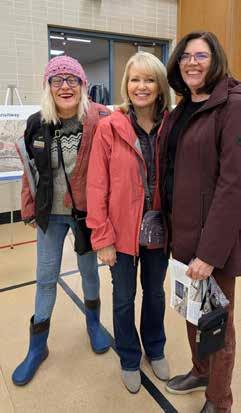
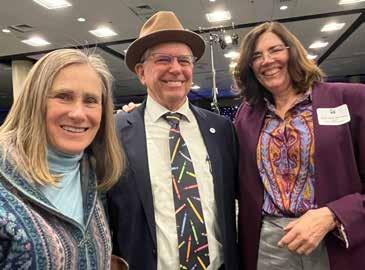
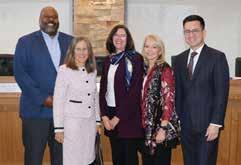
(From left to right) Cottonwood Heights Councilmember Ellen Birrell, West Jordan Mayor Dirk Burton and Cottonwood Heights Mayor Gay Lynn Bennion attend Day on the Hill with Utah League of Cities and Towns. (Photo courtesy of Gay Lynn Bennion)
(From left to right) Brighton Town Councilmember Lise Brunhart, Cottonwood Heights Councilmember Suzanne Hyland and Cottonwood Heights Mayor Gay Lynn Bennion attend a UDOT Public Comment Open House on the Mobility Hub intended for the gravel pit within Cottonwood Heights. (Photo courtesy of Gay Lynn Bennion)
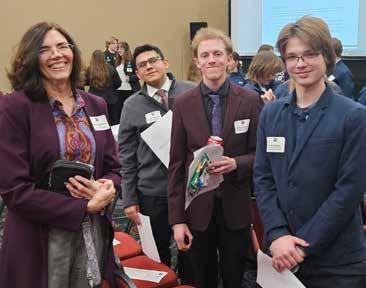
(From left to right) Cottonwood Heights Mayor Gay Lynn Bennion attends the Youth City Council’s Legislature Day with members Airthet, Orion and Silas. (Photo courtesy of Gay Lynn Bennion)
Cottonwood Heights Arts Council invites residents to share in Chinese, Vietnamese and Korean traditions for Lunar New Year
The celebrations welcomed in the Year of the Horse (2026) with community and history spirit.
By Cassie Goff | c.goff@mycityjournals.com
All photos: Cassie Goff/City Journals
Lunar New Year 2026 welcomed in the spirit of the Year of the Horse.
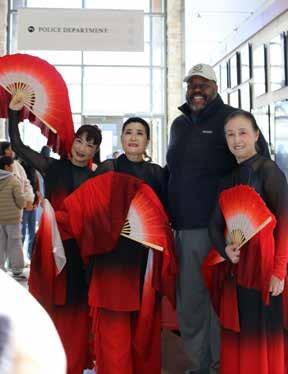
Ru Yan Dance Group performed a fan dance entitled Carrying the Dragon King. Cottonwood Heights Councilmember Shawn Newell posed with them for a photo op after the performance.
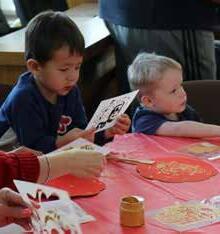
The family-friendly activity Fan Rubbing Art was led by Hudong, Lan Lin and Susie.
Members of the Asian Arts and Culture Association shared their Lunar New Year celebrations with themes of luck and happiness with Cottonwood Heights residents.
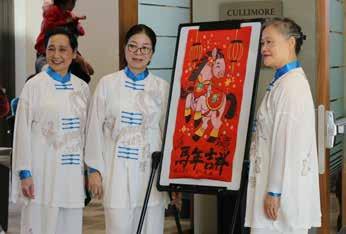
The Lin Yang Team showcased their Mixed Gongfu (Tai Chi, Bagua and Long Fist) skills.
The Cottonwood Heights Arts Council shared in celebrating Lunar New Year celebrations from 10 a.m. until 1 p.m. on Feb. 7.
Artists Lin Yang artwork blending classical Chinese calligraphy with modern aesthetics was on display at Cottonwood Heights City Hall (2277 East Bengal Blvd.) throughout the first of the year.
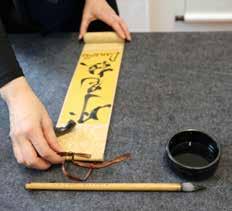
Personalized “Fu” calligraphy was painted individually by Lin Yang, Haobo, Libo, Sharon and Mia Lin.
Ridgecrest fifth graders take classroom lesson to city hall
Students proposed and voted on a new street name designed to avoid confusion.
By Julie Slama j.slama@mycityjournals.com
Ridgecrest Elementary fifth graders didn’t just learn about local government this year; they stepped into it.
Real life met the classroom as students took on the role of community decision-makers as they suggested and voted on a new name for the street in front of their school, which they conveyed in a video to city leaders.
After months of discussion and voting, students landed on a winning choice.
“Tiger Cub Lane is what was voted on by fifth grade,” said fifth-grade teacher Becky Adamson. “We have created a video and prepped it and sent it off to city council and we’re hoping to hear back soon.”
The student-led proposal has now
brought to the school by city councilmembers and city employees to reduce confusion for families and visitors trying to find the school, she said. The road is currently 7200 South, which has led some community members to mistakenly think Ridgecrest is located on nearby Fort Union Boulevard, which generally runs along 7000 South but turns into 7200 South farther east.
Rather than simply making the change, the city invited Ridgecrest students to be part of the decision-making process. For Adamson and the fifth-grade teaching team, it was an opportunity to teach students how local government works while helping the youngsters see themselves as active members in their community.
Although Ridgecrest is in the process of combining with Bella Vista Elementary, the invitation was extended to the school last year, before the merger’s vote. However, anticipating a change could occur, she said Ridgecrest students were encouraged to think long term with options that would welcome Bella Vista students. That
sworth be displayed in the state capitol building, a distinction he held until 2020, when another group of students lobbied to replace him with Martha Hughes Cannon, a physician and first female state senator. Scrapbooks and photos connected today’s students to those before them and their process of involvement.
In early winter, students nominated possible names. Each idea needed support from at least five classmates to move
Tiger Cub Lane is what was voted on by fifth grade. — Becky Adamson
forward. From the initial list of more than 30 suggestions, students voted to narrow the field to three final contenders: Tiger Territory Avenue, Roaring Tiger Road and Tiger Cub Lane.
In the final ballot, Tiger Cub Lane won by three votes.
To submit the proposal, students created a video for the city council meeting. Adamson said this decision helped remove barriers and ensured equal access for students who wanted to participate.
Filmed over two lunch periods, the video features students explaining the need for the street name change, the voting process as well as their proposal. The video was sent to City Councilmember Matt Holton in January.
Adamson said as of late January, she had not heard when the city council will vote on the name proposal. She said if it’s approved, the goal would be a street name unveiling during the school day in the spring.
Through this lesson, she said students learn change takes time, effort and collaboration and their voices matter. It also lets fifth graders, who are preparing to go on to middle school, a chance to leave something behind.
If approved, Tiger Cub Lane won’t just help visitors or emergency services find Ridgecrest Elementary easier, it will stand as a reminder how young residents can shape the communities they call home, Adamson said.
“These kids got to have influence over their community and, if this gets passed, they’ve made a mark, they can come back to 10, 15, 20 years down the line and know they were a part of that,” she said. “That’s a lot of impact we can’t even see right now, but the kids really will be able to feel that now and in their future.” l
March Is Endometriosis Awareness Month
FUnderstanding Endometriosis: Helping Women Avoid Struggling in Silence
or many women, pelvic pain is dismissed as “normal” or “just part of being a woman.”
But sometimes that pain is a symptom of a chronic condition called endometriosis that affects millions. It’s a condition where tissue similar to the lining of the uterus grows outside the uterus, causing pain, infertility, and a range of other debilitating symptoms.
Endometriosis isn’t just about bad period cramps. It can lead to significant pain during menstruation, intercourse, bowel movements, and urination. It can also cause chronic pelvic pain, heavy bleeding, fatigue, and is a leading cause of infertility
“The emotional and psychological toll of endometriosis can be immense, especially for women who dismiss their pain and go undiagnosed. This condition han have a profound impact on their relationships, careers, and overall quality of life,” said Lisa Hill, certified nurse midwife at Holy Cross Hospital – West Valley
Endometriosis is surprisingly common. It affects an estimated 1 in 10 women of reproductive age globally. In our local community, this means thousands of women are likely living with endometriosis, many of whom may not even realize they have it. The delay in diagnosis is a critical concern,
with women often waiting an average of 7 to 10 years from the onset of symptoms to receive an accurate diagnosis. This delay can lead to the progression of the disease and increased severity of symptoms. Raising awareness is crucial to shorten this diagnostic journey for future generations.
“While there is currently no cure for endometriosis, effective treatments are available to manage symptoms and improve quality of life. Treatment approaches are highly individualized, depending on the severity of symptoms, the extent of the disease, and whether the woman desires to become pregnant,” said Dr. Christopher Hutchison, an OB/ GYN at Holy Cross Hospital – Jordan Valley Common treatment options include:
• Pain Management: Over-the-counter pain relievers (like NSAIDs) can help with mild pain, while stronger prescription medications may be necessary for severe pain.
• Hormonal Therapies: These treatments aim to slow the growth of endometrial tissue and prevent new implants by regulating or blocking the hormones that fuel their growth.
• Conservative Surgery: Laparoscopic surgery is a minimally invasive procedure where a surgeon can precisely locate and remove endo-
metrial implants while preserving reproductive organs. This can significantly reduce pain and improve fertility outcomes for some women.
• Hysterectomy and Oophorectomy: In severe cases where other treatments have failed and childbearing is complete, removal of the uterus (hysterectomy) and/or ovaries (oophorectomy) may be considered, though this is typically a last resort and does not guarantee complete relief from symptoms.
• Complementary Therapies: Many women find relief through complementary approaches such as acupuncture, physical therapy, dietary changes, and stress management techniques. If you or someone you know is experiencing persistent pelvic pain, unusually heavy periods, or difficulty conceiving, please don’t dismiss these symptoms. Talk to your doctor. Early diagnosis and a comprehensive treatment plan are key to managing endometriosis and living a healthier, more comfortable life. CommonSpirit Health is committed to supporting women’s health and offers resources for diagnosis and treatment of endometriosis.
For more information or to find a provider visit mountain.commonspirit.org
Learn more about the services, care providers and mission-driven work of the Holy Cross hospitals and CommonSpirit Health at www.holycrossutah.org.
At CommonSpirit Health, we make the healing presence of God known in our world by improving the health of the people we serve, especially those who are vulnerable, while we advance social justice for all.
When minutes count, count on our emergency care.
Get to know us before you need us.
When you need emergency care fast, the closest emergency room is a smart thing to know. You never know the level of care you’ll need when an emergency happens and choosing the right ER can make all the difference. And a hospital ER comes with the confidence of additional services right on-site.
CommonSpirit Holy Cross Hospital – Salt Lake has been awarded Chest Pain Center Accreditation from the American College of Cardiology (ACC). Facilities that achieve accreditation meet or exceed an array of stringent criteria for evaluating, diagnosing and treating patients who may be experiencing a heart attack.
Find emergency care close to you at mountain.commonspirit.org.
Proposed bills that could affect Cottonwood Heights residents
Local cities are fighting to keep control over their own property tax rates and land use.
By Cassie Goff cassie.g@thecityjournals.com
The 2026 Utah State Legislature General Session is in full swing with over 800 bills being filed. As with previous legislative sessions, there has been much contention between state entities and municipal bodies.
“There’s a deluge of bills behind a dam and we’re just waiting for it to break,” said Principal Lobbyist Brian Allen.
Local cities and municipalities have been voicing their concerns over the state overreaching into their ability to control policy for their own communities. The Cottonwood Heights City Council has been meeting with their lobbyists weekly for updates about how their concerns are being addressed.
“There are a dozen bills, at least, that the [Utah League of Cities and Towns] are working on that deal with local control,” Allen said.
A majority of those bills deal with the big-ticket issues of property taxes, affordable housing and land use.
“To make Utah more affordable, they are adding more fees,” Allen said.
Allen has noticed a host of property tax bills attempted to address Truth in Taxation requirements including, but not limited to, HJR 7: Proposal to Amend Utah Constitution, HB 565 City Library Property Tax Amendments, HB 485: Property Tax Revenue Increase Amendments, HB 484: Property Tax Changes, HB 161: Property Tax Modi-
fications, SB 238: Property Tax Adjustments SB 78: Property Tax Relief Amendments and SB 11: Property Rights Ombudsman Act.
All of these proposed property tax regulations “would restrict the city’s ability to manage their revenue streams,” Allen said.
The Cottonwood Heights Community and Economic Development Department is worried about how the over 300 bills addressing land use will shake out.
HB 184: Small Lots and Starter Homes Amendments sponsored by Rep. Ray Ward and Sen. Lincoln Fillmore proposes land use changes to conform with preferred zoning set by the state.
HB 242: Transportation Amendments sponsored by Sen. Wayne Harper and Rep. Kay Christofferson amends appropriate usage for public roads and options for local sales tax.
Allen synthesized a handful of bills attempting to regulate how water can be used across the state.
HB 501: Water Modifications sponsored by Rep. Bolinder Bridger and Sen. Scott Sandall addresses the fee structures related to the regulation of water.
Allen noted how this bill would have a direct impact on residents as it would require water and sewer utilities to impose a 1.5% fee on top of existing bills. The revenue gathered from those fees would go toward funding water infrastructure projects.
“What I’ve been told is if the water or sewer system wants to participate in their funding program then they would have to impose a fee,” Allen said.
Cottonwood Heights Councilmember Ellen Birrell has questions about the impacts of HB 60: Water Rights
Amendment (which is likely to pass after a favorable Senate recommendation on Feb. 12).
“It’s more of a fight between the state engineer and public water providers,” Allen said.
There are some life-preservers in the flood of proposed bills, however. Allen mentioned some well-written bills on Feb. 12.
HB 295: Overdose Amendments sponsored by Rep. Carol Moss and Sen. Jen Plumb amends certain prosecution when reporting overdose events.
“It would give prosecutors an affirmative defense for Good Samaritan in possession of drugs to not be prosecuted,” Allen said. “It’s a very good bill.”
The Utah Legislature will conclude their General Session on March 6. Until then, Cottonwood Heights will continue to have weekly meetings on Thursdays at 9 a.m. l
On Feb. 12, Principal Lobbyist Greg Curtis reported that the 2026 legislative session is one of the leanest years, budgetary wise, that he’s seen in a long time. (Cassie Goff/City Journals)
Urban Air Adventure Park takes flight at Fort Union
The first Utah location opens with fun and fanfare.
By Peri Kinder peri.k@thecityjournals.com
Hundreds of parents and kids showed up to welcome Urban Air Adventure Park to Midvale. On Jan. 31, the family entertainment center held a grand opening at its first-ever location in Utah (7220 S. Union Park Ave.), with attractions like the Sky Rider zipline, Spin Zone bumper cars, a ropes course and climbing walls.
“We didn’t want to just open another play place. We wanted to build the ultimate destination,” said Diby Roy, Urban Air franchise owner. “Families in Midvale, Cottonwood Heights and Sandy have been waiting for a premium venue that works for everyone, from the toddler on a playdate to the teenager on a Friday night date. We’ve built the place where you go to make memories, not just burn time.”
The Urban Air Adventure Park also features a play area with seven slides, including the Launch Slide, where riders catch air on the landing; a slide for tandem racing; and the double tube slides with dynamic lighting effects.
Attendees can ride the Flip Zone bumper cars, play laser tag, navigate the obstacle course and fly through the air on the ziplinetype Sky Glider.
“We’re really excited to bring this here,” said General Manager Anna Powell. “We’ve got so many different things and attractions, and our three main core things are: clean, safe and kind. We do daily checks on all of our equipment, sometimes even twice a day, to make sure every single bolt and screw is working properly.”
For more information, including hours and memberships, visit Urbanair.com. l
With the Spin Zone bumper cars, drivers can flip, twirl and spin, taking the ride in an entirely new direction. (Peri Kinder/City Journals)
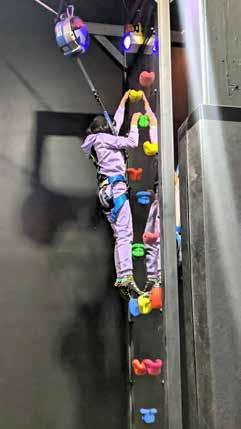
Climbers tackle one of the several towers in the climbing
Local educational leaders honored for impact on Utah high school sports
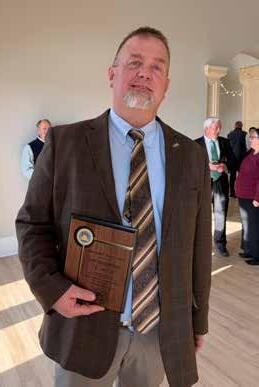
Distinguished Service Award for his contributions to Utah high school youth. (Photo courtesy of Mitsi Sherwood)
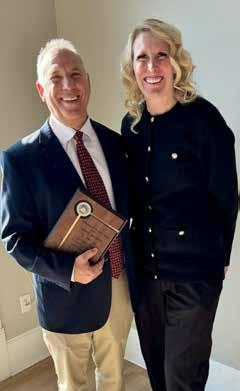
Morris, Waterford School associate athletic director, was presented the UHSAA Distinguished Service Award by Lora Nichols, who serves on the association’s executive committee. (Photo courtesy of Kathy Morris)
UHSAA honors Tom Sherwood and Craig Morris for their distinguished service and leadership in advocating and expanding Utah high school sports and activities.
By Julie Slama j.slama@mycityjournals.com
After years spent shaping opportunities for Utah’s high school student-athletes, Tom Sherwood and Craig Morris received one of the highest honors given by the Utah High School Activities Association. In January, the longtime education and athletic leaders received the UHSAA Distinguished Service Award for 2025.
The Distinguished Service Award honors those who sustained leadership has made a lasting impact on high school athletics, said Rob Cluff, UHSAA executive director.
For Sherwood and Morris, the recognition reflects years of committee work, advocacy and the aspiration to improve experiences for students statewide.
Sherwood, Canyons School District’s director of high schools, was nominated by region 6, where he previously served as Jordan and Brighton high schools’ principal and was a volunteer UHSAA executive committee member for 12 years. He also was on the association’s board of trustees for four years.
football for Bingham High, said high school sport and activities provide life lessons that extend beyond the competition.
“I think for a lot of kids, they don’t know what they’re capable of until they get someone who tries to push them to be a better version of themselves,” he said.
Both Sherwood and Morris emphasized the educational value of high school athletics, citing teamwork, commitment and personal growth as key benefits for students.
Morris, who currently serves as Waterford School’s associate athletic director and played football, basketball and lacrosse when he was a student, was equally taken aback by the honor.
“I was very surprised,” he said. “I had no idea it was coming, but I’m really honored. The award is there to show appreciation for those who have given good service over the years — and it means a lot to me that I would be thought of in that regard and feel like my contributions have made a difference.”
This is the second UHSAA award he has received. In 2023, he received the Athletic Director of the Year for 2022.
The former Waterford athletic director, who stepped to the associate position this year after more than 30 years, served a dozen years as an UHSAA executive committee member and also served on the board of trustees, was an advocate for lacrosse and helped develop a formal process for sanctioning new sports.
Suffering from Depression, Anxiety, or OCD?
“The award is for our contribution,” Sherwood said. “It’s nice to be recognized, but it’s definitely not why I do it. I do this because I really enjoy being involved with teenagers and high school athletics.”
During his tenure with UHSAA, he helped to expand opportunities for students by supporting the sanctioning of new sports and activities.
“I helped lacrosse and cheer become sanctioned sports,” he said. “Most recently, I helped get esports sanctioned as an activity, which I think was important because it reaches a new and growing segment of our kids. It helps them find connections to school and other kids with like interests.”
Sherwood, who as a student played
“I was heavily involved with lacrosse and getting it sanctioned even before I got on the executive committee,” Morris said. “But it was certainly nice to be the voice in the room when we got closer to making that happen.”
The process later helped guide the sanctioning of additional sports and activities, including boys volleyball and esports.
“It’s good to see those opportunities expanded for kids throughout the state,” he said.
Morris said serving on the committee was a great opportunity to be involved in athletics and activities throughout the state and make decisions which would affect student-athletes, both in small private schools such as Waterford and the larger public schools.
“I appreciated my role as a private school representative, to have a voice for the smaller schools in the state and try to do things that would work well with our counterparts,” he said.
For Sherwood and Morris, the recognition shows an appreciation for the years supporting students, coaches and schools from behind the scenes.
“It’s gratitude — I’m thankful to be recognized, but the experience has been its own reward,” Sherwood said. “You couldn’t ask for a group of finer people then those I met serving on the board of trustees and executive committee. They’re exceptional people, with like minds in terms of wanting to give their time and talents to make things better for kids.”l
Canyons School District’s Tom Sherwood received the UHSAA’s
Craig
City Council explores ways to balance the budget
The main gist? The city needs more money.
By Cassie Goff cassie.g@thecityjournals.com
The majority of conversations throughout the morning of Jan. 24 reverberated around one central theme which Mayor Gay Lynn Bennion has been summarizing repeatedly since her swearing-in: “The city has been eating into reserves for seven years. We cannot keep doing that.”
Every year, the Cottonwood Heights City Council meets with the city manager, department heads and key city personnel to collaborate on the city’s fundamental values and financial priorities. The budget retreat is typically held as an all-day meeting in January or February.
“We have done more with less for years and now we are to a point where we need additional resources,” said City Manager Jared Gerber.
Leading up to the 2026 budget retreat, the city council was thinking about the level of service the city is wanting and willing to provide based on revenues and inflation rates. Councilmember Suzanne Hyland expressed her concern over the anticipated impacts of a 29% inflation rate.
Current Cottonwood Heights City Council (from left to right) Councilmembers Shawn Newell, Ellen Birrell, Mayor Gay Lynn Bennion, Councilmembers Suzanne Hyland and Matt Holton discuss raising city revenues consistently over the next three years. (Photo courtesy of Cottonwood Heights)
“The base is not sufficient to handle inflation,” said Finance Director Scott Jurges.
In addition to inflation rates impacting essential city services and labor and personnel costs, at least two big project developments will have major impacts to the budget.
The Hillside Plaza (Town Centre development along 2300 E. Fort Union Blvd.) is anticipated to take at least two full years before buildout. Timelines for the Gravel Pit developments, including UDOT’s Mobility Hub (along 6695 S. Wasatch Blvd.), are currently uncertain so the financial impacts could oc-
cur in any of future fiscal years.
“It may be better to leave it out for now until there is more certainty,” Jurges said.
Fred Philpot, vice president and COO of LRB Public Finance Advisors, was asked to run some financial sustainability analysis studies. Philpot showed the city council two different possible scenarios for the city’s finances to the council; one without any property tax increases and one with average annual property tax increases. Philpot started with the model assuming no property tax increases with an unrestricted fund balance of $4 million.
“Four million is not a lot. It’s a really small number for a city of this size,” Philpot said.
The second scenario Philpot presented would assume an annual property tax increase of 3% every year. The additional revenue would help to bring the budget up to $5 or $6 million, which is where Jurges would like it.
“We could make the budget whole within three or four years,” Hyland said.
Besides raising property taxes, the city council is exploring additional solutions to balancing the budget. They will be working with city staff to re-evaluate all of the current city fees to make sure the charges for services are matching costs. They’ll also be exploring alternatives to city services and revenue streams for specific expenses (like
GO bonds). City staff has been asked to research potential interlocal agreements for service-sharing as well. Department heads have been asked to evaluate their budgets to see if expenses can be cut by 5% without eating into personnel costs.
“Cottonwood Heights doesn’t have a lot of room for that,” Gerber said.
“Employees are already nervous about the budget and the city already has a high turnover,” added HR Director Barbara Higgins.
Residents have asked to bring in outside perspectives as well. A new eight-person resident ad-hoc committee was formed in early February. They will be meeting weekly throughout March to dive into the details of the city budget and continue these conversations alongside the city council.
The city council will be continuing these conversations over the next few months in order to have a final 2026-27 Fiscal Year Budget submitted to the state before June. An additional budget retreat is anticipated for the end of March.
“We need to fix the situation and figure out how to make it thrive,” said Councilmember Shawn Newell. “We want to make sure we don’t leave future councils and residents with the same situation in the future.”
The full recording of the 2026 Budget Retreat can be found on the Cottonwood Heights Youtube page. l
801-274-0062 Millcreek
801-484-8600 Holladay
Olympians ignite inspiration at Willow Canyon Elementary
Three Olympic athletes brought medals, memories and life lessons to students, launching the school’s literacy month with stories from on and behind the world stage.
By Julie Slama j.slama@mycityjournals.com
Faye Gulini may have 275 more young viewers turning in to watch snowboard cross this Olympics, thanks to being one of three Olympians who recently helped with Willow Canyon Elementary’s literacy month’s opening ceremony.
The celebration welcomed five-time Olympian snowboarder Gulini, two-time Olympic skiing freestyle medalist Shannon Bahrke and 2002 Salt Lake Winter Games gold medalist skeleton racer Tristan Gale, where they spoke to a gym full of students, sharing their dreams, injuries, perseverance and stories that started before becoming elite athletes.
Gulini, a Cottonwood Heights native who grew up on the slopes of Snowbird, explained the intensity of snowboard cross to students.
“It is four people and we’re racing down a course, bouncing off each other, running each other over,” she said. “We’re falling; we’re crashing. It’s very exciting to watch, but it’s also very dangerous.”
After four Olympics, Gulini stepped away from the sport and started a family and had doubts about returning to competition.
“I always thought once I’m a mom, I can’t be an athlete,” she said, but added she was inspired by her children to return and
ly am and what I’m made of,” she said.
The athletes connected with students, answering their questions, posing for photos and letting them check out their Olympic medals.
For many students, it was their first chance to hear Olympians talk about their stories firsthand, said Willow Canyon literacy month chair Kat Torello.
“It was really cool to have the Olympians at our opening ceremonies,” she said, adding the Olympic reading theme tied into the school’s yearlong focus. “My favorite part was the interaction when students asked questions and the Olympians answered with such in-depth answers.”
When students first entered the gym by class, they carried handmade banners, which they created in art class. That Olympic-themed art now fills the cafeteria.
wanted to motivate youngsters. “Even with my training and kids, I don’t ever want to pass up an opportunity to talk to the younger generation or inspire kids.”
Gale, a Brighton High graduate who was studying at Salt Lake Community College when she won the debut Olympic gold in skeleton, showed students some of her equipment and broke down a sport many people only watch on TV every four years.
“I’m a fast slider; I go about 80 miles per hour,” she said.
To achieve that speed, she worked with
Nike shoe engineers to design a shoe she can wear on the ice which protects her toes from injury, but it also has spikes to ensure a fast start. She showed her aerodynamic race suits, one which had a layer of warmth to ensure she could stand the winds at the top of the icy course.
Racing skeleton was not part of her childhood plan, but when a student asked if she knew she would be an Olympian, Gale smiled and said yes. It was in second grade, before she started any sport, she wrote a letter saying she wanted to go the “O, l, k, y, m, p, i, x.”
The former ski racer turned skeleton racer said her first run was memorable.
“My first run ever was the scariest and I was nervous, but no run has ever been as much fun,” she said. “I train like I race, and I race like I train. Mentally, the hardest part is when everybody’s watching you, and it can be a lot of pressure, but I’m about having fun, because that’s the way I am.”
Bahrke, who won Olympic silver in 2002 and bronze in 2010 in moguls, remembered her second run of her silver-medal run at Deer Valley. Standing at the gate before her race, she was grateful, proud and focused as she gazed around the mountains, knowing her family was there, and that she wore the Olympic rings on her shoulder.
“I pushed out of the gate and had one of the best runs in the whole world,” she said.
But it didn’t come easily. Bahrke told students about her injuries – ankle, shoulder, broken jaw and multiple knee surgeries – and overcoming fear and setbacks, which shaped her resilience.
“I dug deep and found out who I real-
Throughout the month, students were expected to track their reading minutes by reading independently, listening to audiobooks or being read to by an adult. Weekly raffles, classroom readathons, a bookmark design contest and a book swap were planned to keep the momentum going, along with donated prizes.
“The whole point is to get kids reading,” Torello said. “They’re excited. I hope we can get these kids into the reading habit and keep it going.”
Past PTA President Chelsea Hunt helped students realize improving their reading was similar to improving as an athlete.
“Olympians train every single day; they set goals, they celebrate progress on their way to big victories,” she said. “Do Olympians just wake up as Olympians? No, they have to work hard. In the same way, reading gets better and better with practice and patience. When you set a reading goal and spend time each day, you’re training your brain the way athletes train their bodies.”
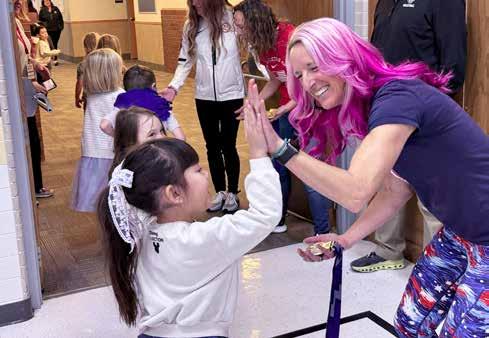
While there were individual and team prizes to achieve, the overall school goal was set to exceed last year’s 189,000 minutes. If the students meet that accomplishment, Principal Halley Nelson was set to kiss a pig at the literacy month’s closing ceremony. When Bahrke gave kids highfives as they left the gym, she encouraged them to “read, read, read” to accomplish their goal.
As Gulini was preparing to compete in Italy, her newest Olympic fans at Willow Canyon were making plans to cheer on an Olympian they met and were inspired by.
“I want these students to know they can accomplish anything or any milestone in their lives,” Gulini said. “Ultimately, anything can be accomplished with hard work and dedication.” l
Olympians Tristan Gale, Shannon Bahrke and Faye Gulini recently shared their stories with Willow Canyon Elementary students, inspiring them to set their own reading goals. (Julie Slama/ City Journals)
Olympic freestyle skier Shannon Bahrke shows her 2002 silver medal and gives high-fives to Willow Canyon students as they say goodbye to her, skeleton gold medalist Tristan Gale and 2026 Olympic snowboarder Faye Gulini. (Julie Slama/City Journals)
had this live band. I saw a tuba, technically a sousaphone, but the player was playing and dancing, and the instrument was shining. I thought it was really cool, and I could get into that,” he said.
That led Tellez to switch to playing tuba and string bass and eventually an audition at Utah State University, where he received the Caine Scholars for Excellence scholarship. As he began performing professionally at age 19, he envisioned a career in music performance.
“Before I finished my undergrad, I had to do student teaching. I wanted nothing to do with junior high; I had a rough junior high experience myself and thought the kids are the worst. But my college band director, who was the education liaison, suggested I observe an excellent junior high band director,” Tellez said.
That experience changed everything.
“By the end of it, I fell in love with teaching,” he said. “Seeing the kids grow and learn is really fulfilling.”
The sense of fulfillment from these student connections makes it worth it to me.
— Enrique Tellez
Tellez has been at Butler Middle since January 2017, where he oversees 10 classes of band and orchestra, along with percussion ensemble and jazz band, while continuing as a freelance musician. About onethird of Butler’s student body participates in his program.
Known for high expectations and genuine care, he often tells his students, “Effort and focus are two things we can all control,” a phrase that has become central to his teaching and learning philosophy. As his students become dedicated and strive for excellence, it often results in the superior ratings Butler’s ensembles earn at district and state festivals.
Tellez also prioritizes recruitment and outreach, visiting elementary schools creating videos and materials to introduce students to music.
“During COVID (when he was honored as Butler Middle’s Teacher of the Year), I wasn’t able to visit the elementary schools,” he remembered, so he decided to create a video for them introducing the music program.
For Tellez, awards are secondary to student relationships.
“Ultimately, I hope to teach them how to be excellent at anything they choose to do in their lives,” he said. “The sense of fulfillment from these student connections makes it worth it to me.” l
Brighton student gets gold, silver in Ice Climbing World Youth Championship
At school, he can be found on the wrestling mats strengthening his muscles and mind.
By Jerry S. Christensen j.christensen@mycityjournals.com
Mathias Olsen entered Brighton’s 2025 freshman class as a seemingly regular 14-year-old student. Aside from his red hair he may be fairly indistinguishable from the other 600 aspiring class of 2029 freshmen.
It turns out that Olsen is no ordinary Brighton freshman. He is a world champion climber with podium finishes in both ice climbing and lead climbing.
His mother, Stephanie Olsen notes, “Mathias is someone who always gravitated towards climbing things since he was a toddler. When he asked for me to put him in climbing I was very hesitant because I am scared of heights and didn’t understand it. I pushed him to swim since he was 2. Mathias then talked me into a week-long summer camp with Momentum Climbing Club. He later joined their programs and their team. At age 10, his Momentum teammate introduced him to dry-tooling at the Scratch Pad in Bountiful.” Dry tooling is indoor ice climbing and the Scratch Pad is a simulated ice climbing facility where climbers can practice year round.
At Brighton, Olsen looked for a similarly demanding sport that could improve his focus and competitiveness. His search brought him to the Brighton wrestling room and to high school wrestling—a sim-
ilar individual sport known for discipline, individual performance and strength.
“Wrestling is a good help for my climbing,” Mathias said. “Climbers are known for strong upper body strength, but legs are not typically developed among climbers. Just this season in wrestling, the daily workouts have strengthened my legs
and grip. More importantly, I have gained a mental toughness that has helped my climbing skills. Wrestling is teaching me how to endure through painful situations. I am better able to work through tough moments.”
To the chagrin of his wrestling coaches, Olsen has missed several wrestling workouts. In December, he competed in the Continental Climbing Cup in Prague, Czechia (the Czech Republic), and then again he was back in Europe in late January/early February competing in UIAA Ice Climbing World Youth Championships in Malbun, Liechtenstein.
He had always placed favorably in the region competitions in Utah, Colorado and Montana. In lead climbing (climbing with a belaying rope) he placed in the division which includes Nevada and California. In Nationals, he earned a silver medal in ice climbing and a silver in lead climbing. However, the world competition introduced a new level of competition and “tricky walls and handholds” as Olsen describes them.
Early in February, the unassuming 14 year old returned from Europe to the wrestling mats of Brighton as newly crowned Ice Climbing World Youth Champion. He earned the gold medal in speed climbing, and he complemented the gold medal with an equally impressive silver medal in lead climbing. l
Mathias Olsen, a Brighton freshmen, is crowned speed ice climbing World Youth Champion in Liechtenstein in February 2026.
Mathias Olsen, a Brighton freshmen, is crowned speed ice climbing World Youth Champion in Liechtenstein in February 2026. (Photo Stephanie Olsen)
Brighton football coach Casey Sutera leaves legacy as he departs for Corner Canyon
Sutera was not just an advocate for his team, but all of Brighton’s teams and students say fellow coaches.
By Jerry S. Christensen j.christensen@mycityjournals.com
CaseySutera came to Brighton High School as a first-time head football coach four years ago during the difficult pandemic years. He had a proven record as the defensive coordinator at Corner Canyon High School (CCHS) where he helped the Chargers win three 6A state championships. He began his high school coaching career at Jordan High School after playing collegiate football at the University of Utah. With long-time CCHS football coach Eric Kjar being called up to coach at Weber State, Canyons School District tapped Sutera to return to CCHS to take the reins of the premier 6A football program in the state.
“I learned under the best play caller in the state, Erik Kjar,” Sutera said. “It is an honor to return to Corner Canyon and continue the tradition of excellence entrusted to me. The Brighton community will always be in my heart because of the memories and great success that we had here.” Sutera notched a 35-14 record in the four years at the helm in Cottonwood Heights. He earned three Region 6 championships and took the teams to two Rice Eccles Stadium final-four appearances. He was named 2024 5A Coach of the Year.
“Casey Sutera represents everything a quality coach should be,” said Brighton Principal Marielle Rawle. “He knows the game of football and he can teach it by building a culture of hard work and resilience. But more than that, Casey understands the positive influence he can have over the young men on his team and he doesn’t take that responsibil-
“We learned to trust the process,” said Marshall Huber, who played all four years in the Sutera system and will continue at the next level with Air Force. “I remember a key game against Timpview which was a powerhouse team. We were behind in the second half but coach Sutera was calm and confident. He showed us character and resilience which became a hallmark of our team. That comeback win was a turning point and set our strategy.”
Bo Hill, a 2025 graduate, recalls Sutera as a players’ coach. “He’s very motivating and inspirational. He’s not afraid to show emotion at the right time. He’s the type of coach that creates a fun atmosphere on the field and in the weightroom. Coach Sutera teaches players to love the game and get better every day.”
When asked how he intends to approach the most storied current football program in the state at Corner Canyon, Sutera talks culture. “I have great coaches who are empowered to make the calls,” he said. “This allows me to focus on the players teaching them citizenship, competitiveness and courage.”
ity lightly. He teaches them respect, he holds them accountable and he loves them. It’s no wonder kids want to be part of his team. A quality coach who builds quality programs and the result is quality young men.”
Sutera’s former players recall him as a demanding coach who wanted the team to be known as the most physically strong and the fastest team. “He always pushed everyone in the weight room bringing the energy everyday which I believe is the best thing to do in a team environment. Definitely the smartest coach when it came to weightlifting and athletic performance,” said Landon Hill,
a state wrestler and four-year football player in Sutera’s program.
The “Casey culture” that he developed at Brighton includes citizenship, competitiveness and courage. He is an educator first and foremost. Melissa Nash, the celebrated girls lacrosse coach at Brighton and BYU, said, “I know Sutera had an impact on our football team on the field, but as a teacher and fellow coach, I really saw his impact off the field. His leadership and example changed the character of our football players (and school) for the better. Sutera was not just an advocate for his team, but all of Brighton’s teams and students. One of our players’ favorite practices was when Sutera would come to lead us in a football conditioning workout. The girls loved learning from him and we appreciated his time and energy during his offseason.”
Wrestling coach Burke Gappmayer recalls similar support for the wrestling teams over the years. Sutera encouraged his players to be multisport student-athletes and to be positive role models in the community.
And there was the sometimes controversial “Sutera strategy.” He recognized in 2024 that he had a core of potential in his 2025 team that could be refined and “battle tested” by challenging the best teams in the state. Sutera negotiated home and away games with the top teams of 6A, 5A and 4A and took the team on the road north and south. The battles were fierce and the scores were not favorable. But the outcome was palpable. The honed Bengal team dominated region play and finished “on the turf” at Rice Eccles Stadium.
Brighton’s Athletic Director Garrett Wilson summed up his thoughts. “The Sutera era at Brighton is characterized by more than just victories; his legacy instilled a competitive fire and a commitment to excellence that permeated the entire athletic department.
His dedication to developing student-athletes both on and off the gridiron leaves a profound void. While the transition marks a new chapter for both coach Sutera and Corner Canyon, the foundation he laid ensures that Brighton football is poised for continued success. The administration, faculty and entire Bengal community wish him the best as he embarks on this exciting new challenge.” l
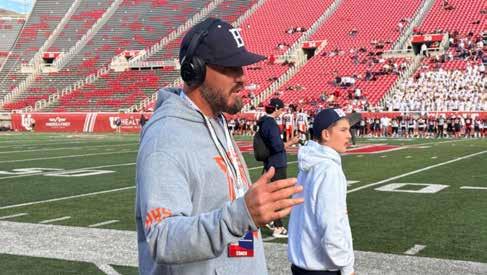
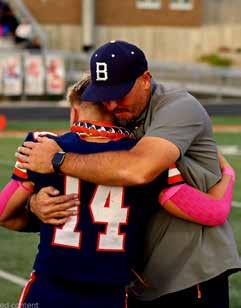
Coach Casey Sutera on the big stage at Rice Eccles stadium in 2025. No. 75 Marshall Huber leading the offensive line is an Air Force commit. (Jerry Christensen/City Journals)
Coach Casey Sutera on senior day with No. 14 Landon Hill. (Photo courtesy Brandy Hill)
Under the guidance of head coach Casey Sutera the Bengals earned a 35-14 record making it to the semifinals at Rice Eccles stadium in 2024-25 (Jerry Christensen/City Journals)
women’s SECTION
A publication covering local influential women in honor of International Women’s Day
The small team holding up the hope of change for Utah women
By Rebecca Olds | rebecca.o@thecityjournals.com
The Utah Women and Leadership Project, founded by Susan Madsen, is a research pumping machine with a goal of making Utah a better place by empowering women and removing obstacles.
A lone silhouette is a harsh contrast against the glare of a lit monitor.
Before the sun comes up, Susan Madsen sits at her computer: inbox and task list open for the day. While the house is quiet, her inbox starts to fill up for the day.
“Early morning…it’s been invaluable for me,” she said. “I always was up earlier than anybody, and it would be quiet, and I could make sense of the world.”
She uses the slow time to plan out her day and answer each email, following her team standard that “everyone deserves an answer.”
“I have a process of looking at my day, looking at my workload, figuring things out,” she said. “I reprioritize every single day.”
She might even reprioritize multiple times in a day. She’s constantly moving and pushing forward despite the odds and a small team.
Madsen, in addition to her professorship at Utah State University, is the founder of the Utah Women and Leadership Project, which has published 21 research-based white paper reports, 65 research snapshots and infographics, 68 research and policy briefs and hosted 45 “Think Tank” gatherings in Utah since 2010.
Madsen and four full-time employees — associate director Brie Sparks, local outreach and curriculum manager Deborah Lin, marketing and communications coordinator Emmalee Chastain, program assistant Kylie Hollingsworth — have
made a big push to raise awareness of the existing gaps in Utah for girls and women.
“Our work is having an impact across the state, and that is what motivates me,” Lin said. “In my role, I have visited 20 of our 29 Utah counties to get to know residents and build relationships to help with grassroots efforts to raise awareness and impact change around issues facing girls, women and families.”
“Everywhere I have been, men and women recognize the need for change.”
The “change” she is referring to encompasses topics like making more leadership opportunities available for more women, daycare options in the state, and homelessness resources for women.
Currently, the project involves close to 7,000 people statewide, with 500 partners and 300 leaders in different counties and cities, Madsen said.
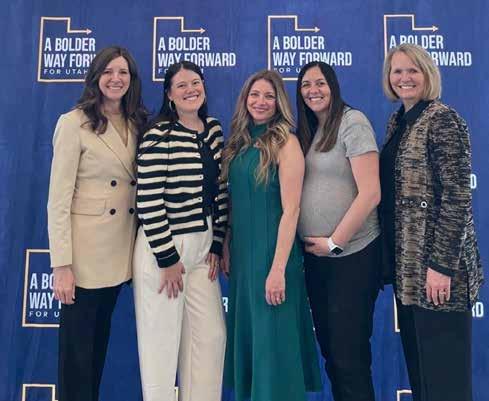
Four counties and seven cities/towns have passed official resolutions to support the project’s initiative they call “A Bolder Way Forward.”
“Our efforts to equip Utah communities with the data and resources needed to help more girls, women and families thrive are just one piece of the way forward,” Sparks said. “Creating lasting change for future generations of girls and women requires a systems-based approach, and I’m honored to help build the strategic connections that make that possible.”
Madsen admits that it hasn’t been
easy for any of them, but she continues in her efforts because she feels called to help women through the best way she knows how: research.
“What has driven me for decades is research,” she said, “and getting it into the hands of people that are making decisions.”
And in the hands of decision makers it is.
Madsen, in addition to her professorship and affiliation with USU, considers herself an activist and encourages others to be too. She is frequently on Capitol Hill
advocating for change with her research and “works alongside legislators.”
“We should all be advocates and into the work of social justice,” she said. “If we care about other people, if we care about our communities, if we care about our state, if we care about our extended family, if we care about any of that, we should be in whatever topic connects with us.”
For the research and recommendations on how to get involved in UWLP for Salt Lake County or any other country in the state, visit www.usu.edu/uwlp/research/what-can-i-do.
(From left to right) Deborah Lin, local outreach and curriculum manager; Emmalee Chastain, marketing and communications coordinator; Brie Sparks, associate director; Kylie Hollingsworth, program assistant and Susan Madsen, director. (Photo courtesy of UWLP)
Utah Women’s Day in Sports empowers next generation of female athletes
By Julie Slama | j.slama@mycityjournals.com
More than 400 high school student-athletes from across the state gathered for a morning focused on teamwork, leadership, mental health and empowerment in girls’ sports.
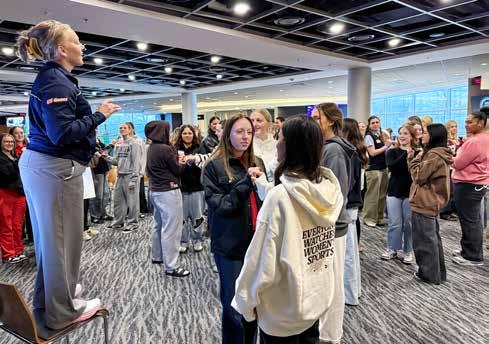
It began as a simple game of rock, paper, scissors, but quickly became a lesson in teamwork. Everyone played at first, then losers backed their opponents until only two players remained. Silence fell as they competed, then cheers erupted when the round ended in a tie. After four rounds, one girl finally emerged victorious.
The exercise wasn’t about winning, but about being a good teammate.
“How does it feel to be celebrated by your peers?” asked Poudre School District (Fort Collins, Colorado) health and physical education coordinator Jo Dixon, who emphasized that every player has a role — scorer, defender, supporter, teammate. “Being a part of someone else’s fan club is just as important and powerful as being in the spotlight, because lifting others up feels awesome.”
The interactive activity was part of a breakout session at the third annual Utah Women’s Day in Sports conference held Feb. 4 at the Delta Center, the day before National Girls & Women in Sports Day.
Dixon continued the partner activities designed to build unity. Student-athletes stood toe-to-toe and told each other: “Everyone is battling something in life, and I’m glad you’re battling with me.” Then, they stood back-to-back and said, “I’m so glad someone has my back — and I have yours.” The activity ended with a pinky promise and the words: “I pinky promise to help you unlock your greatness so the world can see it like I do.”
“We want you to be a good teammate from the inside out,” Dixon said.
The event’s origin began with Andee Bouwhuis, past president of Utah Interscholastic Athletic Administrators Association and Deseret Peak High School athletic director, along with Utah High School Activities Association Assistant Director Jan Whittaker and UIAAA communications coordinator and Cedar Valley High School Athletic Director Sharon Mardesich.
“Our goal is female empowerment; support our female athletes; grow leaders,” Bouwhuis said. “We’re letting these female athletes know that we hear them and we see them. We want them to be successful.”
More than 400 student-athletes statewide attended, supported by about 100 coaches and athletic directors. Participation from each school was limited to ensure broader representation.
“The athletes are charged to take back what they learned and teach it to their teammates,” she said.
Another breakout session focused on nutrition, led by Intermountain Health’s Josseline Kelley, who emphasized fueling, hydration and sleep.
“Our goal is to make sure that we’re eating something every three to four hours as athletes,” she said as she gave the student-athletes specific suggestions. “The worst thing you can do is go into a competition or training session without fueling. Under fueling can be very common in teens.”
University of Utah Assistant Director of Olympic Sport Performance Carly Fehler addressed competing in college athletics.
“Your whole life is going to change
overnight,” Fehler said. “Your city, your bed, your routine, your team and coach. Literally, everything changes. And are you prepared for that? Only nine percent of high school girls will go on to play in college. Two percent of all high school athletes will play Division I.”
While some student-athletes attended workshops, adults participated in a “Coach Beyond” session focused on supporting athlete mental health.
“I’ve been an athlete for my whole life, and I’ve seen the way mental health affects the performances of athletes,” said college athlete and presenter Makayla Pitcher. “Coaches are the front line, so it’s important for them to understand and help.”
Cottonwood High Principal and presenter Justin Pitcher emphasized the need for better training and resources for coaches.
“We need to do better by our athletes here in Utah, he said. “Our data shows over half of every female team has experienced significant sadness or depression. We look at our coaches and their training. Many of them were former athletes so they understand the game well, but they don’t always know how best to handle these tough situations that we’ve been put in.”
Speaker Amy Donaldson highlighted the origins of Title IX and opportunities it presented.
“They drafted a piece of legislation that was unlike today, with 37 words,” she said. “Even though everyone thought it was this little administrative adjustment…they had no idea of (the impact of) that law.”
Donaldson encouraged student-athletes to examine their journey, to be optimistic, to wire their brains for gratitude and forgiveness, to know “no accomplishment is an individual accomplishment.”
Karissa Niehoff, National Federation of State High School Association’s executive director and CEO, challenged the next generation to continue advancing opportunities for women.
“Look at the women who came before us, and look at where we are now, and look at the future of growth in women’s and girls’ sports,” she said. “We’ve come a long way. As a woman CEO in a sports world, I feel blessed, but I challenge you as a younger generation…to carry this forward. We have to be committed to working forward so we continue the growth we need in girls who play sports in Utah.”
UHSAA Assistant Director Jeff Cluff said the progress in girls sports, including expanded championships and the addition of girls wrestling, has helped to equalize opportunities.
“We’re trying to create equal opportunities for the girls that boys have been getting for years,” he said. “We have still more to do and more to change.”
Copper Hills High seniors Brynlee Morton and Kaysha Millet said the conference left a lasting impression.
“I love how inclusive it is,” Morton said. “Everyone has valuable knowledge, and they’re sharing their expertise with us.”
Millet added: “They’re spreading awareness and information; it’s empowering to us as women athletes.”
At the third annual Utah Women’s Day in Sports conference, presenter Jo Dixon motivated female high school student-athletes to become good teammates. (Julie Slama/City Journals)
Cottonwood Principal Justin Pitcher was a co-presenter of a coaches’ session at the Utah Women’s Day in Sports conference. (Julie Slama/City Journals)
Holladay’s city manager provides a steady hand of leadership
By Peri Kinder | peri.k@thecityjournals.com
Gina Chamness guides the city’s course with deliberate planning.
Most residents don’t think about how cities are run. As long as roads are safe, water is clean and parks are open, city administration rarely crosses their minds.
But behind the scenes, it takes a functional team and deliberate planning to make city services seem effortless. In Holladay, the person coordinating that teamwork is City Manager Gina Chamness, who’s been with the city for 10 years.
Chamness is a rarity in Utah. According to a December 2024 policy brief put out by the Utah Women and Leadership Project, of the 250-plus cities in the state, only 13 of them had women serving as city managers or administrators.
“I think that’s starting to change,” Chamness said. “It feels like there are more women in assistant city manager roles, more women as department heads, but as far as my generation, there haven’t been many of us. I’ve been really lucky.”
Chamness never imagined she’d serve in municipal government. She started her career at the federal level, working for a congressional agency, but political dysfunction persuaded her to look for other opportunities.
With a political science degree and a master’s in public administration from the
University of Utah, Chamness landed a job with Salt Lake City, working her way up to become the city’s finance director in 2014.
When the Holladay city manager position opened, she felt it was the next best move for her career and family, since she and her husband, attorney Ralph Chamness, have lived in Holladay since 2003.
“I saw this position posted and it felt perfect,” she said. “I was excited to apply. The opportunity to serve a community where you live felt like something I could be really excited about.”
Chamness acts as the CEO of the city, managing administrative functions, working with elected officials and ensuring ordinances, policies and rules are observed. When she first started with Holladay, the city was struggling. Aging infrastructure, stunted growth and a lack of direction left Holladay stagnant.
Working with the mayor at the time, Rob Dahle, Chamness held discussions with city residents, elected officials and city staff to prioritize areas of focus.
“Ten years ago, we didn’t have much of a commercial base,” she said. “We were banking on redevelopment of the [Cottonwood] mall and then the great recession set redevelopment back. The question was, how could we build a city that was going to be financially sustainable? That was a big
challenge for several years.”
Investing in infrastructure was another concern. With some parts of the community more than 100 years old, Chamness knew a concerted effort and lots of money had to be allocated to improve infrastructure.
Restructuring the city took patience. Much like turning an ocean liner, it needed a coordinated shift to move something so large and complex.
“Everyone wants to do things quickly. Sometimes people complain about how long the government takes to do things,” Chamness said. “Making sure you have adequate time to listen to residents and making sure elected officials build that conversation into their own planning and into the process is critical. I think we’ve done a pretty good job of that. I wish the residents understood how critical the services we provide are to their day-to-day lives.”
Over the last decade, Holladay has improved road quality, invested in development, attracted businesses that fit the community, expanded the sidewalk system and recently acquired the Spring Lane Elementary property to develop a new park.
Chamness builds bridges between elected officials, residents and city staff, while working with other government agencies, organizations and committees to create a city that residents are proud of.
“I think the best attribute for describing Gina’s success would be ‘trust,’” said
Holladay Mayor Paul Fotheringham. “My colleagues on the council have always felt a keen sense of trust for Gina; trust in her judgment, trust in the depth and breadth of her expertise from budgetary and legal issues to citizen engagement and public policy.”
Chamness admits the job as city manager is stressful, but she’s comfortable with conflict, especially when it leads to a better outcome for Holladay. She encourages women to pursue leadership roles, whether in government or business.
“I tell women, you could absolutely do this,” she said. “I really do feel like I have the best job in the valley.”
The Boob Bus makes mammograms accessible for all women
By Cassie Goff | c.goff@mycityjournals.com
“Let’s get all the girls together to go get dinner and mammograms!” is the vibe Rena Vanzo is going for with mammogram screenings on The Boob Bus.
One in every eight women will develop breast cancer in her lifetime. For every Utah woman, that translates to about a 12.5% chance of developing cancer.
“Every family, every community, every church group, every book club—all of them will be impacted. Prevention is the best medicine,” said CEO and co-founder of The Boob Bus Rena Vanzo.
The Boob Bus is a mobile unit that offers mammograms, health care screening, breast cancer assessment and other healthcare services to women locally. The main goal of The Boob Bus is to make mammograms more accessible and comfortable.
“Utah women are just not doing their mammograms. We’re way below the national average,” said Vanzo. In 2022, Utah was ranked 48th out of the 50 states in the nation for mammogram screening.
Vanzo and her team have been working to change that statistic by transforming typical health care screenings into modern experiences. The Boob Bus was fully customized as
a health care space with neon pink lights and vaulted ceilings.
“On The Boob Bus, you can expect to feel like an individual,” said driver and Patient Care Coordinator Kayla Pacheco. “Your history, your experiences and your fears are heard.”
An average visit to The Boob Bus begins by checking in to answer medical history questions. The data collected related to menstrual changes, hormones, breast density and personal medical history is used to calculate individual cancer risk.
“Breast density is really becoming more of a topic of conversation,” Vanzo said. “And it should be. Women with dense breasts do have a higher risk of breast cancer.”
Patients are offered heated pink robes instead of hospital gowns during their appointment. Individual women will meet with a licensed certified technologist privately in the mammogram suite for a screening.
Results are within one week. (Vanzo emphasizes that patients may be referred to a hospital for diagnostic screening depending on risk.) Patients leave The Boob Bus with branded lip balm, nail files and educational cards.
The entirely female Boob Bus team emphasizes the importance of destigmatizing
women’s health with less shame and embarrassment through more conversation.
“I want to live in a world where even the men are saying to their partners ‘Hey, did you get your mammogram yet?’” Vanzo said.
Vanzo and her cofounders started The Boob Bus in 2022 after being personally impacted by individual family members battling cancer diagnoses. It took her two years to get The Boob Bus fully operational.
“I had to learn all of these extra things that are very useful in your life but you wouldn’t think they’d intersect in business,” Vanzo said.
Vanzo needed to get a CDL so she could drive the oversized custom bus. In preparation, she worked for UTA for six months to get trained as a driver in a structured environment.
“Rena is a superstar. I have never met anyone so driven to help others,” said Office and Billing Manager Jen Bartunek.
The Boob Bus primarily meets women for their mammograms all across Salt Lake, Utah and Davis Counties. Through their partnership with the Central Utah Health Department, The Boob Bus also travels to Central Utah.
The Boob Bus works with the Utah Breast and Cervical Cancer Program (UCCP) so uninsured women can still access their mammogram screenings through a voucher program.
El Programa de Detección del Cáncer de
The Boob Bus provides heated robes for mammogram appointments so it “feels more like a spa experience,” The Boob Bus founder Rena Vanzo said. (Photo courtesy of Rena Vanzo, The Boob Bus CEO and co-founder.)
Mama y de Cuello Uterino es facilitado por el Departamento de Salud y Servicios Humanos de Utah y está financiado con fondos estatales y federales. El formulario de solicitud está disponible en español a través de lo siguiente: www.cancer.utah.gov
Individual women can book appointments online (even same day) through The Boob Bus website: www.theboobbus.com. Organizations, businesses or school districts can email or call The Boob Bus team (866-747-BOOB) to set up a day for group appointments.
Holladay City Manager Gina Chamness has led the city through 10 years of growth and change. (Photo courtesy of Holladay)
By Peri Kinder | peri.k@thecityjournals.com
When South Salt Lake Mayor Cherie Wood was first elected in 2010, she was a notable exception. Along with Midvale Mayor JoAnn Seghini, Wood was only the second female mayor serving in Salt Lake County at the time.
She and other women, including Riverton Mayor Sandra Lloyd, Taylorsville Mayor Janice Auger and Holladay Mayor Liane Stillman, were trailblazers and glass ceiling-breakers, setting the stage for women to take the lead, and it’s paying off.
“It’s always been a passion project for me to make sure we have women at tables where decisions are being made,” Wood said. “So I’m always encouraging women to run for office.”
Entering such a male-dominated field wasn’t easy. While many of their male counterparts offered support and encouragement, the women also encountered misogyny and roadblocks. Learning to navigate their leadership roles took patience, balance and a thick skin in order to stay the course while representing their cities.
Now, many cities in Salt Lake County are led by female mayors, including the newly elected Cottonwood Heights Mayor
Gay Lynn Bennion and Riverton Mayor Tish Buroker. Add in Salt Lake City Mayor Erin Mendenhall and Salt Lake County Mayor Jenny Wilson, and female leadership is becoming the norm, rather than the exception.
“It is so important that young women and young men see women in leadership,” Bennion said. “It’s important for them to know that women can do a great job as leaders.”
Organizations like Utah Women Run and the Women’s Leadership Institute have provided training for women who want a leadership role, whether in politics or business. Women are taught to participate on boards, campaign, fundraise, advocate for themselves and develop a platform and voice that others want to follow.
Initiatives like A Bolder Way Forward focus on creating safe spaces for women in boardrooms, education, political office and civic organizations.
WLI’s Director of Programs and Operations, Nicole Carpenter, said the organization’s founder, Pat Jones, is a former Utah Senator who believes women need a seat at the table.
“We need the voices of women in all areas of leadership, particularly on Capitol Hill, where women can make decisions,” Carpenter said. “It’s important for women to
have a vote, but it’s even more important for women to have a voice. To have a voice in those political circles, you need to hold an office, or you need to be a lobbyist, or have some type of political influence. So we encourage women to run for political office.”
It’s not just Salt Lake County; Utah County and Davis County have also had their share of female leaders, including Kaysville Mayor Tami Tran, who was just elected to her second term. Not only is she a political leader, but she’s the CEO of a tech company, Rylex.
ing, with more understanding and empathy
“I know it’s intimidating,” Wood said. ent lived experiences and perspectives on councils and in elected office seats. When you invite all of those perspectives and give them a safe place to be heard, that’s when
For information about running for office,
Four Simple Ways to Build a Happier Life
As a county councilmember, I spend a lot of time listening to concerns from constituents. I hear from parents who are stretched thin, seniors who feel lonely, young people who are anxious about the future, and workers who feel burned out even when they’re doing everything “right.” One thing is clear: many people are searching for happiness, but they aren’t sure where to find it.
Research from social scientists points to a clear answer. Happiness does not come from money alone, social media attention, or having an easier life. Arthur Brooks, a Harvard professor, social scientist and best-
TWO ENTREES Lunch only (11am-4pm). Dine-in only. Coupon must be present. Expires 4/15/26
Aimee Winder Newton Salt Lake County Councilmember District 3
selling author teaches the science of happiness. He says that happiness comes from four things: faith, family, friendship and meaningful work.
The first is faith. People are happier when they believe their lives matter and are part of something bigger than themselves. For some, this comes from faith or spiritual beliefs. For others, it comes from serving their community, caring for others or living by strong values. Faith gives people strength during hard times and helps them see challenges as part of a larger purpose. Even small habits—like volunteering, mentoring, or reflecting on what matters most—can build a deeper sense of meaning.
The second is family. Strong family relationships are one of the most reliable sources of long-term happiness. This
doesn’t mean family life is easy. It takes patience, forgiveness and time. But people who invest in their families tend to feel more supported and less alone. Family can mean parents and children, grandparents, chosen family or relatives who show up when it counts. Simple actions—shared meals, regular check-ins or family traditions—can make a big difference.
The third is friendship. Healthy friendships protect people from loneliness and stress. They give us someone to laugh with, talk to and lean on when life gets hard. Yet friendships often get pushed aside by busy schedules and screens. Reaching out, making time for face-to-face connection, and being present for others helps build trust and belonging. Often you will have to be the one to reach out and make this happen. Communities are stronger when neighbors know each other, not just online, but in real life. Do you know the people who live three houses on either side of you and across the street? If not, make it a point this year to get to know them better. It helps keep your neighborhood safe and builds connection when you can all look out for each other.
The fourth is meaningful work. This does not mean everyone has to love every part of their job. But people are happier when
they feel useful and see how their work helps someone else. Whether paid or unpaid, work gives people dignity and purpose. Parents raising children, volunteers, caregivers, students and workers all contribute value. When people feel needed, their confidence and happiness grow.
One important idea connects all four of these areas: happiness is not about chasing pleasure. Pleasure fades quickly. Real happiness builds slowly through effort, relationships and responsibility. It grows when we use things but care for people—not the other way around. Being “happy” doesn’t mean you will never have sadness, anger, frustration or problems. Everyone has hard times. But by focusing on the things that really matter, you increase your opportunities for better overall happiness.
As a community, we should make it easier for people to build these four foundations. That means supporting families, creating spaces for connection, valuing service and helping people find meaning in their lives. Happiness is not something government can give—but it is something we can support by strengthening the places where people live, work and belong. Make a goal this year to find ways you can help increase your own happiness.
GRIEF HAS NO TIMELINE
Grief is an individual journey with a path as unique as each one of us. To o er support and hope, we provide various Grief Support Services for those who are mourning a recent or past loss.
Remember when you thought Mr. Monopoly wore a monocle, or you were convinced Curious George had a tail? Memory is a funny thing.
Or how about when NBC anchor Brian Williams “misremembered” being in a helicopter hit by anti-tank weapons in Iraq? His faulty memory got him suspended.
We all misremember things, but when an entire group does it, it’s called the Mandela Effect, a phenomenon that occurs when millions of people are confidently wrong. Like, remember when we all believed Vladimir Putin was a war criminal? LOL. Good times.
If you’re a Gen Xer, you might remember when the VHS tape got eaten by the VCR and you had to use brain surgeon-style techniques to carefully respool the video. But then the tape always had a wrinkled section where the movie would go wonky for a few seconds. That’s what my memory feels like most days: warped and staticky.
My husband is basically a human computer. He remembers everything. When we meet new people, he lights up like an exploding star. He’s curious about their background, hometown and their connection to any celebrity-type person.
Months later, he’ll say, “Remember at the Yankees game when we met that guy who was married to the cousin of a friend who knows Ryan Reynolds? I think his name was George.”
A Trip Down Memory Lane
Peri Kinder Life and Laughter
“No.”
“Yeah, you do. He owned a horse farm outside of Albany and loves the color orange.”
“What are you talking about?”
His memory recall is slightly unsettling. He’ll drop info like, “I remember the 1968 World Series when the Detroit Tigers came from behind to beat the Cardinals. They hadn’t won since 1945 and Mickey Lolich was the MVP.”
And then there’s me, having to watch a recap for a TV show I watched the night before. But then I remember random things, like when Sen. Mike Lee advocated for term limits. Hahahaha. The good ol’ days.
I was playing a “Frozen” matching game with my 9 year old granddaughter, trying to remember where the pair of Olafs were hiding. I kept turning over the same two cards, a Sven and an Elsa, convinced I’d finally cracked the code.
My granddaughter found it hilarious watching her doddering old granny lose a game. But there was a time I was the matching
game champ. At least that’s my recollection.
I can still sing Abba’s entire “Arrival” album from 1976 but I’m not quite sure I actually attended a single day of high school. I used to know dozens of phone numbers, but now I couldn’t call my daughters if the world were ending and I had to use a rotary phone.
When it comes to remembering the names of dogs I met at the dog park, I’ve got it down. But their owners’ names? No clue. I can make my mom’s mac and cheese by heart, but need to read the directions on a cake mix four times before I get it right.
It makes me second-guess my memory, like, do you recall when Gov. Spencer Cox took the side of trans kids? Or was that also the
Mandela Effect?
If you’ve ever had a sibling contradict your side of a story, or you can’t remember your eighth-grade science teacher, you’re not alone. Or maybe you had an existential crisis when you realized C-3PO’s lower right leg was silver, not gold.
Memory isn’t just fleeting, it’s fluid. When time blurs the moments we fell flat on our faces, it’s a reminder that our flashbacks are edited highlight reels, usually with a laugh track.
Peri Kinder is an award-winning columnist and journalist who has written for The City Journals since 2004. She can be reached at peri.k@thecityjournals.com