

Bella Vista Tigers to reunite for final prowl through school building
By Julie Slama | j.slama@mycityjournals.com
After six decades, the Cottonwood Heights school invites generations of students, families and staff back to celebrate its legacy before closing its doors.
Since fall 1965, Bella Vista Elementary has been a cornerstone of Cottonwood Heights community — a place where friendships were formed, traditions were built and generations of students proudly called themselves Tigers.
As Bella Vista prepares to close at the end of the school year and most of its students transition to nearby Ridgecrest Elementary, the community is invited to return to celebrate the school’s legacy.
In partnership with the PTA, Bella Vista will host a Memory Night from 5 p.m. to 7 p.m. on Monday, May 4. Current and former students, families, faculty, administrators and neighbors are invited to walk the halls, reconnect with friends and reflect on the impact the school has had over the decades.
Friends of Bella Vista are invited to contribute to the evening by sharing memories and stories through a dedicated online
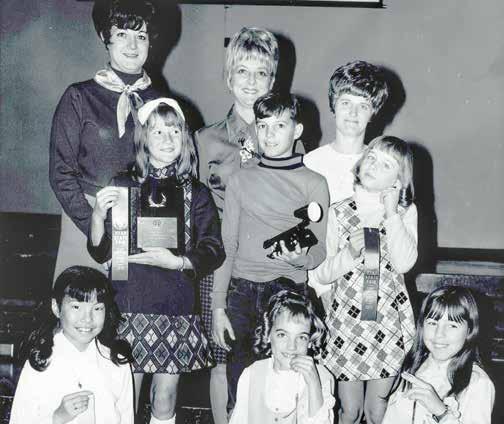
Bella Vista Elementary’s Memory Night in May invites the community to reminisce about their days at the school before it closes at the end of the year. Pictured here are 1970 Utah State Fair student essay winners and their teachers, including JoAnn Seghini (center back), who later became Midvale City’s mayor. (Photo courtesy of Bella Vista PTA)
form. Organizers also encourage alumni, and current and former staff and families, to bring yearbooks, photographs, and other memorabilia to temporarily display during the event.
The evening also will feature memorabilia stations, opportunities to flip through yearbooks and photographs and revisit their favorite classrooms. Organizers are planning a Bella Vista commemorative pin for current and former students and employee visitors.
Principal Barbra Winder said the open house is designed to be simple and heartfelt.
“The hope is to reach anyone with a connection to Bella Vista,” she said. “We think people will want to have time to chat about memories with one another, see old faces,





Beating Afib Without Meds
Beating Afib Without Meds








COMMON GROUND
Immigrants are not the enemy
Common Ground will be a column of rotating viewpoints that highlight specific feelings across the political spectrum, and it will always end with possible ways to come together.
While the 2025 FIFA Peace Prize winner bombs Iran and talks about invading Cuba, the Utah Legislature is fighting its own battles against immigrants and refugees.
Legislators introduced several zero-tolerance immigration bills addressing issues ranging from public education and driving privileges to the right to receive food from local pantries.
If these bills had passed, women, infants and children would have been barred from receiving vaccinations and treatment for communicable diseases. It seems the pro-measles group would also like to welcome back polio, meningitis and maybe a bit of scurvy, just for fun.
I keep saying, “We’re better than this,” but certain legislators (you know who you are) keep making that statement false.
These lawmakers say providing services to immigrants is a drain on taxpayers. There’s just one problem: immigrants pay taxes, too. They pay gas, income, sales and property tax. In fact, immigrants contribute more than $200 million to the state. Why shouldn’t they have access to public schools when they help fund them?
As a kind human, I want my tax dollars to assist those in need. I want families to have food and housing, basic human requirements everyone deserves. I’d much rather have my tax dollars go to immigrants than to pay legal fees fighting Prop 4.
Peri Kinder Common Ground
This year, a bill was introduced to add a 2% tax on international money transfers for those without approved IDs. That might not sound like much, but it could be the difference between sending money for rent or having grandma evicted. Immigrants often wire money to their families in other countries for food, medicine or housing, things our lawmakers obviously take for granted.
Immigrant driving privileges were also on the chopping block. Not only would the bill have revoked those cards, it also required police to contact ICE to turn in an undocumented person involved in a traffic accident.
Utah issues around 35,000 driving privilege cards each year. They allow people to have car insurance, drive to school or work, and navigate the two hazards of Utah roads: terrible drivers and whatever UDOT is tearing up this week.
Undocumented college-bound students were also targeted after a lawmaker introduced legislation to strip them of the right to access lower in-state tuition. Many of these students are on the path to citizenship. Don’t we want an educated populace? My guess is no.
All these initiatives seem to be based on selfishness. If we were really putting Utah first, wouldn’t we ensure that the people who lived here were healthy, fed, educated and safe?
Until recently, Utah leaders lauded the state’s programs designed to help immigrants and refugees learn English, get career training and become productive members of society. Now, the perfect immigrant is someone who doesn’t want education or food and who never sends money to grandpa for a new roof.
Immigrants are our neighbors, coworkers and friends. They deserve the right to dignity and respect. I’d love to see any lawmaker work as hard as the immigrants I know.
Luckily, these bills didn’t pass. But in this political climate, they will probably rise again. Like a case of measles in St. George.
Common Ground: Sometimes, those on the left act like we should open the borders and let the world flow through, while those on the right can’t build walls high enough. What if we all implore Congress to create sustainable immigration policies? Instead of punishing people who want to work and contribute, we need an immigration structure that makes sense. And thanks to the state legislators who voted down the harmful bills presented this year. We can do better. l
From the Publisher:
Thirty-five years ago the City Journals (South Valley Journal) were created with a vision to stay local and bring the community together. Thirteen years ago when I took over as publisher the name changed. but the vision did not. Today that vision is still true; we want the Journals to be hyperlocal and we want to bring the community together.
Over the last few years, as our nation continues to divide between the right and left, it has become harder and harder to feel like we are bringing our community together. If we write on something that is political, one side will be mad at us, and worse of all we may lose them as readers. This does not feel like we are bringing a community together.
This has left our editorial team in a tough position. Do we write on issues and upset our readers, or do we not write on the issues and move forward blind to the issues that are dividing our community.
Our solution: Common Ground. A monthly opinion column that will cover issues that we feel are dividing our communities. Each month one of two writers will present an opinion column, one that leans right and one that leans left.
This month Peri Kinder wrote about state legislation concerning immigration-related topics.
We hope that you have enjoyed the first Common Ground.
— Bryan Scott
COTTONWOOD HEIGHTS TEAM
The Cottonwood Heights Journal is a monthly publication distributed directly to residents via the USPS as well as locations throughout Cottonwood Heights.
The views and opinions expressed in display advertisements do not necessarily reflect or represent the views and opinions held by Loyal Perch Media or the City Journals. This publication may not be reproduced in whole or in part without the express written consent of the owner. © 2026 Loyal Perch Media, Inc.
PUBLISHER
Bryan Scott | bryan.s@thecityjournals.com
EDITOR
Travis Barton | travis.b@thecityjournals.com
ADVERTISING EXECUTIVES
Mieka Sawatzki | mieka.s@thecityjournals.com
Ryan Casper | ryan.c@thecityjournals.com
Marc Davis | marc.d@thecityjournals.com
CLIENT SERVICES
Lydia Rice | lydia.r@thecityjournals.com 385-557-1022
CIRCULATION COORDINATOR
Lindsay Andreasen | lindsay.a@thecityjournals.com Rack locations are also available on our website.
EDITORIAL & AD DESIGN
Stacey LaMont Ty Gorton
COTTONWOOD HEIGHTS CITY JOURNAL 9500 South 500 West, Suite 205 Sandy, UT 84070
PHONE: 801-254-5974

Act FAST, Save a Life: Why Stroke Awareness is Everyone’s Business (No, Seriously, Everyone’s!)
When you hear the word “stroke,” what image comes to mind? For many, it’s an elderly relative, perhaps a grandfather, suddenly incapacitated. But local neurologists are clear: that outdated image is a dangerous myth. Strokes can strike anyone, at any age, and often without warning, making awareness and rapid response absolutely critical.
“The idea that strokes are an ‘old person’s disease’ is incredibly harmful,” says Dr. Mohammad Shoari, a neurologist at Holy Cross Hospital – Jordan Valley, Salt Lake and Mountain Point. “We are seeing strokes in younger adults, even teenagers, with increasing frequency. Lifestyle factors, genetics, and even certain medical conditions can put anyone at risk. This isn’t just about grandpas anymore; it’s about protecting our entire community.”
A stroke occurs when blood flow to part of the brain is interrupted, either by a clot (ischemic stroke) or a burst blood vessel (hemorrhagic stroke). When brain cells are deprived of oxygen, they begin to die, leading to potential long-term disability or even death. The good news? Many strokes are treatable, but time is brain. This is why recognizing the warning signs is
paramount. Healthcare professionals use the acronym F.A.S.T. to help people remember:
SAFFace Drooping: Does one side of the face droop or is it numb? Ask the person to smile. Is the smile uneven?
Arm Weakness: Is one arm weak or numb? Ask the person to raise both arms. Does one arm drift downward?
Speech Difficulty: Is speech slurred, are they unable to speak, or are they hard to understand? Ask the person to repeat a simple sentence.
TTime to call 911: If someone shows any of these symptoms, even if the symptoms go away, call 911 immediately. Note the time when symptoms first appeared.
“Every minute counts when someone is having a stroke,” emphasizes Dr. Rebecca Reiser, a neurologist at Holy Cross Hospital – Jordan Valley.
“The quicker a patient receives specialized medical attention, the higher their chances of a full recovery. Don’t second-guess or wait for symptoms


to worsen. Call 911 immediately.”
Our hospitals are equipped with advanced treatments to combat stroke. For ischemic strokes, our team can administer clot-busting medications like TNK (tenecteplase) if the patient arrives within a critical time window. Holy Cross Hospital – Jordan Valley also offers thrombectomy, a procedure where a specialized device is used to physically remove large blood clots from the brain.
“Beyond immediate intervention, our comprehensive stroke centers focus on post-stroke care, including rehabilitation services that are crucial for regaining function and improving quality of life,” adds Dr. Reiser. “Our multidisciplinary teams work tirelessly to help patients navigate their recovery journey.”
From emergency response to rehabilitation, our community has vital resources. But the first line of defense is you. By understanding that stroke doesn’t discriminate by age and by remembering F.A.S.T., you can be the hero who helps save a life – perhaps even your own.
For more information or to find a provider visit mountain.commonspirit.org
When


Learn more about the services, care providers and mission-driven work of the Holy Cross hospitals and CommonSpirit Health at www.holycrossutah.org.

At CommonSpirit Health, we make the healing presence of God known in our world by improving the health of the people we serve, especially those who are vulnerable, while we advance social justice for all.
minutes count, count on our emergency care.
Get to know us before you need us.
When you need emergency care fast, the closest emergency room is a smart thing to know. You never know the level of care you’ll need when an emergency happens and choosing the right ER can make all the difference. And a hospital ER comes with the confidence of additional services right on-site.
CommonSpirit Holy Cross Hospital – Salt Lake has been awarded Chest Pain Center Accreditation from the American College of Cardiology (ACC). Facilities that achieve accreditation meet or exceed an array of stringent criteria for evaluating, diagnosing and treating patients who may be experiencing a heart attack.
Find emergency care close to you at mountain.commonspirit.org.



Copper Rock offers great golf and vacation opportunities
Arriving at Copper Rock, you might be torn as to what to do first. There’s the world-class golf course, voted best in Southern Utah for five straight years, with its lush fairways and greens weaving through the stunning red rocks.
There’s the beauty of the Hurricane Valley, with trails beckoning hikers or nature lovers anxious to watch a sunrise or sunset. And there’s the amazing resort itself, with a clubhouse grill, pools, golf pro shop and close proximity to Zion National Park.
With more than 300 days of sunshine each year, it’s become one of Southern Utah’s most desirable addresses for golfers and vacationers and part of a master-planned development that has redefined luxury living in the region.
In addition to amazing real estate options, Copper Rock is a source for luxury vacation rentals that are perfect for families or large groups offering short-term rentals, but also aim to build long-term relationships with those we serve by maintaining constant support before, during and after your stay. And in May, we will once again host the LPGA Epson Tour Copper Rock Championship, welcoming top rising stars in women’s professional golf. That event will be held May 14-16. It fills a hope that developers dreamt about—that Copper Rock would be more than just a golf course—it would be a destination.
“When we broke ground on Copper Rock nearly two decades ago, we carried with us a bold vision: to build a worldclass golf course in Southern Utah—a course that could not only showcase the beauty of our desert landscape but also stand proudly alongside some of the best in the country,” said Darcy Horman, director of operations at Copper Rock. “We imagined a destination for connection and shared experiences for our community and guests from around the world.”
Opened in 2020, Copper Rock has already established itself as a premier golf and resort community. What was once a vast expanse of farmland has now been thoughtfully transformed into a vibrant, 1,000-acre resort community centered around that award-winning 18-hole championship course. The 7,227-yard layout winds across natural sand dunes and native sagebrush, offering a challenging and exhilarating round of golf. The design integrates seamlessly with the rugged Copper Rock, and the surrounding area seals the deal.
“Everything about this course from start to finish was excellent,” one golfer wrote. “Service was great, tee box and fairway conditions were excellent, pure greens, interesting hole layouts with some challenging but fun blind shots and water hazards here and there, and landscape views that can’t be beat. I’ve played multiple top rated golf courses in Southern Utah and this one was my favorite by a long shot.”
Another wrote, “I enjoyed everything about the day. Pro shop staff were very helpful and worked with our threesome to alleviate a previous scheduling snafu. We were escorted to the practice facility and I have to say the practice facility was top
notch…putting green, chipping green and an excellent driving range. The course itself was in excellent condition. All aspects of course management were superior. The views on the course were just amazing.”
Just minutes from downtown Hurricane and less than 30 minutes from St. George, residents enjoy quick access to shopping, dining and healthcare, as well as Southern Utah’s endless outdoor recreation options. Those include boating and fishing at Sand Hollow Reservoir and mountain biking on the Gooseberry Mesa trails that are all within easy reach. And once you’ve returned to Copper Rock, you can enjoy golf lessons, a grill and pro shop, an online store and private spas.
“It’s a place where our community can come together,” Horman said. “A place that continues to grow and give back while showcasing the unique beauty and spirit of Southern Utah to the world.”
Freelance writer Michael Zuccarello who specializes in Utah sports businesses recalled his visit to the resort in an article published before last year’s Epson event.
“Evening falls on the 11th fairway at Copper Rock Golf Course, and the summer heat is making its peace with a soft evening breeze. Bullfrogs croak in the distance. The fading sunlight beams golden off the sandstone cliffs, backlighting the residences lining the right side of the fairway, while just left of the 11th green, the sun is about to plunge below the Pine Valley Mountains.
“This is what I see as I chip in my flip flops, trying to hold a quick green that demands a pre-meditated landing spot and the kind of precision execution that can be challenging for this 15-handicapper. It’s after 9 p.m. now, and my wife, “Callaway,” and I have a 7:20 a.m. tee time, but I want to finish with three close ones before I walk back through the neighborhood to the gleaming glass house on Torrey Pines Road, a place barely three years old with four bedrooms, five bathrooms, a pool table, and a private pool and spa.”
He said walking past modern, angular homes with huge glass windows, each home seemed to appeal to different groups for their next stay-and-play vacation.
“One home has a water slide, another a bowling alley, and still others have putting greens and basketball courts,” he wrote. “Every last one of them has a private pool. Copper Rock, truth be told, is as much a vision today as it is a living golf community.”
He said Copper Rock is “the place you and your golf friends come to play a course the pros play, with tee boxes as flat and smooth as pool tables, pristine fairways that reward accurate drives with generous rolls, and greens that roll true and fast. I have it on good authority that you can play your way out of the desert sand and sagebrush that line the fairways, just punishment indeed but not round-killing.”
“We’re really excited that the locals once again voted Copper Rock the best golf course in Southern Utah,” said Penny

James-Garcia, Copper Rock’s event coordinator. “Copper Rock was built to be a championship course, and golfers find it both highly challenging and highly playable.”
As Copper Rock continues to grow and evolve, the vision for the community includes expanded resort offerings, walking trails and enhanced hospitality experiences—all designed to elevate the lifestyle of every resident and guest. Whether you’re drawn by the championship golf, the stunning views, or the potential of owning in one of Utah’s most exciting new communities, Copper Rock is more than a place to live—it’s a place to thrive.
“We’re certainly excited about all our future amenities and developments,” Horman said, “but we understand the importance of realistic expectations. We’re lasered in on what makes Copper Rock special. At this moment, it’s a chance to stay in a beautifully equipped modern home and play at a premier championship golf course.”
Copper Rock is located at 1567 West Copper Rock Parkway in Hurricane, Utah. For tee times, vacation rentals, homesites, and stay and plays, visit copperrock.com. For more information on the Epson Tour stop in Southern Utah including tickets, go to copperrockchampionship.com. l
The 17th hole presents golfers with challenges and breathtaking scenery. (Courtesy Copper Rock)
Contemporary designs for homes and rental properties at Copper Rock offer amazing views. (Courtesy Copper Rock)
Vacation rentals offer both short-term and long-term Stay and Play options. (Courtesy Copper Rock)

C
Brighton’s unified movement scores big on and off the court
Five years ago, only a handful of Utah schools held national unified champion status. Now, Brighton High is part of the growing movement.
By Julie Slama j.slama@mycityjournals.com
WhenBrighton High freshman Jaxson
Huff heard his school earned the national unified champion banner, he celebrated alongside hundreds of classmates who packed the gym in support of inclusion.
“I like the school, everyone is together and nice,” he said.
The banner presentation was part of Brighton’s annual inclusion week, a celebration highlighting the school’s commitment to bringing students of all abilities together. Unified players and partners entered the gym beneath an inflatable Special Olympics Utah arch to loud cheers from their peers. The crowd grew quiet and respectful as pairs of unified students sang the national anthem, before it erupted in thunderous applause.
“Schools who show they can do unified sports, inclusive leadership and whole school engagement that promotes unified get a special award from ESPN and Special Olympics International,” said Special Olympics Utah Unified Champion School’s College-growth Coordinator Boston Iacobazzi. “We are super excited to present to you guys today your national banner recognition.”
Brighton is one of about 20 schools statewide to receive the honor, triple the number of five years ago. The increase, Iacobazzi said, reflects a growth in cultural shift toward inclusion and acceptance in schools.
“It’s exciting to see the growth in the past four or five years,” he said. “The growth just reflects the impact we’re having in schools, and they’re seeing a unified world, and what the unified movement can be.”
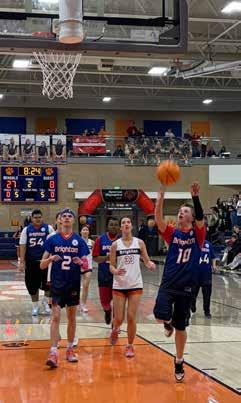
The assembly also included the unified players challenging the basketball teams to an exhibition game. At halftime, Team Unified led the boys 25-8. After a performance by the Salt Lake Stars dance team to “This is
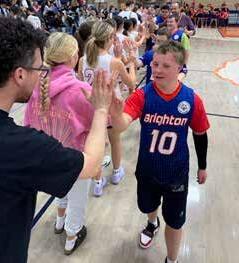

Me” from “The Greatest Showman,” which included several unified players, Team Unified outscored the girls’ team 24-3 in the second half, securing a 49-11 win.
“We won the game, it was fun with everyone cheering,” Huff said.
While the banner presentation was reason to celebrate, the recognition represented years of effort.
“It’s been years in the making,” said Jared Denslow, Brighton special education teacher. “This is about being unified as a school, and not seeing these kids as special, but seeing them for who they are. That’s what’s very humbling. We have an inclusive administration; they will do anything they can to make these kids feel part of the school. Here, you don’t see special. You see kids. Everybody’s unified. It brings a lot of camaraderie and kindness and makes it a very welcoming, kind place.”
Brighton’s unified culture extends beyond athletics.
dents and staff pledge their commitment for inclusion. Throughout the school year, students regularly eat lunch and participate in activities together.
Much of the momentum comes from students as last year, Brighton graduate Aspen Johnson, along with Paige Grimshaw and Claire Merrill, launched Brighton’s unified club, which quickly drew 130 students to its group chat.
It’s exciting to see the growth in the past four or five years. The growth just reflects the impact we’re having in schools, and they’re seeing a unified world, and what the unified movement can be.
“We set up the club to do monthly activities like making keychains and bracelets and we decorated for a lot of holidays,” she said. “We wanted to make a place where everyone feels included, a space where everyone can come, regardless of abilities, of social standings, and have fun and do fun things. I know what it’s like to feel left out and it is not fun, so I cannot even imagine what some other people might be going through. I don’t want that for anyone.”
Boston Iacobazzi
Since 2022, the school has hosted a unified prom after peer tutors recognized the need and organized a dance intentionally with their special education peers. Students of all abilities have served in leadership positions in student government and on the Special Olympics’ Youth Activation Committee, even meeting with Gov. Spencer Cox and First Lady Abby Cox to advocate for inclusion.
Each year during inclusion week, stu-
When Johnson and her peers realized Brighton met the criteria for the national banner recognition, they completed and submitted the application last March.
“I’m glad Brighton is recognized on a national level, but I’m also glad it’s a welcoming place because I have a brother with special needs,” she said. “This is my passion. I’m going into a career with special needs; they’re my friends and I want to advocate for everyone, even if they can’t advocate for themselves.”
Her mother, Abby, also has supported the effort as a volunteer coach for the unified team. For her, the banner is more than an award, it represents genuine friendships.
“The best thing of all this is to witness
the friendships that are made and the support and the community, seeing everyone coming together,” Abby Johnson said. “It’s been neat that all of the teachers and the administration have given this opportunity for the high school students to show their true kindness. And the students have gone out of their way to make sure that everyone feels included; they’ve blown it out of the park. As a parent of a special needs child, that’s been amazing to witness. I’m grateful to know he’s going to have some stable friends going into high school next year and instead of worrying about his medical things, he’s now going to experience some of the normal high school life in a warm, supporting place.” l
Brighton High unified team and students display their national unified champion banner. (Julie Slama/City Journals)
In the second half, Team Unified outscored the Brighton girls’ varsity team to secure the win. (Julie Slama/City Journals)
In the second half, Team Unified outscored the Brighton girls’ varsity team to secure the win. (Julie Slama/City Journals)
Upcoming free and low-cost gardening events spring forth in April
Check out seeds from Whitmore Library or buy a tree sapling from the city then learn how to grow it through a free course from Localscapes.
By Cassie Goff
c.goff@mycityjournals.com
Cottonwood Heights residents have opportunities to bring in the spring with a handful of community gardening-focused events. Seed libraries will be available at various Salt Lake County Library branches throughout the month of April. Gardeners and hobbyists can then learn how to utilize those seeds with water-wise landscaping through a series of community courses (April 2 for Cottonwood Heights). In addition, the annual city Sapling Sale has been scheduled for April 25.
“The Seed Library opened on March 20. Let’s get growing together,” said Maggie Mills, Branch Manager for Whitmore Library.
Until April 30, the Seed Library will be available for gardeners to utilize. Seeds for vegetables, herbs, fruits and flowers can be picked up and grown for harvest. The library just asks for any seeds at the end of harvest season to be returned for next year’s Seed Library.
Whitmore’s Seed Library is an extension of the Salt Lake County Library’s initiative. Seed Libraries will also be available at var-

The annual Sapling Sale is returning to Cottonwood Heights City Hall on April 25. (Photo courtesy of Cottonwood Heights)
ious surrounding branches including Holladay, Millcreek, Sandy and South Jordan, among others.
Whitmore Library is open from 10 a.m. until 9 p.m. on weekdays and from 10 a.m. until 6 p.m. on Fridays and Saturdays. Whitmore is located at 2197 E. Fort Union Blvd.
On April 2, a Localscapes: Creating Your Ideal Utah Yard will be held for Cottonwood Heights residents to learn how to implement water-wise landscaping in their yards. Students will be introduced to practical usability design principles and available rebates through Utah Water Savers programs.

Creating Your Ideal Utah Yard will be taught by local landscape professionals who have focused specifically on the challenges of the Utah landscape. The course begin at 6 p.m. at Cottonwood Heights City Hall (2277 Bengal Blvd.).
This course will be taught at least six more times throughout the month of April for residents in the Taylorsville, Murray and Millcreek communities. The Localscapes community classes are hosted in partnership with Conservation Garden Park and Jordan Valley Water Conservancy District.
The annual Sapling Sale, sponsored by Cottonwood Heights, is scheduled for April 25. Residents will be able to pick up tree saplings at-cost at Cottonwood Heights City Hall (2277 Bengal Blvd.) beginning at 10 a.m. until
Localscapes will be hosting a series of free community classes throughout April for local residents to learn about water-wise landscaping principles. (Photo courtesy of Localscapes)
2 p.m. (as of press deadline).
Trees will only be available as supplies last. As this event has been becoming more popular over the past two years, the Cottonwood Heights Community and Economic Staff typically ask residents to pre-register early. Identification will be required. Look out for noticing on this event through the city’s website or social media pages.
To visit the Cottonwood Heights website, visit: www.cottonwoodheights.utah.gov.
To register for a Localscapes: Creating Your Ideal Utah Yard course, search for Localscapes through the EventBrite website: www.eventbrite.com.
To learn more about the County Library’s Seed Libraries, visit their website at: www.slcolibrary.org/events/seeds-library. l
Cottonwood Heights officials address child abuse prevention within community
As part of National Child Abuse Prevention Month residents are asked to wear blue on April 10.
By Cassie Goff
c.goff@mycityjournals.com
April
is National Child Abuse Prevention Month. A local nonprofit organization has been encouraging municipal leadership across the state to commit to the safety and well-being of children within their local communities. Part of that commitment includes raising awareness.
“Sometimes, we get it stuck in our heads that [child abuse] is not preventable, but I’m here to tell you that it is,” said Prevention and Policy Advocate for Prevent Child Abuse Utah Deondra Brown when talking to the Cottonwood Heights City Council March 3.
“The rate at which there is child abuse is very high. It’s a sad truth that we need to face,” said Cottonwood Heights Councilmember Ellen Birrell. “I am in full support of building awareness… Children are our foundation of our society and the leaders of tomorrow.”
April 10 is Wear Blue Day in support and recognition of Child Abuse Prevention Month. Community members can show their support for the prevention of child abuse by wearing blue or sporting blue and silver pinwheels (or ribbons) symbolizing the bright future children deserve.
“Preventing abuse takes effort from all of us. It includes parents, teachers, faith leaders, law enforcement, business leaders, neighbors and local leaders coming together to work side by side to protect our kiddos,” Brown said.
Cottonwood Heights Police Chief Robby Russo suggested ordering blue and silver T-shirts for the city’s officers to wear under their uniforms for the entire month of April. Brown suggested the possibility of running a Safety Fair in coordination to help children understand what the police and fire departments do within the community.
Councilmember Shawn Newell also suggested working with the Health in the Heights coalition to expand the voice for child abuse prevention within the community.
Brown and additional staff from Prevent Child Abuse Utah have asked for municipal leaderships to pass proclamations recognizing April as Child Abuse Prevention month within their communities.
“This is a statement of shared commitment and responsibility that we all come together to keep children safe,” Brown said. “You affirm that children in Cottonwood Heights deserve safe, stable and nurturing environments and you stand alongside families to make that a real possibility.”
Child Abuse Prevention month has been recognized within the city for the past six years, starting in 2020 under former Mayor Michael Peterson.
“The Cottonwood Heights City Council…calls upon all citizens to renew their commitment to be educated on the impact of child abuse and to join together in working for its prevention,” reads the annual proclamation. “It is desirable for all of the residents of the city to become more aware of child abuse and its prevention.”
Prevent Child Abuse Utah asks for help from all community members to raise awareness and encourage safe neighborhoods in their efforts toward preventing child abuse and

April 10 is Wear Blue Day in recognition of Child Abuse Prevention Month. (Photo courtesy of Deondra Brown)
neglect. Their annual fundraising event including a silent auction and dinner will be April 24 at 6 p.m. The Spring Party for Prevention will be held at Murray Park (246 E. Myrtle Ave.). To learn more about Prevent Child Abuse Utah, visit their website: www.pcautah.org. l
memorabilia and walk through the building,” she said. “Maybe they’ll take pictures in front of their first-grade classroom and their first-grade teacher will return.”
For many former educators, the event will offer a chance to revisit a place that shaped both their careers and lives.
Former principal Sharon Okumura, who led the school from 1995 to 2002, remembers Bella Vista as a welcoming and close-knit community.
“It was my first time being a principal and the Bella Vista community taught me how to be a good leader,” she said. “It’s a wonderful school and the community was fabulous. The parents were involved and grateful and the kids were happy.”
During her time at Bella Vista, Okumura helped launch initiatives that became part of the school’s culture like the balanced literacy library and Meet the Masters art program and continued traditions such as the fun run and school carnival. They even put together a Bella Vista family cookbook, which she still owns.
Back in those days, Bella Vista had an atrium, and Okumura allowed a rabbit to nestle in the ground there. Struggling students could pet the bunny for comfort. Within the school, Jean Massieu School of the Deaf began, sharing the gym and playground spaces.
“It wasn’t there long, but it was great for teaching our students about inclusion,” she said.
When Bella Vista first started getting Land Trust money, adding computers were one of the first priorities.
“We got our computers all upgraded, which was great, but our infrastructure was not great,” she said. “So we got new computers in, Bella Vista browned out the community that day, we were sucking too much energy.”
Okumura was there during defining moments in history such as 9/11 and when Salt Lake hosted the 2002 Winter Olympics.
“The adults were in the library just before students came in and we saw the first twin tower fall down,” she remembered.
“We never told the kids. The next day, if they didn’t ask, we didn’t talk about it. If they asked, we were very sensitive; we don’t want to bring fear. These are young kids.”
2002 was a happier memory as Bella Vista embraced an international partnership with a Japanese sister school. Japanese educators and students visited Bella Vista’s classrooms, demonstrated games and shared cultural traditions.
As athletes trained in nearby Cottonwood Heights Ice Center, students were allowed to watch and even saw 1992 Olympic gold medalist Kristi Yamaguchi skate. And one student even helped Coca-Cola design




their Olympic trading pin and got $5,000 for the school.
Okumura married while serving as the school’s principal. She brought around cake to every student and staff member and helped them pronounce her new surname. When she had her two daughters, they became part of the school’s story as well.
“Our oldest daughter was nicknamed ‘Bella Vista baby’ as she was often at the school events,” she said. “When the second daughter came, our family dressed as cats and led the Halloween parade.”
Halloween parades were memorable for former educator Howard Griffith, who started his career in education at Bella Vista.
A week before his first Halloween at the school, Griffith faked an injury and convinced his students he’d miss the holiday because of an upcoming surgery. Instead, he arrived and paraded in the Halloween festivities disguised as an elderly woman.
“It was kind of like a Mrs. Doubtfire thing,” he said. “Nobody had any idea until the end of the day when I took off the wig.”
Another fun time was when Griffith would join his students at recess and make huge targets on the school yard fence.
“They were like dart boards with numbers and we would go out there and do math equations and throw snowballs at the answers on the fence,” he said. “Other teachers would say, you’re not supposed to throw snowballs, but I said, we’re doing math, so


we did it.”
Griffith enjoyed the kids, but at one point he stepped in for Okumura during her maternity leave, as he was studying to become an administrator.
“For the time she was out having her baby, I was acting principal, which gave me a ton of experience,” Griffith said. “But I always hated getting a sub, because I feared the kids would like to sub better than me. So, I checked in on them often when I was subbing as principal.”
Beyond the fun, Griffith remembers Bella Vista as a school where teachers and students shared strong relationships.
“Everybody was tight knit,” he said. “There always was a sense of community.”
After his time at Bella Vista, Griffith went on to be the principal at several schools.
For Winder, those memories are what Memory Night is meant to celebrate. While the event will be a joyful reunion, she acknowledges it comes during an emotional transition for many families and staff.
“Closing is such a gut punch. I’m sad; it’s heartbreaking,” she said. “At the same time, it’s exciting to think about what is around the corner that we have no idea. We may meet our best friend next year and we get to meet new Tigers. I’m hoping people come to celebrate the school, the people and memories that made Bella Vista feel like home.” l
















EDUCATION SECTION
A publication covering local education around the Salt Lake Valley
Teaching more than music
By Julie Slama | j.slama@mycityjournals.com
National Federation of High Schools honors RaNae Dalgleish for four decades of shaping students hearts through harmonies.
When RaNae Dalgleish was 4 years old, her mother placed a violin in her small hands the last one her father had worked on before he died.
“This is yours,” her mother told her. Dalgleish remembers looking at it and saying, “This is the most wonderful thing I’ve ever seen in my life.”
In that moment, she knew music would always be part of her life.
Dalgleish’s father had been a violin maker, trained by German luthier Peter Prier, who first worked under her grandfather, a longtime band teacher in Provo who also opened Pearce Music Company.
Music was part of her upbringing. Her mother would accompany Dalgleish on piano during her early violin recitals and her grandfather would play for her,
symphonies and string quartets on his downstairs stereo system for hours.
“He introduced me to the world of classical music,” she said. “He was so knowledgeable and he had such a passion for it.”
Dalgleish’s introduction to music became a lifetime passion which she has shared with students for four decades. Recently, the National Federation of High Schools named Dalgleish as region seven’s Performing Arts Educator Award recipient of the year for her 40 years of dedication to music education.
The nomination itself came as a surprise. Former Canyons School District performing arts specialist Sheree Jorgensen submitted her name in November 2025 and it was in early February that Dalgleish learned she won the award, which as of press deadline, was yet to be presented to her.
“I was excited, humbled, honored and surprised,” she said. “I appreciate Sheree for noticing my work through the

years and thinking about nominating me for this award. It means a lot.”
After earning her degree in instrumental music education on full scholarship at the University of Utah, Dalgleish’s career began teaching elementary students string instruments. She then progressed to teach high school choir and eventually, nearly two decades at Hillcrest High directing orchestras and choirs.
Dalgleish directs highly esteemed ensembles, mentors teachers and organizes districtwide events. She is the musical director for many of Hillcrest’s award-winning musicals and has served on the Utah Music Educators Association. She has performed with the Utah Tabernacle Choir, the Salt Lake Symphony, the Salt Lake Vocal Artists and Salt Lake Symphonic Choir.
For Dalgleish, the heart of teaching was shaped early in her career. During her first year teaching at her alma mater, Olympus High, her student choir president was killed when, as a pedestrian, he was struck by a car.
“I learned the lesson that I needed to

love my kids more than I need to love music,” Dalgleish said. “They needed love and they needed music.”
That experience changed her priorities, which still guides her today. Festivals and ratings matter less than connection.
“I want them to understand music as a way to touch hearts that words can’t,” Dalgleish said. “Music is a service that you can help people to heal and to go through hard times. It helps to brighten spirits, to lift hearts that are heavy.”
She chooses repertoire with care, tailoring pieces to the students in her classes. Through COVID, through loss of family and through other circumstances, she chooses music with a message for her students to embrace and share.
“Every year, I need to know my students so I can make music meaningful for them,” Dalgleish said.
One beloved tradition is ending concerts with “Peace be with You,” an arrangement passed down through Hillcrest High choir directors Leo Dean to Brian Bentley and to Dalgleish. Alumni return to sing it in the final concert of each year, filling the stage alongside current students, creating a community through music and love she has helped build.
Music has given Dalgleish many opportunities beyond the school stage. From her first school bus trip to Vancouver, B.C. as a high school senior to performances across Europe and Asia, she has seen how music connects people. She shares that experience with her students, giving them opportunities to tour across the country, including singing in Nashville this spring. Through it all, Dalgleish still keeps that little girl’s sense of awe. The violin was her first love. Teaching became her life’s work. And whether conducting a choir or repairing a student’s bow, she continues to share the gift first placed in her hands, imparting music is an act of love.
“I love giving opportunity to my students and hearing them create music that speaks to the heart,” Dalgleish said.
Hillcrest High teacher RaNae Dalgleish, who has taught thousands of student-musicians throughout her career, is honored by the National Federation of High Schools with the Performing Arts Educator Award. (Photo courtesy of RaNae Dalgleish)
Elementary chess students use winning strategies at state tournament
By Julie Slama | j.slama@mycityjournals.com
Third grader captures his fourth state title with strategy, problem solving.
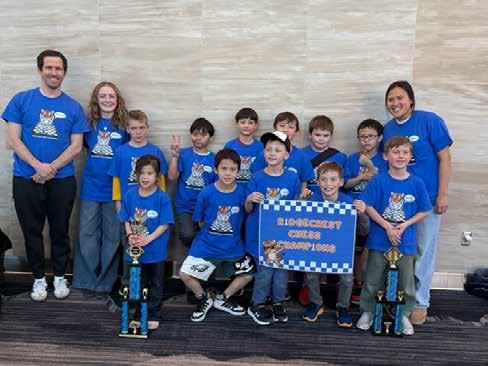
Thinking about his moves ahead of everyone else and humble enough not to brag, Ridgecrest third-grader Beckham Rawle quietly claimed his fourth state title at the Utah State Elementary Chess Championship.
Beckham captured his fourth consecutive state title, adding another trophy to his growing collection, however this year’s victory came with a challenge. After five rounds in the third-grade division, he and another girl both swept all their games, resulting in a tie break.
His mother, Rachel Rawle, was busy selling chess-themed T-shirts nearby and didn’t even realize the deciding match had ended.
“I didn’t know how he came out after the tie break,” she said. “He didn’t even come tell me, but he just started playing with his friends. Somebody else told me he won.”
Beckham finished with six victories to claim the title. His points also helped Ridgecrest place third in the team standings behind Waterford School of Sandy and American Preparatory Academy Draper 2.
“I’m happy,” he said about his fourth straight title.
That understated reaction is typical, his mother said.
“He’s super chill,” she said. “He has the same even kneel if he doesn’t win.”
Beckham’s chess journey began in kindergarten, when he set his sights on defeating his father, Jason, who coaches the Ridgecrest chess club. By first grade, Beckham was consistently beating his first teacher across the board.
His mother, who is the team’s chess manager, said Beckham studies the game,
concentrating and problem-solving to figure out strategies. Beckham likes testing himself and prepares for his matches.
“He’s patient and likes the challenge,” she said.
While Beckham enjoys chess, he balances his time with sports — soccer and basketball — and is a Chinese dual immersion student. He also is competing in the upcoming regional spelling bee. With money he has won at tournaments, he purchased Xbox controllers.
“We like he has a balance,” Rawle said. “At tournaments, we are more of the mindset that they’re already playing so much chess, their brain needs a break. So, in between games, we let them play with their friends, often it’s Minecraft, or four-player mini games they play with other kids.”
Beckham plays in several weekend tournaments — mostly in the open sections since his rating is so high — and is planning to compete in the Power Chess state tournament this spring and the Vegas International Chess Festival in June.
Chess is a family game. His brother, second-grader Max, finished third in his division at state while sister, kindergartner Poppy, placed fourth in her first tournament behind teammate Mickey Labrum.
Many Ridgecrest players competed for the first time.
“A lot of them, it was their first time competing at state and they did well,” Rawle said. “We had eight of our 12 kids get trophies. We want them to know, win or lose, you’re there to have fun, a good experience and trying your best is an accomplishment. We’re super proud of our kids.”
That was the sentiment of Granite Elementary coach Jacob Jensen, who said many of his 25 players were new to the game only months ago.
“Some of these kids didn’t even know how the pieces moved when we started,” he said. “To see them go to the state tournament and win a game, that was huge.”
Granite’s standout performer was his daughter, first-grader Sophia, who finished third in the first-grade division. She won five of her six matches to help Granite place 11th in team standings. She also recently competed in the girls’ state chess championships.
“She likes the mental challenge, the mental stimulation,” Jensen said. “She’s this tiny first grader and you see her as this cute little girl, but then she’s an assassin on the chessboard. She comes in and destroys you.”
The school recently held its own chess tournament and has started up
again with weekly chess meetings, with some new members.
“We had such a good success, it’s cool to see the kids in their progression over the course of a few months,” he said. “They’re learning the principles of chess. They’re learning how to apply them, and then they’re actually brave enough and willing enough to go there and compete at the state level.”
Top area schools’ placements: First Waterford, Sandy; Second APA Draper 2; Third Ridgecrest, Cottonwood Heights; Fourth Sunrise, Sandy; Fifth Brookwood, Sandy; Sixth Peruvian Park, Sandy; Ninth APA Draper 1; 11th Granite, Sandy; 15th North Star Academy, Bluffdale; 18th Channing Hall, Draper; 26th Quail Hollow, Sandy; 29th Draper; 39th Herriman; and 51st Bella Vista, Cottonwood Heights.



Ridgecrest Elementary students competed to their highest finish ever, third, at the state championship. (Photo courtesy of Rachel Rawle)
Bell-to-bell school cell phone ban passes in Utah legislature
By Lizzie Walje | l.walje@mycityjournals.com
SB 69 will ban cell phone use during school hours including lunch and in-between classes.
Utah public schools will more than likely enforce a bell-to-bell cell phone ban when students return to class at the end of this coming summer. The bill in question, Senate Bill 69, which calls for a complete cell phone ban during school hours, most recently passed the vote in the Utah legislature. SB 69 now goes to Gov. Spencer J. Cox, who will ultimately decide if it is to become law. For years now, Cox has expressed his desire to ban the usage of cell phones in schools. Cox was also an early vocal supporter of SB 69, meaning it’s almost all but guaranteed that he will sign off on the bill once it crosses his desk.
SB 69, sponsored by Sen. Lincoln Fillmore (R-South Jordan) further expands upon a 2025 bill, Senate Bill 178, that was eventually signed into law. SB 178 banned the usage of cell phones during school hours, however, it did have one caveat; students could still use phones during downtime like in-between classes or during lunch. SB 69 takes an even firmer stance, completely forbidding the usage of cell phones during the school day, including times when students are not in the classroom.
While the bill does require all public schools to implement the bell-to-bell ban, how schools choose to enforce the ban, will be determined by their Local Education Agency (LEA). LEAs will be given the freedom to establish their own guiding parameters and policy, so long as they uphold the requirements laid out in SB 69. Should an LEA choose not to set their own policy, devices will not be permitted from bell-to-bell by default.
When SB 69 was first introduced, those who opposed it, largely residents and parents, expressed concerns over children not having access to their phones

during emergency situations. However, the bill does allow for exceptions where students will be permitted to use their phones during threats or emergencies, to access the SafeUT crisis line, as part of accommodations outlined in a student’s IEP or Section 504 plan, or for medical necessity.
“Utah leads by putting students first, and this is the next step,” said Emily Bell McCormick, president of The Policy Project, a Utah nonprofit organization that defines itself as a “nonpartisan organization that acts as a policy accelerator to do real good for real people.” McCormick continued, “Bell-to-bell policies aren’t about restriction—they’re about creating learning environments built for focus, connection and success. We see calmer classrooms, stronger engagement and more meaningful learning when distractions are limited.”
To that point, a handful of Utah schools have already implemented their own versions of a bell-to-bell ban, among them, Granite School District’s Granger High School. A change that school officials report has yielded overwhelmingly positive outcomes. Luke Allen, the Associate Director of Communications for Granite School District, reported that student fights at Granger have decreased by 50% following their cell phone ban. He also mentioned that failure rates have dramatically improved.
“The first year of that policy at Granger High School, if you compare the student failure rate to the four years leading up to that, [Granger] had their lowest rates of those five years.” Allen said. “So, they had their lowest failure rates in five years, the first year they had that policy.”
Snow Canyon Middle School in St. George is another institution that enforced a ban on devices, a policy that they began enforcing at the beginning of the 2024-25 academic school year. While staff and teachers initially worried

Senate Bill 69, which bans the usage of cellphones completely during school hours, has passed in the Utah legislature and now faces final decision from Gov. Spencer J. Cox. (Pew Research Center)
their students would push back strongly on such a ban, they were pleasantly surprised at the outcome.
“The students reacted far more willingly than we ever anticipated. There was very, very little parent resistance. We feel that creating a space where students are no longer distracted is one of the greatest gifts we have given them. We just wish we had done it years earlier,” said a staff member at Snow Canyon.
Cell phone bans are starting to take root at the national level. According to several national news outlets, as of early 2026, 26 states have now imposed complete bell-to-bell cell phone bans in K-12 schools. Among them are Florida, Alabama, Georgia, New York and Virginia. Additionally, it’s reported that 25 states have put in place some level of cell phone restrictions or guidelines to be observed during school hours.
As more schools report successful outcomes from outright cell phone bans,

it is anticipated that other states will soon follow suit and put in effect their own bellto-bell bans. If you’re wondering how these bans are managing to be enforced during school hours, one company in particular has found a way to make such a prospect easily streamlined — Yondr pouches.
Yondr pouches are not the only magnetic locking cell phone pouch on the market, however, they’ve certainly emerged as the most widespread and well-known option available. As a matter of fact, Granger is among the schools currently utilizing Yondr’s technology. Many educators, administrators and staff like Yondr pouches, because they restrict students from using their cell phones, but still allow for the phone to remain on the student’s person.
As previously mentioned, Yondr pouches are controlled by magnetic locking technology. At the end of the school day hours, students can unlock their phones at various locking bases, which are usually strategically placed at exit points throughout the school. While Yondr pouches do prevent the usage of phones during school hours, they don’t block signals, meaning cell phones can still be used in case of emergency.
Yondr pouches, while incredibly effective, are still considered relatively expensive. This has caused concerns for certain districts and schools in Utah who feel they’re already being stretched thin financially due to budget cuts and insufficient funding. In response to this concern, Sen. Fillmore explained that schools will not need to use Yondr patches specifically, so long as their rules, whatever they are, reflect and enforce the totality of the bellto-bell ban.
Now that the Utah general legislative session has concluded, and SB 29 has cleared Utah’s legislation, per Utah state law, Gov. Cox has 20 days to decide on the bill. If after those 20 days Cox has still not signed or vetoed the bill, it will, by default, automatically become law.



Volunteers needed for 2026 well-being research survey
USU’s Wellbeing Project is collecting data once again. Residents from communities across the state of Utah are invited to participate.
By Cassie Goff c.goff@mycityjournals.com
Research for the 2026 WellBeing Project is currently underway. The WellBeing Project provides residents with the opportunity to share their own perspectives on well-being within their local community by participating in an online survey.
Adult residents (18 years of age and older) can volunteer to participate in the research by taking a 10-minute survey. Residents interested in providing their thoughts and suggestions about community connections to local leadership can sign up by visiting their city’s website.
Disponible en Español. Residente participacion en esta encuesta de 10 minutos investigadores ayudara a entender mejor el bienestar en Utah para ayudar a las comunidades. Tambien informara los esfuerzos de planeacion de su ciudad. Participe en la Encuesta de Bienestar de Utah.
The Utah Wellbeing Project has been tracking local perspectives on well-being annually across Utah since 2019. Over the years, the research team based out of Utah State University has collected and analyzed over 42,000 surveys gathered from 62 cities and towns in Utah including rural
neighborhoods and rapidly growing cities. Their continued aim is to understand residents’ attitudes and perspectives toward their own public well-being in relation to community issues. Additional perspectives on community connections, population growth and economic development are sought to be understood at the local level as well.
USU’s Wellbeing Project typically partners with local cities so municipal leadership can better understand the quality of life for residents in local communities. Results are shared with local leadership so quality of life can be supported in their city planning and decision-making.
The City Journals team has been continuously reporting on the Utah Wellbeing Project’s research results. See our previous coverage from West Bountiful, Millcreek and Cottonwood Heights through our websites listed below.
Local cities and municipalities can still sign-up to be a city partner for the 2026 Wellbeing Survey research through the project website below.
In previous years, the Utah Wellbeing Project’s results have helped to bridge relationships between Utah Cancer Institute, Get Healthy Utah, UTA and UDOT.
The Utah Wellbeing Project USU research team has been led by Professor of Environment and Society Courtney Flint. This year, they are partnering with the Institute for Disability Research, Policy and

Practice under Dr. Ty Aller and Dr. Heather Kelley.
The research team includes Data Analyst Nicolas Holden, Project Coordinator Lindy Strand, Webmaster and Analyst Mad-
Your voice matters as feedback is invaluable in shaping the future of the Cottonwood Heights community. (Photo courtesy of Cottonwood Heights)
ison Fjeldsted Thompson and Research Assistant Jacob Kemp.
The Utah Wellbeing Project is sponsored in part by the Utah League of Cities and Towns.
For more information on the Utah Wellbeing Project, residents may contact Flint at 435-797-8635 or courtney.flint@usu.edu.
See previous City Journals coverage on the results of the Wellbeing Project thorough our websites at: www.davisjournal. com and www.valleyjournals.com.
To learn more about the Utah Wellbeing Project and/or view previous year’s research reports, visit: www.usu.edu/utah-wellbeing-project. l
Student-engineers in Whoville show how creativity meets kindness
The Grinch didn’t steal away the holiday spirit, rather he inspired Bella Vista students to a week of STEM-powered kindness.
By Julie Slama
j.slama@mycityjournals.com
AtBella Vista Elementary, students’ hearts and engineering skills may have grown three sizes.
Before winter break, Bella Vista’s Kindness Week took a festive turn as the multipurpose room transformed into a Whoville-inspired world of STEM challenges, provoking creativity, problem-solving and good old-fashioned cheer. From balloon experiments to towering cup creations, students rotated through hands-on stations, mixing STEM with holiday fun.
PTA President Juli Jackson said the idea was to provide meaningful learning with seasonal excitement.
“We wanted activities that focused on STEM, but were still festive,” she said.
Students at the National Blue Ribbon

Many students liked building “Whoville” towers and kindergartners and first graders shook up things by making maracas, adding a musical flare to the week’s fun.
Third-grader Quinn Lewis said the tower stacking was best.
“It’s fun to do it and then we see it crash when we’re done,” she said. “I like working together, it’s fun.”
Her classmate, Arman Ali explored at all the stations.
“There are lots of possibilities of things to do here,” he said. “I like building with multiple cubes and the cups are fun; I’d like to do those with my siblings.”
Together, the students collaborated, tested ideas and tried again, thinking critically about their designs and solving problems that occurred.
Teacher Amy Simpson watched their first-hand learning unfold.
Students wrote their good deeds on paper hearts, which then were mounted on a wall, showing in a display how they were filling the Grinch’s heart with kindness.
Quinn embraced the week’s kindness beyond the classroom.
“I’ve given people high-fives, I’ve held doors open, I picked up someone’s jacket that fell and I drew a picture of flowers for my mom,” she said. “Even small things make a difference.”
Arman wrote letters to the school custodian as well as to an uncle who moved.
“I wrote kind things and then, I’ve complimented people and helped friends and my mom with cleaning and cooking,” he said. “It’s good to be kind.”
School engineered Rudolph using balloons, used Grinch-green pingpong balls, launched balloon rockets powered by baking soda reactions and tested their abilities in cup stacking Christmas tree shapes.
“It’s fun watching them problem-solve and figure out things,” she said. “I also appreciate seeing the positive things they did to show kindness. It’s super important for kids this age to install values and practice those in this environment where adults can support them.”
Maybe through their actions, the students showed the Grinch their school community can be a little brighter and more connected when celebrating kindness and STEM together, Jackson said.
“I love seeing their creativity, their thought-process, their reactions and their ability to tie things together,” she said. “Plus, they’re learning, making memories and having fun.” l
Bella Vista students engaged in STEM activities during the school’s kindness week. (Julie Slama/City Journals)
Unified basketball in Canyons School District is redefining competition, showing when students of all abilities can share the ball, everyone scores a sense of belonging.
By Julie Slama j.slama@mycityjournals.com
On a recent morning, the sounds echoing through Jordan High’s gyms were more than squeaking sneakers and bouncing basketballs. Laughter echoed on the court, teammates gave high-fives of encouragement and the crowd cheered in support.
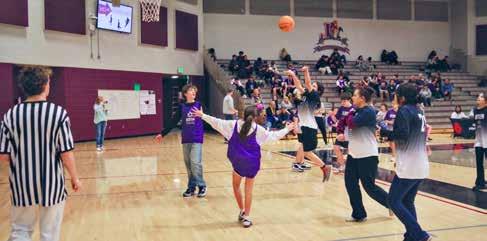
Unified basketball, which brings together students with differing abilities on the same team, is redefining what competition looks like in Canyons School District middle schools. For many, the scoreboard matters less than the smiles and the points achieved are in confidence and connection.
Midvale Middle’s Jackson Fisher was excited to play in his first tournament.
“I’m excited; this is pretty cool,” the sixth grader said. “I played basketball a few times in elementary school, but our team has been preparing for a while now. I’ve learned to dribble as I’m moving on the court and I’ve gotten good at it. My teammates, they’re helping me get better.”
That same sense of teamwork was echoed by Butler Middle’s Ronaldo Venegs, who likes the camaraderie and skills he’s developing.
“I learned how to play at school, and I’ve made friends doing it,” the sixth grader said. “I like to pass and make a lot of goals, like (NBA star) LeBron James does.”
While unified athletes gain confidence and experience, their peer partners learn alongside them.
Eastmont seventh-grader Ammon Lee joined the team after a teacher encouraged him and discovered the spirit of the program.
“I’m having a blast,” Ammon said. “I love helping people and I’m OK not having the ball the whole time. I like playing with them because it’s fun and not super competitive. We pass the ball, we share. It’s more focused on being a team and playing a sport. Even though we’re trying to win, we focus more on trying and that helps us enjoy it all more.”
Midvale Middle eighth-grader Mayzie Call said the unified basketball helped her see beyond the hardwood.
“I love the diversity of it; I like how I can make a difference,” she said. “People are different and sometimes, people don’t understand that. We’re all different in our own ways, but we’re also alike. I’ve learned to accept people for who they are and that helps
me learn to accept other things as well.”
Middle school unified basketball has grown in recent years and is now played in 25 Utah schools.
Special Olympics Utah Unified Champion School’s College-growth Coordinator Boston Iacobazzi said it comes from a shift in the culture.
“Our culture and our schools are becoming more inclusive,” he said. “Ultimately, we want to see meaningful friendships and a sense of belonging.”
Eastmont eighth-grader Alex Gus-





gaves, who has played ball with his older brother and cousin, said being part of a team is core to unified basketball.
“It’s awesome playing as a team and learning more about each other,” he said. “We talk and practice and see what we’re good at and what we’re not good at and focus on what we can do to get better.”
Alex said what stands out most to him is the spirit of unified sports.
“I like the fact that no one is a loser because we’re all winners in our hearts,” he said. l


A Butler Middle player makes the shot despite being challenged by Albion Middle players in the school district’s unified basketball tournament. (Julie Slama/City Journals)
By Julie Slama j.slama@mycityjournals.com
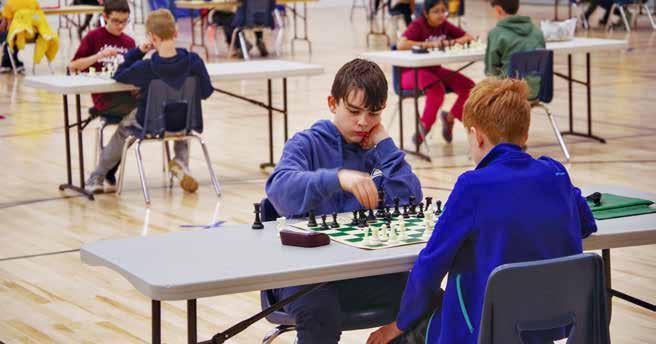
It may be the only competition which silence fills the room once it begins. Aside from the occasional click of a clock, a quiet intensity settled over the gymnasium at Eastmont Middle as students across the District squared off in the Canyons School District middle school chess tournament. With eight boards per team and trophies on the line, every move carried weight and strategy that would determine the championship.
Still the day was more than scores.
At Albion Middle, coach Lacee Larson is building her program on consistency and sportsmanship.
“It’s about fun first and foremost,” she said. “We want students to come join the fun and learn good sportsmanship. They’re good about shaking hands and nobody gloats when they win. Everybody’s a good winner. They’re great kids.”
Albion players started practicing at the beginning of the school year and play every week. Although the team had a smaller turnout this year and competed with seven boards instead of eight, strong leadership led the group.
“Our first grader has won in every tournament in middle school so he wants to have a streak and is working hard at that,” Larson said. “Our team is a mix of experience; some kids come knowing their stuff and others come in and are learning as they go.”
That blend of veterans and newcomers is common across the District. At Butler Middle, coach Anna McNamer, who oversees a 40-member team, strikes a balance between experienced and new players in championship play.
“We balance playing in the tournament between experience, attendance and skill,” she said. “Finding that balance is how we get the most out of extracurricular activities.”
McNamer said students support each other.
“This is designed less on ‘I’m a master chess player and I’m going to teach you how to play,’ but more on mentorship and encouragement,” she said. “We have students learning how to play chess, how to win with humility and lose with dignity, which in middle school, can be tricky.”
Indian Hills Middle School players felt both the pressure and joy of the competition.
Sixth-grader Jacob Hamilton joined the team for the opportunity to play.
“I wanted to play chess more, but nobody in my family ever wanted to, so I joined chess club,” he said. “It’s fun and

now I get to play more often.”
Teammate seventh-grader Dysen Painter found himself competing at a higher level than expected at the tournament.
“It’s kind of difficult for me because I’m the second alternate, but I’m playing the second table because our second player didn’t show,” he said. “I’ve won one game and lost another so far, but I feel pretty good about it.”
Dysen learned chess from his father, but he hadn’t played a lot until recently.
“I want to beat my dad three times in a row. I’ve only beat him once because he’s a good player, but most of my skill I’ve learned comes from him,” he said.
Seventh-grader Thiago Jara Mateo, who won board 7, likes chess for the skill and strategy.
“Unlike most board games, it’s not about luck and it’s more about skill,” he said. “I like figuring out how I can get better. I often attack and leave pieces open, hanging. That’s mostly why I lose, and I need to get better at that.”
Coach Adam Martinez is in his fourth year coaching Indian Hills, guided a team that entered the tournament as a two-time defending District champion.
“I’d love to take a lot of the credit, but players are dedicated to the game,” he said. “They’re the ones who make all the difference. I’m just a pretty good cheerleader.”
Martinez prepares his team with an abridged round robin school tournament.
“They’re ranked accordingly so you can figure out how to place them on the boards,” he said. “We practice as we play, too.”
That preparation includes using chess clocks, following “touch move” rules and adhering to guidelines against sideline coaching.
When the matches concluded, teams scores were tallied, with eight possible points per round: one point per win, half point for a draw and zero for a loss.
In the end, Eastmont prevented Indian Hills from claiming a third straight title by capturing the District title with 41 points. Mount Jordan Middle followed with 38.5 points for second place while Midvale Middle took third with 35 points.
Individually, Albion’s Stephen Lindsay and Draper Park Middle’s Sam Chen tied on board 1; Midvale’s Yuun Kim and Mt. Jordan’s Noah Whitting tied on board 2; Mt. Jordan’s Arthur Despain won board 3; Eastmont’s Kevin Bretz took board 4; Midvale’s Will McKenna won board 5; Indian Hills’ Alex Zollinger took board 6 and Eastmont’s Kimball Bettinson won board 8. l










Canyons’ middle school students square off in the districtwide chess championship. (Julie Slama/City Journals)
Tillman Honor Run set for April 18
The 4.2-mile run, bike, jog, walk, roll or stroll begins at 9 a.m. at Alpha Coffee at the mouth of Big Cottonwood Canyon.
By Cassie Goff
c.goff@mycityjournals.com
On April 18, residents, runners and veterans will be convening at Alpha Coffee for the annual Tillman Honor Run. Alpha Coffee invites community members of all ages and skill levels to participate in the celebrations honoring Pat Tillman.
The Tillman Honor Run showcases the legacy left by Pat Tillman. After watching the attacks on Sept. 11, 2001, Pat, and his brother Kevin, were inspired to defend their country. Pat left his established NFL career as a Sun Devil linebacker and Arizona Cardinals safety to volunteer as a U.S. Army Ranger. He was killed two years later by friendly fire protecting his fellow soldiers during a Taliban ambush in Afghanistan.
A veteran-owned company, Alpha Coffee’s entire team takes care and pride in their efforts for this event. Co-founder Carl Churchill served as a U.S. Army soldier for 21 years and retired as a Lieutenant Colonel. Co-founder Lori Churchill grew up with her father who was a Vietnam veteran.
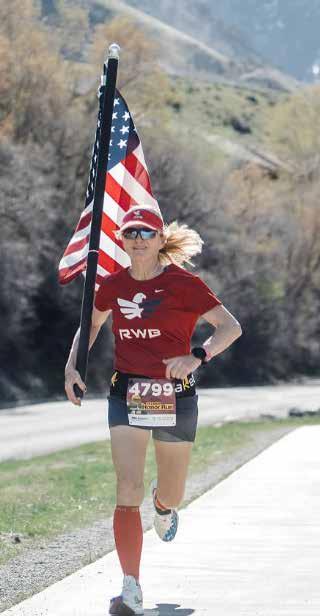

“Pat stood for a lot and we honor his passion and his legacy,” Carl said kicking off the Tillman Honor Run last year.
Alpha Coffee has been hosting the Tillman Honor Run in Cottonwood Heights since their location opened in 2017. The Churchills have watched the event grow to over 160 participants. Those who participate in the Tillman Honor Run will travel 4.2 miles in honor of his jersey number: 42.
In 2023, the Churchills introduced a gathering held after the Tillman Honor Run called “Pints for Pat.” This allows residents who may not want to or be able to participate in the Honor Run to join in the recognitions for Pat Tillman with brews and bratwursts. As part of Alpha Coffee’s Grounds for Good Program, all proceeds contribute to the Tillman Scholars Foundation.
The Tillman Honor Run on April 18 will begin at 9 a.m. at Alpha Coffee’s original location at the mouth of Big Cottonwood Canyon (7260 S. Racquet Club Drive).
Those interested can register through the Race Roster website listed below. Registration rates vary between $25 and $80. Adult registrants will receive an official 2026 Pat’s Run race shirt and medal and kid participants will receive a shirt and finishing award.
Proceeds from all Tillman Honor Runs (over 40 throughout the country) go toward the Tillman Foundation which funds academic scholarships for military families pursuing higher education. The Tillman Honor Run is hosted by the Pat Tillman Foundation in partnership with the Arizona State University Alumni Association of Utah.
The Churchills emphasize that the Tillman Honor Run is intended for all skill

levels. Attendees can opt to run, bike, jog, walk, roll or stroll the 4.2 miles or simply show up for the event, food and community.
See our previous coverage “Alpha Coffee, community fundraise for the Tillman Foundation at honor run” from 2023 through the City Journals website at: www. cottonwoodheightsjournal.com.
Learn more about Pat Tillman’s story through Alpha Coffee’s website with “Erick’s Story: The Pat Tillman Foundation.”
To register for a Tillman Honor Run, visit: www.raceroster.com.
Visit Alpha Coffee’s website at alpha.coffee/pages/shop-big-cottonwoodcanyon. l

Alpha Coffee ensures celebrations for every age and skill level at the Tillman Honor Run. (Tyler Packard/Alpha Coffee)
The annual Tillman Honor Run will be held at 9 a.m. on April 18. (Tyler Packard/ Alpha Coffee)
Lori Churchill, co-founder of Alpha Coffee, participates in the annual Tillman Honor Run celebrating all of the veterans in her life. (Tyler Packard/Alpha Coffee)
Brighton readers go beyond the page
After reading the Angela Bricker’s World War I-based novel, students paged through her research binder, learning the true story of how the author wrote the tale, which inspired high school readers and writers.
By Julie Slama j.slama@mycityjournals.com
WhenAngela Bricker walked into the Brighton High library carrying a thick binder stuffed with research and notes, students didn’t just meet an author, they encountered the long, determined process behind her published book, “The Silent Canary.”
Bricker visited Brighton’s book club to discuss her World War I historical fiction novel based on the 1918 Chilwell, England ammunition factory explosion and instead of offering a polished talk, she invited students to flip through her binder that included characters’ back stories, life events, personality traits and local World War I history and events.
“With Angela’s presentation, she focused on the full writing process she underwent to get that title published,” said librarian Marissa Merket, who said Bricker spent 10 years building her story and has
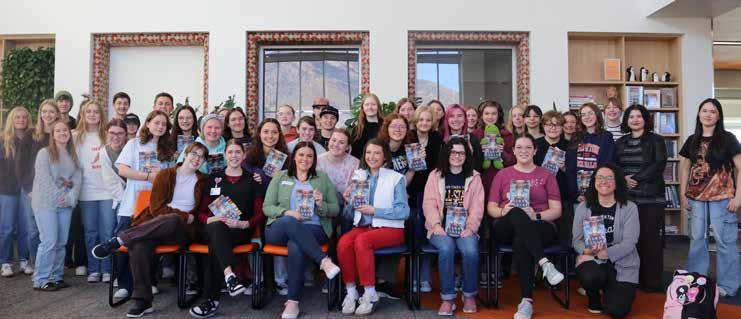
a sequel planned. “From the topic idea to building her characters thoroughly, to having multiple drafts read and reviewed, to adding a character during one of last drafts. She brought a lot of humanity to her experience and publishing success.”
Merket said sharing the binder as well as her journey gave students an inside look



to being an author.
Senior Mary Ann Jensen, who helped bring Bricker to campus after connecting with her through the Bookstagram community, has penned and illustrated books since she was 11, so hearing her speak made a real connection.
“‘The Silent Canary’ is her first book and it’s one of the best books I have ever read,” Jensen said. “Being an author and hearing an author speak about her book, her journey, how she made her book happen is inspirational and helps me to know that I can do the same.”
Other students appreciated the chance to have an honest conversation with the writer.
“I actually thought it was fun to mention some of the things maybe that weren’t my favorite to Angela and she was so kind and so understanding,” said junior Lillian Smith. “Being able to talk it out with the author, I almost feel like I liked some of those choices more and I connected with the book a little better after understanding how she wrote it and why she wrote it the way she did. That’s not something you can get without meeting the author.”
Freshman Xandrie Wilcox, who has an interest in pursuing writing, said talking with Bricker helped put the journey in perspective.
“Hearing her process and realizing that it took her 10 years, but she persevered that whole time kind of helped me realize that I don’t need to rush it,” she said.
Senior Percy Pew appreciated meeting the person behind the words.
“Books are a reflection of the person who made them and there are a lot of values and dreams of the person in the book,” he said.
The author’s visit is part of the mission of Brighton’s book club — to build friend-
ships while strengthening critical thinking. That draw is what pulled in Iszabella Vangale.
“I just like to read, and I like the community aspect of it,” she said.
At the start of the year, 93 students signed up and through monthly meetings, discussions are paired with themed activities tied to each book’s setting or ideas. The titles have ranged from Michael Crichton’s “Jurassic Park” to Jane Austen’s “Pride and Prejudice.”
“The best advantage of being in a book club is the opportunity to discuss and critically analyze the book you are reading with others,” Merket said. “With generative AI being used more and more, we need to push our brains to critically think and analyze the media we are consuming. Whenever you read something, take every opportunity to write or at least talk about the topic. The ease of generative AI is robbing us of our cognitive functioning.” l
The best advantage of being in a book club is the opportunity to discuss and critically analyze the book you are reading with others. Whenever you read something, take every opportunity to write or at least talk about the topic.
— Marissa Merket
Author Angela Bricker, seen in front in the green sweater, shared her novel and research with Brighton High’s book club. (Photo courtesy of Marissa Merket/Brighton High)
Young voices tell powerful stories as history comes alive
With wigs, costumes and memorized speeches, 28 Bella Vista third graders transformed into historical icons.
By Julie Slama j.slama@mycityjournals.com
Visitors to Bella Vista Elementary last month didn’t just walk into a school room, they stepped into history.
Inside the third-grade wax museum, famous figures stood silently by posters mounted to the wall. Wearing buttons that, when tapped, brought them to life — Albert Einstein adjusting his wild hair, Frederick Douglass speaking of freedom, Missy Copeland describing her dancing, Ona Judge sharing her escape and many other prominent stories.
For five weeks leading up to the event, 28 third graders in Wendie Nielsen’s class researched, read, wrote and rehearsed to become the historical figures they chose to portray.
“The students read a biography about the person they chose and took notes,” Nielsen said.
Those notes were used in a rough draft, where they then selected the most important parts to write a copy for their prepared speech. A final draft also was required as well as a created portrait to add to the presentation board. In addition to research and writing communication, they also practiced public speaking and
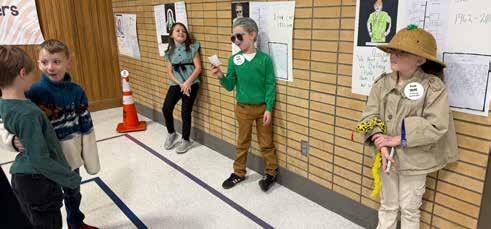
memorization skills. Students then could dress as the person to present their speeches.
“They learn about people they are interested in learning about and get a chance to act so they are engaged in a project covering a lot of standards,” Nielsen said.
Third-grader Jackson Miller chose to portray Albert Einstein. He recited his love of physics, the violin and of receiving a compass from his father as well as being known for the theory of relativity and the equation, E=mc2.
“I picked him because I thought his hair was pretty cool and he’s really smart, so I could be like him when I’m older,” Jackson





said. “He’s pretty cool. Plus, I only knew about his E=mc2 so I wanted to learn more about him.”
Classmate Arman Ali took on the role of Frederick Douglass.
“I was born in 1818 in Maryland as an enslaved black man,” Arman began his speech, recounting Douglass’ life in slavery, his escape and his public speaking. “I wanted to learn more about who he was, how he grew up and how Frederick dedicated his life to ending slavery.”
Third-grader Malia Falekaono represented ballerina Missy Copeland. She outlined Cope-
land’s rise in the dance world, including being the first African-American female principal dancer at the American Ballet Theatre. She now promotes diversity in ballet.
“I like ballet, and I’m really good at doing tippy toes so I felt Missy was a good choice for me to learn about,” Malia said.
On her poster, she included Copeland’s inspirational quote: “I may not be there yet, but I’m closer than I was yesterday.”
“We could add something they said and I liked how she said she keeps trying in that,” Malia said.
Close by Alex Hopf portrayed Ona Judge, who escaped slavery in George Washington’s home.
“I spent most of my time in the mansion where I did all my chores all day, every day,” she said. “An interesting fact is, I ran away on May 24, 1796. I ran for freedom.”
Alex said this was the first time she had heard of Judge.
“Slavery isn’t good. People can own property like a house, but not someone,” she said.
Principal Barbra Winder said the annual event leaves a lasting impression as history speaks.
“It’s amazing to see their memorization and them getting into character,” she said. “There’s deep, deep learning involved in this and 40, 50 years, this will be something they’ll remember.” l







Students portrayed Billie Eilish, Stan Lee and Steve Irwin during Bella Vista Elementary’s third-grade wax museum. (Julie Slama/City Journals)
‘Great time to be a Bengal,’ winter sports wrap up with records, titles
Two 2025 state finalist teams (boys lacrosse and baseball) look to repeat in spring 2026.
By Jerry S. Christensen j.christensen@mycityjournals.com
With the change of the academic trimester at Brighton comes a change in sports seasons. Here is a review of the past season accomplishments and a glimpse into the hopes of the spring season.
Wrestling
Coach Burke Gappmayer ends his fourth and final year as head boys wrestling coach on the state consolation finals mats where Mei Mei Engebretsen ended her four years at Brighton with a third place finish. Jarom Gappmayer won post season honors by being named an Academic All-State student-athlete.
Seven Brighton wrestlers qualified as state wrestlers in 2026:
-Amelia Black 100
-Mei Mei Engebretsen 120
-Elise Lewis 125
-Aubrey Ayala 125
-Jarom Gappmayer 138
-Landon Hill 150
-Nando Cortez 180
A highlight of the wrestling season was the 56th annual Battle of the Axe hosted at Brighton versus Hillcrest. Brighton boys retained the rights to the boys axe with a decisive team victory. The girls axe (established in 2023) has yet to be won by Brighton’s girls wrestling team. Hillcrest girls won that battle by a slim 3 points. The JV Battle of the Hatchet was won and retained by Brighton.
Christine Yee took over the head coach role for the girls team from Joidee Gappmayer who is battling brain cancer. The teams dedicated the year to coach Gappmayer’s cancer battle by wearing “Team Joidee” gray ribbons. Girls basketball
The girls basketball season was punctuated by senior Sophie Nielsen reaching unmatched scoring records. The prolific senior has scored more career varsity points than any girl or boy basketball player in Brighton’s 56-year history. She is equally dominate on the lacrosse field where she is the leading career goal scorer for girls varsity lacrosse. Her crowning achievement may be her four years of a perfect 4.0 grade point average and being named as an Academic All- State student-athlete. Her lacrosse coach Melissa Nash simply states, “Sophie is amazing in every way!”
Swimming
Brighton’s storied swimming program earned the right to be elevated to 6A competition. It is Brighton’s only sport competing in 6A in a region with Farmington, Davis, Weber, Syracuse and Layton. The girls team dominated the region tournament with 521 points to second place Farmington’s 301 points. The boys team nearly match that feat


ment at a cold and blustery Glendale Golf Course, Cate Cook shot a respectable 68 and took first place as an individual.
Brighton Boys Tennis
dominating their region tournament with 511 points to Layton’s 327.
At the state tournament, the story was all about senior Luan Barnard who peaked at the 6A state tournament. “It feels amazing to be able to come out here and swim my best and do what I did in practice. Just being able to come here and swim my heart out and see how far I’ve come from last year, just pushing myself to the limit and faster than I thought I could ever go,” Barnard said.
Barnard set new 6A and state records in the 100 Back (47.72 sec.) and the 200 Free (1:39.85 min.) to become a two-time 6A state champion. While the Brighton trophy cases highlight swimmers who have state champion titles, Barnard differentiates himself by having bested the 5A teams last year as a 100 back state champion and following up this year by besting the 6A field with double state championships.
Barnard committed to the University of Utah for the next level of competition.
Brighton’s Athletic Director Garrett Wilson says of the coming spring sports season, “We’re really excited about the start of the new season at Brighton High School. Our programs have built a great tradition of hard work and competitiveness, and this year’s teams are ready to carry that forward.”
Wilson added that Brighton will add two new coaches to its leadership: John Gygi as boys soccer head coach and Chris Opheikens as softball head coach.
Girls golf
Girls golf is coming off an impressive fifth-place finish at state last year. Senior Cate Cook and sophomore Claire Olafsson, who both finished in the top five individually in 2025, will lead that group again this season. New talent includes Phoebe Selander and Gwen Romney. In the opening tourna-
The boys tennis varsity team returns most of its lineup and is poised for a strong tournament run, 36 tennis players are on the teams this year with the influx of many aspiring freshmen. Henry Owen returns as the No. 1 varsity singles anchor. Other varsity returners are Owen Maxfield, Nigel Mansell, Ollie Hopkin and Argo Tarr. “The Brighton Bengal tennis boys are gearing up for a strong season. We aim to always give 100% and bring a strong force to reckon with,” coach Natalie Meyer said.
Track and Field
The Brighton boys track and field team defended their region championship this year. The girls team is led by top scorer from 2025, Bridget Smit. The sophomore runner looks to repeat her podium finishes in the distance: 3200, 1600 and 800. Sophie Crespin is a strong candidate to compete for medals in the sprints as well as jumps.
The boys team is paced by 110 hurdler Calvin Hawkins who was a top athlete in 2025 as a junior. The team boasts the top disc thrower in the state in football star Jaxon Nettleton.
Boys lacrosse
Coach Chris O’Donnell is clear on his preseason expectations: “Compete in every game we play—win region and three-peat as state champions.” The competitive environment in 5A has become more complex with the addition of Judge (two-time 4A champions) and West Field high schools to the classification. The path to a third straight championship and a proper dynasty will depend largely upon the underclassmen stepping in to fill the graduated seniors’ roles.
“We’re excited to get the season going and challenge ourselves to the best we can,” O’Donnell said.
Boys volleyball
The boys volleyball team has been young the past couple of seasons. But with that experience now under their belts, the senior-rich
team is ranked fifth in the state in 2026. The team is coached by 32-year veteran Mondo Begay who coached Skyline girls to a state championship and dedicates his spring volleyball season to the Brighton boys.
Baseball
Brighton baseball is coming off back-to-back state championship appearances. While the program graduated a talented group, it becomes an opportunity for many new players to step up for the Bengals on the diamond. Last year, Brighton baseball finished the season nearly undefeated with a sizzling 20-1 record. That record can only be slightly improved.
“Overall, it’s a great time to be a Bengal. We have outstanding student-athletes, dedicated coaches, and a community that does an incredible job supporting our programs. We’re looking forward to a fun and competitive spring season,” concluded Wilson. l

Brighton swimming boys and girls teams were the region champions in their new 6A region. (Photo Brighton swimming)
Brighton girls golf looks to improve on their 2025 fifth place state finish in 2025. (Photo courtesy Ron Meyer)
Elise Lewis pins her Hillcrest opponent at the Battle of the Axe. (Photo courtesy Christine Yee)
Ridgecrest’s Chinese New Year celebration is a growing tradition
From the dragon dance to hands-on crafts, families celebrated culture and language learning at the school’s most anticipated annual event.
By Julie Slama j.slama@mycityjournals.com
Abrightred dragon wound its way through Butler Middle School’s auditorium delighting the crowd of nearly 800 students and family members. What began as simple school performances has grown into a beloved community tradition, Ridgecrest Elementary’s annual Chinese New Year celebration.
Having long since outgrown the school’s own multipurpose room, the event now fills the larger venue and showcases the school’s Chinese dual language immersion program through student performances, cultural crafts and traditional foods.
“We want to celebrate Lunar New Year because it’s the biggest holiday for Chinese culture,” said Rachel Rawle, a PTA volunteer who co-organizes the event with Daisy Phillips. “Since Ridgecrest is a Chinese immersion school, we celebrate their biggest holiday so our students can learn the culture.”
The celebration reflects the importance of the holiday, also known as the Spring Festival, in Chinese culture. In China, families tradition-

New Year festivities. (Julie Slama/City Journals)
ally celebrate for two weeks, concluding with the Lantern Festival. Ridgecrest’s festivities are condensed, lasting one evening and followed by an assembly the next day.
“We want students to understand the deeper meaning behind the traditions,” Rawle said. “This year, we added the assembly featuring a shadow puppet show of the legend of Nian and the story behind the Chinese zodiac race so students could understand the significance of the color red, the loud noises and traditional foods that are part of the holiday. The kids loved it.”
For many families, it’s a celebration of performances and time together to immerse themselves in culture.
Ridgecrest fifth-grader Alana Walton performed in the dragon dance and her father, Matt, and sibling, kindergartner Finley, watched from the audience. Afterward, they made the Year of the Horse crafts.
“Enrolling her in DLI was very beneficial developmentally and definitely, it’s great to know a secondary language,” Walton said. “Mandarin is probably the most unique, one of the most difficult to learn, compared to English. It makes your brain work differently.”
Vanessa Mirabella came to watch her daughter, second-grader Cozy, perform and to give her kindergartner Enzo a preview of his next year.
“Cozy practiced at home and she was all excited for tonight,” she said. “She wanted to wear her sparkliest, fanciest dress. She said, ‘I have to wear red, Mom. I have to wear red for Chinese New Year.’”
Mirabella said DLI has shaped her daughter’s learning.
“I love she comes home and she’ll slip into Chinese every now and then. It’s becoming second nature to her and I love that. DLI
expands her mind so much and sets different ways for her to learn and think. It’s such a great program,” she said.
In addition to performances and crafts, families visited calligraphers who created Chinese names for students and they sampled donated food, including dumplings and mandarin oranges, symbols of prosperity and good health. Students also practiced using chopsticks and received traditional red envelopes.
Third-grader Winnie Blake enjoyed the activities with her friends.
“I like lots of the activities and performing before the audience,” she said. “It’s fun to learn the language and play Chinese games with friends.”
The festivities reached beyond their school. Earlier in the month, Ridgecrest students also were invited to perform at the Chinese New Year celebration at the city hall.
“They did the fan dance, lion dance and dragon dance there and we met the calligraphers who were willing to come to our event. We had a lot of local businesses sponsor and give us donations, which was really great and much appreciated.”
Although the Year of the Horse already is underway, planning for next year’s celebration has already begun.
“We start planning in earnest in November, but we already have ideas for next year,” Rawle said. “It’s a fun community event.” l















Benefits of NuWater
Water Treatment System Appliances Perform Better & Last 37% Longer Better Tasting Water, removed contaminates & Chlorine
Softer Skin & Hair
Clothes are Cleaner, Brighter & Last Longer Less Cleaning of Hard Water Build Up
Soaps & Detergent last 75% Longer
Improves your Health and Saves you Time & Money
NSF Certified 2.6 Million Gallons (estimated 30 years) Guaranteed!



Ridgecrest students tried Chinese calligraphy as one of many hands-on activities during the school’s annual Lunar
Brighton student-athletes named Academic All-State honorees
By Jerry Christensen j.christensen@mycityjournals.com
Brighton athletes receive honors on and off the field of play. The academic all-state designation from the Utah High School Activities Association (UHSAA) awarded to 10 Brighton students for the winter trimester is among the highest of those honors. It indicates both excellence in the student-athlete as well as school rigor.
“We are incredibly proud to have 10 athletes honored as Academic All-State recipients. These student-athletes embody the ideal balance between academic excellence and athletic achievement,” said Brighton Principal Marielle Rawle. “It’s no easy task to compete at the varsity level while maintaining high academic standards, and these athletes have shown remarkable dedication, discipline and time management. They truly represent the best of what it means to be a student-athlete at Brighton High School. Their success is a reflection of the strong commitment to excellence that we foster in both academics and athletics at Brighton.”
Academic all-state awards are typically given to only 10 senior student athletes






for each 5A sport across the state. The awarded students maintain a near-perfect 4.0 grade point average to qualify to be among the top in their sport. They must


also be seniors competing at the varsity level in their sport.
Brighton wrestling coach Burke Gappmayer expressed his praise for his son Ja-




rom Gappmayer who is a state qualifying wrestler and a 4.0 student (all four years). “Everyone who knows Jarom knows how smart he is, and he is very smart, but he has worked extremely hard to achieve the success he has in both academics and in wrestling. After watching how hard he works and how much he cares, it is no surprise that he finds success in all he does,” the coach said.
Jarom Gappmayer now adds Academic All-State student-athlete to his list of accomplishments.
The Brighton trimesters aligns near seamlessly with the three sports seasons: fall, winter and spring. For the winter sports season the Brighton academic allstate winners are:
Kira Amevor-girls basketball
Sophie Nielsen-girls basketball
Paige Ballstaedt-cheer
Clark Nelson-boys swimming
Jackson Evensen-boys swimming
Nathan Moehle-boys swimming
Audrey Kessinger-girls swimming
Gabriela Viana-girls swimming
Kate Johns-girls swimming
Jarom Gappmayer-boys wrestling
The nomination process is found at UHSAA.org l













Ifthere’s one thing that makes you question your life choices, it’s sitting at a child’s outdoor soccer game in April.
Clutching Stanley mugs filled with coffee, whisky, or both, parents and grandparents sit on wobbly camp chairs, huddled under musty blankets while trying not to be too conspicuous about checking the time.
The idea is sound: help kids understand the concepts of a sport and learn teamwork. In reality, it’s about which kid brought the best treats or if we’re going to catch pneumonia and die before the game ends.
Utah’s spring is a weather roulette that can have you freezing at 9 a.m. and sweltering by noon. The cold wind, constant trickle of rain and glacial temperatures give way to heat stroke and sunburn before halftime.
My four daughters played softball every spring for what felt like 75 consecutive years. Each year, we’d bundle up in coats, gloves, scarves and earmuffs to watch them play. We shoved handwarmers into pockets and told them to “Think warm thoughts.”
It was often torture. Not only do you watch your child strikeout, but strikeout in 45-degree weather. They’d hold the bat with frozen hands, waiting for the impact to snap their fingers off at the knuckles.
Now, my grandkids enjoy soccer, which is played no matter the weather, and everything is mud. The only thing running faster than my granddaughter is my nose. Except
The view from the sidelines
Peri Kinder Life and Laughter

when it’s treat time, then the whole team finds a burst of adrenaline to snatch up granola bars and Capri Suns. Don’t even think about bringing oranges or bananas. Who are you? Someone who hates kids?
Each spring, hope wears shin guards and batting helmets. It’s a fresh start, a chance to learn skills and an opportunity for new coaches to lower their expectations.
You can spot a new coach by their optimism. They come prepared with drills, practice schedules and intricate plays, but by the end of the season, they’re just happy to have players who can identify a soccer ball and run in the right direction.
They also have to deal with parents. There’s always that person who believes their child is the next Lionel Messi or Aaron Judge. They memorize the rule book and counter every official’s call. “Blue! Were you the lookout on the Titanic?” or “Hey, Ref! Are we keeping you awake?”
They scream at their child to “Run!” for 45 minutes straight and call their 6-year-old over

between innings to explain baseball defense.
Yet, even in drizzly, cold weather, spring sports thrive. There’s just something about watching a child finally hit the ball off a tee or score their first goal. We see coaches kindly redirect a player’s attention from doing cartwheels to protecting third base.
When your granddaughter makes a great pass, she looks to the sidelines to see if you saw it happen. You did.
Although we complain about the mud, the temperature, the uncomfortable seating and wonder if the other team altered the birth certificate of their star player, there’s something inherently human about watching young people navigate sportsmanship.
It’s not about winning. It’s about showing up for the kids you love. You watch them fall on their faces, sometimes literally, and get back up. You watch them strike out, kick the ball in the wrong goal or drop an easy fly ball, and wince along with them.
If there’s one thing that makes you question your life choices, it shouldn’t be watching a child you love run past you with a big grin on their face. Even wrapped in quilts, chugging espresso, you’re exactly where you’re supposed to be.
Peri Kinder is an award-winning columnist and journalist who has written for The City Journals since 2004. She can be reached at peri.k@thecityjournals.com