

Gay Lynn Bennion served as a Utah State Senator for over 6 years. Now, she’s ready to tackle climate change and housing shortages at the city level.
By Cassie Goff c.goff@mycityjournals.com
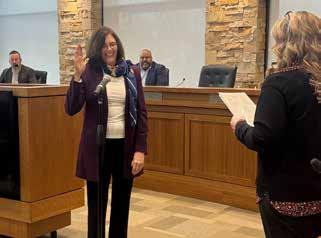
Gay Lynn Bennion was sworn in as the new mayor of Cottonwood Heights on Jan. 5. Councilmembers Shawn Newell and Ellen Birrell were reelected and pledged their service at the oath of office ceremony as well. All three elected officials spoke of the importance of collaborative discussion and encouraged residents to be civically engaged.
“I’ve worked with you as a state representative. I’m excited to focus on our city and the things we can achieve together right here,” Bennion said.
Bennion spoke of some challenges she would like to address during her term including water conservation to preserve the Great Salt Lake, providing safety and making the community more fire resistant, and striving for accurate and valid information in the face of misinformation and AI.
“I want to commit, that whether you have supported me in the past or not, I will be your mayor,” Bennion said. “I will listen and…I want our office to always be open to you.”
She committed to being available every Friday from 2 p.m. until 5 p.m. at the city offices (2277 Bengal Blvd.) for residents to share their ideas and concerns. Bennion would also like to begin a book group that would meet three times per year. The first meeting is anticipated for March and will focus on the book “Critical Conversations: Tools for Talking When Stakes are High” by Stephen R. Covey.
For her new four-year term, Birrell will continue to find ways to meet the challenges of higher water costs and blighting. “Let’s work together, share, and look for the best in each other and we will find it. There isn’t a single person that I couldn’t find at least five things that we agree on.”
“The three main things that keep us going are air, water and soil…we cannot lose sight of the very things that sustain all living creatures,” Birrell said. “Let’s continue to find alignment and agreement and have compassion for those in our community who are struggling.”
Newell encouraged residents to reach out to him personally with any questions or if they would like to gain more informa-
tion about any city processes, discussions or decisions.
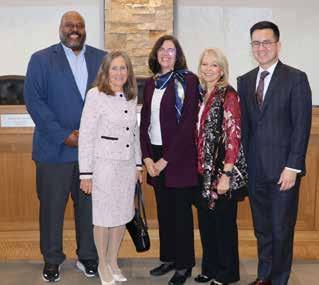
“Our city is truly built on citizen leadership and engagement. I want to help that flourish,” said newly-elected Mayor Gay Lynn Bennion during the Cottonwood Heights oath of office ceremony Jan. 5. (Photo courtesy of Cottonwood Heights City) For the next two years, the Cottonwood Heights City Council will include (pictured from left to right) Councilmembers Shawn Newell and Ellen Birrell, Mayor Gay Lynn Bennion and Councilmembers Matthew Holton and Suzanne Hyland. (Photo courtesy of Cottonwood Heights City)
“For the next four years, I will continue to devote myself to this community and work collaboratively with everyone involved like our residents, councils, committees and folks that come into our city,” Newell said.
Councilmember Suzanne Hyland also remarked on the importance of civil discussion, called for dignity and asked for grace.
“Every human life deserves dignity so that we continue to respect each other,” she said. “We can move forward because of the way we treat each other….Today is a great day to be kind and show respect to others.”
“I stand back in awe…of the tradition of a peaceful transfer of power,” Hyland said. “It is amazing that…this country has survived and we are not subject to a dictatorship or a monarchy.”
Hyland was voted as the Cottonwood Heights Mayor Pro Tempore by her fellow councilmembers during their meeting Jan. 6.
All former Cottonwood Heights mayors were acknowledged during the current councilmembers speeches.
“If we think for a minute about what it would be like to be Mayor Kelvyn Cullimore as he carried our city through when everything was new with minimal staff,” Bennion said. “I thank
Mayor Mike Peterson who led the city through the pandemic with great leadership.”
“Mayor Mike Weichers’s four years of service to this city brought many accomplishments,” Birrell said.
Former Sens. Karen W. Morgan and Gordan Nicholl, who both worked for the incorporation of Cottonwood Heights, were recognized as well.
Contact information for each elected official, as well as certain city staff members, can be found on the city’s website under the “Your Government” tab at: www.cottonwoodheights. utah.gov.
Cottonwood Heights residents can also get involved by volunteering on various city committees like the Architectural Review Commission, the Parks, Trails and Open Space Committee and the Arts Council. Other committees include the Historic Committee and Health in the Heights Committee. Residents can find more information about volunteering on the city’s website under the “Community” tab or by clicking the “Volunteer” header (right-hand top corner). l
COTTONWOOD HEIGHTS TEAM
The Cottonwood Heights Journal is a monthly publication distributed directly to residents via the USPS as well as locations throughout Cottonwood Heights.
For information about distribution please email hello@thecityjournals.com or call our offices. Rack locations are also available on our website. The views and opinions expressed in display advertisements do not necessarily reflect or represent the views and opinions held by Loyal Perch Media or the City Journals. This publication may not be reproduced in whole or in part without the express written consent of the owner. © 2019 Loyal Perch Media, Inc.
PUBLISHER
Bryan Scott | bryan.s@thecityjournals.com
EDITOR
Travis Barton | travis.b@thecityjournals.com
ADVERTISING EXECUTIVES
Mieka Sawatzki | mieka.s@thecityjournals.com
Lindsay Andreasen | lindsay.a@thecityjournals.com
Ryan Casper | ryan.c@thecityjournals.com
Marc Davis | marc.d@thecityjournals.com CIRCULATION COORDINATOR
Lydia Rice | lydia.r@thecityjournals.com 385-557-1022
Rack locations are also available on our website.
EDITORIAL & AD DESIGN
Stacey LaMont Ty Gorton
COTTONWOOD HEIGHTS CITY JOURNAL
9500 South 500 West, Suite 205 Sandy, UT 84070 PHONE: 801-254-5974


The current proposal is to implement a 3.5% Telecom Franchise Tax. Other revenue streams are being considered.
By Cassie Goff c.goff@mycityjournals.com
“For the past seven years, we have been running into our reserves to make our balance sheet even at the end of the year…. We’re at a point where we probably need to raise the revenues,” said newly-elected Cottonwood Heights Mayor Gay Lynn Bennion during the oath of office ceremony Jan. 5.
On Jan. 6, the Cottonwood Heights City Council discussed implementing a Telecom Franchise Tax as one option to bring more revenue to the city’s budget. If implemented, a 3.5% municipal license tax would be imposed on telecommunications services. This means that Cottonwood Heights residents would pay roughly $8.40 per year on a single line of mobile phone and data service.
“Right now, we are pretty skinny as a city, and we need to look at how to improve cost savings internally and keep up with the burden we have to be able to provide services,” Councilmember Shawn Newell said.
Finance Director Scott Jurges esti-
mates that would bring in between roughly $120,000 and $150,000 per year. He also mentioned that Cottonwood Heights is the only city within Salt Lake County not currently charging the franchise tax on telecommunications.
“We are eating into our reserves to the point where we will not be able to match grants and get funds…,” Bennion said. “We don’t want to get so close in the reserve that we can’t do important things for our city.” (She provided examples of some overdue investments like security for the city’s computer systems.)
Councilmember Suzanne Hyland agreed with needing to make the city’s budget whole. “I always say: in government, people want Cadillac services at Chevrolet prices.”
If the council decides to move forward with a Telecom Tax, the earliest it can be implemented is July 1 as an ordinance would need to be drafted by March and submitted to the Utah Taxing Commission for an approval process.
“I’m not a huge fan of fees because I don’t think it’s transparent,” Councilmember Matthew Holton said. “If we vote on this and it’s passed, what percentage of the city would even be remotely aware that there is an additional amount of money that they’re going to need to pay?”
“For me, I would not put myself personally in a position where my personal budget was in jeopardy. I would do everything it takes to make sure that not only my current future was taken care of but the future of my children. We are charged as government officials to do that for our residents – for them and their children,” Newell said. “This is a critical thing we have to consider not just now, but as we move into our retreat.”
The retreat Newell is referring to is an annual discussion where the council and staff align on the city’s vision for the upcoming year. A full day is scheduled and set aside to discuss goals, expectations, projects and budget requests for Cottonwood Heights. Since the annual retreat is an open meeting, residents are encouraged and welcomed to attend for as long as they’d like to stay. (The City Journal will be covering the retreat.)
“Residents need to get engaged and involved,” Holton said. “We can’t go forever without raising taxes….The question is how? Residents need to step up and tell us what they want to happen in our city.”
Residents can voice their suggestions at council meetings on Tuesday evenings during Public Comment sessions at 7 p.m. at Cottonwood Heights City Hall (2277 Bengal Blvd.), by contacting their elected officials (contact information available on

“...this telecom tax is being discussed in the broader discussion of…looking at additional revenue streams,” said Councilmember Matthew Holton. (Wikimedia)
the “Elected Officials” page of the city’s website, or by submitting through the “Contact Us” form on the city’s website at www. cottonwoodheights.utah.gov. l
When we talk about heart disease, the usual suspects often come to mind: crushing chest pain, shortness of breath, radiating arm discomfort. While these classic symptoms demand immediate attention, your heart often speaks in a more subtle language, a series of whispers and quiet shouts that can easily be dismissed or attributed to other, less serious issues.
During Heart Month this February, we want to empower you to become a skilled interpreter of your body’s unique signals, recognizing that early detection can be profoundly life-saving.
Many people are unaware that heart problems don’t always announce themselves with dramatic flair. “We frequently see patients who’ve ignored subtle signs for weeks or even months, often rationalizing them away,” explains Dr. Richard Gelb, a cardiologist at Holy Cross Hospital –Mountain Point. “Especially for women, symptoms can be incredibly nuanced and different from the textbook descriptions often associated with men.”
So, what are these often-overlooked indicators that your heart might be sending out an SOS?
Persistent, Unexplained
Fatigue: This isn’t just being tired after a long day. If you
find yourself unusually exhausted after normal activities, or if a simple walk leaves you winded in a way it never did before, your heart might be working harder than it should to pump blood. This can be a sign of various heart conditions, including heart failure or even blockages.
Discomfort Beyond the Chest: While chest pain is classic, heart-related discomfort can manifest in surprising places. This includes pain, pressure, or aching in your jaw, neck, back, or even your stomach.
“We’ve had cases where patients initially thought they had a bad toothache or indigestion, only to find it was their heart,” says Dr. Bruce Kenwood, a cardiologist at Holy Cross Hospital – Jordan Valley. “Pay particular attention if this discomfort appears during exertion and subsides with rest.

Swelling in Unusual Areas: Swollen feet, ankles, legs, or even your abdomen could be a sign of fluid retention, a common symptom of heart failure. If your heart isn’t pumping effectively, blood can back up in the veins, leading to fluid accumulation. Don’t dismiss persistent swelling, especially if it’s accompanied by weight gain.
Chronic Indigestion or Nausea: While often benign, persistent indigestion, heartburn, or nausea, particularly when coupled with exertion, can sometimes be a
heart attack symptom, especially in women. If antacids aren’t helping and the discomfort seems linked to physical activity, it’s worth investigating further.
Lightheadedness or Dizziness: Occasional lightheadedness can happen for many reasons, but if you frequently feel faint, dizzy, or lightheaded, it could indicate an arrhythmia (irregular heartbeat) or a problem with blood flow to your brain due to a compromised heart.
“By familiarizing yourself with these less obvious signs, you’re taking a proactive step in safeguarding your cardiovascular health. Your body is constantly communicating; the key is to learn its second language,” said Dr. Roja Mulamalla, a cardiologist at Holy Cross Hospital – Davis.
Call to Action: If any of these subtle symptoms resonate with you, or if you’re experiencing anything that just “doesn’t feel right” in your body, please don’t wait. Listen to your heart’s whispers. Schedule an appointment with your primary care physician to discuss your concerns, or if symptoms are sudden and severe, seek emergency medical care immediately. Early detection and intervention are crucial for positive heart health outcomes. Your heart speaks – are you listening?
For more information or to find a provider visit mountain.commonspirit.org



Land Use Code rewrite attempts are expected as over 300 bills threatened city planners’ ability to write code for their communities last year.
By Cassie Goff c.goff@mycityjournals.com
The 67th Utah State Legislative Session began Jan. 20. In preparation, the Cottonwood Heights City Council and staff members met with their city lobbyists to discuss what had already been forecast, highlight potential concerns and to reiterate the city’s main priorities for the session.
Community and Economic Development Director Jim Spung voiced his concern over the State Legislature writing broad policies for specific communities. He mentioned how there were over 300 bills filed on Land Use alone.
Mayor Gay Lynn Bennion (previously Senator) added there were over 900 bills filed overall last year. Just as many bills were anticipated to be filed this year (with 466 bills written and filed as of Jan. 16).
“When you get into Land Use Code, the way you write it really matters,” Spung said.
“Cities should have the ability to create language specific to their community.”
He also mentioned how there’s a big push right now to build hundreds of new starter homes. “It’s all cities have to make room to build new homes and that’s at the expense of existing neighborhoods.”
Both Councilmember Suzanne Hyland and Public Works Director Matthew Shipp voiced a similar concern over difficult and lengthy processes being implemented by the legislature. Last year, all unincorporated areas within Salt Lake County were required to annex into the largest neighboring city (S.B. 322).
Cottonwood Heights staff worked through that annexation process with three different neighborhoods. Even though it should’ve been a similar process, Shipp recounted how each of the three were handled differently based on how the processes, and even subprocesses, were written.
In addition to protecting local control, the city council reiterated their priorities of focus on Jan. 6 including short-term rentals, affordability, parking, taxation, transportation, Wasatch Boulevard, UDOT’s proposed gondola for Little Cottonwood Canyon and ski traffic congestion.



“I think we bear a huge burden for state tourism that isn’t adequately acknowledged,” Hyland said.
The 2026 Utah State Legislative Gener-
al Session will end March 6. For more information about the session, including to read through the proposed bills, visit the website at www.le.utah.gov. l
When minutes count, count on our emergency care. Get
to know us before you need us.
When you need emergency care fast, the closest emergency room is a smart thing to know. You never know the level of care you’ll need when an emergency happens and choosing the right ER can make all the difference. And a hospital ER comes with the confidence of additional services right on-site.
CommonSpirit Holy Cross Hospital – Salt Lake has been awarded Chest Pain Center Accreditation from the American College of Cardiology (ACC). Facilities that achieve accreditation meet or exceed an array of stringent criteria for evaluating, diagnosing and treating patients who may be experiencing a heart attack.
Find emergency care close to you at mountain.commonspirit.org.
1-303-643-1000 (TTY: 711).




this season when we saw the record possibility she wouldn’t eat junk food or soda until she broke the record. On the day of breaking the record she brought root beer and crap to celebrate and eat after the game.”
Nielsen is currently listed on the national MaxPreps website as the 20th most prolific scorer in 2026 girls basketball for the nation. Unintentionally, Nielsen eclipsed another record—the boys career scoring basketball record of 1,259 points set by Brandon Miller in 2013. With nine games left to play, she is likely to set high marks that may endure multiple decades for Brighton boys and girls basketball.
Speaking of high marks, besides being an elite athlete, Nielsen is a 4.0 GPA student with a near perfect ACT score. “Sophie is one of those student-athletes that doesn’t come along often. She sets a high bar because she not only excels in sports, but in everything else she does. Not everything has been easy for Sophie, and I can honestly say that I have not seen someone who can overlook the challenges and focus on what matters more than Sophie. We’re so proud of her basketball accomplishments but more than that, we’re proud of the way she represents Brighton High School in all aspects of her life,” Brighton Principal Marielle Rawle said. Nielsen is no less fierce on the lacrosse field than she is on the basketball court or in the classroom. Last year, as a junior, she was named All-American and All-American Academic and chosen to play on the Utah National Team (making her one of the best 20 girls lacrosse players in the state). Her ex-

111
cellence-demanding lacrosse coach Melissa Nash noted, “Sophie is a legend on Brighton’s basketball court and lacrosse field. She has added so much to our team—goals, assists, draw controls, ground balls and huge defensive stops. Not only an amazing player but she leads the team with her leadership, work ethic and kindness too.”


And as the basketball season draws to a close, she trades her No. 4 basketball jersey for No. 4 lacrosse jersey and a final high school sports season. “Sophie may be the most impressive two-sport athlete Brighton has ever produced,” said Brighton’s Athletic Director Garrett Wilson. Not coincidentally, she is one goal away from becoming the all-time scoring leader in Brighton girls lacrosse—she has 111 goals to her credit just behind Caroline Lee’s career mark of 112 goals. She has the potential to eclipse the boys lacrosse scoring record as well.
It could be another soda-free sports season. l
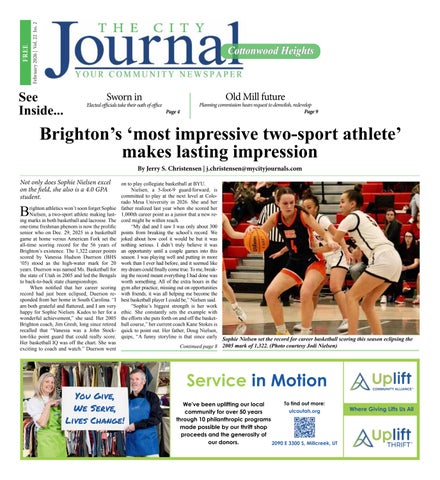
Sophie Nielsen set the record for career basketball scoring against American Fork on Dec. 29, 2025. (Photo courtesy Jodi Nielsen)
Now the City Council will need to approve a related certificate request.
By Cassie Goff c.goff@mycityjournals.com
“Our city has a financial challenge in front of us… as we are preparing to invest, and want the best outcome for, our (Hillside Plaza Town Centre), the development of the Gravel Pit, and the Old Mill area that the owner is ready to develop,” said newly-elected Cottonwood Heights Mayor Gay Lynn Bennion during the oath of office ceremony on Jan. 5.
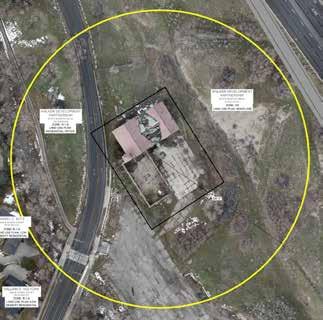
Demolishing the Old Mill structure, in its entirety, was requested on Jan. 9. The Old Mill, also known as the Cottonwood Paper Mill, Granite Paper Mill or Deseret News Paper Mill, sits on 0.86 acres at 6851 S. Big Cottonwood Canyon Road. (In 2024, a low-density housing development named Paper Mill Village was presented.)
In 2024, Gilson Engineering provided a cost analysis estimating reconstruction of the Old Mill would cost over $45 million. One of the primary costs would be retrofitting a foundation as the structure was not originally constructed with a foundation.
On Jan. 21, the Cottonwood Heights Planning Commission held a public hearing for the demolition per a request for a Conditional Use Permit from Doug Shelby, WDOM Properties LLC.
The Staff Report for that meeting read: “The applicant
asserts that the structure is an attractive nuisance, an imminent danger to public safety, and is structurally unsalvageable due to extensive deterioration and failure to meet modern building codes. Several independent engineering reports support this assessment and conclude that rehabilitation is impractical and cost-prohibitive.”
Over 16 written public comments in opposition of demolition were submitted to the city between Jan. 13 and Jan. 16.
“I urge you to support continued study, protection and meaningful reuse of the Cottonwood Paper Mill site. Your leadership and commitment to preserving our historic landmarks are vital in ensuring that we do not lose this irreplaceable piece of our heritage,” wrote Daniel Walters, a Cottonwood Heights resident.
“The Old Mill is part of the Salt Lake Valley history. You can never put it back!” wrote Melinda White, Ph.D., LCSW, Brighton High graduate and lifetime Utah resident.
A petition to “Save the Historic Cottonwood Paper Mill from Demolition” has been started on www.change.org and had 1,624 verified signatures on Jan. 17.
Recognizing the Old Mill’s cultural significance to the surrounding community, the request for demolition proposes several mitigation efforts including preserving elements of the Mill for the Hillside Plaza Town Centre (2378 Fort Union Blvd.), using blocks from the mill to create a historical marker and plaque, and creating a digital history.
Before demolition can proceed, the council will need to review a request for a Certificate of Appropriateness. In
addition, the Conditional Use application “must be pending before the Planning Commission for at least one year” (Jan. 21, 2027). l





By Cassie Goff c.goff@mycityjournals.com
Paying a monthly membership is a somewhat expected norm now for services like streaming, deliveries, spas and gyms – but what about health care? Medallus Medical has been reimagining what healthcare can look like for individuals, families and companies.
“We come up with innovative solutions to help people with high deductibles and companies who have increasing health care costs and reduce those while giving quality care with friendly delivery,” said the founder of Medallus Medical Dr. Rachot Vachathrone.
Working in the health care industry since 1997, Vachathrone noticed his patients were waiting until their health was severe before seeking treatment. They would tell him about their stresses and fears of high insurance deductibles and co-pays. Vachathrone began imagining how he might encourage patients to be more proactive with their healthcare if it were more affordable.


“Insurance is supposed to be for major things like surgeries and, God forbid, cancer or any of those diagnoses,” said Chief Business Development Officer Arliss Fernandez. “For everyday things like a cold, strep, bronchitis, pneumonia…stitches, fractures…and x-rays we can take care of that at urgent care clinics.”
Vachathrone’s “aha” moment came when he was reviewing his own personal finances and skimmed over the monthly gym membership charge. What if there was a membership for urgent and primary care? Now, Medallus Medical’s memberships provide patients with predictable access to care at an affordable monthly rate.
“Medicine should not be expensive,” Fernandez said. “We are trying to transition where we’re not going to be so reliant on insurance. It gives the opportunity for the provider to have more one-on-one with the patient.”
Medallus Medical offers urgent care and walk-in primary care for individuals, families, school districts, companies and cooperations based on a monthly membership structure. Medallus Medical can treat minor injuries and illnesses to ongoing primary care needs with basic labs and in-office procedures.
“If you look at the local school districts, their insurance is just skyrocketing


and it’s out of control. It shouldn’t be that way. We are being an advocate…to structure insurance correctly and give insurance to employees that they’re going to use,” Fernandez said.
“We decided to make it walk-in. That way our day is not scheduled full and patients don’t have to go somewhere else and wait another day,” Vachathrone said.
This year, Medallus Medical is working to partner with third-party companies to
offer a handful of new or updated programs for physical and mental health. Medallus Medical is working to offer unlimited telehealth appointments 24 hours a day. Another program available to companies will allow adult employees to have access to three therapy sessions per year. In addition, Medallus Medical offers a prescription savings plan program where patients have zero copays for medications.
“We are growing, improving our services, and expanding our employer programs because we believe families and businesses deserve better options than what traditional health care usually provides,” Fernandez said. “Mental health and medications are what people need.”



New companies signing up for Medallus Medical’s membership and/or programs can meet with their Patient Advocate Team who will visit with their employees to teach them how to use the Medallus membership and invite them in for their first primary care visit.
“We want you to be proactive,” Fernandez said. “If you’re getting vitals checked or same-day prescription refills –just walk-in. We encourage that.”
Medallus Medical has eight locations throughout the Wasatch Front; all open at 9 a.m. and close at either 7 p.m. or 8 p.m.
Medallus Medical’s urgent care locations can be found in: Holladay (3934 S. 2300 East), Draper (1126 E. Draper Pkwy.), Sandy (7998 S. 1300 East), South Jordan (10433 S. Redwood Road), Riverton (13348 S. Market Center Drive), West Valley City (3451 S. 5600 West), American Fork (476 N. 900 West #C) and Layton (1868 N. 1200 West).
For more information, call Medallus Medical at 877-633-9110 or visit their website at: www.MedallusUrgentCare.com
“It’s about making people healthy,” Fernandez said. “We are trying to make medicine simple.” l
Music filled Jordan Valley School as Hillcrest High School’s Vocal Ensemble performed for students with disabilities whose joy was expressed through movement and smiles, creating a moment of connection that went far beyond the songs.
By Julie Slama j.slama@mycityjournals.com
Hillcrest High School’s Vocal Ensemble recently brought the joy of music to Jordan Valley students, performing for an audience eager to clap, dance and move to the songs.
For Jordan Valley Music Therapist Hope Ward, the performance aligned with her goals in her first year.
“One of my biggest goals this year is outreach, so I invited a couple of different schools to come,” she said. “Hillcrest has been coming for years.”
In addition to Hillcrest, Corner Canyon High students sang at Jordan Valley in early December and Brighton High was on the schedule along with a private violin studio performance.
Jordan Valley students have severe multiple disabilities including autism, cerebral palsy, traumatic brain injury, seizure disorders, communication impairments, genetic disorders and syndromes, deafblindness and students who are extremely medically fragile. The goal at Jordan Valley School is to improve the quality of life for its 70 students, age 5 to adult, and their families.
Ward said bringing performances directly removes barriers.
“Our students love this. Sometimes we don’t have the access as other students to be able to do things like this so having them come to us is easier. Our students are obsessed with music,” she said.

Hillcrest High’s Vocal Ensemble was one of several groups to perform for students and staff at Jordan Valley School. (Julie Slama/City Journals)
Ward said students express their excitement in their own ways.
“Many of our students are nonverbal so when they are excited, they move their bodies. Music makes them happy, so these students are expressing it through movements. Maybe they’re making some vocalizations that aren’t words, but they are clearly excited from their happy sounds,” she said.
As a music therapist, Ward works closely with students’ educational plans. She works with each of the 10 classes in group therapy sessions, then supports 20 students through their individualized education program through music.
“Maybe their goals are to increase motor dexterity so grasping something like a maraca is very motivating. When they shake it, they are increasing their grasp. It’s fun and that’s why it’s effective,” Ward explained.
Jordan Valley Principal Matt Nelson said these live performances are meaningful.
“It’s important to get this quality of music brought to our students where they’re comfortable and familiar so they can enjoy it,” he said. “We’ve had students dancing, clapping, jumping up and down, rocking back and forth. Engaging with music is another method our students can communicate. It’s a powerful medium.”
Hillcrest High senior John Hansen said performing for Jordan Valley students offers something unique as does performing in venues such as Gardner Hall, the Tabernacle and the capitol.
“It’s fun to have these cool, different experiences and to share the love of music,” he said.
Hillcrest junior Laelia Raleigh said their visit was rewarding.
“I love talking to them,” she said. “I talked to a girl in the corner and she smiled at me and gave me the biggest hug. It just filled my heart with so much joy.”
Hillcrest choir director RaNae Dalgleish said the tradition of performing at Jordan Valley began decades earlier under Hillcrest choir director Brian Bentley and one she has chosen to continue.
“Performing in our community strengthens students musically and personally,” she said about the synergy coming from 40 performances during the winter season. “Watching my students here, some of them have never had a chance to be with others who are disabled to the point where they can’t be in a typical classroom. They’re seeing how these kids respond to music, how they light up and they dance, they move and they vocalize. They’re learning the powerful impact of what they’re doing. When we talk as a team about our experiences and goals and what is worth our time, we come here. Bringing joy to Jordan Valley students is worth our time and investment.” l

Longtime educator and Olympic choreographer Paul Winkelman, now living with ALS, is finding new ways to inspire students and hoping to return to the Olympic spotlight.
By Julie Slama j.slama@mycityjournals.com
In eight years, Salt Lake will once again welcome the world as host of the XXVII Winter Olympic Games in 2034. For Paul Winkelman, a longtime educator and counselor in Canyons School District, he hopes it will give him a repeat performance as the opening and closing ceremonies choreographer, a role he cherished during the 2002 Games.
“I’d love to do that,” Winkelman said simply, reflecting on one of his greatest experiences of his life.
In 2002, Winkelman was teaching at Alta High and coaching its nationally acclaimed ballroom dance team when dozens of people walked into the school commons after school, cameras rolling. Among them was a producer for the Salt Lake Organizing Committee.
After watching the boys’ portion of the rehearsal, Winkelman recalled being asked who he was and what group was practicing.
“I explained we were the Alta High School ballroom dance team,” Winkelman said. “He said, ‘I’ve never seen guys dance like this.’”
That chance encounter ultimately led to Winkelman being hired as the full-time choreographer of the Olympic opening and closing ceremonies. His students became the backbone of the Western Frontiers section, the largest segment of the ceremonies, first learning the choreography, then helping teach it to hundreds of performers who filled Rice-Eccles Stadium.
“I said many times, the Salt Lake Olympics was heaven. It was unbelievable,” he said.
Eight years from now, however, if Winkelman returns to the Olympic stage, his approach will look different. In 2022, he was diagnosed with ALS, commonly known as Lou Gehrig’s disease, a progressive neurological disorder that attacks motor neurons in the brain and spinal cord, gradually robbing the body of voluntary muscle movement while leaving the mind intact.
“I teach a totally different way. It’s verbal. I’ll explain to my top couple what I want and they become my legs,” he said.
Even with the diagnosis, Winkelman hasn’t stepped away from his career, working with students.
“In 2022, I was diagnosed with ALS, but I knew there’s no way I’m quitting work because I love working with kids, and I wouldn’t know what to do with myself,” he said.
Helping students has been Winkelman’s lifelong passion. He began his career at East Midvale Elementary, where he spent seven years teaching third and fourth grade while building a drama program that quickly grew beyond expectations.
“I loved East Midvale,” he said. “We produced all-school productions where everyone from kindergarten through sixth grade could be involved. It was an after-school activity many students wanted to be a part of.”
Winkelman’s reputation led then Jordan School District to move him to an opening at Alta just one week before school started in 1992. There, he continued the school’s strong theater tradition and launched what would become one of the most successful ballroom programs in the country.
“We became national champions,” he said. “Of the 10 years I was there, eight times we were the national champions. Those kids worked so hard.”
Winkelman lived and breathed work.
“There were times I never went home. I slept on the floor of the auditorium when I was tired, but I loved what I was doing and the productions we did there were absolutely amazing. The students and the quality of their work was stunning,” he said.
After adding his master’s degree in psychology to his undergraduate education degree and master’s in theater, Winkelman pursued the counseling field, leaving Alta in 2003. He worked at Brighton High, Hillcrest High and Utah Valley University before returning to Brighton.
At Hillcrest, Winkelman helped sustain and elevate the school’s well-known musical theater tradition for a decade, collaborating with choir director RaNae Dalgleish.
“Working with Paul at Hillcrest — I’ve never met a man with more passion and energy and talent,” she said. “He was demanding, but he also made it fun. Our musicals were phenomenal because they had the Paul touch.”
A moment that redefined his world
Winkelman’s ALS diagnosis came after months of uncertainty, injuries and worsening weakness.
“When the fourth doctor told me, ‘You have ALS,’ I just sat there. I vividly remember I went right out of body like I was watching myself,” he said.
The disease takes a physical toll on Winkelman daily. He experiences tremors and painful muscle spasms, which he describes as “painful Charley horses in your whole body” and frequent falls.
“When I fall, my body freezes, and I’m like a piece of glass hitting the floor. My head has been cut open; I’ve had to have shoulder surgery because I ripped the rotator. It scares me to fall, because I know there’s no way to stop and, on my way, down, I wonder, how bad is this one going

to be? It’s taught me the more invincible you think you are, the less you are. Life can be very fragile,” he said.
Even so, Winkelman’s outlook remains clear.
“My attitude from day one has been positive,” he said. “You can stay positive and contribute, or you can turn this into a negative and give up.”
Today, Winkelman is a part-time counselor at Entrada Adult High school, where the flexibility allows him to continue supporting students.
“I’m still working with them on careers and on getting them graduated,” he said. “If I get up one day and my body just says no, I can work with my disability much more easily.”
Winkelman continues to choreograph, judge competitions and mentor performers, recently coaching a group to the world championships. He also has produced Broadway stars, including Derek Hough of “Dancing with the Stars” and Ashley Bryant in “The Play That Goes Wrong,” and worked on the choreography for the movie, “High School Musical.”
“My mind can still see what the choreography needs to be,” he said.
BeatALS — music, meaning and community
His choreography was on full display recently at Hillcrest High during a BeatALS benefit concert honoring Winkelman. Supported by Dalgleish, he met Bingham High theater director David Martin and worked with Sean’s Garage, a Beatles tribute band, to raise funds for ALS research and awareness.
“We had a night of wonderful music
and celebration,” Dalgleish said. “We ended up earning about $5,700 for the ALS Foundation.”
Not only did Winkelman choreograph numbers for the program, he spent time talking with 50 students about music, dance and life. He also shared his journey with the audience during a pause in the concert.
“It was so much fun and the kids were awesome,” Winkelman said. “I heard some songs I didn’t know. I’m quickly becoming a Beatles fan.”
Dalgleish said the experience also impacted the students.
“The kids learned the songs, the history of the time and we had Beatles trivia every day and they learned to be thankful for every day,” she said. “The concert was beautiful. They danced, the orchestra played, the band played, the choir sang. It was stunning. It brought me to tears.”
Gratitude for every day
Winkelman credits his faith, family and friends for sustaining him.
“I’ve lived the life of at least five people,” he said. “I had many incredible opportunities in my life. I can’t be bitter. I just have to find a different way to do things.”
Brighton High recently honored Winkelman with a scholarship in his name for students pursuing ballroom dance at BYU, another reminder of the legacy he continues to build.
“I’m lucky and whether I get the opportunity to choreograph another Olympics or championship, I get up—even on rough days—and I find the positive light, hoping I can change somebody’s life,” he said. “That has been a beautiful blessing, and I’m thankful for every day.” l

Local high school dancers made history earning top medals while promoting inclusion and showcasing talent.
By Julie Slama j.slama@mycityjournals.com
In the first state high school unified dance competition, three area schools swept the event.
Copper Hills High School won the unified dance team competition, with Highland High and Murray High in second and third places, respectively. Several students from each of the schools placed in solo and duet categories.
Unified dance is a program that brings together students of all abilities together to promote inclusion, friendship and teamwork with an emphasis on movement and joy. The Special Olympics Utah competition was held in December at Highland High and featured a variety of dance styles and creative interpretations.
Students performed their routines on stage before receiving feedback from a panel of judges, including three who recently competed and won gold medals at the Special Olympics World Games. Much of the feedback was positive and encouraging with comments such as “keep smiling and showing you’re having fun,” “you owned that stage,” “great techniques” and “good energy and choreography.”
Many of the performances included costumes and props. Murray High dancers wore bright colors while Copper Hills performers sported matching shirts that said, “Inclusion is Cool.” Props included everything from watering cans to leis, adding creativity and personality to the routines.
Some students choreographed and practiced dances independently or together as an afterschool club. At Copper Hills, teacher Anna Bay has instructed adaptive dance for three years.
“We have so many good kids who love to dance, so we wanted to give them more of a dance experience than what they could get in our mainstream classes,” she said. “With so many interested, we were able to open up a class just for the special ed kids. We have 20 special ed students in the class, plus 20 peer tutors. Then, we have aides who help.”
Bay said the benefits of unified dance go beyond learning choreography and dance technique.
“They’re learning social skills, how to be part of a team and about friendship. They’re listening and following directions, but we do it in a dance way, so it’s all by having fun. I teach them a lot of the same things I do in my ballroom classes from stretching to line dances. We’ve been working on learning choreography, which we were able to perform today,” she said. “They have so much fun and I love their genuine smiles.” l

Celebrating Heart Month
Heart care is more than numbers on a screen.
At Intermountain Health, heart care starts with getting to know what’s important to you and building a care plan together. From preventive screenings and lifestyle recommendations, to treating the most complex conditions with advanced technologies, our experts are with you through all of it. In other words, we’ve got your back — and your heart.

Learn more or schedule with a primary care provider
For students and staff of Jordan Valley and Life Skills Academy, it’s a Christmas memory and a community lesson that lasts far beyond the holiday season.
By Julie Slama j.slama@mycityjournals.com
The scent of waffles mixed with laughter and smiles from Jordan Valley School and Life Skills Academy students, honored as special guests, filled the Belgian Waffle & Omelet Inn. For more than 40 years, the Midvale restaurant has opened its doors and its heart and turned an ordinary meal into a holiday tradition, complete with a visit from Santa Claus.
“It wouldn’t be Christmas without Jordan Valley being here,” said owner Jeff Wilhelmsen, who has continued the tradition since 1983. “We’ve been happy to be able to do it.”
Students at nearby Jordan Valley School have severe multiple disabilities, many who are extremely medically fragile. The goal at Jordan Valley is to improve the quality of life for its 70 students, age 5 to adult, and their families.
The holiday tradition began when Wilhelmsen partnered with the late Kerm Eskelson, Sr., who was the building’s landlord at the time.
“He said, ‘let’s do this to help these kids,’” Wilhelmsen said. “He covered 50% in cash, and I covered the rest. When he passed away,
we continued doing it on our own. He was a real good guy.”
This year, more than 100 students and staff from Jordan Valley came as well as for the first time, about 50 students and staff from Life Skills Academy, Canyons School District’s post-high adult transition school which provides instruction and training to students with special needs who have aged out of traditional high school.
All the meals were fully paid for by the restaurant and Santa arrived with treat bags filled with juice boxes, candy canes, clementines and chocolate Christmas trees.
“They roll out the red carpet; they have so much love for our students,” said Jeff Honsvick, first-year assistant principal at both schools. “Talk about the spirit of Christmas, this is incredible.”
Honsvick said the experience goes far beyond a holiday party.
“I’ve worked 15 years at a school similar to this and I’ve seen the incredible outreach of the community before, but there’s something about a business welcoming the entire school that just gives me goosebumps,” he said. “Seeing the students be successful in the community is huge for me.”
For many students, eating at a restaurant is a rare opportunity.
“A lot of our students don’t get the chance to eat in a restaurant,” said Rachel Murphy, Jordan Valley administrative assistant who co-


ordinated the school’s visit. “Some parents feel worried about people and crowds, so this gives them the experience to be in the community they don’t normal have.”
Life Skills Academy Principal Stacey Nofsinger said those experiences are hard to replicate at school.
“You can only teach so much in a classroom,” she said. “So, they’re learning how to go to a restaurant, how to order, how to use their social skills.”
To help students be successful, Murphy said those who use devices to communicate, had preloaded choices and comments added so they could interact with the restaurant staff and when they met Santa.
“This helps them be more independent,” she said.
The place is familiar to some students, who come on a regular basis to learn practical skills. For years, Belgian Waffle has served as a job site for students.
“They fill salt and pepper shakers, wipe tables, wipe menus, bus tables, vacuum; they’re helping us and getting experience,” said Cher-
yl McCormick, a longtime staff member who has worked the event with Jordan Valley for 17 years as her mother did before her. “I love having them here. These are my kids. When they see Santa Claus, it makes my year.”
Nofsinger, too, enjoys the interaction: “Just seeing happiness, both my staff and students as well as the Belgian Waffle staff and how they love this, is fun for me.”
The restaurant remains open to the public during the holiday meal for the schools—and touches those patrons as well.
Matthew Smith, a sports videographer from Casper, Wyoming, who happened to stop in that day, said the party was “amazing.”
“Kids with disabilities almost never get out and it’s important they’re given these social interactions in these environments,” he said. “It’s what life is all about.”
For the Belgian Waffle staff, the purpose has never changed.
“This place is always open to these students,” Wilhelmsen said.
McCormick added: “And that makes my heart happy.”l

educating our local community on refugees, their needs, their statuses and empowering the members of our community to be able to support refugees, first by creating these kits, and now, they have the knowledge and the tools necessary to pursue their own path in supporting refugees in need,” she said.
district administration to managing their schedules to ensure the project as well as their schoolwork and other responsibilities got done on time. Their efforts will be documented in a 20-page DECA paper, which they will orally present at state.
to do good, to see how much people cared,” Stanfield said.
By Julie Slama j.slama@mycityjournals.com
Only1% of refugees worldwide ever leave refugee camps and an estimated 65,000 refugees have relocated to Utah. In Utah, refugees come from more than 40 countries, speaking more than 20 languages. Globally, 40% of refugees are under the age of 18 and of those, 51% have no access to education.
These and other statistics shared by Brighton High seniors AJ Stanfield and Alex Williams during an after-school presentation gave the Brighton community a sobering look into the global refugee crisis and it inspired them to take action.
“We’re wanting to help the refugees be safe, seen and supported,” Williams said.
The presentation, held for students and staff, focused on educating the school community about who refugees are, the challenges they face and how they can help. As part of the event, attendees assembled 60 developmental kits for refugee children. The kits were to be delivered to the Utah Refugee Connection, a nonprofit that supports refugee families as they resettle in the area.
The project is part of the Brighton High teens’ DECA community awareness project for the state competition this February. DECA is an organization that prepares students for careers in marketing, finance, hospitality, management and entrepreneurship.
“I love that they’re doing this,” said teacher Kevin Elzey, who is the school’s business club adviser. “It’s topical and they’re passionate about it. They’re educating and getting people involved; it’s a cool project they’re doing.”
Elzey said this is the first year Stanfield and Williams have worked together on a DECA project.
“I’ve loved seeing how they figure each other out. It hasn’t always the smoothest sailing, which is a good thing, because then they figure out how to work with each other and solve problems and be able to manage projects. These are important lessons for high school kids to learn,” he said. “My favorite thing about being a teacher is hearing kids say, they learned something and how they want to be part of something bigger. We had almost 100 kids show up and wanted to help; that’s huge.”
Williams said first learning about refugees lead them to act.
“We were driven by this feeling to support the refugees of Utah. The more that we learned about refugees, the more we realized how in need of support they were. So we turned our drive into our focus, which was
Williams said the educational portion was important as well.
“They were able to hear refugees and listen and that’s our hope for our project. After our school presentation earlier in the day, we had a student come up and said, like, ‘I’m from South Africa, and it wasn’t safe there, so my family left. Am I a refugee?’ I don’t personally know refugees, but I loved our presentation opened her mind to asking questions to her parents and being more curious about her own story,” she said.
Stanfield, the school’s business club president, helped link them with the Utah Refugee Connection through its executive director, Amy Dott Harmer, who she met through neighborhood refugee support efforts.
“She supported us from our initial planning to providing us with all these development kit supplies,” Stanfield said. “Our emphasis of the project is to learn, serve and give.”
She said the project required extensive coordination from working with school and
“It’s been awesome to see everybody in the school want to be part of something and
Williams agreed: “I have spent every waking moment thinking about our presentation. This project has taken everything out of me, but it was worth it. Looking at the involvement and caring of everyone, it was freaking worth it.” l





After a recent New York City trip, Brighton students will take the professional lessons learned first-hand to their stage this February.
By Julie Slama j.slama@mycityjournals.com
The bright lights of New York City will take center stage at Brighton High School this February as the school’s Dance Company turns its recent trip to Manhattan into a full-scale inspired performance.
After spending four days in The Big Apple learning from professional dancers and Broadway performers, the noncompetitive dance company is channeling those techniques and inspirations into a New York-themed concert scheduled at 7 p.m., Feb. 5-6 in the school’s auditorium, 2200 Bengal Blvd.
“The trip was so fun; the girls absolutely loved it,” said Brighton High dance teacher and company adviser Courtney Hatch. “Our upcoming concert is New York-themed because of the trip. Everything they experienced shaped what we’re putting on stage.”
The November trip took 22 student-dancers to the heart of the professional dance world, where they participated in three
intensive workshops, including one with a cast member from “MJ: The Musical,” a contemporary class at the renowned Alvin Ailey American Dance Theater and a hip-hop class at the Broadway Dance Center.
During the Michael Jackson workshop, dancers learned choreography from “Smooth Criminal” from the Broadway performer before seeing the show that night.
“They were inspired by it so they ended up creating a mashup of Michael Jackson songs for our concert,” she said.
The February performance will feature dances inspired by iconic New York shows and music, including “Hamilton,” “Gossip Girl” and classic New York songs such as “New York, New York” and “Empire State of Mind.”
Throughout the experience, Hatch said what stood out to them was how different the professional choreography felt.
“Utah dance is a million leaps, jumps and big tricks. In New York, it was more about filling your body with tiny movements and expressing emotion. There’s been a real shift in how they perform since we got back,” Hatch said.
Beyond technique, the trip gave students a look into the realities of professional dance life.




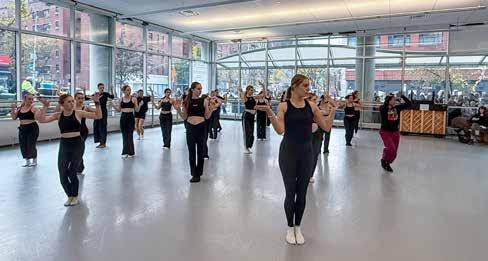
“They couldn’t believe that these office buildings had floors and floors of studios with people practicing for auditions,” she said. “It floored them; it’s so different.”
Besides seeing the Broadway production of “MJ,” the group saw the show “Six” and the Radio City “Christmas Spectacular” while exploring iconic landmarks such as the Metropolitan Museum of Art, Empire State Building, Central Park, Times Square, Bryant Park and the Brooklyn Bridge.
Hatch said the timing of the trip—earlier in the school year than the traditional end of year tour—made a lasting impact.
“It bonded the team in a way I’ve never seen before,” she said. “A lot of these girls won’t dance after high school, so this is a once-in-a-lifetime experience they’ll remember forever.”
The upcoming concert will feature not only the dance company, but other Brighton High dance classes, student clubs and guest performers from neighboring schools. Tickets are $5.
“The girls are bringing New York to Brighton,” Hatch said. “It’s really a celebration of what they learned and how much they’ve grown and they’re having fun with it.” l



A look at several Brighton standouts and their post-high school successes.
By Jerry S. Christensen j.christensen@mycityjournals.com
Brighton’s football class of 2022 was particularly prolific in preparing student-athletes to continue on to play at the collegiate levels. This season, as the class of 2022 completes four years of post-high school competition, a Brighton “full-circle” moment occurred. Not unlike navigating the formerly concentric halls of Brighton, different and opposing directions often meet up in the long run.
The grand New Year’s Eve Las Vegas Bowl pitted the University of Utah against the storied Nebraska Cornhuskers on the field where the NFL Raiders play—Allegiant Stadium. Taking the field on opposite sides were two 2022 Brighton standouts: No. 8 Lander Barton at Utah and No. 75 Tyler Knaak with Nebraska. “I had broken my hand in practice in the week leading up to the bowl game, but I told my coaches and trainers that there was no way I wasn’t going to play against the Utes

in the Las Vegas Bowl,” said Knaak, who anchors the offensive line at 6-foot-6 and 335 pounds. Knaak was signed by Utah where he redshirted for 2022. He had 14 college offers and the Cornhuskers had what he was looking for in coaching and overall program for his position.
Across the line playing defense for Utah was his former Brighton teammate Barton, a captain with the Utes. Christine Yee, an English teacher at Brighton who taught both Barton and Knaak, remembers, “I have always known Lander to be a disciplined athlete. I have not been surprised at all at how well he’s done. I’m proud of him most for maintaining who he is under the spotlight. Nebraska has been great for Tyler—he has become a better person. I have Tyler come back and speak to my class of seniors. He tells them of his decision to transfer and how you can’t take anything for granted.”
Knaak’s Huskers seemed to score at will in the first quarter of the bowl game. Barton’s Utes defense finally dialed in and made scoring more difficult for Nebraska and Utah ended up hoisting the trophy. Knaak and Barton exchanged a few memories on the field before they were circled by friends and family who had come to celebrate in Las Vegas on New Year’s Eve. Mikki Barton, Lander’s mother, said, “It was fun knowing there were two high school teammates on the field together. We were watching Knaak and cheering him on. Maybe they will see each other in the future on an NFL field.”
Knaak graduated in 2025 but because of his Utah redshirt year, he has another year of eligibility and will return to Lincoln for the 2026 season. He will take post graduate classes to build his academic resume. Barton’s next step is the NFL combine where he hopes to join his two brothers, Cody and Jackson in the NFL ranks.
Mason Brinkman coached both Barton and Knaak at Brighton. “It was a lot of fun to watch Lander and Knaak play against each
other on that stage. I felt a lot of pride and excitement. They have grown into fantastic football players and live their lives as positive influences for the younger generation,” Brinkman said. Coach Brinkman was also instrumental in coaching Knaak as a premier state heavyweight wrestler at Brighton.
Barton was a three-sport athlete at Brighton running track, playing basketball and football. Brighton track/football coach Kirk Merhish said, “It’s a privilege to have the rare
opportunity to be part of the development of young men and work with athletes such as these who not only have genetic talent but also have the determination and work ethic to reach the level that these former Bengals have. That class of 2022 produced not only Barton and Knaak, but the team produced Cole Casto who played for Weber State and Kabe Merhish who played for Fort Lewis college. Jacob Reese was also signed with Arizona from that region championship team.” l


Confidentiality is a central principle of the group. Gregoire said participants verbally agree to keep what is shared within the group confidential and that rank does not factor into the space.
By Shaun Delliskave s.delliskave@mycityjournals.com
Anewpeer-led support group aimed at first responders across Salt Lake County will begin meeting in Murray later this month, offering a confidential, non-clinical space for participants to talk with others who understand the unique pressures of the job.
The group, called The Watch, was founded by Murray City Police Officer Benjamin Gregoire, who said the idea grew out of both personal experience and conversations with colleagues across agencies.
A critical incident he experienced in the line of duty last year, Gregoire said, became a turning point and underscored for him how limited accessible, peer-based wellness resources are for first responders in Salt Lake County.
Gregoire said that beyond formal peer support teams, there are few places where first responders can speak openly with others who share similar experiences. He also observed that first responder culture often operates in silos.
“Police tend to stay with police, fire with fire, dispatch with dispatch—even though we often carry very similar stressors and trauma,” he said. “The Watch grew out of a desire to create a shared space that breaks down those barriers.”
Unlike traditional mental health programs, The Watch is intentionally peer-led and non-clinical. Gregoire emphasized that the group is not designed to replace professional care.
“There are no clinicians, no diagnoses, no notes, and no treatment plans,” he said. “It’s a space grounded in shared lived experience. While professional mental health care is critically important—and encouraged—The Watch is designed to complement those resources, not replace them.”
Sessions are structured to be low-pressure and accessible. Meetings will last one hour and are drop-in, meaning participants can attend as their schedules allow. At the start of each session, guidelines are reviewed to establish expectations and safety. From there, discussion is participant-led.
“If there’s a lull, a simple prompt— such as ‘What brought you here today?’— may be offered,” Gregoire said. “But there is never any pressure to speak. First-time attendees can expect a low-pressure environment where listening is just as welcome as sharing.”
“Rank does not exist within the space—everyone is equal,” he said. “If administrators attend, they are held to the same standards as everyone else.” He added that the confidentiality protections outlined in Utah’s peer support statute apply and are communicated at each meeting.
Murray City has played a supporting role by approving the group, providing meeting space, administrative assistance, and help with outreach and marketing. Gregoire stressed, however, that The Watch remains independent.
“It is not a Murray City Police Department program, nor does it report back to any department,” he said. “Murray is hosting and endorsing the effort, but the group itself remains peer-driven and separate from departmental operations.”
Gregoire hopes the group will help address lingering stigma around seeking help, particularly for those who may feel overlooked.
“Dispatch and corrections professionals, in particular, are often overlooked in wellness conversations despite facing significant cumulative stress,” he said. “The Watch aims to create a starting point— normalizing peer support and making it easier for people to show up without fear or judgment.”
The first meeting is scheduled for Jan. 14, and while no sessions have yet been held, Gregoire said early interest has been strong. “We’ve already received strong informal interest from a wide range of agencies and disciplines,” he said.
Looking ahead, Gregoire said success would mean broader cultural change. “Success, to me, would look like peer support becoming more normalized within first responder culture and administrations taking wellness more seriously as a core responsibility—not an afterthought,” he said. He added that he hopes similar


groups will eventually form in other counties, noting that “Davis County Sheriff’s Office is beginning something along those lines, which suggests this is a need being felt beyond just Murray or Salt Lake County.” l


Our TMS machine can help you get your life back
• NOT medicine • NOT shock therapy • NOT invasive • IS safe and effective • IS COVERED by most insurance













TMS is like physical therapy for the brain. It uses magnetic pulses, similar in strength to MRI, to reignite dormant connections in the brain and give you control of your depression. With NeuroStar, you can live on your terms
10437 So Temple Dr., Suite 200 South Jordan, UT 84095 385-412-9215 Visit neurostar.com

It is a statewide problem that many schools feel unequipped to address.
By Lizzie Walje l.walje@mycityjournals.com
Recently, Granite School District contemplated closing down two of its elementary schools, eventually deciding not to move forward at this time after facing widespread community opposition. Similarly, Alpine School District considered closures of its own, ultimately opting to permanently close Cedar Valley Elementary following their school board’s vote.
The aforementioned are just two recent examples of a statewide problem: declining enrollment. Utah is undergoing its most significant reduction in K-12 public school enrollment numbers in the past 25 years. As of fall 2025, Utah has 11,478 fewer students than the previous academic year.
Granite, one of Utah’s largest school districts, has had a particularly difficult past decade. In the past seven years, they’ve voted to close down 10 schools. If they had decided to move forward with their recent votes regarding Eastwood Elementary School and Morningside Elementary School, those institutions could have potentially marked the 11th and 12th closures in less than a decade.
Despite currently suspending the Eastwood and Morningside votes, Granite District officials and board members continue to warn parents and students that more closures are not just possible, but highly probable.
“We cannot lose sight of the reality of the situation that we are in,” said Clarke Nelson, a Granite School District board member. “We have to direct the process to get to the greatest common good. And that has a reality to it that will be painful, at some point, for certain schools, for certain neighborhoods, that I don’t see going away in the near future.”
Granite District leaders have parroted Nelson’s sentiments, predicting that enrollment will drop an additional 10% in the next two years. Superintendent Ben Horsley has only been in his current position for a little over
a year, yet he has already had to discuss these closures on multiple occasions. In response to criticism, Horsley has said that many of the factors leading to declining enrollment and closures are “outside our ability to control.”
What exactly are the circumstances leading to declining enrollment, and what are the broader implications for the state writ large?
As of 2025, every school district in the state of Utah has faced declining enrollment rates to some extent, except for two outliers, Beaver and Tooele. While Granite’s rapid decline has been particularly notable, so too have Salt Lake and Washington school districts.
At face value, one might wonder why Utah is undergoing such a crisis considering that, in recent years, the state has consistently been ranked as one of the fastest growing in the nation. St. George, in particular, which falls under the Washington School District, is regularly cited as Utah’s most rapidly growing city, even going so far as to have previously garnered national attention for its noteworthy growth. Furthermore, Utah has the youngest median population in the nation. According to a Census.gov report, Utah’s median age is 32.4.
Even Aaron Brough, director of data and statistics at the Utah Board of Education has sounded off about the conundrum. “We seem to be exiting from the constant growth or the constant struggle to deal with the pressures of growth to … this decline that we’re seeing here,” he said.
While some districts, like Granite, have been dealing with declining rates for several years, many other districts are citing the Covid-19 pandemic as a major turning point. In the early days of the pandemic, many schools and districts struggled to implement rules and guidelines that had universal appeal. This led to a subset of parents developing a lack of trust, subsequently pulling their children from their schools and districts at large. However, instead of transferring these students to other public schools or districts within the same county, many parents opted for alternatives like charter schools, private schools and homeschooling.
Incidentally, charter schools, which are technically still public run institutions, but they operate independently of an established

district, are mostly trending in the opposite direction. Their growth is far more reliable, expanding by 3.6% in the past year. As of 2025, they represent 13% of the state’s public-school population. However, even charters aren’t completely immune, as 44 of the 113 registered Utah charter schools also saw declines in enrollment.
Additionally, while Utah has retained its status as a state with a rapidly growing population, one aspect of that growth has dropped off substantially—children. Not only is the birth rate declining nationwide, but in Utah, the cultural trend that previously favored large families, is no longer nearly as prevalent. Economic pressures and exorbitant housing costs are also making it increasingly more difficult for young people to support large families.
While it may be true that Utah’s housing market saw significant periods of growth in the past decade, much of that development favored new apartment buildings and condominiums. Historically speaking, these types of properties typically don’t attract families with school-age children, a fact that continues to be true.
It also doesn’t help that declining enrollment equals reduced funding from the state. In many cases, that loss in revenue can easily creep into the millions. These cuts can be fatal for certain institutions, considering that operat-


ing costs remain the same whether or not funding is decreased.
“It’s not the district’s responsibility to ensure families are growing at a rate to sustain schools,” Horsley added. “We’re here to sustain our families.”
No question, these declining rates will continue to pose problems for Utah’s school districts. However, if there is a silver lining to be found, Utah State Superintendent of Public Instruction Molly Hart says that enrollment numbers are up for students from demographics that are historically underserved, such as those with disabilities and first-time English learners. She believes this will translate into an opportunity for public schools to serve populations of students who are most in need, as students from these demographics often unintentionally slip through the cracks.
Additionally, the presence of students of color continues to steadily increase, and as of fall 2025, they account for 31.2% of the K-12 public school population, an increase from last year’s 30.6%.
Hart nevertheless maintains that she remains dedicated to serving all students throughout Utah. “Our focus remains,” she said, “on ensuring that every child, in every community, continues to receive a high-quality education, regardless of statewide fluctuations.” l



From emotional eating to empowering others, one woman finds her strength and reclaims her life.
By Julie Slama j.slama@mycityjournals.com
For years, Kenzie Turner moved through life on autopilot — balancing pregnancies, navigating grief, holding down a job and keeping pace with the demands of motherhood. In her 20s and early 30s, she wasn’t thinking about fitness or nutrition.
“Truthfully, I wasn’t thinking about myself at all,” she said. “I remember at one time feeling trapped in a body I didn’t recognize. I gained weight through pregnancies, but I didn’t lose it with the last two.”
Before Turner’s first pregnancy, she weighed 150 pounds, climbing to 190 after indulging in Chips Ahoy! cookies “several times each week.” After giving birth, the weight came off easily, and she assumed her body would always bounce back like that.
Three years later, her second pregnancy brought cravings of Totino’s pizza, which she ate “several times per week.” Again, Turner reached 190 pounds, but water aerobics helped her return to her pre-pregnancy weight.
Life was busy, but predictable as Turner worked as a bank teller and caring for two children, often managing on her own while her husband was in pharmacy school.
Then, at 16 weeks into her third pregnancy, she miscarried.
“The miscarriage really messed me up; I basically didn’t care and just ate,” Turner said.
She became pregnant again, leaning on comfort foods like McDonald’s pancakes. After her third child, the sadness of her miscarriage remained.
“I just didn’t have any motivation; I didn’t go back to losing the weight again,” Turner said.
By her last pregnancy, Turner’s unhealthy habits became routine and she often munched on sour gummies.
“I was already like 190 pounds when I got pregnant; when I weighed in, I was 229 pounds,” the 5-foot-3-inch tall mother said.
By 2019, Turner felt stuck.
“I remember signing up for Weight Watchers, but I didn’t even start. I figured, ‘I’m just going to be fat. It’s just who I am now,’” she said.
For years, Turner hovered around 220 pounds, eating to fill emotional gaps, not nutritional needs.
“It was mindless eating, not being aware of what I was eating, not caring, just eating whatever I wanted whenever I wanted it,” she said.
She remembers being shocked once when looking in the car mirror.
“I vividly remember, ‘how did I get

like this? What am I doing?’” Turner said as she looked at her reflection in a baggy shirt which allowed her to “hide in.”
Everything changed with a knock on her door. Her neighbor, Tristine, invited her to a Studio Red HIIT — high intensive interval training — class. Turner declined, but her friend insisted. The next morning at 7:45, they were headed to the VASA gym in Herriman.
“I walked into the gym being completely terrified. I thought everyone was going to stare at me, but it wasn’t like that at all. Nobody cared I was out of shape or I didn’t know what I was doing. They were supportive and glad I had come,” she said.
Turner finished the workout and surprised herself.
“I realized, ‘I can do this. I didn’t die,’” she said.
That same day, Turner signed up for a membership.
“I needed to find myself again, because I had put myself into other people for a decade, so it was time to be me. I needed this so I could feel better about myself,” she said.
Turner’s plan was simple: just move.
She started by attending class three days a week, then five. She slowly cut out foods she knew weren’t helping.
“I began to look at calories differently. I knew it took me 40 minutes to burn so many calories. So when I looked at sugary or fatty foods, I realized I didn’t want to put them in my mouth because I worked so hard to burn those calories,” Turner said.
When her weight loss stalled at 185, Turner got a personal trainer, Jonny, who taught her how to do more around the gym and how to focus on nutrition. With his support, Turner reached 140 pounds. Continuing on her own, she dropped to 119, reaching her goal two years later.
Through every struggle, Turner held
Mom-turnedfitness instructor’s five fitness tips
After changing her mindset and routine to lose 100 pounds, Kenzie Turner gives words of encouragement to others on the fitness journey.
1) Start slow
“Just move your body. Do something. Go for a walk. Do three minutes of jumping jacks. Don’t just sit on the couch.”
2) Make realistic goals
“It doesn’t have to be, ‘I’m going to lose 100 pounds.’”
3) Show up for yourself
onto the phrase which carried her: “Show up for yourself.”
“I remember not wanting to get up on a Saturday morning knowing it was the only day I could sleep in. But I told myself, ‘show up for yourself,’ that would get me out of bed and into the gym to do the work. Those words still get me going,” she said.
Studio Red’s structure kept her consistent.
“The workout is geared toward all muscle groups, cardio and lifting. It’s planned and I get it all in 45 minutes,” Turner said.
Nutrition, once an afterthought, became purposeful.
“I focus on the protein, on drinking enough water and getting sleep. Protein shakes and string cheese are my grab-andgo foods, but showing up for yourself is not just about the gym. It’s about nutrition too, so I get up to make eggs or to eat yogurt to fuel my body if I want it to do what I need it to do. It’s been a complete mindset change,” she said.
Recently, Turner made a career change. After 18 years working for a bank, she made a bold choice. Encouraged for years to coach, Turner finally earned her certifications and became a Studio Red instructor.
“I wanted to help people like those who helped me. Studio Red changed my life,” she said.
Turner’s former coaches now have taken her classes and her trainer calls her his “gold star client.”
She is working toward becoming a step instructor and pursuing a full-time role in fitness. But her greatest accomplishment isn’t the number on the scale — it’s the woman she became along the way.
“I didn’t just lose 100 pounds,” Turner said. “I found myself, and I am still showing up.” l
“I started by going to the gym three days a week. I’ve never shown up to a workout and regretted it. I always walk away feeling better about myself. The hardest part is walking through those the gym’s front doors.”
4) Keep going “Keep pushing and don’t stop. Be consistent.”
5) Do it for yourself
“This is about you; it’s about time for you.”

Salt Lake County is responsible for many of the region’s core public safety functions, including jail operations and serving as the behavioral health authority. About 74% of the county’s general fund budget is dedicated to public safety. As the government agency responsible for these essential countywide services, we regularly evaluate our systems to ensure delivery of better outcomes for people, public safety and taxpayers.
That responsibility is what led Salt Lake County to partner with Judge Steve Leifman and The Leifman Group, nationally recognized leaders in behavioral health and criminal justice reform. In Miami-Dade County, Florida, Judge Leifman’s work helped establish one of the nation’s most successful diversion models, the “Miami Model.” The model redirects individuals with serious mental illness from jail into treatment and recovery. That approach led to dramatic reductions in arrests and recidivism, a significant drop in the jail population—saving millions of taxpayer dollars while improving public safety and enhancing lives throughout Miami-Dade County.
Over several months last fall, Salt
Salt Lake County Councilmember District 3

Lake County convened more than 100 leaders from across the state and region— including state leaders, city officials, courts, law enforcement, service providers, advocates and philanthropy— to learn from the Miami Model and identify ways to implement the model here at home.
This engagement builds on years of work already underway. In 2023, Salt Lake County partnered with the State of Utah and Salt Lake City to advance the Coordinated Homeless Services Plan. In 2024, Salt Lake County Mayor Jenny Wilson launched the County’s first five-year Human Services, Homelessness and Criminal Justice Reform Action Plan, prioritizing early intervention, service coordination and accountability across systems. We’ve

also partnered with Salt Lake City on the planning and implementation of their Public Safety Plan. These efforts reflect a shared understanding that fragmented systems lead to repeated crises—costly for families, communities and taxpayers.
The data drives the need for action. Today, the Salt Lake County jail functions as Utah’s largest mental health provider. Roughly 34% of people leaving the jail exit directly into homelessness. Jail is among the most expensive—and least effective— way to address untreated mental illness and substance use disorders. Diverting individuals with serious mental illness from repeated, low-level incarceration into structured treatment and supervision is not about leniency; it is about accountability, public safety and using public dollars wisely.
Salt Lake County recognizes that simply replicating another community’s model is not what’s needed. Instead, the county is applying proven principles through a local lens—recognizing our specific responsibilities, what our population needs and what will work here. What has emerged clearly is the strength already present here: committed service providers, engaged public safety partners and a
shared willingness to align around practices that work. The Leifman Group’s recommendations focus on better coordination, improved crisis response and using shared data to guide decisions and track what’s actually working.
This work is also about leadership. Because Salt Lake County bears such a large share of public safety costs, we have a strong incentive to lead system improvement. Communities are safer when fewer people cycle through jail and our criminal justice system. Additionally, families are more stable, and taxpayer dollars can be reinvested into solutions that prevent crises before they escalate and that create lasting positive change.
At its core, Salt Lake County’s criminal justice reform work reflects a simple truth: when systems function better, outcomes improve for individuals and for the community as a whole. By leading with data, coordination and evidence-based solutions, Salt Lake County is working to improve public safety, support families in crisis, hold systems and individuals accountable, and ensure public dollars are used effectively for the benefit of the entire community.
Dr. Hararah, a triple board-certified physician, completed his residency in Family Medicine at NYU Langone and a fellowship in Undersea and Hyperbaric Medicine/Wound Care at SUNY Upstate University Hospital. With additional training in Bariatric Medicine and certification from the American Board of Obesity Medicine, he brings expertise in primary care, dive medicine, bariatric medicine, and clinical hyperbarics.
A firm believer in the biopsychosocial approach, Dr. Hararah views patients as complex individuals whose lives and experiences shape their healthcare. Known for his compassionate care and dedication, he listens intently, prioritizes your well-being, and works to find the best diagnosis and treatment plan.
As the owner of Blackstone Medical, Dr. Hararah is committed to helping you achieve your best health.
• Annual preventative physical exams
• Cancer screening
• Sick visits
• Specialist referrals
• Medication refills
• Chronic disease management
• Chronic, non-healing wounds
• Acute, minor wounds
• Diabetic foot ulcers
• Venous ulcers
• Arterial ulcers
• Pressure injuries...and more!
“Dr. Hararah understands the daunting and sometimes demoralizing feelings health care sometimes causes, and wants patients to be truly seen and valued as human beings.”

TheFirst Amendment now comes with footnotes. Instead of promising not to abridge the freedom of speech, government officials are quietly redlining your opinions like a ruthless book editor holding a grudge.
The erosion of our First Amendment rights should wake you up like a five-alarm fire.
Banned Media. Reporters have been barred from the White House, kicked out of the Pentagon and have lost access to the press secretary’s office. A Washington Post reporter had her house searched by the FBI, relabeling journalists from “democracy watchdogs” to “people of interest.”
The president threatens the media licenses of organizations that don’t paint him in a flattering light. He’s sued networks for billions, ordered shows to be canceled and got Jimmy Kimmel fired. When millions of people canceled Disney and HULU, Kimmel was put back on the air, so I guess free speech can now be bundled with your subscription.
Banned Words. This melting pot we call America has outlawed diversity, equity and inclusion. That’s like taking the heart out of the Tin Man or the soul out of Hozier.
The Head Start early childhood programs were told to remove a list of 200 words in grant applications or the Death Star would blow up their facilities. Words like “belong,” “disability,” and “mental health” will get funding denied, so now applicants have to do an interpre-

tative dance, acting out “equality” or “diverse.” Government leaders go ballistic if we use pronouns or call a trans person by their chosen name, yet expect the entire country to salute the nonsensical renaming of the Gulf of America or the Trump-Kennedy Center. It costs nothing to respect someone’s pronouns, but rebranding the Department of War will cost taxpayers more than $1 billion.
Banned Books. Having a library card is now an act of defiance. Utah loves a good book ban because nothing prepares kids for real life more than hiding information that makes them feel uncomfortable.
Utah already ranks at the bottom of education funding, but yes, let’s make our kids dumber by discouraging them from learning critical thinking skills or empathy. Reading as exploration is forbidden. Curiosity becomes taboo.
But if kids want to read a book, they’ll find a way to read it. A ban adds extra enticement, like putting chocolate sprinkles on an ice cream

sundae. We’re all for letting 18 year olds carry a rifle into McDonald’s, but heaven forbid they read “The Hate U Give,” which talks about a teen affected by gun violence.
Banned criticism. The First Amendment gives us the right to criticize anyone, even the president. You can slap bumper stickers on your VW, write columns or even burn the flag.
However, professors are being fired for political beliefs, protestors are tear-gassed and shot, and university funding is cut unless courses fall in line with this administration’s doctrine. Freedom of speech is now an extreme sport.
Here’s what’s not free speech: incitement, threats, defamation, obscenity and perjury. The president has threatened talk show hosts, slan-
dered Democratic leaders and there’s strong evidence he’s perjured himself several times. He is also protected under the First Amendment, but the president walks a Sharpie-thin line between free speech and hateful rhetoric. TrumpActionTracker.info documented 264 actions (as of Jan. 16) taken by the president and his administration during the last year to control information or spread propaganda. He’s all for free speech, as long as it’s only his.
History shows that free speech is as durable as steel, with the propensity to outlast those who violate it. The First Amendment doesn’t promise pleasant agreement but a safe space for necessary debate. Freedom of speech is not silent, and we shouldn’t be either.