A Gentle Presence at Home: How In-Home Care Supports Comfort at the End of Life by M&Y Care LLC
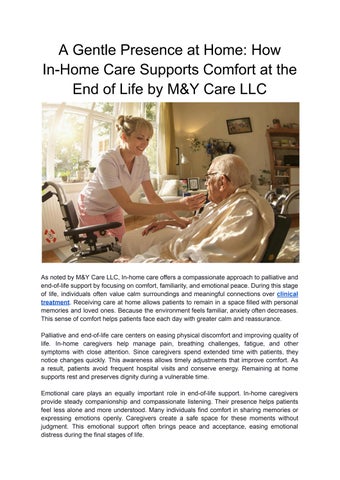
As noted by M&Y Care LLC, In-home care offers a compassionate approach to palliative and end-of-life support by focusing on comfort, familiarity, and emotional peace. During this stage of life, individuals often value calm surroundings and meaningful connections over clinical treatment. Receiving care at home allows patients to remain in a space filled with personal memories and loved ones. Because the environment feels familiar, anxiety often decreases. This sense of comfort helps patients face each day with greater calm and reassurance. Palliative and end-of-life care centers on easing physical discomfort and improving quality of life. In-home caregivers help manage pain, breathing challenges, fatigue, and other symptoms with close attention. Since caregivers spend extended time with patients, they notice changes quickly. This awareness allows timely adjustments that improve comfort. As a result, patients avoid frequent hospital visits and conserve energy. Remaining at home supports rest and preserves dignity during a vulnerable time. Emotional care plays an equally important role in end-of-life support. In-home caregivers provide steady companionship and compassionate listening. Their presence helps patients feel less alone and more understood. Many individuals find comfort in sharing memories or expressing emotions openly. Caregivers create a safe space for these moments without judgment. This emotional support often brings peace and acceptance, easing emotional distress during the final stages of life.
In-home care also provides vital support for families. Loved ones often carry emotional and physical burdens while caring for someone at the end of life. In-home caregivers share this responsibility and offer guidance. They help families understand symptom changes and provide reassurance during challenging moments. Because families receive support, they can focus on meaningful time together. This shared care experience reduces stress and fosters connection during an emotionally intense period. Preserving dignity remains one of the most meaningful aspects of in-home end-of-life care. Patients maintain control over their routines, surroundings, and personal choices. They can rest in familiar spaces, enjoy simple comforts, and stay connected to those they love. This sense of autonomy often brings emotional peace. By honoring individual wishes, in-home care creates an environment rooted in respect and compassion. In-home palliative and end-of-life care provides comfort, connection, and dignity when they matter most. By supporting physical needs, emotional well-being, and family involvement, this approach allows individuals to experience life’s final chapter with peace, warmth, and understanding.