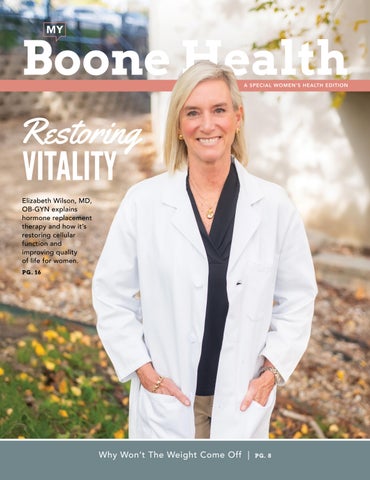
Boone Health A SPECIAL WOMEN’S HEALTH EDITION
Restoring
VITALITY
Elizabeth Wilson, MD, OB-GYN explains hormone replacement therapy and how it’s restoring cellular function and improving quality of life for women. PG. 16
Why Won’t The Weight Come Off | PG . 8
O.U.C.H.! Orthopaedic Urgent Care Hub is your place to be seen right away! 3 New bone, joint, or muscle injury 3 Joint sprain or muscle strain 3 Possible dislocation 3 Swollen joint 3 Possible fracture 3 Sports injury 3 Work injury
Walk in and be seen — no appointment needed! Monday – Friday: 7am-6pm | Saturday: 8am-12pm columbiaorthogroup.com/ouch | 573-443-2402
Table of Contents W IN TE R 2 0 26 MANAGING EDITOR
Erin Wegner STAFF WRITER
Madison Loethen CONTRIBUTING WRITERS
Monica Collins Jenny L. Workman CONTRIBUTING PHOTOGRAPHER
Lana Eklund
Follow us 8
Check Boone Health out on Facebook, X, Instagram, and YouTube.
12
20
22
Please submit comments or feedback to erin.wegner@boone.health or call 573.815.3217 1600 East Broadway Columbia, MO 65201 573.815.8000
For a FREE subscription, scan the QR code, visit boone.pub/subscribe, or call 573.815.3392.
5 6 8
A Note from Lana
20 Heart Health After Menopause
Hospital Headlines
22 Osteopenia, Osteoporosis
Why Won’t the Weight Come Off?
10 Varicose Veins 12 Breast Care 14 Strength Training for Women 16 Hormone Replacement Therapy 18 Christina’s Story
& Osteoarthritis
24 Physician Assistant To Know 25 Therapist To Know 26 Important Nutrients For Women 29 Home Safety Checklist 30 Foundation News
Board of Directors Jerry Kennett, MD
SCHEDULE YOUR ANNUAL MAMMOGRAM TODAY.
Randy Morrow
Mary Beck, DNP, RN, FAONL
Stacye Smith
The Harris Breast Center offers the latest screening and diagnostic breast imaging technology to improve early detection of breast cancer.
Charles P. Bondurant, MD, FABNS, FACS
To make an appointment at Harris Breast Center, visit your patient portal or call Boone Health at 573.815.8150.
Judy Starr
Learn more at boone.health/breast-health Jeffrey Lashley, Ph.D.
4
BOONE HEALTH
Winter 2026
A NOTE FROM LANA
Empowering Women’s Health & Leading with Compassion A Message from Lana Zerrer, MD, Chief Medical Officer, Boone Health
A
s a physician and a woman, I am deeply committed to advancing the health and well-being of women in every stage of life; a commitment that is shared throughout the Boone Health organization. At Boone, we take a proactive and seamless approach to women’s health. Our care is embedded across every touchpoint, focusing on everything our patients may need—regardless of gender. We are proud to have strong representation of women across many of our medical fields with more than two dozen female physicians on staff. At every level of leadership within Boone, women bring vital perspectives that shape our policies, programs, and patient care. This diversity strengthens our ability to meet the needs of our community. When I was pursuing my degree, female representation in medicine was still emerging. Women were often expected to become nurses, not doctors. I’ll never forget when my own pastor suggested I should consider nursing instead of medicine. That moment strengthened my resolve. I knew then that the path forward required not just skill and dedication, but courage and conviction. Earlier in my career, while serving at the VA Hospital, I worked to expand women’s health services—ensuring not only strong clinical care in our facilities but also a welcoming and supportive environment for our employees. That experience reinforced the importance of building systems that care for both patients and the professionals who serve them. Women’s health is not a niche issue—it is a cornerstone of public health. From
heart disease to menopause, the challenges women face are complex, interconnected, and often under-addressed. Over the past few decades, we’ve seen remarkable strides in breast care—advances in screening, treatment, and survivorship that have transformed outcomes for countless women. My hope is to see that same momentum applied to other critical areas of women’s health, including heart health and menopause. Many conditions that affect women—like endometriosis and menopause—remain underresearched and underfunded. These are not just medical issues—they are quality-of-life issues, and they deserve the same level of attention and advocacy. This lack of data has real consequences: women are more likely to be misdiagnosed, experience adverse drug reactions, and face delays in care. I also want to recognize the American Heart Association and its Go Red for Women initiative as a powerful resource for education, advocacy, and support. Their work continues to empower women to take charge of their heart health. Women may experience heart attack symptoms differently than men. If you experience any of the symptoms below, call 911 immediately. • Unusual fatigue or weakness • Shortness of breath, with or without chest discomfort
In this issue of My Boone Health, you will find articles that discuss a variety of concerns women are confronted with as they age including varicose veins, osteoporosis and muscle loss. You’ll read a fascinating story about an occupational therapist who was able to help a woman with lipedema, a chronic condition that causes abnormal fat buildup in the lower part of the body. In addition, you’ll meet Dr. Wilson who is making strides with hormone replacement therapy to treat menopause. I urge every woman to prioritize her health. Schedule regular checkups. Know your numbers—blood pressure, cholesterol, and glucose. Talk openly to your healthcare providers. And most importantly, support one another. When women advocate for their health, they empower their families and communities.
• Pain or discomfort in the back, neck, jaw, or stomach • Nausea or vomiting • Chest pressure or squeezing
Dr. Lana Zerrer
• Lightheadedness or cold sweat
Chief Medical Officer, Boone Health
Boone.Health/My-Boone-Health
5
HOSPITAL HEADLINES
Boone Health Partners with Columbia Orthopaedic Group to Bring Therapy and Lab Services to Patients Directly Traveling hither and yon for doctors’ and therapy appointments can be taxing. And when you’re trying to rehabilitate from significant injuries or surgery, that extra travel can be even more problematic. To help patients have a one-stopshop experience, Boone Health has brought its nationally recognized health care and therapy teams to Columbia Orthopaedic Group. This way, patients can go for a doctor’s appointment, have immediate access for any lab tests, and then walk down the hall for a therapy session. “We’re so happy to strengthen our partnership with COG,” said Ingrid Minge, manager of therapy services for Boone Health. “This is a great fit for patients who now have the additional options of getting both their lab work, like blood tests, done and then also meet with one of our therapists. We expect this will save patients a lot of time and frustration, and it’s one more example of how Boone Health is constantly working to address our patients’ needs.” At COG, located at 1 South Keene Street in Columbia, the Lab Services office is open from 8 a.m. to 5 p.m., Monday through Thursday, and 8 a.m. to noon on Friday. The therapy center, which offers physical, occupational and speech therapy, is open 7:30 a.m. to 5 p.m., Monday through Thursday, and 8 a.m. to noon on Friday.
6
BOONE HEALTH
Winter 2026
A Rose for Organ & Tissue Donors
Pictured from left to right: Robin Sypolt, ICU Patient Care Manager; Kristi Stringer, Coordinator, & Lori Clark, Director, of the Midwest Transplant team in Columbia; Brady Dubois, president and CEO;, Shannon Kuczynski, Chief Nursing Executive; and Dr. Lana Zerrer, Chief Medical Officer.
Rose Vial Signing Ceremony Each year, the Midwest Transplant Network sponsors a rose vial for every partner hospital. The vial carries a personal message of hope, remembrance, and gratitude from the hospital community. It is then placed on the Donate Life Rose Parade Float in Pasadena, California, which is viewed by millions worldwide on New Year’s Day. “For Boone Health, this signing ceremony is a deeply symbolic moment,” said Brady Dubois, president and CEO of Boone Health. “It represents our ongoing commitment to honoring donors and their families, while also raising awareness of the lifesaving impact of organ and tissue donation.” Midwest Transplant Network Patients are referred to the Midwest Transplant Network (MTN), Boone Health’s Organ Procurement Organization (OPO), to determine eligibility for organ and/or tissue donation. Once MTN determines eligibility, Boone Health employees work to: • Ensure all families of eligible donors receive accurate information to make the best donation decision. • Support families when loved ones made a prior decision to save lives (for example, when people provide authorization at the DMV). • Evaluate every organ to maximize the lives saved. • Perform precise and compassionate recovery of gifts. One donor hero can save the lives of up to 8 individuals with organ donation and enhance over 50 individuals through donated tissue gifts. Advances at Boone Health Over the past several years, Boone Health has strengthened its partnership with the Midwest Transplant Network, ensuring that every potential donor is honored and every opportunity for donation is pursued. “Our teams have focused on streamlined referral processes, enhanced family support, and staff education to increase both organ and tissue donation rates,” said Shannon Kuczynski, chief nursing executive. “These efforts have positioned Boone as a regional leader in donation advocacy and patient/family engagement. We are forever in the debt of those who have chosen to give these precious gifts.”
Boone Health Expands Rural Health Care Access with New Clinic Building in Glasgow, Missouri Funding for the project will be provided from the Boone Hospital Foundation. Boone Health officials announced that in an effort to continue addressing the gap in rural health care access, a new clinic will be built in Glasgow, Mo. The project is being accomplished by a commitment from the Boone Hospital Foundation. “This venture is only possible through the immense generosity of the Boone Hospital Foundation and its donors,” said Brady Dubois, CEO of Boone Health. “Together, they are leading the effort by providing up to $1 million to purchase the land and construct a larger, modern clinic that will better serve the Glasgow community.” The new clinic will enhance infrastructure and expand services. Because of additional space in the new building, Boone Health will be adding providers, installing a critical X-ray machine, and performing more procedures, including hydration therapy and skin wound repairs (stitches and/or staples), to ensure residents have access to essential and timely diagnostic care close to home. “We’re beyond excited to have these important resources for our communities in the northwest part of central Missouri; we regularly see patients from 20 surrounding towns in five counties,” said Melinda Hart, nurse practitioner. “Currently, if patients in our community require an X-ray, they have to drive up to an hour depending on the time of day. Having the technology here will help us provide appropriate care much quicker and potentially stave off more serious complications.” This expansion is part of Boone Health’s ongoing efforts to bring its nationally ranked care to 26 counties throughout central Missouri. The Glasgow clinic represents the latest milestone in Boone Health’s mission to deliver high-quality, accessible health care to rural populations. “The project reflects the Foundation’s ongoing mission to improve and invest in the health of the people in the communities we serve. We are excited to partner with Boone Health in making this vision a reality,” said Arlene Heins, Boone Hospital Foundation board president. The clinic is expected to be completed by late summer or early fall 2026.
Boone Health Recognized as No. 1 Employer for Health Care Professionals in the State of Missouri The awards continue to roll in for Boone Health. In September 2025, Forbes announced that Boone Health was recognized as the No. 1 employer for health care professionals in the state of Missouri. “This is yet another outside confirmation of the quality that Boone Health puts into everything we do,” said Brady Dubois, president and CEO of Boone Health. “We were recently ranked as the No. 1 hospital in mid-Missouri for patient care by U.S. News & World Report, but that high-quality care only comes by having a remarkable medical staff, hiring the best, and having a supportive environment for our health care professionals. We work hard every day to make sure that happens so that when patients come to us, they know there is no better place to be than Boone Health.” Boone Health ranked No. 42 nationally, and in their article, Forbes noted that “…the better equipped healthcare professionals are as employees, the better their ability to take care of their patients.” The ranking was based off a survey of more than 17,000 employees in health care, asking those employees how likely they were to recommend their current employer to others. Survey respondents were asked to rate their employer on several criteria, including wages, working conditions and schedules, career advancement opportunities, and safety. Forbes said that the ranked health care organizations demonstrated they were prioritizing the needs and wellbeing of their staffs, which ultimately led to better care for patients. “We talk about our culture here at Boone every day,” Dubois said. “It is the attention to our values of doing the right thing and caring for everyone who walks in our doors – patients, visitors, and employees – that makes working here at Boone special. Having this national recognition affirms that we are continuing to create a stellar work environment that directly impacts every Missourian who seeks their care here at Boone Health.”
Boone.Health/My-Boone-Health
7
WHY WON’T THE
Weight Come Off? K
eri Dryer and her husband Wes welcomed a Boone baby 12 years ago, their daughter Maddie. Keri started to gain a lot of weight with her pregnancy, but it seemed like a different kind of weight gain. Then post pregnancy, Keri noticed she couldn’t lose weight in certain areas of her body. In fact, she noticed her body was getting larger, no matter how active she was. She didn’t know it at the time, but she was in the beginning stages of lipedema, a chronic condition characterized by an abnormal accumulation of fat tissue in the lower body, typically the legs, hips and buttocks. Because hormonal imbalances are believed to be one of the factors of lipedema, Keri believes her pregnancy is what kick-started the lipedema in her body. Lipedema is not related to obesity and is often misdiagnosed. The exact cause of lipedema is unknown; however, it is believed to be a genetic predisposition combined with hormonal factors. Common symptoms include painful or tender fat pads, swelling, especially in the lower legs, easy bruising, dimpling appearance of the skin, and an increased risk of lymphedema (swelling due to fluid buildup). Lipedema is more common in women than men and is believed to affect about 11% of adult women worldwide, although prevalence is hard to determine due to the condition being underdiagnosed and often mistaken for obesity or lymphedema. Even though Keri continued to struggle with her weight loss, she chocked it up to just aging and not being able to lose weight. Keri suffered with lipedema for close to a decade before finding relief. During that time, simple things like walking long distances were hard. Her legs would get really tired and heavy feeling, her knees would buckle and bow in, and she suffered from a lot of back and hip pain. With lipedema, the accumulation of fat tissues become hard nodules under the skin and are painful to the touch. Keri would bruise easily, and she found running difficult because she could feel all the pain from the nodules in her legs, hips and buttocks. “In 2023, someone at my work had a friend who had previously been through lipedema treatments and wondered if I had the same thing,” Keri said. “I had never heard of lipedema before, and I got in contact with the friend to find out more about it.” In January 2024, Keri had her initial appointment with Thomas Wright, MD of Laser Lipo & Vein Center in O’Fallon, MO. After doing a thorough evaluation and taking pictures, Keri was officially diagnosed with lipedema. She had suffered with it for nearly 11 years.
8
BOONE HEALTH
Winter 2026
Unfortunately for Keri, her journey to relief was only just beginning. At that time, her insurance required quite a bit of hoops to jump through before agreeing to surgery, because lipedema was still not as well known. Keri had to have six months of actively trying to lose weight, she had to receive a second diagnosis, and she had to try weight loss remedies. While she was doing the extra work over those six months, Dr. Wright recommended a Manual Lymphatic Drainage (MLD) therapist and told Keri that this would be very helpful in bringing her some relief from the pain until they were approved for surgery to remove the diseased tissue. Dr. Wright provided Keri with MLD therapists she could see, and it included a therapist from Boone Health. Excited to see a therapist from Boone Health, Keri made an appointment with Monica List, an occupational therapist and started seeing her
For more information on Therapy Services, visit boone.health/therapy-services or call 573-815-3868
in February 2025. MLD therapy is a gentle massage that reduces swelling and lymphedema. MLD can also be effective when combined with other therapies, such as compression garments and exercise. “I scheduled weekly appointments with Monica and remember telling her after the first time she worked on my legs how much lighter I felt,” Keri said. “I was able to walk out of that appointment more comfortable.” After six months, Dr. Wright and his team submitted all the documentation to insurance and waited. In July 2024, the insurance company responded, approving four of the five surgeries Dr. Wright had recommended. In August 2024, Keri had her first surgery on her inner thighs. Similar to liposuction, Dr. Wright used a device to break up the buildup of fatty tissue and suction it out of her body. After her first surgery, Dr. Wright removed nine liters (approximately 20 pounds) of diseased tissue from Keri’s inner thighs. After her surgery, Keri continued to see Monica during her time of recovery and found the visits helpful. Continuing to see Monica really helped Keri rebound the fastest post-surgery. In October 2024, Keri had her outer thighs and hips done, and then in December was her calves. She did take a little bit of a break, because as Keri puts it, it is a little bit taxing having to go to back-to-back surgeries and then to go through the recovery process. But in April 2025, she had her arms done. In September, Keri got the approval from her insurance company to have her 5th surgery, which was completed in November. Because Keri also had lymphedema, Monica was able to help Keri get fitted for compression pumps which she uses on her legs one-to-two times each day for one hour. This is a medical device that inflates with air to stimulate fluid movement and reduce swelling. It helps with lymphatic drainage, blood flow and moving fluid out of congested areas. “I’m in a good maintenance phase right now,” Keri said. “I eat a lower carbohydrate diet by eliminating carbs and starches from my diet which helps reduce inflammation, I use my compression pumps daily, wear compression garments as needed, and know Monica is just a call away if I need a therapy session.” And her weight is coming down. Keri says that she has finally started losing weight which has helped her feel stronger, better and healthier than she has in years. Even though lipedema can activate again with hormonal changes such as menopause, Keri’s not worried because she plans on continuing her active lifestyle, diet and compression.
Keri’s success comes from finding the right care team. She feels blessed for being able to do some research and find Dr. Wright and Monica. Monica was able to help her understand what was going to happen along the way, and that was a huge part of her healing process. “If I know what to do and how to combat it, and I feel confident in my care team, then I’m going to feel confident in myself,” Keri said. Before her surgeries, Keri would struggle to keep up during family walks and they would have to slow down to keep her pace. Now, on family walks, Keri’s husband struggles to keep up with her! The biggest change for Keri is how much more energy she has. She feels stronger and healthier, and has more energy than she had in her 20s. Before, it was painful for Keri to sit down and then get up, and now, she’s able to be outside with her daughter playing sports, which is very important to Keri. She’s finally checking items off her bucket list. It’s also been a positive boost for her mental health. Keri shares, “If you’ve been struggling with weight loss and have noticed disproportioned limbs, I would highly recommend finding a care team who specializes in lipedema. Many doctors are still not educated enough in the disease, and your suffering does not have to remain permanent. Women around the US (and world) have traveled, right here to Missouri, for treatment. Advocate for yourself and see your health transform before your eyes.” “Honestly, I’m grateful for the opportunity this disease has provided me,” Keri said. “I use my social media platforms to share what a day-to-day life looks like living with lipedema. I feel blessed to have met other women who are now having their lives changed through the diagnosis of lipedema.” By Erin Wegner
Boone.Health/My-Boone-Health
9
Understanding
Varicose Veins Causes, Prevention, and Treatment Options
V
aricose veins are more than just a cosmetic concern—they can be a sign of underlying venous disease that affects how blood circulates through the legs. These enlarged, twisted veins often appear blue or purple and are most commonly seen in the legs and feet. While they can cause discomfort or swelling, they are also a very treatable condition with the right medical care. Veins carry blood back to the heart, and one-way valves inside the veins keep blood flowing in the right direction. When these valves weaken or fail, blood can pool in the veins instead of moving upward toward the heart. This backup of blood causes the veins to stretch, bulge, and become twisted — resulting in varicose veins. Erica Salinas, MD, a vascular surgeon at Boone Health Vascular Surgery, explains that both genetics and lifestyle play roles in who develops varicose veins. “When trying to prevent varicose veins, a lot of it depends on the type of job you have, as well as your genetics,” Dr. Salinas said. “Wearing compression stockings from a young age, especially if you’re in a job where you’re sitting or standing still for long periods of time, can be very helpful to treat symptoms early or prevent varicose veins and venous reflux before it even starts.”
10
BOONE HEALTH
Winter 2026
Wearing compression stockings can help reduce the likelihood of developing varicose veins or slow their progression.
Certain factors increase the likelihood of developing varicose veins: • Genetics – A family history of venous disease is one of the biggest risk factors. • Prolonged standing or sitting – Jobs that require long periods on your feet or at a desk can increase pressure in the leg veins. • Pregnancy – Hormonal changes and increased blood volume can cause veins to enlarge.
One of the most common effective treatments for varicose veins is endovenous laser therapy (EVLT).
• Age – As we age, vein walls and valves naturally weaken. • Obesity or lack of exercise – Extra weight and inactivity can add pressure to veins and slow circulation. While many people first notice varicose veins because of their appearance, others experience physical symptoms that can worsen over time. Common signs include: • Aching, throbbing, or heavy sensation in the legs • Swelling around the ankles or calves • Itching or skin changes near the veins • Cramping, especially at night • Large, bulging veins visible beneath the skin Dr. Salinas emphasizes that these symptoms shouldn’t be ignored. “Sometimes patients think it’s just a cosmetic issue, but varicose veins can indicate poor vein function that can get worse without treatment,” she explains. A key contributor to varicose veins is venous reflux, which occurs when the valves inside the veins don’t close properly, allowing blood to flow backward. Dr. Salinas notes that there are two main types of venous reflux: deep and superficial. “There are two different types of venous reflux,” she explains. “You have deep veins and superficial veins. For deep venous reflux, compression therapy is the only treatment available; no surgical option exists. But if you have superficial venous reflux, there are surgical treatments that can help.” Superficial venous reflux affects the veins closer to the surface of the skin —
the ones most likely to become visible and symptomatic. Fortunately, these can often be treated with minimally invasive procedures that require little downtime. Boone Health Vascular Surgery offers several effective treatments for varicose veins, depending on the severity and type of venous reflux. One of the most common is endovenous laser therapy (EVLT). “EVLT uses a laser fiber to cauterize the inside of the vein,” Dr. Salinas said. “That causes the vein to scar down and close off, and over time, your body naturally absorbs it. The blood then reroutes through your healthy veins, which restores proper circulation and provides symptom relief.” For patients with larger, bulging veins, Dr. Salinas and her team may perform ambulatory phlebectomy, a minor surgical procedure that physically removes those visible veins through tiny incisions. While some risk factors like genetics and age can’t be controlled, certain habits can help reduce the likelihood of developing varicose veins or slow their progression: • Wear compression stockings – They help improve blood flow and reduce swelling. • Move regularly – Avoid long periods of sitting or standing. Get up and walk around every hour. • Maintain a healthy weight – Extra weight adds pressure to your veins. • Elevate your legs – Raising your legs
above heart level can help blood flow back toward the heart. • Exercise – Activities like walking, cycling, or swimming promote strong, healthy circulation. Dr. Salinas also stresses the importance of early evaluation. “If you notice leg pain, swelling, or visible veins that seem to be getting worse, it’s best to get checked sooner rather than later,” she advises. “The earlier we evaluate your veins, the more options we have for treatment and prevention.” If varicose veins are causing pain, swelling, or affecting your quality of life, it’s time to consult a vascular specialist. At Boone Health Vascular Surgery, patients can expect a thorough evaluation including ultrasound imaging to assess vein function and determine the best course of treatment. “Varicose veins are extremely common, and the good news is that there are safe and effective ways to manage them,” Dr. Salinas said. “Whether it’s through lifestyle changes, compression therapy, or minimally invasive procedures, we can help patients get back to feeling comfortable and confident. By Madison Loethen Boone Health Vascular Surgery provides comprehensive evaluation and treatment for varicose veins and other vascular conditions. To learn more or to make an appointment, call 573-815-2970 or visit boone.health/vascular-surgery.
Boone.Health/My-Boone-Health
11
Breast Imaging Center by the American College of Radiology. The Harris Breast Center is where you will go for several breast cancer diagnostics, including mammography, stereotactic biopsy, breast ultrasound and breast MRI. The quality of imaging and the expert abilities of Boone Health’s Radiologists who specialize in breast imaging will ensure that patients receive the clearest and most accurate information possible to help detect breast cancer. This allows for appropriate treatment to begin as soon as possible, greatly increasing the chance of longterm survival.
Breast Care
AWARENESS E
ven though October is nationally recognized as Breast Cancer Awareness Month, every month is breast cancer awareness month. According to the National Breast Cancer Foundation, breast cancer remains the most commonly diagnosed cancer among women in the United States. One in eight women in the United States will face a breast cancer diagnosis in her lifetime. On average, a woman is diagnosed every two minutes.
Scheduling Your Yearly Mammogram
The majority of breast cancer cases occur in women over 50, with roughly 16% affecting younger women. Roughly 66% of breast cancer cases are diagnosed at
12
BOONE HEALTH
Winter 2026
a localized stage, meaning the cancer is contained to the breast tissue and has not spread to lymph nodes or other parts of the body, and treatment is most effective. Significant disparities persist, with black women 40% more likely to die from breast cancer than white women and having the lowest five-year survival rate of any racial or ethnic group. That’s why it’s so important to remember to schedule your yearly mammogram. You can schedule a mammogram by calling 573815-8150 or by logging into your Boone Health patient portal. Harris Breast Center
Boone Health’s Harris Breast Center has been designated a Comprehensive
Boone Health Breast Care
Opened in 2025, Boone Health Breast Care is a clinic dedicated solely to breast health. The creation of this clinic allows the care team to focus exclusively on breast care. This enables the team to serve more patients daily and focus on providing compassionate, expert breast care in a dedicated environment. Patients can now access timely appointments for services ranging from diagnostics and surgical planning to treatment and ongoing care all in one location. Boone Health Breast Care provides a comprehensive range of services, including breast cancer screenings, diagnostics, breast-conserving surgeries, mastectomies with and without nipple preservation, ultrasound-guided biopsies, benign breast disease management and advanced oncoplastic surgical options. The clinic offers a focused, patientcentered approach to both benign and malignant breast conditions, with increased appointment availability and a space built specifically for breast care services. Patients can now access timely appointments for services ranging from diagnostics and surgical planning to treatment and ongoing care in one location. “Caring for patients with breast health needs is deeply personal to me,” Anne Petersen, MD said. “Every decision we made in designing this clinic was about
creating a space where patients feel seen, supported and prioritized. This is more than a clinic. It’s a place of hope, healing and empowerment.” The Breast Care Clinic includes 9 exam rooms, one procedure room, a prosthetic and bra shop as well as Boone Health’s High Risk Breast Clinic. High Risk Breast Clinic
During your mammogram, your Harris Breast Center Technologist will ask you questions about your personal and family history and complete a Lifetime Risk Assessment for breast cancer. Research has shown that certain health and family history factors increase your risk of developing breast cancer. If you’re at an increased risk of breast cancer, the High Risk Breast Clinic provides comprehensive breast cancer screenings, genetic risk evaluation and counseling to help patients be proactive in their breast health. A New Diagnosis
After a patient has received a new diagnosis, they will schedule a preoperative visit with one of the Breast Center providers. During this
appointment, the provider will explain what the patient has and what options are available, which may include being able to keep their breasts or if a mastectomy is required. The provider will explain the type of cancer and make sure patients understand what the pathology report means. Any new breast cancer patient gets genetically tested during that visit. An MRI can also be done prior to surgery to rule out any other cancers on the same side or the opposite side. Depending on the type and stage of cancer, a final treatment plan will be set up, based on what is in the patient’s best interest. Prosthetic and Bra Shop
Boone Health Breast Care also includes a prosthetic and bra shop for patients. Dr. Petersen recognized a need in midMissouri for a prosthetic and bra shop that was local and assessable to patients. Items that are available are various styles of bras with different levels of support to help patients through their breast cancer journey and healing. The shop also includes certified fitters that will help patients get fitted to their body style needs. There is a state-of-the-art room the fitters use for privacy and comfort.
Schedule Your Yearly Mammogram • Call 573-815-8150 • Self-schedule on your Boone Health Patient Portal • Lifetime Risk Assessment performed during mammograms
Harris Breast Center • Services include mammography, stereotactic biopsy, breast ultrasound and breast MRI • Located in the Outpatient Tower at Boone Hospital Center on the Lower Level • For more information or to schedule an appointment, call 573-815-8150
Boone Health Breast Care • Comprehensive services • High Risk Breast Clinic - Genetic risk evaluation, counseling and proactive screenings • Prosthetic and Bra Shop • Located at Broadway Medical Plaza 2 – 1605 E Broadway, Suite 200 • For more information or to schedule an appointment, call 573-815-8277
Boone.Health/My-Boone-Health
13
STRENGTH TRAINING Why It Matters for Women 14
BOONE HEALTH
Winter 2026
MUSCLE, METABOLISM & HEALTHY AGING Strength training helps preserve and build muscle mass, countering age-related loss (sarcopenia), especially after age 30, when adults may lose 3–8% of muscle per decade. This is key for longterm functional independence and vitality. In addition, increased muscle mass boosts resting metabolism, supporting weight management and metabolic health.
STRONG BONES, REDUCED OSTEOPOROSIS RISK Lifting weights or performing resistance exercises places beneficial stress on bones, stimulating increased bone density. This is particularly crucial for women, who are at higher risk for osteoporosis—especially post-menopause.
HEART HEALTH, DIABETES PREVENTION, AND LONGEVITY Regular strength training, combined with aerobic activity, helps improve insulin sensitivity, lower blood pressure, enhance heart health, and may even extend lifespan. Women may reap these health benefits more efficiently than men from the same exercise dose.
BETTER DAILY FUNCTION, MOOD, AND CONFIDENCE Resistance training improves daily physical performance (like climbing stairs or carrying groceries), reduces fall risk, supports mental health, enhances mood, and boosts selfesteem. According to The American College of Sports Medicine (ACSM) & Centers for Disease Control and Prevention (CDC), here are their recommended guidelines.
MYTH-BUSTING WHY STRENGTH TRAINING WON’T BULK YOU UP MYTH: Women Will Become “Bulky” FACT: Women have significantly lower
testosterone levels than men, making dramatic muscle hypertrophy unlikely. Research shows women gain strength at similar rates to men but develop less muscle size.
MYTH: Only Aerobic Exercise Matters FACT: A combination of strength training
and cardiovascular workouts is far more effective—strength training enhances metabolism, functional capacity, and longterm health in ways cardio alone cannot.
MYTH: Strength Training is Risky or Not for Beginners
FACT: When done with proper form and progression, strength training is safe. Injury rates are low—only about 0.6% among people assigned female at birth. Starting with bodyweight and gradually incorporating light resistance bands or weights is appropriate for most.
FREQUENCY & STRUCTURE • Perform resistance training 2–3 times per week, targeting all major muscle groups.
• Beginners can start with one set of 8–10 exercises, doing 8–12 reps (or 10–15 for older adults), progressing to 2–4 sets over time. • Use moderate intensity for beginners, heavier for more experienced exercisers.
INTEGRATING CARDIO, FLEXIBILITY & FUNCTIONAL TRAINING • ACSM also emphasizes a mix of moderate/vigorous aerobic activity (e.g., 150 min moderate or 75 min vigorous per week), flexibility work, and balance/ neuromotor exercises.
• The CDC states that engaging in strength training alongside aerobic activity provides comprehensive health benefits— from managing weight to reducing chronic disease risk. Strength training is not just an option—it’s a foundational component of women's health at every life stage. Far from making you bulky, it enhances strength, body composition, mental health, and metabolic well-being. With guidance from ACSM and CDC, and a thoughtful approach to training, women can safely and effectively unlock these benefits. When people ask me for advice, I always tell women to find an activity they genuinely enjoy—because if you don’t enjoy it, you’re less likely to stick with it. Personally, I do not care for the traditional weightlifting, but I love group exercise classes that include strength training. That way, it feels fun and motivating while still getting the benefits. By Jenny L. Workman, Manager Community Wellness
Boone.Health/My-Boone-Health
15
Hormone Replacement Therapy Restoring cellular function and vitality for women. With Elizabeth Wilson, MD, OB-GYN, Women’s Health Associates and Boone Health
A
s women approach midlife, the hormonal shifts of perimenopause and menopause can bring profound changes—hot flashes, disrupted sleep, mood swings, fatigue, and a sense that something just feels “off.” For many, hormone replacement therapy (HRT) can be a safe and effective way to restore cellular function and improve quality of life.
At Boone Health, Dr. Elizabeth Wilson,, OB-GYN with Women’s Health Associates, is helping women better understand their options and feel empowered to take charge of their health. She specializes in HRT and has an interest in functional medicine, with an emphasis on holistic care. Hormone replacement therapy involves restoring hormones that the body no longer produces in adequate amounts— most commonly estrogen, progesterone, and testosterone. “As women age, their hormone levels drop sharply, typically around age 51,” Dr. Wilson explains. “That loss affects everything from energy and sleep to metabolism and mental clarity.” The goal of HRT is to replenish those essential hormones and ease symptoms associated with menopause and the aging process. “We do this in the same way we replace the thyroid hormone when someone has an underactive thyroid,” Dr. Wilson said. “It’s about helping the body regain proper function.” A term that often comes up in discussions about HRT is bioidentical hormones. These are lab-made hormones that have the same chemical structure as the hormones naturally produced in the human body. “When we say bioidentical, we mean it’s identical to what your ovary makes,” Dr. Wilson said. “It doesn’t come straight from
When to Talk to Your Doctor About HRT If you’re experiencing any of the following, it may be time to discuss hormone therapy with your healthcare provider: • Frequent hot flashes or night sweats • Mood changes, irritability, or brain fog • Difficulty sleeping • Vaginal dryness or discomfort • Loss of sexual desire • Unexplained fatigue or low energy • Noticeable changes in weight or metabolism
16
BOONE HEALTH
Winter 2026
Options for Hormone and Metabolic Therapy Modern women’s health combines hormone balance and metabolic optimization for total wellness. Treatment plans are individualized and may include: Estrogen Replacement Available as skin patches, creams, gels, oral tablets, or vaginal inserts. Helps manage hot flashes, improve sleep, and protect bone health. Progesterone Therapy Often used with estrogen to balance hormones and protect the uterine lining. Taken as oral capsules. Testosterone Therapy For women with low libido, fatigue, or loss of muscle mass. Delivered as creams, troches, or subcutaneous pellets. DHEA and Thyroid Support Supplemental hormones that can support metabolism, mood, and energy in certain cases. GLP-1 Medications (Metabolic Hormone Therapy) GLP-1 receptor agonists, such as tirzepatide or semaglutide, help improve insulin sensitivity, reduce inflammation, and support weight management. Lifestyle Integration Nutrition, strength training, and stress management are key components of any hormone or GLP-1 therapy plan.
a plant—plants don’t make human hormones— but the structure matches what your body recognizes and uses.” Hormones can be delivered in several forms, including oral pills and troches; skin patches, creams and gels; injections and vaginal preparations. The right choice depends on the patient’s symptoms, health history, and preferences. Dr. Wilson explains that no two patients are alike—and neither are their hormone needs. “This takes time, collaboration, and education,” she said. “There’s no one-size-fits-all approach. Increasing testosterone may help some women, but it’s unlikely to be the answer for everyone.” She begins with a detailed hormone and symptom questionnaire, followed by a thorough discussion of each patient’s health goals. “Every woman has a different story and a different reason for wanting to explore HRT,” Dr. Wilson said. Comprehensive lab work helps assess hormonal, metabolic, and nutritional health, allowing Dr. Wilson to see how all the pieces fit together. “It’s important that patients understand what’s happening in their bodies,” she adds. “Education is empowering.” The changes women experience during perimenopause and menopause don’t occur in isolation. As Dr. Wilson explains, metabolic health also declines over time. “Blood sugar and inflammation tend to rise, and we burn less energy for fuel,” she said. “Hormone loss can accelerate those changes.” HRT can help improve energy, sleep, mood, and even bone health—but it works best as part of a comprehensive approach. “I believe hormones are a wonderful anti-aging and antifrailty tool, but they’re not magic,” Dr. Wilson said. “Nutrition, exercise, and good sleep are equally important.” For many years, hormone replacement therapy was viewed with caution due to findings from the 2002 Women’s Health Initiative (WHI) study, which suggested that HRT increased risks for breast cancer and heart disease. However, subsequent research has shown that the story is more nuanced. Later analysis found that the increased breast cancer risk was seen only in women taking Provera, a nonbioidentical hormone. “Understandably, many women and doctors fear estrogen likely because some breast cancer drugs block estrogen. If you just take several
steps back and consider that estrogen can lower blood sugar and improve sleep, both of which helps reduce overall cancer risk, the picture becomes much more nuanced,” Dr. Wilson explains. “The heart risks occurred mainly in older women who hadn’t used hormones for years and were given oral estrogen, which increases clotting risk. When used appropriately, bioidentical hormones—especially through the skin—can be both safe and beneficial.” One of the most talked-about HRT delivery methods today is testosterone pellets—small implants that release hormones gradually over time. “Pellets can raise testosterone levels much higher than normal, and some women feel fantastic with them,” Dr. Wilson said. “But others experience side effects or feel they don’t get the same results their friends do. The key is ongoing conversation and tailoring the approach to each woman’s needs.” Patients often describe their HRT results as “life-changing” or say they “feel like themselves again.” Dr. Wilson said those comments drive her to learn more. “I want to understand exactly what changes for them and why. I learn from each patient, and that gives me more knowledge to help the next patient.” Dr. Wilson is interested in growing research connecting metabolism, insulin resistance and cancer. “We're learning that insulin receptors may be just as important as estrogen receptors when it comes to cancer growth,” she said. “It's an exciting time in women's health - we're finally connecting the dots.” For Dr. Wilson, the heart of her work is helping women understand their bodies and make informed choices. “Hormone therapy doesn’t stop aging,” she said, “but it can help women move through this stage of life with more strength, energy, and confidence. My goal is for every patient to walk away understanding what’s happening inside her body and knowing she has options.” By Madison Loethen Dr. Elizabeth Wilson is an obstetrician-gynecologist with Women’s Health Associates and Boone Health. She specializes in hormone therapy, metabolic health, and women’s wellness. Her colleagues Lynn Puckett, MD and Kimberly Morse, MD also work with hormone replacement therapy. To learn more or to make an appointment, call 573-443-8796.
Boone.Health/My-Boone-Health
17
Christina’s
STORY A life of brilliance and a silent battle.
C
hristina Bohn was an accomplished person, who had a wonderful, abundant life. From the time she was young, she seemed to shine in every direction. In high school, she was admired for her kindness, talent, and drive. She sang beautifully, played piano, excelled in academics, and thrived in athletics. After high school, she attended Brigham Young University in Utah, where she entered the nursing program. While studying, she taught economics labs, conducted nursing research, and graduated as valedictorian. Christina went on to become a thoracic ICU nurse — admired by colleagues, loved by friends, and cherished by her family. But behind her radiant smile, Christina carried a hidden struggle. For years, she masked symptoms of a condition few understood: Premenstrual Dysphoric Disorder (PMDD). Unlike PMS, PMDD is a severe, hormone-based mood disorder that can cause depression, anxiety, psychosis, and even suicidality. Because symptoms appear in one part of the month - the two weeks before menstruation - they are often misdiagnosed or dismissed. In the two weeks before her period, Christina would experience intense depression and anxiety, and for years, she was able to mask her symptoms; her parents, her roommates, and other close friends had no idea. “It’s a spectrum disorder which is how Christina could hide her symptoms for years,” said Marybeth Bohn, Christina’s mother. “School semesters, test dates, due dates and things to look forward to would keep her moving. After she graduated, she had work schedules and volunteered at her church where she was always planning events. When Covid happened, everything halted, and she didn’t have anything moving her forward. That’s when symptoms increased dramatically.” Christina was misdiagnosed several times over the years. At one point, doctors said she had bipolar disorder, one of the most
18
BOONE HEALTH
Winter 2026
common errors made in PMDD cases. Christina was always willing to try anything – antidepressants, anxiolytics, mood stabilizers, Cognitive Behavioral Therapy (CBT), and transcranial magnetic stimulation (TMS)--with little to no success. Christina described her PMS as lasting for two weeks at a time, but her parents didn’t know what that meant. None of them knew there was something far worse than PMS. By October 2020, Christina’s symptoms escalated, and she left her home, her husband and her two young kids to stay with her parents for two and a half weeks to recover from yet another misdiagnosis (treatment resistant depression) and the prescribed treatment: electroconvulsive therapy (ECT). After 11 ECT sessions, she needed the time to sleep and recover. She never returned to her husband and children because her symptoms were so serious that she needed more medical help, and her husband could not care for her and the children. Her parents witnessed her go from having suicidal thoughts to having suicide attempts and psychosis. “Her first suicide attempt and her first time experiencing psychosis was after Thanksgiving 2020,” Marybeth said. “I thought she was finally sleeping in after having insomnia for three weeks because her bedroom door was shut, but she had snuck out early in the morning, and the police found her in the woods in full psychosis.” After another suicide attempt, Christina was brought back to life when a surgeon happened to discover her and performed CPR. Almost a month later, Christina told her mom that she would never attempt again, but that promise lasted only two days. In the ER, Christina said, “Mom, I don’t know what it is. I don’t know if I can explain it. Something just took over. I’m so glad to be alive.” Several hours later, Christina started her period. Christina had 11 suicide attempts in one year.
To support the Christina Bohn Foundation or to find resources, visit www.ChristinaBohnFoundation.org.
Hospitalized repeatedly, Christina spent more than 100 days cumulatively between two behavioral health units during her final year. Each hospitalization coincided with the start of her period, but nobody made the connection. When Marybeth asked doctors if her cycle could be involved, the idea was dismissed. Christina continued seeking help, still no one asked the most basic question: Could this be connected to her cycle? In July 2021, after nine months of watching Christina suffer, Marybeth was lying in bed when she heard a voice urging her to look up “menstrual psychosis.” She did an Internet search, and articles about PMDD came up. That night, she read everything she could about PMDD. Suddenly, the puzzle pieces fit: Christina’s cycle, her hospitalizations, her symptoms all aligned with PMDD. The next morning, Marybeth called Christina in the hospital to tell her they figured it out – she had PMDD! Christina told her parents that she had likely experienced PMDD since high school, but she had learned to hide it. Christina’s inpatient psychiatrist recommended seeing a gynecologist right away. He was aware that birth control (one of the evidence-based treatments for PMDD) had worsened her symptoms, so he recommended she see a gynecologist to start chemical menopause and eventually have a Total Hysterectomy with Bilateral Salpingo-Oophorectomy (THBSO) the removal of the uterus, cervix, both fallopian tubes and both ovaries. The first gynecologist told her she was “doing great” and to remain on the prescription from her psychiatrist (with a potentially deadly antipsychotic). The second gynecologist canceled the appointment just a few days before because he felt her PMDD was too severe for him to treat. The third gynecologist disregarded Christina’s negative history with birth control and
chose to decline the psychiatrist’s request for chemical menopause and prescribed a birth control patch. Through it all, Christina remained compliant and wore a hormone patch. At one point, Christina shared how much she was enjoying a beautiful fall day, and Marybeth thought, “Wow! What a difference! I think we’re on our way!” Little did she know, Christina was journaling her suicide plans. “We didn’t learn what PMDD was until the final three months of Christina’s life, and by then, it was too late,” Marybeth said. Christina died by suicide on Nov, 3, 2021, at age 33. Christina’s story is not unique. PMDD affects one in 20 women — as many as 4.2 million in the U.S. alone1. It is often misdiagnosed, most commonly as bipolar disorder. The statistics are staggering: • 72% of women with PMDD experience suicidal thoughts • 49% make plans • 34% attempt suicide2 “It takes an average of 12 years to receive a diagnosis due to lack of awareness, yet a diagnosis can happen in a matter of two or three months after tracking daily if a provider knows about PMDD,” Marybeth said. “It’s important to know PMDD can happen at any time during the reproductive years–from a girl’s first period or anytime on through perimenopause.” PMDD is not simply “bad PMS.” It is a severe, biological disorder that can be fatal. “PMDD is like being thrown out in the open ocean in a storm and you’ve got to try to tread water for two weeks,” Marybeth said. “It’s dark, frightening, overwhelming, and exhausting to deal with these symptoms that keep coming with no breaks until bleeding begins.” Families, providers, and communities must learn to ask the right questions, which Christina suggested to her mom
when she learned she had PMDD. The Bohn’s call these “Christina’s Questions:” • When was your last period? • When are you expecting your next period? • What is PMS like for you? “If you know someone who seems full of life one week and disappears the next, who breaks down before every period, who has tried every therapy, but the darkness returns every month - it might be PMDD,” said Maybeth. Symptoms include extreme mood swings, depression, anger, rage, anxiety, suicidal thoughts, brain fog, and feeling like a different person before the period. Awareness is the first step in getting help3. “We are proud of the history we’ve made so far, in honor of Christina, to increase awareness of PMDD and to help more women,” Marybeth said. In 2023, Steve and Marybeth worked with the Missouri Legislature to pass the nation’s first annual PMDD Awareness Day, which is on Christina’s birthday, Oct, 2. In 2024, they launched the annual Christina Bohn Memorial 5K for PMDD Awareness that brought together women from 18 states and two countries. One month later, they started the Christina Bohn Foundation. By Erin Wegner
1. Epperson, C. N. et al. (2012) Premenstrual Dysphoric Disorder: Evidence for a New Category for DSM-5. The American Journal of Psychiatry, 169(5), 465–475. DOI: 10.1176/appi.ajp.2012.11081302. 2. Eisenlohr-Moul, T. et al. (2022) Prevalence of lifetime self-injurious thoughts and behaviors in a global sample of 599 patients reporting prospectively confirmed diagnosis with premenstrual dysphoric disorder. BMC Psychiatry 22, 199. https://doi.org/10.1186/s12888-022-03851-0. 3. Dudley, Jill; PMDD and Christina video, 2025, 34th Street Marketing, Columbia, MO
Boone.Health/My-Boone-Health
19
Heart Disease in Women Increases After Menopause I
n premenopausal women, estrogen is cardioprotective. It prevents plaque buildup in arteries, reduces inflammation and promotes vascular health. During menopause, estrogen levels decrease, increasing a woman’s risk of heart disease. Throughout menopause, women are also more likely to have increased
20
BOONE HEALTH
Winter 2026
blood pressure, see weight changes, and experience an increase in cholesterol, specifically the bad cholesterol, LDL. Even changes in weight and visceral fat, the fat distribution in the mid-section, can put women at greater risk for heart disease. “During menopause or even perimenopause, women may have
worrisome symptoms like palpitations and chest pain. And it can be difficult to know if they are menopausal symptoms or related to something cardiovascular,” said Mozow Zuidema, MD with Missouri Heart Center and Boone Health. “Staying hypervigilant to what their symptoms might actually be is very important.” If you experience tightness in your chest, it should spark some sort of inquiry about what that symptom could be from. Was it anxiety, GERD, an esophageal spasm? If the symptoms come after exerting energy, but there are no other symptoms present, then getting an appropriate evaluation may be needed, whether it’s at the emergency room or a screening, depending on the severity of the symptoms. “We are now realizing that everyone, men and women, can have either very typical symptoms – such as that feeling of an elephant sitting on the chest, or heaviness – AND atypical symptoms such as headache, shortness of breath, dizziness, nausea, vomiting, weakness and unusual fatigue, jaw, back or abdominal pain,” Dr. Zuidema said.
To learn more about heart and vascular care, visit boone.health/heart-and-vascular-care
Typical heart attack symptoms are what used to be attributed to men’s heart disease. For women, they may attribute pressure on their chest to something else, like indigestion, and may not realize that they have heart disease. “As women, we tend to discount what our symptoms are and keep pushing through with the list of things we need to get done that day. But we really need to realize that heart disease is the number one cause of death in women, as it is in men,” Dr. Zuidema said. Treatment for preventing heart disease is the same at any age. Managing these will help reduce the risk of cardiovascular disease: • Eat a heart healthy diet • Exercise regularly • Maintain a healthy weight • Eliminate tobacco use • Keep an eye on blood pressure and treat it appropriately • Check your cholesterol • Know blood sugar numbers and whether you may be prediabetic or diabetic • Get regular visits with your provider • Know your family history • If you have new symptoms or findings that needs a cardiologist input, get a referral to a cardiologist to do that screening or to further evaluate those symptoms If a woman does have a family history of premature coronary artery disease, and all of her other risk factors are negative, then a coronary calcium score is a great screening tool. “Women do a great job of taking care of everyone else and sometimes leave themselves last. But, in this instance, and especially during women’s heart month, we should put ourselves first,” Dr. Zuidema said. By Erin Wegner
Early Detection with the Cardiac Calcium Score A cardiac calcium score screening checks for calcium build up (plaque) in the walls of the coronary arteries. People with a higher calcium score are at greater risk for heart disease, heart attack and stroke. The result will include your coronary calcium score, which is a number that can range from 0 to more than 400. A score over 100 means you are more likely to have heart disease, and a higher score means a higher risk of having a heart attack. This is a non-invasive CT scan. Results from this scan may allow your doctor to identify possible heart disease before you have signs and symptoms. To make an appointment for your cardiac calcium screening at Boone Hospital or at Nifong Radiology, visit your patient portal or call Boone Health at 573-815-8150. There is a $100 out-of-pocket cost for this screening.
Boone.Health/My-Boone-Health
21
OSTEOPENIA, OSTEOPOROSIS AND OSTEOARTHRITIS with Hannah Williams, Physical Therapist, Boone Health Therapy Services
B
ones, bones, our magical bones. Human bones grow stronger and more dense (less prone to fracture) until we reach the age of about 25. As we go through young and middle adulthood, from about 30 to 50, our bone density remains stable. This is due to our bones breaking down while new bone builds simultaneously. After about 50, bone breakdown takes over more than new bone being formed, and bone density starts to decline. Most women will experience a decrease in their bone density after menopause. Bone density is measured by a DEXA scan (dual x-ray absorptiometry). It measures the amount of calcium and other minerals you have in your bones. Your results will include a number called a T-score. The lower your number (the more negative your number is), the weaker your bones are and the greater likelihood that you may fracture or break a bone in the future.
T-SCORE VALUE
RISK CATEGORY
> 1.0
High BMD
-1.0 to 1.0
Normal BMD
-2.5 to -1.0
Osteopenia
< -2.5
Osteoporosis
Osteopenia
Similar to prediabetes being the precursor for type 2 diabetes, osteopenia is a precursor for osteoporosis. After a bone density scan, if your number is between -1.0 to -2.5, you have osteopenia. Osteopenia is a diagnosis given to people with bone density that is lower than the normal range but is not at the stage to be classified as osteoporosis. A T-score in this range should not be ignored, as it does still indicate an increased risk for fracture. If you get diagnosed with osteopenia, you’re likely going to get osteoporosis.
Osteoporosis
If your T-score from a DEXA scan is lower than -2.5, you have osteoporosis. Osteoporosis is a disease of the bones. It is a decrease in bone density to a point where there’s a greater risk for fractures. Fragility fractures are a fracture when a person who is standing upright falls to the ground or from other minimal trauma. Vertebral compression
22
BOONE HEALTH
Winter 2026
fractures, or spinal compression fractures are fractures at the level of the spine. These can come from inappropriate lifting, a fall, or other activities such as – twisting wrong, opening a window that is stuck, or picking a grandkid up with unsafe body mechanics over the course of a weekend. Humerus (upper arm bone), wrist and hip fractures are also common with osteoporosis.
How Can Therapy Help With Osteoporosis?
“It’s important to mention that bone density will not likely increase with exercise alone. That’s something that would require medication,” Boone Physical Therapist Hannah Williams said. “But therapy can help prevent falls.” Therapy will work on looking at fall risk, working on balance, and strengthening legs to support low fall risk and normal function. And while it won’t increase bone density, therapy can help maintain bone density. “Over time, we expect your bone density to continue to decline without intervention," Hannah said. To maintain bone density, therapy works on weight bearing exercises and resistance training.
For more information on Boone Therapy Services or to make an appointment, call 573-815-3868 or visit boone.health/therapy-services
“Bone density is site specific, so if we help you strengthen the bone in your leg, it’s not going to result in an increase in bone density in your shoulder,” Hannah said. “For that reason, we work on full body strengthening. We also work on flexibility and balance to help with overall health and to decrease fall risk. While physical therapy helps maintain bone density, working with a physician to address nutrition and possible medication is the best place to start.”
osteoarthritis, this is a common condition most people beyond the age of 30 are going to have without pain. Most of us walking around have it and don’t even know it. There can be pain associated with osteoarthritis. Certain joints may hurt after they’ve been moved, or even the opposite. Joints can become stiff if they haven’t moved in some time.
How Can Therapy Help With Osteoarthritis?
Osteoarthritis
Osteoarthritis is something that most of us will have. It’s the gray hair of the bones. Our bones are separated by cartilage, which serves as a cushion and helps them not rub against each other. As we age, cartilage in certain joints may wear down, leaving bone to rub together. Hips, spine, knees and hands are the most common joints to get osteoarthritis. On its own, it’s not a cause for concern. Even if a back x-ray shows degenerative changes, degenerative disease, or
“Physical therapy is a great option if you have pain associated with osteoarthritis.” Hannah said. “During your sessions, we can work on improving flexibility, decreasing inflammation, improving range of motion, and strengthening the muscles around the joint to support the joint for better function and alignment. “We won’t be able to change or remove your osteoarthritis, but we can help you live pain free.” By Erin Wegner
OSTEOARTHRITIC EFFECTS
Disc Nerve Vertebra
Typical Spine
Bone Spur Narrowed Disc
Osteoarthritic Spine Boone.Health/My-Boone-Health
23
GETTING TO KNOW A BHC PHYSICIAN ASSISTANT
Tawny Loyd, PA-C
Breast Care and General Surgery, Boone Breast Care Clinic
I
am originally from the Chicago area, but I live in Columbia now with my husband and 1-year-old son. I received my bachelor’s degree from Truman State University where I played basketball and met my husband. I worked as an EMT in Saint Louis until I was accepted into PA school. I received a Master of Physician Assistant Studies from the University of Saint Francis in Fort Wayne, Indiana. I accepted a job as a Physician Assistant/Surgical First Assist with the Boone General Surgery group right out of school. I have recently transitioned to working with Dr. Petersen in the Boone Breast Care clinic where we see patients with many different breast concerns as well as continuing to practice general surgery.
Why did you get into the health care field? I have always been fascinated with medicine, but what really drew me in was the opportunity to help people in a meaningful way. Being a Physician Assistant allows me to take extra time to connect with patients, listen, and provide medical knowledge that will hopefully, make a difference in their care. What interested you in your particular specialty? I have always been interested in breast cancer and breast care. I feel like there are so many lives that breast cancer touches, individually or through loved ones, and the ability to see patients and help them along their journey is very meaningful to me. Even helping women experiencing benign breast disease is important because it can be scary when something is occurring in the breast at any age. What is the most rewarding part of your job? Being a part of a team that takes care of breast cancer patients is very rewarding. I am grateful to be a part of their journey and try to help make a difficult time a little less overwhelming.
What advice would you give someone looking to become a Physician Assistant? I’d tell anyone thinking about becoming a PA to go for it because it is truly such a rewarding career. Be prepared to work hard and never stop learning. Gaining hands-on experience prior to becoming a PA is key and will help tremendously throughout school and when you start your career.
What is the most challenging aspect of your job? The most challenging part of my job is witnessing the emotional toll that breast cancer takes – not only on patients, but their families too.
What do you enjoy doing outside of work?I love to read books and listen to audiobooks. Since having my son, I don’t have as much time to myself, but I enjoy spending my free time with him and my husband. He definitely keeps us busy these days!
What do you see changing in health care in the next 5 to 10 years? I would like to think that we will see healthcare become more connected and patient centered over the next 5-10 years. Technology, such as AI, will keep growing and help with early detection and efficiency. These advances in technology will give providers more time to spend and connect with their patients.
What advice would you give to someone who is going to be a patient in a hospital for a period of time? My biggest advice is to be your own advocate and do not be afraid to ask questions. It is easy to feel overwhelmed in a hospital but understanding what is happening and why can make a big difference.
24
BOONE HEALTH
Winter 2026
GETTING TO KNOW A BHC OCCUPATIONAL THERAPIST
Monica List OT-CLT/LANA Occupational Therapy, Boone Therapy Services
I
was born and raised in Wisconsin. When I was thirteen, we moved to Kearney, Mo. I graduated high school in Liberty and then came to Columbia for college and decided to stick around after I graduated. My husband Drew and I have been married for 10 years. We have a dog named Harley.
Why did you get into the health care field? I knew when I was five years old that I wanted to be an occupational therapist. My brother Adam had special needs growing up. I used to attend his therapy sessions when he was little. What interested you in your particular specialty? I initially got into this area out of necessity. We had one therapist who was certified. She had a full-time outpatient schedule, and it was difficult for her to manage consultations; that we would get for inpatient. I told her I was willing to help with the inpatient consultations; I just needed a little guidance. Within a year she ended up relocating out of state. Since I had little experience, my supervisor asked me if I wanted to get certified and I agreed. What started as a necessity has grown into a passion. People with lymphedema and lipedema often come to our clinic as a last resort. Patients have often been through the healthcare system with no real answers or solutions until they find our clinic. What is the most rewarding part of your job? Especially in terms of lipedema, it is so rewarding to validate patients. Many patients have had lifelong struggles with their symptoms. They live with heaviness and pain. Many patients are told time and time again by health care providers that they need to lose weight. Some patients do everything they can with no relief in symptoms until they find a lymphedema therapist who can help them understand their condition and build confidence to selfmanage their swelling and other symptoms. What is the most challenging aspect of your job? Managing lymphedema and lipedema is a full-time job. Patients need to complete self-massage; they need to be able to put compression on and take it off. They need to eat a healthy diet and exercise. Not all patients are physically capable of managing their symptoms or have a support system that can help. Insurance can be frustrating to deal with as well. Sometimes they do not believe in covering surgery for lipedema. A lot of commercial plans do not have coverage for compression garments. Insurance can also dictate the number of visits we get with our patients.
What has changed in your field since you started practicing? The lymphedema treatment act that was passed in January of 2024 was monumental. Patients who are on Medicare now get coverage for compression garments to manage lymphedema/lipedema. What do you see changing in the next 5 to 10 years? Awareness is continuing to grow. For medical billing, ICD-10 codes are used to identify diseases. Hopefully in the next year or two, there will be an ICD-10 code for lipedema. I am hopeful that insurance companies will follow Medicare guidelines for compression garment coverage to decrease the financial burden to our patients. What do you enjoy doing outside of work? I love spending time outside. My husband and I enjoy traveling, especially to Colorado for ski season. I do not sit still well so I am always busy with projects around the house and tinkering. I do enjoy baking as well. What advice would you give someone looking to become an occupational therapist? Do everything you can to get involved in healthcare early. I competed the program to become a certified nurse assistant (CNA) when I was a senior in high school. I learned early on how to talk to patients and how to take care of them. I think it is always important to keep an open mind. Many people start occupational therapy school thinking they want to do a certain area of practice and quickly learn it isn’t a good fit. Start with the basics and grow from there. Sometimes life has a way of directing you where you need to go.
Boone.Health/My-Boone-Health
25
Important Nutrients
for Women
with Kristen Howard, Boone Health Clinical Dietician
T
here are several key vitamins and minerals that are important for women across their lifespans. Some are familiar and some are less familiar. They include calcium, vitamin D, magnesium, iron and choline.
Calcium
Calcium is pretty well known, but a lot of us aren’t getting enough calcium if we’re not regular milk drinkers. As children, we are encouraged to drink our milk, but that falls off in adult hood. If you are not getting the daily amount of calcium needed, this might be a good mineral to supplement if dietary changes are not able to be made. Calcium is essential for keeping our bones strong and can help with preventing osteoporosis after menopause. Calcium is also important for hormone regulation as well as kidney health. During pregnancy, calcium plays a strong role in the development of the fetus’s bones and teeth. We build bones from calcium, so when we’re building the bones of our babies, we really need to make sure we are getting the right amount of calcium. Calcium amounts recommended in adulthood are 1,000 mg/day for adult women 19-50. The amount increases to 1,200 mg/day for women over 50 years old.
Vitamin D
Vitamin D is an essential nutrient for the body that may get overlooked. Vitamin D deficiency is very high, especially in Missouri. Our bodies get vitamin D from a chemical reaction from UVB rays in the sun once it reaches our skin. We only really get enough vitamin D from the sun between May – October. Then, during the winter months, you can spend time outside and still not get enough vitamin D. So, vitamin D supplementation can be really important. During pregnancy, vitamin D is important for immune health. When we are pregnant, our immune system is suppressed because we are trying to grow a baby. Our immune system will go down a little bit to keep the fetus inside our body. Because of that, it’s important to help the immune system by giving it a sufficient amount of vitamin D. Typically, below 30 ng/dL is considered deficient, and below 40 ng/dL is considered insufficient. A vitamin D maintenance dose for adults is 1,000 IU/day, but it’s best to talk with your primary care provider to determine the appropriate dose for your specific needs.
26
BOONE HEALTH
Winter 2026
Magnesium
Magnesium is an essential nutrient, especially for aging women. In perimenopause and menopause, magnesium can help with sleep regulation, constipation and bowel regulation. It also aids in blood glucose control and blood pressure regulation. Magnesium also works with calcium and vitamin D to help maintain bone density. The estrogen in a woman’s body is really good for our bone health. It acts as a bone building block. But as women stop making estrogen, they start to lose a lot of their bone integrity and are at a higher risk for osteoporosis. Most Americans don’t get enough magnesium. Recommended amounts are about 400 mg/day. This varies slightly between men and women, but it’s typically found in nuts, seeds and leafy greens. If you’re not getting enough magnesium in your diet, try introducing more nuts and seeds. You’ll get the added magnesium, plus they are really good for your heart.
Iron
Iron is another key nutrient, but the amount you need will change throughout your life. When you are menstruating, you lose iron through your blood monthly. Women need 18 milligrams of iron a day, and men only need 8. So right off the bat, women have a much higher need for iron in their daily intake compared to men. Higher deficiencies of iron, resulting in anemia or generally lower iron levels, are seen overall in menstruating women. If that applies to you, iron supplementation may be needed. Be careful with gummy vitamins. Many do not contain iron, including prenatal gummies. In pregnancy, iron needs jump 50%, with women needing 27 milligrams of iron a day. Later in life, when a woman has entered menopause, her levels drop down to that of a man’s because her body is no longer losing iron monthly. Women’s iron recommendations change throughout their life, so it’s important to think about the phase of life that you’re in to decide how much iron you need.
Choline
Most people have never heard of choline before and don’t know what it is. Some call it the forgotten nutrient, but it’s a B Vitamin. It’s a significant factor for progesterone production in the body. For women who have Polycystic Ovarian Syndrome (PCOS) or any kind of menstrual syndrome like endometriosis, choline can assist with hormone production and regulation, easing the symptoms. Choline is also essential in pregnancy for the neural tube to be formed – what helps develop baby’s brain and spinal cord. It’s very rich in some of our leafy greens. Lettuce surprisingly has a lot of choline in it, but eggs are the highest source of choline. It’s also included in some multivitamins, but not all, and some do not include it in the labeling. By Erin Wegner
Boone.Health/My-Boone-Health
27
Nursing at Stephens College. Our nursing program is a partnership with Boone Health, offering early access to a broad range of clinical experiences and individualized attention. Start your nursing career at Stephens College.
28
BOONE HEALTH
Winter 2026
Home Safety Checklist
□ Are repairs needed? Where –
external or internal to the house? What are they?
□ Are there tripping hazards – loose
rugs, cords, poor lighting, uneven surfaces?
□ Is the house well lit, including at the top and bottom of stairs?
□ Is there clutter on the floor and
countertops that increase the risk of falling?
□ Is medication properly labeled
– person’s name, medication name, drug strength, dosage and expiration date?
□ Are guns unloaded and locked up
with ammunition stored separately?
□ Are non-slip mats on surfaces that
Aging in Place with a Home Safety Checklist
T
he National Institute on Aging (NIA) is a wonderful resource for information on aging as one grows older. The site includes information on healthy aging, health information for the aging person as well as resources for aging in place and a home safety checklist. According to the NIA, as people get older, keeping things the same can be very important to them. This includes staying in their home and living an independent life for as long as possible. Concerns about safety, travel and day-to-day activities as one continues to live at home requires planning to ensure that certain activities can still be managed by the homeowner; otherwise, it may be time to ask for help. The Home Safety Checklist provided by the NIA can be helpful for any age. It is a guide to alert to potential hazards and repairs around a person’s home.
For more information on healthy aging or to find the complete Home Safety Checklist, visit the National Institute of Aging at www.nia.nih.gov/
may get wet inside and outside the home?
□ Are smoke and carbon monoxide
alarms installed, and are batteries checked regularly?
□ Are the stairs manageable, or is a ramp needed?
□ Do grab rails need to be installed in the bathroom?
□ Does the shower need a hand-held shower head installed to make bathing easier?
□ Are night lights installed to help make nighttime bathroom trips safer?
□ Does the staircase handrail extend beyond the first and last step?
□ Are outside steps sturdy? □ Are there secure locks on outside doors and windows?
Boone.Health/My-Boone-Health
29
Independence. Creativity. Compassion. Our people turn purpose into impact — for clients, colleagues, and communities. Lockton is proud to support the Boone Hospital Foundation.
Healthcare shouldn’t be so hard.
SCAN TO LEARN MORE ABOUT OUR CORPORATE RESPONSIBILITY.
We're transforming healthcare by eliminating friction for patients and providers with the single solution for revenue cycle management. Ranked #1 by providers, we partner with hundreds of hospitals to help healthcare work better for everyone. lockton.com © 2025 Lockton Companies. All rights reserved.
©2025 Ensemble Health Partners
We believe in
Boone. As proud technology partners of Boone Health, Huber & Associates is dedicated to empowering the hospital with secure, innovative technology solutions that enhance every aspect of patient care. Through our agile and reliable approach, we provide the flexibility and security Boone Health needs to focus on what truly matters—advancing women’s health and delivering exceptional care to every patient. Together, we’re committed to supporting the health, strength, and well-being of women and our entire community.
www.teamhuber.com 30
BOONE HEALTH
Winter 2026
FOUNDATION NEWS
Community Support Is Transforming Women’s Health
A
t Boone Hospital Foundation, every gift helps — especially when it comes to women’s health. Thanks to donor generosity, women across Mid-Missouri are gaining greater access to the care and support they need at every stage of life. This year, Foundation support helped Boone Health launch a new breast-care clinic and prosthetic bra shop — providing local access to essential services that were once only available outside the region. These additions offer not only advanced care but also comfort, dignity, and confidence for women navigating breast cancer and recovery. Last year, we helped launch the Fit for Delivery program that aids expectant mothers in childbirth preparation, helping prepare them for the best possible outcomes in delivery. Donor contributions also fund integrative therapies, patient comfort programs, and other community education — ensuring women receive compassionate, comprehensive care close to home. Through these efforts, the Foundation continues to close gaps in access and promote early detection across our community. Because of you, women in Mid-Missouri have more opportunities to live healthier, fuller lives. Thank you for helping Boone Hospital Foundation make women’s health a priority — today and for generations to come. In health and wellness, Monica Collins, MPA Executive Director, Boone Hospital Foundation
Thank you to our 2025 Code Boone Sponsors! This year’s event, themed “An Afternoon in the Country” provided just that: delicious food, games and even a guest appearance by the lovely Budweiser Clydesdales. The overarching message at the event reminded us of the great presence Boone Health has throughout the central Missouri service area, providing care and promoting healing. Funds were raised in support of nursing scholarships, community wellness and excellence at Boone Health. We could not do what we do without the generosity and commitment of all who attended, as well as these wonderful sponsors: GOLD • Huber & Associates • Paytient COPPER • Ensemble • Lockton • UMB • Welltower ALUMINUM • Columbia Landcare • Columbia Orthopaedic Group • Valerie Ninichuck CAST IRON • Cardinal Elevator • Columbia Healthy Smiles • Craig and Monica Collins • Flat Branch Bank • Imhoff Construction • Williams Keepers, LLC • Zimmer Communications
Boone.Health/My-Boone-Health
31
Boone Hospital Center 1600 East Broadway Columbia, MO 65201 573-815-8000
Molly’s
Miles 5K/10K April 25, 2026 I 8 a.m. I Proceeds Benefit
MOLLY BOWDEN MEMORIAL PARK MOLLYSMILESRUN.CO M
Non-profit Organization PRSRT STD Us Postage Paid COLUMBIA, MO PERMIT 1600