Boone Health A SPECIAL THERAPY SERVICES EDITION
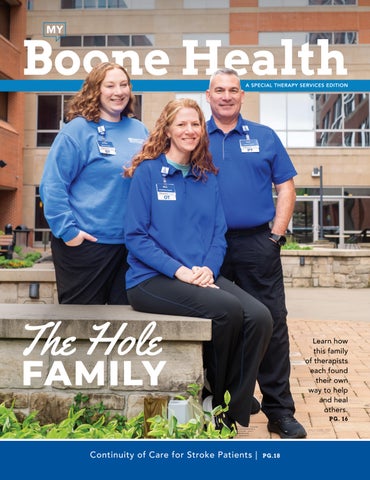
The Hole
FAMILY
Learn how this family of therapists each found their own way to help and heal others. P G. 16
Continuity of Care for Stroke Patients | PG .1 8
STEPHENS COLLEGE
Stephens leads with
compassion. Our nursing program is a partnership with Boone Health, offering early access to a broad range of clinical experiences and individualized attention. Start your nursing career at stephens.edu.
Table of Contents 8
SUMM E R 2 026 MANAGING EDITOR
Erin Wegner STAFF WRITERS
Madison Loethen Hannah Wichern CONTRIBUTING WRITERS
Monica Collins Katie Darkow Hannah Wichern Jenny L. Workman CONTRIBUTING PHOTOGRAPHER
Lana Eklund NICU Speech Therapist Sarah Glass focuses primarily on feeding and swallowing, making sure an infant can safely suck, swallow and breath.
Follow us Check Boone Health out on Facebook, X, Instagram, and YouTube.
Please submit comments or feedback to erin.wegner@boone.health or call 573.815.3217 1600 East Broadway Columbia, MO 65201 573.815.8000
10 5 6 8
24
A Note from Brady
20 Years of Experience
Hospital Headlines
22 Keene Street Therapy Location
Tiny Patients, Powerful Progress
24 Inpatient Rehabilitation Unit
10 Voice Therapy
12 Rewiring Relief For a FREE subscription, scan the QR code, visit boone.pub/subscribe, or call 573.815.3217.
22
14 Gardening Exercises
16 Three Disciplines, One Family 18 Continuity of Care
26 Therapist To Know 27 Staff To Know 28 Back Strengthening Exercises 30 Foundation News
Board of Directors Mary Beck, DNP, RN
Jeffery Lashley, Ph.D.
A referral from your physician is required to be seen at Therapy Services. Ask your physician if a referral to therapy is right for you.
CONTACT US
Stacye Smith
Broadway Medical Plaza I (PT, OT and ST) 1601 E. Broadway Lower Level Phone: 573.815.3868 Fax: 573.815.2605
Keene Street Therapy
Judy Starr
(PT and hand therapy OT) 1 South Keene St. Third Floor Phone: 573.815.2640 Fax: 573.815.2643
Nifong Medical Plaza
Charles P. Bondurant, MD, FABNS, FACS
(PT and pelvic therapy OT) 900 W. Nifong Lower Level Phone: 573.815.6425 Fax: 573.815.6598
Learn more at boone.health/therapy-services 4
BOONE HEALTH
Summer 2026
A NOTE FROM BRADY
Move Forward With Purpose A
t Boone Health, therapy services are foundational to how we care for people and how we help them return to living their best life. Across every therapy discipline, the goal is the same: to restore or create function so individuals can move forward with confidence, independence, and purpose. Therapy touches nearly every point along a patient’s journey. This includes early mobility efforts in critical care to the specialized support provided in our inpatient rehab unit to our outpatient care as patients return to their daily routines. Through it all, our therapists are focused on helping people regain the ability to do the things that matter most to them. And that work impacts more than physical recovery. When function improves, so does confidence and satisfaction with life. People reconnect with what brings them joy, whether that is returning to work, spending time with family, or enjoying hobbies and activities. Therapy helps move people from simply existing to truly thriving. I have seen this impact firsthand. Before becoming a CEO, I served as a business unit director for therapy services, and that experience continues to shape how I view the role therapy plays in health and wellness today. Therapists often meet patients at some of their most vulnerable moments, whether someone is learning to speak again after a stroke or taking their first steps following an illness or injury. In those moments, trust must be built
quickly. Our therapists form those trusted connections with compassion, patience, and skill, helping patients push forward while providing the support they need along the way. The dedication and expertise of our therapists are reflected in stories throughout this issue. For example, you can read about families like the Holes, whose lives and careers in therapy are centered on helping others recover and thrive, or the story describing our incredible team in the Neonatal Intensive Care Unit (NICU) whose sole purpose is to help those tiny humans get off to the best possible start. At Boone, we offer a wide variety of therapy disciplines, and many of our therapists have pursued advanced training in areas that align with their passions. You’ll find examples of these specializations in this magazine as you read about therapists who have helped singers regain their voices, guided patients through a chronic pain program, or provided specialized hand therapy at our Keene Clinic. From acute care to the inpatient rehab unit and into outpatient therapy, our teams work together to provide continuity of care that supports each patient’s recovery journey. Behind every milestone is a therapist who believed in a patient’s potential and walked alongside them through the hard work of healing. Looking ahead, I am excited about the future of therapy and rehabilitation at Boone Health. Advancement in treatment approaches and technology continues to
accelerate. Our commitment to researchand evidence-based care ensures that patients benefit from the latest innovations, delivered by therapists who never lose sight of the human connection at the heart of healing. For anyone considering therapy at Boone Health, my advice is simple: be honest and open about your full health story. There is nothing our therapists haven’t encountered before, and transparency helps create the strongest possible path forward. With trust, effort, and consistency, meaningful progress is possible. Mid-Missouri is fortunate to have therapists at Boone Health who are deeply committed to excellence and individualized care, helping every patient reach their best potential. That commitment makes a difference every single day. Sincerely,
Brady Dubois CEO, Boone Health
Boone.Health/My-Boone-Health
5
HOSPITAL HEADLINES
Partner-in-Education Boone Health is proud to announce our new display highlighting art from Jefferson Middle School students. As Partners-in-Education with the Cyclones, we’re thrilled to show off the hard work of the art students. You’ll find this display in our main lobby area, near the grand piano and the cafe.
Boone Awarded Excellence in Donation – Tissue Award Boone Health was awarded the Excellence in Donation – Tissue Award from the Midwest Transplant Network. This award recognizes hospital partners that met or exceeded a tissue donation conversation rate goal of 40% during calendar year 2025. Boone Health achieved a 45% tissue conversation rate, a reflection of the thoughtful, patient-centered conversations taking place every day across Boone’s clinical teams. In 2025, Boone Health supported 39 tissue donor heroes, compared to 11 in 2024, demonstrating a significant increase in donation impact and the trust families place in Boone during some of life’s most difficult moments. These outcomes are made possible by staff who approach donation discussions with professionalism, empathy and respect, while honoring donors and supporting families with dignity and care.
6
BOONE HEALTH
Summer 2026
Boone Health Cardiology Clinic Boone Health is excited to announce the opening of its new cardiology clinical practice with some familiar faces in familiar settings, while also bringing in providers new to mid-Missouri. “In addition to hiring some familiar faces from the former Missouri Heart group directly into Boone Health, we have been able to hire new physicians and providers who bring with them the latest technology and treatment information available throughout the nation,” said Brady Dubois, CEO of Boone Health. The familiar faces who are providing care include Dr. Jerry Kennett, Dr. John Boyer, Dr. John Verbsky, Dr. Dan Pierce, Dr. Charles Tillman and Dr. Henry Marquez. Five advanced practice nurses – Kathi Lutz, Lauren Lenauer, Hillary Burks, Patti Kean, Amber Dean and McKenzie Kusgen – who were formerly with the Missouri Heart group also have joined Boone. Two additional cardiologists, Dr. John Best and Dr. Rai Shahjehan, joined the clinic. “We are incredibly excited about the future of Boone Health cardiology, especially as we are attracting cardiologists throughout the country,” said Lana Zerrer, chief medical officer of Boone Health. Our cardiology clinic has locations in Columbia, Macon, Mexico and Sedalia. boone.health/cardiology-clinic
Boone Health Recognized as National Leader in Surgical Safety Boone Health has earned national recognition for its commitment to patient and staff safety, receiving the prestigious AORN Go Clear™ Award and designation as a Center of Excellence in Surgical Safety: Smoke Evacuation. Boone Health is the first hospital in Columbia to achieve this designation, setting a new local standard for surgical safety. Awarded by the Association of periOperative Registered Nurses (AORN), this honor recognizes health care organizations that have successfully implemented evidencebased practices and advanced technology. For Boone Health, this achievement reflects a proactive, team-driven approach to creating a safer operating room environment. By completing AORN’s comprehensive Go Clear™ program, Boone Health’s surgical teams demonstrated their commitment to protecting patients, physicians, nurses, and support staff alike. “This recognition validates the intentional work our teams do every day to prioritize safety,” said Missy Oakes, operating room manager. “This is one more way Boone Health ensures the highest quality care in the safest possible environment.” The Go Clear™ designation also signals to the community that Boone Health meets rigorous national standards for surgical safety. It underscores an ongoing focus on innovation, education, and collaboration in the operating room— all aimed at delivering exceptional care while safeguarding the health of those who provide it. This national honor belongs to the dedicated surgical professionals whose vigilance and leadership continue to set Boone Health apart.
Careers in Nuclear Medicine at Boone Health Every year, Missouri Hospital Association hosts a Virtual Health Care Career Day. This is a statewide event that connects Missouri students with hospital professionals to discuss different careers available in health care. Boone Health submitted a video on careers in Nuclear Medicine. We hope you enjoy it.
Diabetes & Endocrinology Molly Reynolds, MPAS, PA-C, is a board certified physician assistant specializing in diabetes and endocrinology at Boone Health. She provides comprehensive, outpatient care for patients with a wide range of endocrine conditions and is dedicated to delivering attentive, patient centered care. A mid-Missouri native, Molly was drawn to Boone Health after years of positive personal experiences as both a patient and a family member of Boone patients. She is excited to serve the community she calls home and to offer the same excellent care she has received firsthand. boone.health/diabetes-and-endocrinology
Boone.Health/My-Boone-Health
7
TINY PATIENTS, POWERFUL PROGRESS Inside the NICU Therapy Team I
n the quiet, carefully controlled environment of a Neonatal Intensive Care Unit (NICU), some of the smallest patients receive some of the most specialized care. Beyond the monitors, incubators, and medical interventions, there’s a team working hands-on to support development from the very beginning—therapy specialists who help fragile infants grow, regulate, and thrive. “We have physical therapy, occupational therapy, and speech therapy in the NICU,” explains Katie Goodlet, PT. “We provide direct patient care and consultative services to premature and medically complex infants. Our overall goal is to provide integrated, neuroprotective, and familycentered care that supports optimal long-term development.” Therapy in the NICU is an interprofessional collaborative practice that incorporates theories and scopes of practice from all three respective disciplines. Each therapy discipline plays a distinct but highly collaborative role in supporting an infant’s development: Physical Therapy (PT) focuses on movement, strength, and positioning. PTs help infants develop proper muscle tone and motor patterns, guiding how they move, stretch, and build early physical skills. They also assist with positioning to promote comfort, symmetry, and healthy development. Occupational Therapy (OT) centers on sensory development, regulation, and daily care activities. OTs help babies tolerate touch, movement, and environmental stimuli while supporting skills like feeding readiness, calming techniques, and bonding. They also coach parents on how to safely handle, hold, and interact with their baby. Speech Therapy (SLP) in the NICU focuses primarily on feeding and swallowing. Speechlanguage pathologists assess an infant’s ability to safely coordinate sucking, swallowing, and breathing—critical skills for successful feeding. They also support early communication development and oral motor function.
8
BOONE HEALTH
Summer 2026
Boone Baby Tatum Gravitt receiving physical and occupational therapy.
Therapists Katie Goodlet, PT and Emma Ploof, OT are providing containment while assisting Tatum with bringing her hands to her mouth for soothing and flexion movement patterns.
“Babies are miracles. I love being able to provide input that may make their sweet lives less stressful,” said Sarah Glass, SLP. “Educating and empowering parents regarding something as precious and bonding as feeding is enough to make anyone's day. I feel like I’ve won the lottery most days I come to work.” That same compassionate, patientcentered approach is shared across the entire therapy team. “For babies who need more calming and containment, therapy can be that extra set of hands,” said Emma Ploof, OT. “We work to keep the baby as calm as possible by decreasing stimulation—extra noise,
bright lights, changes in temperature, excessive movement—which helps protect their brain development.” And therapy in the NICU isn’t only about minimizing stress—it’s also about encouraging growth. Therapists work together to guide positioning, feeding, bathing, hydrotherapy, massage, and gentle movement exercises tailored to each infant’s needs. “We’re constantly assessing how the baby responds—looking at movement patterns, reflexes, and tolerance to touch,” Ploof explains. Just as important as hands-on care is education and collaboration. Therapists
work closely with nurses, physicians, and respiratory teams, while also empowering parents to feel confident in caring for their baby. “Parents are present and included in treatment sessions as much as possible, so they feel empowered and comfortable caring for their infant,” Ploof adds. Care doesn’t stop at discharge. For many babies, especially those born before 33 weeks or with complex medical histories, support continues through developmental clinics and specialized outpatient programs at Boone Therapy. “Our developmental clinic follows infants to monitor milestones and address any concerns,” says Goodlet. “We do developmental testing and make recommendations for additional services if needed.” This continuity ensures that early interventions in the NICU carry forward into the critical early years of life, giving children the best chance to meet developmental milestones and thrive. While the work is highly specialized and requires extensive training, the therapists agree that the rewards are immeasurable. “Watching development that would normally happen in utero happen right before our eyes is so neat,” says Goodlet. “We get to see these tiny babies develop personalities and follow them until age three—it’s incredibly rewarding.” For many therapists, the connection with families lasts far beyond the NICU stay. “Families I’ve known for over 20 years still give me updates,” she shares. “These tiny infants are now thriving as young adults.” Working in the NICU isn’t something therapists step into overnight. It requires advanced training, mentorship, and a deep commitment to both clinical excellence and compassionate care. “The NICU is an advanced practice specialty,” Goodlet emphasizes. “It takes time and patience to get here—but it’s the best job ever.” In a place where every ounce matters and every milestone is hard-won, NICU therapists provide something invaluable: steady hands, expert care, and hope for the future—one tiny patient at a time. By Madison Loethen
Boone.Health/My-Boone-Health
9
Gregg uses Resonant Voice Therapy which uses exercises, like blowing bubbles through a straw, to produce speech sounds felt at the front of the mouth.
VOICE THERAPY Gregg’s passion for the voice has brought voice therapy to Boone Health
M
usic has always been central to Gregg Anderson’s life. His love for singing began with a strong family foundation – everyone in his family was musical. He recalls childhood Friday nights playing on the kitchen floor while his parents and friends rehearsed a cappella quartet music. Both sets of grandparents also sang and played instruments, exposing him early to a wide range of styles. Family road trips were filled with the sounds of his parents’ favorite artists—including The Carpenters, John Denver, Simon & Garfunkel, Merle Haggard, Don McLean, and The Beach Boys—and it wasn’t long before he began picking out melodies and harmonies. Throughout his youth, Gregg sang in church and joined school choirs. By high school, he participated in every ensemble available - choirs, quartets, musicals, praise bands, and even garage bands. Studying music in college felt inevitable. At Andrews University, Gregg majored in vocal performance, planning to sing professionally or teach music like his father. However, during required lessons with Professor Stephen Zork, Gregg was introduced to the science of the
10
BOONE HEALTH
Summer 2026
voice. In his studio, Professor Zork introduced a highly tactile, anatomical, and physiological approach to voice production. These techniques were easy for Gregg to understand and reproduce, sparking a deep interest in the science of voice function, or vocology. Gregg began reading extensively about laryngeal anatomy and the vocal fold function. This research led him to stories of professional singers—such as Julie Andrews, Luciano Pavarotti, and Steven Tyler—who had struggled with vocal nodules, polyps, and cysts, which significantly impacted their careers. This led him to discover speech-language pathology and the healthcare professionals who rehabilitate professional voice users through therapy. Captivated, he shifted his academic path toward helping people with voice disorders (dysphonia). Gregg joined Boone Outpatient Therapy in March 2025, and has been treating patients with voice and upper airway issues, as well as swallowing, speech, language, and cognitive-linguistic difficulties. His passion, however, remains working with the voice.
What Is Speech Therapy?
Speech therapy addresses communication disorders involving speech production, language and cognition. Speech-language pathologists (SLPs) help individuals with challenges ranging from lisps or stuttering in children to post-stroke communication difficulties. They also help people with cognitive abilities like attention/ concentration, short term memory, safety awareness, or problem solving. SLPs also provide assessment and treatment for difficulties with swallowing, particularly after a stroke, neck surgery, tongue/ throat surgery, and/or throat cancer. This therapy focuses on rebuilding strength and coordination so patients can eat and drink safely and more comfortably. Where Does Voice Therapy Fit In?
The voice is a vital component of verbal communication, providing the sound—or phonation—before speech is ever formed by the tongue and lips. Phonation occurs when air passes through the vocal folds, causing them to vibrate. This sound then travels through the throat, mouth, and nose, where articulatory structures shape it into speech. Like any part of this complex
For more information on speech therapy, visit boone.health/therapy-services or call 573-815-3868.
system, the voice is susceptible to disorders, clinically known as dysphonia. Dysphonia often develops slowly over months or years. “People often live with voice problems until it becomes bothersome or begins to negatively impact communication,” Gregg notes. At that point, patients are typically referred to an ENT (Ear, Nose, and Throat) physician or a speech-language pathologist. Dysphonia can stem from many causes: a paralyzed vocal fold after thyroid surgery, nodules from overuse, vocal fold atrophy, or muscle tension. Regardless of the cause, voice therapy focuses on rehabilitating the vocal mechanism and improving its overall efficiency. “Many people don’t realize voice therapy exists,” Gregg said. “Unlike singing lessons, therapy focuses on educating patients about laryngeal anatomy, increasing awareness of vocal fold function, maximizing breath support, and using resonance to project the voice without strain.” Gregg frequently uses Resonant Voice Therapy (RVT), which uses semi-occluded vocal tract exercises (SOVTEs)—such as humming, lip trills, or blowing bubbles through a straw—to produce speech sounds felt at the front of the mouth. “This shifts the feeling of the voice forward and out of the throat,” Gregg explains. “If the voice is stuck back there due to compensatory muscle strain, it muffles the sound, which often causes the speaker to strain even harder for volume.” Lue’s Journey
Lue Lockridge-Lane is a minister and preacher for several central Missouri churches and regularly performs as a vocal soloist. She was referred to Gregg for voice and upper airway therapy by her pulmonologist to address possible vocal cord dysfunction, an airway disorder involving vocal fold spasms and closure. Lue had been experiencing episodes of shortness of breath, especially while speaking and singing, along with hoarseness, strain, and reduced vocal range for nearly a year. Her pulmonologist ruled out pulmonary causes aside from her allergies and asthma.
Lue Lockridge-Lane and Gregg Anderson, M.A., CCC-SLP.
“I used to be a soprano,” Lue said, “But I would feel tiredness in my throat, I couldn’t breathe when singing or speaking and sometimes got dizzy. It made me afraid of reaching my higher register.” With weekly singing, biweekly preaching and frequent meetings, her high vocal demands, combined with her asthma, allergies, and a viral infection all led up to her throat spasms and voice changes. In early sessions, Gregg taught Lue open airway breathing strategies and exercises to reduce laryngeal tension. He then helped her shift her voice out of the back of her throat and into the front of her mouth, releasing strain. They are now working on applying these techniques to both speech and singing. “This has been great for her range,” Gregg said. “She struggles with higher notes, and we’ve been addressing that at different levels. She’s learned to keep that forward feeling in her mouth and nose and has trained her throat, body and breath to be in coordination, and she’s really found it to be successful.”
Working with Gregg gave Lue the awareness of the problem of throat tension, why it was happening, and how she can learn to control it with tools and strategies. “It’s like someone turned on a light bulb for me,” Lue said. “Gregg’s shown me things I can do myself to help strengthen my voice and things I can do to evaluate some of the other pressures in how I was using my voice.” Lue shares, “Gregg was able to understand and address the concerns I expressed, which truly impressed me. I looked forward to reading his notes in my patient portal, because they often provided an even deeper understanding of our discussions. His documentation helped clarify where I was in my treatment journey, why certain approaches were being used, and showed the progress I’d made along the way. Before working with Gregg, I was hesitant to use my higher vocal register. Now, I use it regularly and with confidence. The growth I’ve experienced has been remarkable, and the transformation has been nothing short of life changing.” By Erin Wegner
Boone.Health/My-Boone-Health
11
Rewiring
RELIEF Introducing a New Approach to Chronic Pain Hannah Williams, PT and Ashley Beshear, PT
F
or people living with chronic pain, the hardest part often isn’t just the pain itself—it’s how much of life it quietly takes away. Everyday routines can feel overwhelming. Activities that once brought joy are avoided out of fear that they’ll make things worse. Living with chronic pain doesn’t mean that you’ve run out of answers; there is still hope. At Boone Hospital, a therapy-focused chronic pain program known as Pain Neuroscience Education (PNE) Program is helping patients find answers, and a way forward, when traditional approaches haven’t worked. Boone Health’s PNE Program was developed for individuals whose pain has persisted for months or years despite prior treatment. Led by physical therapists Hannah Williams, PT, and Ashley Beshear, PT, the program takes an education-based, neuroscience-informed approach that looks beyond injured tissues to the role of the nervous system in ongoing pain. Research shows that nearly one in four people develop persistent pain after an injury. In many cases, the body has healed, but the nervous system remains sensitized continuing to signal danger long after the original threat has passed. “For many people experiencing chronic pain for months or years,” Beshear adds, “receiving multiple explanations for why they still hurt can increase confusion, uncertainty, and fear.” One Boone patient described searching for answers to their pain to no avail, despite living with it constantly for nearly five years. Without answers, they began to fear the pain would never improve. “These are the people who are worn down. Not only by pain, but by uncertainty,” Williams says. “When nothing seems to explain why they still hurt, it can feel discouraging and isolating.”
“Understanding my pain helped me stop fearing it— and start moving forward again.” 12
BOONE HEALTH
Summer 2026
To learn more, visit boone.health/therapy-services or call 573-815-3868.
Understanding Neuroplastic Pain
This type of pain, often described as neuroplastic pain, reflects how closely the body and nervous system are intertwined. Pain exists to protect us, but when the nervous system becomes overly sensitive, that alarm system can stay turned up. “Pain can’t exist without the nervous system,” Williams explains. “It’s meant to keep us safe. But the same system that drives pain can also learn safety again.” Neuroplastic pain often presents in patterns that don’t fit a typical injury. Pain may spread, flare during stressful periods, occur with light touch or gentle movement, or lead people to avoid meaningful activities. Over time, that avoidance can impact mood, energy, and confidence. For one Boone patient, learning this concept brought immediate relief. She described finally understanding that “there was no longer anything wrong with my body”—and realizing she wasn’t somehow to blame for her pain. “When people understand the ‘why’ behind their pain and how their nervous system is involved, they develop a greater sense of confidence in managing their symptoms using the knowledge and tools learned through the program,” Beshear says.
A Different Kind of First Visit
You May Have More Options Than You Think Living with chronic pain doesn’t mean you’ve run out of answers. Boone’s Pain Neuroscience Education Program offers a thoughtful, educationbased approach—delivered by experienced therapists who take time to listen, explain, and partner with patients every step of the way. Learn whether this program could be a helpful next step for you—or someone you care about.
Boone’s PNE Program follows a biopsychosocial model, considering physical, emotional, and social influences on pain. Education is central, alongside movement. Initial visits last up to 90 minutes, giving patients time to share their full pain story, which is often complex and long-standing, and rarely confined to physical symptoms alone. “Until you experience chronic pain yourself, it’s hard to imagine how much it changes your life,” one patient wrote. “It changes your ability to enjoy life—and even your personality.” Sessions may include education about how pain works, gentle strengthening, aerobic activity to activate the body’s natural painrelieving systems, sleep support, mindfulness, and breath work. Therapy focuses on restoring confidence and reducing fear, not pushing through pain. Early experiences from the program highlight how understanding can restore hope. One patient described arriving at Boone feeling “lost and hopeless,” unsure if improvement was possible. Through therapy, this patient gained clarity about their pain—and found that understanding helped them begin moving forward again. That reaction is common, Williams said. “For someone who’s been in pain for years, even small changes matter.” Beshear agrees, noting that education often becomes a turning point. “Knowledge and understanding can be empowering, allowing people to take a step forward when they may have struggled to in the past.” For people living with chronic pain, or those who care about someone who is, Boone’s PNE Program offers something many have been searching for: understanding, support, and a reason to hope. By Hannah Wichern
Boone.Health/My-Boone-Health
13
GARDENING EXERCISES A
fter therapy, many patients have a goal of returning to gardening. Simple exercises and stretches are important to do at home to continue building leg, back and core muscles. Gardening uses positions that you are not in daily and can lead to muscle soreness, so it’s important to take small breaks when needed. The following are exercises and stretches that can help you build strength and better balance to get you back to gardening.
GRIP STRENGTH 1. Start with a stress ball, towel, or something soft/pliable in your hand. 2. Close fingers around the ball and squeeze as hard as you can for 5 seconds. 3. Repeat 10-20 times in each hand.
ADAPTIVE GARDENING TECHNIQUES • Use raised beds or containers to decrease the need to bend over. • Use a kneeler seat. It can be used to sit or kneel and has handles to help you get up when kneeling. • Long handled garden tools will decrease the need to bend over. • Tools with foam grip handles are easier to hold onto and easier on joints. • Use a cart to move bags of dirt or mulch. 14
BOONE HEALTH
Summer 2026
LOW BACK STRETCH 1. Sit in a chair with legs hip distance apart and bend over to try to touch the ground. 2. Hold for 15-20 seconds or 3 deep breaths. 3. Return to the sitting position. 4. To stretch either side, rotate trunk like both hands are trying to touch one foot. Hold for 15-20 seconds, or 3 deep breaths, and complete on the other side.
HALF KNEELING LUNGE 1. Start with 1 knee on the ground (on top of a pillow if needed) and the other foot on the floor. Both knees should be bent at 90 degrees. 2. Tuck the toe of the kneeling side and try to stand, relying on the front leg. If you need more support, use a chair for balance. 3. To return to starting position, bend the back knee until it returns to the ground/pillow. Try to control the lowering and use a chair if needed. 4. Repeat 10-20 times and then complete on the other side.
SQUAT 1. Start with feet shoulder-width apart and holding a weight in your hands. 2. Bend hips and knees like you are going to sit in a chair. You can also start the exercise by having a chair behind you and sit in the chair. 3. Straighten knees and hips by squeezing buttock muscles to return to standing position. 4. Repeat 10-20 times.
BENT OVER ROWS 1. Start kneeling on a chair with one hand supporting you and a weight in the opposite hand and arm down by your side. 2. Draw elbow up, keeping arm tucked closed to your body. 3. Return to starting position. 4. Repeat 10-20 times and then complete on the other side. By Katie Darkow, PT Boone.Health/My-Boone-Health
15
THREE DISCIPLINES,
One Family
I
t was summer 1991. Like a “meet cute” from a rom-com, Dave and Marie met in gross anatomy lab. She was in the OT program at Mizzou, and he was in the PT program. Back then, Mizzou’s PT and OT programs were smaller, so they had some classes together and socialized. They remained friends until their senior year when they started dating. They married a year after they graduated and have raised two red-
16
BOONE HEALTH
Summer 2026
headed daughters, Marissa and Sami. Sami lives in London and is pursuing a master’s degree in economics. While she did not follow in the families’ footsteps, Marissa did. What began with two therapy students meeting in anatomy lab grew into a family legacy spanning three disciplines: occupational therapy, physical therapy and speech-language pathology. And now, they are all here at Boone Health.
Marie - Occupational Therapy
Growing up in Warrenton, MO, Marie always knew she belonged in the medical field, but didn’t know where yet. Her mother was a nurse, and exposure to caregiving and compassion left a lasting impact on her. Before home health existed, Marie’s brother had a terrible motorcycle accident, and his therapy exercises were done at home. Getting to watch her brother’s therapy as a young girl was fun for Marie and it helped solidify that therapy was her path into the medical field. Marie became a certified hand therapist, specializes in upper extremity rehabilitation and makes custom splints for patients. “When our hands work well, we don’t think anything of it,” Marie said. “When one finger doesn’t work, it affects the whole hand. When we can’t do things like feeding ourselves or brushing our teeth, that affects your function, let alone what you do for your work.” Marie chose occupational therapy for the creativity and adaptability the discipline requires. “As an OT,” Marie shares, “you’re trying to think of adaptions and how to do something with very limited function or limited budget. Being able to adapt and create is very important. Lucky for me, that is my forte.” Getting to add the function to a patient’s
application. He lived in Carthage, MO at the time, and got a job at St. John’s Regional Medical Center (now Mercy Hospital Joplin) in the rehab unit as a physical therapy aide. There in the Brady building, Dave worked with neurological cases: stroke patients, head injuries, and some orthopaedic cases. His time in the Brady building solidified that physical therapy was the right choice for him. To see the changes a stroke patient could make was very eye opening to Dave. Patients would come in after a stroke and be neurologically debilitated or half of their body wouldn’t work. But after a few months, Dave would get to see the patients return home, sometimes with adaptive equipment, sometimes on their own. And Dave was hooked. Now, Dave’s passion is orthopaedics and dry needling. He specializes in shoulder and knee rehabilitation and has been providing dry needling to his patients for 14 years. Dry needling is a physical therapy technique used to treat musculoskeletal pain by inserting needles into locked muscles. Dave has a Level 2 certification and loves what it's been able to provide his patients. “Treating musculoskeletal pain has become a passion of mine,” Dave said. “Getting patients back to doing the things they want to do is what I love about my job.”
life is what Marie really loves to do.
Marissa
Speech - Language Pathologist
Dave - Physical Therapy
Dave’s journey to PT school took a little longer than he originally had planned. He did not get into Mizzou’s PT program with his first
Marissa went to Mizzou but wasn’t quite sure what she wanted to do. She started out in nursing, but after passing out at the sight of blood, decided nursing wasn’t for her. At the time, she wanted to work with pediatrics, so her mom suggested speech therapy. After shadowing a speech therapist at a school, Marissa thought, “I could do this!” She changed her major and was very happy with her decision. “When I went to grad school, I didn’t think I could work in a
hospital because I passed out at the site of blood,” Marissa said. But grad school taught Marissa about the work speech therapists provide in a hospital. Thankfully, she’s gotten better at the squeamish things and learned that she really loves working with adults. She’s found a passion in working with stroke patients who have aphasia, difficulty finding the words people want to say. Marissa is a Boone-a-rang. She got hired at Boone right out of school and was here for a year before her husband got relocated for work. A year and a half later, they moved back to Columbia and Marissa returned to Boone. “I’m very much a neuro person,” Marissa said. “I want to know what part of the brain was affected and how can I fix it or collaborate with it.” She feels the work is incredibly rewarding and enjoys getting to meet a new patient or a different diagnosis.
A Family That Heals “I think it’s really fun being in a therapist family,” Marissa shares. “My husband and sister are very much the outcast at family get togethers.” When the Keene Street Therapy location was being discussed, Marissa knew that area was needing a certified hand therapist and a physical therapist. She reached out to her parents who applied and got the jobs. When they first started, all three were in the same location. Marie and Dave are used to working in the same office, but it was a treat for Marissa to be working so closely with both of her parents. “It was good being able to collaborate with them in a professional capacity,” Marissa said, “but also weird because they’re my parents. My mom would ask me, ‘What are you doing with this patient,’ and in the next breath ask me what I’m having for dinner.” And Marissa has also gotten used to hearing coworkers say, “Your dad was showing me some of your cute baby pictures!” While Marie and Dave are more orthopaedic – broken bone, let’s fix it, Marissa is a neuro person – what part of the brain was affected and how can I fix it. Marie, the creative healer, Dave, the determined restorer and Marissa, the neuro communicator, all providing care at the same hospital. Boone Health is lucky to have the Hole family.
Boone.Health/My-Boone-Health
17
CONTINUITY
OF C A R E
18
BOONE HEALTH
Summer 2026
n a hospital setting, patients deserve a care team that understands their medical history and works together toward a unified plan. For stroke patients at Boone Hospital Center, that level of collaboration isn’t just the goal, it’s the standard. From the emergency department to acute care, from inpatient rehabilitation to outpatient therapy, every discipline is connected, ensuring seamless, continuous care. At 5:30 a.m. on Jan. 13, 2025, Edgar “James” Walker woke to use the restroom. When he reached to flush the toilet, his left hand repeatedly missed the handle, bumping against it instead of pressing it down. Confused, he woke his wife, Dorthy, to tell her something felt wrong. Before he could finish speaking, his upper lip began to tingle and quickly went numb. Within seconds, the same numbness spread to his left hand. Recognizing the urgency, Dorthy called a neighbor for help. In the frigid 20 degree morning, she drove James to the Emergency Room at Boone Hospital. Upon arrival, James was immediately taken for a CT scan to rule out a brain bleed. With no hemorrhage detected, he was admitted to the Neurology Floor for further evaluation. An MRI confirmed he had experienced a right hemispheric stroke. During his first physical therapy evaluation, James was able to sit, stand, and walk 200 feet. But the next morning, he woke unable to use the entire left side of his body, a common progression that can happen as stroke symptoms evolve. James remained on the Neurology Floor for eight days, receiving interdisciplinary care from Nursing, Physical Therapy, Occupational Therapy, and Speech Therapy. The team noted the
“
increased weakness and identified James as a high fall risk. They recommended continued therapy at an inpatient rehabilitation unit. “Research shows that early, intensive therapy helps the brain form new pathways and work around damaged areas,” explains Suzy Crowley, BSN, RN, CRRN, Inpatient Rehab Manager. “The medical director for inpatient rehab is also a neurologist who frequently treats patients on the Neuro Floor, providing expert oversight and continuity throughout the patients’ hospital stay.” James met the criteria for Inpatient Rehab and was transferred. Once on the inpatient rehabilitation unit, James’ care team assembled to discuss his needs. Each discipline set a care plan keeping in mind James’ personal goal for discharge. At admission, James was needing to be assisted by two people in multiple areas of care. James’ goal was to be able to move with the assistance of one person. James stayed on inpatient rehab for 30 days. Upon discharge, James was able to walk 15 feet with a walker, aided by a second person for safety. Most of his goals were met with the aid of one person assisting. Meeting this goal was huge for James and his family. His team determined that he had gained the maximum benefit from inpatient rehab, and he was ready to discharge home and continue his recovery through outpatient therapy. Outpatient therapy continued working with James to rebuild the skills he needed for independence. “Outpatient therapy helped me do things I hadn’t been able to do before,” James said. “I couldn’t use the bathroom by myself. Now look at me! A year and a half later, I can take care of everything I need to:
NOW LOOK AT ME! A YEAR AND A HALF LATER, I CAN TAKE CARE OF EVERYTHING I NEED TO: SHOWER, SHAVE, CUT MY HAIR, USE THE TOILET. WITH NO HELP!
shower, shave, cut my hair, use the toilet. With no help!” James’ journey is a testament to what coordinated, compassionate care can achieve. From the Emergency Room to the Neurology Floor, from inpatient rehabilitation to outpatient therapy, every team worked together to support his recovery. By Erin Wegner
“
I
Boone.Health/My-Boone-Health
19
OF COMBINED EXPERIENCE. ONE COMMITMENT TO EXCELLENCE. The Boone Health Therapy Services team is dedicated to delivering exceptional, evidence-based care. Our clinicians hold advanced certifications and specialized expertise, allowing us to offer unique therapy services not widely available elsewherehelping patients achieve meaningful, lasting outcomes.
COMBINED YEARS OF EXPERIENCE
PHYSICAL THERAPY CERTIFICATIONS • • • • • • • •
American Institute of Balance Vestibular Rehabilitation and Concussion Blood Flow Restriction Herman & Wallace Pelvic Floor Practitioner Lee Silverman Voice Treatment BIG Level I Dry Needling Level II Dry Needling NeoNatal Touch and Massage Therapy Neuro Developmental Treatment
OCCUPATIONAL THERAPY CERTIFICATIONS • • • •
Certified Dementia Practitioner Certified Hand Therapist Certified Lymphedema Therapist Lee Sliverman Voice Treatment BIG
SPEECH LANGUAGE CERTIFICATIONS • Certified SPEAK OUT! Provider • VitalStim Therapy • Modified Barium Swallow Impairment Profile
Therapy Services Now Provided at Columbia Orthopaedic Group O
pened in September 2025, Boone Therapy now provides comprehensive services at its new Keene Street location. Located at 1 South Keene Street, on the 3rd floor, this space provides physical and occupational therapy as well as a laboratory location for blood draws. This clinic features a highly skilled team of three physical therapists and one occupational therapist, all committed to delivering personalized, one-on-one care. What sets this location apart is specialized expertise, including a Certified Hand Therapist and advanced Dry Needling Level II certification. With years of experience in orthopaedic diagnoses, this location provides a space to provide treatment with the goal of maximizing mobility and returning to daily independence. While therapists frequently work with orthopaedic diagnoses, their focus extends beyond basic mobility. The primary goal is helping patients return to the activities they enjoy. This space supports taskspecific activities to make therapy more functional. For example, a set of plastic bowling pins and ball were purchased to help a patient practice bowling, while another patient utilized the space to work on throwing activities.
Certified Hand Therapist (CHT)
Upper extremity injuries, from our shoulder blades to the tips of our fingers, are treated by CHTs. A CHT is a licensed physical or occupational therapist who has demonstrated advanced clinical expertise in upper extremity rehabilitation through required experience, specialized practice hours and successful completion of a national certification exam. With three hand surgeons on staff at Columbia Orthopaedic Group (COG), Boone Health Therapy Services recognized the importance of having a Certified Hand Therapist (CHT) on-site for post-surgical care, sportsrelated hand injuries and complex upper-extremity conditions. Certified hand therapists frequently work in outpatient settings that are closely connected to orthopaedic practices. “Even though we think of hand, I treat a lot of wrist, elbow fractures, humeral fractures and nerve injuries,” Marie Hole said. Marie Hole has been a CHT for 23 years. Her passion is helping patients add function back to their life. A CHT is able to make specific treatment plans for each individual patient. A benefit being so close to COG is they can help with orthopaedic injuries: finger fractures, infections, tendon and nerve laceration and anything needed for post-surgical rehabilitation.
22
BOONE HEALTH
Summer 2026
If the hand surgeons do a surgical fixation in the hand or finger to stabilize a displaced fractured bone, the surgeons rely on CHTs to work with the patient post-surgery. CHTs will make a specialized hand therapy plan that will focus on reduced swelling, scar tissue, custom splints, and approved range of motion exercises.
points—cause discomfort and limit movement. By targeting these trigger points directly, dry needling helps release tension, restore mobility, and support the body’s natural healing process. It is often beneficial for patients who haven’t found lasting relief from massage or other traditional interventions, offering quicker and longer lasting results.
Dry Needling Level II
Benefits of Dry Needling
Developed in the 1940s, dry needling has become a trusted component of modern physical therapy care plans. Dave Hole has been providing dry needling for 14 years, and treating musculoskeletal pain has become a passion of his. Dry needling is a skilled technique used by physical therapists to reduce pain, improve movement, and promote healing. Boone Health’s physical therapists are specially trained in this method, which uses a very thin, solid needle inserted into muscle tissue to create change at the neuromuscular level. Although the idea of needles can feel intimidating, most patients experience only a mild pinch—not pain. Dry needling is especially effective for treating myofascial pain, which occurs when tight muscle knots—known as trigger
• Decreased pain and muscle tension • Improved blood flow • Positive effects on the central nervous system • Reduced nerve hypersensitivity • Lower inflammation • Faster healing times To learn more about Therapy Services or to schedule an appointment at the Keene Clinic, call 573-815-2640 or visit boone.health/therapy-services. Boone.Health/My-Boone-Health
23
INPATIENT REHABILITATION UNIT T
he Inpatient Rehabilitation Unit at Boone Health is a dedicated hospital unit that provides intensive medical and rehabilitative care. It is designed for patients recovering from major surgeries, injuries or debilitating illness who need physician oversight and rigorous interdisciplinary therapy to regain independence. The unit must follow regulatory standards established by The Centers for Medicare and Medicaid Services (CMS) and the Joint Commission. These regulations govern which diagnoses that can be admitted, the medical services provided, the intensity and frequency of therapy services provided and the length of time the patient can stay on the unit. The Inpatient Rehab Unit includes 15 beds and primarily serves patients who are transitioning from acute level of hospital care (short-term hospital stay), but are not yet ready to return home. Although many admission referrals come directly from Boone Health, the Inpatient Rehab Unit can also look at referrals that come from outside hospitals, a primary care physician or skilled nursing facilities. Because inpatient rehab is highly regulated, patients must meet strict criteria related to medical complexity, therapy need and the ability to tolerate the intensity of the rehab program. Patients admitted to the unit generally must be able to tolerate three hours of therapy per day, over five days of the week. They also must require the need of at least two of the therapy disciplines, one of which must be physical therapy or occupational therapy. Common diagnoses for the inpatient rehabilitation unit includes stroke, spinal cord dysfunction, amputation, hip fractures and post-surgical conditions. Patients will have the need for 24/7 nursing care and will also require close physician supervision for medical management. This level of structure, intensity and collaboration is not available on acute care units or skilled nursing facilities. The unit operates with a fully integrated care team that includes:
24
BOONE HEALTH
Summer 2026
• Medical Director • Licensed RN • Patient Care Technician • Social Worker • Physical Therapy/Occupational Therapy/Speech Therapy • Dietary Service Every discipline plays a critical role, from documenting nutritional intake to coordinating equipment and follow up services at discharge. The process for admission to the inpatient rehab unit begins with evaluations of the patient while they are still in the acute phase of the hospital. Patients who may benefit from inpatient rehab are referred to the clinical liaison. The liaison will review the patient’s medical history, their acute therapy notes and work with insurances to determine whether the patient meets admission criteria. Once the patient is admitted to the inpatient rehabilitation unit, evaluations are completed by the care team. Goals are established for the patient, and the team works together to coordinate a plan to support the patient’s recovery while they work towards their goals.
Pictured above: Anderson Gentry, Rehab Aide, Janelle Tallmage, Macie McNeely, COTA and Julie Macy, PT.
Janell and her grandchildren Eli and Emma Grace help her pick out breakfast for the next day.
The inpatient rehabilitation unit addresses not only physical recovery but also emotional, psychological and educational needs of the patient as well. Patients often struggle with tasks they once took for granted and small milestones may not always seem that big. The team helps patients recognize progress and stay motivated. Inpatient rehabilitation provides patients with the time and resources needed to regain independence and safely return to their home or next level of care. The average length of stay is approximately 13 days with most patients discharging to their home independently or with family.
Janell’s Inpatient Rehab Story Janell Tallmage had good looking legs growing up. All her teachers at school would tell her, “You have the prettiest legs!” She thinks about that at times now and tells herself, “Well, you had them for 74 years, so that’s pretty darn good.” Underneath the beautiful legs, Janell inherited something far less kind: a difficult vascular system. Her father and grandfather both struggled with vascular disease, and over time, Janell developed the same problems. Poor circulation in her legs gradually worsened, leading to pain, weakness and eventually severe blockages. She was diagnosed with peripheral arterial disease (PAD), a condition where plaque
buildup narrows the arteries and restricts blood flow to the limbs. Janell’s vascular journey has included femoral artery occlusion (a blockage in the main artery supplying blood to the leg), multiple femoralanterior tibial artery bypasses (surgeries to reroute blood flow around blockages), and repeated blockages and narrowing of arteries. Despite multiple interventions, Janell’s circulation continued to decline. Eventually, both legs reached a point where blood flow could not be restored. Janell had been a patient of Erica Salinas, MD, at Boone Health Vascular Surgery and had been to the office many times to manage her symptoms. During one appointment in September 2025, Dr. Salinas had Janell admitted to the hospital for further testing. The results showed no meaningful perfusion, meaning Janell’s right leg had become mottled and purple, a sign that tissue in her leg was dying. The only option to save Janell’s life was to amputate her right leg. Janell spent two weeks in the inpatient rehabilitation unit after her first amputation. Her physical and occupational therapists taught her how to adapt to life with one leg, how to strengthen her remaining limb, how to move safely, and how to regain independence. Despite her best efforts, in early 2026, Janell’s left leg began to fail as well. She developed ischemia, meaning the leg was no
Janell and her family would socialize, play games and do puzzles.
longer receiving enough blood to survive. In May 2026, the decision was made to amputate her left leg as well. This time, Janell spent three weeks in rehab. The first time on the unit, Janell shares she was pretty nervous, but the second time around, she knew she was returning to a team of caregivers that made her feel like part of the family. With both legs removed above the knee, Janell’s team had a new set of goals for her: learning to roll over, balance while seated, transferring in and out of bed, moving safely to and from her wheelchair, and managing toileting independently. “Everything they had me do was just to get stronger. To learn how to do things on my own,” Janell said. Sleeping by her side in the hospital recliner most nights was her husband Donnal “Bosco”. Janell and Bosco have been together since she was 15 and he was 17. She recalls how he used to call her every Wednesday night after she returned home from choir practice at church. “He was so good looking, and sweet,” Janell said, “and he had the best blue eyes and smile.” Now, 57 years later, he’s still by her side while they navigate this new normal. Thinking back to the care she received in Inpatient Rehab, Janell shares through tears, “I couldn’t have had a better group of people taking care of me.” By Erin Wegner
Boone.Health/My-Boone-Health
25
GET TO KNOW A BOONE HEALTH THERAPIST
Julie Macy, MPT Adult Neurological Rehabilitation
M
y hometown is Gallatin, MO, a rural town along the Grand River in northwest Missouri. My grandfather, father, and older sister are MU graduates, so I followed their footsteps to Columbia to attend the University of Missouri. In 2006, I graduated from the School of Health-Related Professions with a master’s degree in physical therapy.
Why did you get into the health care field? While I was in college, my grandmother unfortunately had a pontine stroke. During her rehabilitation course, I observed her outpatient therapy sessions. The rehabilitation addressed her vertigo, sensory loss, and paralysis. I would have to say my interest started here. She was quite a dramatic woman, so that made the rehab interactions even more interesting. Many (very patient) therapists helped her make a remarkable recovery. She was very fortunate to live an independent and full life after the stroke occurred. I admired every healthcare member that gave my grandmother hope and the ability to live an independent life. What interested you in your particular specialty? Brain injury, whether it is traumatic or non-traumatic, often changes a person’s ability to process sensory information and to learn. As a physical therapist, I am concerned with restoring functional mobility. It seems simple, but impairments impacting vision, sensation, motor-planning, neuro-muscular control, and executive functions can create incredible barriers in learning to mobilize independently. Every person has a unique presentation with unique challenges. Treating this population requires assessment of how the individual learns, then tailoring interventions to address their specific impairments. I love the challenge of understanding how a person operates and then finding solutions to assist them with recovery. It often involves a lot of creativity. What is the most rewarding part of your job? It is always rewarding when I see a former patient out in the wild, living life independently. What is the most challenging aspect of your job? Health literacy is an enormous challenge. Recovery and prevention of recurrence often require significant lifestyle changes. Healthcare providers must explain why these changes are so important in a manner that resonates with the individual.
26
BOONE HEALTH
Summer 2026
What has changed in your field since you started practicing? When I first started practicing in 2006, the general population was not as familiar with the signs of an acute stroke. Folks wouldn’t get to the hospital timely, and we would routinely treat people with profound deficits in multiple domains. The degree of disability resulting from a stroke was frequently devastating. Also, at that time, our code stroke protocols were in their infancy stages. The door to treatment time was not as impressive as it is now. Today more people recognize the signs of acute stroke, hospitals have refined code stroke protocols, intervention is initiated much sooner, and disability is significantly reduced. What do you see changing in the next 5 to 10 years? Hopefully, we will see individuals taking a more active role in their preventative care. What do you enjoy doing outside of work? I’m a native plant enthusiast. I also love canoeing Missouri’s beautiful streams, cave exploration and conservation efforts, bird watching, biking the great trails we have in the Columbia area, and adoring my two cats and goldfish (Nacho cat, Tweet, and Ping Pong). What advice would you give someone looking to become a physical therapist? Physical therapy is a great field with many different specialties and settings for practice. As a PT, you really do have the ability to make meaningful changes in the lives of others. A desire to learn, a love for people, and a well-developed skillset can bring you a fulfilling career.
GET TO KNOW BOONE HEALTH STAFF
Mary Fry Patient Access Representative, Therapy Services
I
was born in Mexico, MO. I have 4 brothers. I went to William Woods University for 3 years and got an associate’s degree in business and a minor in paralegal. I have 1 daughter, 1 son-in-law and 1 granddaughter.
Why did you get into the health care field? I was a candy striper (now known as a hospital volunteer) in high school at Audrain Medical Center. I helped walk patients down the hallway, talked to them, or got them a magazine. I really enjoyed it and knew I wanted to work in a hospital. When I moved to Columbia, I got a job in the Rehab Unit and have been here for 29 years. What interested you in your particular job? I love people and knew I wanted a job where I could interact with people all day. In the therapy department, I enjoy being the kind word or smile that can help reassure a patient. When a new patient comes in and is in pain, they may be rude, and that is okay. I give them the reassurance that they are going to be okay and we are going to get them the help they need. What is the most rewarding part of your job? I love seeing the progress patients make in therapy. When they first start here, they may use a walker or be in a wheelchair. And then to see them walk without a walker or wheelchair with a smile on their face is really rewarding. I love helping patients and they will often come back and say how nice and kind I was to them. What is the most challenging aspect of your job? Rude and difficult patients are the most challenging. I am the first person they meet and may sometimes be the punching bag for their irritation, confusion and concern. Sometimes patients don’t understand why their doctor referred them to therapy, so it’s important to reassure them that their doctor knows our therapists can help them and make them feel better. What has changed since you started? Computer systems and people have changed the most in 29 years.
What do you see changing in the next 5 to 10 years? How we communicate with patients, billing issues and hoping patients actively listen to the advice the therapists give them. What do you enjoy doing outside of work? Growing up with 4 brothers, I became a huge sports fan. I love watching football, Chicago Cubs baseball and St. Louis Blues Hockey. I love being outdoors and enjoy gardening and relaxing with my family and friends. What advice would you give someone looking to become a patient access representative? Be patient and be able to learn new things. Have compassion and have time to listen. Be mindful of the pain and concern a new patient may have and give them the correct information that they need and who they need to talk to.
Boone.Health/My-Boone-Health
27
The Importance of Back Strengthening Exercises B
ack health plays a major role in overall wellness, posture, movement, and injury prevention. Whether sitting at a desk for long hours, lifting heavy objects, exercising regularly, or simply performing everyday activities, the muscles in the back are constantly working to support the body. Strengthening these muscles can improve posture, reduce discomfort, enhance athletic performance, and help prevent chronic pain and injuries. According to the American College of Sports Medicine (ACSM) and the Centers for Disease Control and Prevention (CDC) , adults should participate in muscle-strengthening activities at least two days per week to maintain and improve overall health.
Why Back Strength Matters
The back is made up of multiple muscle groups that support the spine, shoulders, and hips. These muscles are responsible for maintaining posture, stabilizing the body, and assisting with movement. Weak back muscles can contribute to poor posture, limited mobility, muscle imbalances, and an increased risk of injury. Strong back muscles provide several important benefits, including: • Improved posture and spinal alignment
Bird-Dog Exercise The bird-dog exercise strengthens the lower back, core, and stabilizing muscles. 1. Begin on hands and knees
2. Extend one arm forward while extending the opposite leg backward 3. While extended, keep your back flat and avoid letting your lower back sag toward the floor 4. Hold for a few seconds and switch sides BENEFITS
• Improves balance and coordination • Enhances spinal stability • Strengthens core and lower back muscles
• Reduced risk of lower back pain • Better balance and stability • Increased athletic and physical performance • Enhanced ability to perform daily activities • Support for healthy aging and mobility The CDC notes that regular physical activity and strength training help strengthen bones and muscles while improving balance, coordination, and overall physical function.
Common Causes of Weak Back Muscles
Modern lifestyles often contribute to weak back muscles. Prolonged sitting, poor posture, lack of exercise, and repetitive movements can place strain on the spine and surrounding muscles. Over time, this may lead to stiffness, discomfort, and reduced mobility. Additionally, muscle loss naturally occurs with aging. Strength training helps slow this decline and supports longterm mobility and independence.
Effective Back Strengthening Exercises
Several exercises can help improve back strength safely and effectively. Beginners should focus on proper form and gradual progression. 28
BOONE HEALTH
Summer 2026
Planks Planks target the core and support muscles of the back.
1. Hold the body in a straight line on forearms and toes 2. Keep abdominal muscles engaged 3. Avoid arching the lower back
Can modify by doing these on knees. BENEFITS
• Builds core endurance • Supports spinal alignment • Improves posture
To make an appointment with a physical therapist, visit boone.health/therapy-services or call 573-815-3868.
Superman Exercise The Superman exercise strengthens the posterior chain, including the lower back and glutes. 1. Lie face down with arms extended 2. Lift arms, chest, and legs slightly off the floor 3. Hold briefly before lowering
Note: Make sure neck stays in alignment of spine BENEFITS
• Strengthens lower back muscles • Improves spinal support • Helps counteract prolonged sitting Fitness experts note that this movement can improve stability and back endurance when performed with proper form.
Bent-Over Rows Bent-over rows strengthen the upper and middle back muscles. 1. Hold dumbbells or resistance bands
2. Bend slightly at the hips with a flat back 3. Pull weights toward the torso 4. Slowly lower and repeat BENEFITS
• Improves posture • Strengthens upper back and shoulders • Enhances pulling strength Research from the American Council on Exercise identified bent-over rows as one of the most effective back-strengthening exercises.
Exercise Safety Tips Back Extensions Back extensions target the lower back and spinal support muscles. 1. Lie face down or use a back extension bench
2. Slowly lift the upper body while keeping movements controlled 3. Avoid arching your back too far backward, beyond a safe range of motion (Stop short of feeling any pain.) BENEFITS
• Builds lower back strength • Supports spinal stability • Improves functional movement
While back strengthening exercises are beneficial, proper technique is essential to avoid injury. Experts recommend: • Warming up before exercise • Starting with lighter resistance • Focusing on correct form • Increasing intensity gradually • Stopping if pain occurs • Modify as needed Harvard Medical School emphasizes that proper form and controlled movement are critical when performing back exercises. Individuals with existing back pain, injuries, or medical conditions should consult a healthcare provider or physical therapist before beginning a new exercise routine. By Jenny L. Workman Boone.Health/My-Boone-Health
29
FOUNDATION NEWS
Strength in Every Step: Expanding Access to Therapy Services at Boone A
t Boone Health, healing is about more than medical treatment—it’s about helping people reclaim their independence, confidence, and quality of life. The Boone Hospital Foundation plays a vital role in advancing this mission by supporting a wide range of therapy services that meet patients where they are and guide them toward recovery. From physical and occupational therapy to cardiopulmonary rehabilitation, Boone’s programs serve patients recovering from surgery, illness, injury, and chronic conditions. Through the generosity of donors, the Foundation can help equip these services with advanced tools and technology that enhance patient care. These investments allow therapists to deliver personalized treatment plans to improve strength, mobility, and endurance in a supportive, state-of-the-art environment. The Foundation’s impact extends to innovative programs designed to meet specific community needs. One such initiative is Fit for Delivery, a program created to support expectant mothers through safe exercise, education, and wellness during pregnancy. The Boone Hospital Foundation provided the start-up funding that made this program possible and continues to offer scholarships so women can participate regardless of financial circumstances. This support ensures more mothers have the opportunity to prepare physically and emotionally for a healthy pregnancy and delivery. The Foundation also recognizes that recovery often continues long after a hospital stay. For individuals managing heart and lung conditions, cardio-pulmonary rehabilitation can be critical to long-term health—but cost can be a barrier. To address this, the Foundation provides scholarships to help patients access these essential services, enabling them to improve endurance, rebuild strength, and reduce the risk of future complications. Additionally, donor support helps fund professional development for therapy staff, ensuring Boone’s clinical teams remain at the forefront of rehabilitation care and innovation. Every gift to the Boone Hospital Foundation is an investment in the well-being of the community. Whether supporting an expectant mother, a cardiac patient, or someone regaining strength after illness, the Foundation helps make therapy services more accessible, compassionate, and effective—empowering patients to move forward with confidence, one step at a time. Making a gift to our Opportunity Fund helps further this work. To help these efforts, please visit: boone.health/foundation to find the best way to make a gift that suits your needs. Thank you!
30
BOONE HEALTH
Summer 2026
Boone Hospital Foundation Upcoming 2026 Events The community is invited and welcome to our Hospital Lobby sales (Scrubs on Site).
7/15 – 7/16
Scrubs on Site Sale Boone Hospital Center Lobby
10/24
BHF 25th Birthday Gala Elevation Ballroom
For more information on these events, please visit our website at boone.health/foundation or call our office at 573-815-2800.
Boone.Health/My-Boone-Health
31
Boone Hospital Center 1600 East Broadway Columbia, MO 65201 573-815-8000
Non-profit Organization PRSRT STD Us Postage Paid COLUMBIA, MO PERMIT 1600
INPATIENT REHABILITATION
The focus of the Boone Health Inpatient Rehabilitation Unit is to provide excellent care to help patients maximize their functional independence after a life-changing injury or illness. We provide inpatient rehabilitation for patients that have had a life altering event such as a stroke, amputation, orthopedic procedure, neurological change, or any other medical condition impacting a patients ability to live their best life. ABOUT INPATIENT REHABILITATION • 15-bed unit located within Boone Hospital Center • Unit provides intensive and specialized medical and therapeutic services • Team of skilled professionals: ◦ Physicians ◦ Registered Nurses ◦ Physical Therapists ◦ Occupational Therapists ◦ Speech Language Pathologists ◦ Patient Care Technicians ◦ Social Workers ◦ Dietitians While on Rehab, patients receive: • 3 hours of therapy, 5 days a week • 24/7 nursing care • Multiple visits per week by the attending physician
INPATIENT REHABILITATION
By being located with Boone Hospital Center, our patients also have access to any emergent and acute care services should they need them, without having to leave the facility. Appropriateness for admission to Inpatient Rehabilitation is evaluated on a case-by-case basis. If you are interested in visiting our unit or referring a patient, please contact us at 573.815.8477.
boone.health/inpatient-rehab