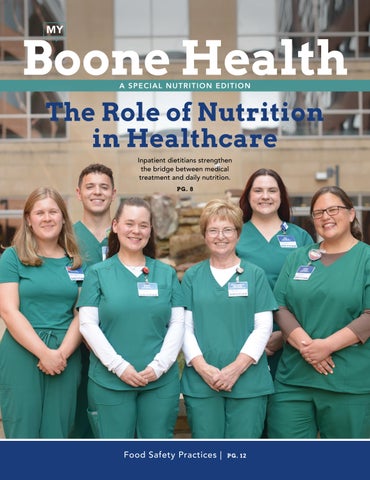
Boone Health A SP E CIAL NUT RIT IO N EDIT IO N
The Role of Nutrition in Healthcare Inpatient dietitians strengthen the bridge between medical treatment and daily nutrition. PG . 8
Food Safety Practices | PG . 1 2
STEPHENS COLLEGE
Stephens leads with
compassion. Our nursing program is a partnership with Boone Health, offering early access to a broad range of clinical experiences and individualized attention. Start your nursing career at stephens.edu.
Table of Contents 8
FAL L 2 0 2 6 MANAGING EDITOR
Erin Wegner STAFF WRITERS
Brianna Emerson Madison Loethen CONTRIBUTING WRITERS
Logan Bradley, Monica Collins, Kristen Hasan, Kristen Howard, Mary Linneman, Abby Strickland, Jenny L. Workman CONTRIBUTING PHOTOGRAPHER
Brianna Emerson
Follow us Follow Boone Health on Facebook, X, Instagram, and YouTube.
10
14
Please submit comments or feedback to erin.wegner@boone.health or call 573.815.3217 1600 East Broadway Columbia, MO 65201 573.815.8000
5
A Note from Brady
18 From the Label to the Table
6
Hospital Headlines
22 Chef Recipes
8
More Than What’s on the Tray
24 Staff To Know
10 Heart Healthy Lifestyle 12 Food Safety Practices For a FREE subscription, scan the QR code, visit boone.pub/subscribe, or call 573.815.3217.
25 Dietitian To Know 26 Importance of Proper
Nutrition While Exercising
14 Meal Prep Basics
28 Importance of Stretching
16 Food Allergies
30 Foundation News
16
Board of Directors
CONTROL YOUR ACID REFLUX FOR GOOD.
Mary Beck, DNP, RN
Jeffery Lashley, Ph.D.
Stacye Smith
Judy Starr
Charles P. Bondurant, MD, FABNS, FACS
4
BOONE HEALTH
Fall 2026
Start enjoying all the foods and activities you’ve missed since severe heartburn took over. Dr. Gerber’s revolutionary surgery using the LINX® device can help, and it nearly eliminates the odds of recurrence. Learn more at boone.health/linx
A NOTE FROM BRADY
The Cornerstone of Healing N
utrition is the cornerstone of healing. The body needs fuel, and the right nutrition gives our bodies what it needs to recover, maintain strength, and function at its best. In a hospital setting, nutrition is an important part of the care we provide to our patients. Proper nutrition supports wound healing, helps prevent complications such as skin breakdown, and gives patients the energy they need to participate in therapy. However, nutrition is not just important when we are sick. What we eat plays a significant role in maintaining our health and preventing health problems from developing. Our nutritional needs change throughout our lives and are influenced by our age, activity level, health conditions, and other factors. I sometimes compare it to putting fuel in a vehicle. Different engines have different fuel requirements, and using the right fuel helps an engine perform the way it was designed to perform. Part of taking care of yourself is knowing your engine and understanding what you need to fuel it well. I have seen that in my own family. Both of my parents had diabetes, and I saw firsthand how dietary choices could affect how they felt and how well they managed the disease. I also have a daughter with gluten sensitivities, which requires her to think differently about some foods that many of us take for granted. At the hospital, nutrition management is more than just determining what foods
are best for the patient. Can a patient open the milk carton? Can they manage silverware? Is the tray positioned where they can reach it? Those may seem like little things, but caring for people means paying attention to them. To me, that is what compassionate care looks like. That responsibility doesn't end when someone leaves the hospital. Through our partnership with the Food Bank, patients identified as experiencing food insecurity can leave Boone Health with nutritious food to help support them after discharge. We may have treated the acute medical issue, but healing continues at home. If nutrition is essential to healing, we have to consider whether people have access to it. There is an enormous amount of nutrition information available today, and not all of it is good information. I encourage people to ask questions, talk openly with their physicians and dietitians, and seek information from credible, evidence-based sources. Nutrition can be highly individualized, particularly when you are managing a medical condition, and a social media trend is no substitute for advice based on sound science and an understanding of your individual health. Throughout this issue of My Boone Health, you'll learn more about the many ways nutrition affects our health, from hydration and recovery to making nutritious choices that are realistic for everyday life and everyday budgets. You'll also find ideas from our own Food
and Nutrition Services team that can help make healthy eating a little easier at home. Nutrition does not have to be complicated or perfect. Start by understanding what your body needs, making informed choices, and giving yourself the fuel you need to be well. Your health is worth it. Sincerely,
Brady Dubois President and CEO, Boone Health
Boone.Health/My-Boone-Health
5
HOSPITAL HEADLINES
New Ambulance Station Through a joint venture with the Boone County Fire Protection District, , a new Boone Health Ambulance Station opened its doors in August 2026. Located at 5801 S. Route K, this space became the fifth ambulance station for Boone Health. Formerly a county fire station, the previous fire station was vacated as a new fire station was built. This allowed the unoccupied space to be repurposed for Boone Health’s EMS Team, granting them quicker response times in south Columbia and that portion of Boone County. This station joins the other ambulance stations at various locations including Boone Hospital, Lenoir Woods, Vandiver Drive in Columbia and Centralia.
6
BOONE HEALTH
Fall 2026
Daisy Team Award Winner In 2025, a new initiative in the Emergency Department was launched to improve efficiency and patient experience. By implementing the Rapid Care Path through a targeted Rapid Process Improvement Workshop (RPIW ), space in the Emergency Department was reorganized to streamline treatment for low-acuity (non-life threatening) patients. The team was awarded the 2026 Boone Health DAISY Team award which recognizes nurse-led team improvements that result in better patient flow and outcomes.
Carolle Silney, MD Receives Bronze Award Dr. Silney of Boone Health Primary Care – Nifong was recognized with the Bronze Award for Best Primary Care Provider in the 2026 Inside Columbia Best of Columbia awards! This well-deserved honor reflects Dr. Silney’s dedication to providing compassionate, patientcentered care and her commitment to improving the health and wellbeing of the community. Through her expertise, kindness, and unwavering support of her patients, Dr. Silney makes a meaningful difference in the lives of those she serves every day.
Level I STEMI Center Designation Boone Health continues to be recognized for the exceptional care, quality outcomes and community commitment made possible by our employees. Earlier this year, Boone Health received redesignation as a Level I STEMI Center by the Missouri Department of Health and Senior Services, reaffirming our ability to provide the highest level of care for patients experiencing severe heart attacks. This designation recognizes hospitals that meet rigorous standards for rapid diagnosis and treatment when every minute matters. This achievement reflects the dedication and teamwork of our physicians, nurses, emergency responders, providers, medical staff, and support teams. From advanced cardiac capabilities and 24/7 access to cardiac catheterization services, rapid treatment protocols and strong coordination with EMS partners, Boone Health employees play an essential role in delivering life-saving care close to home. The STEMI redesignation adds to several recent honors for Boone Health. Boone was also recognized by Becker’s Hospital Review as the top hospital in Missouri for having the lowest hospital readmission rates. Nationally, Boone Health was named a Top 100 hospital for low readmission rates. Boone Health was also named one of the nation’s Top 100 Most Socially Responsible Hospitals by the Lown Institute Hospitals Index and ranked third in Missouri for social responsibility. Together, these recognitions reflect the work our teams do every day to provide safe, compassionate, patient-centered care for the communities we serve.
Gold Status for STEMI and Cardiology Service line Boone Health has also been recognized by the American Heart Association through its Get With The Guidelines® program, earning the Coronary Artery Disease STEMI Receiving Gold Plus with Target: Type 2 Diabetes achievement award. This recognition reflects Boone Health’s commitment to following the latest evidence-based guidelines for treating patients experiencing ST-elevation myocardial infarctions (STEMIs), while also addressing the unique needs of patients with Type 2 diabetes. The award recognizes hospitals that consistently deliver high-quality care and achieve positive outcomes for heart attack patients.
Boone.Health/My-Boone-Health
7
More Than What's on the Tray: The Role of Nutrition in Healthcare
Inpatient dietitians Eris Rolves, Kristen Howard, Logan Bradley, Kristen Hasan, Mary Linneman and Abby Strickland.
W
hen most people think about nutrition, they might picture calories, vitamins, meal plans, or the latest diet fads. In a hospital, nutrition is much more complex and should be understood as a basic component of medical care. Nutrition is an essential, evidence-based aspect of patient treatment, recovery, and long-term health management. For example, patients with slow-healing wounds need more protein to support tissue repair, while those recovering from surgery may have other specific nutritional needs. In the ICU, providing the right nutrition can help prevent muscle loss and reduce the risk of infection. For people with heart failure or diabetes, carefully managed diets can directly impact how well their condition is controlled and how quickly they can return home. Clinical dietitian Eris Rolves begins by assessing patients through a holistic lens. In addition to age, specific medical diagnoses, and nutrient requirements, this entails assessing a patient’s living situation, the availability of support at home, recent patterns of food intake, and consistent access to food. Additionally, dietitians assess practical environmental
8
BOONE HEALTH
Fall 2026
circumstances, such as whether the patient has access to a refrigerator or the resources required for safe food preparation. By integrating medical, social, and environmental elements, dietitians can customize nutritional recommendations to each patient’s unique life situation. Rolves works with patients in the intensive care unit, where nutrition often looks very different from what people expect. ICU patients might be on ventilators, getting dialysis, or depend on medications to keep their bodies working. Some cannot eat safely at all. In these cases, the care team must evaluate the risks and benefits of each feeding method and select the best approach for the patient’s recovery. Making the right nutrition plan is just one part of what dietitians do. The plan also needs to fit the person who follows it. Food is personal and tied to culture, family, habits, comfort, and taste. Allergies or medical issues can suddenly make foods someone has always eaten unsafe or off-limits. Instead of just telling patients what to do, dietitians explain why they are making certain recommendations and what could happen based on the choices patients make.
"At the end of the day, our patients are people," Rolves said. "It is always up to them to make their own choices, and we work to guide them." Once a nutrition plan is created, its implementation relies on the expertise of several professionals. Dietitians assess patients, develop nutrition plans, and provide education. Food service staff prepare and deliver meals that meet each patient's dietary needs, making sure special instructions, such as allergies or texture changes, are followed. Nurses monitor patients’ intake and reactions to food or feeding methods and communicate concerns to the team. Physicians and pharmacists contribute by coordinating medical care or managing medication interactions. This kind of collaboration helps make sure patients get the safest and most effective nutrition support. One of the biggest challenges in healthcare nutrition often starts after a patient leaves the hospital. A recommendation that seems simple on paper can be hard or even impossible to follow in real life. For example, someone who is homeless might find it difficult to manage a medical condition without access to a refrigerator for storing food or medication. A patient with limited financial resources may be unable to purchase recommended foods. Others may prioritize caring for children or family members, frequently neglecting their own nutritional needs. To confront these challenges, medical professionals implement interventions such as connecting patients with community food assistance programs, providing information about local resources, or working with social workers to improve access to safe food storage and preparation. By addressing these barriers, clinicians can help patients translate medical advice into practical strategies within their real-life environments. Another challenge is when patients have to change their daily habits. Patients might know that cutting back on salt or fluids can help with heart failure, but it doesn’t mean it’s easy to change. To support these changes, dietitians often use behavior change techniques like establishing small, realistic goals with
patients and checking their progress. Motivational interviewing, which involves asking open-ended questions and helping patients explore their own motivation to change, can be helpful. These strategies make it more likely that patients will be understood, supported, and empowered. "Behavior change is difficult," Rolves said. "Sometimes it takes multiple tries. It takes multiple conversations." Patients today face another growing challenge: the vast amount of nutrition information can be overwhelming. For instance, fad diets such as the ketogenic diet or detox cleanses are often widely promoted but lack evidence for their claimed health benefits. Social media, wellness influencers, fad diets, and supplements frequently promise easy solutions to complicated problems. Rolves said misinformation appears even among critically ill patients. The challenge is helping people separate compelling claims from recommendations appropriate for their individual health. Supplements are one area where Rolves has noticed that many people are especially interested. Vitamins, minerals, herbal products, and protein powders can be helpful when needed. In general, supplements should be considered when a patient has a documented deficiency; cannot meet their nutrition needs through food due to illness or difficulty eating; or when specific medical conditions make it necessary, such as with certain vitamin deficiencies, pregnancy, or after surgery.
However, supplements are not recommended as a routine replacement in a balanced diet, and unnecessary use can sometimes cause harm or interact with medications. Rolves stresses that it is best to get nutrients from food whenever possible and to discuss supplement use with a medical provider or dietitian first. "It is both more and less complicated than people think," Rolves said. It is more complicated because health cannot always be reduced to a simple equation. Genetics, medical conditions, environment, upbringing, finances, and access to resources may all influence a person's health and ability to make changes. For most people, foundational practices remain essential: eating a variety of foods, staying adequately hydrated, getting sufficient sleep, and developing long-lasting habits. While this approach may seem less appealing than the promise of a miracle diet or a new supplement, healthcare is not based on shortcuts. Effective care entails recognizing the needs of each individual and tailoring approaches that respect their body, health status, available resources, and personal situations. Ultimately, clinical nutrition extends far beyond the contents of a hospital meal tray. It is an important tool that treats illness, supports recovery, and prevents complications. By actively incorporating evidence-based nutritional strategies into patient care, inpatient dietitians strengthen the bridge between medical treatment and daily nutrition. By Brianna Emerson
Boone.Health/My-Boone-Health
9
Heart Healthy Lifestyle By Kristen Howard MS, RD, LD & Mary Linneman RD, LD, CDCES
H
eart Disease is one of the leading causes of mortality and morbidity in America. Many of the factors related to heart disease are lifestyle factors such as dietary patterns and physical activity.
Sodium Salt is a blend of two different mineralssodium and chloride. According to the American Heart Association, reduced sodium intakes can lower blood pressure and cardiovascular disease risk. High sodium foods include processed foods such as canned soups and frozen meals. One teaspoon of salt contains about 2,300 milligrams (mg) of sodium. Be cautious when choosing food items labeled as “unsalted,” “no salt added,” “reduced sodium,” or “lower sodium.” These food items may still be high in sodium, so always check the nutrition label. Recommendations: Aim for about 2,000mg (2 grams) of sodium or less per day. When cooking at home, leave salt out of recipes and instead use fresh herbs, spices or powders, like garlic powder or garlic salt. Choose foods that are naturally low in sodium such as fresh or frozen fruits and vegetables (without added sauces) and fresh meats versus processed meats. Also, when shopping, look for food packages that say terms such as: • “Salt-free” or “sodium-free” (5 mg of sodium per serving or less) • “Very-low sodium” (35 mg per serving or less) • “Low Sodium” (140 mg per serving or less)
Fats There are several different types of fats that exist in foods. We need fat for a variety of different reasons in our bodies. Fats support brain function and help with the absorption of fatsoluble vitamins (Vitamins A, D, E and K). Some fats tend to be less healthful for the cardiovascular system, while others can be beneficial.
10
BOONE HEALTH
Fall 2026
• Trans Fats: Trans fats are the most harmful type of fats and contribute significantly to the development of cardiovascular disease. Trans fats may still be present in small amounts in foods either naturally like they are in animal products such as whole milk, cream, meat and meat byproducts, and in small amounts in baked goods. Check ingredient lists for the words “Partially hydrogenated” followed by any type of oil; if listed, the product contains some artificial trans fats. • Saturated Fats: Saturated fats contribute to the build-up of plaque in the arteries, increasing the risk of heart attack and stroke. Saturated fats are typically high in animal sources such as meats, cheeses and dairy products. Coconut oil is also high in saturated fat. • Unsaturated Fats: Unsaturated fats can help to reduce the risk of cardiovascular disease. Unsaturated fats are typically found in fish, nuts and seeds. There are subtypes of unsaturated fats like polyunsaturated fats (e.g. nuts, seeds and oils), monounsaturated fats (e.g. peanut butter and avocado) and omega-3 fatty acids (e.g. salmon and tuna). Recommendations: Limit saturated fats to less than 6% of total caloric intake, or less than 13 grams per day. Limit trans fat as much as possible.
Cholesterol Cholesterol is ONLY found in foods from animals; all plantbased foods are void of cholesterol. Foods high in cholesterol includes egg yolks, meats and dairy products. However, cholesterol found in foods does not directly raise cholesterol in the human body. What affects cholesterol levels is saturated fat and refined carbohydrates (e.g. sugars). Below are further explanations about the different types of cholesterol. • Low Density Lipoprotein (LDL) Cholesterol: plaques that collect in the walls of arteries and increase the risk of stroke and heart attack. Also referred to as “bad” cholesterol. LDL is directly related to dietary saturated fat intake.
• High Density Lipoprotein (HDL) Cholesterol: cells that regulate LDL storage and help to rid LDL accumulations. HDL can help to lower stroke and heart attack risk. Also referred to as “good” cholesterol. HDL is directly related to physical activity level. • Triglycerides (TG): Triglycerides are a stored form of fat. Triglycerides are often high when blood sugar is high because the body converts excess sugars in the blood into triglycerides. TG is directly related to refined carbohydrates like sugar.
Lastly, foods lower in sodium are critical when following the DASH diet. Mediterranean Diet: emphasizes plant-based foods and heart-healthy fats. The Mediterranean diet is linked with reduced risk of coronary artery disease. The diet consists mostly of fruits, vegetables and whole grains. The main source of fat in the Mediterranean diet is extra virgin olive oil and fatty fish, like salmon. Little to no red meat is recommended when following the Mediterranean diet. Moderate amounts of natural cheeses and yogurts are also included in this diet.
Fiber
Movement
Fiber can help to bind up the “bad” cholesterol and excrete it from your body before it builds up in the arteries. Fiber also helps to slow down the speed at which food is digested. Delayed digestion can help to control blood sugar levels and the feeling of being full for longer periods of time. Rich sources of fiber include:
Physical activity is critical in a heart-healthy lifestyle. Try to move your body most days of the week. General physical activity recommendations include a minimum of 150 minutes of moderate-intensity exercise a week, or 75 minutes of highintensity exercise each week, and two sessions of musclestrengthening exercises a week. Engage in physical activity that is enjoyable to you and try being physically active with a group of friends or family members.
• Whole fruits, including apples, pears and strawberries. • Whole vegetables, including broccoli, carrots and Brussel sprouts. • Nuts and seeds, including almonds, walnuts and flaxseeds. • Beans and lentils, including black beans, navy beans and red lentils. • Whole grains, including 100% whole wheat bread, brown rice and oatmeal. Recommendations: The amount of fiber recommended for adult women is about 25 grams per day and fiber recommendations for adult men is about 30 grams per day.
Diets
Easy Swaps When implementing a heart-healthy diet, there are some simple switches that can be made to dietary patterns. • Instead of regular ground beef, try 90% lean ground beef or lean ground turkey to decrease calories and saturated fat. • Instead of sour cream, try low-fat Greek yogurt to decrease calories and saturated fat. • Instead of butter or margarine, try using olive oil, canola or safflower oil. The amount used can also be decreased to lower the calories and increase unsaturated fat.
Many dietary patterns of eating exist in our food ecosystem. Some “fad” diets may not be a healthy choice. Some examples of heart-healthy diets include:
• Swap out snack foods like crackers, chips and candy for yogurt with fruits, fresh vegetables and hummus or unsalted nuts to decrease sodium and saturated fat.
Dietary Approaches to Stop Hypertension (DASH) Diet: designed to lower blood pressure and improve heart health. The DASH diet emphasizes whole vegetables, fruits, whole grains, low-fat dairy products, fish, poultry, beans, nuts and vegetable oils. The DASH diet limits foods high in saturated fats like fatty meats, full-fat dairy products and tropical oils such as coconut and palm oils. The DASH diet also limits sugar-sweetened beverages and sweets. When following the DASH diet, it is important to choose foods low in saturated and trans fats. Foods rich in potassium, calcium, magnesium, fiber and protein are also important.
• Switch out processed lunch meats like bologna, salami and pastrami for low-sodium turkey or roast beef to decrease total fat, saturated fat and sodium. Resources for Recipes Need more guidance? Talk to a Registered Dietitian or reference the websites listed below. • American Heart Association: heart.org • American Diabetes Association: diabetes.org • Academy of Nutrition and Dietetics: eatright.org
Boone.Health/My-Boone-Health
11
Food Safety Practices
Washing, prepping, cooking and storing food are all involved in practicing food safety. Avoid the potential of getting ill from food by following these guidelines. By Kristen Howard MS, RD, LD
A
ccording to the Food and Drug Administration, foodborne illness, also called food poisoning, is defined as any sickness that results from eating or drinking contaminated food or water. Main causes of food poisoning at home come from dirty hands, bacteria and poor food storage. While other causes exist, practicing food safety at home can prevent food poisoning from happening to you, a loved one or guest. The four main components of food safety include proper ways to wash, prep, cook, and store beverages and food. It’s important to remember that sanitation practices in the kitchen are involved in every step of the process.
WASHING
All food handlers should thoroughly wash their hands with soap and hot water before and after handling food. Gloves are not a replacement for handwashing. Also, clean surfaces and tools before and after using them to remove any germs and to prevent contamination. Certain foods do not need to be washed before preparation. Some common examples include raw meats, like chicken, fish and beef. Washing raw meat should be avoided as this can spread bacteria, like salmonella around the kitchen. Storebought eggs should also not be washed to prevent the removal of the protective coating applied to eggs during processing. However, farm-fresh eggs should be washed before cooking to remove bacteria
12
BOONE HEALTH
Fall 2026
and dirt that could move to your hands, utensils and other surfaces. Foods that should always be washed include fresh fruits and vegetables. Fresh fruits and vegetables with an edible peel or surface need to be washed before consuming to remove bacteria, dirt and pesticide residue. Fruits and vegetables without edible peels also need to be washed thoroughly under running water. For example, rinsing bananas for 30 seconds as soon as you get home removes bacteria, chemical residues and fruit fly eggs that can hatch as the fruit ripens. Washing the fuzzy skin on a kiwi
before cutting and peeling it removes dirt, bacteria and germs that were on the skin from transferring to fingers, knives and cutting boards. Fruits and vegetables can be washed thoroughly under running water. Do not use soap when washing fresh produce as the soap may be absorbed into the food. Dry the produce with a clean cloth or paper towel to reduce any surface bacteria. It is also good practice to wash the lids of cans and jars before opening to prevent bacteria and other harmful particles from falling into canned foods and beverages.
FOOD SAFETY RESOURCES COOKING
Always cook food to a safe minimum internal temperature to prevent foodborne illness. Cooking food to the proper temperature will ensure that any harmful bacteria in the food are killed. Food temperatures should be measured using a food-grade thermometer. Measure the temperature of foods at the thickest part of the food. For example, when measuring the temperature of a steak, pierce the thickest part of the meat to check the internal temperature. When using a digital thermometer, wait about five seconds when measuring the temperature of a food.
Looking for more information on food safety? Check out the resources listed below. • United States Department of Agriculture:
www.USDA.gov
• Food and Drug Administration: www.FDA.gov • Food Safety: www.foodsafety.gov • National Restaurant Association:
www.restaurant.org
MINIMUM INTERNAL TEMPERATURES:
BEEF, HAM, FISH 145°F
CHICKEN, TURKEY
165°F
GROUND MEATS, SAUSAGE 160°F
LEFTOVERS, CASSEROLES
165°F
PREPPING
Food preparation can be a major source of foodborne illness due to cross-contamination. According to the United States Department of Agriculture, cross-contamination is defined as the transfer of harmful bacteria to food from other foods, cutting boards and utensils. When preparing food, keep raw foods away from other foods to avoid cross-contamination. For example, raw chicken should not be prepared next to fresh vegetables. You should use separate cutting boards for raw foods and other foods. Or you can prepare all the fresh foods first and then prepare raw foods with the same cutting boards and utensils. This method can minimize the number of dishes needed to prepare food. After preparing raw foods, wash all cutting boards, utensils and surfaces with hot, soapy water. Any packaging for raw foods should be disposed of immediately and not reused.
STORING
Any leftover foods should be stored safely as soon as possible, minimizing the amount of time foods are left out at room temperature to reduce risk of bacteria growing on the food. Do not leave food at room temperature for more than two hours. If the air temperature is above 90° F, use food within one hour. If food is left out for longer than two hours at room temperature, dispose and do not eat or store for later use. Package foods in sealed containers and store leftover foods at a temperature below 40°F. Use or freeze leftovers within four days of when the food was first cooked. When freezing food, ensure the freezer is set to 0°F or lower. Always store raw meat on the bottom shelf of the refrigerator so it does not drip onto other foods. Try not to overcrowd refrigerators and freezers to allow for proper air circulation.
Boone.Health/My-Boone-Health
13
Meal Prep Basics By Kristen Hasan MPH, RD, LD
M
any times, I hear that people struggle with meal prep because the idea of it as a whole is overwhelming; planning the meals; buying the groceries; finding the time to chop, cut and pre-measure everything; needing the right bags or containers to cook, store or freeze in; and then needing the energy to do all of those things. Before starting to meal prep, review your goals for the prepared meals: Are full meals needed, or is ingredient prep more useful? Do items need to be individually portioned or does family style work better? How important is variety/customization? Meal prep can be successful, but it helps to think about your goals to establish how much time is needed, what groceries need to be on the list, and how to satisfy a variety of preferences. The mistake many people make is trying to do too much too fast. If you need to, start small with just one meal or pre-prepared ingredient and then adjust the amount you prepare as you gain confidence and become familiar with this new habit.
Ingredient prep
Ingredient prep can mean different things to different people. Commonly, it means prewashing, chopping and seasoning ingredients. Another form of ingredient prep is preparing individual recipe components that can be used for meals in the future. Also called batch cooking, this is a great gateway to meal prepping if you are unsure of where to start. This can help speed up the time it takes to cook a meal, preserve items that are bought in bulk or are homegrown and help save money by using bulk items and purchasing less convenience foods. Some examples of ingredient prep include: • Making pesto and freezing in ice cube trays for single serving portions. • Freezing homemade meatballs for use in pastas, sandwiches, or curry. • Buying cold whole rotisserie chicken, shredding and then freezing the meat to use in soups, chili, pastas, fajitas, or enchiladas. • Blanching and freezing garden grown vegetables.
14
BOONE HEALTH
Fall 2026
Meal Prep
When deciding what meal(s) to prep ahead of time, here are a couple of questions to ask yourself before you get started: 1. How many people will eat what is prepared? 2. Does everyone have the means to reheat meals if away from home (microwave, air fryer, oven etc.)? 3. How many times can you eat this before burnout? 4. Is there enough fridge/freezer space to store items safely? 5. Do I have the equipment needed (freezer cubes or freezer safe casserole dishes, microwave/oven safe lunch containers, resealable bags)? Here are some tips to remember when meal prepping. Choose items that reheat well. Items that have enough moisture to withstand storage and reheating will reheat the best, such as soups and curries. Choose sturdy ingredients that last longer in the fridge: kale vs. lettuce, plant-based milk vs. dairy milk in overnight oats or sauces. Avoid freezing fully cooked pasta as the water content will cause it to fall apart when reheated. High-quality storage options like resealable bags or freezer safe glass dishes can extend the life of your meal prep and make identifying food items easier if properly labeled.
Find good resources and eat seasonally:
One of my favorite resources is www.seasonalfoodguide.org. This website is useful for gardeners, farmer’s market patrons, or anyone who wants to find out what’s in season at any grocery store. Find instructions on how to store and prepare seasonal produce and learn about their nutritional benefits. The internet is a great place to find recipes. When starting out, look for recipes with high ratings, such as www.allrecipes.com. There’s also websites that provide ideas for alternative ingredients such as www.budgetbytes.com, or recipes that are from experienced, well-known professionals such as www.foodnetwork.com. Here are some seasonal ideas to get you started in your search: • Fall: Make meatballs with your ground meat of choice, freeze them so they are ready for pastas, sandwiches or try them in a cranberry glaze for autumn forward flavor.
• Winter: One pot stews and soups are great for cold weather and reheat well. Soup cubes are a great tool to portion and freeze large batches or leftovers. • Spring: When fresh fruits start coming into season, I can’t wait to put them on everything. My Oaty Overnight Oats recipe is highly customizable, is high in fiber and lasts a long time in the fridge. • Summer: Try Egg Bites or Freezer Breakfast Burritos for easy to reheat items that pack a high protein punch.
As you begin your meal prep journey, remember that small steps can make a big difference. Preparing meals ahead of time helps stretch your grocery budget and reduces food waste. It also helps reduce last minute trips to the store and impulsive drive-through dinners. Preparing foods allows for more control over ingredients and cooking methods leading to the creation of healthier meals, and individually portioned items also helps control portions. Start small, adjust as you gain confidence, and eat well every day.
Kristen’s Chicken Enchilada Soup Makes 6 Servings
• 1 tablespoon olive oil • 1 medium onion, diced • 2 celery stalks, sliced • 1 medium carrot, thinly sliced • 1 large red bell pepper, diced • 2-3 garlic cloves, chopped • 1½ teaspoon ground cumin • 1 tablespoon chili powder • 1 teaspoon dried oregano • 15 ounces diced fire-roasted tomatoes (1 can)
• 4 cups low sodium chicken broth • 14.5 ounces red kidney beans, drained and rinsed (1 can) • 14.5 ounces black beans, drained and rinsed (1 can) • 1 cup fresh or frozen sweet corn • 2 cups cooked shredded chicken • ¼ cup of heavy cream or cream cheese • salt and pepper
1. Heat the oil and add the vegetables, sauté until fragrant. 2. Add garlic, spices, salt and pepper and continue to cook until translucent 3. Add tomatoes, broth, and beans and allow to come to a simmer
Kristen’s Oaty Overnight Oats
Makes 6, 6 oz portions • 12 ounces thick rolled oats • 12 ounces oat milk • 2-3 teaspoons chia seeds • 3 tablespoons maple syrup, honey or agave
4. Add corn, cream or cream cheese and shredded chicken (this is a great use for a cooked cooled grocery store rotisserie chicken!) 5. Allow to simmer to develop flavor for a minimum of 30 minutes, season with salt and pepper to taste. 6. Serve with your favorite toppings like shredded cheese, avocado, pico de gallo, or chopped cilantro 7. Freeze the leftovers or make a double batch and freeze in soup cubes. Once frozen, store cubes in a Ziploc bag in the freezer for up to 6 months. Recipe Source: Kristen Hasan MPH, RD, LD
• 1 tablespoon sugar or sugar substitute • ½ teaspoon cinnamon • ¼ teaspoon salt 1. Mix all the ingredients in a bowl, cover and refrigerate for 24 hours before using. 2. Measure out ¾ cup into your bowl, and top with nuts, fresh or frozen berries, peanut butter, or any of your favorite toppings. 3. This is good for seven days after the oats are ready to eat. Recipe Source: Kristen Hasan MPH, RD, LD
Boone.Health/My-Boone-Health
15
FOOD ALLERGIES Food is often at the center of holiday celebrations, making food allergy awareness especially important this time of year. By Abby Strickland, MS, RDN, LD
M
ore than 170 foods have been reported to cause allergic reactions in individuals, according to the Academy of Nutrition and Dietetics. However, there are nine allergens that are seen most, often referred to as the “Top Nine Allergens.” Those allergens are: milk, eggs, peanuts, tree nuts, wheat, soy, fish, shellfish, and sesame. Sesame is the latest addition, added in 2021.
16
BOONE HEALTH
Fall 2026
According to Food Allergy Research and Education, approximately 33 million people in the United States have at least one food allergy; that is about 1 in 10 adults and 1 in 13 children. Therefore, the chances of knowing someone with a food allergy is quite high, and it’s important to know how those allergies could impact those around you.
Food Intolerance vs. Food Allergy While many people use the terms “intolerance” and “allergy” interchangeably, they are quite different. The American Academy of Allergy Asthma & Immunology (AAAAI) compares the two in a 2026 article. Food intolerance happens in the digestive system when the body struggles to break
down the food, causing discomfort. Most individuals can eat small amounts of these foods without issue but choose to limit or restrict them to improve quality of life. Alternatively, an allergic reaction involves the immune system. Our immune system identifies a certain food as an invader (allergen) and produces antibodies called Immunoglobulin E (IgE), which causes an allergic reaction. These reactions are serious medical conditions that can be life-threatening and may cause severe gastrointestinal and/or respiratory symptoms. With the holidays approaching, it is important to know how to safely prepare foods for friends and family members with food allergies.
MILK
EGGS
PEANUTS
TREE NUTS
WHEAT
SOY
FISH
SHELLFISH
SESAME
Food Allergy Best Practices
A 2024 research study focused on the mental health burden of food allergies. The study’s authors found 62% of those with food allergies reported mental health concerns related to food allergies such as anxiety and panic. Caregivers also experience a similar burden, worrying for the safety of their children or loved ones. If you are hosting a holiday gathering or bringing a side dish to share where extended family members or friends with allergies are coming, there is one important task that needs to be done ahead of time. And that is simply to ask. Ask those attending if there are any allergies or food intolerances and share that with anyone else who is bringing food. And remember to be flexible. It can be very stressful for someone with a food allergy to ask for accommodations. They want to enjoy the gathering just as much as you do. When shopping for food, careful label reading is one of the most important habits to be in when you have a food allergy or are preparing food for someone who does. Always avoid products if the allergen is in the ingredient list but also be aware of wording such as “this product may contain trace amounts of __” or “made in a facility that also produces __”. There is a high risk of cross contact with these products; therefore, they cannot be verified as safe. Another variable that makes shopping difficult is that some allergies have alternative names. For example, those with
a gluten (wheat) allergy should look for keywords such as wheat, barley, rye, malt, yeast, semolina, and durum. The cook’s job is extremely important when it comes to safely preparing food. The goal is to prevent cross contact, which occurs when an allergen is transferred from a food containing an allergen to a food that does not contain that allergen. Always use separate cooking equipment for allergy-containing and allergy-free foods to ensure there is no cross contact. This includes cutting boards, pots, pans, serving dishes, knives, and other utensils. Risky equipment includes toasters, strainers, wooden spoons, and any porous surface, as they are difficult to clean. Thoroughly clean equipment with soap and water before and in-between use to minimize the risk of cross-contact. Before serving the person with the allergy, explaining how you read food labels
carefully to avoid allergens and how you helped prevent cross contamination can go a long way in making them feel welcome. If you routinely cook for someone with an allergy, a good practice is to have dedicated equipment for allergy-friendly foods. A color-coding system often works well. Another safe practice is to always wash hands thoroughly if touching glutencontaining foods before handling safe foods. When it comes time to serve the food, be aware of extra steps you can take to have a safe event; clearly label each item on the serving line or table and separate allergyfriendly dishes from other dishes to reduce the risk of cross contact, allow the person with the allergy to get their food first, and don’t share serving utensils between dishes. Taking steps to understand and accommodate food allergies can help ensure that every guest enjoys the season safely and confidently.
Boone.Health/My-Boone-Health
17
From the Label to the Table By Logan Bradley, MS, RDN, LD
A
food label is the information displayed on or attached to a food package. It provides crucial details about the product, including nutritional value, ingredients, expiration dates, and allergen warnings, allowing consumers to make informed, healthy choices. 2016 Label Update In 2016, the FDA updated the food label for first time in 20 years. This update reflected more current scientific understanding of diet and health. The update modernized how nutritional information is displayed, to help consumers make healthier choices. Some key changes included larger “Calories” text, a new “Added Sugars” line, realistic serving sizes, and updated micronutrient requirements (listing Vitamin D and Potassium while dropping Vitamins A and C). Four Components of Food Label There are four components of a food label: serving size, calories, nutrients and percent daily value.
1. Serving Size
A common misconception is that patients believe the serving size on a food label is the dietary recommendation for the food or drink being consumed. In reality, the serving size on a food label simply indicates the amount of food or drink people typically consume in one sitting. It is not a dietary recommendation. The remaining nutritional values (calories, fats, carbs, etc.) from the food label are based on this specific serving size amount, making it that much more important to check the total servings per container. Serving sizes are first put in standardized units (cups, pieces) and then metric amount (number of grams).
2. Calories
The calories listed in the amount per serving provide a measure of how much energy is contained in one serving size. To accurately track intake using a food label, always check the serving size and servings per container at the top of the label. The listed calorie count applies only to the exact serving size. Consuming more than the stated serving size will increase calories and nutrients accordingly To achieve a healthy body weight, aim to balance calories between food and drinks. Usually, 2,000 calories are recommended for general guidelines. However, calories vary depending on a variety of factors such as age, sex, height, weight, and physical activity. Consistently consuming more calories than the body burns is the primary driver of weight gain.
18
BOONE HEALTH
Fall 2026
3. Nutrients
The food label will show key nutrients that impact health. Look for foods that contain more of the nutrients that are good for the body. Nutrients the body needs include calcium, dietary fiber, iron, potassium and Vitamin D. Simultaneously, nutrients that should be limited include saturated fat, sodium, and added sugars. When shopping, compare labels on different brands of similar products and choose foods with the better proportions of these nutrients.
4. Percent Daily Value
The Percent Daily Value (%DV ) on a food label shows how much a single serving of food contributes to the recommended total daily intake of a specific nutrient. This percentage is based on a general 2,000-calorie diet. The %DV can help determine if a serving of food is high or low in a nutrient. As a quick rule of thumb, 5% or less is low, and 20% or more is high. Total Sugar vs Added Sugar The 2016 FDA food label update included “Added Sugars” to help consumers identify foods high in added sugars to reduce the risk of chronic diseases, such as obesity, diabetes and heart disease. According to the U.S. Food and Drug Administration, scientific evidence from the 2015-2020 Dietary Guidelines for Americans suggested excessive consumption of added sugars makes it difficult to maintain nutrient-dense diets while staying within daily calorie limits. • Total Sugars on the food label include sugars naturally present in many nutritious foods and beverages, such as sugar in milk and fruits as well as any added sugars that may be present in the product. • Added sugar refers only to sweeteners like cane sugar, syrups, or honey added by manufacturers. The main sources of added sugars are sugar-sweetened beverages, baked goods, desserts, and sweets. Health guidelines strongly recommend limiting added sugars (aim for under 10% of total daily calories), as they provide empty calories without necessary vitamins or fiber. Ingredients List By law, ingredients must be listed in descending order by weight, meaning the ingredient that makes up the largest portion of the food is listed first, and the smallest is listed last. Labels are also required to clearly declare the presence of major food allergens, like milk, wheat, or nuts. Whether you’re new to looking at food labels, or a seasoned pro, knowing what you are consuming is the ultimate goal.
For more information on The Nutrition Facts Label, visit www.fda.gov/food/nutrition-education-resourcesmaterials/nutrition-facts-label
Boone.Health/My-Boone-Health
19
The Diabetes Plate
According to the American Diabetes Association, the Diabetes Plate is the easiest way to create healthy low-carb meals that can help you manage your blood glucose (blood sugar). By using the Diabetes Plate, you can create a meal that includes a healthy balance of vegetables, protein, and carbs. All you need is your plate! To start, you need a plate that is nine inches across. The size of the plate controls the size of your portions. First, fill ½ your plate with non-starchy vegetables. These vegetables are lower in carbs, and higher in fiber, vitamins and minerals, making them an important part of a healthy diet.
Some examples of lean protein foods include: • Chicken, turkey and eggs • Fish • Lean beef cuts • Lean pork cuts • Lean deli meats
Some examples of non-starchy vegetables include: • Asparagus • Broccoli • Cauliflower • Brussel Sprouts • Carrots
Second, fill ¼ of your plate with lean protein foods. Protein foods, from animal sources, contain saturated fat, which can increase your risk of heart disease. Lean proteins are lower in both fat and saturated fat, making them a healthier choice.
Third, fill ¼ of your plate with quality carbohydrate foods. Limiting your portion of carbohydrate foods to onequarter of your plate can help keep blood glucose from rising too high after meals.
Some examples of carbohydrate foods include: • Whole grains • Starchy vegetables • Beans & legumes • Fruits & dried fruit • Dairy products
Lastly, choose water or a zero calorie drink. For more information on the Diabetes Plate, non-starchy vegetables, lean protein options or carbohydrate foods, visit www.diabetesfoodhub.org/blog/what-diabetes-plate.com
CHEF RECIPES
Chicken Tortilla Soup This soup is warm, hearty and packed with Southwestern flavor. Yield: 6 portions (8 oz each)
Ingredients • 1 medium onion, diced (about 1 cup) • 1 medium bell pepper, diced (about 1 cup)
• 2 celery stalks, diced (about 1 cup)
• 4 corn tortillas, cut into small pieces (plus 2 extra for garnish) • 1 tbsp chili powder
• 1 tsp ground cumin • 1 tsp garlic powder
• 1 tsp kosher salt (adjust to taste) • ½ tsp black pepper
• 1 can (14.5 oz) diced tomatoes (or 2 cups fresh diced tomatoes) • 1 qt (4 cups) chicken broth
Hearty Mushroom Barley Soup This thick, comforting soup is a nice option for fall evenings and cold winter nights. Yield: 10 portions (8 oz each)
• 1 lb diced chicken breast or thighs • 1 can (15 oz) black beans, drained and rinsed
• 1 cup corn (fresh, frozen, or canned) • 1 cup cotija cheese, crumbled, for serving
Ingredients • 2½ tsp canola oil
• 13½ oz sliced mushrooms
• ⅓ cup diced celery • ⅓ cup diced onion
• 1 qt + 1 cup vegetable broth (5 cups total)
• ¾ oz garlic, minced (about 4-5 cloves)
• ¾ cup spinach, roughly chopped
• 1⅔ cups barley
1. Heat canola oil in a large soup pot or Dutch oven over medium heat. Add the celery and onion. Cook for 4-5 minutes, stirring occasionally, until softened. Add the garlic and cook for 30 seconds until fragrant. 2. Add the sliced mushrooms and cook for 8-10 minutes. Stir occasionally until they release their moisture and begin to brown. 3. Pour in the vegetable broth and bring to a boil. Stir in the barley. 4. Reduce heat to low, cover partially, and simmer for 40-50 minutes, stirring occasionally. Cook until the barley is tender. Add a little water if the soup becomes thicker than you’d like. 5. Stir in the spinach during the last 2-3 minutes of cooking. Cook just until wilted. 6. Taste and season with salt and black pepper. 7. Let the soup rest for 5 minutes before serving to allow it to thicken slightly. BOONE HEALTH
This combination makes a creamy, comforting chili with a mild kick from the poblano and jalapeno peppers. Yield: 10 portions (8 oz each)
Instructions
22
White Chicken Chili
Fall 2026
Ingredients • 1¼ cups diced onion • 1 poblano pepper, diced • 1 jalapeño pepper, seeded and diced (leave seeds in for more heat) • 3-4 garlic cloves, minced • 2 ½ cups chicken broth • 2-3 cups Great Northern beans, drained and rinsed (about 2 cans) • 15 oz pulled chicken • ½ cup culinary cream • ½ cup half-and-half
Instructions 1. In a large pot, sauté onion, bell pepper, and celery over medium heat until softened, about 5-7 minutes. 2. Add the tortilla pieces to the vegetables. Cook for an additional 2 to 3 minutes, stirring frequently. 3. Stir in chili powder, cumin, garlic powder, salt, and pepper and cook for 30 seconds until fragrant. 4. Add the tomatoes and chicken broth. Bring to a simmer and cook for 20 minutes. 5. Using an immersion blender, puree the soup until smooth. Alternatively, carefully transfer the soup in batches to a blender and puree, then return it to the pot. 6. Stir in the diced chicken, black beans, and corn. Return to a simmer and cook for 10 minutes, or until the chicken is fully cooked and heated through. 7. Slice additional corn tortillas into thin strips. Bake or fry until crisp. 8.Serve. Top with crispy tortilla strips, crumbled Cotija cheese and desired garnishes.
Instructions 1. In a large soup pot over medium heat, add a small amount of oil. Cook the onions, poblano, and jalapeño for 5-7 minutes until softened. Add the garlic and sauté for 30-60 seconds until fragrant. 2. Pour in the chicken broth then stir in the Great Northern beans. Bring to a gentle boil. 3. Stir in the pulled chicken. Reduce heat and simmer for 15-20 minutes, allowing the flavors to blend. 4. Lower the heat to medium-low. Stir in the culinary cream and half-and-half. Simmer gently for 5 minutes. Do not boil after adding the dairy. 5. For a thicker chili, mash about 1 cup of the beans against the side of the pot and stir them back into the chili. 6. Season with salt and black pepper to taste. 7. Serve. Optional garnish options: shredded cheese, sour cream, cilantro, avocado, tortilla strips or crushed tortilla chips and lime wedges. Boone.Health/My-Boone-Health
23
GET TO KNOW BOONE HEALTH STAFF
Jackie Curry Patient Dining Associate, Food & Nutrition Department
I
’m a Boone baby. I was born and raised here in Columbia, and I graduated from Hickman High School. I’m the oldest of six siblings. Altogether, I have worked at Boone Hospital for 16 years across two different periods of my life. My first time working here was in 1991, and I stayed for 12 years before moving out of state. After being away for 19 years, I moved back to Columbia and have been back working at Boone Health for 4 years.
Why did you get into the health care field? I’ve just always loved Boone Hospital. To me, being here feels like being a part of a community and family. I really enjoy helping people, and this job gives me the opportunity to do that through my work with my patients. I have also developed great relationships with the nurses on the floors I serve. What interested you in your particular specialty? I enjoy helping patients with their dietary needs by taking their meal selections and talking with them about their choices and limitations. That interaction gives me an opportunity to make their day a little better, and most of them are thankful that I was able to help them. What is the most rewarding part of your job? The most rewarding part of my job is getting to interact with patients. I love seeing them light up when they see me. I also love the people I work with. Both the patients I serve and the coworkers I work alongside are part of what makes this job so rewarding. What is the most challenging aspect of your job? One of the most challenging parts is having to tell patients that certain food choices are not available to them because of their diet order and restrictions. It can be hard to tell someone they can’t have a particular food they want. There is also a rewarding side to that, though, when I can help them find new food options they can try within those limits. What has changed in your field since you started? We introduced a new patient menu early last year, and the patients are really enjoying that. Looking back from when I first started, the main change I have noticed is that there are many more allergies and specialty diets that I must consider, such as alpha gal.
24
BOONE HEALTH
Fall 2026
What do you see changing in the next 5 to 10 years? In the next 5 to 10 years, I can see more diet trends emerging. When I think about my own work during that time, my personal goal is to become more efficient at my job and in how I carry out my day-to-day responsibilities. What do you enjoy doing outside of work? Outside of work, I enjoy thrifting, which often includes traveling to thrift shops all around Missouri. I also enjoy cooking, doing puzzles, playing video games, and spending time with my friends in my free time. What advice would you give someone looking to become a patient dining associate? My advice would be to take the time to listen to your patients and pay special attention to the details. I would also encourage someone coming into this job to ask plenty of questions.
GET TO KNOW A BOONE HEALTH CHEF
Tavian Bryan Senior Cook, Food Services
I
was born in Iowa and grew up in a really small town. My parents were looking for a bigger area to live and also a place that was a little further south, and a little warmer in the winter. They both found jobs here, and we moved the summer of my freshman year of high school and we’ve been here for 6 years.
Why did you get into the health care field? Originally, I was just looking for a full-time job, and college wasn’t the right path for me. I started in the cafeteria as a food service worker before being promoted to senior cook. I started preparing the entrée line, then the chef ’s specials on exhibition, and now I know every position in the kitchen, so I can help wherever I’m needed. What interested you in your particular specialty? I love that I get to learn new things every day. I also enjoy making sure that everyone is taken care of and knows what they need to do and feels comfortable doing it. What is the most rewarding part of your job? Pulling off a good meal that people really enjoy that gets compliments. It becomes a lot more rewarding. It’s definitely stressful a lot of times while you’re doing it, but you can catch your breath afterwards and then people tell you the food was really good. Makes it more worth it. What is the most challenging aspect of your job? Balancing everything and time management. You don’t want to cook things too early because then it won’t be good, but you don’t want food to be late either. Just finding a balance. What has changed in your field since you started? Having to alter the patient menu due to the number of staff with serious allergies. We had to eliminate offering fish-related limited time options on the patient line because many of our patient dining associates, who deliver food to patients, have shellfish or seafood allergies. What do you see changing in the next 5 to 10 years?Allergies seem to be more and more prevalent, so
allergy precautions that we take are just going to get more and more serious. Alpha gal is becoming a lot more common now. Some of those allergies are really serious that even if something has touched a surface that had the allergen on it at some point it could make them sick. What do you enjoy doing outside of work? I like to draw and be outside. I enjoy my time hanging out with my friends. I like getting tattoos and I like to draw tattoo art. What advice would you give someone looking to become a cook in a hospital? Be flexible. Assume that you don’t know anything and just be open to learning. I didn’t have a lot of cooking experience before I came here, and in some ways, that made it easier for me, because my mind was ready to be molded. Just be open to learning new things and manage your time well.
Boone.Health/My-Boone-Health
25
The Importance of Proper Nutrition While Exercising By Jenny L Workman, Manager, Community Wellness
R
egular physical activity is an essential part of maintaining a healthy lifestyle, but exercise performance, recovery, and overall health depend greatly on proper nutrition. The foods and fluids consumed before, during, and after exercise provide the energy needed to perform physical activity, support muscle function, regulate body temperature, and promote recovery. According to the American College of Sports Medicine (ACSM), proper nutrition and hydration are key components of an effective exercise program. Carbohydrates, proteins, fats, vitamins, minerals, and fluids each play important roles in helping the body meet the demands of physical activity. Carbohydrates provide the primary source of energy during moderate- to high-intensity exercise; protein supports muscle repair and growth; and healthy fats provide energy while supporting hormone production and overall health.
Fueling Before Exercise
Eating a balanced meal or snack before exercise helps provide energy, maintain blood glucose levels, and prepare the body for physical activity. The best pre-exercise choices usually include carbohydrates, moderate protein, and smaller amounts of fat. Carbohydrate examples: • Oatmeal with fruit • Whole-grain bread or toast
• Nuts and nut butters • Seeds • Olive oil A pre-exercise meal or snack should be easy to digest and timed according to individual comfort and workout intensity. For example, a banana with peanut butter, Greek yogurt with berries, or oatmeal with nuts can provide a combination of carbohydrates, protein, and healthy fats to support energy needs.
Nutrition During Exercise
During shorter workouts, water is often sufficient for hydration. However, during longer or more intense exercise sessions, especially those lasting longer than an hour, the body may need additional carbohydrates and electrolytes to maintain energy and replace nutrients lost through sweat. ACSM emphasizes the importance of individualized hydration strategies based on exercise duration, intensity, environment, and sweat rate. Carbohydrate sources during exercise: • Sports drinks containing carbohydrates and electrolytes • Sports chews
• Bananas, apples, berries, or other fruits • Sweet potatoes • Whole-grain cereal
• Bananas or other easily digested fruit • Small amounts of dried fruit Electrolyte sources:
Protein examples:
• Sports drinks
• Greek yogurt
• Electrolyte tablets
• Eggs
• Foods containing sodium and potassium (pickles or pickle juice, bananas with a pinch of salt, salted pretzels, or dried fruit like apricots or raisins)
• Chicken or turkey • Fish • Cottage cheese • Protein smoothies
BOONE HEALTH
• Avocado
• Energy gels
• Brown rice
26
Healthy fat examples:
Fall 2026
Protein and fat are generally not the main focus during most workouts because they digest more slowly and are less efficient sources of quick energy during high-intensity activity. The primary goals during exercise are maintaining hydration, replacing electrolytes when needed, and providing carbohydrates for sustained energy.
Recovery Nutrition After Exercise
Post-exercise nutrition is important for rebuilding muscle tissue, restoring energy stores, and supporting recovery. Consuming a combination of carbohydrates and protein after exercise helps replenish glycogen levels and provides amino acids needed for muscle repair. Carbohydrate examples for recovery: • Rice or pasta • Whole-grain wraps • Potatoes or sweet potatoes • Fruit • Oatmeal Protein examples for recovery: • Lean meats such as chicken or turkey • Fish • Eggs • Greek yogurt • Milk or chocolate milk • Beans and lentils • Tofu • Protein shakes Healthy fat examples for recovery: • Nuts • Nut butters • Avocado • Olive oil-based dressings • Seeds
Examples of balanced recovery meals include grilled chicken with rice and vegetables; a turkey sandwich with fruit; Greek yogurt with granola; or a smoothie containing milk, fruit, and protein powder. Proper hydration should also continue after exercise to replace fluids lost through sweating. Proper nutrition is an essential part of any fitness journey. Providing your body with the right balance of carbohydrates, protein, healthy fats, and fluids before, during, and after exercise can help you perform your best, recover effectively, and support long-term health. While recommendations from organizations like ACSM, the American Heart Association, and the Centers for Disease Control and Prevention provide helpful guidance, nutrition, just like exercise, is not a “onesize-fits-all” approach. Finding what works best for your body, goals and lifestyle is key. For a quick and convenient option around workouts, nutrition bars can be a great choice. Just remember to check the ingredients and be mindful of bars high in added sugars, artificial flavors, and unnecessary additives, as not all options provide the same nutritional benefits. My personal go-to recovery option after a challenging workout is chocolate milk because it provides carbohydrates and protein to help replenish energy and support muscle recovery (and it just tastes great!) Remember, food is fuel. The choices you make help provide your body with the energy it needs to perform, recover, and thrive. Find the foods and strategies that work best for you and help you feel your best.
Boone.Health/My-Boone-Health
27
The Importance of S T R E T C H I N G By Jenny L. Workman, Community Wellness Manager
2. Chest Stretch
S
Why it matters: Sitting for long
tretching is one of the most overlooked components of wellness, yet national guidelines consistently highlight its value. The American College of Sports Medicine (ACSM) recommends performing flexibility exercises for all major muscle groups at least two to three times per week, holding each stretch for a total of 60 seconds to improve mobility and reduce stiffness. The American Heart Association (AHA) notes that flexibility work helps the body move more easily, supports posture, and reduces discomfort during daily activities or long periods of sitting. The Centers for Disease Control and Prevention reinforces that regular stretching supports functional movement and can help counteract the effects of sedentary behavior. Stretching improves range of motion, enhances circulation, reduces muscle tension, and may help prevent injuries, making it a powerful complement to good nutrition and overall wellness. When paired with healthy eating, stretching supports metabolic health, mobility, and daily comfort.
1. Hamstring Stretch Why it matters: Your hamstring muscles are on the back of
your thigh. Tight hamstrings contribute to low back discomfort and reduced mobility. AHA recommends hamstring stretching to improve flexibility in the back of the thigh and knee.
How to do it: Prop one foot on the floor (ideally with the heel
down and toes up) on a low bench or step. Hinge forward from the hips and hold for 20–30 seconds. This stretch can also be done lying on your back with one leg up or sitting upright and gently tipping forward from the hips. Repeat for opposite leg. You can easily work this stretch into everyday moments, like while brushing your teeth, relaxing on the floor, or watching your favorite TV show.
28
BOONE HEALTH
Fall 2026
periods tightens the chest and shoulders. AHA notes chest stretches help improve posture and reduce upper body tension.
How to do it: Stand in corner, place
your forearms on the wall, and gently lean forward. You can also stand at a doorway with your hands on either side of the door and gently lean forward. Or this stretch can also be done by interlacing your hands behind you and drawing your shoulders back to open the chest. This stretch is perfect for the office, during a pause on a long road trip, or while you’re waiting for your hot beverage to finish brewing.
3. Hip Flexor Stretch Why it matters: Hip flexors are a group of muscles near the front
of our hips. Prolonged sitting and overuse from running or cycling can cause pain and tightness. AHA highlights hip flexor stretching as essential for mobility and balance.
How to do it: Step into a lunge with your feet hip-width apart. Keep your torso upright, and gently press your hips forward. You can also do this stretch from a kneeling position using the same cues or try a yoga pigeon pose for a deeper hip opener. Try stretching each leg a couple of times, holding for 10 to 20 seconds. This is an especially useful stretch after sitting for a long period of time or following a long walk.
To make an appointment with a physical therapist, visit boone.health/therapy-services or call 573-815-3868.
4. Quadriceps Stretch Why it matters: Our quadricep muscles are the muscles on the front of our thighs. Tight quadriceps can affect knee alignment and walking mechanics. AHA recommends quadricep stretches to improve thigh flexibility and support joint health. How to do it: Stand near a wall or another stable surface if you need support for balance, bend one knee, and gently draw your foot toward your glutes. You can also do this stretch lying on your stomach or side if that feels more comfortable. Stretch both legs, holding each side for 10–20 seconds, and repeat twice. It’s an easy movement to fit into everyday moments, like after a bike ride, walking the dog, or even unwinding after a long movie.
5. Torso Twist Why it matters: ACSM emphasizes stretching the trunk to maintain spinal mobility and reduce stiffness. AHA recommends torso twists to improve midsection flexibility and posture. How to do it: Sit or stand tall, rotate gently from the waist, and hold for 10–30 seconds on each side, repeating a couple of times. Keep your spine lifted and your shoulders relaxed throughout the movement. Holding an object can add resistance which can help increase core strength and helps maintain proper form. You can do this first thing in the morning, sitting at your desk chair, from your recliner or sitting through a long meeting. One additional point worth highlighting: I’ve started incorporating neck stretches because so many of us spend long hours on computers or looking down at our phones. Over time, this creates tightness that limits mobility. Without full range of motion in the neck, even simple daily tasks, like turning your head while backing up your car can become more difficult. Gentle, consistent stretching helps counteract these modern day posture challenges and supports safer, more comfortable movement. Boone.Health/My-Boone-Health
29
FOUNDATION NEWS
Celebrating 25 Years of Transforming Healthcare Through Philanthropy For 25 years, the Boone Hospital Foundation has played a vital role in advancing healthcare in mid-Missouri, transforming generosity into meaningful support for patients, families, caregivers, and the broader community. As the foundation celebrates its 25th anniversary, we honor not only a significant milestone in our history, but also the lasting impact philanthropy has had on the quality of care available at Boone Health. Officially established as a 501c3 nonprofit corporation in 2001, the Boone Hospital Foundation serves as the charitable arm of Boone Health, connecting donors with opportunities to enhance healthcare and improve lives. Through the generosity of individuals, families, businesses, and community partners, the foundation has provided critical funding, patient-centered programs, staff education, and facility enhancements for innovative technology. These countless initiatives strengthen the hospital’s ability to deliver exceptional care. Over the past quarter century, donor support through the foundation has helped bring important advancements to Boone Health, enabling physicians, nurses, and care teams to provide leading-edge treatment while maintaining the compassionate, personalized approach that has defined Boone Health for generations. Philanthropic investments have supported projects large and small, from life-saving medical equipment and advanced training opportunities to programs that promote healing, comfort, and well-being for patients and their families. Beyond the hospital walls, the Boone Hospital Foundation has fostered a spirit of community engagement and partnership. Generations of supporters have invested in local healthcare because they understand the importance of ensuring access to high-quality care close to home. One example of this is the foundation’s investment in the newly built Boone Health Primary Care – Glasgow clinic, which held its grand opening in July 2026.
Transforming Healthcare Every gift helps support: • Patient-centered care including inpatient massage therapy, prescription support and specialized equipment in the hospital and on the Boone Health ambulance fleet • Nursing excellence through continued education opportunities • Community Wellness initiatives such as free screenings for diabetes, high blood pressure and skin cancer • Family support programs including bereavement groups and pre-natal classes • Advanced medical technology • Innovative healthcare solutions
Our Impact Over the past 25 years: • More than $18,000,000 has been given through philanthropic gifts • Over 25,000 gifts received from individuals, corporations and foundations • 3,000+ Boone Health employees have received professional development funds or educational scholarships • 600,000+ patients impacted • More than 200 programs supported
30
BOONE HEALTH
Fall 2026
The foundation’s success is measured not only by dollars raised, but by lives touched. Every contribution represents neighbors helping neighbors and a shared belief that exceptional healthcare strengthens the entire community. As we look to the future, the Boone Hospital Foundation remains the same: to make a lasting difference in the lives of patients and community members. While much has changed over the past 25 years, our purpose remains the same: to make a lasting difference in the lives of those served by Boone Health. This anniversary is a celebration of every donor, volunteer, advocate, caregiver, and community partner who has contributed to that mission. It is also an opportunity to recognize the dedicated members of the Boone Hospital Foundation Board of Directors, whose leadership, vision, and stewardship have guided the foundation’s mission and activities throughout these 25 years. Their commitment, alongside the generosity of our donors, has helped build a remarkable legacy of compassion, innovation, and impact. Together, we celebrate 25 years of transforming healthcare and creating healthier futures for generations to come.
Boone Hospital Foundation Board of Directors
In 2024, a UTV was purchased through donor dollars for the EMS team
Treasurer Dawn Daly
In 2013, the foundation purchased Giraffe incubator beds for the NICU.
President Valerie Ninichuck Vice President John Franken
Secretary Angela Hull CHAS Board Representative Stacye Smith Physician Representative Mark Adams, MD Boone Staff Representative Peter Gloggner Community Directors • Jan Beckett • Stephanie Goans • Daisy Grossnickle • Patricia Hostetler • John Pile • Christy Thomas • Kelle Walters To help parents provide a safer sleeping environment, the foundation gives each newborn a sleep swaddle.
Gifted by the Boone Hospital Foundation and Board of Trustees, the Mobile Health Unit launched in August 2011.
2026 Boone Hospital Foundation Board of Directors • Row 1: Stacye Smith, Kelle Walters, Valerie Ninichuck • Row 2: Daisy Grossnickle, Stephanie Goans, Christy Thomas, Dawn Daly, Pat Hostetler • Row 3: Jan Beckett, John Pile, Mark Adams, Drew Wilkinson, Jack Franken. Not pictured: Angela Hull, Peter Gloggner
Boone.Health/My-Boone-Health
31
Boone Hospital Center 1600 East Broadway Columbia, MO 65201 573-815-8000
Non-profit Organization PRSRT STD Us Postage Paid COLUMBIA, MO PERMIT 1600
WHEN YOU NEED A DOCTOR FOR A SERIOUS CONCERN, BOONE HEALTH OFFERS THE MOST EXPERIENCED PROVIDERS WITH THE HIGHEST QUALITY HEALTH CARE IN MID-MISSOURI. Whether it’s for routine surgery like hernia repairs or something more serious, Boone Health General Surgery is where you’ll find top-trusted doctors using state-of-the-art technology to provide the highest quality of care and the fastest recovery time.
COMMON PROCEDURES Abdominal Procedures • • •
BROADWAY MEDICAL PLAZA 1 1601 East Broadway, Suite 240 Columbia, MO 65201
• •
OFFICE HOURS: Monday - Friday, 8 a.m. - 5 p.m.
•
CONTACT US: 573-815-8145
boone.health/general-surgery
Appendectomy (appendix removal) Cholecystectomy (gallbladder removal) Hernia surgeries (Hiatal, inguinal, parastomal, umbilical, incisional, ventral, and recurrent hernias) Melanoma (skin cancer anywhere on the body) Splenectomy (removing part or the whole spleen) Small bowel obstruction
Colorectal Procedures • • • • • • • •
Anal fistula Cancer of the colon, rectum, or anus Colectomy (removing all or parts of the colon) Colostomy and Ileostomy Colostomy and Ileostomy reversal Colonoscopy Condyloma (anal warts) Hemorrhoid banding and surgery
Esophageal and Reflux GENERAL SURGERY
• •
LINX Reflux Management System Nissen Fundoplication