
















005
EDITORIAL
008
COOL SHOTS
014
RACING CATCH UP
026
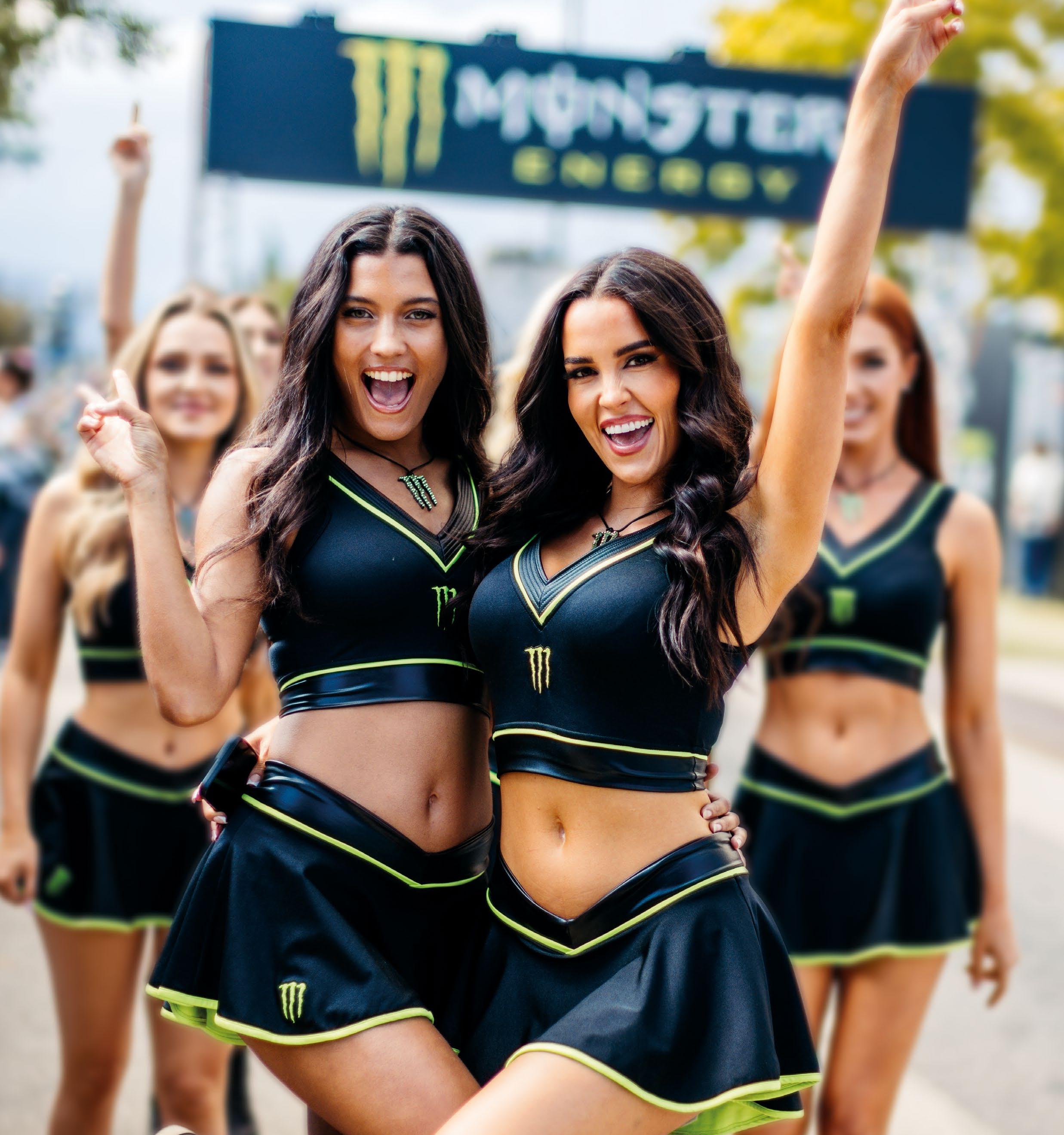
MONSTER GIRLS

034
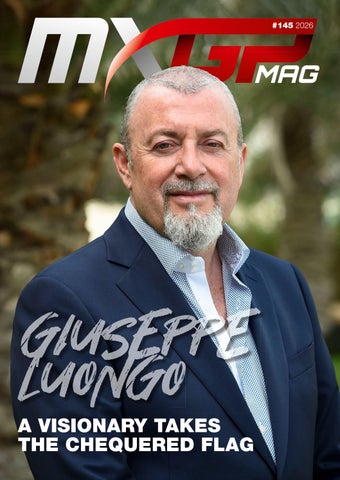
SPECIAL FEATURE GIUSEPPE LUONGO
050
BLOG HARRY EVERTS
054
SPECIAL FEATURE ROMAIN FEBVRE 2025 KAWASAKI KX450SR
068
HALL OF FAME ANTONIO CAIROLI
078
PADDOCK TALKS




014 RACING CATCH UP









MXGP MAG
Chief Editor: Marionna Leiva Photos: MXGP
Infront Moto Racing
Gildo Pastor Center - Bloc B - Etage 9 7, Rue du Gabian MC-98000 MONACO


MXGP Mag #145 2026

The articles published in this magazine do not necessarily reflect the official position of Infront Moto Racing.
Then content of this publication is based on the best knowledge and information available at the time the articles were written.
The copying of articles and photos even partially is forbidden unless permission has ben requested from Infront Moto Racing in advance and reference is made to the source (©MXGP).


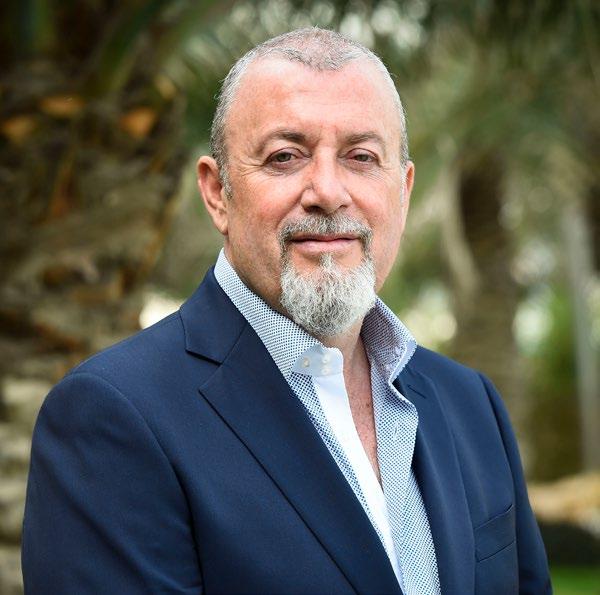
LOOKING BACK, IT FEELS LIKE YESTERDAY. TIME FLIES WHEN PASSION LEADS YOUR LIFE. WHEN YOU TRULY LOVE WHAT YOU DO, IT STOPS BEING A JOB — IT BECOMES A MISSION, A PRIVILEGE, A JOY.
I gave everything to motocross. But motocross gave everything to me.
It allowed me to live this sport at the highest level, to work alongside the greatest riders and managers in its history — from Ricky Johnson to Jeffrey Herlings and Tim Gajser — sharing victories, challenges, disagreements and many unforgettable moments of laughter. There has always been mutual respect, and that respect helped us grow together.
We faced difficult times: the financial crisis between 2008 and 2012, the pandemic, moments when we had to stand united to keep moving forward. And we did. Because motocross is more than a sport — it is a family.
This sport also gave me the most important things in my life. It allowed me to meet my wife. It allowed me to see my son grow, first as a professional football player, and today as the leader of this new chapter. Seeing him take responsibility, together with a talented and energetic young team, fills me with pride. The future belongs to them — to innovation, to new technology, to new ways of thinking.
I would like to thank the teams, the riders, the FIM, and everyone who worked with me to transform motocross from an almost entirely amateur sport into the global professional championship it is today. I also thank those who challenged me along the way — they pushed me to improve and to prove that our vision was the right one. Obstacles make us stronger.
I am convinced that this season will be exceptional. In MXGP and MX2, every detail will matter, every point will count. The rider who
makes fewer mistakes will lift the title — but the real winner will once again be our sport.
Although I am stepping into retirement, my passion will never retire. I will continue to follow every race, every corner, every jump. And I will always be available if my experience can help in any way.
I wish you all a fantastic season.
I wish you to experience the same joy and happiness that motocross has given me throughout my life.
Thank you, from the bottom of my heart.
Giuseppe Luongo

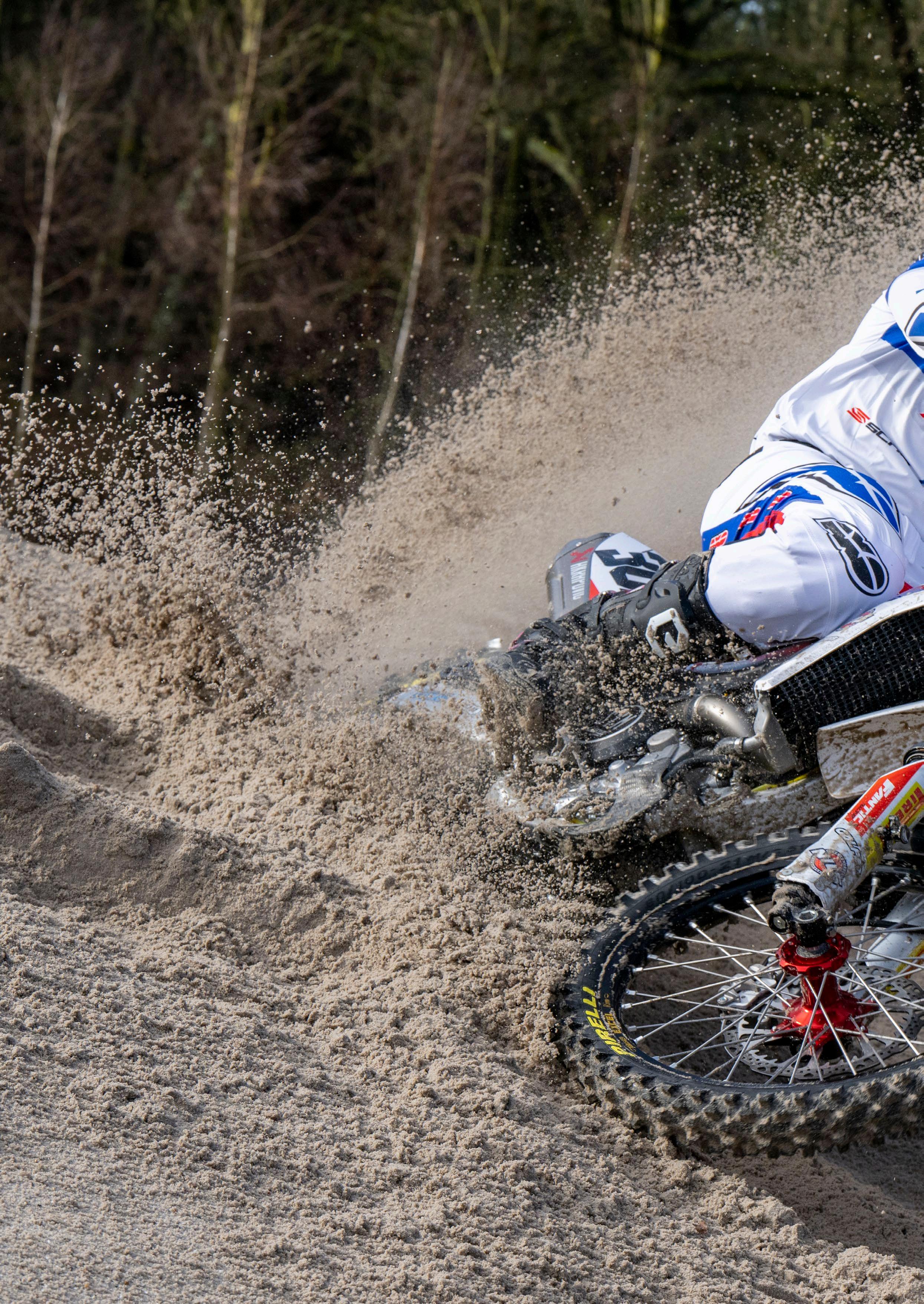

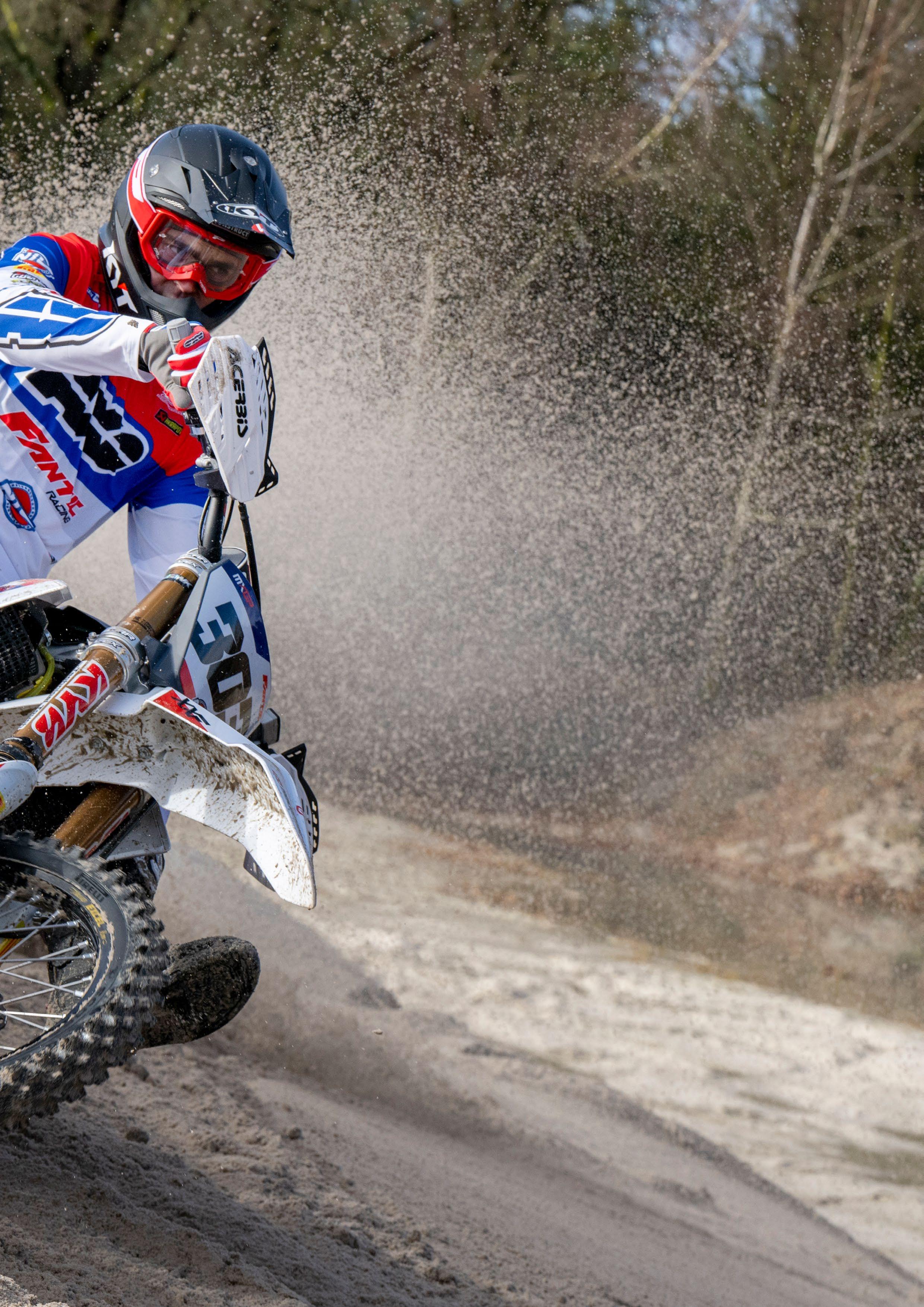
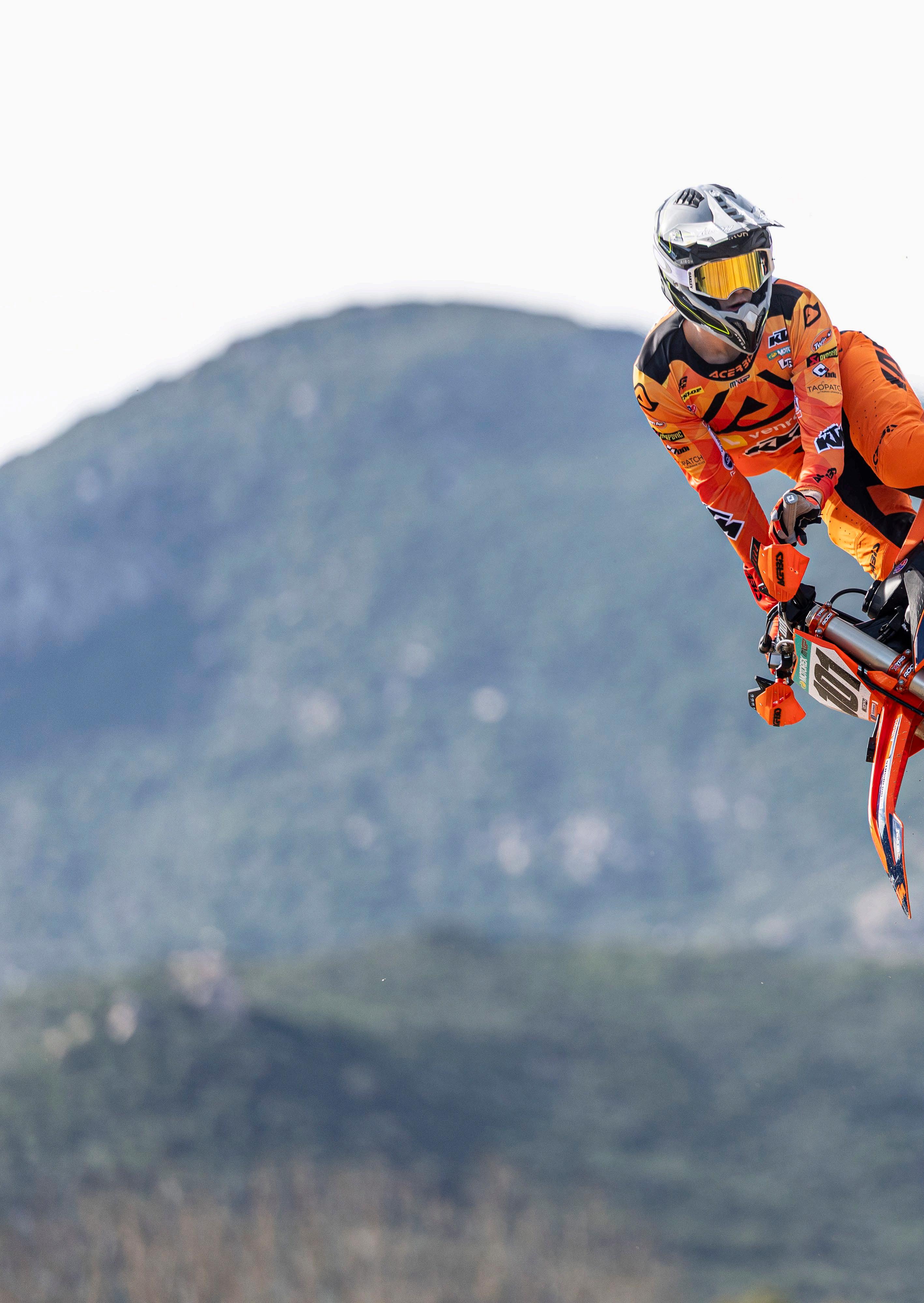

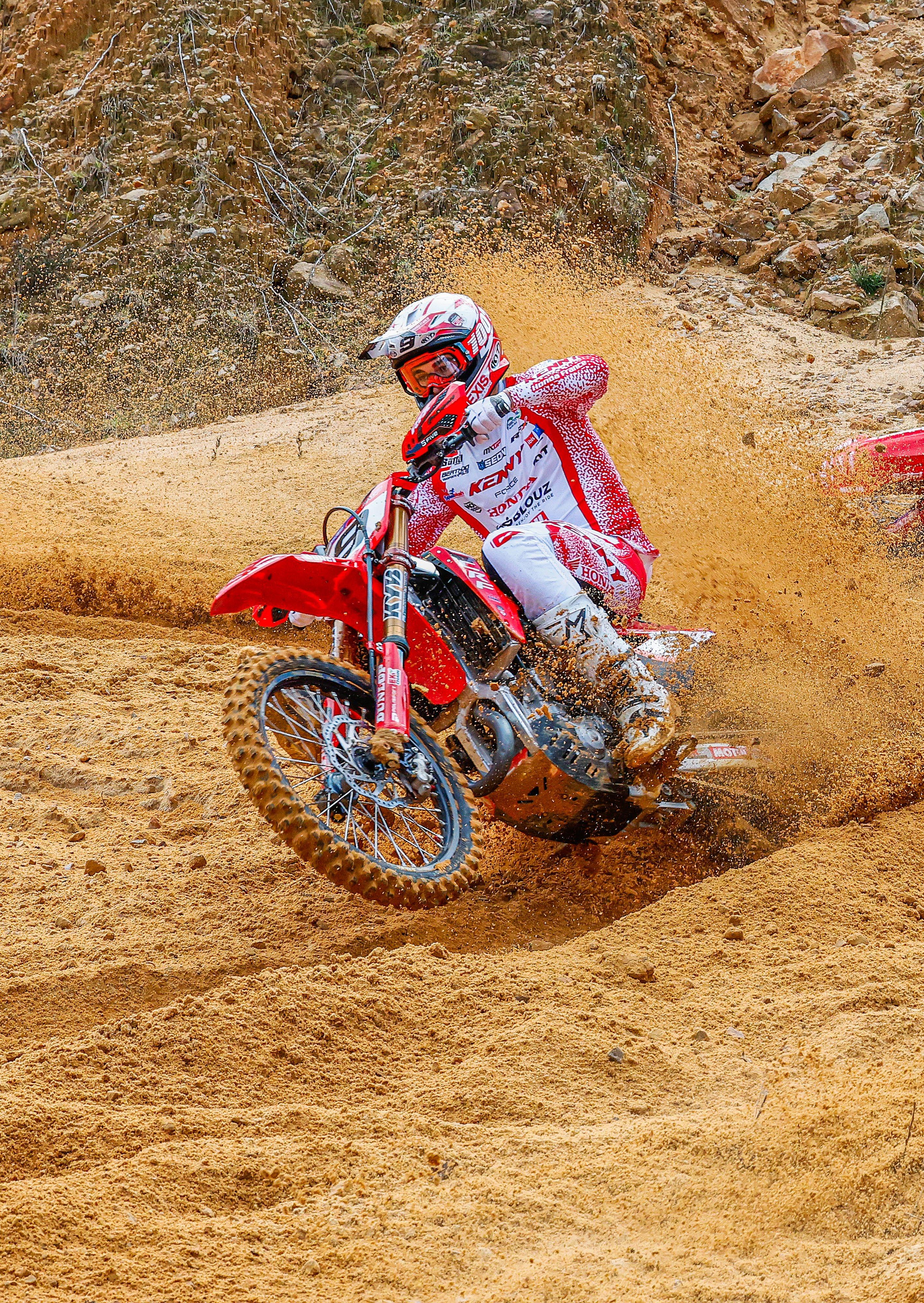


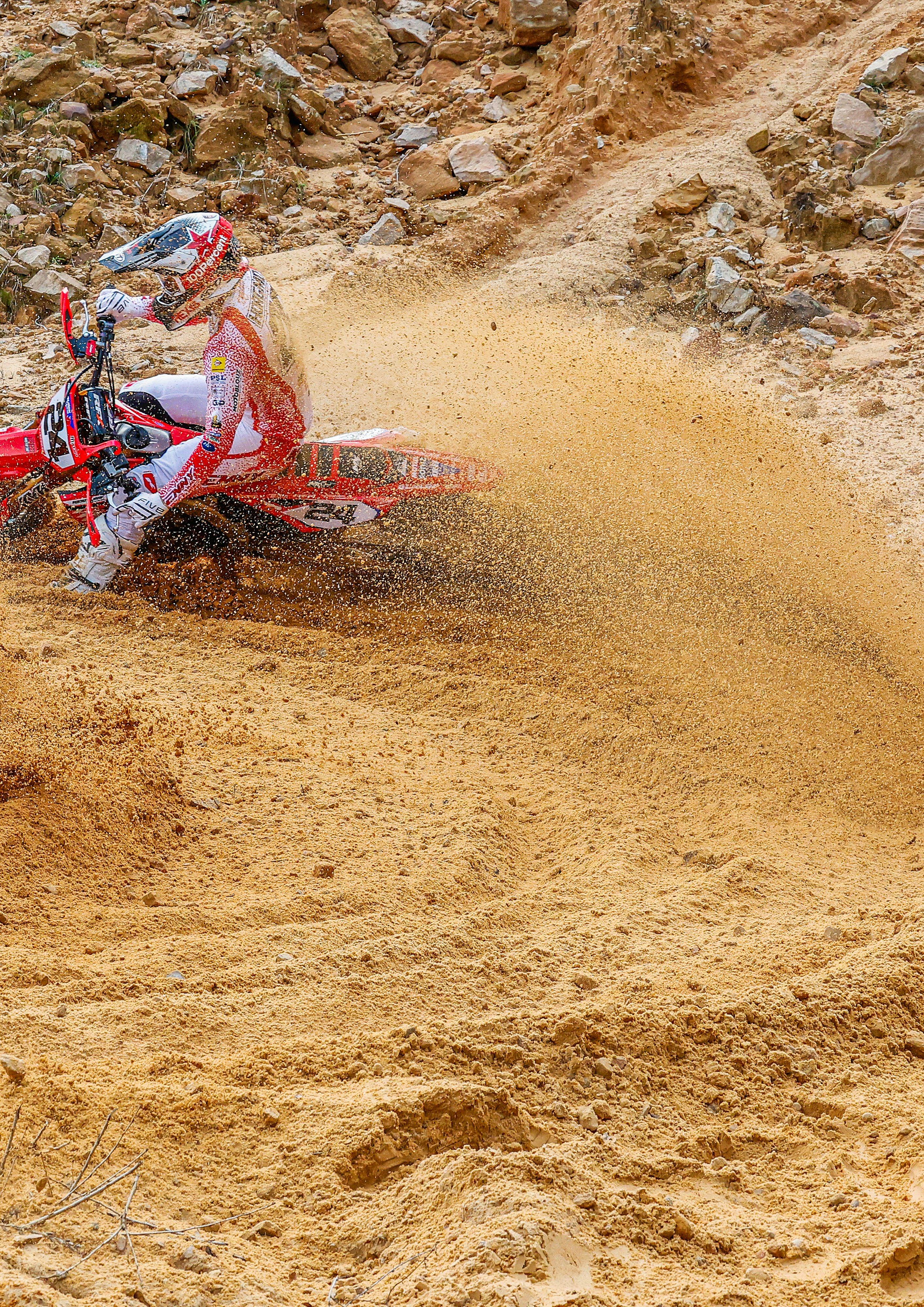


BY THE TIME THIS FINAL EDITION OF MXGP MAGAZINE GOES ‘LIVE’ WE WILL BE JUST DAYS AWAY FROM WITNESSING THE OPENING ROUND OF THE 2026 FIM MOTOCROSS WORLD CHAMPIONSHIP AT THE MXGP OF ARGENTINA, IN BARILOCHE, AND IF YOUR HIBERNATING PERIOD WENT ON FOR LONGER THAN IT SHOULD HAVE, THEN MAYBE YOU DON’T ALREADY KNOW THAT THIS SEASON HAS THE MAKINGS OF BEING ONE OF THE GREATEST EVER. ESPECIALLY IN THE MXGP CLASS, WHERE NO FEWER THAN EIGHT FORMER OR PRESENT WORLD CHAMPIONS WILL LINE UP AGAINST EACH OTHER.
Incredible! So, to give you a head’s up, let’s take a look at who’s who and which riders will line up for which team in 2026.
KAWASAKI RACING TEAM MXGP/MX2
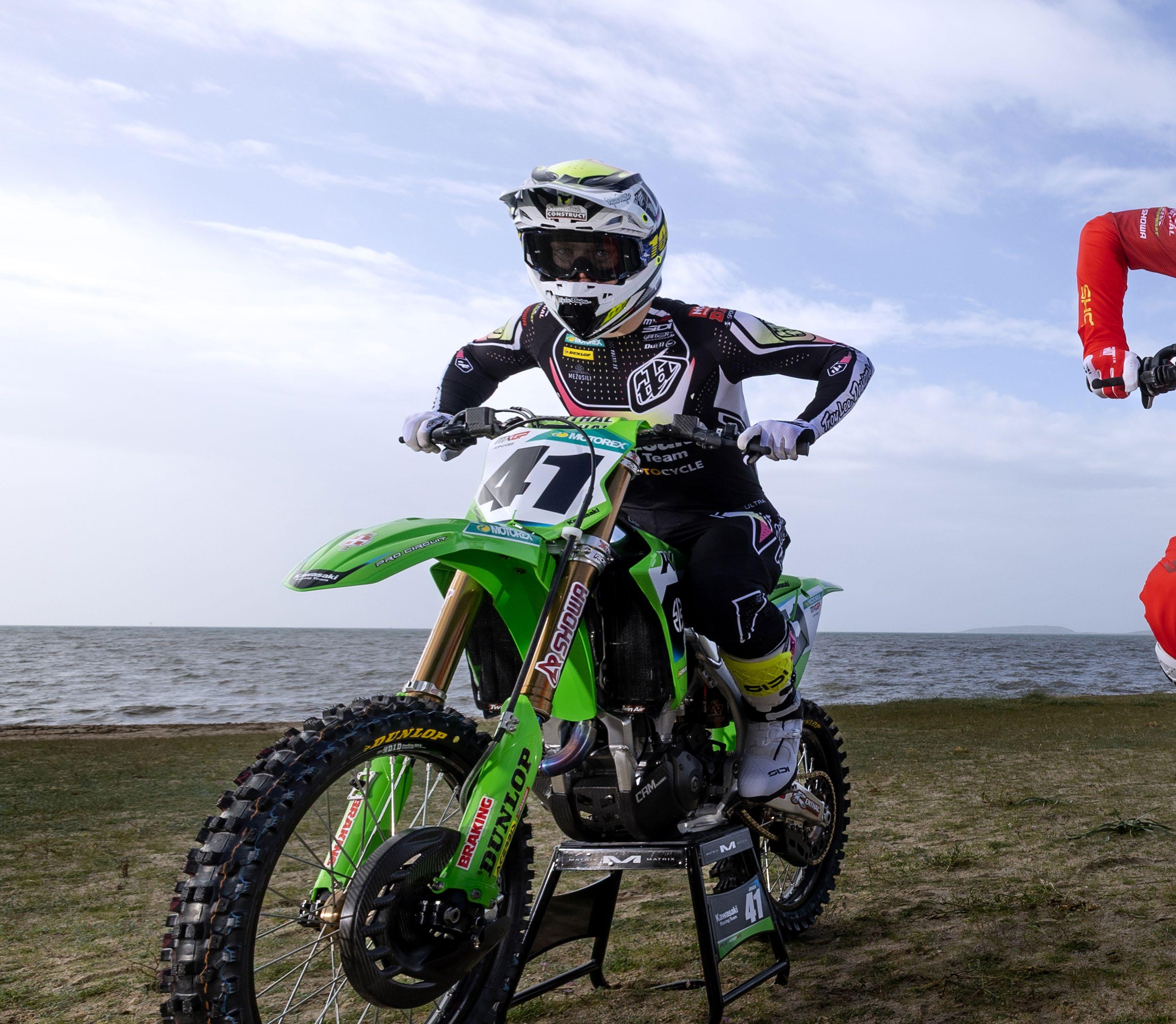
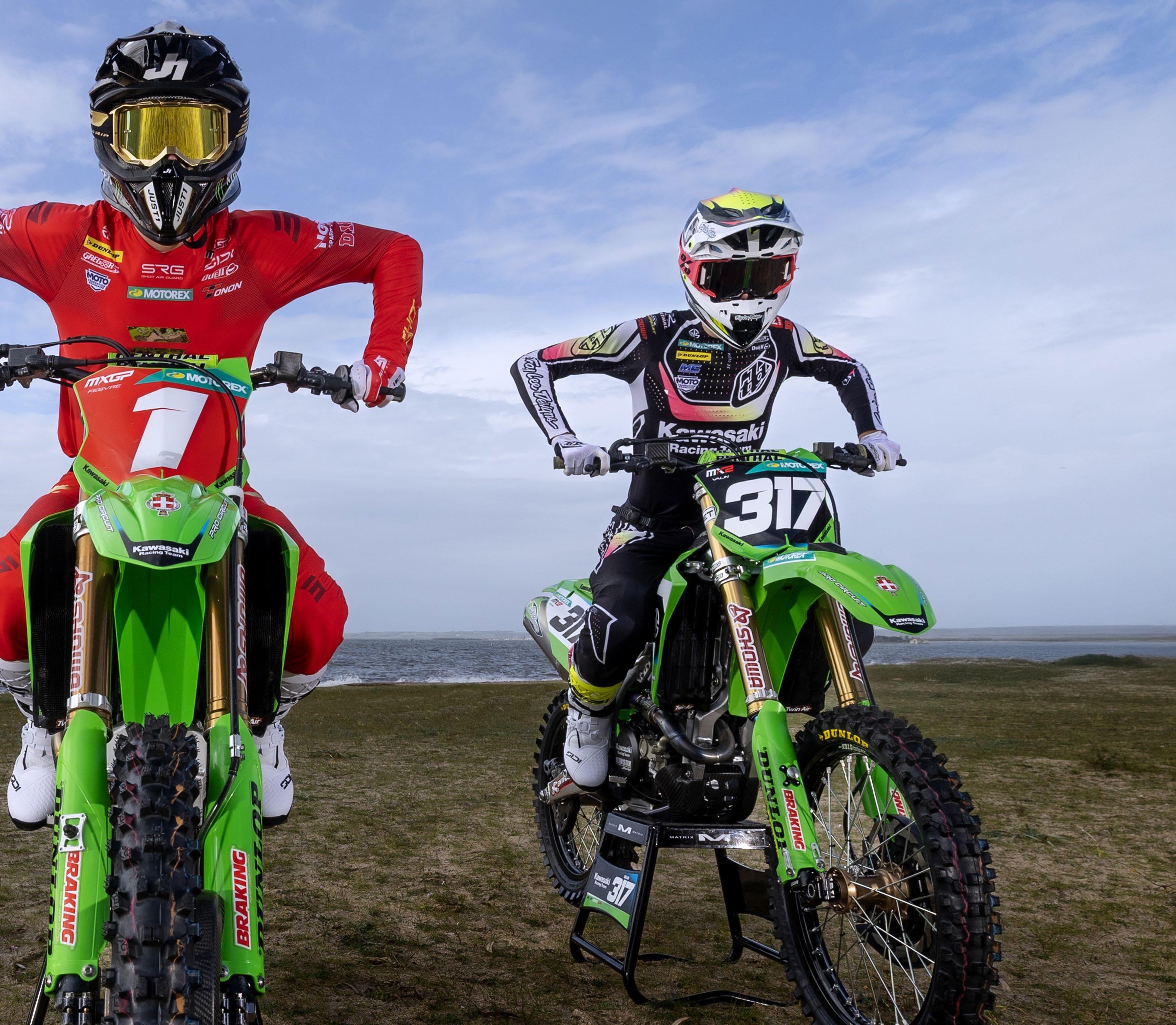
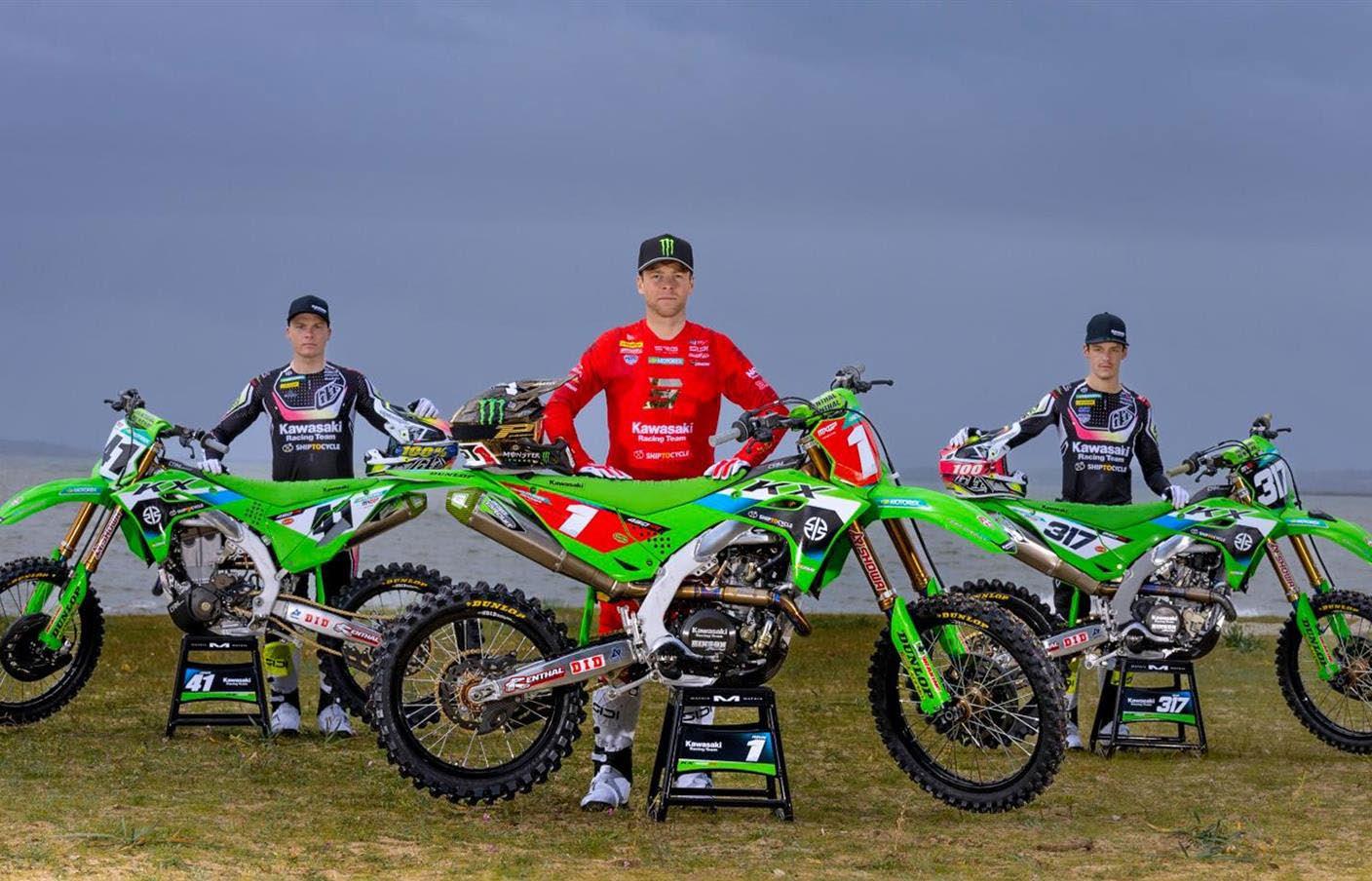
What a year it was for Kawasaki Racing Team, with Romain Febvre securing a first world title for Kawasaki in the MXGP Class, and the first in the premier class since Sebastien Tortelli clinched the 250cc world championship in 1998.
The pairing of Romain Febvre and 2017 MX2 world champion Pauls Jonass remains, with Mathis Valin joining them once again as the MX2 rider.
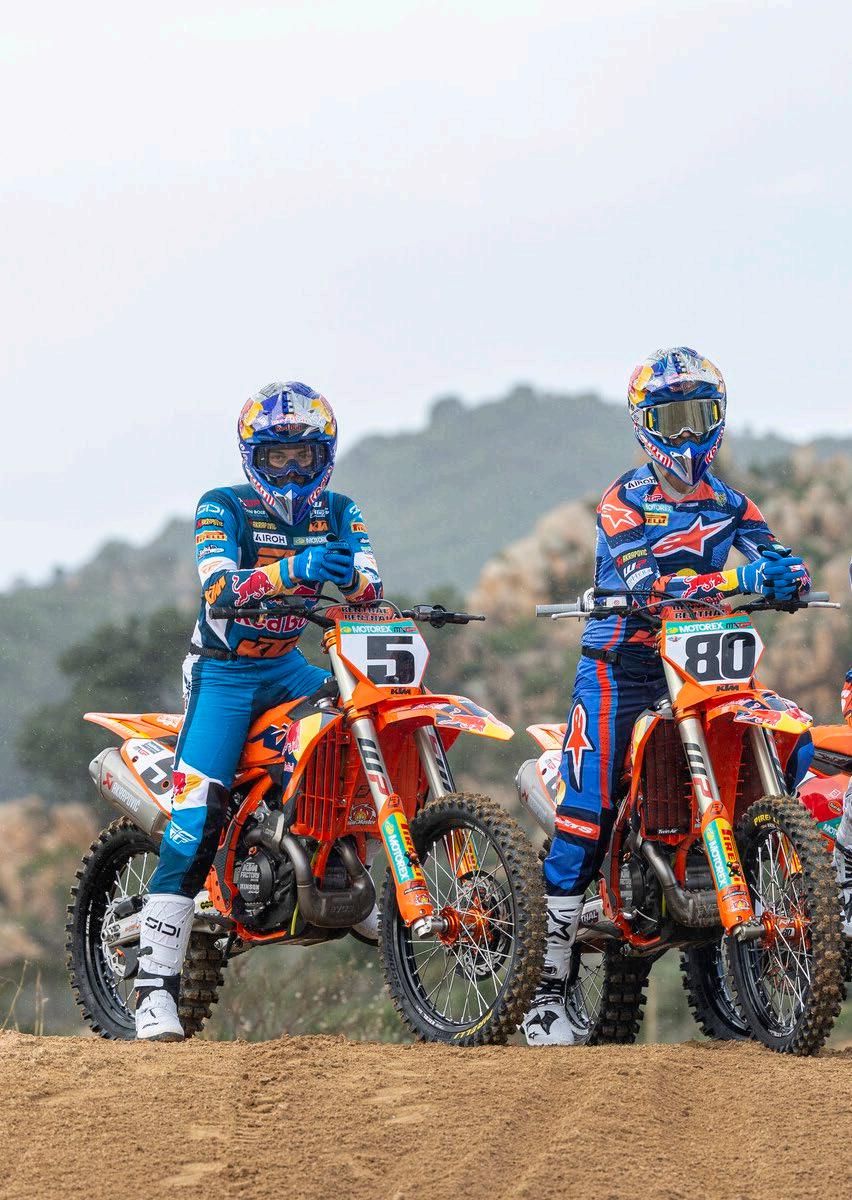
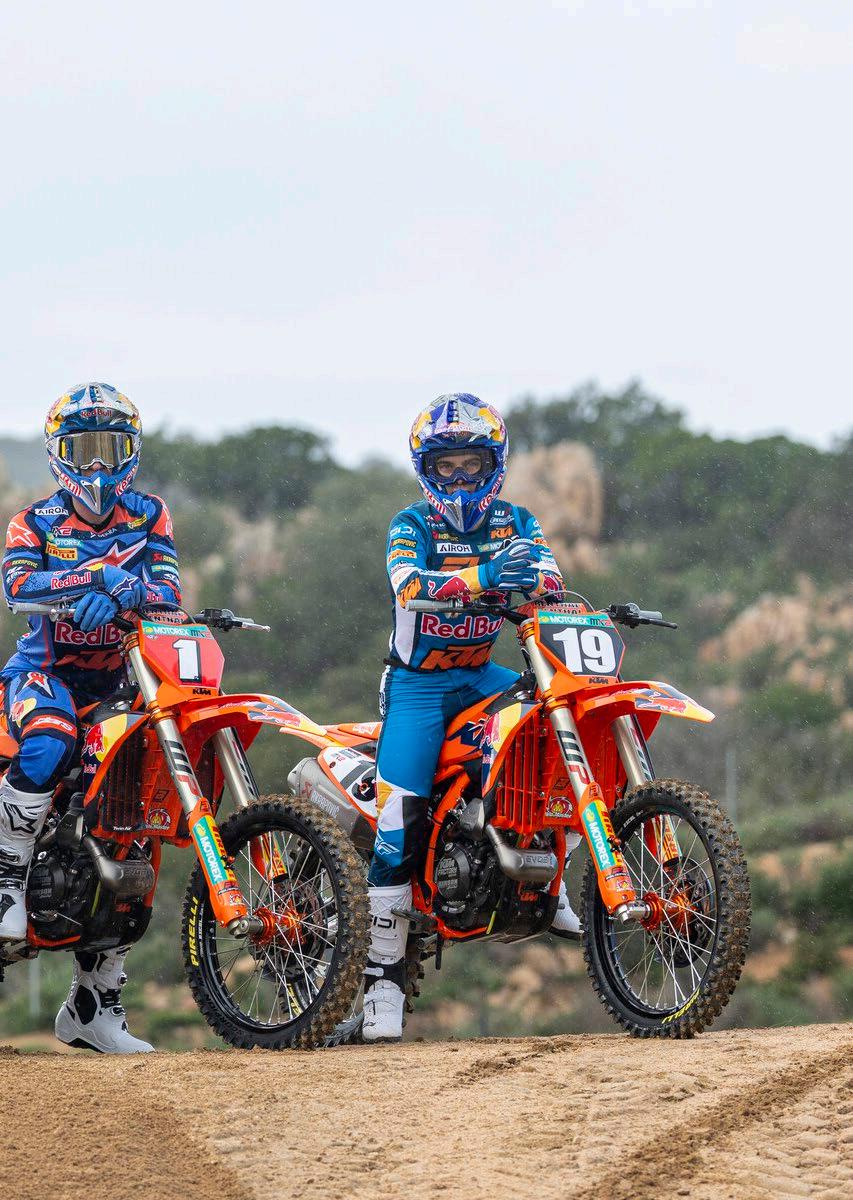
RED BULL KTM FACTORY RACING – MXGP/MX2
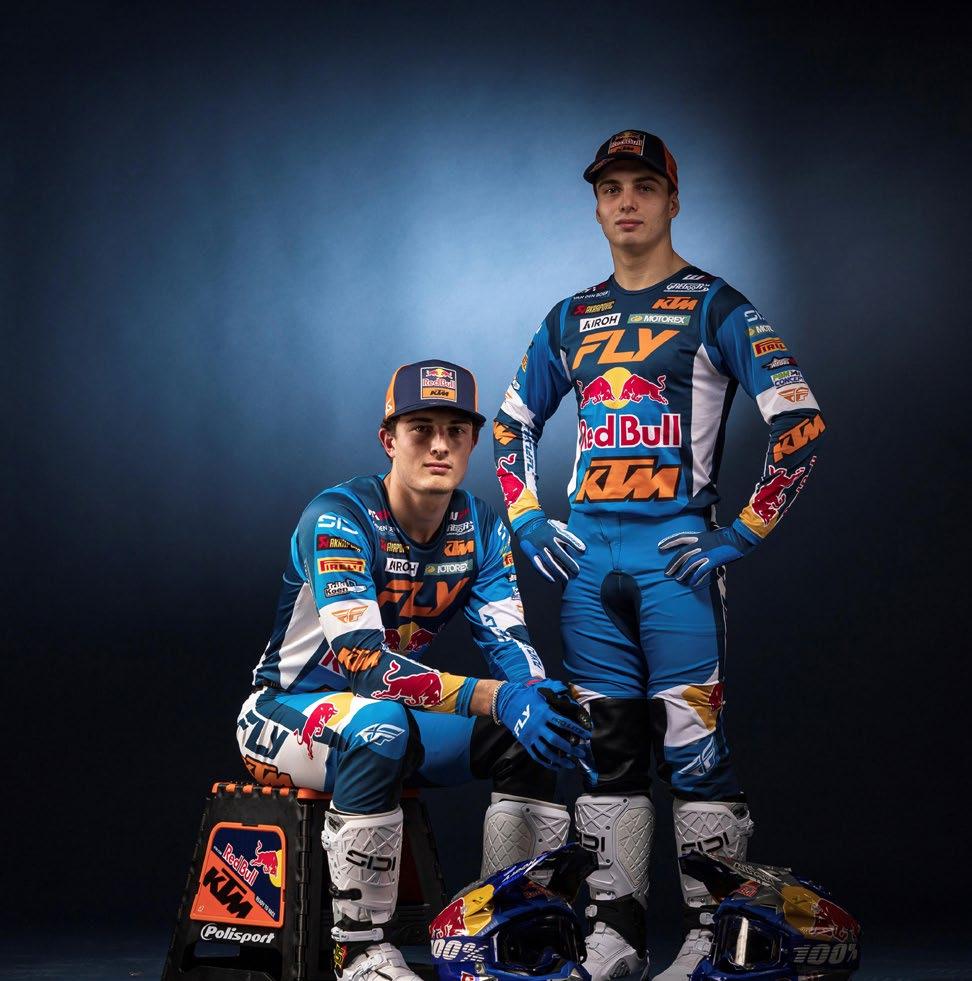
After a stunning campaign in his debut season in MXGP, Lucas Coenen remains with Red Bull KTM Factory Racing in the hope of claiming his first world title, and after coming so close in 2025, would you bet against him in 2026? Twin brother Sacha Coenen is now the sole MX2 rider, as Simon Längenfelder moves across to the Austrian side of the awning.
RED BULL KTM FACTORY RACING – MXGP / MX2
The biggest news here is that after 17 years, there will be no Jeffrey Herlings in orange this
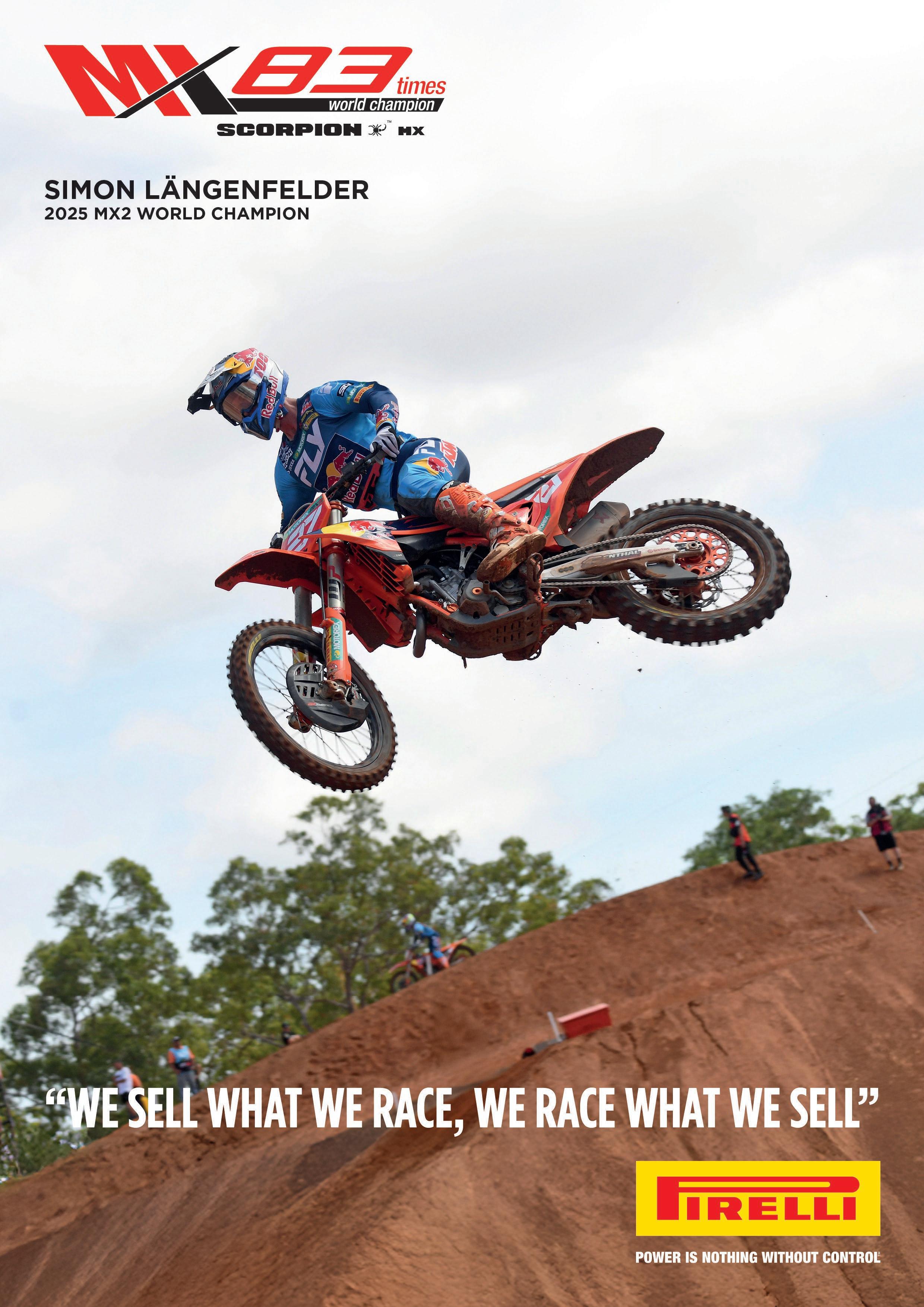
year. Instead, former MX2 World Champion Andrea Adamo will move up from MX2 to MXGP whilst 2025 MX2 World Champion, Simon Längenfelder moves from the De Carli awning to the Austrian one.
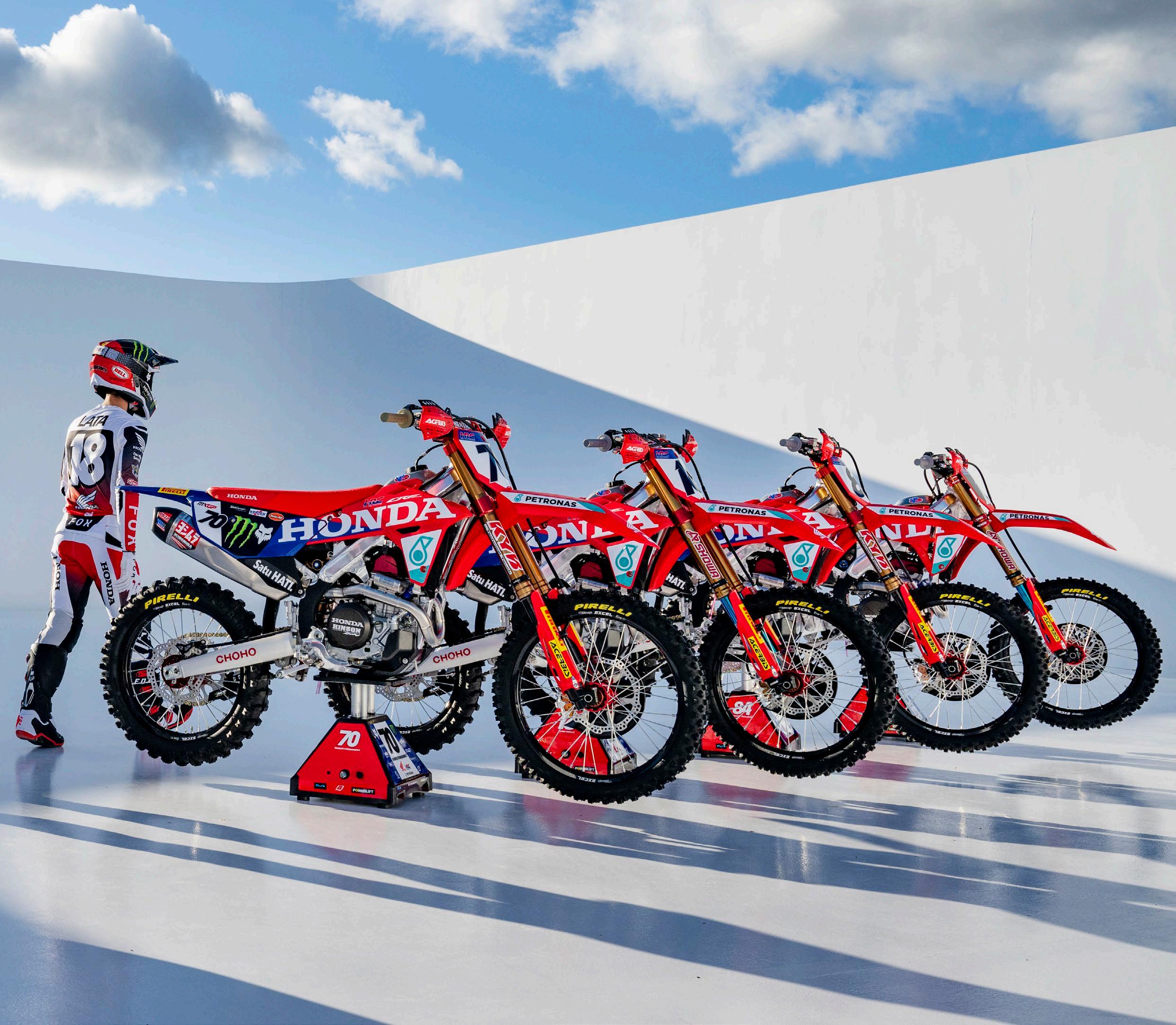
New to Honda HRC Petronas for 2026, apart from the new title sponsor, is none other than five-time world champion, Jeffrey Herlings, who replaces another five-time champ, Tim Gajser. For Herlings, the move sees him return to a Japanese brand for the first time since 2008 in his mini-bike days, and whilst we expect him to get up to speed pretty quickly, there will be a lot of new things to get used to in a very short period of time.
Former MX2 world Champion Tom Vialle returns from America as he looks to add a MXGP title to his already impressive CV, as Ruben Fernandez remains with the team for a fifth term. In MX2, Valerio Lata will once again be the lone 250cc rider on the team as he aims for regular visits to the podium.
MONSTER ENERGY YAMAHA FACTORY MXGP/MX2
More changes at Monster Energy Yamaha as the boys in blue go from a three-man effort to
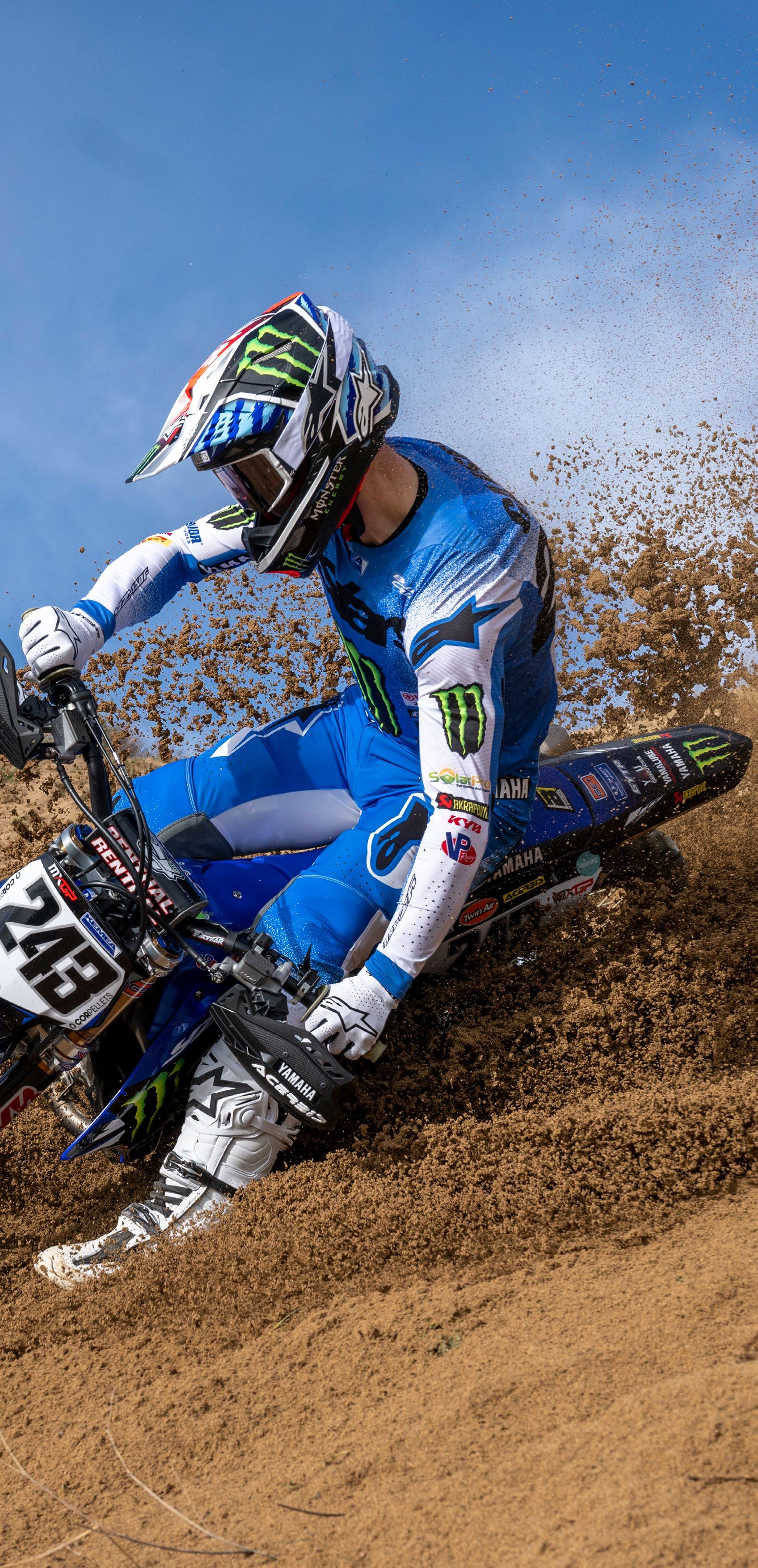
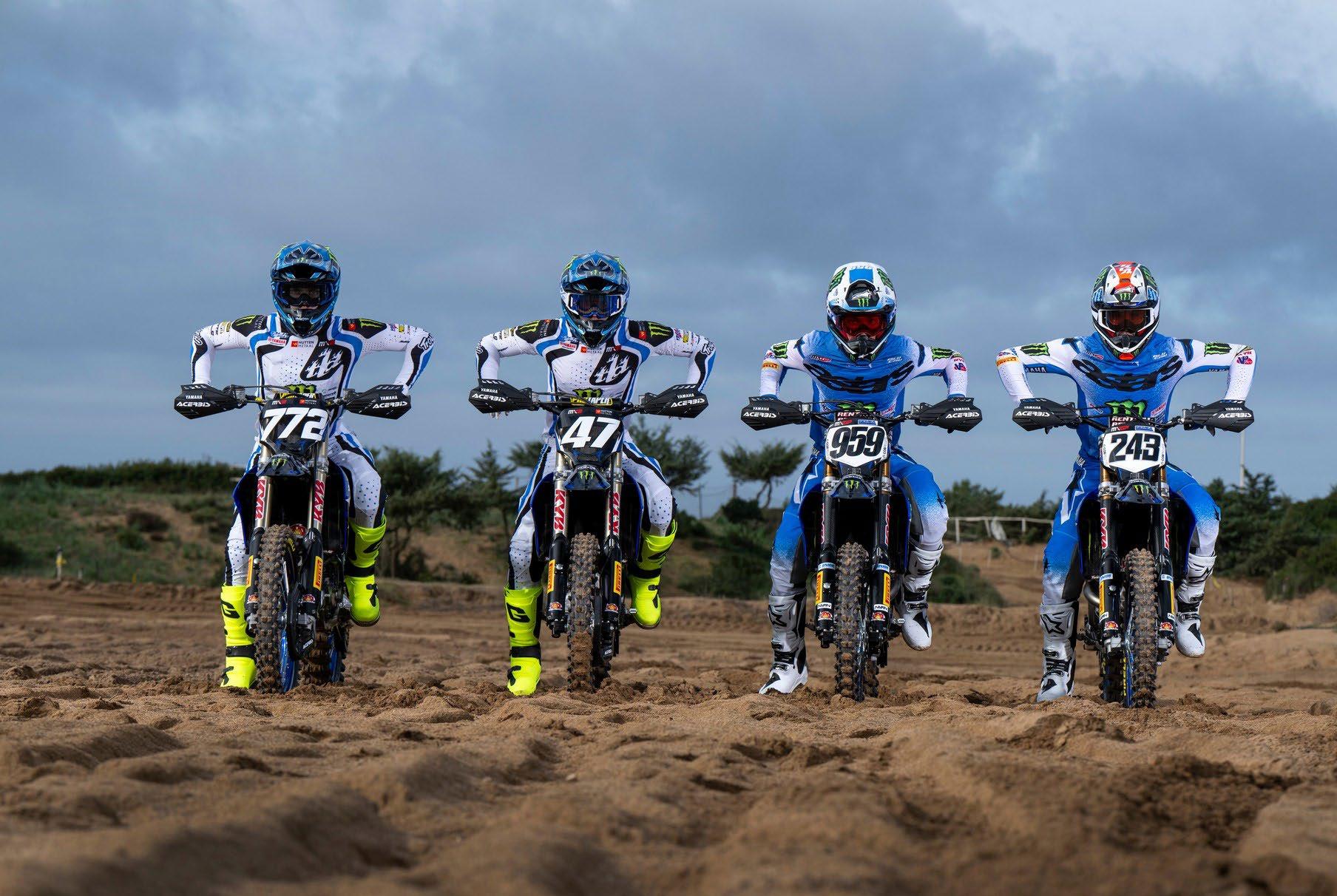
two, with Jago Geerts and Calvin Vlaanderen moving to new teams. Former MX2 World Champion Maxime Renaux remains and will be joined by five-time world champion, Tim Gajser, who will line up for Yamaha after 13 years at Honda.
The MX2 team has also been trimmed from three riders to two and will feature the Reisulis brothers. Karlis returns for his second full season with the team, as younger brother Janis moves up from EMX250 after winning the title in 2025.
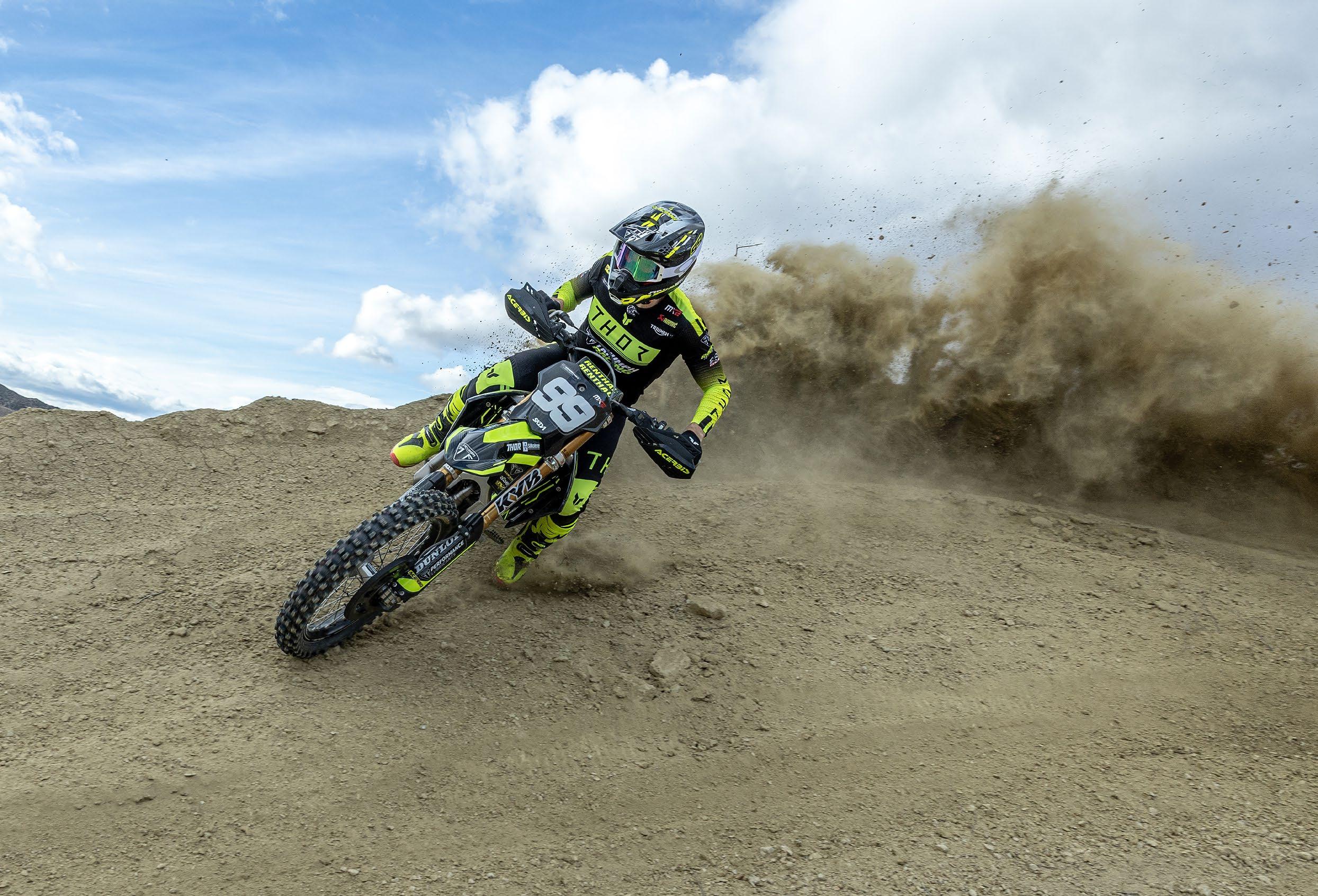
After placing 5th and 8th respectively in 2025, Camden Mc Lellan and Guillem Farres return with Triumph. For Mc Lellan, 2026 will mark his third year with the team and he will no doubt have his eyes on winning the MX2
world championship. But then again, so will his teammate Farres, who will feel much more comfortable in his surroundings in his second year with the team.
NESTAAN HUSQVARNA FACTORY RACING –MXGP/MX2
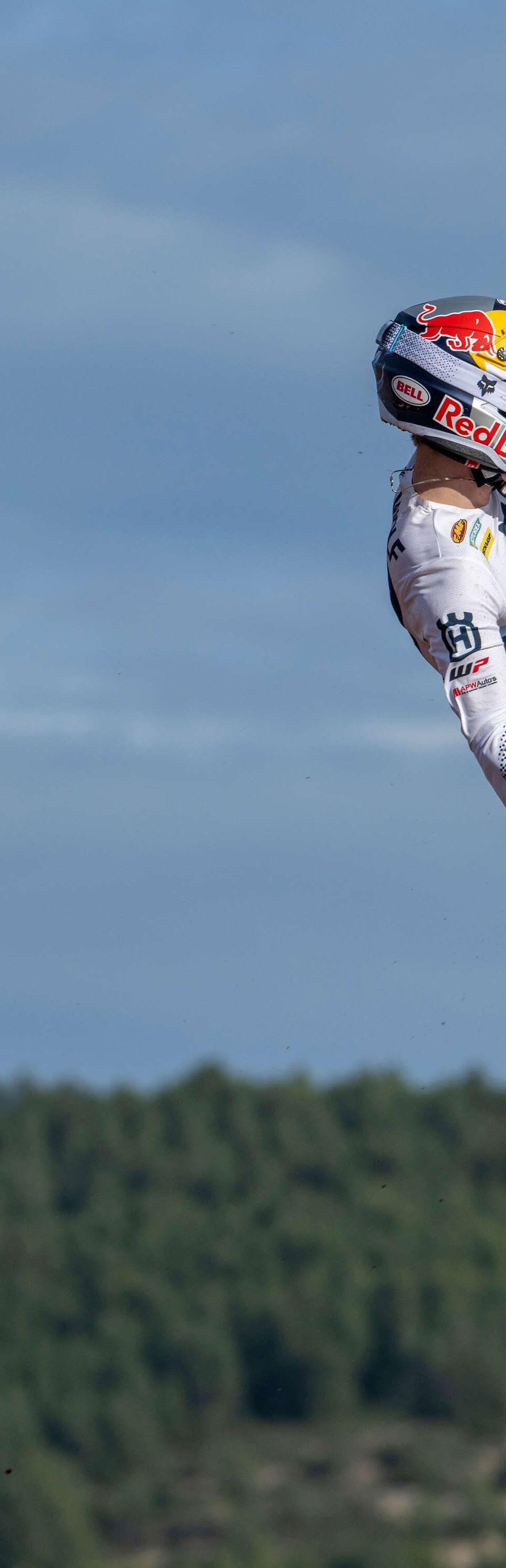
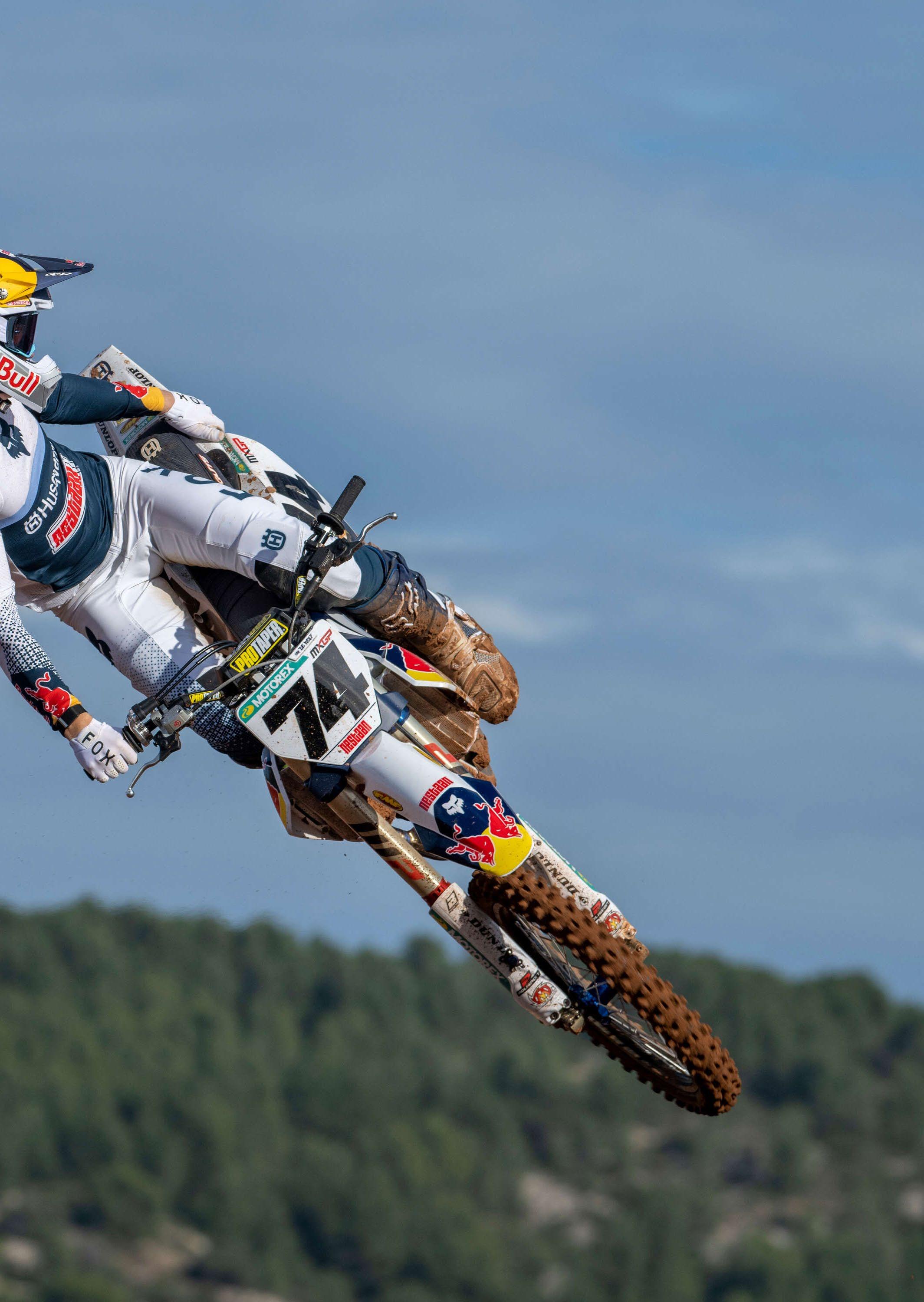
Bringing the number of world champions in the MXGP class to eight is Kay De Wolf as Nestaan Husqvarna break from tradition in a move that sees the team run one rider in each class. De wolf will move into MXGP as Liam Everts remains in the MX2 category. It was also recently announced that the team will benefit with support from Red Bull in 2026.

All-new surroundings for Ducati as the team moves away from Corrado Maddii and Italy, to Louis Vosters and The Netherlands, where Jeremy Seewer will be joined by Calvin Vlaanderen and Andrea Bonacorsi. Seewer bagged a couple of podiums last year on the Desmo, and after what Vosters and his team managed to achieve with Fantic last year, you can bet that the crew will be going all-out for success in 2026.
It’s all-change at Jacky Martens HQ as well, who bid farewell to Honda at the end of 2025 in favour of a move to Fantic as the official factory team. Last year, the workshop was based about 15km north, over the border into The Netherlands under the watchful eyes of Louis Vosters, so at least the bikes didn’t have too
far to travel to their new home … if only! From Holland to Italy and back to Belgium – either way, Martens will retain the services of Brent Van doninck who will be joined on the journey by the ever-popular Alberto Forato.
Former MXGP winner Shaun Simpson’s tenure as team owner is constantly growing in status, and after previously fielding riders in EMX and MX2, the Scot finds himself back in MXGP with Oriol Oliver, who raced for him in 2025 in MX2. Oliver landed on the podium at the first Italian International championship round in Sardinia in February, and armed with a new number, the ‘83’ will be highly motivated to build on that success in 2026.
TM MOTO CRD MOTORSPORT FACTORY RACING TEAM – MX2
Not a new team in MX2 but TM Moto CRD do have a new rider in 2026, as Cas Valk swaps orange for grey and a move back to Italy. The Dutchman has had a bright start to 2026 and is clearly finding comfort in his new surroundings as a factory rider, where his passion and enthusiasm will be matched ten-fold by the small Italian factory.
Ducati’s presence in the MXGP paddock is now complete as Beddini enters MX2 armed with the 250cc Desmo for Ferruccio Zanchi, who landed on the MX2 podium in Spain in 2025. Zanchi also picked up a podium on Ducati’s MX2 debut in Sardinia where he placed 3rd at the first Italian International round in Alghero in February, so things look like they are moving in a good direction already.
Beta have had a bit of a spring clean ahead of 2026 as Ben Watson and Tom Koch make way for Jago Geerts and Rick Elzinga. Since his move into MXGP, things haven’t exactly gone to plan for Geerts, but the Belgian is keen to prove he can be as competitive in MXGP as he was in MX2. As for Elzinga, the Dutchman moves up from MX2 and whilst 2026 will be something of a learning year, he will also be keen to impress his new paymasters before the year is out.
2025 was a stand-out year in many ways for Isak Gifting who put himself on the map with a constant display of hard riding throughout the campaign, winning an army of new fans the world over. His performance at his home GP didn’t go unnoticed either, and as a result, the Swede will remain with the team which suits his personality no end. Gifting and JK will no doubt be looking for a bit more consistency, and if he can do that in a class which boasts no fewer than 8 world champions, then 2026 could be a good year for all concerned.
TEAM HONDA MOTOBLOUZ SR MOTULMXGP
For a privateer team, Honda Motoblouz SR Motul pack some serious punch. Kevin Horgmo
will line up for a third term with the same team which has guided his every move in the MXGP class, and had it not been for injuries last year, the Norwegian could have been knocking on the door for a possible top five in the championship, something he will be keen to address in 2026. Horgmo will be joined by his long-term training partner Thibault Benistant, who moves up from MX2 and swaps blue for red, where many think his size will be better suited on the bigger machine.
After a year out of the paddock in 2024, Van Venrooy returned in 2025 as a MX2 team, and for 2026, the Dutch based team will field a rider in both MXGP and MX2. Mattia Guadagnini is the chosen one in MXGP
as he returns to the brand which saw him win two MX2 GP’s on his way to 4th in the championship in 2021. In MX2, Van Venrooy have done a shrewd bit of business in its acquisition of one of the hottest prospects around, signing the 2024 EMX125 and FIM Junior World Champion, Noel Zanocz from Hungary, who also placed 2nd in EMX250 last year.
Lining up for Steve Dixon’s DRT Kawasaki team is Kay Karssemakers, the Dutchman sticking with the team that took him on midway through 2025. Kay hovered around the top ten mark, but with this continued partnership heading into the new season, both
parties are fully motivated to be closer to the top five, if all goes to plan.
Since his move into MX2, Marc-Antoine Rossi had been plagued by injuries, missing 14 rounds in 2024 and competing in only one round in 2025. Rossi was due to line up with the Maddii Honda Racing Team for 2026, but after the pre-season International races, the Frenchman has decided he needs more time to heal his body completely, and has for now, put the brakes on his career. Enter fellow Frenchie, Maxime GRAU, who has shown plenty of promise over the past few years, particularly in EMX250 where he collected a handful of podium finishes. Grau is no
stranger to MX2, placing 20th in 2025 despite missing eight races, but if he rides like he knows he can, then 2026 should be promising season.
A privateer team in every sense of the word, and that is Tem JP253 which is owned and run by the Pancar family. Jan Pancar has proved you don’t need big budgets, big fancy race transporters and matching hospitality to compete at the highest level, but sure, maybe some of it helps! Pancar bagged a couple of 7th overall finishes in Trentino and Sweden, along with a 4th in the qualifying race in Germany on his way to 11th overall in the
MXGP World championship. Can he break that top ten though in 2026?
Despite missing six rounds in the middle of the season, Kevin Brumann improved his overall standing in the championship to 23rd. This privateer team retains the services of the Swiss rider and if the ‘87’ remains healthy for every round, there should be no reason why he and the team cannot challenge for the top fifteen.
Last year Julius Mikula was a factory rider at TM, and despite missing the last three rounds, finished just outside the top fifteen. Factory teams at a young age aren’t for everyone, and the familiar surroundings of a Czech team for this Czech rider might be just the place to resurrect his MX2 career.
Scott Smulders is a rider who should have been challenging for silverware at the very least, but maybe a case of wrong place wrong time, injuries and some other issues have left the Dutch rider and 2015 EMX65 Champion
always playing catch up. Maybe that changes in 2026 because so far, the ‘408’ has started the year fairly brightly, tying the overall podium for 3rd at Mantova, Italian championship, along with 2nd overall in the ‘championship.’ Yes, it was sand and yes, the conditions maybe played into his hands, but a result like that can be a heck of a confidence booster, so if he can draw on that experience then maybe we will see him at the sharp end in MX2 in 2026.
After placing 20th in his final MX2 season in 2024, Leopold Ambjörnsson should have lined up in MXGP in 2025, but after recovering from a shoulder injury, Leo then suffered an Achilles tendon injury which required surgery. Leo made it back for Loket at the end of July, only to suffer a shoulder dislocation which ruled him out again. Not the best way to start your MXGP career, but fingers crossed, things will be better this time around. Leoparden Racing will be running Honda CRF450R machinery once again.
The 2026 FIM Motocross World Championship season kicks off on March 7th / 8th at the MXGP of Argentina, so be sure to catch all of the action on www.mxgp-tv.com








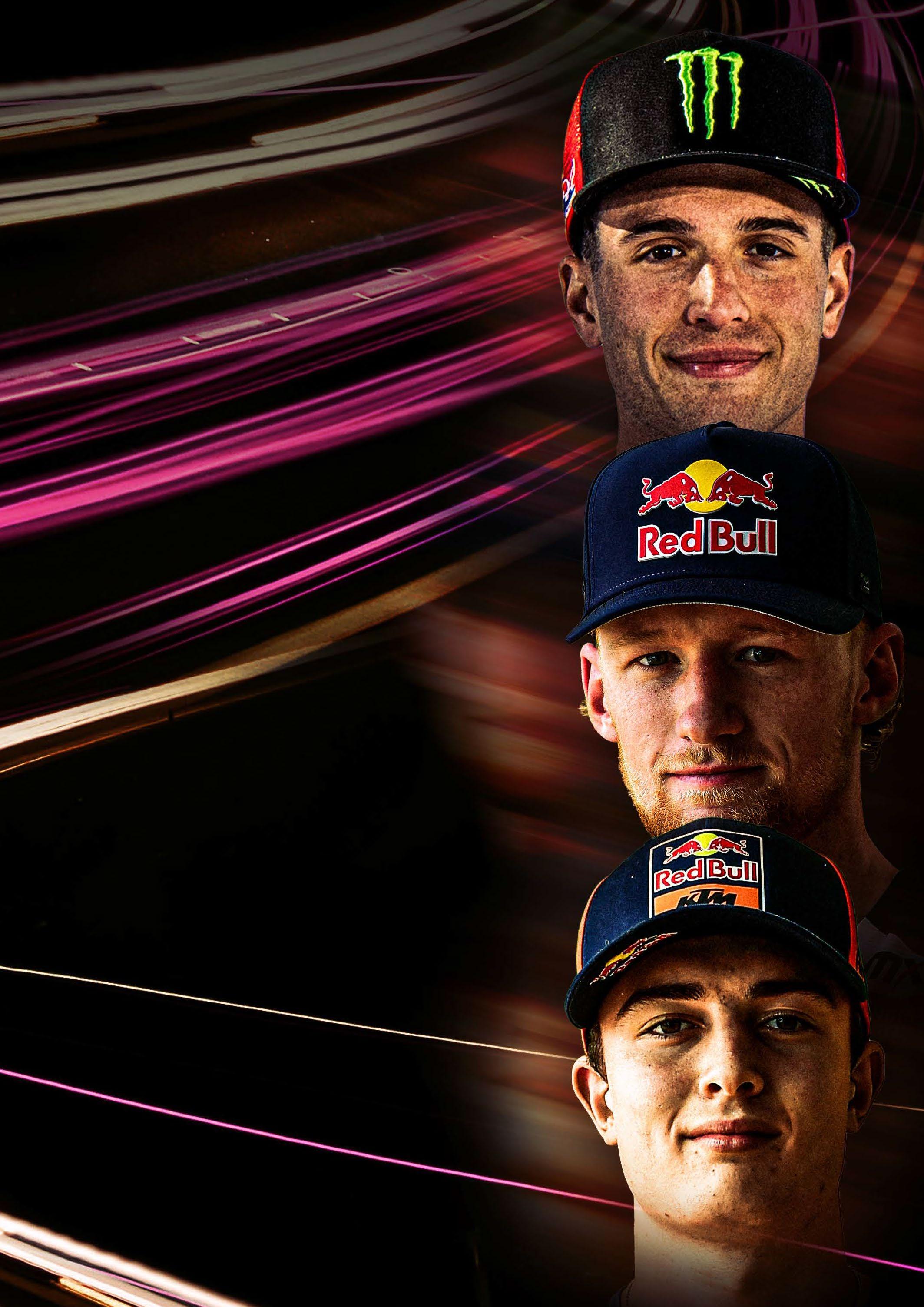
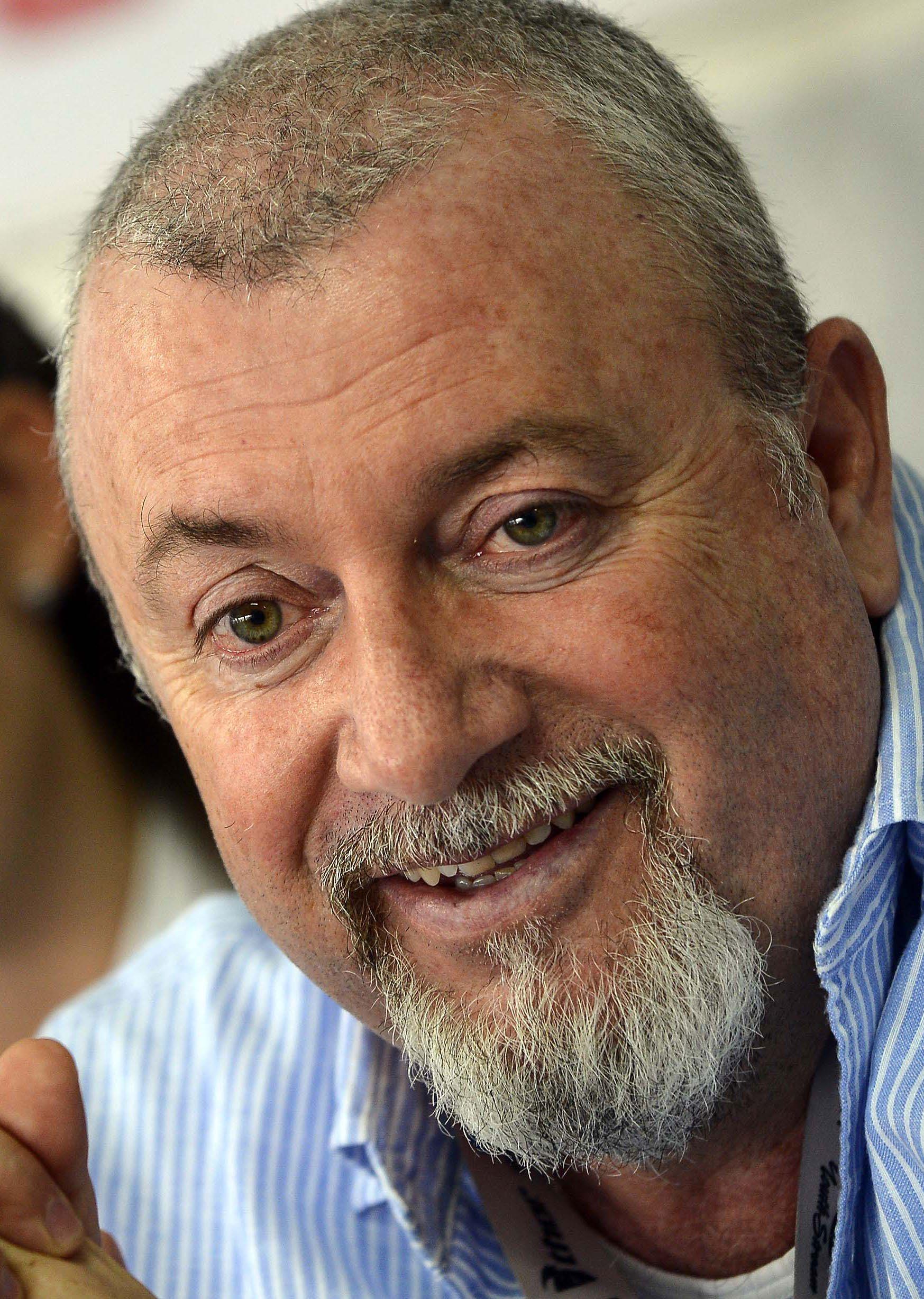
MXGP AS WE KNOW IT
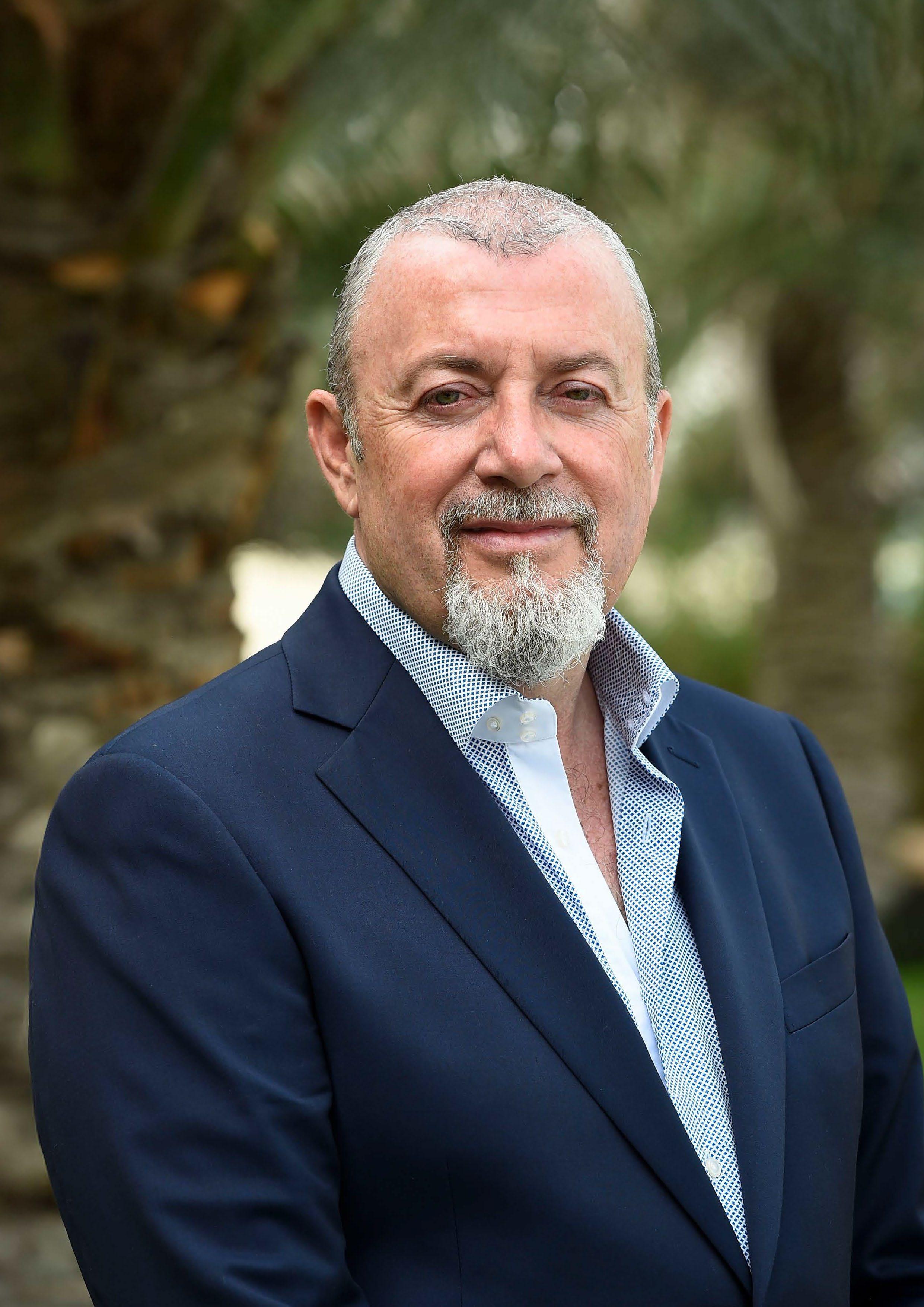
The athletes – by necessity, some of the very fittest sportspeople on the planet – have a stage to perform on that is worthy of the effort they put in and the skills they possess. One man took a passion for Motocross and created this environment that truly frames this underdog of a sport in the manner that it deserves. His vision lives on, but the time has come for that man, Giuseppe Luongo, to embrace his retirement.
Being part of the travelling circus that is the MXGP World Championship, the environment could easily be taken for granted, even lamented if things aren’t quite perfect on any particular weekend. Those in the industry drive to the allocated Parking Zone, head to the Media Centre or their section of the Paddock, grab a coffee and set about their task of capturing, reporting on, or working for their particular corner of this world.
When the action begins, the workers can head to the two-tier Pit Lane, view the circuit with a reasonable degree of shelter and the space to do their job. Important guests and significant contributors to the sport can enjoy a comfortable experience during the weekend. Fans can visit the Paddock and get close to their heroes in a civilised environment, show their appreciation at the Paddock Show and even meet some of them at local media events which help promote the sport further.
To that end, the World Championship is no longer a dozen-round European affair with occasional trips to the USA. MXGP now makes regular stops in South America, the massive motorcycle markets of Asia,
and now Australia, with another continent, Africa, being included in the 2026 calendar. That calendar’s extension means that the vast majority of traditional Motocross nations across Europe do not lose out, and the passionate fans of France, Belgium, Italy, Great Britain, Germany, Sweden, Czechia, Spain, and the Netherlands can all get behind their icons at the top of the game.
The entire infrastructure is light years ahead of what it was at the end of the 20th Century, which is incredible when you consider that we don’t just rock up to a bunch of permanent buildings, throw some banners up, plug in and go. Coming to what is often a collection of muddy fields and installing the temporary structures necessary to make it as professional as possible is a massive undertaking, but one that now happens 20+ times a year across the planet.
All of this has become possible because of a vision that Giuseppe Luongo had just over 40 years ago, and through those decades of toil and determination, MXGP has moved boldly into the 21st Century and is ready to take on all the challenges of the next 50 years, wherever they may take us.
Giuseppe Luongo was born in the south of Italy, in the town of Latronico two hours down from Naples, in 1960. From his parents’ farm, the family moved further north to the city of Prato in Tuscany, mainly to improve young Giuseppe’s schooling. Initially a football fan, he was introduced to Motocross at the age of 15 and became instantly hooked. Doing all he could to compete at a decent level, the young Luongo and friends would borrow cars and trailers, sleep in tents for days before the races just to get onto the track, so Giuseppe truly experienced Motocross at the grass roots level.
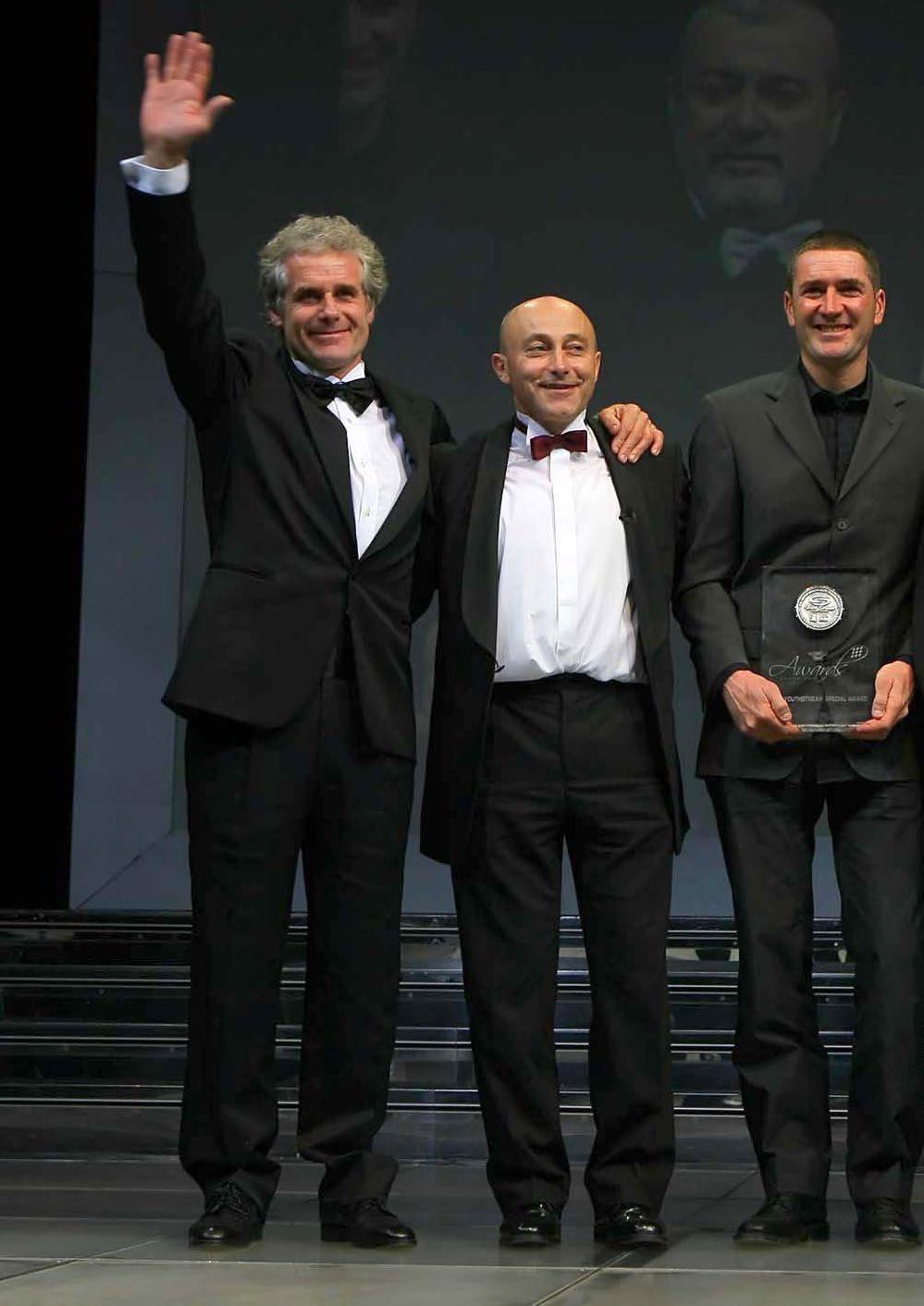
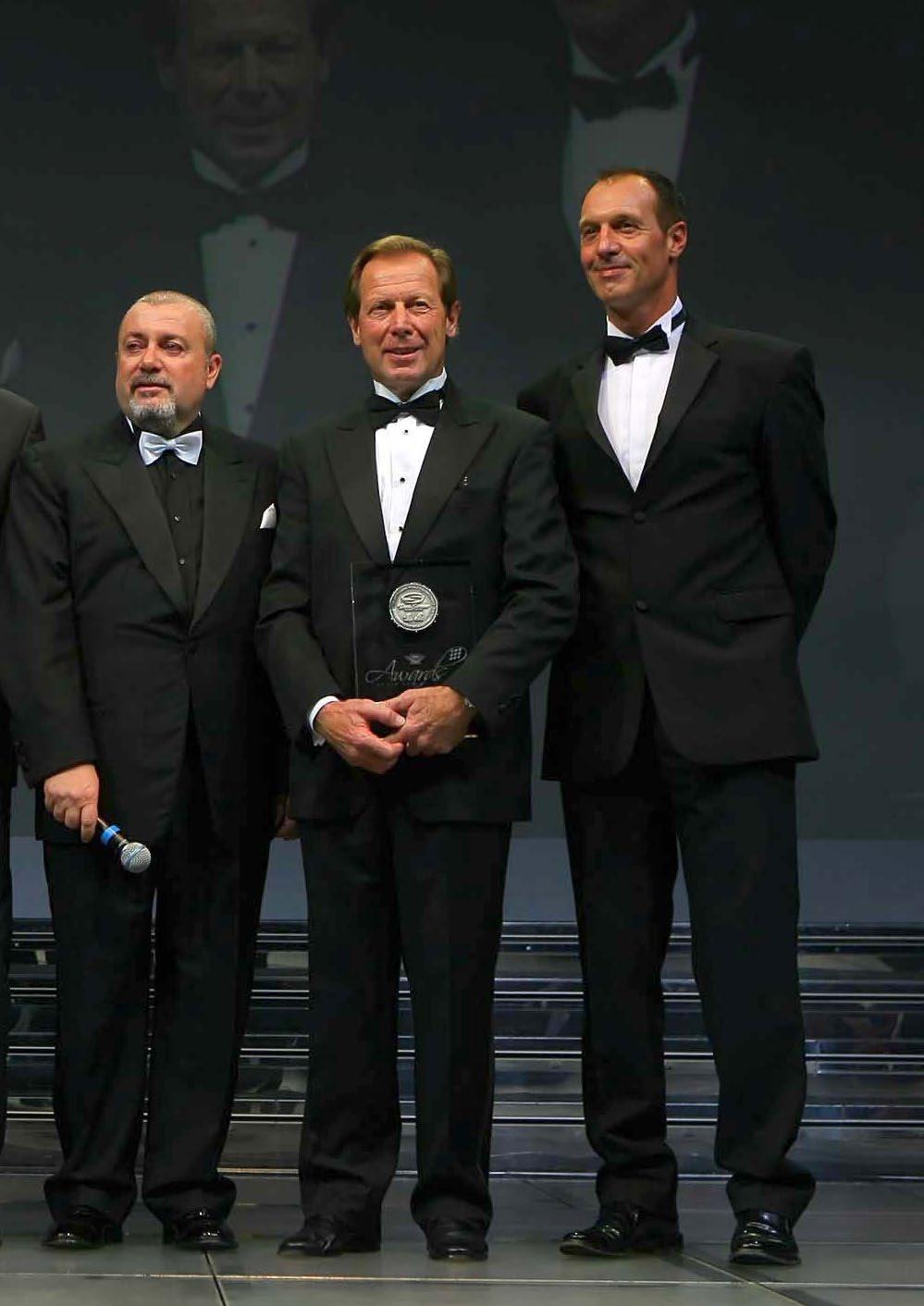
After a massive crash, he broke three of his vertebrae at the age of 17, he defied doctors’ orders to never ride again, but slowly came to the realisation, that many of us experience, that dreams of becoming a top rider were just not going to come true.
“MY DREAM WAS TO BE A RIDER BUT FRANKLY, I AM MUCH BETTER AS A PROMOTOR THAN A RIDER!
“My dream was to be a rider but frankly, I am much better as a promotor than a rider! I was not a very good rider, so for this I think it was better I do something else for Motocross.”
Back in the age of Motocross Grands Prix being run as separate Championships per capacity, often seeing up to three GPs on the same day in different countries for the different classes, it was the 125cc class that had the strongest Italian presence in the 1980s. With manufacturers like TGM, Gilera, and Cagiva coming to the fore with their Italian riders making the most of their performance, Giuseppe became a big fan of Michele Rinaldi, who so nearly ended Suzuki’s domination of the class for the tiny TGM factory in 1980. The 21-year-old Michele split the Belgian Suzuki team of Harry Everts and Eric Geboers in the Championship podium, finishing just five points short of Harry in the final standings. Giuseppe would eventually befriend and work closely with all three of them, and many more as he started to imagine how this beautiful but fractured sport could gain more popularity.
“Some people thought I was crazy. I thought about organising a huge event to celebrate all the Champions, the weekend after the last 125cc GP of 1983. The President of my Club, Signore Mario Lucchesi, liked my idea and gave me the green light!” Going all-in and quitting his job to do it properly, this first international event was at the Tuscan circuit of Ponte a Egola, in August 1983, and with more than 20,000 spectators it was an instant hit. “That occasion opened my eyes, and I decided to transform my passion into my job.”
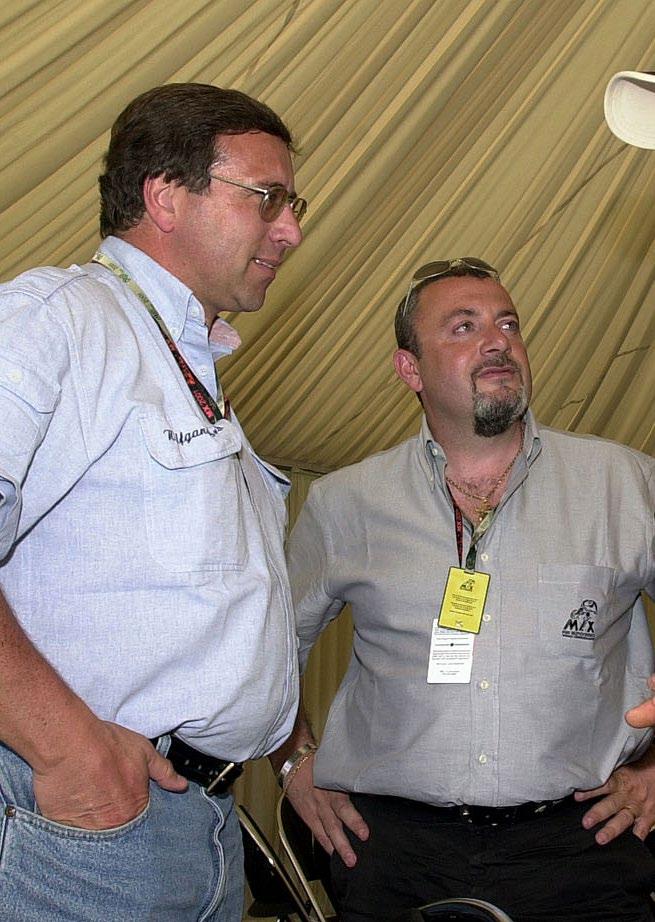
Following on from that he went on to create his own company, GLO (Giuseppe Luongo Organization) and organised two of the most popular series of that era, the ‘Masters of Motocross’ and ‘SuperMotocross’ in Italy. After taking charge of these events, plus the two Grands Prix in Italy that year, Mr. Luongo went a massive step further in his career when he promoted the memorable 1986 Motocross des Nations, which took place at Maggiora, in north-

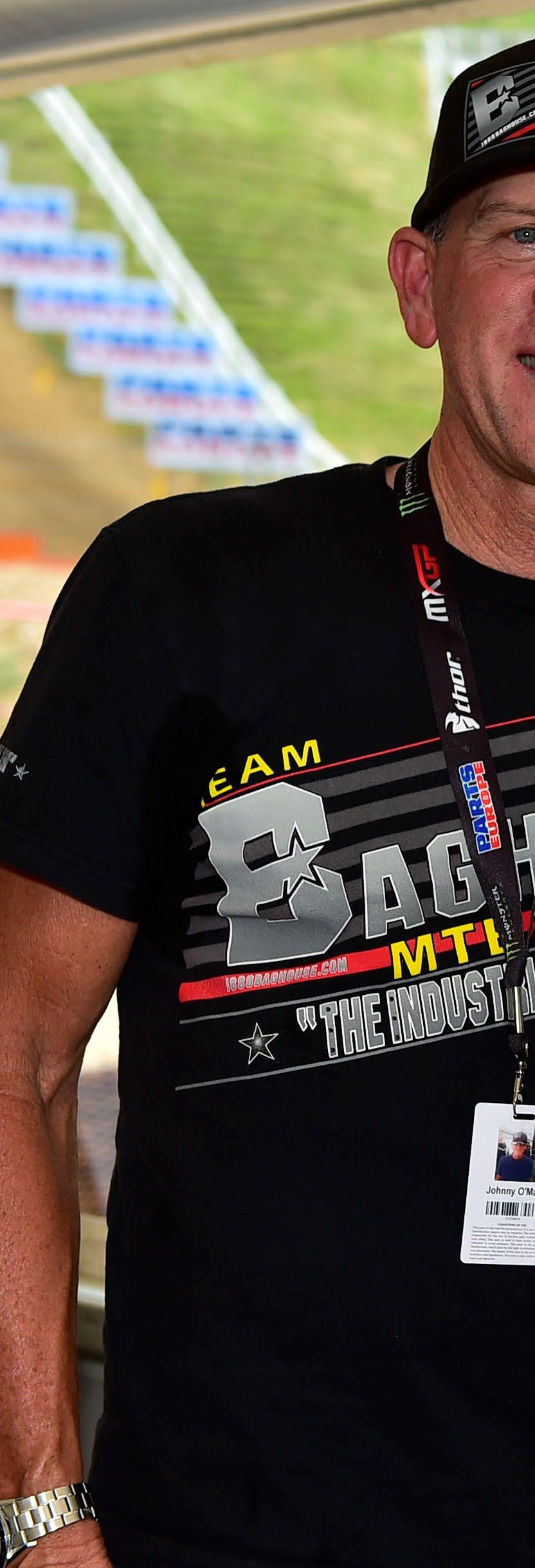
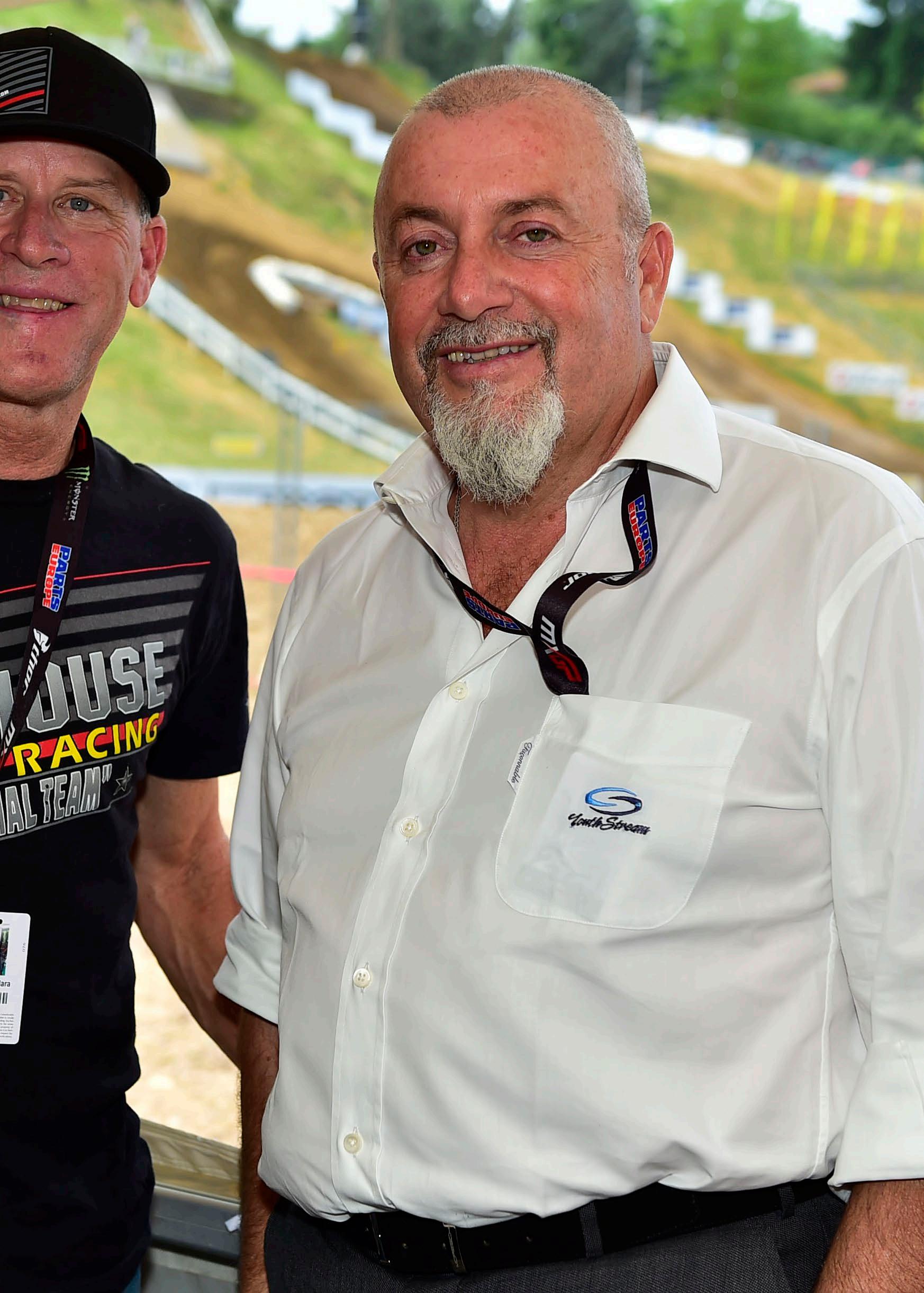
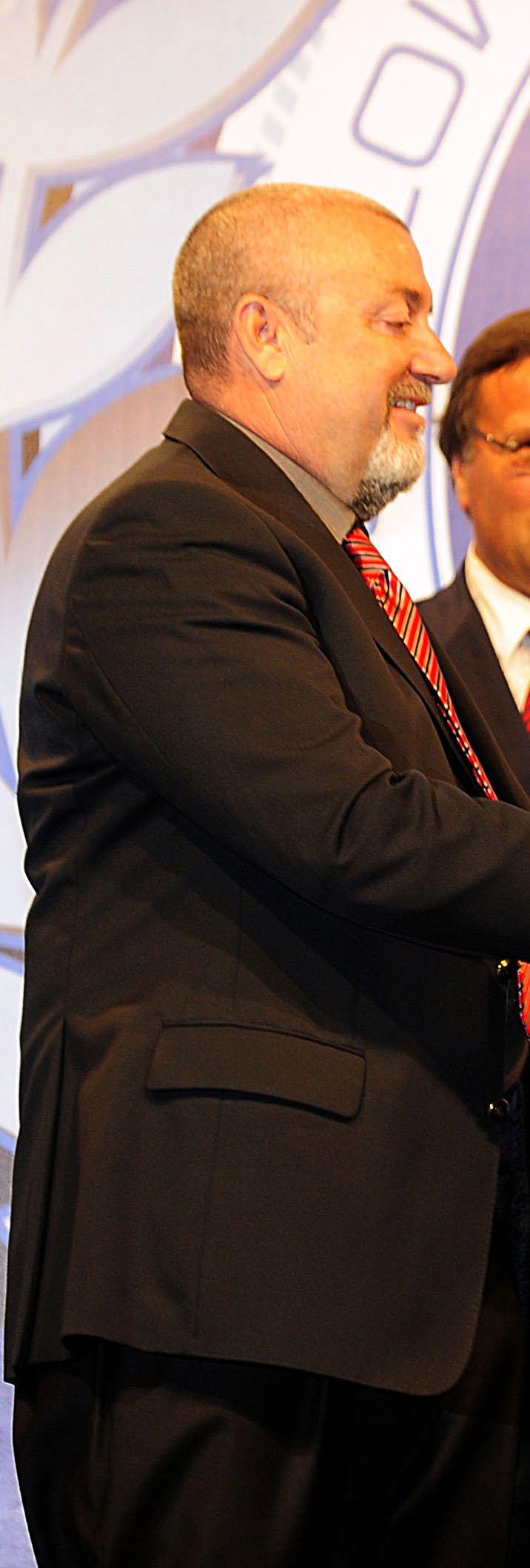
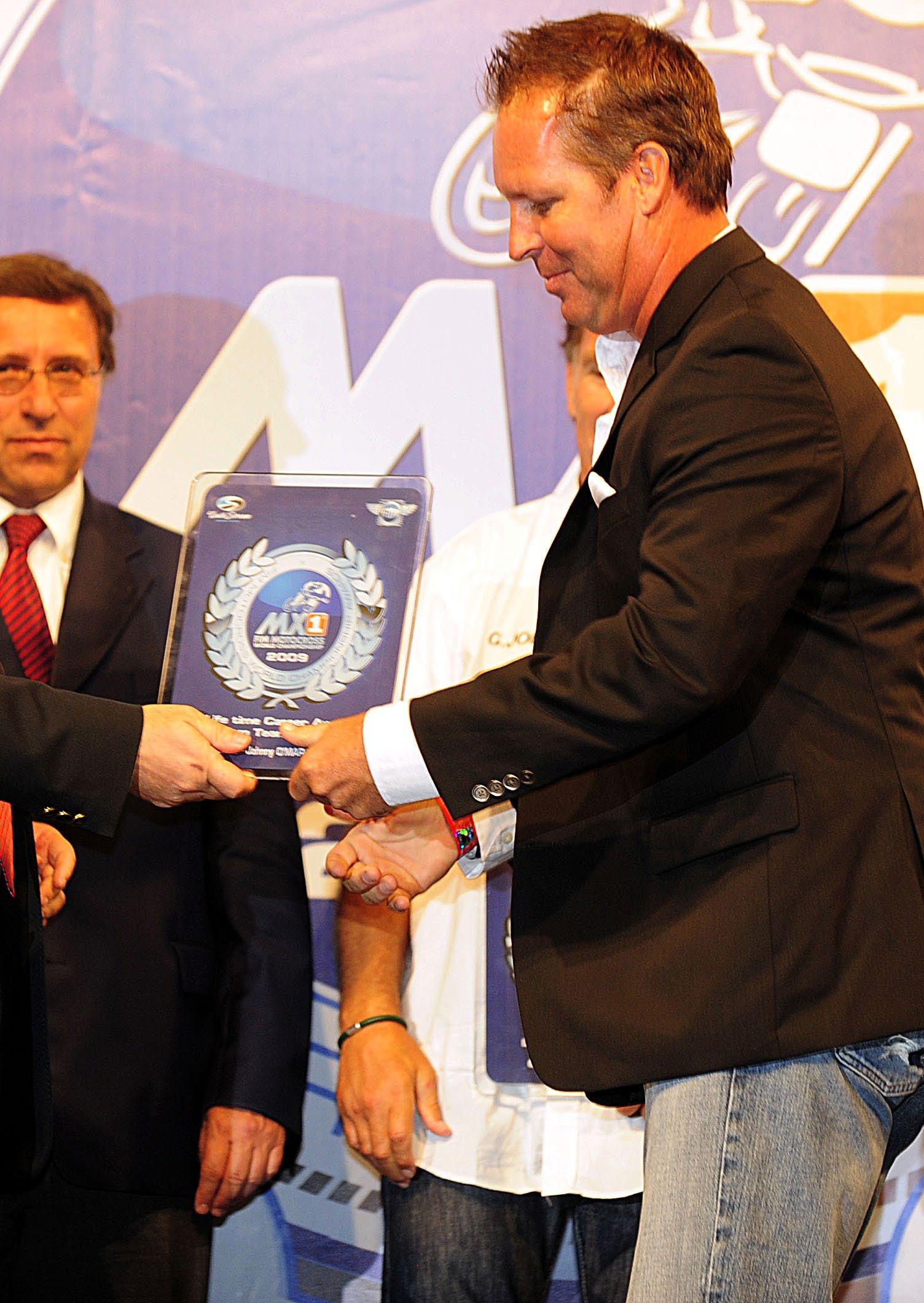
eastern Italy. The venue had only been used a handful of times over the previous 20 years, but this event turned it into one of the most iconic circuits in World Motocross. The Americans dominated, with David Bailey, Rick Johnson, and Johnny O’Mara defeating everyone in their path at what would be the high point of the USA’s 13year streak of Nations victories.
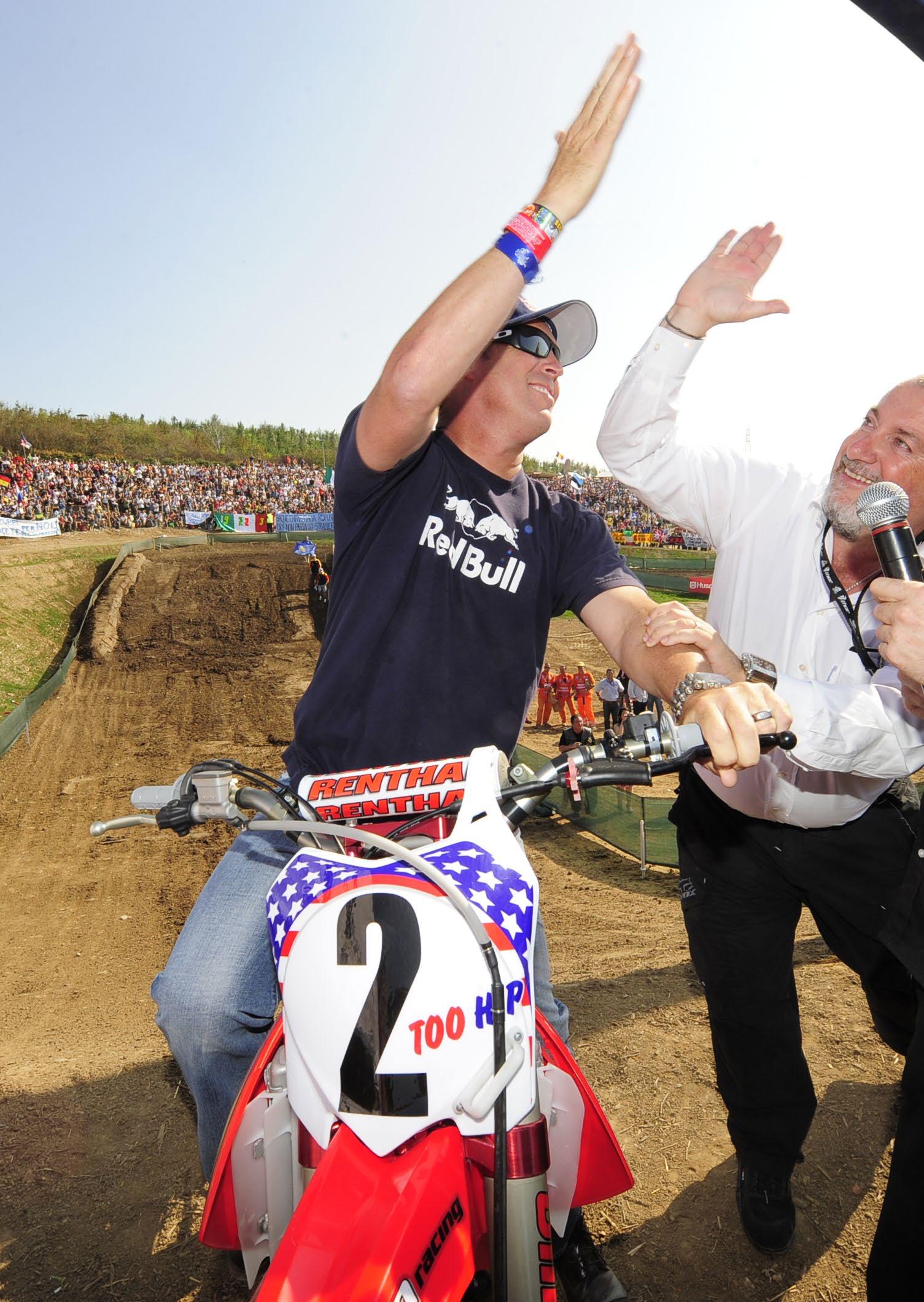
From that event, the great showman RJ would form a bond with Mr. Luongo that lasted many years. In a special message written for this article, we’ll let the man they call “Too Hip” tell you his story:
“When it comes to Giuseppe Luongo, I don’t really know where to start—because our story isn’t just one moment. It’s a lifetime of moments.”
“We first met in 1986 at the MXdN in Maggiora, Italy. Back then, Giuseppe was already thinking bigger than anyone else. Not long after, he began promoting Supercross events across Europe. From that point on, we built a relationship—not just promoter and racer, but collaborators. And together, I truly believe, we did great things.”
“With Giuseppe, the sky was always the limit. He pushed boundaries, created spectacle, and believed that racing should be entertainment in the fullest sense of the word. He had me doing everything—from singing on stage with Eric Geboers, to riding out dressed as Batman. No idea was too wild if it made the show better, but underneath all of that flair, what we shared most was respect. Every time I lined up on the starting gate at one of his races, I gave him everything I had. One hundred percent. No shortcuts. No excuses. That was my side of the deal.”
“One memory that still stands out happened in Genoa, Italy, during a two-night Supercross. I won the first night and jokingly told Giuseppe that if I won every race, I wanted the watch off his wrist. He laughed—but Giuseppe was a man who never made promises lightly. On the second night, during the Main Event, I was out front, winning the race. As I came around, I saw him standing right at the edge of the track, holding the watch in his hand, signalling to me to put on a good show. He meant it.”
“True to his word, he handed me the watch later, privately. I wore that watch proudly—for more than twenty years. It wasn’t about its value. It was a symbol of trust, respect, and a shared belief in giving everything you have.”
“Years later, I was on Giuseppe’s boat, having dinner with him, Ursula and Stephanie. That
night, I surprised him. I took off the watch and gave it back. It felt right. The circle was complete.”
“Today, Giuseppe’s legacy lives on through his son, David, and through the sport he helped shape and elevate across Europe and beyond. And while I may have only played a small part in that journey, I am deeply honoured to have been part of the legacy that is Giuseppe Luongo.
Some people promote races.
Others build moments.
Giuseppe built history.
Thanks Boss.
Love RJ”
After Maggiora, Giuseppe continued to promote all Italian World Championship rounds and branched out to several Supercross events across Europe. One such night in Paris was described by Roger DeCoster as “The most beautiful Main Event of Supercross seen in Europe so far.” The Masters of Motocross series was another new concept, with Champions from both sides of the Atlantic competing in MX, Supercross, and even beach races!
“THAT OCCASION OPENED MY EYES, AND I DECIDED TO TRANSFORM MY PASSION INTO MY JOB.”

1988 saw further advancement, plus the birth of his son David, as the Luongo family were based in Monaco and the Action Group company founded to co-ordinate the growing international portfolio. Big sponsors were coming onboard as TV coverage expanded with the growing satellite and cable TV industry.
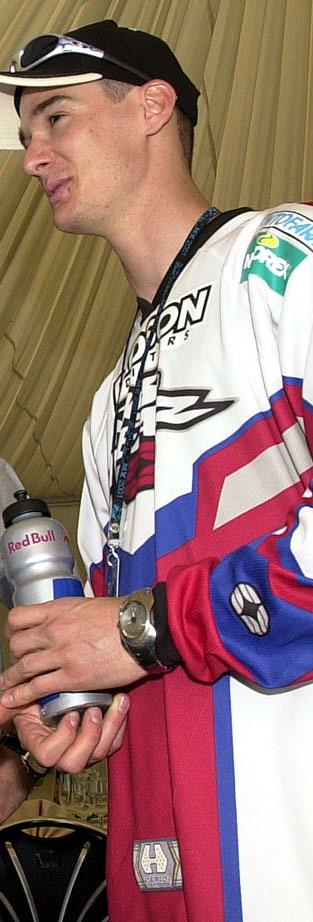
It wasn’t just in promotion that Mr. Luongo was leading the way. From 1989 he owned the ultra-professional Bieffe Suzuki squad, as it brought ‘Yellow Magic’ back to the World 125cc Championship, recruiting a young Stefan Everts for his rookie season as a 16-year-old. American import Donny Schmit took the 1990 World Championship, the first title for the original Japanese kings of the class since Michele Rinaldi himself in 1984. Donny was staging a successful title defense in 1991, beginning at the scenic Pietramurata circuit, before
injury took him out of play. The teenage Everts stepped up to the plate, taking the first world title of what would become a legendary career.
Giuseppe then put the brakes on the growing Masters of Motocross series and stepped away from the sport to focus on his young family, keeping his sporting interests going with involvement in AS Monaco Football Club and Formula 1.
In 1995 he was persuaded back to the Motocross world, and returned with a bang, organizing the 1995 Motocross des Nations in Slovakia. Again, the event was a success, especially for Team Belgium, who with the help of now double World Champion Everts and Joel Smets, swept to their first win at the event for 15 years. The following year, with Action Group International now established, an agreement was reached with the FIM for complete TV coverage of the series. This had been a goal of Giuseppe’s since those heady years of following the 125s in the early 1980s:
“I was like many of you, I wanted to make Motocross better and bigger than the time it was at the end of the ‘70s, beginning of the ‘80s. And the first thing I understood was the television. I was a bit of a fan of Bernie Ecclestone (F1), and he understood everything because he put television closer to the sport. Our sport is fantastic, because you need the talent, the physical preparation, it’s a very complete, tough sport. Our riders, our athletes, they are very unique and very athletic like those who make the Olympics. It was a sport which was not well known, and from the beginning I was thinking that if we bring this sport to television, we could have a chance to make it better.”
Changes needed to be made to accommodate this growing audience. More sports were growing with this exposure, giving potential fans many more options of where to spend their money. This hit trackside numbers, especially as one of those options was to stay and watch sport at home! The circuits at the time were long, often disappearing into forests, sometimes out of sight of all but the marshalls. Fans could camp track-side and enjoy barbecues while the racing was on, and promotional banners made of cloth looked good at the start of the weekend, but by the end of it were nonexistent as they had been damaged or became unrecognisable if the weather took a turn. So, this was an area which Giuseppe focused on, to try to figure out how branding could be improved, how circuits could be improved and how the show could be enjoyed by an even bigger audience:
‘The tracks from 40 years ago, they were like a country party. It was nice, but it was another world. We needed to pay the production, we needed to
create a product and go to television with something that was ready and built for it, and so this is what we did. Everything really started for the love of this sport.”
And as far as TV goes, from the early 2000’s we could watch the FIM Motocross World Championship live, every weekend and on multiple sports networks. By 2013, Giuseppe Luongo’s Youthstream Organisation allowed us to watch the GP’s via livestream. Back then it was known as MX-LIFE.TV but today we know it as MXGPTV.COM, where you get to choose how you watch each race, either LIVE or On Demand, with Championships also for Women, and for the stars of the future in EMX and the Junior Motocross World Championships. The “Behind The Gate” series adds a further dimension by looking deeper into the personalities and inner workings of the riders and teams that make the sport what it is. Those of us who remember national networks covering the sport with ill-prepared motorsports commentators – “I’ve heard these piles of dirt being referred to as the burps, or even the berms…”, know what a difference has been made to truly present these athletes in the spotlight they deserve.
When you compare the FIM Motocross World Championship today to where it was in the 1970’s, it is clear to see how Luongo’s vision has been met. He never stopped investing, never stopped improving. Even when you cast your minds back to the mid-nineties and early 2000’s when the ‘Pit Lane’ was a series of team-branded EasyUp’s - this was the beginning of what we have now. It might look dated now, but it was a simple solution which brought another element of professionalism to the table, and provided somewhere for the riders and mechanics to make changes to the bike or come in for goggles. Prior to this, it was a cordoned-off area on the start straight, which is also where mechanics used to pit-board the riders. So, providing a designated area was more professional and also safer for everybody.
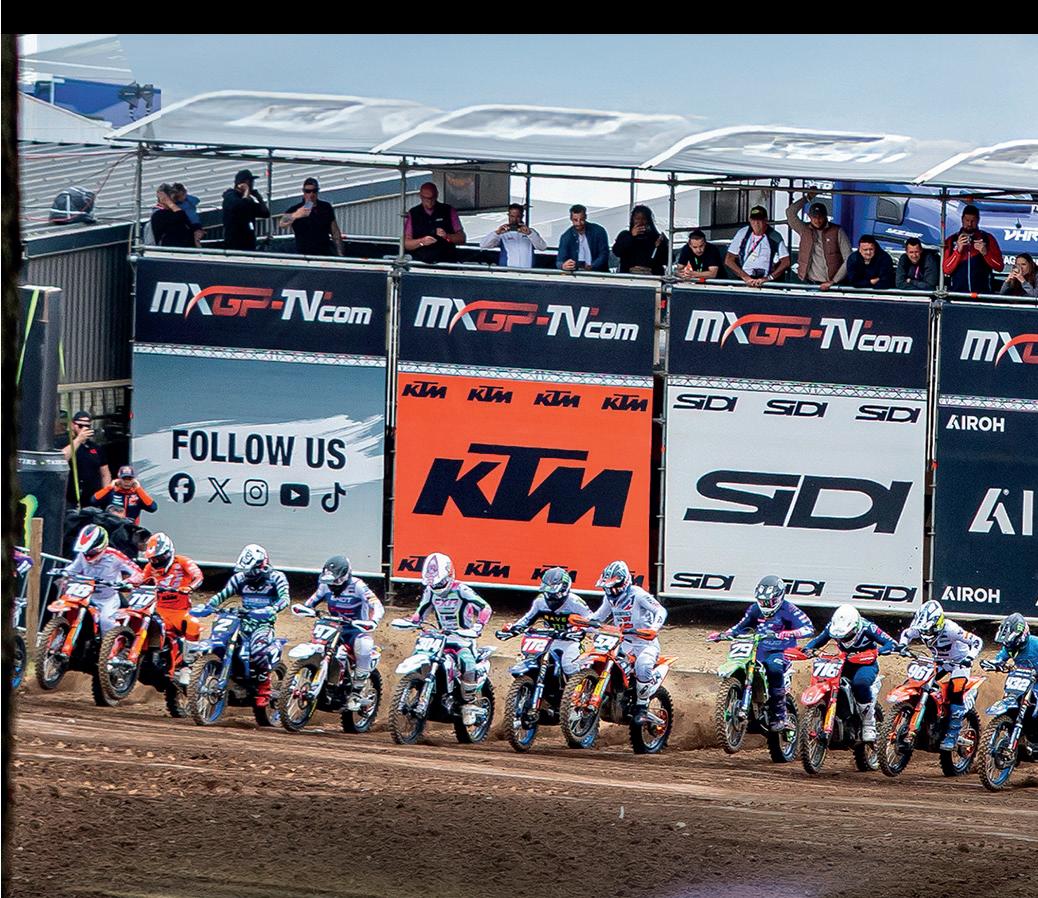
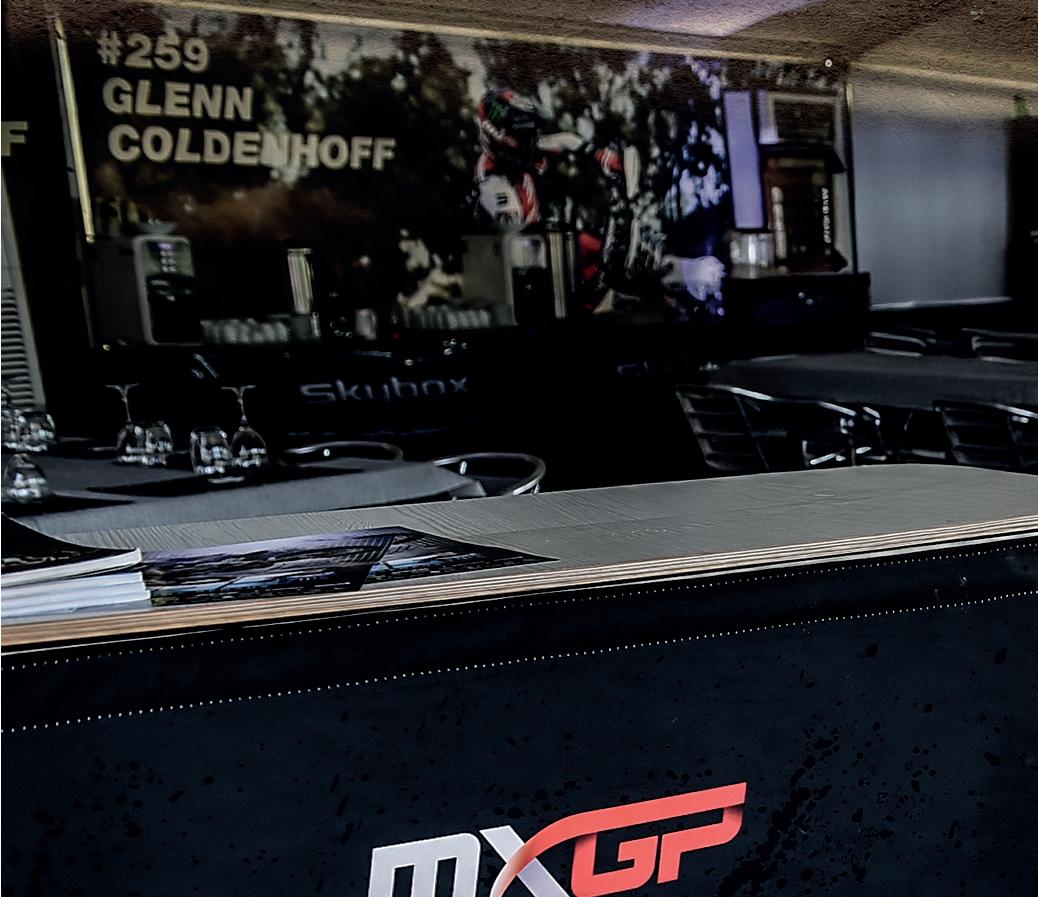
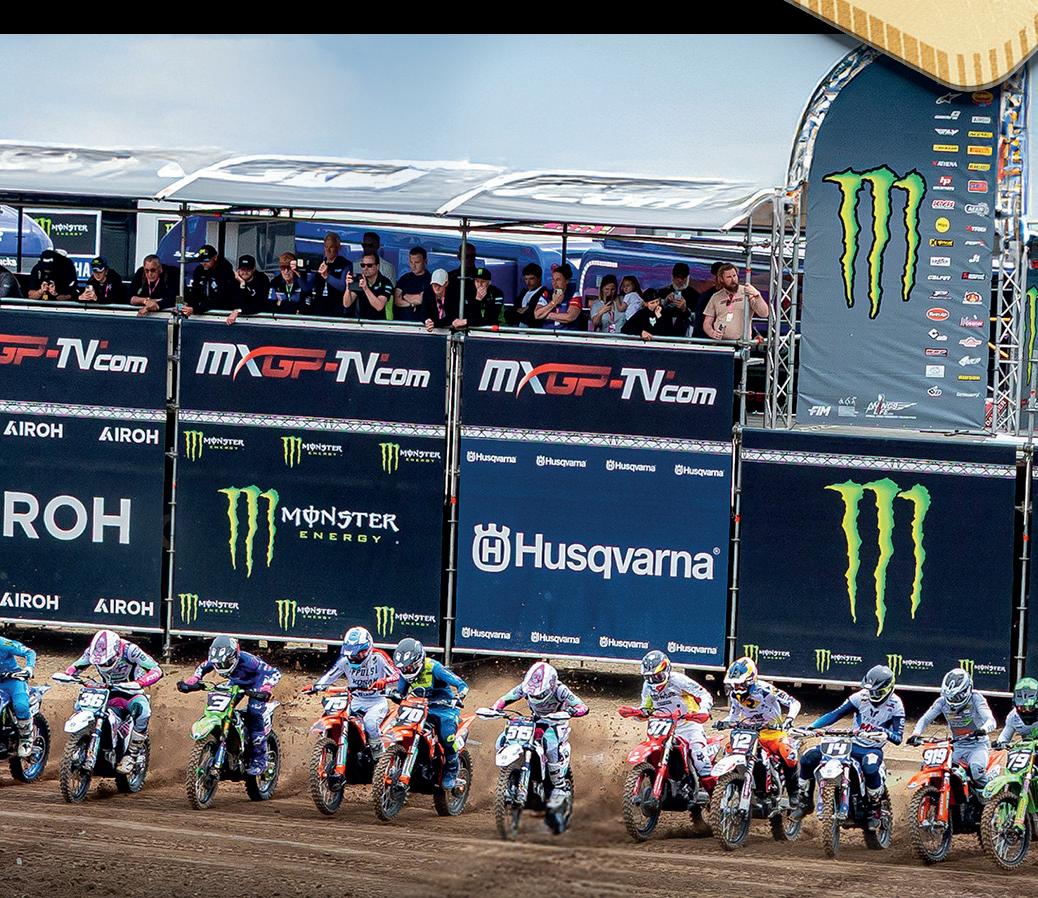
We have seen the introduction of the singlestorey Pit Lane, which was increased to a two-storey framework, with the podium being transformed from just a podium to a VIP viewing area now referred to as the SkyBox. The podium is how a World Championship podium should be, high up where everyone can witness the top three riders in their moment of glory. And below the podium and SkyBox lies the waiting zone where riders can also take shelter before the start of the race.
One rider who has seen every step of this change, from competing against Giuseppe’s team in
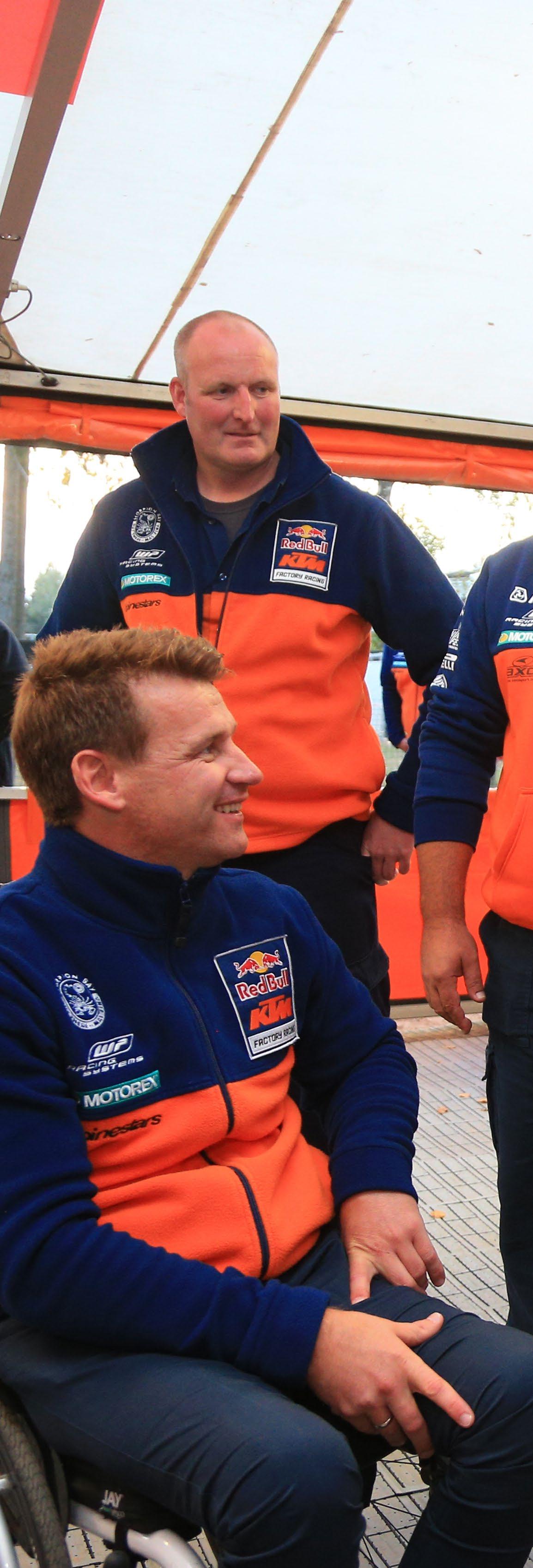
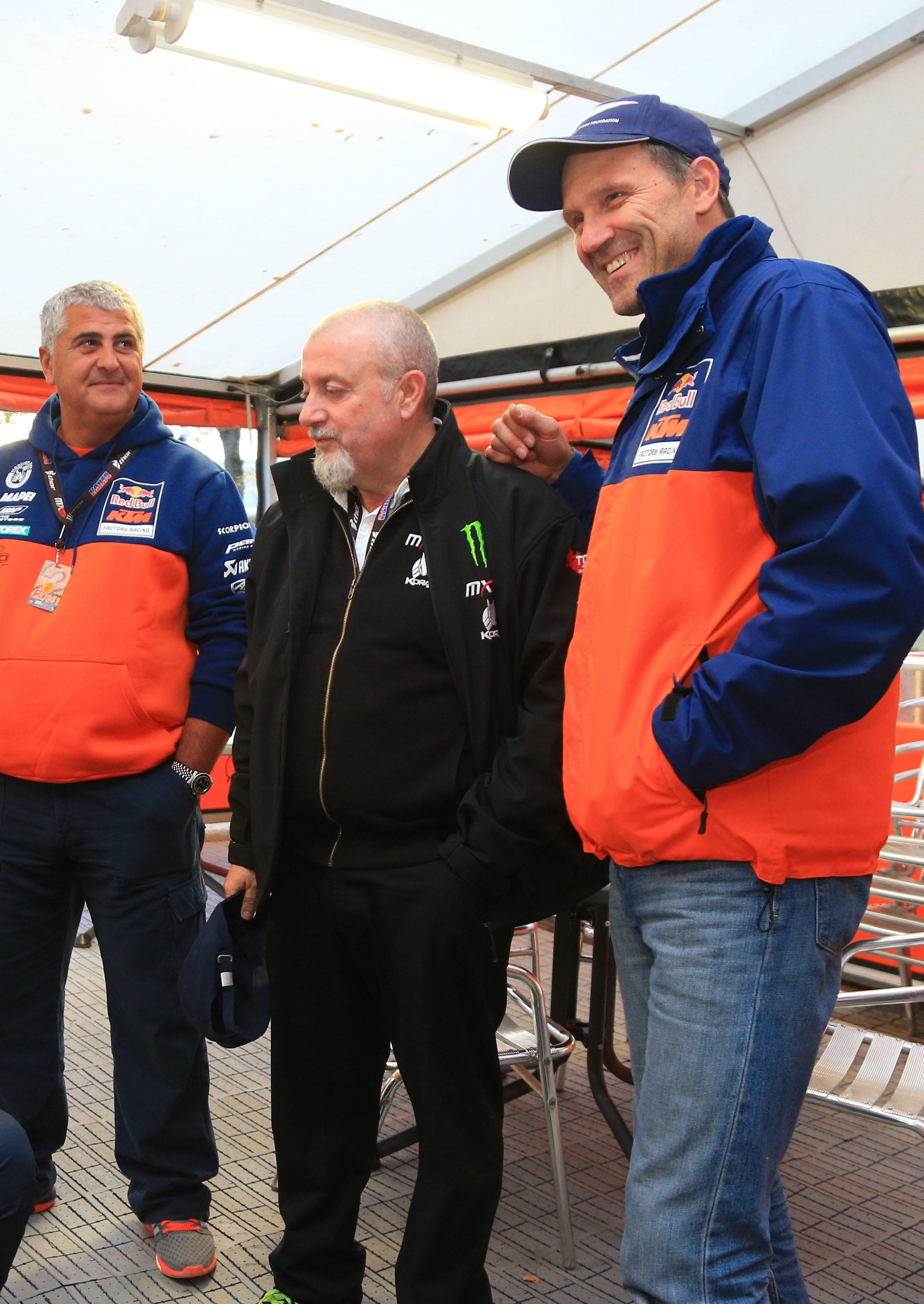
125s to reaching the top of one of the largest manufacturers in the sport, is KTM’s Motorsport Director Pit Beirer:
“I was part of the World Championship as a rider, when Giuseppe came in with the Action Group team, building a much more professional platform for all of us. I enjoyed it from the very beginning, as it made our sport look more professional. Giuseppe had great respect for his riders and a vision for our beloved sport. As a rider I could enjoy this growth just a little, but later as a racing manager I always shared the same vision as Giuseppe and together we enjoyed this journey a lot.”
“It was the time when KTM became a very strong factor in the Championship, and we could also see the difference in the market, due to the fact that the series got a much bigger fan base and media coverage. So from my personal side, I want to say a big thank you to Giuseppe, it was a hell of a ride!”
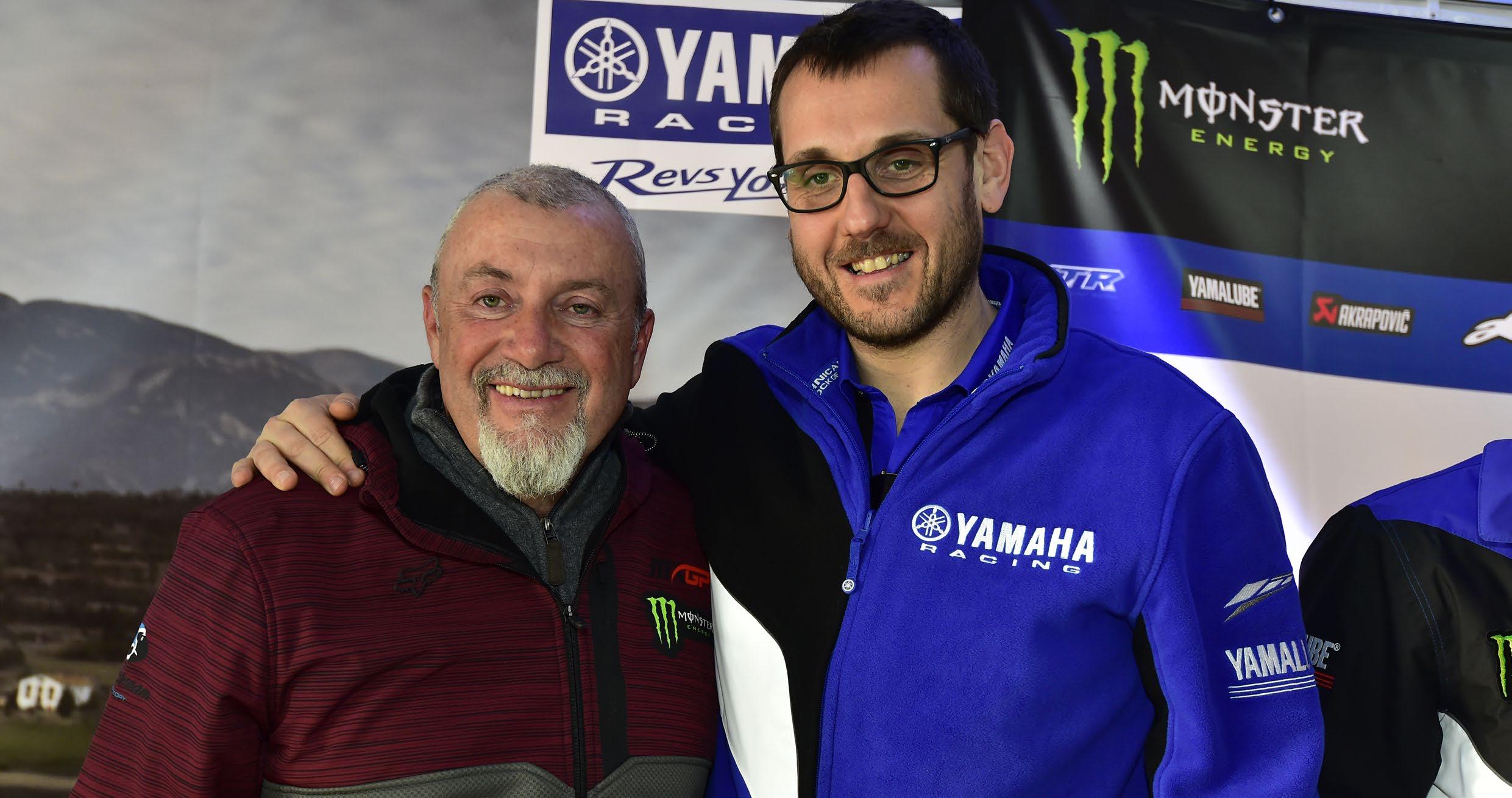
Paolo Pavesio, Managing Director of Yamaha Motor Racing, who have held a constant presence in the World Championship since Michele Rinaldi’s days at the helm of the team, claiming six world titles in a row via the amazing Stefan Everts, also pays tribute to Giuseppe’s career:
“Over the ten years I have been involved in the Motocross World Championship, I have learned an enormous amount from Giuseppe, not only about Motocross itself, but about vision and leadership. Our conversations about the future of the sport were always inspiring, because Giuseppe has the rare ability to look far ahead while never losing sight of the
values and hard work that built Motocross into what it is today.”
“He leaves behind an extraordinary legacy, and it is a real pleasure to see how smoothly and naturally his son David has taken over, continuing the work with competence, passion, and deep respect for what Giuseppe created. As Giuseppe begins this new chapter of his life, I wish him many happy years ahead together with his wife Ursula, time to enjoy, reflect, and be proud of an incredible journey that has shaped our sport forever.”
As we make our way into the second quarter of the 21st century, Motocross still has many challenges in its future. The very existence of the internal combustion engine is likely to be further questioned, or in the very least radically modified, and as new sports and the digital world continue to jostle for the public’s attention, the portrayal of this sport for motorcycles in the mud as a viable and fulfilling way of life is ever more important to ensure that it survives into the third quarter of the century. The seeds that Giuseppe has sown, and the systems and business models that have been established, should help to keep this sport that we love in a healthy place for many years to come.
On behalf of everyone at Infront Moto Racing, the FIM, all of the riders and teams, manufacturers, partners, media and fans, we say ‘thank you Giuseppe’, for all the hard work and sacrifice over the past fifty years of your life in Motocross, for daring to dream big and for changing the sport forever. Be sure to know that MXGP is in safe hands, we will continue to fight for it, and we look forward to the next fifty years.




Access to:

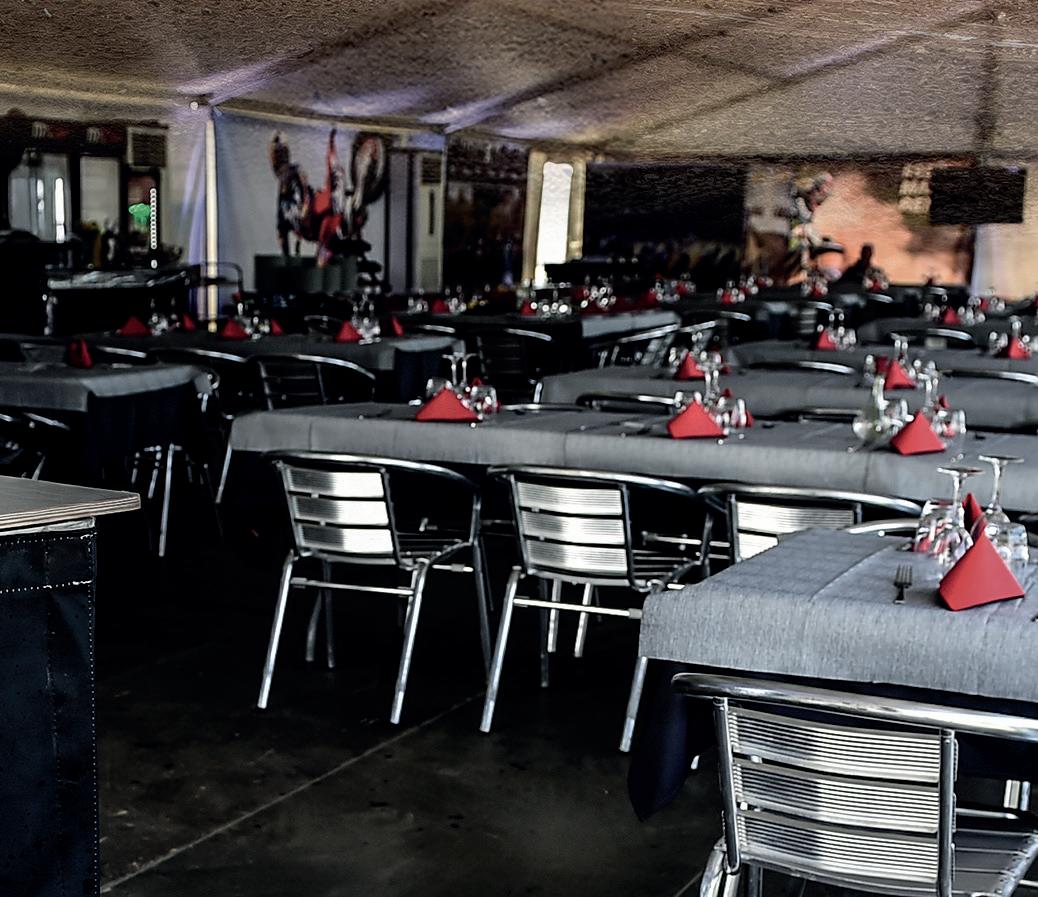
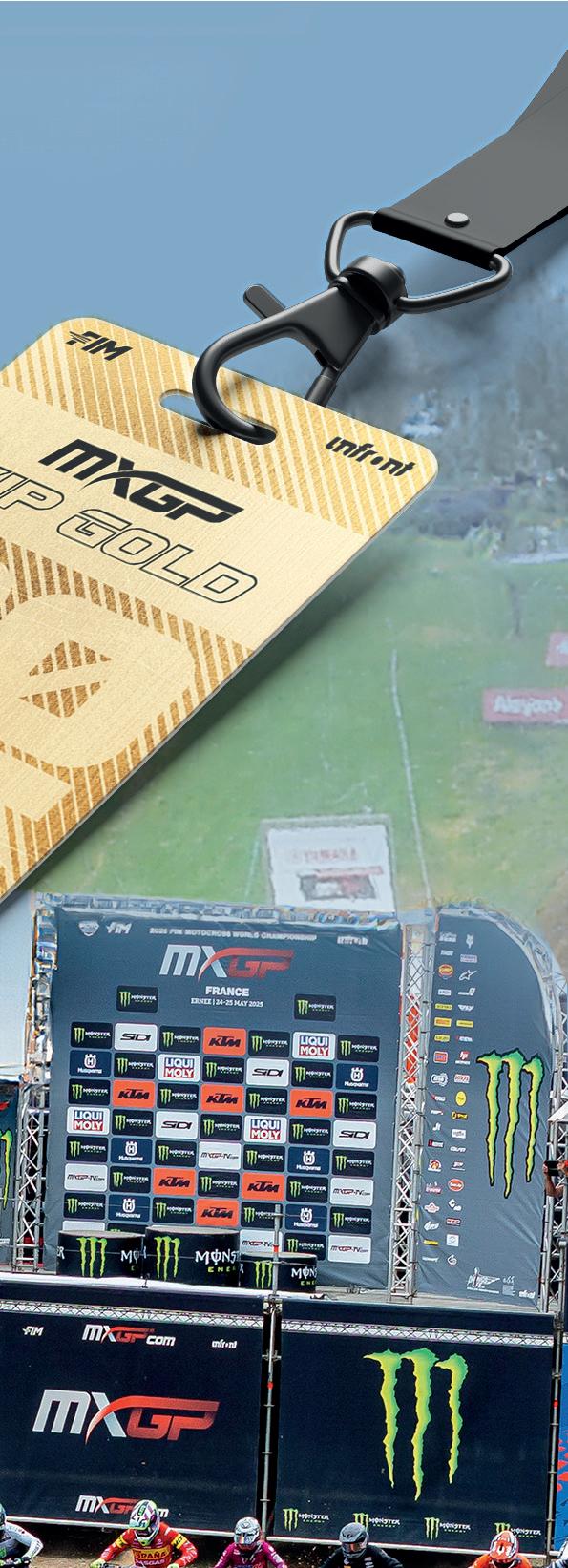
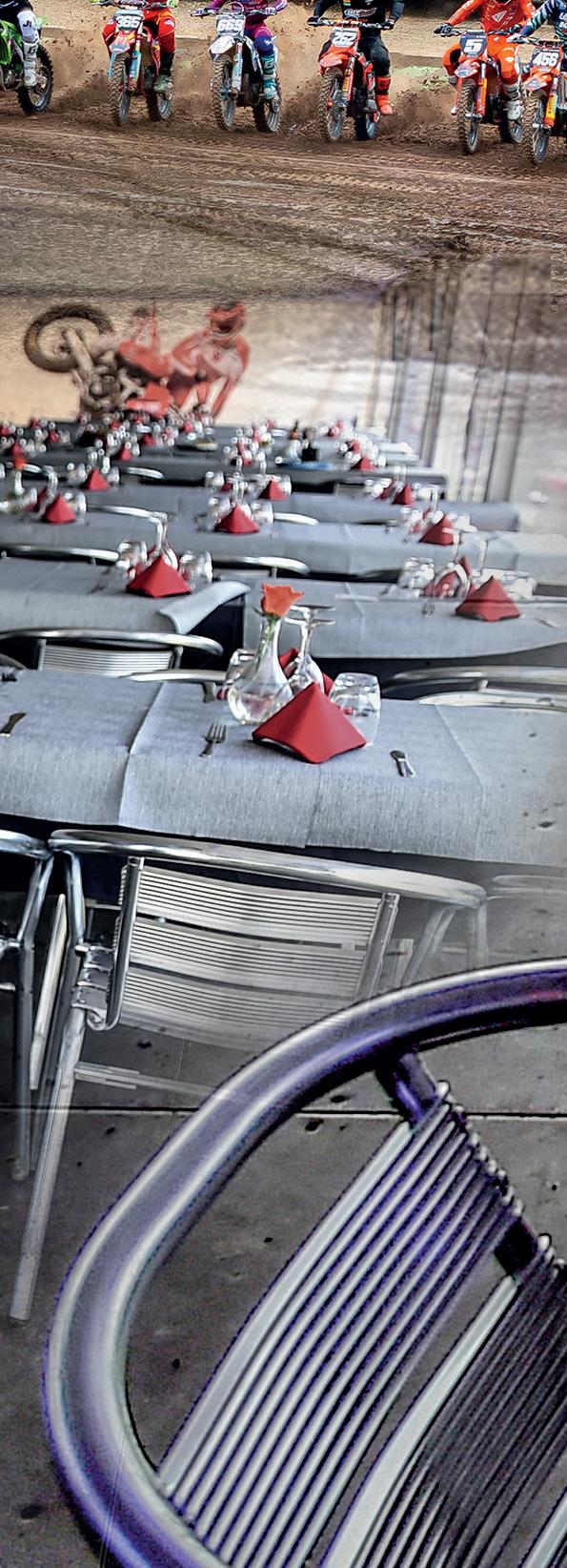
Skybox Restaurant
Skybox Terrace
VIP Parking Paddock



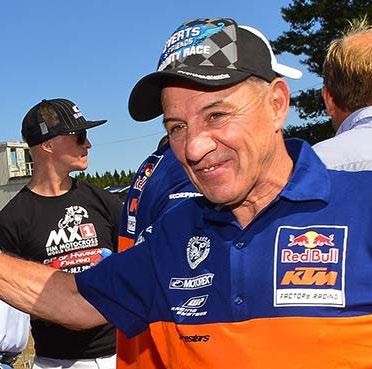
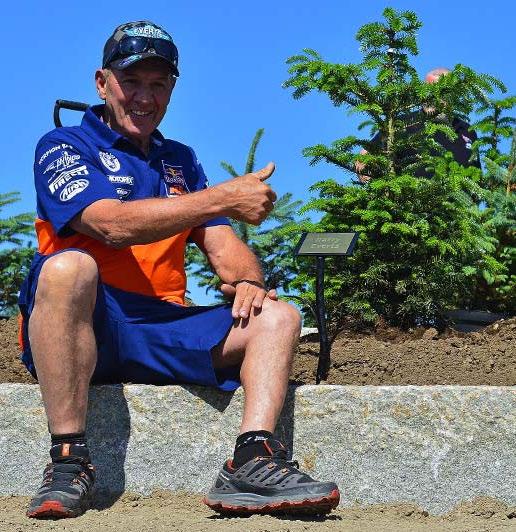
by Harry Everts
BEING INDUCTED INTO THE HALL OF FAME IS, AS HARRY EVERTS HIMSELF SAYS, “ONE OF THE MOST BEAUTIFUL MOMENTS OF MY CAREER.”
Far more than a personal honour, it is a tribute that refl ects a lifetime devoted to motocross; as a rider, a father, and a passionate observer of the sport for nearly six decades. From his fi rst Grand Prix races in an era of raw, unforgiving machinery to today’s highly evolved, technology-driven world championship, Everts has witnessed motocross change in almost every possible way. Yet, in his eyes, the heart of the sport remains the same: character, determination, and the constant battle on track that continues to defi ne motocross across generations.
When I think back to my early years when I started racing GPs, a lot has changed compared to today. The motorcycles from back then and the ones now are completely different. However, motocross training has more or less remained the same as before (I am talking about professional factory riders). Today, riders train much more under medical supervision — nutrition, heart monitoring, and so on. In my time, it was almost always training in the red zone and rarely visiting a doctor.
In my generation, I don’t really see a big difference compared to today. As we say here, you either have it or you don’t. I may not have had great natural talent, but I did have a strong
character, a good track vision and I hated losing.
Motorcycles today cannot be compared to those from the 1970s.They now have much more electronics, which makes them faster. The bikes are four-stroke now, whereas they used to be two-stroke. Tyres have improved a lot. Rear suspension evolved from twin shocks (around 1979/1980) to a single shock, and suspension travel has doubled in length.
This allows higher speeds, easier jumping, and overall better performance.
Whether riders are under more pressure today is diffi cult to answer. If a company signs you under contract, I believe you have already gone through a lot to get there and to stay there. In the past it was easier: we had fewer GPs per year and only occasional overseas trips. Today, riders have more GPs and several overseas rounds, which is truly exhausting.
Riding in the past was not as fast, but our suspension was also only half of what it is today.
Riding style has always been personal, everyone had their own style, both then and now. Tactics during racing, starting positions, and strategy on the track have not changed.
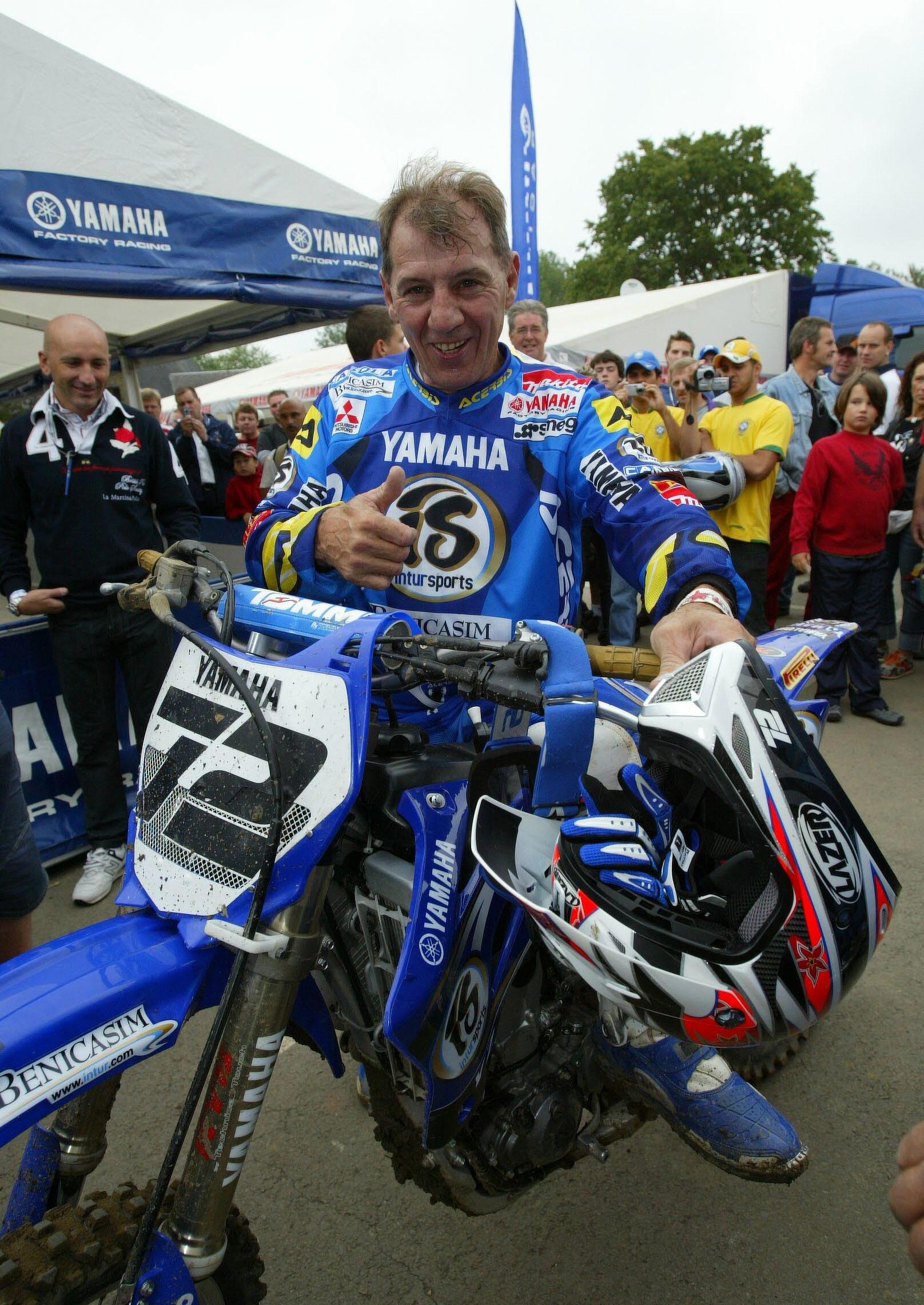
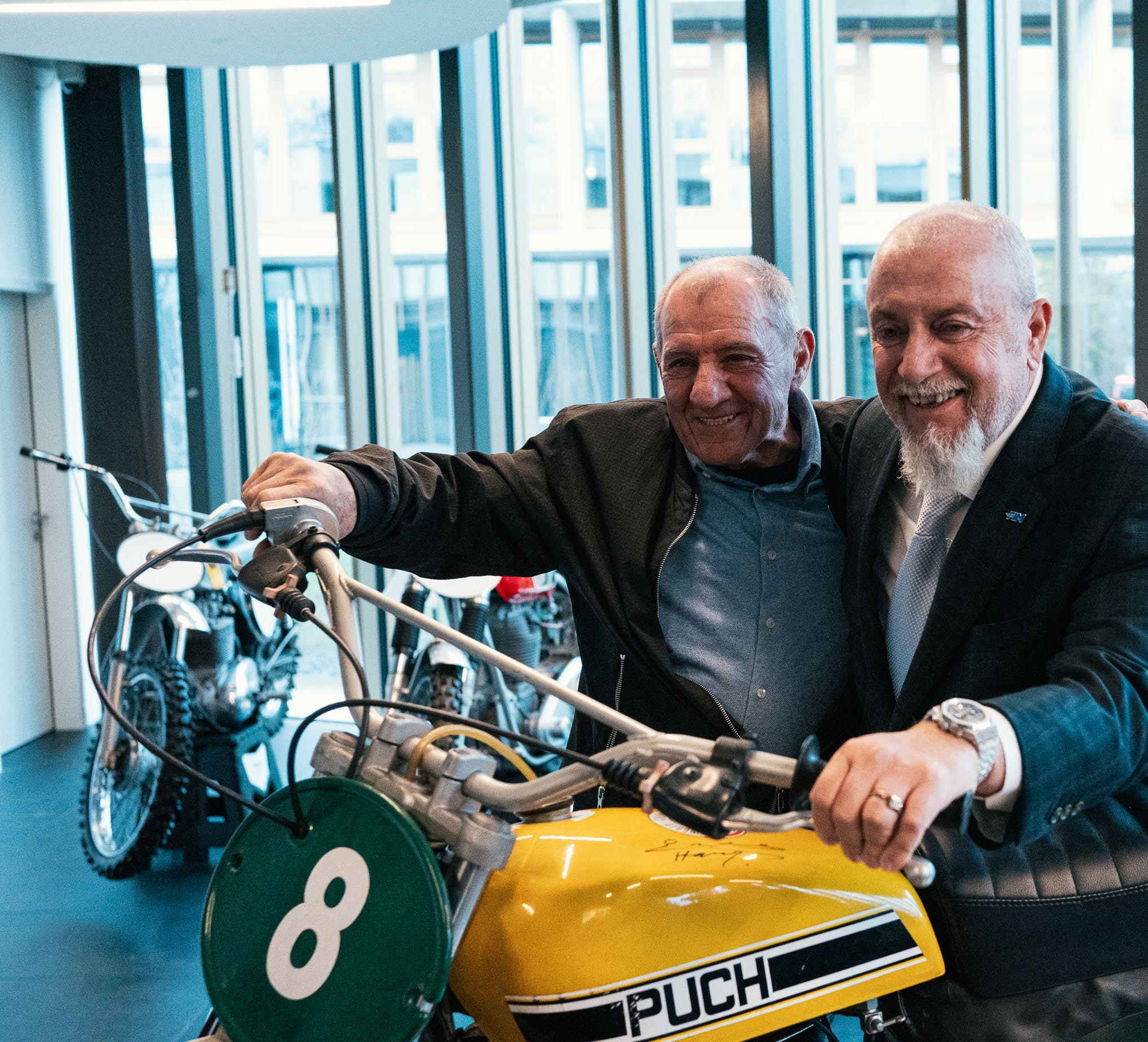
I have known the motocross world since 1967, from when I was a small boy until today.
I have followed it and seen it change, the motorcycles, the tracks, national and international. I have attended more than 1000 GPs and related races.
Motocross is my life, and that will continue until I no longer can.
It came with its challenges as I come from a family of nine children, the eldest of the family. I was born with polio and was six or seven years
old before I could walk normally. I was bullied a lot at school, and so on... I could write a book about it.
As a father, I was very afraid while guiding my son Stefan. I knew the dangers — crashes, fractures, and so on. I was also strict with my son; I wanted him to become better than me.
MOTOCROSS IS MY LIFE, AND THAT WILL CONTINUE UNTIL I NO LONGER CAN.

What did success change in me?
I am of course proud of what we have achieved in the sport and grateful to my parents for allowing me to do this. My own success — it feels good, beautiful; I don’t really know how to translate it — I am a happy man in that regard.
My son Stefan’s success is even greater, and I am very proud and happy about that. My grandson Liam has already won several GPs, and I hope for many more and a title as well — then my picture of the motocross world will be complete.
That is the beautiful side of the medal.
The other side of the medal is the accidents and the pain of fighting back to the top — those were less pleasant for me personally.
The accidents involving my son Stefan and my grandson Liam are very stressful for me.
Giuseppe Luongo
I’ll put it this way: when you stop your career, people usually say you were always good. For me, Giuseppe is the man who brought motocross to where it is today. We can follow it live or on TV, wherever we are. He is an honest man, as I have always known him to be.
He always has a smiling face.
In 1989, he founded the Suzuki Bieffe Team together with two other top riders, and my son Stefan, a young talent, was included. Two years later, Stefan became world champion.
Thank you, Giuseppe — this is where Stefan’s real career began.
And now, I still can’t believe it: he has won 10 world titles.
But Stefan says, “Dad, you won the most,” and by that he means the 14 titles I won — because it all started with me. How beautiful is that?
I have closely witnessed how motorcycles became better and faster, and how four-strokes made riding faster and easier, less aggressive than two-strokes.
Racing itself remains the same — there is always battle and tension while riding, and that is what makes the motocross world so beautiful.
He also organised international Supercross races in the 1980s with riders from USA and others. Now his son David is following in his father’s footsteps, and I think he is doing a good job, from what I can see.
If people think back to the name H. Everts, I hope they remember me as a good father at home. I talk to everyone who allows it, and I am just a normal human being. I hope they remember me as a pleasant, honest, and good sportsman.
WHEN ROMAIN FEBVRE CLAIMED THE MXGP WORLD CHAMPIONSHIP IN 2015, IN HIS ROOKIE SEASON, IT WAS VERY MUCH PERCEIVED THAT HE WOULD GO ON TO WIN MANY MORE TITLES, BUT OVER THE NEXT FOUR YEARS HIS MOMENTUM STALLED, AND FOURTH WAS AS GOOD AS IT GOT. THAT ALL CHANGED WHEN THE FRENCHMAN SIGNED WITH KAWASAKI FOR 2020, TOOK ON THE NEW NUMBER ‘3’ AND JUST LIKE THAT, FEBVRE WAS A CONTENDER ONCE AGAIN.
He may have lost the title at the final round of 2021, but the hunger and desire were plain to see, and in 2025, that persistence finally paid off. For Febvre, it was the second title he so longed for; for Kawasaki, it was the title they had waited twentyseven years for, the last of which came in 1998 in the 250cc division. Kawasaki has now won a world championship in MXGP, and in this issue of
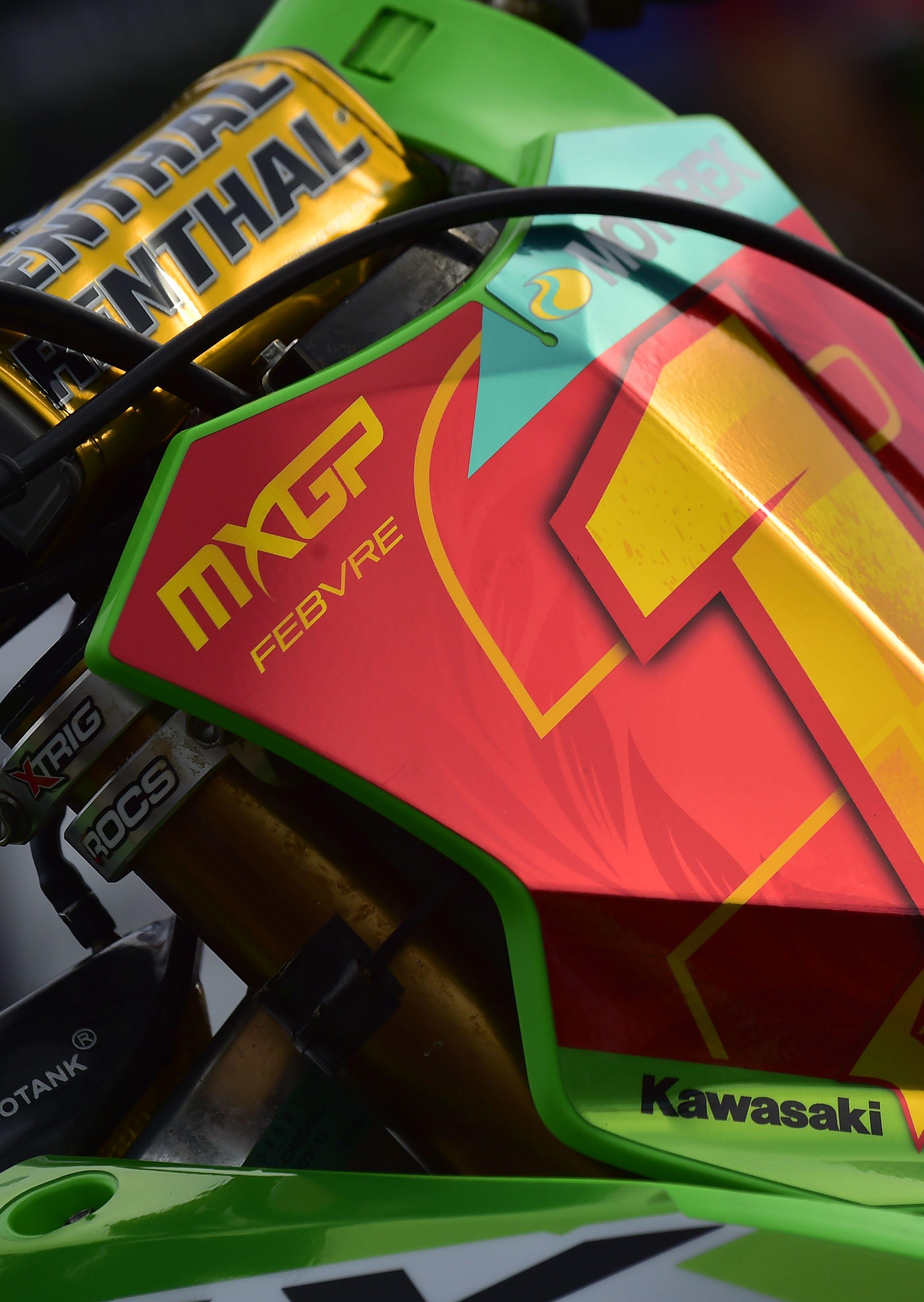
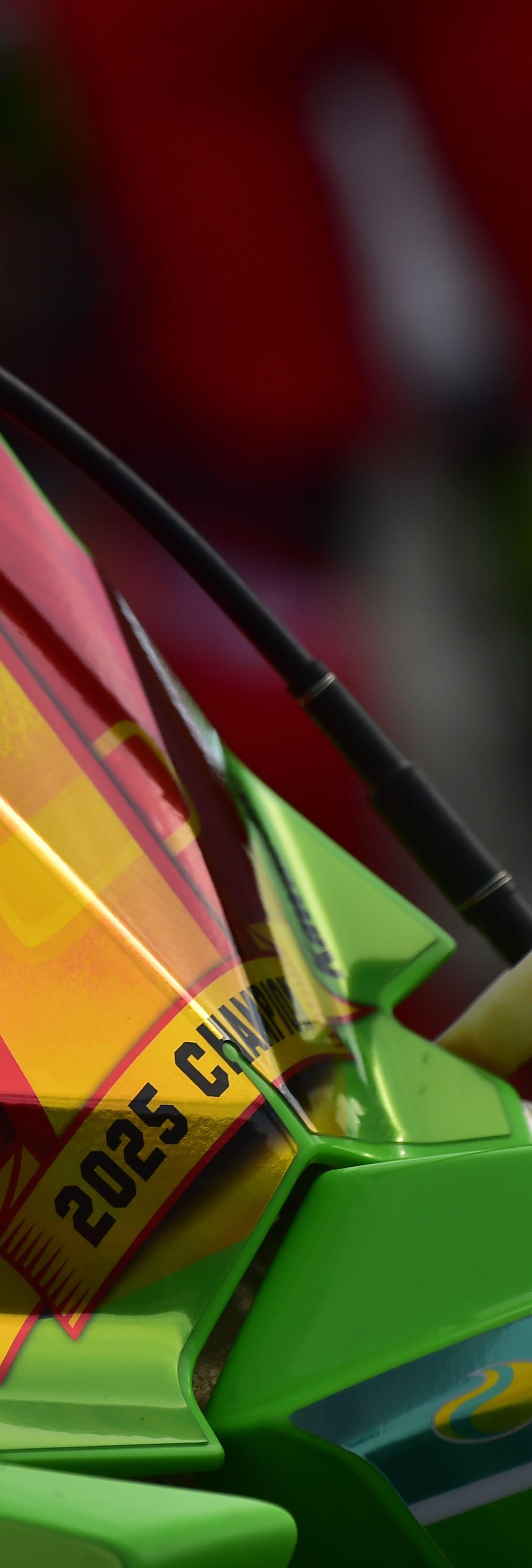
MXGP Magazine, we take a closer look at Romain Febvre’s title winning 2025 Kawasaki KX450SR.
Since Romain Febvre moved to Kawasaki at the end of the 2019 season, he has already ridden two different generations of motorcycle, and whilst the bike he rode from 2020 to 2022 almost brought
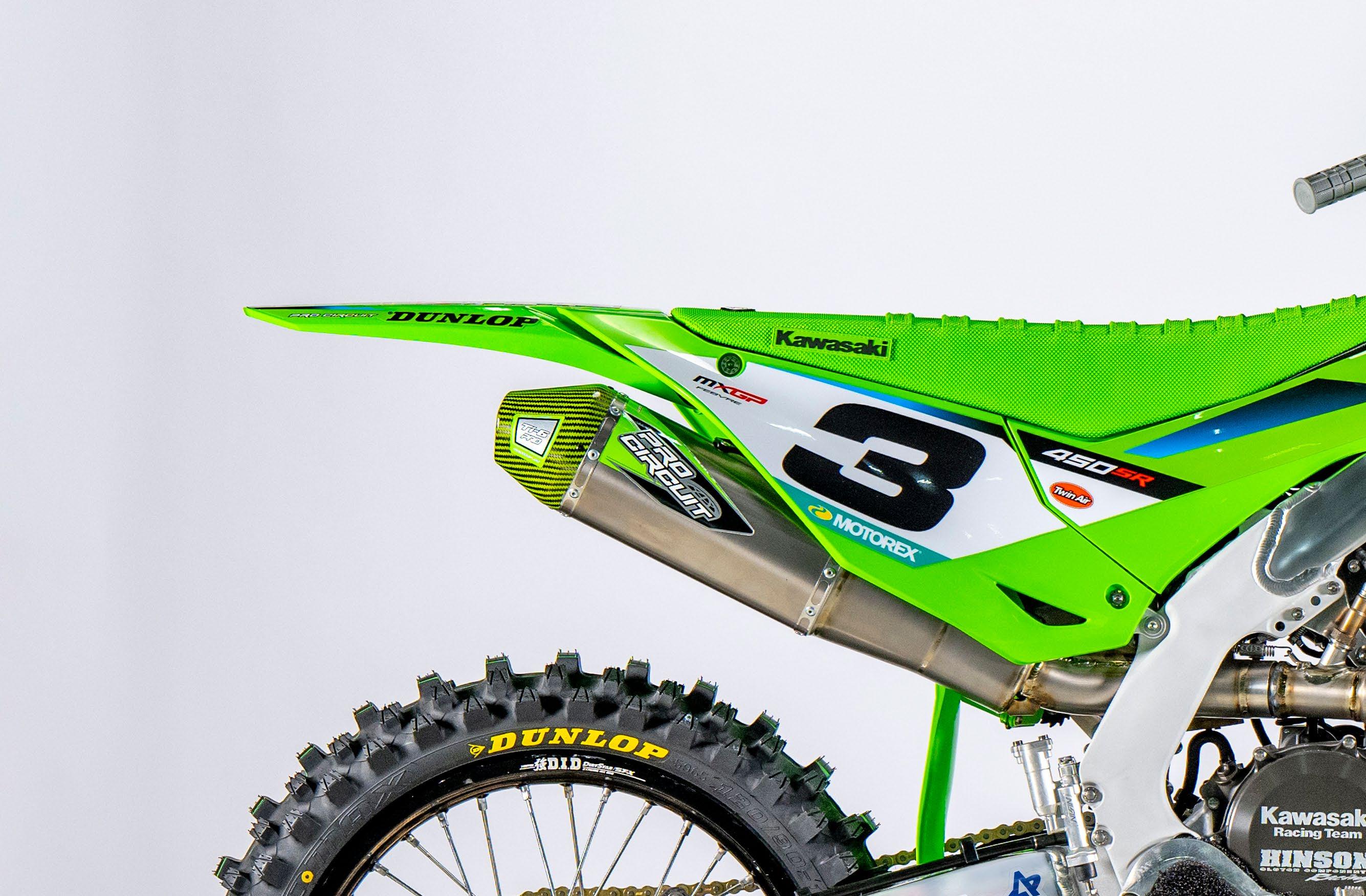
him a second world title, it was the bike which followed which delivered the goods.
In 2023, Febvre lined up in MXGP racing the prototype 2024 machine, and it was this bike which eventually landed Febvre and Kawasaki, that much awaited world title. Kawasaki Racing Team’s Antti Pyrhönen shares a bit of the backstory:
‘We were using the 2024 prototype bike in the 2023 season, and we continued with that bike in 2024 and ‘25. That bike came into production in 2024, and we will continue with it in 2026. It was a whole new package; a new frame and new engine, so quite a big update on the previous model.’
All of that sounds pretty straightforward, doesn’t it, and whilst the bike was once again in the fight for the championship, winning races and taking GP victories, you cannot afford to sit still, otherwise the competition will catch you off-guard. How you respond to your success, determines how you keep moving forward. For 2025, new rules and regulations meant that the teams in MXGP were put to the test once again, as new noise limits came into force. The stakes were high, for everyone. Get it right, and the rewards would quite literally mean the world. Get it wrong, and you are immediately on the backfoot, trying to make up for lost time. For Kawasaki, it wasn’t just about getting the bike to conform with
the new regulations for the season ahead, but how they could also continue to improve their motorcycle, which was now entering its third year of competition. Team manager Antti Pyrhönen tells us about some of the changes the team made over the two previous years, in order to get the bike to where it was, ahead of the 2025 season:
‘From ’23 to ’24, of course, you gain information during the season, so you fine-tune some suspension things, some chassis things, engine, mapping and things like that, so those were the type of adjustments we did. In 2023 we were also using a billet aluminium prototype frame, but from ’24 on, we went to the OEM frame. So, that was, let’s say, a bigger item we changed from ’23 to ’24, but for the ’25 season we need to remember, that the biggest change was relating to the FIM regulations, where we went from 112db to 109db, and that brought quite some changes of course, from the exhaust and general package, to match the FIM noise regulations; and then of course, matching the sound regulations without losing reliability or performance. So, that brought a handful of work for the autumn of 2024; we did straight away lots of testing already during the 2024 season and very intensive testing at the end of the year in October, November, December, and January and February 2025 to be ready for the ’25 championship.’
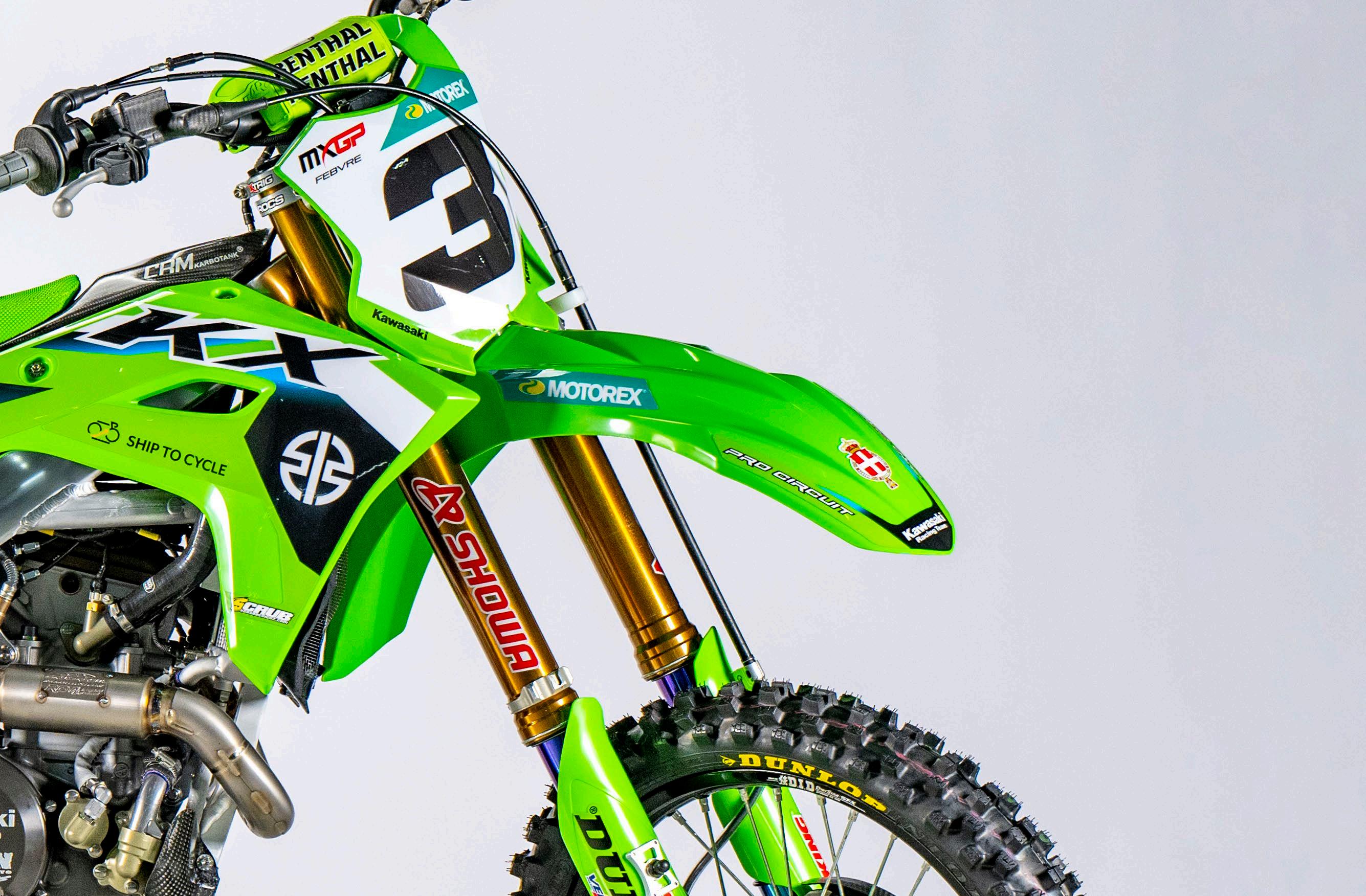
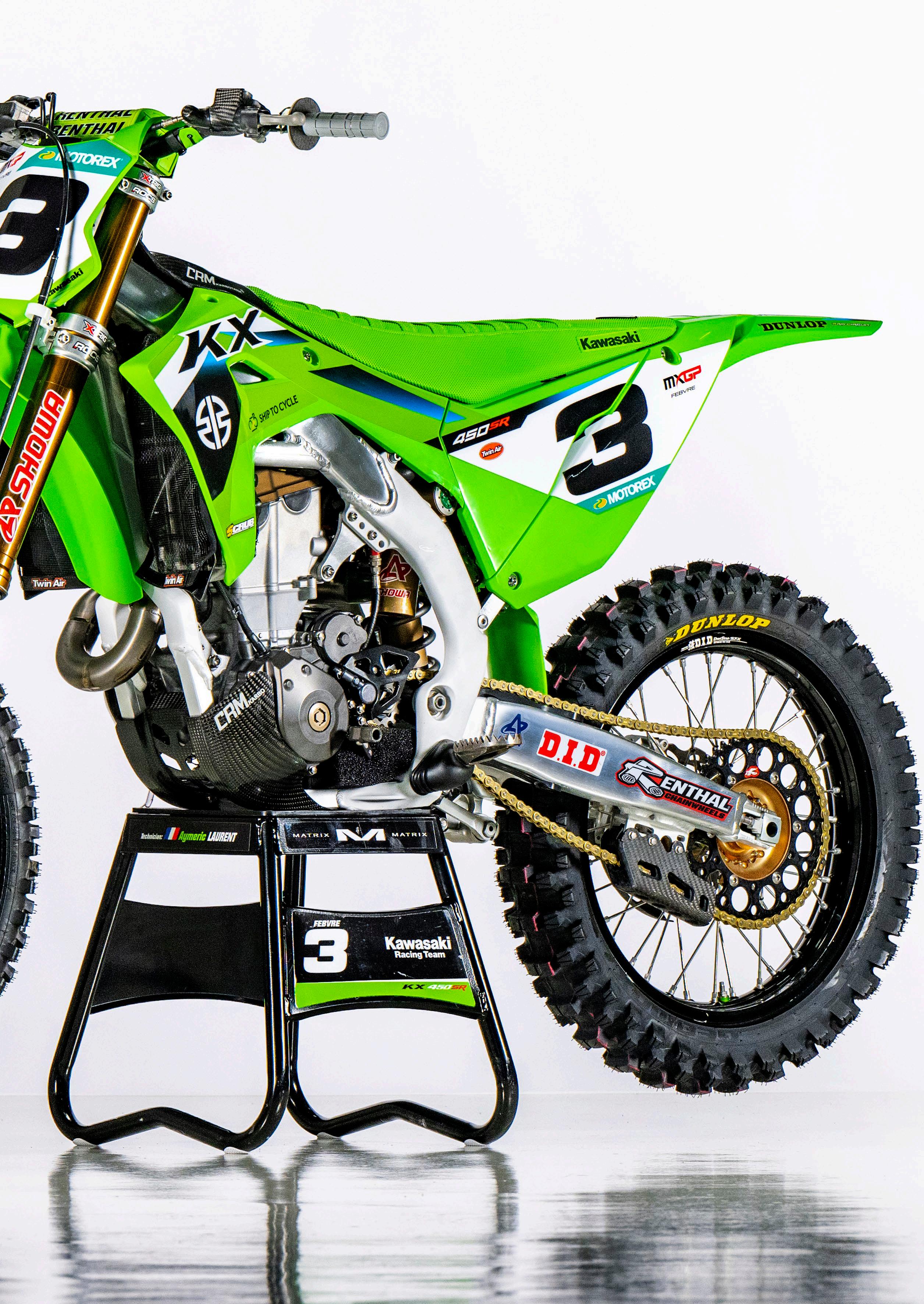
The moniker ‘SR’ attached to Romain Febvre’s KX450SR stands for ‘Special Racer’ and the engine and cylinder head are completely factory from Japan, with the exhaust system (pipe and silencer) provided by Pro-Circuit, with the California-based firm also providing the gear shifter. The hydraulic clutch pump is by Nissin, whilst the clutch basket, pressure plate and inner hub is Hinson. The ECU is supplied my MoTec.
The chassis has been OEM (cast) since 2024, with triple-clamps supplied by X-Trig, which house the factory Showa forks, complete with special coating. The rear shock is also a factory Showa unit. The swingarm is standard, but the linkage ration is factory, based on Febvre’s demands and how he rides. As for the wheels, KRT uses DID rims, factory hubs and spokes, and HAAN wheels,
NEED TO FIND THE BEST COMPROMISE TO HAVE A VERY USEABLE POWER FOR RACING, BUT STILL HAVE THE POTENTIAL TO TAKE A GOOD START

with tyres courtesy of Dunlop. Stopping power is supplied by Braking discs and Nissin callipers.
The radiators are designed in-house, and produced by Galletto Radiators in Italy, with the focus on gaining better colling efficiency, as well as extra strength, ‘in a situation where you crash or something like that.’ In hot conditions the team will attach a cooling fan to help aid cooling in extreme temperatures.
Other ‘bling’ includes carbon parts by CRM of Italy, who produce the carbon fuel tank in standard size along with a slightly larger option for heavier conditions, such as deep sandy circuits like Lommel or Riola Sardo for instance. You will also see carbon disc protectors, chain guide, skid plate, front brake pump and clutch pump protectors. The subframe is aluminium to OEM specification, and the handlebars are Renthal Fat Bar 827 bend. The foot pegs are by Raptor, made from Titanium.
As for the power and performance, according to Antti Pyrhönen, ‘Romain generally likes the power delivery to be very useable, so this is of course considering the MXGP tracks; with the 450cc bikes you need to have useable power, which is important, but then here it gets tricky. When you also need to get the holeshot, you then need to find the best compromise to have a very useable power for racing, but still have the potential to take a good start. That’s where we are generally with the riders, we are balancing; the 450cc class is a


lot of balancing with everything, like all the things that you are doing is balancing and compromising what you are doing.’
And whilst Antti has mentioned starts and how important they are, it’s easy to think that a good start only comes from looking at the MoTec light indicator in front of the handlebars, where the optimal rpm settings make it ‘easier’ or more ‘consistent’ to make good starts. The art of making a good start and taking a holeshot is so much more complicated, as Antti explains:
‘Basically, the start is based on many things, like first of all, the metal grille; if it’s dry or wet, if it’s dirty, the altitude and the other circumstances; the type of dirt in front of the gate, how deep it is etc. The start is not one formula; we have our working formula, how we are preparing for the weekends starts, but it’s not a ready formula, because you don’t know yet what you are going to face. We have many different strategies of formulae to go for the weekend, but you don’t know about those before, it depends on many parameters, and many different things that actually affect our start strategy.’
When the 2025 season fired into life in Argentina, Febvre followed up his 2nd place in qualifying with a victory in the first race on Sunday, and after placing 2nd in race two, the Frenchman was placed 2nd overall in the standings. A good start to the campaign. The mud of Spain at round two saw a 5th overall, but as we look back on the series, this would be his lowest finish in the whole campaign (he placed 5th again in Holland later in the year).
Round three at Saint Jean d’Angely in France, and Febvre registered 2nd overall, but more significant perhaps, was that this result triggered an impressive run of fourteen consecutive podiums, with his first overall GP win coming next time out in Sardinia’s deep sands of Riola Sardo. Backto-back wins in Spain (Lugo) and France (Ernee) at rounds eight and nine meant he left Ernee with a 47-point lead over his closest rival. After his next win in England, round 12, his lead was still a respectable 32-points. However, the real test came after the MXGP of Flanders, at Lommel, Belgium where Febvre’s lead was now down to just 9-points.
One round later in Sweden, a double-race victory saw Febvre extend his lead back out to 41-points, but a cautious 5th in Holland and 3rd in Turkey saw his lead cut back again, this time to 26-points, with two rounds remaining in China and Australia. In China, Febvre reacted to what was happening around him, and his ‘measured’ 4-4 results (4th
overall) meant that he extended his lead further, and with just one round remaining, went to Australia with a 47-point lead, and one hand on the trophy. After taking 3rd in the qualifying race on Saturday, Febvre’s goal in Sunday’s first race, was to stay out of trouble and finish the race in the points. If he did that, the title was his!
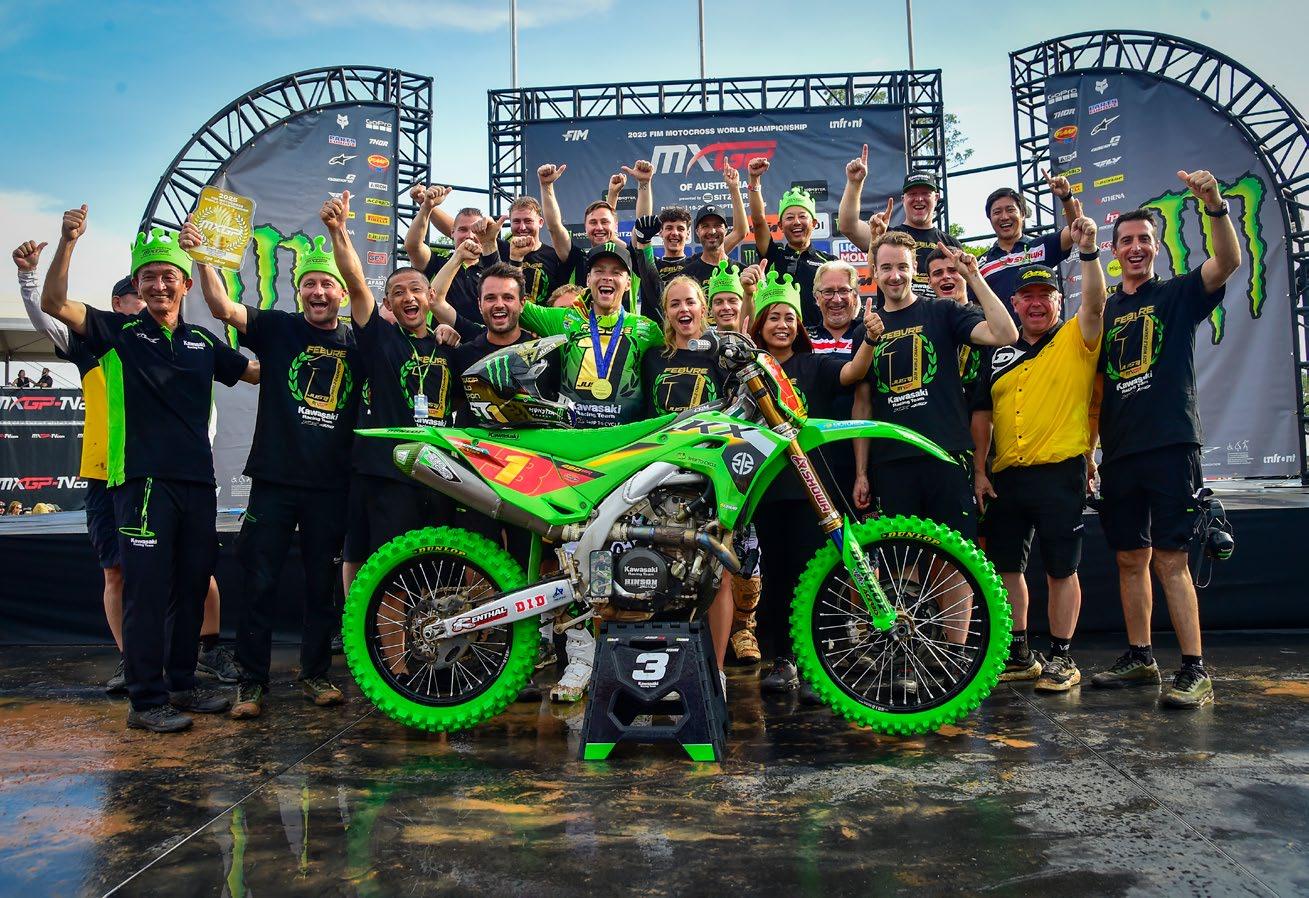
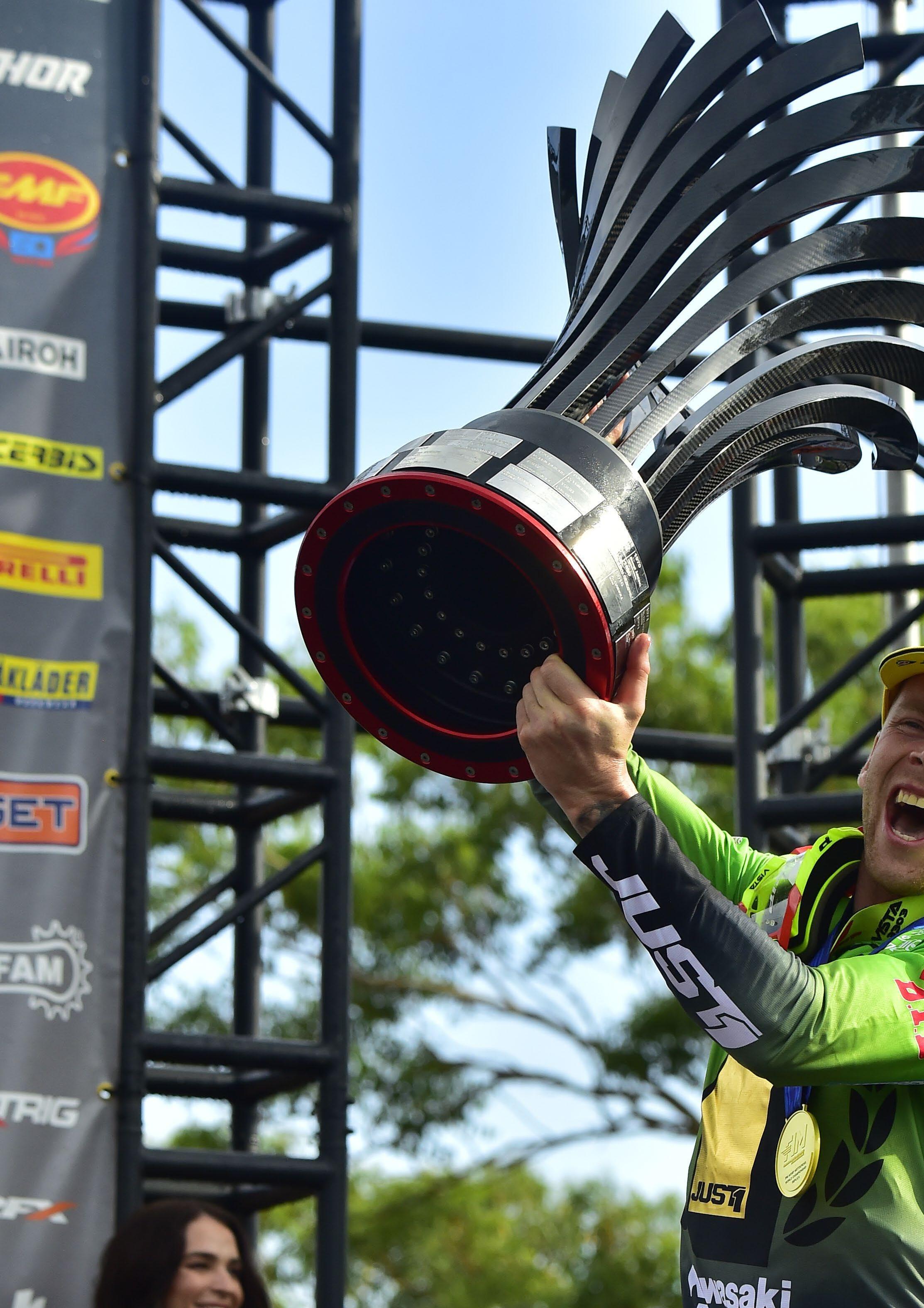
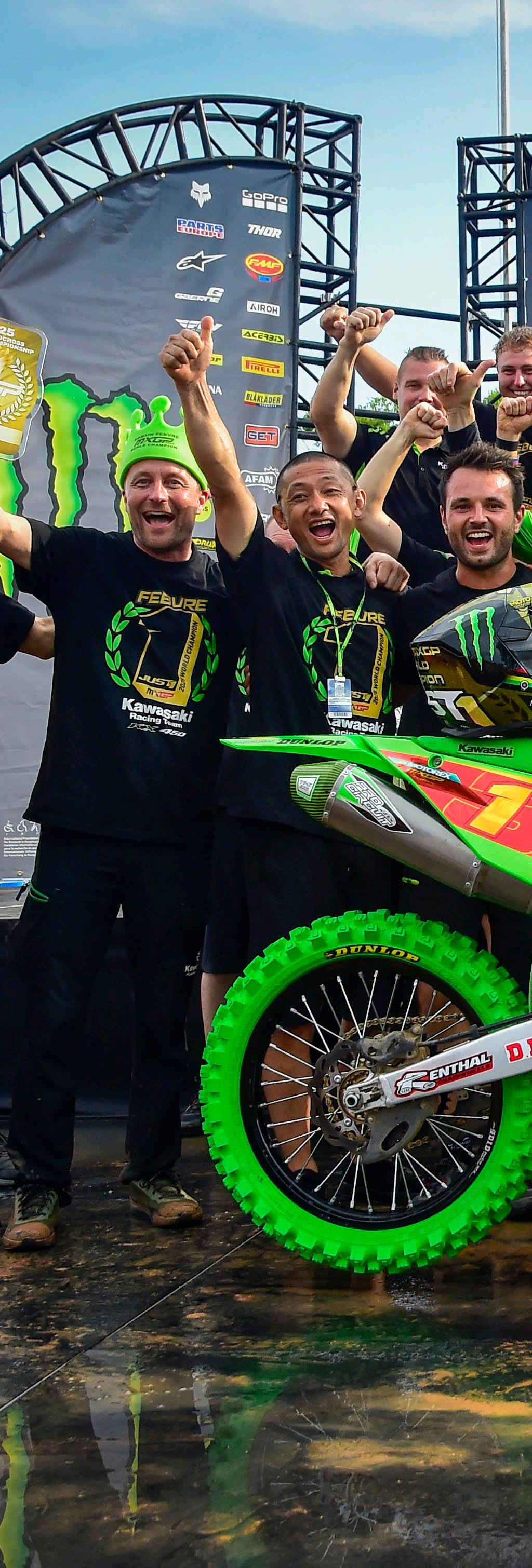
When Romain crossed the line in 4th place, he was crowned World Champion for a second time, ten years after winning his last title. The scenes of joy and emotion as he celebrated with his partner Megan, and the rest of the team, made everything worthwhile. The highs and lows of the past ten years had travelled full-circle, to get to this point. For Febvre, that long wait for a second title, was complete. For Kawasaki, their first title since 1998 and the first for Akashi in the MXGP class. For Antti Pyrhönen, his first world title as a team manager, and for the team owner Kimi Räikkönen, the journey was now complete, but not over. He could now add a motocross world championship to his 2007 Formula 1 driver’s world championship.
Whilst some people will be surprised with this sort of consistency, with fourteen consecutive podiums and sixteen podiums in the season, the reality was that this had already been coming, as Antti recalls:
‘In 2023 for example, his performance, reliability, speed, starts, everything was there; he finished 2nd to Jorge Prado and he missed one round in Madrid because he crashed in the quali race on Saturday and was declared to be unfit to race on Sunday, so missed the quali race points and also points from the two races on Sunday. And if, for example there was a possible 50 points from that GP, or even 60, you never know, because he felt good that weekend, then the championship would have been way closer. So that was the only mistake that happened.’
‘Then of course, the 2024 season, he took six podiums in the first seven GPs, and then injured his thumb in France, so it kept coming, and Romain’s been in a title fight all these years he’s been healthy. I would say that what made the difference in 2025 was he stayed healthy, or almost healthy the whole season, and that makes a difference. He has everything; he has speed, physical condition, he has the ability to take the starts and he has the mental strength to be there for the long run. The only thing is, that in motocross you need to, and I don’t talk about luck, but, if you don’t need good luck as his level of rider, you don’t need good luck, but for sure you don’t need bad luck either!
‘I was very impressed with his mental strength he had last year, but it didn’t come to me as a surprise. I’ve been working with him for many

years already and he’s mentally very, very strong, a real racer and very strong under pressure. And that’s it; I was very impressed, but I wasn’t surprised.’
When you look at the numbers for Kawasaki since MX1 was created in 2004, and rebranded to MXGP in 2014, there are numbers for race wins and GP wins before Romain Febvre joined Kawasaki, and since he has been there.
Kawasaki MX1/MXGP Race wins since 2004
• 2004 – 2019 Before Febvre joined Kawasaki (38 race wins in 16 years)
• 2020 – 2025 (31 race wins – Romain Febvre with 29 of those, in 6 years)
• MX1 from 2004 – 2013 (12 GP Wins)
• MXGP from 2014 – 2025 (22 wins, with Febvre winning 13). Romain Febvre has won more GP wins on his own in MXGP than Kawasaki had in the MX1 era.
Romain Febvre’s 2025 MXGP season:
• 9 Race Wins/13 x 2nd/5 x 3rd (27 top 3 from 39) 69.23%
• 16 Podiums – 14 in a row – 5x1st / 8x2nd / 3x3rd
MXGP Mag: Kawasaki’s first premier class title since 1998, what did it mean to you, personally?
AP: It meant a lot. I have been working personally for so many years to achieve this for our team. I started as a team manager in 2012 and very quickly we were in the lead of the championship, and very quickly we won races and finished 3rd in the championship in 2015. We had the red plate until halfway with Max Nagl, 2016 finished 3rd, 2017 finished in 3rd so it was coming. It felt like soon we are gonna win! But, eventually, we didn’t!
Then there are the injuries, and then there is some behind the scenes struggles that not many people know about, and not that you can talk about those, and you need to go through the obstacles, you need to go through the struggles. Eventually, the years are passing and another season is passing, and the others are celebrating, and from
a quiet confidence it becomes an obsession! And from there you become almost desperate. And those are the emotions you go through, through the years, and finally when you achieve that, with your team and with your close people, it’s a journey that eventually had a meaning and it feels complete.
And in motocross it’s very, very difficult to win because there are so many types of challenges that you need to go through. First of all, you need to have the team around you, to be able to do that. You need to have the material to be able to do that and you need to have the rider to be able to do that, but you need to have the team and the material and the budget to be able to appeal the top rider to your team, and from there on, you go further and finally you have the package together, you have the rider, you have the material, you have the team and then you go in to work together and still, it’s so demanding because it’s such a long championship that you need to be fast, you need to be reliable, you need to take risks, but still you need to stay healthy all year, so I would say it’s a very demanding title to win and that’s why eventually it’s so rewarding to win it!
MXGP: What did this title mean to Kawasaki, the team and to Romain?
AP: We went to Japan after the championship, and met the Kawasaki Motors President there, and saw how much it meant for them and the whole factory, you know. It was very overwhelming to see, and it was almost like a once in a lifetime experience to see what it meant for them. It was a mutual feeling, because they were all there with us the whole journey, all the years we worked and did our winter testing and sometimes in October, November, we are facing conditions where it’s raining, it’s cold , it’s snowing and we have all the Japanese engineers there with us and then we keep working. And then we have the Sardinia testing and sometimes we have there with us 2030 people from Japan, and you know the people, and you go through ups and downs together and finally you achieve something together and I really underline the word together, and that also makes it very beautiful that you can achieve, you can work, and you can achieve something together and then you can celebrate that together, so it’s really, really beautiful.
And then from the team side we have incredible guys, they are putting in so much work, weekend in, weekend out, seven days a week, repeating that for months, for this one goal; they are capable to get the reward for the incredible hard work they have done, and feel they achieved this, and they are part of this. For me to watch it from the side as a team manager it gives such a beautiful emotion, to see your team and the guys, who really deserve
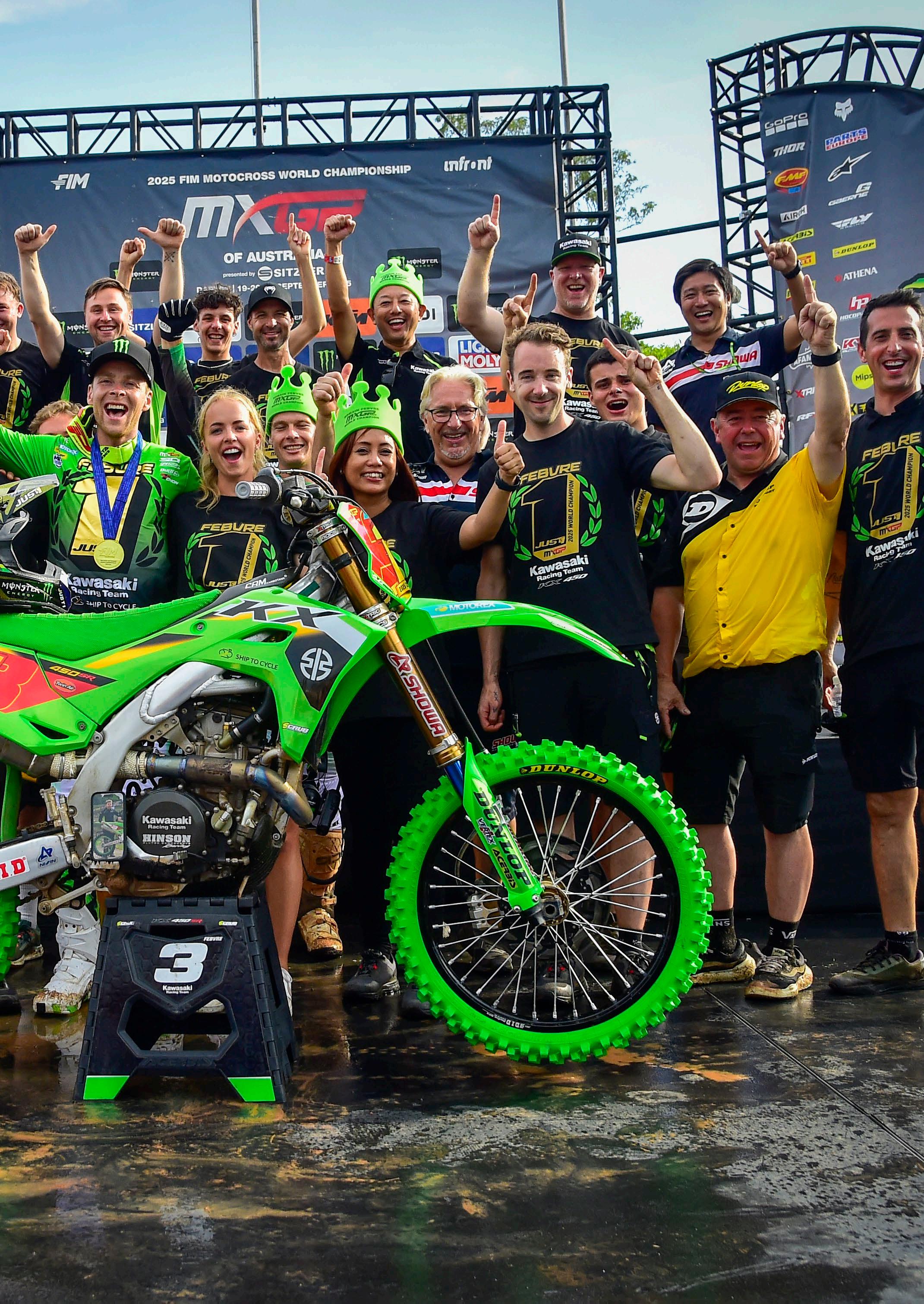
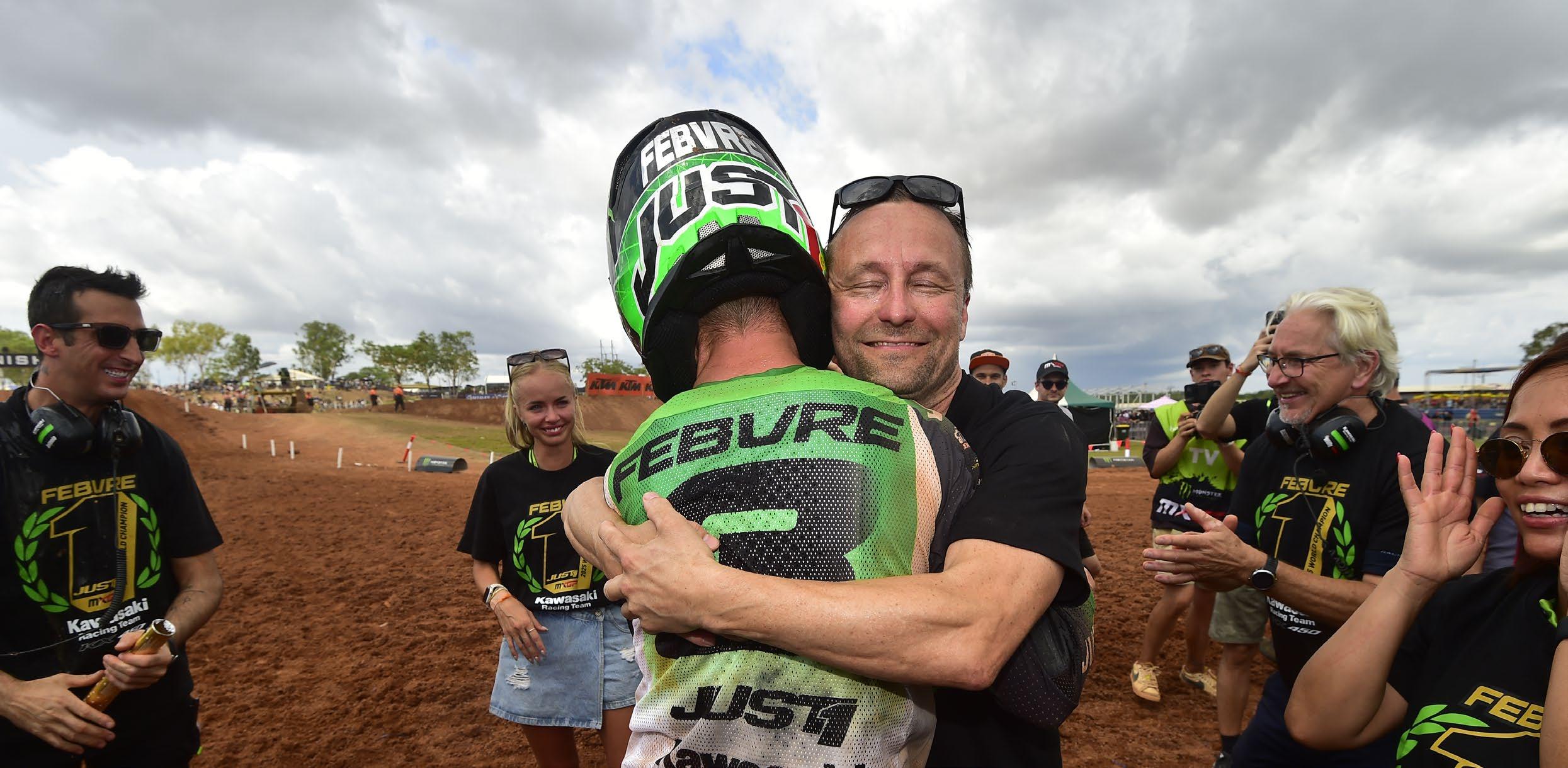
it. They feel happy and satisfied, and that gives the maximum satisfaction.’
‘For Romain, he’s a warrior and he’s a lion. He’s a rider that if someone deserves it, he does! He never ever gives any unnecessary excuses, nothing! Nothing other than a pure racing spirit. He’s so hard on himself, that if he is not performing, or if he’s a little bit off, you see him almost suffering, and finally, all these years that he’s been working, and been so close, for years, and finally be able to win; for himself, for his family, for us and for Kawasaki, and also that his young daughter can witness that, you know. I think it’s very, very well deserved but also a very beautiful story.’
MXGP Mag: And what about the ‘Ice Man’ Kimi. How has this journey been for the team owner? We didn’t see him in Australia, we thought he would have been there, to celebrate with you.
AP: For Kimi, you have to remember that even if he is not present, he is always there with us. He is the team founder; he is the team owner, and he is definitely a great spirit. Kimi’s racing spirit is second to none. There are no politics, just pure racing, pure performance; just pure racing and winning spirit, to do whatever it takes to win. This has been our goal with Kimi.
I remember when I started with him, he told me in Finnish, English translation would be like ‘Let’s win the whole shit!’ ‘Let’s win it all!’ and that came, and it was like ‘yeah!’
He has been there since day one, always been there behind the team, behind me, behind the riders. His belief never failed. His spirit never failed, not even one day, and that’s remarkable,
and in my opinion says why he is a Formula One world champion. Even that year in 2007 when he won it, it went down to the last race, and it was a very, very tight battle all season, and eventually he won it, so his type of spirit and confidence is also with us because he never doubted, he was there every year. He didn’t need to be there in Australia to celebrate because he has been there all these years.
Kimi was already calling during the race (laughing) but I just couldn’t really talk, I was so busy following everything, so sometimes the phone was open in my hand but I was fully focussed on the race, but yeah, he lived every moment. Our phone call was definitely – and believe it or not, it might have been two Finnish guys – but it can still be very touching and emotional, and yeah, we were both very proud of Romain, and we said ‘we made it’ but we were very proud of him because he represents that racing spirit 100% that we have, it’s no excuses, it’s all-in and give it all, and that’s what he did!’
MXGP Mag: Finally, there is a place in the workshop for Kimi’s 2007 title winning car and now Romain’s title winning Kawasaki. Have you managed to put both machines on the Ice One Racing podium, and when can we see the photo?
AP: Errr, it will happen! It will be there, but trust me; it’s been so, so busy like already before Australia and even immediately after Australia and MXoN, to try to also get a second bike there! That’s how it goes, you know? We are already fully in work mode for the new championship to begin and to be ready for that.’
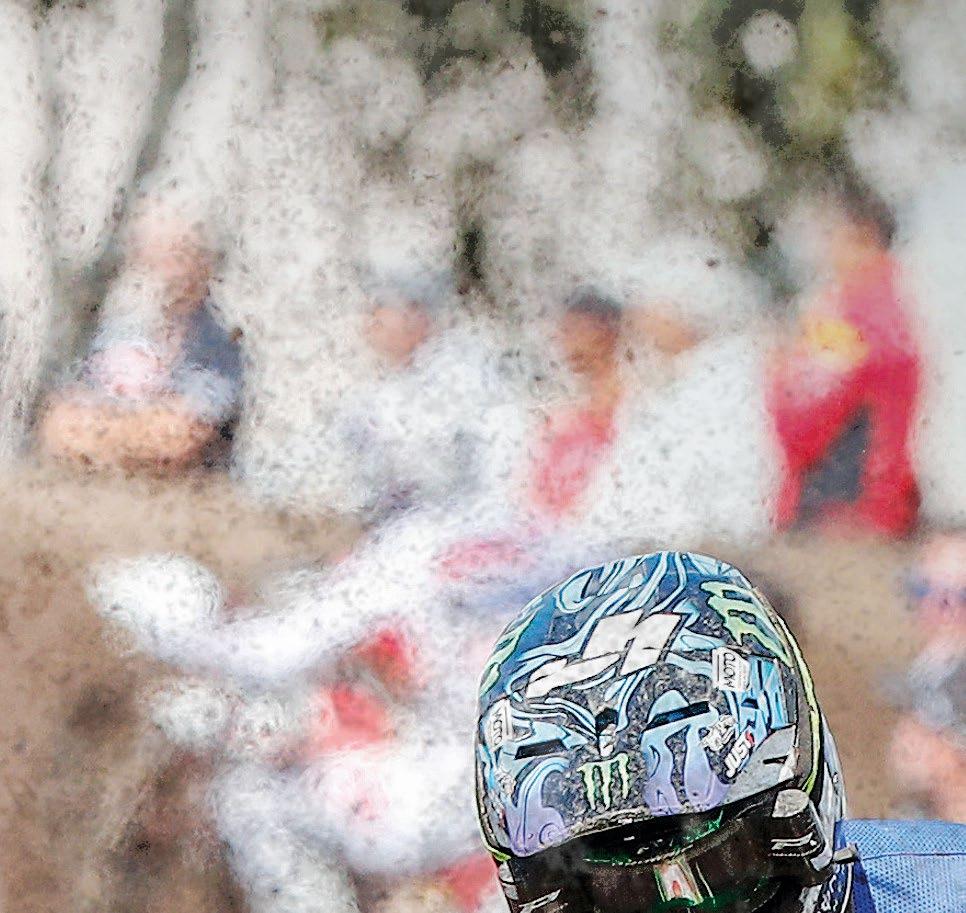
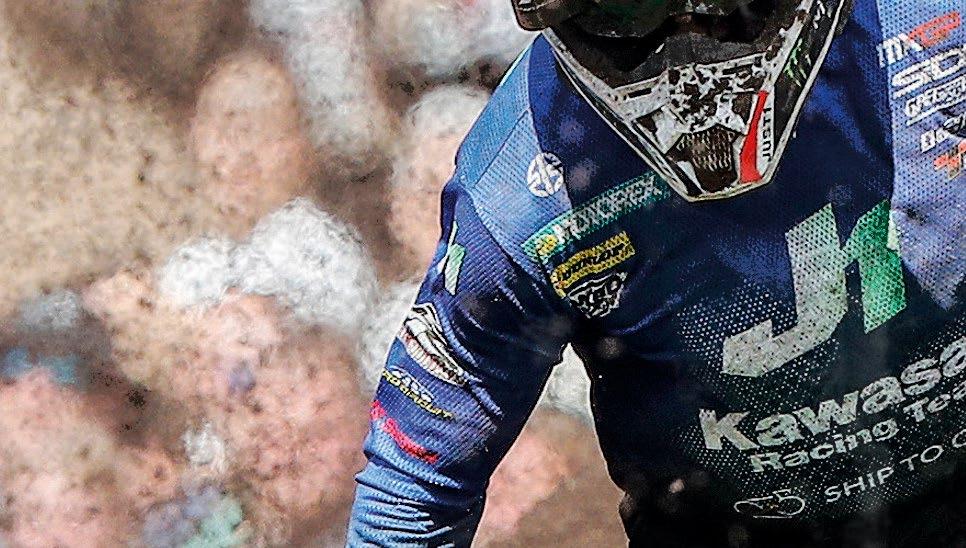




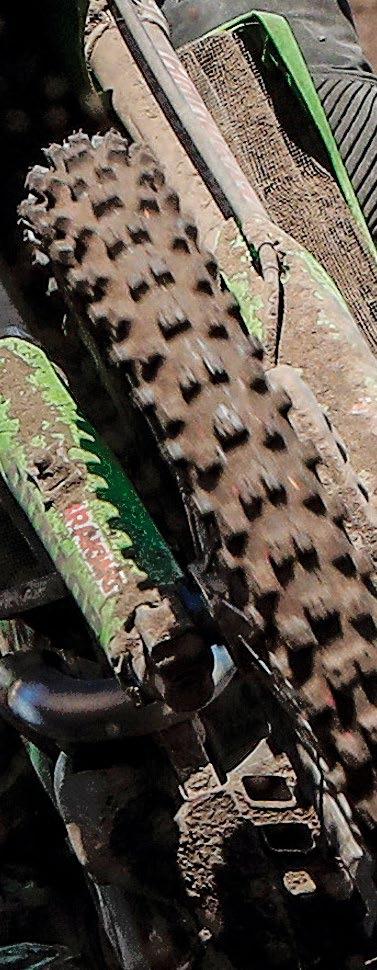









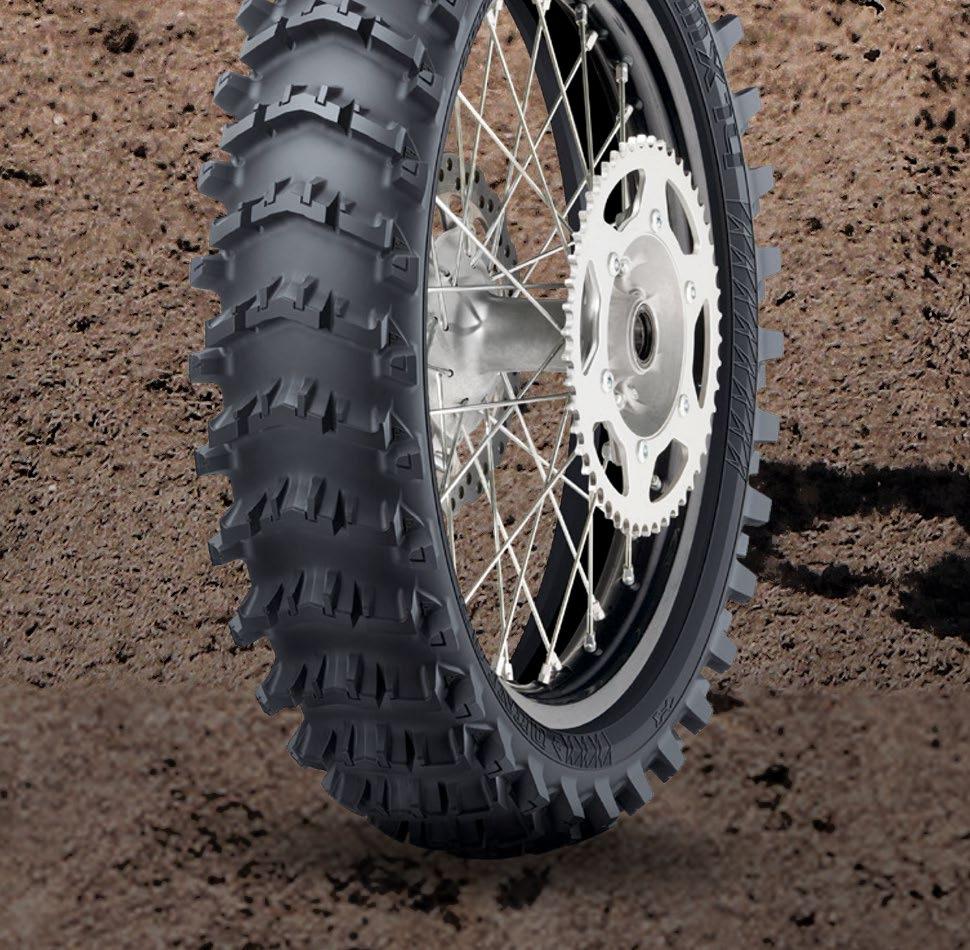












When you’re at the starting gate, you need every competitive edge you can get. Developed in the MXGP World Championship, the all-new Dunlop Geomax MX14 gives you holeshotgrabbing traction – with new Reinforced Scoop Technology (RST) to better penetrate and clear loose terrain. A rear tyre built to excel in extreme sand and mud.





AS WE APPROACH THE FIRST MXGP SEASON SINCE THE RETIREMENT OF GIUSEPPE LUONGO FROM PROMOTERS INFRONT MOTO RACING, WE LOOK BACK ON THE MOST SUCCESSFUL MXGP RIDER OF THE 21ST CENTURY, IN TERMS OF THE HIGHEST COMMON DENOMINATOR – NUMBER OF WORLD TITLES.
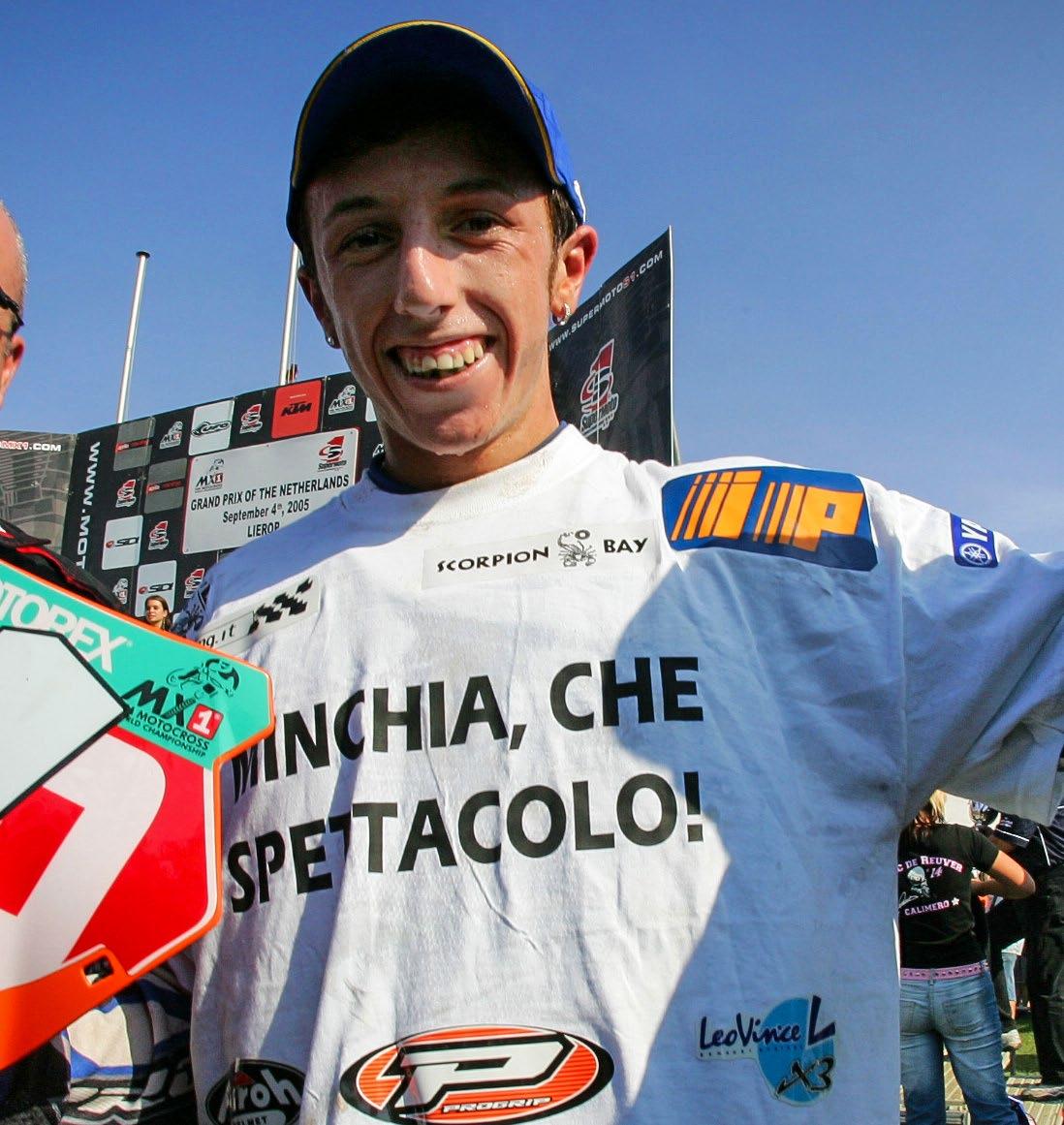
With nine to his name, and the longest streak of GP-winning years under his belt, one of the most obvious candidates for any Motocross Hall of Fame is the sport’s greatest ever Italian racer, Antonio Cairoli.
While the start of his career came a little bit later than his fellow Italian legend, MotoGP demi-god Valentino Rossi, there is no doubt that the man they call Toni could be considered the closest thing MXGP has to that level of adulation. From a fantastic brand built around his racing number, the famous “due-due-due” or “triple deuce”, if you will, to that innate ability to devastate the opposition at will, Cairoli is the epitome of the rags-to-riches Motocross story. It is a well-documented tale in this age of online video reverence, with a particularly personal documentary entitled “The Legend” available on MXGP-TV. So in this MXGP Magazine Hall of Fame feature, we’ll have a closer look at the actual numbers that maketh the legend and compare his career to those around him at the very top of the all-time trees.
Let’s start by comparing his career to the first of only two riders that breathe the same
statistical air. Stefan Everts, with ten world titles destined for his name, began his career in 1989, and was a World Champion in his third year at the age of 18. His early career path as the son of a four-time World Champion with very good connections inevitably helped him on his way. While Papa Harry’s close links to Suzuki helped Stefan on to the factory team at a very young age, it took him many years to build up to the icon he became. Three painful years of 250cc GP defeat to Donny Schmit and Greg Albertyn followed his 125cc title before he started his first run of three world crowns up to 1997. He then narrowly lost a season-long, thrilling head-to-head battle with Sebastien Tortelli that went down to the final round in 1998. After a couple of years of tortuous injuries that would have consigned lesser riders to the scrap-heap, Stefan returned to enjoy almost a second career, with six straight titles in the 500cc/MXGP/MX1 category. His 101 GP victories included one season, 2003, where he could race two GPs in one day, and regularly won both. He even went for the triple at the final round at Ernée, successfully bringing his GP win total up to match his race number of 72, when he started that year on 54! Everts was also the first and only rider to win GPs and world titles for all four Japanese manufacturers,

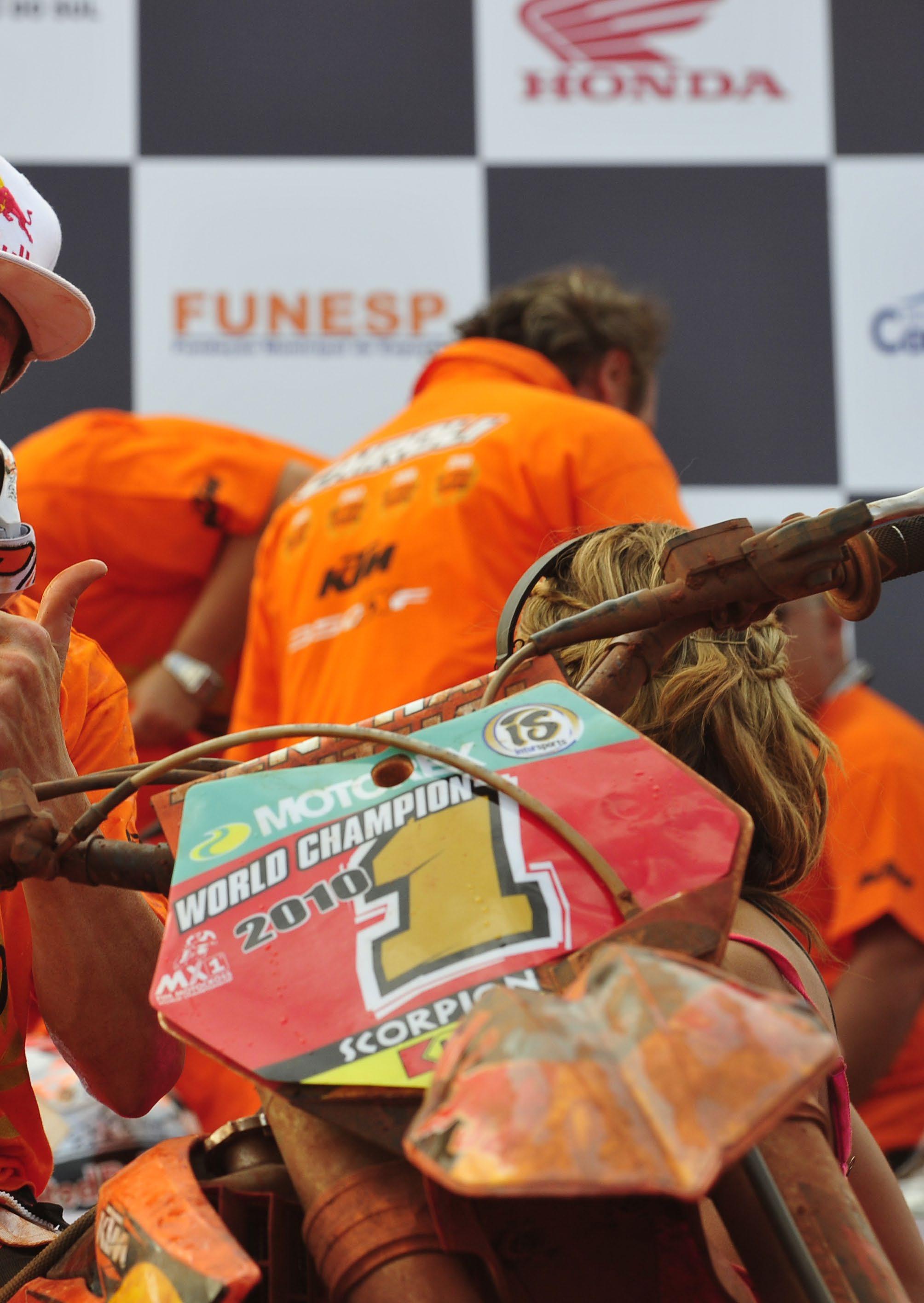
with many traumatic changes of team and personnel before finding a happy place with the Rinaldi Yamaha team. After years of dedication that did his incredible natural talent justice, he stands clear as the only ten-time World Champion in the sport’s history.
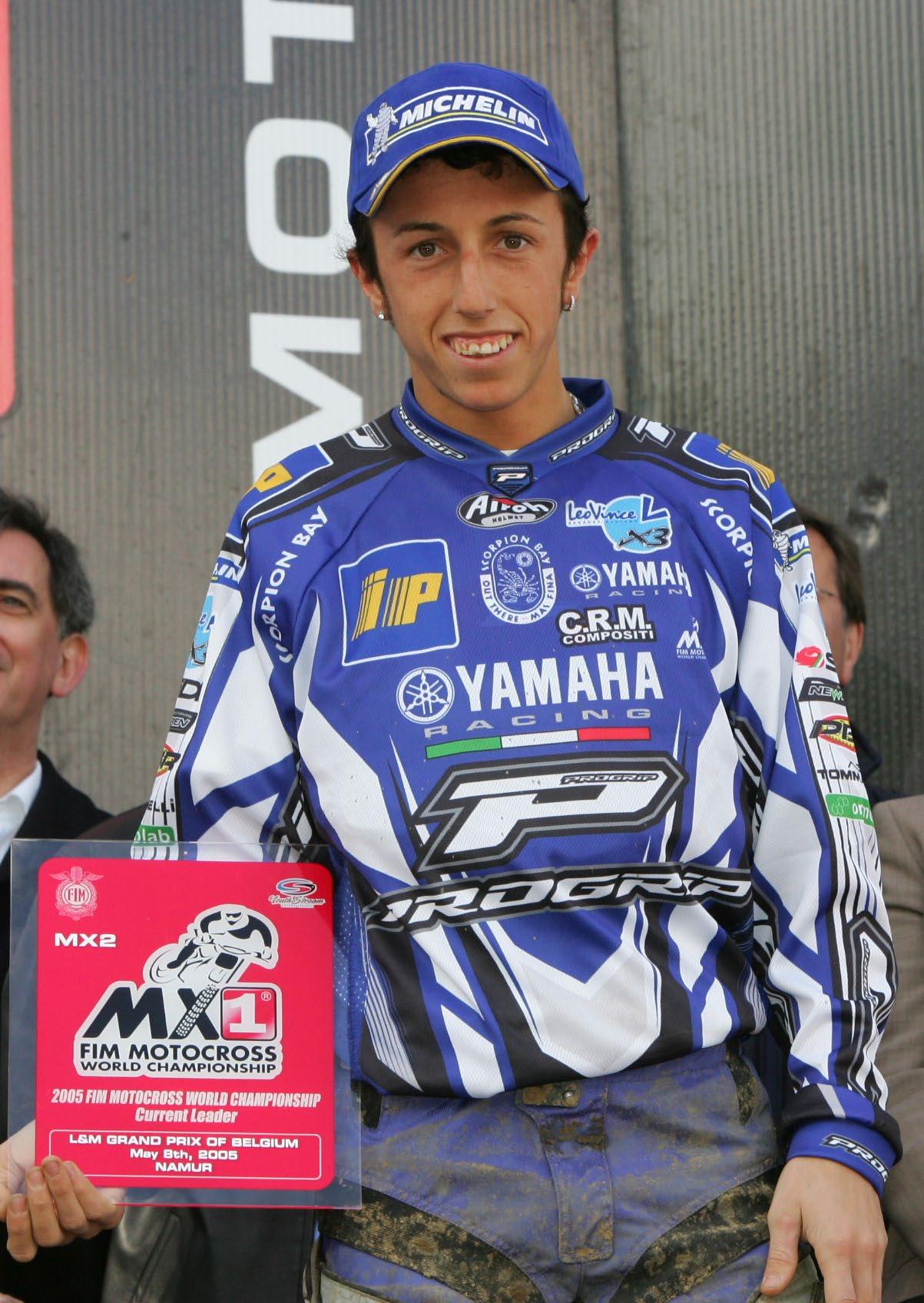
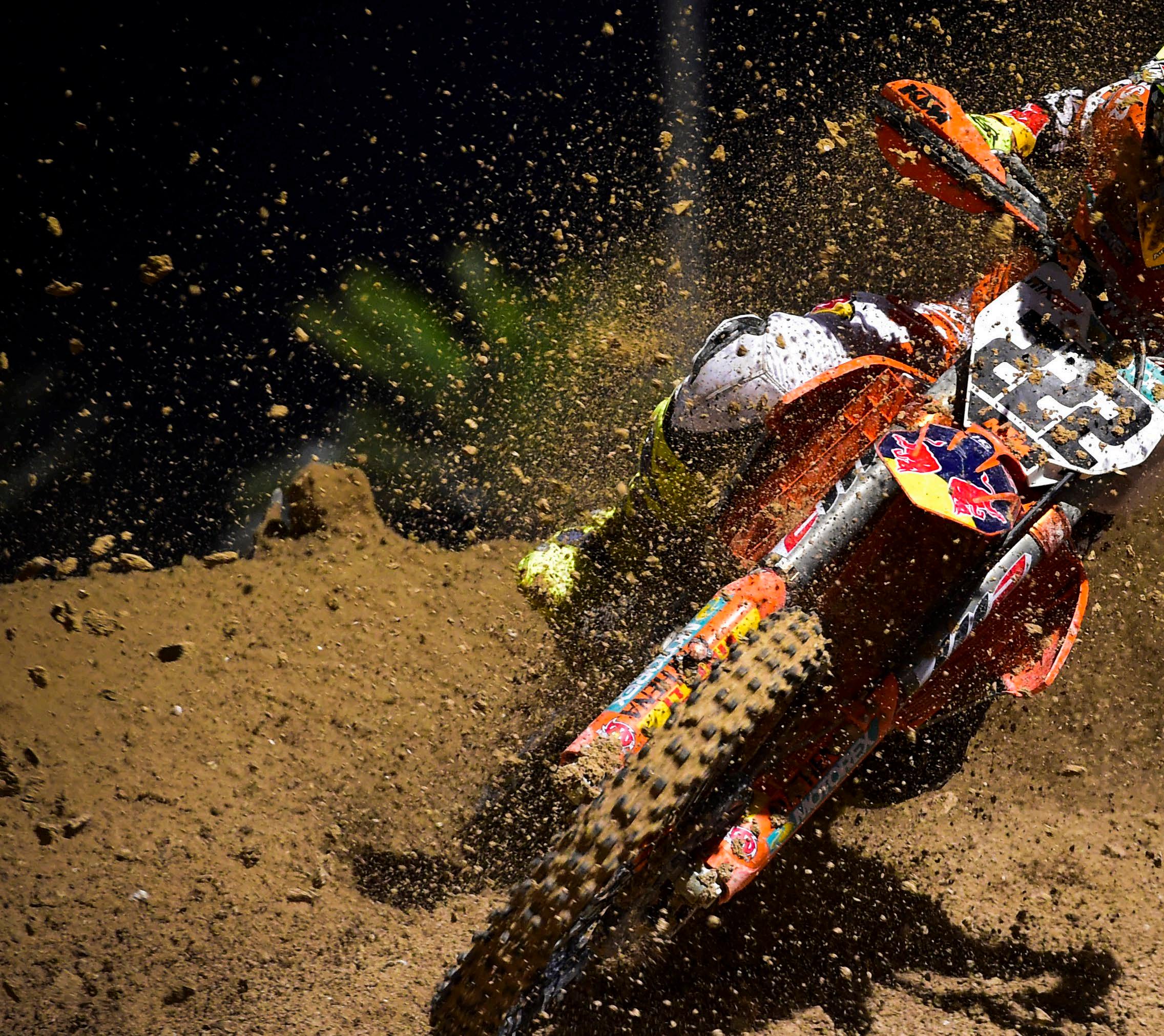
Toni started his career at the end of Stefan’s amazing run, only racing with him at the Nations and never really clashing directly, but the Sicilian took his first GP win in 2004 on the hallowed ground of the legendary Belgian circuit of Namur, with 2-4 finishes a rare GP win without a race win, but still a suitable site for the beginning of a new legend. After a torrid experience in his first attempts at the World Championships, the diminutive but determined kid was snapped up by Claudio de Carli at the
end of 2003. It would take 21 years before he raced a GP for any other team again! Injuries limited him to just the two MX2 world titles in his first five full seasons, but he was already 16th all-time with 24 GP victories, just three shy of the previous top Italian, Alessio Chiodi (who won a race at that Namur GP!). One of those wins had been achieved in the MX1 category, as Yamaha moved him up to try and help Josh Coppins in his world title bid, and the Italian took a shock win on debut at Donington Park in the UK!
Although he did have talks with American teams at around that time, Toni knew that taking up Supercross at such a late age was not going to be pleasant, so he committed to the World Championship and won the MX1 world title at his first attempt! Despite this, and possibly due to sponsorship clashes between
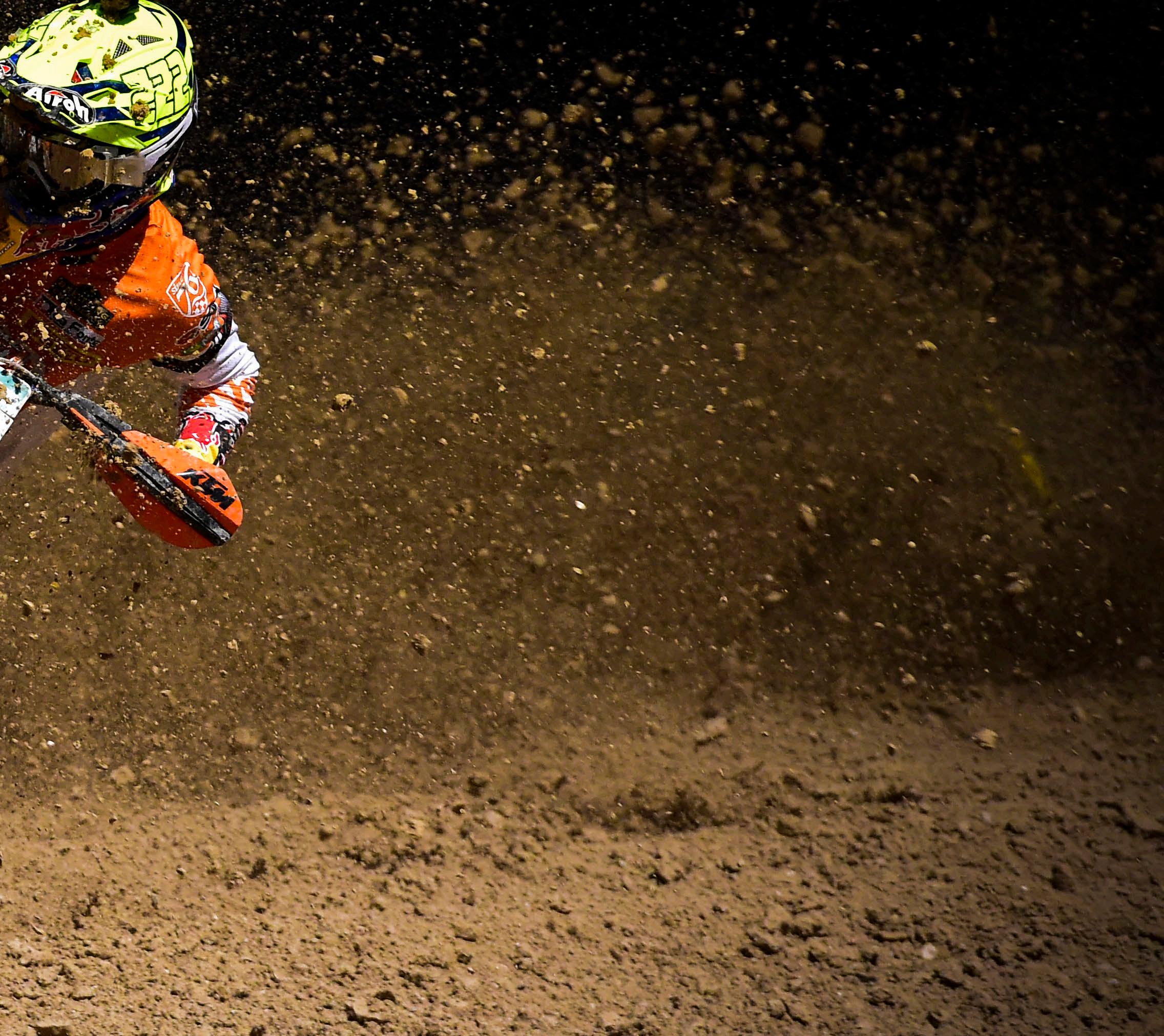
the factory team and De Carli’s outfit, Yamaha could not offer any further support, and the whole squad were met with welcome arms by KTM. It’s easy to forget that KTM had not won any world titles above MX2 since the days of Joel Smets, but armed with the perfect weapon for the shorter rider, the KTM 350 SX-F, Cairoli would go on a complete tear. He won an average of eight GPs per year to collect five straight world titles for the Austrian concern, and leave him just two shy of Stefan Everts’ record. Still only 29 years old, that record certainly looked within his grasp at the end of 2014.
There was, however, a new menace lurking in the MX2 division. Already creeping up to fifth in the all-time GP win list by this point, on an
amazing 47 wins after just five seasons, was the mercurial Jeffrey Herlings. Although a lateseason injury had denied him his third straight crown, the Dutchman was already a potential all-time great, whose sheer speed could not be ignored. Looking close to each other’s pace in the sands of Lommel at the 2012 Motocross of Nations, where a first corner crash robbed us of a classic battle, it was clear that although there were nine years between them in age, the KTM duo were destined to duke it out as soon as The Bullet made the move up in class.
When a teenage Jorge Prado annoyed Herlings by racing him hard at Assen in one of Jeffrey’s final MX2 GPs, it was clear that the now threetime World MX2 Champ was ready to graduate. Cairoli had suffered two rough years in losing the MXGP crown to first Romain Febvre, then Tim Gajser, so KTM could have been forgiven
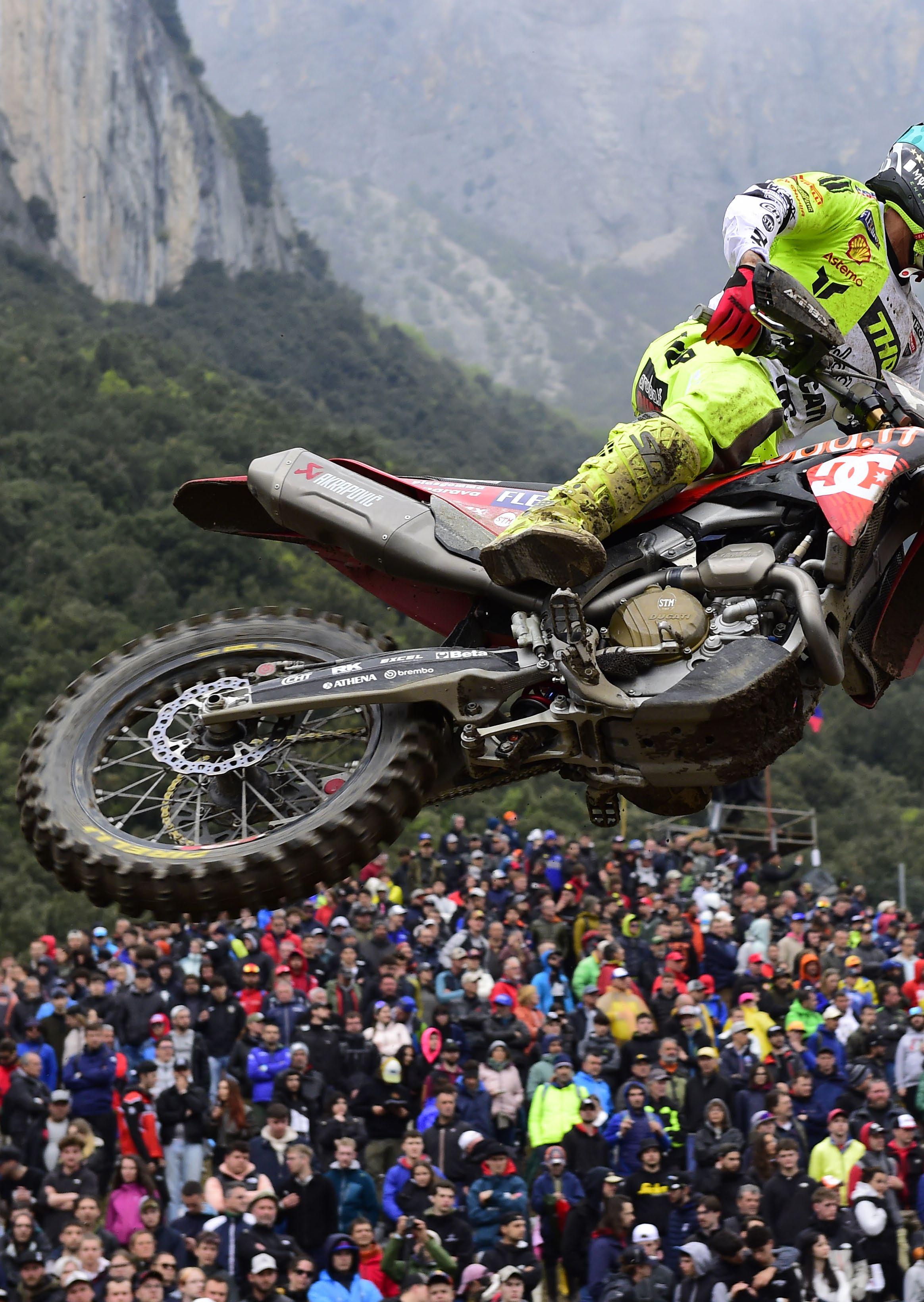
for thinking that Toni’s chances of taking the trophy back to the orange squad were minimal. Although operating from separate trucks as Herlings stayed with the Austrian team and Cairoli with De Carli, they would race identical machinery as Toni had moved up to the 450cc machine by this time. Fuel Injection had made the stronger machine more manageable, and the opposition had also improved to leave the Italian needing that extra power.
Hampered by a small injury in pre-season, Herlings initially struggled in his rookie MXGP campaign of 2017. Reigning Champion Gajser was still a factor in the early GPs, but Cairoli had taken the momentum with a stunning comefrom-behind race at Trentino to steal the GP win from the Slovenian with a last lap pass on his teammate Evgeny Bobryshev! As has often been the case in Herlings’ career, Latvia was the turning point, as he took his first MXGP overall victory, and Cairoli the red plate from an errant Gajser. From there the KTM pair duelled it out.
Antonio had already deduced that he could affect Jeffrey a little, pushing in practice to make sure that the Dutchman, eternally obsessed with being the fastest at every opportunity, pushed himself harder than usual to better the Italian’s times. Despite his opponent’s speed, Cairoli was able to secure the title by a final tally of 50 points, clinching his ninth world crown on Herlings’ home turf at Assen.
There was no denying The Bullet in 2018, however. Despite a convincing win in the heat of Spain for the #222 that left the points level after three rounds, the 24 year-old force of nature was unstoppable for the rest of the year. He only allowed one GP win to slip, to Kawasaki’s Clement Desalle at Orlyonok, and then missed Toni’s home GP at Ottobiano with a broken collarbone sustained in training. Devastatingly winning on return in the heat of Indonesia, there was no stopping him.
In the years to follow, injuries and age started to get the better of Cairoli, although he continued to fight at the sharp end. He was never able to push for that tenth world title, or even the 100th GP win, finishing on 94. However, unlike the other two at the very top of those charts, Cairoli never obsessed about the numbers and seemed to be so mentally tough, possibly even more so than his Benelux counterparts, that the weight of winning didn’t appear to be as tortuous. Thinking of the three of them at their prime, it’s hard not to picture the intense scowl of Herlings at his most primal, or the terse look of Stefan as he pushed to better those inner demons. In contrast, Toni
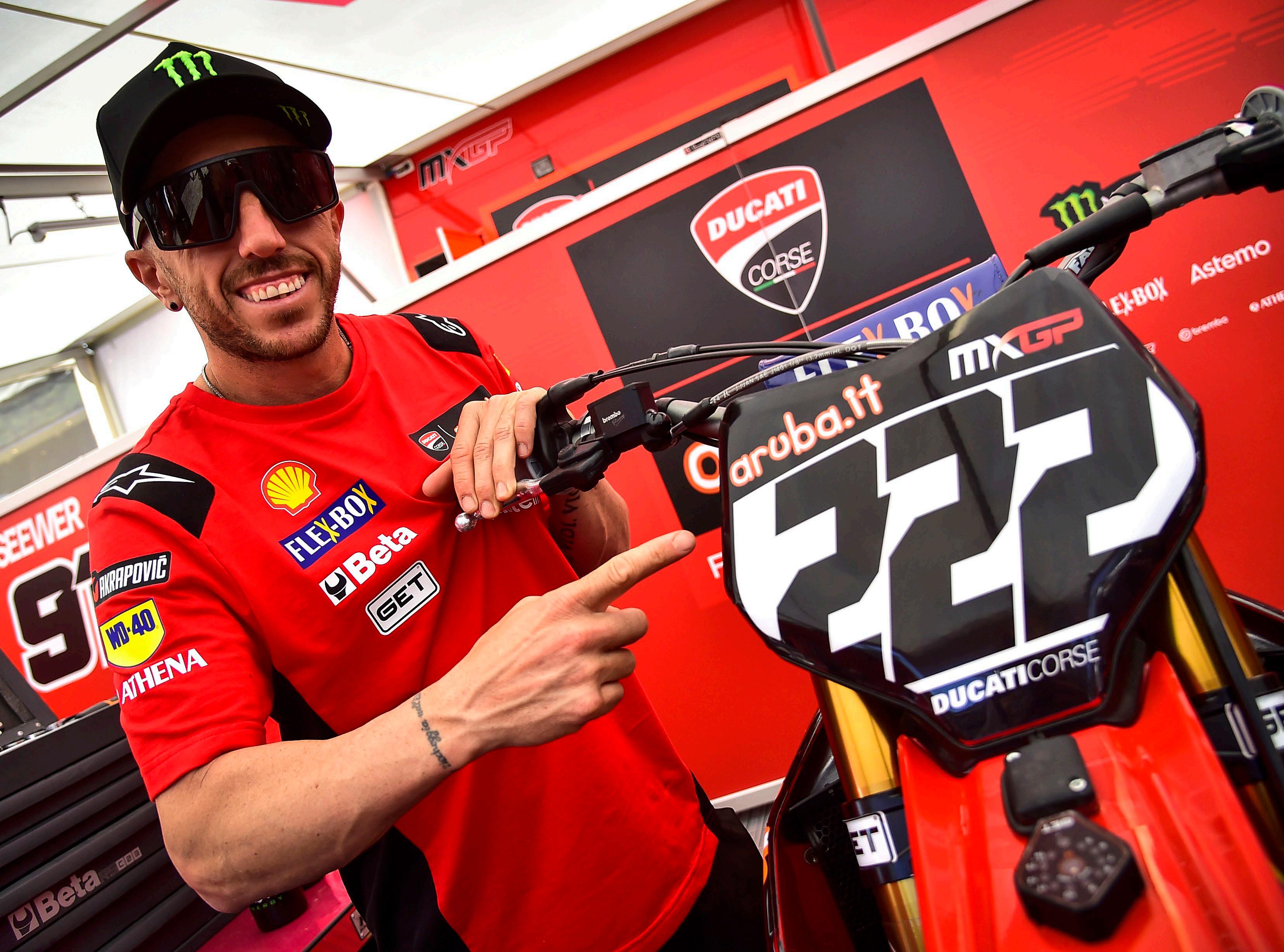
seemed to get there with that trademark toothy smile on his face, all done with a style that made him seem approachable and cheerful.
Retiring at the end of 2021 with Herlings bowing to him on the podium, he filled in the last spot in his trophy cabinet by winning the Motocross of Nations for Italy, on home soil at Mantova, as a fitting final victory for such a legend. Of course, he couldn’t resist the chance to wear the #1 plate the following year at RedBud, where Italy were only denied a podium by a fuel infringement.
One amazing record that Antonio does hold is his number of consecutive years with at least one GP win. From that first win at Namur to his 94th at Trentino in 2021, he took at least one GP victory for 17 straight seasons. No-one else even gets close to that, and in fact he averaged
five and a half wins per season in that time. Incredible.
Finally pulled away from the KTM family by the temptation of more saddle time and the lure of an iconic Italian brand moving into his domain, Toni took on the challenge of turning Ducati into the kind of force that they are in tarmac racing. This saw him back in action at the MXGP of The Netherlands in 2024, then Trentino and Matterley Basin in 2025, as well as a handful of appearances in the USA, including the Monster Energy Motocross of Nations, representing Team Italia for the 15th time and still impressing everyone with his pace at the age of 40!
Have we seen the last of Toni on track? It’s tough to tell, but either way he is a very difficult act to follow and one of the very best to ever do this crazy thing called Motocross.


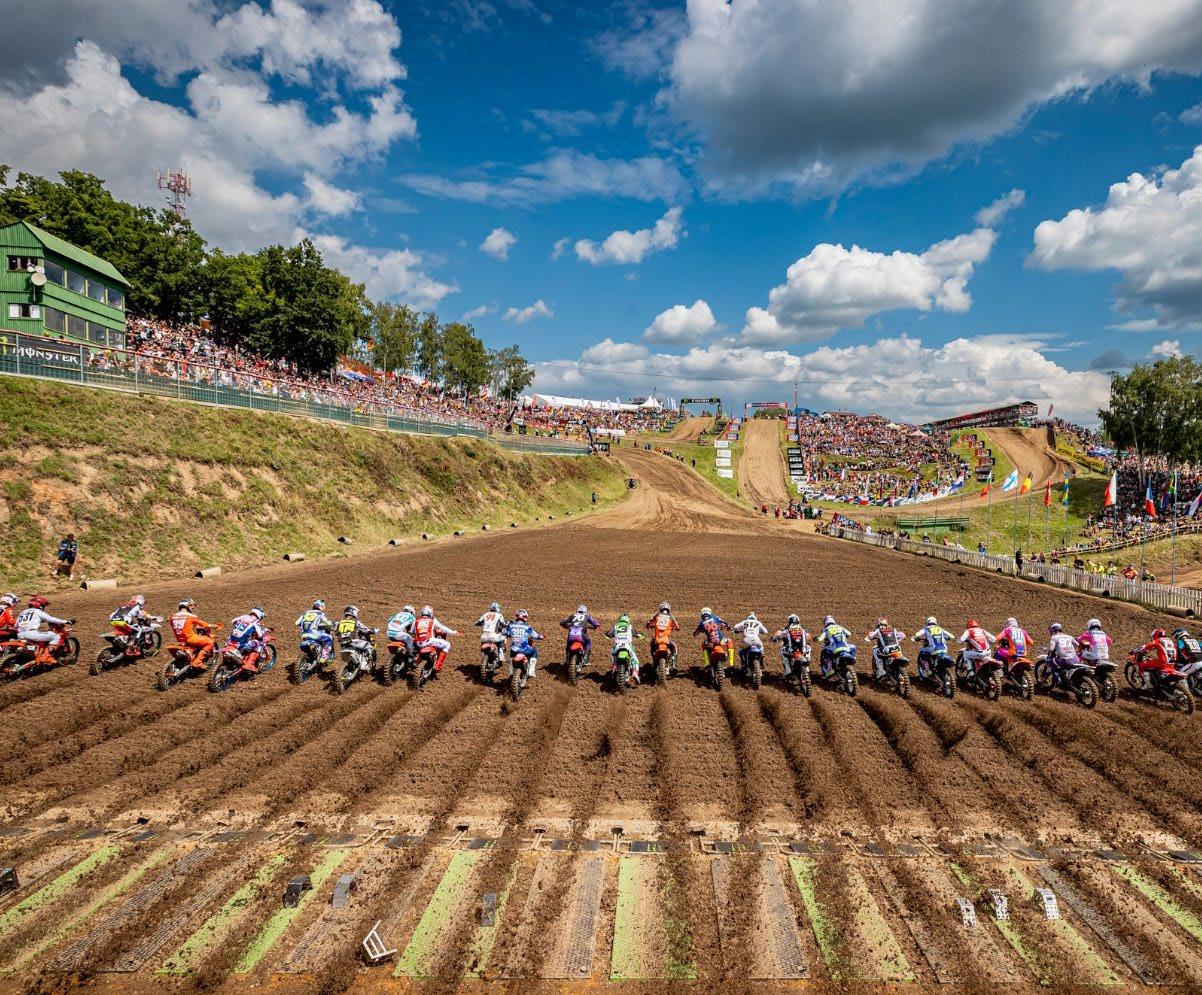












1 The final version of the 2026 FIM Motocross World Championship is known! 19 GP’s on 5 continents and a anticipated MXoN in legendary Ernée, France!
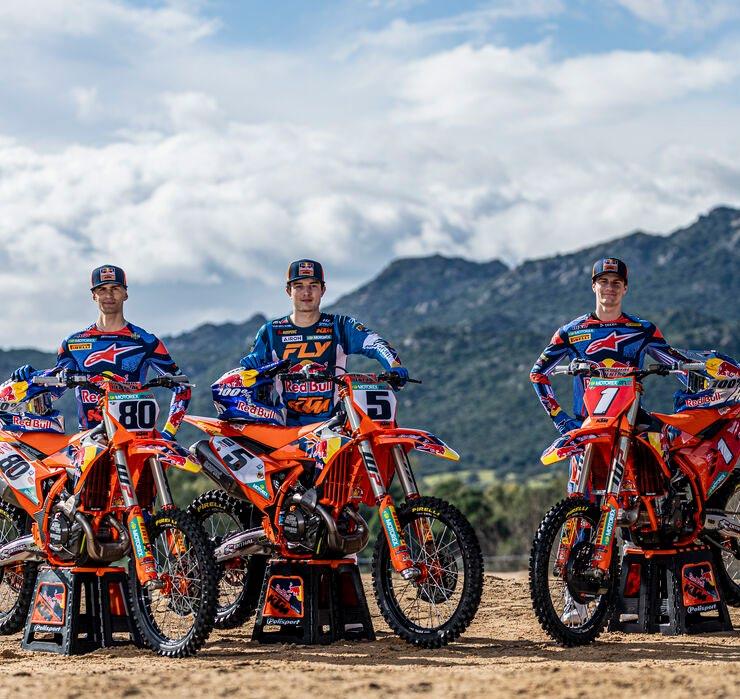
2 Coenen Brothers attach racing future to Red Bull KTM. Lucas and Sacha have signed a multiyear contract with the Austrian manufacturers with the World Titles as targets.
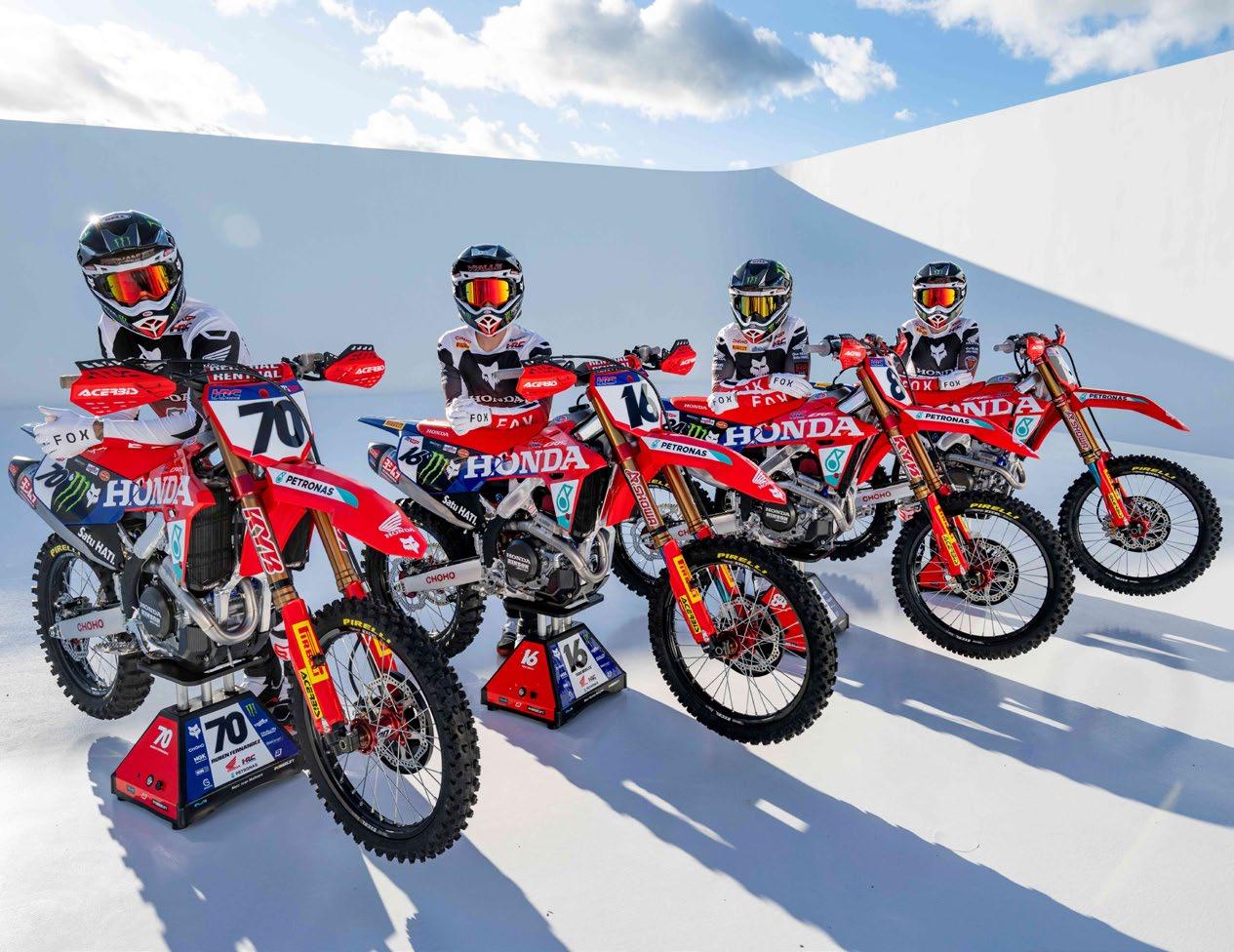
3 Jeffrey Herlings is officially an HRC rider and the mythic entity unveils even bigger ambitions and a brand new look by bringing PETRONAS and Monster Energy on its side!


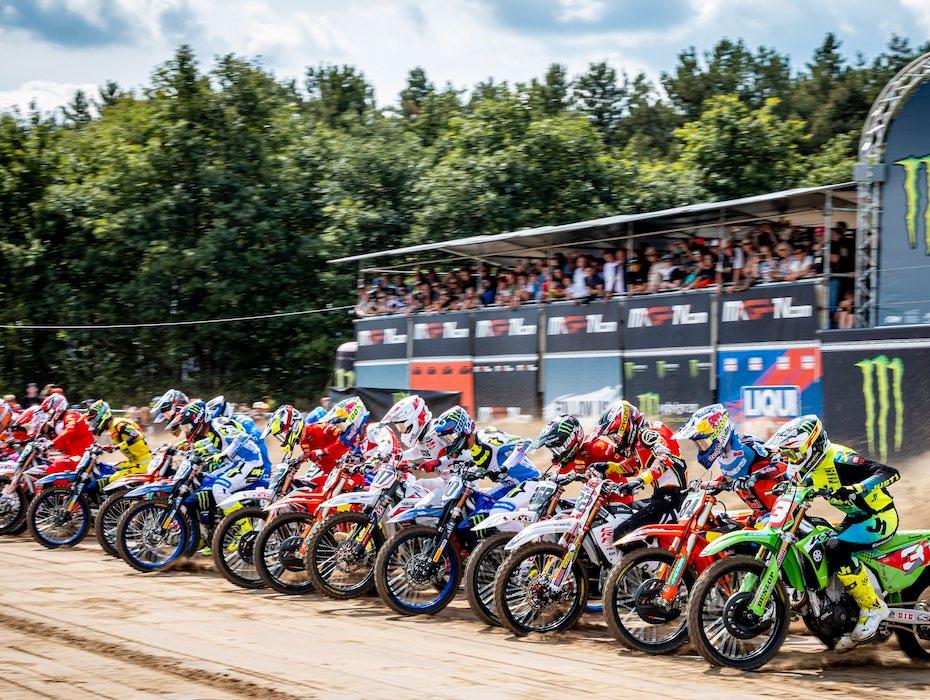


4 Kawasaki Racing Team remains with the same trio in 2026. And MXGP World Champion Romain Fevre will wear the #1 plate on his 450 KX-SR!
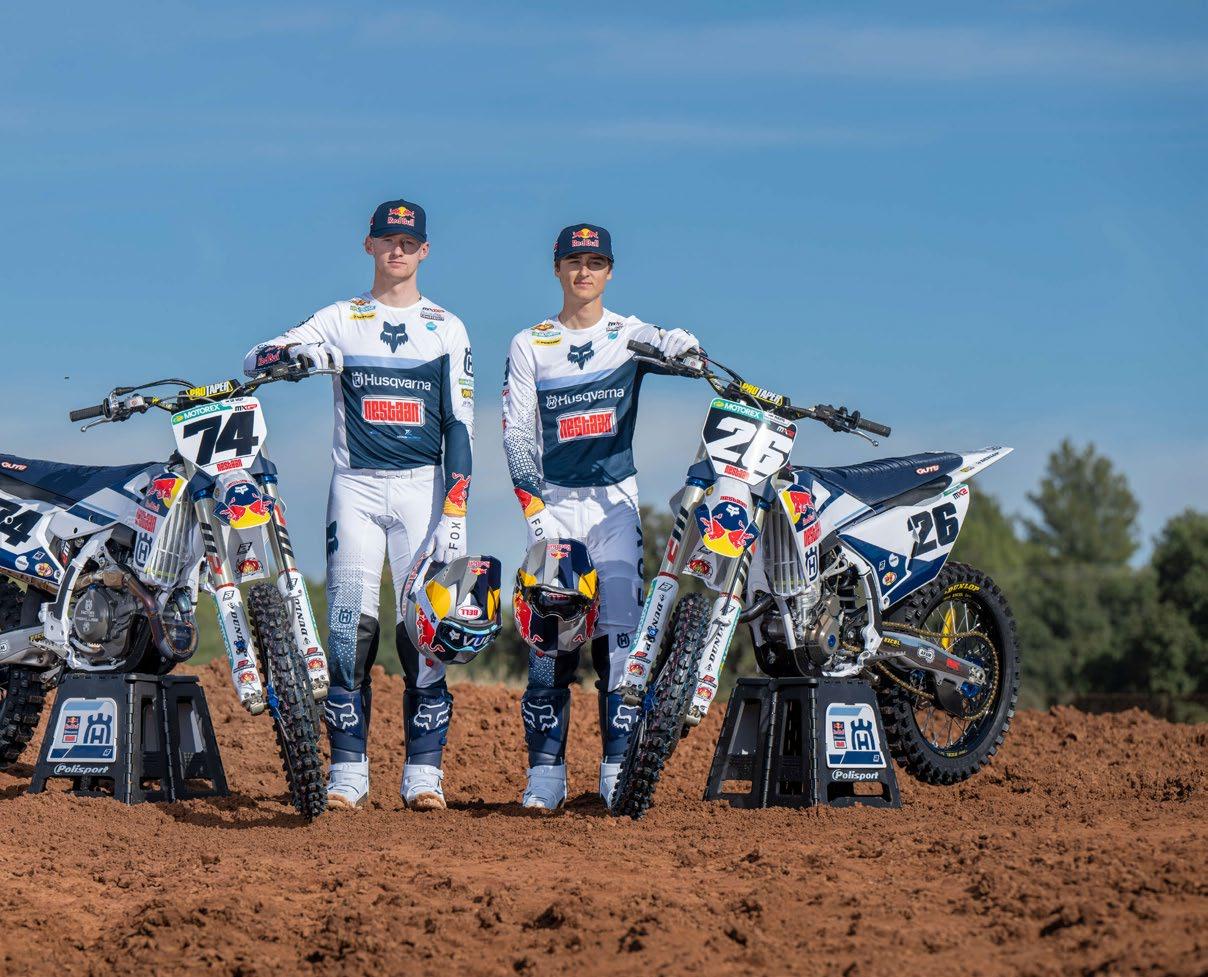
5 A new chapter begins for Nestaan Husqvarna Factory Racing. Kay de Wolf jumps in the MXGP class and Red Bull joins forces with the Lommel based team. Look is on point!

6 Monster Energy Yamaha Factory MXGP and MX2 teams have also unveiled their 2026 line-up with the arrivals of 5-time World Champion Tim Gajser alongside Maxime Renaux in MXGP and EMX250 Champion Janis Reisulis joining his brother Karlis in MX2.
7 Update your note for 2026. Lucas Coenen switches from #96 to #5 and Simon Längenfelder grabs the chance to wear the #1 of the World Champion in the defence of his MX2 Title!

8 The 2026 OAT teams and riders lists are out! 15 GP winners entering the MXGP class alone including 8 World Champions and a combined 18 titles to their name. In MX2 Ducati is officially entering the Championship. Game on!