

Email phishing rampant at Mounds View
| Aliyah Rogers STAFF REPORTER
The importance of cybersecurity has been established since the start of internet use, but in recent years, its value has expanded exponentially. Recently, students in the Mounds View Public School District may have noticed a surplus of emails in their school Gmail account from addresses outside of Mounds View. While the subjects of these emails appear to be very different, their goals are the same: to convince their reader to share personal information or make a monetary payment.
“One of the most important things a student can do, and we train our staff to do as well, is use that report phish button in Gmail.”
Doug Erickson, cyber security program manager
“We are seeing a trend, not just in education, of what we call a business email compromise,” said Doug Erickson, the cyber security program manager for Mounds View Public Schools. “[Scammers] will trick
somebody into giving up the credentials to their actual account and use that account to kick off phishing campaigns.”
phishing red flags
• Out of district email
• Conveying a sense of urgency and emotion
• Too good to be true
• Trying to move the conversation to a personal email
• Links in an email
• Application fees
While often these scams come from people outside of the district, there are some that come from a district email address. Usually, these accounts have been hijacked by a scammer after putting in login information. The district has software that will flag suspicious activity to be reviewed by the technology department.
Noticeably, phishing emails have spiked recently in number for students, though staff members more consistently receive them. Cybersecurity training is given to staff members, as they are more vulnerable to phishing campaigns, due to their school emails being public information. If a staff member’s email is

compromised, the scammer will then have access to the emails of everyone else in the district.
Mounds View is not the only school district experiencing rising numbers of phishing scams recently. On April 12, 2026, the Spring Lake Park Schools’ was attacked by ransomware, leading to the cancellation of school the following Monday and Tuesday. The district is reportedly working with law enforcement, as well as third-party cybersecurity teams, to prevent further access and restore its systems.
“One of the most important things a student can do, and we train our staff to do as well, is use that report phishing button in Gmail,” Erickson said. “Anytime any email is reported as phishing, there is somebody on our security team doing an investigation on that email.” Erickson makes a point that a student should never feel ashamed to report something.
In fact, the sooner a student reports a suspicious email, the faster their team can get control of the account and keep the hacker out. “We would rather have somebody report something that turns out to be a false positive than the other way around,” said John Perry, the director of information technology in the district. “Every single phishing report gets investigated.”
In regards to being safe while using the internet, there are several things students can do. “I would recommend that students focus on using reputable sites and be suspicious of links that you get in emails,” Perry said. “If you get an email from your bank, don’t use the link in the email to visit your bank’s website. Go directly to the official website and see if you received the same message on that platform.” Confirming a website is reputable is very important as a preventative measure in ensuring account safety. Generally, the administration recommends that students and staff be wary of all emails, as well as report any email that seems odd as phishing. If there is a link in the email, the best course of action is to hover over the link to see if the URL looks authentic, though overall, clicking an embedded link in an email is discouraged. “It’s about psychology. The attackers are
common scams
• Items for Sale:
An email claiming to have furniture, electronics, vehicles or other items for sale, trying to get recipients to make a down payment on an item on Venmo or Zelle. In reality, these items do not exist.
• Personal Assessment:
An email claiming to have the recipient’s assessment results, with a link leading to a page identical to a Google login screen.
• Shared Document:
An email stating that a staff member has shared a shared document with the recipient which may lead to malicous links or websites.
Information from an email alert by Mounds View District Technology.
using social engineering tactics to try to get us to do things that we wouldn’t normally do,” Erickson said. “They’re using human emotions, like fear, urgency, curiosity, a sense of authority, to create this convincing phishing campaign.”
New bill cuts SAVE student loans program
| Shriyan Deshmukh STAFF REPORTER
ith the passage of the President Donald Trump-sponsored “One Big, Beautiful Bill,” the framework of how students are to pay for post-secondary education through borrowing is changing dramatically. From restrictions on PLUS loans to legal challenges regarding the Saving on a Valuable Education (SAVE) program, financing education has become increasingly difficult for American students and their families. However some argue that removing these programs reduces federal spending and addresses rising student loan debt.
As a program that dates back to the 1980s, PLUS represented a step towards affordable higher education. However, the recent changes made by the “One, Big, Beautiful Bill” may challenge this. Looking at the PLUS program, the borrowing amount for families looking to finance their children’s post-secondary education is significantly less. In the past, the PLUS allowed families of students to borrow up to the student’s cost of attendance, minus any financial aid they receive, with no limit to how much one
could borrow, as reported by Investopedia. Approaching the 2026-2027 school year, families will only be able to borrow up to $20,000 a year, with a total limit of $65,000 per child. This legislation and subsequent restrictions on a type of student loan decrease the options available for students. According to CNBC, a family of four could see its monthly bill rise from $36 to $440 due to legislative actions. Direct results of this change can include fewer families being able to support students in their higher educational ambitions. In the end, this legislation may affect low-income families, larger families and underprivileged communities by potentially limiting access to post-secondary education. On top of restrictions to PLUS, the SAVE Program will be removed. SAVE is a government student loan repayment program issued by the Biden Administration that offers income-driven repayment plans with capped payment rates and a negation of accumulating interest, as well as a grace period of up to six months for borrowers after leaving school. This program was introduced in 2023 and aimed to ease student loan repayment for low-income borrowers.
The reason for these cuts comes down to government spending and the Republicans’ plans to reduce it, according to a press release by the U.S. Department of Education. “For four years, the Biden Administration sought to unlawfully shift student loan debt onto American taxpayers, many of whom either never took out a loan to finance their postsecondary education or never even went to college themselves, simply for a political win to prop up a failing Administration,” said Under Secretary of Education Nicholas Kent. “The Trump Administration is right ing this wrong and bringing an end to this deceptive scheme. The law is clear: if you take out a loan, you must pay it back. Thanks to the State of Missouri and other states fighting against this egregious federal over reach, American taxpayers can now rest assured they will no longer be forced to serve as col lateral for illegal and irresponsi ble student loan policies,” Kent stated.
All in all, students ap proaching college will have a harder time financing their education with limited access to education due to the pas sage of the “One Big Beautiful Bill.” According to the National
Consumer Law Center’s Student Loan Borrower Assistance Project, monthly payments are expected to quadruple due to higher interest rates, and loan forgiveness is shortened as buyers start transitioning to other plans like Income-Driven Repayment (IDR) and Pay As You Earn (PAYE). These alternatives to SAVE require 10-15% of discretionary income compared to 5% for SAVE. The lack of federal loan programs would shift more borrowers to private lending, which has higher borrowing limits, but comes with more restrictions.
cept any new loans afterwards. According to the Peter G. Peterson Foundation, these changes could have economic effects such as reduced consumer spending and slower growth. Higher loan costs could limit spending and influence demand for goods and services. However, some analysts estimate that cancelling debt up to sixty thousand might save the government around a trillion dollars, depending on the policy. As many existing federal loan programs phase out, borrowers face higher payments. Students may bear the biggest

Nationalism disguised as patriotism
| Grayson Then FEATURES & SPREAD EDITOR
ith this year being the 250th anniversary of the signing of the Declaration of Independence, the word “patriotism” carries a strong emotional connotation throughout the United States. Many people think of classic American symbols like the red, white and blue of the American flag, the strength of the bald eagle, or the individualist pride of the “American Dream.” Merriam-Webster Dictionary defines patriotism as a “love for or devotion to one’s country.” It is the interpretation of that definition, however, that causes friction in politics today, and what really embodies that love and devotion.
The idea of patriotism often suffers from a dangerous misconception. There is a critical difference between “love for one’s country” and a love for one’s government. The latter actually echoes values of nationalism, an ideology that elevates one’s nation above all others and promotes its established culture and interests. In a nationalist system, the ones in power are the ones who dictate what “patriotism” means. They often demand that people follow their rules, respect their social traditions and buy into their culture of manufactured national pride.
change, the people effectively place a check on the government's power.
The dangers of nationalism can be seen today in the actions of the administration of President Donald Trump. Millions of Americans have been vocal in opposing many of his policies, organizing “No Kings” protests across the country. Trump has attempted to discredit these protests as “hating America” and “being unpatriotic.”

In one case, at the 2026 Winter Olympics in Milan-Cortina, American freestyle skier Hunter Hess sparked controversy when he downplayed representing the U.S., citing he did not agree with increased immigration enforcement back home: “If it aligns with my moral values, I feel like I’m representing it. Just because I'm wearing the flag doesn't mean I represent everything that's going on in the U.S.” Many conservative critics fired back at Hess’s claims, with Trump posting on Truth Social: “Hess, a real Loser, says he doesn't represent his Country in the current Winter Olympics. If that's the case, he shouldn't have tried out for the Team, and it's too bad he's on it.”
ciety as a whole. An argument that may come from this is, “But the Confederacy rebelled against the government, too! Why were they in the wrong but King was in the right?” The reason is that they fought the system. King fought for bettering the social rights of Black people because the government and society had refused to truly treat them as equals since the beginning of America. His goal was to fix the country for the good of supporting all Americans.
The Confederacy seceded from the Union, committing treason, to continue to have the ability to own human beings. They did not secede out of love for America, but out of a desire to protect their individual rights to own slaves and continue to put them down. And while people argue that it was “about the state’s rights,” it was about their states’ rights to have slavery. Almost every one of the Confederate states’ documents that made them secede explicitly mentioned slavery as the main reason, with Mississippi’s stating: “Our position is thoroughly identified with the institution of slavery — the greatest material interest of the world.”

the American value in the right to own land. The area continues to be used as a military training base, but the tragic history of the site has often been forgotten with many current residents of the district being unaware of its past.
The one problem with a government controlling the national narrative is that it can use its definition of patriotism as a weapon of division rather than a tool of unity. If someone tries to stand up against a negative government action or criticizes American actions involving other nations, they often will face backlash and be insulted as “anti-American” and “unpatriotic.” The irony is that pushing back against government malpractice is arguably the most American and patriotic tradition. The American Revolution started due to colonists’ outrage about what they perceived as “tyranny” of the British Empire. The Bill of Rights was ratified with the purpose of protecting unalienable rights of the people from government overreach. By using the First Amendment’s freedom of speech clause to voice concerns, call out tyranny and organize movements of
While on the surface it appears that the president is simply brushing off criticism, this controversy encapsulates the struggle between public commentary and weaponized nationalism. Trump uses patriotism as an excuse to discredit Hess, ironically embodying the antonym of patriotism by doing so. By calling out the flaws in the current government, people demonstrate their love for their country not by ignoring its problems and pretending everything is OK, but rather by bringing awareness to them and pushing for it to change the country for the better. So when the president attempts to discredit protestors for doing their constitutional duty of holding a negligent government accountable, he is the one being unpatriotic. He is the one opposing the values of free speech and the right to petition the government.
This was the very logic that progressive leaders like Dr. Martin Luther King Jr. used to justify the disruption of the status quo. The pushback was justified as a means to better so-
Many people view history as just that, the past. However, it impacts everything in current events, from the political climate to economics to education. A notable landmark that encapsulates this in our community is the Arden Hills Army Training Site, which takes up the northern portion of Arden Hills. Purchased by the U.S. government in 1941, the land was used to build the Twin Cities Army Ammunition Plant (TCAAP) during World War II. However, the land was anything but empty, with several family farms located in the area. According to the city of Arden Hills, the government, using eminent domain, forced the removal of everyone living in the 2,370-acre area, giving them 30 days to leave their homes behind. Additionally, several indigenous mounds located on the land, the namesake of Mounds View High School itself, were destroyed and removed to make way for the plant.
While the complex was built for the “patriotic” war effort that took form as nationalist, it altered families’ lives for generations. It supported the U.S. government at the cost of civilians and in contradiction to
Pointing out flaws in the national metanarrative of American history does not mean someone hates their country. It means that they refuse to accept the story that society tries to push on them and they recognize the facts of what actually happened. History is not an interconnected story of heroes and villains, but rather a complex and nuanced record of both what happened and what will continue to happen if we fail to address it. By honoring the positive contributions of those before us but recognizing their flaws, we can continue their positive legacy while ensuring that their negative actions are never repeated.
“The
Negro's great stumbling block in his stride toward freedom is…the white moderate, who is more devoted to "order" than to justice; who prefers a negative peace which is the absence of tension to a positive peace which is the presence of justice.”
Dr. Martin Luther King Jr. (Letter from Birmingham Jail)
Nationalism blinds people, but patriotism allows them to see the truth. Nationalism is what makes us carve a massive sculpture into a sacred Dakota mountain in the Black Hills, worshipping our presidents. Patriotism is what makes us think critically about the evils of our past and try to fix what happened and prevent a similar event from occurring again. It makes us think, “How would
we feel if invaders stole our land, destroyed our monuments and carved their own faces into our cultural icons?”
While the people have the power to hold the government accountable, the problem occurs not when the people use their power, but rather when they choose not to. As stated by King, the most dangerous obstacle to progress is the indifferent moderate. “Neutrality” is not neutral. Rather than actively opposing the beliefs of a movement, they choose not to participate, helping the status quo stay in effect while they stand aside and watch. Due to their larger numbers, their lack of participation is often more detrimental than the direct opposition itself. I disagree with a lot of what our country has done throughout its history, from its inception to the current events of today. I’m not proud of what America is doing overseas. I’m worried about the state of our economy and politics. But that’s because I love America. I love our values of freedom and equality. I want to support those who actually want to make our lives better and call out those who make it worse. Protesting ICE for arresting and terrorizing communities is not anti-American. Being skeptical of the president for mishandling the Epstein Files is not anti-American. Criticizing the government for murdering civilians of another country is not anti-American. If someone’s house has termites, they do not ignore it and pretend everything is OK. They point out the problem, get it fixed, and learn from it so it never happens again. Standing up for fellow Americans and trying to make the country better is the most “American” thing someone can do.
Norse Anderson, Lilia Barrera, Leo Chen, Shriyan Deshmukh, Erin Goareguer, Anna Hayek, Keaton Howard, Aliyah Rogers, Rue Royer, Kent Supena, Max Swanson, Vedant
PHOTO | Jadyn Heath-Hlavacek
Gavin Wilson: One student, seven sports
| Leo Chen STAFF REPORTER
ost students at Mounds View pick a single sport and stick with it. Senior Gavin Wilson picked seven. Over four years at Mounds View High School, Wilson has competed in soccer, tennis, badminton, table tennis, volleyball and bowling while quietly building a reputation as the best amateur pickleball player on campus. Throughout Wilson’s high school career, he has earned four state-level finishes and captained two teams.
His profound motivation for sports began prior to high school. “My challenge when I was younger was to try a new sport every season,” said Wilson. “I just wanted to keep that going throughout high school to build a good network of people and try new things.” Mounds View’s physical education programs gave him the chance to continue his interests while also allowing him to explore new activities. Mounds View’s phy-ed curriculum offers students access to a range of competitive athletic electives beyond the traditional team-based model. Courses like Competitive Sports give students structured time to engage in recreational and competitive athletics throughout their high school careers, a resource most students

use only once, if at all. Wilson took it a record number of eight times.
His participation spans nearly every corner of what the school’s athletic programming offers. In some sports, he competed at the varsity level.
In others, he stepped into leadership roles. As bowling team captain in both 2024 and 2025, he helped guide the team to a fourth-place state finish in 2025 while also competing as an individual at the state tournament both years. In tennis, he served as JV captain in 2025. In table tennis, he was a part of secondplace finishes at the state level
in both 2025 and 2026. “For bowling, it was really good to be a leader in that I was a mentor for the younger people,” Wilson said. “In tennis, it was more about being the soul of the team, being there as a driving force to get them motivated.”
The numbers behind Wilson’s athletic career tell the story plainly. In bowling, he posted a personal average of 209 points in a Saturday morning league alongside fellow seniors Lucas Bramsen and Trevor Doffing, the highest average in the league. The trio claimed the highest team game and highest team series, and finished first
overall. Wilson also logged the most match points won with 78.
Also, in table tennis, Wilson earned a spot in the state finals for two consecutive years, claiming second place both times. “You have to go in with the mindset that you’re going to make it to finals,” Wilson said. “It’s about knowing where to put each player because we each have different strengths.”
Beyond school sports, Wilson competes in pickleball, picking up the sport over the summer before his freshman year on courts near his house. He has since beaten every casual player at Mounds View he
set his sights on and joined the Shoreview Pickleball Club as its youngest member.
Looking back, Wilson frames his four years less as a collection of titles and more as a network of communities built one sport at a time. “Having all those different communities to be a part of helped me get to know a lot of people in the school,” Wilson said. “I like being able to win for the school and win for the team.”
For underclassmen, Wilson offers a simple takeaway rooted in his own experience: Try something new, even when it feels uncertain. “You never know if you’re going to end up having a passion or find out that you have an innate talent for something,” Wilson said. “You won’t know until you try.”
“You never know if you’re going to end up having a passion or find out that you have an innate talent for something. You won’t know until you try.”
Anti-Trump protests appear in community
| Anna Hayek STAFF REPORTER
any students drive past the corner of Highway 96 and Lexington Avenue every day, and many have noticed that every Wednesday, a group of community members protests from 3:30-5:00 p.m. These protesters object to the current administration and many of the issues they see stemming from it. These gatherings are similar to the popular “No Kings” protests that have been carried out across major cities in the country.
Since the start of President Donald Trump’s second term in January 2025, many individuals have been unhappy with the actions the administration has taken. Several of the protesters express concern with the problems they claim stem from its actions. “I would say the entire group is very unhappy with what Donald Trump and the current administration is governing. They are very concerned about the unconstitutionality of the current regime,” said Sandra Swami, a protester. “They’re very concerned about the slide to authoritarianism, and everyone is very upset about this illegal war that they
started, the Epstein files. But you know, it’s everything. It’s trying to take away birthright citizenship. It’s the onslaught on LGBTQ community, higher prices, all of that.”
In January, the federal government deployed around 3,000 Immigration and Customs Enforcement (ICE) agents to Minneapolis and St. Paul. This led to protests, economic loss and personal loss, with the city of Minneapolis claiming that the ICE surges caused a $203 million impact on the local economy and on food and shelter security.
Swami feels that while demonstrations in major cities are critical, protesting in suburban areas carries equal importance. “The neighbors around here didn’t know what was happening in the cities, and it was just driving me crazy,” Swami said. “So I thought I needed to do something. I needed to take action here, where we live, to draw people’s awareness to what was happening, what everybody knew was happening in the city, and say, you know, it’s everywhere.”
Some students agree with this sentiment, with many of them being unable to go into the city often but still feeling
the impacts of the ICE surges in their personal lives. “It really just shows how it’s not just this organized resistance in the big city, but it’s throughout the suburbs. Even if we’re more isolated from what’s happening, it still affects us,” said junior Emmett Haller.
“Even if we’re more isolated from what’s happening, it still affects us.”
Emmett Haller, junior
Other students feel as though a protest so close to home gives them hope, because it shows them that even though they are not in the city, they still have power. “I know that at least for me, I can’t be at every single court decision or protest, but I can still voice my opinion, and there are others who do the same,” said junior Georgia Archibald. “I just think it’s important to give people chances to make their opinions heard and take action.”
Swami also stressed the importance of continued protests. “Just because the worst of the ICE surge is over, there

are still terrible things happening,” Swami said. “There are so many vulnerable communities that are being negatively affected by this administration, and until that changes, I think people need to be protesting.”
Students have opinions on these protests as well, with many students finding them to be helpful and productive. “I think the protest is good. I think it’s how people use their First Amendment rights to be able
to express themselves and how they feel against the government,” Haller said.
Overall, many students and community members see the benefits of speaking up for themselves and what they believe in. One thing the protesters are stressing is how much people make an impact. “We would like to have more young people join us,” Swami said. “I think it would make a huge difference.”
Gavin Wilson, senior
Senior Gavin Wilson with items representing his various sports, including pickleball, bowling, darts, volleyball, badminton, golf, soccer and tennis.
PHOTO Annie Marie
Protesters in Shoreview holding signs expressing dissatisfaction with the actions of the Trump administration.
PHOTO Anna Hayek
Whack: The wacky TikTok sensation
This group started a TikTok account that gained a large following
| Keaton Howard STAFF REPORTER
TikTok, one of the most popular apps worldwide, quickly took the charts as a national sensation and now has 1.59 billion active users and over six billion total downloads, holding 135 million users in the United States alone. A large portion of Mounds View students have active accounts on the app, creating a platform to create content and connect. As of September 2025, Whack, a friend group of content creators, made their debut on the app, gathering about 3,500 followers and 1.7 million account likes.
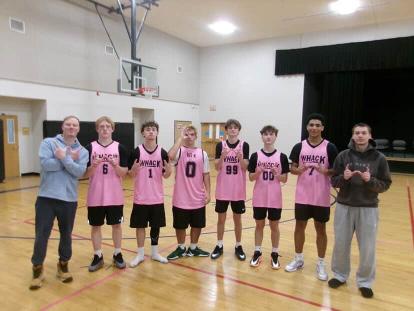
Made up of 11 members, Whack makes mostly funny content for the enjoyment of themselves and their viewers.
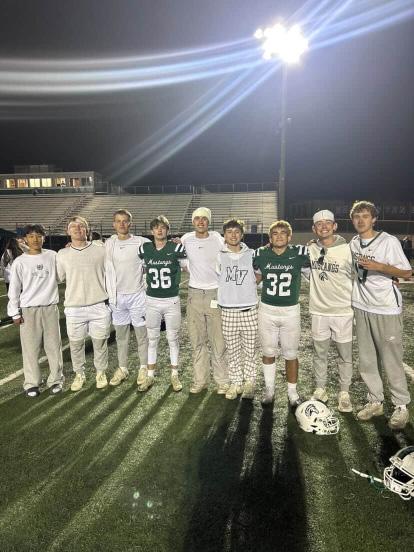
Senior Finn McArthur initially came up with the idea of making videos, gaining inspiration from “High School Musical” for the group name, Whack. “We randomly started posting TikToks as a joke, not expecting anything of it, then the video randomly started going viral and it was barbecue chicken from there,” said senior Samuel Koch.
Initially, the profile was like many others, just for fun. “We just started to post TikTok’s for fun, enjoy senior year,” says Koch. As for content, they were inspired by other big influencers and channels on YouTube, TikTok and other social media platforms. “The inspiration for the profile was from Dude Perfect and Ali-A,” said Koch. Both Dude Perfect and Ali-A have 61.9 million and 19.7 million followers, respectively, on platforms like YouTube.
Although the account has gained much more interaction, their goal remains the same: the profile is just a way for a group of friends to get together and have fun, with the added benefit of a share of internet fame. “We want to get wicked rich, we’ve made $0.20, and also use our Fortnite creator code:whack588 in the item shop,” Koch said jokingly. Despite the lack of
monetary revenue, the group pursues content creation for entertainment purposes.
With the school year coming to an end, the future for Whack remains unclear, as most members plan on pursuing college. The group hopes to produce more noteworthy content soon. “We’re gonna make videos throughout the summer.”
The Whack group also has some ideas for the future that may or may not be obtainable: “To buy the Whack Shack, temporary group home/shed, this will lead to the eventual purchase of the former Team 10 content house,” Koch said humorously.
While many students at Mounds View do view some content similar to the Whack group, the team aims to keep school matters completely separate from their profile. “Hopefully, no impact on the community or school,” Koch said. The group continues to post TikTok videos for fun. “I think it’s awesome that students use their free time to make content for others; it is kinda inspiring,” Koch said. Despite the casual nature of the group’s content, the account allows members to creatively express themselves through humorous content.

Molly Weiger’s artistic journey
| Max Swanson STAFF REPORTER
s one of the many advanced classes at Mounds View High School, AP Art and Design offers lessons for those interested in art education at a higher college grade level. The selfguided class aims to create an ideal environment for absolute creative freedom amongst its
students. One of which, senior Molly Weiger provided a look into the class, showcasing her experiences and accomplishments as a student artist in hopes of gaining attraction for the course.

Molly found her love for photography during her freshman year at Mounds View after mistakenly being placed in photography instead of the Photoshop class she originally requested. Despite her lack of experience, her interest in the art persevered in the years to come. She eventually won a Scholastic gold key for her photo, “The American System,” after pursuing the remainder of the photography courses offered at Mounds View. Weiger’s artistic vision extends beyond the camera; however, her medium and technique remain as pho-

tography. Beginning AP Art and Design following the completion of all available photography classes at Mounds View, Weiger’s incentive remains on theme with her prior work. “I went through a theme for my portfolio before my current one, but I didn’t feel as connected to it as this one,” said Weiger. Aiming to convey heavy topics through visual art pieces, Weiger creates and repurposes objects to portray and bring awareness to common issues of today.
Her vision reflects some of her personal experiences as a young woman in physical form.
“I choose my inquiry statement because in our modern age, feminism and women’s rights have become questionable in a way that should be unacceptable, but it isn’t treated that way
in our current political climate,” Weiger said. Her themes take on the struggles of women and represent them with the global feminine figure: Barbie dolls. She uses these to illustrate the objectification of women in society and something needing to fit within the box of femininity by portraying visual storylines.
As of now, Weiger’s portfolio contains a large collection of work reflecting her chosen theme. Not only does this assortment illustrate an important and personal narrative, but it also serves as a map of Weiger’s artistic evolution during high school.
AP Art and Design aims to create a productive environment for student artists by encouraging collaborative design and constructive criticisms amongst one another during
class time. Once every month, critiques review and reflect on an assignment as a class, encouraging students to collaborate on ideas and maintain a steady work pace. In lots of ways, these critiques and peer revisions can move someone’s portfolio towards a five on the AP scale. “The critiques foster a sense of community and growth for everyone,” Weiger said. Weiger is just one of many students who have taken the AP Art and Design during their time at Mounds View. Despite the academic portion of the class, students are still able to have fun during class time as they create notable and quality pieces of art to be displayed in showcase shelves besides the art rooms and in a personalized portfolio.
PHOTOS | Molly Weiger
Issues of today America 250: Reflecting
| Anna Hayek STAFF REPORTER
he way topics around Native Americans are taught in schools today has been a hotly debated issue for years. For integration and equity liaisons Jill Spencer and Felicia Galvan, this topic hits very close to home, as both are part of the White Earth Nation. For them, being Native is something that makes up a large part of their identities. “Being Native has helped me find community, and it’s helped me find confidence within myself,” Galvan said. “Other times, I still feel like I’m walking in a world that wasn’t made for me, but really that community and identity just helps me keep going.”
According to the University of Minnesota’s Genocide Education Outreach Program, treaties signed between 1805 and 1858, often written in English and untranslated, forced the Dakota to cede land in exchange for money and food. Around this time, the United States fell behind on payments and food deliveries due to the Civil War, leaving the Dakota people to starve and setting the stage for future economic struggles.
There are many lasting impacts of these treaties. “It was super important to honor these treaties,” Spencer said. “And when they weren’t, that trust was broken with the government.” One example of these long-lasting impacts is the predisposition to diabetes and obesity that Native Americans face. According to the National Indian Council on Aging, the Western diet is “detrimental” to Natives, with 16% of Native Americans having diabetes, almost double the rate for the average American.
According to a study at the University of Colorado Denver, more than one-fourth of Native Americans are living in poverty, more than double that of the general American population. There are also discrepancies in education, with only 71% having a high school diploma or
GED compared to the national average of 80%. These discrepancies in education and other issues lead to discrepancies in employment. Natives are disproportionately unemployed compared to the national average, with this demonstrated in demographics of the Pine Ridge Reservation in South Dakota. The reservation has a per capita income of $8,768, life expectancy of 66.81 years and an unemployment rate of 89%, all the lowest in the U.S. according to Re-Member, a non-profit organization working with the Oglala Lakota Nation of Pine Ridge. With a poverty rate of 53.75%, Pine Ridge is home to two of the five poorest communities in the country, Allen and Wounded Knee.
Beyond economic and health disparities, the Indigenous community faces an ongoing safety crisis, particularly regarding Missing and Murdered Indigenous Peoples (MMIP).
In November 2025, the federal government removed the “Not One More” report, a crucial public safety resource, from the Department of Justice website to comply with executive orders against diversity, equity and inclusion (DEI) materials.
Critics argue this reclassifies a public safety emergency as a political argument. “The Office of Missing & Murdered Indigenous People was created to address a documented publicsafety crisis, not to serve as any form of ideological or diversity-based programming,” said Oklahoma state Rep. Ronald Stewart in a statement released Nov. 18, 2025. “Removing MMIP resources is not just an administrative choice — it is a direct assault on the safety, dignity and visibility of Indigenous people. It is an erasure of lives already lost, families seeking justice and communities that aren’t just looking for answers, they’re demanding them.”
The use of Native Americans for mascots and inaccurate namings has also stirred controversy, with a local example being Chippewa Middle School.
“Chippewa is not an indigenous word in and of itself. It’s a word that colonized people have used to name us. Another example of this would be the Washington Redskins; people think they’re honoring us but they’re actually harmful,” said Spencer who, along with other Natives, feel that the renaming of certain institutions is beneficial to the Native American community. “For me, personally, I think the renaming is super impactful,” Spencer said.
However, models attempting to repair cultural damage have been growing across the country. At Canyon de Chelly National Monument in the Navajo Nation of Arizona, the National Park Service and the Navajo Nation have moved toward a shared management system of joint-administration. Unlike direct seizures demonstrated in other states, this model honors tribal land rights while preserving history. Similarly, Little Bighorn Battlefield National Monument in Montana, the site of a battle between Lakota, Cheyenne and Arapaho armies against the U.S. army led by Lieutenant Colonel George Armstrong Custer, only memorialized the fallen American soldiers for decades. But in 1991, former President George H.W. Bush authorized the creation of a memorial honoring Native participants as well, bringing a balanced perspective to a controversial historic site.
Overall, the way history is framed and discussed today can still impact many groups of people. The harmful nature of forgetting parts of the past is usually not widely known, which is why learning the history of the land and community can be beneficial. In many cases, time has erased the cultures and languages that came before, but there continue to be preservation efforts today.
Textbooks shaping narratives
| Max Swanson STAFF REPORTER
hroughout the history of the Americas, and leading up to the founding of the United States, the narrative behind how the nation was established has been reexamined, its flaws acknowledged, and a more complete understanding has emerged. Over the past decade, Mounds View and other schools have made strides to incorporate more historical and literary sources from the Native American perspective into their curricula, including in sixth grade Minnesota history and 10th grade English classes. U.S. history has always been very centered around the European perspective rather than the people subjugated, but in contemporary times, this is changing in many regions.
Within the school system, curricula have shifted over time, though before most current social studies and history classes, the documentation of historical events and lives has come from the European colonialist perspective. This neglect of other views, including those of the Indigenous Tribes of America, has led to a large disconnect between Americans and the suffering on which the country is built. “It’s changed a lot, I think
U.S. history has definitely changed for the better at Mounds View, lots of teachers, at least I do make an attempt to tell multiple perspectives, especially of people who have been disenfranchised,” said social studies teacher Kristin Heinz.
Many hope these large changes from the way things used to be taught will allow a wider understanding of the history of North America. “Since I’ve been here, there’s always been an intention to understand the voices that are less heard in history,” said history teacher Justin Benolkin.
Many schools are attempting to recreate their history and social studies curricula to put more focus on learning the point of view from those harmed by American colonialists. These changes can be seen within the Mounds View school system as they work to make sure newer generations are able to see history through multiple lenses. However, the focus on other groups can lead to teachers needing to pick and choose what is most important to talk about, trying to find a cohesive curriculum. “Time will always be the biggest constraint; there isn’t enough time to cover everything and give it the consideration it deserves,” said Benolkin.
English classes in Mounds View have also been shifting their


American Indian Movement (AIM)
Reflecting on Indigenous history
Controversy surrounding historical figures
focus to include more literature from different voices; this can be seen quite well with the readings that are assigned to ninth and 10thgrade students, which focus very heavily on stories from Indigenous Americans. These readings often describe and outline the issues and lack of maintenance within reservations, leading many Native Americans to struggle with various issues due to the circumstances they are put in. “Any time you’re able to learn about the world from someone else’s perspective, it’s beneficial because it allows us to see the world outside of our own view,” said English teacher Rebecca Hauth-Schmid. The experiences of Native Americans are now state standards for English in Minnesota, which pushes students out of their own view of the world.
The changes within the school curriculum in Mounds View are important and show a conscious effort to make the experiences known, but this does not mean the system is perfect; it does not make up for the lack of education about this beforehand. “We are trying to fix the way things are taught, but this isn’t perfect; those harmed will often have their stories told for them instead of being given the voice to tell their own,” said Benolkin.

| Vedant Vashishtha STAFF REPORTER
Historical figures like Abraham Lincoln and Alexander Ramsey share two defining traits. Each rose to fame and power, reshaping the nation in ways never seen before. Yet, each figure is also surrounded in controversy for their conduct and the decisions they made throughout their lives.
According to Facing History & Ourselves, an organization focused on historical justice, education should help students “better understand how the past informs their lives today.”
However, many students feel the narrative remains incomplete. “I feel there is probably a lot of history that is left out that we don’t know about,” said sophomore Eric Li. “Even if there is information there, it’s probably not highlighted.”
“I feel there is probably a lot of history that is left out that we don’t know about.”
Eric Li, sophomore
celebrated as the “Great Emancipator” for his role in the Civil War, Lincoln’s administration also oversaw the largest singleday mass execution in United States history. Following the U.S.-Dakota War of 1862, 498 Dakota men were tried in proceedings that sometimes lasted fewer than five minutes, often without legal representation. While Lincoln commuted the sentences of over 260 men who were initially convicted, he authorized the hanging of 38 Dakota men in Mankato, Minnesota, on Dec. 26, 1862. “Lincoln was the person who made Thanksgiving a national holiday, and that led to a romanticization of a feast between Indigenous People and settlers,” said integration and equity liaison Jill Spencer. “But in reality, there was just a lot of loss.”
Similarly, local figures who shaped Minnesota’s statehood, such as Ramsey and Henry Hastings Sibley, are still honored at the state level despite the modern controversies surrounding them. Ramsey, the state’s first territorial governor and the namesake for Ramsey County, advocated strongly for the forced removal of the Dakota following the 1862 conflict. According to the Minnesota Historical Society, Ramsey de clared in a speech to the Minne sota legislature, “The Sioux
Indians of Minnesota must be exterminated, or driven forever beyond the borders of the state.” This rhetoric eventually resulted in the expulsion of the Santee Dakota from the state in 1863.
Sibley, Minnesota’s first governor, maintained a public image of close relations with Indigenous tribes while simultaneously acting as a primary architect of treaties that forced them off their ancestral lands. The Minnesota Historical Society notes that Sibley directed treaty payments intended for the Dakota back to his own fur-trading company to settle debts. He also led the military campaign against the Dakota in 1862.
A recent local case about a historical figure’s image was the 2018 renaming of Lake Calhoun in Minneapolis, named after former Vice President and South Carolina resident John C. Calhoun, to its Dakota name, Bde Maka Ska. Both Hennepin County and the Minneapolis Park and Recreation Board supported the change, citing Calhoun’s historical advocacy for slavery during his lifetime. The name Bde Maka Ska translates to “White Earth Lake” in Dakota, according to the Minneapo-
The history curricula changes based on state laws and requirements, so coverage can look different across the nation. Minnesota in particular tends to include more compared to other states. “It depends on what school. It depends on which teacher. I think that you get the whole picture. Maybe going to a school in Minnesota, where I think, generally speaking, I’m not likely to lose my job in Minnesota. Maybe speaking ill of some of these people, where I spoke ill of some enslaver in some state, I may run afoul, kind of thing,” said social studies teacher Justin Benolkin. Ultimately, reflecting on the past provides a nuanced understanding of how the U.S. exists today. By learning more than just the surface-level story of those who came before, many people hope it can be used for moving forward. “I definitely feel that today’s world should judge history. Because if you don’t judge history and see what other generations did wrong in the past, then our world can’t progress. So, it could definitely be a way to progress and move on,” said Li.

This gap is particularly evident in the legacy of Lincoln, former U.S. president. While
Should MN restrict social media for kids?
The bill is restricting and a privacy breach
| Rue Royer STAFF REPORTER
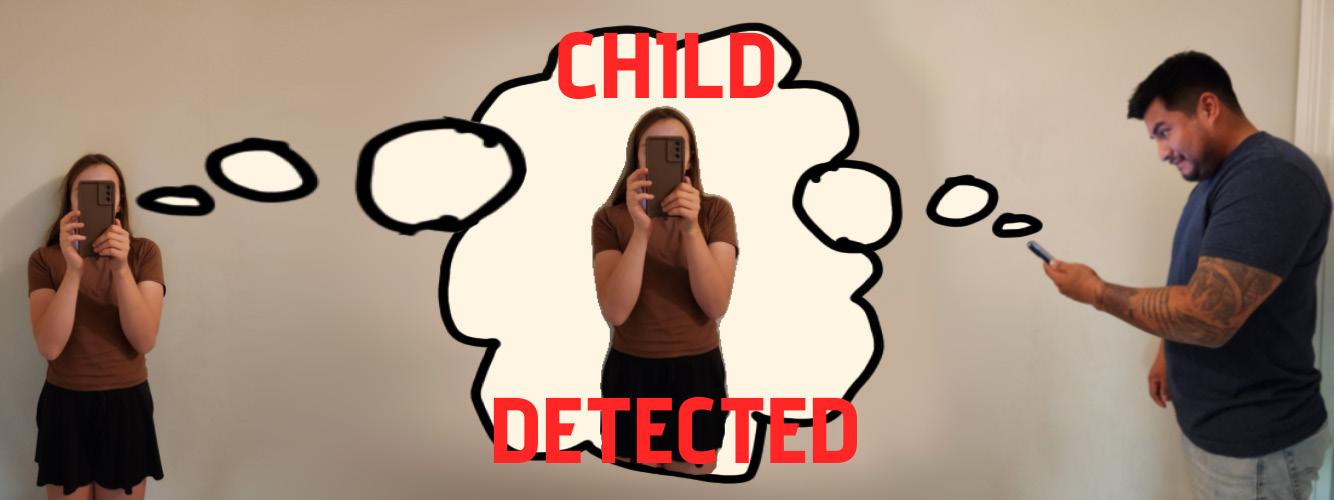
House File 4138, an act to “Stop Harms from Addictive Social Media,” a bill introduced on March 9th, 2026 and currently making its way through the Minnesota State Legislature, is summarized as “requirements for social media platforms related to accounts for minors established, and enforcement mechanisms for regulations on child social media accounts established.” The bill aims to require tech companies to identify child users and acquire verifiable parental permission, along with offering parental controls. It also requires that tech companies withhold addictive elements like endless scrolling from any child account.
This bill would require social media platforms to verify the age of social media account holders through “reasonable means and reasonable efforts.” These “reasonable” means are not defined, but include online activity, search history, online communications, photographs, fingerprints. The account made for a child would have built-in privacy settings monitored by their parents, and social media platforms would be required not to have any “addictive interface features” for children.
This bill’s enforcement would prove challenging. The act to “Stop Harms from Addictive Social Media” does not make the verification
process of a child’s age clear, which would be required to implement these restrictions. Sensitive and personal information would most likely have to be collected by social media companies in order to verify age, the bill defines a child as an individual 15 years or younger, and this heavily increases security and privacy risks online for minors and their parents. Minors already seem to be easier targets in the digital world versus adults; over 1.3 million child records containing personal identifying information (PII) get stolen annually, according to the Identity Theft Resource Center. Children may be required to upload documents such as birth certificates or IDs to confirm their age, which would only make their personal information more accessible. Restrictions on personalized or algorithmically ranked features could weaken existing safety tools that help prioritize age-appropriate content and limit risky interactions online, stated the Computer and Communications Industry Association. It should be crucial that adolescents stay protected online and in the digital world; they should not be made bigger targets.
This bill does not just target children. Enforcement would require every user’s data to be collected for this “age verification.” Everyone possesses a right
to privacy, and if children and adults have to upload their personal information, this right would be violated. Furthermore, social media can be beneficial for kids in many cases. If being social in person is important, being social online can have positive results, as well. According to the Kids Mental Health Foundation, social media can assist kids in strengthening relationships with their peers, help them find and express their identities by exploring perspectives they would not under different circumstances and give them an outlet for creativity and connect with others similar to themselves. Learning to identify misinformation and scams is also essential. They would get the firsthand experience of those things through social media and it would assist in learning not to fall for misinformation. All of these things are important for a child to have in their life, especially teens. Ultimately, the presence of social media can be bad in some instances, but it has favorable outcomes in most cases. The lack of clarity for specifics in the bill would make it tricky to implement and carry out successfully. The complications of House File 4138 would make the possible restrictions not worth the trouble and it should not be passed.
Social media addiction requires government action
Norse Anderson | STAFF REPORTER
n March, a California jury ruled in favor of a young girl who, along with her mother, sued Meta and YouTube for causing her social media addiction and associated mental health disorders. She was awarded $6 million in compensation, and this landmark case has resulted in as many as 40 state attorney generals to file against the companies. The jury found the companies guilty of knowingly presenting an addictive interface without proper disclosure. This case sets a gamechanging precedent for social media regulation in which the social media company can be held liable for the effects its site has on its users.
Endless scrolling, profile-based feeds and push notifications are defined as addictive elements in House File 4138. According to the World Health Organization (WHO), problematic or addictive social media use is associated with worse mental and social well-being as well as increased lack of sleep, which may exacerbate effects.
According to a study from the Columbia University Irving Medical Center, which tracked 4,300 children’s social media use for four years, starting at age eight, adverse effects are linked to addictive social media use rather than total screen time. The study found that 40% of participants had high or rising levels of social media addiction by age 12. This is especially concerning, as social media use only grows into the teenage years. This same study linked addictive social media use to a rogues gallery of mental health issues. Addictive use was associated with increased aggression, anxiety, depression and even suicidal thoughts and behaviors.
Here in Minnesota, the act to “Stop Harms from Addictive Social Media” helps mitigate these clear and serious detrimental effects social media has been shown to have on children. While the effects of addictive social media are much less physically obvious than something like cigarettes, they are just as
1.3 mil 40%
child records with personal information get stolen annually
according to a study from the Columbia University Irving Medical Center of kids have higher social media addiction at 12 than eight
proven, and these tactics should be subject to the same regulation as something like online casinos. When regulations saddle social media companies with the responsibility of identifying child users and withholding harmful and addictive features, rates of problems from body dysmorphia to anxiety to depression can be reduced.
While it is true that the responsibility to take care of their children should fall primarily on the parents and not outside forces, House File 4138 assists in just that. The bill puts a special emphasis on the requirement to procure verifiable parental consent for a child account, as well as offer built-in parental controls. While the bill leaves the method of identification and establishing 80% certainty down to whatever is “reasonable means and efforts,” this is still leaps and bounds beyond the current baseline of nothing. The nonrigid wording may also be an advantage in a field where new technologies are constantly being implemented.
“Stop Harms from Addictive Social Media” will better protect vulnerable children from harmful addictions if passed. The addictive nature of social media is well-documented and the solution to the high availability of addictive elements for children is regulation. As such, this is a hole in our current legislation that should be remedied.
IMAGE Jadyn Heath-Hlavacek
What are ghost kitchens?
| Shriyan Deshmukh STAFF REPORTER
Eating out has always been an experience: going out and leaving the home, ordering from a menu and eating in a nice dining space. Nowadays, the experience has been replaced by delivery apps like Uber Eats and DoorDash. Meals ordered online arrive without a connection to a physical restaurant. The shift has led to a rise of ghost kitchens, which are delivery-only startups that rely completely on online orders. These kitchens are changing the way food is made and served.
Ghost kitchens started gaining some popularity around the mid-2010s with the introduction of new delivery apps. Some restaurants opened small digital brands, allowing them to reach a wider audience without opening new stores. The model became popular in cities like New York and Los Angeles and saw some large-scale ghost kitchens. By the late 2010’s, these kitchens started establishing themselves as a good business model.
However, ghost kitchens popped up fast all over the world, especially during the COVID-19 pandemic. People stopped eating out, and orders moved online. New virtual brands like MrBeast Burger,
Paper Bag Cookie and Bien Dorados launched without real storefronts. They ran entirely through delivery apps. That shift happened fast, almost overnight, and pushed the food industry in a new direction.
The rise of artificial intelligence has boosted ghost kitchens’ popularity even after COVID-19 by making operations faster and smarter than traditional restaurants. It analyzes huge amounts of data, tracking what sells best, when sales happen and what price to sell at, optimizing kitchen menus.
AI helps predict peak times and supply, reducing waste and keeping businesses thriving. It can be beneficial for marketing by analyzing customer behavior to start promotions and boost brand awareness. By handling operations, customer insight and forecasting, it has also improved delivery efficiency by planning directions for food to arrive faster for customers.
Kitchens have also been using AI chatbots to handle customer orders and customer inquiries, reducing the need for many workers. AI has let ghost kitchens scale into multiple brands from a single kitchen, making it faster, cheaper and more flexible compared to traditional restaurants.
This model helps cut costs by removing dining spaces

and large teams, which makes launching and scaling cheaper and quicker. Some kitchens even ran multiple brands from the same location, boosting profits while offering a wider menu. As delivery kept growing, these kitchens have pushed the restaurant industry away from traditional dining and toward speed and convenience. Ghost kitchens are not just popular in the United States; they have grown quickly worldwide, especially in highly populated countries like China and India. According to Choernet Marketing Insights, the market value of ghost kitchens in China is estimated at $6.75 billion in 2025 and is expected to reach
What are shin splints?
| Vedant Vashishtha & Ava Wagner STAFF REPORTERS
Shin splints, or Medial Tibial Stress Syndrome, is described by the Mayo Clinic as the experience of pain to the front of the shin, the tibia, either on the inside or outside of the bone, most typically felt when running. Shin splints can occur for a multitude of reasons, including when training increases or changes in intensity, incorrect running form, lack of rest, flat feet and nutrition deficiencies, which all contribute to unintended stress on the connective tissues.
According to the Colorado Center of Orthopaedic Excellence, shin splints make up 1015% of running injuries, and with spring sports finally in full swing, the threat of injuries is imminent for new players. “It’s very, very prevalent in the spring. And also, there’s a large group of kids that don’t do anything over the winter, and then they come into the spring track season, and it’s just too much for their joints,” said Katie Espy, athletic trainer at Mounds View High School.
With student athletes having a high probability of shin splints, it has a large impact on their ability to connect with their team while forcing them to reduce the training they are undergoing to relieve pain and reduce further injury. This tends to lead to feelings of frustration and anger at oneself. “It’s
definitely a pretty big effect, because you can’t really run as hard or as often as you want to, because it’s a pretty constant pain anytime you try to run,” said junior Case Wassink.
Healing from shin splints is not an easy task, considering that in many cases, pain only occurs when actively running or performing in another activity, so slowing down or taking a break can feel impossible and frustrating. But healing is crucial during the early stages, as shin splints can quickly develop into stress fractures or a stress reaction, when the bone begins to thin, including the marrow.
“There’s a large group of kids that don’t do anything over the winter, and then they come into the spring track season, and it’s just too much for their joints. ”
Katie Espy, Athletic Trainer
The easiest way to heal shin splints is through an adapted form of R.I.C.E (rest, ice, compression, and elevation), with icing the affected areas, resting, compression, and taking pain relievers, according to the Cleveland Clinic.
$34.24 billion in 2032 with an annual growth rate of 26.1% over seven years. India is projecting similar growth, with around a 15.8% growth rate from 2025 to 2032. Ghost kitchens are taking over the market in these countries due to the rapid growth of smartphone users and the cost benefits of these business models.
Although ghost kitchens seem like they are a great business model, they do come with some drawbacks. One major issue is quality control; without a physical dining space, maintaining high standards is difficult. These restaurants have different standards compared to traditional dine-in establish-
ments, making it easier for unsanitary food. These restaurants also suffer from reduced profit margins; since these places rely on delivery apps like DoorDash and Uber Eats, they pay almost 30% of each order. High fees result in reduced earnings, especially for newer or smaller restaurants.
As the restaurant industry continues to go more digital, the ghost kitchen business will continue. Success is heavily dependent on efficiency, new technology and delivery. While the business model has its pros, only the best of the best will stay competitive in a saturated market.

With the timeline of the recovery process, it depends on the person and how they deal with the injury. For some people, they take time off from exercise and then start with the foot exercises and a lot of calf stretching. This could limit their running while doing these exercises. It mostly takes 2-3 weeks for that process to work. The other option is for people who do not want to take time off from exercising. In that case, the injury mostly seems to linger. But, depending on the circumstance, either arch tape or switching shoes could help alleviate pain and accelerate recovery.
With or without the injury, prevention is essential. An important aspect in this is the warming up of the body before the season. For example, the Mounds View track and field season starts in the spring, which is a sport that shin splints commonly occur in. To get the body ready, athletes can start running in the winter so that they do not experience a sudden increase in activity when spring arrives. Athletes can also put more thought into their footwear, since good shoes can decrease the chance of injury. Espy says that shoes should give enough support to the arched part of the foot so that it does not collapse. Other than
that, another part that could be improved upon is the stretching of the calves. If these major details are attended to, then shin splints should not happen too often.
Shin splints are a persistent injury that affect a large proportion of runners and can derail an athlete’s entire season. Understanding them can be a helpful tool in the path towards injury prevention and recovery.
ARTS & ENTERTAINMENT
Hollister’s “Class of 2026”
Verdict: 3.5/5
| Kent Supena STAFF REPORTER
ollister has recently hopped into a 2000sinspired vintage look, releasing collections that appeal to a teenage demographic. As the brand switches things up, they shift away from the 2000s perspective and launch “Time of Your Life.” The collection draws inspiration from the class of 2026, but also from Gigi Perez, who collaborated with the brand.
Taking a closer look at the clothing, the new line of fabrics and pieces does not heavily emphasize “Class of 2026” branding, but that does not mean it is not versatile enough to wear. Most of the collection is geared towards women, with several pieces explicitly stating “Class of 2026” or similar phrasing. On the men’s side of the lineup, however, there is not much of the “Class of 2026” branding on the clothes but more of a summer, surfer-boy type vibe.
There are a variety of options to choose from, but the ones that stand out more than others are the graphic cami shirts that come in three different styles: a yellow colored cami with “Little Miss Senior” on it and two other ones that are both from two very iconic 2000s movies. The first one is a light pink cam inspired by “Mean Girls” with the wellknown quote, “She doesn’t even go here.” The second one is a solid white shirt from “Legally Blonde” with the quote, “What? Like it’s hard?” These camis work perfectly with a good pair of low-rise jeans or wide-leg sweatpants. Something that the camis lack is that they are not very versatile; they are stylish with the quotes from the two movies referenced above, but they are just not something that a teenage demographic would be wearing regularly. A better alternative would be to design their camis based on what the characters in the movie actually wore, making it prettier to wear.
A good option for the men is the icon polos, which is their online exclusive. The polos come in several colors, ranging from navy blue to dark olive, and feature a logo reminiscent of Hollister’s earlier branding.
Upcoming releases
These polos work well with a variety of bottoms, but they look more put-together when paired with slim jeans and flip flops. These polos do not lack anything in terms of how they look, and they are much more versatile than the movie quote camis. The clothes from Hollister can be a hit or miss, depending on the season and what they have in stock.
This drop blends early2000s fashion with a graduation-themed twist, as seen in the “Class of 2026” focus across the brand’s website and styling. The noticeable pattern that every single drop Hollister has launched over the past few months has all received the 2000s makeover, and honestly, it is working for them. This most recent collection does not just lean into that aesthetic since it is taking inspiration from the “Class of 2026.” Along with the collection, Hollister also collaborated with singer-songwriter Gigi Perez to release a reimagined cover of Green Day’s song “Time of Your Life” that inspired the collection’s aesthetic. Overall, this collection did not disappoint with its reused aesthetics but is not without flaws. Certain aspects of the pieces felt repetitive, like the

“Michael,” a movie about singer-songwriter and dancer Michael Jackson, is set to be released in theaters on April 24. (Left)
“The Devil Wears Prada 2,” a sequel to the 2006 film, is set to be released in theaters on May 1. (Right)
jeans, which look like Hollister reheated their own nachos. Clothing from Hollister is meant to be versatile and functional, but it comes with the cost of being innovative in how they design their clothes. While
Hollister’s clothing remains versatile and functional, they sometimes sacrifice innovation and are absent of originality. This whole collection gets a rating of 3.5/5.


BTS is back with ARIRANG
Verdict: 5/5
| Lilia Barrera STAFF REPORTER
n March 20, 2026, BTS released a new album called “ARIRANG,” which earned more than 110 million streams within its first 24 hours. The group released the album a day before their
first free concert in Korea. The concert, held at Gwanghwamun Square in Seoul, drew approximately 104,000 attendees and was streamed live on Netflix for fans who could not attend.
Following a four-year hiatus due to mandatory military service and a focus on individual projects, BTS returned with new merchandise releases. The group, formed by Big Hit Entertainment in 2010 and debuted in 2013, consists of seven members: Kim Nam-joon (RM), Kim Seok-Jin (JIN), Min Yoon–gi (SUGA), Jung Hoseok (J-Hope), Park Ji-min (Ji-
min), Kim Tae-hyung (V), and Jeon Jung-kook (Jungkook).
Early in their careers, BTS focused on creating hip-hop music under producer Bang Si-hyuk. Since then, they have released 27 albums and over 180 songs. Their latest album, “ARIRANG,” includes standout tracks in “SWIM,” which debuted at No. 1 on the Billboard Hot 100 and with 116 million streams, as well as “Hooligan,” “FYA” and “NORMAL.”
The album’s central theme focuses on resilience, cultural identity and a mature return that
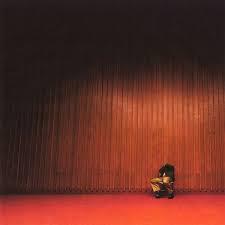
honors the group’s roots. In an interview with WIRED, Suga said he hoped the album would “bring out roots and identity,” while RM said that the concept draws inspiration from youth, dating back 130 years.
Standout tracks include “FYA,” which opens with a strong, immediate energy as well as “Hooligan” because of its catchy lyrics like “HAHAHA- hooligan” and “This is international, make it unforgettable.” Another track is “Body to Body,” which contrasts a soft beginning by following it with a big, intense tone as well as
having “ARIGAN’ in the background of the song. While “ARIRANG” may not appeal to everyone, it stands out for listeners who value artistry and meaning, standing out as one of their most thoughtful works. ARIRANG highlights BTS’s dynamic as a group and as distinct, individual artists, blending traditional and modern influences to create powerful listening experiences that resonate with longtime fans while drawing in a new generation of listeners. Overall, I give this album a 5/5 rating.
PHOTO | Kent Supena
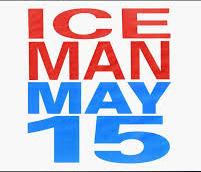
“Iceman,” Drake’s upcoming album, is set to release on May 15.
“It’s Been Awful,” Isaiah Rashad’s upcoming album, is set to release on May 1.
The Rams ram on: Adapted athletics
| Sean Oh & Erin Goareguer SPORTS & GOOD QUESTION EDITOR & STAFF REPORTER
Athletics has long been synonymous with a high schooler’s tenure, and adapted softball gives students with disabilities a chance to participate. The Rams, a team consisting of students from Mounds View, Irondale and Roseville, compete in a variety of sports throughout the entire school year with adapted rules in order to better accommodate student disabilities.
“It’s a varsity sport and, you know, they deserve the support that they’re getting ... the kids get really, really into it, and it’s a super, super fun night. It’s like the highlight of the season every year.”
Reed Thompson, head coach
The Rams play soccer in the fall, floor hockey in the win ter and softball in the spring. Soccer is adjusted to be played on a smaller field and on a court, floor hockey has desig nated zones where players are allowed to traverse, with the exception of one player and softball players have shorter base paths as well as the ability to elect to hit off a tee instead of the conventional underhand pitch.
Rams athletes can begin participation as early as in sev enth grade, and many players who started that early are still on the team. Although this prac tice is atypical for some sports, adapted sports actually are a Minnesota State High School League (MSHSL) sanctioned sport, complete with a state championship tournament.
Recently, the Rams have enjoyed a high level of support at their games, not just by parents and family, but also by the greater student body. “It’s a varsity sport and, you know, they
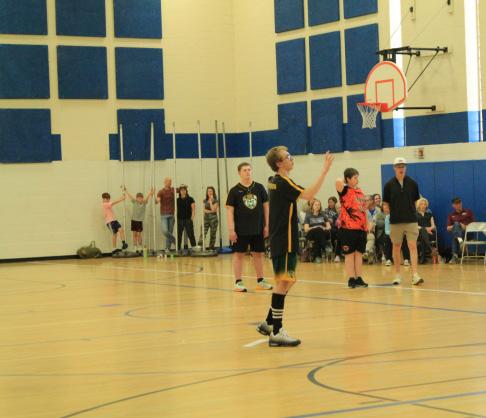
be good teammates, learning to compete together,” Thompson said.
The student athletes hold very fond memories of their time in the program. Freshman
mates and seeing people come to support them at games.
Besides the school-affiliated team, athletes have opportunities to participate in sports
Asking Mounds View spring captains:
experiences, and the Rams adapted sports program gives many students with disabilities the same chance to participate and enjoy them.
How do you set a good example for your teammates?

Nora Kelly (Softball)
I try to set a good example for my teammates in several ways, such as being as consistent as possible. I always have a good attitude around my teammates and continuously encourage everyone around me, no matter the score or outcome of a game. Additionally, showing up on time and being prepared for each and every practice or game is important to set the tone and standard for the rest of my team. I also try to hold myself accountable as well, and admit mistakes so the team can push each other to be the best we can be and move past mistakes together. Lastly, I focus on inclusion a lot to make sure all of my teammates are seen and heard, in an attempt to spread my energy and positivity in hopes my teammates match me.
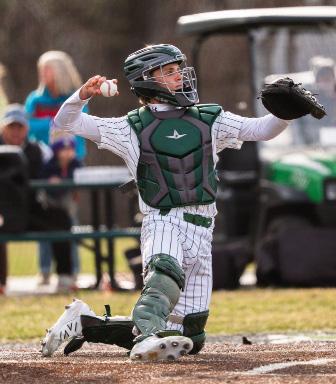
Cooper Caligiuri (Baseball)
I always start by making sure that I have my own business taken care of. If I’m not proud of my own work, then I can’t hold my teammates to high expectations. I try to work hard and set a good example for the younger guys.

Max Daigle (Tennis)
I always try to be positive and never stop cheering for my teammates. I build relationships with everyone and ask them about their lives outside of tennis. Always being the one to put in extra work and conditioning outside of practice shows people how to grind.

Tate McDonald (Track)
One of the main things I focus on is being committed. For me, commitment mainly consists of things like strong preparation, paying attention to the finer details, and being available to do whatever the team needs of me. For example, one event that I have run numerous times is the 4x400 meter relay. This is almost always the last event of the meet, and most of the guys in it have already run one or two events beforehand. It’s notorious for hurting and oftentimes people would rather be done for the day than tough through
it. However, I find that this event represents much of what I pride myself in when it comes to my commitment. I never shy away from the opportunity when I’m put in the lineup, because I want to put everything I can out there for the team. When I hold myself to a strong standard like this one, the entire team often el-

Since hurdling is such a technique-heavy event, and I’ve been doing it for so long, I make sure that everything from my warm-ups to my cool down is how it should be. I’m always looking to see if they look confused or unsure and approach them and explain what is going on. I know what it felt like being new into the hurdles and how daunting it can be, so I always try to nurture them. I show them what hard work looks like, I’m meticulous and go hard every day at practice. I run hard, I lift hard and I rest hard. I stay hard.
evates itself to the same level, creating a strong sense of unity in our goals and confidence in our abilities. This allows us to perform at the highest level on meet day and fosters community among us because we know that we’re putting our all into our events, something that we can be proud of no matter what.

Lauren Gronert (Lacrosse) In lacrosse, I set a good example for my teammates by being welcoming and friendly to all team members, including younger players! This helps me to have fun while I’m playing lacrosse which stems from a positive attitude at games and practices. Lastly, I set a good example for my teammates through leading drills with confidence and always working hard!
Max Ohmann (Track)
PHOTO VIA Nora Kelly
PHOTO VIA Cooper Caligiuri
PHOTO VIA Max Daigle
PHOTO VIA Tate McDonald
PHOTO VIA Max Ohmann
PHOTO VIA Lauren Gronert
Crossword PUZZLES
Across
2. The sport that the Rams play in the spring
4. The course that senior Gavin Wilson took eight times
6. Title of the new BTS album
7. House File 4138, an act to “Stop Harms from ______ Social Media”
9. A sports injury common in sports with heavy running
11. Last name of a public protester in the community
12. _______ Burger is a new virtual brand that uses the ghost kitchen model.
14. Minneapolis lake renamed in 2018, now having a Dakota name
Down
1. Singer-songwriter that collaborated with Hollister for their “Class of 2026” collection
3. Junior Molly Weiger’s doll of choice
5. Merriam-Webster Dictionary defines ______ as a “love for or devotion to one’s country.”
8. _____ ____ Park Schools was the school district that was attacked by ransomware April 2026.
10. Where the inspiration for the group name Whack came from
13. Last name of the U.S. Under Secretary of Education
Sudoku