
Galvin is retiring: Zahn is next activities director
| Aliyah Rogers STAFF REPORTER
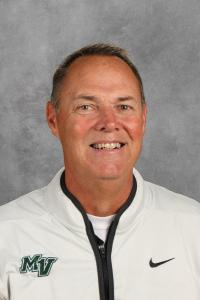
fter working in education for 36 years, activities director Jim Galvin has announced his retirement, which will take effect on July 1, 2026. With a legacy that spans over three decades, long enough to see the children of past students graduate, Galvin has formed many meaningful relationships that will leave a lasting impact on the Mounds View community.
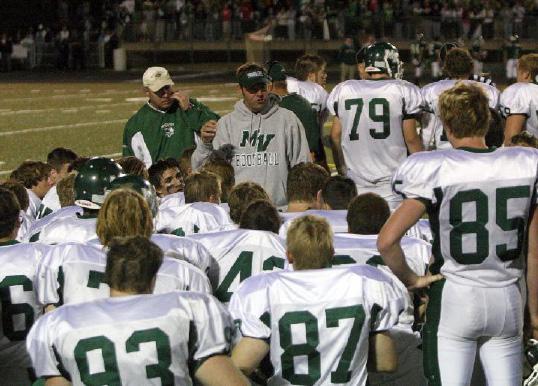
Before becoming the activities director, Galvin was a physical education teacher for 26 years. As the head varsity football coach for 16 years as well, Galvin guided the Mus-
tangs to seven state tournaments, winning three conference titles. He was inducted into the Mustang Hall of Fame last year, holding a 121-52 record.
The activities director serves an important role, sup-



porting extracurricular activities and students’ interests.
“There’s a lot of organization,” Galvin said. “The school district pays for the essentials for all of our activities in athletics, and so we’ve gotta hire coaches and advisors, order equipment and maintain equipment and fields.” On top of that, there is also the task of managing students’ registration to remain eligible for their activities, as well as assigning facilities where activities can meet.
While Galvin has played a huge role in the success of events, he recognizes that it wouldn’t be possible without the Mounds View community. “We’ve got somewhere near
200 coaches and advisors working for us all the time. And then it takes another 60 people to be ticket takers, game workers, supervisors,” Galvin said. “We’re just relying a lot on people to commit to helping out.”
Following his retirement, Associate Principal Gretchen Zahn will become the activities director at Mounds View. Zahn has worked for the Mounds View public school district for 28 years in a variety of roles.
Zahn has always had a special interest in sports and extracurricular activities, making this transition seamless. “So it’s really about supporting all of the interests around cocurricular … and really creating
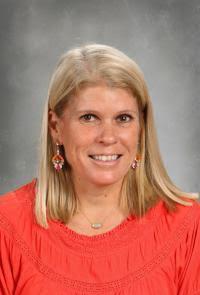
an environment and a culture where students are proud to be representing the Mustangs,” Zahn said.

In preparation for taking over the activities director position, Zahn checks in on a daily basis, asking questions and observing how Galvin handles an assortment of situations. “I feel like I can make a great impact and carry on all the good work that’s come before me,” Zahn said.
While it’s a bittersweet experience for staff and students to part ways with Galvin, Mounds View has been very fortunate to have him manage the athletics and activities department. From coaching the football team to making lasting connections with students and faculty, his hard work and devotion to the school will be remembered and celebrated in years to come.
Highview plans an A/B music schedule
| Rue Royer STAFF REPORTER
n a controversial move, Highview Middle School plans on switching to alternating A/B music days in the 26-27 school year, and this change brings several unexpected changes to Mounds View High School’s music classes. A/B schedules, when a class only occurs every other day for students, have existed at the district’s middle schools for a long time, but until recently, only sixth graders used that schedule. Only made known to students and families during Highview’s registration in February, the decision for Highview to switch to this schedule has not currently been implemented in any other middle schools in the district. The district reevaluates the programming of one of their levels (elementary, middle, high) every 10 years, and three years ago, they started to reevaluate the middle schools.
One of the recommendations of the consulting agency for this reevaluation resulted in Highview schedules being rethought. The reason for the change to the A/B schedule comes down to the loss of time created by the new half classes made to support stu-
dent wellbeing. “Nest Time” occurs every day and consists of teaching students skills such as time management, organization, social skills and building relationships. “Hawk Time” is very similar to Mounds View’s ReFLECT, except it takes place four out of five days of the week for 25-40 minutes, and students can sign up for a music class at this time if they wish. Music and physical education (PE) classes will switch off and take place every other day under this A/B schedule.




One of the big reasons why this A/B schedule could favor Highview comes down to class choices. On the A/B schedule, students have more options for
electives and can participate in more classes. “By changing our music and PE classes to half-year classes in seventh and eighth grade on an A/B schedule, students could still participate in PE, music, art, innovation and Spanish during their middle school years. When music and PE were both full-year, daily programs, students were not able to participate in all of the electives if they chose daily music,” said Highview Principal Lindsey Samec.
Chippewa and Edgewood have not made this switch yet, but they are being considered and appear as a prominent topic of discussion amongst those communities. Only one middle school having A/B music days could put high schoolers’ music experience out of sync; the Highview students entering Mounds View would have approximately a year less contact time than Chippewa students.
When Highview and possibly other middle schools make the change, it could either have positive or negative repercussions, and some teachers at Mounds View seem to think the negatives outweigh the positives. “[Music is] one of
the biggest assets in our district, and I think it’s problematic to reduce instruction time for one of our strengths,” said orchestra teacher Lucas Shogren. Overall, this change will lessen the quality of Mounds View’s music programs, but the school board viewed a stronger support system for Highview students as a worthy trade-off. Music teachers will have to rethink the way they go about teaching things due to this shift, as the students coming from Highview will not have as much music knowledge as they would without an A/B schedule. “My estimate is that they’ll come into high school needing a little more remedial attention, which might mean that I have to lower the repertoire level that I currently teach. And have to do some of the things that they maybe have missed,” Shogren said. “And we’ll talk and we’ll be talking with all the music teachers about where they’re at in the progressional learning. But, again, I mean, time will tell with what, how much that’ll affect them.”
Altogether, the additional support time for middle school students would be beneficial,
57% of the Highview sixth graders who have “Hawk Time” have said it is their favorite class according to Samec, but the negative trade-off would be music classes taught differently at Mounds View. Teachers will be required to pivot how they go about things at the school to accommodate a possible knowlpewa and Highview students

view, only time will tell to see how this will affect the district





The US approaches a media monopoly
Large company mergers are more problematic than people realize
| Charles Maves GUEST WRITER
Atired worker comes home late after a long day of work. While lounging in their favorite armchair, they pull their phone out of their pocket and simply type “news” in the search bar. There are a total of five video results, and they pick the one with the most flashy headline.
Tragic scenes flash across their screen, pulling at their heart. A sinking feeling settles in their chest, and after watching like this for a while, they try to verify a few of the claims made in that segment. In order to do this, they open an app that they use to view all the sides of the story, one that would have usually given them more information about the events of the day. Strangely enough, when they open the app, all they see is the familiar interface and a white background. Everything just will not load.
So they give up. They have spent far too much time watching the news, and they cannot be bothered to find another way to verify its claims. In other words, they resign themselves to the narrative that one news station talks about instead of spreading perspectives, which may give them a better understanding of the events of the day.

This doomsday situation may not represent any immediate connection to media mergers, but in comparison with the real world, one can see some of the dangers that we face. The merger of Paramount Skydance Inc. and Warner Bros. Discovery brings the world closer to one where the truth is hidden and inaccessible, a world where we are all in the dark.
David Ellison is the current CEO of Paramount Skydance, which is a company in its own right, already a media conglomerate. CBS Broadcasting Inc., MTV Entertainment Group,
Black Entertainment Television (BET) and more are all owned and operated by Paramount Skydance. This same corporation aims to own Warner Bros. Discovery, another media giant that owns Cable News Network (CNN), Food Network among others. If all things continue, they will be merged by the third quarter of 2026, with a total streaming industry market share of about 13%. David Ellison's father, Larry Ellison, is the CTO (Chief Technology Officer) of Oracle. He is the sixth richest person in the world, with a net worth of over $190 billion.
In a fictional world, only two or three media companies remain, small enough a number that one could count the number of people who controlled the narrative on their own two hands; These would mostly be the CEOs and executives of those few media companies left. On top of this, other companies with a chance of entering the media sphere went completely bankrupt because they were unable to break into an industry that was so heavily controlled.
The citizens of this world are constantly bombarded by completely false, discouraging and distressing news, which keeps them emotionally activated, in the dark and unaware of the true culprits: the people who control the false narrative; the CEOs.
Currently, the Federal Communications Commission (FCC)’s approval of the Warner Bros. Discovery and Paramount Skydance merger under President Donald Trump demonstrates a lack of action preventing such a future. Money would not stand as a barrier either, since David Ellison has access to one of the world's largest fortunes through his father. This leaves only one barrier left, the executive boards of other streaming companies.
Unfortunately, mergers this large are not detrimental to a company, meaning that they will not make the share value of a company decrease by any dangerous margin. In most cases, it is more profitable for the company to merge further. As a result, the executives are likely to agree to a merger if their
company is purchased for what they deem an appropriate price.
Another concerning similarity that our world shares with the fictional world is the media’s tendency to lie, if even just to manipulate the truth. To consider a recent example: operation metro surge in Minneapolis. Very few people remember coverage by the news of victories against ICE in Minneapolis; they just remember the distressing and tragic events that happened.
One special thing about corporate mergers like this is that the infrastructure to prevent them already exists. The FCC has chosen to approve the Paramount Skydance & Warner Bros. Discovery merger, but that doesn’t mean that it would be impossible for it to disapprove of further mergers. Minnesota Representatives always have phone lines open for concerned citizens to communicate their ideas, and with enough noise, they would do something about this.
College decisions demand more mental support
| Leo Chen STAFF REPORTER
We received an exceptionally talented pool of applicants this year, and this decision was not a reflection of your potential.” Every spring, millions of high school seniors read some version of that sentence. The school that sent it has already moved on. The question is whether your high school has a plan for what happens next. American high schools fail to adequately support the mental health of students during college decision season, leaving them to navigate one of the most psychologically demanding periods of their academic lives alone. The gap did not appear coincidentally. It grew systematically. And it shows up most clearly in a window most schools don’t even acknowledge: the weeks between application deadlines
and decision day, when students wait, refresh portals and carry that weight without any structured support.
Decision notifications cluster between March and April, coinciding the midst of the second semester. Classes still assign work and projects. Extracurriculars are still in full swing. Nearly half of all high school students, approximately 48%, report that stress and anxiety actively overshadows their college planning process, according to a 2024 EAB survey of over 6,000 students.

Separate research finds that 76% of students treat admissions as a life-defining moment, and 73% worry that small mistakes could permanently damage their chances: a level of pressure that doesn’t dissolve the moment applications are submitted. The infrastructure meant to support students through this period tells the same story.
The national average sits at 376 students per school counselor: nearly 50% above the recommended 250-to-1 ratio, according to the American School Counselor Association. School psychologists fare even worse, with one professional covering over 1,000 students on average, more than double what experts recommend. Short-term staffing inconveniences fail to explain these issues; the stagnation represents a systematic oversight that fails to recognize the importance of mental health support during high-stakes moments like college decision sea-
takeaways
76% of students treat admissions as a life-defining moment
60% of students report feeling they lack adequate mental health support during the college selection
2024 EAB survey
son. Nearly 60% of students report feeling they lack adequate mental health support during the college selection process, and one in seven say they have no one to talk to at all, according to the same 2024 EAB survey. That sense of helplessness and silence hits hardest during decision season, when students refresh portals alone, process rejections alone, and weigh lifedefining choices alone; these young adults do all of this while finishing the most academically demanding stretch of their high school careers. “Being aware of it before it comes to you was helpful,” said senior Richard Law. This consistent experience reflects a pattern playing out in high schools across the country.
The letters have already gone out. The decisions have already landed. And somewhere right now, a student reads the same, repetitive line of “we appreciate your hard work” from their dream college, with nobody scheduled to check in
on them tomorrow. Dedicated check-ins during March and April, counselor availability prioritized around decision windows and even peer support structures all work as solutions — none of these require massive structural-level overhaul. They require recognition that the point schools celebrate as the end of their involvement does not match the finish line students actually cross.
PHOTO Jadyn Heath-Hlavacek
Norse Anderson, Lilia Barrera, Leo Chen, Shriyan Deshmukh, Erin Goareguer, Anna Hayek, Keaton Howard, Aliyah Rogers, Rue Royer, Kent Supena, Max Swanson, Vedant Vashishtha, Ava Wagner
Mounds View’s storytelling sanctuary
The Creative Writing Club started earlier
| Erin Goareguer STAFF REPORTER
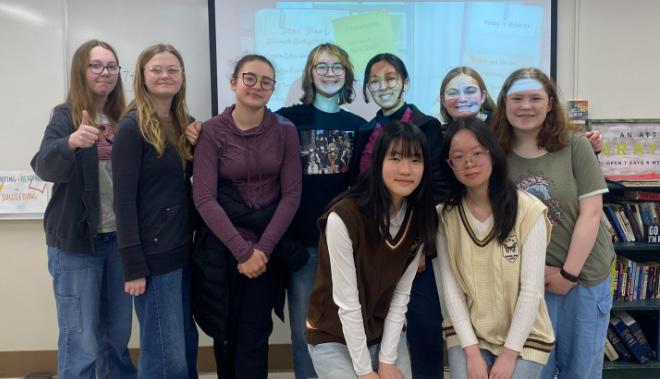
The Creative Writing Club officially began this semester, creating a space for students, whether they’re an aspiring writer or simply find it as a hobby. This new storytelling sanctuary at Mounds View offers an opportunity for students to unleash their imagination in the form of words.
Founded by sophomore Yile Liu and freshman Abby Xieli, the club aims to help Mounds View students express themselves through literature and sharpen writing skills outside of the classroom in a relaxed and fun environment. “It would be a fun opportunity for people at school to just express their story writing and their skills in writing and to have fun,” Xieli said.
Liu and Xieli came up with the idea while working on a story together, “Me and my friends started this club to build a community around writing, specifically creative writing, and we just got this idea to start this club, because we both work on a story together, and I think that really helped us, like, get closer together and also share our love of writing,” Liu said. On
this
March, bringing together student writers
March 3, 2026, the club opened its doors to potential members, kicking off with an informational meeting.
Co-captains Liu and Xieli meet regularly, setting aside time to prepare presentations, introduce upcoming themes and pitch ideas. “We prepared [for] a week or two just to start this club, and I think we’ll get together and talk about new problems and what activities we’re going to do,” Liu said.
“It would be a fun opportunity for people at school to just express their story writing and their skills in writing and to have fun.”
Abby Xieli, freshman
They work to make the club interactive and exciting for members through a series of activities. “Each week, we have a different theme prompt, like for fantasy, mystery and also [sci-fi]. And we create a slideshow around that theme and we put like a bunch of pictures on there,” Xieli said.
Meetings take place on Tuesdays after school from 3:15 p.m. to 4:30 p.m. in English teacher Mary Carney’s classroom, room 122, where
Know Your Rights Club provides aid
| Lilia Barrera STAFF REPORTER
s of Feb. 4, Mounds View High School offers a new club for student participation called the Know Your Rights Club, founded by seniors Leena Bassas and Sophia Garcia-Campanella in hopes of providing assistance during times of need. The group organized in response to recent actions taken by the United States. Immigration and Customs Enforcement (ICE). Since then, the group has shown support through volunteer work, educational slideshows on human rights and creating a safe space for those affected.
“We want to have a positive impact. We want people from all sorts of communities to join and feel that they are safe in the school.”
Leena Bassas, senior
Reflecting on the last few months, multiple events have taken place within the country
and more specifically the state. Immigration customs became a large concern long before the recent instances. ICE was organized in 2002 during Bush’s presidential term, and since then, Americans have debated the morality and ethics behind these forces, as it has made itself more prevalent in the nation’s politics.
Bassas and Garcia came up with the idea of starting the club following the initial deployment of ICE in the nation, starting late February, to inform students about citizenship, human rights and legalities behind the events taking place, hence the name “Know Your Rights,” while also creating a safe space for those affected. “Its main purpose was to spread awareness and just bring people together,” said Bassas. Considering the club’s basis of social justice, countless other issues have become a part of the discussion, such as the state of Palestine, something the group focuses heavily on.
During meetings, the group aims to offer support to students and have progressive discussions. “We want to have a positive impact. We want people from all sorts of communities to join and feel that they are
members write both poetry and novels according to the chosen theme of the week. In addition to individual story writing, the club works collaboratively in small groups to write together, making a fun and social outlet for creativity while strengthening vocabulary and literary elements. They also have time to give each other feedback on their writing. “And most of the meets will have snacks and music in the background … and it’s not very high commitment. We just kind of get together and do different writing prompts,” Liu said.
On top of making students more confident writers through essential skill teaching, making friends comes naturally as collaborative projects continue. “It’s just really cool to be in a community where you can work with other people and write together,” Liu said.
Going forward, the club hopes to make its mark on young minds interested in detailed writing and story telling, and so far, members agree they’re on a path towards success, Aside from the main purpose of the club, writing, the group makes sure to give a warm welcome to members interested in taking part in the creative journey.

safe in the school,” said Bassas. Lasting about 30-40 minutes with around 15 members, the group starts with an informal presentation regarding future activities and current events, followed by group discussion for the remaining time.
The group often makes donations and volunteers to help aid the targeted communities, such as delivering items to families or “just doing errands that people don’t feel safe doing right now,” said Bassas. The club’s first food drive and its
success gathered a handful of interested students, gaining the club new members and supplying food for families affected by ICE. Returning from spring break, the group plans on picking up where it left off. “We’re going to start our club again, like every other week and then maybe every week,” said Bassas. Additionally, the group describes plans to raise funds for charity in the near future following the success of the food drive taking place earlier this
month. Currently, the group envisions a musical event fundraiser for the issue. By providing students a space to navigate complex global events and make a change, it does more than just educate the students of Mounds View; it leaves an everlasting impression on the families helped along the way. The club continues to advocate for social justice, teaching members to make a stand during times of distress.
Group photo of the Creative Writing Club members at their meeting on March 24. PHOTO Gabi Skiba
The Know Your Rights Club collecting food for a food drive.
PHOTO VIA Leena Bassas
PHOTO AND ART CONTEST
Photography

by
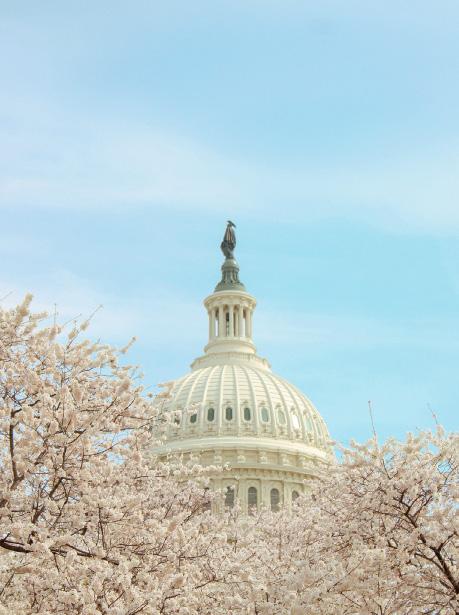
Taken at the United States Capitol during peak blossoms.
Traditional Art

Digital Art


By shooting from beneath
this image plays with perspective and restriction. The grid creates a visual barrier, inviting viewers to think about how limits — both physical and mental — frame our lives.
A portrait of the artist’s good friend sophomore Grant Hermes. This was done and submitted with his approval.
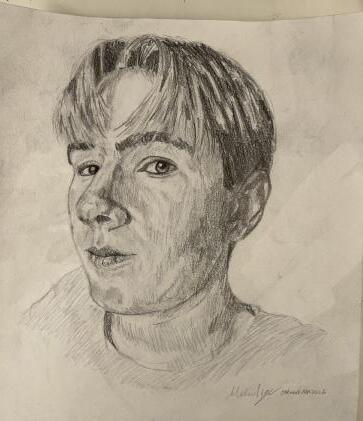


Winning artworks were chosen by the Viewer editors out of submissions from Mounds View students. Thank you to everyone who submitted an entry!
Third: “Trapped in Plain Sight” by Joshua Henderson, sophomore (above)
a metal grate,
Second: “Cherry Blossoms”
Sofie Olhoft, senior (below)
Third: “Grant” by Michael Yu, sophomore (below)
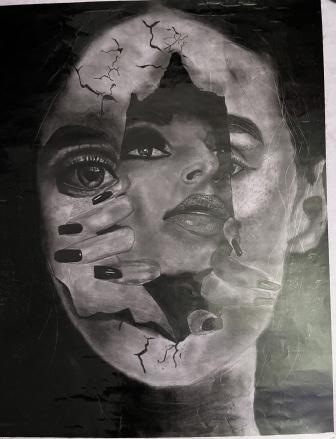
First: “Free your inner self” by Ansh Verma, freshman (above) It is a graphite drawing.
Third: “Mines View High School” by Carter Ballman, senior (below) A facade of Mounds View in Minecraft
Second: “The Final Meltdown” by James Hanggi, freshman (right) The photo is meant to represent the added stress of school and how it can feel as though your world is melting down.
First: “Hands” by Eavan Olsen, freshman (above) “They say a picture’s worth a thousand words, but I disagree” -Amélie Farren
Second: “Painted Buntings” by Judith McCarthy, senior (above)
A painting of two painted buntings, the female on the right and the colorful male on the left.
First: “Spring Hearts” by Gavin Wilson, senior (above)
A picture of bleeding hearts right outside of Mounds View last spring.
From struggle to strength: Women’s path to equity
Important events in women’s history
| Anna Hayek STAFF REPORTER
The feminist movement in the United States has been a long time coming. Women have fought for years and years through discrimination, arrests and general belittlement. Some major landmarks in the women’s rights movement have been the 19th Amendment, equality in the workplace and strides in birth control accessibility.
While there wasn’t one specific moment that started the feminist movement, when most people think of feminism in the U.S., they first think of the Seneca Falls Convention of 1848. The convention was held by activists Elizabeth Cady Stanton and Lucretia Mott after the two women were refused a spot at the London anti-slavery convention in 1840. The Declaration of Sentiments, the document written at the convention, was modeled after the Declaration of Independence. The declaration addressed the large-scale inequality between men and women and called for action to reform legal and social structures, in an attempt at equality.
Women continued to hold conventions fighting for their rights up until the American Civil War. No explicit rights were granted during the Civil War, but, like many other wars, women were granted larger social roles. “Wars have kind of made the women’s movement jump up a little bit more, because women fill the roles that men took up,” said social studies teacher Kristin Heinz. Women were nurses in the Civil War and took over men’s roles, like managing plantations and businesses. After the Civil War, women’s suffrage movements were reformed and rehashed. Between 1870 and 1875, many women tried to use the Fourteenth Amendment, specifically its birthright citizenship clause, as a justification to secure votes in courts to get the right to vote. However, these attempts were unsuccessful. Between 1872
and 1920, many women, most notably Susan B. Anthony and Sojourner Truth, were turned away and fined for trying to vote in federal elections. In 1869, Wyoming voted to become the first U.S. territory to allow women to vote. After years of fighting and the gradual gain of voting rights for women on the state level, the 19th Amendment was ratified in 1920.
“Wars have kind of made the women’s movement jump up a little bit more, because women fill the roles that men took up.”
Kristin Heinz, social studies teacher
Mirroring previous wars like the American Civil War and World War I, World War II was a significant gain in the things women could do in America. Women took factory and agriculture jobs, and for the first time in modern history, they were told that they were capable of doing it. Rosie the Riveter, a strong woman saying “we can do it,” became an allegorical cultural icon. “I think that even more than the other wars, women stepped up and filled those roles in the workplace, and they also are doing everything, like they’re taking care of their children, and they’re working, and I think that just propels the movement,” Heinz said. Although women made strides during World War II, there were still many disparities, specifically in intersectionality. According to the Gilder Lehrman Institute of American History, both Black men and women were forced to work jobs in worse conditions than their white counterparts. This included working night shifts, working in dangerous industries and being hired in low-paying industries. High-paying jobs, like those in the aircraft industry, were made up of 40% white women and 6% Black men and women.
Current issues that
| Kent Supena STAFF REPORTER
TDuring the Red Scare in the 1950s, there was a shift back to conservatism and to the “nuclear family” model. The Red Scare was a fear of communism and “otherness,” which led to widespread conformity in the U.S. Another reason women went back to their original roles was that men came back from war, pushing women out of their former jobs. These societal changes took the social rights that women gained during the 1940s and pushed women back into the “box” of being a housewife. “I feel like it almost went a step backwards when, in the 1950s, there were those traditional female roles,” Heinz said. It was significantly harder for women to do the same things they did during the war, like breadwinning for the family.
Between the 1950s and 1960s, there was a shift to counterculture due to the Vietnam War and other contributing factors, which caused general activism and widespread questioning of authority. Another reason that these women specifically protested for their rights was that their mothers were the ones who gained rights during World War II. In this counterculture shift, women gained significantly more rights, such as access to birth control, nofault divorce and the ability to open a bank account.
In the 1970s, women gained significant legal rights, such as with Roe v. Wade, the right to abortion, the Equal Pay Act, prohibiting discrimination in the workplace and Title IX, prohibiting discrimination in schools based on sex. Although women were making significant strides socially and legally, women still faced discrimination and were thought of as “less than” in many spaces. Overall, women have come far from the Seneca Falls Convention, but there is still more work to do. Today, women are still discriminated against and seen as inferior to many people. Looking to the past, it can be seen that progress takes time but can greatly improve lives. but can greatly improve lives.
hroughout history, women have faced constant oppression, with many of the challenges continuing today. When these issues go unaddressed, they often worsen over time, creating a cycle that is hard to break. Over the last decade, the cycle of gender-based violence has been a prevalent issue that women face almost all the time. On a global scale, the World Health Organization estimated that 840 million women have been faced with physical and/or sexual intimate violence with their partner. As of 2017, PEW Research Center estimated that 42% of women in the United States say that they have experienced discrimination on the job, solely because of their gender.
The STEM industry is always continuing to rise and grow, and so is the continuation of women being unrepresented and overlooked for their work. The lack of representation for women in the industry is due to stereotypes, unconscious bias and even the low number of role models for women to take part. One example of a woman being overlooked in this industry would be Rosalind Frank-
lin, who is responsible for the photos that were very relevant in discovering the double-helix structure of DNA. Her work was shown to James Watson and Francis Crick without her permission. The discovery ended up winning a Nobel Prize, which Franklin did not end up receiving credit for.
“I think when women did eventually get education rights, there’s still a standard that you have to really keep up.”
Morgan Breen, senior
Sexual harassment and discriminatory dress codes in schools can create a hostile environment and also negatively impact students’ mental health, learning and wellbeing. The Centers of Disease Control and Prevention Youth Risk Behavior Survey shows high data percentages of 20% of female students experiencing sexual violence from anyone in the past year, followed by 57% of them feeling persistently sad or hopeless. Despite
Timeline
• 1848: Seneca Falls Convention takes place, beginning the organized feminist movement.
• 1869: Wyoming passes a law to become the first United States territory to grant voting rights to women.
• 1870: The 15th Amendment is ratified, prohibiting the denial of voting rights based on race, though women remain excluded from the polls.
• 1887: The first vote on women’s suffrage is taken in the U.S. Senate and is defeated.
• 1890: Wyoming becomes the first U.S. state to grant women the right to vote (after doing so as a territory in 1869).
• 1917: Jeannette Rankin of Montana is sworn in as the first woman elected to Congress, three years before the 19th Amendment was even ratified.
• 1920: 19th Amendment is ratified, granting national suffrage to women.
• 1941: The U.S. enters WWII, and women fill jobs left vacant by men fighting overseas.
• 1963: The Equal Pay Act is signed, aiming to abolish the wage gap between men and women performing the same work.
• 1972: Title IX is passed, prohibiting sex discrimination in schools.
• 1973: Roe v. Wade establishes precedent of national right to abortion by the Supreme Court
• 1981: Sandra Day O’Connor becomes the first woman on the Supreme Court.
• 1993: Family and Medical Leave Act (FMLA) is signed, allowing women and men to take job-protected leave for family health or new children.
• 2007: Nancy Pelosi becomes the first female Speaker of the House.
• 2013: The U.S. military removes the ban on women serving in direct ground combat positions.
• 2016: Hillary Clinton becomes the first woman to be nominated for president by a major U.S. political party.
• 2021: Kamala Harris is sworn in as the first female Vice President of the United States.
• 2022: Roe v. Wade is overturned by the U.S. Supreme Court, bringing the issue back to the state level.
that women face
the distractions for female students towards their academics, the sports they participate in have always highlighted the challenging stereotypes. From systemic underfunding to poor quality treatment, girls in sports have to deal with a variety of issues just to play the same game as their male counterparts.
Regardless of sports and societal pressures putting a negative outlook towards women, academic stereotypes continue to be a persistent issue that doesn’t stop. “I think throughout history, women have always been fighting for more academic rights. I think when women did eventually get education rights, there’s still a standard that you have to really keep up,” said senior Morgan Breen. “I mean obviously, you should be keeping up, but you have to always be top of your class and do all this stuff in order to deserve the rights.”
Just recently, after the 2026 Olympics, the U.S. men’s hockey team struck gold. Shortly after their win, they were on a call with President Donald Trump, who jokingly suggested that he had to invite the women’s hockey team because they won gold as well, to avoid being impeached. The men in the locker room where the call took place, as shown on videos online, exchanged laughter between each other and the president, which immediately backfired as people online weren’t finding that comment humorous. That
seemingly small moment made many women feel disrespected, showing that women are underestimated and not deemed as equal to men by those in power.
These issues will continue to be a pressing matter, no matter how hard society tries to resolve or change them. As much effort as women are putting into a larger, better cause, they still continue to be undermined for their abilities. Stereotypes and standards are always expected of women as well. “There’s double standards for women behavior-wise and also academically. I feel like guys aren’t set to the same standards that women are,” said senior Ana Maradiaga.
As society has made significant progress towards gender equality, many challenges that women face still remain. Issues such as gender-based violence, workplace discrimination, underrepresentation in STEM fields and unequal treatment in healthcare and sports continue to affect women around the world and in local communities. Women’s History Month is not only a time to celebrate the accomplishments of women throughout history, but also a reminder that there’s still more work to be done. Women’s accomplishments shouldn’t be celebrated simply because they come from women, but because their contributions have brought real and lasting impacts on society.
Did you know?
The National Woman’s Party in the United States used a flag with the colors purple, white and gold for the suffrage movement according to the National Park Service. Purple respresented loyalty and constancy to their purpose, white represents the pure quality of their purpose and gold represents the torch that guided their purpose. They would also sew a star on the flag every time a state ratified the 19th Amendment. England instead used purple, white and green.

Progress and the future
| Max Swanson STAFF REPORTER
ver the past several decades, feminist movements have made massive strides forward. This progression is highlighted during the month of March, which is Women’s History Month. These changes cannot make up for the struggles women have faced since the beginning of recorded history, but they attempt to make amends and work towards a better, more equal future between the sexes.
At the start of 2026, Minnesota introduced new paid leave laws, one of which offers paid bonding leave to new parents in their later stages of pregnancy, the early bonding months of infancy and time for new adoptive parents. Before Minnesota, 12 other states offered paid maternity leave over the past 22 years. Before this, many new mothers had to take a huge financial cut and limit their time with their newborns in order to get back to work as soon as possible. Over the summer, social studies teacher Lisa Zito had a baby. She took her unpaid maternity leave at the beginning of the first semester, but she is being offered a second leave that is partially paid after spring break. “I didn’t expect this to be passed anytime soon. I really did consider putting off having another kid in case things pro-
gressed in this area any further,” Zito said.
As women have started taking on more jobs over the past century, they have consistently played a large role in educating the next generations of the workforce. The importance of educators is often undercredited, but 77% of the teachers in the United States are women, stated by the Pew Research Center, meaning the vast major-
“I really did consider putting off having another kid in case things progressed in this area any further.”
Lisa Zito, social studies teacher
ity of the academic knowledge is provided by women. Women’s role in education showed a start in the massively important jobs women have started to dominate; this can be seen with females overtaking the medical field, now making up 77.6% of doctors, nurses, dentists, social workers and more, according to the Bureau of Labor Statistics. Medical jobs have always been seen as extremely high-level and prestigious and still are seen that way, so women being such a large part of this field really shows the development in position growth for women.
By the numbers
154 $0.82 is the average of how much a woman makes for every dollar a man does, according to the Bureau of Labor Statistics.
women serve in the United States Congress. This is near the record high of 155, which dipped following the resignation of Rep. Marjorie Taylor Greene (R-GA) in 2026.
The widening of access to college education for women began in the mid-1800s and has played a huge role in the advancement of feminism and the role that women play in society. Though early periods of the provision for women in college weren’t widespread among all women, that has changed drastically today, with women making up 60% of college students today, according to the National Center of Labor Statistics. This illustrates the benefit college has brought to women and the feminist movement through the intellectualism it brings. Women can take advantage of the jobs and opportunities provided by college bachelor’s and master’s degrees, as contemporary women hold a higher percentage than men.
All of the progress that has been made throughout the feminist movement over the years show the world is working towards a world of equality and compassion, though not everything is perfect now. Women still face many obstacles, whether it is the wage gap, the mental turmoil of being in a spot where they are seen as weak by society or the lack of seriousness they face in most categories. It can only be hoped that these issues will improve and create a safer environment for women now and in the future.
1 in 4
girls are estimated to experience some form of sexual abuse before the age of 18, according to the National Child Traumatic Stress Network.
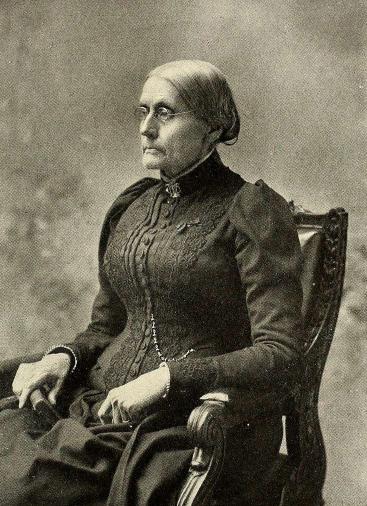
PHOTO VIA Henry Grant Archive/Museum of London PHOTO VIA Wikimedia Commons
Rosalind Franklin Susan B. Anthony
DEBATES
Should Mounds View offer extra credit?

Extra credit enhances student learning
| Shriyan Deshmukh STAFF REPORTER
Imagine studying for days, only for one bad test to drop a grade immediately. One rough night could affect a student’s chance of achieving the grade they desire. At Mounds View, the current system allows for relearning and retakes, but the system doesn’t support all students equally, leaving some without opportunities to improve or demonstrate understanding. One solution would be to add extra credit, an approach to allow students additional points through optional work.
Extra credit has a long history in schools, but Mounds View stopped offering it a while ago. “There was a push in the early 2000s to eliminate extra credit because it was obscuring an understanding of whether or not students were demonstrating the standards,” said Principal Rob Reetz. The extra credit policy was instead replaced with the relearning and retaking system. However, this has its own set of flaws.
Methods that take advantage of the relearning and retaking system, such as cramming, demonstrate the current framework’s ineffectiveness. It puts too much pressure on a singular test day, focusing on the test rather than mastery of the material, which can be overwhelming for some students, and they might believe there is always a second chance and will study the bare mini-
mum. “For some kids, relearning becomes a crutch and something that they depend on to get their grades where they want them to be. It was intended [as] a way to help kids who were struggling have another chance to demonstrate proficiency. It has become a grade grubbing tool. It’s not necessary, doesn’t teach good study habits [and] they will possibly rely on relearning and reassessment to make up for sloppiness or procrastination,” said science teacher Mark Johnson. Extra credit helps students keep up throughout the semester to avoid falling behind in class, but it is abused too much.
According to the American Enterprise Institute, around 2007, teachers started offering extra assignments as a way to help boost engagement and boost the incentive to learn. Teachers would offer these assignments that go beyond just basic inclass assignments and give students creative ideas in order to help students boost their understanding of a certain subject.
While MV stopped offering extra credit, it would help students, especially in subjects like chemistry, physics, calculus and history, which are usually the most content-heavy. Extra credit should include opportunities to deepen understanding by applying concepts to new situations. Along with raising grades, these as-

Extra credit hurts students in the long-run
Vashishtha | STAFF REPORTER
signments would help students engage with the material more than is covered in class. For example, a chemistry student could analyze the chemistry of batteries used in electric vehicles, or a history student could analyze lesser-known events connected to the time period. These types of assignments would not just raise grades; they could also help a student gain a deeper level of understanding.
Some criticisms are that students might think extra credit is a safety net and might not completely focus on mastering the material. “You would have to make it performancebased,” said Reetz. Faculty suggest that extra credit should reflect learning instead of boosting grades. This concern can be mitigated by making extra credit a smaller part of the grade, such as 5-10%. “There would be a cap on what percent of a student’s grade could be influenced by extra credit,” said Johnson. By limiting its impact, extra credit will motivate students to engage better with the content while keeping regular assessments important and grades reflective of true understanding.
Well-designed extra credit systems help students boost their learning and engagement, and they allow for the system not to be abused heavily, making sure students are engaging with the content.
any agree that grades are a key point of focus during a student’s highschool career. As it determines where they could go to college, it becomes an aspect of everyday life at Mounds View High School. Extra credit can change someone’s grade from a C+ to a B-, or possibly even more, which is precisely why extra credit seems like the perfect solution to boosting grades.
Extra credit, to many people, is seen as a way that students can improve their grades at the last moment. According to Educator’s Room, an organization that is dedicated to enhancing education by having essential schooling improvements, some teachers say extra credit enhances a student’s confidence in themselves, as they can present their performance to their fellow schoolmates. Mounds View tries to limit this comparison of grades and performance.
Mounds View removed its extra credit policy in the early 2000s. “I think the primary reason is for the integrity of the grade to represent what a student knows or could do, and to not have behavior or work ethic be a driver in the grade a student receives,” said Principal Rob Reetz.
A major reason for this is that the students will pass the class without knowing the material entirely. This creates a mindset for the students that they can have another chance to raise their grade, resulting in
slacking on assignments and tests. “Our goal is to make sure that students’ grades reflect what they know and can do align to the standards that are being assessed. Extra credit can compromise what the grade demonstrates, because the extra credit doesn’t always align with what was being assessed,” said Reetz.
Obviously, the factor of academic dishonesty concerns many educators. Any extra credit assignment would likely occur outside of class, as in-class time would be used for new content, leaving room for teachers to wonder whether the student completed the extra credit assignment rather than a classmate, parent or external source. The current use and easy accessibility of artificial intelligence would only increase this doubt.
Allowing extra credit would also impact the gradebook. Students who may get too many opportunities might have varying grades. A student may complete a class without even achieving mastery in the key learning goals of the course. Opportunity would be based on outside time availability, transportation and maybe even which teacher the student has. Clearly, the opportunity for extra credit is not founded in fairness.
Sometimes, a school uses extra credit to influence students to do schoolwork. This push will not be there in the future for most highschool graduates. Rather, schools should accustom
students to the work patterns of college and future careers.
Mounds View is ranked number eight in the state of Minnesota according to U.S. News & World Report, based especially on the high academic standards represented by the school. The school’s grading policy creates this standard, with the extra credit guidelines being a part of it.
Currently, the closest procedures in place for extra credit are the relearning plans. They serve the purpose of helping students improve their grades on a previous performance assessment or assignment. They mostly consist of the student first learning the content again and then later applying that learning to the retests.
Even though the process of achieving the best outcome from the relearning procedure is not restriction-free, it still helps give the students an opportunity to improve their learning with high precision, and demonstrate that as well. In all, the current policy at Mounds View is the best for helping students to learn the importance of hard work in school, which can be reflected and used outside of high school.
Vedant
ILLUSTRATIONS Jadyn Heath-Hlavacek
GOOD QUESTION
What are racket sports?
| Keaton Howard STAFF REPORTER
Tennis, pickleball, badminton and squash are some of the most popular sports across the world. They all fall under a common theme; they are considered racket sports. Although many are familiar with the term, the exact meaning is often unclear. Racket sports are mostly played with a ball, include some kind of paddle or racket and have a net as an obstacle. These are also considered recreational athletic activities, so they involve dynamic movement and quick decision-making. These sports draw a lot of players and a lot of attention, and they continue to grow. These games are loved around the world by recreational players and pros.
Pickleball has had an average growth rate of 311% over the last three years.
Pickleheads
One such sport, exemplified by its loud “dinking” sound, is pickleball. Pickleball is a sport played on a small court, commonly compared to a smaller tennis court, with a plastic ball and plastic flat-faced paddles. Pickleball is very popular and is the fastest-growing sport in the United States. According to Pickleheads, pickleball had an average growth
rate of 311% over the last three years. Its growth, especially in the U.S., is incredible, and this is insinuated by the large range of people it appeals to, from retirement age to kindergartners; everyone loves pickleball. And of course, tennis has a long history in the U.S. and has a pretty large player count. The U.S. has between 150,000 and 270,000 public sports, the highest in the world.
Another good example is padel. Padel is a sport very similar to tennis but also has elements of squash, with the ability to hit the ball against the glass walls. Like pickleball, it is played on a smaller tennis-like court, but with the fun addition of the aforementioned walls, allowing for more fun playability and a twist on the more typical racket sport. This sport is absolutely huge in parts of Europe and some parts of South America. According to Statista, Spain alone has around 5.5 million players and around 20,000 courts. Argentina also has over 1.4 million players.Sports like tennis or pickleball continue to thrive in the U.S., but many alternative sports are growing outside of the U.S. as well, or outside the popular culture. The numbers around how many of these sports exist are disputed, but an estimate is roughly 35. Even the term “racket sport” is disputed, as it is hard to distinguish what exactly constitutes a racket sport from other types of sports. An example is Jai Alai, which is a sport that uses scoop-like baskets to hurl a ball

at a wall, which is considered a racket sport by many.
There are many reasons why these sports are growing in popularity; they include high accessibility, relatively low cost and low barriers to entry, but the most important reason
Spain alone has around 5.5 million players and around 20,000 courts.
Statista
is the significant health benefits of these sports. According to Harvard Health, the reason racket sports are so healthy is that, for one, there is a lot of lateral movement practice, which
How do extracurriculars
| Ava Wagner STAFF REPORTER
ounds View offers a wide array of differing clubs, activities and sports that span various interests and provide irreplaceable opportunities. Many students join these clubs due to interest, friends or fun, but just as many join with the understanding that they can affect college admissions.
“It shows that you are committed to that career field, you’re committed to that major and you want to explore that. ”
Madison
Hendrickson, Career and College Services Director
Extracurriculars and clubs can greatly affect college admissions. “It can be helpful to be a part of certain activities and clubs that are in certain areas of interest,” said Career and College Services Director Madison Hendrickson. “It shows that you are committed to that career field, you’re committed to that major and you want to
is different from most sports where movement is usually exclusively forward, improving balance. Another reason is that it exercises the brain a lot, with quick decision-making an essential part of these sports, which strengthens the planning and decision-making skills. Additionally, these sports contain a great social aspect, often played with partners and friends. Racket sports, despite their differences, have already gained great participation and influence worldwide, and have continued to expand. Whether being longstanding, traditionally known sports like tennis or ping pong, or contemporary upstarts, characterized by recent meteoric explosions in player support and bases, their rise in popularity is unmistakable.
affect admissions?

explore that.”
According to U.S. News and World Report, academics are the most important and heavily weighted portion of college acceptance, but having the qualities of certain clubs and volunteer work can make a student more appealing to college admissions, such as leadership roles, dedication and wellroundedness.
Mounds View, with its wide array of available clubs, offers many experiences or ap-
peals to popular career fields: Econ Team, DECA, Speech and Debate for economics and business, Mock Trial and Youth in Government for pre-law, Robotics and Science Olympiad for engineering and science majors, theater and Pottery for performing arts and art majors, and NHS or the Volunteer Outreach Club for volunteer work.
College admissions officers also look at leadership positions within chosen extracurriculars.
“I think it’s important to have
leadership roles within those clubs [more than] just participating once a month,” said Hendrickson. Also, according to the Princeton Review, having leadership within the clubs that a student is passionate about can be beneficial when college admissions look at their application.
Gaining leadership roles can also be just as important as having long-term commitments to extracurricular activities.
“Just joining a different club
every semester, just to say you have more clubs, really doesn’t look better than somebody who was in, let’s say, two clubs, and they did it all throughout high school,” said Hendrickson.
Certain clubs and volunteer work can make a student more appealing to college admissions, like leadership roles, dedication and wellroundedness. U.S. News and World
While extracurricular activities are important, academics usually weigh heavier on an application in comparison, and students are encouraged to put that first. Clubs aren’t the main thing that colleges look at: It’s grades, standardized test scores and class rigor. “Think about who you are and who you want to be after high school,” said Hendrickson. “So try not to put the pressure of the college application on that club [for] your own personal benefit of becoming a more well-rounded individual and young adult.”
ILLUSTRAITON | Mohamed Mahmoud Hassan
REVIEWS
A famously tragic love story
eleased on Feb. 12, 2026, “Love Story: John F. Kennedy Jr. & Carolyn Bessette,” FX’s limited series produced by Ryan Murphy, follows the true story of businessman and attorney John F. Kennedy Jr. (JFK Jr.) and fashion publicist Carolyn Bessette Kennedy’s romantic entanglement, becoming the program’s most watched limited series ever, with over 25 million hours streamed from media services such as Disney+ and Hulu.
Actor Paul Anthony Kelly takes to the spotlight for his first-ever acting gig, playing the leading role of JFK Jr., along with costar actor Sarah Pidgeon, playing Bessette Kennedy, best known for 2020 Amazon Prime Video series “The Wilds,” and the recent reboot of “I Know
What You Did Last Summer.”
Following the relationship between JFK Jr. and Bessette Kennedy in weekly episode releases, the series immerses the audience in the love lives of the leading couple.
In addition to the almost uncanny casting resemblance, the chemistry between the two felt like it reached beyond the screen, leaving a genuine impression on the soft love story. In order to dramatize the steamy, heated drama, the writers cut out significant realities from both JFK Jr. and Bessette Kennedy’s personal lives; However, that hasn’t stopped fans online from piecing together a continued narrative.
Although the focus remains on the two leading roles, producers missed a perfect opportunity to expand on the individual lives of both characters, such as their previous relation-

ships and personal challenges. Despite the lack of plotline regarding the context of both JFK Jr. and Bessette Kennedy’s lives earlier on, the show still manages to give the characters depth.
Not only does the show represent a somewhat authentic version of the couple’s personal lives, but the show’s soundtrack also expands many of the viewers’ musical tastes.
“It Ain’t Over ‘Till It’s Over” by singer and musician Lenny Kravitz and “Fade into You” by rock band Mazzy Star are definitely the best songs to be featured in any show ever, giving a nostalgic feel to the series.
The incorporated ‘90s elements stood out as a major appeal factor for this show. The correlation between the dying culture and movies not hitting the same seems to make itself more and more apparent as we stride further from that age of film. The show did an impeccable job of reviving that aesthetic with its noteworthy costumes, detailed color schemes and soundtrack.
Upcoming movies, shows and albums







Hoppers,” the newest animated feature from Pixar Animation Studios, is an amusing original in a landscape of sequels and remakes. As the
In general, the series perfectly captures the highlights of JFK Jr. and Bessette Kennedy’s love story through a cinematic lens. In terms of a “hit or miss,” the series is a definite hit. With the awful amount of times that modern-day directors and producers try to bring back ‘90s cult classics and icons, the show takes the throne in laying out the best show to ever come out as of recently.
My final verdict for the series is a 4.5/5. Despite the show being a large hit, the series loses some respect in making a dramatized TV show out of someone’s actual life story, gaining backlash even from JFK Jr.’s nephew, Jack Schlossberg, who deemed the series “grotesque.” Disregarding the questionable ethics during production, the series’ cinematic depiction of the romance story is definitely worth binge-watching.
first commercial success since “Coco” in 2017 that wasn’t a sequel or spinoff, “Hoppers” is the breath of fresh air that Pixar needed. Comedic and lighthearted, “Hoppers” is less focused on a deep emotional core than is the norm for Pixar. With fresh writing and an entertaining concept, “Hoppers” is a great family film and a good excuse to get out to the theater this April.

MV softball combines with Irondale
| Matthew Betti PRINT MANAGING EDITOR
Anew chapter for Mounds View and Irondale softball is beginning, with both teams joining forces for the upcoming season. This decision stemmed from lower participation numbers, making it difficult to maintain separate teams while sustaining a strong and competitive program. With these new rosters comes hope for better opportunities for athletes to play while also strengthening the overall talent and depth of the team. As players from both
“I
had thoughts way back in 2018 that the two teams should combine. Ever since then, we’ve been trying to get it to go. It just has never worked out.”
Jordan Pearson , head coach
schools come together for the first time, this season will not only test their abilities as individual players but also as a team. Things like team chemis-
try, coordination and leadership will all be vital to their success this season.
While the change is new for players, this development has been years in the making. “I had thoughts way back in 2018 … that the two teams should combine,” said head coach Jordan Pearson. “Ever since then, we’ve been trying to get it to go. It just has never worked out.” Ultimately, the decision came down to necessity, especially when it came down to maintaining a full roster. “The final straw would have been the amount of kids and pitching,” Pearson said. “Without pitching, you can’t play the sport … it was time to pull the band aid off and get the merger together.”
For players, the combination has created new opportunities both on and off the field, particularly in forming a more competitive team overall. “I was really excited for the new opportunity, because I was able to not only meet new friends and have new teammates, but I feel like we have a much better chance of winning some more games this season,” said senior captain Nora Kelly. “We have such an increased amount of talent that I’m excited to work with.”
The team quickly formed together despite coming from two different schools. “After we actually started trying to blend together, it seemed to work out way better than I thought it would,” said senior captain Annalise Foley.
“I was
really excited for the new opportunity, because I was able to not only meet new friends and have new teammates, but I feel like we have a much better chance of winning some more games this season. We have such an increased amount of talent that I’m excited to work with.”
Nora Kelly, senior
The smooth transition has been in part because many of the athletes were already familiar with one another through the Stampede program, which is a youth softball program
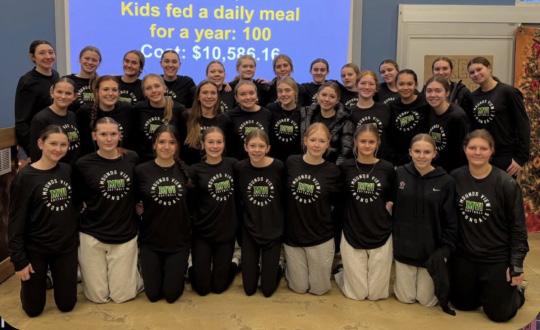
that the groups have long been combined in. “I’ve been working with these kids ever since they’ve been little,” Pearson said. “To see them all come into one high school program has been a treat.”
On the field, the joint team can benefit in terms of competition and depth. With more players available, the team has greater flexibility across positions and a deeper roster overall. “We see strength in numbers, ... kids are going where they can compete ... as far as varsity,” said Pearson. “It has been much more competitive at bat and at fielding. It’s overall created a more competitive environment.”
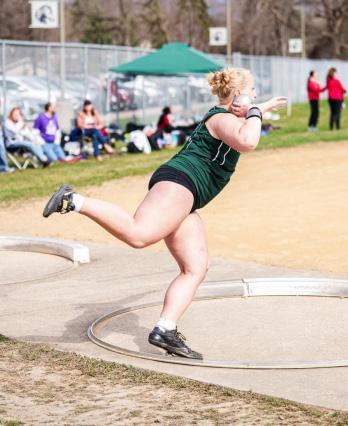
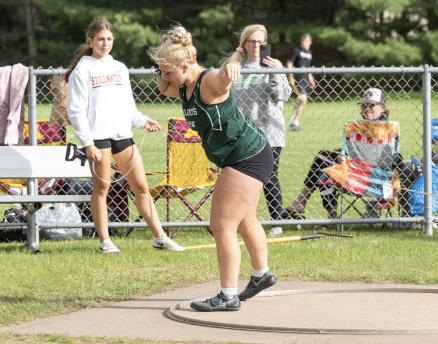
Thriving thrower: Aly Hollister
| Sean Oh SPORTS & GOOD QUESTION EDITOR
What are some of your greatest achievements?
I think my greatest achievement was being able to commit to Colgate for throwing, as it took a lot of work on the field and in the classroom. I also have been able to rank in MVHS all time top 25 for both events and been named all conference three times, But overall, throwing has been able to help me become a better leader, teammate and person overall.
What’s one of your best memories?
One of my favorite memories was the conference meet my junior season. The SEC is super competitive having the state champions in both events, so I always know it’s going to be an extremely tough meet. Junior year conference, I hit a huge PR in discus and won second place and also placed fourth in shot which earned me All Conference for both. What made the meet even more special was going to Chili’s after the meet with all the other throwers.
How do you physically and mentally prepare for meets?
Before every meet, I take 30 minutes to do my hair, I try to do the same style for a whole season. I listen to the same playlist while visualizing and eat a snack, usually an apple sauce and peanut butter & jelly sandwich. Right before I compete, I always do the same warm up as well.
When and why did you start throwing, and why did you stick with it?
I started throwing when I joined the fifth grade track team. I threw shot put at the first meet and won first place, so I knew pretty early on that I wanted to continue throwing. I joined the high school team in eighth grade and fell in love with throwing because the team was so fun to be around and the coaches were amazing.
Who’s a teammate that has positively influenced you and how?
A teammate that has positively influenced me is Anna Ostendorf. She has been getting up at 5 a.m. to lift with me every morning for two years now and without her I wouldn’t be as consistent or dedicated. She has always pushed me to work harder and I am so grateful to have her as a teammate.

What are some future goals and general future in track and field?
I am hoping to have a big season before my career at Mounds View is done. This season, the big goal is to make state and place in both Shot and Disc. After that, I will be heading to throw at Colgate where I am hoping to have an amazing Collegiate career and possibly become a Patriot league champion.
As the season approaches, the focus is on both top performance and positive experience, with players and coaches in agreement on what success looks like. Pearson stated that the team’s goal is to stay competitive in every game and capitalize on close opportunities, while also creating a positive environment for players. “We’re going to see more smiles, better attitudes and just the overall love for the game,” Pearson said. With the increased talent, stronger depth and a unified mindset, the combined Mounds View-Irondale softball team enters the season ready to compete and establish a new identity, one with a singular strong future.
What is one message you would say to your coaches and younger teammates? I would thank my coaches because they are one of the reasons I love throwing. Without the constant guidance and encouragement along with pushing me to grind through things even if I don’t want to, I wouldn’t be where I am today as an athlete or person.
Across
5. The Declaration of Sentiments was modeled after the ______ of Independence.
6. According to the American School ______ Association, the national average students per school counselor ratio sits at 376 students per school counselor.
8. The paid leave includes bonding time for new parents in the early months of ______ and for new adoptive parents.
9. After working in education for 36 years, activities director Jim ______ has announced his retirement.
10. What is the newest animated feature from Pixar Animation Studios?
Down
1. “Love Story” follows the lives of John F. Kennedy Jr. and Carolyn ______ Kennedy.
2. Between 1870 and 1875, women attempted to use the ______ Amendment to gain voting rights.

3. The FCC has chosen to approve the ______ Skydance & Warner Bros. Discovery merger.
4. Pickleball is known for its distinctive “______” sound during play.
7. What is the youth softball program that many athletes previously participated in?
Sudoku Crossword PUZZLES