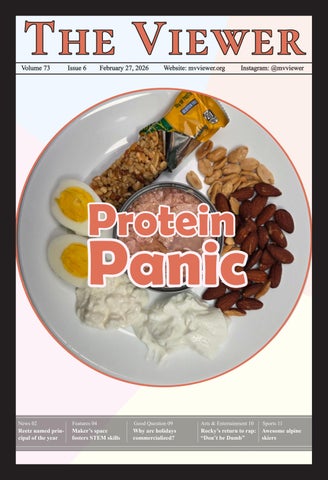
The Viewer Protein Panic

| Jadyn Heath-Hlavacek OPINION AND DEBATES EDITOR
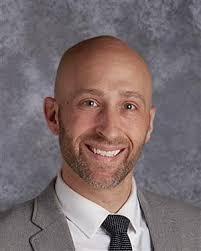
Principal Rob Reetz has been working in the Mounds View school district for around 19 years, including as a principal at Chippewa Middle School and Edgewood Middle School before becoming the principal of Mounds View High School. Reetz said that he did not initially see himself as someone in the position. “The biggest thing for me is belief. I don’t think I graduated high school believing that I could achieve the things I set out to do,” said Reetz. “I had people along my journey increase my belief in myself to the point where then I finally did start believing like, ‘Wait, I can achieve the things I set my mind to,’ … ‘I can ascend to a leadership position in a really competitive school district.’”
Reetz’s past three and a half years as principal of Mounds View High School have shown their effects both in student culture and administration style. As eligible through
the Minnesota Association of Secondary School Principals (MASSP) after three consecutive years working as Mounds View’s principal, the work of Reetz and his admin team has earned the award for 2026 Minnesota High School Principal of the Year. The award is judged based on how well a principal cultivates a culture of wellness, equity, relationships and communication as well as student academic achievement, collaborative leadership and innovation.
According to Reetz, one of the biggest changes that he has made was implementing the phone policy and changing the grading scale to have more fairness, “particularly for students that would be striving for a C.” Reetz focused on engagement, especially with students typically scoring D’s or I’s. Adding proficiency scales, as well as adjusting the grading scale, made it easier to achieve higher scores. “It was really
hard mathematically for kids to earn a C. Because we squeezed the C, it was more likely that if you weren’t an A or a B student, you were getting a D or an I,” Reetz said. As a solution, the school equalized the differences between A’s, B’s, C’s and D’s. These policy changes in tandem help students who, on average, receive lower scores get their grades up in a way that more accurately reflects and uplifts learning.
On top of that, Reetz focuses heavily on attendance, making sure students are in their classes. “There have been fewer fights. There’s less vaping in the bathrooms … From my experience, I think overall, to me, the school feels safer and more focused on academics,” said Associate Principal Benjamin Chiri. These changes include checking in and out when entering or leaving school, as well as systematizing and limiting bathroom passes.
Reetz described balanc-
ing focus on students, staff and parents as a three-legged stool, with each component acting as one leg. “You’re really trying to make sure that stool isn’t wobbly at all, that every leg is sound and sturdy and that what they experience from me is someone that cares, that’s trying to solve problems, but it is a delicate balance,” Reetz said. This balancing act naturally shows in his performance as a principal and was supported by MASSP.
Students across Mounds View see Reetz’s contributions to the school culture. “I see him really fighting for inclusivity and positivity, which I think is a really important thing right now,” said senior Judith McCarthy. Reetz has done this through assemblies, supporting extracurriculars and uplifting student support groups.
Many students notice a change and growth of culture, even if they have not been enrolled at Mounds View High School for very long. “From
what I’ve heard, like before my time, there [were] a lot of fights and stuff. And I think that improving is really important to a positive culture,” said sophomore Cora Gentry. Reetz’s past four years as principal of Mounds View High School have changed the school and culture. From reorganizing grading systems to focus and attendance policies, the presence of Reetz and his administrative team impacts the students across the school.
| Aliyah Rogers STAFF REPORTER
For years now, Mounds View High School has offered several English courses with the opportunity for students to have a more personalized learning experience.
According to Principal Rob Reetz, the upcoming school year will look a bit different compared to previous years, with the addition of an English Language Arts 11 class as an option for registration. The curriculum is described in the 2026-2027 Course Guide as a “foundational language arts course” that will continue to expand on students’ analysis and writing skills. Students will study both nonfiction and fiction works and will “learn the skills and strategies needed for the ACT.” The specifics of the class will continue to be clari-
fied in the upcoming months. This is not a required course, but it is recommended for many students.This decision was the product of multiple reasons, one of which stems from the idea that potentially the courses currently offered are not exposing or preparing students for what is next in their education journey. Taking classes specific to a certain element in English can cause gaps in understanding in future college-level courses.
According to Reetz, the reduction of course options may help guide students in making better decisions about what classes they take. “My hope is that more students choose a sequence of courses that would look like ninth-grade English, tenth-grade English, eleventhgrade English, and then in their senior year, they look at some





more challenging or rigorous courses, ideally one that’s maybe earning some college credit,” Reetz said. “The idea being that we use English 11 to ensure we’re covering all of our bases so that they are prepared to take a college level course their senior year.”
“The idea being that we use English 11 to ensure we’re covering all of our bases so that they are prepared to take a college level course their senior year.”
Rob Reetz, principal
The upcoming school year is unique as it will be the last year students may take Contemporary Literature or Writing Workshop. Elements of Literature and Advanced Elements of Literature are no longer available starting the next school year, as they are offered every other year.
Writing Workshop is a class focused on improving the writing and speaking skills of students. The course curriculum includes outlining, drafting and editing papers to expand on how students utilize the writing process. Over the course of a semester, students will learn how to write personal, process and research essays, which they
can apply if they decide to pursue a post-secondary education.
Contemporary Literature is a semester-long course where students can explore literature from a variety of perspectives and formats. Students can expect to participate in discussions, presentations, assignments and projects, both individually and with peers.
The equity promise Mounds View has with Irondale High School is another factor contributing to this decision.
“Right now, the courses students can take here are different from the courses students can take at Irondale,” said Reetz. “So, this is, among other efforts, to try to align the course offerings between the two schools.”
“In some ways, just reducing a few of the options might help kids make better decisions around what they take. Especially if they’re inclined to make decisions that are the easier path.”
Rob Reetz, principal
Equity promises ensure students across a school district may receive the same quality of education and opportunities, regardless of their background and place of residence.
• Writing Workshop
• Contemporary Literature
•Elements of Literature
•Advanced Elements of Literature List of Classes Leaving
With the extraction of these courses, the new English Language Arts 11 class will pull elements of past curriculums. Notably, this course is planned to include the development of composition and communication abilities, which is a foundation in the Writing Workshop course, along with the range of literary genres exhibited in Contemporary Literature. “In some ways, just reducing a few of the options might help kids make better decisions around what they take,” said Reetz. “Especially if they’re inclined to make decisions that are the easier path.”
Looking forward, English Language Arts 11, Contemporary Literature, Writing Workshop, Elements of Literature and Advanced Elements of Literature may be removed going forward; however, it must be kept in mind that all courses are subject to change. In this move, teachers and administrators hope for a simpler course direction and a more holistic approach to learning the principles of English at Mounds View.
hen most people hear the name Dungeons & Dragons (D&D), one of the first things they think about is the nerd stereotype: scrawny, shy, has glasses, embodies the nerd emoji and plays a tabletop roleplay game (TTRPG) like D&D or Warhammer 40k. But when it comes to the actual players, they are much more diverse than just the stereotype. A notable example is actor Henry Cavill; most known for playing Zack Snyder’s Superman, Cavill is a massive fan of Warhammer 40k.

TTRPGs’ initial stigma originates from the group Bothered About Dungeons and Dragons (BADD), which was formed by Patricia Pulling after she blamed her son's principal for cursing her son and causing his suicide. The group gained traction through conservative Christian groups, believing that D&D promoted satanism,
witchcraft, voodoo, sadism, murder, gambling, demon summoning, prostitution and many other acts that would fall under the seven deadly sins. Another major concern of BADD was that most of the Modules, prewritten stories, had their own gods. "There was also a view that youth had an inability to distinguish between fantasy and reality," said David Waldron, author of Roleplaying Games and the Christian Right: Community Formation in Response to a Moral Panic, in an interview with BBC News.
As time has gone on, BADD has mostly faded after studies by the American Association of Suicidology and the CDC declared no link between D&D and suicide. Starting in the early 2000s, the stigma shifted away from Christian beliefs. The modern stigma of TTRPGs being nerdy stems from the advertising being focused on people who like fantasy and science fiction, which aligned with the nerd stereotype and the idea of staying inside
with a group instead of going outside and playing a sport.
More than just “nerds” have experienced the impact of TTRPGs; they’ve affected most forms of popular media. First, taking a look at video games, lots of role-playing games (RPGs) take inspiration from TTRPGs: Cyberpunk 2077 is based on the TTRPG Cyberpunk Red and Cyberpunk 2020, Baldur's Gate 3 is based on D&D 5th Edition. Many others take inspiration from mechanics of TTRPGs, such as horror games, like Darkest Dungeon, which take inspiration from the sanity mechanic of The Call of Cthulhu. Stepping away from games, movies have been inspired by TTRPGs just as much. Both the Demogorgon and the Mindflayer from “Stranger Things” are inspired by their counterpart in D&D, and the 2023 film “Dungeons and Dragons: Honor Among Thieves” is directly based on D&D.
When there are so many other forms of media to experience TTRPGs through, many argue that playing a physical table-top roleplay game is

impractical. However, other than Warhammer 40k, TTRPGs tend to be less expensive than the other forms of media with most resources available online for free. Other forms of media generally face more re strictions of the medium: mov ies are a linear story and video games allow limited freedom. Even role-playing games like Baldur’s Gate 3, which is set in the universe of D&D, have a set plot, even if they include a few separate paths and endings a group can take. In TTRPGs such as D&D or Cyberpunk, even if the Game Master (GM), the person who tells the story and plays as both the enemies and non-playable characters, has a prewritten story they are following, the players could decide to join the antagonist.


The one thing the other forms of media have over the originals is that you can do them without a group. Even so, they remove one of the best parts of playing TTRPGs: group inter-
actions. In a single player game, every choice is made by one player and the results are more predictable, but in a group, each player has very different mental processes, which leads to more impromptu, chaotic interactions. It is a group bonding experience and develops improvisation to explore an open world. With how ridiculous the original stigma was and how the modern stigma is entirely because of the marketing, we should destigmatize TTRPGs, especially because they have already influenced some of the most popular current media.
t is well-known that history repeats itself. The key to stopping this pattern is to recognize when it is happening, a crucial aid being Genocide Watch’s ten stages of genocide that can be matched up to genocides such as the Holocaust and Nazi persecutions and the genocides of Cambodia, Rwanda, Bosnia and Darfur. Originally identified in 1987, these stages were developed by Gregory Stanton and expanded on over time. The stages of genocide are very important to understand right now and can compare to the current-day attitude towards immigrants in the United States.
Stage one, classification, is defined as the division of “us” and “them” with people who are perceived to be different by others. This is undoubtedly similar to today’s xenophobic attitudes towards immigrants, with the attitudes towards them from many Americans and our country’s current administration.
Stage two, symbolization, occurs when the people considered “different” are required to wear something to identify them. Although there is not much in current society to compare exactly to this stage, the stages do not have to be linear to still be happening, and we are still nearly identical to many of the stages of genocide.
Stage three, discrimination, is when the dominant group denies civil rights or even citizenship to identified groups. Lack of access to healthcare would be one way that immigrants are openly discriminated against, along with increased racial profiling and police brutality.
According to a study by PolicyLink, when asked if they had been stopped by police without cause, 62% of Latino immigrants responded “yes.”
When those seen as “different” are treated as if they are not humans, it is considered to be stage four: dehumanization. Nazis referred to Jewish people as “vermin” or “rats,” Tutsis were referred to as “cockroaches” during the Rwandan genocide,
etc. Now, immigrants in the U.S. are referred to in the same dehumanizing manner. “The Biden Administration exploited the CBP1 app to allow more than one million aliens to illegally enter the United States,” said President Donald Trump in a video message on the White House’s YouTube channel. With the president of our country saying dehumanizing statements about a group of people, it encourages his supporters to think the same way and has brought us to that stage.

Stage five is organization. Regimes of hatred train those who go on to carry out the destruction of a group of people.
Both the Nazis and the Jangaweed, a militia group responsible for the genocide of Darfur, are past examples. An identical comparison to this stage would be the U.S. Immigration and Customs Enforcement, also known as ICE. Their job is to detain immigrants who are here illegally, and they have carried
that out in extremely violent ways, ending in death in some cases. Recently, ICE has been going into neighborhoods and demanding identification papers. “ICE, going door to door and making sure that if you’re an illegal alien, you’ve got to get out of this country,” Vice President JD Vance told Fox News when discussing what was to happen with immigrants. The Nazi regime also went door to door in this same manner, seeking out Jewish people.
Stage six, polarization, involves exaggerating the differences between the target group and the persecutors, often through the spreading of propaganda of hate groups. Currently, this presents as blatant propaganda promoting ICE and villainizing immigrants that has taken over social media. This successfully influences many within both older and younger generations, but especially younger ones. The White House’s TikTok account has
posts saying things such as “ICE is taking the worst criminal illegal aliens off our streets to keep Americans safe and save lives.” They even post memes of funny videos with text over them saying “Illegals coming over the border under Joe Biden.”
The last update of our country’s immigration system took place in November 1990, according to the American Immigration Council. We are much more than long overdue for a change in this system, and it is critical that the struggles immigrants face in today’s world need to be acknowledged and changed. Borders are just made-up lines on the ground and immigrants are people just trying to live their lives. With so many horrible genocides having taken place in the past, stopping that from taking place again brings cruciality to recognizing these things in the early stages, and we are in more than just the early stages by now.
| Leo Chen STAFF REPORTER
About a year ago, career and tech education teacher Tim Berndt received an unexpected phone call. A former student, now a military pilot who graduated from the Air Force Academy, called to share his success. “He said, ‘Because of you, I’m doing what I had dreamed of doing,’” Berndt recalled.
The student had taken Berndt’s engineering classes years earlier at a different school, absorbing skills and confidence that shaped his career path. Now teaching at Mounds View, Berndt brings that same approach to every class, designed to create similar transformative experiences for students.
The maker’s space at Mounds View offers a selection of engineering courses accessible to almost all Mounds View students. These classes — including How to Make Almost Anything I and II and Welding — offer students access to equipment ranging from laser cutters and 3D printers to plasma cutters and industrial CNC machines. As National Engineers Week approaches (Feb. 22-28), these courses represent a practical model of engineering education: one where students learn practical skills applicable to many engineering careers in addition to conceptual science.
With building real skills in mind, the maker’s space prioritizes tangible, approachable de-
| Vedant Vashishtha STAFF REPORTER

velopment. Students do not just learn about engineering principles; they practice them. These hands-on experiences differ fundamentally from traditional classroom learning. “I find that a lot of students that come in here, they’ve never used this equipment before, which is exciting for me because then it’s, ‘hey, this is awesome, this is authentic real-world learning,’”
Berndt said.
Beyond mastering individual machines, students learn systematic approaches to solving problems. Students design, build, troubleshoot and rebuild their projects in creative ways that aim to hone their skills. “I focus on the design process,” Berndt said. “Identify the problem, do some brainstorming,
see what’s out there, generate some concepts, make a prototype, test it, make it better and then launch it and make it for real. It’s a system that I try to instill in students.”
However, students in Berndt’s classes are not the only ones who can use this space. From early February to midMarch, Mounds View physics students work on building a Rube Goldberg-style chain reaction project in preparation for the annual Physics Fair. When physics students began planning their chain-reaction demonstrations, the concepts from class met the challenges of construction. Science teacher Matt Washenberger uses 3D printers to create parts for catapults and hovercrafts, showcasing possi-
y developing new voices, perspectives and connections, the Mounds View High School Speech team continues to grow its presence around the school community. Every Thursday, the team meets in the forum to build speaking skills to utilize in their weekly Saturday tournaments that start in mid-January and run throughout the winter season.
Speech, a Minnesota State High School League (MSHSL) sponsored activity, is a way for students to develop communication skills, like confidence, diction and firmness. Competitions involve participants performing in front of a judge and a small group of other competitors. They are ranked based on preliminary rounds in an attempt to make the final round, where the awards are given to the highest-ranked speakers.
The participants have the opportunity of competing in one or more of several categories, including informative, humorous and extemporaneous speaking. The most popu-
lar category is original oratory, which is a persuasive speech written by students. “Every student has to meet with a coach every week, and we teach them how to do their category,” said head coach Bailey Hess. “We take any judge feedback and we work with the students to get better at whatever category they’re in and whatever speech they’re giving.”
“We take any judge feedback and we work with the students to get better at whatever category they’re in and whatever speech they’re giving.”
Bailey Hess, head coach
Speech nurtures a lot of qualities, such as public delivery and consists of key elements such as analysis, creativity, research and more. The Mounds View speech team consists of assistant coaches Miranda Gonzalez-Paul and Dan Olson. The team is captained by seniors
Emmett Heilman, Ella Kirubakeren, Maryam Shahkhan and junior Aishah Javed.
Recently, the Speech Team competed in competitions at Prior Lake High School on Feb. 7 and Forest Lake High School on Feb. 21, winning several individual awards. They compete in other invitational tournaments as well, including at schools such as Chanhassen High School and Two Rivers High School. “The most fun one, in my opinion, is our tournament [that] we host with Irondale,” said Heilman, who was a state finalist last year. “We pair up, we do our Medieval Melee tournament.”
The captains plan team bonding events, fundraising events and other opportunities. They also act as a contact support for members on the team as well. Other than learning about new communication and speaking skills, the members of the Speech Team also enjoy this activity to make new connections and hang out with their friends. “There’s a lot of fun team bonding stuff that we do, even outside of tournament days, like we’ve gone to Feed My Starving Children. We’ve had mov-
dents in the last 10 years say, ‘oh, I’ve never built anything before. I’ve never had a chance to build anything,’” Washenberger said. “And more often than not, they’re grateful that they’ve had that experience.”
For many students, this shift means recognizing the gap between classroom problems and real-world application. “I feel like the physics that we learn in class is too theoretical,” said senior Calvin Schwickerath, an AP Physics 1 student. “It’s really easy to just trial and error.”
bilities to students. “I can showcase to the kids, like, ‘yeah, this can be made.’ And if you want to modify it, we can make a modification,” Washenberger said. “And then I encourage the students to help out with the modification and brainstorming.”
The maker’s space provides both the equipment and knowledge base students need to execute ambitious projects. Resources like this help students bridge the gap between classroom theory and hands-on construction, turning abstract physics concepts into working mechanisms.
The maker’s space often transforms students’ relationship with building and engineering. “I’ve had a lot of stu-
As National Engineers Week emphasizes the importance of STEM education nationwide, these courses show hands-on learning approaches. Students develop skills and explore careers beyond standard coursework.
The maker’s space represents more than a collection of engineering electives. These courses provide the practical foundations that transform students from learners of concepts into builders of solutions. The maker’s space provides the medium in which students create and innovate.
Whether building physics fair projects or exploring engineering careers, students gain skills that extend beyond the classroom. The maker’s space classes continue to shape how students approach challenges and develop practical skills that extend beyond high school.

ies we watched together,” Heilman said.
The Speech Team does require a time commitment, with practices and tournaments consuming substantial hours. “I’m gonna say almost 10 hours off the top of my head,” Heilman said about the average time per week that he spends on Speech, especially when preparing for tournaments. This includes
meeting with a coach, weekly meetings and self-preparation. The Speech Team is for everyone at any place in their speaking abilities. “If you like to talk, or if you have a story that you want to be heard. Our motto on the Speech Team is ‘find your voice,’ because it is a great activity to realize that your voice has power,” said Hess.
| Ava Wagner STAFF REPORTER
For most High School students, an essay acts merely as another graded assignment on the to-do list, but for Mounds View sophomore Nandana Nambiar, words drive her passion for patriotism and progression, facilitated through her essay writing. By creating a five-minute speech, Nambiar proved the impact of vocalizing opinions and self-expression, touching many hearts in the process, and was named the Voice of Democracy state winner this year.
At just 15 years old, Nambiar’s passion and work for public speaking and advocacy in recent years allowed her to compete at district and state competitions where she dem-
onstrated her talent for communication, amongst an audience and other competitors, naturally paving the way for her most recent challenge, Voice of Democracy.
In terms of previous writing experience, Nambiar has a history of speech and also competed in a middle school VFWsponsored competition, the Patriot Pens. “I took part in that in my eighth-grade year. My teacher kind of promoted it,” she said. Her teacher planted the seed for continued VFW essay writing for high school, leading to a district win in ninth grade and a win this year.
Positively impacting people with her words motivates Nambiar to go beyond aca-

demic excellence. “I think having the ability to move people that way with just a five-minute speech is really important, and it’s really meaningful, and it really gives me a sense of purpose. And I think that’s what it really means to be a Voice of Democracy winner.” Being familiar with the podium played a vital role in preparing Nambiar for her speech, one of the many factors for her success.
“How are you showing patriotism and support for your country?” read the prompt for districts, requiring some thinking from Nambiar. “But what I started off first was, what is patriotism?” Nambiar said. Patriotism for her is like “the unconditional love of a mother for her child … I am going to love my country no matter what … We will criticize, we will try to improve, we will nurture it, we will help it grow, but we will love it regardless,” said Nambiar. By creating a visual metaphor, she was able to captivate the attention of listeners, comparing her patriotism to a mother’s love and responsibility for her children. Not only does her argument successfully paint a picture, but it also suggests that the most patriotic acts involve guidance.
Nambiar wrote a speech so powerful that multiple people came up to her afterwards to tell her they got goosebumps and were put into tears. She believes that the power to move people in this way has brought a sense of purpose to her life and writing. Every tear, goosebump, and reaction serves as a reminder that her work brings value to the community. Her realization of being seen significantly shifts her perspective, as her audience encourages a deeper analysis of reflection of her work.
Regarding future projects, Nambiar does not know where life will take her and how her perspectives will change. “You know, we are high schoolers, there are limitations, obviously, [but] there are still a lot of things we can do. And I think it’s often overlooked how much we can still do for our country, even though we are children,” said Nambiar. Although Nambiar recognizes potential roadblocks, she refuses to let her age define the capacity of her impact.
Nambiar’s victory represents the impact of public speaking while reminding people that history is still be-
ing written. By making a personal mission out of her vocal essay, she connected with those of similar mindsets, creating an unforgettable moment for all involved. The win was not only a display of public speech, but it also proved that a voice of democracy does not have an age limit, setting an example for peers and the general youth.

| Max Swanson STAFF REPORTER
As semester two began, Mounds View welcomed the newest staff member, English teacher Brett Michel. Although new to the high school, Michel is no stranger to the Mounds View District, working at Chippewa for 12 years before his

position at Mounds View. Since November, the English department had been in need of a fulltime instructor following the resignation of former English teacher Ted Bennett. Fortunately, Michel took up the position of teaching Creative Writing and English 10. Since his time as a middle school student, Michel found himself drawn to the creativity of writing within his English courses, though he was never too interested in reading until he got older. “I ended up getting the right teachers that made the reading part of it interesting, and I just enjoyed the conversations and the art of communicating,” Michel said. His love for the subject led him to pur-
sue an English education at the University of Wisconsin–Eau Claire, where he eventually transferred to the University of Wisconsin–River Falls after his freshman year. Teaching in Minnesota became a priority in his life, so remaining close to home for college seemed like the best idea. “I knew I wanted to teach in Minnesota and more of my field experiences would be in Minnesota because I was closer to the border,” he said.
Landing his first teaching job at Chippewa Middle School, Michel taught a media literacy class requiring students to look beyond the surface level to evaluate media’s purpose to the fullest extent. “I loved it. I can’t say anything but positive about Chippewa,” said Michel.
The unexpected opening of the position at Mounds View served as a main reason for his transition there, but he also chose to switch schools because his family was close to Mounds View’s community and because he was already a member of the football coaching staff.
His classes at Chippewa now have a new teacher. “There is a great staff and a strong team of teachers and that helped with the transition,” said Michel. “I also did my best to support the
new person because I wanted my former classes to have a positive experience through the transition.”
Michel’s past at Chippewa lets him possibly teach and reconnect with his previous students once again. “From my perspective, it has been very enjoyable! It has helped with my transition to the new building,” he said.
With a new environment comes new opportunities. Michel mentions his goal of further intertwining himself with the Mounds View High School community, stating he looks forward to “just settling into the community that I’ve already been connected to.” As he begins his first semester, Michel looks forward to making an impact on the minds of students and to providing stability for the department in need, aiming to foster the Mounds View community, whether it be among staff or students.
Michel described his excitement for teaching older students and expanding on heavier, more thought- provoking topics. “Obviously, there’s more in-depth content, you know, more geared towards older audiences, so yeah, I like it a lot,” said Michel.
As Michel transitions from middle to high school English, he brings his passion for community, learning and language with him, planning on not only filling a vacancy but also making a larger mark at the school through teaching English. Michel described a positive transitional experience as he navigates high-school teaching, “I am very grateful for everyone’s support through the transition. I have been able to settle in, and I am still learning new things each day,” he said.
For the past few years, increased protein consumption has been one of the biggest food fads to reach the mainstream. But how healthy are protein-heavy diets really?
| Keaton Howard STAFF REPORTER
| Anna Hayek STAFF REPORTER
P People’s New Year’s resolutions often include something about changing themselves physically. This could be cutting weight or gaining muscle. A big part of these changes is in how a person eats. Usually, eating junk food is not going to help a person to redefine their body for the better, so the trend of trying to eat better rises. With this rise in better consumption comes the big player for healthy macronutrients: Protein.
Protein is an essential nutrient for all body functions, from maintaining cells to helping to regulate metabolism. Its most famous function is helping build muscle tissue; this is what most people think of when they think of protein, as a super nutrient, and as of recent years, Americans have been eating more and more of it. According to Cargill’s 2025 protein profile, people have been eating more protein in recent years than they have in the past. The profile cites that 61% of Americans increased their protein intake in 2024 versus just the 48% in 2019.
One of the reasons Americans are eating more protein is concern about body image, or the way people see themselves in the mirror. Many Americans find themselves unsatisfied with their body image, and they try to find ways to “fix” it, for better or for worse. “It can have negative impacts indirectly, like obsessing over aesthetics or your body is an unachievable goal,” said senior Conrad Higgins.
Protein is a fantastic tool for building muscle and for
helping people cut pounds, and this is a big reason for the rise in protein consumption. A study by the Jeju National University Hospital about the said topic states that clinical trials have shown that consuming a highprotein diet can induce weightloss and lower cardiovascular disease risk factors.
Another big part of someone’s body image is their muscle mass. Muscle mass is the amount of muscle someone has on their body, with a high amount of muscle mass often seen as positive. Muscle mass is hard to build without the proper building material; this building material is amino acids. Consuming protein is responsible for making these amino acids, and therefore helps to build and recover muscle tissue. In this way, protein affects body image significantly due to its musclebuilding properties. “As Americans, protein is something we hyperfixate on,” Higgins said.
It seems like labels with “high-protein” on them are everywhere: at the grocery store, at the gym and especially on social media. Social media is a big cause for the growth of this protein craze, exposing many users to posts advertising diets or products like protein powders in order to have the “idealized body” that social media influencers push onto their audiences. “I think people are always looking for quick ways to be healthy, and I think this is a way right now that the media is trying to get people to be healthy, and people are buying into it,” said health teacher Diane Shaw.
Another reason that social media affects this issue so much is because of the idealizing of a specific body type becoming more prevalent. Everywhere
rotein is a significant part of people’s diet, but in the past couple of years, there has been a significant shift in how people value protein in their diets. According to the Currency, a little over 46% of Americans spend money on protein-specific snacks. According to Mintel, many notable companies, such as Starbucks, PepsiCo and General Mills, are rolling out products specifically focused on protein, as products on the market with claims to protein have quadrupled between 2013 and 2024. Data from the Centers for Disease Control and Prevention shows that the average adult eats more than 20% over the recommend-
ed amount of protein a day. While this is not inherently bad, consuming more animal protein can have negative effects like heart disease.
The current administration has flipped the former food pyramid on its head, now focusing on protein from animal products and dairy, alongside fruits and vegetables, followed by fats coming from healthy sources and finally, whole grains with an overall emphasis on whole foods over processed ones. Some students find this pyramid to be not as healthy as they would like. “I think there are too many veggies,” said junior Zach Liechty.
Others find it to be unnecessary. “They made a South Park episode where the whole point of the episode was [that]

on social media, people are exposed to the harsh body expectations presented through apps such as Instagram. These extreme expectations make many feel very uncomfortable about their own body-image. “Most people think that you should be eating a lot of protein to eat right, but the average American is hitting their protein,” Higgins said.
People stop at making their protein goals in order to redefine their bodies, but some go to extremes. Some turn to lowcalorie but high-protein diets, and some eat as much protein as they can. One example of this is something called the carnivore diet, essentially only eating high-protein meat and poultry, cutting out everything else.
“I think people are always looking for quick ways to be healthy, and I think this is a way right now that the media is trying to get people to be healthy, and people are buying into it.”
Diane Shaw, health teacher
These diets can be successful for some aesthetic reasons, but they are not necessarily healthy. A study published in Science Direct has shown that too much protein intake can cause problems, as it can lead to kidney stones and other ailments. Another fact to consider is that too much of anything is bad for
health and can lead to harm in the long run. This “protein craze” has spurred lots of different ideas about people and their bodies. These ideas can be good, such as generally treating your body well, or potentially harmful, like over-consumption of protein or other body-modifying methods. What it boils down to is that everyone is their own individual and can make decisions based on that fact, rather than what others think.
The new USDA food pyramid was released on Jan. 7, 2026, updating the guidelines for nutrition. The guidelines reflect the goals of the Secretary of Health and Human Services, Robert F. Kennedy Jr., to “deliver a clear, common-sense message to the American people: eat real food.” According to the new guidelines:
• Protein should be prioritized with every meal.
• Raw fruits and vegatables should be eaten throughout the day.
• Whole Grains should be focused on, with refined carbohydrates being sharply reduced.

they flipped the food pyramid,” said junior Eli Steiner. “The fact that it’s actually happening is hilarious.”
In the past, diets limiting the amount of carbohydrates one eats have been popular but controversial. One low-carb diet, the Atkins diet, but has been popular in the past, has now been condemned for its

risk of heart disease due to its high-fat component. This diet said cutting out carbs and eating a high amount of fat was the key to weight loss, something that does not necessarily make you healthy. The new pyramid puts whole grains as the food you should eat the least amount of; however, carbohydrates are necessary for energy for highintensity workouts, like lifting weights, running or swimming, according to the National Library of Medicine.
Many people cite health as a reason to eat more protein. “I do it after lifting. It’s good for everything,” said junior Eliot Dunford. Many people who lift weights frequently find protein beneficial to grow muscle tissue.
Others do not see as much of an appeal for specific protein products. “I think there’s been a real big health shift recently, in the past five, six years. So a lot more people I’ve seen taking protein. I don’t know. I think

it’s gone too far,” said Steiner. Overall, most students who lift find that protein from natu ral sources is better for them. “If you eat, like, genuine natu ral protein, that’s good. But if you eat, like, a lot of the artifi cial protein, a lot of those prod ucts aren’t actually super safe for you,” said Dunford.
“If you eat genuine natural protein, that’s good. But if you eat a lot of the artificial protein, a lot of those products aren’t actual ly super safe for you.”
There are many available specialized products that fo cus on protein, such as protein drinks, bars and even chips.

| Lale Akkin PRINT EDITOR-IN-CHIEF
Protein is an essential nutrient to the human body, mainly helping grow, repair and assist cells. Set by the Food and Nutrition Board, the recommended dietary allowance (RDA) for adults is 0.8 g/kg per day. Someone who weighs 60 kg would need at least 48 grams per day, which would be around 1.7 ounces of meat, potlery or fish. Two eggs would also meet this, or half a cup of baked beans.
One reason people raise their protein consumption has to do with protein’s capability to make foods very filling, letting consumers get energy while eating less. The same number of calories of protein would make someone feel fuller than the same number of calories of carbohydrates, according to science teacher Nancy Johnson. Carbohydrates are broken down into glucose to give “quick energy,” meaning that a carbohydrate-only diet would leave someone hungry again after just a couple of hours.
In comparison, protein breaks down into amino acids, which are rebuilt to make new proteins, hormones, enzymes and other compounds. There are many types of enzymes; some notable ones help with digestion or DNA replication. Protein also plays a large role in hormone regulation because of its role in producing peptide hormones.
The common functions of protein have to do with building and repairing muscle, bone, skin and cartilage. Muscle protein
can help with muscle growth by repairing microscopic tears during exercise, making muscles more resilient. After workouts, many consume high-protein foods to maximize muscle protein synthesis, which leads to more effective muscle reconditioning and rebuilding, according to a study by Luc J C van Loon, a professor at Maastricht University Medical Centre.
Increased protein consumption can also help manage type 2 diabetes. According to a study at the University of Minnesota, high-protein diets benefited glycemic control, the management of blood-glucose levels, and served as a cost-effective way to treat type 2 diabetes mellitus.
While there are benefits to consuming more protein, too much can have negative side effects. Consuming too much protein can also be hard on the kidneys, worsening renal function, according to a study published by the Journal of the American Society of Nephrology. High-protein diets can cause intraglomerular hypertension, possibly leading to kidney hyperfiltration, glomerular injury and proteinuria. “Your kidneys are like a filter for your body … If you’re only having protein, it’s just harder for your kidneys to filter out what you need and what you don’t need. And so your kidneys are just working harder,” Johnson said.
According to the American Heart Association, consumers usually get these high amounts of protein by eating meats high in saturated fats, which can lead to elevated cholesterol levels of LDL, a type that can lead
to heart disease or stroke if too much is consumed. In addition, having too much protein can come at the expense of other food groups that most people already tend not to get enough of, like fruits and vegetables. Carbohydrates are also important, providing fiber for the digestive system and glucose for cells to create ATP and function properly.
On the other hand, getting too little protein, known as protein deficiency, can also be a problem. There can be shrinkage of muscle tissues, buildup of fluids at the feet and ankles, difficulty transporting oxygen around the body as well as slowed growth, according to Better Health Channel.
Whether or not increased protein consumption is healthy for everyone, some believe that with this effort to have a healthy diet and body, people have been paying more attention to nutrition labels. “I am hoping that that could help people expand and start thinking about, ‘Okay, if this has this much protein, how many carbs does it have, how much sugar does it have?’ So I like how it’s getting people to think,” said health teacher Diane Shaw.
Consuming too little and too much protein can have negative impacts, and people’s needed amount varies based on their weight, sex, exercise and more. Different days can also demand different amounts of each nutrient, but in general, a balanced diet is important. “You need everything, but you don’t want too much of anything,” Johnson said.
| Erin Goareguer STAFF REPORTER
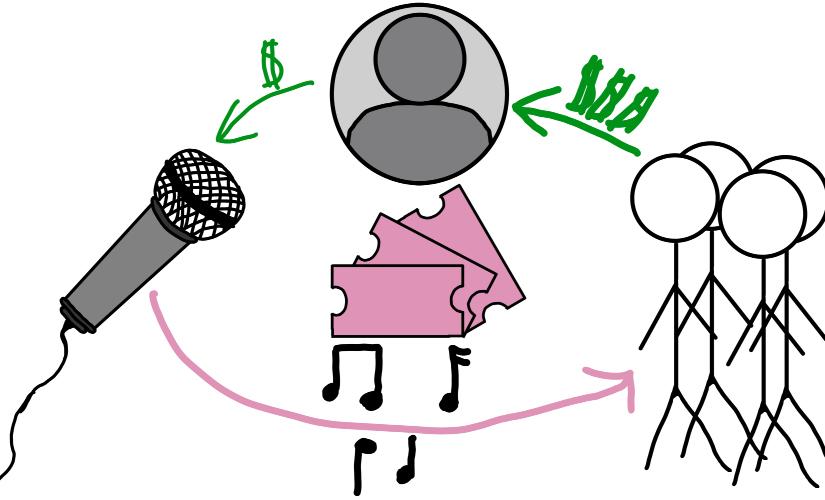
As the internet and social media slowly grew, reselling also began to spread across every domain, from sports to clothes to music. Concert ticket reselling is ever abundant, especially for famous artists or when the artist only performs for a small number of dates. Despite the controversies, it still proves useful for some people.
points
- Big concert tickets sell out fast
- Reselling delays sellouts and makes tickets accessible for longer
- Artists raise prices as the concert date comes
- Reselling allows for possibly lower prices
- It allows an alternative to refunds, since most artists don’t offer them
For very famous artists, concert tickets get purchased fast, sometimes in just a few minutes. For the Taylor Swift Eras Tour, multiple locations sold out in under an hour, and every venue was completely sold out within a day upon initial release. This would still happen for big artists even if resellers were not buying them up. For the Eras Tour, Ticketmaster already had thousands in queues and a limited number of tickets per purchase. Reselling gives the opportunity to
people who could not get tickets immediately to buy them later. It also offers the possibility of concertgoing people who discovered the artist or did not know there was a concert until after the original sell time to still see them on stage. Many people cannot free themselves from their work, children or day-to-day lives to wait for hours in a queue just to possibly be met with disappointment or a crashed website. Even in office jobs, most people are not allowed to take their break when they want to.
Sometimes, when people get tickets to a concert, they later find out they are too busy to attend. People may also purchase too many tickets then the number they need. Life circumstances could pop up, and someone may need the money a ticket refund would give them. However, many artists have a no-return policy, which forces people wanting to get a refund to resell instead.
Tickets tend to rise in price as a concert date approaches anyway, but a ticket that was bought during early-bird prices and is later resold can compete with other tickets and still turn a profit. This means that reselling maintains price competition that prevents artists from overly price-gouging.
Contrary to what some think, many apps and websites for ticket reselling are safe and
verified. About 12% of resold tickets are scams; it is a risk, but it can be avoided. People reselling on social media platforms such as X, Instagram, or Snapchat are more likely to be unsafe, especially if the profiles do not have any personal information such as a name or profile picture. If the person reselling requests an unusual way of payment such as gift cards, peer-to-peer or moving to a different platform from the original post, or if the seller is trying to rush the sale, the transaction is more likely to be a scam. An unusually low price is also a negative sign. As a concert date approaches, tickets usually increase in price. A ticket that is at an early bird price two weeks away from a given concert raises an alarming sign.
Allowing ticket resales furthers opportunities for concert-goers, especially those who have work or school commitments during the times ticket sales come out. Because of common no-return policies, reselling works as an alternative and buying a resold ticket can pose minimal risk as long as the buyer knows the basic signs of a scam. On top of that, the existence of resold tickets naturally keeps ticket prices lower for longer for concerts that do not sell out as fast. The ability to freely resell tickets is better for both the consumer and the reseller for concert accessibility.
Anyone who has tried to see a somewhat-popular musician in concert knows about the issue of ticket reselling. A subject growing not only in practice but also in controversy, the concert ticket resale market has existed for decades and persists in only gaining more of a presence. When tickets for high-demand artists go on sale, resellers immediately jump into the online purchase queues along with the fans, where the tickets get resold elsewhere and make things significantly more difficult for fans who hope to get tickets to see the musicians they love.
points
- Reselling raises concert ticket prices
- Consumers pay more buying from a reseller than the artist
- It is harder to buy tickets when they come out
- Resellers and bots take up space in queues
- There is less security in ticket purchasing
- With a secondary market, it is easier for people to get scammed
Highly inflated ticket resale prices are possibly the largest drawback for resales. Tickets get resold for hundreds or thousands of dollars more than the original tickets, according to Capital News Service. For example, the aver-
Rue Royer | STAFF REPORTER
age resale ticket price for Taylor Swift’s Eras Tour was $3801, according to an analysis by Business Insider.
The absurdly high resale prices usually cannot be afforded by everyone who wishes to purchase tickets. Artists do have control over the price of their concert tickets and, if not for the presence of resellers, could solve the problem of inaccessibility. For instance, Robert Smith of The Cure is a huge advocate for affordable tickets and sets the ticket prices at his concerts sometimes as low as $20. Most musicians do care about how accessible their shows are for their fans, and resellers just get in the way of this. No matter how big an influence an artist has, fans should still have the opportunity to see them in concert.
The prices are only one inconvenience. Ticketmaster crashed during one of Swift’s pre-sales due to all the fans and resellers flocking to it, which resulted in many lawsuits from fans. Ticketmaster now has a resale purchase policy in place, yet that has not at all put a stop to reselling. The abundance of resellers in the ticket market makes fans seeing their favorite artists much less accessible. When resellers are buying tickets along with the fans, it gives fewer opportunities for fans to get tickets. They take up space in initial sales queues for a lot of earlybird pricing.
Resale ticket scams claim a significant num-
ber of victims. About 12% of ticket buyers end up getting scammed, according to CNBC. The presence of resellers created the secondary market, and this secondary market has been infiltrated by scammers on multiple platforms, such as social media. If there were no resellers, most people would not have to resort to buying their concert tickets from a secondary, less secure market. Instead, consumers could assume tickets not sold from an official website are scams without the possibility of resale.
Not as many benefits arise from the reselling of concert tickets compared to the vast number of problems, such as prices, inaccessibility and scams. If no one wants to pay for expensive and hard-toget tickets, no one will go to concerts, resulting in a fall of concert culture. An absence of resellers would mean an absence of these stressful and overly complicated situations for fans as well as musicians.
| Shriyan Deshmukh STAFF REPORTER
ajor holidays used to be about celebration, generosity and spending time with others. Nowadays, major holidays are becoming increasingly commercialized, driven by large corporations like Amazon, Target and Best Buy. Massive sales events like Black Friday, Christmas, Valentine’s Day and Easter dominate the calendar, shifting attention from meaningful celebrations to consumer spending.
Dating back to the 1840s with the industrial revolution, mass production made goods cheaper and more widely available, leading to the growth of consumer incomes and the rise of the middle class. In 1858, Macy’s became the first department store established in the United States, signaling the shift to buying from large stores rather than local artisans. Department stores started offering products with window displays and seasonal promotions to attract customers. This period laid the groundwork for the commercialization of holidays in later decades.
The rise of Black Friday has been significant in shaping consumer spending. According to Insights in Marketing, Black Friday was not just about deals, but about the chaotic day where consumers would flood shopping centers to snag items. Events like the Macy’s Day Parade serve as a signal that shopping is starting back up and increasing sales. Retailers took advantage and opened stores at
12 AM. As the holiday became longer, it also became more digital, with the first Cyber Monday in 2005 and later COVID making online shopping and artificial intelligence tools more powerful. According to Forbes, Black Friday sales were around $11.5 billion in 2025, the most ever. “It feels like the holiday shopping season has grown much longer,” said Jonathan Nuss, social studies teacher. “What used to be one or two big sale days has turned into weeks of deals.”
“It feels like the holiday shopping season has grown much longer. What used to be one or two big sale days has turned into weeks of deals. ”
Jonathan Nuss, social studies teacher
Between 1946 and 1964, a time commonly known as the baby boom, another consumerism movement emerged in which families bought homes in suburbs and moved outward. With more space and money, car-dependency rose, which led to shopping malls becoming essential in daily life. These malls were massive hubs for shopping, offering gifts and decora-
tions in a convenient location. Advertisers started to promote commercials focused on families, promoting the purchase of goods during holidays. This period helped foster a connection between suburban life, shopping culture and holiday consumerism.
Advertising and media influence have transformed holidays from more traditional occasions into major commercial events, bringing billions of dollars in spending. Brands use cultural icons to create a good look for sales months. In the 1930s, Coca-Cola popularized the common red Santa Claus image known today. Other consumer products and mascots soon after became synonymous with other holidays: chocolates and flowers for Valentine’s Day, the Easter Bunny for Easter, patriotic apparel for Independence Day and car brands’ low-interest financing during Memorial Day. In recent decades, social media has been used especially for influencer marketing, where retailers partner with major influencers to promote holiday products. During Super Bowl LVII, McDonald’s partnered with Cardi B and Offset, offering promotional meals, turning cultural events into big marketing opportunities. “Social media puts people under a constant advertising blitz,” Nuss explained, “It’s much harder to tune out compared to the past.”
As holidays have become more commercialized, social pressure has become a big
factor in how people celebrate. According to PR News Wire, nearly two out of three Americans are unsure how much is safe to spend during the holiday season, especially after Thanksgiving. Over half admit buying a gift for obligation, with parents feeling the most pressure. Around 76% of parents with children under 18 report spending out of guilt. Social media has increasingly intensified these pressures by promoting perfect holiday experiences. “The temptation to buy more feels stronger because it’s always in front of you,” Nuss said.
| Sidharth Sharma ONLINE EDITOR-IN-CHIEF
or many high school students, success is often reduced to a number: a GPA, class rank, or test score. From the first day of freshman year, students are taught to track their progress through grades and transcripts, measuring themselves against classmates and expectations. Yet national data and education research suggest academic performance, while important, represents only one dimension of how schools measure outcomes.
Standardized testing remains one of the most visible benchmarks of achievement. However, recent results illustrate how scores can reflect broader conditions beyond individual effort. According to the National Assessment of Educational Progress, 2022 reading and math scores showed some of the largest declines in decades following pandemic-related disruptions. Researchers described the results as evidence of systemic instructional interruptions that affected students, not individual results.

At the same time, expats caution that grades themselves are not uniform measures. Variations in grading policies and course rigor can influence GPA outcomes from one school to another. According to the Brookings Institution, differences in grading standards and the presence of grade inflation complicate direct comparisons of student performance across districts. As a result, identical transcript numbers may represent different levels of academic mastery.
Because of these limitations, many states have implemented student growth measures into accountability systems. Rather than focusing solely on whether students meet proficiency benchmarks, growth models examine year-to-year improvement. According to the RAND Corporation, growth metrics can provide additional insight into academic progress, particularly for students who begin below grade level. This approach oftentimes offers a more dynamic view of learning over time.
Beyond academic metrics, engagement has emerged as another measurable factor tied to outcomes. According to
Gallup, fewer than one-third of high school students report feeling engaged in school, and higher engagement levels are associated with stronger academic performance. Concerns about well-being further expand
42% of high school students reported persistent feelings of sadness or hopelessness.
Center for Disease Control
the discussion. Mental health trends among adolescents have drawn increasing attention from educators and policymakers. According to the CDC, 42% of high school students reported persistent feelings of sadness or hopelessness. These researchers have noted that stress and emotional distress can affect concentration, attendance and overall academic functioning. In response, schools have also examined social and emotional development as part of overall student success. According to the Collaborative
Families tend to experience significant economic and social impacts, including the loss of meaning during holidays and increased debt. Environmental harm has grown from mass production and returns. “Families can still choose what holidays mean to them if they take time to reflect instead of reacting to the commercial pressure,” Nuss said. Despite growing commercialization, families still can reclaim the meaning of holidays by prioritizing experiences, traditions and time spent together instead of material gifts.
for Academic Social and Emotional Learning, a meta-analysis of social and emotional learning programs found an average academic improvement of 11 percentile points among participating students compared with peers who did not participate. The research links school climate and interpersonal skills with measurable academic gains.
Ultimately, high school is not just about performance: it is about preparation. Communication skills, resilience, adaptability and self-awareness matter long after graduation. Colleges, careers and communities are built on more than test scores; they rely on people who can learn, grow and contribute meaningfully.
Redefining success does not mean abandoning academic standards. It means explaining the leans. When students and educators recognize multiple metrics: achievement, growth, engagement, well-being and character, success becomes more inclusive and human.
| Kent Supena STAFF REPORTER
eld on Feb. 1, 2026, in Los Angeles’ Crypto. com arena, the 68th annual Grammy Awards aired from 7 p.m. to 10:30 p.m. CT, gaining 14.4 million viewers for the famous music event. Artists such as Sabrina Carpenter, Bad Bunny, Billie Eilish and Lady Gaga took the stage as some of the many nominees for the Grammys this year.
The Grammys first debuted in 1958 as The Gramophone Awards. During the time period, there were not widely recognized music awards, until the Grammys came along and gained quite a reputation for their notorious exclusivity. The event gathers incredible artists annually from around the world to carry out “music’s biggest night,” featuring grand performances, and, of course, an award show congratulating the most remarkable artists of the year.
Aside from award wins and nominations, the program featured performances, almost all of which were produced by attendees of the award ceremony. These unforgettable displays of art and creativity grasped viewers’ attention, whether it was the in-person audience or those watching from home. Follow-
ing The Maria’s performance of “Nobody Noticed,” Addison Rae took the stage with a Britney Spears-themed performance as she sang one of her hit singles, “Fame is a Gun.” Rae’s vocals turned out very weak, but considering her debut, she should improve in the future. Ultimately, her performance served a solid 2.5 out of five.
Shortly after Rae finished off her last note, KATSEYE performed “Gnarly” as well as a surprise remix. While the group delivered gnarly choreography, their vocals did not reach the heights of other acts, ranking their performance a solid three out of five.
In contrast, Olivia Dean ended up taking home the Grammy for Best New Artist. She performed “Man I Need,” and her set was everything. Nailing the show down to looks, vocals and music, Dean’s set earned a good 4.5 out of five and a well-earned Grammy.
After releasing the albums “CHROMOKOPIA” and “Don’t Tap The Glass” within a small year gap, Tyler, the Creator performed hit songs from both albums seamlessly, bridging the gaps between the two tracks by encompassing explosive visuals and energy and creating a perfect combination of the two aesthetics.
Returning after last year’s Grammys, Sabrina Carpenter performed once again with her newest hit, “Manchild.” Her memorable performance outshone others by far, even incorporating a live dove on stage.
In comparison to previous showcases, Lady Gaga’s “Abracadabra” act unfortunately lacked creativity, even after switching out her iconic dress choreography for an eerie electric piano performance as she sang.
Compared to previous years, many structural shifts in the program, including new category additions, current events
and production choices like the network switch from CBC to Disney, made a noticeable difference to the delivery of this year’s award ceremony. Over the decades, the Grammys have continued to evolve in terms of how they celebrate music and art.
While this year’s ceremony may have cut back on its experimental visuals as seen in the past, not only did the Grammys showcase artists’ talent and skills, but it also allowed plenty of fan favorites to speak up against the social and political upheaval going on in the nation as of now.
Addison
2.5/5 KATSEYE: 3/5
Olivia Dean: 4.5/5

| Lilia Barrera STAFF REPORTER
n Jan. 16, 2026, rap artist A$AP Rocky released his long-awaited new album, “Don’t Be Dumb,” earning roughly 35.4 million views on Spotify within 24 hours of being released. Known for his alternative takes on hiphop with popular hits “Fashion Killa” and “Praise The Lord (Da Shine),” A$AP returns to music after an eight-year hiatus. Before the official release, the album saw success after gathering over one million pre-saves on Spotify, making it the most pre-saved hip-hop album on the platform.
Brought up in Harlem, New York City, Rakim Mayers, the artist’s birth name, faced a series of challenges during his childhood and teen years including the loss of his brother and the incarceration of his father. Despite personal circumstances, Rocky’s passion for music eventually gained the attention of A$AP Mob, a

group of rappers and producers, starting off his music career at 17 years old. Since then, his art has expanded far beyond music, starring in film and debuting his work in fashion, making history as the first black male model to be signed to Dior.
Rocky’s eight-year hiatus from music left loyal fans eager to listen to his new drop, after several delays, including legal issues taking place early 2025,
song leaks,intense creative perfectionism and most notably the development of his family with singer Rihanna. “I don’t want to primarily blame it on my case, but life was life-ing. We don’t plan on having children, but when it happens, you gotta adjust and move with it. I gotta be present for my family, because that’s first,” said Rocky in an ELLE interview, September 2025.
Made up of 17 songs along with one creative skit, the longawaited album did not disappoint. While listening, I could tell the piece took time and effort, which was well spent to say the least. The album explores Rocky’s life in recent years, encompassing fatherhood, his relationship with Rihanna, legal battles and other life events. Rocky features six characters in the album, essentially representing the “components” of himself. For example, “Mr. Mayers,” a persona frequently mentioned, portrays a mature family-oriented version of Rocky. Keeping art in mind, Rocky collaborated with accomplished film director and illustrator Tim Burton to create the album cover featuring drawings of all six characters. The first song, “ORDER OF PROTECTION,” introduces a confident tone, starting off the album by reflecting on accomplishments and overcoming challenges. “Stole Ya Flow” particularly stood out for the bold and confident delivery within the lyrics and instrumentals. I enjoyed the upbeat rhythm shown through pretty much the entirety of the album. As mentioned previously, multiple features took place on
this project, including Gorillaz, Doechii and Tyler, the Creator. This wide range of distinct artists caters to various music genres like rock and hip-hop, gathering an even wider range of listeners.
In addition to the recent drop, Rocky officially announced the “Don’t Be Dumb” World Tour, kicking off May 27, 2026, in Chicago. Considering these new releases, it’s safe to assume the rapper intends to continue pursuing music consistently in the upcoming years. In an interview with GQ, the artist states he’s “already mapping out the next phases” regarding his music career. My favorite song, “Don’t Be Dumb/Trip Baby,” immediately caught my attention during my review for its duality. As the title implies, the song is made up of two parts, initially giving a mellow and dreamy vibe, then switching into an energetic party-like beat, yet still encompassing heavier topics within the lyrics, a constant throughout the entire track. I ultimately rate A$AP Rocky’s new album “Don’t Be Dumb” a ⅘. I’d recommend this album to those wanting to expand their music taste with a very much missed, familiar favorite.
| Norse Anderson STAFF REPORTER
Every Tuesday evening, Wild Mountain ski hill has its slopes open to the public. All except a few. The remaining runs are quickly roped off. Holes are drilled in the snow, and the run is dotted with gates. A parade of skiers carves down the hill, shaping the run.
Alpine skiing, also known as ski racing, is a fast-paced sport in which racers compete to complete a set course down a ski slope in the fastest time. The racers wear skintight bodysuits called race suits in order to cut down on wind resistance. Racers race one at a time, launching out of a starting gate at the top of the hill and then navigating the course. The Mounds View High School Alpine Ski Team races alongside other nearby schools.
The Alpine Ski Team boasts a strong team environment, supporting each other constantly. “When I’m at the top, normally everyone is cheering me on,” said senior McKenna Miller. “Our last race was sectionals, and my second run was really good. I felt like I was going really fast, and I felt strong, and everyone was coming over and congratulating me.”
The team spends a lot of time together, between the bus rides and waiting to race. “They have the front and middle of the bus tend to be a lot more energetic, bunch of talking pretty loud, and then in the back of the bus, it tends to be people that need to get homework done, people that just want to nap, or are super tired and want to relax on the way up. So it’s a good environment, no matter what you’re trying to do,” said junior Laken Bartel.
“It is a little scary, sure, a little intimidating,” said Bartel. “It is hard because you do have to realize that, honestly, the fear of it can cause more problems than the actual thing”
Laken Bartel, ‘27
One standout member of the Alpine Ski Team is Bartel. This year, Bartel qualified for the state tournament at Giant’s Ridge after a strong performance at sectionals. “I made state last year, and so I was
confident that if I was able to just stand both my runs and not crash, that I’d be able to make it,” Bartel said. He ultimately placed 29th overall in his state run.
Every race puts great pressure on the racers, not only to perform, but also to stay safe. When moving at such fast speeds, danger is hard to ignore. “It is a little scary, sure, a little intimidating,” Bartel said. “It is hard because you do have to realize that, honestly, the fear of it can cause more problems than the actual thing. If you’re doing everything with a bunch of confidence, and you know what you’re doing, you’re gonna be in more control, and then you’re only gonna have fluke accidents happen.”
The Alpine Ski Team is continuing to build momentum for future seasons. “We have three upcoming [freshmen]. They’re gonna be sophomores next year. They’ve all been training for a super long time, since they were young, and they’ll be good either next year or in a couple years,” Bartel said.
The team also enjoys a standout coaching roster. “She’s new, this is her second year on the team, and the girls really like her,” Miller said about Brenda

Roloff, an alpine coach. Coaching on the team is individualized and has a great atmosphere. “Our head coach, Eric, is really nice. He definitely keeps team spirits up,” Miller said. Even as
they face down the mountain, the Alpine Ski Team looks up into the future.
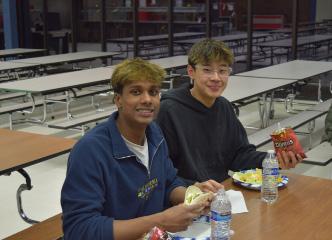
Senior Danny Bai recently broke the school record in both the 50 and 100 freestyle strokes.
| Sean Oh SPORTS & GOOD QUESTION EDITOR
What are some of your greatest achievements?
I was club swimming all American, team MVP, I medaled at state, broke the 100 & 50 free school record, which I was expected to break and I think I can go faster.
What keeps you motivated?
When and why did you start swimming, and why did you stick with it?
I always knew that swimming was something I was interested in because of my sister. She was on the team, and that really made it something I was interested to try, and once I did, I realized I had talent and I even became better than her. Now, I’ve done it for nine years, and it has become one of the biggest parts of my life, and I just always loved it, to be honest.

The people on the team make it really fun. If they weren’t there, I wouldn’t love it nearly as much as I do now.
What’s one of your best memories?
Every time we have a meet against Irondale, we mess around and run around in the freezing cold, and we all went in the pool and started fighting each other. That was always fun.
What are your favorite strokes?
My favorite stroke to swim is definitely freestyle. It’s by far my fastest and most confident stroke. And, of course, it’ll be my favorite because it’s the stroke I broke school records with. It has just always been my favorite.
Who is a teammate that has positively influenced you and how?

What is one message you would say to your coaches and younger teammates?
To the coaches, thank you for always making it smooth and fun. To my younger teammates, keep pushing through discomfort because that’s how you get better, and keep studying. I would also leave them with one of my favorite quotes from Nkemdilm Begho. “Failure is necessary for any learning curve. Failure makes you stronger, bolder and less scared to take risks.”
One teammate that has a great effect on me is my fellow captain Ben Lawrence. We’ve both been on the team together for a really long time, and he’s become one of my closest friends on the team. We spent a lot of time together; whether it was laughing about a bad race afterwards, or messing around during meets doing things like running around in the freezing cold, I will always remember the times that we shared together.

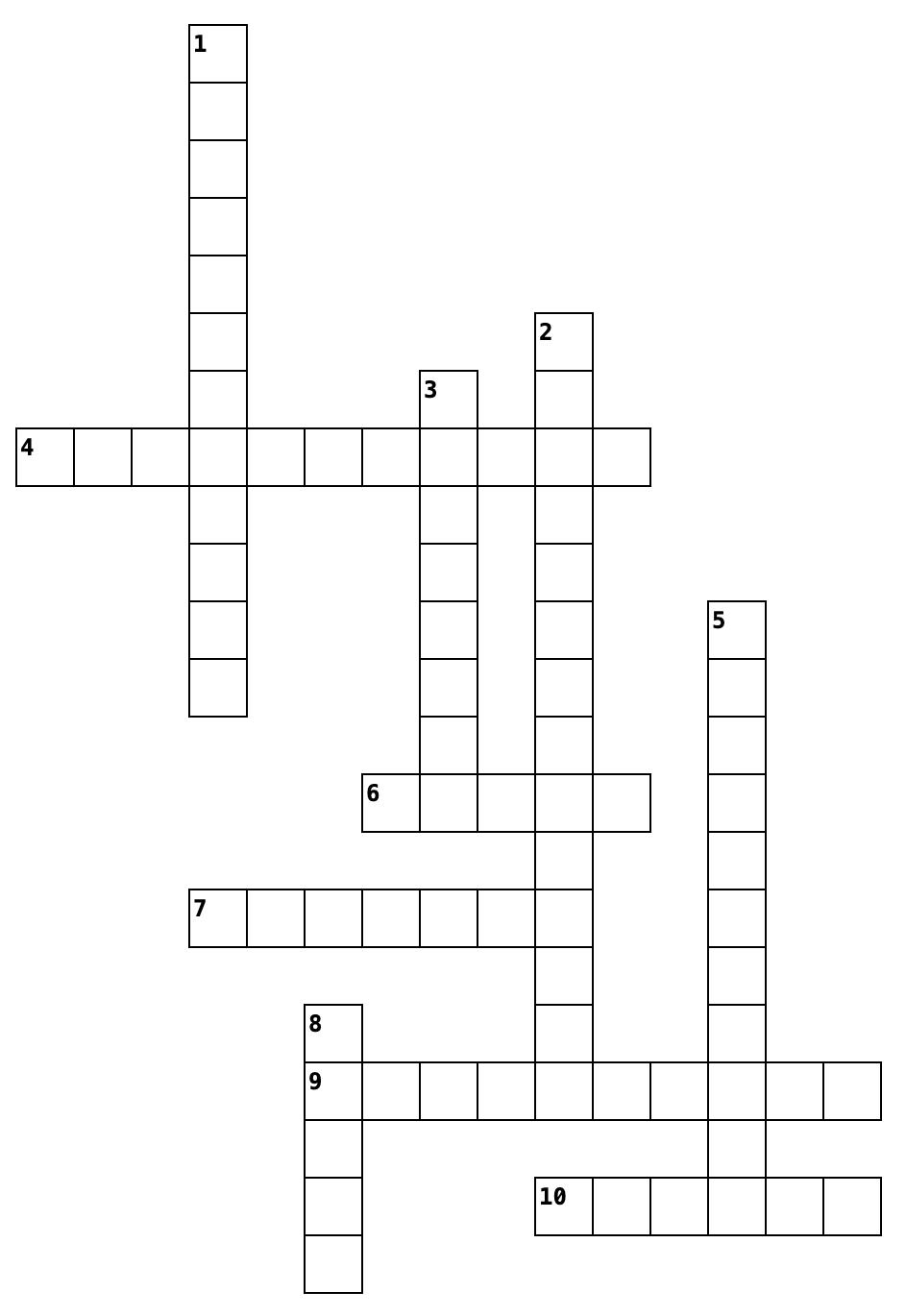
4. Who qualified for the state tournament at Giant’s Ridge this year?
6. Which Mounds View High School principal was named the 2026 Minnesota High School Principal of the Year?
7. Which nutrient breaks down into amino acids that are rebuilt to make new proteins, hormones and enzymes?
9. Which popular low-carb diet has been criticized for its high-fat content and risk of heart disease?
10. Which new English teacher joined Mounds View High School at the start of semester two?
1. Which science teacher uses 3D printers to help students prepare for the annual Physics Fair?
2. Who developed the ten stages of genocide in 1987?
3. The equity promise mentioned in the article aligns Mounds View High School with which other school?
5. Which musician is known for advocating affordable concert tickets, sometimes pricing them as low as $20?
8. Which department store, established in 1858, signaled the shift to buying from large stores rather than local artisans?



The Viewer will be hosting an art contest for photography, traditional and digital art categories. The deadline to submit entries is Friday, March 20th and the Viewer staff will choose the top three in each category to be published in the next issue. Sign up using the QR code above!