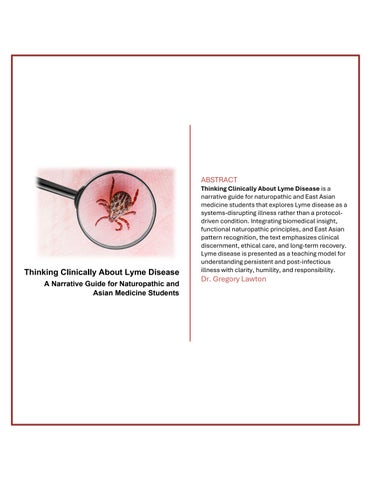

Thinking Clinically About Lyme Disease
A Narrative Guide for Naturopathic and Asian Medicine Students
ABSTRACT
Thinking Clinically About Lyme Disease is a narrative guide for naturopathic and East Asian medicine students that explores Lyme disease as a systems-disrupting illness rather than a protocoldriven condition. Integrating biomedical insight, functional naturopathic principles, and East Asian pattern recognition, the text emphasizes clinical discernment, ethical care, and long-term recovery. Lyme disease is presented as a teaching model for understanding persistent and post-infectious illness with clarity, humility, and responsibility. Dr. Gregory Lawton
Thinking Clinically About Lyme Disease
A Narrative Guide for Naturopathic and East Asian Medicine Students
Copyright Page
Treating Lyme Disease
A Systems-Based and East Asian Medicine Perspective
Copyright © [2026] Greg Lawton, D.C., D.N., N.D., D.Ac. All rights reserved.
No part of this publication may be reproduced, stored in a retrieval system, or transmitted in any form or by any means, electronic or mechanical, including photocopying, recording, or digital distribution, without the prior written permission of the author, except for brief quotations used for educational or review purposes.
This booklet is intended for educational use by students and practitioners of naturopathic medicine, East Asian medicine, and related health care disciplines.
Educational Disclaimer
This publication is intended for educational and instructional purposes only. It does not constitute medical advice, diagnosis, or treatment, and it is not intended to replace the judgment of licensed medical professionals.
The information presented herein reflects current understanding drawn from biomedical literature, traditional medical theory, and clinical teaching experience. It does not claim to cure or eradicate Lyme disease or any other condition. Treatment decisions should always be made within the context of a qualified health care provider–patient relationship and, when appropriate, in collaboration with conventional medical care.
Herbal medicines discussed in this booklet may interact with pharmaceutical drugs and may not be appropriate for all individuals. Proper training and clinical supervision are required before applying any therapeutic approach discussed.
Preface
Why This Booklet Was Written
Lyme disease is often discussed in extremes. It is either reduced to a straightforward infection with a simple solution, or expanded into a contested diagnosis surrounded by fear, frustration, and conflicting claims. Neither extreme serves students, practitioners, or patients particularly well.
This booklet was written to occupy the middle ground.
It was developed for students of naturopathic medicine and East Asian medicine who are learning how to think clinically about complex, chronic, and inflammatory conditions. Lyme disease provides a useful teaching model, not because it is unique, but because it exposes the limitations of single-system explanations and invites broader medical reasoning.
Over the years, I have worked with students and patients whose symptoms did not resolve neatly after conventional treatment, and with others whose experiences improved significantly through collaborative, systems-based care. These experiences reinforce an important lesson: persistent illness is rarely explained by a single factor, and recovery rarely follows a linear path.
This text does not advocate for a single therapeutic ideology. Instead, it encourages students to understand Lyme disease through multiple lenses, including contemporary biomedical science, naturopathic principles of terrain and resilience, and the patternbased logic of East Asian medicine.
Where traditional medical theory is presented, it is offered as a conceptual framework, not a literal translation of modern disease. Where laboratory research is discussed, it is contextualized carefully, without overstating its clinical relevance.
The goal is not certainty. The goal is clinical literacy, humility, and responsibility.
Foreword
Teaching Complexity Without Losing Clarity
Lyme disease challenges clinicians not because it defies science, but because it exposes how incomplete our understanding of chronic illness can be when we rely on a single explanatory model.
In early stages, Lyme disease behaves like many other bacterial infections. It is identifiable, treatable, and often responsive to antibiotics. Yet for a subset of patients, symptoms persist long after standard treatment has concluded. These individuals may experience fatigue, pain, cognitive changes, autonomic instability, and inflammatory sensitivity that do not fit cleanly into conventional categories.
For students of naturopathic and East Asian medicine, this presents both a challenge and an opportunity.
Traditional medical systems have long recognized patterns of lingering illness, unresolved inflammation, and relapsing symptom cycles. While these historical frameworks do not map directly onto modern microbiology, they offer valuable insights into how the body responds to chronic stressors, immune disruption, and incomplete resolution of disease processes.
This booklet does not attempt to resolve ongoing debates about Lyme disease. Instead, it provides students with a structured way to think about it responsibly. It emphasizes:
• Understanding disease mechanisms before proposing interventions
• Recognizing the difference between active infection and post-infectious pathology
• Respecting the strengths and limits of both conventional and traditional medicine
• Avoiding over-treatment and over-interpretation
• Prioritizing patient safety, collaboration, and long-term recovery
The study of Lyme disease reminds us that medicine is not merely the application of protocols, but the practice of discernment. It requires listening carefully, observing patterns over time, and remaining open to complexity without abandoning rigor.
It is in this spirit that the following material is offered.
A Note on Sources and Adaptation
Some concepts presented in this booklet draw inspiration from educational materials developed by institutions teaching East Asian medicine, including modern discussions of Gu syndrome and persistent illness. These ideas have been reframed, paraphrased, and reorganized for instructional clarity and originality. No proprietary text or copyrighted material has been reproduced.
Modern Chinese herbal formulas discussed are presented within a teaching context and are not endorsements of specific products. References to contemporary research are included to illustrate areas of scientific inquiry, not to establish clinical claims.
How to Use This Booklet
This booklet is designed to be read slowly and reflectively. It is not a protocol manual. Students are encouraged to:
• Read each section with attention to underlying principles
• Compare biomedical and traditional explanations without forcing equivalence
• Discuss case examples in supervised educational settings
• Maintain appropriate scope of practice at all times Lyme disease does not reward certainty. It rewards patience, observation, and thoughtful care.
Table of Contents
Copyright and Educational Disclaimer
Preface: Why This Booklet Was Written
Foreword: Teaching Complexity Without Losing Clarity
A Note on Sources and Adaptation
How to Use This Booklet
Introduction
Why Lyme Disease Requires a Systems-Based Medical Perspective
Section I
Lyme Disease: Pathology and Biomedical Foundations
Section II
Common Clinical Presentations and Symptom Patterns in Lyme Disease
Section III
Conventional Medical Treatment of Lyme Disease and Its Limitations
Section IV
Why “Chronic Lyme” Is a Clinical Challenge
Section V
Dietary and Lifestyle Foundations in Lyme Care
Section VI
Lyme Disease Through the Lens of East Asian Medicine
Section VII
Modern Chinese Herbal Formulas in Lyme-Oriented Practice
Section VIII
Key Chinese Herb Monographs: A Lyme-Oriented Teaching Perspective
• Huang Qin (Scutellaria baicalensis)
• Hu Zhang (Polygonum cuspidatum)
• Qing Hao (Artemisia annua)
Section IX
Safety, Scope, and Clinical Responsibility in Lyme Care
Section X Lyme Disease Within the Functional Naturopathic Medicine Framework
Section XI
Integrative Care, Long-Term Recovery, and Clinical Maturity
Conclusion / Afterword
Holding Complexity with Clarity
Student Reflection Questions
Glossary of Key Terms
Biomedical and East Asian Medicine
References
Suggested Reading / Further Study
How to Read Critically About Lyme Disease
Introduction
Why Lyme Disease Requires a Systems-Based Medical Perspective
Lyme disease occupies a unique and often uncomfortable place in modern medicine. It sits at the intersection of infectious disease, immunology, neurology, rheumatology, psychiatry, and chronic illness care. For students of naturopathic medicine and East Asian medicine, Lyme disease offers an important teaching opportunity, not because it is mysterious or exotic, but because it exposes the limitations of single-system thinking.
At its core, Lyme disease is a bacterial infection caused by Borrelia burgdorferi, transmitted through the bite of infected ticks. When recognized early, it is often responsive to conventional antibiotic treatment. Yet for a significant number of patients, symptoms persist or evolve despite standard care. These individuals present with complex, multisystem complaints that do not fit neatly into conventional diagnostic categories or treatment algorithms.
This booklet is not intended to promote controversy, replace conventional medical care, or advocate for unproven claims. Its purpose is educational. It seeks to help students understand Lyme disease as a systems-disrupting illness, one that challenges reductionist models and invites broader clinical reasoning.
Naturopathic and East Asian medical systems are particularly well suited to engage conditions like Lyme disease because they emphasize terrain, host resilience, pattern recognition, and long-term physiological regulation. These systems ask different questions than biomedicine alone. Instead of focusing exclusively on pathogen eradication, they inquire into why an infection becomes persistent, why inflammation fails to resolve, and why recovery stalls even after the initiating insult has passed.
This text integrates three perspectives:
• Contemporary biomedical understanding of Lyme disease
• Naturopathic approaches to chronic inflammatory and post-infectious illness
• Traditional East Asian medical theory, including pattern-based thinking and historical models of lingering or hidden pathogens
Throughout this booklet, laboratory findings, traditional theory, and modern clinical reasoning are presented as complementary, not competing, forms of knowledge. Students are encouraged to maintain intellectual rigor, clinical humility, and ethical responsibility when engaging this material.
Lyme disease does not demand allegiance to a single medical ideology. It demands clear thinking, collaboration, and respect for complexity.
Section I
Lyme Disease: Pathology and Biomedical Foundations
Lyme disease is caused by Borrelia burgdorferi, a spirochete bacterium distinguished by its long, thin, corkscrew-shaped structure and highly adaptable biology. Unlike many common bacterial pathogens, Borrelia replicates slowly, exhibits variable surface proteins, and demonstrates the ability to alter its form in response to environmental stressors. These characteristics contribute to both its survival within the host and the clinical challenges associated with diagnosis and treatment.
Transmission typically occurs through the bite of infected Ixodes ticks. Following inoculation, the organism may remain localized in the skin or disseminate through the bloodstream and lymphatic system to distant tissues. Early infection may be asymptomatic or associated with non-specific flu-like symptoms. The classic erythema migrans rash is an important diagnostic sign when present, but it does not occur in all cases and may go unnoticed.
As the infection progresses, Borrelia burgdorferi demonstrates a particular affinity for connective tissue, joints, the nervous system, and the cardiovascular system. This tissue tropism helps explain the wide range of clinical manifestations associated with Lyme disease, including migratory joint pain, neuropathic symptoms, cognitive changes, fatigue, and autonomic dysregulation.
From a biomedical standpoint, early Lyme disease is typically treated with antibiotics such as doxycycline, amoxicillin, or cefuroxime. When administered promptly, these treatments are often effective in reducing bacterial load and preventing further dissemination. However, delayed diagnosis, incomplete treatment, or host-specific immune factors may allow symptoms to persist or re-emerge.
One area of ongoing investigation involves the behavior of Borrelia in non-replicating or metabolically altered states. In laboratory settings, the organism has demonstrated the capacity to enter stationary or dormant-like phases in which susceptibility to antibiotics is reduced. While in vitro findings do not equate to clinical outcomes, they provide insight into why symptom persistence may occur despite appropriate antimicrobial therapy.
Equally important is the role of the host immune response. In many patients with persistent symptoms, ongoing inflammation, immune dysregulation, neuroinflammatory signaling, and tissue sensitivity appear to play a significant role. In such cases, the burden of illness may no longer be driven solely by active infection, but by the body’s inability to return to homeostasis following the initial insult.
For clinicians trained in systems-based medicine, this distinction is critical. It reframes Lyme disease from a narrow infectious problem into a broader post-infectious and inflammatory condition, one that may require layered and longitudinal care.
Understanding this biomedical foundation is essential. It provides the factual ground upon which naturopathic strategies, dietary interventions, and East Asian pattern-based approaches can be responsibly applied. Without this grounding, integrative care risks becoming speculative. With it, complementary medical systems can engage Lyme disease with clarity, restraint, and purpose.
Section II
Common Clinical Presentations and Symptom Patterns in Lyme Disease
Lyme disease rarely presents as a single, isolated complaint once it moves beyond the earliest stages of infection. While early exposure may produce a recognizable pattern of fever, fatigue, or rash, delayed diagnosis or incomplete resolution often leads to a much more complex clinical picture. For students of naturopathic and East Asian medicine, understanding these symptom patterns is essential, because it shifts clinical thinking away from isolated findings and toward systems-level dysfunction.
One of the defining features of Lyme disease is variability. Two patients with similar exposure histories may present with markedly different symptom profiles. This variability reflects differences in immune response, genetic susceptibility, tissue vulnerability, prior health status, and the timing of intervention. As a result, Lyme disease should be approached as a pattern-based illness, not a checklist diagnosis.
Musculoskeletal and Connective Tissue Symptoms
Musculoskeletal pain is among the most reported features of Lyme disease. Patients may describe migratory joint pain, stiffness, or swelling that shifts from one location to another over time. Unlike degenerative joint conditions, these symptoms often lack a clear mechanical trigger and may fluctuate unpredictably.
Soft tissue pain, tendon sensitivity, and deep muscular aching are also common. These symptoms frequently worsen with exertion and may be accompanied by a sensation of heaviness or inflammation rather than sharp injury-related pain. From a biomedical perspective, these findings may reflect inflammatory signaling within connective tissue and synovial structures. From a traditional medical standpoint, they resemble patterns of obstruction, lingering heat, or impaired circulation within the channels and tissues.
Neurological and Cognitive Features
Neurological involvement is another hallmark of persistent Lyme presentations. Patients may report headaches, dizziness, numbness, tingling, visual disturbances, or heightened sensitivity to light and sound. Cognitive complaints often include difficulty concentrating, short-term memory lapses, slowed processing speed, and a subjective sense of mental fog.
These symptoms can be particularly distressing, as they interfere with daily functioning and are not always reflected in conventional imaging or laboratory findings. Neuroinflammatory processes, autonomic dysregulation, and altered neurotransmitter signaling are thought to contribute to these experiences. In East Asian medicine, such patterns may be understood as disturbances affecting the clear yang, the heart-mind
relationship, or the harmonious interaction between the nervous system and regulatory chi
Fatigue and Post-Exertional Symptoms
Persistent fatigue is one of the most disabling symptoms associated with Lyme disease. This fatigue is often described as profound and disproportionate to activity levels. Many patients experience worsening symptoms following physical or mental exertion, a phenomenon sometimes referred to as post-exertional malaise.
This pattern suggests impaired energy regulation rather than simple deconditioning. Mitochondrial stress, inflammatory cytokine activity, and autonomic imbalance may all play roles. From a naturopathic perspective, this reflects compromised adaptive capacity. From a traditional framework, it may correspond to exhaustion of defensive chi, impaired transformation of nourishment, or failure of recovery mechanisms.
Autonomic and Sleep Disturbances
Sleep disruption is common in individuals with Lyme-related illness. Patients may have difficulty falling asleep, staying asleep, or achieving restorative rest. Night sweats, vivid dreams, temperature dysregulation, and nocturnal anxiety may also be reported.
Autonomic symptoms can include palpitations, lightheadedness upon standing, digestive irregularity, and heightened stress reactivity. These findings point toward dysregulation of the nervous system’s balance between sympathetic and parasympathetic activity. In East Asian medicine, such symptoms are often associated with disharmony between yin and yang, instability of regulatory systems, or lingering internal heat that disrupts rest.
Emotional and Psychological Components
Mood changes are frequently reported in Lyme disease and may include anxiety, irritability, depression, or emotional lability. It is important for students to recognize that these symptoms are not merely psychological reactions to illness but may be rooted in neuroinflammatory and physiological processes.
At the same time, the emotional toll of prolonged, unexplained symptoms should not be underestimated. Chronic illness can erode confidence, strain relationships, and contribute to feelings of isolation. A systems-based approach acknowledges both the biological and emotional dimensions of healing, without reducing one to the other.
Teaching Perspective: Why Patterns Matter
For students in naturopathic and East Asian medicine, Lyme disease offers a valuable lesson in clinical observation. The goal is not to label every symptom as evidence of active infection, nor to dismiss persistent complaints when conventional markers are absent. Instead, clinicians must learn to track patterns over time, identify dominant systems under stress, and tailor supportive care accordingly.
Recognizing symptom clusters helps prevent over-treatment, encourages appropriate pacing, and supports individualized care strategies. It also creates space for collaborative management, where conventional diagnostics and traditional pattern recognition inform one another rather than compete.
In the sections that follow, these clinical patterns will be revisited through the lenses of conventional treatment limitations, dietary and lifestyle support, and East Asian medical theory. Each perspective adds depth to the clinical picture, reinforcing the importance of thoughtful, integrative care in complex chronic illness.
Section III
Conventional Medical Treatment of Lyme Disease and Its Limitations
Conventional medical treatment of Lyme disease is grounded in well-established infectious disease principles. When Lyme disease is identified early, antibiotic therapy is often effective and remains the standard of care. Understanding this reality is essential for students of naturopathic and East Asian medicine, both to maintain clinical credibility and to support collaborative patient care.
Early Detection and Antibiotic Therapy
In early-stage Lyme disease, antibiotic treatment is typically straightforward. Commonly prescribed medications include doxycycline, amoxicillin, or cefuroxime, administered for a defined course based on clinical guidelines. When initiated promptly, these therapies can significantly reduce bacterial burden and prevent dissemination to other tissues.
This early success reflects several favorable conditions: the organism is actively replicating, the immune system is relatively intact, and tissue involvement is limited. Under these circumstances, antibiotics function as they were designed to function, interrupting bacterial growth and allowing the body to complete the healing process.
For students, this underscores an important point. Conventional medicine is highly effective when applied at the right time and to the right stage of disease. Integrative care should never diminish the value of timely antibiotic treatment in early Lyme disease.
Delayed Diagnosis and Clinical Complexity
Challenges arise when diagnosis is delayed or when early symptoms are missed or misattributed. Lyme disease does not always present with a characteristic rash, and early signs may resemble common viral illnesses or musculoskeletal strain. As a result, some patients do not receive treatment until weeks or months after initial exposure.
By this stage, Borrelia burgdorferi may have disseminated into multiple tissues, including joints, nervous system structures, and connective tissue. Symptoms often become more diffuse and less responsive to short-term antibiotic therapy. This does not imply treatment failure in a simplistic sense, but rather reflects the increased biological complexity of later-stage disease.
Persistent Symptoms After Standard Treatment
A subset of patients experiences ongoing symptoms despite completing recommended antibiotic courses. These symptoms may include fatigue, pain, cognitive difficulty, sleep
disturbance, and autonomic instability. In conventional medicine, this presentation is often described as post-treatment Lyme disease syndrome.
It is critical for students to understand that persistent symptoms do not automatically indicate ongoing active infection. Multiple mechanisms have been proposed to explain post-treatment illness, including residual tissue inflammation, immune dysregulation, neural sensitization, and metabolic stress. In many cases, laboratory testing does not demonstrate active infection, yet the patient continues to experience significant impairment.
This distinction matters clinically. Treating every persistent symptom as evidence of ongoing infection risks unnecessary or prolonged antimicrobial use, which carries its own set of risks.
Antibiotic Limitations and Biological Considerations
Laboratory research has demonstrated that Borrelia burgdorferi can exhibit altered metabolic states under stress, including non-replicating or stationary-phase forms. These forms may demonstrate reduced susceptibility to antibiotics in vitro. While such findings do not translate directly into clinical practice, they offer insight into why antimicrobial therapy may be less effective in later stages or in chronic presentations.
Equally important is the recognition that antibiotics primarily target bacteria, not the downstream physiological consequences of infection. Inflammation, immune imbalance, nervous system dysregulation, and tissue sensitivity may persist even after bacterial load has been reduced. In such cases, antibiotics alone are unlikely to restore full health.
Risks of Over-Treatment
From both a biomedical and ethical perspective, prolonged or repeated antibiotic use carries potential risks. These include gastrointestinal disruption, microbiome imbalance, increased susceptibility to secondary infections, medication side effects, and antibiotic resistance.
For students, this reinforces a core clinical principle: more treatment is not always better treatment. The goal is not maximal intervention, but appropriate intervention guided by evidence, timing, and patient response.
Integrative Perspective and Clinical Collaboration
Recognizing the limitations of conventional treatment does not mean rejecting it. Instead, it opens space for complementary approaches that address inflammation, immune regulation, metabolic recovery, and nervous system balance. This is where naturopathic medicine and East Asian medicine may contribute meaningfully, particularly in patients with persistent or post-infectious symptoms.
Integrative care is most effective when it is collaborative rather than adversarial. Clear communication with medical providers, respect for diagnostic boundaries, and an emphasis on patient safety are essential. Students should be trained to recognize when conventional medical evaluation is necessary and when supportive, systems-based care may be appropriate.
Understanding the strengths and limits of conventional treatment prepares students to engage Lyme disease thoughtfully, without overstepping scope or making unfounded claims. It also lays the groundwork for exploring dietary, lifestyle, and traditional medical strategies that support recovery in complex chronic illness.
Section IV
Why “Chronic Lyme” Is a Clinical Challenge
Few topics in modern medicine generate as much disagreement as the phrase “chronic Lyme disease.” The controversy, however, is often misplaced. The core issue is not terminology, but patient experience. Individuals continue to present with persistent, disabling symptoms following documented exposure to Borrelia burgdorferi and appropriate conventional treatment. Whether these symptoms are labeled as posttreatment Lyme disease syndrome, chronic inflammatory response, or another diagnostic category, the clinical reality remains unchanged.
For students of naturopathic and East Asian medicine, this distinction is important. Medicine is not practiced in language alone. It is practiced in bodies, lives, and functional outcomes.
Moving Beyond Binary Thinking
Much of the debate surrounding chronic Lyme disease is rooted in binary thinking. Either the infection is present, or it is not. Either antibiotics cure the disease, or they fail. Such framing oversimplifies complex biological processes and obscures meaningful clinical inquiry.
Persistent illness following infection is not unique to Lyme disease. Similar patterns are observed after viral infections, gastrointestinal infections, and other inflammatory insults. In many cases, the initiating pathogen is no longer the primary driver of symptoms. Instead, dysregulated immune responses, persistent inflammation, neural sensitization, and impaired tissue repair become dominant factors.
This does not deny the role of infection. It reframes it. The initial insult may trigger a cascade that continues long after the acute phase has passed.
Post-Infectious and Inflammatory Mechanisms
Research increasingly points toward post-infectious mechanisms in patients with persistent Lyme-related symptoms. These may include ongoing immune activation, altered cytokine signaling, microglial activation within the nervous system, mitochondrial dysfunction, and impaired stress-response systems.
From a clinical perspective, this means that treatment strategies focused exclusively on antimicrobial activity may fail to address the primary drivers of ongoing symptoms. Patients may experience minimal improvement despite aggressive therapy or may worsen due to cumulative treatment burden.
For students, this highlights the importance of reassessing treatment goals over time. The question shifts from “How do we eliminate the pathogen?” to “What is preventing recovery?”
Traditional Medical Perspectives on Lingering Illness
East Asian medicine has long recognized patterns of lingering or unresolved illness following acute disease. Historical medical texts describe conditions characterized by relapsing symptoms, fluctuating severity, and deep-seated disruption that does not resolve with simple interventions. While these descriptions were developed long before the discovery of bacteria, they reflect careful observation of chronic illness behavior.
Concepts such as hidden pathogens, residual heat, and obstruction are best understood as functional metaphors, not literal explanations. They describe how illness can persist beneath the surface, intermittently disrupting physiological balance. These frameworks encourage clinicians to consider depth, duration, and systemic involvement rather than focusing solely on surface symptoms.
Similarly, naturopathic medicine emphasizes the idea that the body’s capacity to heal may be compromised even after the initiating cause has been addressed. Terrain, resilience, and adaptive capacity become central considerations.
The Risk of Over-Identification with Infection
One of the challenges in managing persistent Lyme-related symptoms is the tendency to equate all ongoing symptoms with active infection. While this perspective may feel validating to patients who have struggled to be heard, it can also lead to prolonged treatment cycles that fail to produce meaningful improvement.
Over-identification with infection risks narrowing clinical vision. It may divert attention away from nervous system regulation, metabolic recovery, immune recalibration, and psychosocial support, all of which play critical roles in long-term healing.
For students, this is a crucial lesson. Compassionate care does not require reinforcing a single explanatory model. It requires meeting patients where they are while guiding them toward strategies that support recovery rather than perpetuate illness identity.
Reframing the Clinical Question
The most productive way to approach chronic Lyme disease is to reframe the clinical question. Rather than asking whether chronic infection exists in every case, clinicians can ask:
What systems are under the greatest stress? What patterns have emerged over time? What interventions support restoration rather than escalation?
This reframing aligns naturally with naturopathic and East Asian medical thinking. It supports individualized care, reduces unnecessary intervention, and prioritizes functional improvement.
Teaching Perspective: Holding Complexity with Responsibility
For students, the study of chronic Lyme disease offers an opportunity to develop clinical maturity. It requires the ability to hold multiple possibilities simultaneously, to resist oversimplification, and to remain grounded in evidence without dismissing patient experience.
The goal is not to resolve controversy, but to cultivate discernment. Persistent illness demands careful listening, thoughtful pacing, and an openness to multiple therapeutic avenues. It also demands humility. Not every case will resolve fully, and not every intervention will succeed.
By understanding chronic Lyme disease as a clinical challenge rather than a semantic battle, students are better prepared to engage complex illness with clarity, compassion, and ethical responsibility.
Section V
Dietary and Lifestyle Foundations in Lyme Care
In complex, post-infectious illnesses such as Lyme disease, recovery is rarely driven by a single intervention. Instead, healing unfolds through the cumulative effect of daily choices that support immune balance, metabolic stability, and nervous system regulation. Dietary and lifestyle strategies are not secondary or optional in this context. They form the foundation upon which all other therapeutic efforts rest.
For students of naturopathic and East Asian medicine, this principle is familiar. Food, rest, movement, and rhythm are primary inputs into physiological regulation. When these inputs are unstable, no amount of targeted intervention can compensate fully.
Nutrition as Terrain Medicine
Dietary approaches in Lyme care are best understood as terrain-based strategies rather than pathogen-targeting interventions. The goal is not to starve bacteria or eliminate specific foods through rigid restriction, but to create metabolic conditions that favor resilience, repair, and immune regulation.
A nutrient-dense, anti-inflammatory dietary pattern is generally supportive for individuals with persistent Lyme-related symptoms. Emphasis is placed on whole foods, adequate protein, healthy fats, and abundant micronutrients. Stabilizing blood sugar is particularly important, as glycemic instability can amplify fatigue, inflammation, and stress reactivity.
Highly processed foods, refined sugars, and excessive alcohol tend to exacerbate inflammatory signaling and should be minimized. At the same time, overly restrictive diets may contribute to nutritional deficiencies and increased physiological stress. Students should be cautious not to equate dietary discipline with therapeutic effectiveness.
Gut Integrity and Immune Function
The gastrointestinal tract plays a central role in immune regulation. Antibiotic exposure, stress, and chronic inflammation may disrupt gut integrity, leading to altered microbiota composition and increased intestinal permeability. These changes can perpetuate immune activation and contribute to systemic symptoms.
Supportive strategies include adequate dietary fiber, fermented foods when tolerated, and gentle digestive support. Attention to food sensitivities may be warranted in some cases but should be approached thoughtfully and reassessed regularly. The goal is restoration, not permanent avoidance.
From an East Asian medicine perspective, digestive strength is closely tied to overall vitality. Weakness in digestive function impairs the body’s ability to recover from illness and regulate inflammation.
Energy Management and Pacing
Fatigue in Lyme disease is not simply a matter of low stamina. It often reflects impaired energy production, autonomic imbalance, and delayed recovery following exertion. As a result, traditional exercise prescriptions may be inappropriate during certain phases of illness.
Patients frequently benefit from learning how to pace activity, alternating periods of engagement with adequate rest. Gentle movement, such as walking, stretching, or mindful exercise, may support circulation and nervous system regulation without triggering symptom flares.
Students should recognize that encouraging patients to “push through” fatigue often backfires. Recovery is supported by respecting physiological limits, not overriding them.
Sleep as a Therapeutic Priority
Sleep disturbance is both a symptom and a driver of ongoing dysfunction in Lyme disease. Poor sleep amplifies pain perception, impairs immune regulation, and undermines emotional resilience. Supporting sleep quality is therefore a therapeutic priority, not an afterthought.
Foundational strategies include consistent sleep timing, minimizing evening stimulation, and supporting circadian rhythm alignment. In some cases, gentle botanical or lifestyle interventions may be appropriate, but these should be considered within a broader framework of nervous system calming and routine stabilization.
From a traditional medical standpoint, sleep reflects the body’s ability to withdraw inward and restore yin. When this process is disrupted, recovery stalls.
Stress, Nervous System Regulation, and Healing
Chronic illness places sustained demands on the nervous system. Many individuals with Lyme-related symptoms experience heightened stress reactivity, anxiety, or emotional volatility. These responses are not signs of weakness, but indicators of prolonged physiological strain.
Stress-reduction practices such as breath work, meditation, gentle movement, and time in nature can play meaningful roles in recovery. These practices help shift the nervous system toward parasympathetic dominance, supporting digestion, sleep, and tissue repair.
For students, this reinforces a critical lesson. Healing does not occur in isolation from lived experience. Emotional safety, social support, and a sense of agency all influence physiological outcomes.
Teaching Perspective: Foundations Before Interventions
Dietary and lifestyle strategies are often undervalued because they lack the immediacy of targeted therapies. Yet in chronic Lyme care, they frequently determine whether more advanced interventions succeed or fail.
For students of naturopathic and East Asian medicine, this section serves as a reminder that foundational care is not passive care. It is active, intentional, and deeply therapeutic. Before addressing complex herbal strategies or theoretical models, clinicians must ensure that the body is supported in its most basic functions.
In the sections that follow, traditional medical theory and herbal strategies will be explored as part of a broader systems-based approach. These tools are most effective when layered upon a stable foundation of nutrition, rest, and daily rhythm.
Section VI
Lyme Disease Through the Lens of East Asian Medicine
East Asian medicine approaches illness through pattern recognition rather than disease labeling. This distinction is essential when considering conditions such as Lyme disease, which often present with fluctuating symptoms, multisystem involvement, and prolonged recovery trajectories. Rather than asking whether a single pathogen remains present, East Asian medicine asks how physiological harmony has been disrupted and why restoration has failed to occur.
From this perspective, Lyme disease is not understood as a single, unified entity. Instead, it manifests through a constellation of patterns that evolve over time, influenced by the strength of the individual, the depth of the pathogenic influence, and the body’s capacity to resolve insult and return to balance.
Acute Illness Versus Lingering Pathology
In its early stages, Lyme disease may resemble externally contracted pathogenic conditions described in classical texts. Symptoms such as fever, body aches, headache, and fatigue align with surface or half-exterior patterns. When resolution is incomplete, however, the disease trajectory changes. Symptoms may retreat from the surface and become lodged more deeply within the body’s regulatory systems.
East Asian medicine has long described this phenomenon. Illness that is not fully expelled may transform, conceal itself, or re-emerge cyclically. These ideas are not literal descriptions of bacteria, but clinical observations of how unresolved illness behaves within the body over time.
Hidden Pathogens and Lingering Heat
One of the most commonly referenced conceptual frameworks in modern East Asian discussions of Lyme disease is that of hidden or latent pathogens. This concept describes illness that persists beneath the surface, producing intermittent symptoms that wax and wane rather than resolving completely.
Patients may report periods of relative improvement followed by relapse, often triggered by stress, overexertion, or immune challenge. Low-grade heat, inflammation, restlessness, night symptoms, and sleep disturbance may accompany this pattern. From a traditional standpoint, this suggests that pathogenic influence remains present at a deeper level, disrupting normal regulation without producing acute illness.
Lingering heat does not necessarily imply fever or overt signs of excess. It may manifest as internal agitation, inflammatory sensitivity, or impaired recovery. In Lyme-related
illness, this framework provides a useful way to understand symptom persistence without reducing the condition to ongoing acute infection.
Gu Syndrome as a Modern Teaching Framework
In contemporary East Asian medicine education, Lyme disease is sometimes discussed using the historical concept of Gu syndrome. Traditionally, Gu referred to complex, chronic conditions characterized by weakness, toxicity, and internal disruption, often following exposure to external factors.
It is important for students to understand that Gu syndrome is best used as a teaching metaphor, not a diagnostic label. It highlights the idea that certain illnesses overwhelm the body’s regulatory capacity and become entrenched through a combination of pathogenic influence and constitutional vulnerability.
When applied thoughtfully, this framework emphasizes the importance of rebuilding strength, supporting detoxification pathways, and restoring internal order rather than pursuing aggressive elimination strategies alone.
Common Pattern Themes in Lyme-Related Illness
Although presentations vary widely, several pattern themes appear repeatedly in patients with persistent Lyme-related symptoms. These may include:
• Residual heat and toxin accumulation
• Dampness affecting joints, muscles, or digestion
• Blood-level involvement with pain, stasis, or inflammation
• Disruption of the shao yang axis, producing alternating symptoms
• Deficiency of chi or yin following prolonged illness
These patterns often coexist. A patient may present with signs of deficiency and excess simultaneously, reflecting both the impact of the initial illness and the body’s ongoing attempt to adapt.
This layered complexity reinforces the importance of individualized treatment strategies. East Asian medicine does not seek to force all patients into a single pattern, but to identify the dominant dynamics at play and address them progressively.
Time, Depth, and Recovery
One of the most valuable contributions of East Asian medicine to Lyme care is its emphasis on time and depth. Chronic illness is understood as a process that unfolds over months or years, and recovery is expected to follow a similar trajectory.
This perspective helps temper unrealistic expectations and discourages overly aggressive interventions. Healing is approached as a gradual reorganization of physiological function rather than a rapid elimination of disease.
For students, this is a critical clinical lesson. Patience is not passivity. It is an acknowledgment of biological reality.
Teaching Perspective: Pattern Recognition as Clinical Discipline
Studying Lyme disease through the lens of East Asian medicine trains students to think relationally. Symptoms are not isolated events, but expressions of systemic imbalance. Patterns evolve, overlap, and respond to internal and external influences.
This mode of thinking does not replace biomedical understanding. It complements it by offering a way to organize complexity and guide long-term care.
In the sections that follow, modern Chinese herbal formulas and individual herbs will be discussed within this pattern-based framework. These tools are not presented as cures, but as supportive strategies used within a broader systems-based approach to recovery.
Section VII
Modern Chinese Herbal Formulas in Lyme-Oriented Practice
Chinese herbal medicine has always been a living tradition, shaped by clinical observation and evolving disease patterns. While classical formulas provide the foundation of East Asian medical practice, modern clinicians have long adapted and created new formulas in response to conditions that were not explicitly described in premodern texts. Lyme disease falls squarely into this category.
It is important for students to understand that there is no single classical Chinese formula “for Lyme disease.” Instead, contemporary Chinese herbal strategies used in Lyme-oriented practice represent modern constructions informed by traditional theory, clinical experience, and emerging scientific inquiry. These formulas are best understood as pattern-based tools, not disease-specific prescriptions.
The Rationale for Modern Formulas
Persistent Lyme-related illness often presents with layered patterns that shift over time. Patients may demonstrate signs of lingering heat, toxin accumulation, dampness, bloodlevel inflammation, and constitutional deficiency simultaneously. Classical formulas, while elegant and powerful, are often designed to address more discrete patterns.
Modern formulas used in Lyme-oriented practice attempt to meet this complexity by combining multiple therapeutic intentions within a single prescription. These may include clearing residual heat, resolving toxin, supporting immune regulation, protecting connective tissue, and preventing excessive depletion of the patient’s vitality.
From a teaching standpoint, these formulas offer students an opportunity to study how traditional theory is applied dynamically, rather than memorized statically.
“Clearing the Hidden” as a Conceptual Strategy
One of the most commonly discussed strategies in modern Chinese herbal approaches to Lyme disease is often described as “clearing the hidden” or addressing concealed pathogenic influence. This language reflects the East Asian medical understanding that certain illnesses may retreat from the surface and persist at deeper regulatory levels, producing relapsing or fluctuating symptoms.
Formulas constructed around this idea are typically not aggressive purgatives. Instead, they aim to gently dislodge lingering influences while supporting the body’s capacity to restore order. This approach aligns with the recognition that overly forceful treatment may worsen fatigue, destabilize the nervous system, or prolong recovery.
Students should note that “clearing” in this context does not imply eradication in a microbiological sense. It refers to restoring functional circulation, resolving inflammatory signaling, and reducing internal friction that interferes with healing.
Common Herbal Themes in Lyme-Oriented Formulas
While specific formulas vary, several herbal themes recur consistently in Lyme-oriented Chinese herbal practice:
Herbs that clear heat and resolve toxin are often included to address inflammatory and immune-driven symptoms. These herbs are traditionally associated with calming excessive immune responses rather than directly targeting pathogens.
Blood-moving and stasis-resolving herbs may be added when pain, stiffness, or connective tissue involvement predominates. These herbs support circulation and tissue nourishment, particularly in chronic or post-inflammatory states.
Herbs that vent lurking pathogens or address shao yang-type patterns may be used when symptoms fluctuate, relapse, or appear stress-sensitive. This reflects the clinical observation that Lyme-related symptoms often occupy an intermediate depth rather than a purely superficial or deep level.
Supportive herbs that protect chi and yin are frequently incorporated to prevent excessive depletion. This is especially important in patients who have undergone prolonged illness or repeated courses of aggressive treatment.
Integration With Modern Research
In recent years, laboratory research has examined the biological activity of certain Chinese herbs commonly found in Lyme-oriented formulas. While such studies are preliminary and limited to in vitro settings, they offer insight into why these herbs may influence inflammatory signaling, immune modulation, or microbial stress responses.
For teaching purposes, it is essential to emphasize that laboratory findings do not equate to clinical efficacy. However, they may help bridge traditional theory and modern scientific curiosity, encouraging responsible investigation rather than speculative claims.
Students should be trained to reference such research cautiously, framing it as exploratory rather than definitive.
Clinical Framing and Ethical Use
Modern Chinese herbal formulas used in Lyme-oriented practice should always be framed as part of a broader, integrative care strategy. They are not substitutes for medical evaluation, nor should they be used indiscriminately or without proper training.
Practitioners must consider timing, patient constitution, concurrent therapies, and overall treatment goals. In some cases, herbal strategies may focus on calming inflammation and supporting recovery rather than actively addressing infection-related concerns.
From an educational perspective, this reinforces a central lesson of East Asian medicine: correct timing and restraint are as important as therapeutic action.
Teaching Perspective: Learning From Modern Adaptation
Studying modern Chinese herbal formulas in the context of Lyme disease helps students appreciate the adaptability of traditional medicine without losing respect for its theoretical roots. These formulas demonstrate how classical principles can inform contemporary practice while remaining grounded in observation, safety, and humility.
In the next section, individual Chinese herbs commonly used in these formulas will be explored through focused monographs. Each will be discussed from a Lyme-relevant perspective, integrating traditional actions, modern insights, and clinical teaching considerations.
Section VIII
Key Chinese Herb Monographs
Chinese herbal medicine is best learned through context. Herbs are not isolated “agents,” but functional tools that influence physiological patterns. In Lyme-oriented practice, individual herbs are selected not because they target a named disease, but because they address recurring themes such as lingering inflammation, immune dysregulation, tissue sensitivity, and incomplete resolution following infection.
The following monographs focus on Chinese herbs most commonly discussed in modern Lyme-oriented formulas. Each is presented through three lenses: traditional function, modern interpretation, and Lyme-relevant clinical teaching.
Huang Chin
Scutellaria baicalensis
Huang Chin is one of the most important heat-clearing herbs in the Chinese materia medica and has been used for centuries to address inflammatory and febrile conditions. Traditionally, it clears heat from the upper and middle burners, dries dampness, and calms agitation. It is often associated with conditions involving irritability, restlessness, inflammatory heat, or immune overactivity.
In modern research contexts, Huang Chin has been studied for its flavonoid constituents, including baicalin and baicalein. These compounds have demonstrated anti-inflammatory, antioxidant, and immunomodulatory effects in laboratory settings. Such findings help explain Huang Chin’s long-standing clinical use in conditions characterized by excessive immune activation rather than deficiency alone.
From a Lyme-oriented perspective, Huang Chin is most relevant when symptoms reflect persistent inflammatory signaling, particularly in the nervous system or musculoskeletal tissues. Patients may present with headaches, cognitive irritation, inflammatory pain, or sleep disruption without overt signs of acute infection.
Teaching point for students: Huang Chin is not used to “kill Lyme.” It is used to calm excessive heat and immune friction, creating conditions in which recovery becomes possible. Its inclusion in formulas often reflects a need to restrain overreaction rather than stimulate further immune aggression.
Hu Zhang
Polygonum cuspidatum
Hu Zhang occupies a unique place in both traditional and modern herbal practice. Traditionally, it is classified as a heat-clearing, toxin-resolving, and blood-moving herb. It has been used historically for trauma, pain, inflammation, and conditions involving blood stasis with heat.
In contemporary discussions, Hu Zhang is often highlighted for its resveratrol and emodin content. These compounds have been investigated for effects on inflammatory pathways, oxidative stress, and microbial stress responses. While such research is preliminary, it aligns well with Hu Zhang’s traditional association with deep-seated inflammatory processes.
In Lyme-related teaching, Hu Zhang is commonly introduced when connective tissue pain, migratory discomfort, or inflammatory stiffness predominate. It is particularly relevant when symptoms suggest stagnation rather than acute excess, such as pain that lingers, shifts location, or worsens with inactivity.
Teaching point for students: Hu Zhang bridges classical blood-level theory and modern inflammatory models. Its role is not aggressive elimination, but restoring circulation and resolving residual inflammation that has become entrenched over time.
Ching Hao
Ching Hao holds a distinctive position in Chinese medicine as an herb that clears lurking or hidden heat. Unlike many heat-clearing herbs, it is light, dispersing, and particularly associated with relapsing or cyclical illness. Historically, it has been used for conditions involving alternating fever, night heat, or symptoms that appear intermittently rather than continuously.
In modern biomedical history, Ching Hao gained prominence as the source of artemisinin, which transformed malaria treatment. This discovery brought global attention to Ching Hao’s bioactive potential, although its traditional use long predated modern pharmacology.
In Lyme-oriented teaching, Ching Hao is most relevant for patients whose symptoms wax and wane, worsen at night, or flare under stress or exertion. It is often discussed in the context of shao yang–type presentations or lingering post-infectious heat that has not fully resolved.
Artemisia annua
Teaching point for students: Ching Hao teaches an important lesson in restraint. It does not strongly purge or suppress. Instead, it vents what is hidden, allowing the body to complete an incomplete resolution process.
Integrating These Herbs in Clinical Thinking
When studied together, Huang Chin, Hu Zhang, and Ching Hao illustrate how Chinese herbal medicine approaches complexity. Each herb addresses a different aspect of persistent illness:
Huang Chin calms inflammatory excess and immune agitation. Hu Zhang moves stagnation and resolves deep-seated tissue irritation. Ching Hao vents lingering or relapsing pathology that resists resolution.
In modern Lyme-oriented formulas, these herbs are rarely used alone. They are combined thoughtfully with supportive herbs that protect vitality and prevent overdepletion. This reflects a core Chinese medical principle: clearing without damaging, resolving without exhausting.
For students, these monographs should reinforce the idea that herbs are chosen based on pattern dynamics, not diagnostic labels. Lyme disease becomes a teaching model for how traditional medicine addresses unresolved illness rather than a condition with a single herbal answer.
Section IX
Safety, Scope, and Clinical Responsibility in Lyme Care
Lyme disease demands clinical humility. Its complexity, variability, and emotional impact can tempt both students and practitioners to overreach, especially when patients are suffering, and conventional answers feel incomplete. This section exists to anchor Lyme care within ethical practice, appropriate scope, and patient safety, regardless of therapeutic philosophy.
Education Versus Treatment
First and foremost, students must clearly distinguish between learning about Lyme disease and treating Lyme disease. This booklet is designed to support education and clinical reasoning, not to provide diagnostic authority or treatment protocols.
Naturopathic and East Asian medicine practitioners operate within defined scopes of practice that vary by jurisdiction. Even when herbal medicine and lifestyle strategies are appropriate, they should be applied within those boundaries and in coordination with conventional medical care when indicated.
Teaching point for students: confidence grows from competence, not from certainty. Knowing when not to intervene is as important as knowing when to act.
Herb–Drug Interactions and Contraindications
Many individuals with Lyme-related illness are taking pharmaceutical medications, including antibiotics, anti-inflammatory drugs, sleep aids, antidepressants, or medications for pain and autonomic symptoms. Chinese herbs, while generally safe when used appropriately, can interact with these medications.
Potential considerations include:
• Effects on liver metabolism and detoxification pathways
• Additive sedative or stimulating effects
• Gastrointestinal tolerance
• Immune-modulating influences in patients with autoimmune tendencies
Students should be trained to ask detailed medication histories, to recognize red flags, and to defer or modify herbal strategies when risk outweighs benefit. Special caution is required during pregnancy, breastfeeding, and in patients with complex medical histories.
Avoiding Over-Treatment
One of the most common errors in Lyme-oriented care is the assumption that persistent symptoms require increasingly aggressive intervention. This mindset can lead to layered treatments that overwhelm the patient’s adaptive capacity, resulting in worsening fatigue, increased symptom flares, or loss of trust.
From a traditional medical perspective, excessive clearing damages vitality. From a naturopathic perspective, it undermines the body’s self-regulatory mechanisms. From a biomedical perspective, it increases the risk of adverse effects.
Teaching point: more is not better. Treatment should be paced, reassessed regularly, and adjusted based on response rather than theory.
Collaboration and Referral
Lyme disease is not managed in isolation. Ethical care often requires collaboration with physicians, neurologists, rheumatologists, mental health professionals, and other specialists. Students should view referral not as failure, but as appropriate clinical judgment.
Indicators for referral may include:
• Progressive neurological symptoms
• Cardiac involvement
• Severe or worsening functional decline
• Diagnostic uncertainty requiring imaging or laboratory evaluation
East Asian and naturopathic medicine excel when integrated thoughtfully into broader care teams. Maintaining respectful communication with other providers protects patients and strengthens professional credibility.
Language, Expectations, and Patient Identity
How Lyme disease is discussed matters. Language that frames illness as relentless, incurable, or adversarial can inadvertently reinforce fear and dependency. Conversely, dismissing patient experience undermines trust and therapeutic alliance.
Students should learn to use language that:
• Validates symptoms without amplifying fear
• Emphasizes capacity for improvement rather than permanent damage
• Encourages agency without assigning blame
Healing is influenced not only by interventions, but by meaning, expectation, and relationship.
Teaching Perspective: Responsibility Before Authority
Lyme disease is often a proving ground for young clinicians. It is complex, emotionally charged, and poorly tolerated by simplistic explanations. This makes it fertile ground for growth, but also for error.
True clinical authority arises from restraint, careful listening, and respect for uncertainty. Students should be encouraged to develop curiosity without arrogance and compassion without over-identification.
The most important lesson Lyme disease offers is not how to treat a difficult condition, but how to practice medicine responsibly when answers are incomplete.
Section X
Lyme Disease Within the Functional Naturopathic Medicine Framework
Lyme disease provides a clear and practical illustration of the principles taught throughout the Functional Naturopathic Medicine curriculum. While often discussed as a specialized or controversial condition, Lyme disease is best understood as a systemsbased disruption, consistent with the core organizing logic of functional naturopathic assessment.
Rather than requiring a separate or exceptional framework, Lyme disease fits squarely within the same clinical domains used to evaluate other chronic, inflammatory, and postinfectious conditions.
Moving Beyond Disease Labels
Functional naturopathic medicine emphasizes understanding how physiological systems are functioning rather than assigning meaning solely to diagnostic labels. Lyme disease challenges this distinction because the diagnostic label often carries emotional, political, and ideological weight.
Within a functional framework, the question shifts from “Does the patient have Lyme?” to:
What systems are dysregulated?
What adaptive responses have failed? What barriers to recovery remain in place?
This reframing aligns closely with both naturopathic principles and East Asian patternbased thinking. Lyme disease becomes one example of a broader category of persistent inflammatory and regulatory illness, rather than a unique or untouchable diagnosis.
Core Functional Domains Affected in Lyme Disease
Lyme-related illness commonly involves disruption across multiple functional systems already emphasized in the Functional Naturopathic Medicine textbook, including:
Immune regulation, characterized by persistent inflammatory signaling or inadequate resolution following infection.
Neurological and autonomic balance, reflected in cognitive changes, sleep disturbance, heightened stress reactivity, and impaired recovery from exertion.
Mitochondrial and metabolic function, contributing to fatigue, post-exertional malaise, and reduced adaptive capacity.
Gastrointestinal integrity, often influenced by antibiotic exposure, stress, and immune dysregulation.
Detoxification and elimination pathways, which may be strained during prolonged illness or layered treatment approaches.
Musculoskeletal and connective tissue function, particularly in cases involving migratory pain, stiffness, or inflammatory sensitivity.
Teaching Lyme disease through these domains reinforces continuity across the curriculum. Students learn to apply the same assessment logic used for other chronic conditions rather than adopting a separate mental model for Lyme.
Terrain, Load, and Adaptive Capacity
A central theme in functional naturopathic medicine is the concept of total physiological load. Lyme disease adds infectious and inflammatory stress to an already burdened system. In some patients, this load exceeds adaptive capacity, leading to prolonged dysfunction.
From this perspective, recovery depends less on identifying a single causative factor and more on reducing total load while rebuilding resilience. This includes addressing nutrition, sleep, stress, digestive function, and nervous system regulation before layering more targeted interventions.
This principle mirrors East Asian medical emphasis on protecting vitality while resolving pathology and reinforces why aggressive, single-focus treatment strategies often fail in chronic Lyme-related illness.
Why Functional Assessment Prevents Over-Treatment
One of the most practical benefits of a functional naturopathic approach is its ability to prevent over-treatment. By tracking system function over time, clinicians can distinguish between:
Ongoing pathology requiring intervention
Residual symptoms requiring support and recovery
Normal fluctuations during healing
This distinction protects patients from unnecessary escalation and helps clinicians recognize when to pause, simplify, or shift therapeutic focus.
Students trained in functional assessment are better equipped to recognize when Lymerelated symptoms are no longer driven by infection but by downstream physiological dysregulation.
Integrating East Asian Medicine Within Functional Logic
East Asian medicine integrates seamlessly into functional naturopathic thinking when understood correctly. Pattern differentiation provides a qualitative map of system imbalance, while functional assessment provides a quantitative and mechanistic lens.
Rather than competing, these approaches enrich one another. Concepts such as lingering heat, dampness, deficiency, or obstruction correspond closely to functional findings such as inflammation, impaired detoxification, metabolic strain, or reduced adaptive capacity.
Lyme disease offers a clear teaching example of how these systems can be used together without forcing equivalence or abandoning rigor.
Teaching Perspective: Continuity Across the Curriculum
Including Lyme disease within the functional naturopathic framework reinforces an essential educational message: complex illness does not require exceptional thinking, only disciplined thinking.
Students who learn to approach Lyme disease using the same principles applied to other chronic conditions develop confidence without overreach. They are less likely to chase explanations and more likely to support recovery systematically.
In this way, Lyme disease becomes not an outlier, but a powerful teaching case for functional, systems-based medicine.
Section XI
Integrative Care, Long-Term Recovery, and Clinical Maturity
Lyme disease teaches an important lesson that extends far beyond any single diagnosis: recovery from complex illness is rarely linear, and effective care rarely belongs to one system of medicine alone. For students of naturopathic and East Asian medicine, this realization marks a transition from technical learning to clinical maturity.
Integrative Care as a Philosophy, not a Technique
Integrative care is often misunderstood as the simple combination of therapies. It is a way of thinking. It asks clinicians to recognize the strengths and limitations of each medical system and to apply them judiciously, in service of the patient rather than ideology.
In Lyme-related illness, integrative care may include:
• Conventional medical evaluation and treatment when indicated
• Nutritional and lifestyle strategies that support recovery
• Traditional herbal approaches used thoughtfully and conservatively
• Nervous system regulation and pacing
• Emotional and psychological support
These elements are not deployed all at once, nor are they applied uniformly. Timing, sequencing, and restraint matter.
Students should understand that integration is not additive. Adding more interventions does not necessarily produce better outcomes. True integration simplifies care by aligning treatment with the body’s current capacity rather than theoretical possibility.
Recovery as a Process, Not an Event
One of the most difficult concepts for patients and clinicians alike is accepting that recovery from Lyme-related illness often unfolds gradually. Improvement may occur in stages, with periods of progress followed by plateaus or temporary setbacks.
From a traditional medical perspective, this reflects the depth of the illness, and the time required to restore balance. From a naturopathic perspective, it reflects the rebuilding of adaptive capacity. From a biomedical perspective, it reflects the resolution of inflammatory and neuroimmune processes that persist beyond infection.
Students should be cautious not to equate slower recovery with treatment failure. Equally, they should not ignore signs that an approach is no longer serving the patient. Long-term care requires ongoing assessment and flexibility.
Measuring Progress Responsibly
In complex illness, progress is not always captured by laboratory values or imaging. Functional markers such as improved sleep, increased tolerance for activity, reduced symptom intensity, and enhanced emotional resilience may be equally meaningful.
Teaching students to recognize and document these changes reinforces a broader understanding of health. It also helps patients regain a sense of agency by noticing improvement where none seemed visible before.
That said, subjective improvement should never replace appropriate medical evaluation when new or worsening symptoms arise. Balance remains essential.
Avoiding the Trap of Endless Treatment
One risk in chronic illness care is the normalization of perpetual treatment. Patients may move from one intervention to another without clear goals, endpoints, or reassessment. This can foster dependency and erode confidence in the body’s ability to heal.
A mature clinical approach includes knowing when to:
• Pause treatment
• Reduce intervention intensity
• Shift focus from correction to maintenance
• Support reintegration into normal life
Healing is not defined by constant intervention. It is defined by restored function and autonomy.
The Role of the Practitioner
Perhaps the most important role of the practitioner in Lyme-related care is not to provide answers, but to hold space for uncertainty without abandoning guidance. This requires presence, patience, and honesty.
Students should resist the pressure to perform certainty. Patients do not need clinicians who claim to have all the answers. They need clinicians who can listen carefully, explain thoughtfully, and adapt responsibly.
Lyme disease tests the clinician as much as it tests the patient. It reveals how one responds when medicine is imperfect, and outcomes are unpredictable.
Closing Reflection
Lyme disease does not belong exclusively to any medical system. It exposes the strengths of conventional medicine in acute care, the value of traditional medical insight
in chronic patterns, and the necessity of collaboration when illness exceeds the reach of any single approach.
For students of naturopathic and East Asian medicine, Lyme disease offers an invitation to practice medicine with depth, humility, and integrity. The goal is not to master Lyme disease, but to become the kind of clinician who can accompany patients through complexity without losing clarity or compassion.
Conclusion
Holding Complexity with Clarity
Lyme disease does not yield easily to certainty. It resists simple explanations, singlecause models, and uniform treatment strategies. For students of naturopathic and East Asian medicine, this resistance is not a failure of medicine, but an invitation to practice it more deeply.
Throughout this booklet, Lyme disease has been presented not as a singular entity to be conquered, but as a systems-disrupting illness that challenges both patients and clinicians to think relationally, patiently, and responsibly. The biomedical model provides essential understanding of infection and immune response. Naturopathic medicine offers insight into terrain, load, and adaptive capacity. East Asian medicine contributes pattern-based frameworks that illuminate lingering, relapsing, and unresolved illness.
None of these perspectives is sufficient alone. Together, they form a more complete clinical language.
This booklet does not attempt to resolve debates surrounding chronic Lyme disease, nor does it offer protocols or promises. Instead, it models a way of thinking, one that prioritizes discernment over certainty, collaboration over ideology, and recovery over escalation.
As students progress into clinical practice, Lyme disease will likely appear not as a textbook case, but as a person sitting across from them, frustrated, fatigued, and searching for clarity. The measure of clinical maturity will not be the ability to name the condition, but the ability to listen carefully, assess responsibly, and guide without overreach.
Student Reflection Questions
These questions are designed for classroom discussion, journaling, or supervised clinical reflection. They are intentionally open-ended.
Section I – Lyme Disease: Pathology and Biomedical Foundations
1. How does the biology of Borrelia burgdorferi complicate conventional treatment approaches?
2. Why is it important to distinguish between early-stage infection and later-stage systemic involvement?
3. What are the risks of ignoring biomedical foundations when practicing complementary medicine?
Section II – Common Clinical Presentations and Symptom Patterns
1. Why does Lyme disease rarely present as a single-system disorder in later stages?
2. How does pattern recognition differ from symptom listing?
3. What challenges arise when symptoms are subjective but functionally disabling?
Section III – Conventional Medical Treatment and Its Limitations
1. In what ways is conventional antibiotic treatment effective, and where does it reach its limits?
2. Why is persistent symptomatology not always evidence of ongoing infection?
3. How can clinicians avoid both dismissal and over-treatment?
Section IV – Chronic Lyme as a Clinical Challenge
1. Why is the debate over terminology less important than patient experience?
2. How does reframing the clinical question change treatment priorities?
3. What risks arise when clinicians over-identify symptoms with infection?
Section V – Dietary and Lifestyle Foundations
1. Why are dietary and lifestyle strategies considered foundational rather than adjunctive?
2. How can over-restriction become a form of physiological stress?
3. What role does pacing play in long-term recovery?
Section VI – Lyme Disease Through the Lens of East Asian Medicine
1. How does pattern-based thinking help organize complex symptom presentations?
2. Why should concepts such as hidden pathogens be understood metaphorically rather than literally?
3. What parallels do you see between East Asian medical patterns and functional system dysregulation?
Section VII – Modern Chinese Herbal Formulas
1. Why are modern formulas used instead of classical prescriptions alone?
2. What risks arise when formulas are treated as disease-specific cures?
3. How does timing influence the effectiveness of herbal strategies?
Section VIII – Key Chinese Herb Monographs
1. How do Huang Chin, Hu Zhang, and Ching Hao address different dimensions of persistent illness?
2. Why may single-herb thinking be insufficient in complex conditions like Lyme disease?
3. How do traditional actions and modern research complement one another without being equivalent?
Section IX – Safety, Scope, and Clinical Responsibility
1. Why is restraint a clinical skill?
2. How can language influence patient identity and recovery?
3. When is referral an ethical necessity rather than a limitation?
Section X – Functional Naturopathic Medicine Framework
1. How does Lyme disease fit within a functional systems-based model?
2. Why is reducing total physiological load often more effective than targeting a single factor?
3. How does functional assessment help prevent overtreatment?
Section XI – Integrative Care and Clinical Maturity
1. What does clinical maturity look like in the face of uncertainty?
2. How can clinicians support recovery without fostering dependency?
3. What responsibilities accompany integrative care?
Glossary of Key Terms
Biomedical Terms:
Borrelia burgdorferi
A spirochete bacterium responsible for Lyme disease, characterized by slow replication and immune evasion strategies.
Spirochete
A spiral-shaped bacterium capable of corkscrew-like motion and tissue penetration.
Post-Treatment Lyme Disease Syndrome (PTLDS)
Persistent symptoms following standard antibiotic treatment, without clear evidence of ongoing infection.
Neuroinflammation
Inflammatory activity within the nervous system that can affect cognition, mood, and sensory processing.
Autonomic Dysregulation
Imbalance in the autonomic nervous system affecting heart rate, digestion, sleep, and stress response.
Mitochondrial Dysfunction
Impaired cellular energy production contributing to fatigue and post-exertional symptoms.
East Asian Medicine Terms:
Pattern Differentiation
The process of identifying functional patterns of imbalance rather than disease labels.
Lingering Heat
Residual inflammatory or disruptive influence that persists after acute illness has passed.
Hidden Pathogen
A traditional metaphor describing illness that retreats from the surface and produces relapsing symptoms.
Gu Syndrome
A historical concept referring to complex, entrenched illness involving weakness and toxicity; used today as a teaching framework rather than a literal diagnosis.
Shao Yang
A functional axis associated with alternating or relapsing symptoms and regulatory imbalance.
Chi Deficiency
Reduced functional vitality affecting resilience, recovery, and regulation.
Blood Stasis
Impaired circulation or tissue nourishment contributing to pain and chronic inflammation.
Clearing Heat
A traditional strategy aimed at calming excess inflammatory or disruptive processes.
References
(Primary sources referenced or relied upon in the preparation of this booklet)
Feng, J., Leone, J., Schweig, S., & Zhang, Y. (2020). Evaluation of natural and botanical medicines for activity against growing and non-growing forms of Borrelia burgdorferi. Frontiers in Medicine, 7, 6.
Centers for Disease Control and Prevention. (2023). Lyme disease: Diagnosis and testing. U.S. Department of Health and Human Services.
Centers for Disease Control and Prevention. (2023). Lyme disease treatment. U.S. Department of Health and Human Services.
National Institute of Allergy and Infectious Diseases. (2022). Lyme disease research and clinical considerations
Steere, A. C., Strle, F., Wormser, G. P., et al. (2016). Lyme borreliosis. Nature Reviews Disease Primers, 2, 16090.
Wormser, G. P., Dattwyler, R. J., Shapiro, E. D., et al. (2006). The clinical assessment, treatment, and prevention of Lyme disease. Clinical Infectious Diseases, 43(9), 1089–1134.
Auwaerter, P. G., Bakken, J. S., Dattwyler, R. J., et al. (2011). Clinical practice guidelines by the Infectious Diseases Society of America. Clinical Infectious Diseases, 43(9), 1089–1134.
Stricker, R. B., & Johnson, L. (2007). Lyme disease: The next decade. Infection and Drug Resistance, 4, 1–9.
East Asian Medicine and Traditional Theory
Unschuld, P. U. (2016). Medicine in China: A History of Ideas. University of California Press.
Huangdi Neijing (various translations)
Shang Han Lun (various translations)
Wen Bing Tiao Bian (various translations)
Wiseman, N., & Ellis, A. (1995). Fundamentals of Chinese Medicine. Paradigm Publications.
Functional and Systems-Based Medicine
Textbook of Functional Medicine. Institute for Functional Medicine.
Pizzorno, J., Murray, M., & Joiner-Bey, H. (2016). Textbook of Natural Medicine (5th ed.). Elsevier.
Suggested Reading / Further Study
(For students who wish to deepen understanding beyond required coursework)
Biomedical
and Clinical Context
Lyme Disease – Alan C. Steere, M.D.
A foundational biomedical text written by one of the leading researchers in Lyme disease. Useful for understanding conventional perspectives and diagnostic reasoning.
Healing Lyme – Stephen Harrod Buhner
Provides a botanical and systems-oriented discussion of Lyme disease. Students should read critically and differentiate clinical theory from evidence-based conclusions.
East Asian Medicine and Chronic Illness
Warm Disease – Nigel Wiseman (translator/editor)
Introduces Warm Disease theory, useful for understanding lingering heat, relapse, and inflammatory patterns.
Chinese Medicine in Contemporary China – Volker Scheid Explores how classical theory is adapted to modern disease presentations.
Functional and Integrative Perspectives
Why Zebras Don’t Get Ulcers – Robert Sapolsky
An accessible exploration of stress physiology and chronic disease mechanisms.
The Body Keeps the Score – Bessel van der Kolk
Helpful for understanding the neurophysiological dimensions of chronic illness.
Teaching Note for Students
Students are encouraged to approach all supplemental reading with discernment. No single text represents a complete or final understanding of Lyme disease. The goal of further study is not to accumulate certainty, but to refine clinical thinking and deepen respect for complexity.
How to Read Critically About Lyme Disease
A Guide for Students of Naturopathic and East Asian Medicine
Lyme disease is one of the most written-about, debated, and emotionally charged topics in modern health care. Students encountering the literature for the first time may feel pulled between opposing viewpoints, each presented with confidence and urgency. This guide is intended to help you read, listen, and learn without losing discernment.
Critical reading is not skepticism for its own sake. It is the discipline of asking the right questions while remaining open to complexity.
1. Distinguish Evidence from Interpretation
Not all information carries the same weight. When reading about Lyme disease, pause to identify what kind of material you are engaging with.
Ask yourself:
• Is this a controlled study, a case report, or a personal narrative?
• Are conclusions drawn directly from data, or extrapolated beyond it?
• Does the author clearly state limitations?
Laboratory studies, clinical trials, case series, and anecdotal experience all have value, but they answer different questions. Confusion arises when one form of evidence is treated as if it answers all others.
2. Separate Mechanism from Meaning
Much of the Lyme literature discusses biological mechanisms: immune evasion, inflammation, persistence, neurological effects. Understanding mechanisms is important, but mechanisms do not automatically dictate treatment decisions.
Be cautious when you see:
• Laboratory findings presented as clinical proof
• Mechanistic explanations used to justify aggressive intervention
• Complex biology reduced to a single cause
Mechanisms help us understand how illness may unfold. They do not tell us what to do in every individual case.
3. Notice Language That Escalates Fear or Certainty
Language shapes perception. Some Lyme-related materials rely on urgency, absolutism, or adversarial framing. While such language may validate frustration, it can also narrow thinking.
Be attentive to phrases that imply:
• “Everyone with these symptoms has Lyme”
• “Conventional medicine always fails”
• “This approach works for all patients”
• “If you don’t treat aggressively, damage is inevitable”
Clinical maturity involves resisting extremes. Medicine rarely functions in absolutes.
4. Honor Patient Experience Without Abandoning Clinical Reasoning
Patients with Lyme-related illness often feel unheard, dismissed, or misunderstood. Their experiences are real and deserve respect. At the same time, validating suffering does not require adopting a single explanatory model.
As a student, learn to hold two truths simultaneously:
• Symptoms are real and impactful
• Explanations must remain flexible and evidence-informed
Compassion and critical thinking are not opposites. They are partners.
5. Be Wary of “One Cause, One Cure” Narratives
Chronic illness rarely persists because of a single unresolved factor. When you encounter claims that a specific pathogen, toxin, or deficiency explains all symptoms, pause.
Ask:
• Does this account for variability between patients?
• Does it explain partial improvement or relapse?
• Does it allow for recovery through multiple pathways?
Systems-based medicine recognizes that illness persists when adaptive capacity is exceeded, not merely when a single cause remains unaddressed.
6. Recognize the Difference Between Learning and Treating
As a student, your role is to learn how to think, not to adopt fixed treatment positions. Avoid prematurely identifying with a particular “camp” or approach.
Strong clinicians are shaped over time by:
• Exposure to diverse perspectives
• Supervised clinical experience
• Reflection on outcomes, not ideology
Leave room for growth. Certainty too early often limits development.
7. Return to First Principles
When the literature feels overwhelming, return to foundational questions:
• What systems are involved?
• What supports recovery rather than escalation?
• What improves function and quality of life?
• What respects safety, scope, and collaboration?
These questions transcend Lyme disease and apply to all complex illness.
Final Reflection
Reading about Lyme disease is not just an academic exercise. It is training in how to engage uncertainty without losing integrity. The goal is not to win arguments or memorize positions, but to become a clinician who can accompany patients through complexity with steadiness, clarity, and care.
Let curiosity remain stronger than certainty, and humility stronger than opinion.
About the Author
Greg Lawton, D.C., D,N., N.D., D.Ac. is a clinician, educator, and author with more than five decades of experience in natural, traditional, and integrative health care. He is the founder of the Blue Heron Academy of Healing Arts and Sciences and has taught thousands of students through professional training programs in naturopathic medicine, East Asian medicine, manual therapy, and functional clinical assessment.
Dr. Lawton’s work emphasizes systems-based thinking, clinical restraint, and ethical responsibility in the care of complex and chronic illness. His teaching integrates biomedical science, functional naturopathic medicine, and traditional medical frameworks without reducing one system to another. He is particularly known for his focus on pattern recognition, terrain assessment, and long-term recovery rather than protocol-driven care.
As an educator, Dr. Lawton is committed to helping students learn how to think clinically in situations where answers are incomplete, and complexity is unavoidable. His writing reflects this same commitment to clarity, humility, and service.