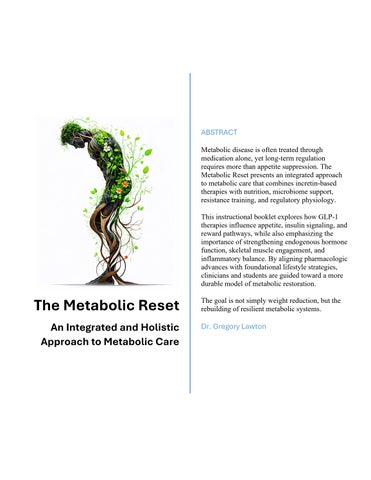

The Metabolic Reset
An Integrated and Holistic Approach to Metabolic Care
ABSTRACT
Metabolic disease is often treated through medication alone, yet long-term regulation requires more than appetite suppression. The Metabolic Reset presents an integrated approach to metabolic care that combines incretin-based therapies with nutrition, microbiome support, resistance training, and regulatory physiology.
This instructional booklet explores how GLP-1 therapies influence appetite, insulin signaling, and reward pathways, while also emphasizing the importance of strengthening endogenous hormone function, skeletal muscle engagement, and inflammatory balance. By aligning pharmacologic advances with foundational lifestyle strategies, clinicians and students are guided toward a more durable model of metabolic restoration.
The goal is not simply weight reduction, but the rebuilding of resilient metabolic systems.
Dr. Gregory Lawton
The Metabolic Reset: An Integrated and Holistic Approach to Metabolic Care
Copyright © 2026 Gregory T. Lawton
All rights reserved. No part of this publication may be reproduced, distributed, or transmitted in any form or by any means, including photocopying, recording, or other electronic or mechanical methods, without prior written permission of the author, except in the case of brief quotations embodied in critical reviews and certain other noncommercial uses permitted by copyright law.
This booklet is intended for educational purposes only. It is not a substitute for individualized medical care, diagnosis, or treatment. Clinical decisions should be made in consultation with appropriate licensed healthcare professionals.
First Edition 2026
Printed in the United States of America
Table of Contents
Foreword
Prologue
Introduction: Incretin Physiology and the Case for Integrated Metabolic Care
Part One: The Metabolic Reset: An Integrated and Holistic Approach to Metabolic Care
• Overview of GLP-1 Physiology
• GIP and Dual Agonism
• Glucagon and Triple Agonism
• Mechanisms of Appetite Suppression
• Gastric Emptying and Satiety
• Central Nervous System and Reward Modulation
• Lean Mass Considerations
• Adaptive Thermogenesis
• Clinical Laboratory Monitoring
• Common Clinical Errors in Incretin-Based Care
Part Two: Supporting Endogenous Incretin Physiology Through Nutrition and Botanical Modulation
• Nutrient-Induced GLP-1 Secretion
• Protein and Enteroendocrine Stimulation
• Bitter Receptor Physiology and Phytochemicals
• Botanical Insulin Sensitizers
• Alpha-Glucosidase Modulation
• Polyphenols and Glycemic Regulation
• Microbiome Signaling and SCFA Physiology
• Fermentable Fiber
• Resistant Starch and RS3 Retrogradation
• Butyrate Production and Endocrine Signaling
• Continuous Glucose Monitoring in Dietary Restructuring
• Clinical Application of Microbiome Assessment and Butyrate Signaling
• Dietary Butyrate Production Versus Supplementation
• Trauma-Informed Considerations in Appetite Regulation
Part Three: Mechanical Signaling and Resistance Training in Metabolic Restoration
• The Necessity of Physical Exertion
• Skeletal Muscle as Endocrine Organ
• Myokines and Insulin Sensitivity
• GLUT4 Translocation and Contraction-Mediated Glucose Uptake
• Lean Mass Preservation During Weight Loss
• Resistance Training and Mitochondrial Biogenesis
• Adaptive Thermogenesis Prevention
• Practical Exercise Implementation
• Safety and Clinical Considerations
Integrated 4-Week GLP-1 Restoration Program
• Week One: Stabilization and Baseline Assessment
• Week Two: Nutritional Structure and Glycemic Modulation
• Week Three: Fiber Expansion and Microbiome Reinforcement
• Week Four: Mechanical Load Integration
• Monitoring and Follow-Up Strategy
Case-Based Applications
• Case One: Early Insulin Resistance
• Case Two: GLP-1 Initiation with Lean Mass Risk
• Case Three: Trauma History and Appetite Regulation
• Case Four: Metabolic Plateau and Microbiome Consideration
Glossary: Clinical and Physiological Reference Guide
References
About the Author
Foreword
The management of obesity and metabolic disease has entered a new era. Incretin-based pharmacotherapy has provided clinicians with tools capable of producing meaningful weight reduction and cardiovascular risk improvement in patients who previously struggled despite repeated attempts at lifestyle modification.
Yet no pharmacologic intervention exists in isolation from physiology. Hormonal signaling, skeletal muscle function, microbial ecology, stress regulation, and behavioral adaptation interact continuously within the human organism. The purpose of this booklet is not to diminish the value of modern incretin therapy, but to situate it within a broader framework of metabolic restoration.
This chapter invites clinicians and students to examine obesity not merely as caloric excess, but as dysregulated metabolic, endocrine, and neurobehavioral signaling. When pharmacologic intervention is coordinated with nutritional structure, mechanical signaling, and trauma-informed awareness, treatment becomes more durable and physiologically coherent.
Metabolic medicine must be both scientifically rigorous and integrative in design. This booklet seeks to support that balance.
Prologue
“It is impossible to maintain normal metabolic function in the human body without physical exertion, whether work or exercise.” I wrote these words over 45 years ago and they are as true now as they were true then. Human physiology and metabolism as not changed one single iota over that period. This statement is not ideological. It is physiologic.
Human metabolism evolved under conditions of regular mechanical load, variable food availability, sunlight exposure, and continuous physical engagement with the environment. Skeletal muscle function is not optional in glucose regulation. Mechanical tension influences mitochondrial density, insulin sensitivity, inflammatory tone, and hormonal balance.
Modern incretin pharmacotherapy provides powerful tools for appetite modulation and glycemic control. However, no medication replaces mechanical signaling. Appetite suppression does not substitute for contraction-mediated glucose uptake. Receptor activation does not preserve lean mass. Hormonal modulation does not eliminate the need for adaptive resilience.
The restoration of metabolic health requires coordinated engagement across systems. Pharmacology may stabilize. Nutrition may regulate. Muscle must participate.
This booklet proceeds from that principle.
The Metabolic Reset: An Integrated and Holistic Approach to Metabolic Care
I. Introduction
Obesity is not simply an excess of body weight. It is a systems-level metabolic condition that influences nearly every major organ network. Excess adiposity contributes to insulin resistance, chronic low-grade inflammation, endothelial dysfunction, altered neuroendocrine signaling, fatty liver disease, obstructive sleep apnea, osteoarthritis, and increased cardiovascular risk. For many individuals, obesity represents the convergence of genetic predisposition, environmental exposure, stress physiology, trauma history, dietary pattern, physical inactivity, and rewarddriven behavior.
Over the past decade, incretin-based pharmacotherapy has reshaped the medical management of obesity and type 2 diabetes. Glucagon-like peptide-1 receptor agonists and dual incretin agonists have demonstrated substantial and reproducible weight reduction, improved glycemic control, and meaningful cardiovascular risk reduction in appropriately selected patients. These medications have altered the trajectory of metabolic disease for many individuals who previously experienced repeated weight cycling and progressive metabolic decline.
Yet incretin signaling did not originate in the pharmacy. It originated in human physiology. The purpose of this chapter is not to contrast lifestyle and medication as opposing philosophies, but to integrate them within a coherent metabolic framework. Pharmacologic therapy acts at the receptor level. Nutrition, microbiome modulation, and mechanical signaling act at the regulatory level. Understanding how these layers interact allows clinicians to design care plans that are not only effective in the short term, but sustainable across the lifespan.
This chapter explores three interrelated domains. Part One examines the clinical value and neurobehavioral implications of pharmacologic incretin therapy. Part Two explores strategies to support endogenous incretin physiology through nutrition and botanical modulation. Part Three examines skeletal muscle as a primary regulator of glucose disposal and metabolic resilience. The goal is not to privilege one approach over another, but to understand how they may function synergistically in modern metabolic care.
Part One: Pharmacologic Incretin Therapy
A. Clinical Value in Obesity and Cardiometabolic Disease
Incretin-based medications have demonstrated measurable benefit in high-risk populations. GLP1 receptor agonists and dual incretin agonists reduce hemoglobin A1C, improve fasting and postprandial glucose control, and produce weight loss that often exceeds ten percent of baseline body weight. In cardiovascular outcome trials, several agents have demonstrated reductions in major adverse cardiovascular events in individuals with established cardiovascular disease or high-risk profiles.
These outcomes are clinically significant. Sustained weight reduction of ten to twenty percent of baseline body weight is associated with improvements in blood pressure, lipid profile, hepatic steatosis, mobility, and inflammatory markers. For individuals with severe obesity, these improvements may reduce near-term cardiovascular risk and delay progression of metabolic disease.
Emerging multi-agonist therapies under investigation target additional metabolic pathways, including combined GLP-1, GIP, and glucagon receptor activation. Early trial data suggest substantial weight reduction and metabolic improvement. These agents remain investigational and are not currently approved for routine clinical use. Unregulated products marketed outside of formal clinical trials present significant safety concerns, including dosing inconsistency and lack of quality control.
Acknowledging the demonstrated clinical value of incretin therapy is essential. For many patients, these medications are not optional adjuncts but important components of risk reduction and disease modification.
B. Neurobehavioral Effects: Appetite, Reward, and Dopamine
GLP-1 receptors are expressed not only in the gastrointestinal tract and pancreas, but also in central nervous system regions involved in motivation and reward. These include the hypothalamus, ventral tegmental area, and nucleus accumbens, which participate in dopaminergic signaling pathways that influence reinforcement learning and cue-driven behavior.
In modern food environments, repeated exposure to highly palatable, calorie-dense foods can sensitize reward circuitry. Food cues may acquire exaggerated motivational salience, leading to persistent cravings independent of metabolic need. Many patients describe intrusive thoughts about food, frequent preoccupation with eating, and difficulty regulating portion size despite awareness of consequences.
Incretin therapy appears to reduce this reward salience. Patients frequently report a quieting of food-related mental noise, decreased urgency around eating, and reduced cue-driven behavior. This effect reflects modulation of motivational circuitry rather than simple caloric restriction. Appetite suppression, in this context, represents a neurobehavioral shift.
Dopamine pathways, however, regulate more than food intake. They influence motivation, goaldirected behavior, and aspects of emotional tone. Although large clinical trials have not demonstrated widespread depressive effects, clinicians should recognize that appetite modulation occurs within broader reward systems.
Reflection Questions – Part One, Sections A and B
1. Why is obesity considered a systems-level disease rather than a cosmetic concern.
2. What distinguishes incretin therapy from earlier weight-loss medications.
3. How does GLP-1 signaling influence both appetite and reward circuitry.
4. What does a patient mean when they describe a reduction in food noise.
C. Trauma-Informed Considerations in Appetite Modulation
Chronic stress and trauma exposure are common among individuals with obesity and disordered eating patterns. In some patients, overeating functions as a form of self-regulation rather than solely as a response to metabolic hunger. Highly palatable foods can temporarily reduce anxiety, blunt emotional distress, or create predictable reinforcement in otherwise unstable psychological environments.
When pharmacologic therapy reduces appetite and food-related reward salience, long-standing coping behaviors may be interrupted. For many individuals this interruption is therapeutic and liberating. For others, it may reveal previously buffered anxiety or emotional discomfort. The emergence of distress in this context should not be interpreted as medication-induced addiction transfer. Current evidence does not demonstrate a consistent increase in impulse-control disorders such as gambling or hypersexuality with incretin therapy.
The more relevant clinical question is whether alternative regulatory strategies are in place. When a primary coping behavior is reduced, the nervous system may seek stability through other means if adaptive supports are not available. A trauma-informed approach includes assessment of emotional triggers for eating, baseline mood patterns, stress history, and the presence of multiple compulsive behaviors.
Resistance training, structured physical activity, social engagement, and skill development can serve as alternative dopamine-modulating pathways while simultaneously improving metabolic health. Sustainable metabolic care requires attention to both hormonal recalibration and reinforcement of adaptive coping systems.
Reflection Questions – Trauma-Informed Considerations
1. How can eating function as emotional regulation rather than hunger response.
2. Why might appetite suppression reveal previously masked distress.
3. What role can resistance training play beyond muscle strengthening.
4. Why is trauma-informed awareness important in obesity management.
Part Two: Supporting Endogenous Incretin Physiology Through Nutrition and Botanical Modulation
A. Regulatory Versus Receptor-Level Activation
Incretin pharmacotherapy acts primarily at the receptor level. It provides sustained stimulation of GLP-1 pathways that influence appetite, gastric emptying, and insulin secretion. Endogenous incretin signaling, by contrast, is meal-dependent, pulsatile, and integrated within broader metabolic feedback loops involving the gut, pancreas, liver, skeletal muscle, microbiome, and central nervous system.
Supporting endogenous GLP-1 physiology does not seek to replicate the magnitude of pharmacologic receptor activation. Rather, it strengthens regulatory capacity. When incretin secretion is stimulated through whole-food dietary structure, fermentable fiber metabolism, and mechanical signaling from skeletal muscle, hormonal activity occurs within physiologic timing and feedback boundaries.
There are several clinical reasons to strengthen endogenous signaling prior to or alongside pharmacologic therapy. First, physiologic stimulation preserves hormonal responsiveness and reduces reliance on sustained receptor activation. Second, dietary structure and skeletal muscle engagement improve insulin sensitivity and metabolic flexibility independent of GLP-1. Third, early education in endogenous regulation improves patient autonomy and long-term sustainability during and after medication use.
Endogenous regulation enhances pharmacologic outcomes. It does not compete with them.
Reflection Questions
1. What is the difference between receptor-level activation and regulatory-level support.
2. Why is pulsatile hormone signaling physiologically important.
3. How might endogenous support improve outcomes during medication therapy.
B. Nutritional Architecture and Protein Signaling
Dietary protein is one of the most consistent physiologic stimulators of GLP-1 secretion. Amino acids in the distal small intestine activate enteroendocrine L-cells, increasing incretin release in response to nutrient presence. Protein ingestion also promotes satiety through multiple mechanisms, including peptide YY signaling and delayed gastric emptying.
In the context of incretin therapy, adequate protein intake serves an additional purpose. GLP-1 receptor agonists reduce appetite and caloric intake. Without deliberate attention to protein consumption and resistance training, lean mass loss may occur. Loss of skeletal muscle contributes to metabolic slowdown and reduced resting energy expenditure.
A dietary pattern emphasizing distributed protein intake across meals supports both endogenous incretin secretion and lean mass preservation. Whole-food sources such as legumes, eggs, fish, poultry, fermented dairy, and minimally processed plant proteins provide amino acid substrates while contributing to satiety.
Protein in this context functions not merely as macronutrient fuel but as hormonal signaling input.
Reflection Questions
1. How does dietary protein stimulate GLP-1 release.
2. Why is lean mass preservation important during weight loss.
3. What are practical ways to distribute protein intake across the day.
C. Microbiome Signaling, Fermentable Fiber, Resistant Starch, and Glycemic
Modulation
Endogenous incretin physiology is influenced not only by direct nutrient stimulation in the small intestine but also by downstream microbial fermentation in the colon. Certain carbohydrates escape digestion in the upper gastrointestinal tract and are metabolized by colonic bacteria into short-chain fatty acids such as butyrate, acetate, and propionate. These metabolites act as signaling molecules that influence intestinal barrier function, inflammation, insulin sensitivity, and enteroendocrine hormone secretion.
Fermentable Fiber
Fermentable fibers resist digestion in the small intestine and undergo bacterial fermentation in the colon. Common examples include:
• Inulin
• Fructooligosaccharides
• Galactooligosaccharides
• Pectin
• Beta-glucans
• Acacia fiber
• Partially hydrolyzed guar gum
Inulin, commonly derived from chicory root or Jerusalem artichoke, selectively promotes beneficial bacterial species and supports short-chain fatty acid production. Acacia fiber, derived from Acacia senegal, is a soluble fiber that ferments more slowly and is often better tolerated in sensitive individuals.
Whole-food sources of fermentable fiber include:
• Chicory root
• Jerusalem artichoke
• Leeks
• Garlic
• Onions
• Asparagus
• Oats
• Legumes
• Apples
• Flaxseed
Dietary diversity is preferable to reliance on a single isolated fiber supplement. Gradual titration is essential to minimize bloating and discomfort due to increased fermentation.
Resistant Starch and RS3 Retrogradation
Resistant starch is structurally distinct from soluble fiber but shares the property of escaping digestion in the small intestine.
The most clinically relevant type is RS3, also known as retrograded starch. When foods such as rice, potatoes, or certain grains are cooked and then cooled, their starch molecules reorganize into tightly packed crystalline structures. This process, called retrogradation, reduces enzymatic accessibility to amylase in the small intestine.
As a result:
• Less glucose is rapidly absorbed
• Postprandial glycemic spikes are reduced
• A portion of the starch passes into the colon
• Microbial fermentation increases
• Butyrate production rises
Importantly, reheating does not completely eliminate the resistant fraction. A portion of the retrograded crystalline structure remains intact.
Common RS3 sources include:
• Cooked and cooled rice
• Cooked and cooled potatoes
• Cooked and cooled lentils
• Cooked and cooled oats
The clinical impact includes improved glycemic stability and enhanced microbial signaling.
Butyrate Production and Endocrine Signaling
Butyrate is produced when colonic bacteria ferment fermentable fiber and resistant starch. It serves as a primary energy substrate for colonocytes and contributes to:
• Intestinal barrier integrity
• Reduced endotoxin translocation
• Modulation of inflammatory signaling
• Improved insulin sensitivity
• Activation of receptors involved in GLP-1 secretion
Butyrate exerts both local and systemic effects. It influences G-protein coupled receptors and histone deacetylase pathways that affect metabolic gene expression.
Reduced microbial diversity or low abundance of butyrate-producing organisms is commonly observed in obesity and insulin resistance. Restoration requires sustained dietary pattern change rather than isolated supplementation.
Continuous Glucose Monitoring in Fiber and Resistant Starch Therapy
Continuous glucose monitoring provides real-time insight into glycemic variability, postprandial spikes, and nocturnal glucose trends. When implementing fermentable fiber and resistant starch interventions, CGM can be a powerful educational tool.
Patients may observe:
• Lower peak glucose levels after meals
• Smoother postprandial curves
• Reduced glycemic variability
• Improved time in range
CGM data reinforces behavioral adherence by providing immediate feedback. It also helps clinicians distinguish between caloric reduction and true glycemic improvement.
However, CGM interpretation must consider context. A flatter glucose curve is beneficial, but overall nutrient adequacy and lean mass preservation remain priorities.
Alpha-Glucosidase Modulation
Alpha-glucosidase is an intestinal enzyme responsible for breaking down complex carbohydrates into absorbable glucose. Inhibition of alpha-glucosidase slows carbohydrate digestion and reduces postprandial glucose excursions.
Certain dietary components exert mild alpha-glucosidase inhibitory effects:
• Legumes
• Cinnamon
• Green tea polyphenols
• Berries
• Certain flavonoids
This mechanism resembles, in a milder form, the pharmacologic action of alpha-glucosidase inhibitor medications such as acarbose. Dietary modulation provides gradual glycemic smoothing rather than strong enzymatic blockade.
Slower carbohydrate digestion contributes to improved GLP-1 signaling through more sustained nutrient exposure in the distal intestine.
Polyphenols and Metabolic Modulation
Polyphenols are plant-derived compounds with antioxidant and signaling properties. They influence metabolism through multiple pathways:
• Modulation of gut microbiota composition
• Mild alpha-glucosidase inhibition
• Improvement in endothelial function
• Enhancement of insulin signaling
• Reduction in oxidative stress
Sources include:
• Berries
• Dark leafy greens
• Green tea
• Cocoa
• Extra virgin olive oil
• Red and purple vegetables
Polyphenols function synergistically with fermentable fiber and resistant starch. They do not act as incretin analogs, but they may support endogenous regulatory capacity.
Practical Clinical Integration
A structured progression may include:
Week 1
Introduce one serving of legumes daily and increase vegetable intake.
Week 2
Incorporate cooked and cooled starch sources two to three times weekly.
Week 3
Increase plant diversity to twenty or more unique plant foods per week.
Week 4
Consider supplemental inulin or acacia fiber if tolerated.
CGM may be used to demonstrate reduced glycemic variability.
Monitoring should include:
• Gastrointestinal tolerance
• Postprandial glucose patterns
• Triglyceride trends
• CRP levels
• Patient-reported satiety
The objective is regulatory enhancement, not aggressive fiber loading.
Reflection Questions – Expanded Section
1. How does RS3 formation reduce glycemic spikes.
2. What is the role of alpha-glucosidase in carbohydrate digestion.
3. How do polyphenols influence metabolic health beyond antioxidant effects.
4. How can CGM support patient education during dietary restructuring.
5. Why is microbial diversity more important than isolated supplementation.
Clinical Application of Microbiome Assessment and Butyrate Signaling
Dietary diversification alone improves microbial ecology in many patients. Routine stool testing is not required for every individual undergoing incretin-based care. However, in selected cases, microbiome assessment may provide useful adjunctive information, particularly when metabolic progress plateaus or inflammatory markers remain elevated despite weight reduction.
Butyrate, a short-chain fatty acid produced through microbial fermentation of resistant starch and fermentable fiber, plays an important regulatory role. It supports intestinal barrier integrity, reduces endotoxin translocation, modulates inflammatory signaling pathways, influences insulin sensitivity, and participates in enteroendocrine hormone regulation. Reduced abundance of butyrate-producing organisms has been observed in individuals with obesity and insulin resistance.
Stool analysis may be considered when:
• C-reactive protein remains elevated
• Triglycerides plateau despite dietary adherence
• Gastrointestinal symptoms persist
• Glycemic variability remains high despite caloric reduction
• Antibiotic exposure history is significant
Patterns of reduced microbial diversity or diminished butyrate-producing species may guide reinforcement of dietary fiber diversity and resistant starch incorporation. However, stool shortchain fatty acid measurements should be interpreted cautiously. Luminal concentration does not always reflect tissue-level activity or systemic exposure. Clinical context, laboratory trends,
continuous glucose monitoring data, and dietary history remain primary determinants of care decisions.
Continuous glucose monitoring can complement microbiome-directed interventions by demonstrating reduced postprandial glucose excursions after resistant starch and fermentable fiber incorporation. Improvement in glycemic variability often precedes changes in stool metrics.
The therapeutic objective is ecological restoration rather than targeted manipulation of a single bacterial strain. Whole-food fiber diversity, gradual prebiotic titration, inclusion of retrograded starch, polyphenol-rich plant intake, and consistent dietary structure remain foundational. Stool testing, when used, serves as an adjunct to clinical reasoning rather than as a standalone determinant of care.
Dietary Butyrate Production Versus Direct Supplementation
It is important to distinguish between endogenous butyrate production through microbial fermentation and direct oral butyrate supplementation. Endogenous production occurs gradually in response to fermentable fiber and resistant starch intake, reflecting ecological adaptation and microbial diversity. This process strengthens intestinal barrier integrity and metabolic signaling within the context of an integrated dietary pattern.
Oral butyrate supplements may transiently increase luminal butyrate exposure, but they do not restore microbial diversity or replicate the signaling complexity generated by sustained fermentation. Supplementation may be considered in select gastrointestinal conditions under clinical supervision, yet it should not be viewed as a substitute for dietary fiber diversity and retrograded starch intake. Long-term metabolic resilience depends on ecological reinforcement rather than isolated metabolite replacement.
Part Three: Skeletal Muscle, Mechanical Signaling, and Metabolic Resilience
A. Skeletal Muscle as a Primary Glucose Disposal Organ
Skeletal muscle is the largest site of insulin-mediated glucose disposal in the human body. Following a meal, glucose uptake into muscle accounts for the majority of postprandial clearance. This process is mediated by insulin signaling and translocation of GLUT4 transporters to the cell membrane.
Importantly, muscle contraction also stimulates glucose uptake through insulin-independent mechanisms. Mechanical tension and repeated contraction increase GLUT4 translocation and enhance glucose clearance even in the presence of insulin resistance. This contraction-mediated pathway remains functional in many individuals with impaired metabolic regulation.
When muscle mass is reduced, total glucose disposal capacity declines. The metabolic burden shifts toward the liver and adipose tissue. Over time, reduced lean mass contributes to impaired glycemic control, decreased metabolic flexibility, and increased cardiometabolic risk.
Preserving and expanding skeletal muscle is therefore not optional in metabolic care. It is foundational.
Reflection Questions
1. Why is skeletal muscle considered the primary site of glucose disposal.
2. How does muscle contraction improve glucose uptake independent of insulin.
3. What happens metabolically when lean mass declines.
B. Lean Mass Preservation During Incretin Therapy
Incretin-based therapies reduce appetite and caloric intake. While weight loss is beneficial in many patients, a portion of that loss may include lean mass if protein intake and resistance training are insufficient. Lean mass reduction lowers resting energy expenditure and may contribute to adaptive thermogenesis.
Adaptive thermogenesis refers to the decrease in metabolic rate that occurs during caloric restriction beyond what would be predicted by body weight loss alone. This phenomenon makes long-term weight maintenance more challenging. Preserving skeletal muscle mitigates this metabolic slowdown and supports sustained energy expenditure.
During GLP-1 therapy, deliberate protein intake and structured resistance training should be emphasized to protect muscle tissue. Weight reduction that disproportionately reduces lean mass may undermine long-term metabolic resilience.
The goal is not simply weight loss, but favorable body composition change.
Reflection Questions
1. What is adaptive thermogenesis.
2. Why is lean mass preservation critical during weight loss.
3. How can clinicians help patients protect muscle during appetite suppression.
C. Myokines and Endocrine Cross-Talk
Skeletal muscle functions as an endocrine organ. During contraction, muscle fibers release signaling molecules known as myokines. These compounds influence systemic inflammation, insulin sensitivity, lipid metabolism, and mitochondrial function.
Exercise-induced myokines contribute to improved metabolic regulation independent of weight loss. Physical activity increases mitochondrial density, enhances fatty acid oxidation, and improves insulin receptor signaling efficiency.
Mechanical signaling also influences central nervous system pathways. Resistance training and structured physical activity enhance dopamine tone, improve mood regulation, and support stress resilience. In patients whose eating behaviors previously functioned as primary reward mechanisms, exercise provides an alternative physiologic reward pathway.
Muscle contraction therefore influences metabolic, endocrine, and neurobehavioral systems simultaneously.
Reflection Questions
1. What are myokines and why are they important.
2. How does resistance training influence insulin sensitivity independent of weight loss.
3. How might exercise support patients adjusting to reduced food reward.
D. Resistance Training Framework for Metabolic Patients
Resistance training does not require advanced athletic programming. For metabolic patients, the objective is progressive mechanical tension applied consistently over time.
Core principles include:
• Training two to three times per week
• Emphasizing compound movements that recruit large muscle groups
• Progressive overload through gradual increases in resistance
• Adequate protein intake to support muscle repair
• Monitoring recovery and joint tolerance
Bodyweight movements, resistance bands, free weights, or machines may all be appropriate depending on patient capability. The emphasis should remain on consistency rather than intensity.
When combined with adequate dietary protein and structured nutrition, resistance training supports lean mass preservation, improves glucose disposal, enhances mood stability, and strengthens metabolic flexibility.
Skeletal muscle engagement completes the regulatory framework initiated through nutrition and endogenous incretin support.
Reflection Questions
1. Why is consistency more important than intensity in early resistance training.
2. How often should metabolic patients engage in resistance exercise.
3. What factors should clinicians monitor when prescribing resistance training.
Integrated Clinical Framework: Coordinating Pharmacology,
Physiology, and Behavior
Modern metabolic care often becomes polarized between medication-centered and lifestylecentered models. A more accurate understanding recognizes that these approaches operate at different biological layers. Pharmacologic incretin therapy acts at the receptor level, modifying appetite signaling, gastric emptying, and insulin secretion. Nutritional structure, microbiome ecology, botanical modulation, and mechanical signaling act at the regulatory level. Sustainable care requires coordination across both.
When used appropriately, incretin pharmacotherapy can rapidly reduce hyperphagia, improve glycemic control, and decrease cardiometabolic risk. In high-risk patients, delaying pharmacologic intervention may prolong exposure to inflammatory and vascular injury. Medication, in such cases, serves as a stabilizing tool.
However, receptor activation alone does not restore metabolic resilience. Lean mass, mitochondrial density, insulin sensitivity, and autonomic regulation are not preserved by appetite suppression alone. If caloric intake declines without deliberate nutritional structure and mechanical engagement, adaptive thermogenesis may emerge, resting metabolic rate may decline, and lean mass may erode. Weight reduction without structural reinforcement may therefore be metabolically incomplete.
A coordinated model approaches treatment in phases rather than in opposition. Early pharmacologic support may reduce the intensity of reward-driven eating and create cognitive space for behavioral change. During this window, clinicians should introduce structured protein intake, fermentable fiber, resistant starch incorporation, bitter plant inclusion, and progressive resistance training. Botanical insulin sensitizers may complement this strategy in selected patients. These interventions strengthen endogenous signaling while pharmacologic therapy reduces acute metabolic burden.
This model also accounts for neurobehavioral adaptation. When food-related reward salience decreases, alternative regulatory pathways must be strengthened. Resistance training provides dopaminergic stimulation, improved mood tone, and enhanced self-efficacy. Social connection, skill acquisition, and meaningful activity further reinforce adaptive reward circuits. Traumainformed awareness ensures that appetite suppression does not occur in isolation from emotional support.
Long-term sustainability depends on whether metabolic resilience has been rebuilt. If endogenous regulatory capacity improves during pharmacologic treatment, eventual dose reduction or discontinuation may be better tolerated. If regulatory capacity remains weak, medication withdrawal may be followed by rapid weight regain due to unaddressed physiological and behavioral drivers.
The integrated clinical objective is not simply weight loss. It is restoration of metabolic flexibility, preservation of lean mass, stabilization of reward circuitry, and development of durable self-regulation skills.
Reflection Questions – Integrated Framework
1. How do receptor-level and regulatory-level interventions differ in metabolic care.
2. Why might medication create a window of opportunity for lifestyle restructuring.
3. What risks arise if lean mass and regulatory capacity are not addressed during weight loss.
4. How does trauma-informed care influence metabolic treatment planning.
The 4-Week GLP-1 Restoration Protocol
The following framework is designed as an educational model rather than a prescriptive protocol. It may be used in patients initiating pharmacologic therapy or as a preparatory phase prior to medication.
Week 1: Structural Awareness and Nutritional Stabilization
Objectives:
• Establish consistent meal timing
• Increase protein intake at each meal
• Introduce fermentable fiber sources
• Begin simple resistance exercises twice weekly
Patients track hunger patterns, mood shifts, and energy levels. Emphasis is placed on education rather than restriction. Bitter greens or herbal bitters may be introduced prior to meals to support endogenous signaling.
Clinical focus:
Observe appetite change, emotional response to food reduction, and early adaptation patterns.
Week 2: Microbiome and Mechanical Engagement
Objectives:
• Incorporate resistant starch through cooled legumes or grains
• Increase vegetable diversity
• Progress resistance exercises with mild overload
• Reinforce protein distribution
Patients are encouraged to notice satiety duration and glycemic stability. Structured movement becomes non-negotiable, even if brief.
Clinical focus:
Assess digestive tolerance, energy stability, and adherence to mechanical training.
Week 3: Metabolic Reinforcement
Objectives:
• Refine carbohydrate quality
• Introduce moderate whole-food fats for satiety
• Continue progressive resistance training
• Evaluate lean mass maintenance
Botanical insulin sensitizers may be considered where appropriate. Emphasis shifts toward body composition rather than scale weight alone.
Clinical focus:
Monitor signs of adaptive thermogenesis, mood changes, and reward substitution behaviors.
Week 4: Resilience Consolidation
Objectives:
• Maintain structured protein and fiber intake
• Reinforce consistent resistance training
• Assess psychological adaptation
• Review long-term sustainability plan
At this stage, patients should demonstrate improved hunger awareness, stabilized glycemic response, and increased confidence in self-regulation.
Clinical focus:
Evaluate readiness for continued pharmacologic therapy, dose adjustment, or transition planning where appropriate.
Reflection Questions – 4-Week Curriculum
1. Why is resistance training introduced early rather than delayed.
2. What indicators suggest improving endogenous regulation.
3. Why is psychological monitoring important during metabolic restructuring.
4. How does this phased approach support long-term sustainability.
Case-Based Applications with Laboratory Integration
Core Laboratory Panel for Incretin-Based Metabolic Care
Before examining individual cases, clinicians should consider baseline and follow-up laboratory assessment. Suggested markers include:
• Hemoglobin A1C
• Fasting glucose
• Fasting insulin
• HOMA-IR calculation
• Comprehensive metabolic panel
• Lipid profile including triglycerides and HDL
• ALT and AST
• C-reactive protein
• Fasting C-peptide when appropriate
• Thyroid panel when indicated
• Body composition assessment
Optional advanced markers:
• Oral glucose tolerance test with insulin response
• Apolipoprotein B
• Ferritin
• Vitamin D
• Resting metabolic rate measurement
• Continuous glucose monitoring
Laboratory interpretation must be integrated with clinical presentation, body composition, and behavioral context.
Case 1: Advanced Metabolic Disease with High Cardiovascular Risk
Patient Profile
Male, age 58
BMI 36
Type 2 diabetes 12 years
Hypertension
Coronary artery disease
Baseline Labs
A1C 8.4 percent
Fasting glucose 172 mg/dL
Fasting insulin elevated
Triglycerides 265 mg/dL
HDL low ALT mildly elevated
Interpretation
This profile demonstrates significant insulin resistance and elevated cardiovascular risk. Elevated triglycerides and low HDL suggest hepatic insulin resistance and probable fatty liver involvement. The elevated ALT reinforces hepatic metabolic strain.
Clinical Decision
Pharmacologic incretin therapy is strongly indicated for both glycemic control and cardiovascular risk reduction. However, laboratory markers also suggest need for:
• Structured protein intake to preserve lean mass
• Fermentable fiber to improve triglyceride profile
• Resistance training to enhance glucose disposal
• Monitoring ALT as weight decreases
Follow-Up Markers
Reassess A1C, triglycerides, ALT, and fasting insulin at 12 weeks.
Discussion Prompts
1. Which laboratory markers justify pharmacologic intervention.
2. What markers would reflect improving endogenous regulation.
3. Why is ALT important in this case.
Case 2: Trauma History with Emotional Eating
Patient Profile
Female, age 44
BMI 34
Prediabetes
History of childhood adversity
Baseline Labs
A1C 6.1 percent
Fasting glucose 108 mg/dL
Fasting insulin elevated
Triglycerides mildly elevated
CRP elevated
Interpretation
Laboratory profile suggests early insulin resistance with inflammatory activation. CRP elevation may reflect chronic stress physiology and adipose-derived inflammation.
Clinical Decision
GLP-1 therapy may be considered, but integrated support is essential. Labs indicate metabolic dysfunction but not advanced diabetes.
Integrated Plan
• Introduce resistance training early
• Increase dietary protein and fiber
• Monitor CRP as inflammation marker
• Track mood and coping shifts
Follow-Up Markers
Reassess A1C, fasting insulin, triglycerides, and CRP at 16 weeks.
Discussion Prompts
1. What does elevated fasting insulin indicate.
2. Why is CRP relevant in trauma-informed care.
3. What lab changes would indicate improvement beyond weight loss.
Case 3: Lean Mass Loss and Metabolic Slowdown
Patient Profile
Male, age 51
On GLP-1 therapy 9 months
18 percent weight loss
Reports fatigue
Baseline Follow-Up Labs
A1C improved
Triglycerides improved
Fasting insulin lower
Resting metabolic rate decreased
Body composition shows lean mass reduction
Interpretation
Metabolic control has improved, but lean mass loss suggests risk for adaptive thermogenesis and long-term instability.
Clinical Decision
• Increase protein to 1.2–1.6 g/kg
• Implement progressive resistance training
• Consider modest caloric increase
• Reassess resting metabolic rate
Discussion Prompts
1. Why does improved A1C not guarantee metabolic resilience.
2. How does lean mass loss influence long-term outcomes.
3. What lab or body composition markers would you prioritize.
Case 4: Metabolic Plateau with Microbial Dysfunction
Patient Profile
Female, age 49
BMI reduced from 35 to 31 on GLP-1 therapy
A1C improved
Triglycerides modestly improved
CRP remains elevated
Stool Analysis
Reduced microbial diversity
Low abundance of butyrate-producing bacteria
Low measured butyrate
Interpretation
Metabolic markers improved with pharmacotherapy, but persistent inflammatory tone suggests incomplete regulatory restoration. Reduced butyrate production may contribute to ongoing lowgrade inflammation.
Clinical Plan
• Increase resistant starch sources
• Expand vegetable diversity
• Introduce gradual prebiotic fibers
• Continue resistance training
• Reassess CRP and triglycerides at 12 weeks
Discussion Prompts
1. Why might CRP remain elevated despite weight loss.
2. How does butyrate influence metabolic inflammation.
3. Why should fiber increases be gradual.
Short Vignettes with Lab Integration
Vignette 1
Patient regains weight after stopping GLP-1. Fasting insulin elevated again. Triglycerides rising.
Discussion Which regulatory systems were not strengthened.
Suggested Answer
This pattern suggests that appetite suppression occurred during therapy, but underlying metabolic regulation was not restored. The medication reduced food intake, but endogenous systems responsible for glucose handling, muscle metabolism, and energy expenditure were not strengthened.
The regulatory systems likely underdeveloped include:
• Skeletal muscle insulin sensitivity. If resistance training was not implemented, contractionmediated glucose uptake via GLUT4 may not have improved.
• Lean mass preservation. Loss of muscle during weight reduction lowers resting metabolic rate and predisposes to regain.
• Hepatic metabolic regulation. Rising triglycerides suggest ongoing hepatic lipogenesis and insulin resistance.
• Endogenous incretin signaling. Dietary structure may not have been optimized to support GLP1 secretion naturally.
• Adaptive thermogenesis control. Resting metabolic rate may have declined without mechanical load to counter it.
In short, pharmacologic regulation occurred, but physiologic adaptation did not consolidate.
Vignette 2
Patient with excellent weight loss but persistent high fasting insulin.
Discussion
What does this suggest about muscle engagement and insulin sensitivity.
Suggested Answer
Persistent elevation in fasting insulin despite weight loss suggests that insulin resistance remains present. Weight reduction alone does not guarantee improved insulin signaling at the cellular level.
This pattern often indicates:
• Inadequate skeletal muscle engagement. Muscle is the primary site of glucose disposal. Without consistent resistance training, insulin sensitivity may not significantly improve.
• Continued visceral adiposity. Fat mass may have decreased overall, but central adiposity may remain metabolically active.
• Mitochondrial inefficiency. Muscle tissue that has not been mechanically stimulated may remain metabolically sluggish.
• Ongoing hepatic insulin resistance. The liver may still be producing excess glucose.
High fasting insulin in the presence of improved A1C often means glycemia is controlled through increased insulin output rather than improved cellular responsiveness.
This reinforces the necessity of mechanical signaling in metabolic restoration.
Vignette 3
Patient shows improved A1C but CRP remains elevated.
Discussion What inflammatory drivers might still be present.
Suggested Answer
Improved A1C indicates better glucose control. However, persistent elevation in CRP suggests ongoing inflammatory signaling independent of glycemia.
Possible inflammatory drivers include:
• Visceral adiposity. Abdominal fat secretes pro-inflammatory cytokines even after partial weight loss.
• Hepatic steatosis. Fatty liver can maintain systemic inflammation.
• Endotoxemia from intestinal permeability. Low microbial diversity and insufficient butyrate production may allow low-grade inflammatory signaling.
• Sedentary behavior. Lack of muscle contraction reduces anti-inflammatory myokine release.
• Chronic stress activation. Elevated catecholamines and cortisol can sustain inflammatory tone.
• Poor dietary polyphenol intake. Insufficient antioxidant and anti-inflammatory phytonutrients may slow resolution.
This case highlights an important teaching point: glycemic improvement does not automatically equal inflammatory resolution.
Metabolic care must evaluate multiple systems, not just glucose.
Reflection Questions – Laboratory Section
1. Why is fasting insulin often more informative than glucose alone.
2. How does triglyceride level reflect insulin resistance.
3. Why should body composition be monitored during weight loss.
4. How can laboratory trends guide dose adjustment or discontinuation planning.
Glossary: Clinical and Physiological Reference Guide
A1C (Hemoglobin A1C)
Definition: A laboratory measurement reflecting average blood glucose over approximately 8 to 12 weeks.
Clinical Significance: Assesses long-term glycemic control and treatment effectiveness.
Chapter Context: Used to evaluate response to incretin therapy and endogenous regulatory strategies.
ACE (Adverse Childhood Experiences)
Definition: Early life stressors such as abuse, neglect, or household dysfunction.
Clinical Significance: Associated with altered stress physiology and increased metabolic risk.
Chapter Context: Relevant to trauma-informed metabolic care.
Adaptive Thermogenesis
Definition: A reduction in resting metabolic rate during caloric restriction that exceeds what would be predicted from weight loss alone.
Clinical Significance: Contributes to weight plateau and regain risk.
Chapter Context: Reinforces the importance of lean mass preservation.
Adiponectin
Definition: A hormone secreted by adipose tissue that enhances insulin sensitivity and fatty acid oxidation.
Clinical Significance: Lower levels are associated with obesity and insulin resistance.
Chapter Context: Improves with weight reduction and resistance training.
Alpha-Glucosidase
Definition: An intestinal enzyme that breaks down complex carbohydrates into absorbable glucose.
Clinical Significance: Slower activity reduces postprandial glucose spikes.
Chapter Context: Mildly influenced by polyphenols and legume intake.
ALT (Alanine Aminotransferase)
Definition: Liver enzyme measured in blood.
Clinical Significance: Elevated levels may indicate fatty liver or metabolic stress.
Chapter Context: Monitored in metabolic syndrome.
AMPK (AMP-Activated Protein Kinase)
Definition: Cellular energy sensor regulating glucose uptake and fatty acid oxidation.
Clinical Significance: Activation improves insulin sensitivity.
Chapter Context: Influenced by exercise and certain botanicals.
ApoB (Apolipoprotein B)
Definition: Protein associated with atherogenic lipoproteins.
Clinical Significance: Strong predictor of cardiovascular risk.
Chapter Context: Useful in advanced cardiometabolic assessment.
AST (Aspartate Aminotransferase)
Definition: Liver enzyme measured with ALT.
Clinical Significance: Elevated values suggest hepatic strain.
Basal Metabolic Rate (BMR)
Definition: Minimum energy expenditure required to sustain life at rest.
Clinical Significance: Often used interchangeably with resting metabolic rate.
Beta-Cell Function
Definition: Capacity of pancreatic beta cells to produce insulin.
Clinical Significance: Declines in progressive type 2 diabetes.
BMI (Body Mass Index)
Definition: Weight-to-height ratio used as screening tool.
Clinical Significance: Does not distinguish fat from muscle.
Butyrate
Definition: Short-chain fatty acid produced through fermentation of fiber and resistant starch.
Clinical Significance: Supports gut barrier integrity and insulin sensitivity.
C-Peptide
Definition: Peptide released with endogenous insulin secretion.
Clinical Significance: Reflects pancreatic insulin production.
Calprotectin
Definition: Stool marker of intestinal inflammation.
Clinical Significance: Elevated in inflammatory conditions.
Catecholamines
Definition: Stress hormones including epinephrine and norepinephrine.
Clinical Significance: Influence glucose release and reward pathways.
CCK (Cholecystokinin)
Definition: Gut hormone released in response to fat and protein.
Clinical Significance: Promotes satiety and slows gastric emptying.
CGM (Continuous Glucose Monitoring)
Definition: Device that measures interstitial glucose continuously.
Clinical Significance: Tracks glycemic variability and postprandial response.
CRP (C-Reactive Protein)
Definition: Inflammatory marker produced by liver.
Clinical Significance: Elevated in chronic metabolic inflammation.
DPP-4
Definition: Enzyme that degrades GLP-1 and GIP.
Clinical Significance: Target of certain antidiabetic medications.
Dysbiosis
Definition: Disruption in gut microbial balance.
Clinical Significance: Associated with metabolic dysfunction.
Endogenous
Definition: Produced within the body.
Endotoxemia
Definition: Circulating lipopolysaccharide fragments.
Clinical Significance: Contributes to chronic inflammation.
Enteroendocrine Cells
Definition: Hormone-secreting cells in gastrointestinal tract.
Euglycemia
Definition: Normal blood glucose range.
Fasting Glucose
Definition: Blood glucose measured after overnight fast.
Fasting Insulin
Definition: Insulin concentration measured after overnight fast.
Clinical Significance: Elevated levels suggest insulin resistance.
Fermentable Fiber
Definition: Fiber metabolized by gut bacteria into short-chain fatty acids.
Ferritin
Definition: Iron storage protein measured in blood.
Clinical Significance: Elevated levels may reflect inflammation.
Gastric Emptying
Definition: Rate at which food leaves the stomach.
Ghrelin
Definition: Hunger-stimulating hormone.
GIP (Glucose-Dependent Insulinotropic Polypeptide)
Definition: Incretin hormone that enhances insulin secretion.
GLP-1 (Glucagon-Like Peptide-1)
Definition: Incretin hormone that promotes insulin secretion and satiety.
GLUT4
Definition: Glucose transporter in skeletal muscle and adipose tissue.
Glucagon
Definition: Hormone that increases blood glucose through hepatic release.
HDL (High-Density Lipoprotein)
Definition: Lipoprotein associated with cardiovascular protection.
Hepatic Steatosis
Definition: Fat accumulation in liver.
HOMA-IR
Definition: Calculated index estimating insulin resistance.
Homeostasis
Definition: Maintenance of internal physiological stability.
Hyperglycemia
Definition: Elevated blood glucose levels.
Hyperinsulinemia
Definition: Elevated circulating insulin levels.
Insulin Clearance
Definition: Removal of insulin from circulation by liver.
Insulin Resistance
Definition: Reduced cellular responsiveness to insulin.
Leptin
Definition: Adipose-derived hormone regulating satiety.
Lipogenesis
Definition: Fat synthesis.
Lipolysis
Definition: Breakdown of stored fat.
Mesolimbic Pathway
Definition: Dopaminergic brain circuit regulating reward.
Metabolic Flexibility
Definition: Ability to switch between carbohydrate and fat metabolism.
Metabolic Syndrome
Definition: Cluster of cardiometabolic risk factors.
Mitochondrial Biogenesis
Definition: Formation of new mitochondria within cells.
Myokines
Definition: Signaling molecules released from contracting muscle.
Myosteatosis
Definition: Fat infiltration within muscle tissue.
NAFLD (Nonalcoholic Fatty Liver Disease)
Definition: Excess liver fat unrelated to alcohol use.
OGTT (Oral Glucose Tolerance Test)
Definition: Test measuring glucose response to standardized glucose load.
Polyphenols
Definition: Plant compounds with antioxidant and signaling properties.
Postprandial
Definition: Occurring after a meal.
Propionate
Definition: Short-chain fatty acid produced by fermentation.
Resistant Starch (RS3)
Definition: Retrograded starch formed after cooking and cooling.
Resting Metabolic Rate (RMR)
Definition: Energy expenditure at rest.
Retatrutide
Definition: Investigational triple agonist targeting GLP-1, GIP, and glucagon receptors.
Reward Salience
Definition: Motivational importance assigned to a stimulus.
Satiety
Definition: Feeling of fullness that suppresses eating.
SCFA (Short-Chain Fatty Acids)
Definition: Fatty acids including butyrate, acetate, and propionate.
Sarcopenic Adiposity
Definition: Increased fat mass with reduced muscle mass.
Skeletal Muscle Insulin Sensitivity
Definition: Responsiveness of muscle tissue to insulin.
T2R Receptors
Definition: Bitter taste receptors in gastrointestinal tract.
Triglycerides
Definition: Circulating lipid fraction elevated in insulin resistance.
Triglyceride to HDL Ratio
Definition: Marker of insulin resistance risk.
Trauma-Informed Care
Definition: Clinical approach recognizing impact of adverse experiences.
Visceral Adiposity
Definition: Fat stored within abdominal cavity.
VO2 Max
Definition: Maximum oxygen uptake during exercise.
Weight Set Point
Definition: Hypothesized biologic weight range defended by neuroendocrine signaling.
About the Author
Gregory T. Lawton is a clinician, educator, and founder of the Blue Heron Academy of Healing Arts and Sciences. For decades he has trained health professionals in structured, physiologycentered approaches to metabolic care, manual medicine, and integrative health sciences.
His work emphasizes regulatory biology, mechanical signaling, and systems-based evaluation rather than symptom suppression alone. He has developed continuing education programs, clinical curricula, and certification pathways designed to bridge traditional health principles with contemporary biomedical research.
Dr. Lawton’s teaching integrates nutritional science, resistance training physiology, neuroendocrine regulation, and botanical modulation into coherent clinical models. His approach encourages practitioners to combine pharmacologic advances with foundational lifestyle strategies to restore metabolic resilience.
He continues to write, teach, and mentor clinicians committed to building sustainable, physiology-grounded healthcare systems.