MUSTANG NEWS

“Picture
AFTER 40 YEARS, CAL POLY POLY REPS ARE GETTING PAID FOR THEIR WORK
06 MEET KISMET FITNESS, WOMEN AND NONBINARYFOCUSED GYM Pg. 04
Pg. 08
CAL POLY RENAMES DEI OFFICE AS OFFICE OF CULTURE AND INSTITUTIONAL EXCELLENCE

“Picture
AFTER 40 YEARS, CAL POLY POLY REPS ARE GETTING PAID FOR THEIR WORK
06 MEET KISMET FITNESS, WOMEN AND NONBINARYFOCUSED GYM Pg. 04
Pg. 08
CAL POLY RENAMES DEI OFFICE AS OFFICE OF CULTURE AND INSTITUTIONAL EXCELLENCE







It’s a new year, and a full of news year. Now more than ever, national and local headlines are shaping our every minute. As you’re getting back into the community and on campus, you’ll meet up with familiar faces and see some new faces in your classrooms. With all this familiarity, change is also on the horizon.
This quarter, we’re bringing major changes to Mustang Media Group. Our organization is steadily approaching a transformation in which we will prioritize social and digital content.
We are embarking on the latter half of our time as editorial leaders and before our term ends, we’ve been discussing what we want our legacy to be. Our identities greatly inform how we lead production and development for the newsroom. Our biggest priority in the newsroom is to create productive conversations about our campus and each community that calls this place home.
This issue of Mustang News and KCPR in print will be shaped by those conversations. In some of these pages:
• A new office name for campus diversity is guiding broader conversations about equitable support
• Federal- and state-level changes continue to affect our campus
• Some students have a unique perspective on our campus that has not changed for 30 years

Throughout our production, you were the center of our minds. As an audience-first newsroom, we try to meet our readers, watchers, listen ers and scrollers where they are. The news may not always be at the top of your mind, but you are always at the top of ours.

Storytelling is first and foremost on our to-do list. But, we also know we need to prioritize presenting these stories in multiple ways. Our community, us included, are glued to our phones. We enjoy reading, but sometimes listening is easier. It’s also nice to watch a video while we eat.
Our New Year’s resolution? To continue to connect with our audience. We’re starting the conversation here, and we want you to continue it. As always, please contact us with all of your questions or ideas. And let us know all of your grievances in our Instagram DMs, of course…
ARCHANA PISUPATI editor-in-cheif
JEREMY GARZA
Managing editor
DESIGNED BY MAYA SHINDEN






The student tour guides will now receive an hourly wage, but aim to remain unscripted and authentic

STORY BY LAUREN QUIJANO
DESIGNED BY AVA
CHEUNG
For more than 40 years, Cal Poly’s Poly Reps have volunteered their time to represent the university, leading campus tours, assisting with admissions events and welcoming prospective students to campus.
For the first time, Poly Reps are getting paid for their work.
The change marks a historic shift for the student organization, which has transitioned from a completely volunteer-based system to a paid hourly model beginning in fall 2025.
Poly Reps Advisor Mandy Blackburn said the compensation discussion began with student leaders.
“Some of the things that they had mentioned was compensation,” Blackburn said. “That was a huge
topic from our president and from our executive board at the time.”
After many years of conversations, research and advocacy, the organization began with a temporary one-year grant-funded model before transitioning to hourly pay at minimum wage. Under the previous system, each member received a quarterly scholarship of $500 for general members and $600 for
executive board members as the university worked to establish a recurring budget for the future.
“We were on a volunteer system for the first 39 years of Poly Reps’ history,” Poly Reps President Adelynn Lilley said. Then, they were told that they’d switch to a fully-paid model with hourly wages in 2025. “It was a bit of a surprise, but it’s so nice to be able to be paid
Blackburn said the funding demonstrates how much the department values Poly Reps’ contributions to recruitment and campus life. As they become paid employees, Poly Reps members say the core of the program — authenticity and connection — remains the same.
“That is something that all of us value so much in our tours,” Lilley said. “Being able to tell whatever stories we want, tell whatever facts we want, answer questions honestly. Our tours are completely unscripted, and nothing about that has changed.”
Blackburn said this flexibility is central to the organization’s success.
Student tour guides are trained on university facts but are encouraged to personalize their tours based on their own experiences, which allows each visitor to hear a unique perspective on Cal Poly.
The new pay structure has also made the program more inclusive by converting volunteer positions into paid student assistant roles.
The organization hopes to attract a broader range of applicants, including students who rely on part-time work to afford college.
While many welcomed the pay change, some members are worried about its potential effect on the organization’s sense of community.
Animal science junior Austin Tinsley has been a Poly Rep since his freshman year. He said his concerns quickly faded once the new system began.
“Are we going to be less of a community and more of just coworkers? That was a huge concern,” Tinsley said. “But honestly, I haven’t
for all of our hard work.”
According to Blackburn, the new pay model is entirely funded from the Admissions Office’s existing budget.
Blackburn said leadership adjusted budget priorities within the department to create an ongoing funding source for Poly Reps compensation.
Our tours are completely unscripted, and nothing about that has changed.
ADELYNN LILLEY Mathematics Senior
“I definitely think the paid model is going to open doors for anybody to join Poly Reps,” Lilley said. “Our Poly Reps are now eligible for work study, which is super exciting. A lot of people don’t have that time to volunteer, so now they can give tours and make money by doing it.”
Poly Reps are now classified as student assistants and are limited to 20 hours per week, including any other on-campus jobs.
Are we going to be less of a community and more of just coworkers? That was a huge concern.
AUSTIN TINSLEY
Animal Science Junior


felt too much of a difference. People are still really passionate about the organization, about each other and about Cal Poly.”
Poly Reps will continue their long-standing tradition of studentled training and onboarding. Every year, members help lead presentations, mentor new recruits and design tours. Blackburn said advisors still assist with logistics and safety, but students remain in charge.
“The students do such a fantastic job of onboarding and training,” Blackburn said. “They organize the training presentations, mentor new members and research updates for our tour book. They really run the organization.”
The number of Poly Reps on campus is expected to remain consistent despite the pay change.
Each fall, the group averages around 40 members, expanding to 55 to 60 by spring quarter as new members join and seniors graduate.
The organization’s goal is to maintain that size to meet campus demand for tours and admissions events, Blackburn said. The shift from volunteer to paid positions is about recognizing the value of
student labor while keeping the heart of Poly Reps intact.
“We’re proud to make this position accessible to students from all backgrounds,” Blackburn said. “Poly Reps have such a lasting legacy on the campus experience. They deserve to be supported in return.”
Poly Reps have such a lasting legacy on the campus experience. They deserve to be supported in return.
Poly Reps Advisor
This story was originally published on MustangNews. net and KCPR.org at an earlier date.
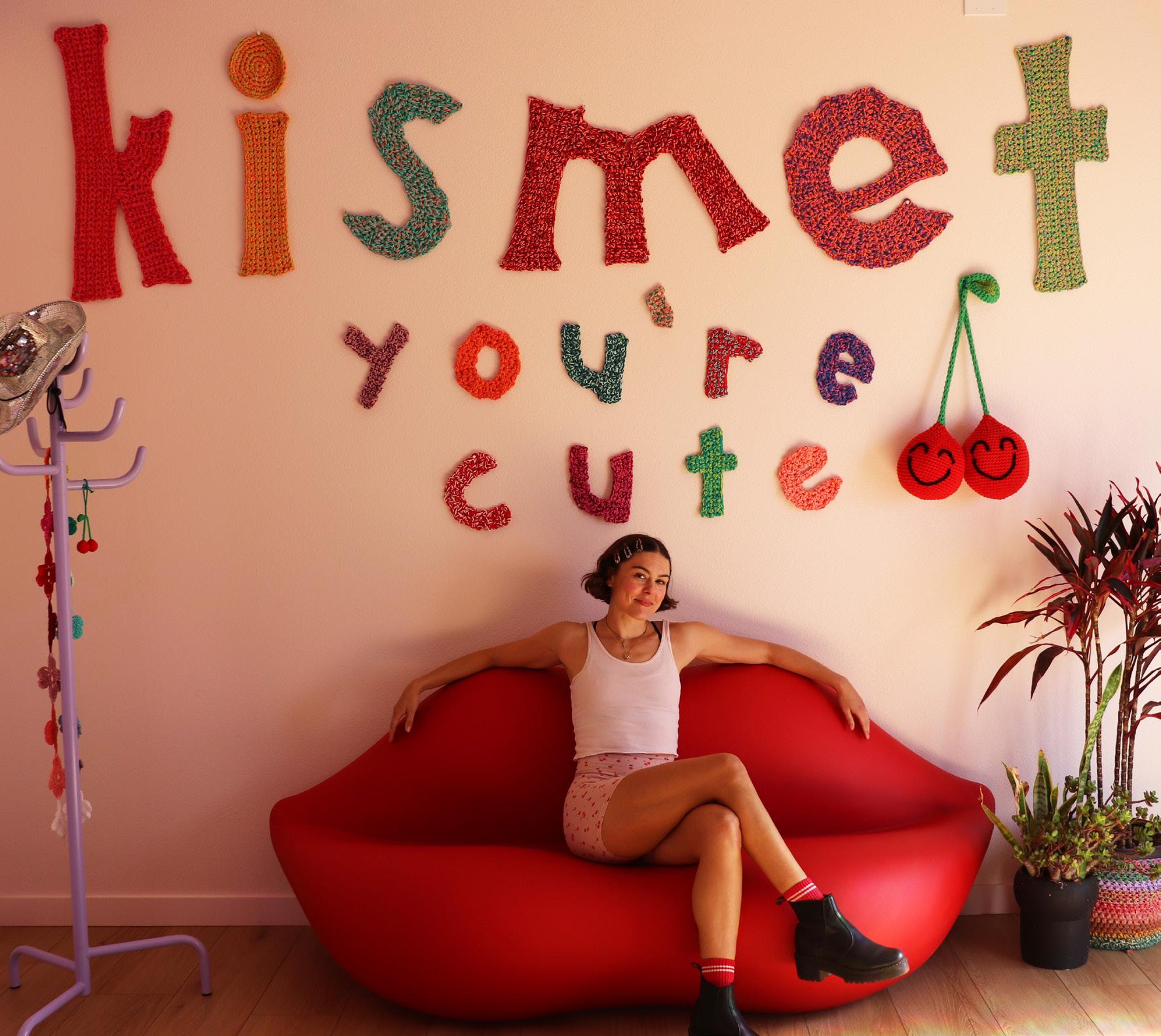
Brittany Pomfret, who has an extensive history in women-focused fitness, opened Kismet in February of 2025
STORY BY GRACE GILLIO
DESIGNED BY KENNEDY RAY
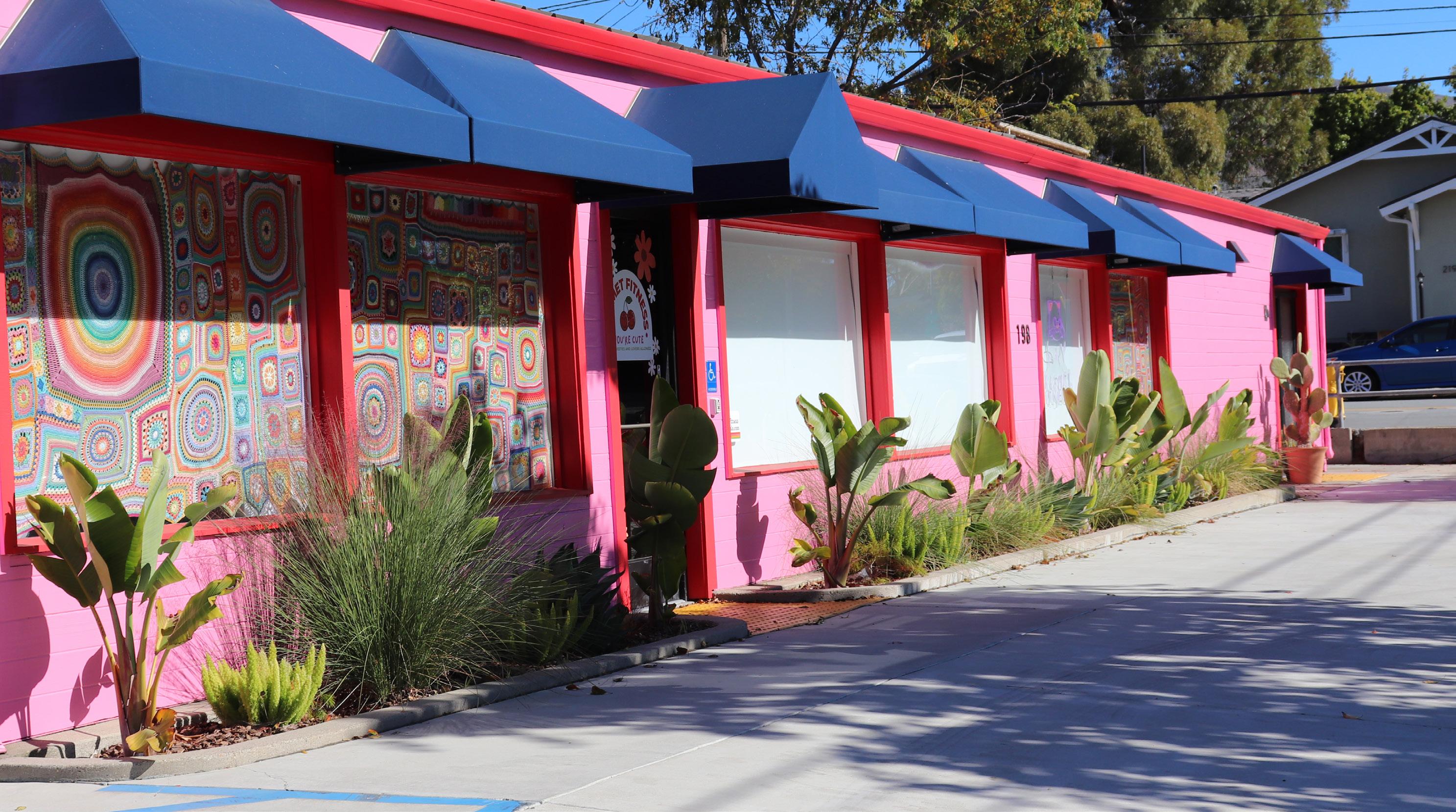
A pink building, with navy awnings and red trim sits on the corner of South and Beebee Street in San Luis Obispo, its rosy exterior setting it apart from the greige and white buildings it borders. It’s a gym, and despite four other gyms located just blocks away, Kismet Fitness has a distinctly unique quality — no boys allowed.
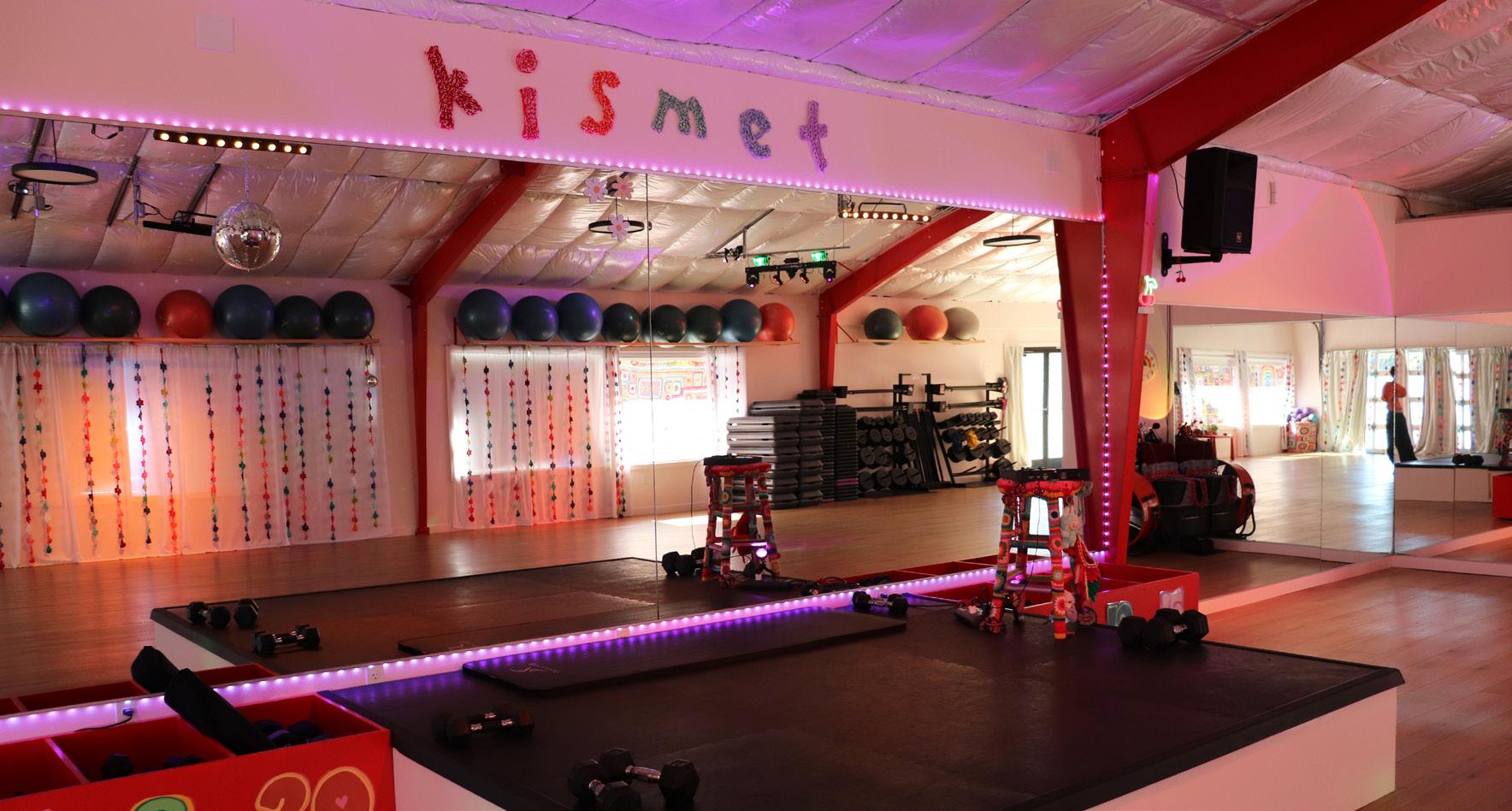
On one Friday morning, the atmosphere inside Kismet was more like a sleepover than a workout class. Women chatted as they set up their mats and grabbed water. Crochet window coverings obscured the street and transformed the sunbeams into patterns of light across the floor. A disco ball and pink lights illuminated the room all to a soundtrack with the likes of Doechii, Chappell Roan and Bikini Kill. Kismet Fitness is a gym specifically
designed for women and nonbinary people in San Luis Obispo. Opened by Brittany Pomfret in February last year, the gym was born from her extensive background in women-focused fitness.
Kismet, which means destiny or fate, is exactly how Pomfret would describe the space she finds herself in now.
“This was such kismet that these women and these people were brought into my life,” Pomfret said.
“So it really felt like this movement and this community is really meant to be, and I’m so lucky to just be part of it.”
BEATEN DOWN BY THE PATRIARCHY
Christina Azruei, who has worked out with Pomfret for the past 16 years, says her favorite thing about being a part of Kismet is the community. Working out with friends creates a social environment that is absent from working out solo. What can be daunting and boring alone turns into a social club under the roof of Kismet Fitness.
Another benefit for Azruei is getting to work out in a space that feels safe.
“I don’t feel like I have to come in and worry about someone talking to me when I don’t feel like being talked to, or someone staring at me and making me feel uncomfortable,”
Azruei said. “I’ve never worked out in spaces that have not just been for women and nonbinary folks. And so I just hear and know that those spaces have been uncomfortable for women often.”
It’s not just the moves or the decorations that separate Kismet from coed gyms. Because of the environment that Pomfret has fostered, patrons have the freedom to be vulnerable and work out without fear of judgement, making it “sacred” by providing safety and softness, Pomfret said.
Pomfret has seen firsthand just how transformative feeling comfortable in the gym can be for women and nonbinary people. Growing up during the height of fatphobia and punishment-centered workouts, Pomfret believes having a space like Kismet is important.
“I’m a woman that grew up in the
2000s and have just been beaten down by the patriarchy,” Pomfret said. “Being able to give back to women has been really powerful for me.”
EXERCISES DESIGNED FOR
Pomfret uses her background in exercise science in all the classes she teaches, around six a week, Monday to Saturday.
Through her studies in exercise science, she learned some movements that benefit male anatomy do not have the same benefits for women. Pomfret strives to utilize movement that caters to these differences.
“Men’s bodies move differently, their pelvises move differently. The way that a wider pelvis reacts to a squat is different,” she said. “A lot of exercise science has traditionally, just like all medicine, been built around men. So these are exercises that are built for women.”
Class focuses change throughout the week, with bigger shifts occurring every three or so months.
Kismet’s fitness programming is designed so a patron can take a class daily, or once a week, and not over or underwork themselves.
“We do that by offering so many different modalities together,” Pomfret said. “So you’re hitting Pilates, you’re hitting cardio, you’re hitting strength training, functional training, mobility and stretch. The next day, maybe more of two elements that we didn’t have and just kind of flowing so that you have a full total body experience.”
Pomfret says that the main purpose of classes at Kismet is to ensure your body works better when you need it to, like going for walks or getting up
off the floor and that it continues to work as you age.
Pomfret also strives to challenge fatphobia through anti-punishment and low impact movement, built for women at all stages of life.
“It’s a way to be able to take back your body for yourself and also prior itize your mental health and physical health without prioritizing the male gaze as the end goal,” Pomfret said.
Before opening Kismet, Pomfret and her husband Dave owned Equilibrium, another gym focused on fitness for women and nonbinary people. The gym, which was located in the Marigold shopping center in SLO, historically catered towards women.

craved the safety the gym offered.
The couple were not given an opportunity to renew their lease at Equilibrium but Pomfret wasn’t ready to part with the community she built for the past 17 years.
ing physical health is having a space in which you feel comfortable to do so. At Kismet, Pomfret hopes to create that comfortability through
The gym opened in 1999 under the name Cory Everson’s Aerobic and Fitness for Women. Pomfret began teaching at this gym while at Cal Poly, then called The Studio.
While at Cal Poly pursuing a degree in psychology and working towards a career as a therapist, Pomfret began taking kinesiology and exercise science classes all while teaching classes at The Studio, receiving fitness certifications and doing personal training.
“I just loved the way my body felt when did it, had way less anxiety, and that was really new for me,” Pomfret said. “I made all these friends, and it was just a really cool community.”
“I knew I wanted to continue teaching,” Pomfret said. “There was a massive community of women and nonbinary people that I had brought together, and didn’t want to give that up.”
Pomfret purchased the property on the corner of South and Beebee and began renovations in 2024.
Now, nearing their 11th month in their new remodeled space, Kismet is thriving, and the community is stronger than ever.
When women and nonbinary people leave a class at Kismet, Pomfret hopes they walk out feeling not only proud of themselves but connected to the community at the gym too.
What do students think about taking out the words 'diversity' and 'inclusion'
STORY BY KATY CLARK
DESIGNED BY NHI DUONG
The Office of University Diversity and Inclusion was renamed to Culture and Institutional Excellence (CIX) in early January. CIX will lead the programs that OUDI was known for, including BEACoN, I Am First-Gen, the Diversity Partners Network and the Student Internship Program, but align closer with the CSU Forward Strategic Plan. The Provost Office also partnered with CIX to coordinate a response from the Cal Poly San Luis Obispo and Cal Poly Maritime Academy to the California State University’s Black Student Success Initiative, according to the CIX website.
In response to Black students, staff and faculty reporting experiences of cultural isolation and underrepresentation at Cal Poly, the Black Student Success Initiative wants to address this through strategies to improve belonging and excellence across Cal Poly, San Luis Obispo and the Solano campus.

The core values of this effort are universal student success, belonging and wellbeing and empowerment and representation.
The name change reflects the work of the office that is increasingly working to strengthen institutional practices, cultivate a unified and welcoming university culture and foster environments for student and employee success, according to the CIX website.
Culture and Institutional Excellence is separate from Student Diversity and Belonging which houses the race and ethnicity and gender and sexuality centers, according to university spokesperson Matt Lazier.
STUDENTS REACT TO THE NAME CHANGE
Some students have negative reactions to this name change, expressing concerns about taking away the words “diversity” and “inclusion.”
“I think changing the DEI name, just to not have DEI in the title is just kind of weird and I guess it shows


I think changing the DEI name, just to not have DEI in the title is just kind of weird and I guess it shows Cal Poly is trying to be focused on its reputation.
ISAAC GARDNER
English Sophomore
Cal Poly is trying to be focused on its reputation,” English sophomore
Isaac Gardner said.
Taking out the words diversity and inclusion was not explicitly stated in
reasoning for the name change.
“What is not changing is our commitment to inclusive excellence and to the partnerships and initiatives many of you engage with across the university,” the website read. “This transition is intended to bring greater clarity to the purpose and scope of the work, even as CIX remains responsive to the broader goals of the CSU and the lived experiences of our community.”
Environmental earth and soil sciences sophomore Eden Okumura said that this name change doesn’t show that Cal Poly is supportive of people of color and that it is trying to divert from the original message of DEI.
“It does sound very political,” Okumura said. “I’d like for Cal Poly to be more openly supportive of people of color and especially more vulnerable people like immigrants. And also with ICE raids currently, I think they can show a lot more support for vulnerable communities.”
Since coming into office in January 2025, President Donald Trump has taken a stance against diversity,




equity and inclusion programs through executive orders and in a Feb. 14, 2025 letter, urged universities to stop race preferences in

admissions, financial aid and institutional programming.
After, the U.S. Department of Education opened investigations into multiple universities for their involvement with The PhD Project, which according to their website, limits eligibility based on the race of participants.
I’d like for Cal Poly to be more openly supportive of people of color and especially more vulnerable people like immigrants. And also with ICE raids currently, I think they can show a lot more support for vulnerable communities.
EDEN OKUMURA
Environmental Earth And Soil Sciences Sophomore


involved with the BEACoN program during her sophomore and junior year, and she thinks the name change will attract more individuals to BEACoN. BEACoN is centered around underrepresented students, but is open to all, and provides research opportunities to these students.
Mechanical engineering sophomore Elizabeth Gatten said that she doesn’t think the name change reflects CIX’s goals.
“I think taking the words diversity and inclusion and substituting it for excellence doesn’t really get their message across because they say they want to foster the same goals,” Gatten said.
She added that taking those words out “kind of makes it less inclusive.”
Music junior Kat Griswold said that a name change is not necessary and she wants to see a Cal Poly that is proud of its diverse student body, and one that wants to get a more diverse student body.
“Language is a powerful thing and so it does worry me that Cal Poly is using less language to embrace
I think taking the words diversity and inclusion and substituting it for excellence doesn’t really get their message across because they say they want to foster the same goals.
ELIZABETH GATTEN
Mechanical Engineering Sophomore
diversity on campus,” Griswold said. Communications studies and Spanish senior Andrea Valle was



don’t feel as welcomed or as access to research opportunities based on their cultural background,” Valle said.
“But think BEACoN has definitely shined light onto those individuals with their cultural background.”
In regards to the name change, sociology senior Isela Lagunas said that she thinks the name change
Valle said prior, with diversity and inclusion, it was more of Cal Poly saying, “hey we are here for you,” but now with the name change, it’s like she feels like “we are all part of the community.”
“It’s not kind of a separate, ‘if you’re looking for more diverse opportunities, you need to go to BEACoN,’ it’s more like ‘okay we’re a part of every culture, everyone is all one, we’re all together,’” Valle said.
Valle said the only way she heard about BEACoN is through her email and thinks it should be discussed more in the colleges and on the Cal Poly Instagram. She thinks that the research greatly impacts the professors and the university as a whole.
“I really appreciate how much visibility it is for those who maybe
I really appreciate how much visibility it is for those who maybe don’t feel as welcomed or as access to research opportunities based on their cultural background.
EDEN OKUMURA
Environmental Earth And Soil Sciences Sophomore


takes away some people’s identities. Lagunas used the I am First-Gen subsection of the now Culture and Institutional Excellence website, a place to connect first generation students with resources, including a place to discover faculty, staff and administrators who are first generation.
This included one of her first professors, and she said that during class, she did not feel super alone, learning that he knew what it meant to be first-gen and maybe the struggles of belonging.
“Reading about the professors, knowing their background stories and their journeys to be here at the institution, that is a part of their identity and the experience that they have within the college,” Lagunas said. Lagunas said a part of the professors story is connected to diversity, inclusion and equity. Lagunas wants Culture and Institutional Excellence to bring forth student stories and give more opportunities for students to be able to share cultural aspects of their life and identity.



The Cal Poly Rose Float team was ecstatic when they received a text that read they won the Sweepstakes, the top-honored award at the 137th annual Rose Parade. Cal Poly Rose Float President Aubrey Goings said the team couldn’t believe their float got the parade’s top award.
Each year, Cal Poly San Luis Obispo and Cal Poly Pomona collaborate to build a rose float. This year, their “Jungle Jumpstart” float won the distinguished Sweepstakes Award for the first time after participating for the last 77 years.
“We’d never won that before and it’s been decades since a self-built, not professional builder won,” Goings said. “We were so overjoyed and hugging each other, and still pouring rain, but at that moment we forgot about the rain.”
During past Rose Parades, the floats that typically win the Sweepstakes award were corporate company floats built by professional float designers. To Vice President
the program made bets to shave their beards if they won, thinking it was unachievable.
“So it was just surreal. I’ve never cried happy tears more in my life.
It was genuinely one of the best moments of my life,” Yeakle said.
“And so many people in our team have to shave their beards now.”
THE MAGIC IN TEAMWORK
The Rose Parade’s theme this year,
“The Magic in Teamwork,” helped inspire the layout of Cal Poly’s float.
Featuring an oversized robot within the rainforest being brought back to life with the help from the animals, the story of the float shows the teamwork of technology and nature intertwining.
“They’re helping each other out, showing the symbiosis between nature and technology,” Goings said.
“We just really thought that represented who we are as a program but also who we are as a group of people
Pomona campuses have worked together on the float since the universities first entered into the parade.
Throughout the process of the floats’ creation, its members would travel between campuses on weekends to get the job done.
“We are the embodiment of teamwork across multiple campuses, a bunch of different departments, different backgrounds,” Construction Manager and Operations Chair Ryan Newton said.
When planning the float’s design, the team knew they wanted to “dream big,” Newton said, and combine large scale objects while still remaining below 16 feet in order to fit under the 17-foot bridge during the Rose Parade. The float itself had three different mechanisms, which presented more limitations and required coordination between the different departments in the club.
“These elements incorporate a lot of challenges with design and construction, and having to

complicated large mechanisms inside.”
The team faced some challenges sourcing materials for the float. Due to tariffs and many California flower farms closing, attaining materials like tropical flowers at an affordable price became difficult.
“We had to do a lot of outreach this year to coordinate and get more donations,” Goings said. “We coordinated with the Huntington Gardens and LA Arboretum, so we were able to use some of their clippings or potted plants on our float.”
Leading up to the final program, he would meet every weekend during the fall to plan and coordinate the floats design and concept.
However, the decoration preparation process itself is completed after fall finals finish. Some time off for the holiday means the team only had a few days to complete the

Students of color detail ongoing isolation strikingly similar to that in 1995
After finding out the results of the awards, the floats were presented in the Jan. 1 event. Regardless of the rainfall from the previous night, the morning of the parade went smoothly for Cal Poly’s rose float.
Both Goings and Yeakle felt that the program’s achievement represented the dedication and organization from the previous months of work and planning out the float. Taking home the Sweepstakes award felt like recognition of that work being put in.
“It’s really special to be that group who did it, who opened the door for everyone else able to win that,” Yeakle said.
This story was originally published on MustangNews.net at an earlier date.



Interviews with current minority students at Cal Poly revealed a campus culture that remains strikingly similar to that of 30 years ago
STORY BY CARLY HELTZEL, GRACE GILLIO, ARCHANA PISUPATI, LEILA TOUATI DESIGNED BY ANIKA LOGANATHAN
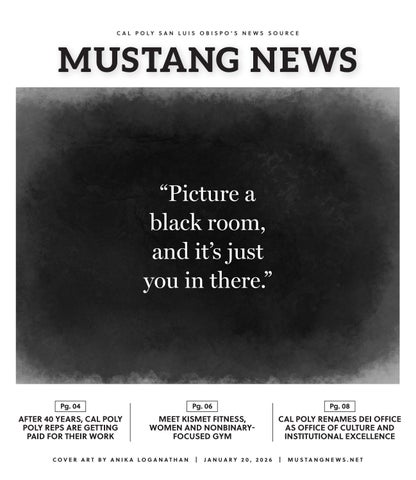
“Picture a black room, and it’s just you in there.”
Students of color noticed their first disagreement with Cal Poly as early as Week of Welcome (WOW). Despite many students opting into the Cross Cultural Experience WOW program, many felt like it was an inaccurate snapshot of the campus population.
“amazing” and “vibrant,” during the Poly Royal Rodeo. When he actually stepped foot on campus, he noticed that hardly anybody said hello, causing him to wonder “what happened to the friendly people” he had met.
He realized Poly Royal included many non-Cal Poly students.
“I started to look at the diversity and kind of see like, wait, where are the folks of color?” Finley said.

“You’re exposed to this whole diverse group of people, then you go into college thinking that’s what Cal Poly is like,” said Tri-An Pham, former president of the Vietnamese Student Association.

Introduction: On the first floor of the newly renovated Kennedy Library, an 18-minute long documentary from 1995 plays on loop in an exhibit. The film, called “Bridges: Perspectives on the Cal Poly community,” includes testimonials from students, faculty and staff of color on their experiences at the predominantly white institution.
Themes such as racial discrimination, prejudice and culture shock were not novel to the documentary made 30 years ago. Today, students
of color at Cal Poly face the same issues as those who walked on campus in 1995.
With the percentage of Black students enrolled at Cal Poly decreasing and the same roadblocks still existing for students of color, Mustang News explored what has changed for students of color at Cal Poly over the past 30 years?.
“Picture a black room, and it’s just you in there.”
This is how Jaylyn Harris, president of Black Student Union, experiences
Cal Poly.
There are only two other Black animal science majors in Harris’s graduating class. She is the only Black person in most of her classes and has been the only person of color in a few of them. Some days, when she walks around campus, Harris doesn’t come across a single other Black student.
She feels like she is on an island, constantly.
“It’s a really strange feeling,” she said. “It’s not something that I’ve never felt before, but it’s something
that I feel more intensely and more often here.”
There are only 182 Black students at Cal Poly, making up 0.8% of the total population, according to 2025 data. In 1995, Black students made up 1.9% of the population, more than double the current percentage. What’s more, the actual number of Black students has decreased, even as general enrollment grew steadily for the past 30 years.
While enrollment of Hispanic students jumped from 12% to 28%
in that same 30-year time period and Cal Poly’s Asian population increased from 8% to 13%, white students still dominate campus demographics to this day, making up 46% in 2025.
The result is an isolating and at times hostile environment that struggles to recruit and support students of color, feeding a cycle of underenrollment, microaggressions and emotional exhaustion.
looking over my shoulder to see if I’d see like another Black person or another person of color, and I’d usually see like one or two people in any given class, and then sometimes it would just be me, and I’d be like, where are my people? Where’s my community at?”
MARISOL MATA
Pham said she felt like prospective students often enter Cal Poly after being completely “blindsided” by the reality of campus culture compared to what they see during campus efforts to promote diversity, such as Poly Cultural Weekend.
This feeling isn’t new. Chris Finley, an alumnus who attended Cal Poly from the late 1980s to 1993, said when he first visited Cal Poly, it was
Feelings of estrangement, alienation and impostor syndrome have trickled into the leading narratives of students of color.
KYLEIGH SPIGHT
Kyleigh Spight said she felt confused by the difference in demographics from the Cross Cultural Exchange Week of Welcome to her actual first week of school.
“It was so weird because I kept
Marisol Mata said she felt an “educational gap.” When she would walk by the agriculture building, she said nobody looked like her. She said she felt an educational gap and “super far behind.”
“I didn’t think that had the intelligence to be in agriculture,.” Marisol said she felt like she didn’t fit the standard of an agriculture student because the people who own farms and ranches don’t look like her. “We are the people that work and harvest
When deciding to attend Cal Poly, many current and former students debated their comfort levels at a campus with a history of racial discrimination, carrying the weight of an additional factor into making their college decision.
For Maya Glover, that weight was amplified by understanding the demographics of Cal Poly from a first-person account: her father, Victor Glover.
Two years into being a student, Glover learned that when her father was a freshman at Cal Poly, he was racially profiled and held at gunpoint by police after leaving a grocery store near campus. When she’s walking around campus and the city, she ties her father’s experience to her own outlook.
“I went to Ralph’s the other day and I’m looking at the entrance. I’m like, ‘This is the ground where they had my father laid down at gunpoint for doing absolutely nothing but existing as a Black man,’” she said. “He was younger than I am now.”
Despite making strides on campus to establish communities for Black students, Maya said she still hesitates about her decision to come to Cal Poly.
“If they had given me any more money, would’ve gone,” she said about Howard University, a historically Black university in Washington, D.C.
She said Cal Poly struggles with
all that stuff,” she said. She still sometimes struggles with it, but she said, “I’m part of the change.”
TRI-AN PHAM
Tri-An Pham said she felt privileged to avoid spaces with less diversity on campus.
“I made a really big effort almost to find the familiarity in this very unfamiliar place. I was very privileged to not really notice it because I made such an effort trying to find it and was able to find that.”
Originally from the Bay Area, she said coming to Cal Poly meant being separated from her community. It felt like a movie in the sense that the overall image of going to the beach in between classes and tanning on the lawn is like “the colleges you see in movies, and obviously a lot of those are centered around like white
characters, white people.”
DYLAN TRAN
Dylan Tran hesitated about attending Cal Poly, coming from the more diverse San Diego.
“I definitely did feel a culture shock like coming here just not being exposed to the same kind of foods and all the kinds of things.”
Izzy Pérez decided to attend Cal Poly due to financial aid after becoming homeless his senior year of high school. He described being initially “resentful” of his choice but later found comfort in joining student organizations like BSU.
retention of students of color because the administration doesn’t understand the group they are catering to.
To her, the reasons seem obvious.
“You’re trying to attract people from out of state that can’t even begin to imagine affording the cost of out-of-state tuition,” she said.
“Understanding the group that you’re catering to and understanding what it is they’re looking for, SLO doesn’t really have that to offer young Black students.”
Glover said there is no effort from the administration to support students who are looking to build social and professional connections to create a world they want to stay in.
“If I graduate, have no intentions of staying in San Luis Obispo.
There’s nothing about this city that interests me in the headspace of being a professional Black woman,” Glover said.
Similarly, Izzy Pérez, vice president of BSU, said he considered attend ing other “great schools” such as UC Berkeley, UCLA and Dartmouth, but ultimately chose Cal Poly because it offered the most financial aid and was close to home.
Pérez often encounters Black fresh men who are looking to transfer, unsure of continuing their education at Cal Poly.
“I am pushing people to transfer. If you don’t feel safe here and you don’t think you’ll thrive, why would you stay in a space that you don’t
feel welcomed in?” Pérez said. “I will always fight for you and be in your corner. But then that becomes so draining for me to always have to do that, when the school literally can do that by just addressing these issues, but they don’t.”
Students reported surfacing feelings of resentment upon encountering macroaggressions on campus that made them rethink their decisions to come to Cal Poly.
Though not all decisions were driven by need, most students shared questions sentiments of diversity being in the question.
Chris Finley, a former Cal Poly student, decided to attend Cal Poly over attending a school like historically- Black Tuskegee University in Alabama due to a fear of failing in an environment where he was
Jeremiah Hernandez, coordinator for the Latinx/e Center for Academic Success and Achievement (La CASA), has heard these stories before. Harris described what it’s like to navigate Cal Poly living in a dark room. Hernandez has spent years trying to help students find the light switch.
“You know, you could use your imagination in the best and the worst ways,” Hernandez said about the nature of challenges his students present him with. “The burden of change and progression is often left on the shoulders of the oppressed, right? That we, the ones that are going through the struggles, are the ones that have to initiate and push for change.”
Chris Finley still speaks to Cal Poly students, serving on the Dean’s Leadership Council of the Bailey College of Science and Math. Most recently, he visited campus to speak to BSU students. Like other students, Finley treated his experience with Cal Poly as a platform to be the change.
DEFINING THE ULTIMATE REALITY.
In the beginning, there was first dark,
Even before Noah’s great ark. Out of the darkness comes a light. It will take years to make things right. Injustice and brutality, just to name a few.
It will take more than a dream to make it come true. Remember the past and what is taught.
We are the children in which for rights they fought.
If they were here, everyday. This is what they probably say. Create, innovate, my brothers and sisters.
Our past cries hidden deep down aside, unaffected by the lies. Children of a people so advanced and supreme,
Of their wisdom and knowledge we can only dream.



This act of resistance, which turned over his burden of expectation, is captured in his final declaration:
He who controls the past controls destiny we are taught. It is for these things that our ancestors gallantly fought.
Although it seems at times that others have won the fight, nothing’s over really.
Until youth left sight.
It’s not about Black, it’s what Black is about.
I’m not a minority. There’s nothing minor about me.





STORY BY MADELINE KUHNS
DESIGNED BY ELENA VAUGHAN
A daily drive north through Paso Robles offers a sight unusual to the Central Coast’s defining landscape: acre upon acre of vineyards that have been removed from their soil.
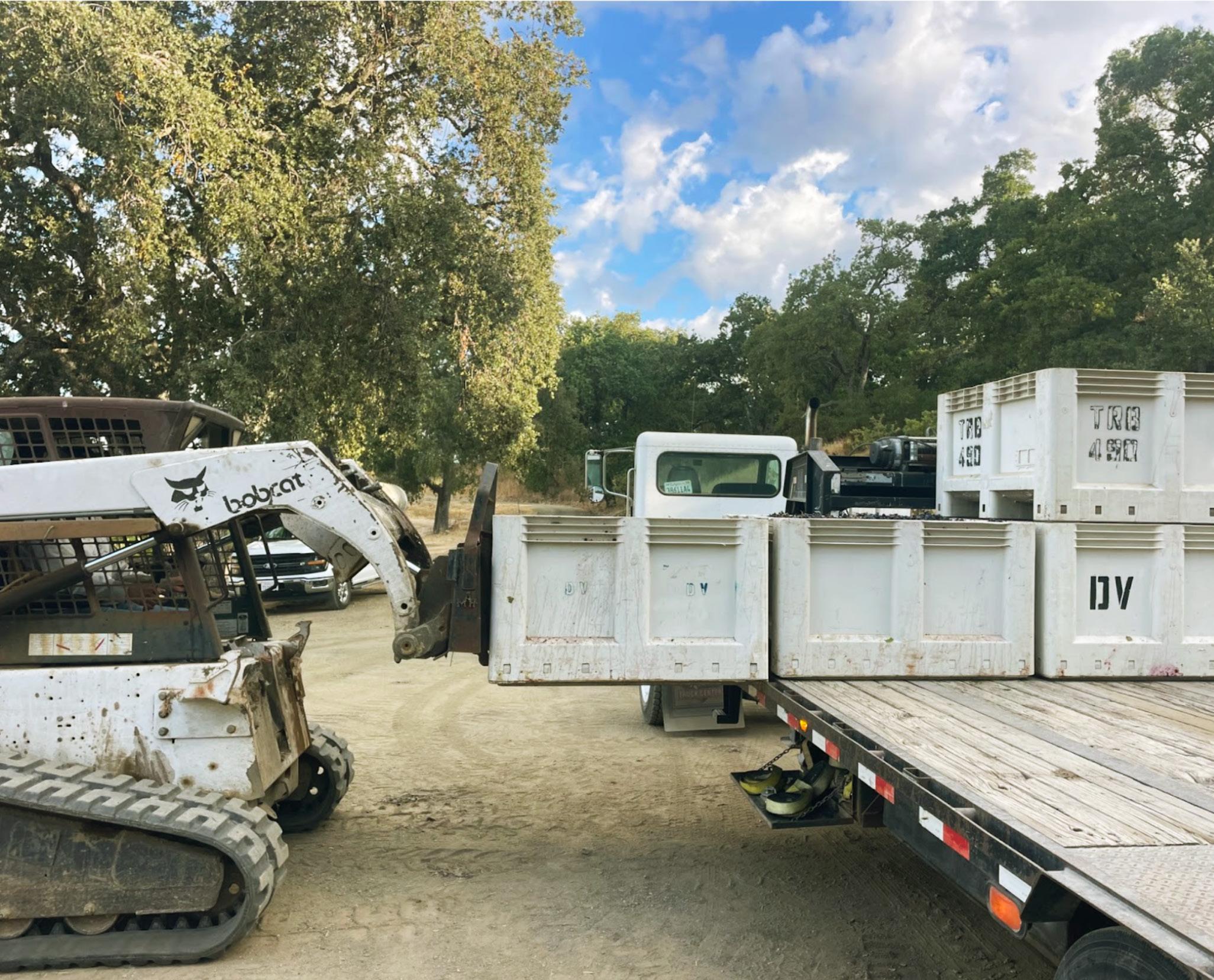
“If you drive right now north on the 101, everywhere you look, just ripped out vineyards,” Lucas Childers said. Childers is a recent Cal Poly agriculture business graduate and agricultural dispatcher for G3 Enterprises. He has worked the past two harvest seasons hauling grapes from vineyards to wineries.
The piles of dead branches are evidence of the wine industry’s steep freefall. Since early 2023, the Central Coast has suffered from a decrease in one of their top commodities: wine.
An estimated 38,000 acres, or 7% of California vineyards have been destroyed or abandoned, according to the 2025 Standing Winegrape Acreage Report, commissioned
by the California Association of Winegrape Growers.
One of the largest wineries based in Gonzalez, about an hour north from Paso Robles, is shutting down this year.
“Other wineries are just dropping like flies, and vineyards as well,” Childers said.
The cellars on the property of Childers’s office recently closed due to reduced demand and tariffs on exports. Childers noted the tonnage of grapes crushed decreased so much each year that the company, Courtside Cellars, decided to shut down completely.
During a good year, Childers would see 70 trailers every night full of grapes traveling from vineyards to wineries. With the industry change, only 30 to 40 trailers are full for the peak two weeks, while the rest of the season stays at 15 to 20.
Our generation is drinking less overall. We’re more health focused. And, if we’re drinking, we’re usually not going for wine. We’re doing seltzers or mixed drinks, or maybe beer.
LUCAS CHILDERS
Recent Cal Poly Agriculture Business Graduate
wines for years and emphasized the shift in drinking habits.
“There is also a shift in mentality in what we’re drinking, like an uptake in seltzers,” said Reid.
In the 2022-2023 year, a lot of the wine that was produced by Reid’s work went into storage.
Rediscovering how wine can be a social drink is the side that Reid would like to see adapt the most.
When Jenna first started working in chain sales in the wine industry out of college some 14 years ago, there were 2,300 operating wineries in California.
The restaurant business supported a variety of tastings, and alcohol consumption among college aged-people was high. Jenna now works as a recruiter for KendallJackson wineries, the female-owned corporation.
The imbalance of suppliers to distributors is another contributor to the decline in the wine industry, according to Jenna. Over the course of 10 years, there have been less distributors, and double the amount of suppliers. Distributors don’t have the bandwidth to sell.
“There has been a lot of chaos within the distributor world,” Jenna said. “After COVID, everyone and their mom is making alcohol. Even Brad Pitt has a brand.”
Both Childers recognize the brand image problems that wine has.
“Unless you were raised around wine, you don’t think of it as an actual beverage,” said Jenna. She explained part of the reason the current young adult generation often drifts towards carbonated drinks like craft beer and champagne was caused by the rise of sparkling water and sodas during their childhood.
Another factor leading to the downwards trend in the market is a decrease in the variety of wines sold. Without such curiosity, the brands that customers know they love thrive, but less variety of wine is being purchased.
“People are drinking alcohol, they are just drinking what they know they like,” Jenna said.
Instead of closing her doors like many businesses, Jenna wants to understand the changing market. She started an internship program in the spring of 2024 to better understand the consumer habits of Gen Z.
“For me, it wasn’t about giving someone a bird’s eye view of KendallJackson Winery, it was literally to learn more about this generation,” she explained.
There’s a new space for a new generation, and we need to know how to connect to them.
When Jenna does regular check-in calls with her interns after she sends them a tasting, she asks them questions about their experience. She wants to know, what did they talk about during the tasting, what was the feedback on the wine, did they like the packaging, etc.
Jenna is driven to find the answer to connecting to the new generation of wine drinkers.
“There’s a new space for a new generation, and we need to know how to connect to them,” she said.
One of said interns, communication studies senior Britany Petit, is working on a program to target interest in her college peers.
“When you go to a party, you want a drink that’s conversational,” she said.
“It’s easier to walk around with a beer in your hand than a whole bottle of wine.”
Petit’s most recent project was connecting with Cal Poly student athletes at a downtown SLO restaurant for a basketball watch party.
“My main focus is to be an insider investigator into Gen Z and what would actually make us more interested in wine from talking to my peers in real life,” Petit said. In the future, instead of dead piles of grapevine branches, Lucas wants to see a wine festival take shape in San Luis Obispo Craft, similar to the beer festival. To him, attempting to bridge the gap between the wine industry and catering towards younger people is through a collaborative event.
“That’s kind of one idea to bridge the gap between the industry and our generation,” he said. “Not just for Cal Poly kids, for anybody that wants to come and buy a ticket, instead of beer you’re doing wine.”
The reason for the crisis is a multi-factor situation. A major contributor to the decrease is an overall attitude-change from Gen Z and millennials.
With craft beer and non-alcoholic drinks competing for buyer attention, wine is not with the current trends. The number of young adults reported to drinking alcohol has dropped from 58% to 54% in the last year, according to a Gallup study.
In agreement with his boss at G3, Josh Holman, Childers thinks wine isn’t as approachable for younger generations.
“There’s so much pretentiousness around it,” he said. “Everything has a boutique label, and I’m like, I don’t know what the hell I’m looking at.”
Health trends are also fueling the changes in consumer habits, according to the Gallup trends. “53%, say drinking in moderation, or “one or two drinks a day,” is bad for one’s health,” the study said.
Jenna Childers (unrelated to Lucas Childers), a sales recruiter for Jackson Family Wineries, sees a sober-curious movement among Gen Z and the rise of non-alcoholic mocktail options as a reason to lessen the desire for buying bottles.
“Our generation is drinking less overall. We’re more health focused,” Lucas said. “And, if we’re drinking, we’re usually not going for wine. We’re doing seltzers or mixed drinks, or maybe beer.”
Katherine Reid, a lab harvest intern for Riboli Family Winery has also noted the generational shift.
Reid’s father has worked in the wine production business under Gallo
STORY BY AMANDA AVILA
DESIGNED BY MEHER ANKLESARIA
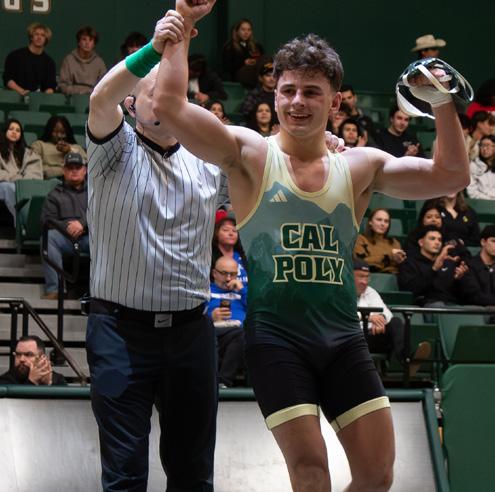
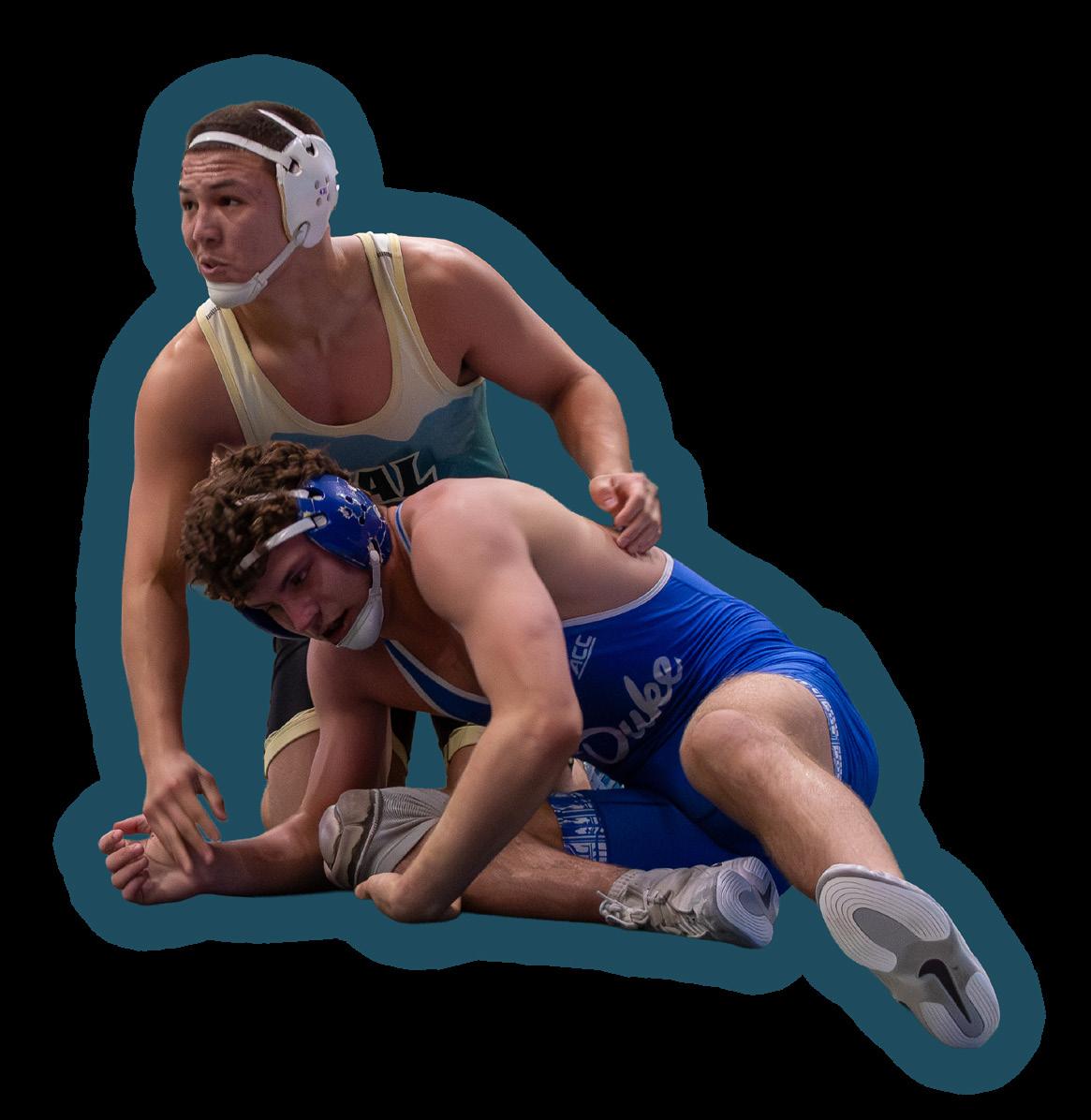
In 2016, Head Coach Jon Sioredas inherited a Cal Poly Wrestling program that sat dead last in the Pac-12 conference and had no NCAA qualifiers at the time, let alone All-Americans.
“I wrote down on day one, ‘We want to be a top 25 program in five years,’” Sioredas said.
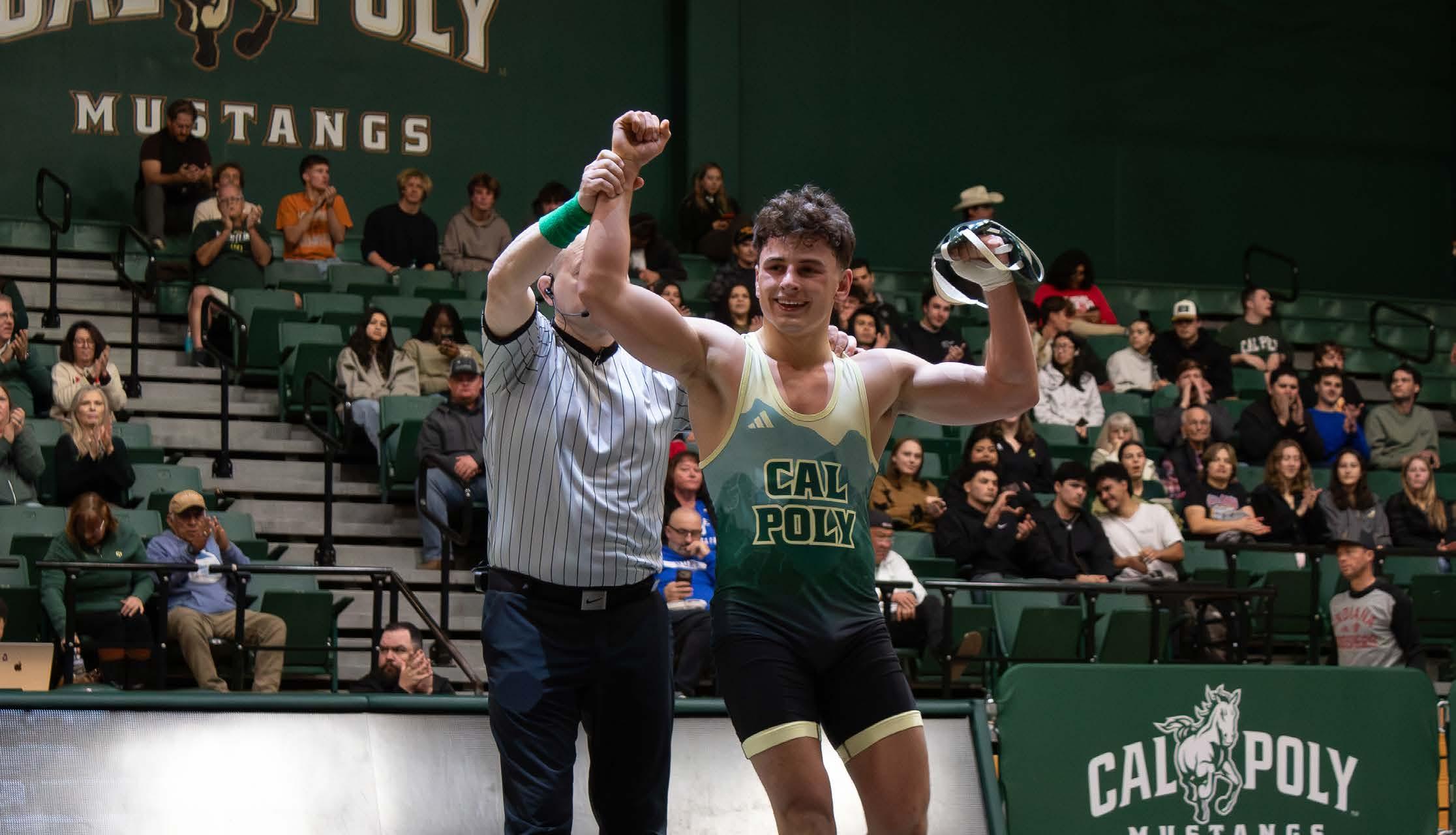
Exactly five years later, Sioredas did just that. Cal Poly finished 25th nationally in 2021 and has not dropped below that benchmark since, breaking into the top 10 in 2022 and top 15 last season.
Over the past six years, at least one Mustang has earned NCAA Division I All-American honors each season.
The real transformation wasn’t created by new drills or shiny training methods. It came from a complete cultural reset, one that Sioredas set in motion from the moment he arrived to rewrite the identity of Cal Poly Wrestling.
“This is the strongest culture we’ve had,” graduate wrestler Trevor Tinker said. “Everyone’s super bought in.”
Now in his sixth year at Cal Poly, Tinker has watched the program transform and his own career with it.
Tinker rose from a low-profile walk-on to a Pac-12 heavyweight champion and the No. 24 ranked 285-pound wrestler in the nation, according to InterMat.
“They genuinely care about our well being,” Tinker said. “Obviously, wrestling, you know. But feel like in addition to that, they care about just the men we are and put a lot of effort into that.”
Behind it all is the program-wide philosophy centered on maturity, discipline and accountability.
“We built our foundation off our core values,” Sioredas said. “We knew if we built it, that we would attract the right type of student athletes and the right type of staff. I think that’s when you really started to see us break through at the national scale.”
Central to that breakthrough is his right-hand man, Associate Head Coach Chris Chionuma. Hired as head assistant coach in 2018 and promoted in 2021, Chionuma has worked closely with Sioredas to cement those values within the program.
“We believe that the decisions you make off the mat are going to carry on the mat,” Chionuma said. “You have to believe that you’ve earned the right to win before you step out, shake hands and wrestle.”
The staff are not just coaching wrestling, they are guiding their athletes through life, holding them accountable in the classroom, in their personal habits and in how they treat their teammates and the people around them.
That standard shows up just as much off the mat as much as on it.
The Mustangs have become one of the most academically accomplished teams in the nation, and last season they earned the highest team GPA in program history.
“We’ve done so much educating on this part of the team, this part of being a Cal Poly wrestler that it’s finally paying off,” Chionuma said.
“Our results on the mat are following suit as well.”
For Sioredas, culture isn’t something you preach, it’s something you live. It’s the same lifestyle he had in college as an All-American at the University of Tennessee at Chattanooga. It’s the same one shared by his staff and his players now.
“[Sioredas] is trying to level up alongside us as a coach and as a human being,” Tinker said. “And it’s really cool and valuable to see that.”
Sioredas and his coaching staff set themselves apart from most through their willingness to do the same work they demand from their athletes. Sioredas lifts weights during every practice. He tracks his sleep. He pushes the sleds every Friday on push day. The wrestlers not only see it, they expect it.
“With that comes a lot of confidence and trust,” Sioredas said. “They know
that we are hardworking human beings as well, and even though we might have had some success when we’re at college, we continue to live the same lifestyle we’re asking them.” That shared commitment narrows the gap between coach and athlete. It builds a type of partnership that holds the culture together.
“I don’t feel like there’s this big divide,” Tinker said. “It’s not just
a professional relationship, it’s very personal.”
Sioredas works intentionally to keep that relationship intact, drawing inspiration from his own coach in college.
“My coach loved us,” Sioredas said. “I mean, honestly, [he] changed my career and my life.”
After Chattanooga, Sioredas briefly stepped into the corporate world with a sales job. The year away from wrestling only clarified what he already knew.
“I got the itch,” Sioredas said. “At that point, I knew I was put on this Earth to coach wrestling.”
He returned to the sport through assistant coaching roles at Old Dominion University and Chattanooga, later serving as the head coach for Grand Canyon University before arriving at Cal Poly.
He has stayed at Cal Poly for one simple reason.
“If you love something, or someone, you want to spend time with them,” Sioredas said, smiling. Momentum behind Sioredas and his vision continues to build as well, shown by the program’s record number of donors and its highest fundraising total set last year.
His work in San Luis Obispo is far from over. Sioredas signed a fiveyear contract extension in October to remain head coach of the program through the 2029-30 season, according to a Cal Poly Wrestling Instagram post.
“I still think there’s some unfinished business here,” Sioredas said. “The coolest thing about this place is we don’t know what the ceiling is.” He is not interested in a brief stay among the nation’s elite. With a
They genuinely care about our well-being. Obviously, wrestling, you know. But I feel like in addition to that, they care about just the men we are and put a lot of effort into that.

Now that we lose daylight earlier, it’s even more important for students to know what resources are available and how to use them rather than feeling worried to walk home
STORY BY KAYLIE WANG
DESIGNED BY AVA DONALDSON
Kaylie Wang is an English sophomore and opinion columnist for Mustang News. The opinions expressed in this article do not necessarily reflect those of Mustang Media Group.
Every time I have to walk home late or in the dark, I FaceTime my family group chat. Although they are 230 miles away, their company over the phone provides me comfort and a sense of safety.
Since daylight savings time ended and we shifted an hour back, it’s dark out even when walking back from
class at 5 p.m. Especially because
I am a female student, I am often more vigilant when walking around campus now that it gets dark earlier
— and I’m not the only one.
“I’d say usually in the winter, try to get home as early as I can,” Rilyn Harris, a biology sophomore said.
“I’ll wake up earlier and do stuff in the morning if that means I could be home earlier.”
Losing daylight earlier in the day makes students feel more cautious when walking around campus. But at the same time, I rarely hear of people
actually using campus resources to get around safely.
“I know that there are resources, but like kind of always forget that they exist,” Stella Cardoso, a mathematics senior said. “If I do need to use them, I don’t remember where to go or how to access them.”
It’s crucial that students understand what campus safety resources are available and feel comfortable using them. They exist for a reason — we pay tuition to feel safe living and working on a college campus, so might as well take advantage.


Here is a list of the resources available on campus through the Mustang Safe app, when you can use them and how you can access them:
HOW TO USE THE MUSTANG SAFE APP
Did you know that Rave Guardian isn’t used by Cal Poly anymore? If you read those emails buried in your inbox, you would know that Cal Poly has transitioned to Mustang Safe. Make sure you delete Rave Guardian from your phone if you still have it


It’s crucial that students understand what campus safety resources are available and feel comfortable using them. They exist for a reason — we pay tuition to feel safe living and working on a college campus, so might as well take advantage.
TREVOR TINKER Biology Sophomore
Students can be connected with a dispatch to access Mustang Patrol through the app.
If you feel uncomfortable walking across campus by yourself, request a safety walk with Mustang Patrol through the Mustang Safe app or by calling Cal Poly Police at 805-7562281. Students, faculty and staff can notify Mustang Patrol, who will meet you and walk with you anywhere
feature through the app. You can share where you are travelling to with Cal Poly Public Safety, and they will be able to monitor your location in real time. This surveillance doesn’t just ease the nerves, but also ensures safety — you can click “Emergency” for assistance and dispatch can also call 911 on your device if necessary.
Students can use the app to temporarily send their location to their
If you are like me and already have all of your friends’ locations, this is still useful because it notifies your friend to start paying attention to your location at that exact moment. The feature also compares the friend’s location to the direction of their destination, so that you can make sure they are on their way home.
The app also allows you to call and text 911, the Cal Poly Police Department, chat anonymously and report concerns.



ing your location with a friend rather than Cal Poly Public Safety, you can use the app to access a “Friend Walk” feature. This feature temporarily
Rather than just telling a friend “text me when you get home safely,” you can set your destination, and your friend can track your walk home in relation to the set direction to the

Right now, take five minutes to install the Mustang Safety app, log in, enable location tracking and just navigate the app. Add 805-756-2281, Cal Poly Police’s phone number, to your contact list. Get comfortable accessing these resources now, because you never know when you may need it.
This story was originally published on MustangNews.net at an earlier date.





College is hard and things happen when drinks are had, here’s some email starters
STORY BY JDAWG
DESIGNED BY JULIA HAZEMOTO
The Manure is Mustang News’ satire content. JDAWG SAYS is a satirical advice column written by a staff member in Mustang News. This content is intended to be satirical and does not necessarily represent the views of Mustang News.
We’ve all been there: an essay magically appears out of thin air. There is just no way you have time to finish it in two weeks when you have six parties and three bar crawls coming up. It’s crazy how professors just expect us to figure out a thesis and find four sources.
Here’s some excuses when you just need a few more days to get everything sorted out.
This is the modern- day “my dog ate my homework” or “my laptop broke.” At this point, it is silly to think anyone is writing an essay without a chatbot — even the people on a high horse who claim to support the environment or have ethical concerns. Let’s be real, the essay will probably be graded with Chat too.
Required Groups
» Exemption requests open Jan. 8
» Sign up for housing starting Jan. 29
All Other Groups
The UV was an 8.
It’s cold and wintery along the Central Coast right now, (relatively, of course). When the UV hits anything above a 5 during winter quarter, that is a reasonable excuse to miss a deadline. The professor probably wants to spend time outside too to hide from his wife.
Not liking a topic can literally be used as an excuse these days.
“I don’t think this essay connects with my future goals.” BOOM!
I misplaced my Bible.
The Bible is more important than ever as a source for academic papers. It’s also pretty understandable if you left your Bible at your youth group leader’s house by accident. Or if you left it on a park bench because you wanted to give a homeless person a prayer. Just tell your professor the Lord will guide you to the essay soon. This topic didn’t really resonate with me.
Hinge crush and I are finally hanging out. First off, JDAWG is a little jealous. Secondly, this is absolutely valid, especially with the millennial professors who you’ve probably, unfortunately, seen on Hinge. When the call comes, girl, drop everything.
“This subject matter is negatively impacting my mental health.” BAM! “Can I suggest an alternative assignment due at a later time?” BANG! The bars were busy! Had to skip writing to get downtown early.
Sometimes, and Imma be really real, the bar lines are way too long to be assigning a Thursday night due date. Professors should know better, but in case of this issue, just let them know kindly that it’ll be done by Monday.

» Initial Interest List is open Feb. 12–16 Sign Up in Your Housing Portal bit.ly/calpolyhousingportal Welcome to our 125 th year of learn by doing
– President Je rey D. Armstrong