Mehrstimmige Gesänge, H.XXVc 1796–9
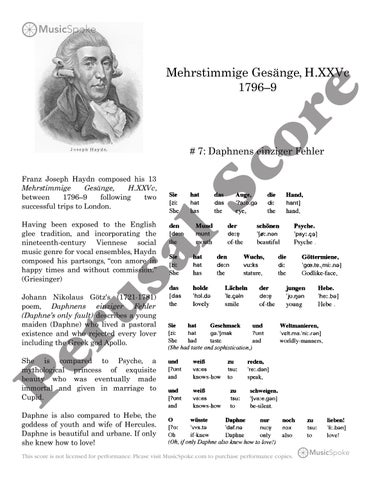
# 7: Daphnens einziger Fehler Franz Joseph Haydn composed his 13 Mehrstimmige Gesänge, H.XXVc, between 1796–9 following two successful trips to London. Having been exposed to the English glee tradition, and incorporating the nineteenth-century Viennese social music genre for vocal ensembles, Haydn composed his partsongs, “con amore in happy times and without commission.” (Griesinger) Johann Nikolaus Götz's (1721-1781) poem, Daphnens einziger Fehler (Daphne’s only fault) describes a young maiden (Daphne) who lived a pastoral existence and who rejected every lover including the Greek god Apollo. She is compared to Psyche, a mythological princess of exquisite beauty who was eventually made immortal and given in marriage to Cupid. Daphne is also compared to Hebe, the goddess of youth and wife of Hercules. Daphne is beautiful and urbane. If only she knew how to love! This score is not licensed for performance. Please visit MusicSpoke.com to purchase performance copies.
Daphnens einziger Fehler For TTB and piano Franz Joseph Haydn 1732-1809 ed. David Howard b. 1973
Johann Nikolaus Götz
Allegro
Tenore I
Tenore II
Basso
Pianoforte
6
Sie hat das
Au
ge,
hat
das
das
hol
de
Lä
hol
de
Lä
10
nie
ren
und weiß
ren, und weiß
schmack
und Welt
die
Hand,
cheln der
jun
gen
He
be.
re
re
den, und weiß
ma
nie
ren,
gen
zu
jun
Sie
den, und
He
weiß,
zu
weiß
hat
Ge
schmack
Psy
che,
sie
und Welt ma
Sie
hat
Ge schmack und Welt
Sie
gen,
die Göt ter
zu
schwei
be.
und
Wuchs,
der schö nen
Sie hat den
Mund
cheln der
den
zu
ne,
nie
mie
= 120
hat,
sie
schwei
zu
schwei
sie
hat
Ge
schmack,
She has the eye, the hand, the mouth of the beautiful Psyche. She has the stature, the god's face, the lovely smile of the young Hebe.
hat
Ge
gen,
sie
This score is not licensed for performance. Please visit MusicSpoke.com to purchase performance copies.
ma
gen,
hat
die
2 14
sie
hat
21
der
schö
den, und weiß
die
sie
hat
Ge
schmack
Ge
schmack,
ter
die Hand,
hat
nen
Psy
sie
zu
schwei
ne,
mie
sie
hat
hat
den Wuchs,
sie
und
Welt
ma
nie
gen, und weiß
die
Welt
zu
schwei
gen,
ma
nie
sie
ren,
und
weiß
Wuchs
sie
hat
den
Mund,
sie
zu
hat
Ge schmack, und
schwei
gen,
sie
weiß
zu
re
den, und weiß zu
schwei
gen, und weiß zu
schwei
gen.
schwei
gen.
weiß
zu
nie
ren, und weiß zu
(opt. divisi)
den,
weiß zu
schwei
gen, und weiß zu
schwei
gen, und weiß zu
She had taste and sophistication, and knows how to speak, and to say nothing.
schwei
Ge schmack und
gen.
This score is not licensed for performance. Please visit MusicSpoke.com to purchase performance copies.
O
wüß
O
sie
und Welt ma
hat
und
weiß,
zu
den
ren,
hat
sie
che,
Göt
Welt-,
Wuchs,
Mund
der
hat
17
re
den
Hand,
wüß
te
te
ne
nur noch zu
lie
ben,
o,
lie
ben,
26
Daph
Daph
lie
lie
ben,
O
wüß
Daph
ne
nur noch zu
lie
ben,
Daph
ne nur noch zu
lie
ben,
nur
noch
zu
lie
ben,
nur
noch
lie
ben,
wüß te
ne
37
lie
ben, o
Daph
te
ne
ne
Daph
wüß
Daph
o
Daph
nur noch zu
31
ne
3
noch
zu
o
ben,
ben,
zu
lie
noch
zu
lie
te
lie
te
zu
wüß
ben,
ben,
nur noch zu
nur noch zu
o
wüß te
nur noch zu
o
wüß te
o
wüß te
Daph
o
wüß te
Daph
ne
o
wüß
te
o
wüß
te
Daph
ne
nur
ne
nur noch zu
nur
noch
zu
ne
nur
lie
ben, nur noch zu
lie
ben, nur noch zu
lie
ben,
Daph
ne nur noch zu
lie
ben, nur noch zu
ben,
ile
lie
ben, nur noch zu
lie
ben, nur noch zu
lie
ben,
Oh if only Daphne knew how to love!
This score is not licensed for performance. Please visit MusicSpoke.com to purchase performance copies.
4 43
nur
noch
nur
nur
Au
ge,
50
noch
zu
lie
hat
sie
hat
He
be,
der
schö
nen
Psy
che,
der
schö
nen
Psy
ter
Göt
mie
ne,
die
den
Wuchs,
sie
hat
und
Welt
Ge
ma
die
ne
mie
ren,
und
Welt
und
weiß
ter
nie
Göt
schmack
das
hol
de
ma
cheln der
jun
gen
Sie
hat
Ge
Lä
und
Welt
ma
nie
sie
hat
nie
zu
re
den,
und
weiß
ren,
che,
Sie hat das
ben.
den Wuchs,
ben.
Hand
ben.
die
schmack
lie
54
lie
zu
Sie
zu
noch
This score is not licensed for performance. Please visit MusicSpoke.com to purchase performance copies.
ren,
Ge
zu
57
schwei
Welt
re
den, und weiß zu
schwei
den, und weiß zu
schwei
gen.
re
den, und weiß
zu
re
den, und weiß
O
wüß
te
Daph
O
wüß
te
Daph
zu
schwei
gen, und weiß
o
wüß te
Daph
o
wüß te
Daph
ne nur noch zu
lie
zu
gen, und weiß
zu
nur noch zu
lie
ne
ne
ben,
nur
noch
wüß
te
ben,
zu
lie
nur
noch
zu
lie
nur
noch
zu
lie
te
wüß
lie
o
ben,
nur noch zu
zu
ne
O
ben,
ben,
gen, und weiß
schwei
Daph
lie
zu
wüß te
ne
o
ne nur noch zu
zu
lie
gen.
ne nur noch zu
gen.
Daph
o,
schwei
Daph
schwei
ren, und weiß
zu
re den, und weiß zu
66
nie
ren, und weiß
nie
re
ma
gen, und weiß
ma
Welt
61
nud
schmack und
5
This score is not licensed for performance. Please visit MusicSpoke.com to purchase performance copies.
6 72
ben.
ben.
Sie hat den Wuchs,
hat,
sie
sie hat, sie
wüß
O
te
Daph
te
Daph
wüß
ne
sie hat das
Mund,
sie hat
nie
Au
ge,
Au
ge,
das
Au
ge, sie hat,
sie hat das
mie
ren, die Göt ter
nie
ne, die Göt ter
mie
mie
O
wüß
te
lie
nur noch zu
lie
ben,
be,
o
wüß
Daph
ne, die Göt ter
mie
Daph
ne
ne
ne
ne
lie
ben,
wüß
nur noch zu
o,
te
sie
ren, die Göt ter
nur noch zu
ne
die Welt ma nie ren, die Göt ter ne, die Göt ter mie mie
O
83
die Welt ma
den
den Mund,
Hand,
die Welt ma
sie hat, sie
die
sie hat,
den Mund,
die Hand,
Sie hat den Wuchs,
Wuchs,
Sie hat den
77
ben.
die Hand,
o
wüß
nur noch zu
lie
ne
te
This score is not licensed for performance. Please visit MusicSpoke.com to purchase performance copies.
ben,
wüß
te
te
ne
lie
ne
nur noch zu
lie
ne
nur noch zu
lie
ben,
nur
noch zu
nur
lie
ne nur noch zu
lie
88
Daph
Daph
Daph
93
Daph
noch zu
ben,
ben,
ben,
ben,
o
wüß
lie
ben,
o
wüß te
Daph
o
wüß te
Daph
o
wüß te
Daph
Daph
ne nur noch zu
lie
ben,
ben,
o wüß te
o
wüß
te
Daph
ben,
o wüß te
ne nur noch zu
ben,
lie
wüß
Daph
o
wüß
Daph
ne
ben,
te
te
ne
nur noch zu
nur
ne
nur
noch
ne
nur
Adagio
noch
noch
nur
noch
nur
noch
zu
lie
zu
lie
zu
lie
zu
lie
zu
3
This score is not licensed for performance. Please visit MusicSpoke.com to purchase performance copies.
ben.
lie
ben.
lie
ben.
te
wüß
zu
o
noch
3
ben,
ne
lie
ne
ne
nur
Daph
o
Daph
te
100
nur noch zu
7