Landon Horstman
Nicholas Trobaugh, cello
Jade Anderson and Sabine Klein, piano
Thursday, April 16, 2026
7:30 pm
Recital Hall
Winterreise, D. 911 (1828)
Gute Nacht
Sabine Klein, piano
Am Tage Aller Seelen, D. 343 (1816)
Sabine Klein, piano
General William Booth Enters Into Heaven (1914)
Sabine Klein, piano
Franz Schubert (1797–1828) Schubert
Charles Ives (1874–1954)
Three Love Songs (2011)
Before Loving You, My Love
How Many Roads to Each a Kiss
Two Happy Lovers
The Seed of Dream (2005) I Lie In This Coffin
No Sad Songs Please
Sabine Klein, piano
Pause
Libby Larsen (b. 1950)
Lori Laitman (b. 1955)
Nicholas Trobaugh, cello
Jade Anderson, piano
Hai già vinta la causa, from Le nozze di Figaro (1786)
Wolfgang Amadeus Mozart (1756–1791)
Sabine Klein, piano
Don Quichotte á Dulcinée (1933)
Chanson romanesque
Chanson épique
Chanson à boire
Sabine Klein, piano
Maurice Ravel (1875–1937)
Schubert: Gute Nacht
Fremd bin ich eingezogen, Fremd zieh' ich wieder aus. Der Mai war mir gewogen Mit manchem Blumenstrauß. Das Mädchen sprach von Liebe, Die Mutter gar von Eh'Nun ist die Welt so trübe, Der Weg gehüllt in Schnee.
Ich kann zu meiner Reisen
Nicht wählen mit der Zeit: Muß selbst den Weg mir weisen In dieser Dunkelheit.
Es zieht ein Mondenschatten
Als mein Gefährte mit, Und auf den weißen Matten
Such' ich des Wildes Tritt.
Was soll ich länger weilen, Daß man mich trieb' hinaus?
Laß irre Hunde heulen
Vor ihres Herren Haus!
Die Liebe liebt das Wandern,Gott hat sie so gemachtVon Einem zu dem AndernFein Liebchen, gute Nacht!
Will dich im Traum nicht stören, Wär' Schad' um deine Ruh', Sollst meinen Tritt nicht hörenSacht, sacht die Thüre zu!
Ich schreibe nur im Gehen
An's Thor noch gute Nacht, Damit du mögest sehen, Ich hab' an dich gedacht.
—Wilhelm Muller
Good Night
As a stranger I arrived, As a stranger again I leave. May was kind to me With many bunches of flowers. The girl spoke of love, Her mother even of marriage, Now the world is bleak, The path covered by snow.
I cannot choose the time
Of my departure; I must find my own way In this darkness.
With a shadow cast by the moonlight As my traveling companion I'll search for animal tracks
On the white fields.
Why should I linger, waiting Until I am driven out?
Let stray dogs howl
Outside their master's house; Love loves to wander God has made her so From one to the other. Dear love, good night!
I will not disturb you in your dreaming, It would be a pity to disturb your rest; You shall not hear my footsteps Softly, softly shut the door!
On my way out I'll write "Good Night" on the gate, So that you may see
That I have thought of you.
—trans. Arthur Rishi
Schubert: Am Tage Aller Seelen
Ruhn in Frieden alle Seelen, Die vollbracht ein banges Quälen, Die vollendet süßen Traum, Lebenssatt, geboren kaum, Aus der Welt hinüber schieden: Alle Seelen ruhn in Frieden! Ruhn in Frieden alle Seelen, Die vollbracht ein banges Quälen, Die vollendet süßen Traum, Lebenssatt, geboren kaum, Aus der Welt hinüber schieden: Alle Seelen ruhn in Frieden!
Liebevoller Mädchen Seelen, Deren Tränen nicht zu zählen, Die ein falscher Freund verließ, Und die blinde Welt verstieß; Alle, die von hinnen schieden, Alle Seelen ruhn in Frieden!
Und die nie der Sonne lachten, Unterm Mond auf Dornen wachten, Gott, im reinen Himmelslicht, Einst zu sehn von Angesicht: Alle, die von hinnen schieden, Alle Seelen ruhn in Frieden!
—Johann Georg Jacobi
On All Souls' Day
May they rest in peace, all souls Who have come to the end of a fearful agony, Who no longer have sweet dreams, Those who have had enough of life, those hardly born Who have passed on from the world, May all souls rest in peace!
The souls of girls full of love, Whose tears cannot be counted, Who were abandoned by a false friend And repudiated by the blind world, All those who have departed from here, May all souls rest in peace!
And those who never smiled at the sun, Who stayed up in the moonlight, on thorns,
In order to see God in the pure light of heaven, To see him face to face at some point: All those who have departed from here, May all souls rest in peace!
—trans. Malcolm Wren
Ives: General William Booth Enters Into Heaven
Booth led boldly with his big bass drum
(Are you washed in the blood of the Lamb?)
The Saints smiled gravely and they said, "He's come," (Are you washed in the blood of the Lamb?)
Walking lepers followed rank on rank, Lurching bravos from the ditches dank
Drabs the alleyways and drug fiends pale
Minds still passion ridden, soul flowers frail: Vermin eaten saints with moldy breath, Unwashed legions with the ways of Death
(Are you washed in the blood of the Lamb?)
Ev'ry slum had sent its half a score
The world round over. (Booth had groaned for more).
Ev'ry banner that the wide world flies
Bloomed with glory and transcendent dyes, Big voiced lassies made their banjoes bang, Tranced, fanatical they shrieked and sang; "Are you? Are you washed in the blood of the Lamb?"
Hallelujah! It was queer to see
Bull necked convicts with that land made free. Loons with trumpets a blare, blare, blare, On, on, upward thro' the golden air!
(Are you washed in the blood of the Lamb?)
Jesus came from the court house door, Stretched his hands above the passing poor.
Booth saw not, but led his queer ones
Round and round the mighty courthouse square. Yet! in an instant all that blear review
Marched on spotless, clad in raiment new.
The lame were straightened, withered limbs uncurled, And blind eyes opened on a new, sweet world.
—Vachel Lindsay
Larsen: Three Love Songs
Before Loving You, My Love
Before loving you, my love, nothing was mine. I wandered about street to street, one thing to the next. Nothing mattered. Nothing had a name. The world was made up of hopeful air.
I knew ashen rooms, tunnels where lived the moon, Cruel-hearted hangars tossing me out, Questions whose insistence was sand.
All was empty, all dead and mute, Fallen, abandoned, and decayed. All was inalienably odd,
All given over to others, to no one… Until your beauty and your poverty Filled the autumn with gifts.
How Many Roads to Reach a Kiss
Love, how many roads to reach a kiss, What wandering solitude until your company! The lonely trains go on rolling with the rain. In Taltal spring has not dawned yet.
But you and I, my love, are together, Together from our clothes to our roots, Together through fall, through water, through hips, Until it is only you, only me together.
To think it took so many stones carried in the river, The mouth of the water of Boroa, To think that separated by trains and nations
You and I had simply to love each other, With all in confusion, with men and women, With the earth that brings forth and reaches the carnations.
Two Happy Lovers
Two happy lovers make one bread, A single moon drop in the grass. Walking, they cast two shadows that flow together; Waking, they leave one sun empty in their bed.
Of all the possible truths, they choose the day; They held it, not with ropes but with an aroma. They did not shred the peace; they did not shatter words; Their happiness is a transparent power.
The air and the wine accompany the lovers The night delights with its joyous petals. They have a right to all the carnations.
Two happy lovers, without an ending, with no death, They are born, they die many times while they live: They have the eternal life of the Natural.
—Pablo
Neruda, trans. Stephen Tapscott
Laitman: The Seed of Dream
I Lie In This Coffin
I lie in this coffin the way I would lie in a suit made of wood, a bark tossed on treacherous waves, a cradle, an ark. From here, where all flesh is taken to eternity, I call to you, sister, and you in your distance still hear me. Something, something stirs, Something stirs in my coffin, a presence; you’re here: I know you by the stars in your eyes, your light, your breath, your tear. This is the order of things, and the plot: today here, tomorrow not. But now, in my coffin, my suit made of wood, my speech lifts, my speech sings.
No Sad Songs Please
No sad songs, please: Sad songs just tease at sorrow. Words, too, betray, And names, forever, and tomorrow. Look out at the snow: In mem’ry’s art is unexpected Radiance, and in The speeches of the heart, You yourself are Resurrected. Stretch your hands out to that whiteness: In its cold and burning Veins You’ll feel returning The redeeming life it contains. No sad songs, please, No sad songs, please, No sad songs.
—Abraham Sutzkever, trans. C.K. Williams
Mozart: Hai già vinta la causa
Hai già vinta la causa! Cosa sento! In qual laccio cadea! Perfidi! Io voglio di tal modo punirvi... A piacer mio la sentenza sarà... Ma s'ei pagasse la vecchia pretendente?
Pagarla! In qual maniera?... E poi v'è Antonio che a un incognito Figaro ricusa di dare una nipote in matrimonio. Coltivando l'orgoglio di questo mentecatto... tutto giova a un raggiro... il colpo è fatto!
Vedrò, mentr'io sospiro, felice un servo mio? E un ben che invan desio ei posseder dovrà?
Vedrò per man d'amore unita a un vile oggetto chi in me destò un affetto che per me poi non ha?
Ah, no! Lasciarti in pace non vo' questo contento! Tu non nascesti, audace! per dare a me tormento, e forse ancor per ridere di mia infelicità.
Già la speranza sola delle vendette mie quest'anima consola e giubilar mi fa.
—Lorenzo da Ponte
You’ve Already Won the Case
You’ve won your case! What do I hear! I’ve fallen into a trap! The traitors! I’ll punish them so! The sentence Will be at my pleasure… But supposing He has paid off the claims of the old woman?
Paid her? How?...
And then there’s Antonio, Who’ll refuse to give his niece in marriage To a Figaro, of whom nothing is known. If I play on the pride Of that half-wit…
Everything favors my plan… the die is cast.
Must I see a serf of mine made happy
While I am left to sigh, And him possess a treasure Which I desire in vain? Must I see her, Who has roused in me a passion She does not feel for me, United by the hand of love to a base slave?
Ah no, I will not give you The satisfaction of this contentment! You were not born, bold fellow, To cause me torment
And indeed to laugh
At my discomfiture!
Now only the hope Of taking vengeance Eases my mind And makes me rejoice.
—trans. Opernführer
Ravel: Don Quichotte á Dulcinée
Chanson romanesque
Si vous me disiez que la terre
À tant tourner vous offensa,
Je lui dépêcherais Pança:
Vous la verriez fixe et se taire.
Si vous me disiez que l'ennui
Vous vient du ciel trop fleuri d'astres, Déchirant les divins cadastres, Je faucherais d'un coup la nuit.
Si vous me disiez que l'espace
Ainsi vidé ne vous plaît point, Chevalier dieu, la lance au poing. J'étoilerais le vent qui passe.
Mais si vous disiez que mon sang
Est plus à moi qu'à vous, ma Dame, Je blêmirais dessous le blâme
Et je mourrais, vous bénissant.
Ô Dulcinée.
Chanson épique
Bon Saint Michel qui me donnez loisir
De voir ma Dame et de l'entendre, Bon Saint Michel qui me daignez choisir
Pour lui complaire et la défendre, Bon Saint Michel veuillez descendre
Avec Saint Georges sur l'autel
De la Madone au bleu mantel.
D'un rayon du ciel bénissez ma lame
Et son égale en pureté
Et son égale en piété
Comme en pudeur et chasteté: Ma Dame.
Romantic Song
Were you to tell that the earth
Offended you with so much turning, I'd dispatch Panza to deal with it: You'd see it still and silenced.
Were you to tell me that you are wearied
By a sky too studded with stars
Tearing the divine order asunder, I'd scythe the night with a single blow.
Were you to tell me that space itself, Thus denuded was not to your taste
As a god-like knight, with lance in hand, I'd sow the fleeting wind with stars.
But were you to tell me that my blood Is more mine, my Lady, than your own, I'd pale at the admonishment And, blessing you, would die.
O Dulcinea.
Epic Song
Good Saint Michael who gives me leave
To behold and hear my Lady, Good Saint Michael who deigns to elect me
To please her and defend her, Good Saint Michael, descend, I pray,
With Saint George onto the altar
Of the Madonna robed in blue.
With a heavenly beam bless my blade
And its equal in purity
And its equal in piety
As in modesty and chastity: My Lady.
(Ô grands Saint Georges et Saint Michel)
L'ange qui veille sur ma veille, Ma douce Dame si pareille À Vous, Madone au bleu mantel!
Amen.
Chanson à boire
Foin du bâtard, illustre Dame, Qui pour me perdre à vos doux yeux
Dit que l'amour et le vin vieux
Mettent en deuil mon cœur, mon âme!
Je bois
À la joie!
La joie est le seul but
Où je vais droit...lorsque j'ai bu!
Foin du jaloux, brune maîtresse, Qui geint, qui pleure et fait serment
D'être toujours ce pâle amant
Qui met de l'eau dans son ivresse!
Je bois
À la joie!
La joie est le seul but Où je vais droit... Lorsque j'ai bu!
—Paul Morand
(O great Saint George and great Saint Michael)
Bless the angel watching over my vigil, My sweet Lady, so like unto Thee, O Madonna robed in blue!
Amen.
Drinking Song
A pox on the bastard, illustrious Lady, Who to discredit me in your sweet eyes, Says that love and old wine Are saddening my heart and soul!
I drink
To joy!
Joy is the only goal
To which I go straight...when I'm...drunk!
A pox on the jealous wretch, O dusky mistress, Who whines and weeps and vows Always to be this lily-livered lover Who dilutes his drunkenness!
I drink
To joy!
Joy is the only goal
To which I go straight...when I'm...drunk! —trans. Richard Stokes
STUDENT BIOGRAPHY
This recital is presented as a degree requirement for a Bachelor of Music in music education.
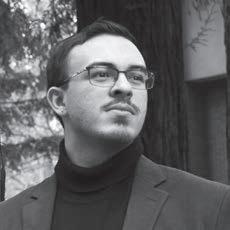
Landon Horstman is a junior music education major studying voice with Professor Daniel Ebbers at University of the Pacific. Recently, Horstman has performed with the Stockton Symphony in scenes from Romeo and Juliet (Romeo). At Pacific, he sings with the Pacific Singers ensemble and in Pacific Opera Theatre’s productions including A Hand of Bridge (David), Camelot (Lancelot), and Carousel (Billy). Horstman won first place overall in the NATS California Capital Chapter Auditions in 2025. Upon graduating, he plans to teach music in schools locally.