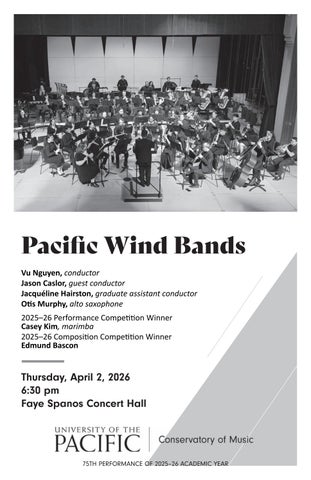
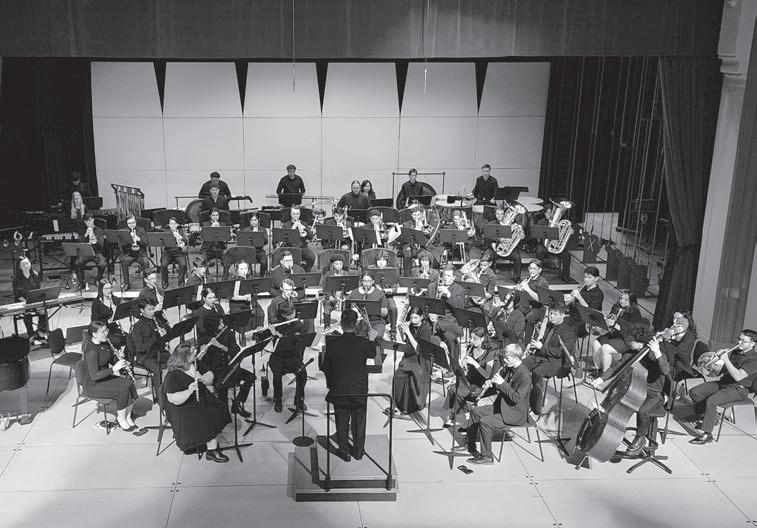
Pacific Wind Bands
Vu Nguyen, conductor
Jason Caslor, guest conductor
Jacquéline Hairston, graduate assistant conductor
Otis Murphy, alto saxophone
2025–26 Performance Competition Winner
Casey Kim, marimba
2025–26 Composition Competition Winner
Edmund Bascon
Thursday, April 2, 2026 6:30 pm
Faye Spanos Concert Hall



Windsprints (2003)
Concertino for Marimba and Band, op. 21b (1940/1975)
Lively
Casey Kim, marimba
Four Dances from West Side Story (1957/1980)
Cha-Cha Cool (Fugue)
Richard Saucedo (b. 1957)
Paul Creston (1906–1985)
Leonard Bernstein (1918–1990) arr. Ian Polster
Jacquéline Hairston, conductor
Night Lights (2026) (World premiere)
Edmund Bascon (b. 2003)
The Lone Pine (2026)
Nubia Jaime Donjuan (b. 1984)
Jason Caslor, conductor
Fantasia for Alto Saxophone (1983)
Otis Murphy, alto saxophone
Claude T. Smith (1932–1987)
View a digital version of this program at issuu.com/MusicatPacific
PROGRAM NOTES
Notes by Vu Nguyen
Saucedo: Windsprints
Richard Saucedo spent 31 years as director of bands at Carmel High School in Carmel, Indiana, before retiring in 2013. Under his direction, Carmel bands received numerous state and national honors in the areas of concert, jazz, and marching. As brass composer and arranger for the Cavaliers Drum and Bugle Corps, he was part of five DCI World Championship seasons, and he has since become a prolific composer whose concert band works are performed at every level. He was inducted into the Music for All Hall of Fame in 2015. Saucedo writes, “Windsprints is a flourish of notes and rhythms meant to stir the kind of emotion one might experience during the running of a 50 or 100 yard dash. The piece gets off the starting blocks quickly and immediately involves numerous wind and percussion instruments in a technical race to the finish line.”
Creston: Concertino for Marimba and Band
Born Giuseppe Guttovergi to Italian immigrants, Paul Creston was entirely self-taught with the exception of piano and organ lessons when he was younger. He developed a distinctive voice rooted in rich harmonic language and an almost obsessive interest in rhythm that spanned five symphonies, concerti, as well as several choral, chamber, and instrumental works. The Concertino for Marimba and Orchestra was originally composed for American marimbist Ruth Stuber-Jeanne and Orchestra Classique, an all-female orchestra. It was premiered in Carnegie Hall on April 29, 1940, and was revised for wind band accompaniment in 1975. The third movement, marked “Lively,” is a rhythmically charged dialogue between the soloist and the band, full of syncopation and forward momentum. It showcases Creston's ability to write music that is technically demanding yet always accessible and immediate in its appeal.
Bernstein/Polster: Four Dances from West Side Story
Few works in the American musical theatre canon have had the lasting impact of Leonard Bernstein's West Side Story. A retelling of Shakespeare's Romeo and Juliet set on the streets of 1950s Manhattan, the show opened on Broadway in 1957. Bernstein brought together jazz and Latin rhythms, complex harmonies, and beautifully memorable melodies. The two dances on tonight's program represent some of the musical’s stylistic range. The “Cha-cha” is a moment of tender romance where Tony and Maria first see each other at the gym dance. “Cool (Fugue)” is a tightly constructed jazz fugue that has moments of cool rhythm and excitement.
PROGRAM NOTES
Bascon: Night Lights
"'Can anything harm us, mother, after the night lights are lit?' 'Nothing, precious,' she said; 'they are the eyes a mother leaves behind her to guard her children.'"
—J.M. Barrie, Peter Pan
Night Lights is a piece about enduring fear, anxiety, and loneliness. The first section lays out a simple, ‘starry-eyed’ motive in the glockenspiel, full of wonder and naivety. However, something sinister brewing under the shimmer launches into a frantic second section. Despite the constant hammering of an eighth note pulse, the stabs of dissonance remain unpredictable, and the stress never relents. Every burst of sound is a bomb lighting up the night sky, with the stars now outcompeted. The music eventually scurries to safety and finds a strained quiet, but quiet, nonetheless. In this third section, soloists cry out into the darkness, hoping to find someone else to hold onto. They are acknowledged either by doom and despair, or nothing at all. And at last, a glimmer of hope. Rays of light drive away the darkness with the return of the simple, shimmering theme. Back under the light of the stars, the music reaches a sense of safety at last and can retreat gently into a peaceful sleep.
—Edmund Bascon
Donjuan: The Lone Pine
Nubia Jaime Donjuan began cello studies at six and went on to study composition at the University of Sonora, working with Arturo Márquez, Alexis Aranda, and David H. Bretón. Raised by a musician father and historian mother, she draws on the cultural traditions and natural landscapes of her environment as primary creative sources. In 2021 she became the first woman to win the prestigious Concurso de Composición Arturo Márquez for Maso Ye'eme, a work fusing the popular danzón genre with the Yaqui Deer Dance. As a composer and performer, she is part of the “Las Montoneras” project, which brings together the work of female composers, performers and researchers, seeking to make visible the work of women in the country’s music scene. Her music has been performed by ensembles across Mexico and the United States, including the Orquesta Filarmónica de Sonora, the Dartmouth College Wind Ensemble, and the University of Houston Wind Ensemble. She has participated in the Midwest Clinic, the Meg Quigley Symposium, and the Music Mexico Symposium, and currently serves as composer-in-residence with the Dartmouth College Wind Ensemble and the Tzintz Philharmonic Orchestra.
PROGRAM NOTES
The Lone Pine was a joint commission by Dartmouth College and the Northern California Band Association All Northern High School Honor Band. The West Coast premiere was given by the All Northern Band on Feb 22, 2026 at University of the Pacific. The composer provides the following note:
Sonata form, as a structural model, is a wonderful tool for composers because we know it works; however, it is always better to adapt the form to the music rather than the other way around.
From afar, a trombone suffers and laments its existence in complete solitude. The rest of humanity is able to hear it and responds from a distance, crossing the imaginary walls we have been led to believe exist. It then becomes time to listen to the clave of the danzón, which nourishes the song of El Pino Solitario (“The Lone Pine”), the one that remained there—struggling, resisting, and waiting for things to improve.
The pine evolves with the seasons. Its solitary song changes color and language, as well as tonality; it becomes agile, matures, and comes to understand almost everything. Now it sings with greater strength, reaching farther places in search of fusion. It travels as far as the Southern Cone, where it receives a response, and thus the Chilean cueca blends with the danzón, giving rise to a new form of life.
As in all sonata forms, there is a recapitulation. Once again a lament is heard—but this time, humanity sings as well.
Smith: Fantasia for Alto Saxophone
Claude T. Smith spent much of his career as an educator in Missouri, but his compositions for wind band earned him a national reputation and a permanent place in the repertoire. He had a particular talent for writing idiomatic solo works that push performers to their limits while remaining deeply musical, and the Fantasia for Alto Saxophone, written for Master Chief Musician Dale Underwood and dedicated to The United States Navy Band, is widely regarded as his masterpiece in this form. Written in 1983, the work is a single movement tour de force that moves through a wide range of moods and textures that are virtuosic, lyrical, and introspective. The Fantasia has become a staple of wind band literature, a testament to Smith's gift for capturing the full expressive potential of the instrument. We are thrilled to feature Otis Murphy on this evening’s performance.
Edmund Bascon is the winner of the Conservatory’s 2025–26 Composition Competition. Originally from Canada, he is pursuing bachelor of music degrees in education and in composition at University of the Pacific, where his composition instructors include Eric Wood, Andrew Conklin, and Hendel Almetus.
Bascon prioritizes writing music that engages every performer and gives each of them a voice. Following his premiere of a beginning-level piece at 2026 Pacific Brass Day, he is excited to continue creating music accessible to all levels of performers.
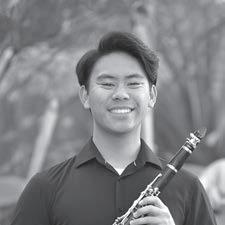
At Pacific, he has performed with several conservatory ensembles and is a winner of the Conservatory 2025-26 Performance Competition. Under the guidance of Professor Patricia Shands, he is thrilled to be performing Oscar Navarro’s II Concerto with Pacific Orchestras in spring 2026. After graduating, Bascon hopes to continue his education pursuing a graduate degree in music performance.
Jason Caslor is currently an associate professor of music and the director of bands at Arizona State University (ASU). In addition to directing the wind ensemble, he also mentors graduate conducting students and teaches undergraduate and graduate conducting courses. Recent highlights include the ASU Wind Ensemble’s commercial recordings of Kevin Day’s Concerto for Wind Ensemble and Nicole Piunno’s Sunflower Studies, being a recipient of the Canadian Band Association’s 2022 International Band Award, presenting at the 2024 WASBE Conference (Gwangju, South Korea) and the 2024 Midwest Clinic, and guest conducting the United States Army Field Band.
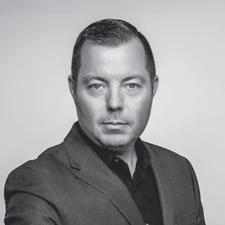
Caslor is a Conn-Selmer Educational Clinician and has guest conducted or adjudicated in every province in Canada and throughout the United States. A fiercely proud Canadian currently living amongst cacti, Caslor’s co-founding and leadership over the Canadian Band Association’s (CBA) Howard Cable Memorial Prize in Composition lead to him being the recipient of the CBA’s 2022 International Band Award. The award recognizes those individuals who have embraced the ideals of the CBA and have contributed to the promotion, growth and development of the musical, educational and cultural values of Canadian band outside of Canada.
As a researcher, he has presented his work at the Midwest Band and Orchestra Clinic, the WASBE International Conference, the CBDNA National Conference, the IGEB International Conference on Wind Music, the International Society for Music Education World Conference, and the Riksförbundet Unga Musikanter Wind Band Symposium (Sweden). He has also published numerous articles, most prominently in the Canadian Winds journal. Caslor completed his doctorate in conducting at Arizona State University. Prior to earning a master’s in conducting from the University of Manitoba, he earned dual bachelor’s in music and education from the University of Saskatchewan, Canada.
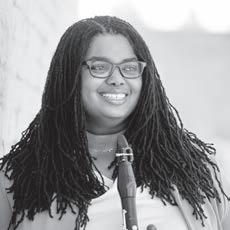
Jacquéline Hairston is currently pursuing a Master of Music in music education at University of the Pacific. She received her degree in music education and clarinet performance from California State University, East Bay. She also serves as director of bands at Franklin High School, Stockton, and is currently in her 13th year as a music educator.
As an active performer, Hairston plays clarinet and bass clarinet with the Stockton Concert Band and as a pit musician for children’s musical theatre companies in the Bay Area during the winter and summer months. She is also a member of the California Band Directors Association, the Northern California Band Association, the Association of Black Women Band Directors, and the Minority Band Directors National Association.
Casey Kim is a winner of the 2025–26 Conservatory Performance Competition. A versatile percussionist, he strives to bring an infectious energy to every performance. Kim is a junior music performance major at University of the Pacific, studying percussion with Jonathan Latta.
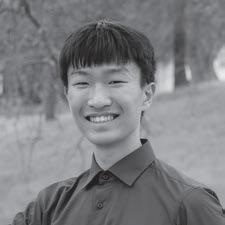
Kim has had the privilege of being coached by distinguished marimba artists including Kevin Bobo, Ivan Trevino, and Haruka Fujii, and was a member of the Santa Clara Vanguard Drum and Bugle Corps. Outside of the performance setting, he currently serves as a percussion teacher at the Pacific Community Music School, Liberty High School in Brentwood, and Oakland Youth Symphony Orchestra.
Otis Murphy holds the position of professor of saxophone and chair of woodwinds in the Indiana University Jacobs School of Music, joining the faculty at the age of twenty eight and becoming one of the youngest faculty members in its history. He is in great demand as an international soloist and clinician, having performed in more than twenty countries worldwide across four continents: North America, Europe, Asia, and Australia.
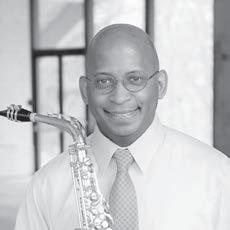
Murphy was a prizewinner in the Adolphe Sax International Saxophone Competition of Belgium and the Jean-Marie Londeix International Saxophone Competition in France and has performed in venues including Carnegie Hall’s Isaac Stern Auditorium, Merkin Hall (New York City), Casals Hall (Tokyo); Palau de la Musica (Valencia); and Muziekgebouw aan het Ij (Amsterdam). He has performed on more than 15 recordings, including four solo albums receiving critical acclaim. He performed Ellen Taaffe Zwilich’s Quintet for Alto Saxophone and String Quartet with Pacifica Quartet on their album, Contemporary Voices, winning a Grammy Award for Best Chamber Music/ Small Ensemble Performance.
As and educator, Murphy has taught at music schools and festivals worldwide including the Paris Conservatory, Amsterdam Conservatory, Cologne Academy of Music, Hamamatsu International Wind Instrument Academy and Festival, London Royal College of Music and many more. His students have received awards and have careers as performers, educators, and members of premiere military concert bands.
Murphy holds Doctor of Music and Master of Music degrees from the Indiana University Jacobs School of Music, receiving the Performer’s Certificate accolade, and he studied in France under a Fulbright Fellowship at the Conservatoire National Régional de Musique in Cergy-Pontoise, earning the Prix de Perfectionnement à l’unanimité.
Murphy and his wife, pianist Haruko Murphy, live in Bloomington, Indiana, and are dedicated parents of their six children.
Otis Murphy's performance is supported in part by

Vu Nguyen is an associate professor of music and director of bands at University of the Pacific. He conducts the Pacific Wind Bands and teaches courses in conducting and music education. Nguyen maintains an active schedule as a clinician and has served as guest conductor with military bands as well as honor bands across the country. Ensembles under his direction have performed at state music educator conferences, at the Midwest Clinic, and at the College Band Directors National Association Conference.
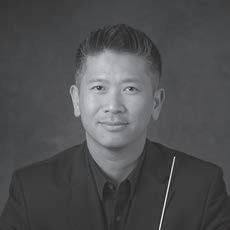
A native of the San Francisco Bay Area, Nguyen holds degrees in conducting from the University of Washington and the University of Oregon, and he earned a Bachelor of Music degree in Music Education from University of the Pacific. Prior to his appointment at Pacific, he served in similar roles at the University of Connecticut, University of Indianapolis, and Washington University in St. Louis. He began his teaching career in the San Ramon Valley Unified School District.
In addition to his academic career, Nguyen is a retired officer in the Air National Guard (ANG) where he was the commander and conductor of the ANG Band of the West Coast.
PACIFIC WIND BANDS
The Pacific Wind Bands at University of the Pacific include students who represent music majors, minors, and non-majors from across Pacific. The ensemble performs at least four concerts each academic year. It provides students the opportunity to play a broad range of music for winds, brass, percussion, and keyboards drawn from a repertoire that honors the rich history of the past and looks to the future, ranging from chamber to full wind band instrumentation. Recent premieres and collaborations with composers include Kevin Bobo, Viet Cuong, Kevin Day, Shuying Li, Catherine Likhuta, Giovanni Santos, and Alex Shapiro.
Flutes
Emily Aires
Riko Hirata
Henrie Notley, piccolo
Anshini Parikh
Arianna Pereyra
Jasmine Valentine
Oboes
Walker Austin
Gabriel Jarata
Ernesto Pena
Emily Zamudio
Clarinets
Mitchell Amos
Edmund Bascon
Kaitlyn Ferreira
Tommy Galvin
Zahara Herd
Eligh Mann
Adrian Rodriguez
Mandujano
Noah Sapol, bass
Andrew Seaver, bass
Bassoons
Enrique Valdez
Kenny Wolaver
Saxophones
Ray Cruz, baritone
Danielle Densmore, alto
Antrell Gulley, alto
Marcus Rudes, tenor
Horns
Ciera Alkhoury
Marcelo Contreras
Jas Lopez
Madison Ma
Don Parker
Lily Walter
Trumpets
Jack Alorro
Parker Deems
Alayna Ontai
Kamron Qasimi
Amalia Silva
Trombones
Bronson Burfield
William Giancaterino
Miguel Palma
Radley Rutledge
Kiyo Sato
Matt Young, bass
Euphonium
Jayden Laumeister
Tubas
Seth Morris
Alejandro Villalobos
Double Bass
Emiko Hernandez
Percussion
Hunter Campbell
Ryan Eads
Casey Kim
Janae Jones
Daegan Luster
Robert McCarl
Peter Norman
Snowden Snyder
Rei Vindiola
Piano
Sonja Hwang
Faculty Coaches
Brittany Trotter, flute
Kyle Bruckmann, oboe
Patricia Shands, clarinet
Nicolasa Kuster, bassoon
Ricardo Martinez, saxophone
Sadie Glass, horn
Alia Kuhnert, trumpet
Bruce Chrisp, trombone
Brian Kemble, tuba/euphonium
Kathryn Schulmeister, double bass
Jonathan Latta, percussion
Sonia Leong, piano
Jonathan Latta, ensembles program director
Breanna Daley, ensemble librarian


Every gift to the Conservatory from an alum, parent, or friend makes an impact on our students. Our students rely on your generosity to enable them to experience a superior education.
Please contact the Assistant Dean for Development at 209.932.2978 to make a gift today. You may also send a check payable to University of the Pacific: Conservatory of Music, University of the Pacific Attn: Assistant Dean for Development 3601 Pacific Avenue Stockton, CA 95211




To view our upcoming events, scan the QR code or visit Pacific.edu/MusicEvents.