30th New Orleans Int'l Piano Competition Program (2026)
JULY 18 – 26, 2026 I NEW ORLEANS, LOUISIANA
yannick nézet-séguin
lydia artymiw
yefim bronfman
angela cheng
alan chow
alvin chow
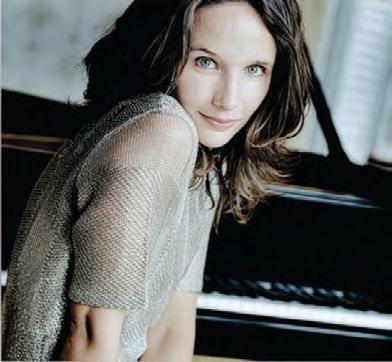
hélène grimaud
igal kesselman olga kern
alexandre moutouzkine
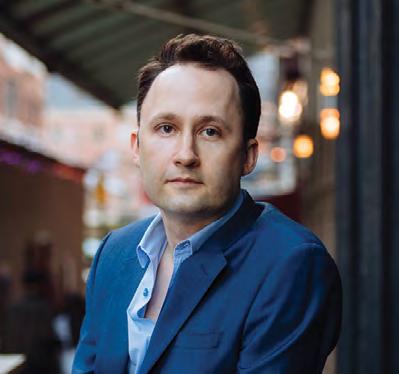
spencer myer
lang lang
yuja wang
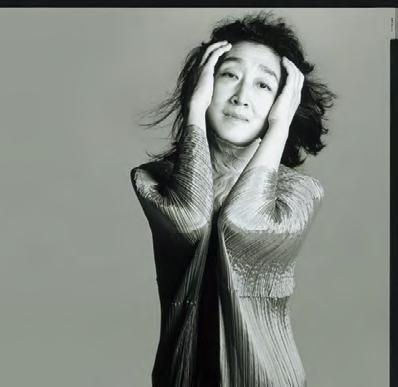
mitsuko uchida
jean yves thibaudet
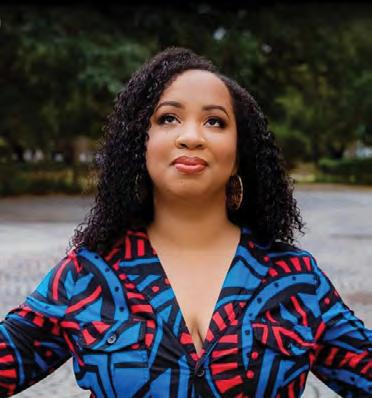
courtney bryan
THIRTIETH
COMPETITION
FORTY-THIRD KEYBOARD FESTIVAL
TWENTY-SIXTH PIANO INSTITUTE
July 18 26, 2026
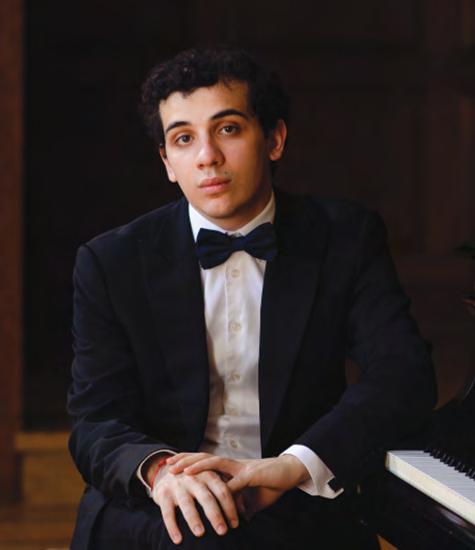
COMPETITION JURY
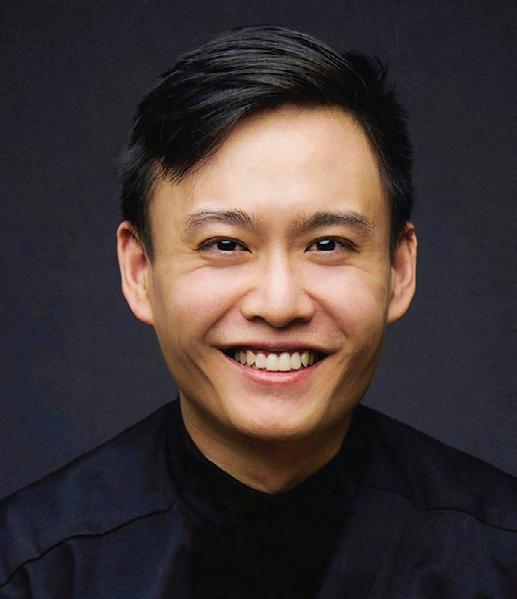
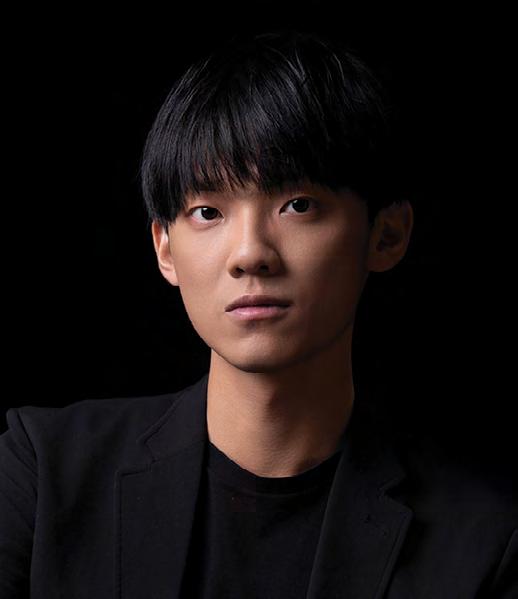
Angela Cheng
Alvin Chow
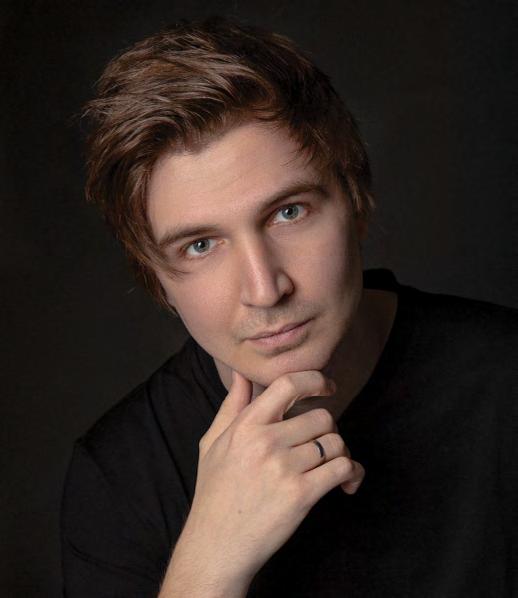
Sofya Gulyak
Christopher Harding
Igal Kesselman
Yong Hi Moon
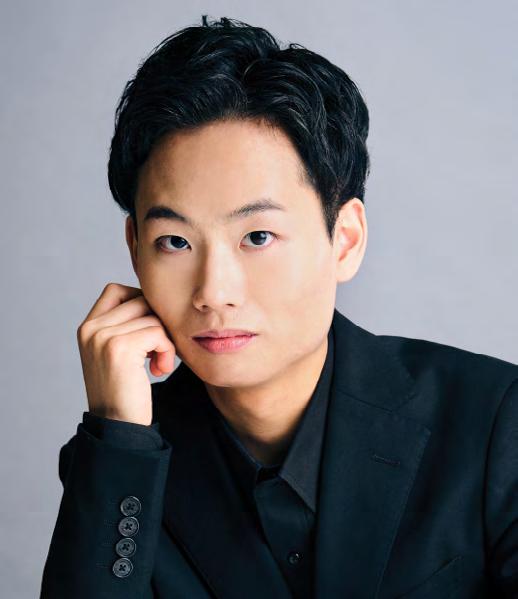
Yoshikazu Nagai
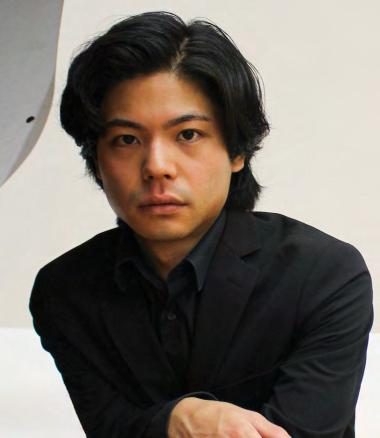
Alan Chow, Chairman of the Jury
Presented by the Hosted by Loyola University College of Music and Media
P.O. Box 750698 • New Orleans, LA 70175-0698 masno.org
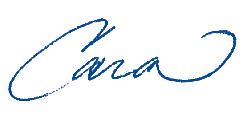
Cara McCool Woolf
Executive & Artistic Director
Visit the Davenport Lounge, where we are always playing
here we are always playing
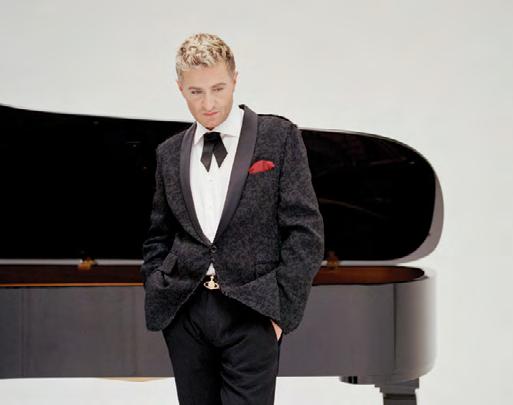
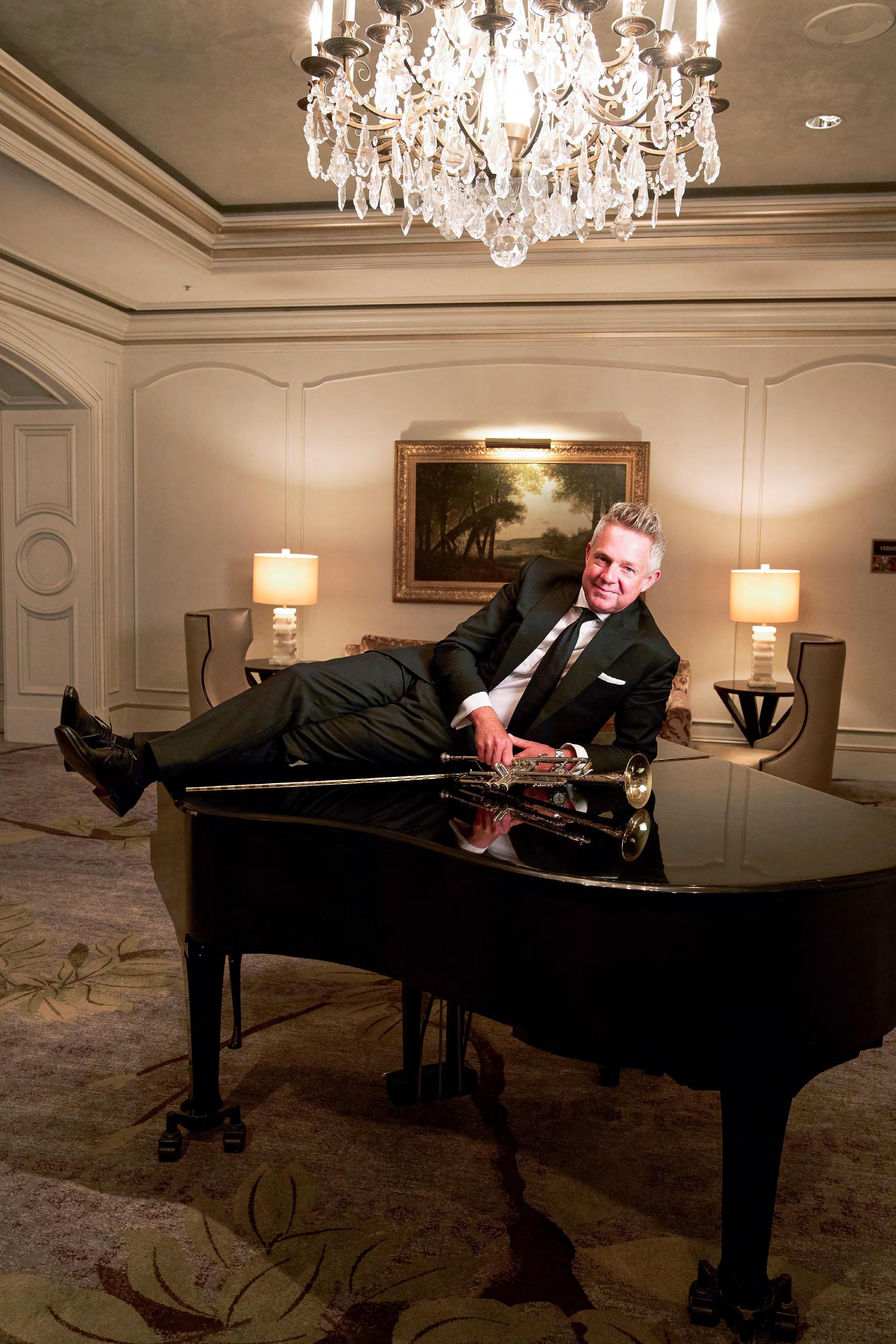
Visit the Davenport Lounge, where we are always playing your song.
Allow resident musician Jeremy Davenport and his band to provide the soundtrack to your next memorable New Orleans night. We hope to welcome you soon.
Allow resident musician Jeremy Davenport and his band to provide the soundtrack to your next memorable
SCHEDULE OF EVENTS
SATURDAY, JULY 18
Guest Artist Angela Cheng in Recital
19 Master
MONDAY, JULY 20
Master
TUESDAY, JULY 21
THURSDAY,
SATURDAY, JULY 25
Awards Ceremony following the Final Round Concerto performances.
All New Orleans International Piano Competition Rounds and Guest Artist Recital are held in Roussel Hall located in the Loyola Music and Communications Building - 6301 St. Charles Avenue, New Orleans. All New Orleans Piano Institute & Keyboard Festival Events including Master Classes, Presentations, the NOPI Concerto Competition, and Showcase Recital will be held in Nunemaker Hall (behind the Music and Communications Building).
MAYOR HELENA MORENO
CITY OF NEW ORLEANS
MAYOR HELENA MORENO
CITY OF NEW ORLEANS
MAYOR HELENA MORENO
CITY OF NEW ORLEANS
Dear Friends ofthe NOIPC,
Dear Friends ofthe NOIPC,
June 11, 2026
June 11, 2026
June 11, 2026
It is a delight to welcome you to New Orleans for the New Orleans International Piano Competition and Keyboard Festival hosted by the Musical Arts Society ofNew Orleans.
It is a delight to welcome you to New Orleans for the New Orleans International Piano Competition and Keyboard Festival hosted by the Musical Arts Society ofNew Orleans.
Dear Friends ofthe NOIPC,
This year's event will host pianists from around the world to perform and compete. I am thrilled to hear about Courtney Bryan's tenure as a guest artist and her work Ancestor Tree . I understand that New Orleans' culture was the inspiration for the piece.
It is a delight to welcome you to New Orleans for the New Orleans International Piano Competition and Keyboard Festival hosted by the Musical Arts Society ofNew Orleans.
This year's event will host pianists from around the world to perform and compete. I am thrilled to hear about Courtney Bryan's tenure as a guest artist and her work Ancestor Tree . I understand that New Orleans' culture was the inspiration for the piece.
New Orleans not only has a rich music history but a thriving industry and was recently designated a UNESCO Creative City ofMusic! It is only fitting to host this competition in New Orleans, a city where we celebrate all forms ofperformance. I hope you take the opportunity to connect with the diverse and lively music scene in the city during your stay.
This year's event will host pianists from around the world to perform and compete. I am thrilled to hear about Courtney Bryan's tenure as a guest artist and her work Ancestor Tree . I understand that New Orleans' culture was the inspiration for the piece.
New Orleans not only has a rich music history but a thriving industry and was recently designated a UNESCO Creative City ofMusic! It is only fitting to host this competition in New Orleans, a city where we celebrate all forms ofperformance. I hope you take the opportunity to connect with the diverse and lively music scene in the city during your stay.
Thank you for supporting the Musical Arts Society ofNew Orleans. The NOIPC is a fantastic event that brings together international pianists for performance.
Thank you for supporting the Musical Arts Society ofNew Orleans. The NOIPC is a fantastic event that brings together international pianists for performance.
New Orleans not only has a rich music history but a thriving industry and was recently designated a UNESCO Creative City ofMusic! It is only fitting to host this competition in New Orleans, a city where we celebrate all forms ofperformance. I hope you take the opportunity to connect with the diverse and lively music scene in the city during your stay.
To all the amazing contestants: Thank you for being a part ofthis competition and I wish you the best ofluck!
To all the amazing contestants: Thank you for being a part ofthis competition and I wish you the best ofluck!
Thank you for supporting the Musical Arts Society ofNew Orleans. The NOIPC is a fantastic event that brings together international pianists for performance.
Best,
Best,
To all the amazing contestants: Thank you for being a part ofthis competition and I wish you the best ofluck!
Best,
City ofNew Orleans
City ofNew Orleans
City ofNew Orleans
Greetings,
Greetings,
It is my pleasure to welcome the Musical Arts Society’s 30th New Orleans International Piano Competition to our campus. Few artistic events in our city command such admiration, loyalty, and anticipation. Loyola University and the College of Music and Media are proud to be part of this signature cultural tradition. As two storied institutions devoted to elevating the musical craft, our histories and missions are deeply intertwined. Hosting this competition in our music spaces brings us great joy, and we eagerly await the artistry and passion that will resonate through our halls.
It is my pleasure to welcome the Musical Arts Society’s 30th New Orleans International Piano Competition to our campus. Few artistic events in our city command such admiration, loyalty, and anticipation. Loyola University and the College of Music and Media are proud to be part of this signature cultural tradition. As two storied institutions devoted to elevating the musical craft, our histories and missions are deeply intertwined. Hosting this competition in our music spaces brings us great joy, and we eagerly await the artistry and passion that will resonate through our halls.
For more than a century, Loyola has been a destination for musicians, artists, and storytellers those who feel called to create, to communicate, and to shape the world through their craft. Our College of Music and Media stands alone among the 28 Jesuit colleges and universities as the only institution with a dedicated college for music and media under one roof. This distinction reflects our long-standing belief that the arts are not an accessory to education but a vital force that forms people of purpose, conscience, and imagination.
For more than a century, Loyola has been a destination for musicians, artists, and storytellers those who feel called to create, to communicate, and to shape the world through their craft. Our College of Music and Media stands alone among the 28 Jesuit colleges and universities as the only institution with a dedicated college for music and media under one roof. This distinction reflects our long-standing belief that the arts are not an accessory to education but a vital force that forms people of purpose, conscience, and imagination.
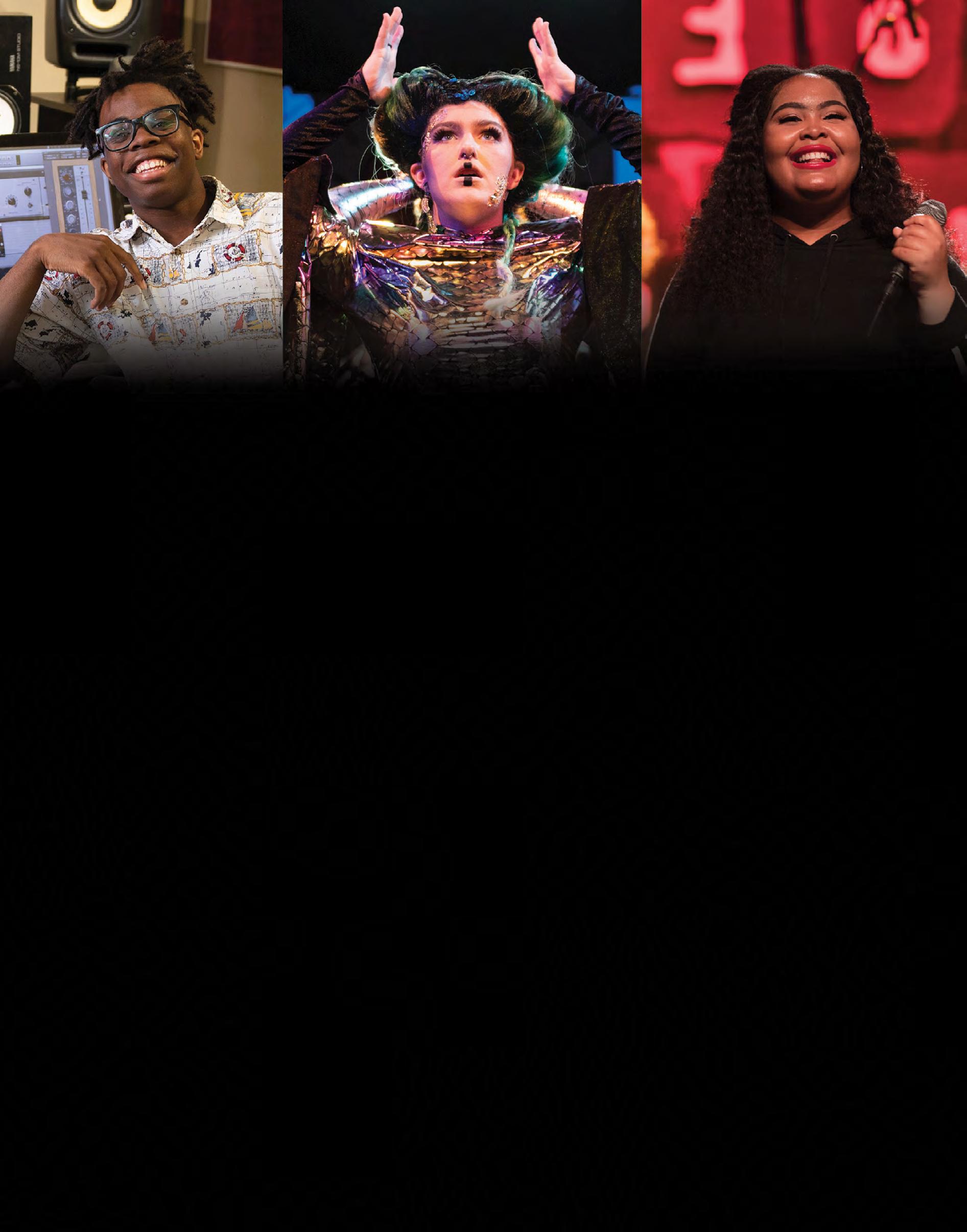
Our programs spanning theatre, dance, music performance, music education, music therapy, music industry, graphic design, journalism, digital filmmaking, and more are built on a century-old tradition of educating, inspiring, and forming students to make the world a better place. Our students arrive as natural storytellers, eager to express themselves and connect with others. We guide them as they refine their craft, discover their voice, and prepare to contribute meaningfully to a world that needs their creativity now more than ever.
Our programs—spanning theatre, dance, music performance, music education, music therapy, music industry, graphic design, journalism, digital filmmaking, and more are built on a century-old tradition of educating, inspiring, and forming students to make the world a better place. Our students arrive as natural storytellers, eager to express themselves and connect with others. We guide them as they refine their craft, discover their voice, and prepare to contribute meaningfully to a world that needs their creativity now more than ever.
Throughout the year, we host numerous performances, exhibitions, screenings, and events that showcase the vibrancy of our community. I invite you to stay connected with us and experience the breadth of talent that defines Loyola. Visit cmm.loyno.edu/presents to learn more about our work and to sign up for our weekly newsletter.
Throughout the year, we host numerous performances, exhibitions, screenings, and events that showcase the vibrancy of our community. I invite you to stay connected with us and experience the breadth of talent that defines Loyola. Visit cmm.loyno.edu/presents to learn more about our work and to sign up for our weekly newsletter.
Once again, welcome to Loyola University New Orleans and to the 30th New Orleans International Piano Competition. We are honored to share this moment with you.
Finding a way or making one,
Once again, welcome to Loyola University New Orleans and to the 30th New Orleans International Piano Competition. We are honored to share this moment with you.
Finding a way or making one,
Sheryl Kennedy Haydel, Ph.D., APR Dean
Sheryl Kennedy Haydel, Ph.D., APR Dean
In MeMorI aM
Richard Goula
1943–2017
Visionary • Philanthropist • Friend
We would not have reached this historic milestone of the 30th New Orleans International Piano Competition without the generous support of the late Richard Goula and his Thistlewood Foundation. As one of the visionary supporters who helped shape the growth of both the New Orleans International Piano Competition and Musical Arts Society of New Orleans, Richard’s legacy continues to guide our organization and has helped establish MASNO as a leading cultural institution.
- Cara McCool Woolf
Executive & Artistic Director of the Musical Arts Society of New Orleans
Dear friends,
On behalf of MASNO’s Board of Directors, it is my privilege to welcome you to the 30th New Orleans International Piano Competition! This biennial competition welcomes some of the world’s greatest emerging pianists to our city, reminding us that expert musicianship is a timeless and treasured vocation and reassuring us that the future of classical music is in excellent hands. The twelve semifinalists joining us this week in New Orleans were selected from among over 230 International applicants. I know you will be astonished by their talents and that, in turn, they will appreciate the warm welcome they receive in one of the world’s great musical cities.
This year’s competition is especially exciting for everyone involved with MASNO. We are thrilled that, for the first time, our final round will feature performances of concerti alongside the Louisiana Philharmonic Orchestra. Likewise, we are delighted to share Dr. Courtney Bryan’s beautiful commissioned work, Ancestor Tree, and know that hearing it from each competitor will be a special experience. And finally, having all three of our finalists perform with the LPO next season will build a lasting relationship between us and these extraordinary artists and will remind us all of their gifts throughout the year. Indeed, this year’s competition represents a milestone of organizational growth for MASNO as well as a recognition of this competition’s expanding reputation around the world.
Alongside the competition, MASNO will also be presenting the New Orleans Piano Institute, our annual music education program. NOPI is an award-winning intensive solo performance program for advanced young pianists who come from far and wide to receive private lessons, perform in masterclasses, attend lectures, and perform in closing recitals. They are also eligible to compete in NOPI’s Concerto Competition, the winners of which will perform in the upcoming year with the New Orleans Civic Symphony. NOPI’s masterclasses, recitals, and concerto competition are all open to the public free of charge, and I encourage you to attend, both for your own enjoyment and as a measure of support for these young musicians.
This week’s events are the culmination of the support and efforts of so many people. First and foremost, our Artistic and Executive Director, Cara McCool Woolf, lives and breathes MASNO and is the heartbeat of the organization. Alongside Cara, our supportive and energetic Board is privileged to honor MASNO’s heritage while working purposefully toward its exciting future. Our jurors, NOPI faculty, competitor host families, and a small army of committed volunteers are also integral to the success of these events, and we cannot thank them enough. We are also especially grateful to Steinway & Sons, the Steinway Piano Gallery of New Orleans, Loyola University, and WWNO for their longstanding partnerships, and to all the sponsors recognized throughout these pages. None of this would be possible without the support of everyone in the MASNO community.
While this is undoubtedly the signature week of MASNO’s programming, I hope you will take time to learn more about the many year-round opportunities we provide to experience world-class music in New Orleans. I especially invite you to join us at one of our Petit Salon concerts, Bachtoberfest, and our annual gala, Nocturne. This year’s Nocturne artist, Emanuel Ax, is one of the foremost pianists of his or any generation. More information about all of MASNO’s events can be found on our website, www.masno.org. On behalf of our Board of Directors, thank you for your support, and enjoy this incredible week of music!
Sincerely,
Robert Edgecombe President, MASNO Board of Directors
Welcome to the 30th New Orleans International Piano Competition, the 43rd Keyboard Festival, and the 26th New Orleans Piano Institute! How wonderful it is to gather once again for nine magnificent days of extraordinary music.
Since my introduction to MASNO and the New Orleans International Piano Competition in the early 2000s, I’ve witnessed firsthand how this extraordinary organization and its internationally renowned programs have transformed countless lives. My journey began volunteering for the NOIPC as a fellow pianist and teacher, continued through years of service on the Board of Directors, and ultimately led me to my current role as Executive & Artistic Director. Along the way, I’ve had the privilege of witnessing the profound impact MASNO has had on musicians, students, audience members, supporters, and our community.
Through these programs, careers have been launched, families supported, lives changed, peace cultivated, children inspired, hearts healed, and listeners renewed. Our arts community has been strengthened, our city enriched and celebrated, and the power of music continues to bring beauty and unity in ways only it can.
This 30th anniversary edition of the NOIPC marks a period of remarkable growth and historic enhancements. We received a record 240 Preliminary Round applications, reinstated the commissioned work for all semifinalists, added Final Round concerto performances with the Louisiana Philharmonic Orchestra, and significantly increased our prize offerings. We also celebrate new global partnerships through our memberships in the World Federation of International Music Competitions and the Alink Argerich Foundation, expanded international broadcasting—including streaming in China for the first time—and commemorative additions such as the beautiful T. Adler Anniversary Jewelry and exciting new offerings in our Boutique. There is truly so much to celebrate. We are continually proud of our strengthened partnership with Steinway & Sons, whose continued commitment includes providing the Recording Prize on their Spirio label to our First Prize winner.
An incredibly special component of this year’s competition is the World Premiere of New Orleans composer Courtney Bryan’s Ancestor Tree, commissioned with support from the Edgar “Dooky” Jr. and Leah Chase Family Foundation in loving memory of our dear friend Edgar “Dooky” Chase III. We are deeply grateful to Courtney for this meaningful composition and to the Chase family for their support.
Presented concurrently with the competition is our annual New Orleans Piano Institute (NOPI) and Keyboard Festival. We are delighted to welcome acclaimed pianist Angela Cheng as our festival guest artist, together with our internationally esteemed NOIPC Jury and NOPI Faculty. I know you will enjoy Angela’s recital, as well as the outstanding master classes and student performances presented throughout the week.
As we celebrate this 30th New Orleans International Piano Competition, it is important to recognize that none of it would be possible without the support and dedication of many – many who have served faithfully year after year.
First and simply said, we would not have reached this historic milestone without the generous support of the late Richard Goula and his Thistlewood Foundation. As one of the visionary supporters who helped shape the growth of both the New Orleans International Piano Competition and Musical Arts Society of New Orleans, Richard’s legacy continues to guide our organization and has helped establish MASNO as a leading cultural institution. I hope you’re proud, Richard.
My deepest appreciation goes to our Chairman of the NOIPC Jury, Alan Chow, who led the prescreening selection of our 12 semifinalists. His unwavering support, artistic leadership, and extensive international network have been invaluable to the continued growth of the competition and to me personally. I could not ask for a finer artist, colleague, or friend.
I sincerely thank NOPI Directors Igor Resnianski and Hristo Birbochukov for their outstanding work in organizing this internationally respected institute for young pianists. I also extend my appreciation to Steinway Piano Gallery of New Orleans, the Steinway Society of New Orleans, the New Orleans Jazz & Heritage Foundation, and the New Orleans Civic Symphony for their valued partnerships with NOPI.
My sincerest thanks go to our many partners and sponsors. Special thanks to the Louisiana Philharmonic Orchestra, with heartfelt appreciation to Amanda Bohren, Matthew Kraemer, Anwar Nasir, Thomas Wilkins, and all of the orchestra’s musicians. I also thank Dean Haydel and Loyola University College of Music and Media; Vivian Chui and Steinway & Sons; Steve Kinchen, John Wright, and Steinway Piano Gallery of New Orleans; WWNO Classical Network; Mariusz Smolij and the Thistlewood Foundation; Glenn Noya of Noya Design; Rob Olmstead of Media Droids; Tiger Lu of amadeus.tv; Billy Baker and Nicola Miller of Gramophone; Dean Shapiro of the New Orleans Advocate and Times Picayune / Nola.com; Tiffany Adler of T. Adler; the Baton Rouge Symphony Orchestra; the Acadiana Symphony Orchestra; Igal Kesselman and Merkin Hall; Chuck Taylor and LSU New Orleans; Tanya Bannister and Concert Artists Guild; our General Competition Sponsors; our individual Prize Sponsors with special appreciation to Allan Ledbetter.
My deepest gratitude extends to Director Emeritus Daniel Weilbaecher for his years of visionary leadership and continued guidance; MASNO Executive Intern Ella Romero for her incredible support and dedication; Board President Robert Edgecombe and every member of our Board of Directors for their steadfast commitment and enthusiastic participation throughout the year; our NOIPC Dinner and Semifinalist Hosts for their generous hospitality; Anya Grokhovski, Jacques Marquis, Spencer Myer and Dustin Gledhill; and our many volunteers and support staff, especially Kevin Chance, Julie Dorman, Matt McWilliams, Brianna McMorris, and Sally Suthon. Finally, thank you to Vance Woolf – my biggest fan and the one who does it all.
And to you, our friends and patrons, thank you for joining us as we celebrate this remarkable milestone. I hope you enjoy this extraordinary week of music and will make plans to join us again throughout the coming season. Thank you for being part of the New Orleans International Piano Competition, and thank you for being part of the Musical Arts Society of New Orleans.
With gratitude,
Cara McCool Woolf Executive & Artistic Director
Musical Arts Society of New Orleans
MASNO HISTORY 2026
Originally founded in 1980 as the New Orleans Institute for the Performing Arts (NOIPA) by Melvin Alford and Julianne Nice, the organization aimed to provide students and teachers in the performing arts with masterclasses and workshops, as well as expose them to performances by artists in the mainstream of professional activity.
Since its beginning, MASNO has provided both artists and students an opportunity to perform for appreciative audiences and has assisted students in developing skills necessary to build artistic discipline within a comfortable and supportive environment. MASNO has continued to present performances by emerging as well as established artists and to encourage the community to
the first directors of NOPI, and in 2010, Joni Jensen replaced Raymond as NOPI Local Director. Upon Shearon’s retirement in 2013, Alan Chow and Igor Resnianski accepted the Co-Director positions. In 2017, Joni Jensen joined Igor as NOPI CoDirector. Since 2020, Hristo Birbochukov has served with Igor as Co-Director. The institute format continues to expand and now includes a solo competition on alternate years of the NOIPC as well as virtual components. In addition, the Steinway Society of New Orleans presents the NOPI Concerto Competition of which the winner receives a cash prize as well as the opportunity to perform with the New Orleans Civic Symphony.
In the spring of 2004, MASNO presented its first Concerto Showcase featuring
embrace the arts, particularly classical music. In addition to individual events during the year, a weeklong festival featuring master classes, lectures, and performances has been presented annually since 1981, until its one-year postponement in 2020 due to the Covid-19 pandemic.
In 1989, Madelyn Trible and Raymond Gitz founded the New Orleans International Piano Competition (NOIPC) as an augmentation to the summer keyboard festival. Without delay, the competition began expanding in scope, attracting competitors and audiences from around the globe, and quickly becoming regarded as one of the finest showcases of pianistic talent.
In the fall of 1994, Melvin Alford stepped down as NOIPA’s first Executive/Artistic Director, and Daniel Weilbaecher was asked to take this position. At that time, NOIPA was renamed the Musical Arts Society of New Orleans.
In 1999, the New Orleans Piano Institute (NOPI) was begun as the educational component of MASNO’s summer event. NOPI is an award-winning, intensive solo performance program for talented college, high school, and junior high pianists that includes private lessons, masterclasses, special presentations, performance, and competition opportunities. All of this is within the inspirational context of the biennial NOIPC and the annual Keyboard Festival. Shearon Horton and Raymond Gitz were
the three medalists of the preceding NOIPC to each perform concerti with the Louisiana Philharmonic Orchestra. Since only solo repertoire was heard during the summer competition, Concerto Showcase was envisioned as an extension of the NOIPC allowing our top three prizewinners to be heard in concert with the LPO as a non-competitive orchestral round.
From the strategic viewpoint, a new path was established for the evolution of MASNO’s premiere offering in 2009. The NOIPC, which had always been open to pianists without age restriction, began a biennial alternation with the New Orleans international Piano Competition for Young Artists, open to pianists between 14 and 18 years of age. In 2012, the MASNO Board of Directors decided to end the international competition for young artists and to present NOIPC every other year. Despite its postponement in 2020 due to the Covid-19 pandemic causing a 4-year pause, the NOIPC continues as a biennial event.
In 2013, after 20 years as both Executive and Artistic Director of MASNO, Daniel Weilbaecher resigned his position as Executive Director while continuing to serve as Artistic Director. In the fall of 2014, Cara McCool was named MASNO’s Executive Director, and in 2018, she also took the position of Artistic Director upon Daniel’s retirement. At this time, Alan Chow was named Chairman of the Jury of the New Orleans International
Piano Competition, and Cara proceeded as Director of the competition.
One of Cara’s goals was to broaden MASNO’s presence in the New Orleans musical community extending beyond the summer-centered events. During her tenure, she has led the organization to expand their presence locally, nationally and internationally by extending their calendar to a full annual season featuring an increasingly diverse roster of talent presented in collaboration with a growing number of partners.
Under Cara’s leadership and with the support of the Board of Directors and Friends, MASNO remained stable through the
International Piano Competition worldwide including China.
The New Orleans International Piano Competition continues to expand in its global reach as well as its reputation for excellence. A member of the Alink-Argerich Foundation for many years, the NOIPC was inducted into the World Federation of International Music Competitions in 2024, as one of only 5 USbased piano competitions. This membership has opened multiple doors for both the organization as well as its artists bringing a growing number of national and international partnerships such as Gramophone and amadeus.tv. The NOIPC also boasts a strengthening partnership with Steinway & Sons using all
Covid Pandemic with innovative programming while continuing to increase their educational and community outreach initiatives both virtually and in person. Born from this time and leading into the post-pandemic era were MASNO’s virtual mini-concert series MASNOtes, Le Petit Salon Concert Series, Bachtoberfest ,enhanced live-streaming of the New Orleans International Piano Competition, the live-streaming of Concerto Showcase with the Louisiana Philharmonic Orchestra, and other online offerings in efforts to stay connected to the community and support more artists.
With major support from Richard Goula and The Thistlewood Foundation, the Musical Arts Society of New Orleans and especially the New Orleans International Piano Competition began to take major strides of growth in 2023. Built on a solid foundation spanning four decades, MASNO and the NOIPC increased its number of partnerships and programs with major enhancements to those already in place. This growth has allowed the organization to launch into an even greater relevance within the local, national, and international cultural landscape, and has made possible the video broadcasting of the New Orleans
Steinway pianos for the competition and is proud to be the recipient of a Recording Prize on the Steinway & Sons Spiro label for the 1st Prize Winner of the NOIPC. In 2026, the 30th New Orleans International Piano Competition welcomes back a commissioned work into Semifinal Rounds I and II and is thrilled to debut concerto performances with the Louisiana Philharmonic Orchestra in the Final Round.
Celebrating its 46th anniversary in 2026, MASNO proudly holds true to its vision and mission continuing its efforts to make New Orleans a vital and vibrant center for the musical arts recognized locally, nationally and internationally; and by supporting artists, encouraging supportive audiences, nurturing the development of talent, and championing music education.
BOARD OF DIRECTORS
ExECUTIvE & ARTISTIC DIRECTOR
ExECUTIvE INTERN
CHAIRMAN Of THE JURY NOIPC
DIRECTOR EMERITUS
Cara McCool Woolf
Ella Romero
Alan Chow
Daniel Weilbaecher
PRESIDENT Robert Edgecombe
IMMEDIATE PAST PRESIDENT
PRESIDENT-ElECT
TREASURER
SECRETARY
MEMBERS
Paige Bennett-Primke
Hristo Birbochukov
Michael Boucree
Louise Bush
Courtney Bryan
Trey Cassels
Rosalind Hinton
Jason Burge
Terry Voorhies
Bruce Crutcher
Leo Landry
Igor Resnianski
Barbara Sands
Anne Sumich
Patrick Widhalm
Qifan Wu
Victoria Zangara
COMPETITION COMMITTEE
BOx OffICE/TICkET SAlES
BOUTIqUE
COMPETITION COMMITTEE CHAIR
COMPETITION COORDINATORS
HOSPITAlITY
HOSPITAlITY COORDINATORS
MASTER ClASSES
MARkETINg
COMPETITION MERCHANDISE
COMPETITOR MEDAlS
COMMEMORATIvE 30TH ANNIvERSARY PIN
PHOTOgRAPHY
Vance Woolf
EMERITUS MEMBERS
Mary Sue Chambers (1928-2021)
Anne Gauthier
Julianne Nice
Bruce Trible (1927-2022)
Madelyn Trible (1930-2023)
Lou Bush, Anne Sumich, Sally Suthon
Cara McCool Woolf
Alan Chow, Cara McCool Woolf
Cara McCool Woolf
Lou Bush, Barbara Sands, Nora Wetzel
Hristo Birbochukov, Igor Resnianski
Billy Baker, Julie Dorman, Gramophone, William Marshall, Glenn Noya, Rob Olmstead, Paige Primke, Ella Romero, Cara McCool Woolf
Glenn Noya, Sally Suthon, Cara McCool Woolf
Adler’s, Tiffany Adler, T. Adler LLC
Tiffany Adler, T. Adler LLC, Madeleine Moise
Stephen Lomonaco, Victoria Z Photography
PIANOS Steinway Piano Gallery of New Orleans, Steinway & Sons
PIANO TECHNICIAN
PRElIMINARY/RECORDED ROUND
COORDINATOR
PROgRAM BOOk
Designer
Cover Art
Production
Coordinator
Advertisements
Contributors
Editing
SEMIfINAlIST COORDINATOR
STAgE AND fACIlITIES
vIDEO RECORDINg AND PRODUCTION
vIDEO lIvE STREAMINg
vOlUNTEERS
Matthew McWilliams
Alan Chow, Cara McCool Woolf
Glenn Noya, Noya Design, Inc.
T. Adler LLC, Noya Design, Inc.
MPress
Cara McCool Woolf
Ella Romero
Kevin Chance, Raymond Gitz, Cara McCool Woolf
Louise Bush, William Bush, Kevin Chance, Bruce Crutcher, Robert Edgecombe, Leo Landry, Glenn Noya, Daniel Weilbaecher, Cara McCool Woolf, Vance Woolf
Cara McCool Woolf
Brianna McMorris, Diego North-Rios, Vance Woolf
Rob Olmstead, Media Droids, LLC
Gramophone, Tiger Lu, Rob Olmstead, Media Droids, LLC, amadeus.tv
Louise Bush, Hannah Cabell, Bruce Crutcher, Robert Edgecombe, Beth McCool, Anne Sumich, Barbara Sands, Nora Wetzel, Pat Widhalm
GUEST ARTIST
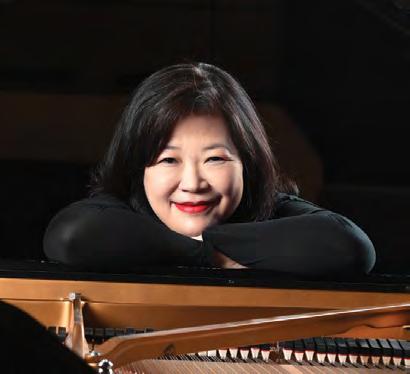
Angela Cheng, piano
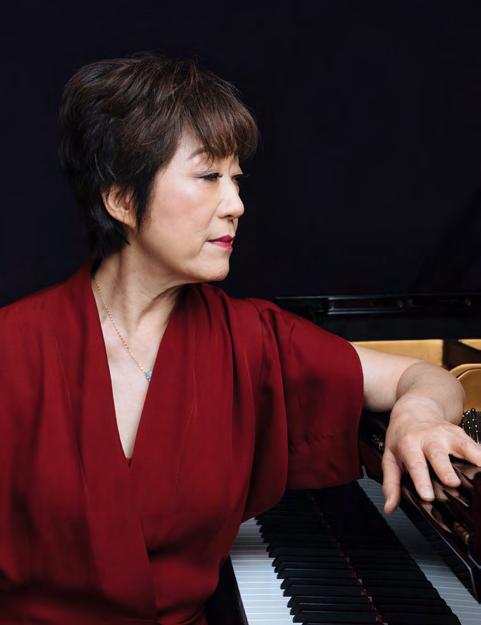
Consistently praised for her brilliant technique, tonal beauty and superb musicianship, Canadian pianist Angela Cheng is one of her country’s national treasures. She has appeared as soloist with more than 100 orchestras, including the Israel Philharmonic, Boston Pops, Buffalo Philharmonic, and the symphonies of Montreal, Toronto, Vancouver, St. Louis, Houston, San Diego, Indianapolis, Syracuse, Utah and Colorado. An avid recitalist, Ms. Cheng has performed solo and chamber recitals throughout North America, Asia, and Europe, including New York City (Avery Fisher Hall, Alice Tully Hall, and Walter Reade Theater at Lincoln Center, Weill Recital Hall at Carnegie Hall, and the 92nd Street Y), Wigmore Hall in London, the Kennedy Center in Washington, D.C., Disney Hall in Los Angeles, Mozarteum in Salzburg, Musikverein in Vienna, the Concertgebouw in Amsterdam, the Teatro Colon in Buenos Aires, the Mariinsky Concert Hall in St. Petersburg and the Sydney Opera House, as well as in Shanghai, Beijing, Hong Kong, Montreal, Toronto, Taiwan, Italy and Australia. In 2012 she made her Carnegie Hall debut as soloist with the Edmonton Symphony.
Ms. Cheng has collaborated with numerous chamber ensembles including the Takács, Colorado, and Vogler quartets. Festival appearances have included Verbier, Edinburgh, Miyazaki, St. Petersburg/Stars of the White Nights, Enescu/Romania, Banff, Bravo! Vail, Chautauqua, Colorado, Great Lakes Chamber Music Festival, La Jolla’s SummerFest, Ravinia, Vancouver, the Festival International de Lanaudière in Quebec, Toronto Summer Music Festival, the Cartegena International Music Festival in Colombia and the Schleswig-Holstein Festival in Germany.
Ms. Cheng has been invited to give masterclasses throughout North America and in Asia, including the Royal Conservatory of Music in Toronto, Hong Kong Academy for the Performing Arts, Taichung University in Taiwan, Indiana University, University of Michigan and the University of Texas. She has also served on the jury of many competitions, including the Seoul International Piano Competition, Cleveland International Piano Competition, Esther Honens International Piano Competition, Montreal International Piano Competition, William Kapell International Piano Competition, Gina Bachauer International Piano Competition, Hilton Head International Piano Competition, New Orleans International Piano Competition, Young Concert Artists Competition, and the American Pianists Association Competition. In 2022, she served on the Selection Jury of the Sixteenth Van Cliburn International Piano Competition, and was a webcast co-host for the live competition.
Ms. Cheng’s many honors include a Gold Medal at the Arthur Rubinstein International Piano Masters Competition, the distinction of being the first Canadian to win the prestigious Montreal International Piano Competition, additional first prizes at the William Kapell International Piano Competition and D’Angelo Young Artist Competition, the Medal of Excellence from the Salzburg Mozarteum for her outstanding interpretations of Mozart, and a Career Development Grant from the Canada Council. In 2010, she was awarded an Honorary Doctor of Laws from the University of Alberta, Edmonton, and cited for her life as a “concert pianist and ambassador for classical music.”
A native of Hong Kong, Ms. Cheng studied extensively with Menahem Pressler at Indiana University and with Sascha Gorodnitzki at the Juilliard School. She is currently on the artist faculty of the Oberlin Conservatory of Music, where she is the Robert W. Wheeler Professor of Piano, and the recipient of the 2011-12 Excellence in Teaching Award.
Saturday, July 18, 2026
4:00 PM
MOZART
BEETHOVEN
CHAMINADE
CHOPIN
Sonata in C Major, K. 330
Allegro moderato
Andante cantabile
Allegretto
Sonata No. 31 in A-flat Major, op. 110
Moderato cantabile molto espressivo
Allegro molto
Adagio ma non troppo
INTERMISSION
Theme Varie, op. 89
Polonaise-Fantasie in A-flat Major, op. 61
Ballade No. 1 in G Minor, op. 23
Ms. Cheng’s performance was generously underwritten by Phillip Fuselier.
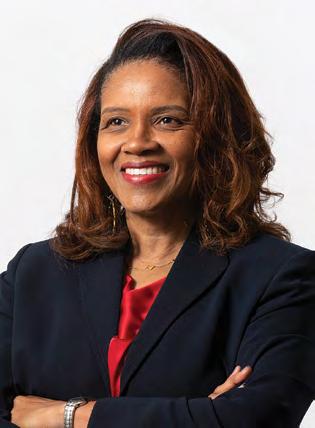
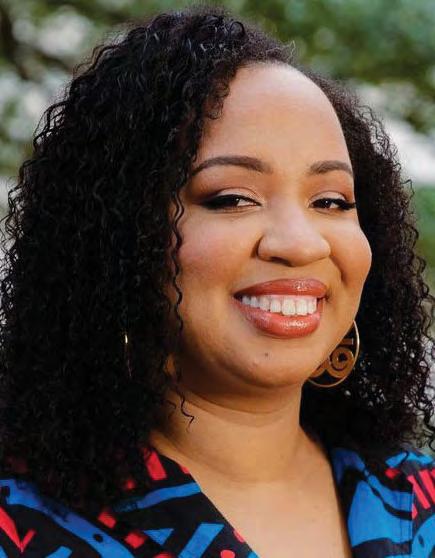
Courtney Bryan, a native of New Orleans, Louisiana, is “a pianist and composer of panoramic interests” (New York Times). She is a 2023 MacArthur Fellow, and currently serves as composer-in-residence with Opera Philadelphia.
This season sees two world premieres: Dreaming (Freedom Sounds), performed by the International Contemporary Ensemble at New York’s Kaufman Music Center, and a new orchestral piece for Jacksonville Symphony. Last season, Bryan performed as soloist in the world premiere of her piano concerto House of Pianos, which debuted in a chamber ensemble version with the LA Phil New Music Group led by Paolo Bortolameolli, and in a full orchestra version with the Cincinnati Symphony Orchestra, conducted by Louis Langrée. Bryan’s Gathering Song, with libretto by Tazewell Thompson, also received its debut with the New York Philharmonic and bassbaritone Ryan Speedo Green, conducted by Leslie B. Dunner.
Other recent works include Blessed, commissioned by Opera Philadelphia and produced as a film that weaves together musical recordings and footage from New Orleans, New York, and Philadelphia; Syzygy for violin and orchestra, premiered by Jennifer Koh and the Chicago Sinfonietta; and Yet Unheard for soprano, chorus, and orchestra, commissioned by The Dream Unfinished and premiered with Helga Davis.
Bryan’s work has been presented in a wide range of venues, including Carnegie Hall, Lincoln Center, Miller Theatre, The Metropolitan Museum of Art, National Gallery of Art, Blue Note Jazz Club, Walt Disney Concert Hall, Isabella Stewart Gardner Museum, and the New Orleans Jazz and Heritage Festival.
Her compositions have been performed by the Louisiana Philharmonic Orchestra (Creative Partner, 2020-2023), Jacksonville Symphony (Mary Carr Patton Composer-InResidence, 2018–2020), London Sinfonietta, Orchestra of St. Luke’s, Chicago Sinfonietta, Quince Ensemble as part of the Chicago Symphony Orchestra MusicNOW series,
American Composers Orchestra, Colorado Springs Philharmonic, La Jolla Symphony and Chorus, New York Jazzharmonic, Spektral String Quartet, and Talea Ensemble.
Bryan’s interest across multiple artforms have led to collaborations with visual artists Tiona Nekkia McClodden, Steffani Jemison, Abigail DeVille, Kara Lynch, Lake Simons, Amy Bryan, and Alma Bryan Powell; director Patricia McGregor; writers Sharan Strange, Matthew D. Morrison, and Ashon Crawley; and musicians Branford Marsalis, Jennifer Koh, Ryan Speedo Green, Helga Davis, Brandee Younger, and Damian Norfleet.
Bryan holds a doctorate in composition from Columbia University, where she studied with George Lewis. She also holds degrees from Oberlin Conservatory (BM) and Rutgers University (MM). Bryan completed postdoctoral studies in the Department of African American Studies at Princeton University. She is currently the Albert and Linda Mintz Professor of Music at Newcomb College in the School of Liberal Arts at Tulane University. Recent accolades include the Herb Alpert Award in the Arts (2018), Samuel Barber Rome Prize in Music Composition (2019–2020), United States Artists Fellowship (2020), and the Civitella Ranieri Foundation Fellowship (2020–2021).
Bryan has given music workshops at various universities including Princeton University, Columbia University, Harvard University, Berklee College of Music, The California Institute of the Arts, The University of South Carolina, Brown University, University of California, San Diego, DePaul University, and Xavier University of Louisiana. She has participated in and helped design programs that guide young people to improvise, compose, and work with music technology, including programs through Columbia University, Jacksonville Symphony, and Carnegie Hall.
Bryan has released two recordings, Quest for Freedom (2007) and This Little Light of Mine (2010); a third recording is in progress, Sounds of Freedom
Courtney Bryan
COMMISSIONED WORK
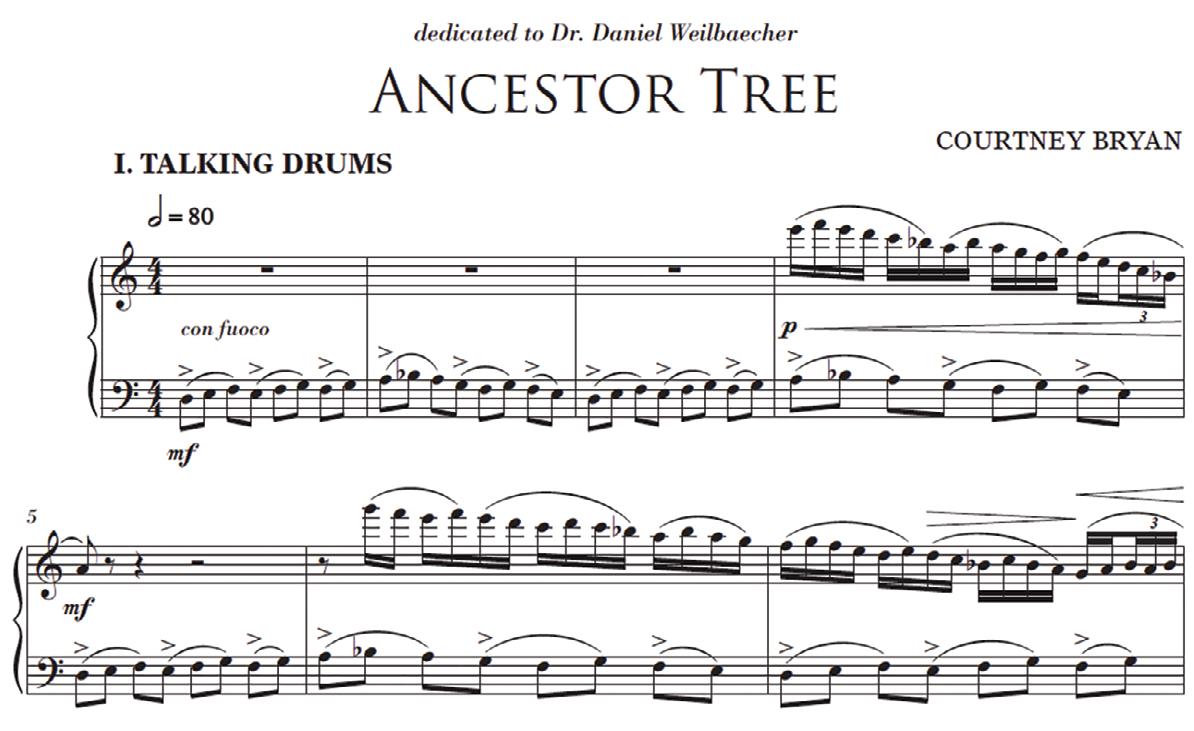
Ancestor Tree by Courtney Bryan
World Premiere performed in Semifinal Rounds I and II, July 19-23, 2026
Ancestor Tree
I. Talking Drums
II. Listening Spirits
III. Dancing Circles
PROGRAM NOTE
When I received a commission from the Musical Arts Society of New Orleans to write a solo piano work for the 30th New Orleans International Piano Competition, I was honored to take on the challenge of writing a piece for a competition that has an important place in my own musical development. When I was in high school, my piano teacher Dr. Daniel Weilbaecher encouraged me to sign up for the New Orleans Piano Institute, where I studied with master pianists and learned in an intensive yet fun environment. Part of the institute involved attending the New Orleans International Piano Competition and hearing advanced pianists from around the world and learning more about the repertoire and process of being a concert pianist. It was an inspiring program to attend, and this year I have written a piece in celebration of the city of New Orleans and the piano competition.
Ancestor Tree is written in honor of the large live oak tree in New Orleans’ Congo Square. Revered as the Ancestor (Eggun) Tree, the composition imagines what that tree has witnessed over the years. The concept for the piece is loosely inspired by Louis Moreau Gottschalk’s classic piano piece, Bamboula op. 2, in his inclusion of existing creole melodies and his exploration of the rhythms associated with the Bamboula drum and dance. Ancestor Tree is a collection of three miniatures: I. Talking Drums, II. Listening Spirits, and III. Dancing Circles, each exploring the Bamboula (tresillo) rhythm in various ways, and is built upon an original melody that references the style of a creole melody from an earlier time.
The score is dedicated to Dr. Daniel Weilbaecher, who trained me on piano and introduced me to the music of Louis Moreau Gottschalk and the Musical Arts Society of New Orleans. Ancestor Tree was commissioned for the 30th New Orleans International Piano Competition with support from the Edgar “Dooky”Jr. and Leah Chase Family Foundation in loving memory of Edgar “Dooky” Chase III.
Special thanks to Cara McCool Woolf and Musical Arts Society of New Orleans.
This work was commissioned for the 30th New Orleans International Piano Competition with support from the Edgar “Dooky” Jr. and Leah Chase Family Foundation in loving memory of Edgar “Dooky” Chase III.
CHAIRMAN OF THE JURY
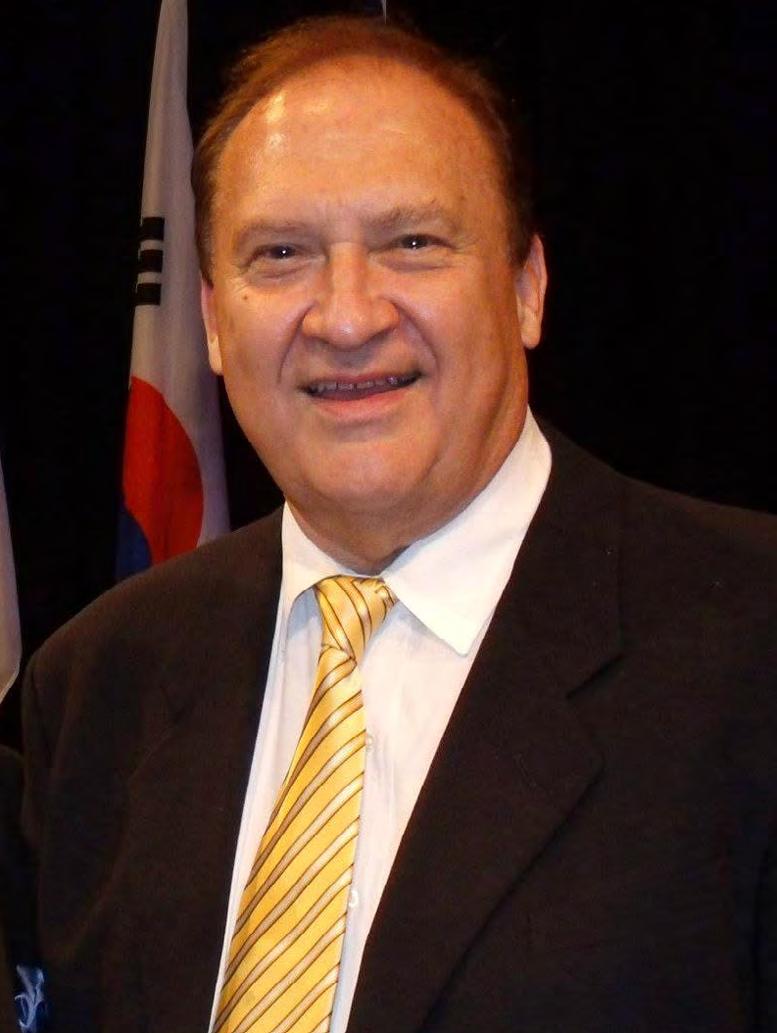
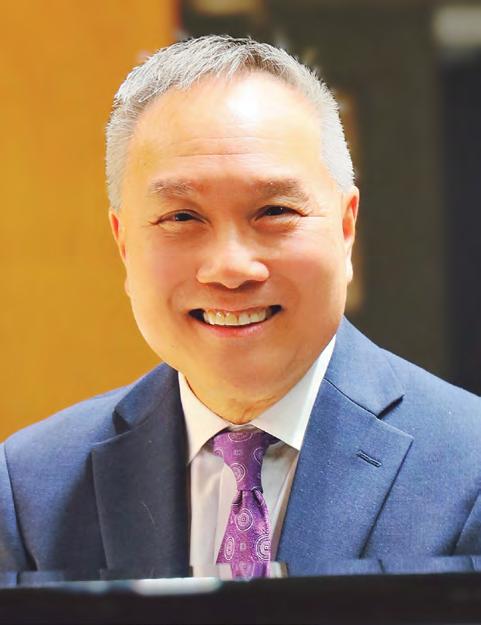
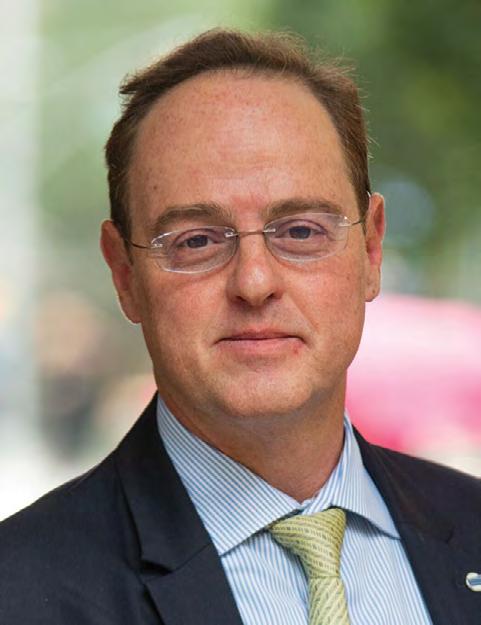
Noted for his “elegant poetry and virtuosic fire,” Alan Chow has won First Prize in the Concert Artists Guild International Competition, the UCLA International Piano Competition, and the Palm Beach Invitational International Piano Competition. Winner of the Silver Medal and Audience Favorite Prize at the Gina Bachauer International Piano Competition, he was also a prizewinner in the William Kapell International Piano Competition.
A Steinway artist, Mr. Chow has performed in recital and in concert with orchestras from coast to coast in almost all of the 50 states. His recitals have brought him to the major music centers including New York (Lincoln Center, Merkin Hall, Steinway Hall), Boston, Los Angeles, Chicago (Symphony Center and Ravinia), Washington, D.C., Cleveland, Seattle, Atlanta, New Orleans, and Miami. Concerto performances include appearances with the National Symphony, Utah Symphony, Oakland Symphony, Tulsa Philharmonic, Kansas City Symphony, and Omaha Symphony. Mr. Chow regularly tours Asia with performances in China, Japan, Hong Kong, Taiwan, and Singapore, including performances with the Hong Kong Philharmonic, Shanghai Philharmonic and the Pan-Asia Symphony. An avid chamber musician, he has collaborated with the American, Pacifica, Miami, and Escher String Quartets and has been guest artist at the Grand Canyon Chamber Music Festival, Bowdoin Music Festival, Juneau Jazz and Classics, San Juan Islands Chamber Music Festival, Kent Blossom Music Festival, Texas Music Festival, Music Festival of Arkansas and Music Mountain. In addition, he appears in joint recital engagements in the Cheng-Chow Trio with pianists Angela Cheng and Alvin Chow.
MASTER CLASS
Monday, July 20
3:30 PM
Also in demand for his teaching, Mr. Chow has given master classes throughout North America and in Asia and Europe at conservatories, universities and summer festivals including Indiana University, Manhattan School of Music, New Orleans International Piano Festival, Gina Bachauer International Piano Festival, Chicago International Music Festival, Bay PianoFest, Leon Fleisher Academy, John Perry Academy, Las Vegas Piano Festival, Classical Music Festival (Austria), Tunghai International Piano Festival (Taiwan), MK Piano Academy (Korea), Yunnan International Piano Festival (China) and in Singapore. Recently a guest professor at the Central Conservatory in Beijing and honored visiting professor at the Shenyang Conservatory, he is currently a Visiting Professor of Piano at the Menuhin School in Qingdao. He has also presented recitals, master classes, and lectures in China for the conservatories in Shanghai, Chengdu, Xian, Wuhan and Xinghai.
Mr. Chow studied with Nelita True at the University of Maryland where he graduated CoValedictorian with his twin brother Alvin, and received the Charles Manning Prize in the Creative and Performing Arts given to the outstanding graduate; with Sascha Gorodnitzki at The Juilliard School where he was awarded the Victor Herbert Prize in Piano; and with Menahem Pressler at Indiana University where he was the recipient of the Joseph Battista Memorial Scholarship. He also studied at the Mozarteum Sommerakademie with Carlo Zecchi.
Mr. Chow has previously served on the piano faculty of the University of Arkansas and Northwestern University. He is currently Professor of Piano at the Eastman School of Music and the 2026 recipient of their Edward Peck Curtis Prize for Excellence in Undergraduate Teaching.
Alan Chow CHAIRMAN Of THE JURY
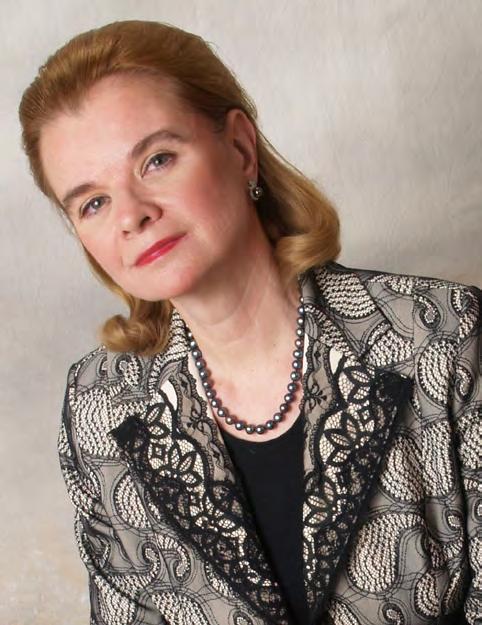
Recipient of an Avery Fisher Grant and the Andrew Wolf Chamber Music Prize, Philadelphia-born Lydia Artymiw has performed with over one hundred orchestras world-wide including the Boston Symphony, Cleveland Orchestra, New York Philharmonic, Philadelphia Orchestra, Minnesota Orchestra, and San Francisco, Pittsburgh, Seattle, St. Louis, National, Detroit, Los Angeles, Cincinnati, St. Luke’s, and the St. Paul Chamber Orchestra.
Solo recital tours have taken her to all major American cities and to European music centers, and throughout the Far East. Critics have acclaimed her seven solo recordings for Chandos, as well as for Bridge, Centaur, and Naxos. Her debut Chandos “Variations” CD won Gramophone’s “Best of the Year” award. Her festival appearances include Aspen, Bay Chamber, Bravo! Vail, Caramoor, Chamber Music Northwest, Chautauqua, Grand Canyon, Hollywood Bowl, Marlboro, Montréal, Mostly Mozart, Seattle, and Tucson. Artymiw’s Bridge CD of Mendelssohn’s “Complete Cello and Piano Music” with cellist Marcy Rosen was nominated for a 2019 Grammy award.
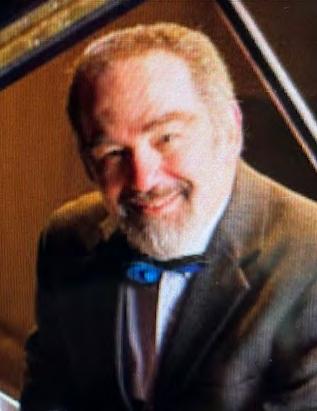
Dr. Jack Winerock, Professor of Piano (Emeritus) at the University of Kansas, received undergraduate and master’s degrees at the Juilliard School of Music and a doctorate from the University of Michigan. He has played both at Carnegie Recital Hall and Lincoln Center’s Alice Tully Hall in New York. He has toured Europe, Asia, and South America as well as the United States. In 1986, he gave the first performance of Gershwin’s Rhapsody in Blue in the People’s Republic of China, and in 1990, he was appointed the first U.S. Visiting Professor at the Chopin Academy in Warsaw.
Artymiw has collaborated with such celebrated artists as Yo-Yo Ma, Arnold Steinhardt, Kim Kashkashian, Benita Valente, and the Guarneri, Tokyo, American, Borromeo, Daedalus, Miami, Orion, and Shanghai Quartets. A recipient of top prizes in the 1976 Leventritt and the 1978 Leeds International Competitions, she graduated from Philadelphia’s University of the Arts and studied with Gary Graffman for twelve years.
Artymiw has been a juror for international piano competitions including the 2015 Cliburn Junior, the 2017 Lang Lang-Fujian, the 2019 Beijing First China International, the 2022 Charles Wadsworth, the 2024 Montréal International, and the 2024 Gina Bachauer. She has also been a juror for 22 Juilliard concerto competitions and guest taught at Juilliard from 2014-2019.
Artymiw is Emerita Distinguished McKnight Professor of Piano at the University of Minnesota in Minneapolis where she taught from 1989-2020. For more information, please visit her website at lydiaartymiw.com.
Winerock has achieved national and international acclaim as a performer, teacher, and juror. His students have won prizes in national and international competitions, including MTNA, National Federation of Music Clubs, Kosciuszko Foundation, and Hilton Head, Cleveland, Rubinstein, and Bachauer International Competitions. His students hold important faculty positions in the United States as well as in conservatories in Europe and Asia.
Lydia Artymiw
Jack Winerock
COMPETITION JURORS
Alvin Chow
MASTER CLASS
Wednesday, July 22
11:00 AM
Angela Cheng
please see page 20
MASTER CLASS
Tuesday, July 21
3:30 PM
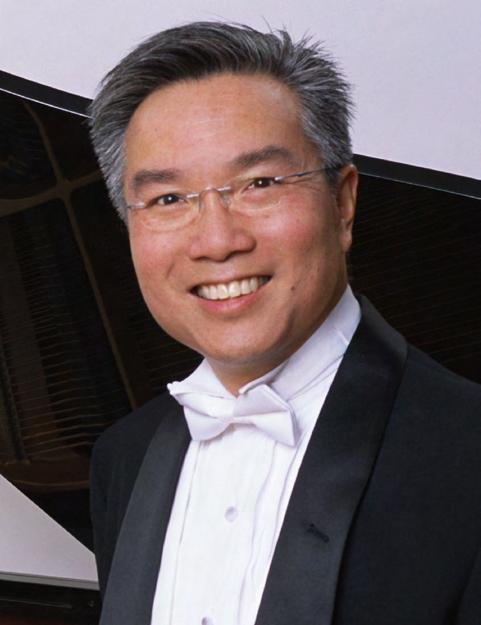
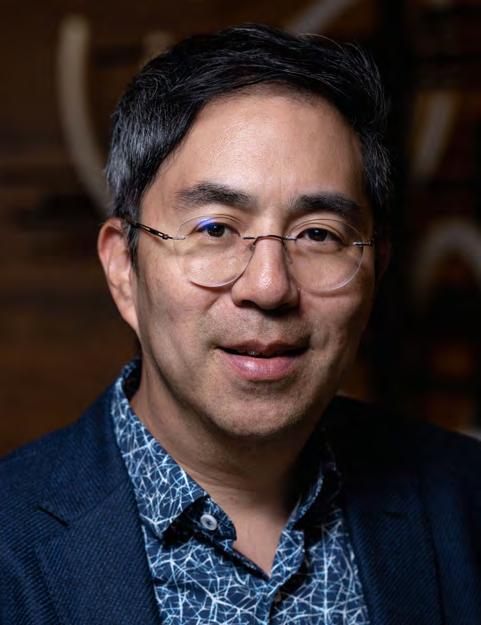
Alvin Chow has appeared throughout North America and Asia as orchestral soloist and recitalist. In addition, he has performed extensively in duo-piano recitals with his wife, Angela Cheng, and his twin brother, Alan. A native of Miami, Florida, he graduated summa cum laude and Co-Valedictorian (with his brother) at the University of Maryland, where he was a student of Nelita True. Mr. Chow received the Victor Herbert Prize in Piano upon graduation from the Juilliard School, where he studied with Sascha Gorodnitzki, and held the Joseph Battista Memorial Scholarship at Indiana University as a student of Menahem Pressler.
Mr. Chow has won top prizes in numerous competitions such as the National Symphony Young Soloists Competition, Civic Orchestra of Chicago Young Soloists Competition, William Kapell International Piano Competition, and the New York Piano Teachers Congress International Piano Competition. He has been presented as recitalist in such cities as Hong Kong, Shanghai, Vienna, Montreal, Toronto, New York, and Los Angeles, and has appeared as soloist with the National Symphony Orchestra, Civic Orchestra of Chicago, Pan-Asia Symphony in Hong Kong, Shanghai Philharmonic, and Mozarteum Orchestra in Salzburg, among others. He has also been Convention Artist for the state MTNA conferences in California, Colorado, Florida, Hawaii, Michigan, Minnesota, Mississippi, Missouri, Montana, New Jersey, Ohio, and Tennessee. With Angela Cheng, he performed as Conference Artist for the 2019 National Conference on Keyboard Pedagogy, and in 2023 they presented the Advanced Piano Master Class at the National Conference of MTNA. In 2011, a CD of music for four and six hands, recorded with Angela Cheng and Alan Chow, was released by Arioso Classics. It features music by Brahms, Dvorák, Ravel, Milhaud, Corigliano, and Copland.
Mr. Chow has presented numerous master classes and lectures at music institutions throughout the United States and abroad, including the Royal Conservatory of Music in Toronto, Hong Kong Academy for Performing Arts, Taichung University in Taiwan, Colburn School in Los Angeles, Eastman School of Music, University of Michigan, and Indiana University. He has taught and performed at numerous summer festivals, including the Shanghai Piano Festival, Banff Piano Master Classes, Rebecca Penneys Piano Festival, North Coast Piano Festival, Southeastern Piano Festival, New Orleans International Piano Festival, Adamant Music School, Lake Como Summer Piano School in Italy, and the Classical Music Festival in Eisenstadt, Austria.
Mr. Chow has been a member of numerous competition juries, most recently serving on the jury of the 2026 Gina Bachauer International Junior and Young Artists Competitions, Chair of the Jury at the 2023 Hilton Head International Junior Piano Competition and on the Screening Jury of the 2023 Van Cliburn International Junior Piano Competition. Others include the New Orleans International Piano Competition, the Iowa International Piano Competition, the Jacksonville International Piano Competition, MTNA Student Competitions, the International Piano e-Competition, and the Cooper International Piano Competition at Oberlin.
Mr. Chow was the first Fulbright Visiting Artist in Piano at the University of Arkansas, and also taught at the University of Colorado. Mr. Chow has been a member of the artist faculty at the Oberlin Conservatory of Music since 1999, where he currently serves as Chair of the Piano Department. Mr. Chow was named the Ruth Strickland Gardner Professor of Music from 2011-14, and also received Oberlin’s Excellence in Teaching Award in 2016.
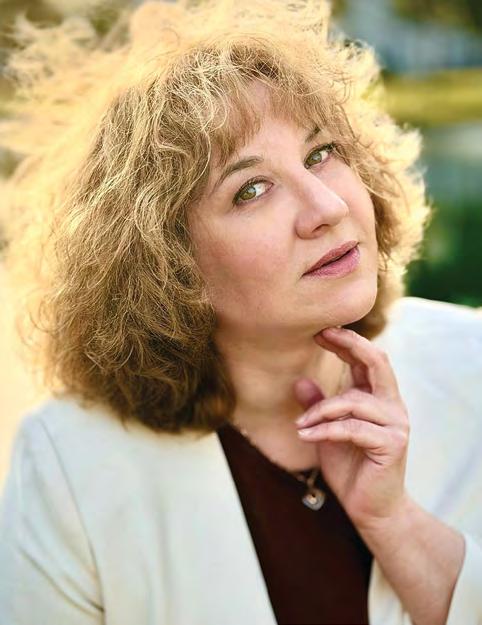
In September 2009 Sofya Gulyak was awarded the 1st prize and the Princess Mary Gold Medal at the Sixteenth Leeds International Piano Competition – the first woman in the history of the competition to achieve this distinction. Since then she has appeared all over the world to great acclaim. Her recital programs are frequently reviewed in superlatives, and her concerto appearances with major orchestras are noted in glowing terms by the world’s music press. Sofya has been praised for her “tremendous precision and coloration...exquisite soft playing ...with delicacy” and described as a “Rach star”(Washington Post).
Sofya Gulyak’s resume includes prizes from many prestigious piano competitions: she is a 1st prize winner of William Kapell International Piano Competition in the USA, Maj Lind Helsinki International Piano Competition, Tivoli Piano Competition in Copenhagen, Isang Yun International Piano Competition in South Korea, San Marino Piano Competition, winner of Busoni Competition in Italy and prize winner of Marguerite Long Piano Competition in Paris. Recitals and concert appearances have been numerous, with Sofya Gulyak having performed all over the globe in such venues as La Scala Theatre and Sala Verdi in Milan, Herculessaal in Munich, Salle Cortot, Salle Gaveau and Salle Pleyel in Paris, Wigmore Hall and Cadogan Hall in London, Grand Hall of Moscow Conservatory, Konzerthaus in Berlin, Gewandhaus in Leipzig, Kennedy Center in Washington, Salle Bourgie in Montreal, Palais de la Musique in Strasbourg, Hong Kong City Hall, Shanghai Grand Theatre, Tokyo Opera City Hall, Osaka Symphony Hall, Musashino Cultural Centre in Tokyo, National Hungarian Opera in Budapest, National Forum of Music in Wroclaw, Finlandia Hall in Helsinki, Bridgewater Hall in Manchester, Teatro Municipal and Cidade des Artes in Rio de Janeiro, Auditorium Manzoni in Bologna, Salle Molière in Lyon, Cankarjev Dom in Ljubljana, Walt Disney Hall in Los Angeles, King Theatre in Rabat, Kursaal in Bern, Tivoli Concert Hall in Copenhagen etc..
Sofya Gulyak appeared as a soloist with the London Philharmonic Orchestra, Finnish Radio Symphony, Saint-Petersburg Philharmonic, Rio de Janeiro Symphony, Royal Liverpool Philharmonic Orchestra, Hallé Orchestra, BBC Scottish Symphony Orchestra, Indianapolis Symphony, Orchestra of Opera North, Orchestra dell’ Arena di Verona, Orchestra Filarmonica di Bologna, Budapest Philharmonic, Enescu Philharmonic, Stavanger Symphony, Deutsche Staatsphilharmonie Rheinland-Pfalz, Slovak Radio Symphony, Helsinki Philharmonic, Copenhagen Symphony, Ulster Symphony, Orchestre National de France, Shanghai Philharmonic, NFM Wroclaw Philharmonic, Orchestra Sinfonica Siciliana, Oulu Philharmonic, Leipzig Philharmonic, Pensacola Symphony, Tatarstan Symphony, Philippines Philharmonic, Morocco Philharmonic and others. She collaborated with conductors such as Vladimir Ashkenazy, Sakari Oramo, Mark Elder, David Hill, Donald Runnicle, Vasily Petrenko, Carlo Rizzi, Alexander Lazarev, Alan Buribayev, Eiving Gullberg Jensen, Karl-Heinz Steffens, Theodor Guschlbauer, Giancarlo Guerrero, Rory McDonald, Danail Rachev,
Fabio Mastrangelo, Michele Mariotti, Marat Bisengaliev, Fuat Mansurov, Alexander Sladkovsky, Daria Stasevska, Eiji Oue, Mario Kosik, Jesus Medina, Christian Zimmermann, Peter Rubardt and others.
The festivals in which Sofya Gulyak participated include Klavier Ruhr Festival, Chopin Festival in Duszniki-Zdroj, Liszt festival in Austria, Festival de Sceaux, International Keyboard Festival in New York, International Strasbourg Festival, Busoni Festival, Harrogate Festival, “Joy of Music festival” in Hong Kong, Kraków Piano Festival, New Zealand Piano Festival, Ravello Festival, Festival Chopin in Paris, Shanghai International Piano Festival, Central Conservatory Piano festival and many others.
Sofya Gulyak recorded for Champs Hill Records and Piano Classics labels. Her recordings received 5 stars review in Diapason magazine (“What a pleasure to hear the piano blossoming and projecting in the most vivid of ways when played by Sofya Gulyak. The singing sound alongside dazzling and powerful execution distinguishes an outstanding natural pianist”), glowing reviews from “Gramophone” (“This is a stunning debut album…”) and “Guardian” magazines (“Sofya Gulyak is a fearless pianist, never afraid to scale the most technically demanding heights of the repertoire and equally proud to wear her heart on her sleeve”), American Record Guide (“The Handel Variations is among the top contenders on record. She keeps you on the edge of your seat, as the music presses ever forward. Sometimes I was reminded of the young Argerich”) , “Fanfare” magazine (“Her musicality is beautifully attuned to the spirit of Brahms…I must praise Kazan-born Russian pianist Sofya Gulyak, whose impressive reading places a stronger emphasis than Perahia’s on the continuity of the variations…She’s a natural Brahmsian whatever his moods.”) … CD with the Chaconnes for piano was released on Champs Hill records (“…A fascinating collection, superbly realised and beautifully recorded…”Artdesk; “Gulyak is a musician of exceptional depth and profundity, and a pianist with seemingly unlimited technical resources… I can’t wait to hear more of her… Of particular note are her beautiful versions of the Nielsen, the Casella, a ferocious Busoni Toccata, and a sparkling account of the Handel Chaconne.”-Fanfare Magazine)
In 2025-26 Sofya makes her debut with Indianapolis Symphony, California Symphony and Alexandria Symphony orchestras, Xiamen Philharmonic in China, Oviedo Symphony in Spain and London Sinfonia in the UK. She also returns for solo recitals at Salle Bourgie in Montreal for “Grand Interpreters” series and Vancouver Chopin Society in Canada, Liszt Festival in Austria(with live broadcast on ORF radio in Vienna), and gives recitals in China, United Kingdom, Germany, United States, Canada, Italy etc..
As chamber musician Sofya Gulyak collaborated with Wihan, Chilingirian, Arianna quartets, Quartetto di Venezia, soloists of English Chamber orchestra, violinists Olivier Charlie and Marianne Piketty, viola player Tatjana Masurenko, baritone Loa Falkman, cellists Quirine Viersen and Yuki Ito (with whom she recorded a CD of Rachmaninov’s music for Champs Hill Records).
Sofya Gulyak is a native of Kazan (Russia) where she studied in a Special Music College under
Sofya Gulyak
MASTER CLASS
Tuesday, July 21
11:00 AM
Nailya Khakimova, and then in Kazan State Conservatoire under Professor Elfiya Burnasheva. After that she continued her studies at the Piano Academy “Incontri col Maestro” (Imola, Italy) with Boris Petrushansky and at the Royal College of Music in London with Vanessa Latarche. Sofya Gulyak served on the jury of numerous international piano competitions, such as Beethoven competition in Vienna, Bach Competition in Leipzig, Takamatsu in Japan, Pozzoli in Italy, Seoul Music and Isang Yun comeptitions in Korea, ASU Bosendorfer in USA, Singapore etc…. She also was invited to teach master classes in China (Central, Shanghai, Xi’an, Zhenjiang, Shenyang conservatories) USA (Yale, Peabody, Rebecca Penny festival, TCU) , Canada ( Royal Conservatory, University of Toronto), Poland (Chopin University in Warsaw), Italy, Ireland, Austria, United Kingdom, Australia, New Zealand, Philippines, Hong Kong, Mexico, Germany.
Over decade she has been a professor of piano at the Royal College of Music in London. Since 2023 she is a professor of piano at Jacobs school of Music at Indiana University. Her playing has been broadcast on radio and TV in Russia, Poland, France, Italy, Germany, Austria, United States, Finland, Denmark, Serbia, New Zealand, Brazil, Mexico, United Kingdom (BBC3 and BBC4) and other countries.
www.sofyagulyak.com
COMPETITION JURORS
MASTER CLASS
Thursday, July 23
3:30 PM
Pianist Christopher Harding maintains an international presence as a noted teacher and performer. He has given solo, concerto, and chamber music performances in venues as far flung as the Kennedy Center and Phillips Collection in Washington, D.C., the IBK and Recital Halls of the Seoul Art Center, Suntory Hall in Tokyo, the National Theater Concert Hall in Taipei, the Jack Singer Concert Hall in Calgary, and halls and festival appearances in Newfoundland, Israel, Italy, Romania, Russia, and China. His concerto performances have included concerts with the National Symphony and the Saint Louis Symphony Orchestras, the San Angelo and Santa Barbara Symphonies, and the Tokyo City Philharmonic, working with such conductors as Andrew Sewell, Eric Zhou, Taijiro Iimori, Gisele Ben-Dor, Fabio Machetti, Randall Craig Fleisher, John DeMain, Ron Spiegelman, Daniel Alcott, and Darryl One, among others.
Mr. Harding’s chamber music and duo collaborations have included internationally renowned artists such as clarinetist Karl Leister, flautist Andras Adorjan, and members of the St. Lawrence and Ying String Quartets, in addition to frequent projects with his distinguished faculty colleagues at the University of Michigan. He has recorded solo and chamber music CDs for the Equilibrium and Brevard Classics labels. He has additionally edited and published critical editions and recordings of works by Claude Debussy (Children’s Corner, Suite Bergamasque, the Arabesques and shorter works) and Wolfgang Amadeus Mozart (Viennese Sonatinas) for the Schirmer Performance Editions published by Hal Leonard.
Professor Harding has presented master classes and lecture recitals in universities across the United States and Asia, as well as in Israel and Canada. He is a Permanent Guest Professor at the Sichuan Conservatory in Chengdu, China, where he holds the privilege of presenting yearly masterclasses; he has additionally served as a Fulbright Senior Specialist at both the Sichuan Conservatory (2008) and Seoul National University (2011). While teaching at SNU, he simultaneously held a Special Chair in Piano at Ewha Womans’ University. He has taught masterclasses and performed lecture recitals at all the major universities and schools of music in South Korea.
In addition to serving as Chair of Piano and teaching undergraduate and graduate piano performance and chamber music at the University of Michigan School of Music, Theatre & Dance, Mr. Harding also serves on the faculty of the Sicily International Piano Festival and is a frequent guest artist and teacher at the Rebecca Penneys Piano Festival in Tampa, Florida.
Harding was born of American parents in Munich, Germany and raised in Northern Virginia. His collegiate studies were with Menahem Pressler and Nelita True. Prior to college, he worked for 10 years with Milton Kidd at the American University Department of Performing Arts Preparatory Division, where he was trained in the traditions of Tobias Matthay. He has taken 25 first prizes in national and international competitions and in 1999 was awarded the special “Mozart Prize” at the Cleveland International Piano Competition, given for the best performance of a composition by Mozart.
Christopher Harding
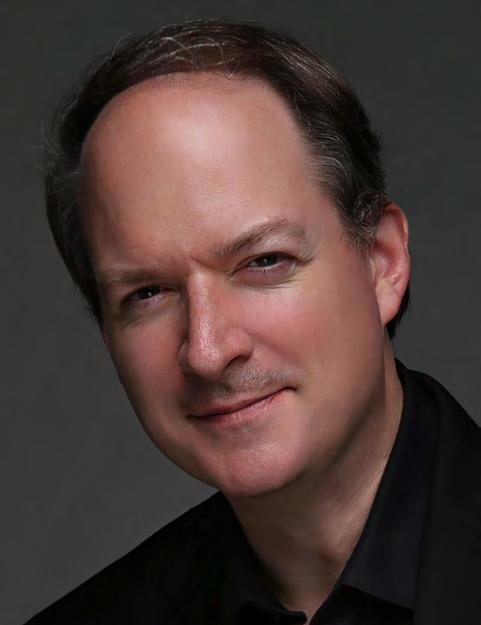
Praised by The New York Times for his “kaleidoscopic” playing, pianist Igal Kesselman is recognized as one of today’s most forwardthinking performers and music educators. Following his American debut with the Washington Chamber Symphony at the Kennedy Center, he has performed widely across the United States in venues including Alice Tully Hall, Symphony Space, and Merkin Concert Hall in New York City; the Corcoran Gallery of Art in Washington, D.C.; and the Kravis Center for the Performing Arts in West Palm Beach.
Dr. Kesselman was a top prizewinner of the Città di Marsala International Piano Competition in Italy and has appeared as a soloist with numerous orchestras, among them the Annapolis Symphony Orchestra and the Israeli Camerata. Recent highlights include teaching and performing engagements in Shanghai, masterclasses at the Liszt Academy in Budapest, and serving as an adjudicator for the Olga Kern International Piano Competition in New Mexico.
Additional notable performances include Mozart’s Double Concerto with pianist Orli Shaham and the Vancouver Symphony Orchestra USA; solo recitals for the subscription series of Tel Aviv University and Arizona State University; and collaborations with Rob Kapilow in the What Makes It Great series at Merkin Concert Hall. He has also given masterclasses at Oberlin Conservatory, the Colburn School, the Buchmann-Mehta School of Music at Tel Aviv University, the Boston University Tanglewood Institute, the Jerusalem Academy of Music and Dance, and Arizona State University.
Over the two decades of artistic and edu-
cational leadership at Kaufman Music Center, Dr. Kesselman has overseen significant growth across its education programs, including the Lucy Moses School and the Special Music School. These initiatives include the founding of the Special Music School High School and the development of its college-level curriculum, a near doubling of enrollment at the Lucy Moses School, and the creation of impactful partnerships and scholarshiped outreach programs.
A dedicated champion of young artists, Dr. Kesselman has founded numerous initiatives to expand performance opportunities for emerging musicians. These include the Kaufman Music Center International Youth Piano Competition, SummerFest, the Art of Collaboration Workshop, and masterclasses with leading performers and pedagogues. He also curates the popular Tuesday Matinee series at Merkin Concert Hall.
Dr. Kesselman earned his Bachelor of Music degree cum laude from the S. Rubin Academy of Music in Tel Aviv and his Master of Music and Doctor of Musical Arts degrees from the Peabody Conservatory of Music in Baltimore. His principal teachers include Yoheved Kaplinsky, Emanuel Krasovsky, and Irina Zaritskaya. He is a frequent juror for major international competitions and auditions, including the New Orleans International Piano Competition, Concert Artists Guild, Astral Artists, and the Virginia Waring International Piano Competition. He serves on the piano faculty of Lucy Moses School and the Special Music School, New York City’s public school for musically gifted students.
Dr. Igal Kesselman is a Steinway Artist.
Igal Kesselman
COMPETITION JURORS
MASTER CLASS
Monday, July 20
11:00 AM
Accomplished pianist and teacher Yong Hi Moon made her solo debut with the Seoul Philharmonic at age 10 as winner of the National Korean Broadcasting Competition. Ms. Moon has won top prizes in the ElenaRombro Stepanow Competition in Vienna, the Viotti International Competition in Vercelli, Italy, the Vienna da Motta Competition in Lisbon, Portugal, and also received the Chopin Prize from the Geneva International Competition in Switzerland.
Ms. Moon performs extensively throughout Asia, Europe and the US as recitalist and soloist, having appeared with the Korean National Symphony and the Osaka, Seoul, and Tokyo Philharmonics.
To celebrate Mozart’s bicentennial year in 1991, she participated in a cycle of the composer’s complete piano concerti with the Bucheon Philharmonic Orchestra. In 1997, Ms. Moon undertook the complete solo piano works of Schubert, performing them in six recitals in both Korea and the US. The summer of 2000 marked her first extensive concert tour of Korea, which included solo recitals in five cities.
In addition, she performed with all the major orchestras in Korea and participates regularly in such summer festivals as Bowdoin International Music Festival and the Art of piano in Cincinnati among others.
Ms. Moon is in high demand as a guest master class teacher and adjudicator. In 1993, she released a popular teaching video in Korea entitled Artistic Piano Playing. In addition, she is a frequent visitor to Beijing where she
regularly gives master classes at the China Conservatory as well as the Middle School of the Central Conservatory.
She has served on the juries of the CCC Toronto International Piano Competition, Senigallia International Piano Competition in Italy, Gilmore International Piano Competition, Gina Bachauer International Competition, the Cleveland International Competition and the Virginia Waring International as well as numerous MTNA competitions throughout the US. She has also served as a screening judge in the William Kapell and the Hilton Head International Competition. In March of 2014, she chaired the jury at Seoul International Piano Competition.
Ms. Moon was a professor of piano at Michigan State University School of Music for fifteen years, and from 2002 until 2024 when she retired, she was a professor of piano at Peabody Institute of Johns Hopkins University and from 2017 to 2020, she served as the chair of the piano department.
She was a long time faculty at Bowdoin Summer Festival in Maine and also taught at Tianjin-Juilliard Summer Piano Festival in China.
Ms. Moon studied at the Vienna Academy, graduating with the highest honors. She continued her studies in London before pursuing an Artist Diploma at Indiana University in Bloomington. Her major teachers include Dieter Weber, Maria Curcio, György Sebok, Leon Fleisher, Wilhelm Kempff and Fou T’song, who have always been inspirations in her work.
Yong Hi Moon
Praised by audiences and critics alike for his fresh interpretations and dramatic presentation style, Yoshikazu Nagai has performed as soloist and chamber musician throughout Asia, Europe and America in such venues as Beijing’s National Centre for the Performing Arts, Shanghai Concert Hall in China, National Concert Hall and Recital Hall in Taiwan, Eckhardt-Gramatté Hall in Canada, Carnegie Recital Hall and Merkin Concert Hall in New York, Kennedy Center’s Terrace Theatre, The National Gallery and Phillips Collection in Washington D.C., and Seattle’s Benaroya Hall. His schedule in recent seasons includes recitals in Naples, Seoul, Guangzhou, Hong Kong, Shanghai, Singapore, Beijing, Cincinnati, Chicago, San Francisco, and in collaborations with the Ives Quartet, violinists Robert Mann, Anthony Marwood and with orchestras across the country.
Mr. Nagai has appeared at many international music festivals, and his live performances have been broadcast on National Public Radio’s “Performance Today”, RAI Italian National TV, Hong Kong National Radio RTHK4, and on public radio stations in San Francisco, Houston, Cleveland, and Salt Lake City. Winner of numerous international piano competitions, including first prize at the 2002 Washington International Piano Competition. Mr. Nagai is also a major prizewinner of the San Antonio, Missouri Southern, New Orleans, IBLA Grand Prize International Piano Competitions, and the Concert Artists Guild International Music Competition.
Born in Germany and raised in the United States, Mr. Nagai studied with John Perry at Rice University, Paul Schenly and Sergei Babayan at the Cleveland Institute of Music, where he was awarded the Malvina Podis Prize in Piano upon graduation, and Duane Hulbert at the University of Puget Sound with whom he recorded the Glasunov Fantasie for two Pianos, Op. 104.
He has been recognized by the National Foundation for Advancements in the Arts for excellence in teaching and his students are top prizewinners of national and international competitions including the Gina Bachauer, International Piano Competition of Lyon (France), Arturo Benedetti Michelangeli International Piano Competition, Lev Vlassenko Piano Competition, Kosciuszko Foundation
Chopin Piano Competition, Hilton Head, Cleveland International Piano Competition for Young Artists, Music Teacher’s National Association Piano Competition, New York International Piano Competition, Nina Wideman, International Russian Music, Lennox Young Artists, Bösendorfer and Yamaha USASU, Heida Hermanns, International E-Piano Competitions, Gilmore Young Artists Award, and Fischoff National Chamber Music Competition.
Mr. Nagai frequently gives master classes at universities and conservatories throughout the United States and Asia including recent classes at Yale University, Peabody Conservatory, Oberlin Conservatory, Eastman School of Music, and Northwestern University, Seoul National University, Korean National University of the Arts, Hanyang University, Yonsei University and Seoul Arts School in South Korea, Shanghai Conservatory, Beijing’s Central Conservatory, XinghaiConservatory, Shenzhen Arts School in China, Hong Kong Academy for the Performing Arts, National Taiwan Normal University, and Taipei National University of the Arts,. He also regularly serves as adjudicator of international piano competitions and has served on the juries of the Gina Bachauer International Piano Competitions, Seoul International Piano Competition, Hilton Head International Piano Competition, World Piano Competition, and Alaska International Piano E- Competition amongst others.
Currently Professor of Piano and Chamber Music, he is chair of the piano department at the San Francisco Conservatory of Music.
Mr. Nagai teaches regularly during the summers at the Amalfi Coast Music Festival in Italy as faculty chair, is Artistic Director of Bay PianoFest and the San Francisco International Piano Competition. He has also been faculty at “Art of Piano” at SFCM, Seoul National University International Piano Academy in South Korea, Shanghai and Beijing International Piano Festivals in China, Maestro International Piano Festival in Taiwan, Brancaleoni Festival in Italy, Chautauqua, Summit Festivals in New York, Pianofest in the Hamptons, South Eastern Piano Festival in South Carolina, Colburn Academy and Montecito International Music Festival in California, JPA Music Festival, Eastern Music Festival in North Carolina, and RPPF in Florida.
Yoshikazu Nagai
MASTER CLASS
Friday, July 24 3:30 PM
Mr. Nagai was also recent faculty member at Peabody Conservatory of the Johns Hopkins University as Visiting Professor of Piano, and former faculty at the Interlochen Arts Academy. Academy.
CONDUCTOR
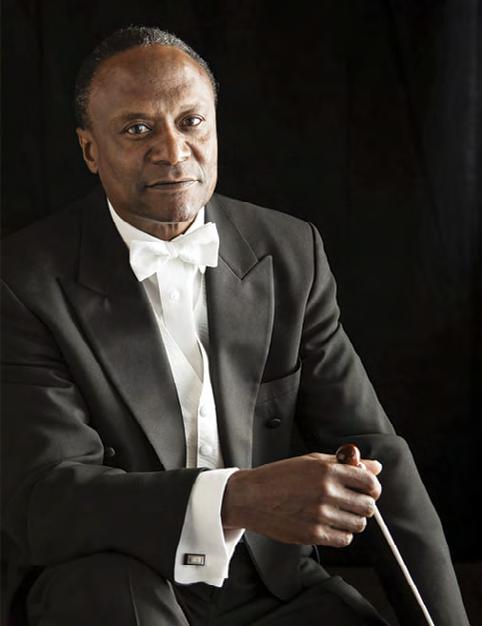
Devoted to promoting a life-long enthusiasm for music, Thomas Wilkins brings energy and commitment to audiences of all ages. He is hailed as a master at communicating and connecting with audiences. Mr. Wilkins is Principal Conductor of the Hollywood Bowl Orchestra; the Boston Symphony’s Artistic Partner and Community Engagement and Germeshausen Youth and Family Concert Conductor, Principal Guest Conductor of the Virginia Symphony, and holds Indiana University’s Henry A. Upper Chair of Orchestral Conducting established by the late Barbara and David Jacobs as a part of that University’s “Matching the Promise Campaign.” He completed his long and successful tenure as Music Director of the Omaha Symphony Orchestra at the close of the 2020/2021 season. Other past positions have included resident conductor of the Detroit Symphony and Florida Orchestra (Tampa Bay), and associate conductor of the Richmond (VA) Symphony. He also has served on the music faculties of North Park University (Chicago), the University of Tennessee in Chattanooga, and Virginia Commonwealth University in Richmond.
Following his highly successful first season with the Boston Symphony, the Boston Globe named him among the “Best People and Ideas of 2011.” In 2014, Wilkins received the prestigious “Outstanding Artist” award at the Nebraska Governor’s Arts Awards for his significant contribution to music in the state while in 2018 Thomas Wilkins received the Leonard Bernstein Lifetime Achievement Award for the Elevation of Music in Society conferred by Boston’s Longy School of Music. In 2019 the Virginia Symphony bestowed Thomas
Wilkins with their annual Dreamer Award. And in 2022 the Omaha Entertainment and Arts Awards presented him with their Lifetime Achievement Award for Music, the Boston Conservatory awarded him an honorary Doctorate of Arts, and he was the recipient of the League of American Orchestras’ Gold Baton Award.
During his conducting career, he has led orchestras throughout the United States, including the New York Philharmonic, the Chicago Symphony, the Los Angeles Philharmonic, the Cleveland Orchestra, the San Francisco Symphony, the Cincinnati Symphony and the National Symphony to name a few.
His commitment to community has been demonstrated by his participation on several boards of directors, including the Greater Omaha Chamber of Commerce, the Charles Drew Health Center (Omaha), the Center Against Spouse Abuse in Tampa Bay, and the Museum of Fine Arts as well as the Academy Preparatory Center both in St. Petersburg, FL. Currently he serves as chairman of the board for the Raymond James Charitable Endowment Fund and as national ambassador for the non-profit World Pediatric Project headquartered in Richmond, VA, which provides children throughout Central America and the Caribbean with critical surgical and diagnostic care.
A native of Norfolk, VA, Thomas Wilkins is a graduate of the Shenandoah Conservatory of Music and the New England Conservatory of Music in Boston. He and his wife Sheri-Lee, are the proud parents of twin daughters, Erica and Nicole.
Thomas Wilkins
ABOUT THE LOUISIANA PHILHARMONIC ORCHESTRA
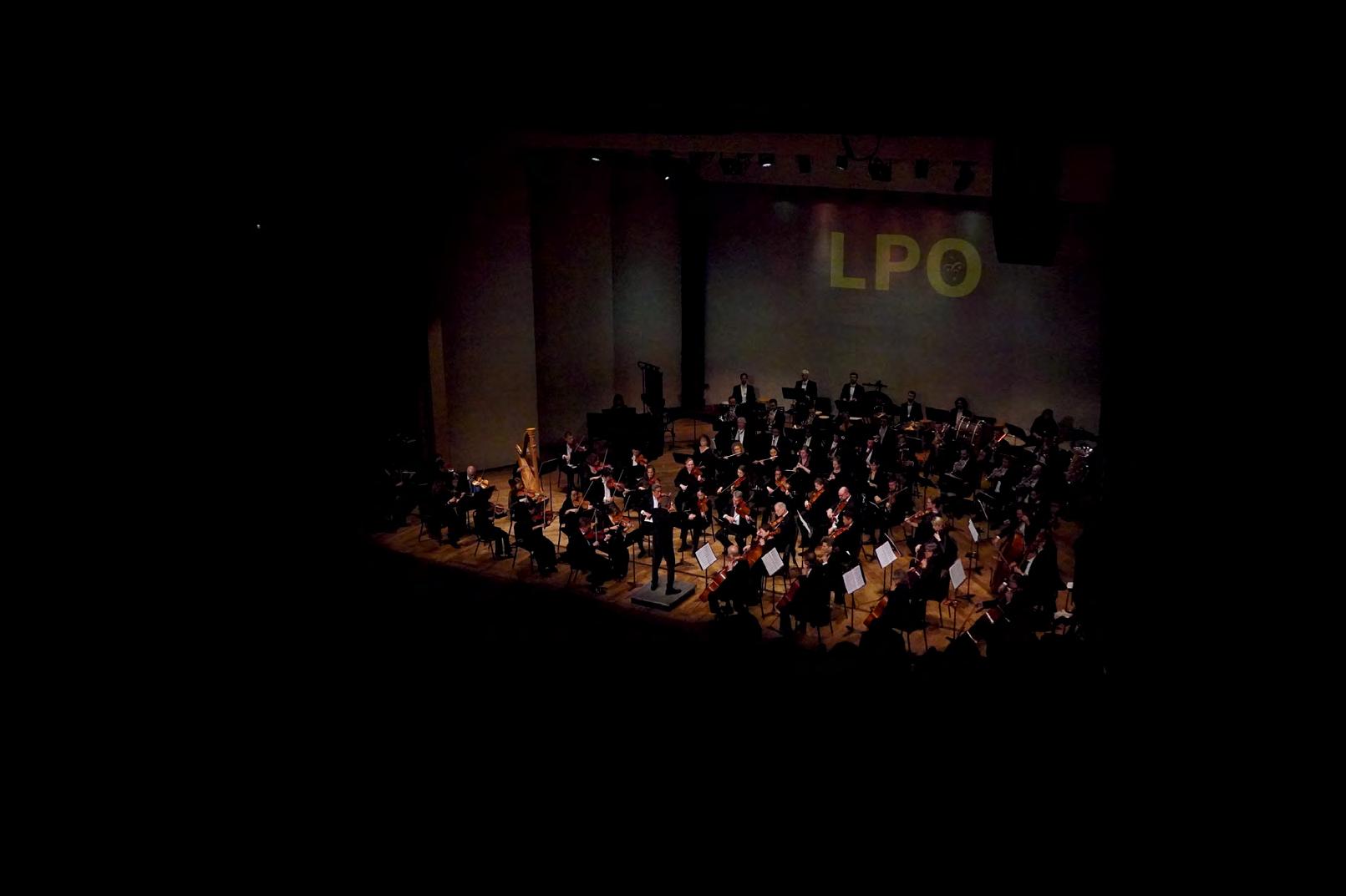
Steeped in a rich orchestral tradition, the GRAMMY® Award-winning Louisiana Philharmonic Orchestra (LPO) is the only full-time collaboratively governed and operated orchestra in the United States. Founded in 1991 in the heart of New Orleans, one of the world’s most culturally vibrant and musically storied cities, the LPO carries forward a legacy of artistic excellence while embracing innovation and community at every turn. Our fulltime musicians are not just performers, they are invested partners in the orchestra and the city they call home, setting the standard for orchestral programming and performance in Louisiana and beyond.
2025-2026 LOUISIANA PHILHARMONIC ORCHESTRA ROSTER
Matthew Kraemer
Adelaide Wisdom Benjamin Principal Conductor and Music Director
VIOLINS
Vacant, Concertmaster
The Edward D. and Louise Levy Concertmaster Chair
Benjamin Hart, Associate Concertmaster
The LPO Volunteers Associate Concertmaster Chair
Hannah Yim, Assistant Concertmaster
The Ranney & Emel Songu Mize Assistant Concertmaster Chair
Byron Tauchi, Principal Second Violin
The Helen W. Burns Principal Second Violin Chair
Vacant, Assistant Principal Second Violin
Zorica Dimova
Rebecca Edge
Judith Armistead Fitzpatrick
Cassidy Franzmeier
Janeta Mavrova
Elizabeth Overweg
Gabriel Platica
Yaroslav Rudnytsky
Milena Rusanova
Yuki Tanaka
Benjamin Thacher
Kate Walter
Sarah Yen
VIOLAS
Richard Woehrle, Principal
The Abby Ray Catledge and Byrne
Lucas Ray Principal Viola Chair
Bruce Owen, Assistant Principal
Amelia Clingman
Peter Dutilly
Sixto Franco
Rafael Gargate
Catherine Matushek
CELLOS
Jonathan Gerhardt, Principal
The Edward B. Benjamin Principal Cello Chair
Manuel Papale, Assistant Principal
The Ellen and Stephen Manshel
Assistant Principal Cello Chair
Kyle Anderson
Geunseon Han
Jeanne Jaubert
Kent Jensen
The Paula L. Maher Section Cello Chair
David Rosen
BASSES
David Anderson, Principal
William Schettler, Assistant Principal
Paul Macres
Russell Thompson
Benjamin Wheeler
FLUTES
Ji Weon Ryu, Principal
The Mary Freeman Wisdom Principal Flute Chair
Patti Adams, Assistant Principal
The Richard C. and Nancy Link Adkerson Flute Chair
Sarah Schettler
The Edward F. and Louise B. Martin Second Flute Chair
PICCOLO
Patti Adams
The Richard C. and Nancy Link Adkerson Flute Chair
OBOES
Virginia McDowell, Principal
Jane Gabka, Assistant Principal
Casey Kearney
ENGLISH HORN
Casey Kearney
CLARINETS
Shaquille Southwell, Principal
Roy Park, Assistant Principal
John Reeks
E-FLAT CLARINET
Roy Park
BASS CLARINET
John Reeks
BASSOONS
Hunter Gordon, Principal
Michael Matushek, Assistant Principal
Maya Stone*
CONTRABASSOON
Maya Stone *
FRENCH HORNS
Mollie Pate+, Principal
Josiah Bullach*, Principal
The Jerry W. Zachary and Henry Bernstein Principal Horn Chair
Kevin Winter*, Assistant Principal
The J. Robert Pope Assistant Principal Horn Chair
Max Paulus
Jonathan Gannon
TRUMPETS
Alex Mayon+, Principal
Alan Tolbert*, Principal
The Gauthier Family Foundation
Principal Trumpet Chair
Paul Armitage*
The Pete Wolbrette Section Trumpet Chair
Mario Mojica*, Assistant Principal
TROMBONES
Austin Richardson+, Principal
David Kidd*, Principal
Jonathan McNeer*
Evan Conroy, Bass Trombone
TUBA
Robert Nuñez, Principal
TIMPANI
Meagan Gillis, Principal
PERCUSSION
Aaron Smith, Principal
Michael Metz
HARP
Rachel Van Voorhees Kirschman, Principal
The string section of the Louisiana Philharmonic Orchestra is listed alphabetically and participates in revolving seating.
+denotes musicians that are on leave for the 2025-2026 season
• Louisiana Philharmonic Orchestra Orpheum Sessions Season Subscription Concert, 2026-2027 Season
• Career consultation with Concert Artists Guild
SEMIFINAL PRIZES given by Appoggiaturas
Alan Chow
James Farrow
Hancock Whitney Bank
Edward Levy
Julie Nice and Herb Larson
Terry and Rand Voorhies
Betsy and Pat Widhalm
Cara McCool Woolf and Kevin Chance in honor of Constance Carroll
• $1,000 (Nine at $1000 each)
BEST PERFORMANCE OF THE COMMISSIONED WORK given by Rebekka and Jason Burge
• $1,000
JURY DISCRETIONARY PRIZE given by Michael Boucree
• $1,000
BEST PERFORMANCE OF A WORK BY CHOPIN given by Faina Lushtak
• $500
*Performance engagements and their associated fees are offered the winners of the competition in good faith at the time of the competition by the auspices concerned. Final approval of artists, dates, and repertoire rests with artistic and administrative directors. The Musical Arts Society of New Orleans retains the right to rescind any and al l performance engagements for any of (but not limited to) the following reasons:
1) Failure to honor the contracted date for the performance
2) Failure to represent the New Orleans International Piano Competition in the professional manner expected of its winner
New Orleans Piano Institute
INSTITUTE CO-DIRECTORS
Hristo Birbochukov
Igor Resnianski
fACUlTY
Kevin Chance
Alan Chow
Dustin Gledhill
New Orleans Piano Institute Directors Igor Resnianski and Hristo Birbochukov have selected thirty young pianists, 27 Performers and 3 Active Observers, to participate in the 2026 New Orleans Piano Institute – a piano academy taking place concurrently with the New Orleans International Piano Competition and the New Orleans Keyboard Festival. Being in its 26th year, NOPI invites talented college and pre-college pianists from across the United States and around the world to participate in an intensive solo performance program, including private lessons with distinguished faculty, masterclasses, special performance related presentations, and an opportunity to perform in the Showcase Recital at the conclusion of the Institute. NOPI participants are invited to attend all of the rounds of the New Orleans International Piano Competition as a part of their participation in the Institute.
Additionally, NOPI participants are also invited to compete in the NOPI Concerto Competition sponsored by The Steinway Society of New Orleans. The winner of the Concerto Competition will receive a $500 cash prize and an invitation to perform with the New Orleans Civic Symphony in the 2026-2027 season.
The public is invited to attend all events of the Piano Institute and Keyboard Festival. Throughout this exciting event, there will be opportunities to hear masterclasses and special presentations, the NOPI Concerto Competition, the NOPI Student Showcase Recital, and the New Orleans Keyboard Festival guest artist recital of Angela Cheng. All masterclasses, NOPI student performances and the Concerto Competition are free of charge and open to public.
The NOPI teaching faculty this year includes Hristo Birbochukov (New Orleans Center for Creative Arts), Kevin Chance (University of Alabama), Alan Chow (The Eastman School of Music), Dustin Gledhill (New York), and Igor Resnianski (West Chester University of Pennsylvania). Masterclasses will be given by NOPI faculty as well as NOIPC jury members.
NEW ORLEANS PIANO INSTITUTE
JULY 24 – 31, 2027
Presented with support from
HRISTO BIRBOCHUkOv
The Bulgarian-born pianist Hristo Birbochukov has performed extensively as a solo and collaborative pianist across Eastern Europe and the United States, including a New York debut solo recital in 2012. Known for his “superb artistry” and “sensitivity” (Edward Lein, Intermezzo Concert Series), Birbochukov is a prize-winner of national and international competitions and has participated in international music festivals, including the International Festival for Contemporary Piano Music ppIANISSIMO (Sofia, Bulgaria), and the Festival of New Music (Florida, USA). Birbochukov’s awards include Phi Kappa Phi Artist of the Year (Florida, 2007), and Tallahassee Music Guild (2005 and 2007). His television and radio appearances have included broadcasts in both Bulgaria and in the United States and he has been featured in national and international press, including the official website of BBC Music Magazine
Hristo Birbochukov holds a Doctor of Music degree in Piano Performance from Florida State University, a Master of Music degree from Southeastern Louisiana University, and a Bachelor of Music degree in Piano Performance from the National Academy of Music in Sofia, Bulgaria, under Prof. Dimo Dimov.
A sought-after educator, Dr. Hristo Birbochukov was named Steinway & Sons Top Teacher for 2017 and 2018. Students of Dr. Birbochukov are frequent winners of state, regional, and national piano competitions, and were selected as finalists for NPR’s program “From the Top.”
Presently, Dr. Birbochukov is the Chair of the Classical Instrumental Department of the New Orleans Center for Creative Arts (NOCCA) and an Artist Teacher in Applied Piano. In addition, he is on the Music Faculty of NOBTS, where he teaches Applied Piano to DMA piano students, he is a Co-Director of the annual New Orleans Piano Institute (NOPI), and on the Board of Directors of the Musical Arts Society of New Orleans (MASNO). More info: www.birbochukov. com
kEvIN CHANCE
Kevin Chance serves as Associate Professor of Piano at the University of Alabama where he coordinates the Gloria Narramore Moody Piano Area. As soloist and collaborator, Kevin has performed throughout the United States and abroad, including recent concerto appearances with the Huxford Symphony Orchestra, Tuscaloosa Symphony Orchestra, and the Village Trip Festival Orchestra. Performing regularly as a chamber musician, Kevin has been a member of the Semplice Duo with flutist Cristina Ballatori for the past 26 years, and their performances have included world premieres at the National Flute Association Conference and a recent recording released on Centaur Records.
Kevin has received a number of accolades for his teaching. Most recently, he was named a Leadership Board Faculty Fellow for the University of Alabama College of Arts and Sciences, recognizing excellence in teaching and research. In 2019, he was inducted into the inaugural class of the Steinway and Sons Music Teacher Hall of Fame in New York City and was named 2019 Music Educator of the Year by the Arts Council of Tuscaloosa. Additionally, he was named the 2015-2017 Teacher of the Year by the Alabama Music Teachers Association. In 2025, he was named a Foundation Fellow of Music Teachers National Association.
Kevin holds degrees from the Eastman School of Music, Louisiana State University, and Birmingham-Southern College, and his former teachers include Barry Snyder, Constance Knox Carroll, Anne Koscielny, Ann Schein, William DeVan, and Betty Sue Shepherd. A past president of the American Matthay Association, Kevin currently serves as President of Music Teachers National Association.
MASTER CLASS
Sunday, July 19 3:30 PM
Hristo Birbochukov NOPI Director
FACULTY
DUSTIN glEDHIll
Dustin Gledhill is an international prize-winning pianist, composer, and producer whose work spans classical performance, contemporary composition, and interdisciplinary collaboration. As a young pianist, he garnered over twenty first-prize awards in international competitions and later performed at major venues including London’s Wigmore Hall.
IgOR RESNIANSkI
A Steinway artist and inductee to Steinway & Sons Teacher Hall of Fame, Dr. Resnianski is a prize winner of many international piano competitions including the First Prize of the New Orleans International Piano Competition; the Bronze Medal of the International World Piano Competition, Cincinnati, Ohio; the Bronze Medal of the Nena Wideman International Piano Competition, Shreveport, Louisiana, the Fifth Prize in the first Beijing International Piano Competition, and the Second Prize of the All Russian Piano Competition Sodrujestvo. In Russia, he appeared in the famous halls of Moscow and St. Petersburg including the historic Glinka Philharmonic Hall in St. Petersburg and appeared with many orchestras in the Siberian region.
MASTER CLASS
Sunday, July 19
11:00 AM
Igor Resnianski NOPI Director
As a composer and performer, Dustin has collaborated with modern dance artists including Russell Maliphant and Parisa Khobdeh, and has appeared in productions by the late Pina Bausch at Sadler’s Wells. His compositions range from electronic-classical works to commissioned music for podcasts and commercial projects. In 2016, he co-founded the synth-pop duo Hive Riot with singer-songwriter Mindy Gledhill.
In 2022, Dustin became President of The Bohemians: New York Musicians’ Club and now serves as Executive & Artistic Director, producing career-development initiatives in partnership with Concert Artists Guild and the American Piano Awards.
He is currently releasing Pink Preludes, a cycle of twenty-eight original works in the soft-piano contemporary classical genre, with the first prelude released on March 20, 2026.
A native of Provo, Utah, Dustin holds degrees from Manhattan School of Music, The Juilliard School, the Royal Academy of Music, and Stony Brook University. He resides in New York City.
In June 1996, Mr. Resnianski made his concerto debut in America performing with the Fort Worth Symphony Orchestra under conductor Keri-Lynn Wilson and in South America performing a solo recital at the Medellin International Festival, Colombia. Since then he performed with Kennett Symphony, PA, New Orleans LPO and Acadiana Symphony Orchestras, LA, etc. Gave solo recitals in China and Hong Kong; Fort Worth and Arlington, TX; New Orleans and Lafayette, LA; Cincinnati, OH and Palm Beach, FL; Philadelphia, PA and Camden, NJ; Santa Clara, CA and Houston, TX; etc.
His performances were televised and broadcasted in Novosibirsk, Russia; Palm Beach, FL; Cincinnati, OH. Dr. Resnianski’s performances were featured on the PBS/WHYY Y-Arts television channel as well as WRTI Classical Radio. His chamber recordings were released under St. Petersburg Recording Company and Sony Entertainment.
2012 Teacher of the Year for the state of Pennsylvania, Dr. Resnianski teaches master-classes and judges local, state, national, and international competitions in the US and abroad. He is a regular faculty of such festivals as PianoTexas International Academy and Festival, Fort Worth TX; Piano Institute at Texas Music Festival, Houston TX; New Orleans Piano Institute, LA, California Concerto Weekend, CA, etc. Since September 2013, Dr. Resnianski accepted responsibilities of a co-director of the New Orleans Piano Institute and since 2024 he is the Artistic Director of West Chester University of PA Pre-Collegiate National Piano Competition.
His students are winners of many local, state, national, and international piano competitions. Among them are the Philadelphia Orchestra Greenfield Concerto Competition; William Kapell Young Artist International Piano Competition; Liszt International Competition in Los Angeles; Chopin International Piano Competition in Hartford Connecticut; World Piano Competition in Cincinnati; MTNA/PMTA state piano competition; New Orleans Piano Institute Competition solo and concerto; TCU-Cliburn Piano Institute Concerto Competition; etc. His students performed in many countries including USA, Russia, France, Germany, China They appeared on such venues as Verizon Hall and Perelman Theater at the Kimmel Center in Philadelphia; Tchaikovsky and Roerich museums in Moscow; Wail Recital Hall at Carnegie Hall and Merkin Hall at Elaine Kaufman Cultural Center in New York; Ed Landreth Hall in Fort Worth, TX; Emilie K. Asplundh Concert Hall in Philips Memorial Building at West Chester, PA, etc. They appeared with such orchestras as Philadelphia Orchestra, Fort Worth Symphony, Kennett Symphony, Lansdowne Symphony, Ambler and York orchestras, New Orleans Civic Orchestra, etc.
Dr. Resnianski is an Assistant Professor at West Chester University of Pennsylvania in West Chester, PA. He also teaches privately and at the Nelly Berman School of Music in Haverford, PA.
Dustin Gledhill
COMPETITION REqUIREMENTS
RECORDED/PRELIMINARY ROUND
Any solo piano repertoire selected by the competitor, not to exceed 30 minutes in length. Individual movements of the sonatas are acceptable in this round only. Repertoire from the Recorded/Preliminary round may be repeated in either Semifinal Rounds I or II or the Final Round as long as it meets the requirements of those rounds.
The NOIPC has commissioned a new solo work of 5-7 minutes in length from Courtney Bryan. All 12 competitors are required to perform the commissioned work during their Semifinal Round I or Round II recitals. The score will be provided to competitors upon confirmation of their acceptance of our invitation to perform in New Orleans; and for this piece only, pianists may use the score.
SEMIFINAL ROUND I
A memorized public recital, not to exceed 35 minutes in length, consisting of works chosen by the competitors. All twelve semifinalists will advance to Semifinal Round II.
SEMIFINAL ROUND II
A memorized public recital, not to exceed 25 minutes in length, consisting of works chosen by the competitor which have not been performed in Semifinal Round I. Three contestants will be chosen to advance to the Final Round.
FINAL ROUND
A memorized public recital, not to exceed 50 minutes in length, consisting of works not performed by the competitor in the Semifinal Rounds.
A memorized full concerto for piano and orchestra performed with the Louisiana Philharmonic Orchestra chosen by the competitor selected from the approved list of concerti.
JUDgINg PROCEDURES fOR THE PRElIMINARY/RECORDED ROUND
Throughout the two stages of the Preliminary/Recorded Round, Three jurors watched and listened to videos submitted by the applicants online via Accept d. In the initial stage, these jurors were responsible for paring the field of applicants from 240 to 40.
In the second stage, the same three jurors, each watching and listening independently, ranked their top twelve performances. Results were tabulated and the top twelve performers were invited to New Orleans to compete as semifinalists.
JUDgINg PROCEDURES fOR THE COMPETITION JURY
SEMIFINAL ROUND I & II
At the completion of Semifinal Round II of the competition, the seven voting members of the jury (the chair of the jury is a non-voting member) will independently select, without discussion, three contestants to advance to the Final Round. Each of these contestants must have received at least four of the jurors’ votes. In the case of a tie, the competition jury will be asked to choose, without discussion, between the tied competitors. In the case where a juror withdraws, the chair becomes a voting member.
FINAL ROUND
At the completion of the Final Round of the competition, the seven voting jurors will independently cast their ballots, without discussion, for the pianist they believe should win the First Prize. To be awarded this prize, the pianist must have received at least four of the jurors’ votes. In the case of a tie, the competition jury will be asked to choose, without discussion, between the tied competitors. The jurors will repeat this process to determine the winner of the Second and Third Prizes.
COMPETITORS
An artist that “leaves no question about his riveting presentation and technical finesse” (Seattle Times), Canadian pianist Kevin Ahfat “summons plenty of thunderpower in the big moments, but clearly values musicianship over mere showmanship” (American Record Guide). Highlights of recent seasons include engagements throughout North America and abroad, including at Toronto’s Koerner Hall, London’s Wigmore Hall, Montreal’s Maison symphonique, and Boston’s Jordan Hall. In recent seasons, Kevin has joined the Esprit Orchestra for rarely heard works: Silvestrov’s Postludium for Piano & Orchestra (1984) and Hans Abrahamsen’s Double Concerto (2011). Named one of CBC Music’s 30 hot Canadian classical musicians under 30, Kevin continues performances as core member of Grammy-nominated ARC Ensemble, one of Canada’s preeminent chamber ensembles. Winner of the 2025 Fou Ts’ong International Piano Competition and two-time winner of the Juilliard Concerto Competition, Kevin studied at Juilliard with Joseph Kalichstein and Stephen Hough, and was in-residence as Rebanks Fellow at the Royal Conservatory. More at kevinahfat. com and @kevinahfat.
Kevin Ahfat I Canada
SEMIFINAL ROUND I
MEDTNER
Fairy Tale, op. 51, no. 2
BERG Sonata, op. 1
BRYAN Ancestor Tree
BACH-BUSONI Chaconne in D Minor
SEMIFINAL ROUND II
FRANCK
PROKOFIEV
Prélude, Fugue, & Variation, op. 18
Visions fugitives, op. 22
I. Lentamente
II. Andante
IV. Animato
V. Molto giocoso
VI. Con eleganza
VII. Arpa – Pittoresco
IX. Allegretto tranquillo
X. Ridocolosamente
XIV. Feroce
XV. Inquieto
XI. Con vivacità
XVII. Poetico
XIX. Presto agitatissimo e molto accentuato
FINAL ROUND SOLO
CATOIRE
Prélude, op. 10, no. 2
GINASTERA Sonata No.1, op. 22
Allegro marcato
Presto misterioso
Adagio molto appassionato
Ruvido ed ostinato
BRAHMS Variations and Fugue on a Theme by Handel, op. 24
FINAL ROUND CONCERTO
PROKOFIEV Concerto No. 3 in C Major, op. 26
Andante - allegro Tema con variazioni
Allegro ma non troppo
Wooyoung Cho I South Korea
SEMIFINAL ROUND I
BOULEZ Douze notations
Fantasque. Modéré
Très vif
Assez lent
Rythmique
Doux et improvisé
Rapide
Hiératique
Modéré jusqu’à très vif
Lointain. Calme
Mécanique et très sec
Scintillant
Lent. Puissant et âpre
SCHUBERT Drei Klavierstücke, D. 946
E-flat Minor
E-flat Major
C Major
SEMIFINAL ROUND II
HAYDN Sonata in G Major, Hob XVI: G6
Allegro
Minuet - Trio
Adagio
Allegro molto
BRYAN Ancestor Tree
SCRIABIN Sonata No. 5, op. 53
FINAL ROUND SOLO
PROKOFIEV Visions Fugitives, op. 22
I. Lentamente
II. Andante
III. Allegretto
V. Molto giocoso
VII. Arpa – Pittoresco
X. Ridocolosamente
XIV. Feroce
XVI. Dolente
XVII. Poetico
XIX. Presto agitatissimo e molto accentuato
MOZART Rondo in F Major, K. 494
SCHUMANN Sonata No. 1 in F-sharp Minor, op. 11
Introduzione
Aria
Scherzo
Finale
FINAL ROUND CONCERTO
PROKOFIEV
Concerto No. 3 in C Major, op. 26
Andante - allegro
Tema con variazioni
Allegro ma non troppo
Wooyoung Cho was born in June 2000 in Seoul, South Korea. She is currently pursuing her Master’s degree at the New England Conservatory under Professor Wha Kyung Byun, and she is also scheduled to enter the Graduate Diploma program at the same institution. She previously earned her Bachelor’s degree from Seoul National University, where she studied with Professor Haeesung Joo, and has also received guidance from distinguished mentors such as Chungmo Kang, Eun Jung Sohn, and Kyung-ah Kim.
In 2026, Wooyoung received Second Prize at both the American International Paderewski Piano Competition and the Lewisville Lake International Piano Competition.
In 2025, she was awarded the 1st prize in the HKGNA International Music Competition. She was also selected to advance to the Live Screening Auditions of the Seventeenth Van Cliburn International Piano Competition.
In 2024, Wooyoung reached the quarterfinals of the Leeds International Piano Competition, her first major international competition, placing among the top 24 competitors. That same year, she won the Promising Star Competition at the International Maestro Piano Festival in Taiwan, which led to an invitation to give a recital at UCSI University in Malaysia, and she performed Prokofiev’s Piano Concerto No. 3 with the Taipei Symphony Orchestra at one of Taiwan’s most prestigious venues.
Wooyoung began studying piano at age seven and entered formal training as a piano major at twelve. Her musical development took a significant leap in 2016 when she made her debut performing with the Berlin Chamber Music Orchestra at the Berlin Philharmonic Hall. This experience shaped her artistic direction and encouraged her pursuit of an international career. Since then, she has participated in numerous music festivals and workshops worldwide, including the International Maestro Piano Festival, the Edward Auer Workshop, the Amalfi Coast Music Festival, and Poland’s BelEur ICPA.
In Korea, Wooyoung has given two acclaimed solo recitals: the Kumho Young Artist Concert (Kumho Asiana Cultural Foundation Audition) and the Kumho Young Prodigy Concert. Her achievements have also been recognized through prizes in several major national competitions.
COMPETITORS
Praised by pianist-scholar Paul BaduraSkoda as “an extraordinary pianist brimming with musicianship” and described by Gramophone for his “poise and experience” and “wide palette of colors, shadings, and dramatic contrasts,” Shangru Du is an artist of rare expressive depth.
A quarterfinalist in the 2025 Van Cliburn International Piano Competition and semifinalist in the 2025 Busoni International Piano Competition, Shangru has also earned first prizes at the Yamaha Music Scholarship Competition, the International Keyboard Odyssiad® Festival Competition (2022), as well as the Eastman Concerto Competition.
He has performed at Carnegie Hall’s Weill Recital Hall, Lincoln Center’s Alice Tully Hall, Van Cliburn Concert Hall in Fort Worth, and the Auditorium in Bolzano and many more.
Shangru holds degrees from Oberlin Conservatory (BM, with Stanislav Ioudenitch and Matti Raekallio) and The Juilliard School (MM, with Raekallio and Jerome Lowenthal), and has also previously studied with Hong Xu and Evgeni Bozhanov. He is currently pursuing his DMA at Eastman School of Music with Douglas Humpherys.
Shangru Du I China
SEMIFINAL ROUND I
BRYAN Ancestor Tree
SCARLATTI
Two Keyboard Sonatas D Minor, K. 213 G major, K. 55
CHOPIN Polonaise in B-flat Major, op. 71, no. 2
BARTÓK
Three Etudes, Op. 18 Allegro molto Andante sostenuto Tempo giusto
SCRIABIN Fantasie in B Minor, op. 28
SEMIFINAL ROUND II
TCHAIKOVSKY Nocturne in C-sharp Minor, op. 19, no. 4
RAVEL Gaspard de la nuit
Ondine
Le Gibet Scarbo
FINAL ROUND SOLO
CLARA SCHUMANN Mazurka, op. 6, no. 5
ROBERT SCHUMANN Davidsbündlertänze, op. 6
Lebhaft
Innig
Etwas hahnbüchen (1st edition); Mit Humor (2nd edition)
Ungeduldig
Einfach
Sehr rasch und in sich hinein (1st edition), Sehr rasch (2nd edition)
Nicht schnell mit äußerst starker Empfindung (1st edition), Nicht schnell (2nd edition)
Frisch
No tempo indication (1st edition); Lebhaf (2nd edition)
Balladenmäßig sehr rasch
Einfach
Mit Humor
Wild und lustig
Zart und singend
Frisch
Mit gutem Humor
Wie aus der Ferne
Nicht schnell
SCRIABIN Valse, op. 38
LISZT
Mephisto Waltz No. 1, S. 514
FINAL ROUND CONCERTO
RACHMANINOV
Concerto No. 3 in D Minor, op. 30
Allegro ma non tanto
Intermezzo
Finale
Yu-ang Fan I China
SEMIFINAL ROUND I
MOZART Rondo in D Major, K.485
LISZT
Sonata in B Minor, S.178
SEMIFINAL ROUND II
BRYAN Ancestor Tree
STRAVINSKY Trois mouvements de Petrouchka
Danse russe
Chez Petrouchka
La semiane grasse
FINAL ROUND SOLO
SCHUMANN Carnaval, op. 9
Préambule
Pierrot
Arlequin
Valse noble
Eusebius
Florestan
Coquette
Replique
Sphinxs
Papillons
A.S.C.H. S.C.H.A.
Chiarina
Chopin
Estrella
Reconnaissance
Pantalon et Colombine
Valse allemande – Paganini – Intermezzo
Aveu
Promenade
Pause
Marche des “Davidsbündler” contre les Philistins
SCHUMANN Arabeske in C Major, op. 18
CHOPIN Mazurka in B-flat Minor, op. 24, no. 4
BALAKIREV Islamey – An Oriental Fantasy, op. 18
FINAL ROUND CONCERTO
CHOPIN
Concerto No. 1 in E Minor, op. 11
Allegro maestoso
Romanze: Larghetto
Rondo: Vivace
Yu-ang Fan, born on April 8, 2005, began his formal piano studies under Professor Wu Ying at the Affiliated Middle School of the Central Conservatory of Music in 2020. In 2023, he was admitted to the Central Conservatory of Music with outstanding grades and is currently studying under Professor Kong Jianing.
In October 2023, Fan won the Gold Medal in the Professional Division of the Gulangyu International Piano Competition, where he performed Tchaikovsky’s Piano Concerto No. 1 with the Xiamen Philharmonic Orchestra to unanimous praise from the jury.
In 2024, he earned First Prize in the Central Conservatory of Music Academy Cup Competition and performed Chopin’s Piano Concerto No. 1 with the Central Conservatory of Music Symphony Orchestra.
In 2025, Fan advanced to the semifinals of the 5th Shigeru Kawai International Piano Competition and to the quarterfinals of the 19th International Chopin Piano Competition.
COMPETITORS
Mitsuki Fukuhara is a Japanese pianist currently studying in the Konzertexamen program at the Folkwang Universität der Künste in Germany under Prof. Henri Sigfridsson. He graduated as the top student from Osaka Kyoiku University and later completed his Master’s degree at Folkwang.
He has achieved success in several international competitions, including 4th Prize at the Livorno Piano Competition and reaching the final of the Bartók World Competition. He also won 1st Prize at the Folkwang Preis and the Köhler-Osbahr-Stiftung Competition. He has performed extensively in Germany and appeared as a soloist with orchestra.
Outside of music, he enjoys fishing and cooking.
Mitsuki Fukuhara I Japan
SEMIFINAL ROUND I
GRANADOS Goyescas
No.6 Epilogo: Serenata del espectro
RACHMANINOV Variations on a Theme of Corelli, op. 42
KAPUSTIN Variations, op. 41
SEMIFINAL ROUND II
RACHMANINOV Études-Tableaux in C Minor, op. 39, no. 1
FINAL ROUND CONCERTO PROKOFIEV Concerto No. 3 in C Major, op. 26
Andante - allegro
Tema con variazioni
Allegro ma non troppo
Miao Gao is an award-winning pianist who has received prizes in major international competitions, including the Weatherford International Piano Competition (Jury Discretionary Award, 2025), the Lancaster International Piano Competition (Second Prize, 2025), the 4th Shigeru Kawai International Piano Competition (Second Prize, 2023), the Huang Long International Music Festival Piano Competition (First Prize, 2019), the 15th Khachaturian International Piano Competition (Third Prize and Special Prize, 2019), and the 7th Steinway Youth Piano Competition (Second Prize, 2017).
Gao began his musical studies at a young age. In 2012, he was admitted to the Middle School Affiliated with the China Conservatory of Music in Beijing, where he received his professional piano training under Professors Yun Guo In 2018, he entered the China Conservatory of Music, studying with Professor Wei Zhang after ranking first in his major. Since 2022, he has studied at the Eastman School of Music with Professor Alexander Kobrin, where he is currently pursuing the Doctor of Musical Arts degree.
COMPETITORS
Evgeny Konnov, born in 1992 in Chirchiq, Uzbekistan, is an internationally acclaimed pianist and winner of first prizes at major international piano competitions, including the Maria Canals International Piano Competition in Barcelona, the Unisa International Piano Competition in Pretoria, and the Ettore Pozzoli International Piano Competition in Italy. He was also a laureate and Audience Prize winner at the George Enescu International Competition, followed by his highly acclaimed debut at the George Enescu International Festival in 2025.
He studied with Natalia Suslova, Georg Friedrich Schenk, Evgenia Rubinova, Jan Gottlieb Jiracek von Arnim, Albert Mamriev, and Christoph Hammer at leading institutions in Moscow, Düsseldorf, Vienna, Hannover, and Augsburg.
Evgeny Konnov I Russia
SEMIFINAL ROUND I
LISZT
BRYAN
Études d’exécution transcendante, S.139
Preludio
Molto vivace
Paysage
Mazeppa
Ancestor Tree
MEDTNER Two Fairy Tales, op. 20
Allegro con espressione
Campanella
SEMIFINAL ROUND II
RACHMANINOV Sonata No. 2 in B-flat Minor, op. 36
Allegro agitato
Non allegro
Allegro molto
BIZET-HOROWITZ Variations on a Theme from Carmen
FINAL ROUND SOLO
BEETHOVEN
Sonata in E-flat Major, op. 27, no. 1
Andante
Allegro molto e vivace
Adagio con espressione
Allegro vivace
LISZT
Sonata in B Minor, S.178
FINAL ROUND CONCERTO
RACHMANINOV
Concerto No. 3 in D Minor, op. 30
Konnov has performed in major concert halls such as the Musikverein and Konzerthaus in Vienna, the Great Hall of the Moscow Conservatory, the Palau de la Música Catalana in Barcelona, Salle Cortot in Paris, and Gasteig in Munich, and has collaborated with orchestras including the Orquesta Sinfónica de Madrid, Orquesta Sinfónica de Bilbao, Johannesburg Philharmonic Orchestra, Augsburger Philharmoniker, and George Enescu Philharmonic Orchestra.
Allegro ma non tanto
Intermezzo
Finale
Since 2024, he has been appointed to the piano faculty at the University of Augsburg. Outside of music, he enjoys billiards, darts, and football. He is also deeply fond of cats - a feeling that, unfortunately, is not always reciprocated.
Modan Oyama I Japan
SEMIFINAL ROUND I
RAMEAU Pièces de clavecin avec une mèthode sur la mècanique des doigts
Le rappel des oiseaux
Les tendres plaintes: Rondeau
SCRIABIN
Sonata No. 4 in F-sharp Major, op. 30
Andante
Prestissimo volando
LISZT Réminiscences de Norma (d’après Bellini), S. 394
SEMIFINAL ROUND II
BRYAN Ancestor Tree
STRAVINSKY Trois mouvements de Petrouchka
Danse russe
Chez Petrouchka
La semaine grasse
FINAL ROUND SOLO
BARTÓK
Three Etudes, op. 18
Allegro molto
Andante sostenuto
Tempo giusto
DEBUSSY Nocturne, L. 82
SCHUMAN Carnaval, op. 9
Préambule
Pierrot
Arlequin
Valse noble
Eusebius
Florestan
Coquette
Replique
Sphinxs
Papillons
A.S.C.H. S.C.H.A.
Chiarina
Chopin
Estrella
Reconnaissance
Pantalon et Colombine
Valse allemande – Paganini – Intermezzo
Aveu
Promenade
Pause
Marche des “Davidsbündler” contre les Philistins
FINAL ROUND CONCERTO
PROKOFIEV
Concerto No. 3 in C Major, op. 26
Andante - allegro
Tema con variazioni
Allegro ma non troppo
Modan Oyama was born in Japan in 2005, and began studying classical ballet at the age of three and piano at four, gaining early stage experience that continues to shape his sense of expression and movement at the keyboard. He was selected as the artist of the Chanel Pygmalion Days 2026. At the age of 12, he performed the piano parts for the main character’s childhood scenes in the Japanese TV anime Forest of Piano.
Currently in his third year at Osaka College of Music, Modan studies with Keiji Serizawa and Ayami Serizawa.
He has received top prizes at major international competitions, including First Prize at the Ke‘alohi International Piano Competition and Second Prize at the Shigeru Kawai International Piano Competition. Modan was also a semifinalist at the Cliburn International Junior Piano Competition.
As a soloist, Modan has performed with orchestras such as the Tokyo Philharmonic Orchestra and the Hawaii Symphony Orchestra, and has presented numerous solo recitals throughout Japan at leading venues including Suntory Hall, Steinway & Sons Tokyo Salon, Yamaha Hall, and Kawai Concert Salon.
Outside of music, Modan enjoy trains, melons, and French fries.
COMPETITORS
Seiran Tozlian is a 23-year-old Armenian pianist and composer. He has participated in numerous international festivals and is a prizewinner of several competitions, including Grand Piano in Palace (St. Petersburg), Young Talents of Russia (Moscow), Firework of Talents (St. Petersburg), the 18th International Competition Valsesia Musica Junior (Italy), and the XIV Chopin International Piano Competition (Hartford, USA).
Seiran graduated from the High School of Music of the Rostov State Conservatory named after S. V. Rachmaninov, where he studied with Professor Sergei Osipenko. During his studies, he performed at major venues in Rostov, including the Rostov Philharmonic and the Great Hall of the Rostov Conservatory.
Since 2022, he has been studying at the Manhattan School of Music with Alexandre Moutouzkine. In 2024, he won the Koch Piano Concerto Competition and performed Beethoven’s Piano Concerto No. 2 with orchestra. In March 2025, he made his debut at Carnegie Hall and continues to appear regularly in leading concert halls across New York.
Seiran Tozlian I Russia
SEMIFINAL ROUND I
HAYDN Sonata in C Major, Hob. XVI:50 Allegro Adagio Allegro molto
BRYAN Ancestor Tree
SCRIABIN
Sonata No. 9, op. 68
DEBUSSY Préludes, Book II
Feux d’artifice
SEMIFINAL ROUND II
PROKOFIEV
Visions fugitives, op. 22
I. Lentamente
II. Andante
III. Allegretto
IV. Animato
V. Molto giocoso
VI. Con eleganza
VII. Pittoresco (Arpa)
VIII. Commodo
IX. Allegro tranquillo
X. Ridicolosamente
XI. Con vivacità
XII. Assai moderato
XIII. Allegretto
XIV. Feroce
XV. Inquieto
XVI. Dolente
XVII. Poetico
XVIII. Con una dolce lentezza
IXX. Presto agitatissimo e molto accentuato
XX. Lento irrealmente
FINAL ROUND SOLO
AUERBACH 10 Dreams, op. 45
RACHMANINOV Sonata No. 2 in B-flat Minor, op. 36 (1913 original version)
Allegro agitato
Non allegro - Lento
Allegro molto
FINAL ROUND CONCERTO
LISZT
Concerto No. 1 in E-flat Major, S. 124
Allegro maestoso
Quasi adagio
Allegretto vivace - allegro animato
Allegro marziale animato
Jiacheng Xiong I China
SEMIFINAL ROUND I
HAYDN Sonata in E Major, Hob. XVI.31
Allegro
Adagio
Menuet and Trio
Finale: Presto
BRYAN Ancestor Tree
BARBER
Sonata in E-flat Minor, op. 26
Allegro energico
Allegro vivace e leggero
Adagio mesto
Fugue: Allegro con spirito
SEMIFINAL ROUND II
BRAHMS
Variations and Fugue on a Theme by Handel, op. 24
FINAL ROUND SOLO
CHOPIN
Sonata No. 2 in B-flat Minor, op. 35
Introduction: Grave - Doppio movimento
Scherzo
Marche funèbre: Lento
Finale: Presto
PROKOFIEV
Sonata No. 8 in B-flat Major, op. 84
Andante dolce – Allegro moderato
Andante sognando
Vivace
FINAL ROUND CONCERTO TCHAIKOVSKY
Concerto No. 1 in B-flat Minor, op. 23
Allegro non troppo e molto maestoso –Allegro con spirito
Andantino semplice – Prestissimo –
Tempo I
Allegro con fuoco – Molto meno mosso –Allegro vivo
Pianist Jiacheng Xiong, from Fujian, China, recorded Julius Eastman’s work for Curtis Studio’s centenary album. A ten-year fellowship recipient of the Aspen Music Festival and School, he toured the United States with “Curtis on Tour” in 2018. Xiong has appeared at Carnegie Hall, the Temple for Performing Arts in Des Moines, Hangzhou Grand Theater, and Paris’s Cortot Hall, and has been featured on NPR’s “From the Top.” His competition honors include the Israeli commission piece prize at the Arthur Rubinstein International Piano Master Competition, First Prize in the 2013 Korea International Piano Competition for Young Pianists, and the 2024 AMFS Piano Concerto Competition. His teaching experience includes a secondary piano teaching assistantship at The Juilliard School, faculty in Aspen’s PALS program, and a private studio since 2019. Xiong holds a diploma from the Central Conservatory of Music, a Master of Music from Juilliard, and a Curtis Institute of Music degree with the Paul G. Mehlin Scholarship. In fall 2026, he will begin doctoral studies at Northwestern University’s Bienen School of Music.
Chinese-American pianist Adria Ye has been driven from a young age by a hopeless fascination with music. Described by cellist David Finckel as having a “naturally beautiful sound and lyric instinct,” and by the Boston Musical Intelligencer as possessing “micro control of articulation, dynamics color, and rubato, all to convincing musical effect,” Adria has performed as soloist with ensembles including the the Royal Philharmonic Orchestra, the Sinfonia Smith Square, the Beaufort Symphony Orchestra, and the Aspen Concert Orchestra. Most recently, they received the third prize and Sussex Prize for best classical concerto at the 2026 Hastings International Piano Competition. They were the winner of the Paul Streit Special Prize at the 2022 Concours de Genéve.
Adria earned their Bachelor and Master of Music degrees at the Juilliard School with Yoheved Kaplinsky and Julian Martin, and a Graduate Diploma at the New England Conservatory with WhaKyung Byun. They live in Boston with a very grumpy cat named Ham.
Adria Ye I United States
SEMIFINAL ROUND I
BRYAN Ancestor Tree
BEETHOVEN
Sonata in C Minor, op. 111
Maestoso - Allegro con brio ed appassionato
Arietta: Adagio molto semplice e cantabile
SEMIFINAL ROUND II
MOZART Rondo in A Minor, K. 511
STRAVINSKY-AGOSTI Suite from The Firebird
FINAL ROUND SOLO
DEBUSSY Études, Book I no. 2 Pour les tierces no. 3 Pour les quartes
BACH-BUSONI
10 Chorale Preludes no. 7a Durch Adams fall ist ganz verderbt, BWV 637
SCHUMANN Kreisleriana, op. 16 Äußerst bewegt
Sehr innig und nicht zu rasch
Sehr aufgeregt
Sehr langsam
Sehr lebhaft
Sehr langsam
Sehr rasch
Schnell und spielend
FINAL ROUND CONCERTO
PROKOFIEV
Concerto No. 3 in C Major, op. 26
Andante - Allegro
Tema con variazioni Allegro ma non troppo
Jihyung Youn I South Korea
SEMIFINAL ROUND I
BRYAN Ancestor Tree
SCHUMANN Humoreske in B-flat Major, op. 20
SEMIFINAL ROUND II
JANÁČEK
Sonata 1.X.1905, “From the Street”
Presentiment - Con moto
Death - Adagio
RAVEL Gaspard de la nuit
Scarbo
FINAL ROUND SOLO
MOZART Fantasie in D Minor, K. 397
DEBUSSY Images, Book I
Reflets dans l’eau
Hommage à Rameau
Mouvement
ALBÉNIZ Iberia
Triana
RACHMANINOV
Sonata No. 2 in B-flat Minor, op. 36
Allegro agitato
Non allegro - Lento
Allegro molto
FINAL ROUND CONCERTO
PROKOFIEV
Concerto No. 3 in C Major, op. 26
Andante - allegro
Tema con variazioni
Allegro ma non troppo
Jihyung Youn graduated with top honors from Yewon School and Seoul Arts High School, and earned her Bachelor of Music summa cum laude from Yonsei University. During her studies in Korea, she won First Prize at the Busan Music Competition and Second Prize at the Joongang Music Concours, two of Korea’s leading competitions. She has also been a semifinalist at major international competitions including the Busoni, Viotti, and Seoul International Music Competitions.
At The Juilliard School, she won First Prize in the Mieczysław Munz Piano Competition, Juilliard’s only official internal piano competition. She was also a prizewinner at the Sorel-Tracy International Competition, Dublin International Piano Competition, and Weatherford College International Piano Competition.
Jihyung has performed in recitals such as the Kumho and Gyeonggi Young Artist series and has appeared as a soloist with orchestras including Seongnam, Gyeonggi, Busan, Hankyung Philharmonic, Yonsei Symphony, and Orchestre symphonique de Trois-Rivières.
Jihyung studied with Yungwook Yoo and Soyeon Kate Lee and is currently pursuing her Doctor of Musical Arts degree at the Eastman School of Music under Ran Dank, where she also serves as a Teaching Assistant.
PAST COMPETITION WINNERS
2024
1st Zhu Wang China
2nd Yungyung Guo China
3rd Yubo Deng China
2022
1st Elia Cecino Italy
2nd Tatiana Dorokhova Russia 3rd Seho Young USA
2018
1st Ziang Xu China
2nd Sung Chang South Korea
3rd David Jae-Weon Huh South Korea
2016
1st Xiaohui Yang China
2nd Re Zhang China
3rd Scott Cuellar USA
2014
1st Marianna Prjevalskaya Spain
2nd Florian Feilmair Austria
3rd Kenny Broberg USA
2012
1st Viktor Valkov Bulgaria
2nd Sejoon Park USA
3rd Evgeny Brakhman Russia
2011 (Young Artist Series)
1st Anna Han USA
2nd Yutong Sun China
3rd Angie Zhang USA
2010
1st Eduard Kunz Russia
2nd Andrey Ponochevy Belarus
3rd Stanislav Khristenko Russia/Ukraine
2009 (Young Artist Series)
1st Sean Yeh USA
2nd Alexsandra Swigut Poland
3rd Connie Kim-Sheng USA
2008
1st Spencer Myer USA
2nd Dmitri Levkovich Canada
3rd Vakhtang Kodanashvili Republic of Georgia
2007
1st Konstantin Soukhovetski Russia
2nd Alex McDonald USA
3rd Christopher Atzinger USA
2006
1st Dustin Gledhill USA
2nd Chetan Tierra USA
3rd Dmitri Levkovich Canada
2005
1st Tanya Bannister England
2nd Alexandre Pirojenko Russia
3rd Luca Trabucco Italy
2004
1st Alexandre Moutouzkine Russia
2nd Jae-Hyuck Cho United States
3rd Darrett Zusko Canada
2003
1st Dmitri Vorobiev Russia
2nd Hsiang Tu Taiwan
3rd Spencer Myer United States
2002
1st Hee Sung Joo South Korea
2nd Lev Vinocour Germany/Russia
3rd Esther Jung-A Park South Korea
2001
1st Robert Henry USA
2nd Anton Mordasov Russia 3rd Yuri Blinov Belarus
2000
1st Stanislav Ioudenitch Uzbekistan
2nd Dmitri Teterin Russia 3rd Ketevan Badridze Republic of Georgia
1999
1st Sergey Schepkin Russia 2nd Petronel Malan South Africa
3rd Won Kim Korea
1998
1st Eun-Jung Shon Korea
2nd Natalia Lavrova Russia
3rd Thomas Pandolfi USA
1997
1st Csaba Kiraly Hungary
2nd Anton Mordasov Russia
3rd Yoshikazu Nagai Japan
1996
1st Igor Resnianski Russia
2nd Lydia Brown USA
3rd Franklin Larey South Africa
1995
1st James Nalley USA
2nd Pasquale Iannone Italy 3rd Alexander Tselyakov Russia
1994
1st James Giles USA
2nd Irina Morozova Russia 3rd Jun Eui Chun Korea
1993
1st Rafael Guerra Mexico
2nd Natalia Bolshakova Russia 3rd So-Yeun Ahn Korea
1992
1st Richard Dowling USA
2nd Bridget Olavson USA 3rd Kevin Ayesh USA
1991
1st Brent Runnels USA 2nd Rosa Park Korea 3rd Aviva Aranovich Lithuania
1990
1st Peter Mack Ireland
2nd Mark Puckett USA 3rd Chao-Yin Chen Republic of China
1989
1st William Koehler USA
2nd David Brunell USA 3rd Andrew Cooperstock USA
Member of Allan
Exploring the Repertoire:
A P RO g RAM g UIDE
by Kevin Chance and Raymond Gitz
Piano repertoire is one of the richest musical genres, and the New Orleans International Piano Competition (NOIPC) provides an opportunity to hear masterworks from this outstanding literature performed by twelve of the world’s most gifted pianists. Since 2003, each competitor in the NOIPC has performed in both Semifinal Round I and Semifinal Round II with no restrictions on repertoire to encourage creative programming while giving every competitor the opportunity to be heard twice. In 2026, the NOIPC welcomes back a commissioned work into Semifinal Rounds I and II, and is thrilled to debut concerto with orchestra performances for the 3 Finalists in the Final Round - a component which was previously presented outside of the summer competitive rounds as Concerto Showcase. Competitors have chosen to play works spanning four centuries, representing a variety of musical styles and forms. Because music is a living art, it must constantly be recreated, live, before an audience. In addition to developing an increased appreciation of the pianistic art, it is hoped that NOIPC will foster the growth of audiences eager to experience the excitement and fulfillment of great music.
ISAAC ALBÉNIZ
(1860-1909)
Iberia (Triana)
Isaac Albéniz is among the most prominent and influential Spanish composers, and he was also known for being an excellent pianist and conductor. Much of his output is highly influenced by Spanish folk music, and he left a substantial amount of repertoire for the piano.
Iberia ranks among his masterpieces, and it was composed during the last four years of his life. In a review of a recital by pianist Alicia de Larrocha in the New York Times, the critic wrote, “There is really nothing in Isaac Albeniz’s Iberia that a good three-handed pianist could not master, given unlimited years of practice and permission to play at half tempo.” The work is divided into four books, and Triana is the final work of Book 2. Throughout Iberia, Albéniz musically captures the essence of many towns, events, and dances from throughout Spain, and in Triana, he is inspired by the Gypsy culture from Seville. Through the intricate yet vibrant textures in Triana, Albéniz weaves a virtuoso tapestry that captivates in its bold rhythms and harmonies and its scintillating virtuosity.
LERA AUERBACH
(b.1973)
10 Dreams, op. 45
Lera Auerbach is an Austrian-American artist whose music, literature, performance, and visual art each stand independently, while together revealing one of the most distinctive artistic worlds of her generation. Equally at home as a composer, conductor, and performer, she has established herself as one of the most significant living composers.
10 Dreams, Op.45 was premiered by the composer in 2008. Auerbach describes the work as “ten compressed dream states. Each piece opens briefly, speaks with its own atmosphere, and vanishes.” She has also described the work as being “suspended between nocturne, miniature theatre and the unstable logic of dreams.”
J.S. BACH (1685-1750)
Chaconne in D Minor (trans. by Ferrucio Busoni) Chorale Prelude no.7a Durch Adams fall ist ganz verderbt, BWV 637 (trans. Ferrucio Busoni) Chromatic Fantasia in D Minor, BWV 903
Bach’s music received a rebirth during the 19th century, and many composers wanted to explore the sonic capabilities of his music on the piano. Ferruccio Busoni transcribed many of Bach’s works, and while often generally faithful to the original score, Busoni often enhanced many of the original textures taking advantage of the extended range of the piano compared to the keyboard instruments available during Bach’s day. The Chaconne is a particularly highly regarded transcription. It commands the full range of the keyboard and expands Bach’s beautiful violin work into a major Romantic virtuosic work of great depth. The chorale prelude transcriptions are more modest in conception but also probe the depths of Bach’s original scores.
The Chromatic Fantasy and Fugue is a highly extended keyboard work of Bach. The opening fantasy is highly improvisatory and sounds like the more improvisatory sections often found in his toccatas. Certain sections of the Fantasy require improvisation, as Bach simply wrote chords with the indication “Arpeggio” leaving much to the performer’s interpretation with how to realize them. The fugue features a highly chromatic theme.
MILY BALAKIREV (1837-1910)
Islamey – An Oriental Fantasy, op. 18
Balakirev was a Russian composer and conductor, and many of his works display a nationalistic style. He was inspired by Glinka to explore how traditional folk music and the classical music tradition could be blended together. Islamey remains one of the virtuosic knuckle-busters in the piano repertoire, and Balakirev was inspired to compose it after a visit to the Caucasus and features folk tunes from the region. Ravel once quipped that he wished to surpass the difficulty of Islamey when he composed Gaspard de la nuit.
SAMUEL BARBER
(1910-1981)
Sonata in E-flat Minor, op. 26
The Barber Piano Sonata ranks among the finest piano sonatas of the twentieth century. The piece was commissioned for the 25th anniversary of the League of Composers, and the commission was funded by Irving Berlin and Richard Rogers. The work was premiered by Vladimir Horowitz in Cuba in late 1949, and he subsequently performed the sonata in Cleveland and Washington D.C. before the Carnegie Hall premier on January 23, 1950. While Barber’s music is neo-Romantic and the work is tonal, Barber was fascinated by the use of the twelve-tone row associated with the serialism of the Second Viennese School. Barber explores this in the first, third, and fourth movements of the work. The first movement is filled with drama and often features angular melodies and jagged rhythms along with some hauntingly beautiful themes. The second movement is a light scherzo, and Barber constantly explores the variety of patterns that can be derived from the opening material. The lightness and frivolity of the brief second movement is quickly dispelled in the third movement. The highly dissonant, expressive nature of this movement is much darker and perhaps reflects the pain and anxiety of a world recovering from World War II, which ended only a few years before. The final movement is a virtuosic fugue brimming with syncopations showing strong jazz influences both rhythmically and harmonically. The fugue ends in a dramatic coda that features a relentlessly unyielding ostinato in the left hand of the piano.
BÉLA BARTÓK
(1881-1945)
Three Etudes, op. 18 Out of Doors, Sz. 81 Sonata, Sz.80
Bartók is perhaps the foremost twentieth-century representative of Nationalism in music; he succeeded in bringing authentic folk elements into an unprecedented synthesis with the techniques of traditional art music. He developed
five levels of complexity for using his newly discovered materials: from 1) Genuine folksongs are featured in a composition, and invented material is of secondary importance; to 5) The work is pervaded by the atmosphere of folk music. Bartók’s Etudes were composed in 1918, and each of the etudes makes extreme demands upon the performer. The second etude features cascades of notes in the upper registers of the piano that show the influence of composers such as Debussy and Ravel against a rather melancholy melody. The third etude features a running left hand against spiky, often off-beat chords in the right hand that fades into an austere ending.
Cast in three movements, Bartók’s Sonata was written in 1926 and dedicated to his second wife, and it falls generally into the 5th level of complexity Bartók described. While the music is often highly dissonant with irregular meters, the music adheres to many of the formal classical sonata conventions including the traditional fast-slow-fast movement structure of many sonatas from the 18th century. However, the treatment of the piano is highly original with Bartók capitalizing on both the percussive and delicate textures the piano is capable of producing. The melodies bear a strong folk influence throughout.
Bartók’s Out of Doors suite is a five-movement suite that is unique as it one of the few works by Bartók that incorporates programmatic titles. Also, it is interesting to note that Bartók never performed the work in its entirety and never referred to it as a suite. However, scholars and performers have found structural and harmonic links to suggest that the works are interrelated. “With Drums and Pipes” is the only movement that includes a quotation from a folk song, and it features imitations of percussion and woodwind instruments, particularly in the outer sections. “Musettes” refers to a small bagpipe-type instrument rather than the Baroque dance form. “The Night’s Music” is one of Bartók’s most unique works, and he uses the instrument to imitate the sounds of birds, frogs, and cicadas using remarkably specific notation that evokes the randomness of the sounds of nature. In one of the contrasting sections, Bartók imitates the pastoral sounds of the flute. In “The Chase,” Bartók crafts one of his more virtuosic, driving works.
LUDWIG VAN BEETHOVEN
(1770-1827)
Sonata in E-flat Major, op. 27 no. 1
Sonata in C Minor, op. 111
Beethoven’s piano works form one of the most important collections of works in the history of music. Spanning several decades of his life as a composer, the sonatas soon came to be seen as the first body of substantial serious works for piano suited to performance in large concert halls seating hundreds of people. Composed as much for private music-making as public recital, Beethoven’s sonatas have long formed a bridge between the worlds of the salon and the concert hall. The legacy of these piano sonatas is so vast and significant that this short article cannot possibly do it justice. Regarding performance of the sonatas, I will quote the close of Alfred Brendel’s essay Musical Character(s) in Beethoven’s Piano Sonatas: “Structure and character relate to one another: they may work hand-in-hand, or they may have a relationship of fruitful tension. But interpreters should never assume that understanding the structure of a work might automatically give them insight into the work’s character, atmosphere or spiritual state. The interpreter would do well to concern himself with structure and character as two functions that emanate, as it were, from different sides of the same work, in the hope that he might one day unite the two at a point where the pain of interpretation can be transformed into the relief of a satisfying experience.”
Rather than the customary designation of division into three parts (early, middle, late), Robert Taub prefers to consider five chronological periods, each defined by the dramatic and compositional content and the musical character of the works themselves:
1795-1800 Epitomizing classical style (13 sonatas spanning from Op.2 No.1 through Op.22 including Op.49 Nos. 1 and 2)
1801-1802
1803-1804
Experimentation (7 sonatas spanning from Op.26 through Op.31 No.3)
Post Heiligenstadt (3 sonatas spanning from Op.53 through Op.57)
1809 Compression, homogeneity (3 sonatas spanning from Op.78-81a)
1814-1822 Summation, transcendence (6 sonatas spanning from Op.90 through Op.111)
ALBAN BERG (1885-1935)
Sonata, op. 1
Arnold Schoenberg led an aesthetic movement that “emancipated the dissonance” and explored atonality. Schoenberg ultimately conceived of the twelve-tone or serial compositional technique, which treats each note of the chromatic scale with equal weight. Berg was one of Schoenberg’s students, and he adopted Schoenberg’s aesthetics in a very personal and lyrical manner.
The Sonata, Op.1 was likely written in 1809, and Berg selffunded the initial printing of the work. While Berg originally planned for this to be a traditional multi-movement sonata, he settled on creating on a one-movement work at the encouragement of Schoenberg. While the work roughly follows sonata form, it is unstable harmonically, and most of the musical material is derived from the opening motives--a process Schoenberg coined “developing variation.”
GEORGES BIZET 1838-1875)
Variations on a Theme from Carmen (trans. Vladimir Horowitz)
While Georges Bizet never travelled to Spain, he was fascinated by the exotic nature of Spanish culture, and his opera Carmen is one of the most-performed works in the operatic canon. Many composers have transcribed music from the opera, but the 20th-century pianist, Vladimir Horowitz, composed one of the most virtuosic forays into this music.
PIERRE BOULEZ (1925-2016)
Douze notations
Pierre Boulez was one of the most influential figures in music during the 20th and 21st centuries, particularly in avant-garde music. Working as a composer, conductor, and author, he was a particular proponent of serialism and chance music. His compositional output, however, is relatively small as he tended to prefer to continue revising existing works rather than producing new works. Douze notations is an example of this. They were first composed for piano in 1945, but he later revised them for orchestra several decades later. According to Dennis Russell Davies, “Perhaps the easiest way for a new listener to approach Boulez’ masterpiece is the way I tried to fully appreciate Shakespeares A Midsummer Night’s Dream – first reading it (with a dictionary!) and then seeing it on stage. Boulez’ own
recording, with or without headphones, is illuminating but the live concert experience with an enormous symphonic ensemble alternating dynamics, both pulsating and transparent, is absolutely the best way to learn to appreciate this score. The original piano solo ‘Notations’, with elegant, even poignant references to Schönberg (op. 19) and Stravinsky (Sacre), can be a useful introduction to the more complex and developed orchestral work.”
JOHANNES BRAHMS (1833-1897)
Ballades, op. 10
Variations and Fugue on a Theme by Handel, op. 24
Maurice Hinson believes a pianist should aim for a comprehensive acquaintance with Brahms’ complete piano works. They span his entire career and offer a complete view of his development. The piano was the instrument of choice for his earliest works and for his final period, the group of short character pieces of Op.116-119. Although universally recognized to be one of the greatest German composers, it was not until Arnold Schoenberg published his essay “Brahms the Progressive” that Brahms began to be viewed as a revolutionary and forward-looking composer.
Brahms is also particularly known for his creativity within the variation form. The variation form began with composers largely embellishing and varying a melody, which was often borrowed from a popular tune of the day. However, Brahms felt there were far more possibilities for the genre. Instead of only varying the melody, Brahms would often only retain the harmonic structure of the original theme. Brahms wrote, “In a theme for a [set of] variations, it is almost only the bass that has any meaning for me. But this is sacred to me, it is the firm foundation on which I then build my stories. What I do with a melody is only playing around ... If I vary only the melody, then I cannot easily be more than clever or graceful, or, indeed, [if] full of feeling, deepen a pretty thought. On the given bass, I invent something actually new, I discover new melodies in it, I create.” Through this novel approach, Brahms elevated the variations to a new zenith. For his Handel Variations, Brahms used a theme from Handel’s Keyboard Suite No.1 in Bflat Major, HMV 434, and for the Paganini Variations, he chose the 24th Caprice of Paganini--one of the most popular themes for variations in the 19th and 20th centuries. The Brahms Ballades are fairly early works but their conception aligned with Brahms meeting Clara Schumann. Robert Schumann, Clara’s husband, was a dear friend, and while Brahms likely had romantic feelings for Clara, Brahms never acted upon them. The Op.10 Ballades are arranged in minor/major pairs. The first ballade is also known
as the “Edward” Ballade, which is based on a Scotch poem that tells the haunting conversation between a mother and son after the son has murdered his father. While the other movements are not overly programmatic in nature, Brahms links together the four works harmonically.
GEORGY CATOIRE (1861-1926)
Prélude, op. 10, no. 2
Georgy Catoire was born in Russia to French parents, and while music was always an important part of his life, he struggled with whether to become a mathematician or a musician. While he ultimately finished a degree in math, music began to strongly pull him towards changing careers, and Tchaikovsky was an early champion of his musicianship. While he studied with several notable composers including Rimsky-Korsakov sporadically, he was largely a self-taught composer, yet he distinguished himself as a composer such that he was eventually hired to teach composition at the Moscow Conservatory. One of his most famous students was Dmitri Kabalevsky. However, his music has been largely forgotten. His professional modesty is perhaps part of the reason his music was not better known, but his aesthetic also did not appeal to the Soviet regime. His published works also largely went out-of-print quite early after publishing houses closed after the Revolution to they were never widely disseminated. However, his piano works are beautifully colored and often require a refined virtuosic approach to the keyboard.
FRÉDÉRIC CHOPIN
(1810-1849)
Concerto No. 1 in E Minor, op. 11
Mazurka in B-flat Minor, op. 24, no. 4
Polonaise in B-flat Major, op. 71, no. 2
Sonata No.2 in B-flat Minor, op. 35
Chopin’s music is written almost exclusively for solo piano. The novelist George Sand remarked that “he made a single instrument speak a language of infinity.” Pianists and audiences have been fascinated by the breathtaking lyricism and originality of Chopin’s style, which explores novel keyboard textures and expressive extremes extending from the graceful to the grandiose, the intimately poetic to the tempestuously passionate. This unique style combines a chromatic polyphony, based on his admiration of Bach, with an approach to melody derived from the Italian operas of Bellini, Donizetti, and Rossini. Chopin’s ballades and scherzos dispel any doubt of his mastery of large forms, often illustrating his ingenious blending of different formal archetypes–
sonata form, rondo, and variations. The smaller-scale dances and character pieces reflect the vast range of expressive possibilities because of which Chopin is justifiably called the poet of the piano.
Chopin wrote three sonatas. While the first sonata was a student work that remains seldom performed, the second and third sonatas remain some of the most frequently perforrmed sonatas of the 19th century. In four movements, the second sonata contains of Chopin’s most instantly recognized works--the funeral march, which is the third movement. The first movement is restless and filled with breathless rests in the melody. The second movement adheres to a standard scherzo form, but the mood is far from playful. Rather, it is a dramatic, brooding movement with moments of great brilliance. The final remains of the most bizarre, experimental, yet effective works in the repertoire, and it is remarkably forward-thinking. The hands proceed in unison throughout in hushed waves of sound, and Anton Rubinstein famously described this movement as “wind howling around the gravestones.”
While Chopin lived much of his life in Paris, the music of his home country of Poland was always close to his heart. We hear this in his polonaises and mazurkas. He wrote his first polonaise when he was only 7 years old, and he continued to revisit this genre with its distinctly proud, militaristic rhythm throughout this life. Despite having a high opus number, the Op.71 polonaises are also early works and were only published after Chopin’s death.
Chopin’s mazurkas explore the range of these Polish folk dances. Many of Chopin’s mazurkas feature modal, highly chromatic writing, and the Op.24 No.4 is among Chopin’s most chromatic works. Published when Chopin was only 25 years old, this mazurka is one of Chopin’s largest-scale mazurkas, and it concludes with an arresting coda that features a single-note melody that ends without resolution. Chopin left us two concertos as well as some smaller works for piano and orchestra. While the Op.11 concerto is listed as his first concerto, it was written after the premiere of what was later published as his Piano Concerto No.2. Chopin’s Op.11 is strongly influenced by the concertos of Hummel with the opening sharing a strong affinity for Hummel’s A Minor Concerto. While the orchestration of Chopin’s concerti is often criticized for its simplicity and lack of drama between the soloist and orchestra, other critics argue that Chopin reconceived the relationship between the soloist and the orchestra to make the orchestra a more supportive partner. The slow movement features one of Chopin’s most lyrical nocturne-like movements, and the final movement features the flavor of a fast mazurka.
CLAUDE DEBUSSY (1862-1918)
Études, Book I (nos. 2 and 3)
Images, Book 1
Nocturne, L.82
Préludes, Book II (Feux d’artifice)
Debussy created the unique and forward-looking style that came to known as Impressionism (the realization in music of the aesthetic of the symbolist poets and impressionistic painters), which constitutes one important facet of his style. He was fascinated with the exotic, the Orient, and the fantastic. He esteemed Russian composers, the Javanese and Cambodian musicians he heard at the Paris World Exposition of 1889, the color and rhythms of Spanish-Moorish folk music, and above all the symbolist poets from whom he received inspiration for exquisite sonorities and poetic lyricism. Melodically, he sometimes employs whole-tone, pentatonic, and modal scales. His keyboard style is characterized by parallel chordal treatment, layers of refined sound, and unusual pedal effects.
However, Debussy’s Nocturne is quite an early work. While we hear elements of his style mentioned above, the overall aesthetic of this work is more rooted in romanticism than in looking towards the new music of the twentieth century. Debussy composed the two books of Images in 1905 and 1907 respectively. About Book I, Debussy wrote, they “will take their place in piano literature. . . to the left of Schumann and to the right of Chopin.” Reflets dans l’eau is one of the zenith’s of keyboard Impressionism with its depiction of water. Hommage à Rameau harkens back to the Baroque period and is a stately Sarabande with ethereal textures. Mouvement is a perpetual motion work that creates its impact utilizing minimal material.
Debussy’s Préludes consist of two books, each containing twelve preludes. The titles of the preludes are significant, both in terms of their descriptive quality, and in the way were placed in the written score. The titles are written at the end of each work, allowing the listener to experience the sound world, without being influenced by the title beforehand. Feux d’artifice is the final prelude from Book II, and it is one of Debussy’s most colorful works as he depicts the fireworks on Bastille Day. Near the end, we hear the distant melody of La Marseillaise.
Dating from 1915, the Twelve Etudes are as much studies in composition as in technique. The six pieces of the first book are largely based on principles of harmony. Book II concerns itself primarily with principles of texture, sonority, and tone color. Recognizing the formidable challenge to the performer, Debussy confessed that some of the pieces were
technically beyond him, “bringing his fingers to a halt.” He told Durand, “Truly, this music hovers on the limits of performance. There will be some fine records to set.”
CÉSAR FRANCK
(1822-1890)
Prélude, Fugue, & Variation, op. 18
César Franck was a French Romantic composer, but he was originally born in Belgium. He moved to Paris as a teenager, and he eventually assumed a position at the Paris Conservatory, which required him to attain French citizenship. He was a widely recognized for his improvisation skills, and as a teacher, he had a profound influence on the future of French music as his students included such major composers as Chausson, Duparc, d’Indy, and Vierne.
The Prélude, Fugue, & Variation was originally written for organ between 1860-1862 and was dedicated to SaintSaëns. Franck transcribed the work for piano and harmonium duet, and Harold Bauer later transcribed the work for solo piano. The prelude is melancholy with a gently flowing texture. Unlike the most frequently performed Prelude, Chorale and Fugue, the fugue is the central movement of this work, and it is light with much leaner textures. The variation is a varied reprise of the prelude that moves from B Minor to a glowing B Major.
ALBERTO GINASTERA
(1916-1983)
Sonata No.1, op. 22
Alberto Ginastera was a celebrated Argentinian composer who was born in Buenos Aires. He studied briefly in the United States with Aaron Copland, and one of Ginastera’s most famous students was Astor Piazzolla. In 1968, he left Argentina to live in exile in the United States and later Switzerland.
Ginastera’s Sonata No.1 was composed in 1952 during what Ginastera described as his “Subjective Nationalism” compositional period. It was commissioned by the Pittsburgh International Contemporary Music Festival and was premiered by Johana Harris, wife of American composer Roy Harris and champion of many new compositions in the 20th century. Cast in four movements, Ginastera does not quote any direct folk material, yet the inspiration of the folk material is audible. The first movement features driving rhythms with angular melodies. The second movement is bright scherzo. The third movement is a beautiful, expansive movement that offers a reprieve from the driving outer movements. The finale is one of the great toccatas from the
modern canon that builds to an explosive ending.
ENRIQUE GRANADOS
(1867-1916)
Goyescas (No.6 Epilogo)
Enrique Granados was a Spanish composer and pianist, and he founded the Acadèmia Granados in Barcelona--the music school whose graduates include Frank Marshall and Alicia de Larrocha. Unfortunately, he died prematurely when a ship he was sailing on was torpedoed by the German navy during World War I.
Goyescas is Granados’s most significant keyboard work, and it was composed between 1909 and 1911. Each movement is inspired by a painting by Francisco Goya, and Granados composed an opera with the same inspiration. The final movement of the cycle is Epilogo--a large-scale movement that features the Dies irae chant intermingled with Spanish elements such as fandango rhythms. Over the last three measures, Granados writes, “The ghost disappears plucking the strings of his guitar.”
FRANZ JOSEPH HAYDN (1732-1809)
Sonata in G Major, Hob XVI: G6
Sonata in E Major, Hob. XVI:31
Sonata in C Major, Hob. XVI:50
Haydn, recognized as the father figure of Viennese Classicism, composed approximately sixty-two piano sonatas (seven are lost) from the 1750s to 1794, writing not only for the harpsichord but also for the expressive ability of the fortepiano. Anthony van Hoboken’s 1957 catalog is one of numerous numbering systems in use. (See Maurice Hinson’s Guide to the Pianist’s Repertoire for a detailed table.) Musicologist A. Peter Brown notes that, from the composer’s earliest years until just days before his death, “the keyboard was at the very center of Haydn’s musical life and interests.” Haydn’s contemporaries and biographers confirm that the clavier was used for creating works of every genre, including symphonies, oratorios, and operas.
The Sonata in G Major is a remarkably early work by Haydn as has sometimes been attributed to Haydn as a Partita. Unlike Haydn’s later works, it is in four movements, and the work been described as a transition between the Baroque suite and the Classical sonata. In the E Major Sonata, Haydn writes a particularly beautiful slow movement that recalls the chorale prelude from the Baroque period, and it could be compared to the sinfonias of Bach. He later
incorporated elements of this movement into his E Major Piano Trio. The last movement is a theme and variations. The C Major Sonata was written while Haydn was living in England. Haydn was fascinated by the new keyboard instruments being produced at the time, and this sonata shows Haydn experimenting with pedal possibilities. The slow movement is one of his most beautiful, and the slow movement is a wonderfully humorous romp filled with teasing moments.
LEOŠ JANÁČEK
(1854-1928)
Sonata 1.X.1905, “From the Street”
The Sonata in E-flat Minor 1.X.1905, composed in 1905, almost didn’t come down to us at all. Janacek had already destroyed the finale when he heard the other two movements played by pianist Ludmila Toutchkova at a concert in Brnu. The pianist had taken the trouble to copy out the first two movements or they would have been destroyed. In 1924, she suggested to Janacek that he should publish the movements.
It was the death of a worker killed during an anti-German demonstration in support of Brnu University which inspired the composer to write this dramatic work. Its subtitle, From the street, is taken from the title Janacek initially gave to the first movement Presentiment. The second movement is titled Death
NIKOLAI KAPUSTIN
(1937-2020)
Variations, Op.41
Nikolai Kapustin was a jazz pianist and composer whose virtuosic jazz works have been embraced bringing more jazz to the modern concert hall. While filled with the spirit of improvisation, Kapustin meticulously notated his scores, and the Variations, Op.41 give a wonderful overview of Kapustin’s styles in one concise work. The theme of the work alludes to the opening bassoon solo of Stravinsky’s Le sacre du printemps. Throughout the work, Kapustin manipulates the theme rhythmically, harmonically, and melodically, and Kapustin includes a beautifully lyrical minor variation before launching into the driving finale, which is inspired by the stride often heard in jazz artists.
FRANZ LISZT (1811-1886)
Concerto No. 1 in E-flat Major, S. 124 Études d’exécution transcendante (Preludio, Molto vivace, Paysage, Mazeppa)
Mephisto Waltz No. 1, S. 514
Réminiscences de Norma (d’après Bellini), S. 394 Sonata in B Minor, S.178
In the chapter “Thunder, Lightning, Mesmerism, Sex” of his book The Great Pianists, Harold C. Schonberg describes the hysteria Liszt created: “When Liszt PLAYED the piano, ladies flung their jewels on the stage instead of bouquets. They shrieked in ecstasy and sometimes fainted. Those who remained mobile made a mad rush to the stage to gaze upon the features of the divine man. They fought over the green gloves he had purposely left on the piano. One lady fished out the stub of a cigar that Liszt had smoked. She carried it in her bosom to the day she died.” Schonberg concludes that Liszt did not give mere concerts; they were saturnalia. Regarding the composer’s music, Hinson states that “the piano works of Liszt are an essential ingredient of the pianist’s repertoire, and no pianist who desires to develop a complete equipment can ignore them.”
The Twelve Etudes d’execution transcendante, epitomize Liszt’s command of brilliant technical writing for the piano. The form of the studies was largely achieved by 1837, when Liszt’s fame as a virtuoso pianist was without compare. When, in 1851, Liszt revised the collection, his purpose was two-fold: to title ten studies and to modify some extremely difficult passages that might render the studies unplayable.
The Piano Sonata in B Minor, S.178 was published in 1854 with a dedication to Robert Schumann. It is often considered Liszt’s greatest composition, and one of the greatest solo piano pieces of all time. There are five motivic elements that are woven into an enormous musical architecture. The motivic elements change character throughout the work and undergo thematic transformation. Charles Rosen and Alan Walker have fascinating insights into the structure of this great work. Although it can be said that the sonata has four movements, there is no gap between them. Liszt was influenced by the structure of Schubert’s Wanderer Fantasy, a work he also arranged for piano and orchestra.
Liszt’s Mephisto Waltz, No.1 was written in 1860. This is picturesque music and one of the most effective of Liszt’s compositions. It reinforces the belief that Liszt, like Faust, had made a pact with Mephisto. Hinson describes the necessary virtuoso requirements for mastering this piece, includ-
ing “strong fingers, untiring broken octaves, granitic chordal playing, and accurate large skips.”
Liszt wrote many transcriptions that range from virtuosic paraphrases of music from popular operas of the day to quite literal transcriptions of Schubert Lieder and Wagner operas. The Réminiscences de Norma weaves together melodies from Bellini’s bel canto opera along with Liszt’s overtly virtuosic style.
Liszt wrote two concertos along with several shorter works for piano and orchestra. The Piano Concerto No.1 had an usually long genesis for Liszt. He first began sketching themes for the piece in 1830, but it was not performed until 1855 after many revisions. Liszt performed the premiere with Berlioz conducting. It is cast as one continuous work even though it can be broken down into “movements” within the larger form. Bartók particularly admired the work, and he felt it was Liszt’s first realization of thematic transformation, which refers to themes returning throughout the work. However, as the themes return, Liszt often varies their mood such that they may not be immediately recognizable on a first listen. As mentioned earlier, the B Minor Sonata is also a crowning example of this compositional technique, and it gives these works a strong sense of unity.
NIKOLAI MEDTNER (1880-1951)
Two Fairy Tales, op. 20 Fairy Tale, op. 51 no.2
Medtner is perhaps one of the most underappreciated Russian composers given the amount of repertoire he left for piano—fourteen sonatas, thirty-three Fairy Tales, forty-one character pieces, three volumes of Forgotten Melodies, and a set of variations. Rachmaninov was a great admirer of his music, and like Rachmaninov, Medtner did not embrace more modern compositional trends during his lifetime. Rather, he continued to explore the possibilities of the lateRomantic style. A pianist of considerable ability himself, Medtner tends to use the entire range of the piano in his writing, and he often writes quite imaginative but thick textures that demand careful attention by the ear and the pedal.
WOLFGANG AMADEUS MOZART (1756-1791)
Fantasy in D Minor, K.397
Rondo in F Major K. 494
Rondo in D Major, K.485
Rondo in A Minor, K.511
Mozart is among the most celebrated Viennese Classical composers, and while he is perhaps most remembered for his operatic innovations, he left a substantial and important keyboard catalogue. While we most frequently hear his sonatas performed on the concert stage, he also wrote a number of shorter works. The fantasies are some of the Mozart’s most improvisatory works, and while short, the D Minor Fantasy features several contrasting sections. However, the ending was either lost, or it was never finished by Mozart during his lifetime. We typically hear the ending as finished by August Müller. However, modern pianists have also composed their own endings. The rondos deserve to be heard more frequently. The F major and D Major rondos are some of Mozart’s sunniest, most elegantly effervescent works, and Mozart worked aspects of the F Major Rondo into his K.533 sonata. The A Minor Rondo, on the other hand, is one of Mozart’s most serious pieces. It is a later work that probes the depths of profound sadness and isolation.
SERGEI PROKOFIEV (1891-1953)
Concerto No.3 in C Major, op. 26
Sonata No.8 in B-flat Major, op. 84
Visions fugitives, op. 22
Blending lyricism and dissonance, Prokofiev developed an individual, percussive style of writing for the piano. He strove for simple melodic expression and for the proper subordinate position of dissonance within an essentially tonal orientation: “All my work is founded on melodies.” Prokofiev lists five principal elements in his musical composition: “1) the classical (related specifically to Beethoven’s piano sonatas); 2) the search for innovations and new harmonic idioms for strong emotional expression; 3) the toccata or motor element (the use of insistently repeated rhythmic patterns); 4) the lyrical; and 5) the satirical or grotesque (qualified in stages as scherzoness, jest, laughter, mockery).”
Taken as a whole, the nine sonatas of Prokofiev are a monument in twentieth-century piano literature. It is through a survey of the sonatas that Prokofiev’s musical evolution is most clearly and fully presented. The sixth, seventh, and eighth were written during World War II and were finished in 1940, 1942, and 1944. Sonata No.8 was written between
1939-1944, and it was premiered by Emil Gilels. Richter once described the work as being “the richest, it has a difficult inner life, with profound contradictions.” Almost twice the length of Sonata No.7, Sonata No.8 has been described as having the influence of Schubert in its veins. The outer movements are long and expansive while the second movement is remarkably brief.
Prokofiev’s Visions fugitives is a set of twenty brief works that were performed by the composer at the premiere. They were composed between 1915 and 1917, and many of them are dedicated to Prokofiev’s friends. While dissonant, the works maintain a clear tonal center, and Prokofiev recorded about half of the set. Many critics have noted that his pianism on the recording embraces a more introverted and Impressionistic approach than many modern ears often hear in interpretations of Prokofiev’s music.
Prokofiev’s Third Concerto is one of the most popular concertos of the 20th century. He composed the central variations movement first in 1913, but he revisited the work and composed the other two movements in 1921. The work was premiered by Prokofiev with the Chicago Symphony, but it was met with mixed reactions. However, in subsequent performances, it gained popularity and is often praised for its colorful orchestration and ingenious interplay between the piano and the orchestra.
SERGEI RACHMANINOV
(1873-1943)
Concerto No.3 in D Minor, op. 30
Études-Tableaux in C Minor, op. 39, no. 1
Sonata No.2 in B-flat Minor, op. 36
Variations on a Theme of Corelli, op. 42
Rachmaninov began work on his second sonata in the spring of 1913, simultaneously with his cantata The Bells. He was staying in the same apartment in the Piazza di Spagna where Tchaikovsky had composed during his many visits to Rome. The sonata’s kinship with The Bells is evident above all in the frequent occurrences of bell-like sonorities. One can hear thundering bells in the conclusion of the development section of the first movement and elsewhere throughout this work. Rachmaninov originally wrote this sonata in 1913 but revised it in 1931, tightening the structure, thinning the texture, and bringing it in line with his current thinking. Both versions of the work are often performed, and Horowitz also reworked the piece in 1940, which Rachmaninov sanctioned.
Variations on a Theme of Corelli, Op.42, were composed during a holiday in France in 1931. He has first encountered
the theme in Liszt’s Spanish Rhapsody, which frequently appeared in his recital programs a dozen years earlier, but had renewed his acquaintance in 1928, while collaborating with Fritz Kreisler in a series of recordings. The theme, however, is not Corelli’s but an anonymous 17th century Portuguese dance song, La folia. The tautness of construction shows Rachmaninov’s compositional powers at their finest; in my opinion, the composer’s most successful extended work for solo piano.
Rachmaninov wrote two sets of Etudes-Tableaux, Op.33 (1911) and Op.39 (1916–17). These etudes mark a distinct development in Rachmaninov’s career as a composer. Persistently chromatic, his harmonic formations are complicated and sophisticated with varied use of altered chords and bold digressions within a given key.
Irregular baring and chant-like melodies pervade these pieces. As a whole, they fully explore both the pianist’s and the instrument’s capabilities and show Rachmaninov’s ability to crystalize perfectly a particular mood or sentiment. The original 1914 edition of Op.33, published by A. Gutheil, announced nine pieces; however, only six were issued at that time (nos.1,2,6-9). In later reprints of Op.33 Gutheil tried to suppress the previously advertised nos.3,4,5. Rachmaninov withdrew three of the etudes before submitting the manuscript to the printer. The A Minor etude (No.4) was later rewritten in 1916 and incorporated (as No.6) into the second set (Op.39). The C Minor and D Minor etudes remained unpublished until after the composer’s death, but they are now included as part of the composer’s Op.33. In addition to the Dies irae of the Roman Catholic church, the chants of the Russian Orthodox church had an important influence on Rachmaninov’s melodic style. As a young boy, he accompanied his maternal grandmother, Madame Boutakova, to services, where the choral singing and the sound of church bells greatly impressed him. These sources of imagery had an important influence on Rachmaninov throughout his life.
Rachmaninov’s Piano Concerto No.3 was composed in 1909 and has gained a reputation for its daunting virtuosity. Rachmaninov dedicated the work to Josef Hofmann, yet Hofmann never performed the piece. Despite its current popularity, the piece was not considered a tremendous success at its premiere. One critic described the work as “not a great nor memorable proclamation.” While it struggled to gain popularity initially, it eclipsed the Second Concerto in popularity by the 1930s due to the growth of Rachmaninov’s reputation as a performer and teacher. Horowitz also released his landmark recording of the work in 1930, which expanded the concerto’s popularity as well.
JEAN-PHILIPPE RAMEAU
(1683-1764)
Pièces de clavecin avec une mèthode sur la mècanique des doigts (Le rappel des oiseaux and Les tendres plaintes)
Jean-Philippe Rameau was a French composer and theorist, and he and Couperin became two of the most significant French keyboard composers. When composing their keyboard suites during the late Baroque period, both Couperin and Rameau began to move away from the more standardized suite structure established during the earlier Baroque period. They often abandoned some of the standard dances, but they still linked the pieces together by key. However, it appears that Couperin and Rameau likely did not know each other.
Rameau published his first harpsichord works in 1706, and many of his works are early character pieces where the title imitates the content of the work. In Le rappel des oiseaux, Rameau evokes birds, and Les tendres plaintes is more lyrical and sorrowful.
MAURICE RAVEL
(1875-1937)
Gaspard de la nuit
Ravel was one of the most famous and most accomplished composers of his time; virtually every one of his works entered and has remained in the international repertory. He made a significant contribution to early 20th century piano literature; his Jeux d’eau (Fountains), 1901, opened a new era of piano sonority. Ravel, who was criticized during his lifetime for being an imitator of Debussy, made it clear that his Jeux d’eau was written two years before Debussy’s Jardins sous la pluie and four years before Reflet dans l’eau.
Gaspard de la nuit marks the summit of Ravel’s output for solo piano. The composer described the work as “a set of three romantic poems of transcendental difficulty.” He insisted that each of the poems be printed as a preface to the corresponding piece of music. In Ondine, Ravel evokes the shimmering moonlight on the lake. Angela Hewitt writes: “The repeated chords that open in the right hand have a tongue-twister of a rhythm that is enough to put off many a player from going any further. Yet it all has to sound easy!” Ravel beautifully evokes the fluid surrounding of the water sprite. In Le Gibet (the Gallows) the composer creates an atmosphere of tension and death (“the body of a hanged man, reddened by the setting sun”). The tolling of the bell is symbolized by the static B-flat which is heard over two hundred times at regular intervals. Hewitt writes that Scarbo
is almost entirely constructed from three motifs: “the first is presented in the opening opening bar, the second which is the repeated-note figure, and the third which surely must be Scarbo’s claws, scratching the silk coverlet.”
DOMENICO SCARLATTI (1685-1757)
Sonata in D Minor, K.213
Sonata in G Major, K.55
One of the greatest innovators in the history of keyboard music, Domenico Scarlatti was born in Naples in the same year as Bach and Handel. At the age of thirty-four he became Master of the Royal Chapel in Portugal and harpsichord teacher to the King’s daughter, the Infanta Maria Barbara. On her marriage in 1728 to Fernando, heir to the Spanish throne, Scarlatti accompanied the Princess to the royal court of Spain. The majority of Scarlatti’s sonatas are single-movement works in binary form, showing the influence of the Spanish guitar, the distinctive songs and dances of flamenco, and the court music of Spain and Portugal. Contrasting with the contrapuntal style of Bach, Scarlatti explores new depths of virtuoso technique in an original way using devices such as the frequent crossing of hands, fast runs in thirds and sixths, large leaps, broken chords in contrary motion, rapidly repeated notes, and fast, wide-ranging arpeggios. Originally conceived for harpsichord, these works are often romanticized when played on the piano.
FRANZ SCHUBERT (1797-1828)
Drei Klavierstücke,
D. 946
Schubert was one of the most prolific and greatest of composers. He established the Lied as a major genre. His model inspired a host of successors, none of whom surpassed his scope of expression and variety of achievement. Long underestimated, Schubert’s compositions for piano have recently begun to assume their rightful place beside Beethoven’s legacy. Kinderman describes them “as works of almost unparalleled expressive range and depth.” He cites several factors that contributed to their neglect: the fact that much of this music remained unpublished during Schubert’s lifetime; the dominance, in these works, of musical expression over technical virtuosity; and the overpowering influence of Beethoven, whose works set standards that are not directly applicable to Schubert. Discussing the psychological symbolism in Schubert’s piano music, Kinderman elaborates, “A key to this symbolism is found in Schubert’s songs, in which the protagonist, or Romantic wanderer–who assumes the role of the lyrical subject–is often confronted by an indiffer-
ent or hostile reality. Musically, Schubert uses a combination of heightened thematic contrasts, juxtaposition of major and minor keys, and abrupt modulations to reflect this duality between internal and external experience, or imagination and perception–between the beautiful, bright dreams of the protagonist, on the one hand, and a bleak external reality, on the other.”
CLARA SCHUMANN (1819-1896)
Mazurka, op. 6, no. 5
Clara Schumann was born Clara Weick, and she was the daughter of Robert Schumann’s, her future husband, piano teacher. Her father was adamantly against their marriage, but she went on to become one of the great virtuoso pianists of her generation. During her early years, she composed quite extensively, but she largely abandoned her composing after her marriage to Robert. Rather, she chose to become the primary advocate for her husband’s music. The Mazurka, op. 6 no.5 is from her Soirées musicales, op. 6. Clara Schumann’s mazurka is more of a salon-style than Chopin’s mazurkas, and it features a lyrical elegance while also maintaining many of the traditional folk elements of the mazurka.
ROBERT SCHUMANN (1810-1856)
Arabeske in C Major, op. 18
Carnaval, op. 9
Davidsbündlertänze, op. 6
Humoreske in B-flat Major, op. 20
Kreisleriana, op. 16
Sonata No. 1 in F-sharp Minor, op. 11
Schumann was the son of a bookseller, a circumstance that brought him into close contact with the writings of the new Romantic movement during his formative years. After a period of law study and an unsuccessful attempt to become a concert pianist, he turned his efforts towards composition and musical journalism. Schumann, more than any other composer, became the spokesperson for the revolt against Classicism and the champion for revolutionary tendencies in music. In addition, he became the ardent supporter of such men as Chopin and Brahms, and it was through his writing that much of their music became known to the world.
Schumann’s music can be identified by its lyric melody, its vague and imaginative formal structure, and its remarkable range of expression from the most tender to the most heightened passion. He showed his interest in Bach by using contrapuntal devices within the framework of Roman-
tic harmony. His piano music is idiomatic, making full use of the harmonic and tonal possibilities of the instrument. Throughout his career Schumann was occupied by writing character-pieces, and though he wrote in larger forms, he continually favored that genre. Hinson lists characteristics of Schumann’s piano writing, including “his use of fast harmonic rhythm, unusual pedal effects, syncopation and cross rhythms, varied accompaniment figurations, chord doublings, and a unique exploitation of contracting and expanding the pianist’s hand.”
Schumann sometimes wrote under pseudonyms, Eusebius (representing his lyrical, contemplative side) and Florestan (his fiery, impetuous nature). Schumann typically assembled his character pieces for piano into collections with some general title and, often, some musical means of connection among them. Carnaval is a set of twenty short pieces that really are characters or musical portraits of masked guests at a Mardi Gras ball. The sad clown Pierrot arrives, followed by the pantomime figures Harlequin and Columbine, as well as Schumann himself in the dual role of Florestan and Eusebius, Clara Wieck (in the number called Chiarina), Paganini, and Chopin. The Davidsbündlertänze also feature elements of Florestan and Eusebius as Schumann included “F,” “E,” or “F+E” to give the performer clues to the character of each of the works in the suite.
Kreisleriana, Op.16 is dedicated to Chopin even though Chopin did not seem to care for the work, and Schumann subtitled the eight-movement suite as Fantasies for Piano. Despite Chopin’s lack of enthusiasm, Kreisleriana ranks among Schumann’s most beloved works by modern pianists. A quintessentially Romantic work, Schumann was inspired by the character Johannes Kreisler from E.T.A. Hoffmann’s literary woks. The character was an alter ego for Hoffmann, and Kreisler was portrayed as a moody composer with a disdain for society. Each movement of Schumann’s work contains multiple contrasting sections, which capture the manic nature of the Hoffmann’s character.
In a letter to Simonin de Sire (1839), Schumann claimed that in humor was a concept deeply rooted in the German national consciousness involving “the fortunate union of geniality and wit.” Jean Paul, one of Schumann’s favorite writers viewed humor as “an infinite contrast.” The work contains the succession of larger movements, each of them unified by a network of recurrent but transformed themes. The Sonata No.1 in F-sharp Minor was composed between 1833 and 1835, and it is one of his boldest, most innovative works. The sonata is dedicated to Clara Schumann, and the work sprawls over four movements. Schumann unites the work through cyclicism--the return of musical material from one movement in later movements of the piece.
ALEXANDER SCRIABIN
(1872-1915)
Fantasie in B Minor, op. 28
Sonata No.3 in F-Sharp Minor, op. 23
Sonata No. 4 in F-sharp Major, op. 30
Sonata No. 5, op. 53
Sonata No. 9, op. 68
Valse, op. 38
Scriabin was a fellow pupil of Rachmaninov’s in Zverev’s class from 1884 and at the Moscow Conservatory (1888–1992). An outstanding pianist with a fluent and spontaneous style of playing, his early piano composition and preference for miniature forms (etudes, preludes, mazurkas) show the influence of Chopin and Liszt. In 1905 Scriabin encountered Madame Blavatsky’s theosophy and evolved a highly individual style, closely related to his mystic-theosophic interests. The static and ecstatic tendencies in his music are vividly expressed in Prometheus (subtitled The Poem of Fire) intended to be performed with a play of colored light. The third of Scriabin’s sonatas was written in 1898. To describe the work, Glenn Gould wrote, “It’s an expansive and declamatory Sonata-Allegro in which the bittersweet nostalgia of the secondary thematic group is held in check by the foreboding double-dot interpretations of the primary theme’s chief rhythmic component.”
Sonata No.4 In F-sharp Major, Op.30, dates from1903. For this work Scriabin wrote a program—a poem describing flight to a distant star. It reflects the startling new philosophies he was assimilating:
Thinly veiled in transparent cloud
A star shines softly, far and lonely How beautiful! The azure secret Of its radiance beckons, lulls me…
Vehement desire, sensual, insane, sweet…
Now! Joyfully I fly upward toward you, Freely I take wing.
Mad dance, god-like play… I draw near in my longing… Drink you in, sea of light, you light of my own self…
The last five piano sonatas and a number of shorter piano compositions written between 1908 and 1913 were intended to be preparatory for his Mysterium, a quasi-religious act that would transform humanity. This journey into the mystical hysteria and going beyond tonality to a floating dissonance is often based on the so-called “mystic chord”.
(The most common form is C, F-sharp, B-flat, E, A, D.)
The subtitle “Black Mass” of Sonata No.9 is the invention of Alexi Podgayetsky, a pianist, theosophist, and companion of Scriabin. Musicologist Simon Nicholls agrees that the title Black Mass certainly reflects the nature of the music, “the atmosphere is Satanic.” Scriabin seems to delight in mixing pain and pleasure; the composer describes one sensual passage as “poisonous.” Later in the march section, Scriabin describes the passage as a “parade of the forces of evil.”
The Fantasy in B Minor is a work that is gaining popularity on the concert stage even though Scriabin is rumored to have forgotten about composing it during his lifetime. There is also no record that Scriabin ever programmed the work. The Fantasy stylistically lies between his Sonata No.3 and Sonata No.4, and while the work is tonal, Scriabin creates a work of harmonic ambiguity is he avoids a strong sense of tonic.
IGOR STRAVINSKY (1882-1971)
Suite from The Firebird (trans. Guido Agosti) Trois mouvements de Petrouchka
Perhaps the greatest composer of the twentieth century, Stravinsky was certainly one of the most versatile and influential. His impact stemmed principally from his emancipation of rhythm, his orchestrations (especial his use of instrumental soloists), his revival of traditional forms and styles, his use of folk, popular, and jazz elements, and his ultimate recourse to serial techniques. One of his greatest gifts was that of realizing in sound the movements of dance. In his notes to the Kissin recording of Trois mouvements de Pétrouchka, Steven Wigler points out that although this is one of the piano repertory’s most famously flashy works, Stravinsky was suspicious of what he called “go-getting and tyrannical virtuosi.” It was Arthur Rubinstein who inspired Stravinsky to transcribe three scenes from the ballet; the transcription was completed in 1921 and programmed for the first time in 1924. Wigler states that any pianist can understand whatRubinstein meant when he remarked that “proposing to a beautiful woman requires only slightly more courage than playing Pétrouchka on the piano.”
The last three scenes of The Firebird have been brilliantly transcribed for piano by Guido Agosti (1901–1989).
PYOTR ILYICH TCHAIKOVSKY
(1840-1893)
Concerto No.1 in B-flat Minor, op. 23
Nocturne in C-sharp Minor, op. 19, no. 4
Tchaikovsky was among the first Russian composers to achieve widespread renowned beyond his native Russia. While he showed tremendous musical potential as a child, he intended to have a career in civil service because there was little opportunity for musicians in Russia at the time. However, the St. Petersburg Conservatory was founded, and Tchaikovsky graduated from the school in 1865. His education was focused more on Western Classical music, which differentiated his compositional approach from many of his more nationalistic musical colleagues. While he found success during his lifetime, he was prone to bouts of depression. The Nocturne, op. 19 no. 4, is from his Six Pieces, op. 19,
and the set was commissioned by the Russian publisher Pyotr Jurgenson. The nocturne is a melancholy work displaying a florid, songful melody, and it has been transcribed for cello and orchestra in addition to other chamber configurations. Tchaikovsky’s Concerto No.1 was initially completed in 1875, but he subsequently revised it in 1879 and 1888. It has become one of the most beloved piano concertos in the modern canon. Nikolai Rubinstein was Tchaikovsky’s choice to perform the premiere, but Rubinstein did not initially like the work. Therefore, Tchaikovsky pivoted and asked Hans von Bülow to premier the piece. Cast in three movements, the first movement is of enormous proportion-occupying over half the length of the entire work featuring multiple cadenzas. However, Tchaikovsky also featured folk material throughout the concerto. The first and last movements contain melodies based on Ukrainian folk songs, and the second movement contains a French song.
“Music expresses that which cannot be said and on which it is impossible to remain silent.”
– Victor Hugo
in memoriam
Deborah Jo Nice
August 25, 1950—February 21, 2016
In loving memory of Debbie, and to recognize the New Orleans International Piano Competition for the joy it gave her, Debbie’s family gives our warmest thanks to:
• Raymond Gitz, Debbie’s wizard of a piano teacher, one of the two founders of the competition,
• All of the board members, staff, Institute faculty, competition jurors, and volunteers of the Musical Arts Society who provided a wonderful, welcoming community for her throughout the years, and
• Many people who kindly and generously made donations to MASNO in her memory.
Debbie’s family also extends our heartiest congratulations to all of the 2026 competition semi-finalists, for bringing great music to New Orleans, and for continuing the tradition of pursuing the highest standards of artistry in classical piano.
We cannot all do great things, but we can do small things with great love.
– Mother Teresa, Nobel Peace Prize winner, 1979
BE PART OF MASNO!
We at MASNO are privileged to be able to present these kinds of musical opportunities in New Orleans as well as play significant roles in the development of young talent and future musical careers through our programming. However, we could not do so without the generous support of our Friends, Donors, Partners and Sponsors.
Membership
Our annual membership level starts with a tax-deductible donation of $35 per year. This annual membership includes a subscription to MASNO’s E-Newsletter, Advance Notice and Pre-sale Privileges for exclusive MASNO events, and Recognition in the program book of the New Orleans International Piano Competition and New Orleans Keyboard Festival.
Monetary donations can be made by mail, by phone 504.899.4826, or securely online at masno.org. Levels of donations can be found on the following pages of this book or on our website.
Corporate and Individual Event Sponsorship Opportunities
MASNO offers multiple levels of Corporate and Individual Event Sponsorship Opportunities. These levels of donation are accompanied by benefits to the sponsor. Examples of Individual Event Sponsorships include the sponsorship of Artist Fees, Salon Concerts, Nocturne, Prizes for the New Orleans International Piano Competition and more. More information is available for download on our website.
Please note the IRS requires that the Fair Market Value of certain benefits be subtracted from the amount of your gift on your tax return. You may waive any benefits by notifying our office.
Volunteering and Hosting
MASNO very gratefully acknowledges and relies on the support of our volunteers and hosts to ensure the success of our events. Examples of some of these volunteering and hosting opportunities are:
• Volunteering at events including the New Orleans International Piano Competition
• Hosting a contestant for the New Orleans International Piano Competition
• Hosting a Juror and Faculty Dinner for the New Orleans International Piano Competition
• Hosting Salon Concerts
• Other volunteer opportunities
Company Matching
Many companies have programs in place to match or even double the donations of their employees or their employees’ spouses. You can acquire a Matching Gift Form from your company’s Human Resources Office.
Charitable Remainder or Charitable Lead Trusts
Gifts that generate income are excellent vehicles for your retirement plan. By placing assets in a Charitable Remainder Trust for the benefit of the Musical Arts Society, one or another beneficiary may:
• Receive fixed or variable income payments for life
• Enjoy a current income tax deduction
• Eliminate capital-gains tax when using appreciated assets
• Convert low-income property or securities into a higher income stream
• Reduce estate taxes
With a Charitable Lead Trust, you may provide income to the Musical Arts Society for a period of time, passing on the assets to your heirs in the future. Lead Trusts can also help save estate or gift taxes while at the same time providing a major contribution.
Bequests, Retirement Planning, Life Insurance, and Securities Gifts
If you already have an established will, or will soon be having one prepared, consider leaving a bequest to the Musical Arts Society. If you already have a will, naming MASNO can be done very simply by an amendment (codicil) so that your entire will does not need to be redrafted. To leave a bequest to the MASNO Endowment Fund, please name the beneficiary as the Musical Arts Society of New Orleans.
Qualified retirement plan benefits are excellent choices for funding a testamentary charitable gift. Because such benefits are subject to estate taxes and income tax liability to the ultimate recipient, directing those assets to the Musical Arts Society could be eligible to bypass double taxation.
Naming MASNO as the beneficiary of a life insurance policy will allow an estate tax deduction for your estate.
Contributions of stocks or bonds can be designated for the MASNO endowment Fund, directed to benefit a specific aspect of programming or directed to the support of MASNO’s general operating expenses.
For more information, visit masno.org, call 504.899.4826, or email director@masno.org
The following are gratefully acknowledged for gifts made to MASNO between July 1, 2025 and June 30, 2026. MASNO wishes to express its sincere appreciation for those whose contributions were received after this list was compiled and sent to print.
Gold Circle $100,000+
The Thistlewood Foundation
Silver Circle $20,000+
Steinway & Sons
Bronze Circle $10,000+
Allan Ledbetter
Prestissimo $5000+
Robin and Bruce Crutcher
Sarah and Robert Edgecombe
Rosalind Hinton and Tamara Kreinin
Ms. Julianne Nice & Mr. Herb Larson
Sandy and Stephen Rosenthal
Steinway Piano Gallery of New Orleans
Terry & Rand Voorhies
Presto $2500+
Donald Trey Cassels
Edgar “Dooky” Jr. and Leah Chase
Family Foundation
Mary Beth and Paul Fine
Phillip Fuselier
Machelle Johnson
Ladybug Fund
Drs. Elizabeth & Leo Landry
Mr. & Mrs. Price Leblanc
Drs. Emel and Ranney Mize
Paige Bennett-Primke and Thorben Primke
Anne and Darren Sumich
Victoria Z Photography
Betsy and Patrick Widhalm
Robin and Dale Williams
Margaret Woodard
Vivace 1000+
Appoggiaturas
Michael Boucree
Florence Brown
Rebekka Veith and Jason Burge
Mary Butcher
Alan Chow
James Farrow
Anne Gauthier
Hancock Whitney Bank
Michael Harold and Quinn Peeper
Vivienne Hayne
Joan Jensen
Jonathan McCall
Barbara and Thomas Sands
Marie Schlesinger
Angela Speyrer
Daniel Weilbaecher
Cara and Vance Woolf
Allegro $500+
Mr. and Mrs. Juan Barroso VIII
Barbara and Edwin Beckman
Louise and Henry Bush
Robert Byers
Nancy Cater
Kris Chirapongse
Celia and Prescott Deininger
Ronald Durnford
Erika and Ted Elliott
David Greenhouse
Kathleen Grumich
Margarita and Kim Harvey
Anne-Marie and Ed Karp
Steven O. Kinchen Sr.
Christopher Krueger
Susan Lafaye
Henry Lambert
Michael Clay Lejeune
Faina Lushtak
Norma McClain
Douglas McCollam
Dr. and Mrs. Christopher B. Merritt
Lori Mince
Christine and Joseph Montz
Maria and Glenn Noya
Igor Resnianski
Jamie Manders and James Riopelle
Ava Roesenberg and Leon Nowalsky
Marie Schlesinger
Steinway Society of New Orleans
David Christopher Tidmore
Nora Wetzel
Debra Wood
Cristina Wysocki
Allegretto $250+
Doreen Abadco
Olga Brockett
Michael Brown
Joan Coulter
Jane Eyrich
Christina Fay
Kathleen Hebert
Alexander Kelso
Marc Loudon
Ted Martin
Sheila Schwartzmann
Brooke Sullivan
Nicholas Volz
John Waggenspack
Moderato $100+
Frank Antonetti
James Babst
Mary Ann Bulla
Raquel Cortina
Diane and Charles Dupin
Peggy & Ray Fransen
Matthew Lacayo
Donald Marshall
Nell Nolan
Joseph Praner
Emilie Rhys
Laura Shields
Carson Strickland
Marly Sweeney
Andante $35+
Susan Berry
Margaret Shields
Madeleine Tesch
Friend
Ron Biava and Emily Clark
Connie Bousquet
Brian Caul
Lillian E. Eyrich
Henry Gwin
Robert Jones
Ruth Kaye
Mary Monsted
MASNO Endowment Fund
An endowment fund has been established to honor the memory of friends and loved ones or to celebrate their lives or special occasions. Interest realized from this untouched principal investment will help fund various projects of the Musical Arts Society of New Orleans.
Gifts have been made in memory and in honor of:
Melvin Alford
Ruby Rome Barrios
Norton L. Berman
Binet/Creppel Family
Elissa Bluth
Cyril Y. Bowers, M.D.
Constance Knox Carroll
Mary Sue Chambers
Edgar ‘Dooky’ Chase Jr.
Edgar “Dooky” Chase III
Robin and Bruce Crutcher
Fritz Dahlberg
Midge Dean
Dr. and Mrs. Arthur Dickerson
Sarah and Robert Edgecombe
Anne B. Gauthier
Dustin Gledhill
Frank Gonzalez
Richard Goula
Dr. Walter Harris Jr.
Lois Chalona Hawkins
Bernard Hirsch Herman
George Van Hoose
Viktor Khalimsky
Dr. Alphonse D. Landry
Toni Ledbetter
Dr. Keith Lescale
Mary Lou MacDowell
Mrs. Hazel Melancon
Betty and Dick Mize
Deborah Jo Nice
Menahem Pressler
Dr. James Ricciardi
Fay and Joe Rosenberg
Rahmiye and Celalettin Songu
Dianne Tell
Contributions to the Endowment Fund have been made by:
June Aiken
Melvin G. Alford
Ann Babington
Bellsouth
Norton Berman
Emily Clark and Ron Biava
Ronald Biava
Dr. and Mrs. Edward Bluth
Charles Bohn
Roselyn Boneno
James Boyd
Mrs. Donald Muir Bradburn
Drs. Andrea and Archie Brown
E. John Bullard
Brad Buras
Charlotte Buras
Mr. and Mrs. Peter G. Burke
Hope Cantrelle
Linton Carney
Constance Knox Carroll
Mary Lee and Hampton Carver
Mary Sue Chambers
Kevin Chance
Alva Chase
Mr. and Mrs. Edgar Chase III
Edgar “Dooky” Jr. and Leah Chase Family Foundation
Alan Chow
Mr. and Mrs. William Coe
Leslie Copeland
Mary Wilkins Costa
Joan Coulter
Mr. and Mrs. Jacques Creppel
Albert Crutcher
Robin and Bruce Crutcher
Janet Daly
Virginia Darmstadter
Kerry DeLoach
Wilfred Delphin
Dr. and Mrs. Arthur Dickerson
Leslie Dominguez
Susan Wilson Doyles
Anita and William Drezdzon
Patrick Dunne
Dr. and Mrs. Charles L. Dupin
Maria Elliott
Dana Eness
Dr. and Mrs. Stuart Farber
Dr. James Farrow
Mr. and Mrs. Darwin C. Fenner
Richard Ford
Anne B. Gauthier
Wendell and Anne Gauthier Family Foundation
Emmet Geary
Dr. Raymond Gitz
Martha Ann Treen
Bruce Trible
Madelyn Trible
Nelita True
Terry and Rand Voorhies
Daniel Weilbaecher
Daniel Weilbaecher, Sr.
Merlyn Weilbaecher
Robert Weilbaecher
Sharon Weilbaecher
George W. Wilkins and Marilyn Wilkins
George W. Wilkins
Clarence Pete Wolbrette
Cara McCool Woolf
John M. Yarborough, Jr., M.D.
Drs. Terry and Rand Voorhies
Dannie and Charles Goodwin
Melissa and Bruce Gordon
Richard Goula
James O. Gundlach
Liz Hampton
Henrietta Augustus Harris
Allen and Cindy Hebert
George Van Hoose
Jhane Barnes Menswear, Inc.
Lynn Johnston
Cosette Kaufmann
Anne-Marie and Edward Karp
Nina Kelly
Tamara Kreinin
Brenda and Lance Lafargue
Dr. and Mrs. Alphonse Landry
Julianne Nice and Herb Larson
Allan Ledbetter
Hanna Lee and Family
Noonie and Clay LeJeune
Dr. and Mrs. Ricardo Leoni
Dr. Edward D. Levy, Jr.
Rachelen Lien
Jacquelyn Lothschuetz
Theresa Lutostanski
Robert J. MacDowell
Robert C. Marshall
Mr. and Mrs. Charles E. McCool
MASNO Endowment Fund
Sandie and Jim McNamara
Dr. Thomas Melancon
Drs. Emel and Ranney Mize
Phillip and Babs Mollere
Mary Monsted
Dennis and Nodie Murphy
F.W. Nelms
Julianne Nice and Herbert Larson
Ava Rosenberg Nowalsky
J. Robert Pope
Elizabeth and Joe Poirier
Joni Jensen and Bruce Regeczi
Igor Resnianski
George-Ann Reynolds
Dr. and Mrs. James Ricciardi
Van Dalton Jenkins and Barbara Robinson
Paul and Michael Ross and Family
Ashley and Tom Rossi
Cynthia A. Samuel
Mr. and Mrs. Jack Scheinuk
Mr. and Mrs. Jeff Scurlock
Karen and Leopold Sher
Dr. Eduard Danilyants and Mrs. Alexandra Shikhris
Darnell Shuart
Richard Simmons and Betsy Nalty
Rachel Bluth and Derek Smith
Michelle and Oren Smith
Soine Dermatology & Aesthetics
Mr. and Mrs. Warren Stern
Mr. and Mrs. Frank B. Stewart
Melissa Stockwell
Rachel and Ron Tell
Philip Fuselier and Anthony Terranova
Brooke and Greg Thompson
The Lupin Foundation
Martha Treen
Mr. and Mrs. Bruce C. Trible
Beth Turner
Mr. and Mrs. Mark Vile
Eileen Wallen
Dr. Daniel Weilbaecher
Dr. and Mrs. Robert Weilbaecher
Jay Welch
Mr. and Mrs. Dale Williams
Mr. and Mrs. Robert J.A. Williams
Sam Wong
Dr. David G. Wood
Cara McCool Woolf and Vance Woolf
Dr. Roger Wortham
Dr. and Mrs. John Yarborough
ACKNOWLEDGEMENTS
Ash Abbott
Acadiana Symphony
Tiffany Adler
T.Adler LLC
Akemi and Gustav Alink
Alink-Argerich Foundation
amadeus.tv
Arts Council New Orleans
Victor Atkins
Audubon Clubhouse
Billy Baker
Tanya Bannister
Baton Rouge Symphony Orchestra
Erica Bergeron
Sarah Bétrisey
Ronald Biava
Hristo Birbochukov
Amanda Bohren
Boosey & Hawkes
Michael Boucree
Kenny Broberg
Courtney Bryan
Jason Burge and Rebekka Veith
Elisha Bush
Louise and Henry Bush
William Bush
Hannah Cabell
Lindsay Calmes
Constance Carroll
Trey Cassels
Elia Cecino
Kevin Chance
Mrs, Edgar “Dooky” Chase III
The Edgar “Dooky” Jr. and Leah Chase
Family Foundation
Jack Clark
Sara Dragan
Vivian Chiu
Alan Chow
City of New Orleans
Classical 104.9 FM
Clavier Companion
Joan Coulter
Will Coviello
Mary Jane Crist
Robin and Bruce Crutcher
Wilfred Delphin
Cecilia and Prescott Deininger
Chalon Dominick
Dooky Chase Restaurant
Julie Dorman
Nathan Drewes
Kate Duncan
Patrick Dunne
Sarah and Robert Edgecombe
Jep Epstein
Mignon Faget
James Farrow
Fishman Haygood LLC
Rosalind Hinton
Fox 8 News
Gambit
Anne B. Gauthier
Gauthier Family Foundation
Trenton Gauthier
Raymond Gitz
Dustin Gledhill
GRAMOPHONE
David Greenhouse
Tracie Griffin
Anya Grokhovski
Elder Gwin
Michael D. Harold and Dr. E. Quinn Peeper
Hancock Whitney Bank
Margarita and Kim Harvey
Sheryl Kennedy Haydel
Vivienne and Peck Hayne
Kathy Hebert
Frank Heneghan
Taylor Hollyer
Shearon and Paul Horton
Annie Irvin
Joni Jensen and Bruce Regeczi
Peter Paul Kainrath
Kaufman Music Center
Igal Kesselman
Jinyoung Kim
Steven Kinchen
Matthew Kraemer
Tamara Kreinin
Susan Lafaye
Stephen Lomonaco
Beth and Leo Landry
Katie Lasky
Allan Ledbetter
Edward Levy
Louisiana Division of the Arts
Louisiana Federation of Music Clubs
Louisiana Philharmonic Orchestra
Loyola University of New Orleans College of Music and Media
Tiger Lu
Faina Lushtak
Paul Maassen
Jacques Marquis
Don Marshall
William Marshall and Tessa Izdepski
Beth and Charley McCool
Brianna McMorris
Sallye Marcus
Margaret Place Hotel
Matt McWilliams
Media Droids, LLC.
Jan Merington
Merkin Hall
Metairie Music Club
Wyeth Metz
Nicola Miller
Loretta Mince
Millie Mince
Drs. Emel and Ranney Mize
Madeleine Moise
Stefan Moll
Lisa Fauci and Victor Moll
Anita Montero
Alexander Moutouzkine
Timothy Muffitt
Spencer Myer
Anwar Nasir
National Federation of Music Clubs
The New Orleans Advocate
New Orleans Center for Creative Arts (NOCCA)
New Orleans Civic Symphony
New Orleans Friends of Music
New Orleans Jazz and Heritage Foundation
New Orleans Music Teachers Association
New Orleans Opera Association
Julianne Nice and Herb Larson
NOLA.com
Nell Nolan
Diego North-Rios
Maria and Glenn Noya
Noya Design
Janelle O’Brien
Rob Olmstead
Laran Padua
Mia Paloma
Christina Pan
Parkview Historic Hotel
Ralph’s on the Park
Igor Resnianski
Joycelyn Reynolds
Pamela Ricciardi
Florian Reim
The Ritz-Carlton New Orleans
Lakia Robinson
Susan Roesgen
Ella Romero
Sandy and Stephen Rosenthal
Hana Saito
Barbara and Thomas Sands
Cari Sands
Scott Myers Photography
Dean Shapiro
Elizabeth Singer
Betty and Greg Speyrer
Sue Strachan
Annette Sisco
Mariusz Smolij
St. Charles Avenue Magazine
Steinway & Sons
Steinway Piano Gallery of New Orleans
Steinway Society of New Orleans
Diane Stengle
Charles Taylor
The Thistlewood Foundation
The Times-Picayune
Madelyn Trible
Viktor Valkov
Victoria Z Photography
Terry and Rand Voorhies
Allyson Waddell
Thomas Walsh
Zhu Wang
Daniel Weilbaecher
Nora Wetzel
Where Yat
Betsy and Pat Widhalm
Thomas Wilkins
Bill Wood
Cara McCool Woolf
Vance Woolf
World Federation of International Music Competitions
Qifan Wu
John Wright
WWNO 89.9
WWNO Classical Network
Victoria and Daniel Zangara
An event of this scope is dependent on the benevolence of many. We are fortunate to have always been able to rely on the generous and hospitable nature of this city’s music lovers who welcome our semifinalists into their homes as their host families while others welcome our jury, faculty and staff members for wonderful meals. MASNO is grateful to the following people for extending their incredible generosity to this year’s visiting musicians:
Competition Housing
Hosts
Trey Cassels and Elder Gwin
Celia and Prescott Deininger
Patrick Dunne and Nathan Drewes
Sarah and Robert Edgecombe
James Farrow
David Greenhouse
Margarita and Kim Harvey
Vivienne and Peck Hayne
Rosalind Hinton and Tamara Kreinin
Susan Lafaye
Loretta Mince
Julianne Nice and Herb Larson
Maria and Glenn Noya
Betty and Greg Speyrer
Betsy and Pat Widhalm
Dinner & Reception
Hosts
Audubon Clubhouse
Lou and Henry Bush
Judy Barnes Cochran
Dooky Chase Restaurant
Rosalin Hinton and Tamara Kreinin
William Kaufman
Julianne Nice and Herb Larson
Sallye Marcus
Emel and Ranney Mize
Michael D. Harold and Dr. E. Quinn Peeper
Ralph’s on the Park
Joni Jensen and Bruce Regeczi
Sandy and Steve Rosenthal
Barbara and Thomas Sands
Terry and Rand Voorhies
Nora Wetzel
Betsy and Pat Widhalm
JULY 22-30, 2028
PAST COMPETITION JURORS
2024
Tanya Bannister AlpenKammerMusik
Douglas Humpherys Eastman School of Music
Igal Kesselman Kaufman Music Center | Merkin Hall, New York
Alexander Korsantia Georgia
Faina Lushtak Tulane University
2022
Brian Keng-Lun Hsu Loyola University
Igal Kesselman Kaufman Music Center | Merkin Hall, New York
Marina Lomazov Eastman School of Music
Ursula Oppens Mannes College
2018
Jennifer Hayghe University of Colorado, Boulder
Igal Kesselman Kaufman Music Center | Merkin Hall, New York
Alexandre Moutouzkine Manhattan School of Music
Nigel Grant Rogers Grant Rogers Musical Artists’ Management, United Kingdom
Gregory Sioles Louisiana State University
Nancy Weems University of Houston
2016
Peter Collins Missouri State University
Danny Driver United Kingdom
Faina Lushtak Tulane University
Marianna Prjevalskaya Spain
Nelita True Eastman School of Music
2014
Natalya Antonova Eastman School of Music
Alan Chow Northwestern University of Illinois
Jennifer Hayghe Ithaca College, New York
Igor Resnianski West Chester University of Pennsylvania
Viktor Valkov Houston
2012
Alan Chow Northwestern University of Illinois
Faina Lushtak Tulane University
Alexandre Moutouzkine Manhattan School of Music
Igor Resnianski West Chester University of Pennsylvania
Sandra Rivers Univ. of Cinncinnati CollegeConservatory
2011
Peter Mack Trinity College Dublin
John Murphy Loyola University New Orleans
Andrey Ponochevny University of Dallas, Irving
2010
Philippe Bianconi France
Louis Nagel University of Michigan
Pamela Mia Paul University of North Texas, Denton
Igor Resnianski West Chester University of Pennsylvania
Nelita True Eastman School of Music
2009
Constance Carroll Louisiana State University, Baton Rouge
Christopher Elton Royal Academy of Music, London
Douglas Humpherys Eastman School of Music
Faina Lushtak Tulane University
Igor Resnianski West Chester University of Pennsylvania
2008
Stanislav Ioudenitch Park University
Paul Pollei Gina Bachauer Foundation
Ann Schein Aspen Music Festival and School
Nelita True Eastman School of Music
Nancy Weems University of Houston
2007
Constance Carroll Louisiana State University, Baton Rouge
Alan Chow Northwestern University of Illinois
Anne Koscielny University of Maryland
Igor Resnianski West Chester University of Pennsylvania
Anne Epperson University of California, Santa Barbara
Faina Lushtak Tulane University, New Orleans
Bryce Morrison England
Daniel Sher University of Colorado-Boulder
Robert Weirich University of Missouri, Kansas City
2001
Andrew Cooperstock University of Colorado-Boulder
Jennifer Hayghe Louisiana State University, Baton Rouge
Frank Heneghan Ireland
Martin Jones England
Pamela Mia Paul University of North Texas, Denton
2000
Jeffrey Biegel New York
Alan Chow Northwestern University of Illinois
Anne Koscielny University of Maryland
Bryce Morrison England
Nancy Weems University of Houston
1999
Frank Heneghan Ireland
Alfred Mouledous Southern Methodist University, Dallas
Aiko Onishi Japan/California
Ruth Tomfohrde University of Houston
Diane Walsh Mannes School of Music, New York
1998
Jeffrey Biegel New York
Constance Carroll Louisiana State University, Baton Rouge
Robin McCabe University of Washington, Seattle
John Murphy Loyola University, New Orleans
Hanni Schmid Wyss Switzerland
1997
Robert Roux Rice University, Houston
Bela Siki University of Washington, Seattle
Logan Skelton University of Michigan, Ann Arbor
1996
Martin Jones England
Peter Collins Southwest Missouri State University, Springfield
Michael Gurt Louisiana State University, Baton Rouge
Krassimira Jordan Baylor University, Waco
Anne Koscielny University of Maryland, College Park
1995
Alan Chow Northwestern University of Illinois
Sean Duggan, O.S.B. St. Joseph Abbey, Covington, LA
Jean-Pierre Marty France
Madelyn Trible University of Louisiana at Lafayette
Nancy Weems University of Houston
1994
Constance Carroll Louisiana State University, Baton Rouge
Rafael Guerra Mexico
Ray Luck Randolph-Macon College, Virginia
Paul Pollei Brigham Young University, Provo, Utah
Robert Roux Rice University, Houston
1993
Richard Dowling New York
Tristan Foison France
Faina Lushtak Tulane University, New Orleans
Barry Snyder Eastman School of Music, Rochester
Eleanor Statmore New Jersey
1992
Dolores Fredrickson Chicago
Raymond Jackson Howard University, Washington, D.C.
Eugene Rowley International Festival Institute, Texas
Brent Runnels Rollins College, Florida
Oxana Yablonskaya Juilliard School of Music, New York
1991
Seth Carlin Washington University, St. Louis
Martin Jones England
Krassimira Jordan Baylor University, Waco
Joseph Rezits Indiana University, Bloomington
Eleanor Statmore New Jersey
1990
William Koehler University of Northern Illinois, Dekalb
Mack McCray San Francisco Conservatory
Louis Nagel University of Michigan, Ann Arbor
Michi Hirata North Pacific Northwest School of Music, Seattle
Robert Silverman Piano Quarterly, Editor
1989
Alan Chow University of Arkansas
Lillian Freundlich Peabody Conservatory of Music
Paul Maillet USA
Paul Pollei Brigham Young University, Provo, Utah
S. Zakarin-Rutstein Oberlin
SEASON
HIGHLIGHTS
SEPTEMBER 17, 2026
Louisiana Philharmonic Orchestra presents Gold Medalist of the 2026 New Orleans Int’l Piano Competition I Rachmaninov’s 2nd Piano Concerto Orpheum Theater, New Orleans
OCTOBER 1, 2026
Acadiana Symphony Orchestra presents pianist Zhu Wang I Gershwin’s Rhapsody in Blue Acadiana Center for the Arts, Lafayette
OCTOBER 7, 2026
BACHTOBERFEST presents the Electric Yat Quartet, pianist André Bohren, trumpeter Vance Woolf, and Friends Margaret Place Hotel, New Orleans
OCTOBER 25, 2026
NOCTURNE XXIII presents pianist Emanuel Ax Ritz-Carlton, New Orleans
DECEMBER 3, 2026
Le Petit Salon Concert Series presents guitarist David Sigler Pitot House, New Orleans
FEBRUARY 19, 2027
Violinist Sara Dragan and pianist Kenny Broberg New Orleans
MARCH 4, 2027
Baton Rouge Symphony Orchestra presents pianist Zhu Wang I Beethoven’s Emperor Concerto River Center, Baton Rouge
MARCH 4, 2027
Louisiana Philharmonic Orchestra presents Bronze Medalist of the 2026 New Orleans Int’l Piano Competition I Clara Schumann’s Piano Concerto Orpheum Theater, New Orleans
APRIL 8, 2027
The Victor Atkins Trio with pianist Victor Atkins, trombonist Delfeayo Marsalis, and bassist Jason Stewart. Margaret Place Hotel, New Orleans
APRIL 21, 2027
Pianist Sullivan Fortner
New Orleans Jazz Museum, New Orleans
MAY 15, 2027
Louisiana Philharmonic Orchestra presents Silver Medalist of the 2026 New Orleans Int’l Piano Competition I Beethoven’s 4th Piano Concerto Orpheum Theater, New Orleans
JULY 24 – 31, 2027
New Orleans Piano Institute & Keyboard Festival Loyola University, New Orleans