“IN THE TROUBLED AIR . . .”


“IN THE TROUBLED AIR . . .”
Emotions that transcend individuality to enter the terrain of the collective bring us close to what this exhibition, titled “In the troubled air . . .,” is trying to convey. Curated by the thinker and art historian Georges Didi-Huberman, the show emerges from a poetical and philosophical investigation of the emotions and their significance in the history of thought and artistic creation.
These emotions traverse the social body like a vague nerve, influencing its mobility and dynamism. They lie at the core of a specific power: the ability to transform into mass action, to serve not only as a tool of oppression and control but also as a vehicle for critical expression and resistance that broadens our perception of the world.
Converging here are philosophical, historical, and profoundly political readings. Emotional messages of fear or hate are used in contemporary authoritarian contexts, while hope, rage, and fraternity are often found in social responses to oppression.
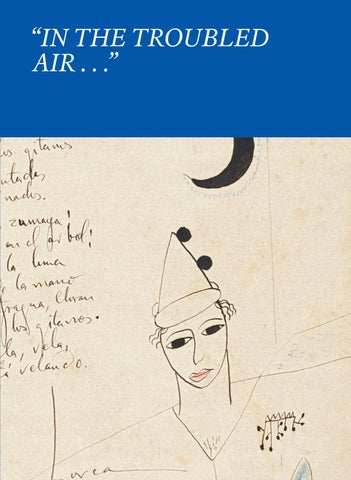
To articulate this investigation, Didi-Huberman draws on the notion of duende formulated by Federico García Lorca in his exploration of the essence of cante jondo, a genre of flamenco song. Duende is a multifaceted aesthetic concept, perhaps recognizable but difficult to fully grasp, that offers fundamental insights into how overflowing emotion is expressed and how it affects us. This is the emotion that becomes commotion, that “troubled air” from Lorca’s poem “Romance de la luna, luna,” whose line “En el aire conmovido” provides the exhibition’s title.
To support and complement the exhibition, this catalogue includes an extensive essay by Didi-Huberman, one of the leading philosophers in contemporary studies of the history and theory of images. We express our appreciation for his brilliant work of curatorship and research. We also thank the teams at the Museo Nacional Centro de Arte Reina Sofía and the Centre de Cultura Contemporània de Barcelona for their combined efforts in bringing this exhibition and publication to a successful conclusion.
Ernest Urtasun Domènech Minister of Culture
For four decades, the Centre de Cultura Contemporània de Barcelona (CCCB) has been opening up paths of innovation. A museum with no collection of its own, one of the CCCB’s identifying practices has been to link the concept of the exhibition with that of experimentation. This approach is exemplified in a radical and direct way by “In the troubled air . . .,” a coproduction with the Museo Nacional Centro de Arte Reina Sofía in Madrid. A line of verse by Federico García Lorca is the starting point for an engrossing multidisciplinary and multimedia investigation that illuminates contemporary reality with critical reflections and piercing questions.
Lorca is a poet who is universally read and admired despite his reliance on imagery that appears to be irrevocably local. A case in point is “Romance de la luna, luna,” the first poem of Romancero gitano (Gypsy Ballads), which contains the line that gives the exhibition its title. The highly suggestive quality of Lorca’s poetry, with its multiple significations, is fully explored in the proposal presented by the exhibition’s curator, Georges Didi-Huberman, one of Europe’s most brilliant and heterodox thinkers. An expert in the use and significance of images in contemporary culture and their ethical, political, and symbolic dimension, Didi-Huberman, who is also a lover of flamenco and Gypsy culture, takes the child looking at the moon in Lorca’s poem as the basis for a fascinating and simultaneously disturbing reflection on the meaning of life and death and on forms of survival in a discouraging and often unequal world.
Far from the simplification that sees nothing but naivety and innocence in childhood, “In the troubled air . . .” convenes, among others, Francisco de Goya, Bertolt Brecht, Charles Darwin, Jean-Luc Godard, Friedrich Hölderlin, and Pablo Picasso, suggesting that the child’s gaze contains a profound expression of perplexity, fear, and grief—one we recognize today in the faces of children who are suffering the consequences of conflicts like those in Gaza or Sudan.
Living is not easy, as Lorca knew, but behind his poetry—and behind this exhibition—lies the conviction that, in spite of the contradictions of our century, we have values and principles that raise hopes of an improvement in everyone’s lives.
Lluïsa Moret Sabidó
President of the Diputación de Barcelona and of the Consortium of the CCCB
Under the capitalist order, where the senses are subjected to processes of reification and fetishization and market rules are turned into naturalized social norms, an encounter with artistic and cultural productions makes us feel what Georges Didi-Huberman, the curator of the exhibition “In the troubled air . . .,” describes as an “affective unhinging,” a pulling apart, as though intuition told us that, from the inside, “art were separating from its own works.” This experience, though not new, is related to the inaccessibility of the ideal of beauty, a horizon that is always unattainable. Today, this ideal has acquired a material quality because the intrinsic value of the artwork has been systematically linked to its sale price, its exchange value, generating “hyperauratization” in art (with spectacle transformed into the latest phase of the fetishization of merchandise) and perpetuating the individualistic-narcissistic and blame-apportioning logic that Sigmund Freud identifies in Civilization and Its Discontents as a constitutive feature of the modern world.
In the current historical context, where the mechanisms for modulating this tendency are proving less and less effective, Didi-Huberman considers it vital to pursue the further development of a “critical philosophy” that, as propounded by Theodor Adorno and other thinkers of the interwar and postwar periods, not only exposes the dehumanizing nature of this tendency but also attempts to identify and imagine forms and experiences that challenge it. Underlying this is the conviction that identitarian withdrawals provoked by this tendency are precipitating the emergence of new fascisms, which must be confronted both ethically and aesthetically, from the field of politics as well as that of art and culture.
In this respect, Didi-Huberman proposes the articulation of a political anthropology of emotion based on the idea of “commotion,” understood in this case as “an event capable of affecting a set, an environment, a relationship, and not just an isolated psychological subject.” The term’s literal meaning—“moving with, moving in common, moving each and every one”—appeals to an unbounded emotion that is not confined to the subject but is transmitted in the form of “troubled air” through a singular body to the rest of society. This contagious and molecular faculty, to use the terminology of Gilles Deleuze and Félix Guattari, is a powerful tool for resisting the persuasive dialectics of power.
Through an exhaustive compilation of documentary and philosophical sources set in dialogue with a wide diversity of graphic, musical, literary, photographic,
and audiovisual productions, this exhibition, encyclopedic in intention, investigates the potentially transformative dimensions of emotion, which, we must not forget, is also susceptible to instrumentalization in the interests of manipulation or discipline. The show’s contents are organized into chapters or thematic blocs that serve as springboards for exploring the genealogy and capacity of aesthetic emotion to alter and seek out otherness.
The “Thoughts” chapter explores two main approaches to experiences of commotion: generating taxonomic systems (an alphabet, a grammar, a dictionary) that allow us to classify and control them, or “attaching (oneself)” to them, swaying to the rhythm of their capricious and liberating dance. In “Faces and Expressions,” which includes works by Auguste Rodin, Man Ray, Alberto Giacometti, Salvador Dalí, Henri Michaux, Yves Klein, and others, the psychoanalytic notion of “symptom”—a bodily occurrence that expresses pain originating from a psychic or corporeal depth and, when unleashed, upsets reality—plays a key role. According to Didi-Huberman, this notion integrates Johan Wolfgang von Goethe’s paradigm of the “demonic,” Friedrich Nietzsche’s of the “Dionysiac,” and Aby Warburg’s of the Pathosformeln (formulæ of pathos), which he regards as three of the most lucid tools developed by aesthetic theory for attempting to “understand” the galvanic power of commotion.
“Places” lays bare the limitations of the Cartesian concept of space and its infusion by emotion, with works by James Ensor, Simon Hantaï, and Joan Miró, the physiological-photographic studies of Étienne-Jules Marey, and the sculptural-spatial experiments of Fred Sandback and Lucio Fontana. The power of emotion to incarnate itself in the social sphere and transform into mass action is examined in “Politics,” a movement whose disruptive and transformative effects can generate new social assemblages but can also be used to legitimize and act as a vehicle for new and old forms of violence, repression, and domination. The show reflects on these two facets of “mourning” and “struggle” through the works of Pier Paolo Pasolini, Robert Capa, Costas Balafas, Bertolt Brecht, Francisco Goya, Käthe Kollwitz, and the artists who survived the bombing of Hiroshima. Finally, “Childhoods,” a section that serves as both prologue and epilogue for the exhibition, vindicates the poetic and political strength of innocence—not as a romantic cult of naivety or purity but with full acceptance of its contradictory and polyhedric nature. Despite its chaos and fears, Didi-Huberman asserts, the child often sees the world more clearly than the adult, penetrating the surface of things
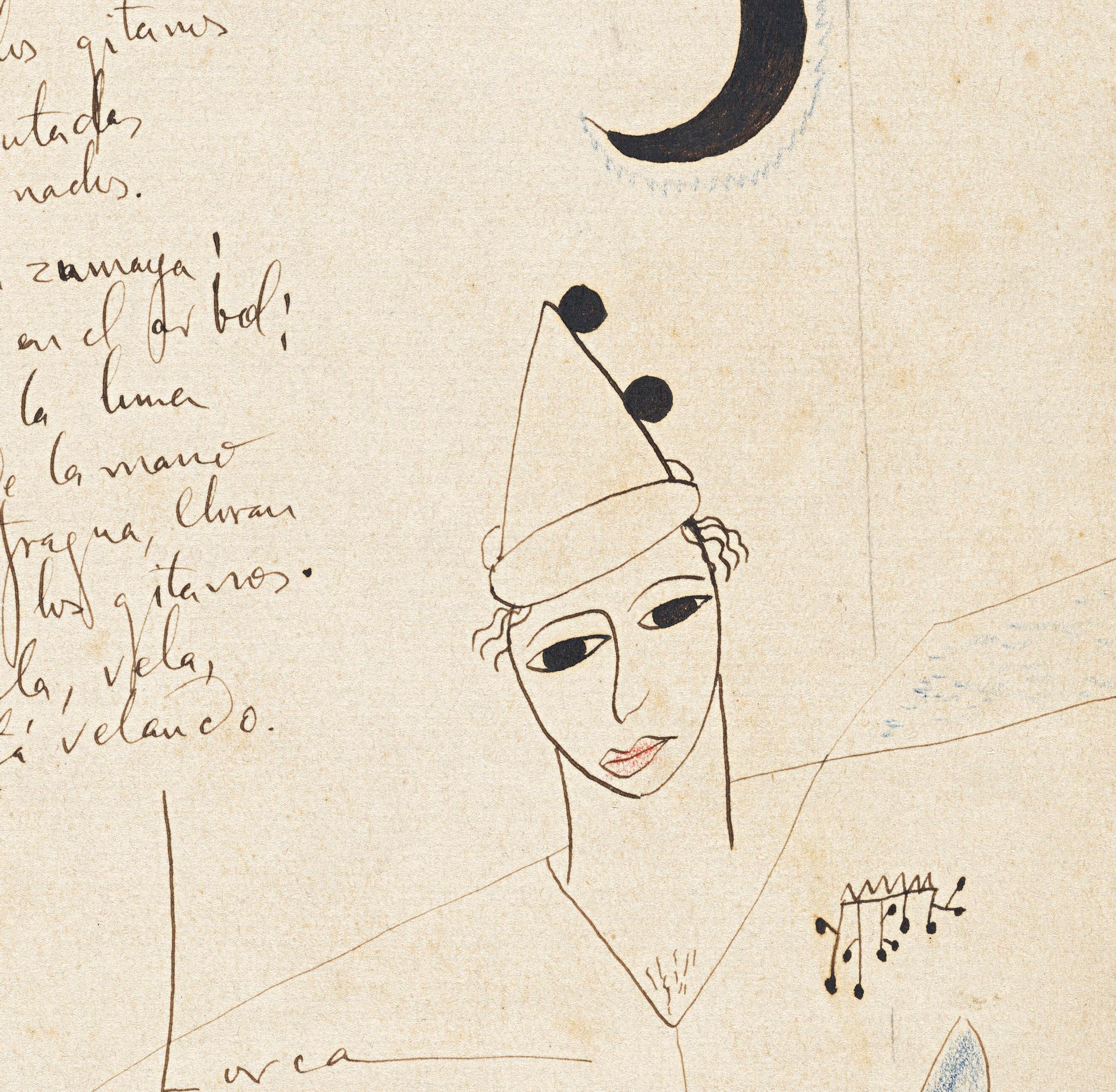
and confronting reality from an ethics of defiance. This ability to resist in a state of vulnerability, to turn play into rebellion and rebellion into play, and to cling to the desire to (re)name the world and exorcize its threats is reflected in the works in this section, which includes the manuscript of “Romance de la luna, luna,” the poem that opens Federico García Lorca’s Romancero gitano (Gypsy Ballads), whose fifth line, “En el aire conmovido” (In the troubled air), gives the show its title.
As a complement and extension of the exhibition, organized by the Museo Nacional Centro de Arte Reina Sofía in collaboration with the Centre de Cultura Contemporània in Barcelona, this catalog has been copublished by the two institutions. Besides full documentation of the works on display, it includes an essay by Didi-Huberman, the author of numerous publications on the history and theory of the image, who develops and broadens the ideas addressed in the exhibition. Of special note is his reinterpretation of Lorca’s concept of duende, which interests Didi-Huberman not so much as an approach to the essence of the cante jondo variety of flamenco song as for its polysemous quality as an aesthetic idea and the rereadings that can be made of it in the “disparate and shifting light of its philosophical constellations.” Exploring those rereadings, as proposed in the exhibition, is an enthralling challenge.
Manuel Segade
Director of the Museo Nacional Centro de Arte Reina Sofía
I
EN EL AIRE CONGELADO: TORN AFFECTS; OR DISCONTENTS IN CIVILIZATION
15 II
EN EL AIRE CONMOVIDO: A GARDEN OF POSSIBILITIES; OR THE CONSTELLATIONS OF THE DUENDE
43 CATALOGUE 189
Today, more than ever, it seems to me, we are torn; we experience a tearing or an affective disjunction in front of the history that bears us along; and, strangely, in front of a world of culture that we would have liked to think immune to such discontents. Upon entering a gallery, a contemporary art fair, or a museum, we might be moved by a work but be left feeling cold—or chilled, as though the air were frozen—by everything that has institutionalized its social, commercial, and promotional existence. The expression “more than ever, it seems” implies that this impression, albeit vivid, is founded in part on a historical illusion: we are particularly disarmed by the cynicism of the contemporary art market since we are subjected, without knowing what to do, to the relative novelty of its challenges, its means, and its scale. Aesthetic emotions, however, have never been pure. If Domenico Ghirlandaio’s graceful Ninfa can move us but, at the same time, cause us neither any internal conflict nor “disjunction,” it is because we do not know the part it played in the political and financial calculations of banker Giovanni Tornabuoni when, on September 1, 1485, he had a contract drawn up committing the painter to create a cycle of frescoes in the main chapel of the Florentine Church of Santa Maria Novella.1
This disjunction even seems to affect, principally, everything we might wish to understand or to experience as works of art. It is as though a chasm has opened up in the center of this expression: as though, from inside, art was being separated from the works themselves. Hans Belting, among others, founded his historical archaeology of “the invisible masterpiece” upon this kind of observation. His starting point was the fact that an impassable distance rejects all works, casting them far away from art as an ideal or as a “dream” of the absolute but one toward which each singular work might lean. It is for the historian to tell how “the cult of the idea lived on [from the romantic period] in the cult of a work that was rephrased as an absolute masterpiece.”2
In the Critique of Judgment Immanuel Kant writes of such an ideal of beauty, “There can be no objective rule of taste, no rule of taste that determines by concepts what is beautiful. For any judgment [alles Urteil] from this source [i.e., taste] is aesthetic, i.e., the basis determining it is the subject’s feeling [das Gefühl des Subjekts] and not the concept of an object [kein Begriff eines Objekts].” As such, there is neither any objectivity nor any concept possible for artistic beauty; there is only the personal faculty, “an ability one has oneself”—for example, an emotion that attempts to agree with an “ideal” (Ideal), which must be carefully distinguished from any “concept of reason” and so from any “idea” (Idee) as such. This “ideal of the beautiful” is, therefore, merely the accessible
1. See J.K. Cadogan, Domenico Ghirlandaio, Artist and Artisan (New Haven: Yale University Press, 2000), 74–90, 236–43, 350–51.
2. H. Belting, The Invisible Masterpiece (1998), trans. H. Atkins (London: Reaktion Books, 2001), 25.
horizon as a tendency, a subjective tension rendered by Kant in the verb streben, which expresses the effort, the aspiration to reach something. On the one hand, the idea can be grasped—greifen, hence the word for the concept: Begriff—but by definition it escapes the very region in which works of art are created and contemplated. On the other hand, the ideal inherent to this region of human experience remains ungraspable as an “ideal of the imagination (Einbildungskraft), precisely because it does not rest on concepts.”3
It is a fatal theoretical or critical tearing, then, between the aesthetic ideal and what, in a subject, tries to reach it with its imagination—a tearing that might well concern, on this level, the creative artist as well as the spectator-aesthete. Not long after Kant, the romantic moment attempted to resolve this disjunction. A kind of critique of the nonconcept represented by Kant’s reflections on the aesthetic ideal as a subjective “feeling” was opposed to a new concept of aesthetic critique that Friedrich Schlegel and Novalis attempted to defend, renewing with this gesture—all things considered—the reconciliation of the image and the idea advocated by humanist artists and theoreticians against the Platonist secular critique of the sensible world in general.4 Before Erwin Panofsky’s book Idea ever described the workings of this reconciliation in the context of the Italian Renaissance, Walter Benjamin had written about the endeavor to reunite art and idea by the first German romantics in a doctoral dissertation defended in 1919 and published the following year simultaneously in Berne and Berlin. For Benjamin, what was deconstructed by romanticism was that other secular division that had sought to make the inner subjective world and the outer objective world irreconcilable. For Schlegel, however, “Reflection without the ‘I’ is a reflection in the absolute of art” (die Ich-freie Reflexion ist eine Reflexion im Absolutum der Kunst)—an absolute that gains the value of a genuine “concept” (Begriff) or of an objectively pertinent idea.5 Hence romanticism, like humanism before it, never separated its aesthetic ideal from a “theory of the knowledge of nature” in general.6 If romantic works of art demanded, as Benjamin claimed, an “immanent critique” (immanente Kritik), it was because their potency toward “self-reflection” made them critical works of their own.7 Not only is “Romantic poetry [. . .] the idea of poetry itself,” but it also sought to be a fundamentally “critical” idea, an instrument for effective—and political—transformation of the world.8
3. I. Kant, Critique of Judgment, trans. W.S. Pluhar (Indianapolis: Hackett Publishing Company, 1987), 79–80.
4. E. Panofsky, Idea: A Concept in Art Theory, trans. J.J.S. Peake (Columbia: University of South Carolina Press, 1968).
5. W. Benjamin, “The Concept of Criticism in
German Romanticism,” trans. D. Lachterman, H. Eiland, and I. Balfour, in Selected Writings, vol. 1, 1913–1926, ed. M. Bullock and M.W. Jennings (Cambridge, MA: Harvard Belknap Press, 2004), 134.
6. Benjamin, 143.
7. Benjamin, 151.
8. Benjamin, 166.
Benjamin held intense and continuous philosophical dialogues with works of art that were capable of showing such a critical potency, or with poetic worlds that were inseparable from any profound political virulence, whether this concerned Charles Baudelaire or Franz Kafka, Bertolt Brecht or Alfred Döblin, Eugène Atget or Paul Klee. Nonetheless, it was important to acknowledge that reconciliation is never given, nor acquired, nor ever finished in spite of having begun. The tearing persists, albeit by displacement. Twenty years after beginning to focus on the poetic and philosophical fervor of German romanticism, Benjamin left us—in a time when fascism prevailed—with this testament to tearing: “There is no document of culture [Dokument der Kultur] that is not also a document of barbarism [zugleich ein solches der Barbarei].”9
*
Torn? We still are . . . and to a great extent. Not only in terms of a “theoretical” or “critical” disjunction but in the general sense that Kant gave to the word. Such a tearing should be understood in all of its psychological depth: it is an affective (or tragic) tearing. It is a tearing whose political extent has constantly been measured by an aptly named “critical theory,” by Benjamin and beyond, from the well-known book by Max Horkheimer and Theodor W. Adorno (which might easily have been entitled “Tearing of the Enlightenment”—a sort of negative dialectics), to the reflections in Minima Moralia on the “mutilated life” that humanity was tragically experiencing at the time.10
Echoes of these doubts or these tearings also appear in Thomas Mann’s Doctor Faustus, which evokes—with an anxiety close to Adorno’s, with whom Mann was in dialogue at the time—the ethical impossibility or even the lie of a work of art that presents itself as perfectly autonomous or comfortably closed in on itself:
In a work there is much seeming and sham, one could go further and say that as “a work” it is seeming in and for itself. Its ambition is to make one believe that it is not made, but born, like Pallas Athene in full fig and embossed armor from Jupiter’s head. But that is a delusion. Never did a work come like that. It is work: art-work for appearance’s sake—and now the question of whether at the present stage of our consciousness, our knowledge, our sense of truth, this little game is still permissible, still intellectually possible, still to be taken seriously: whether the work as such, the construction, self-sufficing, harmonically complete
9. W. Benjamin, “On the Concept of History” (1940), trans. H. Zohn, in Selected Writings, vol. 4, 1938–1940 (Cambridge, MA: Harvard Belknap Press, 2003), 392.
10. T.W. Adorno and M. Horkheimer, The Dialectic of Enlightenment: Philosophical Fragments, trans. E. Jephcott (Stanford, CA: Stanford University Press, 2002). See also T.W. Adorno, Minima Moralia: Reflections from Damaged Life, trans. E.F.N. Jephcott (London: Verso, 2005).
in itself, still stands in any legitimate relation to the complete insecurity, problematic conditions and lack of harmony of our social situation; whether all seeming, even the most beautiful, even precisely the beautiful, has not today become a lie. 11
The word lie, which we find so often in Adorno’s writings, concentrates within it perhaps all of Adorno’s protest—the tearing or despair even—before a world that was in a terrible state. The unease or malaise in question is simply that by which reification governs the world by transforming every being into an asset, an exchangeable or interchangeable thing. We can understand—from Karl Marx to Georg Lukács and Ernst Bloch, and then to Adorno, Hebert Marcuse, Guy Debord, and Frederic Jameson—the great social “lie” through the disjunction or separation created in Western history, from the “fetishism of market value” to its contemporary consequences, whether called the “society of the spectacle” or “culture of the simulacrum” or postmodernism, and so on.
Reification hands us over to the world of salable objects. Or worse still, it turns us subjectively into such things (and this is why it becomes impossible to sell or exploit oneself by being alienated from one commercial system or another, including when one presents oneself to others as a work of art). This is the price of commodity fetishism analyzed by Marx from the very outset of Capital. 12 But such a price needs to be understood in its two dramatically opposed meanings: first, as that which gives value to something; second, as that which must be lost, torn from oneself, sacrificed, or forgotten about oneself to create the very possibility for such a value to exist socially. The problem involves knowing how to understand this state of things and how to respond.
First, there are always opportunistic responses. Some, said to be the “cleverest,” seize the opportunity to profit—just a little even—from such a situation of general exchange. Capitalism’s strength is its ability to satisfy such immediate appetites, regardless of the long-term consequences, as we see in Peter Sloterdijk’s description of the strategy of “anti-genealogical” nonsense in his book The Terrible Children of Modernity 13 Then there are the declinist theories, which are moralistic, catastrophist, and reactionary. These are described in Oswald Spengler’s The Decline of the West, published from 1918 to 1922 in a period of military defeat and civil war in Germany from which the Nazis would emerge victorious. Yet Spengler, as Friedrich Nietzsche had done in the previous century and as Rosa Luxemburg had then been doing for a while, denounced the “onslaught of money upon this intellectual force”—this
11. T. Mann, Doctor Faustus: The Life of the German Composer Adrian Leverkühn as Told by a Friend, trans. J.E. Woods (New York: Alfred A. Knopf, Vintage, 1992), 180.
12. K. Marx, Capital: Volume 1 (1867), trans. B. Fowkes (London: Penguin Classics, 2004).
13. P. Sloterdijk, The Terrible Children of Modernity, trans. O. Berghof (New York: Columbia University Press, 2024).
potency of the mind—and spoke against the fact that “high finance is wholly free, wholly intangible,” and that, consequently, “liberty” is left to struggle “against money-thought [and] the dictature of money” (Diktatur des Geldes).14
This is, however, the worst answer to give. For it is based on a call for revenge, a vengeance whose entire principle was given to what Spengler called the political power of “Caesarism” (Cäsarismus), meaning the anticipation of a Führer whose “struggle” would amount to the following: if, as he wrote, “the dictature of money and its political weapon democracy” are ruining our life and our vitality, then it is necessary to understand that “money is overthrown and abolished only by blood” (das Geld wird nur vom Blut überwältigt und aufgehoben).15 Thus, while the opportunists can profit without hesitation from the most iniquitous social relations, the declinists expect from revolution—both radical and conservative—a kind of vengeance against liberalism as a revenge on all liberty. Since we are speaking of culture, we must keep in mind the link that has been created historically and politically between this kind of reactionary declinism and the recurrent and continuing condemnations—since the impressionists, Émile Zola, or Stéphane Mallarmé, who were denounced by the despicable Julius Langbehn— against “contemporary art” in general.16
We can find a third kind of response, one that is far more dialectic, among thinkers who were neither opportunists nor declinists, neither cynical zealots of capitalism nor givers of lessons seduced by fascism. From a political exile that made him flee Nazism and wander through England, Sweden, and finally the United States, philosopher Ernst Cassirer devoted the final study in his book The Logic of the Cultural Sciences, in 1942, to the almost testamentary notion of tragedy in culture. Implicit in the thinking of J.W. Goethe and G.W.F. Hegel, in Jacob Burckhardt and in Nietzsche, it appeared explicitly in a text by Georg Simmel to which Cassirer wished to pay tribute.17
Written in 1911, this text, entitled “On the Concept and the Tragedy of Culture,” shows Simmel envisaging the fates of the principle “radical contrast” between “subjective life” and the objective creation of works of culture. Can we, then, he asked, “resolve the subject-object dualism”?18 Can we support or perpetuate these “bridges between subject and object which cannot be completed or which, if completed, are again and again torn down”?19 It is for human culture to aim for such an “objectivation of the spirit” (Objektivierung des Geistes).20 But what we see
14. O. Spengler, The Decline of the West: Perspectives of World History, vol. 2, trans. C.F. Atkinson (London: George Allen and Unwin, 1922), 505–6.
15. Spengler, 506–7.
16. G. Didi-Huberman, “D’un ressentiment en mal d’esthétique,” Les cahiers du Musée national d’Art moderne, no. 43 (1993): 102–18; revised with a postscript in Lignes, no. 22 (1994): 21–62.
17. E. Cassirer, Logic of the Cultural Sciences: Five Studies (1942), trans. S.G. Lofts (New Haven: Yale University Press, 2000).
18. G. Simmel, The Conflict in Modern Culture and Other Essays, trans. K.P. Etzkorn (New York: Teacher’s College Press, 1968), 29.
19. Simmel, 30.
20. Simmel, 31.
everywhere, unfortunately, is that this objectivation often submits to the brutal and advantageous attitude of reification, a kind of pathology of the relation between subject and object in which Simmel sees “the ‘fetishism’ which Marx assigned to economic commodities”—a fetishism that Simmel then interprets, overturning the purely economic viewpoint, as a “special case [. . .] general fate of contents of culture.”21
We can understand, then, how this notion of a “tragedy of culture” was less a response than a questioning. It was a sort of interpellation delivered from our experiences of this tragic tearing that separates—in each “testimony of culture”—the subject from the object. Note the Hegelian tone of these words. In his Phenomenology of Spirit, Hegel brings to light figures of subjectivities that, in their relations to objects and to the natural or social worlds, evoked some of the responses brought to the challenge of “resolving the subject-object dualism.” For example, the “beautiful soul” (schöne Seele), whose arrogance and “absolute certainty” of itself Hegel evokes, led to no more than an absolute “untruth which collapses into itself”; it produced no more—beyond that moment psychiatrists call a maniacal triumph—than emptiness, falseness, and unhappiness. Hegel also mentions the “unhappy consciousness” (unglückliches Bewusstsein) that is an “estranged consciousness within itself.” That is, “this contradiction of its essence is one consciousness”; it is able to “have in one consciousness that of an other consciousness.” It will be unhappy then if split without being able to dialectize itself: constantly changing, it will confuse the essence with the inessential. Being in spite of itself a consciousness of its own contrary, it will become consciousness of its own nothingness, destined to hold only what Hegel calls “the language of disruption.” It will be, therefore, a torn, ruptured, or “disrupted consciousness” (zerrissenes Bewusstsein)—that tearing apart becoming the fundamental characteristic of “culture” itself even as that consciousness persists in producing within the social world that surrounds it.22
Cassirer’s tribute to Simmel in the last essay of The Logic of the Cultural Sciences notes the tragic character inherent in all artistic creation. Artistic creation never tries only to solve equations, beginning with the “subject-object dualism.” It also exclaims and expresses its demands and its difficulties: it does this, therefore, in different ways than with ideas or even ideals. This is why, beyond Simmel, it was necessary to evoke the central figure of Aby Warburg as one of the great founders of contemporary Kulturwissenschaft. We know of the friendship that united Cassirer and Warburg twenty years earlier. The philosopher also wrote an extraordinary funeral eulogy for the cultural historian in 1929.23 From then on, Cassirer
21. Simmel, 42.
22. G.W.F. Hegel, Phenomenology of Spirit (1807), trans. T. Pinkard (Cambridge, MA: Cambridge University Press, 2018), 380, 122, 301, 303; emphasis in original.
23. E. Cassirer, “Éloge funèbre du professeur Aby Warburg” (1929), trans. C. Berner, in Œuvres, XII: Écrits sur l’art, ed. F. Capeillères (Paris: Le Cerf, 1995), 53–59.
endeavored to justify and to clarify the assumption, made by Warburg himself, regarding the notion of the “tragedy of culture.”
Why then, in Cassirer’s presentation of the cultural dynamics brought to light by the author of Mnemosyne should the notion of “formulae of pathos” (Pathosformeln) have come to the fore? In the Western history of images and in the survivals of ancient culture that show up everywhere, the well-known Hegelian or Simmelian “dualism” between the subject and the object is embodied, above all, in the dialectical knot that images bear, those knots of pathos and of form. According to Cassirer, Warburg showed “how Antiquity created specific pregnant forms of expression for certain typical, continually recurring situations. Certain inner excitations, certain tensions and solutions are not only captured in them, but they are, as it were, exorcised in them. Wherever a similar affect is discernible, the image, which art has created for it, comes to life again. According to Warburg’s expression, certain ‘formulas of pathos’ come into existence that are indelibly stamped in the memory of humanity.”24
Whoever deals with “the tragedy of culture” through images or works of art will quickly discover a form of “survival of affect” through the dynamics of the forms or formulae of representation—dynamics that are not without conflicts or without the permanent structural plays of “polarizations” and “depolarizations,” as Warburg called them. These are often tragic, for an affect from the past comes back—or survives—only with some kind of emotional rupturing or tearing.
* We constantly experience this tearing, which tends to divide us emotionally. The world of reified relations that we inhabit—again, today more than ever— accentuates this internal tearing: it sometimes takes the shape of a disjunction that is so radical, of a psychotic nature, that it forecloses these emotions that are nonetheless the sources for the initial dynamics of our relations with others. I can illustrate this by recounting two minor but significant episodes from my own experience. Two anecdotes, two vignettes, for this history that I know is infinitely broader and more varied, of torn affects and of discontents in culture. They tell of two contemporary methods that the empire of reification deploys to separate emotions from one another, to isolate them, to untie them—and to separate them from us.
One day, a woman—a wealthy bourgeoise, on whose face surgeries had left the traces of her anxiety at the passing of time—arranged to meet me in a very chic Parisian café. She was accompanied by a secretary or assistant who barely
24. Cassirer, Logic of the Cultural Sciences, 117–18.
said a word. As “artistic director,” she had been assigned by the foundation of contemporary art that employed her to commander—meaning to “commission” from me, but the word had the sense of an “order” to it—a text on, well, emotion. On “aesthetic” or “artistic emotion,” of course. “Why emotion?,” I asked. The answer was twofold. On the one hand, I had recently published a small book on this theme; on the other hand, the foundation was preparing a large exhibition whose objective was to offer visitors “the greatest artistic emotions.” “What do you mean by greatest emotions?,” I asked again. “We will exhibit the most beautiful paintings in the world together,” was the answer. “Congratulations,” I may have mumbled. “Which paintings?” The answer came out as though it was obvious: “We cannot tell you. We are bound by a confidentiality clause.” In short, I was being asked to sing of the potencies of emotion that certain paintings produce, but on the condition that I remain oblivious to what paintings were involved, for they were still in the secrecy of ongoing financial negotiations. (I found out, later, that the paintings included Guernica, for a considerable amount of money that the Reina Sofía Museum in Madrid fortunately refused.) It was a question, then, of declaring oneself moved, but at a remove from what moves, so to speak and to invent a catchphrase for amateurs of art in search of strong emotions. Naturally, I did not follow up on this “commission.”
The second “vignette” involves returning for a moment to a phrase uttered by American art critic Hal Foster, which I have commented on elsewhere.25 The phrase was spoken in the context of a roundtable, later published by the journal Artforum in 2012, where it reappeared in enlarged characters, like an advertisement, to give the catchphrase its punch: “When I hear the word affect, I reach for my Taser.”26 That this “parodic-Nazi” phrase—a reference to a comment attributed to Joseph Goebbels, then to Hermann Göring, then to Baldur von Schirach—was authored by a man of the Left is obvious, as is the fact that what he meant was merely a critique of the use-value that “affects” are given in contemporary society. Inspired, no doubt, by Roland Barthes’s excellent readings (notably his critique of sentimentalism in Mythologies) or by those of Debord (in his critique of “separation” in The Society of the Spectacle), Foster made emotions “a prime medium of ideology today”27 and of its submission to market rules even in the cultural domain.
The basis for this crude and trashy phrase was, however, the following idea: the affects common in our “liberal” societies are the result, according to Foster, of an “implanted emotionality that is worse—because more effective—than false consciousness.”28 This argument actually combines two motives. The first is the result of an essentially academic philosophical tradition that states that emotions
25. G. Didi-Huberman, Aperçues (Paris: Les Éditions de Minuit, 2018), 273–75.
26. H. Foster et al., “Trading Spaces: A Roundtable on
Art and Architecture,” Artforum 51, no. 2 (2012): 206.
27. Foster et al., 208.
28. Foster et al.
are merely bodily reflexes void of rationality or judgment. The second is more fashionable since it tends to compare emotions with those prostheses of plastic surgery intended for the well-off middle class worried about the effects of time on their bodies. Making the most of this media market law—which is also academic and political—according to which an idea enters the public sphere more easily when it is “radical,” provocative, and, above all, nondialectic, Foster decided to take a consequential conceptual step: it does not suffice to say that there are, in the neoliberal world today, emotions transformed into things, which is both true and questionable. He had to insist that all emotions are things, easily “implantable” as such, like Botox in the skin of the face or silicone in the breasts. It is like saying that, if public speech is so often manipulated or false, then language itself must be considered false by nature, and we should stop speaking to allow some truth to come to light. For a better world, therefore, we would need, from Foster’s perspective, to stop being moved emotionally (s’émouvoir) so as no longer to be deceived by those—whom he does not even refer to, avoiding any real political analysis—who might wish, through literature and art works, to touch our souls. This is how a “critique of separation” finally disjoins everything, beginning with affects, triggering at its own scale the very processes of reifying society that it claims to fight.
*
A glance at our own contemporary societies shows us this affective disjunction. Just as images are disjoined by the two concomitant phenomena of overexposure, which makes them difficult to look at because of the surplus they become, and of underexposure, which makes them invisible through a sort of structural censorship, in the same way emotions are often overvalued in something we could call an affective and devalued “market” in something that resembles an indifferent, cynical, disillusioned, anesthetized world.29
To begin, we are witnessing the implementation of a “cult of emotions” (as Michel Lacroix, among others, argues). It is spreading its “empire” over every historical event (as Christopher Prochasson laments), and even over every geopolitical event (as Dominique Moïsi and Pierre Hassner suggest).30 What is established then, for the needs of such a cult, is a kind of market founded on the “competing” of emotions (as Julien Bernard analyzes) and therefore on the
29. G. Didi-Huberman, Peuples en larmes, peuples en armes: L’œil de l’histoire, vol. 6 (Paris: Les Éditions de Minuit, 2016), 61–75.
30. See M. Lacroix, Le culte de l’émotion (Paris: Flammarion, 2001); C. Prochasson, L’empire des émotions: Les historiens dans la mêlée (Paris: Demopolis, 2008); D. Moïsi, La géopolitique de l’émotion: Comment les cultures de peur, d’humiliation et d’espoir façonnent le monde (2010), trans. F. Boisivon (Paris: Flammarion, 2011); and P. Hassner, La revanche des passions: Métamorphoses de la violence et crises du politique (Paris: Fayard, 2015).
reign of particularly virulent “sad passions” in the populist moments of political debate (as François Dubet and Pierre Rosanvallon observe).31 Symmetrical to all of these overvalued emotions—disjointed because they are made inaccessible as fetishes—a great phenomenon of affective devaluing is at work which tends to reify the sensible world while pulling it downward. Emotions are disjoined inasmuch as they are thrown, like trash, out of any social subjectivation. Wherever they were reified as commodities to sell or to buy in a highly competitive market, we find them reified as indifferent, negligible, interchangeable, or obsolete things, as Claudine Haroche and Anne Vincent-Buffault show.32 We see, then, that this profound insensitivity is merely the flipside of a superficial sentimentalism and sensationalism that serve as its alibi and that showcase it.
Christopher Lasch refers to this as a “culture of narcissism,” emphasizing that it equals not only a fantasized flight from time (e.g., in the “aesthetic” responses, such as plastic surgery, to fears of aging) but also a “flight from feelings” themselves.33 That Dale Carnegie’s How to Win Friends and Influence People (whose French translation, Comment se faire des amis, waters the title down considerably) sold, in 2010, forty million copies throughout the world, says a lot about this rival, authoritative, and instrumental notion of ethical relations.34 Even friendship, from this perspective, becomes a competitive market. So, too, does love, as Aharon Ben-Zeev and Eva Illouz show.35 The “modern survivals of prowess” and of ancient jousts of honor, identified by Thorstein Veblen in The Theory of the Leisure Class, become a sort of “contagion” both rival and mimetic, about which André Orléan writes that it is the principle of what is called, in economics, “speculative bubbles.”36
The devastating “rhetoric of capitalist fascism,” as Alain Bihr calls it, has a technique of generalized exchange for which computer networks are the ideal tools.37 Jeremy Rifkin characterizes the “new culture of capitalism” as a hitherto unseen development of what he calls a civilization of “access.” Far from seeing
31. See J. Bernard, La concurrence des sentiments: Une sociologie des émotions (Paris: Métailié, 2017); F. Dubet, Le temps des passions tristes: Inégalités et populisme (Paris: Le Seuil; La République des idées, 2019); and P. Rosanvallon, Le siècle du populisme: Histoire, théorie, critique (Paris: Le Seuil, 2020), 63–75.
32. See C. Haroche, L’avenir du sensible: Le sens et les sentiments en question (Paris: PUF, 2008), 141–208; and A. Vincent-Buffault, L’éclipse de la sensibilité: Éléments d’une histoire de l’indifférence (Lyon: Parangon/Vs, 2009).
33. C. Lasch, The Culture of Narcissism: American Life in an Age of Diminishing Expectations (1979; New York: Norton, 1991), 187–206.
34. D. Carnegie, How to Win Friends and Influence People (1936; New York: Pocket Books, 2010).
35. See A. Ben-Zeev, Love Online: Emotions on the Internet (Cambridge, UK: Cambridge University Press, 2004); E. Illouz, Cold Intimacies: The Making of Emotional Capitalism (Cambridge, UK: Polity Press, 2007); and E. Illouz, ed., Emotions as Commodities: Capitalism, Consumption and Authenticity (2018; New York: Routledge, 2019).
36. T. Veblen, The Theory of the Leisure Class: An Economic Study of Institutions (1899; London: MacMillan, 1915). See also A. Orléan, “Contagion mimétique et bulles spéculatives,” in La formation des grandeurs économiques, ed. J. Cartelier (Paris: PUF, 1990), 285–321.
37. A. Bihr, La novlangue néolibérale: La rhétorique du fétichisme capitaliste (2007), rev. ed. (Lausanne: Éditions Page 2; Paris: Éditions Syllepse, 2017).
this simply as a process of democratization—notably in the access for the greatest number of people to objects of culture on the Internet—Rifkin sees everything that this civilization involves or that it conditions or subjugates as the “merchandising of human relations,” hegemony, and the tyranny of marketing strategies.38 More recently, Bernard Harcourt has studied how this generalized access is deployed as a kind of trap with wonderful bait to attract a generalized exposition without any limits between public and private spaces and describing, in this way, a stage in the social alienation succeeding the eras of “constraint,” of “control,” of “the spectacle,” or of “surveillance.”39 This works so well only because desires and affects are captured—or “siphoned”—by behaviorist measures founded on a meticulously calculated alternation between satisfactions and punishments; or what Cédric Durand, analyzing the principles of digital economy, calls a “technofeudalism.”40
Since the publication of Lasch’s striking essay in 1979, the “culture of narcissism” has developed under a different guise. The ancient values of prestige survive, of course, and even continue to develop using new exposing values that remodel the “aesthetic foundations of social life” and usher in a new “social design,” as Barbara Carnevali writes in her book Social Appearances. 41 We know that Narcissus falls in love, captured by and captive of his own image. But this image no longer has anything to do with a blurred or solitary aquatic apparition: it is a screen; that is, it is both a private mirror (a psyche) and a shop window (an ethos). Emotions become fundamentally “medial”: in a disproportionate expansion in the medium of the network, in a reduction consecutive to their status as diffused messages.42 In his book Mediarchy, Yves Citton points out that “what circulates through the mass media” is not only a flow of information but also a whole swarm of affections that “combines an acknowledgment of our passivity with the basis for our activity.”43
The entire sphere of the sensible, from the most “immediate sensations” to the most complex emotions, are thus subject to reification and circulation, to fetishism and to competing circuits of exchange (i.e., capitalistic exchanges in which one of the agents always aims to colonize or exploit the other). This leads to a “society of the spectacle” in which economy becomes iconomy, as Peter Szendy shows both in The Supermarket of the Visible and in the subsequent exhibition he cocurated with
38. J. Rifkin, The Age of Access: The New Culture of Hypercapitalism, Where All of Life Is a Paid-For Experience (New York: Putnam, 2000).
39. B.E. Harcourt, Exposed: Desire and Disobedience in the Digital Age (Cambridge, MA: Harvard University Press, 2015).
40. C. Durand, Techno-féodalisme: Critique de l’économie numérique (Paris: Zones-La Découverte, 2020).
41. B. Carnevali, Social Appearances: A Philosophy of Display and Prestige, trans. Z. Hanafi (New York: Columbia University Press, 2020), 1–53, 175–89.
42. See O. Grau and A. Keil, ed., Mediale Emotionen: Zur Lenkung von Gefühlen durch Bild und Sound (Frankfurt am Main: Fischer Taschenbuch Verlag, 2005).
43. Y. Citton, Mediarchy, trans. A. Brown (New York: Polity Press, 2019).
Emmanuel Alloa and Marta Ponsa.44 The fact that any sociology of emotions today must, to some extent, be subject to an aesthetic paradigm, as Jean-Louis Genard proposes, shows the extent to which the function of art and of images in general has becomes crucial—disjointed, torn, tearing . . . “more than ever”?—for any political anthropology of our time.45
*
If, upon entering a gallery or a contemporary art fair, we experience such a tearing—whether it be theoretical, political, or affective, or all three together—it is certainly not because “contemporary art” might be, in itself, less beautiful, less good, or less just than the art that preceded it, as we hear repeatedly from those who are nostalgic or reactionary. It is not about what works do but about what we do with art, even though the art institution, in many cases, does not lack for influence on the production of the former. In reality, we must examine the terms of a continuous conflict—rather than a unique or unanimous situation.
We can begin with the hypothesis proposed by Benjamin in his essay—which, like any great text, never loses its interest—on “The Work of Art in the Age of Its Technological Reproducibility” (Third Version). The argument—the object of its “foreword”—begins with a reminder of how Marx endeavored to present his analysis of the mode of capitalist production as a diagnosis but also as a defensive response. In this way, Benjamin writes for his own argument, “the concepts which are introduced into the theory of art differ from those now current in that they are completely useless for the purposes of fascism. On the other hand, they are useful for the formulation of revolutionary demands in the politics of art [Kunstpolitik].”46
The crucial point in Benjamin’s hypothesis is that technological reproducibility—which had become a fundamental rather than accidental criterion of modern works—transformed the ritual value of art into political value, which, later in his text, declares itself as a transformation of cultural value of art works into an exhibition value with an emancipatory tone: “To an ever-increasing degree, the work reproduced becomes the reproduction of a work designed for reproducibility. From a photographic plate, for example, one can make any number of prints; to ask for the ‘authentic’ print makes no sense. But as soon as
44. P. Szendy, The Supermarket of the Visible, trans. J. Plug (New York: Fordham University Press, 2019); and P. Szendy, E. Alloa, and M. Ponsa, eds., Le supermarché des images (Paris: Jeu de PaumeGallimard, 2020).
45. J.-L. Genard, “Une sociologie des émotions ‘modo aesthetico’?,” in Les émotions collectives: En
quête d’un “objet” impossible, ed. L. Kaufmann and L. Quéré (Paris: Éditions de l’École des hautes études en sciences sociales, 2020), 169–203.
46. W. Benjamin, “The Work of Art in the Age of Its Technological Reproducibility” (Third Version, 1939), trans. H. Zohn and E. Jephcott, in Selected Writings, vol. 4, 252.
the criterion of authenticity ceases to be applied to artistic production, the whole social function of art is revolutionized. Instead of being founded on ritual, it is based on a different practice: politics. [And this takes us from] the artwork’s cult value [to] its exhibition value.”47
The fact that such notions might have been “useless for the purposes of fascism” is possible, at least in Benjamin’s historical context. Yet this defensive, Marxist response has since been absorbed by capitalism’s extraordinary potency to digest—for its own profit—everything that seems to contradict it. Thus, the “exhibition value” given by Benjamin as an alternative to “cult value” was finally transformed into an exhibition cult that blurs the critical efficacy of anterior antinomies. In the same way, the opposition created between a “grand art” and “cultural industries” made room, from Adorno’s perspective, for a real industry of grand art, beginning with its international market. If we go back to the conceptual outlines developed by Marx, we should see that the partition between “use value” and “exchange value” also became considerably blurred, thereby making them, in innumerable cases, indistinct from one another.
What remains and even profits from such confusions is finally the fetishizing itself, which confirms Marx’s fundamental intuition at the beginning of Capital. This general fetishizing is, for Adorno and Horkheimer, the exemplary figure of a fetishizing of art. “For consumers the use value of art, its essence, is a fetish, and the fetish—the social valuation which they mistake for the merit of works of art—becomes its only use value, the only quality they enjoy.”48 In contrast, it is founded, as “objective value,” on its exchange value only. While Edward Bernays proudly claimed to have created fetishes for a whole society (e.g., in the fashion of silk pumps, which, having been the object of systematic propaganda, spread like wildfire throughout North America), Benjamin in The Arcades Project clearly traced the path that led from commodity fetishism according to Marx to sexual fetishism according to Sigmund Freud, with his “sex-appeal of the inorganic”—whose intuitions were taken up by a few later theoreticians, such as Mario Perniola or Laura Mulvey, and taken into the field of contemporary art.49 The distinction between the fetish and the scrap or waste can then fall in turn: it returns to the immemorial paradoxes of the relic, therefore of the cult value, and crosses the contemporary world where a link will be created “from the bin to the museum,” according to Octave Debary’s anthropological sketch.50
47. Benjamin, 256–57.
48. Adorno and Horkheimer, The Dialectic of Enlightenment, 128.
49. E.L. Bernays, Propaganda (New York: Liveright, 1928); W. Benjamin, The Arcades Project (1927–1940), trans. H. Eiland and K. McLoughlin (Cambridge, MA: Belknap Harvard University Press, 1999), 79;
M. Perniola, The Sex-Appeal of the Inorganic, trans. M. Verdicchio (London: Bloomsbury, 2022); and L. Mulvey, Fetishism and Curiosity (Bloomington: Indiana University Press, 1996).
50. O. Debary, De la poubelle au musée: Une anthropologie des restes (Grâne, France: Créaphis Éditions, 2019).
Cult value, exposition value, and exchange value unite to give free reign to what capitalism holds highest, which is market value. This could be seen already in André Malraux’s phrase “La Monnaie de l’absolu” (the currency of the absolute), which describes the paradoxes in play—indeed, how can we exchange what escapes any relative value?—in particular in the passages where Malraux recalls the coexistence, in Holland in the seventeenth century, of a painter like Rembrandt and of a social reorganization like market capitalism.51 What kind of distinction then does the world of art carry? Pierre Bourdieu was right to think beyond any kind of “economism” in the strict sense since it carries profound imaginary contents and symbolic matters that justified the development of a “social critique of judgment.”52
At the same time, the art market—as the pioneering studies of Raymonde Moulin show53—demonstrates with the greatest logic, even when it turns toward obscenity, that generalized fetishization of which art works become both cult objects (reaching a pinnacle when they are expensive) and objects of contempt (because they are thought of, in advance, as interchangeable).
Economists and institutional bodies continue to be astonished at the “magical character” recognized by Marx as an essential component of commodity fetishism. How does this mysterious transformation—through which the intrinsic dignity of a work (its own quality) is metamorphosed into a sale price (i.e., into a sum of money)—play out? Who “legitimates” such a transformation? Who dictates the “law”? The answer is clear, at least in this framework of intelligibility: it is all “market operators” together, acting at the same time on the basis of a trust (embodied by certain experts) and a mimetic rivalry (competition for prestige). For this reason, as some specialists say, “the transformations in the art market over the last twenty years or so” appear to “illustrate in an almost caricatural way the global evolutions of the [capitalist] economy. Globalization, financial globalization, digital revolution, proliferation of brands and of information, growth of inequalities, so many changes that have had a great impact on the organization of artistic exchanges.” Technically, the latter would evolve in the direction of what economists call oligopoly with a competitive fringe; that is, a “structure in which a few large companies control the market (the heart of the oligopoly) without however making a multitude of peripheral actors (the fringe) disappear, actors whose role is to assume the risk of discovery.”54
Don Thompson, professor of economics at Harvard University and at the London School of Economics, gave to his essay on the contemporary art market
51. A. Malraux, Les voix du silence, IV: La monnaie de l’absolu (1950), in Écrits sur l’art, I [Œuvres complètes, IV], ed. J.-Y. Tadié (Paris: Gallimard, 2004), 707–8.
52. P. Bourdieu, La distinction: Critique sociale du jugement (Paris: Les Éditions de Minuit, 1979), i.
53. R. Moulin, Le marché de la peinture en France (Paris: Les Éditions de Minuit, 1967); and R. Moulin, Le marché de l’art: Mondialisation et nouvelles technologies (Paris: Flammarion, 2000).
54. N. Moureau and D. Sagot-Duvauroux, Le marché de l’art contemporain, rev. ed. (Paris: La Découverte, 2016), 77–91, 103, 109.
the significant title The $12 Million Stuffed Shark—a reference to the tiger shark prepared by taxidermists for Damien Hirst and negotiated in 2005 through gallery owner Larry Gagosian.55 Thompson’s title says much beyond the work’s sensational aspect (the record sale amount has since been broken); it suggests that the work was perfectly suited to this kind of economy; that it functioned as an encrypted portrait of—or narcissistic mirror held up to—a “businessman” capable, as a “finance shark,” of buying a work for such a price; and that the artist, taking the position of a “shark of sharks,” was the true magician for commodity fetishism. The “deal” becomes an emblem for everything that Jean-Joseph Goux calls the frivolity of value, whereby that “frivolity” is of an incomparable hardness, with its conflicts, its rivalries, and its clashes.56
Our uneasiness, our discontent in such situations—where “sharks” conduct their “business” using artworks—is much more than a merely offended, moralizing reaction. It involves a more structural relation, the relation that Benjamin, in his theses “On the Concept of History,” develops through the “barbarous” nature inherent in any “cultural document.” Such a relation went well beyond the context in which these lines were written; namely, the merciless grip of European fascism. A more general idea was introduced by Benjamin where artworks are always in the grip of politics, which should be understood—to invert Carl von Clausewitz’s dictum—as a war by other means.57
The clue to this tragic condition is given by Benjamin in the lines that precede his famous phrase:
The rulers at any time are the heirs of all those who have been victorious throughout history. Empathizing with the victor invariably benefits those currently ruling. The historical materialist respects this fact. He also realizes that this state of affairs is well-founded. Whoever has emerged victorious in the thousand struggles traversing history up to the present day has his share in the triumphs of those now ruling over those now ruled. The historical materialist can take only a highly critical view of the inventory of spoils displayed by the victors before the vanquished. This inventory is called culture. For in every case these treasures have a lineage which the historical materialist cannot contemplate without horror. They owe their existence not only to the efforts of the great geniuses who created them, but also to the anonymous toil of others who lived in the same period.58
55. D. Thompson, The $12 Million Stuffed Shark: The Curious Economics of Contemporary Art (London: Auram Press, 2012).
56. J.-J. Goux, Frivolité de la valeur: Essai sur l’imaginaire du capitalisme (Paris: Blusson, 2000); and J.-J. Goux,
Accrochages: Conflits du visuel (Paris: Des femmesAntoinette Fouque, 2007).
57. Benjamin, “On the Concept of History,” 389. 58. Benjamin, 406.
This kind of anxiety is seen again in a study on which Daniel Bensaïd, among others, was working when he died in 2010 and whose title illustrates the central issue: Le Spectacle, stade ultime du fétichisme de la merchandise (Spectacle, the ultimate stage in commodity fetishism).59 By returning to the Benjaminian categories—even if only to modify their economy—Alessandor Dal Lago and Serena Giordano were able to question how it was possible to “sell aura.”60 Jean-Pierre Cometti returned to commodity fetishism to deal with the reification of art, to examine the question of reproducibility through the question of “technical preservation” of works and then to question anew the notion of value in his book La nouvelle aura 61 How did the considerable development of exhibition value of artworks engender such a spectacular “hyperauratization”? Can this new kind of “strict relation between aura and exhibition” be examined in the terms with which Nelson Goodman speaks of the “activation” of object into artworks? What is an aura—the authenticity of a unique presence, as was thought before—that can be reproduced ad infinitum? And finally, how does exhibition value, as Gernot Böhme shows in his analyses,62 become the somewhat perverted and fetishized standard for value in general?
* We are effectively—and affectively—torn by the phenomenon of reification. It leaves us disoriented regarding the value of the notion of “value” itself. Is the world of value not shot through with so much false evidence, so many conflicts, cracks, or tragic tensions? If we accepted a merely ethical critique of this phenomenon, it would be devastating. It seems fruitful, however, to have a glimpse of the “crisis of humanity” inherent in the functioning of contemporary capitalism, in the same way that, in 1935—the year of the Nuremberg laws—Edmund Husserl spoke of a “crisis of European humanity.”63 Economist André Orléan does not speak of a “world of value” but of an empire of value; that is, a world colonized—by force, by a certain valence, a certain fetishist power of value.
This tendency to promote value as such is pernicious, especially as “value as such” does not really exist. This is the starting point for Orléan: “I refuse to accept that economic value can be identified with a property, whether utility or any other,
59. D. Bensaïd, Le spectacle, stade ultime du fétichisme de la marchandise (2010; Paris: Nouvelles Éditions Lignes, 2011).
60. A. Dal Lago and S. Giordano, Mercanti d’aura: Logiche dell’arte contemporanea (Bologna: Il Mulino, 2007).
61. J.-P. Cometti, La force d’un malentendu: Essais sur l’art et la philosophie de l’art (Paris: Questions théoriques, 2009), 39–70; J.-P. Cometti, Conserver/ restaurer: L’œuvre d’art à l’époque de sa préservation
technique (Paris: Gallimard, 2015); and J.-P. Cometti, La nouvelle aura: Économies de l’art et de la culture (Paris: Questions théoriques, 2016), 18–19, 23, 31, 41, 145–58.
62. G. Böhme, Ästhetischer Kapitalismus (Frankfurt am Main: Suhrkamp, 2016).
63. E. Husserl, “La crise de l’humanité européenne et la philosophie” (1935), trans. G. Granel, in La crise des sciences européennes et la phénoménologie transcendantale (1936; Paris: Gallimard, 1989), 347–83.
that pre-exists exchange.”64 Value is, in fact, merely a process: a transformation or valorization. Through it “the commercial sphere itself attains a separate existence, independent of other social activities.”65 Here, at the outset, the genuine danger is named, which is separation. “The value created by market relations is meant not to satisfy the desires of consumers, but to indefinitely expand the dominion of commodities.”66 As a process of transformation, value—which remains a crucial notion for any economic thought—proves to be an institution, the founder of exchange. And so Orléan returns to Marx: “In other words, insofar as things have value, they acquire a particular form of objectivity that is fundamentally distinct from their objectivity as a use value.”67
We return, then, to the analysis of commodity fetishism. Orléan states that this initial “perversity” is inseparable from a process of representation, inasmuch as its entire existence—which has nothing “substantial” or “natural” about it—rests on value as a pure “social fact.”68 If any defense is needed against the predatory language of capitalism in order to escape commodity fetishism, then it becomes necessary to critique this representation through an analysis of the “social nature of value,” whose necessity Orléan emphasizes through the commentaries of Isaak Rubin on Marx and the political propositions of Cornelius Castoriadis.69 If market value is based on an imaginary institution, we must try to outline its depth psychology, as well as its metapsychology, since it is then a question of representation, of the imaginary, and of the symbolic. Only through unconscious desire can we envisage a critique of representation and, from there, a critique of the fetishes of value. Without needing to return to Freud, Orléan endeavors to deconstruct “market objectivity” by means of mimetic desire—a notion borrowed from René Girard—that efficiently accounts for the processes of prestige and of rivalry in the institution of economic values.70
In his deconstruction of market dynamics—which, to him, demands no less than the reorganization of economics itself—Orléan takes on the notion of “rarity” insofar as it might give commodity fetishism its alibi. Linked with competitive prestige, rarity gives the civil version of military spoils, trophies of all kinds that Benjamin saw in the foundations of our best “cultural goods.” Orléan develops a similar idea in his own use of the thinking of Veblen, for whom, he says, “consumption is still of the nature of a trophy.” From there comes a whole
64. A. Orléan, The Empire of Value: A New Foundation for Economics, trans. M.B. DeBevoise (Cambridge, MA: MIT Press, 2014), 4.
65. Orléan.
66. Orléan, 4–5.
67. Orléan, 11.
68. Orléan, 26.
69. See I.I. Roubine, Essai sur la théorie de la valeur de Marx (1928), trans. J. Bonhomme (Paris: Syllepse, 2009), 35–116; and C. Castoriadis, Imaginary Institution of Society: Creativity and Autonomy in the Social-Historical World (New York: Polity Press, 1997).
70. Orléan, Empire of Value.
dialectics of “mimetic competition,” that kind of value war of which the art market today is a perfect illustration.71
If value belongs to such a psychological, social, imaginary, and objectivized institution, then we can understand how its analysis and critique might require a work of anthropology in which the sensible and the social, the aesthetic and the political overlap. This is why, according to Orléan, we must return to Simmel’s dazzling intuitions in his Philosophy of Money, 72 and to Émile Durkheim’s reflections on the social nature of “value judgments.” These judgments and intuitions posed a problem for the sociologist, who went well beyond the traditional division between objectivity—the supposed privilege of “judgments of existence” or of reality—and subjectivity. Social values, Durkheim states, have “the same objectivity as things,” since they are instituted, efficient, and sometimes as hard as supposedly eternal temples. Yet they exist only according to shared subjectivations.73
Without referring directly to Marx, Durkheim proposes a reflection on value supported by what ethnographers previously called fetishes and which the sociologist addresses under the similar category of idols: “An idol is a very sacred object and sacredness the highest value ever recognized by man. An idol is often, however, nothing but a block of stone or a piece of wood, things which in themselves have no value.”74 Durkheim saw the constitutive link that any value establishes with the “faculty of representation,”75 that which engenders ideals and images and which participates, as Orléan comments, in producing desire in its subjects.
This anthropological knot of fetishes, idols, ideals, images, and desires bases value on affects, as Orléan writes: “The fundamental insight of mimetic theory is that the convergence of individual desires, through a process of imitation, on a single commodity or perception endows this object with a potency of attraction that increases in proportion to the number of individual desires. One should therefore speak of the mimetic composition of desire, by which separate and unrelated individual feelings are polarized to form a single, collective sentiment [un affect commun].”76 Completing his reading of Durkheim, Orléan proposes a sort of commodity totemism—a variant of the Marxist fetishism with which he began— to explain how value becomes established as a “capture of common emotion” (capture de l’affect commun).77
71. A. Orléan, L’empire de la valeur: Refonder l’économie (Paris: Le Seuil, 2015), 129–40, 141, 147–55. [The quoted phrase does not appear in the English translation of this work.—Trans.]
72. See G. Simmel, Philosophy of Money (1900), trans. K. Mengelberg, T. Bottomore, and D. Frisby (London: Routledge, 2004).
73. É. Durkheim, Sociology and Philosophy, trans. D.F. Pocock (New York: Routledge, 1953), 80.
74. Durkheim, 86.
75. Durkheim, 87.
76. Orléan, Empire of Value, 147.
77. Orléan, 148.
Capturing common affects or emotions in order to alienate them and reify them recalls some of Benjamin’s hypotheses from 1920 or 1921—strongly influenced by his readings of Weber and Simmel—on “Capitalism as Religion”:
In the first place, capitalism is a purely cultic religion, perhaps the most extreme that ever existed. In capitalism, things have a meaning only in their relationship to the cult; capitalism has no specific body of dogma, no theology. It is from this point of view that utilitarianism acquires its religious overtones. This concretization of cult is connected with a second feature of capitalism: the permanence of the cult. Capitalism is the celebration of a cult sans trêve et sans merci [without dream or mercy]. There are no “weekdays.” There is no day that is not a feast day, in the terrible sense that all its sacred pomp is unfolded before us; each day commands the utter fealty of each worshipper. And third, the cult makes guilt pervasive. Capitalism is probably the first instance of a cult that creates guilt, not atonement. In this respect, this religious system is caught up in the headlong rush of a larger movement [. . .] to the point where the universe has been taken over by that despair, [leading to the] “complete destruction” of existence.78
* We feel so ethically and emotively torn because we sense that we will not be able to fully tolerate the reification—that “complete destruction,” that ruin of “existence”— that market value fetishism imposes, albeit with innumerable gratifications, on our most fundamental desires. For Westerners, this recalls the malaise, the discontent, in culture described in Civilization and Its Discontents. In this essay, Freud does not turn to Marx’s analyses of commodity fetishism, nor to the kind of diagnosis given a few years before Freud by Benjamin (a diagnosis of which the psychoanalyst was completely unaware). Yet this “celebration of a cult sans trêve et sans merci,” the “extreme tension” of the subject, the “despair,” the pressure of the “guilt” leading up to a “complete destruction” of “existence”—all of this inhabits the psychic landscape that Freud intended to question. He wrote his text in the summer of 1929, near Berchtesgaden, in the Bavarian Alps (a place now of sinister memory since it was soon to be Adolf Hitler’s favored place of residence). The initial title for the book— marked by hope or irony—was Das Glück und die Kultur (Happiness and culture/ civilization; the word Kultur has two possible meanings in English), but it was soon replaced by the contrary Das Unglück in der Kultur (Unhappiness in culture), then finally by the definitive title, Das Unbehagen in der Kultur (Uneasiness in culture; known today in its English translation as Civilization and Its Discontents, a title that gives the other meaning of the word Kultur; that is, “civilization”).
78. W. Benjamin, “Capitalism as Religion,” trans. R. Livingstone, in Selected Writings, vol. 1, 288–89.
Freud’s essay was published in 1930 and revised the following year. As J.-B. Pontalis notes, however, the arguments must be reread in light of an actuality of uneasiness that concerns us still. That said, why did Freud choose uneasiness rather than unhappiness or crisis, for example? Pontalis immediately notices the paradox involved:
“Uneasiness” is a curious word, a discreet, almost timid word, weak or strong depending on how we understand it. In French we can say “Il a eu un malaise,” meaning “he fainted,” either the sign of imminent death or of almost nothing at all: a wavering, a vague, diffuse disturbance which disappears leaving no other trace than the memory which is itself vague, and which returns insidiously to worry, to warn that the time of calm is over, the time of the body’s tranquility, of the naïve confidence in an equilibrium that, through its variations, its ruptures which make up life, is always able to reestablish itself, whether it concerns the biological body or the social body. And now that the disturbance has returned, it is no longer just that. [. . .] Freud does not say “crisis” but “uneasiness.” Does this say more or does it say less? [. . .] A “simple malaise” makes neither a certain diagnosis nor a probable prognosis possible, but rather it disarms our knowledge, and escapes our hold.79
“Uneasiness in culture” (or “in civilization”) would mean that our contemporary culture is not quite right . . . Perhaps because within it, the testimonies of barbarity have become more and more frequent, taken as a given, all-powerful, and arrogant. Whatever the case may be, the Freudian analysis of this uneasiness is developed as a highlighting of discordances of the processes of disjunction, of alienation, or of separation that cross Western culture. That this highlighting, which is both critical and analytical, immediately engages with the theme of “value in life” (Werte des Lebens) is no coincidence.80 Freud speaks of the “variegation” (Buntheit) and “diversity” (Vielstimmigkeit) of ethical or cultural values and more again of what he calls their “discrepancies” (Unstimmigkeiten) on every level of psychic and social existence.81 For example, when our inner life is anxiously confronted with a “strange and threatening ‘outside.’” Or when we experience a “divergence in development” that directs us, tears us apart between the actuality of our present and the “survival” or “preservation” of “the primitive,” between the beauty of works created and the “destructive effects” to which cultural history continuously bears witness.82
79. J.-B. Pontalis, “Actualité du malaise” (1983), in Perdre de vue (Paris: Gallimard, 1988), 19.
80. S. Freud, Civilization and Its Discontents (1930),
trans. J. Strachey (New York: Norton, 1961), 10.
81. Freud, 10.
82. Freud, 14, 16.
Culture itself is constitutively torn between what makes it a healthy mode of defense against the suffering that always threatens and, furthermore, a disjunctive operation or a rampart that tends to close in on itself; it is as though the process of sublimation were limited to what Freud calls the “intoxication” or “mild narcosis” of a certain relation to art.83 A new disjunction arises when it becomes necessary to note that the defense that has become a rampart can tend toward aggression through psychic implementation of characteristic idealizations. In the period in which Freud wrote his essay, one could see the passage from a culture of the poet (Dichter) to a culture of the guide (Führer). So culture harbors not merely one malaise or uneasiness but many, and of many different kinds, whether it suffers the hostility of the social and political world, or whether culture itself acts with hostility—as when, for example, violence and hatred toward others become “cultural values,” brandished in certain speeches or artistic genres.
We must face the painful truth, Freud writes, according to which an “inclination to aggression” (Aggressionstrieb)—meaning, the movement adopted by the “death instinct” (Todestrieb) when it turns outward or toward others to consummate their destruction (Destruktionstrieb)—mixes with cultural works.84 Consequently, a burning ethical urgency is given to this initial discussion of Civilization and Its Discontents (or “Uneasiness in Culture”) concerning the conflict of values. In the pages Freud wrote on this theme, we find, beyond the old saying homo hominis lupus, brief discussions of the theme of communism (wherein Freud argues that the abolition of private property could not alone suppress hostility between people) and antisemitism (examined through both the ridiculous and the formidable psychic traits of the “narcissism of minor differences”).
The tear is everywhere, then. If we think of it this way, it is a fruitful opportunity to think about our time, to critique its perverse measures, and to challenge its reifying traits. When we do not think of it, or when we deny it or merely suffer it, then, according to Freud, it is just a moment of disjunction and of “psychological poverty” (psychologisches Elend) or misery.85 In Civilization and Its Discontents this kind of misery seems to have two characteristics. Examined together, correctly, they can give us a better understanding of the anthropological mutations at work in the modern and contemporary world. The first, Freud says, is the “guilt” (Schuld) that religious systems transformed into authentic cultural value86 (cf. the diagnosis proposed by Benjamin whereby capitalism is a “cult that creates guilt”). The second is the narcissism (Narzissmus) that the world of consumerism brandishes as the only guarantee of happiness87 (cf., too, Christopher Lasch’s sociological analyses of American society as a “culture of narcissism”).
83. Freud, 31.
84. Freud, 62, 69, 72, 78, 81, 82, 95, 100, 104, 108.
85. Freud, 74.
86. Freud, 84–103.
87. Freud, 33–35.
Behind all of this is anxiety, always—the perfect example of tearing. Freud ends Civilization and Its Discontents with his thoughts on the uncertain outcome of the fight of every work of culture against whatever threatens not only its own life but human existence in general.88
*
We are, in this way, torn psychically by everything that the social and political, economic and cultural world wants to do with us—which is to make us disjointed beings. However, a tearing is not a disjunction. For we are torn precisely because we refuse to be disjointed. Torn beings are still desiring beings; they feel they are experiencing something that they know they did not wish for fundamentally; they suffer a kind of “divergence” or “splitting” (which Freud calls Spaltung) that creates a painful state, a sometimes tragic state of affective tension. This means that two movements clash within them and that they are the embodiment of dialectics. While they suffer the reification imposed upon them, while they experience the “separation,” the market fetishism, and the undivided reign of bureaucratization imposed on their life, they show in a thousand ways, sometimes without knowing it, that they are suffocating inside all of this and that they refuse it.
Disjointed beings are apparently much better off. They are at one with a reification that offers them certain advantages and that they believe is good for them, like a rent or a form of capital. They do not believe they are suffering anything at all, although their behavior is evidently programmed, induced by outside influences. They obtain satisfaction for desires whose unimportance for them they wish to ignore. They are not “split” but are one block, rejecting all their real or imaginary woes, casting them off onto another place, onto an other who is imagined as being threatening and thereby becomes an object of hatred. Finally, they have, in a psychotic manner, implemented a structure of “rejection” (Verwerfung) of their true facts of affect, which they continually wish to replace with their sensational demonstrations of emotion—the privileged material of any society of the spectacle.
What kind of response should we give, then, to these times of crisis, or to these times for disjoining? How can we regain the inestimable value—priceless, without fetishism, without market logic—of our facts of affect? How do we deconstruct any uneasiness in our culture? How do we rise up against our fate of reification? We could, among other ways, begin to listen to the thinkers who experienced (effectively and affectively) and who critiqued (philosophically and politically) the “crisis of experience” that marked modern history, notably in what happened
88. Freud, 97.
in Europe between the massacres of the Great War and the advent of fascism. We gain from rereading Benjamin’s essay “Experience and Poverty,” written in 1933 to analyze ironically and tragically how “experience has fallen in value.”89 We learn, too, from rereading, more broadly, the constellation of rigorous and courageous authors—Rosa Luxemburg or Hannah Arendt, Ernst Bloch or Bertolt Brecht, Theodor Adorno or Herbert Marcuse—who gave that all-important faculty of political imagination its potency to create an uprising and a new beginning.90
Times for disjoining shock our imagination as much as they petrify our emotions. Having denounced the “culture industry” (Kulturindustrie) in 1944 in Dialectics of Enlightenment, thinkers like Adorno then developed a critical philosophy capable of making a strength rise up within us to never become that “potential fascist” that contemporary society, beyond historical fascisms, efficiently produces from the organization of the reification of subjects and commodity fetishism.91 It is significant that Adorno stretched his Minima Moralia between the burdened recognition of a destruction of a “good life” (richtige Leben) by consumerist society, at the beginning of the book, to calling, finally, upon a thinking that is unresigned in the face of any “hopelessness”: it is fundamental gestus and a demand that must always be replicated for a true critical philosophy.92
This is also, however, a crucial matter for any artistic experience. Adorno was obliged—like Kant before him—to link the aesthetic problem to ethical demand. To rise up from the malaise in culture can, in no case, however, reduce our efforts toward a purely theoretical operation of deconstruction. For, while the creation of concepts is necessary, it is also necessary to invent forms and experiences capable of breaking the blocks of our affective disjunctions. This is what Adorno writes in the first pages of Aesthetic Theory: “Suffering conceptualized remains mute and inconsequential, as is obvious in post-Hitler Germany. In an age of incomprehensible horror, Hegel’s principle, which Brecht adopted as his motto, that truth is concrete, can perhaps suffice only for art. Hegel’s thesis that art is consciousness of plight has been confirmed beyond anything he could have envisioned. [. . .] That art enunciates the disaster by identifying with it anticipates its enervation.”93
Adorno describes this invention of forms as a slow struggle against the “fetishistic character of the commodity” and, consequently, against the perpetual tendency of processes of “fetishization” (Fetischisierung) to alienate us subjectively
89. W. Benjamin, “Experience and Poverty” (1933), trans. R. Livingstone, in Selected Writings, vol. 2, 1927–1934 (Cambridge, MA: Harvard Belknap Press, 1999), 731.
90. G. Didi-Huberman, Imaginer recommencer: Ce qui nous soulève, vol. 2 (Paris: Les Éditions de Minuit, 2021).
91. Adorno and Horkheimer, The Dialectic of Enlightenment, 94.
92. Adorno, Minima Moralia, 15.
93. T.W. Adorno, Aesthetic Theory (1959–1969), trans. R. Hullot-Kentor (London: Bloomsbury, 2013), 27.
in what he calls the “always-same” (Immergleichheit) of consumerist stereotypes.94 From this he deduces the paradox of experience and temporality: “Art is modern when, by its mode of experience and as the expression of the crisis of experience [als Ausdruck der Krise von Erfahrung], it absorbs what industrialization has developed under the given relations of production. [. . .] Modernity tends rather to oppose the ruling Zeitgeist, and today it must do so; to confirmed culture consumers [Kulturkonsumenten], radical modern art seems marked by an oldfashioned seriousness [altmodisch seriös] and for that reason, among others, crazy.”95
Of what exactly a “radical artistic modernity” (radikale künstlerische Moderne) might consist is another matter altogether over which philosophers and art critics, after Adorno, have continually debated, from Peter Bürger to Christoph Menke and Ludger Schwarte, or from Benjamin Buchloh to Peter Osborne.96 The question I examine here, however, does not aim to distinguish between works, to pit those of the “avant-garde” against those of the “postmodernists.” Unlike a certain stubborn criticism, the goal is to avoid ruling on the value of works with criteria that perform an academic arrogance (“it is beautiful, it is not beautiful” or “good”) and that take an ontological stance (“it is art, it is not art”) or take the position of ideological sectarianism (“it is politically correct, it is not so”). Instead, what should be expected of criticism in general—in the philosophical sense of the term, which has nothing to do anymore with the quarrels inherent to the art market or the fashion for catchphrases—is that it question the value of exhibitions to which works owe their relation to society.
We must, then, return to a certain ethics or exhibition politics—in which Benjamin placed his hopes for an emancipation of the gaze—that extends beyond what capitalism did so brutally through the new cult of exhibitions, with its endless queues of pilgrims waiting for hours only, in the end, not to see that poor Mona Lisa (since, as a cult object, it is carefully placed at a distance from spectators and protected by bullet-proof glass that inevitably obstructs the view). To give back to the exhibition a value that is not fetishized, not narcissistic, not guiltinducing, would amount to deconstructing part of the discontent in culture by showing clearly that works, like images, should be considered not as trophies but as common property that can be kept out of reach of the usual circuits—or traps—of generalized exchange and market value.
94. Adorno, 24.
95. Adorno, 46–47.
96. See P. Bürger, Theory of the Avant-Garde (1974), trans. M. Shaw (Minneapolis: University of Minnesota Press, 1984); C. Menke, The Sovereignty of Art: Aesthetic Negativity in Adorno and Derrida, trans. N. Solomon (Cambridge, MA: MIT Press, 1998); L. Schwarte, Notes pour un art futur (2016), trans. O. Mannoni (Dijon: Les Presses du réel, 2019);
B.H. Buchloh, “Formalism and Historicity” (1977), in Formalism and Historicity: Models and Methods in Twentieth-Century Art (Cambridge, MA: MIT Press, 2015), 1–87; B.H. Buchloh, Neo-avantgarde and Culture Industry: Essays on European and American Art from 1955 to 1975 (Cambridge, MA: MIT Press, 2000); and P. Osborne, Anywhere or Not at All: Philosophy of Contemporary Art (London: Verso, 2013).
In his book Magnetic Fields, Manuel Borja-Villel explains part of his career path as exhibition organizer and director of a contemporary art museum. It is a critical path, especially with regard to processes of expropriation, colonization, and abusive reappropriation exerted by cultural capitalism on the most painful experiences of history, recruiting artists who are content to play the cynic or parodist. To exhibit meaning “to show,” to mount works in an exhibition, to assemble in a montage a number of works side by side, which makes them take position proves to be a “political act” in itself. With the examples given by Borja-Villel, we can understand that in every case it involves taking position with regard to the capacity of certain works, once they are brought together, to constitute the artistic value not as a private property, with its auction price determined according to fashion or the market, but as common property, with its ethical dignity returned to everyone.97
The Spanish verb conmover, meaning “to move” or “to affect”—but also “to stir,” to stir the emotions of everyone—appears in Borja-Villel’s writing, as when he suggests the idea of an emotion or a “political commotion” (conmoción política) or, more often, an “aesthetic” one; or when he evokes that very moving “micropolitical narrator,” Pier Paolo Pasolini.98 This stirring up or commoving may, then, constitute what certain sensible forms offer us as responses to the world with no qualms regarding the disjunction, reification, commodity, or ideological fetishism. In this context, however, what is a commotion? It is an event that can affect a gathering, a social sphere, or a relation rather than an isolated psychological subject. It is a metamorphosis, an affective turbulence upon everything, both in an objective and subjectivizing way, for taking shape or form. To understand this, we must begin by listening to writers capable of free-floating when they let the shimmering of images and forms come to them.
In a short poem entitled “Nido” (Nest), written in 1919, Federico García Lorca evokes the quivering, the stirring of the silver water under a dawn light: “espejo / de plata conmovida” (mirror / of silver moved).99 In a sonnet from Canciones, appearing ten years later, the “wind” (viento) is compared to a “large spectrum of quivering silver” (largo espectro de plata conmovida) whose quivering left the poet feeling an acute desiring state (deseando).100 In his “Romance de la luna, luna,”
97. M. Borja-Villel, Campos magnéticos: Escritos de arte y política (Barcelona: Arcadia, 2019), 19–21, 167–89, 219–67.
98. Borja-Villel, 47, 51.
99. F. García Lorca, “Nido,” in Libro de poemas, in Obras completas, octava ed. (Madrid: Aguilar, 1965), 289; translated by A. Belamich as “Nid,” in Livre de poèmes (1921), in Œuvres complètes, ed. A. Belamich, vol. 1 (Paris: Gallimard, 1986), 105.
100. F. García Lorca, “Soneto,” in Canciones, in Obras completas, 413; translated by A. Belamich as “Sonnet,” in Chansons (1927), in Œuvres complètes, ed. Belamich, vol. 1, 381.
with which Romancero gitano so admirably begins, what was “stirred” or “moved” passes mysteriously from the moon to the child who looks at it, and from there to the “air” itself.101 Lorca understood—as he states in his prose poem “Santa Lucía y San Lázaro” that the “commotion” arises often from a shock between two things that seem at first to be complete opposites: “For there is nothing more moving [conmovedor] than a new sadness over joyful, yet still not very dense things, to prevent joy from appearing on the bottom.”102
As Lorca explains in a text written in his youth, this particular “modulation” of forms must be created and, even with the most abstract or ornamental simplicity, “must move [conmover] the majority of people.”103 We should seek and continue to seek—or, rather, we should let the infinite modulations come to us.
(3 September 2021)
101. F. García Lorca, Romancero gitano, in Obras completas, 425; translated by A. Belamich as Romancero gitan (1928), in Œuvres complètes, ed. Belamich, vol. 1, 417.
102. F. García Lorca, “Santa Lucía y San Lázaro,” in Obras completas, 15; translated by A. Belamich as “Sainte Lucie et saint Lazare” (1927), in Œuvres complètes, ed. Belamich, vol. 1, 482.
103. F. García Lorca, Impressions et paysages (1916–1918), trans. C. Couffon, in Œuvres complètes, ed. Belamich, vol. 1, 720. [English translation based on the Spanish original.—Trans.]
When thinking of aesthetics, a central question cannot be avoided: What is the origin of the sense of disproportion we sometimes feel in certain extraordinary moments, in front of certain overwhelming gestures or fascinating images, or when listening to heartbreaking songs? Does the disproportion not appear from a sovereign—albeit underground—potency? And if this potency exists, should it not be called “duende,” as it is by the Andalusian artists and amateurs of cante jondo? And, for a depth to be expressed, embodied, and returned to us, do we not need a duende to appear, like a psychic earthquake or a musical eruption of intensity?
Perhaps this will cause the reader to frown and ask, “What exactly are you talking about when you say the word duende?” To such a question, I am obliged to react in two ways: either I try to identify this object, the what concerning the duende, before having to admit that no strictly objectifiable reality lies behind this word, whereby it would appear a philosophical chimera, a thing that does not exist; or I look elsewhere and in a different way by observing the aspects, movements, emergences of this nonthing that exists indeed . . . differently. Something that exists in extasis but not in stasis. In alterity, alteration, strangeness. And whose objective unreality goes hand in hand with a potency in spite of all, a real potency: a disruptive potency of the real—I refer here to a theoretical distinction made by Jacques Lacan—rather than definable reality.
Duende: a word that is too familiar to some and completely foreign to others. And so, it is twice unthought. Artists and amateurs of deep song—but also of toreo—continue to use it like a cry from the heart, to wield it like a magic word without caring to question it or to think about it. It is a word that has been heard so much that it is no longer listened to. Elsewhere, it is merely a bizarre and untranslatable word corresponding to human experiences that our postmodernity seems to have made obsolete. Lorca, however, wanted to use the word and give it a considerable poetic and philosophical dignity, just as Baudelaire did with the word spleen, for example. A word central to a whole way of existing but, also, something like a black hole in the space of aesthetic thought. Significantly, it appears in the French Dictionnaire des intraduisibles (Dictionary of untranslatables) as an untranslatable philosophical word, where the article concerning it surrounds it with words like génie (genius), création poétique (poetic creation), sortilège (spell), or démonique (daemonic, demonic) . . .104
In its own way, duende acts as a shibboleth of Gitano and Andalusian culture. Thus—according to a use of that other minority culture, the Hebraic tradition,
104. B. Sesé, “Duende,” in Vocabulaire européen des philosophies: Dictionnaire des intraduisibles, ed. B. Cassin (2004; Paris: Le Seuil; Le Robert, 2019), 331–32.
a use that was rethought by Derrida in his reading of the poetry of Paul Celan— duende is a word characterized by a certain differential mark that, however imperceptible it may be to the profane, constitutes the discriminating sign and the shared secret of a community: “a secret without secrecy [. . .] But it is the ciphered mark that one must be able to partake of with the other, and this differential power must be inscribed in oneself, that is, in one’s own body, just as much as in the body of one’s own language [. . .] It moves, touches, fascinates, or seduces us all the more.”105 So, this word does everything it can to expose its foreignness, its “foreign nationality” in relation to accepted, majority, and centralized discourse. It is as a word of strangeness or foreignness that its fundamental poetic tenor is asserted through the idea of “sharing voices,”106 as well as its political tenor through its demand for a “share of the sensible”107 founded on something quite different than academic criteria.
Duende would be a magic word, then, a word to refer to that symptom or event of anasemia that, sometimes, hits us straight on, without warning, in the middle of the most formal, ritualized circumstances. It is the unforeseen in any musical sequence, but an unforeseen that reveals, that gives meaning to that whose consensual signification it has just tried to undo. The cante jondo would then be considered the musical practice whose rituality—which is very precise—desires and calls for its own explosion, which should be understood as exhibition, of its limit and its truth together. Is this duende the Gitano-Andalusian name for the sublime? Everything about it, however, seems opposed to the psychic movements of sublimation. Could it be instead one of those “floating signifiers” that Claude Lévi-Strauss speaks of with regard to mana—that “thing,” that “secret” potency or “mysterious force” that Marcel Mauss recognizes as “the surety of all art, all poetry, every mythic and aesthetic invention”?108
As a consequence, people have spoken of the duende as the ultimate, “mystical” criteria of deep song. Yet the word mystical is no less floating than the word duende, depending on whether it is used with Saint Paul or Marx, Carl Gustav Jung, or Michel de Certeau. Regarding flamenco, some people have seen in this aspect the virtue of the ineffable in deep song, its “undefinable” aspect in excess.109 Others have seen in it the flaw of something that means nothing. The history of flamenco has never ceased—even today—to create grand polemics, with “traditionalists”
105. J. Derrida, “Shibboleth: For Paul Celan,” in Word Traces (Baltimore: Johns Hopkins University Press, 1994), 29.
106. See J.-L. Nancy, “Sharing Voices,” in Transforming the Hermeneutic Context, ed. G.L. Ormiston and A.D. Schrift (Albany: SUNY Press, 1989).
107. See J. Rancière, Le partage du sensible: Esthétique et politique (Paris: La Fabrique Éditions, 2000), 12–25.
108. C. Lévi-Strauss, Introduction to the Work of Marcel Mauss, trans. F. Baker (London: Routledge, 2005), 29, 57, 63.
109. See, for example, J. Martínez Hernández, Poética del cante jondo (una reflexión estética sobre el flamenco) (Murcia: Nausícaä, 2004), 129–47.
against “modernists,” “Andalucists” against “Gypsyists,” not to mention “romantics” and other “purists” . . . That this leads to a counteraesthetics, as Bernard Leblon claims, is not at all certain.110 Aesthetics must not take position in the hold of academic disputes but rather must rethink the frameworks of intelligibility in which the questions debated are asked.
Duende appears like an aesthetic idea in the strictest sense, although this may be surprising. It is an aesthetic idea in the sense that Kant describes in his Critique of the Power of Judgment: “by an aesthetic idea, however, I mean that presentation of the imagination that occasions much thinking though without it being possible for any determinate thought, i.e., concept, to be adequate to it, which, consequently, no language fully attains or can make intelligible.”111 The “aesthetic idea” (ästhetische Idee) is radically distinguished from any “idea of reason” (Vernunftidee). That is why, without ceasing to be an idea—a fruitful idea that offers much to think about—it is not a matter of definitional rules imposed by conceptual input. Its ambiguity is a sign of its own fruitfulness.
An aesthetic idea, in this sense, has nothing to do with any attempt to establish an essence or to categorize or hierarchize what arises in an artistic experience. The concept tends to become abstracted from the experience, while the idea, as Kant insists, gives us a lot to think about, without such thinking attempting to reduce or to “determine” this experience. To contrast cante jondo with cante chico, from positions taken by José Carlos de Luna in 1926, is of as little relevance with regard to duende as it is to define “flamenco aesthetics” according to the criteria of the most traditional art history—as does Agustín Gómez in his book De estética flamenca by establishing a categorization of “natural cycles of art” according to the three “orders”: Doric, Ionic, and Corinthian.112
An aesthetic idea, however, does not come from nothing or from nobody. Who, then, is the author of the aesthetic idea called duende? It is of course the poet Lorca who, having thought about art and music from 1917, when he was only nineteen years old, was later to study, in 1922, the “primitive Andalusian song called cante jondo,” and then in 1930, the “architecture” of this song, before writing and delivering his conference entitled “Juego y teoría del duende” (Theory and
110. See B. Leblon, “L’esthétique du flamenco: Une contre-esthétique?,” Cahiers de musiques traditionnelles, no. 7 (1994): 157–73.
111. I. Kant, Critique of the Power of Judgment, trans. P. Guyer and E. Matthews (Cambridge, MA: Cambridge University Press, 2000), 5:314, 192.
112. J.C. de Luna, De cante grande y cante chico (1926), new ed. (Seville: Extramuros Edición, 2007); and A. Gómez, De estética flamenca (Barcelona: Ediciones Carena, 2001), 7–31.
Play of the Duende).113 At the beginning of this conference, Lorca noted that he was in no way the author of his aesthetic idea, as it was deeply rooted or shared, he said, in the customs of the Andalusian people: “All through Andalusia, from the rock of Jaén to the snail’s-shell of Cádiz, people constantly talk about the duende and recognize it wherever it appears with a fine instinct.”114 Everything points to the opposite—according to the most recent and precise works on the question by José Javier León115—namely, that the author of Romancero gitano genuinely invented the duende. But in the double meaning of archaeological discovery (taking from his experience of the cante jondo that aesthetic idea that remained hitherto unexplained) and of theoretical-poetic invention (which is therefore nondefinitional: neither “objective” nor conceptual in the strict sense).
Critics of Lorca’s work have not forgotten to highlight the duende’s neuralgic position in the world of his “aesthetic ideas.”116 Before philological criticisms of the kind formulated by León, the understandable admiration for this superb text could be seen not only among specialists of literature but also among flamenco artists and “flamencologists” themselves. In 1963, for example, in their canonical summation Mundo y formas del cante flamenco, Antonio Mairena and Ricardo Molina praise the “magical penetration” (penetración mágica) that the poet showed by placing the duende at the heart of the aesthetics of the cante jondo. 117 Thirty years later, Félix Grande found in Lorca’s conference an indispensable “wonder” (portento) for anyone who wanted to study flamenco art: a wonder of “innocence,” “sincerity,” and synthetic genius, as well as of the “extraordinary intuitions and illuminations” (intuiciones e iluminaciones extraordinarias) with which Lorca’s text was innervated.118
Grande does not forget to point out, however, that the conference on the duende generated, among flamencologists, a vast debate over whether Lorca was revealing himself to be an “amateur” (in the sense of knowledgeable aficionado, connoisseur, . . .) or an “amateur” (in the sense of someone who had only a superficial, and therefore imprecise, knowledge of cante jondo).119 The debate is still relevant but
113. F. García Lorca, “Divagation: Les règles dans la musique” (1917), trans. J. Comincioli, in Œuvres complètes, ed. Belamich, vol. 1, 665–68; F. García Lorca, “Importance historique et artistique du chant primitif andalou appelé cante jondo” (1922), trans. A. Belamich, in Œuvres complètes, ed. Belamich, vol. 1, 805–26; F. García Lorca, “Architecture du cante jondo” (1930), trans. A. Belamich, in Œuvres complètes, ed. Belamich, vol. 1, 826–34; and F. García Lorca, “Jeu et théorie du duende” (1933), in Œuvres complètes, ed. Belamich, vol. 1, 919–31.
114. F. García Lorca, “Theory and Play of the Duende,” trans. A.S. Kline, poetryintranslation, https:// www.poetryintranslation.com/PITBR/Spanish /LorcaDuende.php.
115. J.J. León, El duende, hallazgo y cliché (Seville: Athenaica, 2018); and J.J. León, “Mapa y ejercicio del duende lorquiano,” introduction to Juego y teoría del duende, by F. García Lorca, ed. J.J. León (Seville: Athenaica, 2018), 19–127.
116. See M. Laffranque, Les idées esthétiques de Federico García Lorca (Paris: Centre de recherche de l’Institut d’études hispaniques, 1967), 249–60.
117. A. Mairena and R. Molina, Mundo y formas del cante flamenco (1963), new ed. (Seville: Ediciones Giralda, 2004), 74.
118. F. Grande, García Lorca y el flamenco (Madrid: Mondadori España, 1992), 41, 50, 78.
119. Grande, 8. See also F. Grande, “Teoría del duende,” Cuadernos hispanoamericanos, no. 9–10 (1992): 81–94.
overlooks the essential part of Lorca’s gesture; namely, that it is a gesture that seeks to make the duende emerge, textually, not as a defined state but as an event of existence, modality of experience, and, finally, enunciation of an exigency. Lorca returned to the old drama of Pedro Calderón de la Barca, who, in La dama duende, sought something like a personification of desire in general.120 In doing so, he came close to certain contemporary thinking—that of Georges Bataille, in particular—that made the impossible the paradoxical object of any consequent thinking, just as the anonymous coplas flamencas were conflicting when they evoked desire and its impossible:
Un imposible me mata por un imposible muero imposible es arcansar el imposible que quiero.
(An impossible kills me of an impossible I die impossible it is to reach the impossible that I desire.)121
The most beautiful aesthetic ideas would be those ideas that, though they offer “much to think about” through the imagination, are formulated as so many demands or even challenges to the impossible. Are they not, therefore, the most anachronistic? This is why the duende appears, and can be considered, according to context, to be doubly anachronistic. On the one hand, it is a completely unusual idea in Western aesthetics, in art history, or art theory (despite certain isolated attempts to involve contemporary art, or in certain atypical uses among musicians like Patti Smith or Nick Cave).122 León writes that, generally, “there is no contemporary discourse on the duende.”123
On the other hand, the duende is disappearing from modern (or postmodern) flamencology, with León’s works providing, in this process, a significant moment of delegitimation or “demystification”: the duende from then on is to be understood as a mere literary “find” (hallazgo) that Lorca quickly popularized to the point of becoming a “cliché” (un cliché).124 The pertinent arguments—mostly philological— that do this diagnostic justice end up reducing the duende to its objective reality alone. In this way, it loses the very movement of its initial aesthetic exigency.
120. P. Calderón de la Barca, La dama duende (1629), ed. J. Pérez Magallón (Madrid: Ediciones Cátedra, 2011); translated by J.N. Novoa as The Phantom Lady, ed. D. Beecher (Ottawa: Dovehouse Editions, 2002).
121. Coplas, poèmes de l’amour andalou, trans. G. Lévis Mano, new ed. (Paris: Éditions Allia, 1993), 136–37. [English translation based on the Spanish original.—
Trans.]
122. See E. Juncosa, ed., Teoría del duende (Granada: Centro Federico García Lorca, 2015); and C. Maurer, “Prólogo,” in León, El duende, 13–15.
123. León, “Mapa y ejercicio del duende lorquiano,” 126.
124. León, El duende, passim.
The duende, from this perspective, becomes something anachronistic, linked to a whole series of identitarian fantasies inherited from the folklorist reserve fed by Francisco Franco’s political regime.
Perhaps we should rethink the lines across which the discourse on the duende seems so divided and disoriented. We should remember that philosophical critique does not consist, in the cultural domain, in declaring anything obsolete in any way—first of all because the world of culture is a historical world carried, innervated, by innumerable survivals. This was the very perspective upon which Warburg sought to base his methodological revolution in art history.125 Unsuspecting of complacency toward nostalgias, jargons, or magic words, Adorno nonetheless, toward the end of his life, called for the unsurpassed exigencies of supposed obsolescences to be taken seriously :
There must be some people among you who [. . .] will react in the following way: “But, for goodness’ sake, why should we be still concerned by all that today? For what reason? Those questions no longer interest us at all.” On that, I would like to say that it is of the utmost importance that we become aware of things that fall into oblivion and that do not interest anyone anymore. I think there are very few musicians who are capable of grasping the infinite number of problems, norms, questions of form that prevailed in all music from traditional to Webern and that have not been solved, but simply forgotten.126
When he began his lecture on the duende, on October 20, 1933, at the Teatro Avenida de Buenos Aires, Lorca, as an aficionado and intellectual of GypsyAndalusian deep song, began with an ironic view on the very genre he was about to perform; namely, that of the lecture. He said he remembered that, at the Residencia de Estudiantes (Student Residence) in Madrid, he had once suffered “around a thousand lectures”: “I was so bored I used to feel as though I was covered in fine ash, on the point of changing into peppery sneezes.”127 He intended, in fact, to speak as a poet, to think as a poet, and to lecture as a poet. What this required, he said, was a return to a radical simplicity: “In a simple way, in the register that, in my poetic voice, holds neither the gleams of wood, nor the angles of hemlock, nor those sheep that suddenly become knives of irony, I want to see if I can give you a simple lesson [una sencilla lección].”128
125. See G. Didi-Huberman, L’image survivante: Histoire de l’art et temps des fantômes selon Aby Warburg (Paris: Minuit, 2002).
126. T.W. Adorno, “La fonction de la couleur dans la musique” (1966), trans. S. Boussahel, in La fonction de la couleur dans la musique: Timbre, musique, peinture, Wagner, Strauss et autres essais (Geneva: Éditions Contrechamps, 2021), 57.
127. Lorca, “Theory and Play of the Duende.”
128. Lorca.
Lorca thus liberated his little fireworks of surrealist expression—“bends of hemlock,” “knives of irony”—but in the name of what he called a “simple way.” So, what does a “simple way” like this mean for a European poet in 1933, lecturing on Gypsy-Andalusian deep song to an audience of Latin American intellectuals?
Before getting into the subject of “simplicity” in the cante jondo, we can note how a writer like Kafka, upon discovering and absorbing the popular “simplicity” of Hassidic stories—texts that, in reality, had immense depth—was able to produce what Gilles Deleuze and Félix Guattari call an exigency of minor literature: “the problem of minorities, the problem of a minor literature, but also a problem for us all: how to tear a minor literature away from its own language, allowing it to challenge the language and making it follow a sober revolutionary path? How to become a nomad and an immigrant and a gypsy in relation to one’s own language?”129
Listening to that word minor and its wide range of meanings can guide us in our understanding of what Lorca, in 1933, called simplicity. The minor refers to what is “less,” inferior, unable to reach great heights. Socially, it is therefore what concerns the people, meaning the “low people,” “el pueblo llano” in Spanish, and which is crystalized again more cruelly in the idea of minority, a disregarded, repressed, pariah people. Furthermore, the notion of a “minor” person refers to someone who has not yet reached the age of “majority” and therefore is not yet an adult; it refers to childhood. We should note that the “friars minor” of the Franciscan order claimed both a childhood innocence—which made them dialogue with birds—and a poverty that was fully and absolutely claimed, valorized, and considered a work. In music, the minor scale uses intervals that are a chromatic semitone smaller than those of the major scale. Much used in Jewish, Arabic, and Gypsy music—and in the cante jondo, of course—it usually points toward the affectivity of loss, of mourning, or to lament, as of impossible desire. While the etymology is different, we might add that a “miner” is the person sent to work in the bowels of the earth—lower than low, then—and note that the flamencos wanted to sing in specific styles called cantes de la minas, of which the minera is the most significant example.130
Lorca’s claim of “simplicity” therefore goes hand in hand with the meeting of paradigms that the duende seems to be able to show in a single gesture: the lowness of people, the exclusion of the pariah, the smallness of the child, the poverty of the modest, the distraught aspect of the soul in pain, and, finally, the depth of what
129. G. Deleuze and F. Guattari, Kafka: Toward a Minor Literature, trans. D. Polan (Minneapolis: University of Minnesota Press, 1986), 19.
130. See J.L. Navarro García, Cantes de las minas (1989), new ed. (Córdoba: Libros con duende, 2014). See also J.M. Gamboa, Una historia del flamenco (Madrid: Espasa-Calpe, 2005), 391–407.
comes and goes in the bowels of the psyche or the earth. This homage to a “minor poetry” had a famous antecedent, contemporary to the French Revolution and the first great poet-philosophers of German romanticism. In the context of a passionate dialogue with Goethe, Friedrich Schiller, in 1795, wrote a text whose importance for the European history of art and literature is highlighted by Peter Szondi, especially because it made philosophical aesthetics, art history, and the practice of poetry indissociable.131
Schiller defends a “naïve poetry” (naive Dichtung) that seems closer to “nature” than to any classic construction, freer on the ethical level than any academic “profession,” and both poorer and deeper than any well-thought-out work, like the forms created in the hands of children.132 Naive poetry was therefore the childhood, the childlikeness, and, consequently, the infinity of becoming, unlike any closed literature. It was the unpredictability of poetic manifestation as such. Something of the duende lurks in the manner in which Schiller defines the “naive” poetic character: “The naïve is a childlikeness, where it is no longer expected, and precisely for that reason, cannot be attributed to real childhood in the strictest sense.”133 The “naive” is therefore only a “native” if it is not reduced to the infantile or the ignorant: it is rather the rising up of a vital potency—which Schiller calls “genius,”134 a word close in meaning to duende—in the seriousness of painful adult matters. For examples of “naive poets,” Schiller names Dante, Tasso, and Cervantes.135
The sentimental poet seeks a nature that he feels is lost. The naive, however, needs no sentimentality nor any search, for he is that nature itself. Schiller attempted to convince Goethe that he was a naive poet in a sentimental era, a romantic poet in a classical era. We find, elsewhere, in the Conversations of Goethe with Johann Peter Eckermann—which Lorca cites, probably referring to the Spanish translation published in 1932136—several testimonies of this dialogue placed, here and there, under the seal of a “daemonic” potency: Goethe told Eckermann that in that way there was something “daemonic” that prevailed over his acquaintance Schiller. Schiller, he said, “wrote his essay on naïve and sentimental poetry [. . .] He showed me that I was a romantic despite myself.”137
131. P. Szondi, “Le naïf et le sentimental: Sur la dialectique des concepts dans l’essai De la poésie naïve et de la poésie sentimentale de Schiller” (1972), trans. J. Bollack, in Poésie et poétique de l’idéalisme allemand (Paris: Les Éditions de Minuit, 1975), 47–93.
132. F. Schiller, “On Naïve and Sentimental Poetry: Part 1” (1795), trans. W.F. Wertz Jr., Schiller Institute, https://archive.schillerinstitute.com /transl/Schiller_essays/naive_sentimental-1.html.
133. Schiller.
134. Schiller.
135. Schiller.
136. J.P. Eckermann, Conversaciones con Goethe en los últimos años de su vida (1835), trans. J. Pérez Bances (Madrid: Espasa-Calpe, 1932).
137. J. Eckermann, Conversations with Goethe: In the Last Years of His Life, trans. A. Blunden (London: Penguin Classics, 2022), 340.
TO SING WHAT IS TO BE SAID, TO SAY WHAT IS TO BE SUNG
In the early 1920s Lorca wrote his first decisive texts on the cante jondo. Not coincidentally, his aesthetic ideas were taking shape at the same time poetically and musically. He began to compose his Poema del cante jondo in 1921, the year in which he began to learn flamenco guitar with two Gypsy maestros called Lombardo and Frasquito. In parallel, the theoretical conference Importancia Histórica y Artística del Primitivo Cante Jondo was held on February 19, 1922, at the Centro Artístico in Granada. As Christopher Maurer shows, Lorca wanted to give musical form to his poems just as he was discovering a poetic “architecture” in the musical manifestations of deep song.138
At the conference in February 1922 (a prelude to the Concurso de cante jondo that took place in June of the same year), Lorca wished to “save” deep song from its supposed obsolescence: “It seems that each day which passes another leaf falls from the wondrous tree of Andalusian lyric, old men carry to the grave the priceless treasures of past generations.”139 What was to be saved from ruin and oblivion? Well, that “naive poetry,” as a matter of fact, inherent in that musical culture in which any song—above all the siguiriya style—showed, in his eyes, “the pulsating fountain of the girl-child, poetry [la Fuente palpitante de la posía “niña”], the road where the first bird died and the first arrow rusted.”140 This “pulsating fountain of the girl-child, poetry” pulsates so strongly only because the infans element—unable to speak, to give a well-articulated speech—or illiterate element, as José Bergamín argues, engages in a merciless struggle with the oral statement that it madly desires: deprived of articulated language, the child desires this all the more intensely. Hence, the ¡ay! of the siguiriya can be understood as a “stammering” (un balbuceo) that, rather than just a flaw of elocution, gives voice to that potency “which makes the hermetic flowers of semitones open in a thousand petals” and “creates the impression of sung prose, destroying all sense of rhythmic meter.”141 Deep song undoes discourse then, but it sings the what is to be said, where “word and song [are] the same thing,” and all of this united in a place that is “deeper than the present spirit that creates it or the voice that sings it [and which] comes from the first cry and the first kiss”; that is, the most fundamental facts of affect 142 With a necessary reciprocal movement, deep song says the song, since what is sung within it is an oral poetic saying: “The question everyone asks is: who created these
138. See C. Maurer, “Lorca y las formas de la música,” in Lecciones sobre Federico García Lorca, ed. A. Soria Olmedo (Granada: Comisión Nacional del Cincuentenario, 1986), 235–50; and C. Maurer, Federico García Lorca y su arquitectura del cante jondo (Granada: Comares, 2000).
139. F. García Lorca, “Deep Song,” trans. A.S. Kline, poetryintranslation, https://www.poetryintranslation. com/PITBR/Spanish/DeepSong.php.
140. Lorca.
141. Lorca.
142. Lorca.
poems?” And Lorca replies, “True poems of cante jondo are attributable to no one at all [no son de nadie] but float on the wind like golden thistledown [están flotando en el viento],” following “the winds of Time.”143
We know that the duende, for Lorca in 1933, would finally point toward a potency that rises in the body from the sole of the foot through which the person breathes in before they breathe out their song. We can suppose, then, reading these lines spoken in 1922, that the phrase “aire del Tiempo,” which could be translated as the “air of the time,” was fully prepared to anticipate the developments of the aesthetic idea of the duende. Of course, the expression “el aire del Tiempo” is no more precise or defining than the word duende. It allows us, however, to be attentive to the operatory value of the two motifs, which are fundamental and mysterious in their articulation; namely, air and time
The air is everywhere but nowhere, too, and yet it exists. Its movement—the wind—only ever passes by, a perpetual migrant, sometimes caressing like a breeze and sometimes destructive like a tempest. We do not know where it comes from, and we do not know where it goes. It is more powerful than we are, it surrounds us everywhere and allows us to breathe, and we owe it our lives. It is, to use Lorca’s words, “deeper than the voice that sings it.” To say the song would then be to allow the air to speak, that aire that speaks so well to us about everything that is ungraspable (for how would we grasp the air?). All of this speaks to us of desire and of loss. Numerous coplas “say” this existential condition of air, wind, and therefore of human breath and make it sing:
Hasta los suspiros míos son más dichosos que yo; ellos se van y yo quedo; ellos se van y yo no.
Es tu queré como er biento y er mío como la piera, que no tiene mobimiento.
[. . .] y er biento que da en tu puerta son los suspiros que doy.
(Even my sighs which are happier than I; They go away and I stay; They go away, but not I.144
143. Lorca.
144. Coplas, poèmes de l’amour andalou, 36–37. [English translation based on the Spanish original.—Trans.]
Your love is like the wind, and mine, like stone, which has no movement.145
. . . and the wind that beats against your door they are my sighs.)146
Poetry of the wind is like the wind itself, endless. The cante jondo could thus evoke a lament “without noise, without notes . . . but full of sighs” (canta sin hacer ruido . . . sin notas / pero llena de suspiros).147 It could tell of an “air that cried” (el aire lloró) or that, not knowing what to reply to the sobs of a man in mourning, sent him only a sad “echo” (un eco del viento).148 All of those who assembled these coplas (folklorists, musicologists, poetry specialists, historians, ethnologists, or mere aficionados) emphasized their literary beauty as well as the anonymity of their creators. In 1929, seven years after Lorca stated that “true poems of cante jondo are attributable to no one at all” and “float on the wind,” Auguste Bréal wrote,
This poetry is genuinely popular. All Andalusians know the coplas. [. . .] I learned a lot, when I lived in Seville, by listening to masons, cobblers, building painters, men of pains. Others were cited to me by the upper class, officers, artists. In short, in all classes of society there are amateurs of coplas. The copla is not a thing of the past; I have seen many come to life and die. People make them constantly in Andalusia. As it is with popular poetry in all countries, these improvisations are often new old, traditional themes taken up again and more or less modified. Sometimes, the welcome verses burst from the lips of an improviser on a roll [. . .], competing with the unexpected. [. . .] A copla is modified when it passes from one to the other; almost always it gains strength and simplicity. [These coplas] accompany every action in the life of the people, mothers’ songs near the cradle, children’s songs when they play, songs of the young in love, songs of soldiers and prisoners, songs of men who act (or who laze about) and old men who remember.149
This poetry of wind and song—but also of the night, as Lorca insisted150 remained, therefore, generally deprived of proper names. Without authors, such anonymity was in keeping with that unregistered and unwritten nature, merely
145. Coplas, poèmes de l’amour andalou, 98–99. [English translation based on the Spanish original.—Trans.]
146. Coplas, poèmes de l’amour andalou, 114–15. [English translation based on the Spanish original.—Trans.]
147. A. Bréal, Les coplas, poésie populaire andalouse (1929), new ed. (Grenoble: Voix du Cante flamenco, 2002), 50–51.
148. Coplas flamencas—Chants flamencos, ed. D. Dumas (Paris: Aubier-Montaigne, 1973), 126–27; and Je me consume: Coplas flamencas, ed. J.-R. Prieto (Paris: “La mort n’existera jamais,” 1996), 24.
149. Bréal, Les coplas, poésie populaire andalouse, 15, 17.
150. Lorca, “Deep Song.”
thrown to the wind, thrown into the air, but alive in all memories. For the great artists of flamenco, as when we speak of the siguiriya “of Manuel Torre,” the idea of copyright came only very late in the day. Antonio Chacón never thought of signing his creations with an Opus 1, 2 . . ., and guitarists for a long time credited their falsetas—which they hesitated to claim as “compositions”—simply with the word popular. That is why Antonio Machado “Demófilo,” that “friend of the people” who was one of the first great collectors of coplas, frequently said that “a written copla is a maimed copla, like an orange tree originally planted in Seville and transported to Madrid, to a climate where it cannot survive except as a greenhouse plant.”151 A phrase not unlike this one, quoted by Bernard Leblon, spoken by Joaquín el de la Paula: “Flamenco doesn’t fit on paper” (el flamenco no cabe en er papé).152
Leblon also quotes the following reflection by Manuel Machado, a great poet of coplas and son of “Demófilo”: “One day as I was listening to one of my soleares in the mouth of a certain flamenco woman, in an Andalusian juerga where no one knew how to read and no one knew me, I perceived the notion of that paradoxical glory that consists in being perfectly unknown and admirably appreciated and understood. And I want nothing more.”153 To draw up a typology of coplas flamencas—in quatrains with assonance on every second line, in “broken” tercets (quebrados), or in five lines (quintilla) for the fandango style . . .—would no doubt be informative.154 But most important for this sung poetry is to see beyond its appearance as an intimate soliloquy or an explosion from the top of the lungs; that is, to see emerge the lesson of existence from the shock created by an affective form that is at the same time so airy (allusive, full of evanescence) and so corporeal (pathetic, almost hammered home).
To say what is to be sung, or to say the song? The singers themselves will say, “decir el cante,” which means “to expose the song in all its fullness” (as José Manuel Gamboa and Faustino Núñez show in their flamenco dictionary), which in turn could elicit a response from the listeners through expressions such as “¡Muy bien dicho!” meaning “well said!”155 All of this refers, therefore, to a “speaking true” of the sung poem: a “true song” (cante de verdá) whose ritualities Caterina Pasqualino explores in the Gitano context of Jerez de la Frontera in her book Dire le chant (Saying the song).156 Another song form, called “spoken song” (cante hablao, an Andalusian form for the Spanish hablado), refers to an intimate kind of song, performed softly, without shouting, and intended to make the poetic enunciation as much an “offering” as possible.157
151. A. Machado y Álvarez (“Demófilo”), Colección de cantes flamencos (1881), new ed. (Mairena del Aljarafe, Spain: Extramuros, 2007).
152. Cited by B. Leblon, Flamenco (Paris: Cité de la musique; Arles: Actes Sud, 1995), 85–86.
153. Leblon, 94.
154. Leblon, 86–90.
155. J.M. Gamboa and F. Núñez, Flamenco de la A a la Z: Diccionario de términos del flamenco (Madrid: Espasa-Calpe, 2007), 195.
156. C. Pasqualino, Dire le chant: Les Gitans flamencos d’Andalousie (Paris: CNRS Éditions; Éditions de la Maison des Sciences de l’Homme, 1998), 141–44.
157. Gamboa and Núñez, Flamenco de la A a la Z, 109.
Deep song, for Lorca, rises naturally from a world of half-light: the earth and its folds, the night sky and its vastness. Between the two: our own psychic and corporeal entrails. The “cante jondo always sings at night. [. . .] It is a song without landscape, concentrated in itself and terrible in the shadows.”158 When it opens to the visible world, it will do so from the crucible of its own imagination, which reveals, then, a kind of animism: “All the poems of cante jondo are full of a magnificent pantheism, consulting with earth, air, moon and seas, with things as simple as rosemary, violets; some bird or others.”159 Since his first Libro de poemas, dating from 1918–1921, Lorca had adopted this aesthetics of emotionally moved air, somewhere between wind and song. Thus, in his “Elegy of Silence,” from July 1920:
Huyendo del sonido,
Eres sonido mismo
Espectro de harmonía,
Humo de grito y canto.
Vienes para decirnos
En las noches oscuras
La palabra infinita
Sin aliento y sin labios.
(Fleeing from the sound
You are sound itself
Spectrum of harmony
Smoke of cries and song.
You come to tell us,
In the dark nights
The finite word
Without breath, without lips.)160
Elsewhere, he speaks of “rhythms that curved” (los ritmos [que] se curvaban) in order to compose “little stories of the wind” (from 1920 to 1923) or to compose in a “voice with feeling” (voz emocionada).161 “Everything is like a fan” (Todo es abanico), he says in the same collection, and thus the “air multiplies everything”
158. Lorca, “Deep Song.”
159. Lorca, 819.
160. F. García Lorca, Livre de poèmes (1918–1921), trans. A. Belamich, in Œuvres complètes, ed. Belamich, vol. 1, 45. [English translation based on the Spanish original.—Trans.]
161. F. García Lorca, “Night: A Suite for Piano and a Voice with Feeling,” in Selected Suites (1920–1923), trans. R.A. Quance (Liverpool: Liverpool University Press, 2018), 297, 45.
(el aire multiplica), which would require, on a musical level, that we “listen through mirrors” (oír por espejos).162 In the first lines of the Poema del cante jondo, begun in 1921, he writes of “love / that went away in the air” (¡Ay, amor / que se fue por el aire!), and, later, in addition to this same collection, he writes of a “Flower of Never. / In the air / in the air” (Flor de Nunca. / Por el aire, / por el aire).163 In this profound, nocturnal air the moon will not always shine with its fascinating silver glow; it will be able to feel, to move, to change color along two directions based on those of a song, a copla:
En el cielo de la copla asoma la luna negra sobre las nubes moradas.
Y en el suelo de la copla hay yunques negros que aguardan poner al rojo la luna.
(In the sky of the copla the black moon rises onto the violet clouds.
And on the ground of the copla are black anvils that wait to carry the moon to red.)164
But how can a sung copla be situated between “sky” and “ground”? Perhaps Lorca had heard some flamenco artists speaking about “holding air” (tener aire) and “holding ground” (tener tierra), expressions that refer to the marking of weak and strong beats in the rhythmic cycle (the compás) by accentuations of the voice or by the percussion of hands (the palmas). Why the anvils? Perhaps because nothing makes the air tremble around us as much as the shock of the hammer on metal as burning sparks fly, or because nothing evokes as well as this the existential link, in deep song, between pain (affective pain or the pain of daily labor) and rhythm, marked by the breath or by the air, which is the exhaled voice of the singer, mixed with the great breathing of the bellows of the forge . . . The Andalusian Gypsies had a close connection to the work at the forge: legends tell, for example, how a Gypsy forged the nails for the Passion of Christ. Some great singers were blacksmiths (like Manuel Agujetas) or children of blacksmiths (like Camarón de la
162. Lorca, 65, 67.
163. F. García Lorca, Poème du cante jondo (1921–1931), trans. A. Belamich, in Œuvres complètes, ed.
Belamich, vol. 1, 129, 165. 164. Lorca, 170.
Isla), and “songs of the forges” (cantes de fragua) hold an important position in the hierarchy of cante jondo, beginning with the admirable and well-named martinetes. 165 The first poem of Romancero gitano, dated—or postdated, no doubt—July 29, 1924, is entitled “Romance de la luna, luna,” and it begins, neither incidentally nor gratuitously, with the words “The moon came to the forge” (la luna vino a la fragua).166 The poet places, in the very place of the meeting, a lone child who “looks, looks” (la mira, mira). What does he look at with such intensity? Not only the moon as an isolated object against the night sky but, above all, the meeting of this moonlit night (faraway, bright, feminine) with the anvil of the forge (close, dark, paternal). This meeting is something the poet calls a “commotion” (conmoción), meaning an emotion born of a shock or a kiss between two heterogeneous realities. The medium of this meeting is the air itself: “el aire conmovido” (which André Belamich understands as “la brise qui s’émeut” in French, meaning “the breeze that moves or stirs,” while Alice Becker-Ho understands it as “les airs commotionnés,” meaning “commoved or stirred-up airs”).167
Many interpretations of this poem focus on what is presented as the “object to see,” meaning the moon. Certainly the moon is a recurring motif throughout Lorca’s work, which suggests a secret or symbolic key to the reading: death, woman, mother, all of these appear, in the poem, in contrast to that “mythical forge” plunged into the chiaroscuro . . .168 We could draw from the wealth of ethnological literature, beginning with James G. Frazer’s important work The Golden Bough, to find the mythical, magical, and ritual valences of the moon when it is supposed to heal or to make someone insane, when it arouses specific songs and
165. See T. Pérez de Guzmán, Los gitanos herreros de Sevilla (Seville: Servicio de Publicaciones del Ayuntamiento, 1982); and C. Pasqualino, “Naissance d’un peuple: Les forgerons-chanteurs d’Andalousie,” Social Anthropology 5, no. 2 (1997): 177–95.
166. Lorca, Romancero gitan, trans. Belamich, 417. 167. Lorca, 417. See also F. García Lorca, Romancero gitano, trans. A. Becker-Ho (Bordeaux: William Blake, 2004), 15).
168. See C. Feal Deibe, “‘Romance de la luna, luna’: Una reinterpretación,” Modern Language Notes 86, no. 2 (1971): 284–88; J. Herrero, “‘La luna vino a la fragua’: Lorca’s Mythic Forge,” in De los romances-villancicos a la poesía de Claudio Rodríguez: 22 ensayos sobre la literatura española e hispanoamericana en homenaje a Gustav Siebenmann, ed. J. M. López de Abiada and A. López Bernasocchi (Madrid: José Esteban, 1984), 175–97; H. Ramsden, Lorca’s Romancero gitano: Eighteen
Commentaries (Manchester, UK: Manchester
University Press, 1988), 1–7; J. Gómez Montero, “Lorca’s Romancero gitano und die Subjektivierung des Mythos,” in Falla y Lorca: Entre la tradición y la vanguardia, ed. S. Zapke (Kassel: Reichenberger, 1999), 89–113; C.B. Morris, “El claroscuro narrativo del Romancero gitano,” in Federico García Lorca, clásico moderno (1898–1998): Congreso internacional, ed. A. Soria Olmedo, M.J. Sánchez Montes, and J. Varo Zafra (Granada: Diputación de Granada, 2000), 34–52; M. Höltje, Der Symbolismus in Federico García Lorca’s Romancero gitano: Der Zyklus in seiner Tiefenstruktur (Stuttgart: IbidemVerlag, 2004), 24–28; M. Gauthier, Federico García Lorca: Le Romancero gitano: Poésie et réalités (Paris: L’Harmattan, 2011), 27–39; I. López Guil, “El ‘Romance de la luna, luna’ y la teoría poética de Lorca,” Versants 58, no. 3 (2011): 91–114; and I. López Guil, “Del ‘Romance de la luna, luna’ a la ‘Danza da lúa en Santiago’: El astro-duende y la poética lorquiana,” Impossibilia: Revista internacional de estudios literarios, no. 12 (2016): 14–47.
dances, or when it intervenes in nuptial rites . . . This is the case, indeed, for the Andalusian Gypsies.169
The moon is surely what the child, in Lorca’s poem, contemplates. But what happens when what he sees—the bright star, above, in the night sky—is transformed into what he looks at? The poem states that, in front of what he sees, he tries two or three times to look at it: “El niño la mira, mira. / El niño la esta mirando” (which could be translated as “The child looks, looks at it/her. / The child is looking at it/ her”) . . . What he sees is a visible aspect situated in space, easily definable as “the moon.” What he looks at, however, is a visual process, which is sensual, almost tactile, in front of something that calls him, that moves its arms (mueve la luna sus brazos) in a sort of dance that Lorca calls both “lascivious and pure” (lúbrica y pura).170 The phenomenology of such a visual process involves a sort of vibrant metamorphosis that is expressed in the admirable phrase “en el aire conmovido,” which translates as “in the commoved air,” the stirred-up air. It is no longer a relation between a seeing subject (the child) and a seen object (the moon), but a visual event that makes the diaphanous field of visibility tremble.
We have in Lorca’s manuscripts and dedications for Romancero gitano a kind of graphic testimony of this moving condition, as seen in the various ways Lorca chooses to draw the moons. In a manuscript for the poem dated 1934 and dedicated to José Mora Guarnido, Lorca drew a black moon just above the figure of a gypsy, a young boy who recalls Pierrot lunaire [p. 191]. In a copy of the printed work, dedicated to Lola Membrives in the same year, the moon is shown with a face drawn in dots, its eyelids closed, as though asleep. In a signed copy offered to Margarita Xirgu in 1935, the poet used the angle formed by the L of “Lorca” to draw a moon with an eye, crying and reflected in clouds of dots [p. 61 top]. This use of figuration is found again in numerous other drawings in which wet tears move the space without needing to show anything particular on the faces [p. 61 bottom].
It was a matter of recounting a sensorial transformation in which what was a visible and immobile object from far off, the moon, became, through the potency of the child’s looking or gaze—somewhere between hyperesthesia and an abandonment to fantasy—the visual and psychic event of a “commotion of air”: meaning a milieu in movement. This milieu of “emotionally moved air” is quite simply a sound and musical environment—a song. This is what the poem tells us in its own way since it ends on the lamentations cried out in the Gypsies’ forge (lloran, / dando gritos, los gitanos),171 laments we imagine are in the rhythm of martinetes. The songs of the forge, from a musicological perspective, are forms
169. See J. Pitt-Rivers, “De lumière et de lunes: Analyse de deux vêtements andalous de connotation festive,” L’ethnographie 80, no. 92–94 (1984): 245–54; Pasqualino, Dire le chant, 210–16; and N. Manrique, “La lune pétrifiée: Représentations parthénogénétiques dans une communauté gitane (Grenade),” in Corps et affects, ed. F. Héritier and M. Xanthakou (Paris: Odile Jacob, 2004), 205–20.
170. Lorca, Romancero gitan, trans. Belamich, 417.
171. Lorca, 418.
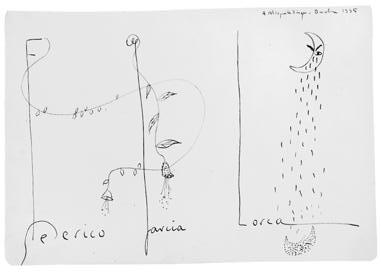
of tonás that came from old-style romances, with their succession of assonant rhymes on every second line of the poem, as Lorca recreates here. Flamenco dancers, when chanting the rhythmic “calls” (llamadas), often use the interjection “¡mira mira mira, mi-ra!”172 Think also of that traditional copla among many others—that strengthens the ties between Lorca’s Romancero and the anonymous poetry of cante jondo:
Debajo de los laureles
lleva mi niño su cama, y cuando se va a dormir sale la luna y lo llama.
(Under the laurel trees my child has his bed, and when he goes to sleep the moon comes out and calls him.)173
“NOTHING NEWER, LITERARILY”
What was Lorca’s poetic aim in these rereadings, these returns to old and popular forms like the romance?174 Does it suffice to say that this was in keeping with his homage to cante jondo and to its traditional letras?175 Certainly not. As was the case for Pier Paolo Pasolini later, with his return to Friulian poetry, Lorca’s immersion in Andalusian-Gypsy lyric—accompanied by a real introduction to music and a landmark work to collect certain popular songs176—was part of his own progress in the actuality of European literature. What James Joyce did with Homeric poetry, Brecht with the epic genre, or Kafka with Hassidic legends, Lorca did through his attention to Andalusian lyrical survivals that had generally been forgotten or were considered anachronistic by the champions of a supposed “literary autonomy.” For him, it was the gesture necessary for a poetic modernity, one to which he was also linked by his closeness to the surrealist movement.
172. See Gamboa and Núñez, Flamenco de la A a la Z, 372.
173. Coplas flamencas, 130–31.
174. While the word romance, used with a certain sentimentality, is grammatically feminine in French, the word is generally used in the masculine form in Spanish to refer, more specifically, to poems created in the long tradition of popular octosyllabic lyrics with assonance.
175. See A. Carrillo Alonso, La huella del romancero y del refranero en la lírica del flamenco (Granada:
Editorial Don Quijote, 1988).
176. This collection is absent from the French edition of complete works, the Œuvres complètes.
See F. García Lorca, Obras completas, vol. 5, Teatro, 3: Cine, música, ed. M. García-Posada (Madrid: Ediciones Akal, 1992), 317–448.
See also the sound recordings of the Colección de canciones populares españolas, recogidas, armonizadas e interpretadas por Federico García Lorca (piano) y la Argentinita (voz), Sonifolk CDJ105, 1990, CD.
From the mountains of Alpujarra, near Granada, Lorca wrote to his brother Francisco in February 1926, “I had a wonderful excursion to Alpujarra, into the heart of the country. It took us two days [. . .]. I never saw anything more mysterious or more exotic. You would never believe it was in Europe. [. . .] I will never forget the village of Cañar (the highest in Spain) full of washerwomen who sang of somber shepherds. Nothing newer, literarily [nada más nuevo literariamente].”177 In 1916 and 1918, Lorca began to write “Impressions and Landscapes,” his journals about his travels in Spain in which, beyond the folklorist’s pathos, observations emerged of the kind that we find in the same period in Rainer Maria Rilke or later in Elias Canetti; for example, in Lorca’s encounter with the cry of the itinerant merchant in Baeza, in the province of Jaén.178
From this minuscule event the poet learned to listen to the double level of affectivity and musicality:
It was a painful, anxious cry, like the lamenting of someone complaining artistically [como un lamento de alguien que se quejara artísticamente]. [. . .] The voice that sang was powerful and shrill. There was a silence and then it resounded again. The hawkers’ lament has always consisted in one or two notes repeated rhythmically in a single, generally minor key, particularly in Andalusian laments . . . but the cry that shook the forgotten city echoed Wagnerian songs. First, there was a plaintive and weary note that vibrated like a bell chiming in a minor key, then repeated in an andante maestoso, and was followed by a pause. Then it returned to the main theme, now quietly, until the voice took on a guttural strain, slipped into minor key, reached a high note, then fell languidly back onto the opening note.179
In the Albaicín of Granada, the “tragedy of contrasts” Lorca finds would also have its own sound and musical expression, with its “languid complaints” and its “Gypsy rhythms.”180
What, then, was so “literarily new” in the eyes of the poet? Was it, perhaps, the challenge consisting in writing sound landscapes? Lorca said the following with regard to Granada and its surrounding countryside: “In these places of intense sound which are the woods, the mountains, sierras and plains, the musical range of the landscape [la gama musical del paisaje] almost always has the same chord that gives all other modulations. [. . .] Here, every hour has its distinct sound [and] the landscape of this romantic town [of Granada] ceaselessly modulates [modula
177. F. García Lorca to Francisco García Lorca (February 1926), trans. A. Belamich, in Œuvres complètes, ed. Belamich, vol. 1, 1050; emphasis in original.
178. Lorca, Impressions et paysages, 732–34. [English
translation based on the Spanish and French versions.—Trans.]
179. Lorca, 733.
180. Lorca, 742.
sin cesar]. There are major and minor keys. There are passionate melodies and solemnly cold chords . . . Sound changes with color, so you can say that color sings [el color . . . canta].”181
So, what was “literarily new” here, in spite of, or at the very heart of these descriptions of ageless things? It must be the fact that by musicalizing each thing—as Lorca did again in 1930 and 1936182—a “search for lost time” was undertaken from which, sometimes, without warning, something akin to a time regained emerged, something whose return came in misunderstood fragments, in strange gestures or surprising modulations. It was a question of events understood as so many manifestations of a “pure survival” (pura supervivencia) in which both the temporality and the spatiality of Granada itself were perceived as “eternal in time” as well as “fugitive” (eterna en el tiempo y fugitiva) in each instant, in each word, in each sound that passed.183
There unfolded a poetics of lateness—or of différance, as Derrida might have said—and of the return of the repressed insofar as it arrives, like a psychological potency, just in time. “Please excuse my lateness. In Granada we say, ‘late but on time’ [tarde pero a tiempo]. Have I arrived at the right moment?,” Lorca wrote in January 1927 to José María de Cossío.184 This is a dialectic of time according to which we must say that, literarily speaking, it is urgent to be anachronistic. Lorca was able to speak of a “historical melancholy” (melancolía histórica) nested in what he discovered in popular Andalusia.185 Nonetheless, everything he built literarily is akin to a modern act of reminiscence, shaped by Nietzsche, Marcel Proust, and Freud, devoted to phrasing that “little time in a pure state” that emerges from a simple pregón in a street in an Andalusian village.
Lorca was first of all a seeker of time, a seeker of musical, psychic, social time. His collection of gestures and traditional songs links him with a philological vein that can already be seen in “Demófilo” with his collection of coplas, or Emilio García Gómez with his collection of Arabic-Andalusian poetry.186 Furthermore, Lorca’s attention to the facts and gestures of the Lumpenproletariat places him in a line of realists beginning with Gustave Flaubert and his sentence on the virtues of “little subjects” and minuscule lives. But the link he creates between antiquity and modernity places him in a romantic genealogy, too, a lineage of which Baudelaire said, “In order that any form of modernity may be worthy of becoming antiquity,
181. Lorca, 745–46.
182. F. García Lorca, “Comment chante une ville de novembre à novembre” (1930), trans. A. Belamich, in Œuvres complètes, ed. Belamich, vol. 1, 932–42; and F. García Lorca, “La semaine sainte à Grenade” (1936), trans. A. Belamich, in Œuvres complètes, ed. Belamich, vol. 1, 976–79. 183. Lorca, “Comment chante une ville,” 937, 942.
184. F. García Lorca to José María de Cossío (January 1927), trans. A. Belamich, in Œuvres complètes, ed. Belamich, vol. 1, 1090.
185. F. García Lorca to Ana María Dalí (August 1927), trans. A. Belamich, in Œuvres complètes, ed. Belamich, vol. 1, 1124.
186. Machado y Álvarez (“Demófilo”), Colección de cantes flamencos; and E. García Gómez, Poemas arábigoandaluces (Madrid: Plutarco, 1930).
the mysterious beauty that human life unintentionally puts into it must have been extracted from it”187—which Lorca’s contemporary surrealists, after Proust, continually deployed.
Thus, the passion shown by the author of Romancero gitano for the cante jondo was in no way a provincial or folklorist retreat. Lorca listened to Manuel Torre while continuing to read Goethe and Baudelaire. His “Romance de la luna, luna” shares similarities with Goethe’s poem “Erlkönig,” as several critics have pointed out.188 Before Romancero gitano there was the Romancero of Heinrich Heine, for example, with its homage to the songs of a close pariah people, the Sephardic Jews.189 Situated initially “between tradition and avant-garde,” Romancero gitano must then be considered in its modern, European, and cosmopolitan dimensions as much as its local (Andalusian) and marginal (Gypsy) dimensions.190
The motif of the moon, for example, which makes numerous appearances in Lorca’s texts—appearing in the opening text of his first collection of poems191—and on which much has been written involving symbolism,192 is supported by different harmonics: these include autobiographical memory (e.g., when the poet describes the moonlight that entered his bedroom during a trip to the Silos monastery in 1916, an experience that reoccurred, fifteen years later, during his sojourn in New York),193 as well as a virtuosic play on everything that was lunar or erratic (lunatique) in literature and the visual arts that had preceded him or was contemporary—and this in spite of the fact that Lorca, in a “lecture-recital” in 1935 on Romancero gitano, claimed he was the father of the “myths” of the “moon as mortal dancer” and of the “wind as a satyr.” They were, he said, “two myths of my own invention.”194
Nor was the romantic moon, therefore, absent from this Lorcan leitmotif: the star of sublime ruins, of drawings by Friedrich or Goethe himself [p. 96 right], of oppressive chiaroscuro in Francisco Goya, with that eerie light that always seems to bring together the vastness outside and our inner worlds.195 This was Victor Hugo’s
187. C. Baudelaire, “The Painter of Modern Life,” trans. P.E. Charvet, in Selected Writings on Art and Literature (London: Penguin Classics, 2006), 404.
188. See H.H. Chapman, “Two Poetic Techniques: Lorca’s ‘Romance de la luna, luna’ and Goethe’s ‘Erlkönig,’” Hispania 39, no. 4 (1956): 450–55; J.B. McInnis and E.E. Bohning, “The Child, the Daemon and Death in Goethe’s ‘Erlkönig’ and García Lorca’s ‘Romance de la luna, luna,’” García Lorca Review 9, no. 2 (1981): 109–27.
189. H. Heine, Romancero (1851), trans. I. Kalinowski (Paris: Le Cerf, 1997), 146–98 (“Mélodies hébraïques”).
190. See J. Vadillo, Romancero gitano: De la tradición a las vanguardias (Mexico City: Bonilla Artigas Editores, 2020), 127–25.
191. Lorca, Livre de poèmes, 7–8.
192. See M.A. Arango, Símbolo y simbología en la obra de Federico García Lorca (Madrid: Editorial Fundamentos, 1995), 58–60.
193. Lorca, Impressions et paysages, 705; and F. García Lorca, Poète à New York (1929–1930), trans. A. Belamich, in Œuvres complètes, ed. Belamich, vol. 1, 546–48, 572–73.
194. F. García Lorca, “Romancero gitan” (1935), trans. A. Belamich, in Œuvres complètes, ed. Belamich, vol. 1, 970.
195. See, in particular, C. Vitali, ed., Die Nacht (Munich: Haus der Kunst-Benteli, 1998), 376–423; and L.R. Jørgensen and M. Laurberg, eds., The Moon: From Inner Worlds to Outer Space (Humlebaek: Louisiana Museum of Modern Art; Oslo: Henie Onstad Kunstsenter, 2018).
grand, nocturnal obsession. It was the “Sadness of the Moon” or the “Offended Moon” in Baudelaire’s Les fleurs du mal, 196 in whose work we could already find the motif of pale, sensual, and erratic (lunatique) light penetrating the space of a child: “The moon, who is caprice itself, looked through the window while you slept in your cradle, and said to herself: ‘I like that child.’ [. . .] It was while contemplating this visitor that your eyes widened so strangely; and she so tenderly held your throat that ever since you have kept the desire to cry.”197 Thus, the moon widened our eyes and gave them the desire to cry forever . . . The eyes of the child in Romancero gitano are certainly widened: the little Gypsy is not content with merely seeing the moon but must look right at it. This is no doubt why the French translator André Belamich chose to translate the line “El niño la mira, mira” as “The child, eyes wide open” (L’enfant, les yeux grands ouverts).198
Recall that at the beginning of the film Un chien andalou (An Andalusian Dog), directed by Lorca’s friends Luis Buñuel and Salvador Dalí, the moon appears from the beginning so that the eye of the young woman is widened before it is cruelly cut open with a blade. The poet himself, on a more ironic or polemic note, imagined in 1929, the year in which Un chien andalou came out, a “cinematographic poem” entitled Voyage dans la lune, no doubt in reference to the eponymous film by Georges Méliès. This “cinematographic poem” would have shown a “woman’s genitals” superimposed with the words “Help Help Help” (Socorro Socorro Socorro); “trembling hands superimposed over a little child crying”; a close up of an eye and a moon that splits; then the words “Elena Helena elhena eLHeNa” . . . and finally, “the moon and the trees in the wind.”199
Here, a constellation of meanings takes position. Or rather, it begins to swirl, to extravagate, to spin around that “moved air,” that commoved air that speaks to us of the wind but above all of a medium for the gaze as much as the ear: of a visual aura (that produces the luminosity of the moon in the child’s gaze) and a musical duende200 (that of the Gypsy song in the poet’s ear). Was duende the aim of this imagination, where the experience of deep song was configured insofar as it was capable of emotionally moving the air itself; that is, to push our entire existence to excess in space and in time?
196. C. Baudelaire, Les fleurs du mal (1857–1861), in Œuvres complètes, ed. C. Pichois, vol. 1 (Paris: Gallimard, 1975), 65–66, 142.
197. C. Baudelaire, Le spleen de Paris (1869), in Œuvres complètes, ed. Pichois, vol. 1, 341.
198. Lorca, Romancero gitan, trans. Belamich, 417.
199. F. García Lorca, “Voyage dans le lune” (1929), trans. A. Belamich, in Œuvres complètes, ed. Belamich, vol. 1, 327–36. See also C. Maurer, ed., Ola Pepín!
Dalí, Lorca y Buñuel en la Residencia de Estudiantes (Madrid: Residencia de Estudiantes, 2007); and G. Cabello, “A través de la luna: Un viaje de Rrose con Federico García Lorca,” in Federico García Lorca: La constelación y el viaje (Granada: Rrose, 2022), 21–40.
200. See I. López Guil, “Del ‘Romance de la luna, luna’ a la ‘Danza da lúa en Santiago’: El astroduende y la poética lorquiana,” Impossibilia: Revista internacional de estudios literarios, no. 12 (2016): 14–47.
The question of duende did not arise in the lecture Lorca gave in 1922 to his audience at the Centro Artístico in Granada. For the moment, the question was only one of “depth,” or of jondura. And this is to distinguish cante jondo, as an authentic song from the Gypsy-Andalusian tradition, from everything that was called “flamenco,” including urban entertainments evoking “a certain immorality, the atmosphere of taverns, rowdiness, the ethos of the café dance floor, a ridiculous sobbing, something typically Spanish, in fact” (cosas immorales, la taberna, la juerga, el tablado del café, el ridículo jipío, ¡la españolada, en suma!).201 To propose the notion of depth, in the perspective of the next “Song Contest” meant to attempt to distinguish cante jondo from any notion of spectacle, of play, or of pagan festival: it had to resemble, as clearly as possible, a primitive religious rite. A “primitive song” (canto primitivo), as Lorca said later, and even “the oldest in Europe.”202 Something that would go all the way back to “time immemorial.”203
The fact that the cante jondo is characterized by the intensity or even exaggeration of its pathos—which Lorca calls the fundamental “pathetism” (patetismo) of this art204—pointed to its inclusion in a very long history: “The figure of the cantaor is delineated by two great paths; the arc of the sky outside him and the zigzag track within that snakes through his heart. The cantaor, in singing, celebrates a solemn rite, stirs ancient essences from sleep and flings them furled in his voice into the wind . . . he has a profoundly religious sense of song [which] allows its suffering and its true history to escape [su dolor y su historia verídica].”205 Thus, the “true history” and its long duration—which the poet traces to the “year 1400 [when] the Gypsy race fled from India, driven out by the hundred thousand horsemen of the mighty Tamerlane [before] entering Spain,” before turning a few lines later to the “immemorial” of a more archaic period206 this thickness of time would become depth of song because of the sound and vocal miracle of a pathos materialized in the medium of song, that superlative form of “emotionally moved air.”
As Lorca believed, the “moved air” of cante jondo needed a radical personification of the air in the poetry of the coplas: “The wind emerges, personified, in moments of deepest feeling” (el viento es personaje que sale en los últimos momentos sentimentales).207 The poet then quotes several characteristic coplas, including the following:
201. Lorca, “Deep Song.”
202. Lorca.
203. Lorca.
204. Lorca.
205. Lorca.
206. Lorca.
207. Lorca.
Yo me enamoré del aire, del aire de una mujer, como la mujer es aire en el aire me quedé.
(I fell in love with the air, the air of a woman, and, as woman is air in the air I stayed.)208
Here the Dama duende of the great Calderón has seemingly returned.209 We can understand then why Lorca would finally personify the duende—as a masculine or feminine figure—in his conference in 1933 only by taking up this personification of the wind poetically undertaken by anonymous authors of coplas, then by himself in poems like “Romance de la luna, luna.” Before focusing on the duende, Lorca had to personify—or allegorize, rather than conceptualize—that “aire conmovido” that rose from the thickness of time, from the depth of pathos and the evanescence of song.
Lorca’s lecture on February 19, 1922, was part of the organization by Manuel de Falla of the Concurso de cante jondo. This spectacular event, which took place on June 13 and 14 of the same year in Granada, has remained in the memories of all amateurs of flamenco.210 The great singers of the period were there (La Niña de los Peines, Manuel Torre, Antonio Chacón, etc., listening to the little Niño Caracol), as well as the great guitarists (José Cuéllar, Niño de Huelva, Ramón Montoya, watched by classical musicians such as Andrés Segovia). This was for cante jondo what the Salon des Refusés (Salon of the refused) had been for modern, realist, or impressionist painting; that is, an academic opportunity to recognize a nonacademic art beyond the discourse of local chroniclers or folklorists. Artists and writers— including de Falla himself, but also Ramón Gómez de la Serna, Manuel Chaves Nogales, and the then little-known Bataille—welcomed with respect a musical form that had hitherto been socially rejected. The marginalized became artists, the popular became literature, and the archaic became actual.211
This created a link between the texts and thoughts of the two friends de Falla and Lorca. Lorca credited de Falla with having “studied the depth of the
208. Lorca.
209. Calderón de la Barca, La dama duende. 210. See F. Grande, Memoria del flamenco (1979), new ed. (Madrid: Alianza Editorial, 1999), 369–406.
211. See I Concurso de cante jondo: Edición conmemorativa (Granada: Archivo Manuel de Falla, 1992), facsimile; and J. de Persia, I Concurso
de cante jondo: Edición conmemorativa: Una reflexión crítica (Granada: Archivo Manuel de Falla, 1992). See also the sound recordings by Manuel Torre, Diego Bermúdez, La Niña de los Peines, Tomás Pavón, and José Cepero in I Concurso de cante jondo: Colección Manuel de Falla: Colección Federico García Lorca: Discografía flamenca utilizada por el poeta (Hamburg: Sonyfolk, 2000).
question” of the cante jondo and stated that he based his own reflections on the composer’s musicological science.212 De Falla, in turn, in an article for the Defensor de Granada on March 21, 1922, referred immediately to the “vibrant lecture” of his young poet friend.213 In June, de Falla would publish anonymously a long programmatic and explanatory text on the cante jondo, focusing on its “origins,” “musical value,” and “influence on contemporary European music,” a text in which we might recognize an approach that, although not lyrical, converges with that of Lorca. Gypsy-Andalusian deep song is presented there, too, as a “spontaneous, free expression of affective life” and as a true “language of pain and of desire.”214
However, where Lorca speaks lyrically about a song of the “terrible question that has no answer” (la terrible pregunta que no tiene contestación) and describes the art of Silverio Franconetti as a “song of songs better than anyone else and whose cry would split apart the dead mercury of the mirrors”215—de Falla proceedes more methodologically and pedagogically. The excessiveness of deep song called, in Lorca’s case, for a poetic and pathetic gloss on the jondura—and soon the duende—when it is a strict musicological analysis of this same excessiveness that the composer would have preferred to implement. This is the case for five parameters developed successively:
1. The use of enharmonic intervals as a modulating means [. . .].216
2. We recognize as peculiar to the cante jondo the usage of a melodic field that seldom surpasses the limits of a sixth. [. . .] 3. The repeated, even obsessive, use of one note, frequently accompanied by an upper or by a lower appoggiatura. This is characteristic of certain enchantment formulae, even of the kind of recitation that we could call prehistoric [. . .]. 4. Although gypsy melody is rich in ornamental features, these are used only at certain moments—as they are in primitive Oriental songs— to express states of relaxation or of rapture, suggested by the emotional force of the text. [. . .] 5. The shouts with which our people encourage and incite the “cantaores” and “tocaores”.217
212. Lorca, “Deep Song.”
213. M. de Falla, “Le projet du cante jondo” (1922), trans. J.-D. Krynen, in Écrits sur la musique et sur les musiciens (Arles: Actes Sud, 1992), 119.
214. M. de Falla, “Le cante jondo: Ses origines, sa valeur musicale, son influence sur la musique européenne” (1922), in Écrits sur la musique, 125. 215. Lorca, “Deep Song.”
216. The notion of enharmonics is understood
here in its ancient Greek meaning, not in its modern and “tempered” sense. Here, it refers to a scale containing intervals smaller than halftones.
217. M. de Falla, On Music and Musicians, trans. D. Urman and J.M. Thomson (London: Marion Boyars, 1979), 103–5. See also E. Molina Fajardo, Manuel de Falla y el “cante jondo” (1960; Granada: Universidad de Granada, 1998).
Around ten years after this effusion linked with the recognition given to the cante jondo as a musical art of its own, Lorca sought to crystallize all the notions related to “depth” in the single word duende, developed by means of some now famous characteristics: the “mystery” (el misterio) of “black sounds” (sonidos negros); the pathetic “fighting” (luchar) and the potency that results from it, that “rises inside from the sole of the feet” (sube por dentro, desde la planta de los pies); the “creativity in action” (creación en acto) of a demonic or Dionysian nature (dionisíaco); the radical difference with everything that is religious (guided by an angel) or artistic in the usual sense (guided by a muse) . . . All of this embodied in the anecdote regarding La Niña de los Peines, who was brought one evening, in a small tavern in Cádiz, “to tear her voice” so as to exhale or to claim her authentic duende 218
Now, almost a century has passed—ninety years to be precise—since these values were promoted by the young, newly famous Andalusian poet. Today experts claim the vocabulary regarding “depth,” the jondo of the cante, is a “totally outdated” terminology.219 They add, too, that the duende is so “mysterious” and “enchanting” simply because it does not exist.220 The same would apply to duende as applies to another aesthetic category—belonging to toreo as well as flamenco— which is called temple. 221 We never know if it has to do with the deepest (constitutive) quality or the most mythical (nonexisting) quality. Could we have lost, with the jondura and the duende, the “purity” of Andalusian-Gypsy musical art? Not at all, for while flamenco is, fortunately, different from what it was before, this does not mean it is less “beautiful,” less “tearing,” or any less “authentic.” The purity or the “autochthony” that it has claimed does not correspond to its real history in the long duration.222
We can sense—but to what extent we still have to show—that the “aesthetic ideas” of this musical art point in totally different directions. This is why Pedro G. Romero could see no more use value in Lorca’s notion of duende and in its pathetism of depths—earth or bowels—that needs then to be critiqued according to new musicological knowledge and the new claim of a flamenco experienced as “contemporary art” or even, quite logically, as a political gesture.223 More recently, Pedro Ordóñez called for a “dissidence of memory” or a “countermemory”
218. Lorca, “Theory and Play of the Duende.”
219. Gamboa and Núñez, Flamenco de la A a la Z, 311.
220. Gamboa and Núñez, 206–7; and Gamboa, Una historia del flamenco, 207–8.
221. See G. Didi-Huberman, Le danseur des solitudes (Paris: Les Éditions de Minuit, 2006), 127–79.
222. See J.L. Ortiz Nuevo, Alegato contra la pureza (1996), updated ed. (Seville: Ediciones Barataria, 2010); and G. Steingress, Sociología del cante flamenco (Jerez: Centro Andaluz de flamenco, 1993).
223. See P.G. Romero, El ojo partido: Flamenco, cultura de masas y vanguardias: Tientos y materiales para una corrección óptica a la historia del flamenco (Seville: Athenaica, 2016).
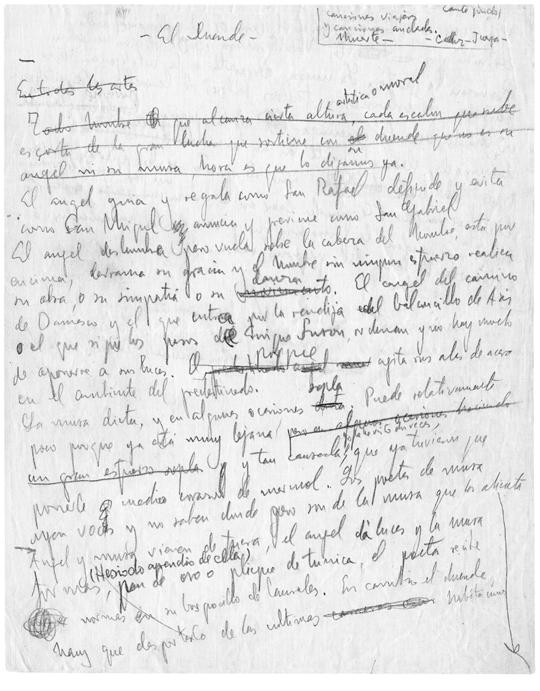
Federico García Lorca, manuscript of the lecture “Juego y teoría del duende,” 1933, 5

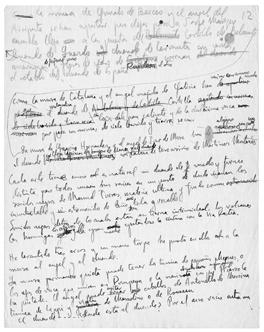
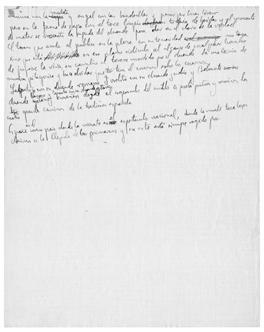
Federico García Lorca, manuscript of the lecture “Juego y teoría del duende,” 1933, 11–14
(contramemoria) of flamenco, far from Lorca’s earlier quasi-shamanic tones.224 This mutation was not only aesthetic, with provocative and divisive artists such as Israel Galván and Niño de Elche, who, with a touch of humor and ferocity, attacked the clichés of depth. This mutation is also philological: it involves the knowledge of historical sources of flamenco, from its very aesthetic.
José Javier León offers the most rigorous reexamination to date of the notion of duende in his book El duende, hallazgo y cliché and in his new critical edition of Lorca’s conference, preceded by a long philological study.225 León reproduced the totality of the 1933 manuscript (written mainly in pencil), which came from the personal archives of José Luis Guerrero, as well as the typed copy in Buenos Aires, containing numerous handwritten corrections [pp. 71–72 , 234–237]. He drew up a historical account of scholarly editions.226 Above all, however, he shows that Lorca was solely responsible for duende as an aesthetic value central to cante jondo. Facing the poet’s claim that “throughout Andalusia [. . .] people speak constantly about duende,” León claims that the lexicography of this term does not offer such unanimity. People did not speak of the duende in the singular but rather of duendes in the plural, at least to the extent that the notion had to do with what the philologist calls an “authorial neologism” (neologismo de autor).227
Thus, the duende that Lorca’s conference examined is not what old dictionaries of the Spanish language refer to with the term duendes, which are “mischievous spirits” that appear and disappear fleetingly—that is, “goblins” or “sprites”—a feature of popular culture forged at least since the thirteenth century, when this word first appeared in a fuero written (in 1221) for the Castilian district of Villavicencio.228
Second, Lorca’s duende, according to León, is not what some musicians of the nineteenth and early twentieth centuries understood by this term (used always in the plural form), starting with Felipe Pedrell, for whom de Falla wrote a vibrant homage in 1923.229 Pedrell, who had published some of his articles in Granada, was close to dying when he was invited, in 1922, to the cante jondo contest. To de Falla he wrote, “Tell your friends that I sing cante jondo now, from inside; I am not here, in person, with you, I am here and will always be here in spirit, with my entire soul.”230 Pedrell, whom Lorca had no doubt read, was thinking, when he used the word duendes, of musical “ornaments” (adornos) typical in popular Spanish music, especially in Andalusia. He equated them with the notions of rosas or falsetas,
224. P. Ordóñez Eslava, Apología de lo impuro: Contramemoria y f[r]icción en el flamenco contemporáneo (Ciudad Real: CIOFF España, 2020), 21–50.
225. León, El duende; and León, “Mapa y ejercicio del duende lorquiano,” 19–27.
226. León, “Mapa y ejercicio del duende lorquiano,” 29–33.
227. León, 26–27.
228. See T. Muñoz y Romero, Fueros que el abad de Sahagún y otros señores dieron a Villavicencio (Madrid: J.M. Alonso, 1847), 179.
229. M. de Falla, “Felipe Pedrell (1841–1922)” (1923), trans. J.-D. Krynen, in Écrits sur la musique, 155–68.
230. De Falla, 163.
common terms in the musical jargon of the period: “Each of them embellishes the notes of the melody, as though it glossed over the sung copla.”231 León also examines a collection of texts from 1922 to 1925 by the critic Galerín, in which duendes refer to those elements, in the performance of a song, that accentuate the rhythm and expression through asemantic voice effects called jaleos, jipíos, or gorgoritos. Finally, duendes also refers generally to everything that goes into the manner of singing without words (cantes sin letra).232
Third, the poetico-philosophical duende of Lorca is not what the Álvarez Quintero brothers promoted in 1929 under the title Los duendes de Sevilla, a work whose bias goes completely against the aesthetic idea that the author of Romancero gitano seeks to forge.233 At the end of this lexicographic overview, León sees in Lorca’s duende merely a literary invention, a mythical writing with no real relation to what it is supposed to characterize, which is the real activity of Gypsy-Andalusian song. From that perspective, the duende in Lorca is merely a curious “find” whose critical fortune is so great that it finally becomes the “cliché” for emotional value attributed to deep song.
The conclusion, then, is that the duende, a literary invention, simply does not exist in the musical reality of Gypsy-Andalusian deep song. What Lorca places in this word does not correspond to any philologically attested practice. For this reason the conference of 1933 had to undergo the challenge, in León’s analysis, of a thorough demystification. León considers the notion of “Dionysian,” for example, to be exogenous to flamenco and therefore superficial and “seductive” (seductora).234 The anecdote regarding La Niña de los Peines is refuted on a point of historical accuracy, as noted by biographers: the singer, that is, did not drink alcohol, and the story Lorca tells of how she “tore her voice” by drinking aguardiente (a kind of brandy) is pure fiction.235 As a result, the thematic link between Dionysius and drunkenness is entirely deconstructed, and the scene evoked by Lorca is reduced to a literary topos. 236 From there, one thing can lead to the next in the refutation of what is contained in the meaning of duende: the epiphanic event of musical inspiration, the immemorial antiquity of cante jondo, the role of symbolism—of colors, in particular: “black sounds” or lunar light—and the personification Lorca composes around the three figures of the angel, the muse, and the duende 237 Nothing in what Lorca introduced in 1933 is historical, and so everything is mythical, which we should then “learn to demystify.”238
231. F. Pedrell, “Coplas e instrumentos populares,” Arte musical, October 13, 1916, 3; quoted and commented on in León, “Mapa y ejercicio del duende lorquiano,” 27, 69–70.
232. León, “Mapa y ejercicio del duende lorquiano,” 27, 70–72.
233. León, 27–28, 72–77.
234. León, El duende, 157.
235. León, 91–131. See also M. Bohórquez Casado, La Niña de los Peines en la Casa de los Pavón: Vida y obra de la Reina del cante flamenco (Seville: Signatura Ediciones, 2000), 71–75.
236. León, El duende, 133–69.
237. León, 106, 146–48, 250–71, etc.
238. León, 29. See also Maurer, Federico García Lorca y su arquitectura, 43–80 (“El mito del cante jondo”).
But why have so many artists and aficionados, even musicologists, for so long now, used the notion of duende to characterize the fundamental “fact of affect” of GypsyAndalusian musicality? León’s answer to this question is enlightening: Lorca’s “curious find,” in 1933, benefitted from such resonance that duende became a topos, a common, shared, all-purpose cliché, whose poetic prestige offered something like an undeniable and almost unquestionable “added value” (plusvalía).239 What León challenges most scathingly is not so much Lorca’s duende—which is respectable in itself, like any poetic invention—but the duendismo that followed, which was something like that endogamous ideology of flamenco whose certitudes he believed were to be deconstructed. Where de Falla had revolved his elegy of cante jondo around five fundamental characteristics, León summarizes his critique of duendismo with twelve “negative points.”
Twelve “negative points” calling for twelve methodological challenges. First, to deconstruct the myth of “purity” (pureza), after the salutary remarks by critics like José Luis Ortiz Nuevo or artists like Enrique Morente: this is a way to beat back the ethnic vision of Gypsy flamenco, which could have worked as an inverse reflection of the pureza de sangre of the worst of Spanish Catholicism in the past; consequently, to deconstruct “gypsyism” (gitanería) as an absolute criterion for this art.240 Then, to question all the origin myths linked with the “antiquity” (antigüedad) of deep song, with its orientalist fantasies and its prestige in everything “old” and even its linkages with “ruin” (ruina) or with the “beauty of what is ugly” (beldad de lo feo).241 Then, to broaden this critique to notions of the“amusicality” (amusicalidad) of duende, to remove a supposed dissonance from a supposed “depth” (jondura) also supposedly endowed with “greatness” (grandeza) and authentic “truth” (verdad) . . .242 All of this dominated by a “mystique” (mística) of the earthly feast and its physical, psychic, and social tendency toward the resulting “tearing” (rajo) and “pinching” (pellizco) of the heart.243
A philological critique such as this could be said to be positive, and it is so in many senses of the word. First, it is positive in that it is beneficial; it challenges many things that are considered obvious and many preconceived ideas. It obliges us to rethink everything. It is also positive in the sense that it brings to light those factual, precise, irrefutable elements that we can deduce from documents. The question remains, however, of how to know whether it is not also positive in the sense of positivism; that is, in the sense of an inherited historicism of a nineteenth century that was so sure of
239. León, El duende, 270.
240. León, 273–80.
241. León, 280–92.
242. León, 292–303.
243. León, 303–22.
its “factual science”—as Husserl writes in 1936 in The Crisis of European Sciences and Transcendental Phenomenology244—and that is ceaselessly reactivated today in a certain practice of history understood as a science of factual “proof.”
The philological view of duende developed by León appears to be supported by a positivist epistemology in the sense that it makes the historian’s work an investigation destined to separate, in total certainty, facts from fictions. This is necessary and beneficial in the field of “event history” (“histoire événementielle,” a term coined by Fernand Braudel) but finally appears far more problematic in the fields that are examined here: oral music, aesthetic ideas, poetic images . . . León was looking only for realities, while beliefs were for him merely denials of reality. That is why he prefaces his study with a phrase by a Benedictine father of the eighteenth century who embraced the ideas of the Enlightenment and fought popular superstitions: “these Duendes are a fiction [tales Duendes . . . (son) ficción] when they are spoken of as though they were true spirits.”245
The duende of the poet Lorca reveals this constant energy of an artist or “plastician” of the imagination, his own and that of others. It is as though he saw spirits everywhere. León has every right to express, on almost every statement or narration in the conference Juego y teoría del duende, his “doubt regarding [their] veracity” (duda . . . sobre la veracidad), giving them what appears to be, when written by the historian, a backhanded compliment: “Se non è vero, è ben trovato.”246
This means Lorca’s duende was no doubt a “good find,” but only because nothing was true about it. When we read, in the 1933 lecture, that “seeking the duende there is neither map nor discipline” (para buscar al duende no hay mapa ni ejercicio) (where the last term, ejercicio, perhaps evokes the “spiritual exercises” of the Ignatian method)— León answers that Lorca “once again, exaggerated,”247 since the lexicography, León believed, allows us to retrace the exact trajectory of the word duende in the history of its use.
The lexicography corrects the “exaggerations” and replaces the vague sentiment of a word with the sum of objective references in which it is used. This is what León calls a “detective approach” (camino detectivesco) to the arid matter of archives.248
This gives the impression that speech concerning duende—and cante jondo in general—was once so imbued with legends and hyperbole that the scholar prefers to remove any trust from them, finding his truth markers or verification markers only in the written matter of dictionary entries or reviews in the local press. Rather than listen to the affectivity inherent in Lorca’s thinking, the philologist prefers to turn to a graphologist to diagnose, in the manuscript, the “disproportionate depth” (profundidad desproporcionada) of the letters’ descenders.249
244. E. Husserl, The Crisis of European Sciences and Transcendental Philosophy, trans. D. Carr (Evanston, IL: Northwestern University Press, 1970), 5.
245. León, El duende, 11.
246. León, 126, 128.
247. León, 89.
248. León, 136.
249. León, “Mapa y ejercicio del duende lorquiano,” 85.
That the philological inquiry challenges—or restores to new places—the forms of proof that circulate as topoï or clichés is certainly necessary. This is why León’s books remain insurmountable on the question of duende. But philology works on a corpus whose intrinsic limits must also be remembered. From the anthropological perspective, the dictionaries of the Académie royale are not where we will find all the use values of a word that for so long has existed in popular speech in Andalusia, not to mention the use within the musical world of flamenco. Any search for sources must be accompanied by a reflection on the limit and even the disappearance of sources: the lack of sources, the need for archives, or “archive fever,”250 the unconscious, and repression. This is how the history of Florentine art in the Renaissance, one of the most documented art histories of all, led Warburg—a scholar who came from the great tradition of the Quellenwissenschaft or “source studies”—to redirect completely his interpretation, starting from the material disappearance of certain objects accompanied by the psychic repression of certain aesthetic paradigms.251
We have the material archive and the psychic archive, which is unregistered, vague, or extravagant. When we ask whether duende is not merely a myth, it is not enough to reply that it is simply something unreal contested by dictionaries. We must ask—like the anthropologists—how this myth participates in the construction of a reality that is musical, ethical, or aesthetic. We must add that the philological inquiry will be fruitful only if it is problematized within the movement of a philosophical gesture. León contests Lorca because he looks for sources where Lorca sought an origin: not in the sense of a “source of sources” but in the sense of a resource, of a potency toward disturbance capable of creating the strangeness, foreignness, and old novelty of what is called duende.
We could say that Lorca invented the duende, although we can see this only if we understand that what is invented is not necessarily the product of personal fantasy. What is invented could also be something that invites itself, that comes, that we encounter, that we learn from the real itself (all of these senses being contained in the Latin invenire). A poet invents a metaphor, but in French you also say that an archaeologist “invents,” meaning discovers the buried site that no one had seen before them. A metaphor may well be the equivalent—the psychic, poetic equivalent—for a buried site. Invention entered the vocabulary of rhetoric long ago, but we must understand it more philosophically, in the sense in which what is invented would be capable of reaching out from the real or of becoming something real.
250. See J. Derrida, Archive Fever: A Freudian Impression, trans. E. Prenowitz (Chicago: University of Chicago Press, 2017).
251. See G. Didi-Huberman, La ressemblance par contact: Archéologie, anachronisme et modernité de l’empreinte (1997; Paris: Les Éditions de Minuit, 2008), 92–111.
Lorca invented duende, then. He did so like Nietzsche, who invented the “Dionysian.” To open his first classes on classical philology at the University of Basel, Nietzsche gave an inaugural lesson, on May 28, 1869, on the need to give a philosophical sense to philological research. A philologist who is content to play the corrector will never succeed in transforming his knowledge into a science and a thinking worthy of the name: what is required is to ask a philosophical question, to take a philosophical risk, to construct philosophically.252 Three years later Nietzsche published The Birth of Tragedy, a work that was quickly labeled a curious find or invention by several philologists (e.g., Ulrich von Wilamowitz-Moellendorff), until better philologists (e.g., Nicole Loraux) finally rehabilitated his “invention” as a genuine discovery.253
Benjamin, in his Origin of German Tragic Drama, was the most pertinent and radical in his characterization of what was to be a philosophical history indebted to philological data and capable of going beyond mere factual results. “Philosophical history,” he writes, is “the science of the origin”: and not a science of “sources” only, or, from there, merely of the chronological “set of occurrences which have befallen.”254 It is a “dialectical” history in that it seeks less to extract a general norm or a Zeitgeist than to think about the way in which are arranged “the remotest extremes and the apparent excesses of the process of development”; less to establish classifications, hierarchies, or time lines than to open its space of thinking to “constellations” that are neither “laws” nor “concepts” in the narrow sense, but configurational “ideas.”255
As such, the aesthetic idea of duende crossed at least two discursive ages that call upon a third: first, a mythical age in which the ineffable element of an experience wrongly separated from history prevails; then, a philological, documentary, and historicist age, reminding us that flamenco is neither “pure” nor “absolute,” nor outside of time. This is a strong argument so long as we do not have a simplifying notion of time itself, which would make any “mythical” or “imaginary” value obsolete, null, and void. The necessary critique of duende must extend into a philosophical investigation into the intrinsic potencies of this idea. If duende is “anachronistic,” then this is an opportunity for aesthetic thinking: the results of the philological chronicler must be completed with the constructed investigations of the philosophical anachronicler.
That is, what matters is to take the opportunity to rediscover the potential critical value of duende, with regard to “mystical” conformity as well as “positivist
252. F. Nietzsche, “Homer and Classical Philology” (1869), trans. J.M. Kennedy, in The Complete Works of Friedrich Nietzsche, vol. 6, On the Future of Our Educational Institutions; Homer and Classical Philology, ed. O. Levy (London: T.N. Foulis, 1909).
253. F. Nietzsche, The Birth of Tragedy, trans. R.
Speirs (Cambridge, UK: Cambridge University Press, 1999); and N. Loraux, La voix endeuillée: Essai sur la tragédie grecque (Paris: Gallimard, 1999), 138.
254. W. Benjamin, The Origin of German Tragic Drama, trans. J. Osborne (New York (London: Verso, 2003), 47.
255. Benjamin, 47, 34.
conformity,” and this in relation to the very important precept stated by Benjamin in his essay “On the Concept of History”: “In every era the attempt must be made anew to wrest tradition away from a conformism that is about to overpower it.”256
Any unequivocal semantics—be it oral, in the case of duende as a rumor, or textual, as in the case of the duende of lexicographers—tends toward conformism, whether in the direction of “absolute meaning,” which is therefore vague, or of “exact signification,” and therefore limited. We should not be tied to the duende either in the melancholy of a lost meaning nor in the triumph of an entirely restored meaning. We should simply reread Lorca in the unequal and moving light of its philosophical constellations.257
What might have encouraged a poet in love with Andalusian-Gypsy song to decide to confer and lecture publicly, yet with a touch of irony regarding his own boredom listening to lectures in his student days? Is it not common, in the world of flamenco, to contrast the knowledge (saber) of the song with any activity founded on academic research, commentary, glossing, and on writing in general? Why have I backed up my own text with so many footnotes? Gómez de la Serna, who was invited to speak at the Granada contest in 1922, tells in his Automuribundia that, during his brief lecture, a voice rose from among the flamencos present—sipping their glasses of manzanilla—to exclaim with irony, “So, will I kill him?”258
Even today, musicologists still wonder whether the history of music in the oral tradition can be written about with any relevance.259 In Domestication of the Savage Mind, Jack Goody speaks harshly of written culture as just that: a “domestication of the savage mind,” that domestication being the ultimate tool of colonization.260 And José Bergamín, in his admirable essay on the “decadence of illiteracy,” which is contemporary to Lorca’s lecture on the duende, writes that the truth of deep song, its “inevitable precision,” owes nothing to a culture of writing:
256. Benjamin, “On the Concept of History” (2006), 391.
257. Rather than “norms” or “criteria” taken from experimental psychology or analytical philosophy— as proposed in A.-S. Riegler, Les enjeux d’une esthétique du flamenco: Étude analytique et critique du “duende” (Paris: École normale supérieure, Université de Recherche Paris Sciences et Lettres, 2018); and A.-S. Riegler, “Le flamenco: Art outrancier? Pour un duende en mesure,” in Le flamenco dans tous ses états: De la scène à la page, du pas à l’image, ed. L. Demeyer, X. Escudero, and I. Pouzet Michel (Düren, Germany: Shaker Verlag, 2021), 19–33.
258. R. Gómez de la Serna, Automoribundia
(1888–1948) (1948), trans. C. Vasseur and D. Valentin (Paris: Quai Voltaire; La Table ronde, 2020), 491–93. See also S. Llano and C. García Simón, Contra el flamenco: Historia documental del Concurso de cante jondo de Granada, 1922 (Madrid: Libros Corrientes, 2022).
259. See T. Rice, “Est-il possible d’écrire l’histoire des musiques de tradition orale?,” trans. L. Viens, in Musiques: Une encyclopédie pour le XXIe siècle, vol. 3, Musiques et cultures, ed. J.-J. Nattiez (Arles: Actes Sud; Paris: Cité de la Musique, 2005), 137–62.
260. See J. Goody, The Domestication of the Savage Mind (Cambridge, MA: Cambridge University Press, 1977).
The illiterate Andalusian people deepen the poetic darkness with their ignorance when they sing, profoundly, the cante jondo. In the deep shadow of this song the precision of truth shines incomprehensibly, just as in the purest poetry or in music. It is a truth that, through speech, the voice, or the cry, is reflected or resonates through the divine popular spirituality of childish illiteracy of Andalusia. The cultured man of letters does not see, does not hear, does not understand anything of the cante jondo or Andalusian deep song: he sees only someone giving voice and sometimes crying out. That is all, giving voice and crying out, but with precision, a genuine, inevitable, exact precision.261
So, why confer [conférer]? The Latin verb confero means to bring together, to gather, to unite under someone else’s gaze. It involves bringing disparate elements together—a montage, in a sense—and sharing all of them with others. It is a way of grouping several things in the same place or at the same moment; it is a gesture that involves bringing closer together. And it involves submitting all of this to collective judgment. The same verb can also refer to the act of giving a responsibility to someone, or an honor, or a boon. To honor the cante jondo, to bestow upon it, somewhat “officially” (as in the Granada contest) an eminent function in the history of arts, Lorca decided to confer on the duende. Above all, it is an honor bestowed from one poet to another, from one musician to another. As Juan Carlos Rodríguez says so well, it involves the “senses,” “feelings,” or the “sensible” (sentido) rather than “meaning” or “signification” (significado).262 This corresponds exactly to the way in which Lorca pronounced or even “performed” his lectures; for example, when he intersected his own discourse with songs in which he accompanied himself on the guitar or the piano.263
The author of Romancero—here I am speaking of Heinrich Heine—made a striking distinction in the 1840s between “thoughts” in the usual sense, which direct our opinions, and the thoughts of poets:
Like the ears of wheat in a wheat-field growing, So a thousand thoughts spring and tremble In the minds of men.
But the tender fancies of love Are like the happy colors that leap among them; Red and blue flowers.264
261. J. Bergamín, La décadence de l’analphabétisme (1933), trans. F. Delay (Paris: La Délirante, 1988), 24.
262. See J.C. Rodríguez, Lorca y el sentido: Un inconsciente para una historia (Madrid: Ediciones Akal, 1994), 7, 19–24, 60–67.
263. See I. Gibson, Vida, pasión y muerte de Federico García Lorca (1898–1936), rev. ed. (Barcelona: Penguin Random House, 2016), 561–65; and Vadillo, Romancero gitano, 71–126.
264. H. Heine, The Poems, trans. L. Untermeyer (Madison: University of Wisconsin, 1937), 212.
The professional harvester no doubt considers them, in the middle of his field, mere weeds. They grow for themselves; they are multicolored, never the same, are disseminated without any apparent order in the wheat field. But that is precisely what Lorca claims for his thoughts regarding the duende: a “weed” in the well-harvested field of his era’s opinions upon the potencies of art and aesthetic categories in general.
The flower of the fields merges with beauty, tenderness, and unpredictability in the midst of the wheat stalks. In 1928 in Madrid, Lorca introduced his lecture on “lullabies” (canciones de cuna) with the following words: “In this lecture I will not, as in former ones, try to define things, but merely emphasize; I wish only to suggest, not delineate. To animate, in the exact sense. To disturb somnolent birds. Wherever there is a dark corner, to direct towards it light reflected from a distant cloud [. . .] I am fleeing from all my friends and running off with the boy who scoffs green fruit and studies how ants devour a bird crushed by the automobile.”265 In 1935, during a poetry reading at the Ateneo de Barcelona, Lorca recalled how, for him, “poetry is the contrary of the art of oratory. In the art of oratory, it is a matter of stretching an idea, already known by the public, and of turning it over and over,” while “in poetry one needs to be on the lookout for images and feelings that come gushing like the spray from a tempest.”266
This is one way to be “illiterate,” but mainly in the sense intended by his friend Bergamín. And it risks disappointing lexicographers who want a word to mean something precise, or philosophers who want an idea to be defined without ambiguity, even in the field of aesthetics. “Images” and “sentiments” abound in the 1933 lecture, introducing a “play”—a margin of indetermination, but of joy also— in the “theoretical” presentation itself. Play in theory: “the thinking of a poet” in reasoned or communicable thinking. This was one way to confer on the duende not quite in definitional terms, but in terms of issues or demands (and this, I believe, is why the 1933 lecture has not lost any of its relevance).
So, Lorca’s theory of the duende contains an element of “play”—in every sense of the term. That this should be considered fiction or exaggeration on the part of a poet, as León shows but in a negative light, is not surprising. Did Lorca not confer on the duende with that freedom of principle that allowed him to throw “words to the wind,” at the risk of not being followed to the end? Was he not there to throw his idea into the air? And was that not the main focus: to move the air, emotionally, of the conference room and the thoughts of the audience with that aerial thing called duende? Lorca felt justified in stepping lightly into the theory he intended to present. When León questioned the “unsayable” element of his duende, he did so
265. F. García Lorca, “On Lullabies,” trans. A.S. Kline, poetryintranslation, https://www.poetry intranslation.com/PITBR/Spanish/Lullabies.php.
266. F. García Lorca, “Lecture de poèmes” (1935), trans. A. Belamich, in Œuvres complètes, ed. Belamich, vol. 1, 966.
because he saw a certain “mystique” that took itself very seriously (but this aspect would concern later flamencologists in fact, far more dogmatic in their assertions). Is this not, more simply, the opening and the freedom created by that play or indeterminacy of signification, as it appears exactly, in the same period, in Gómez de la Serna?267
This freedom of play has a recognizable philosophical history. It goes back to the revolutionary poetic moment of German romanticism. Not content with inquiring about a “naïve poetry” that was childish enough to be infinite, in 1795 Schiller sought to present his view on “aesthetic education” as the crucial point for any notion of freedom, even on the ethical and political levels: “If we are to solve that political problem in practice, follow the path of aesthetics, since it is through Beauty that we arrive at Freedom.”268 Even if one has to return to one’s “century as alien figure”— that is, as an anachronistic figure—the poet must become free of all conformities through the “sensuous impulse” (sinnliche Trieb), provided that impulse manages to agree with a “formal impulse” (Formtrieb); then it achieves an “aesthetic state” that, from an anthropological viewpoint, turns out to be a “free disposition” (freie Stimmung) in the subject.269 This exists concretely only in play in which “sensuous impulse” and “formal impulse” are inseparable. This is why Schiller took the risk of claiming that “Man plays only when he is in the full sense of the word a man, and he is only wholly Man when he is playing [er ist nur da ganz Mensch, wo er spielt].”270
Consequently, the Juego y teoría del duende conference should be read as a real theory, even if it unfolds as a played theory—we might even say a playful theory, given the omnipresence of its relation to childhood in Romancero gitano. It is a genuine theory, for not only does play come to theory in this case, but theory comes to play, revealing a highly philosophical element in play itself. Schiller believed that play, for Lorca, was no mere lack of determination, no mere relaxation from serious things. On the contrary, in the indetermination and joy of playing resides its truth, along with that gravity that is more fundamental than any of the serious posturing of the world. It is, first, a theory that is innervated with intense emotions: “I have experienced an intense emotion and such a great joy [un gran emoción y una alegría tan grandes] [seeing Havana] that I threw my gloves and gabardine on the ground . . . It is very Andalusian, that, to throw or to break an object, a bottle, or a glass, when you like something.”271 The theory is supported, then, by an intrinsic musicality: “[My lecture] will be called ‘Theory and Play of the Duende.’ [. . .] Furthermore, my lectures will
267. See E. Serrano Asenjo, “El duende indecible: Ramón y Lorca cara a cara,” Federico García Lorca, clásico moderno, 590–96; and D. Breton, “Jeu, duende, sacrifice: L’autre scène de l’écriture lorquienne,” Bulletin hispanique112, no. 1 (2010): 373–95.
268. F. Schiller, On the Aesthetic Education of Man, trans. R. Snell (New York: Dover, 2004), 25. 269. Schiller, 43, 95, 101, 105, 78.
270. Schiller, 64. See also E. Fink, Play as Symbol of the World, trans. I.A. Moore and C. Turner (Bloomington: Indiana University Press, 2016), passim.
271. F. García Lorca, “Chronique d’une journée en bateau avec Federico García Lorca” (1933), trans. A. Belamich, in Œuvres complètes, ed. A. Belamich, vol. 2 (Paris: Gallimard, 1990), 800.
include musical projections and illustrations and I will sing a few of them. Yes, why not? I will sing too. Quietly, of course, but I will.”272 A theory that is inseparable, also, from a permanent humor, however discreet it may seem: “I call duende, in art, that intangible fluid that gives it its flavour, which is its root, a little like a corkscrew that is driven into people’s sensibilities.”273
It is also a theory marked by an apparent incoherence that is both a mark of depth and the characteristic of modernity: “These things that seem incoherent in modernist poets [esas cosas [que] aparecen como descalabradas en los poetas modernistas] are efforts to find the duende.”274 This incoherence, developed particularly after surrealism, constantly returns—but does not break with, as León says—the most traditional significations of the duendes, those “imps” or “sprites” of popular Spanish culture. Thus, just as Schiller praised “naive poetry,” Lorca searched for a theory that was inseparable from his own assumed naivety. In 1932, in a review of the first public session in which Lorca recited and commented on Poeta en Nueva York, at the Residencia de Señoritas in Madrid, we find the following: “Federico García Lorca yesterday invoked his duende which then frolicked around the classroom.”275 The following year—in Buenos Aires, on October 31, 1933, only eleven days after his lecture on the duende the poet addressed his audience as follows: “Before reading these poems aloud and in public, the first thing to do is to ask for help from the duende.”276
A few days earlier—on October 14—La Nación of Buenos Aires published an article entitled “And Duende Was Made Flesh” in which Lorca tells of an intimate and curious episode, entirely based on the popular belief in duendes:
Three nights ago, as I went to bed, I wanted to revise the notes for my lecture “Theory and Play of the Duende.” You know, the duende, which a few of us carry within us, that mysterious being, half devil, half angel—both at the same time—that often inspires those who believe in it. It was at least two in the morning and the sweet poppy was not closing my eyelids. Sleep would not come; I turned off my light. Almost immediately, at the foot of my bed a figure began to appear . . . a kind of extravagant puppet, with a surprising agility, which began to jump around on the edge of the bedframe. It must have measured thirty centimeters. [. . .] The face, which was white like the moon, had the penetrating expression of a humanized bird. [. . .] Around him, like a nimbus of melancholy light, a cloud with a milky translucence spread . . .277
272. F. García Lorca, “Federico García Lorca est arrivé hier soir” (1933), trans. A. Belamich, in Œuvres complètes, ed. Belamich, vol. 2, 812.
273. Lorca.
274. F. García Lorca, “Federico García Lorca et le duende” (1933), trans. A. Belamich, in Œuvres complètes, ed. Belamich, vol. 2, 827.
275. F. García Lorca, “Poète à New York [I]” (1932),
trans. A. Belamich, in Œuvres complètes, ed. Belamich, vol. 1, 943.
276. F. García Lorca, “Poète à New York [II]” (1933), trans. A. Belamich, in Œuvres complètes, ed. Belamich, vol. 1, 945.
277. F. García Lorca, “Et le duende se fit chair” (1933), trans. A. Belamich, in Œuvres complètes, ed. Belamich, vol. 2, 821.
The duende then began to do somersaults in the room, then burst into laughter both “limpid” and “musical,” “dominated by a-i” sounds—like an ¡ay! of siguiriya, perhaps—and the poet ends with the following words: “Can you imagine . . .? My duende on my shoulder as I deliver this lecture?”278
One thing is certain: the duende appears, on the edge of your bed or on your shoulder as you speak, only to divert the habitual order of things, of gestures, and of thoughts. This is the first potency we can attribute to it. This potency justifies Lorca’s claim that the duende will involve “neither map nor discipline,” nor any possible “exercise.”279 With the duende we will only ever wander in the air. How, then, should we imagine a “theory” for that? To do so, we would have to play with the air as the pre-Socratic philosophers did and as the first astronomers did when they played with the starry sky or the movements of the moon: this can be done by recognizing the great dissemination of the world and by discovering within it, nonetheless, configurations and constellations. This is what Benjamin, in the conclusion of his essay “On the Mimetic Faculty”—an essay that was contemporary with the lecture on the duende as well as Bergamín’s text on illiteracy—calls “reading prior to all languages, from entrails, the stars, or dances.”280
If the child of Romancero gitano must make three attempts to look at the moon (“la mira, mira . . . la está mirando”) that is because the relation between the near and the far could not be created in a straight line nor directly. As for the singer of the cante jondo, he is, as Lorca said in 1922, “between [. . .] the arc of the sky outside him and the zigzag track within that snakes through his heart.”281 The paths of the duende are neither direct, nor easy, nor clearly oriented: “without a map.” This recalls the poetic condition that Lorca, since his childhood, believed he was being called on to assume. In a text from 1916—considered by André Belamich to be his “very first literary text”—the young writer declares that he “longed to recount the distant modulations of my other heart” (yo ansío referir las lejanas modulaciones de mi otro corazón).282
Thus, we have “the heart” (to be expressed sentimentally, lyrically), but also, and above all, the “other heart” (to be projected in the musicality of the distant). This was quickly announced in the complexity of Lorca’s poetic project. In this early text from his youth, he speaks of “his village” (mi pueblo) but does so to state that he
278. Lorca, 821–22.
279. Lorca, “Theory and Play of the Duende.”
280. W. Benjamin, “On the Mimetic Faculty” (1933), in Selected Writings, vol. 2, 722.
281. Lorca, “Deep Song.”
282. F. García Lorca, “Mon village” (1916), trans. A. Belamich, in Œuvres complètes, ed. Belamich, vol. 1, 639 (see also the editorial note on p. 1614).
was surrendering himself to a “first dream of the distance” (mi primer ensueño de lejanía).283 At the beginning of the 1920s, he wrote in a collection of Suites,
My time moves in a spiral [avanza en espiral] [. . .] makes me walk [y me hace caminar] full of uncertainty [lleno de incertidumbre].284
The theme then blossoms into admirable variants in Lorca’s correspondence, particularly from 1921 to 1926. It is the “indecisive pathway” (vereda indecisa) in a letter to Adolfo Salazar and the “country of nowhere” (país de Ninguna parte) in a letter to Melchor Fernández Almagro. In another letter to the latter, Lorca states that he wandered in the “garden of possibilities” (jardín de las posibilidades): “The garden of what is not, but could have and (sometimes) should have been; the garden of theories that passed without being seen, and of children that were not born.”285
No path exists, then, that has not been fully planned. In musical terms: no melodies develop linearly. No gusts coexist with labyrinths in the air. The Poema del cante jondo mentions the “tremor / of a rhythm that never comes” (temblor / de un ritmo que nunca llega) and a “cracked voice” (voz entrecortada) that evokes, for this, “far countries” (países remotos); there will be a question of mirrors that crack into a thousand bifurcations under the potency of the “terrible cry” (grito terrible) of Silverio Franconetti.286 If the air holds labyrinths and forces capable of cracking the mercury of mirrors, it is because the song Lorca speaks of is the potency of the depths, a cry that comes from below, “a cry that divides” (un grito que divide), in its indefinitely ornamented, suspensive parts, an “endless road” (un camino sin fin).287 It is something auratic, therefore, since it is as far away as it is touching.
By touching us in our very depths, the song deterritorializes itself and us too. That is why there is neither “map nor discipline” and why the duende “rejects all the sweet geometry we understand.”288 The deep song is sung to be lost and to make us be lost. Those who think they find themselves in it (through academic imitation) will only lose its essential aspect. This explains the significance of that moment in his 1933 lecture when Lorca refers to Goya, Rimbaud, Lautréamont, as well as Nietzsche and Goethe,289 especially if we recall the moment in Faust that is well known to readers of Goethe:
283. Lorca, 639.
284. Lorca, Selected Suites, 351.
285. F. García Lorca, Correspondance (1918–1936), trans. A. Belamich et al., in Œuvres complètes, ed. Belamich, vol. 1, 997, 1004, 1021.
286. F. García Lorca, “Poem of the Cante
Jondo,” in Selected Poetry, trans. M. Sorrell (Oxford, UK: Oxford University Press, 2007), 53, 67, 63.
287. Lorca, “Deep Song.”
288. Lorca, “Theory and Play of the Duende.”
289. Lorca.
Mephistopheles.—Kein Weg! Ins Unbetretene, Nicht zu Betretende; ein Weg ans Unerbetene, Nicht zu Erbittende. Bist du bereit?
(FAUST: Which is the way?
MEPHISTOPHELES: No Way! A path untrodden
Which none may tread; a way to the forbidden, The unmoved, the inexorable. Make preparation!)290
Lorca knew—and transcribed—numerous coplas of deep song that concerned lost paths or paths that are multiple, labyrinthine, or nomadic. Such have been seen for a long time in Arabic literature, in Jewish tales, or in Dante’s Divine Comedy, for example. In 1933, Martin Heidegger began to develop his own notion of the work of art founded on “country paths” or forest paths, Holzwege on which Gypsies and Jews were unwelcome.291 In contrast, Bergamín, at the same moment, was developing a philosophical vision of Spanish art founded on the idea of a labyrinth without any owner. That vision is dedicated to de Falla and begins with the idea that the “night of the times” (noche de los tiempos), specifically artistic times, does not call for the rule of a single, unique foundation that is both earthly and localized, but rather one that is embodied in distance, beginning with the “starry night sky” (cielo estrellado de la noche); that is, by constellations, also called “labyrinths of stars” (laberinto de estrellas).292 Ten years later, Gerald Brenan saw in the “Spanish labyrinth”—its complexity, its local particularisms—a crucial element for understanding the Civil War in which Lorca, like so many others, was annihilated.293
The paradigm of the starry path, the constellation, or the labyrinth of glimmers in the night is, then, more suitable for explaining Lorca’s aesthetic of the duende than any of the identity assignments, and subsequent clichés of duendismo, with which it finally became overburdened. An article in the Correo de Galicia of Buenos Aires that appeared on October 22, 1933, offers us the opportunity to watch the bewildering composition of the lecture on the duende, as the moment corresponds to the passage from manuscript sketch to Lorca’s annotated typed manuscript [pp. 234–237]. What is described there, far from the crystalizing of a concept, concerns something like a starburst of the idea, which is how we might call anything that plays out between play and theory:
290. J.W. von Goethe, Faust, Part Two, trans. D. Luke (Oxford, UK: Oxford University Press, 1994), 51.
291. See M. Heidegger, “The Origin of the Work of Art,” trans. D.F. Krell, in Martin Heidegger: The Basic Writings (New York: Harper Collins, 2008), 143–212.
292. J. Bergamín, L’Espagne en son labyrinthe théâtral du XVIIe siècle (1933), trans. Y. Roullière (Combas, France: Éditions de l’éclat, 1992), 13–23.
293. G. Brenan, The Spanish Labyrinth: An Account of the Social and Political Background of the Spanish Civil War (Cambridge, UK: Cambridge University Press, 2015).
García Lorca tells us on the telephone with his sailor’s voice: “Come. I have finished my lecture. I will take a shower. You can come during that time. We can speak a little.” The hotel bedroom is a poet’s bedroom. A little table with cigars, books, pencils, pages, an empty bottle, and some coins from different countries. An Argentine peso cries its solitude among the furrows of a pair of trousers sprawled on a chair. We hear the sound of the shower, while the typist in front of his machine waits impatiently to decipher the great pages of hieroglyphics on which the poet has gathered his notes for the lecture that he will deliver [. . .]. On the page, as though let loose by an imp eager to mess it all up, appear the names of the prophet Isaiah, Pastora Pavón, La Niña de los Peines, Goya, Saint John of the Cross, and the wonderful Gaditan, tall and handsome “like a Roman tortoise formation” that, being from Cádiz, had never worked . . .294
Lorca’s lecture on the duende gives an initial impression of intense focalization of the aesthetic idea proposed, particularly in its systematic opposition to the religious paradigm of the “angel” and the artistic paradigm of the “muse.” It develops also in unexpected spurts or “fusées” (flares), in the Baudelairean sense, or in constellations, as Benjamin, writing in the same period as the author of Romancero gitano, calls any “idea” in the radical sense—that is, in the fruitful, inventive sense of the term. The duende speaks to us, in the obviated and centripetal sense, of Spain, then of Andalusia, then of the Gitano-Andalusian song, and, therefore, of a social world that is not only a minority but is also marginal and hermetic. This microhistory, which is ahead of its time, concerns some rare contemporaries who are glorified by the poet but are almost unknown to the world of Western art: Silverio Franconetti, Manuel Torre, El Lebrijano, Pastora Pavón, . . .
The poet speaks also of the duende in a centrifugal and most surprising way. New constellations appear in his discourse through the names of certain writers (Francisco de Quevedo, Lope de Vega, Miguel de Cervantes), painters (El Greco, Juan de Valdés Leal, Francisco de Zurbarán, Francisco de Goya), or great Spanish mystics (John of the Cross, Teresa of Ávila), and thinkers from long ago (Socrates, John Climacus) or from more modern times (René Descartes with his “evil genius,” Goethe, Nietzsche), as well as musicians from various backgrounds (Johann Sebastian Bach, Johannes Brahms, Darius Milhaud, or the pianist Alexander Brailowsky). It is here that Lorca’s thinking seems to open like Pandora’s box. I can
294. F. García Lorca, “Un brin de bavardage avec García Lorca” (1933), trans. A. Belamich, in Œuvres complètes, ed. Belamich, vol. 2, 811–12.
choose only a few examples with a view to problematizing, more philosophically, the aesthetic relevance of such a notion of the duende for us today.
“The duende I mean, secret and shuddering, is descended from the daemon, all marble and salt, of Socrates [descendiente de aquel alegrísimo demonio de Sócrates],”295 Lorca wrote after underling in pencil, in his manuscript, the word daemon (demonio). What is the poet aiming for in this evocation of a daemon full of joy, capable of inspiring songs por alegrías? Erwin Rohde, who had been a friend of Nietzsche and a strong defender of The Birth of Tragedy against the attacks by positivist philologists, wrote in Psyche—his monumental work on the cults of the soul among the ancient Greeks—that the daimons were those psychic beings who were supposedly able to inhabit caves, live underground, in houses, and, finally, inside individual people.296
The duendes of popular Spanish culture strongly resemble the daimons of ancient Greece, to the point of being confused with them. Edgar Zilsel traces the genealogy from the Greek daimon to the Latin genius, through the notion of genius loci.297 Richard Onians clarifies the fundamental link between daimon and psyche by means of pneuma—the breath exhaled by life, by song, by speech, or by the cry—stating that this pagan entity, the daimon, unlike the future Christian demon as the angel of evil, is situated “beyond good and evil” and represents instead an acting potency of desire, one that is potentially beneficial, upon subjects that it animates from the depths of the earth, of the body, or of the soul.298 We know that desire divides—and it is not surprising, in this context, that the etymology of the word daimon is close to the verb daiomai, which means “to divide, to share” (in both senses of the verb: to separate but also to place in common).299
It is as though a daimon could emerge from the depths whenever the surfaces crack, divide, and allow a fault to open. This is what happens in a psychological crisis, in drunkenness, in great suffering, and sometimes in the performance of poetry or music. The daimon appears, therefore, as a being between two things, an intercessor between air and earth, half-ethereal, half-corporeal, always singularized as a “local genius,” as Louis Gernet shows.300 The daimonios aner, “demonic man,” would thus be capable, by dividing himself, of allowing an expression, within and outside himself, that embodies a potency that constantly transits between a beyond
295. Lorca, “Theory and Play of the Duende.”
296. E. Rohde, Psyché: Le culte de l’âme chez les Grecs et leur croyance à l’immortalité (1893–1894), trans. A. Raymond (1928), updated ed. by A. Marcinkowski (La Versanne, France: Encre marine; Paris: Les Belles Lettres, 2017), 93, 100–103, 207–8, 570.
297. E. Zilsel, Le génie: Histoire d’une notion, de l’antiquité à la Renaissance (1926), trans. M. Thévenaz (Paris: Les Éditions de Minuit, 1993), 31–46.
298. R.B. Onians, Les origines de la pensée européenne sur le corps, l’esprit, l’âme, le monde, le temps et le destin (1951), trans. B. Cassin, A. Debru, and M. Narcy (Paris: Le Seuil, 1999), 148–49, 319–21, 474–84.
299. P.P. Chantraine, Dictionnaire étymologique de la langue grecque: Histoire des mots (1968; Paris: Klincksieck, 1990), 246–47. See also F. Cuniberto, “Etimología e mitología del ‘daimon,’” in Arte e daimon, ed. D. Angelucci (Macerata, Italy: Quodlibet, 2002), 15–27.
300. L. Gernet and A. Boulanger, Le génie grec dans la religion (1932; Paris: Albin Michel, 1970), 204.
and a below: a dangerous potency, perhaps—one with which one must struggle— but that can be no less beneficial, ecstatic, and exhilarating. Gernet insists on referring to the Greek daimon as a radically polytheistic invention.301
This polytheistic and pagan character goes hand in hand, among the Greeks, with a grammatical ambiguity that we find exactly in Lorca: ancient daimons appear normally in the plural, like the duendes of modern popular Spain. But the literary use—from Homer to Plato for the daimons, in Lorca for the duendes—tends to be singularized in a way as “personal demons”302 (rather than transforming them into general and abstract concepts, as León thinks). Perhaps the author of Romancero gitano sensed in the ancient literary style a means to fictionalize and personalize something that was as unobjectifiable as a daimon or a duende. The reader can be troubled by reading his words, according to which the artist, animated by the duende torero or cantaor—“plays with his life [by giving] a lesson in Pythagorean music [una lección de música pitagórica].”303 But why Pythagorean?
In the context of the Pythagorean school, just before Socrates, a specific and articulated thinking about the daimon existed in ancient Greece. In a remarkable study, Marcel Detienne shows that the intermediary character of the daimon—its radical plurality, or its role as a “floating signifier,” to borrow the term from structural anthropology304—constitutes not a lack of existence but the possibility, for the thinking of the time, of finding the pivot point or the passage between a religious type of thinking and its emancipation in philosophical discourse.305 Pythagorean daimons had a privileged relationship with the “lunar folklore” of the ancient Greeks,306 which brings us to the equally important motif of the moon in the work of Lorca. Finally, there was Socrates, that wise and lunatic, joyous, melancholic genius of our Western philosophy. Diotima, in Plato’s Symposium, recognizes this with ease: “He is a great spirit (daimon), and like all spirits he is intermediate between the divine and the mortal.”307 In the Cratylus, the daimons (spirits or daemons) are considered divine potencies, more than human, even if they are not gods in the strict sense.308 Hence the hierarchies that we find in the Republic and in Epinomis, which pass successively from gods to stars (including the moon, of course) to daemons, before proceeding to heroes and other dead men who could be the object of a cult.309
301. Gernet and Boulanger, 204, 335–36.
302. See G. François, Le polythéisme et l’emploi au singulier des mots théos, daimôn dans la littérature grecque d’Homère à Platon (Paris: Les Belles Lettres, 1957).
303. Lorca, “Theory and Play of the Duende.”
304. M. Detienne, La notion de daïmôn dans le pythagorisme ancien: De la pensée religieuse à la pensée philosophique (1963; Paris: Les Belles Lettres, 2021), 15, 19.
305. Detienne, 13, 59–88, 113–59.
306. Detienne, 134–59.
307. Plato, Symposium, trans. B. Jowett (London: Penguin Classics, 2016), 31.
308. Plato, Cratylus, 397e–398c, in Plato in Twelve Volumes, vol. 12, trans. H.N. Fowler (Cambridge, MA: Harvard University Press; London: William Heinemann, 1921).
309. Plato, Republic, 427b, trans. C. Rowe (London: Penguin Classics, 2012), 131; and Plato (?), Epinomis, 984d, trans. W.R.M. Lamb, in Plato in Twelve Volumes, vol 9 (Cambridge, MA: Harvard University Press, 1925).
In the Laws, Plato develops not only the cult necessity but also the ethical necessity to maintain a link with daimons. Just as it is not in the nature of a goat to guide the other goats—rather, it needs a dog to guide it—in the same way each person needs their own daimon to benefit from a guide in their existence.310 In Timaeus, Plato envisions the daimons as souls “sowed [. . .] in the moon”311 and coming to us, just as, in Lorca’s work, the moon comes to the child in the form of a emotionally moved air.
For the Greeks then, the daimons were potencies and even embodied “causes.” Above all, they were wandering causes, a notion accepted by Plato and whose paradoxes are analyzed by Eric Dodds: the paradoxes of a nascent philosophy that made a strong claim for reason without ceasing to recognize the potencies of the irrational.312 We find this also in the text of Problem XXX (attributed to Aristotle) and in which, from the beginning, Socrates is classed as a daemonic being alongside Empedocles and poets in general. This is because he suffered a “sacred illness,” one wherein the potency of the daimon joins the movement of ekstasis and the situation of atopia. He found himself placed outside himself by a potency that came from the depths . . . and he was recognized as ingenious for this reason.313
The stroke of genius in this text about genius consists in developing a model that is both philosophical and physiological, establishing the fact that the potencies of the soul result, paradoxically, from a mix, an impurity of bodies. “Black bile” is what comes into play: that bodily substance, considered a dark residue of combustion, was nevertheless supposed to make people imagine everything that normal subjects are incapable of. In Spain in the fifteenth century, this physiological or humoral conception of “genius” was echoed in a work, translated throughout Europe, by Juan Huarte, entitled Examen de ingenios para las ciencias, which the Catholic Inquisition quickly sought to expunge.314 To return to Lorca and to the cante jondo, it is as though the “black sounds” (sonidos negros) of Manuel Torre involved an organic (humoral) and aerial substance.
The ancient demonic constellation is magnificently summarized in Plutarch’s moral treaty On the Daimonion of Socrates. Here he tells of a friendly debate among several protagonists—a tertulia, as the aficionados say—around a question of knowing what a daimon really is when it supposedly inspired Socrates’s own wisdom or philosophical genius. Theocritus claims that the daimon is a “vision” (opsis), a second sight that accompanies the one who greets him; Galaxidoros, the stoic,
310. Plato, Laws, 713d, trans. T. Griffith (Cambridge, MA: Cambridge University Press, 2016).
311. Plato, Timaeus, 42d-e, trans. D. Lee, revised by T.K. Johansen (London: Penguin Classics, 1977), 32.
312. E.R. Dodds, “Plato and the Irrational” (1945), Journal of Hellenic Studies 65 (1945): 16–25; and E.R. Dodds, The Greeks and the Irrational (1951; Berkeley: University of California Press, 1959). See also A.
Timotin, La démonologie platonicienne: Histoire de la notion de daimôn de Platon aux derniers néoplatoniciens (Leiden: Brill, 2012).
313. Aristotle, The Works of Aristotle: Problemata, trans. E.S. Forster (Oxford, UK: Clarendon Press, 1927), 334.
314. J. Huarte de San Juan, Examen de ingenios para las ciencias (1575), ed. E. Torre (Madrid: Edición nacional, 1977).
ironically wants to reduce all potency to a merely physiological phenomenon, like a sneeze; Theanor the Pythagorean wants to define it, more enthusiastically, as a true “prophetic” potency.315 Finally, Simmias, who represents Plutarch’s viewpoint, speaks of “the perception of a voice”: “Socrates’ daimonion was not a vision (ouk opsis), but the perception of a voice (alla phônes tinos aisthesis) or the apprehension of a thought (logou noesis) which made contact with him in some extraordinary way,” having “no need of the verbs and nouns which human beings use as symbols among themselves.”316 There follows, then, a new invocation of the moon—the moon that comes to us through its demons, for whom it is the first home.317
ETC.)
The notion of the duende, beyond its element of a “return” to something ancient, something apparently anachronistic, was proposed by Lorca as a polemic, a provocative and nonconformist idea. Opposing the duende with “the muse” (la musa) meant first, in the poet’s mind, to contest every hierarchy inherent to the Western “classical” system of the fine arts. To revoke the “angel” (el ángel), that is, meant going further again toward a refusal of established orders of things or of metaphysical hierarchies. Why the duende? And, above all, for what? First, so that the beautiful risk of depth and of excess can be deployed—that which the angel, the charming messenger of divine paternalism, seeks everywhere to ward off: “The angel guides and grants, like St. Raphael: defends and spares, like St. Michael: proclaims and forewarns, like St. Gabriel. The angel dazzles, but flies over a man’s head, high above [el ángel deslumbra, pero vuela sobre la cabeza del hombre, está por encima].” 318
Depth could not come from such an overhang. If it has the moon as a desiring perspective—as when we say a child “wants the moon” when he or she sees it or “looks, looks” at it—it works on our bodies, our gestures, our impulses, our insides. The great philosophical virtue of the daimons or of the duende is that they offer an imaginary alternative to any theological order of magnitude. To invoke the duende is therefore to join the side of naive beliefs, of heterodox, popular, anarchic, or unreasonable ideas. It is to assert oneself as pagan, Pythagorean, or Socratic in a world of values tightly locked in by Spanish Catholic orthodoxy. It is, in a way, to adopt an atheological stance to the hierarchical relationships between body and soul.
315. Plutarch, On the Daimonion of Socrates, trans. D. Russell et al. (Tübingen: Morh Siebeck, 2010), 32.
316. Plutarch, 32, 55.
317. Plutarch, 61. See also G.M.A. Margagliotta, Il demone di Socrate nelle interpretazioni di Plutarco e Apuleio (Nordhausen: Verlag Traugott Bautz, 2012).
318. Lorca, “Theory and Play of the Duende.” See M.A. de la Ossa Martínez, Ángel, musa y duende: Federico García Lorca y la música (Cuenca: Ediciones de la Universidad de Castilla; Madrid: La Mancha; Editorial Alpuerto, 2014).
From the fifteenth century on, the duende was defined as a “fantastic spirit” (espíritu fantástico),319 a sort of material, aerial being that would haunt a house like its duende; that is, like its occult “master.” The first reasoned definition of the word appears in Tesoro de la lengua castellana o española, published in 1611 by chaplain Sebastián de Covarrubias, who spontaneously compares these “spirits” to demons who fell to the earth at the defeat of Lucifer in the principal great rebellion against God.320 Another important source, appearing a century later, is found in the treatise by Father Benito Feijoo, entitled Teatro crítico universal, which devotes an entire chapter to the duendes as espíritus familiares. 321 Feijoo—a Benedictine who was abbey of the college of San Vincente of Oviedo—is the author whom León cites at the beginning of his book; it is he who asserted, in the conclusion to his analyses, that the duendes were a mere ficción invented by superstitious minds.322
My intention is not to retrace the lexicographic path that has been already carefully marked out by León. However, Feijoo’s revocation of the duende rests on a realist argument (whereby duendes are imaginary and therefore have no reality) and on a theological presupposition (duendes are demons of a sort and therefore have something demonic and diabolical about them). The critique of superstitions, in that period, was often tantamount to a defense of Catholic orthodoxy under the guise of a scientific “spirit.” Before the unilateral rebuttal of the duendes by Father Feijoo, another theologian—a Thomist theologian this time, meaning a reader of Aristotle, interested in dialectics—sought to propose a more original viewpoint on the physical nature of these little “familiar” genies or spirits of Spanish folklore.323
This is Antonio de Fuentelapeña, author in 1676 of an extraordinary philosophical treatise entitled El ente dilucidado, in which the duendes occupy an exemplary theoretical position.
The originality of this conception stems from its physicalism: the duendes, according to Fuentelapeña, were physical beings even though they were practically invisible. They have a body that must be qualified as “ghostly” or “phantasmal” (fantasmal). Yet, they are not unreal and cannot be reduced to a mere “fiction.” They exist even if they are not one of those entities that Christian theology for a long time referred to as “angels” or “demons.”324 They are neither good nor bad nor supernatural. Fuentelapeña considers them “corporeal animals” (animales
319. León, El duende, 31.
320. S. de Covarrubias Orozco, Tesoro de la lengua castellana o española (1611), ed. I. Arellano and R. Zafra (Madrid: Iberoamericana; Vervuert, 2006), 733–34.
321. B.J. Feijoo, Teatro crítico universal (1729; Madrid: Pantaleón Aznar, 1777), vol. 3, 72–87.
322. León, El duende, 11.
323. See J. Caro Baroja, Algunos mitos españoles (ensayo de mitología popular) (Madrid: Editora Nacional, 1941), 93–133; and F. Rodríguez de la Flor, “El discurso del duende en los momentos inaugurales del periodo novator,” Criticón, no. 103–4 (2008): 153–69.
324. A. de Fuentelapeña, El ente dilucidado: Tratado de monstruos y fantasmas, ed. J. Ruiz (Madrid: Editora Nacional, 1978), 278–83; originally published as El ente dilucidado: Discurso unico novissimo que muestra ay en naturaleza animales irracionáles invisibles y quales sean (Madrid: Emprenta Real, 1676).
corporales) that could be corrupted and could die.325 They “live in uninhabited places” (se tienen en partes inhabitadas) and come to visit those who are willing to pay attention to them.326 Above all, they have the particular ability of rising into the air (se elevan por el aire, y se tienen en él), addressing human beings outside any normally articulated language.327 This is how the duende comes to us to “inspire” us, from its aerial, fickle, discreet, and migratory state. Fuentelapeña ultimately defines the duende as “an invisible” or “quasi-invisible animal” that “moves about” (un animal invisible . . . o casi invisible, trasteador).328
The verb Fuentelapeña uses to define duende trastear—means “to move,” “to stir,” “to fidget,” in the sense in which Henri Michaud, much later, would speak of a “night that moves” in his poetry collection La nuit remue from 1935. It is a being of air that comes to move or to commove the whole space; it will even turn everything upside down in our souls and our bodies. In so doing, it plays with and deceives us. It “leads us by the nose” and leads us to do the same, to “mess about.” The art of bull fighting uses the word trastear to refer to the “passes” that deceive the furious animal and make it a dance partner. Facing this powerful duende trasteador is a means by which to escape the mere alternatives of belief and its rebuttal, whether natural or theological.
The Enlightenment—in Spain and in Germany, for example—did not mean that everything became clear in the world. An atheological epoch was opened up, but it knew, from its use of philosophical reason, that we cannot easily get rid of shadows, nor can we do so forever. In Spain, the man of the Enlightenment—like Kant, Goethe, or Ludwig van Beethoven at that time in the German states— was a master of chiaroscuro: Goya. The dama duende for him—the trasteador par excellence—was no other than that great human faculty called the imagination, fantasía, and it is this, between fantasies and phantoms, that leads us by the nose, for better or for worse. It is this that makes us ill with melancholy but also makes us invent beautiful forms of art. It is this that makes certain Gypsies sing with “black sounds,” as seen literally in the mouth of the cantaor painted by Goya in his Romería de San Isidro.
Was Goya the ultimate enduendado painter? Certainly he went continually from one extreme to the other. He worked at the limits. He summoned both excess and depth. He painted his solitudes. When he drew his characters representing the ordinary, common people dancing and singing, in spite of his own deafness, he made them soar like witches and duendes [p. 95]. Goya’s work holds countless examples of bodies that evoke goblins, elves, “fantastic spirits” that fly about in every direction. In the Caprichos, they represent everything Goya intended to critique like so many superstitions or moral vices, but they resemble also those
325. Fuentelapeña, 123–24, 275–301.
326. Fuentelapeña, 297–98.
327. Fuentelapeña, 322–42, 345, 351.
328. Fuentelapeña, 659–62.
anarchic beings that the profane and popular imagination contrasted, using its own wisdom, with the burdens of theological orthodoxy.329 As Victor Stoichita and Anna Maria Coderch show, the assumption of the Enlightenment in Goya’s work is accompanied by a critical, pagan, or carnival reversal of all the totems and taboos of Spanish clerical culture.330
Lorca, too, was a critic of religious conformities and was a systematic desecrator— like his friends Buñuel and Dalí—of the doctrinaire and moral premises inherited from Catholic theology (premises that had been previously shaken by John of the Cross and Teresa of Avila, two great mystical figures who are evoked with regard to duende).331 Before referring explicitly to Goya in his 1933 lecture, Lorca had sought to clarify his own position in simple terms: “I don’t want anyone to confuse the duende with the theological demon.”332
Like the painter Goya, the poet Lorca kept to the potencies of the imagination inasmuch as they are able to bring forth those forms of commotion that project us and disorient us outside any usual aesthetic situation. This is where the ancient pathos and the ancient phantasia work together to make our psychological depths sing. The multiple figures that soar over Goya’s head—as in Plate 43 of his Caprichos and in one of the magnificent preparatory sketches in the Prado—are so many espíritus fantásticos: they appear like diaphanous doubles of the painter’s face, thrown into the tumult of psychic air; we see frightening masks, parts of animals, cartoonish figures, and the well-known bat that flies off above [p. 96 left]. The work is like a tornado of all the artist’s dreads and specters and duendes at the very moment he abandons himself to his melancholic reverie.
I have often seen in the face of the cantaores a similar movement, in which the singer multiplies into faces and profiles that are all different: he doubles, he dons masks that do not resemble him, as though he had become, in flashes, the animal or cartoon of someone of another age whom we do not recognize. Lorca did the same in his own way, as though having the duende—or fighting with his own duende—doubled the resemblance, as we see in several drawings by the poet, one showing a tranquil little moon in front of tears pouring out of a melancholic two-in-one face, which Lorca identifies with that of a sad clown—himself, we can imagine. Numerous diffracted faces like this appear in his drawings.333 And when he invented a Saint Christopher, Lorca drew—in the manner of the child Jesus— something like a bizarre little creature, a goblin or sprite . . . a sort of comic duende in a graphic style reminiscent of the works of Joan Miró [p. 103 bottom]. Lorca’s
329. See Francisco Goya: Les caprices, trans. J.-P. Dhainault (Paris: L’Insulaire, 1999).
330. See V.I. Stoichita and A.M. Coderch, Goya: The Last Carnival (London: Reaktion Books, 1999).
331. Lorca, “Theory and Play of the Duende.” 332. Lorca.
333. See M. Hernández, Libro de los dibujos de Federico García Lorca (Granada: Editorial Comares; Fundación García Lorca, 1998).
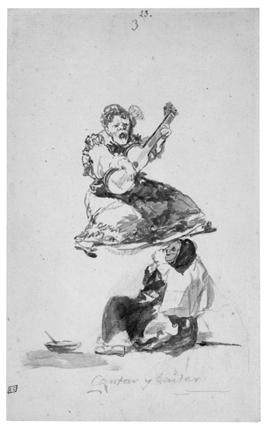
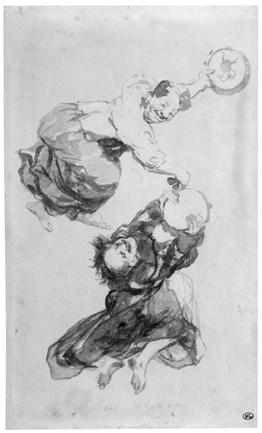
Francisco de Goya y Lucientes, Cantar y bailar (Singing and dancing), 1819–1820
Francisco de Goya y Lucientes, Suben alegres, serie Cuaderno D, de viejas y brujas (They climb up happy, Album D, The witches and old women), ca. 1819–1823
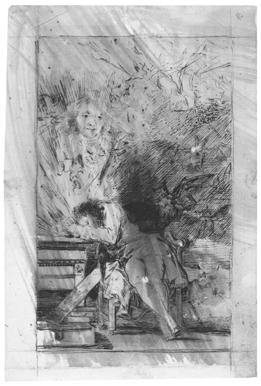
Francisco de Goya y Lucientes, El sueño de la razon produce monstruos (The sleep of reason produces monsters), 1796–1797
Johann Wolfgang von Goethe, Mondbeschwörung (Conjuration of the moon), 1790–1795
Johann Wolfgang von Goethe, Nachtstück (Nocturne), 1791–1796
is a profane duende, in any case.334 Above all, it is the romantic and then surrealist duende of the potencies of the imagination.
The potencies of the imagination—these are indeed what romantic modernity brought into play and claimed through a sort of return to ancient Greek daemonism. In his lecture on the duende, Lorca made a direct link between the ancient figure of the “demon of Socrates” and essentially modern incarnations of the demonic. First, in the guise of the “melancholy demon [melancólico demonillo] of Descartes,”335 the one that almost led the great philosopher to lose his sanity when he imagined a world abandoned to the powers of an “evil genius.” The figure of Descartes emerged here as the first challenge to any sentimental conception of the cante jondo. It was not overly specified, however. Figures like Goethe and Nietzsche who occupied a truly “fraternal” place in the modern presentation were among those to whom Lorca sought to give this aesthetic idea called duende. In the same paragraph from the beginning of the lecture in which Lorca evokes the “black sounds” (sonidos negros) of the gypsy singer Manuel Torre, he also— anachronistically and provocatively—attributes to Goethe the notion of duende: “A mysterious force that everyone feels and that no philosopher has explained.”336 Goethe, as we might imagine, never used the word duende. What Lorca wished to link him with is something the Weimar poet called “the demonic” (das Dämonische). Thus, in the great book entitled Poetry and Truth, finished in 1831, the last chapter is devoted to Goethe’s interest in drawing [p. 96 right], to his amorous nostalgia for “Lili” (Anna Elisabeth Schönemann), and finally to the notion of the “demonic” presented, in these pages, as rather “terrible” (furchtbar).337 Lorca’s real source for the demonic according to Goethe is a work by Johann Peter Eckermann published in 1835 and entitled Conversations with Goethe. This is where the author of Faust, in the continuation of Truth and Poetry, calls demonic “that ineffable enigma of the world and life,” where certainties and of habits no longer serve any purpose, where the very genius of poetry, of thought, of art in general, moves and agitates.338
For Goethe, the daemonic involved everything in existence—and in aesthetic experience in particular—where “we are repelled by all the dark and
334. Under the influence of the evangelical movement, however, we can see among the Andalusian-Gypsies today a sort of “re-theologizing” of the duende. See R. Llera Blanes, “Satan, agent musical: Le pouvoir ambivalent de la musique chez les Tsiganes évangéliques de la Péninsule ibérique,”
Terrain: Anthropologie et sciences humaines, no. 50 (2008): 82–99.
335. Lorca, “Theory and Play of the Duende.”
336. Lorca.
337. Lorca.
338. Eckermann, Conversations with Goethe, 392.
forbidding places”: everything that causes us “confusion” because we can grasp nothing certain from it, nothing unequivocal, unitary, and so are perturbed by something that imposes itself on us but whose qualities are so “contradictory” (so widersprechendes) that we can no longer understand.339 Goethe noted, too, how the ancient Greeks were able to cover with sensible forms those “manifestations of the unfathomable.”340 He offered this phrase that Lorca would cite, more or less exactly: “‘The daemonic,’ he said, ‘cannot be explained by reason.’”341
But Eckermann still does not understand completely, so he asks the poet, “‘Doesn’t Mephistopheles,’ I asked, ‘exhibit daemonic traits too?’” To which Goethe responds, “‘No [. . .] Mephistopheles is far too negative a being. The daemonic manifests itself in a wholly positive energy [das Dämonische aber aübert sich in einer durchaus positiven Tatkraft]’”—and this is why, he concludes, we find it particularly among musicians; for example, “you see it to a very marked degree” in the case of Niccolò Paganini.342 This clarification is crucial: Mephistopheles is only daemonic, while a musician will reveal his or her whole daemonic intensity in what Goethe characterizes with great fervor as a “wholly positive energy” (which Nietzsche would later demand from philosophical thinking itself).
For this reason, the well-known poetic and philosophical relation with Schiller is referred to in the Conversations as “daemonic.” William Shakespeare and Goethe are related to this same influence, even if it generated melancholy; and the sphere of the daemonic can be pulled toward a verb such as to worship (anbeten).343 Schiller was right in the end: the true intensity is not only daemonic but involves “naive poetry,” which Goethe calls also “unconscious poetry”: “In poetry there is something decidedly daemonic—especially in unconscious poetry, which fails to satisfy the intelligence and for that reason transcends everything conceptual in its appeal. It is the same with music, in the highest degree. Its loftiness is beyond the grasp of the understanding. It casts an all-powerful spell that defies rational analysis.”344
Lorca was passionate about this—as though poetry and music were, from Goethe’s viewpoint, the only things capable of giving form to that daemonic potency that supposes both a sovereign intensity and an inextricable contradiction. Or as though it involved a possible dialectics of intensities, something the old poet had wanted to formulate in terms of temporality or of force of destiny: “‘I was drawn into the project initially almost against my will; but there was something daemonic going on there, so it was no good trying to fight it.’”345 The daemonic literally diverts us: it is the irremediable force that—between emergences of “dark humors” and instances of “illumination”—makes our existence take “a very
339. Eckermann, 392.
340. Eckermann, 394.
341. Eckermann, 394.
342. Eckermann, 394–95.
343. Eckermann, 382.
344. J.P. Eckermann, Wisdom and Experience, trans. H.J. Weigand (London: Routledge and Kegan Paul, 1949), 100.
345. Eckermann, Conversations with Goethe, 400.
different direction” than the one planned or desired.346 As though an unconscious desire, more profound than anything, showed us to ourselves by diverting and by contradicting our plans and our certainties.
Intense and contradictory, the daemonic is also irresistible, as it is the irresistible producer of crises, of faults, and of symptoms. What Goethe announced, in his Conversations, in a general or sometimes autobiographical manner, is something he also tried to understand from his fantastic activity as observer and collector. He wanted to collect, that is, what we could call documents of the daemonic. They are little things—“micrological” things, as Benjamin might have said—capable, nonetheless, of driving important processes that could be called “primordial phenomena” (Urphänomene). They shake up the relations normally created between the universal and the singular, the general rule and the moment of exception. One of these documents, kept in the wonderful home in Weimar, is part of a score written by Beethoven in which the composer, around 1810, sketched a song from Goethe’s poem on the “tears of eternal love,” those that “never dry.”347 As in Goya’s work, the graphic gesture appears both intense and contradictory, both desiring and full of doubt, both emergent and unhappy [p. 225 top].
The cante jondo is also an art made of dazzling intensities and anxious contradictions. An old debate among flamencologists concerns whether—and how—Gypsy-Andalusian song was historically formed around the European romantic movement. As romanticism was a modern artistic movement, this possibility has often been ignored given the immemorial or oriental characteristics of flamenco song.348 In 1976, Luis Lavaur published a book (which was largely ignored) entitled Teoría romántica del cante flamenco, in which the links with romantic, “Bohemian,” and urban Europe are presented as essential components in the development of Gypsy-Andalusian song.349 Numerous historical studies have since confirmed this hypothesis, leading to the assertion of the historically and geographically “hybrid” nature of flamenco and to the idea that flamenco should be considered a modern art in itself since it constantly had evident links with the European avant-gardes.350
346. Eckermann, 550, 588.
347. See S. Böhmer et al., ed., Weimarer Klassik: Kultur des Sinnlichen (Weimar: Klassik Stiftung Weimar; Munich: Deutscher Kunstverlag, 2012), 284–87.
348. See A. González Climent, Flamencología (Madrid: Editorial Escelicer, 1964), 174–77; and F. Carrassan and G. Chaussade, Éléments d’esthétique flamenca (Hyères, France: L’Or des îles, 1990), 73–84; and Leblon, Flamenco, 107–19.
349. L. Lavaur, Teoría romántica del cante flamenco: Raíces flamencas en la coreografía romántica europea (1976), new ed. (Seville: Signatura Ediciones, 1999).
350. See R. Plaza Orellana, El flamenco y los románticos:
Un viaje entre el mito y la realidad (Seville: Bienal de Arte flamenco, 1999); G. Steingress, Sobre flamenco y flamencología (escritos escogidos, 1988–1998) (Seville: Signatura Ediciones, 2004); G. Steingress, y Carmen se fue a París: Un estudio sobre la construcción artística del género flamenco (1833–1865) (Córdoba: Editorial Almuzara, 2006); La noche española: Flamenco, vanguardia y cultura popular, 1865–1936, exh. cat. (Madrid: Museo Nacional Centro de Arte Reina Sofía, 2007); and G. Didi-Huberman, “Idas y vueltas, ou la politique du vagabondage,” Les cahiers du Musée national d’art moderne, no. 154 (Winter 2020–2021): 3–49.
In reality, this debate is more complex than it first appears. It must be seen in its philosophical complexity. Of what romanticism are we speaking? Of what “modernity”? If we prejudge romanticism—superficially—as a “sentimental art,” an apology of personal emotions and of narcissistic fantasy, then deep song is not romantic. If we define romanticism—in a doctrinal manner, with Carl Dahlhaus, for example—as a speculative movement, an art of the self-deployed sublime, the epoch of an “absolute” music,351 then deep song again must not be considered romantic. If, however, we approach romanticism—dialectically, with Charles Rosen, for example—as a sequence of formal-affective experiments on intensity, on “structural dissonance,” the critique of classical codes, or the involvement of “contradictory sentiments,” or even the particular affection for everything that concerns the night and its moonlight glimmers,352 then flamenco is a music crossed through and innervated with romanticism.
Nonetheless, if this modern condition were accepted, the rejection of everything in flamenco that has to do with the ancient values of daemonism, of depth, or of the duende would be wrong. “Revolutionary modernism,” as Michael Löwy and Robert Sayre call it, is that modern movement that decided—by a strategic anachronism—to take every normative aspect of modernity backward, against the grain.353 Thus, when Benjamin, in his Arcades Project, mentions Baudelaire and his provocative claim regarding an “essentially demoniacal tendency”—a “depravity”—he deduces from this, theoretically, a “conjunction of the modern and the demonic” (Konjunktion des Modernen und des Dämonischen).354 Benjamin thus joined a line of writers and thinkers who examined, from the nineteenth century on, the “demonicity” of art in general and of music in particular.355 To be modern? Yes, but unlike any of those who, as followers of the German New Objectivity, willingly became “cold personae,” technophiles and followers of positivism.356 In light of Karl Kraus—the sharpest critic of modern conformities, of the verbiage of the press, and of social inauthenticity—Benjamin evokes that struggle with the demon that makes the writer a “daemonic” being.357
351. See C. Dahlhaus, L’idée de la musique absolue: Une esthétique de la musique romantique (1978), trans. M. Kaltenecker (Geneva: Éditions Contrechamps, 1997), 9–22, 57–72; and C. Accaoui, Le temps musical (Paris: Desclée de Brouwer, 2001), 263–65.
352. See C. Rosen, Aux confins du sens: Propos sur la musique (1994), trans. S. Lodéon (Paris: Le Seuil, 1998), 132–38; C. Rosen, La génération romantique: Chopin, Schumann, Liszt et leurs contemporains (1995), trans. G. Bloch (Paris: Gallimard, 2002), 165–304; C. Rosen, “Musique et sentiment” (2010), trans. T. Bélaud, in Musique et sentiment et autres essais (Geneva: Éditions Contrechamps, 2020), 35–148; and F. Escal, La musique et le romantisme (Paris: L’Harmattan, 2005), 99–138.
353. See M. Löwy and R. Sayre, Révolte et mélancolie: Le romantisme à contre-courant de la modernité (Paris: Payot, 1992).
354. Benjamin, Arcades Project, 236.
355. See E. Matassi, “Demonicità e ademonicità della musica: La filosofia della musica dei romantici (E.T.A. Hoffmann, W.H. Wackenroder, J.W. Ritter) e W. Benjamin,” in Arte e daimon, 225–40.
356. See C. Wermester, “Persona froide et mélancolie,” in Allemagne, années 1920: Nouvelle objectivité, August Sander, ed. A. Lampe (Paris: Centre Pompidou, 2022), 119–47.
357. W. Benjamin, “Karl Kraus” (1931), trans. E. Jephcott, in Selected Writings, vol. 2, 433–58.
In a preparatory manuscript dated to 1930, we find the quotation by Kraus that strikingly recalls the episode of the duende emerging on the edge of Lorca’s bed in his hotel in Buenos Aires: “Half-sleep, I dispatch a lot of work. A sentence appears, sits on the edge of the bed, and speaks to me.”358 It is an opportunity, for Benjamin, to trace an outline in which the “daemonic” makes a circle—an oval or a swirl, in fact—with “dialectics” (Dialektik) [p. 103 top].
All serious readers of Goethe have invoked the daemonic. Stefan Zweig, in 1925, published The Struggle with the Daemon, a book dedicated to Freud and which develops the daemonic paradigm through the works of Heinrich von Kleist, Friedrich Hölderlin, and Nietzsche. “One and all they were hunted by an overwhelming, a so-to-say superhuman power”—or potency, rather—making them continually border on madness until, one day, it pushes them into it.359 The daemon is then defined as the “remains” of chaos, dooming the psyche to a primordial anxiety: “I term ‘daemonic’ the unrest that is in us all, driving each of us out of himself into the elemental. It seems as if nature had implanted into every mind an inalienable part of the primordial chaos.”360 This anxiety creates a perpetual “fight”—the term is used also by Lorca for the duende—but a fruitful fight nevertheless. Consequently, “everyone whose impulses are creative, wrestles perforce with his daemon.”361 This is a Faustian combat: Zweig considers Goethe an “enemy” of the daemon, yet one who understood it better than anyone.362 Zweig’s book was translated into Spanish in 1934.363 A few months earlier, Lorca gave his lecture on the duende, and his friend Bergamín wrote his text on the “Importance of the Daemon” (La importancia del Demonio).364 Bergamín wanted to create a bridge between the daemon of Socrates and that of Saint Paul—and of those of Calderón and Teresa of Avila, of Cervantes and of Goya, of Nietzsche, and of Freud. The writer began with the premise that “the Demon can be a light for us” (el Demonio puede ser para nosotros luz), including the “devils in the body” (demonios en el cuerpo); that is, of sexuality revealed in its fundamental anthropological dimension by the work of Freud.365 While Lorca was able to turn unflinchingly from the poet Goethe to the cantaor Manuel Torre, or from the philosopher Nietzsche to “the headless Dionysiac scream of Silverio’s siguiriya,”366 Bergamín enjoyed citing Nietzsche’s Zarathustra, in which he recognized a shared familiarity with the duendes: “Beyond good and evil.—‘I like to live surrounded by
358. U. Marx et al., Walter Benjamin: Archives: Images, textes et signes (2006), trans. P. Ivernel (Paris: Klincksieck, 2011), 253.
359. S. Zweig, The Struggle with the Daemon, trans. E. Paul and C. Paul (London: Pushkin Press, 2012), 8.
360. Zweig, 9.
361. Zweig, 10. 362. Zweig, 12.
363. S. Zweig, La lucha contra el demonio: Hölderlin, Kleist, Nietzsche (1925), trans. J. Verdaguer (Barcelona: Apolo, 1934).
364. J. Bergamín, “L’importance du démon” (1933), trans. Y. Roullière, in L’importance du démon et autres choses sans importance (Combas, France: Éditions de l’éclat, 1993), 11–44.
365. Bergamín, 13, 23.
366. Lorca, “Theory and Play of the Duende.” “Silverio” refers to Silverio Franconetti.
spirits [me gusta vivir rodeado de duendes],’ said Nietzsche, ‘because I have courage.’ So do I, because I am a ghost [porque soy fantasma].”367
In the first paragraphs of the 1933 lecture, we read the striking claim that the duende of deep song is “the same duende that scorched Nietzsche’s heart” (el mismo duende que abrasó el corazón de Nietzsche).368 We can understand immediately, when it concerns the “Dionysian” of Franconetti, that a profound coalescence of the duende has occurred, not only with the “daemonic” in Goethe but also and above all with the “Dionysian” in Nietzsche. When Lorca presents the duende in detail as the other of any “muse,” we can deduce that it will be the other of Apollonian beauty. This other is called Dionysus.
While the Dionysian in Nietzsche’s work refers to a nonclassical element stemming from the culture and vocabulary of the ancient Greek, the duende offered an element of nonclassical vocabulary, in a culture that is also nonclassical (GypsyAndalusian culture) and modern (in the 1930s), to the monstrum that Nietzsche recognized in the 1870s at the heart of the pre-Platonist tragic moment.369 Readers of Lorca have regularly highlighted this Nietzschean component: “Nietzsche pains my heart” (Nietzsche me lastima el corazón), the author of Romancero gitano says in a text analyzed by Andrés Soria Olmedo.370 The aesthetic idea of the duende continued that of the Dionysian on the philosophical level of a tragic affirmation of existence in general,371 and on the philological level of the remarkable reception of Nietzsche’s work in Spain.372 The fact that Lorca wanted to place Manuel Torre in a prevalent position in relation to Antonio Chacón—a masterful singer, the guest of honor at the contest in Granada in 1922—shows, in the economy of his reasoning, a very Nietzschean opposition between the Dionysian and the Apollonian.
367. J. Bergamín, Les idées-lièvres (aphorismes et notes en marge) (1935–1983), trans. Y. Roullière (SaintSulpice-la-Pointe: Les Fondeurs de brique, 2012), 170. The quotation comes from F. Nietzsche, Thus Spake Zarathustra (1883–1885), trans. A. Del Caro (Cambridge, UK: Cambridge University Press, 2006), 28: “The air thin and pure, danger near and the spirit full of cheerful spite: these fit together well. I want goblins around me, for I am courageous. [. . .] courage wants to laugh.”
368. Lorca, “Theory and Play of the Duende.”
369. See J. Thomas, “Passer la limite: Le duende, une rencontre entre les mythes gréco-romains et notre imaginaire contemporain,” Latomus 66, no. 3 (2007): 718–26.
370. A. Soria Olmedo, Fábula de fuentes: Tradición y vida literaria en Federico García Lorca (Madrid: Publicaciones de la Residencia de Estudiantes, 2004), 282–96.
371. See A. Gómez, El flamenco a la luz de García Lorca (Córdoba: Editorial Almuzara, 2012), 95; J.C. Rodríguez, “Lorca: Temas y variaciones en torno a la conciencia trágica,” in Federico García Lorca, clásico moderno, 158–76; and R. Doménech, García Lorca y la tragedia española (Madrid: Editorial Fundamentos, 2008), 38–42.
372. See G. Sobejano, Nietzsche en España (1967), rev. and updated ed. (Madrid: Editorial Gredos, 2004); and J. Fuentes Feo, Un contexto heredado: Friedrich Nietzsche y el arte del siglo XX (Murcia: Cendeac, 2007).
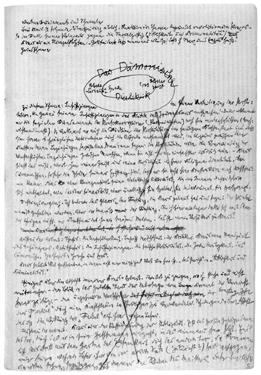
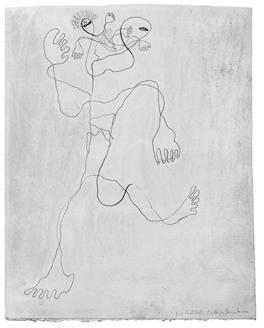
Chacón knew it all, and did so gracefully. Manuel Torre did not. But what did it matter to him to have knowledge and grace? He who sings with the duende will have only intensity—albeit a learned, “exact” intensity, as Bergamín likes to say. A copla attributed to Juan Breva says much the same:
Los siete sabios de Grecia
No saben lo que yo sé
Las fatiguitas y el tiempo
Me lo hicieron aprender.
(The seven sages of Greece
Did not know what I know . . . It was miseries and time
That taught me this.)373
Knowledge inherent to the duende was understood by Lorca as a typically tragic knowledge: the knowledge of which Aeschylus had spoken through the expression of “learning through suffering” (pathei mathos) and that Nietzsche would develop philosophically in The Birth of Tragedy, speaking of the Dionysiac lyrical poet— who is at the same time a musician—as the one who finds form in a fundamental “pain” (Schermz) and “contradiction” (Widerpsruch): as though the song became a “reflection of the original pain in music” (Wiederschein des Urschmerzes in der Musik), which is “without image and without concept” (bild- und begrifflose).374
A form born of pain can only be a form of excess: “Excess revealed itself as the truth; contradiction, bliss born of pain, spoke of itself from out of the heart of nature [aus dem Herzen der Natur heraus].”375 Since it involves music, Nietzsche logically makes Dionysiac lyricism a form of dissonance, a motif that forms the conclusion of his book:
This difficult, primal phenomenon of Dionysiac art can be grasped in a uniquely intelligible and direct way in the wonderful significance of musical dissonance [in der wunderbaren Bedeutung der musikalischen Dissonanz] . . . The pleasure engendered by the tragic myth comes from the same homeland as our pleasurable sensation of dissonance in music. . . . When applied to our response to the artistic use of dissonance, this state of mind would have to be described in similar terms: we want to listen, but at the same time we long to go beyond listening. That striving toward infinity, that wing-beat of longing [Flügelschlag der Sehnsucht] even as we feel delight in a clearly perceived reality, these things indicate that in both these states of mind we are to recognize a Dionysiac
373. Quoted by D.E. Pohren, L’art flamenco, trans. A. Lécot (Seville: Editorial Católica Española, 1962), 138.
374. Nietzsche, The Birth of Tragedy, 30. See also G.
Didi-Huberman, “La blessure à entendre,” Po&sie, no. 135 (2011): 97–108.
375. Nietzsche, The Birth of Tragedy, 27.
phenomenon, one which reveals to us the playful construction and demolition of the world of individuality as an outpouring of primal pleasure and delight [Ausfluss einer Urlust].376
I am willing to believe that Lorca, upon reading the penultimate sentence in Nietzsche’s book—“how much did this people have to suffer in order that it might become so beautiful!”377—might have thought of the Gypsy people of Andalusia, of the secular persecutions this people suffered, and of the singular beauty of its music. What links could be made between such a beauty and its condition of “original pain”? The answer lies, above all, in the notion of alteration that places Dionysiac music and poetry beyond any sentimentalism or egotism: “here, already we have individuality being surrendered by entering into another nature.”378 But this can occur only in the crisis or the symptom: something like a trance whose aesthetic consequence is that the forms produced will never be stable—as in eternal Apollonian beauty—but subject to alterations or metamorphoses that are at the same time unpredictable, recurrent, and disappearing. Something, then, called to lose itself, something we must learn to enjoy, if only in the impurity and incompleteness of the passing moment.379 Is this not what Nietzsche, in his own musical compositions, seeks to transcribe; for example, when he gives expressive indications like “Estatico ma non troppo” [p. 228 right]?
An “ecstasy” (ekstasis) is merely a deviation from the normal path, a displacement outside the supposedly immovable “stasis”—albeit, at the risk, sometimes, of bewildering the spirit. This “going outside oneself”—by means of what Nietzsche calls the “wing-beat of longing”—will undo any “sentimental poetry” in order to return to what Schiller calls a naïve poetry. It breaks the “keeping to oneself” in the subject who believes he is master of himself. It diffracts in the crisis or the celebration. Breaking the norms of individuation, it relentlessly seeks the other: the psychological other or the social other. Dionysiac art is therefore an art of the celebration, of the parade, of the symposium, and of shared drunkenness.380 It goes as far as resembling a strange “festival of the mad.”381 In the figure of Archilocus, Nietzsche places Dionysiac art next to “folk song” (Volklied), remarking on how much the participating listener becomes an “aesthetic listener” (ästhetische Zuhörer), which fits perfectly with the aesthetic reality of juergas flamencas. 382
376. Nietzsche, 114.
377. Nietzsche, 116.
378. Nietzsche, 43.
379. Nietzsche, 115.
380. See F. Dupont, L’invention de la littérature: De l’ivresse grecque au livre latin (Paris: La Découverte, 1994), 56–64 (relating the duende with the “hot” culture of the symposion); and S. Halliwell, “La ‘forza demonica’ della tragedia e le sue tracce antiche nel pensiero di Nietzsche,” in Arte e daimon, 189–205.
381. Nietzsche, The Birth of Tragedy, 27.
382. Nietzsche, 105–6.
In 1886, Nietzsche added a preface to his new edition of The Birth of Tragedy, entitled “An Attempt at Self-Criticism.” What he wished to return to was not the notion of the Dionysiac as such, but its modern embodiment as he had imagined it in 1872: he had finished with Richard Wagner’s music and his speculative romanticism for being overly cold, too “gray,” too misty in the philosopher’s eyes. Hence the new question posed to the world of contemporary music: “What would music be like if it were no longer Romantic in its origins, as German music is, but Dionysiac?”383 Two years later, “The Case of Wagner” appeared, wherein Nietzsche calls for a music “without grimaces! Without counterfeit! Without the lie of the grand style!”384 Against Wagner, he defended, quite provocatively, the popular “Gypsy-Andalusian” tragedy Carmen. In so doing, he took an ethical position, praising a music capable of making us “better” rather than more serious or sadder.385 Reactivating Dionysiac potency or intensity meant, for Nietzsche, to “mediterraneanize music”—“méditerraniser la musique,” as he wrote in Carmen’s French in his text.386 As a rapprochement with the South, with Andalusia, even with the Gypsy world, the music rediscovered its native—or naive—condition, that of constituting the privileged, ethical, and aesthetic vehicle of freedom: “Has anyone noticed that music makes the spirit free? Gives wings to thought? That you become more of a philosopher, the more of a musician you become?—The gray sky of abstraction illuminated in a flash as if by lightning; the light strong enough for the whole filigree of things; the great problems close enough to grasp; the world as if surveyed from a mountain.”387
Like all lyrical spirits, Nietzsche tended to exaggerate. But these exaggerations, which we find in Lorca’s prose on the duende, are only to emphasize its fundamental aesthetic existence. He was perhaps unfair with Apollo, as Lorca was with the muses. Apollo the muse-leader was no less musical, complex, fascinating, or even excessive than Dionysus—who was more interested in the exercise of power and, therefore, less sympathetic in the eyes of a poet or a philosopher focused on “overturning” all the conformist values of his time.388 As for the muses, they did not
383. Nietzsche, 11.
384. F. Nietzsche, “The Case of Wagner,” in The Anti-Christ, Ecce Homo, Twilight of the Idols, and Other Writings, trans. J. Norman (Cambridge, UK: Cambridge University Press, 2005), 235.
385. Nietzsche, 234.
386. Nietzsche, 236.
387. Nietzsche, 235.
388. See G. Dumézil, Apollon sonore et autres essais: Vingt-cinq esquisses de mythologie (Paris: Gallimard, 1982), 9–108; M. Detienne, Apollon le couteau à la main: Une approche expérimentale du polythéisme grec (Paris: Gallimard, 1998); P. Monbrun, Les voix d’Apollon: L’arc, la lyre et les oracles (Rennes: Presses Universitaires de Rennes, 2007); and M. Bettini, Voci: Antropologia sonora del mondo antico (Turin: Einaudi, 2008).
always have this “quiet young girl” aspect that academicism imposed on them long after the Greeks: they too can, philosophically, call for a reflection on intensity or even excess.389
In short, Nietzsche exaggerated just as Aeschylus had exaggerated. Lorca did the same, just as Manuel Torre—with his voice, not his writing—had exaggerated. In each case, it involved giving form to pathos, something on which art history has been focused since Aby Warburg developed the notion of “formulae of pathos” (Pathosformeln) as so many plastic survivals from antiquity and crossing the long duration of Western history. Warburg shows—contra Johann Joachim Winckelmann, for example, but with Nietzsche as philosophical companion—that before all the “serene” or Apollonian beauties of the so-called high Renaissance, the humanist accession to motifs of antiquity was done according to a deep current that was “pathetic” (pathetische Strömmung)390 and Dionysiac, for which the principal representative was the sculptor Donatello.
Donatello exaggerated too. Or rather he continually sought new technical and plastic means to intensify form: with moving or commoving. These sculpted characters are shown not only moving about, shouting, declaring; they dance and sing, it would seem, all of their emotions [p. 109 top]. Even the cherubs or the putti, childish creatures with wings often see on the edges or in the background of a dramatic composition, scramble exaggeratedly in strange bacchanalias [p. 109 center]. Why? Art historians have concluded that Donatello had turned to an old pagan iconography—with an explicitly Dionysiac origin—thereby recreating, in a Christian context, these types of “demons,” “little genies” that humanist Italy had called spiritelli or “little spirits.”391 Duendes, in short: aerial, childish, malicious, worrying, from far away in the time of our dreads.
We could say, with regard to affective tonalities, that the spiritelli of Donatello appeared at the point of intersection—or at the dialectical linchpin—of the two extreme dimensions that are present and always together in Renaissance humanism: on the one hand, what Warburg called, after Nietzsche, the tragic sentiment as a “pathos of annihilation” (Vernichtungspathos), illustrated in the Mnemosyne atlas by representations of the death of Orpheus, of Medea killing her children, or of witches dancing their Sabbath; on the other hand, what he called the grotesque sentiment as a “dance around the woman” (Tanz um die Frau
389. See J.-L. Nancy, Les Muses (Paris: Galilée, 1994), 11, 58, 97, etc.; and P. Quignard, La haine de la musique (1996), new ed. (Paris: Gallimard, 1997), 13–14, 27, 42, etc.
390. A. Warburg, “Albert Dürer et l’antiquité italienne” (1905), trans. S. Muller, in Essais florentins (Paris: Klincksieck, 1990), 161. See also DidiHuberman, L’image survivante, 115–270.
391. See C. Dempsey, Inventing the Renaissance Putto (Chapel Hill: University of North Carolina Press, 2001), 1–106; P. Morel, Renaissance dionysiaque: Inspiration bachique, imaginaire du vin et de la vigne dans l’art européen (1430–1630) (Paris: Éditions du Félin, 2024), 537–67; and N. Rowley, ed., Donatello, Erfinder der Renaissance (Berlin: Staatliche Museen zu Berlin; Leipzig: Seemann, 2022), 197–229.
im Mittelpunkt), with aspects of popular and carnival jousts [p. 109 bottom].392 The practices of juergas flamencas also continually include these two extreme dimensions in the balancing of the chico and the jondo genres: between the solitude of soleares styles or the desolation of the siguiriyas, on the one hand, and the joy of the alegrías styles or the burlesque of the bulerías on the other.
Warburg’s discoveries concerning the “pathetic current” of the Italian Renaissance allow us to bring nuance to Nietzsche’s severe—although partially justified—judgment against the nontragic tenor of the stile rappresentativo and its musical consequence, the opera, whose tendency to be “idyllic” or entertaining had, for Nietzsche, nothing to do with the fundamental pain inherent in the Greek musical spirit.393 In the same manner that Donatello could reinvent Dionysiac pathos in the gestural tumult of his sculpted figures, the humanist poet Angelo Poliziano (Politian), reinvented, with his Orfeo presented in Mantua in 1480,394 the tragic sense that we find at the same moment in the iconography of Andrea Mantegna’s Death of Orpheus—and in the engravings from his studio—or in the drawing by Albrecht Dürer.395
The fate of Orpheus, between gratia (with his ability to charm with the sound of his voice and his lyre) and pathos (with his implacable destiny of pains), fascinated Florentine humanists eager to bring back the genre of tragedy, both in music and in poetry. The great philosopher Marsilio Ficino—of whom Politian was the disciple in the context of the Neoplatonist Academy of Florence—played a lira da braccio, and many in that period sought to rediscover what was called the “canto a modo d’Orfeo.” Thus, the Fabula d’Orfeo by Politian was rapidly imitated. In 1600, two concurrent musical tragedies in which Orpheus is a protagonist— with the lover Eurydice also called Ninfa in the scores—were performed in Italy based on the same libretto by Ottavio Rinuccini, before the composition in 1607 of that admirable “fable in music,” Orfeo by Claudio Monteverdi.
This was a humanist masterpiece and, moreover, a “visionary score”—as Denis Morrier calls it—due to the novel richness of its musical language, linking ancient traditions of polyphony with the audacity of a monody accompanied by a basso continuo sung in the stile recitativo over an orchestration that succeedes in integrating, in the texture of its timbres and harmonies, all of the pathos of the narration.396 “Thanks to the basso continuo,” Morrier writes, “the composer can create a dialogue between heterogeneous elements, vocal or instrumental soloists, facing polyphonies
392. A. Warburg, Der Bilderatlas Mnemosyne (1927–1929), vol. 2-1 of Gesammelte Schriften (2000), ed. M. Warnke and C. Brink, 2nd ed. (Berlin: Akademie Verlag, 2003), plates 32, 41. 393. Nietzsche, The Birth of Tragedy 394. A. Politien, “Fable d’Orphée” (1480), trans. É. Séris, in Stances et fable d’Orphée (Paris: Les Belles Lettres, 2006), 61–77.
395. Warburg, “Albert Dürer et l’antiquité italienne,” 161–63.
396. D. Morrier, Claudio Monteverdi (Paris: Bleu Nuit Éditeur, 2017), 79–89.
Donatello, The Miracle of the Ass (detail), 1446–1449
Donatello and Michelozzo, Dance of Spiritelli (detail) from the Pulpit of the Holy Girdle of the Prato Cathedral, 1428–1438
Aby Warburg, Atlas Mnemosyne, plate 32 (detail), 1929
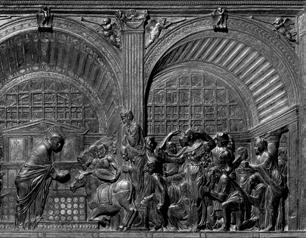
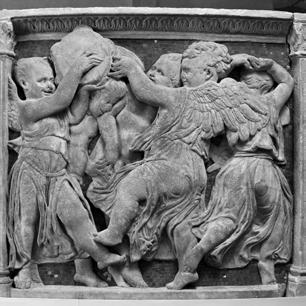
with varying density.”397 With this new manner, Monteverdi was able to restructure profoundly, beyond the normal uses of the madrigal, the function of the singing subject and of the pathos the singer was supposed to express.398 A polemic began then with the conformists of his time—the foremost among them being Giovanni Maria Artusi, author in 1600 of a virulent text against the “Imperfections of Modern Music” (Delle imperfettioni della moderna musica)—who reproached Monteverdi’s rhythmic divergences, his syncopation between voices, his irregularities in the modal language, the word painting of his orchestral timbres, and the way he “used dissonances like consonances.”399
The integration of the “pathetic current” in the first Renaissance in poetry and music, aiming to recreate a tragic genre all’antica, supposed not only a return to a theoretical horizon stemming from Aristotle’s Poetics and Rhetoric but also an entirely new practice of relations to be established, in song, between music and words.400 All of this, of course, to give form to affects, including minimal forms— which will evoke, for us, the ¡ay! of deep Andalusian song—called suspirato or exclamation in the treatises.401 Thus, Ottavia, in L’incoronazione di Poppea, chants the words “Addio Roma,” beginning with a long, pathos-ridden A . . . a . . . a . . . (which was masterfully performed, in the early 1970s, by Cathy Berberian, conducted by Nikolaus Harnoncourt).
A few months after Monteverdi’s death in 1643, Giovanni Battista Marinoni published a collection of funeral eulogies and literary tributes to the composer: Fiori poetici includes some fifty poems and a necrology written by a certain Matteo Caberloti. This text states that “only Monteverdi [had been] capable of expressing affects in music” and that he was able to do so by inventing a new way of associating rhythmic values and affective tonalities—the latter being defined almost musically as “the counterpoint of human actions” (il contrapunto delle humane attioni). In this way, Monteverdi literally “created affeti” in music. More precisely, he created the way to show, musically, how “they change from one moment to the next.”402 This can be heard potently, beginning with the particularly “demonic” poetry of Tasso, in the Combattimento di Tancredi e Clorinda with the tragic play of its “gestures of love” and its “gesture of war.”403
397. Morrier, 70.
398. See M. Calcagno, From Madrigal to Opera: Monteverdi’s Staging of the Self (Berkeley: University of California Press, 2012), 57–100.
399. Morrier, Claudio Monteverdi, 58–62.
400. D. Morrier, Monteverdi et l’art de la rhétorique (Paris: Cité de la Musique; Philharmonie de Paris, 2015), 85–167. See also C. Georis, Claudio Monteverdi letterato, ou les métamorphoses du textes (Paris: Honoré Champion, 2013).
401. Morrier, Monteverdi et l’art de la rhétorique, 158–60.
402. Quoted by L. Schrade, Monteverdi (1950), trans. J. Drillon (1981; Paris: Jean-Claude Lattès, 1991), 349.
403. See S. La Via, “Le Combat retrouvé: Les ‘passions contraires’ du ‘divin Tasse’ dans la représentation musicale de Monteverdi,” trans. F. Siguret and A. Magro, in La Jérusalem délivrée du Tasse: Poésie, peinture, musique, ballet, ed. G. Careri (Paris: Musée du Louvre; Klincksieck, 1999), 109–58; and G. Careri, Gestes d’amour et de guerre: La Jérusalem délivrée, images et affects (XVIe–XVIIe siècle) (Paris: Éditions de l’École des hautes Études en Sciences sociales, 2005).
Monteverdi, in 1638, published his eighth and final book of Madrigali guerrieri e amorosi. 404 In it are the Combattimento but also the Lamento della Ninfa, whose theme, according to Christophe Georis, has something of a drama of “amorous effacement” [p. 113].405 In the poem by Ottavio Rinuccini, we read the following:
Errava hor qua, hor là i suoi perduti amori così piangendo va: [. . .]
“Fa che ritorni il mio amor com’ei pur fu, o tu m’ancidi, ch’io non mi tormenti più.”
(She wandered here and there and went weeping her lost loves:
[. . .]
“Make my love return to what he was, or kill me so that I may no more torment myself.”)406
This madrigal is particularly striking for anyone interested in flamenco music. It uses a typical “Andalusian cadence,” as it is called”—A minor, G, F, E—and does so in a way that is characteristic of deep song; that is, in a way that is both obsessive and disruptive. Obsessive in that the four descending notes constantly return, repeating over and again. Disruptive in that the song of the nymph continually surprises us with the details in its performance, especially when it is performed out of measure, according to what Monteverdi might have called a tempo degli affetti or “time of affects.” When the word dolor is uttered, for example, two “intensely dissonant” chords are sounded, as Rinaldo Alessandrini points out. On the word piangendo, the rhythm, however, is suddenly calm. Or exclamations of ah! comment, in a way, on the suffering of the nymph who sings in a suspiratio and even syncopatio voice.407 Morrier speaks also of the “expressive dissonances” in the Lamento della Ninfa as so many “awful” and “barely tolerable” musical events.408
404. C. Monteverdi, Madrigali guerrieri e amorosi con alcuni apusculi in genere rappresentativo [. . .]: Libro ottavo (Venice: Alessandro Vincenti, 1638).
405. Georis, Claudio Monteverdi letterato, 312–24.
406. Quoted in R. Alessandrini, Monteverdi (2004), trans. B. Arnal (Arles: Actes Sud, 2004), 129–31.
407. Alessandrini, 132–34.
408. Morrier, Monteverdi et l’art de la rhétorique, 162–63; and Morrier, Claudio Monteverdi, 138.
A corporeal event that expresses a pain that came from a psychological or social depth, which settled over time into an ineluctable repetition, but which suddenly lets loose like a volcano, shaking reality with its differences, with syncopated or dissonant disruptions—such a corporeal event is called a symptom. Not in the standard senses of medical semiologies but in the sense that Freud developed on the basis of a clinic of unconscious memory and its “events” of soul and body. The symptom, in this sense, returned to and integrated all the paradigms already contained in the Goethean idea of the demonic, in the Nietzschean idea of the Dionysiac, and in the Warburgian idea of Pathosformel (an idea that developed, in cultural history terms, toward a notion of the symptom that is close to what Freud had developed in terms of his own psychopathology).409
The notion of symptom allows us to understand more clearly how affects transform our bodies and even how they take shape. When León suggested in his book—starting from the idea that Pedro G. Romero had taken up from Rafael Sánchez Ferlosio—that the Andalusians’ duende is merely the ancient Greek pathos demanded by Nietzsche for any consequent work of art,410 this, nonetheless, did not at all simplify the problem or the “mystery” of the duende. For the mystery in question is that of pathos itself, understood, after Freud and Warburg, in its very plasticity; that is, as an implementation, a forming of the symptom. The theoretical interest of this notion—which offers the meta-psychological alternative to the semiotic notion of the “sign”—stems from the fact that it makes possible an escape from the two symmetrical traps of “mystical” hyperbole regarding the musical event and the “objectivist,” or even “positivist,” reduction regarding the relations that arise between form and affects. The symptom is both phenomenon and structure: it is a phenomenon capable of opening—or revealing, and of tearing also—the structure that supports it. The principal ambiguity of the duende in Lorca, which may or may not be the element expressed or expressing in musical intensity, seems in keeping with this double—phenomenal and structural—condition.
In our investigation into the duende, the phenomenal dimension seems to be the most important. The most obvious, in any case. In his Conversations, Goethe speaks quite justly of the daemonic as an unpredictable event: an “unexpected gift,” he says, that humankind receives from “above.”411 We could say, with regard to the “deep song” according to Lorca—or even with regard to the “psychology
409. See Didi-Huberman, L’image survivante, 271–514.
410. León, El duende, 163–64; and Romero, El ojo partido, 48. See also C. Sánchez, “Pathos de la fête et survivances des corps-palimpsestes flamenco,” Skén&graphie, no. 6 (2019): 141–53.
411. J.P. Eckermann, Conversations with Goethe: In the Last Years of His Life, trans. A. Blunden (London: Penguin Classic, 2022), 567.
of the depths” according to Freud—that the unexpected event comes from below. A century after Goethe, Henri Bergson proposed a model for musical emotion whereby it does not come to us, either from above or below; rather we ourselves plunge into musical emotion: “When music weeps, all humanity, all nature, weeps with it. In point of fact it does not introduce these feelings into us; it introduces us into them, as passers-by are forced into a street dance.”412 This viewpoint reappears, for example, when the composer Georges Aperghis, with Peter Szendy, asks, “Does entering into music mean to enter it again, to go into it again and again, stepping over and again through every door? [. . .] What strange traffic carries us, from one door to another and back? Are we in? Out? Back in? Back out?”413
There are many moments in which music—in Mozart, for example—seems to open a sensorial door to us, an affective door, to offer an unexpected ray of light. The duende is that, but negatively: the ray of shadow of sonidos negros that suddenly crosses the ambient clarity of what we had thought was just a popular song. Vladimir Jankélévitch wonders whether “depth”—that spatial metaphor—was suitable for musical phenomenology. His answer was both yes and no. If speaking musically about depth has any relevance, it is in the following sense:
just as the richness of implicit and latent meaning slumbers within the words of a “deep” text, so a “deep” music accumulates within its notes—in a state of reciprocal implication—an infinite number of “virtualities”; just as the whole is immanent, according to Bergson, in each part, so the whole melody slumbers, enfolded, in each harmony. [. . .] Depth is perhaps nothing more than that immense future time of reflection and perplexity wrapped up within [. . .] the time that the listener spends in delving into the thickness of this meaning devoid of meaning. [. . .] There is no unfathomable depth, but there is an inexhaustible, unfailing, unflagging possibility of emotion.414
This musical phenomenology, therefore, will always include something unflagging (the potentially circular or spiral construction of a duration) and ungraspable (an emergence followed immediately by its disappearance). The two go together and justify the analogy Jankélévitch proposes with the state of appearancedisappearance of speech in the balbuciendo manner claimed in poetry by John of the Cross (and often employed in the cante jondo). This could account for those “privileged instances [that] are indeed like the spark that flies from two flints
412. H. Bergson, “The Two Sources of Morality and Religion,” in Key Writings, trans. M. McMahon (London: Bloomsbury, 2002), 385.
413. G. Aperghis and P. Szendy, Wonderland: La musique recto verso (Paris: Bayard, 2004), 32. 414. V. Jankélévitch, Music and the Ineffable, trans. C. Abbate (Princeton, NJ: Princeton University Press, 2003), 69–71.
[or] in contact with the most humble of things.”415 This stammering points to a symptomal dimension in speech: not the “clinical sign” of some deficiency in language but what Philippe Lacoue-Labarthe calls—after the analysis, by the psychoanalyst Theodor Reik, of a “haunting melody” heard by Gustav Mahler—the “echo of the subject.”416
For a variant of the balbuciendo, flamenco singers have sometimes turned to a vocal form that La Niña de los Peines performed in remarkable ways involving the repetition of a phrase that is sung just barely, as an echo, in a muted way, and bearing a true distance effect. Thus, the “depth” of the duende is inseparable from an auratic phenomenology: it comes from inside, from very close, from the bowels that communicate directly with the mouth, but it comes also from much farther away, somewhere in the night sky illuminated by the moon or in the faraway time of almost erased memories.
In a wonderful lecture for children—in the style of Benjamin’s “Lights for Children”— Lacoue-Labarthe approaches this “depth” through the idea of an emotion before all emotion, that which we never remember but which possibly conditions our unconscious memory in its entirety:
Everything happens as if, before coming to the world and finding oneself in the world—in the “open air”—among things and beings that we learn to see, to touch, to taste, between which we learn to move, that we learn to love or to fear; before even having pleasure or pain; before, once again, filling our lungs for the first time and crying out, we had already, in a very deep memory—so deep that it is forgotten—a listening to something of language: its “music.” Then, if music seeks to imitate something—like any art, according to the Greeks—it would be that thing heard absolutely before. Music would seek to rediscover that thing, to become its echo. [. . .] What I mean to say is that if music exists, it is to rediscover that first, that very first emotion. 417
COULD THE ORNAMENT BE A DISPLACED AFFECT?
What can we say, at present, of the structural dimension of these musical events when they are thought of as symptoms? Is this not noticeably absent from Lorca’s text on the duende, in which everything important seems to revolve around a pure
415. V. Jankélévitch and B. Berlowitz, Quelque part dans l’inachevé (Paris: Gallimard, 1978), 47, 50. See also A. Wald Lasowski, Le jeu des ritournelles (Paris: Gallimard, 2017), 35–85 (on this “trace of the ungraspable” pictured with Freud and Lacan).
416. T. Reik, The Haunting Melody (New York: Farrar, Strauss, and Young, 1953); and P. Lacoue-Labarthe, “L’écho du sujet” (1979), in Pour n’en pas finir: Écrits sur la musique, ed. A. Bianchi and L. Kharlamov (Paris: Christian Bourgois, 2015), 133–243. 417. P. Lacoue-Labarthe, “Le chant des Muses” (2005), in Pour n’en pas finir, 36, 43.
affective epiphany? This is, in any case, what León understands; for example, when he insists on the poet’s revocation of the lexicographical tradition of the duendes (those sprites of everyday life who have no supreme aesthetic value for deep song) as well as their truly musical traditions (the duendes as ornaments, as we see in the work of Felipe Pedrell, where they are linked with the notion of adornos, of floreos, or musical glosas).418 If Lorca’s duende is defined through its pathetic intensity, does this not suggest that he should have left aside the ornamental value of the duendes that musicians spoke of in the nineteenth century and early twentieth century? This is what León’s analysis is based on. It is worth, however, investigating further.
At the beginning of his lecture in 1933, Lorca left a valuable clue that leads, in his own notion of duende, beyond the normal opposition between form and pathos Having uttered the names of three Gypsy artists who were unknown to Western art history—Manuel Torre, El Lebrijano, and the dancer La Malena—he quotes La Malena, who “once heard Brailowsky play a fragment of Bach, and exclaimed: ‘Olé! That has duende!’”419 Andrés Soria Olmedo recalls how the pianist Brailowsky had come to give concerts in Granada in the 1920s.420 Yet, is the music of Bach not celebrated for the genius of its form? And at the same time, who could claim that that form has no pathos? Who could deny that Bach was—like Dürer in the visual arts—a great artist of Passions and therefore of “passion” [p. 119]?
As a retracing of the entire history of musical affects is beyond the scope of this essay, I will just mention the astonishing richness of the baroque vocabulary of musical ornamentation, the perfect formal tool, precisely when the intensity of pathos is to be shown. Among the typical ornamentations is the “slide” or plainte—which gambists also call “langueur”—or trembling effects, among which the best known is tremolo.421 The hélan functioned as a kind of sob, uttered with Ah!, O!, or Hélas! In vocal music it is “formed by a strong aspiration which ma[kes] the sound of a sort of suffocation and precede[s] the sound with which it [is] tightly linked, [then] end[s] almost always with an accentuation or a fall,” as Joëlle-Elmyre Doussot explains.422
However formal it may be, the musical ornament is a potential—and privileged—vehicle for pathos. The obstacle to the expression of affects is not form but conformism, as Schiller suggests in his text from 1793 entitled “On the Pathetic,” when he denounces the overly policed conventions of French tragedy in the seventeenth century, when, for him, “decency [. . .] falsifies the expression of nature, and yet art demands this relentlessly.”423 Aesthetic judgment and
418. León, El duende, 51–63.
419. Lorca, “Theory and Play of the Duende.” 420. Soria Olmedo, Fábula de fuentes, 282. 421. See J.-E. Doussot, Vocabulaire de l’ornementation baroque (2007; Paris: Minerve, 2022), 119, 148–53.
422. Doussot, 84–85.
423. F. Schiller, “On the Pathetic,” trans. W.F. Wertz Jr., in Poet of Freedom, Book 3 (Washington, DC: Schiller Institute, 1990), 227.
ethical judgment come together through the prism of this question: What, in the taking shape of passions, makes the ornament an untimely and intense “stammering” or, on the contrary, an authoritarian, conformist, and disembodied “grammar”?424 It is here that Warburg’s position, taken a century after Schiller, will appear exemplary and fruitful.
Warburg was interested, from the beginning, in the question of ornament as a “constituent force of style” [p. 229 right]. On this point, Warburg had been preceded by Gottfried Semper’s monumental work on the development of plastic and architectural styles through the development of ornaments.425 Warburg’s stroke of genius, in his study of Botticelli in 1893, was to look beyond the viewpoint of iconography and, with it, the personalization of affects. Thus, while the Venus painted by the Florentine artist remains absolutely impassive, it is as though the pathos of the scene were displaced onto the ornaments—or the “accessory in movement” (bewegtes Beiwerk), as Warburg says—namely, her waving hair and the ornamented drapery that floats about her.426 From this example, we can understand that the ornament is capable, when it is not merely decorative or conformist, of taking on this pathetic or affective function as the displaced of a subject or an object or of any space. This is precisely where Freud situates the efficiency of “displacement” (Verschiebung) in the psychic work of dreams, of fantasies, or of symptoms—a work by which, in both an incomprehensible and “profound” way, an affective intensity is capable of appearing.427
Musicologists often like to speak of emotions in terms of structures. This removes nothing from either and gives us a better understanding of the “formulae of pathos” (as dialectical processes). When Leonard Meyer, for example, seeks to elucidate musical emotion in terms of patterns, he emphasizes that “link between ornament and affect” seen particularly in “traditional popular music.” This is how Béla Bartók and Albert Lord discovered, in the internal structure of SerboCroatian songs, a “link between rhythmic irregularities and expression.”428 Should we not, then, recall that the greatest of our structuralists, Claude Lévi-Strauss, praises music, in the “Finale” of his monumental investigation in Mythologiques, as
424. On this “grammar,” See F. Dassas, ed., Figures de la passion (Paris: Cité de la musique; Réunion des musées nationaux, 2001).
425. G. Semper, Der Stil in der technischen und tektonischen Künsten, oder praktische Ästhetik: Ein Handbuch für Techniker, Künstler und Kunstfreunde (Munich: Bruckmann, 1878–1879).
426. A. Warburg, “La naissance de Vénus et Le printemps de Sandro Botticelli: Une recherche sur les représentations de l’antique aux débuts de la Renaissance italienne” (1893), trans. S. Muller, in Essais florentins, 53–68. See also G. Didi-Huberman,
Ninfa fluida: Essai sur le drapé-désir (Paris: Gallimard, 2015), 7–61.
427. S. Freud, Interpreting Dreams (1900), trans. J.A. Underwood (London: Penguin Books, 2006).
428. L.B. Meyer, Émotion et signification en musique (1956), trans. C. Delaruelle (Arles: Actes Sud, 2011), 129–70, 248–49. Meyer based the quotation on B. Bartók and A.B. Lord, Serbo-Croatian Folk Songs: Texts and Transcriptions of Seventy-Five Folk Songs from the Milman Parry Collection, and a Morphology of Serbo-Croatian Folk Melodies (New York: Columbia University Press, 1951), 74.
the very paradigm of the articulation between “signification” and “sensibility”—and on the level of the “deepest” emotions:
But any attempt to understand what music is stops half-way if it does not explain the deep emotions aroused by works which may even be capable of moving the listener to tears. [. . .] Music brings about the miracle that hearing, the most intellectual of the senses, and normally at the service of articulate language, enters into the sort of state that, according to the philosopher, was peculiar to smell, of all the senses the one most deeply rooted in the mysteries of organic life. Meaning, escaping from the intellect, its habitual seat, is directly geared on to the sensibility.429
This insistence, this repetition on the theme of depth—which is rare in LéviStrauss’s writing—indicates more than a “deep rooting in the mysteries of organic life.” It is psychic, cultural, and historical too. If Warburg is so interested in the question of ornament, it is because it often involves something like an “optical unconscious” and consequently a return of the repressed that is characteristic of the different phenomena of “survival” (Nachleben). It involves the rolling back of ancient times in the apparently neutral actuality of a single ornamental playing. Warburg had read, in Edward Tylor’s founding work Primitive Culture, that the places in which survivals are often nestled—along with children’s games, lullabies, stereotyped gestures, or interjections deprived of meaning, like ¡ay!, for example— are the closest and therefore the most invisible ornaments of our daily life:
It needs but a glance into the trivial details of our own daily life to set us thinking how far we are really its originators, and how far but the transmitters and modifiers of the results of long past ages. Looking round the rooms we live in, we may try here how far he who only knows his own time can be capable of rightly comprehending even that. Here is the “honeysuckle” of Assyria, there the fleur-de-lis of Anjou, a cornice with a Greek border runs round the ceiling, the style of Louis XIV and its parent the Renaissance share the looking-glass between them. Transformed, shifted, or mutilated, such elements or art still carry their history plainly stamped upon them.430
This problem—like the Nietzschean Dionysiac—was not unknown in Spain in the time of Lorca. Importantly, Antonio Machado y Álvarez—“Demófilo,” who
429. C. Lévi-Strauss, The Naked Man, vol. 4 of Mythologiques, trans. J. Weightman and D. Weightman (Chicago: University of Chicago Press, 1981), 656.
430. E.B. Tylor, Primitive Culture: Researches into the Development of Mythology, Philosophy, Religion, Art, and Custom, vol. 1 (1871; Cambridge, UK: Cambridge University Press, 2010), 16.
created the most important collection of coplas flamencas—was also the translator of anthropological texts by Tylor.431 As for Lorca, if we reread his first prose pieces, written at the time when he defined himself as a musician rather than a writer, we can understand how he considered ornament an “effective modulation” that the duende would later radicalize. A text from 1917 on the tombs in Burgos Cathedral—included in the collection entitled Impresiones y paisajes (Impressions and Landscapes)—is entitled “La ornamentación” (Ornamentation). Here, we discover the young poet attempting a theoretical operation that would be recreated exactly in 1933 concerning the duende.
Ornament, he says, is that “tragic or sentimental modulation” (modulación trágica o sentimental) whose primary function is not to complement but to “commove” us.432 This modulation is tragic insofar as ornament escapes—if we can say so, retrospectively—the muse as well as the angel. It escapes the muse because it has none of the Apollonian serenity of a classical artwork: because it is marginal in the figurative system in which it intervenes. It escapes the angel because it frequently shows an overly morbid anxiety or an overly carnival joy, or something blasphemous in any case: “There is as it were an ardent desire to say things that they could not say out of fear of being burned alive or locked up forever in a dark prison.”433 This can be seen, according to Lorca, from the fact that artisan sculptors or ornaments formed something like a subproletariat of “slaves,” “oppressed by the nobility and the clergy” and consequently full of “rage and every perverse intention against those of whom they were slaves.”434
This is why ornaments, even in the heart of Spanish cathedrals, scattered their “winged monsters” (monstruos alados) with “everything very diminutive as though fearing to be seen.”435 Not until Goya did these winged monsters occupy the center of represented scenes. Until then, they formed on Gothic sepulchers “vast streams of funny figurines, of devil-kins set like precious stones [diablillos engarzados],”436 indicating sexual desire, childish play, and anxiety about death—all at the same time. These ornaments are indeed duendes—and are perhaps more demoniac than daemonic in this context—and this is also the case in what Lorca calls their incomprehensible strangeness (extrañeza incomprensible), somewhere between the excess of the popular grotesque and an expression of infinite pain (gran expresión de dolor).437 It is as though, in this place of Christian solemnity, the duendes came for a “celebration” with death, as though in a flamenco celebration the duendes would soon come for a “celebration” with life itself.
431. See E.B. Tylor, Antropología: Introducción al estudio del hombre y de la civilización (1881), trans. A. Machado y Álvarez (Madrid: El Progreso Editorial, 1887).
432. F. García Lorca, Impressions and Landscapes, trans. L.H. Klibbe (Lanham, MD: University of America Press, 1987), 61.
433. Lorca, 61. 434. Lorca, 61. 435. Lorca, 62. 436. Lorca, 62. 437. Lorca, 63.
Just as the poem “Romance de la luna, luna” requires us to understand the gaze of the child in the drama of the “emotionally moved air [aire conmovido]” that vibrates throughout the moonlit night, we must also understand the voice of the singer, in the lecture from 1933, according to a similar process: an “emotionally moved breath [aire conmovido]” that makes the cantaor’s whole body tremble as the cantaor sings and touches the heart of the “artist listeners,” as Nietzsche calls them. And this, too, generally occurs at night: the night of the celebration, of the juerga. At this moment the voice, from its most profound solicitation, paradoxically overflows. At this moment the duendes will gush out.
From “profound” to “overflowing,” the voice alters, as though the “passage” of a duende made the song ruin itself, brought it down to the abyss, at its highest moment. This is the sense of the anecdote at the heart of Lorca’s text regarding La Niña de los Peines.438 The text is like a philosophical exemplum, as it leads well beyond the question of knowing whether in reality the singer drank strong alcohol to transform her voice. The rhetorical issue of this exemplum—uttered at the far end of the world, in front of intellectuals unaware of the Andalusian mundillo was first, for Lorca, to represent the protagonists of this “little tavern in Cádiz” (una tabernilla de Cádiz) as a meeting of the “gods in exile,” to quote Heine.439 The presentation of each character had to be exaggerated and mythologized— in proportions that León evaluates precisely.440 In this seemingly shabby place, the faces had “the air of a Cretan mask” (un aire de máscara cretense), the butchers appeared like the direct successors of ancient high priests, and the singer herself was on the same level as the great painter Goya.
In short, this story takes us to an altered present of antiquity. And there La Niña de los Peines will alter her voice, after being mocked—“¡Viva París!”—by an aficionado skeptical of the vocal performance of her earlier song: “[She] began to sing with a scorched throat, without voice, breath, color, but . . . with duende. She managed to tear down the scaffolding of the song, but allow through a furious, burning duende, friend to those winds heavy with sand.” This is why, Lorca concludes, “La Niña de los Peines had to tear apart her voice [tuvo que desgarrar su voz].”441
Here we are at the narrative heart of the operation or the theoretical play invented by Lorca: everyone becomes an epic character, including the duende itself. The poet does not have to deny the traditional meanings associated with the ancient Spanish duende; instead, he need only to make a philosophical
438. Lorca, “Theory and Play of the Duende.” 439. H. Heine, “Les dieux en exil” (1853), in De l’Allemagne, ed. P. Grappin (Paris: Gallimard, 1998), 383–422.
440. León, El duende, 91–31. 441. Lorca, “Theory and Play of the Duende.”
character—philosophical rather than epic or legendary—or, as Gilles Deleuze and Félix Guattari write, a “conceptual persona”442 (one that cannot be reduced to a concept in the narrow sense, since it is only an “aesthetic idea”). This fabulous persona, against whom the singer “fights” and then for whom she “makes way,” is a personified dramatization—rather than a negation—of musical values traditionally attributed to the cante jondo, under the nomenclature of duendes as specific vocal “ornaments” (adornos) of the Gypsy-Andalusian copla.
With or without alcohol—even if we cannot ignore the drunkenness that is part of flamenco celebration, for this is its primary Dionysiac characteristic—the voice, here, rises to alter itself; that is, to ruin itself, to fall to abysmal depths in the formless rumor of the depths experienced psychologically and organically, even when they are thought through “telluric” categories. It is a “technique of the body” like any other, therefore, in Marcel Mauss’s sense of the term, which involves a sequence of efficient gestures that, in the present of a corporeal actualization that might have the value of a crisis, assures the transmission or the tradition of an entire past of symbolic contents associated with these gestures.443 The duende is therefore a technique of the body destined to actualize, in the form of an altering of the voice, a certain number of values (which are aesthetic, ethical, psychological) that demand this alteration.
The question then arises: How does the altering of the voice in itself become at the same time a technique of the body, a psychological experience, and an aesthetic value? If it is practically vain to transcribe flamenco music in the form of scores or rhythmic outlines, this is because this kind of playing would not exist without all the noises, the murmurs, interjections, percussion, people clearing their throats, and other apparently exogenous sounds that are nonetheless inseparable, like so many sound atmospheres that are both concentrated (on the solitary interior of the singer) and exploded (outwardly, toward the shared celebration). If it were only about compositional or rhythmic structures, the duende would be just a measurable notion that could be applied to any situation, and this is obviously not the case.444 In the considerable diversity of flamenco words concerning ornamentation,445 one list of technical jargon concerns alteration. For example, the singer sings “with the body in a cry” (con el cuerpo en un grito), by “paining” (doliéndose) from “deep in the bowels” (fondo de las entretelas, las entrañas, tripas).446
442. G. Deleuze and F. Guattari, What Is Philosophy?, trans. H. Tomlinson and G. Burchill (London: Verso, 1994), 61–84.
443. See M. Mauss, “Les techniques du corps” (1936), in Sociologie et anthropologie (1950; Paris: PUF, 1980), 363–86.
444. That said, in contrast to the words of
P. Donnier, El duende tiene que ser matemático (Córdoba: Virgilio Márquez, 1987); and P. Donnier, “Flamenco: Structures temporelles,” Cahiers de musiques traditionnelles, no. 10 (1997): 127–51.
445. Gamboa and Núñez, Flamenco de la A a la Z, 403.
446. Gamboa and Núñez, 204, 221, 578.
Artists of deep song also speak of ecolalias, a specific manner of pronouncing the words of the copla. We hear of glosolalias, vocal playing made up of syllables without any meaning (like the tirititrán of the alegrías style); or of farfulleos, which are types of glosolalias; or the por lo bajini song, which involves stammering the words by lowering the volume of the voice.447 We hear of ayeos that repeat the painful exclamation ¡ay! in an initial moment of the song that is called quejar la voz, meaning “to make the voice complain,” and we hear of antífona, which means dialogue, in the styles of caña or polo, between the main vocal soloist and the responding plaint.448 Not to mention jaleos, which come from the audience and resemble responsories in the form of interjections or exclamations.449
The most important thing, however, is what Lorca sought through his idea of a song “without voice, without breath”: a song with a negative potency, we might say, for it aims to deconstruct its own melodic structure and, therefore, to ruin itself, to the point of “tearing its voice apart.” This is the heart of what most profoundly characterizes the cante jondo: like a diastolic movement, it deploys a layer of melisma that often appears without any limit (and this is where this singing is radically different from any other kind of song); then suddenly, in a systolic movement, it tightens or, worse, tears this sound space with a timbre effect that artists called rajo, which is a specific way of “tearing the voice” (desgarrar la voz).
Rajo is said to constitute the particular quality of certain singers, mainly Gypsy singers whose voice is said to be voz afillá, a term that comes from the name of the legendary artist El Fillo. This negative quality is a broken, hoarse, impure voice that aficionados often call a rancia—a “rancid” or old voice; it is an inactual voice, a voice of the past. In this voice the breath is heard less as breathing than as a symptom or crisis. It is dramatized more in what is called jipío—which was, for a while, used as a synonym for duende—a vocal technique consisting in expressing oneself as if one were suffocating or being strangled. It is the “voice without breath” that Lorca speaks of. José Manuel Gamboa and Faustino Núñez considered this technique “the very essence of flamenco song,” as it appears most intensely in the moment when the breathing of the singer seems to disappear.450
The word jipío is an Andalusian variation of jipido, which in its trivial sense means “hiccups” (a minor symptom) and in its literary sense means the strangled “groan” of someone who suffers much (a major symptom). We can say, at that moment, that the breath becomes a symptom and a drama in action: the breathed air, inhaled or exhaled, becomes alarmed and turns back against itself. The air becomes, directly on the body of the singer, an aire conmovido. This is how we can call the
447. Gamboa and Núñez, 212, 244–45, 279, 559.
448. Gamboa and Núñez, 35, 49, 467. 449. Gamboa and Núñez, 305. See also M.
López Rodríguez, El flamenco: Las onomatopeyas en su léxico (Málaga: Ediciones, Giralda, 1994).
450. Gamboa and Núñez, Flamenco de la A a la Z, 310–11. See also Leblon, Flamenco, 55–58.
conflict, that “struggle with the duende” that Lorca spoke of so well. A voice that endeavors to make itself both powerful and strangled is exactly what Lorca thought of when he spoke of the duende of La Niña de los Peines. A “powerful-strangled” voice: this recalls when André Breton, in the same period, spoke of an “exploding-fixed” beauty—illustrated in a wonderful photograph of flamenco dance created by Man Ray [p. 269 left].451 In this sung crisis it is sometimes hard to know what breathes in or inspires (inspirer) and what breathes out or expires (expirer): breathing in and breathing out are in conflict and at the same time make a loop.
Loop and conflict are invested together, here, with considerable symbolic value. In her book Dire le chant, Caterina Pasqualino retraces the anthropological circle of song as it appears in the Gypsy communities in Jerez de la Frontera.452 The celebration unfolds in such a way as to protect the “coming out of the duendes” at the moment when singers want to express themselves “to the last breath”: sufferings are expelled by “tearing the throat” (rasgándose la garganta); the sigh then “stays in the air”—an aire conmovido—with that possibility open to the extenuation, where the soul is then out of the body, that is death. It is as though to sing meant to breath out, to expire, by imitating the moment in which a person “takes their last breath” and “gives up the ghost.” At the same time, this aire conmovido becomes a shared potency; it no longer belongs to the singer, for it is made to be shared, to be transmitted. It is as though the song looped back to children, or even to childbirth itself, creating a full circle of aching, of mournful songs, and of lullabies that Lorca studied alongside his interest in the “pains” of the cante jondo 453
The alteration of the voice is therefore at the center of a complete anthropological constellation, since it concerns all vital aspects of the same community: birth, childhood, love, marriage, work, suffering, death . . . We can understand, then, why deep song is described by Timothy Mitchell in terms of a “psychodrama.”454 To comprehend this term correctly, we must see how the tearing apart of individuation (as Nietzsche says with regard to tragedy) and its consequence, the “crisis of presence” (as Ernesto De Martino says regarding rituals of lamentation),455 make the alteration quite different from a symptom in the
451. A. Breton, “La beauté sera convulsive,” Minotaure, no. 5 (1934): 8–16. See also G. DidiHuberman, “L’espace danse: Étoile de mer explosante-fixe,” Les cahiers du Musée national d’Art moderne, no. 94 (2005–2006): 37–51. 452. Pasqualino, Dire le chant, 203–59. See also C. Pasqualino, “Voix perçante, voix étranglée: Signification des deux techniques vocales chez les Gitans d’Andalousie,” in La vocalité dans les pays d’Europe méridionale et dans le bassin méditerranéen, ed. L. Charles-Dominique and J. Cler (Saint-Joinde-Milly, France: Fédération des Associations de Musiques et Danses traditionnelles, 2002), 43–50;
and C. Pasqualino, “La souffrance des chanteurs gitans flamencos (Andalousie, Espagne),” in Sentiments doux-amers dans les musiques du monde, ed. M. Demeuldre (Paris: L’Harmattan, 2004), 117–25. 453. F. García Lorca, “Les berceuses” (1928), in Œuvres complètes, ed. Belamich, vol. 1, 897–915.
454. T. Mitchell, Flamenco Deep Song (New Haven: Yale University Press, 1994), 126–42.
455. E. De Martino, Mort et pleurs rituels: De la lamentation funèbre antique à la plainte de Marie (1958), trans. A. Bellio and J. Nicolas (Paris: Éditions de l’École des hautes Études en Sciences sociales, 2022), 59–89.
normal sense of a deficiency or a morbid state. Alteration is at the center of a musical process because it fundamentally addresses the other. To alter oneself is to go toward the other: to seek the other, to touch the other to the extent of becoming involute within the other. In vocal alteration the individual falls to ruin, down into the abyss, splits, becomes drama, but this is so that a subject may constitute itself psychically, ethically: as being for the other
In his long research on the oral poetry of the Middle Ages, Paul Zumthor arrived at similar conclusions: “The voice overflows the spoken word” when the latter is exchanged or even held frozen in social conformities; it is, he says with reference to the psychoanalyst Denis Vasse, “what de-sign-ates (dé-signe in French) the subject starting from language.”456 The play on the French verb désigner (which means to designate, refer to, or point out) as dé-signer (now meaning to de-sign or un-sign) tells us that the voice questions the subject: it implicates it without however enclosing it in a signification, and it exposes its constitutive division. This is possible because such an implication is affective, corporeal, and critical: “The most intense emotions arouse the sound of the voice, rarely of language: beyond, short of language, are murmurs and cries.”457 In the end, the voice will have “de- or un-signed” the subject insofar as a memory will have emerged from the moment of alteration or disturbance.458 A memory made of the dead already buried and of children not yet born.
“THEY SO JOYFULLY LAMENT . . .”
Flamencos celebrate, that much is certain. But Lorca thought of their deep song, literally, as a Trauerspiel: a drama to be understood from the heart of the disorders of the celebration. It concerns the elevation of ancient tragedies to a new, modern form. Above all, however, it is “the playing of mourning”: a playing of suffering and of loss. A game with death, of course, but a game nonetheless: joyful, almost childish, rooted in what Schiller calls “naive poetry.” In the prelude to his Poems and Legends, Heine writes of such a dimension with the following phrase: “She joyfully laments,” or “She joyfully sobs.”459 And is it not in such an order of ideas that the Romancero of 1851 includes a subsequent passage on “Hebrew
456. P. Zumthor, Introduction à la poésie orale (Paris: Éditions du Seuil, 1983), 12. See also D. Vasse, “La voix qui crie dans le désêtre,” Esprit, no. 43–44 (1980): 63–81; and K. Junzo, La voix: Étude d’ethno-linguistique comparative (1988), trans. S. Jeanne (Paris: Éditions de l’École des hautes Études en Sciences sociales, 1998), 217–37.
457. Zumthor, Introduction à la poésie orale, 13.
458. Zumthor, 245–78; and P. Zumthor, La lettre et la voix: De la “littérature” médiévale (Paris: Le Seuil, 1987), 155–77. See also C. Bologna, Flatus vocis: Metafisica e antropologia della voce (Bologna: Il Mulino, 1992).
459. H. Heine, The Poems of Heine, trans. E.A. Bowring (London: Bell and Daldy, 1866), 23; and H. Heine, Poèmes et légendes (1855; Paris: Le Seuil, 1995), 25.
Melodies” (i.e., Sephardic ritual or popular songs that provided ideas for the cante jondo) as testimonies of this kind of deep playing?460 This could be justified in three ways. Literarily, because the “playing of mourning” finds its source explicitly in biblical lamentations, whose poetic radicalness is shown by Gershom Scholem.461 Anthropologically, because mourning generates—in the Mediterranean basin, at least—various intense gestures, musicalized cries, or ritual formulae that are observed by De Martino, among others.462 Metapsychologically, because the aporia of mourning is often destined for a relation to the world that Pierre Fédida calls, after the poetry of Francis Ponge, the objeu, a play on the French words objet (object) and jeu (game or playing)—so somewhere between playing and mourning.463 That is, Trauerspiel. Benjamin writes that “nowhere but in Calderón”—the Spanish writer and author of La dama duende—“could the perfect form of the baroque Trauerspiel be studied.”464 Lorca, for his part, constantly invented new variants for the motif, in Heine, of the one who “joyfully laments.” In lines written in 1920 and called “Crossroads” (encrucijada) in the Book of Poems, Lorca speaks of “that deepest grief, the grief of joy” (el más profundo dolor, / el dolor de la alegría).465 Later, in a letter to Melchor Fernández Almagro, he says he was “very happy” with the fact that he had “every morning the irresistible desire to cry alone, to shed sweet and joyous tears, yes, joyous.”466 In 1923 and 1924, he mentions more than once “the very sad joy of being a poet” (la alegría tristísima de ser poeta).467
In 1927, describing a religious celebration in a prose poem, Lorca confesses to having cried, at a celebration, in front of “the new sadness over the joyful things” (la tristeza nueva sobre las cosas regocijadas).468 When we “joyfully lament,” we have the impression that the joy emerging from the suffering is quite new, hitherto unknown, unexpected; inversely, a sadness “covering the pleasure of the celebration” seems to open an abyss under our feet, like some unforeseen dimension, something unexpected and until then imperceptible. It is like a dialectic of affects that is at the same time tied and opposed. We find this, and not by chance, in what the poet was able to observe, in the early 1920s, in the cantaor Juan Breva: a paradoxical mixture of suffering and smiling (a mixture that has been frozen since the 1970s, when Tía Anica La Piriñaca was filmed singing of pains but concluding with a marvelous smile):
460. Heine, Romancero, 146–98.
461. See G. Scholem, Sur Jonas, la lamentation et le judaïsme (1919), trans. M. de Launay (Paris: Hermann, 2011), 52–67.
462. See De Martino, Mort et pleurs rituels; and G. Didi-Huberman, Ninfa dolorosa: Essai sur la mémoire d’un geste (Paris: Gallimard, 2019).
463. See P. Fédida, L’absence (Paris: Gallimard, 1978), 69–78, 97–195; G. Deleuze, “La plainte et le corps” (1978), in Deux régimes de fous: Textes et entretiens, 1975–1995, ed. D. Lapoujade (Paris: Les Éditions de Minuit, 2003), 150–51; and G. Didi-Huberman, Gestes d’air et de pierre: Corps, parole, souffle, image (Paris: Les Éditions de Minuit, 2005).
464. W. Benjamin, The Origin of German Tragic, trans. J. Osborne (London: Verso, 2003), 81.
465. F. García Lorca, Book of Poems (Selection): A Dual-Language Edition, trans. S. Appelbaum (New York: Dover Publications, 2004), 95.
466. Lorca, Correspondance, 1017. 467. Lorca, 1035.
468. Lorca, “Sainte Lucie et saint Lazare,” 482.
Era la misma Pena cantando detrás de una sonrisa. Evoca los limonares de Málaga la dormida, y hay en su llanto dejos de sal marina.
Como Homero cantó ciego. Su voz tenía, algo de mar sin luz y naranja exprimida.
(It was that same Pain being sung behind a smile. It evokes the lemon groves of a sleepy Málaga, and in his wail there are aftertastes of sea salt. Like Homer he sang blindly. His voice possessed a touch of sea without light and squeeze-dry orange.)469
This loop from “pain” to “smile,” characteristic of Breva’s singing, is exactly what Lorca wished to say, in 1933, of the duende: a potency common to both deep song and poetry, it makes death and life, the worst and laughter, loss and beauty spin together in a swirl. A “hammer effect” plunges us into the abyss, but with a “fanning effect” that makes us feel the aire conmovido as a healthy breeze. That the duende is found so often in Andalusia is not because it might be constitutionally “Spanish”; it is only because “a dead man in Spain is more alive when dead than anywhere else on earth.”470 Spanish culture is the culture of a people who “contemplate death,” as we see in Valdés Leal’s great painting in Seville, but also in the works of Zurbarán or Goya, and, of course, during the festivities of Holy Week.471 The duende arises from something like “deep play.” Every playing involves amusement with forms and surfaces, which we make move about together; the playing becomes profound when it opens up, in the surfaces, cracks, faults, gaps,
469. F. García Lorca, Poem of the Deep Song, trans. Carlos Bauer (San Francisco: City Lights Books, 1987), 79; and Lorca, Poème du cante jondo, 155.
470. Lorca, “Theory and Play of the Duende.” 471. Lorca.
and symptoms. Lorca contrasts the duende with the muse because the muse “closes the door” when she “sees death appear”; he contrasts it with the angel because the angel weaves, “with tears of ice,” a falsely protective cover.472 The duende, however, “wounds” without comforting, with a “wound that never heals” (herida que no se cierra nunca).473 Thus, “the duende loves the edge, the wound, and draws close to places where forms fuse in a yearning beyond visible expression.”474 This corresponds perfectly to the idea of a poetry in the highest sense: “You are a true poet: at every moment, you put your finger on the wounds [en todo momento pones la llaga en el dedo].”475
Hence the importance, for this poetics, of the aerial game embodied in dance and of the mortal game of bullfighting.
All the arts are capable of duende, but where it naturally creates most space, like in music, dance and spoken poetry, the living flesh is needed to interpret them, since they have forms that are born and die, perpetually, and raise their contours above the precise present. [. . .] The duende never repeats itself, any more than the waves of the sea do in a storm. Its most impressive effect appears in the bullring, since it must struggle on the one hand with death, which can destroy it, and on the other with geometry, against measure, the fundamental basis of the festival.476
Both dance and bullfighting are forms of struggle: a struggle with the expansion of the air (that must be moved and stirred); or a struggle with that precise territory where death will inevitably strike (and that must be dodged). The dancer—and this was said in 1930 in a tribute to Antonia Mercé “La Argentina”— “must fight against the air around her,” like a “real castaway on a beach of air”; and so she must “measure lines, silences, zigzags and rapid curves with a sixth sense of scent and of geometry, without ever taking the wrong path, like the bullfighter, [. . .] Belmonte above all, who manages with tight forms to create a definitive profile.”477 Whether we speak of baile jondo or the race of the bulls, in every case the duende will—like a survival, Lorca says, of the demonism of the classical world—require the celebration to be a drama and not entertainment and will require the forms to be living and not statufied: perpetually balanced between risk and rhythm, on the “point of danger, where the vertex of terrible play exists” (punto de peligro, donde está el vértice del terrible juego).478
472. Lorca. 473. Lorca. 474. Lorca.
475. F. García Lorca, “Dialogue avec le caricaturiste Bagaría” (1936), trans. A. Belamich, in Œuvres complètes, ed. Belamich, vol. 2, 930.
476. Lorca, “Theory and Play of the Duende.” 477. F. García Lorca, “Éloge d’Antonia Mercé ‘La Argentina’” (1929), trans. A. Belamich, in Œuvres complètes, ed. Belamich, vol. 1, 916. 478. Lorca, “Theory and Play of the Duende.”
This profound and dangerous game will, in Lorca’s work, become the template for a radical poetic project: to play, yes, but to play with one’s life. More than ten years before Michel Leiris’s “Of Literature Seen as Bullfighting,” Lorca, with true aesthetic rigor—and following a desire that he shared with the youth of his time—sought to innervate his poetry with a “profound desire to go to the bull.”479 Hence the importance of his friendship with Ignacio Sánchez Mejías,480 a famous bullfighter but also a writer who played with his life in the Spanish arenas. On August 11, 1934, in Manzanares, he was fatally gored; he died in terrible suffering on the morning of the 13th. A few weeks later, Lorca wrote one of his poetic masterpieces, the “Lament for Ignacio Sánchez Mejías”:
Dile a la luna que venga, que no quiero ver la sangre de Ignacio sobre la arena.
¡Que no quiero verla!
[. . .] No se cerraron sus ojos cuando vio los cuernos cerca,
[. . .] No te conoce el toro ni la higuera, ni caballos ni hormigas de tu casa. No te conoce el niño ni la tarde
[. . .] No te conoce nadie. No. Pero yo te canto.
(Tell the moon to come for I don’t want to see the blood of Ignacio on the sand.
I do not want to see it!
[. . .] His eyes did not close when he saw the horns near.
[. . .] Neither the bull nor the fig tree knows you, nor do the horses nor the ants in your house. Neither the child nor the evening knows you
[. . .] Nobody knows you. No. But I, I sing of you.)481
479. F. García Lorca, “Allocution radiodiffusée à destination de l’Argentine” (1935), trans. A. Belamich, in Œuvres complètes, ed. Belamich, vol. 2, 899. See also M. Leiris, “De la littérature considérée comme une tauromachie” (1945–1946), in L’âge d’homme (1939; Paris: Gallimard, 1973), 9–22.
480. See G. Soria, “Una brisa triste por los olivos”: García Lorca e Sánchez Mejías (Rome: Nuova Cultura, 2013).
481. F. García Lorca, “Chant funèbre pour Ignacio Sánchez Mejías” (1934), trans. A. Belamich, in Œuvres complètes, ed. Belamich, vol. 1, 587–91.
Lorca refers to—and publicly salutes—the direction of his friend “toward literature” (se dirigía a la literatura).482 This was in New York, on February 20, 1930. The poet had invited the bullfighter to give a lecture at the University of Columbia. In this practically improvised lecture, it was a question of playing with one’s life with the ethical hope of a savoir-vivre that would accept “fighting the demon” and risk everything through that something that was not yet called duende but “miracle.”483
All in a typically anarchistic manner, thrown in the face of power, as though to say that the life of the people would only ever belong to the people: “When the people want to challenge the kings, they organize these bullfights and say: ‘My life does not belong to you, it is mine, mine alone and I play with it with the flip of a coin for my own triumph, for my glory, for my name.’”484
Another essential agent in this aesthetic of the duende, a close friend of the poet and of the bullfighter, was José Bergamín. He watched the slow death of Sánchez Mejías and forty years later published a powerful text on this “lazy and long death.”485 In the 1930s, Bergamín developed his thoughts on deep play, which he wanted to call, ironically, an arte de birlibirloque—meaning “art as if by magic.” His intent was to define—by mixing, with this term, all the bases of a proper definition—the ethical or existential demand that Sánchez Mejías put into the word miracle and that Lorca put into the word duende. Bergamín, who was thinking of the toreo and the cante jondo jointly, expresses their common value, that of intensity, something which, for him, had nothing to do with that “exaggeration” often mentioned in relation to flamenco. “What cannot be expressed intensely,” he says, “we exaggerate.”486 A Dionysiac intensity (references to Nietzsche abound in Bergamín’s writing) and, consequently, a childish one: not because the art had to be reduced to playing or to a game, but so that the “art of the game” would always be at the heart of the greatest seriousness and of the greatest risk taken.487
Two years before his death in 1981, Bergamín insistently reformulated all of these motifs—which are clearly close to those developed by Lorca and characteristic of the 1930s—in his great book entitled La música callada del toreo. Here we find the motif of art as a means to arouse not only beautiful forms but a true “commotion” (conmoción) from which any thought or any form, like music, “settles in the air” (en el aire se aposenta), according to an expression found in Lope de Vega . . . and all of this carried, born, lifted in the same gesture of “definitively
482. F. García Lorca, “Présentation d’Ignacio Sánchez Mejías” (1930), trans. A. Belamich, in Œuvres complètes, ed. Belamich, vol. 1, 918. See also the unfinished novel by I. Sánchez Mejías, L’amertume du triomphe (1925), trans. D. Blanc (Paris: Verdier, 2017).
483. I. Sánchez Mejías, “Conférence sur la tauromachie” (1930), trans. C. de Frayssinet, in Sur la tauromachie: Œuvre journalistique, conférences et
interviews (Saint-Sulpice-la-Pointe: Les Fondeurs de briques, 2021), 51, 57, 64.
484. Sánchez Mejías, 65.
485. J. Bergamín, “Mort paresseuse et longue” (1974), trans. F. Delay, in La solitude sonore du toreo (Paris: Le Seuil, 1989), 79–89.
486. J. Bergamín, L’art de birlibirloque (1930), trans. M.A. Sarrailh (Cognac: Le Temps qu’il fait, 1992), 44. 487. Bergamín, 43, 49, 52.
playing heads or tails, all out, for everything” (jugarse definitivamente a cara y cruz todo eso: el todo por el todo).488
What happens, then, in the moment when we play all out, risking everything? We risk the impossible, we lose every guarantee, and can no longer say where we stand. This is how we alter ourselves: we discover ourselves in becoming another. This is the “entering into another nature” that Nietzsche speaks of regarding the Dionysiac rhapsode:489 when the mastering of any consciousness, and the consciousness of any mastering, are shattered. Could we not say that Lorca was a rhapsode in his own way, going from city to city, performing his poetry, sometimes singing, sometimes giving lectures? In his youth, he was unable to separate the poet from the musician.490 He was other in any case 491 At the age of nineteen, he wrote a text on music entitled “Divagación” in which a whole poetics emerges from his listening to the “marvelous altered [desquiciadas] modulations of Debussy.”492
Divagation, perhaps, but with rules nonetheless. And they are as necessary as the musical “bar” (el compás)—but they also demand to be broken or hollowed out by something that, as the young Lorca wrote, touches “the pain” (el dolor) and is given the plural name “alterations” (alteraciones).493 A sort of geometry of imbalance is essential then, for, as the poet states in the form of a question, “what is more imbalanced than pain?”494 This is why, he concludes, “such an art goes beyond the rules,” and this should encourage musicians to go to the heart of this night; that is, to “speak tragically [que hablen trágicamente] with the night.”495 Lorca’s poetics could be a poetics of alteration only inasmuch as it dialogues constantly with a tragic idea of music, whether this music is “scholarly” or “popular.”
In the becoming-music of sounds as well as the becoming-poem of words, an alteration is at work every time. At the end of 1929, Lorca wrote an autobiographical note in which he mentions two constitutive misfortunes in his life, two major alterations. The first was a childhood illness that, he writes, “prevented me from speaking and led me close to the gates of death,” thus allowing him to avoid the normal school syllabus and study music with an “old composer,” Antonio Segura, who introduced him to “folk science.”496 Then— and here the poet uses the third person, “altering” his I—“as his parents did not
488. Bergamín, La solitude sonore du toreo, 10, 16, 42. 489. Nietzsche, The Birth of Tragedy, 43.
490. See M. Ramond, “La métaphore musicale ou la naissance de l’écriture,” Hommage à Federico García Lorca, ed. M. Ramond (Toulouse: Université de Toulouse; Le Mirail, 1982), 95–112. 491. M. Ramond, Psychotextes: La question de l’Autre dans Federico García Lorca (1986), new ed. (Paris: L’Harmattan, 1998).
492. Lorca, “Divagation,” 665. 493. Lorca, 666–67.
494. Lorca, 667.
495. Lorca, 668. 496. F. García Lorca, “Notice autobiographique” (1929–1930?), trans. A. Belamich, in Œuvres complètes, ed. Belamich, vol. 2, 768.
allow him to go to Paris to continue his initial studies and since his music master had died, [he] directed his pathetic creative ardor [patético afán creativo] toward poetry.”497 “Wherever I work, there must be music,” he would say in 1934, before adding, “I am surrounded by death, do you know? I sing it.”498
To alter (oneself) is to meet and to interiorize an alterity. Something or someone comes to touch me so strongly that it ends up transforming me. A poetics of alteration would be, therefore, a poetics of meeting in which two forms—at least— come into contact with and finally transform each other. If the duende emerges from such a contact, as Lorca claims, then we must admit that it participates in a montage of heterogeneities. In an interview with Alberto Rivas, given in Buenos Aires for La razón on December 12, 1933—the article is entitled “Federico García Lorca y el duende”—everything begins with this operation: “Poetry, well, it’s the meeting of two words that you would never have thought capable of being linked and that form a sort of mystery; and the more you utter them, the more things they suggest.”499 In risk and in rhythm is also rhyme. As when the word luna comes to meet the word fragua—“la luna vino a la fragua”—to the extent that, with these two perfectly heterogeneous realities, the rhyme allows to arise from the darkness itself a duende or a “mystery” that, in the poem, will be materialized in a “moved air” (aire conmovido).
Lorca shared this kind of poetics with several of his contemporaries or friends, especially the surrealists. Beyond the proximity of the duende according to Lorca and what Bergamín says of the toreo, it is worth recalling the words Gómez de la Serna wrote regarding the “unsayable [that] trembles” in the poetic words of Mallarmé, Breton, Paul Éluard, or Vladimir Mayakovsky.500 In 1929, one year before Lorca’s text on the “Architecture of the cante jondo” and four years before his lecture on the duende, Gómez de la Serna wrote a remarkable article entitled “El cante jondo,” published in the surrealist journal Bifur alongside texts by Francis Picabia, René Daumal, Michel Leiris, Robert Desnos, and William Carlos Williams.501 In it he speaks of deep song as a “contortion,” a corporeal variant on alteration. He mentions the contest of 1922 and the old blind cantaora who “kept [her song] in the depths of her night” and the “antediluvian Bermúdez” whose voice reminded him of the sound of old bells but also of a simple “shovelful of earth on a coffin.”502
Alteration is not a state. It is a change or a movement—one of the six kinds of changes or movements described by Aristotle in his Categories, alongside changes of place, changes in generation, and changes by destruction, by growth,
497. Lorca, 769.
498. F. García Lorca, “García Lorca à Montevideo [I]” (1934), trans. A. Belamich, in Œuvres complètes, ed. Belamich, vol. 2, 843, 845.
499. Lorca, “Federico García Lorca et le duende,” 827.
500. R. Gómez de la Serna, “Las palabras y lo indecible,” Revista de Occidente 51 (1936): 66, 70, 84.
501. R. Gómez de la Serna, “Le cante jondo,” trans. A. Carpentier, Bifur, no. 2 (1929): 69–84.
502. Gómez de la Serna, 69, 74–76.
or diminution.503 It does not concern quantity but quality. In his Physics, Aristotle speaks of alteration (alloiosis) as a “motion in respect of quality.”504 It implies a dialectics of contrarieties since it begins in certain “contraries,”505 as when something cold is reheated by the action of a flame. It deploys, then, like a conflict, a fever, a crisis, or a symptom: it moves as a discontinuity in the order of things.506 If it seems to be “accidental,” this is because it must be articulated in terms of affectivity: “When [change] occurs according to affections and according to accident, there is an alteration. [. . .] Change which relates to affection [is] an alteration.”507
Alteration, then: movement, quality, contrariety, discontinuity, affectivity . . . In his comments on Aristotle’s main texts concerning the alloiosis, Bernard Sève emphasizes the dialectical nature—what some might simply call “paradoxical” nature—of this notion. It implies a mix of radical alterity (because in alteration we become other) and of autopoiesis (because the subjects find their capacity here to welcome the other, to transform themselves, but as potency); it dissembles the same; transforms everything, but always imperfectly; it remains beyond any distinction between the active and the passive: “Alteration is not a passive experience, [. . .] but an activity in which the subject accomplishes itself by the instrument of an exteriority. [. . .] Alteration is the auto-affection mediated by a hetero-affection [. . .]; in the alloiosis, it is as though the exterior were spontaneously offered for what the interior demanded.”508
Here, Sève is talking solely about thinking (about) music: musical alteration in the sense in which music could be such only if it constantly alters itself. Among the many themes of such a polyphonic work, we should not be surprised to find musical demonism in first place: it is a potency of alterity through which “the musical overflows beyond music,” always requesting the “other,” strangeness, or otherness.509 Thus, “music has to do with dark forces”—Dionysiac forces—those that made Nietzsche say that to love music was to love strangeness. Before him, they made Beethoven say, when the silence outside of deafness was doubled with an interior noise, “The demon has planned his stay in my ears.”510 Moreover, Sève links the notion of alteration with the dialectic playing of “regulations” and “disorders” of the body—which appears clearly in the Gypsy-Andalusian musical practices—making each prescribed link an opportunity to untie, or even to become unhinged, and to make each untying a possible social and musical link.511
503. Aristotle, “Categories,” 14b, in Categories and De Interpretatione, trans. J.L. Ackrill (Oxford, UK: Clarendon Press, 2002), 41.
504. Aristotle, Physics, V, 226a-b, trans. R. Hardie and R.K. Gaye, https://classics.mit.edu/Aristotle /physics.5.v.html.
505. Aristotle, VI, 241a.
506. Aristotle, VII, 253b. 507. Aristotle, De la génération et de la corruption, vol.
1, 317a, 320a, trans. M. Rashed, in Œuvres complètes, 810, 816. See also Aristotle, Métaphysique, L, 1069b, trans. M.-P. Duminil and A. Jaulin, in Œuvres complètes, ed. P. Pellegrin (Paris: Flammarion, 2014).
508. B. Sève, L’altération musicale, ou ce que la musique apprend au philosophe (Paris: Le Seuil, 2002), 205.
509. Sève, 10.
510. Sève, 15, 34–35, 108.
511. Sève, 131–49.
Musical alteration allows us to see the immense possibilities or potentialities of alloiosis. Thus, a list of more than three hundred forms of musical alteration—as they are noted on musical scores, without counting everything that occurs outside of Western written music—provided Sève with an entrance into his reflections on musical work as self-alteration, at the same time establishing its own autonomy and openness to the irreducible multiplicity of the events it brings out.512 At the heart of such formal processes the subject itself will be resubjectivized, benefitting from these thousand or so alterations that are so many strange epiphanies: it will, therefore, with a joy made of risks and perils, alter itself and tear itself from itself. As when, sensing the “coming out of the duendes,” the participants in the juerga flamenco show with their bodies the excess that has just touched them and is bearing them away.
The voice alters and so, too, the song. As well as the whole body. And what about time? Time alters too. Musical alteration opens an abyss in time. That is, the duende gives access to depth, to jondura. It would be wrong, however, to imagine this depth of time—so as to make it a cult or, instead, to refute it—simply as a crucible for the oldest or most sacred things. At the beginning of Civilization and Its Discontents, Freud bemoans the difficulty for people with common sense, or positivist philosophers, to understand the coexistence, in the same place (recall that this place, an archaeological-real as well as a psychic-metaphorical real, was the city of Rome in its extension as well as its depth), the copresence of a “something that was originally there” and that survived “alongside of what was later derived from it” (Überleben des Ursprünglichen neben dem Späteren, das aus ihm geworden ist).513
The notion of jondura, as we see it develop in Lorca’s texts during the 1920s, implies the immemoriality of deep song: the cante jondo, he said in a lecture in February 1922 in Granada, is the “rarest specimen of primitive song, the oldest in Europe” (canto primitivo, el más viejo de toda Europa).514 It is so “old” that we could say it is ageless. So “primitive” that it deploys like something anterior to any artistic individuation. And this is why, Lorca explained, “it is deep, truly deep, more so than any well, more so than all the seas that bathe the world, deeper than the present spirit that creates it or the voice that sings it, because it is well nigh infinite. [. . .] It comes from the first cry and the first kiss.”515
512. Sève, 155–60, 167–69, 199–245. See also P. Grosos, L’existence musicale: Essai d’anthropologie phénoménologique (Lausanne: L’âge d’homme, 2008), 21–55 (on “altered voice” and “pathic resonance”).
513. Freud, Civilization and Its Discontents, 15.
514. Lorca, “Deep Song.” 515. Lorca.
The cante jondo has a history that Lorca, on the basis of the musicological knowledge of his time (learned from Felipe Pedrell and Manuel de Falla), was able to retrace: Hindu origins, Byzantine formulae, chants from synagogues, Gregorian modes, music of the Moors of Granada, and the music of Gypsies who arrived in Andalusia in the fifteenth century from Arabia or Egypt . . .516 All of this has been “cultivated since time immemorial” (se ha venido cultivando desde tiempo inmemorial).517 If deep song has a history, then what is the meaning of the word immemorial in this context? It means two apparently contradictory things, unless we recall—through Freud—that human beings, along with cultures, have a consciousness and that they “suffer from reminiscences” in both a dialectic and “daemonic” way. The immemorial implies, on the one hand, something “primitive” in us that cannot be forgotten. It means, on the other hand, that the history in which this “primitive” element has been implemented has been forgotten.
The immemorial is the forgotten element of history: something unforgettable but which we fail to remember because it is impossible to tell as a history or even a story. Unforgettable in its own right—in its own potency—in the busyness of our daily conformities: a discontinuity is needed, a crisis, a critical gesture, to make it rise to the surfaces. Several aspects of the duende as Lorca understood it become clear from this kind of dialectics. First, its conflictual aspect: a “true struggle” (verdadera lucha), as the poet says.518 The singer grappling with his duende resembles someone looking to tear away the links that tie him to his unconscious memory in order to show those links to everyone, from his gut, in the present of his musical gesture. But he remains torn between two opposite meanings: a “most ancient culture” (viejísima cultura) and a “creation in actuality” (creación en acto) that gives rise not to an abstract compromise but to a “style that’s truly alive” (estilo vivo), constantly anxious, unstable, and open to the unforeseen.519
The immemorial resides—or rather moves—in the gesture that actualizes and tears it from its depth. It is in this sense that the duende, as Lorca says, “is a force, not a labour, a struggle not a thought” (un poder y no un obrar, un luchar y no un pensar).520 Here, the use of the infinitive seeks to indicate a process or a potency rather than a result or a thing: “poder” should not be understood as the “power” we possess and that we use to impose something on someone—the “royal” conception, in a sense, of artistic genius—but as a potency in actuality always nascent, often stammering, imperfect in its emergence. The duende names that potency, with both its limits and its strength. When it appears to someone’s eyes or ears, it resembles, strikingly, that “eddy in the stream of becoming”521 that Walter Benjamin wrote of in 1928, that “original phenomenon” whose
516. Lorca. 517. Lorca. 518. Lorca, “Theory and Play of the Duende.”
519. Lorca.
520. Lorca.
521. Benjamin, Origin of German Tragic Drama, 45.
anachronistic temporality never ceases to amaze: for its occurrence is, in a way, sudden and since always.
While conflict refers to the duration from which a symptom proceeds and suffers, uprising characterizes the present instant through which it makes all tensions break apart into powerful and gushing forms: “black sounds” or sounds of joy or of alegrías. At this moment, the duende “comes out” with the suddenness of the return of the repressed, a reflux of the forgotten. This is indeed an anachronism in actuality, since what returns from memory produces something absolutely new and unexpected. “The arrival of the duende presupposes a radical change to all the old kinds of form [un cambio radical en todas las formas] with which we had been familiar until then: it “brings totally unknown and fresh sensations [sensaciones de frescura totalmente inéditas]” with qualities of a newly created rose, miraculous.522 And this is no doubt why Lorca, in his “Architecture of the cante jondo,” speaks so well of this anachronism through which the immemorial undoes all the conformities of tradition: “The cantaor, when he sings, celebrates a solemn rite, and brings to light old dormant essences and throws them to the winds enveloped in his voice [saca las viejas esencias dormidas y las lanza al viento envueltas en su voz].”523
The powerful cantaor José Menese, in a dialogue with Ángel Álvarez Caballero cited and commented on by León, responded to the question of the duende by affirming that, if the word has any meaning, it refers to those rare instances where “things come out of me that I did not expect” (me salen cosas que yo no esperaba).524 That the duende may be related to what Bataille calls nonknowledge (non-savoir) does not seem to me to contradict—as León suggests—the aesthetic idea proposed by Lorca. Whatever the case, it involves something unexpected (the expression of a desire) that emerges from a reminiscent process (the expression of a memory that cannot be reduced to a conscious, manageable, or controllable memory). The “mystery” of the duende is not “mystique,” not even for Lorca; it is above all corporeal and memorial, cultural and psychic. And it could not be thought without the typically modern, European constellation of thoughts about memory from the romantics to Nietzsche, from Bergson to Proust, or from Freud to the surrealist poets.
Flamenco singers’ bodies often show that striking particularity. In the very moment when the voice alters, seeking its extreme point of intensity— an expressive intensity that has nothing to do with “sound potency” or with loudness—the fists are suddenly clenched. In a photograph we see an example of Manolo Caracol (who sang, in August 1937, in Madrid in tribute to Lorca, who had been assassinated one year earlier by Franco’s militias),525 clenching his fists in
522. Lorca, “Theory and Play of the Duende.” 523. Lorca, “Architecture du cante jondo,” 831.
524. Quoted by León, El duende, 319.
525. Quoted by León, 319.
front of him, his mouth almost closed, among several friends, frozen in attention [p. 139 left]. In more recent images by Michel Dieuzaide, we can see El Chocolate clenching his fist the moment he exclaims his song, mouth open [p. 139 top right]. We see this, too, with Carmen Linares or Inés Bacán [p. 139 bottom right].526 They look like old, newborn babies, exhaling their first breath, or children crying in the sudden hold of that very old pain.
To say that the popular duendes are superstitions, relics of animism in modern Western culture, is not enough. Nor that the duende of Lorca is a pure literary fiction, a mere “game” that uses deep song as its alibi. Superstitions, as their etymology indicates, are also—and above all—testimonies. Could an alteration then bear witness? Recall how Pierre Fédida explains what he calls “the theoretical structure of the symptom.”527 This is how, for Lorca, the game of the duende functions as symptom and theory. When the poet turns the symptom into a game, then into a quasi-superstition—for example when he supposes, on the basis of his aesthetic idea, that cantaores “almost all died of heart seizure”528—his aim in reality is a theoretical question that is far more relevant and psychic, touching the crucial point of knowing how an artist, a singer, can “allow its suffering and its true history to escape” (dejar escapar su dolor y su historia verídica).529
To allow “its suffering and its true history to escape.” What does that mean? The suffering was unsaid, but it escaped, exclaimed itself in a sort of sung crisis: a critical song. The history was forgotten, but it rose up suddenly in an unexpected poetic and musical form. This does not mean that the song poses as the “search for a lost time”; rather, “lost time” escapes through the voice in the moment of its alteration, rediscovering the one who did not even think of looking for it. Thus, the singer does not bring up from their memory “their pain” or their “true history”: it is, instead, the pain and the history that rise up from memory, from the depths of song, in the present of a voice that has taken the risk of altering. It has to do with symptoms and therefore of survival. Deep song can be understood as a song of surviving—for Gypsies, first of all, for they are a people who have historically been put in the difficult conditions of having to resist persecution over the long duration—but it is also a song of survival where something from a forgotten past could return in invented forms in the present.
526. See M. Dieuzaide, . . . Être flamenco (Paris: Julliard, 1992), 81, 112; and M. Dieuzaide, Compás flamenco (Paris: Éditions Cairn, 2006), 27, 32.
527. P. Fédida, Crise et contre-transfert (Paris: PUF, 1992), 227–65.
528. Lorca, “Deep Song.”
529. Lorca.
In this way, Félix Grande is right to see the cante jondo as an art of memory, while José Manuel Caballero Bonald declares, “The singer invents nothing: he or she remembers” (el cantaor no inventa: recuerda).530 That, he says, is a “moral of memory.”531 But this is true only on three conditions, at least: first, to distinguish this memory from any conformist or academic fixation, from any collection or string of frozen memories; second, to think of it with its symbolic treasure or unconscious imaginary; third, to conceive of it structurally as an impurity or, as Grande says, as a “mixture” (mezcla).532 And consequently, to escape the frameworks created by the old identifiable folklorism of “roots” (raíces), defended, notably, by Ricardo Molina and by Bernard Leblon whose aversion to any “impurity” eventually became an aggressive complaint against the supposed “decadence” of contemporary flamenco.533
Deep song undoubtedly invites an anthropological mode of thinking. The question consists in knowing which anthropology we want to speak of. With the cante jondo we would be better off, once again, to think in terms of constellations rather than roots: first, because Andalusia is itself, historically and geographically, a crossroads, a starred place, with multiple layers of cultures; second, because the Gypsies, however sedentary they may be, continually developed music in movement, attentive to everything around them. So, deep song shares much with several other so-called popular forms of music—in particular, a certain “superstitious” relation between song and enchantment: a means to communicate with spirits, whereby the word duende alone suffices to show this anchoring. At the beginning of the twentieth century, Jules Combarieu’s book La musique et la magie recognized the pregnance or survival of certain ancient forms in which “songs” and “spirits” (the “breath,” in each case) went together. His analysis is sometimes rapid in its overview, but it is attentive to certain important characteristics, like the role played by rhythm in the symbolic efficiency shared by magic and music.534
Gypsy-Andalusian “deep song” is a deep song among others. In ghazal, blues, fado, tango, rebetiko, or in klezmer music, among others, singers and musicians know how to “joyfully lament” and arouse what Michel Demeuldre calls “bittersweet feelings in world music.”535 They are all admirable poetics or complaintive music—yet still festive—that developed according to analogous structures that are even historically linked, particularly with everything that
530. Grande, Memoria del flamenco (1999), 21–32. 531. F. Grande, “El arte flamenco: Prodigiosa moral de la memoria” (1981), in Agenda flamenca (Seville: Editoriales Andaluzas Unidas, 1985), 13–34. 532. Grande, Memoria del flamenco (1999), 128–46. 533. See R. Molina, Misterios del arte flamenco: Ensayo de una interpretación antropológica (1967), new ed. (Seville: Editoriales Andaluzas Unidas, 1985),
29–34; and Leblon, Flamenco, 34–47.
534. See J. Combarieu, La musique et la magie: Étude sur les origines populaires de l’art musical, son influence et sa fonction dans les sociétés (1909), new ed. (Geneva: Minkoff Reprints, 1972), 22–26, 145–75. 535. M. Demeuldre, “Vie et mort des cultures de la délectation morose,” in Sentiments doux-amers, 303–25.
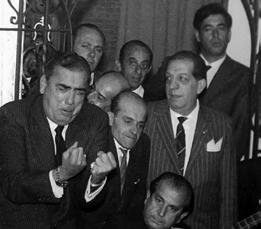
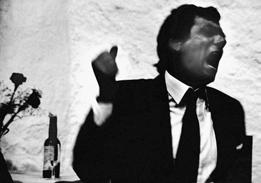
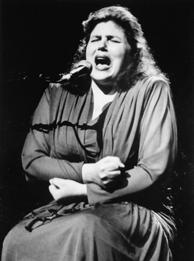
Unknown photographer, Manolo Caracol singing in Pino Montano, the estate in Seville of Joselito El Gallo, 1960s
Michel Dieuzaide, Antonio Núñez “El Chocolate,” Peña “El Taranto,” Almeria, 1988
Michel Dieuzaide, Inés Bacán, Imperial Theatre, Tarbes (France), 1990
touches the Mediterranean basin. For example, the “lamenters” studied in Italy by Ernesto De Martino clench their fists, open their arms, contract their faces, and beat the rhythm like the Andalusian cantaoras [p. 141].536
The elucidation of “musical significations” in ethnomusicology poses vast questions, not only because of the lack of written sources but also because socalled popular music uses a kind of subtlety and technicity with which classical musicologists are not familiar.537 An anthropology of the voice, moreover, could not work without the limit-states, the cries, the crises, or the outbursts of voice. 538 The “daemonic,” with regard to the voice, never leaves: and this is true from the ancient “sacred lyrical joy,” as Michel Poizat calls it, to the madness and commerce with the devil.539 Michel Leiris, in his afición for deep song— listening, for example, with Pablo Picasso and Bataille, to a song a palo seco by Manuel Ángeles Ortiz—and in his love for opera, studied altered voices and bodies possessed by those genies that are called zar, Ethiopian versions of the duende. 540 Nor is it surprising that Leiris wrote a preface to the important book by Gilbert Rouget on the way in which music can provoke as well as organize the conmoción by a trance, whether in ancient Greece or in contemporary Africa.541
In Music and Trance, Rouget devotes a long chapter to Arabic music, especially to that “profane trance” called tarab, often recognized as an equivalent to the Andalusian duende. 542 A story from the tenth century describes, for example, how the singer Jamila, in Medina, aroused among his emotionally moved listeners— or rather “commoved listeners”—such reactions as to make them “clap their hands, beat time on the floor with their feet, and sway their heads,” cry out, or tear their clothes.543 One of the tutelary figures of flamenco is Ziryab, who
536. See De Martino, Mort et pleurs rituels, 91–171; C. Gallini and F. Faeta, ed., I viaggi nel Sud di Ernesto De Martino: Fotografie di Arturo Zavattini, Franco Pinna e Ando Gilardi (Turin: Bollati Boringhieri, 1999), 146–61; and I. Andreesco, ed., “Chanter la mort,” special issue, Cahiers de littérature orale, no. 27 (1990).
537. See J.-J. Nattiez, “Ethnomusicologie et significations musicales,” L’homme, no. 171–72 (2004): 53–82; B. Lortat-Jacob, Chants de passion: Au cœur d’une confrérie de Sardaigne (Paris: Le Cerf, 1998), 279–81; B. Lortat-Jacob, “Le texte affecté: Vers une théorie de l’expression musicale,” Cahiers d’ethnomusicologie, no. 23 (2010): 11–28; and F. Bonini Baraldi, Tsiganes, musique et empathie (Paris: Éditions de la Maison des Sciences de l’Homme, 2013). 538. See D. Le Breton, Éclats de voix: Une anthropologie de la voix (Paris: Métailié, 2011).
539. M. Poizat, “Voix de la folie, folie de la voix” (1989), in Variations sur la voix (Paris: Anthropos, 1998), 201–13; and M. Poizat, La voix du diable: La
jouissance lyrique sacrée (Paris: Métailié, 1991).
540. M. Leiris, “La croyance aux génies zar en Éthiopie du Nord” (1938), in Miroir de l’Afrique, ed. J. Jamin and J. Mercier (Paris: Gallimard, 1996), 921–45; and M. Leiris, “La possession et ses aspects théâtraux chez les Éthiopiens de Gondar” (1958), in Miroir de l’Afrique, 947–1061.
541. G. Rouget, La musique et la transe: Esquisse d’une théorie générale des relations de la musique et de la possession (Paris: Gallimard, 1980), 7–14, 267–315.
On the “rotten voice”—between nose and throat— among the Dogons, see G. Calame-Griaule, “La nasalité et la mort,” in Pour une anthropologie de la voix, ed. N. Revel and D. Rey-Hulman (Paris: L’Harmattan-INALCO, 1993), 23–33.
542. G. Rouget, Music and Trance: A Theory of the Relations Between Music and Possession, trans. G. Rouget and B. Biebuyck (Chicago: Chicago University Press, 1985), 255–314. 543. Rouget, 281.
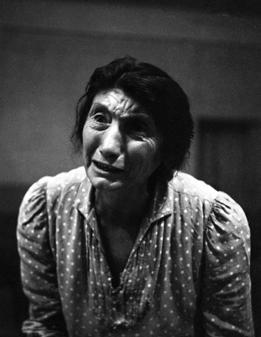
came from Baghdad to Andalusia at the end of the ninth century. A prodigious musician—he codified the songs of the nubas as well as their accompaniment on the Arab lute, to which he added a fifth string—he was rapidly crowned with stories of deeds and gestures that are unverifiable today. Félix Grande sees him as the founder of flamenco, and Paco de Lucía used his name, in 1990, for one of his recordings.544
The historical and musicological reality is obviously more complex, above all since the discovery, in 1956, of an old manuscript by Tunisian lexicographer alTifashi, who had meticulously retraced the history of Arab-Andalusian music of the the ninth to thirteenth centuries.545 That history is dominated by the figure, not only of Ziryab, but above all of Ibn Bajia, who launched a major musical and cultural upheaval: the combination—which the cante jondo inherited—of a melismatic-type song, highly prized in Seville, and a “syllabic” song; that is, a meeting of Visigoth and Arabic traditions as Christian musical practices mixed with Muslim practices from Mashreq in the Middle East.546 In the thirteenth century, the Cantigas de Santa María of King Alfonso X of Spain brought together a corpus of 428 sung poetries, on whose miniatures we can see the typical instruments of the nuba in a remarkable hybridity of the three cultures: Christian, Jewish, and Muslim.547
Jean During—an instrumentalist and musicologist whose interests began with Andalusia, then moved toward Persian music and the traditions of central Asia—also investigated the musical “commotions,” from “mystical listening” in Sufi music up to the hal, that state of emotional rapture that characterizes several traditions in central Asia and in which the musician, he says, is revealed to be the “heir to the Shaman.”548 During sought to find an “anthropology of the musical gesture,” notably through his analysis of the link between some psychic movements (as when the instrumentalist plays in a dreamlike state of concentration while at the same time musically rendering affects of pain or nostalgia) and certain techniques of the body (like the practice of breathing exercises or the subtle experience of touching the strings).549
544. Grande, Memoria del flamenco (1999), 523–26; and Paco de Lucía, Zyryab (Madrid: PolyGram Ibérica, 1990).
545. See C. Poché, La musique arabo-andalouse (Paris: Cité de la musique; Arles: Actes Sud, 1995), 37–39. 546. Poché, 43–48. 547. Poché, 95–105.
548. J. During, Musique et extase: L’audition mystique dans la tradition soufie (Paris: Albin Michel, 1988); and J. During, Quelque chose se passe: Le sens de la tradition dans l’Orient musical (Lagrasse, France: Verdier, 1994), 138–88.
549. During, Musique et extase; and During, Quelque chose se passe.
Survivals are labile, migrant, extravagant when their cartography becomes too complex or unexpected. They are the contrary of “places of memory,” of monuments in which the past is frozen, of academies, of conformities in which tradition, repeating itself mechanically, loses all its substance and its energy. There is survival only to bring out a metamorphosis, a new configuration in history. This paradox is what the aesthetic idea of duende attempts to control. As Lorca describes it, the duende is a decisive musical experience—on the condition that the word experience be understood with all of its harmonics. This implies three “directions of meaning” at least.
First of all, it is an experience to be understood in the sense of an ordeal in the present: a pure moment that seems deprived of any before or after and that appears like a surprise, in the most radical meaning of the word. This, more or less, is what is meant philosophically by the German word Erfahrung, which Lorca dramatizes through all his epiphanic anecdotes. Second, the experience refers to an acquired thing of the past: that which we call “practice” and which implies not the punctual temporality of surprise but the technical and ritualized temporality of a duration as a treasure of use. Finally, the experience must be understood from the viewpoint of experimentation, as an experiment—which is presented as a readied desire working to invent a configuration of the future. The experience is then thought of as what transforms the achievement of the past into an invention of a future through the present moment in a hypothesis in actuality, a risk engaged with reality.
This is the duende as a dialectic idea: an “experience” (in the sense of a test) in which the “experience” (in the sense of an acquired thing) becomes an “experiment” (in the sense of a new configuration); that is, a present in which a past invents, experimentally, a future. This crossing of temporalities is what might reveal the ultimate character of the duende as a modern concept of the relation between memory and desire, in the form of musical experience linked with a certain tradition. This responds exactly to Lorca’s own fate in his relation to the cante jondo. He had, first of all, the “experience” of Andalusia as an acquired family tradition over a long period; then, he discovered and had an “experience” of Gypsy song during certain extraordinarily moving meetings, always emerging from an unexpected present. Finally, he took the word duende (that word from the past) to send in different directions (to invent a future) all the aesthetic thinking of his time. In any case, it had to do with calling on a memory to give form to a desire.
What can be said of his Andalusian memory? The impression created by Lorca’s work, which unfolds like a unilateral tribute to Andalusia and mainly to the town
of Granada—where he lived for a long time, but also where he was assassinated— deserves to be nuanced by his constant desire to cross thresholds: “I love Granada to the point of madness, but to live there on another level [. . .]. Granada is horrible. [. . .] I feel a craving, a sharp desire to distance myself from Spain. [. . .] Granada is admirable. [. . .] Everything flows in it, plays in it, and escapes. Poetic and musical. [. . .] I would like to go away.”550 In 1933, in Havana, he would ask again, “But what is this? Spain again? Global Andalusia again?”551
His Gypsy memory must be dialectized well beyond any fascination with an identity that is closed upon itself. Regarding the subject of his Romancero gitano, Lorca emphasized the limits of “Gypyism” (gitanisme)—a version of the “bohemian” culture of the previous century—as a commonplace that too many of his readers accepted too quickly. In March 1926 he wrote to Jorge Guillén, for example, “I am working on aligning the mythological Gypsy with the daily reality today, and something strange is coming from this [y el resultante es extraño] but, I think, of a new beauty [de belleza nueva].”552 The following year, he complained in a letter to Melchor Fernández Almagro, “The commonplace of my Gypsyism has circulated too much.”553
In short, if Lorca was passionate about the immemorial experience and the anthropological depth of the Gypsy-Andalusian song, it was less to forge something like an aesthetic of identity—which is something Ricardo Molina tried to do—than to experiment with a new montage of temporalities: between the ancient cries of Silverio Franconetti or Juan Breva and the last cry of the younger Spanish artistic and literary generation: that of Buñuel and José Val de Omar, of Dalí and Miró, of Bergamín or Gómez de la Serna . . . A whole “new spirit,” in short, that Lorca met at the Residencia de Estudiantes in Madrid, and whom he influenced with his admiration for the old complaints of the Andalusian people.554 What the poet desired, from 1921—in the time when the project of the contest in Granada was coming together—was to make, with a few good friends, “a handsome avantgarde work [labor de avance] among this youth.”555 That is, “to be able to make a clean start in rhymes and rhythms [poder empezar limpio de rima y ritmo].”556
We should consider Lorca’s engagement with cante jondo as a more dialectic and subtle gesture than simply nostalgia for a “local” or “primitive” past. In 1922,
550. Lorca, Correspondance, 1030, 1059, 1067, 1075–76, 1129.
551. Lorca, “Poète à New York [II],” 954. 552. Lorca, Correspondance, 1050. 553. Lorca, 1086.
554. See R. Alarcón Sierra, “La herencia modernista en la poesía de Federico García Lorca,” in Federico García Lorca, clásico moderno, 451–83; J.J. Lahuerta, Decir anti es decir pro: Escenas de la vanguardia en
España (Teruel: Museo de Teruel, 1999), 33–54; J.J. Lahuerta, ed., Dalí, Lorca y la Residencia de Estudiantes (Madrid: Sociedad Estatal de Conmemoraciones Culturales, 2010); R. Llano, La imagen-duende: García Lorca y Val del Omar (Valencia: Pre-Textos; Fundación Gerardo Diego, 2014); and León, El duende, 171–201.
555. Lorca, Correspondance, 993. 556. Lorca, 1030.
Lorca—following a position already taken by de Falla—emphasized the role of traditional Andalusian music in musical experimentations by Isaac Albéniz, Enrique Granados, and Federico Mompou, by Russian composers, but also by Georges Bizet, Maurice Ravel, and Claude Debussy.557 In both de Falla and Lorca, a provincialism and something quite different are visible: a genuine desire for cosmopolitanism (at the risk, no doubt, via the Universal Exhibition, of a certain orientalism). Lorca praised the pregón and the popular spoken song over the high technicity of Italian opera, but he also pointed to horizons that Arnold Schoenberg was to create in his work, in a radical way, with his Sprechgesang; while he highlighted the specific aspect of the flamenco compás mixing binary and ternary rhythms, we can also understand their exemplarity for many polyrhythms developed in “cultivated” music of the twentieth century.558
Just as the stars form constellations and constellations communicate with one another, different kinds of music, albeit difficult to achieve, exchange their respective traditions constantly. In this way, they are never congealed and instead migrate and constantly change. The Gypsies notably exchanged with romantic music in the time of Franz Liszt and the artistic “bohemia” in Europe.559 By listening to the cante jondo like music from outside Europe, Debussy created his “infinitesimal fractures” and his “dissonant superpositions”—in which Vladimir Jankélévitch recognizes the workings of a “distanced Dionysiac,” perceptible also in the work of Albéniz.560 And by analyzing Hungarian and Romanian “peasant music,” Bartók understood the import of what they could bring to the “cultivated” music of the twentieth century: less their “themes,” he said, than the “how” of their inventive processes.561
Lorca’s lecture on the duende fits, then, into this contemporary constellation that made the recognition of popular traditions a tool of the cultivated avant-garde, as we can see in the analyses by Vladimir Propp on marvelous tales or by Roman Jakobson on Russian folklore—crucial moments for the advent of a structural thinking in the
557. Lorca, “Deep Song”; and de Falla, “Le cante jondo,” 133–38. See also F. Álamo Felices, “La música como símbolo y expresión de lo inefable: La relación Lorca-Falla,” in Federico García Lorca, clásico moderno, 387–93.
558. See D. Pistone, “Manuel de Falla et le cosmopolitisme musical parisien,” in Manuel de Falla: Latinité et universalité, ed. L. Jambou (Paris: Presses de l’Université de Paris-Sorbonne, 1999), 75–81; D. Tosi, “L’intonation musicale chez Manuel de Falla (chant parlé, pregón ou Sprechgesang),” in Manuel de Falla, 309–22; M. Manzano Alonso, “Arquetipos hispanos melódicos y ritmos en la obra de Manuel de Falla,” in Manuel de Falla, 389–403; and B. Montes, “De Manuel de Falla à Maurice Ohana: Permanence de l’héritage andalou,” in Manuel de Falla, 475–84.
559. F. Liszt, Des Bohémiens et de leur musique en Hongrie (1859; Le Plan-de-la-Tour, France: Éditions d’aujourd’hui, 1982). See also J.-D. Wagneur and F. Cestor, ed., Les Bohèmes, 1840–1870: Écrivains, journalistes, artistes (Seyssel, France: Champ Vallon, 2012).
560. V. Jankélévitch, Debussy et le mystère de l’instant (1976; Paris: Plon, 2019), 152–54, 162–75; and V. Jankélévitch, La présence lointaine: Albéniz, Séverac, Mompou (1983; Paris: Le Seuil, 2021), 7–81.
561. B. Bartók, “La relation entre la musique populaire et le développement de la musique savante d’aujourd’hui” (1921), trans. P. Szendy, in Écrits (Geneva: Éditions Contrechamps, 2006), 199–211. See also C. Delamarche, Béla Bartók (Paris: Fayard, 2012), 95–201.
human sciences—as well as in daring and modest experimental or documentary images by László Moholy-Nagy on the Gypsies of Berlin [p. 148].562 As Philippe Albèra shows, the turn to traditional music assumed a “critical value regarding the dominant codes of European culture,” while reconnecting—via Nietzsche and the Dionysiac in particular—with an existential or anthropological approach to the musical phenomenon.563 Albèra concludes by claiming that this led to “a new conception of musical time.”564
As Benjamin demands, a philosophical history of these musical relations must take into account both the “opposite extremes” and “dialectical processes.” This is how Theodor Adorno was able to present Igor Stravinsky and Schoenberg, two composers whom “Bartók [. . .] in many respects attempted to reconcile,”565 from the perspective of such an opposition. While Adorno did justice to the prejudice regarding the “lack of thought and sensitivity” in Schoenberg,566 he also accumulated several sweeping judgments of Stravinsky’s music as “restoration,” as a “reactionary moment,” or even as the “virtuoso composition of regression.”567 Schoenberg, whom Esteban Buch calls a “mosaic figure”568—in every sense of the term—thought about problems of expression, of pathos, as well as questions of form. The “emancipation of dissonance,” which Carl Dahlhaus discusses, before leading to atonality as the structural means of expression of “nonresolution,” had been the manifestation of a clearly expressionist challenge, that of musically reaching the height of emotions and even the depths of impulses.569
In short, we cannot construct a novel experience—as artistic experimentation— without taking account of lived, living, and emotional experiences of music, as well as experiences of traditions that mark the long duration of musical practices, whether written or not, “cultivated” or “popular.” In a lovely laudation given in 1993 for his friend György Ligeti, György Kurtág pointed out that together
562. See V. Propp, “Les transformations des contes merveilleux” (1928), trans. T. Todorov, Théorie de la littérature (Paris: Le Seuil, 1965), 234–62; R. Jakobson, “Le folklore, forme spécifique de création” (1929), trans. J.-C. Dupont, in Questions de poétique (Paris: Le Seuil, 1973), 59–72; and C. David, ed., László Moholy-Nagy (Marseille: Musées de Marseille; Réunion des musées nationaux, 1991), 256–58.
563. P. Albèra, “Les leçons de l’exotisme,” Cahiers de musiques traditionnelles, no. 9 (1996): 68. 564. Albèra, 73. See also J.-Y. Bosseur, Musiques traditionnelles et création contemporaine (Paris: Minerve, 2022). For a different viewpoint, see C. Deliège, “Les techniques du rétrospectivisme,” International Review of the Aesthetics and Sociology of Music 5, no. 1 (1974): 27–41.
565. T.W. Adorno, Philosophy of Modern Music,
trans. A.G. Mitchell and W.V. Blomster (London: Continuum, 2004), 4.
566. Adorno, 17.
567. Adorno, 135–66.
568. E. Buch, “Schönberg, figure mosaïque,” Arnold Schönberg: Peindre l’âme, ed. J.-L. Andral and F. Schulmann (Paris: Musée d’Art et d’Histoire du Judaïsme; Flammarion, 2016), 152–59. 569. See C. Dahlhaus, “L’émancipation de la dissonance” (1968), trans. D. Leveillé, in Schönberg, ed. P. Albèra and V. Barras (1997; Geneva: Éditions Contrechamps, 2007), 127–37; C. Rosen, Schönberg (1976), trans. P.-É. Will (Paris: Les Éditions de Minuit, 1979), 11–65; and D. Kerdiles, “Un langage qui ne suffit plus: L’expressionnisme viennois et la violence du sentiment,” in La violence en musique, ed. M. Joubert and D. Le Touzé (Lyon: Presses Universitaires de Lyon, 2022), 417–46.
they had studied a score by Bach, a fragment of the Hochzeits-Quodlibet (Wedding Quodlibet, BWV 524): “For us, it was a total surprise to discover this populartrivial dimension of the melody, these lines that, as in [Stravinsky’s] Les noces, seemed to come from a collective improvisation.”570 In 2007, after the death of his friend, Kurtág sought to clarify further: “The real poetry in Ligeti emanates from experiments in the history of music from Machaut to today. Much has been written on the benefits gained from research into folklore (in texts by Brailoiu, Kubik, Simha Arom, and naturally and always Bartók). [. . .] In an essential article [Ligeti had discovered] the rules for the working and the harmonization of orchestras of popular Romanian music. [. . .] Thus, he crossed the limits of the well-tempered system with the simplest means.”571
Ligeti had already given credit to two composers he considered essential— Mozart and Anton Webern—for the same tendency not to break with traditions as Benjamin demanded, but instead to undo the grip of any possible conformities.572 The same was true for Luciano Berio, a harsh critic of neo-Adornian rigorism and of the abstract cult of the “procedure,” defender of a thinking regarding the “process” that could not ignore the experience of the past in any present stretched toward a future. Having mentioned the “Spanish rhythms of [Bruno] Maderna and [Luigi] Nono,” Berio stated in 1981, in his interview with Rossana Dalmonte, that “The tabula rasa, above all in music, cannot exist. But this tendency to work with history, to extract and consciously transform historical ‘minerals,’ and to absorb them in processes and by materials that are not marked by history—reflects the need I have felt for a long time to integrate into one another different musical ‘truths,’ to be able to open musical developments onto different degrees of comprehension, and to amplify the expressive design and the levels of perception.”573
Berio named this type of experience—consisting in experimenting with something new from the experience with others—a trip toward those regions indicated on ancient geographical maps as “hic sunt leones, where music opens out, with its volcanos, its seas, and its hills”: the wilderness, in short.574 Hence the relation to traditional music that formed the basis for the admirable suite of Folk Songs interpreted by Cathy Berberian: “My relation to popular music [. . .] is not merely anecdotal. [. . .] This interest in folklore is long standing. [. . .] I recently
570. G. Kurtág, “Laudatio pour György Ligeti” (1993), trans. P. Szendy, in Entretiens, textes, dessins (Geneva: Éditions Contrechamps, 2009), 159. 571. G. Kurtág, “Kylwyria—Kálvária” (2007), trans. S. Gallot, in Entretiens, textes, dessins, 168, 172. 572. G. Ligeti, “Convention et originalité: La ‘dissonance’ dans le Quatuor à cordes K. 465 de Mozart” (1991), trans. C. Fourcassié, in Neuf essais sur la musique (2001; Geneva: Éditions
Contrechamps, 2010), 25–32; and G. Ligeti, “Aspects du langage musical de Webern” (1983), trans. C. Fourcassié, in Neuf essais sur la musique, 33–63.
573. L. Berio, “Entretiens avec Rossana Dalmonte” (1981), trans. M. Kaltenecker, in Entretiens avec Rossana Dalmonte: Écrits choisis (Geneva: Éditions Contrechamps, 2010), 31, 51, 53–54.
574. Berio, 57.
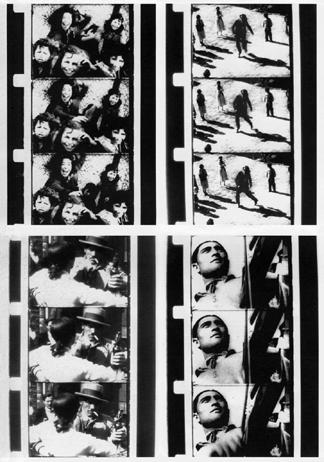
sought to deepen this interest and sought to understand, more specifically, more technically, the processes that regulate certain popular styles that I feel attracted to [. . .]. For a long time I have dreamed of exploring from inside a music of the past, a creative exploration that was at the same time an analysis, a commentary and an amplification.”575
In the same year—1964—in which Berio finished his Folk Songs, Luigi Nono explained, in an interview, how the poetry of Lorca influenced his music, and he spoke also of the influence of specific rhythms of Andalusian popular music: “The human imagination of García Lorca, a wonderful and authentic expression of nature, of feelings, of life and the tragedies of a people, has freed me from the cultural rhetoric and the fascist political mystification that oppressed me in my youth.”576 In works like Epitaffio a Federico García Lorca, Der rote Mantel (on texts by the Granada poet), or Canto sospeso (from letters by members of the European Resistance condemned to death), Nono developed an avant-garde music that answered what Benjamin had called the “tradition of the oppressed” (Tradition der Unterdrückten): a music of “resistance” whose demands Klaus Huber has since renewed.577
This demand is exactly what gives all its intensity to experience. An intensity made of potency, of course, but also of fragility: what Daniel Charles calls the “undecidable” of the voice and Danielle Cohen-Levinas calls “the voice beyond song” characteristic of so many contemporary experiments carried out since the Sprechgesang of Schoenberg.578 A founding demand, also, of the “music off limits” whose constellations Daniel Caux explores, from John Cage to Cecil Taylor, Steve Reich to Albert Ayler, or Meredith Monk to Laurie Anderson.579 What does this demand consist of? The German word for voice, Stimme, gives us an idea, through the verb stimmen, which means “to be right,” “correct,” but also “to tune.” Everything in question in the duende, as well as in the compositions by Nono, is an experiment thought in order to be in tune with the other and therefore to become out of tune with the same . . . and with oneself for a start. A fragility, therefore: that of having renounced any certainty regarding identity. A potency, nonetheless: that of having raised an experience and an exchange in which we could say, each time: “The origin, is now.”580
575. Berio, 81–82. On Folk Songs, see also M.-C. Vila, Cathy Berberian, cant’actrice (Paris: Fayard, 2003), 141–50.
576. L. Nono, “Face au conflit historique de l’époque, le compositeur doit adopter un comportement responsible: Entretien avec José Antonio Alcaraz” (1964), trans. L. Feneyrou, in Écrits (Geneva: Éditions Contrechamps, 2007), 182. 577. L. Nono, “Musique et Resistenza” (1963), trans. L. Feneyrou, in Écrits (2007), 166–70; and K. Huber, Au nom des opprimés: Écrits et entretiens, trans. V. Barras et al., ed. P. Albèra (Geneva: Éditions
Contrechamps, 2012. See also Benjamin, “On the Concept of History,” 392. 578. D. Charles, Le temps de la voix (Paris: Delarge, 1978), 24–32; and D. Cohen-Levinas, La voix au-delà du chant (1987), augmented ed. (Paris: Vrin, 2006). 579. D. Caux, Le silence, les couleurs du prisme et la mécanique du temps qui passe, ed. J. Caux (Paris: Éditions de l’éclat, 2009), 13–29 and passim. 580. See G. Didi-Huberman, “L’image-aura: Du maintenant, de l’autrefois et de la modernité” (1996), in Devant le temps: Histoire de l’art et anachronisme des images (Paris: Les Éditions de Minuit, 2000), 233–60.
A voice that attempts to tune into the other risks being out of tune with itself: this is when it alters. To make oneself the voice of the other is to become a voice spectacle. Duende is the word Lorca chose to refer to this metamorphosis. It has to do with what Aby Warburg says of all cultural history envisaged according to unconscious motions, the play of the monstra and its astra: a “history of ghosts for big people.”581 León points out that the Spanish expression “tener un duende” has, since the eighteenth century, meant “to bring into the imagination, something worrying” (traer en la imaginación algo inquietante).582 But he sees nothing in Lorca’s duende that could correspond to this idea. Lorca’s poetics, however, is innervated throughout with anxiety or, to put it more philosophically and radically, with uncanniness.
From the time of his first Book of Poems, in 1918, Lorca spoke thus of the voice that emanates from his poetry as the “blowing” or the “breath of the wind” (soplo del viento)—a “dying autumnal” wind, he states—traveling across what he calls our intimate or “deep and dear” distances (entrañables distancias).583 At the other end of his path, on June 10, 1936—five weeks before his assassination—the poet spoke of his own song as being inspired by voices from elsewhere: “Voices are heard, without knowing where [se oyen voces no se sabe dónde], and it is useless to wonder where they come from.”584 What are these voices then? Something that Lorca believed came from a “depth” or an alterity—a whole people of others, we could say—and that goes all the way back into the “depths” within us as though from “the soles of the feet.”585 The duende itself, then: imagined as a rising, an uprising, within ourselves, of this entire “people of others.”
This includes neither a tangible reality nor a fiction, neither a strict truth nor a simple error. Instead, it includes a spectral voice that gives actual form—an emotion that is made into a form, a “commotion”—to, on the one hand, our genealogy (our dead) and to, on the other hand, our desire for sharing and transmission (our fellows, our children). If the “struggle with the duende”586 that Lorca speaks of in his lecture cannot be reduced to what the Old Testament shows in Jacob’s “wrestling with the angel,” it is above all because the duende is inside, immanent . . . and yet other. For this idea, Jacques Lacan—at the very moment he spoke, in his seminar on aesthetics in 1960, of aesthetics, concerning the matter of desire implied in the practice of art— coined the term extimacy: that which is most intimate in us but is the most strange, too, even foreign.587 It is at the heart, therefore, of all subjective movements through which “I is another,” “I is someone else”—or “Je est un autre,” as Rimbaud writes.
581. Didi-Huberman, L’image survivante, 7–114.
582. León, “Mapa y ejercicio del duende lorquiano,” 26.
583. Lorca, Livre de poèmes, 115. 584. Lorca, “Dialogue avec le caricaturiste Bagaría,” 929.
585. Lorca, “Theory and Play of the Duende.” 586. Lorca.
587. J. Lacan, Le séminaire, VII: L’éthique de la psychanalyse (1959–1960), ed. J.-A. Miller (Paris: Le Seuil, 1986), 167.
In The Dybbuk by S. Ansky (Shloyme Zanvi Rappoport), the character Léa speaks with the voice of a man—the voice of the dead man whom she had so loved.588 To see such strange things emerge in flamenco song is not rare. I have often heard, for example, Miguel Poveda deliver, all of a sudden, intonations that seemed to me to come directly, as though in a spectral manner, from La Niña de los Peines. “Tener un duende” means, then, in the case of deep song, to manifest a genealogy—as when in French we use the same expression to say that a son “tient de sa mère,” meaning “he takes after his mother”—through a ghost. Neither angel nor muse, the duende is like the god Eros of our survivals: the Eros who comes to us from the dead and who, consequently, alters our voice, our existence even, by giving to another—by sharing, at a celebration—this subjective division that we fail to think through to the end, except by giving it the improbable and untranslatable name of duende
At the very time La Niña de los Peines began to be known, throughout Spain, for her extraordinary gift of cante, 589 several positivist scholars in Europe sought to measure or to clarify the mystery of altered voices. When Collin de Plancy wrote an entry in his Dictionnaire infernal on the Spanish duendes, Jean-Martin Charcot and Paul Richer, in Les démoniaques dans l’art were putting a curse on all the homunculi that came out of the mouths of the possessed women—“hysterics,” as they called them.590 In 1913—the year La Niña de los Peines performed at the Trianón Palace in Madrid alongside La Argentinita and the great guitarist Ramón Montoya— psychotherapist Albert von Schrenck-Notzing claimed to have captured with photography certain mediumistic “materializations”—or “ectoplasmic veils”—that came, like formless duendes, from the mouths of his subjects, the women subjected to experiment [pp. 250–251].591 It was a time when altered voices were thought about by positivist science in relation to madness, nervous crises, or a racial heredity of so-called savage peoples.592
At the same time, however, Freud showed how an alteration—of the voice, the gesture, the gaze, the imagination, or of thought—can carry or even create a rising-up as an event of psychic truth. Might truth come to light in alteration?
588. S. Anski, Le Dibbouk: Légende dramatique en trois actes (1917), trans. N. Gourfinkel and A. Mambush (Paris: Arche, 1957).
589. See C. Cruces Roldán, La Niña de los Peines: El mundo flamenco de Pastora Pavón (Córdoba: Editorial Almuzara, 2009), 101–54.
590. J. Collin de Plancy, Dictionnaire infernal (1818; Paris: Plon, 1863), 223–24; and J.M. Charcot and P. Richer, Les démoniaques dans l’art (1887), ed. G. Didi-Huberman and P. Fédida (Paris: Macula, 1984), 1–78.
591. A. von Schrenck-Notzing, Materialisationsphänomene: Ein Beitrag zur Erforschung der mediumistischen Teleplastie (Munich: Ernst Reinhardt, 1913). See also A. Fischer, “‘L’adaptation réciproque de l’optique et des phénomènes’: L’enregistrement photographique des matérialisations,” trans. M. Dautrey, in Le troisième œil: La photographie et l’occulte, ed. C. Chéroux and A. Fischer (Paris: Gallimard, 2004), 171–215.
592. See J. Kennaway, Mauvaises vibrations, ou la musique comme source de maladie: Histoire d’une idée (2012), trans. N. Vincent-Arnaud (Limoges: Lambert-Lucas, 2016), 43–73, 115–46; and C. Frigau Manning, Ce que la musique fait à l’hypnose: Une relation spectaculaire au XIXe siècle (Dijon: Les Presses du réel, 2021), 99–174, 200–215.
Is it not, then, that which worries us, that which haunts us, inhabits us in our depths, but also what moves us by resonance, what makes us move, delivers us from stagnation? Where Lorca speaks of “voices” that come “without knowing from where,” and, facing which “it is useless to wonder where they come from,” Freud envisions the condition of this nonknowledge with the term Unheimliche, translated as “uncanny,” in order to account for the fact that ghosts are thought to go through the walls of our houses, like the duendes of the popular tradition, only because they innervate our own psychic interiorities.
Freud introduces the uncanny, modestly, as a localized aesthetic problem, one even found in a “remote region” and “that has been neglected in standard works,” since it is independent from any standard “theory of beauty.”593 It concerns, in reality, a crucial problem for aesthetic thinking—one that could offer an essential key to understanding the duende itself. A quality of ambivalence in the Unheimliche is conducive to dissolving any unequivocal interpretation of the affect at work, as though the alteration led everything to disorientation, to double meaning (recall those who “joyfully lament”: hence the theme of the “double” and its essential animistic component).594 Furthermore, according to Freud, the reminiscence of an “infantile anxiety” (Kinderangst) enters into every phenomenon of the uncanny, given that this “anxiety can be shown to come from something repressed which recurs.”595 It is as though, at the most intense moment of disorientation, of alteration, or of excess, we had the worrying and familiar impression that we “have been there before.”596
We can understand how, at this sovereign moment, an impression of spectrality may emerge. It is as though, Freud remarks, every border—especially “between imagination and reality”—were erased.597 It has the character of an ability to pass through walls, and this characteristic says a lot about the psychic economy of such a phenomenon: we find it in certain psychoanalysts who study music and the voice— for example, Theodor Reik and Denis Vasse—and even in the few among them who focus on the notion of duende. 598 But it also tells us something evident regarding the physical economy of the voice. When a prisoner, in his jail cell in Seville, raises his voice in the style of the carceleras, this voice resounds everywhere, passes through the walls, and flees into the “emotionally moved air,” as he himself cannot do.
Can we suggest, then, that all music is spectral, like any voice that “carries” and can emotionally move the air about? A striking painting by Schoenberg, probably painted in March 1910, seems to give answer to this idea. Entitled Blauer Blick (Blue
593. S. Freud, “The ‘Uncanny,’” in On Creativity and the Unconscious: Papers on the Psychology of Art, Literature, Love, Religion, ed. B. Nelson (New York: Harper Torchbooks, 1958), 122. 594. Freud, 123–24, 129–30, 141–48. 595. Freud, 148. 596. Freud, 153.
597. Freud, 152.
598. See T. Reik, Variations psychanalytiques sur un thème de Gustav Mahler (Paris: Denoël, 1972); Vasse, “La voix qui crie,” 63–81; and I. GárateMartínez, Le “duende”: Jouer sa vie: De l’impossible du sujet au sujet de l’impossible (Paris: Gemme Éditions, 1996).
gaze) [p. 155], it shows a face in profile but pushed completely to the left side of the image, and its brow seems to be made “anxious” by a local agitation of blue pigment. The eye is empty, or closed, or even blind (a red edge surrounds it, like an injury). But the mouth is open and, from the energy of the brushstrokes, seems to exhale a wind, a “moved air” that occupies most of the pictorial surface. The work is part of a series of paintings dominated by auratic motifs599—but here it seems to have taken the aura at its word, at face value, in its oldest signification, which is that of the breath, the breeze: the “moved air.”
Not coincidentally, some of these themes—which link music, the uncanny, and reminiscence—made their way into Theodor Adorno’s thoughts on music. In Quasi una fantasia, for example, the philosopher acknowledges the power of certain melodies, like the habanera of Carmen, to appear as “a primeval quotation, which sounds familiar to everyone hearing it for the first time,” with the particular intensity that shows the mark, he said, of a truly memorial “depth” hidden “behind” (hinter) its familiarity.600 As we do in Reik, we find also in Adorno multiple examples of this phenomenon in the “primitive way of playing” used by Mahler for some of his most powerful themes.601 And while Robert Schumann had invented a theme that he directs, on the score, should be played “in a cheerful tone” (im fröhlichen Ton), it is most important, in Adorno’s opinion, that this cheerfulness had been lost.602 Nevertheless, it is something that, as a survivor in music, returns to us in the uncanniness of its hardly recognized eternal recurrence. A “voice of uncanniness” would be a voice of survival, then, one that rises, altered, new, and disturbing but immediately audible as the trace of something ancient that we did not know of, yet that we understand returns to us from an ancient disappearance that recounts to us, from a certain depth that constitutes us, from some intimacy where a childhood state lies. And this goes well beyond any music that is presented as explicitly nostalgic. In the magnificent last phrase of his Quasi una fantasia, Adorno writes that “the aim of every artistic utopia is to make things in ignorance of what they are.”603 A voice of the uncanny and of survival, then; perhaps even what Giorgio Agamben evokes when he writes, in Language and Death, “the voice is death, which preserves and recalls the living as dead, and it is, at the same time, an immediate trace and memory of death.”604
599. See M. Hollein and B. Perica, ed., Die Visionen des Arnold Schönberg: Jahre der Malerei (Frankfurt am Main: Schirn Kusnthalle; Berlin: Hatje Cantz, 2002), 98–117. 600. T.W. Adorno, Quasi una fantasia: Essays on Modern Music, trans. R. Livingstone (London: Verso, 1998), 25. 601. Adorno, 33. 602. Adorno, 9. 603. Adorno, 322.
604. G. Agamben, Language and Death: The Place of Negativity, trans. K.E. Pinkus with M. Hardt (Minneapolis: University of Minnesota Press, 1991), 45. See also S. Weigel, “Die Stimme der Toten: Schnittpunkte zwischen Mythos, Literatur und Kulturwissenschaft,” Zwischen Rauschen und Offenbarung: Zur Kultur- und Mediengeschichte der Stimme, ed. F. Kittler, T. Macho, and S. Weigel (Berlin: Akademie Verlag, 2002), 73–113; and T. Macho, “Die Stimmen der Doppelgänger,” in Phonorama: Eine Kulturgeschichte der Stimme als Medium, ed. B. Felderer (Karlsruhe: ZKM-Matthes; Berlin: Seitz, 2004), 39–55.
The voice of the uncanny transforms bodies: the body of the person who sings, who plays, who dances, as it does also in another way the body of the person who listens or who looks. Intensified bodies, first of all, since both what the cantaor seeks and the aim of the word duende are matters of expressive intensity. An other body, then, since the intensification alters, and the alteration, as its name suggests, “makes something other.” Therefore, we have both a body by excess, which is hyper-organic, and a body by default, which is already spectral. Whether regarding the musical trance described by Denis Diderot in Rameau’s Nephew, or Nietzsche’s postures at the piano, or the gestural expressions adopted by Thelonious Monk, in each case—as Peter Szendy shows—the musician “has a body that he does not have insofar as he firstly allows himself to be possessed by other bodies, by sounding and vibrating bodies that he interprets as much as they interpret him.”605 It is therefore a utopian and anachronistic body; for example, between his “classical” left hand and his “modern” right hand, Monk produced “forty years of distance, here, now, in the same instant,” creating thereby a field of expression that is extraordinarily intense at the very heart of this “tenuous reality,” which Szendy, finally, calls an areality. 606
A gesture of air, in short: a gesture of “moved air.” A gesture to allow, very subtly, an event to occur, an event that is both musical and psychic. Roland Barthes, in his 1977 text on “listening”—“Écoute”—points out the Dionysian demand here: “Release [. . .]: we thereby return, but at another loop of the historical spiral, to the conception of a panic listening, as the Greeks, or at least the Dionysians, had conceived it.”607 Returning to and extending this motif, François Bonnet seeks to restore this process of “areality” by which sounds make traces and even imprints . . . but in the air. 608 This occurs outside any objectivation or even any ontological grasp, since, in music, “the interlacing of the reasonable and the sensible” occurs only in the disparate—the labyrinths or the constellations—of always altered movements.609
An altered voice that exclaims, that fulfils itself as such and makes itself heard in order to share, deploys a gesture that possesses already its political, or micropolitical tenor, as Félix Guattari writes. Every poem by Lorca that resonates within can be considered from the perspective of such a “micropolitical gesture,” however lyrical and dreamy it may be. Lorca’s works were banned by Franco’s government until 1953, which is the date of the—still heavily censored—first edition of his Complete Works. The outpouring of commentaries, tributes, and celebrations that have
605. P. Szendy, Membres fantômes: Des corps musiciens (Paris: Les Éditions de Minuit, 2002), 19.
606. Adorno, 43–44, 126–30.
607. R. Barthes, “Listening,” in Responsibility of Forms: Critical Essays on Music, Art, and Representation, trans. R. Howard (Berkeley: University of California Press, 1992).
608. F.J. Bonnet, Les mots et les sons: Un archipel sonore (Paris: Éditions de l’éclat, 2012), 13–14, 21–42.
609. Bonnet, 220–22.
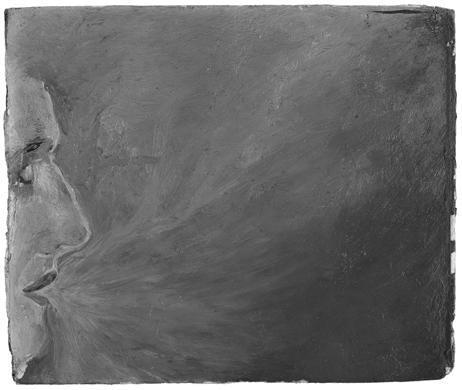
appeared since has removed the suspicion of certain critics because this general consensus encouraged them to see no more than the mark of a new conformism. But it suffices to look through Lorca’s texts to find all the freshness and energy of this “political poetics,” as Benjamin says regarding the French surrealist movement.610
Long before and beyond the quarrels among the mundillo of flamencologists— whether “Andalusian” first, or “Gypsy above all”? “Nacional-flamenquismo” or not? “traditional” or “modern”? “pure” or “hybrid”?—long before all that, Lorca’s position was always to displace toward the other, toward elsewhere, wherever they were. For him, poverty was an initial elsewhere: “I love poverty over everything else,” he said in an interview, conscious that his poetry had nothing, in spite of its themes, of a “popular art.”611 “What poetry do you like?,” he was asked. He replied, “That of others.”612 That of Gypsies, of course, who were therefore his favorite others—and hosts—not only for their musical art but because they were still, in the eyes of the good Spanish society of the time, pariahs not to be frequented. In Romancero gitano, Lorca makes sure to evoke the persecution, over centuries, of this Gypsy people.613
Did he consider himself a Gypsy, as do so many naive aficionados? “I am not a Gypsy,” he said. “Andalusian,” yes. “Which is not the same thing, even if we consider all Andalusians a little Gypsy. My gypsyism is a literary theme and a book. Full stop.”614 And yet he felt his own poetic phrases as the equivalent of soleá or siguiriya rhythms.615 What attracted him to the duende was perhaps that nonacademic, nonclassical, nonidealist aesthetic experience, that nonsublimated sublime, something immanent, innocent, and simple like childhood. A sublime of pariahs that displaced everything that could be expected from a hierarchically organized “nobility of art.” For this reason, Lorca hated the grand chauvinism that was Spanish, Catholic, rigorist, or pretentious. In a dialogue evoking the handing over of the keys of Granada in 1492 imposed on the Moorish kings by the victors of the Reconquista, he states, “It was a disastrous moment, whatever we are told in school. A whole, admirable civilization, a poetry, an astronomy, an architecture and a delicateness, all unique in the world, disappeared to give room to [. . .] the worst bourgeoisie of Spain.”616
610. W. Benjamin, “Surrealism: The Last Snapshot of the European Intelligentsia,” trans. E. Jephcott, in Selected Writings, vol. 2, 207.
611. F. García Lorca, “La vie de García Lorca, poète” (1934), trans. A. Belamich, in Œuvres complètes, ed. Belamich, vol. 2, 856; and Lorca, “Federico García Lorca est arrivé,” 812.
612. F. García Lorca, “En parlant de ‘La Barraca’ avec le poète García Lorca” (1933), trans. A. Belamich, in Œuvres complètes, ed. Belamich, vol.2, 803.
613. Lorca, Romancero gitan, trans. Belamich, 441–44.
614. F. García Lorca, “Jeunes itinéraires d’Espagne: Federio García Lorca (le poète parle de sa vie et de son œuvre au téléphone)” (1928), trans. A. Belamich, in Œuvres complètes, ed. Belamich, vol. 2, 764.
615. F. García Lorca, “Estampe de García Lorca” (1931), trans. A. Belamich, in Œuvres complètes, ed. Belamich, vol. 2, 775.
616. Lorca, “Dialogue avec le caricaturiste Bagaría,” 931.
The episode Lorca mentions coincided, within a few weeks, with the edict expelling Jews from Spain. This led the poet to take a more general position regarding any “tradition of the oppressed”: “I believe that being from Granada I am inclined to have a sympathetic understanding of the persecuted [me inclino a la comprensión simpática de los perseguidos]. Of the Gypsy, the Black person, the Jew . . . the Morisco that we all bear within us.”617 Regarding the cante jondo in particular, Lorca wanted to insist on the fact that “it is [the Gypsies], those wandering and enigmatic people, who [gave] a definitive form to the cante jondo [. . .] which mixes the blood of North Africa and, probably, deep Jewish currents [with] heartrending rhythms [probablemente con vetas profundas de los desgarrados ritmos judíos].”618
Lorca was probably not wrong. Thus, for example, the musicologists of today strongly suspect that even the most Christian flamenco style—namely, the saeta, dedicated by the singers to processional statues during holy week—is of Jewish ancestry or of Jewish reminiscence.619 Whatever the case may be, the author of Romancero gitano publicly declared, in 1933, when the Nazis had taken power in Germany, “My second family name [i.e., Lorca] is Jewish.”620 Two years later, speaking of his great Gypsy poem, he described it as an “altarpiece of Andalusia with Gypsies, horses, archangels, planets, with its Jewish breeze [. . .]. This poem is Judeo-Gypsy, as was Joselito, El Gallo, and as are the people who inhabit the mountains of Granada and some villages in the Cordovan countryside.”621
This cosmopolitical desire led Lorca beyond the oceans. In A Poet in New York we find a new tribute to the Jewish people and a vibrant tribute to Black people and their admirable way of “joyfully lamenting” in the slums of Harlem.622 Describing a festival in which, in “the night, the sky was crossed with immense lines of lights,” Lorca wonders at the music of Black people: “What marvelous songs! They can only be compared with the cante jondo.”623 It was thus logical enough for him to present A Poet in New York “as the result of my Romancero.”624 Where Manuel Torre spoke of “black sounds” (sonidos negros) with regard to Andalusian-Gypsy song, Lorca would see in the blues of the children of slaves the possibility of removing a sort of “black silence” (silencio negro): “a concave, enormous and strange silence,” he says.625
A Poet in New York was a response, therefore, at least in part, to a problem: “I wanted to create the poem of the black race in North America and to emphasize
617. Lorca, “Estampe de García Lorca,” 774. 618. Lorca, “Architecture du cante jondo,” 828. 619. Gamboa and Núñez, Flamenco de la A a la Z, 500.
620. F. García Lorca, “L’auteur des Noces de sang est un bon ami des Juifs” (1933), trans. A. Belamich, in Œuvres complètes, ed. Belamich, vol. 2, 834. 621. Lorca, “Romancero gitan,” 968, 973.
622. Lorca, Poète à New York, 511–17, 551–53. 623. Lorca, Correspondance, 1796.
624. F. García Lorca, “Vingt minutes de promenade avec Federico García Lorca (à son retour de New York)” (1930), trans. A. Belamich, in Œuvres complètes, ed. Belamich, vol. 2, 771.
625. Lorca, “Estampe de García Lorca,” 774.
the pain that the Black people feel being black in a contrary world: slaves of all the inventions of the white man and of all his machines.”626 Beyond, therefore, the musical cosmopolitanism and the relations discovered by Lorca between the cante jondo, on the one hand, and blues, jazz, and Afro-Cuban music on the other,627 the constellation created on both sides of the Atlantic Ocean looked toward this “tradition of the oppressed” borne, here and there, by intense celebrations, Dionysiac dances, and altered voices. Lorca, once again, shares with Gómez de la Serna the historical and political perception of the cante jondo that could be found in the journal Bifur in 1929: “These ¡ay! always remind me of the ¡ay! ¡ay! ¡ay! that occupy the first fifty pages of a minute book of the Inquisition, which tells of the torments inflicted on a poor heretic, throughout his long agony. [. . .] Only the castaways can tell their story with such despair. [Thus] we leave the sumptuous spectacle of the cante jondo with a stab to the heart that it gives to the one who listens.”628
In 1933, Lorca enthusiastically expressed his certainty that “popular songs” (canciones populares) should never cease to be shared, even in the present of political struggles (the theme of El vito, which he had earlier transcribed, was thus used as a political hymn by the Spanish Republicans): “Do not lose the rhythm!” (¡no perder el ritmo!), for each melody that comes from the masses rises like an open-air protest, “a pamphlet, a manifesto [or a] banner” in the periods of uprising.629
Qué ganas tengo de que la tortilla se dé la vuelta que los probes coman pan y los ricos coman mierda. (How I yearn for the omelet to turn around, for the “poor” to eat bread, and the rich to eat shit.)630
This is the period in which Lorca states most clearly his work ethic; that is, his micropolitics of poetic art. “To work, even if we sometimes tell ourselves that our efforts are futile. To work as a form of protest [trabajar como forma de protesta]. Because the first movement would be to cry out, each day, when waking up in a world full of injustices and of miseries of every kind: ‘I protest! I protest!
626. Lorca, “Poète à New York [II],” 948. 627. See C.A. and F.J. Rabassó, Granada-Nueva York-La Habana: Federico García Lorca entre el flamenco, el jazz y el afrocubanismo (Madrid: Ediciones Libertarias, 1998).
628. Gómez de la Serna, “Le cante jondo,” 75, 84.
629. F. García Lorca, “García Lorca présente aujourd’hui trois chansons populaires mises en scène” (1933), trans. A. Belamich, in Œuvres complètes, ed. Belamich, vol. 2, 830, 832. 630. Lorca, 832.
I protest!’”631 It is also a period in which the word anarchism emerges in his discourse: “The artist, and the poet in particular, is always an anarchist—in the best sense of the term—and must only listen to the [following] three voices of others: the voice of death, with all of its omens; the voice of love, and the voice of art.”632 In a speech to Catalan workers in 1935, he claimed to be “unselfish, anarchistic, in revolt,” and also fascinated by the political and pathetic drama of Sergei Eisenstein’s Battleship Potemkin. 633 He extolled a “theater for the people,” albeit one of extreme poverty (“we could play in the basements”) and planned a poetic and documentary film on popular Spanish arts.634
Following the model of the duende, Lorca’s idea was that a poem could emerge—whether or not it was fair as a lily—from mud: from the masses, from a body in protest or one that remembers its pain, from the general history of oppressed people. “No man worthy of the name believes any more in that nonsense of pure art, or art for art’s sake. In these dramatic moments that the world is experiencing, the artist must cry and laugh with his people. He must put down the bouquet of lilies and dive up to his waist into the mud in order to help those who are looking for the lilies.”635 But when the poetry emerges, it “goes into the street” (la poesía es algo que anda por la calle), where the mystery does not cease but rather embodies and begins to move to the point of “moving the air”: “Just as we are expecting it the least, whoosh! The door opens and the poem arrives, dazzling.”636
In the cante jondo, for a long time already, poverty has protested. Historians of flamenco recall the crucial role the French Revolution played at the end of the seventeenth century in Spain: the revolution showed that, somewhere in Europe, the “voice of the people,” la voz del pueblo could rise up.637 Everyone could hear the voz de los parias. 638 In his book Memoria del flamenco, as well as his study entitled García Lorca y el flamenco, Félix Grande makes a point that is both pertinent and difficult to accept: what was called the “golden age” (edad de oro) of flamenco was at the same time a terrible period of poverty, particularly among the Gypsies
631. F. García Lorca, “Le portrait du poète” (1935), trans. A. Belamich, in Œuvres complètes, ed. Belamich, vol. 2, 882.
632. F. García Lorca, “Le nouveau chariot de Thespis” (1933), trans. A. Belamich, in Œuvres complètes, ed. Belamich, vol. 2, 796.
633. F. García Lorca, “Federico García Lorca parle pour les ouvriers catalans” (1935), trans. A. Belamich, in Œuvres complètes, ed. Belamich, vol. 2, 906–7.
634. F. García Lorca, “Un théâtre pour le peuple” (1934), trans. A. Belamich, in Œuvres complètes, vol. 2, ed. Belamich, 840–42; F. García Lorca, “La commémoration du tricentenaire de Lope
de Vega” (1935), trans. A. Belamich, in Œuvres complètes, ed. Belamich, vol. 2, 895; and F. García Lorca, “García Lorca sur la place de Catalogne (poésie, théâtre, cinéma)” (1935), trans. A. Belamich, in Œuvres complètes, ed. Belamich, vol. 2, 901.
635. Lorca, “Dialogue avec le caricaturiste Bagaría,” 929.
636. F. García Lorca, “Un entretien avec Federico García Lorca” (1936), trans. A. Belamich, in Œuvres complètes, ed. Belamich, vol. 2, 925.
637. Lorca.
638. Martínez Hernández, Poética del cante jondo, 37–52.
[p. 161].639 Not surprisingly, then, the altered voices of deep song coincided with the critical voices of protest. Such is the case with the journal El duende crítico in the eighteenth and nineteenth centuries and with the great anarchist and communist movements in Andalusia, highlighted from 1933 by Carlos Caba and Pedro Caba. Such is the case in the tragic participation of certain flamencos in the Spanish Civil War (the father of the great Gypsy dancer Farruco, for example, commanded a Republican battalion before being shot by the Fascists). And such is the case with Guy Debord’s fascination with the cante jondo, Lorca’s poetry, Andalusian anarchism . . .640
This historical memory—evident in El Lebrijano’s well-known 1976 recording entitled Persecución—leads to the question of what to do with this “treasury of sufferings” in the present of the new conditions opened by contemporary history. Claire Auzias refers to the Gypsies as “tightrope walkers of history”: they are always both inside and outside, which gives rise, Auzias concludes, to their “aesthetics of the tragic,” which is exemplary in the cante jondo. 641 Tragic, indeed, is the art of altered voices; it is a moment when beings experience their division, an impossible identity. Historical persecutions might cement the identity of the oppressed people, but the problem with cement is that it can no longer move. Thus, the “Gypsy identity,” as is often claimed, deserves to be opened out to this cosmopolitan condition that has always been, beyond its suffering, its very value: a condition Michel Agier speaks of from the perspective of that “frontier-man,” the political subject in movement, capable of escaping all identity traps.642
The political question remains regarding relations between a poiesis (which concerns the playing of music) and praxis (claimed by protest or by action for emancipation). W.E.B. Du Bois, in his crucial book The Souls of Black Folk, from 1903, gives—as does Lorca with the cante jondo—a vibrant tribute to the “sorrow
639. F. Grande, Memoria del flamenco (Madrid: Espasa Calpe, 1979), 39; and Grande, García Lorca y el flamenco, plate 6.
640. El duende crítico de Madrid: Obra histórica política del siglo passado [. . .] publicada por una Sociedad de artistas (1844), new ed. (Seville: Extramuros Edición, 2011); C. Caba Landa and P. Caba Landa, Andalucía, su comunismo libertario y su cante jondo (tentativa de interpretación) (1933), new ed. (Seville: Editorial Renacimiento, 2008), 152–54 (“Anarquía musical jonda”); Gamboa, Una historia del flamenco, 272 (Farruco); and G. Debord, “L’Espagne au cœur” (1964), in Œuvres, ed. J.-L. Rançon and A. Debord (Paris: Gallimard, 2006), 675–77. 641. C. Auzias, Les funambules de l’histoire: Les Tsiganes, entre préhistoire et modernité (Quimperlé, France: La Digitale, 2002), 125–51.
642. On Gypsy identity, see M. Thede, Gitans et flamenco: Les rythmes de l’identité (Paris: L’Harmattan, 1999); and Peña Fernández, Les Gitans flamencos (2013), trans. B. Leblon, rev. J. Tagnères and T. Tagnères (Paris: L’Harmattan, 2015). See also W. Washabaugh, Flamenco: Passion, Politics and Popular Culture (Oxford, UK: Berg, 1996), 1–30, 132–38; W. Washabaugh, Flamenco Music and National Identity in Spain (Farnham, UK: Ashgate, 2012); Steingress, Sociología del cante flamenco, 231–76; C. Cruces Roldán, Más allá de la música: Antropología y flamenco (Seville: Signatura Ediciones, 2002–2003); A. Grimaldos, Flamenco: Une histoire sociale (2010), trans. F. Nancy and G. Gale (Saint-Sulpice-la-Pointe: Les Fondeurs de briques, 2014); and M. Agier, La condition cosmopolite: L’anthropologie à l’épreuve du piège identitaire (Paris: La Découverte, 2013), 79–92, 127–203.
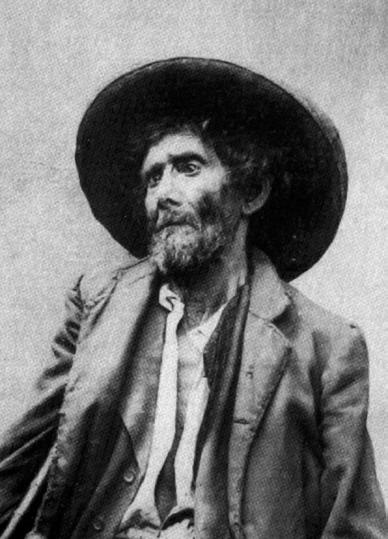
songs” of the Black people and their deep “voice of exile”643 (which concerns, incidentally, a song under the moon and one about the “son of a blacksmith born in Cádiz” who finds himself in New Orleans).
In 1936, while documenting, with Walker Evans, the poverty of sharecroppers in Alabama, James Agee gave a precise and shocking description of the “deep song” of Black Americans:
the eldest tapping the clean dirt with his shoe, they sang. It was as I had expected, not in the mellow and euphonious [. . .] style, but [. . .] jagged, tortured, stony, accented as if by hammers and cold-chisels, full of a nearly paralyzing vitality and iteration of rhythm, the harmonies constantly splitting the nerves [. . .]. [The song] tore itself like a dance of sped plants out of three young men who stood sunk to their throats in land, and whose eyes were neither shut nor looking at anything; [. . .] and they sang us another, a slow one this time; I had a feeling, through their silence before entering it, that it was their favorite and their particular pride; [. . .] and they ran in a long and slow motion and convolution of rolling as at the bottom of a stormy sea, voice meeting voice as ships in dream, retreated, met once more [. . .] murmuring [. . .] between major and minor, nor in any determinable key [. . .] [like] a question, all on one note.644
While this all suggests several links with the cante jondo, 645 it still does not say anything about this poeisis brought about by praxis. Frantz Fanon, for example, is perhaps, in his book The Wretched of the Earth, too hard on what he considered an antipolitical trait in the altered voices and in danced trances: “In the colonial world, the colonized’s affectivity is kept on edge like a running sore [. . .]. Another aspect of the colonized’s affectivity can be seen when it is drained of energy by the ecstasy of dance [where] everything is permitted, for in fact the sole purpose of the gathering is to let the supercharged libido and the stifled aggressiveness spew out volcanically.” Yet, this is still too far from any “realism” and any praxis; that is, from any real “agenda for liberation.”646 It is as though their real oppression stayed, intact and inevitable, in the very beauty of the songs of the oppressed.
643. W.E.B. Du Bois, The Souls of Black Folk (1903; New York: Oxford University Press, 2007), 167–177).
644. J. Agee and W. Evans, Let Us Now Praise Famous Men (1941; Boston: Mariner Books, 2001), 26–27.
645. See R. Palmer, Deep Blues: A Musical and Cultural History from the Mississippi Delta to Chicago’s South Side to the World (1981) (London: Penguin, 1982);
and K.M. Goldberg, Sonidos Negros: On the Blackness of Flamenco (Oxford, UK: Oxford University Press, 2019).
646. F. Fanon, The Wretched of the Earth, trans. R. Philcox (New York: Grove Press, 2004), 19–21. For a reevaluation of these “antipolitical” gestures and voices, see Loraux, La voix endeuillée, 45–66 (“La tragédie et l’antipolitique”).
The voice is, also, a matter of desire and of imagination. This is why a praxis is often met with the countermotif of a poiesis: each exchanging with the other what it is missing and, perhaps also, what gives it strength. From this perspective, how the Gypsies of Jerez celebrate to “say the song” might have something to do with the “great speech” or “big talking”—the sacred songs—of the Guarani Indians as described by Pierre Clastres. Clastres emphasizes the idea that the song that matters makes men “adorned” (jeguakava), benefitting, always imperfectly, from a particular potency.647 This may remind us how the “coming of the duendes” coincides with a certain vocal art of “ornaments” (adornos). Clastres’s great lesson, on this level, is to show that this vocal poiesis, seemingly detached from any real emancipatory praxis, functions as a micropolitics of the imagination: the utopia of a “society against the State”648 that we find also in other contexts, as in the imaginal resistance of the peoples of Alaska or Kamchatka in the face of their colonial oppression, described recently by Nastassja Martin.649
An altered voice is certainly not a mere absence of praxis. Altered voices do not move the air for nothing. They are stretched out by a desire, and they even have the potency to make us rise up . . . but somewhere between the interior and the exterior, the psychic depth and the social world. Such an exchange is found, to a certain degree, in hallucination, as we read in Henri Michaux’s “knowledge through the abyss” (or Light through Darkness as it has been translated): “Interior speech that seems to come from outside, word-reflections that resound like a speech genuinely heard, this relation between inside and outside [has to do with] a phenomenon of theatricalization of thought. [. . .] It is extraordinary in its strangeness. [. . .] It is almost always interruptive, of the ‘I don’t agree!’ kind. [. . .] It is not yet a revolution. It will come with genuine voices of opposition. [. . .] A true proletariat that each of us, in our dictatorial behavior, bears within us and hides.”650
This, in a paradoxical way, would be the micropolitics of altered voices: they are voices to see something else. Voices to commove and to make this commotion a desire in action and a principle of hope. We may have the impression, when we read the writings of Robert Walser on music, for example, that all emotion is
647. P. Clastres, Le grand parler: Mythes et chants sacrés des Indiens Guarani (1974; Paris: Le Seuil, 2011), 107–40.
648. P. Clastres, Society against the State: Essays in Political Anthropology, trans. R. Hurley (New York: Zone Books, 2007), 189.
649. See N. Martin, Les âmes sauvages: Face à
l’Occident, la résistance d’un peuple d’Alaska (Paris: La Découverte, 2016), 83–148; and N. Martin, À l’est des rêves: Réponses even aux crises systémiques (Paris: La Découverte, 2022), 137–73.
650. H. Michaux, Connaissance par les gouffres (1961), in Œuvres complètes, vol. 3, ed. R. Bellour, Y. Tran, and M. Cardot (Paris: Gallimard, 2004), 107–9, 111.
concentrated on some kind of nostalgia principle pertaining to what everyone, in one way or another, has lost sight of: “With music I only ever have one feeling: I am lacking something. [. . .] I am missing something when I hear no music, and when I hear it this lack is even greater.”651 Beyond this radically defective emotion, we can read something very different in the work of Ernst Bloch. For a thinker of political utopia like him, what was lost or what we are lacking is not only “behind” but in front of us. Thus, the profound notion of Sehnsucht: nostalgia if it is a matter of looking toward the past; ardent desire if it is a matter of converting this feeling of loss into movement toward the future. A mourning that takes the form of desire would be the basis of every musical voice, whether this voice is altered or yet to be altered.
Music is the means for nothing, Bloch writes in The Spirit of Utopia. Or rather, it is a means with no end. 652 Surprisingly, however, music occupies the central part of this very political, Marxist, and apocalyptic book. One long section, of more than 150 pages, opens with a paragraph entitled “Dream” and closes with a paragraph entitled “Secret,” followed by a chapter—excluded in subsequent editions—on the “micropolitical” obstinacy of a remarkable pariah-people in history: the Jewish people.653 What is this musical micropolitics made of? Bloch replies that it alters us in the sense that it takes us out of our normal condition where “we hear only ourselves.”654
Then, music finds its potency to bring to the surface something Bloch calls a “primordial reality” (Urrealität)—which Nietzsche had previously called “Dionysiac pain” and which Lorca would subsequently call duende—capable of making us, as artists or listeners, falter or expire: “Why should he not [expire]?
[. . .] Music is not there in order to protect us [from] the primordial reality of Dionysos.”655 Finally, music turns round this eternal return of the primordial as a symptom-event; that is, as an alert and as a temporality of the announcement. Beyond altering and expiring, the most important thing is the announcing. Thus, Bloch berates art history and any aesthetics that seeks in music solely what is uttered. No, he says, what counts is “what must testify,” what seeks to be formulated.656 And what counts in this last expression is less the utterance or what is said than the uttering itself, the gesture of a “wanting to say”—or rather, a desire to say
651. R. Walser, “La musique” (1902), trans. J. Launay, in Ce que je peux dire de mieux sur la musique, ed. R. Brotbeck and R. Sorg (Geneva: Éditions Zoé, 2019), 16–17.
652. E. Bloch, The Spirit of Utopia, trans. A.A. Nassar (Stanford, CA: Stanford University Press, 2000), 94–157.
653. Bloch, 34–164; and E. Bloch, Symbole: Les Juifs: Un chapitre “oublié” de L’esprit de
l’utopie (1912–1918), trans. R. Lellouche (Paris: Éditions de l’éclat, 2009), 139–57. See also Didi-Huberman, Imaginer recommencer, 253–374.
654. Bloch, The Spirit of Utopia, 34; and Bloch, Symbole. See also Didi-Huberman, Imaginer recommencer, 253–374.
655. Bloch, The Spirit of Utopia, 111.
656. Bloch, 112.
“Saying the song” would be “desiring to say” through interposed musical form and making this a political gesture. Bloch wrote the following in his unique style: “Listeners already get home by a different route. Precisely from here and from now on, artistry may again appear as a displaced prophetic gift. [. . .] Wherever any great, personally expressive work appears, it is only the will, the subject and its content, which is ultimately discernible in the means, the forms, the worthless, backgroundless ones. [. . .] it is the indicative seal or even the incipiently selfequivalent mystery of the We, the ideogram [. . .] Here the shaping subject has truly advanced into a ‘form,’ as its own deeper aggregate condition.”657 It is in the form found to allow alteration, expiration, and depth—characteristic of the duende that music succeeds in showing fully its prophetic potency, with Bloch suggesting a sort of (modern) musical secularization of the prophetic gift of earlier times.658 And for this potency he found a variety of wonderful phrases, such as, “How could everything and everyone be brought to his upper limit, toward the leap.”659
To bring everything—and to bring oneself—toward a leap? This is the crucial operation by which the feeling of loss takes form, makes the air commove and, finally, blossom in a desiring gesture, a shared gesture. “Toward a leap” means, musically, to risk an unconventional, unmeasured rhythm, with a dissonant harmony or an altered melody. Ethically, it means to return to the wisdom of antiquity, where there was no politics without ethics and no ethics without poetics.660 Historically, it means to reveal how a musical form, seemingly detached from any political actuality but rendering sensible the relation of mourning to desire—by “joyfully lamenting,” for example—manages to give form, through its gesture, to something like a utopian leap. This is a way of transforming the “affects of waiting,” as Bloch calls them, into the imagination of a new beginning or a starting over for everything and for everyone.
This open, hopeful, expectant philosophy of music is not restricted to the work of Bloch. It opened as a constellation in those years during which Lorca learned his poetic craft and Europe experienced profound, historic upheavals. In his Origin of German Tragic Drama, Benjamin places music on a prophetic level, as the “last remaining universal language since the tower of Babel,” to the extent that anything written—a poem, for example—proceeds from visionary musical voices rather than from the mere “sounds of the spoken word.”661 Gershom Scholem shows the originary and messianic economy of a music understood—by Abraham Aboulafia, particularly—as a “science of combination” and a prophetic art capable of creating a “jump,” “ecstasy,” or the qualitative leap that alone is able
657. Bloch, 115. 658. Bloch, 159. 659. Bloch, 117.
660. See F. Malhomme and A.G. Wersinger,
eds., Mousikè et aretè: La musique et l’éthique, de l’antiquité à l’âge moderne (Paris: Vrin, 2007).
661. Benjamin, The Origin of German Tragic Drama, 214.
to embody hope, as we see also in the prophetic element in the ideas of Schoenberg.662
In this philosophical and musical constellation, beyond the central, wellknown personality of Adorno, we must include, surprisingly perhaps, Günther Anders. After defending his thesis in 1914 with Husserl and his attendance, in 1924 and 1925, at Heidegger’s seminar in Marburg, Anders planned to work specifically on a “philosophy of music” that would argue against the preeminence of the optical paradigm in phenomenology. Thus, he wrote in 1930 and 1931 his “Philosophical Investigations on Musical Situations.”663 In this text we find— unsurprisingly and quite coherently, given Nietzsche’s role as a crossroads for all different thoughts—some important theoretical affinities with the contemporary ideas of Lorca on the “musical situation” of the cante jondo. Anders evokes a “dissolved subject in the medium” of music, in the sense that its existence is “transformed”; that is, altered, constantly given to an “instability” that is in no way defective but rather a great “possibility to be another.”664
Furthermore, the “ahistorical character of musical existence”—meaning, irreducible to a political praxis—in no way prevents it from presenting itself as a “revealing situation” capable of “opening man” to a profound truth whose ethos is not absent at all.665 Like Bloch, Anders thought of music as a “listening toward nowhere” that disorients us but also frees us from the mere project by opening for us some unforeseen utopian perspectives.666 On one more point Anders ventured further and was perhaps more pertinent than Bloch and Adorno together; namely, when he states that the “musical situation,” a matter of existence, comes about with more “authenticity”—his term—“in other cultures” than the formal or serious European music, with its social conformities linked, notably, to the bourgeois situation of the concert.667 Hence his desire, in 1927 in Paris, to listen attentively and engage in dialogue with Indian musician Dilip Kumar, who questioned Western music: “In your formal or serious music [. . .] the notes [are] always isolated, never joined. [. . .] In your music, I see only the knots: where has the scale gone? Where are the continuous transitions from one note to another” that are characteristic of Indian, Western, or Andalusian melisma?668
662. G. Scholem, Major Trends in Jewish Mysticism (1946; New York: Schocken Books, 1995), 119–55. See also P. Bouretz, “Prima la musica: Les puissances de l’expérience musicale,” Esprit, no. 193 (1993): 97–122; P. Bouretz, “La musique: Une herméneutique des affects d’attente?,” Rue Descartes, no. 21 (1998): 45–60; and P. Bouretz, Témoins du futur: Philosophie et messianisme (Paris: Gallimard, 2003), 592–610.
663. G. Anders, “Recherches philosophiques sur les situations musicales” (1930–1931), trans. M. Kaltenecker, in Phénoménologie de l’écoute (Paris: Philharmonie de Paris, 2020), 25–240. 664. Anders, 50–51, 124. 665. Anders, 65–70, 139.
666. Anders, 167–75, 193–201. 667. Anders, 43.
668. G. Anders, “Notre musique—Comme un Indien l’entend” (1927), trans. D. Meur, in Phénoménologie de l’écoute, 336.
Finally, there is a reciprocal relation of resonance between the voice and seeing, and between seeing and the voice. We find this, for example, in Schoenberg in the relation established—even if it is difficult to think of this solely in terms of homologies—between musical compositions like “Farben” (from the Fünf Orchesterstücke, Op. 16) and his pictorial experiments on space and the face [p. 155]. Lorca, in the same period—1928—that he wrote his own essay on popular song and lullabies, also wrote a tribute to the pictorial modernity of Picasso, Juan Gris, Miró, and Dalí.669 In 1931, the poet spoke of cante jondo in terms of the “cubist instinct of the sharp line [instinto cubista de la línea afilada] without any nebulosity, [. . .] a whimsical, bold line, but like an arabesque, implacably so, composed completely of straight lines.”670 This idea is found also in his way of speaking of the toreo in terms of exact “profiles” or of “Pythagorean music.”671 Bergamín—who, in July 1936, was the last to receive a dedication from Lorca672—was also a great thinker concerning this “reciprocal resonance” between seeing and the voice. The resonance takes place when the artist risks the nothing in order to attain the all; the aesthetic dimensions, then, are called together. In a text written in 1937 on Goya’s painting, Bergamín evokes (just as he had done for the toreo) the simultaneous involvement of life and death, of “all and nothing” (todo y nada), in every consequent artistic gesture that touches the impossible, something whose demands Bataille had analyzed. Goya, Bergamín writes, “painted with the heart” (pintaba con el corazón), meaning “with the heart,” not just “with conviction”: he painted “with his heart in his hand” (con el corazón en la mano).673 The writer’s responsibility was to push as far as possible a metaphor that could have been understood, from the beginning, as merely an equivalent to “feeling” or “generosity.” The expression chosen by Bergamín focuses on two things concerning Goya: on the one hand, Bergamín writes, “he was bursting with willpower” (le sobraba con la voluntad); on the other hand, this bursting of all limits made him risk losing everything—like La Niña de los Peines in the anecdote on the duende: “Heart in hand, we paint both well and poorly; we paint very well, and very badly [se pinta muy mal, y muy bien].”674
This is the sign, in any case, of a “deep willpower”: a willpower Nietzsche explains in terms of “the potency to be affected”—a depth akin to that which Lorca speaks of in relation to the cante jondo. This “will” is, of course, not some sense of purpose, nor any kind of calculation to arrive at an end. It is a halfconscious desire—half-unconscious too—that is shown in two ways. First, as
669. Lorca, “Les berceuses”; and F. García Lorca, “Esquisse de la peinture nouvelle” (1928), trans. A. Belamich, in Œuvres complètes, ed. Belamich, vol. 1, 887–97.
670. Lorca, “Estampe de García Lorca,” 775. 671. Lorca, “Jeu et théorie du duende,” 924, 930. 672. Lorca, Correspondance, 1195. 673. J. Bergamín, “Tout et rien de la peinture” (1937), trans. F. Delay, in Tout et rien de la peinture: Le mystère tremble (Strasbourg: Deyrolle Éditeur, 1991), 9. 674. Bergamín, 9.
a “caprice” (capricho), it immediately evokes, in Goya’s work, the “disparate” and the “disaster.” Does caprice not introduce the disparate into the world? Does it not dismantle it, burst it apart as children do, for example, with their parents’ clocks? The caprice refers to the way a painter, like a child or a poet, will do everything “as he wants” (como se quiere).675 The will is childlike—but not childish—meaning, as Bergamín writes, the “most real desire” (realísima gana) inasmuch as it shows “the truest element in its being” (lo más verdadero de su ser).676 We can call this “capricious affirmation” (caprichosa afirmación) “nonsensical” (disparatada) insofar as it dares to protest loudly, madly, against the “disasters” of the real world.677
This will, this desire, turns out to be an “anger” (cólera), too, an anger by means of which, Bergamín writes, “Goya had the revolutionary revelation of our people [la revelación revolucionaria de nuestro pueblo]. A truth that jumps out at you [su verdad . . . salta a los ojos]”678—but in the midst of war in Spain. Hence the natural leap from Goya to Picasso, not only on the historical level—from the war of independence of 1808 to the Spanish Civil War in 1936—but also on the philosophical level: the leap from one “revolutionary intelligence” (entendimiento revolucionario) capable of “making time” (hacer tiempo), which, Bergamín explains, “for the Spanish meant to hope [esperar]. [. . .] Hope of everything born of the despair of the nothing.”679 To then see the “reason for dreaming” invoked politically is thus fascinating—like a renewed version of the Sueño de la razón according to Goya—so long as it “peoples this world with genuine monsters, and amorous ghosts [amorosos fantasmas]”; that is, duendes. 680
Bergamín was president, at this time, of the Spanish section of the Alliance of Antifascist Intellectuals for the Defense of Culture (he appears in André Malraux’s L’espoir under the name Guernico). As such, his role in the series of etchings by Picasso entitled Dream and Lie of Franco, as well as in Guernica, were therefore crucial. Once the painting was finished, Bergamín wrote a magnificent text entitled “The mystery trembles,” published in French in a translation by Jean Cassou. As an extension of his essay on Goya, he wanted to say how a pictorial vision had “lifted thought to the degree of anger.”681 Guernica appears as a “mute or sound image of thought”: mute and sounding at the same time, a fully dialectical image then, to the point of “polarizing [our eyes] into an imaginative yes and no.”682 In this way Guernica, a work to see, was able to make a voice—not a discourse—like an exclamation capable, for Bergamín, of “prophesying” from the heart of its history.683
675. Bergamín, 10.
676. Bergamín, 11.
677. Bergamín, 11–12.
678. Bergamín, 16.
679. Bergamín, 18–19.
680. Bergamín, 20.
681. J. Bergamín, “Le mystère tremble: Picasso furioso” (1937), trans. J. Cassou, in Tout et Rien de la peinture, 31.
682. Bergamín, 34, 36.
683. Bergamín, 37.
In the Cahiers d’art from 1937, Michel Leiris, like many others, wrote a tribute to Guernica that quite naturally includes a comparison with the altered voice of the cante jondo: “Like the cry of the cante jondo that must wait until it has risen in the singer’s throat for its plague, come up from the earth, to become pearlescent, iridescent.”684 From 1936, Picasso’s images and texts were literally haunted by war: the heads became ghostly or burst apart, the eyes opened with teeth, everything seemed to burn through poetic notions like “cloth in flames” or a “burning image” [p. 170].685 During the creation of Guernica, wherein a woman’s head escapes like a flame or a vapor of fear, Picasso wrote a “fandango” in the margins of his etchings entitled “Dream and Lie of Franco”; in it, every seeing becomes a voice, every image bursts like a cry. Later, the great cantaor Enrique Morente would enlist the text as a copla flamenca on his 2008 album Pablo de Málaga. 686
cries of children cries of women cries of birds cries of flowers cries of woodwork and of stone cries of bricks cries of furniture of beds of chairs of curtains of pots of cats and of papers cries of odors that scrape each other cries of smoke that burns the throat cries that cook in the furnace and cries of the rain of birds that flood the sea which nibbles the bone and breaks its teeth biting the cotton that the sun draws from the dish that the purse and the pocket hide in the print that the foot leaves in the rock.687
“ABRACADABRA!”
The hypothesis of the duende, which refers to something that touches the impossible, will undoubtedly retain the idea of an abracadabra magic trick. The flamencos use the word birlibirloque to name the risky and lucky moment during which, as though by magic, an impossible de jure is attained de facto.688 In spite of the “black sounds” of which Manuel Torre speaks, the duende emerges by chance and with magical success. In Gypsy spoken language, the duende is the opposite of the mengue in the same way as good luck is the opposite of bad luck or a bad move.689 It is a form of suerte in any case: the dice are rolled for fate, as in every second of a faena in bullfighting. In short, if the duende falls on you, it is generally a
684. M. Leiris, “Faire-part” (1937), Guernica, ed. É. Bouvard and G. Mercier (Paris: Musée national Picasso; Gallimard, 2018), 169.
685. P.P. Picasso, Écrits, 1935–1959, ed. M.-L. Bernadac and C. Piot (Paris: Gallimard, 2021), 247 (October 11, 1936). The text fragments appear in the margins of the drawings.
686. E. Morente, Pablo de Málaga (Granada: Universal Music, 2008).
687. Picasso, Écrits, 1935–1959, 268–69 (June 15–18, 1937).
688. See Gamboa and Núñez, Flamenco de la A a la Z, 66.
689. See Pasqualino, Dire le chant, 243.
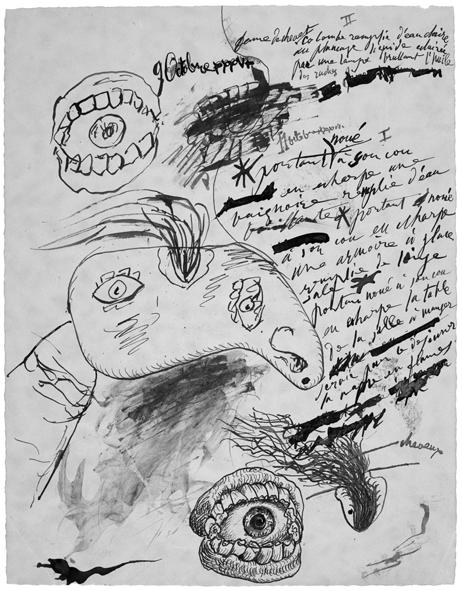
(Studies:
good thing—even if it takes away from you your acquired knowledge and, with it, all certainties. Even if it plunges you into an anxious darkness.
The recent critical edition of the Tesoro de la lengua castellana brings to light a probable figurative source used by Sebastián de Covarrubias for his notion of duende. It is found in an erudite Italian treatise, by Lorenzo Pignoria, in which a Cantaber—a sort of Iberian barbarian—is depicted with the features of a child: somewhat withdrawn, melancholic perhaps. Picture the son of a Gypsy blacksmith in a corner of his Cueva [p. 172].690 Thus, the duende, like time, is to be thought of as a sad child, but as a sad child who is playing. A poetics of the duende can be developed only as a poetics of childhood. Children constantly cry out, internally, while facing the real world, the formula that is supposed to metamorphose and save everything: “Abracadabra!” Adults see this as merely mythical or irrational. Yet, they imagine that it will be magically effective. Generally, it does not work, but who can tell when “the duendes will come”? Try and try again, a person must invoke, cry out into the air with the voice of desire . . . Did not Plato himself, the wise and reasonable, say that the daimones were the “children of gods”?691
Bergamín introduced into aesthetics the notion of birlibirloque magic, a notion I explain here in both its philosophical seriousness and its fundamental humor. This notion was developed first in relation to the unreasonable and magical character of the figures of the toreo. 692 But this could be thought only through a more general relation with two essential notions for Bergamín; namely, the “daemon,” on the one hand, and “illiteracy” on the other. The daemon because it was shown as the ultimate object, springing up when it was least expected, from any “knowledge of oneself,” regarding Socrates or Kant, Goya or Victor Hugo.693 Illiteracy, for it was envisaged as the childlike medium of this ultimate and risky knowledge.
For Bergamín, the “literacy” of common discourse is like the fossilization of language into something like a voluntary servitude, its tutelage by order of letters, that academic power set up to channel any real freedom of speech. Against this, it was important to defend the anarchistic position of an illiterate freedom, a position established, to begin, by children when they “think through images,” as Goethe says of poetry.694 Children take letters—and images—apart and put them together in sequences that are always new and surprising: “What does he do with it [then]? Well, the same as he does with everything: he plays. He plays. [. . .]
690. De Covarrubias Orozco, Tesoro de la lengua castellana o española, 734. See also L. Pignoria, De servis et eorum apud veteres ministeriis commentarius (1613), new ed. (Padua: Paolo Frambotti, 1656), 254. 691. Plato, “Apology,” in The Last Days of Socrates, trans. H. Tredennick and H. Tarrant (London: Penguin, 2003), 53; and Plato, The Laws, XI, 910a, trans. T. Saunders (London: Penguin Classics, 2005).
692. Bergamín, L’art de birlibirloque, 29–95. 693. Bergamín, “L’importance du démon,” 34–42. 694. Bergamín, La décadence de l’analphabétisme, 10.
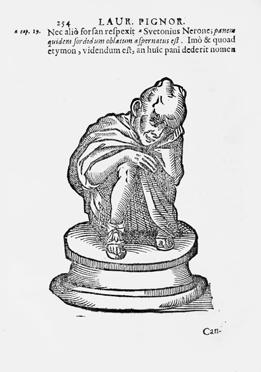
Thinking is always playing for him: to bring the things and images of his thought into play, gracefully; to bring, as all children do, everything into play [poner . . . todas las cosas en juego].”695 In this last expression we can sense how playing suggests joy and risk. Playing is, then, to invoke the magical and childlike arrival of a happy lot: the duende.
This concerns a thinking about poetics: a thinking that is joyous, devoted to “illiterate” play, which is what all poetry is made of. Significantly, in this complicity between poetry and children’s play, Bergamín discovered a coalescence with what he calls a poetry of the people, embodied beautifully in the “popular Greek illiteracy,” in Dionysiac antiquity, then in the “popular Andalusian illiteracy” of deep song. All of this is in tune with the theological, Christian, but negative distinction that comes from the “learned ignorance” posited by Nicholas of Cusa; that is, the distinction between the letter and the spirit. “The feet of letters are made of lead. They do not dance, they do not run, they do not jump, they move forward slowly and tread on and crush everything in order to express them, and to take the juice out.”696 Contrary to this, the “Andalusian illiterate people,” like children, dance and sing as much for pleasure as for anxiety: “The Andalusian illiterate people deepens, poetically, the darkness of its ignorance when it sings [. . .] the cante jondo. In the deep darkness of the song shines, incomprehensibly, the precision of truth—as in the purest poetry or in music.”697
This tribute to “illiterate poetry” (poesía analfabeta) was written at the same time as Lorca’s text on the duende. Because the duende, according to Lorca, has a direct relation to the “emotionally moved air” of deep song, “illiterate poetry,” according to Bergamín, ends up considering itself an art of the air, since dance and song make air the medium of their movements, which are, for the writer, the dance and song of the spirit. 698 The Spanish word aire expresses very well this wind of freedom that we find in speaking of the flamencos—as in the expression “a su aire,” which means to do something “your own way,” “as you like,” or in the copla sung by Camarón de la Isla: “Yo voy a mi aire” (I go my own way).699
I remember that in 1973, in the wonderful documentary series Rito y geografía del cante flamenco, Camarón—“the shrimp”—only twenty-three years old at the time, still spoke like a child, shy and rebellious, with his head tilted to the side, as though he had done something wrong, or claiming, like an adolescent, that he had been misunderstood . . . You could see him, too, in images in the style of Pier Paolo Pasolini, walking through the suburbs of San Fernando, then listening happily to his own mother singing, claiming he had not invented anything, because the only thing he sang that was new was being sung anew. Song was
695. Bergamín, 10–11. 696. Bergamín, 16. 697. Bergamín, 24.
698. Bergamín, 41. 699. See Gamboa and Núñez, Flamenco de la A a la Z, 3, 19.
already there, and the singer was, consequently, only a very old child . . .700 Like the duende itself. A few months earlier, El duende flamenco by Paco de Lucía had been released, a magnificent recording in which the word duende means both long-standing and anew. 701 It was a repetition of the duo discovered by Lorca in Granada in 1922: that of the prize for cante awarded to the oldest (Diego Bermúdez, sixty-two years old) and to the youngest (Niño Caracol, twelve years old) at the same time.
The conference of 1933 was conceived from this dialectic exchange between the past, the present, and the future: here “a formula of pathos” suddenly emerges (in the present) and is so surprising that it will be remembered for a long time (in the future) as a rupture in the continuum of tradition, just as we discover an unseen treasure in this very tradition (of the past). And so the duende rises up from the depths only because its art of memory found its gesture of desire. It is like a “time found again” (temps retrouvé) that has emerged from the alteration of the present—a symptom, as we often find in the pages of Proust—but a time found again that is the novelty itself. Among the most beautiful formulations in Lorca’s lecture are the arabesques or interlacings of time around the idea of a “wound that never heals” (herida que no se cierra nunca):702 always vivid, actual, burning, and yet surviving from that time immemorial in which it was produced.
There is, then, in the duende according to Lorca all the play of birth and of death, of death and of baptism—and of death as baptism: “totally unknown and fresh sensations [sensaciones de frescura totalmente inéditas] with the qualities of a newly created rose [but created in a space that is] open to death [abierto a la Muerte] [. . .] forms that are born and die, perpetually [formas que nacen y mueren de modo perpetuo] and raise their contours above the precise present.”703 This is how the duende baptizes “with dark water” (bautizar con agua oscura) everything it touches.704 It does so to such an extent—and this is the end of the text—that we can feel where “a wind of the spirit enters, blowing insistently over the heads of the dead, in search of new landscapes and unknown accents: a wind with the odour of a child’s saliva [un aire con olor a saliva de niño], crushed grass, and medusa’s veil, announcing the endless baptism of freshly created things [que anuncia el constante bautizo de la cosas recién creadas].”705
700. See Rito y geografía del cante flamenco, episode no. 69, “Camarón de la isla,” aired April 23, 1973, on TVE2 (Spain) (Madrid: Círculo Digital, 2005), vol. 1, ch. 1. 701. Paco de Lucía, El duende flamenco, Polygram Ibérica 63 28 061, 1972, 33⅓ rpm.
702. Lorca, “Theory and Play of the Duende.”
703. Lorca.
704. Lorca.
705. Lorca.
“LOOKING
The poetics of the duende—with its effects on our philosophical aesthetics—is therefore a poetics of childhood . . . but a childhood of imps, of malicious sprites, of illiterate rascals, all far from well-behaved. A playful, daemonic, and ghostly childhood; luminous, too, like alegrías; and worrying, dark like siguiriyas. In the experience of the duende, children speak to the ghosts and speak as ghosts even: ghost beings, beings of childbirths—“enfantômes,” one might say in French (mixing the words enfant, meaning “child,” fantôme, meaning “ghost,” and enfanter, meaning “to give birth”). Genealogical beings from far off but in whom everything is new-born. This is what Lorca, in an essay written in 1928 and 1929, calls the passage from imagination to inspiration, which implies the air, the spirit, the breath, the “hesitation” (état d’âme) of a spectral but completely new life.706 In the same essay, he ends using this wonderful phrase: “We must look with childlike eyes and ask for the moon [hay que mirar con ojos de niño y pedir la luna]. Ask for the moon and believe that it will be placed in our hands.”707 Here we return, on the level of a poetic art, to the initial situation of Romancero gitano, when the child “looks, looks,” in fascination at the night star. This condition of the gaze that “asks for the moon”—a magic, abracadabra kind of desire—never left Lorca, a poet who thought of himself as forever a child. “At my age,” he said in 1934,
I find I am still a child. The emotions of childhood are in me [las emociones de la infancia están en mí]. I have not got away from them. [. . .] Like all children, I gave a personality to every object, piece of furniture, tree, or stone. I conversed with them and I liked them. In the patio of my home there were poplar trees. One evening, the idea came to me that the trees were singing. The wind, passing through their branches, produced a sound with varying tones that gave me the impression of music. I spent hours singing with the song of the poplar trees . . . Another day, I suddenly stopped, frozen. Someone was saying my name, separating the syllables, as though spelling it out: “Fe . . . de . . . ri . . . co . . .” I looked around and saw nobody. Yet, in my ears, my name continued to sound. After a long moment, I discovered the cause. It was the branches of an old poplar tree which, as they rustled, made a monotone, plaintive sound [un ruido monótono, quejumbroso], which I took for my name.708
706. F. García Lorca, “Imagination, inspiration, évasion” (1928–1929), trans. A. Belamich, in Œuvres complètes, ed. Belamich, vol. 1, 879.
707. Lorca, 881. 708. Lorca, “La vie de García Lorca,” 853–54.
The poet, Lorca claims in his 1926 essay on “The poetic image in the work of Don Luis de Góngora,” fructifies his speech with images and, in this way, transforms into a “professor of the five bodily senses” (profesor en los cinco sentidos corporales).709 “He invented a method to capture images, [then] doubles and triples the image to place us on different levels that he needs to enrich the sensation and communicate it to us in all of its aspects.”710 Lorca is referring to Mallarmé and Proust in literature and to Jean Epstein in cinema.711 In this way, for him, the poet is capable of making the world live again, exactly as children do with their toys: “In his hands, there is no disorder, no disproportion. In his hands, the seas, the geographical kingdoms and the raging winds are like toys [en sus manos . . . como juguetes].”712
Within this notion of poetry, animism is accompanied by its counterpart as a kind of omnipotence of thoughts: when the person who looks at a poplar tree hears it say his name. But what he looks at he also throws back at the world by means of his own potency to make everything speak or sing, or to animate everything in spirit. He becomes then, magically—him, the infans, the illiterate, the son of the Gypsy blacksmith—the reader of the world, bestowing a legibility of beings and things that only children can grasp, doing so by the imagination and by inspiration: “The eyes of the reader are two little genies [los ojos del lector son dos geniecillos] that look for spiritual flowers to offer them to his thoughts.”713
“Looking with childlike eyes” means, therefore, to be anxious about the presence of specters—the “others,” the “big ones,” the “world” and “everyone else,” “threats,” “deaths”—and also to throw around oneself as many duendes as possible, those helpful ghosts, magic toys, or imps to escape with, to save oneself, or to continue to laugh. Lorca’s poetic testimonies of anxiety are numerous, as with this handwritten dedication to Antonio Machado:
[. . .] que hicieron al poeta cuando llora en las tardes, rodeado y ceñido por sus propios fantasmas.
([. . .] so the poet, when he cries in the evening, is surrounded and girded by his own ghosts.)714
709. F. García Lorca, “L’image poétique chez Don Luis de Góngora” (1926), trans. A. Belamich, in Œuvres complètes, ed. Belamich, vol. 1, 841. 710. Lorca, 843, 847. 711. Lorca, 840, 843, 847. 712. Lorca, 843.
713. Lorca, Impressions et paysages, 671. 714. Poem written by Lorca in a copy of Machado’s Obras completas. See Eutimio Martín, «“Sobre un libro de versos”: el primer manifiesto poético de Federico García Lorca», in Anales de la literatura española, no. 4, 1985.
Another poem from the same collection, however, is dedicated to a “paper bird” (pajarita de papel), that fragile game, that “clown bird” (pájaro clown) that dies so easily, scrunched up in a blink, as it can be, but no doubt—like any spiritual being—“to be reborn elsewhere” (para nacer en otro sitio).715 Throughout his life, Lorca liked to amuse himself with ghostly beings: to bring back onstage the witches of Shakespeare or Goya’s little demons;716 to imagine a “silver specter” that would make the air tremble;717 to contemplate a poor “little watch in sugar / which comes apart in the fire”;718 to orchestrate in a manner both burlesque and carnival—with trombone, clarinet, tuba, and cornet—the “Song of the Mad Fire” by de Falla;719 to invent a theatrical comedy on The Butterfly’s Evil Spell, or a kind of butterfly often linked with the spirits of the dead.720 In his erotic play The Love of Don Perlimplín, he makes the mischievous duendes appear, and by that very name.721 In 1932, he organized a performance, with his theater group La Barraca, of Life Is a Dream by Calderón, with a “childlike” scenography and costume, by the painter Benjamín Palencia. Is it thus not surprising that Lorca himself, dressed in a black mesh, decided to interpret the role of the Shadow [p. 178, 351]?722
First, the child “looks, looks.” He asks for the moon. His desire even produces an “emotionally moved air,” a commotion. And although he will grow up, this commotion will never, ever, leave him, like an open wound. Yet, he will not obtain the moon. And so, he will become a poet; that is, he will become conscious of the fact that he can only invoke “his own ghosts.” An enfantôme—again, mixing those three French words: enfant, fantôme, enfanter—would be a child who passed through death and loss but who transformed this experience of absence into a musical or poetic duende, which is the name for its tragic shaping. This was Lorca’s own fate. In a short “Autobiographical Notice,” probably written in late 1929, he makes sure to point out how, as a child, he had aphasia due to an illness in his
715. Lorca, 57–58.
716. Lorca, Selected Suites, 363.
717. F. García Lorca, Chansons (1921-1924), trans. A. Belamich, in Œuvres complètes, ed. Belamich, vol. 1, 381.
718. Lorca, 389.
719. Lorca, 389.
720. F. García Lorca, Le maléfice de la phalène (1920), trans. A. Belamich, in Œuvres complètes, ed. Belamich, vol. 2, 3–49.
721. F. García Lorca, “Les amours de Don
Perlimplin avec Bélise en leur Jardin: Estampe érotique en quatre tableaux” (1923–1928), trans. A. Belamich, in Œuvres complètes, ed. Belamich, vol. 2, 311–13.
722. F. García Lorca, “Allocution prononcée lors d’une représentation de La vie est un songe à l’université de Madrid” (1932), trans. A. Belamich, in Œuvres complètes, vol. 2, 781–83. See also Gibson, Vida, pasión y muerte, 517–23; and T. Fuentes Vázquez, El folklore infantil en la obra de Federico García Lorca (Granada: Universidad de Granada, 1990).
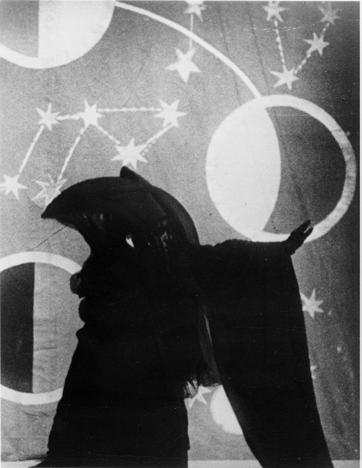
in the
throat, had been led to “the gates of death” (en las puertas de la muerte), and . . . wrote his first “humoristic poem” while working on his “study of music.”723
We can begin to imagine that the aesthetic and poetic investment of the cante jondo by Lorca, with its “primitive song” or “naive poetry” (in the sense of Schiller) responded directly to this sensation of never having left, in oneself, or through oneself, the ghost of one’s own childhood. That is why all the first poems of Romancero gitano, among so many other examples in Lorca’s work, are devoted to childhood.724 This is why the poet’s correspondence has numerous references to childhood desires just as in the art of memory according to which true memories can only be childhood memories: “an enormous desire to be a very poor, very hidden child. [. . .] I remember Granada [. . .] as you remember a sunny day when you were a child. [. . .] My soul is absolutely unopened [mi alma está absolutamente sin abrir]. [. . .] I work like a child making a crèche. [. . .] Granada with rain has that divine light of a pensive forehead that recalls childhood. Light from six-thirty, when you come around the bend of the street as the children leave school.”725 A poem from the Suites collection entitled “Bend” (recodo, which rhymes with the word recuerdo, meaning “memory” or “souvenir”) says this with force and simplicity, sadness and humor:
Quiero volver a la infancia y de la infancia a la sombra.
¿Te vas, ruiseñor? Vete.
Quiero volver a la sombra y de la sombra a la flor.
¿Te vas, aroma? Vete.
Quiero volver a la flor y de la flor a mi corazón.
¿Te vas, amor?
¡Adiós!
(I want to go back to childhood and from childhood to shadow. Are you leaving, nightingale? Then go.
723. Lorca, “Notice autobiographique,” 768.
724. Lorca, Romancero gitan, trans. Belamich, 417–28.
725. Lorca, Correspondance, 985, 992, 995, 1010.
I want to go back to shadow and from shadow to flower.
Are you leaving, fragrance? Then go.
I want to go back to the flower and from the flower to my heart.
Are you leaving, love? Goodbye!)726
If this poetry of a return to childhood were only a posturing of irresponsibility or narcissistic withdrawal, it would not have the breadth, the subtlety, and the relevance that it has in Lorca’s prose and, strangely enough, in the lecture on the duende. This relevance comes not only from a certain notion of music as the founding paradigm in the constitution of Lorca’s literary style, which is already a lot.727 It comes, too, from a theoretical—or philosophical—operation, which may still be only an outline. In everything he said of childhood, music, and literature, Lorca outlined, in effect, a poetic anthropology, one resembling in many ways other attempts made around this time—I am thinking of those attempts by Benjamin, by Bataille, or by Michel Leiris.
Why does childhood occupy such a cardinal position in this anthropology? This is because it was, for the poet, the perfect site of intimate strangeness. In the duende, the uncanny returns from the depths of time, but these depths refer to an antiquity with no written archives, as well as a childhood with no apparent chronology. Thus, if we follow Freud and his notion of the Unheimliche, the uncanny proceeds mainly from a “terrible fear in childhood” (schreckliche Kinderangst).728 Why, then, are so many alegrías made possible with the “coming of the duende”? Because the duendes, in fact, personify our potency, our potential, to play with the worst, which Freud saw as the result of a reciprocal action mixed with an “animistic” mentality and the “omnipotence of thoughts.”729 Children see death everywhere, and they fear it, but it is not irremediable in their eyes, so they still play with death. And here the difference opens up between anxiety as such and this game of anxiety for which those “black sounds” of the cante jondo—like the “terrible bitumen blacks” by Goya730—constitute the gay science.
726. Lorca, Selected Suites, 225; line formatting altered.
727. See T. Le Colleter, La matière ensorcelée: Poétiques et représentations de la musique au XXe siècle (Federico García Lorca, Pierre Jean Jouve, Giorgio Caproni) (Paris: Classiques Garnier, 2019), 383–477.
728. See Freud, “The ‘Uncanny,’” 137. 729. Freud, 147.
730. Lorca, “Theory and Play of the Duende.”
Edward Tylor, toward the end of the nineteenth century, held childhood— children’s games—to be one of the fundamental crucibles of cultural survival.731 Warburg and Benjamin later made the same argument. From Benjamin’s OneWay Street (published in the same year as Lorca’s essay on lullabies), for example, or from Berlin Childhood (written at the same time as Lorca’s lecture on the duende), we understand that children transform everything into psychic toys and love to create collisions—or commotions—between what is most ancient and what emerges with the greatest novelty.732 When, in “Theory and Play of the Duende,” we read that the first prize for the dance contest in Jerez was won by “an eighty-year-old woman [. . .] merely by raising her arms, throwing back her head, and stamping with her foot on the floor,” it was not, as León believed, to give an exorbitant value to what would by unilaterally ancient, old, and even “ruined” or deformed but rather to illustrate the temporal dialectics that is implemented by what Lorca, on the same page, calls “totally unknown and fresh sensations”: as in the “eddy” of the origin and the emergence theorized by Benjamin in the same years.733
The art of flamenco has a particular wisdom, an admirable wisdom, that intensely dialogues with youngest and oldest alike (think of the relation between the dancer Farruquito and his grandfather Farruco). This is what the simplest and most important “temporal dialectics” would seem to be; it is genealogical in nature. Lorca was persuaded of this very early on, probably having observed it in Granada. His text on “lullabies” (Canciones de cuna españolas) is a perfect example. It begins with a typically anthropological reflection on what should be considered the memory of a culture. Lorca cites the cathedrals, of course, but also claims to be “wearying a little” of them: they seem to have been reduced to a pile of “dead stones.”734 When we cross a country like Spain, the cultural memory is all the more pronounced by the “living and lasting elements for whom the moment is not frozen, and which live their tremulous present [que viven un tembloroso presente].”735
Among these “living and lasting elements,” Lorca remembers the cakes and songs: two things linked through pleasure, joy, celebration, and childhood.
731. E.B. Tylor, Primitive Culture: Researches into the Development of Mythology, Philosophy, Religion, Art, and Custom, 2 vols. (London: John Murray, 1871), 1:63–70.
732. W. Benjamin, One-Way Street and Other Writings (1928), trans. E. Jephcott and K. Shorter (London: Verso, 2021). See also W. Benjamin, “Berlin Childhood around 1900,” trans. H. Eiland, in Selected Writings, vol. 3, 1935–1938 (Cambridge,
MA: Harvard Belknap Press, 2002), 344–414. See also G. Agamben, Infancy and History: On the Destruction of Experience, trans. L. Heron (London: Verso, 2007).
733. Lorca, “Theory and Play of the Duende.” See León, El duende, 280–89; and Benjamin, Origin of German Tragic Drama, 45.
734. Lorca, “On Lullabies.”
735. Lorca.
While a cathedral is permanently of its epoch, giving a continuous expression of the past to a forever-altering landscape, a song suddenly leaps from its yesterday to our today [salta de pronto, de ese ayer, a nuestro instante], alive and pulsing like a frog, incorporated into the view like a fresh plant, bringing us the living light of ancient hours [trayendo la luz viva de las horas viejas], thanks to its melodious beath. [. . .] In melody, as in sweet things, history’s emotion [se refugia la emoción de la historia] finds refuge, its permanent light free of dates and facts.736
This “emotion” of history, which Lorca also calls “historic warmth” (calor histórico) would have a power over words equivalent to that which Warburg attributes to the “pathos formulae” regarding images: that of making them “alive” in this paradoxical, ghostly life that is “survival.”
The case of the lullabies intensifies this temporal dialectics, since this type of song—if we accept Lorca’s proposition to “try to stress emotional data”—is striking in its “sharp sadness” (aguda tristeza) turned toward rememoration, when it is supposed to put children to sleep and appease them.737 “Since then I have tried to collect lullabies from every corner of Spain; wishing to know how my countrymen lull their children to sleep, and after a while I gained the impression that Spain utilizes its saddest melodies and most melancholy texts to tinge her children’s first slumber,” and at the same time affect the child’s “sensitivity.”738 This affective memory rests on a rhythmic, just as the deep song combines, for example, the two syllabic and melismatic modes by submitting them to the same compás. Nor is the lullaby ever without this kind of dialectics of rhythms: “the physical rhythm of the chair or cradle” in dialogue with “the intellectual rhythm of melody. The mother combines these two rhythms, for the body and for the ear, utilizing differing measures and rests, combining them till she finds the exact tone to enchant the child [que encanta al niño].”739
This is a special song of enchantment. As is the case for deep song, it “plunges the child fully into raw reality, imbuing it with the drama of the world [el dramatismo del mundo]. So the letter of the song runs counter to sleep and to its gentle flow. The text evokes emotion in the child, states of uncertainty and fear, with which the blurred hand of melody [. . .] must contend.”740 The enchantment song would be, therefore, a song of distancing, as in the situation of the Gypsy child under the gaze of the moon: “The mother transports the child beyond himself, into the remote distance, and returns him weary to her lap, to rest. It is a little initiation into poetic adventure, [. . .] the ineffable key to poetic substance.”741
736. Lorca.
737. Lorca. 738. Lorca.
739. Lorca.
740. Lorca.
741. Lorca.
This is the poetic anthropology of Lorca: its aim is less to know if a melody “is of the seventeenth century or written in ¾ time” than to understand the corporeal and psychic efficiency of lullabies in real situations.742 Even if he does not claim to speak as a musicologist, the poet—writing after Henri de La Ville de Mirmont published his essay on the comparability of the nenia with the Andalusian nana and before Constantin Brailoiu wrote his major studies on children’s rhythms743—clearly points out certain ethnomusicological methods. He emphasizes, as with the cante jondo, the fact that “there is nothing more delicate than rhythm, the basis of all melody, and nothing more difficult to capture than the popular voice that divides each tone into thirds or fourths, and cannot be marked on the staves of classical music. The time has come to replace our current imperfect songbooks with collections of recordings, indispensable to the scholar and musician.”744 Lorca often used such sound recordings to punctuate his own speech during his lectures.745 As though he needed a “moved air,” an air moved by the voices of others so that, during this dialogue with the absent, his own voice might rise up from a more shared and more poetic depth.
In Lorca’s work we find something we find later in Pier Paolo Pasolini: namely; an impassioned, passionate bias for innocence. This is accompanied, of course, by the countermotif of heightened, tragic observation, of everything that seeks its ruin. Innocence is the simplest thing if we look, for example, at a child playing alone. Yet, it is the most difficult thing to preserve when the playing, with its potency of imagination, must face history, with its power over reality. Innocence is the most difficult thing to save in our adult world, and this is why a poet or a musician needs an ethics of its gestures as much as an ethics of its forms. This helps to explain why, at the beginning of his lecture on lullabies, Lorca states the following: “I am fleeing from all my friends and running off with the boy who scoffs green fruit and studies how ants devour a bird crushed by the automobile.”746
How, then, should the innocence of a childish laugh be preserved amid all the tragedies of the world? To do this, one would have to engage, on the one hand, in an art of memory: “I have great archives in my memories of childhood [yo tengo un gran archivo en los recuerdos de mi niñez]: this comes from having
742. Lorca.
743. H. de La Ville de Mirmont, “La nenia” (1903), in Études sur l’ancienne poésie latine (Paris: Fontemoing, 1903), 359–406; and C. Brailoiu, “La rythmique enfantine” (1956), in Problèmes d’ethnomusicologie (Geneva: Minkoff Reprints, 1973), 267–99.
744. Lorca, “On Lullabies.”
745. Lorca, “Architecture du cante jondo,” 826–34.
746. Lorca, “On Lullabies.”
listened to people speaking. That is poetic memory [es la memoria poética], and I refer to it. For the rest, creeds, schools of aesthetics, I care little. I don’t worry at all about being old or modern.”747 On the other hand, it is necessary to assume an ethics for the present of the adult he has become and who faces, inevitably, the harshness of the historical world. It begins with a minimum of joy: “I had that laughter. Or rather, that laughter today, is my laughter of yesterday, my laughter from a childhood in the countryside, my sylvan laughter, which I will forever defend, till I die.”748
If it is true that the duende has links with an experience of “uncanny familiarity,” then its dialectics could be formulated along the two lines of innocence and uncanniness. The duendes (in the plural) of tradition were already both innocent (imps, child-sprites) and worrying (beings of air and of spectrality). Lorca neither forgot nor enslaved them to a unitary, “metaphysical,” or “mystical”749 concept called duende (in the singular). He transformed them, reinvented them, made them into an “aesthetic idea”: a paradigm of both the poetic intensity or musical fact of this sprite-like innocence, this mutinous innocence, that we find, in the same period, in the work of Jean Vigo, for example; and this tragic uncanniness that never left Lorca’s mind.
It is the uncanniness of the child confronted with death. Where the motif of sand and sinister silting dominate Freud’s article on the Unheimliche through the well-known tale by E.T.A. Hoffmann—in Lorca’s work we find the motif of water and of drowning. Poet in New York includes a text entitled “Child Drowned in the Well” (“Niña ahogada en el pozo”).750 Lorca, in a lecture in 1933, gave a public reading of this text and preceded it with a biographical note:
One day little Mary fell into a well and she was taken out, drowned. I cannot express the depth of pain, the true despair that I felt that day. I leave it to the trees and walls that saw me to do so. Then I remember that other girl from Granada whom I saw being pulled out of a cistern, her hands wrapped around the hooks and her head knocking against the sidewalls; and the two children, Mary and the other, for me became one who cried without being able to get out of the circle of the well in stagnant water that never drains.751
747. Lorca, “Le portrait du poète,” 881–82. 748. Lorca, 883.
749. See León, El duende, 257–59.
750. Lorca, Poète à New York, 539–40. 751. Lorca, “Poète à New York [II],” 951–52.
Consider then, last of all, the magnificent and solitary poem, dated October 7, 1929, entitled “Childhood and Death” (“Infancia y muerte”):
Para buscar mi infancia, ¡Dios mío!, comí naranjas podridas, papeles viejos, palomares vacíos, y encontré mi cuerpecito comido por las ratas en el fondo del aljibe con las cabelleras de los locos.
[. . .]
Para buscar mi infancia, ¡Dios mío!, comí limones estrujados, establos, periódicos marchitos, pero mi infancia es una rata que huía por un jardín oscurísimo . . .
(To look for my childhood, my God!
I ate rotten oranges, old papers, empty pigeon coops, and I found my little body eaten by the rats at the bottom of the cistern with the hair of the insane.
[. . .]
To look for my childhood, my God!
I ate squeezed lemons, stables, yellowed newspapers, but my childhood was a rat that fled Through a very dark garden . . .)752
There is nothing “pure” in how Lorca imagined “childhood.” Nothing pure in the duende either. Since it is not a concept, the duende was neither definable nor closed on its coherence alone. Since it was an idea, it formed—as we read in Benjamin—a constellation: “Ideas are to objects what constellations are to stars. This means, in the first place, that they are neither their concepts nor their laws.”753 Like the child in Romancero gitano, we try, as adults, to create an idea for ourselves. We ask the moon, we “look, look.” But we soon understand that the object of our desire is something we will never pick up, never colonize. If we do not drown along the way, we can still wander—freely, but lost—from star to star. In one of his first poems, composed in Granada in December 1918, Lorca wrote the following:
752. Lorca, Poète à New York, 567–68. See also M. García-Posada, “Infancia y muerte,” in Lecciones sobre Federico García Lorca, 179–93.
753. Benjamin, Origin of German Tragic Drama, 34.
[. . .]
Yo Voy llorando por la calle, Grotesco y sin solución, Con tristeza de Cyrano Y de Quijote, redentor
De imposibles infinitos
Con el ritmo del reloj.
[. . .]
Daré todo a los demás Y lloraré mi pasión
Como niño abandonado
En cuento que se borró
[. . .]
I
Go down the street weeping, Grotesque, no answers, sad as Cyrano sad as Don Quixote, redeeming impossible infinites with the rhythm of clocks.
[. . .]
I’ll give everything to others And weep my passion
Like the child abandoned In a story crossed out.)754
754. F. García Lorca, “Minor Song,” in Selected Poems with Parallel Spanish Text, trans. M. Sorrell (Oxford, UK: Oxford University Press, 2009), 7–8.
(19 November 2022)
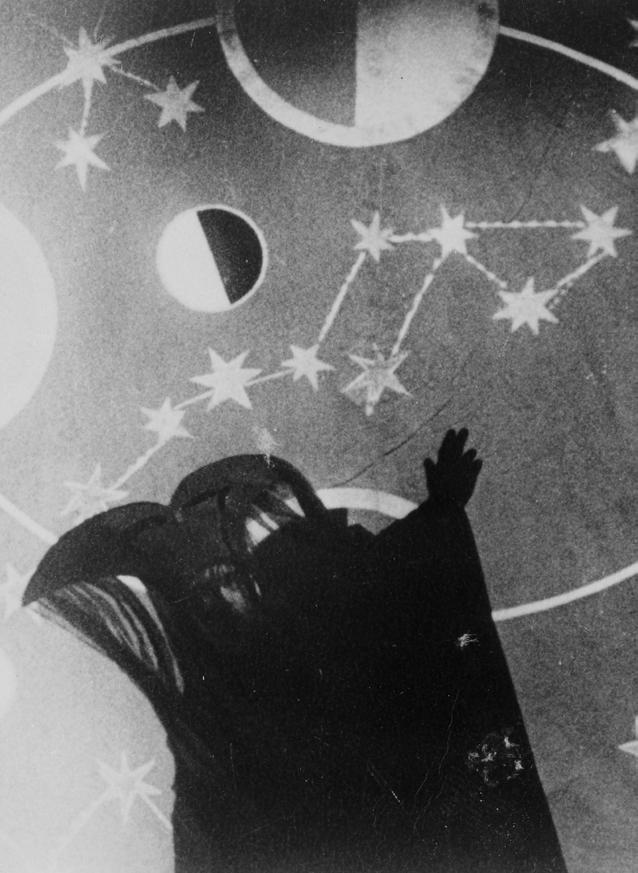
“The child looks at her, looks at her . . . the child is looking at her . . .”
Children are not blind to our world, with its chaos and all. Often, they are afraid of it. But, with that fear, do they not look at the world, often, better than we adults do? And is this not because they look, at the same time, both very closely at the real and from the depths of their imagination?
brecht, capa, erice, frank, garcía lorca, goethe, goya y lucientes, miró, val del omar
federico garcía lorca “Romance de la luna, luna” (Ballad of the Moon, Moon), 1934
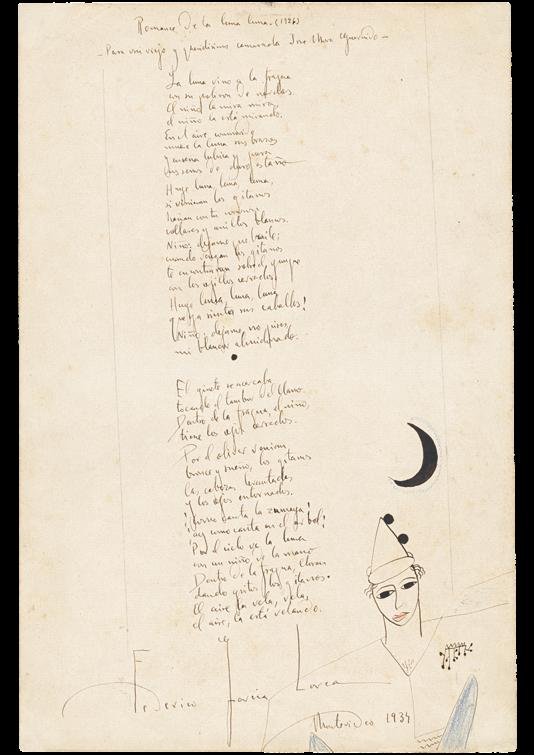
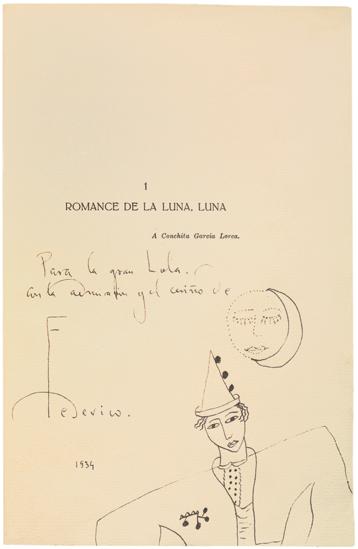
federico garcía lorca
Gitano andaluz bajo la luna dormida (Andalusian Gypsy under the sleeping moon), 1934

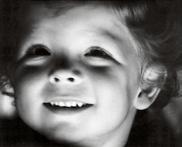
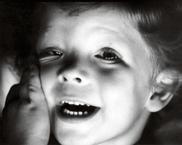
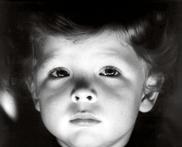
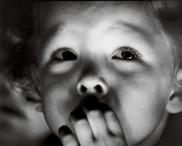
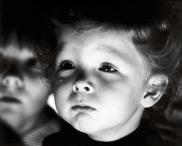
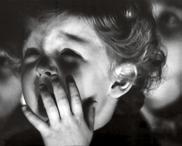

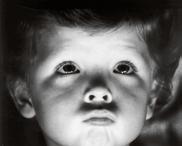
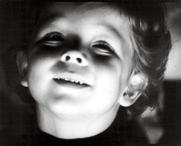

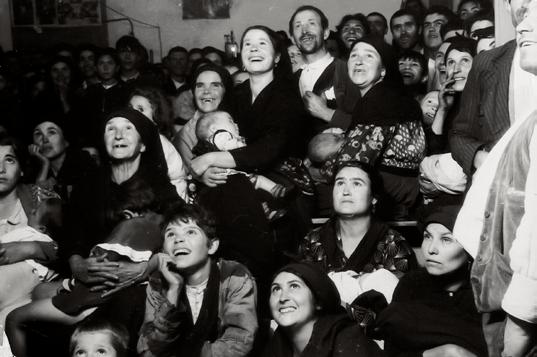
josé val del omar
Misiones pedagógicas (Pedagogical missions), 1931–1936
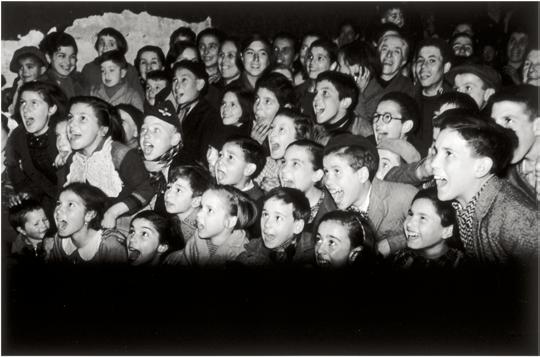
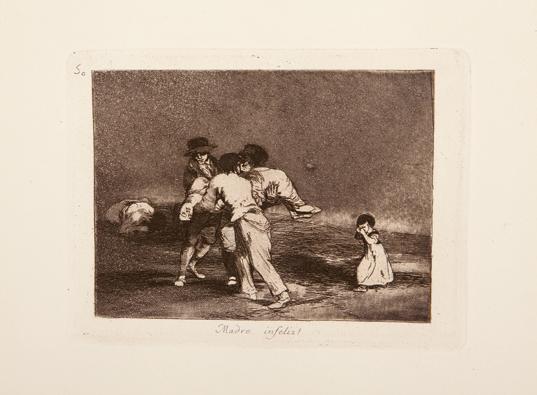
de goya y lucientes
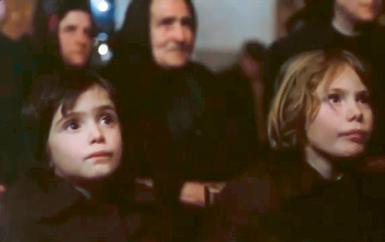
El espíritu de la colmena (The Spirit of the Beehive), 1973
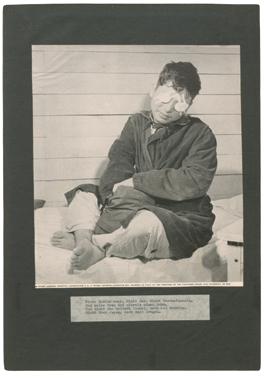
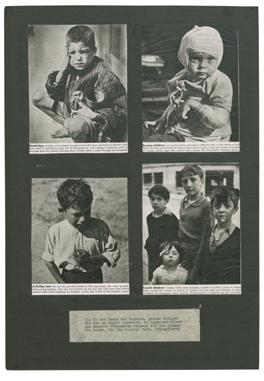
bertolt brecht
Kriegsfibel—“Nicht Städte mehr. Nicht See. Nicht Sternefunkeln”
(War primer—“Black out all towns, the sea, the starry heaven”), 1940–1946
Kriegsfibel—“Ihr in den Tanks und Bombern, große Krieger!”
(War primer—“You, in your tanks and bombers, mighty warriors!”), 1940–1946
10, 1974

johann wolfgang von goethe
Mondsichel über nachtdunklen Bäumen (Crescent moon over darkened trees), 1776–1778
Aufgehender Mond am Fluß (Moonrise on the river), ca. 1777
Vollmondnacht im Thüringischen Gebirge (Full moon in the Thuringian Mountains), 1777
“What mysterious thought Moves and stirs the ears of corn? . . .”
In what sense can we speak about these “commotions” that reach us when we are in front of certain beings, gestures, texts, or things? We have always hesitated between two approaches: to explain or to understand. Either you try to reduce emotions to a certain rule: an alphabet, a grammar, a dictionary. Or you join the action in order to “comprehend” (com-prehend: take with) mixed emotions. From then on, they no longer belong to a single subject. No longer fixed, they pass from one to another and, in passing, make of the ambient air a space that trembles, an emotionally “moved air.”
line of literacy
aristotle, barcelón, camper, comenius, darwin, de irala, descartes, duchenne de boulogne, dumas, esquirol, galle, garcía hidalgo, janet, lavater, le brun, lersch, londe, michel, richer, salvador y gómez, spontone, tardieu
line of emancipation
beethoven, bergamín, bruno, calderón de la barca, erasmus of rotterdam, garcía lorca, goya y lucientes, hegel, hölderlin, kant, montaigne, nietzsche, saint-simon, scarlatti, schiller, spinoza, warburg
aristotle
De anima, libri tres (On the Soul, Book III), Lyon, Apud Theobaldum Paganum, (4th cent. BCE), 1559
jan amos comenius
Orbis sensualium pictus (The Visible World in Pictures), Nuremberg, Michael Endter, 1658
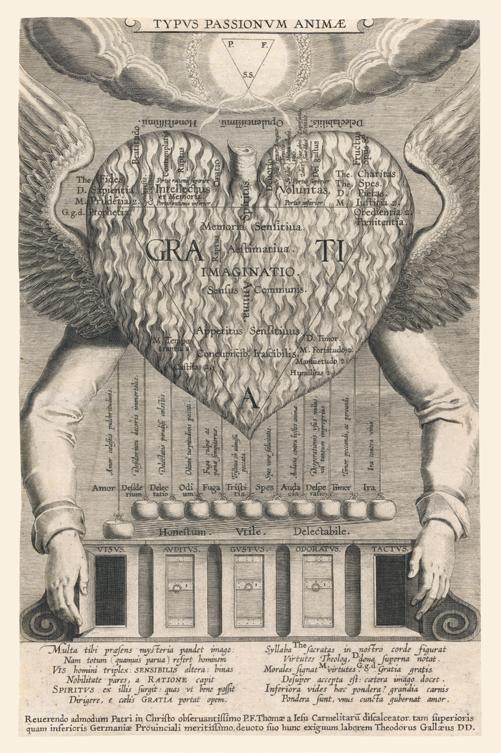
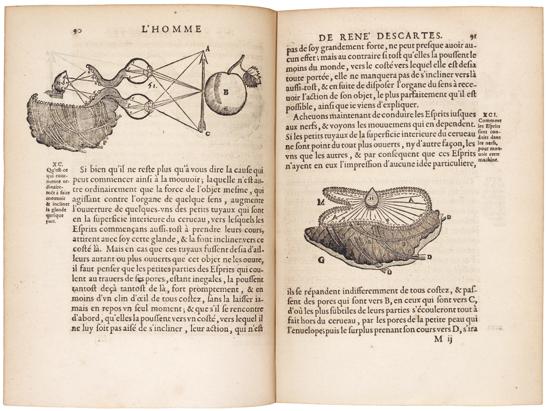
théodore galle
Typus passionum animæ (Types of soul passions), ca. 1617–1623
rené descartes
L’homme de René Descartes et un Traitté de la formation du foetus du mesme autheur (The treatise on man by René Descartes, and a treatise on the formation of the fetus by the same author), Paris, Charles Angot, 1664
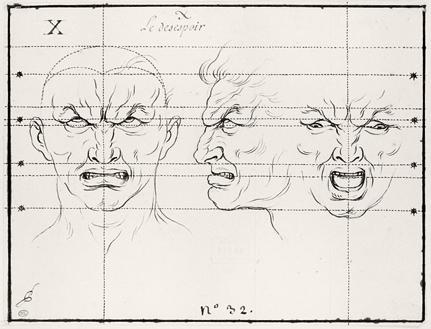
charles le brun
Le Désespoir: Deux têtes de face et une de profil (Despair: Two heads in front and one in profile), 1668 Études d’yeux humains (Studies of human eyes), n.d.
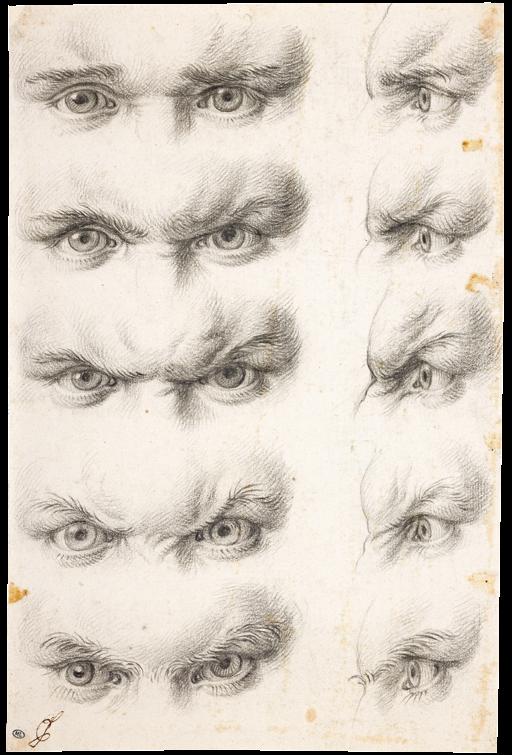
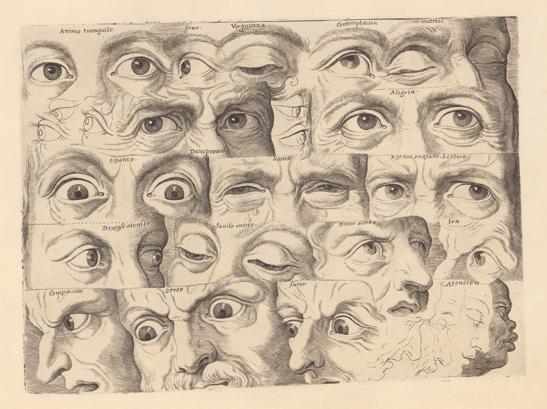
matías de irala
Metodo sucinto i conpendioso de cinco simetrias apropiadas a las cinco ordenes de arquitectura adornada con otras reglas utiles
(A concise and compendious method of five symmetries appropriate to the five orders of architecture with other useful rules), 1731
rené descartes
Les passions de l’âme (The Passions of the Soul), Paris, Henry Le Gras, 1649
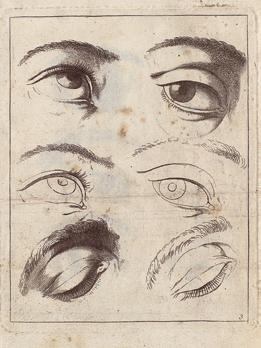
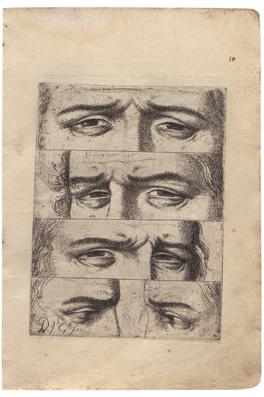
juan barcelón (after josé de ribera)
Seis ojos (Six eyes), ca. 1796
josé garcía hidalgo
Principios para estudiar el nobilissimo, y real arte de la pintura, con todo, y partes del cuerpo (Principles for studying the most noble and royal art of painting, with everything and parts of the body), Madrid, n.pub., 1693
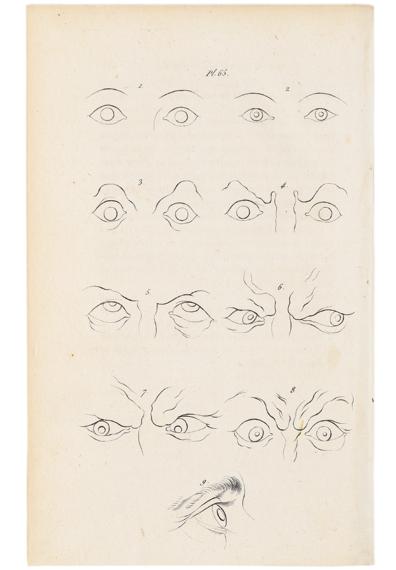
johann kaspar lavater
L’art de connaître les hommes par la physionomie: Tome 2 (The art of knowing men through physiognomy, vol. 2), Paris, Depélafol, 1820
vicente salvador y gómez
Cartilla y fundamentales reglas de pintura por las quales llegará uno a çer muy ducho pintor (Primer and fundamental rules of painting by which one can become a very skilled painter), 1674
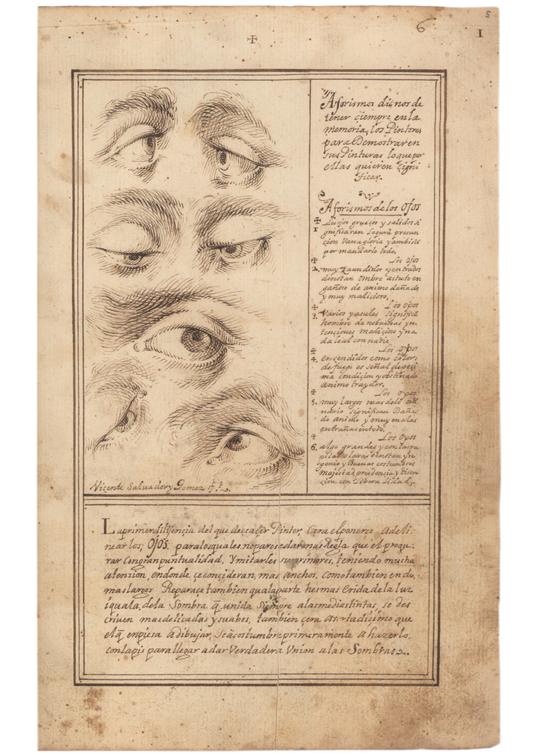
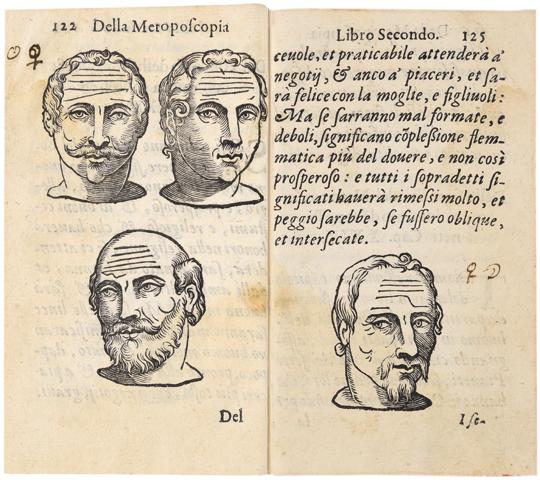
La metoposcopia: Ouero comensvratione delle linee della fronte (Metoposcopy: Or the proportion of the forehead lines), Venice, Evangelista Deuchino, 1626
johann kaspar lavater
Physiognomische Fragmente, zur Beförderung der Menschenkenntniß und Menschenliebe (Physiognomic fragments: To promote the knowledge and love of mankind), Leipzig and Winterthur, Weidmanns Erben, 1775
pierre camper
Discours prononcés . . . en l’Academie de dessein d’Amsterdam, sur le moyen de représenter . . . les divers passions qui se manifestent sur le visage . . . (Speeches delivered . . . at the Academy of Drawing in Amsterdam, on the means of representing . . . the various passions expressed in the face . . .), Utrecht, B. Wild and J. Altheer, 1792
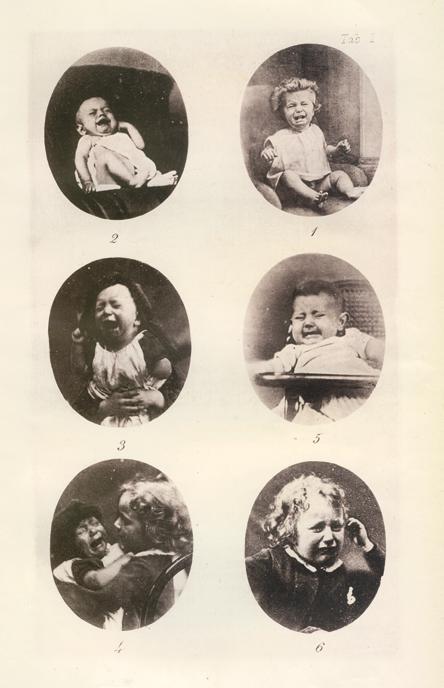
charles darwin
L’expression des émotions chez l’homme et les animaux
(The Expression of the Emotions in Man and Animals), Paris, Reinwald, 1877
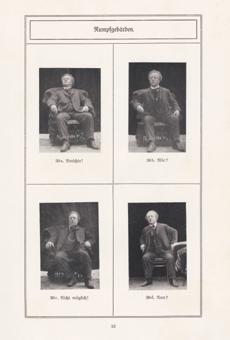
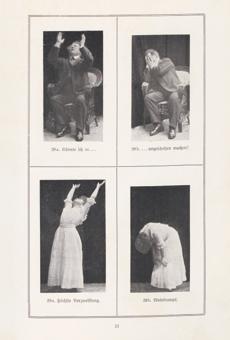
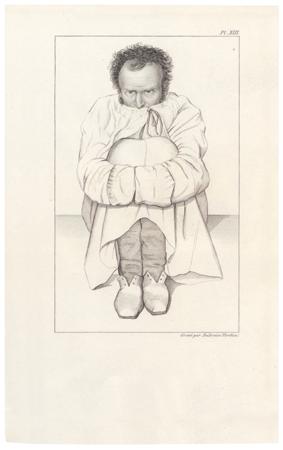
carl michel
Die Sprache des Körpers in 721 Bildern
(The language of the body in 721 images), Leipzig, J.J. Weber, 1910
étienne esquirol (text) and ambroise tardieu (engravings)
Des maladies mentales considérées sous les rapports médical, hygiénique et médico-légal
(Mental maladies from a medical, hygienic, and medico-legal perspective), Paris, J.-B. Baillière, 1838
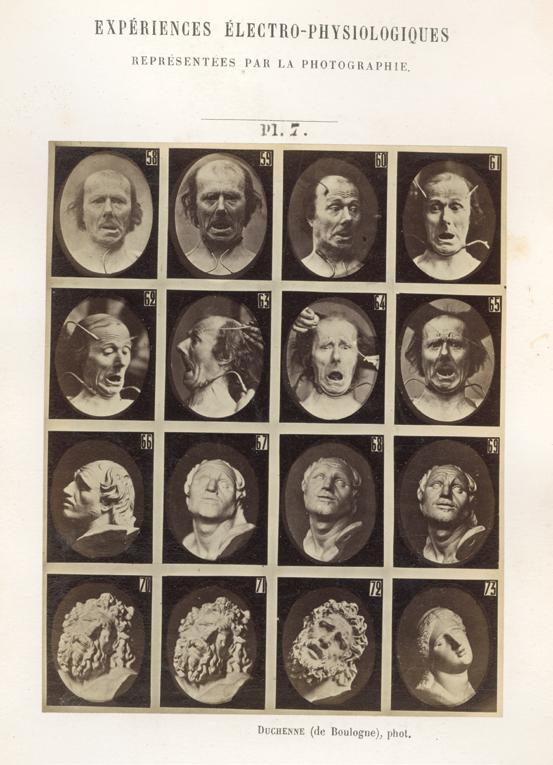
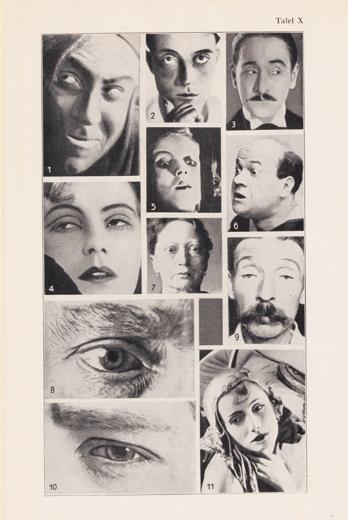
guillaume duchenne de boulogne
Mécanisme de la physionomie humaine (Mechanism of human physiognomy), Paris, Jules Renouard, 1862
philipp lersch
Gesicht und Seele (Faces and souls), Munich, Ernst Reinhardt, 1932
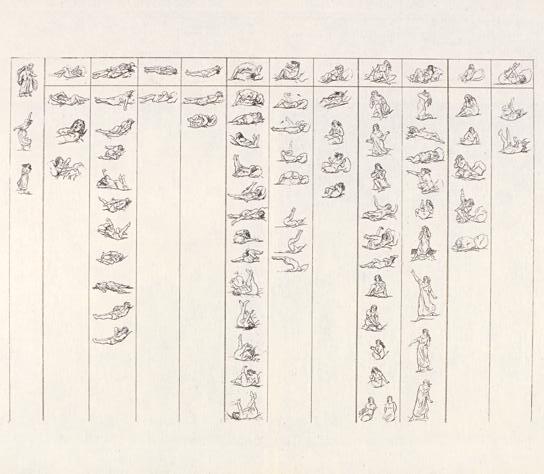
paul richer
Études cliniques sur l’hystéro-épilepsie ou grande hystérie (Clinical studies on hystero-epilepsy or great hysteria), Paris, Adrien Delahaye and Émile Lecrosnier, 1881
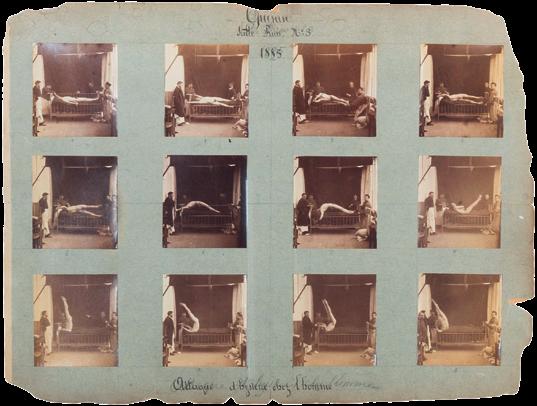
albert londe
Attaque d’hystérie chez l’homme, planche d’instantanés (Hysterical attacks in men, snapshot panel), 1885
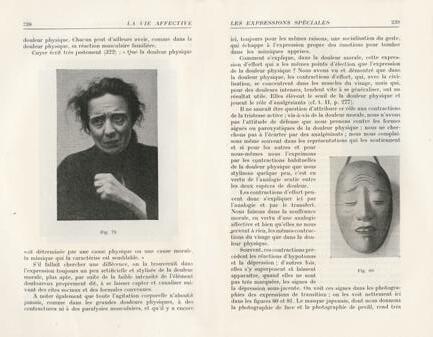
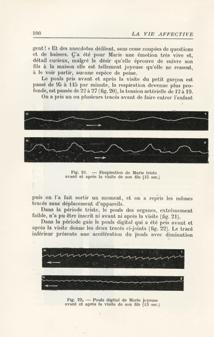
georges dumas
La vie affective (The affective life), Paris, Les Presses universitaires de France, 1948
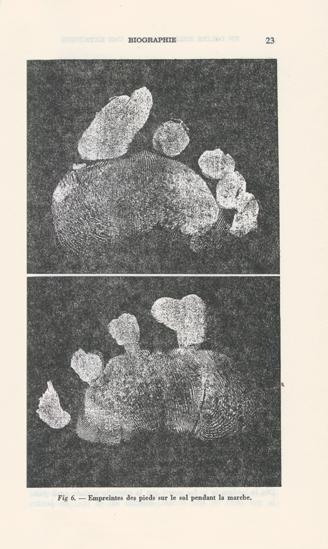
pierre janet De l’angoisse à l’extase: Études sur les croyances et les sentiments (From anxiety to ecstasy: A study of beliefs and feelings), Paris, Alcan, 1926–1928


giordano bruno
De gl’heroici furori (On the Heroic Frenzies), Paris, Antonio Baio, 1585
michel de montaigne
Les essais de Michel seigneur de Montaigne (The Essays by Mr. Montaigne), Paris, Abel l’Angelier, 1595
erasmus of rotterdam
L’éloge de la Folie (In Praise of Folly), s.l., 1752

benedictus de spinoza B.D.S.: Opera posthuma (Ethica) (Posthumous works [Ethics]), Amsterdam, J. Rieuwertsz, 1677
immanuel kant Anthropologie in pragmatischer Hinsicht (Anthropology from a Pragmatic Point of View), Königsberg, Nicolovius, 1798
georg wilhelm friedrich hegel Phänomenologie des Geistes (The Phenomenology of Spirit), Bamburg and Würzburg, Joseph Anton Goebhardt, 1807 line of emancipation
louis de rouvroy duc de saint-simon
Mémoires du duc de Saint-Simon (Memoirs of the Duke de Saint-Simon), 1743
friedrich hölderlin
“Der Winter” (The Winter), 1842
unkown author
Libro di sonate del signor Domenico Scarlatti (Sonata book by Mister Domenico Scarlatti), 1752–1782
ludwig van beethoven
Musical setting of “Wonne der Wehmut” (The Bliss of Melancholy), 1810
francisco de goya y lucientes
Disparate volante (Flying folly), 1815–1824
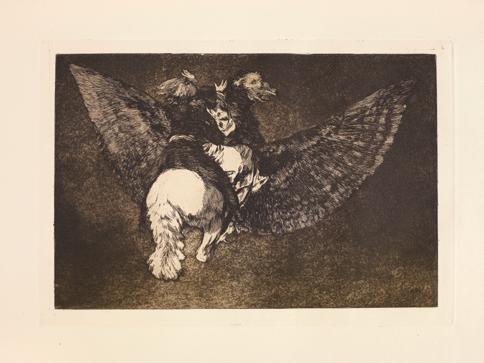
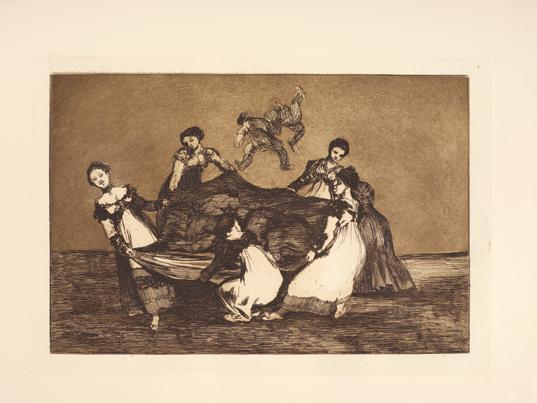
francisco de goya y lucientes
Disparate femenino (Feminine folly), 1815–1824
El caballo raptor (The kidnapping horse), 1815–1824
Disparate de toritos (Lluvia de toros) (Little bulls’ folly), 1815–1819
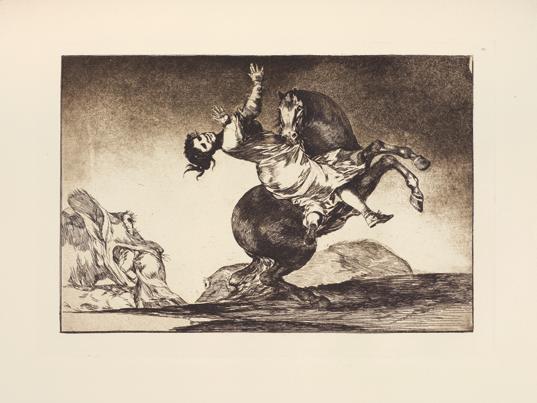
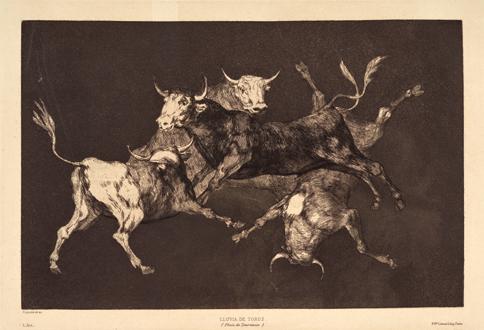
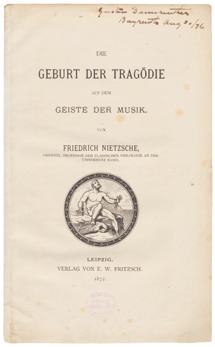
friedrich nietzsche
Die Geburt der Tragödie aus dem Geiste der Musik (The Birth of Tragedy Out of the Spirit of Music), Leipzig, E.W. Fritzsch, 1872
Übungsblätter mit Aufzeichnungen von Intervallen, Schlüsselzeichen, Harmonisationsaufgaben alte (Work sheets with notations of intervals, key symbols, and old harmonization exercises), 1855
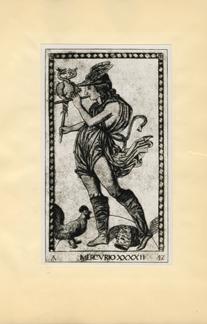
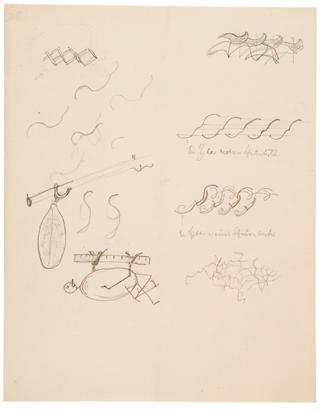
aby warburg
Mercury, 15th Century, in Mantegna Tarocchi
Übungen des Kunsthistorischen Instituts zu Florenz, WS 88/89. II. Übungen über die italienische Plastik, fol 16r
(Drawing exercises made at the Institute of Art History in Florence, winter semester 88/89. II. Drawing exercises on Italian sculpture, fol. 16r), 1888–1889
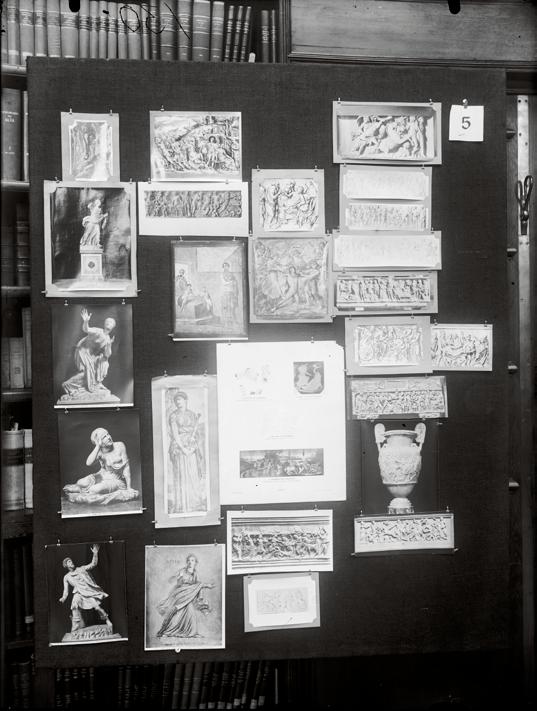
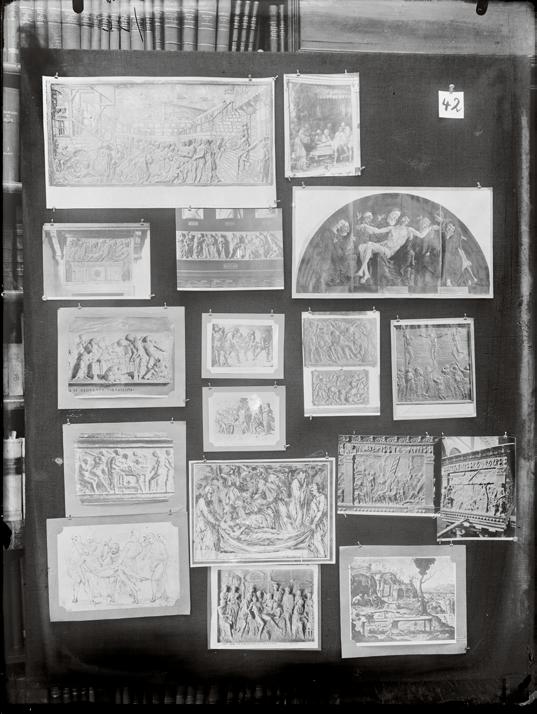
friedrich schiller
La educación estética del hombre en una serie de cartas (On the Aesthetic Education of Man in a Series of Letters), Madrid, Espasa-Calpe, 1932
josé bergamín
“La decadencia del analfabetismo” (Decadence of illiteracy), in Cruz y Raya, no. 2, 1961
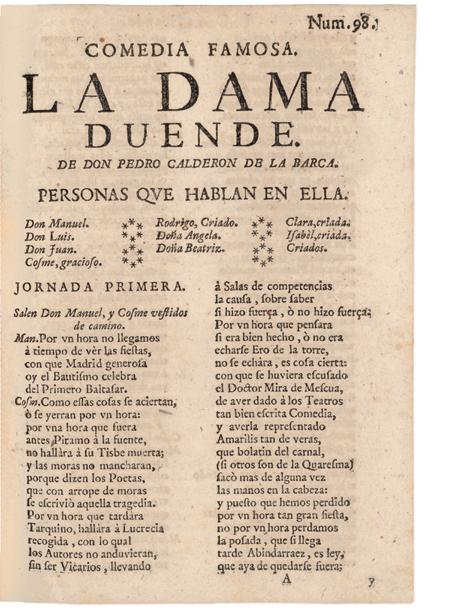
pedro calderón de la barca
La dama duende (The phantom lady), ca. 1629, in Primera parte de comedias del célebre poeta español don Pedro Calderón de la Barca (First part of comedies by the famous Spanish poet Pedro Calderón de la Barca), Madrid, Francisco Sanz, 1685
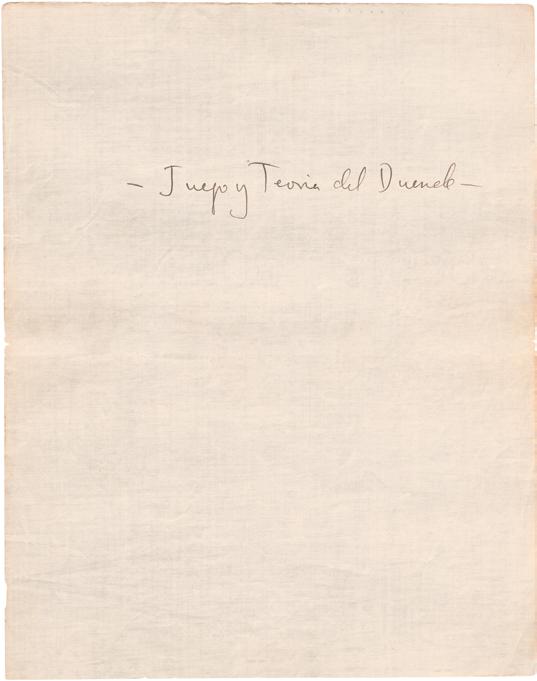
federico garcía lorca
Juego y teoría del duende (Theory and play of the duende), 1933
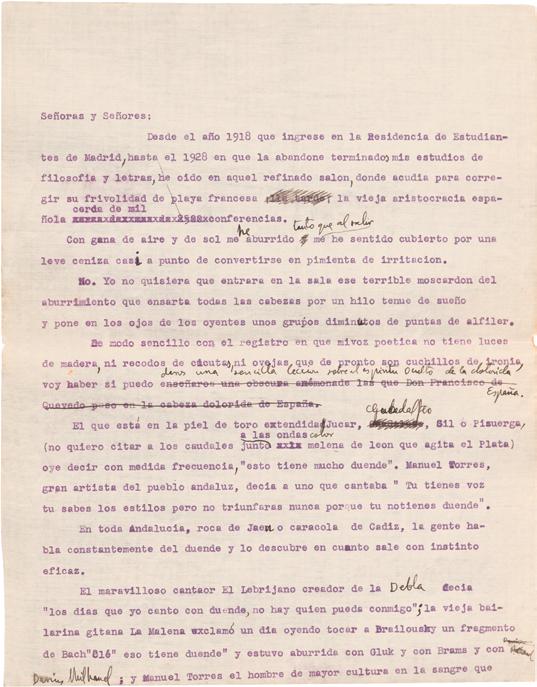
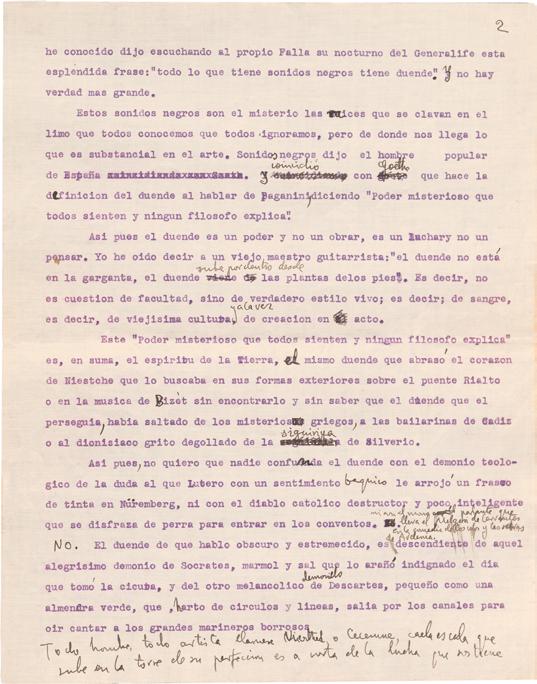
federico garcía lorca
Juego y teoría del duende (Theory and play of the duende), 1933
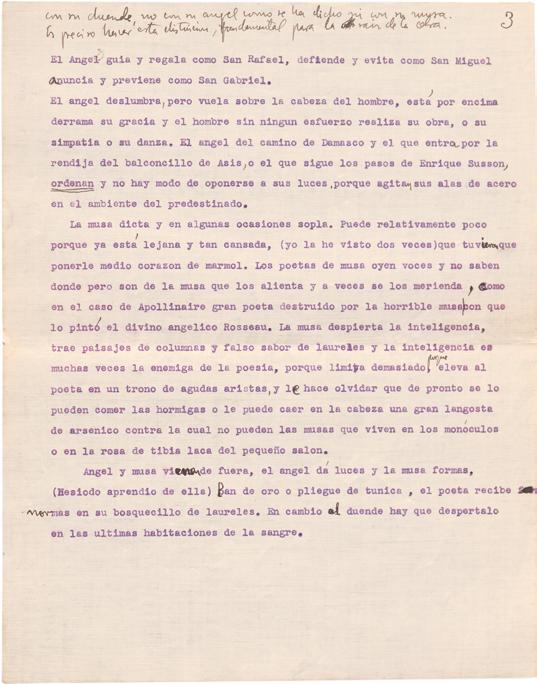
“The face with little blood, The eyes with much night . . .”
Our face is not merely a “blank wall” pierced with “black holes.” Nor the assembly of “features” supposed to define an identity on our passport. Nor merely that collection of forty-three facial muscles capable of producing the ten thousand expressions counted by psychologists who considered them a collection of reflex signs. Our face breathes. Through the ambient air we live, we breathe, we speak, sing, laugh, and cry. A secret exchange must occur between our psychic movements and the “moved air,” something we also call an atmosphere.
boiffard, garcía lorca, giacometti, gonzález, muñoz, picasso, pinna, rosso, schrenck-notzing, shalev-gerz, stoeving
unkown author
Death mask of Georg Wilhelm Friedrich Hegel, 1831
curt stoeving
Death mask of Friedrich Nietzsche, 1900
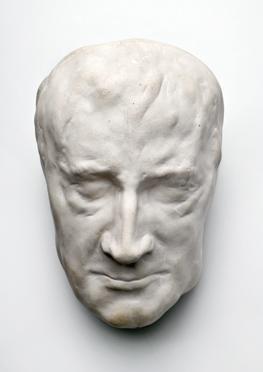
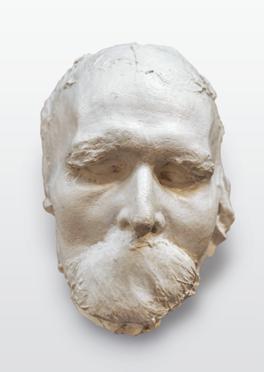
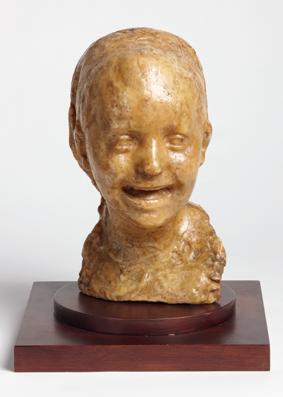
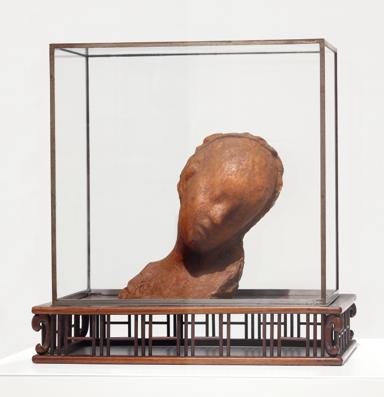

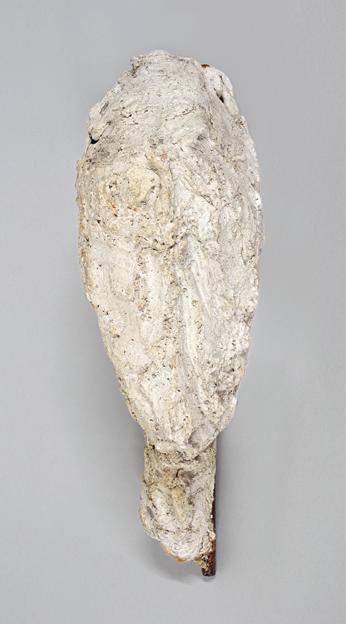
Tête (Head), ca. 1947
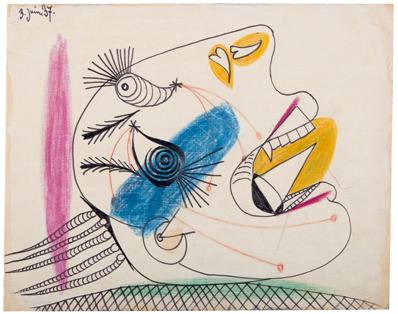
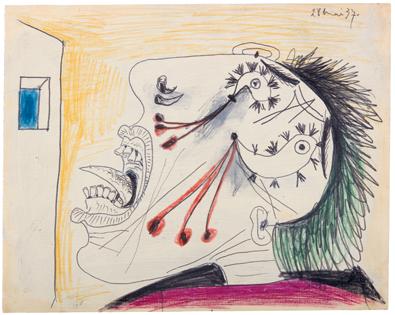
Estudio para una cabeza llorando (I): Dibujo preparatorio para “Guernica” (Study for a weeping head [I]: Sketch for “Guernica”), 1937
Cabeza llorando (II): Dibujo preparatorio para “Guernica” (Weeping head [II]: Sketch for “Guernica”), 1937
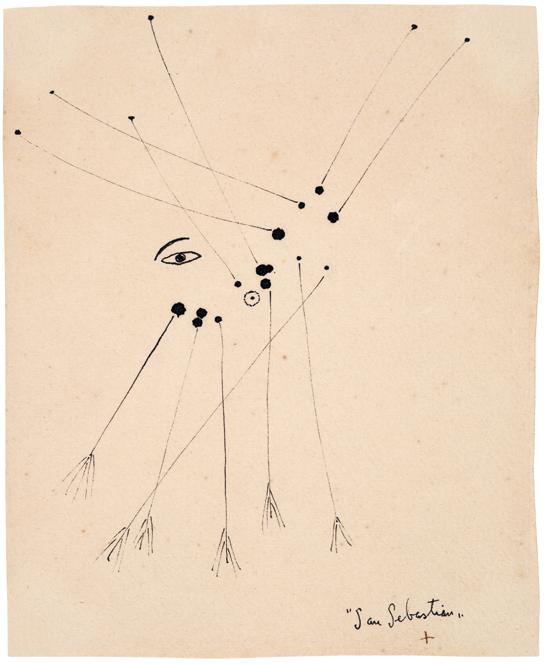
San Sebastián (Saint Sebastian), 1927
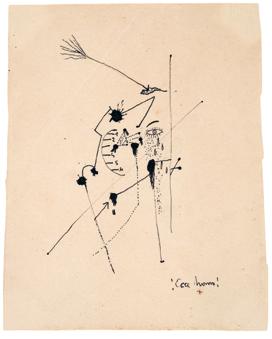

federico garcía lorca
Ecce Homo, 1927–1928
Arlequín ahogado (Drowned harlequin), ca. 1927
La vista y el tacto (Sight and touch), 1929–1930
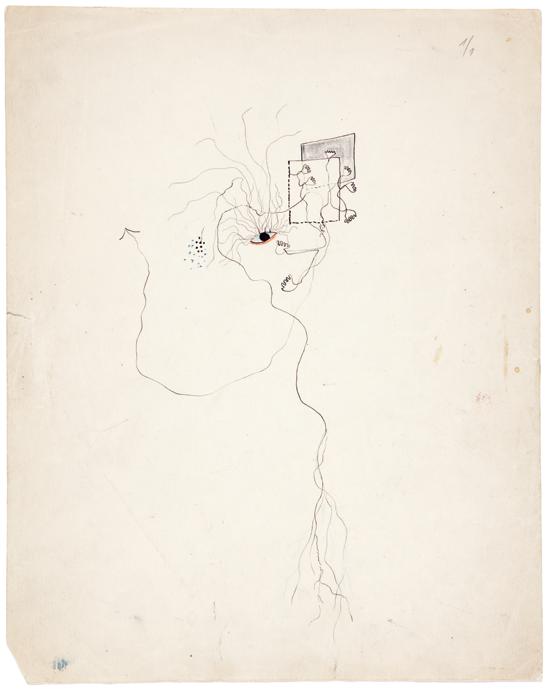
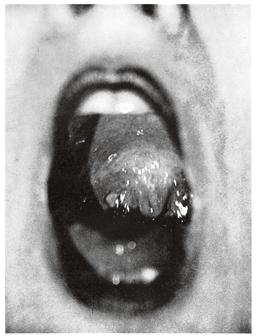
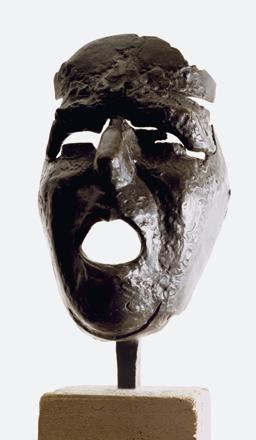
jacques-andré boiffard
“Bouche” (Mouth), in Documents: Doctrines, archéologie, beaux-arts, ethnographie, no. 5, 1930
julio gonzález
Masque de Montserrat criant (Mask of Montserrat screaming), 1938–1939
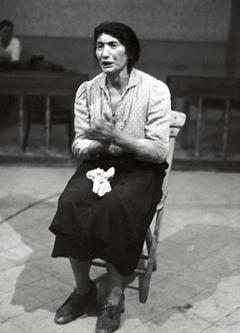
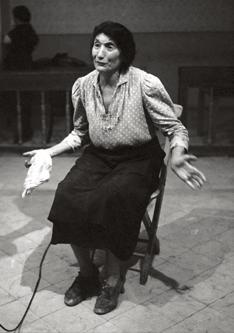
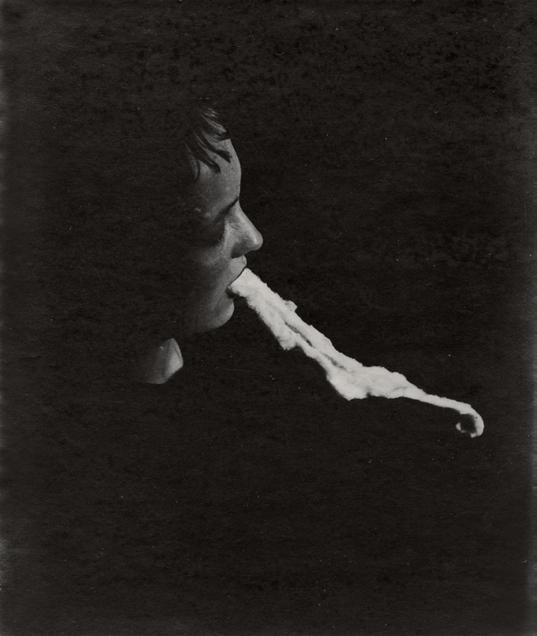
albert von schrenck-notzing
Teleplastische Masse, die aus dem Mund des Mediums Stanislawa P. herausquillt und in schwebender Stellung verharrt
(Teleplastic mass emerging from the mouth of the medium Stanislawa P., remaining in a floating position), 1913
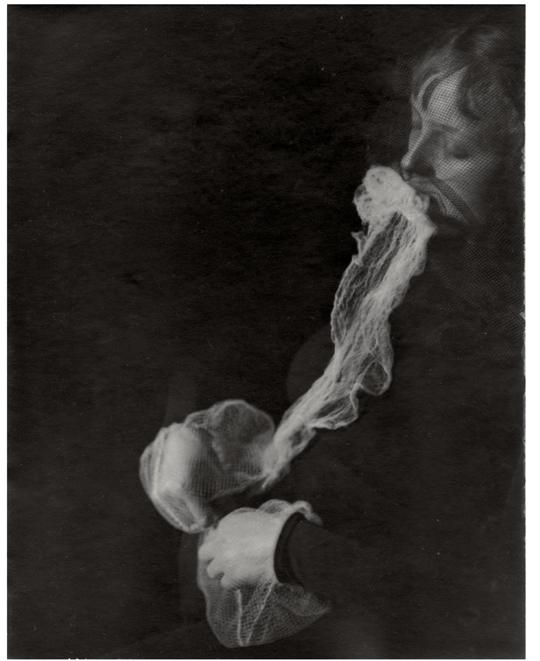
albert von schrenck-notzing
Das Medium Stanislawa P. mit einem schleierartigen teleplastischen Streifen, der ihre Schleierhaube am Kopf zu durchdringen scheint
(The medium Stanislawa P. with a veil-like teleplastic stripe that seems to penetrate her veil hood on her head), 1913
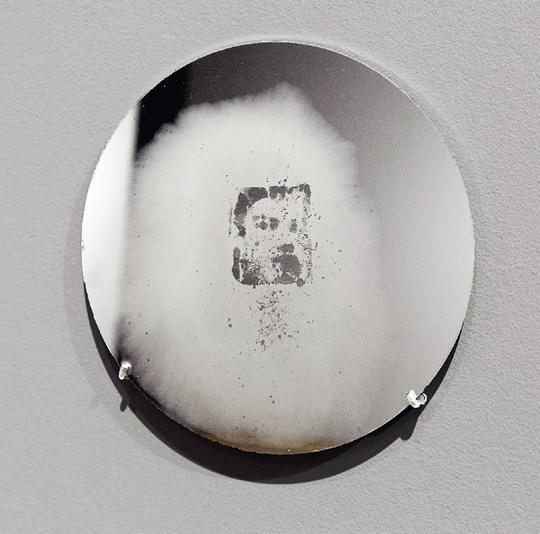

esther shalev-gerz
Entre l’écoute et la parole: Derniers témoins, Auschwitz (1945-2005) (Between listening and telling: Last witnesses, Auschwitz [1945–2005]), 2005
“The duende rises up from inside, From the soles of the feet . . .”
Gestures are ancient: our own fossils in movement. Aby Warburg studied their survivals in visual forms, as well as their changes of signification in history. These movements, however—wonderful challenges for sculpture—are the vehicles for our desires. They are extended between the energy of pathos and the energy of form. The duende, according to Federico García Lorca, was a model for this intensity that was already questioned by Goethe under the name daemonic and by Nietzsche on Greek tragedy. By producing this intensity, gestures make the air swirl about itself, creating a dance of bodies with the “moved air.” Hand gestures suffice to create a new space, as do—and even more so—dancing bodies. And so to the point of madness, which would be like the utopia of a body and a new space, an other air of the world.
artaud, bellmer, bourneville, byk, dalí, de castro, druet, escudero, farocki, g. romero, garcía lorca, hugnet, kafka, klein, kourkouta, man ray, manzon, maspons, michaux, pastier, richer, rodin, zürn
federico garcía lorca Pavo real (Peacock), 1927
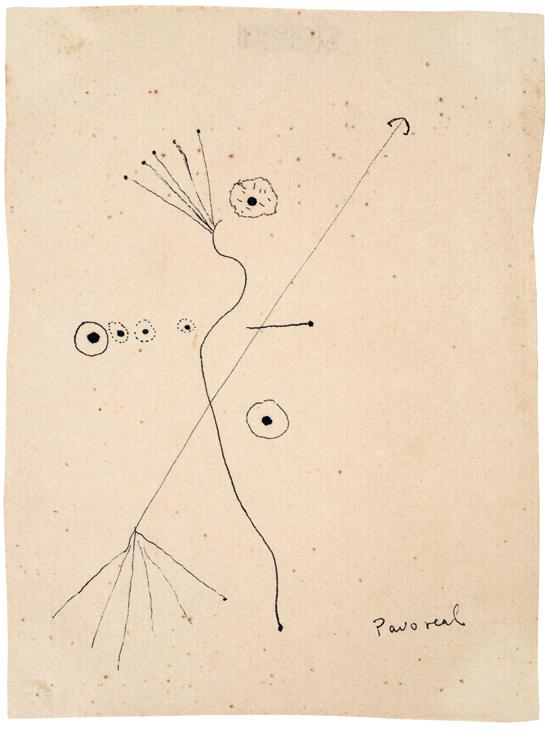
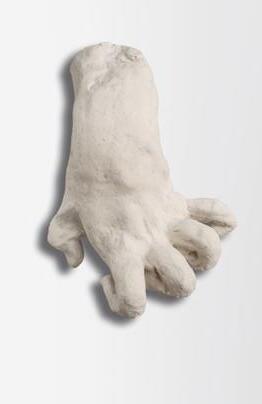
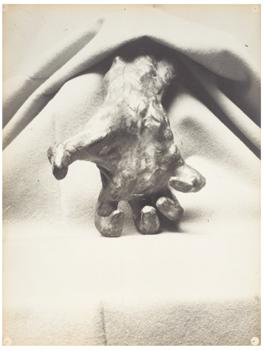
auguste rodin
Main crispée gauche (Tensed left hand), 1898
eugène druet and auguste rodin
Main crispée surgissant d’une couverture (Tensed hand emerging from a cover), ca. 1897–1899
Le désespoir (bronze) (Despair [Bronze]), ca. 1897–1899
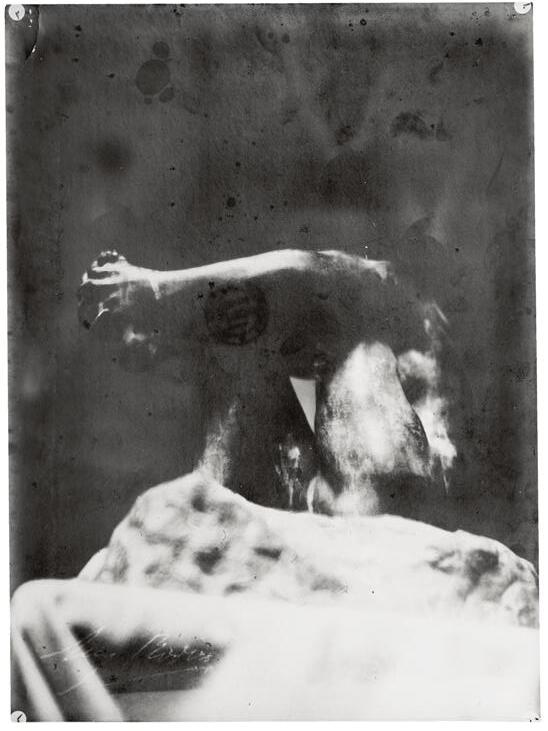
Untitled (Hands Triptych), 1934
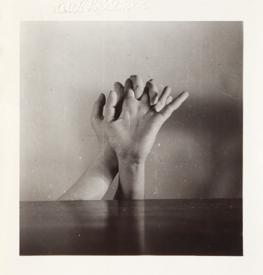
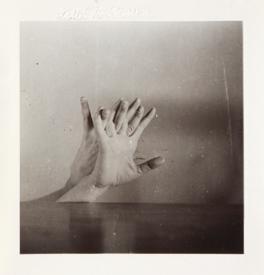
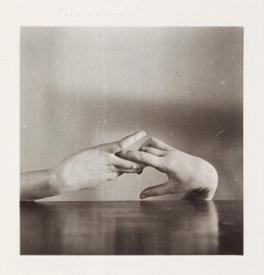
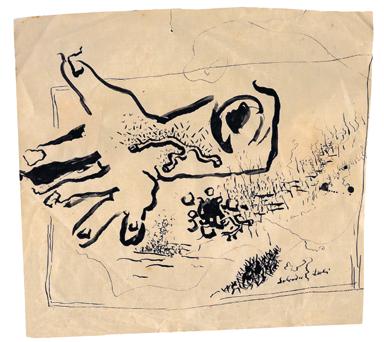
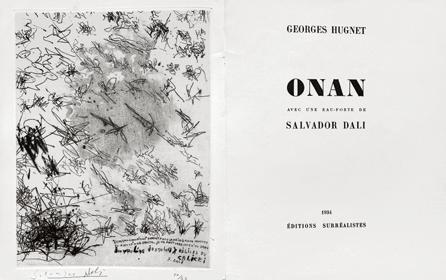
salvador dalí
La mano cortada (The severed hand), ca. 1928
salvador dalí and georges hugnet
Onan, Paris, Éditions Surréalistes, 1934
georges pastier
Billot et cahiers d’Antonin Artaud (Antonin Artaud’s wooden block and notebooks), 1947
Billot d’Antonin Artaud (Antonin Artaud’s wooden block), 1947
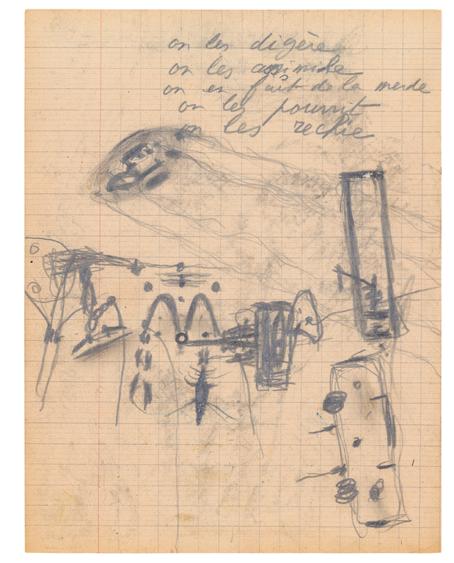
310), 1947
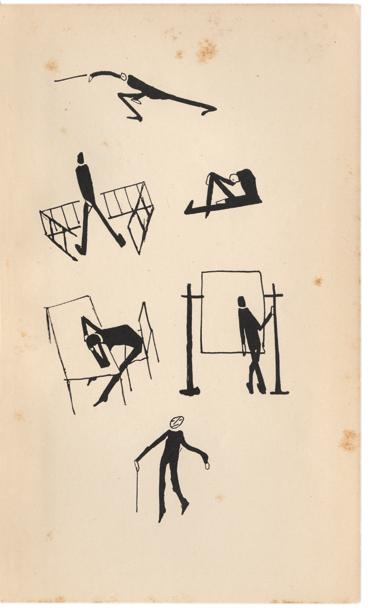
“Six Black Figures,” in Max Brod, Kafka: Eine Biographie (Kafka: A Biography), Prague, Heinrich Mercy Sohn, 1937
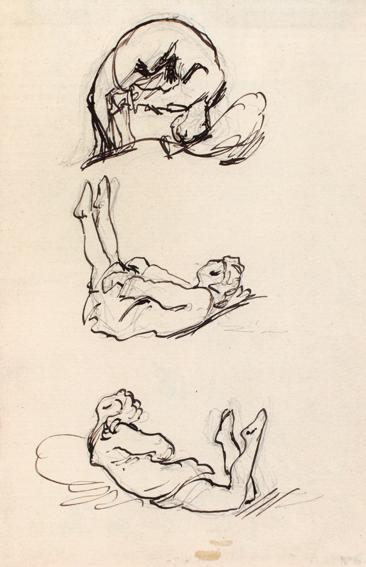
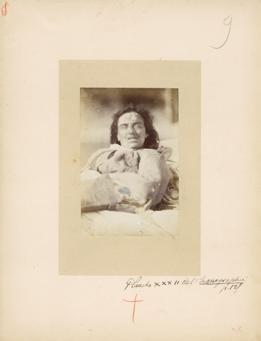
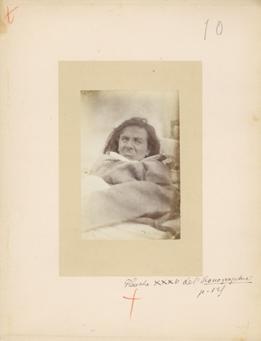
désiré-magloire bourneville Hystéro-épilepsie: Hallucinations, ironie, répugnance (Hysterical epilepsy: Hallucinations, irony, repugnance), 1876, in L’iconographie photographique de la Salpêtrière, I (The iconographic photography of Salpêtrière), Versailles, Cerf et Fils, 1876–1877, plates XXXII and XXXV
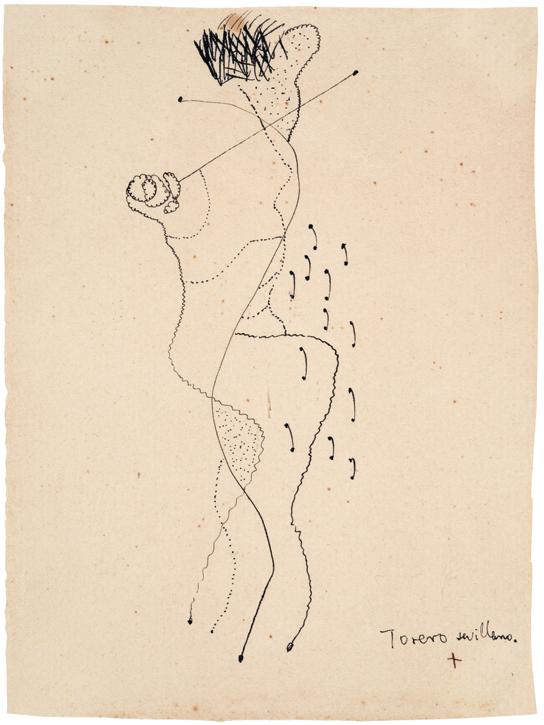
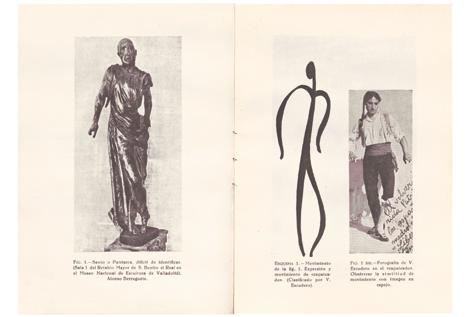
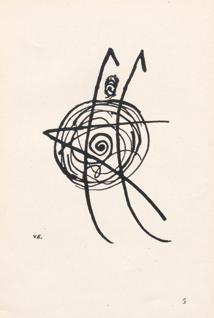
vicente escudero
luis de castro
El enigma de Berruguete: La danza y la escultura
(The enigma of Berruguete: Dance and sculpture), Valladolid, Ateneo de Valladolid, 1953
Mi baile (My dance), Barcelona, Montaner y Simón, 1944
Pintura que baila (Painting that dances), Madrid, Afrodisio Aguado, 1950
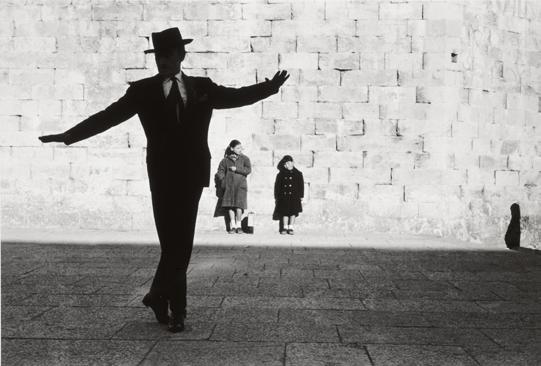
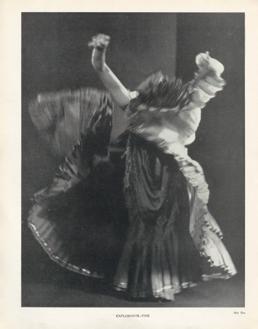
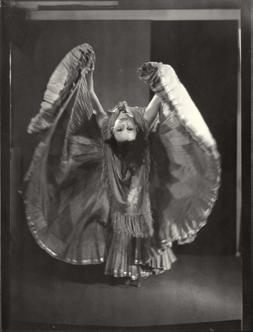
man ray
“Explosante-Fixe” (Explosion-Fixed), in Minotaure, no. 5, 1934 Prou del Pilar dansant (Prou del Pilar dancing), 1934
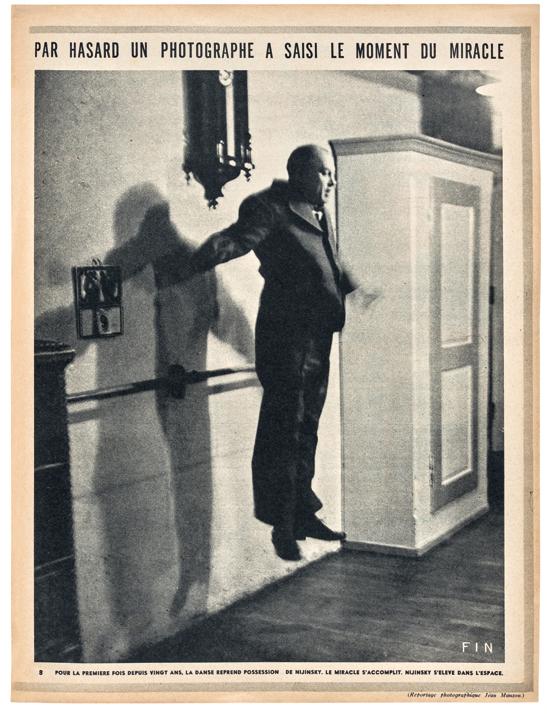
jean manzon

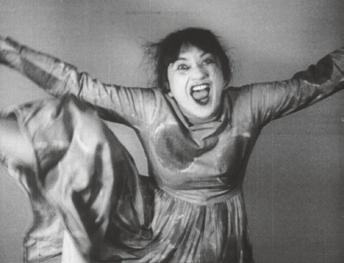
Photograph of Vaslav Nijinsky in the psychiatric asylum of Münsingen, Switzerland, Match, no. 50, June 15, 1939
suse byk
Tanzerische Pantominen (Dancing pantomines), 1925
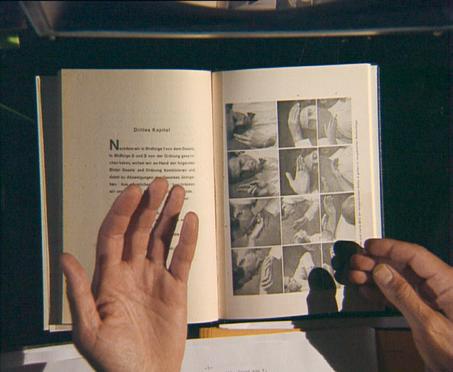
Der Ausdruck der Hände (The Expression of Hands), 1997


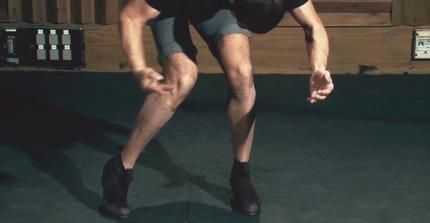
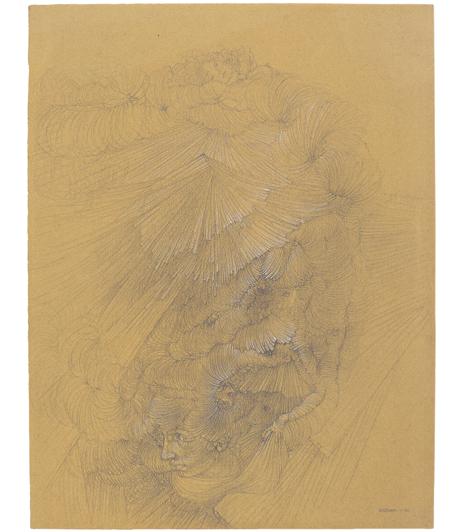
1963
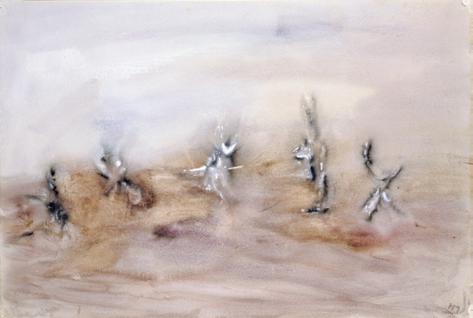
Untitled, 1956
Sans titre / Papillon et visage (Untitled / Butterfly and face), 1955–1957
Untitled, 1955
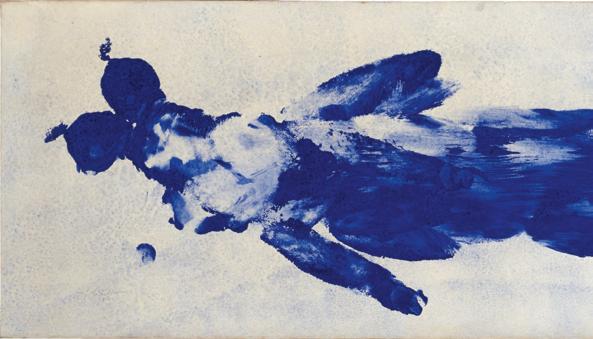
yves klein
Athropometry: Untitled (ANT 56), 1960
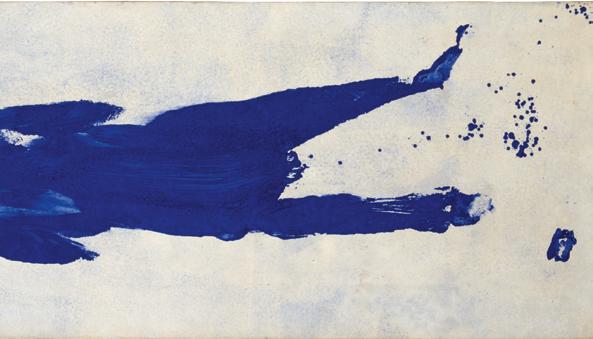
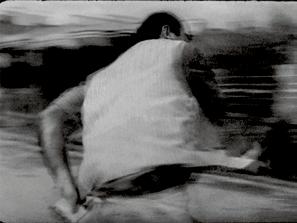
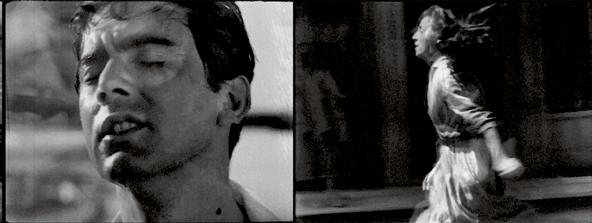
“Space and distance. Vertical and horizontal. The relation between you and I.”
A place, a site, is much more than a “space” in the Cartesian sense of expanse. It is not a box in which we store objects. It is not a background from which figures can be detached. It is a field of tension, between distances and proximities. A movement, a commotion: sensitive like the wind, subtle like a cloud, terrible like the tempest, incisive like an angle that cleaves the air. It is the landscape when we feel as though it is breathing. It is—to use the French expression for an unexpected silence in a conversation—(l’ange qui passe) an angel passing between people suddenly seized by a silence but without knowing why, traversed as they are by their history and by their unconscious.
baraduc, duchamp, ensor, fontana, goethe, goya y lucientes, hantaï, hugo, marey, mercadier, miró, penone, richter, salmon, sandback, sjöström, tarr, trouvé
francisco de goya y lucientes
Viento: Si ay culpa la tiene el trage
(Wind: If anyone is to blame in this scene, it is the suit), 1796–1797
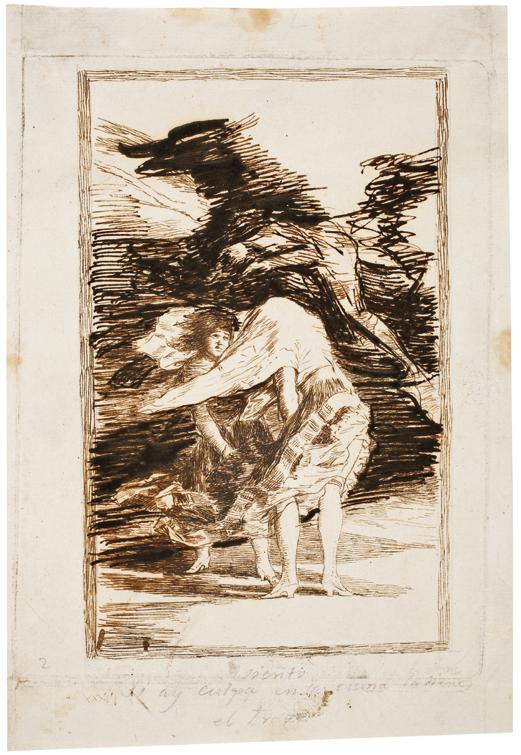
james ensor
Études: Silhouettes (Studies: Silhouettes), n.d.
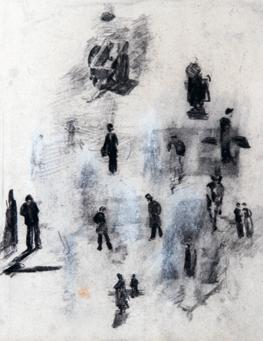
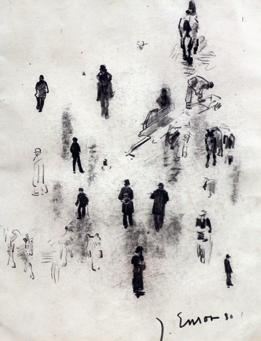
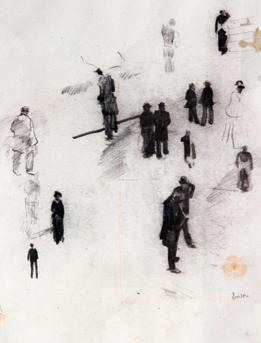
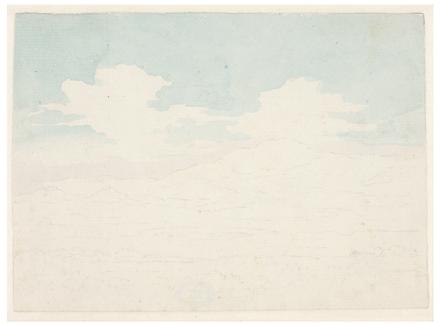
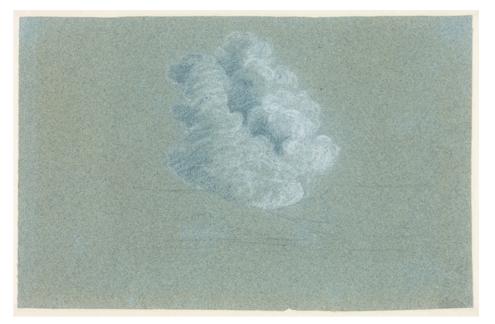
johann wolfgang von goethe
Schönwetter-Cumulus (Cumulus in fair weather), 1788
Haufenwolke mit stark geballter Basis (Cumulus with a heavily clustered base), 1816
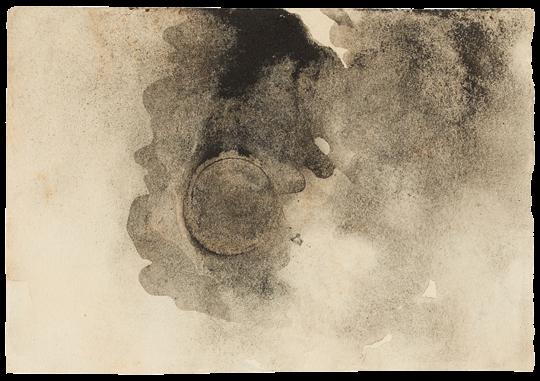
Sans titre (Nuées et soleil, empreinte de pièce) (Soleil noir) (Untitled [Clouds and sun, coin imprint] [Black sun]), ca. 1855–1856
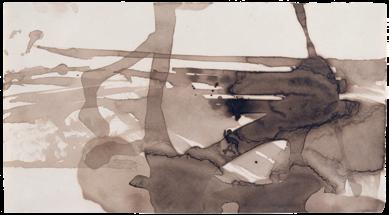

Taches (Traces), n.d.
Composition abstraite (Abstract composition), ca. 1856
La montée au burg (The ascent to the burg), 1866
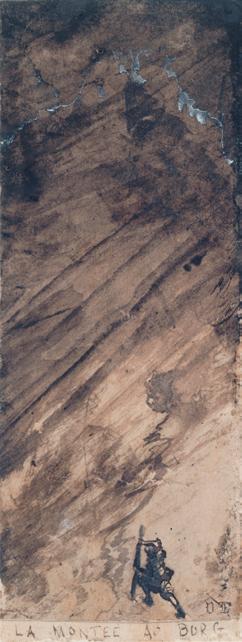
Photograph of a “fluid body,” in L’Âme humaine, ses mouvements, ses lumières et l’iconographie de l’invisible fluidique (The Human Soul: Its Movements, Its Lights, and the Iconography of the Fluidic Invisible), Paris, Georges Carré, 1896, plate IX
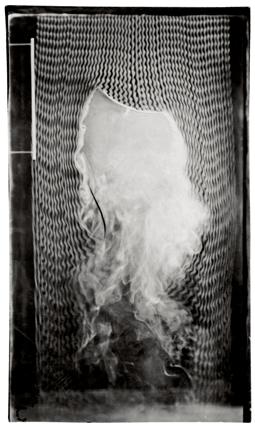
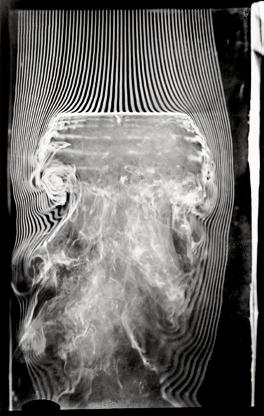
jules marey
Machine à 57 canaux, 1901, surface courbe inclinée avec chronographe (57-channel machine, 1901, inclined curved surface with chronograph), 1901
Machine à 57 canaux, 1901, plan normal de 30 cm de large avec chronographe (57-channel machine, 1901, 30 cm wide normal plane with chronograph), 1901
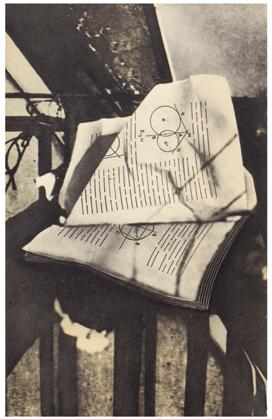


Étude (Study), 1969
Étude (Study), 1969

victor sjöström
The Wind, 1928

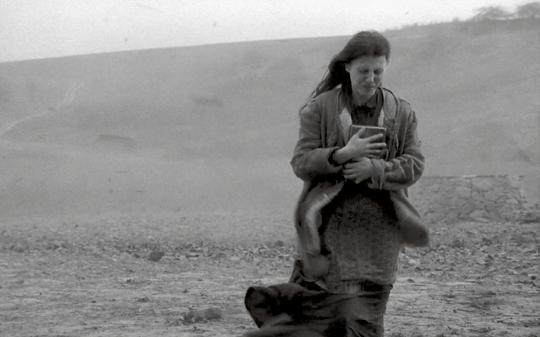
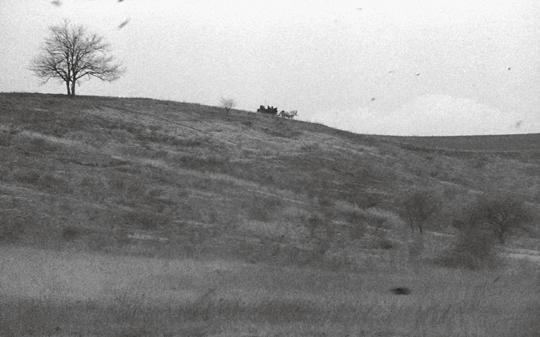
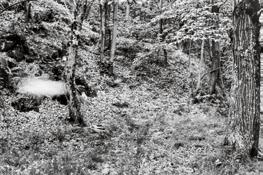
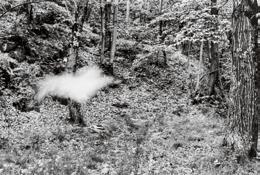


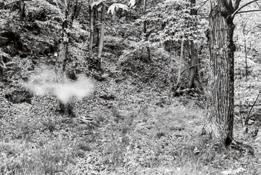
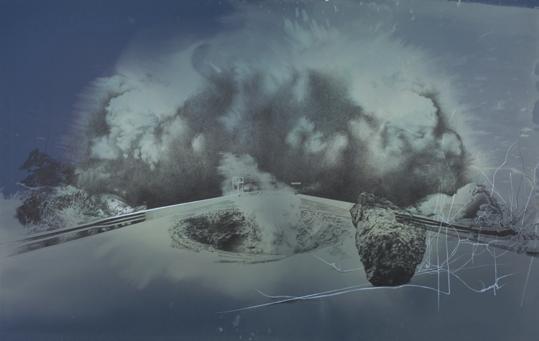
Soffi (Breaths), 1975
tatiana trouvé
Untitled, from the series Les dessouvenus (The forgetters), 2019
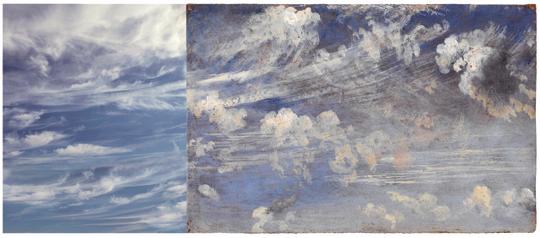
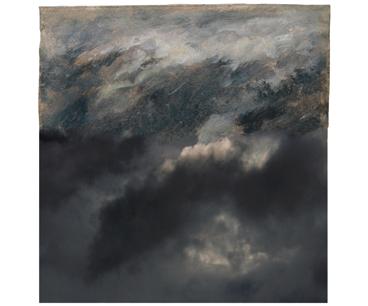
jacqueline salmon
Cirrus, diptyque avec Constable (d’après Constable, Study of Cirrus Clouds) (Cirrus, diptych with Constable [after Constable, Study of Cirrus Clouds]), 2016
Ciel noir avec Boudin (d’après Eugène Boudin, Ciel pommelé) (Black sky with Boudin [after Eugène Boudin, Dappled Sky]), 2016
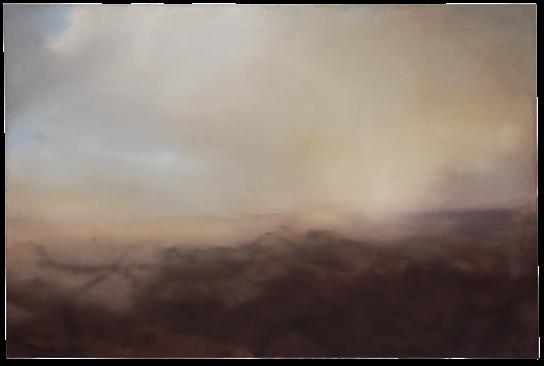
gerhard richter
Teyde-Landschaft (Teyde landscape), 1971
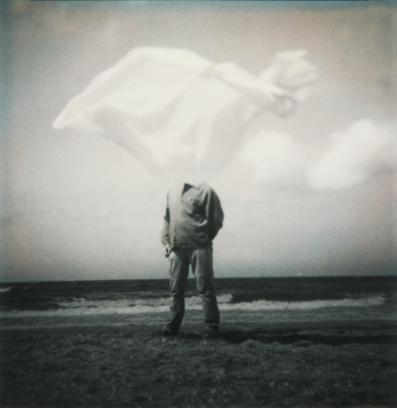
corinne mercadier
Série “Une fois et pas plus” #10 (“Just this once” series #10), 2000
Aux quatre vents, de la série La nuit magnétique
(To the four winds, from the series “Magnetic night”), 2022
Painted glass used for the photograph Aux quatre vents (“To the four winds”), 2022

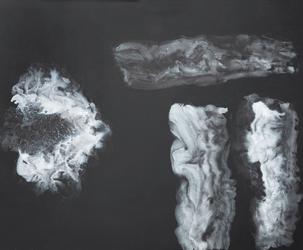
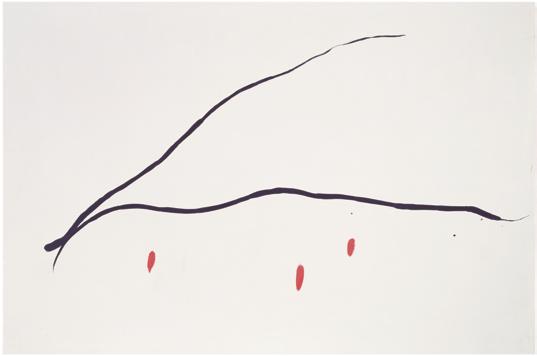
miró La danse des coquelicots (The dance of the poppies), 1973
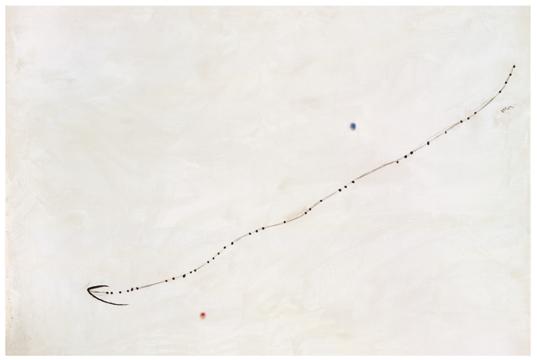
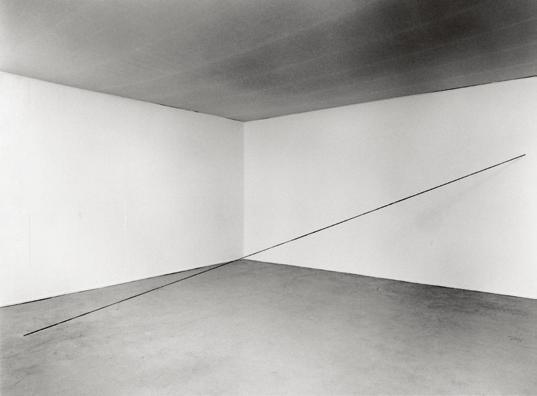
fred sandback
Untitled (Diagonal Construction), 1970/2002
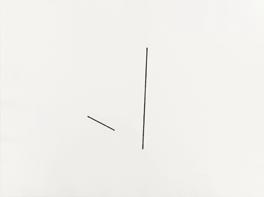
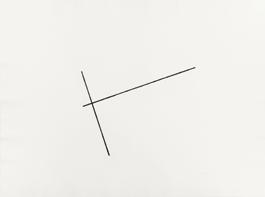

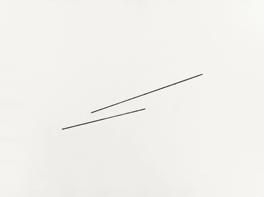
fred sandback
Four Variations of Two Diagonal Lines, 1976
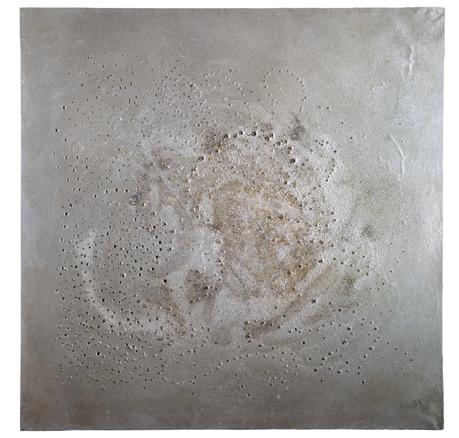
Concetto spaziale (Spatial concept), 1952
Concetto spaziale: Attesa (Spatial concept: Expectation), 1960
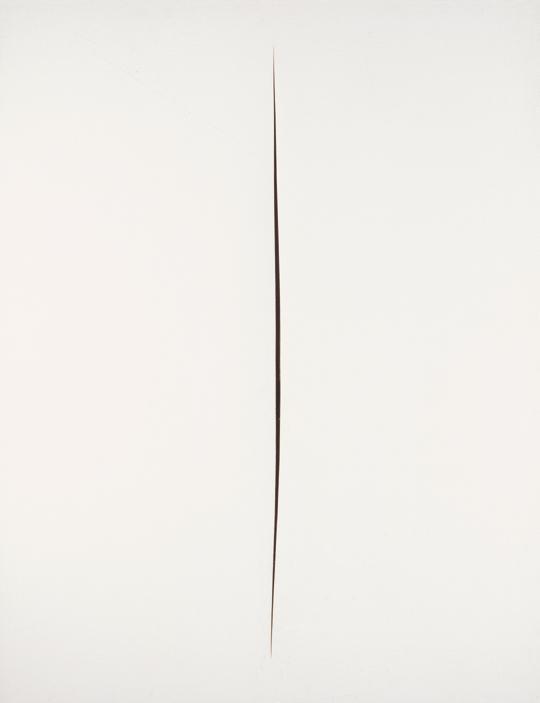
“They fought. They fought. They fought. Thus all night. And ten. And twenty. And a year. And ten. And forever.”
Political events turn the world upside down, for the ill (massacres, mourning) and for the better (struggle, freedom gained). The ill: wars of invasion, ethnic cleansing, bombing of civilians, unhappiness of the survivors. Exploitations, injustices, firedamp in the mines. Or the entire sky’s upheaval over Hiroshima and the desperate effort, for the survivors, to show or represent it to other people. The better: critical thinking, defiance, and, from there, all forms and all levels of struggle against domination.
line of mourning
Victims of oppression are mourned by survivors. But in these tears, in these gestures of lament, is there not already a call for justice? Is the lamentation or plaint not already an act of filing a “complaint”; that is, something of a political gesture?
balafas, berlau, brecht, capa, esteva, goedhart, goya y lucientes, hibakusha (survivors of hiroshima), jahnsen, picasso, pinna, smith, ubiña
line of struggle
To fight, then, against domination, against oppression. To transform lack of power into potency. And this by whatever means: through acts, gestures, words, writings, images . . . and so on, to the point that, as Chris Marker said, “the essence of the air turns red.”
andrieu, brecht, caron, dayot, friedrich, goya y lucientes, guareschi, heartfield, kollwitz, masotti, michel, pasolini, piscator, rimbaud, ringelblum archive, tucholsky
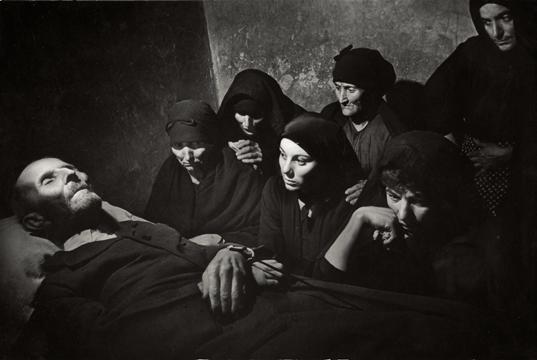
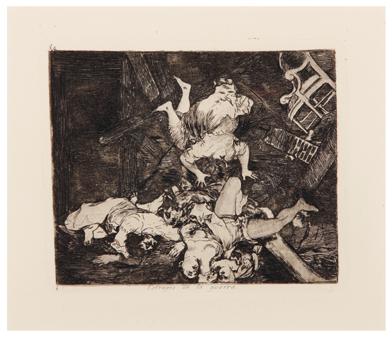
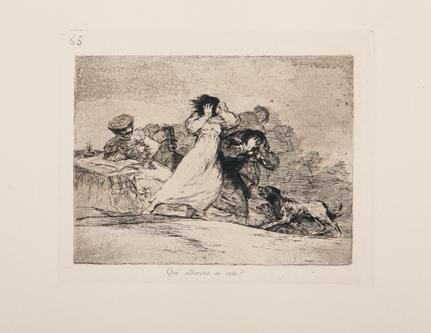
francisco de goya y lucientes
Desastre 30: Estragos de la guerra (Disaster 30: Ravages of war), 1810–1814
Desastre 65: ¿Qué alboroto es este? (Disaster 65: What is this hubbub?), 1814–1815
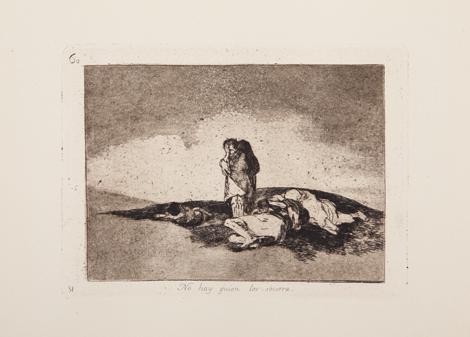
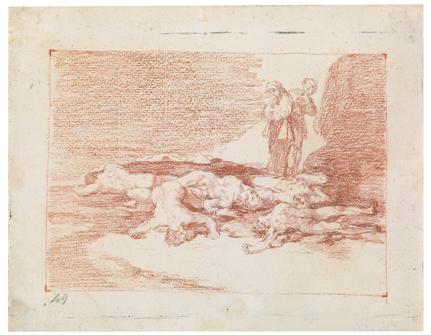
francisco de goya y lucientes
Desastre 60: No hay quien los socorra (Disaster 60: There is no one to help them), 1811–1812
Enterrar y callar (Bury them and keep quiet), 1810–1814
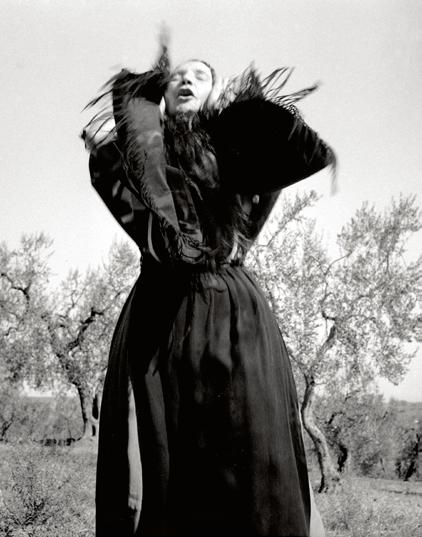

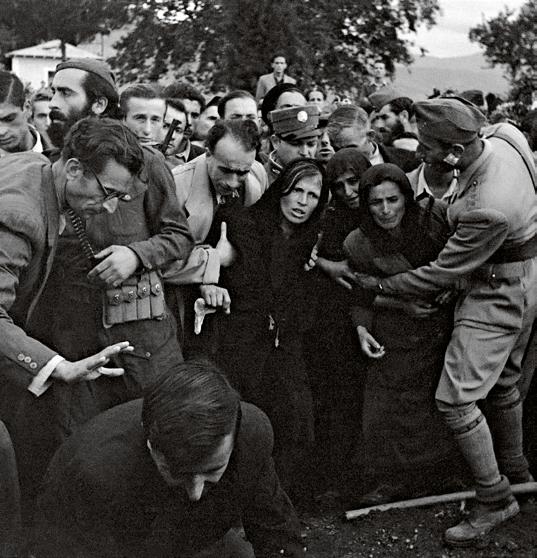
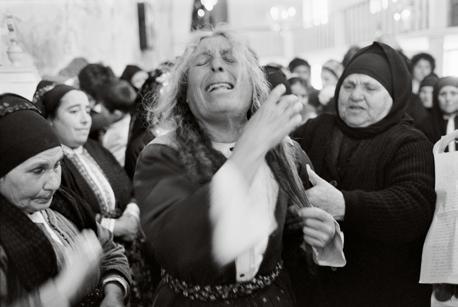
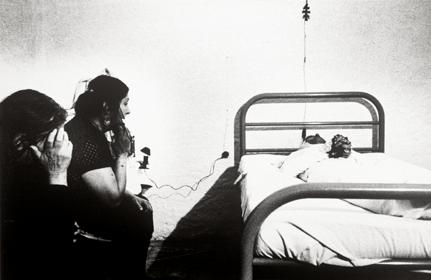
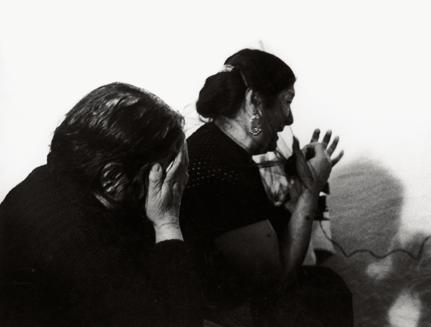
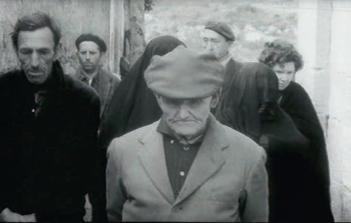
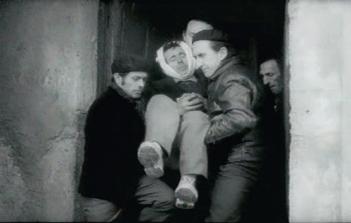
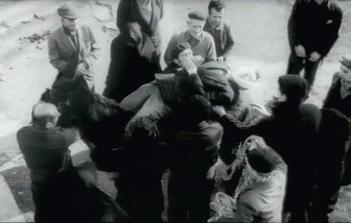
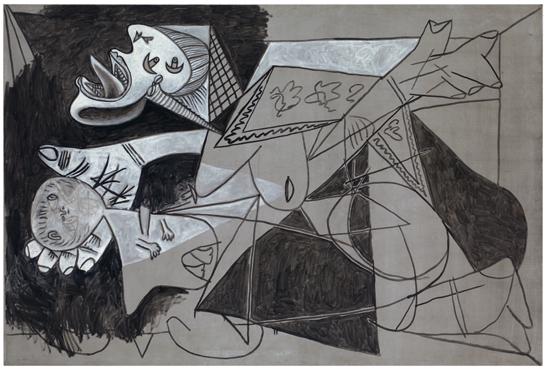
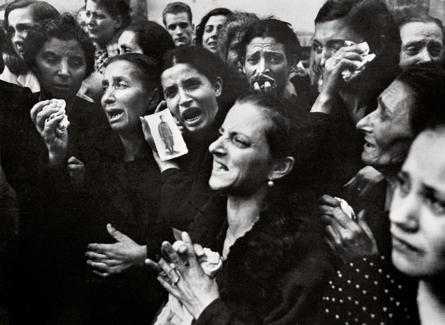
Italy. Naples. October 2, 1943. Women crying at funeral of twenty teenage partisans who had fought the Germans before the Allies entered the city, 1943
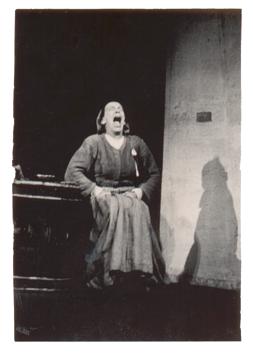
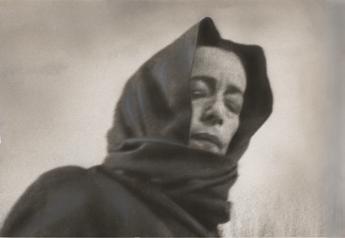
gerda goedhart
Helene Weigel als Anna Fierling in Mutter Courage und ihre Kinder (Helene Weigel as Anna Fierling in [Bertolt Brecht’s play] Mother Courage and Her Children), 1954–1955
ruth berlau
Helene Weigel in Die Antigone des Sophokles von Bertolt Brecht nach der Hölderlinschen Übertragung für die Bühne bearbeitet (Helene Weigel in Sophocles’s Antigone by Bertolt Brecht adapted for the stage after Hölderlin’s translation), 1948
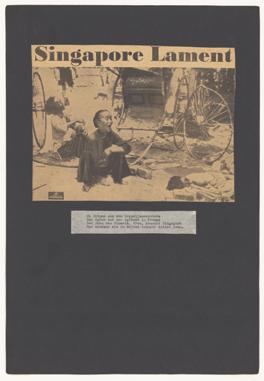
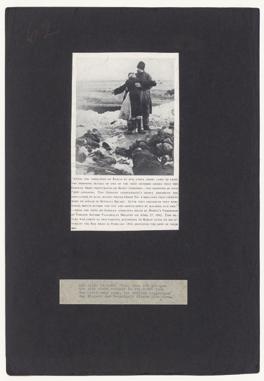
bertolt brecht
Kriegsfibel—“Oh Stimme aus dem Doppeljammerchore”
(War primer—“O voice of sorrow from the double choir”), 1940–1946
Kriegsfibel—“Und alles Mitleid, Frau, nenn ich gelogen” (War primer—“I say all pity, woman, is a fraud”), 1940–1946
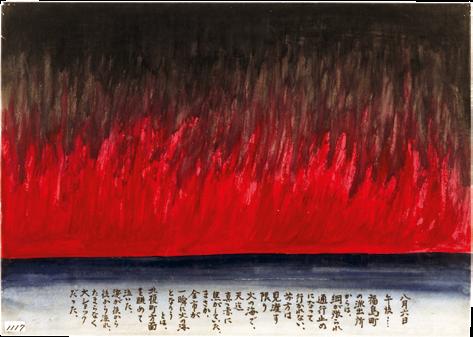
Watching the Burning City, I Cried Ceaselessly, 1975
shiro tsukihara
Inside the Yellow Flames, 2002
koji wada
Collapsed School Building, 2002
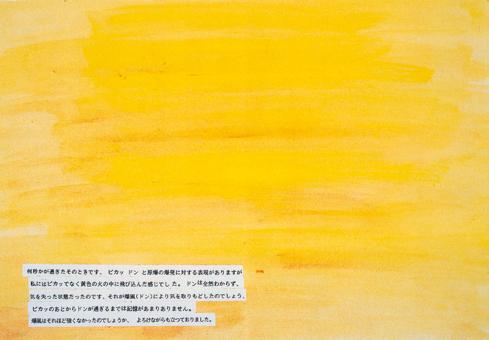
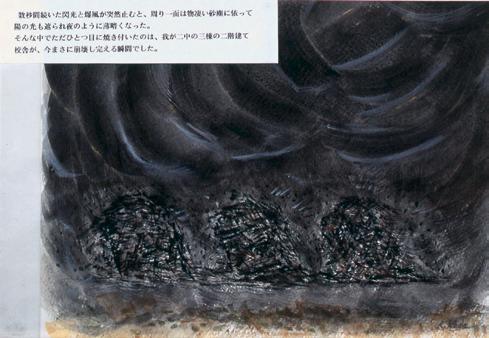
astrid jahnsen
Desarme (Disarmament), 2024




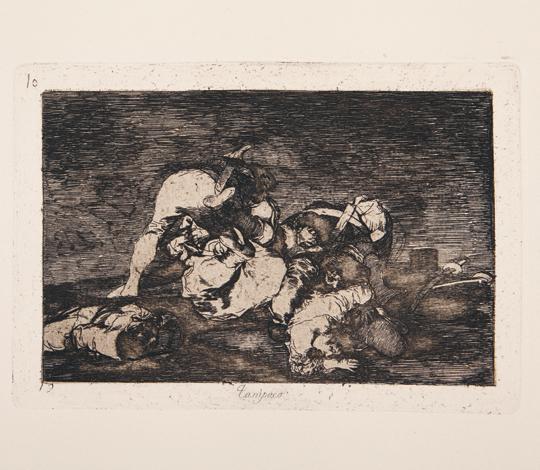
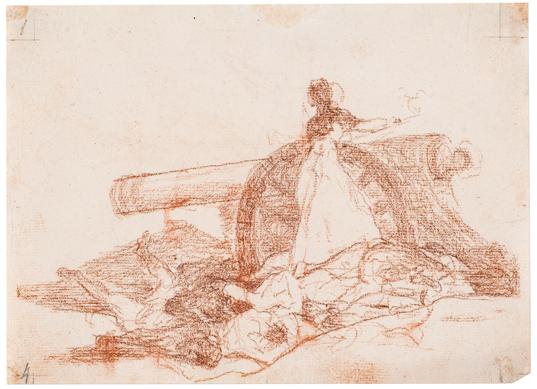
francisco de goya y lucientes
Qué valor! (What courage!), ca. 1810
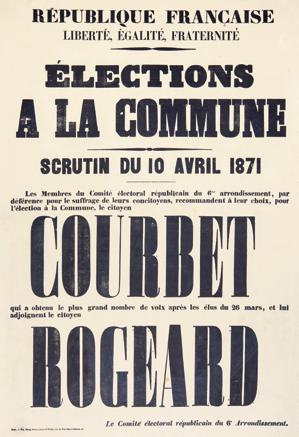
unknown author
Élections à la Commune: Scrutin du 10 avril 1871
(Elections to the Commune: Ballot of April 10, 1871), 1871
louise michel
La Commune (The Commune), Paris, P.-V. Stock, 1898
arthur rimbaud
“Chant de guerre parisien” (Parisian war song), in Lettres du voyant (Visionary letters), May 15, 1871
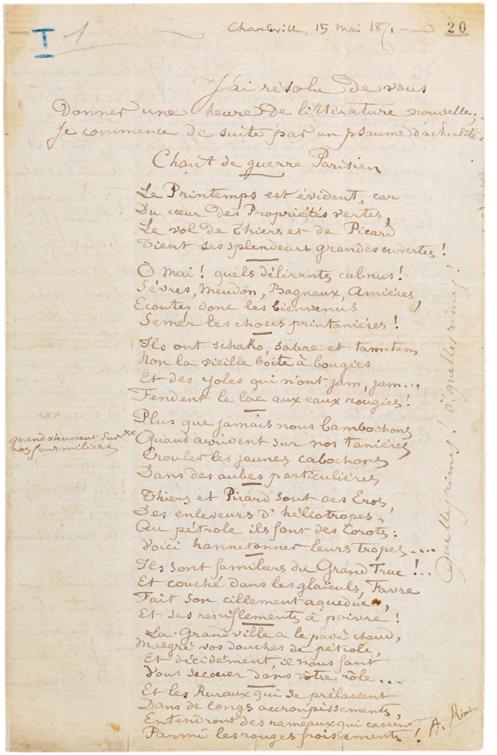
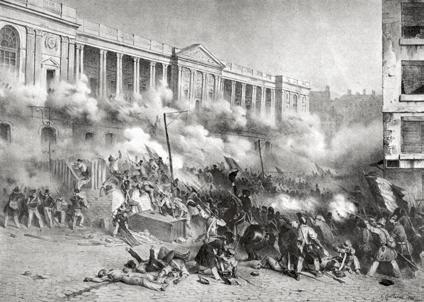
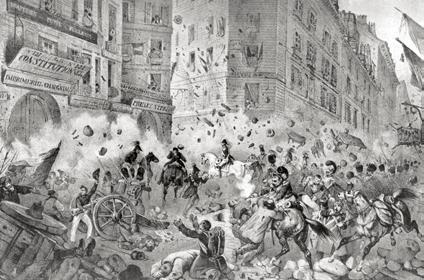
m. armand dayot
Journées révolutionnaires: Rue Saint-Antoine (Revolutionary days: Rue Saint-Antoine), 1897
Journées révolutionnaires: Rue Fuite du Duc de Raguse (Revolutionary days: Rue Fuite du Duc de Raguse), 1897
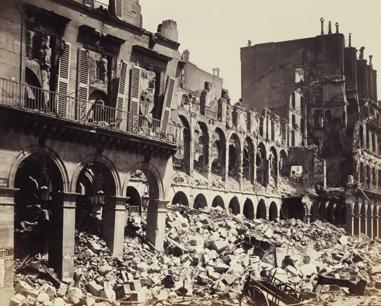
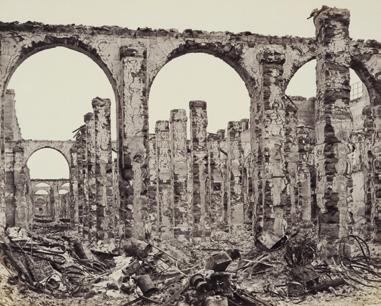
jules andrieu
Désastres de la guerre: Les Tuileries, façade principale
(Disasters of war: The Tuileries, main facade), 1871
Désastres de la guerre: Ruines du Ministère des Finances
(Disasters of war: Ruins of the Ministry of Finance), 1871
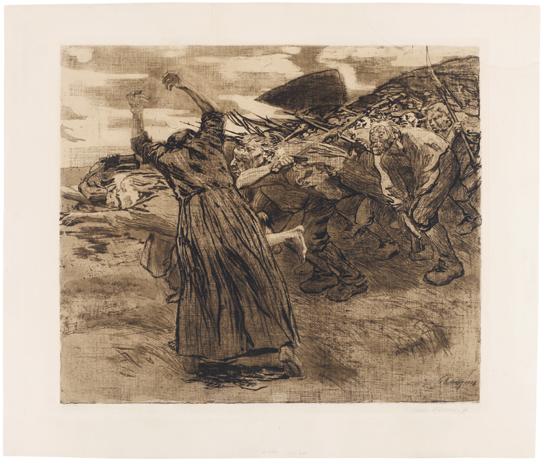
käthe kollwitz Losbruch (Outbreak), from the series Bauernkrieg (Peasants’ War), 1902–1903
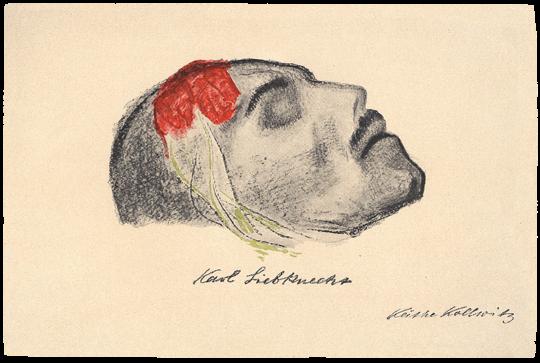
käthe kollwitz
Head of Karl Liebknecht on the Death Bed, 1919, in Rosa Luxemburg, Karl Liebknecht, Leo Jogiches, by Karl Radek, Hamburg, Kommunistische Internationale, 1921
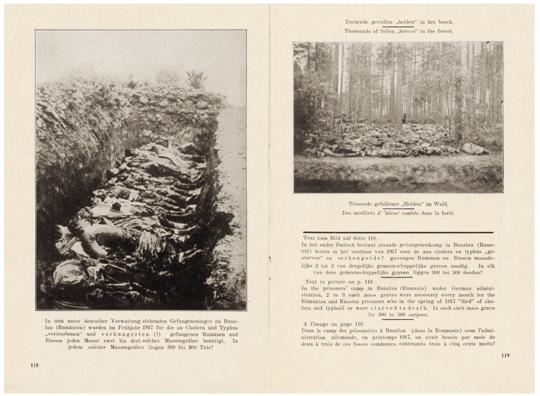
ernst friedrich
Krieg dem Kriege! (War against war!), Berlin, Freie Jugend, 1924
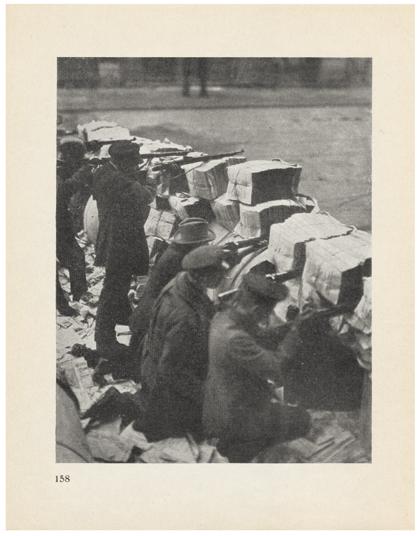
kurt tucholsky
Deutschland, Deutschland über alles (Germany, Germany above all), Berlin, Neuer Deutscher Verlag, 1929
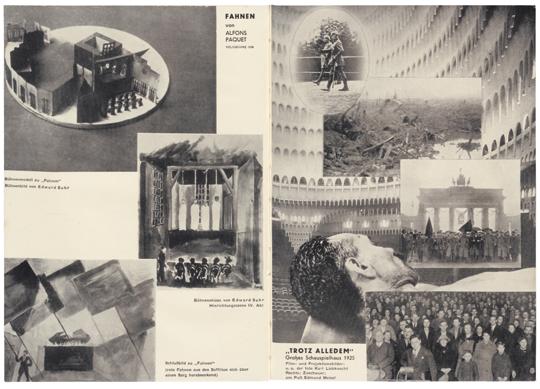
erwin piscator
Das Politische Theater (The Political Theatre), Berlin, Schultz, 1929
john heartfield
Man muß eine besondere Veranlagung zum Selbstmord haben . . .
(One must have a special disposition toward suicide . . .), 1931
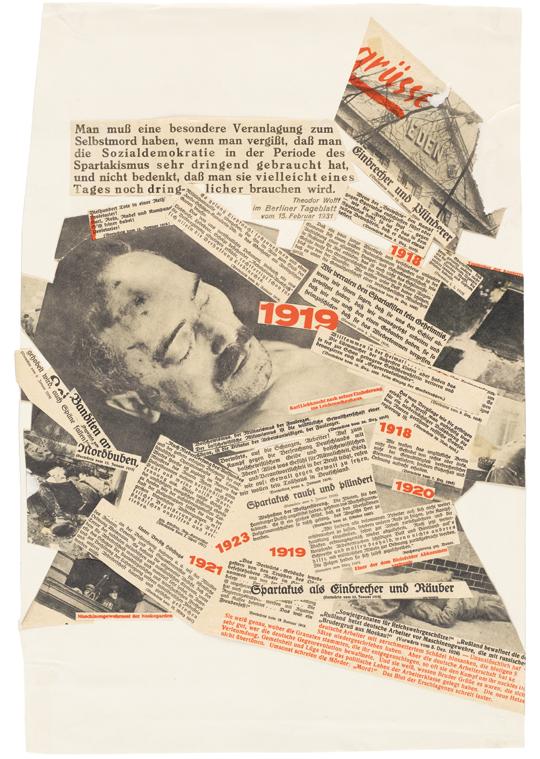
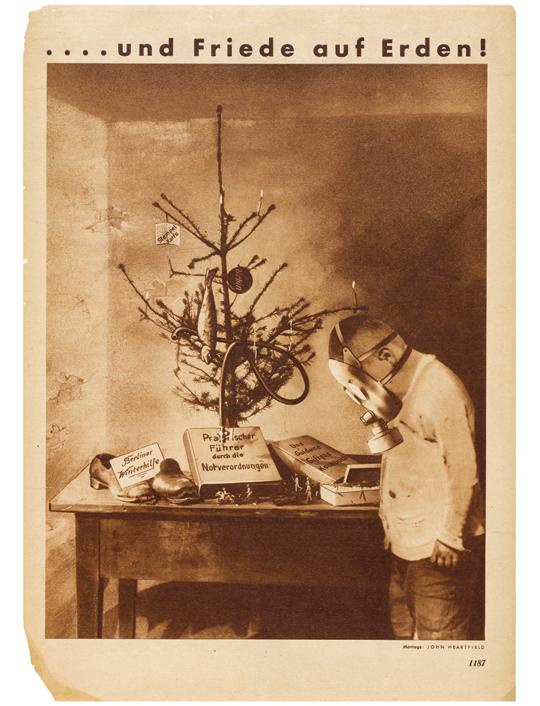
heartfield . . . und Friede auf Erden! (. . . and peace on earth!), 1932
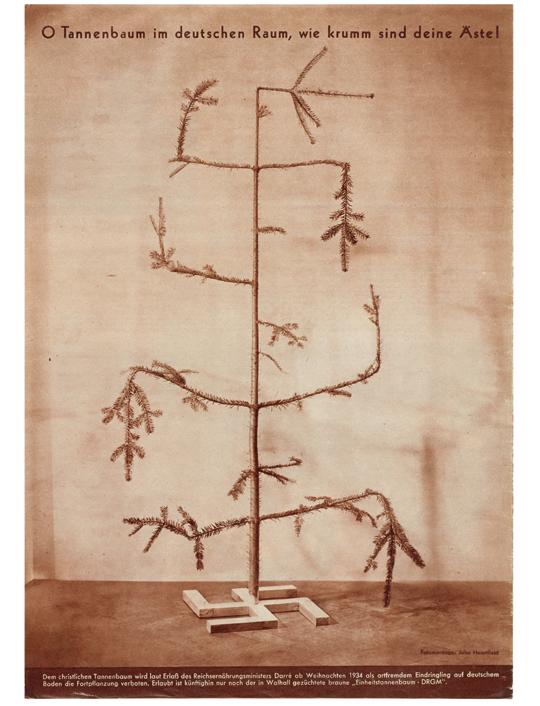
bertolt brecht
Kriegsfibel—“Er war zwar ihres Feindes Feind, jedoch” (War primer—“It’s true he was their enemy’s enemy”), 1940–1946
Kriegsfibel—“Dies schickten wir, die Leute von Spokane” (War primer—“Here’s what we sent, we people of Spokane”), 1940–1946
bertolt brecht
Kriegsfibel—“So haben wir ihn an die Wand gestellt”
(War primer—“And so we put him up against a wall”), 1940–1946
Kriegsfibel—“Daß es entdeckt nicht und getötet werde”
(War primer—“Hoping to keep concealed throughout the fighting”), 1940–1946
unknown author (ringelblum archive)
Szmuglerzy przerzucają work z mąką przez mur (Throwing smuggled flour over the wall), March 11, 1942
unknown author (ringelblum archive) Szmuglerzy przerzucają work z mąką przez mur (Throwing smuggled flour over the wall), 1941–1942
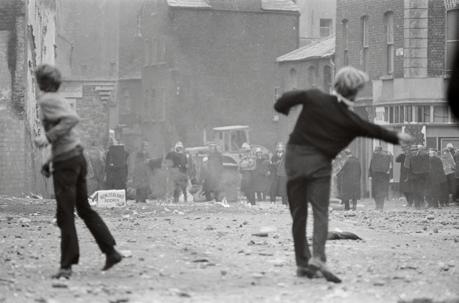
gilles caron
Londonderry, Northern Ireland, August 12, 1969, 1969
Londonderry, Northern Ireland, August 12, 1969. Contact sheets, 1969
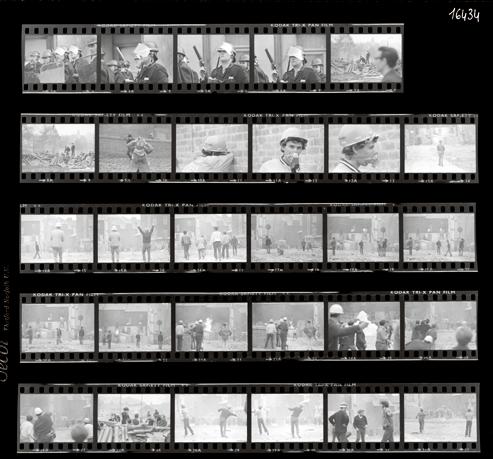
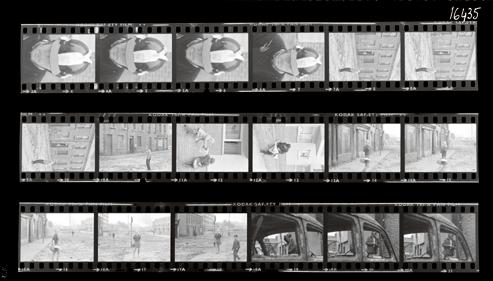
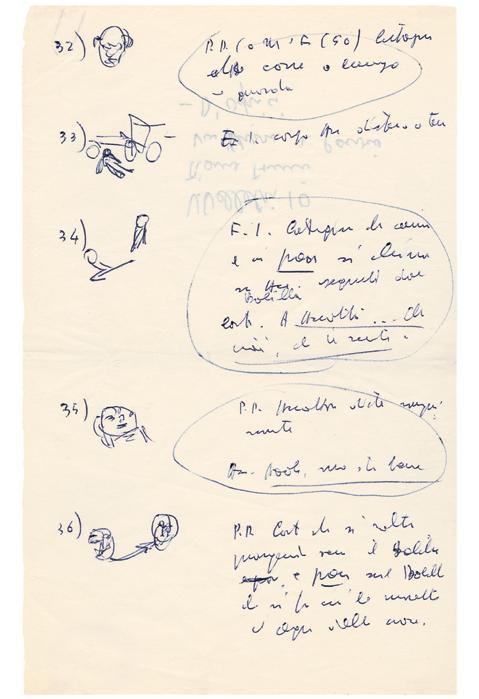
Storyboard of Accattone, shots 32–36, 1961
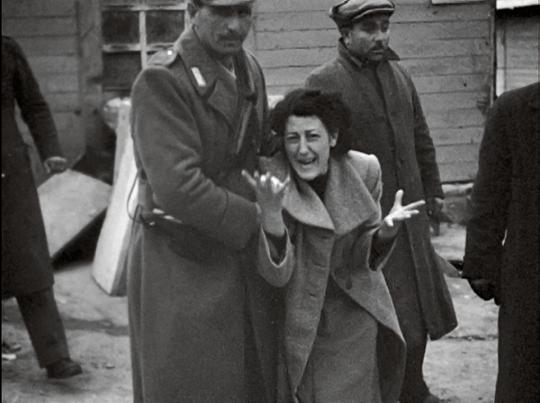
Photographs from Intellettuale (Intellectual), performance by Fabio Mauri with the participation of Pier Paolo
“An air with the odor of a child’s saliva . . . That announces the constant baptism of recently created things.”
We must dedicate everything to children. This is neither a cult of naivety nor a belief in pure innocence. Children are at the crossroads: they seek a language between the real and the imaginary. They extend a genealogy (memory, branch of the tree), and they project a genesis that is always multiple (desire, branches toward the sky). “The child looks, looks,” says the poem. It is dark but aerial, like Lorca himself disguised as a shade in Life Is a Dream. Under the bombs, children are still capable of utopia.
al-kateab, cartier-bresson, convert, garcía lorca, guayaki boys, migrant children in the mediterranean, ringelblum archive, vigo
unknown author
Federico García Lorca in the role of “Shadow” for La Barraca’s production of the auto sacramental Life Is a Dream by Calderón de la Barca, with sets by Benjamín Palencia, 1932

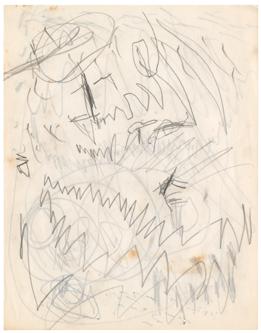
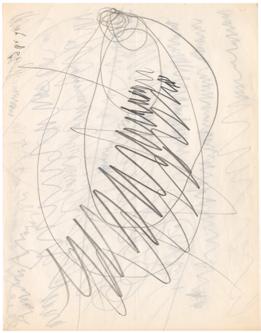
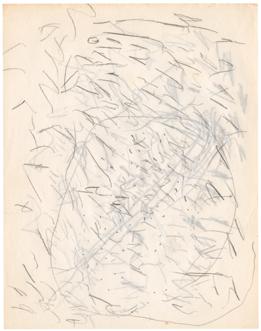
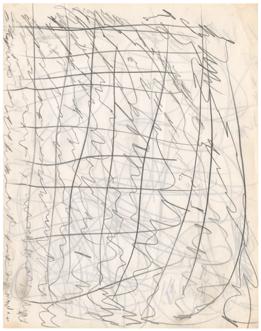
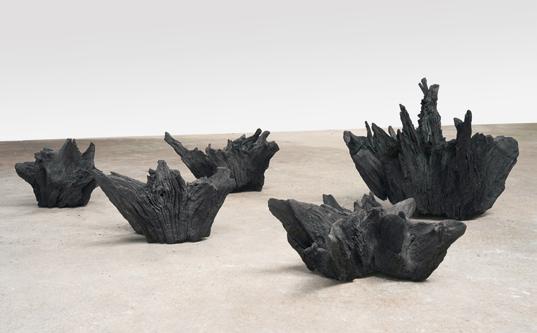
pascal convert 5 souches de Verdun (5 Verdun tree stumps), 1997–2024
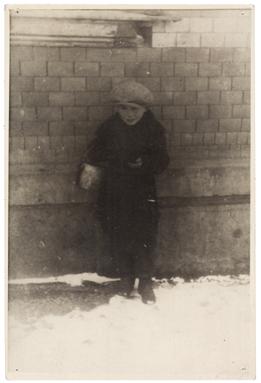

unknown author (ringelblum archive)
Dziecko żydowskie żebrzące pod murem (Jewish child begging by the wall), 1942
Dziecko żydowskie w getcie (Jewish children in the ghetto), 1942
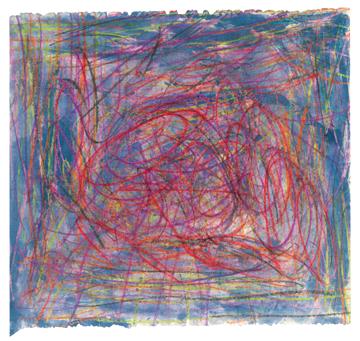
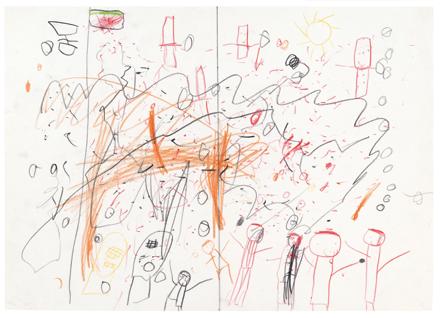
Drawing by Jamal, Syrian, with Ahmad, Palestinian, both 12, asylum seekers stranded in a camp in Greece, summer 2020
Drawing by Syrian refugee child in Gaziantep, Turkey, 2014
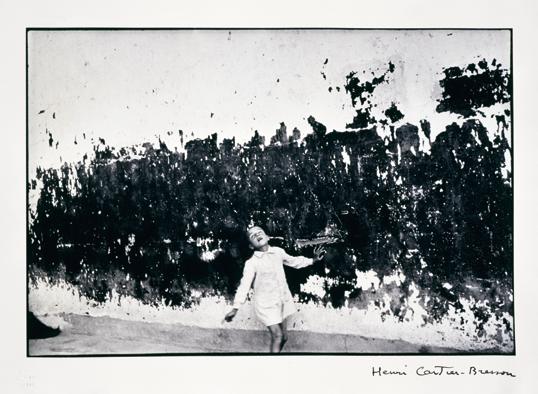
al-kateab For Sama, 2019

Theodor Adorno and Max Horkheimer
Dialektik der Aufklärung
(Dialectic of Enlightenment), 1947
Amsterdam: Querido-Verl.
20.5 × 13.6 cm
Staatsbibliothek zu Berlin-Preußischer Kulturbesitz; Abteilung Handschriften und Historische Drucke; signature: 5 N 589
Waad Al-Kateab
For Sama, 2019
Video, color, sound, extract, 1’ 40” Surtsey Films p. 359
Jules Andrieu
Désastres de la guerre: Les Tuileries, façade principale
(Disasters of war: The Tuileries, main facade), 1871/2024
Photograph b/w
29.5 × 37.5 cm
Beaux-Arts de Paris, Dist. GrandPalaisRmn / image Beaux-arts de Paris p. 331 top
Jules Andrieu
Désastres de la guerre: Ruines du Ministère des Finances
(Disasters of war: Ruins of the Ministry of Finance), 1871/2024
Photograph b/w
29.5 × 37.5 cm
Beaux-Arts de Paris, Dist. GrandPalaisRmn / image Beaux-arts de Paris p. 331 bottom
Aristotle
De anima, libri tres
(On the Soul, Book III), 4th cent. BCE Lyon: Apud Theobaldum Paganum, 1559
17.5 × 11 cm
Biblioteca Nacional de España p. 203 left
Antonin Artaud
Cahier nº 310
(Notebook no. 310), 1947
22 × 34 cm
Bibliothèque nationale de France, Département Littérature et art, NAF
27754 p. 262
Richard Avedon
Vicente Escudero
1955
Gelatin silver print
50.5 × 40.5 cm
Museo Nacional Centro de Arte Reina Sofía, Madrid [AD03274]
Ayah (Syrian refugee in Gaziantep, Turkey)
Drawing realized in a workshop of the “Colorful Syria” program supported by the NGO Solinfo with local actors, 2014 Color pencils on paper
25 × 34.5 cm
SOLINFO / Déflagrations
Costas Balafas
The Funeral of the Teacher and Reservist Officer Lilis: Epirus Prefecture, Greece, 1944/2024
Photograph b/w
30 × 30 cm
© Benaki Museum Photographic Archives p. 314
Costas Balafas
Scene from the Epitaph at Olympos Village on Karpathos Island, Greece, ca. 1970/2024
Photograph b/w
20 × 30 cm
© Benaki Museum Photographic Archives p. 315
Hyppolyte Baraduc
Photographs of a “fluid body” In L’Âme humaine, ses mouvements, ses lumières et l’iconographie de l’invisible fluidique
(The Human Soul: Its Movements, Its Lights, and the Iconography of the Fluidic Invisible), 1896
París: Georges Carré
22 × 14.5 cm
Private collection p. 289 right
Juan Barcelón (after José de Ribera)
Seis ojos (Six eyes), ca. 1796
Etching and engraving
18 × 14 cm
Museo Nacional del Prado, Madrid p. 209 left
Georges Bataille
L’expérience intérieure (Inner Experience), 1943
Paris: Gallimard
19 × 12 cm
Private collection
Ludwig van Beethoven
Notenmanuskript des Liedes “Wonne der Wehmut” (Musical setting of “The Bliss of Melancholy”), 1810
Print on paper, facsimile
23.2 × 33 cm
Klassik Stiftung Weimar, Goetheund Schiller-Archiv, GSA 33/54 p. 225 top
Hans Bellmer
Untitled (Hands Triptych), 1934
Photograph b/w
3 photographs: 6.4 × 6.4 cm each Ubu Gallery, New York pp. 258–259
Hans Bellmer
Untitled, 1940
Graphite with white highlights
32.6 × 25.1 cm
Musée Goya—Ville de Castres p. 274
Charlotte Beradt
Das Dritte Reich des Traums (The Third Reich of dreams), 1966
Frankfurt am Main: Suhrkamp Verlag
23 × 15.7 cm
Private collection
José Bergamín
Tout et rien de la peinture (All and nothing in painting), 1937
Cahiers d’art, nos. 1–3
Paris: C. Zervos
32 × 25.1 cm
Centro de Documentación del Museo Nacional Centro de Arte Reina Sofía, Madrid
José Bergamín
La decadencia del analfabetismo (Decadence of illiteracy), 1961
Santiago de Chile: Cruz del Sur
16.7 × 11.5 cm
Biblioteca Nacional de España p. 232 right
Ruth Berlau
Helene Weigel in “Die Antigone des Sophokles” von Bertolt Brecht nach der Hölderlinschen Übertragung für die Bühne bearbeitet
(Helene Weigel in Sophocles’s Antigone by Bertolt Brecht adapted for the stage after Hölderlin’s translation), 1948
Photograph b/w 13 × 18 cm
Akademie der Künste, Berlin, Bertolt-Brecht-Archiv, Nr.: 2197/153
© by Ruth Berlau/Hoffmann p. 320 bottom
Ludwig Binswanger
Grundformen und Erkenntnis menschlichen Daseins
(Basic forms and knowledge of human existence), 1942
Zurich: Niehans
23.9 × 17.8 cm
Staatsbibliothek zu Berlin-Preußischer Kulturbesitz; Abteilung Handschriften und Historische Drucke; signature: Nr. 5002/10
Ernst Bloch
Geist der Utopie
(The Spirit of Utopia), 1918 Munich: Duncker und Humblot
22.7 × 16.3 cm
Staatsbibliothek zu Berlin-Preußischer Kulturbesitz; Abteilung Handschriften und Historische Drucke; signature: 357496 : R
Ernst Bloch
Das Prinzip Hoffnung
(The Principle of Hope), 1954–1959 Berlin: Aufbau-Verlag 23 × 16.2 cm
Staatsbibliothek zu Berlin-Preußischer Kulturbesitz; Abteilung Handschriften und Historische Drucke; signature: 357478 : R
Jacques-André Boiffard Bouche (Mouth), 1930/2024
In Documents: Doctrines, archéologie, beaux-arts, ethnographie, 2, no. 5 (1930)
Photograph b/w
21.4 × 16 cm
p. 248 left
Désiré-Magloire Bourneville
Hystéro-épilepsie: Hallucinations, ironie, répugnance
(Hysterical epilepsy: Hallucinations, irony, repugnance), 1876
In L’iconographie photographique de la Salpêtrière, I, planches XXXII et XXXV (The iconographic photography of Salpêtrière, plates XXXII and XXXV), 1876–1877
Versailles: Cerf et Fils
23 × 18 cm each
Private collection p. 265
Lydia Bourouiba
Turbulent Gas Clouds and Respiratory Pathogen Emissions: Potential Implications for Reducing Transmission of COVID-19, 2020
In JAMA 323, no. 18: 1837–38 Video, b/w, silent, 1’ 37”
Fluid Dynamics of Disease Transmission Laboratory, Fluids and Health Network, Massachusetts Institute of Technology, Cambridge, MA
Bertolt Brecht
Kriegsfibel—“Daß es entdeckt nicht und getötet werde”
(War primer—“Hoping to keep concealed throughout the fighting”), 1940–1946
Collage
13 × 10.4 cm
Akademie der Künste, Berlin, Bertolt-Brecht-Archiv, Nr.: 2096/049 p. 341 right
Bertolt Brecht
Kriegsfibel—“Dies schickten wir, die Leute von Spokane”
(War primer—“Here’s what we sent, we people of Spokane”), 1940–1946
Collage
13 × 10.4 cm
Akademie der Künste, Berlin, Bertolt-Brecht-Archiv, Nr.: 2101/78 p. 340 right
Bertolt Brecht
Kriegsfibel—“Er war zwar ihres Feindes Feind, jedoch”
(War primer—“It’s true he was their enemy’s enemy”), 1940–1946
Collage
13 × 10.4 cm
Akademie der Künste, Berlin, Bertolt-Brecht-Archiv, Nr.: 2102/21 p. 340 left
Bertolt Brecht
Kriegsfibel—“Ihr in den Tanks und Bombern, große Krieger!” (War Primer—“You, in your tanks and bombers, mighty Warriors”), 1940–1946 Collage
44 × 30.3 cm
Akademie der Künste, Berlin, Bertolt-Brecht-Archiv, Nr.: 2096/60 p. 198 right
Bertolt Brecht
Kriegsfibel—“Nicht Städte mehr. Nicht See. Nicht Sternefunkeln” (War primer—“Black out all towns, the sea, the starry heaven”), 1940–1946 Collage
44 × 30.3 cm
Akademie der Künste, Berlin, Bertolt-Brecht-Archiv, Nr.: 2096/65 p. 198 left
Bertolt Brecht
Kriegsfibel—“Oh Stimme aus dem Doppeljammerchore” (War primer—“O voice of sorrow from the double choir”), 1940–1946
Collage
44 × 30.3 cm
Akademie der Künste, Berlin, Bertolt-Brecht-Archiv, Nr.: 2096/43 p. 321 left
Bertolt Brecht
Kriegsfibel—“So haben wir ihn an die Wand gestellt”
(War primer—“And so we put him up against a wall”), 1940–1946
Collage
44 × 30.3 cm
Akademie der Künste, Berlin, Bertolt-Brecht-Archiv, Nr.: 2096/32 p. 341 left
Bertolt Brecht
Kriegsfibel—“Und alles Mitleid, Frau, nenn ich gelogen”
(War primer—“I say all pity, woman,
is a fraud”), 1940–1946
Collage
44 × 30.3 cm
Akademie der Künste, Berlin, Bertolt-Brecht-Archiv, Nr.: 2096/23 p. 321 right
Giordano Bruno
Degli eroici furori
(On the Heroic Frenzies), 1585
London: John Charlewood
14.3 × 9.5 cm
Bibliothèque nationale de France, Bibliothèque de l’Arsenal, 8-T10559 p. 222 top left (ed. Paris)
Suse Byk
Tanzerische Pantominen (Dancing pantomimes), 1925
35 mm film transferred to video, b/w, silent, 3’ 192
Centre national de la danse, Paris p. 271
Pedro Calderón de la Barca
La dama duende (The phantom lady), ca. 1629
In Primera parte de comedias del célebre poeta español don Pedro Calderón de la Barca (First part of comedies by the famous Spanish poet Pedro Calderón de la Barca), Madrid: Francisco Sanz, 1685
21 × 15.5 cm
Biblioteca Nacional de España p. 233
Camarón de la Isla
Nana del caballo grande (Lullaby of the big horse), 1979
Sound recording, 4’ 59”
Pierre Camper
Discours prononcés . . . en l’Academie de dessein d’Amsterdam, sur le moyen de représenter . . . les divers passions qui se manifestent sur le visage; sur l’etonnante conformité qui existe entre les quadrupèdes, les oiseaux, les poissons et l’homme (Speeches delivered . . . at the Academy of Drawing in Amsterdam, on the means of representing . . . the various passions expressed in the face; on the astonishing conformity that exists between quadrupeds, birds, fish and men), 1792
Paris: B. Wild and J. Altheer
25.7 × 21.2 cm
Biblioteca Nacional de España p. 213 right
Robert Capa
The Madrid Suburb of Vallecas, 1936–1937
Gelatin silver print
28.5 × 40.2 cm
Museo Nacional Centro de Arte Reina
Sofía, Madrid [AD00776]
Robert Capa
Barcelona, enero 1939 (Barcelona, January 1939), January 1939/Posth. copy, 1998
Gelatin silver print
26 × 40 cm
Museo Nacional Centro de Arte Reina
Sofía, Madrid [AD00856] p. 195
Robert Capa
Italy. Naples. October 2, 1943. Women crying at funeral of twenty teenage partisans who had fought the Germans before the Allies entered the city, 1943/2024
Photograph b/w
30 × 40 cm
Robert Capa © International Center of Photography / Magnum Photos p. 319
Gilles Caron
Londonderry, Northern Ireland, August 12, 1969, 1969/2024
Photograph b/w
30 × 40 cm
Fondation Gilles Caron / In-actua p. 344 top
Gilles Caron
Londonderry, Northern Ireland, August 12, 1969. Contact sheet, 1969/2024
Photograph b/w
40 × 30 cm
Fondation Gilles Caron / In-actua p. 345 top
Henri Cartier-Bresson
Valence (Valencia), 1933
Gelatin silver print
24 × 36 cm
Museo Nacional Centro de Arte Reina Sofía, Madrid [DE01656] p. 356
Luis de Castro
El enigma de Berruguete: La danza y la escultura
(The enigma of Berruguete: Dance and sculpture), 1953
Valladolid: Ateneo de Valladolid
21.5 × 15.8 cm
Biblioteca Nacional de España p. 267 top
Jan Amos Comenius
Orbis sensualium pictus
(The Visible World in Pictures), 1658/1662
Nuremberg: M. and J.F. Endteri
16.8 × 10.5 cm
Bibliothèque nationale de France, Département de la Réserve des livres rares, X-9208 p. 203 right (ed. 1658)
Pascal Convert
5 souches de Verdun (5 Verdun tree stumps), 1997–2024
Tree stumps from Verdun (France), treated and coated with India ink
Variable dimensions
Pascal Convert, courtesy RX & SLAG, Paris/New York p. 353
Salvador Dalí
La mano cortada (The severed hand), ca. 1928
Ink on paper
19 × 21 cm
Colección Pere Vehí, Cadaqués p. 260 top
Salvador Dalí
Escena erótica (Erotic scene), ca. 1933
Proof to illustrate the menu of the Banquet des Amis du Roman Philosophique (Banquet of the Friends of the Philosophical Novel)
Engraving on cardboard, retouched with black ink
29.5 × 18.5 cm
Colección Pere Vehí, Cadaqués
Salvador Dalí and Georges Hugnet
Onan, 1934
Paris: Éditions Surréalistes
28.7 × 23.3 cm
Colección Pere Vehí, Cadaqués p. 260 bottom
Charles Darwin
The Expression of the Emotions in Man and Animals, 1872
London: J. Murray
19.5 × 14.1 cm
Bibliothèque nationale de France, Département de la Réserve des livres rares, 8-TB54-8
Charles Darwin
L’expression des émotions chez l’homme et les animaux
(The Expression of the Emotions in Man and Animals), 1872
Paris: Reinwald, 1877
23 × 15.5 cm
Private collection p. 214
M. Armand Dayot
Journées révolutionnaires:
Rue Saint-Antoine (Revolutionary days:
Rue Saint-Antoine), 1897
42 × 35 cm
Private collection p. 330 top
M. Armand Dayot
Journées révolutionnaires:
Rue Fuite du Duc de Raguse (Revolutionary days:
Rue Fuite du Duc de Raguse), 1897
42 × 35 cm
Private collection p. 330 bottom
Guy Debord (ed.)
Internationale situationniste, nº 12 (Situationist international, no. 12), 1969
Paris: [n.pub.]
24 × 16.9 cm
Museo Nacional Centro de Arte
Reina Sofía, Biblioteca y Centro de Documentación
René Descartes
Les passions de l’âme (The Passions of the Soul), 1650
Paris: E. Pépingué
15.8 × 10.5 cm
Bibliothèque nationale de France, Département Philosophie, histoire, science de l’homme, R-13455 p. 208 bottom (ed. 1649)
René Descartes
L’homme de René Descartes et un Traitté de la formation du foetus du mesme autheur
(The treatise on man by René Descartes, and a treatise on the formation of the fetus by the same author), 1664
Paris: C. Angot
24.6 × 18.2 cm
Bibliothèque nationale de France, Département de la Réserve des livres rares, RES P-R-651 p. 205
Michel Dieuzaide
Antonio Núñez “El Chocolate,”
Peña “El Taranto,” Almería, 1988
Photograph b/w
Archivo Michel Dieuzaide p. 139 right top
Michel Dieuzaide
Inés Bacán, Imperial Theater, Tarbes (France), 1990
Photograph b/w
Archivo Michel Dieuzaide p. 139 right bottom
Eugène Druet and Auguste Rodin
Le désespoir (bronze) (Despair [Bronze]), ca. 1897–1899
Gelatin silver print
40 × 29.7 cm
Musée Rodin, Paris p. 257
Eugène Druet and Auguste Rodin
Le Baiser (marbre) dans l’atelier (The Kiss (marble) in the studio), ca. 1898
Gelatin silver print on glossy baryta paper
39.9 × 29.8 cm
Musée Rodin, Paris
Eugène Druet and Auguste Rodin
Main crispée (bronze) (Tensed hand (bronze]), ca. 1897–1899
Gelatin silver print
39.8 × 30 cm
Musée Rodin, Paris
Eugène Druet and Auguste Rodin
Main crispée (bronze) (Tensed hand [bronze]), ca. 1897–1899
Gelatin silver print
39.9 × 30 cm
Musée Rodin, Paris
Eugène Druet and Auguste Rodin
Main crispée (bronze) (Tensed hand [bronze]), ca. 1897–1899
Gelatin silver print
39.8 × 30 cm
Musée Rodin, Paris
Eugène Druet and Auguste Rodin
Main crispée surgissant d’une couverture (Tensed hand emerging from a cover), ca. 1897–1899
Gelatin silver print
40 × 30 cm
Musée Rodin, Paris p. 256 right
Marcel Duchamp
Inside signature of Boîte-en-valise with reproductions of three readymades and a sculpture by Duchamp, 1915–1919
Photographic montage
32 × 49.8 cm
Fundació Joan Miró, Barcelona. Donation of Alexina Duchamp p. 291
Guillaume Duchenne de Boulogne Mécanisme de la physionomie humaine (Mechanism of human physiognomy), 1862
Paris: Ve J. Renouard
27.5 × 19 cm
Private collection p. 217
Georges Dumas
Réspiration de Marie triste avant et après la visite de son fils (Mary’s sad breathing before and after her son’s visit)
In La tristesse et la joie (Sadness and joy), 1900
Paris: Alcan
23 × 14.75 cm
Private collection
Georges Dumas
La vie affective (The affective life), 1948
Paris: Les Presses universitaires de France
23 × 14.75 cm
Private collection p. 220
Desiderius Erasmus van Rotterdam (Erasmus of Rotterdam)
L’éloge de la folie
(In Praise of Folly), 1511
France: [n.pub.], 1752
16 × 9.3 cm
Biblioteca Nacional de España p. 222 top right
El Duende: Periódico semanal crítico, político, festivo, satírico y literario, nº 6 (El Duende: Critical, political, festive, satirical and literary weekly newspaper, no. 6), July 6, 1862
Print on paper, facsimile
42 × 29 cm
Hemeroteca Municipal de Madrid
James Ensor Études: Silhouettes
(Studies: Silhouettes), n.d.
Pencil and charcoal on paper
2 drawings: 22 × 17 cm each
Collection du Musée des Beaux-Arts de la Ville de Tournai p. 285
Víctor Erice
El espíritu de la colmena
(The Spirit of the Beehive), 1973
35 mm film transferred to video, color, sound, 3’ extract
Avalon Distribución Audiovisual, S.L. p. 197
Vicente Escudero
Mi baile (My dance), 1944
Barcelona: Editorial Montaner y Simón
28.9 × 22.2 cm
Museo Nacional Centro de Arte
Reina Sofía, Biblioteca y Centro de Documentación p. 267 bottom left
Vicente Escudero
Pintura que baila (Painting that dances), 1950
Madrid: Afrodisio Aguado
18.5 × 12.7 cm
Museo Nacional Centro de Arte
Reina Sofía, Biblioteca y Centro de Documentación p. 267 bottom right
Étienne Esquirol and Ambroise Tardieu
Des maladies mentales considérées sous les rapports médical, hygiénique et médico-légal (Mental maladies from a medical, hygienic, and medico-legal perspective), 1838
Paris: J.B. Baillière
23 × 15.5 cm
Biblioteca Nacional de España p. 215 right
Jacinto Esteva
Lejos de los árboles (Far from the trees), 1963–1972
35 mm film transferred to video, b/w, sound, 2’ 25” extract Únicamente Severo Films p. 317
Harun Farocki
Der Ausdruck der Hände (The Expression of Hands), 1997 Video, color, sound, 30’
Museo Nacional Centro de Arte Reina Sofía, Madrid [AD07145] p. 272
Lucio Fontana
Concetto spaziale (Spatial concept), 1952
Oil and glitter on cloth paper
80 × 80 cm
Museo Nacional Centro de Arte Reina
Sofía, Madrid [AD00044] p. 306
Lucio Fontana
Concetto spaziale: Attesa (Spatial concept: Expectation), 1960
Acrylic on canvas 116 × 89 cm
Museo Nacional Centro de Arte Reina
Sofía, Madrid [AD00045] p. 307
Herz Frank
Par desmit minūtēm vecāks (Ten minutes older), 1978
35 mm film transferred to video, b/w, sound, 10’
National Film Centre of Latvia | State Archive of Latvia (Latvian State Archive of Audiovisual Documents) p. 193
Sigmund Freud
Die Zukunft einer Illusion
(The Future of an Illusion), 1927
Leipzig: Internationaler
Psychoanalytischer Verlag 19.3 × 13.8 cm
Staatsbibliothek zu Berlin-Preußischer Kulturbesitz; Abteilung Handschriften und Historische Drucke; signature: 19 ZZ 3458
Sigmund Freud
Das Unbehagen in der Kultur (Civilization and Its Discontents), 1930
Vienna: Internationaler
Psychoanalytischer Verlag19.9 × 13.4 cm
Staatsbibliothek zu Berlin-Preußischer Kulturbesitz; Abteilung Handschriften und Historische Drucke; signature: 19 ZZ 3466
Ernst Friedrich
Krieg dem Kriege! (War against war!), 1924 Berlin: Verlag Freie Jugend 23 × 16 cm
Staatsbibliothek zu Berlin-Preußischer Kulturbesitz; Abteilung Handschriften und Historische Drucke; signature: 1 A 650546-1 p. 334
Pedro G. Romero and Gonzalo García Pelayo Nueve Sevillas (Nine Sevilles), 2020
Video, color, sound, 1’ 48” extract Sideral Cinema p. 273
Théodore Galle
Typus passionum animae (Types of soul passions), ca. 1617–1623 Print on paper, facsimile
32.9 × 21.1 cm
Bibliothèque royale de Belgique, Section Estampes, S.I 40757 p. 204
José García Hidalgo
Principios para estudiar el nobilissimo, y real arte de la pintura, con todo, y partes del cuerpo
(Principles for studying the most noble and royal art of painting, with everything and parts of the body), 1693
Madrid: [n.pub.]
28.5 × 20.5 cm
Museo Nacional del Prado, Madrid p. 209 right
Federico García Lorca
Ecce Homo, 1927–1928
India ink on cut out laid paper
15.5 × 12.5 cm
Private collection of E. Carretero p. 246 left
Federico García Lorca
Arlequín ahogado (Drowned harlequin), ca. 1927
India ink on cut out laid paper 16 × 12 cm
Private collection of E. Carretero p. 246 right
Federico García Lorca
Pavo real (Peacock), 1927
India ink on cut out laid paper
15.7 × 12 cm
Private collection of E. Carretero p. 255
Federico García Lorca
San Sebastián (Saint Sebastian), 1927
India ink on cut out laid paper
15.5 × 12.5 cm
Private collection of E. Carretero p. 245
Federico García Lorca
Torero sevillano (Bullfighter from Seville), 1927
India ink on cut out laid paper 16 × 12 cm
Private collection of E. Carretero p. 266
Federico García Lorca
La vista y el tacto (Sight and touch), 1929–1930
India ink and color pencils on paper
25.2 × 20 cm
Archivo Fundación Federico García Lorca, Centro Federico García Lorca (Granada) p. 247
Federico García Lorca
Juego y teoría del duende (Theory and play of the duende), 1933
Typewritten text (ink on paper)
14 pages: 28.1 × 22.2 cm each
Archivo Fundación Federico García
Lorca, Centro Federico García Lorca, Granada pp. 234–237
Federico García Lorca
Gitano andaluz bajo la luna dormida (Andalusian Gypsy under the sleeping moon), 1934
Ink on front page of the “Ballad of the Moon, Moon”
25.4 × 15.7 cm
Archivo Fundación Federico García
Lorca, Centro Federico García Lorca, Granada p. 192
Federico García Lorca
Rostro de las dos flechas (Face of the two arrows), 1935–1936 India ink on cloth
41 × 31 cm
Archivo Fundación Federico García
Lorca, Centro Federico García Lorca, Granada p. 61 bottom
Federico García Lorca
“Romance de la luna, luna” (“Ballad of the Moon, Moon”), 1934 Manuscript (ink on laid paper)
33.5 × 22 cm
Jack Shear Collection p. 191, cover jacket
Alberto Giacometti
Petite tête de Diego
(Small head of Diego), ca. 1936 Plaster
7.6 × 5.2 × 6.5 cm
Fondation Giacometti p. 242
Alberto Giacometti
Balzac, ca. 1946
Graphite pencil and eraser on Velin paper
31.9 × 25 cm
Fondation Giacometti
Alberto Giacometti
Petit buste sur socle (Rol-Tanguy) (Small bust on a base [Rol-Tanguy]), ca. 1946
Bronze
11.17 × 5.79 × 5.68 cm
Fondation Giacometti
Alberto Giacometti
Tête sur double socle
(Head of a man on a double base), ca. 1946
Plaster
11 × 4.50 × 4.29 cm
Fondation Giacometti
Alberto Giacometti
Tête
(Head), ca. 1947
Plaster
40.2 × 12.4 × 18.2 cm
Fondation Giacometti p. 243
Alberto Giacometti
Tête d’homme, Le Chariot, et tête sur socle, tête de Pierre Loeb pour Regard sur la peinture de Pierre Loeb
(Male head, Le Chariot, and head on base, head of Pierre Loeb for Regard sur la peinture by Pierre Loeb), 1949–1950
Graphite pencil on Velin paper
21.7 × 17.5 cm
Fondation Giacometti
Alberto Giacometti
Tête d’homme
(Head of a man), ca. 1950
Painted plaster
8 × 3 × 4.7 cm
Fondation Giacometti
Gerda Goedhart
Helene Weigel als Anna Fierling in “Mutter Courage und ihre Kinder” (Helene Weigel as Anna Fierling in [Bertolt Brecht’s play] “Mother Courage and Her Children”), 1954–1955
9.7 × 6.5 cm
Akademie der Künste, Berlin, BertoltBrecht-Archiv, Fotoarchiv 50/316 p. 320 top
Johann Wolfgang von Goethe Vollmondnacht im Thüringischen Gebirge (Full moon in the Thuringian Mountains), 1777
69.5 × 54 × 3 cm (with frame)
Klassik Stiftung Weimar, Museen, Inv. GGz/1057
p. 201
Johann Wolfgang von Goethe Parkmotiv im Mondschein (Park scene in the moonlight), 1786
Pencil on paper
12.8 × 18.5 cm
Klassik Stiftung Weimar, Museen, Inv. GGz/0531
Johann Wolfgang von Goethe Schönwetter-Cumulus (Cumulus in fair weather), 1788
Pencil and blue and violet watercolor on paper
13.3 × 18 cm
Klassik Stiftung Weimar, Museen, Inv. GGz/1559 p. 286 top
Johann Wolfgang von Goethe Mondbeschwörung (Conjuration of the moon), 1790–1795
Brown ink and brown gouache on paper
19.7 × 35 cm
Klassik Stiftung Weimar, Museen, Inv. GGz/0848 p. 96 right top
Johann Wolfgang von Goethe Nachtstück (Nocturne), 1791–1796
Black ink and sepia gouache on paper 12 × 11.2 cm
Klassik Stiftung Weimar, Museen, Inv. GGz/1111 p. 96 right bottom
Johann Wolfgang von Goethe Haufenwolke mit stark geballter Basis (Cumulus with a heavily clustered base), 1816
Pencil and blue and white chalk on paper
14.5 × 22.7 cm
Klassik Stiftung Weimar, Museen, Inv. GGz/1542 p. 286 bottom
Johann Wolfgang von Goethe Wolkenmasse und ein Bündel Sonnenstrahlen
(Cloud mass and a bundle of sunbeams), 1816
White and black chalk on paper
20.7 × 34.8 cm
Klassik Stiftung Weimar, Museen, Inv. GGz/1555
Johann Wolfgang von Goethe Schichtwolkendecke mit Quellformen
(Layered cloud cover with swelling shapes), 1820
Pencil, brown gouache, and white highlights with chalk on paper
21.1 × 34.6 cm
Klassik Stiftung Weimar, Museen, Inv. GGz/1554
Julio González
Masque de Montserrat criant (Mask of Montserrat screaming), 1938–1939
Lost-wax casting and patinated
22.5 × 15.2 × 12 cm
Museo Nacional Centro de Arte Reina Sofía, Madrid [AS03112] p. 248 right
Francisco de Goya y Lucientes
Viento: Si ay culpa la tiene el trage (Wind: If anyone is to blame in this scene, it is the suit), 1796–1797
Pencil, iron gall ink on laid paper
24 × 16.5 cm
Museo Nacional del Prado, Madrid p. 283
Francisco de Goya y Lucientes
Qué valor!
(What courage!), ca. 1810
Red chalk on laid paper
14.5 × 19.8 cm
Museo Nacional del Prado, Madrid p. 327
Francisco de Goya y Lucientes
Enterrar y callar
(Bury them and keep quiet), 1810–1814
Pencil ground, red chalk on laid paper
18.5 × 23.6 cm
Museo Nacional del Prado, Madrid p. 311 bottom
Francisco de Goya y Lucientes
Desastre 10: Tampoco
(Disaster 10: Nor do these), 1810–1814 (ed. 1930)
Etching and engraving
14.9 × 21.6 cm
Museo Nacional Centro de Arte Reina Sofía, Madrid
Long-term loan of the Calcografía Nacional, Real Academia de Bellas Artes de San Fernando, Madrid, 2013 p. 326
Francisco de Goya y Lucientes
Desastre 30: Estragos de la guerra (Disaster 30: Ravages of war), 1810–1814 (ed. 1930)
Etching, engraving, drypoint, and burnisher
14.1 × 17 cm
Museo Nacional Centro de Arte Reina Sofía, Madrid
Long-term loan of the Calcografía
Nacional, Real Academia de Bellas Artes de San Fernando, Madrid, 2013 p. 310 top
Francisco de Goya y Lucientes
Desastre 50: Madre infeliz! (Disaster 50: Hapless mother!), 1811–1812 (ed. 1930)
Etching, burnished aquatint, and drypoint
15.7 × 20.6 cm
Museo Nacional Centro de Arte Reina Sofía, Madrid
Long-term loan of the Calcografía
Nacional, Real Academia de Bellas Artes de San Fernando, Madrid, 2013 p. 196
Francisco de Goya y Lucientes
Desastre 60: No hay quien los socorra (Disaster 60: There is no one to help them), 1811–1812 (ed. 1930)
Etching, aquatint, engraving, and burnisher
15.4 × 20.7 cm
Museo Nacional Centro de Arte Reina Sofía, Madrid
Long-term loan of the Calcografía
Nacional, Real Academia de Bellas Artes de San Fernando, Madrid, 2013 p. 311 top
Francisco de Goya y Lucientes
Desastre 65: ¿Qué alboroto es este? (Disaster 65: What is this hubbub?), 1814–1815 (ed. 1930)
Etching, burnished aquatint, engraving, and burnisher
18 × 22.1 cm
Museo Nacional Centro de Arte Reina Sofía, Madrid
Long-term loan of the Calcografía Nacional, Real Academia de Bellas Artes de San Fernando, Madrid, 2013 p. 310 bottom
Francisco de Goya y Lucientes
Disparate de toritos (Lluvia de toros)
(Little bulls’ folly), 1815–1819
Etching, aquatint, drypoint on laid paper, bone tone; stamped with black ink
24.3 × 35.5 cm
Colección Banco de España p. 227 bottom
Francisco de Goya y Lucientes
Disparate femenino (Feminine folly), 1815–1824 (ed. 1930)
Etching, aquatint, and drypoint
25.2 × 36.4 cm
Museo Nacional Centro de Arte Reina Sofía, Madrid
Long-term loan of the Calcografía
Nacional, Real Academia de Bellas Artes de San Fernando, Madrid, 2016 p. 226
Francisco de Goya y Lucientes
Disparate volante (Flying folly), 1815–1824 (ed. 1930)
Etching and burnished aquatint
33.7 × 35.2 cm
Museo Nacional Centro de Arte Reina Sofía, Madrid
Long-term loan of the Calcografía
Nacional, Real Academia de Bellas Artes de San Fernando, Madrid, 2016 p. 225 bottom
Francisco de Goya y Lucientes
El caballo raptor
(The kidnapping horse), 1815–1824 (ed. 1930)
Etching, burnished aquatint, and drypoint
24.3 × 36 cm
Museo Nacional Centro de Arte Reina Sofía, Madrid
Long-term loan of the Calcografía Nacional, Real Academia de Bellas Artes de San Fernando, Madrid, 2016 p. 227 top
Simon Hantaï Étude (Study), 1969
Oil on canvas
116 × 482 cm
Zsuzsa Hantaï pp. 292–293
Simon Hantaï Étude
(Study), 1969
Oil on canvas
40 × 28 cm
Zsuzsa Hantaï p. 292 bottom
John Heartfield
Man muß eine besondere Veranlagung zum Selbstmord haben . . .
(One must have a special disposition toward suicide . . .), 1931 Collage
46.5 × 31.5 cm
Akademie der Künste, Berlin, Kunstsammlung, Inv.-Nr.:
KS-Heartfield 9700, JH 882 p. 337
John Heartfield
. . . und Friede auf Erden!
(. . . and peace on earth!), 1932
Intaglio printing
36.5 × 26.3 cm
Akademie der Künste, Berlin, Kunstsammlung, Inv.-Nr.:
KS-Heartfield 52102, JH 4211 p. 338
John Heartfield
O Tannenbaum im deutschen Raum, wie krumm sind eine Äste!
(O Christmas tree in German soil, how bent are thy branches!), 1934
Intaglio printing
40.8 × 29.2 cm
Akademie der Künste, Berlin, Kunstsammlung, Inv.-Nr.:
KS-Heartfield 44204, JH 1362 p. 339
Georg Wilhelm Friedrich Hegel
Phänomenologie des Geistes (The Phenomenology of Spirit), 1807 Bamburg and Wuzburg: Joseph Anton Goebhardt
21.5 × 13.7 cm
Staatsbibliothek zu Berlin-Preußischer Kulturbesitz; Abteilung Handschriften und Historische Drucke; signature: Nm 8180
p. 222 bottom right
Friedrich Hölderlin
“Der Winter”
(The Winter), 1842
Print on paper, facsimile
32.5 × 20.5 cm
Fondation Martin Bodmer, Genève p. 223 right
Victor Hugo Taches
(Traces), n.d.
Sepia ink and gouache on cream paper
13.3 × 24.3 cm
Maisons de Victor Hugo, Paris/Guernsey p. 288 top
Victor Hugo
Sans titre (Nuées et soleil, empreinte de pièce) (Soleil noir)
(Untitled [Clouds and sun, coin imprint] [Black sun]), ca. 1855–1856
Crushed graphite lead, brown ink gouache on paper
11.5 × 8 cm
Maisons de Victor Hugo, Paris/Guernsey p. 287
Victor Hugo
Composition abstraite (Abstract composition), ca. 1856
Sepia ink and gouache on cream laid paper, pasted on a sheet of cream paper
58 × 12.1 cm
Maisons de Victor Hugo, Paris/Guernsey p. 288 bottom
Victor Hugo
La montée au burg (The ascent to the burg), 1866
Pen and brown ink gouache, graphite pencil, gouache
16.3 × 6.3 cm
Maisons de Victor Hugo, Paris/Guernsey p. 289 left
Matías de Irala
Metodo sucinto i conpendioso de cinco simetrias apropiadas a las cinco ordenes de arquitectura adornada con otras reglas utiles
(A concise and compendious method of five symmetries appropriate to the five orders of architecture with other useful rules), 1731
Madrid: [n.pub.]
Etching and engraving
28.5 × 41.5 cm
Patrimonio Nacional. Colecciones
Reales. Biblioteca del Palacio Real de Madrid p. 208 top
Astrid Jahnsen
Desarme (Disarmament), 2024
Digital print
4 photographs: 54 × 37 cm (2); 81 × 37 cm (1); 120 × 80 cm (1)
Private collection pp. 324–325
Jamal, Syrian, with Ahmad, Palestinian, both 12, asylum seekers stranded in a camp in Greece, summer 2020 Drawing realized in an informal education center run by the Greek NGO ARSIS with the support of the United Nations High Commissioner for Refugees, summer 2020 Color pencils on paper
40 × 45 cm
Jamal had to flee from Aleppo with his mother and his brothers and sisters at the age of “five or six.” On a pneumatic raft, the family reached the coasts of Greece, where they applied for asylum. He drew with Ahmad, his friend from the refugee camp, who had left Gaza with his brother a year earlier. When Jamal wanted to do a painting “on the war,” he felt bad about it, so Ahmad offered to help him. “The way we put the colors together on the paper has done me good. I felt rage and grief about my grandparents and my uncles and aunts, who we left behind us and who I can’t see again any more. My drawing shows the devastation. Syria is destroyed. Nothing is in its place any more, like the colors in this drawing. While I was painting, my friend says he ‘felt rage and sorrow too about the war in [his] country and all the other disasters.’”
ACNUR/UNHCR Grecia | ARSIS | Déflagrations
p. 355 top
Pierre Janet
De l’angoisse à l’extase: Études sur les croyances et les sentiments (From anxiety to ecstasy: A study of beliefs and feelings), 1926–1928
Paris: Alcan
24 × 16 cm
Private collection p. 221
Franz Kafka
“Six Black Figures”
In Franz Kafka: Eine Biographie (Franz Kafka: A Biography), 1937
Prague: Heinrich Mercy Sohn
24 × 19.5 cm
Akademie der Künste, Berlin, Walter-Benjamin-Archiv, WBA 598 p. 263
Immanuel Kant
Anthropologie in pragmatischer Hinsicht (Anthropology from a Pragmatic Point of View), 1798
Königsberg: Nicolovius
21.1 × 13.1 cm
Staatsbibliothek zu Berlin-Preußischer Kulturbesitz; Abteilung Handschriften und Historische Drucke; signature: Nr 2648 p. 222 bottom center
Toshiko Kihara
Watching the burning city, I cried c easelessly, 1975
Ink and pencil on paper
Print on paper, facsimile
38 × 54 cm
Drawing made 2,050 m from the hypocenter in Fukushima-cho Toshiko Kihara was 17 years old when the bombing took place on August 6, 1945, and 47 years old when this drawing was made.
Collection of the Hiroshima Peace Memorial Museum, GE13-03 p. 322
Yves Klein
Athropometry: Untitled (ANT 56), 1960
Dry pigment in synthetic resin on cloth paper
78.5 × 279 cm
Museo Nacional Centro de Arte Reina Sofía, Madrid [AD00439] pp. 278–279
Käthe Kollwitz
Losbruch, aus dem Zyklus Bauernkrieg (Outbreak, from the series “Peasants’ War”), 1902–1903
Line etching, drypoint, reservage, and soft ground with imprint of two fabrics and Ziegler’s transfer paper
51.5 × 59.2 cm
Käthe Kollwitz Museum Köln p. 332
Käthe Kollwitz
Head of Karl Liebknecht on the Death Bed, 1919
In Karl Radek, Rosa Luxemburg, Karl Liebknecht, Leo Jogiches Hamburg: Kommunistische Internationale, 1921
35 × 27 cm
Käthe Kollwitz Museum Köln p. 333
Maria Kourkouta
Treís ánemoi tou Aiólou (Three Aeolian winds), 2023 16 mm film transferred to video, 3-channel projection, b/w, sound, 6’ Video installation realized with fragments of the film Epistrofí stin odo Aiolou (Return to Aeolus St., 2014), and musical composition OrientOccident (East-West, 1960) by Iannis Xenakis Courtesy of the artist pp. 280–281
Johann Kaspar Lavater
Physiognomische Fragmente, zur Beförderung der Menschenkenntniß und Menschenliebe (Physiognomic fragments: To promote the knowledge and love of mankind), 1775
Leipzig and Winterthur: Weidmanns Erben
33 × 27.7 cm
Bibliothèque nationale de France, Département de la Réserve des livres rares, V-1911 <Vol.1> p. 213 left
Johann Kaspar Lavater
L’art de connaître les hommes par la physionomie, Tome 2 (The art of knowing men through physiognomy, vol. 2), 1820
Paris: Depélafol
23 × 15.5 cm
Biblioteca Nacional de España p. 210
Charles Le Brun
Le Désespoir: Deux têtes de face et une de profil
(Despair: Two heads in front and one in profile), 1668
Black stone, pen, and black ink on yellowish-white paper
19.4 × 25.5 cm
Paris, Musée du Louvre, département des Arts graphiques, Dépôt du Musée des Arts Décoratifs p. 206
Charles Le Brun
Études d’yeux humains
(Studies of human eyes), n.d. Black stone on paper
35.7 × 23.5 cm
Paris, Musée du Louvre, département des Arts graphiques, Dépôt du Musée des Arts Décoratifs p. 207
Philipp Lersch
Gesicht und Seele (Faces and souls), 1932 Munich: Reinhardt
22.8 × 16.4 cm
Staatsbibliothek zu Berlin-Preußischer Kulturbesitz; Abteilung Handschriften und Historische Drucke; signature: Xa 5873/1020<a> p. 217
Albert Londe
Attaque d’hystérie chez l’homme, planche d’instantanés (Hysterical attacks in men, snapshot panel), 1885
Chronophotograph 35 × 46 cm
Private collection. Galerie Baudoin Lebon (Bequest Texbraun) p. 219
Albert Londe
Attitude pathologique d’un homme nu (Démarche pathologique)
(Pathological attitude of a naked man [Pathological approach]), ca. 1883/2024
Chronophotograph with nine lenses
15.6 × 11.5 cm
Beaux-Arts de Paris, Dist. GrandPalaisRmn / image Beaux-arts de Paris, Ph 841
Ignacio de Loyola
Exercitia Spiritualia, 1563
Vienna: In aedibus Caesarei Collegij, dictae Societatis
13 × 7.5 cm
Biblioteca Nacional de España
Jean Manzon
Photograph of Vaslav Nijinsky in the psychiatric asylum at Münsingen, Switzerland
In Match, no. 50, June 15, 1939
36 × 27 cm
Private collection p. 270
Herbert Marcuse
One-Dimensional Man: Studies in the Ideology of Advance Industrial Society, 1964
Boston: Beacon Press23.6 × 16 cm
Museo Nacional Centro de Arte Reina Sofía, Biblioteca y Centro de Documentación
Étienne Jules Marey
Machine à 57 canaux, 1901, plan normal de 30 cm de large avec chronographe (57-channel machine, 1901, 30 cm wide normal plane with chronograph), 1901 Original print from glass negative plate
10.4 × 6.5 cm
Collection of La Cinémathèque française—Conservatoire des techniques p. 290 right
Étienne Jules Marey
Machine à 57 canaux, 1901, plan normal de 30 cm de large avec chronographe (57-channel machine, 1901, 30 cm wide normal plane with chronograph), 1901 Original print from glass negative plate 10.3 × 6.4 cm
Collection of La Cinémathèque française—Conservatoire des techniques
Étienne Jules Marey
Machine à 57 canaux, 1901, plan incliné, angle 10 degrés
(57-channel machine, 1901, inclined plane, 10 degree angle), 1901
Original print from glass negative plate
10.5 × 5.7 cm
Collection of La Cinémathèque française—Conservatoire des techniques
Étienne Jules Marey
Machine à 57 canaux, 1901, surface courbe inclinée avec chronographe (57-channel machine, 1901, inclined curved surface with chronograph), 1901
Original print from glass negative plate
8.9 × 5.3 cm
Collection of La Cinémathèque française—Conservatoire des techniques p. 290 left
Étienne Jules Marey
Machine à 21 canaux, 1899–1900, plan incliné
(21-channel machine, 1899–1900, tilted plane), 1899–1900
Original print from glass negative plate
19.4 × 6.2 cm
Collection of La Cinémathèque française—Conservatoire des techniques
Antonio Masotti
Photographs from Intellettuale (Intellectual), performance by Fabio Mauri with the participation of Pier Paolo Pasolini, Galleria Comunale d’Arte Moderna di Bologna, 1975/2024
Photograph b/w
6 photographs: 24 × 30 cm each
Archivio Fotografico Antonio Masotti— Bologna p. 348–349
Oriol Maspons
Vicente Escudero, Barcelona, 1958
Gelatin silver print
24.1 × 35.8 cm
Museo Nacional Centro de Arte Reina Sofía, Madrid [AD01020] p. 268
Corinne Mercadier
Série “Une fois et pas plus” #3 (“Just this once” series #3), 2000
RC print from Polaroid SX70
16 × 12 cm
Galerie Binome, Paris
Corinne Mercadier
Série “Une fois et pas plus” #10 (“Just this once” series #10), 2000
RC print from Polaroid SX70
103 × 101 cm
Galerie Binome, Paris p. 300
Corinne Mercadier
Série “Une fois et pas plus” #43 (“Just this once” series #43), 2000
RC print from Polaroid SX70
103 × 101 cm
Galerie Binome, Paris
Corinne Mercadier
Aux quatre vents, from the series
La nuit magnétique
(To the four winds, from the series “Magnetic night”), 2022
Digital print on Hannehmülhe platine paper
40 × 60 cm
Galerie Binome, Paris p. 301 top
Corinne Mercadier
Painted glass used for the photograph Aux quatre vents (To the four winds), 2022
Analogical print enlarged from a Polaroid SX70
44 × 54 cm
Galerie Binome, Paris p. 301 bottom
Henri Michaux
Untitled, 1955
Watercolor, gouache, pastel, black chalk, and grease pencil on cardboard
37.5 × 56 cm
Museo Nacional Centro de Arte Reina Sofía, Madrid [AD03418] p. 277 bottom
Henri Michaux
Sans titre / Papillon et visage (Untitled / Butterfly and face), 1955–1957
Watercolor on paper
32.5 × 50.5 cm
Museo Nacional Centro de Arte Reina Sofía, Madrid [AD03419] p. 277 top
Henri Michaux
Écriture mescalinienne (Writings with mescaline), 1956
Graphite pencil on paper
26.6 × 20.8 cm
Museo Nacional Centro de Arte Reina Sofía, Madrid [AD05269]
Henri Michaux
Untitled, 1956
India ink on paper
31.7 × 24 cm
Museo Nacional Centro de Arte Reina
Sofía, Madrid [AD05268] p. 276
Henri Michaux
Composition (Composition), 1959
India ink on paper
42 × 58 cm
Museo Nacional Centro de Arte Reina Sofía, Madrid [AD03420]
Henri Michaux
Saisir (To grab), 1979
Montpellier: Fata Morgana
24 × 18 cm
Private collection
Carl Michel
Die Sprache des Körpers in 721 Bildern (The language of the body in 721 images), 1910
Leipzig: J.J. Weber
27 × 19 cm
Staatsbibliothek zu Berlin-Preußischer Kulturbesitz; Abteilung Handschriften und Historische Drucke; signature: 4”Xa 5804/204<a> p. 215 left
Louise Michel
La Commune (The Commune), 1898
Paris: P.-V. Stock
18 × 12 cm
Bibliothèque nationale de France, Département Philosophie, histoire, science de l’homme, 8-R-14638 (22) p. 328 right
Joan Miró
La danse des coquelicots (The dance of the poppies), 1973
Acrylic on canvas
130 × 195 cm
Museo Nacional Centro de Arte Reina Sofía, Madrid [AS08880] p. 302
Joan Miró
Prisonnier crucifié
(Crucified prisoner), 1974
Color pencil and pen on paper
21 × 14 cm
Fundació Joan Miró, Barcelona p. 199
Joan Miró Oiseau dans l’espace (Bird in space), 1976
Acrylic on canvas
130 × 193.5 cm
Museo Nacional Centro de Arte Reina Sofía, Madrid [AS08874] p. 303
Michel de Montaigne
Les essais de Michel seigneur de Montaigne (The Essays by Mr. Montaigne), 1595
Paris: Abel L’Angelier
35.3 × 23.4 cm
Bibliothèque nationale de France, Département Manuscrits, FOL-Z-1580 p. 222 top center
Óscar Muñoz
Aliento (Breath), 1995
Silkscreen printing on twelve steel discs
Variable dimensions
Courtesy of the artist and Carlier | Gebauer, Berlin and Madrid p. 252
Friedrich Nietzsche
Übungsblätter mit Aufzeichnungen von Intervallen, Schlüsselzeichen, Harmonisationsaufgaben alte (Work sheets with notations of intervals, key symbols, and old harmonization exercises), 1855
Print on paper, facsimile
20 × 15.7 cm
Klassik Stiftung Weimar, Goetheund Schiller-Archiv, GSA 71/237,2 p. 228 right
Friedrich Nietzsche
Die Geburt der Tragödie aus dem Geiste der Musik
(The Birth of Tragedy Out of the Spirit of Music), 1872
Leipzig: E.W. Fritzsch
23.7 × 14.7 cm
Staatsbibliothek zu Berlin-Preußischer Kulturbesitz; Abteilung Handschriften
und Historische Drucke; signature: 19 ZZ 7116
p. 228 left
15-year-old Eritrean boy sheltered in Libya’s Official Migrant Detention Center
Drawing, October 2019
Color pencils on paper
“From Ethiopia, where his family had fled, he left for Europe at the age of 12 after the death of his father. When he reached Libya in 2017, he was sold to human traffickers and spent two years in clandestine jails where he was mistreated and tortured and fell sick. Once freed, he tried to cross the Mediterranean in the summer of 2019 with a group of Eritreans, fellow inmates he had met in those jails. However, his boat capsized and he saw more than 130 people drown before his eyes. The image he will never forget is that of a father with his two babies in his arms. He could not swim while holding up his children, but he would not let them go. The young author of this drawing saw them sink together without being able to help them. The survivors of the wreck swam for five or six hours until they reached the shore. When the artist left the water, he recognized the bodies on the sand of many of the people he knew. The soldiers were waiting for them, and instead of offering them a blanket or a little consolation, they took them straight to prison. A few days later, he was transferred to the detention center where he produced this drawing.”
19.7 × 26.3 cm
Médecins Sans Frontières | Déflagrations
Syrian refugee child in Gaziantep (Turkey)
Drawing realized in a workshop of the “Colorful Syria” program supported by the NGO Solinfo with local actors, 2014 Color pencils on paper
25 × 34.5 cm
SOLINFO / Déflagrations p. 355 bottom
Luigi Nono
Epitaffio nº 1, 2, e 3
(Epitaph nos. 1, 2, and 3), 1952–1953
Mainz: Ars Viva Verlag, 2002
30 × 21 cm
Museo Nacional Centro de Arte
Reina Sofía, Biblioteca y Centro de Documentación
Georges Pastier
Billot d’Antonin Artaud
(Antonin Artaud’s wooden block), 1947
Photograph b/w
13 × 18 cm
Bibliothèque nationale de France, Département Manuscrits, NAF 27861 (1) p. 261 bottom
Georges Pastier
Billot et cahiers d’Antonin Artaud (Antonin Artaud’s wooden block and notebooks), 1947
Photograph b/w
13 × 18 cm
Bibliothèque nationale de France, Département Manuscrits, NAF 27861 (1) p. 261 top
Pier Paolo Pasolini
Storyboard of Accattone, shots 1–4, 1961
Ink on paper
22.8 × 15 cm
Collection Jaune, Cinémathèque française
Pier Paolo Pasolini
Storyboard of Accattone, shots 32–36, 1961
Ink on paper
22.8 × 15 cm
Collection Jaune, Cinémathèque française p. 346
Pier Paolo Pasolini and Giovannino Guareschi
La rabbia (The anger), 1963
35 mm film transferred to video, b/w, sound, 3’ extract
Minerva Pictures p. 347
Giuseppe Penone Soffi (Breaths), 1975
Selenium silver prints on baryta paper
19 photographs: 37.7 × 50.3 cm each
Courtesy of Gagosian Gallery and the artist p. 296
Pablo Picasso
Cabeza llorando (II): Dibujo preparatorio para “Guernica”
(Weeping head (II): Sketch for “Guernica”), 1937
Graphite, gouache, and color stick on tracing cloth
23.2 × 29.3 cm
Museo Nacional Centro de Arte Reina
Sofía, Madrid [DE00085] p. 244 bottom
Pablo Picasso
Estudio para una cabeza llorando (I): Dibujo preparatorio para “Guernica” (Study for a weeping head (I): Sketch for “Guernica”), 1937
Graphite, gouache, and color stick on tracing cloth
23.2 × 29.3 cm
Museo Nacional Centro de Arte Reina Sofía, Madrid [DE00088] p. 244 top
Pablo Picasso
Madre con niño muerto (II): Postscripto de “Guernica”
(Mother with dead child (II): Postscript of “Guernica”), 1937
Oil on canvas
130 × 195 cm
Museo Nacional Centro de Arte Reina Sofía, Madrid [DE00104] p. 318
Franco Pinna
Una prefica a Pisticci (A wailer in Pisticci), 1952/2024
Photograph b/w
20 × 30 cm
Archivio Franco Pinna p. 312
Franco Pinna
Lucania, simulazione di un pianto (Lucania, simulation of a cry), 1956/2024
Photograph b/w
20 × 40 cm
Archivio Franco Pinna p. 313
Franco Pinna
Lucania, simulazione di un pianto (Lucania, simulation of a cry), 1956/2024
Photograph b/w
3 photographs: 30 × 20 cm each
Archivio Franco Pinna pp. 141, 249 right
Erwin Piscator
Das Politische Theater (The Political Theatre), 1929
Berlin: Schultz
21.8 × 15.7 cm
Staatsbibliothek zu Berlin-Preußischer Kulturbesitz; Abteilung Handschriften und Historische Drucke; signature: Yp 1052/310<a> p. 336
Man Ray
Explosante–Fixe (Explosion–Fixed), 1934
In Minotaure, no. 5.
Paris: Albert Skira
Museo Nacional Centro de Arte
Reina Sofía, Biblioteca y Centro de Documentación p. 269 left
Man Ray
Prou del Pilar dansant (Prou del Pilar dancing), 1934/2024
Photograph b/w
12.1 × 9.2 cm
© Man Ray 2015 Trust / VEGAP 2024 p. 269 right
Wilhelm Reich
Massenpsychologie des Faschismus: Zur Sexualökonomie der politischen Reaktion und zur proletarischen Sexualpolitik (The Mass Psychology of Fascism: On the Sexual Economy of Political Reaction and Proletarian Sexual Politics), 1933 Copenhagen, Prague, and Zurich: Verlag für Sexualpolitik
18.5 × 12 cm
Staatsbibliothek zu Berlin-Preußischer Kulturbesitz; Abteilung Handschriften und Historische Drucke; signature: Fc 2850/90<2;a>
Paul Richer
Études cliniques sur l’hystéro-épilepsie ou grande hystérie
(Clinical studies on hystero-epilepsy
or great hysteria), 1881
Paris: Adrien Delahaye et Émile
Lecrosnier
23 × 15.7 cm
Private collection p. 218
Gerhard Richter Teyde-Landschaft (Teyde landscape), 1971
Oil on canvas
120 × 180 cm
Museum Morsbroich, Leverkusen / Long-term loan Kunstverein Leverkusen Schloss Morsbroich e.V. p. 299
Arthur Rimbaud
Chant de guerre parisien (Parisian war song)
In Lettres du voyant (Visionary letters), May 15, 1871 Print on paper, facsimile
31.5 × 24 cm
Bibliothèque nationale de France, Département Manuscrits, NAF 26499 p. 329
Auguste Rodin
Main crispée gauche (Tensed left hand), 1898 Plaster
11.8 × 9.1 × 7.8 cm
Musée Rodin, Paris p. 256 left
Medardo Rosso
Bambina che ride (Laughing girl), 1889–1890
Modelling and cast on plaster and wax
27 × 16.5 × 18 cm
Museo Nacional Centro de Arte Reina
Sofía, Madrid [AD04950] p. 240
Medardo Rosso
Bambino malato (Sick child), 1893–1895
Modelling and cast on plaster and wax
26.5 × 25.5 × 13 cm
Museo Nacional Centro de Arte Reina
Sofía, Madrid [AD04949] p. 241
Louis de Rouvroy, duc de Saint-Simon Mémoires du duc de Saint-Simon
(Memoirs of the Duke de Saint-Simon), 1743
Print on paper, facsimile
72 × 41.5 cm
Bibliothèque nationale de France, Département Manuscrits, NAF 23100 p. 223 left
Jacqueline Salmon
Ciel noir avec Boudin (d’après Eugène Boudin, Ciel pommelé)
(Black sky with Boudin [after Eugène Boudin, Dappled Sky]), 2016
Print with pigment
75 × 60 cm
Jacqueline Salmon, courtesy of Galerie Enric Dupont, Paris p. 298 bottom
Jacqueline Salmon
Cirrus, diptyque avec Constable (d’après Constable, Study of Cirrus Clouds) (Cirrus, diptych with Constable [after Constable, Study of Cirrus Clouds]), 2016
Print with pigment
26.5 × 40 cm
Jacqueline Salmon, courtesy of Galerie Enric Dupont, Paris p. 298 top
Vicente Salvador y Gómez
Cartilla y fundamentales reglas de pintura por las quales llegará uno a çer muy ducho pintor (Primer and fundamental rules of painting by which one can become a very skilled painter), 1674
Manuscript, 11 pages (pen, brown, black, green, and blue ink)
28.2 × 17.2 cm
Patrimonio Nacional. Colecciones Reales. Biblioteca del Palacio Real de Madrid, II/3727 p. 211
Fred Sandback
Untitled (Diagonal Construction), 1970/2002
Acrylic burgundy thread
Variable dimensions
Fred Sandback Estate, courtesy Galería Cayón, Madrid/Manila/Menorca p. 304
Fred Sandback
Four Variations of Two Diagonal Lines, 1976
Etching with aquatint on Rives BFK paper with deckle edge; blind stamped “PB” at lower right 4 pieces: 55.9 × 76.2 cm each
Estate of Fred Sandback, Nos. 3046–3049 p. 305
Albert von Schrenck-Notzing
Das Medium Stanislawa P. mit einem schleierartigen teleplastischen Streifen, der ihre Schleierhaube am Kopf zu durchdringen scheint
(The medium Stanislawa P. with a veil-like teleplastic stripe that seems to penetrate the veil hood on her head), Munich, June 23, 1913
Gelatin silver print
22.2 × 17.9 cm
Institut für Grenzgebiete der Psychologie und Psychohygiene e.V., Freiburg im Breisgau p. 251
Albert von Schrenck-Notzing
Teleplastische Masse, die aus dem Mund des Mediums Stanislawa P. herausquillt und in schwebender Stellung verharrt (Teleplastic mass emerging from the mouth of the medium Stanislawa P., remaining in a floating position), Munich, January 25, 1913
Gelatin silver print
21.3 × 17.9 cm
Institut für Grenzgebiete der Psychologie und Psychohygiene e.V., Freiburg im Breisgau p. 250
Esther Shalev-Gerz
Entre l’écoute et la parole: Derniers témoins, Auschwitz (1945–2005)
(Between listening and telling: Last witnesses, Auschwitz [1945–2005]), 2005
Video, color, sound, 40’ Collection of the artist p. 253
Friedrich Schiller
Über die äesthetische Erziehung des Menschen (On the Aesthetic Education of Man in a Series of Letters), 1795
Madrid: Espasa-Calpe, 1932 16 × 11.5 cm
Museo Nacional Centro de Arte
Reina Sofía, Biblioteca y Centro de Documentación p. 232 left
Victor Sjöström
The Wind, 1928
35 mm film transferred to video, b/w, sound, 47’ extract p. 294
Eugene Smith
Spanish Wake, 1950/ca. 1955
Gelatin silver print
22.9 × 34.2 cm
Museo Nacional Centro de Arte Reina
Sofía, Madrid [AD06009] p. 309
Sophocles
Die Trauerspiele des Sophokles übersetzt von Friedrich Hölderlin (The Tragedies by Sophocles translated by Friedrich Hölderlin), 5th cent. BCE
Frankfurt am Main: Friedrich Wilmans, 1804
20.5 × 13 cm
Bibliothèque nationale de France, Département Littérature et art, YB-1898
Benedictus de Spinoza
B.D.S.: Opera posthuma (Ethica) (B.D.S.: Posthumous works [Ethics]), 1677
Amsterdam: J. Rieuwertsz
20.5 × 16.5 cm
Biblioteca Nacional de España p. 222 bottom left
Ciro Spontone
La metoposcopia: Ouero comensvratione delle linee della fronte (Metoposcopy: Or the proportion of the forehead lines), 1626
Venice: Euangelista Deuchino
15.5 × 10 cm
Biblioteca Nacional de España p. 212
Curt Stoeving
Death mask of Friedrich Nietzsche, 1900 Plaster
24.3 × 17.4 × 11.8 cm
Klassik Stiftung Weimar, Museen,
Inv. PI-2020/7 p. 239 right
Béla Tarr
A Torinói ló (The Turin Horse), 2011
35 mm film transferred to video, b/w, sound, 4’ 51” extract
Paco Poch Cinema p. 295, front and back flyleaves
Tatiana Trouvé
Untitled, from the series
Les dessouvenus
(The forgetters), 2019
Pencil and bleach on paper mounted on canvas
153 × 240 cm
Private collection p. 297
Shiro Tsukihara
Inside the Yellow Flames, 2002
Ink and pencil on paper
Print on paper, facsimile
25.7 × 36.3 cm
Shiro Tsukihara (16 at time of bombing, 73 at time of drawing)
Note from the artist: “There is an expression for the flash and blast, pika-don, but for me there was no flash. It felt like I was blown into the yellow flames. I didn’t hear the blast because I had already lost consciousness.”
Collection of the Hiroshima Peace Memorial Museum, NG304-03 p. 323 top
Kurt Tucholsky
Deutschland, Deutschland über alles (Germany, Germany above all), 1929
Berlin: Neuer Deutscher Verlag
23.7 × 18.8 cm
Staatsbibliothek zu Berlin-Preußischer Kulturbesitz; Abteilung Handschriften und Historische Drucke; signature: 19 ZZ 9303 p. 335
Julio Ubiña
Velatorio del cadáver de Carmen Amaya (Wake for the corpse of Carmen Amaya), 1963
Gelatin silver print
2 photographs: 23 × 33.5 cm each
© Julio Ubiña—Archivo Colita
Fotografía p. 316
Unknown author
Federico García Lorca in the role of “Shadow” for La Barraca’s production of the auto sacramental Life Is a Dream by Calderón de la Barca, with sets by Benjamin Palencia, 1932/later print
Gelatin silver print
3 photographs: 12.5 × 16.9 cm, 9 × 11 cm, and 11.4 × 9 cm
Museo Nacional Centro de Arte Reina Sofía, Madrid [DO01733, DO01734, DO01735]
Depósito temporal de la Fundación
Federico García Lorca, 2012 pp. 178, 188, 351
Unknown author
Élections à la Commune: Scrutin du 10 avril 1871
(Elections to the Commune: Ballot of April 10, 1871), 1871
63 × 43 cm
Bibliothèque historique de la Ville de Paris pp. 328 left
Unknown authors
Drawings of Guayaki boys, n.d.
Pencil on paper
6 drawings: 26.8 × 21 cm each
Archives Pierre Clastres / Imec p. 352
Unknown author
Libro di sonate del signor Domenico Scarlatti (Sonata book by Mister Domenico Scarlatti), 1752–1782
27 × 36.5 cm
Real Conservatorio Superior de Música de Madrid p. 224
Unknown author
Death mask of Georg Wilhelm Friedrich Hegel, 1831 Plaster
23.6 × 15.4 × 11 cm
Deutsches Literaturarchiv Marbach p. 239 left
Unknown author (Ringelblum Archive)
Dziecko żydowskie żebrzące pod murem (Jewish child begging at the wall), 1942/2024
Photograph b/w
30 × 20 cm
Ringelblum Archive, Jewish Historical Institute, ARG / 683-67 p. 354 left
Unknown author (Ringelblum Archive)
Dziecko żydowskie w getcie (Jewish children in the ghetto), 1942/2024
Photograph b/w
30 × 20 cm
Ringelblum Archive, Jewish Historical Institute, ARG / 683-63 p. 354 right
Unknown author (Ringelblum Archive)
Szmuglerzy przerzucają worki z mąką przez mur (Throwing smuggled flour over the wall), March 11, 1942/2024
Photograph b/w
30 × 20 cm
Ringelblum Archive, Jewish Historical Institute, ARG / 683-15 p. 342
Unknown author (Ringelblum Archive)
Szmuglerzy przerzucają worki z mąką przez mur
(Throwing smuggled flour over the wall), 1941–1942/2024
Photograph b/w
30 × 20 cm
Ringelblum Archive, Jewish Historical Institute, ARG / 683-11 p. 343
José Val del Omar Misiones pedagógicas (Pedagogical missions), 1931–1936/2024
Photograph b/w
9.8 × 14.8 cm
Biblioteca Nacional de España p. 194
Koji Wada
Collapsed School Building, 2002
Ink and pencil on paper
Print on paper, facsimile
20.2 × 30.3 cm
Drawing made approx. 1,910 m from the hypocenter of Nishi-kan-on-machi 2-chome (now, Kan-on-hon-machi 2-chome)
Note from the artist: “When the flash of light and blast that went on for several seconds suddenly ceased, an incredibly huge cloud of dust blocked the rays of the sun, and it became as dim as night in all directions. What we were able to perceive amidst the darkness was that the three wings of our Second Junior two-story school house had just completely collapsed.”Donated by Tsuyako Furushimo. Collection of The Hiroshima Peace Memorial Museum, SG-0264 p. 323 bottom
Aby Warburg
Übungen des Kunsthistorischen Instituts zu Florenz, WS 88/89. II. Übungen über die italienische Plastik, fol 16r
(Drawing exercises made at the Institute of Art History in Florence, winter semester 88/89. II. Drawing exercises on Italian sculpture, fol. 16r), 1888–1889
Print on paper, facsimile
29 × 21 cm
Courtesy of the Warburg Institute, WIA, III.33.2.9 p. 229 right
Aby Warburg
Mercury, 15th Century, in Mantegna Tarocchi, 1908
25 × 18.5 cm
Private collection p. 229 left
Aby Warburg
Atlas Mnemosyne (plate 5), 1929/2010
Modern print, printed on baryta paper on aluminum foil
100 × 73.3 cm
Courtesy of the Warburg Institute p. 230
Aby Warburg
Atlas Mnemosyne (plate 6), 1929/2010
Modern print, printed on baryta paper on aluminum foil
100 × 73.3 cm
Courtesy of the Warburg Institute
Aby Warburg
Atlas Mnemosyne (plate 32), 1929/2010
Modern print, printed on baryta paper on aluminum foil
100 × 73.3 cm
Courtesy of the Warburg Institute p. 109 bottom (detail)
Aby Warburg
Atlas Mnemosyne (plate 42), 1929/2010
Modern print, printed on baryta paper on aluminum foil
100 × 73.3 cm
Courtesy of the Warburg Institute p. 231
Aby Warburg
Atlas Mnemosyne (plate 56), 1929/2010
Modern print, printed on baryta paper on aluminum foil
100 × 73.3 cm
Courtesy of the Warburg Institute
Aby Warburg
Atlas Mnemosyne (plate 77), 1929/2010
Modern print, printed on baryta paper on aluminum foil
100 × 73.3 cm
Courtesy of the Warburg Institute
Clara Zetkin
Rosa Luxemburg und Karl Liebknecht, von Clara Zetkin. Mit Anhang: Die letzten Aufsätze von Rosa Luxemburg und Karl Liebknecht. I. Die Ordnung herrscht in Berlin. II. Trotz alledem!
(Rosa Luxemburg and Karl Liebknecht, by Clara Zetkin. With appendix: The last essays by Rosa Luxemburg and Karl Liebknecht. I. Order prevails in Berlin. II. Despite all this!), 1919 Berlin: Verlag der “Roten Fahne”
24.5 × 17 cm
Bibliothèque nationale de France, Département Philosophie, histoire, science de l’homme, 8-R PIECE-15443
Unica Zürn
Untitled, 1960
Ink, gouache, and watercolor on paper
50 × 65 cm
Collection Antoine de Galbert, Paris
p. 275 top
Unica Zürn
Untitled, 1963
Ink and collage on paper
56 x 48.5 cm
Collection Antoine de Galbert, Paris
p. 275 bottom
other works reproduced in the publication
Unknown author Cantaber, 1613
In Lorenzo Pignoria, De servis et eorum apud veteres ministeriis commentarius
Padua: [n.pub.], 1656 p. 172
Johann Sebastian Bach
St. Matthew Passion, BWV 244, 1727
Staatsbibliothek zu Berlin p. 119
Walter Benjamin
Notes and diagrams for Karl Kraus, 1930 Akademie der Künste, Berlin, Walter Benjamin Archive, WBA 399/5 Hamburger Stiftung zur Förderung von Wissenschaft und Kultur p. 103 top
Gilles Caron
Londonderry, Northern Ireland, August 12, 1969, 1969
Photograph b/w
30 × 40 cm
Fondation Gilles Caron / In-actua p. 344 bottom
Gilles Caron
Londonderry, Northern Ireland, August 12, 1969. Contact sheet, 1969
Photograph b/w
40 × 30 cm
Fondation Gilles Caron / In-actua p. 345 bottom
Donatello
The Miracle of the Ass, 1446–1449
Basilica of St. Anthony of Padua, Italy
Bronze
57 × 123 cm p. 109 top
Donatello and Michelozzo
Dance of Spiritelli, from the Pulpit of the Holy Girdle of the Prato Cathedral, 1428–1438
Marble
735 × 790 mm
Museo dell’Opera del Duomo, Prato, Italy p. 109 center
James Ensor
Études: Silhouettes
(Studies: Silhouettes), n.d.
Pencil and charcoal on paper
22 × 17 cm each
Collection du Musée des Beaux-Arts de la Ville de Tournai p. 284
Federico García Lorca
San Cristóbal, ca. 1929–1932
India ink and colored pencils on paper glued on other paper
214 × 169 mm
Archivo Fundación Federico García
Lorca, Centro Federico García Lorca, Granada p. 103 bottom
Federico García Lorca
Manuscript of the lecture “Juego y teoría del duende,” 1933
Archivo Luis Guerrero pp. 71–72
Federico García Lorca
Signature with reflected moon, 1935 (Dedicated to Margarita Xirgu) p. 61 top
Johann Wolfgang von Goethe Mondsichel über nachtdunklen Bäumen (Crescent moon over darkened trees), 1776–1778
Charcoal and chalk on paper
112 × 201 mm
Klassik Stiftung Weimar, Museen, Inv-Nr.: GGz/1164 p. 200 top
Johann Wolfgang von Goethe Aufgehender Mond am Fluß (Moonrise on the river), ca. 1777
Charcoal on paper
147 × 226 mm
Klassik Stiftung Weimar, Museen p. 200 bottom
Johann Wolfgang von Goethe Mondbeschwörung (Conjuration of the moon), 1790–1795
56.5 cm × 43.5 cm (with frame)
Klassik Stiftung Weimar, Museen, Inv-Nr.: GGz/0848 p. 96 right top
Francisco de Goya y Lucientes
El sueño de la razón produce monstruos (The sleep of reason produces monsters), 1796–1797
Pen, iron gall ink on laid paper
229 × 155 mm
Madrid, Museo Nacional del Prado p. 96 left
Francisco de Goya y Lucientes
Cantar y bailar (Singing and dancing), 1819–1820
The Courtauld, London (Samuel Courtauld Trust) p. 95 left
Francisco de Goya y Lucientes
Suben alegres, serie Cuaderno D, de viejas y brujas
(They climb up happy, Album D, The witches and old women), ca. 1819–1823
Paris, Musée du Louvre p. 95 right
László Moholy-Nagy Großstadt-Zigeuner (Gypsies), 1932
B/w film, 12’ p. 148
Claudio Monteverdi “Lamento della Ninfa,” from Madrigali guerrieri, et amorosi con alcuni opuscoli in genere rappresentativo, che saranno per brevi episodij frà i canti senza gesto, libro ottavo, 1638
Library of Congress, Music Division p. 113
Pablo Picasso
Études: Tête de femme et poèmes en français (Studies: Woman’s head and poems in French), 1936
Ink on paper
27 × 21 cm
Musée national Picasso—Paris p. 170
Arnold Schoenberg
Blauer Blick (Blue gaze), ca. 1910
Oil on cardboard
20 × 23 cm
Arnold Schönberg Center, Vienna p. 155
Unknown author
Manolo Caracol singing in Pino
Montano, the Seville estate of Joselito El Gallo, 1960s
Rubio / Archivo Familia Albaicín-Pavón Ortega p. 139 left
Unknown author
“Un gitano de finales del siglo XIX,” in Félix Grande, García Lorca y el flamenco, Madrid, Mondadori España, S.A., 1992 p. 161
Jean Vigo
Zéro de conduite (Zero for Conduct), 1933 44’ Gaumont p. 357
CHAIRMAN OF MUSEO NACIONAL
CENTRO DE ARTE REINA SOFÍA
Minister of Culture
Ernest Urtasun Domènech
DIRECTOR OF THE MUSEUM
Manuel Segade
Honorary Presidency
Their Majesties the King and Queen of Spain
President
Ángeles González-Sinde Reig
Vice President
Beatriz Corredor Sierra
Ex Officio Trustees
Jordi Martí Grau (Secretary of State for Culture)
María del Carmen Páez Soria (Undersecretary for Culture)
María José Gualda Romero (State Secretary for Budgets and Expenditure)
Isaac Sastre de Diego (Director General of Fine Arts)
Manuel Segade (Museum Director)
Julián González Cid
(Museum Deputy Managing Director)
Tomasa Hernández Martín
(Regional Minister of Presidency, Home Affairs, and Culture of the Government of Aragón)
Carmen Teresa Olmedo Pedroche
(Regional Deputy Minister of Culture and Sports of the Government of Castilla-La Mancha)
Horacio Umpierrez Sánchez
(Regional Deputy Minister of Culture and Cultural Heritage of the Government of the Canary Islands)
Pilar Lladó Arburúa
(President of Fundación Amigos del Museo Nacional Centro de Arte Reina Sofía)
Elective Trustees
Pedro Argüelles Salaverría
Ignacio Garralda Ruiz de Velasco
(Fundación Mutua Madrileña)
Juan-Miguel Hernández León
Antonio Huertas Mejías (fundación mapfre)
Carlos Lamela de Vargas
Rafael Mateu de Ros
Marta Ortega Pérez (inditex)
Suhanya Raffel
María Eugenia Rodríguez Palop
Joan Subirats Humet
Ana María Pilar Vallés Blasco
Honorary Trustees
Pilar Citoler Carilla
Guillermo de la Dehesa
Óscar Fanjul Martín
Ricardo Martí Fluxá
Claude Ruiz Picasso †
Carlos Solchaga Catalán
Secretary
Rocío Ruiz Vara
advisory committee
María de Corral
João Fernandes
Inés Katzenstein
Chus Martínez
Gloria Moure
Vicente Todolí
architecture advisory committee
Juan Herreros
Andrés Jaque
Marina Otero Verzier
Director Manuel Segade
Deputy Artistic Director
Amanda de la Garza
Head of Exhibitions
Teresa Velázquez
General Coordinator of Exhibitions
Beatriz Velázquez
Head of Collections
Rosario Peiró
Head of the Office of the Registrar
Maria Aranzazu Borraz de Pedro
Head of Restoration
Jorge García
Head of Editorial Activities
Alicia Pinteño Granado
Head of Cultural Activities and Audiovisual Program
Chema González
Head of the Library and Documentation Centre
Isabel Bordes
Head of Education
Fran MM Cabeza de Vaca
Director of Institutional Cabinet
Carlos Urroz
Head of Protocol
Diego Escámez
Director of Comunication
Diana Lara
Head of Digital Projects
Olga Sevillano Pintado
Director of Studies
Julia Morandeira Arrizabalaga
Deputy Managing Director
Julián González Cid
Acting Deputy Director of Management
Sara Horganero
Technical Adviser
Ángel J. Moreno Prieto
Head of Area of Support to the Managing Office
Rocío Ruiz Vara
Head of Human Resources
María Paloma Herrero
Head of the Economic Department
Beatriz Guijarro
Head of the Revenue Service and Statistical Management
Azucena López
Head of Public Activity Policy
Francisca Gámez
Head of Architecture, Sustainable Development and General Services
Francisco Holguín Aguilera
Head of Security
Juan Manuel Mouriz Llanes
Head of IT Department
Mónica Asunción Rodríguez Escribano
President
Lluïsa Moret Sabidó
Vice-president
Jaume Collboni Cuadrado
General Director
Judit Carrera Escudé
Board Members – Diputació de Barcelona
Ma. Eugènia Gay Rosell
Daniel Fernández González
Jaume Oliveras Maristany
Jordi Castellana Gamisans
Pau González Val
Joan Rodriguez Portell
Emiliano Jiménez León
Board Members – Ajuntament de Barcelona
F. Xavier Marcé Carol
Jordi Valls Riera
Ivan Pera Itxart
Secretary
Petra Mahillo García
Delegate Secretary
Laura Esquerda Fontanills
Financial secretary
Aurelio Corella Colás
Delegate controller
Mariam Bernal Martínez
General director
Judit Carrera Escudé
Deputy Managing Director
Pilar Soldevila García
General coordinator
Elisenda Poch Granero
Management Secretary
Elena Martínez Bermúdez
finance section
Sara González Puértolas
Mònica Giménez Moreno
Marta Giralt Romeu
Lara Martín Tarrasón
Maribel Zamora Gómez
accounts and budget section
Anna Sama Vaz
M. Dolors Aran Perramon
Gerard Fortaner Miralles
Remei Jara Cuenca
Natàlia Obiols Torres
hiring section
Anna Rigol Roset
Carme Corral Santos
Núria Ferrer López
Eva Sancho Izquierdo
human resources section
Cori Llaveria Díaz
Mònica Andrés Bertran
infrastructures and technical production section
Mario Corea Dellepiane
Infrastructures
Emili Maicas Guillén
Francesc López Artero
Technical Production
Damián Flocco Senra
José Luis Molinos López
Òscar Monfort Pastor
Gabriel Porras Zambrano
Rosó Tarragona Ramírez
Ígor Viza Serra
systems section
Guillem Bellmunt Duran
Lluís Sangermán Vidal
Audiences
Maria Ribas Bruguera
Matty Betoret González
Carme Blanco Pérez
Magda Llaberia Cots
Montse Martínez Izquierdo
Spaces
Amàlia Llabrés Bernat
exhibitions service
Jordi Costa Vila
Exhibitions Coordination
Carlota Broggi Rull
Mònica Ibàñez Dalmau
Teresa Anglès Pérez
Clara Duch Alanyà
Anna Escoda Alegret
Iris Garcia Urbano
Eva Gimeno Cases
Miquel Nogués Colomé
Montserrat Novellón Giménez
Alex Papalini Lambrecht
Roberta Tenci
Registration and Conservation
Laia Aleixendri García
Susana García San Vicente
Josep Querol Puignaire
mediation service
Susana Arias Pérez
Coordination of Mediation Projects
Manel López Jiménez
Bàrbara Roig Isern
Eva Alonso Ortega
Maria Farràs Drago
Emma Fernández Parcerisa
Sara Tibau Aguilà
debates service
Elisabet Goula Sardà
Sònia Aran Ramspott
Neus Carreras Font Carme Correa Secall
Anna Ibàñez Tudoras
Maria Romero Yuste
Masha Zrncic
audiovisuals service
Toni Curcó Botargues
Maria Gibert Espinós
Glòria Vilches Fernández
Juan Carlos Rodríguez González
José Antonio Soria Soria
communication
Mònica Muñoz-Castanyer Gausset
Diffusion
Susana Fernández Alonso
Núria Salinas Calle
Press
Irene Ruiz Auret
Social networks and web
Lucia Calvo Bermejo
Berta Miró Bover
Rosa Puig Carreras
Edgar Riu Murillo
Publications
Marina Palà Selva
This publication is edited to accompany the exhibitions organized by the Museo Nacional Centro de Arte Reina Sofía (November 5, 2024—March 17, 2025) and the Centre de Cultura Contemporània de Barcelona (May 7—September 28, 2025).
Curator
Georges Didi-Huberman
Project Director
Teresa Velázquez
Coordination
Carlos González
Soledad Liaño
Management
Natalia Guaza
Administrative Support
Nieves Fernández
Exhibition Design
Silvia Sánchez (gaSSz Arquitectos)
Registration
Iliana Naranjo
Conservation
Conservator in charge: Virginia Uriarte Padró
Conservators: Pilar García Fernández, Pedro García Adán, Mikel Rotaeche González de Ubieta, Regina Rivas Tornes, Arianne Vanrell Vellosillo
Translations
Shane Lillis
Lucía Montes
Installation Coordination
Nieves Sánchez
Beatriz Velázquez
Shipping
TTI - Técnica de Transportes Internacionales SAU
Installation
GrupoLa Labad & Arteaga S.L.
Insurance
Hiscox, S.A. España
Illumination
Toni Rueda
Urbia Services
Curator
Georges Didi-Huberman
Project Directors
Jordi Costa and Carlota Broggi
Coordination
Montserrat Novellón
With the assistance of Eva Gimeno
Exhibition Design
Carles Guri and Carolina Casajuana
Exhibition Graphic Design
Wladimir Marnich
Coordination of the Installation
Àlex Papalini and Mario Corea
Illumination and Electric Works
Gabriel Porras, Rosó Tarragona and Òscar Montfort
Registration and Conservation
Laia Aleixendri and Josep Querol
Audiovisual Coordination and Editing
Juan Carlos Rodríguez and Gloria Vilches
Audiovisual Installation
Ígor Viza and New Media
Publications
Marina Palà Selva
Translations
Marta Hernández Pibernat
Mark Waudby
Publication coedited by the Museo Nacional Centro de Arte Reina Sofía and the Centre de Cultura
Contemporània de Barcelona
Editorial Director
Alicia Pinteño
Editorial Coordinator
Mercedes Pineda
Translations
From French to English: Shane Lillis
From Spanish to English: Philip Sutton
Copyediting and Proofreading
Christopher Davey
Graphic Design
gráfica futura
Production Management
Julio López
Administration Management
Victoria Wizner
Plates
Museoteca
Printing and Binding
Willing Press
© Museo Nacional Centro de Arte Reina Sofía and Centre de Cultura Contemporània de Barcelona, 2024
© The essay, Georges Didi-Huberman
© The translation, Shane Lillis
The first part of the essay, “En el aire congelado: Torn Affects; or Discontents in Civilization,” was published in French as “Affects déchirés, malaises dans la culture,” in Faits d’affects, vol. 2: La fabrique des émotions disjointes, Éditions de Minuit, March 2024.
© All images, their authors
© Archives Simon Hantaï, Archivio Penone, ArchivoFotográfico Oriol Maspons, Antonin Artaud, Association Marcel Duchamp, Hans Bellmer, Gilles Caron, Pascal Convert, Salvador Dalí, Estate of Yves Klein, Hertz Franks / Gerzel Franks, Fundació Gala-Salvador Dalí, Heartfield Community of Heirs, Man Ray 2015 Trust, Corinne Mercadier, Laszlo Moholy-Nagy, Pier Paolo Pasolini, Arnold Schoenberg, Esther Shalev-Gerz, Succession Alberto Giacometti, Sucesión Pablo Picasso, Tatiana Trouvé, José Val del Omar, VEGAP, Madrid, 2024
© Fondazione Lucio Fontana, Milano by SIAE 2024
Successió © Successió Miró, 2024
© Archivio Franco Pinna, Rome
Avalon Distribución Audiovisual, S.L.
© Robert Capa © International Center of Photography / Magnum Photos
Suhrkamp Verlag (Brecht)
With the consent of Bertolt Brecht Erben Berlin, 2024
© Michel Dieuzaide
BNE (Biblioteca Digital Hispánica y Hemeroteca Digital), Reconocimiento 4.0 Internacional de Creative Commons
© 2024 Fred Sandback Archive
© Julio Ubiña
© Benaki Museum/Photographic Archives
Únicamente Severo Films
© Ruth Berlau/Hoffmann
© Astrid Jahnsen
© Pascal Convert
© Fondation Henri Cartier-Bresson / Magnum Photos
© W. Eugene Smith / Magnum Photos
Gaumont
Surtsey Films
Paco Poch Cinema S.L.
We are committed to respecting the intellectual property rights of others. While all reasonable efforts have been made to state copyright holders of material used in this work, any oversight will be corrected in future editions, provided the Publishers have been duly informed.
museo reina sofía
isbn: 978-84-8026-660-4 nipo: 194-24-011-x
d.l.: m-18234-2024
cccb
isbn: 978-84-09-49762-1 d.l.: b-17644-2024
Catalog of official publications https://cpage.mpr.gob.es
This book has been printed in:
Munken Lynx 120 gr and GardaPat Ultra 130 gr (inside) Munken Lynx 150 gr (flyleaves)
Munken Lynx 80 gr (book band) Hardcover with cloth: Assuan 5050 (cover)
Set in Rongel typeface by Feliciano Type
168 × 230 mm
392 pp.
photographic credits
ADAGP Images, pp. 242–243
© Adrià Vallmajó. Cortesía archivo Pere Vehi, Cadaqués, p. 260
Akademie der Künste, Berlin, Art Collection, inventory no.: JH 882, JH 30, JH 5246, pp. 337–339
Akademie der Künste, Berlin, Bertolt-Brecht-Archiv, 2101/78; 2096/23; 2096/43; 2096/65; 2096/60; 2096/32; 2102/21; 2096/049, BBA FA 50/316, 2197/153, pp. 198, 320–321, 340–341
Akademie der Künste, Berlin, Walter Benjamin Archiv, WBA 07/24, p. 263
Akademie der Künste, Berlin, Walter Benjamin Archive, WBA 399/5. Hamburger Stiftung zur Förderung von Wissenschaft und Kultur, p. 101 (top left)
Anja Bleeser/Deutsches Literaturarchiv Marbach, p. 239 (left)
Archiv des Instituts für Grenzgebiete der Psychologie und Psychohygiene Freiburg, pp. 250–251
Archives Pierre Clastres / Imec, p. 352
© Archives Simon Hantaï, pp. 292–293
© Archivio Franco Pinna, Rome, pp. 141, 249, 312–313
Archivo Colita Fotografía, p. 316
Archivo Fotográfico Antonio Masotti—Bologna, pp. 348–349
© Archivo Fotográfico del Museo Nacional del Prado, p. 96 (left), 209 (left), 210, 283, 311 (bottom), 327
Archivo Fundación Federico García Lorca. Centro Federico García Lorca, Granada, pp. 59 (bottom), 101, 192, 234–237
Archivo Luis Guerrero, pp. 69–70
Archivo Michel Dieuzaide, p. 138 (right)
Banco de España, Joaquín Cortés, p. 227 (bottom)
© Beaux-Arts de Paris, Dist. GrandPalaisRmn, p. 331
Belmont Music Publishers, Pacific Palisades/CA, p. 154
© Benaki Museum/Photographic Archives, pp. 314–315
Biblioteca Nacional de España, pp. 194, 203 (left), 210, 212, 213 (right), 215 (right), 222 (top right), 222 (bottom left), 232 (right), 233
Biblioteca y Centro de Documentación, Museo Nacional Centro de Arte Reina Sofía, pp. 232 (left), 248 (left), 267 (bottom left), 269 (left), 270
BNF. Bibliothèque nationale de France, pp. 203 (right), 205, 208 (bottom), 213 (left), 222 (top left), 222 (top center), 223 (left), 262, 328 (right), 329
BNV Producciones, p. 273
© Centre Pompidou, MNAM-CCI, Dist. Grand Palais
Rmn–© Bertrand Prévost, p. 269 (right)
Cinémathèque française—Iconothèque, pp. 290, 346
Collection Musée des Beaux-Arts de la Ville de Tournai, pp. 284–285
© Corinne Mercadier, courtesy Galerie Binome, pp. 300–301
Courtesy Astrid Jahnsen, pp. 324–325
Courtesy Ellsworth Kelly Studio, p. 191
Courtesy Esther Shalev-Gerz, p. 253
Courtesy Fred Sandback Archive and David Zwirner, pp. 304–305
Courtesy Maria Kourkouta, pp. 280–281
Courtesy of the artist and Gagosian, Photo: Florian Kleinefenn, p. 297
Courtesy of the artist and Galerie Eric Dupont, Paris, p. 298
Courtesy Pascal Convert, p. 353
Courtesy Surtsey Films, p. 359
© Deutsches Tanzarchiv Köln, courtesy Centre National de la Danse, Paris, p. 271
Fondation Gilles Caron / In-actua, pp. 344–345
Fondation Martin Bodmer, Geneva, p. 223 (right)
Foto © Archivio Penone, p. 296
© Foto Célia Pernot, p. 275
Fundació Joan Miró, Barcelona, pp. 199, 291
Galerie Baudoin Lebon, p. 219
© GrandPalaisRmn (Musée du Louvre) / image
Grand PalaisRmn, p. 95 (right)
© GrandPalaisRmn (Musée du Louvre) / Madeleine Coursaget, p. 206
© GrandPalaisRmn (Musée du Louvre) / Michel Urtado, p. 207
© GrandPalaisRmn (Musée national Picasso-Paris)—
© Mathieu Rabeau, p. 170
The Hiroshima Peace Memorial Museum, pp. 322–323
© Käthe Kollwitz Museum Köln, pp. 332–333
KBR Digit, p. 204
Klassik Stiftung Weimar, Museen, Inv.-Nr.: GGz/0848, GGz/1111, GGz/1164, GGz/1057, GSA 33/54, GSA 71/237,2, NPl/00524, GGz/1559, GGz/1542, pp. 96 (right), 200–201, 225 (top), 228 (right), 239 (right), 286
Library of Congress, Music Division, p. 113
Magnum Photos, p. 319
Musée Rodin, Paris, pp. 256–257
Museo Nacional Centro de Arte Reina Sofía, Joaquín Cortés/ Román Lores, pp. 180, 188, 195 (bottom), 196, 225 (bottom), 226, 227 (top), 240–241, 244–247, 248 (right), 266, 268, 272, 276–279, 302–303, 306–307, 309, 311 (top), 318, 326, 351, 356
Museum Morsbroich, Leverkusen, p. 299
National Film Centre of Latvia, p. 193
Photo Scala, Florence, p. 109 (top center)
Private collection, pp. 148, 214, 216, 218, 220–221, 229 (left), 264–265, 289 (right), 330
Real Biblioteca de Palacio, Madrid, Patrimonio Nacional, GRAB/170, f. 7r; II/3727, f. 5r., pp. 208 (top), 211
Real Conservatorio Superior de Música de Madrid, p. 224
Ringelblum Archive, Jewish Historical Institute, ARG | 683-15, ARG | 683-67, ARG | 683-63, ARG | 683-11, pp. 342–343, 354
Rubio / Archivo Familia Albaicín-Pavón Ortega, p. 139 (left)
Solinfo / Déflagrations, p. 355 (bottom)
© Staatsbibliothek zu Berlin, 215 (left), 222 (bottom center), 222 (bottom right), 228 (left), 334–336
© Staatsbibliothek zu Berlin - PK, p. 119
Ubu Gallery, New York, pp. 258–259
UNHCR Grèce / ARSIS / Déflagrations, p. 355 (top)
© Ville de Castres—Musée Goya—Photo: Béatrice Nicaise, p. 274
Ville de Paris/Bibliothèque historique, 2-AFF-004817, p. 328 (left)
The Warburg Institute, pp. 109 (bottom), 229 (right), 230–231
The Museo Nacional Centro de Arte Reina Sofía and the Centre de Cultura Contemporània de Barcelona wish to express their deep gratitude to Georges Didi-Huberman for his enthusiasm and involvement in the project, as well as the following persons and lenders to the exhibition “In the troubled air . . .” who have helped this project to materialize:
Akademie der Künste, Berlin
Archives Pierre Clastres / Imec
Archivio Fotografico Antonio Masotti—Bologna
Archivio Franco Pinna
Archivo Colita Fotografía
Archivo Fundación Federico García Lorca.
Centro Federico García Lorca, Granada
Alberto Arribas
Mariana Artero
Avalon Distribución Audiovisual, S.L.
Beaux-Arts de Paris
Benaki Museum
Nadja Bender
Biblioteca Nacional de España
Bibliothèque historique de la Ville de Paris
Bibliothèque nationale de France
Bibliothèque royale de Belgique
Lydia Bourouiba
Calcografía Nacional, Real Academia de Bellas Artes de San Fernando, Madrid
Esther Carretero
Centre national de la danse, Paris
Alban Chaine
Collection Antoine de Galbert, Paris
Colección Banco de España
Colección Pere Vehí, Cadaqués
Pascal Convert
Déflagrations
Deutsches Literaturarchiv Marbach
Fondation Giacometti
Fondation Gilles Caron
Fondation Martin Bodmer
Enrique Fuenteblanca
Fred Sandback Estate
Fundació Joan Miró, Barcelona
Gagosian Gallery
Galería Carlier | Gebauer, Berlin and Madrid
Galería Cayón, Madrid/Manila/Menorca
Galerie Baudoin Lebon
Galerie Binome, Paris
Galerie Eric Dupont, Paris
Galerie RX & SLAG, Paris-New York
Zérane S. Girardeau
Claire Giraudeau
Zsuzsa Hantaï
Institut für Grenzgebiete der Psychologie und Psychohygiene e.V., Freiburg im Breisgau
Jack Shear Collection
Astrid Jahnsen
Jewish Historical Institute
Käthe Kollwitz Museum Köln
Klassik Stiftung Weimar, Museen
Maria Kourkouta
Sabine Küßner
La Cinémathèque française—Conservatoire des techniques
Magnum Photos
Maisons de Victor Hugo, Paris/Guernsey
Médicos sin Fronteras / Médecins sans Frontières
Juliette Marchand
Corinne Mercadier
Minerva Pictures
Alex Mitrani
Óscar Muñoz
Musée des Beaux-Arts de la Ville de Tournai
Musée du Louvre, Paris
Musée Goya—Ville de Castres
Musée Rodin, Paris
Museo Nacional del Prado, Madrid
Museu d’Art de Catalunya
Museum Morsbroich, Leverkusen
Museu Nacional d’Art Contemporani de Barcelona
National Film Centre of Latvia
Christoph Orth
Noémie Pacaud
Paco Poch Cinema
Giuseppe Penone
Carmen Rodríguez de Tembleque
Sophie Rouffet
Jacqueline Salmon
Esther Shalev-Gerz
Sideral Cinema
Juan de Sola
SOLINFO
Staatsbibliothek zu Berlin-Preußischer Kulturbesitz
Surtsey Films
The Hiroshima Peace Memorial Museum
The Warburg Institute
Tatiana Trouvé
Ubu Gallery, New York
UNHCR Grecia
Únicamente Severo Films
Kelso Wyeth
And those who wish to remain anonymous.
I should like above all to express my profound gratitude to Manuel Borja-Villel for his trust in this project, his encouragement to act boldly, remain free, and run risks, and finally for his friendship and at the same time his intellectual rigor. Manuel Segade has demonstrated an ability to prolong that trust, for which I thank him very warmly, and I also thank Judit Carrera, the director of the Centre de Cultura Contemporània de Barcelona, who has often welcomed me generously at her institution. I wish to express my very special recognition for those men and women with whom I have constantly exchanged thoughts, worked, and—I dare say—played to bring this exhibition to life, in spite of the numerous practical difficulties involved in a project of this type. It was in a spirit of true friendship that ideas were interchanged, modified, and settled with Teresa Velázquez, Soledad Liaño Gibert, Carlos González Íscar, Silvia Sánchez, Alicia Pinteño Granado, Mercedes Pineda Torra, and César Ávila at the Museo Reina Sofía; and, at the CCCB, with Jordi Costa, Carlotta Broggi Rull, Elisenda Poch, Montse Novellón, Eva Gimeno, Carles Guri, Carolina Casajuana, Wladimir Marnich, and Marina Palà. Finally, my thanks for their considerable work go to my translators Lucía Montes Sánchez (into Spanish), Shane B. Lillis (into English), and Joan Casas (into Catalan).