
de Arte Moderno de Buenos Aires 2026
Museo
de Arte Moderno de Buenos Aires 2026
Autoridades
Jefe de Gobierno de la Ciudad de Buenos Aires
Jorge Macri
Jefe de Gabinete de Ministros
Gabriel César Sánchez Zinny
Ministra de Cultura
Gabriela Ricardes
Directora General del Museo de Arte Moderno de Buenos Aires
Victoria Noorthoorn
Noorthoorn, Victoria
Linda Matalon: Marcas imborrables / Victoria Noorthoorn; Ksenia M. Soboleva; Edward J. Sullivan; Director Victoria Noorthoorn; Director Editorial: Gabriela Comte; Editado por Martín Lojo; Alejandro Palermo; Coordinación Editorial: Soledad Sobrino. - 1a edición bilingüe. - Ciudad Autónoma de Buenos Aires: Secretaría Cultura GCBA. Museo de Arte Moderno de Buenos Aires, 2026.
216 p.; 28 x 19 cm.
Traducción de: Ian Barnett; Leslie Robertson; Julia Benseñor
ISBN 978-987-22339-2-1
1. Arte. 2. Arte Contemporáneo. II. Noorthoorn, Victoria, dir. III. Lojo, Martín, ed. IV. Palermo, Alejandro, ed. V. Barnett, Ian, trad. VI. Robertson, Leslie, trad. VII. Benseñor, Julia, trad. VIII. Título.
CDD 700
Este libro fue publicado como documentación de la exposición
Linda Matalon: Marcas imborrables, que tuvo lugar en el Museo de Arte Moderno de Buenos Aires, desde el 3 de noviembre de 2022 hasta el 9 de abril de 2023.
Museo de Arte Moderno de Buenos Aires
Av. San Juan 350 (1147) Buenos Aires, Argentina
Impreso en Argentina
Printed in Argentina
Akian Gráfica S.A.
Clay 2992 CABA
Créditos fotográficos
Jesica Echarri: p. 205
Jenny Gorman: pp. 75-105, 108-187
Linda Matalon: p. 70
Tomo Sukezane: p. 40
Josefina Tommasi: pp. 192-199
Simon Vogel, cortesía de [courtesy of] Kadel Willborn Gallery: p. 107
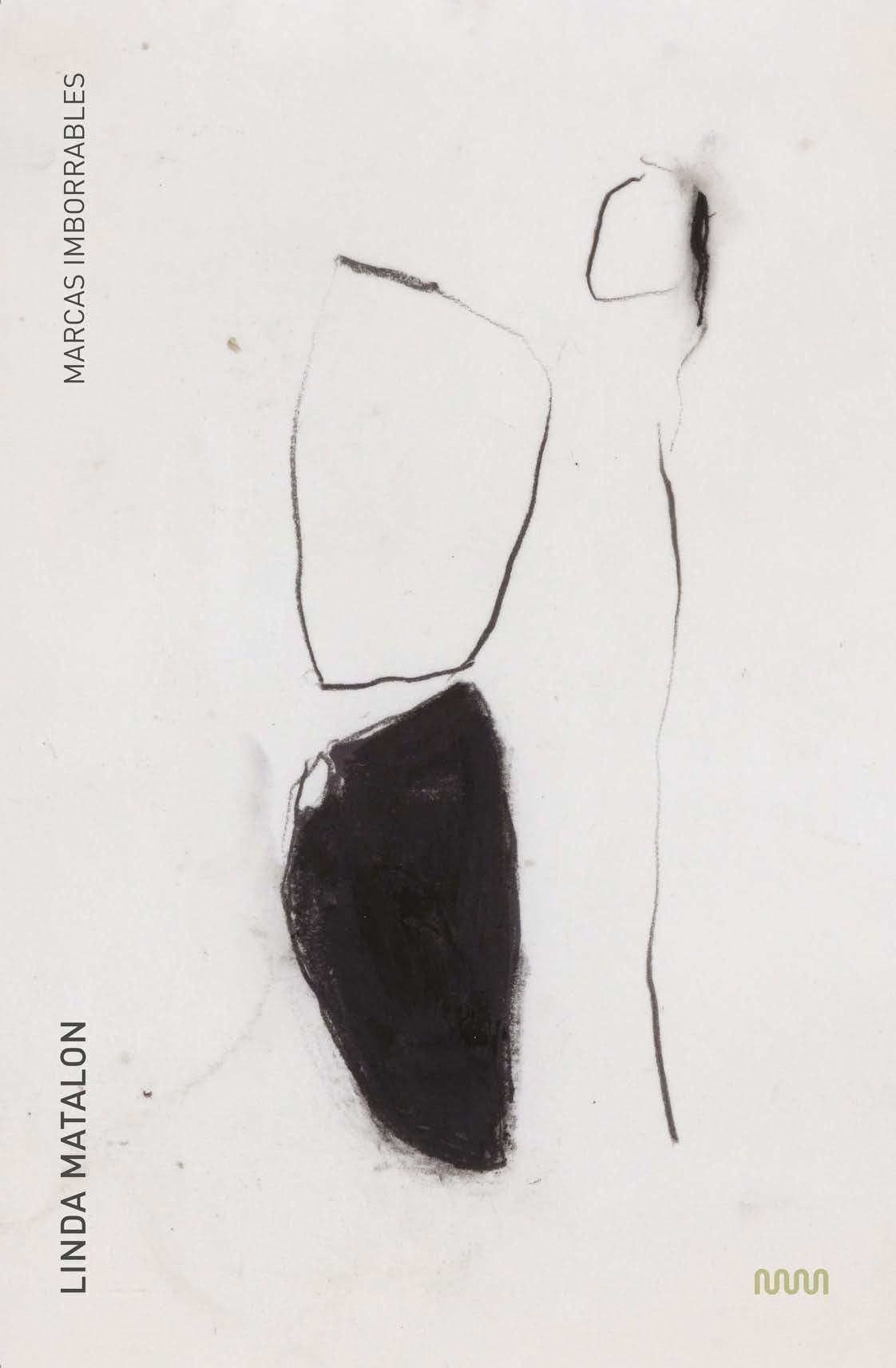
Imagen de tapa
Linda Matalon
Sin título, 2020
Grafito y cera sobre papel
30,48 × 24,13 cm
Introducción
Introduction
Victoria Noorthoorn
Sobre Linda Matalon y sus marcas imborrables
On Linda Matalon and her Indelible Traces
Victoria Noorthoorn
Gabriela Rangel
Un día en el estudio: Linda Matalon
A Day in the Studio: Linda Matalon
Edward J. Sullivan
Ruptura y resiliencia
Los dibujos elegíacos de Linda Matalon
Rupture and Resilience
The Elegiac Drawings of Linda Matalon
Ksenia M. Soboleva
Obras Artworks
Lista de obras de la exposición
Exhibition Checklist
Biografía de la artista
Artist’s Biography
Agradecimientos de la artista
Artist’s Aknowledgments
Biografías de los autores
Authors’ Biographies
Introducción
Introduction Victoria Noorthoorn
With immense joy and enthusiasm, the Museo Moderno is honoured to publish this first major catalogue of Linda Matalon’s works on paper. We had the privilege of presenting Matalon´s drawings in the exhibition Linda Matalon: Marcas imborrables [Linda Matalon: Indelible Traces] (3 November 2022–9 April 2023), her first major solo exhibition in a Latin American art museum.
Linda Matalon: Marcas imborrables formed part of the 2022 edition of the Museo Moderno’s ambitious annual exhibition programme: Un día en la Tierra [ One Day on Earth ], which followed the two traumatic years during which humanity endured the global spread of the coronavirus.
Un día en la Tierra was our Museum’s response to the early years of this global phenomenon: across thirteen exhibitions, we developed a comprehensive, holistic discourse focused on necessary and urgent reflection around the present state of humanity and its relationship with the Planet. The programme was comprised of thematic group exhibitions bringing works from the Moderno’s collections into dialogue with loans and commissions by a range of Argentinian artists, as well as solo exhibitions by artists of different generations from both Argentina and overseas. The programme’s ambition was to expand on a metaphor: that year, a visit to the Museo Moderno would resemble a journey across the surface of the Earth. Visitors moving through the various galleries would have the opportunity to engage with the concerns, anxieties and questions humanity was posing itself at this crucial, pivotal moment, when its very existence seemed to be reaching its limit. It was against this background of serious introspection and inner search that we had the honour of presenting Matalon’s eloquent work in our galleries.
In the exhibition Linda Matalon: Marcas imborrables, we presented two keystone series from the Cuban-American artist’s vast output of works on paper, created during pandemics that left a deep mark on her: the COVID-19 and the earlier AIDS pandemic, which so ravaged the LGBTQ+ community of the early 1990s, to which Matalon
Es con inmensa alegría y entusiasmo que el Museo Moderno tiene el honor de publicar este importante libro, el primero dedicado a la obra sobre papel de Linda Matalon, que tuvimos el privilegio de presentar en nuestras salas en la exposición Linda Matalon: Marcas imborrables del 3 de noviembre de 2022 al 9 de abril de 2023, su primera gran exhibición individual en un museo de Latinoamérica.
Linda Matalon: Marcas imborrables formó parte del ambicioso programa anual de exposiciones Un día en la Tierra, que el Museo Moderno presentó en 2022, luego de los dos años traumáticos en que la humanidad sufrió la propagación planetaria del coronavirus.
Un día en la Tierra fue el programa que nuestro Museo ofreció a modo de respuesta a los primeros años signados por este fenómeno global: a través de trece exposiciones, desplegamos un discurso integral y holístico, dedicado a la necesaria y urgente reflexión sobre el presente de la humanidad y su relación con el planeta. Dicho programa incluyó exhibiciones colectivas de corte temático, con obras de las colecciones del Museo en diálogo con obras recibidas en préstamo o encargadas a diversos artistas argentinos, y exposiciones individuales de artistas de varias generaciones, tanto argentinos como de otras latitudes. El programa tuvo la ambición de proponer una metáfora: durante ese año, visitar el Museo Moderno sería como recorrer la superficie de la Tierra. Al recorrer las diversas salas, cada visitante tendría la posibilidad de abordar las diversas inquietudes, preocupaciones y preguntas que la humanidad se hacía en este momento tan crucial, tan bisagra, en que su existencia parecía tocar el límite. Y fue en este contexto, de una importante introspección y búsqueda interior, que tuvimos el honor de presentar en nuestras salas la obra tan elocuente de Matalon.
En Linda Matalon: Marcas imborrables, presentamos dos series cruciales de la vasta producción de obras sobre papel de la artista estadounidense de origen cubano, cada una de las cuales fue creada durante una pandemia que la marcó muy fuertemente: la pandemia del covid-19 y la pandemia anterior, del sida, que
belongs. The works of both series share the small format and the fact that they were made on the paper the artist had at hand in such conditions of emergency or confinement. Both series also work with fragile materials, fusing together paper, wax and tar or graphite to allow the recording – technically indelible – of every single gesture, stroke and trace Matalon made on the paper. They are true palimpsests, each drawing becoming a witness and translation of the artist’s critical experiences and profound cognitive and spiritual stances towards her contemporary universe at both the individual/ subjective and social levels. Her drawings provide us with access to the traces borne by humanity itself during two fundamental historical crises which, we feel, should be revisited and understood more deeply if we are to plan our future more responsibly. Alongside the images of the works exhibited at the Moderno, the current eponymous volume contains insights into Matalon’s work by renowned specialists. It features essays by Edward J. Sullivan, Helen Gould Sheppard Professor in the History of Art at the Institute of Fine Arts and Professor at the Department of Art History, New York University, and Ksenia M. Soboleva, a New York based writer and art historian specialising in queer art and Adjunct Instructor at the Tisch Art School, New York University. It also features a conversation between Gabriela Rangel, the curator specialised in Latin American art, former artistic director of the Americas Society in New York and Malba in Buenos Aires, and myself back in 2022. Through the eyes and thoughts of these specialists, we hope to contribute to a fuller understanding of the breadth and depth of Matalon’s work across the multiple histories unfolding in our contemporary world. We want to affirm the importance of her work to those histories – of art, of gender, of equity, of drawing, of spirituality, of the Planet – and to the very understanding of humanity itself. This book completes the portrait of an artist who negotiates differences across cultures, genders and artistic practices and attains the sensitivity required to capture both the pain and the hope of our times.
a principios de los años noventa tanto afectó a la comunidad LGBTQ+, de la que Matalon forma parte. Las obras de ambas series comparten el pequeño formato y el hecho de estar realizadas sobre papeles que la artista tenía a su alcance durante estos contextos de urgencia o de encierro. También, ambas series trabajan sobre una materialidad frágil y funden el papel, la cera y la brea o el grafito, para permitir el registro, técnicamente imborrable, de cada uno de los gestos, trazos y marcas que la artista realiza sobre el papel. Verdadero palimpsesto, cada dibujo deviene testigo y traducción de las vivencias críticas y los posicionamientos profundos, tanto cognitivos como espirituales, de la artista ante su contemporaneidad, tanto a nivel individual y subjetivo, como a nivel social. En este sentido, sus dibujos nos permiten acceder a las marcas propias de la humanidad misma durante dos crisis históricas fundamentales que, creemos, deberíamos volver a revisar y comprender más profundamente, de modo tal que podamos proyectar con mayor responsabilidad nuestro futuro.
Junto a las imágenes de las obras expuestas en nuestras salas, este libro contiene lecturas de la obra de Matalon por parte de notables especialistas. Linda Matalon: Marcas imborrables incluye ensayos de Edward J. Sullivan, Profesor de la cátedra Helen Gould Shepard de Historia del Arte en el Instituto de Bellas Artes y Profesor del Departamento de Historia del Arte de la Universidad de Nueva York, y de Ksenia M. Soboleva, destacada escritora e historiadora especializada en el arte y la cultura queer, y Profesora Adjunta de la Escuela Tisch de Arte de la Universidad de Nueva York. También sumamos una conversación que mantuvimos, allá por 2022, Gabriela Rangel, la curadora especializada en arte latinoamericano que fue directora artística de la Americas Society en Nueva York y del Malba en Buenos Aires, y quien escribe. A través de la mirada y el análisis de estos especialistas, esperamos realizar una contribución al conocimiento sobre la envergadura y profundidad de la obra de Linda Matalon en las diversas historias que la contemporaneidad despliega, afirmando la importancia de su obra para dichas historias –la historia del arte, la historia del género, la historia de la equidad, la historia del dibujo, la historia de la espiritualidad, la historia del planeta– y para la comprensión de la humanidad misma. De este modo, este libro completa la semblanza de una artista que atraviesa diferencias entre culturas, géneros y prácticas artísticas, y alcanza la sensibilidad necesaria para captar tanto el dolor como la esperanza de nuestro tiempo.
Sobre Linda Matalon y sus marcas imborrables
Una conversación entre Gabriela Rangel y Victoria Noorthoorn
On Linda Matalon and her Indelible Traces
A conversation between Gabriela Rangel and Victoria Noorthoorn
On the occasion of the opening of the exhibition Linda Matalon: Marcas imborrables [Linda Matalon: Indelible Traces] at the Museo de Arte Moderno de Buenos Aires, in September 2022 the Director of the museum, Victoria Noorthoorn, who also curated the exhibition, held a Zoom conversation with Gabriela Rangel – the Venezuelan curator, who in recent years was director of Visual Arts at Americas Society (2004-2019) and Malba (2019-2021) – on Matalon's work.
GR: I found your choice of the two pandemic moments -AIDS and COVID-19,- very appropriate, as they are both thematised in Linda Matalon’s work. Selecting the series around these two historical events provides a very sound framework to understand Matalon’s production.
VN: I’ve been following Matalon’s work since 2000. I’ve always been captivated by her work. In particular, I am attracted to the drawings about the AIDS crisis in the early ’90s, which are cathartic, small-sized and quite different from her later drawings. When I had the chance to visit her in New York, in late 2021, she showed me her latest drawings, done during the COVID pandemic – her lockdown drawings. These are also small drawings made with whatever she had available at home. The intensity conveyed by the drawings reminded me of the ones produced during the AIDS pandemic. Both sets of drawings are intimate and on a very accessible scale.
GR: To understand the format, it’s important to remember that the paper she uses is specially prepared.
En septiembre de 2022, en ocasión de la inauguración de la exposición Linda Matalon: Marcas imborrables en el Museo de Arte Moderno de Buenos Aires, Victoria Noorthoorn –directora del museo y curadora de la exhibición– mantuvo una conversación vía Zoom con Gabriela Rangel –la curadora venezolana de arte Lationamericano, quien en años recientes fue directora artística de la Americas Society (2004-2019) y el Malba (2019-2021)– sobre la obra de Matalon.
GR: Me pareció muy preciso que, como curadora de la exhibición, escogieras los dos momentos pandémicos, el sida y el covid-19, tematizados en el trabajo de Linda Matalon. Que hayas seleccionado las series relacionadas con esos dos eventos históricos ofrece un marco muy apropiado para entender la producción de la artista.
VN: Sigo el trabajo de Matalon desde el año 2000. Siempre me cautivó su obra, en la que el dibujo ocupa un lugar central. En particular, me interesan sus dibujos de principios de los años noventa que hacen referencia a la crisis del sida, obras catárticas de pequeño formato que se distinguen de las de los años posteriores. Cuando tuve la ocasión de visitarla en Nueva York, a fines de 2021, me mostró sus últimos dibujos de ese entonces, realizados durante la pandemia del covid: sus lockdown drawings. También son pequeños, llevados a cabo con lo que tenía a mano en su casa. La intensidad que transmitían me remitió a aquellos creados durante la época del sida. En ambos casos, son obras íntimas y están a una escala muy a la mano.
GR: Para entender el formato es importante tener en cuenta que el papel que ella usa es preparado.
VN: There are three symbiotic materials that form a single unit in her creative process: paper, wax and graphite. Interestingly, when you ask Linda about these materials, she doesn’t distinguish between them; rather she thinks of them in relation to each other. The material, which she prepares with wax, permanently records every stroke or gesture she makes, either with graphite or other materials. Hence the title of the exhibition: Indelible Traces, a reference both to her technique and to the way these pandemics pierce us and leave marks on us.
GR: It’s a scar that remains on the memory and the body. It’s also interesting that, at a time of such collective suffering and concern, the artist has chosen a small format and such a complex paper technique to bring her works closer in such an intimate tone.
VN: They are existential drawings that, from my point of view, tell of a profound grief – or, to use Linda’s words, a profound spirituality. When I stand before these works, I see an artist who’s able to process human suffering in her drawings. These two pandemics help us anchor this spiritual experience at two precise historical and social moments. But between the two, twenty-five years intervened, when Linda made drawings in which I again see the same existentialist imprimatur. These drawings work with layers of material – paper, wax, graphite – but they also contain layers of existential density, of an inner search for meaning to capture deep, deep feelings: in some cases, it might be grief; in others, loneliness; in others, the way of being in the world. It’s far easier to produce a work that literally raises a problem than one that lives and breathes that problem and keeps it there, somewhere abstract, the way Linda does.
GR: It’s a work that goes straight to the core of the problem: language. When I saw the works in her studio – because you suggested I went before they left for Buenos Aires – I was extremely impressed. I always trust my first impression of a work when I see it. In Linda’s case, it felt like I was seeing something preceding the formation of a language: a mark that was there, like a sign of something hard and stark, but not yet language. It happened to me when I saw the works from the time of the AIDS crisis – which was terrible here in New York, where she lived, herself a member of the LGBTQ+ community – and again after seeing the works from the COVID lockdown series. Here, this question of preceding the formation of a language is even tougher because they’re abstract works. They are all the more forceful for not depicting these moments of crisis explicitly.
VN: I was captivated when you shared your first readings of Linda’s work with me. I wonder how many more gazes these drawings can contain, with their vast capacity for expansion.
VN: En su proceso creativo hay tres materiales simbióticos, que forman una unidad: el papel, la cera y el grafito. Es interesante que, cuando uno consulta a Linda sobre estos materiales, ella no los distingue, los piensa en relación. El material que prepara con cera graba de manera permanente todo trazo o gesto que ella realice, ya sea con el grafito o con otros materiales. De allí que el título de la exposición sea Marcas imborrables, en referencia tanto a su técnica como al modo en que estas pandemias nos atraviesan y dejan huellas en nosotros.
GR: Es una cicatriz que queda en la memoria y en el cuerpo. Asimismo, es interesante que, en momentos de tanto dolor y preocupación colectivos, la artista haya elegido un formato pequeño y con una técnica de papel tan compleja para acercar sus obras en una clave de intimidad.
VN: Son dibujos existenciales, que, desde mi punto de vista, refieren a un dolor muy profundo –o, en palabras de Linda, a una espiritualidad muy profunda–. Al encontrarme con estas obras, veo a una artista que, a través de sus dibujos, es capaz de procesar el sufrimiento de la humanidad. Estas dos pandemias nos ayudan a anclar esa experiencia espiritual en dos momentos históricos y sociales precisos. Pero entre una y otra hubo veinticinco años durante los cuales Linda realizó dibujos en los que también percibo la misma impronta existencialista. Estos dibujos trabajan capas materiales –el papel, la cera, el grafito–pero también están allí las capas de densidad existencial, de una búsqueda interna de sentido para plasmar sentimientos muy hondos. En algunos casos, puede ser el dolor; en otros, la soledad; en otros, el modo de estar en el mundo. Es mucho más fácil producir una obra que denuncie literalmente un problema que una que atraviese ese problema y lo mantenga en un lugar abstracto, como hace Linda.
GR: Es un trabajo que va al núcleo del problema, que es el lenguaje. Cuando vi las obras en su estudio –porque me sugeriste que fuera antes de que partieran a Buenos Aires–, quedé muy impresionada. Siempre confío en la primera impresión que me produce una obra cuando la veo. En este caso, sentí que estaba viendo algo que era previo a la constitución de un lenguaje. Una marca que estaba ahí, como un signo de algo descarnado y duro, pero que todavía no llega a ser lenguaje. Me sucedió cuando vi los trabajos de la época de la crisis del sida –que fue muy fuerte aquí en Nueva York, donde ella vivía, siendo ella misma parte de la comunidad LGBTQ+– y también luego de ver los de la serie lockdown, los de la cuarentena del covid, en los que esta cuestión previa a la constitución de un lenguaje es más dura todavía, porque son obras abstractas. Como no manifiestan de manera explícita esos momentos de crisis, pegan más duro.
VN: A mí me cautivó cuando compartiste conmigo tu primera lectura de la obra de Linda. Pienso en cuántas miradas más pueden sumarse a estos dibujos que tienen esa enorme capacidad de expandirse.
GR: That black shape is a presence in her works; it’s like some kind of interruption. I don’t know how you see that black shape, which is repeated in both the AIDS and the COVID series. It’s the only solid we see. The rest is all drawing and line… but that’s a solid. And it binds the two series together.
VN: To me, those solids are gravitational points in the drawings. They act as counterpoints to the fragility of the figures, which are sometimes mere lines, sometimes silhouettes, sometimes just shadows or ghosts of figures… In the drawings from the first period, the figures are gendered; that’s an interesting point.
GR: A kind of gender sign similar to the one hinted at in Marcel Duchamp’s Large Glass… It has a good deal in common with the masculine figures he called ‘malic moulds’.
VN: Here, the figures – if they can be called figures – are always fragile: they’re dismembered, suggested, never fully become themselves. And very early on, these solids appear, like places of gravitation and certainty. They may be some obscure reality, some obscure potential anchorage the figure positions itself in relation to. And in some cases, the solid becomes a figure, a character… The solids might be said to always provide a point of entry to the work.
GR: The drawings you’re referring to are the ones from the ’90s. But in the lockdown works, there’s less of an emphasis on gender. It isn’t as present.
VN: One possible reading is that, in this transition, Linda is making reference to a more generic body. In any case, it’s a situated body, which I feel is a response to a highly introspective, spiritual experience of being in the world. Perhaps that’s why I find her drawings extremely figurative. Whenever I tell Linda how moved I am by the relationship between her figures, she replies, ‘Victoria, you’re the only one who sees my drawings in a figurative light’.
GR: You view them figuratively because you see a hint of narrative structure, albeit interrupted. I think it’s powerful the way you contrast these two pandemics in the exhibition, because they’re quite different moments but share a common root. One was the debacle following all the sexual freedoms gained after May ’68 and culminating in a highly visible change in the way society viewed and practiced sexuality and gender freedoms. AIDS brought about a reaction that set back the freedoms achieved. And then, the COVID crisis did something similar in terms of globalisation. We were all moving around without any boundaries as citizens of the world, and then suddenly we weren’t; we were trapped where we were, in isolated countries. We couldn’t fly. The borders had closed. The world shrank, and we sank into an economic and social slump.
GR: En sus obras está presente esa figura negra, que es como una especie de interrupción. No sé cómo ves tú esa figura negra que se repite en ambas series –la del sida y la del covid. Es el único sólido que vemos. Lo demás es dibujo, línea... pero esto es sólido. Y une a las dos series.
VN: Para mí, estos sólidos son puntos gravitacionales de los dibujos. Actúan como contrapunto frente a la fragilidad de las figuras, que a veces se presentan como meras líneas, a veces como siluetas, a veces solo como sombras o fantasmas de figuras… En el caso de los dibujos de la primera época, las figuras tienen género; eso es interesante.
GR: Un tipo de signo del género parecido al que se insinúa en El gran vidrio, de Marcel Duchamp… Tiene mucho que ver con esas figuras que él denominaba “moldes málicos”, que son masculinas.
VN: En este caso, las figuras –si es que pueden llamarse así– siempre son frágiles, están desmembradas, están insinuadas, no terminan de constituirse. Y muy temprano aparecen estos sólidos, como lugares gravitacionales, de certezas. Puede ser alguna realidad oscura, una posibilidad oscura de anclaje, respecto de la cual la figura se posiciona. Y, en algunos casos, el sólido deviene figura, personaje… Podría decirse que esos sólidos siempre permiten un punto de entrada a la obra.
GR: Estos dibujos a los que te refieres son los de los noventa. En cambio, en las obras del lockdown hay menos énfasis en el género. No está tan presente.
VN: Una lectura posible es que, en este tránsito, Linda pasa a referirse a un cuerpo más genérico. De todas maneras, se trata de un cuerpo situado, que siento que responde a una experiencia muy introspectiva y espiritual de estar en el mundo. Quizás sea por este motivo que encuentro que sus dibujos son extremadamente figurativos. Cada vez que le comento a Linda cuánto me conmueve la relación entre sus figuras, ella me responde: “Victoria, eres la única persona que ve mis dibujos de manera figurativa”.
GR: Los percibes de manera figurativa porque ves una estructura narrativa que se insinúa, aunque queda interrumpida. Me parece potente que contrastes en la muestra estas dos pandemias porque son momentos totalmente distintos, pero con una raíz común. Uno fue la debacle de todas las libertades sexuales adquiridas después de Mayo del 68, que culminaron en un cambio muy notable en la manera como la sociedad veía y practicaba la sexualidad y las libertades de género. El sida produjo una reacción que sirvió para retraer las libertades que se habían alcanzado. Y, por otro lado, la crisis del covid produjo algo parecido con la globalización: todos nos movíamos sin ningún tipo de límite, éramos ciudadanos del mundo; y, de pronto, ya no lo éramos, estábamos atrapados en nuestras situaciones, en países aislados, no podíamos volar, las fronteras se habían cerrado. El mundo se contrajo, caímos en un proceso de desaceleración económica y social.
VN: You’re right, I do see personal stories in these drawings. I find what you say about them being signs of a pre-language state interesting. Your observation makes me think about my subjectivity and that compulsion to go out and name, to articulate those stories.
GR: I say pre-language because, while Linda insists these are drawings – and in a way they are – the treatment of the paper, the way it represents those figures, leads me to view them as ambiguous, abstract ideas, even if you imbue them with a narrative. Still, they do contain a strong pictorial element which never quite takes shape: her work oscillates between painting and drawing. I can see Cy Twombly in it, Eva Hesse, but also Louise Bourgeois. And there’s something threedimensional, hinting at sculptures, figures that are sculptural. What interests me about Linda is that her work has no definite genre: it’s a floating thing. If I had to situate Matalon’s work, I wouldn’t view it just as drawing. Its power is to place us before what queer theory has defined as gender: something floating, without definition. It’s something that’s there. It’s fluid. It isn’t stable.
VN: They’re works that can be configured in many ways. Or they can gradually disintegrate. You mention sculpture, and those sculptures are there in her studio: she’s a sculptor too. That space is there, in her work. When you say ‘it’s pictorial’, I think of Turner. Linda configures a space which, as you say, isn’t linguistic, and places beings or signs in it.
GR: No, it’s subjective. I think Linda’s work is about a kind of introspection into subjectivity. But coming back to the sculpture and to those solid figures repeated across the two series: I think the second series – the COVID series – is less loaded, more minimal, more contained.
VN: Yes, the ’90s series is cathartic and urgent, whereas the lockdown drawings are calmer and have a place of equilibrium, a measured reflection; they’re altogether different in tone. Although in this drawing, for example, which I find heart-rending, one figure levitates above the other… it’s an image that hints at a passing, a possible reference to death… Who are they who are levitating, and who are we who are in this drawing? How do you represent a humanity that’s in a state of crisis and suffering? How do you represent its possibilities and impossibilities in a situation that encircles the planet?
GR: For the exhibition, you chose two series whose theme is the profound crisis of humanity and its values. These crises arise for different reasons, but both involve biological threats to bodies. We agree that the second series is more contained, more introspective, serene. It’s much graver. The first series is expressive. But there’s something else that unites them: the space. I saw sculptures in her studio, laid in corners. In this case, they’re sculptures you come across like things that don’t want to be or that appear without the smallest note of pretension… How do you see this?
pp. 182-183
pp. 182-183
VN: Tenés razón, veo historias personales en estos dibujos. Me interesa cuando decís que son signos referidos a una situación de pre-lenguaje. Gracias a tu observación pienso en mi subjetividad, con esa compulsión de salir a nombrar, a articular esas historias.
GR: Hablo de pre-lenguaje porque, aunque Linda insiste en que se trata de dibujos –y de algún modo lo son–, el tratamiento del papel, la manera en que representa esas figuras me lleva a verlas como ideas abstractas, ambiguas –aunque tú les otorgues una narrativa. Sin embargo, tienen un elemento pictórico fuerte que no llega a constituirse: la obra oscila entre la pintura y el dibujo. Yo veo allí a Cy Twombly, a Eva Hesse, pero también a Louise Bourgeois. Hay algo tridimensional, además: esculturas insinuadas, figuras que son escultóricas. Lo que me interesa de Linda es que la obra no tiene un género definido, es una entidad flotante. Si tuviera que situar su trabajo no lo consideraría solo como dibujo. La potencia que tiene es que nos emplaza ante lo que la teoría queer ha definido como género: algo flotante, que no tiene definición. Es algo que está ahí, es fluido, no es estable.
VN: Son obras que pueden configurarse de muchas maneras. O pueden estar desintegrándose. Vos te referís a la escultura y esas esculturas están en su taller; ella también es escultora. En su trabajo ese espacio está. Cuando decís “es pictórico”, pienso en Turner. Linda configura un espacio que, como bien decís, no es lingüístico y sitúa a los seres o signos allí.
GR: No, es subjetivo. Creo que el trabajo de Linda tiene que ver con una introspección en la subjetividad. Pero volvamos a la escultura, a estas figuras sólidas, que se repiten en ambas series. Creo que la segunda serie, la del covid, es menos cargada, más minimal, más contenida.
VN: Sí, la serie de los noventa es catártica, es urgente, y la de los Lockdown drawings es más calma, tiene un lugar de equilibrio, una reflexión pausada; es otro tono. Si bien, por ejemplo, en este dibujo, que encuentro desgarrador, hay una figura que levita sobre la otra… es una imagen que insinúa un pasaje, quizás refiera a la muerte… ¿Quiénes levitan y quiénes somos los que estamos en ese dibujo? ¿Cómo representar a una humanidad que se halla en estado de crisis, de dolor?, ¿cómo representar sus posibilidades e imposibilidades en una situación que abarca al planeta?
GR: Escogiste para la muestra dos series cuyo tema es la crisis profunda de la humanidad y de sus valores. Estas crisis se dan por diferentes razones, pero ambas tienen que ver con amenazas biológicas contra los cuerpos. Coincidimos en que la segunda serie es más contenida, más introspectiva, serena. Es mucho más grave. La primera es expresiva. Pero hay algo adicional que las une: el espacio. Vi esculturas en su taller, colocadas en rincones. En este caso, son esculturas que uno encuentra como algo que no quiere serlo o que aparecen sin ningún tipo de pretensión… ¿Cómo ves esto?
VN: Linda’s sculpture emerges along a dynamic very similar to that of the figures in her drawings, where they don’t quite take full shape – what you call ‘pre-language’. They’re sculptures which, for all their three-dimensionality, possess a fragile constitution; you could think of them as drawings in space. They’re made with the same material properties, the same economy: wax, metal (in place of graphite), plaster (which is in the orbit of paper). They’re in a situation where they appear as sculptures or signs in a space, but they still scream ‘sculpture’ because they’re being shaped. They have the distinctive feature of bearing these marks, gestures, or lines, which are quintessentially human, just like the drawings. There’s something very movingly human about Linda’s work: you can see the artist shaping the materials in a highly tactile, very real way. Both in drawing and sculpture, the forms refer to organisms. What are presented are beings or parts of beings or organic states. They refer to the human body, which is clearly the focus of her thought.
GR: That puts me in mind of a phrase attributed to Arnold Schönberg from his exile in California: ‘Paradise and Hell can be the same city.’ Schönberg’s moments of atonality can sound utterly inhuman… or all too human. The same is true of Linda’s work. I asked her if she listened to music. She said she did but that she can’t listen to music and work at the same time. Music is separate from that practice. It’s very affecting: I think her work has a deeply emotional effect, like music. When I first came face to face with it, I felt alternately extremely depressed or extremely happy. It offers both possibilities: descending into hell while enjoying the beauty of that hell. Because it’s also a work about beauty.
VN: It does have its sublime side, if we take the sublime in its classical sense, which means that to reach the sublime you have to endure a state of terror. Yesterday, I was talking to my husband Carlos Gamerro about Anselm Kiefer’s show in Venice and his staging of a terrifying situation which, if you put yourself through it, can lead to a luminous state. And although Kiefer resorts to the grammar of the spectacle in staging his work – something which doesn’t hold for Linda’s work – I feel that, using different resources, they both arrive at the same point: they relate highly dramatic situations, and both their work is informed by that adoption of a stance or awareness of being that you mention, somewhere between hell and paradise.
GR: If we take the AIDS series – made when Linda was much younger and belonged to a community directly affected by what was happening – we can compare it to the work of two artists whose work also packs a high emotional charge: a highly psychoanalytical artist like Louise Bourgeois and a highly ‘hysterical’ artist like Cy Twombly, to use clinical terms – in other words, he represents a drama set in an image greatly intensified
VN: La escultura de Linda emerge siguiendo una dinámica muy similar a la de las figuras en los dibujos, cuando no terminan de constituirse –según lo que vos llamás el pre-lenguaje–. Se trata de esculturas que, si bien son tridimensionales, poseen una constitución frágil y uno podría pensar que son dibujos en el espacio. Están realizadas con la misma materialidad, con la misma economía: la cera, el metal (en el lugar del grafito), el yeso (que está en la órbita del papel). Se hallan en una situación de aparecer como esculturas o signos en un espacio, pero no terminan de gritar una presencia escultórica porque están conformándose. Tienen la particularidad de acarrear sobre sí estas marcas, gestos o trazos que son muy humanos, al igual que los dibujos. Hay algo de humanidad muy conmovedor en el trabajo de Linda: uno puede ver a la artista moldeando los materiales de un modo muy táctil, muy real. Tanto en el dibujo como en la escultura las formas remiten a organismos. Son seres o partes de seres o situaciones orgánicas que se presentan. Refieren al cuerpo humano, que claramente es el centro de su reflexión.
GR: Lo que dices me hace recordar una frase que se atribuye a Arnold Schönberg en su exilio californiano: “Paradise and Hell can be the same city” [El paraíso y el infierno pueden ser la misma ciudad]. Los momentos de atonalidad de Schönberg pueden ser totalmente inhumanos… o demasiado humanos. Ocurre lo mismo con el trabajo de Linda. Yo le pregunté si escuchaba música. Me dijo que sí, pero que no puede escuchar música y trabajar al mismo tiempo. La música está separada de ese ejercicio. Es una cosa muy impresionante, porque yo creo que su trabajo produce un efecto sumamente emocional, como el de la música. Al verlo, quedé muy deprimida o muy feliz, porque ofrece las dos posibilidades: descender a los infiernos y disfrutar la belleza de ese infierno, también, porque es un trabajo sobre la belleza.
VN: Tiene un aspecto sublime, si entendemos lo sublime de manera clásica, lo cual implica que para alcanzar lo sublime hay que atravesar una situación de terror. Hablaba ayer con Carlos Gamerro, mi marido, sobre la muestra de Anselm Kiefer, en Venecia, y en su puesta en escena de una situación aterradora que, si se la atraviesa, puede llevar a una situación luminosa. Y, si bien Kiefer recurre a la gramática del espectáculo para poner su obra en escena –cosa que no sucede en la obra de Linda–, siento que, con recursos diversos, ambos llegan al mismo lugar: refieren a situaciones muy dramáticas, y la obra de ambos se nutre de ese posicionamiento o conciencia del ser que mencionás, entre el infierno y el paraíso.
GR: Si tomamos la serie de la crisis del sida, realizada cuando Linda era mucho más joven y pertenecía a una comunidad directamente afectada por lo que estaba ocurriendo, la podemos comparar con la obra de dos artistas cuyas obras también tienen una carga emocional muy fuerte: por un lado, Louise Bourgeois, una artista muy psicoanalítica, y, por otro lado, Cy Twombly, un artista muy “histérico”, usando términos clínicos (es decir: que representa un drama puesto en imagen
by the ego. But, in Linda’s case, the work leads you to an emotional response first hand, without filters. Putting aside the devices that art possesses in order to generate such sophisticated discourses around suffering, the work, in her case, strikes you directly. When you mentioned gender, I began to see things I hadn’t seen before. It’s true: all the figures are gendered, and that’s the tragedy of these figures. They’re very powerful…
VN: They’re drawings that I suffer in the sense that my heart aches when I see them. I’m presented with pain in a very direct way. And talking about the staging of our vulnerability, her work reminds me of great artists from previous generations: in the United States, John Cage, Agnes Martin, Richard Tuttle; in Latin America, Fernanda Gomes from Brazil or Gego in Venezuela, all of whom work on that fragility in constructing a spatial poetry out of scant materials. So, I think they have in common situations, poetics, and a certain openness to the crucial role of the viewer in relation to their work.
In the case of the AIDS series, these drawings possess an interesting urgency because they form the basis of Linda’s work. Their origins lie in the construction of these figures which accompany her throughout her life and which she encounters again in the COVID-19 pandemic. New York was a major epicentre in both cases: chilling and terrifying. In the first drawings, that response is necessary. She tells how she spent the day travelling to and fro, dealing with situations related to the deaths of people in her community, closing up houses, organising, moving things from place to place, managing the harrowing deaths of friends and acquaintances, and returning home at night to her studio to set down what she was going through in these drawings.
GR: The AIDS crisis generated rejection or punishment around the LGBTQ+ community. It was a community to which a moral problem was attached, and even one of social infection. As far as inspiration in the art world is concerned, Linda lives in New York. You both met at The Drawing Center, am I right?
VN: That’s right, we met at The Drawing Center. And after working there for several years, when I was moving back to Argentina in 2001, I said to her: ‘I can’t believe I don’t know your work, let’s pay a visit to your studio.’ I visited, and I was stunned. And when I came back to Argentina, I carried those images in my heart, and I’ve tried to show them at every opportunity I found.
GR: These drawings take you straight to a state of pain, using very few means, as you say; an astonishing economy of means: a sfumato here, a few lines there. Is the treatment of the paper the same here?
VN: The first drawings sometimes contained other materials: some fabric, some gauze, more layers of wax. Some pieces display a certain
con gran exacerbación del ego). Pero, en el caso de Linda, la obra te lleva a una respuesta emocional de primera mano, no existen filtros; dejando de lado los artificios que tiene el arte para generar discursos tan sofisticados sobre el dolor, en su caso la obra da un golpe directo. Cuando hablaste del género, empecé a ver cosas que antes no había visto. Es verdad, todas las figuras tienen género y esa es la tragedia de esas figuras. Son muy fuertes…
VN: Son dibujos que padezco, en el sentido de que me duele el corazón cuando los veo. Se me presenta el dolor de una manera muy directa. Y en relación con esa puesta en escena de nuestra vulnerabilidad, su obra me remite a grandes artistas de generaciones previas. En los Estados Unidos, a John Cage, a Agnes Martin, a Richard Tuttle; en Latinoamérica, a Fernanda Gomes de Brasil, o a Gego en Venezuela, quienes trabajan sobre esa fragilidad en la construcción de una poesía espacial con muy escasos materiales, por lo que creo que comparten situaciones, poéticas y cierta apertura al rol crucial del espectador en relación con su trabajo. Estos dibujos, en el caso de la serie del sida, tienen una urgencia interesante porque son la base del trabajo de Linda. Su origen está situado en la construcción de estas figuras que la van a acompañar toda la vida y que vuelve a encontrar en la pandemia del covid-19. Nueva York fue un epicentro fuerte en los dos casos, escalofriante y aterrador. En los primeros dibujos se advierte esa respuesta necesaria. Ella relata cómo se pasaba el día de aquí para allá, lidiando con situaciones relacionadas con la muerte de personas de su comunidad, cerrando casas, organizando, mudando cosas de un lado al otro, gestionando esa situación cruda de muerte de amigos y conocidos, y volvía a la noche a su casa, que era su taller, y plasmaba en estos dibujos lo que estaba atravesando.
GR: La crisis del sida generó un campo de rechazo o de castigo para la comunidad LGBTQ+. Fue una comunidad a la que se le atribuía un problema moral y hasta de infección social. En relación con los referentes en el mundo del arte, Linda vive en Nueva York. ¿Ustedes se conocieron en The Drawing Center, no es así?
VN: Así es, nos conocimos en The Drawing Center. Y cuando, luego de trabajar allí varios años, estaba por regresar a la Argentina en 2001, le dije: “No puede ser que no conozca tu obra, hagamos una visita al taller”. La visité, quedé impactada, y luego me volví a la Argentina llevando en el alma esas imágenes que he intentado mostrar todo lo que pude.
GR: Estos dibujos te llevan inmediatamente a una situación de dolor, mediante el uso de muy pocos recursos, como dices. Con una economía de medios sorprendente: un sfumato, apenas unas líneas. ¿El tratamiento del papel es el mismo, acá?
VN: En los primeros dibujos había por momentos otros materiales: algún textil, alguna gasa, más capas de cera. En algunos casos, hay cierta
three-dimensionality; others are even more fragile constructions, being executed on tracing paper, which makes them delicate and transparent. But yes, essentially a technique emerges over those years; it never leaves her and takes on other densities in later drawings. I often think of them as palimpsests.
GR: Overlaid scripts.
VN: That’s right. The dialogue Linda establishes with the paper is etched in them: different marks, different cuts. A temporal dimension is introduced, which is also significant. There’s an aspect of time suspended in these drawings. Frequently tears appear in the paper, which Linda sometimes repairs with tape and sometimes doesn’t. They’re a kind of wound, too: the search for a gesture in which the paper gets torn. She’s someone who has a deep-seated relationship with this material, and she understands perfectly what the breaking of the paper is about, which then literally shows its ‘soul’: the pulp of the paper. We can relate it to the AIDS pandemic, which led to a climate of punishment aimed at a very significant portion of the world’s population and brought about the deaths of millions.
GR: In Brazil, it took the lives of artists like José Leonilson. And, among the keystone artists in Argentina, Liliana Maresca passed. In the United States, almost the entire generation of the ’80s: the photographer Peter Hujar, David Wojnarowicz, Rudolf Nureyev. Many artists fell victim to AIDS. It was a devastating pandemic.
VN: It’s important to give that historic situation its material reality and not to let it slip away.
GR: I read in Hyperallergic magazine that a US museum recently exhibited a work which Félix González-Torres dedicated to his partner Ross Laycock when he died of AIDS, and that, on the gallery label, they erased all the information about him being an early victim of the disease. But to return to Linda, who has similar cultural roots to Félix – the Cuban diaspora – it’s interesting that her drawings are in a kind of suspension of her own gender, even though they were made by someone who comes from that cultural background. She’s of Latino descent, but any avenues to her learning Spanish were closed off so that she’d integrate with the discourse of the United States.
VN: When you mentioned that situation of constructing a statement that isn’t quite a statement, that’s where Spanish language comes in. It’s something she’s been saying to me while we’ve been putting together this exhibition: ‘Victoria, you’ll wind up getting me to speak Spanish again.’ It’s a language she understands, because her parents spoke it at home but wouldn’t allow their children to speak.
tridimensionalidad. En otros, son construcciones todavía más frágiles, porque están realizadas sobre papel de calco, que las vuelve delicadas y transparentes. Pero sí, esencialmente aparece durante esos años una técnica que la va a acompañar siempre y que tomará otras densidades en dibujos posteriores. Muchas veces los pienso como palimpsestos.
GR: Una escritura superpuesta.
VN: Claro. En ella se va grabando ese diálogo que Linda postula con el papel. Distintas marcas, distintos cortes. Se introduce la dimensión temporal, que también es importante. Hay un aspecto del tiempo suspendido en estos dibujos. En muchas ocasiones, en el papel aparecen rasgaduras que Linda a veces repara con cinta y a veces no. Son una especie de herida, también: la búsqueda de un gesto en el que se quiebra el papel. Es una persona que tiene una relación fundamental con este material y entiende perfectamente lo que es el quebrarse del papel, que entonces muestra literalmente su “alma”, que es la pulpa del papel. La podemos relacionar con la pandemia del sida, que llevó hacia una situación de castigo a una porción muy importante de la población mundial y causó la muerte de millones de personas.
GR: En Brasil se llevó la vida de artistas como José Leonilson. Y, entre los artistas fundamentales argentinos, murió Liliana Maresca. En Estados Unidos, casi toda la generación de los 80: el fotógrafo Peter Hujar, David Wojnarowicz, Rudolf Nuréyev. Muchos artistas fueron víctimas del sida, fue una pandemia devastadora.
VN: Materializar esa situación histórica y no dejarla pasar es importante.
GR: Leí en la revista Hyperallergic que un museo estadounidense exhibió recientemente una obra que Félix González-Torres dedicó a su pareja, Ross Laycock, cuando este falleció de sida, y que en la cédula borraron toda la información sobre esta víctima precoz de la enfermedad. Pero, volviendo a Linda, que tiene raíces culturales parecidas a las de Félix –la diáspora cubana–, es interesante señalar que sus dibujos están en una suerte de suspensión de su propio género, aunque hayan sido hechos por una persona que tiene ese bagaje cultural. Ella es de ascendencia latina pero, para que pudiera integrarse al discurso estadounidense, le cancelaron la posibilidad de aprender español.
VN: Cuando vos te referías a esa situación de construcción de un enunciado que no termina de serlo, ahí está el idioma castellano. Es algo que ella me dice mientras estamos construyendo esta exposición: “Victoria, vas a lograr que termine volviendo a hablar el castellano”. Es un idioma que ella entiende, porque sus padres lo hablaban en su casa, pero no permitían que sus hijos lo hablasen.
GR: Linda once said to me something fundamental in relation to Spanish: that she connects with you because you’re her conduit for recovering it. You’re like Proust’s madeleine: she recovers something intangible from her childhood, but which has lain there latent. And it isn’t just the language, it’s an entire cultural universe. She told me that different members of her family spoke different languages – Yiddish, Russian, and Spanish – and used them so she, as a child, wouldn’t understand the adults’ conversations. Linda was born into a multicultural family, and she couldn’t understand that diversity because it was used as a barrier. That’s why I find the pre-linguistic layers of her work so interesting: she wasn’t allowed to enjoy her cultural difference. Now she’s recovering it with you.
GR: Linda me dijo algo fundamental en relación con el español: que ella se conecta contigo porque eres el conducto para recuperarlo. Eres como la magdalena de Proust: ella recupera algo de su infancia que es inasible, pero que está ahí, latente. Y no solo es el idioma, es todo un universo cultural. Me contó que diferentes miembros de su familia hablaban en distintos idiomas –en yiddish, en ruso y en castellano– y los empleaban para que ella no se enterase de las conversaciones de los adultos. Linda nació en una familia multicultural y no pudo entender esa diversidad porque esta fue usada como una barrera. Por eso me parecen muy interesantes las capas pre-lingüísticas de su trabajo: porque a ella no le permitieron gozar de su diferencia cultural, que ahora recupera contigo.
Un día en el estudio: Linda Matalon
A Day in the Studio: Linda Matalon
Edward J. Sullivan
I vividly remember the first time I saw Linda Matalon’s work. It was the night of February 5, 1997, at the Gallery of the Americas Society, a prestigious exhibition space in New York which has, over the course of almost sixty years, presented a wide variety of work by Latin American artists and those of Latin American descent, from ancient to contemporary times.1 The distinguished curator Joseph R. Wolin created an exhibition entitled Embodied Abstractions that included the work of three artists: Laura Anderson Barbata, Ricardo Mazal, and Linda Matalon.2 Both Laura and Ricardo, originally from Mexico, were friends of mine, and both held (and still hold) significant positions as abstract sculptors, painters, and graphic artists. I knew neither Linda nor her work. She was the child of Jewish Cuban émigré parents to New York. Yet it was not only the fact that all three artists were of Latin heritage that united them as appropriate subjects for the moving exhibition that I saw on its opening night; it was, more importantly, the fact that they – each in widely different ways – were able to evoke powerful emotions and timely commentaries on both current events and long-standing conundrum enigmas and challenges to the human condition through their works. Mazal presented his large-scale abstract paintings and Anderson Barbata demonstrated her versatility with drawings, wood constructions and enigmatic installations. Linda Matalon’s art in the Americas Society show consisted both of inscrutable examples of her sculptural series ‘Gathering and Protecting’ (mid 1990s) and a series of compelling untitled drawings on wax-infused paper. I was both attracted to
1 José Luis Falconi and Gabriela Rangel, A Principality of One’s Own: 40 Years of Visual Arts at the Americas Society (New York: Americas Society, 2006). The organization was founded in 1965 as the Center for Inter-American Relations and changed its name to The Americas Society in 1985.
2 Joseph R. Wolin, Embodied Abstraction (New York: Americas Society Art Gallery, 1997). The show was open from February 5 to March 30.
Recuerdo vívidamente la primera vez que tomé contacto con la obra de Linda Matalon. Fue la noche del 5 de febrero de 1997 en la galería de la Americas Society, un prestigioso espacio de exposiciones de Nueva York que, a lo largo de casi sesenta años, ha acercado al público una amplia variedad de obras de artistas latinoamericanos o de ascendencia latinoamericana, desde sus orígenes hasta la época contemporánea.1 El distinguido curador Joseph R. Wolin organizó la exposición que se tituló Embodied Abstractions [Abstracciones encarnadas] con obras de tres artistas: Laura Anderson Barbata, Ricardo Mazal y Linda Matalon.2 Laura y Ricardo, ambos oriundos de México, eran amigos míos y gozaban (y siguen gozando) de gran reconocimiento como escultores, pintores y artistas gráficos abstractos. No conocía a Linda ni su trabajo. Era hija de cubanos judíos que emigraron a Nueva York. Sin embargo, no era solo el hecho de que los tres artistas tuvieran ascendencia latina lo que los unía para formar parte de la conmovedora exposición que vi la noche de su inauguración. Lo más importante era que cada uno a su manera –por cierto muy diferente– era capaz de evocar con sus obras emociones tan intensas y narrativas tan certeras sobre acontecimientos actuales, como también sobre algunos acertijos y desafíos a la condición humana presentes desde tiempos remotos. Mazal expuso sus pinturas abstractas de gran escala y Anderson Barbata demostró su versatilidad a través de dibujos, construcciones en madera y enigmáticas instalaciones. La obra que presentó Linda Matalon en la exposición de la Americas Society contenía piezas inescrutables de su serie escultórica “Gathering and Protecting”
1 José Luis Falconi y Gabriela Rangel, A Principality of One’s Own. 40 Years of Visual Arts at the Americas Society, Nueva York, Americas Society, 2006. La organización fue fundada en 1965 como Center for Inter-American Relations y en 1985 cambió su nombre por el de Americas Society.
2 Joseph R. Wolin, Embodied Abstraction, Nueva York, Americas Society Art Gallery, 1997. La muestra permaneció abierta al público desde el 5 de febrero al 30 de marzo.
and perplexed by Matalon’s pieces. I intuited that they embodied significant and powerful messages, but it would be several years before I would re-encounter her art and was finally able to decode her unique visual vocabulary… and, eventually, have the privilege of getting to know Linda in person.
One of the conduits to knowing Linda and understanding her art was through the closest equivalent to a biographer that the artist has yet enjoyed. Ksenia Soboleva was a doctoral student at the Institute of Fine Arts of New York University in the late 2010s. A brilliant Russian émigré art historian, Ksenia had embarked upon what may only be described as a dazzling, original and, indeed, brave dissertation topic. She completed her doctoral thesis entitled ‘Fragments: Art, AIDS, and Lesbian Identity in the United States, 1986-1996’ in 2020 and received her degree the following year. Her advisor, Dr. Robert Slifkin, requested that I be assigned to her dissertation committee –something I did with pleasure. Ksenia and I had many conversations about the artists she was researching and the desultory atmosphere of the AIDS epidemic in the United States and, especially, among the art community. I had lived through these terrifying years and lost many friends, including many distinguished New York artists, to AIDS-related illnesses. As a gay man and an art historian, their histories – both personal and professional – meant a great deal to me. I was conversant with the abundant literature on the devastation that New York’s art world suffered because of this catastrophe, and I had, of course, experienced grief and loss first hand. Nonetheless, Ksenia Soboleva (who brought a sense of important distance to her commentary on this theme), was one of the first, if not the first, critic and historian to chart the course of the reaction on the part of lesbianidentifying artists to this important sector of the AIDS/Art History.
Ksenia has since had a significant career in both art criticism and exhibition curating in various New York institutions. Included in this list was the 2022 exhibition Fragments: Siobhan Liddell and Linda Matalon, on view at the Candice Madey Gallery in New York from midMarch to mid-April. This was a perfect opportunity to bring some of my graduate students to the gallery to discuss the exhibition. Happily, Linda herself was there to meet us and explain some of the most important ideas behind her work. I was very pleased to meet her and found her an extremely eloquent and appealing individual.
Another of my connections to Linda Matalon came through a close friend and an important source of both information and analysis of her work. Dr. Susan Aberth, Professor at Bard College in Annandale-on-Hudson, New York, has written an important text on Matalon’s art for the catalogue of her exhibition during her Artistin-Residence sojourn at the Hopkins Center for the Arts, Dartmouth College, in the Fall of 2012. Susan wrote an insightful and important essay on Linda’s art for the catalogue Linda Matalon, Work: 1977-2012. 3
3 Susan L. Aberth, “Linda Matalon: Luminosity, Oscillation and the Sublime,” in the exhibition catalogue Linda Matalon. Work: 1997–2012 (Hanover, New Hampshire: Hopkins Center for the Arts, Dartmouth College, 2012: 17–20).
[“Reunir y proteger”] (de mediados de la década de 1990) y unos dibujos cautivantes, sin título, realizados sobre papel encerado. Las obras de Matalon no solo me atrajeron, sino que me dejaron perplejo. Intuí que plasmaban mensajes significativos y poderosos, pero pasarían varios años antes de que me reencontrara con su arte y finalmente pudiera decodificar su vocabulario visual único… y tener el privilegio de conocer a Linda en persona. Una de las personas a través de las cuales pude conocer a Linda y entender su obra fue la brillante historiadora de arte rusa –a quien podríamos considerar su biógrafa–, Ksenia M. Soboleva, que a fines de la década de 2010 estaba cursando el doctorado en el Instituto de Bellas Artes de la Universidad de Nueva York y se había embarcado en un tema de investigación para su tesis que bien podría calificarse de deslumbrante, original y, sin duda, valiente. Presentó su tesis doctoral “Fragments: Art, AIDS, and Lesbian Identity in the United States, 1986-1996” [“Fragmentos: arte, sida e identidad lésbica en los Estados Unidos, 1986-1996”] en 2020 y recibió su título al año siguiente. Su director, el Dr. Robert Slifkin, me pidió que formara parte del jurado de su tesis, encargo que llevé adelante con mucho gusto. Ksenia y yo mantuvimos muchas conversaciones sobre los artistas que investigaba y el ambiente de indiferencia que imperaba durante la epidemia de sida en Estados Unidos, especialmente, entre la comunidad artística. Yo había vivido esos años aterradores y había perdido muchos amigos, entre ellos muchos destacados artistas neoyorquinos, por enfermedades relacionadas con el sida. Como homosexual e historiador del arte, sus historias –tanto personales como profesionales– significaban mucho para mí. Conocía la abundante literatura publicada sobre la devastación que sufrió el mundo del arte neoyorquino a causa de esta catástrofe y, por supuesto, había experimentado de primera mano el dolor y la pérdida. No obstante, Ksenia M. Soboleva (que aportó un importante grado de distancia a su comentario sobre este tema) fue, si no la primera, una de las primeras críticas e historiadoras en trazar el curso de la reacción de las artistas lesbianas ante este capítulo tan importante de la Historia del Arte/Sida.
Desde entonces, Ksenia ha construido una carrera destacada en los campos de la crítica y la curaduría de arte en diversas instituciones neoyorquinas. Entre ellas, la exposición de 2022
Fragments: Siobhan Liddell and Linda Matalon [ Fragmentos: Siobhan Liddell y Linda Matalon ], que tuvo lugar en la Candice Madey Gallery de Nueva York desde mediados de marzo hasta mediados de abril. Fue una oportunidad perfecta para llevar a algunos de mis estudiantes graduados para hablar acerca de la exposición. Para nuestra alegría, Linda estaba allí para recibirnos y explicarnos algunas de las ideas más importantes detrás de su obra. Me encantó conocerla; me pareció una persona interesante y muy elocuente.
Otro punto de intersección con Linda Matalon fue la Dra. Susan Aberth, gran amiga y, a la vez, conocedora y analista de su obra. Profesora del Bard College de Annandale-on-Hudson, Nueva York, Susan escribió un ensayo profundo e interesante sobre
More recently, when I told Susan that I would be writing about Linda for this publication she wrote to me saying: ‘I am so happy that you are writing about Linda, she is a GREAT [author’s emphasis] artist. Her work is so somber, so spiritual so formally gorgeous, and she has really persevered through the years. She is also a very nice person and a fellow Scorpio so you must get along…’4
Much of Linda’s work in the 1980s and ’90s has been associated with her intersections with artists living with AIDS-related complications. I discuss this phenomenon in my book Latino New York: Art and Experience 1970-2001 , in which I publish one of her most well-known sculptures entitled Good Bye to All My Drag Queens (1993, private collection, New York).5
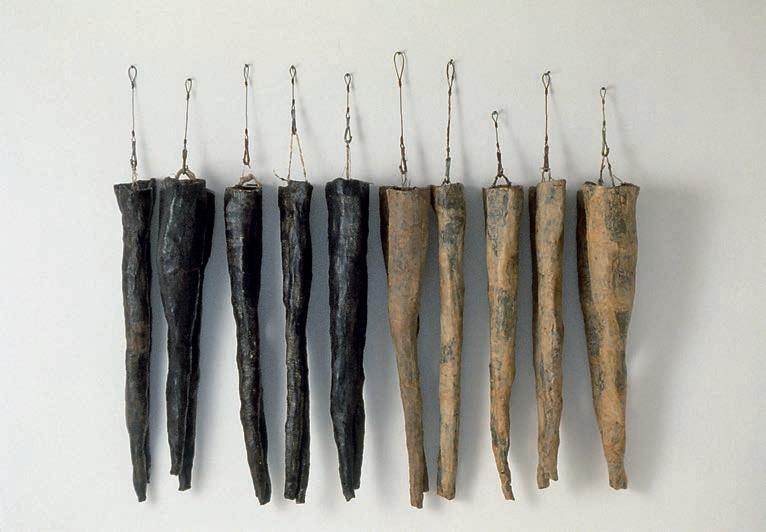
This is an extraordinary work which is, in fact, one of Matalon’s most representational sculptures. It is made of wire, wax, glue, and gauze, and shows a series of ten disembodied leg-like forms hanging from hooks on a wall, reminding the viewer of abandoned prosthetic limbs. The line-up of these disconnected elements presents us with a ghostly farewell to her many friends and acquaintances whose lives were lost in the terrible epidemic that afflicted millions of men and women worldwide.
The AIDS catastrophe is by no means over; it continues to hover as a ghostly presence in virtually every society throughout the globe. It may have lost much of its newsworthy ‘topicality’ but nonetheless its ravages are felt everywhere by every sector of society. AIDS and its attendant horrors, both societal and personal, continue to haunt the persona and the psyche of Linda Matalon and
4 Susan L. Aberth, e-mail correspondence with the author, September 19, 2024.
5 Edward J. Sullivan, Latino New York: Art and Experience 1970-2001 (New Haven and London: Yale University Press, 2025).
Linda Matalon
Goodbye to All My Drag Queens, 1993 [Adiós a todas mis drag queens] Alambre, cera, brea, gasa y pegamento
[Wire, wax, tar, gauze and glue] 127 × 177,8 × 35,6 cm
la obra de Matalon para el catálogo de la exposición Linda Matalon, Work: 1977-2012 [Linda Matalon, Obra: 1977-2012], realizada durante su estancia como artista residente en el Hopkins Center for the Arts del Dartmouth College en el otoño de 2012.3 Cuando le conté que escribiría sobre Linda para esta publicación, me respondió: “Me alegra tanto saber que escribirás sobre Linda, es una GRAN artista. Su obra es tan sombría, tan espiritual, tan formalmente fantástica, y ella ha sabido perseverar a lo largo de los años. Además, es una persona muy agradable y también escorpiana, de modo que se llevarán muy bien…”.4
Gran parte de la obra de Linda en los años ochenta y noventa estuvo asociada a sus cruces con artistas que tenían complicaciones de salud por causa del sida. Hago referencia a este fenómeno en mi libro Latino New York: Art and Experience 1970-2001 [Nueva York latina: Arte y experiencia 1970-2001], en el que publico la imagen de una sus esculturas más conocidas, Good Bye to All My Drag Queens [Adiós a todas mis Drag Queens] (1993, colección privada Nueva York).5 Se trata de una obra extraordinaria que, por cierto, es una de las más representativas de Matalon. Hecha de alambre, cera, pegamento y gasa, es una serie de diez formas que se asemejan a piernas sin cuerpos colgadas de unos ganchos en la pared, que nos traen la imagen de piernas ortopédicas abandonadas. La alineación de estos elementos inconexos nos presenta una despedida fantasmagórica de sus numerosos amigos y conocidos cuyas vidas se perdieron en la terrible epidemia que afectó a millones de hombres y mujeres en todo el mundo.
La catástrofe del sida está muy lejos de haber terminado; de hecho, continúa al acecho como una presencia fantasmal en prácticamente todas las sociedades del planeta. Tal vez ha perdido gran parte de su “actualidad” como noticia, pero sus estragos se dejan sentir en todos los sectores de la sociedad. El sida y los horrores que conlleva, tanto sociales como personales, siguen afectando a Linda Matalon, tanto en su personalidad pública como en su intimidad psíquica y, a pesar de que su arte es no representativo, es un tema constante en su obra. Ksenia M. Soboleva, la crítica e intérprete más persuasiva del arte de Matalon, defiende con suma elocuencia la singularidad del enfoque de la artista, desde el punto de vista de sus formas expresivas profundamente personales y del papel que desempeña como una de las principales portavoces lésbicas de los estragos emocionales de la crisis del sida. Como explica la artista con sus propias palabras en un video de YouTube fechado el 5 de abril de 2022 y producido por The Brooklyn Rail en ocasión de la exposición en la Candice Madey Gallery, su vida durante los primeros años de la crisis del sida consistía en trabajar en su estudio, asistir casi a diario
3 Susan L. Aberth, “Linda Matalon: Luminosity, Oscillation and the Sublime”, en el catálogo de la exposición Linda Matalon. Work: 1997-2012, Hanover, New Hampshire, Hopkins Center for the Arts, Dartmouth College, 2012, pp. 17-20.
4 Susan L. Aberth, correo electrónico con el autor con fecha 19 de septiembre de 2024.
5 Edward J. Sullivan, Latino New York: Art and Experience 1970-2001, New Haven y Londres, Yale University Press, 2025.
despite the non-representational quality of her art, it is a constant theme within her work. Ksenia Soboleva, the most persuasive critic and explicator of Matalon’s art, articulately makes the case for the uniqueness of her approach, both from the point of view of the artist’s deeply personal expressive forms, but also in view of her role as one of the principal Lesbian enunciators of the emotional ravages of the AIDS crisis. As the artist explains in her own words in an YouTube video from April 5, 2022, produced by The Brooklyn Rail in conjunction with the Candice Madey Gallery show, her life during the early years of the AIDS crisis consisted of making work in her studio, attending almost daily memorial services for her gay male friends who had died, cooking macrobiotic meals for those still living with the syndrome, and helping to disassemble the apartments of her deceased friends.6 Matalon also realized, as did many of her colleagues who were instrumental in founding the organization that came to be known as ‘Visual AIDS,’ that the work of many artists who had died as a result of HIV-related diseases was being disposed of by their families and relatives. Artists like the New York-based José Luis Cortés have given (in an extraordinary oral history interview with fellow artist Eric Rhein) eloquent testimony to the terrible situation of the art of dead or dying.7 Visual AIDS has been a crucial entity in the preserving of artists’ legacies. Its website explains major aspects of its founding and its mission:
Visual AIDS was founded in 1988 by art critic and writer Robert Atkins, curators Gary Garrels, Thomas Sokolowski (1950-2020) and William Olander (1951–1989). Visual AIDS was one of the first national initiatives to record the impact of the AIDS pandemic on the artistic community. It brought together the arts and AIDS communities through its renowned national projects Day Without Art, Night Without Light and The Ribbon Project […]. Visual AIDS is the only contemporary arts organization fully committed to raising AIDS awareness and creating dialogue around HIV issues today, by producing and presenting visual art projects, exhibitions, public forums, and publications while assisting artists living with HIV/AIDS. We are committed to preserving and honoring the work of artists with HIV/AIDS and the artistic contributions of the AIDS movement. We embrace diversity and difference in our staff, leadership, artists, and audiences. 8
I am both pleased and dismayed to be writing this essay at the present moment, November, 2024. Contrary to public opinion, the AIDS crisis – one of Linda Matalon’s formative experiences – is far from over. In fact, it is raging among the general public in several
6 https://www.youtube.com/watch?v=tECtZfPB_MM
7 https://www.instagram.com/joseluiscortesart/reel/CyjUZukIliR/
8 https://visualaids.org/about-us
a los funerales de sus amigos gays, cocinar comidas macrobióticas para los que aún convivían con el síndrome y ayudar a desmontar los departamentos de sus amigos fallecidos.6 Matalon también se dio cuenta, al igual que muchos de sus colegas que tuvieron un papel decisivo en la creación de la organización que llegó a conocerse como Visual AIDS, de que las obras de muchos artistas que habían fallecido a consecuencia de enfermedades relacionadas con el VIH eran desechadas por sus familiares y allegados. Artistas como José Luis Cortés, radicado en Nueva York, han dado elocuente testimonio (en una extraordinaria entrevista de historia oral con su colega Eric Rhein) de la terrible situación en la que quedaban las obras de los artistas muertos o moribundos.7 Visual AIDS ha sido una entidad con un rol crucial en la preservación del legado de los artistas. Su sitio web explica aspectos importantes de su fundación y su misión:
Visual AIDS fue fundada en 1988 por el crítico de arte y escritor Robert Atkins, los curadores Gary Garrels, Thomas Sokolowski (1950-2020) y William Olander (1951-1989). Fue una de las primeras iniciativas nacionales nacidas con el propósito de registrar el impacto de la pandemia del sida en la comunidad artística. Reúne a las comunidades de artistas y del sida a través de proyectos nacionales muy reconocidos, como son Day Without Art, Night Without Light y The Ribbon Project […]. Visual AIDS es la única organización artística contemporánea plenamente comprometida con la tarea de generar conciencia sobre el sida y abrir el diálogo en torno a las cuestiones relacionadas con el VIH en la actualidad, mediante la producción y presentación de proyectos de artes visuales, exposiciones, foros públicos y publicaciones, y a la vez ayudar a los artistas que conviven con el VIH/Sida. Nos comprometemos a preservar y honrar el trabajo de los artistas con VIH/ Sida, como también las contribuciones artísticas realizadas por los movimientos de lucha contra el sida. Abrazamos la diversidad y la diferencia dentro de nuestro personal, líderes, artistas y públicos.8
Me complace y a la vez me consterna estar escribiendo este ensayo en este momento, noviembre de 2024. Contrariamente a lo que piensa la opinión pública, la crisis del sida –una de las experiencias formativas de Linda Matalon–está lejos de haber terminado. De hecho, sigue siendo devastadora entre la población general de varias naciones africanas; y en Europa y Norteamérica, las enfermedades relacionadas con el sida no están muy por detrás de las fuerzas destructivas predominantes en otros países. El sida no es ahora –ni lo ha sido nunca– un síndrome que afecta únicamente a
6 https://www.youtube.com/watch?v=tECtZfPB_MM
7 https://www.instagram.com/joseluiscortesart/reel/CyjUZukIliR/
8 https://visualaids.org/history
African nations; and in Europe and North America, AIDS-related disease is not far behind the destructive forces in other countries. AIDS is not now – nor has it ever been – a syndrome associated solely with the LGBTQIA+ population. It is a universal malaise and one that has unfortunately been associated in the minds of many with a ‘minority’ populace. But nothing could be further from the truth. Linda Matalon’s work – which is not, for the most part, overtly identified with her sympathies for the ravages of AIDS-associated diseases – is as pertinent to today’s social malaise and political disorders as it has ever been. Within her quasi-hermetic visual language and the visceral implications of her imagery, she creates embodiments of pain and despair – as well as hope – that are as powerful as those that she conceived during the most viscerally potent moments of her creativity in the 1980s and ’90s.
In June 2023, I traveled to Buenos Aires, a city I know well and where I feel completely at home. The principal reason for that journey was to attend the opening of an exhibition at the Fundación PROA on the subject of ‘El Dorado’. At the same time, I made an inevitable and always much anticipated stop at the Museo Moderno, where Linda Matalon had had a successful exhibition the year before. I confess to feeling jealous of the porteño public, who had been privileged to have an anthological view of this artist’s work, while my fellow New Yorkers were still waiting for such a pleasure. In conversations with my long-time and much-esteemed colleague Victoria Noorthoorn, Francisco Lemus, and other members of the museum’s curatorial and editorial teams, we discussed the success of the Matalon show and their desire to produce a book about her art. I could not have been more enthusiastic and agreed immediately to cooperate. The present text is the result of these conversations.
The art on view in Linda’s retrospective consisted of her two-dimensional production (a subsequent show at the Kadel Willborn gallery in Düsseldorf included sculptures).9 I prefer in this essay to concentrate on the works on paper (I am not sure whether to refer to them as drawings, as they are, in fact, ‘sculptures on paper’ or even ‘semi-3-dimensional constructions’). To this end, I had the privilege of having several extraordinary studio visits with Matalon in the past several months. The first of these provided me with an initial revelation; I am always interested in and indeed inspired by seeing the locale of any artist’s creative process, and Linda’s studio occupies a large and light-filled white space in a small building in the Williamsburg section of Brooklyn. We initially spoke for several hours, and I saw a representative example of her drawings and sculptures. We talked about mutual friends and acquaintances, and, at some point, the conversation turned to the subject of Linda’s circle of gay male friends in the 1980s and ’90s. Some of these individuals were people I had also known from the New York art world. Recalling our mutual reactions to the scourge of AIDS was a deeply
9 The exhibition I Absolutely Love You [Work in Two Pandemics] was presented at Kadel Willborn, Düsseldorf from October 28 to December 16, 2023.
la población LGBTQIA+. Es un mal universal que, lamentablemente, ha quedado asociado en la mente de muchos con una población “minoritaria”. Pero nada más alejado de la realidad. La obra de Linda Matalon –que no es en absoluto benevolente con los estragos producidos por las enfermedades asociadas al sida– resulta tan pertinente en el clima de descontento social y trastornos políticos de hoy como lo ha sido siempre. Con su lenguaje visual casi hermético y las implicancias viscerales de sus imágenes, Linda encarna en sus dibujos el dolor y la desesperación, así como la esperanza, de manera tan poderosa como en los momentos de mayor potencia de su creatividad, durante las décadas de 1980 y 1990. En junio de 2023 viajé a Buenos Aires, una ciudad que conozco bien y en la que me siento completamente a gusto. El motivo principal de ese viaje fue asistir a la inauguración de una exposición en la Fundación PROA sobre el tema de “El Dorado”. Al mismo tiempo, hice una parada inevitable, y siempre anhelada, en el Museo Moderno, donde Linda Matalon había realizado una exitosa exposición el año anterior. Confieso que sentía celos del público porteño que había tenido el privilegio de tener una visión antológica de la obra de esta artista, mientras que mis compatriotas neoyorquinos aún tenían que esperar para disfrutar de ese placer. Durante mis conversaciones con mi antigua y estimada colega Victoria Noorthoorn, Francisco Lemus y otros miembros de los equipos curatorial y editorial del museo, hablamos del éxito de la exposición de Matalon y de su deseo de producir un libro sobre su obra. Nada podía haberme entusiasmado más, por lo que de inmediato acepté colaborar. Este escrito es el resultado de nuestras conversaciones.
La retrospectiva de la obra de Linda en Buenos Aires incluía su producción bidimensional (sus esculturas se exhibieron en una exposición posterior en la galería Kadel Willborn de Düsseldorf, Alemania).9 En este ensayo prefiero concentrarme en las obras en papel. No estoy seguro sobre si referirme a ellas como dibujos, ya que, de hecho, son “esculturas sobre papel” o incluso “construcciones semitridimensionales”. Con este propósito tuve el privilegio de realizar varias visitas extraordinarias al estudio de Matalon en los últimos meses. La primera visita me abrió a una revelación inicial. Siempre me interesa, y de hecho me inspira, ver el lugar donde se desarrolla el proceso creativo de cualquier artista, y el estudio de Linda ocupa un amplio y luminoso espacio pintado de blanco en un pequeño edificio del barrio de Williamsburg, en Brooklyn. Primero hablamos durante varias horas y pude estudiar una muestra representativa de sus dibujos y esculturas. Hablamos de amigos y conocidos comunes y, en algún momento, la conversación derivó hacia el círculo de amigos homosexuales de Linda en los años ochenta y noventa, algunos de los cuales yo conocía del mundo del arte neoyorquino. Recordar nuestra propia reacción ante el flagelo del
9 La exposición I absolutely love you (work in two pandemics) [Te amo absolutamente (obra en dos pandemias)], presentada en la Kadel Willborn, Düsseldorf, se extendió del 28 de octubre al 16 de diciembre de 2023.
moving experience, and it made me reflect on so many memories of my own, some of which I had consciously kept hidden even from myself given the very painful nature of the realities of those times. At one point I found it necessary to leave the studio as I became virtually overwhelmed by melancholy and was plunged deeper into my own reveries of sadness by Linda’s eloquent reminiscences.
I proposed to Linda that, in further preparation for this essay, she allow me to return to the studio and spend time there alone, studying the work, looking closely at its surfaces, and trying to comprehend the implications of the clandestine visual languages, the veiled references to past times and experiences, and to attempt to come to terms with the consequences of the markings, lines, circles, the light and heavy graphite stick scratches, shapes, surreptitious motifs, and the color present in all of her drawings.
To describe Linda Matalon’s drawings in terms of ‘color’ may certainly appear to some as oxymoronic. When entering the studio, or some other space where her works on paper are displayed, an initial reaction would probably not include a perception of a variety of tones. Nonetheless, virtually all the works are suffused with both light and a variety of hues. Some of these derive from the natural color of the paper, while others come from the waxy substance that covers many of the surfaces. ‘Color scale’ is a relative term and differs from artist to artist, and, in Matalon’s case, the variegated and infinitely subtle tones constitute a true, albeit sometimes barely perceptible, range of shades that speak to the intimate values – visual, emotional, even spiritual – that she strives to suggest and create. In fact, I find in Matalon’s work a premeditated lack of conventional color. Yet the greys, whites, and browns are in constant conversation, thus creating the sensation of an alternate language of color separate from the predictable gradations of the visible light spectrum. What is then established is an alternative form of visual expression in which the artist has freed herself from the imperatives of ‘expected’ or ‘conventional’ color norms and instead literally invents an alternative mode of perceiving light.
I made another visit to Linda’s studio on October 2, 2024. While I spent a considerable amount of time alone in silent contemplation of her work – watching as the filtered early afternoon light on a grey day changed and transformed the surfaces of her drawings –we also had the opportunity to speak for some time before I entered my secluded reverie. This time, the conversation centered on the art and the physical act of drawing. We talked about what applying marks to a piece of paper means, what preparations she makes to prepare the surface, how decisions regarding what type of shapes and combinations of contours on which to concentrate come about. Our dialogue was intense, and intensely instructive for me. It was, indeed, a privilege to hear such an articulate and thoughtful analysis by the artist of her artmaking.
In addition to technique and studio practice, Linda and I spoke about institutional history, as well as the history of the art of drawing itself. As an art historian, I felt myself to be in absorbing
sida fue una experiencia profundamente conmovedora y me hizo reflexionar sobre muchos de mis recuerdos, algunos mantenidos conscientemente ocultos incluso de mí mismo, dada la dolorosa realidad de aquellos tiempos. En un momento dado, sentí la necesidad de irme del estudio porque estaba completamente embargado por un sentimiento de melancolía, hundiéndome en mis propias visiones de tristeza por las elocuentes reminiscencias de Linda.
Con miras a seguir preparando este ensayo, le propuse que me permitiera volver al estudio para pasar un tiempo a solas, estudiando la obra, observando detenidamente sus superficies e intentando comprender las implicancias de los lenguajes visuales clandestinos, las referencias veladas a otros tiempos y a las experiencias del pasado, y asimilar las consecuencias de las marcas, las líneas, los círculos, los rasguños de grafito livianos y pesados, las formas, los motivos subrepticios y el color presente en todos sus dibujos.
Describir los dibujos de Linda Matalon en términos de “color” puede indudablemente resultar paradójico. Al entrar en el estudio o en cualquier otro espacio donde se expongan sus obras sobre papel, la reacción inicial probablemente no sea la de percibir una gran variedad de tonos. Sin embargo, prácticamente todas las obras están impregnadas de luz y matices. Algunos derivan del color natural del papel, mientras que otros proceden de la sustancia cerosa que cubre muchas de las superficies. “Escala de color” es un término relativo, difiere de un artista a otro y, en el caso de Matalon, los tonos abigarrados e infinitamente sutiles constituyen una gama de matices genuina, aunque a veces apenas perceptible, que habla de los valores íntimos –tanto visuales como emocionales o incluso espirituales– que se esfuerza por sugerir y crear. De hecho, detecto en la obra de Matalon una ausencia premeditada de colores convencionales. No obstante, los grises, blancos y marrones están en constante diálogo, creando así la sensación de un lenguaje alternativo del color que se diferencia de las gradaciones predecibles del espectro de luz visible. Lo que se establece, entonces, es una nueva forma de expresión visual en la que la artista se ha liberado de los imperativos de las normas de color “previstas” o “convencionales” y, en su lugar, inventa literalmente un modo alternativo de percibir la luz.
Volví a visitar el estudio de Linda el 2 de octubre de 2024. Aunque pasé bastante tiempo a solas y contemplando en silencio su obra, observando cómo la luz filtrada de las primeras horas de la tarde en un día gris cambiaba y transformaba las superficies de sus dibujos, también tuve la oportunidad de conversar con ella durante cierto tiempo antes de que yo entrara en mi ensueño solitario. Esta vez, la conversación se centró en el arte y el acto físico de dibujar. Hablamos sobre lo que significa aplicar marcas a un papel, cómo preparar la superficie, cómo surgen las decisiones sobre en qué tipo de formas y combinaciones de contornos concentrarse. Nuestro diálogo fue intenso y profundamente instructivo para mí. En verdad, fue un privilegio escuchar un análisis tan palmario y reflexivo de la artista sobre su propio arte.
Además de conversar sobre su técnica y su práctica en el estudio, Linda y yo hablamos sobre historia institucional y sobre la historia del arte del dibujo. Como historiador de arte, sentí que estaba en un
intellectual territory. I find that I learn a great deal from talking about my professional concerns with artists who inevitably have professional and aesthetic perceptions that differ – often greatly –from my own. One of the institutions we discussed was The Drawing Center, founded in 1977 on the ground floor of an industrial building on Greene Street and later moved to its present location on Wooster Street. It had been created as a space dedicated solely to the widest possible varieties of representation using pen, pencil, and other utensils applied to a surface. Although the initial idea of the Center’s founder, Martha Beck, who had formerly worked at the Department of Drawings at The Museum of Modern Art, was to serve as a showcase for drawings by contemporary artists who lived in the SoHo neighborhood of Manhattan. SoHo was a former light-manufacturing district that had been virtually neglected until its large loft-like spaces were ‘discovered’ by artists, and it was turned into the premier contemporary art space for the city’s most experimental and forwardlooking creators. One of the Center’s initial shows was a display of the drawings of renowned Catalan architect, Antoni Gaudí, a show I distinctly remember seeing in Spring, 1977. It was curated by George Collins, a professor at Columbia University and a great authority on the work of Gaudí. Perhaps more representative of The Drawing Center’s goals were the exhibitions of artists like Shazia Sikander in 1997 (an exhibition I recalled when seeing her spectacular show at The Morgan Library and Museum in Summer, 2021).
Linda had worked for a period at The Drawing Center and participated in two group exhibitions there, in 1992 and 1993.10 She continued to visit the Center and has kept up with a wide variety of contemporary approaches to drawing. We then turned our attention to the history of drawing itself. Matalon is very well versed in the history of art of many regions and time periods. She commented that she had not studied art history in a ‘formal sense,’ yet her knowledge, gleaned from decades of assiduous observation of all genres of art, has created in her repertory of expertise an immense basis of understanding of the aesthetic experience, with a global sensibility. During our conversation, Linda made what I thought was an extremely provocative remark. She stated that, until recent times (well into the 1980s), many people considered only historical drawings as legitimate and independent forms of visual expression. By the 1990s, according to Matalon, contemporary drawings ‘came into their own’ and could no longer be considered as either illustration or preparatory studies for, say, a sculpture, but were instead considered autonomous works. We then turned back to the subject of ‘historical drawing’ and her own devotion to their study. I brought up the example of the Metropolitan Museum’s extraordinary exhibition on the drawings of Jacques Louis David in 2022 as one of the most outstanding and inspiring old master drawing shows that I had ever seen.11 Linda
10 Winter Selections 1992 and Return of the Cadavre Exquis November–December 1993.
11 Jacques Louis David: Radical Draftsman, New York, Metropolitan Museum of Art, February-May, 2021.
territorio intelectual absorbente. He descubierto que aprendo mucho hablando sobre mis preocupaciones profesionales con artistas que inevitablemente tienen percepciones profesionales y estéticas que difieren (a menudo considerablemente) de las mías. Una de las instituciones sobre las que conversamos fue The Drawing Center, que se fundó en 1977, en la planta baja de un edificio industrial situado en Greene Street y, tiempo después, se trasladó a su sede actual, en Wooster Street. Nació como un espacio dedicado exclusivamente a la más amplia variedad de representaciones posibles mediante lapiceras, lápices y otros utensilios aplicados a una superficie. La idea inicial de su fundadora, Martha Beck –que había trabajado anteriormente en el Departamento de Dibujo del MoMA–, era que The Drawing Center se convirtiera en una vidriera para los dibujos de los artistas contemporáneos que vivían en el distrito de Manhattan conocido como SoHo. El SoHo era un antiguo distrito de industrias ligeras que habían caído prácticamente en desuso hasta que sus espacios abiertos tipo loft, en gran parte abandonados, fueron “descubiertos” por artistas y, poco a poco, se convirtió en el principal barrio de arte contemporáneo para los creadores más experimentales y vanguardistas de la ciudad. Una de las primeras exposiciones en The Drawing Center fue una muestra de los dibujos del renombrado arquitecto catalán Antoni Gaudí, exposición que recuerdo haber visto en la primavera de 1977. Su curador era George Collins, profesor de la Universidad de Columbia y una figura con autoridad sobre la obra de Gaudí. Quizá más representativas de los objetivos que se había propuesto The Drawing Center fueron las exposiciones de artistas como Shazia Sikander en 1997 (la recordé al ver su espectacular muestra en The Morgan Library and Museum en el verano de 2021).
Linda había trabajado durante un tiempo en The Drawing Center y participado en dos exposiciones colectivas, en 1992 y 1993.10 Además de seguir en contacto con el lugar, se ha mantenido al tanto de los numerosos y diversos enfoques contemporáneos sobre el dibujo. De hecho, conversamos sobre la historia del dibujo. Matalon conoce muy bien la historia del arte de diferentes regiones y épocas. Me comentó que no había estudiado historia del arte en un “sentido formal”, pero sus conocimientos, adquiridos tras décadas de asidua observación de todos los géneros artísticos, le han brindado un amplio repertorio de conocimientos técnicos y una inmensa base de comprensión de la experiencia estética, con una sensibilidad global. Durante nuestra conversación, Linda hizo lo que me pareció una observación extremadamente provocadora. Afirmó que hasta hacía poco (bien entrada la década de 1980) muchos consideraban solo los dibujos históricos como formas legítimas e independientes de expresión visual. Según Matalon, fue en los años noventa que el dibujo contemporáneo “adquirió entidad propia” y dejó de ser solo una ilustración o un estudio preparatorio con miras a crear, por ejemplo, una escultura, para pasar a ser considerado obra autónoma.
10 Winter Selections [Selecciones de invierno], en 1992 y Return of the Cadavre Exquis [Retorno del Cadavre Exquis], noviembre-diciembre de 1993.
readily agreed, and we discussed how much the dozens of both preparatory studies and ‘finished’ drawings (independent works of art) had moved us and taught us both to look even closer at the power of the curvilinear line. I was very affected by Linda’s comments on the great late-eighteenth-century French Neo-Classicist, and it inevitably made me reflect on how Matalon herself uses line –sometimes with the greatest of subtlety and at other times with thick, definitive strokes, to evoke a mood and create an atmosphere. Her ‘atmospheric’ management of space and volume by employing the most deft and refined strokes of the graphite stick yields results that speak in an eloquent pictorial language which is both hermetic and viscerally appealing.
Our conversation came to an end, and I began my solo exploration of the works on paper that Linda had installed in the studio for my consideration and examination. I wish to be very clear about the centrality of what may be conventionally labelled ‘drawing’ to Matalon’s overall artistic project. During one of our conversations, the subject of painting came up. I wondered why she had not produced a body of works on canvas with either acrylics or oil paint that might either complement or reflect some of the ‘themes,’ or rather ‘essences,’ that appear in her works on paper. She answered me very simply, stating that she had never been attracted to the act of painting. I obviously accepted her answer to my query, but then began to unpack or unravel (whichever metaphor you wish to use) this response. I came to the realization that, for Linda, the paper itself represents a metaphor for skin. Touching, caressing, altering, or entering into an intimate tactile communication with its substance is a way to evoke the act of healing or transformation. The paper becomes the enfolding substance that guards (or shrouds) the body’s inner mechanisms. By working with paper and transforming it from a plain surface into a living entity through the application of waxy substances and graphite marks, the artist commences the most intimate possible relationship with a quintessential constituent of humanity’s physicality.
I spent a long period of time in the studio contemplating the work, attempting to clear my mind of the types of art historical questions that I had been taught to ask myself and my students (or readers) about the history, evolution, and meanings of a work of art. I wanted to free my consciousness of the stereotypes of aesthetic, chronological imperatives or other recourses inevitably employed by the art historian – or art critic – which might ensnare them within a labyrinth of stereotypes.
I was involved in solitary contemplation in the studio –the most intimate ‘inner sanctum’ of an artist. I felt like some hybrid cross between a thief and a voyeur, attempting to fathom the processes by which Linda Matalon creates her art and therefore makes concrete her emotional and intellectual individuality. The first thing I began to observe with all the energy I could conjure was the paper on which she creates her drawings. The paper
Luego nos internamos en el tema del “dibujo histórico” y de su devoción por su estudio. Mencioné la extraordinaria exposición de dibujos de Jacques-Louis David en el Metropolitan Museum en 2022 como una de las exhibiciones de antiguos maestros más destacadas e inspiradoras que jamás había visto.11 Linda estuvo de acuerdo y hablamos de lo mucho que nos habían conmovido las decenas de estudios preparatorios y de dibujos “acabados” (obras de arte independientes), que nos habían enseñado a mirar más de cerca el poder de la línea curvilínea. Me impactaron mucho sus comentarios sobre el gran neoclasicista francés de finales del siglo XVIII e inevitablemente me hicieron reflexionar sobre cómo la propia Matalon utiliza la línea –a veces con máxima sutileza y otras con trazos gruesos y definitivos– para evocar un estado de ánimo y crear una atmósfera. Su manejo “atmosférico” del espacio y del volumen mediante los trazos más hábiles y refinados del grafito produce resultados que hablan en un lenguaje pictórico elocuente, que es a la vez hermético y visceralmente atractivo. Nuestra conversación llegó a su fin y comencé a explorar a solas las obras sobre papel que Linda había dejado en el estudio para mi consideración y examen. Quiero ser muy claro respecto de la centralidad que ocupa lo que convencionalmente se denomina “dibujo” en el proyecto artístico general de Matalon. Durante una de nuestras reuniones surgió el tema de la pintura. Me pregunté por qué no había realizado un conjunto de obras sobre tela con acrílicos o pintura al óleo que pudieran complementar o reflejar algunos de los “temas” o, mejor dicho, las “esencias” que aparecen en sus obras sobre papel. Me respondió simplemente que nunca se había sentido atraída por el acto de pintar. Evidentemente, acepté su respuesta a mi pregunta, pero a continuación empecé a desentrañar o desenmarañar (según la metáfora que se quiera utilizar) su respuesta. Comprendí que, para Linda, el papel representa una metáfora de la piel. Tocar, acariciar, alterar o entrar en íntima comunicación táctil con su sustancia es una forma de evocar el acto de curación o transformación. El papel se convierte en la sustancia envolvente que protege (o amortaja) los mecanismos internos del cuerpo. Al trabajar con el papel y transformarlo de una superficie lisa a una entidad viva mediante la aplicación de sustancias cerosas y marcas de grafito, la artista logra establecer la relación más íntima posible con el elemento constitutivo por antonomasia de la fisicalidad del ser humano.
Pasé un largo rato en el estudio contemplando la obra, intentando despejar mi mente de las preguntas propias de la historia del arte que me habían enseñado a plantearme a mí mismo y a mis alumnos (o lectores) sobre la historia, la evolución y los significados de una obra de arte. Quería liberar mi conciencia de los estereotipos estéticos, imperativos cronológicos u otros recursos que inevitablemente empleamos los historiadores o críticos de arte y que pueden enredarnos en un laberinto de estereotipos.
becomes a landscape unto itself. The markings upon it take on the character of natural, organic growth, like lichen growing on an abandoned wooden bench in a lonely, seldom visited park.
Matalon’s drawings are of a wide variety of sizes, yet they all have a relationship to each other and an over-all coherence. At first glance they may appear enigmatic, containing markings and hermetic symbols that are opaque to the viewer. But then something quasi-transcendent takes over, and we become absorbed in the intuitive meanings of the lines, shapes, and continuities of markings that follow from one drawing to another. The large drawings – sometimes made of two or even three sheets of paper joined together – are like excavations. We observe – and indeed internalize – the layers of marks that are applied to the surfaces and then assiduously scraped away. We are reminded of the uncovering of a long-forgotten wall painting, or even the enigmatic finds discovered during an archaeological excavation. The artist becomes her own archaeologist. She creates, hides, or otherwise obscures shapes, and then begins to uncover them by physically scraping away extraneous markings. Nonetheless, within this process, she is careful to allow the viewer to complete the job with their own eyes, thus allowing the beholder of the work to recover the often-enigmatic forms and to facilitate their own impulses, narratives, and untold tales for themselves.
Those drawings that are formed by two or even three sheets attached to each other are joined by a central spine –a spinal cord or spinal column. This quasi-anatomical feature contributes to the impression of a living pulse within the work. In a number of these works, there is a series of holes: hollow forms that sometimes appear as bullet holes or deliberate perforations by an intruding force. They appear like eye sockets, or apertures that lead us beyond the image and into hidden spaces. Some of these holes are filled in, as if the artist were saying ‘Stop! You can’t go there! This is not for you now –or ever!’ This curious, even confounding aspect of the drawing creates a feeling of ‘push-and-pull’–although not in the sense of Hans Hoffman’s famous ‘push-and-pull effects.’ Hoffman achieves this with variations of texture and color, while Matalon engages in an inscrutable game of hide-and-seek.
In some of the smaller drawings, I was attracted to the earth tones in both horizontal and angular configurations, which reminded me of mud, excrement, sludge, or the possibility of dawn, hinting at the effects of the sun rising above the landscape. Matalon suggests what I would call ‘landscapes of disappearance,’ where forms fade in and out. They retreat and return as a partial result of her use of a sfumato effect, which also reminds me of sixteenth- or seventeenthcentury Japanese painting, in which artists employ a cloud-like cover to both obscure and cover large portions of the picture plane. This then has the effect of enhancing and emphasizing those areas of the visual field not enveloped by the cloud.
Matalon’s use of wax is one of her signature techniques. She admits to not remembering exactly when she began to use this
Me dediqué a la contemplación solitaria en el estudio, el “santuario interior” más íntimo de un artista. Me sentía como una mezcla de ladrón y voyerista, al intentar desentrañar los procesos por los que Linda Matalon crea su arte y, por lo tanto, materializa su individualidad emocional e intelectual. Lo primero que observé, con toda la energía que fui capaz de reunir, fue el papel sobre el que Linda crea sus dibujos. El papel se convierte en un paisaje en sí mismo. Las marcas que hay en él van creciendo en forma natural y orgánica como el liquen que crece en un banco de madera abandonado en un parque solitario y poco visitado.
Los dibujos de Matalon son de tamaños muy diferentes, pero todos guardan una relación entre sí y una coherencia general. A primera vista, pueden parecer enigmáticos, con marcas y símbolos herméticos opacos para el espectador. Pero luego surge algo casi trascendente y quedamos imbuidos en los significados intuitivos de las líneas, las formas y la continuidad de las marcas que se prolongan de un dibujo a otro. Los grandes dibujos –a veces hechos con dos o hasta tres hojas de papel unidas– son como excavaciones. Observamos (y, de hecho, internalizamos) las distintas capas de marcas aplicadas a las superficies y luego con frecuencia raspadas. Nos remite al descubrir de un mural olvidado detrás de una capa de pintura, o incluso a un hallazgo enigmático durante una excavación arqueológica. La artista es su propia arqueóloga. Crea, tapa o enmascara formas, y luego empieza a descubrirlas raspando físicamente esas marcas extrañas. No obstante, dentro de este proceso, se toma el trabajo de permitir que el espectador complete la obra con sus propios ojos des-cubriendo esas formas, a menudo enigmáticas, y generando sus propios impulsos, narrativas e historias no contadas.
Los dibujos formados por dos o incluso tres hojas están unidos por una columna vertebral o médula central. Este rasgo casi anatómico contribuye a dar la impresión de un pulso vivo dentro de la obra. En varios de estos dibujos se ve una serie de agujeros, formas huecas que a veces parecen orificios de bala o perforaciones deliberadas hechas por una fuerza intrusa. Parecen cuencos oculares o aberturas que nos llevan más allá de la imagen para ingresar en un espacio oculto. Algunos de estos agujeros están rellenos, como si la artista nos dijera: “¡Alto ahí, no podés avanzar! Esto no es para vos ni ahora… ¡ni nunca!”. Este aspecto curioso, y hasta confuso del dibujo, crea una sensación de “empujar y tirar”, aunque no en el sentido de los famosos efectos de “empujar y tirar” de Hans Hoffman. Hoffman lo consigue con variaciones de textura y color, mientras que Matalon se embarca en un inescrutable juego de las escondidas.
En el caso de algunos de los dibujos más pequeños, me atrajo la variedad de tonos terrosos en configuraciones tanto horizontales como angulares que me recordaron el barro, los excrementos, el lodo o la posibilidad del amanecer cuando se insinúan los efectos del sol sobre el paisaje. Matalon evoca lo que yo llamaría “paisajes de desaparición” en los que las formas surgen y se desvanecen, se alejan y regresan, en parte como resultado del efecto sfumato que utiliza y que también me recuerda la pintura japonesa de los siglos XVI o XVII, en la que los
substance, stating, in one interview, that she may have had some wax in the studio and started to use it in order to see how it would react with paper. She cures the paper with heated wax to create her surface. In effect there are only three elements to her drawings: the paper itself, wax, and graphite. Matalon is especially drawn to Chinese and Japanese ink painting and recalls the impact made on her by the classic work entitled Six Persimmons. This is a thirteenth-century work by Chinese artist Muqi, now in the Daitokuji Buddhist Temple in Kyoto. Its sobering simplicity – it depicts six fruits set against a plain yellowish background – provides viewers with a perfect vehicle for silent contemplation and sets up a quasi-abstract field of vision that invariably induces a state of almost hallucinatory aloneness. Linda cites the art critic and curator Jeffrey Weiss, a friend and someone whose writing she greatly admires, as introducing her to this ageless still life.


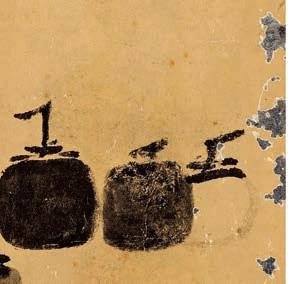

Muqi Fachang
Seis caquis, s. XIII
[Six Persimmons]
Tinta sobre papel
[Ink on paper] 38,1 × 36,2 cm
The day I spent in Linda Matalon’s studio was an extraordinary opportunity to comprehend the work of an artist who, with the greatest of subtlety, opens her sensibility and range of emotions to the viewer. Hers is not always an art that invites the observer into her aesthetic realm of being. Its visual vocabulary requires time, patience, and love to penetrate the profundities of her implications and allusions. Yet, once the beholder accepts and gives themself over to the expressive gifts that Matalon’s virtuosity provides, they are rewarded with sincerity, as well as the sobering yet joyous combinations of grief and celebration inherent in her art.
artistas aplicaban una cobertura tipo nube para difuminar y ocultar grandes porciones del plano pictórico, que tiene el efecto de realzar y enfatizar las zonas del campo visual no veladas por la nube.
La cera es una de sus técnicas más características. Matalon admite que no recuerda con exactitud cuándo empezó a utilizar esta sustancia, pero en una entrevista dijo que tal vez tenía cera en el estudio y empezó a utilizarla para ver cómo reaccionaba con el papel. Ella cura el papel con cera caliente para crear la superficie. De hecho, sus dibujos solo utilizan tres elementos: papel, cera y grafito. Matalon se siente especialmente atraída por la pintura en tinta china y japonesa y recuerda el impacto que le causó ver por primera vez la obra clásica Seis caquis. Esta obra del siglo XIII del artista chino Muqi se encuentra actualmente en el templo budista Daitokuji de Kioto. Su serena simplicidad (representa seis frutas sobre un fondo amarillo liso) le ofrece al espectador un vehículo perfecto para la contemplación silenciosa y crea un campo de visión cuasi-abstracto que invariablemente induce a un estado de solitud casi alucinatorio. Linda cita al crítico de arte y curador Jeffrey Weiss, un amigo de quien admira mucho sus escritos, como la persona responsable de haberle presentado esta naturaleza muerta atemporal.
El día que pasé en el estudio de Linda Matalon fue una oportunidad extraordinaria para comprender la obra de una artista que, con la mayor de las sutilezas, abre su sensibilidad y su abanico de emociones al espectador. El suyo no siempre es un arte que invite al espectador a entrar en su reino estético. Su vocabulario visual requiere tiempo, paciencia y amor para penetrar en las profundidades de sus implicancias y alusiones. Sin embargo, una vez que el espectador acepta y se entrega a la expresividad de su virtuosismo, es gratificado con la honestidad y las combinación sobria pero gozosa del duelo y la celebración que subyacen en sus obras.
Ruptura y resiliencia
Los dibujos elegíacos de Linda Matalon
Rupture and Resilience
The Elegiac Drawings of Linda Matalon
Ksenia M. Soboleva
‘I
will not attempt to describe the grief that possessed me...’
Frank
Bidart,
Desire, 1997
Like a bruise lingering on tender skin, Linda Matalon’s drawings quietly suggest a process of healing alongside a history of touch. Occupying a liminal space between abstraction and figuration, the amorphous compositions are deeply informed by the artist’s experience of the AIDS crisis, inhabiting a queer body amidst the rupture and resilience of so many others. Time cruelly collapsed for those deemed unworthy of life by the United States government; a government that allowed the virus to erode and puncture marginalized communities, leaving once-solid surfaces suddenly porous. Matalon’s drawings are haunted by the traces of these lingering losses. The skin, too, is a surface.
In late 2019, just a few months before the COVID-19 pandemic, I visited Matalon’s solo exhibition Canto at Emmanuel Barbault Gallery on the Lower East Side in New York. Having never experienced her work in person, I was eager to finally engage with the physicality of her art –which seemed to invite a visceral response in images alone. I had first come across reproductions of Matalon’s early sculptures in various anthologies on lesbian artists that I consulted during my doctoral dissertation research, including Cherry Smyth’s Damn Fine Art by New Lesbian Artists (1996) and Harmony Hammond’s Lesbian Art in America (2000). Matalon’s use of ephemeral materials such as wax, gauze, and tar, conveyed an eerie corporeality that intrigued me; the sculptures looked like slabs of skin held together by wire, sometimes encaged or on the verge of bursting out. They evoked a simultaneous state of invasion and leakage, disturbing the boundaries between the body’s internal and external spheres.
To my great surprise, it was not sculpture that I encountered when entering Canto. Instead, large drawings executed with graphite and wax on paper filled the room with a palpable
“No intentaré describir la pena que me poseyó...”
Frank Bidart, Desire, 1997
Los dibujos de Linda Matalon, como un moretón que perdura en la piel sensible, sugieren calladamente un proceso de curación junto con el recuerdo del contacto físico. En un espacio liminal entre la abstracción y la figuración, sus composiciones amorfas están profundamente influenciadas por la experiencia de la artista en torno a la crisis del sida, al habitar un cuerpo queer en medio de la ruptura y la resiliencia de tantos otros. El tiempo se desmoronó cruelmente para quienes el gobierno de los Estados Unidos consideraba indignos de vivir, un gobierno que permitió que el virus erosionara y perforara comunidades marginadas, volviendo repentinamente porosas las superficies que antes eran sólidas. Los dibujos de Matalon están marcados por las huellas de estas pérdidas perdurables. La piel también es una superficie.
A finales de 2019, solo unos meses antes de la pandemia de covid-19, visité la exposición individual de Matalon Canto en la Galería Emmanuel Barbault, en el Lower East Side de Nueva York. Como nunca había visto su obra en persona, estaba ansiosa por entrar en contacto con la corporalidad de su arte, que parecía invitar a una respuesta visceral solo con imágenes. Había encontrado reproducciones de las primeras esculturas de Matalon en varias antologías sobre artistas lesbianas que consulté durante mi tesis doctoral, entre ellas Damn Fine Art by New Lesbian Artists (1996), de Cherry Smyth, y Lesbian Art in America (2000), de Harmony Hammond. Su uso de materiales efímeros, como la cera, la gasa y el alquitrán, transmitía una corporalidad inquietante que me intrigaba; sus esculturas parecían capas de piel unidas por alambre; a veces enjauladas o a punto de estallar. Evocaban una idea de invasión tanto como de escape, perturbando los límites entre las esferas interna y externa del cuerpo.
presence. In their subtle gradations of greyscale tones, the drawings resembled patches of bruises, with soft, diffused edges that suggested the aftermath of pain, or perhaps of pleasure. Contemplating the expansive in-between space where the pain and pleasure coexist, my mind slowly slipped into the meditative state that Matalon’s drawings often conjured. The absence of titles enhanced the drawings’ enigmatic quality, stressing that meaning was to be found solely in form.
I instinctively felt that the artist, Matalon, was present in the gallery at the time of my visit, chatting with another art aficionado. Though we had never met, I sensed a familiar dyke energy, yet despite my inkling, I was much too shy to approach her, thinking that I could always reach out after. Upon returning home, however, I encountered the modern challenge of somebody not having a website, and her contact information was unavailable anywhere else on the internet. Brushing aside my curiosity, I concluded that Matalon had likely made a deliberate decision to remain a mystery, and I decided to respect her wishes.
The drawings continued to quietly hover in my mind throughout the following year, asserting themselves with greater intensity as the city grappled with the coronavirus, another health crisis of immense scale, causing many to draw parallels with the AIDS epidemic. Once again, the fear of contagion rendered physical contact dangerous, and desire potentially deadly. And once again, the thin veil of equality was lifted to expose the dire discrepancies in health care access, the systemic neglect of marginalized communities, and the relentless prioritization of profit over human life. It was this overwhelming sense of fragility and frustration that compelled me to reach out to Matalon. And so, in January 2021, I finally contacted the gallery and kindly requested to be connected with the artist.
Although our very first conversation took place over Zoom, it quickly assumed the warmth of an in-person encounter as Matalon dove into a grippingly odyssean recounting of her life. Born in Brooklyn to Jewish-Cuban parents that faced significant financial struggles, Matalon never thought she would pursue higher education, especially since she had grappled with a learning disability that made reading and writing difficult. When she was 12 years old, however, a young teacher showed her an artbook, and with it opened a world of possibility. ‘I couldn’t believe there was a book with no words,’ Matalon recalled to me with an untainted sense of wonder. 1 In 1977, Matalon received a scholarship to attend Pratt Institute in Brooklyn, where she embarked on a series of foundational courses. However, she struggled to feel at place in the academic environment, and it quickly became clear that her parents would be unable to cover tuition once her funding ran out. At the time, scholarships were issued as physical checks, and after completing her first
1 Oral history with Linda Matalon conducted by author, February 4, 2021.
Para mi sorpresa, no fueron esculturas lo que encontré al entrar en la exposición, sino grandes dibujos realizados con grafito y cera sobre papel que llenaban la sala con una presencia palpable. En sus sutiles gradaciones de tonos grises, los dibujos parecían manchas de moretones, con bordes suaves y difusos que sugerían las secuelas del dolor, o quizá del placer. Contemplando el amplio espacio intermedio en el que coexisten el dolor y el placer, mi mente fue entrando lentamente en el estado meditativo que evocaban los dibujos de Matalon. La ausencia de títulos reforzaba el carácter enigmático de los dibujos y subrayaba que el significado se encontraba únicamente en la forma.
Instintivamente sentí que la artista, Matalon, estaba en la galería en el momento de mi visita charlando con otro aficionado al arte. Aunque nunca nos habíamos visto, percibí una energía lésbica familiar, pero, a pesar de mi presentimiento, fui demasiado tímida para acercarme, pensando que siempre podría hacerlo después. Sin embargo, al volver a casa, me encontré con el desafío moderno de tener que abordar a alguien sin página web ni información de contacto disponible en ningún sitio de Internet. Dejando a un lado mi curiosidad, llegué a la conclusión de que Matalon había decidido deliberadamente permanecer inescrutable y preferí respetar sus deseos.
Sus dibujos siguieron rondándome por la cabeza silenciosamente durante todo el año siguiente y se hicieron presentes con mayor intensidad cuando la ciudad se enfrentó a otra crisis sanitaria de inmensas proporciones, que llevó incluso a establecer paralelismos con la epidemia del sida. Una vez más, el miedo al contagio convertía el contacto físico en peligroso y el deseo, en algo potencialmente letal. Y una vez más, se levantó el delgado velo de la igualdad para dejar al descubierto las terribles discrepancias en el acceso a la atención sanitaria, el olvido sistémico de las comunidades marginadas y la implacable priorización del lucro por encima de la vida humana. Fue esta abrumadora sensación de fragilidad y frustración lo que me impulsó a propiciar el encuentro con Matalon. Y así, en enero de 2021, finalmente me puse en contacto con la galería y solicité amablemente que me contactaran con la artista.
Aunque nuestra primera conversación fue a través de la plataforma de Zoom, no tardó en adquirir la calidez de un encuentro en persona cuando Matalon se sumergió en un apasionante relato odiseico de su vida. Nacida en Brooklyn, de padres judío-cubanos con grandes dificultades económicas, Matalon nunca pensó que cursaría estudios superiores, sobre todo porque tenía un problema de aprendizaje que le dificultaba la lectura y la escritura. Sin embargo, a los 12 años, un joven profesor le mostró un libro de arte y así le abrió un mundo de posibilidades. “No podía creer que hubiera un libro sin palabras”, recuerda Matalon con un auténtico sentido del asombro.1 En 1977, Matalon recibió una beca para asistir al Pratt Institute de Brooklyn,
1Relato oral de Linda Matalon durante la entrevista realizada por la autora, 4 de febrero de 2021.
year, Matalon – true to her queer, rebellious nature – decided to use the money for travel instead of returning to college. Over a few generations, both her mother’s and father’s families had fled pogroms and poverty, immigrating to Cuba, Colombia, and Honduras. Yet despite this heritage, Matalon had never visited Latin America, and so this journey became an opportunity to reconnect with her roots, meet distant relatives, and immerse herself in the landscape of her ancestry. When Matalon shows me photographs of her travels to Colombia during one of our future studio visits, it becomes clear to me that this experience intrinsically informed her approach to materials and form. The raw, rugged landscapes she encountered are reflected in the organic qualities of her sculptures, which evoke the earth’s textures through their incorporation of wax, gauze, and tar.
Following these travels, Matalon answered an ad in the back of the Village Voice seeking summer workers at Artpark in upstate New York, which offered a modest stipend and accommodation. Established in 1974 in Niagara Gorge, USA, Artpark was a cultural initiative owned and operated by the State of New York. As Matalon recalls, it became a sanctuary for those interested in exploring land art and earthworks, for which she quickly developed a passion. The park featured projects by renowned artists such as Gordon Matta-Clark and Suzanne Harris, whom Matalon assisted just a year before Harris’s untimely death. Harris taught her to use power tools, shared her knowledge of Chinese medicine, and provided a kind of mentorship that felt new and transformative.
Upon her return to New York, Matalon began squatting in abandoned buildings, making ends meet through a variety of odd jobs. She worked in kitchens and helped fellow artists with miscellaneous manual tasks, trying to scrape by. Eventually, she found a more stable job working on window displays at Barneys. Most of her co-workers were gay men, and she became indispensable to the team because of her practical skills. ‘They needed someone who could use tools,’ she told me, amused by the memory. ‘I was the lesbian with the hammer, you know? They were doing the mannequins, the makeup, and there I was, fixing everything, putting the mannequins back together.’2
When friends and colleagues around her started getting sick in the early 1980s, Matalon took immediate action. She sat in on macrobiotic cooking classes at The New School and began delivering home-cooked meals to people with AIDS (PWAs) in her Ford Pinto wagon, years before God’s Love We Deliver was founded. 3 After ACT UP was established in 1987, she attended meetings and demonstrations, actively involved as a member of the queer community in New York. Yet instead of channeling all her grief
2 Ibid.
3 God’s Love We Deliver is an organization that provides nutritious meals for people living with serious illness. It was founded in 1985, in response to the AIDS crisis.
donde se inscribió en una serie de cursos fundacionales. Sin embargo, le costaba sentirse a gusto en el entorno académico y pronto quedó claro que sus padres no podrían pagar la matrícula cuando se terminara la beca. En aquella época, las becas se emitían en forma de cheques y, tras completar su primer año, Matalon –fiel a su naturaleza queer rebelde–decidió utilizar el dinero para viajar en lugar de volver a la universidad. A lo largo de varias generaciones, las familias de su madre y su padre habían huido de los pogromos y la pobreza, emigrando a Cuba, Colombia y Honduras. A pesar de esta herencia, Matalon nunca había visitado América Latina, por lo que este viaje se convirtió en una oportunidad para reencontrarse con sus raíces, conocer a parientes lejanos y sumergirse en el paisaje de su ascendencia. Cuando, tiempo después, Matalon me muestra fotografías de sus viajes a Colombia durante una de nuestras visitas al estudio, me queda claro que esta experiencia tuvo una influencia intrínseca en su elección de materiales y formas. Los paisajes agrestes y escarpados que encontró se reflejan en las cualidades orgánicas de sus esculturas, que evocan las texturas de la tierra mediante la incorporación de cera, gasa y alquitrán.
Después de estos viajes, Matalon respondió a un anuncio en la contraportada de Village Voice en el que buscaban trabajadores de verano en Artpark, en el norte del estado de Nueva York, y ofrecían alojamiento y un modesto estipendio. Creado en 1974 en Niagara Gorge (EE.UU.), Artpark era una iniciativa cultural que operaba bajo la titularidad y gestión del Estado de Nueva York. Según recuerda Matalon, se convirtió en un santuario para quienes se interesaban en explorar el land art o earthworks, movimiento que pronto la apasionó. El parque contaba con proyectos de artistas de renombre como Gordon Matta-Clark y Suzanne Harris, para quien Matalon trabajó como asistente justo un año antes de la prematura muerte de la artista. Harris le enseñó a utilizar herramientas eléctricas, compartió con ella sus conocimientos de medicina china y le proporcionó un tipo de mentoría que le resultaba novedosa y transformadora.
A su regreso a Nueva York, Matalon empezó a ocupar edificios abandonados y a ganarse la vida con distintos trabajos eventuales. Trabajó en cocinas y ayudaba a otros artistas con diferentes tareas manuales para tratar de subsistir. Con el tiempo, encontró un empleo más estable acomodando las vidrieras en Barneys. La mayoría de sus compañeros de trabajo eran gays y ella se volvió indispensable para el equipo por sus habilidades prácticas.
“Necesitaban a alguien que supiera utilizar herramientas”, me dijo, divertida con el recuerdo. “Yo era la lesbiana con el martillo. Ellos se ocupaban de vestir a los maniquíes, de preparar el maquillaje, mientras yo iba arreglándolo todo y volviendo a instalar los maniquíes en sus lugares”.2
Cuando amigos y compañeros de su entorno empezaron a enfermar a principios de la década de 1980, Matalon actuó de inmediato. Asistió a clases de cocina macrobiótica en The New School y comenzó a repartir comida casera a personas con sida en
and anger into direct political activism, Matalon prioritized the quiet labor of caregiving for those in her immediate circle, and her studio practice proved a significant outlet for the emotional turmoil she experienced.
Surrounded by illness, death, and mourning, Matalon began to develop a distinct aesthetic that would come to define her artistic practice. Working across sculpture and drawing, she focused on four primary materials: paper, graphite, wax, and metal, often with the addition of gauze and tar. Reminiscent of flesh, bodily fluids, wounds and bandages, these materials became metaphors for the body in crisis. Wax, in particular, which Matalon used in both sculpture and drawing, evoked the translucent, fragile quality of skin; its unpredictable nature, susceptible to time, temperature, and touch, embodied both the memory of form and the inevitability of decay. Committed to abstraction, her work represented the body through its fragments, capturing the landscapes of emotion that unfold within, invisible to the eye. Matalon’s early drawings received significant recognition when Ann Philbin, then director of the Drawing Center, included a selection of about a dozen of them in the 1992 Winter Selections , a celebrated exhibition series presenting emerging artists. Installed like movements in a symphony, each drawing acted as a singular note within a broader visual composition.
When Matalon shows me several dozens of these early drawings in her studio, I recognize the visceral quality I had come to know through the sculptures. Unlike the smooth, velvety surfaces of the large drawings I encountered at Emmanuel Barbault, these earlier works were much smaller, and contained familiar marks of time: smudges, stains, rust-colored spots and burn-like spots. Their weathered, worn surfaces conveyed the dual process of illness healing, much like her sculptures, caught in a liminal space between the longing for survival and the reality of loss. It became clear to me that her drawings and sculptures were inextricably intertwined, both reflecting the emotional and bodily toll a deeply personal process of grief.
Matalon’s early work drew strong parallels to that of Eva Hesse, an artist for whom she had immense respect. Reviewing Matalon’s 1993 solo exhibition at Yoshii Gallery for Art in America, Faye Hirsch begins by stating that the works ‘pay homage to Eva Hesse even as they depart from the earlier artist’s work in significant respects.’ 4 In fact, the aesthetic similarities between Matalon and Hesse did not go unnoticed by a single critic or scholar writing about Matalon’s work during the AIDS crisis, including Hirsch, Harmony Hammond, Patricia C. Phillips, Roberta Smith, and Cherry Smyth. The artists’ shared attraction to skin-like, visceral forms, reinforced by a similar color palette due to the particular behavior of the ephemeral materials they
4 Faye Hirsch, Art in America, February 1993, p. 114.
su Ford Pinto, años antes de que se fundara God’s Love We Deliver.3 Una vez que se creó la coalición ACT UP en 1987, asistió a reuniones y manifestaciones, participando activamente como miembro de la comunidad queer de Nueva York. Sin embargo, en lugar de canalizar todo su dolor y su rabia hacia el activismo político directo, Matalon dio prioridad a la silenciosa labor de cuidar de sus allegados, a la vez que su práctica artística pasó a ser una importante válvula de escape para la conmoción emocional que experimentaba.
Rodeada de enfermedad, muerte y luto, Matalon empezó a desarrollar una estética distintiva, que acabaría definiendo su práctica artística. En su trabajo con la escultura y el dibujo, se centró en cuatro materiales principales: papel, grafito, cera y metal, a menudo con el agregado de gasa y alquitrán. Con reminiscencias de carne, fluidos corporales, heridas y vendajes, estos materiales se convirtieron en metáforas del cuerpo en crisis. La cera, en particular, que Matalon utilizaba tanto en sus esculturas como en los dibujos, evocaba la cualidad translúcida y frágil de la piel; su naturaleza impredecible, susceptible al tiempo, a la temperatura y al tacto, encarnaba tanto la memoria de la forma como la inevitabilidad del deterioro. Comprometida con la abstracción, su obra representaba el cuerpo a través de sus fragmentos, captando los paisajes de emoción que se despliegan en su interior, invisibles a los ojos. Los primeros dibujos de Matalon recibieron un importante reconocimiento cuando Ann Philbin, entonces directora del Drawing Center de Nueva York, seleccionó e incluyó una decena de ellos en las Selecciones de invierno de 1992, una serie de exposiciones muy celebradas en las que presentaba a artistas emergentes. Instalados como movimientos de una sinfonía, cada dibujo actuaba como una nota singular dentro de una composición visual más amplia. Cuando Matalon me muestra varias decenas de estos primeros dibujos en su estudio, reconozco esa cualidad visceral que había llegado a conocer a través de sus esculturas. A diferencia de las superficies lisas y aterciopeladas de los grandes dibujos que encontré en Emmanuel Barbault, estas obras anteriores eran mucho más pequeñas y contenían marcas familiares del paso del tiempo: borrones, manchas, puntos de color óxido y otros semejantes a quemaduras. Sus superficies erosionadas y desgastadas transmitían el doble proceso de curación de la enfermedad, al igual que sus esculturas, atrapadas en un espacio liminal entre el anhelo de supervivencia y la realidad de la pérdida. Me quedó claro que sus dibujos y sus esculturas estaban inextricablemente entrelazados, y que ambos reflejaban la carga emocional y corporal de un proceso de duelo profundamente personal. Los primeros trabajos de Matalon guardaban grandes paralelismos con los de Eva Hesse, artista por la que sentía un inmenso respeto. Al reseñar la exposición individual de Matalon de 1993 en la Yoshii Gallery for Art in America, Faye Hirsch comienza afirmando que las obras “rinden homenaje a Eva Hesse aunque se apartan de la obra anterior de
3God’s Love We Deliver es una organización que distribuye comidas nutritivas a personas con enfermedades graves. Se fundó en 1985, en respuesta a la crisis del sida.
used, most notably wax, resulted in abstract works with strong bodily allusions. According to Harmony Hammond, the 1990s saw a re-emergence of a ‘hand-made’ aesthetic showing the artist’s process, as a reaction to the mechanical reproduction of the 1980s. 5 Much of Hesse’s late work, was informed by her awareness of impending death. 6 It is this anticipation of death that most astutely links Matalon’s work to Hesse’s, reflecting the collective experience of mortality as it was felt by queer people during the AIDS crisis, one’s own death suddenly close and certain.
Numerous artists during the AIDS crisis, both queer and heterosexual, turned to the failing body as a source of artistic inquiry –often working around bodily fluids as a decisive marker of the internal becoming external, including Andres Serrano, Cindy Sherman, Nayland Blake, and Kiki Smith. In the Summer of 1993, the Whitney Museum of American Art presented an exhibition titled Abject Art: Repulsion and Desire in American Art , organized by the 1992-1993 fellows of their respected Independent Study Program, Craig Houser, Leslie C. Jones, and Simon Taylor. The term ‘abject art’ was derived from Julia Kristeva’s seminal piece Powers of Horror: An Essay on Abjection , translated into English in 1982. The conflation and confusion between the internal and the external, between that which is within and that which is outside the Self, is one of the central examples that the Bulgarian-French philosopher offers of the abject experience. This inevitably conjures the experience of illness, and the proliferation of interest in Kristeva’s essay overlapped with the mass spread of HIV at the height of the epidemic, taking on new meaning when the notion that desire could lead to death caused a widespread paranoia around physical contact and the exchange of fluids.
Much of Kristeva’s wording around the concept of abjection shows interesting parallels to the definitions of queerness as not so much an identity, but something that disturbs the idea of a singular identity. Describing abjection, Kristeva writes: ‘It is thus not lack of cleanliness or health that causes abjection but what disturbs identity, system, order. What does not respect borders, positions, rules. The in between, the ambiguous, the composite.’ 7
In the exhibition catalogue for the Whitney abjection show, curator Craig Houser essentially suggests that lesbian identity itself is abject. Houser writes: ‘The gay male serves as a threatening stereotype to normative heterosexuality, but the
5 Harmony Hammond, Lesbian Art in America: A Contemporary History, New York, Rizzoli, 2000, pp. 111-185.
6 Thomas Crow, ‘Unknowing Parallels: The Last Artistic Thoughts of Mark Rothko and Eva Hesse,’ in Late Thoughts: Reflections on Artists and Composers at Work, ed. Karen Painter and Thomas Crow, Los Angeles, Getty Research Institute, 2006, pp. 55-61.
7 Julia Kristeva, Powers of Horror: An Essay on Abjection, trans. Leon S. Roudiez, New York, Columbia University Press, 1992, p. 4.
la artista en algunos aspectos significativos”.4 De hecho, las similitudes estéticas entre Matalon y Hesse no pasaron inadvertidas para ningún crítico o estudioso que escribiera sobre la obra de Matalon durante la crisis del sida, entre ellos Hirsch, Harmony Hammond, Patricia C. Phillips, Roberta Smith y Cherry Smyth. La atracción común de ambas artistas por las formas viscerales y similares a la piel, reforzada por una paleta de colores similar debido al comportamiento particular de los materiales efímeros que utilizaban, sobre todo la cera, dio lugar a obras abstractas con fuertes alusiones al cuerpo. Según Harmony Hammond, en los años noventa resurgió una estética “hecha a mano” que mostraba el proceso del artista, como reacción a la reproducción mecánica de los años ochenta.5 Gran parte de la obra tardía de Hesse está marcada por su conciencia de la muerte inminente.6 Es esta anticipación de la muerte lo que más astutamente vincula la obra de Matalon con la de Hesse, ya que reflejan la experiencia colectiva de la mortalidad tal y como la sintieron las personas queer durante la crisis del sida, la propia muerte repentinamente cercana y cierta.
Durante la crisis del sida, numerosos artistas, tanto queer como heterosexuales, recurrieron al cuerpo enfermo como fuente de investigación artística, a menudo trabajando en torno a los fluidos corporales como marcador decisivo de lo interno que se convierte en externo, entre ellos Andrés Serrano, Cindy Sherman, Nayland Blake y Kiki Smith. En el verano de 1993, el Whitney Museum of American Art presentó una exposición titulada Abject Art: Repulsión y deseo en el arte americano, organizada por los becarios de 1992-1993 de su respetado Programa de Estudios Independientes, Craig Houser, Leslie C. Jones y Simon Taylor. El término “arte abyecto” procede de la obra seminal de Julia Kristeva Poderes de la perversión, traducida al inglés en 1982. La fusión y confusión entre lo interno y lo externo, entre lo que está dentro y lo que está fuera del yo, es uno de los principales ejemplos ofrecidos por la filósofa búlgaro-francesa sobre la experiencia abyecta. Esto evoca inevitablemente la experiencia de la enfermedad, y el aumento del interés por el ensayo de Kristeva coincidió con la propagación masiva del VIH en el momento crítico de la epidemia y adquirió un nuevo significado cuando la noción de que el deseo podía conducir a la muerte provocó una paranoia generalizada en torno al contacto físico y al intercambio de fluidos.
Gran parte de la formulación de Kristeva en torno al concepto de abyección muestra interesantes paralelismos con las definiciones de queerness no tanto como una identidad, sino como algo que perturba la idea de una identidad singular. Al describir la abyección, Kristeva escribe: “No es por lo tanto la ausencia de limpieza o de salud lo que vuelve abyecto, sino aquello que perturba una identidad, un
4Faye Hirsch, Art in America, febrero 1993, p. 114.
5Harmony Hammond, Lesbian Art in America: A Contemporary History, New York, Rizzoli, 2000, pp. 111-185.
6Thomas Crow, “Unknowing Parallels: The Last Artistic Thoughts of Mark Rothko and Eva Hesse,” en Late Thoughts: Reflections on Artists and Composers at Work, ed. Karen Painter y Thomas Crow, Los Angeles, Getty Research Institute, 2006, pp. 55–61.
lesbian does not necessarily represent such a threat. Because invisibility has been imposed on her, she becomes a noncategory belonging to, in Butler’s words, “a domain of unviable (un) subjects – abjects, we might call them – who are neither named nor prohibited.”’ 8
It is this additional layer of lesbian identity as a disorienting, destabilizing phenomenon that provides a critical framework to understanding Matalon’s work. While the last decade has witnessed an increased interest in the art of the AIDS crisis, the contributions of lesbian artists remain largely overlooked in art historical narratives. Even when acknowledged as caregivers or activists within the movement, their artworks are rarely the subject of close study within the context of the epidemic. As artistic responses that directly conveyed the political dimension of the AIDS crisis were encouraged and praised, particularly by the renowned art historian Douglas Crimp, less attention was paid to artists whose works could not legibly qualify as AIDS activism. This is especially true for artists like Matalon, who responded and reflected through subtle registers, abstract forms, and quiet metaphors.
At several points in that first Zoom conversation, Matalon relates to me that she has always felt out of sync with the world, moving through it differently than those around her. Her lively way of storytelling disregards linear time, instead moving backward and forward on a constantly expanding spiral. Among the most enchanting of Matalon’s stories is the recollection of a road trip to the Spiral Jetty. On a whim in 1979, her friend Peggy Brady suggested they drive from New York to California to assist another friend relocating to the West Coast, blissfully unaware that their friend would be taking a flight. Yet, with the car already secured through a company where you could sign up to drive someone else’s vehicle across the country, the open road proved irresistible to hearts full of determination. Their journey included planned encounters with earthworks that had captivated Matalon during her summer at Artpark, culminating in Robert Smithson’s Spiral Jetty, a work she had only heard of through rumors. Although the Spiral Jetty lay off their prescribed route, Matalon and Brady devised a plan to disconnect the odometer, embarking on their own adventure. Upon reaching Utah, however, they found themselves in a bind –nobody seemed to know the Spiral Jetty. A local museum directed them to a railroad worker, reputed as the sole oracle capable of guiding them. As night fell, this kind stranger offered his lawn for camping, and drew them a map on the back of an old paper, referencing wild horses and boars along the way –a description that struck Matalon as fantastical. The next morning, the reality of his words unfolded before them; wild horses roamed through the Utah landscape as they cruised through in their Toyota, while dead flies
8 Craig Houser, “I, Abject,” in Abject Art: Repulsion and Desire in American Art, New York, Whitney Museum of American Art, 1993, p. 90.
sistema, un orden. Aquello que no respeta los límites, los lugares, las reglas. La complicidad, lo ambiguo, lo mixto”.7 En el catálogo de la exposición sobre la abyección en el Whitney, el curador Craig Houser sugiere esencialmente que la propia identidad lesbiana es abyecta. Houser escribe: “El hombre gay sirve como estereotipo amenazador para la heterosexualidad normativa, pero la lesbiana no representa necesariamente tal amenaza. Dado que se le ha impuesto la invisibilidad, se convierte en una no-categoría perteneciente a, en palabras de Butler, “un dominio de (in)sujetos inviables –abyectos, podríamos llamarlos– que ni se nombran ni se prohíben”.8
Es esta capa adicional de la identidad lésbica como fenómeno desorientador y desestabilizador la que proporciona un marco crítico para entender la obra de Matalon. Aunque la última década ha sido testigo de un creciente interés por el arte de la crisis del sida, las contribuciones de las artistas lesbianas siguen estando invisibilizadas en los relatos históricos del arte. Incluso cuando se las reconoce como cuidadoras o activistas dentro del movimiento, sus obras de arte rara vez son objeto de estudio exhaustivo en el contexto de la epidemia. Mientras que se fomentaban y elogiaban las respuestas artísticas que transmitían directamente la dimensión política de la crisis del sida, especialmente por parte del reputado historiador del arte Douglas Crimp, se prestaba menos atención a los artistas cuyas obras no podían calificarse de forma legible como activismo contra el sida. Esto es especialmente cierto en el caso de artistas como Matalon, que respondió y reflexionó a través de registros sutiles, formas abstractas y metáforas serenas.
En varios momentos de esa primera conversación por Zoom, Matalon me contó que nunca se ha sentido en sintonía con el mundo, sino que funcionaba en él de forma diferente a quienes la rodeaban. Su forma amena de narrar no tiene en cuenta el tiempo lineal, sino que avanza y retrocede en una espiral en constante expansión. Uno de los relatos más encantadores de Matalon es el recuerdo de un viaje por carretera hasta llegar al Spiral Jetty [ Espigón espiral ]. En 1979, por capricho, su amiga Peggy Brady le propuso ir en auto de Nueva York a California para ayudar a otra amiga a trasladarse a la costa oeste, sin saber que su amiga iba a tomar un vuelo. Sin embargo, con el auto ya asegurado a través de una empresa en la que podías registrarte para conducir el vehículo de otra persona por todo el país, la carretera abierta resultó irresistible para esos corazones llenos de determinación. Ese viaje incluyó encuentros programados con earthworks que habían cautivado a Matalon durante su verano en Artpark, y culminó frente al Spiral Jetty , de Robert Smithson, una obra de la que solo había oído hablar. Aunque el Spiral Jetty estaba fuera de su ruta original, Matalon y Brady urdieron un plan para desconectar el
7Julia Kristeva, Poderes de la perversión, trad. Nicolás Rosa, Buenos Aires, Siglo XXI, 2004., p. 11
8Craig Houser, “I, Abject,” en Abject Art: Repulsion and Desire in American Art, Nueva York, Whitney Museum of American Art, 1993, p. 90.
clogged the radiator. Upon finally reaching the Spiral Jetty, they found it submerged beneath the lake’s surface. Yet, for Matalon, this encounter transcended mere disappointment; it was a moment imbued with meaning. ‘Somewhere along the way, between the Spiral Jetty and Chicago,’ she recalls, ‘my friend and I became lovers; and that was my coming out.’9
Matalon’s encounter with the submerged earthwork resonates deeply with her lifelong exploration of what’s on the surface and what’s underneath, what’s internal and external, as it relates to bodies, landscapes, and identities. Matalon’s work exemplifies how abstraction, fragmentation, and quiet metaphors can carry equal, if not greater, emotional resonance –not a retreat from activism or political engagement but rather a different mode of articulating grief, care, and survival. Driven by a deep knowledge of time’s precarious nature, with its unfair ability to cut lives tragically short, Matalon nevertheless remains invested in the deliberate unfolding of each moment.
4600 × 460 cm
Corinne, Utah, Estados Unidos [United States]
Foto [Photograph]: Linda Matalon, 1979
cuentakilómetros y embarcarse en su propia aventura. Al llegar a Utah, sin embargo, se encontraron con un escollo: nadie parecía conocer el Spiral Jetty . Un museo local las orientó para que vieran a un trabajador ferroviario, conocido como el único oráculo capaz de guiarlas. Al caer la noche, este amable desconocido les ofreció su campo para que pudieran acampar, les dibujó un mapa en el reverso de un viejo papel y les habló acerca de la existencia de caballos salvajes y jabalíes a lo largo del camino, una descripción que a Matalon le resultó fantástica. A la mañana siguiente, la realidad de aquellas palabras se desplegó ante sus ojos; los caballos salvajes recorrían el paisaje de Utah mientras ellas circulaban en su Toyota y las moscas muertas atascaban el radiador. Cuando por fin llegaron al Spiral Jetty , lo encontraron sumergido en las aguas del lago. Sin embargo, para Matalon, este encuentro trascendió la mera decepción; fue un momento imbuido de significado. “En algún momento entre el Spiral Jetty y Chicago”, recuerda, “mi amiga y yo nos hicimos amantes, y así fue cómo salí del closet”.9
El encuentro de Matalon con aquella obra sumergida resuena profundamente con su constante exploración sobre lo que hay en la superficie y lo que hay debajo, sobre lo interno y lo externo, en relación con los cuerpos, los paisajes y las identidades. La obra de Matalon es un ejemplo de cómo la abstracción, la fragmentación y las metáforas silenciosas pueden tener la misma resonancia emocional, si no mayor: no se trata de una retirada del activismo o del compromiso político, sino de un modo diferente de articular el dolor, el cuidado y la supervivencia. Impulsada por su profundo conocimiento de la naturaleza precaria del tiempo, con su injusta capacidad para truncar vidas de forma trágica, Matalon sigue, no obstante, apostando al despliegue deliberado de cada instante.
9Relato oral de Linda Matalon durante la entrevista realizada por la autora, 4 de febrero de 2021.
Obras Artworks


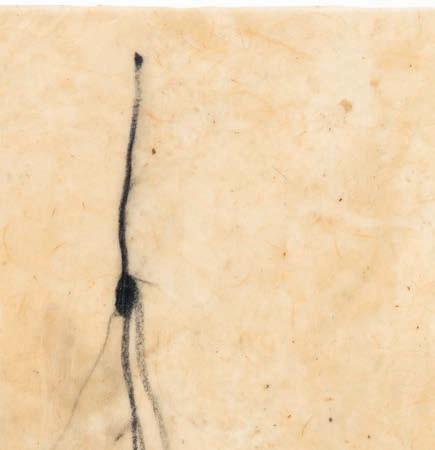
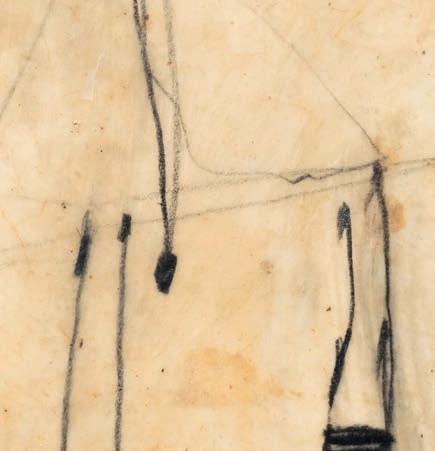
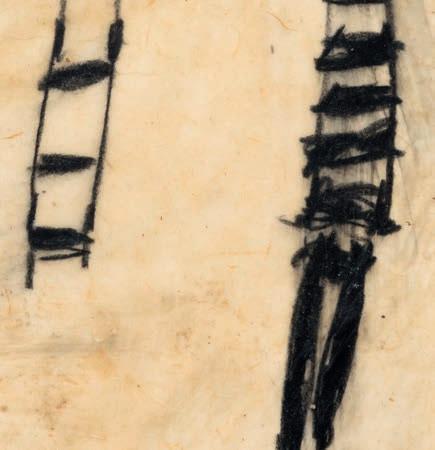
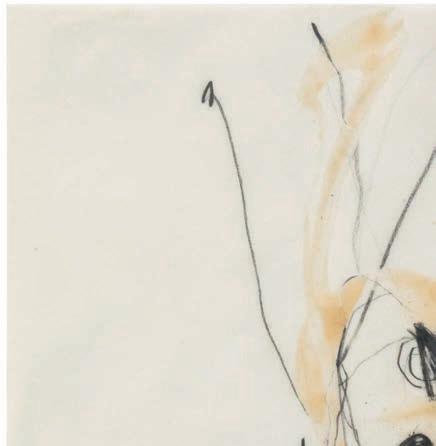
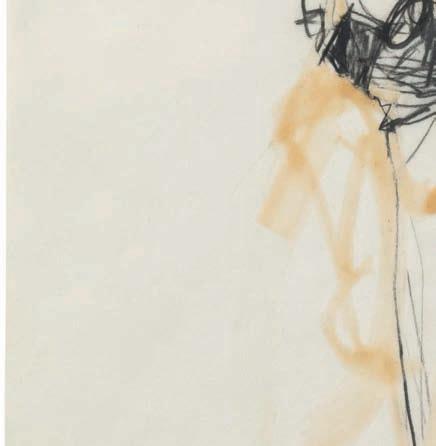
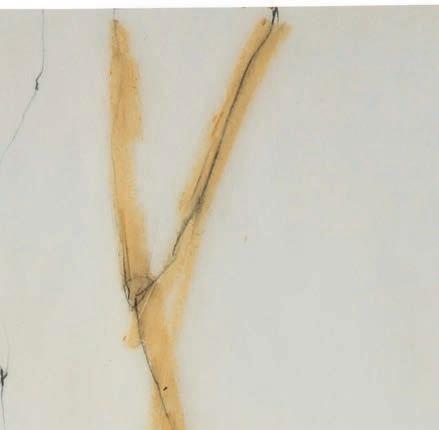
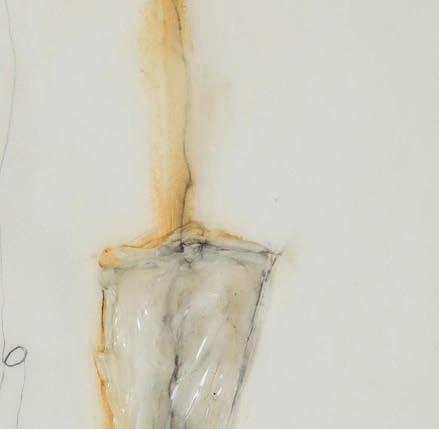
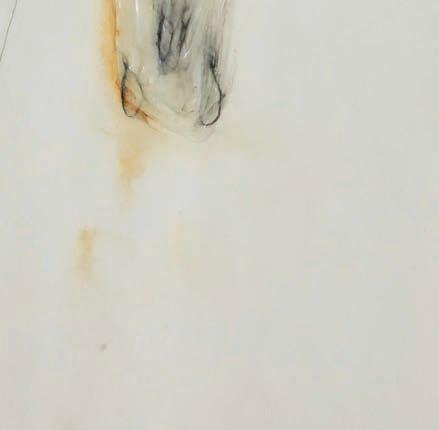




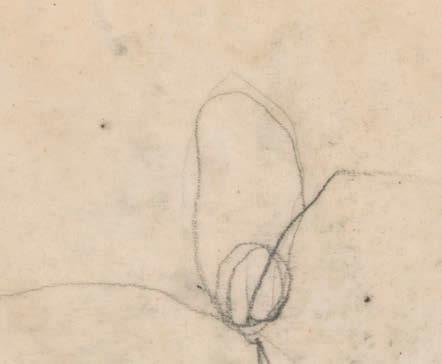







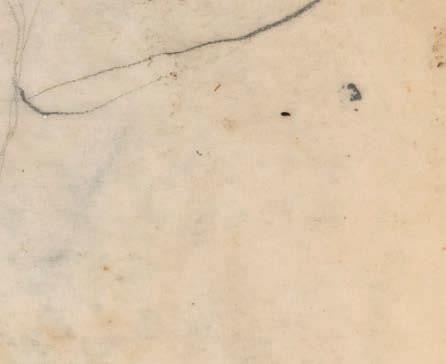



















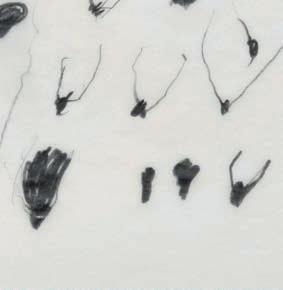









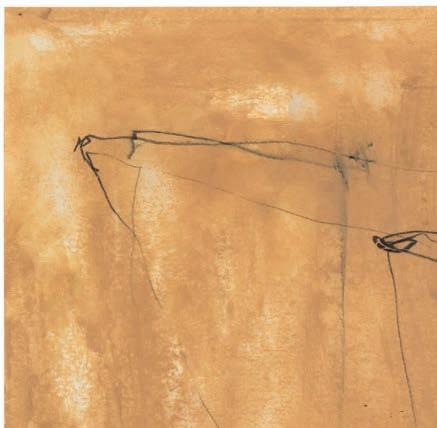

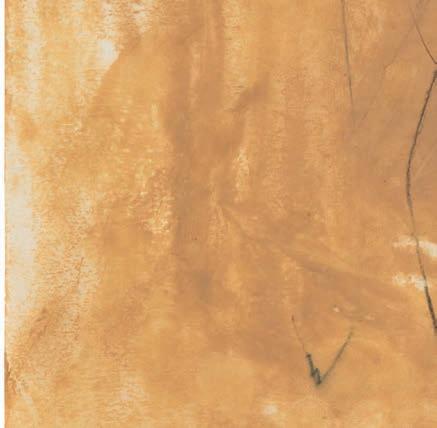
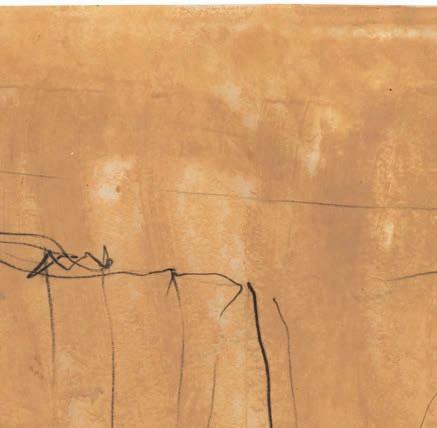
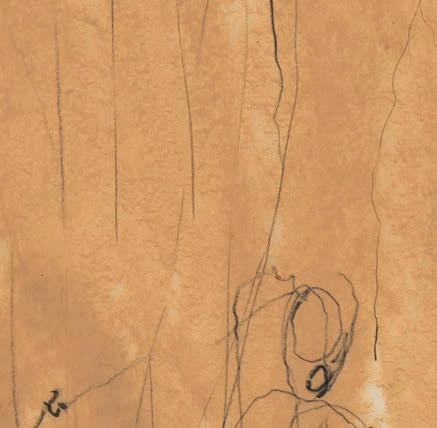
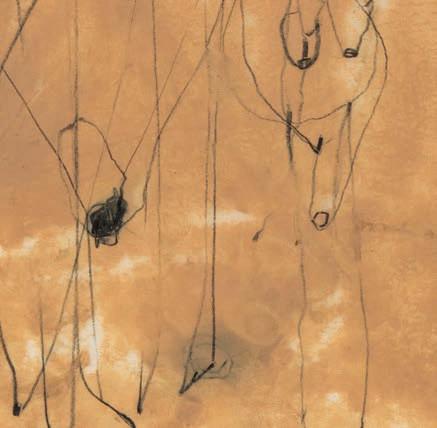



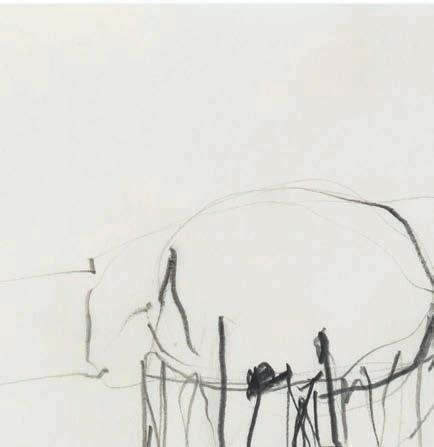
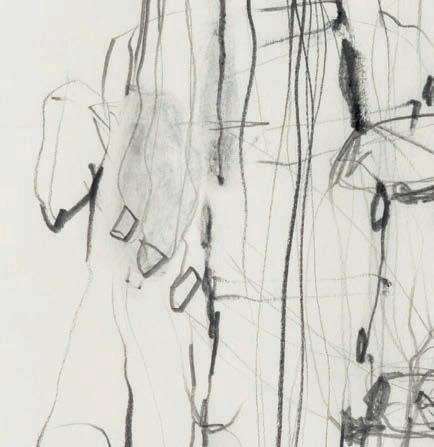
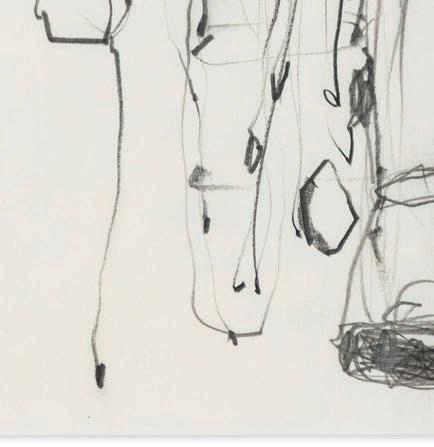
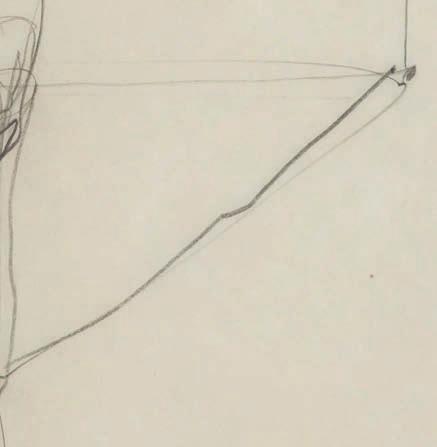
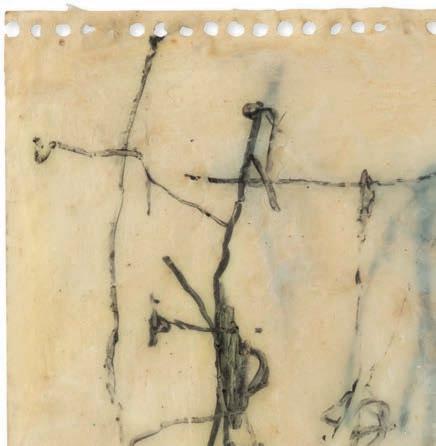
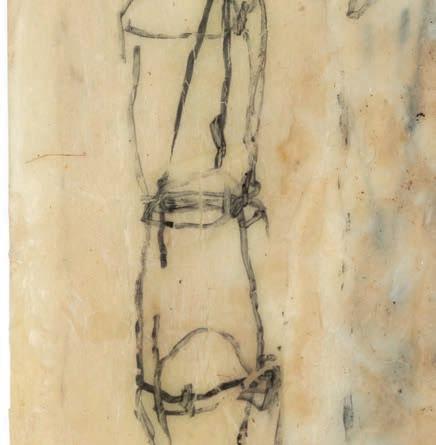
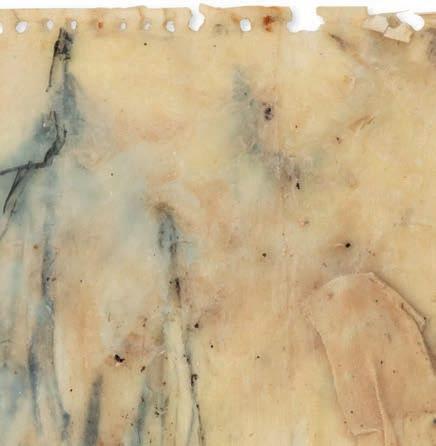
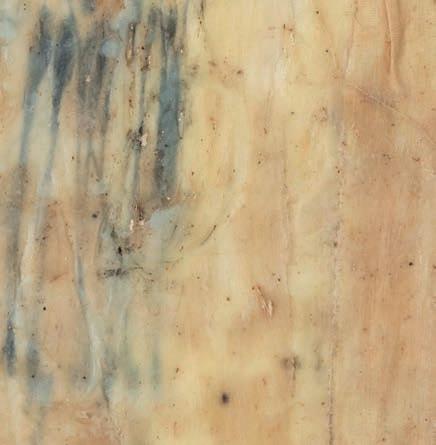
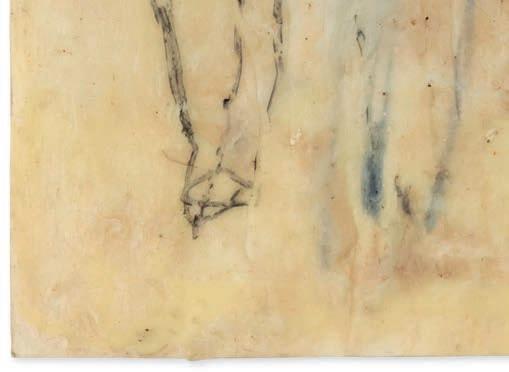
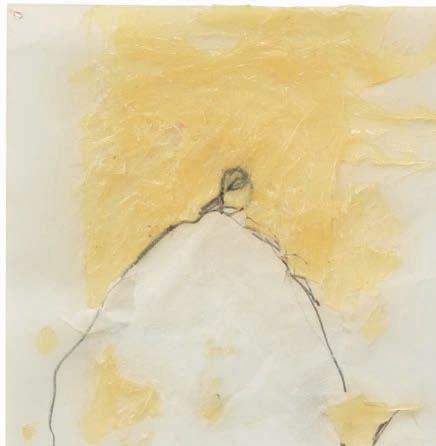
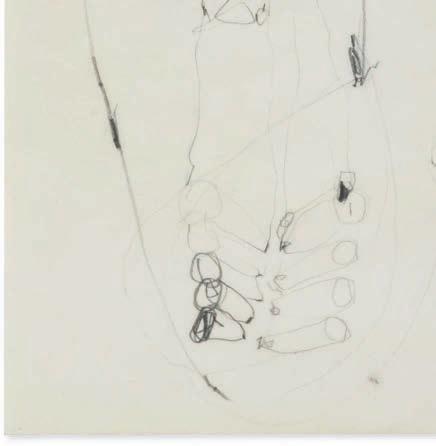
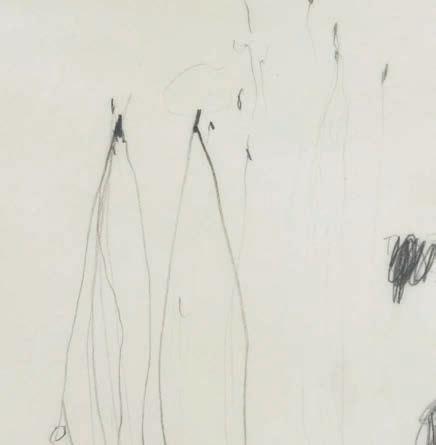
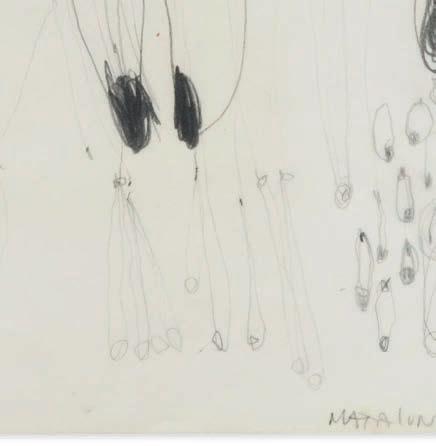


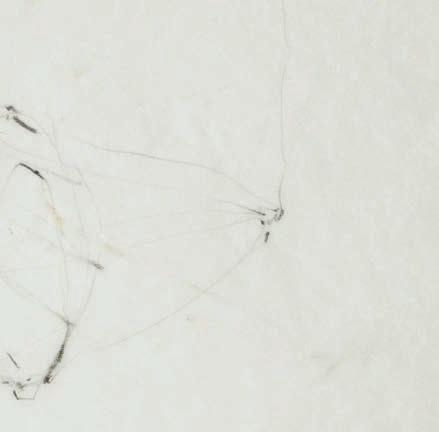


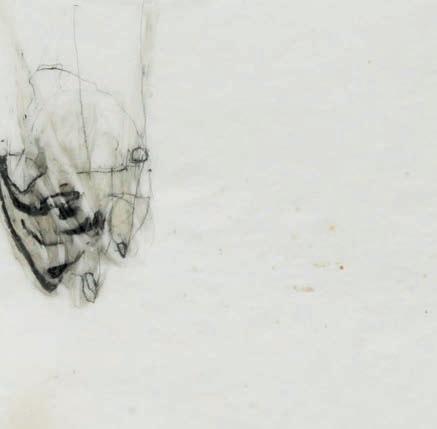

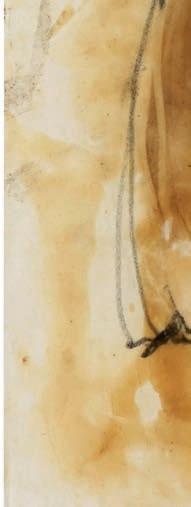


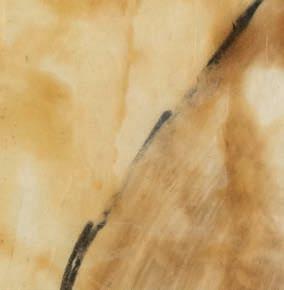
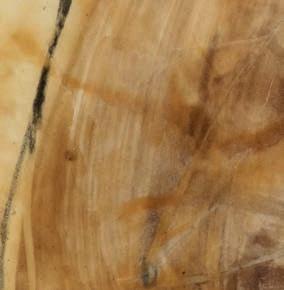
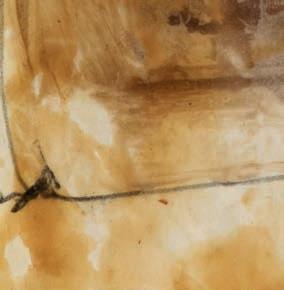
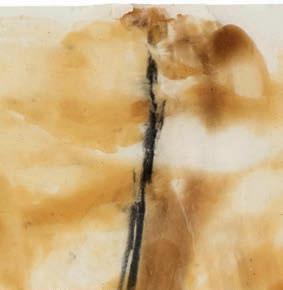
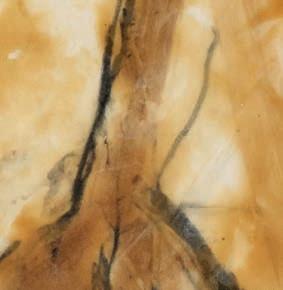
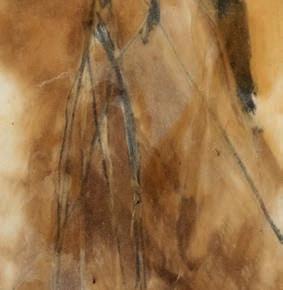
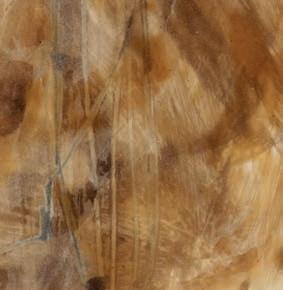
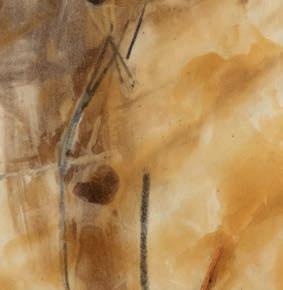
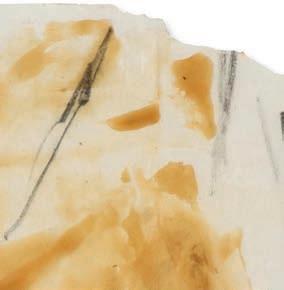
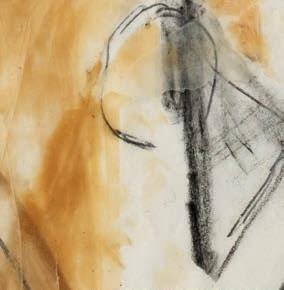
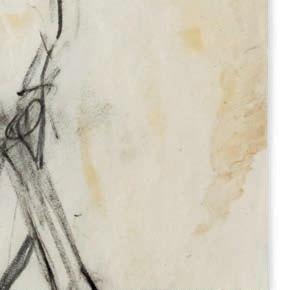















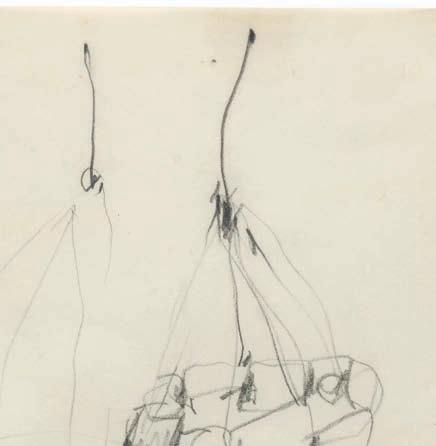



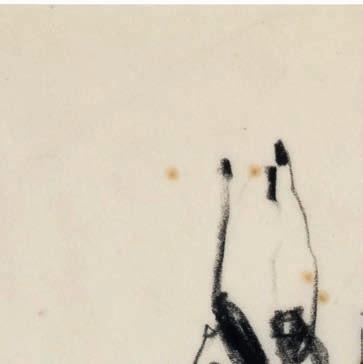
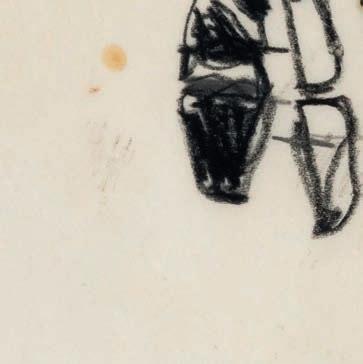
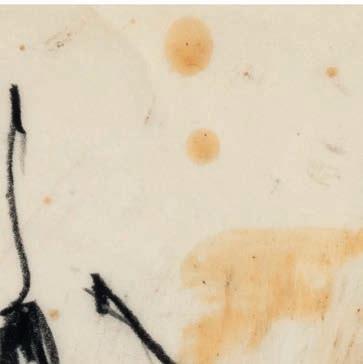
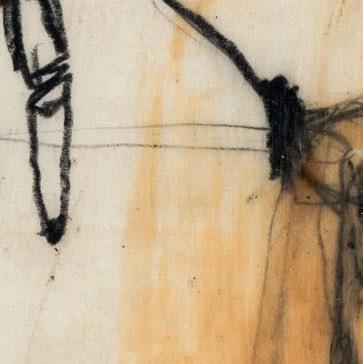
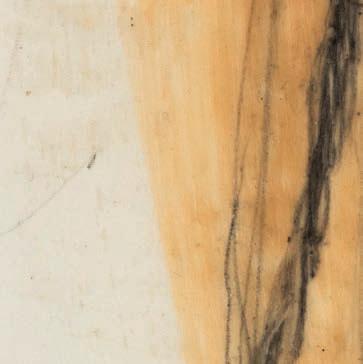
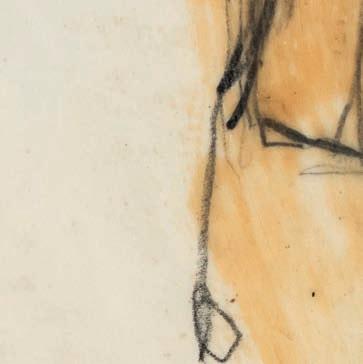


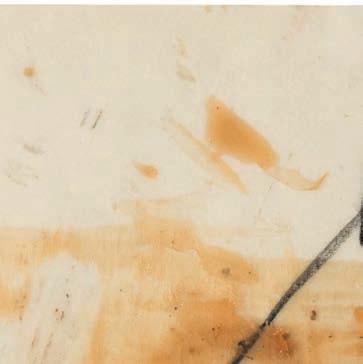
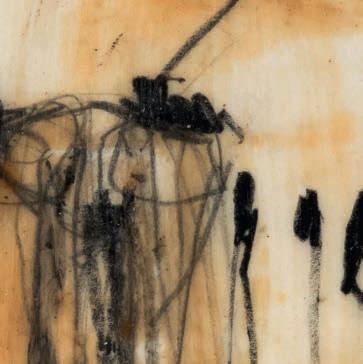

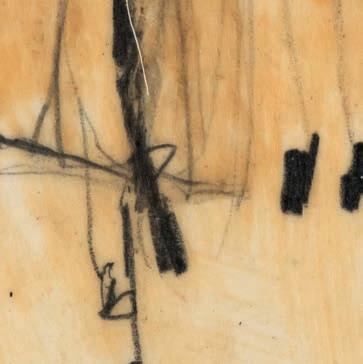
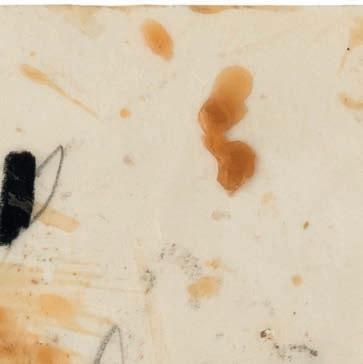
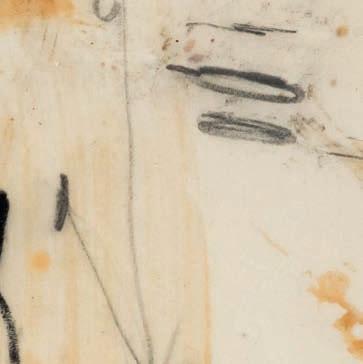
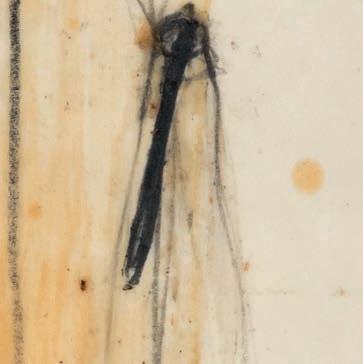
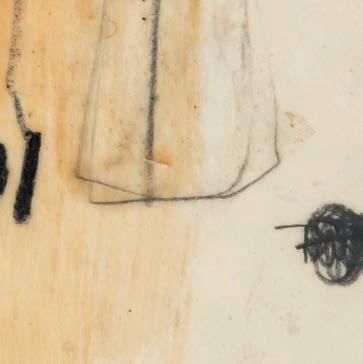











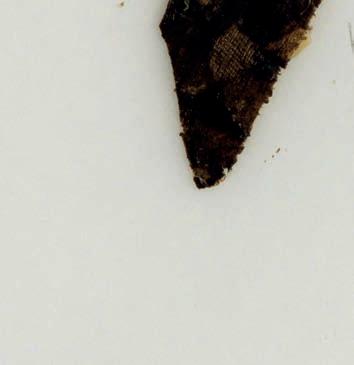






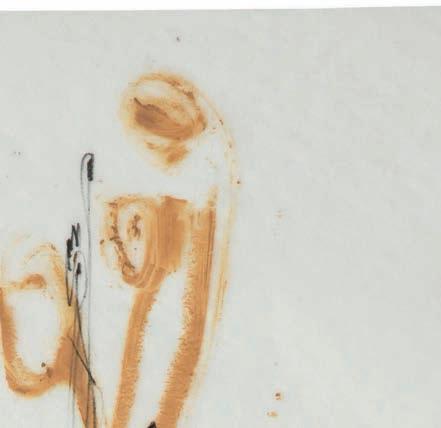
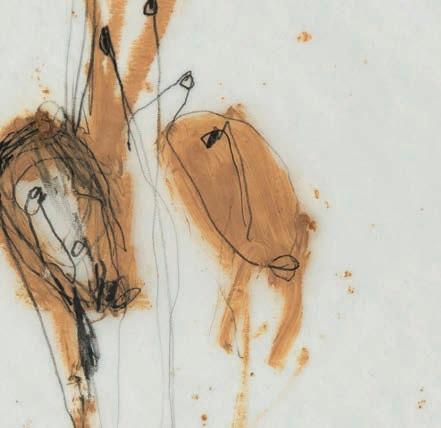
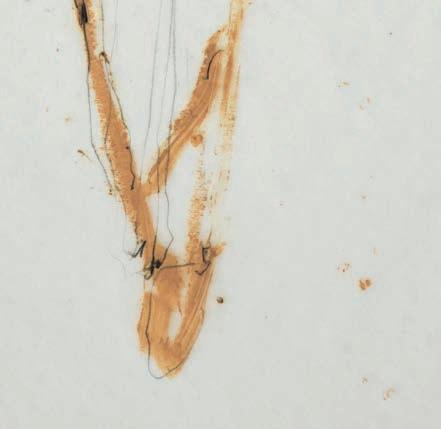
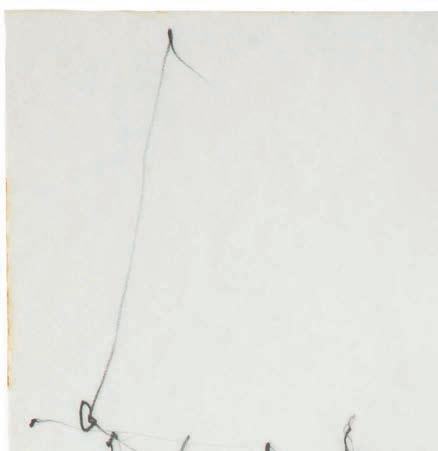
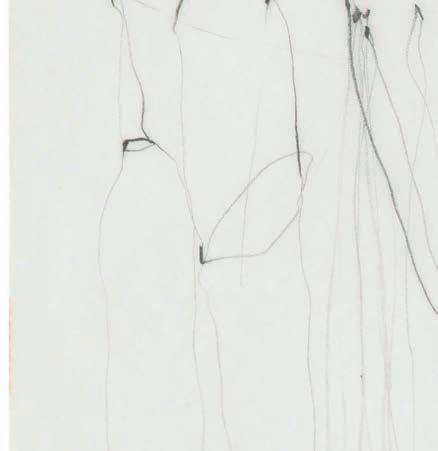
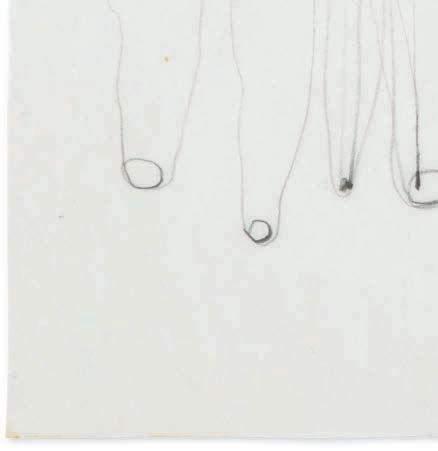
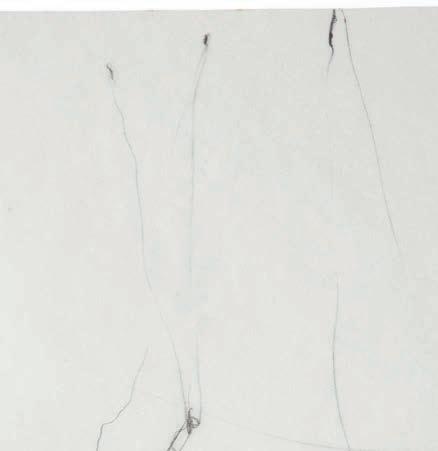
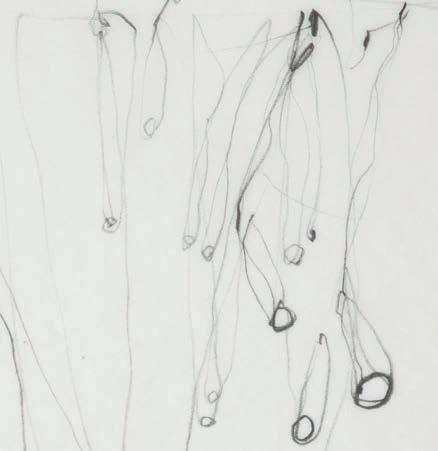
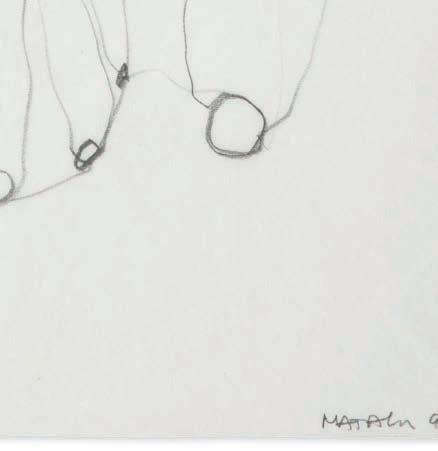




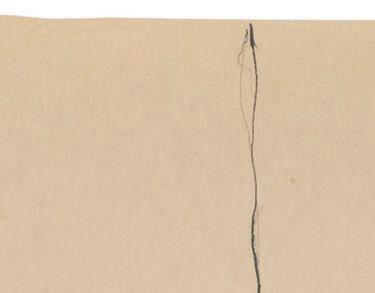
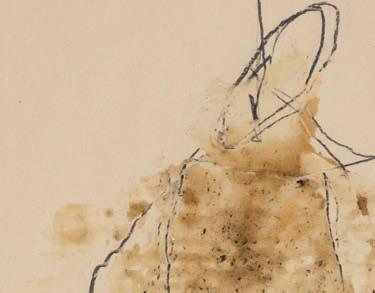
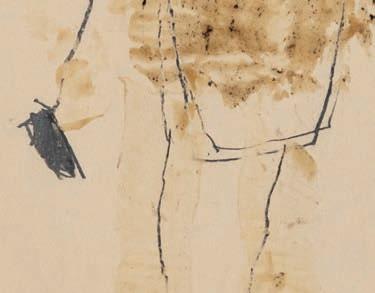



















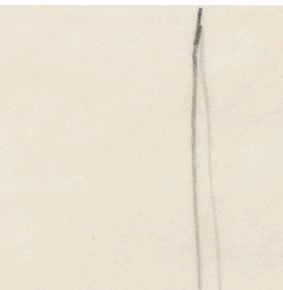
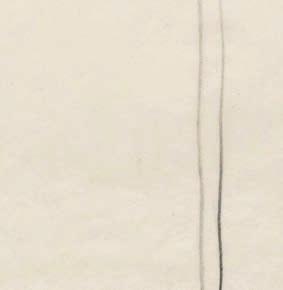
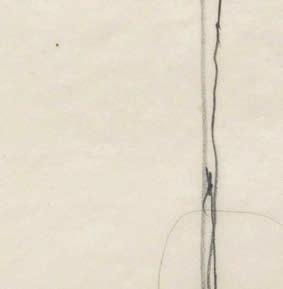
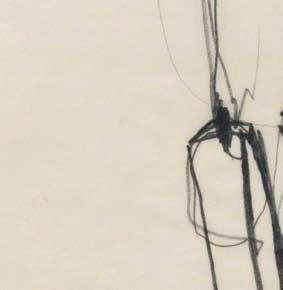
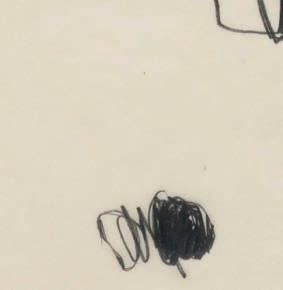
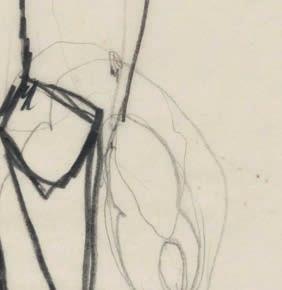







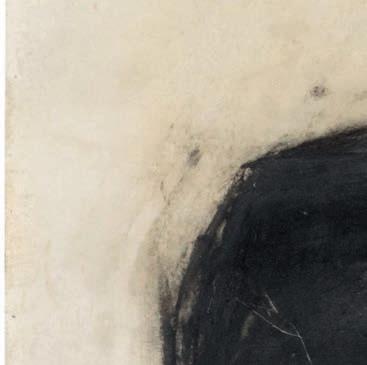

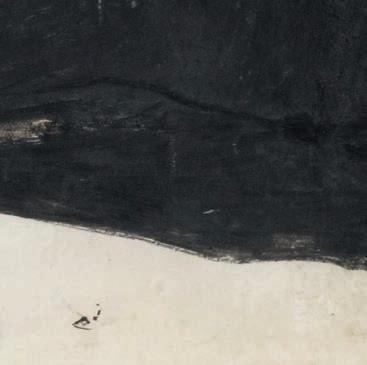

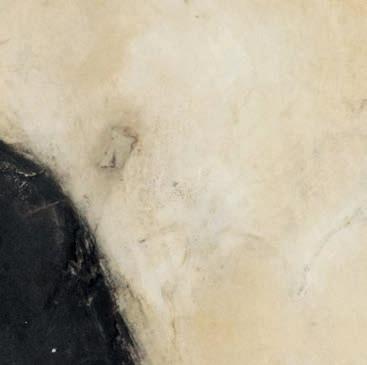
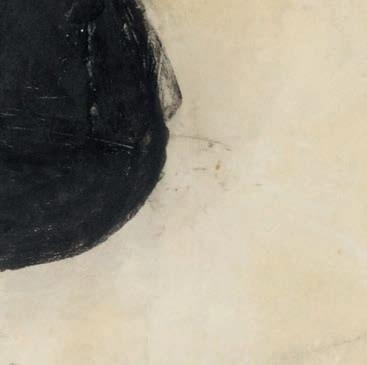






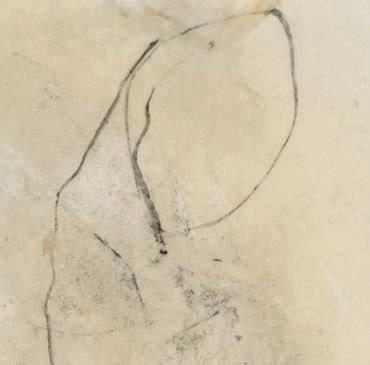




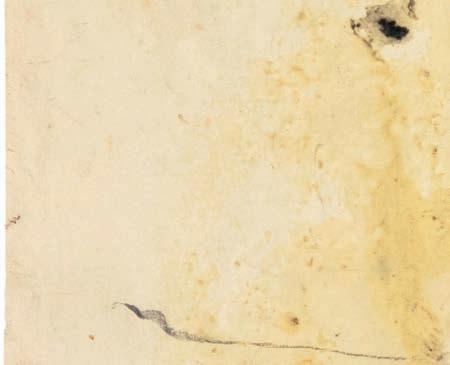

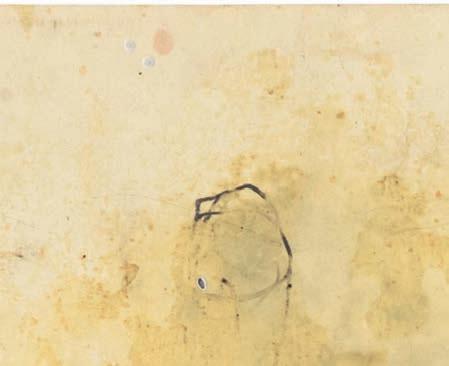
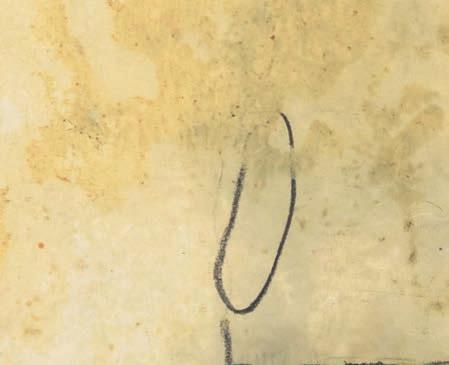
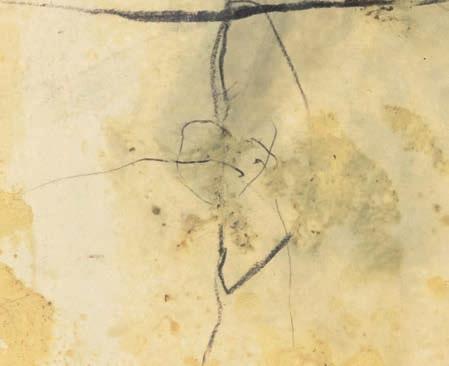
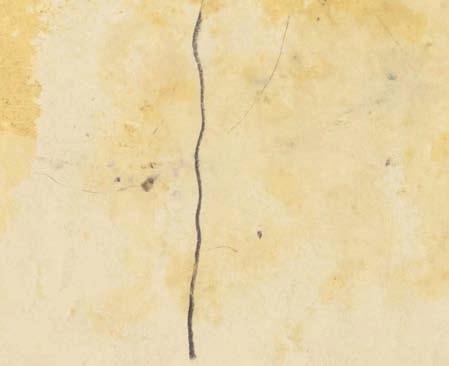



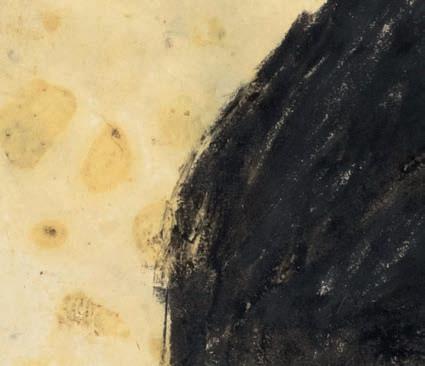
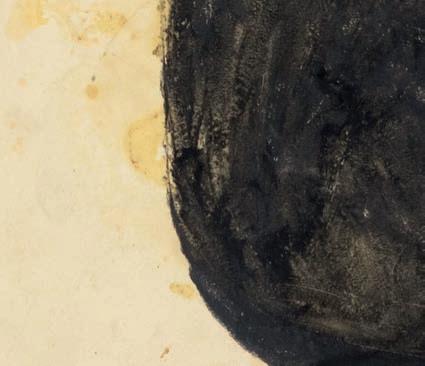
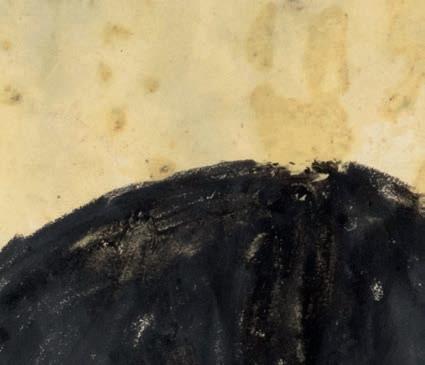
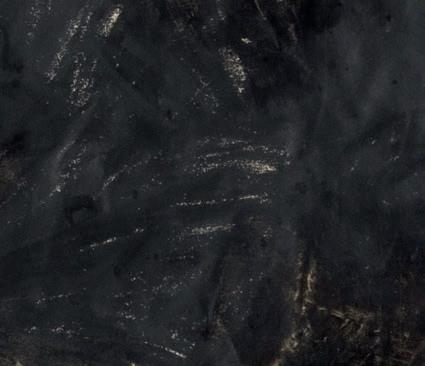
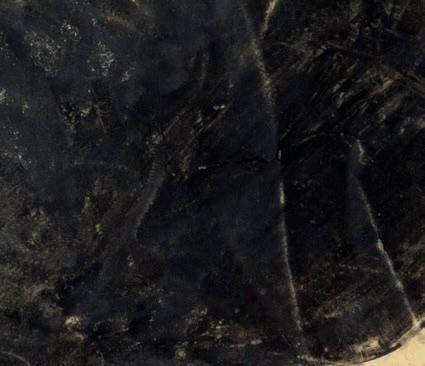

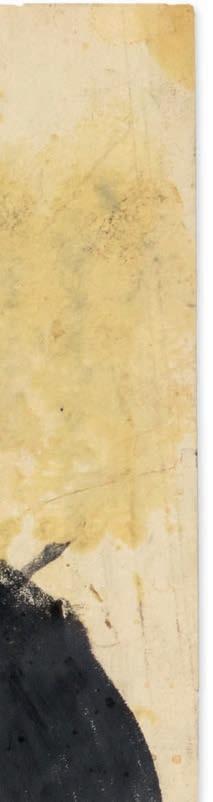
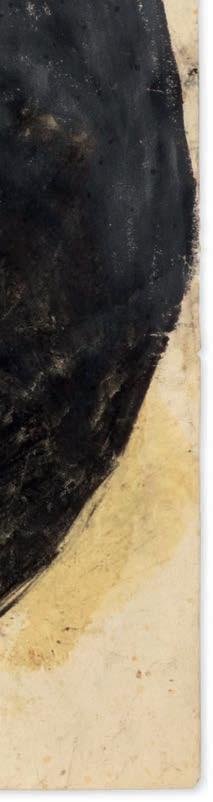

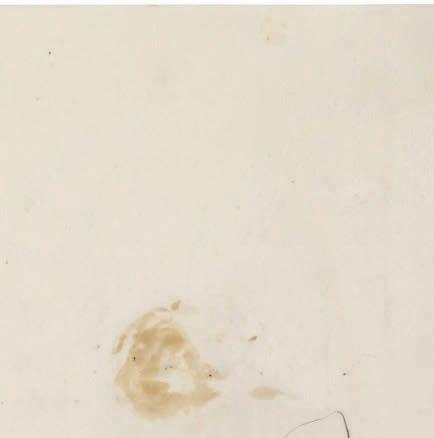
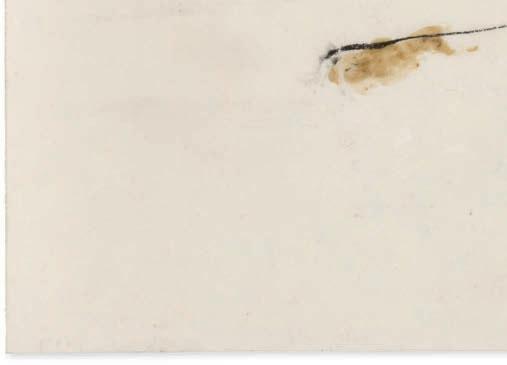
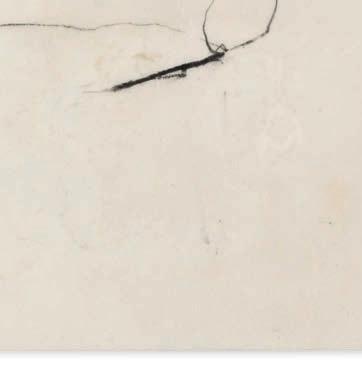


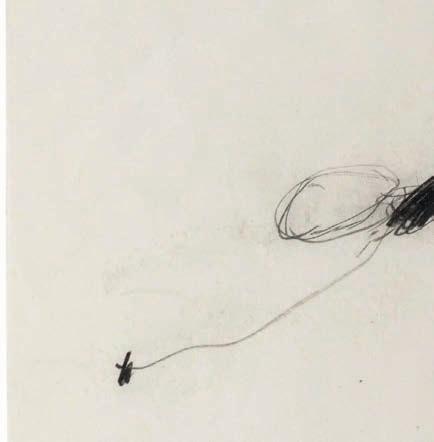
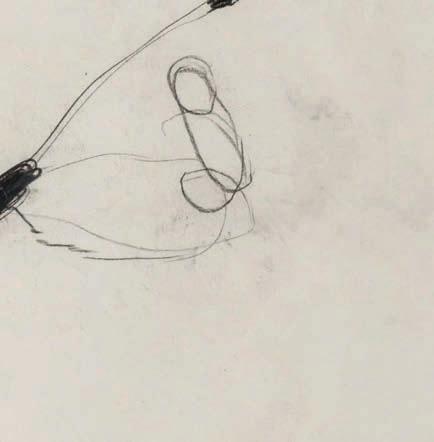



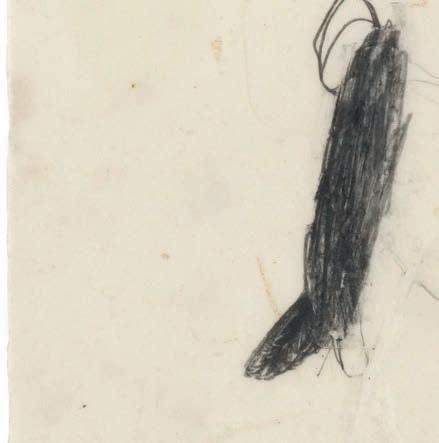



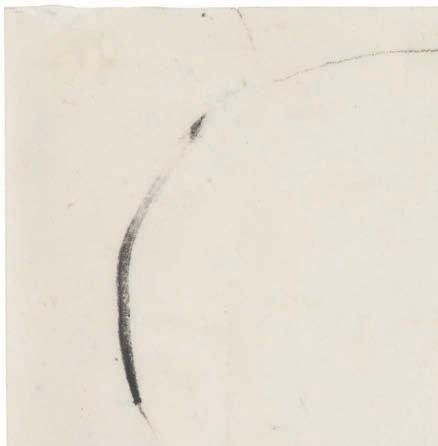
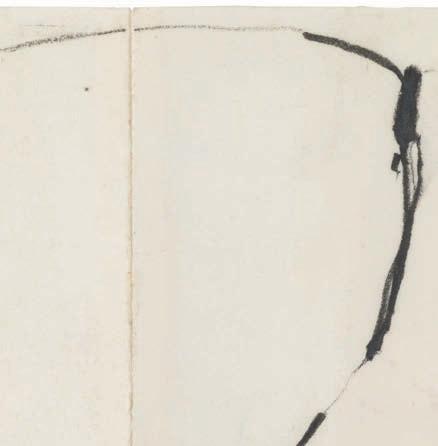
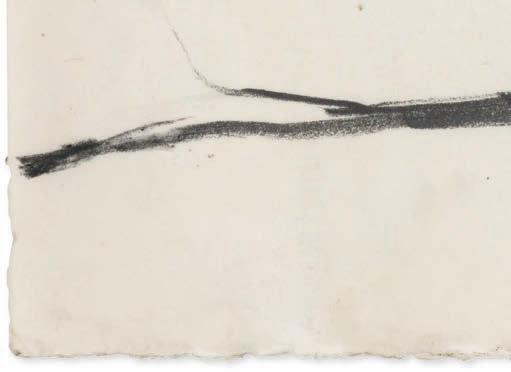
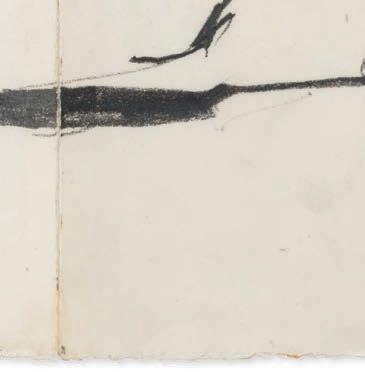


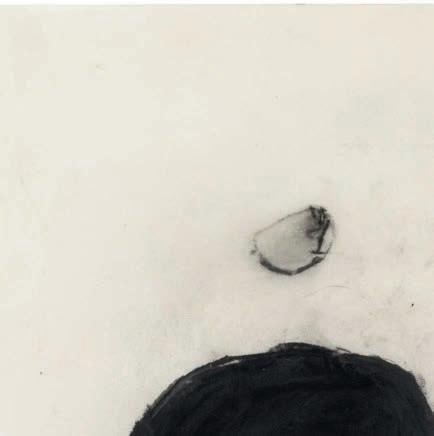
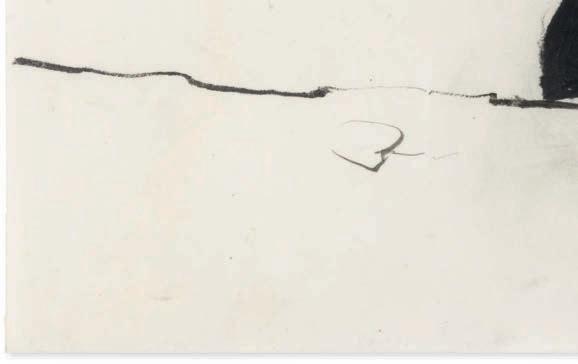

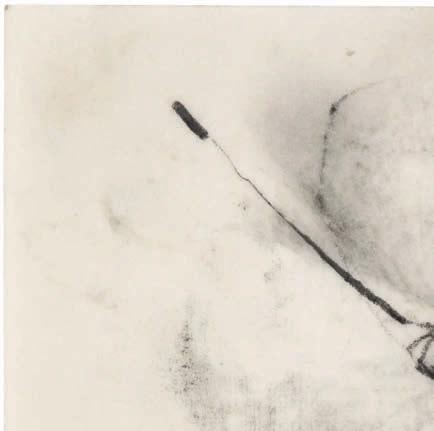

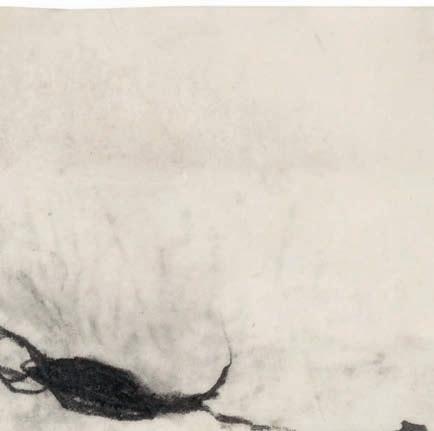


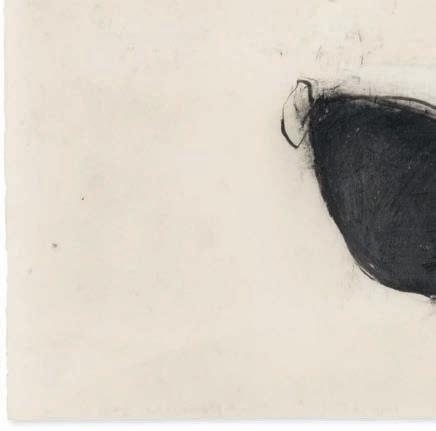
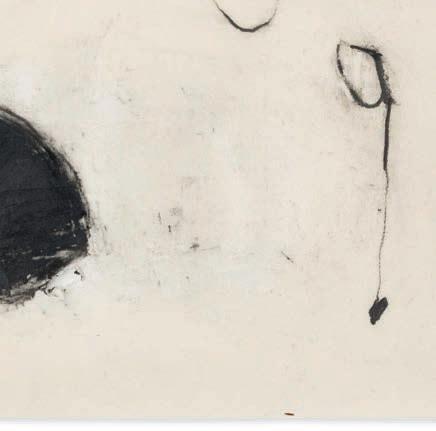

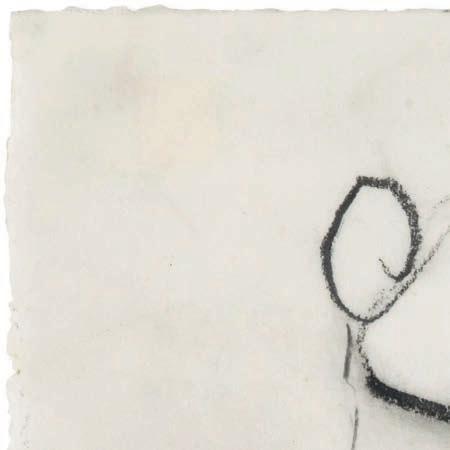
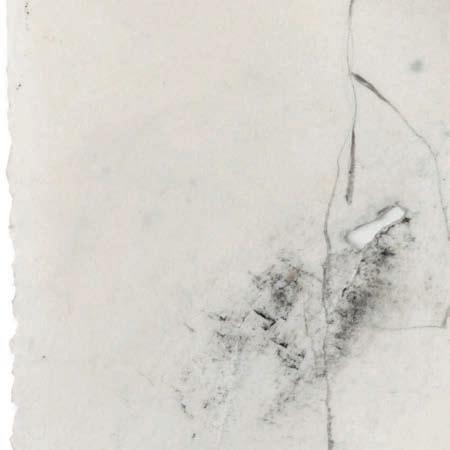
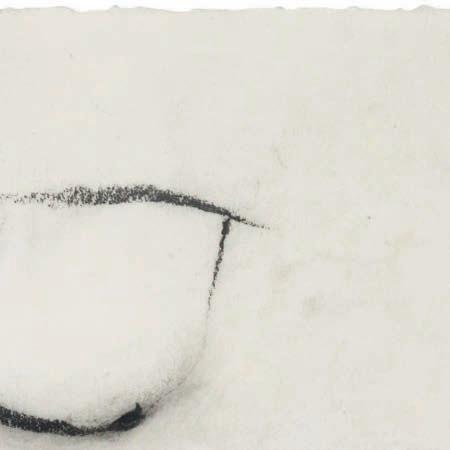




















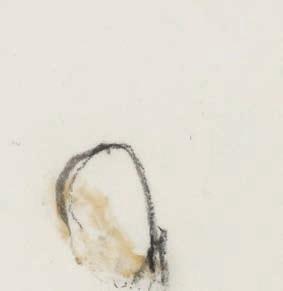
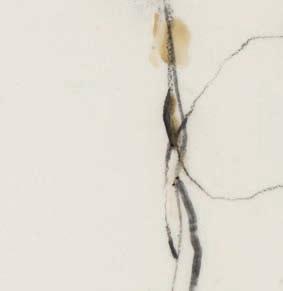




















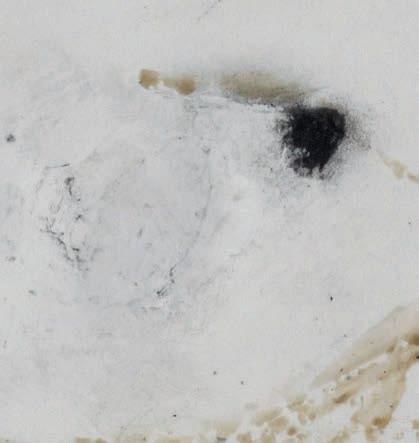





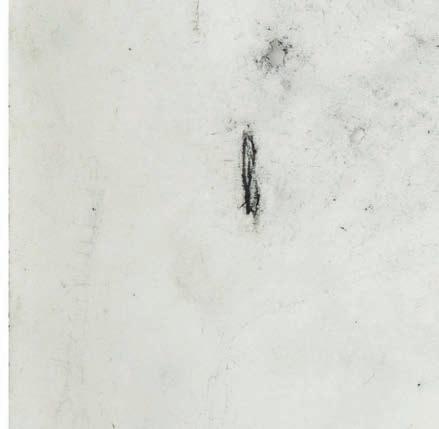
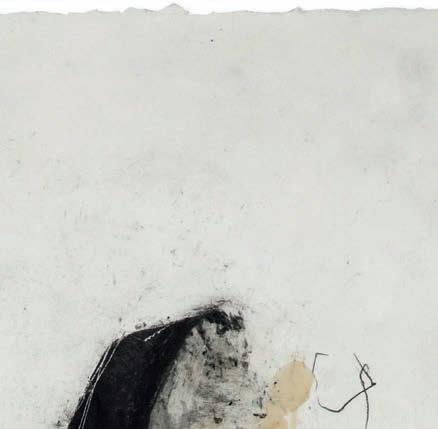
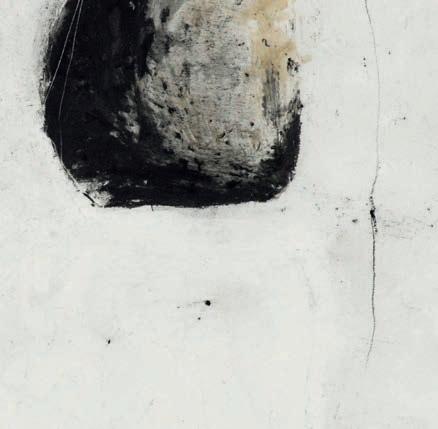

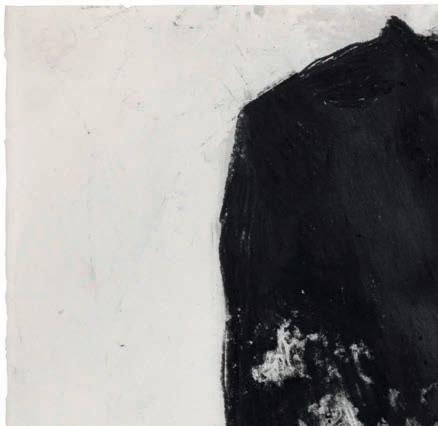
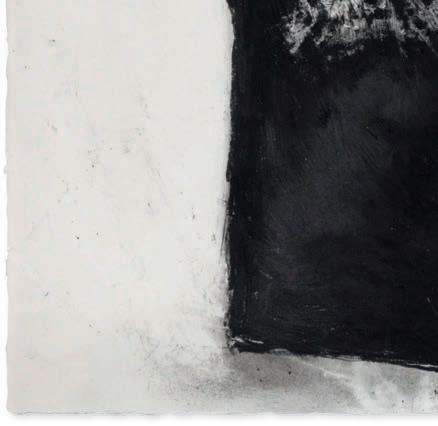
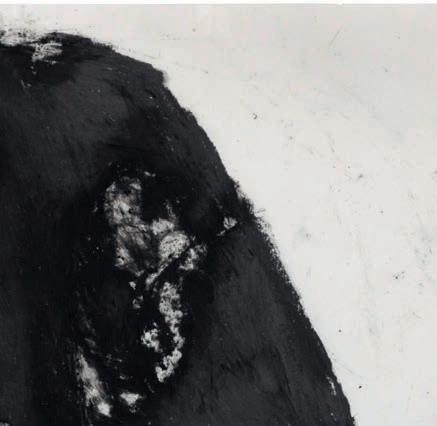
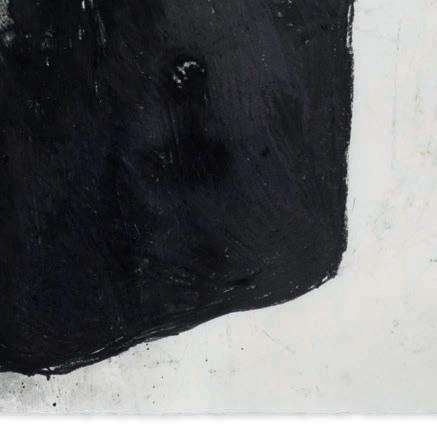












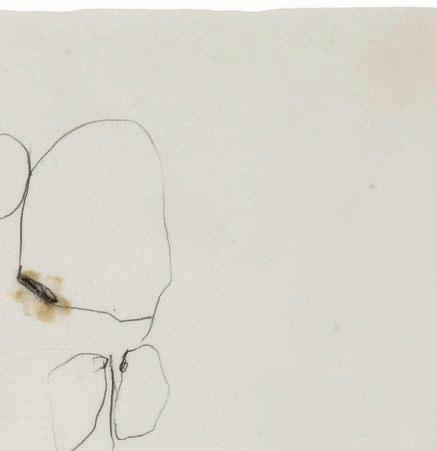



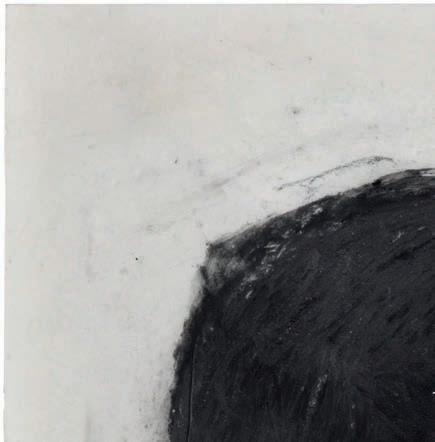
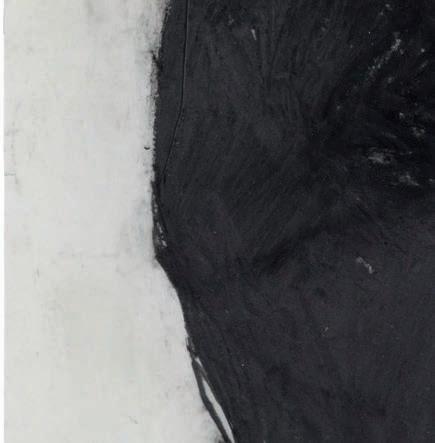
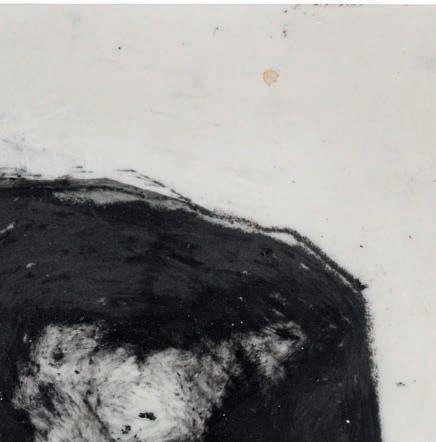
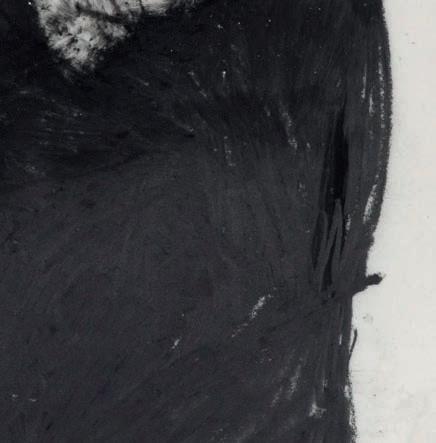














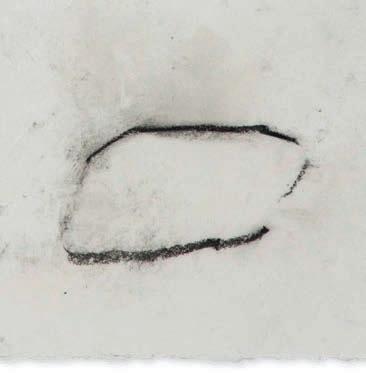
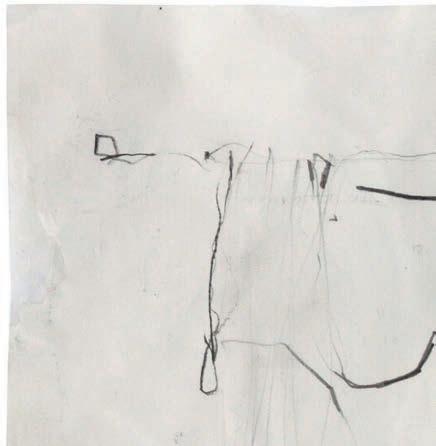
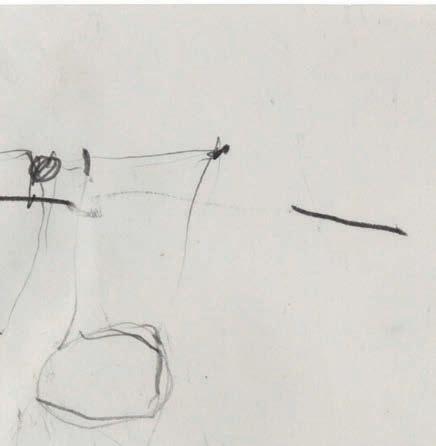
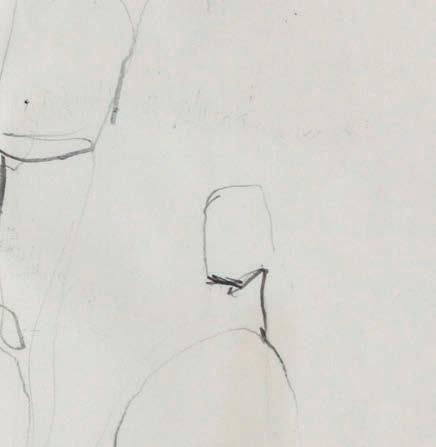


















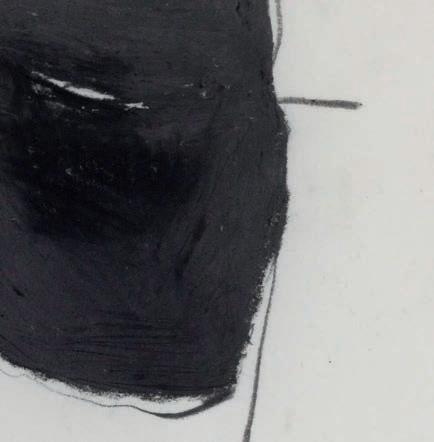


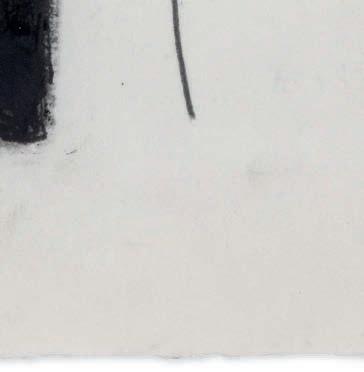
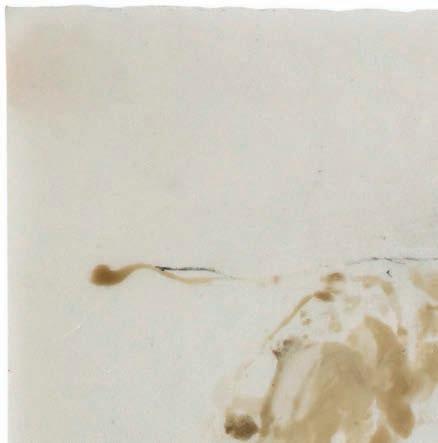
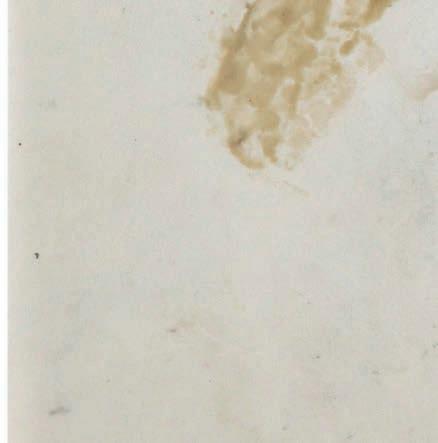
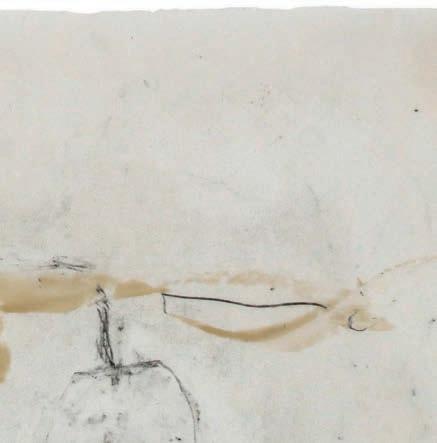




















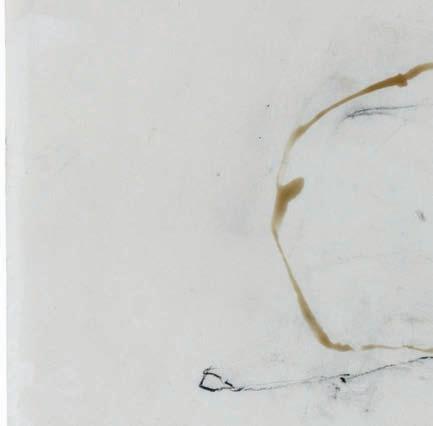

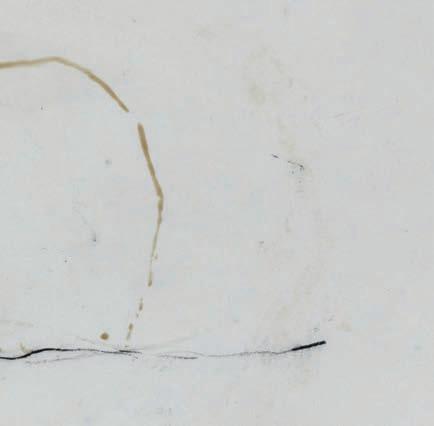

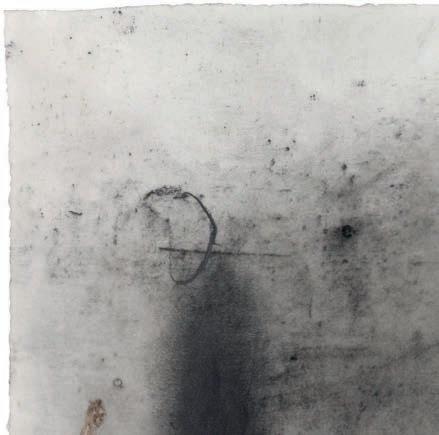
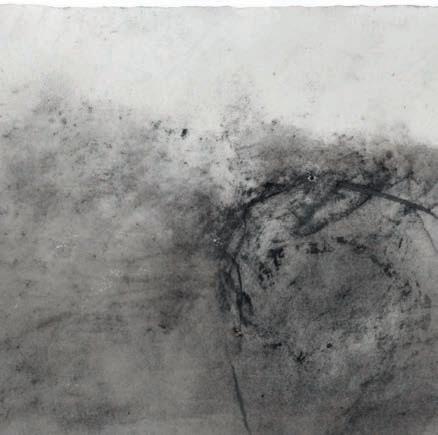



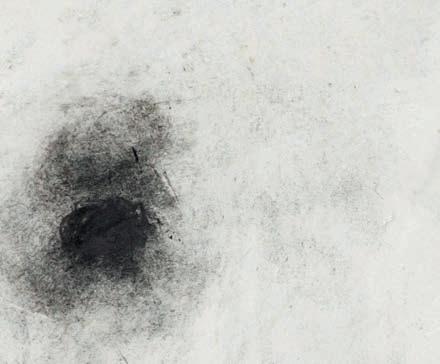


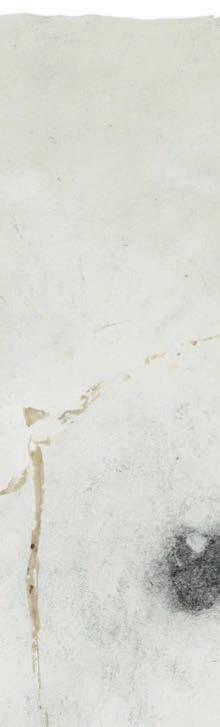
















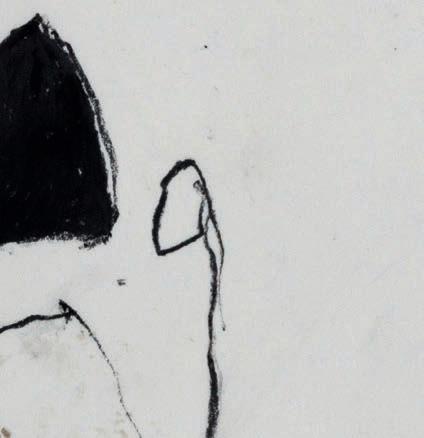





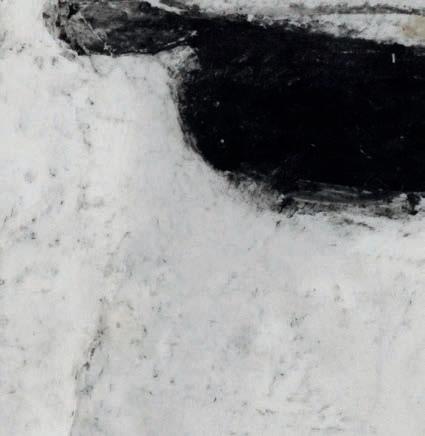
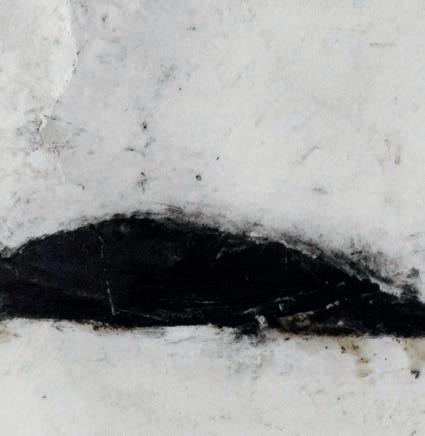





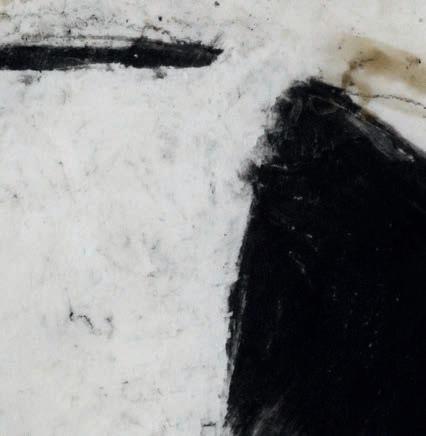
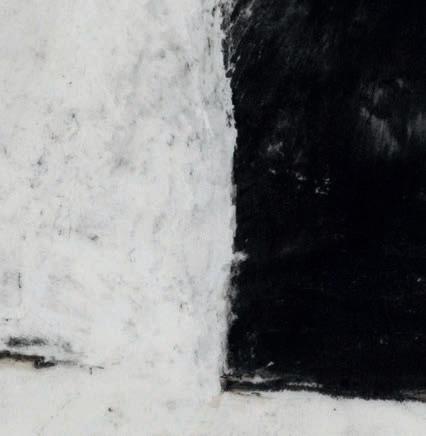

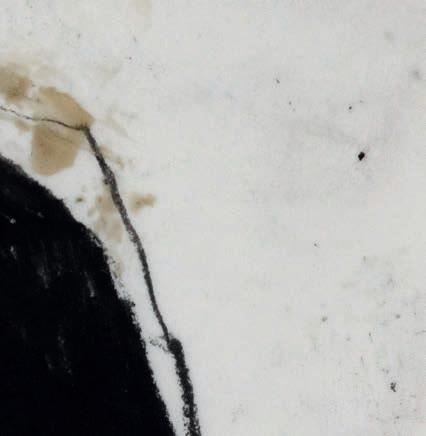
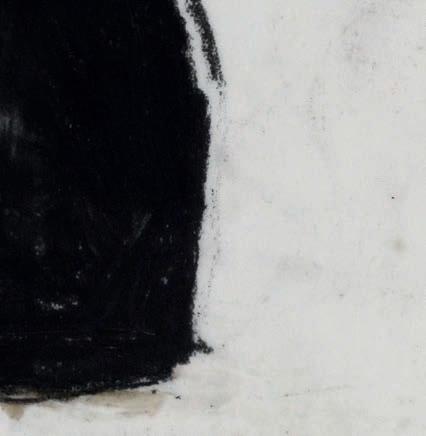




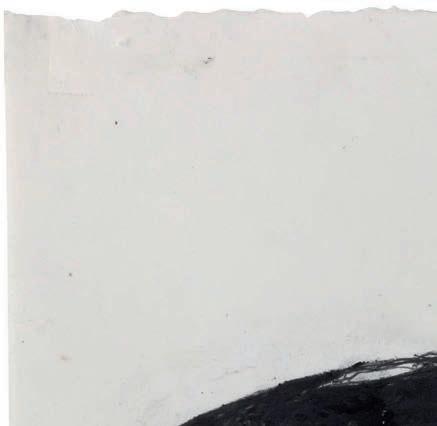
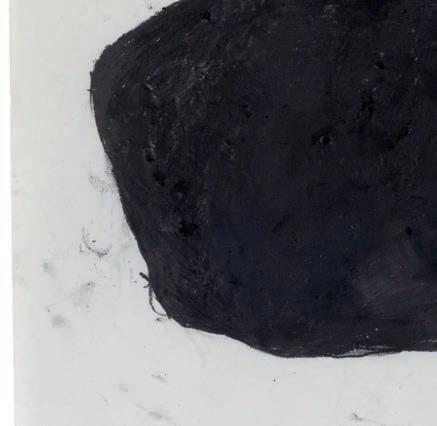
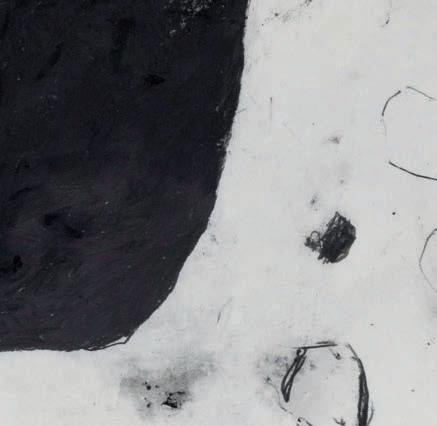













Exhibition Checklist
p. 75
Sin título [Untitled], 1994
Grafito y cera sobre papel de calco [Graphite and wax on tracing paper]
28,80 × 20,96 cm
p. 77
Sin título [Untitled], 1992
Grafito y cera sobre papel de calco [Graphite and wax on tracing paper]
30,48 × 22,86 cm
p. 79
Sin título [Untitled], 1991
Grafito, pastel al óleo y cola sobre papel de calco [Graphite, oil stick, glue on tracing paper]
30,48 × 22,86 cm
pp. 80-81
Sin título [Untitled], 1991
Grafito y cera sobre papel de calco [Graphite and wax on tracing paper]
22,86 × 30,48 cm
pp. 82-83
Sin título [Untitled], 1992
Grafito sobre papel de calco [Graphite on tracing paper]
30,48 × 22,86 cm
p. 85
Sin título [Untitled], 1992
Grafito y pastel al óleo sobre papel de calco [Graphite, oil stick on tracing paper]
30,48 × 22,86 cm
p. 87
Sin título [Untitled], 1992
Grafito sobre papel de calco [Graphite on tracing paper]
30,48 × 22,86 cm
p. 89
Sin título [Untitled], 1994
Grafito sobre papel [Graphite on paper]
30,48 × 22,86 cm
p. 91
Sin título [Untitled], 1991
Grafito sobre papel de calco [Graphite on tracing paper]
30,48 × 22,86 cm
p. 93
Sin título [Untitled], 1993
Grafito, cera y cinta sobre papel [Graphite, wax and tape on paper]
25,40 × 20,32 cm
p. 95
Sin título [Untitled], 1993
Grafito y cola sobre papel de calco [Graphite and glue on tracing paper]
30,48 × 22,86 cm
p. 97
Sin título [Untitled], 1992
Grafito sobre papel de calco [Graphite on tracing paper]
30,48 × 22,86 cm
p. 99
Sin título [Untitled], 1992
Grafito y cola sobre papel de calco [Graphite and glue on tracing paper]
30,48 × 22,86 cm
pp. 100-101
Sin título [Untitled], 1991
Grafito, cera y cinta sobre papel de calco
[Graphite, wax and tape on tracing paper]
35,56 × 27,94 cm
p. 103
Sin título [Untitled], 1991
Grafito sobre papel de calco [Graphite on tracing paper]
30,48 × 22,86 cm
pp. 104-105
Sin título [Untitled], 1991
Grafito y cera sobre papel de calco [Graphite and wax on tracing paper]
35,56 × 27,94 cm
p. 107
Sin título [Untitled], 1991
Grafito sobre papel de calco [Graphite on tracing paper]
30,48 × 22,86 cm
pp. 108-109
Sin título [Untitled], 1993
Grafito y cera sobre papel de calco [Graphite and wax on tracing paper]
22,86 × 30,48 cm
pp. 110-111
Sin título [Untitled], 1992
Tela asfáltica, cera y grafito sobre papel de calco
[Tar paper, wax and graphite on tracing paper]
30,48 × 22,86 cm
p. 113
Sin título [Untitled], 1992
Grafito y pastel al óleo sobre papel de calco [Graphite, oil stick on tracing paper]
30,48 × 22,86 cm
p. 115
Sin título [Untitled], 1992
Grafito sobre papel de calco [Graphite on tracing paper]
30,48 × 22,86 cm
pp. 116-117
Sin título [Untitled], 1991
Grafito y cera sobre papel [Graphite and wax on paper]
40,64 × 48,26 cm
pp. 118-119
Sin título [Untitled], 1991
Grafito sobre papel de calco [Graphite on tracing paper]
30,48 × 22,86 cm
pp. 120-121
Sin título [Untitled], 2000
Grafito y cera sobre papel [Graphite and wax on paper]
55,88 × 76,20 cm
pp. 122-123
Sin título [Untitled], 2002
Grafito y cera sobre papel [Graphite and wax on paper]
27,94 × 35,56 cm
p. 125
Sin título [Untitled], 2017
Grafito y cera sobre papel [Graphite and wax on paper]
27,94 × 35,56 cm
p. 127
Sin título [Untitled], 2001
Grafito y cera sobre papel [Graphite and wax on paper]
34,29 × 27,94 cm
p. 129
Sin título [Untitled], 2000
Grafito y cera sobre papel [Graphite and wax on paper]
30,48 × 22,86 cm
p. 131
Sin título (Plegado) [Untitled (Folded)], 2002
Grafito y cera sobre papel [Graphite and wax on paper]
22,86 × 29,21 cm
p. 133
Sin título [Untitled], 2017
Grafito y cera sobre papel [Graphite and wax on paper]
27,94 × 35,56 cm
p. 135
Sin título [Untitled], 2013
Grafito y cera sobre papel [Graphite and wax on paper]
27,94 × 21,59 cm
p. 137
Sin título [Untitled], 2011
Grafito y cera sobre papel [Graphite and wax on paper]
35,56 × 41,91 cm
pp. 138-139
Sin título [Untitled], 2019
Grafito y cera sobre papel [Graphite and wax on paper]
25,40 × 33,63 cm
pp. 140-141
Sin título [Untitled], 2020
Grafito y cera sobre papel [Graphite and wax on paper]
40,64 × 31,75 cm
pp. 142-143
Sin título [Untitled], 2021
Grafito y cera sobre papel [Graphite and wax on paper]
40,64 × 48,26 cm
p. 145
Sin título [Untitled], 2022
Grafito y cera sobre papel [Graphite and wax on paper]
48,26 × 40,64 cm
p. 147
Sin título [Untitled], 2021
Grafito y cera sobre papel [Graphite and wax on paper]
40,64 × 48,26 cm
pp. 148-149
Sin título [Untitled], 2021
Grafito y cera sobre papel [Graphite and wax on paper]
76,20 × 55,88 cm
p. 151
Sin título [Untitled], 2022
Grafito y cera sobre papel [Graphite and wax on paper]
25,40 × 30,48 cm
p. 153
Sin título [Untitled], 2020
Grafito y cera sobre papel [Graphite and wax on paper]
30,48 × 24,13 cm
pp. 154-155
Sin título [Untitled], 2020
Grafito y cera sobre papel [Graphite and wax on paper]
31,75 × 40,64 cm
p. 157
Sin título [Untitled], 2022
Grafito y cera sobre papel [Graphite and wax on paper]
30,48 × 25,40 cm
p. 159
Sin título [Untitled], 2020
Grafito sobre papel [Graphite on paper]
38,40 × 22,86 cm
pp. 160-161
Sin título [Untitled], 2020
Grafito sobre papel [Graphite on paper]
30,48 × 22,86 cm
pp. 162-163
Sin título [Untitled], 2020
Grafito y cera sobre papel [Graphite and wax on paper]
25,40 × 30,48 cm
p. 165
Sin título [Untitled], 2020
Grafito y cera sobre papel [Graphite and wax on paper]
30,48 × 24,13 cm
p. 167
Sin título [Untitled], 2020
Grafito y tinta nogalina sobre papel [Graphite and walnut ink on paper]
27,94 × 21,59 cm
p. 169
Sin título [Untitled], 2020
Grafito y cera sobre papel [Graphite and wax on paper]
30,48 × 24,13 cm
p. 171
Sin título [Untitled], 2022
Grafito y cera sobre papel [Graphite and wax on paper]
30,48 × 25,40 cm
pp. 172-173
Sin título [Untitled], 2020
Grafito y cera sobre papel [Graphite and wax on paper]
30,48 × 41,28 cm
p. 175
Sin título [Untitled], 2020
Grafito y cera sobre papel [Graphite and wax on paper]
48,26 × 40,64 cm
p. 177
Sin título [Untitled], 2020
Grafito y cera sobre papel [Graphite and wax on paper]
31,75 × 40,64 cm
pp. 178-179
Sin título [Untitled], 2022
Grafito y cera sobre papel [Graphite and wax on paper]
55,88 × 76,20 cm
pp. 180-181
Sin título [Untitled], 2020
Grafito y cera sobre papel [Graphite and wax on paper]
40,64 × 48,26 cm
pp. 182-183
Sin título [Untitled], 2020
Grafito y cera sobre papel [Graphite and wax on paper]
31,12 × 40,64 cm
p. 185
Sin título [Untitled], 2020
Grafito y cera sobre papel [Graphite and wax on paper]
48,26 × 40,64 cm
pp. 186-187
Sin título [Untitled], 2020
Grafito y cera sobre papel [Graphite and wax on paper]
55,88 × 76,20 cm
Todas las obras son cortesía de la artista [All works are courtesy of the artist]
pp. 192-199
Vista de sala de la exposión Linda Matalon: Marcas imborrables [Installation views of Linda Matalon: Indelible Traces exhibition]
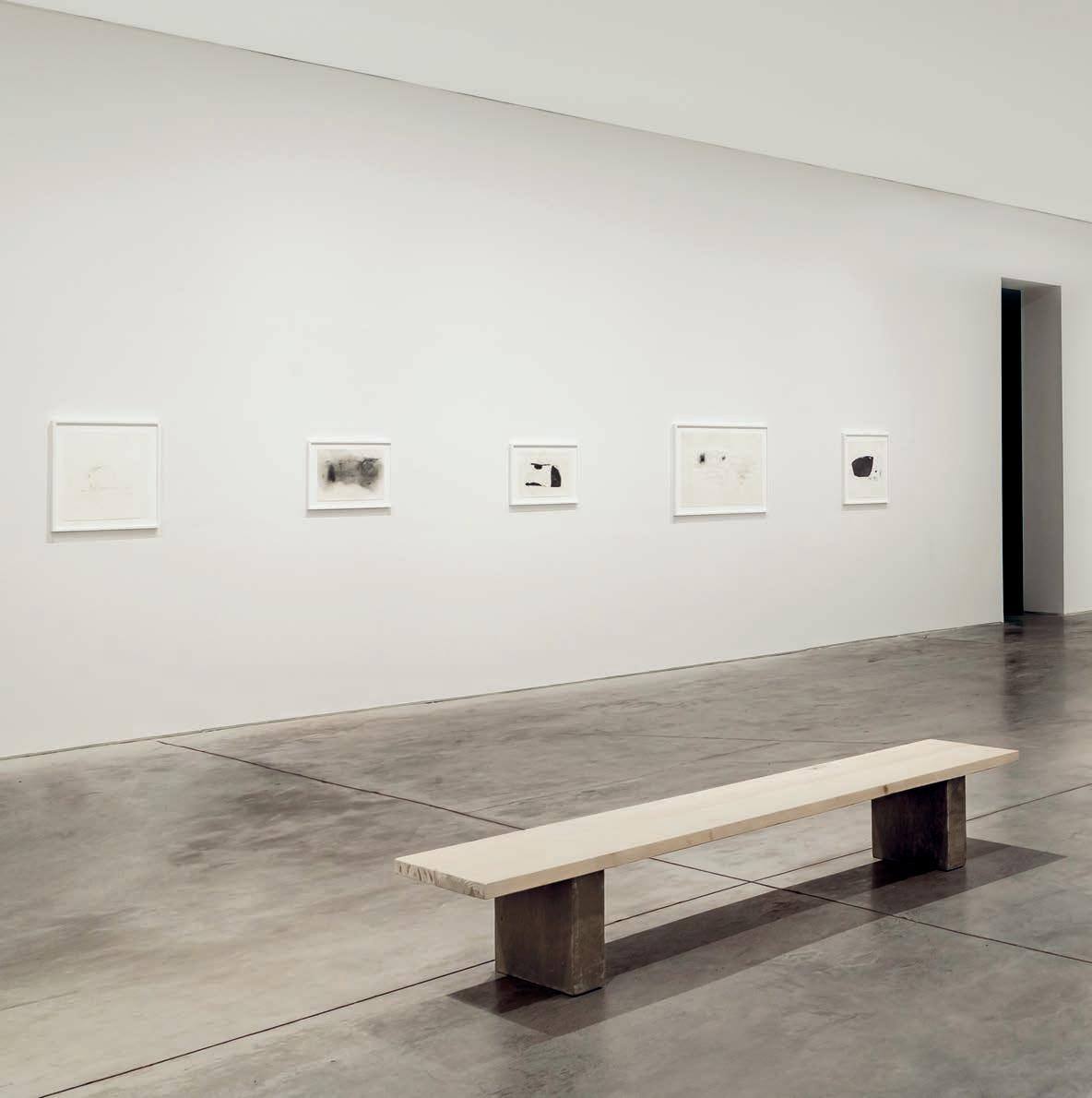
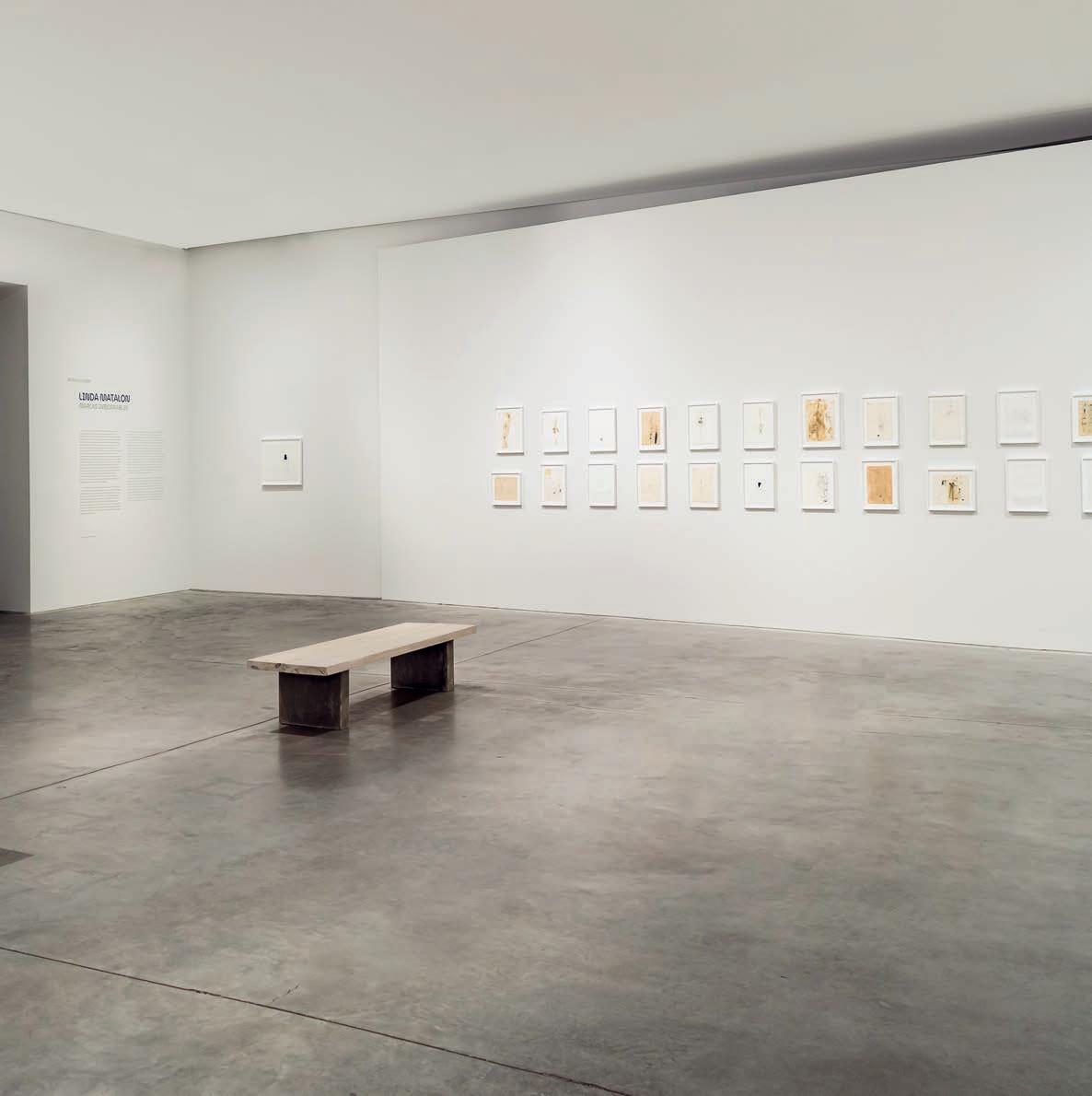
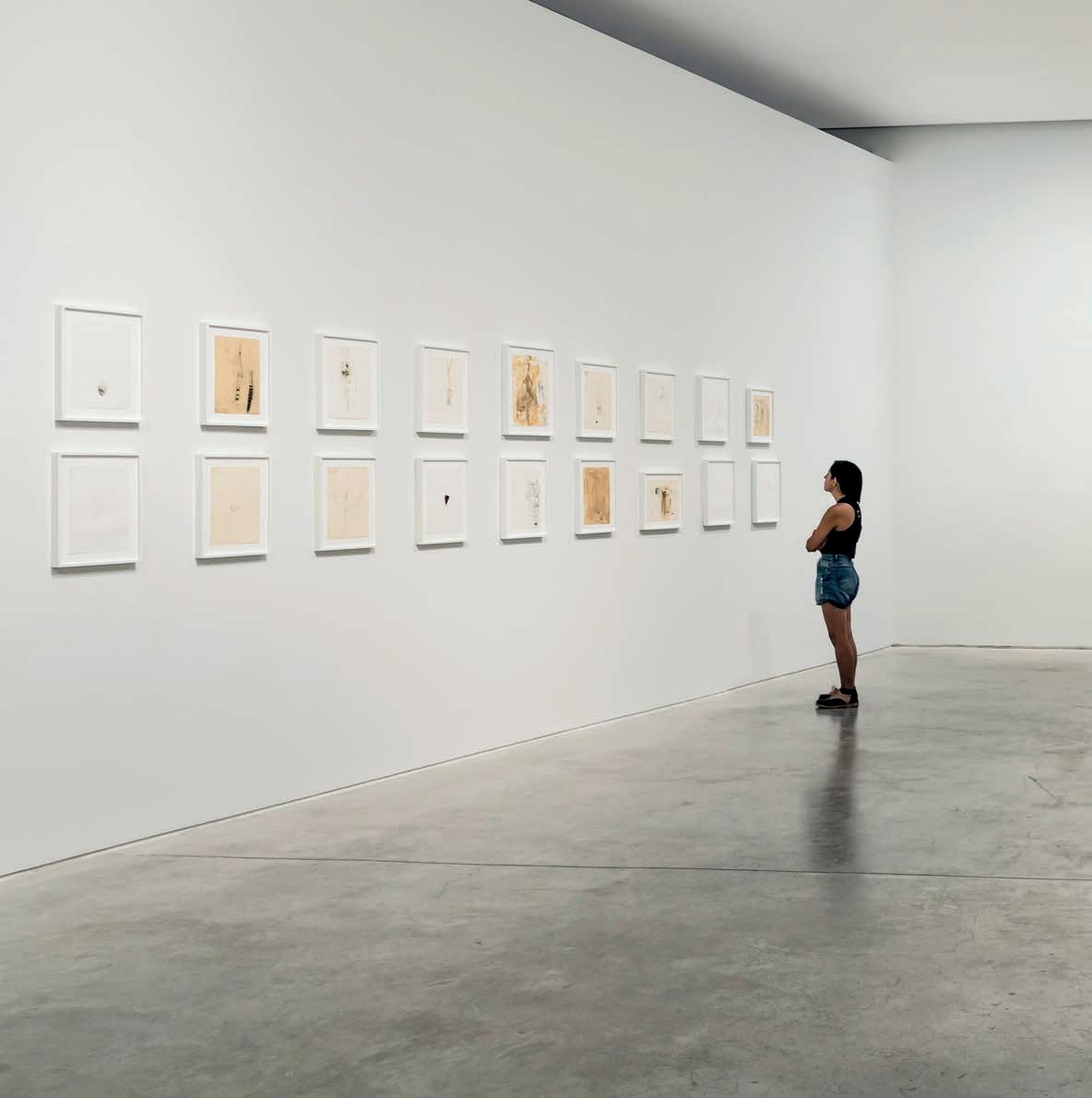
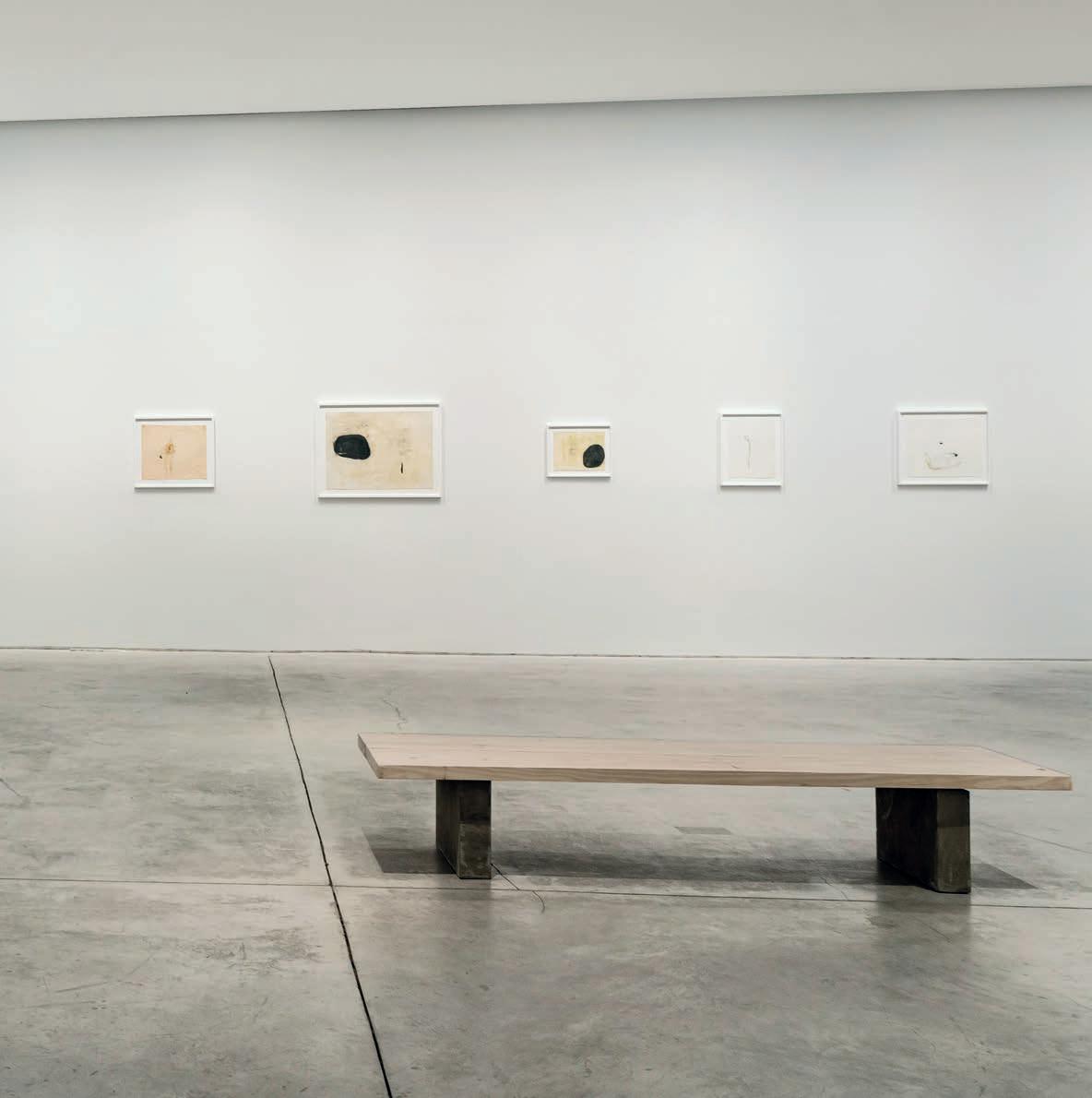
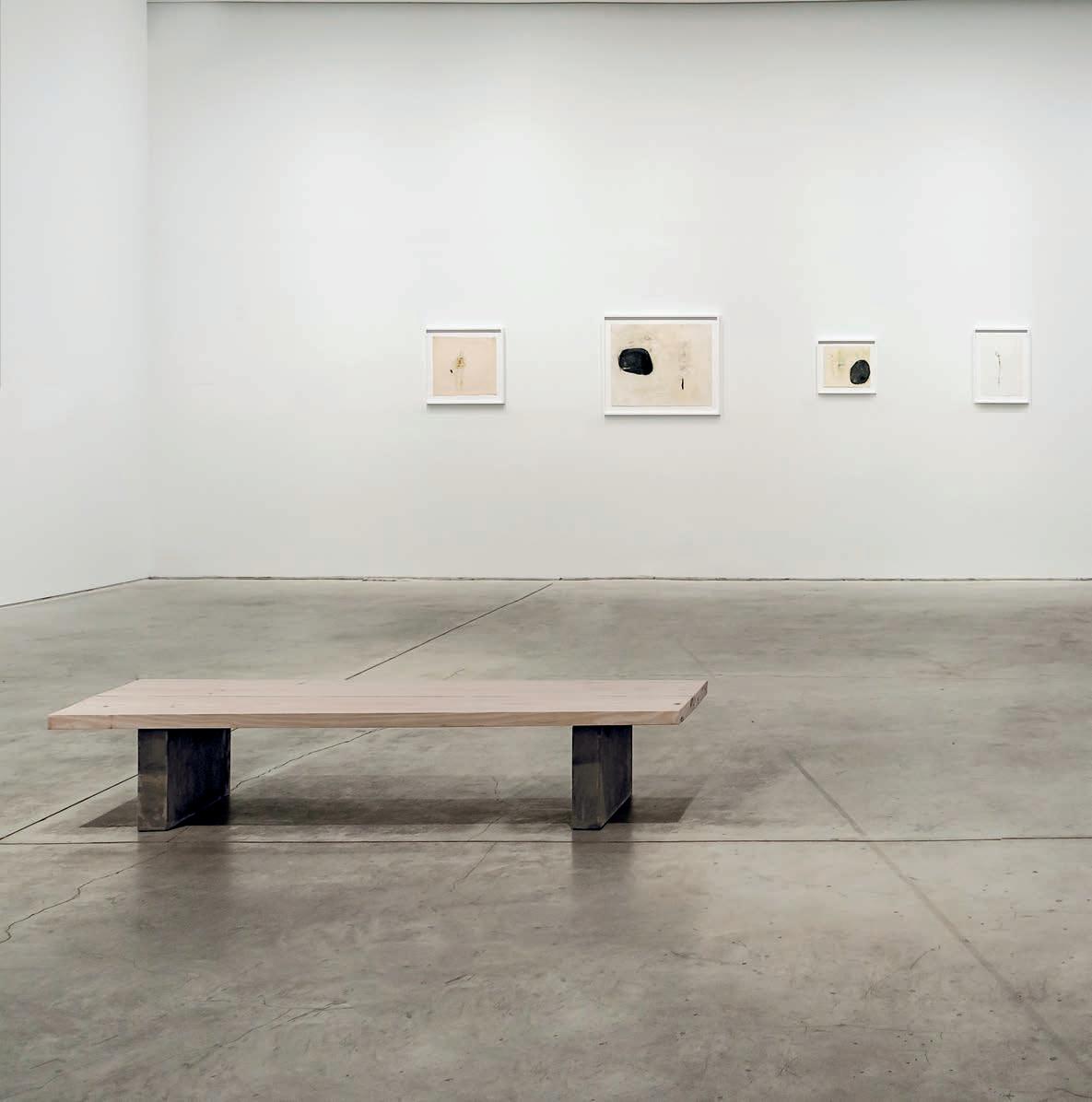
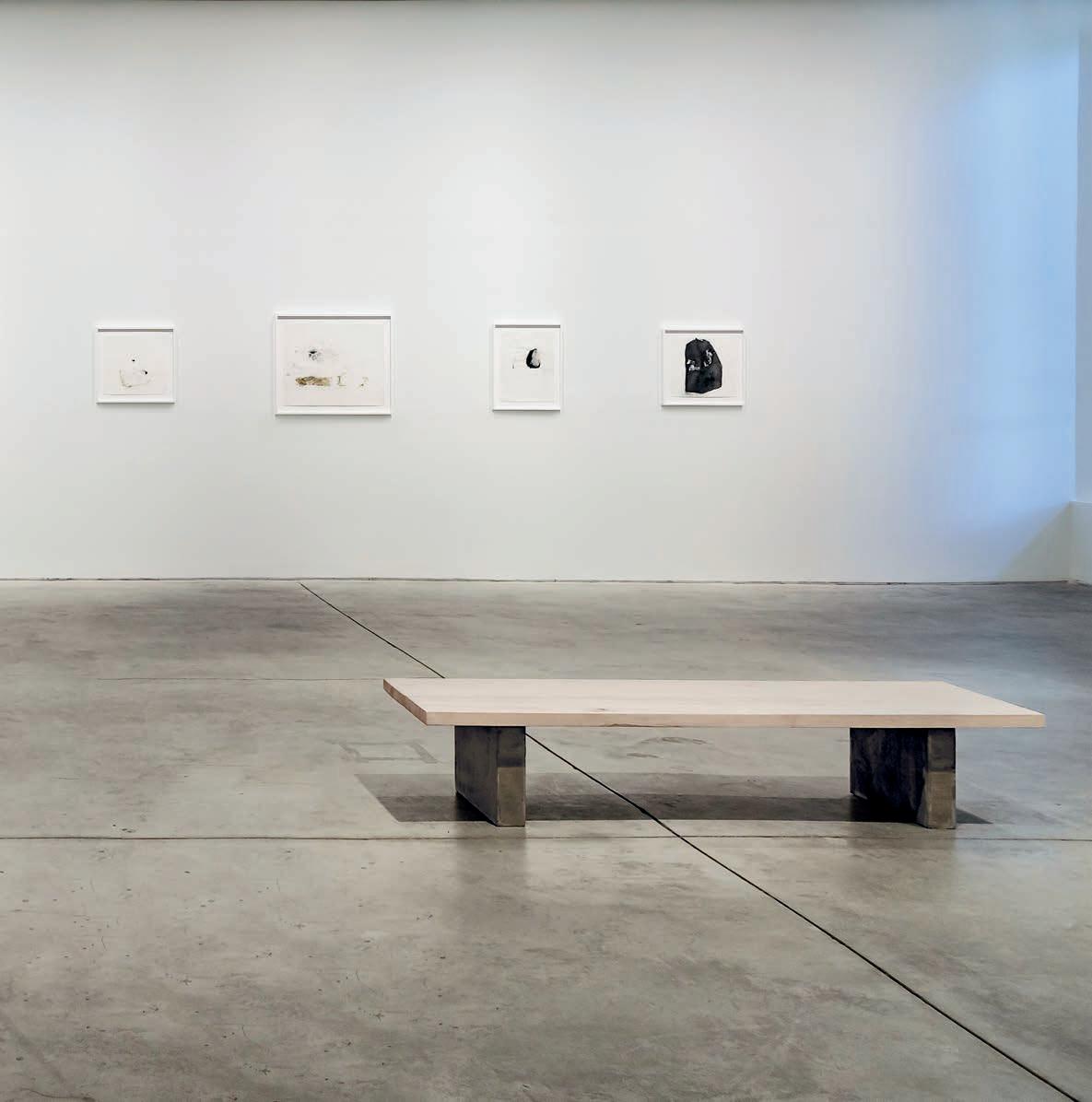
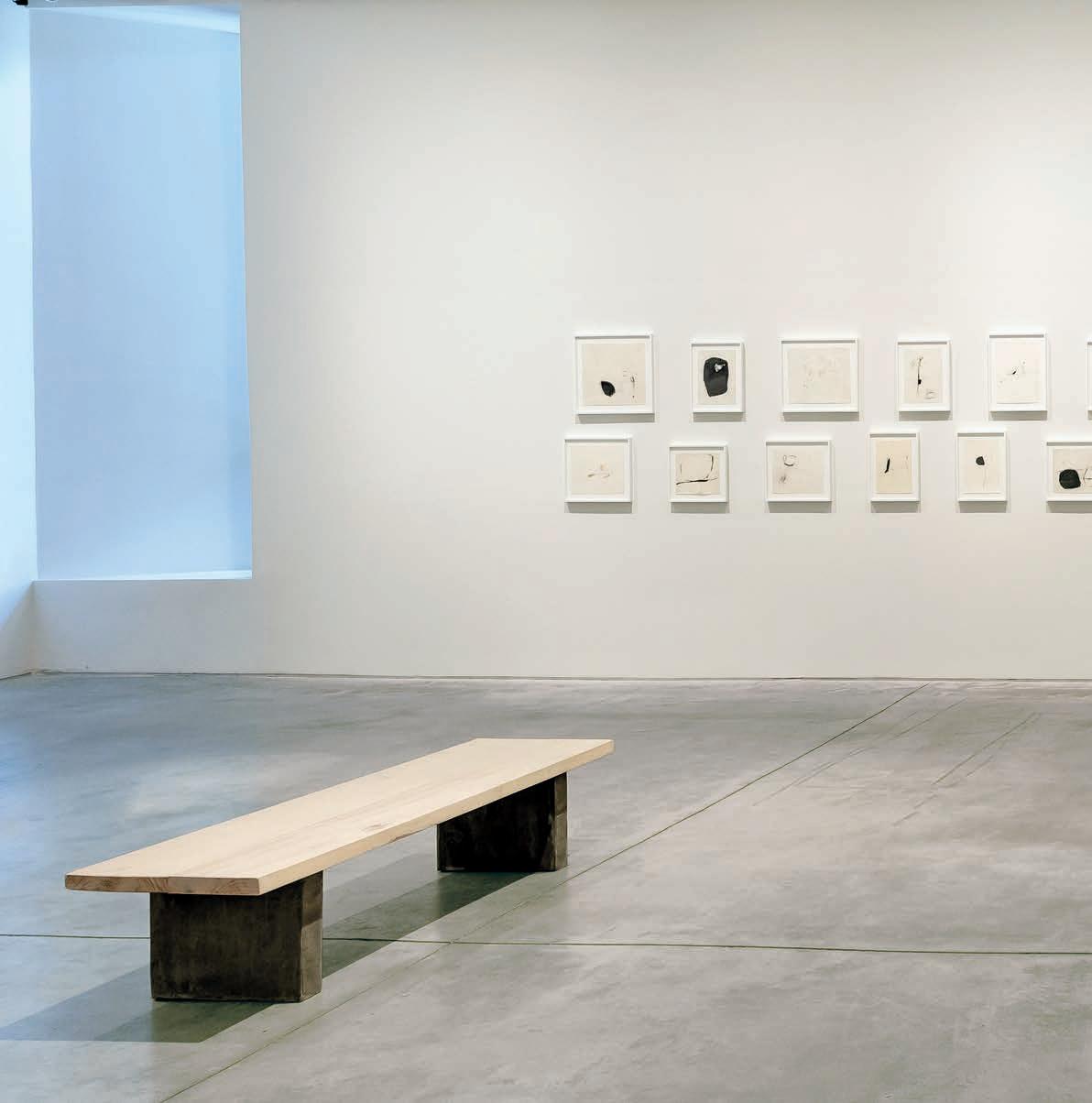
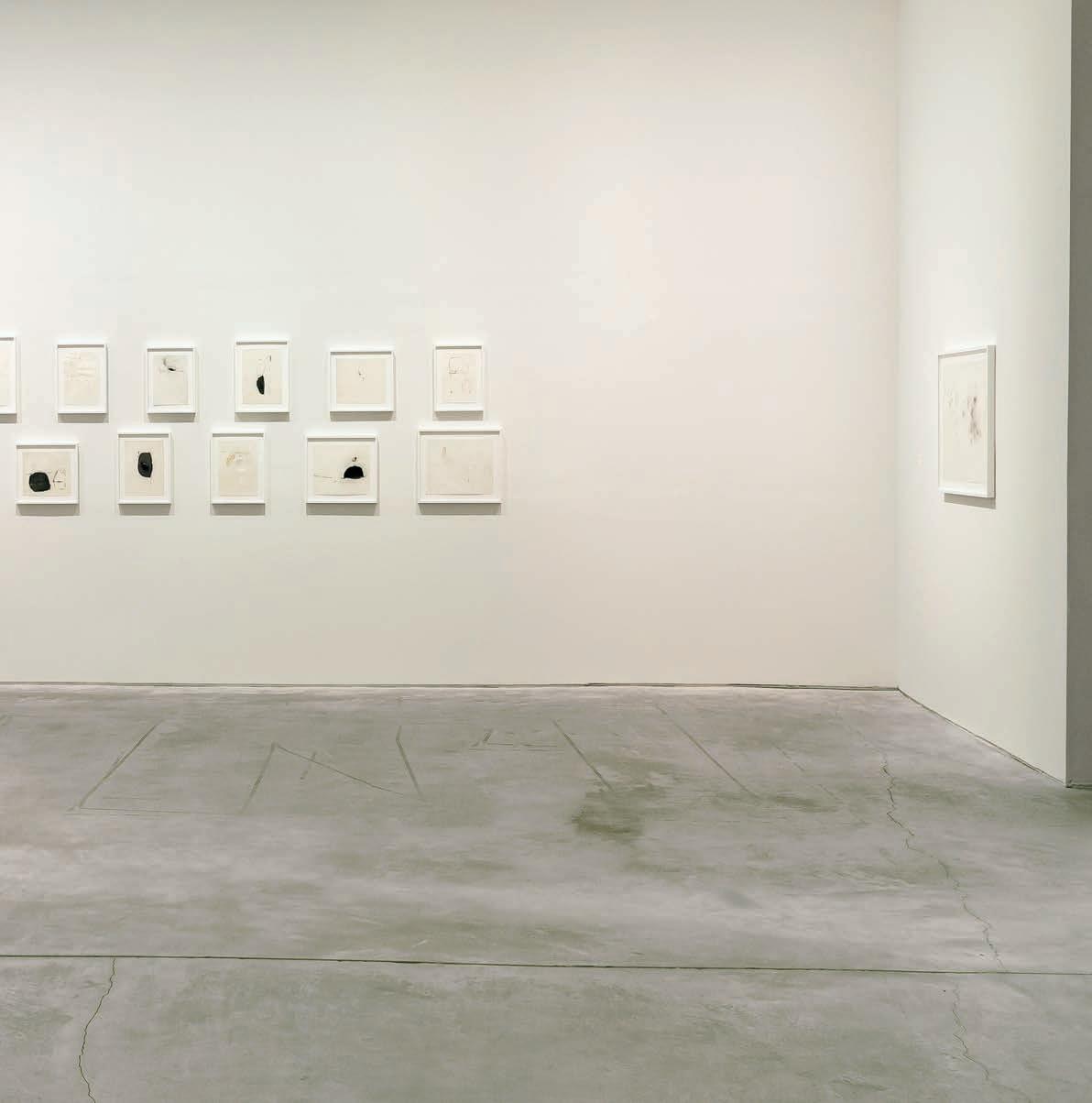
Artist's Biography
Linda Matalon, born in 1958 to Cuban-immigrant parents of Sephardic and German Jewish descent, is an American artist residing in Brooklyn, New York. Her artistic career dates back to the 1980s and has focused on drawing and sculpture. Her solo exhibition, Linda Matalon: Marcas imborrables [ Linda Matalon: Indelible Traces ] (2022), at the Museo de Arte Moderno de Buenos Aires, was the first solo exhibition by the artist at a Latin American museum.
Other solo exhibitions of her drawings and sculpture include: I Absolutely Love You [work in two pandemics] , at Kadel Willborn, Düsseldorf (2023); Drawings and Sculpture , at the Heidelberger Kunstverein, Heidelberg (2021); Canto , at Emmanuel Barbault, New York (2019); echo echo , at Blackston, New York (2013); Middle Falls , at Bennington College, Usdan Gallery, Bennington (2012); Work: 1977-2012 , Dartmouth College, Jaffe-Friede Gallery, Hanover (2012); 1 6 7 , at Gray Kapernekas Gallery, New York (2005); Middle Falls , at Wynn Kramarsky/Fifth Floor Foundation, New York (2005); Open Gates: Recent Sculpture and Drawings , at the Herter Art Gallery, University of Massachusetts, Amherst (2003); Project Room installation, Cohan Leslie and Browne, New York (2001); What Remains , Van Every Smith Galleries, Davidson College Visual Arts Center, Davidson (1997); Gathering and Protecting , at Jack Shainman Gallery, New York (1997) and The Wolfson Galleries at Miami Dade College, Miami (1997); Stephen F. Austin University Gallery, Nacaodoches (1996); Yoshii Gallery, New York (1994 and 1992), and Galerie Yoshii, Paris (1993).
Her group exhibitions include, Fragments: Siobhan Liddel and Linda Matalon at Candice Madey (2022); DUST: The Plates of the Present , at the Centre Pompidou, Paris (2020); Esther Kläs/Linda Matalon at Kadel Willborn, Düsseldorf (2017); Risk , at the Turner Contemporary Art Museum, Kent (2015); El círculo caminaba tranquilo [ The Circle Walked Casually ], at the Museo de Arte Moderno de Buenos Aires (2014) and the Deutsche Bank Kunsthalle, Berlin (2013);
Nacida en 1958 en el seno de una familia de inmigrantes cubanos de ascendencia judía alemana y sefaradí, Linda Matalon es una artista estadounidense que reside en Brooklyn, Nueva York. Su trayectoria, que se ha desarrollado en el ámbito del dibujo y la escultura, se remonta a los años ochenta. La exposición individual Linda Matalon: Marcas imborrables (2022), en el Museo de Arte Moderno de Buenos Aires, fue la primera de esta artista en un museo de Latinoamérica.
Entre otras exposiciones individuales de sus dibujos y esculturas se cuentan: I Absolutely Love You (work in two pandemics), en Kadel Willborn, Düsseldorf (2023); Drawings and Sculpture, en el Heidelberger Kunstverein, Heidelberg (2021); Canto, en Emmanuel Barbault, Nueva York (2019); echo echo, en Blackston, Nueva York (2013); Middle Falls, en Bennington College, Usdan Gallery, Bennington (2012); Work: 19772012, Dartmouth College, Jaffe-Friede Gallery, Hanover (2012); 1 6 7, en Gray Kapernekas Gallery, Nueva York (2005); Middle Falls, en Wynn Kramarsky/Fifth Floor Foundation, Nueva York (2005); Open Gates: Recent Sculpture and Drawings, en la Herter Art Gallery, University of Massachusetts, Amherst (2003); Project Room installation, Cohan Leslie and Browne, Nueva York (2001); What Remains, Van Every Smith Galleries, Davidson College Visual Arts Center, Davidson (1997); Gathering and Protecting, en Jack Shainman Gallery, Nueva York (1997) y The Wolfson Galleries en Miami Dade College, Miami (1997); Stephen F. Austin University Gallery, Nacaodoches (1996); Yoshii Gallery, Nueva York (1994 and 1992) y Galerie Yoshii, París (1993).
Entre las exposiciones colectivas en las que que participó se destacan Fragments: Siobhan Liddel and Linda Matalon, en Candice Madey, Nueva York (2022); DUST: The Plates of the Present, en el Centre Pompidou, París (2020); Esther Kläs/Linda Matalon, en Kadel-Willborn, Düsseldorf (2017); Risk, en el Turner Contemporary Art Museum, Kent (2015); El círculo caminaba tranquilo, en el Museo de Arte Moderno de Buenos Aires (2014) y en el Deutsche Bank Kunsthalle, Berlín (2013); Linda Matalon, Agnes Martin, Joyce Hinterding ,
Linda Matalon, Agnes Martin, Joyce Hinterding , at the National Art School, Darlinghurst (2014); Signal to Noise , at Gallery Niklas Belenius, Stockholm (2013); Lucie Fontaine: Estate , at Marianne Boesky Gallery, New York (2012); Une terrible beauté est neé [ A Terrible Beauty Is Born ], Lyon Biennale (2011); Immaterial , at Ballroom Marfa, Marfa (2010); Grito e Escuta: 7 th Bienal do Mercosul , Porto Alegre (2009); Urgente! 41 Salón Nacional de Artistas , Cali (2008); Embodied Abstraction , at The Americas Society, New York (1996); Absence, Activism and the Body Politic , at Fishback Gallery, New York (1993); Winter Selections , at The Drawing Center, New York (1992); Queer , at Wessel-O´Connor Gallery, New York (1991), and Dis(Member) , at Traditional Values/
Simon Watson Gallery, New York (1991).
She was artist-in-residence at Dartmouth College, Hanover (2012), and has received several awards and recognitions, such as the Cintas Foundation Award (1991), the Provincetown Fine Arts Work Center Fellowship (1992-1993), Art Matters (1993), New York Foundation for the Arts (1999) and the Pollock-Krasner Foundation Grant (2009-2010).
Her works can be found in the collections of the Centre Pompidou, Paris; the Deutsche Bank Collection, Frankfurt; the Hood Museum at Dartmouth College, Hanover, and The Brooklyn Museum, New York, among others.
en el National Art School, Darlinghurst (2014); Signal to Noise, en la Gallery Niklas Belenius, Estocolmo (2013); Lucie Fontaine: Estate, en la Marianne Boesky Gallery, Nueva York (2012); Une terrible beauté est neé [Una terrible belleza ha nacido]: 11a Bienal de Lyon (2011); Immaterial, en Ballroom Marfa, Marfa (2010); Grito e Escuta: 7 a Bienal do Mercosul, Porto Alegre (2009); Urgente! 41 Salón Nacional de Artistas, Cali (2008); Embodied Abstraction, en The Americas Society, Nueva York (1996); Absence, Activism and the Body Politic, en la Fishback Gallery, Nueva York (1993); Winter Selections, en The Drawing Center, Nueva York (1992); Dis(Member), en Traditional Values/Simon Watson Gallery, Nueva York (1991), y Queer, en la Wessel-O´Connor Gallery, Nueva York (1991).
Fue artista en residencia en el prestigioso Dartmouth College de Hanover (2012), y recibió importantes distinciones, como el premio Cintas Foundation Award (1991) y las becas Provincetown Fine Arts Work Center Fellowship (1992-1993); Art Matters (1993); New York Foundation for the Arts (1999) y Pollock-Krasner Foundation Grant (2009-2010).
Su obra forma parte de las colecciones del Centre Pompidou, París; de la Deutsche Bank Collection, Frankfurt; del Hood Museum en el Dartmouth College, Hanover, y de The Brooklyn Museum, Nueva York, entre otras.
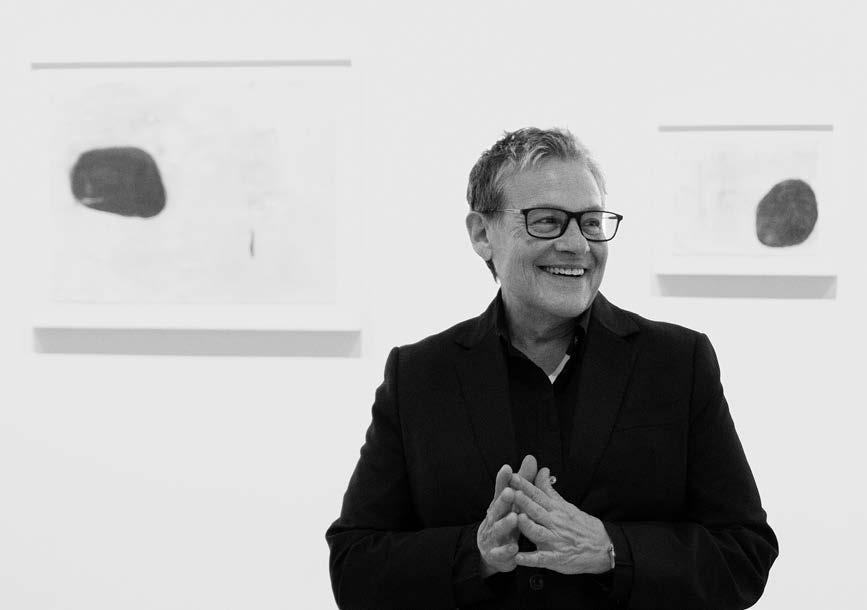
I extend my wholehearted thanks to Victoria Noorthoorn for her extraordinary vision and for her steadfast belief in my work.
I am deeply grateful to Edward J. Sullivan, Gabriela Rangel and Ksenia M. Soboleva for the beautiful insights and heartfelt thoughts expressed in this publication.
Many thanks to Micaela Bendersky and all of museum staff who helped install and care for my work, and to those who helped me realize my idea for benches in the exhibition. Likewise, the team at Pranayama Art has my enduring gratitude for their stellar framing. Enthusiastic thanks are due to the designers and the Publications Department at the museum for the production of this catalog, and to Joy Episalla for her wise counsel.
Iris, Moritz and the team at Kadel Willborn have my deep appreciation for producing the second exhibition including this work, and the first in Europe, I Absolutely Love You [work in two pandemics], 2023.
My work is a solitary practice, but without the sustained love and support from my family of friends, it would not have been possible to sustain it. Along the way, Peggy Brady and Deborah Chalsty have been unwavering in their support and generosity. I am grateful to Jeffrey Weiss who helped me see my work as part of a continuum and context. As I reflect on the COVID lockdown that we all endured, I relied on dear friends to overcome those challenges, especially Esther Klas, Barbara Kasten and Heather Row during our Sunday Zooms. And Marisa Cardinale, for everything. I give my profound appreciation to all of you.
Le doy las gracias de todo corazón a Victoria Noorthoorn por su extraordinaria visión en esta exposición y por creer firmemente en mi trabajo.
Estoy sumamente agradecida a Edward J. Sullivan, Gabriela Rangel y Ksenia M. Soboleva por sus hermosas reflexiones y las ideas sinceras que expusieron en los ensayos que acompañan esta publicación. Muchas gracias a Micaela Bendersky y a todo el personal del museo que me ayudó a instalar y cuidar mi obra, y a quienes me ayudaron a materializar mi idea de los bancos en la exposición. Del mismo modo, deseo expresar mi gratitud al equipo de Pranayama Art por su enmarcado estelar. Les debo mi más sincero agradecimiento a los diseñadores y al Departamento Editorial del Museo Moderno por la realización de este catálogo, y a Joy Episalla por sus sabios consejos.
Quisiera agradecer profundamente a Iris, Moritz y al equipo de Kadel Willborn por haber producido la segunda exposición de esta obra, y la primera en Europa, I Absolutely Love You(work in two pandemics) [Te amo totalmente(obra de dos pandemias)], 2023.
Mi trabajo es una práctica solitaria, pero sin el amor y el apoyo permanente de mi familia de amigos, no me habría sido posible sostenerlo. A lo largo del camino, Peggy Brady y Deborah Chalsty han sido inquebrantables en su acompañamiento y generosidad. Estoy muy agradecida a Jeffrey Weiss, que me ayudó a ver mi trabajo como parte de una continuidad y un contexto. Cuando reflexiono sobre la cuarentena del covid que todos debimos soportar, no olvido que me he apoyado en mis queridos amigos para superar esos desafíos, en especial Esther Klas, Barbara Kasten y Heather Row durante nuestros domingos de Zoom. Y gracias a Marisa Cardinale, por todo.
Quiero expresarles a todos mi más profundo agradecimiento.
Linda Matalon
Biografías
Authors' Biographies
Gabriela Rangel is currently Executive Director at MOCA-Tucson. From 2019 to 2021, she was Artistic Director at MALBA, Buenos Aires. From 2004 to 2019, she was Director of Visual Arts and Chief Curator at Americas Society, New York. She holds an MA in curatorial studies from the Center for Curatorial Studies, Bard College; an MA in media and communications studies from the Universidad Católica Andrés Bello, Caracas; and film studies from the International Film School at San Antonio de los Baños. Rangel has curated and co-curated numerous exhibitions on modern and contemporary art. She has published articles in Hyperallergic, Letras Libres, Revista Ñ, Artischock, Art in America, Parkett, The Brooklyn Rail, and Art Nexus, and more recently edited monographs dedicated to artists Tecla Tofano (2024) and Elsa Gramcko (2023). She is a member of AICA America and a former fellow researcher at the Vartan Gregorian Center for the Research in the Humanities at the New York Public Library.
Edward J. Sullivan is Professor of Art History at New York University with a specialization in the arts of the Spanish and Portuguese-speaking nations of the Americas. He has had a lengthy career as professor and curator, having organized some thirty exhibitions of modern and contemporary art in museums and cultural institutions in Latin America, Europe and the U.S. He has published around thirty books and exhibition catalogues. Among his current projects are the book Latino New York: Art and Experience, 1970-2001 (2026: Yale University Press) and the exhibition Emergency Measures: Art and the AIDS Crisis (co-curated with Séan Kissane) for the Irish Museum of Modern Art, Dublin (summer 2027).
Ksenia M. Soboleva is a New York based art historian specializing in queer art and culture. She holds a PhD from the Institute of Fine Arts, NYU. Soboleva practices an autobiographical approach to art history and an art historical approach to autobiography. Her writings have appeared in The Brooklyn Rail, BOMB Magazine, Cultured, Ursula, frieze, Hyperallergic, as well as various artist monographs and exhibition catalogues. Soboleva has held fellowships at the Solomon R. Guggenheim Museum as a Vilcek Curatorial Fellow, and at The New York Historical as an Andrew W. Mellon Postdoctoral Fellow in Gender and LGBTQ+ History. She is the recipient of the 2025 Dora Maar Cultural Center Fellowship and is currently completing her book manuscript What Happens After: Art, AIDS, and Lesbian Histories.
Gabriela Rangel es la actual directora ejecutiva del MOCA-Tucson. De 2019 a 2021, se desempeñó como directora artística del MALBA, Buenos Aires. De 2004 a 2019, fue directora de artes visuales y jefa de curaduría de Americas Society, Nueva York. Tiene un máster en Estudios Curatoriales otorgado por el Center for Curatorial Studies, Bard College; un máster en Estudios de Medios y Comunicación de la Universidad Católica Andrés Bello, Caracas, y estudió cine en la Escuela Internacional de Cine de San Antonio de los Baños. Rangel ha realizado la curaduría y co-curaduría de numerosas exposiciones de arte moderno y contemporáneo. Ha publicado artículos en Hyperallergic, Letras Libres, Revista Ñ, Artischock, Art in America, Parkett, The Brooklyn Rail y Art Nexus, y recientemente ha editado monografías dedicadas a las artistas Tecla Tofano (2024) y Elsa Gramcko (2023). Es miembro de AICA America y fue investigadora asociada del Vartan Gregorian Center for the Research in the Humanities de la New York Public Library.
Edward J. Sullivan se desempeña como profesor de Historia del Arte en la Universidad de Nueva York, especializado en la producción artística de América Latina. Cuenta con una extensa carrera como profesor y curador, y ha organizado alrededor de treinta exposiciones de arte moderno y contemporáneo en museos e instituciones culturales de América Latina, Europa y Estados Unidos. Ha publicado alrededor de treinta libros y catálogos de exposiciones. Entre sus proyectos actuales se encuentran el libro Latino New York: Art and Experience, 1970-2001 (Yale University Press, 2026) y la exposición Emergency Measures: Art and the AIDS Crisis, en co-curadaduría con Séan Kissane, que tendrá lugar en el verano de 2027 en el Irish Museum of Modern Art, de Dublín.
Ksenia M. Soboleva es una historiadora del arte especializada en arte y cultura queer radicada en Nueva York. Hizo el doctorado en el Institute of Fine Arts de la Universidad de Nueva York. Soboleva aplica un enfoque autobiográfico a la historia del arte y un enfoque históricoartístico a la autobiografía. Sus escritos se han publicado en The Brooklyn Rail, BOMB Magazine, Cultured, Ursula, frieze, Hyperallergic, así como en diversas monografías de artistas y catálogos de exposiciones. Recibió la beca curatorial Vilcek para trabajar en el Museo Solomon R. Guggenheim y la beca posdoctoral Andrew W. Mellon con la que se desempeñó en The New York Historical en el área de la Historia del Género y LGBTQ+. Asimismo, ha recibido la beca 2025 del Dora Maar Cultural Center y actualmente está terminando el manuscrito de su libro What Happens After: Art, AIDS, and Lesbian Histories.
Exposición
Curaduría: Victoria Noorthoorn
Coordinación de la exposición: Micaela Bendersky, Giuliana Migale Rocco
Registro de obra: Paula Pellejero, Diamela Canosa
Diseño de la exposición: Ivan Rösler
Coordinación general de producción: Almendra Vilela
Producción: Edgar Lacombe
Asistencia de producción: Rocío Englender
Coordinación de montaje: Germán Sandoval
Montaje: Andrés Martínez, Santiago Contin, Federico Monlao
Iluminación, sonido y tecnologías: Guillermo Carrasco, Soledad Manrique Goldsack, Claudio Bajerski
Publicación
Edición general: Gabriela Comte
Textos: Victoria Noorthoorn, Gabriela Rangel, Ksenia M. Soboleva, Edward J. Sullivan
Edición: Martín Lojo, Alejandro Palermo
Coordinación editorial: Soledad Sobrino
Diseño gráfico: Matías Schilman, Horacio Wainhaus
Corrección de textos: Julia Benseñor, Inés Gugliotella
Traducción al inglés: Ian Barnet, Leslie Robertson
Traducción al español: Julia Benseñor
Colorimetría y producción gráfica: Guillermo Miguens
Dirección
Directora: Victoria Noorthoorn
Coordinadora Institucional de Planeamiento y Seguimiento de Gestión: Florencia Rugiero
Curaduría
Jefe del Departamento Curatorial: Patricio Orellana / Curadores: Nicolás Cuello, Raúl Flores / Curador de Diseño Argentino: Franco Chimento / Curador de Programas Públicos: Fernando García / Curador de Teatro: Alejandro Tantanian / Investigador: Claudio Iglesias / Coordinadora del Programa de Residencias
Casa Alberto Heredia: Belén Arroyo / Asistencia
Curatorial: Florencia Morel
Patrimonio
Jefa de Patrimonio: Valeria Semilla / Administración y Reservas Técnicas: Adrián Flores / Obra Gráfica y Colecciones Especiales: Jorge Ponzone / Manipulación y Montaje: Rodrigo Alcon Quintanilha, Jaime Lubo Millán, Celestino Pacheco, Juan Sottocorno / Registro, Documentación y Préstamos: Julieta Aguiar, Cristina Godoy, Gabriela Gugliottella / Fotógrafa: Viviana Gil / Investigación: Belén Leuzzi
Conservación
Jefe de Conservación: Pino Monkes / Conservadoras: Diamela Canosa, Cecilia Soledad Romero / Asistentes de Conservación: María Luz Boy Arditi Rocha, Camila Paz Kotek
Biblioteca y Centro de Documentación
Coordinadora de Biblioteca y Archivo: María Noelia Delpiano / Servicio de Referencia y Procesos Técnicos: Alejandro Atias, Silvia Carabajal, Mónica Lerner, Luciana Belén Olveira / Archivista: Martina López / Conservación y Digitalización de Archivos: Victoria Sisman, Sofía Bianco Beovide / Desarrollos Digitales para Catalogación: Alejo Janin, Pablo Bianchi
Exposiciones Temporarias
Jefa de Exposiciones: Agustina Vizcarra / Coordinación de Exposiciones: Noelia Magnelli / Registro de Obra: Paula Pellejero / Asistente de Exposiciones: Carola Saralegui
Diseño y Producción de Exposiciones
Jefe de Diseño y Producción de Exposiciones: Iván Rösler / Coordinadora General de Producción: Johanna Palmeyro / Productoras Senior: Martina Estelí García, Julieta Potenze / Productores: Edgar Lacombe, Laura Roldán / Asistentes de Producción: Sebastián Sarobe, Luciana Hernández / Renders y Modelado 3D: Paula Casanova / Coordinador de Montaje: Germán Sandoval / Coordinador de Iluminación, Sonido y Tecnologías: Guillermo Carrasco / Iluminación, Sonido y Tecnologías: Claudio Bajerski, Jorge López, Soledad Manrique Goldsack, César Tula
Comunicación
Jefa de Comunicación: Gabriela Giles / Coordinadora del Departamento de Comunicación: Carolina Alvariño / Producción: Laura López, Nahuel Ugazio / Prensa: Verónica Padilla / Diseño Gráfico: Paula Galli, Leandro Stavorengo / Imagen y Video: Sol Navedo, Guido Limardo, Josefina Tommasi / Redes Sociales y Web: Andrea Kain, Matías Jorge, María Lola Vázquez Aparici
Editorial
Editora General: Gabriela Comte / Editores: Martín Lojo, Alejandro Palermo / Coordinadora del Departamento Editorial: Soledad Sobrino / Corrección: Julia Benseñor, Inés Gugliotella / Traducción: Ian Barnett, Leslie Robertson / Diseño Gráfico: Pablo Alarcón, Matías Schilman / Colorimetría y Producción Gráfica: Guillermo Miguens / Administrativo Comercial: Guido Chantiri
Educación y Programas Sociales
Jefe de Educación: Alfredo Aracil / Coordinadora General del Departamento Educativo: Ana Balduzzi / Instituciones Educativas y Aprendizajes: Laila Calantzopoulos (Coordinadora), Fran Bueno, Solana Ceccotti, Sofía Sagle / Accesibilidad: Mariana Capurro (Coordinadora), Amparo Portal / Nuevos Públicos: Ignacio Cerbino (Coordinador), Maite Galdós, Ana Clara Montini, Luciana Sáez / Educadores: Candela Álvarez Castro, Marina Bohn, Silvina Edelman, Dana Gastellu, Malena Giaquinta, María del Pilar Macera, Agustina Nattero, Laura Suárez Orozco, Andrea Turdera, Midya Zingman / Administración: Pilar Álvarez Crespo
Desarrollo Institucional
Jefa de Desarrollo Institucional: Verónica Vassallo / Coordinadora de Desarrollo Institucional: Paula Mataini / Responsable de Individuos Mecenas: Silvia Braun / Responsable de Desarrollo Sustentable: Giuliana Perticari / Responsable de Eventos: María Gil / Productora de Eventos: Evelyn Schweikart / Técnico de Eventos: Franco Pellegrino
Contabilidad y Finanzas
Jefa de Finanzas: Natalia Minini / Coordinadora de Finanzas: Johanna Herrera / Asistente de Compras y Contrataciones: Lautaro Pauluk
Administración, Recursos Humanos y Servicios Legales
Jefe de Administración y Recursos Humanos: Vicente Sposaro / Coordinadora de Funciones Patrimoniales y Mesa de Entradas: Liliana Gómez / Responsable de Contratos: Romina Ortoleva / Analista de Recursos Humanos: Carla Sposaro / Asistente de Recursos Humanos: Martín Valdivia / Asesora Legal: Yanina Consoli
Sistemas de la Información
Responsable de Sistemas de la Información: José Soria / Asistentes de Sistemas de la Información: Matías Altieri, Alejandro Meng
Servicios Generales
Jefe de Servicios Generales: Alberto Padilla / Administración: Gladis de la Cruz / Coordinador de Mantenimiento: Rodolfo Amaya / Mantenimiento: Fabricio Ledesma, Ramón Villarreal, Jorge Rafael Duarte, Francisco Pacheco / Electricista: Héctor Flores / Asistente electricista: Leonardo Mauricio Alfonzo / Coordinadores de Seguridad: Susana Arroyo, Soledad Rodríguez Penino / Supervisora de Seguridad: Sabrina Fernández / Guardias de Sala: Enrique Alegre, Maximiliano Alonso, Micaela Basualdo, María del Carmen Cabañas, Candela Calvete, Cecilia Inés Carusotto, Mirta Castel, Carlos Uriel Castillo, Viviana Ciofini, Ariana Correa Mezquita, Sergio Ergueta, Brian Fernández, Yenni Fernández Rodríguez, Joaquín Galmes Dardes, Agustín Giménez, Joaquín González, Liliana Haedo, Pablo Lembo, Facundo Maximiliano López Pesce, Fabricio Momeño, Georgina Núñez, Gustavo Pereyra, Silvina Rinaldi, Ángela Rodríguez González, Juan Salazar García, Martín Sanz, Magalí Sardella, Lucila Sposaro, María Inés Trejo, Hugo Vallejos, Francesca Valli / Recepción: Germán González, Federico Ignacio Luoni, Rocío Ayelén Rip, Florencia Salvador / Serenos: Lorenzo Domaica, Walter Rodríguez Galvao / Coordinadora de Higiene y Desinfección: Celia Duarte / Equipo de Higiene y Desinfección: María Mercedes Amaya, Johanna Cardoso, Patricia Ceci, Gabriel Amarú Córdoba, Esther González, Lautaro Martínez, Luis Miño, Patricia Pelletti, Laura Pretti, Liliana Villarreal, Ramon Enrique Villarreal, Alejandra Mercedes Vilte.
Equipo de la Asociación Amigos
del Museo de Arte Moderno de Buenos Aires
Coordinadora: Laura Liberchuk / Coordinadora Ejecutiva: Sofía Paz / Responsables de la tienda: Fernando Ballester, Agustina Oliva
Mecenas del arte
Mecenas Embajador
Amalia Amoedo
Patricia Artigas y Lucas Etchegaray
Erica Roberts
Javier Timerman
Mecenas
Maita Barrenechea
Pablo Blanco
Cecilia Duhau
Xul Han y Jimena Lusi
Sandra Juárez
Carmen y Martín Marron
Jean-Michel Rebilly
Gabriela Yaceszen y donantes anónimos
Colaboradores Institucionales
Mercedes Corte
Diego Mohadeb
El Museo Moderno agradece el apoyo filantrópico y entusiasta de quienes participan de los siguientes programas e instituciones
Comité de adquisiciones
Miembros
Amalia Amoedo
Andrea Arditi Schwartz
Maita Barrenechea*
Atilio Bugliotti
Andrés Eduardo Brun*
José Luis Lorenzo
Karina Mindlin
Nicole Moises
Alfredo Muñoz
Claudio Porcel
Sergio Quattrini*
Erica Roberts*
Javier Timerman
Gabriel Werthein
Asociación Amigos del Moderno
Victoria Noorthoorn** y donantes anónimos
*Miembros Fundadores 2019
**En representación del Ministerio de Cultura del Gobierno de la Ciudad de Buenos Aires
Donantes extraordinarios al patrimonio 2013-2025
Archivo Liliana Maresca
Archivo Juan Pablo Renzi
Asociación Amigos del Moderno
Colección Banco Supervielle
Colección Patricia Phelps de Cisneros
Fundación Nicolás García Uriburu
Nicanor Aráoz
Lila Teresita Barroetaveña de Mitre
Santiago Bengolea
Perla Benveniste
Agustín Bullrich
Marcela Di Capua y Pablo Mazza
Juan Cambiaso
Delia Cancela
Elda Cerrato
César Curi
Flavia Da Rin
Familia De Loof
Celina Eceiza
Martín Esiler
Familia Ferrari
Ana Gallardo
Carlos Ginzburg
María Teresa Gramuglio
Martha Greco
Graciela Hasper
Carlos Herrera
Xavier Hufkens
Paola Iorio
Leonardo Iramain
Ides Kihlen
Silvana Lacarra
David Lamelas
Martín Legón
Artur Lescher
Gianni Motti
Nidia Mabel Olmos de Grippo
Luis Pazos
Silvia Paz Illobre
Dalila Puzzovio
Eduardo Rodríguez
Aldo Sessa
Luis Terán
Natalia Valdéz
Asociación Amigos del Museo de Arte
Moderno de Buenos Aires
Comisión directiva
Presidente
Florencia Perotti
Vicepresidentes
Andrea Arditi Schwartz
Matías Tamburini
Secretaria
Ruth Geoffroy
Prosecretaria
Marisa Koifman
Tesorero
Jorge Anzorreguy
Protesorero
Cecilia Núñez
Vocales
Mercedes Balmaceda
Emma Clifton
Tomás Eurnekian
Chantal Ferrari de Erdozain
María Freytes
Karina Kreth
Florencia Pochinki
Gonzalo Robredo
Pablo Sahores
Alexander Sarian
Ariel Sigal
APOYAN AL MUSEO EN SU PROGRAMA ANUAL 2026:
ALIADO ESTRATÉGICO
PATROCINADORES


APOYAN
COLABORADORES ESTRATÉGICOS
Este libro se terminó de imprimir en abril de 2026, en Akian Gráfica Editora, Clay 2992, Ciudad de Buenos Aires, Argentina.