
Summary of findings
Homelessness Health Needs Assessment for Murrumbidgee PHN

Last updated 9 April 2024

Introduction
The purpose of this summary report is to collate and present the findings from the three discrete component of data collection and analysis that has been undertaken so far — population health and service utilisation data analysis; stakeholder engagement; and desktop review.
This report will be provided to the Project Working Group at MPHN to share interim findings and help inform feedback and consideration around the subsequent phase of the project — triangulation and validation.
1. Key takeaways
2. Stakeholder engagement findings
3. Population health and service utilisation data findings
4. Desktop review findings

Key takeaways
Key takeaways from our interim findings
1
Many of the health needs and service issues of the broader population are consistent with those faced by people experiencing or at risk of homelessness (e.g. chronic conditions service gaps, workforce challenges, affordability) — but often disproportionately so with even more limited accessibility.
4
The segment of the general population who are 'at risk' of homelessness is reasonably broad and large based on relevant indicators of risk, such as financial stress, housing availability, domestic and family violence, and utilisation of homelessness services.
2
3
While estimates of homelessness are generally underreported, about 1,000 people were estimated to be homeless in the region in the 2021 Census. Highest numbers were in Wagga Wagga and Griffith (~55% of total) but relatively higher rates in Griffith, Junee, Greater Hume Shire and Edward River LGAs.
5
Opportunities to increase accessibility to primary care services that were identified for people experiencing or at risk of homelessness generally involve delivery of doctor-led or nurse-led services through outreach, visiting, and in-reach — and that offer contuity and coordination of care.
Homelessness is typically perceived to be more 'hidden' than just those who are sleeping rough. It was reportedly increasing as an issue and most commonly seen as people who are transient and in chronic homelessness, young people 'couch surfing', older people following life events/transitions, and families with children with complexity.
6
Opportunities exist to improve the responsiveness of services and systems to more appropriately meet the health needs of people experiencing or at risk of homelessness — this includes being more flexible, less stigmatising, more proactive and earlier engagement, better follow-up, and more integration between health:housing services
4
Stakeholder engagement
Overview of engagement activities
Engagement
The engagement approach involved a range of activities to promote participation and a focus on unique local issues:
● 51 total participants at a workshop, including:
○ 16 participants in Deniliquin (2 DNA)
○ 8 participants in Griffith (4 apologies, 3 DNA)
○ 6 participants in Leeton (2 apologies; 1 DNA)
○ 14 participants in Wagga (2 apologies, 1 DNA)
○ 6 participants in Tumut (2 apologies)
○ 1 participant in Cootamundra (2 apologies)
● 4 participants in 1:1 interviews
● 17 responses to the online survey
Focus of inquiry
The engagement activities followed a consistent question set that focused on:
1. Health needs — What health issues are faced by people experiencing homelessness that you see as being of highest priority to address? Are these priorities different for people who are at risk of homelessness?
2. At risk groups — Are there particular groups of people within this local community / region that you see as being most vulnerable to experiencing homelessness, and why/how?
3. Barriers to access What barriers or challenges are encountered by people experiencing andor at risk of homelessness in accessing services to meet their health needs?
4. Enablers — Are there particular strengths or things that are working well for people experiencing or at risk of homelessness in this local community?
5. Opportunities — What are the main opportunities you see to improve access to health services that would better meet the health needs of people either experiencing homelessness, or at risk of homelessness?
Health needs (1 of 2)
The common drivers of homelessness and housing insecurity being financial or socioeconomic in nature, and there are several characteristics or groups of people within the Murrumbidgee region who are perceived to be most vulnerable to experiencing homelessness.
● Homelessness sometimes involves ‘sleeping rough’ but most often looks like living in unsuitable or over-crowded living arrangements and/or without long-term tenure
● Financial hardship and cost of living increasingly seeing low income earners (including families with children) facing housing stress and potentially other disruptive events, and tenancy loss.
● Economic conditions mean it’s increasingly difficult for many people to find and secure housing due to availability and affordability
● Relationship breakdown and domestic violence disrupt housing arrangements
● Young people, particularly following school disengagement, family conflict and/or lack of parental support
● Ageing is a factor in homelessness and housing insecurity often caused to disruptive life events (e.g. loss of independence to live at home; relationship breakdown)
● People experiencing or at risk of homelessness are often socially isolated
● Transitional accommodation and social housing options not always suitable due to requiring moving out of town, in unsafe/antisocial environments, and lack of suitable facilities/support services (e.g. kitchen; food storage; doctor; transport)
People experiencing homelessness are often living with chronic health conditions that are not well managed and sometimes not identified or diagnosed.
● Recognised as having lower life expectancy than general population
● Not getting health screening (e.g. bowel / cervical / breast cancer) or health assessments, preventing a timely diagnosis and early treatment
● Heart health and high blood pressure
● Medication management
● Diabetes and other metabolic conditions
● Dental and oral health issues often leading to pain-related ED presentation
● Eyesight issues can often get a free test but can’t afford glasses
Mental ill health and trauma-related issues are also a driver of homelessness and housing vulnerability for people.
● Mental health conditions common, ranging from depression and anxiety to more ‘severe’ and enduring mental illness
● Those experiencing mental ill health may not always have or identify with a diagnosis
● Have often experienced significant trauma in childhood and/or as adult
● Drug and alcohol use as a means of ‘self-medicating’ or meeting one’s needs where health system isn’t able to
● Hoarding and squalor related to mental health a common driver of tenancy risk
Health needs (2 of 2)
People experiencing homelessness are more likely to experience certain infectious conditions due to environments and behaviours.
● Boils and skin conditions
● Respiratory infections, particularly during winter
● Wounds and other injuries as a result of accidents or violence (including domestic violence)
● Higher risk of re-infections leading to ongoing health concerns
● Often result of unsuitable and unhygienic living conditions and lack of access to basic needs such as food, water clothing, shelter and amenities
● Sexual and reproductive health issues can be a result of living arrangements and/or financial coercion
● Higher rates of cancer due to exposure to things like pesticides
● Possibly at risk of motor neurone disease due to higher exposure to rivers/lakes with blue-green algae
People experiencing and/or at risk of homelessness tend to have lower levels of health literacy.
● Affects understanding of their own health needs and ability to selfmanage their conditions (e.g. medication management)
● Limited motivation to access services due to shame and stigma (including self-stigma relating to literacy)
● Limited proactive engagement with services results in higher and/or less appropriate presentations to hospital emergency departments and hospital admissions.
At Risk Groups (1 of 2)
People from relatively lower socioeconomic circumstances who experience financial hardship due to low or unstable income, exacerbated by costs of living, were regarded as the main group vulnerable to homelessness.
● Single parent families and/or families on inadequate government support payments among the most ‘at risk’ of homelessness, and regarded as a potentially large cohort of people
● Financial hardship causing defaulting on mortgage payments, increasing the risk of losing their home.
● People moving from other regions due to financial hardship and living away from formal/informal support networks (e.g. doctors, family carers)
● People living in poor quality housing or higher density housing with risk of overcrowding.
● Cost of living also leading to adverse health-related factors such as food insecurity
People with a family history of social disadvantage and homelessness were more at risk to continue generational patterns of housing vulnerability or homelessness.
● Distrust of government services due to negative perceptions or past experiences
● Exposure to or experience of substance abuse and domestic and family violence
● Instability at home leading to increased disengagement at school which had a cascading effect on health and social outcomes on youth.
● Poor mental health with youth unable to emotionally regulate or access support due to lack of parental consent, which leads to more serious mental health issues in adulthood
● Couch-surfing and living in inadequate conditions perceived as a normalised experienced and not readily identified as ‘homelessness’
Cultural factors influence the risk of homelessness with First Nations and CALD people disproportionately affected, both in ‘risk’ and experience of homelessness.
● First Nations people tend to have larger families leading to overcrowding and couch-surfing.
● Family conflict causing Aboriginal Elders to forced out of home by younger members of the family.
● Culturally diverse people, particularly migrant workers in seasonal work, who are on temporary, restricted or expired visas have overall limited access to support services, resources, housing and often face discrimination.
People with a history of being in the justice system and out of home care were also found to be vulnerable to homelessness.
● Often have experienced stigma and discrimination within the community and were more resistant to access services
● Tension of housing and justice systems as some men can’t be released from prison without an address — some opt to be released into temporary housing and end up homeless
● Individuals in out-of-home care and in the justice system tend to have lower education levels and lack experience gaining employment, struggling to generate income
● Some individuals will reoffend with intent to return to prison with the security of accommodation and meals being provided.
At Risk Groups (2 of 2)
Older people > 50 years are experiencing issues affecting their health, finances and social support that increases their vulnerability to homelessness:
● People aged under 65 years and ineligible for My Aged Care, but have limited access to support services and a need for support due to age-related health issues and lack of physical mobility.
● Financial insecurity amongst the retired age group (>65 years) who did not have a superannuation and relied on the pension to sustain costs of living.
● Older women experience higher financial risks due to generational differences of not having ability to work and acquire savings.
● Many experiencing lack of social and financial support due to family or relationship breakdown or death.
● Generational differences in attitudes to seeking support, with older clients tending to be proud and strong, avoid asking for help and don’t receive the appropriate support.
● Undiagnosed mental health issues, compounded by social isolation.
People with lots of complexity in their circumstances are often at risk of limited access or disengagement with the services that are available which drives vulnerability.
● People who are not receiving the necessary mental health supports are more vulnerable as they are often unable to sustain tenancy independently
● Client who become disengaged from services tend to miss out on support to meet their needs as services prioritise and focus their efforts on those more engaged clients
● People with undiagnosed intellectual disabilities aren’t able to effectively manage their own health needs.
● Clients not meeting the often restrictive eligibility/exclusion criteria set by services, but have disabilities or conditions that are not supported by NDIS or other mental health services that affect their housing situation
● People with pets experience difficulties finding accommodation and choose to sleep on the streets as their pets are vital to their wellbeing.
Barriers to accessing health services (1 of 2)
Shortage of service availability and lack of affordable services were identified as the major barriers of access for individuals unable to address often complex needs.
● Inconsistent care plans due to reduced capacity of services and inability to provide regular contact enhanced further disengagement from clients.
● Staff are overloaded with cases and don’t necessarily have capacity to follow-up with complex clients —clients will often get removed from lists if they are a no-show
● Service gap in men’s health and male providers — a barrier for men who may only want to speak to other men due to cultural sensitivities
● Lack of services results in longer wait times to see a medical professional and also creates extra pressure on hospital emergency departments as the only physical service to attend at times
● Pressure on current providers causing staff burnout leading to staff attrition, creating further service availability issues
● Clients cannot afford to see a specialist and health needs remain untreated.
Rurality of living affects the client’s capacity to travel to face-to-face services, and telehealth is not the preferred way of receiving services.
● Many rural towns in the Murrumbidgee region do not have public transport services.
● Clients may not necessarily afford petrol or taxi costs and do not attend appointments as a result.
● Telehealth is not always a viable option as regional areas experience wifi or service disruption.
● Many high risk clients who are homeless or at risk may live 1-2hrs away from services and gradually become disengaged.
Financial circumstances means the costs associated with maintaining wellbeing or the sometimes hidden out-of-pocket costs of accessing services are a significant barrier.
● Financial hardship and social disadvantage limits ability to pay for transport to access support, purchase medications and pay for medical appointments — bulk billing services increasingly rare in local communities
● A client’s ability to manage health needs depends on situational circumstances as other priorities can affect capacity to address health needs.
● Many clients are not able to afford phone credit or internet and have no reliable means of contact — phones are often flat, lost, stolen or sold for people sleeping rough or in unstable accommodation
● Limited access to specialist appointments as services can cost upwards of $1000, clients fall through the cracks due to affordability — often this is an initial cost to seek a treatment plan/diagnosis/imaging prior to any follow-up
● CALD clients on temporary visas are not able to access most health services unless they pay out-of-pocket.
● Clients who are couch-surfing or otherwise do not have a fixed address
● Those without access to basic amenities (e.g. cooking, hygiene) are susceptible to health issues which impacts on their ability to independently access services.
Experience of discrimination and stigma affects an individual’s ability and willingness to connect with services and secure housing.
● Discrimination from landlords towards clients from low-socioeconomic backgrounds.
● Past negative experiences creating distrust of services.
● Services may show discrimination to clients who have AOD, mental health or history of family violence.
● Lack of hygiene facilities and showers results in client’s not comfortable to attend appointments.
● People with communication challenges aren’t able to properly explain issues and can get distressed or aggressive
Barriers to accessing health services (2 of 2)
Systemic issues within the design of health systems and services, with overly restrictive exclusion criteria, limited sharing of information between services and limited capacity for chronic care.
● Restrictions in service provision and criteria on who can access mental health services clients have to fit high risk criteria before they can access services.
● Lack of streamlined health data systems causing incomplete and inefficient transfer of client information between services.
● Services operating in silos resulting in lack of care coordination for complex clients.
● issues with MyHealthRecord, difficult for people who are homeless to use.
● Lack of preventative supports, services have a reactive focus instead of a proactive approach.
Lack of awareness of health services and low health literacy
● Clients have limited understanding on how to manage their health needs and access services.
● Clients can be overwhelmed when filling out forms.
● Increasing reliance of services on technology can be daunting for clients who do not understand technology and prefer face to face interactions.
● Many conditions remain untreated
● Not enough community health promotion to spread awareness of available services.
Enablers to accessing health services
Services working beyond scope of practice to meet service gaps and adopt a flexible approach was found to improve client engagement.
● Many services acknowledged working overtime to maintain supports led to more consistent care coordination.
● Able to take a more personal approach to client care as the services have local staff who know the community well.
● Aboriginal Medical Services are an example of flexible service provision and being in tune to the cultural needs of clients.
● Some services fall into being the jack of all trades, clients become more reliant on these services.
● E.g. of services include: St Vincent de Paul, Salvation Army, Hampers of Hope and other charities that are able to support clients with donations.
● However is not always ideal, as this can lead to staff burnout.
Service integration and collaboration was integral to effective care coordination and referral pathways.
● Social services that collaborate with housing are able to intervene and support tenants if they are experiencing financial difficulties or mental health struggles. Identified a service model in the ACT that utilises this model effectively.
● Marathon Health (org) has a sustainable approach which partners with housing department and private rentals to provide tenancy support for 3-6 months.
● Service integration reduces wait times for access to services.
● Clients show more affinity towards a holistic approach, where services are able to recognise supportive factors and link in the appropriate preventative supports.
● Able to more effectively understand a client's overall need and provide individualised care.
Outreach service delivery is a genuine requirement for clients with limited capacity to be able to access services.
● Access for clients who do not have means of transport.
● ‘Chat to Pat’ - mobile medical van with a GP and nurse and occasionally psychologist. Clients are able to receive scripts for medication, wound care and health promotion.
● Access for clients who not have phones or internet capabilities to access telehealth services.
● Greater opportunity to connect with disengaged clients.
Community health promotion targeted towards different age groups was a driver behind clients connecting with services for their specific needs.
● Health promotion is integral to addressing the widespread low health literacy and increase awareness of available services.
● Able to better support client in self-managing their own needs.
● Able to provide age-specific support for youth, older persons.
Opportunities to improve access
Providing low or no cost health services and supports to remove financial barriers experienced by those who are currently homeless or at risk of homelessness:
● Bulk-billing GP appointments across all clinics would reduce wait times for appointments and ease pressure off hospital emergency departments.
● Subsidy for medications to support chronic disease and infectious disease management.
Service integration and collaboration to address silos in the health system and increase access to housing supports.
● Take learnings from current services experiencing successful outcomes through service integration and apply this across all services in each region.
● Streamline health information systems to enable more efficient communication between different services.
● Enable a multi-disciplinary approach to care coordination for client and case management.
● Service collaboration to support clients to access crisis and short term accommodation.
Have dedicated services providing assertive outreach support.
● Services that target disengaged groups and individuals that require more complex engagement.
● Fill a service gap to access people that live in high-risk rural areas that typically experience a lack of service provision.
● Enable access to people who do not have means of transport and are not able to travel due to physical limitations.
● Continue the delivery of the outreach mobile medical van for clients to receive medical scripts and receive basic care without significant wait times.
Investment into early intervention services to provide preventative supports for clients with complex needs.
● Well-being focused approach for trauma support and emotional regulation.
● Youth services that provide ‘out of hours’ support and emergency housing for youth escaping unstable conditions at home.
● Support clients to address low health literacy.
Invest in workforce development to enhance staff capacity and capabilities to support clients of varying complexity.
● Have the resourcing to provide incentives to attract and retain staff long-term.
● Provide rural training for specialists and GP’s.
● Ensure training in trauma-informed care is a requirement for all staff.
● Ensure all staff receive cultural competency training to be able to provide more culturally informed services for First Nations clients.
Community hubs as a centralised point of contact for clients to access services in each town.
● Hubs to provide a single point of contact for outreach GPs, nurses, social services, housing services, counselling supports and centrelink.
● Ease of access for clients with transport issues to attend one centre.
● Encourage engagement with disengaged clients who are usually difficult to reach without a phone.
● Facilitate regular community health promotion sessions.
● The hub to also function to facilitate community connections and help individuals suffering from social isolation.
● Provide clients access to public amenities and hygiene maintenance.
Longer term funding agreements to support multi-year programs is critical to achieving meaningful outcomes with clients.
● Changes to funding agreements would also require services to be funded for the out-of-scope work they do.
● Clients will typically fall back into the same cycles without longer-term support.
● Incentivise staff to service communities long-term and help address staff attrition.
Population health and service utilisation data


An estimated 964 people in MPHN were experiencing homelessness in 2021. The highest numbers live in Wagga Wagga and Griffith.
Key insights from Estimated population experiencing homelessness in MPHN
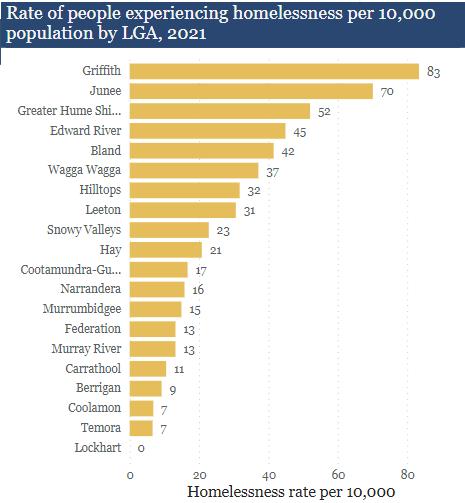
Relative to the population size, Griffith has the highest rate of homelessness in MPHN.
30% of people experiencing homelessness are aged 0-19 years. Youth homelessness is as high as 72% in Greater Hume Shire.
Over 1/3 of homelessness in MPHN is due to living in severely crowded households (36%), and over 1/4 people experiencing homelessness are living in supported accommodation for the homeless.
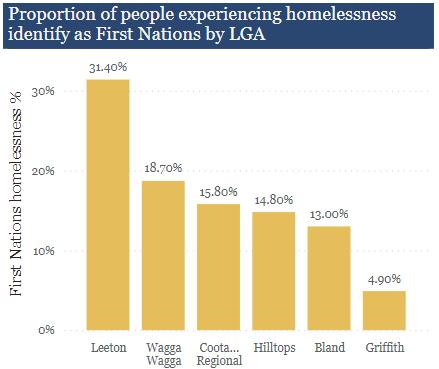
The proportion of people experiencing homelessness who identify from First Nations communities is as high as 31% in Leeton LGA
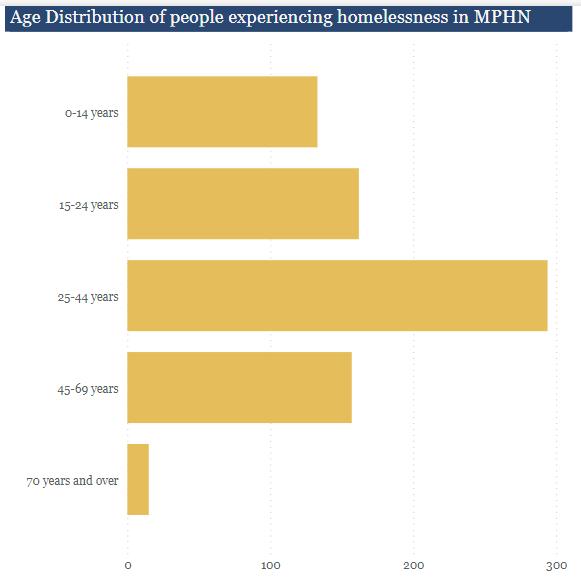
In Census 2021, there were estimated 964 people were experiencing homelessness in MPHN.

Almost 40% were aged less than 25 years.
Almost another 40% were aged 25-44 years
Around 20% were aged 45 years and over
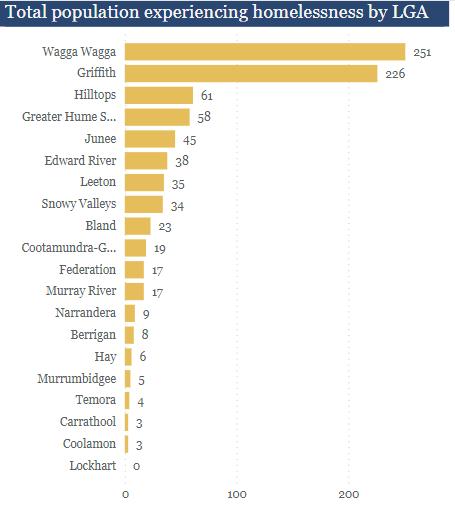
Estimated number of people experiencing homelessness in MPHN
Not surprisingly, Wagga Wagga and Griffith have the highest number of people experiencing homelessness. These are the two highest populated LGAs
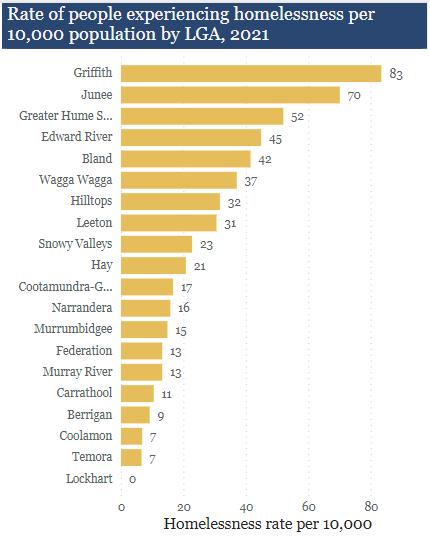
Homelessness as a rate per 10,000 population
● The story differs once we present the numbers as a rate of the relative LGA population
● Junee, Greater Hume Shire and Edward River rise to the top of the list behind Griffith
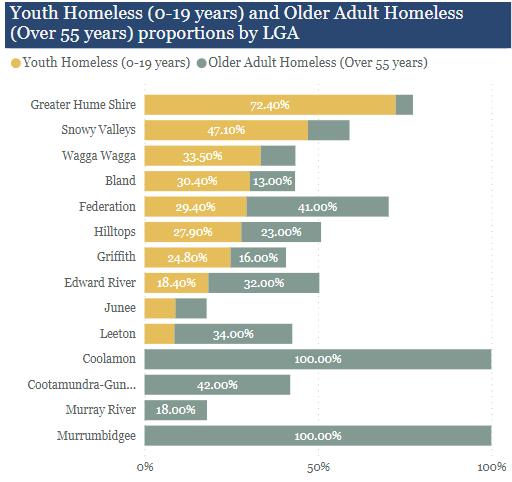
Youth and Older adult homelessness estimates
● Greater Hume Shire has a significantly high proportion of people experiencing homeless aged less than 20 years.
● Although smaller numbers, all of Coolamon and Murrumbidgee LGA homeless residents are aged over 55 years
Census 2021 estimates of homeless groups
● The highest number of people living in supported accommodation for the homeless are in Wagga Wagga, Griffith and Edward River LGAs
● A high number of people Griffith are living in severely crowded dwellings
● People living in severely crowded dwellings is the largest proportion of the homeless population in Griffith (56%), Junee (58%), Leeton (60%) and Snowy Valley (44%)
● Edward River has half and 42% of people experiencing homelessness living temporarily with other households and supported accommodation for the homeless, respectively)
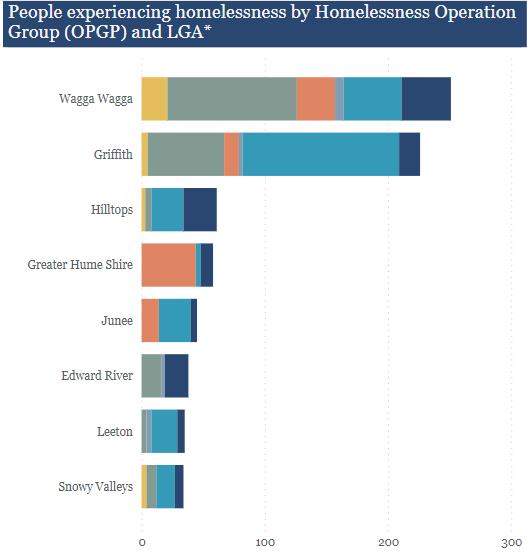
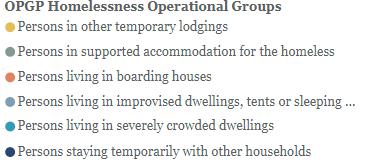
First Nations Homelessness estimate
● Almost 1/3 of people experiencing homelessness in Leeton identify from First Nations communities
● Wagga Wagga has the highest number of First Nations community members experiencing homelessness
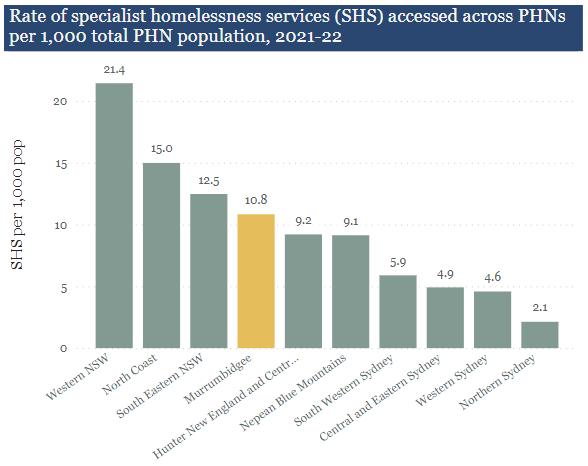
MPHN had the 4th highest service utilisation rate per population than all other PHNs in NSW.
Key insights from Specialist Homeless Services Utilisation
Specialist Homeless services (SHS) also support people atrisk of homelessness. This means there are significantly higher number of clients using the service than the Census estimate of homelessness.
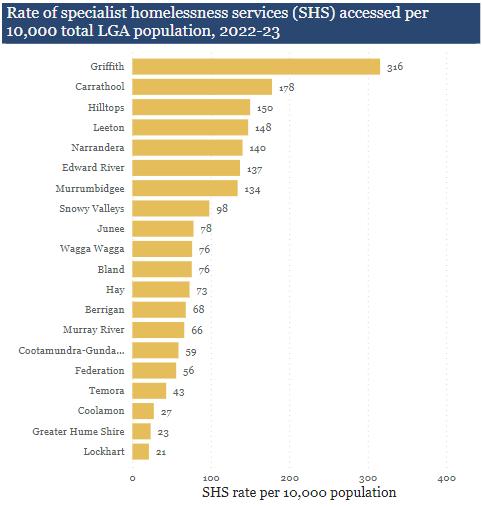
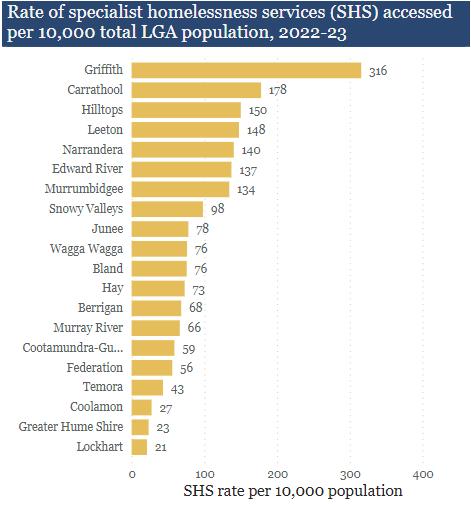
Griffith has the highest utilisation of SHS than any other LGA in MPHN (in both client numbers and rate of the LGA population)
There are key variations in expected service demand vs actual service utilisation in Greater Hume Shire and Carrathool LGAs
Specialist Homelessness Service Utilisation
● Murrumbidgee had the 4th highest service utilisation rate per population than all other PHNs in NSW.
● (Note, supplied MPHN data used SEMPHN total population for SENSW (1,572,577; 642,088 and added a 6 instead of a 3 in the data entry for WNSW total population (641,632; 341,632).
Service Utilisation by LGA
There is significant variation in MPHN in how Specialist Homeless Services are utilised in different LGAs
Griffith has the leading rate of homeless service utlisation in MPHN
Estimated demand vs Service utilisation
Exploring variation of SH service utilisation patterns
Greater Hume Shire
- Younger homeless population, but services provided for range of ages
– Services provided for people who were homeless, not ‘at risk’
- Greater Hume has a high number of homeless population living in boarding houses (need to investigate further if this accommodation type affects eligibility (76% of people experiencing homelessness in Greater Hume Shire are living in boarding houses)
Exploring variation of SH service utilisation patterns
Carrathool
- 75% of service provided in Carathool were for people ‘at risk’ of homelessness
- The Census only identified 3 people experiencing homelessness and these people were living in improvised dwellings. There is opportunity to understand how many people in Carrathool may be ‘at risk’ or experiencing homelessness
Exploring variation of SH service utilisation patterns
Junee
- Services were provided mostly for people ‘at risk’ of homelessness (60%);
- Similarly to Greater Hume, Junee has a large proportion of the homeless population living in boarding houses
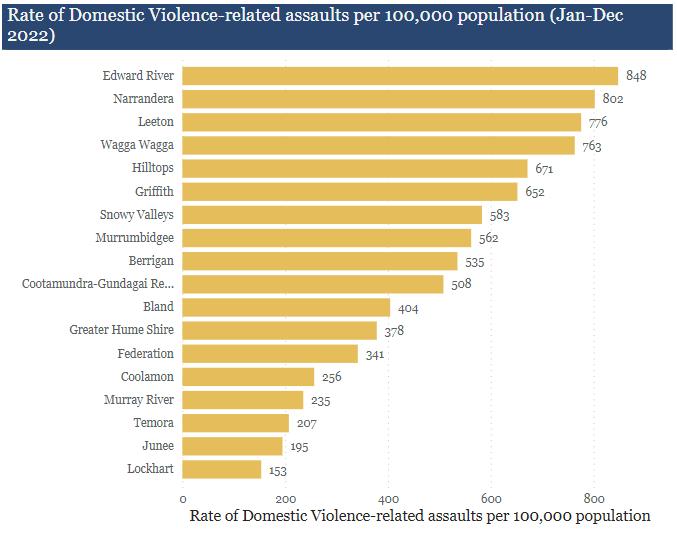
Edward River has the highest rate of Alcohol-related hospitalisations and Domestic Violence-related assaults than any LGA in MPHN
Key insights from Social Factors related to homelessness
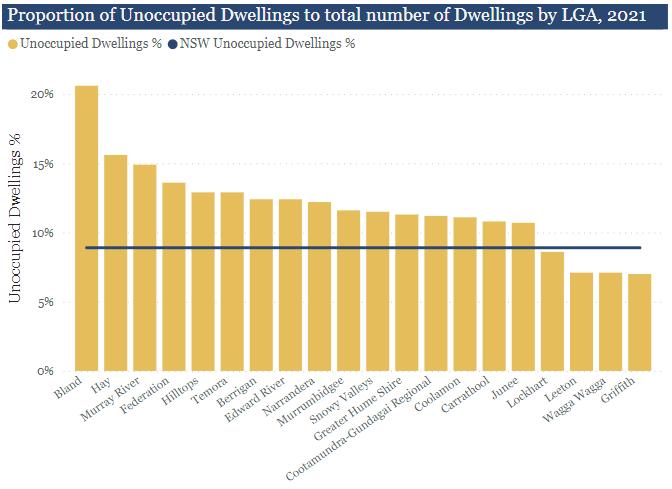
There are low dwelling vacancy rates in Griffith and Wagga Wagga.
Over 1 in 5 dwellings in Bland are unoccupied
8,875 people in MPHN received Jobseeker or Youth Allowance payments in December 2023 which equates to 3.6% of the MPHN population. This is as high as 5.0% and 4.2% in Narrandera and Wagga Wagga, respectively.
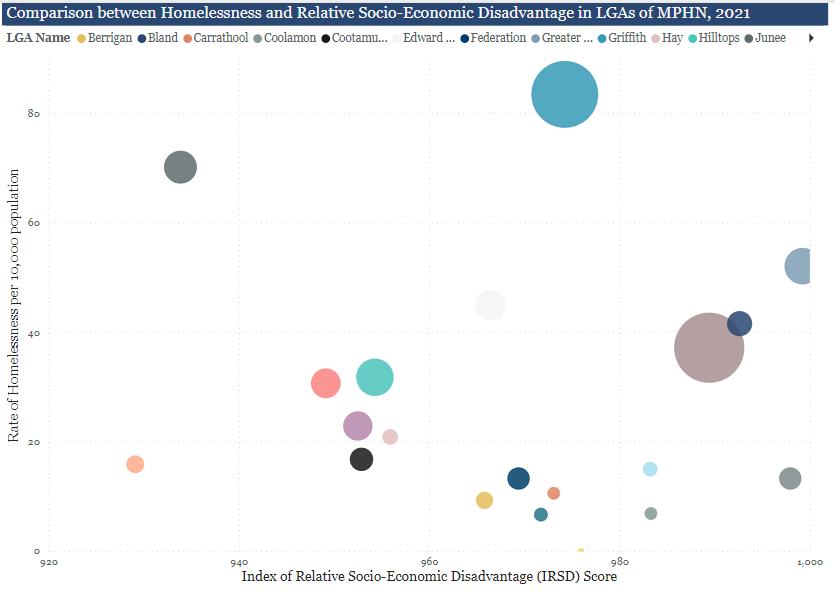
At an LGA-level, there appears no clear association between Socio-economic disadvantage and rate of homelessness.
Alcohol-related hospitalisations
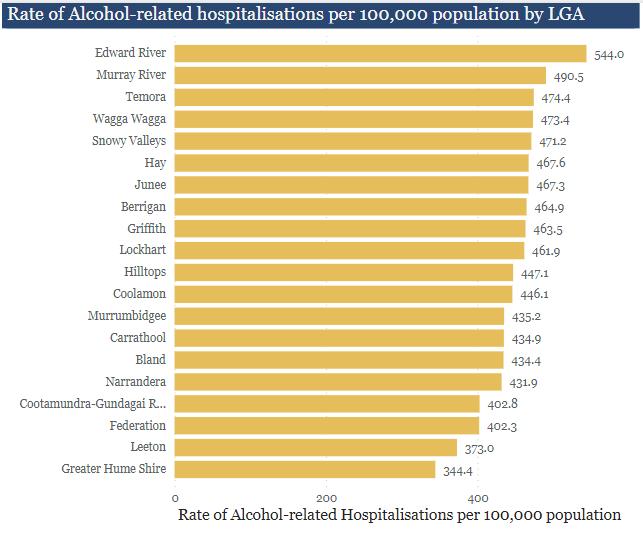
Edward River has the highest rate of alcohol-related hospitalisations per 100,000 population in MPHN
Once again Greater Hume is lower on this measure.
Domestic Violence assaults
Edward River has the highest rate of Domestic Violencerelated assaults than any LGA in MPHN
Narrandera has the second highest rate.
Junee presents much lower compared to other LGAs.
Dwelling Vacancies
Contributing to homelessness is the vacancy of suitable dwellings.
The two largest towns in MPHN, Wagga Wagga and Griffith have lower vacancy rates than NSW
People receiving government income support
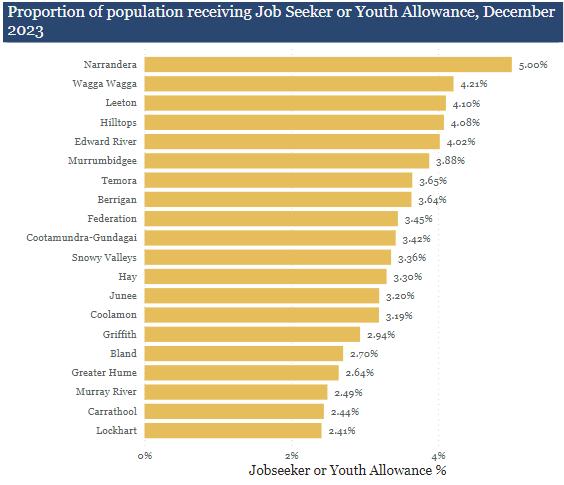
Narrandera has the highest proportion of people receiving job seeker or youth allowance in MPHN.
Interestingly, Wagga Wagga and Edward River are high
Furthermore, Greater Hume, Junee, and Griffith are low
Homelessness and Socio-Economic Disadvantage
● All LGAs in MPHN experience high levels of socio-economic disadvantage (<1000 IRSD)
● At an LGA-level, there is no clear association between socioeconomic disadvantage and homelessness. This means, socioeconomic disadvantage does not necessarily lead to homelessness, and the numbers of people experiencing homelessness are too low to impact on the IRSD calculations.
● Further analysis is needed at a lower geography level
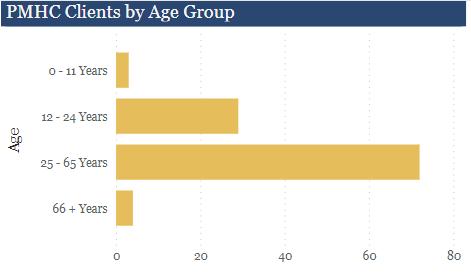
There were higher utilisation of Primary Mental Health Care services than Alcohol and Other Drugs services (115 episodes compared to 35, respectively)
Key insights from
MPHN Commissioned Mental Health and Alcohol and Other Drugs services
The service provided for homelessness clients in Primary Mental Health care are typically care coordination and ‘other’ treatments. Further exploration required to understand the other treatments for homeless clients. These may be psychosocial supports
Primary Mental Health Care Services
Characteristics of PMHC Services accessed by people experiencing homelessness in MPHN, 2022-23
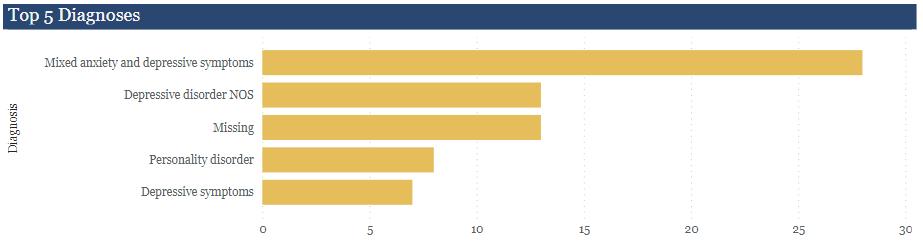
Mixed Anxiety and Depressive symptoms are most common diagnoses
Primary Mental Health Care Services
Characteristics of PMHC Services accessed by people experiencing homelessness in MPHN, 2022-23
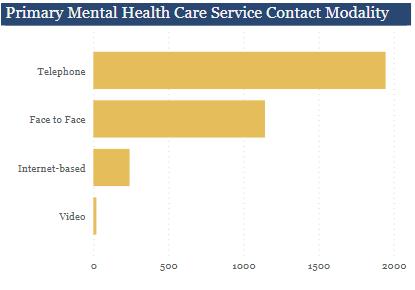
High utilisation of telephone for service delivery. Need to do further analysis, how often were clients present for these services?
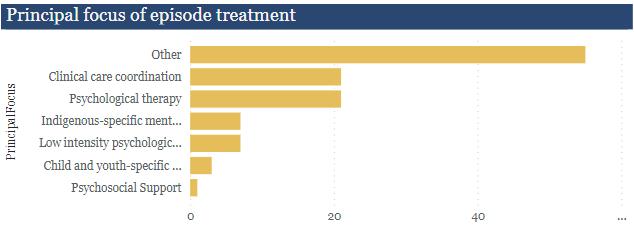
Other services may typically be psychosocial support
High Session Attendance (96%)
This is interesting and may be high because these are care coordination activities where a client does not need to attend, and/or services are not recorded if a person
Primary Mental Health Care Episodes
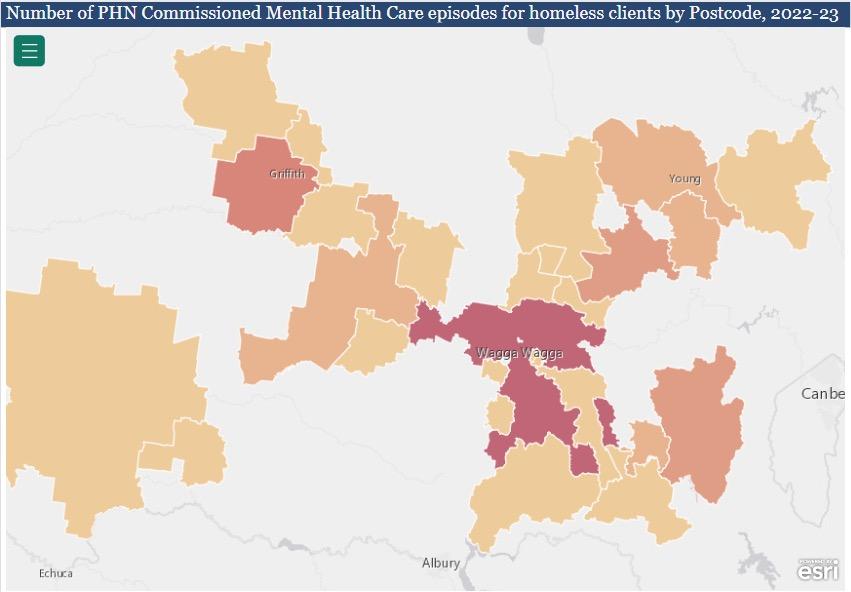
Highest number of PMHC episodes were provided for clients experiencing homelessness in Wagga Wagga and Griffith.
Interestingly, there are limited mental health episodes provided for homeless clients in other areas with high rates of homelessness such as Junee, Greater Hume Shire and Edward River LGAs
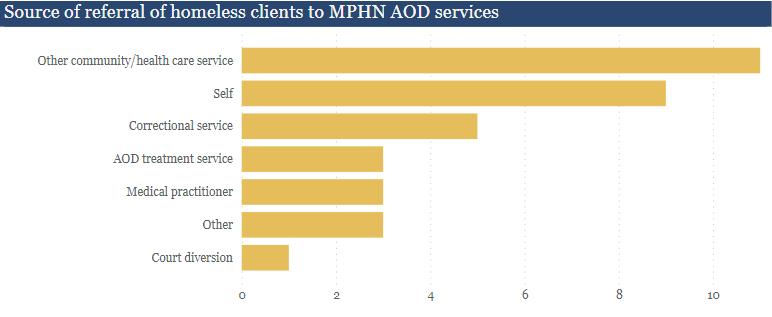
MPHN Alcohol and Other Drugs Services, 2022-23
35 homeless clients accessed AOD services last FY (69% from Wagga Wagga)
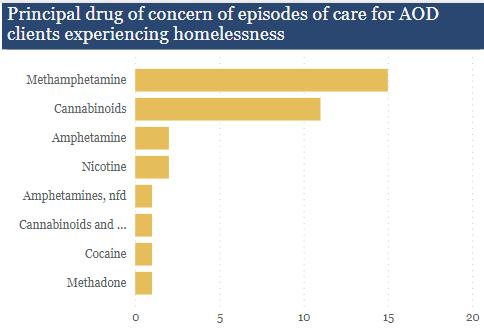
Ice is the leading principal drug of concern for homeless AOD clients
Notes on the Data
The quantitative data should be interpreted with the below caveats and limitations considered
● Census data as at 2021 gives us our best quantitative estimate of people experiencing homelessness, however these numbers may underestimate of the actual MPHN population experiencing homelessness.
● Analysis on PMHC MDS and AODTS NMDS service contact data will be completed once we receive clarification from MPHN internal teams on data entry processes.
Desktop review findings
What does the policy environment and evidence based indicate are the issues that influence the health outcomes of people experiencing homelessness, particularly in regional Australia?

Summary (1/2): Health outcomes
Those experiencing homelessness and rough sleeping lack many fundamental social determinants of health, including diminished socioeconomic position and social capital, as well as social exclusion.
The Specialist Homelessness Service’s 2019-2020 Annual Report highlighted affordable housing as a critical national issue, with around 1 million lowincome households experiencing housing affordability stress.
People experiencing homelessness have significant unmet healthcare needs despite, and due to, their disproportionately high use of emergency health services. As such, those experiencing homelessness are often treated for the symptoms of poverty, rather than their underlying health conditions.
Improving access to appropriate care for people at risk of poorer health outcomes, such as those experiencing homelessness, is a foundational element of Australia’s Primary Health Care 10 Year Plan 2022-2032. This approach involves offering support to PHNs to develop, refine ad scale evidence-based models of social prescribing, street outreach and system navigation supports.
At the broadest level, the policy environment described by the Homelessness NSW Strategy 2023-2028 highlights a need for comprehensive reform, characterised by a whole-of government approach.
Those experiencing homelessness and rough sleeping face particular exacerbation of chronic disease, including cardiovascular, diabetes and respiratory illness. Where they do find shelter, those experiencing homelessness are more likely to experience overcrowded living conditions, resulting in a heightened prevalence of transmissible disease also.
What does the policy environment and evidence based indicate are the issues that influence the health outcomes of people experiencing homelessness, particularly in regional Australia?
(continued)
Summary (2/2):
Health outcomes
A paucity of effective resources with which to prepare clean food and maintain personal hygiene results in a higher prevalence of nutritional deficiency and infection.
A ‘missing middle’ of services exists for people with moderate-risk chronic health conditions, due to a primary care system centred on episodic care and a crisis-oriented hospital model. This siloed approach to healthcare services presents further challenge for individuals with comorbid mental illness and substance use disorder, leading to referrals that do not result in treatment.
The Productivity Commission’s Mental Health Inquiry Report considered the issues influencing the health outcomes of people experiencing homelessness, particularly in regional communities, noting that these are multifaceted and deeply interlinked with the broader systemic and policy environment.
Homeless populations with other vulnerable characteristics face an exacerbation of their already heightened risk. Older adults, those with mental health conditions, and those who identify as Aboriginal or Torres Strait Islander are more likely than their peers to suffer a compounding effect from scarcity of outreach and culturally sensitive healthcare options, with First Nations peoples also disproportionately more likely to experience homelessness and rough sleeping than other demographics.
Homeless populations are additionally more likely to be the victims of and continue to experience violence and trauma, with an unstable social environment and unpredictable co-habitants leading to medication insecurity and difficulty adhering to treatment.
Social Determinants of Health
Those experiencing homelessness and rough sleeping lack many fundamental social determinants of health, including diminished socio-economic position and social capital, as well as social exclusion.
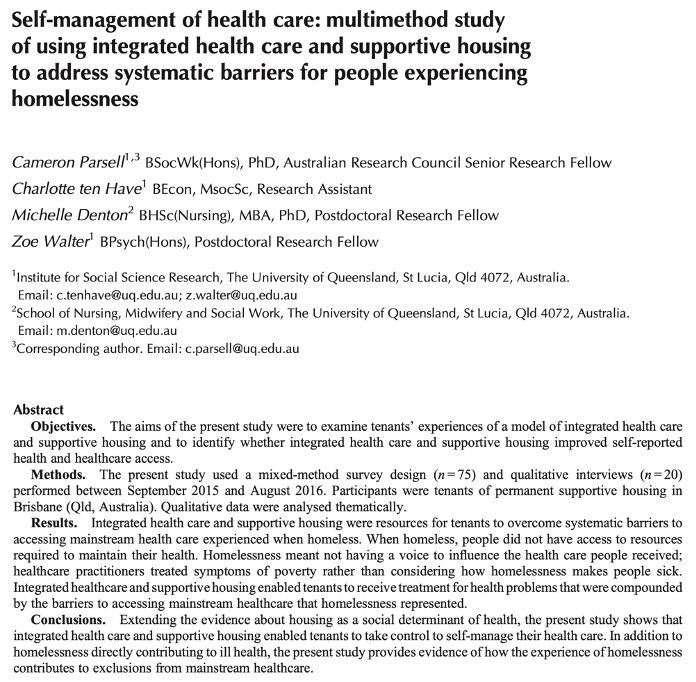

The Parsell et al. (2018) study underlines the profound impact of homelessness on health, delineating how the absence of stable housing exacerbates health inequalities. It identifies homelessness as a critical barrier to accessing necessary healthcare, which in turn is a pivotal social determinant of health.
The cycle of homelessness and poor health outcomes is highlighted, demonstrating how unstable living conditions hinder effective health management and treatment. Through integrated health care and supportive housing, the research proposes a method to surmount these systemic barriers, thereby offering a stable environment that promotes better access to healthcare and enables individuals to manage their health more effectively.
The research elucidates the deprivation of essential resources for maintaining health due to homelessness, including adequate nutrition and clean, safe living conditions. By restoring access to these basic needs, integrated health care and supportive housing address key social determinants of health, empowering previously homeless individuals to regain control over their health and well-being.
Source: Parsell Cameron, ten Have Charlotte, Denton Michelle, Walter Zoe (2018) Self-management of health care: multimethod study of using integrated health care and supportive housing to address systematic barriers for people experiencing homelessness. Australian Health Review 42, 303-308.
A Critical National Issue
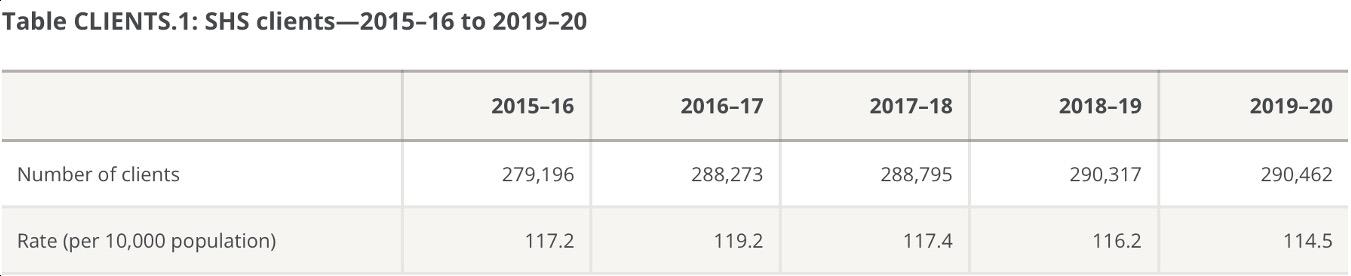
The Specialist Homelessness Service’s 2019-2020 Annual Report highlighted affordable housing as a critical national issue, with around 1 million low-income households experiencing housing affordability stress.
The Specialist Homelessness Services (SHS) Annual Report for 2019–20, produced by the Australian Institute of Health and Welfare, offers a comprehensive overview of the services provided to individuals facing homelessness or at risk of homelessness in Australia. During this period, SHS agencies supported approximately 290,500 clients, continuing a trend of assistance to nearly 1.3 million individuals since 2011–12. The report underscores the fundamental role of safe and secure housing for health and wellbeing and highlights the majority of SHS clients were in precarious housing situations or already homeless when seeking help.
The document outlines the policy framework aimed at reducing homelessness, including the National Housing and Homelessness Agreement (NHHA) which introduced new funding structures and priorities. Notably, the report incorporates data modifications to better capture service usage, including an NDIS indicator and updates to capture support for family and domestic violence more accurately.
A significant insight from the report is the varied reasons clients seek SHS assistance, with accommodation issues and interpersonal and relationship issues, including domestic violence, being predominant. It also touches upon the impact of COVID-19 on service demand and the adjustments made by various states and territories in response to the pandemic, including emergency accommodations and support for vulnerable populations.
Treating the Symptoms of Poverty
Those experiencing homelessness are often treated for the symptoms of poverty, rather than their underlying health conditions.
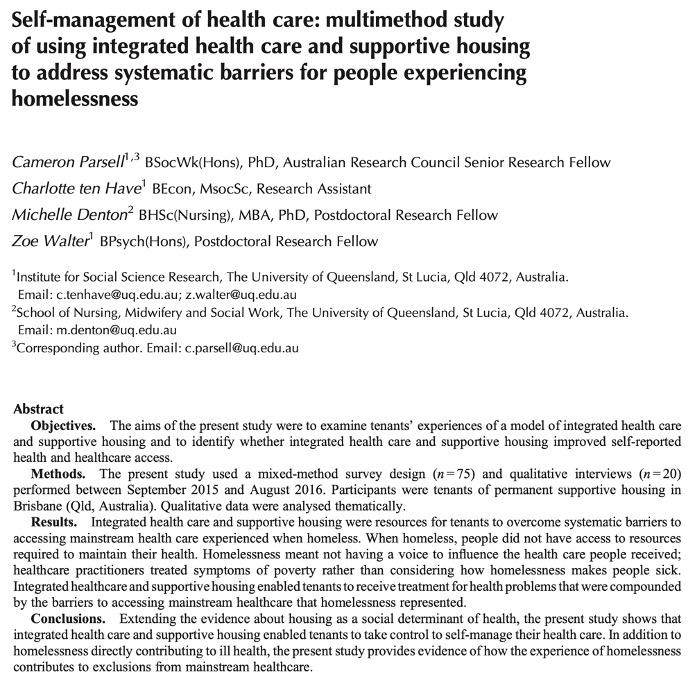

The Parsell et al. (2018) study illuminates the paradox where individuals experiencing homelessness have significant unmet healthcare needs despite their high engagement with emergency health services. This pattern arises because emergency services often focus on immediate, symptomatic care rather than addressing the complex health issues exacerbated by the conditions of homelessness.
Consequently, the healthcare system frequently attends to the manifestations of poverty – such as hunger and exposure – without treating root health conditions. This approach leads to a cycle of repeated emergency care that fails to improve long-term health outcomes for the homeless population.
To address this issue, the study evaluates the effectiveness of integrated healthcare within a supportive housing framework, suggesting this model can bridge the gap in healthcare needs. Integrated care, according to the findings, enables formerly homeless individuals to access consistent and comprehensive healthcare services that attend not only to the immediate symptoms but also to the underlying health conditions.
By shifting the focus from emergency, symptomatic treatment to a holistic, person-centred approach within a stable living environment, the study demonstrates that supportive housing can significantly improve the capacity of individuals to manage their health effectively, addressing both immediate and long-term healthcare needs.
Source: Parsell Cameron, ten Have Charlotte, Denton Michelle, Walter Zoe (2018) Self-management of health care: multimethod study of using integrated health care and supportive housing to address systematic barriers for people experiencing homelessness. Australian Health Review 42, 303-308.
Australia’s Primary Health Care 10 Year Plan
Improving access to appropriate care for people at risk of poorer health outcomes, such as those experiencing homelessness, is a foundational element of Australia’s Primary Health Care
10 Year Plan 2022-2032.

Stream 2: Person-centred primary health care, supported by funding reform
● Focus of this stream is equitable access to health care services
● Outlines six action areas, two of which include:
○ “improve access to appropriate care for people at risk of poorer outcomes”
○ “incentivise person-centred care through funding reform”
● Specific actions related to these two action areas include:
○ Funding reform to be administered through voluntary patient registration. This would involve payments linked to registered patient populations to support incentivising quality care for people in socioeconomically disadvantaged circumstances
○ Consider longer consultations in general practice for people with complex needs
○ Support PHNs to develop, refine and scale evidence-based models of social prescribing and system navigation for at risk and disadvantaged groups, including people experiencing homelessness
Stream 3: Integrated care, delivered locally
● Deliver locally integrated health service models through joint planning, collaborative commissioning and sustainable funding streams.
● Requires cross-sectoral leadership across governments, organisations and disciplines
Source: DoH. (2022). Australia’s Primary Health Care 10 Year Plan. Available at: https://www.health.gov.au/sites/default/files/documents/2022/03/australia-s-primary-health-care-10-year-plan-2022-2032future-focused-primary-health-care-australia-s-primary-health-care-10-year-plan-2022-2032.pdf
A Whole-of-Government Approach
At the broadest level, the policy environment described by the Homelessness NSW Strategy 2023-2028 highlights a need for comprehensive reform, characterised by a whole-ofgovernment approach.

The Homelessness NSW Strategic Plan for 2023-2028 sets forth a vision where everyone has a secure home and the support necessary to maintain it. The mission is to enhance both individual capabilities and system capacities to put an end to homelessness. Core values, including integrity, passion, innovation, courage, and unity, guide the organisation.
In a period of significant policy reform, the strategic priorities identified after comprehensive consultations focus on creating a public movement, advocating systemic change, and building the skills and networks needed to address homelessness effectively.
To gauge the success of these initiatives, Homelessness NSW will employ a two-tier monitoring system. The first level will measure population-level indicators of homelessness via the Housing and Homelessness Dashboard, providing a detailed understanding of homelessness, housing stress, and risks within Local Government Areas.
The second level will utilise a results-based accountability framework to assess the outcomes of their programs, seeking to answer questions regarding the quantity, quality, and impact of the activities undertaken. Metrics will include membership numbers, campaign reach, event participation, and changes in skills, knowledge, and policy, amongst others, with the goal to measure tangible improvements in tackling homelessness.
Source: Homelessness NSW Strategy 2023-2029. Available at: https://homelessnessnsw.org.au/wp-content/uploads/2023/08/230728_HNSW_Strategic-Plan-v2.1-1.pdf
Chronic Illness and Transmissible disease
Those experiencing homelessness and rough sleeping face particular exacerbation of chronic disease, including cardiovascular, diabetes and respiratory illness … a heightened prevalence of transmissible disease and may die 22 to 33 years earlier than other Australians.


The Australian Institute of Health and Welfare's report on the health of people experiencing homelessness highlights the substantial social and economic disadvantages faced by this demographic, alongside the health, social, and economic ramifications of homelessness.
Health problems such as malnutrition and dental issues can arise due to homelessness, which also increases vulnerability to violence and chronic illness. On the 2021 Census night, over 122,000 individuals were recorded as homeless in Australia, a 5.2% increase since 2016. Notably, 20% of the homeless population identified as Aboriginal and Torres Strait Islander.
The report sheds light on the varied forms of homelessness, from 'severely' crowded dwellings to rough sleeping, and the significant health impacts associated with each. For instance, rough sleeping has profound long-term health effects due to poor nutrition and harsh living conditions, whereas overcrowding can expedite infectious disease transmission and induce psychological stress.
Alarmingly, research indicates that homeless individuals in Australia may die up to 33 years earlier than the housed population, with the mortality gap largely attributable to conditions that could be addressed with adequate healthcare. Specialist Homelessness Services in 2022-23 provided support to approximately 274,000 clients, with many requiring health-related services.
Barriers to healthcare access are pronounced for the homeless, with the cost of services and appointment availability being significant obstacles. Additional factors such as mental illness, stigma, and logistical issues such as transport, also hinder healthcare access.
Source: Australian Institute of Health and Welfare ‘Health of People Experiencing Homelessness’. Available at: https://www.aihw.gov.au/reports/australias-health/health-of-people-experiencing-homelessness
Nutritional Deficiency and Infection
A paucity of effective resources with which to prepare clean food and maintain personal hygiene results in a higher prevalence of nutritional deficiency and infection.

The report from the House of Representatives Standing Committee on Social Policy and Legal Affairs offers an extensive analysis of homelessness in Australia. It evaluates the current situation, its causes, the groups most at risk, and the efficacy of the support systems in place. The report scrutinises how homelessness is defined and recorded, highlighting the need for a definition that goes beyond the absence of a physical abode to encompass the absence of a secure, stable, and suitable living environment.
It recognises that homelessness arises from multifaceted interactions of various social, economic, and health factors, affecting individuals' ability to engage with society fully. The Committee recommends a renewed approach centred on prevention, early intervention, 'Housing First' strategies, and amplified investment in social housing.
It advocates for the formulation of a ten-year national strategy on homelessness to foster intergovernmental cooperation and develop unified, evidence-driven policies. The report includes 35 recommendations aimed at structural reforms to tackle homelessness, enhance data collection, and innovate housing solutions.
The report details the exacerbated health risks faced by homeless individuals. These include heightened vulnerability to infectious diseases like influenza, hepatitis, and sexually transmitted diseases, as well as conditions such as diabetes, asthma, and pneumonia.
It's highlighted that homelessness impedes access to effective and continuous medical care. The link between homelessness and poor health outcomes, including premature mortality, underscores the importance of addressing health care barriers and integrating services to cater to this vulnerable population.
Source: Final Report: Inquiry into Homelessness in Australia. Available at: https://parlinfo.aph.gov.au/parlInfo/download/committees/reportrep/024522/toc_pdf/Finalreport.pdf;fileType=application%2Fpdf
A ‘Missing Middle’ of Services
A ‘missing middle’ of services exists for people with moderate-risk chronic health conditions, due to a primary care system centred on episodic care and a crisis-oriented hospital model.
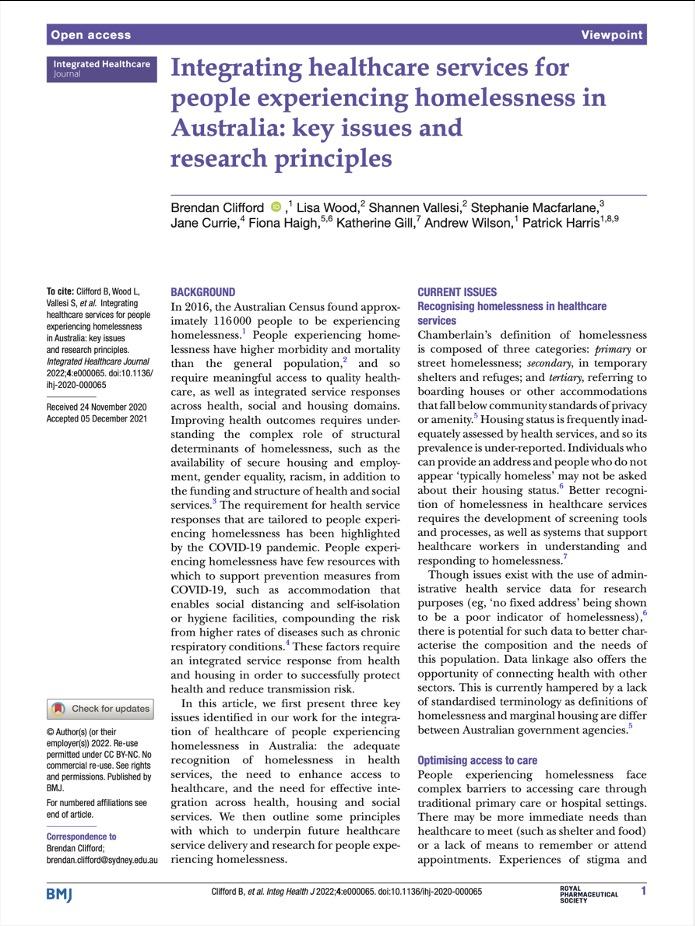

The Clifford et al. (2022) study examines critical factors and guiding principles for improving health services for the homeless population in Australia. It underscores the increased morbidity and mortality faced by this demographic, exacerbated by structural determinants such as secure housing, employment, and social inequalities, which were especially highlighted during the COVID-19 pandemic.
Three main challenges are presented: ensuring health services adequately recognise homelessness, enhancing healthcare access for homeless individuals who face various barriers, and integrating health, housing, and social services effectively. Innovative models like Assertive Outreach and In-reach are suggested to bring services to the community and utilise hospital admissions to connect individuals with long-term support, respectively.
The article stresses the importance of permanent supported housing as a fundamental solution and outlines the difficulties of implementing the healthcare aspect due to Australia's complex health system. It calls for healthcare models that integrate ongoing primary and specialist services, tailored to the needs of people experiencing homelessness, and highlights the necessity for sharing data across agencies to avoid service gaps.
The paper concludes by emphasising the need for health services to advocate for social policy reforms that address structural causes of homelessness and improve health equity.
Source: Clifford B, Wood L, Vallesi S, Macfarlane S, Currie J, Haigh F, Gill K, Wilson A, Harris P. Integrating healthcare services for people experiencing homelessness in Australia: key issues and research principles.
J. 2022 Jan 3;4(1):e000065. doi: 10.1136/ihj-2020-000065. PMID: 37440845; PMCID: PMC10241025.
A Multifaceted Challenge
The Productivity Commission’s Mental Health Inquiry Report considered the factors influencing the mental health of homeless individuals, noting that these are multifaceted and deeply interlinked with a close-knit relationship between the two.

The Productivity Commission’s Final Report from the 2020 Inquiry into Mental Health in Australia included a dedicated chapter on the intersection between mental health and homelessness — key findings included:
● Housing and mental health are closely linked — mental health contributes to poor housing outcomes, and housing difficulties contribute to mental ill health.
● One quarter of all people admitted to acute mental health services are homeless prior to admission and most are discharged back into homelessness. There is a high prevalence of mental illness amongst people experiencing homelessness.
● Effective homelessness services reduce the cost of other services (e.g. healthcare). Savings could be particularly large if programs successfully target people with a diagnosed mental illness, as this cohort have higher healthcare costs.
● Homelessness services may fail to meet the needs of those with mental illness however, services that are explicitly designed to meet the needs of those with mental illness can be successful.
● Improving coordination of services around people who are homeless is important, however agencies often work independently of each other.
Source: Productivity Commission 2020, Mental Health, Report no. 95, Canberra. Available at: https://www.pc.gov.au/inquiries/completed/mental-health/report
Experience of Violence and Trauma
Homeless populations are additionally more likely to be the victims of and continue to experience violence and trauma, with an unstable social environment and unpredictable cohabitants leading to medication insecurity and difficulty adhering to treatment.
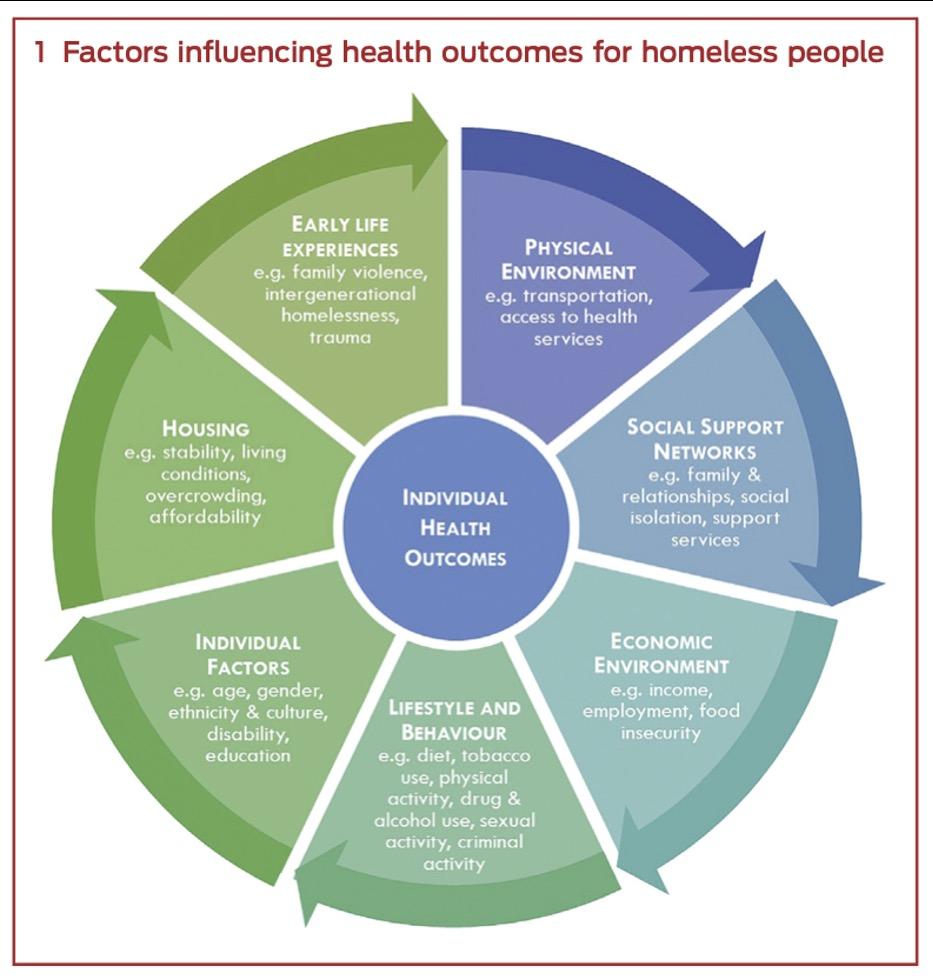

The Davies & Wood (2018) narrative review outlines the severe health disparities faced by the homeless in Australia, significantly overrepresented in morbidity and mortality statistics. Key barriers to accessing health care include personal issues like mental health, practical obstacles such as medication security, and relationship barriers rooted in stigma.
The review discusses the significant impact of violence and trauma on homeless individuals, highlighting that the experience of trauma is almost universal among the homeless population. This widespread trauma contributes to major health issues, including mental health disorders such as major depression and post-traumatic stress disorder (PTSD).
It is noted that hypervigilance is high among those experiencing homelessness, further exacerbated by the safety fears associated with sleeping on the streets. The nexus between trauma and homelessness underscores the importance of adopting a trauma-informed approach across the healthcare system to effectively support and address the needs of homeless individuals.
Source: Davies, A. and Wood, L.J. (2018), Homeless health care: meeting the challenges of providing primary care. Medical Journal of Australia, 209: 230-234. https://doi.org/10.5694/mja17.01264
What does the policy environment and evidence base indicate are the issues that influence accessibility of appropriate healthcare for people experiencing homelessness, particularly in regional communities in Australia?
Summary (1/3): Barriers to accessibility
Personal & Relationship Barriers
Individuals experiencing homelessness face complex barriers to accessing healthcare, often prioritising immediate needs such as securing water, food and shelter over their health and wellbeing.
Their unstable social circumstances result in difficulty attending scheduled appointments, heightened experience of stigma and discrimination, and increased rates of trauma.
An unsupported social environment impedes health literacy, further lowering early recognition of the need to seek healthcare.
Both physical and mental illness act as powerful barriers to the challenge of seeking housing or accessing healthcare services as does a disproportionate experience of major depression and post-traumatic stress disorder
The complex interplay that exists between socioeconomic disadvantage, unemployment, mental health challenge, and substance misuse have a cyclical effect in erecting further barriers to individuals achieving a stable housing outcome, perpetuating their disconnection from health care.
First Nations individuals, who comprise a disproportionate percentage of the homeless population, face the additional challenge of cultural bias.
What does the policy environment and evidence base indicate are the issues that influence accessibility of appropriate healthcare for people experiencing homelessness, particularly in regional communities in Australia? [continued]
Summary (2/3): Barriers to accessibility
Practical Barriers
Australia’s vast geography creates natural accessibility challenges. In regional Australia the “distance-decay” relationship is well understood: individuals who live farther from healthcare facilities have lower usage rates.
Physical access to health services is limited in homeless populations, many of whom rely upon public transport to attend appointments. In regional areas, limited transport infrastructure compounds the effect of limited service availability.
Insufficient tailored mental health services and substance use treatment programs confine the opportunity to seek treatment, a barrier exacerbated by the lack of continuity afford by the homeless experience.
Individuals experiencing homelessness and rough sleeping are often living day-by-day. An increasing scarcity of General Practitioners who bulk bill can generate untenable out-of-pocket expenses, creating a significant financial barrier to accessing health care in the context of difficulty maintaining stable employment.
A disconnection from modern telecommunication reduces capacity to reach out to and be contacted by healthcare, or to engage with telehealth services.
When those experiencing homelessness do manage to access healthcare, their housing status is often not adequately assessed by health services, leading to a lack of recognition for those who may require additional coordination, and an under-reporting of homelessness.
What does the policy environment and evidence base indicate are the issues that influence accessibility of appropriate healthcare for people experiencing homelessness, particularly in regional communities in Australia?
[continued]
Summary (3/3): Barriers to accessibility
System-Level Barriers
The healthcare system itself faces myriad challenges, such as overstretched services and funding constraints, which collectively impact the accessibility and quality of healthcare for those experiencing homelessness.
Such services that do exist are impacted by extant healthcare workforce shortages, challenges in staff retention, and the financial constraints of service users.
Even for those not experiencing homelessness, navigating the health system is complex, with extended waiting times, inefficient referral pathways, and difficulties in care coordination posing significant obstacles, particularly in mental health.
There is a systemic under-appreciation in the effective management of mental health per se.
The policy environment broadly posits ‘wraparound’ health and social services as the antidote to this, connecting the housing, healthcare and justice sectors systematically, such as proposed by the ‘Common Ground’ model.
Enablers to accessibility
A narrative review of one leading model in Western Australia proposes a best practice model comprised of six core components for improving health outcomes for people experiencing homelessness in Australia — Housing First, continuity of care, hospital in-reach, specialised practices, medical respite centres, and outreach.
Prioritising Need, Stigma, and Discrimination
Individuals experiencing homelessness face complex barriers to accessing healthcare, often prioritising immediate needs such as securing water, food and shelter over their health and wellbeing.
The Clifford et al. (2022) study examines critical factors and guiding principles for improving health services for the homeless population in Australia. The article acknowledges that individuals experiencing homelessness often face complex barriers to accessing healthcare, one of which includes prioritising immediate needs such as shelter and food over healthcare.
This phenomenon is highlighted under the section discussing optimising access to care, where it is recognised that the urgency of securing basic necessities can overshadow the pursuit of medical attention.
The article underscores the importance of addressing these barriers by improving the accessibility of mainstream services, enhancing their capacity to provide trauma-informed care, and possibly developing homelessness-specific models of healthcare delivery to ensure that the health needs of this population are not neglected in the face of immediate survival challenges.
Unstable social circumstances result in difficulty attending scheduled appointments, heightened experience of stigma and discrimination, and increased rates of trauma.
The article addresses the significant issue of stigma and discrimination faced by people experiencing homelessness within healthcare settings. It notes that these individuals often encounter barriers to accessing care, partly due to experiences of stigma and discrimination related to their homelessness or other factors, such as race, indigenous status, or substance use.
This stigma can compound the high rates of lifetime and current trauma within this group, further deterring them from seeking necessary medical attention. Clifford et al advocate for the improvement of mainstream service accessibility and the capacity of these services to provide trauma-informed care.
This includes the development of homelessness-specific healthcare delivery models to ensure equitable access to health services for all individuals, regardless of their housing status or background.
Source: Clifford B, Wood L, Vallesi S, Macfarlane S, Currie J, Haigh F, Gill K, Wilson A, Harris P. Integrating healthcare services for people experiencing homelessness in Australia: key issues and research principles. Integr Healthc J. 2022 Jan 3;4(1):e000065. doi: 10.1136/ihj-2020-000065. PMID: 37440845; PMCID: PMC10241025.
Health Literacy
An unsupported social environment impedes health literacy, further lowering early recognition of the need to seek healthcare.
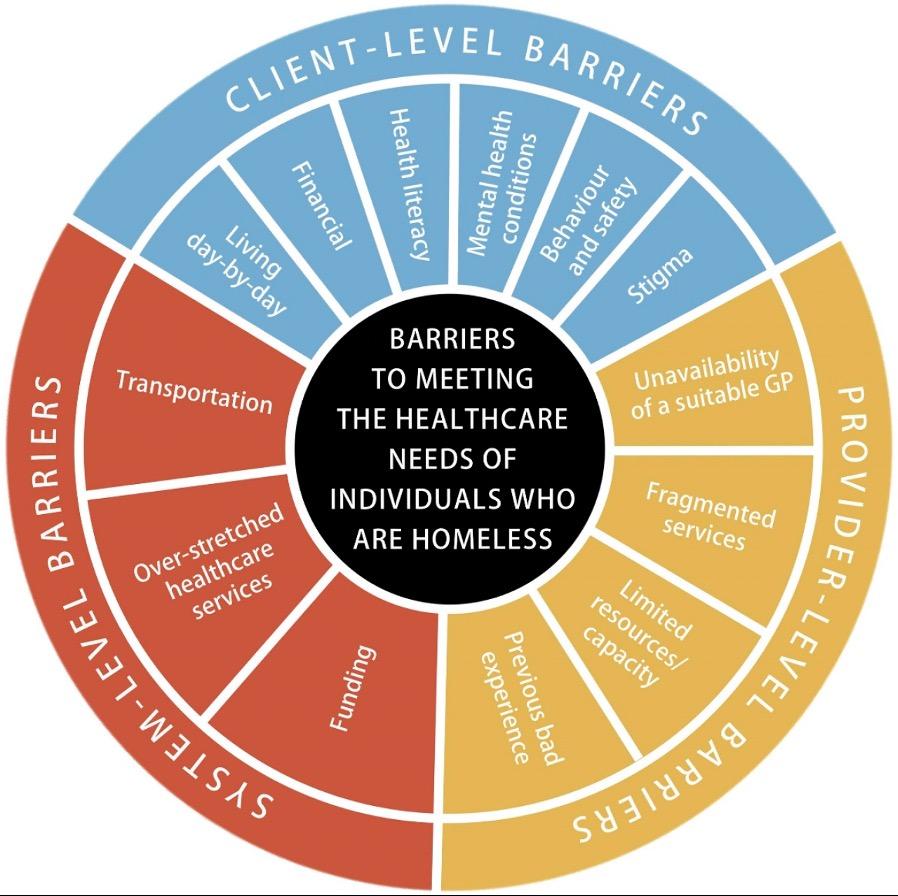

The Bennet-Daly (2022) study explores the intricate nexus between homelessness and adverse health outcomes, spotlighting the unique challenges encountered by those facing homelessness in regional settings, with a specific focus on Launceston, Tasmania.
Client-Level Barriers: Identified barriers at the client level include the prioritisation of immediate survival needs such as food and shelter over healthcare, financial constraints, limited health literacy, mental health issues, behavioural challenges, safety concerns, and the experience of stigma.
Provider-Level Barriers: This includes the scarcity of general practitioners who offer bulk-billing services, fragmented healthcare services, limited resources, and previous negative interactions with healthcare providers.
System-Level Barriers: Challenges such as inadequate transportation to healthcare facilities, overstretched healthcare services, and insufficient funding are highlighted.
The study highlights health literacy as a significant barrier to accessing healthcare for individuals experiencing homelessness. It is depicted as a multifaceted challenge encompassing difficulties not only in organising appointments but also in comprehending medical terminology, which impedes informed consent for medical procedures and adherence to prescribed medication regimens or follow-up care requirements.
Source: Bennett-Daly G, Maxwell H, Bridgman H. The Health Needs of Regionally Based Individuals Who Experience Homelessness: Perspectives of Service Providers. Int J Environ Res Public Health. 2022 Jul 8;19(14):8368. doi: 10.3390/ijerph19148368. PMID: 35886228; PMCID: PMC9316847.
A Cyclical Effect
Physical and mental illness act as powerful barriers to the challenge of accessing healthcare services as does a disproportionate experience of major depression and PTSD.
The Davies & Wood (2018) narrative review discusses the profound influence homelessness exerts on mental health, highlighting that mental health issues can both lead to and result from situations of homelessness. It underscores the almost universal experience of trauma among the homeless population, leading to a high prevalence of major depression, post-traumatic stress disorder (PTSD), and other mental health conditions.
The heightened state of hypervigilance, exacerbated by the insecurity associated with sleeping outdoors, and the challenges presented by depressive or psychotic illnesses, which can deter individuals from seeking or attending medical appointments, are emphasised.
The review underlines the critical nexus between trauma and homelessness, stressing the necessity of adopting a trauma-informed approach across the healthcare system to effectively support and address the mental health needs of individuals experiencing homelessness.
Source: Davies, A. and Wood, L.J. (2018), Homeless
Socioeconomic
disadvantage, unemployment, mental health challenge, and substance misuse have a cyclical effect in erecting further barriers to individuals.
The review posits that the condition of being homeless per se significantly worsens health outcomes. This detrimental cycle is characterised by heightened risks of psychiatric illnesses, substance misuse, chronic diseases, musculoskeletal disorders, deteriorating oral health, and infectious diseases such as tuberculosis, hepatitis C, and HIV amongst the homeless populace.
Homeless individuals often utilise emergency services for issues that would be more effectively addressed in a primary care setting, thus incurring avoidable costs to the health system.
This cycle is intensified by barriers to accessing healthcare.
Cultural Barriers
First Nations individuals, who comprise a disproportionate percentage of the homeless population, face the additional challenge of cultural bias.
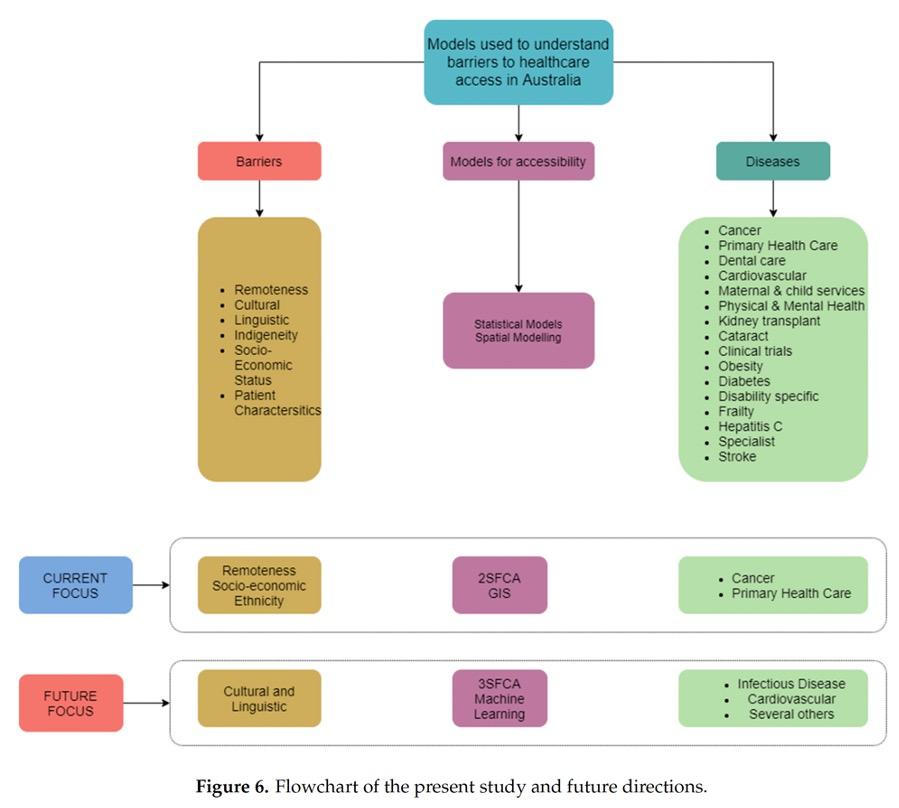

The Bennet-Daly (2022) review discusses the significant barriers to healthcare access faced by Indigenous Australians, highlighting the disproportionate challenges encountered by this demographic. Indigenous Australians, constituting about 2.3% of the population, are identified as the most deprived group in terms of healthcare accessibility.
The review identifies geographical barriers and factors like socio-economic status as significant obstacles to accessing healthcare for Indigenous people. Moreover, cultural differences, linguistic barriers, and economic factors are outlined as key challenges for Indigenous Australians in accessing health services.
Studies such as those by Rolfe et al. and Li have shown that Indigenous Australians suffer from inequitable healthcare access across various measures. Additionally, the work of McBain-Rigg and Veitch through interviews with Indigenous people and health professionals in north-west Queensland emphasises the need for trust-building and improving interpersonal relationships between Indigenous communities and healthcare providers.
The document suggests that addressing these barriers requires more than just improving the physical healthcare infrastructure; it involves nurturing trust and understanding between healthcare professionals and Indigenous communities to overcome cultural and socio-economic disparities.
Source: Bennett-Daly G, Maxwell H, Bridgman H. The Health Needs of Regionally Based Individuals Who Experience Homelessness: Perspectives of Service Providers. Int J Environ Res Public Health. 2022 Jul 8;19(14):8368. doi: 10.3390/ijerph19148368. PMID: 35886228; PMCID: PMC9316847.
The Distance-Decay Relationship
Australia’s vast geography creates natural accessibility challenges. In regional Australia the “distance-decay” relationship is well understood: individuals who live farther from healthcare facilities have lower usage rates.
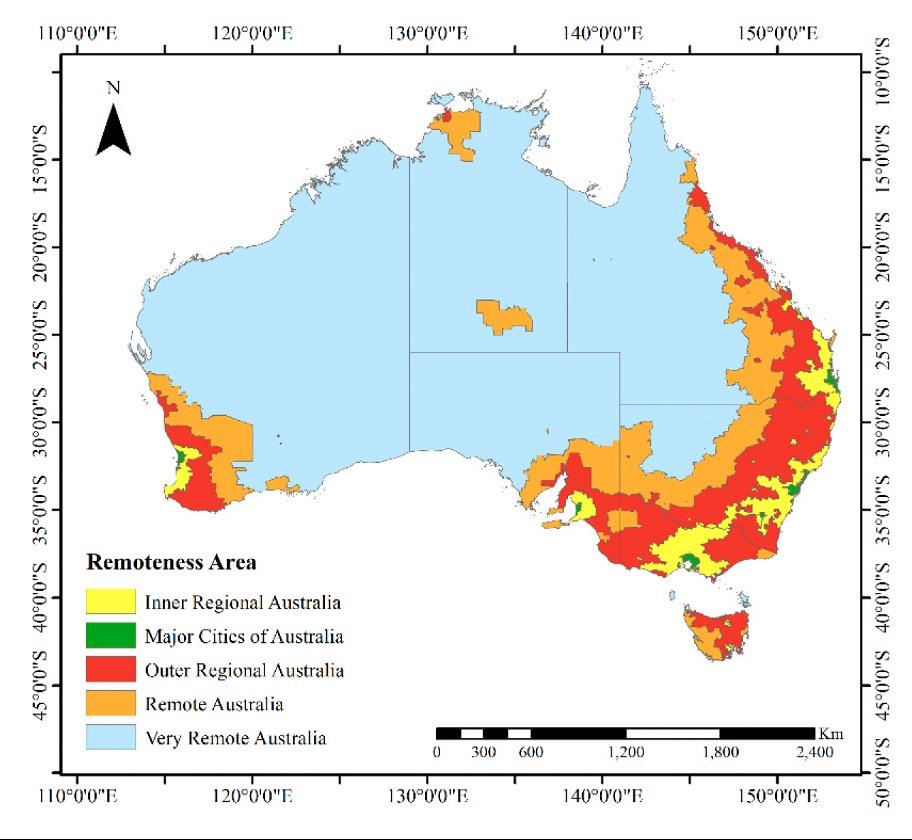

The Bennett-Daly (2022) review discusses how distance poses a significant barrier to healthcare access in Australia, particularly due to the country's vast geographical expanse. This challenge is exacerbated in rural and remote areas where the population density is low and healthcare facilities are fewer and farther apart versus urban centres.
The article highlights the concept of a distance-decay relationship, positing that individuals residing further from healthcare facilities tend to utilise these services less frequently than those living in closer proximity despite having no less need. This relationship underscores the significant impact of geographic proximity on the utilisation rates of healthcare services.
The extended travel times necessitated by greater distances can therefore result in adverse health outcomes for patients, accentuating the crucial issue of accessibility, particularly in rural and remote areas where the quality of health services may be substandard in comparison to urban locales.
This serves to highlight the challenges in ensuring equitable access to healthcare across diverse regions, emphasising the importance of considering geographical barriers in the planning of healthcare services and interventions.
Source: Bennett-Daly G, Maxwell H, Bridgman H. The Health Needs of Regionally Based Individuals Who Experience Homelessness: Perspectives of Service Providers. Int J Environ Res Public Health. 2022 Jul 8;19(14):8368. doi: 10.3390/ijerph19148368. PMID: 35886228; PMCID: PMC9316847.
Infrastructural, Financial, & Administrative Barriers
Physical access to health services is limited in homeless populations, many of whom rely upon public transport to attend appointments. In regional areas, limited transport infrastructure compounds the effect of limited service availability.

The Australian Institute of Health and Welfare, titled highlight significant barriers homeless individuals face in accessing healthcare, including mental health services. One of the primary obstacles is the cost of services, identified as the main barrier to access by two in five (40%) of those unable to obtain healthcare when needed. Additionally, long waiting times and a lack of appointment availability further hinder access to necessary medical care.
Physical barriers also pose significant challenges for homeless individuals seeking healthcare. Difficulties include affording public transport to attend appointments, the lack of a stable mailing address or phone to receive appointment reminders, and the challenge of keeping medications secure. These issues are particularly acute for those in transient housing situations, such as rough sleeping, couch surfing, or staying in short-term accommodation, compounding the difficulties in managing health conditions and accessing continuous, effective medical care.
The document emphasizes that individual risk factors, such as mental illness, can both impact the ability to attend healthcare appointments and affect the efficacy of the healthcare received. The stigma associated with receiving mental health care, along with feelings of being stereotyped or judged, can further discourage homeless individuals from seeking necessary treatment, thus exacerbating their health issues and creating a cycle of poor health and homelessness.
Identifying & Assessing Housing Status
When those experiencing homelessness do manage to access healthcare, their housing status is often not adequately assessed by health services, leading to a lack of recognition for those who may require additional coordination, and an under-reporting of homelessness.
The Clifford (2022) article underscores the challenge of properly recognising homelessness within healthcare services. It points out that housing status is often inadequately assessed by health services, leading to an under-reporting of its prevalence. The document emphasises the necessity for the development of screening tools and processes, along with systems that assist healthcare workers in understanding and responding to homelessness.
This enhanced recognition of homelessness within healthcare services is crucial for tailoring healthcare responses to individuals experiencing homelessness, particularly in light of the complexities highlighted by the COVID-19 pandemic, which has underscored the vulnerability of this group due to limited access to preventative measures. The article advocates for an improvement in the recognition of homelessness in healthcare settings through the enhancement of screening and support systems, which is pivotal for providing integrated service responses across health, social, and housing domains.
The article discusses the "Common Ground" model as part of the permanent supported housing approaches aimed at addressing homelessness. It highlights the significance of 'wraparound' health and social services in helping individuals exit homelessness and maintain tenancy once rehoused.
This model emphasises the role of comprehensive support services essential for people who may have past experiences of trauma, disability, persistent mental illness, or substance use dependency. Implementing the healthcare component of such wraparound support in Australia is complicated due to our complex health system, which includes varied funding mechanisms and a blend of public and private service delivery.
Source: Clifford B, Wood L,
S,
S, Currie J, Haigh F, Gill K, Wilson A, Harris P. Integrating healthcare services for people experiencing homelessness in Australia: key issues and research principles. Integr Healthc J. 2022 Jan 3;4(1):e000065. doi: 10.1136/ihj-2020-000065. PMID: 37440845; PMCID: PMC10241025.
Vallesi
Macfarlane
System Level Barriers 1/2
The healthcare system itself faces myriad challenges, such as over-stretched services and funding constraints, which collectively impact the accessibility and quality of healthcare for those experiencing homelessness.
The Bennett-Daly (2022) article identifies myriad system-level barriers to healthcare access for individuals experiencing homelessness, including:
Over-stretched healthcare services: Services in regional Australia are limited, with a lack of free healthcare services and long waiting times at emergency departments. This stretches the already limited healthcare services thin and complicates healthcare delivery for the homeless population.
Transportation: A significant barrier is the lack of suitable public transportation for homeless individuals to attend healthcare appointments. The principal means of transportation is often walking, which poses safety concerns and is not viable for distant healthcare facilities.
Funding: Funding constraints affect the availability of healthcare services and the professional development of staff to meet the specific needs of homeless clients. Programs that could provide healthcare to homeless populations are often not sustained due to exhausted funding or reallocation of resources.
The article suggests that these system-level barriers, combined with client-level and provider-level barriers, significantly contribute to the challenges faced by people experiencing homelessness in accessing healthcare. The text underscores the need for an urgent, standardised approach to healthcare implemented by governments at the state and national level to improve the health of regionally based individuals experiencing homelessness.
Source: Bennett-Daly G, Maxwell H, Bridgman H. The Health Needs of Regionally Based Individuals Who Experience Homelessness: Perspectives of Service Providers. Int J Environ Res Public Health. 2022 Jul 8;19(14):8368. doi: 10.3390/ijerph19148368. PMID: 35886228; PMCID: PMC9316847.
System Level Barriers 2/2
Such services that do exist are impacted by extant healthcare workforce shortages, challenges in staff retention, and the financial constraints of service users.
The Kavanagh (2023) article identifies several system-level barriers affecting healthcare access and utilisation, particularly for rural populations in Australia:
Limited Resources: A critical barrier is the lack of general and specialist services, limited service capacity, workforce shortages, and financial constraints that restrict access to mental health services for both healthcare providers and service users. High costs, financial disadvantage, and a lack of transport were also noted as substantial barriers.
System Complexity and Navigation: The complexity of navigating the healthcare system presents a common barrier, impacting both healthcare providers in coordinating patient care and service users in utilising care. Issues often arise from long waiting times, inefficient referral pathways, lack of care coordination, delays in assessment and diagnosis, and difficulty navigating services.
Attitudinal or Social Matters: The review reports that attitudinal or social matters, such as stigma, fear of judgment, stoicism, lack of trust, preference for keeping to oneself, and reluctance to seek help, can hinder access to and utilisation of mental health services.
Technological Limitations: Technological barriers include poor connectivity, high costs of technology use, and the lack of suitability for use among specific client groups. These limitations are particularly relevant in rural and remote areas where internet connectivity can be unreliable and expensive, creating obstacles for technology-delivered mental health services.
Source: Kavanagh, B.E., Corney, K.B., Beks, H. et al. A scoping review of the barriers and facilitators to accessing and utilising mental health services across regional, rural, and remote Australia. BMC Health
23, 1060 (2023). https://doi.org/10.1186/s12913-023-10034-4
Homeless health care ‘best practice’
A narrative review of one leading model in WA proposes a best practice model comprised of 6 core components for improving health outcomes for people experiencing homelessness in Australia — Housing
First, continuity of care, hospital in-reach, specialised practices, medical respite centres, and outreach.
6 components of a best practice model to improve health outcomes
Includes housing first approaches and supporting formerly homeless people to re-engage with health care
Street outreach and embedding clinic sessions in trusted settings (drop-in centres, transitional housing)
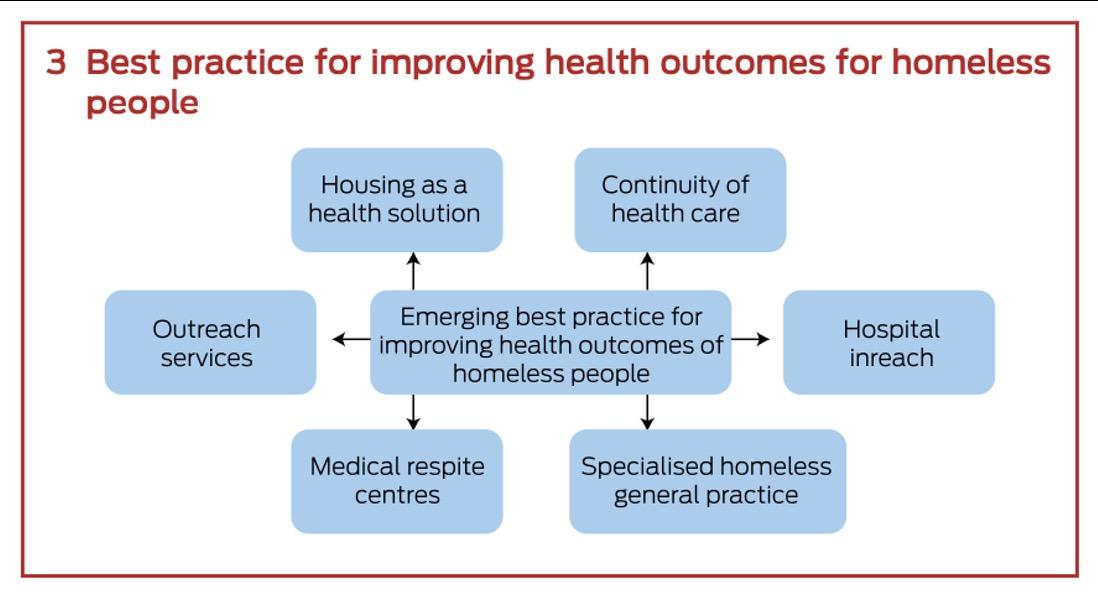
Trained staff working across the system and case management to connect to services
Bringing specialist GP care to the hospital. Linking admitted patients to community based services Specialist focus on homelessness can increase engagement. Need for connections to other sectors, particularly housing Centres for homeless people to live when they are too sick for the streets but not sick enough for hospital.
The evidence highlights the importance of the following for interactions between general practice and people experiencing homelessness:
● deliver trauma informed care
● being aware of consultation length, noting consultations more than 30 minutes may be counterproductive
● present information aligned to the person’s literacy level
What existing services are available in the Murrumbidgee PHN region that specifically support people experiencing or at risk of homelessness?
Summary (1/2): Existing services
Regional Services
Network Homelessness Services exist across the Eastern, North-Eastern, Western and Southern Murrumbidgee region – offering refuge and crisis accommodation for women, men and families, and integrated service support for those experiencing homelessness or rough sleeping.
These local services are bolstered by Wellways Murrumbidgee Housing and Support Initiative (HASI) which offers an integrated approach to housing and homelessness, mental health, youth services and suicide prevention.
The Murrumbidgee Homeless Youth Assistance Program (HYAP) offers immediate brokerage support tailored to the unique requirements of young individuals who are homeless or face the threat of homelessness, including specialist therapeutic services and accommodation options throughout the Murrumbidgee region. The HYAP facilitates reconnection of the young person with their essential support networks, accommodation, health, wellbeing, and education.
A great many crisis accommodation centres are available across the Murrumbidgee region provided by The Salvation Army, St Vincent de Paul Society, BeyondHousing, Young Crisis Accommodation Service, Samaritan House, Sisters Housing, Amaranth Foundation, and more.
The Murrumbidgee PHN ‘find a health service’ directory serves to aggregate health services across the region offering some coordination for those seeking local healthcare options. WayAhead Directory represents another aggregated resource for identifying homeless support services across the region.
What existing services are available in the Murrumbidgee PHN region that specifically support people experiencing or at risk of homelessness?
[continued]
Summary (2/2): Existing services
Ctd …
Additionally, multiple services exist across the Murrumbidgee region that support common challenges experienced by homeless and rough sleeping individuals, including; Wellways mental health and suicide prevention, Sunflower House, headspace, Monarch Mental Health, and MyStep to Mental Wellbeing for mental health support, and; Calvary Riverina Drug and Alcohol Centre, Karralika, Intereach and Directions for those impacted by alcohol, tobacco and other drugs.
State-Wide Services
The Australian Government Department of Social Services is at present developing a National Housing and Homelessness Plan, a 10-year strategy seeking to set out a shared vision to inform housing and homelessness policy. State-wide services exist to protect some of the most vulnerable groups experiencing homelessness, such as the Safe Places Emergency Accommodation Program, specifically facilitate accommodation for victims of domestic violence, and the Reconnect Program, that seeks to prevent homelessness for those aged 12-18.
The Department of communities & Justice allocates funding for specialist homelessness service programs aimed at assisting individuals at risk of or currently experiencing homelessness in New South Wales. These specialist services cater to a wide range of individuals, including women, men, families, First Nations peoples, and those from culturally and linguistically diverse backgrounds.
Locating Services
Digital service directories represent a valuable resource in locating appropriate local healthcare services, including services tailored for those experiencing homelessness or rough sleeping.


The Local Service Environment 1/2
The local service environment around Murrumbidgee involves a mix of health and social services that aim to meet the needs of people experiencing homelessness, funded by various levels of government and support systems.





The Local Service Environment 2/2
The local service environment around Murrumbidgee involves a mix of health and social services that aim to meet the needs of people experiencing homelessness, funded by various levels of government and support systems.





The Broader Service Environment
The Australian Government Department of Social Services is at present developing a National Housing and Homelessness Plan, a 10-year strategy seeking to set out a shared vision to inform housing and homelessness policy.
The Australian Government is developing a National Housing and Homelessness Plan, a ten-year strategy in collaboration with state, territory, and local governments. It aims to provide a shared vision to inform future policy, outlining key reforms for the short, medium, and long term. The plan includes increasing Commonwealth Rent Assistance, establishing a $10 billion Housing Australia Future Fund for social and affordable housing, creating a National Housing Accord to build one million new homes over five years, and various other investments and tax incentives to support housing and reduce homelessness. Broad public consultation has informed the Plan, alongside advice from the National Housing Supply and Affordability Council.
The Safe Places Emergency Accommodation Program in Australia is a key component of the government's commitment to combat domestic violence. Funded with an initial $72.6 million and bolstered by an additional $100 million over five years, the program focuses on increasing emergency housing for women and children facing domestic violence. The expansion specifically aims to support First Nations women and children, those from diverse cultural backgrounds, and women and children with disabilities. The program, which includes new construction, renovations, and property acquisitions, is set to assist thousands annually, with the first projects operational since August 2021 and all projects due to complete by mid-2024.
The Reconnect Program serves as an early intervention and prevention initiative aimed at young people aged 12 to 18, or up to 21 for those newly arrived in Australia. It addresses the risk factors for homelessness, seeking to stabilise the housing situations of youth and their engagement with family, education, and community. Annually aiding approximately 7,000 young people, Reconnect provides counselling, group work, family mediation, and practical support to prevent youth homelessness. It fosters collaboration with schools and various services, ensuring clients receive comprehensive assistance or are directed to specialised services when necessary. This program is an integral part of Australia's commitment to reducing homelessness and enhancing the overall well-being of young Australians at risk.
Sources: https://www.dss.gov.au/housing-support-programs-services-housing/developing-the-national-housing-and-homelessness-plan, https://plan4womenssafety.dss.gov.au/initiative/safe-placesemergency-accommodation-program/, https://www.dss.gov.au/families-and-children-programs-services/reconnect
What are some comparable ‘models of care’ being delivered and/or working effectively in other regions to improve accessibility and/or appropriateness of primary health care services for people experiencing homelessness?
Summary (1/2): Comparable models
Outreach and “In-reach”
A review of comparable models in other regions shows outreach services are the main method of service delivery, there is variability in the workforce model (from directly employed clinical staff to MBS-funded and visiting staff/services), and diversity of funding (from private donations to self funded models and government/PHN grants).
A Tasmanian initiative, the Mobile Health Nurse Clinic (MHNC) offers a pioneering approach to healthcare for those experiencing homelessness, with nurse practitioners and registered nurses providing a range of healthcare services co-located within the premises of an overnight emergency shelter, including health assessments, prescriptions, treatment of minor illnesses, and patient education.
Street Outreach Services provided by Drug Arm offers integrated medical, nursing and other support services through outreach in the after hours period.
Through on-the-ground care coordination delivered across Brisbane via Footprints Community’s mobile and outreach supports, families are supported to to move out of homelessness.
Sunny Street was a Doctor and Nurse led model that provided outreach primary healthcare services to vulnerable individuals. The parent organisation ceased trading in 2023 but generated funding through a fixed-site accredited medical centre and corporate flu vaccination clinics.
Homeless Healthcare is a not-for-profit charity based in WA that offers healthcare for vulnerable individuals across settings. Services include a fixed hub, mobile and street clinics, a hospital in-reach program, funded after hours support services and medical respite. Each program has its own source of funding and provide a unique service.
What
are some comparable ‘models
of care’ being delivered and/or working effectively in other regions to improve accessibility and/or appropriateness of primary health care services for people experiencing homelessness?
[continued]
Summary (2/2): Comparable models
Ctd …
Street to Home model is an outreach service offering practical support including housing and healthcare services. The service is delivered by a multidisciplinary team of Nurses and Support Advocacy Workers with multiple funding sources.
Through multidisciplinary teams and services, The Living Room is an accredited primary health service offering free healthcare and life skills support. The Living Room runs a social enterprise cafe along with government funding to support ongoing service sustainability.
3rd Space is a drop-in centre providing fixed site and mobile support services. The service model offers a place for daytime respite and family support programs and individual living support through visiting medical and community services.
Street Side Medics is a not-for-profit organisation delivering free mobile medical services at sites across NSW. The model is GP led and provides general medicine and monthly clinics with visiting subspecialities and allied health.
The Housing First Principle
Victoria’s Doorway Program utilises the private rental market to increase housing options for individuals experiencing homelessness, facilitating access to mainstream housing solutions.
At Home/Chez Soi demonstrates the cross-cultural and international efficacy of the Housing First approach to the health of homeless individuals.
Mission Health Nurse Clinic
The Mobile Health Nurse Clinic (MHNC) offers a pioneering approach to healthcare for those experiencing homelessness, with nurse practitioners and registered nurses providing a range of healthcare services
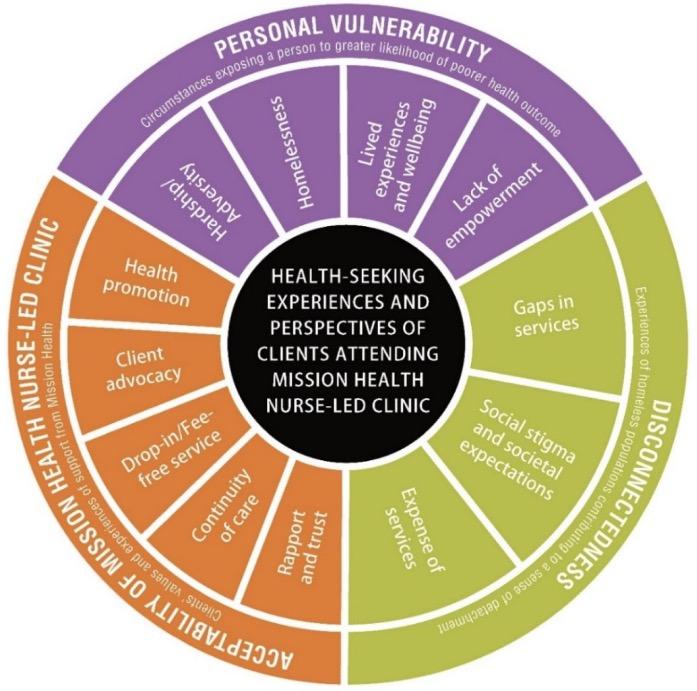

The Mission Health Nurse-led Clinic (MHNC), initiated in March 2019 in Launceston, Tasmania, represents a pioneering model purposed to rectify the unequal healthcare access among the homeless or those at risk of homelessness. This venture is a collaborative effort involving an independent nurse practitioner, the City Mission Launceston, and the University of Tasmania's School of Nursing. Operating weekly for one morning, the MHNC's services span health assessments, prescription provision, minor illness treatment, and educational support, all within the professional remit of the attending nurse practitioner and registered nurse. Strategically situated alongside an overnight emergency shelter, the clinic is optimally positioned to cater to the regional homeless population's healthcare needs efficiently.
The crux of the MHNC model is to ensure accessible, cost-free healthcare, a critical need for the target demographic, which often faces financial barriers to healthcare access. An evaluative study of the MHNC, employing both quantitative data from administrative records and qualitative feedback from client and staff interviews, underscored the clinic's impactful role. Through thematic analysis, three main themes emerged: the personal vulnerability of clients, reflecting experiences of diminished self-esteem and isolation; a sense of disconnectedness due to service gaps and societal stigmas; and a strong endorsement of MHNC's approachable and non-judgmental services. The 26-month evaluation period saw 426 visits by 174 individuals, with medication prescriptions and immunisations being the leading reasons for attendance.
Recommendations from the study suggested the need for enhanced mental health support and the expansion of operational hours to accommodate more varied healthcare disciplines on-site, thereby offering a holistic service model.
Source: Bennett-Daly G, Unwin M, Dinh H, Dowlman M, Harkness L, Laidlaw J, Tori K. Development and Initial Evaluation of a Nurse-Led Healthcare Clinic for Homeless and At-Risk Populations in Tasmania, Australia: A Collaborative Initiative. International Journal of Environmental Research and Public Health. 2021; 18(23):12770. https://doi.org/10.3390/ijerph182312770
Drug Arm - Street Outreach Services
Street Outreach Services provided by Drug Arm offers integrated medical, nursing and other support services through outreach in the after hours period.
Mobile Outreach Support and Health program by Integrated Teams (MOSHPIT)
● Medically equipped on-board health centre (van)
● Providing health check ups, dressings for minor wounds, referrals to other agencies and housing support
● Partner with local agencies to deliver services including:
○ GPs
○ Nurses
○ Counsellors
○ Centrelink officers
○ Volunteers
○ Partner organisations include: Spiritus, Centrelink, Mater Mothers, SQWISI and Baila sexual health
Drug Arm offer programs of support on the streets for people who are experiencing or at risk of homelessness to achieve their goals.
The Street Outreach Services are delivered in over 25 locations across South East Queensland visiting local communities including banks, community centres, parks and skate parks. Clinics are offered at different hours including mornings, afternoons, late nights and overnight and on weekends.
Drug Arms Street Outreach Services are not government funded and rely on donations from companies, churches, groups and individuals
Street Outreach Service
● A mobile program that provides support focusing on harm minimisation, providing information, referrals and crisis intervention and something to eat and drink
Footprints Community
Through on-the-ground care coordination delivered across Brisbane via Footprints Community’s mobile and outreach supports, families are supported to to move out of homelessness.

The Footprints Community Housing and Homelessness Response Service (HRS) is a dedicated program designed to aid individuals and families in Queensland who are homeless or at risk of homelessness. The HRS provides a comprehensive range of services to support these individuals and families, including mobile and outreach support, on-the-ground care coordination, and help in securing stable housing and maintaining tenancy. The program, which launched in November 2021, is committed to improving the health, wellbeing, and quality of life of its clients, ensuring that they remain connected with their communities.
Key components of the HRS include direct support to understand clients' housing needs, referrals for emergency accommodation, assistance with applications for housing solutions, and advocacy services. The service also facilitates connections to specialist and community support services to address broader needs.
To access the HRS, individuals can make contact via email, telephone, or in person by appointment. Additionally, the program includes a mobile laundry and shower bus known as Stand Up, Step Out (SUSO), which aims to provide comfort and safety for those sleeping rough. This bus is part of an outreach service that visits various locations on a weekly basis, complementing existing services in those areas.
This service is part of a broader effort by Footprints Community to provide multi-tiered assistance and proven experience in addressing the complex issue of homelessness, all while fostering a collaborative approach with local services and stakeholders. The Footprints Community emphasizes the importance of secure housing as a fundamental right and strives to create a solid foundation from which individuals can improve their lives.
Sunny Street
Sunny Street was a Doctor and Nurse led model that provided outreach primary healthcare services to vulnerable individuals. The parent organisation ceased trading in 2023 but generated funding through a fixed-site accredited medical centre and corporate flu vaccination clinics.
Mobile Outreach
Sunny Street is a mobile outreach service that is designed to deliver care to those who are experiencing homelessness and are facing challenges accessing health care. Led by a Doctor and a nurse, the service offers 18 clinic locations across the Sunshine Coast, Gympie, Brisbane and Fraser Coast regions.
The services offered through mobile outreach include:
● General health assessments and advice
● Chronic disease management
● Immunisation
● Wound care
● Health education
● Social prescribing

Medical Centre
Sunny Street Medical Centre is a fixed-site general practice located in Maroochydore, QLD. The medical centre is AGPAL accredited. Services are bulk-billed for those experiencing homelessness or vulnerability and a small fee for the general population.
Sunny Street Medical Centre facilitate corporate flu vaccination clinics to organisations throughout the year.
Funds raised through medical services and flu vaccination clinics are used to fund Sunny Street mobile outreach programs.
Micah Projects: Street to Home
The Street to Home model is an outreach service offering practical support including housing and healthcare services. The service is delivered by a multidisciplinary team of Nurses and Support Advocacy Workers with multiple funding sources.

The Street to Home Project sits under the Micah Projects Home for Good Services that are delivered in collaboration with community service providers in Brisbane. The model is an evidence-based outreach program that supports people who are experiencing homelessness to move into stable, sustainable and long-term housing.
Outreach services are provided by a multidisciplinary team of Nurses and Support Advocacy workers who provide practical support for housing and healthcare and medical services. Street to Home service operates 20 hours a day, seven days a week from 6am-12:30am.
Street to Home Funding
Street to Home Services
● Identifying and applying for housing
● Accessing health services
● Accessing support and assistance entitlements
● Financial management advice
● Create links with services including education and training, child protection, income support
● Access legal support
● Street to Home is funded by Queensland Government's Department of Housing and Public Works
● The integrated Nursing Services funded by Brisbane South PHN and Brisbane North PHN
● Brisbane City Council have provided funding for custom-fitted mobile health vans and daytime nurses
● Street to Home also accepts donations of items and additional funding
Homeless Healthcare
Homeless Healthcare is a not-for-profit that has grown with service demand and offers healthcare for vulnerable individuals across community and hospital settings.

Homeless Healthcare is a not-for-profit charity set up in 2008 to advance and promote the health of people experiencing homelessness and marginalisation. Since then, Homeless Healthcare has grown considerably with more clinicians at mobile clinics and the addition of new services. In 2021/22 Homeless Healthcare provided just over 33,000 consultations to people experiencing or at risk of homelessness. Models of service include:
• mobile services and street outreach
• fixed hub/clinic for general practice care and allied health
• hospital in-reach program
• after hours support services
• medical respite centre
Homeless Healthcare commenced the pilot of the Homeless Outreach Dual Diagnosis Service, an outreach service that works with people experiencing homelessness in Perth who have a dual diagnosis of mental health and alcohol and other drug issues. The HODDS team comprises of a Mental Health and AOD trained doctor and nurse who work alongside the HHC GP clinic in settings familiar to individuals experiencing homelessness.
HODDS has a flexible and integrated model of care, which is particularly suitable for this complex, multi morbid patient population It is centred around providing long term GP care linked with access to specialist dual diagnosis care HODDS recognises that tri morbidity, trauma and a raft of social determinants are common among their patients, and ensure the care they provide extends beyond the medical sphere.
Source: Bennett-Daly G, Unwin M, Dinh H, Dowlman M, Harkness L, Laidlaw J, Tori K. Development and Initial Evaluation of a Nurse-Led Healthcare Clinic for Homeless and At-Risk Populations in Tasmania, Australia: A Collaborative Initiative. International Journal of Environmental Research and Public Health. 2021; 18(23):12770. https://doi.org/10.3390/ijerph182312770
The Living Room
Through multidisciplinary teams and services, The Living Room is an accredited primary health service offering free healthcare and life skills support. The Living Room runs a social enterprise cafe along with government funding to support ongoing service sustainability.
The Living Room is powered by Youth Projects and is a primary health service that provides free healthcare and support to improve physical, mental and social well-being.
Funding
The living room is funded by:
● Co-investment of funding by the Victorian Government
● Donations and sponsorships through partnerships
● The Little Social - social enterprise cafe employing and empowering young people and re-investing profits into the Living Room ($73,000 profit over 12 months)
The living room
● A safe space to access showers, wifi, laundry, self serve meals and snacks, legal aid, haircuts and life skills
● Bulk billed medical services provided by GPs, Practice Nurse and Mental Health Nurse
● General medical, immunisation, pathology, allied health such as podiatry and optometry, alcohol and other drug counselling and life skills
● qualified drug and alcohol counselors and mental health supports
● AGPAL Accredited
Saturday clinic
● Nurse available on saturday for wound management and general nursing
After Hours
● Night nurses outreach deliver health care on the streets of Melbourne CBD addressing immediate primary care needs
3rd Space
3rd Space is a drop-in centre providing fixed site and mobile support services. The service model offers a place for daytime respite and family support programs and individual living support through visiting medical and community services.

3rd space is a daytime drop-in centre for those experiencing or at risk of homelessness. The centre offers a space to find support and connection and offers services that are focused on breaking the cycle of homelessness. Reach approximately 80-100 people per day, in 2020-21 over 3,220 people accessed 3rd Space.
3rd Space is funded by Queensland Government Department of Communities, Housing and Digital Economy. Commitment for funding of weekday operations is confirmed until 2023 and weekend operations to 2025.
Services offered include:
● Family Support Program - financial stress, substance misuse, parenting challenges, domestic and family violence
● Individual and daily living support -emergency relief funding, showers, meals, day rest area, clothes, medical care, counselling and allied health services, advocacy and assistance to housing or mainstream services
● Food services - Free meals daily, planned by a nutritionist and catering for all needs
● Mobile services - providing outreach support to individuals and families where they need it
Visiting Medical Services:
● General Practitioner - Mon, Wed and Fri 9am-2pm
● Nurse (Partnership with Anglicare) - Mon-Fri
● Podiatrist - regular attendance
Visiting Wellbeing Services:
● Homeless Health Outreach Team - Support for mental health and substance misuse
● Institute for Urban Indigenous Health - Culturally safe support services
● Counselling and Men’s Group - Monthly support for men
Visiting Finance, Legal and Other Services
● LawRight - Tuesday and Thursday for legal concerns
● iAm Programme - Identification documentation
● Breakthru - Specialist disability employment service and NDIS provider - fortnightly
Street Side Medics
Street Side Medics is a not-for-profit organisation delivering free mobile medical services at sites across NSW. The model is GP led and provides general medicine and monthly clinics with visiting subspecialities and allied health.

Street Side Medics is a GP led medical service for homeless communities in NSW. Through collaboration with pre-existing homeless charities, shelters and services Street Side Medics visit 6 locations across NSW to provide primary healthcare services in their mobile van.
Services offered are bulk-billed and provided by RACGP Accredited General practitioners.
Street Side Medics is funded through a combination of government grants, and private donations.
Clinical Services
Services offered by Street Side Medics include:
● Health examinations
● Diagnosis and treatment of conditions
● Health care plans
● Immunisation
● Pathology
● Minor surgical procedures
● Referrals
Street Side Medics has partnered with medical subspecialities and allied health professionals who participate in clinics on a monthly basis. These include:
● Specialists:
○ Cardiology
○ Infectious Diseases
○ Gastroenterology
● Allied Health
○ Physiotherapy
○ Podiatry
Victoria’s Doorway Program
Victoria’s Doorway Program utilises the private rental market to increase housing options for individuals experiencing homelessness, facilitating access to mainstream housing solutions.


The Wellways Doorway program is a Housing First initiative that supports individuals in Victoria affected by mental ill health who are homeless or at risk of homelessness. The program assists participants in securing and maintaining safe and affordable housing within the private rental market. Through the Doorway program, clients are assigned a dedicated Housing and Recovery Worker who collaborates with clinical care teams to provide support tailored to each individual's needs and recovery goals.
A significant aspect of the Doorway program is its financial model, where clients contribute 30% of their income plus any Rent Assistance they receive directly to their real estate agent for rent. In addition to helping clients find a home and sign a lease, the program also offers weekly support in their homes, aids in looking for work or starting studies, and assists with establishing the home with essential items if needed.
Access to the Doorway program is facilitated through referrals from Clinical Case Managers at specific health services, including Alfred Health, Latrobe Regional Hospital, Peninsula Health, or St Vincent’s Hospital. To be eligible, clients need to be homeless or at risk of homelessness, experience ongoing mental ill health, and be willing to engage with the support offered.
An evaluation of the program conducted by Melbourne University reported positive outcomes, indicating that the program not only enhances health outcomes but also reduces participants' need to access public mental health services. The success of Doorway is attributed to its integrated approach involving partnerships with clinical mental health providers and real estate agents. This success suggests the potential for expanding such models nationally to address homelessness and support individuals in leading better lives
At Home | Chez Soi
At Home/Chez Soi demonstrates the cross-cultural and international efficacy of the Housing First approach to the health of homeless individuals.

The At Home/Chez Soi initiative, orchestrated by the Mental Health Commission of Canada, emerged as a pioneering study to tackle homelessness via the Housing First methodology. Funded through a CAD 110 million federal grant, the initiative spanned four years and was deployed across five cities in Canada, each focusing on diverse sub-groups, such as individuals grappling with substance abuse or diverse ethnic populations. The findings from this extensive project underscored that Housing First is not only viable but also successful in securing sustained accommodation for individuals with mental health challenges. In locales like Montreal, swift action resulted in the majority of the 285 participants finding housing promptly, thanks to the cooperation of numerous landlords. The participants reported substantial enhancements in mental well-being, lessened stress and anxiety levels, restored familial bonds, and a downturn in substance dependency.
From an economic standpoint, the initiative's investment demonstrated value for money, with notable savings on other public services that were previously more heavily utilized by the homeless cohort. It was determined that for every CAD 10 invested in Housing First services, there was an average cost saving of CAD 8.27 for those with higher needs and CAD 7.19 for those with moderate needs, realised over a subsequent two-year period.
This substantial undertaking has contributed significantly to research on homelessness and established the Housing First model as a viable solution to homelessness, offering notable societal cost benefits.