Annual Report
2025
2025 stories 1 Research impact Nearing a cure for genetic heart disease
10
Measures of impact
12
Media outreach
13
Innovation and commercialisation
14
Fostering excellence
16
World-leading research improving children’s lives around the globe
18
2 Research excellence Babyscreen+ adds genomic dimension to heel-prick test
22
Advances in diagnosis, treatment of inherited neurological disorders
23
Transforming clinical care for children with rare genetic diseases
24
Missing common protein could affect how muscles respond to testosterone 25 VCGS turns cutting‑edge genetics into better care
26
Mapping a path to safer childhood cancer treatments
28
Software to better understand childhood cancer
30
$US35m partnership advances blood disorder therapies
31
AI detective redefines epilepsy care
32
Need for earlier detection of sepsis
33
Improving pain management for children with cerebral palsy
34
Concussion clinic boosts recovery for children
35
Data drives insights, improving public health
36
Strengthening change for Child and Family Hubs
37
Supporting wellbeing in children and teens in the digital age
38
Tackling the rising allergy burden
39
GenV: Building Australia’s prevention platform
40
Accelerating discovery to protect children from Strep A
42
Strengthening infant immunity
43
The power of vaccines
44
Global action to end avoidable child deaths
45
3 Living our values Prizes and awards
48
Inspiring future generations of researchers
50
Embedding our values
51
Celebrating excellence across the Institute
52
Vale Prof Katie Allen, Dame Marie Bashir AC CVO, Prof Emma Johnston AO 54
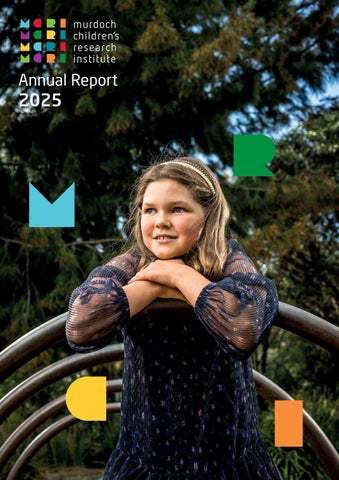
4 Securing their future Murdoch Children’s Research Institute acknowledges the Wurundjeri people, the Traditional Owners of the land on which MCRI is located. We pay our respects to their elders, past and present. OUR COVER: Kate, nine, has hypertrophic cardiomyopathy, a genetic heart condition that causes sudden cardiac death in young people. Read Kate’s story and learn how MCRI research is offering hope to patients like her on pages 10-11.
2 2
MURDOCH CHILDREN’S MURDOCH CHILDREN’S RESEARCH RESEARCH INSTITUTE INSTITUTE Murdoch Children’s Research Institute
A deepening connection
58
For the children who come after us
59
Dame Elisabeth Murdoch Lunch 2025
60
Foundation support improves child health outcomes
62
Giving that goes further
63
Policy and government relations
64
The funding that helps underpin our work
66
Grants at a glance
67
Our donors
68
The year in review
71
2025 Boards and Committees
74
ANNUALREPORT REPORT2025 2025 ANNUAL Annual Report 2019
3 3
Director’s report I am delighted to present the Murdoch Children’s Research Institute 2025 Annual Report. As we approach 40 years since our foundation, MCRI is a strong and vibrant organisation with more than 1,800 researchers focused on solving the health challenges that face our children – in our hospitals, in our community and as global citizens. The Institute is poised to address these challenges by combining our brilliant minds with the latest in technology and innovation. In 2025, we published more than 2,000 journal articles and collaborated across 120 countries to deliver impact at an international scale. Internally, we refreshed and consolidated our core values. Courage. Curiosity. Integrity. These values guide how we work every day: acting bravely when it matters, pursuing new ideas with rigour and earning trust through taking responsibility and being transparent. During the year, we also invested in leadership development, supporting early‑ and mid‑career researchers, and progressed inclusion, wellbeing and accountability initiatives. In 2025, incredible discoveries were made; many are highlighted in this report. Our stem cell researchers achieved a world first – the ability to make human blood stem cells, which can replace and reproduce the function of the bone marrow. We have now partnered internationally to develop this technology to treat leukaemia, bone marrow failure and other blood disorders. Our neuroscientists and imaging experts developed an ‘AI detective’ to identify the source of epileptic seizures in patients. This technology has paved the way for successful surgical treatment of people with previously incurable epilepsy. I invite you to read about nine-year-old Kate, who celebrates her ‘heart anniversary’ by raising awareness of her genetic heart
4
MURDOCH CHILDREN’S RESEARCH INSTITUTE
condition. And why Candice became an MCRI consumer advocate after her son River was diagnosed with cancer. They join thousands of families who benefit from our discoveries across genomic and stem cell medicine, clinical sciences, population and global health. The year ended with the sad loss of Professor Katie Allen, esteemed clinician‑scientist and a former Director of Population Health, who passed away in December. It was an honour to deliver her eulogy, remembering her significant contributions to medicine, allergy research and public service. She is deeply missed. The enduring strength of our local partnerships continues to amplify our impact. Strong collaborations with The Royal Children’s Hospital and the University of Melbourne Department of Paediatrics underpin our success. We are especially grateful to The Royal Children’s Hospital Foundation for its continued support of innovative research and our amazing clinician‑scientists. I also acknowledge the significant investment of state and federal governments, whose funding helps to advance research at scale and realise long‑term impact. Our subsidiary, the Victorian Clinical Genetics Services (VCGS), continues to embed genomic advances into routine clinical care, supporting families through diagnosis, screening and reproductive decision‑making. VCGS plays an important role in Victoria’s health system and leads national discussions on the responsible use of genomics. On the global scale, we collaborate across the top four children’s research institutions (Toronto SickKids, Boston Children’s, Great Ormond St (London) alongside Melbourne Children’s. This International Precision Child Health Partnership (IPCHiP) accelerates genomic diagnosis and develops and provides access to advanced therapies for our sickest children.
Philanthropic support remains critical to our ability to invest in new ideas and emerging talent. MCRI leverages philanthropic investment more than fivefold across all programs. I am so grateful to our donors and supporters, individuals, families, corporate partners, trusts and foundations, whose generosity means that we can focus on the high-risk, highimpact research that will advance priority areas of child health research. A personal highlight of 2025 was the Dame Elisabeth Murdoch Lunch at Cruden Farm to launch our 40th birthday celebrations. This biannual event recognises Dame Elisabeth’s founding legacy and her belief in medical research as a public good. Following that lunch, Sarah and Lachlan Murdoch made a significant Lead Gift to establish the Horizon Fund, a perpetual endowment providing flexible, long‑term support for excellence and innovation, securing the Institute’s ability to invest in the blue-sky research that will drive discovery and innovation. We extend our deepest gratitude to Sarah and Lachlan and look forward to other visionaries joining them in this legacy investment in the future of child health. As always, I am so grateful to members of the MCRI Board, Committees and advisory groups for their oversight and guidance. And particularly Patrick Houlihan and Sarah for their leadership and ongoing commitment. Most importantly, I want to thank the children, young people and families who participated in our research in 2025. Their involvement is at the heart of everything we do and reinforces the responsibility we carry as a research institute. As we look towards our 40th year, our purpose is clear: to ensure our research informs better outcomes so that every child has the opportunity to live a healthy and fulfilled life. Professor Kathryn North AC Director, MCRI
ANNUAL REPORT 2025
5
Chair’s report
Co-Chair’s report It has truly been a privilege to serve as Co-Chair of Murdoch Children’s Research Institute since 2021, and to reflect on the Institute’s remarkable advancement since I first became involved more than 25 years ago. I begin by acknowledging Professor Kathryn North AC, whose leadership continues to set the standard for excellence, integrity and impact in child health research; and Patrick Houlihan, Chair, for his stewardship and cleareyed focus on the Institute’s long-term sustainability. Together with the Board, our Committees, the executive and staff, we are proud to ensure MCRI remains both ambitious and disciplined in how it delivers on its purpose. I was grateful this year for the opportunity to help bring MCRI researchers’ work to influential audiences in the United States and beyond, and to facilitate introductions from global leaders in innovation, technology and business to the extraordinary work of the Institute. I also acknowledge the ongoing support of Fox News, whose eagerness to share the Institute’s research and impact helped us reach more than 1.5 billion people — beaming our work into living rooms and boardrooms across the United States.
The 2025 Annual Report is filled with great examples from our year of innovation and sustainability. The operating environment for independent medical research institutes remains complex, but MCRI’s financial position has been strengthened over previous years. A key contributor was increased funding under the Victorian Government’s Operational Infrastructure Support program, which provides untied, flexible support for essential infrastructure. This funding helps MCRI attract competitive grants, retain skilled staff and maintain the physical and technological support systems required to deliver the Institute’s high‑quality research and clinical trials. These results also reflect disciplined financial management. I acknowledge the work of the Audit, Finance and Risk Committee for its oversight and direction and the willingness of MCRI’s leadership and executive to make important decisions when required. Their laser focus on sustainability, risk management and long‑term resilience has been critical to achieving this outcome.
6
MURDOCH CHILDREN’S RESEARCH INSTITUTE
Looking ahead, the Board remains focused on securing transformational funding that enables delivery at scale. In particular, we continue to support the next phase of GenV into Generation Australia, moving beyond discovery to interventions that can be implemented at scale across populations. Preventing the diseases that drive adult morbidity and mortality can only be done early in life. GenV, partnering with the ORIGINS study at The Kids Research Institute Australia to form Generation Australia, provides one of the most unique research platforms anywhere in the world. I am especially grateful to Co-Chair Sarah Murdoch for her leadership and advocacy. Her Lead Gift, with Lachlan Murdoch, to establish the Horizon Fund was a significant investment in MCRI’s future, providing long‑term, flexible support for outstanding researchers and their bold ideas.
This exposure has reinforced something I continue to see time and again: leaders around the world, in life sciences, health and medical research, continue to be impressed by the globally significant discoveries being made at MCRI. It is something we should be deeply proud of as Australians. Looking forward, artificial intelligence has the potential to fundamentally change how research is conducted, analysed and translated. Properly harnessed, it will accelerate discovery and allow Australian organisations to compete on the ingenuity and inventiveness for which we are renowned. My passion for MCRI lies in supporting our brilliant researchers. Future-proofing the Institute so that it can continue to make profound contributions to the health of children — and giving our researchers the financial sustainability and support to focus fully on their work — is what matters most.
On behalf of the Board, I thank our Director, Professor Kathryn North AC, the Executive, our researchers, staff, students, donors and supporters. Their collective effort ensures MCRI remains a global leader in child health research, now and into the future – across Australia, and beyond.
It was for this reason that Lachlan and I were especially proud to establish the Horizon Fund this year. Designed as a perpetual endowment, the Horizon Fund will support outstanding researchers and bold ideas over the long term. I look forward to the conversations ahead as we invite others to join us in this transformative initiative in philanthropy.
Patrick Houlihan Board Chair, MCRI
Sarah Murdoch Board Co-Chair, MCRI
ANNUAL REPORT 2025
7
1
Research impact MCRI is at the centre of a fastmoving era of medical science innovation that is delivering life-saving improvements in child and adolescent health. At the forefront is our research, with world-leading experts asking the tough questions to reveal new truths. From key discoveries to developing and trialling new therapies and interventions and harnessing the power of artificial intelligence, we work for our most important stakeholders – the infants, children and teenagers who need our help.
Our purpose
To give all children the opportunity to live a healthy and fulfilled life.
An AI scanner developed by MCRI and the University of Melbourne will help make dentist appointments less stressful and more fun for young kids like Spencer, five. PICTURE: JAKE NOWAKOWSKI, HERALD SUN
8
MURDOCH CHILDREN’S RESEARCH INSTITUTE
ANNUAL REPORT 2025
9
R E S E A RC H I M PAC T
Nearing a cure for genetic heart disease
E
very year on the anniversary of her openheart surgery, Kate shares heart-shaped lollipops with her classmates. Parents Carly and Duane said it’s their nine-year-old’s special way of celebrating her ‘heart anniversary,’ by spreading awareness about her genetic heart condition and explaining the scar that runs down the centre of her chest. Kate required surgery as a toddler to repair the damage to her heart caused by hypertrophic cardiomyopathy (HCM). The condition causes the heart muscle to thicken, making it harder to pump blood, often causing shortness of breath, chest pain, dizziness and fainting, and is the leading cause of sudden cardiac death in young people.
OPPOSITE: Carly, Kate, Tom and Duane. BOTTOM RIGHT: Kate and Dr James McNamara in the lab. Kate during her hospital stay, aged three.
Kate’s family has a history of HCM, caused by a variant in the MYH7 gene. Her grandfather was the first to be diagnosed, after a routine medical exam for army enlistment revealed a heart murmur. The condition progressed, resulting in him relying on daily medications and having a defibrillator implanted. Carly and her two sisters also carry the gene variation but are yet to show any HCM symptoms. Heartbreakingly, Kate’s younger brother Tom, seven, has also inherited the genetic variant.
“Having this gene run through our family means we are hyper vigilant around warning signs and take precautions by attending regular scans and check-ups,” Carly said. “Tom is healthy at the moment but there’s always that worry that he could go onto develop HCM and there’s a risk that future generations of our family will be impacted.” Carly said shortly after giving birth to Kate, a heart murmur was detected by their paediatrician. Further genetic testing confirmed Kate’s diagnosis and in the months that followed her condition deteriorated. Kate met her early milestones, but would sleep often, wasn’t gaining weight and had a blue tinge to her skin. Kate began treatment under the care of MCRI Professor Robert Weintraub, a paediatric cardiologist at The Royal Children’s Hospital (RCH). “Once Kate started medications, she never showed signs of HCM, allowing her to live a relatively normal life,” Carly said. “Kate was still an energetic little girl who loved craft, ballet and swimming lessons. But with her heart being under so much pressure we knew she would eventually need surgery.” Aged just three, with Minnie Mouse by her side and a determined spirit, Kate underwent open-heart surgery. Over eight hours, Kate’s surgical team at the RCH removed a small portion of her thickened heart muscle. Relieving this obstruction in the left ventricle helps to improve blood flow, effectively treating symptoms like chest pain and fainting. Carly said Kate had made an incredible recovery and no longer needed medications and any restrictions on physical activity. New research led by MCRI is offering hope to families like Carly’s with a history of genetic heart disease. The team, led by Dr James McNamara, has made a gene therapy breakthrough that could one day soon restore heart function in children. The research found delivering the ALPK3 gene in a single injection reversed heart muscle disease in mouse models and lab-grown heart tissue from patients. Variants in the gene can cause cardiomyopathy, affecting about 30 million people worldwide. Remarkably, the gene therapy might also help correct other genetic heart diseases, not just those caused by ALPK3 variants. Common examples include those impacted by the MYH7 gene and TTN truncating variants (TTNtv), the most common genetic cause of dilated cardiomyopathy. Dr McNamara said the findings were a major step towards a cure for genetic heart diseases.
10
MURDOCH CHILDREN’S RESEARCH INSTITUTE
“Cardiovascular diseases are the leading cause of death globally and genetic forms of cardiomyopathy are a major reason children need heart transplants,” he said. “If this success translates to patients, our gene therapy could become the first targeted treatment for a range of inherited heart diseases, offering families a future without progressive heart failure or the eventual need for a heart transplant. “Additionally, this would spare children from invasive surgical or catheter-based procedures, long-term medication and needing implantable devices like pacemakers and defibrillators to repair or manage their heart defect.” Carly said the discovery was remarkable, with her family incredibly grateful a team of scientists were dedicated to finding better treatments. “Before Kate reaches high school, she will need to have a heart defibrillator implanted as her surgery isn’t a cure,” she said. “We hope that with the advances in medicine that someday there will be a cure for HCM. In the meantime, we’re focusing on raising our little girl to be as happy and healthy as possible and we are committed to educating others about her condition. Kate takes such pride in sharing her heart anniversary with classmates, and the lollipops make it all that much sweeter.”
ANNUAL REPORT 2025
11
R E S E A RC H I M PAC T
R E S E A RC H I M PAC T
Measures of impact
Media outreach
RESEARCH THAT EMBRACES LIVED EXPERIENCE MCRI partners with children, young people, families, carers and communities to shape the future of child and adolescent health research. Our Consumer Involvement Team leads this work across the Melbourne Children’s Campus, (which includes MCRI, The Royal Children’s Hospital, the University of Melbourne’s Department of Paediatrics and The Royal Children’s Hospital Foundation). This work builds a culture where lived experience strengthens research quality, relevance and impact.
For Candice, advocacy helps healing When Candice’s son River was diagnosed with cancer aged just two, life changed overnight. For nine months, River endured intensive treatment – a time Candice described as both devastating and disorienting. “It felt like I lost that in‑between time,” she said. “I went into hospital with a two‑year‑old and came out with a three‑year‑old.” Today, River has been in remission for almost four years. He is back at school, playing sport and living a full, active life with no apparent significant long‑term side effects. While the outcome has been overwhelmingly positive, Candice said the experience left a lasting impression and, ultimately, a sense of purpose. Candice became an MCRI consumer advocate not simply to retell her personal story, but to use her lived experience to provide practical insights for other families. “Lived experience isn’t just emotional,” she said. “It shows what works, what doesn’t, and where systems can do better.” She knew firsthand what it felt like to sit beside a child without clear answers – and wanted to help make that path easier for families who would follow. Now, a graduate of the Victorian Comprehensive Cancer Centre Alliance Lived Experience Leadership Program and a consumer adviser through Community for Child Health, Candice contributes to boards, research and system design.
Through capability building, strategic partnerships and systems that support genuine collaboration, we create meaningful opportunities for consumers to influence research. Our campus-wide community of practice, the Consumer Involvement in Research Network, now brings together more than 160 members alongside a growing Consumer and Community Register of people who actively contribute their lived experiences. Across the Institute, these interactions meaningfully shaped our research. Here’s how:
• In genetic epilepsy, we worked with families, clinicians and allied health workers to strengthen patient‑centred care and informed clinical practice
• We empowered deaf and hard‑of‑hearing children and communities through a dedicated Community Advisory Group guiding research priorities and national outcome measures
• We developed a toolkit for researchers, service providers and clinicians that included principles developed by children and young people to support researchers to embed child‑centred involvement
• We partnered with multicultural communities to co‑create inclusive recruitment resources and strategies to ensure equitable access to genomic medicine
• Transgender young people drove a study through a youth steering group, ensuring research aligned with their needs and priorities
She works with clinicians, researchers and organisations including the Leukaemia Foundation and the Children’s Cancer CoLab, ensuring family voices are heard at decision‑making tables. Her advocacy highlights the realities beyond the hospital walls: fear, exhaustion, finances, siblings and long‑term uncertainty – factors often invisible in clinical settings.
• Our Heart Flagship Patient Advocacy Group elevated
For Candice, advocacy also supports healing. “We went through this whether we wanted to or not,” she said. “If I can help make things even slightly easier for the next family, that’s impact. That’s purpose.”
• The Global Adolescent Health team partnered
Candice and River’s story shows how lived experience strengthens research and improves outcomes through collaboration with children, young people and families.
12
MURDOCH CHILDREN’S RESEARCH INSTITUTE
patient and family voices, including co‑creating the Wadja Walkthrough to support Aboriginal and Torres Strait Islander families with young people across Asia and the Pacific to strengthen adolescent health and wellbeing through co‑designed research and virtual collaboration.
T
he expertise of MCRI leaders continues to shape public awareness and understanding of child health across Australia and internationally. Their consistent presence in major media outlets positions the Institute as a trusted, go‑to authority for families, donors, governments and key stakeholders. By engaging across diverse platforms – from broadcast and print to digital and social media – our experts shared their vital child health breakthroughs with sector-specific audiences.
US EXPOSURE: A BREAKOUT YEAR It was a breakout year for MCRI in the US, with our people and initiatives featured across a mix of premium print, major broadcast and high-reach digital platforms. Highlights included The Wall Street Journal opinion piece written by Professor Sharon Goldfeld AM, national and digital coverage with Fox News, Fox & Friends and Good Day New York (FOX 5), multiple segments on Fox Business, and prominent New York Post coverage. Our spokespeople also reached US clinical audiences through SiriusXM’s Doctor Radio, reinforcing MCRI’s international credibility as a trusted voice on child and adolescent health. US coverage spanned research translation, prevention and public health commentary and major awareness moments. Stories ranged from Prof Goldfeld’s commentary on toddler foods and obesity, to coverage of the Friends of MCRI New York 2025 event highlighting Professor Enzo Porrello’s heart stem cell research. Fox News coverage included a Giving Tuesday campaign feature and expert interviews on Strep A with Dr Josh Osowicki, teen mental health with Professor Susan Sawyer AM, obesity with Dr Jess Kerr, allergy with Professor Kirsten Perrett, vaccine hesitancy and measles/maternal antibodies with Professor Margie Danchin, sepsis with Associate Professor Elliot Long, and paediatric heart disease with Professor David Elliott, alongside segments on National Child Health Day spotlighting GenV and National Wear Red [for Women’s Health] Day. Additional US broadcast highlights included Professor Melissa Little AC discussing an MCRI commercial partnership with Retro Biosciences and Professor Vicki Anderson showcasing the US launch of the Concussion Essentials (HeadCheck) app. Together, these media appearances translated MCRI research into practical guidance at scale, shaping conversations and decisions that improve outcomes for children and families across the world.
2025 MCRI media mentions Australian Radio & TV: 3,420 Australian online: 1,980 Global online: 3,820 Australian online audience reach: 42.1m US MEDIA MENTIONS: 1,530
Combined US audience reach: 11.4 billion people
RESEARCH IMPACT: HOW MCRI STACKS UP
In 2025, MCRI retained its global standing as a leader in child health research and our publications featured in many high-impact international and national journals.
2,128 total publications – peer-reviewed journal articles 8,404 total citations 56 per cent of MCRI articles were published in the top
50 per cent of journals (Scimago Journal Ranking)
HIGHLY CITED RESEARCHERS Professor Daniel MacArthur The late Professor George Patton AO
The Highly Cited Researchers list from Clarivate celebrates researchers ranked in the top 1 per cent in the Web of Science citation index, which demonstrates significant influence in their research field.
HIGH GLOBAL VISIBILITY
18.5 per cent of our publications are in the top 10 per cent most viewed worldwide.
WORLD-CLASS RESEARCH IMPACT Our publications achieve a Field-Weighted Citation Impact (FWCI) of 2.38, meaning they are cited at more than twice the global average, consistently over the past five years. EXCEPTIONAL POLICY INFLUENCE
MCRI publications cited by policy documents record a 31.89 FWCI – almost 32 times the global average (35.4 in 2024), according to SciVal.
ANNUAL REPORT 2025
13
R E S E A RC H I M PAC T
Innovation and commercialisation US DEAL TO HELP FAST-TRACK LAB-GROWN BLOOD STEM CELLS MCRI’s Innovation and Commercialisation Team secured a major research and commercial licensing partnership with US biotech company Retro Biosciences in 2025. The partnership will aim to fast-track world-first blood stem cell discoveries towards personalised treatments for people with serious blood diseases. More than $49.5 million will help advance MCRI’s blood stem cell technology and support its path from the lab to the clinic. Under the agreement, Retro Biosciences will license MCRI intellectual property to progress personalised regenerative therapies, including potential treatments for children with leukaemia and bone marrow failure disorders.
The agreement includes workshops and training to help researchers build skills in areas such as cell manufacturing, drug discovery and emerging laboratory technologies. Equipment showcases will also provide early insight into new platforms. Together, we aim to strengthen translational research and support the development of advanced therapies and technology innovation.
VAXPULSE MAKES ITS MARK IN CSIRO PROGRAM
The partnership builds on a world-first breakthrough announced in 2024, when MCRI researchers created human blood stem cells in the laboratory. The labgrown cells closely resembled blood stem cells found naturally in the body.
A team of MCRI researchers, led by Gerardo Luis Dimaguila and supported by the MCRI Innovation and Commercialisation Team, participated in CSIRO’s ON Prime program in 2025 – progressing their emerging digital health tool VaxPulse towards real-world impact.
Yuen Chang, MCRI’s Stem Cell Business Development Manager, said the partnership was a strong endorsement of both the quality of MCRI’s science, and the readiness of our technologies to attract investment for translation into real-world therapies.
VaxPulse is an AI-enabled platform designed to help health services track and respond to vaccine misinformation.
“The partnership shows the importance of early investment in transformative technologies and the value of industry collaboration in accelerating translation,” she said.
TECHNOLOGY PARTNERSHIP ACCELERATES STEM CELL, GENE THERAPY WORK MCRI and life science and clinical research company Thermo Fisher Scientific launched a strategic partnership to strengthen stem cell and gene therapy research and accelerate progress towards new treatments. Formalised through a Memorandum of Understanding signed in early 2025, the agreement set a framework for shared scientific, translational and commercial outcomes for both organisations and the wider Parkville biomedical precinct. Under the partnership, MCRI will gain early access to new Thermo Fisher instruments and technologies, powering the Institute to help test and introduce innovative platforms. The capability will support MCRI teams working in stem cell and gene therapy, where demand for scalable technologies continues to grow.
14
MCRI and Thermo Fisher will also work together on priority projects, including drug discovery programs and cell manufacturing processes. The collaboration will combine MCRI’s scientific capability and Thermo Fisher’s technology expertise to help shorten the pathway from discovery to clinical impact.
MURDOCH CHILDREN’S RESEARCH INSTITUTE
The platform identifies early shifts in online conversations, flags emerging concerns and detects co-ordinated influence activity across digital channels to support timely, evidence-informed communication. During the nine-week ON Prime program, the team tested assumptions, refined the value proposition and clarified target users and pathways to impact. ON Prime is one of three CSIRO ON programs that support research teams to translate their early-stage research into solutions ready for broader adoption. As part of the program, the VaxPulse team spoke with clinicians, public health units, government stakeholders and vaccine-sector partners to validate priority use cases and define how the tool could support decisionmaking in fast-changing public health environments. This proactive engagement also helped lay the groundwork for a local pilot, an important step towards practical roll out and measuring system-level impact. The next advancement is for VaxPulse and MCRI to expand the pilot’s capabilities for potential global impact. By linking data, insight and communication, VaxPulse aims to strengthen public confidence in vaccination and support a faster, more co-ordinated response to misinformation.
MENTAL HEALTH APPROACH IN SCHOOLS HITS MAJOR MILESTONE Phenomenal progress has been made in improving children’s mental health and wellbeing through a landmark initiative that has reached every state primary school in Victoria. Developed by MCRI in partnership with the University of Melbourne with support from the Victorian Department of Education, Mental Health in Primary Schools (MHiPS) is now available to more than 1,800 government and eligible low-fee, non-government primary schools across the state. Following a successful pilot, the Victorian government committed $200 million over four years from 2023, with $93.7 million ongoing, to support statewide implementation. MHiPS takes a whole-school approach to wellbeing by embedding a dedicated Mental Health and Wellbeing Leader in each school and pairing this role with a structured professional learning program. Together, these elements strengthen teachers’ confidence and capability to recognise emerging mental health concerns, support students early and connect families with local education, health and social services. A newly released evaluation report shows the impact is already being felt. Within two years, 80 per cent of participating schools reported improvements in students’ mental health and wellbeing, including better emotional literacy, stronger help-seeking behaviours, and improved school connectedness, attendance and social skills. After just one year, 87 per cent of teachers reported increased confidence in supporting students’ mental health, and more than 80 per cent of school staff observed reduced mental health stigma across staff and families. MCRI researcher Dr Simone Darling, who leads the MHiPS initiative, said the findings marked a major milestone. “The data demonstrates real benefits for students and school communities, while also setting a national benchmark for evaluating large-scale, preventionfocused mental health initiatives,” she said.
Professor Frank Oberklaid OAM said schools were uniquely placed to intervene early. “Teachers are among the most trusted and consistent adults in a child’s life,” he said. “That makes primary schools an ideal universal setting to identify concerns early and connect children to support before problems escalate.” Together, the findings underscore MHiPS as a powerful, evidence-based model for improving child mental health – locally and nationally. Supported by MCRI’s Innovation and Commercialisation Team, MHiPS demonstrates how rigorous research can be successfully scaled to deliver population-wide impact.
MEET OUR NEW INNOVATION CHIEF MCRI welcomed its new Head of Innovation and Commercialisation, Paul Howie (pictured), in October 2025. Mr Howie joins from Australian biopharmaceuticals giant CSL, where he most recently led the global business development efforts for its vaccine division, CSL Seqirus. He brings over two decades of experience in senior commercial and legal roles across the biotechnology sector, including leadership positions in both multinational organisations and the not-for-profit sector.
Paul Howie.
Mr Howie will play a critical role in leading MCRI’s efforts to accelerate the translation of research into real-world impact, working closely with research teams to support commercialisation, strategic partnerships and innovation pathways. With a dual academic background in science and law from the University of Melbourne, and further studies in patent law, accounting, corporate risk management and business administration, Mr Howie is uniquely positioned to support the translation of MCRI’s research and intellectual property portfolio into sustainable health outcomes. “I’m excited to join MCRI’s mission and contribute to its rich tradition of improving the health and wellbeing of children in Australia and around the world,” he said.
ANNUAL REPORT 2025
15
Fostering excellence MCRI is committed to supporting an emerging generation of medical scientists whose work contributes to improving the lives of children. Here’s a snapshot of the exciting work from some of our PhD researchers.
KEVIN WIJANARKO
MIRANDA STARR
I’m currently completing a PhD where I built and refined a method for turning stem cells into T‑cells, the immune cells that can recognise and attack cancer. This lab-grown system lets us watch how T‑cells develop and understand the key moments when they commit to different immune cell pathways. I initially studied medicine because my younger brother had T-cell leukaemia when he was six. Realising I could help more people through research, I later did a master’s degree and have just finished my PhD in immunology.
My PhD investigates the influence of vitamin D and hygiene practices on infection and food allergy in the first year of life. Infants are highly susceptible to infections due to their developing immune systems, and – in Australia – they also experience the highest rates of food allergy.
Advancing T-cell research
I am proud the platform has become useful beyond my own project. Collaborators now use it to explore different stages of T‑cell development, and together we’ve generated rare types of T‑cells that are difficult or impossible to study in animals. One example is a unique human‑specific gamma delta T‑cell population, which gives us a new way to investigate how these cells form and function. As I finish my PhD, I’m leading a reNEW proof‑of‑concept project that pushes this work towards real‑world application. The goal is to advance stem‑cell‑derived gamma delta T‑cells as a potential cancer therapy and bring the approach closer to clinical testing for children and adults. Another application of my work will be in leukaemia, so the story really is coming full circle.
Helping solve the allergy burden
Vitamin D can regulate the functioning of many immune cells, with previously established anti-infection roles. Using data from the MCRI VITALITY Trial, which enrolled 2,739 infants to receive either daily vitamin D or placebo until their first birthday, I am investigating whether vitamin D supplementation can reduce the frequency and severity of infections in infancy. I’m also utilising questionnaire data from VITALITY to investigate the influence of hygiene practices on infection and food allergy. The results of my PhD will help inform infant care guidelines on vitamin D supplementation and hygiene practices to help prevent immune-mediated diseases at the population level. I am grateful to have received a National Health and Medical Research Council (NHMRC) Postgraduate Scholarship to complete this work.
CALEB CARTAGENA ASHLEIGH WEE-HEE
Tackling Pneumococcal risk Working in MCRI’s Translational Microbiology Group, my research focuses on Streptococcus pneumoniae (the pneumococcus), a major cause of paediatric pneumonia, sepsis and meningitis globally. I am investigating how the nasopharyngeal microbiota – the community of bacteria that live at the back of the nose – changes following the introduction of pneumococcal vaccines. I’m also exploring changes that happen through use of non-pharmaceutical interventions (NPIs), such as masks and physical distancing that were encouraged during the COVID-19 pandemic. This work should explain how vaccines and NPIs not only protect against specific bacteria but also reshape the wider microbial ecosystem. I am evaluating alternative sample types and storage methods to make pneumococcal carriage studies, which monitor colonisation of the bacteria in the nasopharynx, more comfortable for study participants, while expanding accessibility. Combining bioinformatics, traditional microbiology and molecular techniques, my research aims to inform vaccine strategies and provide solutions for more inclusive surveillance. Ultimately, my work aims to contribute to the prevention of serious pneumococcal disease worldwide.
16
MURDOCH CHILDREN’S RESEARCH INSTITUTE
Strengthening EpiGNs screening There are more than 7,000 rare genetic diseases recognised globally, and many take years to accurately diagnose. Around 120 of these conditions have distinct DNA patterns – a fundamental biological process that controls which genes are turned on or off – that may serve as effective biomarkers for screening. The Epi-Genomic Newborn Screening (EpiGNs) program focuses on creating a simple, affordable way to screen newborns for certain conditions using just one small spot of dried blood. It looks for unique patterns that signal specific diseases, including FragileX, Prader-Willi and Angelman syndromes, that current Australian newborn screening doesn’t cover, with a second bloodspot available for more detailed follow‑up testing. Early trials show this method is practical and could expand the range of conditions detected shortly after birth. My project develops lab tests that target new patterns linked to additional genetic disorders, aiming to improve diagnostic accuracy and support expansion of the EpiGNs screening panel.
From left: Kevin Wijanarko, Ashleigh Wee-Hee, Miranda Starr, Caleb Cartagena.
ANNUAL REPORT 2025
17
R E S E A RC H I M PAC T
World-leading research improving children’s lives around the globe As we look toward our 40th year in 2026, here are just some of the advancements made by MCRI researchers. LIFE-CHANGING DWARFISM TREATMENTS Helped children with severe dwarfism grow at typical rates and successfully trialled drugs to reduce sudden death risk.
REVOLUTIONISING RARE DISEASE DIAGNOSIS Led the Acute Care Genomics study, showing rapid genomic testing for critically ill babies can provide life-saving answers in under three days.
When Sebastian was born, high blood pressure was making his heart work too hard. In just 66 hours the Acute Care Genomics team diagnosed him with a rare genetic disease, Generalised Arterial Calcification of Infancy (GACI), which makes it harder for the heart to push blood around. The rapid diagnosis meant Sebastian was given effective treatment quickly, instead of having to wait months for a diagnosis.
18
MURDOCH CHILDREN’S RESEARCH INSTITUTE
ADVANCED AI EPILEPSY TOOL Developed an advanced AI tool to detect tiny brain lesions that cause severe epilepsy, leading to targeted surgery which helps children live seizure free.
LIFE-SAVING ALLERGY INTERVENTIONS
BLOOD STEM CELL BREAKTHROUGH
Investigated how peanut oral immunotherapy could help treat Australia’s most common food allergy in children.
Engineered world-first blood stem cells that closely resemble those in the human body, which could transform bone marrow treatments for children.
Stella was diagnosed with a peanut allergy at 18 months of age after breaking out in hives from a meal containing traces of the nut. But since taking part in one of MCRI‘s oral immunotherapy allergy trials, Stella has been in clinical remission for over seven years and now eats peanuts regularly. Her family even travelled to Malaysia to visit relatives without fear of allergic reactions and anaphylaxis.
At the age of 11, Riya was diagnosed with aplastic anaemia, a rare and serious blood disorder in which the body stops producing enough new blood cells. She eventually needed a bone marrow transplant to treat the condition. After a painful few years, Riya, now 16, is finally feeling well again. MCRI’s engineered blood stem cells could dramatically improve treatments for children.
John developed drug‑resistant epilepsy when eight years old, but multiple scans failed to find the cause. Two years after his first seizure, MCRI and The Royal Children’s Hospital’s AI tool detected a tiny brain lesion, enabling surgery that successfully removed the lesion causing his seizures. John has been seizure‑free since and returned to normal life with renewed hope for the future.
GROUNDBREAKING ROTAVIRUS DISCOVERY Discovered human rotavirus, enabling development of a vaccine to protect millions of children against deadly gastroenteritis. A new rotavirus vaccine for newborns was licensed, extending this protection to their most vulnerable age.
MCRI’s vaccine research spans the pipeline from development to real-world use. Researchers showed the effectiveness of rotavirus and pneumococcal vaccines in Fiji, and many other vaccines across Asia and the Pacific. In 2012, Felipe was the first baby in Fiji to be immunised with the rotavirus and pneumococcal vaccine as part of a Fiji Ministry of Health and Medical Services strategy to reduce childhood mortality. Since then, Felipe has avoided hospital for any illness such as diarrhoea or pneumonia.
Casper was diagnosed with achondroplasia, the most common form of dwarfism, as a newborn. His mum Daisy enrolled him in MCRI’s vosorotide trial when he was five months old to give him the best possible start to life, and since then he has experienced increased bone growth. Casper now has no spinal compression, his limbs are more proportionate and his legs are less bowed thanks to the treatment.
DISEASE CONTROL ON A NATIONAL SCALE
WORLD-FIRST MINI KIDNEYS GROWN FROM STEM CELLS
GLOBAL LEADER IN CONCUSSION RESEARCH
Pioneered growing mini kidneys from stem cells, revolutionising kidney disease research and treatment discovery.
Spearheaded concussion guidelines and developed the Concussion Essentials (HeadCheck) app for better diagnosis and recovery management.
Kimon was just four years old when he was diagnosed with a genetic kidney disease called Focal Segmental Glomerulosclerosis (FSGS), which is resistant to the usual steroid treatment. His kidneys began to fail four years later. However, after receiving a kidney transplant, he is now healthy. Mini kidneys could help personalise treatments and improve outcomes for children like Kimon in the future.
Indigo, 16, was struck by a scooter while on her way home from dinner one night, the force throwing her several metres down the road and knocking her unconscious. After experiencing debilitating persistent concussion symptoms, she was referred to MCRI’s Concussion Essentials Clinic. In three months, Indigo’s symptoms had mostly subsided and she returned to dancing, rowing and socialising.
Reduced scabies prevalence in the Solomon Islands, improving quality of life, school attendance and future health outcomes.
MCRI’s World Scabies Program and the Solomon Islands Ministry of Health and Medical Services (MHMS) led a landmark national Mass Drug Administration (MDA) in the nation to eliminate scabies – a contagious skin condition that affects a third of its children. The initiative treated the entire population – more than 700,000 people – with oral ivermectin, with pregnant women and young children receiving topical creams. Glenson Junior was part of the scabies MDA at Komuni Samu. This work is now integrated in the Solomon Islands MHMS Neglected Tropical Diseases Unit which leads ongoing scabies control programs.
ANNUAL REPORT 2025
19
2
Research excellence
Enabling life-saving diagnoses
The health and wellbeing of children worldwide is paramount, with the scope of our expertise and research effort spanning stem cell medicine, genomic medicine, clinical sciences, population health and infection, immunity and global health.
Scarlett and Justin with their daughter Giselle (aged 14 months) who has familial hemophagocytic lymphohistiocytosis. Read more about Giselle and how a new genomic screening study led to her rapid diagnosis and treatment (page 22). PICTURE: NADIR KINANI, HERALD SUN
Learn more about Giselle’s story.
20
MURDOCH CHILDREN’S RESEARCH INSTITUTE
ANNUAL REPORT 2025
21
R E S E A RC H E XC E L LE N C E
R E S E A RC H E XC E L LE N C E
BabyScreen+ adds genomic dimension to heel-prick test
Advances in diagnosis, treatment of inherited neurological disorders
A
dding genomic sequencing to newborn blood screening could detect hundreds of additional childhood conditions, leading to earlier diagnosis and treatment, according to a new study. The baby’s genome could also be re‑examined if health issues arise later in life.
MCRI Associate Professor Sebastian Lunke said genomic sequencing at birth could improve lifelong health by allowing early diagnosis and storing data for future use. However, he cautioned that practical and ethical issues – including cost, equity, data storage, privacy and ongoing consent – must be addressed before wide-scale adoption.
The research, led by MCRI and Victorian Clinical Genetics Services (VCGS), found that genomic screening could be incorporated into the existing newborn heel‑prick test and return results for hundreds of treatable conditions within 14 days. Australia’s current screening program tests for 32 conditions.
EARLY DIAGNOSIS SETS UP GISELLE FOR HEALTHY FUTURE
Published in Nature Medicine, the BabyScreen+ study demonstrated that genomic testing was both feasible and acceptable to parents. The study analysed samples from 1,000 Victorian newborns, screening 605 genes linked to early‑onset, severe and treatable disorders. Participation required additional consent beyond the standard newborn screening program. Sixteen babies were found to have an increased likelihood of a genetic condition, but only one of these would have been detected through standard screening. MCRI Professor Zornitza Stark said the pilot study showed genomic newborn screening could be lifesaving as more babies would be rapidly diagnosed and treated. “Newborn screening for rare conditions is one of the most effective public health interventions,” she said. “But the increased capacity of genomic medicine to diagnose and treat rare diseases has challenged the ability of newborn screening programs to keep pace.” Giselle is now thriving after having a bone marrow transplant.
Prof Stark said incorporating sequencing could expand detection to conditions linked to childhood cancers, cardiac disorders and neurological diseases that current technologies cannot identify.
If it weren’t for BabyScreen+, Giselle may not be the lively, cheeky toddler she has become today. Now 22 months old, she is full of energy – a stark contrast to the fragile newborn her parents once feared they might lose. While pregnant, Scarlett and her husband, Justin, came across a Facebook ad for the BabyScreen+ study, which offered genomic screening for hundreds of treatable childhood‑onset conditions. “We thought it was a logical test to have and a good way to support science,” Scarlett said. “It just required an additional heel-prick test, so I didn’t think there was much reason not to do it.” What began as a simple decision soon delivered life‑changing news. At seven weeks old, Giselle was diagnosed with familial haemophagocytic lymphohistiocytosis (HLH), a rare genetic disorder in which the immune system becomes dangerously overactivated, damaging the body’s tissues and organs. The condition is life‑threatening and can cause organ failure. “I just cried once we received the diagnosis,” Scarlett said. “We went from thinking we had a healthy baby to the real possibility she might die. “Giselle was a very sick baby, but she didn’t look unwell. We knew nothing about HLH, so we were in the dark about how sick she could get.” Justin said without BabyScreen+, Giselle’s symptoms would have escalated quickly, potentially leading to severe neurological problems. To treat HLH, Giselle needed a bone marrow transplant. When the original full‑match donor fell through, Scarlett became the donor, providing a half‑match. The transplant was successful, but Giselle spent several months in hospital, including time in intensive care due to complications. Now recovered and thriving, Giselle has a promising future thanks to early genomic screening. “BabyScreen+ has been a huge benefit to Giselle’s health,” Justin said. “Every family should have access to genomic screening.”
22
MURDOCH CHILDREN’S RESEARCH INSTITUTE
A GREATER FOCUS ON REPEAT EXPANSION DISORDERS Modern genetic technologies are transforming medicine, but for many people living with neurogenetic diseases, the benefits of this revolution have yet to materialise. MCRI Neurogenetic Group Leader and Co-Director of the Bruce Lefroy Centre Professor Paul Lockhart is working to change that. Prof Lockhart’s focus is on repeat expansion disorders, conditions caused by unusually long stretches of repeated DNA. These disorders, which include many forms of ataxia – a movement disorder that affects co-ordination, balance and speech – are among the most common genetic problems neurologists see. Yet they remain some of the hardest to diagnose. Standard genomic tests struggle to detect repeat expansions, meaning most affected individuals never receive a clear genetic answer. Today, only around 15 per cent of people with a clinical diagnosis of ataxia receive a genomic diagnosis. Prof Lockhart is leading a national effort to close this gap through RE Pathways, a program funded by the Medical Research Future Fund that is bringing cutting‑edge genomic technologies to individuals and families affected by repeat expansion disorders. The initiative brings together experts in molecular genetics, neurology, bioinformatics and medical education to build a modern diagnostic system for these conditions. “One of our key goals is to develop and implement new diagnostic tools capable of detecting repeat expansions that traditional sequencing misses,” Prof Lockhart said. “These tools will be paired with education for healthcare providers, ensuring clinicians across Australia understand these emerging technologies and how to apply the latest genetic knowledge in practice.”
skin, but its impact goes far beyond the skin. Many children with NF1 experience learning difficulties, attention challenges, autism and social communication problems. Despite decades of research, there are currently no treatments that target the underlying biological causes of these brain-related difficulties. This is because the cause of these developmental issues is not currently known. Dr Kiymet Bozaoglu is leading an innovative research program together with Associate Professor Jonathan Payne to understand how and why NF1 affects brain development. With funding from the US Department of Defense’s Neurofibromatosis Research Program, and support from the Flicker of Hope Foundation, the NF1 Barney Fund and other generous supporters, Dr Bozaoglu’s team have developed laboratory models using stem cells derived directly from children with NF1. “By growing and studying stem cells from individuals with the condition, we are exploring the impact that NF1 gene dysfunction has on the brain and nervous system,” Dr Bozaoglu said. By generating brain cells and 3D brain organoids from patient-derived stem cells, the team can study brain development in unprecedented detail. “Our cutting-edge stem cell models are helping provide answers to why children with NF1 often experience a range of neurodevelopmental challenges including autism,” she said. “Our ultimate goal is to shift from managing symptoms to treating the underlying biology. By linking patient-derived stem cell models with clinical data, we are building a pathway from the laboratory discovery to personalised therapies. “We will start screening for new medications and personalised treatments within five years and hope this work will transform outcomes for children with NF1.”
RE Pathways will also integrate with a national ataxia registry, enabling ongoing gene discovery and research into how repeat expansions cause disease. This will help identify new therapeutic targets and ensure patients can access future precision therapy‑based clinical trials. The program includes clinicians, diagnostic laboratories, researchers and consumer organisations, ensuring that lived experience shapes the work from the outset. “The immediate impact of the program will be a significant increase in genetic testing and diagnosis rates – giving families long‑awaited answers and opening the door to improved care and emerging treatments,” Prof Lockhart said.
IMPROVING BRAIN HEALTH IN CHILDREN WITH NF1 Neurofibromatosis type 1 (NF1) is a genetic condition that causes tumours to grow on nerve tissue in and under the
ANNUAL REPORT 2025
23
R E S E A RC H E XC E L LE N C E
Transforming clinical care for children with rare genetic diseases
G
lobal partnerships that embed scientific research into clinical care are revolutionising the diagnosis and treatments for children with rare genetic diseases, according to a new report.
A recent white paper found that while genomic technologies can now detect many rare conditions within days, major challenges remain in ensuring these breakthroughs translate into better health outcomes. The solution, according to the paper, lies in deep global collaboration – models already being pioneered by the International Precision Child Health Partnership (IPCHiP).
The partnership brings together world‑leading clinicians and scientists to embed research directly into clinical care. It is co-led by the Melbourne Children’s Campus, alongside Toronto SickKids, Boston Children’s, and UCL Great Ormond Street Institute for Child Health (London).
Missing protein could affect how muscles respond to testosterone
With rare diseases affecting 300 million people worldwide – and one in three affected children dying before the age of five – the need for rapid, accurate diagnosis is urgent.
Lacking a specific protein may affect how muscles respond to testosterone, potentially affecting athletic performance and age-related muscle loss, according to a new study.
MCRI Associate Professor Katherine Howell said more than 70 per cent of the 10,000 known rare diseases had a genetic cause, making genomic testing essential. OPPOSITE: Emma with her mum Jenny.
“A genetic diagnosis often informs treatment, prognosis and access to support,” she said. “Over 600 childhood‑onset rare diseases already have available therapies, which underscores the urgency of improving diagnosis rates.” The report, published in npj Genomic Medicine, calls for co-ordinated global efforts to expand access to testing and to share data responsibly. A/Prof Howell said multidisciplinary collaborations were vital to connect clinicians with scientists, industry and patient advocacy groups to accelerate new therapies.
Emma was just seven weeks old when she began shaking in her mother Jenny’s arms. Instead of attending Emma’s eight‑week immunisation appointment, Jenny found herself seeking a paediatric referral. That first episode was a seizure, soon becoming a daily occurrence. An early electroencephalogram (EEG), a test that records the brain’s electrical activity, produced inconclusive results. As Emma continued to have seizures, developmental delays emerged and milestones were missed.
The consortium is now building a shared international data network and expanding rapid testing to other conditions, including newborn hypotonia through its new GEMStone project.
“The maternal and child health nurse noticed Emma still wasn’t rolling by six months. That’s when we knew something else was going on,” Jenny said.
MURDOCH CHILDREN’S RESEARCH INSTITUTE
The alpha-actinin-3 protein is found in muscles important for explosive activities. About one in five people lack this protein due to a common variation in the ACTN3 gene.
EMMA AND AN ELUSIVE DIAGNOSIS
IPCHiP is already demonstrating what this model can achieve. Its flagship study, Gene‑STEPS, showed that rapid genome sequencing diagnosed 43 per cent of infants with epilepsy, leading to more targeted treatments.
By embedding research into real‑time clinical decision‑making, IPCHiP is creating a blueprint for precision child health worldwide.
24
The MCRI-led research has uncovered a surprising link between ACTN3, the ‘gene for speed’, and the body’s response to testosterone, the hormone that helps maintain muscle mass.
At two, Emma was diagnosed with infantile spasms, a rare but serious seizure disorder. She remained unable to walk or talk, and despite multiple medications, her seizures continued. Specialists tested for several conditions, including CDKL5 deficiency disorder (CDD), but technology at the time could not confirm a diagnosis.
Years later, MCRI and Victorian Clinical Genetics Services offered Emma’s parents trio genome sequencing. This tests the DNA of the patient and biological parents through the Rare Diseases Now program, which is supported by The Royal Children’s Hospital Foundation, MCRI and philanthropic donors. The test revealed that Emma, then 15, did have CDD, caused by a spontaneous change in the CDKL5 gene. Jenny said the diagnosis provided clarity. “It wasn’t going to change anything for Emma, but it meant future generations could be aware of the condition,” she said. Emma, now 18, has finished school and communicates through sounds, smiles and cues her family knows well. Daily seizures continue but are controlled, and a dedicated team of support workers help her enjoy therapies and activities she loves. MCRI researchers, including Dr Nicole Van Bergen, are working to develop personalised treatments for CDD using genomics, stem cells and drug screening in the hope of finding a better treatment for CDD.
Dr Jane Seto said the research showed this genetic variation reduced levels of the androgen receptor in muscle tissue in both men and women, impacting how muscles grow or shrink in response to testosterone. “This gene has long been associated with elite sprinting ability, but we’re now seeing it plays a much broader role in muscle biology,” she said. “It’s not just about speed but about how your muscles respond to testosterone.” Published in Science Advances, the study using both mouse models and human samples, found that missing this protein was associated with muscle loss in male mice when testosterone was blocked, and blunted muscle growth in female mice treated with supplementary testosterone during puberty. The study also identified seven key genes that appear to drive this effect, as they are sensitive to testosterone and depend on the alpha-actinin-3 protein for proper expression. These specific genes influence important cell processes such as breaking down amino acids, cleaning out damaged cells and regenerating newer, healthier ones and producing energy in mitochondria. “This could help explain why some people lose muscle more rapidly with age or illness, and why others respond differently to testosterone-based therapies,” Dr Seto said. “The findings support this protein as a potential target for future treatments aimed at preserving muscle mass, especially in older adults or those undergoing testosterone-related therapies.” ANNUAL REPORT 2025
25
R E S E A RC H E XC E L LE N C E
VCGS turns cutting‑edge genetics into better care
V
ictorian Clinical Genetics Services (VCGS) is a specialist laboratory and clinical genetics service and a not-for-profit subsidiary of MCRI. Based at The Royal Children’s Hospital in Melbourne, VCGS integrates clinical and pathology services with cutting-edge genetics research. Our multidisciplinary teams work closely with healthcare providers to translate complex science into clear, actionable information. From prenatal and newborn screening to adult diagnostic testing, we design and deliver services that are evidencebased, equitable and clinically meaningful to the communities we serve. Accessibility and impact are central to the way we design and deliver our services. By continuously improving our technology, expanding our reach and strengthening partnerships, we ensure that each test not only meets the highest standards, but also makes a real and lasting difference for our patients, regardless of where they live.
NON-INVASIVE PRENATAL TESTING: A DECADE OF EXCELLENCE As we reflect on 2025, our theme of access and impact is anchored by a significant milestone: 10 years of delivering perceptTM NIPT, a non-invasive prenatal test which screens a developing baby for chromosome conditions. By analysing cell-free DNA in the mother’s blood, NIPT provides a highly accurate risk assessment without the need for invasive procedures. This test allows parents to make informed decisions about their pregnancy with the support of our genetic counselling team. Since its launch by VCGS in April 2015, perceptTM has grown from a specialised local service into Australia’s foremost NIPT provider. Over the past decade, we have supported more than 300,000 women, evolving the test from a screen for limited chromosome conditions into a sophisticated genome-wide screening tool. This evolution has been driven by a multidisciplinary team of medical and data scientists, geneticists, genetic counsellors and administration staff dedicated to bringing world-class genetics services to the Australian public.
IN THE FIELD: NORTHERN TERRITORY NIPT PILOT True impact requires addressing the geographic disparities that exist in Australian healthcare. In collaboration with Mercy Health, we have launched a government-funded pilot program to provide access to NIPT to women in remote Northern Territory. For women in these communities, the barriers to traditional prenatal screening are immense. Complicated travel logistics, unpredictable weather and the lack of available escorts often prevent women from travelling to Darwin for care. Many also have existing childcare or caring responsibilities that make long-distance travel impossible.
26
MURDOCH CHILDREN’S RESEARCH INSTITUTE
NIPT circumvents these traditional testing barriers with highly accurate screening from a single blood test, reducing the need for invasive follow-up procedures and the associated travel and logistical challenges for patients in remote areas. This pilot reflects our commitment to equitable care and ensuring that high-quality screening is accessible to all Australians, regardless of where they live.
WIDER USE OF SALIVA-BASED TESTING VCGS was Australia’s first laboratory to routinely introduce saliva-based sample collection for microarray testing. This is a high-resolution genetic test used to detect small deletions or duplications of DNA. VCGS also improved access to carrier screening, which is done before pregnancy to identify if parents are carriers of recessive genetic conditions. By providing a simple, non-invasive alternative to blood collection, saliva testing avoids the use of needles which can be distressing for some people. It also means samples can be collected outside traditional clinical settings, expanding access for people living in regional and remote areas. Today, we perform around 15,000 tests per year in this way, helping to deliver more equitable access to high-quality genomic testing across Australia. Our impact is measured not only in the scale of testing we deliver, but in the people and communities we are able to reach. Through innovation, collaboration and a commitment to equitable access, we continue to remove barriers to high-quality genomic care across Australia and beyond.
THE YEAR IN NUMBERS ...
196,630 210,924 7,890 146 1,093,257
samples received
tests performed
clinical consults
research journal articles published
817,761 300,000+
tests performed (not including NBS)
patients supported
NIPT tests reported
Whether through pioneering new technologies, expanding testing into regional and remote communities, or supporting families with clear and compassionate information, the focus for VCGS remains the same: to make genetics and genomics universally accessible for lifelong health.
ANNUAL REPORT 2025
27
R E S E A RC H E XC E L LE N C E
Mapping a path to safer childhood cancer treatments
A
pioneering, MCRI-led project is set to transform the safety and effectiveness of childhood cancer treatments by using genetics to tailor therapies to each child.
Backed by a $1.76 million investment from the Children’s Cancer CoLab, the initiative will explore how a child’s genes influence their response to cancer medicines, with the goal of reducing toxic side effects and improving long-term quality of life while preserving high survival rates. Although cure rates for childhood cancers have climbed to around 85 per cent, most treatment protocols are still based on medicines originally developed for adults. This means doctors often have limited information about how children will metabolise these drugs or the side effects to which they are most vulnerable. Project lead and director of The Royal Children’s Hospital Children’s Cancer Centre Professor Rachel Conyers said pharmacogenomics – the study of how genes affect a person’s response to medication – offers an evidence-based pathway to safer, more personalised care. “Pharmacogenomics is like having a personalised instruction manual for each child’s body,” she said. “It tells doctors which medications are most suitable and which doses are safest. Children process medications differently from adults, yet so much of our evidence still comes from adult research.”
PROJECT INITIATIVES To ensure the research reflects the needs and experiences of families, Prof Conyers and her team spoke to people with lived experience of childhood cancer. Insights from these conversations shaped five integrated initiatives designed to embed pharmacogenomics into routine cancer care: • ADVANCING REAL-TIME TRACKING OF SIDE EFFECTS Monitoring reactions as they happen – and analysing each child’s genetic makeup to identify which treatments cause specific side effects – to provide safer care. • HOW CHILDREN’S BODIES HANDLE DIFFERENT TREATMENTS Conducting Australia’s first clinical study into how children process targeted cancer medicines, combining drug level monitoring, genetic testing and detailed side-effect tracking. The results could help doctors predict which children need lower doses or different medications, preventing serious complications before they happen. • LEARNING HOW GENETICS AFFECT RESPONSES TO TARGETED THERAPIES Directing a world-first clinical study examining cases where children’s reactions to medications don’t match what their
28
MURDOCH CHILDREN’S RESEARCH INSTITUTE
genetics would predict, thereby unlocking new insights into personalised medicine. • BUILDING VICTORIAN CAPACITY FOR SAFER BONE MARROW TRANSPLANTS Exploring whether Victoria could create its own program to monitor levels of Busulfan, a key chemotherapy drug used in bone marrow transplants, rather than sending blood samples interstate, allowing doctors to track drug levels and adjust doses in real time to reduce treatment complications, cut costs and eliminate delays. • IMPROVING HEALTHCARE EDUCATION Undertaking an extensive education program to train doctors and nurses to use genetic information confidently when prescribing medicines, closing the knowledge gap that prevents widespread adoption of personalised treatment approaches. Children’s Cancer CoLab CEO Dr Udani Reets said the project offered families new hope by addressing the reality that many children experience severe or unexpected toxic effects because their bodies metabolise treatments differently.
“This program will place Victorian research at the forefront of global efforts to make treatments more personalised and less toxic for developing bodies.” Dr Udani Reets
“Some treatments simply do not work as intended or are metabolised differently, and this can lead to devastating outcomes,” she said. “This program will place Victorian research at the forefront of global efforts to make treatments more personalised and less toxic for developing bodies.” “Children currently receive the same aggressive treatments as adults. The next frontier is supporting children to survive cancer without long-term, lifelimiting side effects.” The initiative is a collaborative effort involving the Peter MacCallum Cancer Centre, Monash Children’s Hospital, the Netherlands-based Princess Máxima Center for Pediatric Oncology and the Royal Melbourne Hospital. Prof Conyers is supported by The Royal Children’s Hospital Foundation Clinician Scientist Fellowship, funded by the Good Friday Appeal.
How pharmacogenomics helped Marco The impact of personalised treatment is already evident for families like Karen and her son Marco, 18, who was diagnosed with leukaemia two years ago. Within hours of diagnosis, the teenager began intensive chemotherapy. He reached remission within three months, but the treatment came with harsh side effects including severe weight loss, muscle weakness, vomiting and hair loss. Karen said the diagnosis came shortly after returning from a family holiday in Sweden. “Everything changed so suddenly,” she said. “He was extremely tired, had stomach swelling and leg pain. Tests showed his liver and spleen were enlarged with leukaemia cells. The first weeks of treatment were horrendous. It felt like he was taken to the brink of death in order to get better.” Music became a source of comfort for Marco during his hospital stay. His school arranged a keyboard for him, which he played daily. But the treatment’s toll on his muscles meant he eventually lost the ability to play. Within three weeks of diagnosis, Marco underwent pharmacogenomic testing. The results revealed his metabolism was unusually slow for one of his key chemotherapy drugs – an insight that allowed
his clinicians to safely reduce his dosage to less than half the standard amount. This prevented life-threatening bone marrow suppression – a side effect of cancer treatment where the bone marrow slows or stops the production of vital blood cells – and kept his treatment going. Karen said the testing made a profound difference. “Many children need breaks in treatment because of severe side effects. Marco avoided that because his care was tailored to his genetics. It meant his body could cope, and his treatment stayed effective.”
Karen and Marco, now 18. INSET: Music was a source of comfort for Marco during his hospital stay.
She welcomed the new MCRI-led Safer Therapies Impact Program, saying it could spare other families similar hardship. “It’s harrowing to watch your child’s quality of life deteriorate. If personalised care can reduce that suffering, it will mean the world to families.” Marco’s strength is now returning. He is back playing music, performing with his school band and participating in the Melbourne Youth Orchestras. “He’s not completely back to his old self, but he’s not far off,” Karen said. “Seeing him play again brings us so much joy.”
ANNUAL REPORT 2025
29
R E S E A RC H E XC E L LE N C E
R E S E A RC H E XC E L LE N C E
Software to better understand childhood cancer
$US35m partnership advances blood disorder therapies
A
new frontier for advancing treatments for children and adults with bone marrow failure, leukaemia and other blood disorders will open up under a partnership between MCRI and US biotechnology company Retro Biosciences. MCRI, a flagship member of the Melbourne Biomedical Precinct and the Melbourne arm of international research consortium the Novo Nordisk Foundation Center for Stem Cell Medicine (reNEW), announced a significant $US35 million research and commercial licensing agreement with Retro Biosciences. The agreement will advance a blood stem cell breakthrough, discovered by MCRI scientists, that could pave the way for new therapies for patients around the world.
Images of the VR-Omics software in action.
C
utting-edge software developed at MCRI is helping uncover how the most common heart tumour in children forms and changes. And the technology has the potential to further our understanding of other childhood diseases, according to a new study.
The research, led by MCRI and published in Genome Biology, found VR-Omics can identify previously undetected cell activities of cardiac rhabdomyoma, a type of benign heart tumour. Developed by MCRI’s Professor Mirana Ramialison, VR-Omics is the first tool capable of analysing and visualising data in both 2D and 3D virtual reality environments. The innovative technology aims to analyse the spatial genetic makeup of human tissue to better understand a specific disease.
Watch VR-Omics in action.
30
To challenge her new software, Prof Ramialison and her team, including Denis Bienroth and Dr Natalie Charitakis, analysed heart tissue from three children in Melbourne with cardiac rhabdomyoma. In a breakthrough, the research uncovered specific underlying features of the tumour that hadn’t been identified previously. Prof Ramialison said the VR-Omics tool would help researchers gain a better insight into the disease. “VR-Omics generates 3D visualisations of the cells within human tissue based on large collections of patient data,” she said. “This could allow for greater analysis of human tissue compared to other methods.” Prof Ramialison also benchmarked the software against existing state-of-the-art methods, finding it performed better in all analysis steps.
Cardiac rhabdomyoma, usually detected during pregnancy or infancy, doesn’t cause health problems in most cases. But in some babies and children the tumours can grow and block blood flow to vital organs, causing respiratory distress, irregular heartbeat, obstructions and heart failure.
“VR-Omics has a unique capacity to analyse large datasets, which allows it to explore new biological mechanisms in rare tissue sections, like those from cardiac rhabdomyoma,” she said. “The technology will enable more biological discoveries that could help better understand many childhood conditions.”
“When the tumours cause severe health complications, treatment options are limited and include surgically removing part of the heart, which may lead to further complications and death,” Prof Ramialison said. “Unfortunately, it’s not well understood why these tumours form.”
Researchers from the Melbourne Centre for Cardiovascular Genomics and Regenerative Medicine (CardioRegen), the University of Konstanz in Germany, the Novo Nordisk Foundation Center for Stem Cell Medicine (reNEW), the University of Melbourne and Monash University also contributed to the findings.
MURDOCH CHILDREN’S RESEARCH INSTITUTE
“For decades, it’s been a dream of the stem cell field to convert pluripotent stem cells into blood stem cells that engraft permanently and produce all the needed blood lineages to maintain a person’s health,” Retro Biosciences Co-founder and CEO Joe Betts-LaCroix said. “Last year, the principal investigators at MCRI finally cracked this code, and we immediately saw the potential for sustaining a healthy blood system into late life. Our team at Retro is incredibly excited to be the exclusive licensee for this new generation of autologous therapies.”
Retro Biosciences CEO Joe BettsLaCroix and MCRI Director Professor Kathryn North AC signing the agreement.
More than 90,000 blood stem cell transplants are performed globally every year to treat blood diseases. Of these, 36,000 involve transplants from donors to treat leukaemia or bone marrow failure syndromes. But not all patients receive a perfectly matched transplant, which can result in severe illness or death, as mismatched donor cells may attack the patient’s own tissues. In a world-first discovery in 2024, MCRI researchers created blood stem cells from human cells in the lab. These cells closely resembled those in the human body. The development lays the groundwork for a patient’s own perfectly matched cells to be used in bone marrow transplants. MCRI Associate Professor Elizabeth Ng, whose team was behind the research, said, “We have shown that we can take any cell from a patient, reprogram it into a stem cell and then turn these into specifically matched blood cells for transplant, preventing complications from mismatched donors. “By joining forces with Retro Biosciences, we are now on our way to providing personalised, patient-specific blood stem cells to treat children and adults with blood diseases. “A goal of the partnership is to progress this research into the first-in-human clinical trials within the next five years.” Retro Biosciences’ mission is to add 10 years to the human lifespan with programs that strive to replace malfunctioning cells using stem cell technologies, among others. Their licensing of MCRI’s breakthrough technology and investment in the organisation’s world-class stem cell research not only addresses urgent unmet needs in haematology, but also represents a critical step towards regenerative solutions that support a longer, healthier lifespan.
ANNUAL REPORT 2025
31
R E S E A RC H E XC E L LE N C E
R E S E A RC H E XC E L LE N C E
AI detective redefines epilepsy care
Need for earlier detection of sepsis
A
n advanced artificial intelligence (AI) detective developed by MCRI and The Royal Children’s Hospital (RCH) can now find tiny brain lesions that cause severe epilepsy in children – enabling faster diagnosis, more precise treatment and, in many cases, the possibility of a cure. The ‘AI epilepsy detective’ can identify focal cortical dysplasias (FCDs) in up to 94 per cent of cases using MRI and PET imaging. FCDs are a leading cause of drug‑resistant epilepsy in children but are notoriously difficult to spot on routine scans. MCRI neurologist Dr Emma Macdonald‑Laurs, who led the study, said early and accurate detection was critical. “Identifying the cause early lets us tailor treatment options and helps neurosurgeons plan surgery more safely,” she said. “This technology avoids invasive testing and helps surgeons navigate around critical brain areas responsible for speech, movement and thinking.”
RIGHT: The AI epilepsy detective can identify focal cortical dysplasias on brain scan images. BOTTOM RIGHT: John is now healthy and seizure free after his surgery. PICTURE: JASON EDWARDS, HERALD SUN
John was a typical eight‑year‑old who loved cars and building model trucks and planes with his dad, Spiro. Then, one night in 2023, he woke up feeling strange, his arms stiffening and jerking. It was his first epileptic seizure. “We were referred for an MRI, which showed normality, but the seizures kept coming,” Spiro said. “Four MRIs and a PET scan later, we were referred to RCH. It was the hardest part of our lives as parents; you just ask yourselves, ‘Why is this happening?’” John was diagnosed with drug‑resistant epilepsy due to a suspected cortical dysplasia that could not be found with an MRI. He continued to have multiple seizures a day for which there was no treatment. But in May 2025, everything changed. The new AI tool detected the tiny lesion in John’s brain that was not found by the previous MRI scans, leading to targeted surgery to remove a very small area where the lesion appeared. “I just wanted to get it out of me,” John said. “After the surgery, now I feel much better and now we’re just back to normal.” Spiro added, “When we found out the surgery was a success, it was the happiest moment of our lives. Thank you to the people and organisations who have funded this; you have changed John’s life.
The study, published in Epilepsia, involved 71 children from RCH and 12 adults from Austin Health with cortical dysplasia and focal epilepsy. Before the AI tool was introduced, routine MRI scans had missed 70-80 per cent of lesions in the study group. Researchers trained the AI detector using MRI and FDG‑PET scans, validating its performance on separate child and adult cohorts. When analysing MRI and PET data together, the tool reached a 75-94 per cent detection rate. Of the 17 children in the test group, 12 underwent surgery – and 11 are now seizure‑free. Epilepsy affects one in 200 children, with more than 2,300 Victorian children living with uncontrolled seizures. Symptoms of epilepsy due to cortical dysplasia often begin suddenly in the preschool or early school years and can escalate to multiple seizures per day, affecting behaviour, learning and mental health. Dr Macdonald‑Laurs said cortical dysplasias could be impossible to detect with traditional imaging, delaying diagnosis and access to potentially curative surgery. The research team now hopes to expand AI testing across paediatric hospitals nationally, pending additional funding. Researchers from the University of Melbourne, the Florey Institute, Harvard Medical School and Austin Health contributed to the project.
32
A LIFE CHANGED
MURDOCH CHILDREN’S RESEARCH INSTITUTE
“Since the day of surgery John has been absolutely amazing – zero seizures, life-changing experience. He’s just completely back to normal.” Since John’s surgery he hasn’t experienced a single seizure. Now he plans to be a paramedic when he grows up.
A
widely promoted clinical tool fails to detect most children with sepsis, signalling an urgent need for more accurate diagnostic measures, according to a new study.
Published in The Lancet Regional Health – Western Pacific, the research showed fewer than 5 per cent of children admitted to hospital with suspected sepsis met the diagnostic Phoenix Sepsis Score. Associate Professor Elliot Long said this high rate of missed cases was alarming given sepsis requires immediate, life-saving treatment. Sepsis is challenging to diagnose because its early symptoms often resemble common childhood illnesses. It occurs when the body’s response to infection damages healthy tissues, potentially causing severe organ failure. Globally, sepsis affects about 25 million children each year and causes three million deaths. A/Prof Long said current data on paediatric sepsis was inconsistent due to varying definitions and diagnostic criteria. The Phoenix Sepsis Score, developed by the Society of Critical Care Medicine, was designed to address these challenges. This MCRI-led study is the first to validate the tool in Australian and New Zealand emergency departments. Across 11 hospitals in the Paediatric Research in Emergency Departments International Collaborative (PREDICT) network, 6,232 children were assessed for suspected sepsis. Only 306 met Phoenix criteria. Most were under five years old and had underlying health conditions. The study also found 80 per cent of children who met the criteria required intensive care, and more than half of all children who died did not meet the Phoenix Score at any point. A/Prof Long said the findings showed the Phoenix Score does not detect cases early enough and underestimates the true burden of disease. He said earlier identification is critical to preventing severe illness and improving recovery. The research coincides with A/Prof Long receiving a $5 million Medical Research Future Fund grant to test potential sepsis treatments using an adaptive platform trial across Australia and New Zealand.
DELAYED DIAGNOSIS CAN TURN DEADLY With every passing moment that Macy’s sepsis went undiagnosed, she risked going into shock and organ failure. Sick with a fever and experiencing pain when urinating, mum Kate took Macy, then 18 months, to their local hospital in search of answers. “The doctors thought she had a urinary tract infection, but they decided to halt treatment until that was confirmed,” Kate said.
“It took 18 hours for the pathology results to come back, which confirmed their hunch. But due to delays in receiving treatment, Macy deteriorated rapidly. Sepsis is a known complication of untreated UTIs and I was worried things could escalate quickly.” Overnight Macy’s heart rate elevated. She turned pale and was cold to touch.
Kate with Macy as a toddler.
“Macy was transferred to The Royal Children’s Hospital where she was given IV fluids and antibiotics to help treat the UTI and sepsis,” she said. “It was incredibly scary to watch everything unfold.”
TOP: Faster diagnosis could improve outcomes for children like Macy who developed sepsis at 18 months old.
Macy, now seven, has made a full recovery. Kate said she welcomed new MCRI research that found more accurate measures were needed to help diagnose children with sepsis earlier. Sepsis, a serious condition that happens when the body’s immune system has an extreme response to an infection, can lead to shock, organ failure and death if not treated promptly. “Children must be diagnosed early, no matter what hospital or clinician is overseeing their care,” Kate said. “Something as simple as a UTI can lead to a situation that’s life or death, so receiving treatment quickly is vital.”
ANNUAL REPORT 2025
33
R E S E A RC H E XC E L LE N C E
R E S E A RC H E XC E L LE N C E
Improving pain management for children with cerebral palsy
Concussion clinic boosts recovery for children
erebral palsy (CP) is the most common childhood-onset physical disability. A group of disorders that affect movement and posture, the condition is caused by problems in the developing brain.
C
Bron that her newborn son was unlikely to survive the night. But Cooper had other plans. Three days later, he was still fighting. MRI scans revealed extensive brain damage, and doctors warned he would likely develop CP. But despite early challenges, Bron never lost hope.
Children with CP experience a wide range of movement difficulties – from mild muscle stiffness to severe involuntary or shaky movements, weakness and reduced balance.
Cooper started therapy immediately, although Bron was told he might never walk and could become reliant on a wheelchair.
Around three in four children with CP experience pain, most of it chronic. Yet, until recently, this pain was often under‑recognised, poorly assessed and inadequately managed.
At one year old, Cooper began care at The Royal Children’s Hospital with Professor Dinah Reddihough, followed by research involvement with MCRI’s A/Prof Harvey. His diagnosis provided clarity on his movement and speech challenges.
MCRI’s Associate Professor Adrienne Harvey and the Institute’s Neurodisability and Rehabilitation Group are pushing to change this. Their work has already improved how chronic pain is identified and assessed in children and young people with CP, including those with diverse communication and cognitive abilities. However, despite this progress, there remains very little evidence about how to effectively manage chronic pain in this population. A/Prof Harvey said understanding a child’s own experience of chronic pain – and how it affects their day‑to‑day life – was essential to developing better supports. To do this, her team is partnering with people with lived experience of CP, along with health education specialists and families, to co‑create a new chronic pain intervention for children aged five to 12. Cooper, who has cerebral palsy, uses his lived experience to help inform MCRI’s chronic pain research.
Learn more about Cooper’s story and watch his patient advocacy video.
34
People with CP are included at every stage of the research process to ensure the final program is meaningful, accessible and usable for the children who need it. One of those partners is Cooper, a young DJ and music producer born with dystonic cerebral palsy – a form of CP where messages sent to the muscles become mixed up, leading to involuntary movements, uncoordinated muscle control and speech difficulties. Cooper understands these experiences intimately, and he is using this knowledge to help shape research that will support the next generation of children with CP. After sustaining a severe brain injury at birth, doctors told Cooper’s mother
MURDOCH CHILDREN’S RESEARCH INSTITUTE
With targeted therapy and specialist care, Cooper progressed from using a walker to walking independently. Now fully mobile, he has taught himself to DJ, performing at venues and releasing his own music. He is passionate about inclusion, disability awareness and helping other young people with CP. In 2024, he served as an ambassador for the International Day of People with a Disability. Cooper now contributes his lived experience directly to A/Prof Harvey’s chronic pain research. Having navigated therapies, mobility challenges and the complexities of communication, he offers insights that help ensure the research reflects the realities of children with CP, including those who are nonverbal. “I wanted to use my insight for Adrienne’s team and help them out,” Cooper said. “It’s not that hard to make someone’s life better.” While Cooper continues to face challenges with speech, eating and swallowing, Bron said, “he is an amazing communicator who uses inventive strategies to connect with others.” Through his involvement, Cooper is helping MCRI build research that is not only evidence‑based but truly grounded in lived experience – creating better outcomes for children with cerebral palsy today, and into the future.
A
new clinic run by MCRI has opened up at The Royal Children’s Hospital providing early, evidence‑based treatment for children and teenagers with ongoing symptoms following a concussion.
The launch of the clinic coincides with new MCRI‑led research published in the Journal of Neurosurgery, which found no evidence of structural brain damage in either children with rapid recovery or those with persistent concussion symptoms.
The Concussion Essentials Clinic implementation project will support children aged five to 18 years, who continue to experience concussion symptoms beyond their initial recovery period.
As part of the study, children’s early symptoms will be monitored using the Concussion Essentials (HeadCheck) app, which was developed by MCRI in collaboration with the Australian Football League (AFL).
Victorian Minister for Economic Growth and Jobs Danny Pearson visited MCRI to officially launch the clinic, joined by MCRI Director Professor Kathryn North AC and leading concussion researcher Professor Vicki Anderson.
The free tool helps families identify concussion rapidly, decide on the appropriate action (from rest through to calling an ambulance) and track symptoms, while providing guidance on safe recovery. Recent updates include new clinical guidelines, individualised profiles and an extended 28‑day recovery program.
Concussion is common in childhood, with one in five children sustaining a concussion before the age of 10, most often from falls, playground incidents or sport. About a quarter of these children continue to experience symptoms a month after the injury. Prof Anderson said the new clinic was a significant step forward for families seeking consistent, evidence‑based care. “Children can take longer than adults to recover from a concussion,” she said. “The clinic is providing early intervention spanning psychoeducation, physiotherapy, psychological support and prevention strategies to speed recovery and help children return to normal activities.” The project was established with a $450,960 grant from the Victorian Medical Research Acceleration Fund. Prof Anderson said early and appropriate treatment was critical in preventing long-term complications, including persisting headaches, fatigue, mental health concerns, attention difficulties and sensitivity to light. “Each child responds differently to concussion,” she said. “Recovery requires child-specific diagnosis and acute management for normal recovery and to reduce risk of persisting symptoms.” Children need a heath professional’s referral to attend the clinic. Alongside the clinical service, the project delivers online and in‑person training to support healthcare workers in identifying and managing child and youth concussion.
For 16‑year‑old Indigo, the need for specialised care became clear after she sustained a severe concussion when struck by a scooter. Thrown several metres and briefly unconscious, she was taken to hospital with a concussion and a broken collarbone. “In the weeks following, Indigo took time off school and missed exams due to ongoing fatigue,” her mother Amber said. “It was a difficult time for her.” Indigo was later referred to MCRI for targeted rehabilitation. “The physiotherapy, vision work and sleep exercises really helped reduce my symptoms,” she said. “I was able to rebuild my confidence and co-ordination at my own pace.” Within three months, she returned to dancing, rowing and spending time with friends. Indigo now encourages others to seek medical advice after a head knock and to use the evidence‑based Concussion Essentials (HeadCheck) app. “It’s so important to check symptoms and get the right support early,” she said.
Indigo, 16, with mum Amber.
Prof Anderson emphasised that while community concern around concussion was rising, her team’s work showed that families lack confidence in identifying a concussion or how to access care. It remains important for children and adolescents to stay active. “We don’t want fear of concussion to discourage participation in sport or outdoor play,” she said. “Physical activity is essential for children’s health and wellbeing. The key is ensuring they don’t return to sport too soon, as reaction times and co-ordination can still be impaired during recovery.”
ANNUAL REPORT 2025
35
R E S E A RC H E XC E L LE N C E
R E S E A RC H E XC E L LE N C E
Data drives insights, improving public health
Strengthening change for Child and Family Hubs
C
hildren’s health isn’t shaped by biology alone. It is also influenced by where a child lives, their family background, financial situation, exposure to trauma and access to healthcare.
MCRI uses a wide range of data to uncover these influences and to drive improvements in policy, services and supports to create equitable, real-world improvements in child and adolescent health. Our goal is to ensure every Australian child can thrive, regardless of their background or circumstances.
DATA SHIFTS PUBLIC DISCOURSE ON YOUTH JUSTICE
By using data to identify inequities early, understand their drivers, and track outcomes over time, MCRI is helping to close the gap in child health and wellbeing, while reducing the strain on scarce public resources.
One recent project found children released from youth detention are six times more likely than their peers to die, most commonly from suicide. This finding was published in The Lancet Public Health journal and recognised in National Health and Medical Research Council’s (NHMRC) 10 of the Best 2025 publication, recognising groundbreaking Australian medical and health research.
RELIABLE DATA AND THE POWER OF COHORTS Many of today’s child and adolescent health challenges have no quick fixes. Real progress often emerges through better evidence-informed policies across health, education, justice and welfare systems. Real change starts with understanding the problem deeply: how it arises, who it affects and how early disadvantage can build over time and manifest in disease. MCRI’s Population Health Theme brings world-leading expertise in generating and using evidence to improve policies and services that help children thrive. Our work spans healthcare, education, justice, social services and community systems, recognising that health equity depends on getting these systems working better together. A leading example is the Melbourne Children’s LifeCourse Initiative, built on MCRI’s longstanding leadership in cohort studies, which follow a group of people over time to observe how factors in their lives affect their health outcomes later. LifeCourse connects 25 MCRI cohort studies, following more than 80,000 participants, many enriched with biosamples, imaging and linked administrative data. Together, they create an exceptional resource for understanding how health and disease evolve from early life. Evidence from LifeCourse cohorts has already shaped global thinking – the World Health Organization has cited data from LifeCourse cohorts in 76 policy reports to date. To better understand the influence of cohort studies, LifeCourse partnered with University College London in 2025 to survey international experts. Respondents emphasised that cohort research played a critical role in shaping long-term policy and system change across areas such as physical and mental health, family relationships and social wellbeing.
36
This impact has been built over many years, through the sustained efforts of many teams generating robust evidence that deepens understanding of complex problems and reveals novel possibilities for solving them.
MURDOCH CHILDREN’S RESEARCH INSTITUTE
The Justice Health Group offers an example of using data to shift systems and policies to reduce health inequities in the youth justice system.
Public debate on youth justice often falls back on punitive ‘tough-on-crime’ rhetoric, but research by the Justice Health Group suggests better addressing the unmet health needs of young people caught up in the justice system can simultaneously improve their health outcomes, reduce reoffending and cut whole-ofgovernment costs. Adopting these evidence-driven solutions is particularly important for First Nations children, who are 24 times more likely than non-Indigenous children to be in detention. The Justice Health Group’s pioneering work is now laying the groundwork for a world-first national system for routinely monitoring health and healthcare in youth justice. In partnership with the Australian Institute of Health and Welfare, the Justice Health Group has linked 20 years of national youth justice data with hospital, emergency, Medicare, PBS and death records – a worldfirst resource uncovering the health pathways of some of Australia’s most vulnerable children.
I
magine a national system where every child and family can easily access the supports and services they need, when they need them.
A system that offers welcoming places for families to meet, connect and build relationships and feel part of the community. A system where care is so well connected that families only need to tell their story once to receive co-ordinated support across health, education and social services. This is the future the National Child and Family Hubs Network (NCFH Network) and its partners are working together to create.
STRONGER HUBS, STRONGER COMMUNITIES Hubs are welcoming community places that respond to local needs, help families build strong social and community connections and act as a one-stop-shop for support. They offer easy access to a wide range of services and supports – either onsite or through coordinated links with other organisations in the community. There are more than 470 Hubs across Australia, spread across schools, early years services, healthcare, virtual, and Aboriginal Community Controlled Organisations. While each Hub is different, they share a common goal: to improve the health, development, wellbeing and learning of children and their families. Growing evidence shows Hubs can help identify developmental vulnerability early and increase engagement with services. They can improve children’s health and education outcomes, including for Aboriginal and Torres Strait Islander children and children from culturally and linguistically diverse backgrounds.
has also expanded the evidence base for Hubs and is advocating for funding models and system structures that help them to thrive. Importantly, the Network embeds child, family and community voices into every aspect of its work.
TAKING ACTION TOGETHER In November 2025, the NCFH Network’s national conference ‘Building Change Together’ united 150 people from across the Hubs sector, including 25 family and community representatives. “We wanted to bring Hub leaders, practitioners, researchers, advocates, policymakers, community organisations and families with lived experience together to focus on one question: how do we strengthen Hubs as connected and high-quality places?” said NCFH Network Manager Dr Suzy Honisett. Despite attendees’ diverse roles and experiences, a clear vision emerged – collaboration is essential and family voices must guide action. NCFH Network Steering Committee Chair and MCRI Population Health Theme Director Professor Sharon Goldfeld AM said, “It’s tough, complex work to create better outcomes for children and to tackle the very preventable inequities we see in Australia. We won’t get there alone but hopefully, we can do it together.” The Network is a collaborative, Australia-wide effort to strengthen Child and Family Hubs through research, policy, advocacy and capacity-building. Established by the Centre for Community Child Health at MCRI, the Network is generously supported by The Ian Potter Foundation, Minderoo Foundation and Paul Ramsay Foundation.
Learn more about the National Child and Family Hubs Network.
A Family and Community Voice representative said, “The secret sauce ingredient of a welcoming and safe space is having a Hub that reflects your community, and who have community at the centre.”
GROWING A NATIONAL NETWORK The NCFH Network is the first national, collaborative group dedicated to supporting and advocating for Hubs across all settings in Australia. Its purpose is to strengthen Hubs so they can provide high-quality, integrated care for children and their families and foster community connections. In just four years, the Network has grown to more than 2,700 members – a diverse mix of caregivers, service providers, community organisations, government agencies, philanthropists, sector leaders and researchers. Working alongside partners, allies and members, the Network creates opportunities for shared learning and capacity building for Hub leaders and practitioners. It
ANNUAL REPORT 2025
37
R E S E A RC H E XC E L LE N C E
R E S E A RC H E XC E L LE N C E
Tackling the rising allergy burden
A
ustralia is in the grip of an allergy epidemic, with more people living with allergies (including asthma, eczema, food allergy and hay fever) than ever before – 8.2 million people or almost one in three Australians. This dramatic rise, which touches almost every family, school and healthcare service, has made allergic disease one of the country’s most urgent public health challenges.
Supporting wellbeing in children and teens in the digital age
A
ustralia became the first country to restrict children under 16 from accessing social media after growing concerns about the impact on young people’s health and development.
MCRI research is shaping how governments, clinicians and families understand digital wellbeing in children and adolescents.
A new MCRI study is examining the impacts of Australia’s social media minimum age policy. The Connected Minds project recruited 171 adolescents and their parents, with the goal of surveying both parents and young people before and after the ban, alongside the use of cutting-edge objective digital assessments of social media use, generously supported by philanthropy. In the pre-ban surveys, parents expressed mixed views about social media and the new age restrictions. About two-thirds felt children under 16 should not be on social media. But many were still worried about how the rules would work, with three-quarters expecting teenagers would find ways to get around them. Young people felt differently. Around 60 per cent of adolescents did not support the new age restrictions, while 40 per cent were either supportive, unsure or had no strong opinions about the restrictions. The second wave of the study will be undertaken in 2026, allowing us to examine how the policy has influenced young people’s social media use, mental health and wellbeing. This study will provide some of the first empirical evidence on the real-world impacts of a national social media age restriction policy. Meanwhile, the Child to Adult Transition Study (CATS) has been following more than 1,200 Melbourne children 38
MURDOCH CHILDREN’S RESEARCH INSTITUTE
since 2012 when participants were in grade three. CATS has retained a remarkable 75 per cent of its original participants who have been involved in over 14 annual waves of data collection. The study tracks a wide range of young people’s health and behaviours, including mental health and social media use. The findings are compelling: by 18 years of age, almost three-quarters of adolescents reported significant symptoms of depression or anxiety at least once. This shows how common mental disorders are for young people and reinforces why prevention matters as much as treatment. The CATS team found teens who spent more than two hours per day on social media – compared with less than one hour – had a higher risk of developing depressive symptoms the following year. The risk was greatest for younger adolescent girls. MCRI and The Royal Children’s Hospital Centre of Adolescent Health Director Professor Susan Sawyer AM is a key contributor to national discussions on young people’s social media use. Prof Sawyer serves on the Australian eSafety Commissioner’s academic advisory committee that is overseeing the evaluation of the Social Media Minimum Age bill. Over the past year, in addition to her research, she has contributed to multiple national and international policy, academic and community conversations on children’s social media use. Prof Sawyer said the world was watching Australia’s new social media age restrictions. “I have every expectation that in due course we will come to appreciate that some regulation of social media is a no-brainer,” she said.
Allergy leaders and consumers met at Parliament House in August 2025, including Dr Michael O’Sullivan, Maria Said AM, Assistant Minister for Health Rebecca White, Dr Sandra Vale, Professor Kirsten Perrett and Harry Norton.
Australia’s response – the National Allergy Centre of Excellence (NACE), hosted by MCRI’s Population Allergy Group is accelerating research to help save lives, improve health and reduce the burden of allergies.
HOW THE NACE STARTED The NACE was established in response to the 2019 bipartisan Parliamentary Inquiry into Allergies and Anaphylaxis, which highlighted the critical gaps in research, care and co-ordination. In 2022, the Federal Government committed $26.9 million to establish the NACE and the National Allergy Council (NAC). A further $14.6 million, announced in the 2025-2026 Mid-Year Economic and Fiscal Outlook, will extend support until June 2028. “Without a cure, we are more determined than ever to continue our fight against allergic disease,” said the NACE Director and Population Allergy Group Leader Professor Kirsten Perrett.
A NATIONAL ALLERGY POWERHOUSE With this investment, the NACE has built critical national research infrastructure and collaboration that is transforming consumer-centred allergy care. Its leaders ensure healthcare services, public health programs and clinical guidelines stay laser-focused on the latest evidence. With more than 500 experts across drug, food, insect and respiratory allergy, the NACE has rapidly become one of the largest and most collaborative centres of its kind in the world. Its global leadership was recognised when it was named an Advanced Research Centre by the European Academy of Allergy and Clinical Immunology in 2025.
BIOREPOSITORY AND DISCOVERY The development of Australia’s first national Allergy BioRepository (ALBI) links previously fragmented allergy datasets into a shared nationally accessible resource, driving new research discoveries and better health outcomes. EVIDENCE AND TRANSLATION The NACE Living Evidence Collection has screened more than 5,000 research articles, supporting updates to clinical guidelines on penicillin allergy de-labelling, and vitamin D for the prevention of food allergy and eczema. TRAINING AND INNOVATION Seven NACE postgraduate scholars and nine postdoctoral fellows are supported as Australia’s next generation of allergy researchers and clinician scientists. To sustain national impact, the NACE has also built foundational systems that support discovery, access and awareness, and guide the national allergy research agenda, including:
• A Population Health Research Program to map allergy prevalence across Australia
• A Consumer Engagement Framework to ensure research priorities reflect lived experience
• An International Scientific Advisory Board to provide governance and strategic oversight.
This powerful national network allows researchers, clinicians, consumers and policymakers to work together in ways that were previously impossible.
In late 2025, the establishment of a Parliamentary Friends of Allergy Group, co-chaired by Angie Bell MP and Dr Mike Freelander MP, also created a continuing, non-partisan forum for government engagement.
WHAT THE NACE HAS ACHIEVED
WHAT’S NEXT?
The program is delivered through four interconnected pillars, each building national-scale impact.
Australia’s peak national allergy research body is poised to continue fast-tracking an evidence-based response to allergic disease.
TRANSFORMING ALLERGY CARE Over 2,200 people with allergies have been enrolled in national clinical trials and embedded research to shape real-world practice, while more than 500 babies are receiving peanut oral immunotherapy through the ADAPT OIT Program, rolled out across 10 paediatric hospitals in Australia as part of a new standardised model of care.
“Our focus is to address complex clinical challenges through embedded research, rigorous evaluation, the rapid translation of emerging evidence into clinical care and ensuring Australia remains at the forefront of allergy research,” Prof Perrett said.
Learn more about the NACE and how to participate in allergy research.
ANNUAL REPORT 2025
39
R E S E A RC H E XC E L LE N C E
GenV: Building Australia’s prevention platform FROM COHORT TO ACTION Across Australia, long-term health conditions such as heart and kidney disease, poor mental health, cancer and dementia cause almost 90 per cent of deaths. They place heavy and growing pressure on individuals, families and health services. Many of these conditions begin early in life. They are shaped by the environments children grow up in. To improve health and wellbeing over the long term, we need better ways to spot risks early, test what works in everyday settings, and make informed decisions at scale. That is what Victorian families are building through GenV (Generation Victoria).
“That’s what GenV is, it’s a gift to the world.” GenV parent Tricia, with daughter Charli, from regional Victoria.
GenV is Australia’s largest and most inclusive study of children and parents. Around 125,000 children and adults are taking part in a wholepopulation prevention platform designed to better understand health and development, and improve outcomes. Launched during the COVID-19 pandemic, GenV is open to every child living in Victoria born between October 2021 and October 2023, and their parents. It reflects the diversity of families across the state. GenV is not just about observing trends, it is about answering practical questions: what works, for whom, where, and is it worth the investment?
SCALE, INCLUSION AND CAPABILITY GenV is a world-leading platform, which now includes around 50,000 children and 75,000 parents and guardians across Victoria. Inclusion has been built into GenV from the start. Families from many different backgrounds and locations are taking part, reflecting the diversity of communities across Australia. During the year, GenV strengthened the systems and governance needed to operate at this scale. To prepare for its first major data release in 2026, it expanded secure data links, and introduced a new cloud-based data platform. This has improved data security and made it easier to manage information and share it safely with researchers. GenV also expanded its biobank and published its study protocol in BMC Public Health, marking an important step in its development and collaboration.
40
MURDOCH CHILDREN’S RESEARCH INSTITUTE
By continuing to invest in secure data systems and linking information from state and hospital records, GenV has built a strong foundation for the future. This means the GenV cohort can be followed over time to spot new health risks early, test what works in real life, and support faster, more confident policy decisions.
A PLATFORM SHAPED BY FAMILIES GenV is designed around families and asks for only a small amount of their time. Instead of expecting families to come to research, GenV brings research to them. With families’ consent, GenV securely unites information and small biological samples that already exist across health, education, community services and the environment. Families are simply asked to: complete short online surveys, provide minimal samples and, if funding allows, take part in three brief in-person check-ins during the school years. This allows GenV to stay connected with families over many years. GenV parent participant Tricia said, “Living regionally can be really hard because everything that you want to access is often in the city. So, to be able to be part of something without having to leave my home, it’s a minimal amount of effort on my part and with a maximum amount of potential.” This ongoing involvement, combined with linked information and biological data, allows GenV to support timely research that can inform policy now and well into the future.
DEMONSTRATING PREVENTION IN PRACTICE In 2025, GenV showed how a large, connected population platform can turn people’s participation into evidence that helps shape policy. One example is the Toddler Food Survey. Run in partnership with the Food for Health Alliance and co-funded by VicHealth, the survey reached more than 7,000 parents in just a few months, making it the largest Australian study of its kind. It found that:
• Eight in 10 toddlers had eaten packaged toddler foods in the previous month
• Nine in 10 children who had tried these foods were introduced to them before their first birthday
• 43 per cent were eating them five or more days a week.
These results strengthened the case for clearer national standards for packaged foods marketed to toddlers. They show how GenV can quickly generate evidence to inform decisions about childhood nutrition, obesity and long-term health.
The aim is to directly understand how children and parents are going, looking at health, learning, family life and neighbourhoods, across the whole population. This kind of large-scale picture has not been possible in Australia before.
GenV leaders shared the results through national and international media, demonstrating how research from GenV can move rapidly from data to debate, and from evidence to action.
If funding is secured, the Early School Wave will help Australia better understand how early experiences shape later outcomes, and what works best within realworld systems.
BUILDING THE BIOLOGICAL FOUNDATIONS OF PREVENTION
ENDING THE YEAR WITH MOMENTUM
During the year, GenV continued to build its collection of small biological samples from children as they grow. This included collecting stool samples from children at age two, building on samples taken in the first week after birth. Together, these samples form a growing biobank that helps researchers understand how early development of the gut and immune system is linked to allergies, infections, obesity and long-term health. GenV parent Tricia said, ”The great thing about GenV is that researchers and families will be able to understand more about why certain conditions develop, and then how they might be prevented.” This reflects GenV’s long-term approach to prevention, bringing together information from biology, family life, communities and the environment to better understand health over time.
PROGRESS TOWARD THE EARLY SCHOOL WAVE This year, GenV stepped up planning for the Early School Wave. This next phase will reconnect with families once children have settled into school.
Tricia and her family, including Charli and Summer, are among almost 125,000 children and parents across Victoria contributing to GenV.
In 2025, GenV strengthened its ability to test what works in everyday settings. A $7.5 million grant from the Paul Ramsay Foundation is helping establish GenV’s Intervention Hub. This will help researchers test programs, study real-world changes, and evaluate policies directly within the GenV cohort. Given GenV works across a whole population in one connected state system, it can test interventions at different stages of life and see how they work over time in real-world conditions. With the first major data release planned for 2026, GenV welcomes collaborators and students to help investigate:
• Understanding health across biology, people, families and environments
• Testing what works in real life and evaluating policy • Estimating long-term impact and value • Better alignment across health and wellbeing, education and community services. Together, families, researchers, services and funders are building a shared public resource to improve the health and wellbeing of children today, and for generations to come. ANNUAL REPORT 2025
41
R E S E A RC H E XC E L LE N C E
R E S E A RC H E XC E L LE N C E
Accelerating discovery to protect children from Strep A
Strengthening infant immunity
M
CRI is leading world‑first research to prevent the profound harm caused by Group A Streptococcus (Strep A), a common bacterium responsible for more than 500,000 deaths globally each year and severe illnesses including toxic shock, flesh‑eating disease and rheumatic heart disease. A landmark human challenge trial underway in Melbourne is fast‑tracking efforts to develop a Strep A vaccine. In partnership with Doherty Clinical Trials, MCRI researchers are safely exposing healthy adult volunteers to a low level of Strep A in a controlled clinical environment to study infection in real time. This model, shown to be safe, allows potential vaccines and treatments to be tested far more rapidly than traditional trials – a major step forward for global infectious disease research. Early findings from this work are already reshaping scientific understanding. MCRI researchers, together with collaborators in Australia and New Zealand, have discovered how antibodies respond to Strep A infections, revealing why some individuals develop a sore throat while others are protected. The immune responses observed in adult volunteers closely mirror those seen in children, who will ultimately be the first in line for a Strep A vaccine.
Asi, seven, recovering from a Group A streptococcus infection.
This growing body of evidence recently secured a $10 million Wellcome grant to expand the research across Australia, The Gambia, the UK and New Zealand. The international consortium will use MCRI’s human challenge model to identify the precise immune responses needed for an effective vaccine – critical knowledge that has long been missing.
Together, these advances have changed the landscape of Strep A vaccine development. By uniting world experts, industry partners and communities most affected, MCRI is accelerating efforts to deliver a safe, effective vaccine that could prevent life‑threatening infections and reduce the global burden of rheumatic heart disease.
WORLD‑LEADING VACCINE RESEARCH
RECOVERING FROM A DEVASTATING INFECTIOUS DISEASE
One of these efforts is an international trial testing a new pneumococcal vaccine designed to offer broader protection to babies against pneumonia, sinusitis and meningitis.
Asi had been counting down the days to her fifth birthday so that she could start school, her face lighting up every time she talked about that prospect. But the day she longed for took a devastating turn. Instead of getting ready for her first day of school, Asi was rushed to intensive care fighting for her life. In the days before, Asi had developed flu-like symptoms and then a rash. Her mother Medine and grandmother Safija took her repeatedly to a GP clinic, only to be told it was “just a virus”. After their third visit, Asi suddenly turned blue. Medine and her husband Walid raced Asi to emergency, where the severity of her condition was immediately clear. She had developed severe sepsis and a massive empyema, an infection in the lungs and chest wall. This was caused by Strep A, a usually common bacterium that can, in rare cases, trigger life‑threatening invasive disease.
Participants will receive four doses in the first year of life and a booster in toddlerhood, with all routine childhood vaccines administered alongside the study doses. Pneumococcal disease remains a serious threat for children under two, with 602 cases recorded in Victoria in 2024 – more than half occurring in children from birth to four years old. Vaccine and Immunisation Research Group Leader Professor Margie Danchin said a vaccine that offered broader protection was crucial to reducing severe, preventable infections. Parents including Lisa, whose three‑month‑old daughter Lucy is enrolled in the trial, said taking part was an important way to help develop more effective vaccines for future generations.
Because she was so critically unwell, Asi needed life support and urgent transfer to The Royal Children’s Hospital. But during the ambulance trip, she went into cardiac arrest and had to be revived. By the time she arrived, doctors warned she had only a 50:50 chance of surviving the night.
MCRI is also leading the world’s largest study investigating the safety of the hepatitis B (HBV) vaccine in very preterm babies.
Asi gradually recovered and, after eight months in hospital, finally returned home. “While her movement, thinking and communication has been affected, Asi’s health is improving each day,” Medine said. Now seven, she is back at school, playful and determined, supported by rehabilitation and her family’s unwavering love.
MURDOCH CHILDREN’S RESEARCH INSTITUTE
The MCRI‑led study is evaluating a promising vaccine that protects against 21 strains of pneumococcus – an increase from the 13 strains currently included in the National Immunisation Program. In Melbourne, researchers are recruiting 50 families with healthy two‑month‑old babies who have not yet received their routine vaccinations.
As Asi’s organs began to fail, doctors intubated her. Medine remembers Asi drifting in and out of consciousness, calling ‘Mummy’ but being unable to see her, even as Medine held her hand.
Asi was unrecognisable in ICU. She had multi‑organ failure, severe pneumonia, brain injury, skin ulcers and several other complications. Her recovery was slow and uncertain. But Medine held onto hope – especially from the moment Asi responded to her request to “move your finger for Mama”.
42
MCRI is driving global research to better protect babies from serious infectious diseases, leading major studies to strengthen early immunity and ensure vaccines are safe and effective for all infants.
The research, involving 818 infants born before 29 weeks’ gestation, found no increased risk of bronchopulmonary dysplasia – a serious chronic lung disease – among babies who received the HBV vaccine at birth. The findings support World Health Organization and Australian recommendations that all newborns receive a birth‑dose HBV vaccine. MCRI researcher Hannah Morgan said Victoria’s unique linked health datasets played a vital role in confirming vaccine safety and guiding care in neonatal units.
THE BROAD BENEFITS OF BREASTFEEDING Breastfeeding until at least six months of age helps babies fight infections and reduces chronic inflammation, according to a new study led by MCRI and the Baker Heart and Diabetes Institute.
The research offers new insights into how nutrients in breastmilk strengthen the immune system and opportunities to improve health outcomes for all infants, including those who are not breastfed. Published in BMC Medicine, the study found several types of lipids (compounds essential for life) in breastfed babies’ blood that help lower inflammation – reflecting the unique nutritional composition of breastmilk.
Lucy, three months, with her parents, is taking part in the pneumococcal vaccine trial.
MCRI postdoctoral researcher Toby Mansell said plasmalogens, a lipid abundant in breastmilk but largely absent in formula, appeared central to this protective effect. Understanding how these lipids reduce inflammation could pave the way for new treatments for infants who do not receive breastmilk. The research drew on almost 900 infants from the Barwon Infant Study, a collaboration between MCRI, Barwon Health and Deakin University. By analysing about 800 different lipids and metabolic markers in babies up to 12 months old, the team found breastfeeding had broad impacts on multiple biological pathways linked to immunity and inflammation. The findings deepened our understanding of how breastmilk supports a newborn’s immune system, noting it is rich in essential nutrients, antibodies and white blood cells. The study also highlighted pathways through which breastfeeding may reduce risks of childhood allergies, asthma and diabetes, and even long‑term cardiovascular disease. Researchers from the University of Melbourne, Northwestern University, Barwon Health and other partners contributed to the study.
ANNUAL REPORT 2025
43
R E S E A RC H E XC E L LE N C E
R E S E A RC H E XC E L LE N C E
The power of vaccines
Global action to end avoidable child deaths
V Iliesa, six weeks old, receives drops of the oral rotavirus vaccine at the Suva Health Clinic in Fiji.
accines remain one of the most effective tools for improving child health. MCRI is advancing this impact on three fronts: by accelerating vaccine development and delivery across Asia and the Pacific, informing when vaccines are given to close immunity gaps in infancy, and strengthening community trust in maternal vaccines. Together, these efforts help ensure that life‑saving vaccines reach families safely, equitably and on time.
IVI’s global reach – spanning more than 40 member nations and the World Health Organization – combined with MCRI’s research strengths will fast‑track solutions for diseases such as cholera, typhoid and Strep A.
DELIVERING BETTER VACCINES ACROSS ASIA AND THE PACIFIC
Amid surging global outbreaks, an MCRI‑led systematic review suggests it’s time to consider an earlier first measles vaccine dose to protect babies who are left unprotected as maternal antibodies wane.
MCRI has signed a Memorandum of Understanding with the International Vaccine Institute (IVI) to speed up vaccines for neglected infectious diseases in low‑ and middle‑income countries.
The partnership builds on successful collaborations such as the Ty‑FIVE typhoid program in Fiji and work through the Strep A Vaccine Global Consortium.
CLOSING MEASLES IMMUNITY GAPS IN INFANCY
Analysing 34 studies covering 8,000 infants, researchers found antibodies drop from 81 per cent at birth to 30 per cent by four months, and a first dose at four to seven months produced a strong immune response, potentially bridging the high‑risk window before routine vaccination at nine to 12 months. Any shift would need to weigh cost‑effectiveness, uptake and long‑term immunity, particularly in settings already struggling to deliver two doses.
SAFEGUARDING TRUST IN MATERNAL VACCINES Trust is central to vaccine success. MCRI’s RSVChoice Study – supported by State Government funding – will explore pregnant women’s attitudes, information needs and practical barriers to respiratory syncytial virus (RSV) vaccination in pregnancy, at a time when both the maternal RSV vaccine and post‑birth immunisation (nirsevimab) are available in Australia.
44
MURDOCH CHILDREN’S RESEARCH INSTITUTE
N
ew evidence shows stark but fixable inequities in two pillars of child survival: oxygen and antibiotics.
The Lancet Global Health Commission on Medical Oxygen Security estimates five billion people – 60 per cent of the world’s population – lack access to safe, affordable medical oxygen, despite 374 million children and adults needing it each year. At the same time, MCRI‑led reviews found life‑saving antibiotics for drug‑resistant infections are out of reach for many babies and children due to licensing gaps, under‑dosing and weak surveillance.
OXYGEN: FROM EQUIPMENT TO END‑TO‑END SYSTEMS The Commission reframes oxygen as an essential public service that must be planned, financed and maintained across production, storage, distribution, clinical use, data and regulation – not just purchased as equipment. Less than one in three people in low‑ and middle‑income countries who need oxygen for acute or surgical conditions receive it, with the largest gaps in small, rural government facilities. Pulse oximetry, which uses a non-invasive, portable device to measure blood oxygen saturation and pulse rate, is the gateway to safe, timely oxygen – however, it’s still unreliably available and inconsistently used across health facilities. The Commission calls for universal access targets, funded national oxygen plans, and the use of new measurement tools such as the 10 Oxygen Coverage Indicators and the Access to Medical Oxygen Scorecard (ATMO2S) to drive accountability.
Vaccination in late pregnancy reduces severe RSV illness in infants by about 70 per cent and is now free under the National Immunisation Program. RSV remains the leading cause of hospital presentations in babies, often progressing to bronchiolitis or pneumonia.
The Global Oxygen Alliance urges governments, donors and industry to close the 70 per cent oxygen coverage gap, with oxygen system strengthening representing a highly cost‑effective investment – as each dollar invested leads to an estimated return of $21.
Insights from GenV, one of the world’s largest cohort studies, will help assess benefits and safety across maternal vaccines.
FIXING PAEDIATRIC ANTIBIOTIC ACCESS AND DOSING
WHAT THIS MEANS FOR FAMILIES AND HEALTH SYSTEMS
Antimicrobial resistance (AMR) causes an estimated 1.2 million deaths each year, including about 250,000 children under five.
When vaccines are developed with local partners, scheduled at the right time, and delivered with trust, they prevent hospitalisations and deaths, reduce health system pressure and strengthen community resilience. MCRI’s end‑to‑end approach – spanning lab, clinic and community – shows what it takes to protect children at scale across Australia and the region.
MCRI and the Australasian KIDS DOSE consortium report that out of 12 World Health Organization‑recommended antibiotics for serious Gram‑negative bloodstream infections, only six are licensed for use in children under 12 and just three are licensed for infants. In addition, standard doses are often too low in children. Gram-negative bloodstream infections are serious and often hospital-acquired infections causing high
death rates due to rapid symptom onset, such as fever, hypotension and mental status changes. In Australia, one in five childhood infections caused by Gram‑negative bacteria is antibiotic resistant, with higher rates among First Nations children.
Prof AG Falade demonstrating oxygen therapy on a Nigerian hospital ward.
The reviews call for co-ordinated action: strengthen AMR surveillance (especially in the Pacific region), remove paediatric licensing barriers, fund child‑specific clinical trials, and upgrade laboratory infrastructure and workforce capability so children receive the right antibiotic at the right dose.
PICTURE: OXYGEN FOR LIFE INITIATIVE
PARTNERING FOR REGIONAL IMPACT Through the Federal Government’s Partnerships for a Healthy Region initiative, MCRI’s Regional Alliance for Learning in Systems for Equitable Child and Adolescent Health (ReALiSE) program is working with 12 countries in the Pacific and Southeast Asia to strengthen public health systems – including improving oxygen as an essential medicine in Cambodia, Lao PDR and Papua New Guinea.
CURRENT PRIORITIES Priorities now include, setting national access targets, funding end‑to‑end oxygen systems with pulse oximetry in routine triage and using ATMO2S to track progress. In parallel, regulators, funders and industry must expand paediatric licensing, support child‑specific dosing trials and strengthen AMR surveillance and laboratory capacity – especially across the Pacific. With clear roadmaps and proven tools, equitable access to oxygen and antibiotics is both urgent and achievable.
Murdoch Children’s Research Institute is a signatory to the ACFID Code of Conduct, which is a voluntary, self-regulatory sector code of good practice. As a signatory we are committed to, and fully adhere to, the ACFID Code of Conduct, conducting our work with transparency, accountability and integrity.
ANNUAL REPORT 2025
45
3
Living our values Our workplace reflects a commitment to inclusivity and diversity. All staff, regardless of their gender, carer status, age, disability, cultural background, religion or sexual orientation are respected and truly valued. We aspire to being the very best that we can be in all our dealings, guided by a strong set of beliefs that shape how we think and act as an organisation.
Hope for children with hearing loss Reggie and Ray are patients of the Victorian Infant Hearing Screening Program. Reggie was diagnosed with bilateral profound sensorineural hearing loss after not passing her newborn hearing screen. Ray was fitted with a cochlear implant at 11 months old. PICTURE: JAKE NOWAKOWSKI, HERALD SUN
46
MURDOCH CHILDREN’S RESEARCH INSTITUTE
ANNUAL REPORT 2025
47
L I V I N G O U R VALU E S
Prizes and awards
DIRECTOR PROFESSOR KATHRYN NORTH AC PROFESSOR MELISSA LITTLE AC Appointed Fellow of the Royal Society for her exceptional contributions to medical science. The Royal Society is a fellowship of eminent scientists and is the oldest and most prestigious scientific institution dedicated to advancing research and fostering scientific discovery. Fellows have included Sir Isaac Newton, Albert Einstein and Charles Darwin.
Appointed the new chair of the Australian Medical Research Advisory Board, an Australian government committee that guides how medical research funding is disbursed across Australia.
PROFESSOR STUART KINNER Named among the 2025 NHMRC ‘10 of the Best’, celebrating 10 of Australia’s leading health and medical research teams.
PROFESSOR DANIEL MACARTHUR PROFESSOR CONNY BONIFER Received the International Society for Experimental Hematology Donald Metcalf Award. She was recognised for her outstanding work in the fields of epigenetic and gene regulatory processes regulating blood cell development and differentiation, and for her distinguished work as an outstanding scientist, leader and role model.
Received the European Society of Human Genetics Award, in celebration of his accomplishments across genomic sequencing, data collection and furthering genetic diversity in research – and was named as one of Clarivate’s Highly Cited Researchers.
MCRI’s dedicated team of outstanding researchers regularly feature in a wide range of local and international awards, affirming our commitment to research excellence and spirited collaboration. This was again apparent in 2025, as many high-performing individuals were recognised for their tireless efforts to improve the lives of children across the globe. We acknowledge their success with deep gratitude.
PROFESSORS ENZO PORRELLO AND SUSAN SAWYER AM Appointed as Fellows of the Australian Academy of Health and Medical Sciences, which recognises the brightest minds in health and medical sciences.
PROFESSORS BRETT MANLEY AND KATE FRANCIS Received the Trial of the Year & STInG Excellence in Trial Statistics awards from the Australian Clinical Trials Alliance on behalf of the PlussTrial team for their trial investigating whether a steroid treatment can prevent lung disease in very preterm babies.
DR ELYSSIA BOURKE Awarded a 2025 Dean’s Award for Excellence in Graduate Research, for her work on acute severe behavioural disturbance in children and adolescents presenting to emergency departments in Australia.
Named president-elect of Australian Society for Microbiology due to her leadership in infectious disease prevention and research into life-saving vaccines for Strep A and pneumococcal.
DR CATHY QUINLAN
DR HANNAH WALKER
Awarded the Monash Business School – Impact Award for her kidney disease research and exceptional contributions towards addressing the challenges that future generations of kidney disease patients will face.
Received the Picchi Award for Excellence in Cancer Research, recognising worldleading PhD student researchers.
DR FARNAZ SABET
PROFESSOR ROBERT WEINTRAUB OAM Made a Member of the Order of Australia for significant service to paediatric medicine and research.
PROFESSOR CATHERINE SATZKE
THE LATE GEORGE PATTON AO PROFESSOR MIMI TANG Appointed inaugural ASEAN-Australia Centre Advisory Board Chair by Foreign Affairs Minister Penny Wong. The centre’s focus is to deepen engagement with SouthEast Asia.
Named as among Clarivate’s Highly Cited Researchers, listed among the world’s most influential scientists.
PROFESSOR JULIE BINES Appointed Sabin Vaccine Institute Rotavirus Champion, in recognition of researchers who dedicate their careers to protecting children and babies from infectious illness.
PROFESSOR PAUL LOCKHART AND ASSOCIATE PROFESSOR PENELOPE BRYANT Awarded Melbourne Medical School Awards for Outstanding Graduate Research Supervision by Honorary Staff for supporting graduate researchers.
Awarded The University of Melbourne Chancellor’s Prize for Excellence, in recognition of PhD graduates whose research has achieved international impact, generated significant publications or related outputs, and earned professional recognition through awards, invitations or other honours.
DR CAROLIEN VAN DE SANDT ASSOCIATE PROFESSOR MARIA McCARTHY OAM Made a Member of the Order of Australia for significant service to paediatric oncology research and education.
48
MURDOCH CHILDREN’S RESEARCH INSTITUTE
Awarded the CSL Centenary Fellowship, a prestigious award to support world-class discovery and translational research.
PROFESSOR MARGARITA MORENO BETANCUR Awarded the prestigious Moran Medal by the Australian Academy of Science for her exceptional contributions to the field of biostatistics.
DR VALERIE YAP Received the Dr Tori Willard Early Career Award for her research which aims to pilot a telehealth social skills program for adolescent brain tumour survivors.
DR KATY DE VALLE Received the Facioscapulohumeral muscular dystrophy (FSHD) Society – Young Investigator Prize for her research which aims to better understand how the progressive genetic disorder develops in paediatric patients.
NATIONAL ALLERGY CENTRE OF EXCELLENCE Led by Professor Kirsten Perrett and certified as a European Academy of Allergy and Clinical Immunology Advanced Research Centre, in recognition of exemplary standards and dedication to improving quality of healthcare, allergy research and education.
ANNUAL REPORT 2025
49
L I V I N G O U R VALU E S
L I V I N G O U R VALU E S
Inspiring future generations of researchers
Embedding our values
C
ourage, curiosity and integrity have long underpinned the way we approach our work at MCRI. In 2025, more than 400 staff contributed to the co-design of behavioural statements to support these three core values: Courage, Integrity and Curiosity. The values are fundamental to delivering MCRI’s People Goal: building a safe, fair and inclusive workplace. Practical behavioural statements support each value and guide how staff work together, behave and make decisions.
Student Jemima Green studies bacterial colonies with MCRI microbiologist Ronan Chen as part of the 2025 Year 10 Work Experience Program.
An inclusive and aspirational culture is created when staff demonstrate courage in having brave conversations, show integrity through building trust and transparency, and encourage curiosity when driving discovery and collaboration.
I
n 2025, MCRI re‑launched our Year 10 Work Experience Program, designed to give young people meaningful insight into the diverse career pathways within a modern medical research institute.
MCRI Year 10 Work Experience Program students tour the Institute.
As well as traditional academic routes, the program showcases the breadth of opportunities across STEM (Science, Technology, Engineering and Mathematics). It highlights the growing importance of non‑traditional roles such as data science, allied health and business professions within the research ecosystem.
Demand for the program was exceptionally strong, with more than 100 eligible applications received. Twenty‑eight students were offered places, and represented a mix of educational backgrounds including public, select‑entry and non‑government schools, with all students travelling from major metropolitan areas.
The validation process confirmed these values resonate across the Institute, are intrinsic to MCRI’s purpose and are critical to the success of our work. They come to life through the everyday actions of our people and have been embedded in our Code of Conduct to reinforce their importance. Living these values strengthens our culture and creates a workplace that enables brilliant minds to do their best work.
COURAGE
INTEGRITY CURIOSITY
Leading with bold action, authenticity and purpose.
Building trust through rigour, responsibility and transparency.
Driving discovery, creativity and collaboration.
• We have brave conversations • We explore and discover • We learn from setbacks • We step beyond the familiar • We value authenticity and action
• We uphold scientific rigour • We make ethical choices • We take ownership • We are transparent • We build trusting partnerships
• We inquire with intention • We spark innovation • We seek solutions • We collaborate, share and grow • We listen and connect
Our three values are intrinsic to our purpose and the success of our strategy, and they come to life through the actions we take, how we behave, and the decisions we make. Living these values every day will help build an inclusive and safe culture. Underpinning each value is a set of behaviours which guide the way we work together. While working to improve the lives of children, MCRI team members proudly uphold our values and behaviours of courage, integrity and curiosity.
This diversity reflects the program’s aim to broaden participation and, in future iterations, expand access for students from less-advantaged backgrounds. Over the week, the students engaged with more than 60 staff from across the Institute, beginning their experience with a Welcome to Country and Smoking Ceremony during NAIDOC Week. They participated in hands‑on activities spanning areas such as flow cytometry, data science, genetics workshops, gel electrophoresis, genomic medicine bioinformatics, infectious diseases, stem cell medicine, bioethics, impact and integrity and core scientific services. Evaluation results demonstrated strong impact: 76 per cent of students reported they would explore new concepts they encountered, 52 per cent planned to keep in touch with someone they met at MCRI, and 92 per cent felt they had achieved what they hoped to gain from the program. Students consistently highlighted the value of practical, interactive learning and noted a deeper understanding of research beyond stereotypical lab work.
50
MURDOCH CHILDREN’S RESEARCH INSTITUTE
ANNUAL REPORT 2025
51
L I V I N G O U R VALU E S
Celebrating excellence across the Institute MCRI and VCGS staff play a vital role in advancing our purpose to give all children the opportunity to live a healthy and fulfilled life. To help celebrate excellence across the Institute, every year staff are invited to nominate their peers for the MCRI and VCGS Staff Awards, which recognise those who go above and beyond, inspire others as mentors and embody a spirit of collaboration.
Winners of the MCRI and VCGS Staff Awards for 2025 VCGS Shared Purpose Award Recognises staff who live our purpose of delivering exceptional care and service to our patients and the community, while shaping the future of genetics and genomics care in Australia. This award celebrates staff who bring our purpose to life: connecting people, projects and everyday actions to exceptional care and the future of genetics and genomics. James Rymer, Head of Continuous Improvement, VCGS Lab Management, VCGS
Integrity and Inclusion Award Recognises an individual who exemplifies the highest standards of integrity, inclusion, honesty, transparency and ethical behaviour, and who fosters a diverse, healthy, safe and welcoming environment where everyone can contribute and thrive. Rachel Kerr, Research Assistant, Neuroscience, Clinical Sciences
52
MURDOCH CHILDREN’S RESEARCH INSTITUTE
Professor Kathryn North AC (fourth from right) with MCRI and VCGS staff awards winners.
Emerging Leader Award
Collaborative Spirit Award
Recognises an individual who actively seeks growth opportunities and displays a commitment to professional development, while also mentoring and uplifting their peers. Their innovative thinking, proactive approach and ability to inspire others sets them apart as a future leader.
Recognises someone who creates synergies through teamwork and collaboration. This award celebrates their ability to unite diverse perspectives, bring people together and drive collective success.
Dr Ryan Toh, Senior Research Officer, Vaccine Immunology, Infection, Immunity and Global Health
Above and Beyond Award Recognises those who consistently go the extra mile in their role, demonstrating extraordinary dedication, initiative and a commitment to excellence. This award celebrates individuals who exceed expectations through their contributions to their team and the Institute. Anna Fedyukova, GenV Data Computer Scientist, GenV, Population Health
Jerico Revote, Data Science Manager, Stem Cell Medicine Magdy Sourial, Senior Facility Manager, Translational Research Unit, Operations
Rising Star Award Recognises an individual who has demonstrated exceptional potential and performance early in their career. Their proactive approach, dedication and willingness to take on new challenges makes them a standout contributor to their team and the Institute. Dr Rushani Wijesuriya, Biostatistician (Senior Research Officer), Clinical Epidemiology and Biostatistics (CEBU)
Creativity and Innovation Award Recognises an individual who boldly explores new concepts, new approaches and innovative ideas. This award celebrates their curiosity, resourcefulness and ability to develop and implement solutions that drive positive change and inspire others to think creatively. Dr Sean Humphrey, Group Leader/ Principal Research Fellow, Functional Phosphoproteomics, Stem Cell Medicine
Impact Award Recognises someone who has made a meaningful impact on the lives of children and families and/or the research community by influencing practices, policies or public understanding through their contributions, supporting our purpose to give all children the opportunity to live a healthy and fulfilled life.
Amanda Dettmann, Program Manager, Genomic Medicine
Dr Joseph Yang, Team Leader/Honorary Fellow Manager, Neuroscience, Clinical Sciences
Fabian Fabiano, Research Assistant/ Volunteer Co-ordinator, Brain and Mind, Clinical Sciences
Associate Professor Sarah Knight, Team Leader/ Honorary Fellow Manager, Neurodisability and Rehabilitation, Clinical Sciences
Mentor Award
Excellence Award
Recognises someone who guides, empowers and supports people and teams towards achieving individual and Institute goals. This award celebrates their commitment to coaching, connecting others to purpose and fostering a culture of growth and development.
Recognises individuals who demonstrate an unwavering commitment to excellence in all aspects of their work and whose contributions significantly impact team success and inspire others to strive for excellence. This award celebrates their dedication, hard work and outstanding performance.
Associate Professor Paul Licciardi, Group Leader/Principal Research Fellow, Vaccine Immunology, Infection, Immunity and Global Health Associate Professor Rachel Peters, Team Leader/Principal Research Fellow, Population Allergy, Population Health
Bridie Byrne, Senior Media and Communications Manager, Media and Communications, Engagement and Development Dr Elena Tucker, Team Leader/ Senior Research Fellow, Reproductive Development, Genomic Medicine Associate Professor Boris Novakovic, Team Leader/Senior Research Fellow, Molecular Immunity, Infection, Immunity and Global Health
ANNUAL REPORT 2025
53
L I V I N G O U R VALU E S
Vale PICTURE: PETER CASAMENTO, UNIVERSITY OF MELBOURNE
Professor Emma Johnston AO Dame Marie Bashir AC CVO
Professor Katie Allen MCRI was deeply saddened by the death of of Professor Katrina (‘Katie’) Jane Allen, aged 59. Prof Allen was a leading paediatric allergist whose research shaped our understanding, treatment and, ultimately, prevention of childhood food allergy and whose public service extended from the clinic, community and laboratory to the Australian Parliament. Prof Allen built her scientific career at MCRI and The Royal Children’s Hospital, where she became one of the world’s foremost experts in paediatric allergy, and the Institute’s first Population Health Theme Director. As head of MCRI’s Population Allergy Research Group, she established the landmark HealthNuts study in 2007, the first population-based investigation to accurately measure food allergy in infants. Tracking more than 5,300 children, the study redefined allergy prevalence and risk, highlighting Australia as the allergy capital of the world. Her leadership in the Centre for Food Allergy Research (CFAR), a twice-funded NHMRC Centre of Research Excellence, united clinicians, scientists and families to deliver a new understanding of allergy determinants and inform international guidelines on infant feeding and allergy management. 54
MURDOCH CHILDREN’S RESEARCH INSTITUTE
CFAR is also recognised as a World Allergy Organization Centre of Excellence and was funded for a third iteration under Professor Kirsten Perrett’s leadership. Prof Allen’s research notably generated the hypothesis for the rise in food allergy rates in Australia as ‘the 5 Ds’: dry skin, diet, dogs (that is, external environmental exposure), dribble (that is, internal microbial exposure) and vitamin D. Following this, CFAR established internationally unique trials to investigate whether vitamin D, early prevention of eczema, type of vaccine and timing of introduction of solids could turn back the allergy tide. These studies are ongoing and their results will be a further testament to Prof Allen’s impact. In 2019, Prof Allen led advocacy efforts that resulted in the bipartisan Commonwealth Parliamentary Inquiry into Allergies and Anaphylaxis, and subsequent Walking the Allergy Tightrope report, which recognised the critical need to support millions of Australians living with allergic disease. Following the report, the Federal Government in 2022 announced $26.9 million in funding to establish the National Allergy Centre of Excellence (NACE) and the National Allergy Council (NAC). Across her career, she authored more than 400 scientific papers and was a passionate advocate for collaborative, family-centred research.
MCRI notes with deep sadness the passing of the University of Melbourne Vice-Chancellor Professor Emma Johnston AO due to complications associated with cancer.
Dame Marie Bashir AC CVO, who died in January 2026, was an extraordinary Australian and a cherished member of the MCRI community.
Prof Johnston started as the university’s 21st ViceChancellor in February 2025, returning to the institution where she completed undergraduate and postgraduate studies, ultimately achieving a Doctor of Philosophy in Marine Ecology.
Dame Marie was an inaugural member of MCRI’s Council of Ambassadors, serving with dedication until June 2018. From the Council’s earliest days, she brought wisdom, generosity of spirit and an unwavering commitment to improving the lives of children and families.
Prof Johnston established her academic career at the University of New South Wales, where she rose to the positions of Pro Vice-Chancellor (Research) and Dean of Science, and at the University of Sydney, where she was Deputy Vice-Chancellor (Research).
A tireless advocate for health, education and social justice, Dame Marie’s leadership was marked by compassion, integrity and a profound belief in the power of research to create lasting change.
She had a prominent research profile, specialising in the ecological impacts of human activities in marine ecosystems. She was a chief author of the current State of Environment Report for Australia and authored 185 peer-reviewed journal articles and supervised more than 35 higher degree students. She was a director of the CSIRO and the Great Barrier Reef Marine Park Authority, a governor of the Ian Potter Foundation, and former president of Science and Technology Australia. On the Melbourne Children’s Campus, Prof Johnston – together with Professor Amy Gray as Head of the Department of Paediatrics – oversaw the university’s contribution of researchers, students and infrastructure to the Campus and championed collaborative, interdisciplinary science – an approach central to the precinct’s success in translating discoveries into better care for children.
As a distinguished psychiatrist and longest-serving Governor of New South Wales, her guidance and advocacy helped strengthen MCRI’s mission and extend its impact, both in Australia and internationally. Dame Marie’s legacy in adolescent mental health, community engagement and reconciliation, together with her astute and respected leadership, will continue to inspire our work and the values that underpin it. We are deeply grateful for her service, counsel and enduring support for children’s health and medical research. We extend our heartfelt condolences to her family, friends and all who were privileged to know and work alongside her.
University of Melbourne Chancellor Jane Hansen AO said, “Professor Johnston made a significant and meaningful contribution during her all too-brief time as our Vice-Chancellor. “Her extensive experience as a leader in education and research, her understanding of the increasingly complex university environment and her care for our entire community leaves an imprint that belies her short tenure.“ ANNUAL REPORT 2025
55
Over the past year, MCRI has focused not only on advancing discovery, but on how we sustain it for decades to come. As the urgency to improve child health grows, so too does the importance of philanthropy, providing the flexibility to invest early, think long-term, and act with confidence. A defining moment this year has been the establishment of the Horizon Fund, led by Sarah and Lachlan Murdoch. As a perpetual endowment, it is designed to provide enduring, flexible support for our brilliant researchers and their ambitious research, enabling MCRI to invest in the technologies, data and talent that will define the next era of medical research and transform the lives of children globally. While we look to the future, we remain focused on the most urgent research priorities. The 2026 Prospectus guides philanthropic investment to areas of greatest need and highest potential impact, directing support where it can make the most meaningful difference for children and families. We are deeply grateful to our advocates and donors for their belief in our purpose. Your support strengthens our Institute today and helps secure better health outcomes for generations to come.
MATTHEW HANNAN, Director, Engagement and Development
Read MCRI’s Prospectus for impact donors.
4
Securing their future With sincere gratitude, MCRI acknowledges the backing of our wide range of supporters, without whom we could not undertake the vital research that is delivering profound results and tangible solutions for children and their families. They include federal and state governments, industry and commercial partners, individual donors, bequestors and trusts, as well as many foundations, whose generosity and foresight allow us to stay focused on transforming the lives of children around the globe.
Lisa and her baby Lucy, who is taking part in MCRI’s pneumococcal vaccine trial. PICTURE: DAVID CROSLING, HERALD SUN
56
MURDOCH CHILDREN’S RESEARCH INSTITUTE
ANNUAL REPORT 2025
57
SECURING THEIR FUTURE
A deepening connection DADS OF MELBOURNE: LEADERSHIP, GENEROSITY AND IMPACT In 2025, MCRI’s Dads of Melbourne initiative brought together an exceptional group of business and community leaders united by a shared commitment to improving the lives of children. Hosted at the incredible Cutler & Co. and generously supported by renowned chef Andrew McConnell, the event introduced new supporters to MCRI’s world‑leading research and the vital role philanthropy plays in accelerating discovery and impact.
Professor Enzo Porrello (left) with Global Advisory Board member Nick Stone at Old Mates in New York.
FRIENDS OF MCRI NEW YORK: EXPANDING OUR GLOBAL COMMUNITY In April 2025, the Institute’s global community came together in New York City for the inaugural Friends of MCRI event at Old Mates, a venue co-founded by Global Advisory Board member Nick Stone. The event welcomed Australian expatriates, supporters and industry leaders, united by a shared commitment to advancing child health. The evening highlighted MCRI’s Decoding Broken Hearts initiative, led by Professor Enzo Porrello, which focuses on improving outcomes for children with congenital heart disease – a condition affecting one in every 100 children worldwide. Prof Porrello shared how stem cells made from patients’ cells and advanced genomic technologies are being used to model heart disease in the lab, helping researchers understand what drives the disease. By combining these approaches with artificial intelligence, MCRI is working to identify earlier diagnostic markers and develop more precise, personalised treatments for children. In collaboration with Gladstone Institutes in San Francisco, this work represents a significant step towards earlier detection and improved long-term outcomes for young patients and their families. The evening reinforced the critical role of philanthropy in accelerating progress. With support from MCRI’s US-based partners, including Goldman Sachs, Formstack and Asena Advisors, the event helped build momentum for MCRI’s international engagement and support. As MCRI approaches its 40th anniversary, these initiatives play an important role in building an international community committed to improving the health and wellbeing of children worldwide.
58
MURDOCH CHILDREN’S RESEARCH INSTITUTE
At the heart of the initiative is the Dads of Melbourne Subcommittee: Will Broughton (MCRI Development Board member, Rochester House), Clark Kirby (MCRI Development Board member, Village Roadshow), Trent Blacket (MCRI Development Board and Global Advisory Board member, EMT House), John Brewster (Ashurst), Nick Alexander (UBS), Sam Kings (Gilbert & Tobin), a group of highly respected leaders who generously lend their time, networks and advocacy to champion child health research. Their collective leadership, credibility and genuine passion for making a difference were instrumental in shaping the success of the 2025 event. Guests heard from MCRI leaders and researchers, gaining insight into how research at the Institute translates into better diagnoses, treatments and outcomes for children and families. A particularly powerful moment came from Dr Warwick Teague, Co‑Head of Surgical Research at MCRI, whose deeply moving speech drew on his frontline experience caring for critically injured children. His reflections brought into sharp focus the human impact of research and the importance of sustained investment in child health. Beyond raising awareness, Dads of Melbourne 2025 delivered strong philanthropic outcomes. Thanks to the generosity of attendees and the support of event partners, the lunch raised vital funds for MCRI’s ‘Director’s Fund’ and generated new corporate and partnership opportunities. Reflecting on the initiative, committee member Will Broughton said, “Dads of Melbourne brings together corporate and capital leaders to experience firsthand MCRI’s extraordinary platform for impact and the real-world difference it delivers for children every day. It provides a unique opportunity to align mutual objectives and build partnerships to achieve them together.” As Dads of Melbourne continues to grow, the initiative is playing an increasingly important role in engaging corporate audiences, strengthening advocacy, and inspiring long‑term mutually beneficial partnerships for a healthier future for children.
For the children who come after us: Roger’s gift of hope
R
oger Chao has spent his life advocating for social justice and health equity. For him, change means acting for people we may never meet. That belief inspired his decision to leave a gift to MCRI in his Will.
“For me, leaving a legacy is about something lasting and enduring,” Roger said. “When I think about the benefits I’ve received in my own life – vaccines, antibiotics, breakthroughs in healthcare – I know they were made possible by people who never lived to see the long-term impact of their work. They invested in the future, and I want to do the same.” Roger’s decision is deeply personal: one of his daughters was born with childhood epilepsy. For years, the family searched for answers, navigating misdiagnoses, failed treatments and countless nights of uncertainty. “I came to understand how childhood illness doesn’t just affect the child,” he said. “It ripples across entire families and communities.” During that time, Roger met other families facing different, but equally heartbreaking, health challenges. Seeing what they carried strengthened his resolve and deepened his respect for MCRI’s work. “Its research offers hope, not only for children today, but for generations to come,” he said.
GUIDED BY VALUES Roger describes his life as guided by five core values: compassion, justice, knowledge, commitment and stewardship. Those principles underpin his decision to leave a bequest. For Roger, compassion is not just empathy but action. Justice matters because no child’s chances in life should be determined by where or how they were born. He values knowledge, believing when shared, it multiplies. Commitment means doing the right thing even without recognition. And stewardship reflects his belief that what we inherit is not ours to keep, but to protect and pass on. To Roger, the Institute embodies these values. “A great society is one where elders plant trees under whose
shade they will never sit,” he said. “That’s exactly what MCRI researchers do – they search for cures, create prevention strategies and shape healthier futures for generations to come.” Health equity has always been central to Roger’s outlook. He recognises research funding often focuses on more common illnesses, while rare diseases can be overlooked. Yet, collectively, rare conditions represent one of the most significant challenges in child health. He also cares deeply about global health. Living in Australia, Roger acknowledges the privilege of access to world-class research and care. But he knows millions of children worldwide are not so fortunate. “Supporting MCRI is a way to help children far beyond our borders,” he said.
THE GIFT OF HOPE Throughout his work as a governance expert and boardroom strategist, and through his travels, Roger has seen children endure enormous suffering. He has witnessed hospital rooms filled with uncertainty. Yet he has also seen extraordinary resilience – curiosity, laughter and hope shining through even the most difficult circumstances. “To me, the best legacy we can leave is not our name carved in stone,” he said. “It’s something that changes lives and grows into the future.” For Roger, leaving a gift in his Will is both humbling and liberating. He knows his contribution alone will not solve every challenge but joined with others, it can create real and lasting change. While giving without expectation of recognition is “the purest form of giving”. Roger believes children are both societies’ most vulnerable members and its greatest investment. “Supporting children through health and research is not only an act of compassion, but an act of justice,” he said. That is why he chose to leave a bequest: not for himself, but for the children who will come after him – their health, happiness and future.
Find out more about leaving a gift in your Will
ANNUAL REPORT 2025
59
SECURING THEIR FUTURE
Dame Elisabeth Murdoch Lunch 2025
CLOCKWISE FROM TOP LEFT: Luncheon guests (from left): Jack Hogan, Janet CalvertJones AO, John Calvert-Jones AM, Dame Quentin Bryce AD CVO, Prof Kathryn North AC, The Honourable Linda Dessau AC CVO, Mr Anthony Howard AM KC, Lady Primrose Potter AC, Sam Lipski. Penny Fowler AM, Sarah Murdoch and Prof Kathryn North AC. PICTURE: DAVID CAIRD, HERALD SUN Dame Elisabeth Murdoch’s granddaughter, Penny Fowler AM, reflects on Dame Elisabeth’s legacy. A panel discussion hosted by Edwina McCann (left) with Sarah Murdoch and Prof Kathryn North AC.
MARKING THE BEGINNING OF A MILESTONE YEAR
A
s MCRI approaches its 40th anniversary year, the Institute’s family of supporters gathered at Cruden Farm to honour the legacy of Dame Elisabeth Murdoch AC DBE – one of the Institute’s most enduring champions.
Generously hosted by Janet Calvert-Jones AO and John Calvert-Jones AM, the Dame Elisabeth Murdoch Lunch brought together a close community of supporters, researchers and friends in a setting deeply connected to Dame Elisabeth’s life and values. Surrounded by the gardens she so lovingly nurtured, the occasion offered a moment to reflect on the vision that helped shape MCRI and the future it continues to inspire. From its earliest days, MCRI has been driven by a bold idea: that understanding the causes of childhood illness is key to preventing it. This belief, championed by Dame Elisabeth and Professor David Danks AO, laid the foundation for an institute that has grown into one of the world’s leading paediatric research centres. Today, more than 1,800 researchers are advancing discoveries across more than 150 childhood diseases, delivering impact for children and families in Australia and around the world. Throughout the afternoon, this legacy was brought to life through personal reflections and powerful storytelling. Speaking on behalf of the Murdoch family, Dame Elisabeth’s granddaughter, Chair of the Good Friday Appeal, Penny Fowler AM, shared memories of Dame Elisabeth’s lifelong commitment to improving the lives of children, and her belief that meaningful change comes not only from giving, but from being truly involved. As Dame Elisabeth once said, “If you’ve got money, it’s perfectly easy to give it away… it’s being involved and really being committed that makes the difference.” The connection between philanthropy and discovery remained a defining theme. Guests were reminded that MCRI’s progress has always been made possible by a community of supporters who have contributed not
60
MURDOCH CHILDREN’S RESEARCH INSTITUTE
only funding, but belief, advocacy and partnership. Lead gifts from The Calvert-Jones Foundation and The Pratt Foundation reflected this enduring commitment. Importantly, the event looked firmly to the future of childhood health. A panel discussion, hosted by Edwina McCann, brought together Sarah Murdoch and Professor Kathryn North AC to explore the extraordinary pace of scientific advancement. From genomics and regenerative medicine to the growing role of artificial intelligence (AI) in transforming diagnosis and care. Guests learned of a breakthrough using AI to detect hidden brain lesions in children with epilepsy, which demonstrated the real-world impact of MCRI’s work. For families who have spent years searching for answers, these discoveries represent something profound: hope. Media coverage, including a feature in the Herald Sun headlined ‘How vision to help children 40 years ago has left an incredible legacy’, also helped share Dame Elisabeth’s story with a broader audience, highlighting how a single visionary act has grown into an institute delivering global impact today. The Lunch was a moment of connection between past and future, between philanthropy and science, and across generations of the MCRI family. It reflected the values that have long underpinned the Institute: a commitment to children, a belief in discovery, and a shared responsibility to create a healthier future. As the first chapter to start a milestone year, the event set the tone with clarity and purpose. Honouring an extraordinary legacy while inviting continued support for the discoveries that will shape the next generation of child health. The Institute extends its sincere thanks to our event sponsor, Decjuba, and media sponsor, Vogue Australia. We also gratefully acknowledge our beverage partners, Treasury Wine Estates and Splitrock, for their valued support.
Watch highlights from the Dame Elisabeth Murdoch Lunch
HEARTS AND MINDS INVESTMENTS: A DECADE OF TRANSFORMATIVE IMPACT
F
or 10 years, Australian Stock Exchangelisted Hearts and Minds Investments (ASX:HM1) has reshaped purposedriven philanthropy, pairing investment expertise with a commitment to accelerating Australia’s most promising medical research. Since launching, HM1’s support has powered breakthroughs nationwide, including its longstanding partnership with MCRI. At the Institute, HM1’s generosity is backing research that can change children’s lives. This year, HM1 funding is driving progress in two areas: the Centre for Population Genomics (CPG) and induced Hematopoietic Stem Cell (iHPSC) blood research.
science, HM1 is helping position MCRI at the forefront of regenerative medicine. Reflecting on HM1’s 10th anniversary, MCRI CoChair Sarah Murdoch said, “For a decade, Hearts and Minds has shown extraordinary leadership in medical philanthropy. We’re deeply grateful for their enduring support, which empowers our researchers to pursue discoveries that change children’s lives. I’m excited by our progress – and what’s still to come. Their vision, generosity and belief in our research will make a lasting difference.”
(From left): Members of the Hearts and Minds team, along with MCRI’s Rebecca Harford and Prof Daniel MacArthur (second and third from left) and MCRI Ambassador Sarah Murdoch (fourth from right).
At the CPG, led by Professor Daniel MacArthur, HM1 is accelerating the creation of large-scale genomic reference datasets that reflect Australia’s diversity – improving diagnostic equity so more children can get accurate, timely genetic answers. HM1 also champions MCRI’s iHPSC blood program, supporting research into stem-cell-derived blood stem cells that could improve treatment for children with rare blood disorders, immune conditions and cancers. By backing early-stage, high-potential
ANNUAL REPORT 2025
61
SECURING THEIR FUTURE
SECURING THEIR FUTURE
Foundation support improves child health outcomes
Giving that goes further CELEBRATING LONG-TERM SUPPORT FOR ALLERGY RESEARCH
A/Prof Ayers and her team use advanced genomics and stem cell technology to identify new genetic causes and test whether specific genetic changes drive DSD, with the aim of improving diagnostic rates and supporting clearer, more personalised clinical care.
For many families, allergies shape everyday life – from what children can safely eat to where they can go and how included they feel. Even seemingly mild allergies can influence a child’s confidence, wellbeing and sense of security.
For the past four years, the Foundation has supported A/Prof Ayers’ trailblazing research program, which has gained global traction and helped leverage competitive grant funding.
The Thelma and Paul Constantinou Foundation understands this reality firsthand. With food allergies and eczema part of their own family story, they have seen the daily impact these conditions can have, and how they shape childhood.
This includes an NHMRC Ideas Grant and a prestigious Rebecca L Cooper Fellowship in 2026.
INAUGURAL LAURIE COX LEADERSHIP AWARD RECOGNISES EMERGING RESEARCH LEADERSHIP In 2025, MCRI proudly presented the inaugural Laurie Cox Leadership Award to Dr Holly Voges, recognising her outstanding leadership potential and commitment to advancing child health research. The award honours Laurie Cox AO, MCRI’s former Chairman, whose 25 years of dedicated service helped shape the Institute into the global leader it is today. Cybec Foundation Director David Middleton, and MCRI Genomic Medicine Theme Deputy Director A/Prof Katie Ayers.
Dr Holly Voges.
T
he Cybec Foundation is supporting worldleading research at MCRI to improve diagnosis and care for children and adolescents born with differences in sex development.
The Foundation was established in 2002 by Roger Riordan and his wife Patricia to ‘pay it forward’ by supporting initiatives that strengthen communities including in healthcare, medical research, the performing arts, the environment and social wellbeing. The Foundation also funds student scholarships. In late 2022, the Foundation supported Associate Professor Katie Ayers to develop stem cell models of reproductive organs, in partnership with the National Stem Cell Foundation of Australia through its matched funding grant scheme. A/Prof Ayers is Co-group Leader of MCRI’s Reproductive Development Group. Differences in sex development (DSD) affects up to one in 100 babies and can influence hormone production, development of reproductive organs and fertility.
62
Mr Cox was a passionate advocate for people and values, with a deep belief in nurturing future leaders. The establishment of this award reflects those principles, supporting emerging researchers who demonstrate excellence, integrity and a commitment to improving outcomes for children. Made possible through the generosity of the Cox family and a committed group of supporters, the Laurie Cox Leadership Award is awarded in perpetuity, ensuring Mr Cox’s legacy continues through people and impact. Dr Voges leads pioneering research using stem cell models of the human heart, improving understanding of childhood heart disease and opening new pathways for treatment. Looking ahead, she is focused on strengthening collaborations, expanding her leadership and translating discovery into real‑world benefit for children and families.
People with DSD may also have an increased risk of infertility, osteoporosis, heart disease and other rare childhood conditions.
Reflecting on the honour, Dr Voges said, “I am deeply honoured to receive an award that carries Laurie Cox’s name. His legacy at MCRI is extraordinary, and this recognition will support my growth as a leader while enabling me to continue pushing my research forward for children.”
Some children with DSD are at increased risk of gonadal cancer and may need ongoing monitoring, while around half of children with DSD do not receive a definitive genetic diagnosis.
The Laurie Cox Leadership Award stands as a powerful example of how philanthropy can honour an exceptional legacy while investing in the future of child health research.
MURDOCH CHILDREN’S RESEARCH INSTITUTE
Allergy-related conditions are increasingly common – with one in 10 babies diagnosed before their first birthday – and often emerge during critical stages of childhood development, making their effects both immediate and long lasting.
SUPPORTING MITOCHONDRIAL RESEARCH, A LEGACY OF LOVE For more than 21 years, Judith and Ross Gardner have supported MCRI research in memory of their much-loved granddaughter, Indiana Jasmine Orlando. Indiana was born in 2003 and for the first few weeks of her life, all seemed well. However, her health soon started to decline and she was diagnosed with a genetic metabolic condition known as mitochondrial respiratory chain disorder, which affects around one in 5,000 babies. The condition prevents the body’s cells from producing enough energy, affecting movement, development and overall health. The diagnosis marked the beginning of two years of devotion from Indiana’s parents who wanted to ensure her life was filled with tender loving care. Judith and Ross remember how Indiana’s eyes would light up when she saw her dad, and how her smile brought moments of joy during an incredibly difficult time. Indiana lived for two years. Following her death, Judith and Ross began supporting MCRI. Their philanthropy was driven by a strong belief in the importance of research to improve understanding of mitochondrial disease and to create hope for families facing similar heartbreak. Advances in research have since led to the development of a test capable of detecting mitochondrial changes in a fertilised egg. This progress enabled the couple’s daughter and her partner to have another child, who is now thriving and brings great joy to the whole family. Judith and Ross continue their support for the Institute because they believe research makes a lasting difference. “We feel it is crucial to support MCRI so research can continue,” they said. “We want other families to benefit from future discoveries.”
Indiana was diagnosed with a genetic metabolic condition as a newborn and sadly died at two years old. INSET: Judith and Ross Gardner have supported MCRI research for 21 years in memory of their granddaughter Indiana.
This personal connection is one of the reasons the Foundation chose to support two of MCRI’s worldleading allergy research studies: the VITALITY Trial investigating whether vitamin D can help prevent food allergies and other issues, and the HealthNuts Study, a world-first, longitudinal, population-based study of food allergy that has followed children from infancy to adolescence. The family wanted to help create a future where children can participate fully in daily life, without fear or limitation. They were also drawn to MCRI’s global leadership in allergy research and its strong focus on turning research into practical, real-world solutions for families. Thelma and Paul’s daughter Melissa said, “Supporting research at MCRI felt both urgent and purposeful, as it aligns closely with our desire to support initiatives that create lasting, positive impact for the next generation.” The Foundation described its partnership with MCRI as open, thoughtful and inspiring. Meeting researchers Professor Kirsten Perrett and Associate Professor Rachel Peters, who combine scientific excellence with genuine care for families, has strengthened their belief in the power of long-term investment in medical research. They value the clear communication, sense of shared purpose and commitment to improving the lives of children with allergic disease.
Melissa and her daughter Leah, who has food allergies.
Knowing their support is helping advance research that may improve prevention, management and long‑term outcomes for children living with allergies brings both pride and humility. Even small discoveries, they believe, can ease the daily challenges faced by families, and sustained research investment is what makes those advances possible.
ANNUAL REPORT 2025
63
SECURING THEIR FUTURE
Policy and government relations A TRUSTED PARTNER IN CHILD HEALTH POLICY
THRIVING KIDS $2 BILLION INVESTMENT
MCRI works alongside governments, communities and partners to ensure the latest scientific evidence underpins systems, services and policies that support the health and wellbeing of children and their families. Our work spans local, national and global policy areas with an eye to equity so that all children, no matter where they live, can thrive now and in the future.
In August, the Minister for Health and Ageing Mark Butler announced a $2 billion investment in Thriving Kids – a national system focused on the early identification and support of children, aged to eight years, with mild to moderate developmental delay and autism.
In 2025, MCRI participated in more than 40 policy advocacy activities ranging from formal submissions to government to public campaigns and policy briefs. Our primary focus continued to be at the national level. BELOW: Minister for Health and Ageing Mark Butler and MCRI’s Prof Frank Oberklaid AM.
Key activities included:
BELOW RIGHT: Victorian Premier Jacinta Allan, Health Minister MaryAnne Thomas and members of the Victorian Women’s Health Advisory Council launch the Bridging the Gender Pain Gap report.
• Six submissions to the Productivity Commission highlighting the role of prevention and early intervention during a child’s early years (from birth to age 12) to enhance children’s mental health and wellbeing
• A presentation to the National Economic Inclusion Advisory Committee on the opportunity for integrated Child and Family Hubs to help support children and families
In doing so, Mr Butler appointed pre-eminent paediatrician and childhood development expert MCRI Professor Frank Oberklaid AM to co-chair the Thriving Kids Advisory Committee. Prof Oberklaid AM was the founding Director of the Centre for Community Child Health (CCCH) at MCRI and The Royal Children’s Hospital for more than 25 years, Co-chair of the National Children’s Mental Health and Wellbeing Strategy and Chair of the Victorian Children’s Council for 12 years.
• A response to the Federal Government’s draft National Genomics Policy Framework and Implementation Plan 2026-2030
MCRI’s funding submission highlighted that with many Australian children starting school developmentally vulnerable, Thriving Kids provided an opportunity for a true systems response to improving child development. The submission culminated in CCCH Director Professor Sharon Goldfeld AM appearing before the federal Parliamentary Inquiry into Thriving Kids, highlighting the need to support parents, uplift universal health and education, and empower local solutions backed by governments.
• Input into Australia’s first National Health and Medical Research Strategy.
BETTER CARE FOR WOMEN IN PAIN In November 2025, Victorian Premier Jacinta Allan and State Minister for Health, Mary-Anne Thomas, tabled the final report of the landmark Inquiry into Women’s Pain.
The report made 27 recommendations to address the health system’s deficiencies and improve access to effective treatment and support for women in Victoria. MCRI Professor Sonia Grover led a submission to the inquiry, drawing on evidence from the landmark Longitudinal Study of Teenagers with Endometriosis, Period and Pelvic Pain (LongSTEPPP), in which she outlined ways to improve the diagnosis, treatment and prognosis for young women experiencing period and pelvic pain. The MCRI-led LongSTEPPP project is the largest longitudinal cohort study of adolescents worldwide – recruiting adolescents on the basis of their pain symptoms, rather than a diagnosis. Prof Grover’s early data submitted to the Pain Inquiry measured how girls were missing school every month due to period pain. “Our work delved into girls’ experiences, including the impact of their periods, which is often missed, dismissed or overlooked,” she said. “This evidence helped inform the Bridging the Gender Pain Gap report, which outlined the need for more women’s health research and policy strengthening and developing new models of care.” Following the report, the government announced it would establish a statewide Kids and Teens Period and Pelvic Pain Clinical Network in July 2026, which will offer resources and care closer to home for girls and teens. The Network will aim to provide early intervention and prevention of the long-term health consequences of untreated period and pain problems.
FAIR START FOR CHILDREN MCRI Population Health Director and CCCH Director Professor Sharon Goldfeld AM also participated in the Commonwealth Government’s Economic Reform Roundtable in August 2025. The roundtable was convened by the Minister for Social Services, Tanya Plibersek, and the Minister for Early Childhood Education, Jess Walsh.
WHO COLLABORATING CENTRES Globally, we continued to influence policy through our four World Health Organization (WHO) Collaborating Centres, each focused on a different aspect of child and adolescent health. They are the: • Centre for Research and Training in Child and Neonatal Health • Centre for Adolescent Health • Centre for Child Health • Centre for Scabies Control.
64
MURDOCH CHILDREN’S RESEARCH INSTITUTE
TOP: New Zealand delegation (from left): CCCH Policy and Impact Lead Rachel Whiffen, New Zealand Minister for Mental Health and Associate Minister for Health Matthew Doocey, CCCH Professor Amanda Wood, MCRI Chief Strategy Officer Ben Fielding and MCRI Government Relations Manager Dino Asproloupos, New Zealand Trade Commissioner and Consul-General Bella Katz. CENTRE: MCRI Molecular Immunity Group Leader Prof Richard Saffery talking to Saudi Ministry of Health representatives. BOTTOM: Spanish Ambassador to Australia Her Excellency Ms Esther Monterrubio Villar and MCRI’s Dr Miguel Angel Berrocal Rubio.
ANNUAL REPORT 2025
65
SECURING THEIR FUTURE
SECURING THEIR FUTURE
The funding that helps underpin our work
Grants at a glance Medical Research Future Fund $15,275,092
A selection of vital fellowships we received in 2025. National Health and Medical Research Council $37,635,618
TOTAL GRANTS
$61,967,938 0
3000000
Non-Government $9,057,227
2000000
AWARDED IN 2025
0 Investigator Grants – $18,418,225 Ideas Grants – $12,147,772 Centre of Research Excellence Grant – $3,000,000 Clinical Trials and Cohort Studies Grants – $2,959,311 Postgraduate Scholarships – $617,400 Partnership Projects – $492,908
3000000
MEDICAL RESEARCH FUTURE FUND – TOTAL $15,275,092
National Critical Research Infrastructure – $5,000,000
0
Genomics Health Futures Mission – $2,948,210 Stem Cell Therapies – $2,897,754 Traumatic Brain Injury Mission – $1,459,252 EPCDR Infertility, Pregnancy Loss and Menopause – $ 999,278 Chronic Respiratory Conditions – $986,450 Novel Treatments and Management Strategies for Chronic Pain – $984,147
NON-GOVERNMENT – TOTAL $9,057,227* Dr Carolien van de Sandt was awarded a $1.25 million CSL Centenary Fellowship to better understand how virus-specific immunity develops and wanes across the human lifespan. Her aim is to develop better therapies to restore immunity in those with a weakened immune system and at high risk of severe infections.
Dr Stuart Oldham received a Marian & E.H. Flack Trust Medical Research Fellowship for his neuroscience research, mapping and characterising the brain’s structural connections and investigating different ways of characterising the brain’s network organisation.
Dr Rhiannon Werder received the Al & Val Rosenstrauss Fellowship in recognition of her contributions to children’s lung health. The fellowship, which provides $1 million over five years, will allow Dr Werder to better understand how viral respiratory infections function, using lung tissue grown from human stem cells.
Rebecca L. Cooper Foundation – $2,500,000 Thrasher Research – $872,792 Heart Foundation – $700,200 Diabetes Australia – $200,000 Norman Beischer Medical Research Foundation – Innovation Grant – $123,117 Allergy and Immunology Foundation of Australasia – $25,000 Other – $4,636,118
66
MURDOCH CHILDREN’S RESEARCH INSTITUTE
* Selection of grants awarded. Some figures rounded. ANNUAL REPORT 2025
67
4000000
2000000
3000000
2000000
Associate Professor Katie Ayers was awarded a five-year, $1.5 million Fellowship from the Rebecca L Cooper Foundation to undertake a deep dive into the human genome. She aims to find out which variations are responsible for differences of sex development. A/Prof Ayers and her team will use cutting-edge stem cell technology to investigate the inner workings of reproductive cells and whether cancer risk can be determined early. She also received support from the Cybec Foundation for her research into the origins of reproductive organ development.
0
Dr Sohinee Sarkar was awarded an Australia–India Strategic Research Fund Fellowship through the Australian Academy of Science to travel to Amity University in Maharashtra, India. Dr Sarkar will join collaborators as part of an international effort to create probiotic treatments for peptic ulcers and other severe stomach illnesses.
0
Dr Holly Voges received a Heart Foundation Future Leader Fellowship for her research project, which is using a new stem cell model of heart valve tissue to help improve outcomes for children with rheumatic heart disease.
0
NATIONAL HEALTH AND MEDICAL RESEARCH COUNCIL – TOTAL $37,635,618
Our donors With life-changing support from our donors, we have made a positive impact around the world this year. Ainsworth 4 Foundation Antoinette Albert Kenneth Allardice and Julie Roy Alpha-1 Foundation Debra and Roger Amato Amelia Eliza Holland Trust American Australian Association The Andrew McDonough B+ (Be Positive) Foundation Angior Family Foundation Anthem Co Pty Ltd APS Foundation Asena Family Office Asthma Australia Australian and New Zealand College of Anaesthetists (ANZCA) Australian Chinese Event Committee Australian Society of Plastic Surgeons Balcon Group Jillian and Stuart Bales Maureen Barden Dr David Barton and Anne Barton Ashley Batchelor Norma Beaconsfield Beige Technologies Pty Ltd Janet Bell Tony and Judy Van Bergen Danielle Besen Beyond Blue John Bickerstaff BIG W Miffany and James Blythe Marcela Bonilla Guillaume Brahimi and Tamie Ingham Breakthrough T1D Brighton Grammar School William Broughton and Jessica Curtis Maree Browne The Bryan Education Foundation Elizabeth and Bruce Buchanan Eddy Buckingham and Lizzie Barter The Calvert-Jones Family The Calvert-Jones Foundation Cameron Foundation The Canaccord Australia Foundation Cancer Council Victoria Care Trading Trust Dr Elizabeth Carew-Reid OAM Suzi and Barry Carp The family of Suzi and Barry Carp The CASS Foundation 68
Castello Pizza and Gelato Cerebral Palsy Alliance Cerebral Palsy Support Network Channel Foundation Children’s Cancer CoLab Ltd Children’s Tumour Foundation of Australia The Christina Foundation Coalition for Epidemic Preparedness Innovations (CEPI) Trevor S Cohen AM and Heather Cohen Associate Professor John Collins AM and Mandy Collins Rod Costigan The Cox Family Julie Ann Cox AM Andrew and Abigail Cox Creative Australia Creswick Foundation N. Crux & L. Healey CSNK2A1 Foundation The Cuming Bequest Cybec Foundation Da Gama Pinto Foundation Evelyn Danos and Tom Danos OAM The Dash Family Datt Family Foundation Gerry Davies and Jessica Mariani Dr Charles Day and Elise Everest DDK Holdings Pty Ltd David and Veronica de la Coeur Will and Natalie Deague The Honourable Linda Dessau AC CVO and Anthony Howard AM KC DHB Foundation
MURDOCH CHILDREN’S RESEARCH INSTITUTE
Annette Domanti Helena and Justin Dowers Dr Bill Downey EBM Charitable Trust Epigenes Australia Pty Ltd Equity Trustees Erdi Foundation Estate of Nance Elizabeth Creaton Estate of William Gordon Angus Estate of William Thomas Penrose Evolution Surgical Timothy Faulkner Joan Fell Dhevine Fernando Fight Cancer Foundation First Focus Alan Fisher Flicker of Hope Foundation Michael Forsdick Foundation for Prader Willi The Fox Family Foundation Diana and John Frew Friedreich Ataxia Research Association The Honourable Josh Frydenberg and Amie Frydenberg Garry Gale Gandel Foundation Ross and Judy Gardner Gates Foundation John and Gaye Gaylard Andrew and Bev Gelbart Sonia Gilderdale The Gillin Boys Foundation
GlaxoSmithKline Jonathan Gliksten Global Institute for Disease Elimination (GLIDE) Goldman Sachs Gives Goldman Sachs US Melissa Goode and Christopher Archibald Gourlay Charitable Trust Dr Hamish Graham Gras Foundation Trust Benjamin Gray Elaine and Len Greenhall Adam Gregory and Eve McKinnon Gregory and EJ Milken Foundation HCF Research Foundation Heart Foundation Hearts and Minds Investments Limited Raymond Hemphill Heather Henderson John Henwood Marcus Higgins Hing Yeung Li The Hogan Family Foundation James and Eliza Hoppe Tim Hovey Human Frontier Sciences Program The Ian Potter Foundation Illabarook Pty Ltd In celebration of Liz Bongiorno’s birthday In memory of Julie Weston In memory of Kevin and Gregory Mahony In memory of Rebecca Lillis
The Isabel & John Gilbertson Charitable Trust James Richardson Group Margaret and Peter James Dr Michael Johnson Jollys Auto Parts Judy Matear and Family Fund George and Rose Kailis Eve Kantor AO and Mark Wooton AO KAT6 Foundation Kathryn Ellis Vas Katos and Nicole Georgelos West Melbourne Marathi Community Ian Kennedy AM and Dr Sandra Hacker AO James Kennedy Kim Kerr The Kids’ Cancer Project Brian Kilmeade Professor Denis King OAM Dean Koutsoumidis L.E.W. Carty Charitable Trust Gerard La Fontaine The Lachlan and Sarah Murdoch Foundation The Lalor Foundation Tamara and Wayne Lasky Latitude Financial Services Yvonne Le Fort Leducq Foundation Fran Lefroy and David Jenkins George Lefroy AM and Joan Lefroy AM Marj Lefroy and Tim Wilkinson Nichola Lefroy and Sam Riggall
Peter Lemon Diana Lempriere Linda McNaughton Family Trust Listamere Pty Ltd Brian Little Live for Lily Foundation Nanette Lord Jonathon Lovell Christine Marty Andrew McCann Christine and Denis McConnell The McKenzie Family McKinsey & Company Laura and Gillon McLachlan McMeckan Family Foundation McNally Family Foundation McNamara Foundation John and Julie McPhee The McPhee Charitable Fund Medibank Private Merck Sharp & Dohme (Australia) Pty Ltd Michael and Janet Buxton Foundation Minderoo Foundation Limited Mito Foundation Moderna, Inc. Montemac Investments MRB Foundation Munro Partners Muscular Dystrophy Australia Mutual Trust Foundation My Room Children’s Cancer Charity Cecilia Myers N.C. Oliver Group
National Peanut Board National Philanthropic Trust Philip Myles Neri Geoffrey J Nicholson Rafael Norberto & Clara Gargiulo Norman Beischer Medical Research Foundation Novo Nordisk Foundation Omni System Australia The Orloff Family Charitable Trust Peter Paddon Paul G Allen Family Foundation The Paul Ramsay Foundation Perpetual Private Peter Griffin and Terry Swann Foundation Pfizer Australia The Pratt Foundation Dr Nanette Presswell global RFC1 community fundraiser PTC Therapeutics Australia Pty Limited PURA Foundation Australia Ltd Adrian and Michael Quilter Rahma Health Ltd The Ray and Margaret Wilson Foundation Rebecca L Cooper Medical Research Foundation Redlich Foundation Stephen Redman and Tynaya Groves Rellim Foundation Jodie Relton River Capital Foundation Judy Roach, Richard Roach and Sally Gough
Robert Connor Dawes Foundation Judith Robinson The Ronald Maxwell and Timothy Ronald McLaurin Endowment Simon Rothery Royal Australian College of Physicians The Royal Children’s Hospital Foundation Pearl Rozenberg RUN DIPG Jeremy Ruskin KC and Roz Zalewski OAM Simon Ryan and Adriana Colaneri S & C Roth Family Foundation Safer Care Victoria SALT Catalyst The Samuel Nissen Charitable Foundation The SANDEL Foundation Sanofi–Regeneron Pam Sargood The Scobie & Claire Mackinnon Trust Serp Hills Foundation Leon Skaliotis Colin and Jan Smith Carl and Mandy Soderlund Solomon Family Foundation Patricia Spencer Spotlight Foundation Stafford Fox Medical Research Foundation Grant and Terri Stephenson The Stocks Family Foundation Nick and Alexandra Stone Stroke Foundation The Sunraysia Foundation Celia Swales The Sylvia & Charles Viertel Charitable Foundation Robin Syme Takeda Pharmaceuticals International AG Mary Tallis Angie and Vidoja Tasic – Will’s Wish Polly Taylor Thelma and Paul Constantinou Foundation Debbie and Peter Thomas Michelle and David Thompson The Thoracic Society of Australia and New Zealand Thrasher Research Fund Tim Fairfax Family Foundation Uehiro Foundation UHG Foundation Pty Ltd Uncle Bobs Club UNICEF Australia Vanguard Investments Australia Ltd Sarah Vaughan Victorian Comprehensive Cancer Centre Alliance (VCCC Alliance) John Ward Kelvin Wearn Wellcome Trust Westlab Kaaren Whyte Janelle Williams Shirley Williams World Cancer Research Fund World Health Organization Mandy and Edward Yencken Anonymous (28)
ANNUAL REPORT 2025
69
The year in review Murdoch Children’s Research Institute financials for 2025 $124.3m RESEARCH AND GOVERNMENT GRANTS
$41.1m
$295.1m TOTAL REVENUE
DONATIONS, FUNDRAISING AND BEQUESTS
$61m CONTRACT RESEARCH, CLINICAL TRIALS AND OTHERS
$68.7m VCGS
Statement of profit or loss and other comprehensive income for the year ended 31 December 2025 Consolidated
The Company
2025
2024
2025
2024
$’000
$’000
$’000
$’000
Revenue from research and clinical activities
244,106
229,167
176,321
171,408
Donations, estates, bequests and fundraising income
41,134
28,553
41,129
28,543
Depreciation and amortisation
(9,289)
(9,447)
(7,185)
(7,226)
(271,929)
(265,800)
(209,011)
(211,622)
(3,412)
(3,546)
(3,412)
(3,546)
Net surplus/(deficit) before net finance income
610
(21,073)
(2,158)
(22,443)
Finance income
9,841
13,087
8,941
12,181
Finance costs
(207)
(120)
(207)
(120)
10,244
(8,106)
6,576
(10,382)
-
(16)
-
(16)
10,244
(8,122)
6,576
(10,398)
Other expenses for research and clinical activities Fundraising expense
Net surplus before share of loss from associates Share of loss from associates Total surplus/(deficit) for the period
70
MURDOCH CHILDREN’S RESEARCH INSTITUTE
ANNUAL REPORT 2025
71
Statement of cash flows
Statement of financial position
For the year ended 31 December 2025
As at 31 December 2025 Consolidated 2025 $’000
2024 $’000
The Company
Consolidated
The Company
2025 $’000
2025 $’000
2024 $’000
2025 $’000
2024 $’000
Cash and cash equivalents
24,323
16,816
22,455
15,231
Trade receivables and other assets
26,731
35,182
19,796
29,676
Investments
152,036
125,929
137,204
117,349
-
1,341
-
1,341
203,090
179,268
179,455
163,597
Investments
22,892
41,344
20,508
38,391
Property and equipment
13,502
13,388
8,954
9,531
584
994
455
721
52,614
52,761
52,614
52,761
Investments in associates
190
190
190
190
Total non-current assets
89,782
108,677
82,721
101,594
Total assets
292,872
287,945
262,176
265,191
Trade and other payables
121,673
128,751
115,548
125,830
Employee benefits
30,206
28,923
20,561
20,235
597
591
597
591
152,476
158,265
136,706
146,656
Employee benefits
5,005
4,569
3,693
3,370
Lease liability
3,986
3,950
3,986
3,950
Total non-current liabilities
8,991
8,519
7,679
7,320
Total liabilities
161,467
166,784
144,385
153,976
Net assets
131,405
121,161
117,791
111,215
Accumulated funds
59,203
61,553
45,589
51,607
Other funds
72,202
59,608
72,202
59,608
131,405
121,161
117,791
111,215
2024 $’000 Current assets
Cashflows from operating activities Patient fees received
55,191
49,483
-
-
Government and other grants received
148,386
146,467
131,904
133,867
Donations received
41,134
28,543
41,129
28,543
Interest received
5,046
4,707
4,611
4,410
Other receipts
54,468
67,298
58,009
59,919
-
-
(579)
(38)
(285,787) ( 293,417)
(224,789)
(226,886)
10,285
(185)
Right-of-use assets
Advances from related parties Cash paid to suppliers and employees Net cash provided from/ (used in) operating activities
18,438
3,081
Non-current assets
Intangibles Right-of-use assets
Cashflows from investing activities Investment income received
4,499
4,776
4,094
4,441
Acquisition of property, plant and equipment and intangibles
(7,038)
(3,794)
(4,387)
(2,606)
Acquisition of investments
(8,292)
(14,255)
(2,668)
(11,935)
(10,831)
(13,273)
(2,961)
(10,100)
Net cash used in investing activities
Total current assets
Cashflows from financing activities
Current liabilities
Payment of lease liabilities
(685)
(535)
(685)
(535)
Lease liability
Net cash provided used in financing activities
(685)
(535)
(685)
(535)
Total current liabilities
Net increase/ (decrease) in cash and cash equivalents
6,922
(10,727)
6,639
(10,820)
Non-current liabilities
Cash and cash equivalents at 1 January
16,816
28,339
15,231
26,847
585
(796)
585
(796)
24,323
16,816
22,455
15,231
Effect of foreign exchange on opening cash balances Cash equivalents at 31 December
Members’ funds
Total members’ funds
To view the full set of MCRI’s accounts, visit the ACNC (Australian Charities and Not-for-profits Commission) at acnc.gov.au/charity/charities
MURDOCH CHILDREN’S RESEARCH INSTITUTE 7272 MURDOCH CHILDREN’S RESEARCH INSTITUTE
ANNUAL REPORT 2025 ANNUAL REPORT 2023
7373
2025 Board of Directors
Other Boards and Committees Audit, Risk and Finance Committee Paul Rayner (Chair) (retired December 2025) Andrew Wilson Elise Elliot David Gillespie The Hon Nicola Roxon Jan McCahey (joined June 2025)
Patrick Houlihan
Sarah Murdoch
MCRI Chair
MCRI Co-Chair
Steven Casper
Professor Jane Gunn AO
Miffany Blythe
Professor Christine Kilpatrick AO
Dr Brandon Carp
Rajeev Natarajan
(joined September 2025)
Professor Kathryn North AC
Paul Rayner
Simon Rothery
MCRI Director, VCGS Board Member
(retired December 2025)
(retired December 2025)
Find out more At the 2019 Dame Elisabeth Luncheon, we were delighted to share a video honouring our inspirational co-founder Dame Elisabeth Murdoch AC DBE.
Dr Peter Steer
Dominic Stevens
Investment Committee Dominic Stevens (Chair) Paul Rayner (retired December 2025) Adrian Redlich Craig Dandurand Nominations and Remuneration Committee Patrick Houlihan (Chair) Sarah Murdoch Andrew Wilson Simon Rothery (retired December 2025) Professor Kathryn North AC Innovation Committee Andrew Wilson (Chair) Dr Brandon Carp Steven Casper
The Hon Nicola Roxon
Global Ambassadors Suzi Carp AO Sarah Murdoch Development Board Miffany Blythe (Chair) Trent Blacket William Broughton Georgia Danos Tanya Hamersfeld Sophia Healey (joined March 2025) Zara Hines Vas Katos Clark Kirby Tahli Koch Tamara Lasky Kaajal Prasad Carly Taylor (joined March 2025) Council of Ambassadors The Hon Dame Quentin Bryce AD CVO Janet Calvert-Jones AO Paula Fox AC Jean Miller Professor Kathryn North AC Lady Primrose Potter AC Jeanne Pratt AC Frances Underwood Marketing Council Ian Rowden (Chair) Joanne Smith Martin Ward
Global Advisory Board Sarah Murdoch (Chair) Trent Blacket Miffany Blythe Victorian Clinical Genetics David Calvert-Jones Services Board Suzi Carp AO Dr Brandon Carp (Chair) Sue Collyns David Gillespie Sarah Harden Professor Kathryn North AC Vas Katos (joined November 2025) Professor Andrew Sinclair Tristen Langley Chelsey Martin Kate Mohr Katie O’Reilly Erica Packer Nicholas Stone Lauren Thurin
Enjoy that video at
Andrew Wilson mcri.edu.auannualreport2019
(joined March 2025) 74
MURDOCH CHILDREN’S RESEARCH INSTITUTE
ANNUAL REPORT 2025
75
Our manifesto We believe that for every question there’s an answer. For every child’s illness there must be a cure. For every obstacle there must be a way around. What inspires us is asking the big questions – Why is it so? Why does it happen? How can we fix it? What excites us is tackling the big issues affecting children’s health. Children are at our heart, in our blood, and in our bones. We believe every child deserves a healthy start to life. And a happy and prosperous community needs healthy children. We believe in the power of curiosity, cleverness and cuttingedge research. We are excited by discovery and new knowledge to make a difference. The future is purchased by the present, we can shape the future, we can change the world. So every child can have a childhood. So every child can grow to reach their full potential. Children are at the heart of everything we do. Access a digital copy of the Annual Report on your device.
We are grateful for News Corp Australia’s support in helping to share MCRI’s story with a wide audience, increasing our national and international awareness and enabling even greater research impact.
Murdoch Children’s Research Institute The Royal Children’s Hospital 50 Flemington Road, Parkville Victoria 3052, Australia
+61 3 8341 6200 Free Call 1300 766 439
mcri@mcri.edu.au mcri.edu.au donate.mcri.edu.au ABN 21 006 566 972