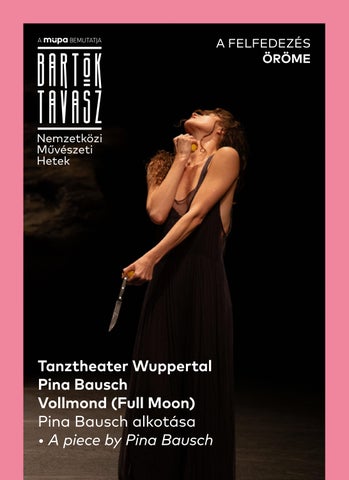
Tanztheater Wuppertal
Pina Bausch
Vollmond (Full Moon)
Pina Bausch alkotása
• A piece by Pina Bausch
A FELFEDEZÉS ÖRÖME
ÁPRILIS 10. | 19.00
ÁPRILIS 11. | 19.00
ÁPRILIS 12. | 17.00
Müpa – Fesztivál Színház
Müpa Budapest – Festival Theatre
Előadják • Performed by: Edd ARNOLD, Dean BIOSCA, Emily CASTELLI, Maria Giovanna DELLE DONNE, Taylor DRURY, Alexander LÓPEZ GUERRA, Ditta Miranda JASJFI, Pier Paolo LARA*,
Reginald LEFEBVRE, Julie Anne STANZAK, Christopher TANDY, Tsai-Chin YU
Rendező, koreográfus • Direction and choreography: Pina BAUSCH
Díszlet • Set design: Peter PABST
Jelmez • Costumes: Marion CITO
Zenei alkotótársak • Musical collaboration: Matthias BURKERT, Andreas EISENSCHNEIDER
Alkotótársak • Collaboration: Robert STURM, Daphnis KOKKINOS, Marion CITO
A díszlettervező munkatársa • Assistant to the set designer: Alexandre CORAZZOLA
A jelmeztervező munkatársa • Assistant costumes: Jo VAN NORDEN
A 2026-os felújítás próbavezetői • Rehearsal directors (Restaging 2026): Daphnis KOKKINOS, Azusa SEYAMA-PRIOVILLE, Robert STURM
* vendégművész • as guest
A bemutató időpontja • Premiere: 2006. május 11., Wuppertal • 11 May 2006, Wuppertal
A Pina Bausch Alapítvány, Wuppertal képviselője, a Verlag der Autoren, Frankfurt am Main. • Verlag der Autoren, Frankfurt am Main, representing the Pina Bausch Foundation, Wuppertal.
For the English version, see page 8.
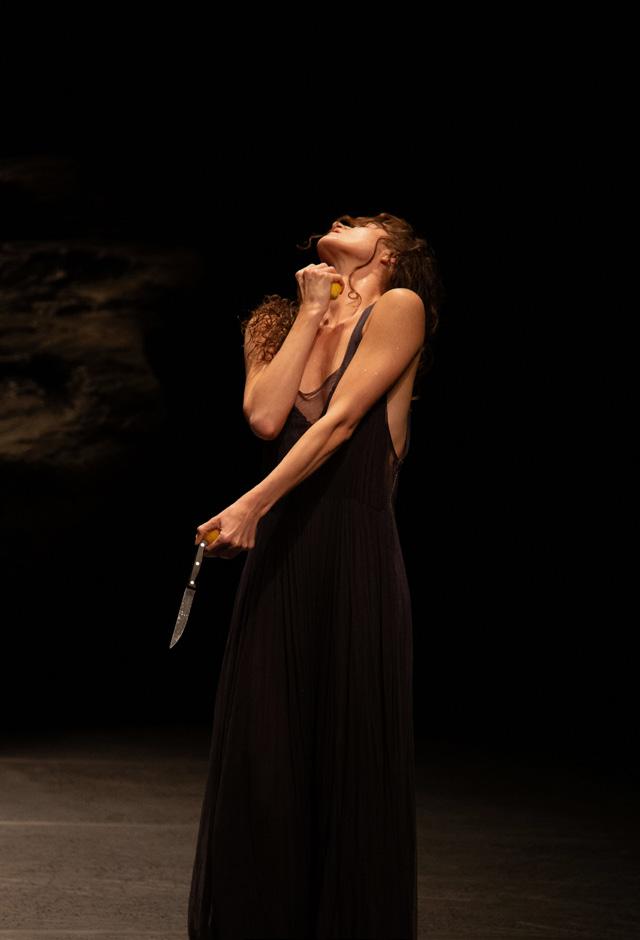
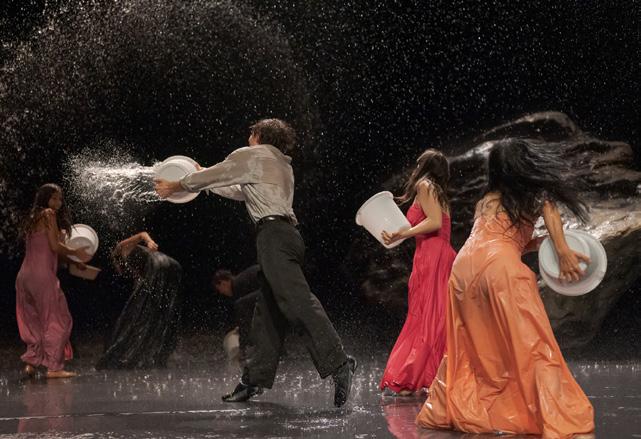
A Vollmond (Telihold) című darabot 2006-ban mutatták be Wuppertalban; mindössze tizenkét táncosból álló szereplőgárdájával a koreográfia intenzitása kamaramuzsika-szerű. A Ten Chihez hasonlóan ez is „fekete” darab, illetve az Arien vagy a Macbeth-parafrázis mintájára „víz” darab. A színpadot fekete anyag borítja és drapériák díszítik, hátul pedig egy bokáig érő vízzel teli árok húzódik; felette, a jobb oldalon hatalmas szikla áll – híd, menedék, vagy inkább égből aláhulló üstökös. Ez a zord, aszketikus táj hátulról megvilágítva ezüstszürkén csillog, mintha telihold lenne. A Vollmondban többször is esik az eső, hol lágyan szitálva, hol erősen, kitartóan. A nedves ruhákban a szereplők egyszerre érzékiek és védtelenek. A Vollmond az emberek szerelemkeresését és az elemeknek való kitettségét mutatja be – fájdalomban és örömben egyaránt. Ebben a darabban Pina Bausch ismét a Balanescu Quartet intenzív hangzásából inspirálódott, melyet Tom Waits sötét, karcos énekével vagy René Aubry fényes hangjaival állított szembe.
2007-ben Pina Bausch nyerte el a Kiotói Díjat, melyet évente egyszer az Inamori Alapítvány ítél oda. A nemzetközi művészeti-kulturális világban ez az egyik legjelentősebb díj. Pina Bausch ritkán beszélt munkájáról, a kiotói díjátadó ünnepségen azonban beszédet kellett tartania. Saját szavaival szólt munkájáról és táncosként, koreográfusként szerzett tapasztalatairól – ez teszi ezt a beszédet igazán különlegessé.
A kiotói beszéd – részletek
Szeretem a táncosaimat, mindegyiket másképp. Szeretem azt is, hogy a színpadon valóban megismerhetjük ezeket az embereket. Gyönyörűnek tartom, amikor egy előadás végén kicsit közelebb érezzük magunkat hozzájuk, mert megmutattak valamit magukból. Ez valami nagyon igazi. Amikor beveszek valakit a társulatba, természetesen azt remélem, hogy jó táncosra akadtam, de mindezeken túl ő teljesen ismeretlen számomra. Az az érzés dolgozik bennem, hogy hoz valamit, amiről nagyon szeretnék többet tudni. Megpróbálom mindegyiküket támogatni abban, hogy maguk fedezzék fel a dolgokat. Néhányuknál ez nagyon gyorsan megy, másoknak évekbe telik, mire hirtelen kiteljesednek. Néhányuknak, akik már régóta táncolnak, ez szinte olyan, mintha egy második tavasz köszöntene be. Meglepő, hogy mi minden jön a felszínre ilyenkor. (…)
A színpad fantasztikus lehetőséget ad arra, hogy olyan dolgokat tegyünk, amelyeket a hétköznapok során nem szabad vagy nem lehet megtenni. Néha csak úgy tudunk valamit tisztázni, ha szembesülünk magunkkal, azzal, amit nem tudunk. Néha pedig a kérdések visszavezetnek minket sokkal régebbi élményekhez, amelyek nem csak a mi kultúránkból származnak, és nem csak a jelenről szólnak. Mintha viszszatérne hozzánk egy bizonyos tudás, amely valójában mindig is megvolt bennünk, de nem volt tudatos és jelenvaló. Ez emlékeztet minket valamire, ami mindannyiunkban közös. És ez nagy erőt ad nekünk.
Pina Bausch
Az egy kocsmáros lányaként 1940. július 27-én Solingenben született Bausch már korán felfedezte a tánc örömét, a gyermekbalettórákon pedig felismerték tehetségét. A tánckarrierhez vezető formális végzettséget 1955 és 1959 között szerezte meg az esseni Folkwang Iskolában, amelyet Kurt Jooss, az Ausdruckstanz (az 1920–30-as évek Németországának expresszív táncmozgalma) egyik úttörője vezetett. Ahogy Bausch később elmondta, a legfontosabb értékek, amelyeket a vele való munka során elsajátított, az „őszinteség és a pontosság” voltak: őszinteség a valóság megközelítésében és pontosság a forma kidolgozásában. Két év következett New Yorkban, ahová a neves Juilliard School of Music ösztöndíjasaként került, hogy aztán a New American Balletban és a Metropolitan Opera balettegyüttesében táncoljon. 1962-ben Jooss kérésére visszatért Essenbe, hogy az újonnan alapított Folkwang Táncstúdió szólótáncosa legyen. Itt Jooss-szal, Antony Tudorral, Lucas Hovinggal, Hans Zülliggel és mindenekelőtt Jean Cébronnal dolgozott együtt. Első koreográfiáival az 1960-as évek végén hívta fel magára a figyelmet, többek között az Im Wind der Zeit (Az idő szelében) cíművel, amely elnyerte a kölni koreográfiai verseny első díját.
Peter Pabst
Peter Pabst 1944-ben született a lengyelországi Grätzben, de KeletBerlinben nevelkedett. 1954-ben a családja Frankfurt am Mainba költözött, ahol az iskolát otthagyva szabótanoncnak állt. 1969-ben jelentkezett a kölni művészeti főiskolára, hogy jelmez- és díszlettervezést tanuljon, ám szakmáját a kurzus befejezése nélkül kezdte el gyakorolni. Peter Zadek színházi rendezővel Bochumban találkozott; barátságuk és együttműködésük Zadek élete végéig tartott. Színházi, operai és filmes megbízásokat kapott, és olyan rendezőkkel dolgozott, mint Luc
Bondy, Jérôme Savary, Klaus Maria Brandauer, Szabó István, Andrei Șerban és Shi-Zheng Chen. 1978-ban a bochumi próbák során ismerkedett meg Pina Bauschsal és partnerével, Rolf Borzik tervezővel; Borzik 1980-ban bekövetkezett halála után Bausch őt kérte fel a díszletek tervezésére. Olyan színpadi tereket alkotott, amelyekben a közönség a saját fantáziájával tölthette ki a tematikus körvonalakat. Színpadain a természet nyugtalanítóvá vált: egy rétnyi szegfű odakint nem több, mint egy rét, ám az operaházban, még ha mesterséges is, álmok tájává válik. Az előadóművészetek történetének egyik legkarakteresebb és legmaradandóbb együttműködése során Pabst több mint 25 éven át tervezett színházi tereket a Tanztheater Wuppertal számára. A kérdésre, hogy mi éltette a munkaviszonyt, azt felelte, újra és újra meg tudták lepni egymást, illetve elfogadták egymás sebezhetőségét, s ez a hozzáállás mély tiszteleten alapult. Ugyanez a tisztelet tükröződik abban, ahogyan a társulat minden emberért dolgozik. 1991-ben Bécs városa a Josef Kainz-érmet adományozta Peter Pabstnak, 1992-ben pedig a francia Művészeti és Irodalmi Rend lovagja címet kapta meg.
VOLLMOND
Marion Cito
Marion Cito (1938–2023) Berlinben született, és tízéves korában kezdett táncórákat venni Tatyjana Gszovszkijtól. Tanára hat évvel később meghívta őt társulatába, ahol erős karakterszerepeiről vált ismertté. Újra nyitott művész kollégája, Gerhard Bohner első koreográfiáiban is fellépett, majd követte őt, amikor a Darmstadti Balett igazgatója lett, bár ez az újító vállalkozás mindössze három évet ért meg. 1976-ban meghívást kapott Wuppertalba, ahol Bauschsal azonnal megtalálták a közös hangot. Cito kezdetben Bausch asszisztenseként dolgozott, és bár már régóta érdekelték a jelmezek, meglepődött, amikor Rolf Borzik halála után Bausch őt kérte fel jelmeztervezésre. A feladat ugrás volt az ismeretlenbe, mivel Bausch alkotói folyamata megfordította a színház bevett eljárásait: ahelyett, hogy a díszletekkel és jelmezekkel kezdtek volna, a tervek a darabok születése közben, azzal párhuzamosan alakultak ki. Szorosan együttműködött Bauschsal, együtt böngészték a fotóalbumokat, hogy finomítsák vizuális ötleteiket. Mivel a táncszínház nagyban támaszkodik az előadók egyéniségére, Cito minden táncos számára külön jelmezt készített, követve a kihívást, hogy személyes és folyamatosan megújuló részletekkel gazdagítsa a modelleket. Egyszer megjegyezte, soha nem tudta volna elképzelni, hogy ilyen munkát vállaljon, mégis ő alakította ki azt a finom egyensúlyt az elegancia és a mindennapiság között, amely a társulat színes és érzékien gazdag vizuális identitását adja. 2023. december 2-án, 85 éves korában halt meg Wuppertalban; halálával jelentős és meghatározó korszak ért véget.
Matthias Burkert
Matthias Burkert (1953–2022) Duisburgban született, és 1972-ben Wuppertalban érettségizett le. Hatéves korában kezdett zongoraleckéket venni. A düsseldorfi Művészeti Akadémia elvégzése után úgy döntött, hogy igazi szenvedélyének, a zenének szenteli magát, és 1974-ben megkezdte zongoratanulmányait a kölni Zeneakadémia wuppertali karán (ahol trombita- és énekstúdiumokat is folytatott).
A legnagyobb hatással a kortárs zenét tanító Harald Bojé holisztikus megközelítése volt rá. Fiatal korától szenvedélyesen érdekelte az improvizáció: játékos, kísérletező és nyitott módon viszonyult a zenéhez. 1975-ben látta először Pina Bausch egyik darabját, a Tavaszi áldozatot. Bár Burkertnek nem volt balett-tapasztalata, Bausch kortárs táncnyelvének közvetlen embersége mély benyomást tett rá. 1976ban a wuppertali gyermek- és ifjúsági színház zenei vezetője lett,
ezt a pozícióját 2001-ig megtartotta. 1979-ben Bausch új zongoristát keresett, mivel a próbákon őket kísérő korrepetitor nyugdíjba készült. Burkert először a Bandoneon (1980) című produkción dolgozott együtt Bauschsal. Bausch rengeteg anyagot hozott magával Dél-Amerikából, amelyet Burkertnek kellett megszerkesztenie, illetve kiegészítenie saját kompozícióival. Az együttes hosszú turnéi és a növekvő számú koprodukciók új zenei horizontokat nyitottak meg, és a terepen végzett kutatás is a folyamat részévé vált. Burkert az elejétől fogva végigkísért minden próbafolyamatot; zenéket gyűjtött, hogy azokat aztán minőségük vagy hangulatuk szerint, illetve a különböző táncosok karakterét szem előtt tartva rendezze el. Bausch egyre inkább darabjai részévé tette őt. Burkert ott ült minden előadáson Bausch mellett, és szabályozta a produkció zenei hőfokát. 1995től Andreas Eisenschneiderrel közösen alkottak tapasztalt csapatot, együtt feleltek a Tanztheater Wuppertal zenéjéért.
Andreas Eisenschneider
1962-ben Lüneburgban született, és Cellében nőtt fel, ahol a tanulmányai befejezése után a helyi színházban hangtechnikusnak tanult. 1988ig számos színházi produkcióban vett részt, majd különböző kitérők után Essenbe költözött, ahol olyan rendezőkkel dolgozott együtt, mint Hansgünter Heyme és Jürgen Bosse. A zeneszerző Alfons Nowacki lett a legfontosabb mentora, aki hazai és külföldi színházak produkcióiba is magával vitte. Eisenschneider zenei érdeklődése sokoldalú, és kiváló érzékkel tud ráhangolódni egy-egy színpadi rendezés igényeire. 1995ben Pina Bausch szerződtette a Tanztheater Wuppertal társulatához, ahol Matthias Burkerttel együtt a produkciók teljes zenei világáért lett felelős: egyrészt az új előadásokhoz szükséges zenei anyagok felkutatásáért, másrészt az előadások zenei lebonyolításáért.
Tanztheater Wuppertal Pina Bausch
Arno Wüstenhöfer, a Wuppertaler Bühnen (Wuppertal egyesített városi előadó-művészeti színházai) új igazgatója volt az, aki Pina Bauscht koreográfusként alkalmazta az 1973/74-es évadtól kezdve. Új szelek fújtak: a német Regietheater (a rendezést a szöveg elé helyező színház) megváltoztatta a tánccal szembeni elvárásokat is. Közelebb kellett kerülnie a valós élethez és új formákat kellett kialakítania. Pina Bausch balettről „Tanztheaterre” (táncszínház) változtatta együttese nevét – nem véletlenül. Minden lehetséges műfajt kipróbált, darabjait „táncoperának”, „revünek”, sőt „operettnek” is nevezte, és elkezdte ötvözni a tánc és a színház kifejezési eszközeit. Koreográfiáinak nyelvezete egyértelmű, világos volt. Élettársával, Rolf Borzikkal, aki 1980ban bekövetkezett haláláig a jelmezeket és díszleteket készítette, új esztétikát teremtett. Később Peter Pabst (díszlet) és Marion Cito (jelmezek) közreműködésével folytatta ezt a munkát. Matthias Burkerttel és Andreas Eisenschneiderrel közösen folyamatosan új, szokatlan zenéket keresett szabad kollázsként létrehozott darabjaihoz, amelyek költői képek és táncok segítségével az embereket mozgató félelmeket és vágyakat dolgozták fel. A szeretet, a vonzódás és a biztonság keresése életművének központi motívumává vált, amelyhez új munkamódszereket dolgozott ki. Egy-egy darab kutatása és kidolgozása során 800-1000 kérdést tett fel táncosainak, a kapott válaszok közül pedig 40-50-ből állította össze érzelemgazdag, megindító expedícióit a vágy belső birodalmába. Ebben a tekintetben is átírta a tánc történetét. 2009-ben bekövetkezett haláláig több mint 50 művet alkotott, művészetével világszerte elismerést vívott ki. A kezdeti kritikák ellenére sikerült új műfajként meghonosítania a táncszínházat, és ezzel nemzetközi szinten is befolyásolta a tánc fejlődését. A tánc forradalmi újradefiniálásáért a legrangosabb díjakat és kitüntetéseket kapta világszerte. Kevés olyan 20. századi koreográfus létezett, aki hozzá hasonlóan képes volt felszabadítani a táncot, feloldozni a „felszínes szépség” béklyóiból, és elvezetni a valódi élethez. Úttörő stílusának hatása a mai napig érezhető.
VOLLMOND
Julie Anne Stanzak | Nicholas Losada
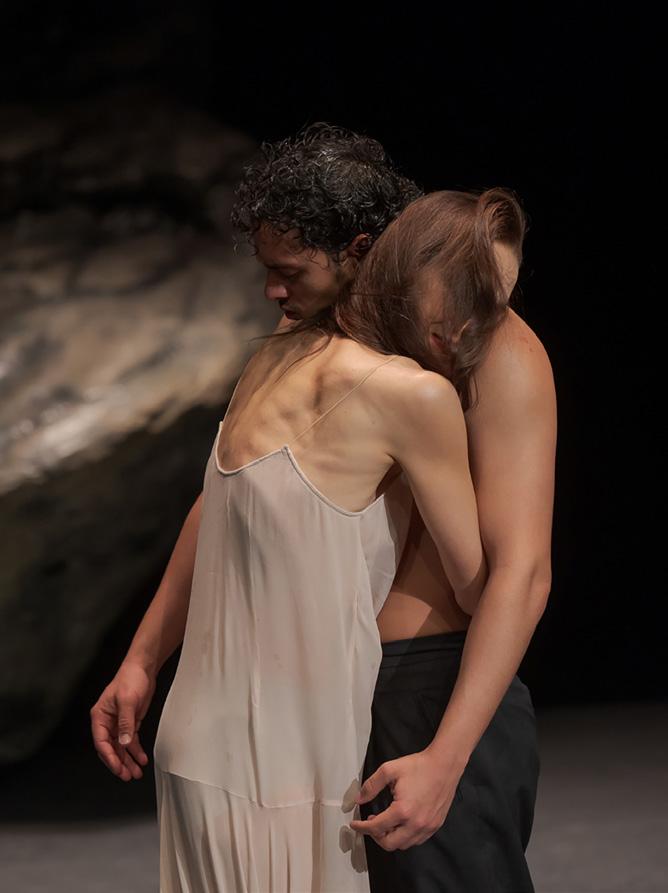
Vollmond (Full Moon) was premiered in Wuppertal in 2006; having a cast of only twelve dancers, the piece has the intensity of chamber music. It is a ‘black’ piece like Ten Chi, and a ‘water’ piece like Arien or the paraphrase of Macbeth. The stage is covered in a black material, and in the back, there runs an ankle-deep ditch with water in it. Above this all, on the right-hand side, sits an immense rock, like a bridge, a refuge, or a comet fallen from the sky. Lit from behind, this harsh, ascetic landscape glimmers in the silvery grey of the full moon. Rain falls repeatedly in Vollmond, from a soft drizzle to a heavy downpour. In their wet clothes, the players seem sensual and defenceless in equal measure. Vollmond shows people in search of love and exposed to the elements – in both pain and pleasure. In this piece, Pina Bausch indulges again her preference for the fast string rhythms of the Balanescu Quartet, juxtaposing them with the dark, rough voice of Tom Waits or the bright sounds of René Aubry.
In 2007, Pina Bausch won the Kyoto Prize, which is awarded annually by the Inamori Foundation. Internationally, it is recognized as the most important prize within the cultural field. Pina Bausch, who rarely spoke about her work, had to give a speech at the award ceremony in Kyoto. She spoke about her work and her experiences as a dancer and choreographer, in her own words. That is what makes this speech very special.
The Kyoto Speach – Excerpts
I love my dancers, each in another way. It is close to my heart that you can really get to know these people on stage. I find it beautiful, when at the end of a performance you feel a little bit closer to them, because they have showed something of themselves. That is something very real. When I engage somebody, surely I hope that I have found a good dancer, but besides that it is something unknown. There is only the feeling of something, which I madly want to know more about. I try to support each of them in finding out things for themselves. For a few, it goes very quickly; for others, it takes years, until they suddenly flourish. For some, who have already danced for a long time, it is almost like a second spring, so that I am really amazed by all that appears. (…) The fantastic possibility we have on stage is that we might be able to do things that one is not allowed to do or cannot do in normal life. Sometimes, we can only clarify something by confronting ourselves, with what we don’t know. And sometimes the questions we have bring us
back to experiences which are much older, which not only come from our culture and not only deal with the here and now. It is as if a certain knowledge returns to us, which we indeed have always had, but which is not conscious and present. It reminds us of something that we all have in common. This gives us great strength.
Pina Bausch
Born July 27th, 1940 into a publican family in Solingen, she discovered her love of dance at an early age and joined children’s ballet classes where her talent was recognised. In 1955 she began a professional dance education at the Folkwang School in Essen, led by Kurt Jooss, a pioneer of the revolutionary 1920s/30s German movement Ausdruckstanz (‘expressive dance’), completing the course in 1959. The most important values she took from her work with Jooss were ‘honesty and precision’, as she later put it: honesty in approaching reality and precision in developing form. After two years in New York, initially with a scholarship for the renowned Juilliard School of Music, then as a dancer at the New American Ballet and at the Metropolitan Opera House Ballet, she returned to Essen in 1962 on Jooss’ request as a soloist at the newly founded Folkwang Dance Studio. Here she worked with Jooss, Antony Tudor, Lucas Hoving, Hans Züllig and above all Jean Cébron. At the end of the 1960s she gained attention with her first choreographies, including Im Wind der Zeit (‘in the wind of time’), for which she won first prize in the Cologne choreography competition.
Peter Pabst
Peter Pabst was born in 1944 in Grätz, Poland, and grew up in East Berlin. In 1954 his family moved to Frankfurt am Main, where he left school to begin an apprenticeship as a dressmaker. In 1969 he enrolled at the Cologne Art College to study costume and set design but did not complete the course, moving directly into professional practice. He met theatre director Peter Zadek in Bochum, beginning a lifelong friendship and collaboration. He subsequently designed for theatre, opera and film, working with directors such as Luc Bondy, Jérôme Savary, Klaus Maria Brandauer, István Szabó, Andrei Șerban and Chen Shi-Zheng. He met Pina Bausch and her partner, designer Rolf Borzik, during rehearsals in Bochum in 1978; after Borzik’s death in 1980, Bausch asked Pabst to take over set design. He conceived stage spaces that allowed audiences to fill thematic outlines with their own imagination. Nature,
on stage, became something unsettling: a meadow of carnations in the outside world is simply a meadow, but in an opera house – even when artificial – it becomes a landscape for dreams. For over 25 years, Pabst designed theatrical spaces for Tanztheater Wuppertal, forming one of the most distinctive and enduring collaborations in the performing arts. Asked what sustained this partnership, he cited their mutual capacity to surprise one another and to accept vulnerability – an attitude grounded in deep respect, a respect also reflected in the company’s works for every human being. In 1991 he received the Josef Kainz Medal of the City of Vienna, and in 1992 he was named Chevalier des Arts et des Lettres.
Marion Cito
Marion Cito (1938–2023) was born in Berlin and began taking dance lessons at the age of ten with Tatjana Gsovsky, who invited her to join her ensemble six years later, where she became known for her strong character roles. Open to new artistic directions, she performed in the first choreographies by her colleague Gerhard Bohner and followed him when he became director of the Darmstadt Ballet, though this innovative venture ended after only three years. In 1976 she was invited to Wuppertal. Bausch and Cito immediately established a strong rapport, and Cito initially worked as Bausch’s assistant. Although she had long been interested in costume, she was surprised when, following the death of Rolf Borzik in 1980, Bausch asked her to take over costume design. The task was a leap into the unknown, as Bausch’s creative process reversed conventional theatre schedules: instead of beginning with sets and costumes, designs were developed gradually alongside the emerging piece. She collaborated closely with Bausch, browsing photography books together to refine their visual ideas. Because dance theatre relies strongly on the individuality of its performers, Cito created distinct costumes for each dancer, driven by the challenge of bringing personal and continually renewed finesse to her tailoring. A member of the Tanztheater Wuppertal since 1976, she once remarked that she could never have imagined undertaking such work, yet she shaped the delicate balance between elegance and everyday life that gave the company its colourful and sensually rich visual identity. She died in Wuppertal on 2 December 2023 at the age of 85; with her passing, part of a significant and formative era came to an end.
Matthias Burkert
Matthias Burkert (1953–2022), was born in Duisburg and finished school in 1972 in Wuppertal. He started piano lessons at the age of six. After studying at the art academy in Düsseldorf, he decided to devote himself exclusively to his real passion, music, and in 1974 began studying piano (with trumpet and singing) at the Wuppertal college of Cologne’s music academy. Most important was the holistic approach of Harald Bojé, under whom he studied contemporary music. From an early age improvisation was his passion: his approach to music was playful, experimental and open. He first saw a piece by Pina Bausch in 1975, her version of Le Sacre du printemps. Although Burkert had no experience of ballet, the unmediated humanity of Bausch’s contemporary dance language made a profound impression on him. In 1976 he became musical director at Wuppertal’s children and youth theatre – a position he retained till 2001. In 1979 Bausch was looking for a new pianist, as the répétiteur who accompanied their daily training wished to retire. Burkert’s first collaboration with Bausch was on Bandoneon (1980). Bausch had brought a wealth of material back from South America which he had to edit, and where necessary he composed pieces of his own. The ensemble’s extended tours and growing number of co-productions opened new musical horizons, with research on location. Burkert accompanied each rehearsal process from the start, collecting music and ordering it according to its quality or atmosphere, or with particular dancers in mind. Bausch increasingly incorporated him into her pieces. He sat next to her during every show, regulating the musical temperature of the performance. In 1995 he was joined by Andreas Eisenschneider, becoming an experienced team with joint responsibility for music at the Tanztheater Wuppertal.
Andreas Eisenschneider
Born in Lüneburg in 1962, he grew up in Celle, where, after completing his studies, he trained as a sound technician at the local theatre. He worked on numerous theatre productions there until 1988, before moving to Essen – after various stops along the way – where he collaborated with directors like Hansgünter Heyme and Jürgen Bosse. The composer Alfons Nowacki became his most important mentor, who took him along to productions at theatres both at home and abroad. Eisenschneider has wide-ranging musical interests and has the knack of attuning himself to the requirements of a production. In 1995, he was engaged by Pina Bausch for the Tanztheater Wuppertal, where he became responsible,
together with Matthias Burkert, for all musical aspects of the productions, from research for the musical material of new shows to the musical direction of the performances.
Tanztheater Wuppertal Pina Bausch
It was Arno Wüstenhöfer, the new director of the Wuppertaler Bühnen (Wuppertal’s combined municipal performing arts venues), who hired Pina Bausch as choreographer there, starting in the 1973/74 season. The times had changed. The new Regietheater (direction-orientated rather than text-based theatre) in Germany had altered expectations of dance too. It needed to be closer to real life, to develop new forms. Pina Bausch changed the name of her ensemble from ‘ballet’ to ‘Tanztheater’ (‘dance theatre’). The clue was in the title. She tested out every possible genre, called her pieces ‘dance opera’, ‘revue’, even ‘operetta’ and began combining means of expression from both dance and theatre. Her choreographic language was unequivocal, clear. Together with her life partner Rolf Borzik, who created the costumes and sets until his death in 1980, she created a new aesthetic. Later she continued this work with Peter Pabst (sets) and Marion Cito (costumes). Together with her musical colleagues Matthias Burkert and Andreas Eisenschneider she continually sought out new, unusual music for her freely collaged pieces, which used poetic images and dances to address the fears and desires which drive human beings. The search for love, affinity and security became a central motif of her oeuvre, for which she developed new working methods. She asked her dancers questions, 800 to 1000 during the research and development on each piece, and out of 40 to 50 of the answers she composed her highly emotional, moving excursions into the inner realms of desire. Here too, she was to rewrite dance history.
By the time of her death, in 2009, she had created over 50 works and achieved world recognition for her art. Despite criticism at the start, she succeeded in establishing dance theatre as a new genre, influencing the development of dance internationally. She was awarded the greatest prizes and honours worldwide for her revolutionary redefinition of dance. Few other twentieth century choreographers were able to open up new freedoms for dance as she did, liberating it from its shackles with ‘superficial beauty’ and leading it towards real life. Her ground-breaking style remains influential to this day.
DISCOVERY
A Bartók Tavasz Nemzetközi Művészeti
Hetek ingyenes kiadványa.
Kiadja: Müpa Budapest Nonprofit Kft.
Felelős kiadó: Káel Csaba vezérigazgató
Szerkesztő: Molnár Szabolcs
A szervezők a szereplő- és műsorváltoztatás jogát fenntartják.
Az életrajzokat készítette:
• Biographies by Norbert Servos
Az életrajzokat angolra fordította:
• Biographies translated by Steph Morris
Címlapfotó: Millie Grace Horton
A címlapon: Taylor Drury