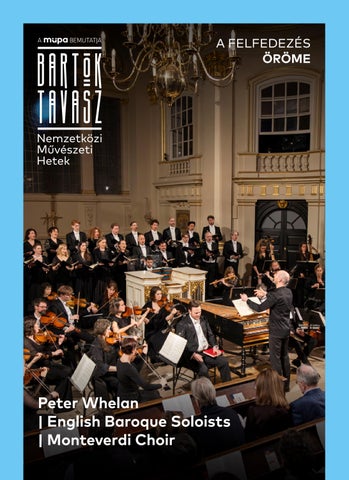
A FELFEDEZÉS ÖRÖME
Peter Whelan
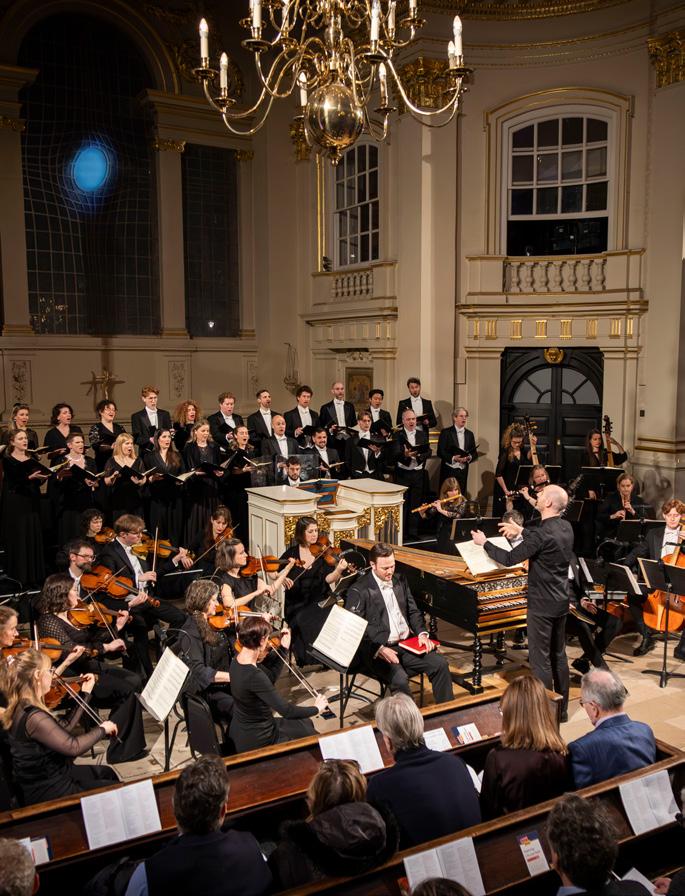
| English Baroque Soloists
| Monteverdi Choir
ÁPRILIS 3. | 19.30
Pesti Vigadó – Díszterem
Pesti Vigadó – Ceremonial Hall
J. S. Bach: János-passió • St John Passion
Közreműködik • Featuring: Julia DOYLE, Rebecca LEGGETT, Kieran CARREL, Konstantin KRIMMEL – ének • voice, English Baroque Soloists, Monteverdi Choir
Vezényel • Conductor: Peter WHELAN
Az előadás a Bartók Tavasz keretében a Pesti Vigadóval közös programként, a Müpa szervezésében valósul meg. • This concert of the Bartók Spring is presented by Müpa Budapest as a joint event with Pesti Vigadó.
Partner: Magyar Művészeti Akadémia • Hungarian Academy of Arts
For the English version, see page 8.
Johann Sebastian Bach: János-passió, BWV 245
A János-passiónak Bach élete során négy különböző változata hangzott el: az első 1724-ben, a második 1725-ben, a harmadik az 1730-as évek első felében, a negyedik pedig 1748-ban vagy 1749-ben. Ma már nehéz megmondani, mi késztette Bachot a revíziókra, ráadásul a verziók összevetésével – már amennyire ezt a hiányos források lehetővé teszik – nem lehet egyértelműen megragadni a változtatások tendenciáját sem, élete végén Bach ugyanis lényegében visszatért az ősváltozathoz.
A János-passió szövegkönyvének három rétege van. Egy része a Bibliából származik, másik része a korban jól ismert korálszöveg. Harmadik rétegét különböző forrásokból eredő költői szövegek (mint az áriáké vagy a nyitó- és zárókórusé) alkotják. Feltételezhető, hogy az összeállítás Bach munkája. A lírai textusok egyik fő forrása Barthold Heinrich Brockes (1680–1747) több kiadást megélt, rendkívül népszerű passiófeldolgozása volt (Der für die Sünden der Welt gemarterte und sterbende Jesus, 1712), melyet Bach előtt olyan szerzők zenésítettek meg, mint Reinhard Keiser (1712), Telemann és Händel (1716), Johann Mattheson (1718) vagy Johann Friedrich Fasch (1723); de Bach más szerzőktől (Heyden, Hermann, Gerhardt, Postel és természetesen Luther) is átvett szövegeket.
A Máté-passió egységes dramaturgiai koncepciót tükröző librettója (mely Picander munkája volt) nagyban hozzájárult ahhoz, hogy Bach az egész kompozíciót egy aprólékosan kidolgozott szimmetriaelv szerint építse fel. Úgy tűnik, hogy a János-passióban nem a nagyforma kihívásaira kereste a választ, inkább a történet egyes mozzanatainak expreszszív, drámai megragadására törekedett. Példa nélküli (még a korabeli operákban sem találni hasonlót) a bibliai dialógusokra épülő jelenetek sodró lendülete, dramaturgiai építkezése, koncentráltsága és pszichológiai pontossága. Nem véletlenül írta Pilinszky János több mint ötven évvel ezelőtt a passió egyik előadása után, hogy ez a mű „örök és hipermodern egyszerre, vagy pontosabban: rá van a legnagyobb szükségünk”.
A zene láttató ereje, a jelenetezés feszes dramaturgiája és a felmutatott érzelmek széles skálája sokakban ébreszt operai asszociációkat. Meg kell ugyanakkor jegyezni, hogy Bachnak lipcsei kántorként és a főtemplomok zenei szolgálatáért felelős személyként munkaszerződése szerint gondoskodnia kellet arról, hogy „a liturgia a zene miatt ne tartson túl soká, s és olyan természetű legyen, hogy ne hangozzék operaszerűnek, de sokkal inkább áhítatra serkentse a hallgatóságot”. Malte Korff
egy 2000-ben megjelent kismonográfiájában ezzel összefüggésben úgy véli, hogy a János-passió „bemutatásával Bach merész tettet hajtott végre. A passió, melyben az Írás szavai és a korálok mellett helyet kap a szabad költészet is, közel áll az opera műfajához. Az efféle előadásokat a lipcsei tanács és az egyházi konzisztórium ferde szemmel nézte. A liturgikus célzatú alkalmazott zene nem tarthatott igényt az önálló műalkotások rangjára. A János-passió határkő: Bach, bár hívő lutheránus, egész lelkével egyben zenész is. Nem nevezhetjük teljes joggal drámaírónak is? Már az Evangélista szólama is a legmagasabb fokú expresszivitás és drámaiság jegyében áll. A Péter árulásáról és bűnbánatáról szóló híradás közben a narrátor szinte kiesik a szerepéből, amikor az »és keservesen sír« szavakat mély fájdalommal adja vissza.”
A zenei anyag érdekessége, hogy rendkívüli változatossága és minden esetlegessége mellett is megfigyelhető a műben egyfajta szerkezeti váz. A tömegek kórusjeleneteiben Bach kisebb variációkkal ötször használja fel ugyanazt a zenét – ez amolyan „vezérmotívum”, amely segít egybefogni a hatalmas konstrukciót. Christoph Wolff így fogalmaz: „Bach János evangéliumából indult ki, és egész művét az újtestamentumi történet vonalára fűzte föl. A passió zenei szemléletmódja egyértelműen azt tükrözi, hogy Bach alapos tanulmányozásnak vetette alá a bibliai dialógust, illetve annak irodalmi struktúráját, főleg a II. rész – János evangéliuma passiótörténetében központi fontosságú – törvényházi jelenetében. Bach kompozíciós terve talán az újtestamentumi elbeszélés ismétlődő szövegrészeiből nőtt ki, például a „Jesum von Nazareth” és a „Kreuzige ihn” szavakból. A II. rész központi jelenetében a tömeg különböző reagálásainak sűrű egymásutánisága bizonyára szintén arra ösztönözte, hogy a zenei összefüggések rendszere révén erőteljes, egységes és élesen fókuszált szerkezetet hozzon létre.”
A bibliai szöveget az Evangélista és a szereplők (például Jézus vagy Pilátus) jellemzően recitativókban mondják el, a nép, a tömeg evangéliumban rögzített megszólalásai pedig a kórusturbákban kaptak helyet. Az áriák, ariosók feladata, hogy teret és irányt adjanak a reflexióknak, valamint az adott cselekménymozzanat metaforikus, szimbolikus jelentésére hívják fel a figyelmet. A korálok a gyülekezet közösségi hangját fogalmazzák meg, s Bach úgy válogatott a korálversek hatalmas repertoárjából, hogy azok néha egészen zavarba ejtő megvilágításba helyezzék a szenvedéstörténet aktuális pillanatát. Amikor például Pilátus semmiben nem találja Jézust bűnösnek, az evangélium így fogalmaz: „igyekezett őt szabadon bocsátani”. Erre a korálvers ekként reflektál: „Fogságoddal,
Jézusunk, az üdv jött el hozzánk. Börtönöd a trónusunk, a jámboroknak menhely. Mert ha te nem lennél szolga, mi szolgák maradnánk örökre.”
A közösség reakciója világos: ha Pilátus szabadon engedné Jézust, azzal hátráltatná az üdvtörténetet. Bach zseniális dramaturgiájában a korálra azonnal kórusturba következik, mely érzékletesen közvetíti a Pilátus palotája előtt gyülekező tömeg felháborodott hangját: „Ha szabadon bocsátod, nem vagy a császár barátja. Aki királlyá teszi magát, az ellene szegül a császárnak.” Ekként a Jézus halálát követelő jeruzsálemi zsidók más indíttatásból ugyan, de ugyanazt óhajtják, mint a lipcsei gyülekezet.
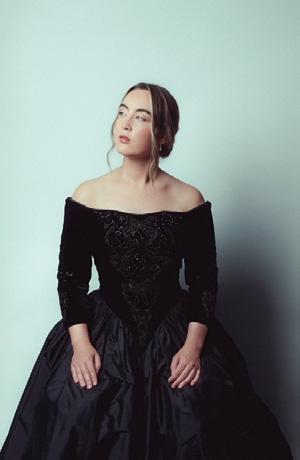
Julia Doyle
Az angol szoprán kórusösztöndíjasént végzett politológiai és társadalomtudományi tanulmányokat Cambridge-ben. A Britten Sinfonia szólistájaként debütált Händel Messiásában, a későbbiekben világszerte koncertezett, és a barokk repertoár egyik legkeresettebb szólistájává vált. Napjainkban és a közeljövőben a Monteverdi Kórus európai turnéján énekel, és a BBC Proms rendezvényein lép színpadra. Koncertezik Vilde Frang hegedűművésszel, valamint az Arcangelo és a Bázeli Kamarazenekar együttesével. Monteverdi-darabokat ad elő a La Nuova Musicával, Haydn-kompozíciókat a Deutsche Kammerphilharmonie-val. Nagyszabású Vivaldi- és Händel-darabok előadásában működik közre a Concertgebouw-ban, a Versailles-i Palotában, a Theater an der Wienben és a hallei Händel Fesztiválon.
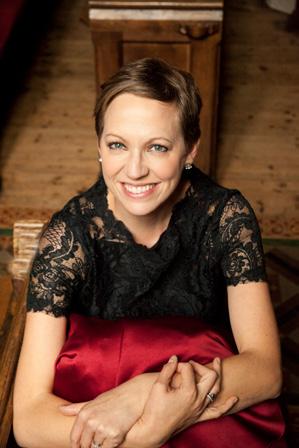
Rebecca Leggett
A brit énekesnő a Les Arts Florissants Jardin des Voix programjának felfedezettjeként kapott szerepet a The Fairy Queen (A tündérkirálynő) színrevitelében, Purcell remekművét olyan rangos helyszíneken énekelhette az együttessel, mint a Philharmonie de Paris, a New York-i Lincoln Center, a valenciai Palau de les Arts, a Teatro alla Scala vagy a Royal Albert Hall. Fellépett William Christie 80. születésnapi turnéján, valamint 2025 júliusában Händel Il Trionfo del Tempo e del Disinganno című művének előadássorozatában. Az Orchestra of the Age of Enlightenment Rising Stars programjának résztvevőjeként 2024-ben debütált a Monteverdi Kórus és az English Baroque Soloists együttesével. Kiemelkedő operai alakításai közé tartozik Flora a Maggio Musicale Fiorentinón és a Glyndebourne-i Fesztiválon (Britten: A csavar fordul egyet), Cupido a Blackheath Halls Operában (John Blows: Vénusz és Adónisz) és Irene a Collegium Musicum Bergen társaságában (Händel: Theodora).
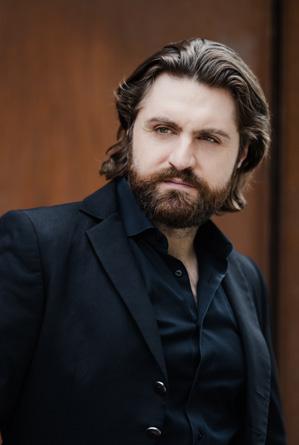
Kieran Carrel
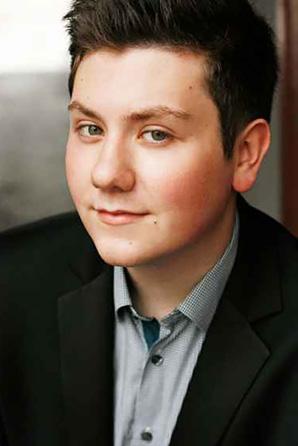
A német–brit származású tenor, Kieran Carrel egyaránt otthonosan mozog az opera- és a koncertszínpadokon, de közel áll hozzá a daléneklés világa is. 2020-ban második helyezett volt a Német Nemzeti Énekversenyen, a sikeres szereplésnek köszönhetően csatlakozott a berlini Deutsche Oper társulatához. Itt olyan szerepeket alakított, mint A varázsfuvola Taminója, a Don Giovanni Don Ottaviója, Walter a Tannhäuserből, Erik A bolygó hollandiból vagy Alfred a Denevérből. Közreműködött a Bregenzi Fesztivál Haydn-produkciójában (Armida), a közeljövőben pedig a Glyndebourne-i Fesztivál és a Zürichi Opera vendége lesz. Énekelt már a londoni Wigmore Hallban és a berlini Pierre Boulez Saalban, olyan művészek partnereként, mint egykori mestere, Christoph Prégardien, vagy Schiff András és Kristian Bezuidenhout.
Konstantin Krimmel
A német–román származású bariton 2020-ban fejezte be Teru Yoshihara irányításával végzett énektanulmányait, jelenlegi mentora Tobias Truniger. 2021 óta a Bajor Állami Opera együttesének tagja, a 2025/26-os évadban pedig közel harminc koncerten működik közre. Legfontosabb Mozart-szerepei közé tartozik Figaro, Don Giovanni, Papageno és Guglielmo. Olyan karmesterekkel dolgozott együtt, mint Vladimir Jurowski, Jakub Hrůša, Philippe Herreweghe, Thomas Hengelbrock, Sir Simon Rattle és Christian Thielemann.
Peter Whelan
Peter Whelan az Irish Baroque Orchestra művészeti igazgatója és a Norvég Fúvósegyüttes régizenei kurátora. A 2026/27-es évadtól a Philharmonia Baroque Orchestra zeneigazgatója lesz, jelenleg ugyanitt megbízott zeneigazgató. Karmesterként szenvedélyesen kutatja és népszerűsíti a barokk és a klasszikus korszak kevésbé ismert vagy elfeledett zenéjét. Fellépett már a Skót Kamarazenekar, a bonni Beethoven Orchester, a Holland Kamarazenekar, a Royal Northern Sinfonia, az Orchestra della Svizzera Italiana, a Kristiansandi és Lahti Szimfonikusok, az Orchestra of the Age of Enlightenment, az English Concert, a Dunedin Consort, a Monteverdi Kórus és az English Baroque Soloists vendégkarmestereként. A 2025/26-os évadban színpadra áll a BBC Promson, visszatérő dirigensként közreműködik a Philharmonia Baroque Orchestra, a Skót Kamarazenekar, a Meininger Hofkapelle, az Ír Nemzeti Szimfonikus Zenekar, a Tapiola Sinfonietta, a Monteverdi Kórus és az English Baroque Soloists programjaiban.
English Baroque Soloists
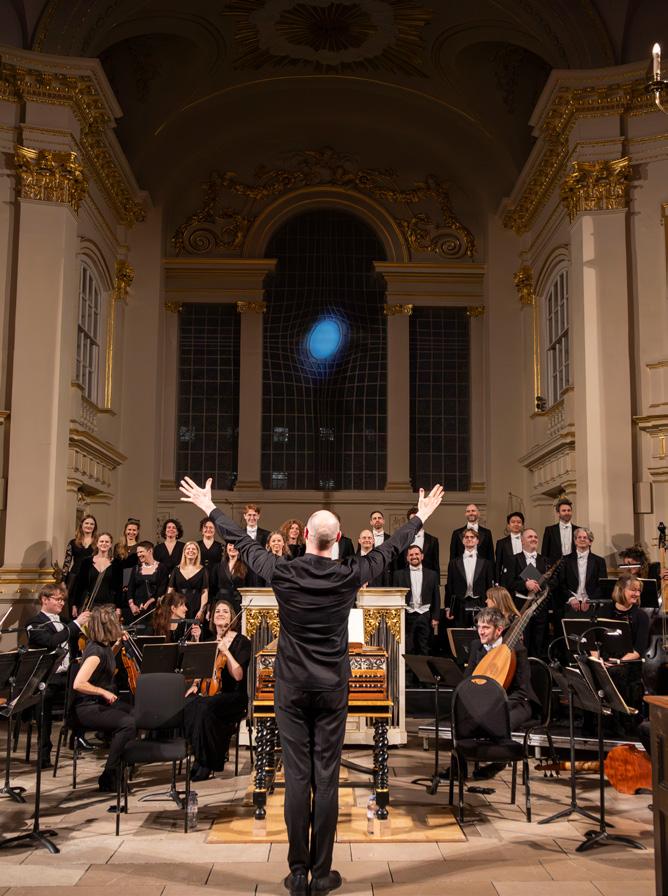
Az English Baroque Soloists több mint négy évtizede a korhű hangszeres előadói gyakorlat egyik leginnovatívabb együttese. Egyaránt otthonosan mozog kamarazenében, a szimfonikus repertoárban és az operák világában, jellegzetes, egyszerre puha, meleg, de határozott hangzása azonnal felismerhető, játsszák akár Monteverdi vagy Mozart műveit. A zenekar a világ számos nagyhírű előadótermében fellépett, többek között a milánói Scalában, az amszterdami Concertgebouw-ban és a Sydney-i Operaházban. Az EBS folyamatosan bővíti repertoárját, és olyan karmesterekkel fedez fel új előadóművészi irányokat, mint Marc Minkowski, Masaaki Suzuki és Christophe Rousset. A zenekar 2026-ot Bachhal nyitja, Peter Whelan vezényletével Barcelonában, Budapesten és Londonban adják elő a János-passiót. Májusban Jonathan Sells Purcell Dido és Aeneas című operáját vezényeli, júniusban pedig Haydn londoni időszakát bemutató műsor következik Peter Whelan irányításával, Christophe Coin csellóművész közreműködésével. Ősszel Christophe Rousset Händel Theodora című oratóriumát vezényli egy dél-amerikai és egyesült királyságbeli turné keretében.
Monteverdi Choir
„Ha a kórusok számára is lenne Nobel-díj, a Monteverdi Kórus biztosan a kitüntetettek között volna” – fogalmazott a Le Monde szakírója. A több mint hat évtizede működő együttes a világ egyik legelismertebb és legnagyobb hatású kórusa. Tökéletes technika, történetileg hiteles előadás, közvetlenség és drámaiság, valamint folyamatos megújulási törekvés jellemzi, hogy új perspektívákat, közvetlenséget és drámaiságot csempésszen előadásaiba. A kórus az elmúlt bő fél évszázadban több mint 150 lemezfelvételt készített és számos díjat nyert. A 2026-os év náluk is Bach János-passiójával kezdődik, Peter Whelan vezényletével Barcelonában, Budapesten és Londonban éneklik. Májusban Jonathan Sells egy immerzív Dido és Aeneas-produkciót vezényel, ősszel pedig Christophe Rousset irányításával Händel Theodora című műve kerül műsorra egy dél-amerikai turnén. A 2025-ös év kiemelt eseményei között szerepelt Bach Masaaki Suzukival, Mozart Pablo Heras-Casadóval, Rossini Jakob Lehmann-nal, valamint Christophe Rousset vezényletével közel három évtized kihagyás után először adták elő Händel Messiását. 2023-ban a kórus és az English Baroque Soloists abban a megtiszteltetésben részesült, hogy felléphettek Őfelsége, III. Károly király koronázásán, aminek kapcsán a The Telegraph így írt: „Ha a Monteverdi Kórus nem énekel, amikor a mennyország kapujához érek, vissza akarom kapni a pénzemet.”
PETER WHELAN, ENGLISH BAROQUE SOLOISTS & MONTEVERDI CHOIR
Johann Sebastian Bach: St John Passion, BWV 245
The St John Passion was performed in Bach’s own lifetime in four different versions. The first variety could be heard in 1724, the second in 1725, the third in the first half of the 1730s, and the fourth in 1748 or 1749. It is now difficult to tell what motivated the revisions, especially because a comparison of the versions – insofar as it is possible to make it with the incomplete sources available – does not reveal a definite tendency, because with the fourth revision, Bach practically returned to the original one.
There are three layers to the libretto of the St John Passion. The sources include the Bible, some well-known chorales of the period, and other poetic texts (as those used for the arias and opening and closing choruses). Bach is likely to have compiled the libretto himself. The main source of the lyrical texts was Der für die Sünden der Welt gemarterte und sterbende Jesus (1712), an extremely popular paraphrase of the Passions by Barthold Heinrich Brockes (1680–1747), which saw several editions, and had been arranged by such composers before Bach as Reinhard Keiser (1712), Telemann and Handel (1716), Johann Mattheson (1718), and Johann Fredrich Fasch (1723). Bach also borrowed texts from other poets (Heyden, Hermann, Gerhardt, Postel, and, of course, Luther).
Picander’s libretto of the St Matthew Passion, which reflects a unified dramaturgical concept, was an important source of inspiration for Bach to base the whole composition on a meticulously crafted principle of symmetry. It seems that, rather than seeking to answer the challenges of the large-scale form, he took the opportunity of the St John Passion to capture certain events of the story in an expressive, dramatic manner. The scenes, which are based on biblical dialogues, are marked by a soaring dynamism, careful dramaturgy, concentration and psychological accuracy, which had no precedents, not even in the operas of Bach’s time. János Pilinszky had a good reason, over fifty years ago, to say, after a performance of the Passion, that it was ‘eternal and hypermodern at the same time, or rather, this is what we need most.’
The evocative power of the music, the tight dramaturgy of the scenes, and the broad range of emotions expressed remind many of operas. However, it should be noted that Bach, as the cantor of Leipzig and the person responsible for music service at the main churches, undertook in his contract of employment to ensure that ‘the music shall not cause the liturgy to last too long, and shall be of such a nature that it shall not sound operatic, and shall instead stimulate the pious sentiments of the audience.’ In his 2000 monograph, Malte Korff is
of the opinion that ‘by presenting [the St John Passion], Bach took a bold step. The Passions, which combines the words of the Scripture with chorales and free poetry, stands close to the genre of the opera. Such performances were frowned upon by the Leipzig council and the consistory. Applied music with a liturgical purpose could not claim the status of original artwork. The St John Passion was a milestone: though he was a faithful Lutheran, he was also a musician, through and through. And could he not also be called, quite rightly, a dramatist? The Evangelist’s voice is already marked by the highest degree of expressivity and dramatic quality. While relating the story of Peter’s betrayal and repentance, the narrator almost falls out of his role when he utters the words, “and he sobs,” with utter pain.’
What makes the musical material interesting is that, despite all its variety and contingency, a methodical structure can be observed. The same music is used five times in the crowd choruses, with minor variations; it functions as a ‘leitmotif,’ which helps to keep the vast construct together. ‘Bach [took] the gospel of St John as a point of departure and structured the entire work around the design of the biblical narrative,’ wrote Christoph Wolff. ‘The musical disposition of the Passion clearly suggests that Bach based his composition on a close reading of the biblical dialogue and its literary structure, especially in the tribunal scene in part II, central to the Passion story in the book of John. A likely starting point for Bach’s compositional plan was the existence of repeated text passages in the Gospel account, such as the words “Jesum von Nazareth” and “Kreuzige ihn.” Also the concentration of different crowd responses (turba choruses) in the central scene of part II must have suggested to him the possibility of providing a strong, unifying and well-focused musical architecture by establishing a system of musical correlations.’
The biblical text is told by the Evangelist and the characters (e.g. Jesus and Pilate) typically in recitatives, while such utterances of the people that are provided in the Gospel take the form of turba choruses. The arias and ariosos are to give space and direction for reflection, and call attention to the metaphorical, symbolic meaning of a given incident. The chorales give voice to the congregation as a community, and the way Bach selects from the vast repertoire of chorale verses sometimes makes them throw a perplexing light on the given moment of the Passions. For example, when Pilate does not find Jesus guilty in anything, the Gospel says he ‘sought to release him.’ On which the chorale
verse reflects thus: ‘Through this thy prison, Son of God, / Must come to us our freedom; Thy dungeon is the throne of grace, / The refuge of the righteous; For hadst thou not borne servitude, / Would we be slaves eternally.’ It is clear how the community reacts: if Pilate released Jesus, he would hinder salvation. With a brilliant twist of dramaturgy, the chorale is immediately followed by a turba chorus, which vividly communicates the outrage of the crowd outside Pilate’s palace: ‘If thou let this man go, then art thou the Emperor’s friend not; For whoever maketh himself king is the foe of the Emperor.’ This way, as they demand that Jesus be killed, the Jews of Jerusalem wish, if for different reasons, for the same thing as the congregation in Leipzig.
Julia Doyle
The British soprano read Social and Political Sciences alongside a Choral Scholarship at Cambridge. She made her debut singing the title role in Handel’s Messiah with the Britten Sinfonia and has since become one of the world’s most in-demand sopranos for the baroque repertoire. Recent and future engagements include European tours with the Monteverdi Choir and Orchestra, including the BBC Proms. She will appear in concert with violinist Vilde Frang, Arcangelo and the Basel Chamber Orchestra, will perform Monteverdi’s pieces with La Nuova Musica, and Haydn’s compositions with the Deutsche Kammerphilharmonie. She will take part in the performance of large-scale works by Vivaldi and Handel in the Concertgebouw, the Palace of Versailles, the Theater an der Wien and the Handel Festival of Halle.
Rebecca Leggett
A discovery of Les Arts Florissants’ Jardin des Voix programme, the British singer went on tour with the ensemble’s production of The Fairy Queen, singing Purcell’s masterpiece in such prestigious venues as the Philharmonie de Paris, New York’s Lincoln Center, Valencia’s Palau de les Arts, the Teatro alla Scala and the Royal Albert Hall. Further invitations with the ensemble included William Christie’s 80th birthday tour and touring in Handel’s Il Trionfo del Tempo e del Disinganno. A ‘Rising Star’ with the Orchestra of the Age of Enlightenment, Rebecca Leggett made her debut with the Monteverdi Choir & Orchestra in 2024. On the opera stage, she sang at the Maggio Musicale Fiorentino and Glyndebourne (Britten’s The Turn of the Screw), Blackheath Halls Opera (John Blows’ Venus and Adonis) and the Collegium Musicum Bergen (Handel’s Theodora).
Kieran Carrel
German-British tenor Kieran Carrel is equally at home on the opera stage, in concert, and in song. After winning the second prize at the 2020 German National Singing Competition, he joined the ensemble of the Deutsche Oper Berlin. There, he has performed leading roles, including Tamino (The Magic Flute), Don Ottavio (Don Giovanni), Walther (Tannhäuser), Erik (Der fliegende Holländer) and Alfred (Die Fledermaus). He appeared as Rinaldo in Haydn’s Armida at the Bregenz Festival and debuted as Tamino at Cologne Opera. Future engagements include the Glyndebourne Festival and the Zurich Opera House. He has sung at Wigmore Hall and Pierre Boulez Saal, collaborating with artists such as his former mentor, Christoph Prégardien, András Schiff and Kristian Bezuidenhout.
Konstantin Krimmel
The baritone, who is of German-Romanian descent, graduated in 2020 as a student of Teru Yoshihara, and is now mentored by Tobias Truniger. A member of the Bavarian State Opera’s company since 2021, the 2025/26 season will see him perform in nearly thirty recitals worldwide. His most important Mozart roles include Figaro, Don Giovanni, Papageno and Guglielmo. He has worked with such conductors as Vladimir Jurowski, Jakub Hrůša, Philippe Herreweghe, Thomas Hengelbrock, Sir Simon Rattle and Christian Thielemann.
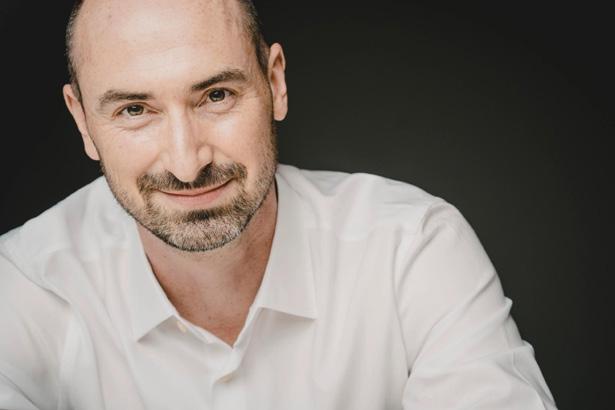
Peter Whelan
Peter Whelan is Artistic Director of the Irish Baroque Orchestra and Curator for Early Music of the Norwegian Wind Ensemble. He becomes Music Director of the Philharmonia Baroque Orchestra from the 2026/27 season and is currently its Music Director Designate. As a conductor, he has a particular passion for exploring and championing neglected music from the Baroque and Classical eras. Recent engagements have included appearances with the Scottish Chamber Orchestra, the Beethoven Orchester Bonn, the Netherlands Chamber Orchestra, the Royal Northern Sinfonia, the Orchestra della Svizzera Italiana, the Kristiansand Symphony Orchestra, the Lahti Symphony Orchestra, the Orchestra of the Age of Enlightenment, The English Concert, the Dunedin Consort, the Monteverdi Choir and the English Baroque Soloists. Highlights of the 2025/26 season include an appearance at the BBC Proms with the Irish Baroque Orchestra and return visits to the Philharmonia Baroque Orchestra, the Scottish Chamber Orchestra, the Meininger Hofkapelle, the National Symphony Orchestra of Ireland, the Tapiola Sinfonietta and the Monteverdi Choir and the English Baroque Soloists.
English Baroque Soloists
The English Baroque Soloists have been one of the most innovative ensembles in historically informed instrumental performance for more than four decades. They are equally at home in chamber music, the symphonic repertoire, and the world of opera; their distinctive sound – at once soft, warm, yet precise – is instantly recognizable, whether they are performing works by Monteverdi or Mozart. The orchestra has appeared in many of the world’s most prestigious concert halls, including La Scala in Milan, the Concertgebouw in Amsterdam, and the Sydney Opera House. The EBS continually expands its repertoire and explores new artistic directions with conductors such as Marc Minkowski, Masaaki Suzuki, and Christophe Rousset. The orchestra’s 2026 commences with Bach’s St John Passion conducted by Peter Whelan in Barcelona, Budapest and London. In May, Jonathan Sells returns to conduct Purcell’s Dido & Aeneas and in June, a programme exploring Haydn’s time in London will be conducted by Peter Whelan, joined by cello soloist Christophe Coin. In the autumn, Christophe Rousset will conduct Handel’s Theodora on a tour to South America and in the UK.
Monteverdi Choir
‘If there were a Nobel Prize for choirs, the Monteverdi Choir would certainly be among the laureates,’ wrote a critic for Le Monde. With a history spanning more than six decades, the ensemble is one of the world’s most acclaimed and influential choirs. It is characterized by perfect technique, historically informed performance, immediacy and dramatic intensity, as well as a constant drive for renewal – bringing fresh perspectives, directness, and drama to its performances.
The Choir has made more than 150 recordings over the past half century and has won numerous awards. The Choir’s 2026 commences with Bach’s St John Passion conducted by Peter Whelan in Barcelona, Budapest and London. In May, Jonathan Sells returns to conduct an immersive production of Purcell’s Dido & Aeneas and in the autumn, Christophe Rousset will conduct Handel’s Theodora on a tour to South America. Highlights of 2025 included performances of Bach with Masaaki Suzuki, Mozart with Pablo Heras-Casado, Rossini with Jakob Lehmann, and –under the direction of Christophe Rousset – their first performance of Handel’s Messiah in nearly three decades. In 2023, the choir and the English Baroque Soloists had the honour of performing at the coronation of His Majesty King Charles III. On that occasion, The Telegraph wrote: ‘If the Monteverdi Choir is not singing when I reach the gates of heaven, I want my money back.’
A Bartók Tavasz Nemzetközi Művészeti Hetek ingyenes kiadványa.
Kiadja: Müpa Budapest Nonprofit Kft.
Felelős kiadó: Káel Csaba vezérigazgató
Szerkesztő: Molnár Szabolcs
A szervezők a szereplő- és műsorváltoztatás jogát fenntartják.
Címlapfotó: Paul Marc Mitchell