
SEEING
Observations on Gardens, Furniture, and Living Well
Introduction
When we visit a beautiful garden, we often remember how it made us feel.
We remember the quiet.
The light.
The feeling that everything belonged.
Only later do we begin to wonder why.
This book is about learning to notice.
Not to admire more.
To see more.
Each entry begins with a single observation a garden, a chair, a table, an old photograph.
Each reveals a larger way of thinking.
We hope that, by the final page, you find yourself looking differently at gardens, at furniture, and perhaps, at your own home
Observation 1
Seeing a Garden
Learning changes seeing.
Observation 2
Ordinary Days
The best gardens are designed for ordinary life.
Observation 3
Designing Comfort
Comfort begins before we sit down.
Observation 4
Gathering
Good design adapts to life.
Observation 5
Training the Eye
Discernment grows through return.
Observation 6
Meaning is Another Material
Meaning accumulates over time.
SEEING A GARDEN
Observation 1
Learning changes seeing.
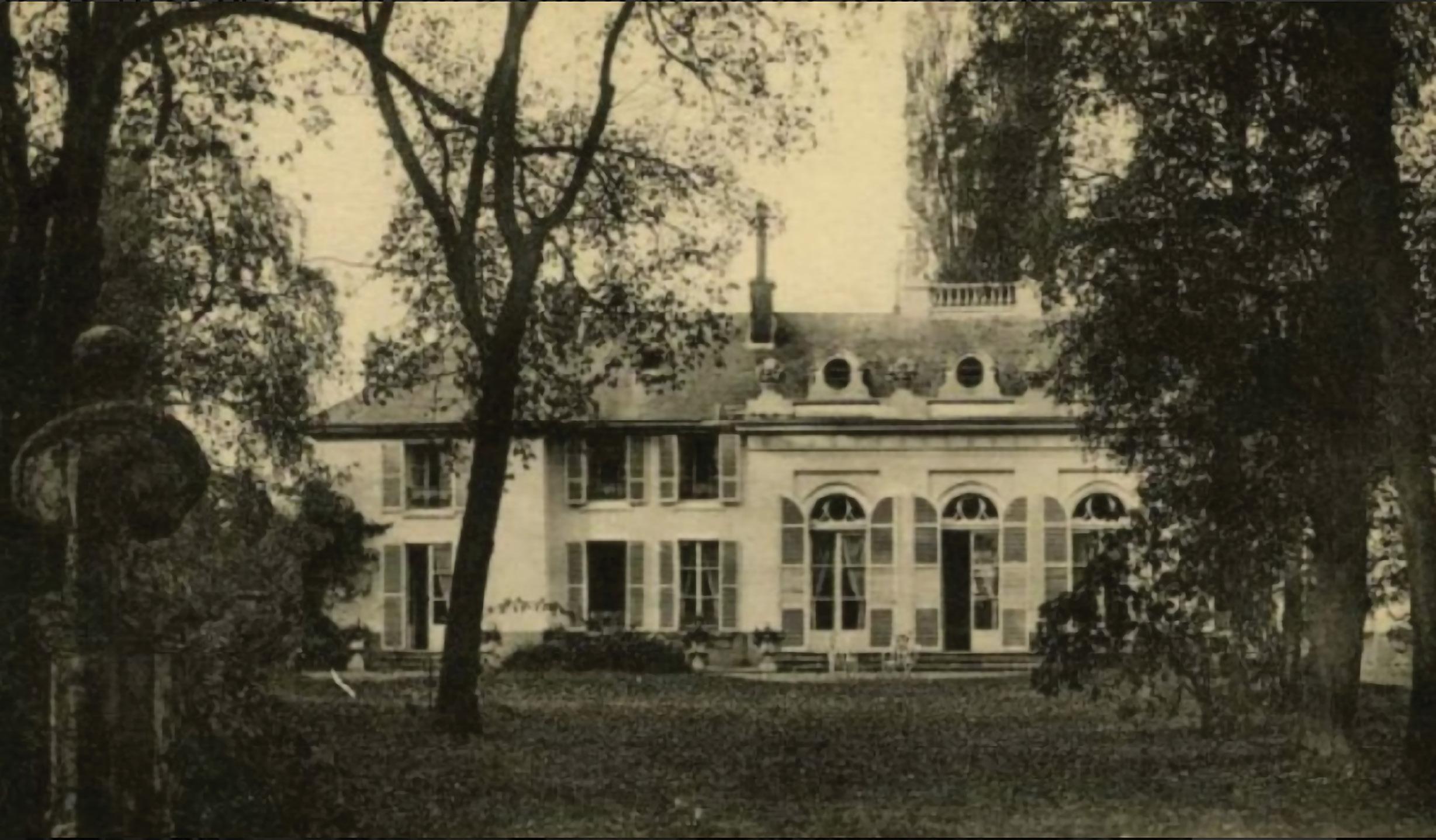
Pavillon Colombe, Saint-Brice-sous-Forêt, France
Before we understand a garden, we simply experience it.
We know that it moves us.
We don't yet know why.
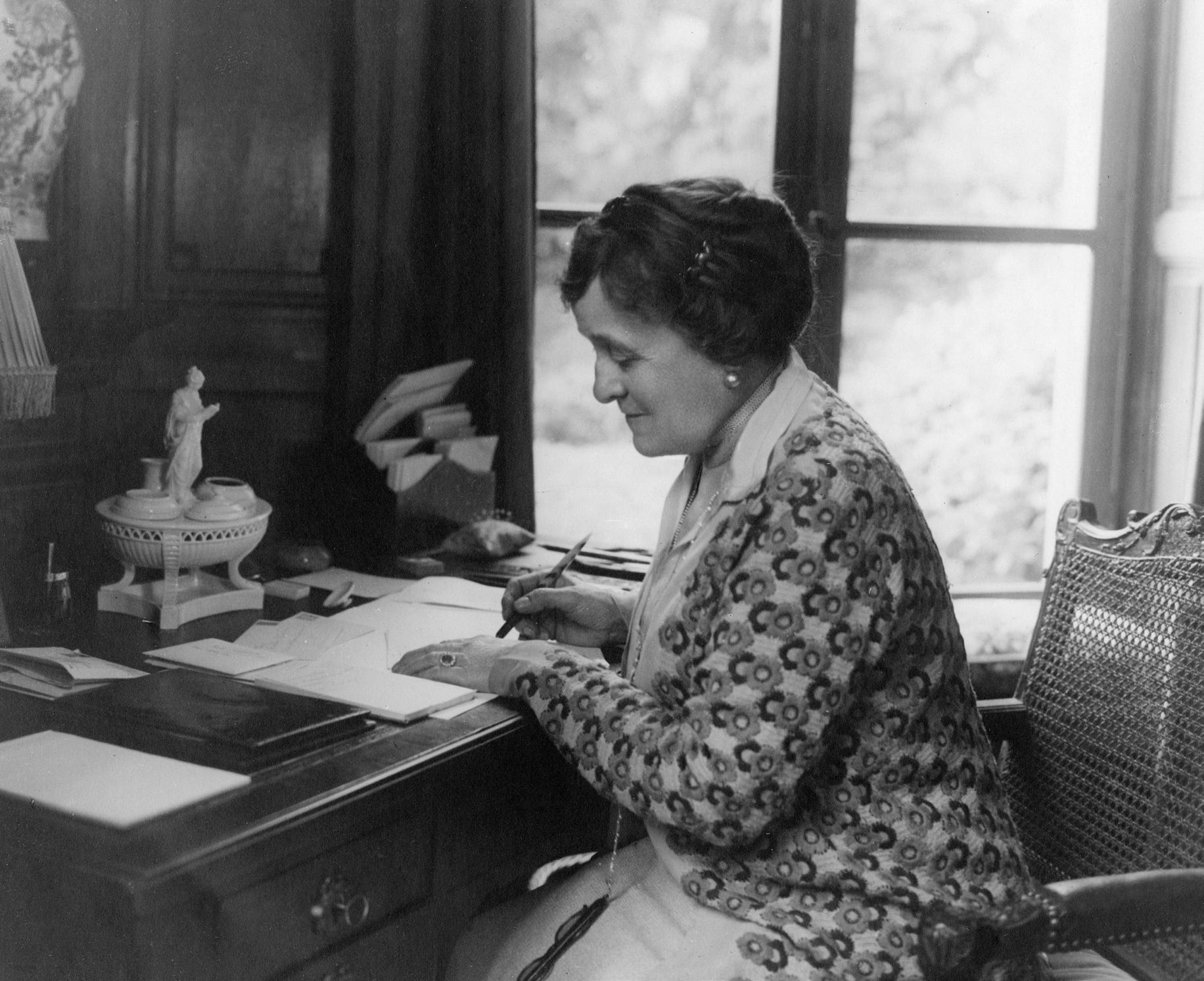
Edith Wharton (1862–1937)
More than a century ago, Edith Wharton proposed something remarkable: Beautiful gardens are not mysterious. They can be understood.
“ It is safe to say that no one enters the grounds of the Villa Medici without being soothed and charmed by that garden-magic which is the peculiar qualilty of some of the old Italian pleasances. It is not necessary to be a student of garden-architecture to feel the spell of quiet and serenity which falls on one at the very gateway; but it is worth the student’s while to try to analyze the elements of which the sensation is composed. Perhaps they will be found to resolve themselves in diversity, simplicity and fitness. The plan of the garden is simple, but its different parts are so contrasted as to produce, by the fewest means, a pleasant sense of variety without sacrifice of repose. ”
Italian Villas and Their Gardens, Edith Wharton
Every garden asks:
How does it belong to the house?
How does it support the lives lived there?
How does it belong to the surrounding landscape?
Great gardens succeed because they resolve relationships, not because they follow fashions.
Wharton wasn't trying to make gardens mysterious. She was trying to make them understandable.
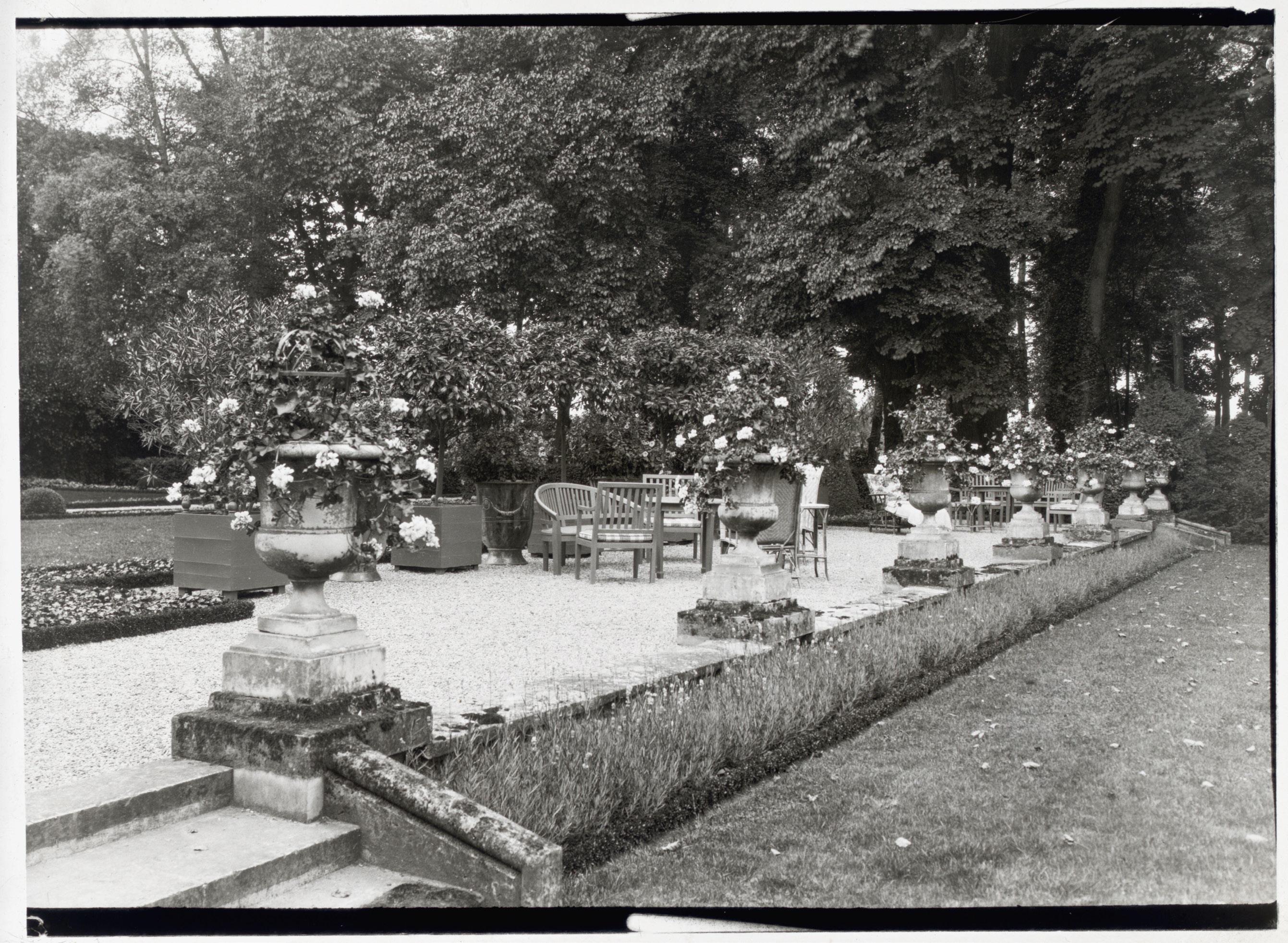
The terrace garden at Pavillon Colombe
Look again. Nothing in the garden has changed.
The gravel has become a room.
The urns define its boundaries.
The furniture gives it purpose.
The trees become walls.
Only the way we are seeing it has changed.
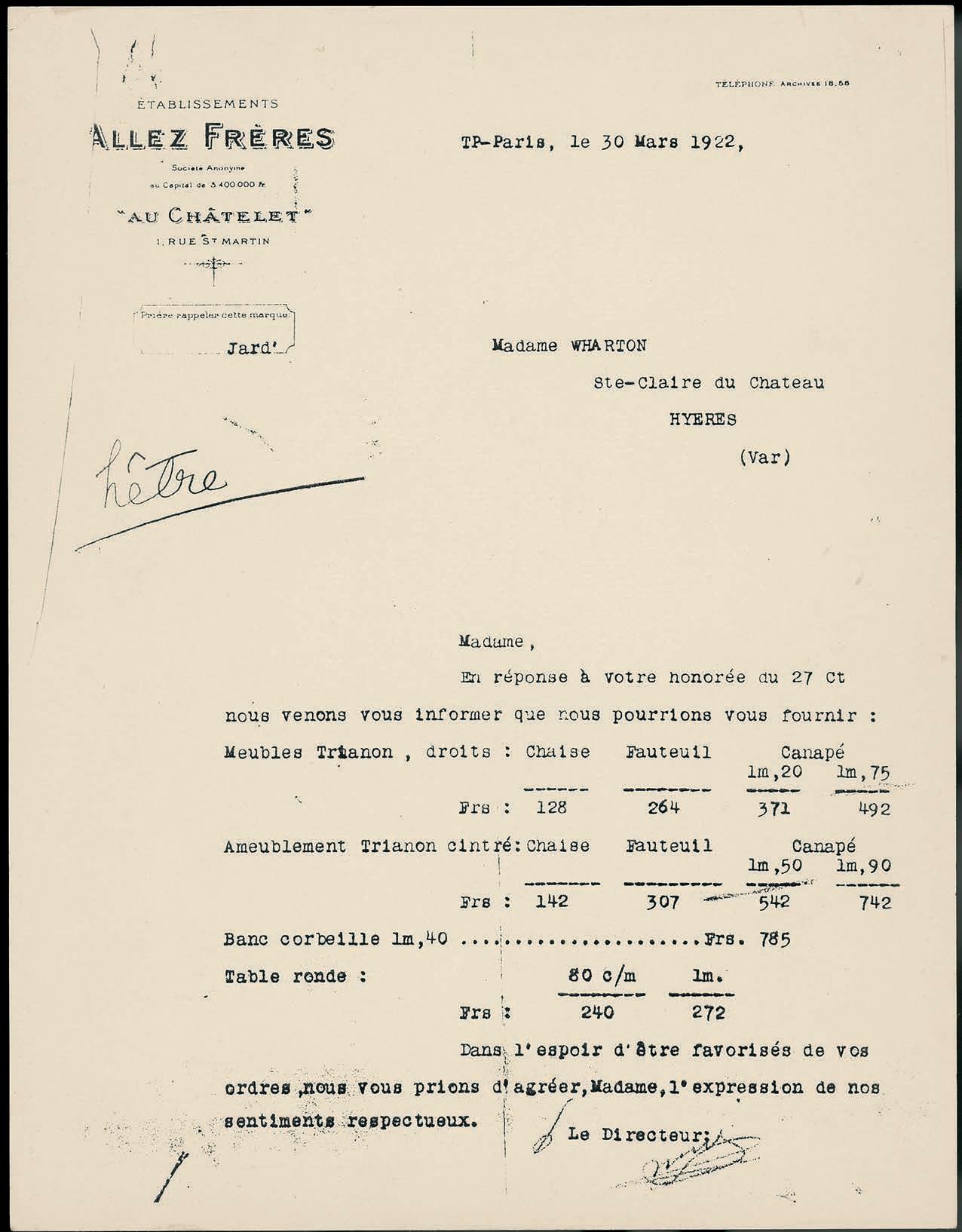
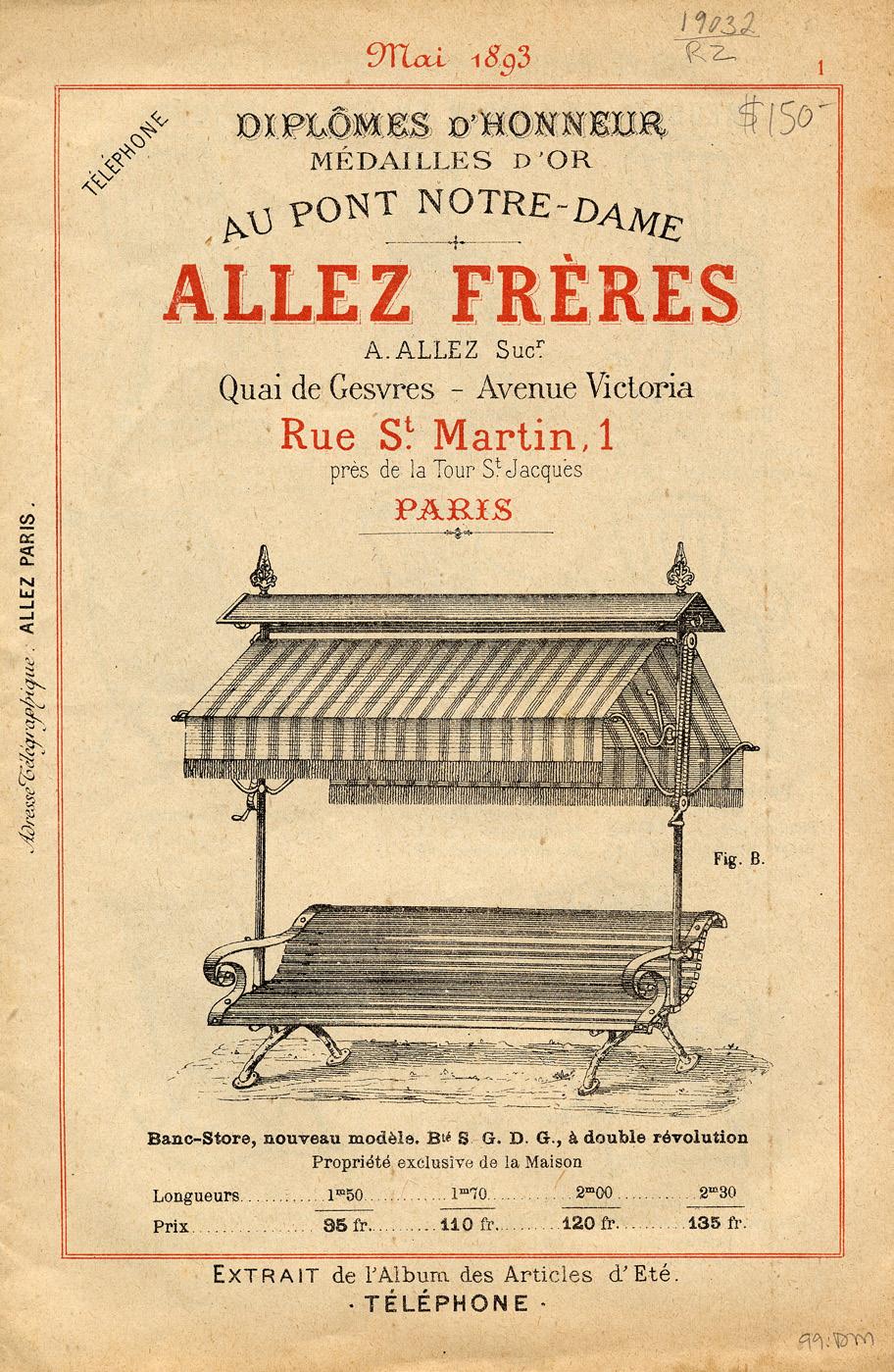
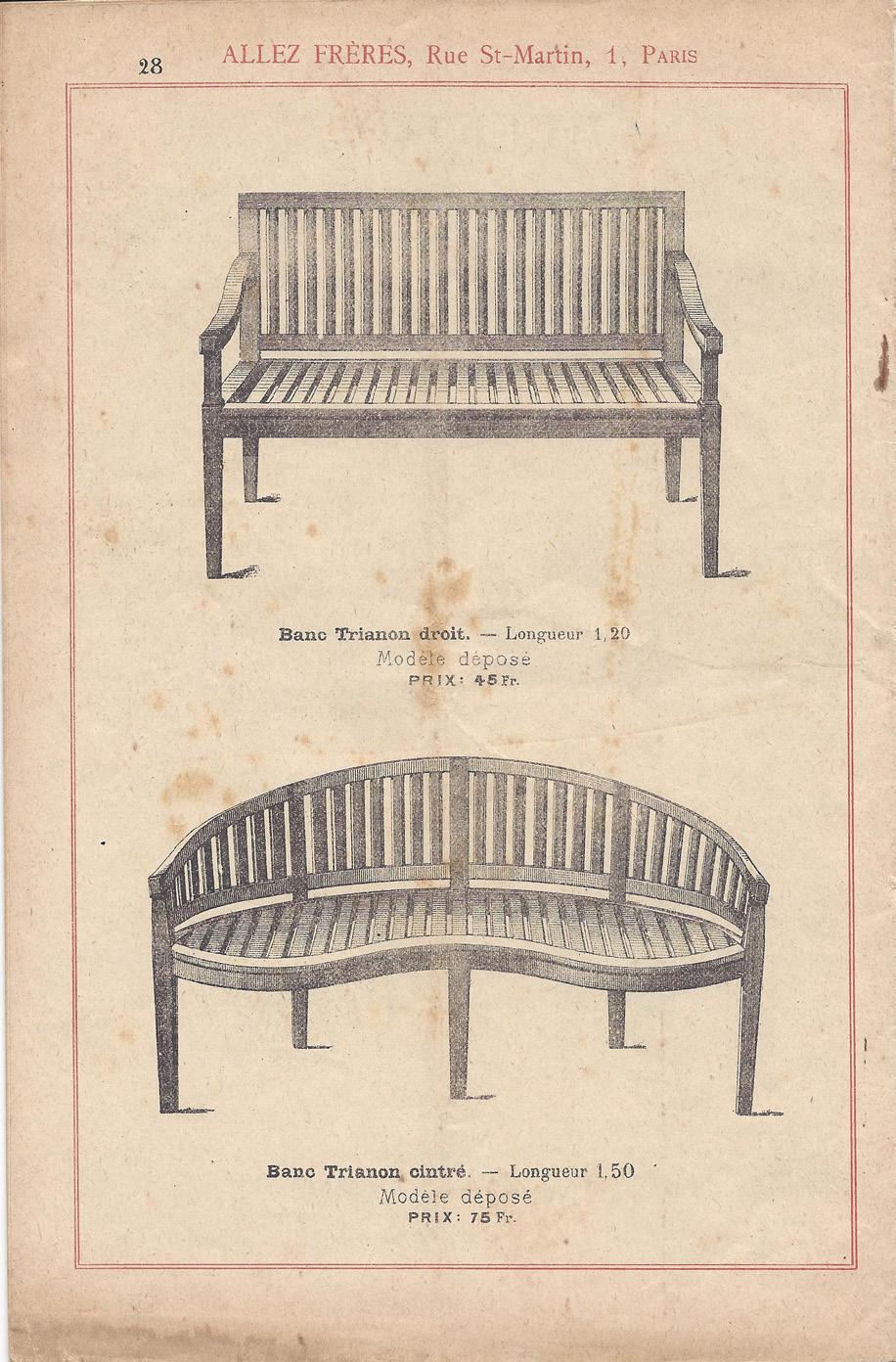
Once we begin asking better questions, we start seeing evidence everywhere.
Not simply of beautiful gardens...
but of the countless thoughtful decisions that shaped them.
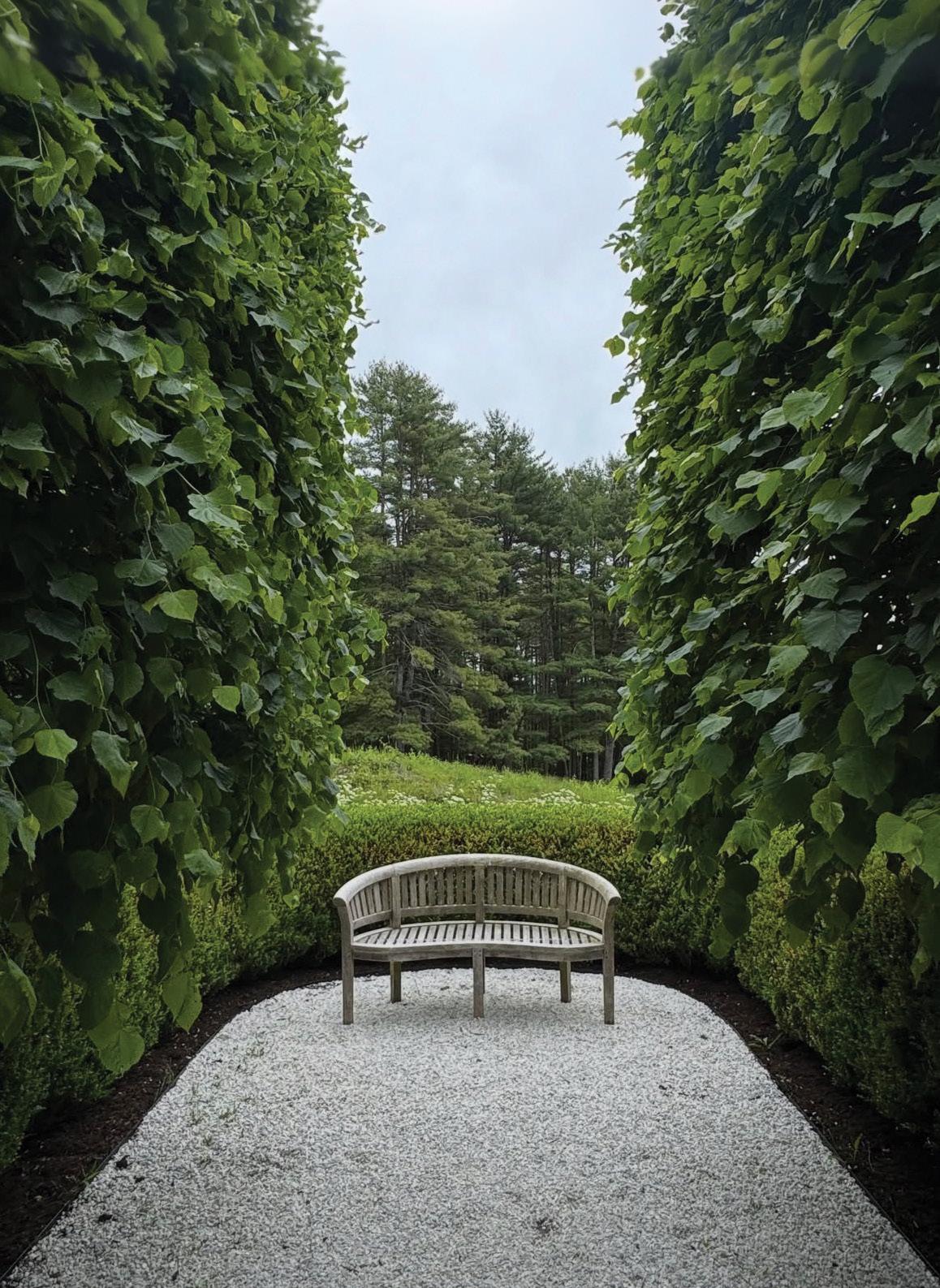
The Mount, Lenox, Massachusetts
Once we know what to look for, beauty becomes understandable— without ever becoming less wonderful.
ORDINARY DAYS Observation 2
The best gardens are designed for ordinary life.
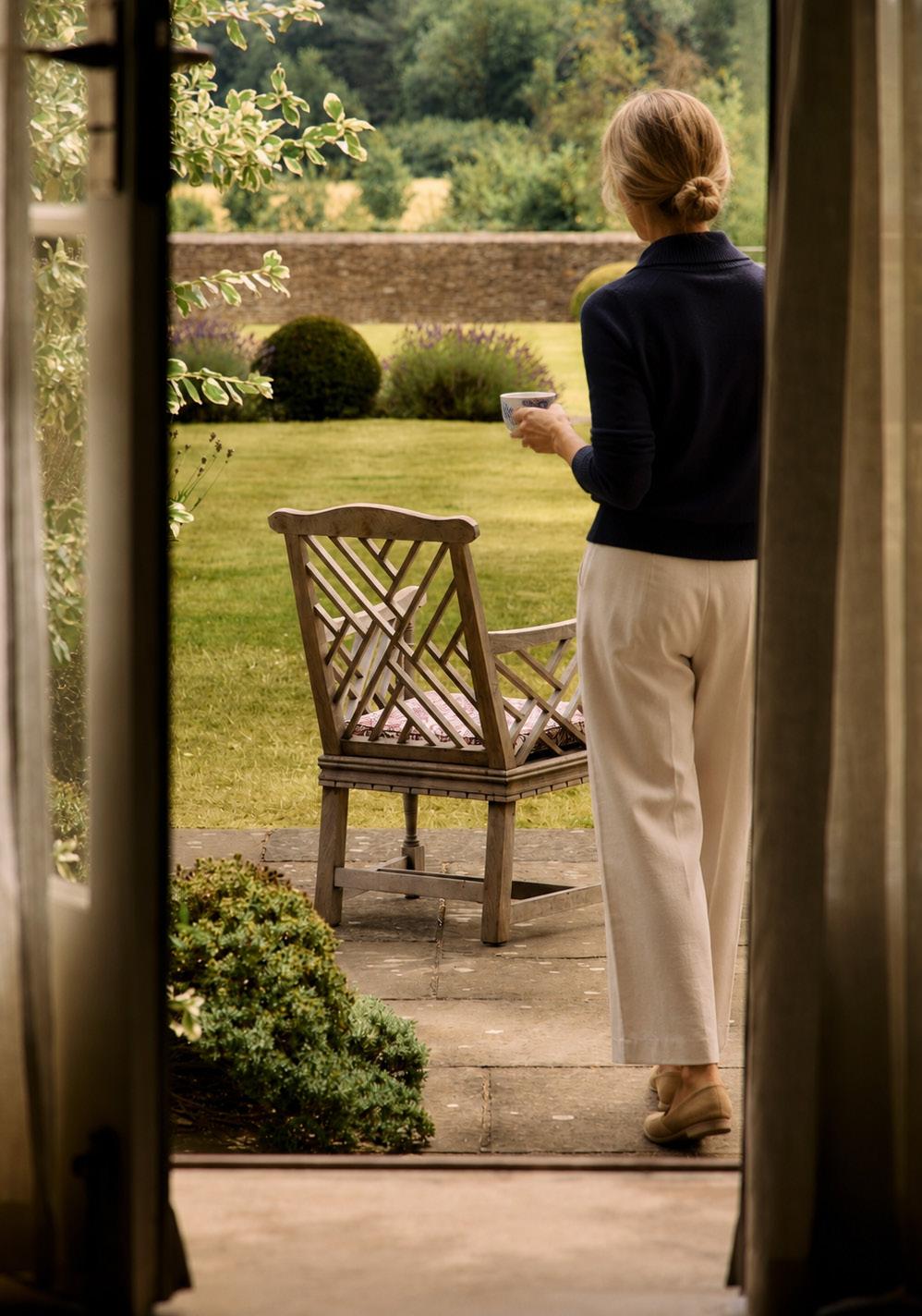
When we imagine an outdoor room, we often imagine guests.
The laughter.
The long table.
The summer evening.
Yet most outdoor spaces are lived very differently. They are lived on ordinary Tuesdays.
Occasions
Birthday dinner
Cocktail party
Friends for dinner
Family gathering
Holiday celebrations
Weekend guests
Wedding
Anniversary
Graduation
Garden club lunch
Ordinary Days
Morning coffee
Reading
Talking on the phone
Lunch alone
Working for thirty minutes
Brushing the dog
Listening to rain
Tending the plants
Watching children
Looking at the stars
Autumn leaves
Winter sunshine
Quiet conversation
Doing absolutely nothing
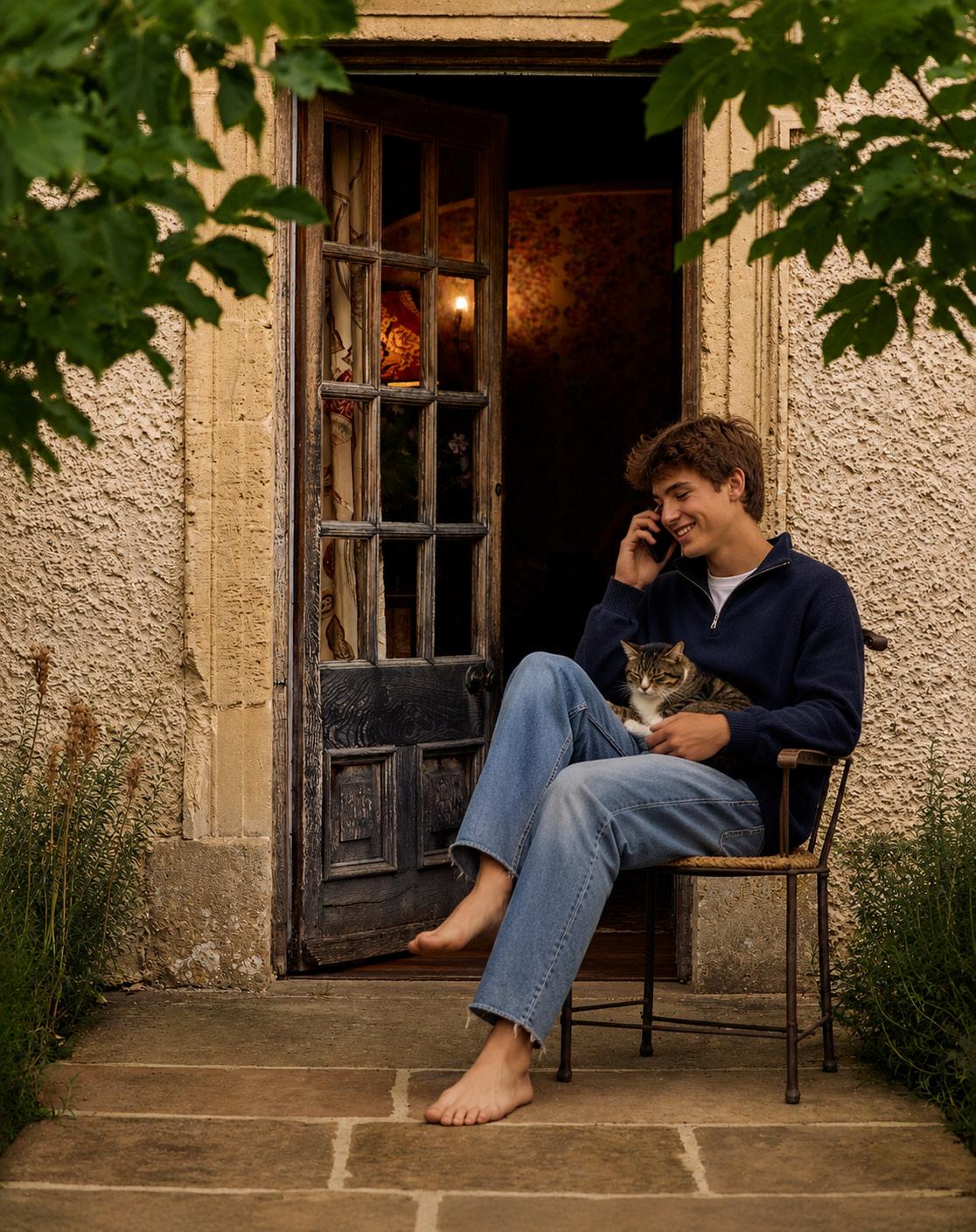
Good outdoor design begins not with furniture.
It begins with possibility.
Before deciding where furniture belongs, imagine the moments you hope your home will encourage.
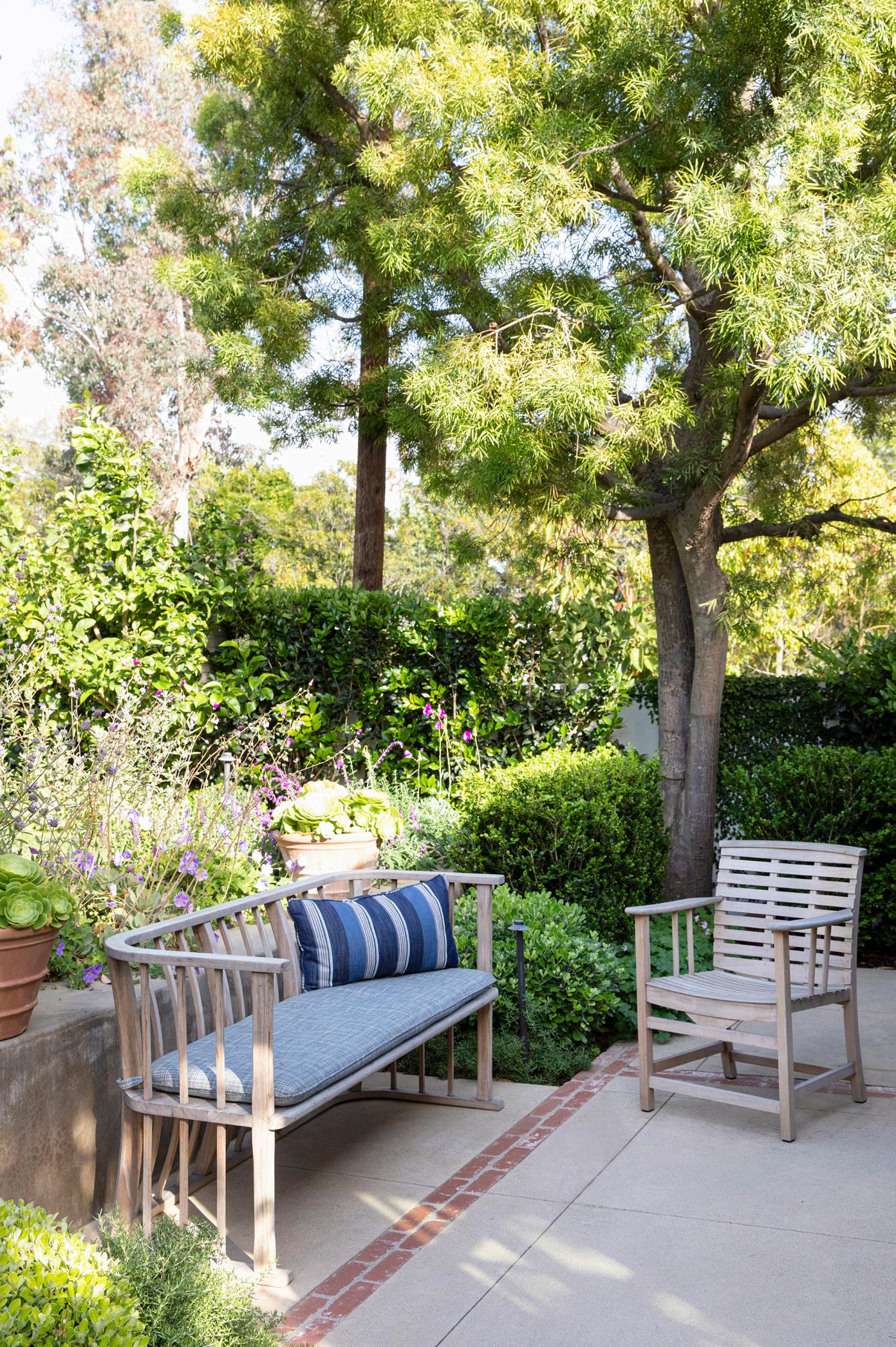
Great outdoor rooms invite life.
They make it easy to step outside with your morning coffee.
To read for twenty minutes between appointments.
To notice the first birds.
To watch rain without needing a destination.
They don’t schedule these moments.
They simply make them easier.
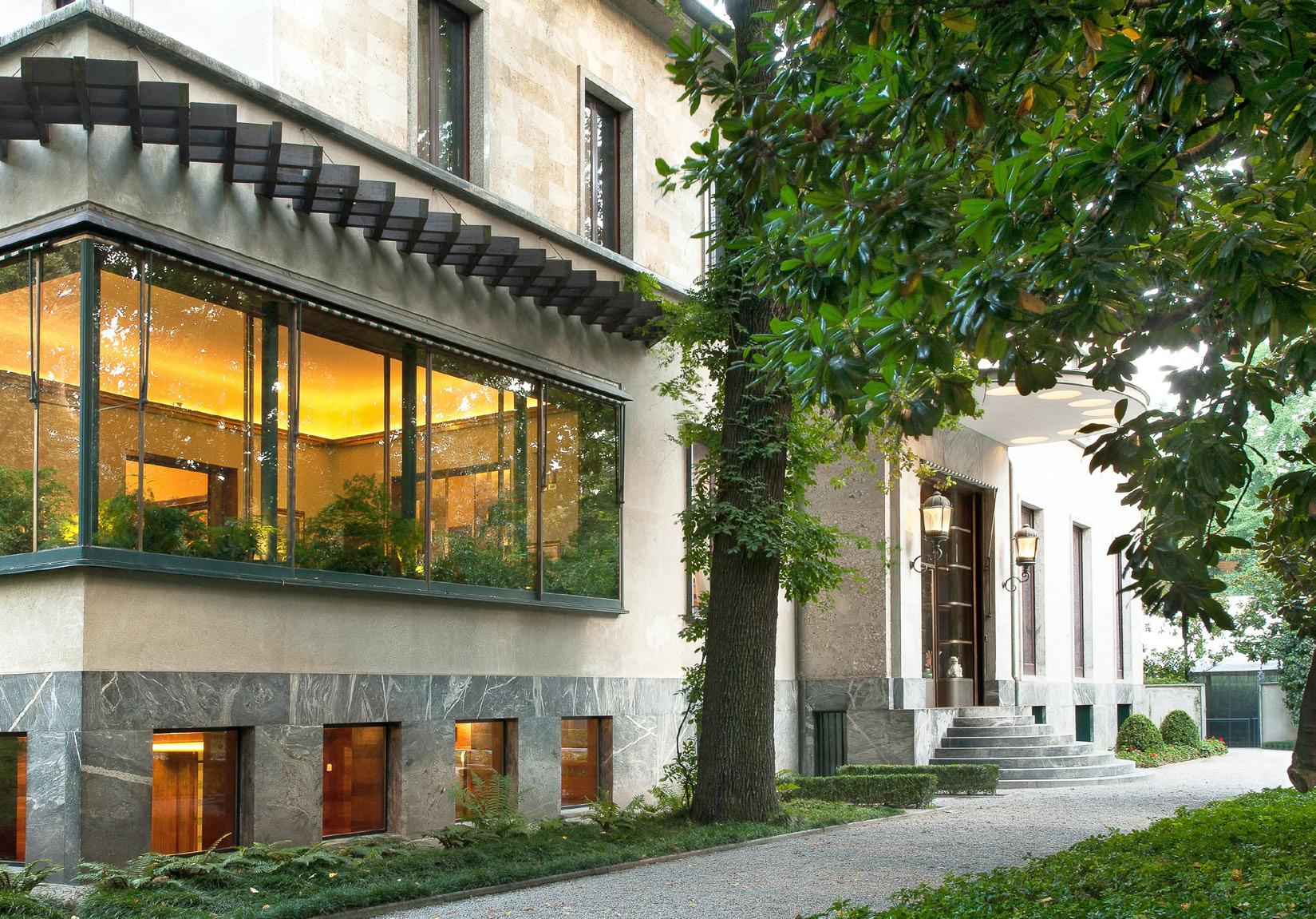
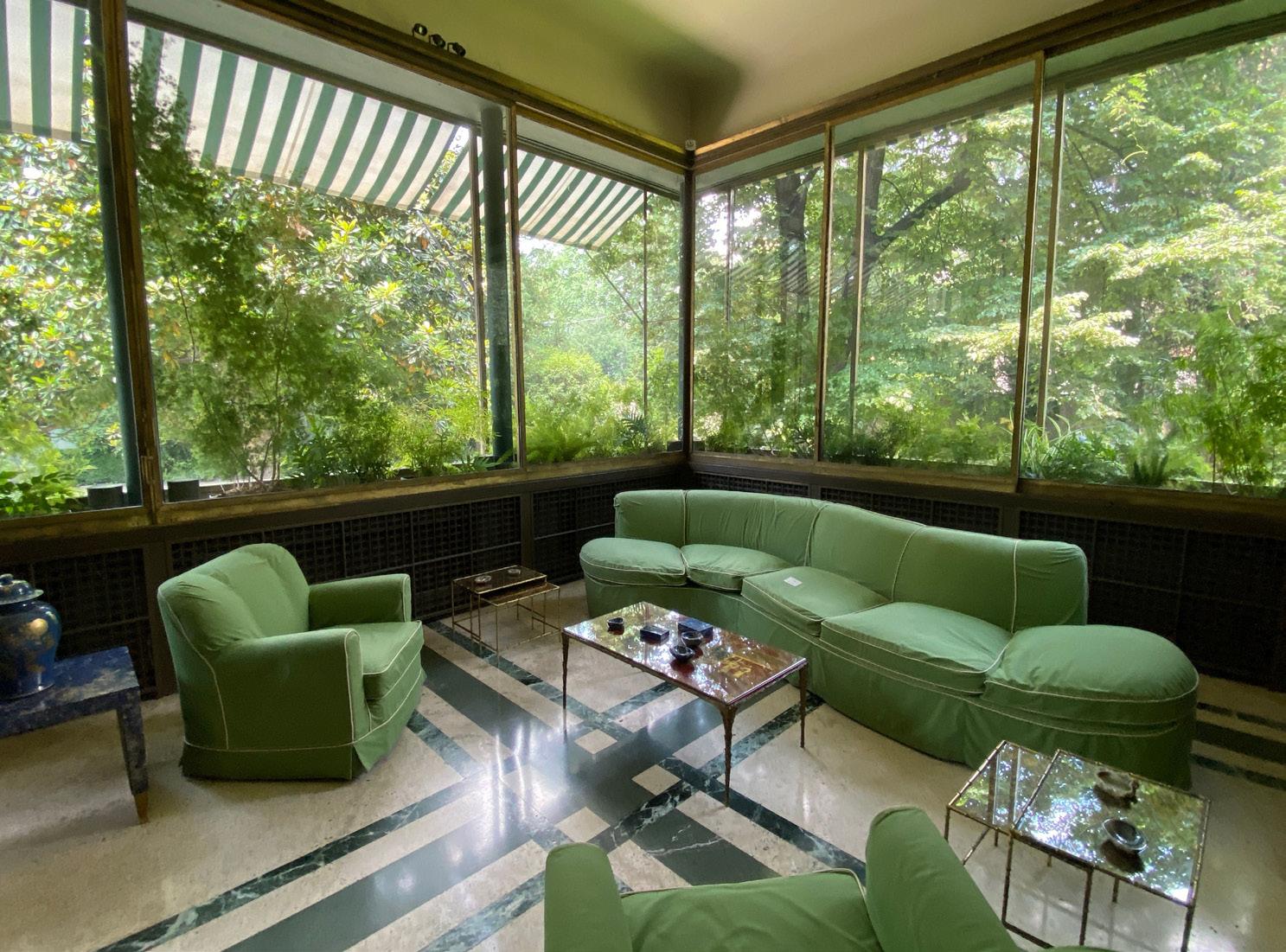
Villa Necchi Campiglia, Milan
The finest houses do more than arrange beautiful rooms.
They create places where ordinary life becomes richer.
Villa Necchi is remembered not simply for its architecture, but for the ease with which interior and garden become one continuous way of living.
Great designers don’t simply ask how people live.
They expand the ways we might.
Begin with life. Not furniture.
Life Moments Places
Furniture
Details
Good outdoor rooms are designed from life outward.
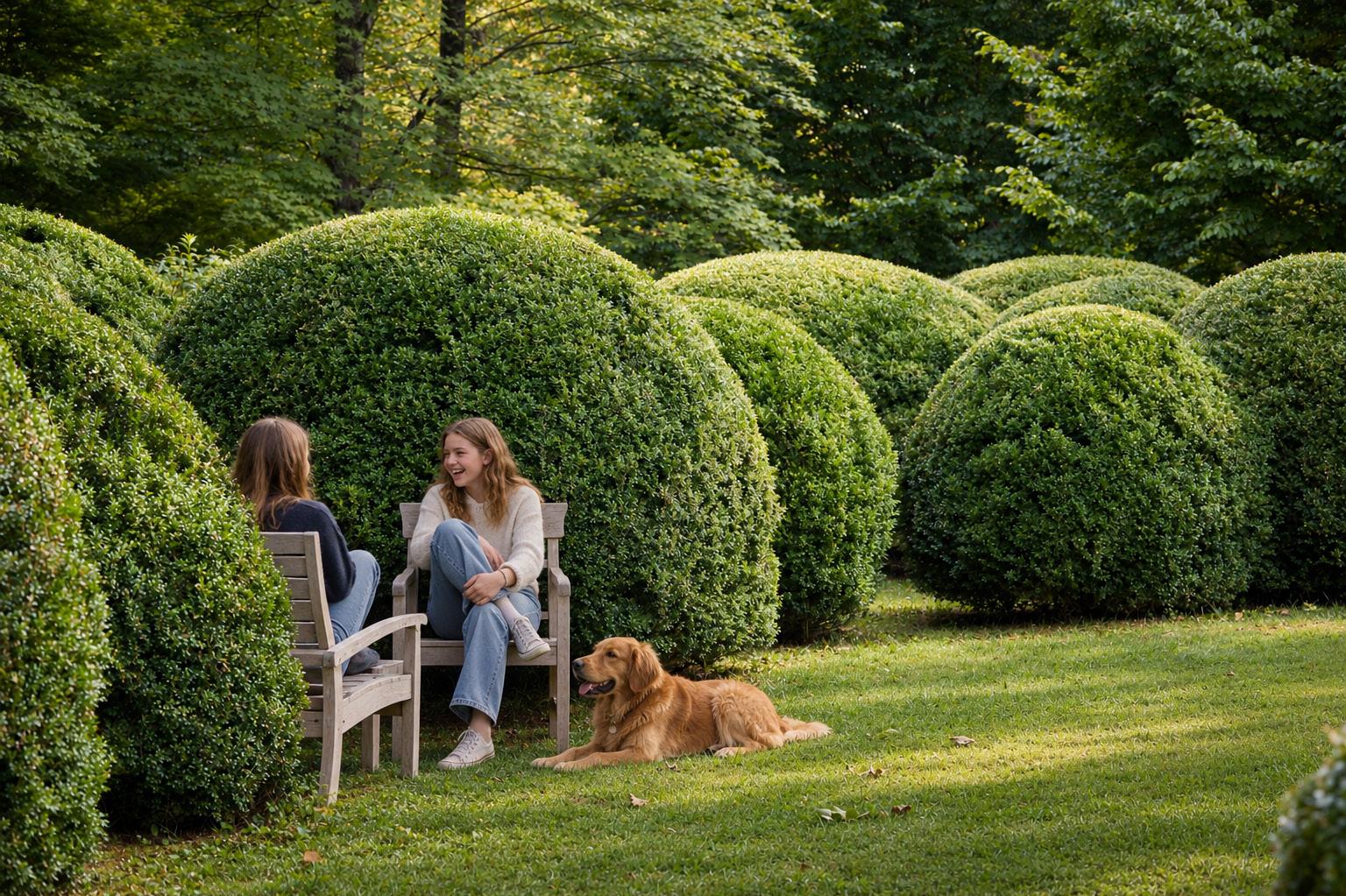
Once you've imagined the life you hope to live outdoors, decisions become easier.
Some places invite seasonal cushions.
Others ask to be ready every day of the year.
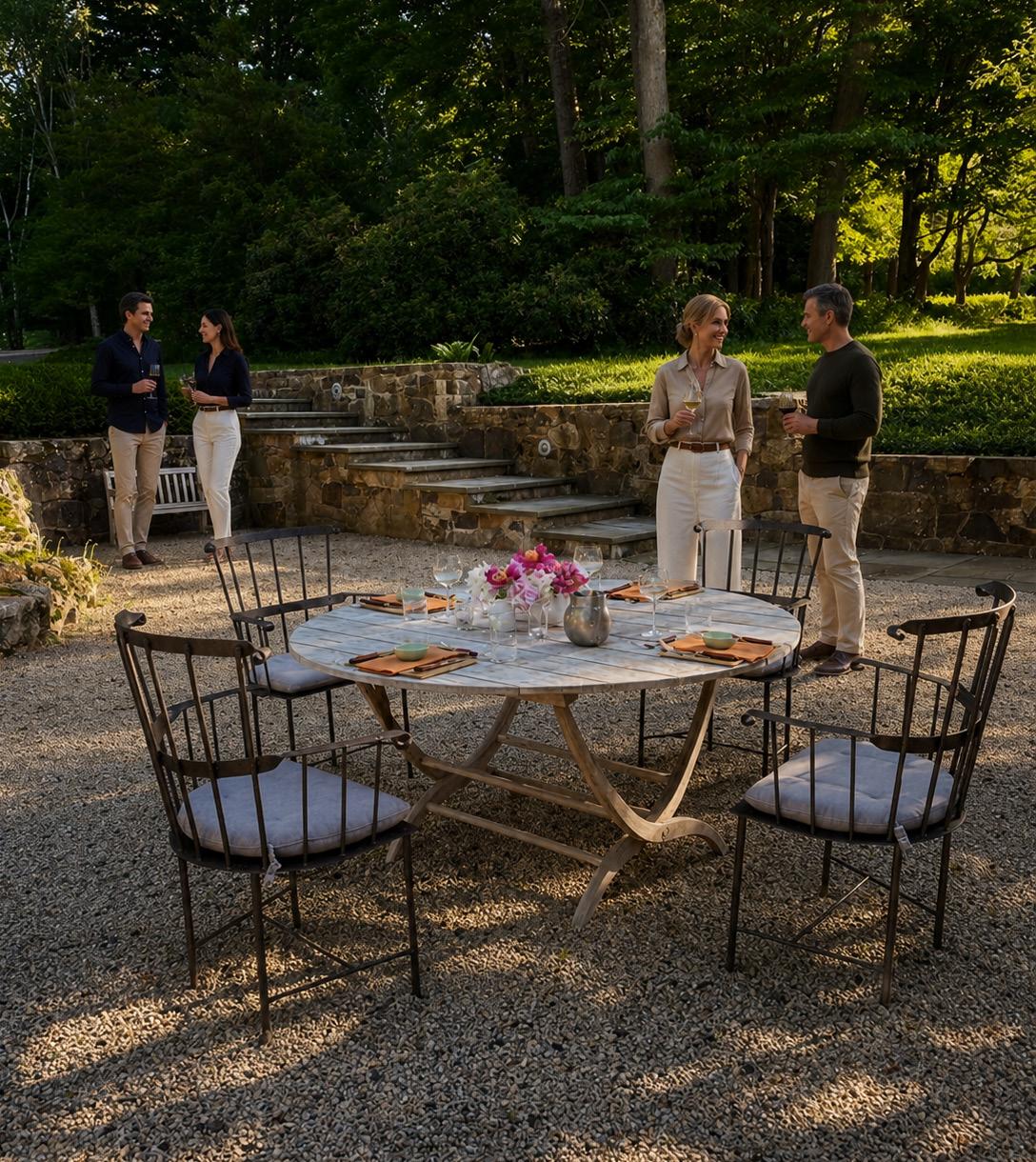
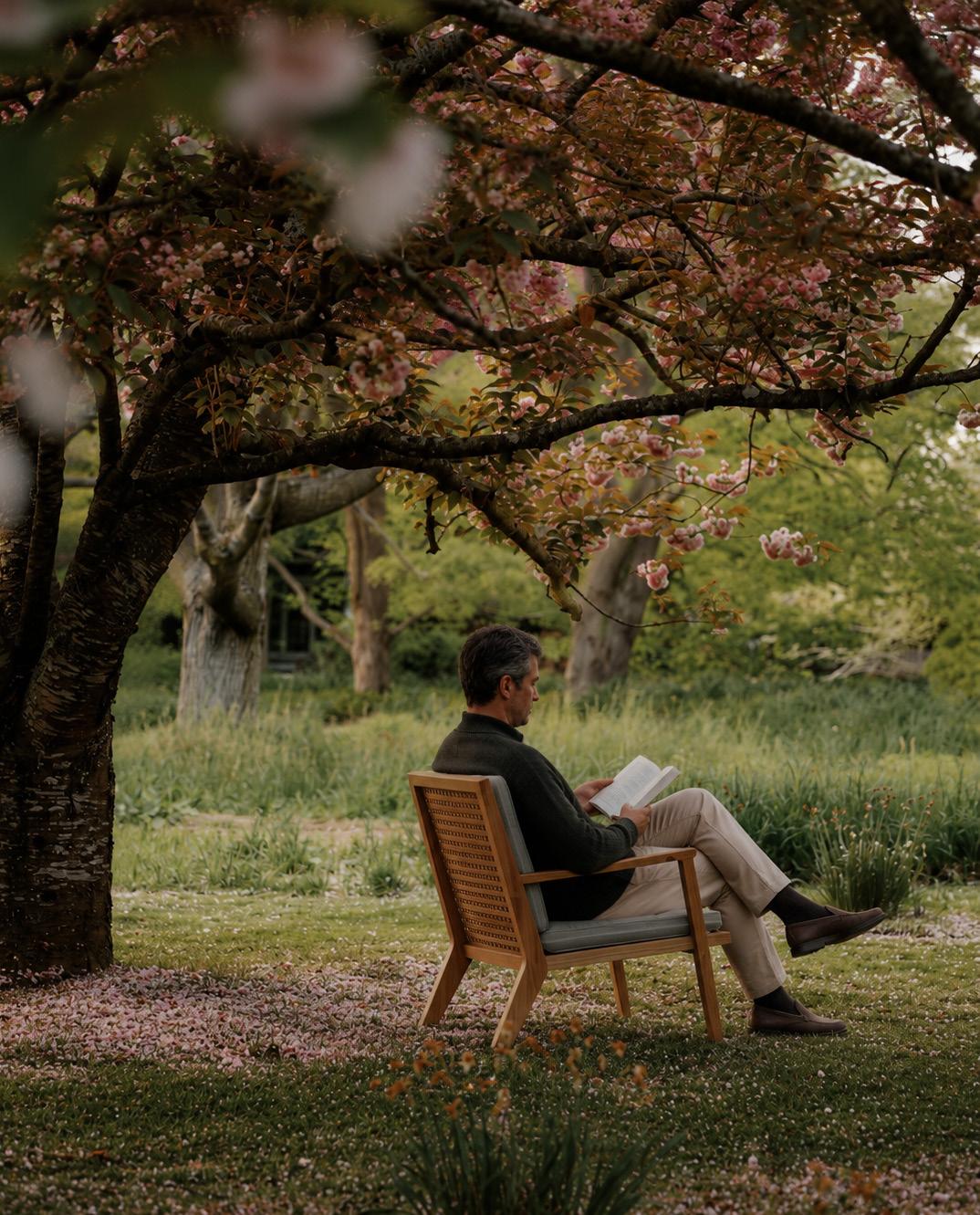
One Home. Many Lives.
A table invites conversation.
A chair beneath a flowering tree invites reflection. Neither is more important. They simply answer different human needs.
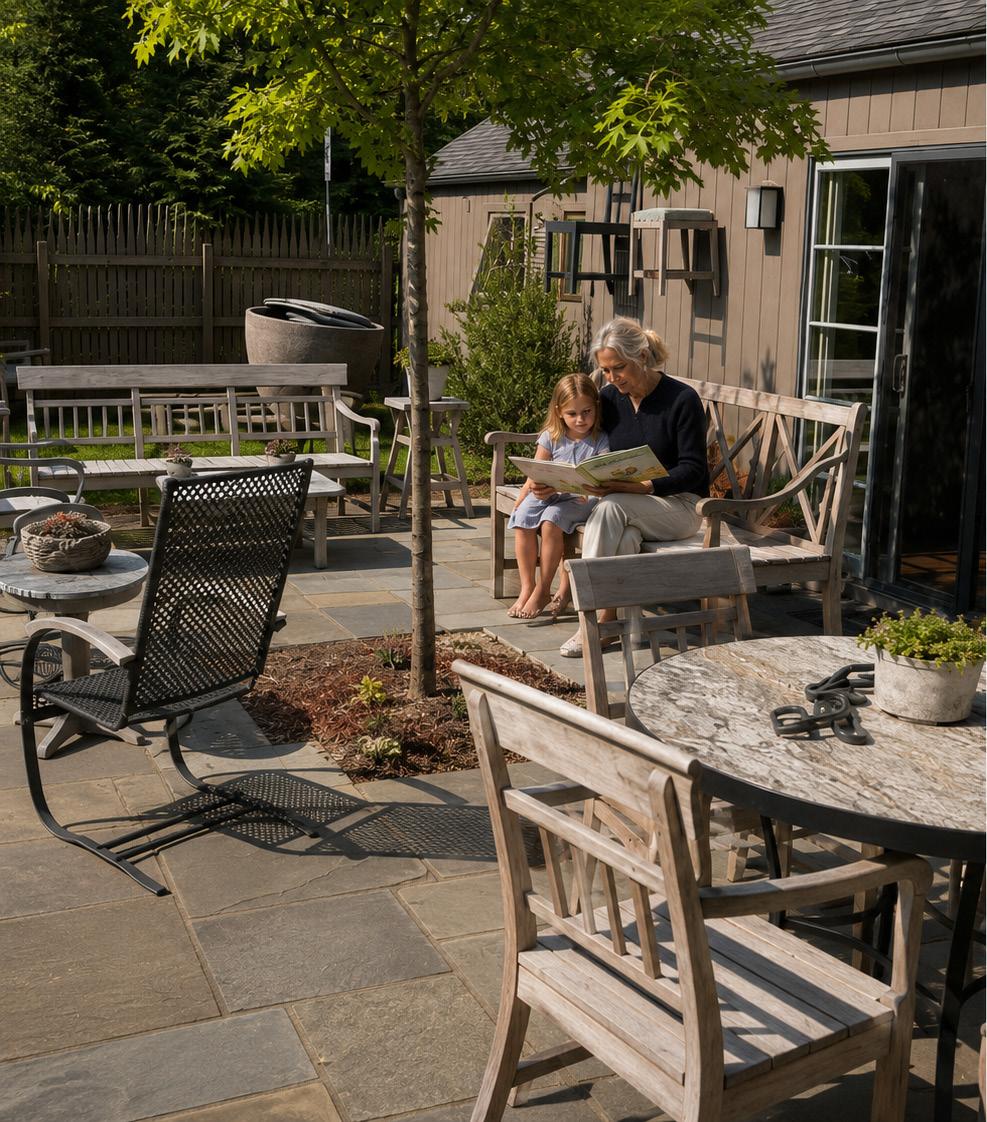
Readiness
Some places are used every day.
Others are prepared for occasions.
Good design recognizes the difference.
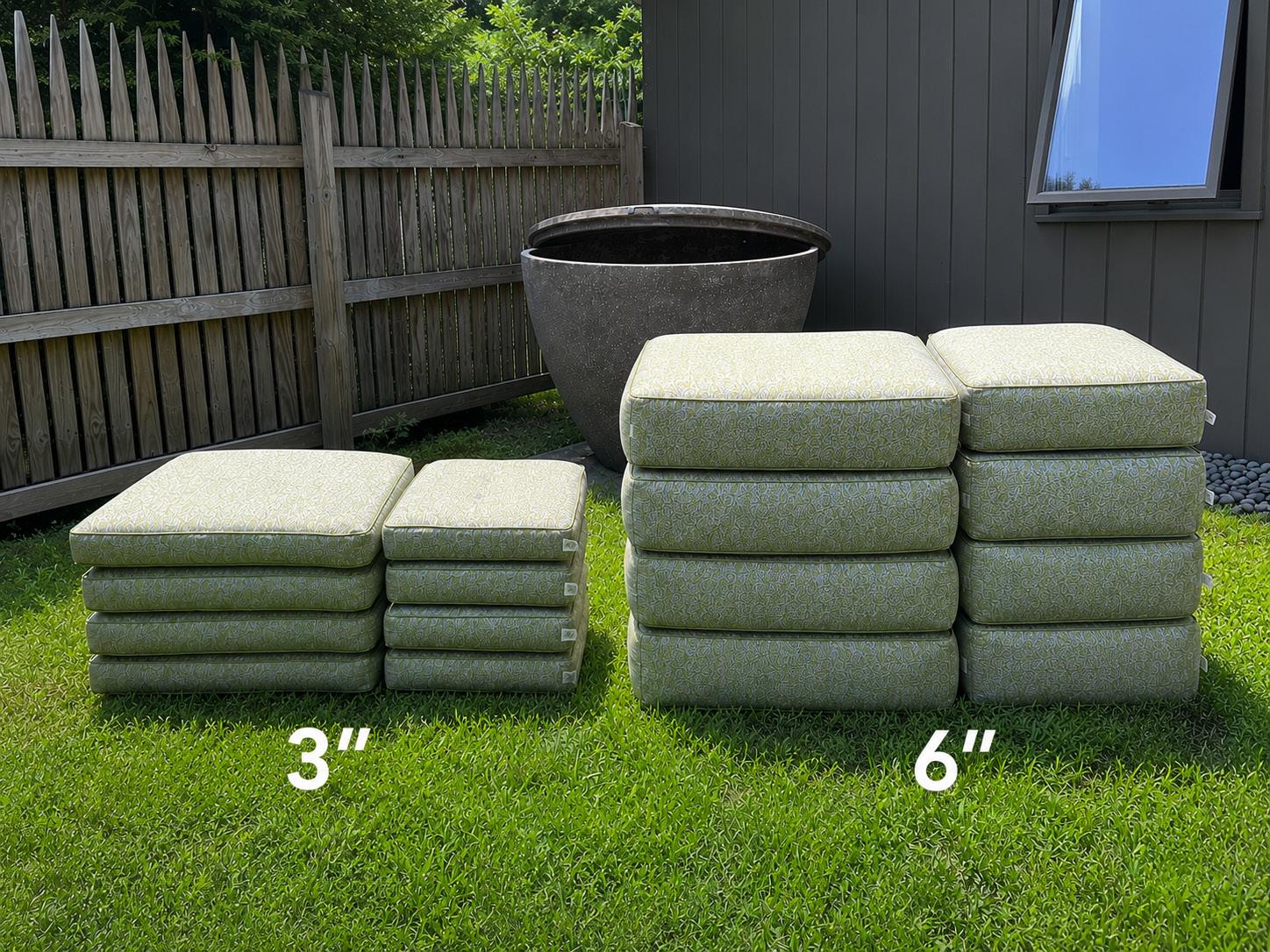
The cushions for this terrace are stored in a single pot beside the house.
They come out when the occasion calls for them— not because the furniture requires them, but because the moment does.
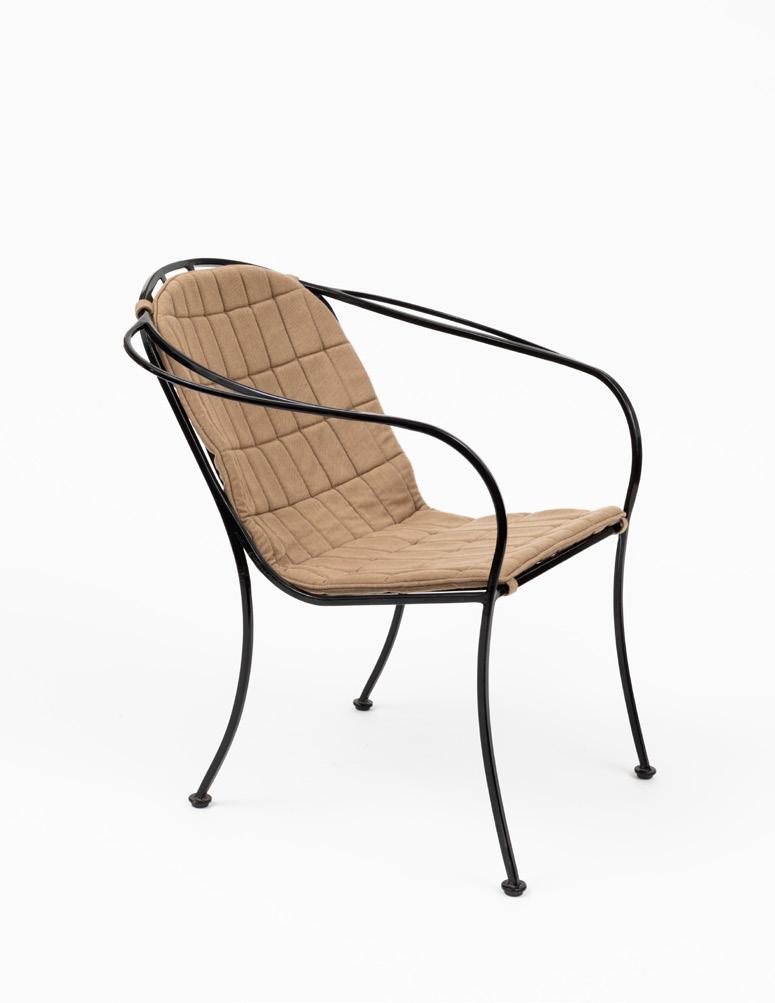
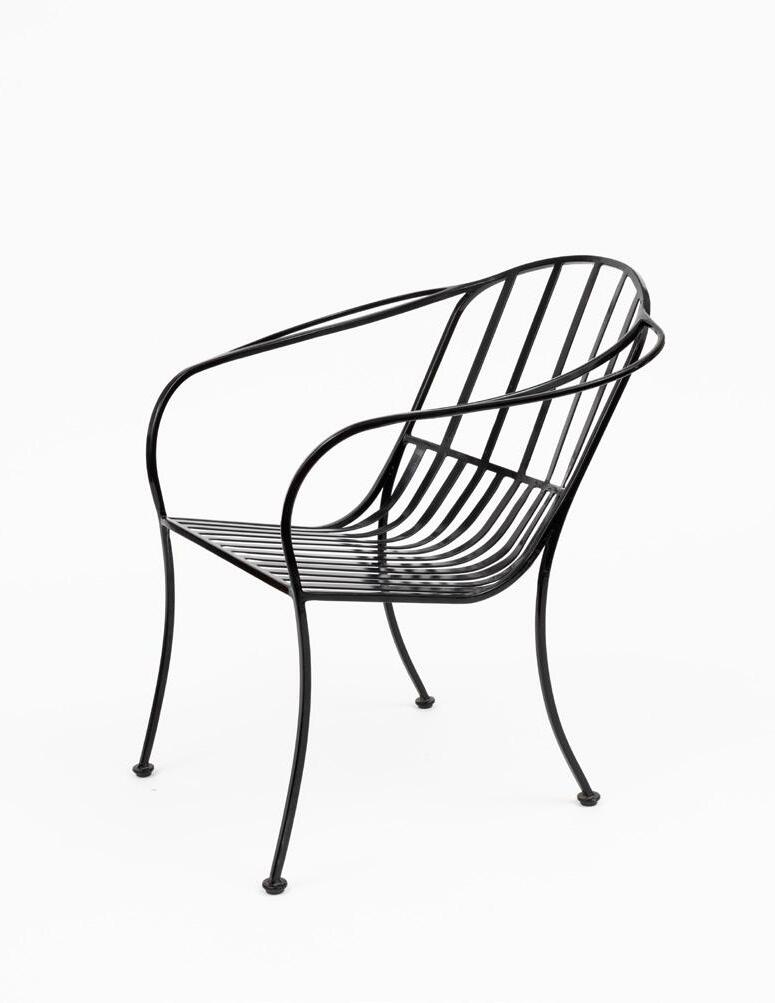
Dressed
A chair should remain a chair.
Good furniture welcomes cushions.
It doesn’t depend upon them.
Dressing a chair is different from building one around upholstery.
That difference is seen on the first day.
It is felt for years.
The burden of a cushion is rarely measured by its weight.
It is measured by how often you decide not to carry it.
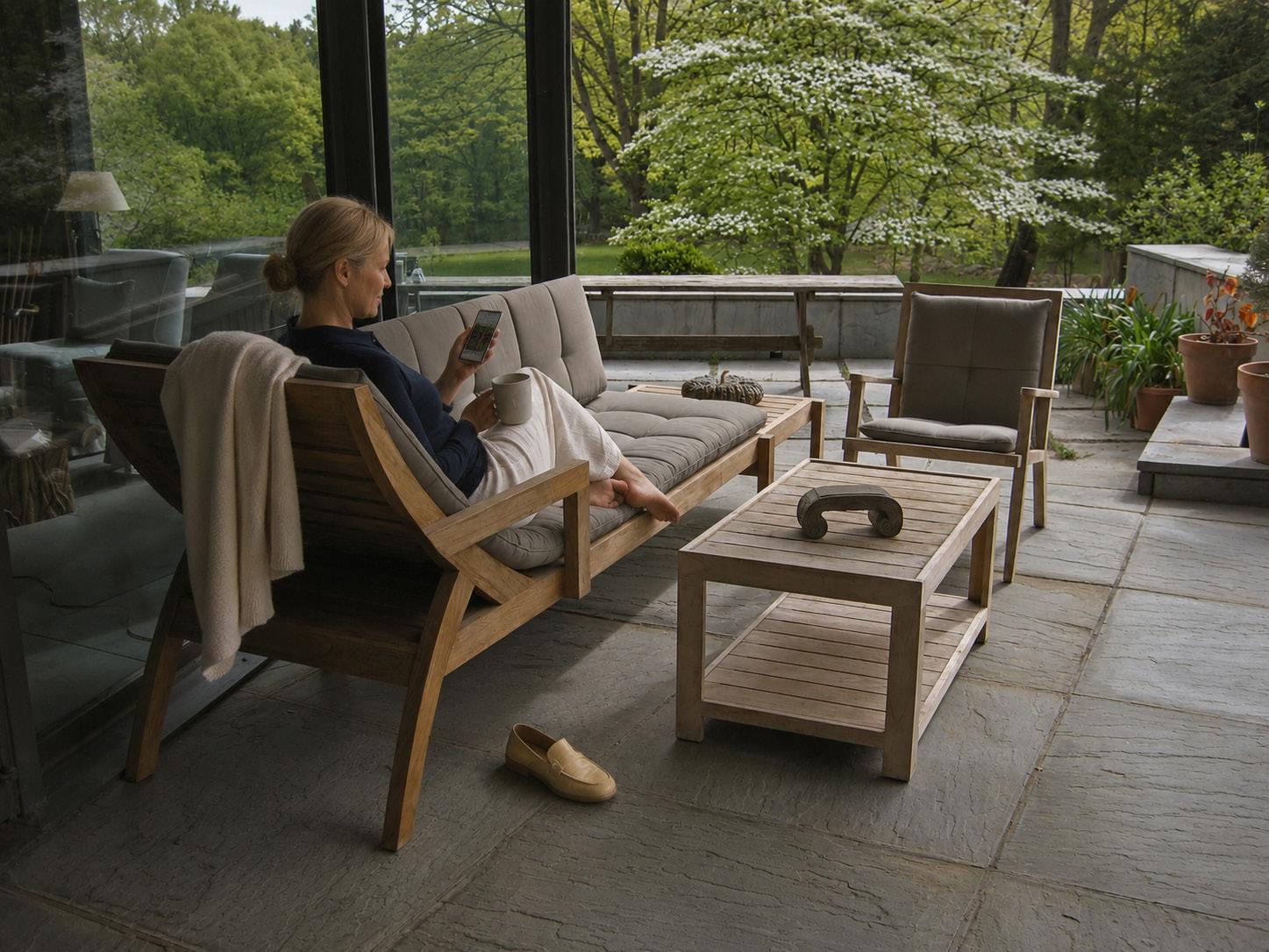
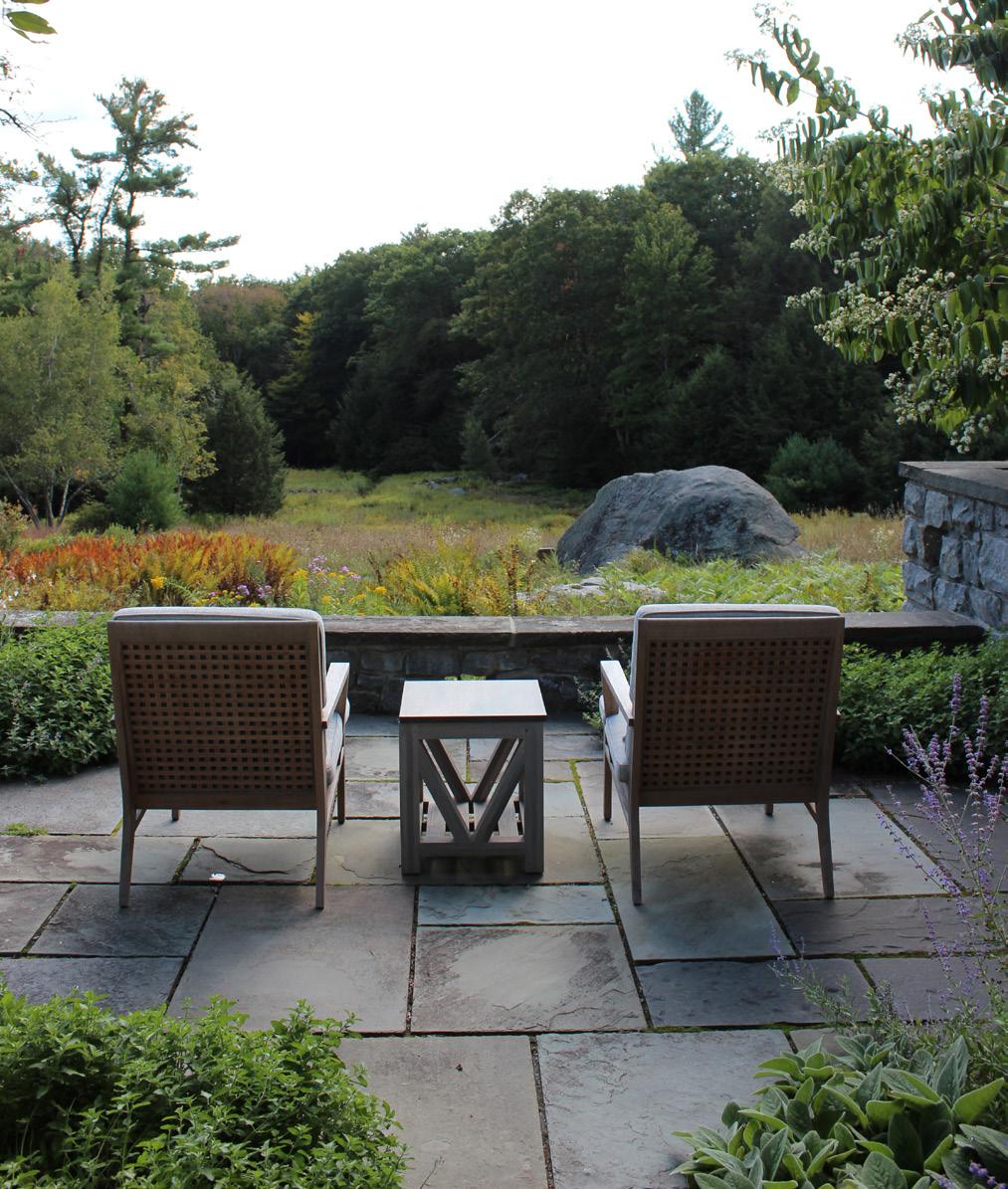
A thoughtfully designed home doesn’t simply accommodate the life you already have. It quietly enlarges it.
The most memorable outdoor rooms aren’t remembered because they entertained beautifully. They’re remembered because they gently invited people outside... again and again... on ordinary days.
DESIGNING COMFORT
Observation 3
Comfort begins before we sit down.
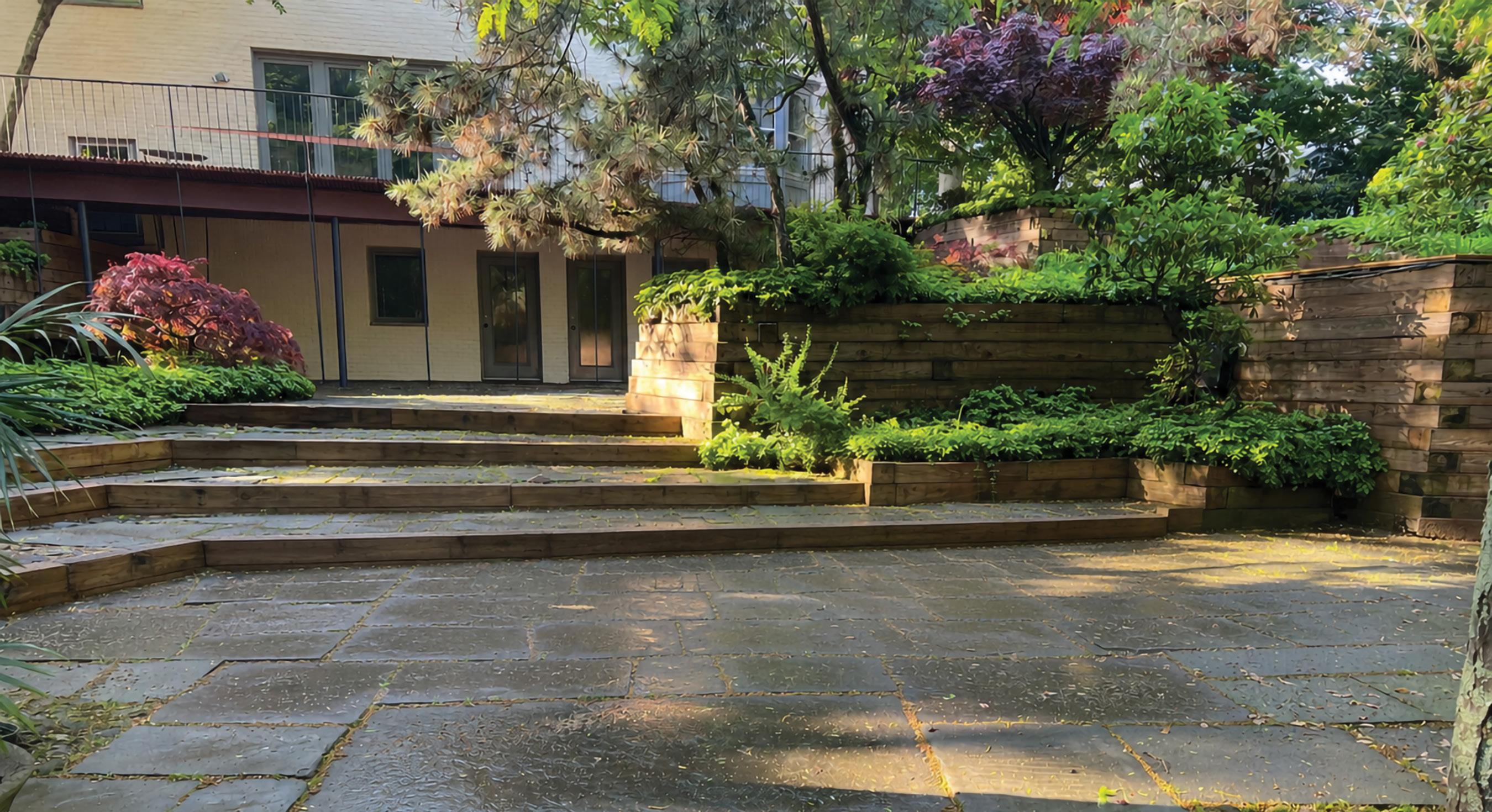
James Rose garden.
The commission was unusually simple.
In 1992, Stewart and Judy Colton wanted to spend time in their James Rose garden, and wanted chairs that were comfortable without cushions.
Her request raised a larger question.
How do we recognize comfort before we experience it?
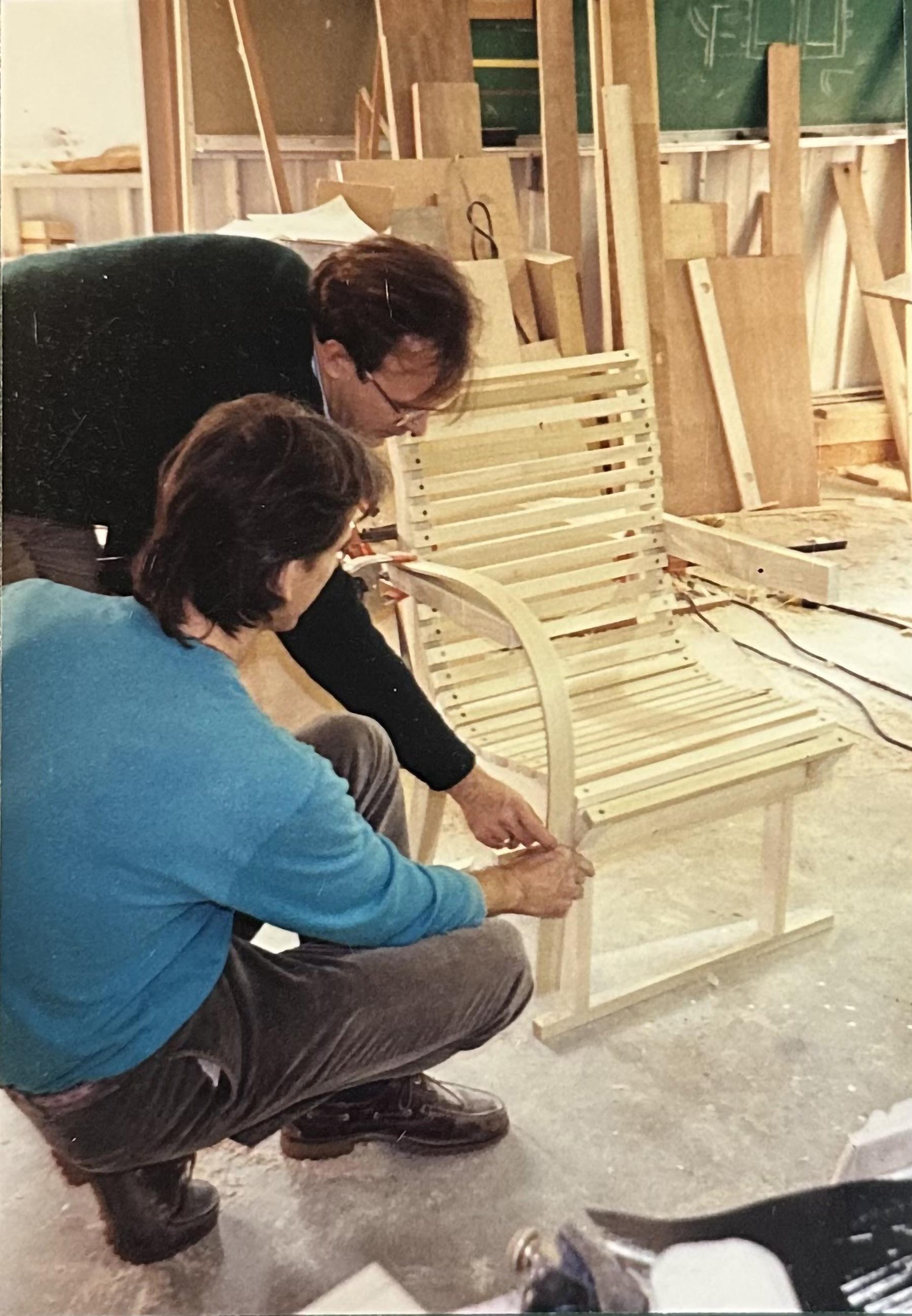
John Danzer and furniture maker Tim Kapeluck refining an early Taconic prototype, 1992.
Cushions add comfort.
They shouldn’t have to create it.
Long before we sit, we have already begun to decide.
Scale. Proportion. Silhouette.
A chair begins earning our trust.
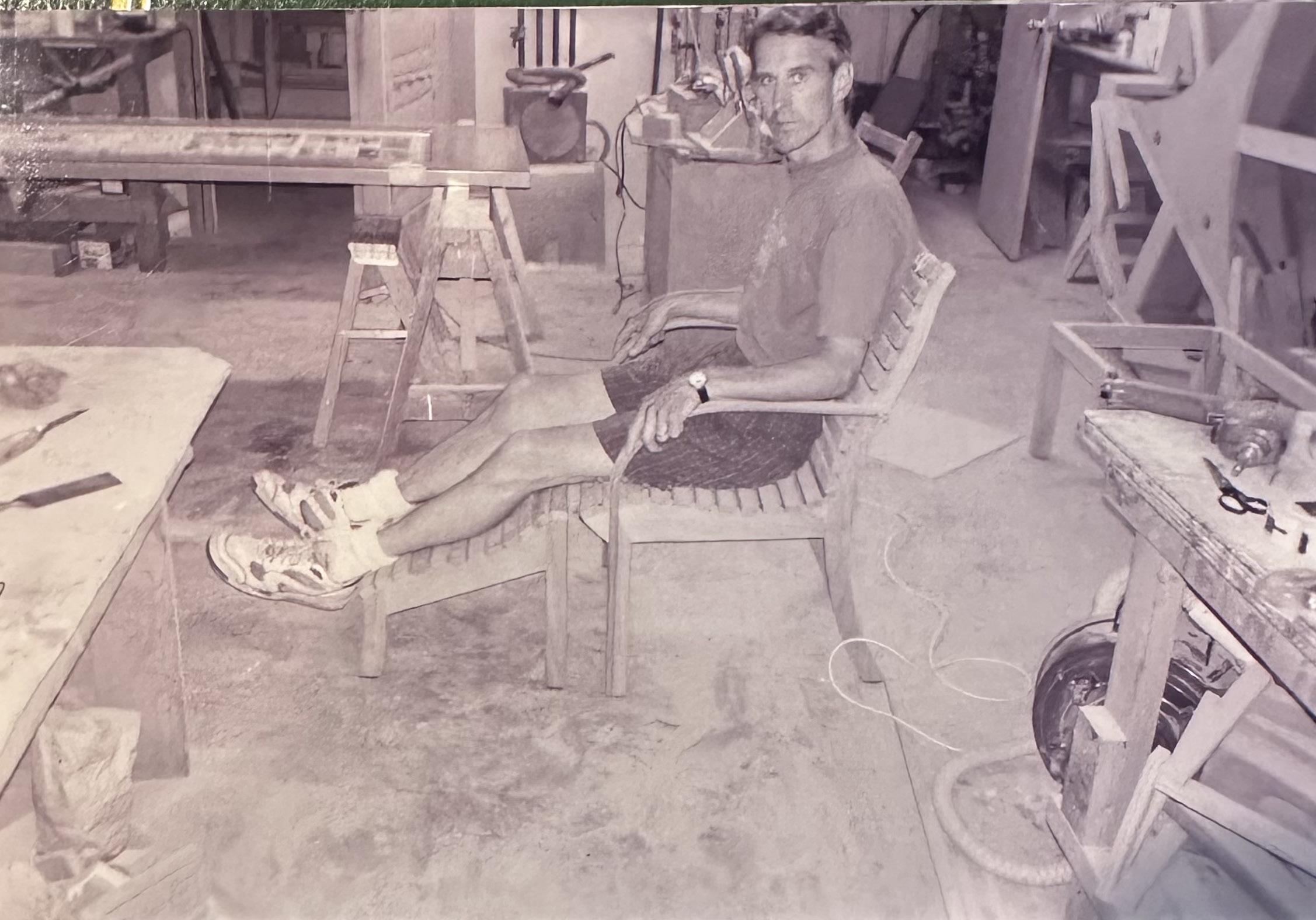
Testing an early Taconic prototype.
There was no formula.
Only prototypes.
Each adjustment brought the chair closer to the body.
The invitation the eye had already accepted now had to be fulfilled.
Comfort was no longer something added.
It had become part of the chair.
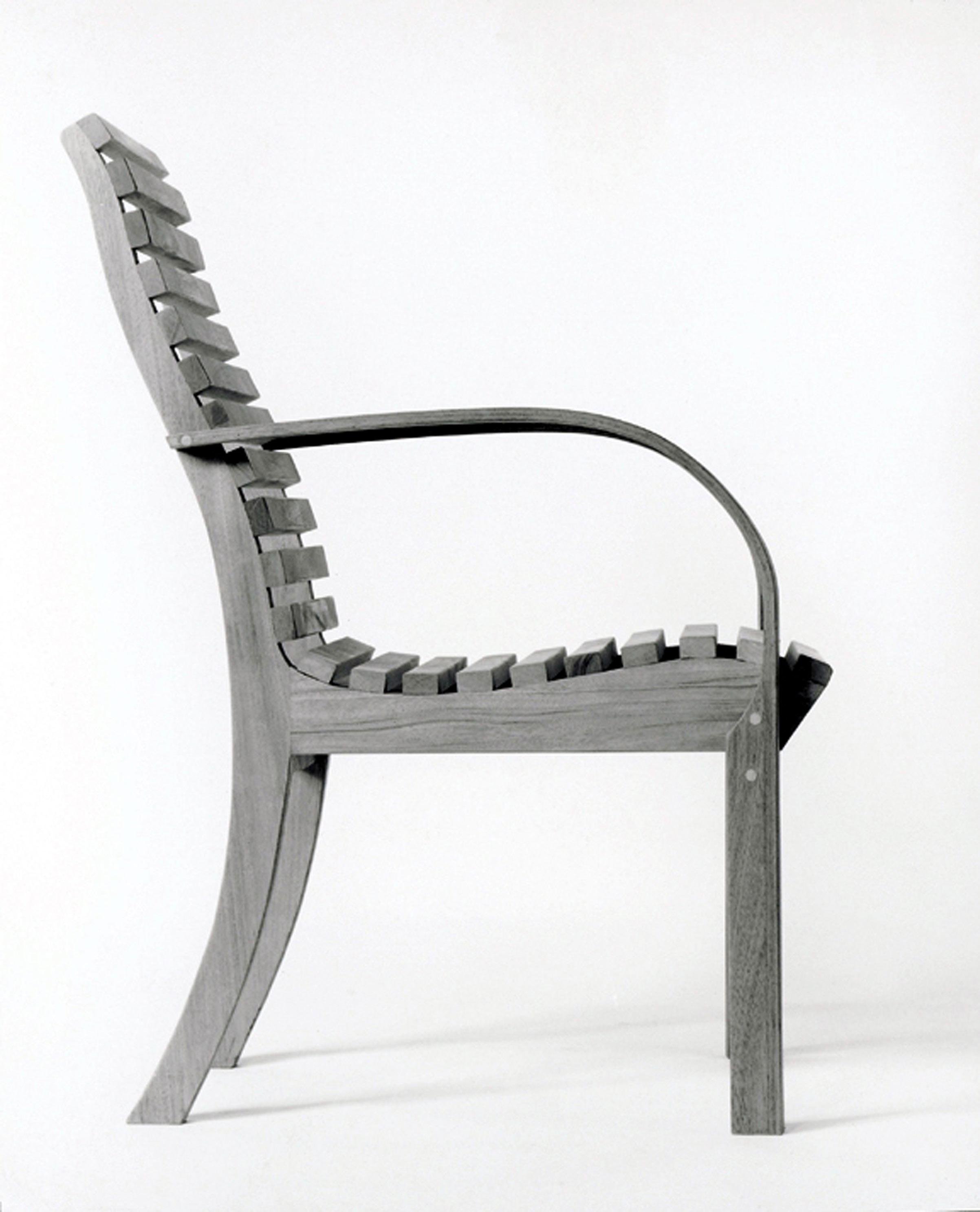
The seat supports without cradling.
The arm rests beneath the hand almost without notice.
The back encourages the body rather than holding it.
Nothing calls attention to itself.
Everything works together.
Before anyone sits, a chair quietly invites us.
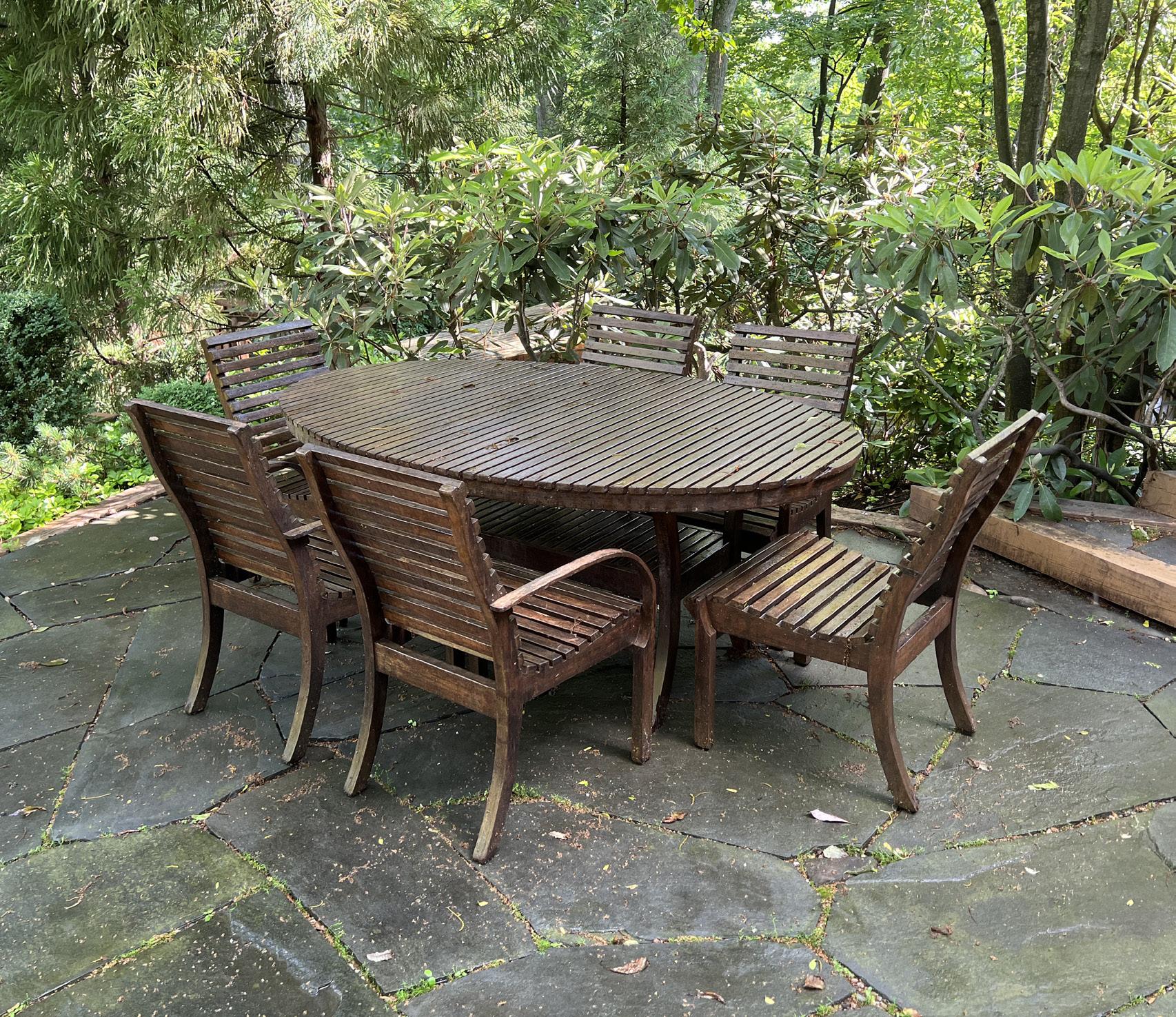
Delivered in 1993. Photographed in 2023.
The best chairs are comfortable twice.
First to the eye.
Then to the body.
More than thirty years later, the chairs remain in the garden for which they were designed.
Seasons have passed.
Trees have grown. They still belong.
GATHERING
Observation 4
Good design adapts to life.
Outdoor living rarely stays the same.
Sometimes there are four.
Sometimes eight.
Sometimes fourteen.
Coffee becomes lunch.
Lunch becomes dinner.
Dinner becomes celebration.
Why should one table determine how people gather?
GATHERINGS
Four pieces. Countless occasions.











Tea Morning Lunch
Occasional Tables Dinner Celebration
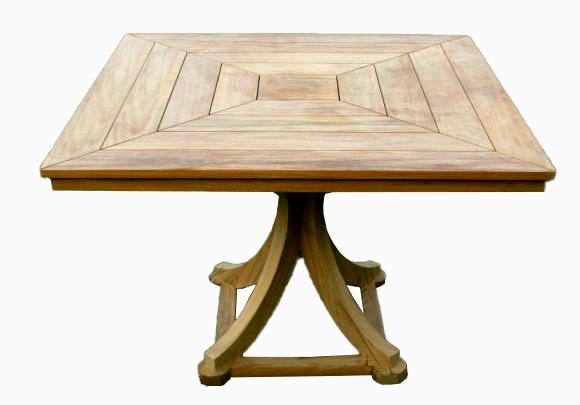
42” Table
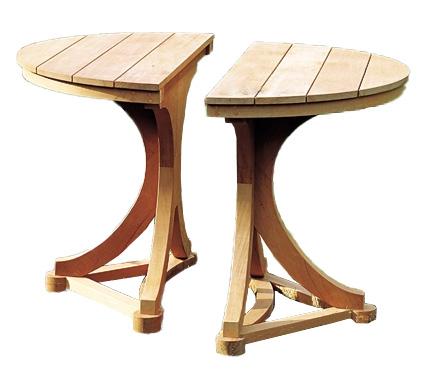
42” Table Demi-lune Demi-lune
The answer wasn’t a larger table. It was a system that adapted to life.
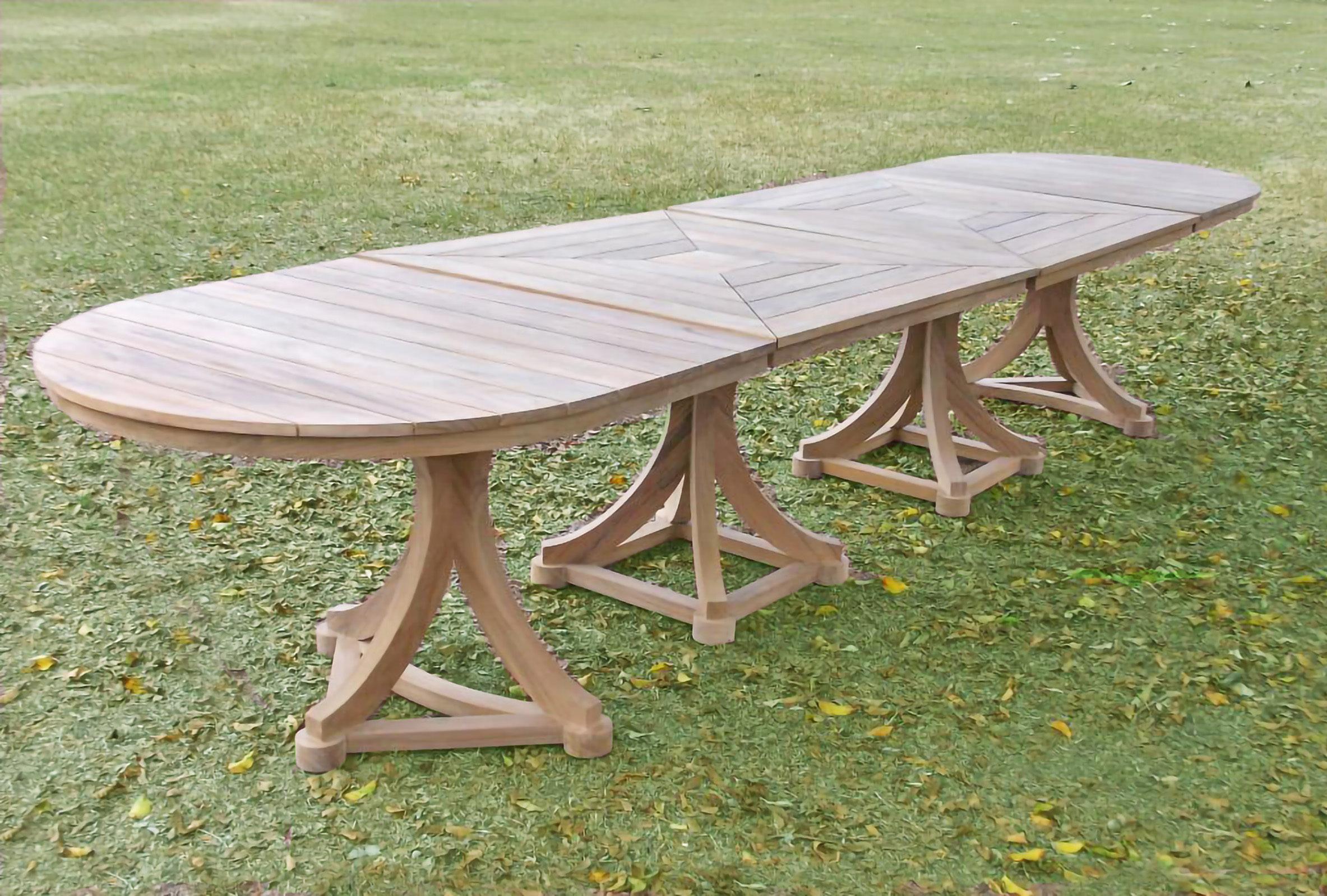
Two demi-lunes could extend a square.
Or lengthen a rectangle.
Or become a round table of their own.
Or wait quietly against a wall until they were needed again.
The same four pieces responded to different moments.
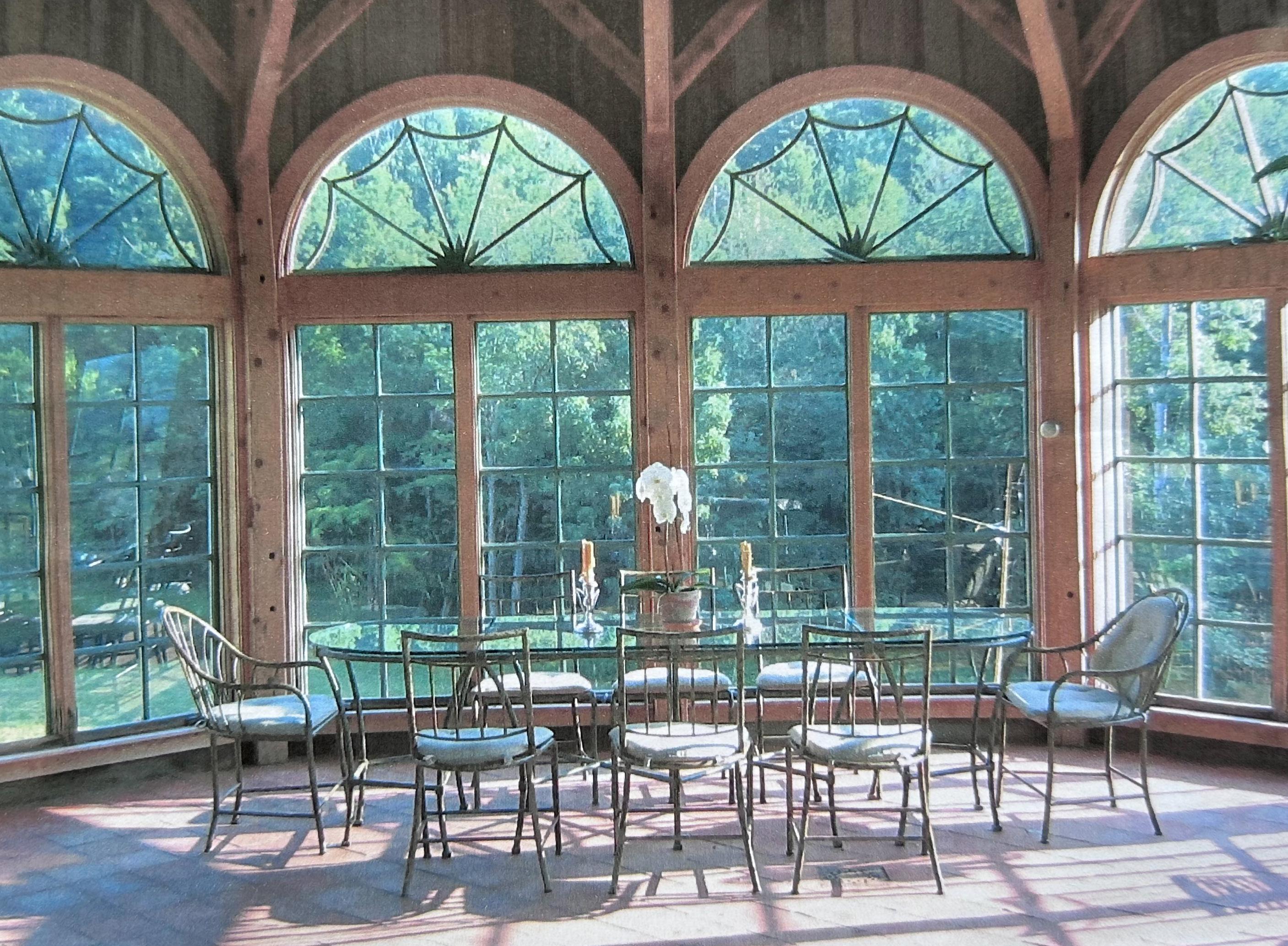
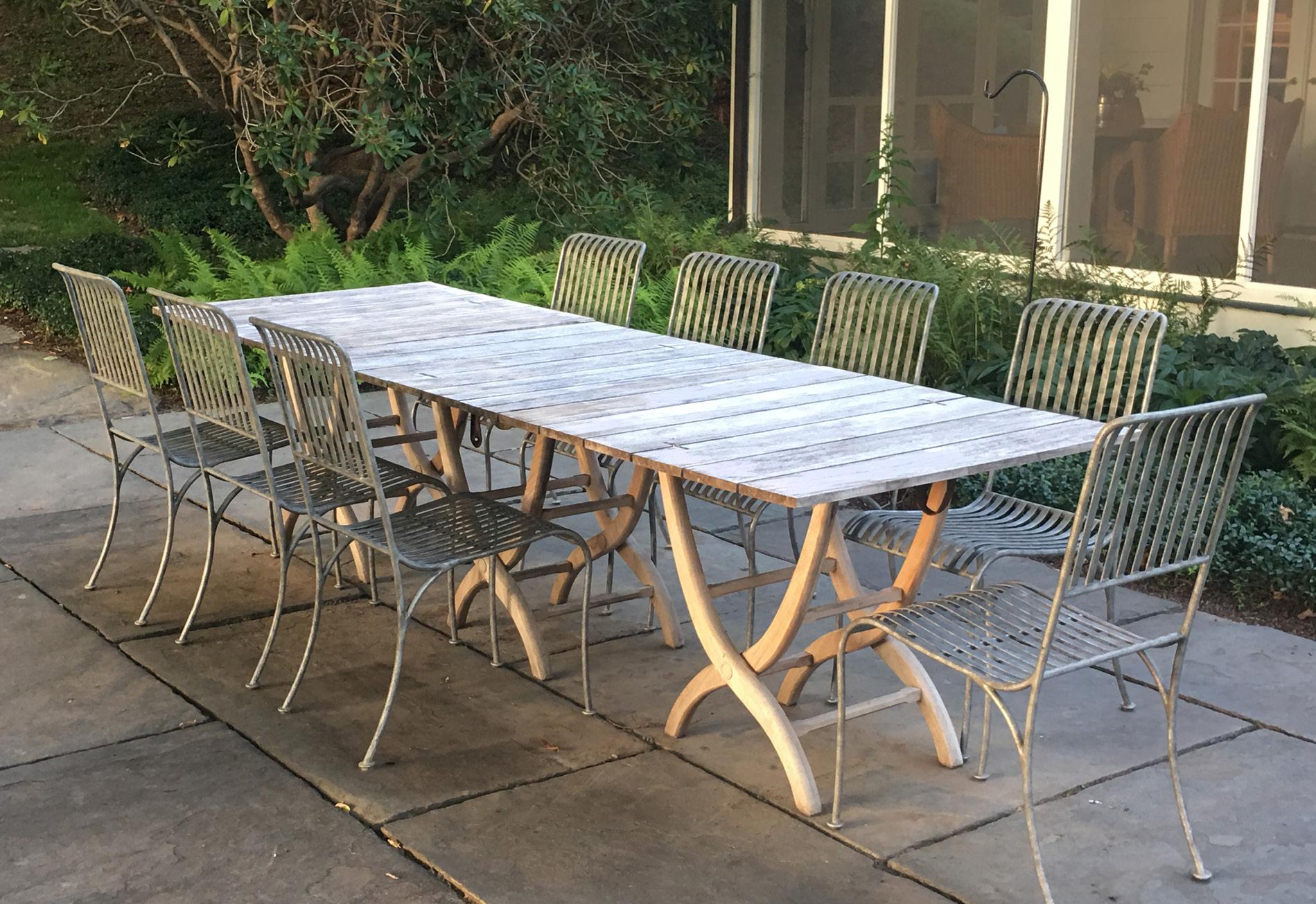
The idea continued.
A rectangle could grow longer.
A square could become an oval.
Gathering no longer depended on one table..
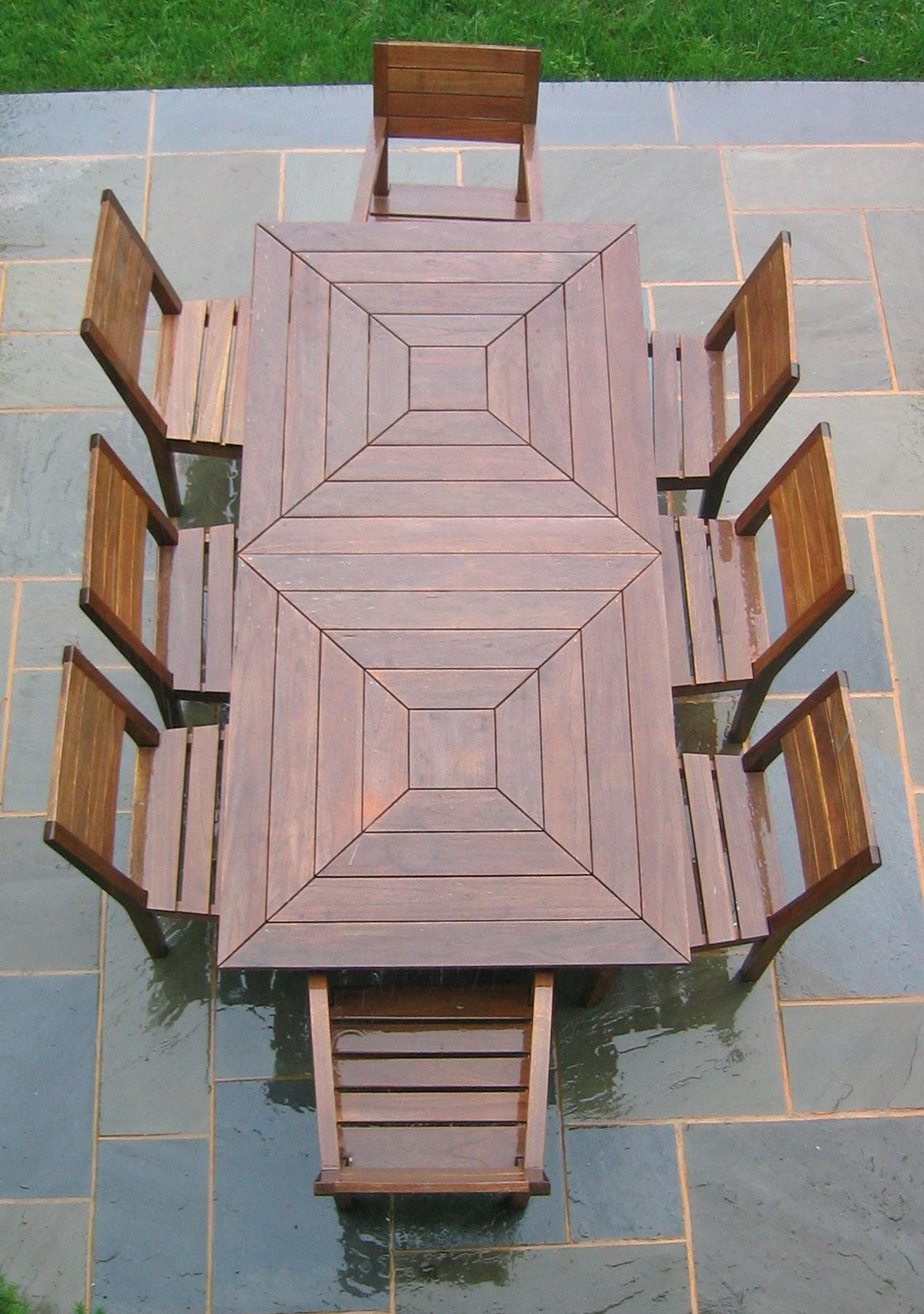
Good furniture isn’t designed for one occasion. It’s designed for a lifetime of living.
TRAINING THE EYE
Observation 5
Discernment grows through return.
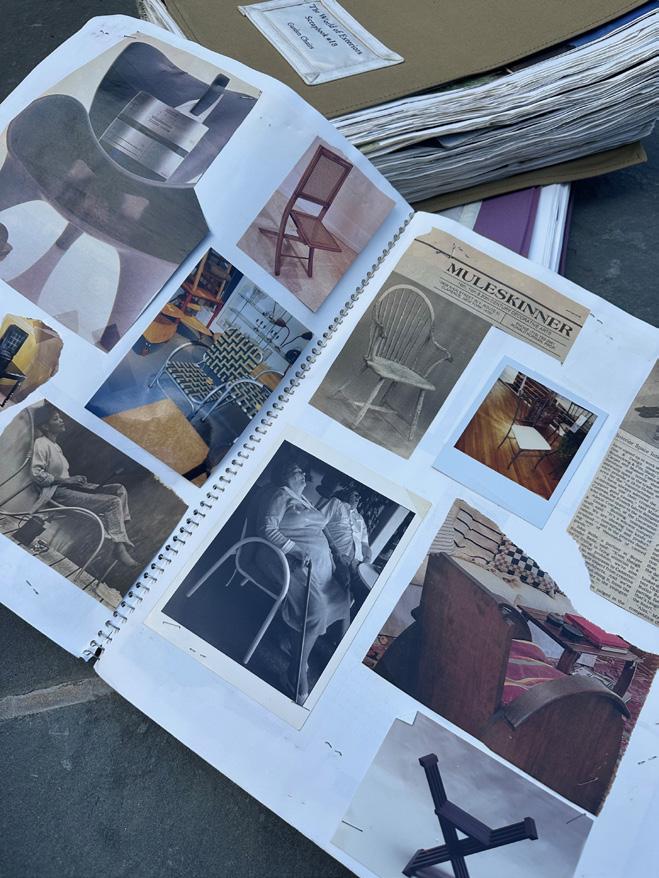
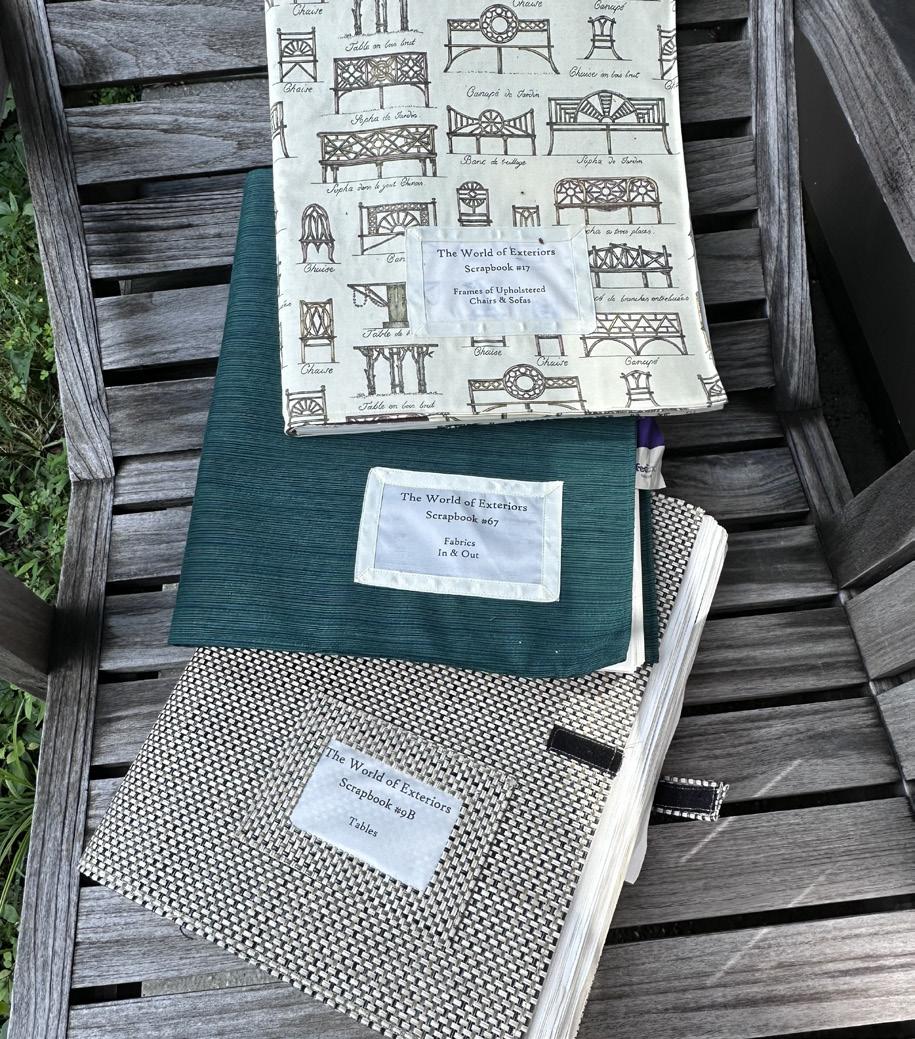

Every designer begins by looking.
Some never stop.
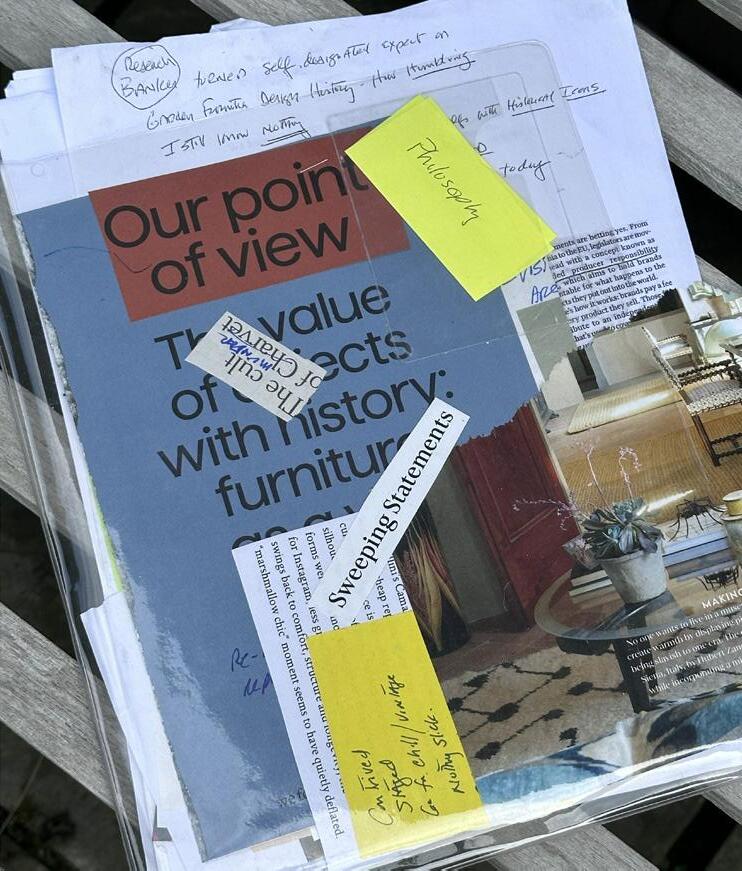
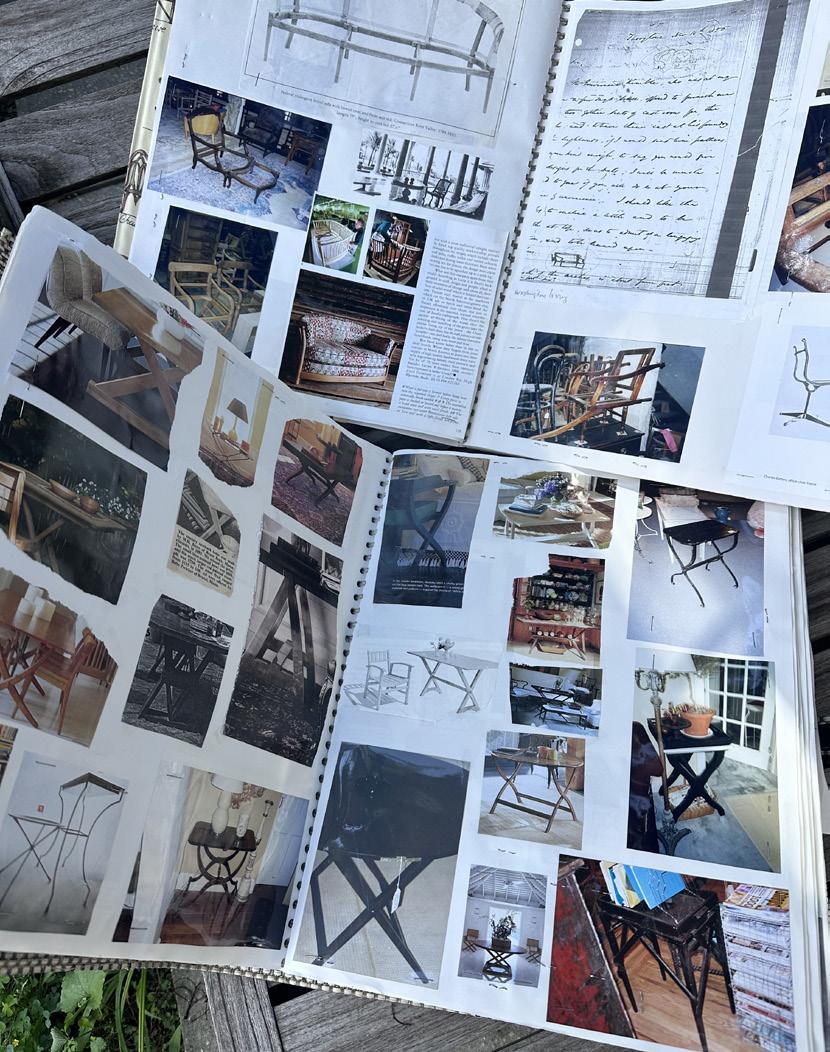
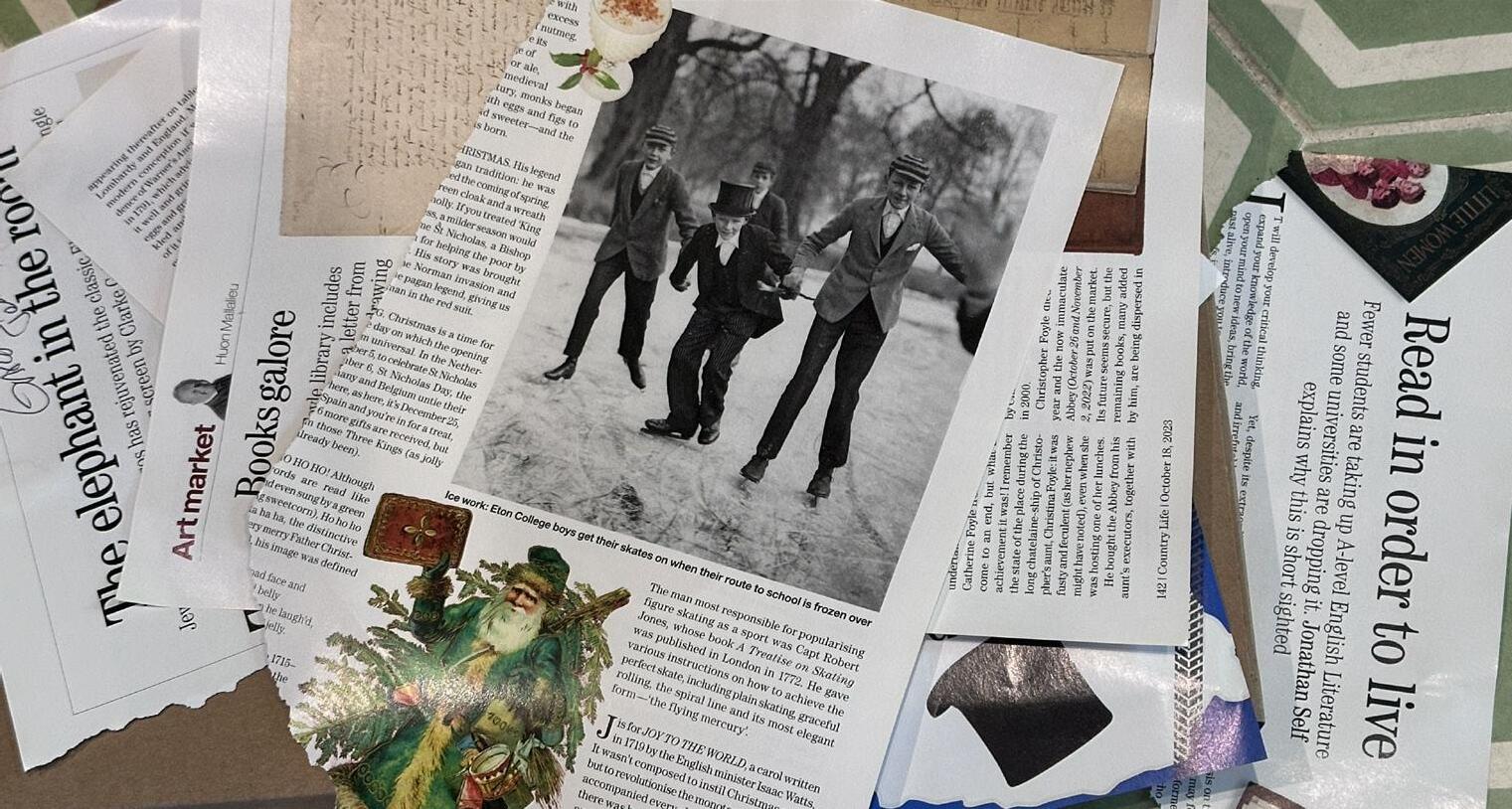
These weren’t archives. They were exercises in attention. Every image had first been chosen.
Then kept.
Then returned to.
We become what we repeatedly pay attention to.
Discernment grows through return.
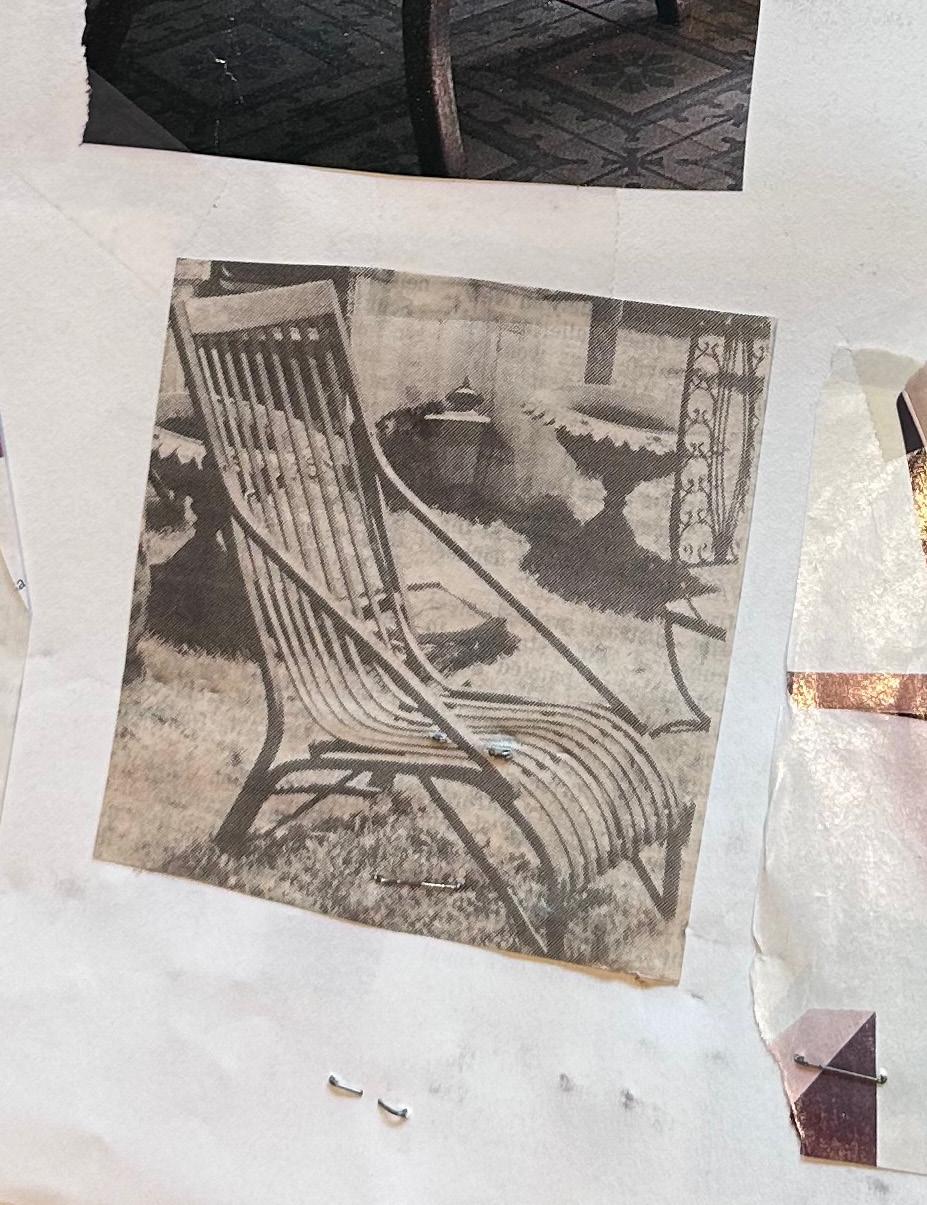
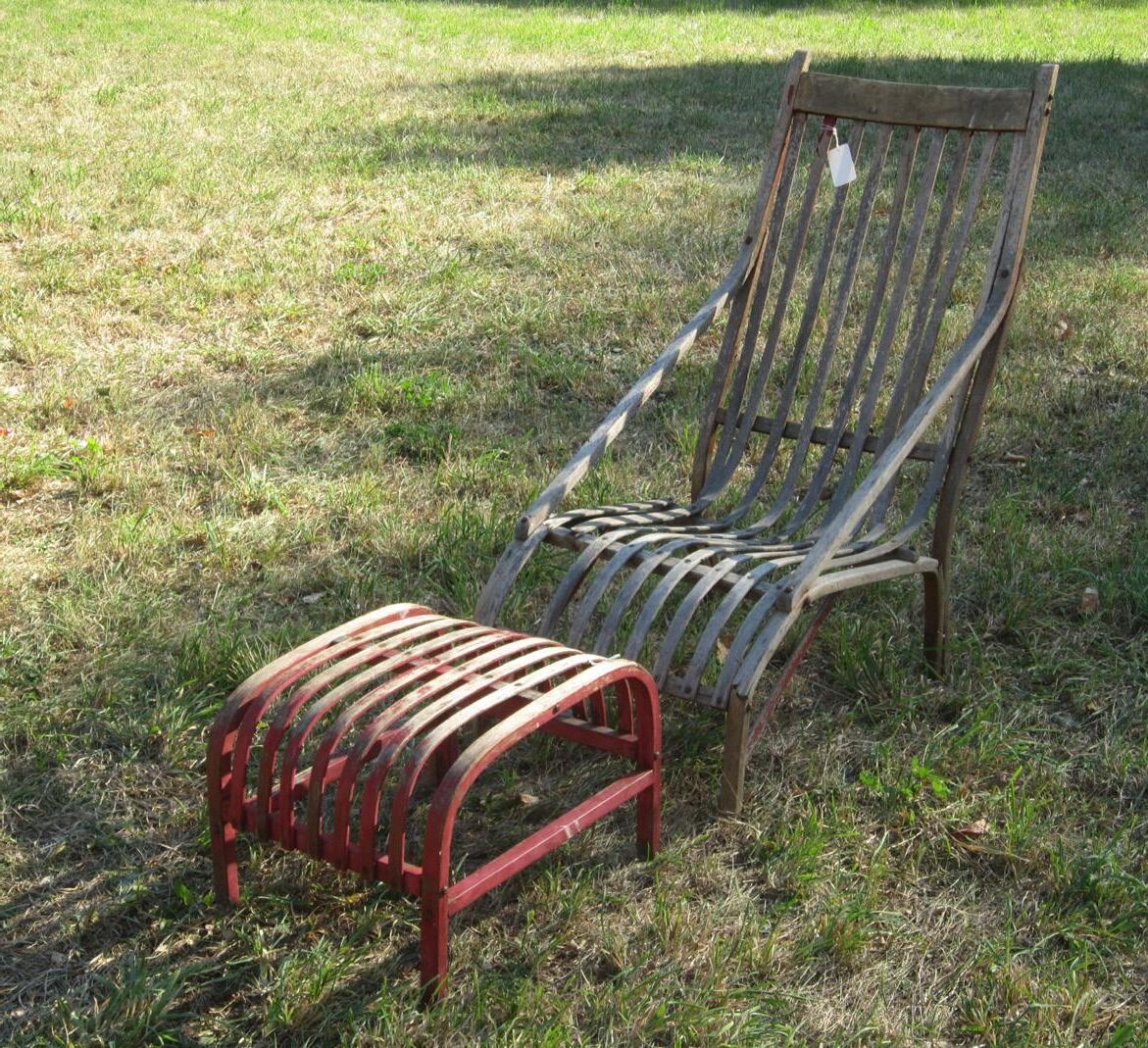
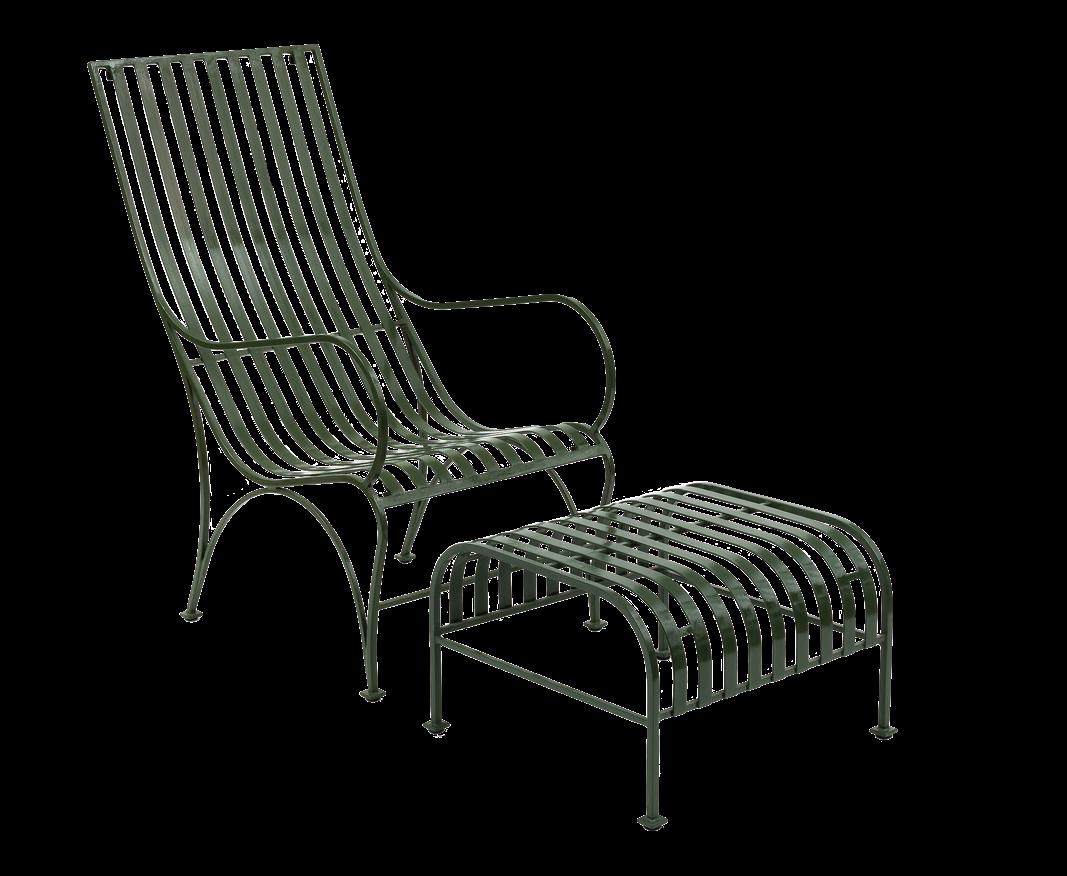
Early scrapbook
Found again years later
Swan chair + ottoman
Years later ... ...the right curve...
...would simply feel familiar.
The scrapbook had become his eye.
MEANING IS ANOTHER MATERIAL
Observation 6
Meaning accumulates over time.
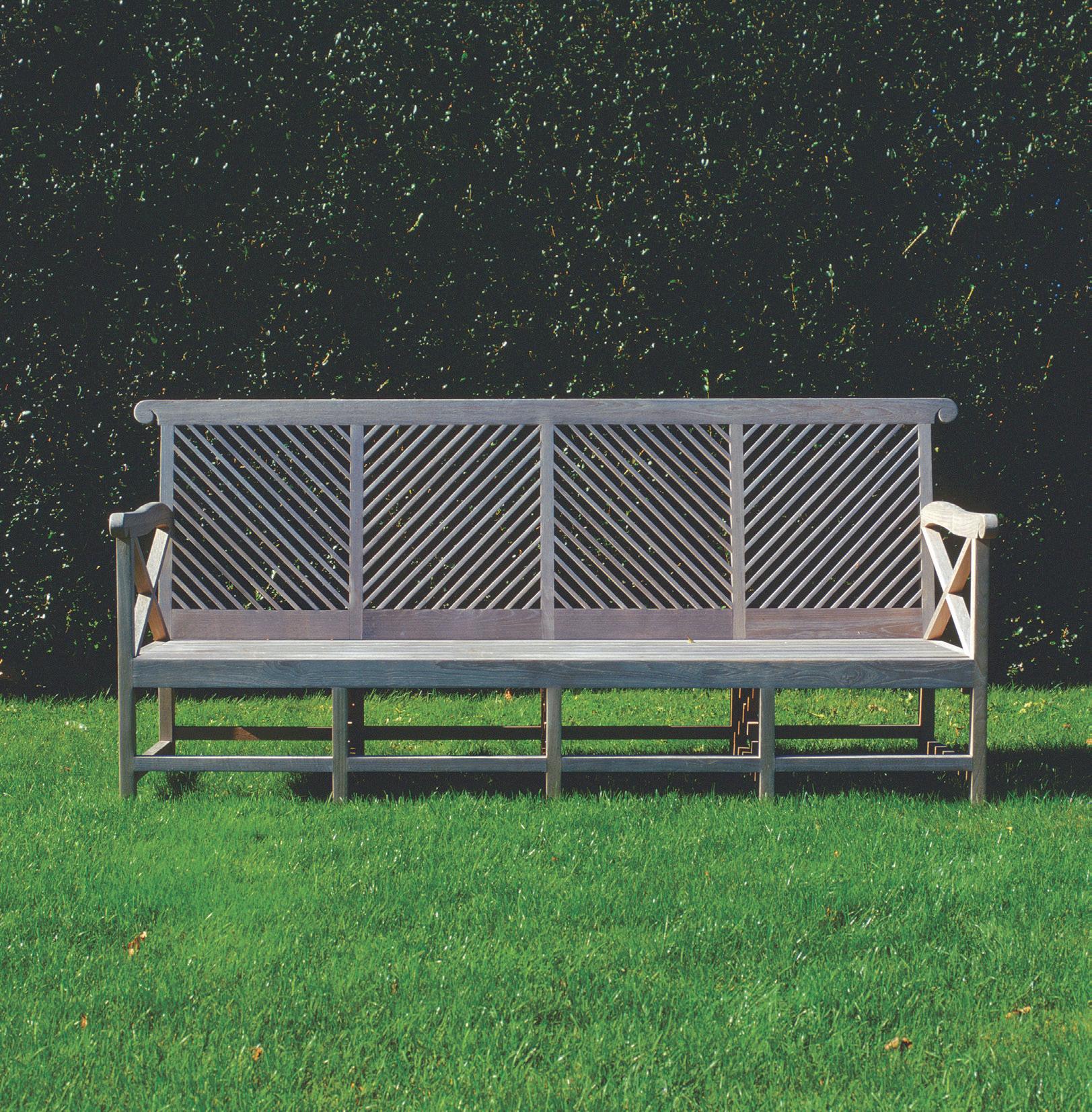
At first, we simply see a beautiful object. Sometimes that is enough.
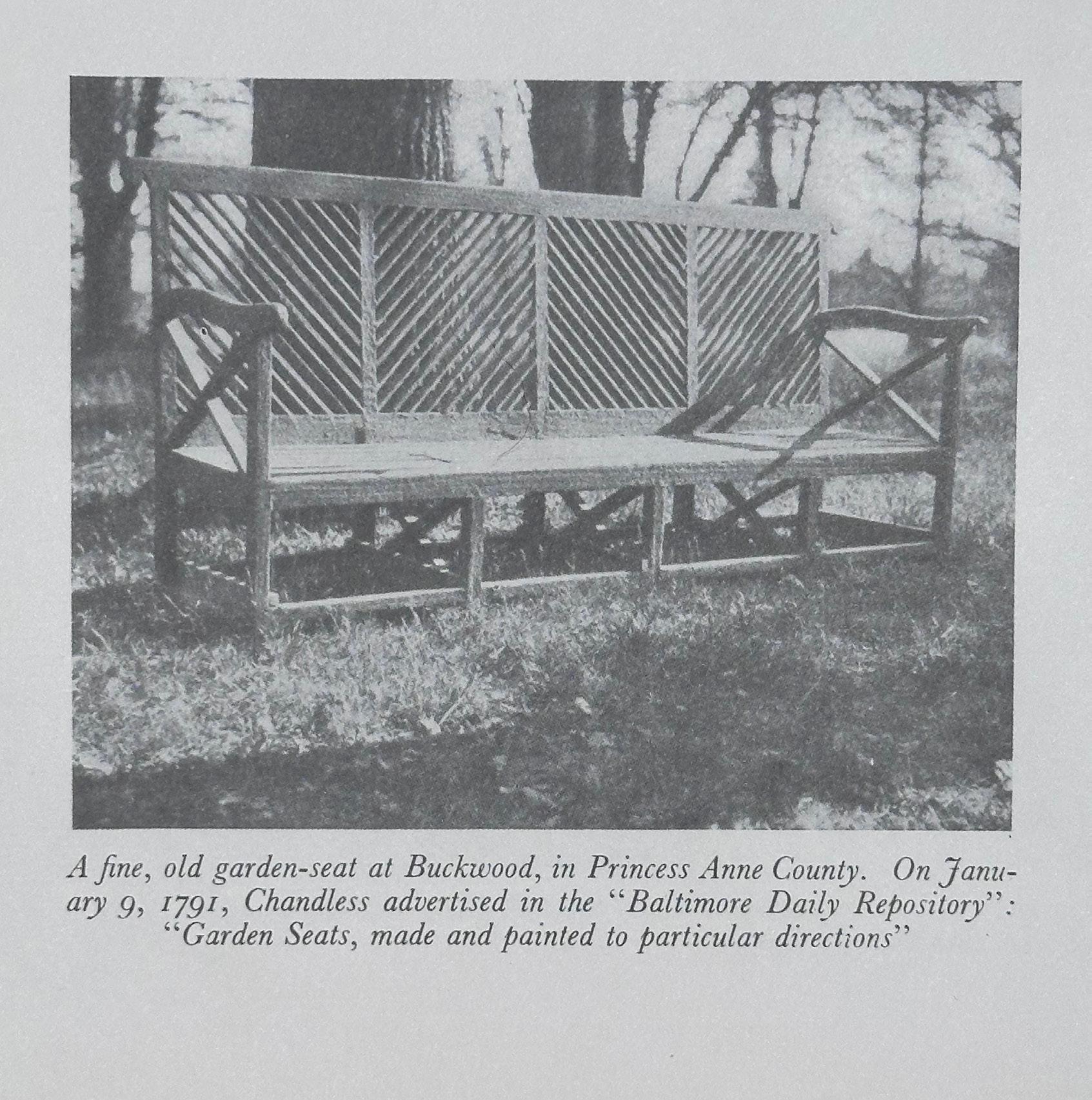
Gardens of Colony and State (Garden Club of America, 1934)
Then we begin to see differently.
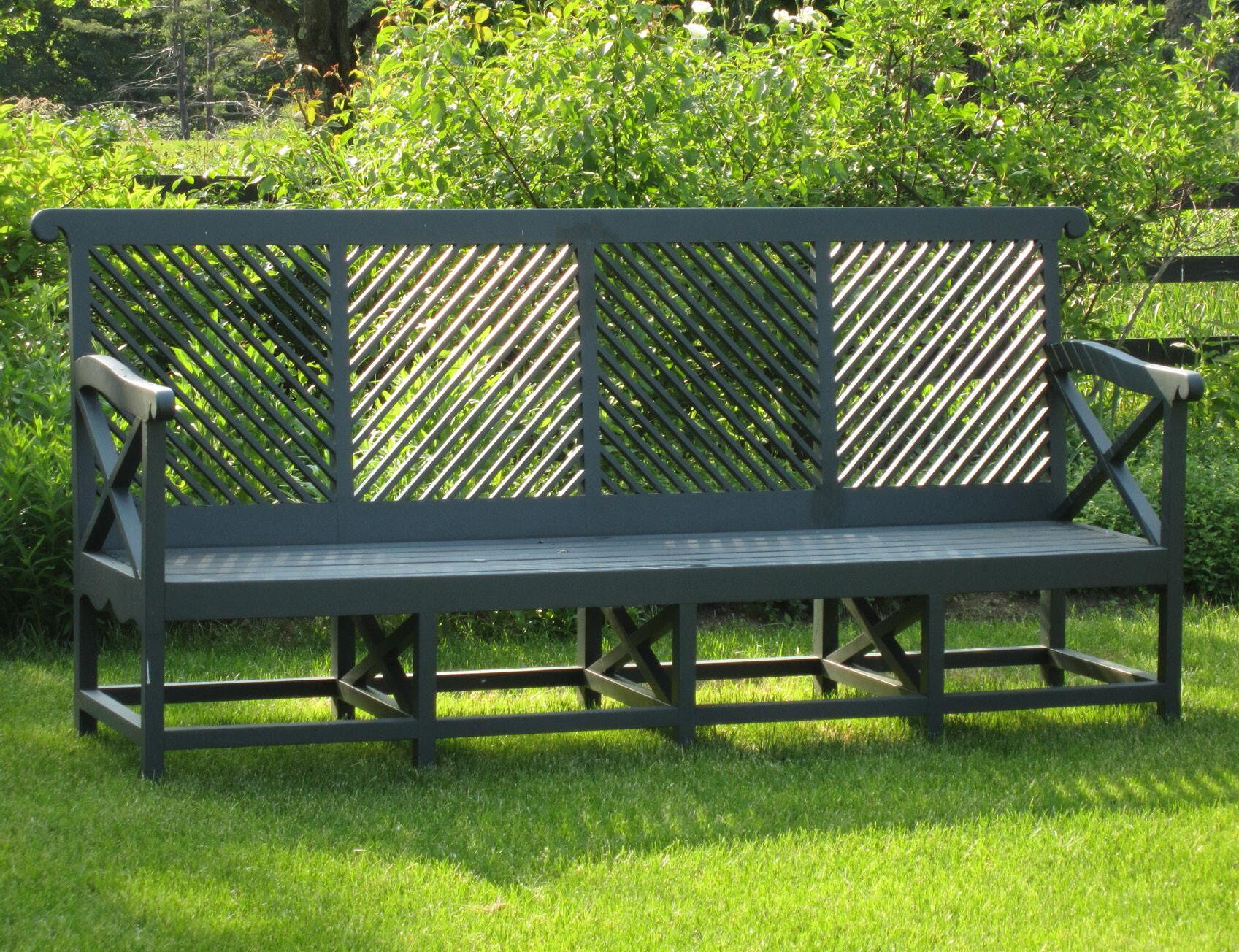
The bench is older than the Constitution.
Its design may trace back to eighteenthcentury Scotland and the traditions surrounding Thomas Chippendale.
It stood in the garden of a Maryland family whose roots also reached back to Scotland.
“The Garden Club of America is deeply interested in all efforts to preserve the dignified past for the complicated future.”
— Gardens of Colony and State, 1934
Objects gather meaning. Gardens do too.
Every object carries two histories.
The first is how it was made. The second is how it came to matter.
Beauty is rarely created all at once. It accumulates.
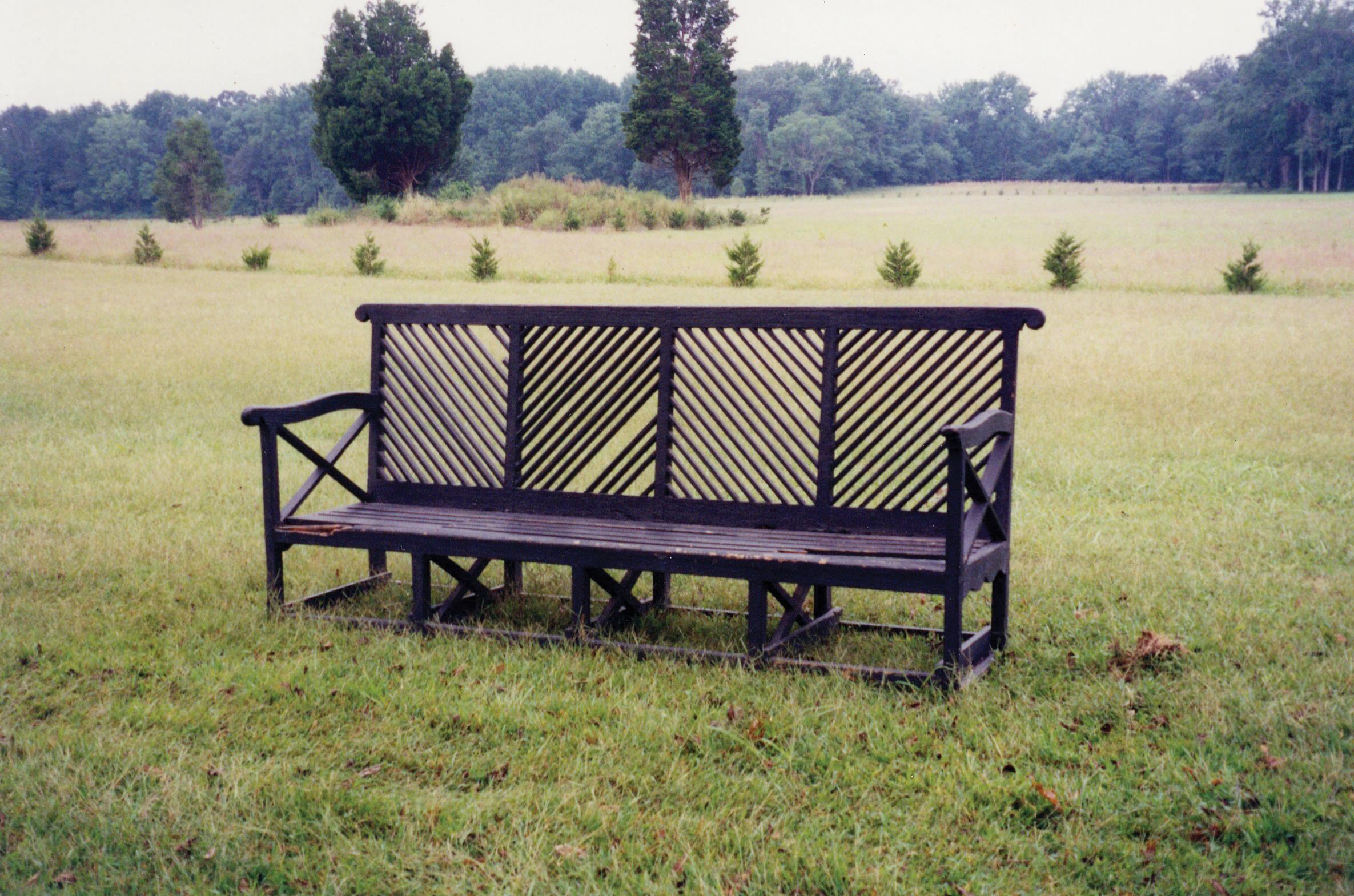
The bench itself never changed. Our way of seeing it did.
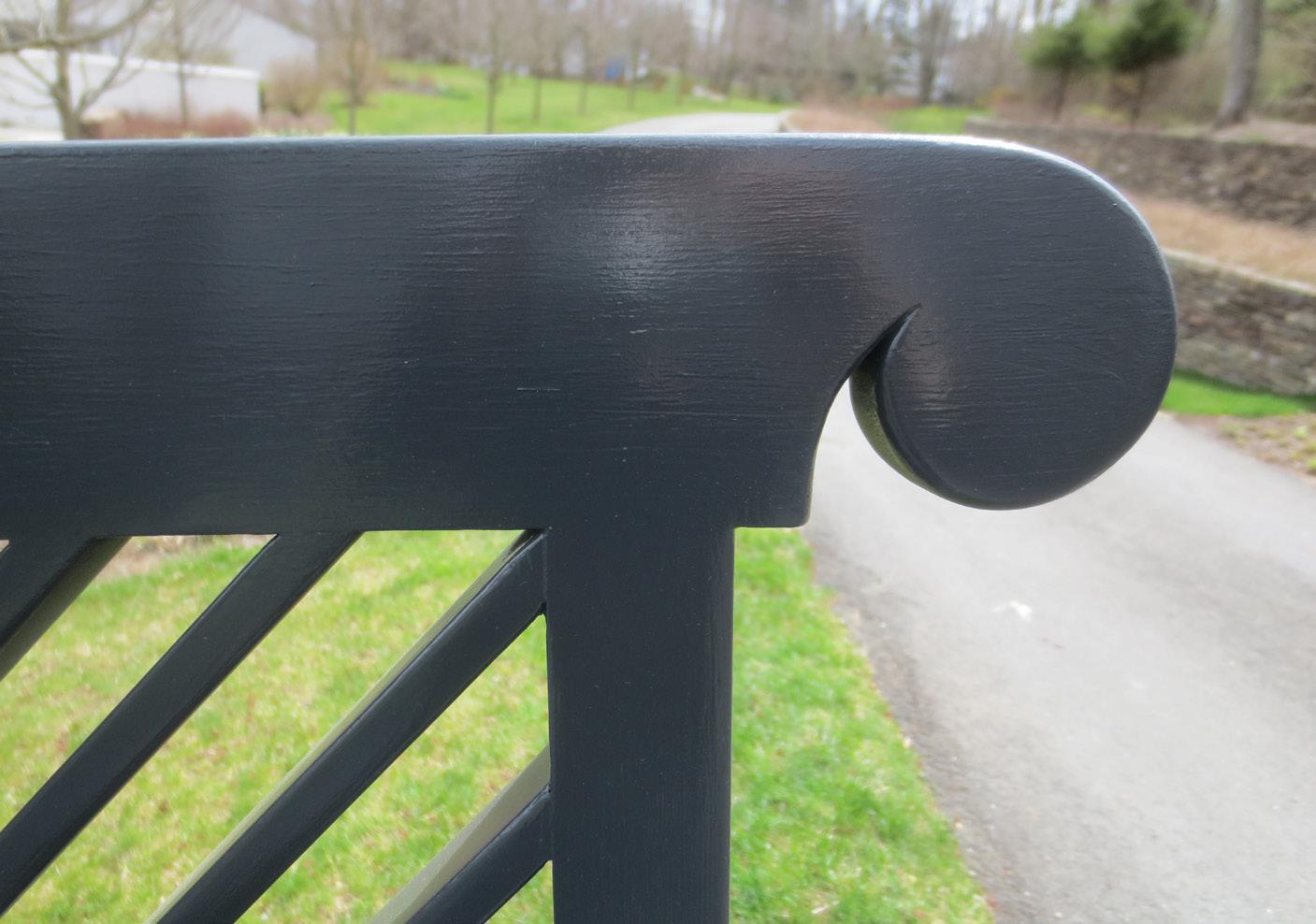
Looking closely became another form of appreciation.
Every proportion.
Every joint.
Every curve.
Understanding became another layer of beauty.
Stone. Earth. Wood. Water. Plants.
Light. These are the materials from which gardens are made.
Meaning is another. It grows through memory, care, use, and time.
Beauty accumulates.
Eventually a garden rewards not only the eye, but a lifetime of looking.