The Future of Digital Marketing
https://muzion.online/
Index
Page no
Indroduction
3,4
Artificial Intelligence in
4
Marketing Personalized Customer
4
Experiences
Voice and Conversational
4
Search Short-Form Video Content
Marketing Automation Data-Driven Marketing
Marketing Automation
2
5 5 5
5,6
Privacy and Trust Omnichannel Marketing Conclusion
6 6 6
Introduction The future of digital marketing is being shaped by rapid technological advancements and changing customer behavior. As more people spend time online, businesses are adopting smarter and more personalized ways to reach their audiences. Technologies such as Artificial Intelligence (AI), automation, data analytics, voice search, and short-form video are transforming how brands communicate with customers. Digital marketing is no longer just about promoting products; it is increasingly focused on creating meaningful experiences,
3
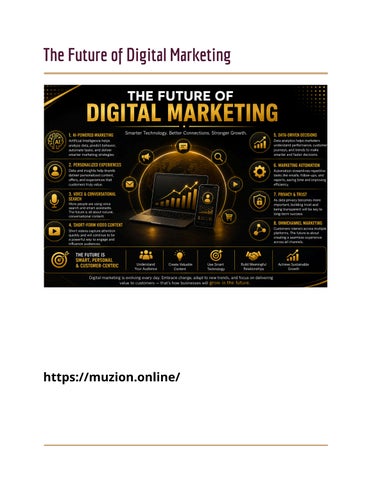
understanding customer needs, and building long-term relationships. As technology continues to evolve, businesses that adapt to these changes can stay competitive and achieve sustainable growth in the digital world. 1. Artificial Intelligence in Marketing AI is becoming an important part of digital marketing. It can help marketers analyze data, generate ideas, understand customer behavior, automate repetitive tasks, and improve campaign performance. 2. Personalized Customer Experiences Customers increasingly expect relevant content and recommendations. Businesses can use customer data and behavioral insights to deliver more personalized messages, offers, and experiences. 3. Voice and Conversational Search Voice assistants and conversational search are changing how people find information online. Businesses will need to create clear, natural, and useful content that matches conversational search behavior.
4
4. Short-Form Video Content Short-form videos continue to be an important way to attract attention and communicate information quickly. Brands can use educational, entertaining, and informative videos to connect with their target audience. 5. Data-Driven Marketing Data will remain essential for making better marketing decisions. Analytics can help businesses understand traffic, engagement, customer journeys, conversions, and campaign performance. 6. Marketing Automation Automation can help businesses manage repetitive activities such as email campaigns, lead nurturing, customer communication, and reporting. This allows marketers to spend more time on strategy and creativity.
5
7. Privacy and Trust As digital marketing becomes more data-driven, privacy and transparency will become increasingly important. Businesses need to handle customer information responsibly and build trust through clear communication. 8. Omnichannel Marketing Customers interact with brands through websites, search engines, social media, email, mobile devices, and other platforms. Future marketing strategies will focus on creating a consistent experience across multiple channels. Conclusion The future of digital marketing will be shaped by AI, personalization, automation, video, analytics, privacy, and changing customer expectations. Businesses that continuously adapt to new technologies while focusing on customer needs will be better positioned to build strong brands and achieve sustainable digital growth.
6