

An Advertising Supplement of the Daily Journal \ March 26, 2026






The right privacy trees can be just what homeowners need to turn their backyards into relaxing respites
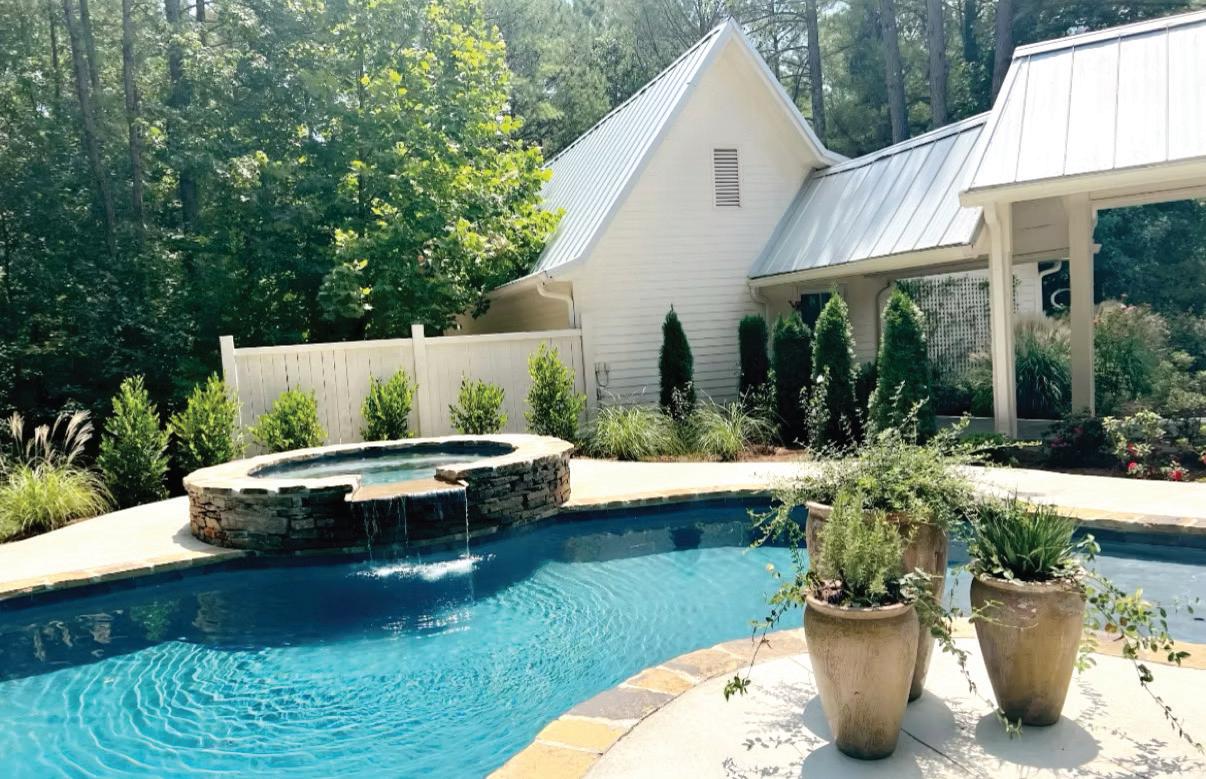
A backyard oasis can feel like an even more welcoming retreat when the area is private. Homeowners and their families often find that a backyard is most relaxing when they cannot hear or see their neighbors, and creating such an environment can be as simple as planting some privacy trees.
Fencing is an option when homeowners are looking to make their backyards more private. But HomeAdvisor reports that the average cost to install a privacy fence is just under $3,000, and those costs can be considerably higher depending on where homeowners live and how big a fence they need. Privacy trees can be considerably less expensive, and homeowners can spread out those costs by planting over time, an option that’s not possible when installing fencing.
When planting privacy trees, homeowners can consider these varieties that can do the job while also providing some aesthetic appeal.
• Emerald arborvitae: The Arbor Day Foundation notes that the emerald arborvitae is unique among arborvitaes because it maintains its green color even in the coldest months of the year. The emerald arborvitae can grow to between 10- and 15-feet-tall and spread as wide as four feet at maturity. The tree features a pyramid shape and is considered slow-growing at less than 12 inches of growth per year. The ADF reports that full sun and partial shade are best for this tree.
“Probably our most popular is the Green Giant arborvitae,” said James Plunkett, wholesale manager for Walton’s Greenhouse. “It grow in a Christmas tree form. It’s really hardy and grows 2 to 2.5 feet,
sometimes 3 feet a year.”
Other good screeners are Elaeagnus plants and Leyland cypress, he said. Teddy Bear magnolias are
with their local gardening center to ensure they’re getting boxwoods that will provide ample privacy. Though they still have aesthetic
compact, evergreen, dwarf Southern magnolias ideal for smaller gardens, privacy screens, or container planting. It is known for its dense, upright pyramidal shape, glossy dark green leaves with a fuzzy, copper-brown underside, and large, fragrant white flowers in summer.
‘The Linebacker Distylium is a good choice if it’s not full sun because it takes a little sun than the others,” Plunkett added.
• Carolina cherry laurel: Carolina cherry laurels are popular choices for privacy seekers. The Lady Bird Johnson Wildflower Center notes the trees can grow very tall and boast a pyramidal shape. The Carolina cherry laurel require sun and thrive in moist, well-drained soils.
Parents with young children should know that the leaves of this family of plant contain hydrocyanic acid and should never be eaten.
• Boxwood: The ADF notes that boxwoods are renowned for their use in formal gardens. That can make them an ideal option for homeowners seeking a traditional garden aesthetic in their backyards. Boxwood trees can grow up to 20 feet tall, but they can vary greatly in height. Homeowners purchasing them as privacy trees should speak
appeal, smaller boxwoods may only reach a foot tall. Boxwoods vary considerably in terms of their growth rate, so homeowners should
inquire about this as well before purchasing and planting any trees.
• Privet: Privets are dense privacy hedges that grow very quickly, with the ADF reporting they can grow up to three feet per year. Privets may reach 12 feet in height and spread as wide as six feet at maturity. Privets tolerate shearing well, which can make them ideal privacy options for those looking for a formal appearance. Privets require full sun for uniform growth. Privets are considered invasive in many areas of North America, so homeowners should consult their local garden center prior to planting.
Plunkett recommends starting with 3-gallon sized plants, or for more impact, 7 gallons. Trees and shrubs and come in even larger sizes but of course are more expensive.


Wheeler Roofing specializes in reroofing commercial, industrial and residential properties. With four generations of roofing knowledge and a commitment to using the finest products available, we continue to strive for our goal of customer satisfaction.
Weather can be unpredictable, even during the warmest months of the year. Summer days may feature strong thunderstorms and downpours, followed by stretches of extremely hot and dry conditions. Weather extremes can take a toll on lawns, especially when drought is part of the equation. The results can be anything from dry patches to a scorched landscape, leaving homeowners wondering what they can do to repair the damage.
According to The Spruce, dry grass can happen in as little as a week without adequate care and water. Sometimes dry grass can be the result of disease, pets, or pests. A healthy lawn will be lush and green; a dry lawn quite the opposite. It’s crunchy, uncomfortable and muted in color. Here’s how to address a dry lawn to restore it to it’s natural beauty.
creating a separate potty area in the yard can help alleviate brown spots.
Sometimes a lawn mower might be to blame for
are just some of the diseases that can affect a lawn. Fungal bacteria can spread on a lawn and contribute to these conditions, which makes it important to aerate and dethatch the lawn in cooler seasons to help prevent disease.
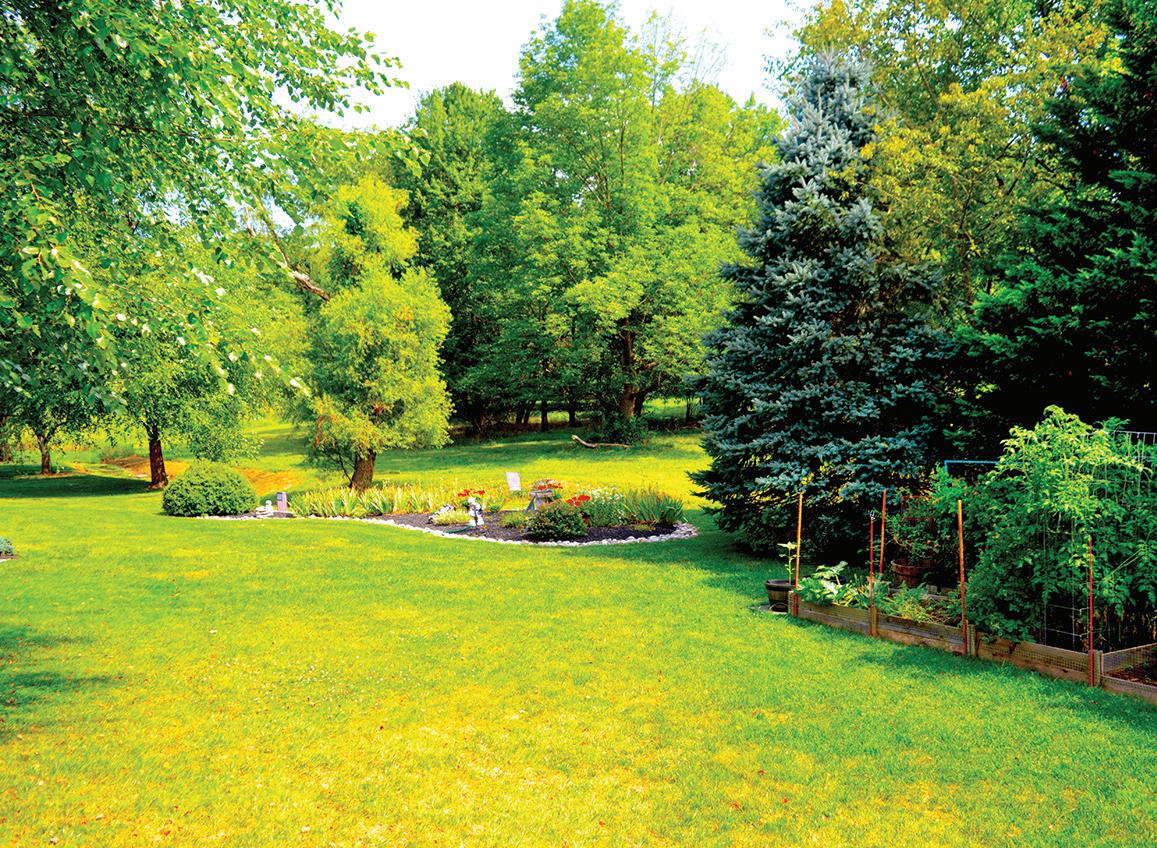
Animal urine often is the culprit behind dry patches in a lawn. Lawns need nitrogen to grow, which is why it is included in many fertilizers. But the nitrogen in dog urine is concentrated and directed in one area, so much so that it chemically burns the lawn. This concentrated nitrogen causes the grass to dry out, turn yellow and eventually go brown and die. Rinsing areas where dogs urinate on the lawn or

a brown lawn. According to Scotts®, the higher a person mows, the deeper the lawn’s roots will grow. That can help the lawn thrive under restricted water conditions and insulate the lawn from some of the effects of hot, dry weather. Never remove more than one-third of the total height in a single mowing, as that can stress the lawn.
Leaf blight, brown patches and powdery mildew
A lawn requires a certain pH to grow well. According to Weed Man Lawn Care Services, the ideal pH range for lawn soil is between 6.0 and 7.0. Anything outside of this range may result in poor, brown grass. A soil pH test will indicate if the soil is acidic, alkaline or optimal. Amend an acidic soil with lime and an alkaline soil with sulphur in small amounts until a balance is reached.
Pest infestation
People are not the only creatures that like a lawn. Many pests feed on blades of grass or the roots. The result can be patchy, dry grass. Figuring out what is causing any damage is essential. Homeowners can then take steps to remove the pests and return the lawn to its former glory.
Deep watering can help restore a lawn that has widespread wilting and browning. Popular Mechanics advises homeowners begin watering more in spring. Water infrequently but for longer periods of time to encourage roots to deepen. The ideal time to water is between 5 a.m. and 9 a.m. to limit evaporation.
A well-manicured lawn adds undeniable curb appeal to a property. Homeowners who take pride in their lawns should know that they can take that pride all the way to the bank, as investing in a pristine lawn can provide a significant return at resale.
A 2019 report from the real estate experts at HomeLight found that a $268 investment in lawn care service can add $1,211 at resale. That’s a 352 percent return on investment. Homeowners can capitalize on a pristine lawn
even further by tending to their own lawns. Crabgrass is one lawn problem that can compromise the look of an otherwise lush lawn. Thankfully, crabgrass can be controlled without much effort.
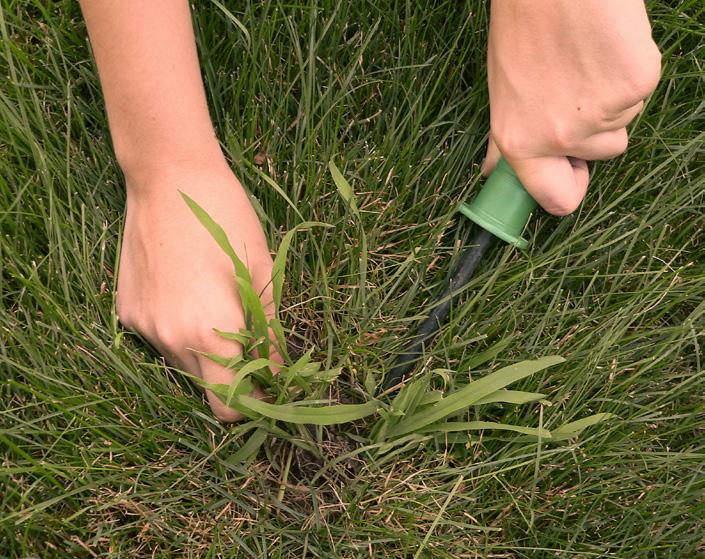
Crabgrass is a weed that grows in areas of a lawn that are bare or where the grass is thin. Crabgrass gets its name from its appearance, as it grows from the center outward and mimics the look of crab legs emerging from the center shell.
The University of Minnesota Extension notes that crabgrass is an annual plant. That means a crabgrass infestation that’s problematic once the mercury rises in the summer will die out in late fall or early winter. But crabgrass ger-


minates in the spring, so homeowners will want to take steps to prevent it long before it becomes an eyesore in summer.
The UME notes that application of a pre-emergent herbicide before crabgrass seeds can germinate is an effective way to eliminate it. The timing of that application can be tricky, as jumping the gun and applying the herbicide too early can prove fruitless. The same goes for applying herbicides too late. Crabgrass will likely still grow if the herbicide is applied too early or too late. UME recommends applying a pre-emergent herbicide when soil temperatures approach 55 F. Home Depot notes that a chemical treatment may be applied after crabgrass has already grown in, but this option requires






careful application to avoid killing surrounding healthy grass. Crabgrass can be pulled out by hand, but such an approach can be physically daunting. That’s especially so because crabgrass thrives when the weather is hot and dry. So homeowners who intend to pull crabgrass by hand can decrease their risk of dehydration or heat-related illness by drinking plenty of water and pulling the grass during early morning or evening hours when the sun is lower and temperatures are more mild.
Crabgrass can compromise the look of an otherwise healthy lawn. But various strategies can eliminate crabgrass and restore a lawn without much effort on the part of homeowners.




























Many people take to the great outdoors to escape the increasingly tech-driven daily grind. Though that’s an understandable perspective, gardeners who aren’t deploying tech in their home gardens could be missing out on a host of benefits that could help their plants, flowers and vegetables thrive.
Devices like smartphones and tablets have made many aspects of life easier and more efficient, and various tech products can do the same when working in the garden.
Plant monitors are sensors that can keep tabs on the health of plants and deliver that information to gardeners. Plant monitors often connect to smartphones via Bluetooth and can deliver information on the amount of heat, light and water a plant is getting. Sensors vary in price, and some will provide more information than others. But these sensors are ideal for gardeners who love their plants but often forget to check up on them each day.
Critters and insects are the bane of many gardeners’ existence. Determining just what is nibbling
away at flowers and plants isn’t always so easy, as many animals are savvy enough to restrict their dining to the middle of the night and insects are so small they can be hard to spot. Garden cameras can

serve as the watchmen of a garden and gardeners can review footage to determine just who is compromising all of their hard work. They can then use that knowledge to remedy the situation and give their plants a better chance to thrive.
Even the most seasoned gardeners cannot docu-

ment the conditions outside as effectively as a good weather sensor. Weather sensors track conditions such as temperature, relative humidity and air quality. This information can then be paired with irrigation devices to ensure plants get all the care they need to thrive throughout the season.
Avid gardeners have traditionally had to arrange for neighbors or loved ones to tend to their plants when they leave home for vacation or weekend getaways. Garden hubs can take care of that by pairing with smart irrigation systems that ensure plants are watered even when no one is home. Certain hubs even gather and analyze local weather conditions to develop a watering schedule to ensure plants thrive. These hubs aren’t just handy when on vacation, as they can be great for gardeners who want to know things about their plants that are not apparent to the naked eye.
People may see their gardens as welcome respites from their devices. But garden gadgets can help plants thrive and make time in the garden that much more enjoyable.

Homeowners choose plants for their properties based on a number of variables. Some may be into growing their own foods, while others desire their gardens to be an awe-inspiring mélange of bright colors and alluring scents. There’s no wrong reason to plant a fresh garden, but some plants offer extra benefits, such as repelling insects.
Insects can be a nuisance and a threat to individuals’ overall health. According to the American Academy of Family Physicians, insect-borne diseases are viral and bacterial illnesses that develop from insect bites. Mosquitoes, sand flies and fleas are some examples of insects that can pass on disease. Fever, chills, headache, and muscle soreness are just a few of the more common symptoms linked to insect- borne diseases. The good news for avid gardeners is that certain plants can help repel insects and provide the additional benefits like fresh food and aesthetic appeal that so many people love.
The aroma of fresh basil is enough to compel any gardener to make a place for it in their garden. But there’s more to fresh basil than its scent, as the Farmers Almanac notes it can be used to repel mosquitoes and moths.


Fleas, flies, mosquitoes, and moths are not fans of this aromatic and colorful member of the mint family. Bees tend to be drawn to lavender, a durable plant that many garden centers recommend in areas prone to drought or hot summers without much precipitation.
Mint is another plant that is instantly recognizable for its aroma. But mint lovers may not realize that it’s also great for keeping ants at bay. Mint also can be used to repel mosquitoes, but gardeners with no experience planting mint should plant it in pots. That’s because the Farmers Almanac notes mint is an especially aggressive spreader that can quickly take over a garden. Separating mint in pots can prevent it from bullying its way into other plants’ domains.
Scruggs Lawn & Garden Home Improvement Warehouse Assistant Manager Jennifer Shadburn said any kind of mint plant will do, noting it was smart to mix them with other plants. As they grow together the mint will deter the pests.
Lemongrass is a tropical grass that’s so fragrant it’s often used in perfumes. Lemongrass contains citro-

nella, which many people associate with repelling mosquitoes. A potted lemongrass plant can repel these unwanted guests, keeping them away from decks, porches and/or patios all summer long.
The Farmers’ Almanac® recommends using chrysanthemums, which repel a range of insects from bedbugs to fleas to ants, as border plants around a home. That’s because they contain the natural insecticide pyrethrin, which can serve as something of an insect-repelling boundary around a home.
Insects are unwanted guests around a home each spring, summer and fall. Certain plants can help repel insects and serve as an eco-friendly alternative to insecticides.
Marigolds are a South American native plant that has been naturalized across the globe. They have a strong smell that insects like tomato hornworms will go to rather than produce, making it a good bait flower. The flowers also repel nematodes as a cover crop. “It is not harmful to any other insects just the pests,” Shadburn said.


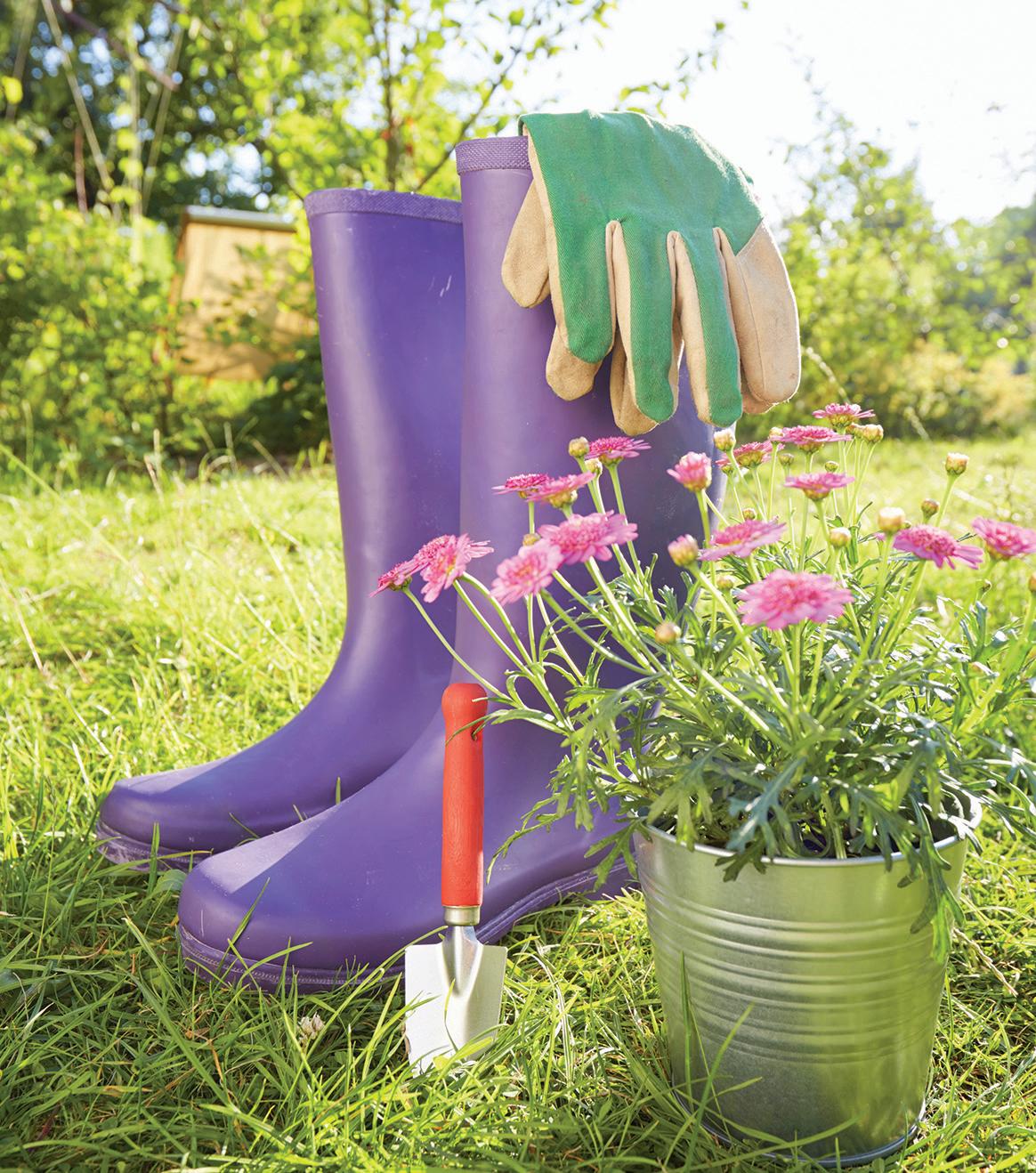
New plants can add much to a landscape. Whether they’re replacing plants that are no longer thriving or being added to supplement an existing landscape, new plants are an affordable way to give a home’s exterior a whole new look.
Much consideration is given to which plants to add to a landscape. That’s understandable, as homeowners want to choose plants that will thrive and won’t compromise the health of surrounding plants and trees. Before planting or even choosing plants, it’s important to plan for new additions to a landscape. Preparing the landscape can inform homeowners about which plants to purchase and
can ensure they thrive after planting.
• Document sunlight exposure. Plants have different needs, and one of the biggest differences between species is the amount of sunlight they need to thrive.
According to Penn State Extension, plants characterized as “full sun” require six or more hours of sunlight per day, while those considered “partial sun” need between four and six hours of sunlight per day. Plants designated as “partial shade” need two to four hours of sun per day, while “shade” plants need less than two hours of sunlight a day. Documenting sunlight exposure in advance gives homeowners an idea of which plants should be planted and where they should be planted. Jot down these observations in a journal over several weeks and then choose plants that will thrive in each area.
“With a garden it’s really good to make sure that wherever you’re starting, you





have full sun,” said Becky Walton, owner of Walton’s Greenhouse, which has locations in Fulton, Tupelo, Amory, New Albany and Columbus.
• Test the soil. A soil pH test is a simple and quick way to determine the acidity of soil. Soil pH levels will indicate how likely a plant is to thrive in a given spot. High levels won’t necessarily mean an area should be avoided, as some plants thrive in acidic soils. Additional soil tests can determine other characteristics, such as the nutrient levels of soil and the amount of organic matter it contains. Each of these variables can help homeowners make the right choices as they introduce new plants to their properties.
“You don’t want to start with poor soil, and then you can’t determine was it a plant problem or soil problem,” Walton said. “A good place to start is the Mississippi State Extension Service, and they do it for free. You bring the results to us and we can figure out what you need.”
Walton amending with the proper product is important. Amending is the process of improving soil quality by mixing in organic matter • such as compost, manure, or leaf mold – to enhance soil structure, fertility and moisture retention.
• Consider local wildlife. If local wildlife makes its presence known on a property, homeowners may want to take proactive steps prior to planting anything new. A new fence might prevent animals like deer from getting in, but that likely won’t do much to repel smaller animals like squirrels, rabbits or foxes. If wildlife is a concern, homeowners can seek advice at their local garden center about which plants certain animals are likely to ignore. Homeowners who want to attract wildlife can do the same in reverse, choosing plants wildlife will be drawn to. Homeowners who want to deter wildlife should erect fencing or other barriers prior to planting.
• Clear space if necessary. Plants grow up and out, and cramped quarters can make it hard for new plants to thrive. Some may thrive but only at the expense of other plants. If necessary, clear space prior to planting to ensure plants have ample space to grow.












Check with these businesses for estimates and suggestions on how to make your house a home!!!
CABINETS

Garner Millwork & Cabinets
177 Rd 1758 · Tupelo, MS
662-844-7007 dgainer@garnermillwork.com
CONCRETE
B&B Concrete Co., Inc.
ServingNorthMississippisince1949 662-842-6312
Senter Transist Mix
401 E. Elizabeth St. • Tupelo 662-842-7305
CONCRETE STAIN
B&B Concrete Co., Inc.
ServingNorthMississippisince1949 662-842-6312
Senter Transist Mix
401 E. Elizabeth St. • Tupelo 662-842-7305
CONTRACTOR
Quality Roofing
• Roofing • Roofing Repairs • Fencing
• Flooring • Remodeling • Deck
• Wood Repair • Free Estimate 662-372-6678
DOORS
Maloney Glass & Door
Serving Tupelo for 3 Generation. Store fronts, Mirrors, Showers, Garage, Commercial, Hollow Metal Doors,Awnings, 3115 S. Industrial Blvd.
662-842-4540
DRIVEWAYS



B&B Concrete Co., Inc.
ServingNorthMississippisince1949 662-842-6312
Senter Transist Mix
401 E. Elizabeth St. • Tupelo 662-842-7305
DUMPSTER SERVICES
JP’s Dumpster Trailer Services, LLC
REMOVAL SERVICES
• HOUSEHOLD JUNK • GARAGE CLEANOUT
• STORAGE ROOM CLEANOUT • BACKYARD CLUTTER • FURNITURE & APPLIANCES
• CONSTRUCTION DEBRIS • HOME RENO DEBRIS DELIVERY SERVICES
• ROCK/SAND/GRAVEL • MULCH/PINE
STRAW • BUILDING SUPPLIES • CON-
STRUCTION EQUPMENT •UP TO 10,000 LBS JIM PARHAM
WE HAUL IT ALL! 662-304-8161 RES
1041 CR 549 • P O. BOX 598 Ripley, MS 38863 www.resdisposal.com 662-837-4087 - Office
FABRIC
The Cotton Bolt 1727 McCullough Blvd. Tupelo, MS Fabric,trim,rugs,bedding,drapery hardware, custom window coverings & dorm room design 662-841-2621
FIREPLACES
Guntown L.P. Gas 1073 CR 833 / P.O. Box 267
662-348-2259
E Fire 2075 McCullough Blvd · Tupelo
662-842-7201 www.efire.info
FLORAL ARRANGEMENTS & DESIGN
DB’s Floral Design N’ More
• Full Service Florist • Willow Tree Angels
• Monkeez • Pottery • Custom Work
• Outdoor Flags 388 Mobile St. • Saltillo, MS 662-569-3620
Wright Glass & Aluminum LLC
Storefronts,Windows/doors & related locks/ hardware,Window screens, Sun screens, Semi-frameless & frameless shower doors/ enclosures, Mirrors, Plate Glass,Aluminum Patio, Carport & Walkway Canopies, Fabric Awnings, Plexiglass, Storm Windows 997 State Highway 30 East · New Albany 662-534-6846
Guntown L.P Gas 1073 CR 833 / P.O. Box 267
662-348-2259
LANDSCAPING
Grounds Management
We have weekly and monthly lawn ad landscape mainenance packages designed to fit any budget!
P.O. Box 3831
662-842-3024
Yard Pros
We can do it all sod, irrigation, designing shrub or flower beds, mulching, trimming, weeding, pruning, walkways, fences, decks, patios or retaining walls, dirt work, pressure washing. 662-416-9604
Hussey Sod Farm Quality Sod & Service
Est. 1969 736 CR 1589, Tupelo, MS 662-842-4197
Scruggs Lawn Care 173 CR 1349 TUPELO, MS 38804 scruggslawn@aol.com (662) 397-6486
Miller’s Safe & Lock Services, Inc. New & Used Safes
Auto •Residential • Commercial 1219 1/2 Nelle St., Tupelo, MS 662-842-7720
Walton’s Greenhouse
• Annuals • Beautiful Colors • Gift Shop
• Perennials • Planters • Shrubs
• Fruits & Veggies • Trees • Tropicals
Tupelo:
3651 Cliff Gookin Blvd. • 662-840-8880
New Albany:
700 W Bankhead • 662-534-5525
Fulton:
202 James St. • 662-862-3399
Amory: 1234 Hwy 278 • 662-305-0682 Columbus: 625 18th Ave. N. • 662-327-6664
PROPANE PROVIDER
Guntown L.P Gas 1073 CR 833 / P.O. Box 267 662-348-2259
A-1 Roofing & Home Repair
• Replace Pipe Boots • Replace Blow Off Shingles • Roof Replacement • Blow the Leaves Off the Roof & Valleys 662-842-9422 (office) 662-871-6050 (cell)
LocalBusinessintheTupeloAreafor Over25Years
Quality Roofing & Remodeling Roofing • Roofing Repairs • Fencing Flooring • Remodeling • Decks • Wood Repairs • Free Estimates 662-372-6678
Wages&Roofing,LLC Family Owned & Operated Since 1972 Call for all your roofing needs. 63 Carathan Drive • Tupelo www.wagesroofing.com 662-840-5101
WheelerRoofing,Inc. “A Family Business since 1946” Commercial • Industrial • Residential Licensed & Insured 411 Clark Street • Tupelo www.wheelerroofing.com 662-844-4481
STORAGE CONTAINERS
RES 1041 CR 549 • P O. BOX 598 Ripley, MS 38863 www.resdisposal.com 662-837-4087 - Office