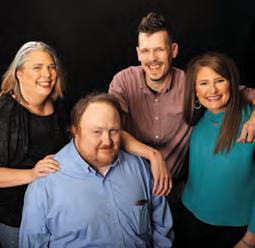
Heidi Mills Alli Shackelford Vi. Sananikone Jerrion Smith
Dayton Bentley Jessica James Courtney Copeland Haven Hildenbrand
Lynn Wooldridge Andy and Christa Estes Team Carol Kloac
Loden Lisa Bradley Cindy Black Libbie Parker
Marcus McCoy Tim Putt Joyce Park Dallas Jones Dennis Jaggars Nick Nichols
Caroline Upthegrove
Giovanna Wilson
Ethan Park Bret Carroll Matt Hartigan
Cerritos Johnson
Ozzie Tumblin
Jessica Lee
Lillian and Blakely Team
Jason Scruggs, Owner Gena Nolan, Managing Broker
Taylor Hemphill, Coordinator Mary Grace Hale, Coordinator
To discover the soul of a place, you have to go out to eat.
Locally owned restaurants, coffee shops and bars – places like Tupelo’s Cafe 212 and Mae’s To-Go Cup, both of which our own Meredith Biesinger writes about in this month’s issue –define the towns and cities in which they operate.
Oh, sure. Most places have a few landmarks. But these generally attract outsiders. Chances are, you won’t find most Tupelo residents hanging around the Birthplace or Oxford residents spending the day relaxing at Rowan Oak. These map-pin locations may distinguish a place, but they aren’t what those places are all about.
No, to get a feel for a place, you’ve got to drop by their eateries – their Cafe 212s or their Mae’s To-Go Cups. That’s where you’ll find people surrounded by friends, laughing, sharing stories. These are the places filled with conversations and characters. They are the souls of the communities we love. They’re where, on any given day, you can step through the doors and find someone you know and where menu items are named after regulars, because they’ve been around long enough to have regulars. Scheduling my visits to new cities often starts with finding places to eat. Spots where I can sit a while, enjoy a good meal and a glass of beer, and just soak in the local stories and soul. I recommend you do the same.
AdamArmour Editor
OUR STAFF
Editor
Adam Armour
Creative Director
Shannon Johnson
Creative Team
David Johnson & Janey Shimp
Sales Coordinator
Missha Mize
CONTRIBUTING PHOTOGRAPHERS
Leslie Criss
William Moore
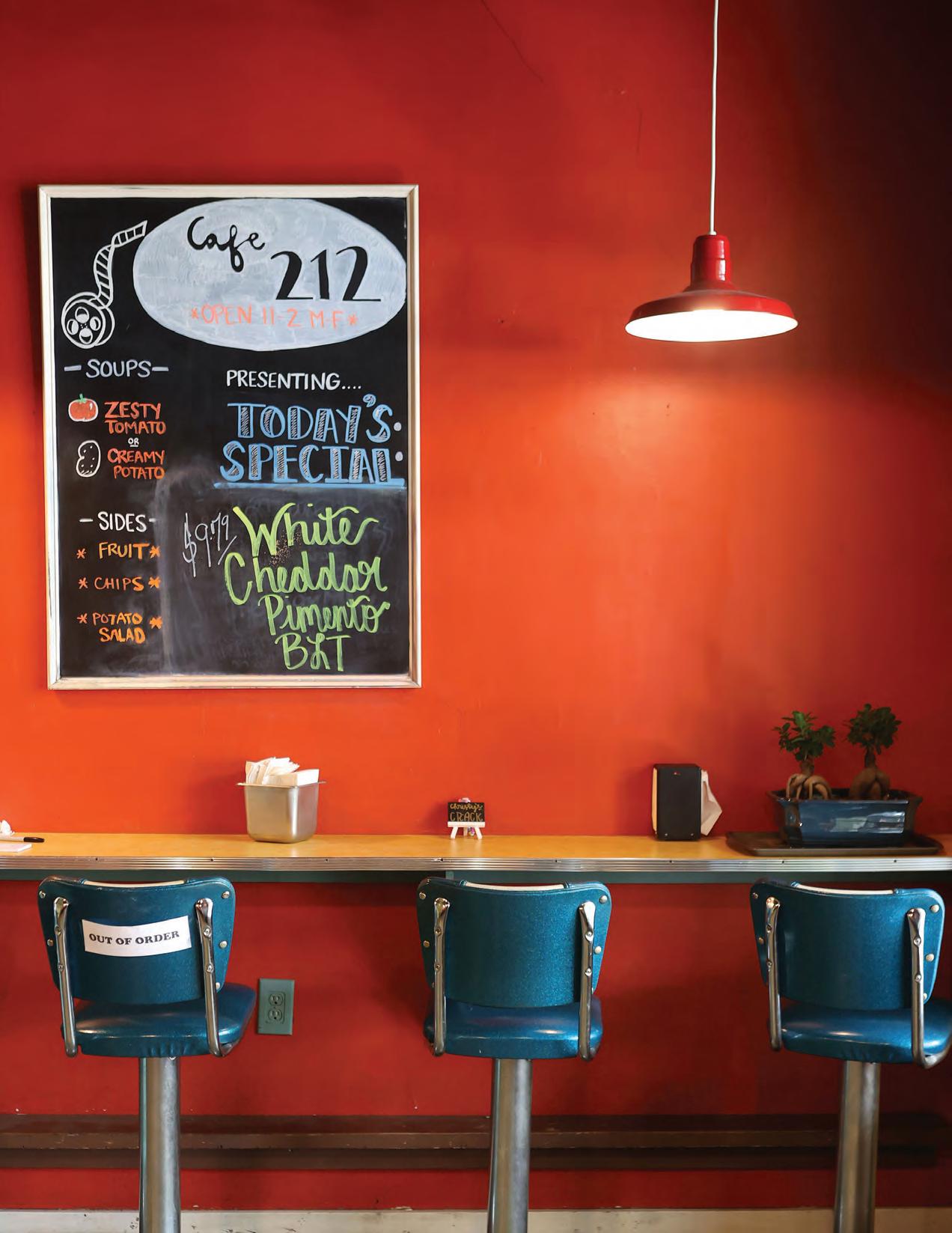
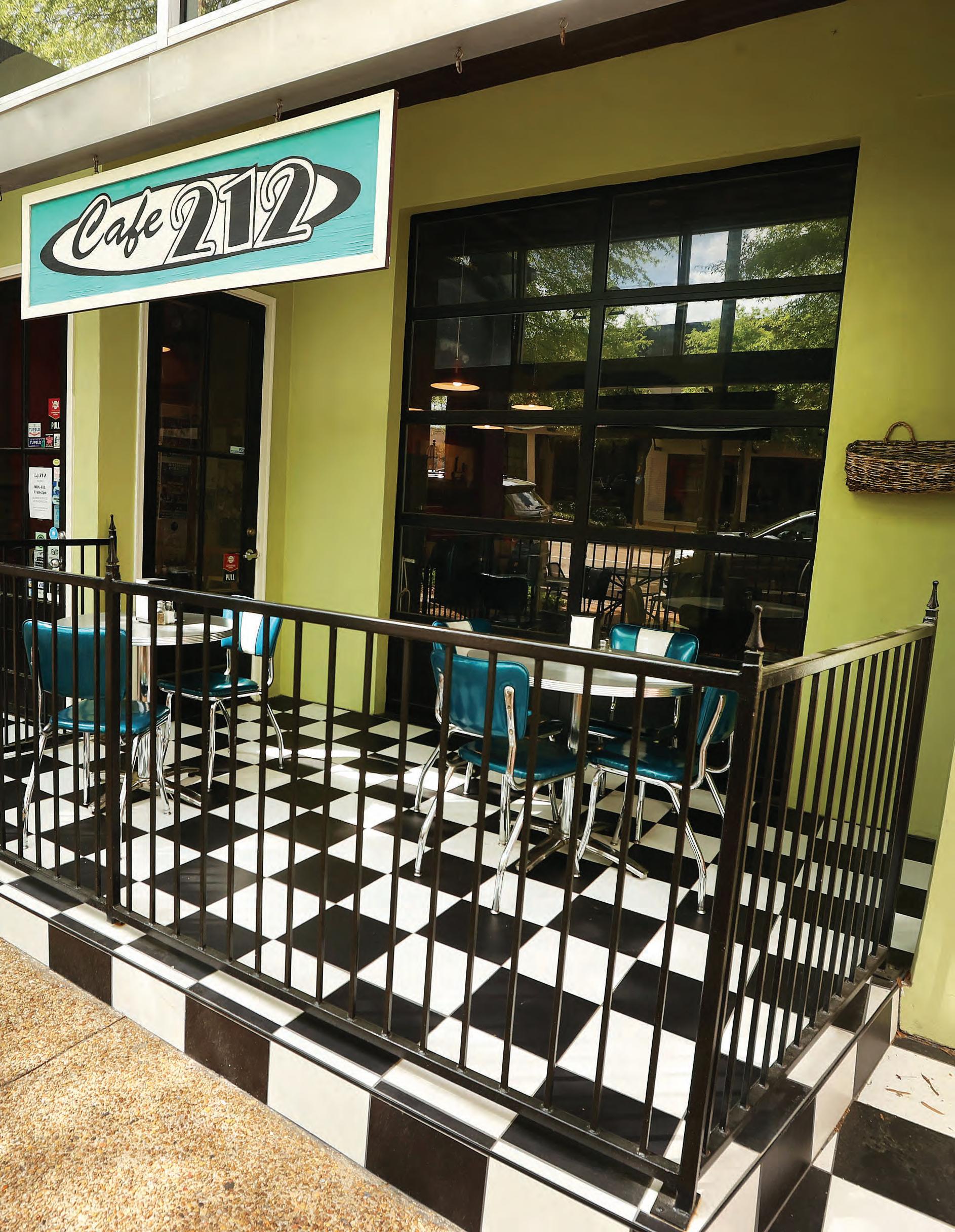
On the cover: Cafe 212 has been serving up sandwiches and otherr treats to its customers in Downtown Tupelo for 20 years . Cover photo by Adam Robison.
May 2026, Vol. 14 No. 4
8
PAINTING THROUGH PAIN
Jacinto artist Sharon E. Clemmer, equally comfortable discussing oil painting and the mysteries of faith and the human condition, said she paints to remember, cope, and experience the abundance of life.
18
STILL CRANKING OUT THE TOYS
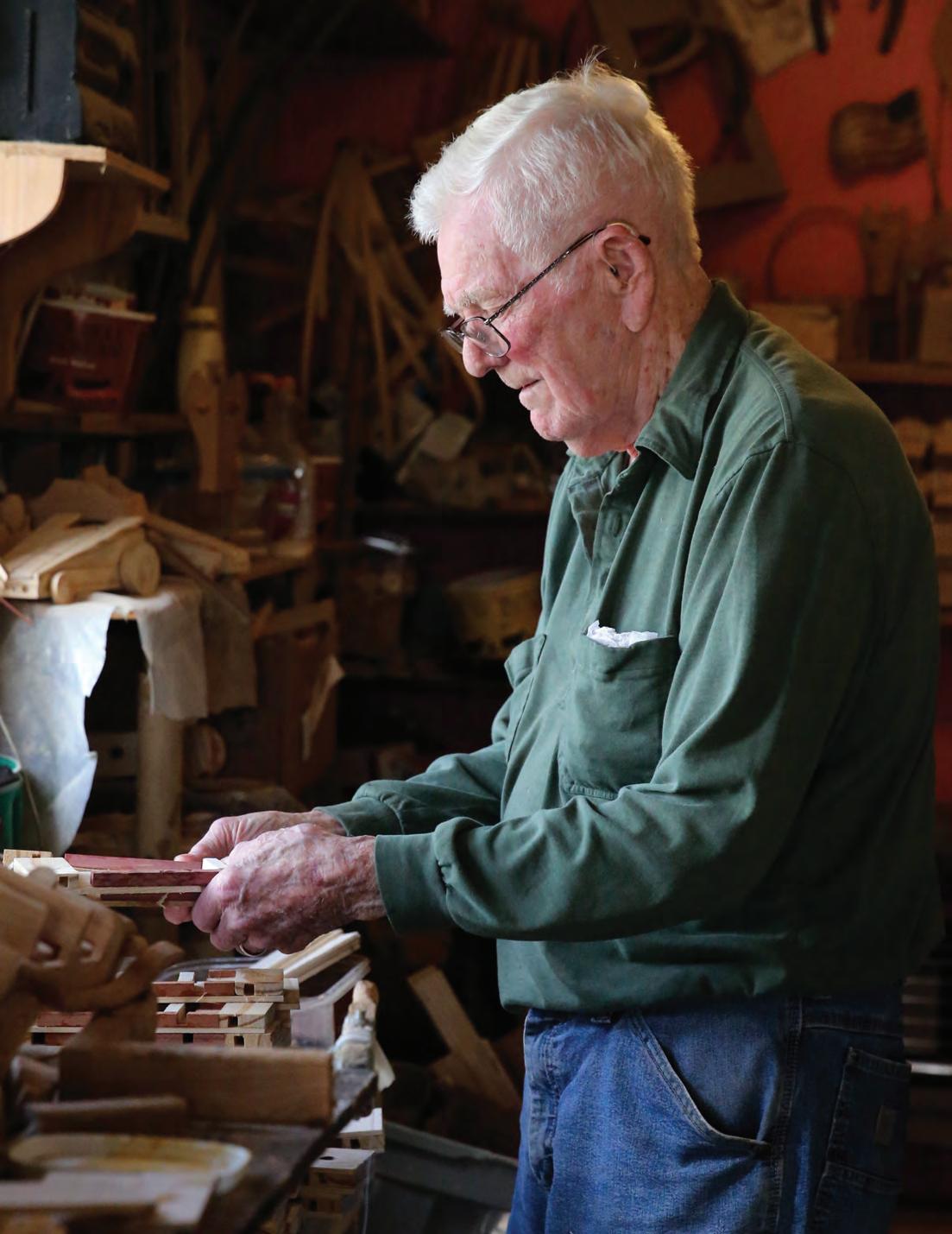
Former Air Force mechanic Glen Earnest has built 300 wooden planes and other small toys to bring smiles to the faces of children.
28
ROOTED AND RISING
The town of Saltillo is getting a second chance at life with more creative plans for revitalization and recreation.
36
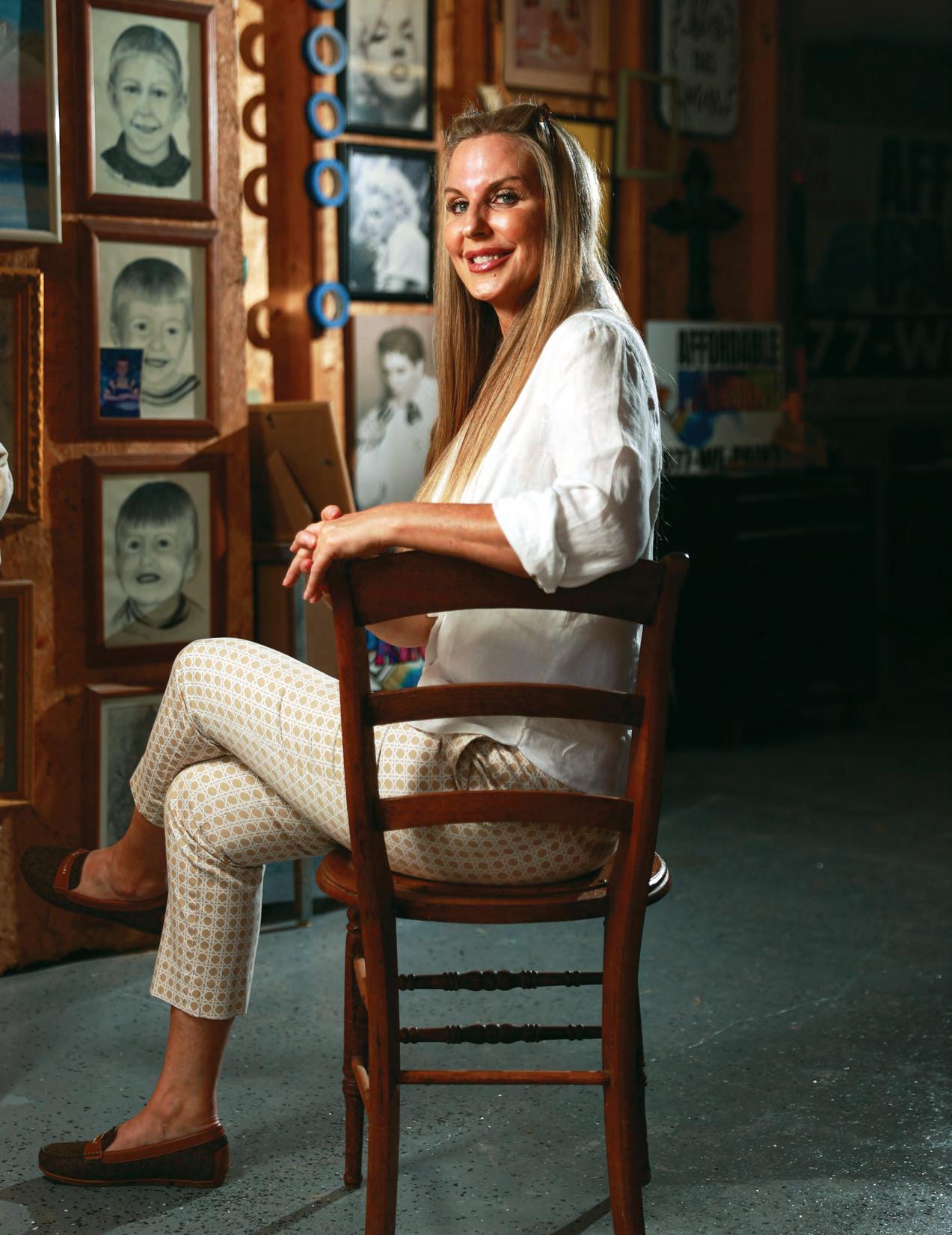
‘IT’S NOT ABOUT PAINT. IT’S ABOUT PEOPLE.’
Janet Abel turns her love for others into a successful house-painting business.
44
MOVING MEDITATION
Sarah Young and a small group of Tupelo residents meet regularly to improve their health, reduce stress and promote mental serenity through the practice of Tai Chi Chih.
52
BUILT ON FAITH, SERVED WITH HEART
In Tupelo – and now Baldwyn – Mae’s is more than a coffee stop. Matt and Sarah Anderson have created a welcoming place where people form real connections, turning a simple latte into part of the community’s daily routine.
59
WHERE EVERYBODY KNOWS YOUR NAME
Every town has that special place you recommend – a spot where the food is great, but more importantly, where community and belonging define the experience. In Downtown Tupelo, that place is Cafe 212.
PAINTING THROUGH PAIN
Jacinto native finds artistic inspiration after the tragic disappearance of her father
Story By EUGENE STOCKSTILL
Photos By ADAM ROBISON
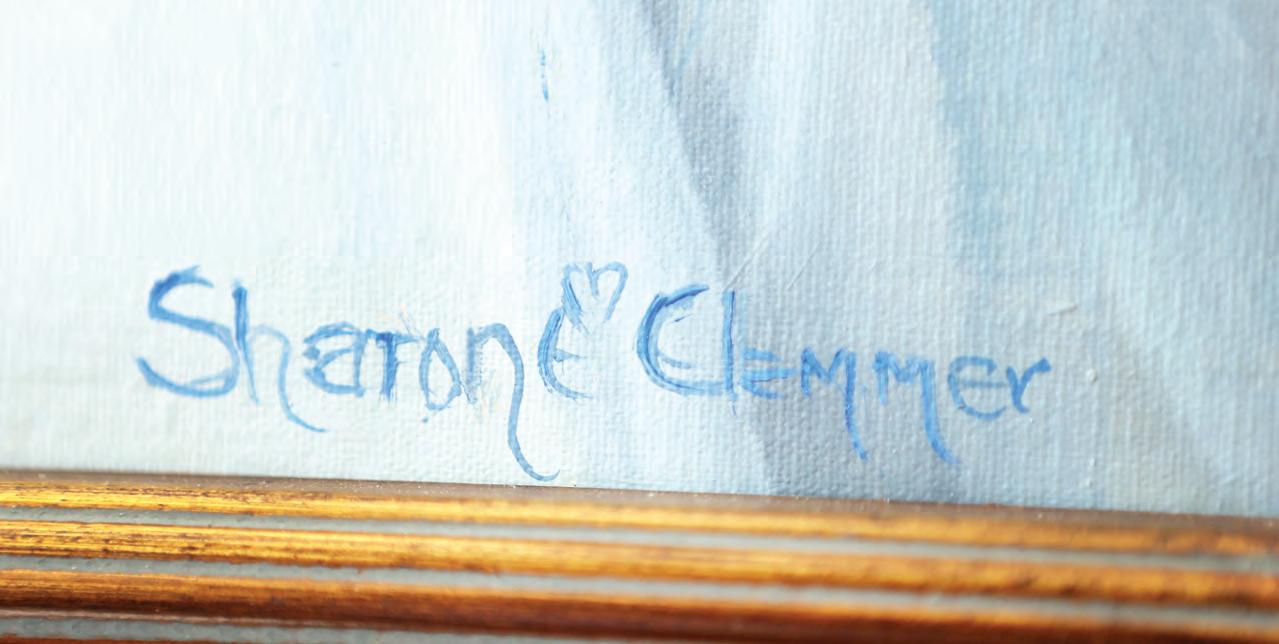
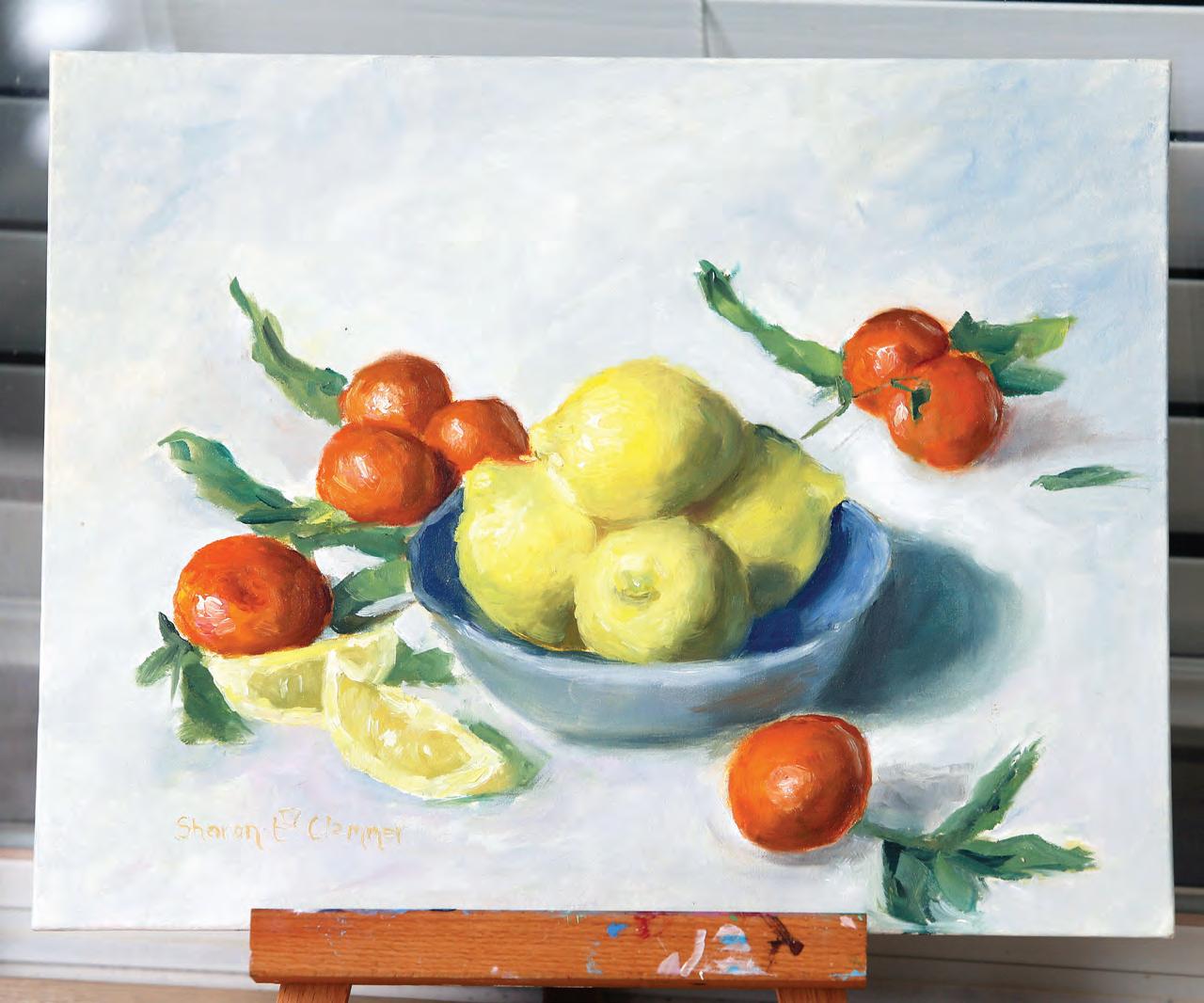
Jacinto artist Sharon E. Clemmer adorns each of her paintings with a small heart over the middle initial of her signature. It is symbolic of the year 2022, when her son’s fiancée died from cancer and her father went missing, never to be seen again.
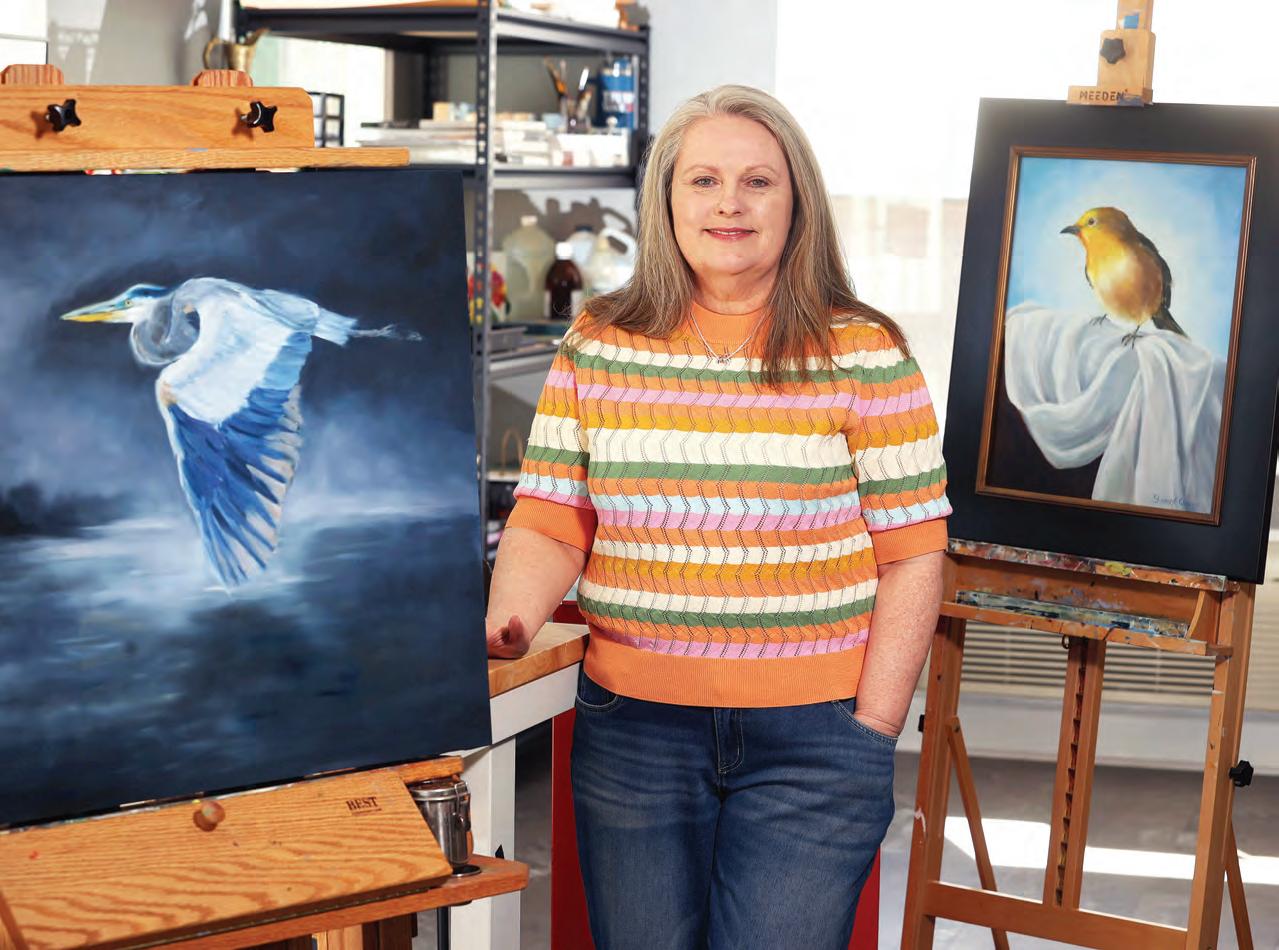
Sharon, who is equally comfortable discussing oil painting and the mysteries of faith and the human condition, said she paints to remember, cope, and experience the abundance of life.
The mysteries of artistic inspiration first emerged for her as a girl in Jacinto, an Alcorn County community with a population of about 50. In those days, she saw art all around her while experiencing life with her sister and two brothers.
Sharon recalls visions of Jacinto’s picturesque courthouse. Sassafras twigs doubling as toothpicks. Jumping
from haylofts. Lightning bugs blinking everywhere. Stopping up springs to create swimming holes. Cola-crate cars. Her grandparents owned the old Burcham Grocery, selling candy cigarettes and banana Laffy Taffy.
“Just below the store was a tiny Avon shop,” she said. “My sister and I would slip down there to collect those wonderfully odd Avon bottles and, of course, the lipstick samples. I think that’s where my love for color really began.”
Sharon’s got art creds. She’s the president of the Mississippi Painter’s Society and a featured artist at the Rooster Trail Gallery in Iuka. She studied online for three years with Kevin Murphy’s Evolve Art Education in New Jersey and has worked with numerous well-known artists.
But all you have to do is look at her website gallery or Facebook page to see proof. And it all started in a tiny
community you’d miss if you blinked. Size, it seems, is a lousy measure of worth.
“I really do find inspiration in just about everything now,” Sharon, 59, said. “Everywhere I look, I see a painting, even in an open pack of M&M’s. But the truth is, those small rural places are still what influence me the most. There’s just something about the slow, easy rhythm of a tiny town like Jacinto that shaped me.”
Sharon remembers the art supplies in the Sears Christmas catalogues that helped light her artistic fuse as a child. So did school. A simple painting of a yellow duck on a piece of paneling, praised by grade-school teacher, Jane Bell, helped fan its flame.
“The joy of her reaction stayed with me,” she said.
One of Sharon’s first drawings was of the copper moonshine still on display at the Jacinto courthouse. “I didn’t know anything about moonshine at that age,” she said. “I just knew the copper glowed.”
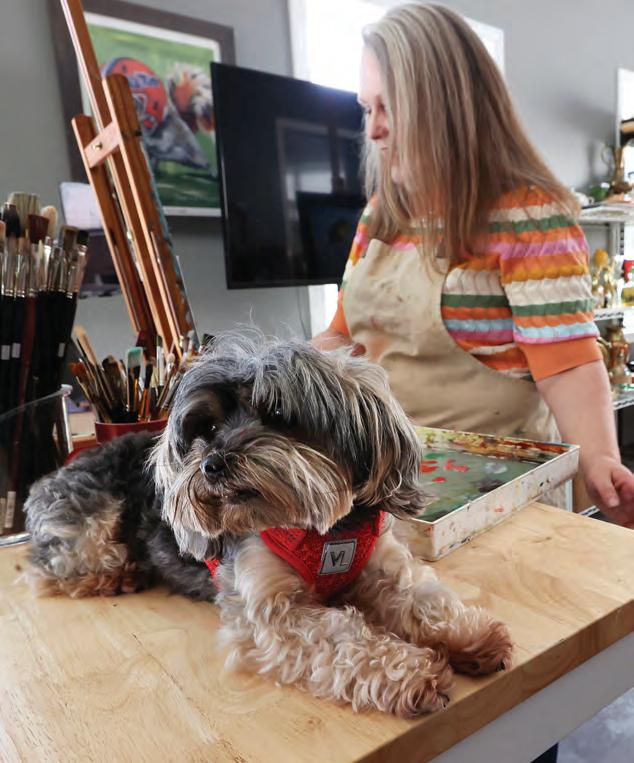
Fast-forward to today, and Sharon still has a life filled with art, thanks to her day job at Elliott and Britt Engineering in New Albany. She and her husband live in the town with their Yorkie, Jovi, named after the rocker Bon Jovi. The rest of their family lives in North Mississippi, too.
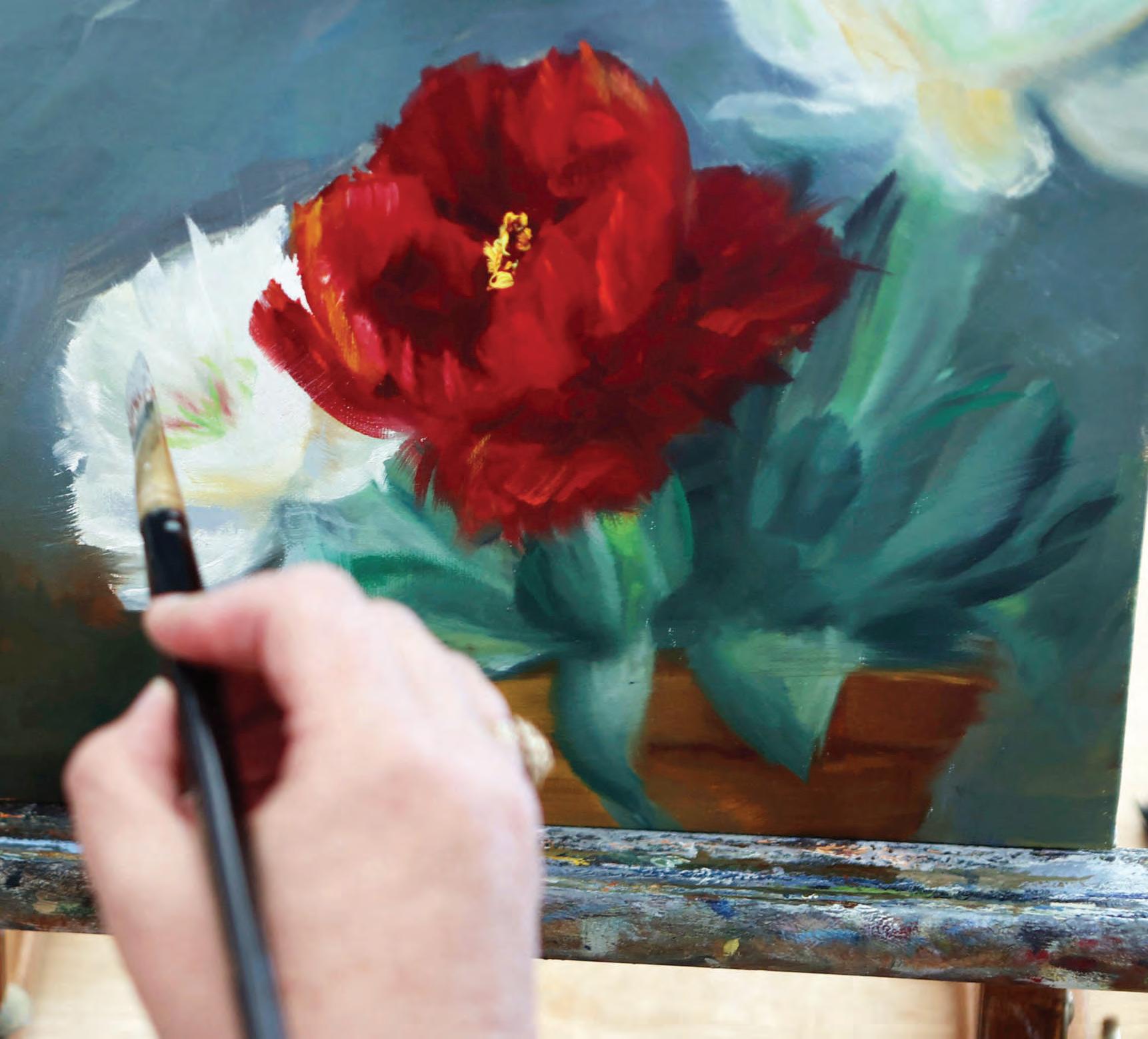
She got serious about painting around six years ago and began taking art classes at Ole Miss to earn a degree and get a job promotion, but she ultimately went in a different direction.
“I was like, ‘I’m dreaming. I’m in love,” Sharon said. “It took me back to my roots.”
When first becoming serious about art, Sharon experienced two different emotions.
“My husband would walk in to find me either mad enough to throw the canvas out the door or crying because, for once, it actually worked,” she said. “I don’t cry anymore. It’s one of the few things in life you don’t master in a hurry. I’ve been painting around six years now, and I’m just beginning to get a real grasp on things.”
Sharon has completed many paintings of fruits and vegetables rooted in rural American artistic expression.
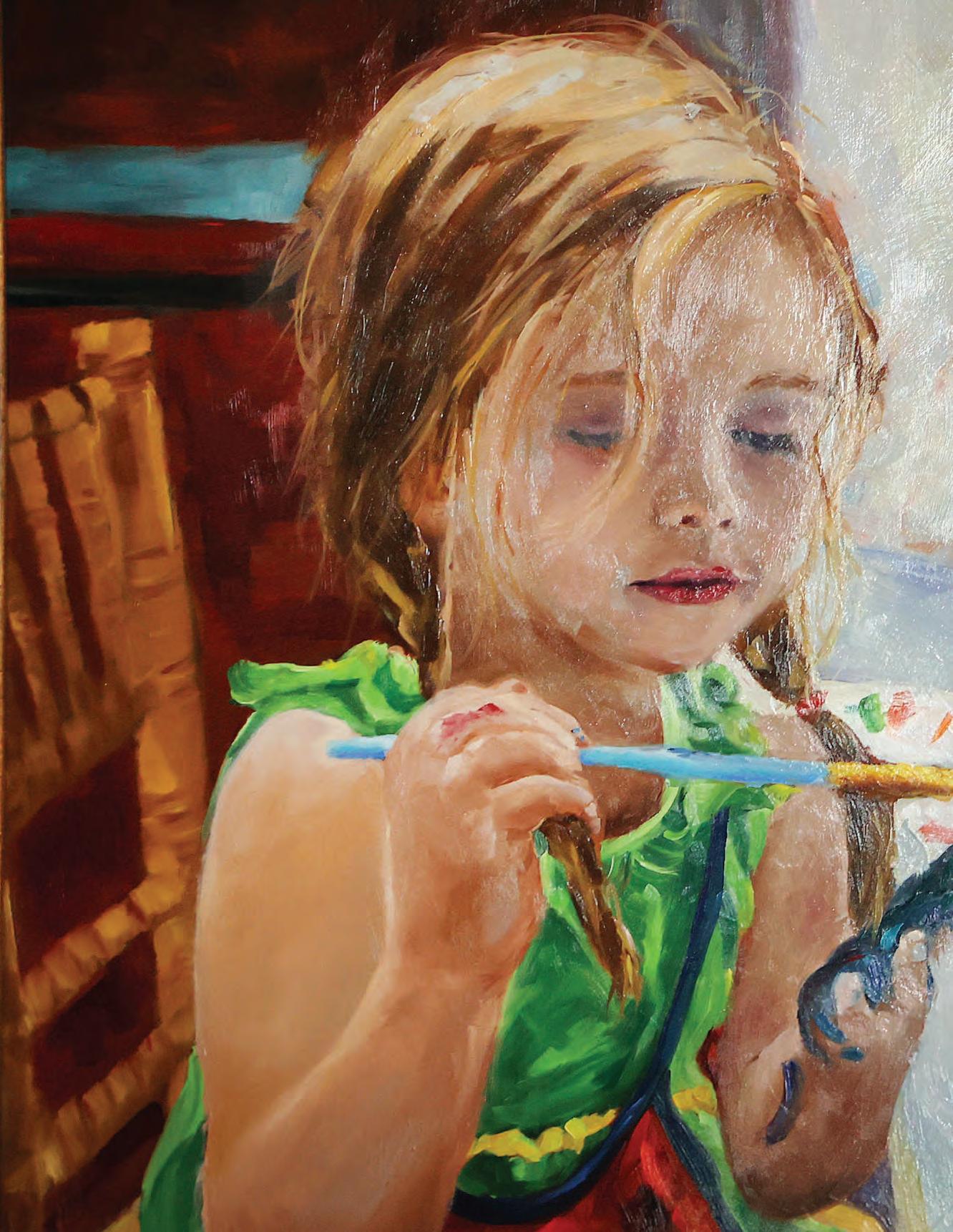
“Fruit has become my little confidence builder,” she said. There’s a heart-warming painting of a granddaughter finger-painting and “those messy, colorful hands.”
One of her more popular works comes from a Bible verse about “apples of gold,” which she struggled to complete. The room temperature made the paint too sticky. The background and foreground were wrong, she said, but through the struggle, something emerged that made her smile.
However, her biggest challenges came in 2022, when her future daughter-in-law lost her battle with cancer and her father, Foye Wade Davis, disappeared.
An NBC story reported that Davis, a preacher and avid walker who had experienced some symptoms of dementia, went missing after going on a walk with his dog. Davis usually walked the old logging trails near his home.
His dog, Buddy, was found alive two weeks later without his collar and leash. Despite an intense search in Alcorn, Tishomingo and Prentiss counties, Davis was never found.
Sharon quit her job. Everything seemed like it was falling apart. She felt lost.
“A part of me died with him,” she said. “But at my lowest, God met me.”
Jovi hangs out on Sharon’s work table as she works on a painting inside her studio at her New Albany home.
“
Art is simply about putting what’s in my heart onto the canvas. When something moves me, I paint it. And no matter where I go or what I learn, those quiet rural places still pull at me. I think I’ll always want to get back to that kind of simplicity. That slower way of living where my heart has always stayed.
– Sharon Clemmer
She was encouraged by her husband, family members and friends, and she experienced a mysterious inner comfort. One day, she said she realized that the people she believes may have murdered her father are God’s children, too.
“God has given me peace,” she said.
Sharon worked through the anger. She listened to praise music, preaching, and Bible studies, and though she still has more than a few questions about her father’s vanishing, she refuses to give up hope that one day justice will be served.
One thing that never suffered, even during those traumatic days in 2022, was her art.
“There is such a thing as art therapy,” Sharon said. “When it all happened, I was selling art. I hit the canvas.”
The power and beauty of art come from within, and Sharon Clemmer paints to let it out.
“Art is simply about putting what’s in my heart onto the canvas,” she said. “When something moves me, I paint it. And no matter where I go or what I learn, those quiet rural places still pull at me. I think I’ll always want to get back to that kind of simplicity. That slower way of living where my heart has always stayed.” M
Tupel
PUBLIC SCHOOL DISTRICT
CONGRATULATIONS
STAR STUDENTS
MASON CORDELL & WHIT HARBOUR & THEIR
STAR TEACHERS
LISA SANDRONI & STEPHANIE CAYSON
tupeloschools.com | follow us on
STILL CRANKING OUT THE TOYS
Former Air Force mechanic has built 300 wooden planes and other small toys
Story by WIlliam Moore Photos by Thomas Wells
The aerial train yard high above the family room features small train tracks Glen Earnest’s children gave him over the years. The lower white tracks rum around the perimeter of the room, more than 8 feet above the floor.
Like the Energizer Bunny, Glen Earnest keeps going and going.
Even at age 94, Glen is still making wooden toys to bring smiles to the faces of children.
He said he caught the woodworking bug when he was in high school.
“Agricultural teacher A.D. Hall, who could inspire you to do anything, got me to do a little woodworking,” he said. “I built a little cedar chest. I was inspired by my girlfriend in high school.”
Over the years, he picked up tools and made small items and toys as needed. When his daughter needed something for show and tell at school, he built a model of Abraham Lincoln’s cabin inside a glass bottle.
But for the most part, woodworking lay dormant in him for almost 60 years. He picked it back up after retiring. He began collecting power tools and hand tools from former carpentry shops or high school shop classes.
“I couldn’t afford all of them otherwise,” he said with a smile.
Glen sources wood from many places. Some is free, some is scrap, and he purchases some, especially dimensional lumber. A cousin who lives on the farm where Glen grew up north of Walthall has a modern sawmill. He gives Glen plenty of offcuts and smaller pieces of cedar and walnut.
Inside his crowded shop behind the house in the middle of Eupora, he started making things for the
children at his church. One of the most popular is a biplane, modeled after the Curtiss Jenny. It is an homage to both Glen’s life and Webster County history.
Before Charles Lindbergh became famous for flying solo across the Atlantic Ocean, he landed in Webster County. After World War I, the government was selling off airplanes. Lindberg bought a Curtiss JN – better known as a Jenny – for $500 in Atlanta. He was flying it to Houston, Texas.
“He got in a storm and landed in a cow pasture outside Maben,” Gl.en said. “He broke the propeller in the landing. He had to spend six weeks here waiting to get it fixed.”
Glen started making the airplanes about five
years ago, and he estimates there are more than 300 of them floating around in Webster County. He donated about 100 to Operation Shoebox for Christmas 2024.
“Kids love them,” Glen said. “The younger ones, 2 to 3 years old, the first thing they do is spin the propeller.”
Glen’s first airplane ride was 30 miles from Eupora to Houston in a crop duster a friend’s father piloted. The three flew just over the treetops all the way, and he was hooked. He joined the Air Force in 1951 right after high school. He spent four years stationed in Europe as a jet engine mechanic on the F84 and F86 – Thunderjet and Sabre Jet.
While the wooden biplane is popular, it is far
from the only toy Glen crafts.
“Some toys come out of my head. Some are from patterns,” he said. “The stagecoach is the most complicated. Currently, I am working on a roadster.”
When working on projects, Glen likes to set up jigs to allow him to create large numbers of identical parts. While it makes assembly go smoother, it can be time-consuming. He started work on the roadster about a year ago. After creating the chassis for about three dozen roadsters, he figured out a better way to make them – and to make them more special.
“The roadster will have a secret compartment. A cross is the key to open it,” Glen said. “I try to put a message on each of them. They are all church-related.”
Of course, over the years, Glen has built plenty of things to make his wife, Gail Earnest, smile. Their house in Eupora is the fifth house he has personally built for them.
He worked for Lockheed for two decades, but decided to leave when the company began selling out. Staying on would have required more travel.
“We were living in the Atlanta area. I came home one weekend and said, ‘We’re moving back to Web-
ster County,’” Glen said.
He found the design in a magazine and tweaked it to fit their needs.
“I built it in 2006 and used parts of an old house, so some of the wood is 100 years old,” Glen said. “Some of the stuff was salvaged from Hurricane Katrina.”
The high-peaked roof of the family room was begging for something. So he decided to fill it with a boyhood dream that was not fulfilled for another six decades.
“When I turned 70 (in 2002), my wife asked me what I wanted,” Glen said. “I said I had never had an electric train. Then the kids started giving me trains every Christmas for the next 12 years.”
So as he was building the new house, he put in train tracks. Two separate tracks go around the perimeter of the room more than 8 feet above the floor. Even higher up, the other train sets have their own circuitous tracks and can only be fully viewed from the second-story loft.
He once had a model train set up on the front porch. When someone opened the screen door, it flipped a switch, and the train began to circle.
On one car was mounted a placard. It read, “Welcome.” M
“
Travel changes you. As you move through this life and this world you change things slightly, you leave marks behind, however small. And in return, life –and travel – leaves marks on you.
- Anthony Bourdain
Birthplace of Kermit the Frog Museum
How many frogs do you know that have their own museum? That is exactly what you’ll find in the modest building just off Hwy. 278 on the banks of Deer Creek in Leland, Mississippi. Birthplace of Kermit the Frog museum which also houses Jim Henson Delta Boyhood Exhibit has a very small rotating collection of muppets from the Jim Henson estate. The only muppet that doesn’t change is the iconic Kermit sitting on a log playing a banjo which was donated by the late Jane Henson. After visit to the museum take a stroll over the “Rainbow Connection Bridge” and after 5 pm enjoy an outdoor meal at Leland’s Vito’s Marketplace which features an additional outdoor dining space. (Open Wednesday - Sunday 5 pm - 8:30 pm.)
Hattiesburg Pocket Museum
Tucked into a downtown alley, the Hattiesburg Pocket Museum is one of those places you can’t help but wander through a little slower. I love it because it’s always changing—tiny art, bright murals, something new tucked into a corner every time—and it’s completely free and interactive, which makes it even better. It’s quirky in the best way and one of those stops that just makes a day trip feel fun.
New Orleans
It is famously said that you do not need a guidebook for a city like New Orleans–just a good pair of shoes. The Big Easy welcomes all who embrace her, loyal to the magic that made her. There are hundreds of tourist destinations, but if you’re looking for a place to start, I recommend none other than the New Orleans Jazz Museum. In the city where it was created, live jazz performances echo through the building if you manage to snag a seat at one of their free 2 pm showings, happening every day. Stay to wander through their exhibits on the rich history of the great musicians and community the city has raised. If music isn’t your thing, head downtown to The Sazerac House and experience a different kind of tradition. The city’s official cocktail has a museum all to its own, where you can take a free tour of the distillery, learn the rich history of prohibition in the city and even get to sample a few cocktails.
Delta Blues Museum
Ryan Coogler’s film “Sinners” brought a renewed interest to Clarksdale, but the Mississippi Delta city made an impact on the state and the wider world long before through its connection to the Delta blues. Today, visitors can learn more about that connection through touring the Delta Blues Museum in Clarksdale, located in an historic freight depot on the aptly named Blues Alley. Among the museum’s collection are musical instruments, recording, costumes and other items representing dozens of artists, such as B.B. King, Sam Cooke, John Lee Hooker, Charlie Musselwhite and more. Among its exhibits is a replica of Muddy Water’s former home, once located on Stovall Farms, just outside the city limits. Inside the home sits a life-like statue of the bluesman, dressed in his trademark suit and holding a 1950’s vintage electric guitar.
City Museum St. Louis
First thing’s first: City Museum in St. Louis isn’t actually a museum. That name is a lie. Instead, think of City Museum as a playground for both kids and adults. Located in a 10-story, 600,000-square-foot building that once housed a shoe company, City Museum is a labyrinth of tunnels and slides, scalable structures and interactive exhibits. There’s a pinball arcade in there and a couple of small restaurants. Explorers will discover surreal fountains and delightful acrobatics shows. There’s a Ferris wheel on the roof that offers sweeping views of the Gateway to the West. Last time I dropped by, I spent hours wandering its many levels, giddy as a sugar-addled child. And I probably didn’t even see a third of the place by the time I was happily exhausted and ready to call it an evening. Go with the kids or with a group of grown friends. Either way, you’ll have a blast.
Shannon’s Pick
Meredith’s Pick
Dave’s Pick
Taylor’s Pick
Adam’s Pick
Magnolia Drugs is a locally owned community pharmacy dedicated to providing outstanding customerservice at an affordable price.
1757 HWY 178 W STE B MYRTLE, MS MON - FRI: 8:00A.M. - 6:00P.M. SAT: 8:00A.M. - 12:00P.M.
NEW PATIENTS: 662-301-7936 CURRENT PATIENTS: 662-988-7030
Community
Saltillo gets second chance at life with more creative plans for revitalization and recreation
STORY BY MEREDITH BIESINGER
PHOTOS BY ADAM ROBISON
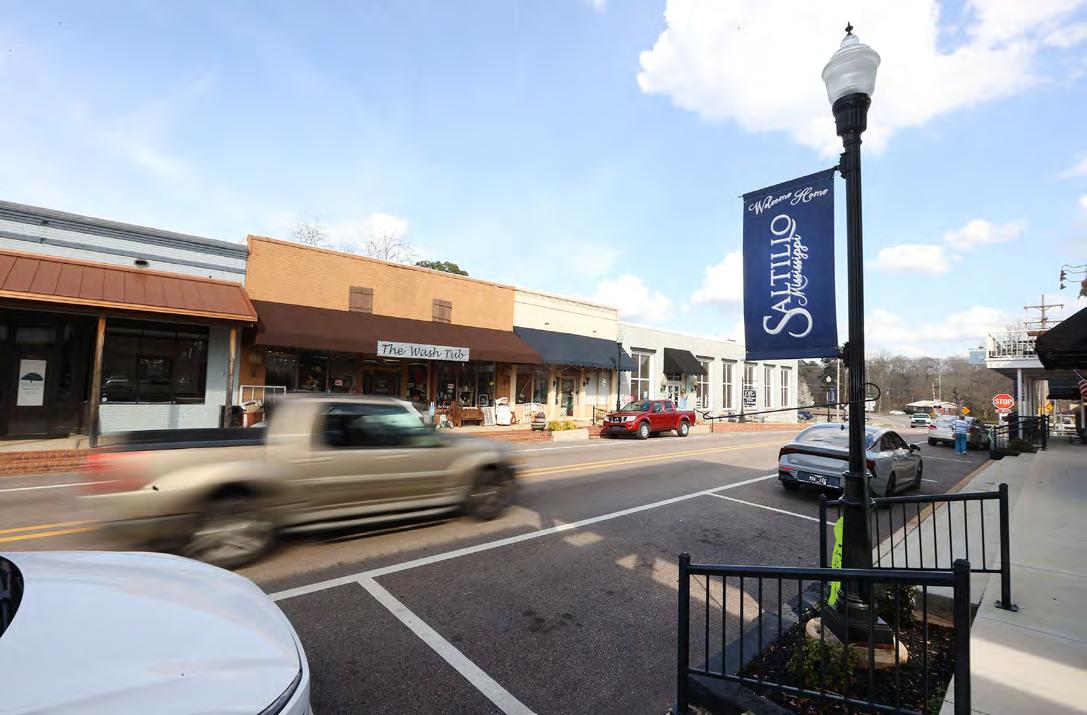
Downtown Saltillo has its rhythm back – and it sounds like home.
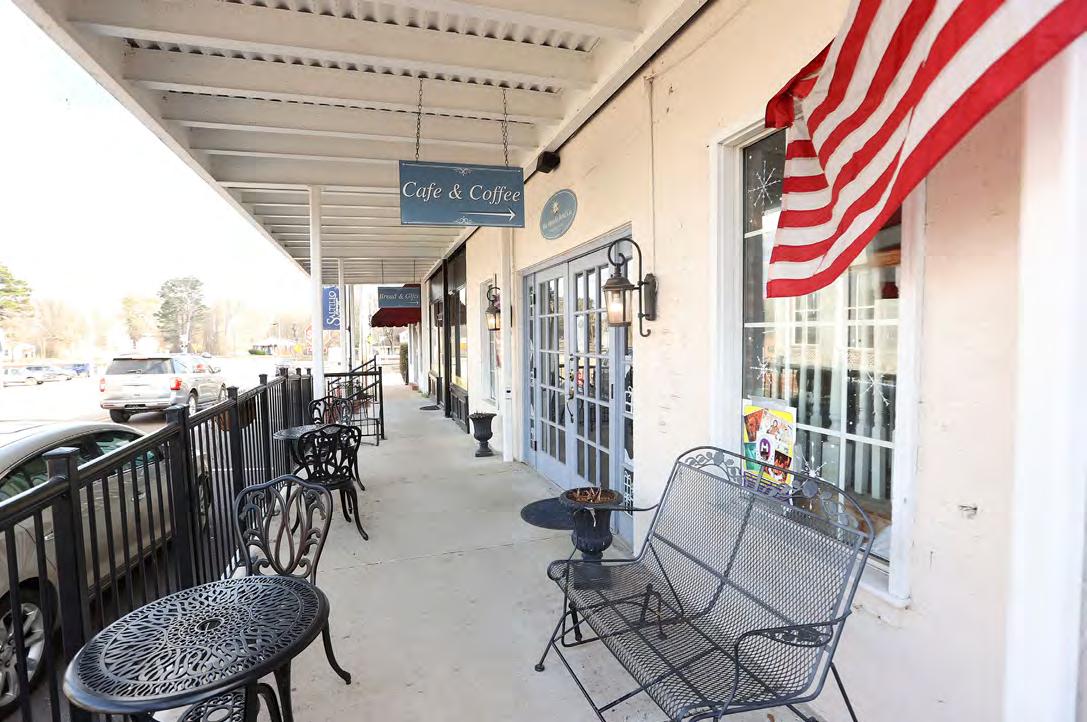
The hum of conversation comes from open storefronts. Boots shuffle across new sidewalks. Children laugh, tugging parents to the farmers market. String lights from the night before sway. If you pause, you might hear a faint echo of a hometown fiddle.
“Downtown on Saturdays, you think, oh my gosh, where did all of these people come from?” Main Street Director Deanna Knight said with a smile. “Downtown is popping.”
And it is.
But this kind of comeback doesn’t happen by accident. Behind each lively Saturday is a story of gradual, persistent change – one that started years ago and continues to unfold.
Saltillo’s evolution and its steady, intentional rise has taken years. The groundwork was laid by a board of aldermen that believed in possibility, leading to the city’s official entry into the Mississippi Main Street Association in 2016. The timeline shifted in 2020, when, like so many small towns, Saltillo felt the stillness of COVID – events paused, meetings stopped, and energy stalled.
It wasn’t until early 2021 that Deanna joined the Main Street board, just as the town was stepping back into activity and renewal.
“Main Street couldn’t meet, couldn’t do events,” she said. “It was time to get things going again.”
And they did.
With the support of Mayor Copey Grantham, the board
leaned into a clear vision. They chose two transformation strategies: family-friendly and placemaking.
“We’ve grown without losing who we are,” Deanna said. “Everything we’ve done has been intentional.”
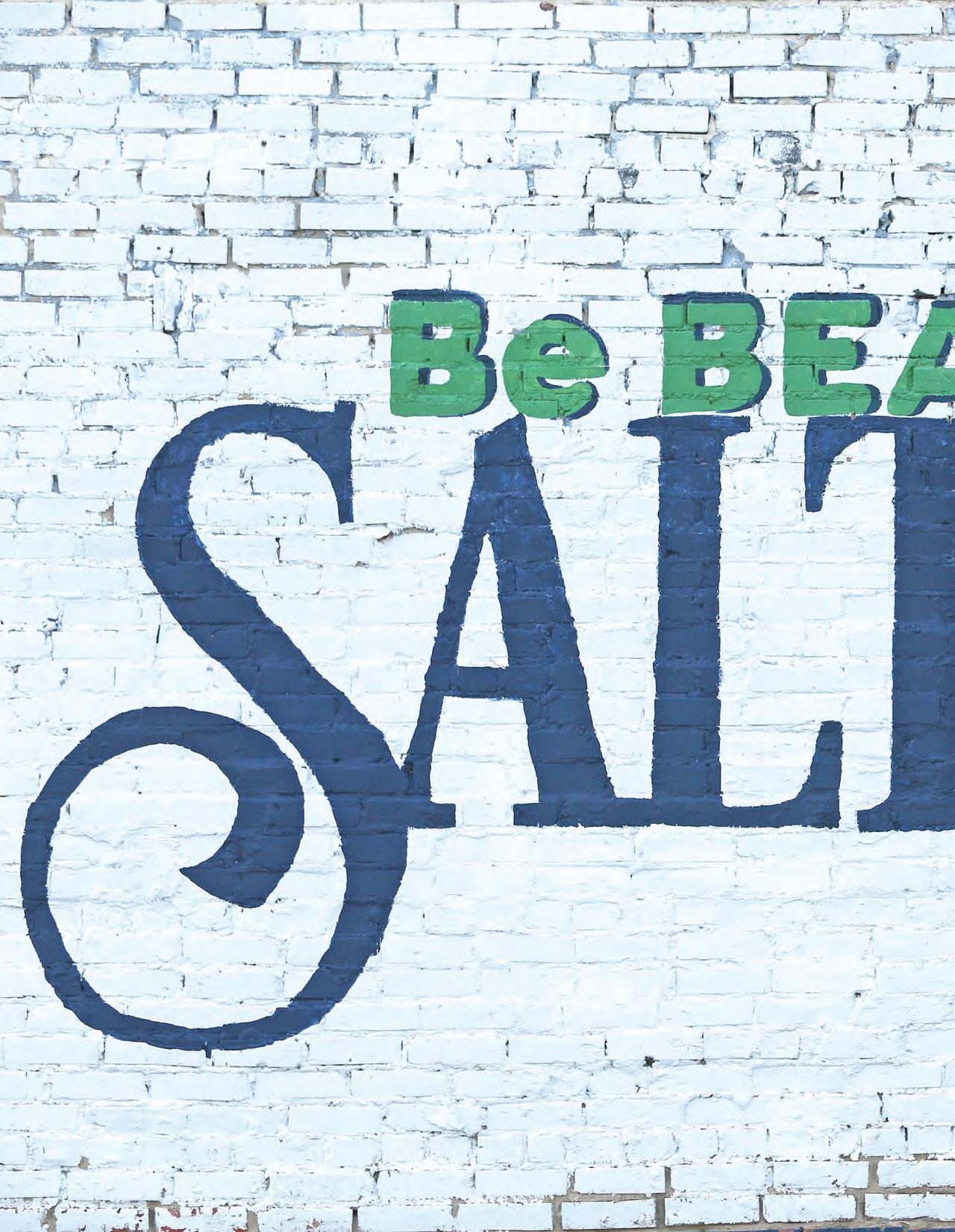
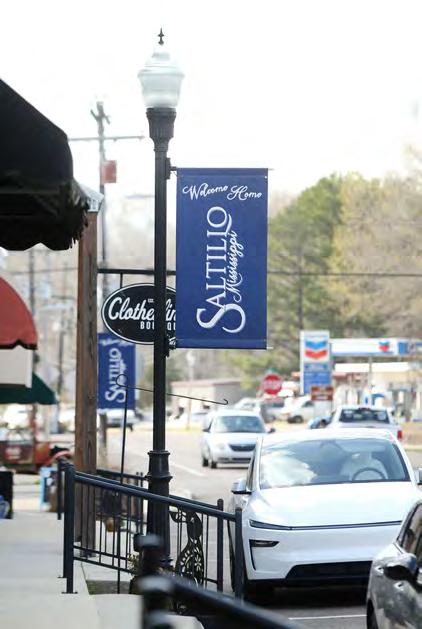
Here’s what that looks like: cleaned-out flower beds filled with fresh black mulch. New sidewalks. Murals splashed across brick walls through grants from the Mississippi Arts Commission and the Mississippi Hills Heritage Area Alliance. A new sign greets drivers from the highway. Banners welcoming visitors to the park and Sportsplex. String lights stretch across downtown, casting a warm glow on evening events.
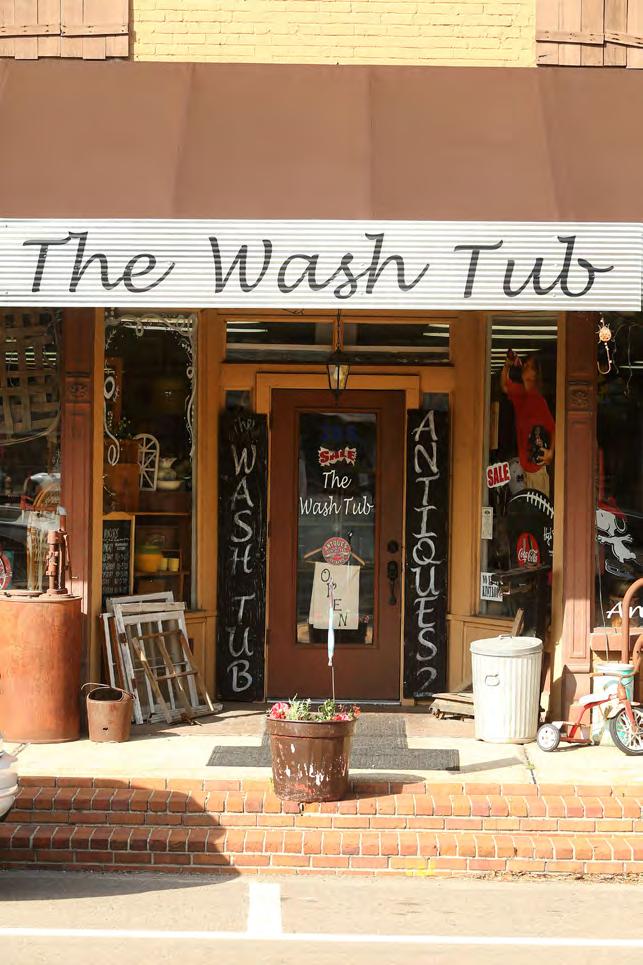
On Saturday mornings, the scent of bread from Blue Magnolia drifts down the street as shoppers visit Vintage Vibes, The Washtub, and other favorites. They often linger longer than planned.
Coming soon? A mini mural trail by the farmers market. A pocket park. New wayfinding signage pointing you toward downtown, the park, the high school, and so on – because when you’re proud of a place, you want people to find it easily. These projects signal what’s next for Saltillo as it continues to grow and redefine its community spaces.
And then there’s the container park.
Across from Vintage Vibes, Moondog Makers and Bakers is preparing to fire up a wood-fired pizza oven inside a converted storage container. Live music. Good food. Something different. A gathering place that feels creative and unique.
“That’s placemaking,” Deanna explained. “Making your Main Street a place where people want to go, locals and visitors alike, and it sets you apart as a place.”
Saltillo has also launched a major parks initiative, expanding its vision beyond downtown revitalization to enhance recreation throughout the community.
“We have started a big initiative on parks this year,” Knight said.
With grant funding from MDOT and Mississippi Wildlife, plans are underway to connect and widen a 5.5-mile greenspace walking and biking track from City Park to the Sportsplex. A potential three-year Toyota partnership will further invest in parks and recreation.
“I want this Saltillo to be around for my grandkids,” Deanna said.
That long-view thinking extends beyond sidewalks and signage. Deanna recently traveled to Washington, D.C., to speak with legislators about funding and appropriation for smaller communities – about the importance of investing in towns that may not always make headlines but matter deeply to the people who call them home.
Saltillo’s Main Street is also one of the few in Mississippi that operates as a separate entity from the city. It receives no tax dollars. It is fully funded through grants and contributions –volunteer-powered. The city collaborates closely and offers strong support, but the organization itself is free-standing.
“Our volunteerism is a huge part of our success,” Deanna said.
That spirit shows up in daffodil bulbs planted through their Keep America Beautiful affiliation. In community cleanups. In flower beds refreshed and banners hung. In the quiet pride of residents who want their town to look its best.
And then there’s the music.
With help from Mississippi State Uni-
versity architecture students, Saltillo recently developed a master plan that leans into its Rockabilly roots. The area around Vintage Vibes has been designated as the Rockabilly District – state-sanctioned and rich with story.
Decades ago, Saltillo wasn’t simply a stop along the way – it was a gathering point. The old Doodlebug train, which only cost a dime to ride, carried musicians from town to town, pulling into communities where music drifted off front porches and poured out of dance halls. With Highway 45 – the first paved highway in the South – running through the region, and the Gulf, Mobile & Ohio Railroad connecting it beyond, Saltillo found itself at the crossroads of sound and movement. Artists would pass through, linger long enough to play a set, and leave behind a little piece of magic that still echoes today.
Merle “Red” Taylor – Bluegrass legend – was a Saltillo native.
“Wikipedia says if he had not gone to Nashville and played the fiddle the way he did, Bluegrass music would not
be what it is today,” Deanna said. “James Wood. The Miller Sisters. There are so many names rooted right here.”
Saltillo, along with surrounding communities, has helped launch the Northeast Mississippi Rockabilly Foundation – putting the town back on the map by honoring its musical legacy.
Red Fest celebrates Merle “Red” Taylor. Party in the Park lights up the Fourth of July. The Scarecrow Festival fills Main Street with autumn charm. The rodeo draws crowds year after year. Merry Market ushers in the holidays with twinkle lights and cups of hot cocoa.
“Locals have said, ‘It feels like it did years ago, because there are people downtown again,’” Knight said.
There’s something special about that.
When a town feels like it did years ago – when sidewalks are full again, and conversations spill into
the street – you know something deeper than development has happened.
It’s not just growth. It’s coming home.
“Don’t compare your town to other towns,” Deanna said. “Each town is its own.”
Saltillo isn’t trying to be anyone else. It’s leaning into who it has always been – family-centered, music-rooted, forward-thinking, and fiercely proud.
“We want our city to be appealing not just to visitors, but to our residents who live here,” Knight said. “We have younger families looking for a place to call home, and we want them to get involved. This is their Saltillo, too.”
And on a Saturday morning downtown, when the sidewalks are full, the scent of fresh bread drifts past open doors, and music history lingers in the air, it’s clear:
Saltillo isn’t just back.
It’s singing again.
M
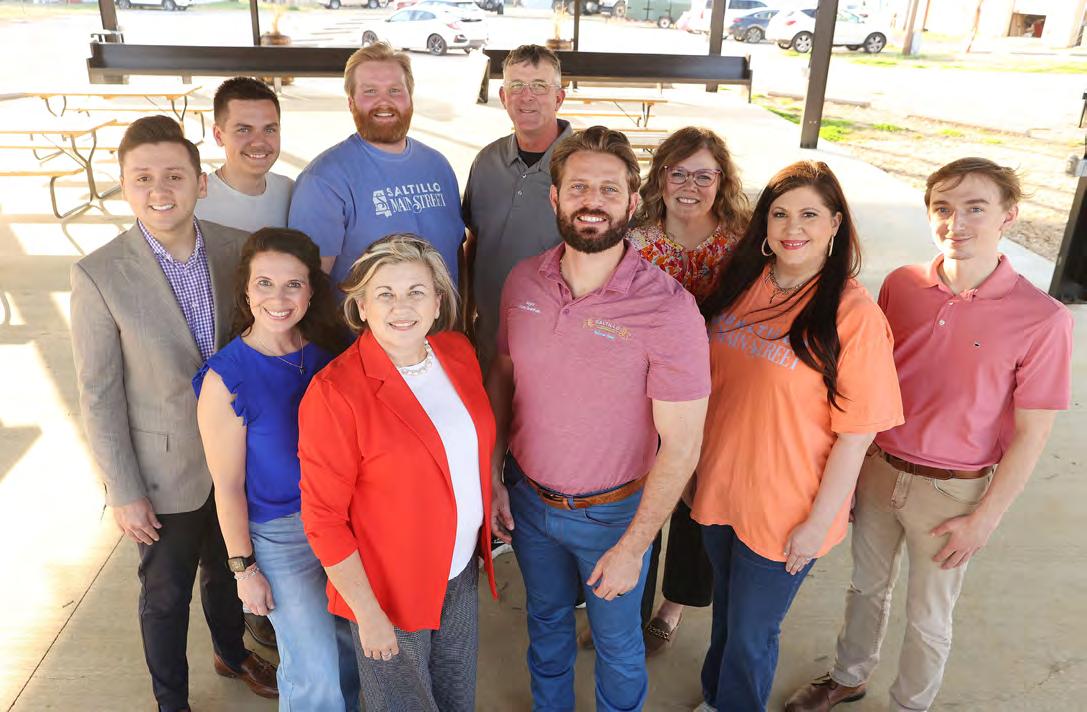
Deanna Knight and Saltillo Mayor Copey Grantham and the down on main leadership team
Patient safety is our priority.
For the 15th consecutive time, the Leapfrog Group has awarded Baptist Memorial Hospital-Union County with a Hospital Safety Grade of “A”, health care’s gold standard for patient safety.
We’re proud of our long-running safety record because it means better care for you. You deserve to receive exceptional care — every time you visit our facility.
To learn more about Baptist Union County’s patient safety recognition, visit baptistonline.org/TopGrade or scan the QR code.
Johnny F. Miles, MD
Kristen Y. Turner, MD
Brandi S. McGehee, MD
Mark A. Ray, MD
J. Bennett McGehee, MD
Neeka L. Sanders, MD
L. Elizabeth Stokes, MD
Tanya Underwood, WHNP-BC
Malinda Ingram, FNP-BC
Dietriche “Dee” Jones, FNP-BC
Brittney C. Billsby, DO
IT’S NOT ABOUT
PAINT. IT’S ABOUT PEOPLE.
Janet Abel turns her love for others into a successful house-painting business
Story by Leslie Criss
Photos by Thomas Wells
Afew years ago, Affordable Painting owner Janet Abel pulled up to an older home with worn paint that felt still and quiet. An older woman greeted the painting crew.
“Ms. Edna opened the door – so sweet, very soft-spoken,” Janet said. “She kept saying, ‘I know it’s a mess … I’ve just had a hard time.’”
Janet said Ms. Edna’s struggles were palpable. It was something about the way she carried herself. The weight in her voice.
“I could feel it. Not in the walls, but in her,” Janet said. “As we worked, she sat right there watching us. After a little while, she said, ‘My husband used to take care of everything … I haven’t touched any of this since he passed.”
Just like that, the work took on greater significance.
“I knew we needed to slow down,” Janet said. “We paid attention to every little detail. Every crack got filled, every rough spot got smoothed, every edge got a little extra care … not because she asked … and not because she was watching us. But I felt her husband was gentle with things, so we slowed down.”
In 2017, Janet found herself at a crossroads. In her professional life, she needed a change. In her personal life, she wished things would stay the same.
Janet was more than ready to find a new field of work. She’d long worked in various Tupelo bars and restaurants as both a bartender and a server, and she was dealing with a recent change that had broken her heart – the death of her mother.
Two decades earlier, Janet had painted a hallway for a cousin who had been exceptionally pleased with the work. Remembering that, she began painting instead of serving food.
Affordable Painting was launched.
“Starting this business was like medicine for me,” Janet said. “Truly, it was an accidental business.”
An early start
As a second-grader, Janet began painting pictures and realized she had a gift that came naturally.
When she was 16, she moved out of her parents’ house and worked to fix up the places she lived. It prepared her for the business she’d eventually create.
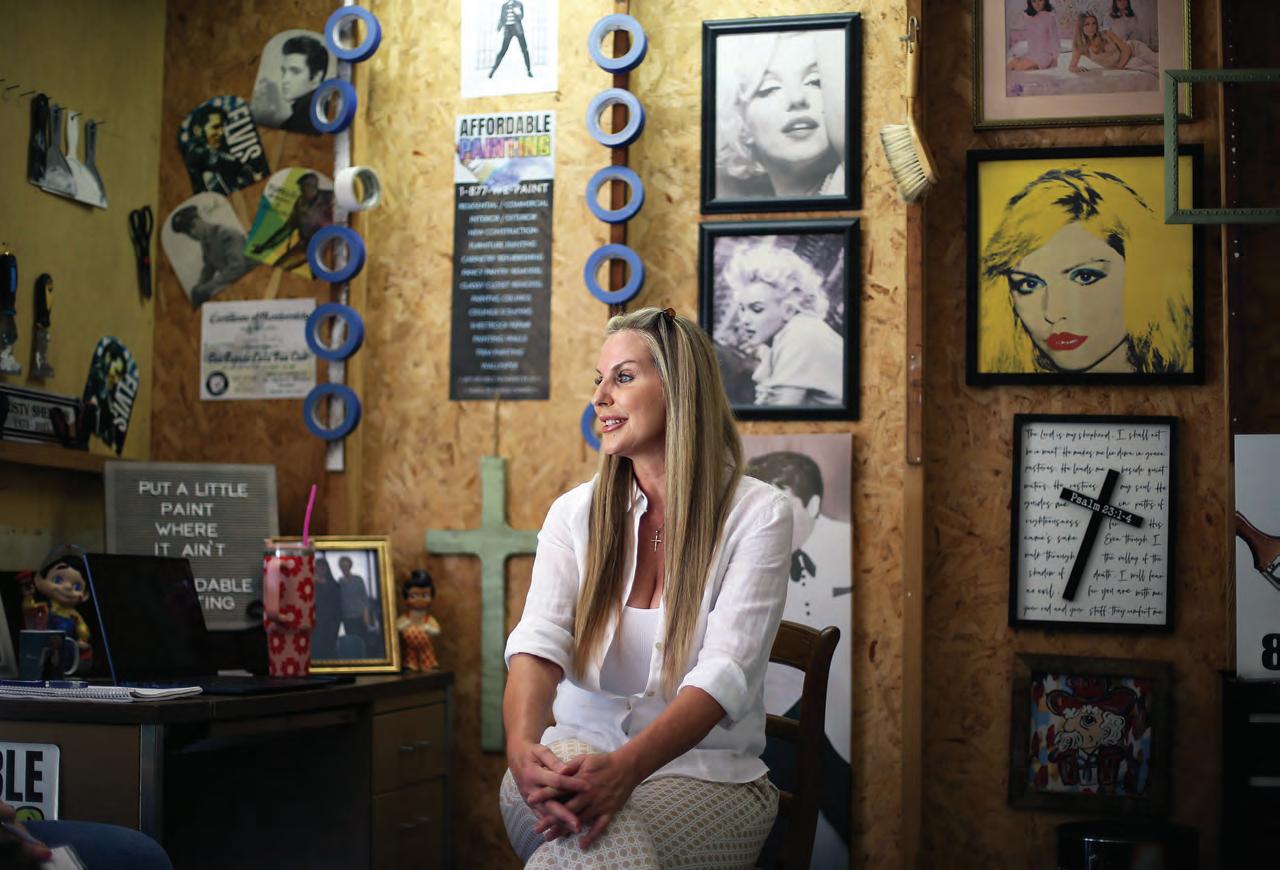
“One year, I couldn’t afford Christmas presents, so I did portraits of my boys to give my parents,” Janet said. They now hang in Janet’s shop behind her house.
Janet is a single mom who has raised three sons – Taylor, 30, who works full-time with his mom at Affordable Painting; Cameron, 29; and Jody, 26.
“Every once in a while, I might sketch something,” she said. “It’s a good hobby.”
She completed one project at the request of one of her nine grandchildren.
“Grandkids can make you do anything,” Janet said, laughing.
Her canvases have become much larger recently as she focuses more on walls
“No job is too big, and no job is too small,” she said. “We will paint one room or an entire house –interior or exterior.”
Though most jobs are residential, Affordable Painting also completes commercial jobs, like the Magnolia Civic Center in New Albany. And in Pontotoc, crew members worked on scaffolding to reach
a more than 30-foot-tall ceiling.
Painting plus
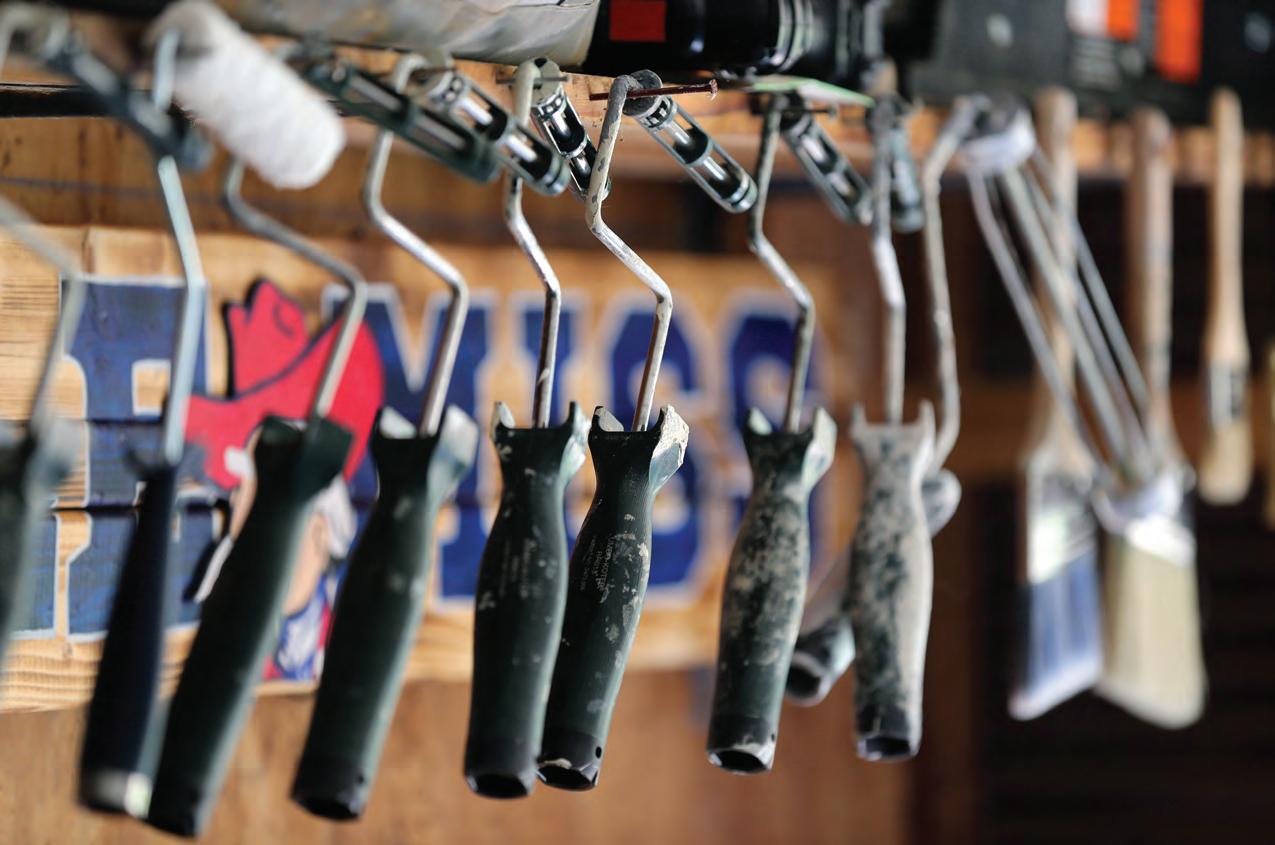
Janet and her crew of three full-time employees also scrape ceilings, refurbish and refinish cabinets, add or strip wallpaper, remodel pantries, refinish furniture, repair Sheetrock, and do all forms of painting.
“Taylor comes by his abilities natural,” she said of her son. “The other two full-time workers drive from Oxford six days a week. They are all amazing.”
Deeply religious, Janet recently partnered with Broken Lives, a ministry that helps people who have experienced drug and alcohol addiction. It offers paid, hands-on mentorship opportunities for women in recovery every six months. The program is called Brushes of Hope.
Janet’s “accidental” business took off in the beginning and has kept her and her crew paint-covered and happy.
“It all just fell into place,” she said. “And word of mouth has kept us busy.”
Janet Abel in her workspace.
Starting this business was like medicine for me. Truly, it was an accidental business. “
There’s also a reason Janet calls her business Affordable Painting.
“I know what it’s like to live on a budget,” she said. “I want our work to stay affordable.”
She often offers no-interest payment plans to customers and asks for no money up front on any project.
“I want to make sure all are pleased with our work,” she said. “We try to work around the customer’s schedule. If they leave the house for work at 7, we will arrive at 7:10 or so. If they come home at 4, we will leave their house at 3:45. That way, they come home at 4 to a near-normal house.”
Customers become friends
Clearly, Janet and her crew know what they are doing with their work, but her unique customer service likely keeps folks coming back.
“I have lots of repeat customers,” she said. “In fact, 90% of our customers turn into friends. One of our strongest points is communication: Someone calls, I answer. Or if I’m busy, I call back.”
She still remembers painting Mrs. Edna’s house.
“About halfway through the day, she said, ‘Y’all take a break … I fixed something for y’all,’” Janet said, recalling the experience. “We walked into the kitchen and saw she had cooked us a big meal –cornbread, black-eyed peas, sliced tomatoes – a full plate.”
Right there in the middle of the job site, Ms. Edna bowed her head and said, “Let’s pray.”
“She thanked God for us. For showing up. For helping her,” Janet said. “I couldn’t help but cry a little. She had tears in her eyes too.”
Prayer finished, Ms. Edna squeezed Janet into a deep hug.
“And she whispered, ‘For the first time in a long time, this feels like home again,’” Janet said. “Truth be told, she blessed us just as much.”
That, Janet said, is why she does what she does.
“It’s not about paint. It’s not about walls,” she said. “It’s about people.” M
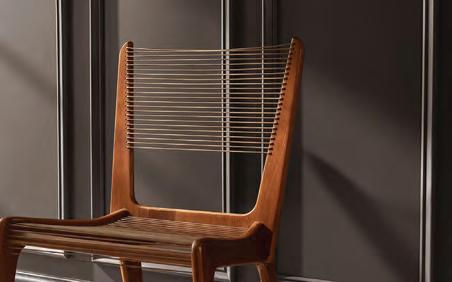
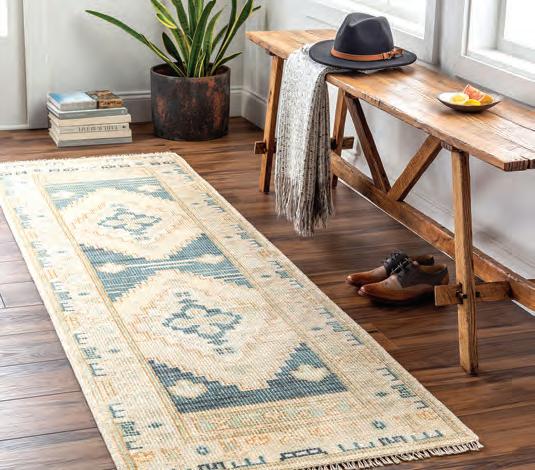
2026 North Mississippi Home Color Trends
Kent & Nicky Collins from Amory Paint & Home Center in Amory shared their store’s up-and-coming Benjamin Moore Paint colors currently making Northeast Mississippi lovelier and more elegant.
WINDHAM CREAM
Stephen Thompson flows through the movements of T’ai Chi Chih
Chinese practice of T’ai Chi Chih growing in popularity in Northeast Mississippi
Story by Dennis Seid
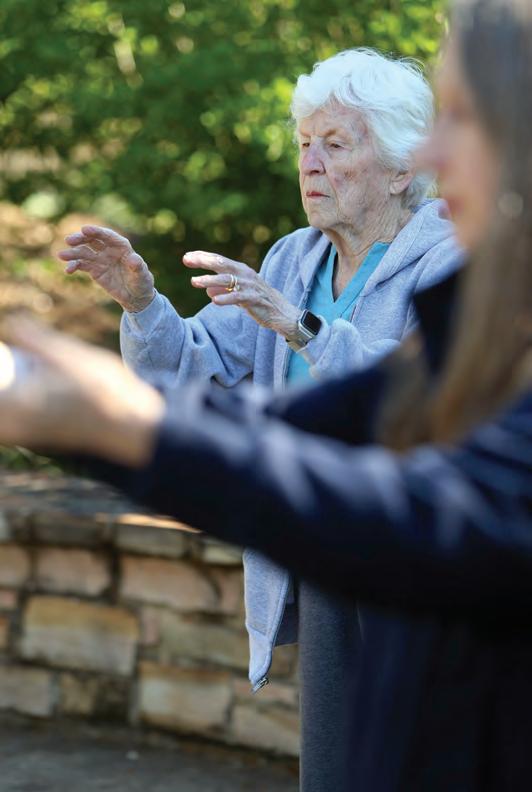
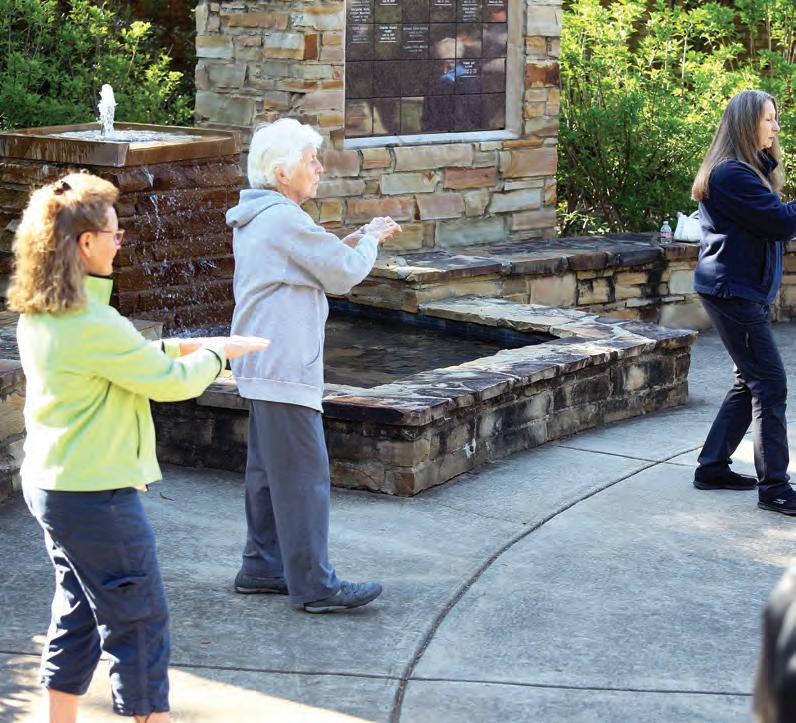
Moving purposefully and using a gentle, flowing motion, Sarah Young performs “around the platter,” then smoothly transitions to the “bass drum,” allowing energy to flow through her body.
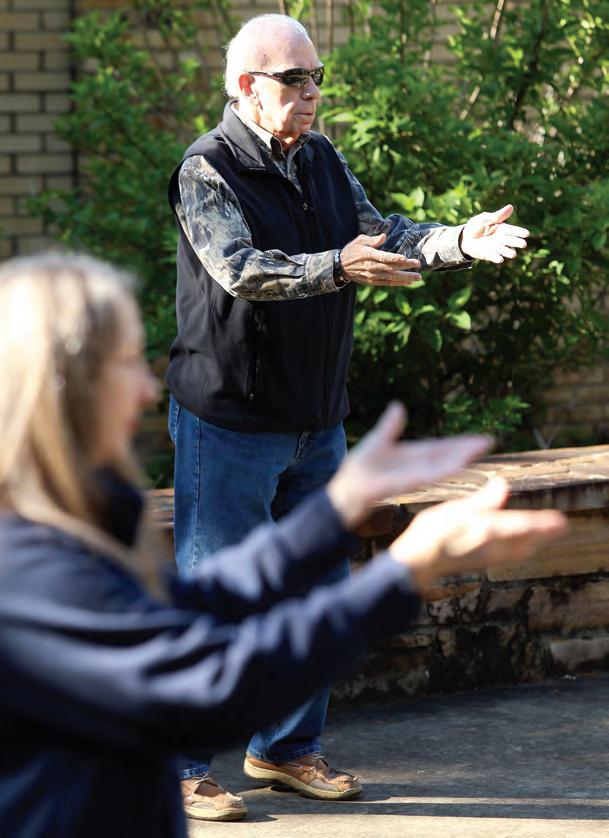
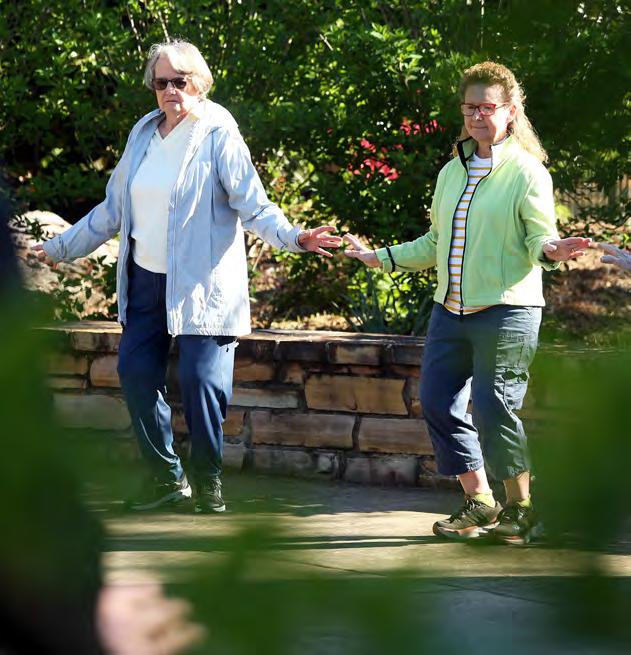
Sarah is practicing T’ai Chi Chih on a sunny, cool Tuesday morning in April in the garden area of First Presbyterian Church in Tupelo. She is joined by 11 others who seek to improve their health, reduce stress and promote mental serenity. They have found it in T’ai Chi Chih, a set of 19 gentle movements and one pose designed to circulate and balance the body’s vital energy, or chi. It is practiced regardless of age or physical condition.
“It’s about balance .. it’s a moving meditation, and I think at my age, it’s good to keep moving,” said Sarah, who at age 90, is the oldest participant in the class.
T’ai Chi Chih was designed by Justin Stone in 1974. It’s a simplified form of traditional T’ai Chi Chuan, which originates from ancient Chinese martial traditions. T’ai Chi Chih is exclusively a moving meditation meant to circulate and balance chi, whereas T’ai Chi Chuan – translated as “Supreme Ultimate Fist” – focuses on combat, structure and comprises more than 100 often-complex movements.
“It’s a healing art, not a martial art,” said Stephen Thompson, a T’ai Chi Chih practitioner and instructor for some 20 years. “It has all to do with mind, body, spirit integration.”
Photos by Adam Robison
As for Sarah, she has been part of a trio of friends, which also includes Sarah Marsinelli and Frances Brasfield, that has been practicing T’ai Chi Chih for about 15 years.
“She’s my inspiration,” Marsinelli said of Sarah. “I also was drawn to the part of having a place for mindful meditation, and to connecting to the energy, which is about balance ... and the community here is the best, and they’re my inspiration.”
Improved balance and mobility are also why Frances stuck with T’ai Chi Chih after trying yoga.
“I tried it with my daughter, but I couldn’t get off the mat,” she said with a chuckle. “But I hope Tai Chi helps everybody out. That’s the main reason that I’m doing it; I just enjoy the class, enjoy the people.”
Stephen said T’ai Chi Chih helps keep the body centered, moving in a way that is safe and actually helps correct some things a person might be doing wrong.
Stephen is very much a prime example of the benefits of T’ai Chi Chih.
Years ago, the arthritis in his feet was almost debilitating. He was on crutches and was told to wear special arch supports and to never go barefoot. He took up T’ai Chi Chih, and about three years into it, he could notice changes that were happening.
“I misplaced my special arch supports,” he said, but discovered he didn’t need them. He could walk just fine, without pain or fear of it.
“I never looked back,” he said.
Stephen found those lost arch supports some 10 years later, and he keeps them as a reminder.
But T’ai Chi Chih also had another benefit for him: It rid him of chronic vertigo that had plagued him for 40 years. Regaining his balance to move around freely and shedding the pain were unexpected but welcome surprises.
“I really thought I was going to my deathbed with it,” Stephen said. “But it was life-changing. It completely blindsided me that it just went away. I never dreamed of it. T’ai Chi Chih was the only thing different in my life ... it’s part of my daily routine, part of my weekly routine.”
Morris Alexander, who with his wife, Sarah, are T’ai Chi Chih instructors as well, leads the class each Tuesday at First Presbyterian. The couple also teaches every Thursday at St. Luke United Methodist Church.
Morris was introduced to T’ai Chi Chih about 25 years ago at the Wellness Center, where Ron Richards was teaching classes.
Sarah Young takes part in T’ai Chi Chih class in the garden at First Presbyterian Church in Tupelo.
“He was a friend, too, so I went to check it out and enjoyed it, and I did it as I was able,” he said. “I did that for a couple of decades, and when I retired, I got to where I could do it much more regularly, and Alice wanted to become a teacher. So basically, I kind of volunteered to go along with it, and I’m glad I did.”
Both the Alexanders are certified T’ai Chi Chih instructors, and have had as many as 45 participants in a class. They also took part in classes led by Stephen, and they became not only fellow learners but also instructors and friends.
For Alice, it took about a year before she was comfortable with all 19 moves and having to think about each one. But everything eventually fell into place, and the moves became muscle memory.
Stephen said a key to learning and understanding T’ai Chi Chih is to be “centered.”
“It’s almost as if you have a pole that goes through you, and you move that pole from one side to the other, and you’re not really leaning, you’re just flowing as you go from one side to the other, to back and up and down,” he said. “Basically, there’s just three types of moves that are done from below the waist, and everything above the waist just follows what’s happening.
“Some days, I think of this as being an energy movement. On other days, I think, OK this is a lot like physical therapy, because we are doing repetitive motions in a specific manner. And it’s not either/or, it’s both/and.”
Alice Alexander didn’t know what to expect when she and her husband taught their first class, unsure how much interest there was in what was at the time a relatively unknown art form. Stephen had sent emails to anyone who had expressed interest in T’ai Chi Chih – about 130 people.
“I didn’t know he had done that, so yeah, thought we would have a few people show up, maybe five or six, and we had the space that we had anticipated being in, and it was kind of a nice, smaller space, and we were inside,” she said. “We were there in that space, and the first day, people started coming in. Oh, this is good, this is nice. And they kept coming in. I mean we were overwhelmed and had to move to the gym over at St. Luke’s, because I think that first day, we had 31 or 32 people. And I just couldn’t believe it.”
Clearly the turnout was far better than what the Alexanders expected, and the interest continues today.
“We had four people that day that came over from Alabama, and they had some other friends, too,” Alice
Dan Johnson takes part in T’ai Chi Chih in the garden at First Presbyterian Church in Tupelo.
said. “So now, we’ve had at least six people come from Alabama every week to do T’ai Chi Chih. People are interested, and they’re interested in doing something that’ll help their balance and their health, especially as you get older.”
The Alexanders and Stephen have seen the significant difference T’ai Chi Chih has made in the lives of many people, and invite anyone to the classes to experience the healing art that it can be.
“We don’t promise anything to anybody,” Stephen said, “but it happens.”
Wholeheartedly agreeing with Stephen, Alice said there is no guarantee that anything particular will happen when practicing T’ai Chi Chih.
That said, she believes that “what happens physically is reflected mentally and reflected spiritually.”
“So if your physical body is getting into balance and you’re able to move kind of in concert with your own self, that has ripples into your whole life and brings everything kind of into a sense of wholeness and realness,” she said. M
Alice Alexander leads a TT’ai Chi Chih class inside the garden at First Presbyterian Church in Tupelo.
Frances Brasfield and Sarah Marsinelli take part in T’ai Chi Chih in the garden at First Presbyterian Church in Tupelo.
| Tips for beginners |
• Prioritize Relaxation: Keep joints, especially knees and elbows, soft and “unlocked” rather than stiff.
• Focus on Posture: Maintain an upright, relaxed spine, ensuring the back is straight as if suspended from above, to enhance balance.
• Slow Down: Perform movements slowly and smoothly, allowing energy to move through the body naturally.
• Breathe Naturally: Do not worry about exact synchronization, but try to inhale when opening or lifting and exhale when closing or sinking.
• Mindful Movement: Focus on your “center” (the waist/abdomen) as the source of movement, rather than leading with your hands.
• Rooted Movement: In “T’ai Chi Step,” ensure the heel touches the ground before the foot flattens for stability.
• Mirror the Instructor: For the first few sessions, concentrate on copying the footwork first, then add the arm movements as you become comfortable.
- Stephen Thompson “
It’s a healing art, not a martial art. It has all to do with mind, body, spirit integration.
BUILT ONFaith SERVED WITH Heart
Story by Meredith Biesinger Photos by Adam Robison
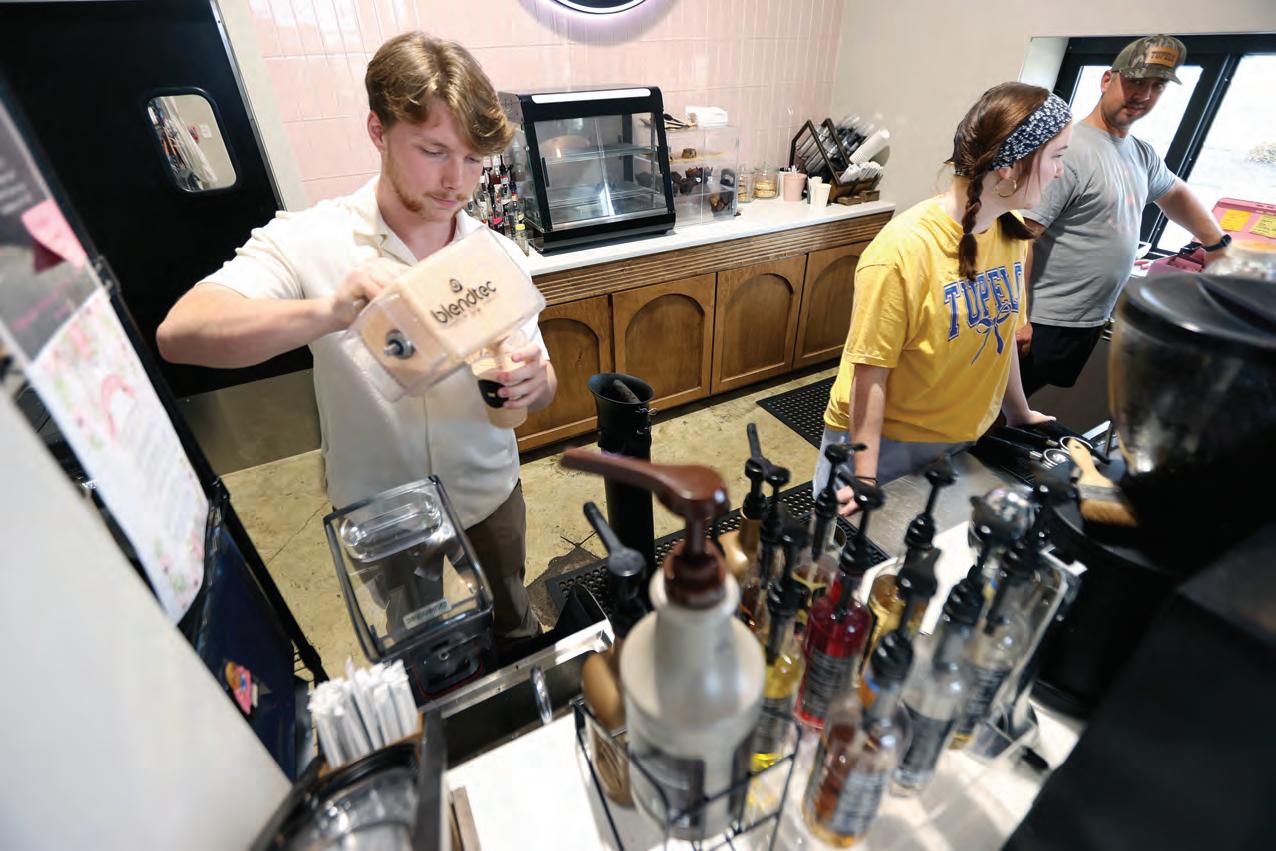
Maggie Blasssingame, an employee at Mae’s To-Go Cup, hands a customer their drink order at drive-thru window.
Mae’s To-Go Cup serves coffee, community and connection
In Tupelo – and now Baldwyn – Mae’s is more than a coffee stop. Matt and Sarah Anderson have created a welcoming place where people form real connections, turning a simple latte into part of the community’s daily routine.
But the journey to this point didn’t start with a polished storefront or packed parking lot. Instead, it began somewhere less certain.
It began with a prayer… and a pivot.
“If you had told me five years ago that I was gonna be making coffee and breakfast for the community, I would have told you you were a liar,” Matt said with a laugh. “But here we are.”
In January 2023, just before her 40th birthday, Sarah made a bold ask:
“I said, ‘I want to quit my job.’ I was a paralegal at a law firm and just didn’t enjoy it anymore.”
When she told Matt she wanted to open a coffee shop – or maybe a flower shop – his response was honest and humorous.
“He said, ‘Well, considering you can’t keep our front porch flowers alive, we’re not doing a flower shop. But, a coffee shop could be cool.”
They began planning, researching, and dreaming. They even had a building – until they didn’t.
The deal fell through, forcing an unexpected but necessary pivot.
Rather than a setback, this
Bode Jolley, an employee at Mae’s To-Go Cup, mixes up a customers order.
challenge became the start of something far more meaningful. Just two weeks later, Matt and Sarah received a call to take in a foster child – now their daughter – whose early medical needs required time, attention, and flexibility.
“We were upset about it at first, but it was meant to be,” Sarah said. “We didn’t need that building at that time.”
Instead, they found a trailer.
Small beginnings
In October 2023, Mae’s To-Go Cup officially opened as a food truck.
They rose early, worked long days, and relied on faith – pulling espresso before sunrise, hands and hearts full.
“I remember even in the food truck, I would look out and think, oh my gosh, there’s people,” Sarah said. “It still overwhelms me. I’ll walk in and see a line and think, oh my gosh, they’re still coming.”
And they are.
As they moved from those food truck beginnings to their brickand-mortar store in Tupelo, a signature feature of Mae’s emerged – almost by accident.
When the weather turned cold and rainy, foot traffic slowed, and
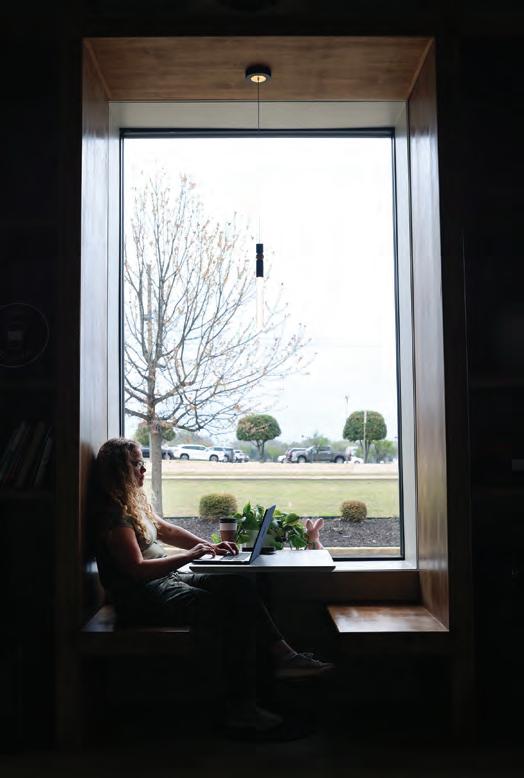
A customer at Mae’s To Go Cup, enjoys the quite time in the window drinking and working on her computer.
customers hesitated to get out of their cars. So Matt had an idea.
“Go get in your car and pull up to the window,” he said.
They tried it, filmed it, and posted it on social media.
And just like that, people started driving through.
A simple, practical solution became a signature part of the business – and today, that drive-thru line rarely slows.
Over time, Mae’s transformed – shifting
from a simple truck to a space that feels alive the moment the doors open. The steady rhythm of orders being called, ice clinking into cups, milk steaming, laughter bouncing between tables – it all blends into something that feels less like a business and more like a gathering place.
In Tupelo, that story has quite literally come full circle.
Their storefront now stands in the very place they once parked their food truck –where early mornings were spent figuring it
out as they went, where faith met uncertainty, and where a small trailer became something much bigger.
Full circle, and somehow, exactly the way it was meant to be.
The menu, too, enhances the experience.
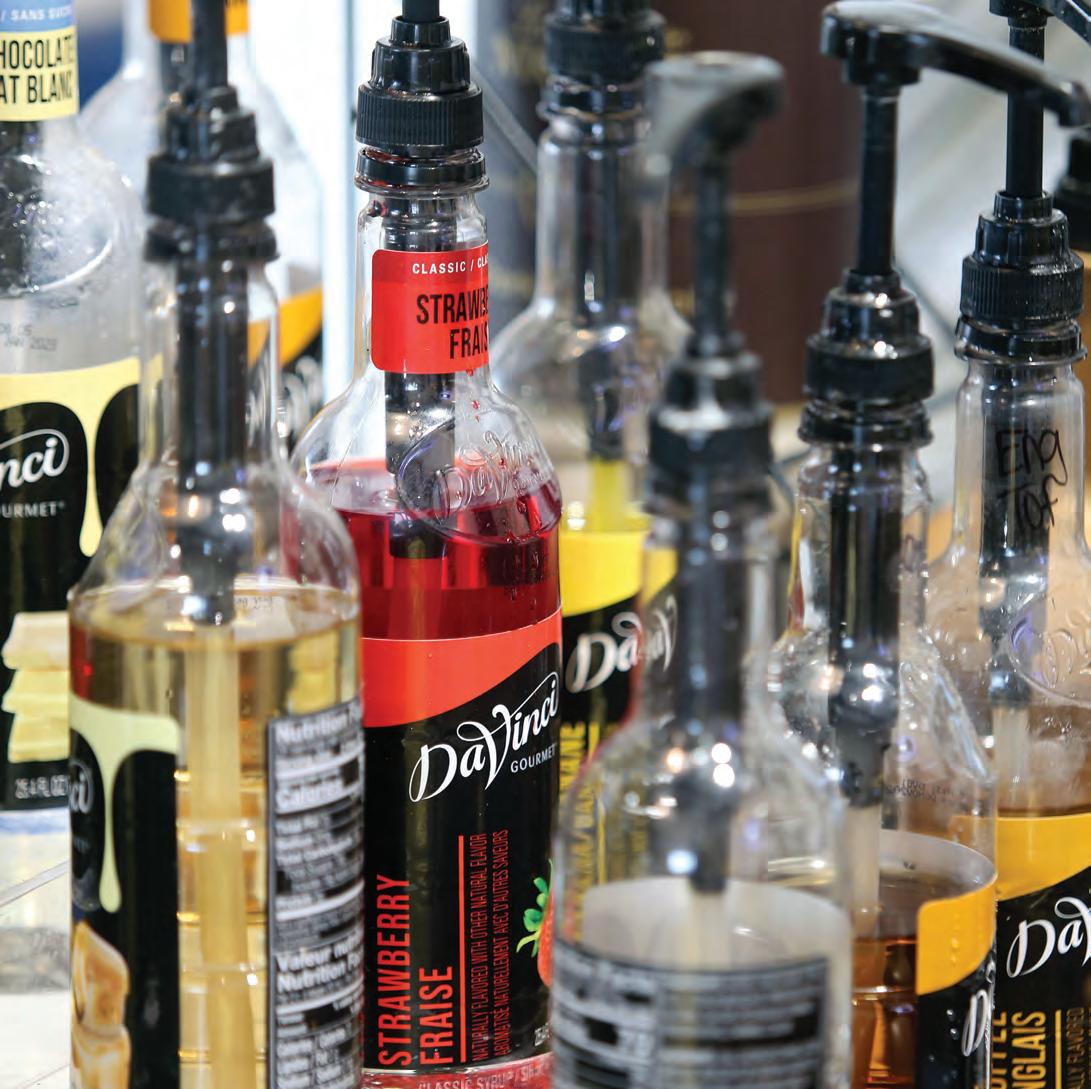
Rich espresso anchors everything – classic lattes, creative drinks, refreshing smoothies, layered bagels, and pastries that fill the shop with a just-baked aroma – making you add one to your order without a second thought.
It’s indulgent, but approachable. Trendy, but still grounded.
And it’s all served with intention.
“We don’t want to just know your coffee order,” Matt said. “We want to know you. Your kids. Your life.”
Genuine connections
That mindset shaped Mae’s into a community cornerstone, where each visit builds genuine connections, not just another coffee run.
It’s where teachers drive through before the first bell, parents claim a quiet moment between drop-offs, and friends linger between sips.
It’s also a place for life’s bigger moments – bridal showers, baby showers, birthday parties, even karaoke nights out on the patio.
“It’s really neat – the tears that are shed here, the ex-
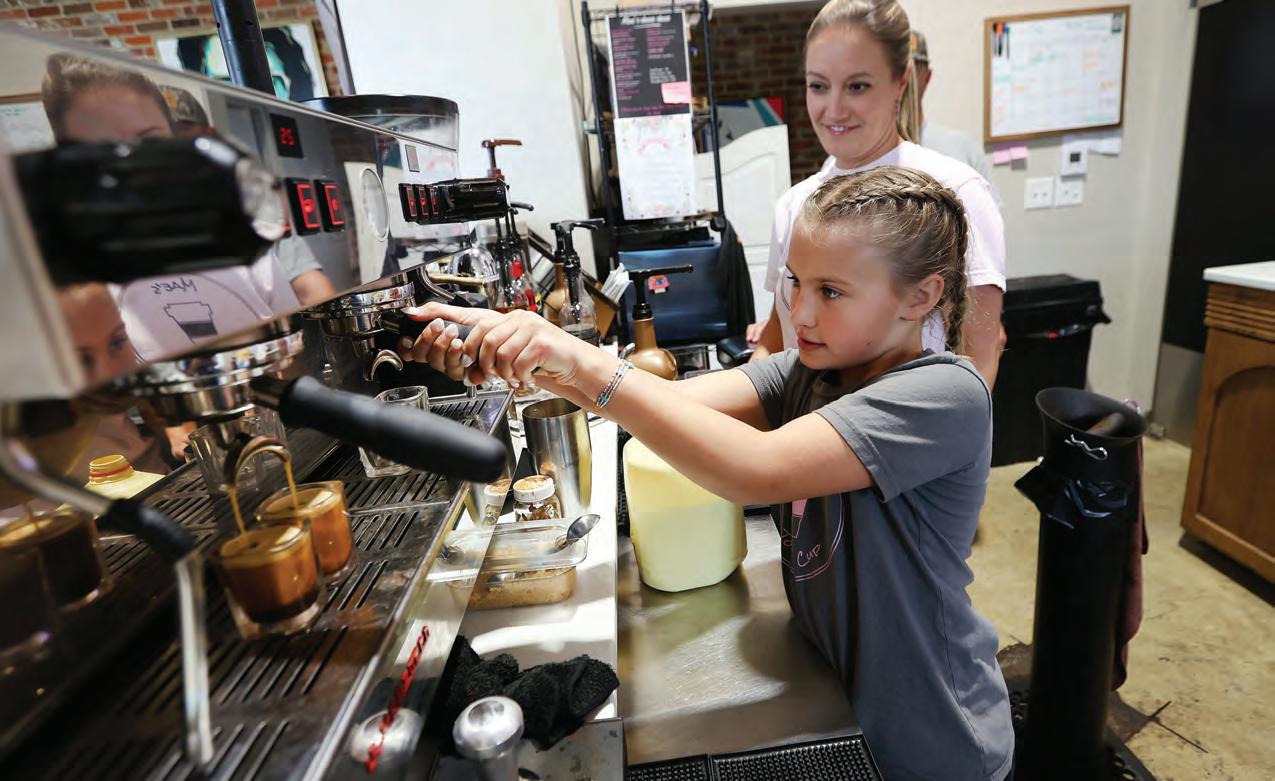
Sarah Anderson watches as her daughter Maci makes a drink at their family owned coffee shop, Mae’s To-Go Cup in Tupelo.
citement, the celebrations,” Sarah said.
And at the center of it all is family.
Mae’s is named after their daughter, Maci – “Mace” – who believed in it from the very beginning.
“She said, ‘Paint your food truck pink,’ and came up with the name,” Sarah said. “She’ll tell you – this is her coffee shop.”
And some mornings, you’ll find her there – bright and early before school – helping behind the counter, greeting customers, completely at home in the place she helped dream up.
Precious and fitting.
Mae’s was never just built for a community – it was built by one, starting with family and growing outward. This sense of togetherness is at the heart of everything Mae’s stands for.
As Mae’s expands – with a second location in Baldwyn – the heart of the business stays clear: faith, family, and a true love for people remain at the center of every cup served.
“If we’re called to open more, we will,” Matt said.
Because for Matt and Sarah Anderson, this was never just about coffee.
It was about creating a place where people feel seen when they pull up to the window … where their order is remembered, their story matters, and their presence is noticed.
At Mae’s, it’s more than coffee. It’s about being welcomed, known, and finding your place in a community that grows with every shared cup. M
Where Everybody Knows
Every town has that special place you recommend – a spot where the food is great, but more importantly, where community and belonging define the experience.
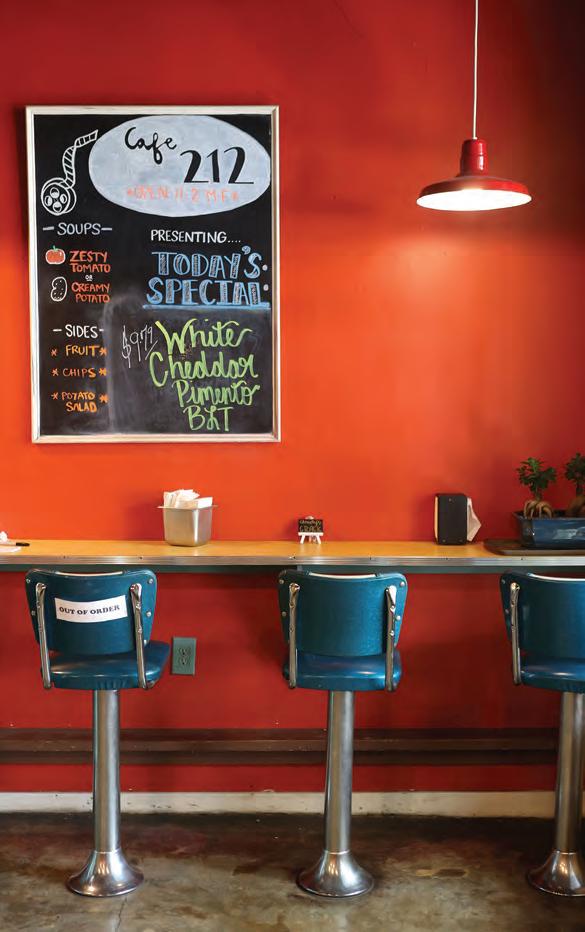
In Downtown Tupelo, that place is Cafe 212.
Open Monday through Friday from 11 to 2, it’s the kind of lunch spot people build their days around. You’ll find local art on the walls, regulars in their usual seats, and a steady hum of conversation that feels more like a gathering than a restaurant.
And if you ask Jason Hayden what makes it work, he won’t overcomplicate the explanation.
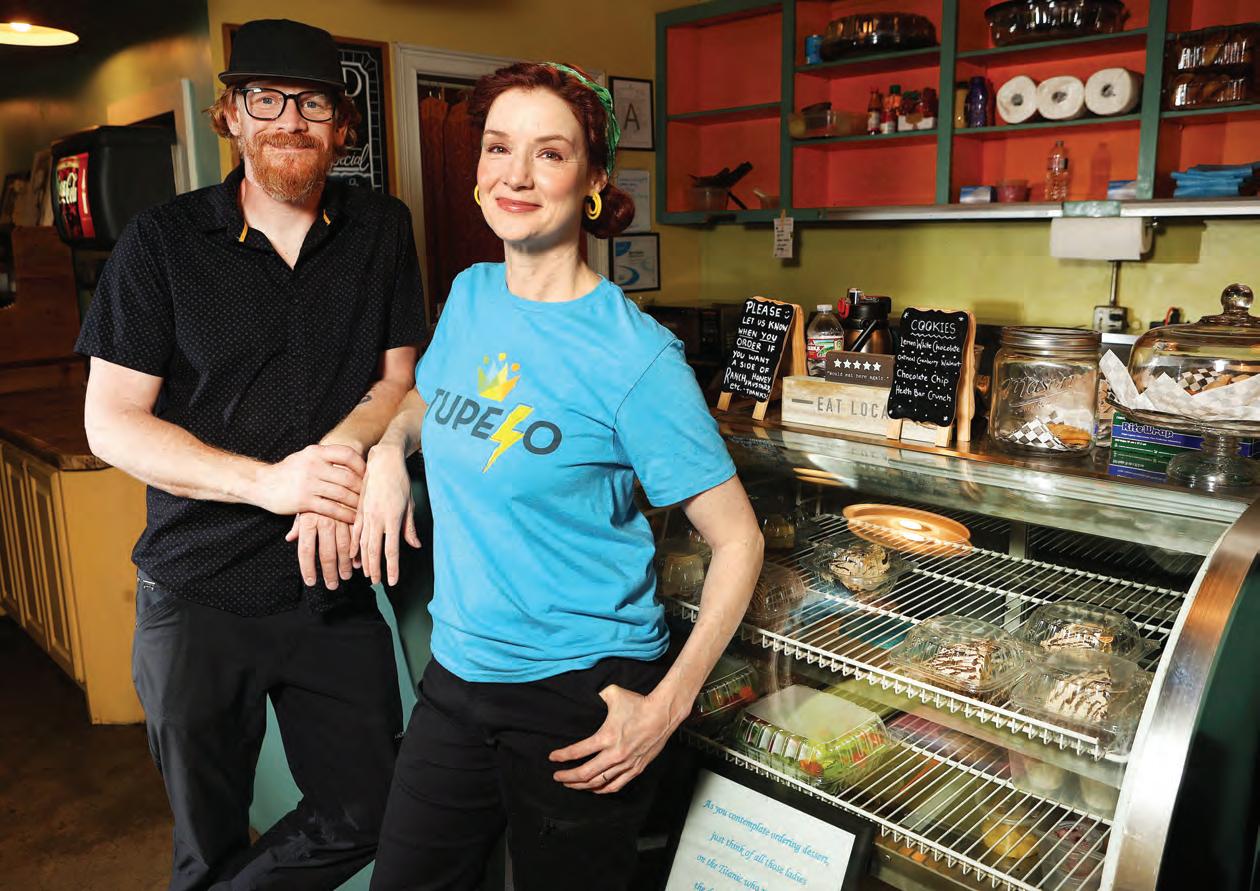
“I’ve always liked to call it the ‘Cheers of sandwich shops’,” Jason said. “We know a large majority of
our customers by name, know what they like to eat, even know about their lives … Our interactions aren’t scripted – we’re joking with each other and asking about real things.”
Built on a feeling
Long before there was a menu or a storefront, there was a memory.
Amanda Hayden said eating at local restaurants as a kid created memories that she carried with her.
“Growing up, there was always something very special to me about mom-and-pop shops,” Amanda said. “My mom would take me to Finney’s in between soccer practice or ballet – it was always such a treat.”
In business since 1981, Finney’s Sandwich Shop is one of Tupelo’s oldest eateries, the kind of local spot at which long-time residents
have been eating for years. The parallels between it and Cafe 212 are obvious.
“To this day, Finney’s has my heart,” Amanda said.
As a teenager, Amanda found that same feeling again in a little downtown restaurant owned by Tony Ford. It stuck with her – the idea that a place could feel like that.
And then there was a coffee shop called Starting Over, where the mission wasn’t just about what was served, but how people were welcomed. Its owner, the late Julia “Star” Newsom, was a beloved member of the community.
“She had a way of making people feel like they truly belonged,” Amanda said.
Belonging became the principle shaping every part of Cafe 212,
Story by Meredith Biesinger Photos by Adam Robison
Jason and Amanda Hayden
defining its heart and purpose. It followed Amanda through her first real restaurant job at Yummy Yogurt, and eventually, it turned into something she couldn’t shake. Not just the idea of working in a place like that, but creating one.
“Good food has always brought joy to me,” she said. “And as someone who actually hates to cook – but LOVES to eat – sandwiches were my go-to … If you do it just right, it’s as good as any gourmet dish in my opinion.”
Purposefully simple
If you’ve ever eaten at Cafe 212, you know the menu doesn’t try too hard. And that’s exactly why it works.
The chicken salads, for example,
started with a recipe from a friend – but over time, Amanda said they stripped it back, removing ingredients like celery and onions to make it something more people could enjoy.
Intentionally simple decisions, from menu to atmosphere, center on inclusiveness and making customers feel welcome.
Jason will tell you part of it is personal – he hates onions, and Amanda doesn’t do spicy – but it turned into something bigger than preference. It became a philosophy.
“We both decided we wanted everything on the menu to be universally enjoyable,” Jason said. “Keeping it simple and delicious gives everyone a chance to try our food.”
Everything is made to order, which means you can tweak it, make it yours, and know it will be right when it hits the table.
And if you’re new, there’s one thing you have to try – the Blue Suede Grill, their take on Elvis’s peanut butter and banana sandwich. It’s a little nod to Tupelo, and it’s delicious.
Food that means something
Some dishes stay with you because they’re good. Others stay with you because they mean something.
At Cafe 212, food and meaningful connection are the heart of everything – making each meal an experience of belonging.
“Our Friday special, Mama’s Chicken Casserole, is literally made
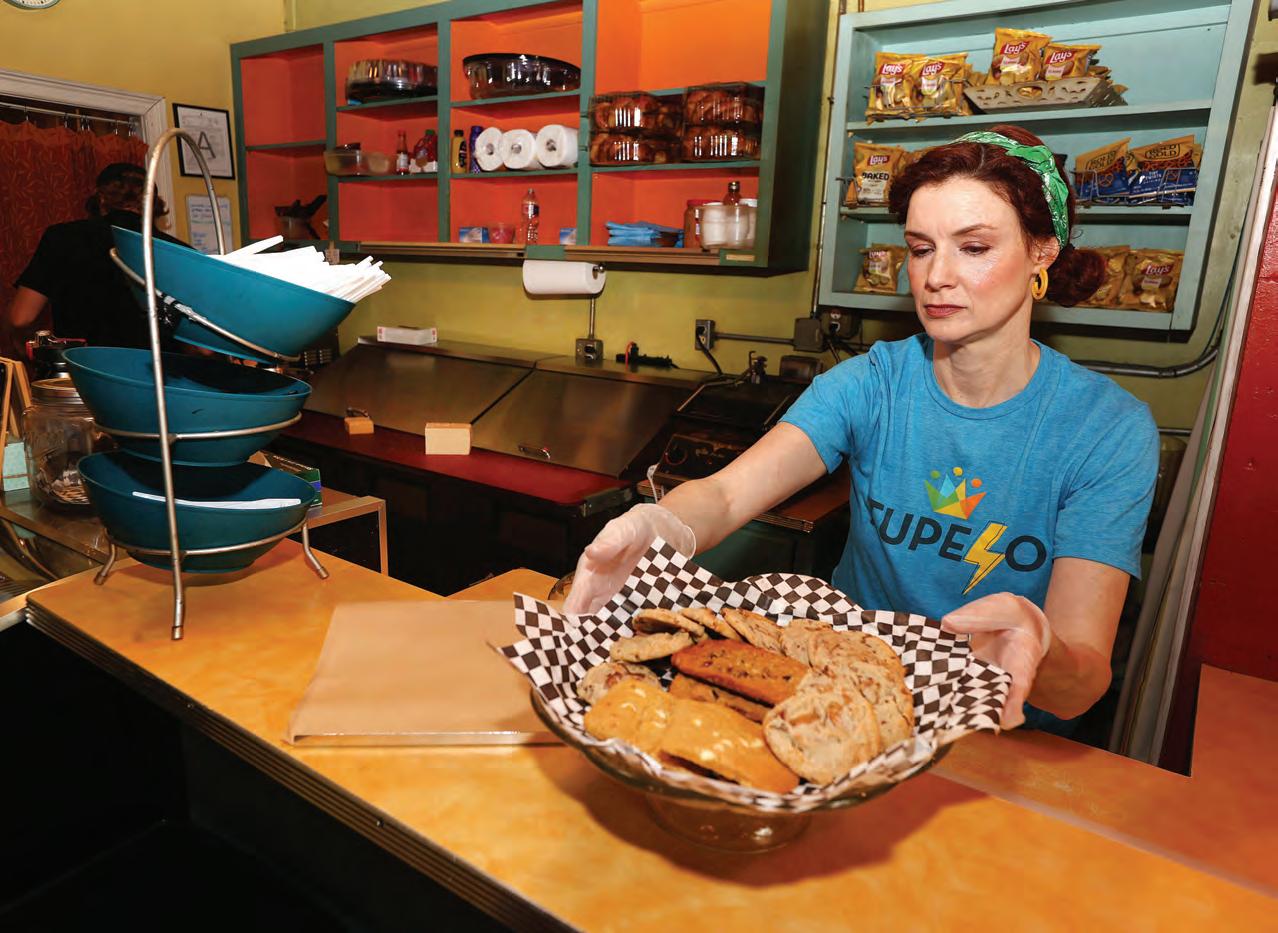
Amanda Hayden, owner of Care 212 in Tupelo, sets out cookies on a platter getting sorted after a busy day.
by my mom,” Amanda said. “She’s been making it for our family for years.”
The same goes for their Chocolate Chip Peanut Butter pie – also from her mom and easily one of their most-loved desserts.
Other menu items come from people who’ve been part of the story along the way. Like The Wally, created by a former employee they still consider family.
And then there are the moments that make you smile.
“Not necessarily a favorite, but a while back, we put a basic peanut butter and jelly sandwich on the menu for kids,” Jason said. “But overwhelmingly adults order it the most … when a man in a business suit just wants a PBJ like his mom used to pack him for lunch – it’s kind of sweet.”
It is kind of sweet. And it tells you everything you need to know
about the place.
The people who keep it going
You don’t make it 20 years in the restaurant world without a few hard seasons.
Cafe 212 has had its share –equipment breaking down, the uncertainty of COVID, and personal health challenges – the kind of things that could’ve easily closed the doors.
But they didn’t.
Because the community showed up, and the Haydens did too.
Amanda said that time and again, their customers have rallied around them in ways that feel hard to put into words. That kind of support doesn’t just keep a business going –it becomes part of its foundation. They’ve served people from all over the world, along with a few familiar names – Jack White, John Grisham, Anthony Bourdain – but
the stories they tell most often are about the regulars.
Like David Sparks, a local attorney who started each morning there, always with a story and a book. When he passed, they honored him with a display for his coffee mug and a free library inside the cafe – something that still sits there today.
It’s those kinds of details – the quiet ones – that make a place feel like it matters.
Over time, customers haven’t just supported Cafe 212 – they’ve shaped it. Menu items like the Ruby Del and the Shanti salad came directly from them; others stayed simply because people kept asking for them.
As Jason put it, their customers are the reason they’ve kept going.
Twenty years later
On April 4, Cafe 212 celebrated
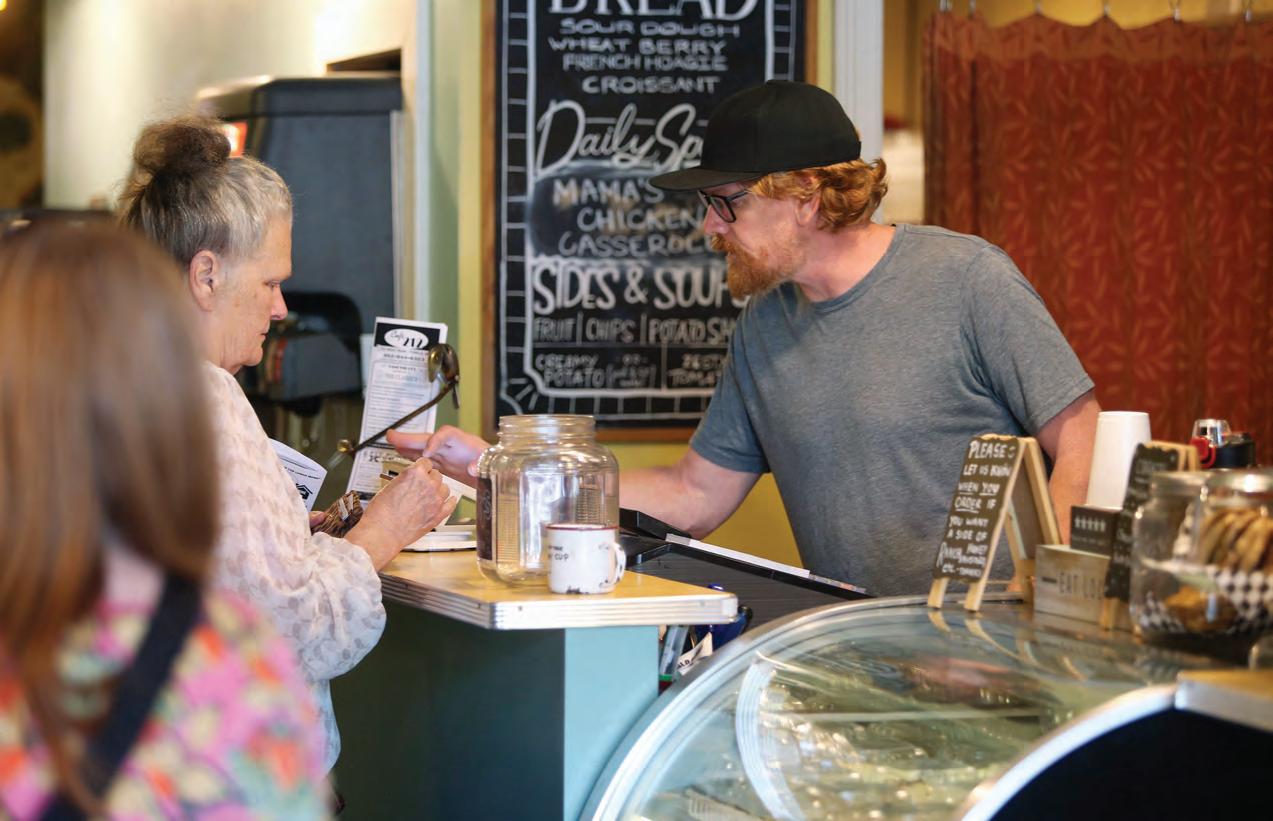
Jason Hayden takes lunch orders on a busy Friday at Cafe 212 in downtown Tupelo.
its 20th anniversary. If you ask Amanda and Jason what that really means, you’ll get an honest, heartfelt response.
“It’s crazy to think back to when we first opened and were just kids, not really knowing what to do,”
Amanda said. “It has been the most difficult, stressful, and exhausting job we’ve ever had, and also the most wonderful, life-giving, beauti-
ful thing to be a part of. If we had to do it all over again, we wouldn’t hesitate for a second.
“Being a part of this community and working side by side with the person that means the most to me in this world is pretty much as good as it gets in my book. I don’t know that we have 20 more years in us (actually, I don’t – we don’t), but I’m so incredibly grateful we made
it this far, and for however long we can keep doing this, I hope it continues to be something as special to others as it is to us.”
And after all this time, Cafe 212 is still right where it belongs – at the heart of Tupelo. M
Audrey Moore, an employee at Cafe 212 in Tupelo, prepares lunch orders for customers on busy Friday.
To-Dos Goings-On
2026 JIMMIE RODGERS MUSIC FESTIVAL
May 7-9
Meridian
TRADITIONS, TASTE & TUNES
May 22 - 23
Columbus
Meridian’s premiere music festival features Marcus King Band, Jamestown Revival, The Rascals, Brent Cobb, Southern Legacy, Maggie Antone, Becky Buller & Ned Luberecki, and Lach Thornton.
A meaningful Memorial Day weekend tradition bringing the community together for a blend of remembrance celebration and small-town charm.
May 9
Tupelo GUMTREE 10K
The 50th race through Tupelo features a Strut Your Mutt Fun Run and a Mississippi Market.
May 9
DeSoto County Silo Square BLUES FOR THE BLUE” CRAWFISH & BLUES FESTIVAL
A night filled with live music, drinks, good eats & more… all proceeds benefit the Southaven Police Department’s First Responders Benevolence Fund & the DeSoto County Sheriff’s Blue Line Fund.
May 9
Jackson on Entergy Plaza at the Two Mississippi Museums MISSISSIPPI MAKERS FEST
Featuring art, crafts, ceramics and other products by Mississippi-based artists, live music from Mississippi musicians, make-and-take activities, and more.
PIRATE DAY IN THE BAY
May 15 - 16
Bay St. Louis Corner of S. Beach Blvd. and Court St. Bay St. Louis
Featuring Arts and Crafts, Pub Crawl and & Treasure Hunt, Costume Contests, children’s parade, live music and fireworks.
JAZZ IN THE PASS
May 24
War Memorial Park Pass Christian
Featuring live music echoling over the Mississippi Sound on the Sunday before Memorial Day. While muscians play, vistors will buy from food & drink vendors and browse craft vendors.
WING FEST 2026
May 29 - 30
Tupelo Fairpark
This two-day event features live music, entertainment, and a competitive wing competition.
TUPELO ELVIS FESTIVAL
June 3 - 6
Tupelo
Tupelo celebrates its most famous native son. The event includes live music with Elvis tribute artist, 5k race and more.
CATHEAD JAM
Cathead Distillery Jackson
Cathead Distillery and Dreamnote Foundation present a two-day music festival that brings live music, local food and drinks, and community. Proceeds support expanded access to music education in underserved Mississippi communities. June 5-6
MISSISSIPPI PICKLE FEST
June 13 - 14
Mississippi Agriculture Museum Jackson
The Mississippi Pickle Fest is a refreshing taste of all things fermented. This fun-filled festival includes music, games, contest vendors and more.
May 15 - 16
GRAMMY Museum in Clevland 2026 MISSISSIPPI SONGWRTIERS FESTIVAL - DELTA REGION
The Missississippi Songwriters Festival - Delta Region satellite festival will geature guest hit songwriters along with 20 plus regional songwriters. Festival performances begin at 6:30 p.m. and are free to the public.
The deeper the roots, the stronger the care.
For 90 years, North Mississippi Health Services has grown alongside our community. What began as a commitment to health care has become a promise to stand by you and your family through every stage of life.
That’s why we’re always expanding access, advancing technology and discovering better ways to deliver the care you count on—right here at home, for generations to come.