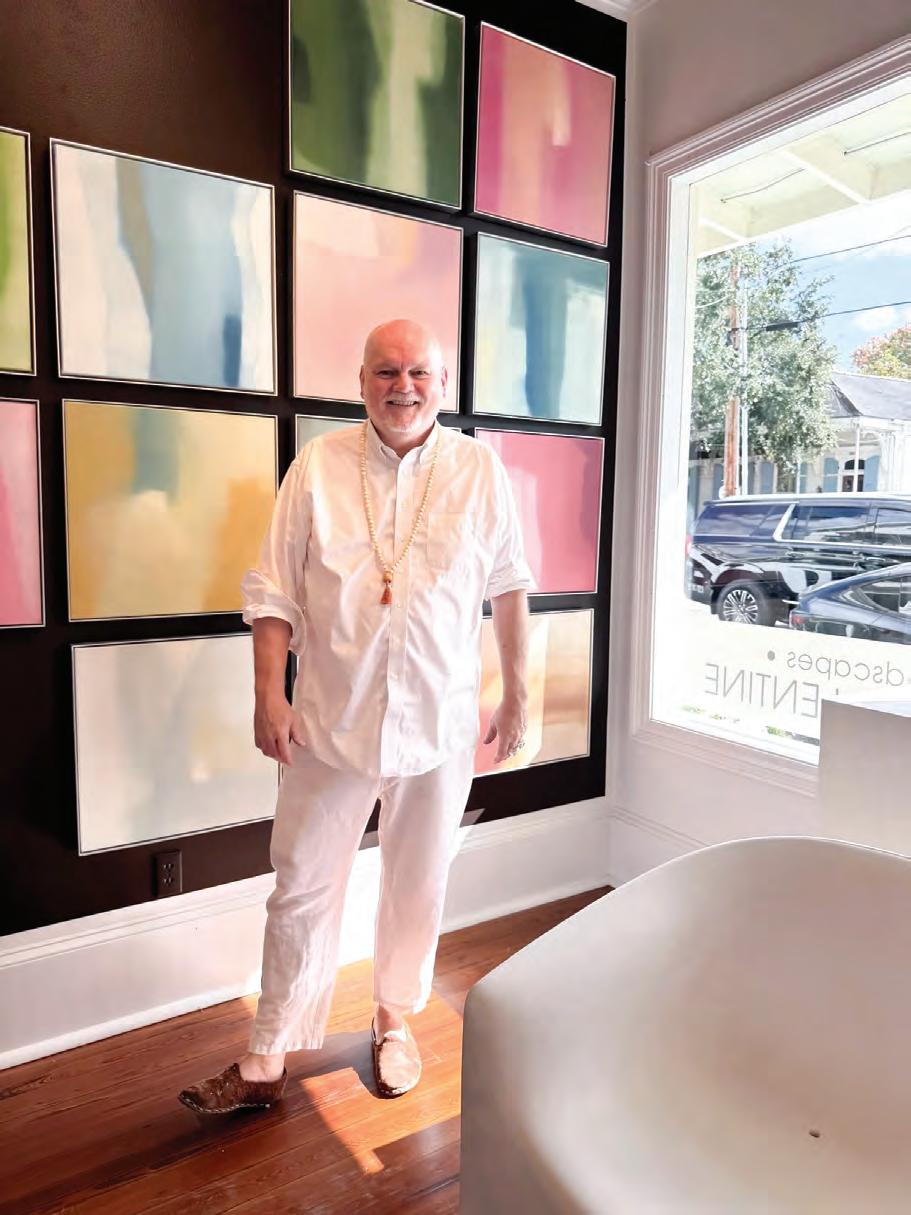
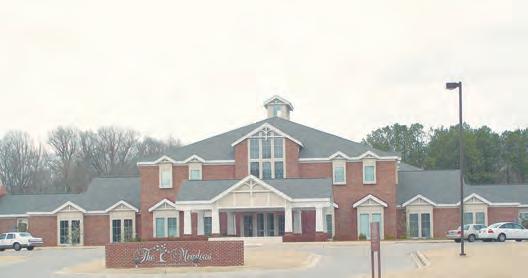
Fueled by family | Southern spaces| Artistic Amory
Have I ever told you how much I love a good story?
Writing them, reading them, hearing them, telling them – our stories, yours and mine, are the foundation on which our histories are built. Told well, our stories form the shapes of who we are, giving others an understanding of how we came to be. Want to know why I am how I am? There’s a good chance I have some stories I could tell you, some moment in my growing history that would help bring an element of my personality into sharper focus.
You could say the same about yourself. That’s what makes you interesting.
I was recently swapping stories with a longtime friend, and she told me she loves spaces flled with interesting treasures.
“Every wall covered and each piece a story,” she said.
Not only do I love this sentiment, I suspect the spirit of it is what’s kept me in this line of work for the past couple of decades.
Over the years, dozens – maybe hundreds – of people have welcomed me into their homes. Few things delight me more than being invited into someone’s personal space. They’re flled with stories.
I’ll often latch onto – fguratively (but occasionally literally) – some unique object in their living or dining room and ask about it. Inevitably, that item has a story its owner is eager to share.
And I am always … always … eager to listen. I hope you are, too.
Adam Armour Editor
OUR STAFF
Editor
Adam Armour
Creative Director
Shannon Johnson
Creative Team
David Johnson
Janey Shimp
Sales Coordinator
Missha Mize
CONTRIBUTING PHOTOGRAPHERS
1242 S.
662.842.2611
@mudandmagnolias
@mudandmagnolias
If you have any thoughts about this issue, please email us at editor@mudandmag.com
subscriptions@mudandmag.com
Teresa McDonald
Molly Self
Erin Morgan
Angie Quarles
Leigh Knox
Paul Fullerton
Shannon Cromeans
Tim Watson
Taylor Randolph
Thomas Wells Adam Robison
Dennis Seid William Moore
Leslie Criss
On the cover: A 1955 Chevrolet BelAir is parked on display inside of Dream Riderz in Corinth. Photo by Adam Robison March 2026, Vol. 14 No. 2
10
SOUTHERN SPACES
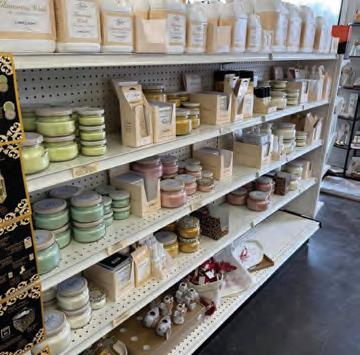
Give Kelly Gregory, owner of Aqua & Oak in Tupelo, a blank slate and watch her fll it from foor to ceiling with Southern style.
23
WEARING LIFE’S CHALLENGES
When Katina Tucker founded her nonproft, Wear it Well, she did so with the goal of embodying her grandmother’s boundless and unwavering compassion for others.
34
FUELED BY FAMILY
Ethan Rider opened Dream Riderz Classic Cars & Collectibles in Corinth as a way to display his father’s expansive collection of cars. Now, what began as a museum has evolved into a place to buy, sell and restore classic cars.
44
STATELINE STOP
Mississippi’s welcome centers are designed to greet the Magnolia State’s visitors with a bit of southern hospitality, and no welcome center greets more visitors than the one in Tremont.
48
SHAPED BY MOVEMENT
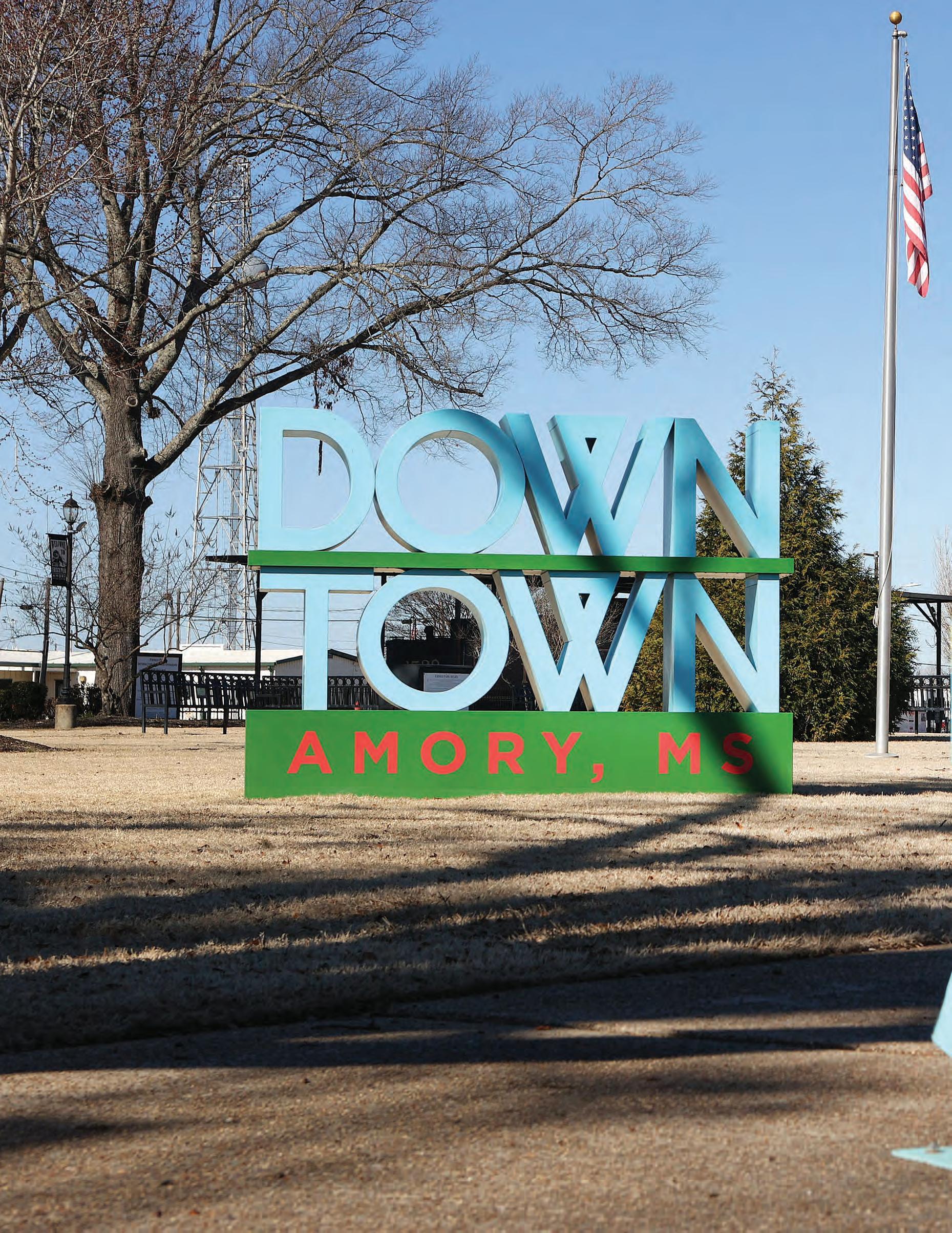
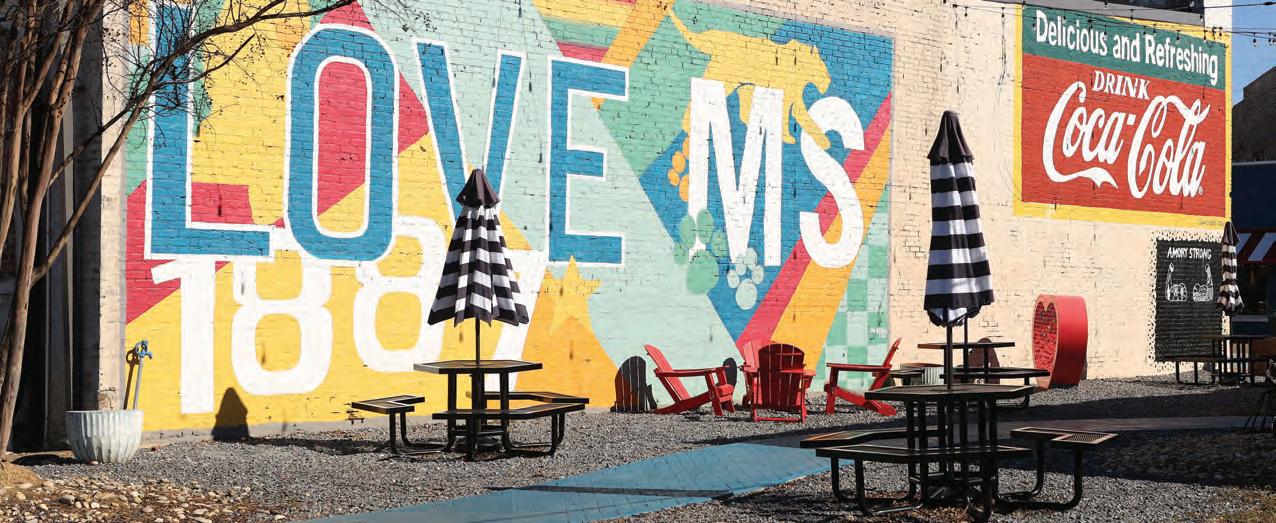
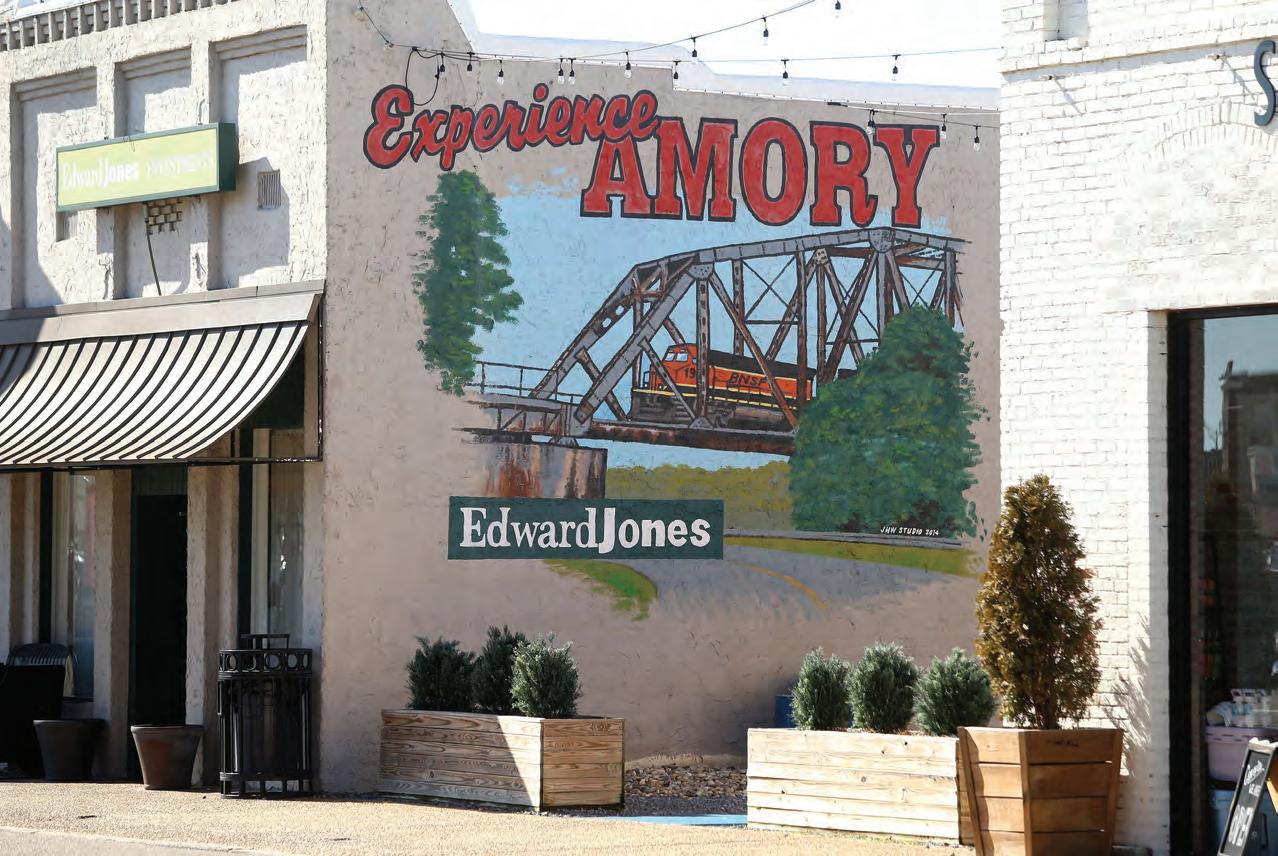
Long before murals and metal sculptures caught the light downtown, the railroad defned the city of Amory. But today, something else moves through Amory’s Main Street. Color. Creativity. A sense of welcome that doesn’t rush past you but invites you to slow down and stay awhile.
54
MADE SLOWLY AND WITH INTENTION
You don’t stumble upon The Potter’s Wife Pottery by accident. Tucked away in Nettleton, Mississippi, the shop is a hidden gem built slowly and with intention. It’s the work of a husbandand-wife team, Troy and Shana Jantz.
56
SEEING THE MISSISSIPPI DELTA
Based in Cleveland, Mississippi, Rory Doyle is a freelance photographer whose camera has spent more time on back roads, riverbanks, front porches, and quiet corners of the Mississippi
Pause and enjoy a refined afternoon with our traditional Chai Tea Time, featuring warm, aromatic chai and our signature handmade Mango Cheescake crafted with care for a truly memorable indulgence.
Perfect for a relaxing break, casual meeting, or a quiet moment to yourself. Exper ience the
Patient safety is our priority.
For the 15th consecutive time, the Leapfrog Group has awarded Baptist Memorial Hospital-Union County with a Hospital Safety Grade of “A”, health care’s gold standard for patient safety.
We’re proud of our long-running safety record because it means better care for you. You deserve to receive exceptional care — every time you visit our facility.
To learn more about Baptist Union County’s patient safety recognition, visit baptistonline.org/TopGrade or scan the QR code.
Southern
Spaces
Dennis Seid |
Story by
Photos by Adam Robison Aqua
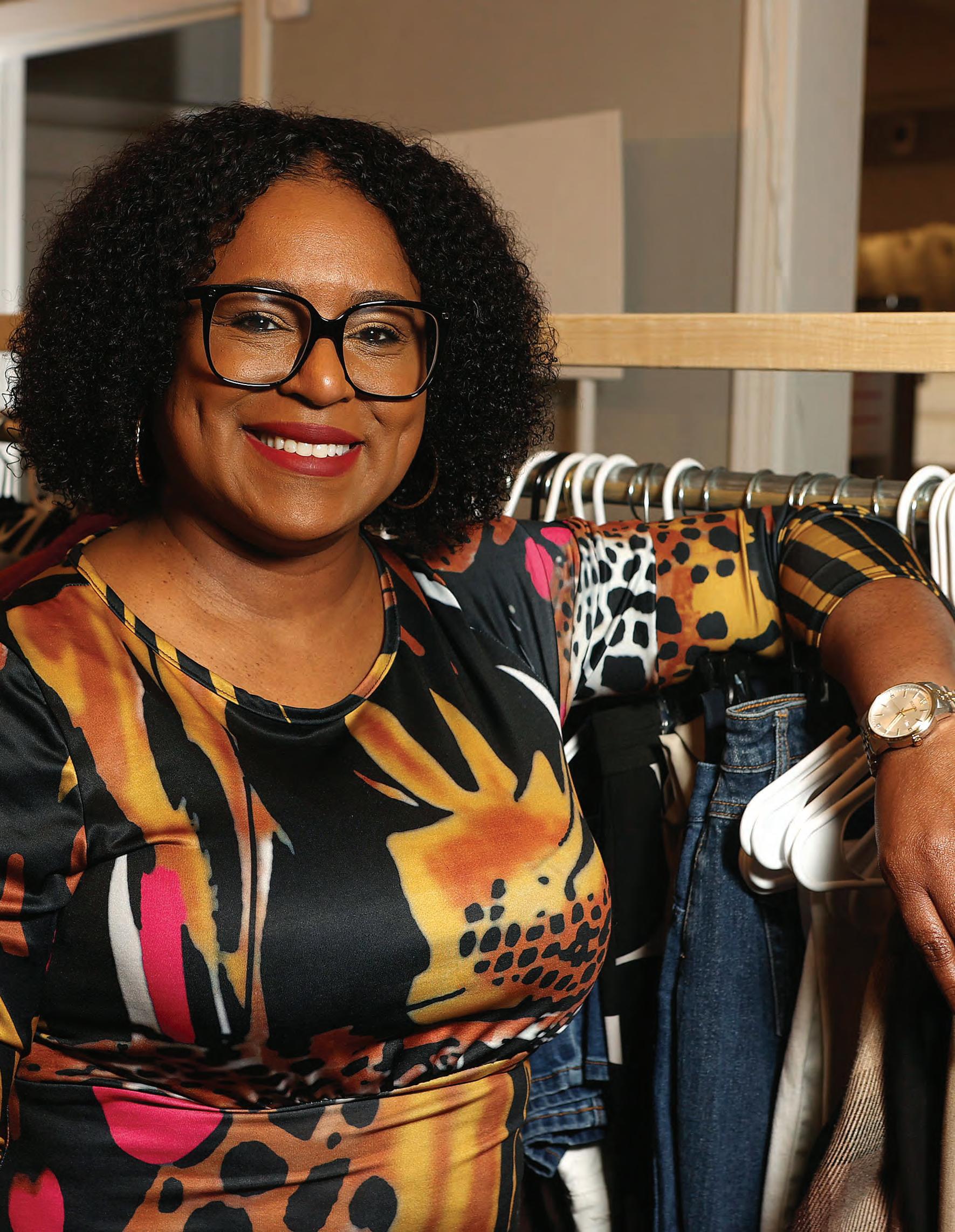
Kelly Gregory is the owner of Aqua & Oak in Tupelo.
ive Kelly Gregory a blank slate and watch her turn it into an ideal space from foor to ceiling with Southern style.
“Those are the fun projects, when they say, ‘Here’s an empty room,’” said Gregory, owner of Aqua & Oak, a Southern home interior business ofering seasonal styling, gifts and decor. “But we always like to start with one thing.”
That might be a living room, kitchen or bedroom that needs a new look. Gregory and her talented design team are eager to collaborate with customers.
“Is it your favorite color? Is it your favorite lamp? What are you looking for?” asked Gregory, who usually starts with a rug. “The rug kind of grounds the space and the colors that you build from.”
Originally from Laurel, Gregory has lived in Tupelo for 20 years. Her father owns a construction company, so she learned about the design and creativity involved in drawing house plans. Her grandmother was a forist, so she learned about proportions and colors. These lessons are important to Aqua & Oak’s focus on home interiors, custom furnishings and outdoor living.
“It kind of comes naturally to me, and it’s something I enjoy,” she said.
Aqua & Oak got its start fve years ago when Gregory and her husband bought a pool company.
“He gave me the building and said, ‘Do something pretty with it,’” she said, laughing.
The pool side of the business – the “Aqua” – is now gone. But
the “Oak” – the interior furnishings segment – stuck around along with the name and branding.
“What I see in the community is there’s a strong need for helping people with their homes,” Gregory said. “So what we have is interior design, but we also have gifts and seasonal decor in the store. You can buy anything from a birthday ft to a custom upholstered sofa.”
Along with upholstered furniture lines, Aqua & Oak sells custom bedding, a line introduced around a year ago with about 1,000 new fabrics launching soon.
There’s no room or space too small or large for Gregory and her team. They focus on Southern interior design. But what makes it “Southern?”
“We kind of come from very traditional backgrounds,” Gregory said. “We love French Country fair. We would call it ‘modern French country.’ Tra-
ditional designs are really where we live and what we love. But we do all types of modern design, too.”
Sometimes homeowners know a space isn’t working, but they are not sure what to do with it. For Gregory, design is fairly simple, but it can be brutally honest. Example: Sometimes customers come to buy new pillows for a room, hoping to change it.
“I’ll say, ‘Your purchase of new pillows is still not gonna make you happy because you haven’t fxed the problem,” she said. “But people don’t always see that.”
Aqua & Oak’s Facebook page ofers before and after photos and tips. Every customer has diferent tastes and interests, but she warns against being trendy.
“There have been trends that steer toward black and harsh colors,” she said. “Our territory, our state, his white, light, airy, blue, green ... Black is not a very
strong color that we see. Again, it’s going back to that French country, blues and greens.”
Gregory said Aqua & Oak strives to create a place of peace and comfort.
“It always goes back to the project being dictated by how you live,” she said. “Maybe when it’s designed chaotically, that makes your life feel chaotic. So a lot of time, that means simplifying …” M
This page, Blair Curtis, a designer at Aqua & Oak, works alongside Kelly Gregory inside the store.
Gifts
Benson CHANCERY CLERK
Magnolia Drugs is a locally owned community pharmacy dedicated to providing outstanding customerservice at an a ordable price.
1757 HWY 178 W STE B MYRTLE, MS MON - FRI: 8:00A.M. - 6:00P.M. SAT: 8:00A.M. - 12:00P.M.
NEW PATIENTS: 662-301-7936 CURRENT PATIENTS: 662-988-7030
Wearing Life’s Challenges With DIGNITY
Katina Tucker founded Wear it Well in memory of her grandmother.
Story by Leslie Criss Photos by Adam Robison
Katina Tucker’s journey through loss and recovery inspired Wear It Well, an organization changing lives across North Mississippi
Jackie Smith was diagnosed with breast cancer in 2017.
As a single mom undergoing chemotherapy and radiation, support came from her then-13-year-old son and the organization Wear It Well, which ofers personalized transformations to those afected by cancer, life-changing events or illnesses.
Smith learned of the organization through her longtime friend, Shirlette Judon, another breast cancer survivor.
“I had lost my toenails during chemo,” she said. “I was in the nail salon, and Katina (Davis Tucker) happened to be there. At the time, I had no idea who she was, but she came up to me and told me she was going to pay for my pedicure. Katina and her volunteers would visit me and just let me talk about my cancer. Their support was vital.”
A LEGACY OF SERVICE
When Tucker, founder of Wear It Well, was young, she learned about serving others from her maternal grandmother and frequent caregiver, Leona Givhan Davis, who died June 13, 2017, at age 93.
“My grandmother cleaned houses and made meals for people,” Tucker said. “She sat with those who were sick, and she often dragged me along … I was raised to serve.”
As a churchgoer and woman of faith, Tucker said God gave her a vision about how to help others. That led her to found Wear It Well, a nonproft organization that honors and memorializes the life and legacy of her grandmother.
“Our mission is to embody the extraordinary qualities
she personifed – deep compassion for others, a nonjudgmental outlook and a selfess dedication to helping others,” Tucker said of her late grandmother. “The challenge was to serve men, women and children.”
A breast cancer survivor for eight years, Smith was supported again by Wear It Well when she had open-heart surgery. She has given back through donations, helped with the Bridge Enrichment Academy and spoken to others about her cancer experience. Last year, she was a panelist for Pretty in Pink, a fundraiser and cancer awareness event hosted annually by Wear It Well.
“Katina and Wear It Well are a village,” Smith said. “They are the village for those who need support.”
LIFE IN “THE PITS”
Tucker understands life is often a series of highs and
lows. She refers to her lows as “the pits,” a place she found herself when her grandmother died.
“She had never been sick, never been in the hospital,” she said. “And suddenly she was in hospice.”
Another pit happened in 2014. While living in Memphis, Tucker was hit in the head with a brick by a man experiencing mental illness. The assault left her with speech issues, blurred vision, partial hearing loss in one ear and a brain injury. While recovering, Tucker and her sister came up with a name for the future nonproft: Wear It Well.
“The name has nothing to do with what we look like,” Tucker said. “Wear It Well refers to being content in whatever state we fnd ourselves.”
Another pit occurred in 2017 when Tucker fell and broke her right leg and foot and crushed her right ankle, requiring emergency surgery.
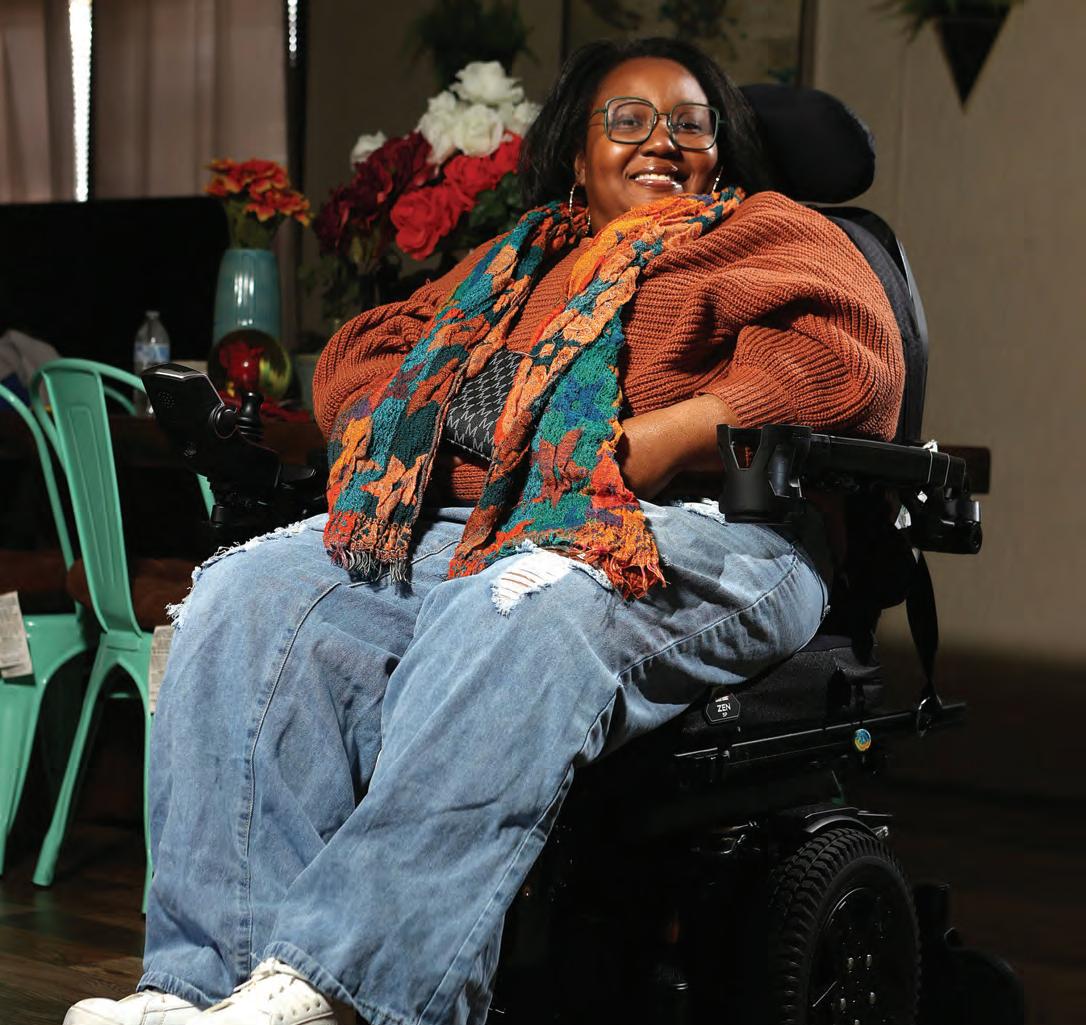
Kelsay Dean lost her husband and her home when a tornado touched down in Pontotoc. Three of her five children were injured but are now OK. Dean had a spinal injury that has left her in a wheelchair.
“I had a come-to-Jesus meeting in the hospital,” Tucker said. “I was still in therapy for the brain injury from 2014.”
As she fell deeper into the pits, Tucker persevered.
“But God kept nudging me,” she said. “He said to me, ‘You don’t get it. What you’ve gone through is preparing you for this journey.’”
Tucker said she continued to hear God’s voice ofering gentle guidance in the early days of Wear It Well.
“My head was shaved for my brain injury treatment,” she said. “I was in a wheelchair because of my crushed ankle. And I heard God say, ‘You still don’t get it. You are a poster child for Wear It Well. You tell your story frst.’” She did, and Wear It Well took of.
“We hit the ground running,” Tucker said. “We did hundreds of makeovers for anyone who asked and needed to feel alive again.”
REBUILDING AFTER THE STORM
For Kelsay Dean, life as she knew it changed instantly when a tornado touched down in Pontotoc in 2023. Dean lost her home and much more.
Her husband, James, died in the tornado. Three of their
children, home when the tornado hit, were injured and airlifted to Le Bonheur Children’s Hospital in Memphis.
Dean, now 44, sustained a spinal cord injury and remains in a wheelchair. She said she is determined to walk again.
“The tornado tore our house to pieces,” Dean said. “The kids got hurt too, but by the grace of God, they are fne now.”
While Dean was in the hospital after her injury, Wear It Well showed up.
“They braided my hair,” she said. “They just popped up in the hospital to do that for me.”
That was the beginning of Dean’s connection to Wear it Well, but not the end. Dean spent two months in Georgia undergoing intensive physical therapy.
When she returned to Pontotoc, a manufactured home from Chad Mills Home Center was provided to Dean and her family for several months until they could get back on their feet. Katina Tucker and Wear It Well furnished the home.
“Katina goes overboard,” Dean said. “She puts her blood, sweat and tears into helping others.”
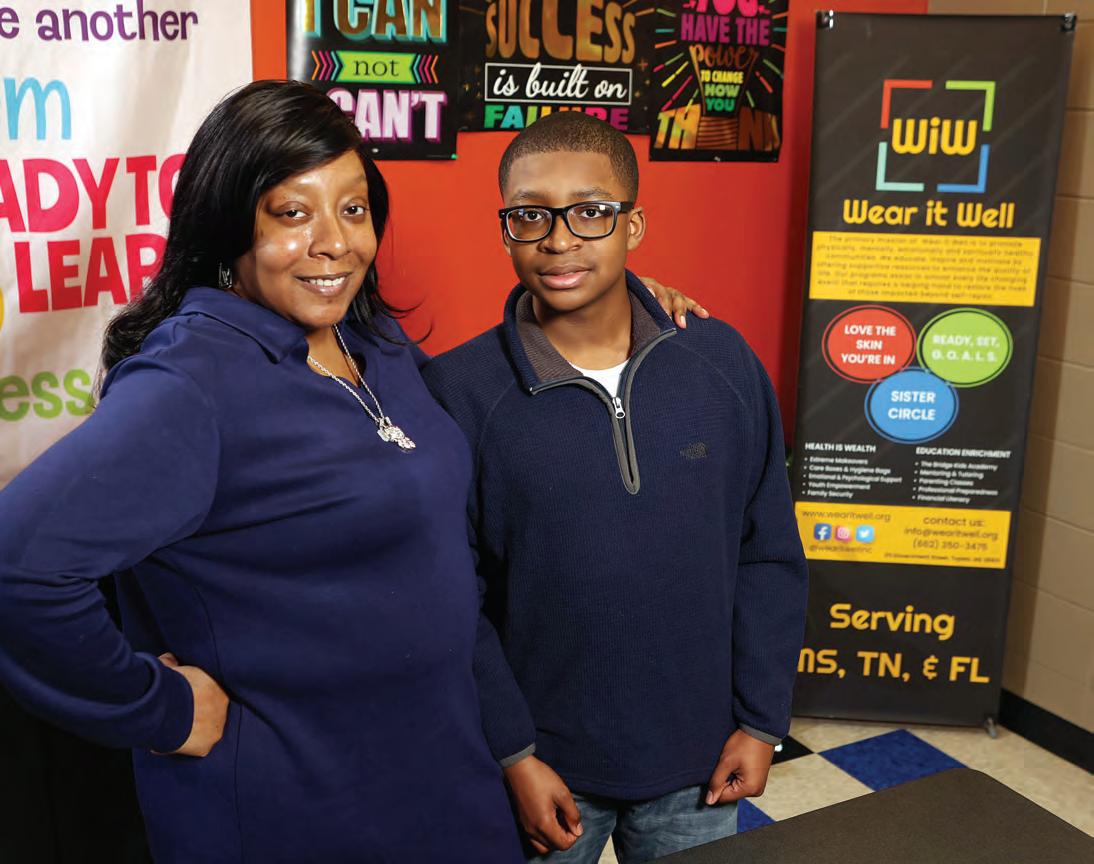
Memory Carouthers and her son Mason May at PAL, where Mason spends time after school and in summer as part of Wear It Well’s Bridge program.
Dean and her family now live in a home on the same spot where their tornado-destroyed house once stood.
BUILDING CONFIDENCE THROUGH YOUTH PROGRAMS
Memory Carouthers said she cannot say enough about the positive changes she has seen in her 15-year-old son, Mason May, since he began taking part in Wear it Well’s Bridge Enrichment Academy.
“When he frst started, he was very shy,” Carouthers said. “He didn’t really talk with others, but he has become so much more social. And he is much more confdent.”
He took feld trips with the group during the summer.
“He is the type of kid who likes to put things together,” she said. “One of the feld trips was to the Toyota plant. Now Mason has decided he wants to go to MSU and study engineering.”
Mason attends a small private school, so he has made new friends with public school students.
“He met his best friend there,” Carouthers said. “These experiences have been such good inspiration for Mason. I am so thankful to Katina and others.”
Betty Myles is grateful to Wear It Well for helping her 31-year-old granddaughter, Jacquria Sorrell, prepare for the Tim Tebow Night to Shine prom.
Jacquria, who attended the prom with her sister, Jaquillia Sorrell, was pampered with makeup beforehand, and Wear It Well provided a dress.
“It was silver, and she also wore a cape made by a lady in Baldwyn,” Myles said.
Wear It Well is run solely by volunteers.
“Every day is diferent,” Tucker said. “Helping others is so rewarding, even if it is just sitting with someone at midnight or listening to someone on the phone for hours. We do what’s needed.”
Mason May walks around in the room of Wear It Well’s Bridge after-school program at PAL. M
and
| Launching a Mission |
Katina Tucker began working and planning on her laptop while still in the hospital. She launched Wear It Well on her grandmother’s June 13 birthdate instead of her death date. In the beginning, Wear it Well primarily served women with breast cancer, but its services broadened to include several programs: Extreme Makeover offers personalized transformations to those affected by cancer or life-changing events or illnesses. Services may include wigs or extensions, makeup, nail care and clothing.
Love the Skin You’re In promotes awareness of anti-bullying, suicide prevention, diversity and inclusion, self-confidence and life skills. WIW provides education in schools, communities and other organizations.
Health Is Wealth promotes physical, mental
and emotional well-being for all ages. Ready, Set, G.O.A.L.S. helps empower families to overcome challenges related to food insecurity, workforce development, personal finances and environments where children can thrive.
The Bridge Enrichment Academy is an after-school and summer program for youth ages 10 to 18 that offers academic support, mentoring, arts, sports and recreation. It promotes positive behaviors and physical health. Parenting Program, or Raising Highly Capable Kids, is a 13-week course that empowers parents with confidence, tools and skills to cultivate strong and resilient families. Repeat Boutique is a clothing closet that provides clothing, toiletries, mattresses and other gently used donations.
Wayne Myles
his wife, Betty, pose for a photo alongside their granddaughter, Jacquria Sorrell, who had makeup applied and was given an outfit to attend the Night to Shine Prom in February.
Fueled BY FAMILY
Story by William Moore
Photos by Adam Robison
Corinth car collectors turn love of classic vehicles into business and museum
Leave it to a family of Riders to be driven to create a business with horsepower and history.
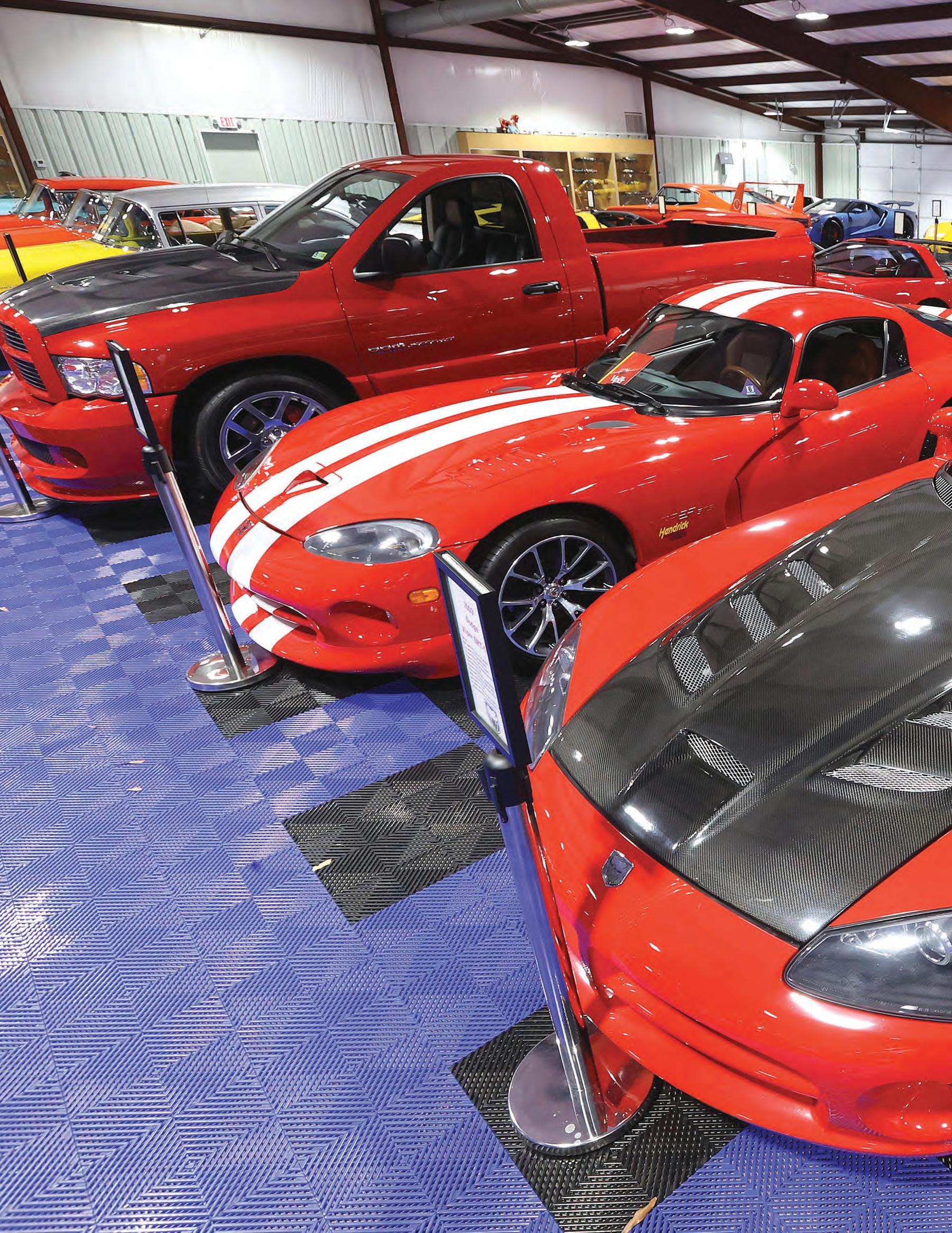
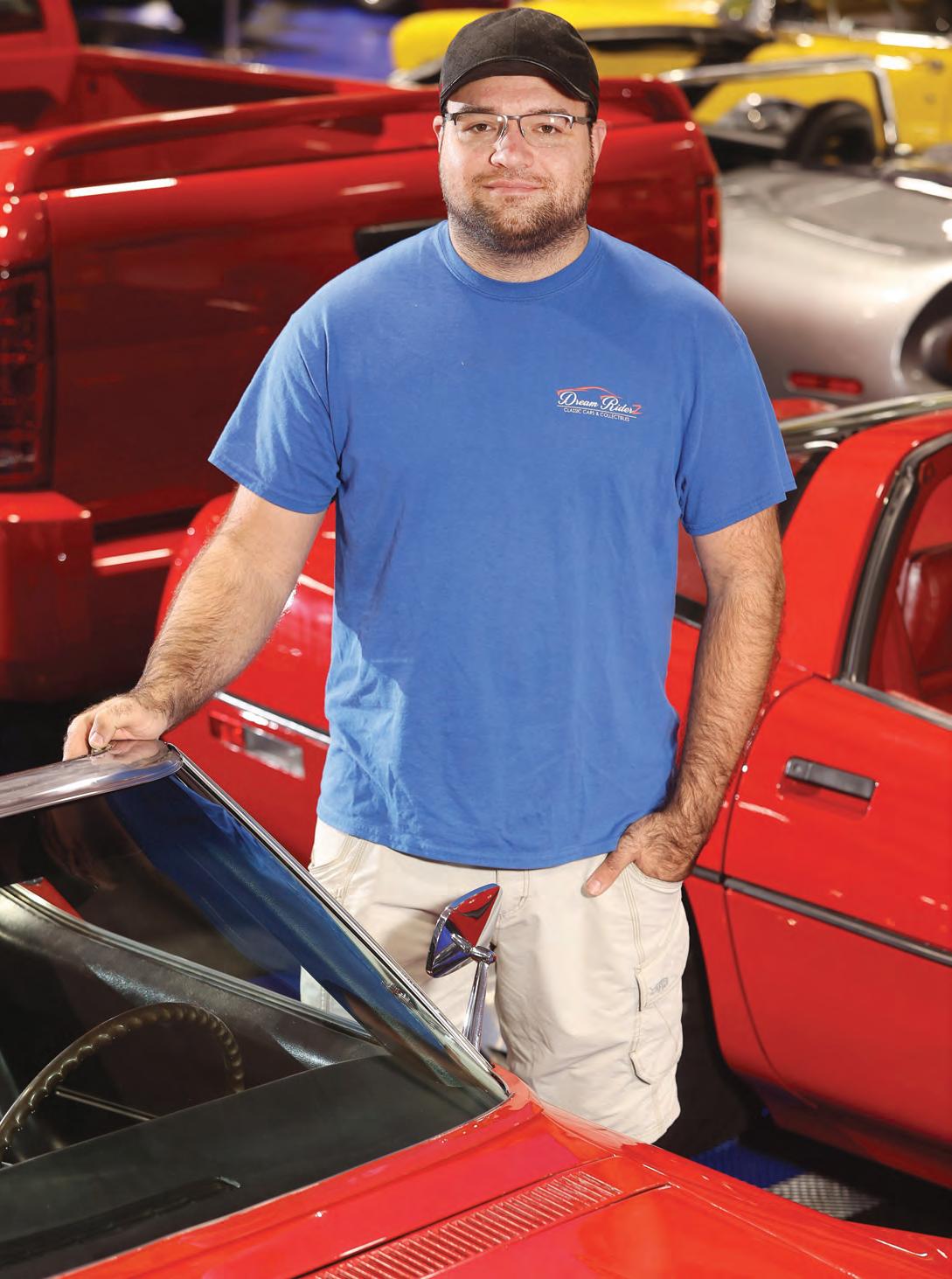
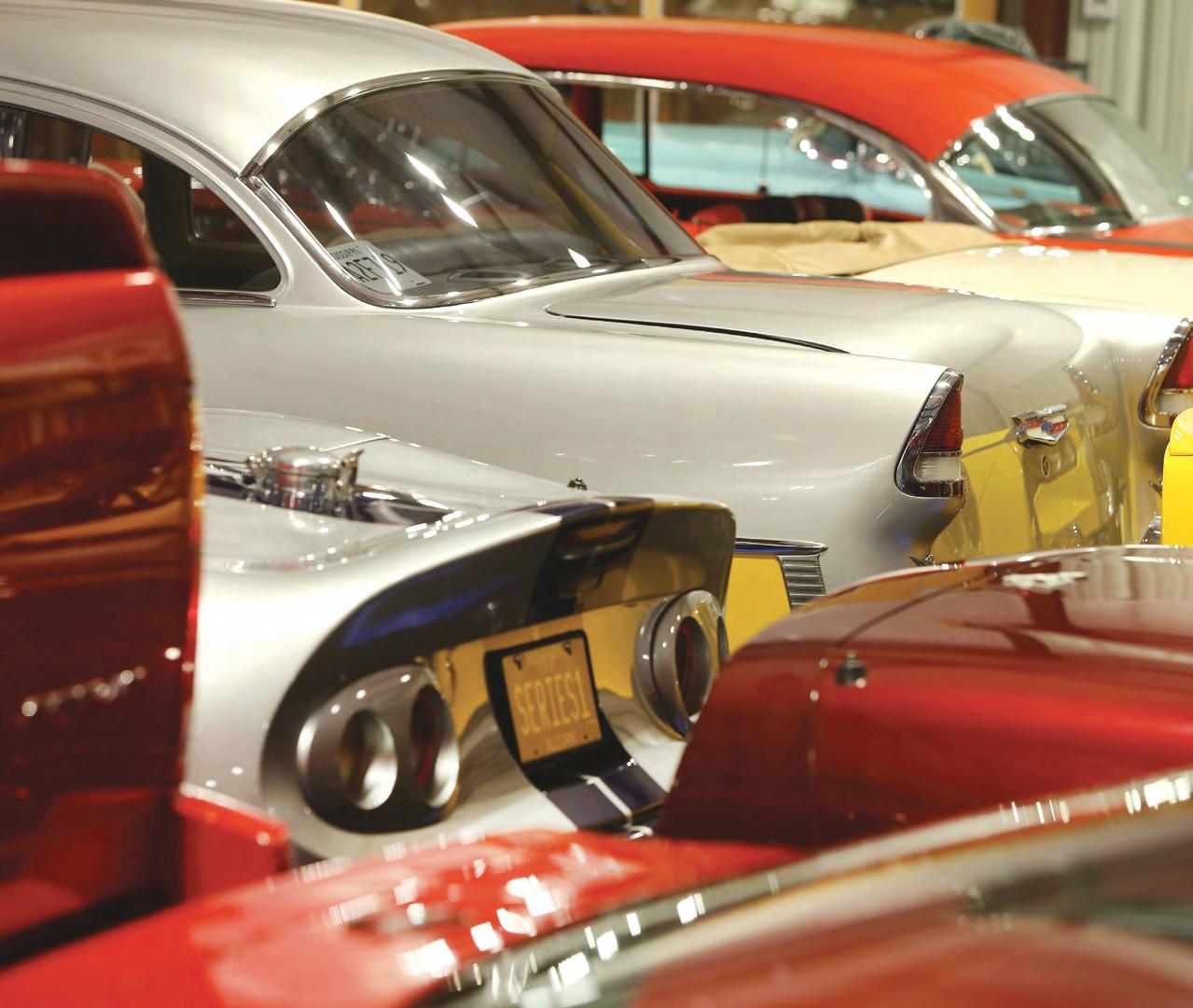
Dream Riderz Classic Cars & Collectibles opened as a museum on Highway 45 south of Corinth in 2019, a place for Ethan Rider to display many of the cars his father collected over the years. Over time, the business evolved into something more, a place to buy, sell and restore cars.
These days, Dream Riderz is more of a dealership than a museum, although Rider said he’s still happy to show of the collection.
“All you have to do is call and make an appointment,” he said.
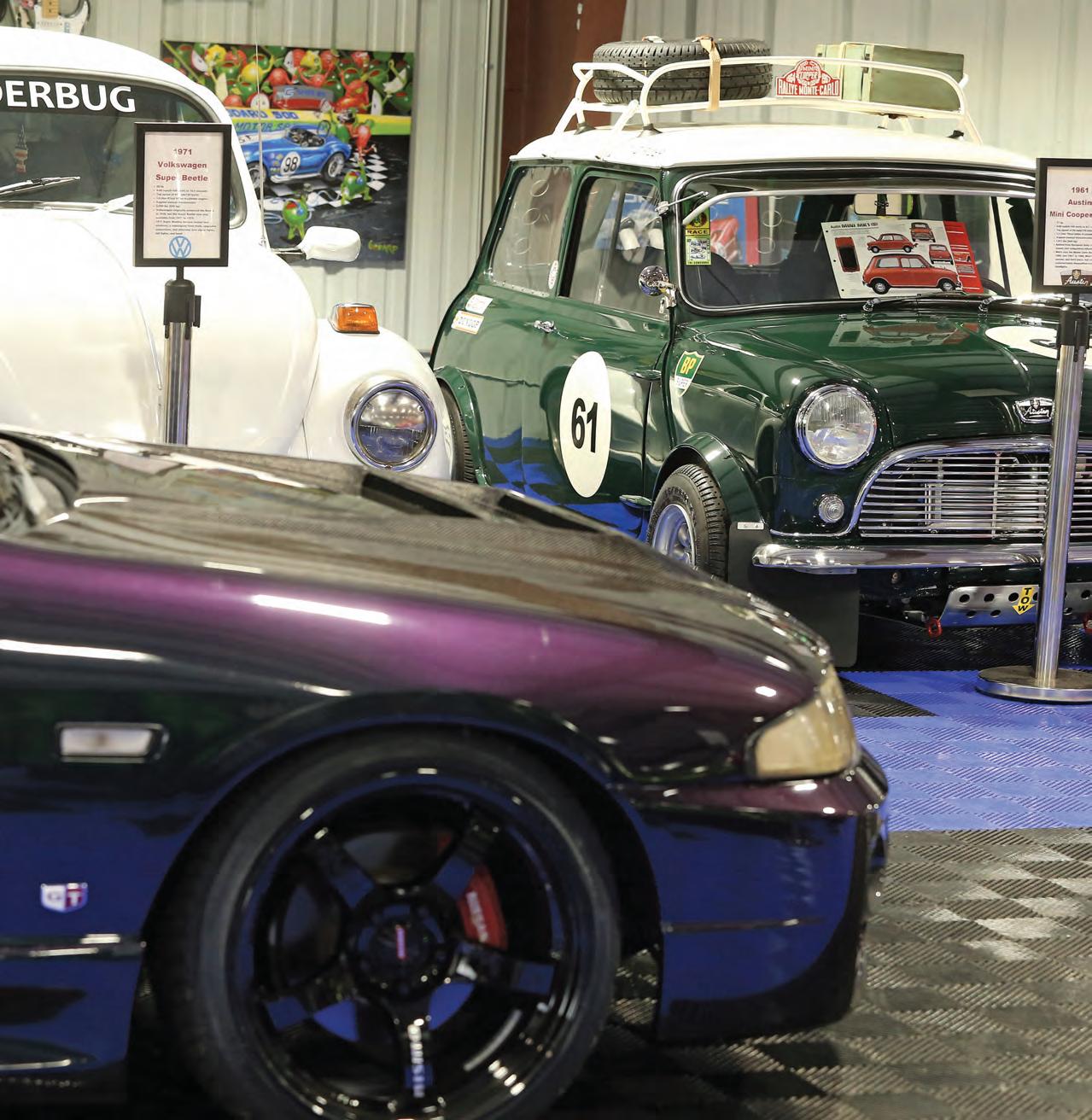
Rider is a knowledgeable tour guide, willing and ready to share the history of nearly every car on display.
The collection belongs to Terry Rider, founder of Developmental Industries Roof Seamers. In 1989, he and his brother developed a better way to seal metal roof seams, and the national and international success of that business allowed him to feed his passion for cars, especially ones that go fast.
As the collection grew, people would show up evenings at his house in north Corinth wondering if they could see the cars.
“We always joked that he should charge admission and that would stop it,” Rider said.
Ethan Rider, manager at Dream Riderz in Corinth
“He took our advice. He had land on the highway to build a building where he could put the collection.”
Terry Rider retired from D.I. Roof Seamers in 2018 (he remains chairman of the board) and opened the museum the following year, displaying most of the 200 or so cars in his collection. Over the years, the Riders reduced the total number of cars to spend more time restoring cars to their former glory and performance levels.
“We decided to go for quality over quantity. We now have 80 to 90 cars,” Rider said.
The Riders still pick up cars to add to the permanent collection, of course. “Keepers,” Rider called them.
“Dad likes to drive each one frst,” Rider said. “He might say he likes the way a car sounds, so it will become a keeper. Others are bought knowing that we will turn around and sell it.”
In the search for better cars, the Riders attend high-end car
1999 Shelby Series 1
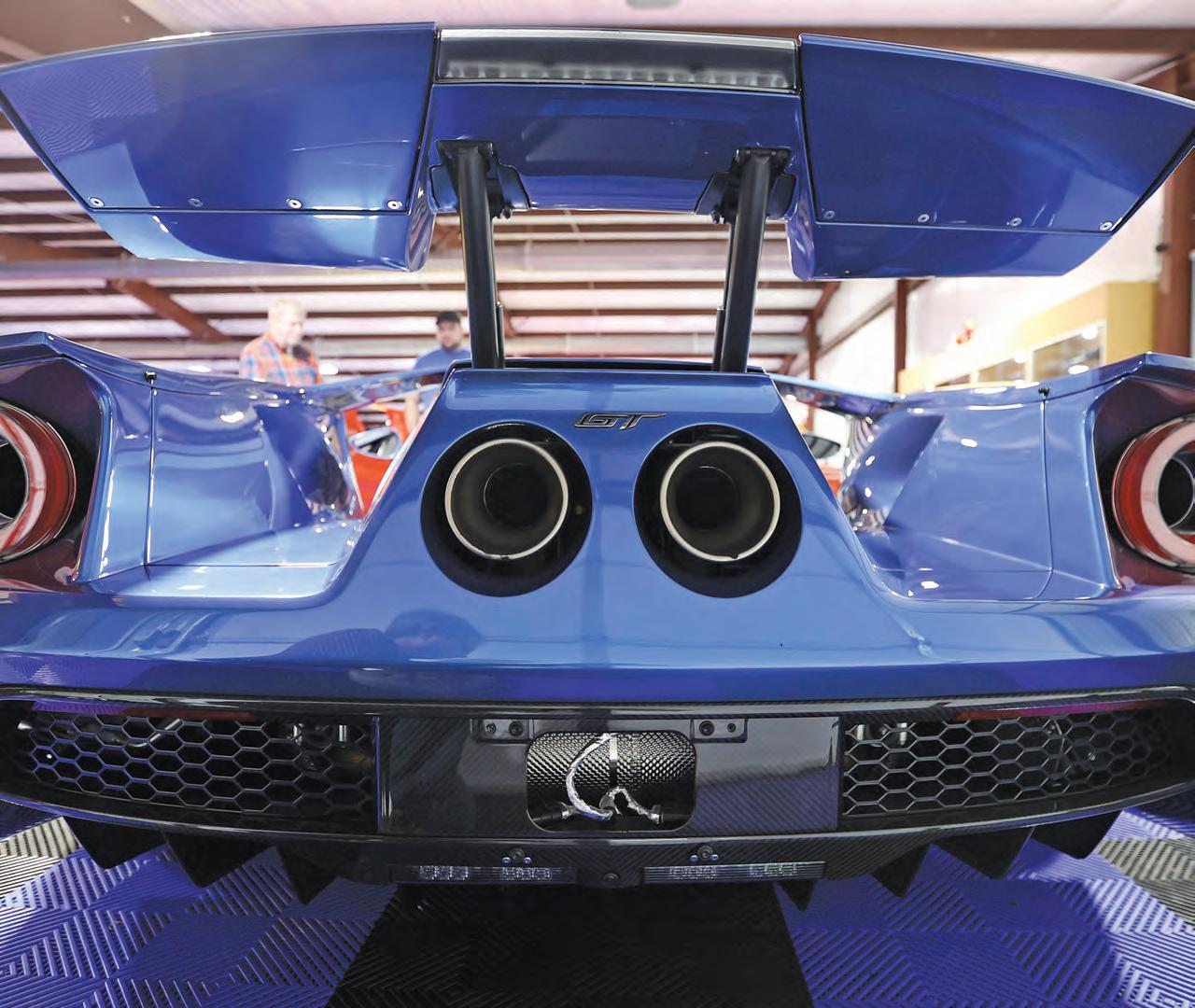
2018 Ferrari 488 Spider at Dream Riderz in Corinth
auctions across the country every other month. When they noticed they were buying and selling more cars than they collected, it made sense to get a dealership license.
In Mississippi, a dealer has to sell at least 24 vehicles a year. Regulations also require them to put “for sale” signs on the vehicles for sale, even though the bulk of their sales are online.
“We might have a half-dozen walk-ins (customers looking to buy a car) a year,” Rider said. “Most of our business is online. But I did sell a ’48 Cadillac to a guy from Booneville last year.
“We still rely on a lot of word-of-mouth. Someone might see a car for sale and know someone who is looking for one.”
The change in the business model prompted a change in location as well. The spot on Highway 45 didn’t ofer room to expand, so they moved everything to the family land in north Corinth of Wenasoga Road. There is a 10,000-squarefoot main building for the dealership and museum. There are smaller buildings for staging and restoring vehicles, as well as a
four-bay shop for making any necessary repairs.
The move also allowed them to make some design upgrades. There is a line of electrical outlets in the foor running down the center of the building. That allows each car to have a battery tender, a low-power charger that keeps the batteries ready to go.
All that juice is necessary because each car is fully operational. They crank each car at least once a month and pull them in and out of the parking spaces to make sure the tires do not develop fat spots from sitting in the same position.
“The two biggest problems with a car collection are dead batteries and fat tires,” Rider said.
The permanent collection includes all eight generations of the Corvette, 1955-1957 Chevy Belairs as well as a 1954 Cadillac convertible with factory power windows, an option that nearly doubled the price of the car.
The speed side of the collection pays homage to legendary
car racer/designer Carrol Shelby, including a 1991 Series 1, the only car Shelby designed from the ground up.
“It was one of the fastest and most powerful cars of its time. When you bought one, you had to complete a seven-day driving class before they would give you the car,” Rider said. “They wanted to make sure you could handle the car. As a beneft, you got a Shelby racing helmet that was painted to match your car.”
Besides the American muscle, there are numerous examples of European speed in the Riders’ collection, including Porsches, Ferraris and Lamborghinis. And since the collection is constantly changing, the cars on display are shuttled in and on a regular basis.
“We encourage people to come back often to see what’s new,” Rider said. M
| Want to visit? |
Dream Riderz is located at 1600D Glover Drive, just off Wenesoga Road. The business is open five days a week, but they ask that if you want to tour the museum, to call 662-331-1980 first and make an appointment.
SEPTEMBER
FEBRUARY 12TH GALENTINE’S NIGHT OUT
MARCH 28TH SPRING OPEN HOUSE
APRIL 18TH CITY WIDE CLEAN UP 24-25TH COUNTY LINE MUSIC FESTIVAL
JULY 3RD FIREWORKS & FREEDOM TBA TAX FREE WEEKEND
AUGUST
DECEMBER
DATES
Stateline Stop
Welcome center in Tremont greets visitors to the Magnolia State with classic southern hospitality
Story by Eugene Stockstill Photos by Thomas Wells
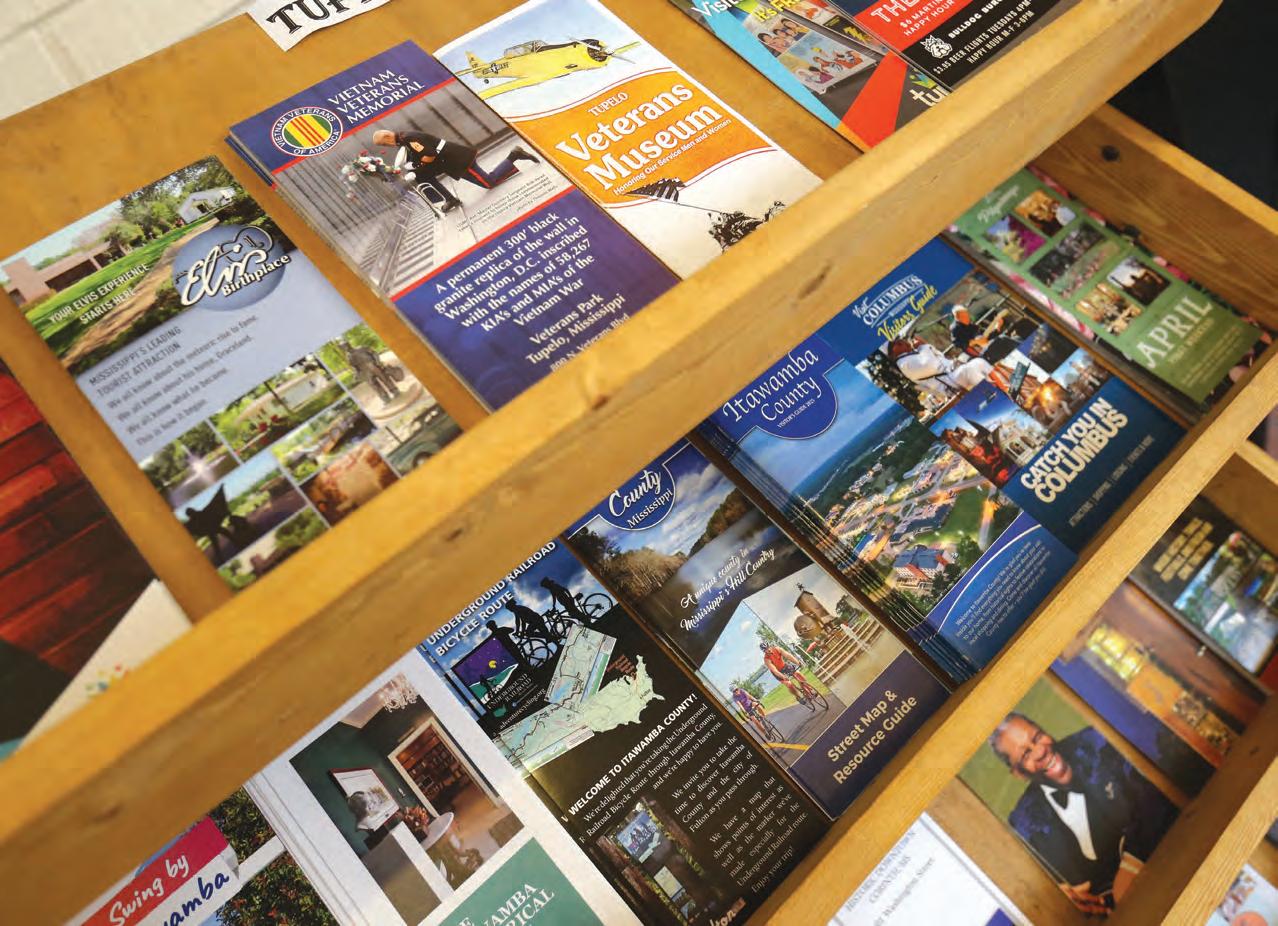
Shelves inside the Welcome
hold a variety of brochures, maps and more showcasing some of Mississippi’s highlights.
Let’s be clear. Not only is the Itawamba County Welcome Center the most popular welcome center in the wholae darn statea, but it is also one of the coolest in the South.
“This is the frst impression that people get of our state,” said John Adams, a customer service representative at the centeae Alabama line, the welcome center’s antebellum-style main building sits atop a bluf overlooking Interstate 22, ofering a lovely view of the Appalachian foothills.
As of the middle of last year, after the completion of a major renovation project, the center was logging somewhere between 250,000 and 350,000 visitors a year, as reported by the Daily Journal. Upgrades included new furniture, internet work stations and paintings by Mississippi artists – all done to make newcomers feel at home.
Work crews bound for jobs up North. Snowbirds fying home for summertime in New York, Illinois, Nebraska, Minnesota. Elvis fans from Europe and the Far East. The Tremont-based center gets ‘em all.
“It’s mind-boggling,” said former Welcome Center Supervisor Teresa Blake, now the executive director of the
Itawamba County Development Council. “That’s the hot spot to stop.”
Mississippi has a bunch of welcome centers, including one in Columbus that doubles as the historic Tennessee Williams home. But the Tremont rest stop must be one of the state’s most picturesque. And the amount of trafc it gets is more than a little noteworthy.
Tremont, home to world-famous country singer Tammy Wynette and now the popular Tammy Wynette Legacy Center, would not show up on a single map if it were not situated near the state line. Blink once, and you miss the town.
But Tremont sits halfway between The Magic City (Birmingham) and Memphis, and thanks to the four-lane highway, it made sense to open a welcome center there in 1992.
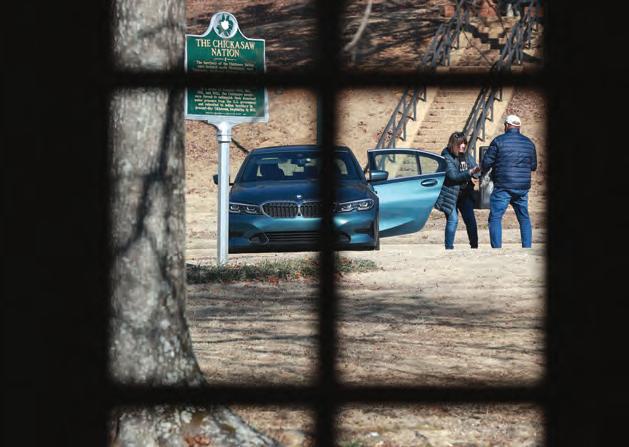
On a recent Monday visit after Winter Storm Fern, the trafc was a bit slow at the center, but a glance at the license plates in the parking lot showed Kansas, Arkansas, Georgia and Missouri. A marker in the yard ofers an overview of the Chickasaw Nation’s history. The word “Itawamba” is a Chickasaw word meaning “bench chief” and was part of a name given to one of its leaders, Levi Colbert.
Center
A historic marker informs visitors to the Tremont Welcome Center about the history of the
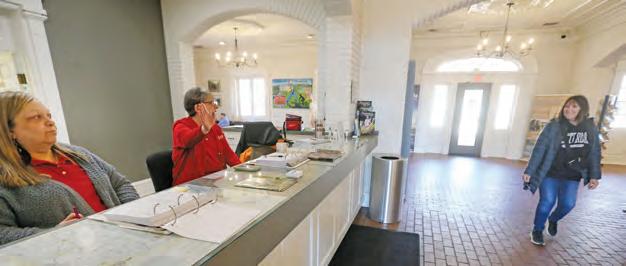
Inside the center, you can chat with locals, browse through magazines and other literature or watch short videos detailing Mississippi’s history and culture.
A group of Minnesota workmen visited once. One refused to go home until he heard a true Southern accent, already bitterly disappointed by accents in North Carolina, South Carolina, Georgia and Alabama.
“‘By golly, we found it, and we can go home now,’” said Blake, laughing at the delighted workman’s proclamation after he heard workers at the Tremont center open their mouths and start speaking.
Elvis may be the single biggest draw. The King of Rock and Roll is responsible for much of the welcome center’s
trafc. Loads of Elvis fans drive through to see his hometown in Memphis, only to learn of their mistake.
“A lot of people don’t realize he was born in Tupelo,” said Christy Roberts, the center’s current supervisor.
No, Elvis has never mysteriously materialized up there on the hill in Tremont, in case you are wondering, but all these years after his death, the king can still make magic happen.
A group of Miami women with The Red Hat Society visiting the welcome center and bound for Graceland grabbed a cardboard image of Elvis in a gold lame suit, took it on their tour bus, and passed it around for photos.
“We had to go rescue Elvis,” Adams said.
Visitors unload their pet dog and let it stretch its legs at the Mississippi Welcome Center in Tremont.
Chickasaw Nation.
THOMAS WELLS
The Mississippi Welcome Center in Tremont sits at the top of a large hill.
| Welcome to the Welcome Center |
The Itawamba County Welcome Center (or any of the other state-operated ones) are open 8 a.m. to 5 p.m. Tuesday through Saturday, according to www.visitmississippi.org/welcome-centers.
But beware. If you want to go to the Tremont center, the only way to get there if you live in Mississippi is to take the rst exit in Alabama o I-22, then drive back a few miles to the center. No back roads. It’s just as well. You will take in more scenic beauty that way.
THOMAS WELLS
The grounds surrounding the Welcome Center in Tremont are lovely and shaded. Because the center sits atop a hill, there are some scenic spots overlooking the highway traffc and more.
St y by M edith Biesing
Photos by Adam Robison
Downtown Am y was once known f its railway. Now, public art defines the area.
haped
by
MOVEMENT S
Amory has always been a town shaped by movement.
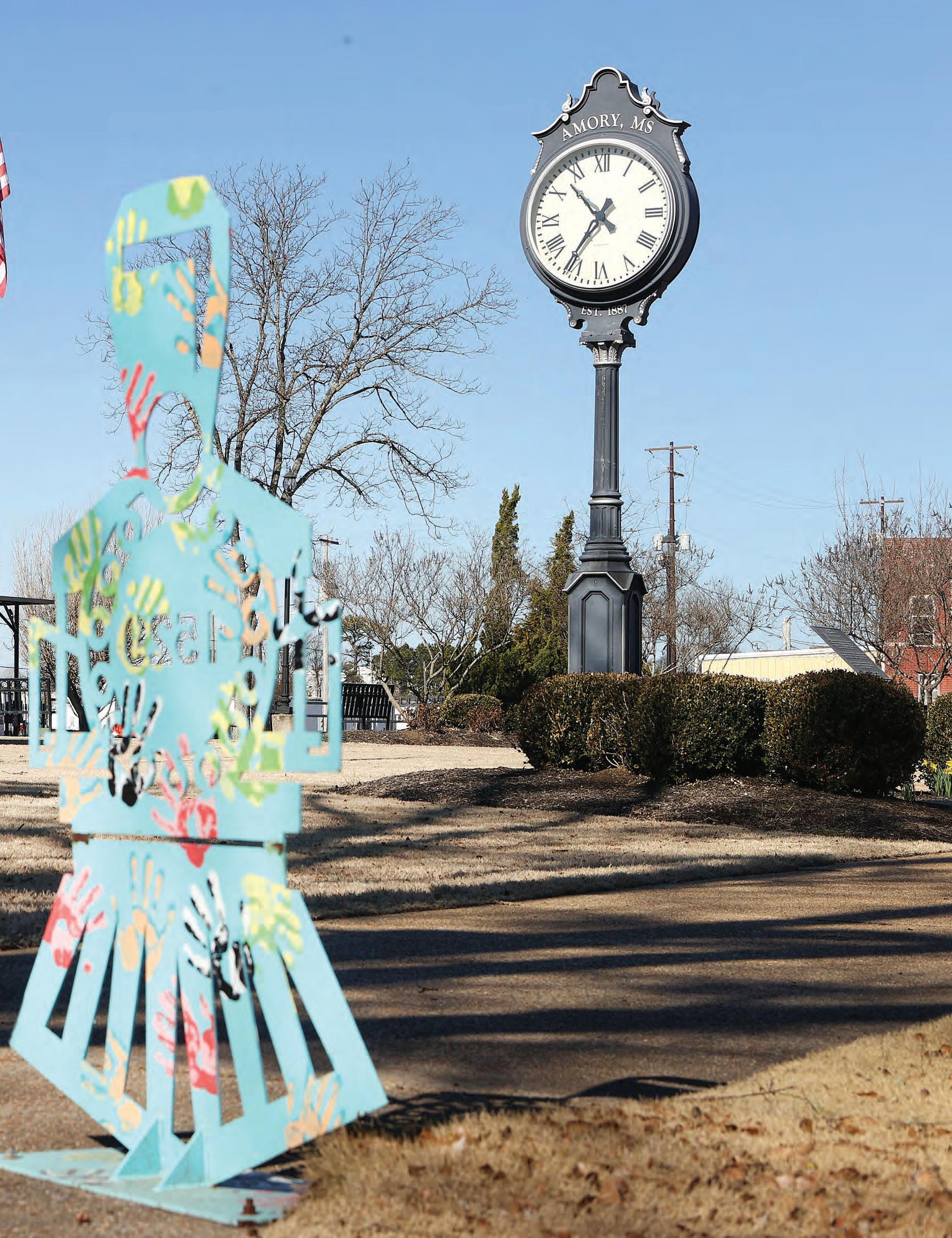
Long before murals and metal sculptures caught the light downtown, the railroad defned this Monroe County community – trains rolling through, carrying people, products and possibility.
Today, something else moves through Amory’s Main Street. Color. Creativity. A sense of welcome that doesn’t rush past you but invites you to slow down and stay awhile.
“We wanted to do something beautiful downtown,” said Lindsay Mitchell, executive director of Amory Main Street. “And we wanted to do this through public art.”
That intention is now visible almost everywhere you look.
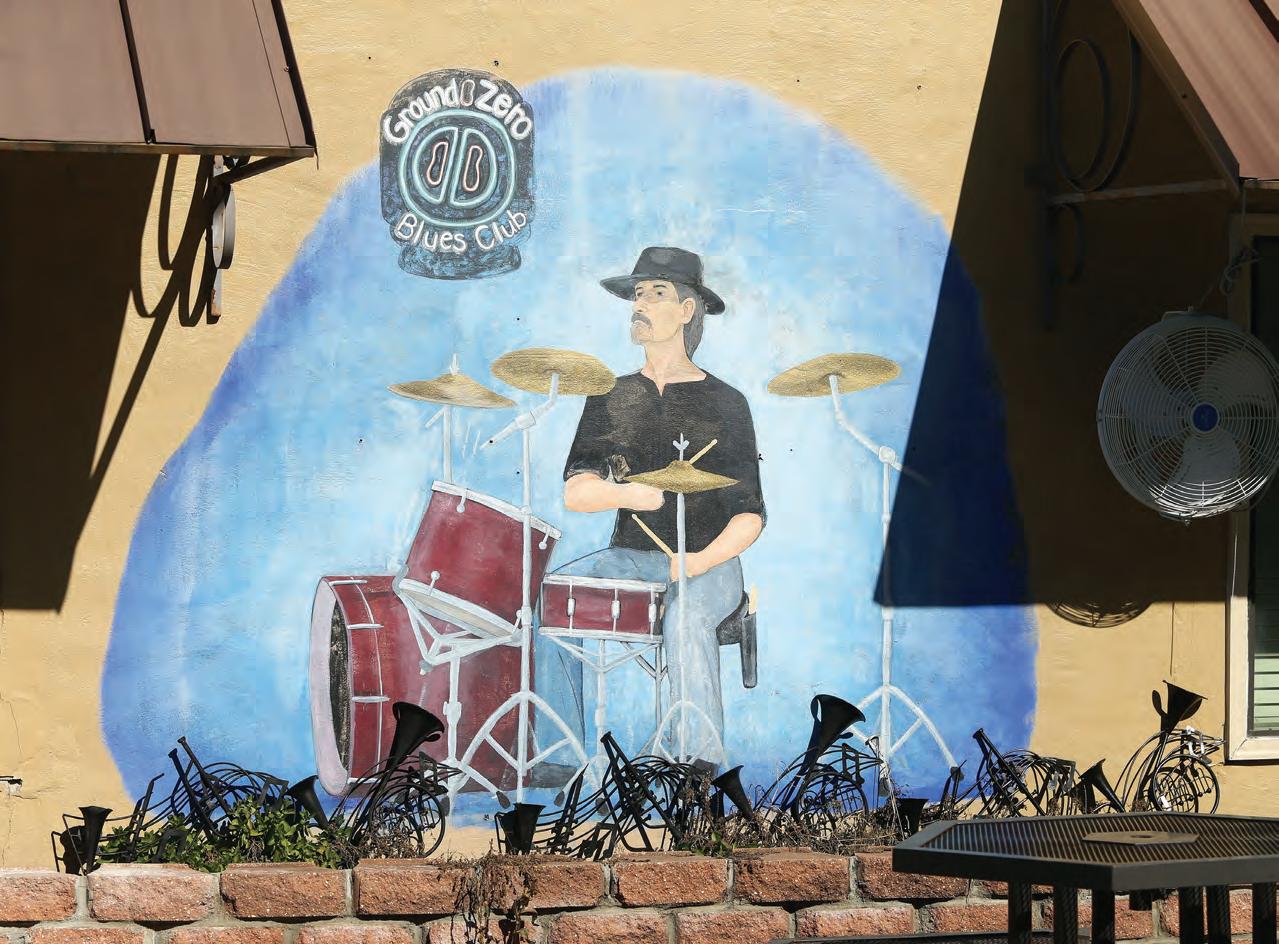
Murals stretch across brick walls,
telling stories both subtle and bold. Art installations appear in unexpected places. Downtown Amory doesn’t whisper its creativity – it shouts about it.
Even the ground beneath your feet is part of the story.
Asphalt art, already visible in downtown parking spaces and crosswalks, transforms ordinary pavement into something playful and purposeful. Painted patterns soften the hard lines of streets and intersections, turning everyday infrastructure into moments of delight. And this, Mitchell says, is only the beginning.
The long-term goal is to extend asphalt art all the way down Main Street – every crosswalk, every stop sign, every stoplight becoming part of the visual experience. It’s a vision that
reimagines how people move through downtown, encouraging drivers to slow down and pedestrians to look around, and reminding everyone that they’ve entered a place created with intention.
Public art in Amory isn’t an afterthought or a luxury. It’s a strategy. A statement. A revitalization tool rooted in both practicality and pride.
“We want everything to be beautiful, and we utilize art as a revitalization tool,” Mitchell said. “It’s low-cost, high-impact. Small scale, big visual impact.”
That philosophy has guided Amory’s transformation, particularly in the years surrounding one of its defning moments.
Many of the downtown art projects were already in the works before
the devastating tornado of 2023 tore through the heart of the city. In the aftermath – amid rebuilding, recovery, and resilience – art became even more essential. With additional funding and grants, the Amory Main Street Association leaned into creativity to bring life back to downtown spaces that needed hope as much as repair.
Art, after all, is more than decoration. It’s hope you can actually see.
The city of Amory often turns to local artist John Ward to bring ideas to life.
“He is amazing, and we call on him a lot,” Mitchell said. His work, along with contributions from other creatives, gives downtown a layered, lived-in feel – authentic rather than over-polished, expressive rather than manufactured.
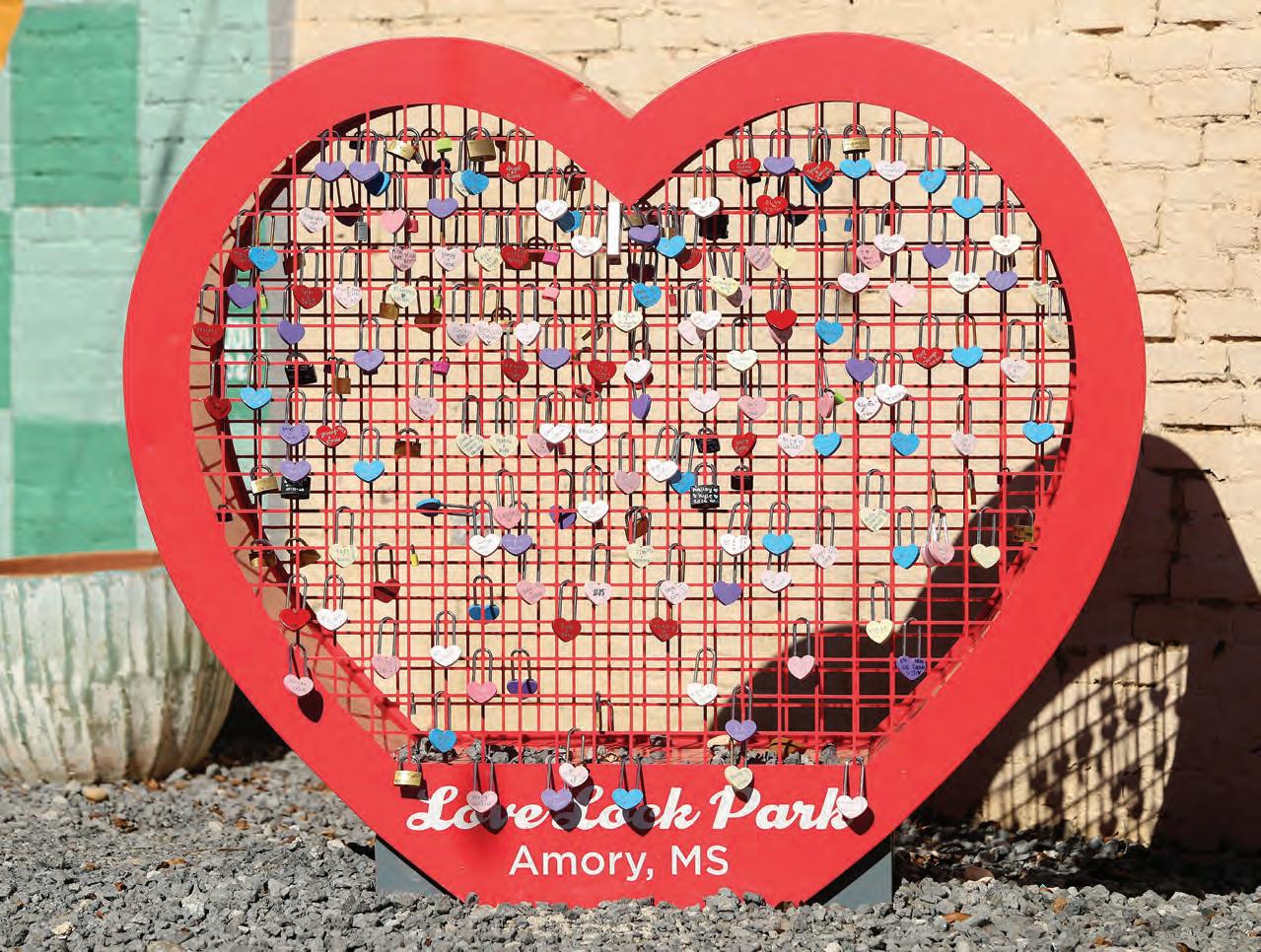
Tucked into a passageway between downtown buildings, Love Lock Park feels like a discovery – the kind you stumble upon and immediately want to photograph. Murals wrap the walls. Plants soften the brick. Color and creative installations transform what was once a simple walkway into a space flled with intention and joy.
It’s more than beautiful. It’s participatory.
Love Lock Park invites visitors to leave their mark, quite literally. Whether it’s a lock for a sweetheart, a best friend, a family member, or simply a symbol of love for Amory itself, the space encourages connection and celebration. Each lock becomes
part of the story, adding to a growing mosaic of moments, memories and meaning.
This small, thoughtfully designed park refects what downtown Amory does best – turning overlooked spaces into places that matter. It’s photo-worthy, yes, but it’s also heartfelt. A place where art meets ritual and a new tradition is quietly taking root. But this movement isn’t limited to murals and installations alone. Mitchell envisions a downtown where every business takes part in visual storytelling.
“We encourage all business owners to paint or decorate their windows,” she said. “A goal of ours for this year is
for each business to ofer something visually pleasing on each building for each season. This is my vision and wish for downtown right now.”
It’s an ambitious goal – and a deeply human one. Seasonal windows. Storefronts that feel alive. A downtown that refects both the creativity of its people and the yearly rhythms.
The result is a Main Street that feels open, welcoming, and full of personality.
“Everyone wants to be here,” Mitchell said. “Downtown has turned a corner.”
And you can feel it. You feel it before you even realize you’ve slowed your pace.
“Stop in downtown Amory. Don’t just drive through,” Mitchell said. “Let yourself linger. Spend time downtown. When people stay awhile, public art does what it’s meant to do – it brings people together and gives a
town its heart.”
That sentiment lies at the heart of Amory’s public art movement. It’s art not as spectacle, but as service. It’s art that supports businesses, uplifts residents, and invites visitors into a shared sense of place.
In a town once defned by rails and reshaped by resilience, creativity has become the new connective tissue.
Each mural, installation, painted crosswalk, love lock, and thoughtfully decorated storefront contributes to a larger story – one of renewal, pride and forward motion.
Amory is investing in its future through art. In doing so, it’s reminding us that beauty matters, that small towns can think boldly, and that sometimes the most powerful transformation doesn’t come roaring through like a train. Instead, it unfolds, color by color, right where you stand. M
North Mississippi clay, craftsmanship and calling meet at The Potter’s Wife Pottery
MADE SLOWLY AND WITH
INTENTION
STORY BY MEREDITH BIESINGER PHOTOS BY ADAM ROBISON
You don’t stumble upon The Potter’s Wife Pottery by accident. You fnd it like the best things in Mississippi – driving a gravel road past catfsh ponds, beneath a broad sky. You enter a yard heavy with memory, not signage. Once you step into the snug pottery shed, scented of earth and kiln heat, you immediately sense that this place was meant to be discovered.
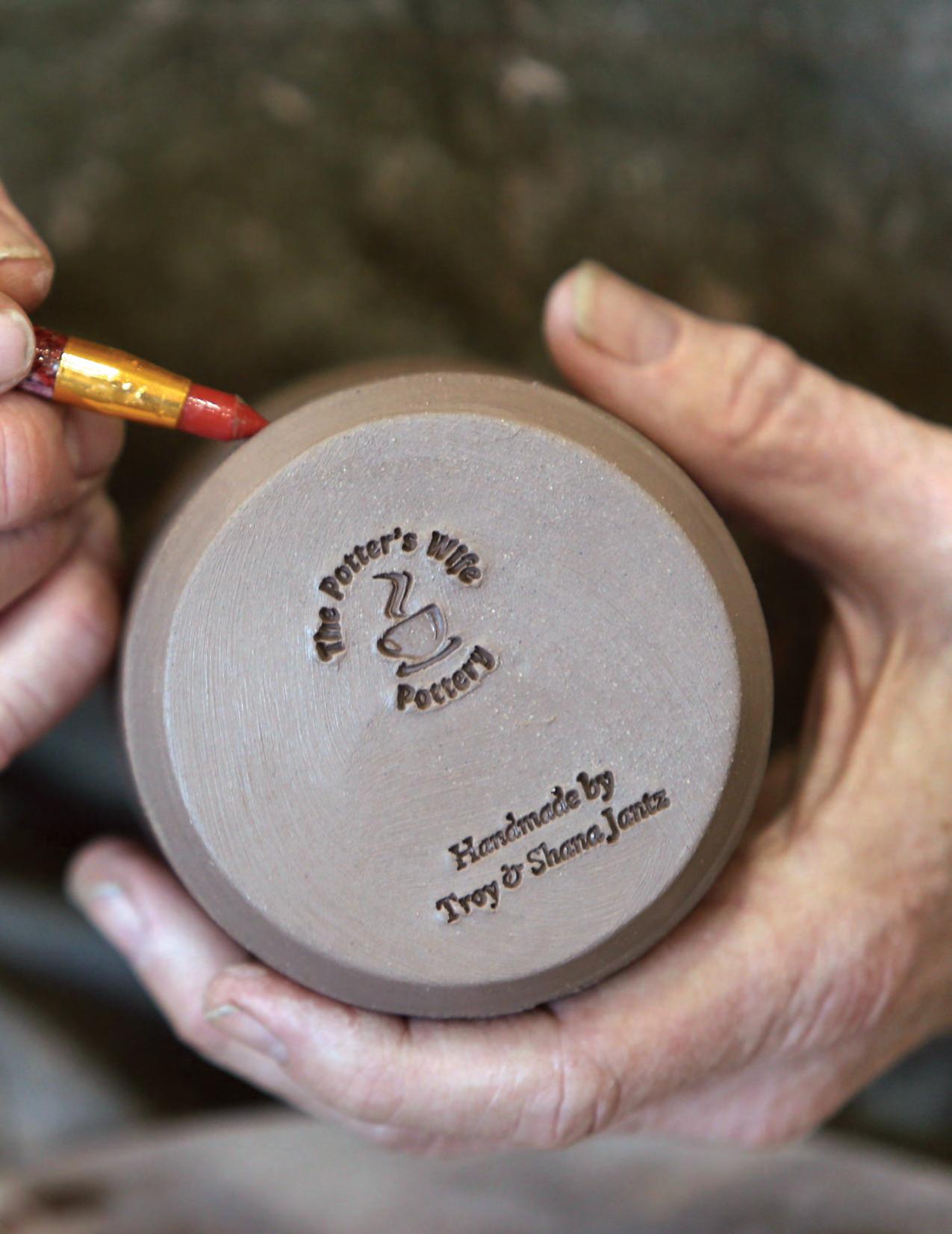
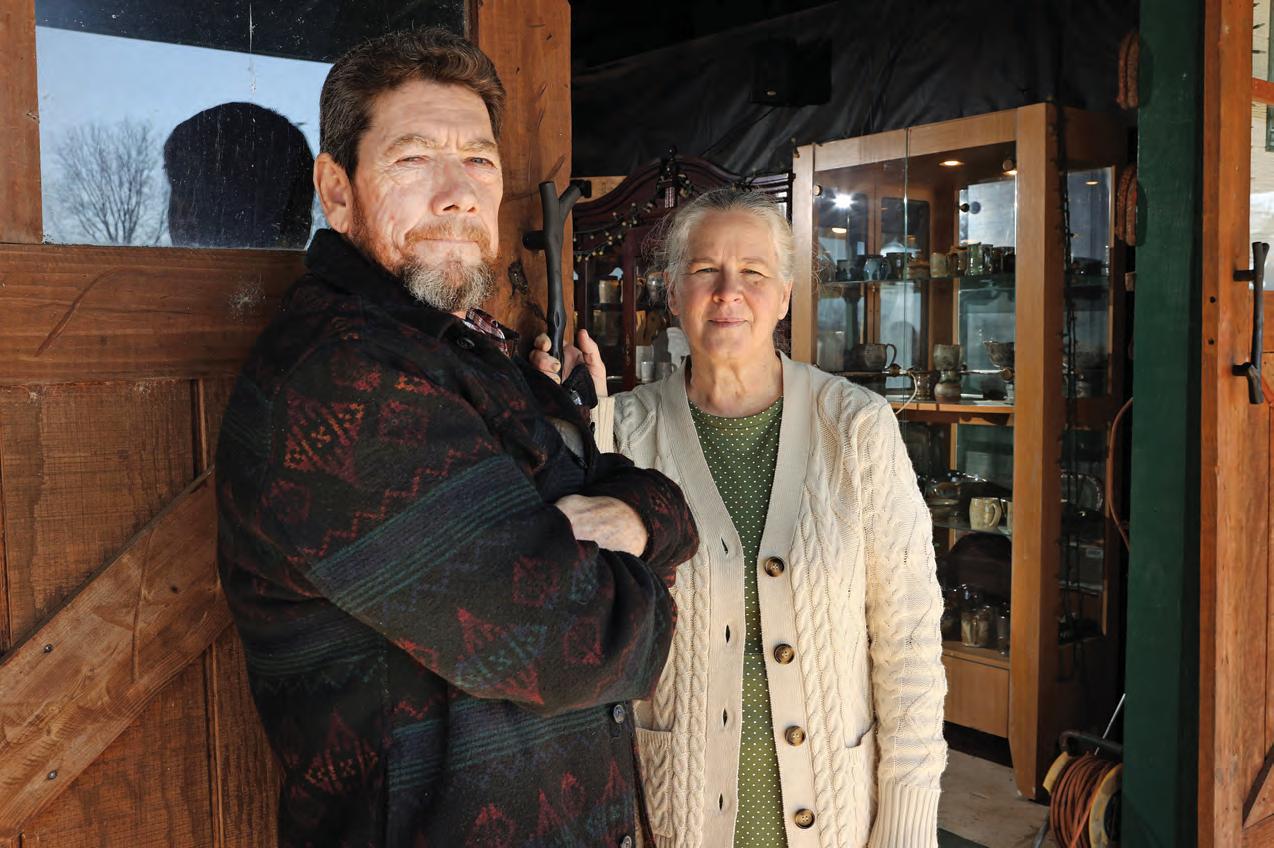
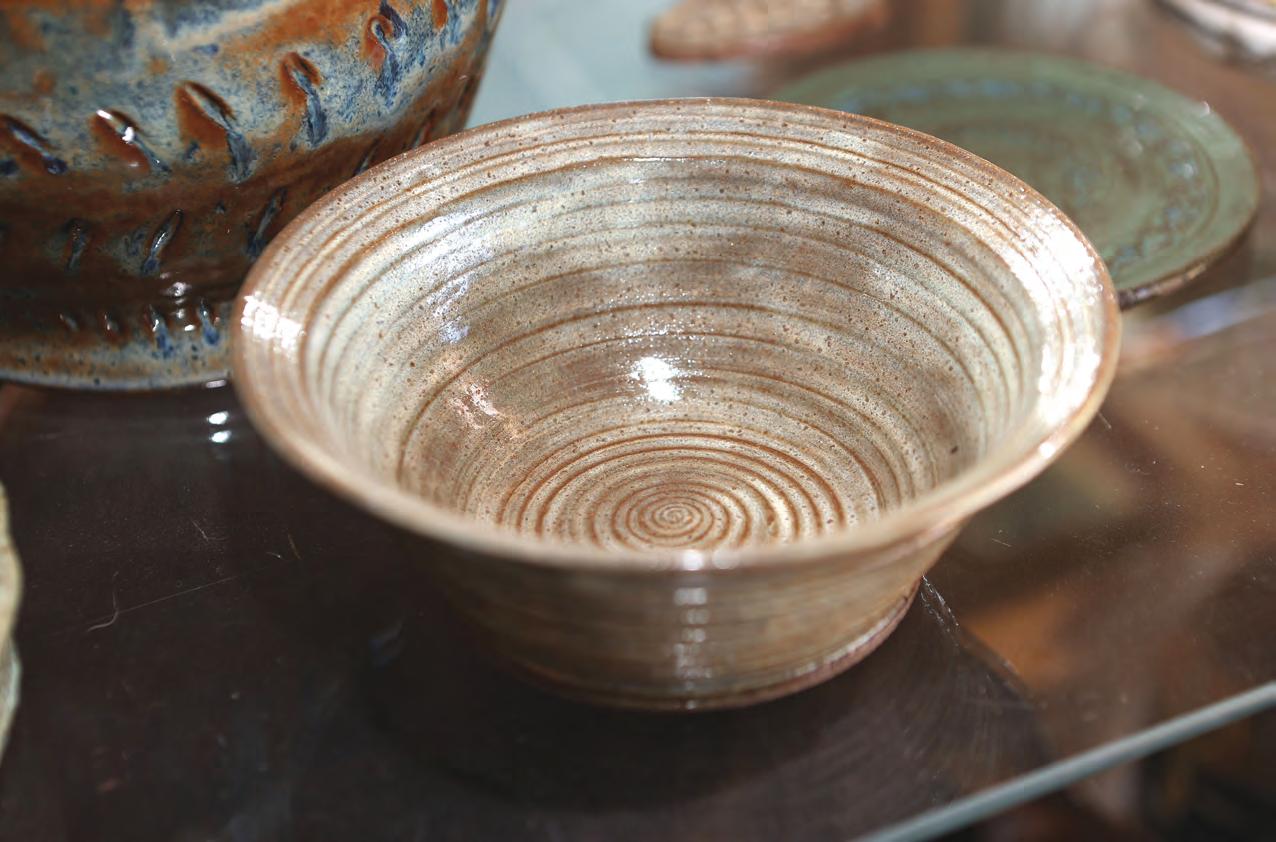
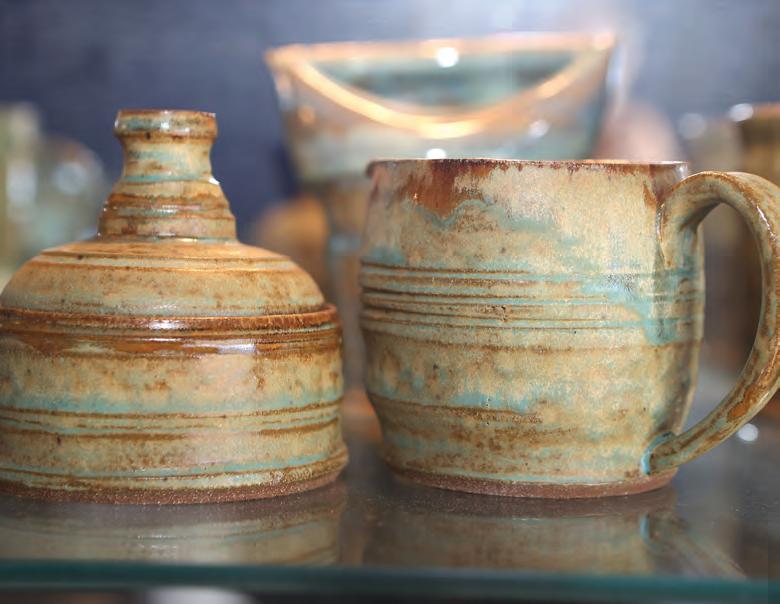
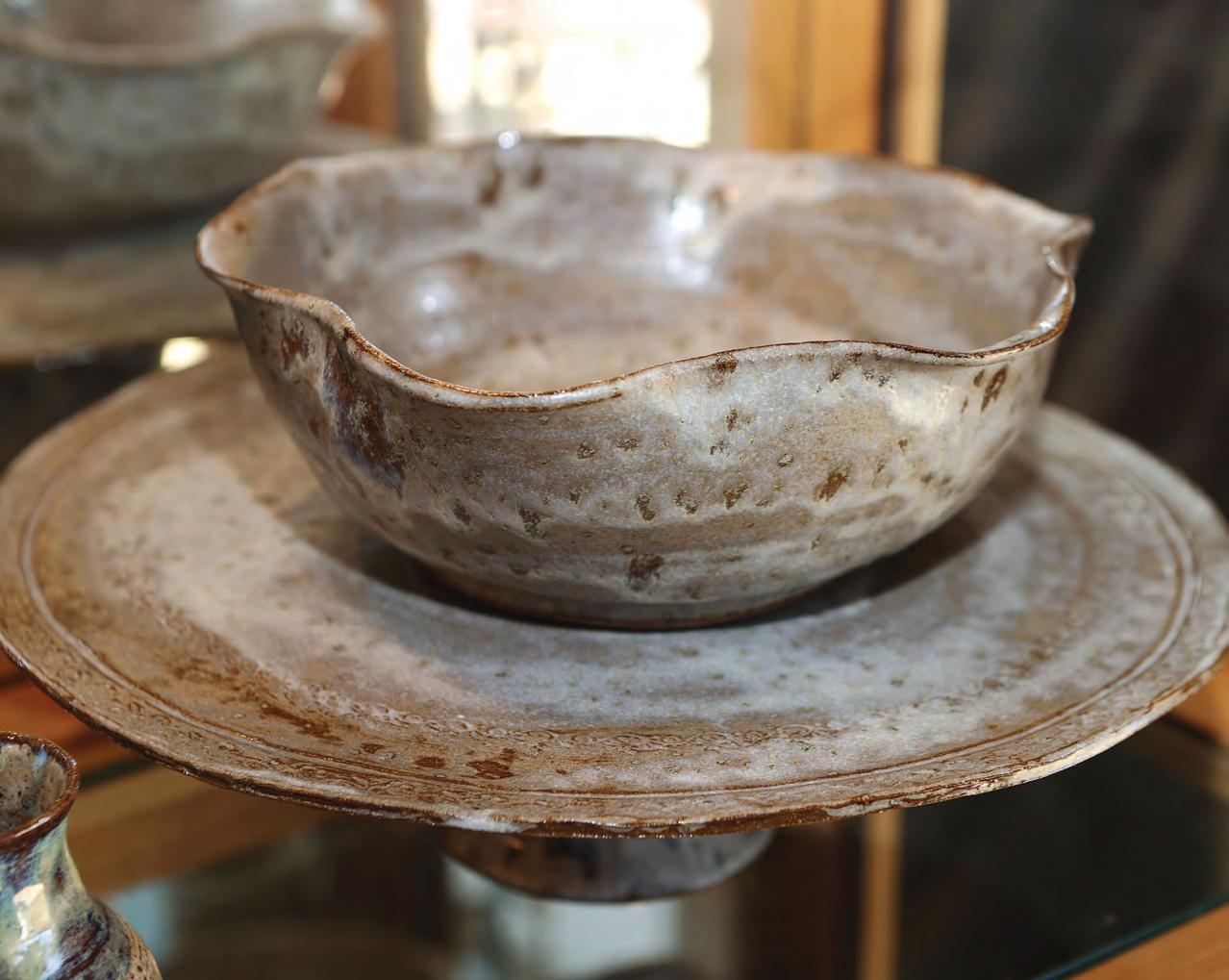
Tucked away in Nettleton, Mississippi, The Potter’s Wife Pottery is a hidden gem built slowly and with intention. It’s the work of a husband-and-wife team, Troy and Shana Jantz. They create handmade, food-safe, functional pottery meant to be used, not just admired. These pieces are made for cofee poured early and often, mixing bowls passed down, and tables that see a lot of life.
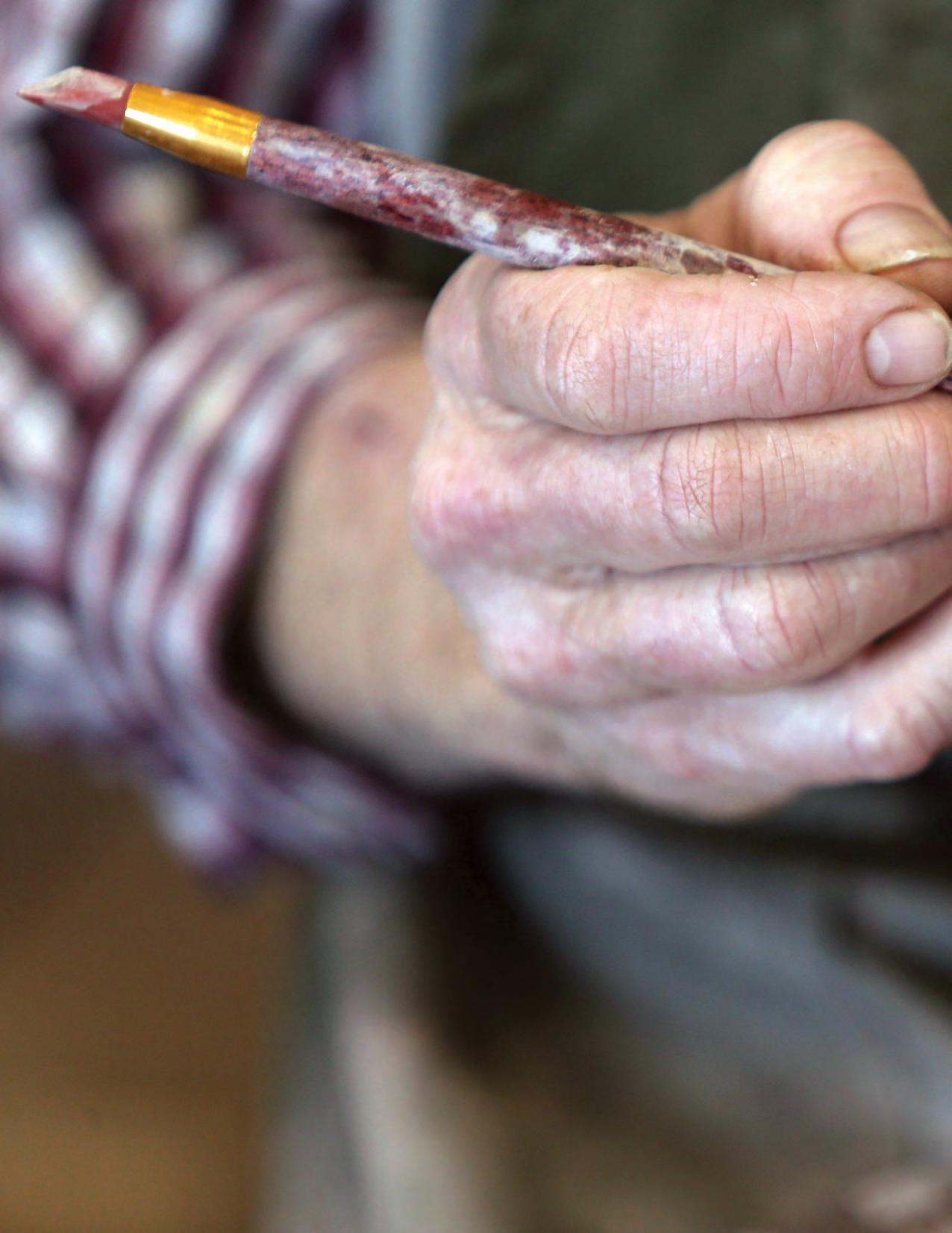
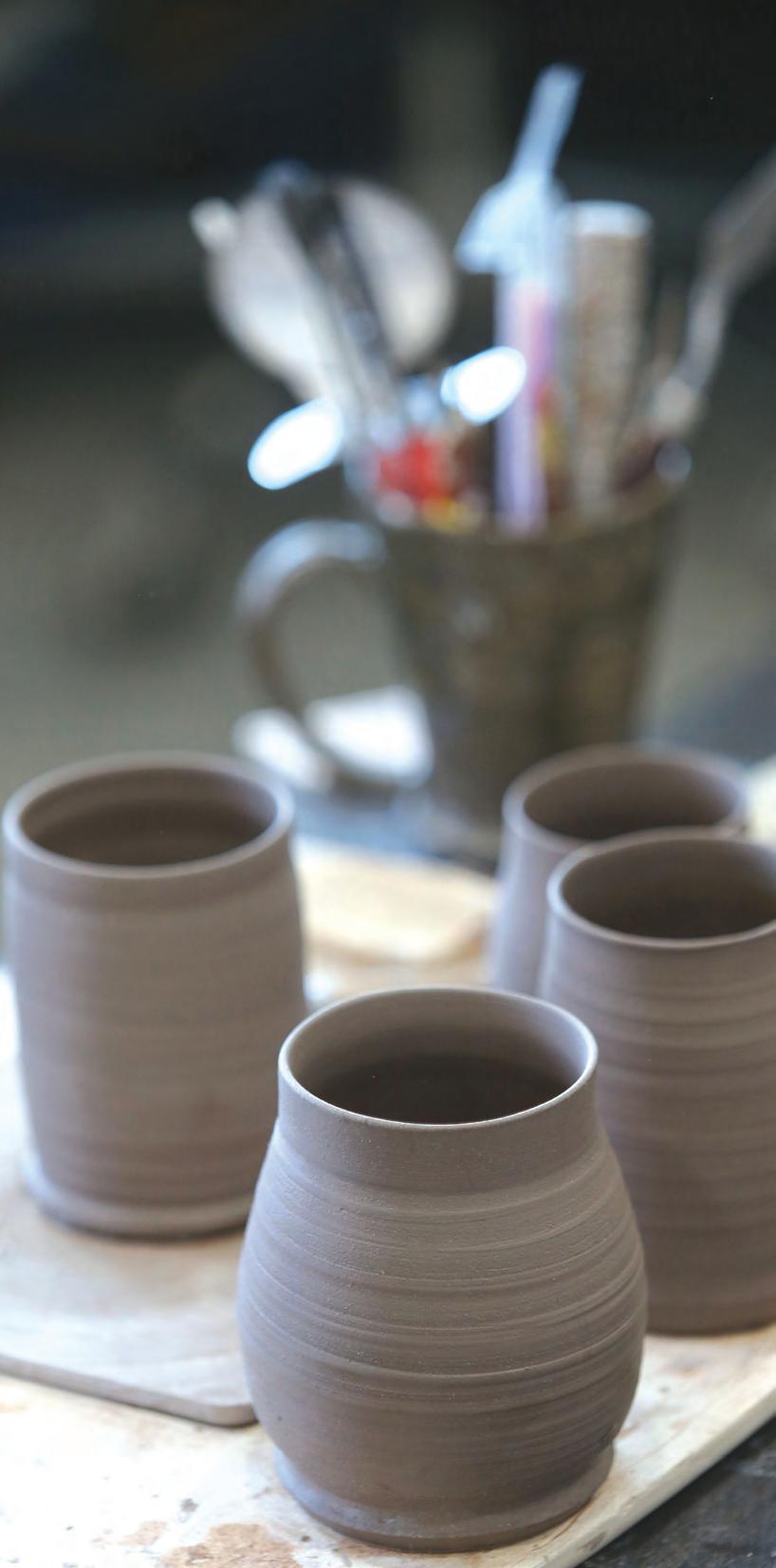
Each piece is shaped by hand – twice. Troy throws the pots on the wheel, steady and patient, coaxing form from spinning clay. Shana brings them to life through glazing, layering color and texture with a careful eye and much trial and error. Together, their work feels
grounded and honest. Nothing is fussy. Nothing is rushed. Just well made.
Their story shifted in the summer of 2021, a new chapter marked by a shovel and a bucket.
“I wanted to get my hands dirty and do some gardening,” Troy said, laughing. “My wife says I go overboard in every project I get into.”
That summer “overboard” meant nearly 300 tomato plants, plus cucumbers and peppers –an ambitious garden in a drought. To keep it all alive, Troy dug a small pond to capture rainwater from their well. As he worked, he noticed something strange: The soil adhered stubbornly to his bucket, thick and heavy.
“I remember thinking there has got to be a better use for this clay than what I’m doing with it,” he said.
Then came a memory. A fourth-grade classroom. A substitute teacher. A lump of clay. A little wheel. A kiln. The quiet magic of turning mud into a mug.
That moment inspired Troy to do some internet research. He learned Mississippi has a deep pottery tradition, home to names like McCarty,
Troy and Shana Jantz
Peter’s, Etta B, and Satterfeld’s – all rooted in local clay and craftsmanship. Inspired, he bought a beginner’s wheel online and watched several YouTube videos. From there, he learned how to center clay, widely considered the hardest part of “throwing” in the pottery process.
Now, fve years later, Troy and Shana own and operate their own pottery business.
Both Troy and Shana are self-taught, learning through patience, mistakes, and persistence. While their journey began with Mississippi clay, they quickly realized that refning local clay for functional pottery is a process all its own – one they hope to master in time. For now, they have clay shipped in and are focusing on form, fnish and durability.
When Troy began fring, Shana tried her hand at glazing, and something clicked.
“I fell in love with that part,” she said.
Today, Troy throws every piece. Shana handles the glazing – a rhythm that feels natural to them. Glazing, she explained, is its own learning curve. Some colors behave beautifully on some clays; others don’t cooperate. Figuring out what works takes time – and a willingness to ruin a few pieces along the way.
They started making pottery for fun. But then, friends asked for pieces of their own, and word spread. What began as a hobby turned into a business built on trust, word of mouth, and belief in their work.
Orders come in all kinds of ways –people stopping by the studio, phone calls and messages, and online orders shipped nationwide. Each Christmas, they host an open house, welcoming the community into their charming rustic pottery shed, where shelves are lined with mugs, bowls, pitchers, and platters – each one waiting to be taken home and put to use.
Their lives, like their pottery, are layered.
Shana grew up in Mississippi – in the very home they live in today, just steps from the pottery shed. Both she and Troy are originally from California, but Mississippi has a way of calling people back.
“We have fgured out that our folks probably would have known each other in California,” Troy said with a smile.
Their journeys took them through several states over the years before they met at church in Missouri in 2011. They married in 2017 and still describe themselves as newlyweds.
“We’re still on our honeymoon,” Troy laughed.
Eventually, life led them back to Mississippi to keep Shana’s childhood home in the family. Surrounded by North Mississippi land and catfsh ponds, the property carries deep sentimental value. At the time, Troy was selling doors, and he had set up a satellite ofce in what would later become the pottery shed.
Both are part of the Mennonite community, and that culture of
craftsmanship and purpose infuses everything they create.
“Craftsmanship is just part of who we are,” Shana said.
Troy put it this way: “There is a scripture that talks about working as unto the Lord. It’s not about making something just to make a dollar. It’s about creating something you believe in. Something you’d stand behind.”
That belief was tested during a difcult season. In 2023, Troy became disabled after a serious medical complication, and it became impossible for him to return to construction and carpentry.
“It was a very hard time,” he shared. “Without family, friends, and what the pottery turned into for us fnancially, we wouldn’t have made it.”
There were moments, he said, when customers would show up unexpectedly and buy hundreds of
dollars’ worth of pottery. It often happened right when they were quietly wondering how they would make it through.
“That day, I was out there with that bucket, when the idea popped into my head – I believe that was a God thing. He was preparing us for what was coming.”
Today, The Potter’s Wife Pottery continues to grow at a steady pace. Their handmade mugs are especially popular, with custom orders for various cofee shops and restaurants, each stamped with logos and shaped for everyday use. They also create thoughtful custom pottery for individuals, pieces that are both beautiful and useful. Each holds a bit of Mississippi clay, a lot of perseverance, and the quiet belief that beauty, when shaped slowly and with intention, can fnd its way into daily life – and stay there. M
MISSISSIPPI Seeing the Delta clearly
BY MEREDITH BIESINGER PHOTOS COURTESY OF RORY DOYLE
Cleveland, Mississippi, photographer
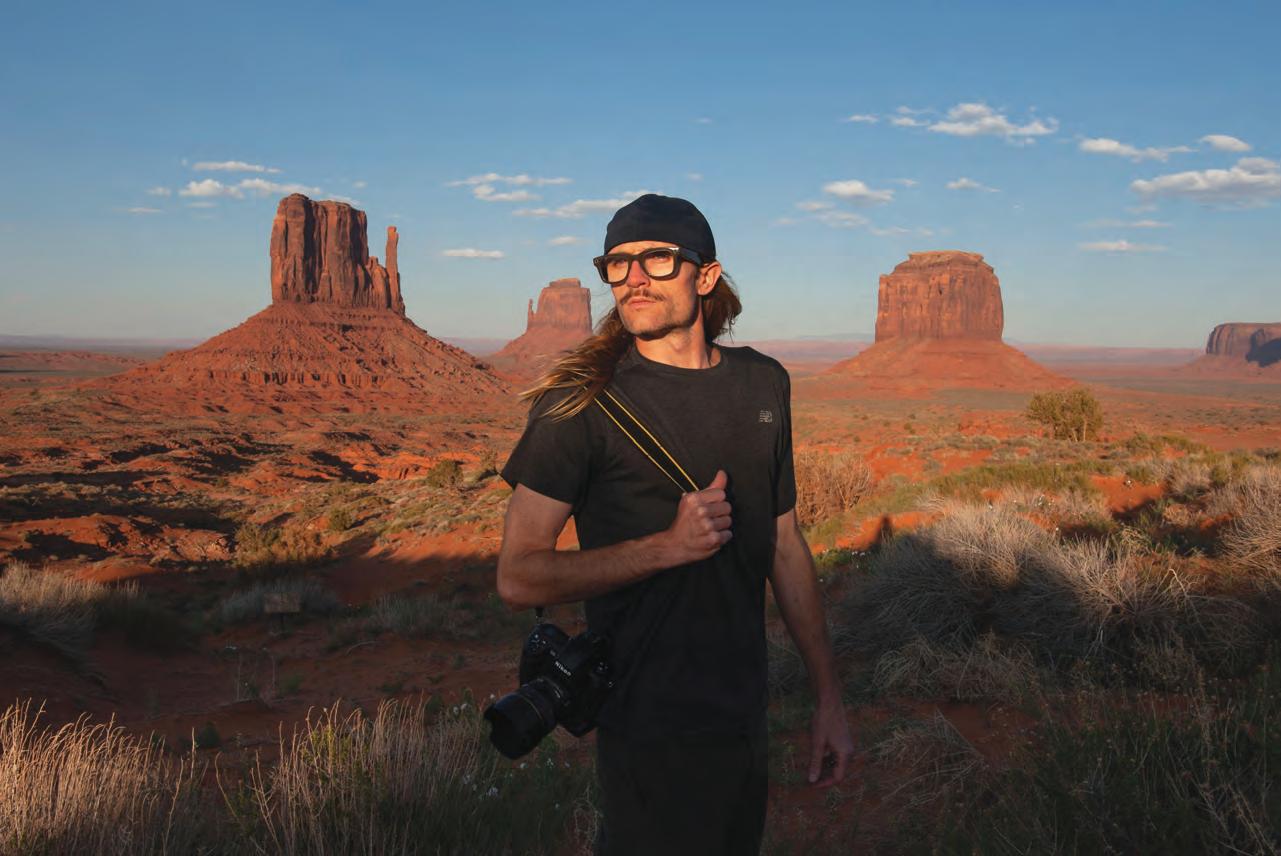
Rory Doyle has spent years telling stories through his photography. These days, he spends his time on the backroads and front porches of the Mississippi Delta.
Some photographers chase moments. Rory Doyle listens for them.
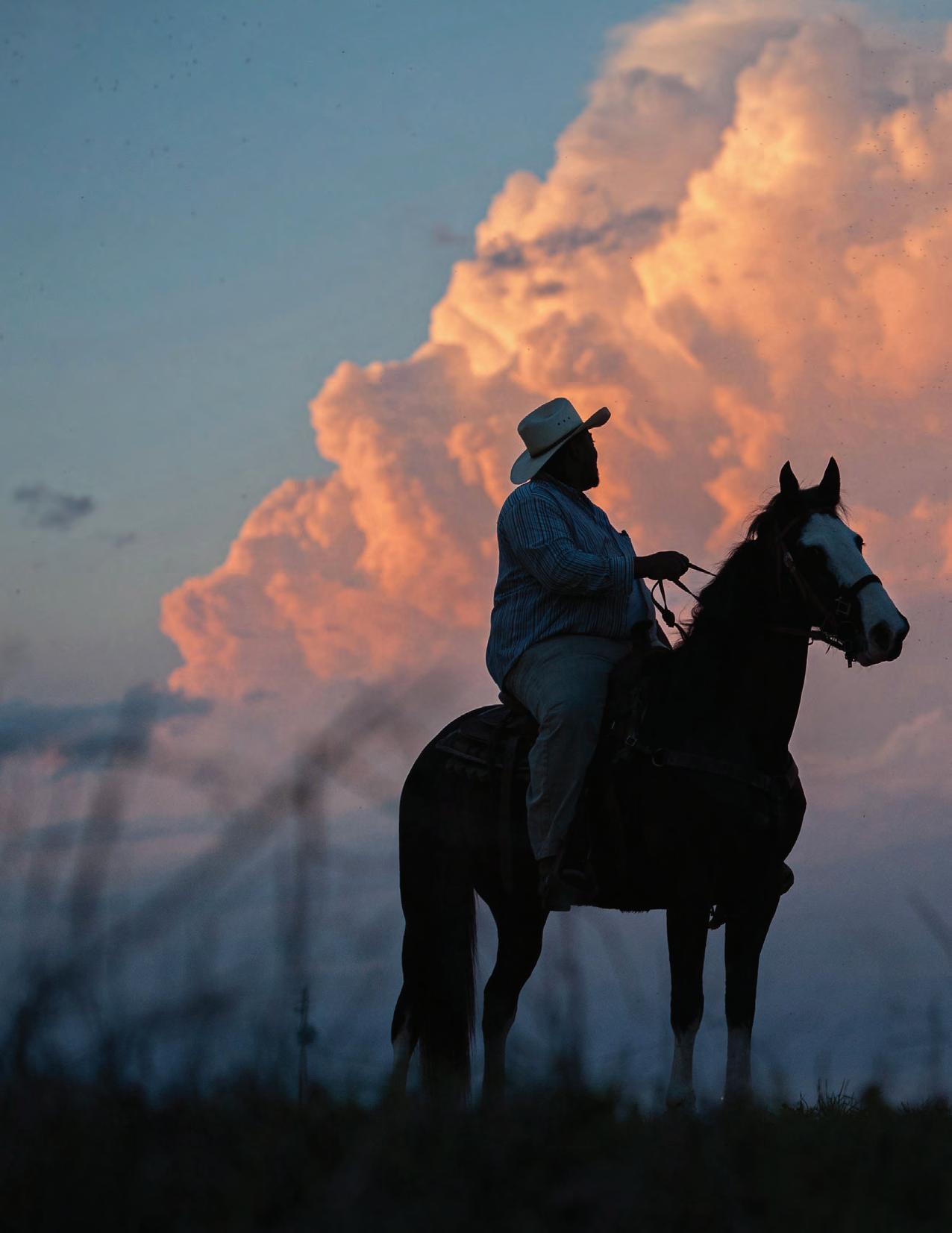
Based in Cleveland, Mississippi, Doyle is a freelance photographer whose camera has spent more time on back roads, riverbanks, front porches, and quiet corners of the Mississippi Delta than in any studio. His work doesn’t rush. It lingers. It waits for light, for trust, for the story underneath the surface.
There’s a stillness to his work that feels familiar to anyone who has ever stood alone on a Delta road, waiting for a car that may or may not come.
Born and raised in Maine and educated in journalism at St. Michael’s College in Vermont, Doyle didn’t arrive in Mississippi by accident; he stayed by choice. In 2009, he and his wife, Marisol, moved south so Rory could pursue a master’s degree at Delta State University. Cleveland became home that same year.
Somehow, without much fanfare, Mississippi became the center of his life’s work.
“We just fell in love with Mississippi, and never left,” Doyle said.
That love shows up in his photographs – not as nostalgia or myth-making, but as careful, intentional truth-telling. His images don’t try to convince you of anything. They simply invite you to look a little longer.
Though trained in journalism, Doyle discovered early on that words weren’t his preferred medium.
“During my undergraduate degree, I only took one photojournalism class. I thought I wanted to be a writer, but found that I preferred telling stories through photos, not writing,” he said.
Photography gave him a language that felt natural. Personal. Necessary.
“When I came to Mississippi, I had a deep passion to learn more about the Delta and explore its landscape with my camera,” Doyle said.
He did just that – by foot, by car, even from the window of a small passenger airplane. He photographed felds and faces, churches and crossroads, the everyday and the overlooked. Over time, the Delta revealed itself not as a single story, but as a layered one – complex, contradictory, and deeply human.
That complexity is central to Doyle’s work.
“The Mississippi Delta is such a complex and layered place,” he said. “It has some of the darkest history that America knows, but it also has some of the most talented writers, artists and musicians. It is a story of America.”
Doyle’s career refects that depth. In 2025, he won a James Beard Award for narrative photography. He has been a Visual Artist Fellow through the Mississippi Arts Commission and the National Endowment for the Arts in both 2018 and 2023. His work has earned national and international recognition, including the Smithsonian Photo Contest, the Southern Prize from South Arts, the Zeiss Photography Award, and the ZEKE Award for Documentary Photography.
Yet accolades aren’t what defne him here.
One of Doyle’s most impactful projects came through his work with The New York Times, in
partnership with Mississippi Today. His photography accompanied “Unfettered Power: Mississippi Sherifs,” an investigative series that became a fnalist for the 2024 Pulitzer Prize for Local Reporting. The reporting prompted federal investigations and led to real changes in state law through legislation – proof of what documentary photography can do when handled with care and conviction.
“Photography is powerful, and it’s personal to me,” Doyle said. “It’s documentary in nature. So much of it is being a storyteller through the lens of a camera.”
That storytelling begins with people.
“Meeting people in Mississippi, getting to know them and telling their story is a passion of mine,” he said.
Growing up shy in the woods of New England, Doyle found in photography a way to communicate –to connect without interruption or pretense.
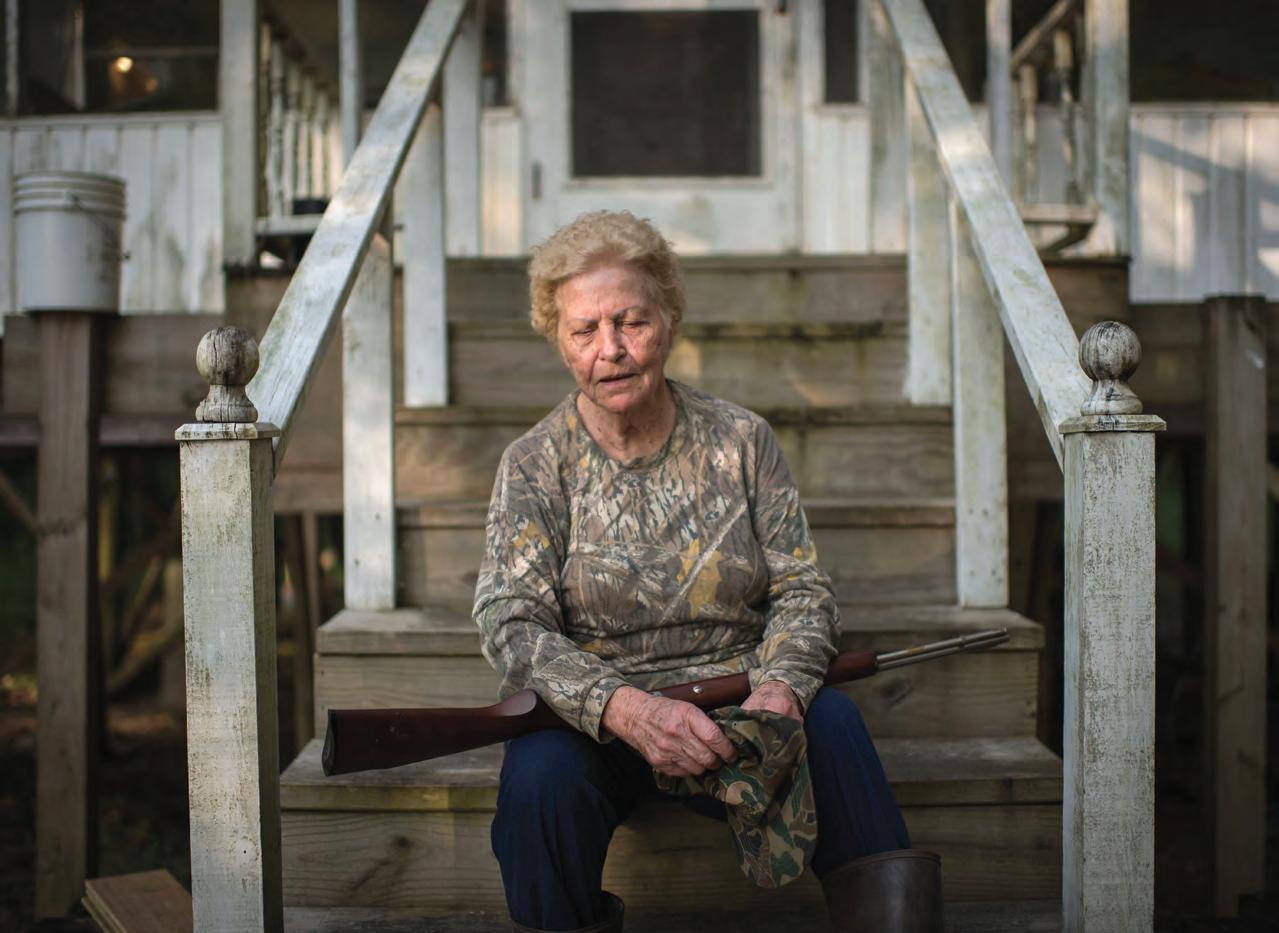
Squirrel hunter Annie Mendoza, 85, poses for a portrait outside her hunting cabin in Bayou Sorrel, Louisiana.
“It is the privilege of my career to meet some of these people – the changemakers,” Doyle said, refecting on the trust his work requires and the responsibility that comes with documenting lives, movements, and moments that matter.
He is particularly drawn to the Mississippi River, a subject he returns to again and again. “There is something really special about spending time on the river,” he said. “The river is so connected to everything in Mississippi, especially here in the Delta. Access to the river is limited, so photography is a way to connect people to it.”
Connection – between people and place, past and present – is also what Rory and Marisol have built beyond the camera. Together, they own Leña Pizza &
Bagels, an award-winning restaurant that has become a gathering place in the Delta. Marisol, recognized as one of the top pizza chefs in the world, brings the same intentionality to food that Rory brings to photography: craft, care, and community.
“Our community here in Cleveland has accepted us,” Doyle said. “I’m from New England, Marisol is from Mexico, and we have never felt such a closeness to people and neighbors.”
There are plenty of misconceptions about Mississippi, Doyle stated.
“My wife and I want to share the good,” he said.
And Rory Doyle does just that. One photograph at a time M