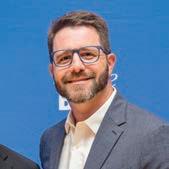
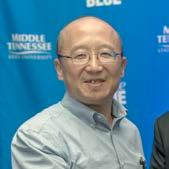
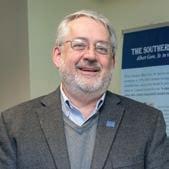
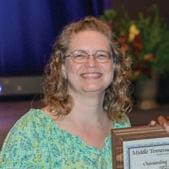
From agriculture to science to tourism, MTSU researchers rise from humble beginnings to spark hope
COLLECTION
04 SMALL TOWN, BIG DREAMS
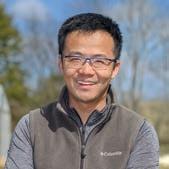
Chaney Mosley wields a lifetime of experience to help farmers cope
12 WHERE WORLDS COLLIDE
Hanna Terletska leads MTSU’s Big Blue push into quantum physics
20 SERVING IT UP
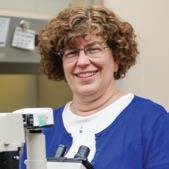
Liz Barnes traveled an unlikely path from Denny’s waitress to a national role in demystifying science
CAMPUS TO COMMUNITY
Vol. 9 • No. 1 • Spring 2026
Office of Research and Sponsored Programs
28 BLOCK BY BLOCK
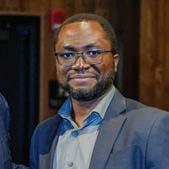
Kevin Bicker is building potential drug compounds to battle deadly infections
36 THE INABILITY TO UNPLUG
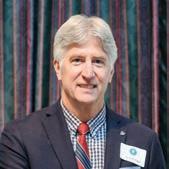
MTSU’s Karen Tan explores the dark side of vacations
University President Sidney A. McPhee • University Provost Mark Byrnes • Vice Provost for Research and Dean, College of Graduate Studies David Butler • Director, Office of Research and Sponsored Programs Rachel McGinnis • Vice President for Marketing and Communications Andrew Oppmann • Senior Editor Drew Ruble • Director, Creative and Visual Services Kristy D. O'Neal • Designer Brittany Blair Stokes Associate Editor Carol Stuart • Contributing Editor Nancy Broden • Contributing Writer Brian Hudgens Photographers Andy Heidt, J. Intintoli, Cat Curtis Murphy, James Cessna • Special Thanks Tom Sidorski
Address changes should be sent to Advancement Services, MTSU Box 109, Murfreesboro, TN 37132; alumni@mtsu.edu. Other correspondence should be sent to Drew Ruble, 1301 E. Main St., MTSU Box 49, Murfreesboro, TN 37132. For online content, visit mtsunews.com/magazines. 560 copies of white cover and 125 copies of black cover printed by Lithographics, Nashville, Tennessee. Designed by MTSU Creative and Visual Services. 1125-8175 – Middle Tennessee State University does not discriminate against students, employees, or applicants for admission or employment on the basis of race, color, religion, creed, national origin, sex, sexual orientation, disability, age, status as a protected veteran, genetic information, or any other legally protected class with respect to all employment, programs, and activities sponsored by MTSU. The Assistant to the President for Civil Rights Compliance has been designated to handle inquiries regarding the non-discrimination policies and can be reached at Cope Administration Building 116, 1301 East Main Street, Murfreesboro, TN 37132; Christy.Sigler@mtsu.edu; or 615-898-2185. Also see crc.mtsu.edu.
TAKING CHARGE
LIKE LIGHTNING BUGS LIGHTING UP THE NIGHT, OUR GROUNDBREAKING PROJECTS FORGE BRIGHT PATHS AHEAD . . .
Higher education research ignites individual potential and propels society forward. At Middle Tennessee State University, our researchers, faculty, staff, and students actively push boundaries, deliver vital public service, and create lasting impact for Tennesseans and communities worldwide.
This edition bursts with the theme Taking Charge and proudly launches “The Research Minute,” my dynamic new video podcast. In fast-paced, engaging segments, it connects you directly to campus breakthroughs, spotlighting how MTSU-linked research sparks innovation and transforms lives.
Like lightning bugs lighting up the night, our groundbreaking projects forge bright paths ahead, tackling pressing challenges in agriculture, physics, biology education, chemistry, health care, and more.
We spotlight just a few of the many trailblazers driving these efforts. Season 1 guests on “The Research Minute” include powerhouse researchers Chaney Mosley, Hanna Terletska, Liz Barnes, Kevin Bicker, and Karen Tan. Their work radiates persistence, creativity, and powerful real-world results.
Federal, state, and foundation funding supercharges these advances, bolstering food security, expanding scientific frontiers, elevating education, pioneering new materials and treatments, and uplifting lives across Tennessee, the nation, and the globe.
Together, these stories showcase MTSU’s bold commitment to taking charge: arming people with knowledge, tools, and inspiration to build brighter, more resilient tomorrows.
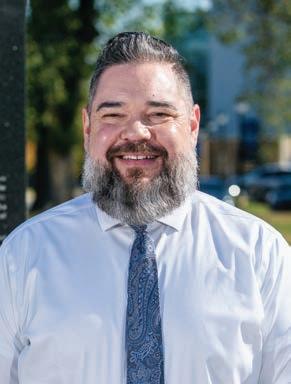
David Butler
Vice Provost for Research and Dean, College of Graduate Studies
About the cover
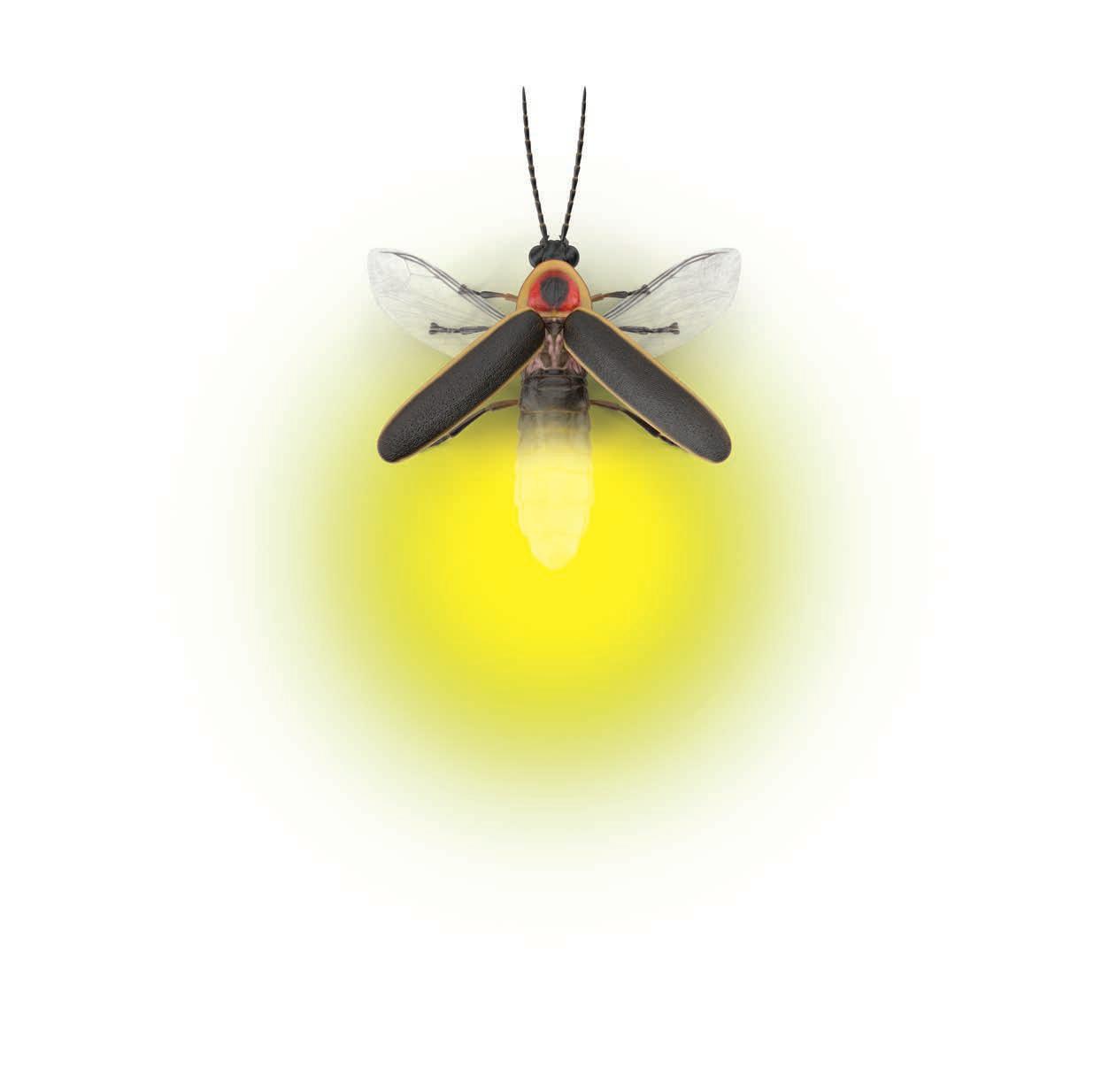
CATCHING LIGHTNING (BUGS) IN A JAR
The firefly or lightning bug is neither a fly nor a bug, but actually a beetle. Although all species don’t light up, many fireflies bring joy in Tennessee on warm evenings due to their lanterns, or bioluminescent organs. Along with the ladybug, the firefly (or lightning bug beetle) is the official state insect. At least 30 species appear in Tennessee, including the Common Eastern Firefly (Phontinus pyralis), which kids most often try to catch in the backyard as a spring or summer pastime. Lightning bugs transform places and provide a sense of wonder and awe.
Sources: tnstateparks.com, tn.gov, xerces.org
Watch “The Research Minute”
SMALL TOWN, BIG DREAMS
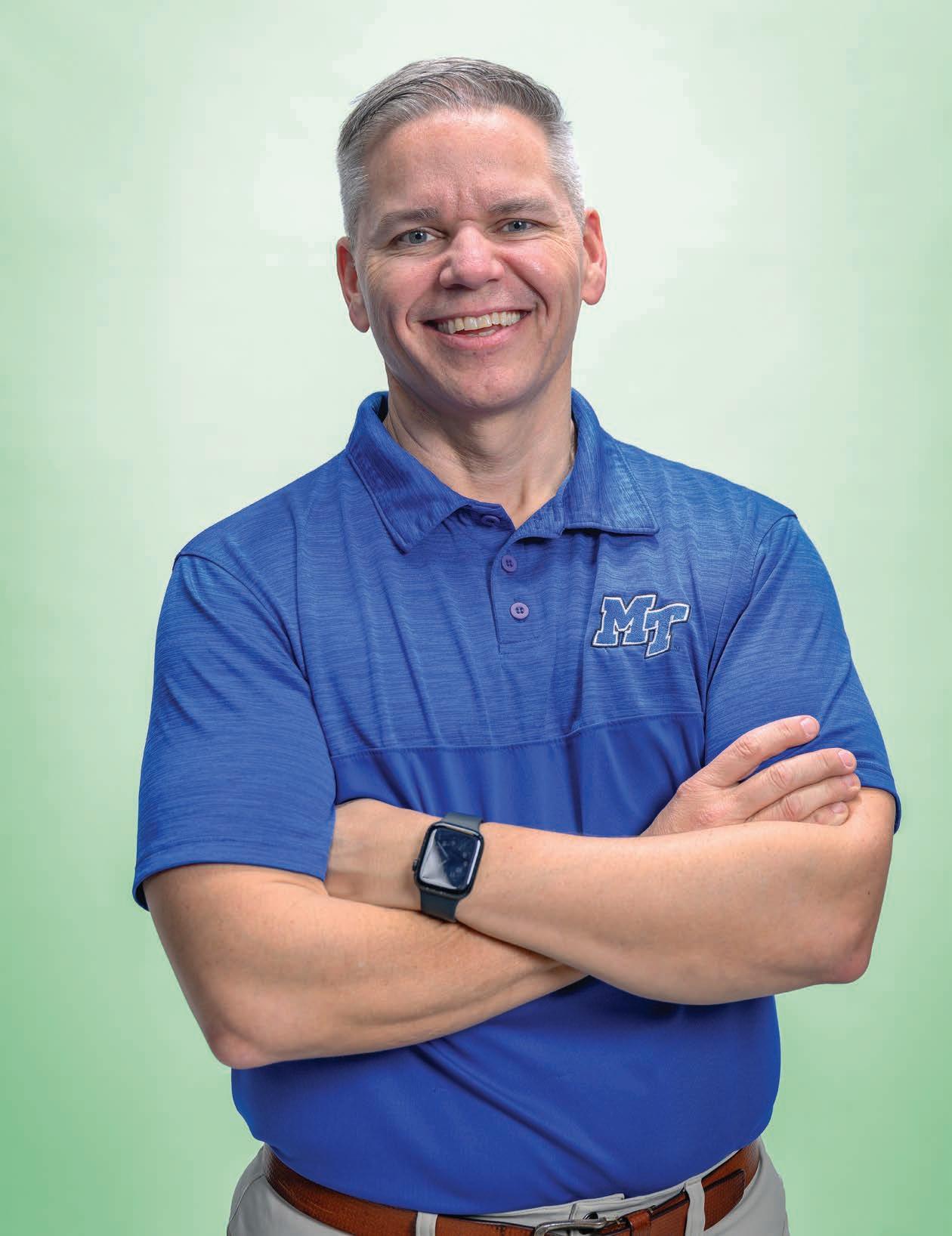
CHANEY MOSLEY WIELDS A LIFETIME OF EXPERIENCE TO HELP FARMERS COPE
Chaney Mosley’s senior class in high school consisted of 32 students.
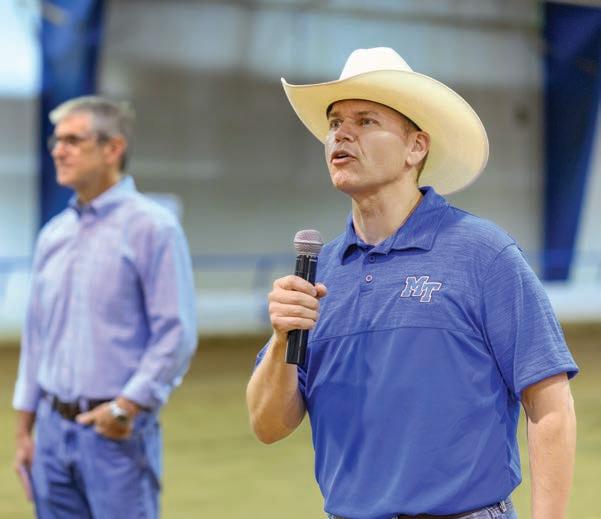
That small-class environment in Rutherford County was the first step in a journey that now sees Mosley, associate professor in MTSU’s School of Agriculture, mentor agriculture students who often pursue careers in wide open spaces.
“I was born in Nashville, and we had a [small] family farm there,” Mosley said. “This was in the early ’80s. We had hogs, horses, and crops.”
AGRICULTURE and CAREERS
Article by Brian Hudgins and Drew Ruble
by Andy Heidt and J. Intintoli
The family later sold that farm and bought another in College Grove. There, surrounded by horses, cattle, crops, and an orchard, Mosley was zoned to attend school in Rutherford County.
“We were hobby farmers then,” Mosley said. “I went to school in Eagleville from kindergarten through 12th grade. So I spent 13 years at the same school.”
That hobby turned out to have career potential.
“My seventh-grade math teacher was also the high school agriculture teacher,” Mosley said. “We would learn about integers and then we would learn about agricultural mechanics, for example, or welding or carpentry.”
Mosley was hooked. Even though he described himself as “all over the place” with thoughts of becoming “a veterinarian, meteorologist, or a physical therapist” at that time, it turned out that all of those pathways were well served by an agricultural education. After all, knowing weather patterns and dealing with aches and pains were all part of the deal.
Mosley said his mother provided clarity when it came to college and career planning. Hard work could result in scholarships that would enable Mosley to move forward. Mosley pursued an undergrad degree in Agribusiness at MTSU, and he was off and running.
Photos
AFTER THE 9/11 ATTACKS IN SEPTEMBER 2001, MOSLEY FELT CALLED TO DUTY.
At MTSU, his penchant for varied interests extended beyond the classroom. He served as a captain for the University cheer team in 1999–2000, which enabled him to witness the student experience in numerous sports arenas throughout the South and beyond.
President of the Student Ambassadors, as well as president of the MTSU Agricultural Council, Mosley earned MTSU’s most prestigious student award, the President’s Award, given to a student recognized as a campus leader and who has made significant contributions to the University community.
“I did a lot,” Mosley said. “I loved this place as an undergraduate.”
MILITARY MANEUVER
After graduation, Mosley hit an initial roadblock in his attempts to become a teacher.
“It was 2000 and . . . I could not find a job teaching agriculture because people that get in there love it and stay,” he said.
He was finally able to secure a job and taught high school for a couple of years.
After the 9/11 attacks in September 2001, Mosley felt called to duty. When the school year ended, he joined the U.S. Army.
“I didn’t tell anyone. I just did it without anyone knowing it,” Mosley said, describing his reasoning as “a lot of patriotism, a lot of passion.”
Mosley spent the next two years on active duty before returning to MTSU to finish his master’s degree, which he did in 2004.
When he was later hired to teach high school again, this time in Georgia, Mosley’s administrative bosses identified a natural fit for him teaching plant and animal biotechnology.
“The skills I learned in the Army with the medical lab tech skills transferred really well into teaching that aspect of agriculture,” Mosley said. “I taught for about seven years and stayed active through the military, through the Army Reserves.” (In all, Mosley served 15 years in the military, including many years in the Tennessee Army National Guard.)
“Having served as an enlisted soldier helped me understand the experiences of enlisted service members so that when I was leading troops, I would have a little more empathy for what they were experiencing or going through,” Mosley said. But Mosley was by no means finished with his educational journey. He next pursued a doctorate in agriculture education at Virginia Tech University, completing that degree in 2012.
That led him to a job at the Tennessee Department of Education that involved working in career and technical education (CTE), courses offering specific academic and technical skills to better prepare students for work in hands-on careers such as agriculture.
He’d found his calling. Since then, Mosley has gone on to become a national leader on career and technical education—involved in the funding, research, and publication of over 45 articles on CTE and workforce development.
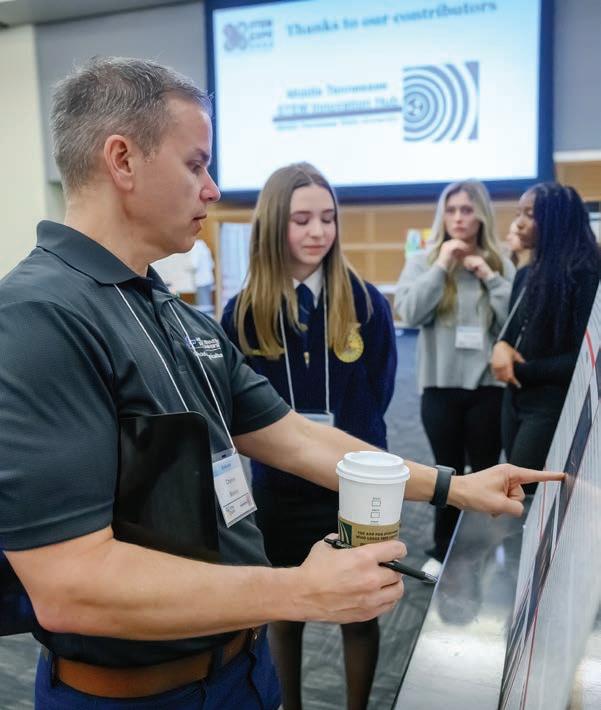
While with the state of Tennessee, Mosley also functioned as the executive secretary for the statewide branch of FFA (Future Farmers of America), working with ag-obsessed youth (like he had been!) across the state to help organize and execute competitions and career and leadership development efforts.
Planning the state FFA convention was a lot of work, Mosley said, “but a great experience, and it got me reconnected with Tennessee agriculture teachers.”
Those connections would come in handy when he returned to teach at his alma mater, MTSU, in 2017.
SUICIDE PREVENTION
Now at MTSU for nearly nine years, Mosley’s scholarly research is focused in part on agriculture education, specifically teacher professional development, but also how students learn and how to teach a variety of subjects.
OF THE TOP 10 CAREER FIELDS WITH THE GREATEST RISK OF SUICIDE IDEATION OR CONTEMPLATING DEATH BY SUICIDE, VETERINARIANS AND FARMERS ARE IN THERE.
He also investigates mental health and stress in the rural or agricultural community.
“I specifically focus on agriculture teachers and learn some really interesting things through that. It has very much become a passion project because these are the people that I work with and who I care tremendously about,” he said.
With regard to this mental health research, Mosley is part of a research team covering 13 states and two territories, Puerto Rico and the U.S. Virgin Islands. The group did a regional study and focused on agriculture teachers by examining their awareness of suicide warning signs and their awareness of farm stressors. The researchers also probed their experiences with training and professional development regarding this information.
“Of the top 10 career fields with the greatest risk of suicide ideation or contemplating death by suicide, veterinarians and farmers are in there,” Mosley said. “At MTSU, with the students we are serving, where we have students who aspire to go to veterinary school, we also have students who aspire to become farmers or work in the agriculture industry in general.”
What are some of the main stressors for people who work in agriculture—and their families?
Considering farmers are relying on feed for livestock and growing food for human consumption, they are often at the mercy of Mother Nature. An early frost can severely damage or destroy crops. Flooding can also kill livestock or destroy crops.
Isolation in rural areas is another daily stressor for many farmers. If trips to markets or a medical center require one or two hours of travel, that can impact an individual farmer’s sense of community.
“There’s also a negative stigma associated with mental health and suicide that persists in rural areas,” Mosley said. “Farmers, farmworkers, and families who are experiencing a crisis might refuse to seek help because of that stigma. That is another aspect— another layer—that is not associated with every career field.”
Mosley has been in the middle of Tennessee’s response to these issues from many angles, including as a member of the Farm Bureau in Tennessee.
“Nationally, Farm Bureau is aware this [mental health] is a concern,” Mosley said. “Farm Bureau does an incredible job trying to combat that stigma.”
Mosley’s research has pointed to the issue’s having a long reach—outside of farms and into classrooms.
“The most alarming statistic we got from our research is that generally 20% of agriculture teachers had contemplated suicide,” Mosley said.
Some of the same elements that impact farmers can also impact agriculture educators—isolation and a limited amount of conversation with peer adults.
“It’s an area of great concern to me,” Mosley said. “I’m trying to figure out what can we do through the research.”
PLANTING NEW SEEDS
It’s heady stuff, and not for the weak of heart. In recognition of his national reputation in the field of career and technical education and his novel research into suicide prevention among farm communities, the University’s Alumni Association awarded Mosley with a 2025–26 True Blue Citation of Distinction for Achievement in Education.
What’s next for the ever-dynamic Mosley? Leaning into his vast leadership experience and strong connection to the Tennessee agricultural community, Mosley has turned his attention to yet another new field of interest—politics. He’s currently running for elected office.
“I’ve spent my life bringing people together, not driving them apart—in classrooms, communities, and across the country,” Mosley said.
Watch the full episode
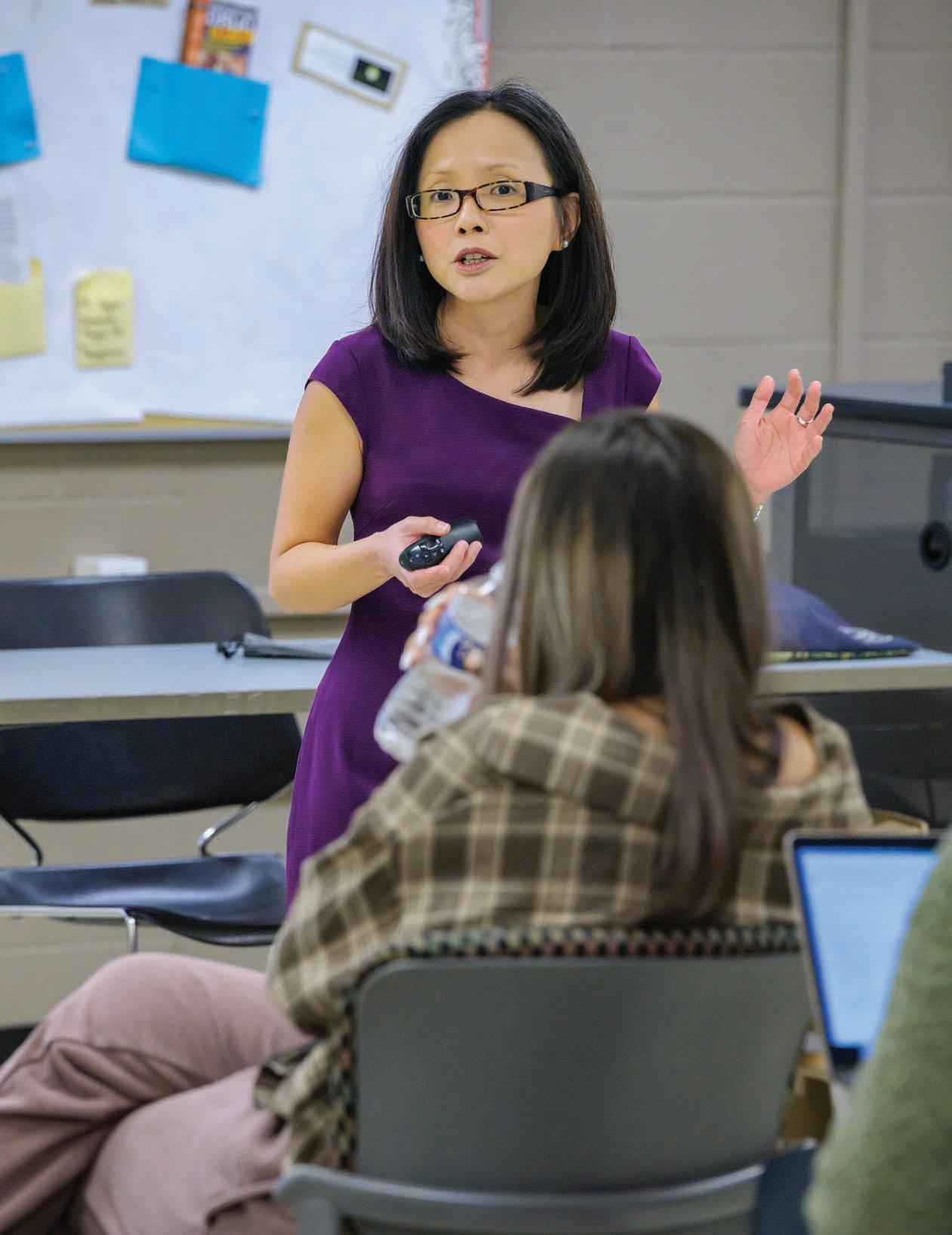
Chaney Mosley, Agriculture
PRODUCE RESULTS
Impact the world’s future through an agriculture-related graduate program at MTSU.
Help feed the planet, train the next generation, or improve industry practices.
• Fermentation Science master’s program
Scientific and management courses for food and beverage production
• Agriculture graduate minor
Coursework available in ag education, agribusiness, and technology
• Horse Science master’s degree
Equine Education, Equine Physiology, and Industry Management concentrations
• Molecular Biosciences doctorate
Interdisciplinary program with Agriculture, Biology, and Chemistry faculty
Reap rewards learning from MTSU agricultural and scientific experts.
WHERE WORLDS COLLIDE
HANNA TERLETSKA LEADS MTSU’S BIG BLUE PUSH INTO QUANTUM PHYSICS
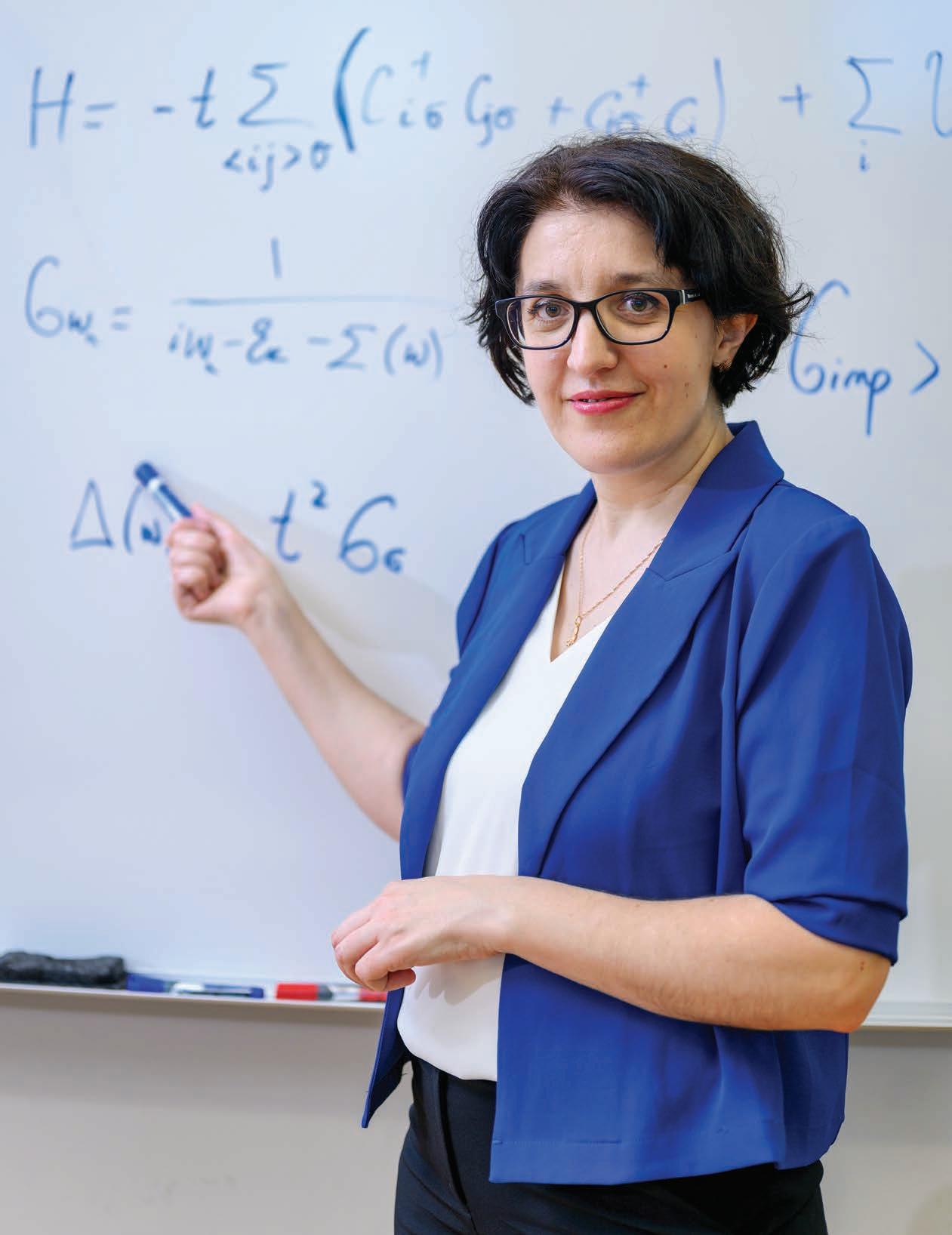
When Hanna Terletska was growing up in the town of Drohobych in rural west Ukraine, physics piqued her interest early, leading her to pursue an undergraduate physics degree at the local university. That served as her introduction to a distinct new world she would go on to spend immense hours pondering—where a quantum particle has properties of both a solid and a liquid simultaneously.
Terletska, now an associate professor of Physics at MTSU and an internationally recognized quantum scientist, has examined particles down to the smallest details throughout her career.
TECHNOLOGY and ECONOMY
Article by Brian Hudgins and Drew Ruble
Photos by Andy Heidt and J. Intintoli
“These very tiny particles—the levels of atoms to subatomic levels—when you get to that very microscopic level, things behave in an inverted way,” Terletska said.
How did a rural, female student from Ukraine end up a nationally recognized quantum scientist in America? Terletska has a short answer: “my teachers.”
The first-generation college student—no one in her family was particularly good in physics or went to college—said she always liked to study and learn.
“I was not particularly into experiments or building things—I guess an early indication that I would become a theorist. But I was really good in problem-solving,” she said. “Each year, my school would send me to a Science Olympiad in physics, chemistry, and math. While I like math, physics was much more interesting and challenging, and I liked that it helped to logically explain things around us and how they work.”
Terletska’s middle school physics teacher played a particularly significant role in her choosing physics as an academic path.
“I vividly remember how much he was devoted to teaching physics and cared that we loved it too,” she said. “When time came for college, I decided to major in physics.
“It is funny—I remember my mom trying to make me doubt my choice. She thought mathematics is more for females and is more prestigious than physics. Indeed, the perception that physics or STEM is for boys is very common. But we had 15 women and two men in our class of physics majors at my college, and the boys did not graduate with all of us!”
After graduation from Drohobych State Ivan Franko University in her hometown, Terletska immigrated to the United States. She arrived first for the M.S. at Minnesota State, then a Ph.D. at Florida State University, followed by several postdoctoral trainings at the Brookhaven National Lab, Louisiana State University, Ames Lab, and the University of Michigan, and finally the faculty position at MTSU.
Emanuel Gull served as Terletska’s postdoctoral advisor at the University of Michigan, where she was a member of the Computational Condensed Matter Physics Group.
HOW DID A RURAL, FEMALE STUDENT FROM UKRAINE END UP A NATIONALLY RECOGNIZED QUANTUM SCIENTIST IN AMERICA? . . . TEACHERS.
“Apart from Hanna’s talent and training—which one needs to have when doing research on this level— she puts in the hours, and she has been doing this consistently for many years,” Gull said. “That, in combination with being extremely efficient at getting administrative tasks out of the way, makes her a fantastic and successful scientist.”
MAKING THE QUANTUM LEAP
The future of quantum computing is indeed the stuff of fantasy and science fiction. Terletska is doggedly pursuing it.
In her research funded by $5.5 million from the National Science Foundation (NSF) and Department of Energy (DOE), Terletska collaborates with scholars from places like Carnegie Mellon University, Oak Ridge National Laboratory, and Augsburg University in Germany, using access to the world’s most powerful computers to research quantum materials that hold the promise of new-generation technologies that mimic time travel—or, at least, particles reacting simultaneously in two places at once.
Terletska describes the discovery of new materials as “a cornerstone of human civilization and development.”
“We now live in the era of quantum materials,” she said. “The potential benefits of 21st-century technologies built on quantum materials and emerging quantum technologies are staggering.”
This includes quantum computers capable of solving complex problems in minutes, problems that currently take years to solve, as well as highly efficient solar cells and room-temperature superconductors that would generate, transmit, and store electricity with almost no loss. Hence, conquering the behavior of quantum materials can, among other benefits, bolster economies, advance quality of life, and address the unprecedented growth in global energy needs.
The seeming “magic” of quantum materials comes from billions of interacting electrons, which at the atomic and subatomic levels start to also have wavelike properties. At this level, quantum physics really kicks in, and electrons start to exhibit quantum effects like tunneling, interference, entanglement, and topological order. Research in this field requires complex many-body numerical algorithms and access to powerful supercomputers.
But getting from science fiction and fantasy to this new reality requires reinterpreting the math and learning new physics.
It also requires teaching it to a new generation of scholars.
That’s another area where Terletska and MTSU are excelling: the need to educate people on how to use this new type of science—the basic rules of quantum mechanics that lead us to be able to do this kind of processing.
TERLETSKA SAID SHE SEES A BIT OF HERSELF IN MANY OF HER STUDENTS AND WANTS FOR THEM THE SAME OPPORTUNITIES THAT ACADEMIA HAS OPENED UP FOR HER.
To bring about this needed change in curriculum, MTSU in 2023 launched the MTSU Quantum Science Initiative, which not only focuses on remaining at the forefront of the scientific research in quantum materials and quantum information, but also outlines two other goals: 1) educating a future workforce ready to tackle the new realities of futuristic computing and 2) becoming a leader at “training the trainers” so other institutions can fast-track the teaching of this new-age thinking.
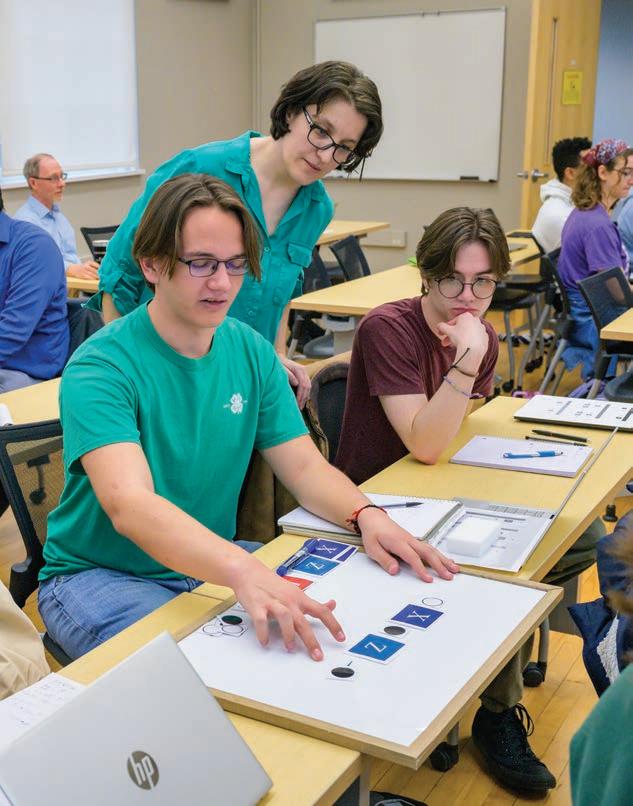
That starts with creating a curriculum for teaching quantum mechanics and computing. The work is interdisciplinary in nature, growing out of physics where these quantum concepts were discovered, but branching into computer science, mathematical sciences, and even chemistry.
It wasn’t long ago that there was no roadmap for how to educate students in this field. Academics like Terletska have changed all that. At MTSU, Terletska developed educational materials to meet students at “ground zero” and start educating them about quantum mechanics.
All of this work has placed her in the national spotlight. Based on her work and her ideas, she was granted in 2020 a nearly $500,000 Early Career Development CAREER grant from the National Science Foundation—a highly respected five-year award that most often goes to junior faculty at top-tiered research institutions. It’s a
marker very early on in somebody’s career that they are poised to be a leader and that the federal government is investing in them as a leader.
Terletska used her newfound attention and resources to accelerate collaborations and ensure her research and awards resulted in the education of the next generation of scientists. For starters, she helped build the University’s Quantum Science and Computing concentration in Physics that began in Fall 2024.
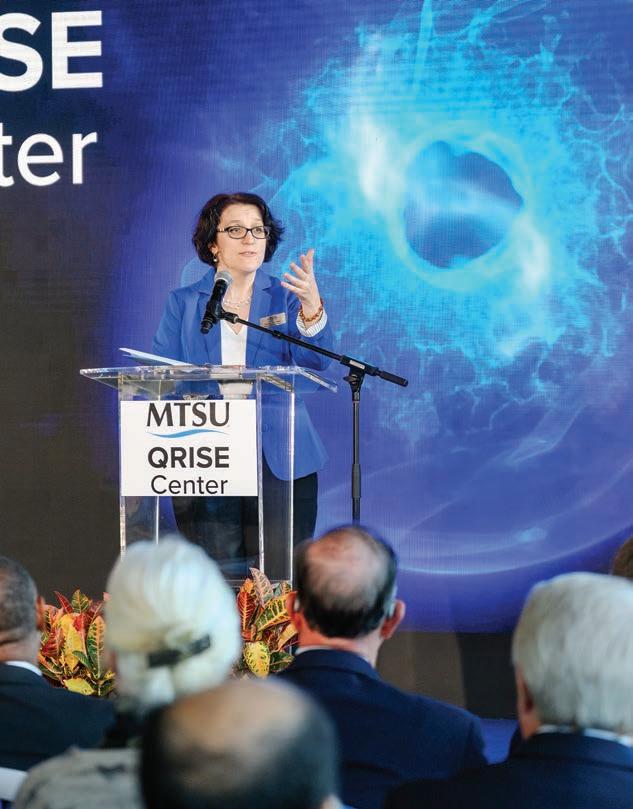
More recently, Terletska’s presence and MTSU’s dedication to quantum education resulted in the creation of MTSU’s Quantum Research, Interdisciplinary Science, and Education (QRISE) Center, a world-class hub for advancing quantum discovery, innovation, education, workforce development, and economic growth, consolidating MTSU’s quantum efforts.
QRISE’s research spans quantum materials and devices, AI-accelerated and quantum-assisted simulation for faster materials discovery, and quantum photonics, including squeezed-light/entangled-photon sources, on-chip quantum sensors, and light-matter interaction studies for emerging communication and sensing platforms.
A BRIGHT FUTURE
With clear goals, a solid foundation, and a national leader in Terletska leading the charge, MTSU is clearly poised to make even bigger contributions in the quantum field.
For Terletska, it’s almost surreal to think of how far she has come in the field. She said it all goes back to growing up in a Ukrainian town early on, when examining quantum physics was not a readily apparent path.
“I’m here because of learning,” Terletska said. “Education has been a life-changer for me.”
It’s the motivation that propels her forward. Terletska said she sees a bit of herself in many of her students and wants for them the same opportunities that academia has opened up for her.
“Here at MTSU, we have many first-generation college students, who don’t get much advice or guidance from their family members regarding college or their career path,” she said. “Having good mentors often plays a deterministic role in their lives. Being a first-generation college student myself helps me understand those challenges even better. These are typically very, very talented students, but because of the lack of examples and support, they often don’t even dare to follow the opportunities available for them.”
THE POTENTIAL BENEFITS OF 21STCENTURY TECHNOLOGIES BUILT ON QUANTUM MATERIALS AND EMERGING QUANTUM TECHNOLOGIES ARE STAGGERING.
In her time at MTSU, Terletska has already mentored several Physics majors who now are pursuing doctorates in physics at prestigious universities across the U.S. Because of her, those students and their families are sure to have a very different future—or, said another way, experience a quantum leap.
Watch the full episode
Hanna Terletska, Physics
ADVANCE DISCOVERY
MTSU’s new Quantum Research, Interdisciplinary Science, and Education (QRISE) Center stands at the forefront of an emerging quantum economy, driving breakthroughs that will shape the next generation of technology and transform how we understand and harness the quantum world.
What is QRISE?
• A world-class hub for advancing quantum discovery, innovation, education, and workforce and economic development
• Pioneering research, hands-on learning, and collaboration including a flagship partnership with Oak Ridge National Laboratory
• Preparing students for careers of the future and to become leaders in the rapidly evolving quantum economy
• Connecting academia, industry, and government to strengthen Tennessee’s role in the national quantum ecosystem
• $8.5 million in National Science Foundation and Department of Energy funding, spanning programs in quantum materials, high-performance computing, workforce pipelines, and K–12 quantum outreach
QRISE focuses on strategic U.S. quantum priorities, from computing and cybersecurity to energy, advanced materials, and beyond.
SERVING IT UP
LIZ BARNES TRAVELED AN UNLIKELY PATH FROM DENNY’S WAITRESS TO A NATIONAL ROLE IN DEMYSTIFYING SCIENCE
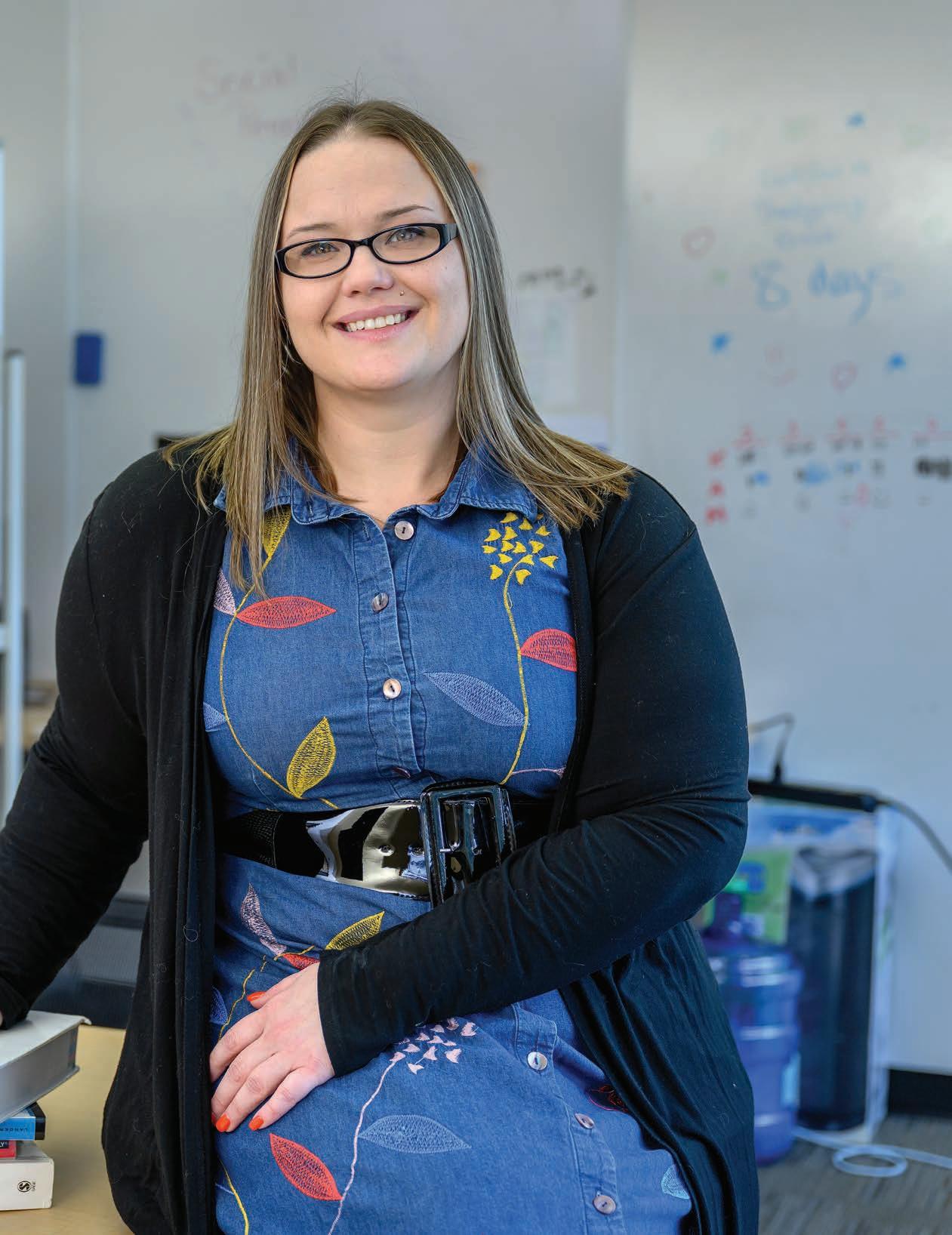
When Liz Barnes researches the most effective ways for faculty members to teach students, she has her own storied personal and educational history from which to draw.
Barnes, an associate professor of Biology, dropped out of high school and moved away from home at 16 years old. Her mother was a single teenager when Barnes was born—and Barnes’ mother later struggled with addiction to prescription painkillers.
Barnes took a full-time job as a waitress at a local Denny’s to financially support herself during her own teenage years.
SCIENCE and COMMUNICATION
Article by Brian Hudgins, Drew Ruble, and Stephanie Wagner
Photos by J. Intintoli
“But a couple of years after that, I knew I wanted to do something different than wait tables,” Barnes said.
She found out she could enroll at a community college without a high school diploma or even an equivalency.
“I went in and tested, and they put me in classes that were at the level I needed,” Barnes said. “I actually had to spend a lot of time taking basic algebra and things like that to catch up. But it was totally worth it.”
Barnes discovered her affinity for science while at Glendale Community College in Arizona. Considering her childhood had been chaotic and lacked structure, Barnes said, science gave her a path to make sense of the world.
“I fell in love with that idea,” Barnes said. “Of course, science is not certain . . . but it was much more certain than what I had experienced in my past. I felt like I could know some things with a level of certainty, whereas before, I felt like there wasn’t a lot of truth in my life.”
Attending college also provided Barnes the opportunity to meet a new peer group.
In addition to missing the academic milestones associated with high school, Barnes had missed the social connections made during a final year or two of school.
“I had been an outcast, but when I found the scientific community, they were the people who seemed to think like me, and I fit in,” Barnes said. “That was something I previously did not have.”
FINDING HER FOOTING
Barnes first enrolled in biology because it was a pre-med requirement and she thought she wanted to become a medical doctor.
It was in that class, though, that she discovered her true academic passion—evolutionary biology.
Concepts like the common ancestry of all life on Earth—the idea that every person and animal comes from a common origin from billions of years ago that began as a chemical reaction—inspired her.
“It’s a beautiful idea because it made me realize just how related everything is and how all of life is just one big family,” Barnes said.
“I also discovered I really fit in with academia, so I switched my goal from being a doctor to pursuing a role as a professor.”
Barnes had found her calling. A first-generation community college student, she achieved excellent grades and eventually transferred to Arizona State University and became part of the Biology and Society program there.
Doing so meant Barnes now interacted not only with faculty members and peers in the biology department, but also with historians, philosophers, and education researchers, solving problems in an interdisciplinary way. Barnes became fascinated with the biological evidence about evolution and the societal controversy surrounding competing viewpoints about it.
Barnes received her first opportunity to do research with Arizona State’s Sarah Brem, an evolution education researcher who has since retired. Brem gave Barnes a job as a research assistant.
“I was still working at Denny’s at this point,” Barnes said. “As soon as she gave me the research assistantship, I quit my job at Denny’s. That was so big for me because I could actually focus on my studies.”
CONSIDERING HER CHILDHOOD
HAD BEEN CHAOTIC AND LACKED STRUCTURE, BARNES SAID, SCIENCE GAVE HER A PATH TO MAKE SENSE OF THE WORLD.
FORGING A CAREER
Barnes completed her undergraduate, graduate, and doctoral studies at Arizona State. While there, she landed a prestigious National Science Foundation (NSF) graduate research fellowship (early CAREER grant), one of the most well-known and highly sought-after grants for pre-tenured faculty across the country. Awarded to Barnes in 2023, it amounted to a five-year, $1 million grant to pursue research—a dream come true that Barnes said she never could have imagined earning as a high school dropout.
Upon completion of her doctorate, Barnes said, she found the opportunity to join MTSU appealing in part because of the presence of Michael Rutledge, a prominent evolution education researcher, on the Biology faculty.
Tennessee’s rich history in evolution education also intrigued Barnes. The State of Tennessee v. John Thomas Scopes, a case better known as the 1925 Scopes Monkey Trial, centered on Scopes’ being accused of violating state law by teaching evolution in public schools. Scopes was found guilty; the Tennessee Supreme Court later overturned the verdict.
“It really shows how this topic captures the public’s attention because a lot of it was on the conflict between religion and evolution,” Barnes said. “And that was 100 years ago!”
As an instructor, Barnes encourages back-and-forth discussion about complex science and evolution aspects—a contrast to traditional faculty-student lines of communication from decades ago. Barnes said as classrooms have become larger and more diverse, students from various backgrounds share a wider variety of opinions.
“My position is meant to do research on how to teach a wide range of students effectively about biology topics,” Barnes said. “Back in the day, we very much took this stance of the ‘sage on the stage.’ It was this idea of a professor up at the front of class talking at the rest of the class. What we are
finding is that is not always the most effective way to reach students. More effective approaches are to be more student-centered and get them active in their learning.”
Barnes’ personal background certainly helps her communicate effectively with students. Similar to Barnes, MTSU’s current student population is made up of many first-generation and low socioeconomic status students. As such, her success serves as a real-life testament to the dreams of many of her students. (Barnes is also actively using her $1 million NSF grant not only to further her own research but to offer MTSU students—many with stories similar to her own—research positions and opportunities.)
Jenefer Husman, a professor in the College of Education at the University of Oregon, worked with Barnes when Barnes was an undergraduate at Arizona State. Husman said she has always marveled at Barnes’ intrinsic knack for teaching.
She related a personal story about the time she climbed in a cab following the American Educational Research Association’s annual conference and had a driver excitedly start telling her about what a professor named Liz Barnes had just told him about her work supporting students’ learning of biology and evolution alongside strong religious convictions.
SIMILAR TO BARNES, MTSU’S CURRENT STUDENT POPULATION IS MADE UP OF MANY FIRST-GENERATION AND LOW SOCIOECONOMIC STATUS STUDENTS.
“He was so excited about her work that he said he was telling all his rides about it. This is what Liz does: She excites people and inspires them,” Husman said.
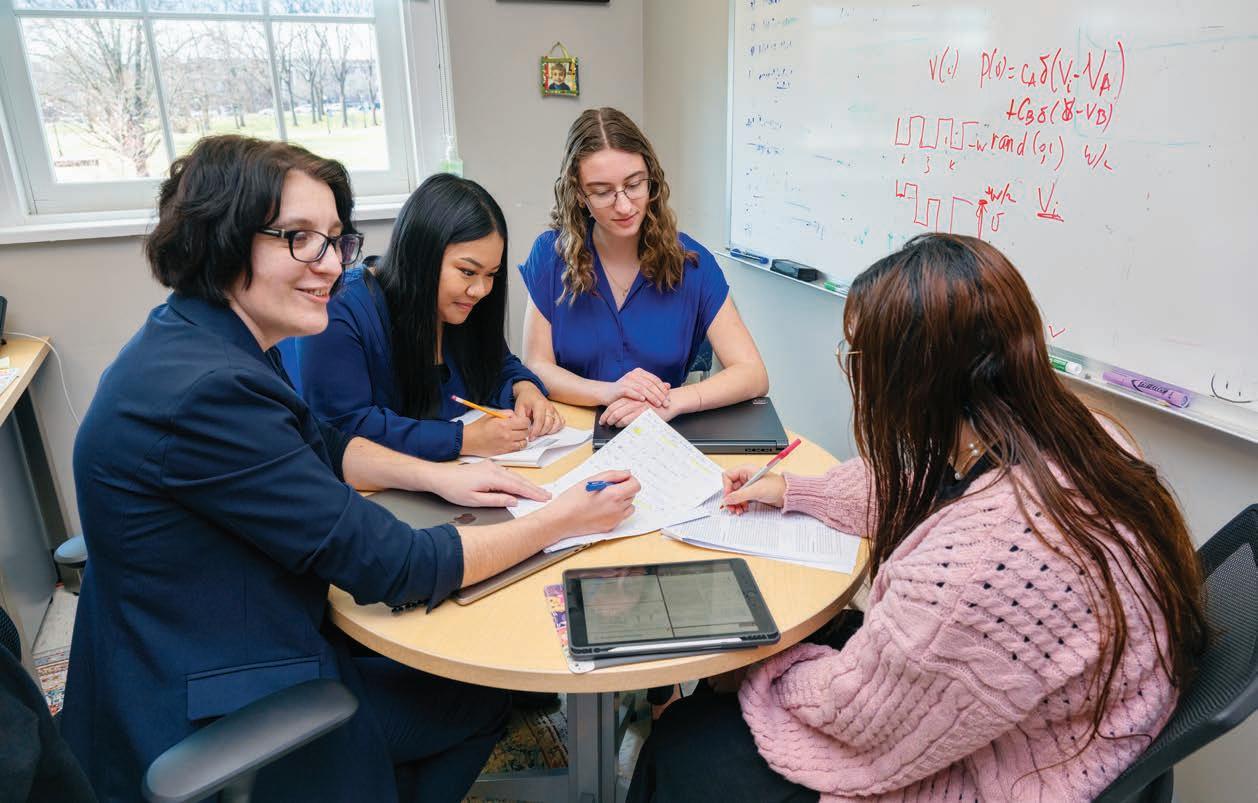
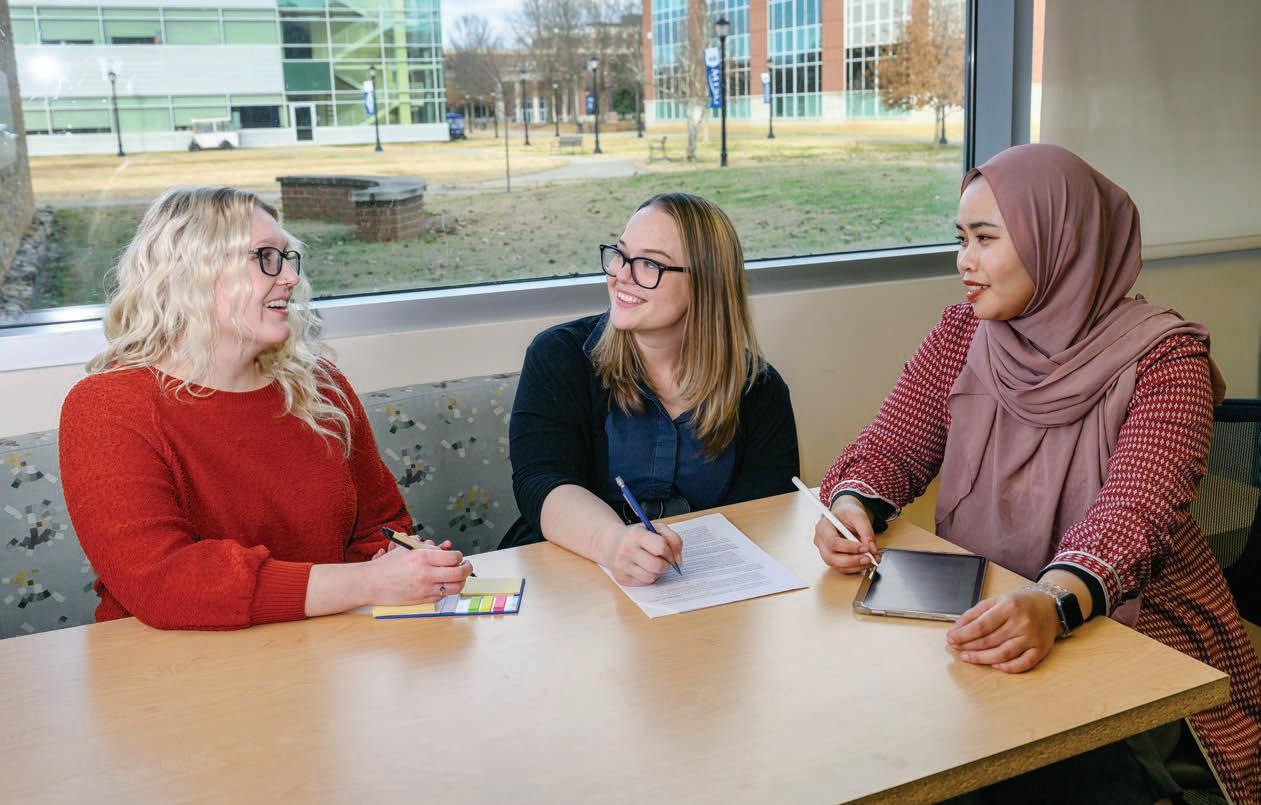
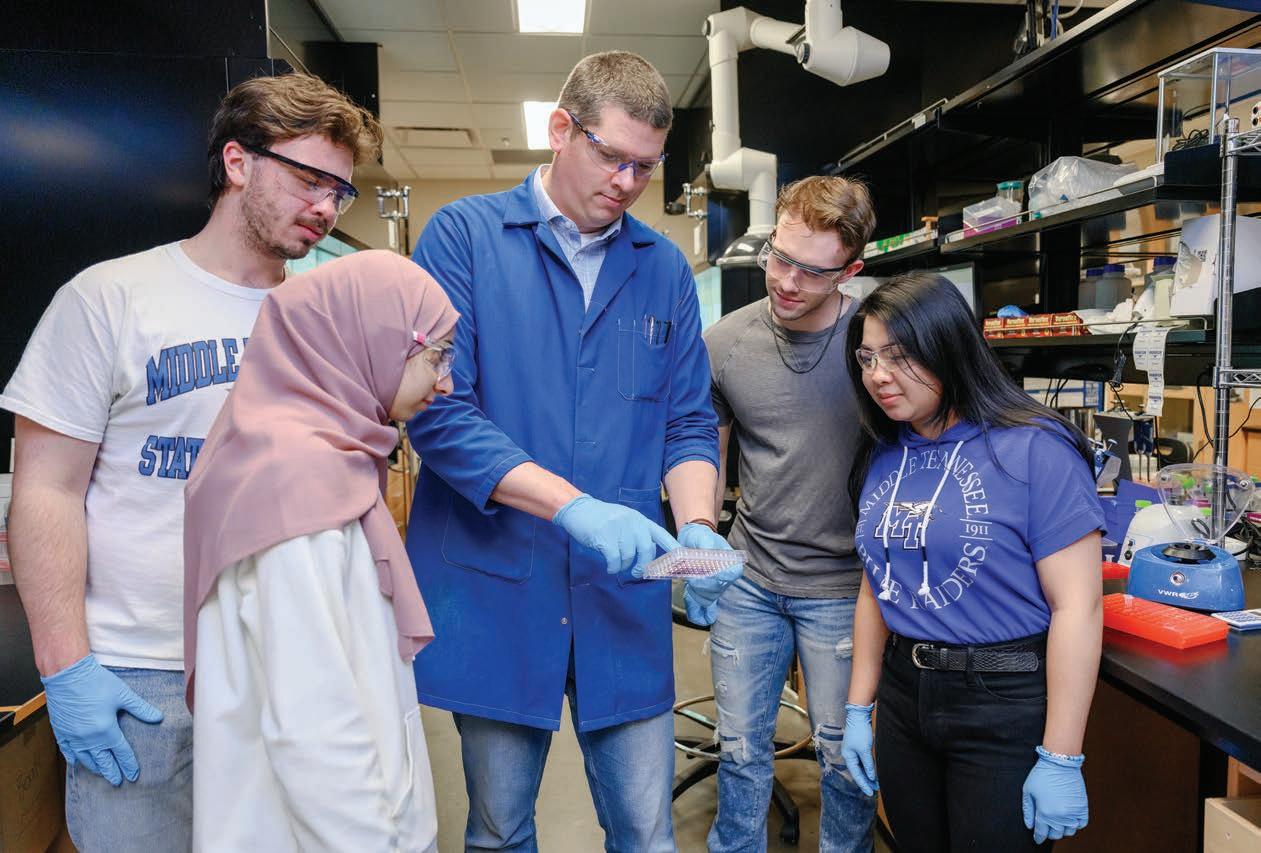
Liz Barnes (center) with student researchers Alexa Summersill (l) and Rahmi Aini
SPEAKING THE LANGUAGE
Given Barnes’ ability to relate—and communicate—it should come as no surprise that her other research specialty is in fact science communication.
Barnes is a noted scholar on the attempt to remove heavy jargon that makes science feel mysterious, complicated, or out of reach and to bridge the gap between scientists and society, thereby building trust in science.
WE NEED A SCIENTIFIC WORKFORCE THAT BUILDS A POSITIVE RELATIONSHIP BETWEEN SCIENCE AND SOCIETY TO COLLABORATIVELY SOLVE THE ISSUES THAT FACE US TODAY.
According to Barnes, neither students nor the public can deeply engage with critical yet contentious science issues like climate change or vaccine safety (or evolution) if they have to first overcome an insensitive or even condescending delivery.
“People tend to trust scientists, which is great,” Barnes once told MTSUnews.com. “They see scientists as wanting to contribute positively to society. But people also say that scientists are not the best communicators. They can come off as cold and use inaccessible language that alienates people.
“We want to change this, to bridge this divide by teaching undergraduate science students—the next generation of science communicators—to be more relatable and collaborative with the public. We need a scientific workforce that builds a positive relationship between science and society to collaboratively solve the issues that face us today.”
Barnes recently earned a $75,000 NSF grant to help develop the Science Communication Education Research Network (SCERN), alongside colleagues from the University of Minnesota, Colorado State University, and Northern Illinois University and integrating other researchers in the field from across the country. (In all, Barnes’ ever-expanding catalog of research totals over $3 million in funding from multiple prestigious grants.)
It’s an impressive résumé for a high school dropout. And the 30-something Barnes is far from done. From serving flapjacks to helping demystify the world around us, Barnes’ own evolution serves as a testament to the fact that curiosity and strong intention can indeed overcome imperfect circumstances.
Watch the full episode
Liz Barnes, Biology
SOLVE PROBLEMS
Advance your career or explore a different field with a graduate degree in science, technology, engineering, or mathematics (STEM). MTSU offers a wide variety of options, including:
Master’s degrees
Data Science, M.S.
Biology, M.S.
Biomedical Sciences, M.S.
Chemistry, M.S.
Computer Science, M.S.
Cybersecurity Management, M.S.
Engineering Technology, M.S.
Engineering Technology
Occupational Health and Safety
Geosciences, M.S.
Information Systems, M.S.
Business Intelligence and Analytics
IT Project Management
Mathematics, M.S.
Actuarial and Financial Mathematics
Mathematics Education
Pure and Applied Mathematics
Nursing, M.S.N.
Family Nurse Practitioner
Psychiatric Mental Health
Nurse Practitioner
Physician Assistant Studies, M.S.
Professional Science, M.S.
Actuarial Science
Biostatistics
Biotechnology
Chemistry Analytics
Engineering Management
Fermentation Science
Health Care Informatics
Doctoral degrees
(No master’s needed to apply)
Computational and Data Science, Ph.D.
Mathematics and Science
Education, Ph.D.
Biological Education
Chemical Education
Interdisciplinary Science
Education
Mathematics Education
Molecular Biosciences, Ph.D.
Engineer the future through research in $2 billion of new and upgraded facilities.
BLOCK BY BLOCK
KEVIN BICKER IS BUILDING POTENTIAL DRUG COMPOUNDS TO BATTLE DEADLY INFECTIONS
Seventeen years of organized soccer—from youth leagues to his college senior year—had Kevin Bicker on track to become an orthopedic surgeon.
“I had a lot of experience with orthopedic surgeons,” Bicker said. “I was an athlete. Seeing the doctor due to injuries, I enjoyed the sort of work they were doing. So I connected with a surgeon.”
Bicker shadowed some orthopedic operations for an occupation he considered the “construction worker of the medical field.” During his junior and senior years of high school, Bicker was fascinated by knee and shoulder surgeries. He even sat in on his mother’s carpal tunnel surgery.
HEALTH CARE and BUSINESS
Article by Brian Hudgins
Photos by J. Intintoli
An adviser at Bluffton University in Ohio, a small Mennonite school where Bicker competed in college soccer, offered a new plan. Bicker could double-major in biology and chemistry. He would have all the electives he needed for pre-med, but he could do a lot of different things if he changed his mind.
“Then I got into organic chemistry, and I fell in love—which doesn’t happen for a lot of people,” Bicker said. “It just clicked. I enjoyed it, and I had some great professors. As I got more into that world, I realized maybe that was a career for me, that I really wanted to be a professor and teach.”
Becoming a researcher had not been on Bicker’s radar because there were few undergrad research opportunities in rural Ohio. When he enrolled in graduate school at the University of South Carolina for chemistry (focus on organic chemistry), Bicker’s path from budding orthopedic surgeon to researcher was complete.
“I began to see my research could have an impact in the medical field, which is what I wanted to do originally,” Bicker said.
TWO SIDES OF THE SAME COIN
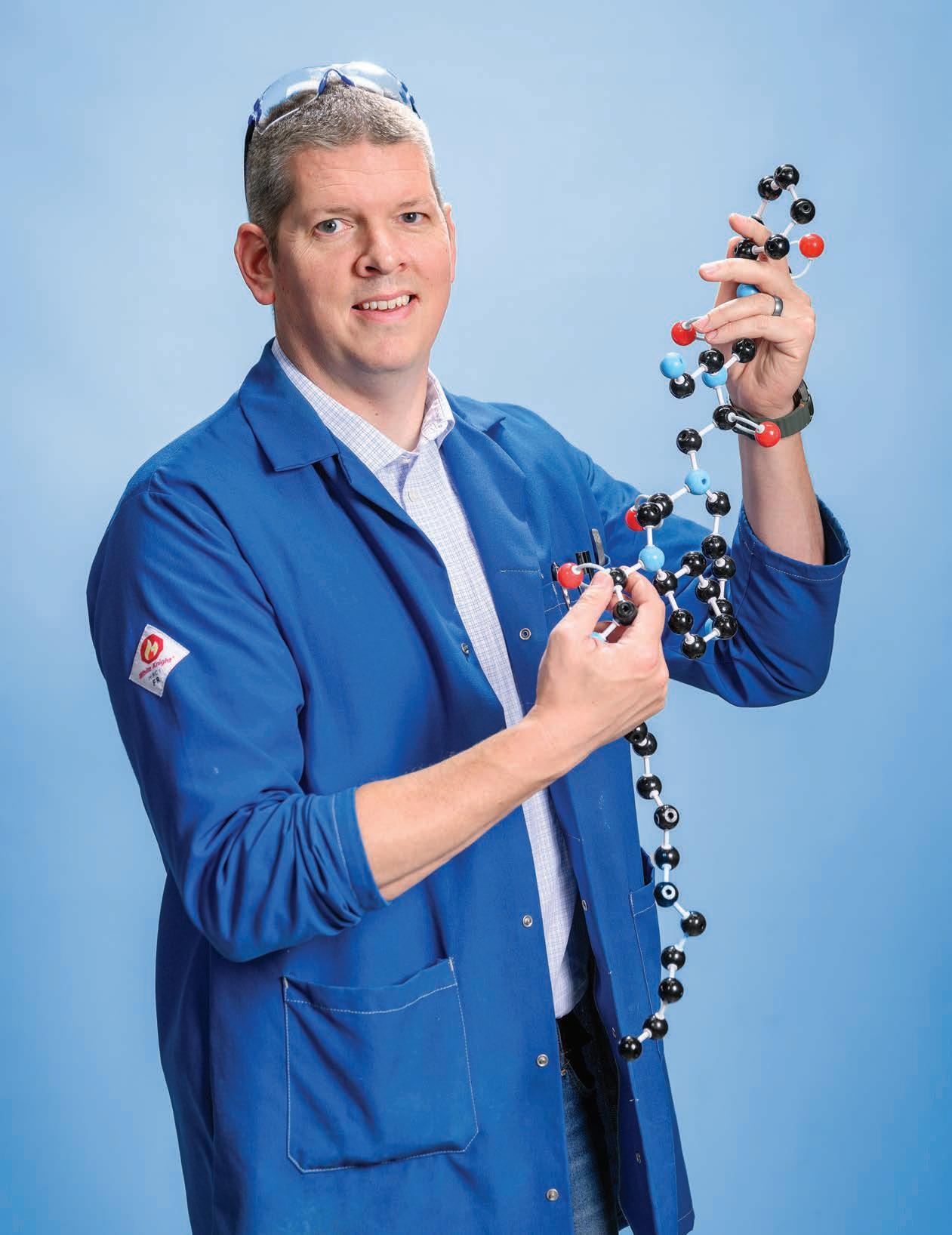
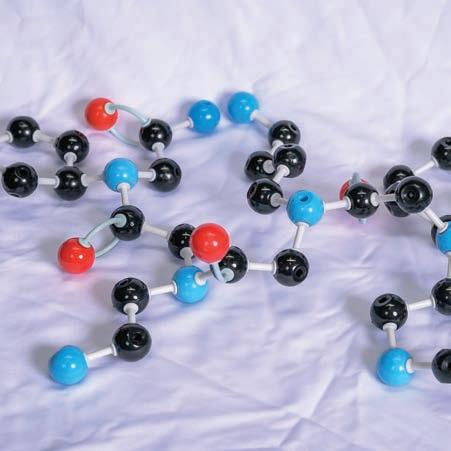
Bicker’s initial research revolved around peptide libraries—collections of similar molecules. Bicker likens such libraries in chemistry to Lego towers, changing out some molecules in the chemical group being similar to changing colors in a stack of the building blocks for different combinations.
Peptides are found throughout nature, and they serve multiple purposes. Bicker’s early work centered on coming up with either cancer treatments or diagnostics.
I BEGAN TO SEE MY RESEARCH COULD HAVE AN IMPACT IN THE MEDICAL FIELD, WHICH IS WHAT I
WANTED TO DO ORIGINALLY.
“That’s ultimately where we landed,” Bicker said. “We developed a technique that allowed us to determine how aggressive a cancer was.”
Those efforts took an organic chemistry-oriented turn when he followed up grad school by moving to south Florida to take a postdoc position at the Wertheim UF Scripps Institute, formerly Scripps Research Florida and now part of the University of Florida system. There he studied enzymes— proteins responsible for various body functions.
Bicker’s top focus was enzymes that are related to body inflammation or autoimmune diseases.
“I was working on developing molecules that could block the activity of those enzymes,” Bicker said. “They shut down things such as rheumatoid arthritis, cancer, and lupus.”
Bicker’s mentor at Scripps Research Florida, Paul Thompson, now heads the Thompson Lab at UMass Chan Medical School. Bicker’s work at Scripps included helping develop a small molecular probe to detect protein citrullination. Hypercitrullination is associated with autoimmune diseases.
“Kevin played a key role in developing the methodology for using this compound in complex cellular mixtures and exploited it to identify different patterns of citrullination in models of ulcerative colitis,” Thompson said.
Scripps Florida’s mission as a highly translational research institute includes identifying new drug-able targets, small molecule hits, lead optimization through medicinal chemistry, and in-vitro and in-vivo drug metabolism and pharmacokinetics (DMPK).
“Kevin, like many of his peers who trained at Scripps, got the soup-to-nuts exposure and training towards pharmaceutical drug discovery and translational research that is very difficult to find in one spot anywhere else,” said Tim Spicer, senior scientific director of UF Scripps’ Department of Molecular Medicine.
INTO THE BLUE
The foundational knowledge Bicker gained through his studies as a postdoc at UF Scripps helped him later when he transitioned to taking charge of his own lab at MTSU.
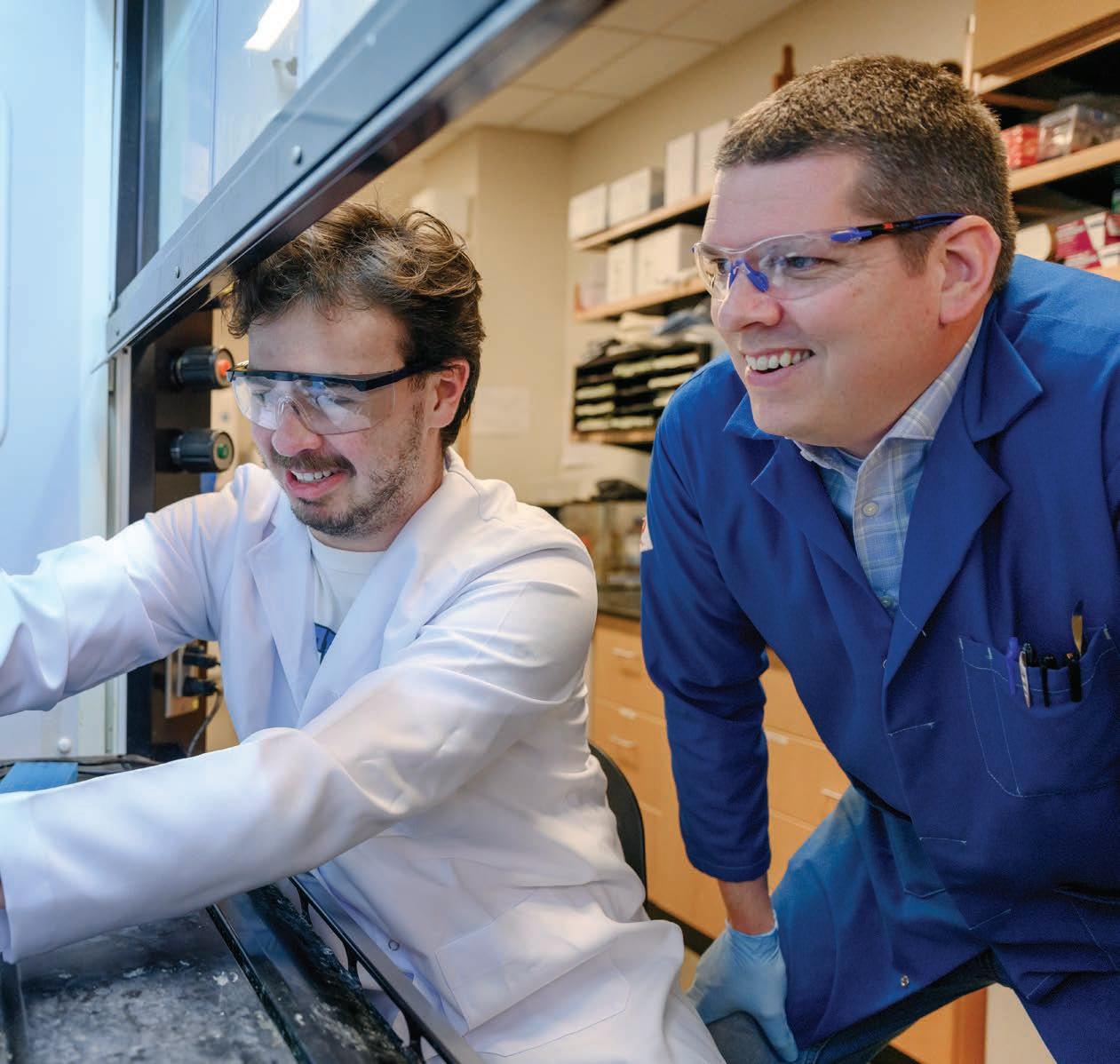
“We have a pretty incredible science building with some really wonderful facilities,” Bicker said. “We set up a lab and started working on trying to develop anti-infective peptides—combating infections caused by things like bacteria, a fungus, or a virus. When you get an infection such as a cold or COVID, we’re trying to come up with molecules that can fight those infections.”
The infection battle is a combined effort by a person’s white blood cells and molecules researched by Bicker and his peers. If an infection is too severe,
is too aggressive, and evades the immune system, white blood cells are sometimes unable to handle the task alone.
While peptides are useful in drug development, they have a limited shelf life due to fast degradation—typically lasting 10 to 15 minutes. It’s not a lot of time for an infection-fighting molecule to find bacteria and do its job.
Ozempic is an example of a peptide-based medication. The active ingredient mimics a hormone to aid weight loss.
“They have done some things to Ozempic that it lasts longer,” Bicker said. “It has a better half-life for sure. When we think of peptides that fight bad infections, our body makes them on its own, and those work pretty well. But again, they don’t last too long.”
As Bicker and MTSU grad students in his lab sort through thousands of molecules, the challenging part is picking through that library and finding the right molecules for medicinal use.
“The specialty my lab has gotten into is developing techniques that allow us to quickly screen or interrogate these collections of compounds, these libraries, and find ones that have good activity against the bad bugs we want to kill,” Bicker said.
These actions are critical for patients who are immunocompromised. For an AIDS patient or an organ transplant patient, for instance, the elimination of fungi (Cryptococcus) prevents a lung infection from becoming a brain infection, which is often fatal.
Bicker’s lab started there and has moved some peptides toward clinical use. It also progressed to another fungus, Candida albicans, a more dangerous foe that infects people who are immune competent. That fungus is commonly found in hospitals.
“That’s where we started, and we sort of shifted back towards bacteria,” Bicker said. “Right now, we are working on developing new anti-infective peptoids—which have slight structural differences that enable them to stay active for up to four hours against Staphylococcus aureus. It’s bacteria that cause staph infections. Athletes deal with this a lot.”
The goal is to monitor the infections identified as the most serious by the World Health Organization or the Centers for Disease Control and Prevention— and not only prevent people from dying, but also ease the load for surviving patients who suffer tremendous lifestyle and economic burdens.
OVER
THE NEXT
THREE TO
FIVE
YEARS,
BICKER HOPES TO HAVE SOME OF THOSE LEADS OUT IN TRIALS AGAIN IN ANIMALS OR PROGRESSING TOWARD CLINICAL TRIALS IN PEOPLE.
THE NEED FOR SPEED
The Bicker lab can create 50,000 to 100,000 peptide molecules per day. Manually testing that many is impossible. So how does the lab prevent a massive gap between molecule production and testing?
Enter high-throughput screening.
“Screening or interrogating these libraries in a quick way—we developed a technique,” Bicker said.
“The typical pipeline for developing a drug molecule, that cost and timeline are not linear. There is a lot of cost and time spent on the front end because you have to get through thousands of individual compounds.”
Anything that can be done in the early phases to speed up the process decreases cost. But how do Bicker and his lab workers interrogate all those molecules at once?
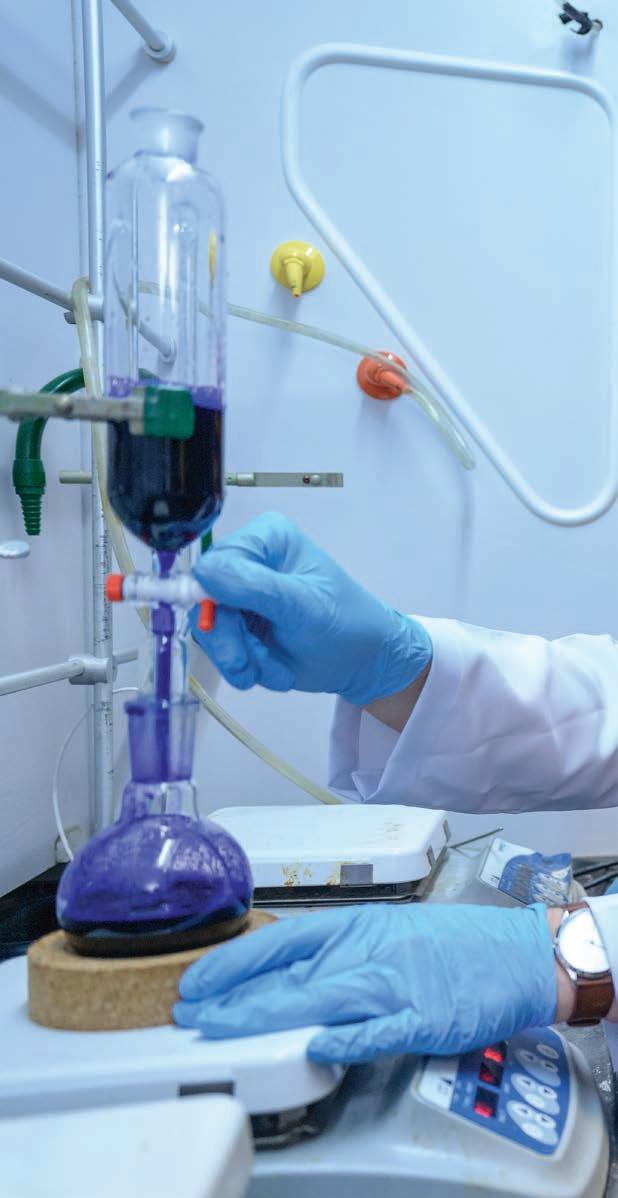
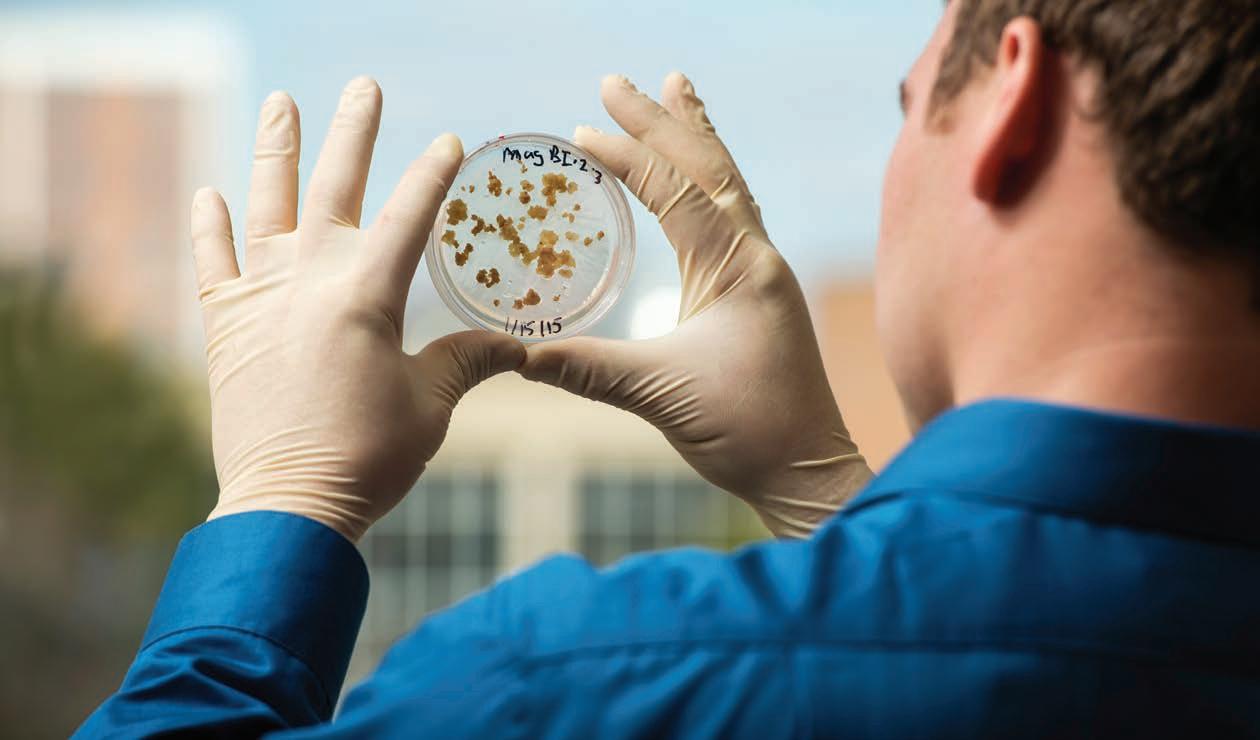
“We take a petri dish. We take some of our library, and we put it into a growth medium that is liquefied and the bacteria can grow in,” Bicker said. “We allow that to solidify.”
If a peptide is able to kill bacteria, Bicker can see that after the peptide/bacteria interaction in a petri dish.
Once the lab workers have identified leads, the next step is to identify which ones are going to work best. If thousands of compounds have turned into a few dozen leads, the lab personnel then do traditional testing, which shows not just that a molecule kills bacteria, but at what concentration.
WE STARTED WORKING ON TRYING TO DEVELOP ANTI-INFECTIVE PEPTIDES— COMBATING INFECTIONS CAUSED BY THINGS LIKE BACTERIA, A FUNGUS, OR A VIRUS. . . . OZEMPIC
IS AN EXAMPLE OF A PEPTIDE-BASED MEDICATION.
“What we’re looking for is a window between the amount we have to use to kill bad bacteria or fungus and the amount that is toxic to those mammalian cells,” Bicker said.
The high-throughput screening technology developed in Bicker’s lab is patented for use specifically by MTSU. It is not something every pharmaceutical company has in their respective laboratories. It is in the Bicker Lab in the Department of Chemistry at MTSU. Since bacteria and fungi are not going away—they adapt and counterpunch back against treatment—continued research is vital.
Over the next three to five years, Bicker hopes to have some of those leads out in trials again in animals or progressing toward clinical trials in people.
“The new leads we are trying to discover: We are getting ready to launch into those animal studies [through partnerships] to keep things moving toward that clinical application to deliver what people need,” Bicker said. “New medicines to treat really nasty infections. Where’s the next bad bug that we need a treatment for? We want to try and help out there.”
Odds seem good that Bicker will eventually score that goal.
Watch the full episode
Kevin Bicker, Chemistry
DEVELOP CURES
Engage in and design bench and field research through MTSU’s Molecular Biosciences doctoral program to prepare for a variety of industry jobs, from conducting medical research to managing clinical trials.
• Interdisciplinary program with Agriculture, Biology, and Chemistry faculty
• Focusing on biological problems at the molecular level using biological, chemical, computational, mathematical, physical, and statistical approaches
• Can work with various mentors as well as MTSU’s Tennessee Center for Botanical Medicine Research, which helps develop new drugs and supplements from plants
• Includes research areas such as biochemistry, biotechnology, cell biology, developmental biology, drug development, ecology, environmental toxicology, evolutionary biology, immunology, microbiology, molecular modeling, and structural biology
• No master’s degree required
Most graduates accept postdoctoral fellows or land biotechnology or pharmaceutical positions.
THE INABILITY TO UNPLUG
MTSU’S KAREN TAN EXPLORES THE DARK SIDE OF VACATIONS
Surveys conducted by the Robert Walters Group, a global talent solutions provider, found that 74% of U.S. professionals experience feelings of anxiety when using their personal time off (PTO), diminishing the down time.
To help lessen their anxiety, 66% of U.S. workers engage in “firefighting” tactics—doing tasks such as checking work emails—to help reduce the backlog they face upon returning to work, and 28% do so to stay on top of urgent matters.
The dynamics of work/vacation breaks have changed during the last decade thanks to the proliferation of ways to keep in touch even when a worker is hundreds or even thousands of miles away from an office.
TOURISM and INDUSTRY
Article by Brian Hudgins and Drew Ruble
Photos
by
Andy Heidt and J. Intintoli
“Apps such as Slack and Microsoft Teams help to put work right at our fingertips 24/7,” said Sean Puddle, managing director of Robert Walters North America. “While useful, it can result in professionals’ feeling obligated to check in during their time off.”
How does the worry manifest itself when an individual returns to work?
Falling behind on important projects, missing updates, or being handed heavier workloads are a just few of the issues modern workers stress about connected to the end of a vacation.
“Personal time off should offer professionals a moment of relief and a chance to recharge—it shouldn’t leave them feeling more stressed than before they left,” Puddle said.
THE UNTOLD STORY
Karen Tan, an assistant professor in MTSU’s Tourism and Hospitality Management program, grew up in Singapore and worked professionally in tourism and hospitality for a decade.
“Singapore is a tropical island close to the equator. It has two seasons—hot and hotter,” Tan joked. “I have used up my entire lifetime quota of hot temperature. My favorite season now is actually winter.”
Growing up, Tan engaged in a lot of outdoor activities, especially sea sports, such as scuba diving and wakeboarding.
Yet Singapore’s densely built landscape prompts Tan to compare her home country to New York City.
“It’s a very metropolitan country,” she said.
After Tan earned her bachelor’s degree at the Nanyang Technological University in Singapore, she embarked on a career that called upon her to handle consultancy projects all over Asia-Pacific.
TAN WONDERED IF ANYBODY WAS ADDRESSING A DIFFERENT ASPECT OF TRAVEL . . . THE DIFFICULT MOMENTS.
The travel and living requirements took her to exotic locations in China, Indonesia, and Japan, among other countries. She experienced diverse cultures and enjoyed interacting with diverse people.
“That 10 years was really a very exciting period of my life because I was living the dream and visiting so many different places,” Tan said. “I just saw so many beautiful places in the world that I could never have imagined existed. I got to see a lot of them before they became tourist spots.”
The ability to travel the world and stay in hotels or luxury resorts accounts for a common perkfilled perception of hospitality and tourism—a rainbows-and-unicorns effect. Tan said she certainly experienced that.
But after she received her doctoral degree from Temple University in Philadelphia in 2022 and became a professor, Tan began conducting what might best be described as counterintuitive academic research on tourism and hospitality.
Surprised that most existing research emphasized a similar theme—the focus was always on positive psychology, positive experiences, and restoration— Tan wondered if anybody was addressing a different aspect of travel . . . the difficult moments.
“When you are a tourist, you can still experience negative emotions when traveling,” Tan said. “Like when you experience plane turbulence or when you experience bad service and all those sort of things. I was actually surprised there was very little research on the dark side of it—negative emotions in tourism and hospitality.”
AN UNYIELDING WORKPLACE
Tan’s research has also centered on the sizable number of employees who feel they do not dare take paid time off for vacations, even though it is a job benefit they have earned.
“They feel they might be perceived negatively by their bosses and their coworkers,” Tan said. “They feel they are unsupported by their organizational culture in taking paid time off for vacations.”
One of Tan’s studies proposed that taking paid leave for a vacation is perceived as a “violation of workplace norms,” which could partly explain this phenomenon.
This violation, Tan observed, is presumed to pose a threat to an employee’s “social self” at work. The accompanying guilt is hypothesized to lead to lower vacation intention and more “reparative actions” (e.g., apologizing and decreasing vacation length).
Even travel time, once a forced opportunity for workers to be “off the grid,” has become synonymous with availability and production.
THAT 10 YEARS WAS REALLY A VERY EXCITING PERIOD OF MY LIFE BECAUSE I WAS LIVING THE DREAM AND VISITING SO MANY DIFFERENT PLACES.
“Airplanes used to be one of those places where you can completely switch off,” Tan said. “But now, we even have Wi-Fi on airplanes, so you can continue to check your emails and your bosses can continue to get in contact with you. Your vendors, your suppliers, and your colleagues can continue to reach out to you even when you’re on a flight.”
THE COVID EFFECT
The COVID-19 pandemic and the work-from-home guidelines implemented over the last five years added a new element to maintaining a healthy work/life balance in the digital age.
Within the debate over work from home compared to physically being in the office, many companies have expressed there is organizational need for workers to be physically present—regardless of doing work or not.
By not being physically present and accounted for, stress forms on employees that they will not be seen as dedicated to their respective work tasks.
According to Tan, all of this is “unique given how much emphasis America puts on mental health and well-being.”
“It is surprising organizations are actually putting this sort of pressure on their employees,” she said. “It just doesn’t jell with how organizations are actually perceiving PTO for vacations.”
Tan notes many people did “revenge traveling” when COVID-19 restrictions were lifted. The tourism and hospitality industries that Tan worked in for 10 years did in fact quickly recover because of the pent-up travel demand.
“This showed us how important travel is to individual well-being and happiness,” Tan said. “That experience also allowed employees to realize how much PTO for vacations meant to them.”
Puddle with the Robert Walters Group said employers can help alleviate employee anxiety about taking vacations by communicating that used PTO does not reflect poorly on an employee’s capability or commitment to a company.
“Employers need to help staff truly disconnect during PTO, so they come back reset and ready to dive into their work,” Puddle said. “Business operations won’t halt just because someone is on holiday. It’s crucial for employers to reinforce and value the right to switch off within their company culture.”
A GLOBAL PERSPECTIVE
Each country around the world has a different philosophy, usually built at national labor levels, regarding paid time off.
The U.S. standard has typically been two weeks of vacation time per year. Meanwhile, Europe has been more generous by providing several weeks of paid time off.
Considering PTO can be used for numerous reasons—including medical procedures or vacation time—Tan said the amount of time given to employees has actually increased during the last couple of decades.
In addition, around the world, some governments have even taken steps to mandate a minimum amount of paid time off that companies have to allow employees.
However, the consumption of PTO by American employees has decreased over the same time period.
“America is still at a stage where there isn’t legislation protecting workers’ minimum rights,” Tan said. “Hopefully, America is moving in that direction where there will be more time for employees.”
Tan warns that the consequences of overworking are not confined to anxiety and feelings of letting the team down.
Karoshi, a term tied to overwork in Japan, refers to death from overwork. Strokes, heart attacks, and mental health struggles leading to suicide are a few ways a high-stress work environment can lead to fatal outcomes.
Clearly, PTO is important. But it’s also clearly not en vogue.
A 2026 Forbes article by Jill Shedeck, human resources director for Bank Iowa, described PTO as “an egregiously underused benefit,” adding “always-on workplace culture has been amplified by the blurred lines of working from home.”
Shedeck pointed to a 2024 survey by Eagle Hill Consulting that found around half of U.S. workers said they didn’t expect to take all of their allotted vacation days by the end of the calendar year.
For those employees who do break away, what is Tan’s advice for ultimately breaking the cycle of vacation anxiety?
Tan said it comes down to a very raw and personal decision in terms of what you want as an individual.
“Do you want that recognition at work, or would you rather have the strong mental health with family time with loved ones? The choice is really yours.”
The Research Minute
Catch up on Season 1 podcasts From campus into the community
Watch additional episodes to hear their life stories and see their real impact.
Cynthia Chafin Center for Health and Human Services