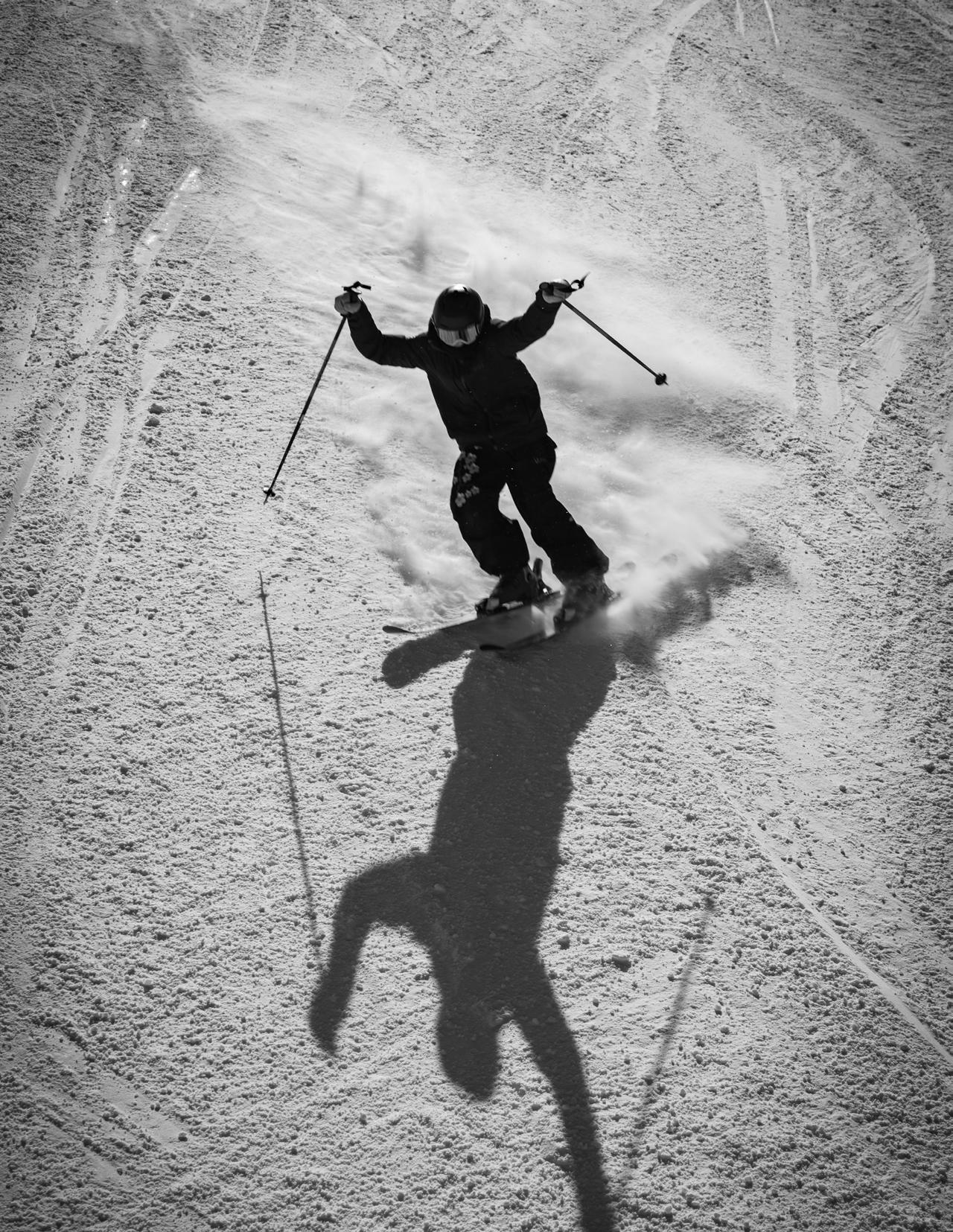
If I ask any body who learned to ski after the age of five, they can remember their first day of skiing. What the weather was like, who they went with, what they had for lunch.
I believe that’s because that first day on skis was the first day of total freedom in their life.
Warren Miller
letter from the lettereditorfrom the editor
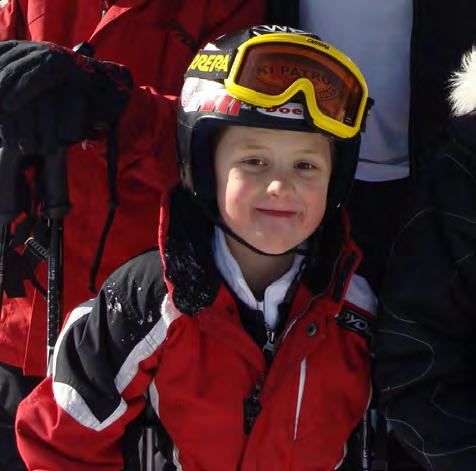
My family loves to tell this story of a tantrum I threw when I was 1 years old. I was kicking and screaming at the base of a mountain because I was too young to join my siblings on the slopes. The next winter, I was thrown into ski school and never looked back.
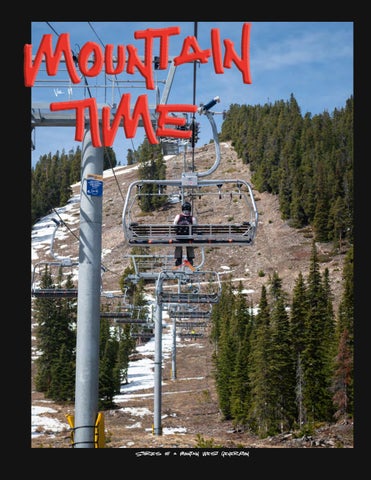
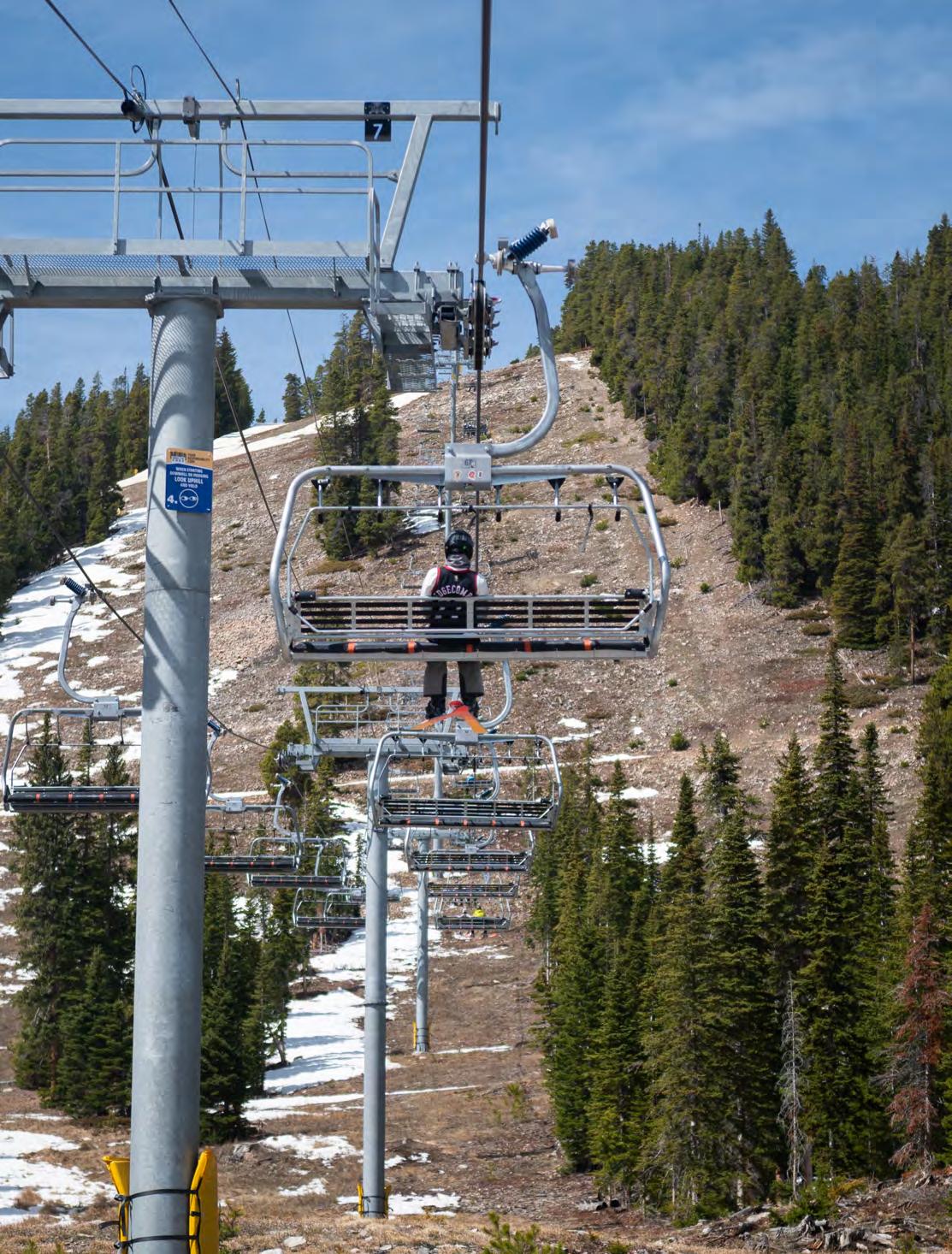
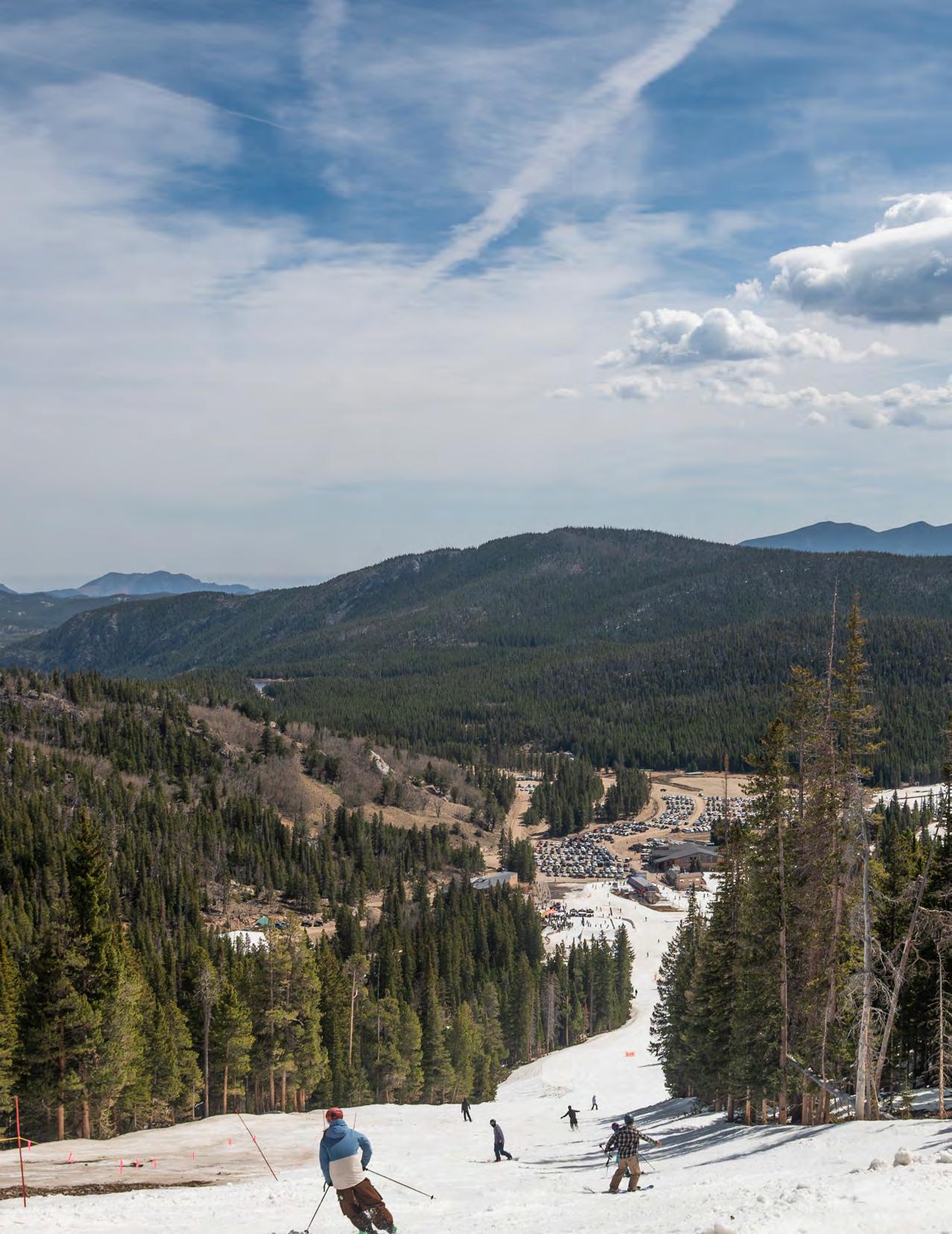
There is something terrifying about seeing dirt on parts of a mountain where there should normally be feet of snow. Our cover story explains the impact climate change is having on my favorite sport.
Mountain Time is growing up. What started as a scrappy crew of 15 in the fall has grown to a staff of 33. This issue tackles a series of cultural changes and debates playing out on our screens. It also showcases people chasing the word ‘better’. Better wages, better opportunities, better performances.
The tireless work of photo director Brody Rector and art director Emma Taylor will be the reason this thing gets printed. The editorial team shaped every article into great works. Faculty advisor Chuck Plunkett refused to let me give up. Thank you all.
I cannot wait for this publication’s next chapter under its incoming editor-in-chief. Sarah, it’s been a privilege to watch you become the writer, editor and leader you are today.
editor in chief
Lincoln Roch
managing editor
Sarah Taylor
Xavier Michnewicz
assistant editor
Baylan Wysuph
Caitlyn Garza
Myra Kirk
photo director
Brody Rector
art director
Emma Taylor
photos words
Ainsley Coogan
Bella Benson
Cecilia Florian
Hannah Schuller
Isabella Recinos
Jencee Thompson
Kara Liguori
Leah Cass
Lila Nuttle
Maddie Lasker
Mattie Nunez
Peighton Lemp
Victoria Flores
Quinn O’Donnell
photos
Hannah Howell
Isaac Sterling
Madison Kerest
Maya Bauman
Sutton Raeburn
design
design
Clara Denham
Ingrid Pehrson
John Davis
Mia Pendergast
Taylor Hoyt
Vito Russell
The Worlds Fastest Dog
Pole Dancing for Fitness
Gay Sex Sells
Stacey Gaskill @ The Start Gate
House Show Resurgence
Houses turned venues
The Snow League Getting Tatted
Darkhorse Replacements
The Scroll Trap
A melting reality for skiers
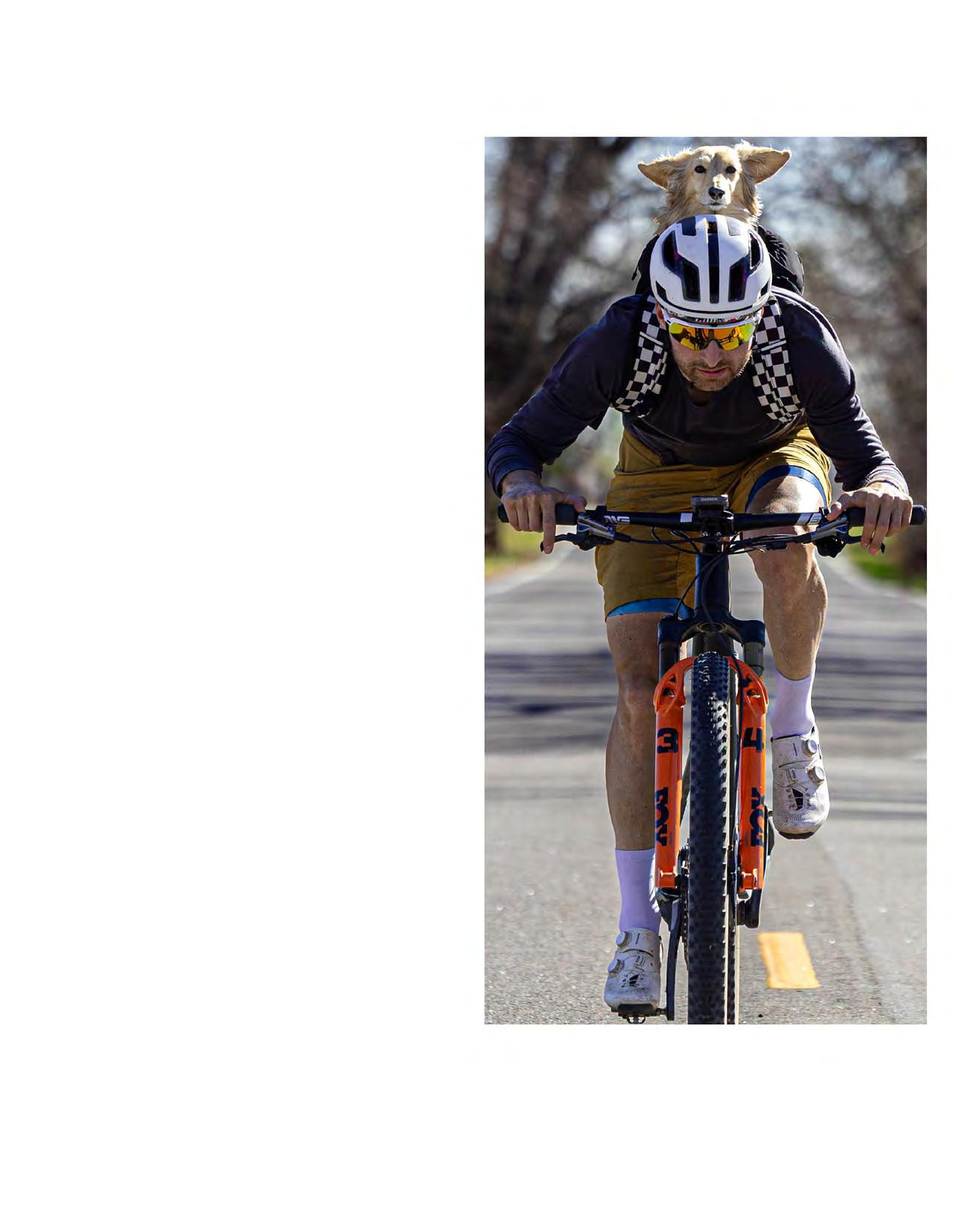
Alexey Vermeulen is a lot of things. He’s currently one of just 25 elite men competing on the Life Time Grand Prix circuit, an off-road cycling race series. In 2025, he won the Chequamegon Mountain Bike Festival, placed fourth at USA Gravel Nationals and signed a prestigious contract with high-end cycling brand ENVE.
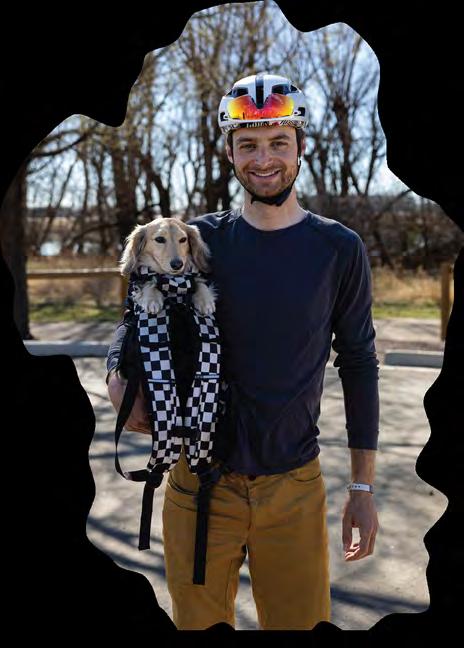
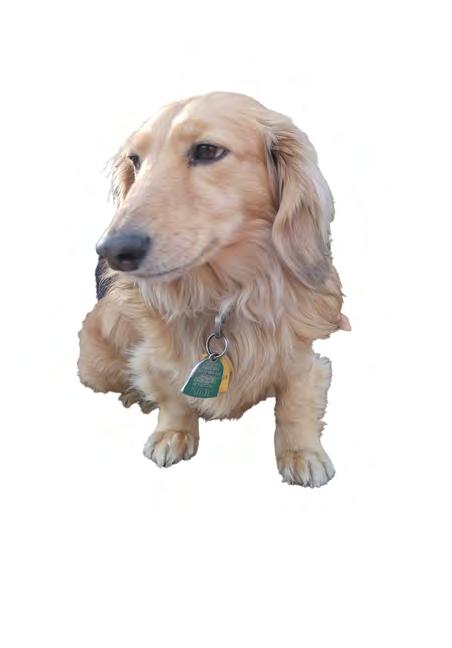
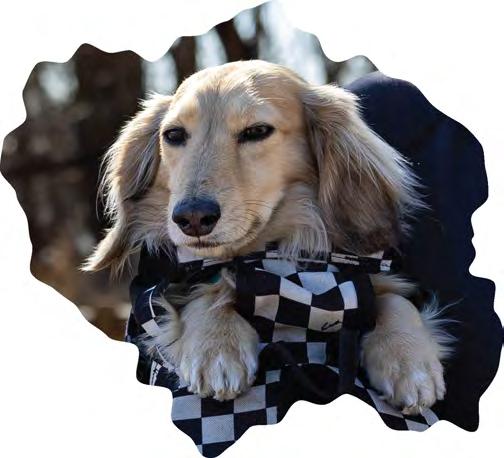
But none of that is what Vermeulen is best known for. He’s better known as Willie’s dad. Willie, standing at around five inches tall and 31 inches long, is Vermeulen’s main riding buddy. The long-haired mini dachshund is also the FKD — Fastest Known Dog.
They’re a familiar duo around Boulder and in the cycling community nationwide; Vermeulen riding past wearing a backpack with Willie’s head sticking out, looking over his shoulder. He has loyal followings on Instagram and YouTube, and holds the title of Strava’s “Chief Bark Officer.”
But Willie’s impact goes beyond that. He is, as Vermeulen calls him, the “Great Equalizer.”
“In a space as well known as Boulder, we’re all kind of focused on our own thing at times,” Vermeulen said.
“And I’ve noticed that Willie is this thing that pulls people out of their own space.”
WILLIE’S CYCLING CAREER BEGAN IN 2019, ON AN OLD SINGLE-SPEED BIKE BOUGH
OFF FACEBOOK MARKETPLACE.
Willie’s cycling career began in 2019, on an old single-speed bike bought off Facebook Marketplace. That bike belonged to Sophie Linn, an Olympic triathlete and Vermeulen’s girlfriend, who adopted Willie right out of college in Michigan.
“I had this list of things that I needed to do,” Linn said. “Get a job, get a dog, get a car.”
She did two of those things, and soon realized she needed a way to get Willie around town. So, she copped a backpack designed to carry dogs and began to slowly introduce him to it.
“Willie didn’t really care, so I just put him in and went for a ride,” Linn said.
When she and Vermeulen met, they started going on rides together during the pandemic and took Willie with them.
“I think that’s honestly where Willie really started to love riding, because the two of us were together,” she said.
Willie’s career as a cycling icon was launched when Vermeulen met Avery Stumm, his friend and videographer. Together, they began to make content about Vermeulen’s cycling career: his training, day-to-day life and races. Eventually, Willie became a recurring star in their videos.
“It’s kind of funny, because I always saw it being like this cute dog on his back, but I never really envisioned it becoming a bigger thing,” Stumm said. “And then slowly, over the course of the years of filming we’ve done, he just sort of came with us everywhere.”
SOON, WILLIE BECAME SYNONYMOUS WITH VERMEULEN.
Soon, Willie became synonymous with Vermeulen. At races, people know to look for Willie because aside from his cute demeanor, he means something more to the cycling community.
“I think dogs in general are the great connector in a lot of ways. I think dogs can break down barriers between people,” Stumm said. “The intimidation of a pro athlete … a lot of people maybe think ‘Oh, that person’s untouchable’ or ‘Oh, I can’t talk to them.’”
Gravel racing is a unique sport: it’s the first cycling discipline that’s more prominent in the United States than Europe. It offers a blend of amateurs and professionals, who compete at the same races. It’s also an incredibly grueling sport. One of the marquee events of gravel racing is Unbound Gravel, a 200 mile race in Emporia, Kansas.
Vermeulen thinks about these races in segments. The first 50 miles are all about surviving the chaos of the start, and the middle chunk is where he gets into the rhythm of racing. The final stretch is where it gets tough.
“I’ve never been to war, but it feels like you’re going to war. Your body is giving up, your mind is giving up. You’re trying to figure out why you’re even doing this,” he said.
Enter Willie.
“I’LL RIDE BY AND SOMEONE WILL YELL ‘DO IT FOR WILLIE’”
“I’ll ride by and someone will yell ‘Do it for Willie!’” Vermeulen said.
He has drawings of Willie on the back of his jerseys, which also say “let op,” something his grandfather, who got him into cycling, used to say. Loosely, it means “pay attention” in Dutch, and it’s a grounding reminder for Vermeulen.
“It’s kind of like, be aware of everything going on in your life. Be aware of the way you speak. Be aware of how you spend your energy,” he said.
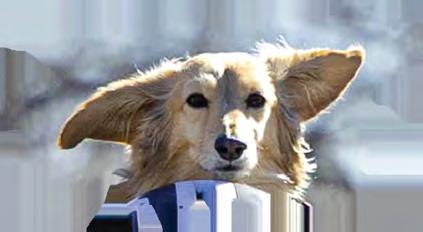
SIR WILLIE THE WEINER WITH HIS EARS FLOWING IN THE WIND
Let op is something Vermeulen carries throughout his life. Outside of being a top competitor, he co-founded From the Ground Up, a project that supports people getting into cycling, helping them get gear, train and eventually race the Leadville 100.
Vermeulen has a mission to build community within his sport. Through Willie, he can spark connection and conversation with cyclists of all abilities. Willie’s title as FKD on Strava isn’t just a publicity stunt. His ears flapping in the wind have become a symbol of fun, goofy energy in a sport that can often feel closed off.
“It’s comical. Willie’s fame really transcends his social media platform. There are so many unpleasant things in this world, and I think Willie is often a fantastic juxtaposition to that,” Linn said.
Willie declined to comment for most of this story, apart from the occasional woof at passersby.
His ears flapping in the wind have become a symbol of fun, goofy energy in a sport that can often feel closed off.
catwoman
an unconventional form offitness
Words: Kara Liguori Photos: Sutton Raeburn Design: Ingrid Pehrson
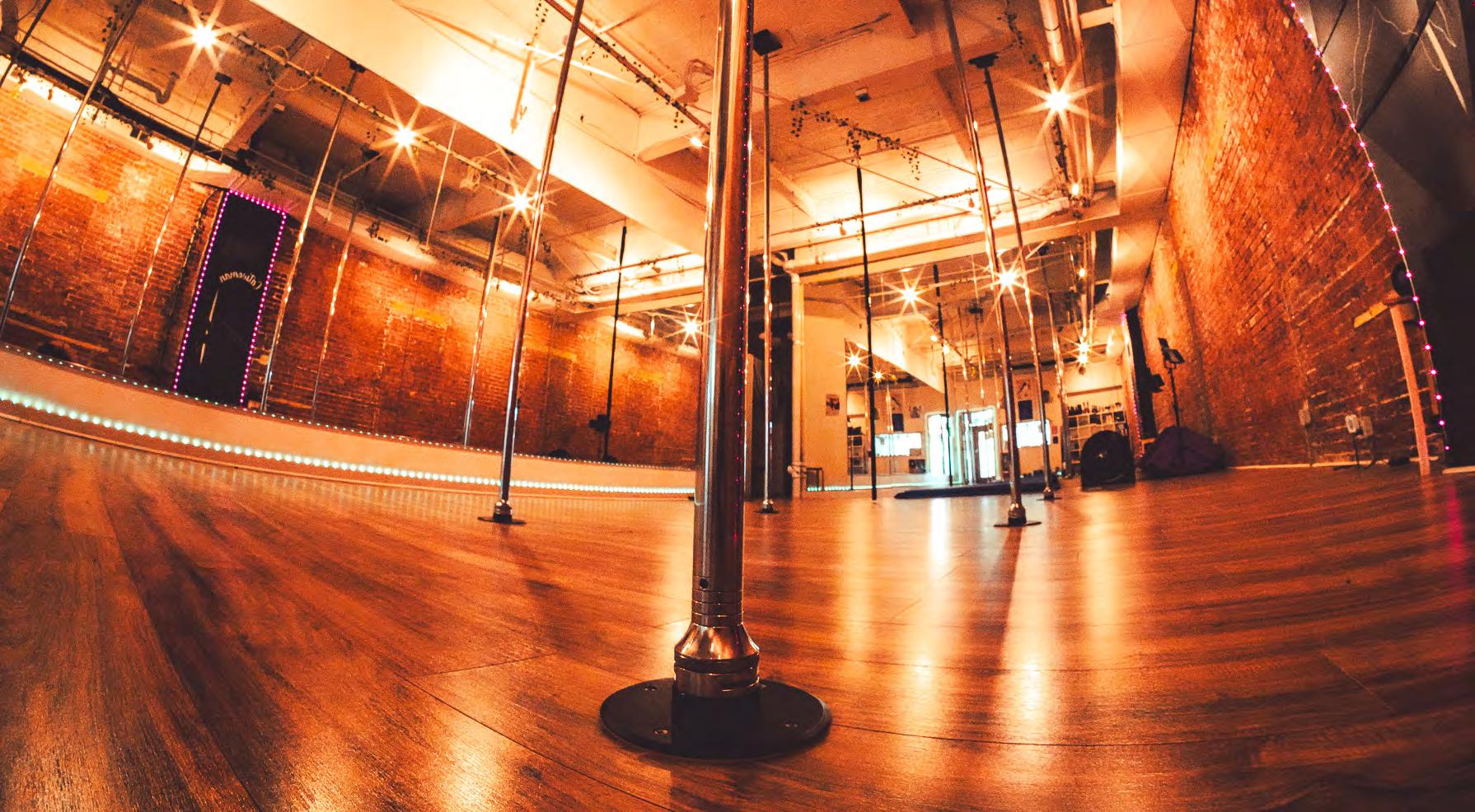
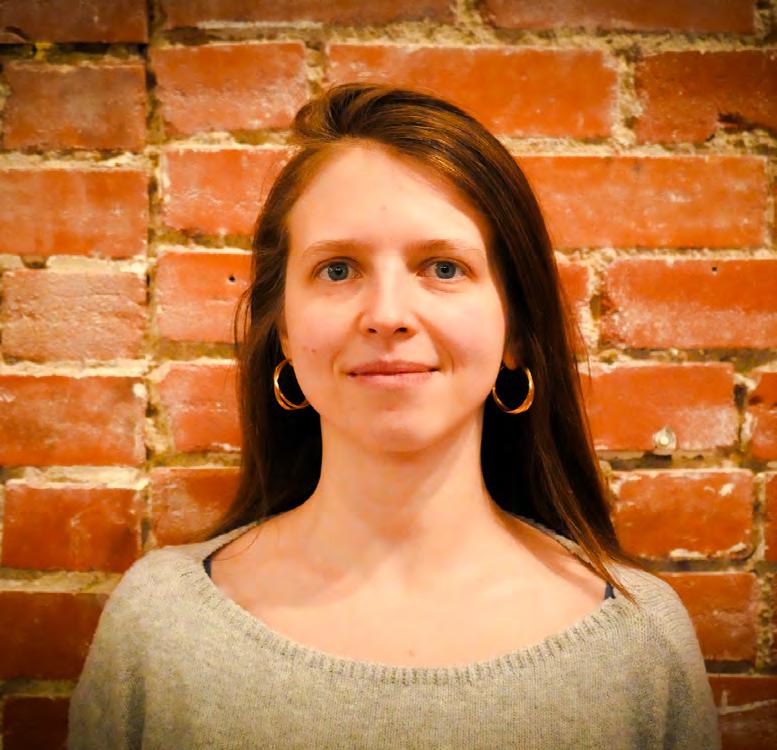
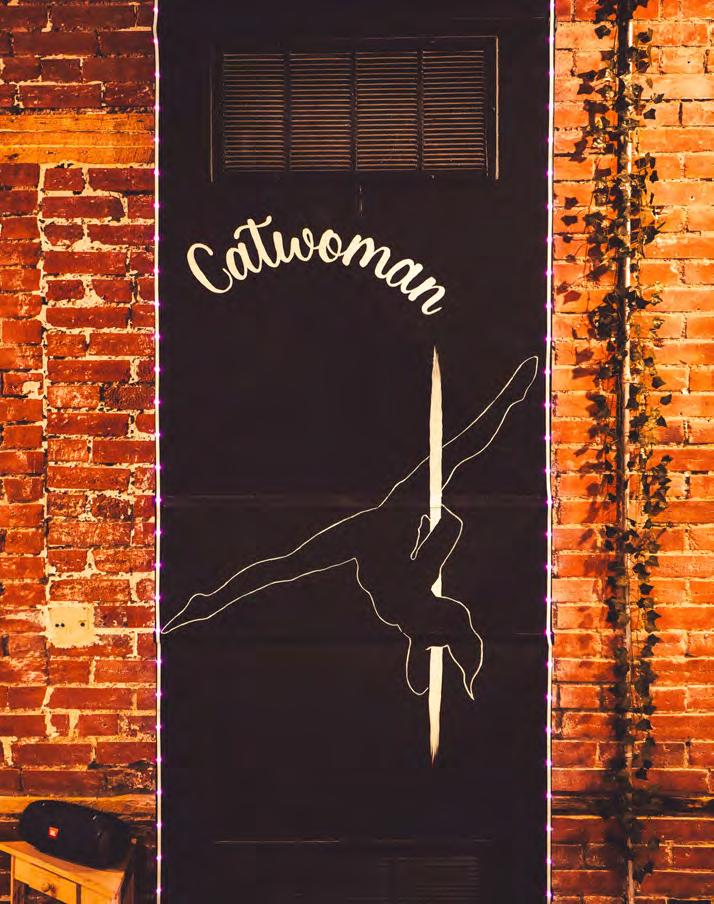
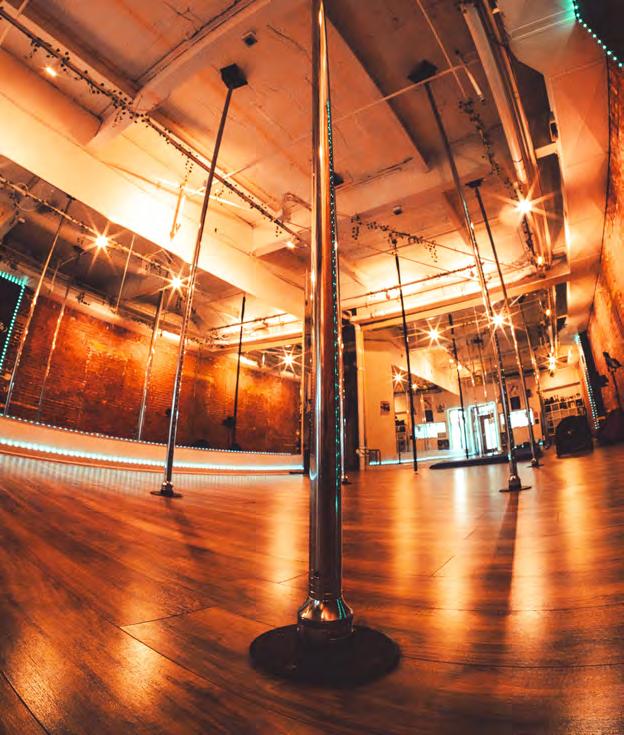
Carolyn Laws enters a commercial complex off Walnut Street that holds The Attic, a beloved bar among college students. However, this 34-year-old isn’t walking up the stairs to get a drink with some college kids. Instead, she opens the other door, stepping into Catwoman Pole Academy.
catwoman pole academy
Laws found pole dancing as an outlet about two years ago, after going through a rough breakup. She wanted to rebuild her confidence through movement, and pole dancing provided exactly that.
“It’s such a good challenge,” Laws said. “There’s something that humbles me when I come in here, and there’s something that makes me feel accomplished once I nail it.”
Laws, among many people in Boulder, strives to stay active, as fitness is a large part of the city’s culture. Taking two to three classes a week, Catwoman Pole Academy has become a key role in her workout routine as the sport continues to grow in popularity.
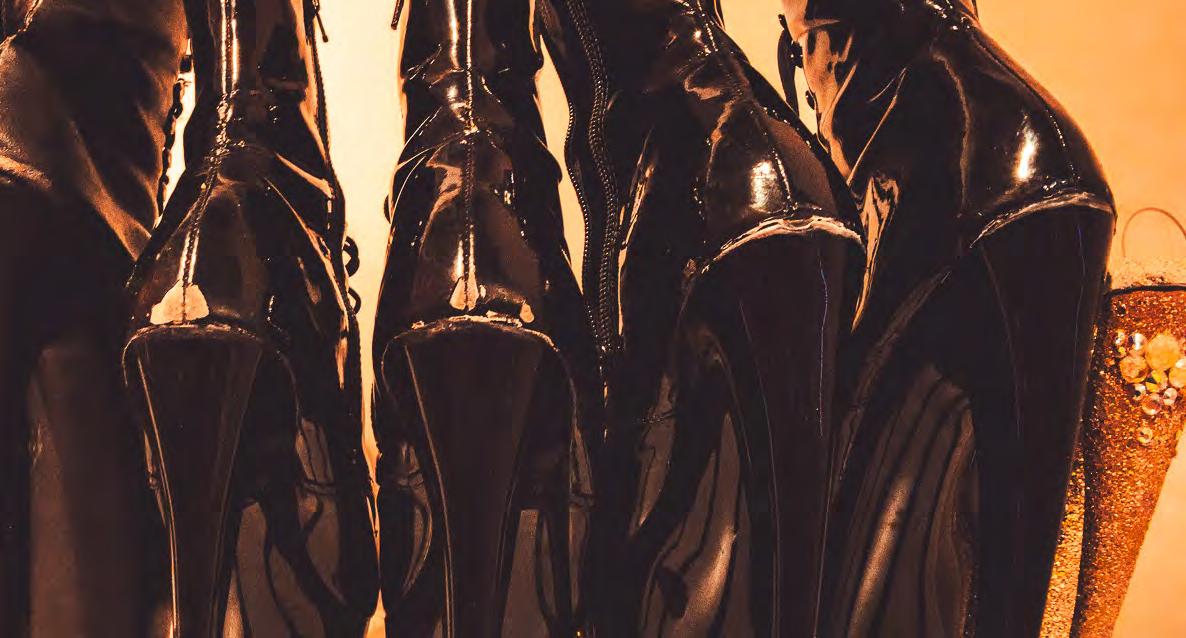
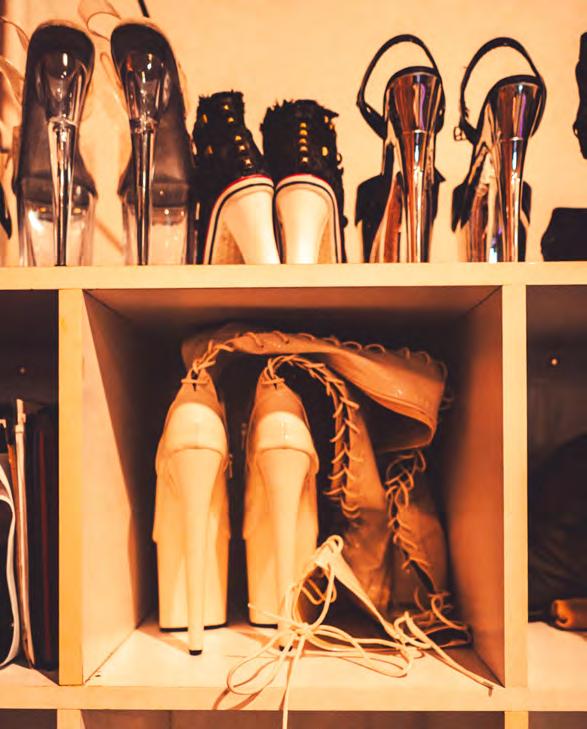
Catwoman is one of 16 studios across Colorado that teach pole classes. Being the only pole studio in Boulder, it offers those in the area more than a form of physical training. For many, it fuels self-expression and builds confidence.
Outside of the United States, pole sport was initially dominated by men as a form of training to build strength, agility and coordination. Appreciation for pole dancing in the U.S. began in the 1950’s as it was closely tied to strip clubs and exotic dance — dominated by sex workers.
“We owe it to sex workers,” said Lucky, a 63-year-old male instructor at Catwoman. “It’s turned into a sport, but this comes from sex workers.”
In the 2000s, the term ‘pole fitness’ became popular and started the transition for pole dance to be recognized as a sport rather than a sensual act. Competitions began to surface and were pitched to be an Olympic sport in 2012. As pole dance continues to be recognized as a sport, studios continue to open as a form of alternative fitness.
founding ofcatwoman pole academy
Founder of the academy, Vialeta “Vita” Kudrevich has a rich history in athletics including dance, horse sports, swimming and karate from a young age.
When she reached the age 17, she attended university in Minsk, Belarus, where she found her passion for powerlifting. Kudrevich became extremely successful, starting with university competitions and eventually becoming a powerlifting world champion.
Kudrevich pursued powerlifting for many years, but eventually, as many athletes do, fell out of love with her sport.
“It was kind of boring for me,” Kudrevich said. “I realized that I was burnt out.”
Because of her long history in athletics and regimented lifestyle, she never planned to give up on fitness; she just needed a new outlet.
Kudrevich pursued fitness training for a while until she recalled a pole class she took in the past. At the time, it did not stick with her because of her commitment to powerlifting and busy schedule.
Once her powerlifting career ended, she decided to give it a second chance. This is when Kudrevich found her new passion.
“It’s the same, just a different type of activity,” Kudrevich said. “Instead of lifting a barbell, you can lift yourself onto a pole.”
Kudrevich always had a vision of opening her own gym to focus on strength training. She found similarities in weightlifting and pole dancing that inspired her to open the academy.
Kudrevich said her approach as an instructor extends past just physical technique. In addition to her background in fitness training, she’s a certified life coach.
Kudrevich encourages her students to see pole dancing as a way to build not just skill, but also confidence. She values working with students who are motivated to learn and grow through the practice of pole dancing.
“My favorite group of people is people who want to learn,” Kudrevich said.
more thanjust physical
Catwoman Pole Academy describes its classes as a way to grow stronger both physically and mentally, while emphasizing self-expression.
Jessica, who refrained from sharing her last name for privacy reasons, is a 41-year-old student at the academy. She discovered pole dancing about a year ago.
In December 2024, Jessica opened up about her experience with sexual assault when she was 14. She said she searched for ways to move her body and reconnect with her sexuality, as she had repressed it for years. Jessica joined the academy and said she has been hooked ever since her first class.
“It is like therapy,” Jessica said.
Jessica is now a loyal student of Lucky’s, who is known by his stage name. Lucky is one of the studio’s most popular instructors.
He said that he watches his students transition from being discouraged and uncomfortable on the pole to flipping upside down and doing aisha handsprings. He sees the confidence built in his students every class.
“Seeing their accomplishments and how proud they are, it fills my soul,” Lucky said.
Every class, Lucky welcomes all of his students with a hug and smile as they walk through the door. Lucky said what brings him back as an instructor is his students’ success and the community they build.
“Just look at the beautiful souls that come in here,” Lucky said. “It’s a gift.”
GAY $EX SELLS ... and women are the number one customer
Straight women are coming out of the closet with their love of gay sex.
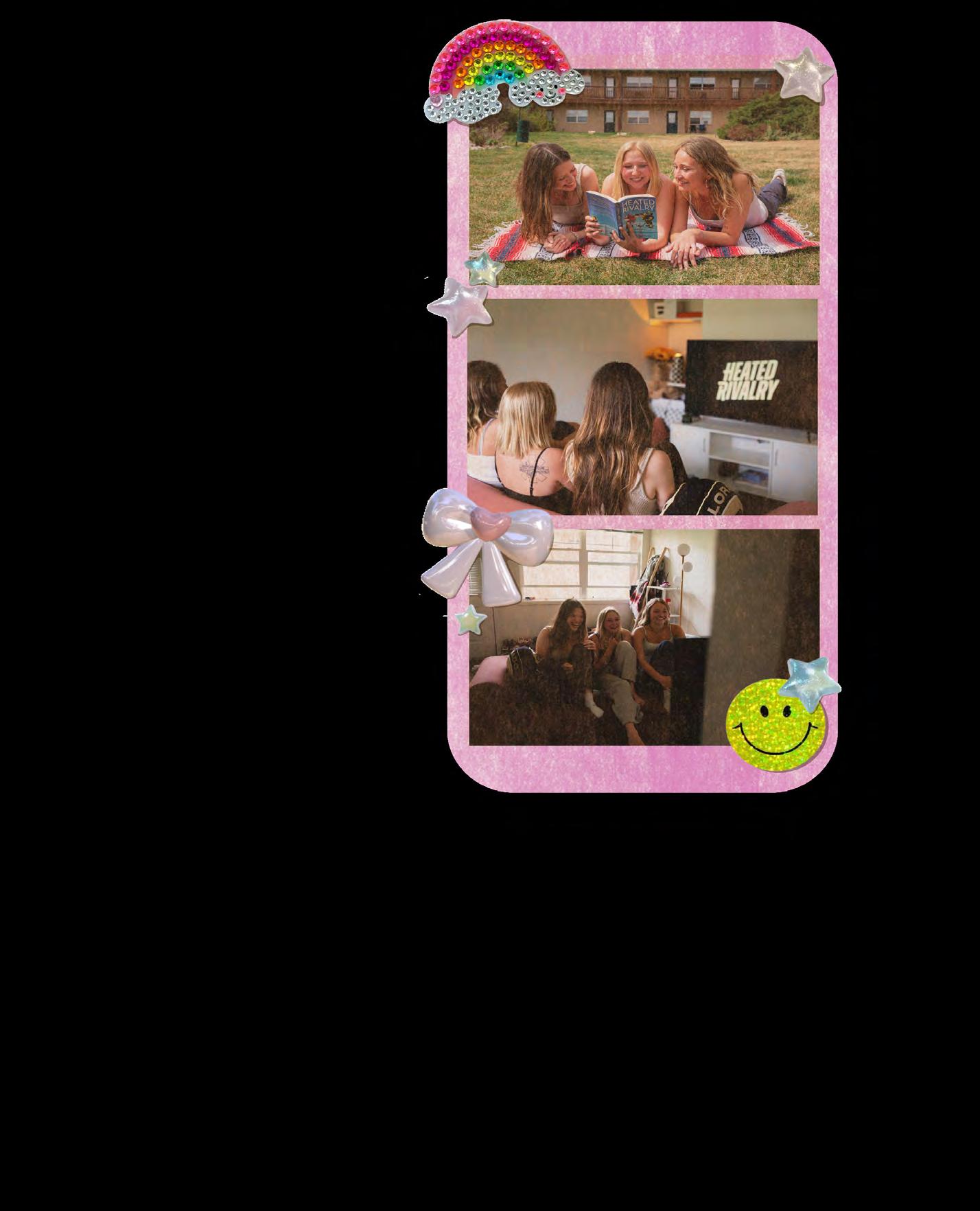
And “Heated Rivalry” is their hottest new obsession.
The Canadian series follows what begins as a casual hookup between two professional hockey players that turns into a love story. Despite the players being on rival teams, the twist that seems to draw the most attention is the fact that both love interests are men.
As far as the sex goes, the unrestricted amount of on-screen ass definitely gets people talking. It only took one episode for the internet to go crazy about Connor Storrie, otherwise known as Illya Rozanov, and more specifically, his butt — from every glorious angle.
According to HBO Max, the series’ premiere hit 500,000 views.
By the time the season one finale aired, the show had been streamed 10 times the amount of its premiere, surpassing
Words: Quinn O’Donnell
Photos: Hannah Howell
Design: Mia Pendergast
Within the first three months of its release, viewership doubled again to 10 million in the U.S. alone. To put that in perspective, it's equivalent to every Boulder resident bingeing the entire series 83 times.
Almost overnight, the stars of “Heated Rivalry,” Connor Storrie and Hudson Williams (Shane Hollander) became celebrities. Mothers and daughters alike became obsessed, making 66% of the show's total viewers, an HBO spokesperson told the New York Times. But why?
Natasha Meyer, owns the first romance only bookstore in Milwaukee, Wisconsin, The Well Red Damsel. Her store has sold the “Game Changer" series that the show is based on since the store’s opening day.
“We can barely keep the series in stock,” Meyer said.
That and Rachel Reid's New York Times best-selling author status are both thanks to the show's release. But it’s not
just getting people into hockey smut.
“So many people are reading romance for the first time because of [the show],” Meyer said.
As LGBTQ+ sex on screen becomes more accessible, the fascination only grows.
“Sex sells. It’s just as true 100 years ago as it is today,” said Connor McHale, a University of Colorado Boulder Media Studies PhD student. “There’s a hunger for it.”
In a world where most mainstream media is dominated by a heteronormative view, queer intimacy is rarely portrayed as honestly or openly as it is in “Heated Rivalry.” What helps is that the show was developed by a queer man for a queer audience, while the book series was the opposite, written by a heterosexual woman for heterosexual women.
Historically, male-on-male romance in literature and film has been geared towards female audiences. This goes beyond the female fetishization of attractive men getting it on. For many, the draw lies in a deeper appeal: equality.
“When the gender dynamics that are typical between men and women are removed, it leaves just this erotic element,” Steven Frost, a CU professor who studies queer history said.
Even though one is the top and one is the bottom, there are no misogynistic power dynamics of a heterosexual relationship. Just two completely equal people being intimate.
“Romance is secondary and desire is first, that's the real revolutionary part of it,” Frost said.
Hookup culture is at the forefront of modern relationships and it is important to have mainstream media reflect that. No matter how “Bridgerton’s” patriarchy likes to pretend romance still is.
So why are mothers and daughters the biggest fans? Are they just horny? Are the actors just hot? It's not just about the sex, although it undoubtedly acts as the gateway drug.
“It definitely caught my eye,” Malley Hirchele, an 18-year-old college student, said.
With an overabundance of steamy scenes between two extremely hypermasculine men, the appeal is obvious. Hot guys, hockey, sex … yes, please.
“The thing is we've had two gay men before,” Hirchele said. “But this felt different."
It may have been the sex that drew her and so many others in, but it was the vulnerability of their love story that kept her watching.
But it’s not just college girls who were pulled in. Danielle Linn, a 39-year-old entrepreneur and mother, started watching the show because she “had laundry to fold,” and wanted to see what it was “all about.” After one episode she was all in.
“One of the biggest draws is the confidence and unapologetic joy of queer love...
It’s such a juxtaposition to the toxic masculinity we see in our world today, “ Linn said. “It’s refreshing.”
Media and the sex within it, is no longer being made strictly by men for men. Women are in charge; craving equality, honest representation and of course, more of Connor Storrie's butt.
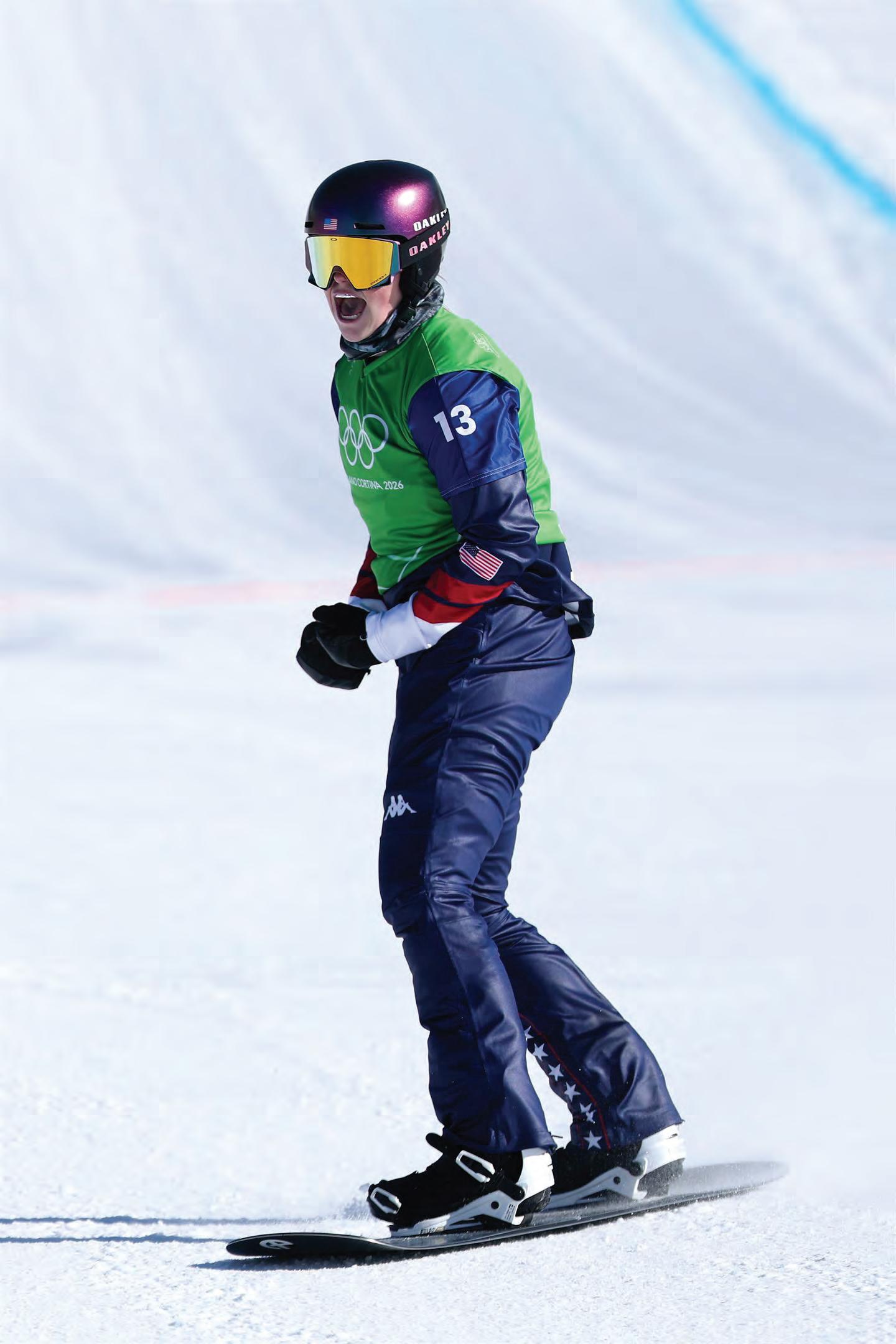
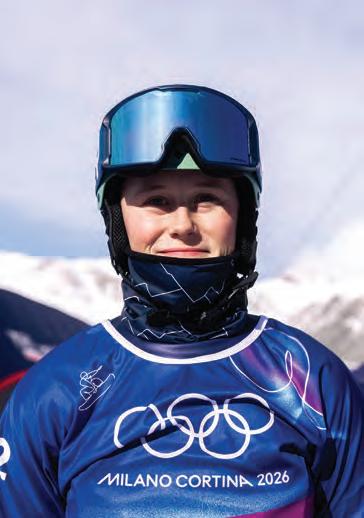
For Stacy Gaskill, the path to the Olympics didn't start on the slopes. It began in her living room. Her journey took shape in the mountains with a family where snow sports were part of life.
“I grew up with the Salt Lake Olympic torch in my living room,” Gaskill said. “My mom was a Paralympian herself, and my dad grew up skiing … I pretty much got on skis before I could walk.”
Growing up in Colorado, weekends were often spent in Winter Park with her family. Skiing came first, but Gaskill knew she wanted something different.
“I wanted to snowboard when I was about six,” she said. “But my parents made me wait until I was eight. They were worried I'd hate it and want to go back to skiing."
That never happened.
Her father taught her the basics of snowboarding, and soon after, she joined the Winter Park All Mountain Snowboard Team. While some kids were content with carving groomed runs, Gaskill preferred exploring the untamed terrain, always looking for something more adventurous.
“I wanted to go play around in the trees and all over the mountain,” she said.
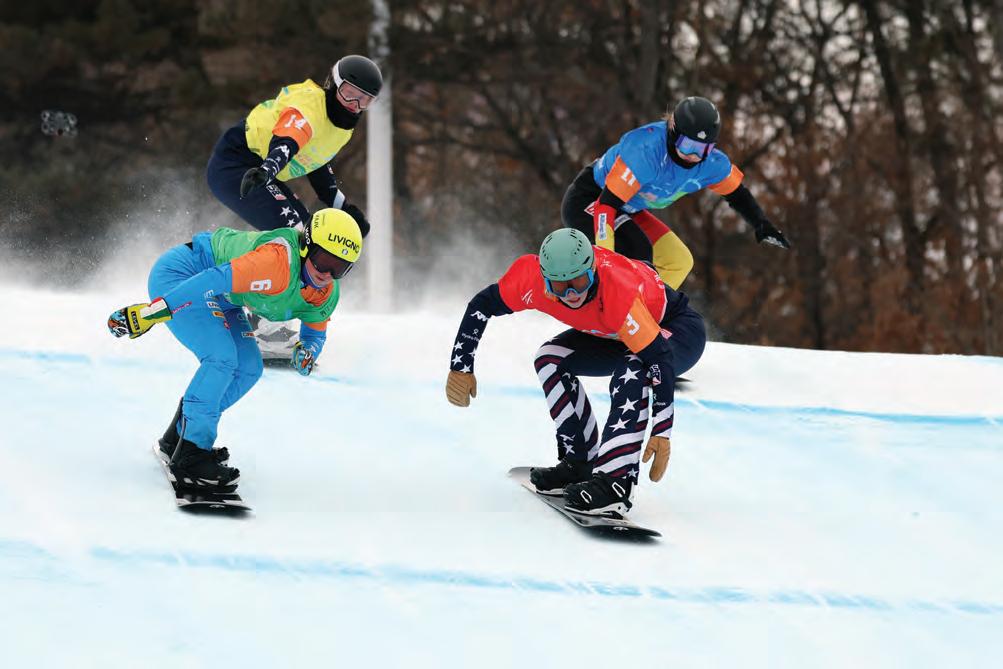
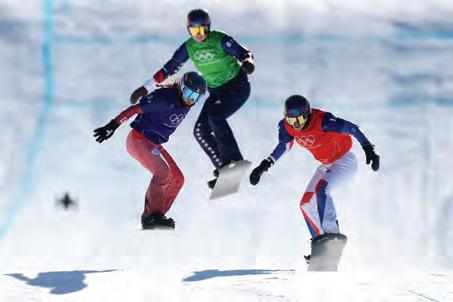
Not long after, she discovered snowboard cross, a high-speed racing discipline where multiple riders compete on a course filled with jumps,banks and rollers. After making the podium in her first few races, she soon began winning.
But the moment that truly cemented her dream came while watching snowboard cross at the 2010 Vancouver Olympics. Her dream came full circle 12 years later at her first Olympic Games in China, then again in Italy this year.
That early exposure made the idea of becoming an Olympian feel possible. By the time she was eight, she was already saying it out loud.
“At my elementary school, they asked everyone what they wanted to be when they grew up,” Gaskill said. “Kids were saying things like being a doctor or an astronaut. But when they got to me, I said, ‘I want to be an Olympic snowboard cross racer.’”
After years of training, that childhood declaration became a reality. For Gaskill, standing for the United States at the Olympics was about much more than personal accomplishment.
“It’s a huge honor,” she said. “For me, representing the U.S. really means representing the whole village of people who helped me get there.”
Behind every Olympic athlete is an enormous support system. Coaches, family, teammates and communities make the journey possible.
“In a way, competing is my way of saying thank you to everyone who supported me,” she said. “Very few people get to wear the flag on their sleeve like that.”
From her first Olympic Games, one moment still remains above the rest. Standing in the start gate, minutes before racing, the magnitude of the experience hit her.
“I remember looking down at the course and realizing I’d earned my spot there,” she said. “I wasn’t just there as a rookie. I knew I could compete with the best.”
She finished in the top eight in her first Olympic appearance, a result that confirmed she belonged on the world stage. Still, reaching that level requires constant preparation. Snowboard cross is one of the most physically demanding disciplines in snowsports, necessitating strength, power and endurance.
However, most of the year isn’t spent on snow at all. Rather, it’s spent inside training. It isn't just the physical attributes she needs to train. Mental preparation is equally important, as it gives her the confidence to perform. Gaskill has worked with a sports psychologist since she was 12.
Even with that preparation, setbacks happen. One of the toughest challenges of her career came when she tore her ACL just one season before the Olympics.
“To put it lightly, it was the hardest thing I’ve ever gone through,” she said.
The tear required surgery and an intense rehabilitation process. Complicating things further, her recovery did not go smoothly, and she eventually needed a second surgery just months before Olympic qualification. Despite the setbacks, Gaskill and her medical team pushed forward, determined to give her one last shot at qualifying.
Despite the setbacks, Gaskill and her medical team pushed forward, determined to give her one last shot at qualifying. She made the most of that opportunity, completing an incredible comeback to earn her place at the Milan Cortina Winter Olympics. While she competes internationally, Gaskill also attends the University of Colorado Boulder, studying ecology and evolutionary biology. Balancing Olympic training with college classes is not easy.
“I usually take about two classes online each semester,” she said. “It’s taken me almost twice as long to get my bachelor’s, but I’ve made it work.”
When she’s not competing or studying, Gaskill enjoys spending time around Boulder with friends, playing ultimate frisbee or exploring the surrounding mountains. A particular favorite of hers is Sunshine Canyon Road.
“You can drive up there and look out over Boulder. Sometimes we’ll bring a picnic or do an art night.” she said
Looking ahead, Gaskill plans to continue competing through the 2034 Winter Olympics in Salt Lake City, a home Olympics where she hopes to mark a successful end of her competitive career. After that, she’s considering a future in healthcare as a physician assistant or working in sustainability or conservation.
Salt Lake city, 2034 Winter Olympics
For now, though, her focus remains on the next race, the next season and the next chance to represent the country that helped her reach the start gate in the first place.
“It’s about showing up with my very best,” she said. “That’s what makes me most proud.”
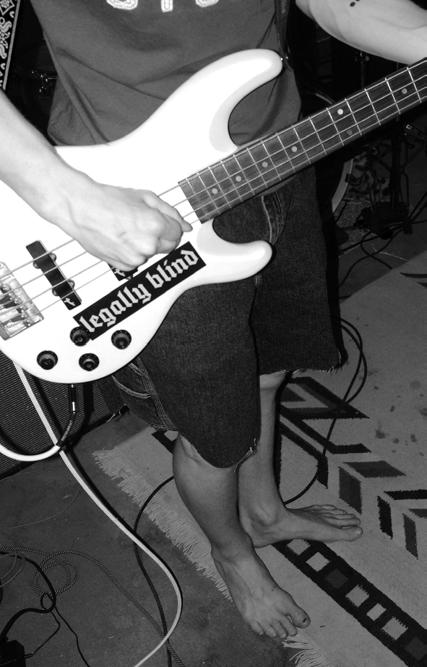
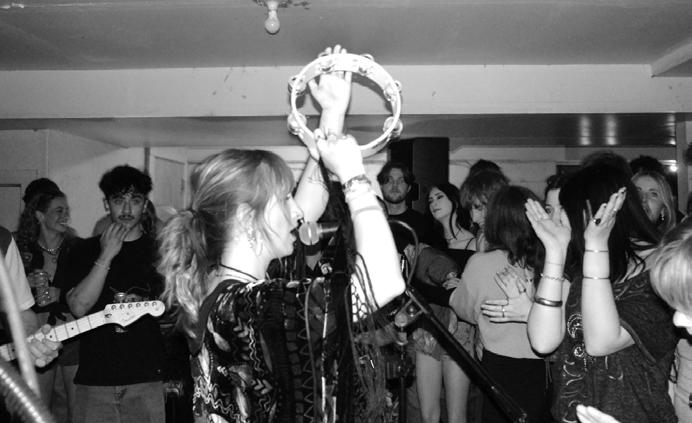
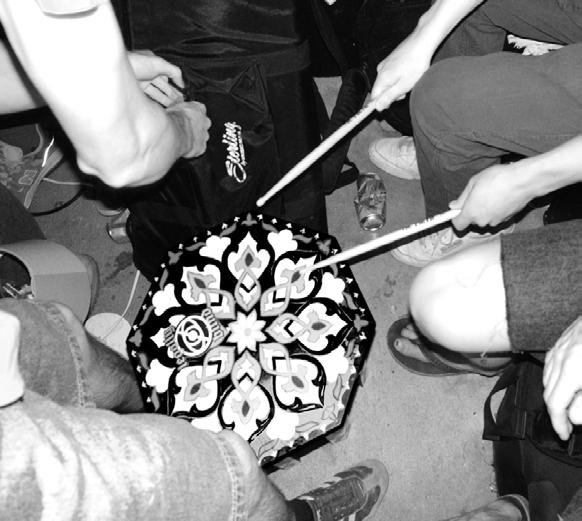
house shows house turned venue
Words: Cecilia Florian Photos: Mya Bauman Design: Ingrid Pehrson
You never really know what is going on in someone’s house. It could be dinner time, a birthday party or maybe a band playing in their living room.
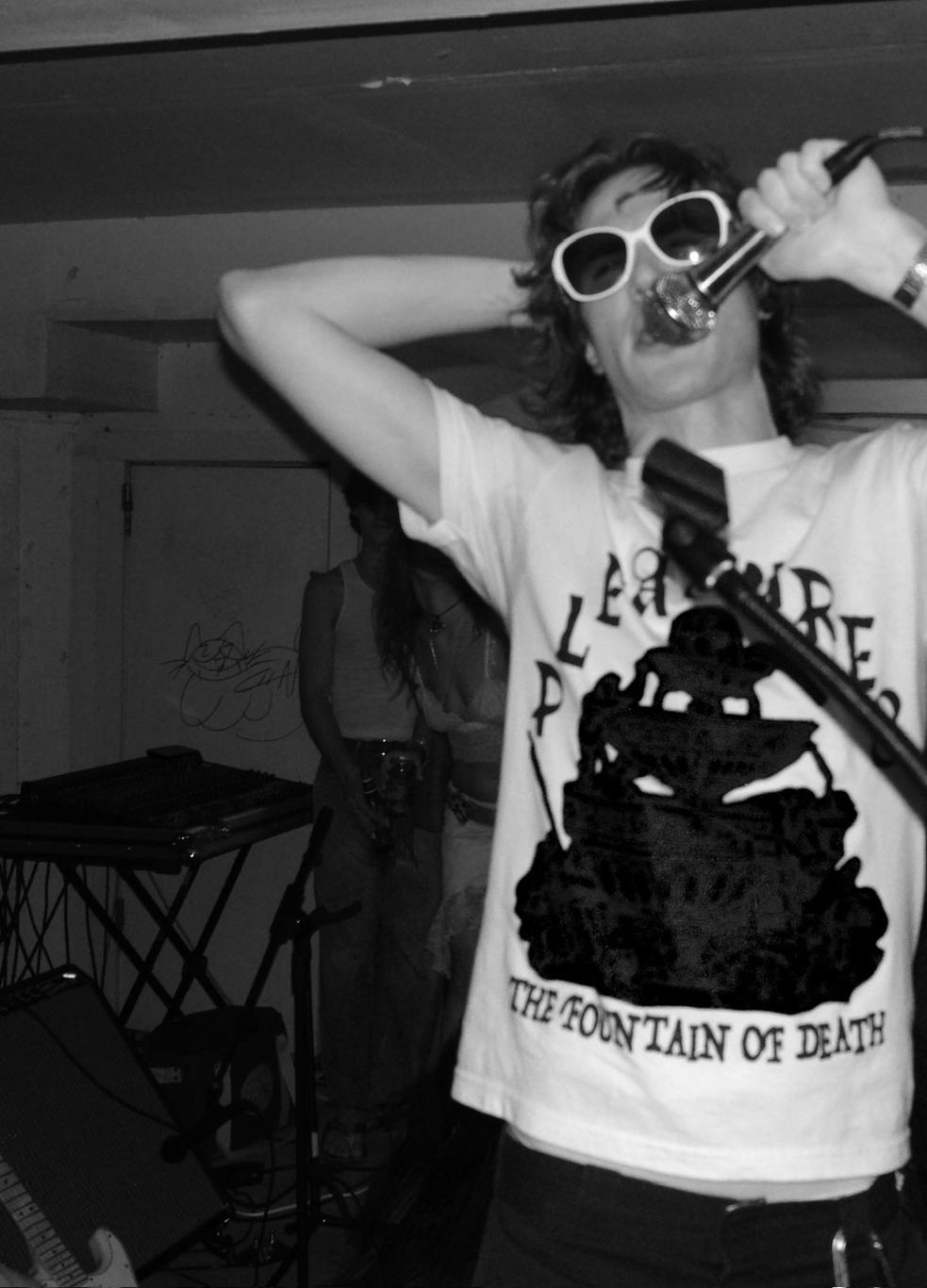
Welcome to the culture of house shows. Although house concerts have been rolling for decades, there’s been more incentive now than ever to attend. Instead of spending $300 on nosebleeds, you can get an immersive experience for free.
Every weekend, bands across the country go to someone’s gear-friendly house and put on a show for devoted listeners, friends, family and anyone else who wanders in. By the end of the show, a community has formed, whether participants are aware of it or not.
“After going to house show after house show, they all of a sudden have a whole group of people who have shared values,” said Keiran Wisell, a guitarist for Fort Collinsbased band Clementine.
To be a musician is to be a creator. Releasing music is expressing creativity, and playing that music is expressing intimacy and vulnerability. But oftentimes, bands don’t have a space to be creative, and untapped art is left behind.
Audiences don’t care how many songs you’ve released or how many Spotify monthly listeners you have. People go to hear the band’s creative works. Everything about a house show is creative, from deciding where to set up to making the acoustics sound the best they can.
“The house show community is accepting of everyone,” Kate Bradford, a regular house show attendee, said. “No matter what background you come from or who you hope to become, it brings together complete strangers to bond over our shared love of music. It is a beautiful thing to be a part of.”
There’s a snowball effect with house shows and chosen family; you go to one, and you are a part of it all.
There is a certain level of intimacy within the setting of these concerts. Apart from the venue being someone’s home, the community relies on closeness. The exchange of art between the band’s music and the audience’s reveling makes the community fluid and safe for
“They’re so much better than regular shows,” Caleb Crowe, Clementine’s drummer, said. “I feel like there’s more freedom at a house show. You can just do whatever, be yourself and not worry.”
Different bands have different songs and sounds. Different people come to each show. It’s a different house every night. There is room to explore parts of yourself you wouldn’t have been able to if you chose to go somewhere else for your Friday night.
If you choose to go to a house show or you attend them regularly, Clementine would like to give you some reminders: “If you see something, say something. Be nice to everybody. Pick up your friends if they fall down. Drink water. Be mindful of where you blow your cigarette smoke. Respect the space.”
Brick by Brick
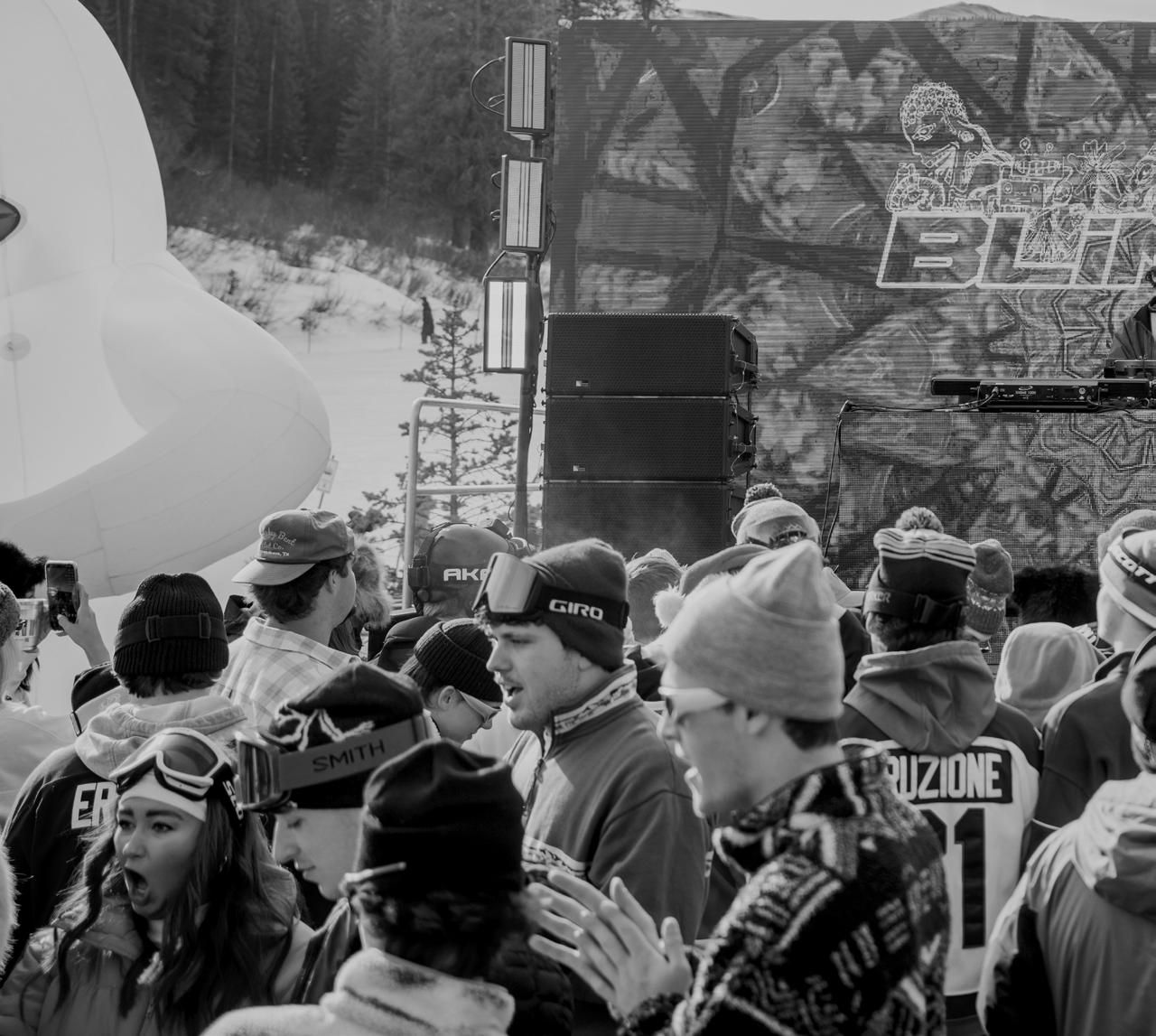
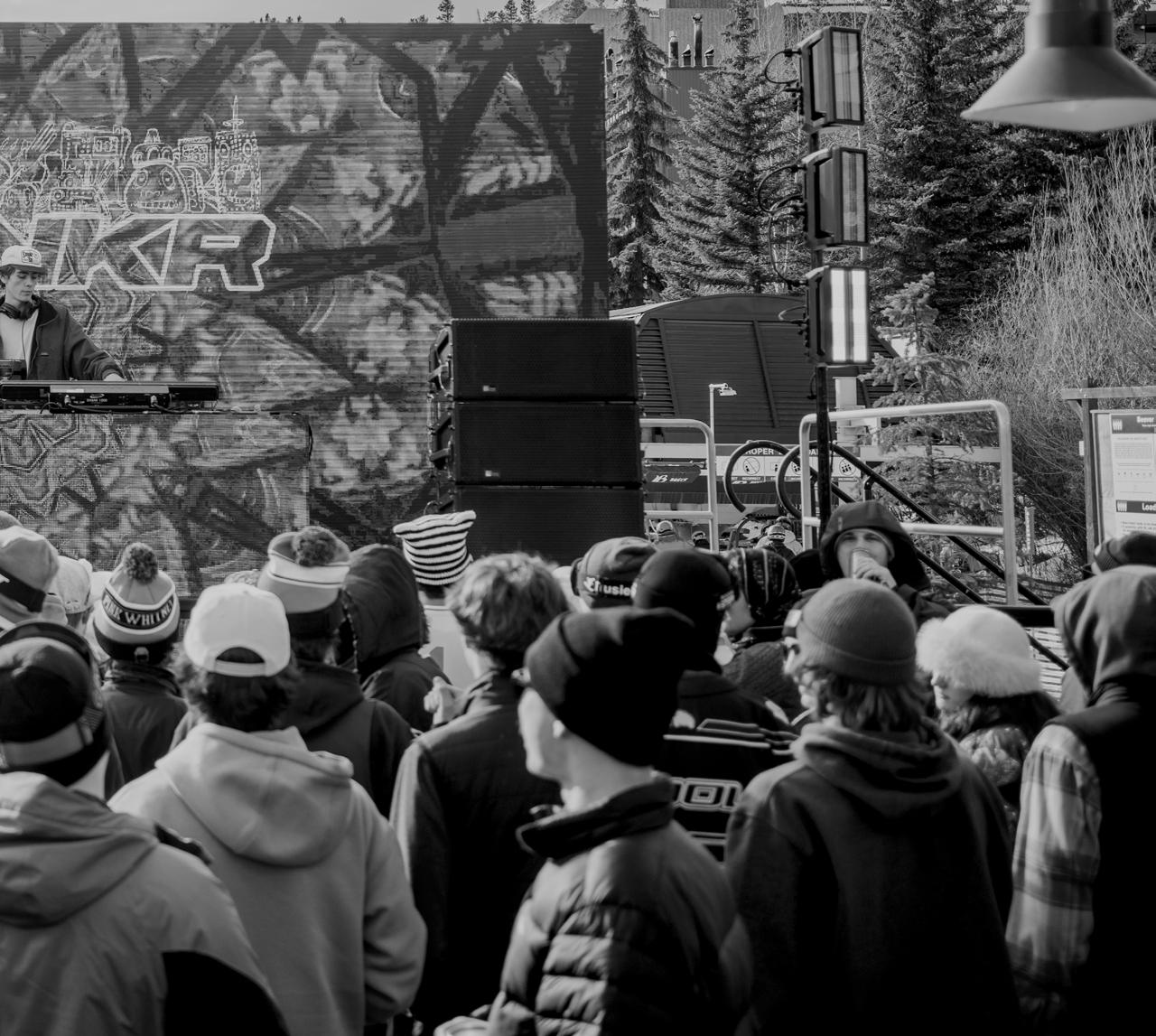
BLiNKR’s rise in Boulder’s DJ scene
Billy Remias was just a kid bringing speakers to perform in the woods with his friends. The DJ, known as BLiNKR, gained a love for electronic music at age 15 when he started to mess around with his sister’s mixing board at home.
“She taught me how to use it, and pretty much from there, I just took off with it,” he said. “I started to learn music production and all that, and really just blossomed.”
His premiere was small, performing at high school parties and bars in Breckenridge. He thought it would be cool to be a music producer because he didn’t
know how to reach that dream. He quickly realized the community is a lot more accessible than he thought.
Soon after, he started to travel across the state to perform with artists like Levity and It’s Murph, turning what started as a hobby into a career. Remias found support online through networking. His managers connected with him on social media, opening the doors to boundless opportunities.
Remias has had opportunities to collaborate with various artists in the industry, like Charlie Wonder, strengthening his skill sets. He’s
also found that listening to other artists like John Summit inspires him to improve his music.
Once known as an area popular for jam bands, house music has seen a recent surge in Boulder. Remias attributes the rise largely to Disco Lines, whose career launched while he attended the University of Colorado Boulder.
Folsom Field, home to famous performances by the Grateful Dead, saw 38,000 fill its stands for John Summit last October.
In April, Disco Lines returned to campus for what was originally planned as one concert at Farrand Field. Tickets sold so fast that a
beat by beat
second set was quickly added.
“Dubstep has always been here, but lately, house has kind of been creeping its way in,” Remias said. “When [Disco Lines] blew up, a lot of people got put onto house.”
With house music’s local popularity, Remias wants to make a name for himself when it comes to a unique sound. He seeks to combine dubstep and house music into one genre.
“My biggest goal with my project is to build an animated world around it, kind of similar to Gorillaz,” he said.
Building his career from the ground up took initiative and confidence to get his foot in the door. He’s gotten used to hitting up big DJs on Instagram and walking up to venue managers to introduce himself at shows.
“People recognize it if you’re putting yourself out there, no one’s gonna be like, ‘Who is this guy?’” he said.
While networking in the industry hasn’t been an issue for Remias, he found that avoiding comparison and staying confident makes a difference. He recommends focusing on the smaller steps of building a music career.
Getting to the same level as artists like John Summit takes hard work and patience, but with the right mindset, he believes it’s achievable. Looking back on how he started out, he’s come a long way. The small crowd in the woods where he performed with his high school friends would only be the beginning of his flourishing career.
“My future goals are hopefully headlining Red Rocks one day. If I end up accomplishing that, I’ll be like, ‘Oh, we made it,’” Remias said.
Words: Maddie Lasker // Photos: Cullen McHale and Jason Wilson Design: Emma Taylor
Design
John Davis
Photos & Writing
Brody Rector
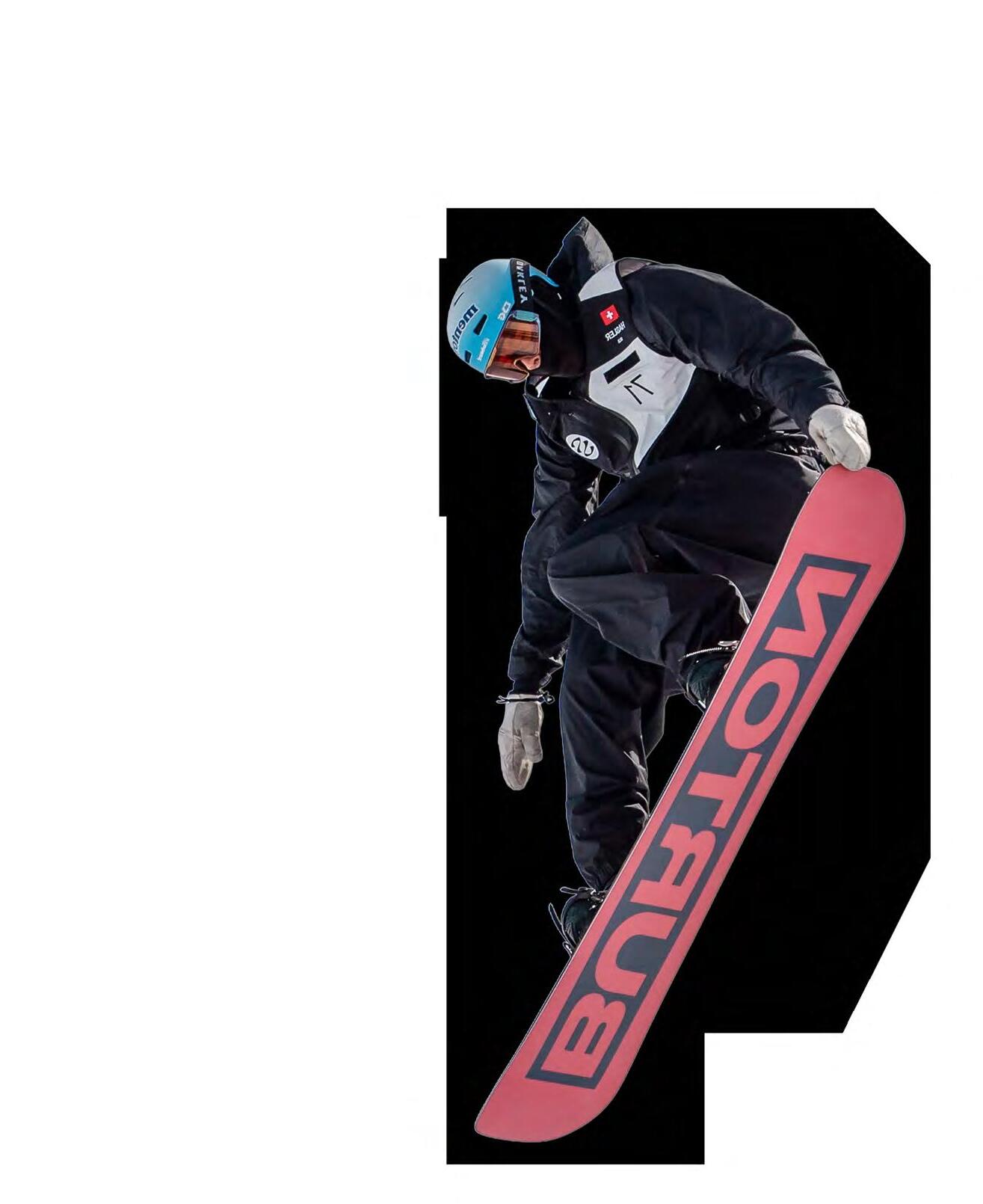
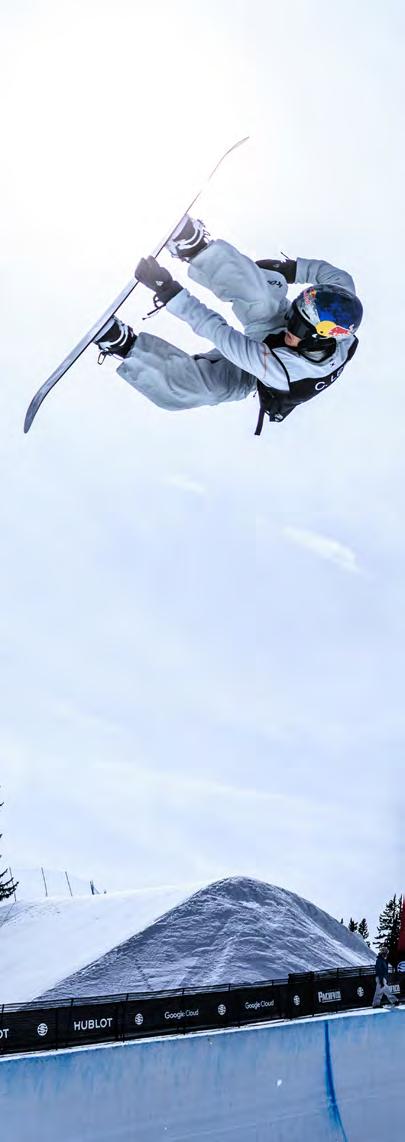
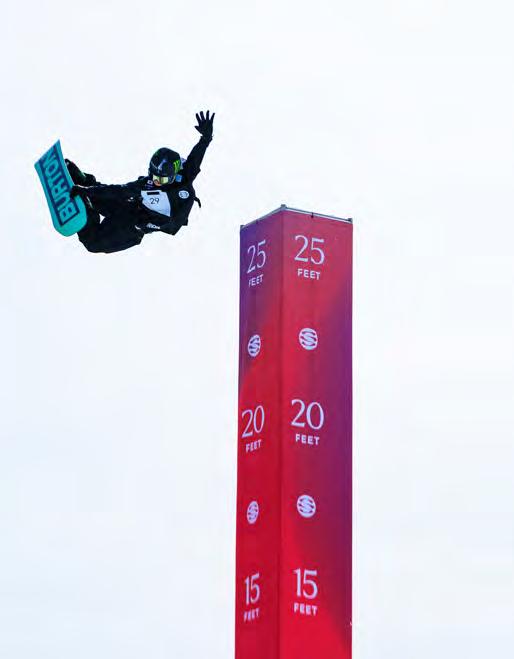
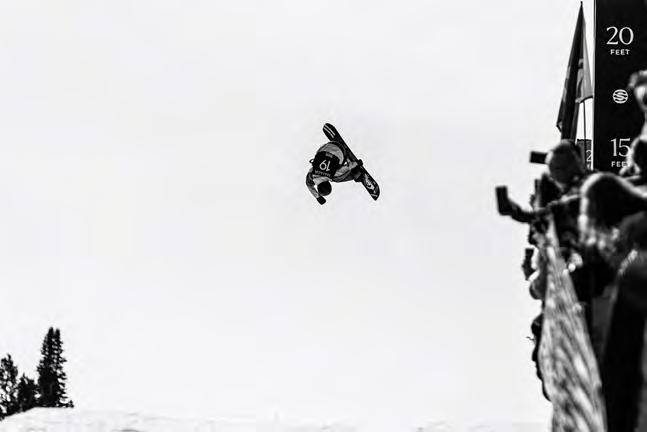
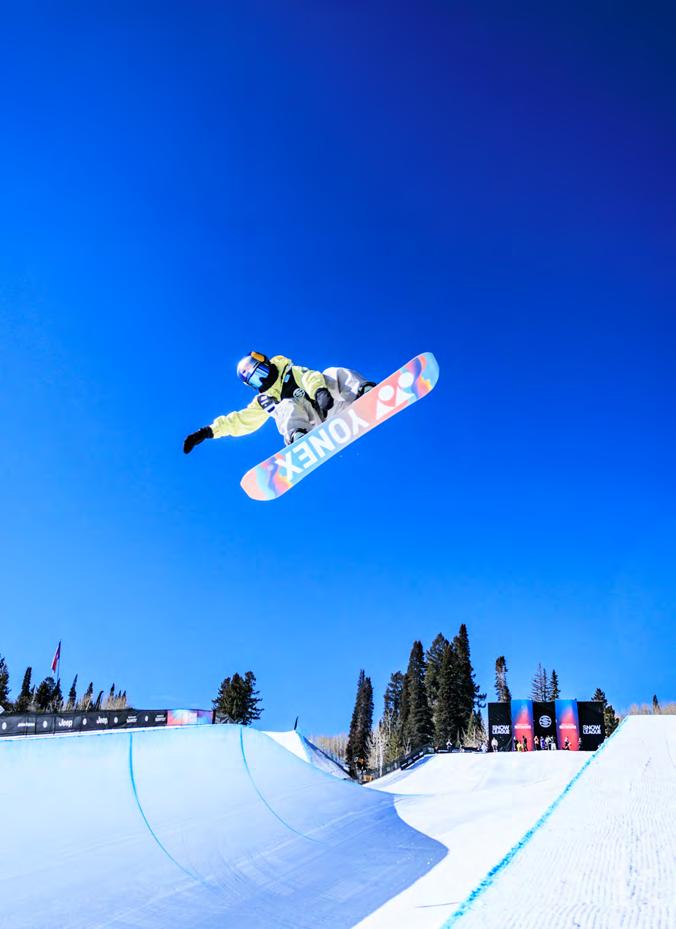
ASPEN, Colo. — Standing at 20-feet-high and 560-feet-long, the superpipe is the pinnacle of snowboard competition. Shaun White put the event on the map at the 2006 Winter Olympic Games in Turin, Italy, where he won gold. Two decades later, he’s trying to put another pin in the map with a new generation of athletes.
ASPEN, Colo. — Standing at 20-feet-high and 560-feet-long, the superpipe is the pinnacle of snowboard competition. Shaun White put the event on the map at the 2006 Winter Olympic Games in Turin, Italy, where he won gold. Two decades later, he’s trying to put another pin in the map with a new generation of athletes.
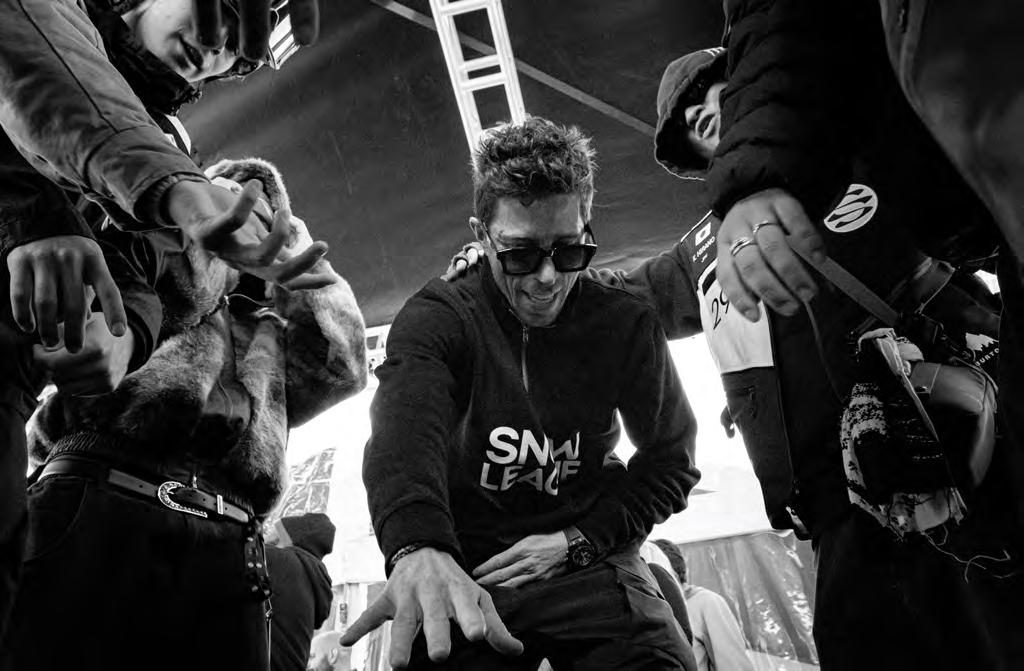
Outside of the Olympics, few competitions solely focus on snowboarders. White recognized this and launched the Snow League in 2025 as an attempt to fill that space. The league gives a platform for athletes who don’t compete in the Olympics or X-Games and often disappear on the road to the spotlight.
Outside of the Olympics, few competitions solely focus on snowboarders. White recognized this and launched the Snow League in 2025 as an attempt to fill that space. The league gives a platform for athletes who don’t compete in the Olympics or X-Games and often disappear on the road to the spotlight.
The Snow League’s inaugural season had four stops, starting in Aspen, before heading to Chongli, China. The tour then returned to Aspen before finishing in Laax, Switzerland.
The Snow League’s inaugural season had four stops starting in Aspen, before heading to Yunding, China. The tour then returned to Aspen before finishing in Laax, Switzerland.
“I had my moment, and I feel like this is the new future tour that’s gonna take these athletes to the next level, something I’ve never even achieved,” White told the media after the first stop in Aspen.
“I had my moment, and I feel like this is the new future tour that’s gonna take these athletes to the next level, something I’ve never even achieved,” White told the media after the first stop in Aspen.
The Aspen superpipe is arguably the most famous pipe in the world. As host of the X-Games and Olympic qualifiers, it stands out as a spectacle. On stop three of the Snow League, it once again sits as the stage for the growth of snowboarding.
The Aspen superpipe is arguably the most famous pipe in the world. As host of X-Games and Olympic qualifiers, it stands out as a spectacle. On stop three of the Snow League, it once again sits as the stage for the growth of snowboarding.
The Snow League plays out in a different way than any other snowsport. While normal snow competitions compete in a pool, the league puts athletes head-to-head.
“This new format has been so refreshing for the halfpipe,” Maddy Schaffrick told the media before stop three.
All talk was about creativity. While a lot of the athletes were coming off the Olympics, the differences in the athletes’ approaches were clear.
“I am really happy to just be here, I am certainly taking a lot of inspiration from that night [during the Olympics]. These guys are crazy, now we’re at Snow League, it’s gonna be crazy as well,” Jake Pates said.
When Alessandro Barbieri told the media “Amplitude is king” at the start of the weekend, Kaishu Hirano took it to heart. Being towed in by four people, his run truly had one goal: to set the big air record. Launching 25 feet, 2 inches from the lip of the halfpipe, he bested his own world record of 24 feet, 4 inches set in 2022.
Hirano is on a record-setting streak. After breaking his own world record in Aspen, he did it again during the fourth and final event of the season in Switzerland, going another 2 inches higher.
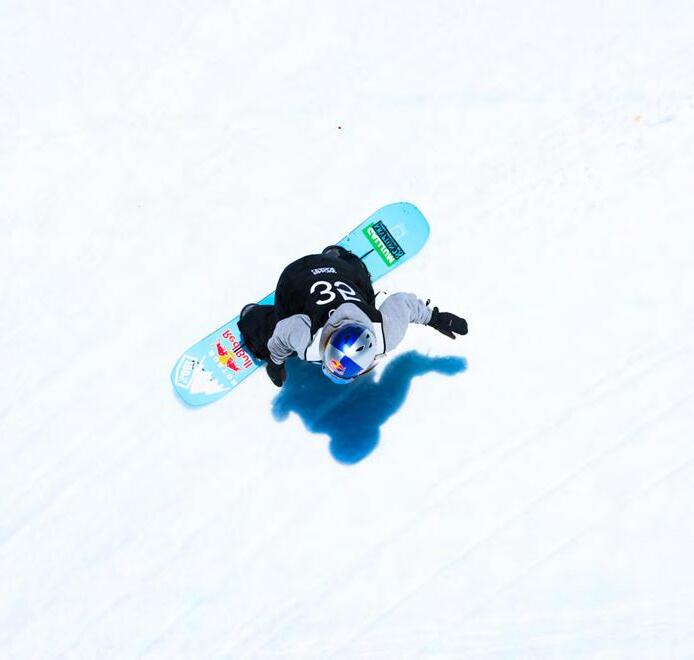
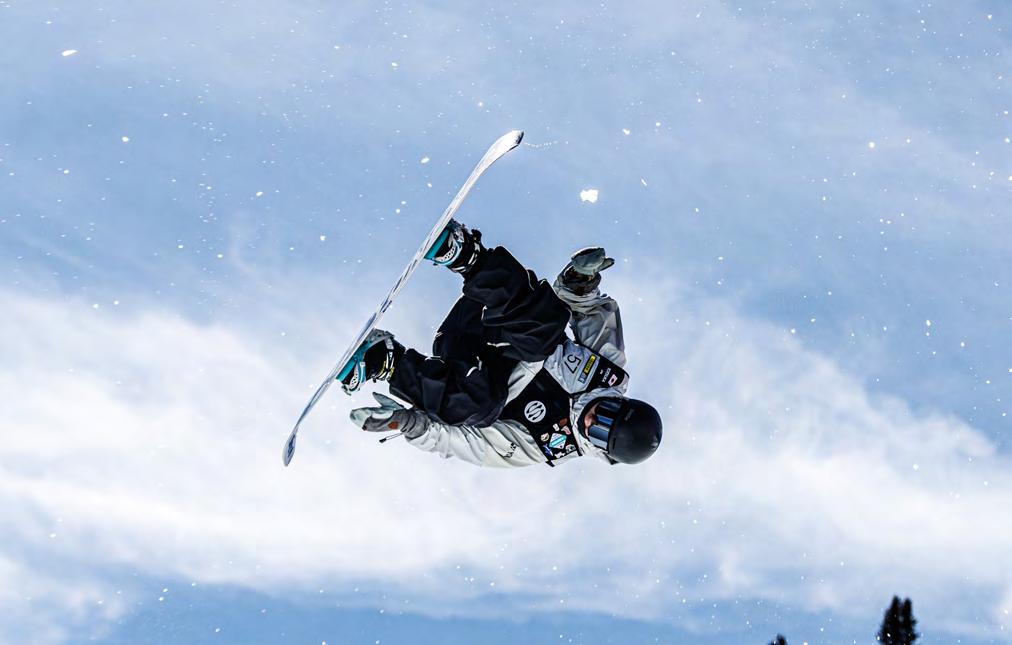
Mitsuki Ono dropping in on a qualifying run.
Kaishu Hirano launching himself to set a world record.
The league is built around allowing athletes to perform their own way. Echoing an agreement that they made in China, Ryusei Yamada and Yuto Totsuka faced off against each other in a unique fashion. Both riders slid down the Aspen halfpipe before dropping in for one attempt at a trick they agreed on: a switch alley-oop double backside rodeo 900. Yamada took the win before opening up the second round with a fall. Totsuka took advantage, pushing the head-tohead to sudden death.
With one run left to decide the men’s winner of stop three, everyone expected something huge. So when both athletes fell on their last run, the crowd stood silent, waiting for the judges to announce a winner based on the unexpected runs. Yamada had one trick over Totsuka, pushing the judges to award the win to the former. It secured Yamada Aspen 2026 and 100 points towards his goal of Snow League champion.
is king.”
“The Snow League is the future of winter sports competition.”
Shaun White
Ryusei Yamada embodying “amplitude
Yuto Totsuka practicing before going head-to-head with Yamada.
The margin of error was mere inches, and big air meant big crashes. Ryan Wachendorfer pushed the limits and crashed in practice. However, he could not be kept down and came back to drop in during the last chance qualifiers. While his injury did not keep him away, he was unable to move on to the finals.
One athlete stood out in particular. Sara Shimizu, a 16-year-old from Otsu, Japan, is being called the future of snowboarding. Making her Snow League debut, she said her goal was to just participate, but she ended up winning the stop.
“Means so much,” Shimizu said.
She put up a near-perfect run, scoring a 94.5 out of 100, making it the highest of the women’s field. She executed the same run at the 2026 Olympics, earning fourth. Shimizu said it was her cleanest attempt yet.
Fans cheer on Sara Shimizu.
Sara Shimizu putting down a practice run before her n-r-perfect attempt.
cheeron
The third stop on the Snow League ended with a party and performance by Wyclef Jean. Athletes danced together on the stage, spending time as a community. At the final stop in March, Sena Tomita and Totsuka won the women’s and men’s titles for season one. As the weekend of stop three came to a close, with music and dancing in the foreground, the sun set on the Aspen halfpipe.
As White said, “The future of winter sports competition is rising.”
Wyclef Jean playing the after party.
Shaun White dancing with the athletes on stage at the after-party.
DRUNKCollegetattoos
Words: Mattie Nunez
Design: Mia Pendergast
Photos: Sutton Raeburn
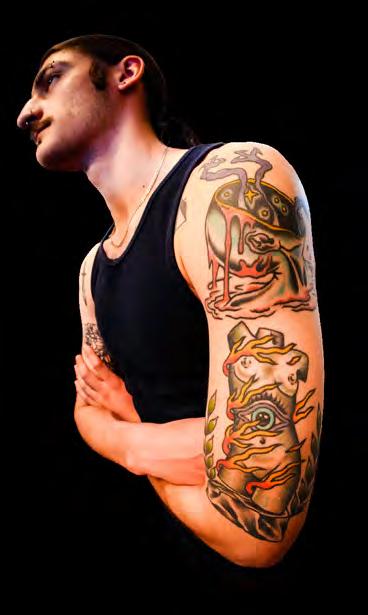
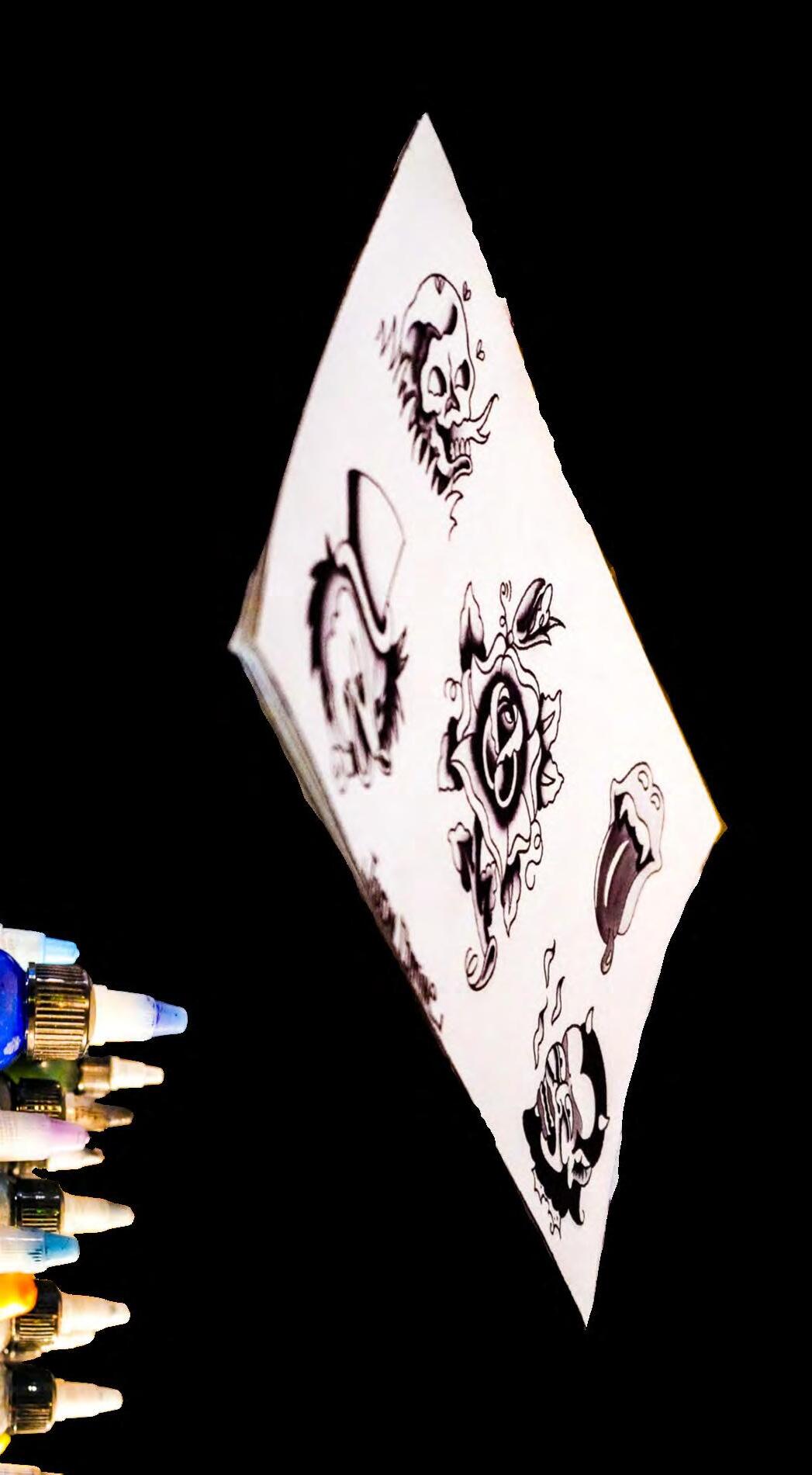
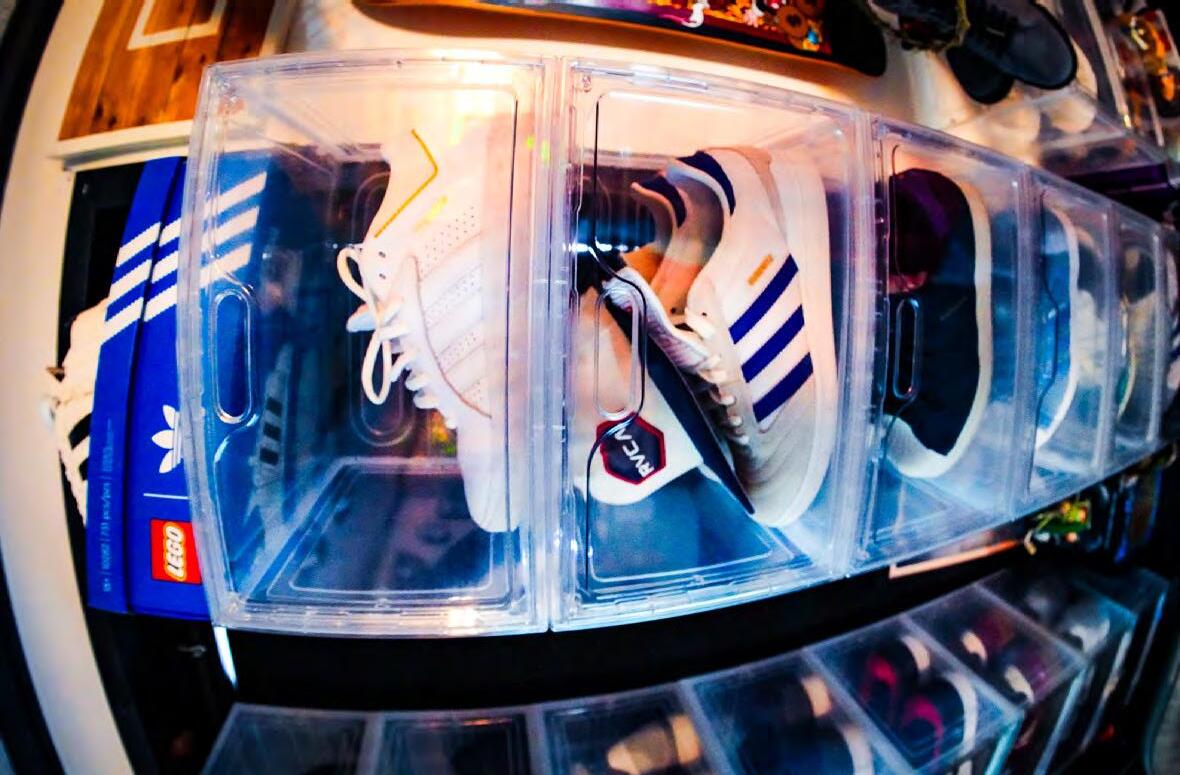
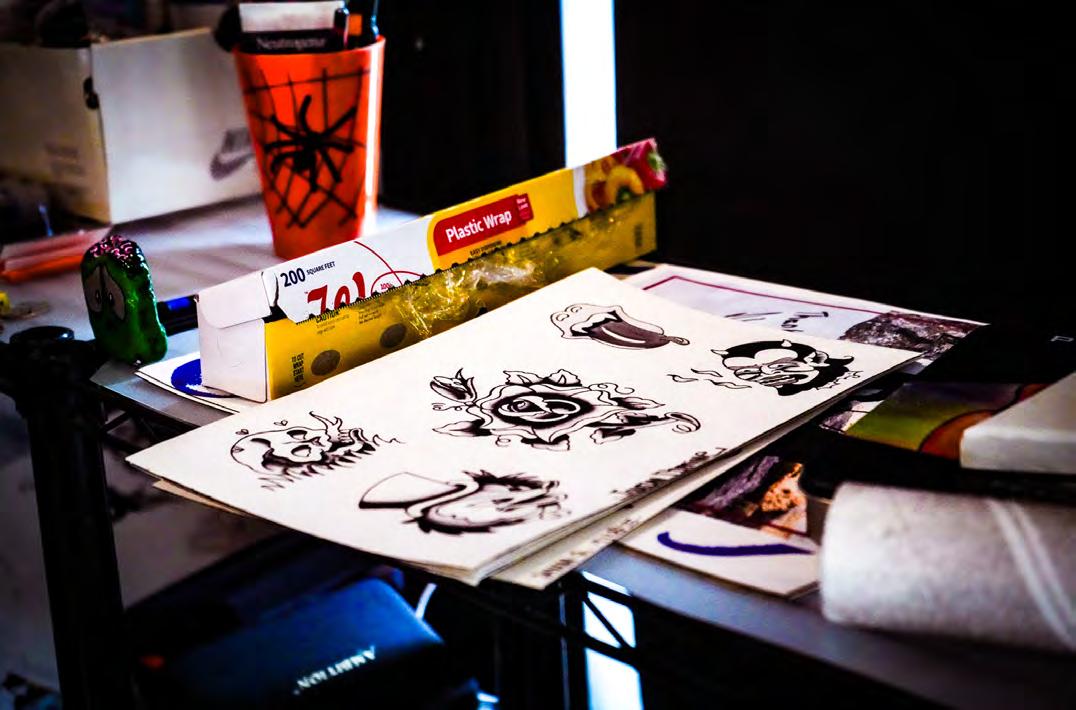
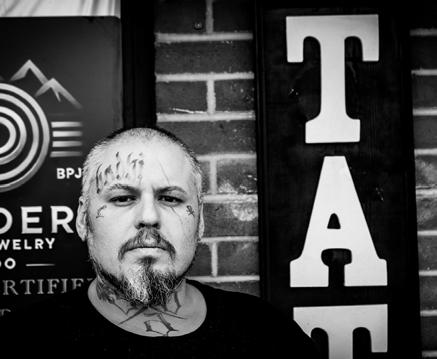
In between the crevices of The Hill’s jampacked buildings lies one of its newest and booming tattoo parlors, The Study Tattoo Lounge.
Body art has always been around, but over the last 10 years, tattoos have seen exceptional growth. According to a Pew Research Center study, at least 32% of Americans have at least one piece of art on their body.
Frank Campos, owner of The Study Tattoo Lounge, capitalized on the trending incline and claimed his stake on The Hill in 2023. He knew it would be a great place for “high turnover and heavier traffic.”
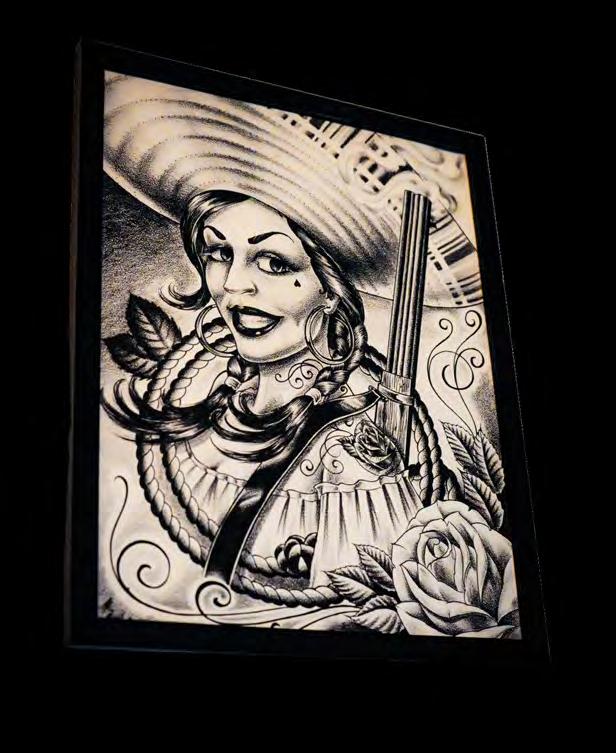
Although the parlor is a newer addition to The Hill, its presence is not passed over. The gothic alternative interior plays host to many Friday the 13th flash tattoo sales where Boulder residents get new ink or forever memories. The parlor’s specialty isn’t necessarily focused on large custom pieces, but rather the sentimental, typical young adult artwork.
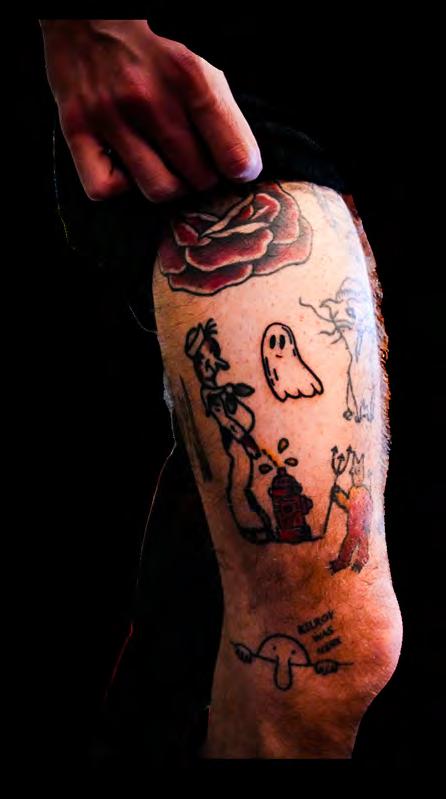
“[We] get a lot more gimmick tattoos here than you would see in other parts of the country,” Campos said. “We get a lot of students, either their freshman or senior year, that’ll come and get their dorm room on them or smaller things that people typically want already.”
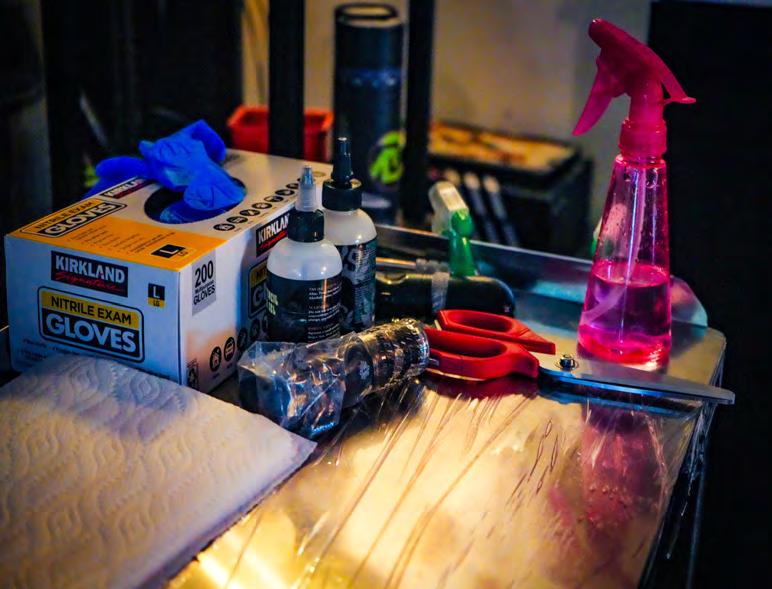
“People assume we make a lot of our money tattooing drunk kids. We don’t really tattoo anybody that’s been drinking, it’s just too much of a liability,” Campos said.
John Barthlow, a freshman at CU, is no stranger to the piercing of a tattoo gun. Barthlow is a common visitor to The Study Tattoo Lounge, not just for its consistent artwork, but for its convenient location and pricing.
“I feel like a lot of [tattoos] make for good conversation as well. A lot of the time, they have wacky stories behind them, ” Barthlow said.
CU is infamous for its notorious party culture, inclining many to expect drunk tattoos to be given out regularly. However, The Study Tattoo Lounge holds itself to a higher standard.
A liability and illegal, as a matter of fact. In the state of Colorado, tattooing someone who is intoxicated and is “noticeably impaired by drugs or alcohol” is a violation of Colorado’s health and safety regulations. However, for Campos and The Study Tattoo Lounge, “a little bit of liquid courage is understandable.”
While controversies about the significance of tattoos remain, for Campos it’s an opportunity to reminisce about the past.
“I got a bunch of tattoos that don’t mean shit, but I think that [the design] doesn’t have to have a meaning,” Campos said. “If you look at [a tattoo] like a timeline, it’s a stamp, it’s a memory. A point in your life that you can think back … and [see what] your life was like when that was going on.”
Frank
GREAT SPORTS BARS IN
BOULDER !!
WORDS: AINSLEY COOGAN & LILA NUTTLE
PHOTOS: KARA LIGUORI
DESIGN: EMMA TAYLOR
HUNGRY TOAD
Great for a Friday night
For all European football fans, here’s a classic British pub right in Boulder. It opens early to watch Premier League games, so grab a hearty English breakfast pie and a pint while enjoying some real football. If you’re a Tottenham fan, be prepared to get some dirty looks. The Hungry Toad is close and accessible for Boulder students, located just over a mile north of campus off Broadway.
Starters on the brunch menu vary from $11 to $16, and the breakfast options range from a full English breakfast, to fish and chips, to a heaping serving of buttermilk pancakes. It wouldn’t be a pub without sausage rolls, which are best paired with ketchup and spicy mustard. A full drink menu, including Guinness, is offered at brunch as well.
THE ATTIC
THE ATTIC
Great for a Friday night
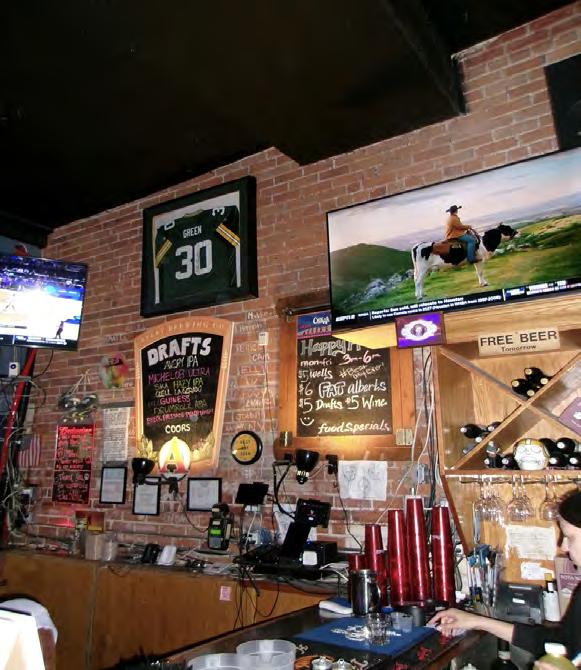
Located just off Pearl Street, The Attic is a classic bar and favorite among college students. Perhaps the most readily available replacement for Dark Horse, the food embodies the friendly atmosphere. The menu is full of shareable items to split among friends. The bar keeps affordability in mind, offering deals like free pool until 10 p.m. and a happy hour menu.
Monday through Friday from 3 p.m. to 6 p.m., appetizers range from $4 to $7, with drinks starting at $5. The food comes out quickly and is filling, with large portions for each starter. Pearl Street hosts many BCycle stations, bus routes and parking garages, so it’s accessible and easy to traverse.
BOULDER SOCIAL
Great for a Friday night
Boulder Social is exactly that. A sports bar with social events galore, it’s a great place to go with a group. And if that group happens to be a little nerdy, go for their Tuesday trivia nights! Their menu is a bit pricey: The cheapest appetizer, a delicious Bavarian pretzel, is $10. They offer a wide selection of creative eats, including pizzas, specialty burgers and a whole section of comfort foods. There’s also an in-house brewery for the craft beer fanatics. It’s a little out
Words: Jencee Thompson - Design: Taylor Hoyt
yeah i get sucked into give me a call and we together
Like most kids her age, Juliana Krigsman could feel the constant scroll on her phone taking over her life.
“I was also addicted to it as everyone is. I would feel a lot of anxiety until I would look at my phone and then I would look at my phone and it would be like a release,” she said.
The University of Colorado Boulder sophomore switched from an iPhone to a Nokia 2780 her sophomore year of high school. Her final push to get rid of the device was when she felt entirely consumed by it.
Living in a world where people can access limitless information can be a blessing and a curse. With the rapid evolution of the internet, young adults have new ways to communicate, share and connect with others all through a screen — until they’re dependent on the little screens in their hands.
A day without “doomscrolling,” the seemingly endless consumption of online information, is practically unheard of for many social media users. With doomscrolling comes the disruptions of face-to-face connection and real-world communication skills.
Excessive doomscrolling and consumption of trends evolves into a state of being “chronically online.” Trends, micro or macro, and memes around every corner are detrimental to Gen Z’s attention spans.
“Today, attention should be considered a limited resource. The Internet has become a chaotic marketplace, where the price of information is not paid with dollars and cents, but with attention,” Frederik Stjernfelt and Anne Mette Lauritzen wrote in their 2020 book “Your Post has been Removed: Tech Giants and Freedom of Speech.”
The commodification of attention span explores how the internet feeds off of users’ behavior. Algorithms prey on the content you engage with and curate future content to keep you sucked into the scroll.
CU professor Annie Margaret researches the cognitive impacts of social media.
Margaret suggests asking yourself, when was the last moment your life felt meaningful? Most of her students couldn't answer. She also noted doomscrolling is disruptive to our brain functions.
i’ve been doom scrolling for hours it’s making me so depressed but i can’t stop! but whateves everyones like this
into doom scrolling too we can get out of it
“As we take in all this media, our perception is narrowed, our filter is tight,” Margaret said. “We cannot perceive reality clearly. We cannot feel our emotions, and, worst of all, we have gunked up an important instrument [our brains].”
Doomscrolling is caused by dopamine and how the hormone is released into your brain. Margaret compared it to other habitual loops like smoking. Most dopamine is not released while smoking, but right before.
, “And it, if we think about just a standard habitual loop, like smoking, for example, the most dopamine is not released when you are smoking the cigarette. It’s released right before. You have the thought that you want one, right before you light it, that's when you get this bike. And this is important, because our phones and short form media, with notifications, social feedback, all of that, have hijacked that same circuitry”.
An instinctual need for social acceptance and community also encourages doomscrolling. Social media reflects this: We can laugh over the latest meme or what celebrity just got arrested. No matter the topic, being in the know helps connect us to others .
thanks dude i can never get myself out of it no matter what i do but would much rather be chatting on the phone with you than rotting in my bed
Krigsman disagrees. She has had a flip phone for four years now and has no regrets switching from the scroll. Since switching, she feels like she doesn’t miss out on what her friends are seeing on the internet and feels like she has more time to present in her life.
“I haven’t had social media since I was in the 10th grade, and it's made the biggest difference in my self-esteem,” Krigsman said.
Skiing on Borrowed Time
Words: Peighton Lemp // Photos: Isaac Sterling // Design: Emma Taylor
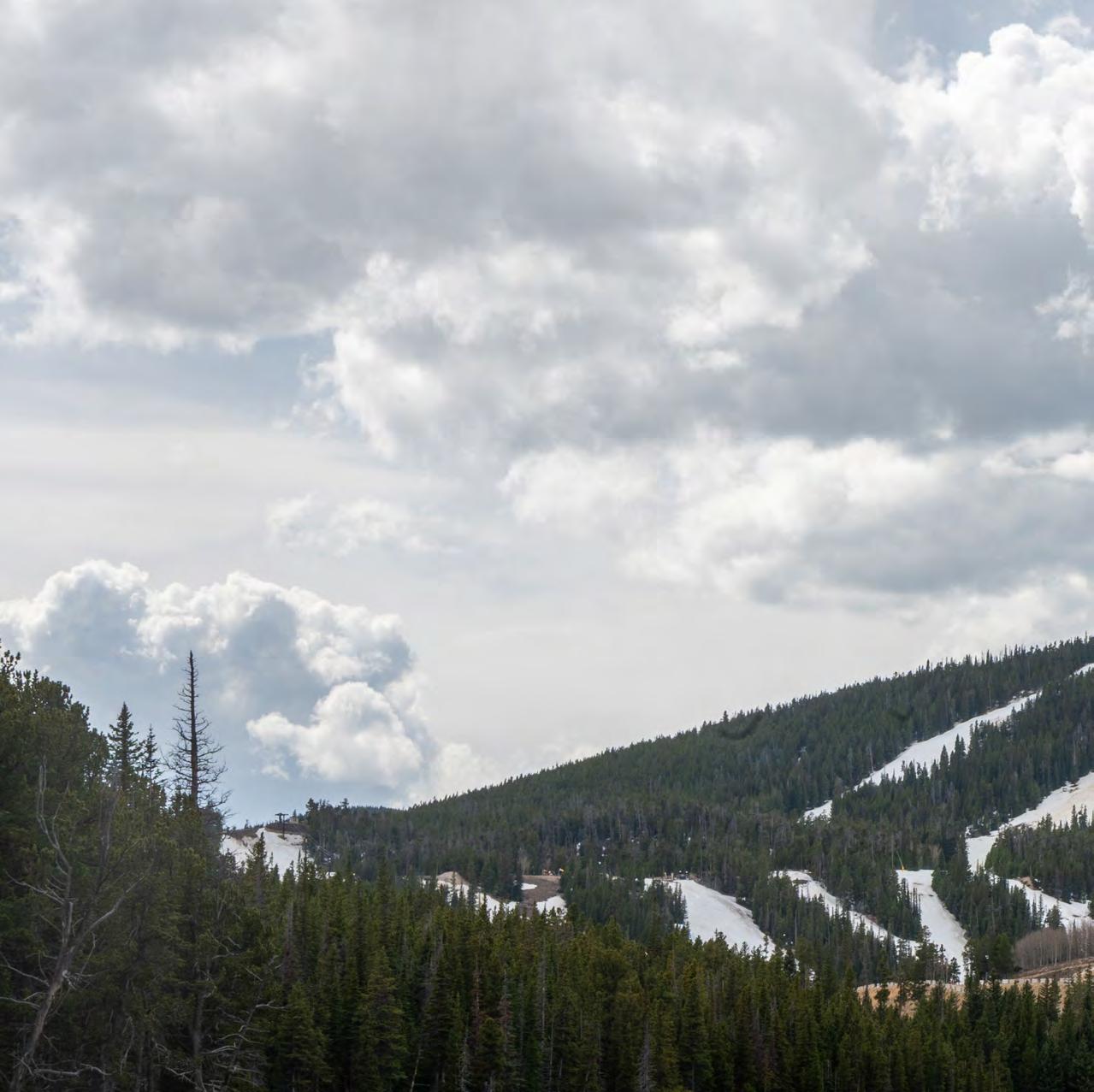
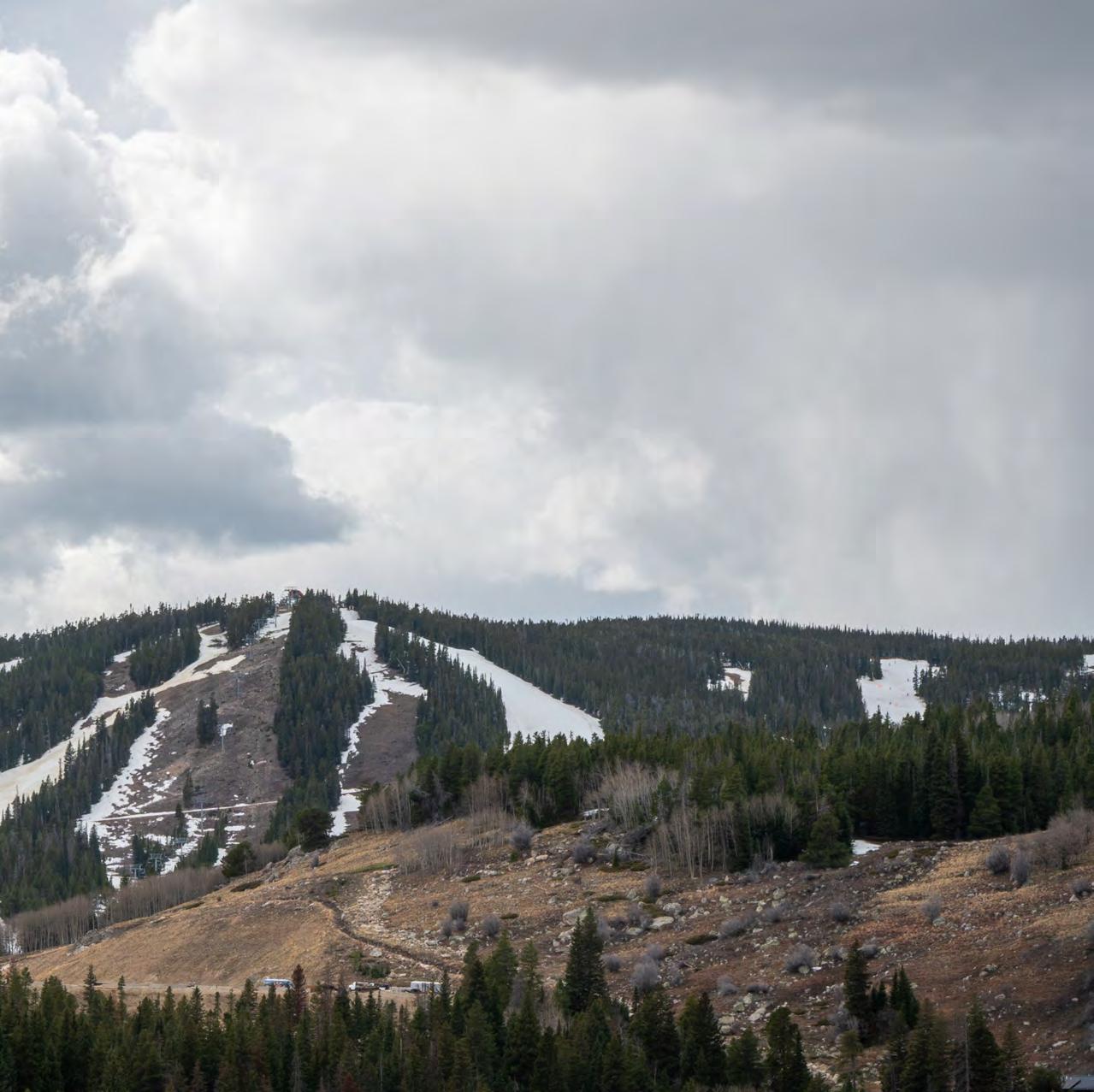
Taylor Bowman has never seen so little snow. The junior at the University of Colorado Boulder and native of the state has been skiing since age six. This season has been the worst in her lifetime.
“I was in the trees a couple weeks ago, and I caught a random branch because there was so little snow,” she said. “So, I just tripped on it on my ski and it hurt.”
Bowman has an Ikon Pass, which gives her access to some of Colorado’s most iconic ski areas, including Eldora, Copper and Winter Park. Record-low snowpack has led to trail closures in ski areas and a decline in tourism for mountain towns.
“Normally, if you go on a Saturday to any mountain, it’s going to be packed. But this year it’s less busy,” Bowman said.
She still remembers one of her best powder days last year at Winter Park on the Mary Jane side of the mountain. It was dumping snow all night, and powder was plentiful. Bowman has not seen a day like that yet this season.
She and her friends consistently had bad experiences this season. It left her increasingly skipping out
on the slopes.
“Last year I was going up like three days a week, and this year I don’t even want to go because it’s not worth driving just to have a mediocre day,” Bowman said.
The poor winter that Coloradans like Bowman have seen this season is not just a fluke. Average temperatures around the world are on the rise, and winters are becoming shorter and shorter. Now, the state’s most popular outdoor industry is being pushed to the brink.
Rising temps, shorter seasons
Climate scientists track seasonal climate change in two primary ways. Meteorological seasons divide the year into four quarters of equal length, with winter spanning December, January and February. They also examine temperature-based seasons, which measure when sustained temperature thresholds signal the functional beginning and end of winter.
The latter typically reveals what Coloradans are already sensing: Winter is shrinking. Data from Climate Central, a climate science
seasons are warming across the United States, but not evenly.
Out of 245 major US cities stretching from coast to coast, 195 of them have shorter winters now than winters prior to 1997. In western states like Colorado, however, fall and spring are warming most rapidly, a shift that effectively squeezes winter from both ends.
The source of these effects is welldocumented. Since the 1960s, greenhouse gas emissions from fossil fuels have accelerated rising global temperatures. The result, according to Climate Central, is that winters nationwide are now about nine days shorter on average than they were in the 1970s. They are also less consistent. Colorado is no exception to this trend.
Shel Winkley is a weather and climate engagement specialist and meteorologist for Climate Central. He said the most pressing issue isn’t the disappearance of winter altogether, but its declining reliability.
“We still have cold air, and we still have a winter season, but we know that those temperatures are staying warmer into the beginning of the season,” Winkley said. “And
we’re also seeing those springtime temperatures eat into the end of the season as well.”
That creeping warmth carries consequences beyond a few lost calendar days. Rising temperatures during peak winter months are altering how precipitation falls. Storms that once reliably delivered snow are increasingly flirting with the 32-degree freezing point, sometimes surpassing it. A small temperature shift can mean the difference between snow and rain.
Keith Musselman, a geography professor at CU, has been researching this phenomenon via hydrologic observation, where ground-based remote sensors are used to study snow, water and energy dynamics. He came to similar conclusions as Winkley.
“Temperature increases are causing more frequent winter melts, and that melt means wetter conditions on those warm days and icier conditions on those cold days,” Musselman said.
More frequent melts will not only affect the quality of the snow, but also erode it faster. As winters grow shorter and warmer, the margin for good powder is becoming more consequential for skiers. In Colorado, that margin often comes down to one critical factor.
The elevation game
Monarch Mountain ski area general manager Chris Haggerty has been a longtime employee of the ski industry. He started working frontline jobs as a high
schooler at Mountain Creek in New Jersey. During college, he worked two winters in Vail with lift maintenance, where he fell in love with Colorado.
When a job at Monarch Mountain came up, he jumped at the opportunity. He currently serves as a board member of Colorado Ski Country USA as it faces the obstacles of climate change.
With temperatures on the rise, one key ingredient comes into play for resorts: elevation. It can heavily affect the amount of snow that a resort sees in a winter, especially a warm one. The higher a resort, the colder the atmosphere. So, while lower-elevation resorts may see rain, those at higher elevation would see snow.
Haggerty said his resort is experiencing the benefits of elevation. Monarch is higher than most big resorts in Colorado, sitting at a base elevation of nearly 11,000 feet. So, when precipitation is in the forecast, Monarch more consistently gets snow instead of rain compared to big resorts.
“We are better insulated for years like this because we are getting enough snow,” Haggerty said.
The looming threat
Haggerty said a reputation of a bad winter is what is really hurting the ski industry. Monarch’s visitors fall into three sections: season passholders, destination visitors and Front Range multi-visit guests. The resort is down 15% in overall revenue in the multi-visit category.
guests. The resort is down 15% in overall revenue in the multi-visit category.
“All we hear is the messaging of it’s 60 degrees, and it’s the worst winter,” Haggerty said. “It’s hard to convince yourself to go skiing when the message has been that there is no snow.”
He explained that Front Range Coloradans will not visit the mountains unless they know the ski conditions will be good. Once word gets out the slopes have no snow and the winter conditions are poor, those guests are less inclined to visit.
The overall decline in visits that resorts are seeing has a ripple effect on other areas of revenue, including retail, food, beverages and rentals.
“Makes sense because there are lower visits and when it’s warmer, people are not running in to buy another layer or hand warmers,” Haggarety said.
Mussellman said Colorado will continue to be a ski Mecca for at least 50 years thanks to its high elevation. However, other areas such as Utah, California and Montana may be highly impacted in the years to come. He insisted that the discussion has to start now to protect beloved ski areas.
Monarch’s closing day in 2025 was April 13. This year, it came two weeks earlier with lifts shutting down on March 29. “We need to save our winters, we need to save our snow. Because we eventually want to be able to gift that to future generations, to maybe our kids and our grandkids,” Winkley said.
INTERMISSION
PHOTOS: HANNAH HOWELL
DESIGN: EMMA TAYLOR
Skijoring is a ridiculously awesome sport.
In a nutshell, it consists of a skier being pulled by a horse through a series of jumps. The town of Leadville, Colorado takes the whole thing up a notch, setting up its course on Harrison Avenue, its defacto Mainstreet. We here at Mountain Time wanted to do a story on the whole ordeal, but getting a writer to the event proved to be a logistical nightmare. Still, our photographer Hannah Howell showed up and snapped these pics!
-Lincoln
PopularizedonTikTok,theTradWife Trend has RevealedaYearningforSimplerTimes
Tatum Yada starts her day with the sweet smell of her and her husband’s coffee brewing. A typical morning begins with making breakfast for her family then swiftly cleaning up before spending time with her newborn daughter.
There is a little corner of the internet where it is eternally 1955. The bread is homemade, the hair is curled and the daily issue is what new homemade recipe is being cooked up for dinner. But beneath that curated Instagram square, there’s a community of women who share their lives as stay-athome mothers under the hashtag “trad wife.”
Large monetized creators like Nara Smith affirmed that notion, sharing her everyday life of motherhood and tending to her ex-Tumblr heartthrob husband. Many of the videos in the trend are visually appealing and paired with soft background music or narration, making them easy to watch and helping drive the trend’s continued popularity.
The hashtag first emerged on TikTok around 2020 and has now evolved into more than 10,000 posts. It refers to women assuming traditional gender roles
such as being a caretaker, tending to the home, cooking, cleaning and allowing their husbands to be the sole breadwinner.
The trend was popularized during the COVID-19 pandemic when quarantine mandates spurred on home activities like 10-minute recipes that can feed four. It seemed some women felt burnt out on the hustle culture and enjoyed the slow pace of home life.
Despite using the popular hashtag, Yada more refers to herself as a stay-at-home mother instead of a trad wife.
“I don’t think I’ve heard the term ‘trad wife’ outside of social media. I think social media created that term,” she said.
After leaving her job and moving from California to Oklahoma, Yada began posting content featuring
Words:BellaBenson Design:MiaPendergast
daily life with her husband and newborn daughter. Her call to be a stay-at-home mom stemmed from her childhood. It was difficult for her and her siblings to have a mother at work all the time, so she wanted to offer a different childhood for her daughter.
“In this day and age, it takes a lot of trust in your partner for you not to work and stay home and take care of the house and kids,” she said. “We both have expectations of each other: He goes to work to make our money, I stay at home to take care of the house. My husband and I are a team.”
She also said social media became a fun and creative outlet for her, facilitating connections with other new mothers.
An Emergence of Simpler Times
When scrolling through the hashtag, the trend seems to encapsulate a type of nostalgia. A yearning for a simpler time, when the food was fresh and the world didn’t seem to be in such a panic.
In contemporary America, the financial stress of buying and owning a home has burdened many young couples. Housing prices have steadily risen with a 1.8% year-over-year increase in the
market according to the Federal Housing Finance Agency House Price Index.
“The trad wife phenomenon is popular on TikTok and Instagram because a lot of it is this comforting nostalgia for a life that the people watching have never lived,” said Lorraine Bayard de Volo, a gender studies professor at the University of Colorado Boulder.
“I also think that it is totally romanticized and we don’t see a lot of the behind-the-scenes or days of living that lifestyle,” Yada said, reiterating the same sentiment.
The hashtag immerses social media users into the sense that young women everywhere are logging out of LinkedIn and logging into domestic bliss. Is corporate America really seeming like a big “No thank you!” to young women everywhere?
The popularity of the trad wife trend raises an important question: Are young women truly turning away from higher education and careers? Taking a step away from the “For You Page” and on to a college campus can answer that question pretty quickly.
Women are now dominating the classroom with roughly classroom with roughly 57% of undergraduate students identifying as female across the country, according to the Education Data Initiative. The number of women going to college has doubled in the last two decades and is expected to keep growing.
The normalization of women going to college and entering the workforce started in the late 20th century. Increased access to birth control allowed women to prioritize education over homelife.
“Once you get educated, it makes sense that more educated women would want to have similar jobs as the men that they had been going to college with,” Bayard de Volo said.
The feminist movement advocated for women to have the right to choose their own paths, whether that meant family life, career or both.
“I think what most people misunderstand is that we choose this,” Yada said.
With her ability to stay home, she gets to be with her daughter 24/7, giving her everything she’s ever wanted as a mother.
“You shouldn’t be disadvantaged in college because you’re a woman. You shouldn’t be denigrated or looked down on because you’ve chosen to stay home with your kids,”
Bayard de Volo said.
LIFE ON PATROL
Eldora Ski Professional Patrol Union
Words: Caitlyn Garza
Photos: Isaac Sterling
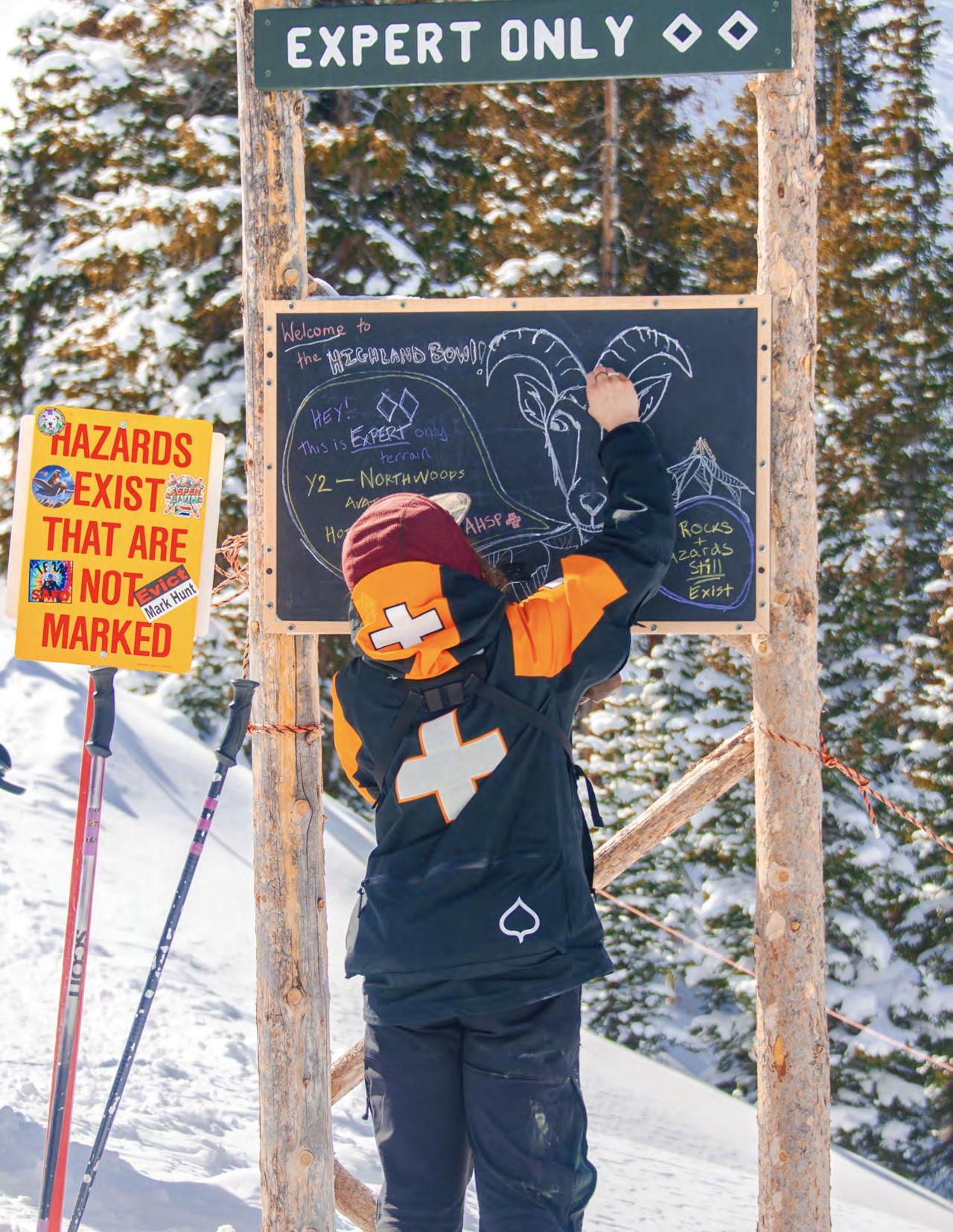
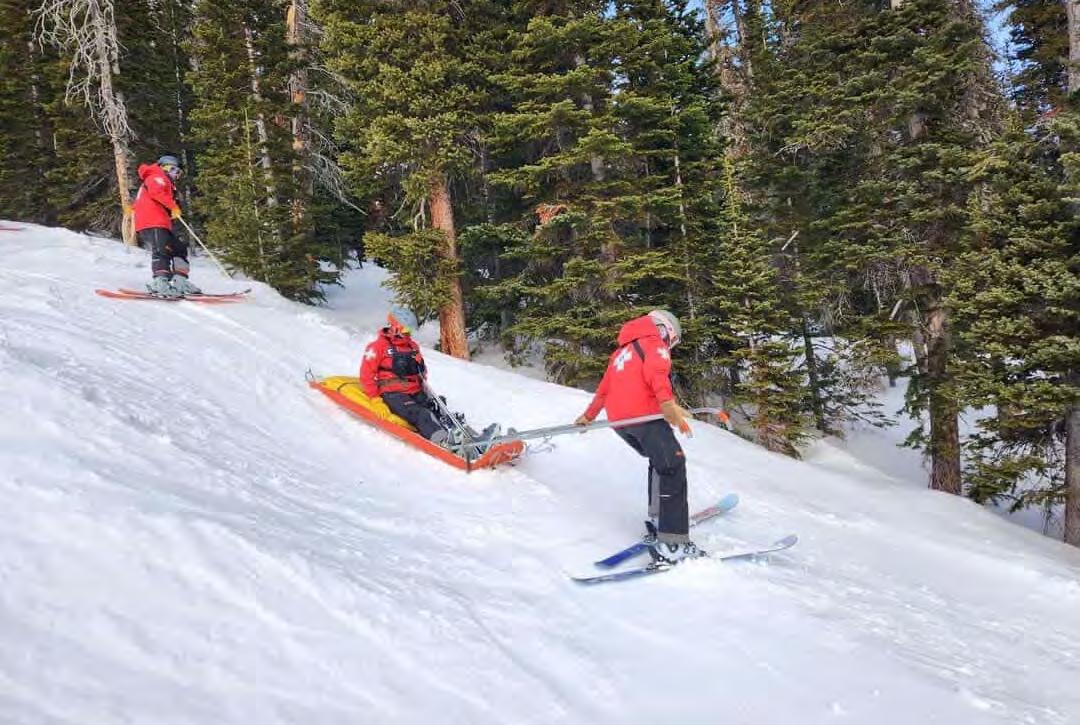
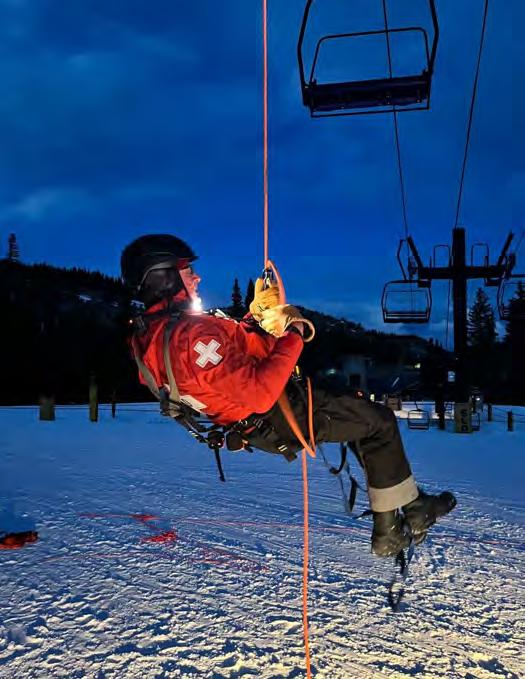
The hardest part of a ski patroller’s day can also be the best. Patrollers like Evan Calves see people at their worst, which is challenging and rewarding.
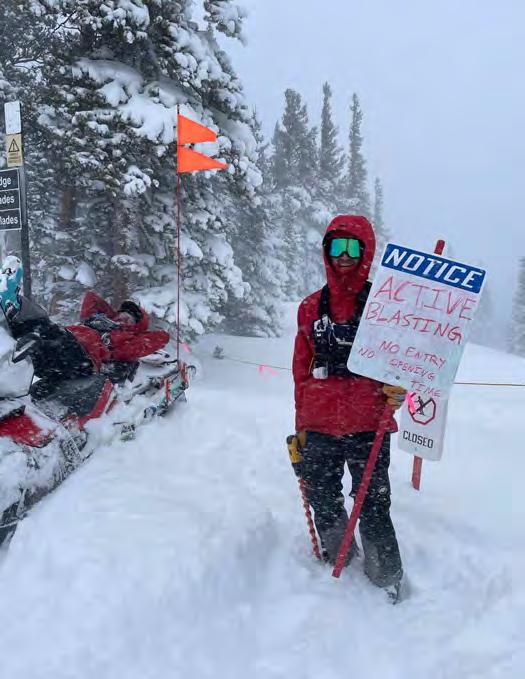
Ski patrollers complete essential tasks to make skiing possible. To maintain the resort, they conduct trail checks, assess new terrain, and act as first responders in medical emergencies. Patrollers are the backbone of Colorado’s beloved pastime, but their roles often go unnoticed, pushing some to unionize and bargain for benefits.
As vice president of the Eldora Professional Ski Patrol Union, Calves said he starts his day an hour and 15 minutes before opening. He suits up and heads to the morning meeting with his team to discuss daily goals and
logistics. From there, they go up the hill, and complete trail checks.
“We set up signs, rope blinds, make sure closures are in place that need to be there and then make sure the rest of the run is safe for the public to be on, ” Calves said.
After, the patrol takes position for the public to arrive, attending to their duty stations. Throughout the day, Calves and his colleagues undertake projects like maintaining open terrain, opening and assessing new terrain or performing avalanche control. On top of this, the team responds to any injuries and accidents on the mountain.
Completing a long day of work, the patrol sweeps the entire resort.
“We go down every trail, make sure everyone’s off of it, make sure everything’s put away for the night,” Calves said.
A ski patroller’s itinerary can vary depending on the day of the week. Weekends tend to be less project-focused because there are more guests, resulting in more injuries to attend to and more calls to run. Calves and his team call it “sitting status” when they’re up top and ready to run calls.
Routine can also vary by season. The early season is more project-heavy compared to the busy season.
“While there might not be as many people skiing on the mountain and we don’t have as much terrain open, we are pretty busy trying to get ready to open more,”
Calves said.
To become a ski patroller, the fundamental steps are medical training like earning the outdoor emergency care qualifications, having a background or interest in snow science and experience in skiing.
“When someone is having one of their worst days on the ski hill — which is a situation that no one wants to be in, and we don’t want them to be in that situation — but we need to show up for them,” Calves said.
The Eldora Professional Ski Patrol Union is fairly new. It was initiated with the goal of obtaining more workplace protections and better
benefits like healthcare and wages. The idea sprouted in the spring of 2023 and continued through the summer. By winter, patrollers made a petition that required signatures from 30% of them to hold an election.
“We had a lot more than 30%,” Nick Lansing, the union’s president, said.
An election was held in March 2024, where ski patrollers voted 30-3 to unionize. They started negotiating their contract that September. This is where the bargaining unit came in, which is a group of patrol volunteers that meets with representatives from Eldora and its owner POWDR to negotiate, acting as the patrollers’
unified voice.
The union quickly reached a tentative agreement, but full negotiation took 13 months. Throughout, the bargaining unit and company representatives read and discussed each article of the contract. There were 30 articles, consisting of various topics like healthcare.
The union ratified its first contract in October 2025, ending the long negotiating process.
“Being part of a union is something that can help us, as things continue to change in the industry, it can help protect us and make us more adaptable,” Calves said.
Words: Myra Kirk Design: Lincoln Roch
FansOnly
“Do you think we could masturbate together?” a young man on Reddit asked OnlyFans account Fawn Tales. “I’m just really lonely and hoping to find some affection.”
The messages that Rachel, Fawn Tales’ model, receives are so egregious and vulgar that they are filtered by her de facto manager and husband, Sam. The couple requested partial anonymity so their kids and jobs don’t happen upon this secret of theirs.
“I can’t believe there are that many people that reach out and think comments like that work,” Sam said. “Some of them are more vile than others, like, this one came in today:
‘Can my girlfriend and I use you for our first threesome experience?’”
In 2024, Rachel and Sam created the brand Fawn Tales for OnlyFans, Reddit and Pornhub in the comfort of their own home in Boulder. Seeking a more robust and adventurous sex life, the couple started filming short pornographic videos on their phones that soon meandered into kinkier territories: clowns, grinding on feet and blindfolding.
In total, the couple makes up to $60 per month from OnlyFans for livestreams and videos that they often repurpose from their Pornhub. They sometimes entertain making custom content on OnlyFans, too. One request looked like the couple pretending a client was in the room while they were having sex. However, they tend to be selective with what they engage in.
The couple is a heretic to the typical tropes, power differentials and angles that are seen in mainstream, free porn.
“You’re really going into this porn world of, like, ‘we gotta watch the angles and look your best,’” Sam said, even-keeled, in a white OnlyFans-branded hoodie. “That kind of takes the fun out of it a little bit. So we wanted to kind of stray away from that.”
Angie Schultz, a sociology professor at the University of Northern Colorado who researches sexual economies and sex trafficking at length, finds Fawn Tales’ business model to be an aberration to the current OnlyFans scene.
“We all hear jokes, like, ‘Wow, I’m running into hard times, maybe I’ll just start selling feet pics,’” Schultz said. “It never stops with feet pics. There’s always a subscriber that will push you to do more, so based on the data that I’ve collected, there’s no such thing as actual boundaries on OnlyFans.”
Schultz claims that relationships with subscribers on OnlyFans descend into paid sex, paralleling the grooming process of sex trafficking in real life. Through her research, she met a couple that lives in Las Vegas that hosts illicit “content creation parties” for OnlyFans, which rallies subscribers for bareback sex with creators. There are no stipulations, including STI testing, for those parties.
Schultz argues that the trope of the empowered millionaire woman on OnlyFans doesn’t exist. More often than not, people are making a pittance of the advertised millions on OnlyFans, like Fawn Tales. Per Stats OnlyFans, the average creator makes $131 per month in 2026.
“The return on the investment of selling content on OnlyFans is trauma and not much money,” Schultz said.
The most salient trend she unearthed in her three years of interviewing sex buyers in Denver at the point of arrest, however, is their age.
“People who look like they’re my college students are sitting across from me in this hotel room, and they’re like, ‘OnlyFans wasn’t doing it for me anymore, so I decided to buy sex in person,’” Schultz said. “These are people that would never be engaged in the commercial sex industry at all, but OnlyFans is an on-ramp.”
This trend is corroborated by Fawn Tales, who also noticed college-aged users messaging and interacting with them. Sam expressed concern for the younger men interacting with their posts.
“Go meet some people,” Sam said. “Go to the bar, go on a dating app, I don’t know. We’re parents, we have kids. I’m looking at it from a perspective of, like, ‘Oh my God, the men’s youth of today are really screwed.’”
This isn’t to say that online sex work is replete with just perverts. There are benefits for couples, especially. As a couple, Fawn Tales claimed they achieved better intimacy and communication as a result of taking this intrepid risk.
“I always thought a marriage was like, you go to bed, there’s one way to have sex and everything else was really taboo,” Rachel said. “But this has definitely opened my eyes to a lot more that you can do in the bedroom.”
While the most successful creators on OnlyFans are female celebrities like Blac Chyna, Bella Thorne and Cardi B, there are high engagement rates for couples, too. According to WifiTalents, heterosexual couple accounts earn 25% more than a solo male account.
The scathing vitriol and stigmas that come from putting oneself and your body out there in a “puritan,” morality-wrought society, as sexologist Jen Meyer puts it, is a challenge that’s posed to couples she sees.
For instance, she saw a professional porn star couple get married, and about half the guests that attended their reception were also involved in the industry.
Their families were oblivious to the fact that half of the guests there were performers, but commented on how “lovey” everyone was.
“If they were to know this is what these folks are doing for work, they’ll assume something like dysfunction or dysregulation,” Meyer said.
While porn and OnlyFans sit in a moral abyss for many, the consensus from experts and creators alike is that the driving force for the industry is young.
Meyer found that the adversity she encounters in her clients, especially among a younger demographic, is the forethought behind opening up a relationship to non-monogamy and creating porn.
“With the younger folks, it was starting to get trendy because it was out there on social media,” she said. “What I have seen is that people will jump in because it’s the cool trend without doing their due diligence.”
By due diligence, Meyer means a mental inventory where you are reflective and you understand how you fit into a sexual dynamic. Fawn Tales has its own consensual flow — authentic to themselves — but the question lies on if it’s the same case for other creators.
In a sex industry where there’s burgeoning evidence for nonconsensual situations and sex trafficking like the Epstein files, there are also creators countervailing that exploitation with their own twist on what making love can truly be.
“I did a boudoir photoshoot last year after we started the videos, and I felt so comfortable just being naked,” Rachel said. “It’s a lot less scary than you think.”
110,592.
That’s how many people were in front of me in the Ticketmaster queue to see Harry Styles at Madison Square Garden.
As a longtime lover of Styles, I indoctrinated every member of my family to join the “Ticketmaster War.” For four days straight, twice a day, everyone in my family sat behind computer screens, scrambling to get tickets. What we were not expecting was how Sisyphean a task this became.
Day after day, we were greeted with the dreaded screen showing “this show is sold out.” Our hope, which came from getting a spot in line lower than 25,000, was quickly shattered when we saw the ticket price of $1,000.
This couldn’t possibly be normal, could it? We had seen Styles perform pre-COVID, and it wasn’t half as difficult to get tickets.
Words: Hannah Schuller Design: Mia Pendergast
What changed? I turned the idea around in my head as I went to bed feeling defeated and emptyhanded. The suspect at the end of my blame-pointed finger was social media.
Whether it’s Spotify or Instagram, what we should be listening to is shoved down our throats on every platform. Social media took a monopoly over our individual music tastes, and the appreciation for the art of music along with it.
One could open TikTok and see five different videos all with the same song playing. The whole lure of mindless scrolling doesn’t just pertain to visuals. When a chorus of a catchy song is playing over and over, the idea that you enjoy said tune enters your consciousness. The ability to form a unique opinion doesn’t stand a chance against the algorithm.
In 2024, TikTok partnered with Luminate, a music analysis
company, to measure its influence on music. According to the data, 84% of songs on the Billboard Global were trending on TikTok first before claiming their spot on the chart.
If more than half of the Billboard top hits started on TikTok, that wipes smaller artists out of the race before it even starts. More than that, the platform became a dictator of the global success of music. Have we all become ants, brainlessly following our faithful leader, TikTok?
There is no way to dictate whether we really enjoy what is trending, or whether we have just fallen prey to the algorithm. In defeat, it is easy to turn solely to streaming platforms such as Spotify or Apple Music, but even those are becoming increasingly more social. With features like following, direct messages, the ability to see what your friends are listening to, and Spotify Wrapped, music is becoming content.
The ability to instantly stream a song at any time is one of the great feats of our modern time. However Elise Collie, who has been working at Paradise Found Records on Pearl Street for nine years, disagrees. She found that we lose much of the artist’s intent when we only stream music digitally.
“You have the liner notes and the temporary tattoos; they sneak special pressings, and you have the back cover of the album,” Collie said. “Which so many people miss, because they only listen on Apple Music, ... They have no idea what the artist’s whole intention with all of the pieces are. And as silly as it sounds, it’s kind of magic, or at least it is to us music nerds.”
We, as consumers via streaming, aren’t even getting the true experience of the album when we are unaware of something as seemingly mundane as the back cover of the album.
But there are two sides to the coin. Social media has contributed to the success of many small artists, and there is nothing better than the ability to stream a song on your phone as you go for a walk.
Still, one of the most raw and authentic expressions of human experience is becoming muddled through our constant technological innovations. The luxury of finding a song that speaks to your soul is losing the fight against the never-ending loop of TikTok sound bites and AI-generated Spotify playlists.
So, were all the 11.5 million people on Ticketmaster true fans of Styles, or had they watched one too many TikTok dances to ‘Watermelon Sugar’ and begun to think they truly enjoyed it?
So, you’ve tried to meditate. You closed your eyes and attempted this concept that’s been incorporated into curricula and printed out on poster boards: this “mindfulness” that many believe holds the key to focus and happiness.
I remember first hearing of mindfulness in my middle school homeroom. It was served over the loudspeaker as an attempt from the administration to reduce stress. Instead of mass mental health improvement, I witnessed throngs of students crush the administration’s attempt under their Converse.
It wasn’t until five years later that I attended a teen meditation retreat at Insight Meditation Society (IMS), a popular retreat center in Massachusetts. Up until that point, at age 17, all I knew was that I knew nothing and that I wanted to know something. I desired the wisdom and ease that I witnessed in my mentors.
Instead of calm and tranquility, I found a storm of thoughts, worries and desires taking root in my mind. The mind was not a place of stillness but a field of calamity.
Despite difficulty, coming back to the cushion again and again, I was able to discern a path in the tangled wood of my mind. It was profound to notice things that blended into the crowded composition of experience. And so, to IMS I returned year after year.
After my time at IMS, I continued to practice on my own. But outside of the retreat community where I had felt curiosity, I now felt overwhelmed. Where I had found energy, I now found doubt. I remembered the presence held by my teachers, and the trials they passed to attain it. In hope for my future, I knew this was a path to continue.
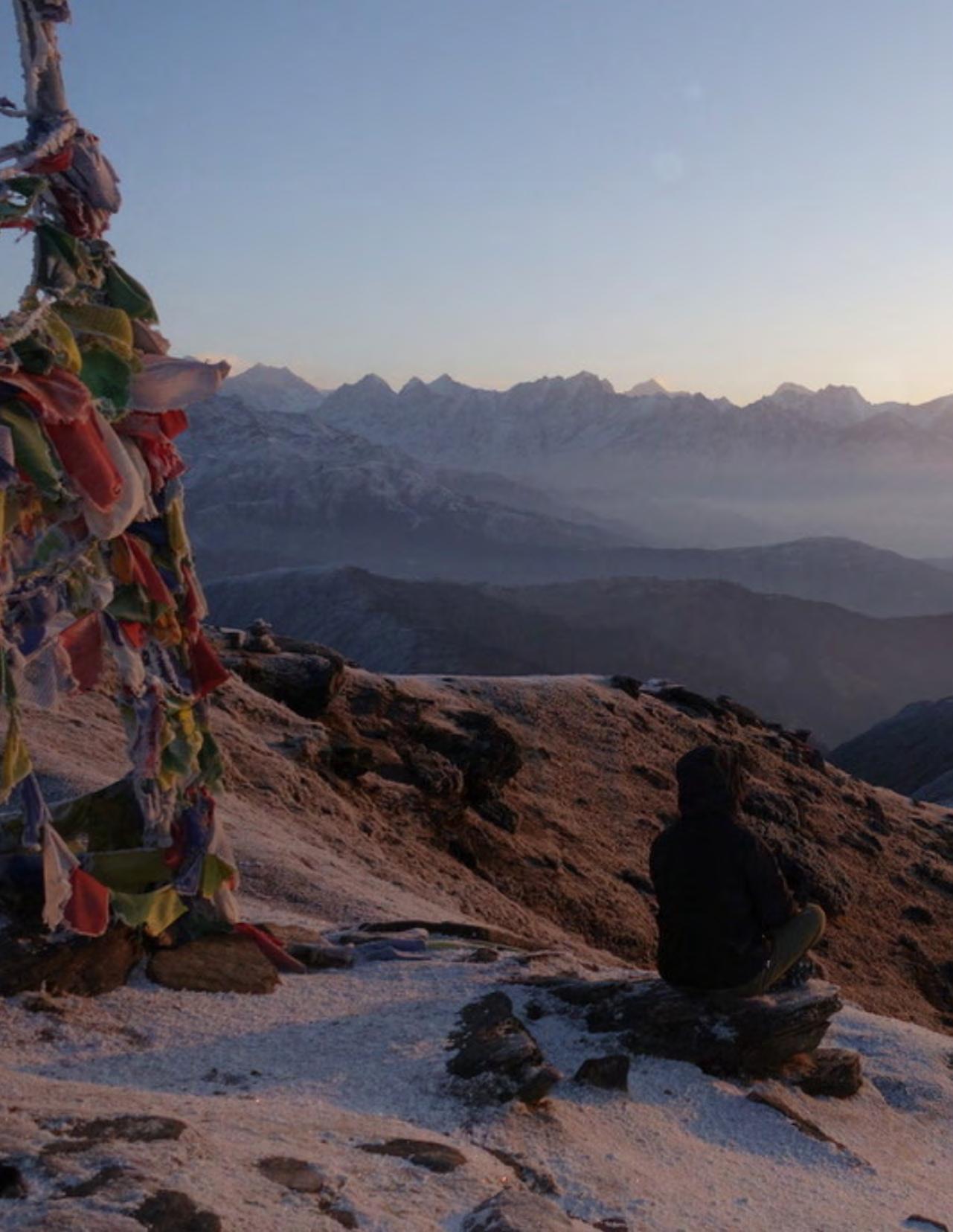
I found a connection to the roots of these practices during my time in Nepal. Faith coming to fruition; meditating on the below-zero peaks of the Himalayas and in the hectic bazaars of Kathmandu.
None of my experiences in the West had prepared me for my time at a Tibetan Buddhist Monastery. There I learned of Buddhist theology and meditated among those who practiced for enlightenment, while I could barely acknowledge the concept of rebirth.
At the monastery, among the jasmine flowers and breathtaking views of the valley, I bore witness to the distance between the practices of these people and the mindfulness taught in my public education. My relationship with meditation
expanded, and in my curiosity, I knew I had started on a path that I could not disembark.
This path of mindfulness does not immediately produce existential tranquility and abundant peace. Just like any practice, it takes time, dedication and consistency.
I liken it to a path in the woods. In an uncharted wood, the first time forging a path is disorienting; it might feel futile, like a clear way will never make itself known. But if you continue on, and walk the path again and again, the foliage will begin to be familiar to you. Your steps evolve into the dirt floor, and soon enough, the woods will be your home.
And now, I am a student once more. Busy-minded and with both too much energy to know what to do with and not enough energy to keep up with it all. As I continue on this path, the tangled wood that was once foreboding has now begun to clear. I still need a map and make some wrong turns here and there, but I have begun to know these woods and have faith in my direction.
So if you’re feeling lost in the woods, take a moment to meet the trees, curious about their story, and feel the wind as if it is a long lost friend.
Maybe you’ve attempted this practice before, you’ve tried to sit and quiet your mind. People find this practice in many ways: It could have been a poster in a guidance counselor’s waiting room or as unsolicited from your slightly estranged yogic aunt. Whatever way it may be, if you just keep walking, you’ll eventually know where you are.
Yo Sabo, y soy Sufficiente
I know And I am Enough
Young Latinos lean into the ‘no sabo kid’ identity, taking shame and turning it into a game.
For Leslie Martinez, sometimes it’s easier to pretend like she can’t speak Spanish. That way, she can avoid the side-eye question of “Where are you from?” And, when she inevitably answers she’s from the United States, the “Oh, you can tell.”
She grew up in Greeley, Colorado, a city with a 41.6% Hispanic or Latino population in 2024. Both of her parents spoke Spanish at home and she finds she lacks confidence when faced with inquiries.
“I feel like there are some people that are like, ‘You’re either Hispanic, 1,000%, or not at all,’” Martinez said.
She’s not alone. According to a Pew Research Center report, 25% of Hispanics consider their Hispanic identity important to how they view themselves. Some believe that someone must be able to speak Spanish to be considered Hispanic.
More to the point, a current “no sabo kid” meme has become a label for U.S.-born Latinos who cannot speak Spanish fluently.
In some cases, it can simply be a lighthearted tease between friends and family. There are hundreds of posts on Instagram under the hashtag “no sabo kid,” in which young Latinos test each other’s Spanish. They often try to trip each other up with infrequently used words like platypus (ornitorrinco) or goosebumps (escalofrios).
In other cases, the no sabo moniker is another way to shame young Latinos whose Spanish is deemed “not good enough.”
“On paper, you would technically say I’m fluent, but people get very nitpicky about it,” Martinez said.
When she entered high school at Greeley West, she decided to take a Spanish course for native speakers. The decision felt obvious to her. At the time, she was very confident in her Spanish.
However, her elementary and middle schools were predominantly white, she noted. Her bilingualism was well-established in these spaces, accepted as fact. No one could question her fluency or identity.
Words: Victoria Flores
Art & Design: Vito Russell
In that classroom at Greeley West, for the first time, she measured her Spanish against that of other Latino students, many of them first-generation Americans.
“I would mispronounce a word, and they would be so annoyed and correct me,” she said.
This had never happened to her before; it was a new and uncomfortable experience. As Martinez realized in that classroom, simply speaking the language is not enough to protect one’s cultural identity from being challenged.
“The ‘no sabo kid’ to me is so fascinating, because it’s Hispanics and Latinos gatekeeping other Hispanics and Latinos,” said Tracy Quan, an assistant professor of Spanish linguistics at the University of Colorado Boulder.
In her research, Quan examines how language learning can be either an oppressive or a transformative experience, depending on context.
In Quan’s perspective, no sabo can be oppressive because of the negative perceptions towards children who speak Spanish, but either not well enough or the right kind. She argues that bilingualism is a spectrum. To her, language is contextual.
“It’s not about either you are or you are not, because that’s just not the way language operates,” Quan said. “There’s no ultimate end state.”
Ingrid Romero, a University of Denver undergraduate, embodies this principle perfectly.
She grew up in Aurora with two parents who spoke Spanish at home but didn’t start learning English until she attended school. She can’t recall a time when her Spanish was questioned and found lacking. Romero is not a “no sabo kid.”
However, there is something Colorado could never give her. Something she didn’t even know she was missing: the Salvadoran accent.
“Going back to El Salvador and talking Spanish, I may know the word, I can speak it fluently, but because I don’t have that extra thing that everyone else has, it’s like, ‘Oh, you’re not from here,’” Romero said.
The context has shifted, and the line that marks Romero’s Spanish as good enough has shifted with it. As broader social awareness of the line grows, many Latinos are choosing to do away with it entirely and instead reclaim the “no sabo kid” identity.
One example of this is “Yo Sabo”, a card game created by Carlos Torres, a first-generation college student of Mexican descent.
According to the Yo Sabo card games website, “Yo Sabo was born when Carlos wanted to improve his Spanish after always being known as a ‘no sabo kid.’ It was created to help people learn and remember those tricky Spanish words, but it soon evolved into a game that connected people to their Latino roots.”
The “yo sabo” tag on Instagram has over 1,000 posts, including multiple videos that have garnered over a million views. Testing each other’s Spanish has gone from a method of gatekeeping in the Latino community to actively engaging and building it instead.
Quan emphasizes that a large part of reclaiming the language lies in acknowledging that its loss is often not an individual’s choice.
“We get to a point where we may not speak the language of our families, not because of just personal choice, but also because of social, political and historical reasons,” Quan said. “In the case of the United States in particular, it’s not only tied to language because there have been so many factors that have prevented you and your family potentially from learning that language.”
For Martinez, the Spanish language, even if she can’t always speak it perfectly, is a vital part of her connection to her Latina identity.
“I think that’s really cool if you talk to someone that just learned Spanish, and they’re like, ‘Oh, my Spanish is not that great,’ and I’m like, ‘Well, mine isn’t either.’ But look at us, we’re communicating,” Martinez said.
What ski aesthetic are you?
Design: Ingrid Pehrson
Where are you posting up for the season?
A. You “live” at A-Bay
B. Breckenridge (you say “Brek”)
C. Aspen (you “don’t do lines”)
D. The park at Copper (you know every rail like it’s your ex)
What are you sippin on?
A. Colorado Kool-Aid (Coors Banquet)
B. Lodge beer ($$$ but you “deserve it”)
C. Martini for the pics
D. Sugar-free Red Bull (you haven’t slept since 2017
What’s your ski fit?
A. Mountain Hardware that’s slightly stained but trusted
B. Arc’teryx head-to-toe
C. Matching slim fit set (oxygen = optional)
D. Baggy everything (smells like last season)
Your ride to the mountain:
A. A 4Runner with 3 stickers and a broken radio
B. Jeep Wrangler (CA plate, no snow tires)
C. G-Wagon (you spun out otw)
D. Subaru with a missing bumper (still rips)
Shoes in the parking lot?
A. Blundstones (“hike after?”)
B. Rainbow flip flops (yes, in January)
C. Fur boots (après ski vibes for the gram)
D. Vans with a hole in the left toe
Mostly A’s: The Local
What are you listening to?
A. Goose (“this band changed my life”)
B. Drake (you whisper “yeah..” before dropping in)
C. Charli XCX (serving c*nt)
D. Mannequin Pussy (“one more for the edit”)
What’s for lunch?
A. PB&J in a plastic bag
B. Lodge chicken tenders (you need a break after 2 runs)