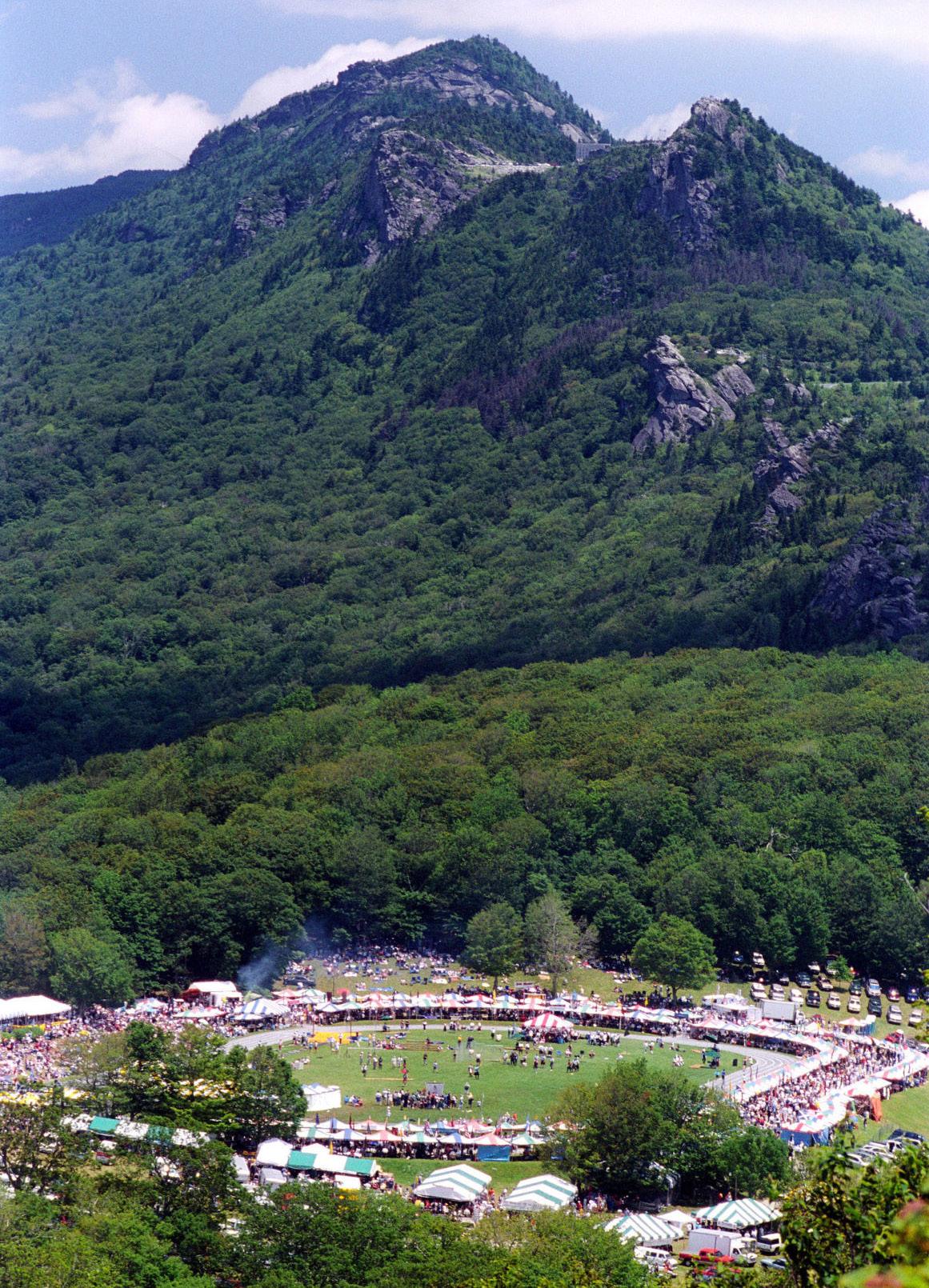



Welcome everyone to the 70th Annual Grandfather Mountain Highland Games. We are the oldest games in the South, and 70 represents a real milestone. We are thrilled to be back once again in our beloved MacRae Meadows, which is perhaps the most iconic site for a Highland Games anywhere in the world.
Our Chieftain of the Games for 2026 is John Gunn, Chief of Clan Gunn. John is joined by his wife Sarah, who currently serves as the Secretary for the Standing Council of Scottish Chiefs. Please make a point of welcoming John and Sarah and visit the Gunn clan tent during your time at Grandfather.
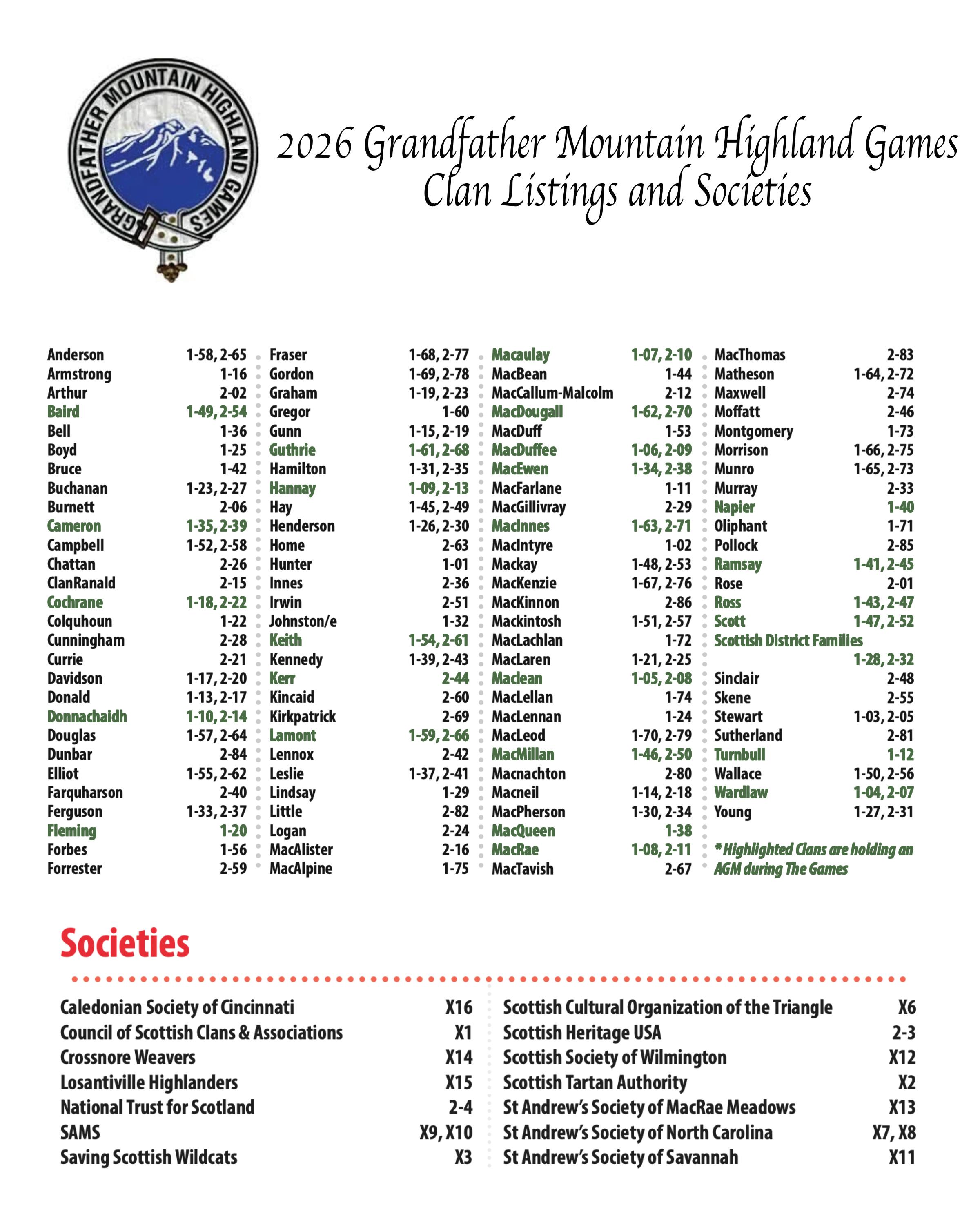
Continuing our tradition of hosting the largest number of Scottish clan and family societies in the world,

we have 108 clans this year. Twenty-six of our societies are holding their Annual General Meeting at GMHG, which makes Grandfather the leader in those types of clan gatherings.
Our Board of Trustees remain squarely clanfocused, and we are delighted to maintain our world class leadership role. All visitors should take time to tour clan row and visit the tents- I’m sure you’ll be glad you did!
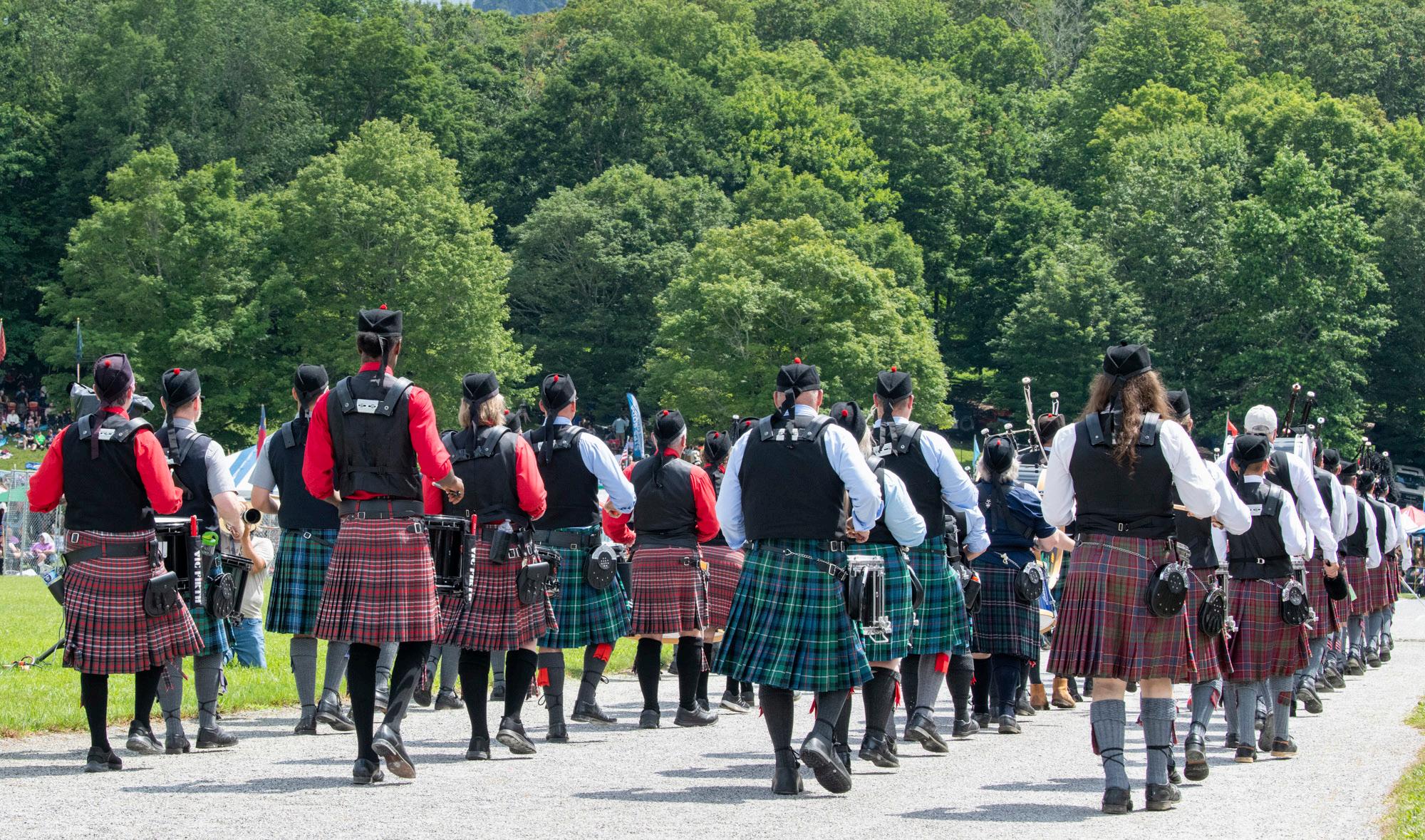
fields laced with skilled competitors.
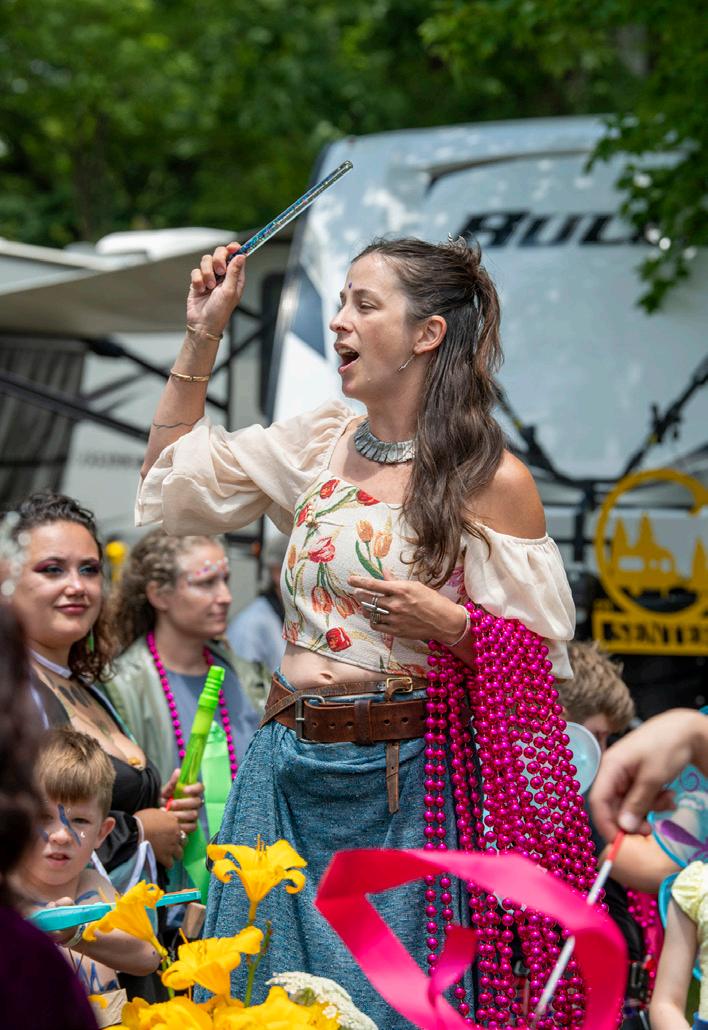
Our Groves entertainment this year includes folks who have been to Grandfather before and remain crowd favorites. This year’s lineup includes some new faces, and we are excited to have them join our troupe.
experts.
Our Games events remain top notch. Highland Athletics, Highland Dancing, Piping and Drumming, Harp and Fiddle, and Track and Field feature strong
Please pay special attention to our Scottish Cultural Village offerings for 2026 as it is an especially strong program. The Cultural Village is the best opportunity for many to learn about Scottish history and culture. Once there, you will hear authentic programs presented by recognized
We have many to thank for our 70th rendition of our Highland Games. Our corporate sponsors and our trophy sponsors are key to our success, and we could not make it without them. And as always, our staff and volunteers are key to each year’s Highland Games. The amount of work they put in each year is staggering, and 2026 is certainly no exception. We owe a great deal of thanks to these folks for the excellent facilities we enjoy. Please take time to recognize them.
I look forward to visiting with my old friends, and to making new friends at our 70th Games!
Yours Aye,
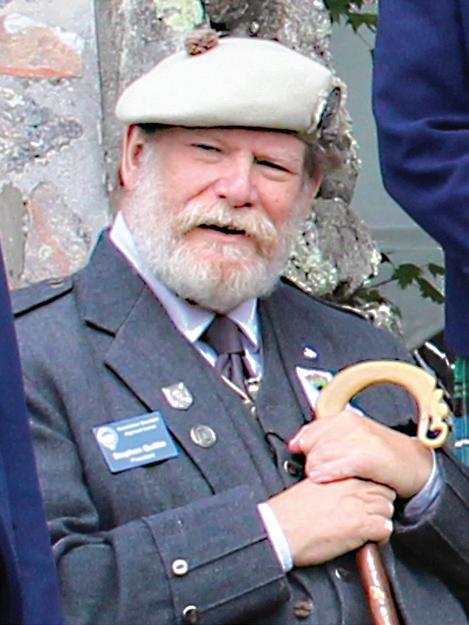
Steve Quillin PRESIDENT, GRANDFATHER MOUNTAIN HIGHLAND GAMES


BY SHANNON DEROSAS
NUMBER OF SCOTTISH
CLANS AND SOCIETIES: 108 families, 18 cultural organizations
NUMBER OF CLAN TENTS: 108
HONORED CLAN: Clan Lamont
CHIEFTAIN OF THE 2026 GRANDFATHER MOUNTAIN
HIGHLAND GAMES: John Gunn of Gunn
EXPECTED ATTENDEES IN 2026: 45,000
CORPORATE SPONSORS:
Glenmorangie, Idloom, St. Andrew’s Society of Raleigh, Grandfather Scottish, Grandfather Mountain Stewardship Foundation, Scottish Heritage USA, WNCW 88.7
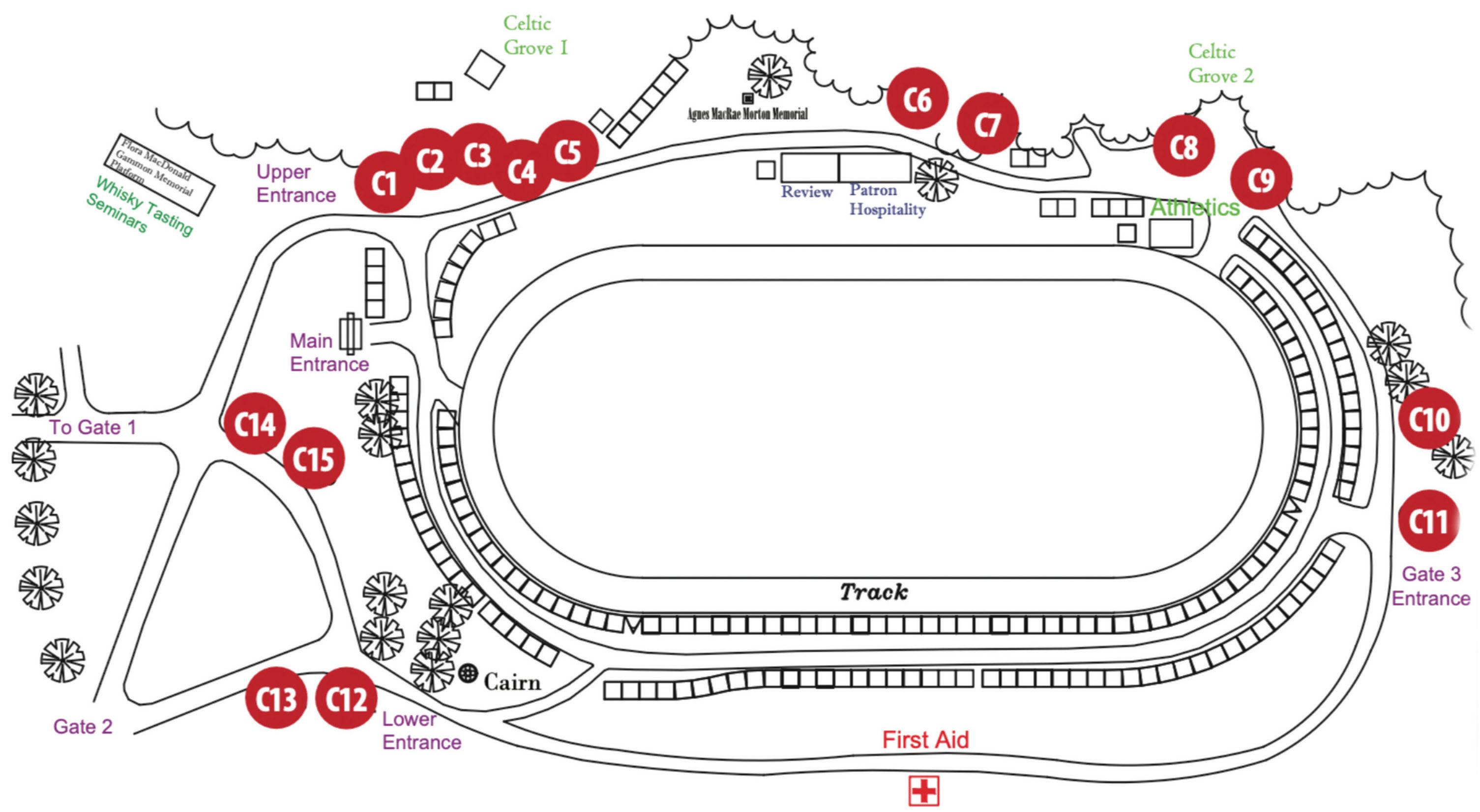
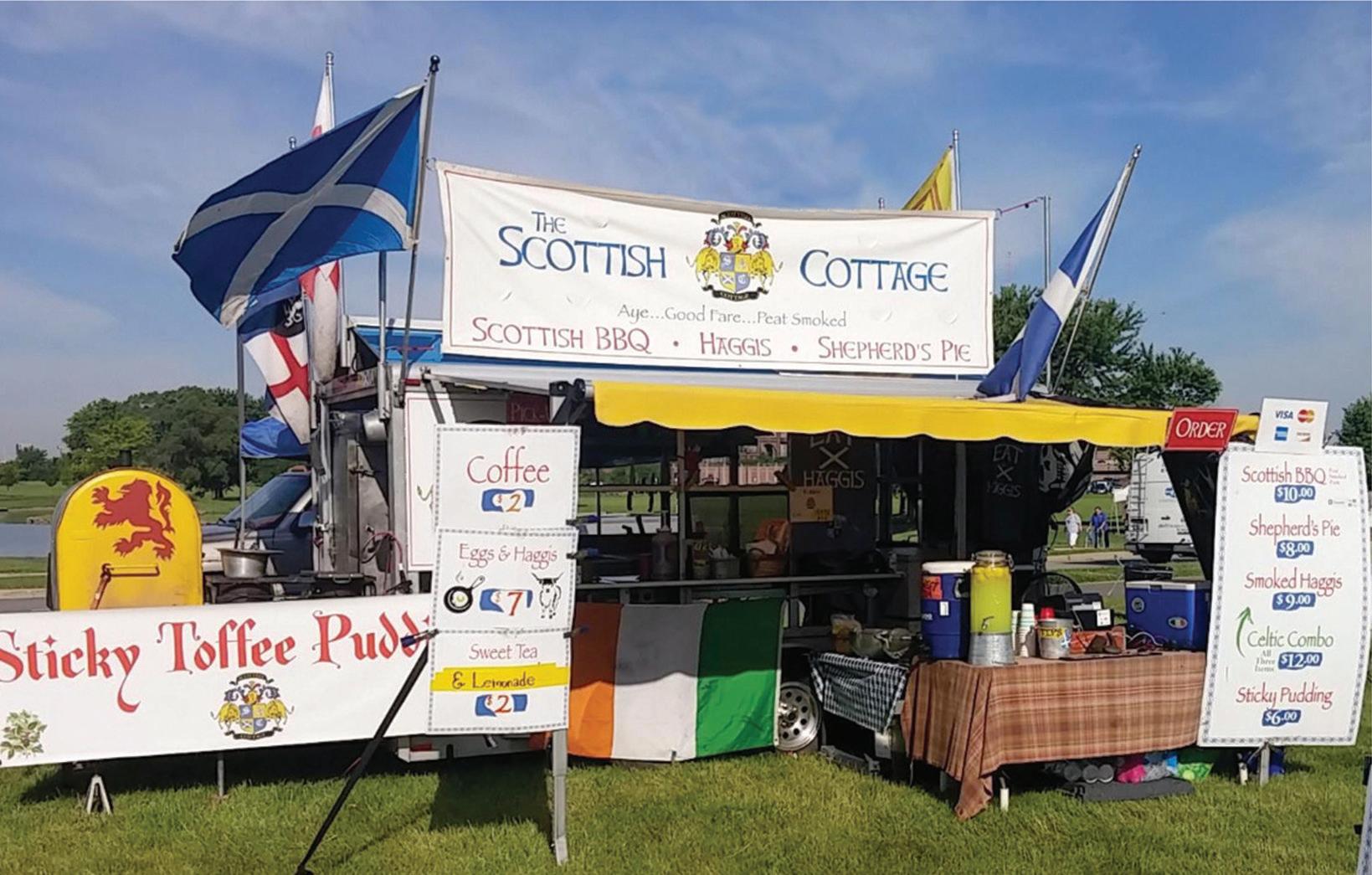
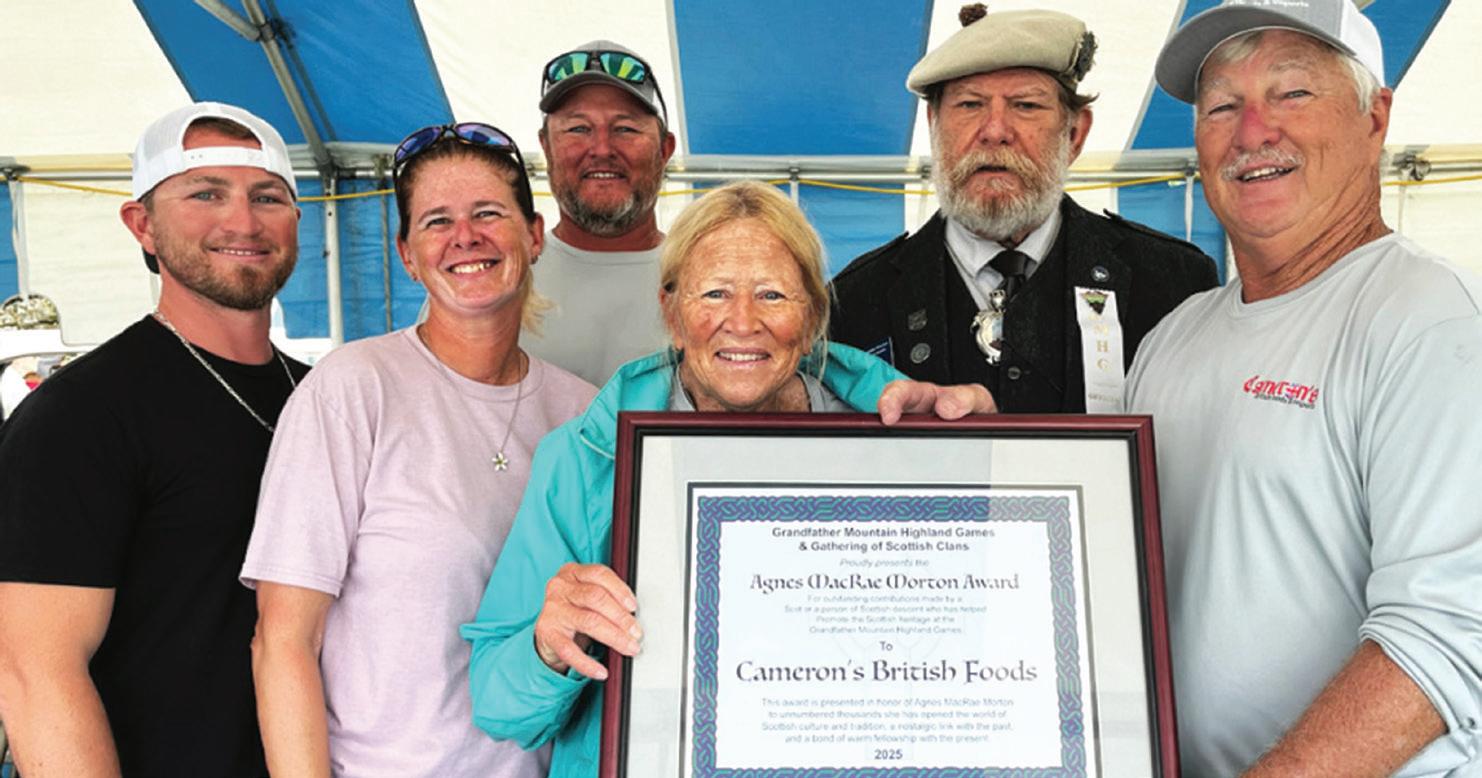
FOOD VENDORS: The Celtic Monkeys, Mr. Coffee Concierge, Scottish Cottage, Fork in the Road, Gus’ Greek Food, Cameron’s Bakery and Desserts, Crossnore VFD, Lanky Lassie’s Shortbread, Mookie’s Popcorn, Steele’s Concession, Carolina Pork Rinds, Brick Oven Pizza, Buttercups Ice Cream, Sips
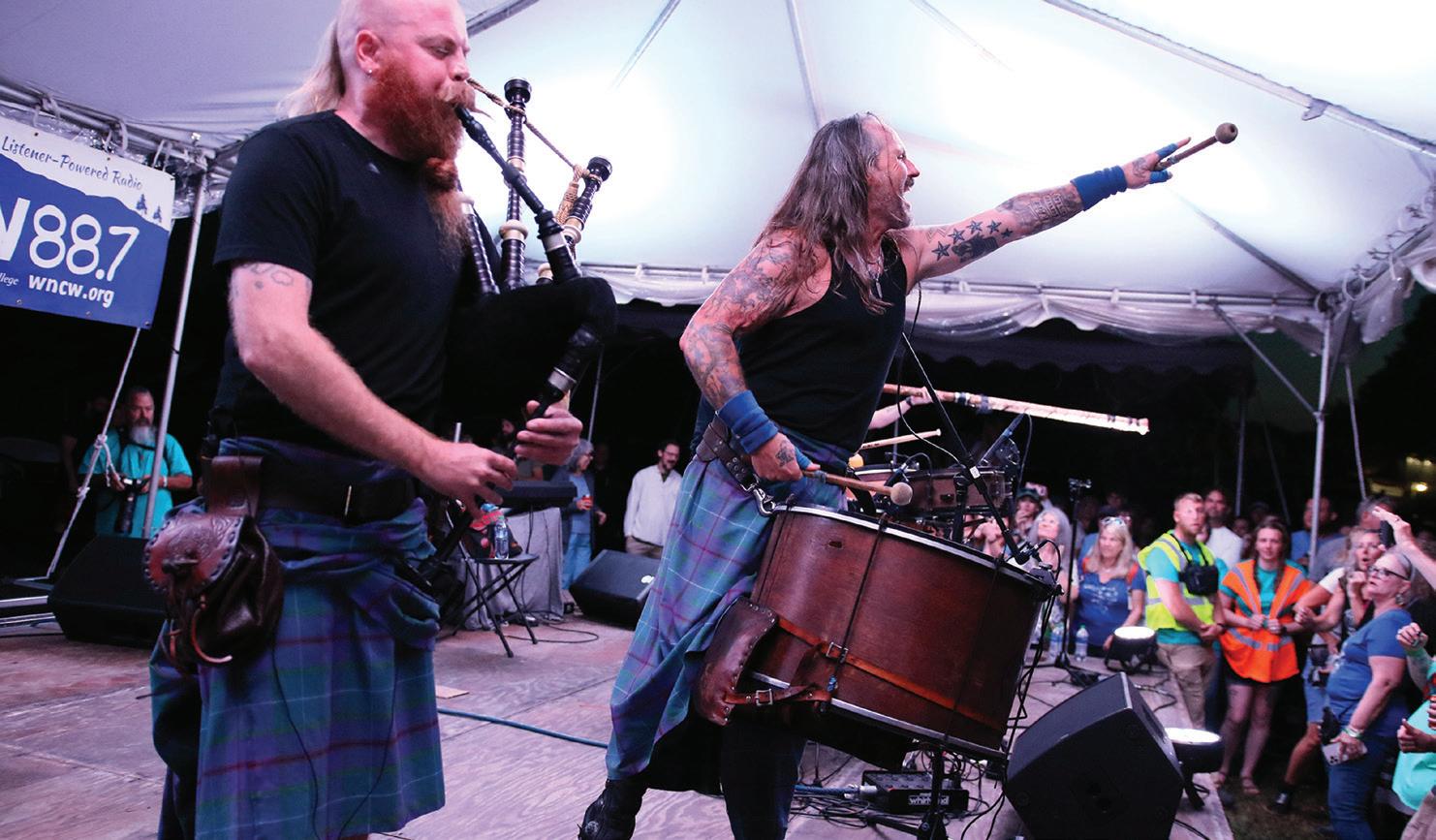
Soda Shop, Cameron’s British Foods FEATURED MUSICAL PERFORMANCES: Seven Nations, Seán Heely Celtic Band, Ed Miller Trio, Mari Black, Voices of Valverda, StrathSpan, Émigré, Brothers McLeod, Will MacMorran, Rosalind Buda, Colin Shoemaker, Tune Shepherds




BY HOPE DAVIS
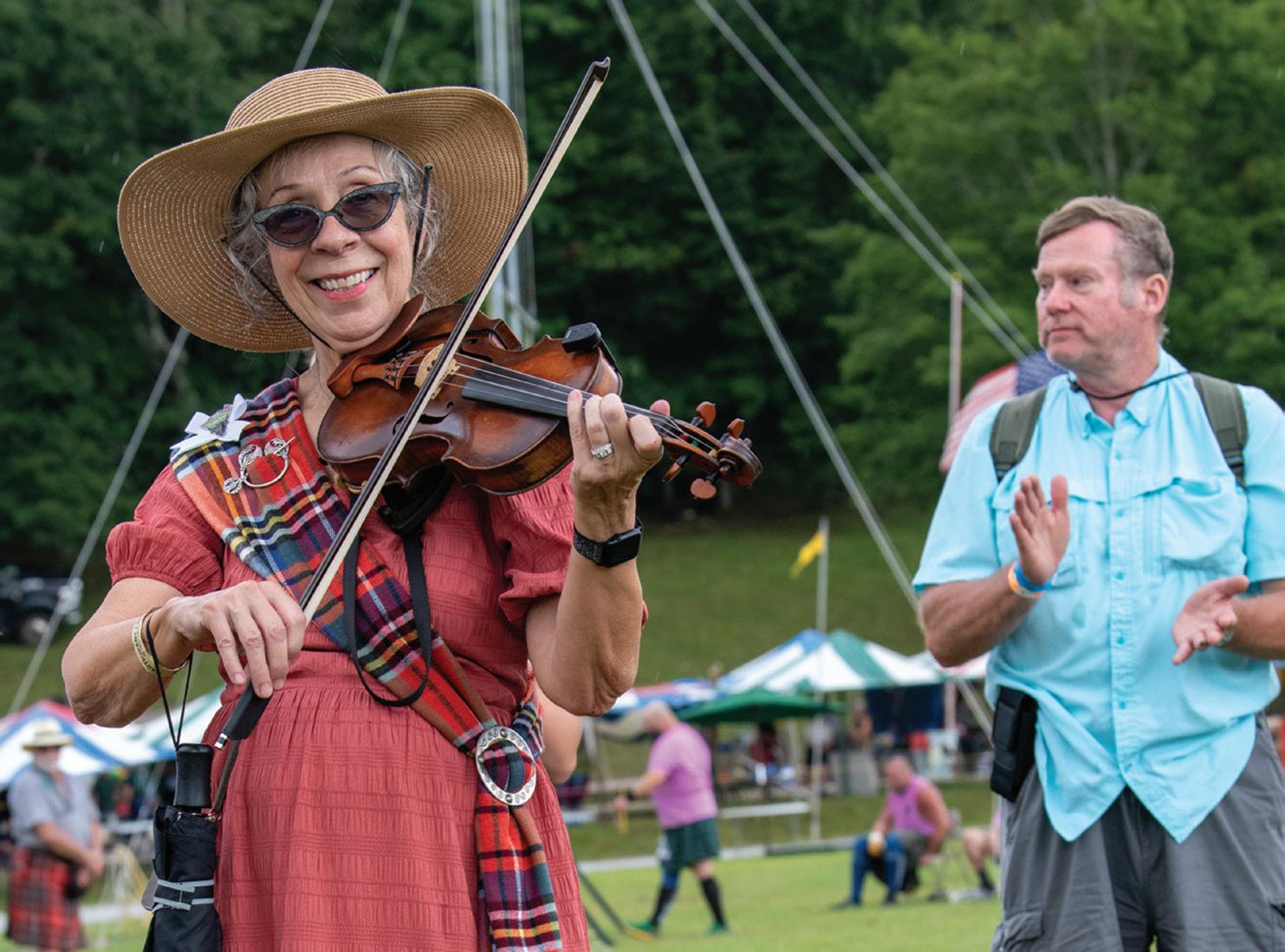
LINVILLE — Alongside action-packed athletic events and steaming plates of haggis, no Highland Games would be complete without traditional Celtic music traveling with the cool mountain breeze atop Grandfather Mountain.
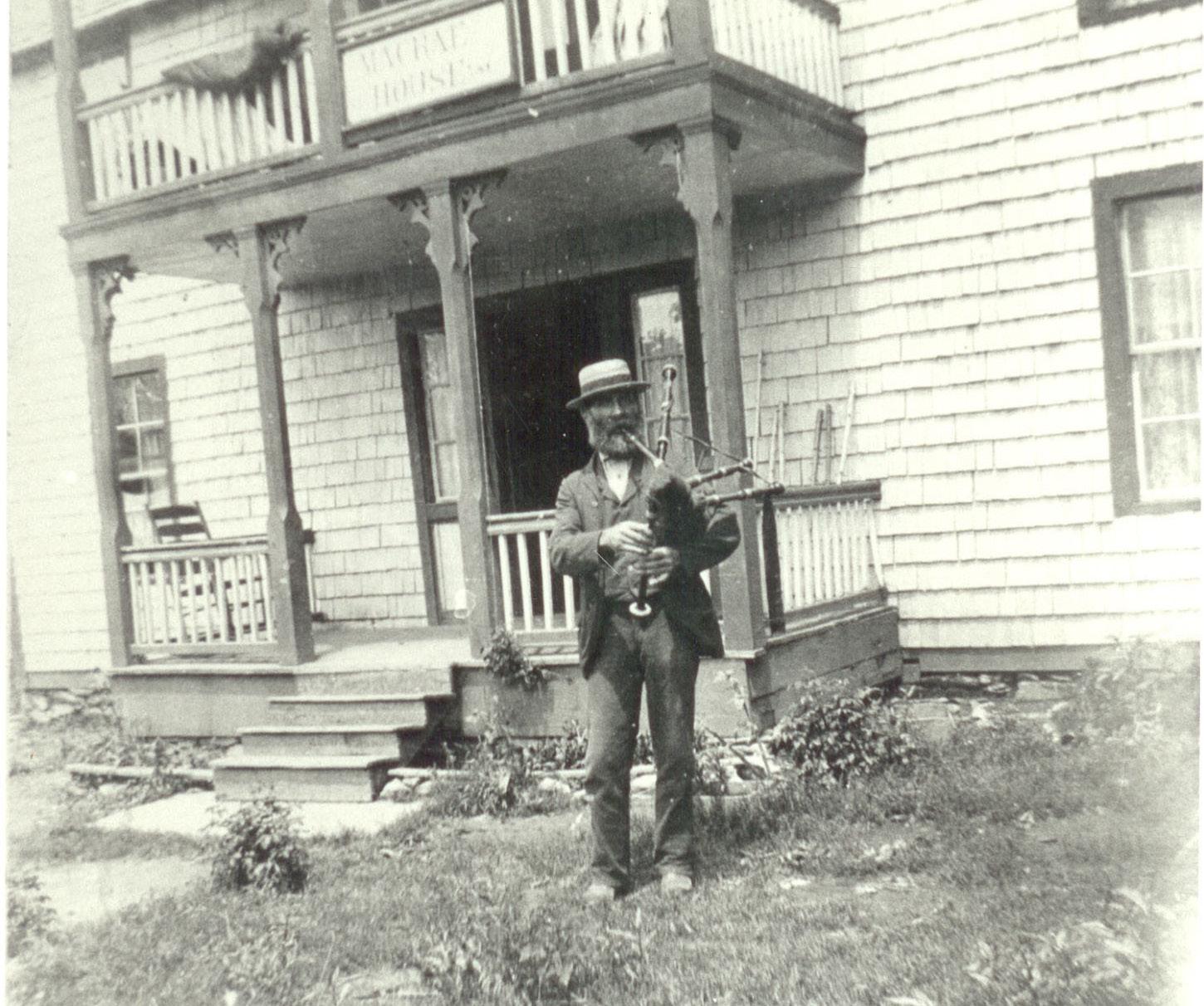
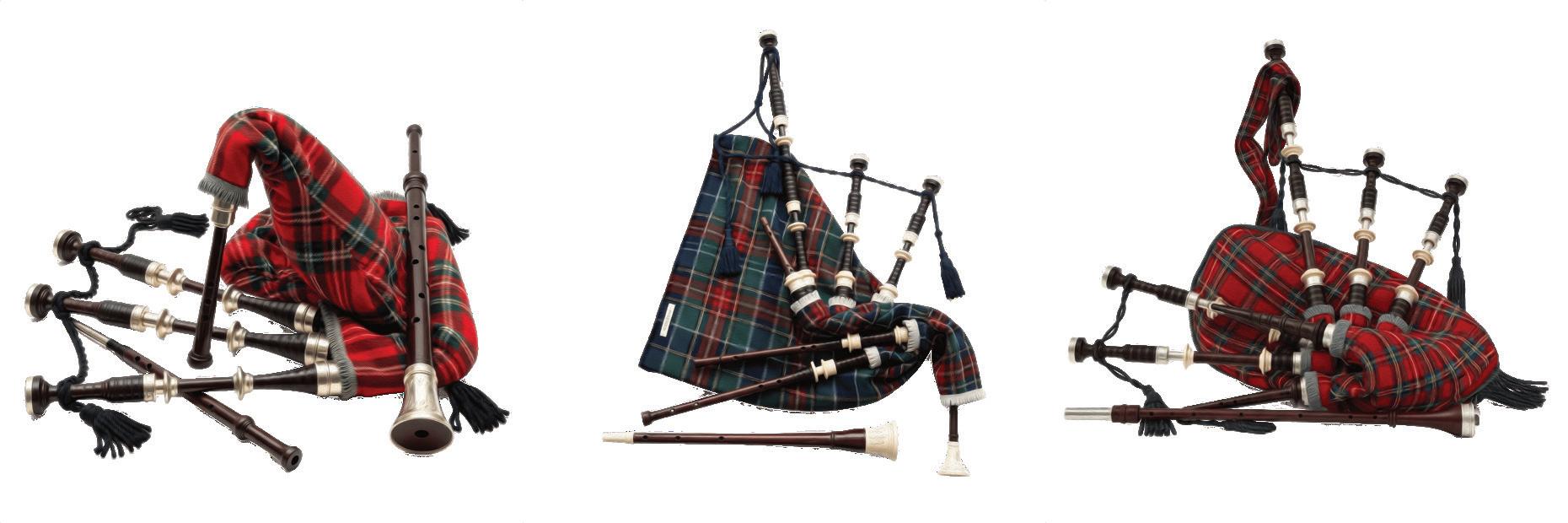
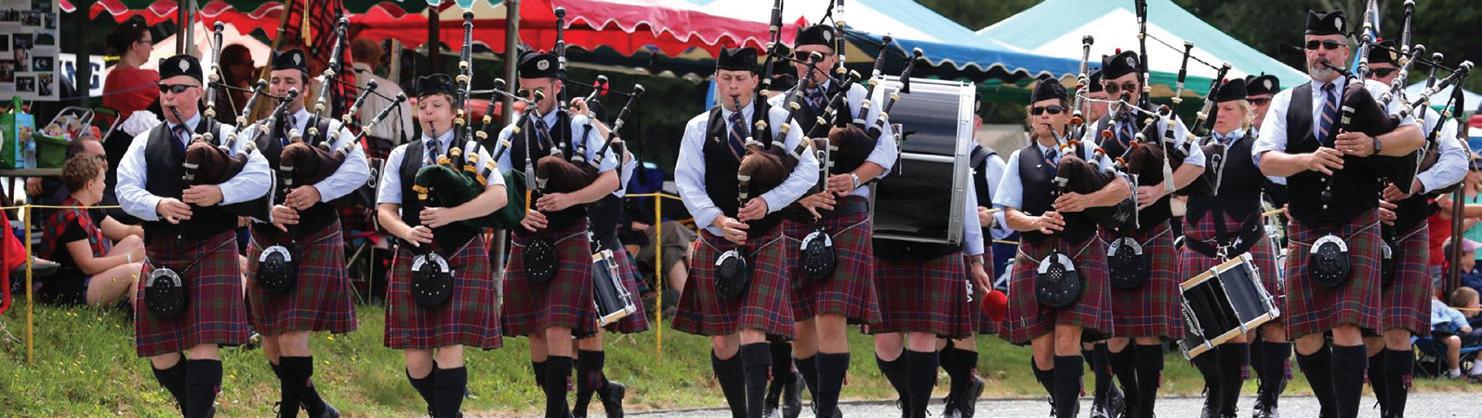
Originating from the folk music traditions in the remote, Celticspeaking regions of Europe, the music of the Grandfather Mountain Highland Games has evolved over centuries to bring song and sound to Scottish gatherings. The performances are defined by bagpipes, drums and fiddles, each harmoniously transporting visitors back to the rugged terrain of the Scottish Highlands.
Grandfather Mountain Highlanders (GMH) will continue its 52-year run as the host band of the annual Grandfather Mountain Highland Games. Founded in 1974 by Harvey Ritch and Agnes MacRae Morton, GMH has competed and taken home the gold in competitions across North America. The group has even journeyed back to the motherland to compete twice at the World Pipe Band Championships in Scotland.
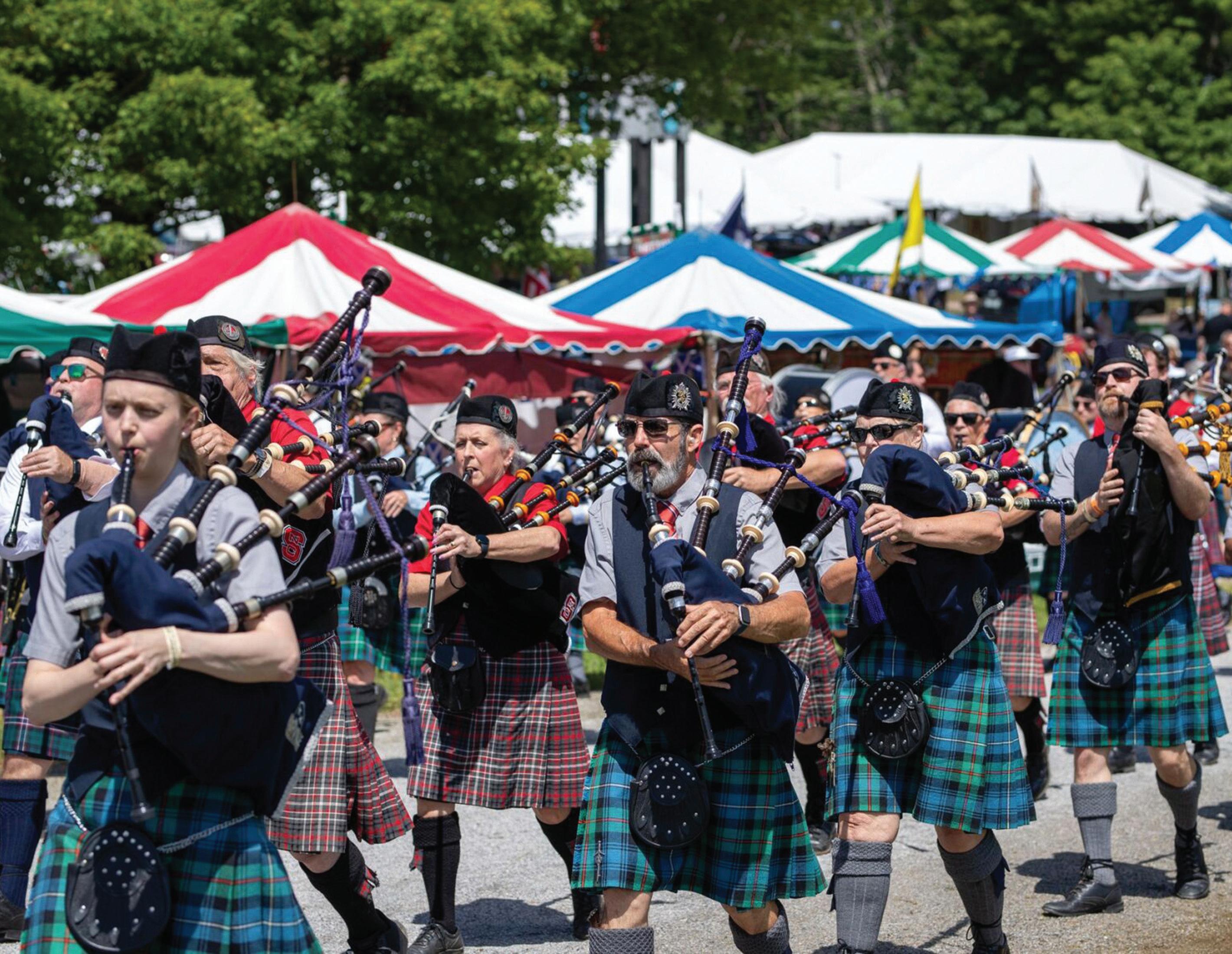
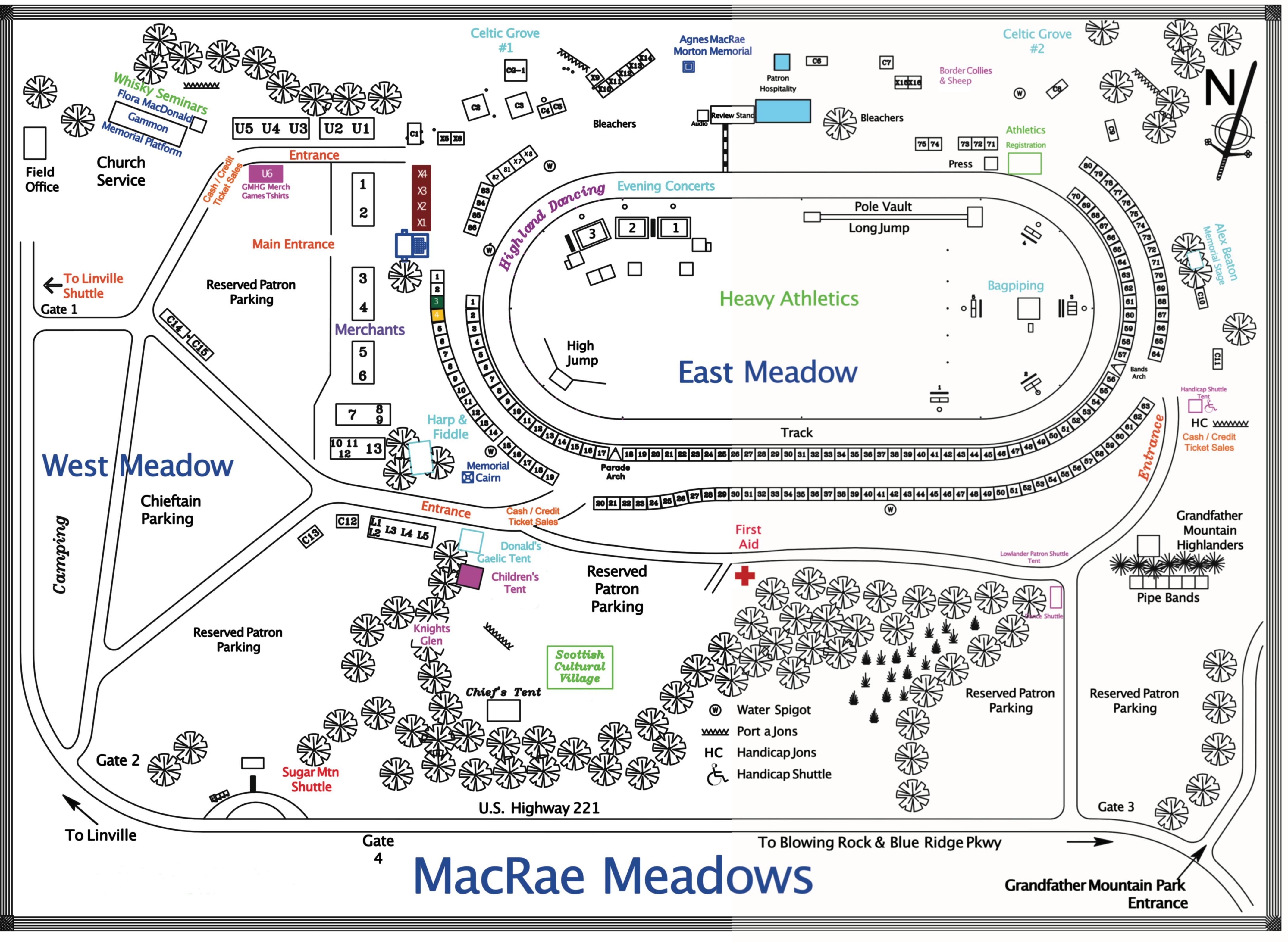
There are many opportunities to experience traditional Celtic piping and drumming throughout the weekend. Musicians from all over the world will take to the field of MacRae Meadows to compete at various levels and showcase their talents, right in the
heart of the Blue Ridge Mountains.
Visitors who want to get in on the action themselves can stop by Donald’s Ceilidh Tent to learn songs straight from the Scottish Highlands. Festivalgoers can engage in sing-alongs in Gaelic, the native Celtic language of Scotland, at various times throughout Friday, Saturday and Sunday.
The importance of Celtic music not only lies in its rich cultural history but also in its perseverance throughout history’s darkest times. Scotland’s oldest traditional instrument, the Clarsach, known commonly as the harp, was set to be banned under British rule. A revival at the turn of the 20th century saved the harp from near extinction. The 1745 Rising saw the British government ban the playing of the beloved bagpipes and wearing of kilts in an attempt to oust the Scottish clan system. It would be the fiddle that saved Scotland’s musical heritage from extinction, allowing the sweet sounds that ring out over MacRae Meadows today to be cherished and celebrated by the whole world.
Traditional Celtic bands will also serve as the tempo for the highly anticipated Highland Dance Competitions. A vast array of competitions and musical performances will take place Friday through Sunday at the Grandfather Mountain Highland Games.
Whether you’re hankering for
the melody of bagpipes or looking to bask in the vocals of traditional Gaelic singing, the Games are set for a
weekend chock full of song and dance. For performance schedules, artists and stage locations, visit www.gmhg.org.

BY HOPE DAVIS
LINVILLE — In preparation for a long day of athletic feats and sheepherding demonstrations, the Grandfather Mountain Highland Games bring a vast array of delectable concessions built to feed even the hungriest Highlanders on the mountaintop of McRae Meadows.
Savory turkey legs, meat pies and haggis are just some of the classic Scottish fare available at the Games, held July 9 to 12. With 15 different vendors this year, visitors can also get a taste of Greek food, cheeseburgers, old-fashioned Carolina pork rinds and sweet homemade ice cream to beat the summer heat.
The Games, one of the largest Scottish festivals in the United States, draw a crowd of more than 30,000 visitors to the small mountain town of Linville. While many come to watch the highly anticipated caber toss or take in the sounds of traditional Celtic music, crowds are just as enamored by the smells of traditional Scottish culture.
Haggis remains one of the most popular Scottish delicacies at the Games. Traditionally made from a mix of beef or lamb combined with oatmeal and spices, this cuisine earned itself the title of the national dish of Scotland. Vendors like the Celtic Monkey even serve vegetarian versions.
The vendors of the Grandfather Highland Games have built strong relationships with both attendees and organizers, traveling
from all across the country each year to share their meals in MacRae Meadows.
Steve Quillin, president of the Grandfather Mountain Highland Games, says the loyal relationships fostered with vendors have been one of the most rewarding parts of the festival experience.
“In 2020, when we didn’t have the Games because of COVID-19, we had all these vendors who earned their living on that circuit,” said Qullin. “We took $50,000 out of our own pocket and awarded it to vendors who couldn’t sell and singers who couldn’t sing.”
“We take care of our own,” added Quillin.
Staple vendors like The Scottish Cottage, The Celtic Monkey and Cameron’s British Foods will return for the 2026 Games to bring the heat (and haggis) to the Blue Ridge Mountains this July. If shepherd’s pie isn’t your style, familiar favorites like the Crossnore Volunteer Fire Department and Brick Oven Pizza will be cooking up the American classics, bringing a feast fit for everyone to MacRae Meadows.
Visitors are also welcome to bring coolers and pack a picnic for the Games. Guests are reminded to stay hydrated, plan for a variety of weather, including high and lower temperatures, along with potential for wet weather, as well as to bring cash, as some vendors may not accept cards.
For more information and a map of vendors, visit www.gmhg.org.


BY SHANNON DEROSAS
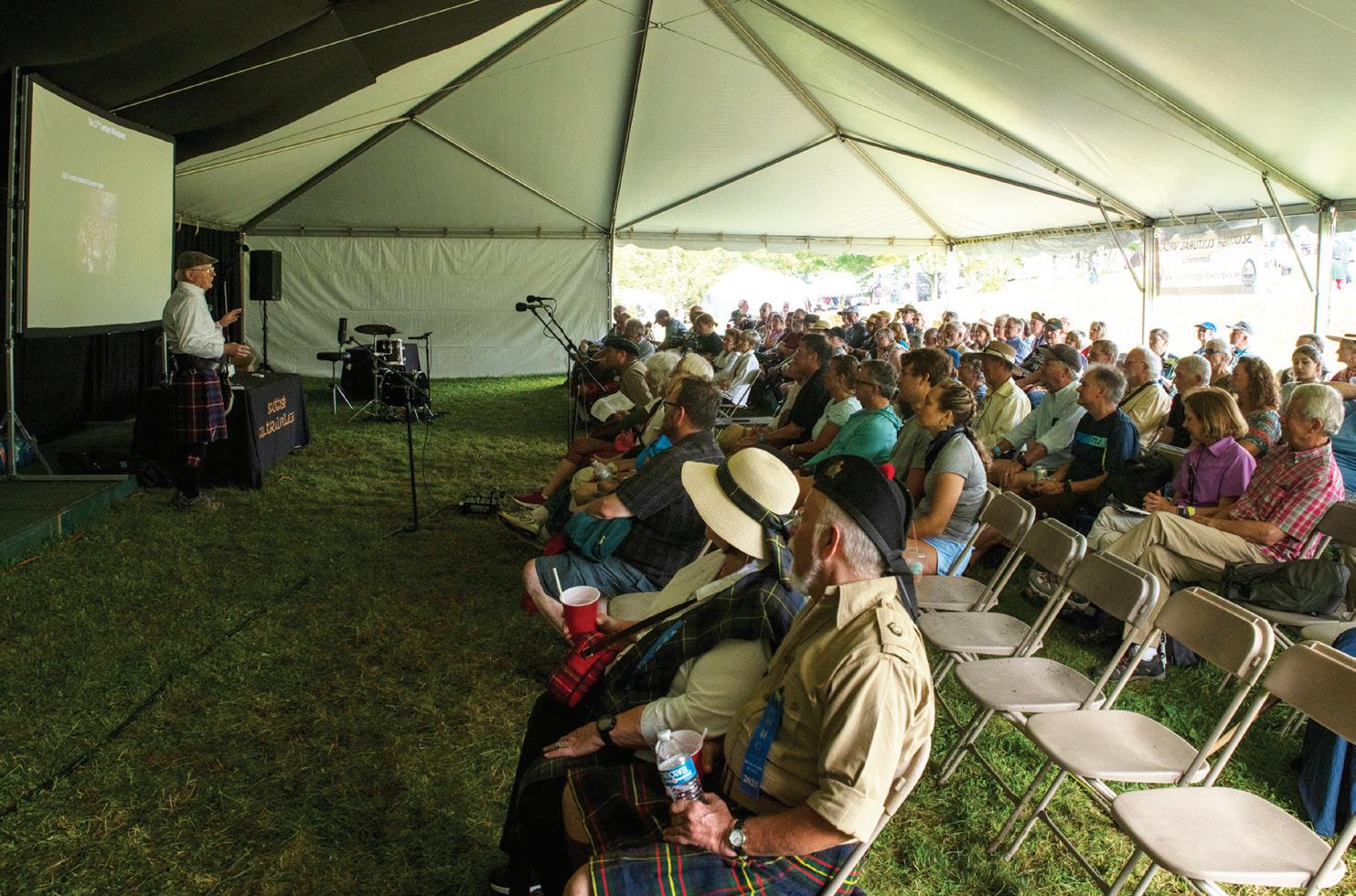
The Scottish Cultural Village, which takes place at MacRae Meadows during the Grandfather Mountain Highland Games, invites visitors to experience Scottish heritage in a different way than the bagpipes, clan tents and athletic competitions. Through education and storytelling in a series of presentations, attendees are invited to learn hands on and engage with Scottish culture and history.
Held throughout the weekend of the Games, the Cultural Village hosts a lineup of demonstrations designed to explore Scottish culture and traditions in a wide-ranging series of different lessons and activities. Organizers say the program attracts roughly 230 attendees per session and draws visitors from around the world, reaching far beyond the bounds of Scottish heritage in North Carolina.
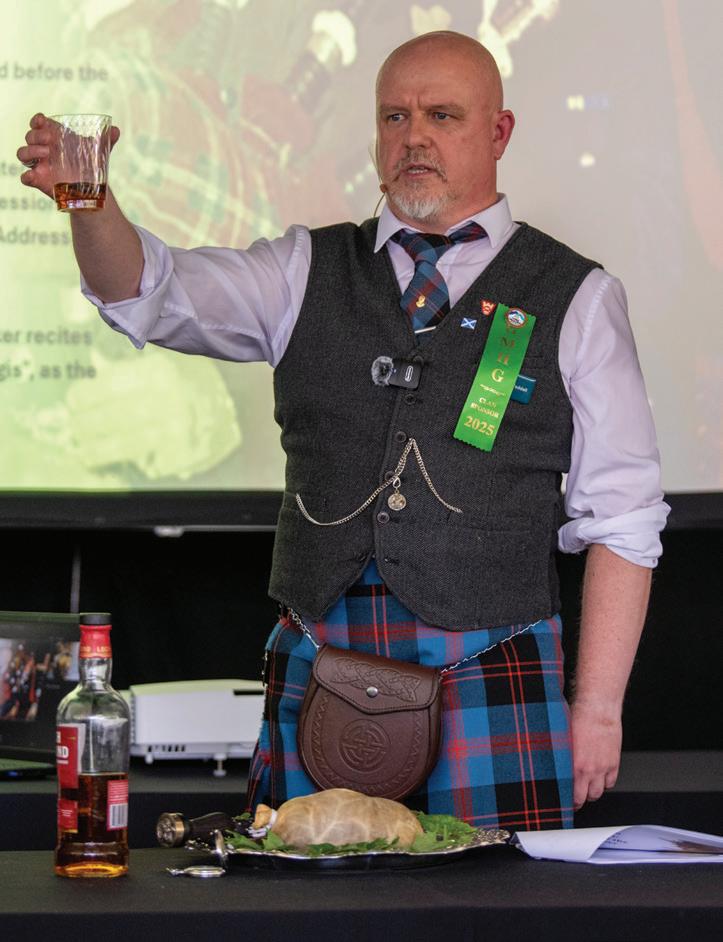
The 2026 schedule showcases the variety that has become the hallmark of the Cultural Village. Programs include discussions on Scotland’s Hebrides Islands, Highland and Island Clearances, Scottish Immigrants and the Birth of American Whiskey, Scotland’s Dark Trials and Executions, Heavy Athletics and traditional Highland dress and the costumes featured in the popular television series Outlander. There will also be musical performances by the Blue Grass Bagpipes and Drums scheduled throughout the weekend.
According to GMHG, the main goal of the Cultural Village is heritage preservation. They are designed to help visitors better understand and connect with Scottish culture and why it is so celebrated throughout this special weekend on the mountain. The educational mission often leads presenters to explore unexpected subjects. In the past, programs have
included topics such as the origins of American whiskey, what distinguishes a Scottish single malt from an Irish single malt, and the role of the Stamp Act in shaping the American Revolution. The series of presentations enriches people’s understanding of Scottish impact on the world in a way that is fun and engaging for all those who attend.
The scope of topics is quite intentional. The scope of topics is not limited to subjects directly connected to North Carolina’s Scottish Heritage. Rather, presenters are encouraged to explore a range of historical topics that help visitors fully understand Scotland’s influence around the world. One of the most popular presentations has been focused on women’s clothing, including the differences between the undergarments worn by peasants and those of the higher classes. The program combines historical research with visual demonstration, giving those who see it a glimpse into everyday life.
The schedule varies significantly from
year to year, ensuring that returning visitors can be refreshed with learning something new each time they visit. From discussion on witchcraft and religion in 16th-century Scotland to
demonstrations on wearing the kilt, the Cultural Village offers programs that span centuries of Scottish history. For a full schedule and additional information, visit www.gmhg.org.
“Crafting peace of mind, one chimney at atime” Licensed &Insured ChimneyWater Proofing •ChimneyCapsand Cha ses Video Inspec tion •Masonry Repairs •Wood Stove Sales
Office: 877-934-7668 callemberkeepers .com email: office@callemberkeepers .com

BY SHANNON DEROSAS
BANNER
ELK — For many attendees at the Grandfather Mountain Highland Games, the Parade of the Tartans is a highly anticipated event.
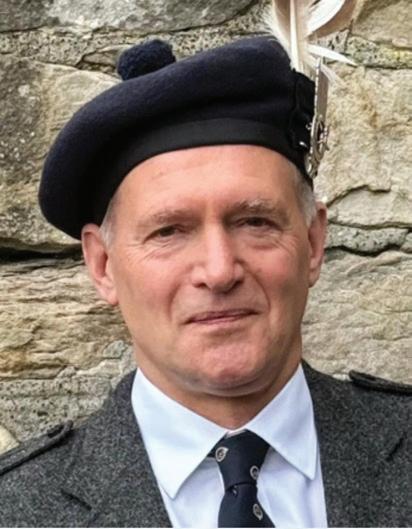
Leading that procession each year is the chosen Chieftain of the Games, selected to receive special recognition during the weekend. The honor for the 70th anniversary of the Grandfather Games is bestowed upon Chieftain John Gunn of Gunn.
With roots stretching back more than 1,000 years, the clan traces its ancestry to Norse settlers who established themselves in Northern Scotland during the Viking age. The clan’s name comes from Gunni, grandson of Sweyn Asleifsson, the legendary Viking warrior described as the “Ultimate Viking” of the Orkney Islands.
The selection process for the honored clan takes place years before the opening ceremony. According to the organizers, the honored clans are selected through a partnership between the Grandfather Mountain Highland Games and the Standing Council of Scottish Chiefs, an organization that represents Scotland’s recognized clan chiefs.
The honor of Distinguished Clan of the 2026 Games is Clan Lamont, with their Chieftain Scott Turner. The Distinguished Clan is recognized for
their significant contributions and presence at the games, and their Chieftain is prominently involved in the festivities alongside the Honored Clan.
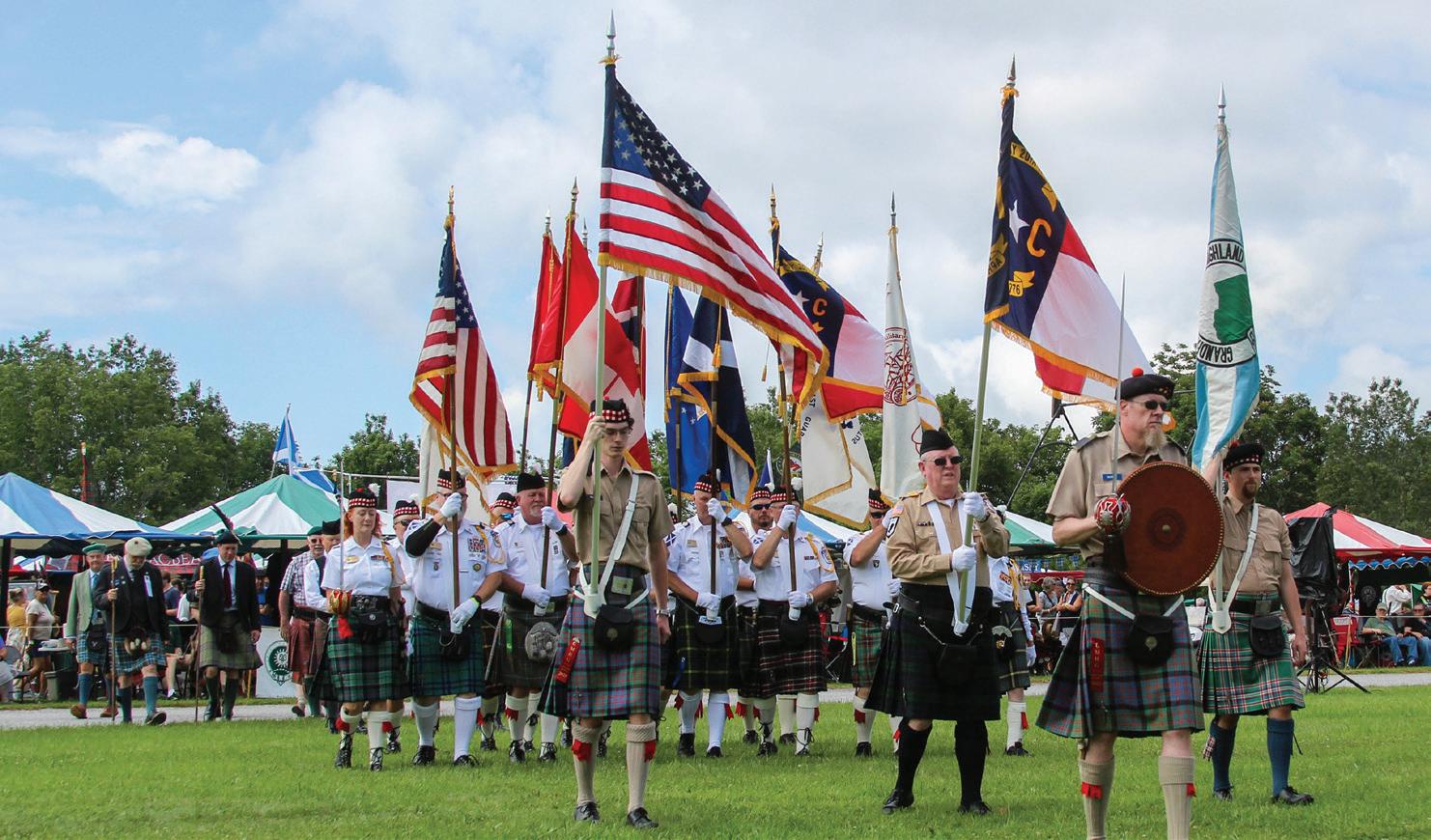
Games President Stephen Quillin says the selection process is designed in a way that benefits both the Highland Games and the clan being chosen for that year, working to help preserve Scottish heritage. It is designed so the chosen clan societies could benefit from greater participation and visibility. This recognition “tends to last year’s,” noted Quillin, with increased membership and engagement. As part of that recognition, the clan chief may also be named Chieftain of the Games. For 2026, that honor falls on Gunn of Gunn and Banniskirk, the hereditary chief of Clan Gunn. His wife, Sara Gunn, serves as secretary of the Standing Council of Scottish Chiefs. Clan Gunn has significant importance in Scottish history due to its Viking origins. Many Highland clans trace their lineage to Gaelic chiefs, the Gunns came from Norse settlers that dominated northern Scotland for centuries. Although they are not the largest of Scotland’s clans, they earned themselves a reputation of strength and resilience. Throughout centuries, the clan maintained their lands and fierce warrior identity in the famously rugged Highland terrains. Today, descendants of Clan Gunn can be found throughout the world, honoring and preserving their traditions that span back more than a millennium. During the Games, the honored clans often play a large role in many of the weekend’s most iconic events. Clan Gunn will lead the Parade of Tartans on Sunday, known as Family Day, when clan members boasting banners and tartans march around
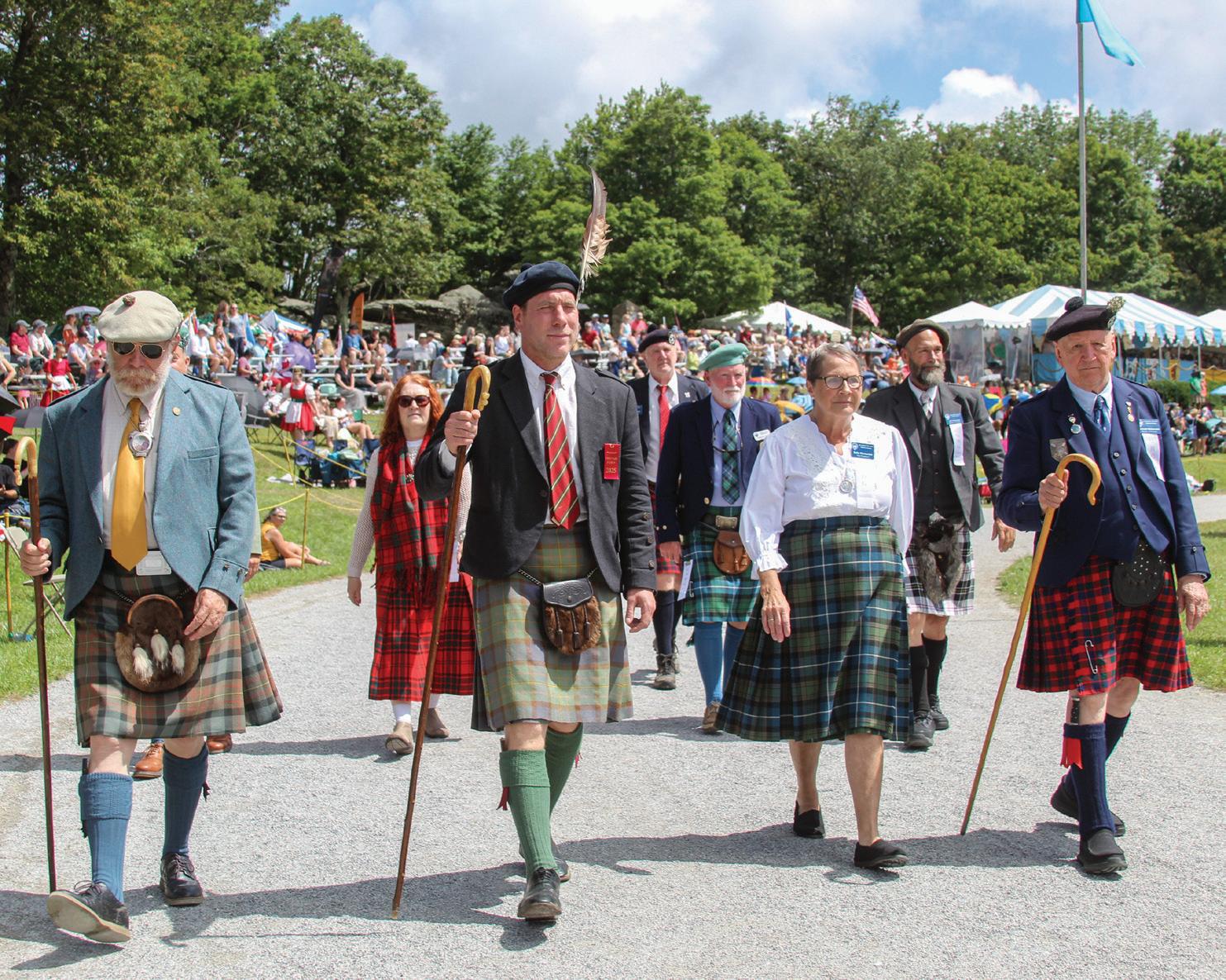
MacRae Meadows before the thousands of spectators. The clan will also participate in the Kirkin’ of Tartans, the Sunday worship service, and many other events the Games have to offer throughout the weekend. Families representing Clan Gunn will display their clan banner and join fellow Scots in celebrating their heritage and history throughout the centuries.
According to Quillin, one of the most meaningful aspects of electing a Games Chieftain and Distinguished Clan are the opportunity to provide other participants and visitors with the opportunity to further explore information about the families that helped shape Scottish history. As clan members take their lap around the field in the Parade of Tartans, spectators have the opportunity to celebrate and truly recognize each of these families’ unique stories and contributions.
For Clan Gunn, as well as Clan Lamont, this is more than just a ceremonial honor, but a chance to showcase a proud legacy that began in Scotland and continues with strength
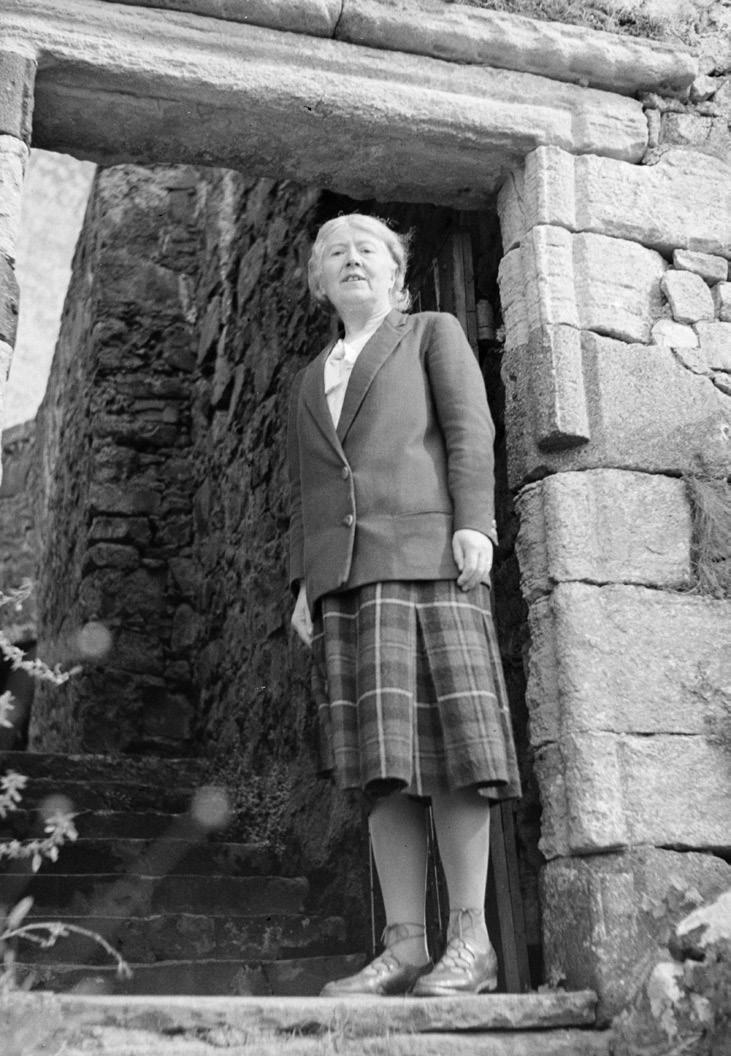
Dame Flora MacLeod. The Dame Flora
of MacLeod Trophy for Open Piobaireachd has been presented, since 1969, to the best bagpiper at the Grandfather Mountain Highland Games.
today through its descendants who gather each year on Grandfather Mountain to celebrate their heritage.
BY SHANNON DEROSAS
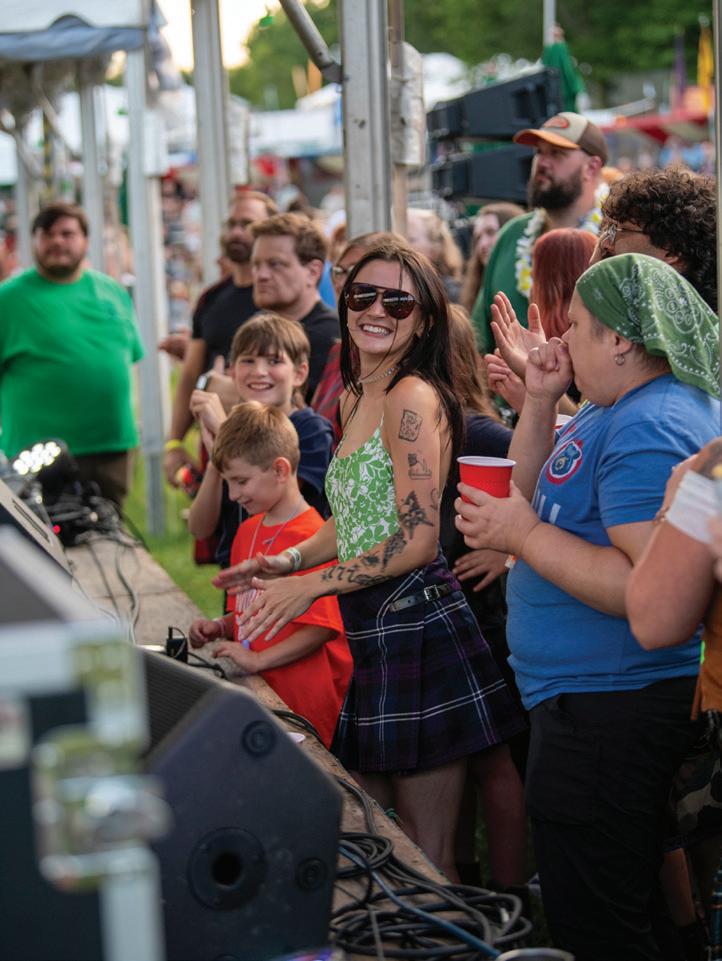
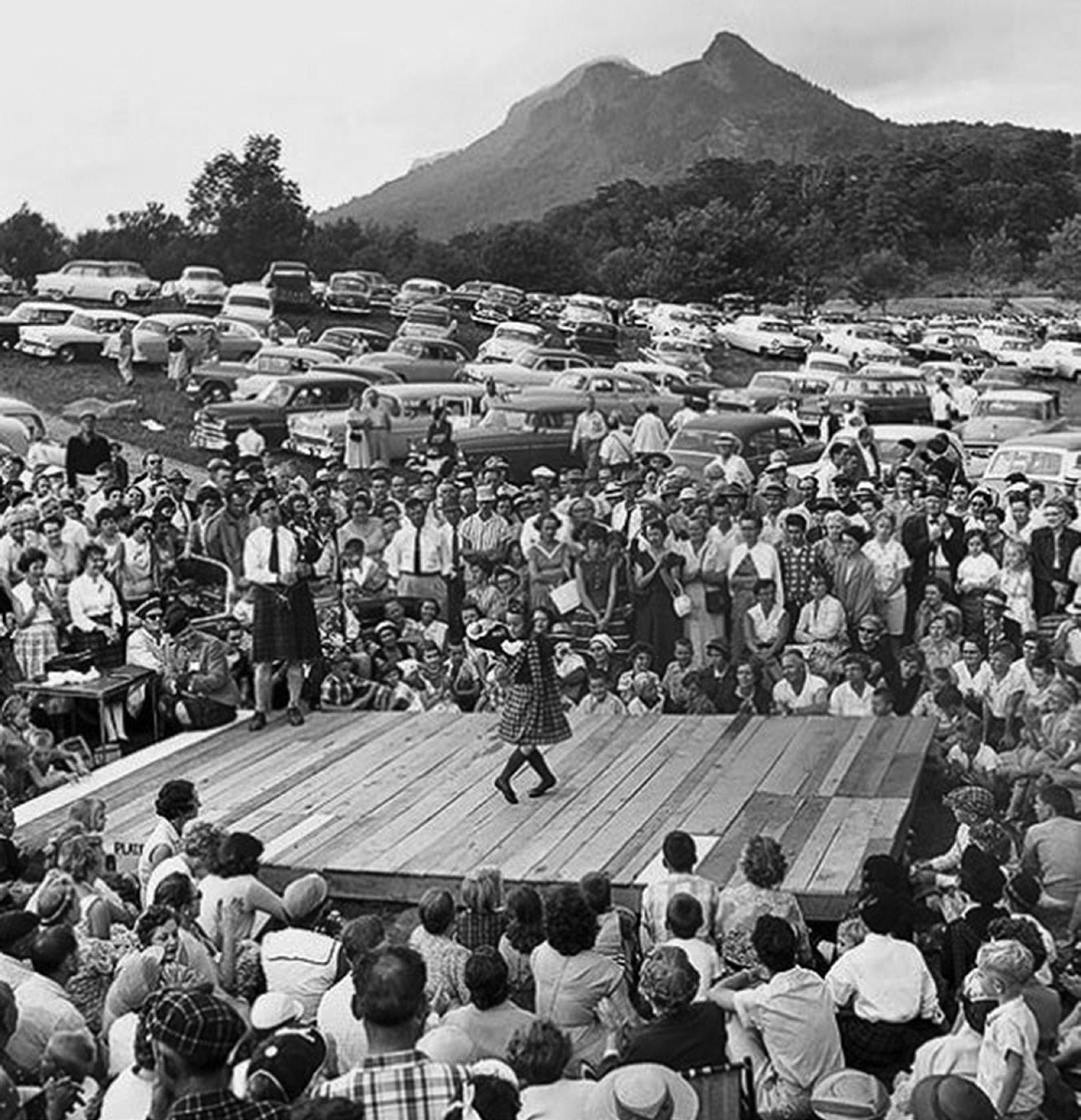
LINVILLE — With thousands of visitors expected to attend this year’s Grandfather Mountain Highland Games, organizers encourage guests to arrive early and make use of their extensive shuttle system that transports visitors from various parking lots to the mountains with efficiency.
On-site parking at Grandfather Mountain is limited and only available to those who bought ticket packages in advance including special hanging tags. These packages have been sold out, meaning the vast majority of visitors will have to utilize one of several off-site shuttle locations.
Shuttle service will operate from parking lots at Sugar Mountain, along Highway 105, Avery County High School and Avery Middle School. Organizers say these locations provide the primary means of access to the games and help reduce traffic congestion on the mountain. For guests requiring handicap transportation, handicapped parking and transportation will be provided via shuttle from Newland Elementary School.
Shuttle rides are $10, and event organizers emphasize that visitors should plan accordingly. Different shuttle locations utilize different wristbands to help identify riders and correct shuttles to bring attendees back to the correct parking area after their visit. The shuttles are cash only and round trip, so it’s essential that visitors keep their wristbands and board the correct shuttle upon exiting the games.
In addition to shuttles, the Crossnore Volunteer Fire Department offers bus rides from the department to MacRae Meadows for $10 as well in order to raise money for the department.
Visitors are encouraged to start their days early. Arriving in the morning
not only helps guests secure a parking spot at one of the shuttle lots but also reduces wait times during peak attendance periods.
“The majority of people travel to the event by shuttle,” President of the Games Steve Quillin noted. He emphasized the importance of the transportation systems in maintaining organization within the large crowds that gather annually on Grandfather Mountain.
As Games attendance continues to increase, the shuttle network remains essential in maintaining a smooth experience for visitors while minimizing traffic congestion along the narrow road access leading to the Games site.
Organizers recommend that attendees review parking and transportation information before arriving, allow extra travel time and be prepared to use the shuttle system. With proper planning and starting early, visitors will spend less time worrying about transportation and more time enjoying one of the region’s most celebrated cultural traditions.
BY SHWETA MISHRA
LINVILLE
— Organizers of the 2026
Grandfather Mountain Highland Games have released ticket prices and patron package options for one of the nation’s largest celebrations of Scottish heritage, offering attendees a range of admission choices from single-day passes to premium patron experiences that they can purchase online at gmhg.org/prices/.
The annual event, held at MacRae Meadows beneath Grandfather Mountain, draws thousands of visitors each summer for four days of traditional Scottish athletics, music, dancing, clan gatherings, cultural demonstrations and competitions.
For 2026, general admission tickets will be available as either four-day passes or single-day tickets. Adult admission applies to guests ages 13 and older, while discounted youth tickets are available for children ages 5 to 12. A four-day pass covering the entire event costs $85 for adults and $30 for children. The package provides access to all four days of activities, beginning Thursday afternoon and continuing through Sunday.
Single-day admission options vary by day. Thursday tickets, valid from 4 to 11 p.m., are priced at $25 for adults and $10 for children. Friday admission, which covers activities from 8 a.m. until 11 p.m., costs $35 for adults and $10 for children. Saturday, traditionally the busiest day of the festival, carries the highest daily admission price at $40 for adults and $10 for children. Saturday activities run from 8 a.m. until 11 p.m. Sunday tickets are
available for $30 for adults and $10 for children and provide access from 8 a.m. until 4 p.m.
Visitors interested primarily in the evening entertainment and concerts can purchase separate evening-only tickets. Friday evening admission, valid from 6:30 to 11 p.m., costs $25 for adults and $10 for children. Saturday evening tickets are priced identically at $25 for adults and $10 for children and are also valid from 6:30 until 11 p.m.
Organizers note that both Friday and Saturday daily admission tickets already include access to the evening concerts, eliminating the need for concertgoers attending during the day to purchase separate evening tickets.
In addition to standard admission, the Grandfather Mountain Highland Games offers several Patron packages that provide enhanced access, hospitality benefits and preferred parking arrangements. These packages are available in limited quantities and are designed for supporters seeking a premium Games experience.
The highest-tier package, the Chieftain Patron package, costs $700 and includes four admission passes. Chieftain Patrons receive access to both the Patron Hospitality Tent and the Whiskey Tasting Tent on MacRae Meadows, along with admission for up to four people to all Games events from Thursday through Sunday, excluding whiskey tasting seminars and the Friday evening Patron and Sponsor Reception.
Additional benefits include listing up to four names in the official program, four admission ribbons, four souvenir pins and two souvenir programs. Chieftain
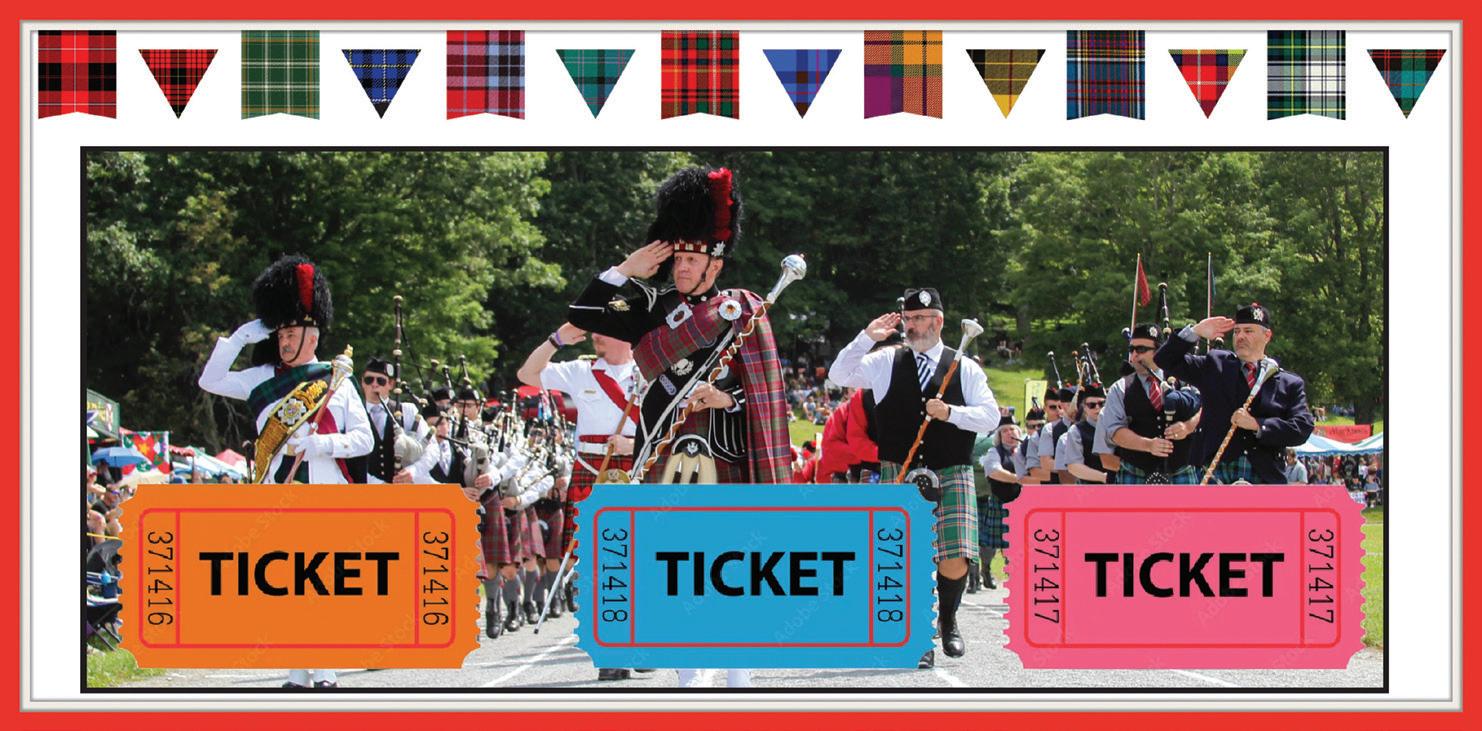
Tickets for the 2026 Grandfather Mountain Highland Games include admission options ranging from single-day passes to premium experiences. Tickets are available online.
Patrons are also eligible to purchase tickets to the Friday evening Sponsor’s Reception for guests ages 13 and older.
The package includes guaranteed on-site parking at MacRae Meadows throughout the event. Parking spaces are reserved with a custom sign displaying the patron’s name, and guests may come and go throughout the day. Golf cart transportation to the field is available upon request.
The Highlander Patron package is priced at $475 and includes two admission passes. Benefits mirror many of those offered through the Chieftain level, including access to the hospitality and whiskey tents, admission to most Games events, program recognition, souvenir items and eligibility to purchase Sponsor Reception tickets.
Highlander Patrons receive parking on MacRae Meadows from Thursday through Sunday but must arrive before 11 a.m. to guarantee a parking space. Once parked, patrons may leave at any time during the day.
The Clansman Patron package costs $375 and includes two admission passes. Like the Highlander package, it provides access to the hospitality and whiskey tents, event admission, program recognition and souvenir items.
Parking arrangements differ, however.
Clansman Patrons must also arrive before 11 a.m. to guarantee parking, but
vehicles are parked in closely spaced rows designed to maximize available field capacity. The parking pass provides all-day access, but patrons cannot leave early and return. Organizers describe this package as best suited for attendees planning to remain at the Games throughout the day.
The Lowlander Patron package is priced at $400 and includes two admission passes. Patrons receive the same hospitality benefits and event access as other patron levels but utilize a different transportation arrangement.
Lowlander Patrons receive parking on MacRae Meadows on Thursday and Sunday. On Friday and Saturday, they are transported via executive Mercedes van service from a designated off-mountain parking area approximately five miles from the Games site.
Shuttle service operates continuously between 7 a.m. and 5 p.m. each day.
Patrons wishing to return to the mountain after 5 p.m. may drive and park on-site.
A unique feature of the Lowlander package allows patrons to purchase additional four-day tickets for adults and children, making those guests eligible to ride on the executive van transportation service. Riders must travel in the patron’s vehicle to the designated off-site parking location before boarding the shuttle.







BY SHWETA MISHRA
LINVILLE — For leaders of the Grandfather Mountain Highland Games, creating memorable experiences for children inspired by their own childhoods visiting McCrae Meadows.
“My first year at the Games was 1968. My parents brought me. I was 15,” said Grandfather Mountain Highland Games President Stephen Quillin. “The next year I could drive, and so I’ve never missed another.”
Vice President Sally Warburton said her connection stretches back even further.
“My grandfather is the one that brought me to the Games. I haven’t missed one since I was seven,” she said,” she said. “Even the year that my son was born, on the Friday night of the Highland Games, I came to the Thursday night of the Highland Games. So it could be said that I’ve never missed one.”
Today, Warburton serves as vice
president of the Games after decades of involvement that have included competing as a Highland dancer, performing with the Grandfather Mountain Highlanders Pipe Band, coordinating piping and drumming events, serving on the management staff and joining the board of trustees.
Organizers understand firsthand that a child’s experience at the Games can become a lifelong tradition, and they organize accordingly.
For families seeking the most
child-focused experience, organizers recommend attending Sunday’s Family Day at the Games, when many youth activities and competitions are concentrated.
Another visible example of the commitment to children is the Bobby Groves Children’s Tent, located just inside the lower entrance to MacRae Meadows. Throughout the weekend, the tent serves as a hub for youth activities, educational workshops, children’s athletics and wrestling events.
The Children’s Tent operates from 8:30 a.m. to 4 p.m. on Friday, Saturday and Sunday during the Games. Organizers describe its mission as fostering a love of traditional Celtic arts in a fun and ageappropriate environment.
Families visiting the tent can participate in a variety of free activities throughout the day, including coloring stations, a scavenger hunt, a drawing contest and kid-friendly axe throwing. One of the most popular attractions is the Games Passport Booklet. Children can carry the booklet throughout the festival, collecting commemorative stamps from clan tents across MacRae Meadows. The passport also includes a scavenger hunt and other interactive activities designed to encourage exploration of Scottish history and culture.
Beyond all-day activities, the tent hosts a full schedule of educational workshops and cultural demonstrations specifically designed for younger audiences. Each morning begins with
“Welcome to Grandfather,” featuring naturalists from Grandfather Mountain who share information about local wildlife and the mountain environment. Another recurring favorite is “Top Dogs,” led by Shona O’Kane, who introduces children to sheep-herding traditions and demonstrates the skills of her border collies.
Music and dance also play prominent roles throughout the weekend. On Friday, acclaimed Celtic musician Sean Heely and dancer Agi Kovacs present “Toe
Tapping Fun with Fiddle and Dance,” an interactive workshop featuring fiddle tunes, Gaelic songs and percussive dance rhythms. Saturday includes “Fiddling Around,” where children can learn basic violin techniques using foam instruments under the guidance of retired orchestra teacher Carla Rogers. Sunday’s programming includes “Celtic Fiddle Magic” with champion fiddler Mari Black and “Up Close with Bagpipes,” an interactive demonstration that allows children to explore the inner workings of
Scotland’s most iconic instrument.
Later that day, Gaelic instructor Sheena Anderson introduces young participants to introductory Gaelic words and songs.
Aspiring dancers can participate in “Have a Fling,” an introductory Highland dance workshop taught by British Association of Teachers of Dancing instructor Ruth Suehle. Organizers said that the workshop has inspired some young participants to pursue competitive Highland dancing.
Several times each day, children can also participate in “Fight Like a Scot,” a supervised introduction to wooden broadsword techniques presented by the Triangle Sword Guild.
The Children’s Tent serves as more than a cultural learning center. It is also the gathering point for many of the Games’ youth athletic competitions.
Children’s wrestling, one of the longest-running youth traditions at Grandfather Mountain, begins with instructional clinics held on Thursday
and Friday. The clinics teach participants the fundamentals of Cumberland-style wrestling, a historic grappling sport with roots in the English counties of Cumberland and Westmorland. The youth wrestling competition takes place Saturday afternoon and is followed by an awards ceremony. Winners in junior and intermediate divisions have their names engraved on the Sam McKay Memorial Trophy, a perpetual trophy honoring the Games’ youngest champions.
Children’s athletics continue Sunday with a series of traditional Highland Games events beginning at 1 p.m. near the main entrance. Young participants can try scaled-down versions of traditional Scottish athletic contests, including caber toss, sheaf toss, tugof-war and other activities. No preregistration is required. Sunday also features kilted running events for boys and girls ranging from age 4 and younger through age 12, as well as mile races for older participants.











July 25–31
When disco diva Deloris Van Cartier witnesses a murder, she’s hidden in the last place anyone would lthink to look—a convent. As she helps her fellow sisters find their voices, Deloris rediscovers her own. Sister Act is a feel-good musical comedy based on the hit 1992 film.

August 2
This special fundraiser will feature America’s Golden Dream Dancers, bringing together performers from six states to present their hit show Next Stop Broadway, as well as a showcase of performers from our community.
100% of proceeds from this event will benefit the Roy Krege Scholarship at Lees-McRae College. Love like Roy!
BY SHWETA MISHRA
LINVILLE — While thousands of visitors attend the Grandfather Mountain Highland Games each summer for its proud displays of Scottish athletics, music, dancing and clan gatherings, organizers say one of the event’s most important traditions takes place far from the competition fields.
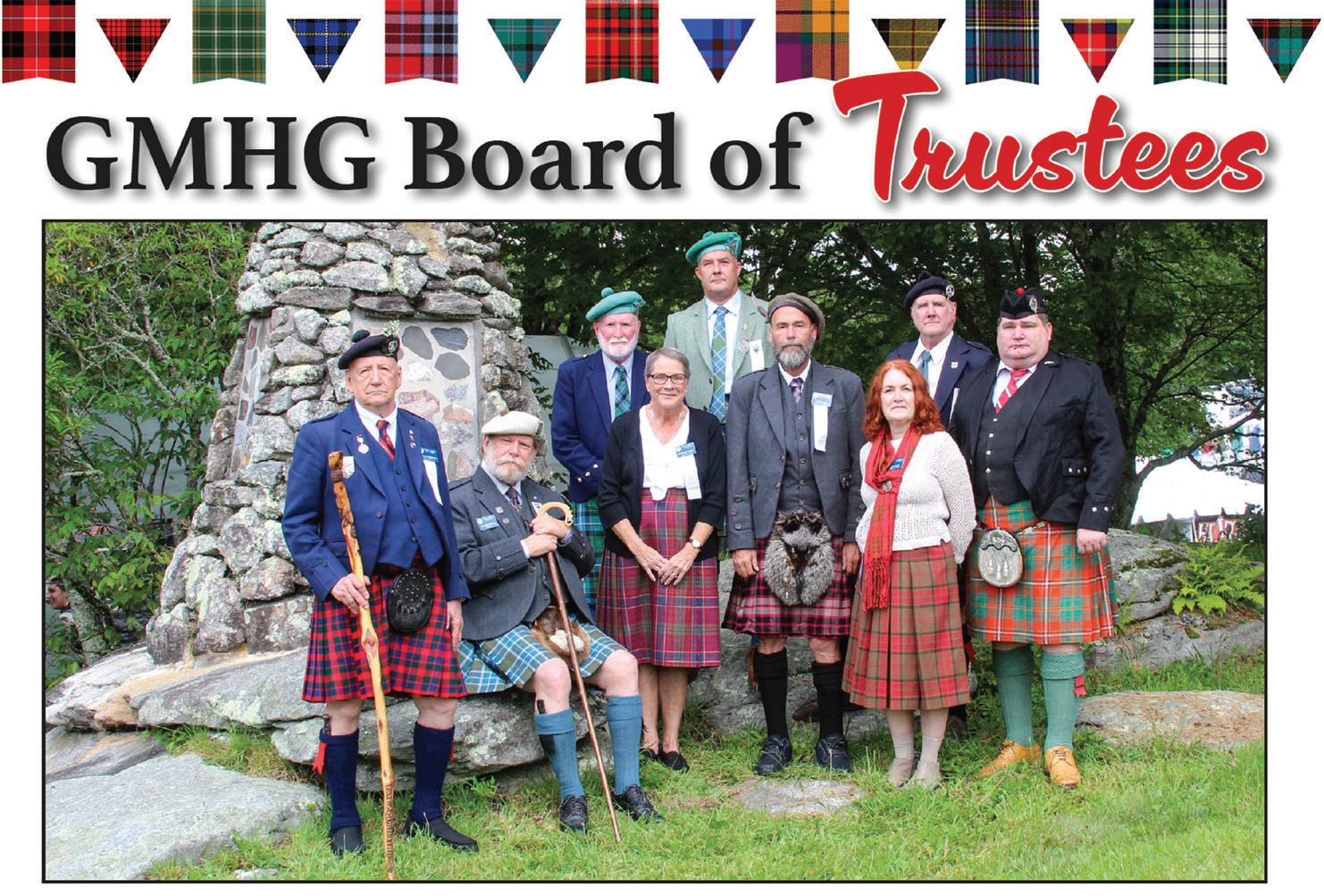
The organization’s mission statement says the Games also exist “to establish scholarship funds to assist students from Avery County High School to study at American colleges and universities.” That commitment has remained a cornerstone of the nonprofit organization’s work for decades.
“We are a 501(c)(3) nonprofit, and we give away as much money as we can,” said Grandfather Mountain Highland Games President Stephen Quillin.
The Games, which attract approximately 45,000 attendees over four days each year, operate without government funding, Quillin noted.
“We get no tourism money from the state, no grant money, no federal money,” he said. “We are self-sustaining, so we raise our own money, and we raise enough money to sustain our Games. It’s primarily through ticket sales and the sale of patrons’ packages.”
The organization has invested that revenue heavily in scholarship programs and community support initiatives throughout Avery County.
“This year we will have pumped about $55,000 into Avery High School,” Quillin said.
The flagship scholarship program awards annual college scholarships to graduating seniors at Avery County High School. The scholarships are designed to help students pursue degrees at American colleges and universities and represent a long-term commitment rather than a one-time award. Quillin contrasted the Games with some organizations that operate from year to
year.
“This is our 70th game,” Quillin said. “We are thinking four and five years down the road. We’re not going anywhere,” he said. “We’ve got deep roots in Avery County, so we are looking at our scholarship program, for example – They’re four-year scholarships, and so, as a qualifying kid, if you do what you’re supposed to do, you’re in that for four years. So we’re a long-haul sort of an operation regarding scholarships.”
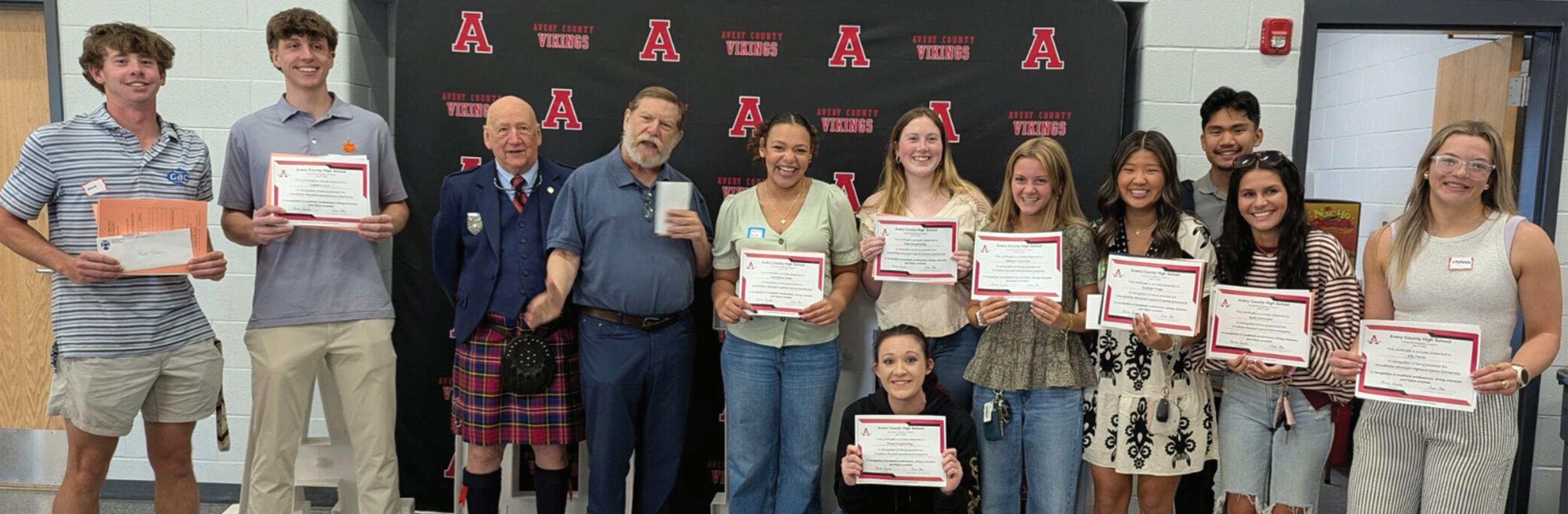
The scholarship program currently supports multiple students simultaneously as they progress through college. According to Quillin, the Games had around 12 scholarship recipients this year, compared with 10 the previous year.
Maintaining those scholarships requires students to meet continuing eligibility requirements, including providing transcripts and proof of enrollment. The financial commitment represented by those awards is substantial. At any given time, Quillin estimates the Games have between $80,000 and $100,000 committed to students moving through the four-year scholarship pipeline
When asked how much money the Games may have distributed through scholarships over the years, Quillin said he lacked exact figures at the moment but believed the total could exceed seven figures.
“I’ve usually got somewhere between $80,000 and $100,000 in the four-year pipeline in any four years that you look at, so it wouldn’t surprise me to say that it’s a million dollars,” he said.
Scholarships are often awarded to students who have established a connection with the Games through volunteer work, family involvement or participation in activities that help support the event.
“We award college scholarships to students that have been affiliated with
the Games in some way, shape or form,” Quillin said. “Sometimes it’s through their parents, and they’ve been coming to the Games their whole lives, or the parents work for the Games, but very often it’s the kids that have parked cars on the wrestling team and that sort of thing.”
Many of Avery County High School’s athletic teams, student organizations and support groups assist with festival operations. Their efforts generate donations that support their programs while also creating opportunities for scholarship consideration. Teams and organizations help park vehicles, sell programs, manage ticket operations and assist with shuttle transportation. The Games, in turn, provide financial support to those groups.
“We make donations to those athletic teams to the tune of $4,000 to $6,000 apiece, depending on what they’re doing,” Quillin said.
The funding has helped local organizations purchase equipment, uniforms and cover travel expenses.
Quillin noted that Avery County cheerleaders were able to purchase jackets when school funding was limited, while athletic programs have used support from the Games for everything from basketball shoes to summer tournament travel.
Beyond direct scholarships for Avery County students, the Grandfather Mountain Highland Games are also connected to specialized Scottish arts scholarships.
Among them are scholarships offered through the North American Academy of Piping and Drumming, including awards such as the Ed Neigh/Sandy Jones Scholarship, which can cover tuition, room and board for aspiring pipers and drummers attending instruction programs in Valle Crucis.
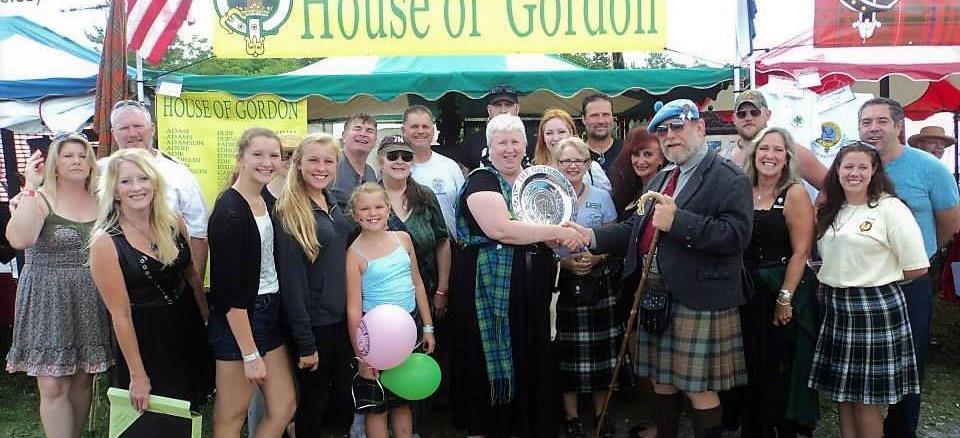
Additional opportunities are available through organizations such as House of Gordon USA, which sponsors the Charles O. Gordon Memorial Scholarship and provides grants supporting Highland
CONTINUED ON NEXT PAGE
dancing, piping, fiddling and heavy athletics.
The Games also support Scottish cultural organizations throughout the region. Quillin noted that the organization has helped fund a costume repository for a Highland dance group in Boone, making traditional attire more accessible to mountain families, and supports the Grandfather Mountain Highlanders Pipe Band.
LIINVILLE — Before the bagpipes echoed across MacRae Meadows, before the cabers flew and clans gathered in tartan pride, the Grandfather Mountain Highland Games began as a shared vision between two passionate individuals. Now, 70 years later, that vision has grown into one of the largest and most iconic Highland gatherings in the world.
The Games, set to return this year from July 9 to 12, were founded on August 19, 1956, by Agnes MacRae Morton and Donald MacDonald. What started as a one-day gathering in the highlands of Linville has become a four-day celebration of Scottish culture, heritage, music, sport, and community.
According to Grandfather Mountain Highland Games President Steve Quillin, the seeds of the event were planted in 1954, when MacDonald—
then working as a newspaper feature writer in Charlotte—decided to take a vacation to Scotland. While there, he attended the Braemar Highland Games, an event steeped in tradition and royal attendance. What struck him most was the strong clan presence.
“There might be 20 clans at Braemar,” said Quillin. “We’ve got 108.”
Inspired by what he saw, MacDonald returned home with the program from Braemar and wrote about the event in a series of articles. One of those articles caught the eye of Agnes MacRae Morton, a Linville resident who had long dreamed of hosting a clan gathering on her family’s land.
“She had this big field—not as flat as it is now—but it was a nice big field,” Quillin explained. “She got in touch with Donald, and together they began planning what would become the first Grandfather Mountain Highland Games.”
But it wasn’t just vision that made
the Games happen—it was hustle. In 1955, MacDonald saw a notice that the Black Watch Pipe Band was touring the U.S. and scheduled to perform in New York. He contacted them and successfully booked them
for a performance at the old Charlotte Coliseum, which seated 10,000. The total cost? $4,400. At the time, MacDonald had about 44 cents to his name.
Undeterred, he hit the streets of Charlotte—wearing a kilt—and sold tickets himself. He sold out the show, and the profit from that concert became the seed money for the inaugural Games in 1956.
The founders selected August 19 for the first Games intentionally. The date marked the anniversary of Prince Charles Edward Stuart (Bonnie Prince Charlie) raising his standard at Glenfinnan in 1745, launching the Jacobite Rising. They also chose a Sunday so as not to interfere with local farm work.
“They thought maybe 300 or 400 people would show up,” Quillin said. “They got 1,500.”
The original program even included this charming reminder: “If you need to go to the bathroom, go to the Shell station at the bottom of the mountain.”
Today, things look a little different. In 2025, the Games will feature more than 150 porta-johns, and attract tens of thousands of attendees over four days. But the heart of the event remains rooted in community, culture, and a
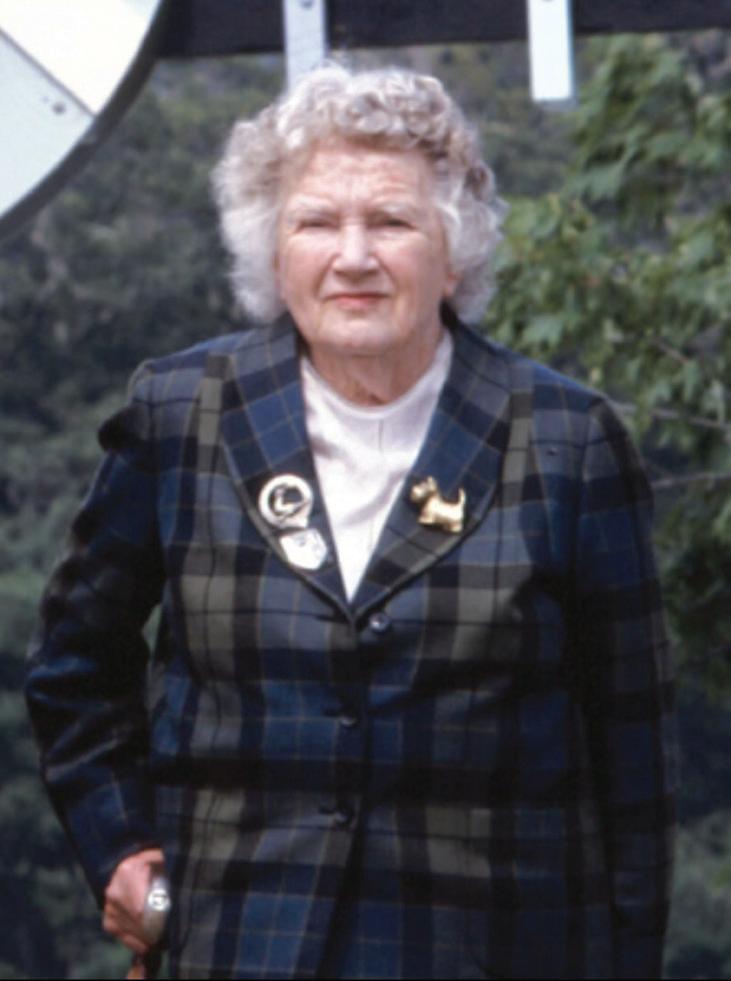
Co-founder Agnes MacRae Morton poses for a photo, whose vision and dedication helped establish the Grandfather Mountain Highland Games and preserve Scottish heritage in the region.
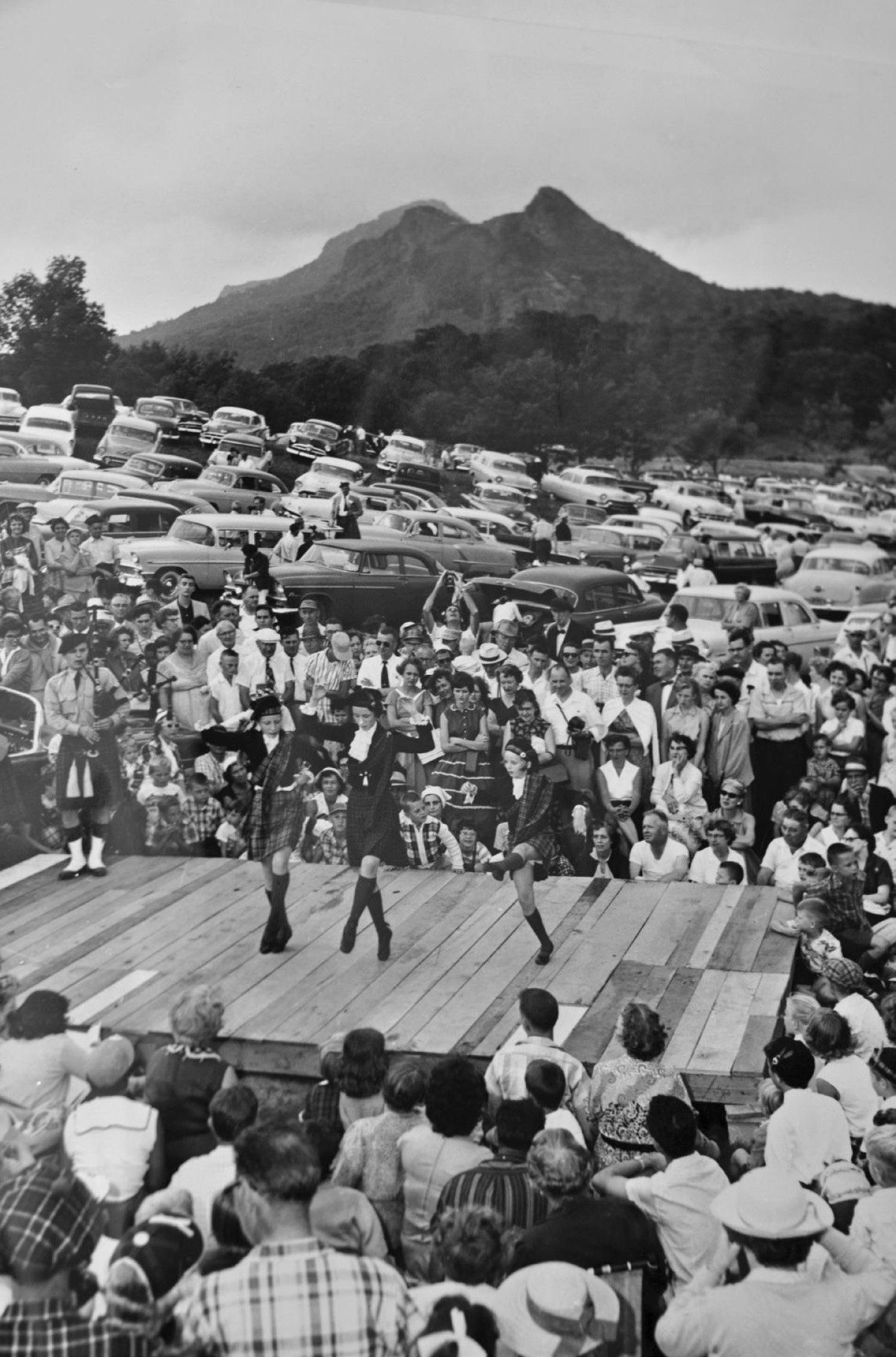
shared love of Scottish heritage. By the second year, the Games were held again on the same Sunday. In the third year, they expanded to a two-day
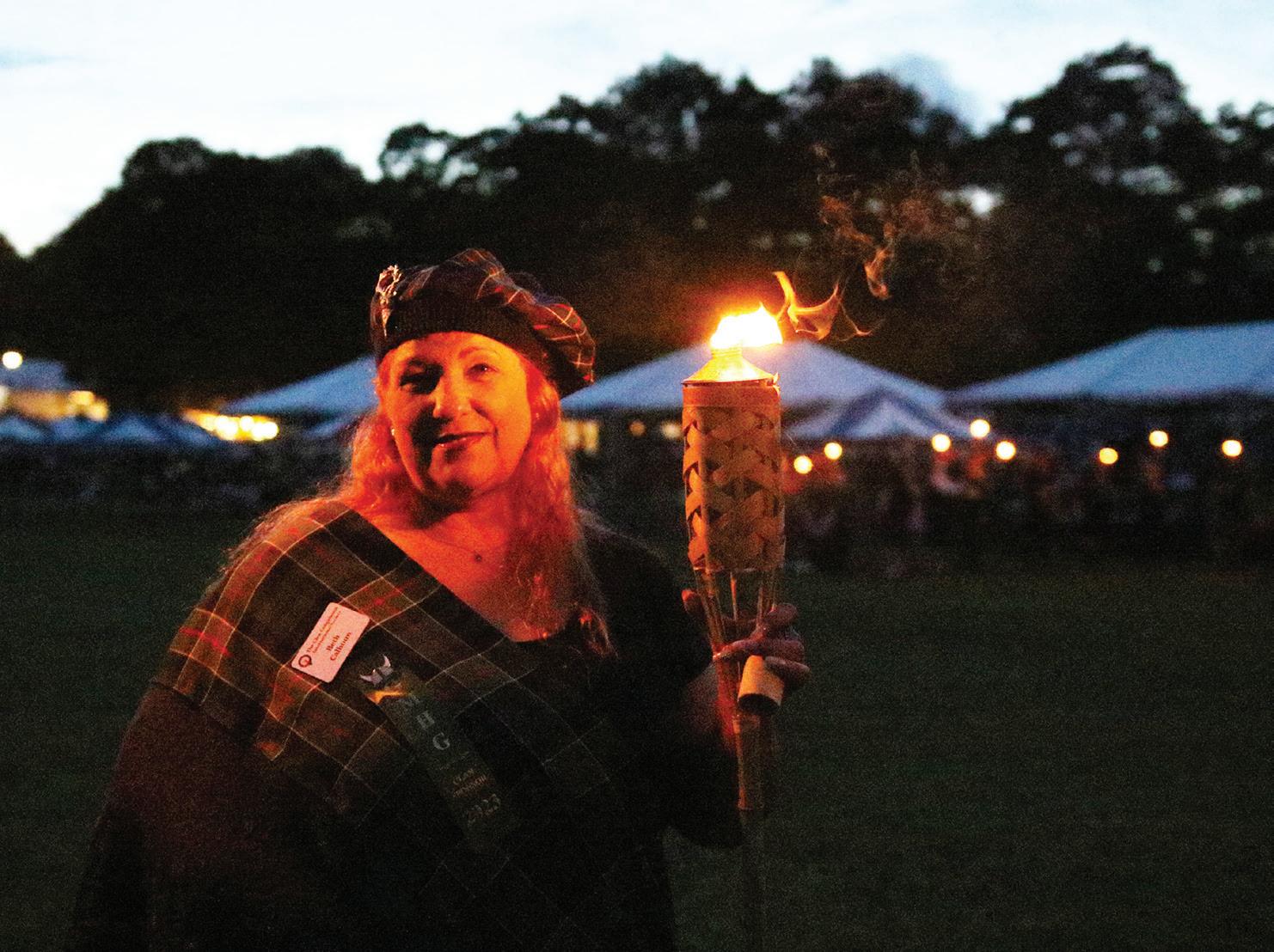
event in July, settling into what would become the Games permanent place in the summer calendar—the second full weekend in July.
From its humble beginnings to its modern-day grandeur, the Grandfather Mountain Highland Games stand as a testament to what vision, culture, and grassroots determination can build.
Whether you’re attending for the first time or returning as part of a family tradition, you’ll be stepping into a living piece of history—one that started with a newspaper article, a dream, and a man in a kilt selling tickets on the streets of Charlotte.
For full event details, visit www. gmhg.org.
BY HOPE DAVIS
LINVILLE — The heat isn’t the only thing warming up the atmosphere on Grandfather Mountain’s MacRae Meadows. Dozens of competitors prepare for the ultimate test of strength and endurance at the 2026 Grandfather Mountain Highland Games, held July 9 to 12.
Dating back to the 11th century, the Highland Games are believed to have originated under the rule of King Malcom III, who held a legendary footrace to the summit of Craig Choinnich to find the fastest man in the land. The victor would be selected to serve as the King’s royal courier. Scottish clans later adopted King Malcom’s method to test their own warriors’ strength, agility and endurance, thus giving birth to the Highland Games. Fast forward to the 21st century, and the Highland Games have become an iconic symbol of Scottish culture across the world, with the Grandfather Mountain Highland Games taking center stage as one of the largest authentic Scottish gatherings in North America.
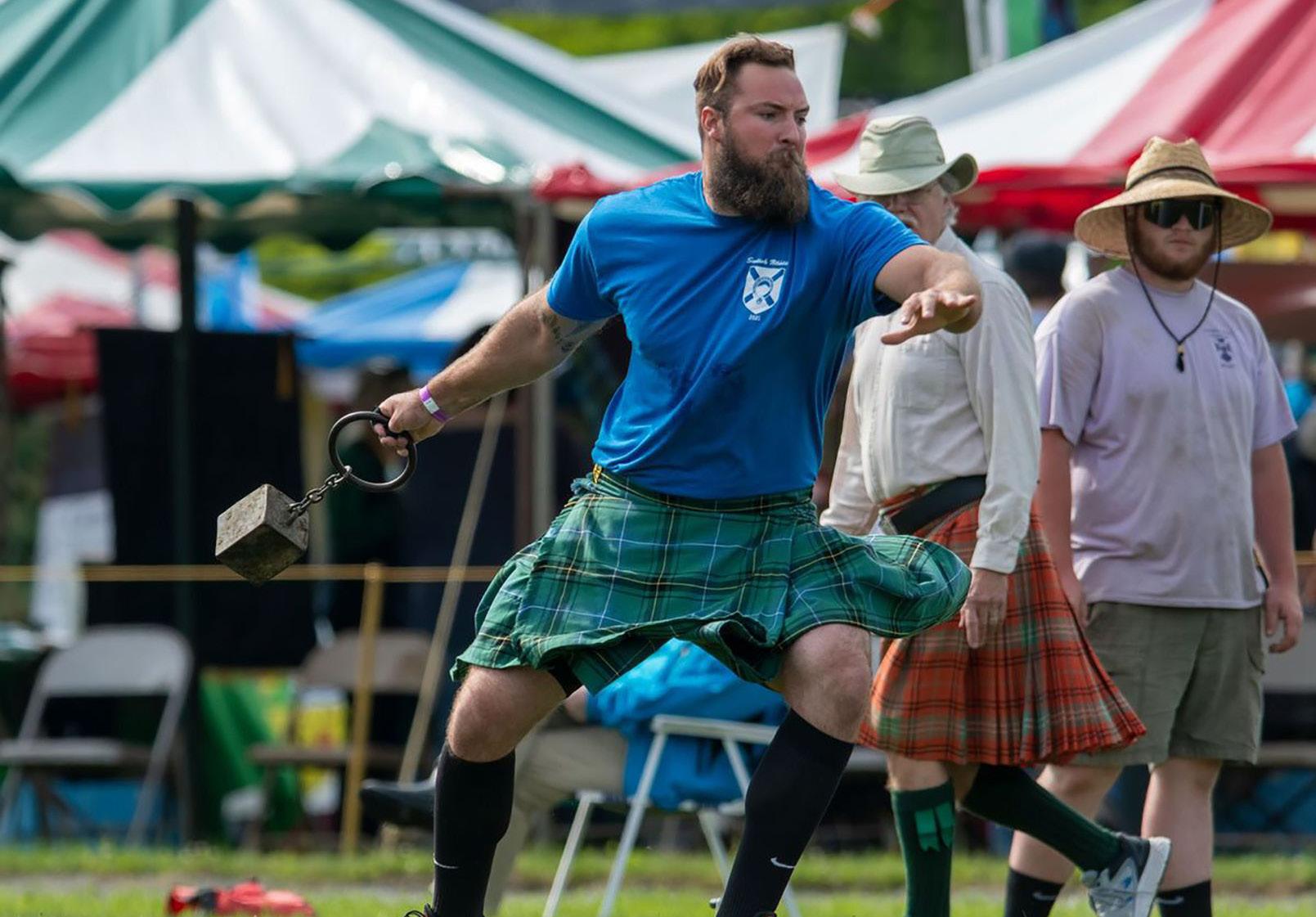
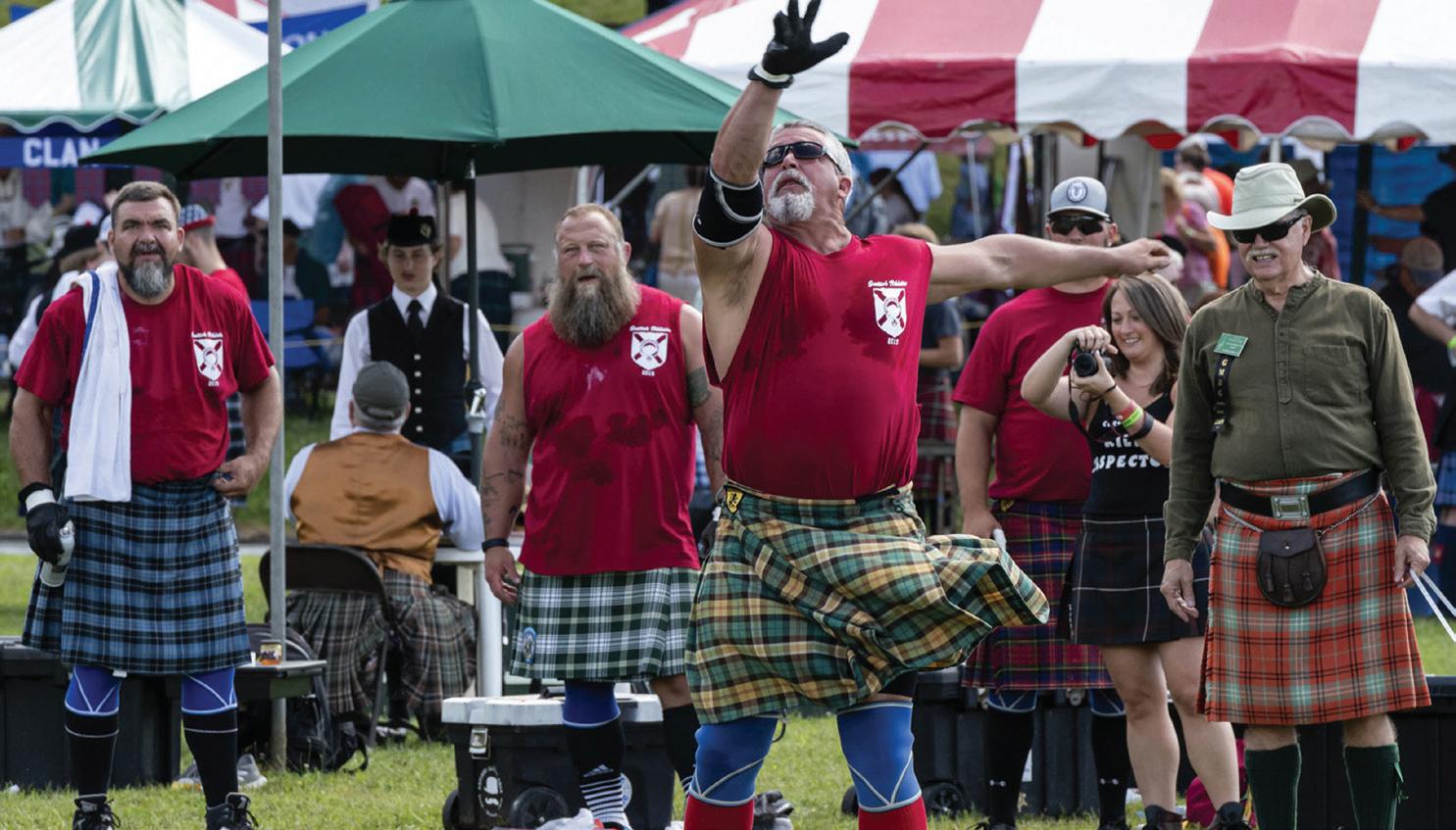
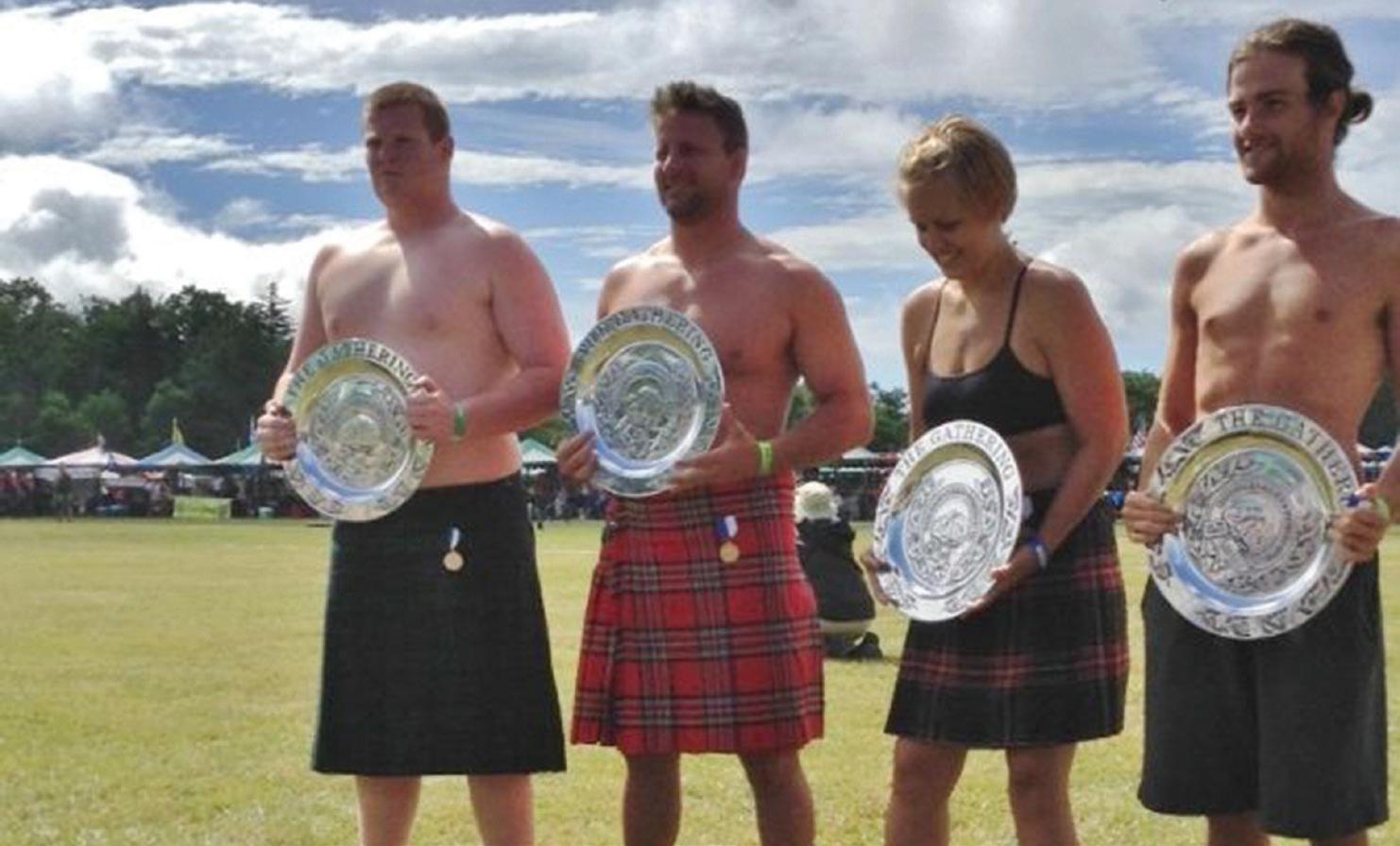
Over the four-day gathering, both male and female competitors will compete in events such as the definitive caber toss, stone shot put, and hammer throw. Victors will be chosen based on their performance competing in six events, each in hopes of finding the strongest warrior atop Grandfather Mountain. The Games currently host competitions at the amateur, professional and master levels. The field also hosts an elite women’s competition by invitation only.
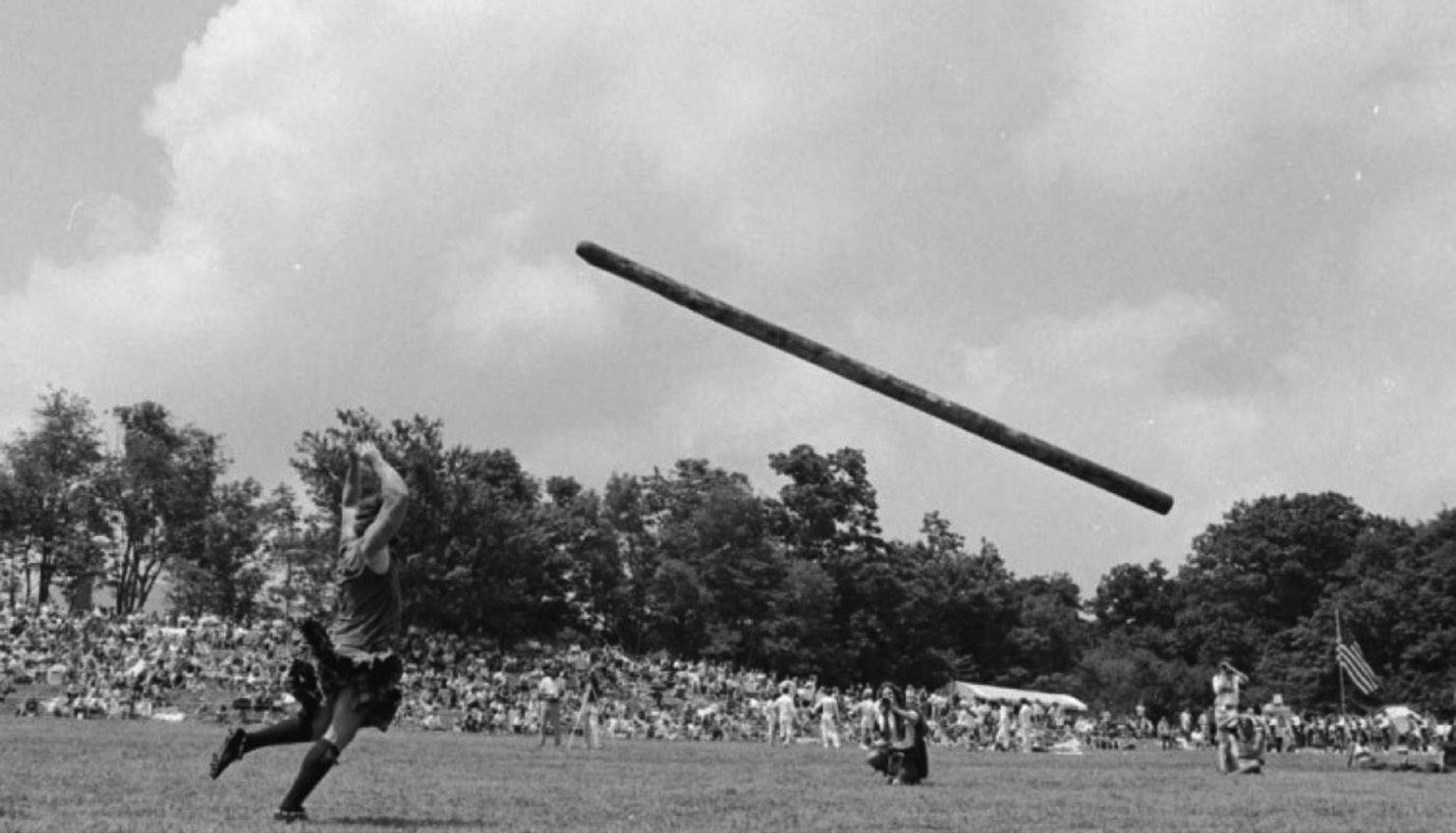
The caber toss remains one of the most anticipated athletic events at the Games. The feat is widely believed to have originated from the need to hurl logs over the chasms that speckle the Highlands’ rough mountain terrain. Judged on style rather than distance, athletes toss a telephone pole-sized log upward with the goal of landing at the 12 o’clock position.
The Clachneart event, which means “stone of strength” in Scottish Gaelic, is a
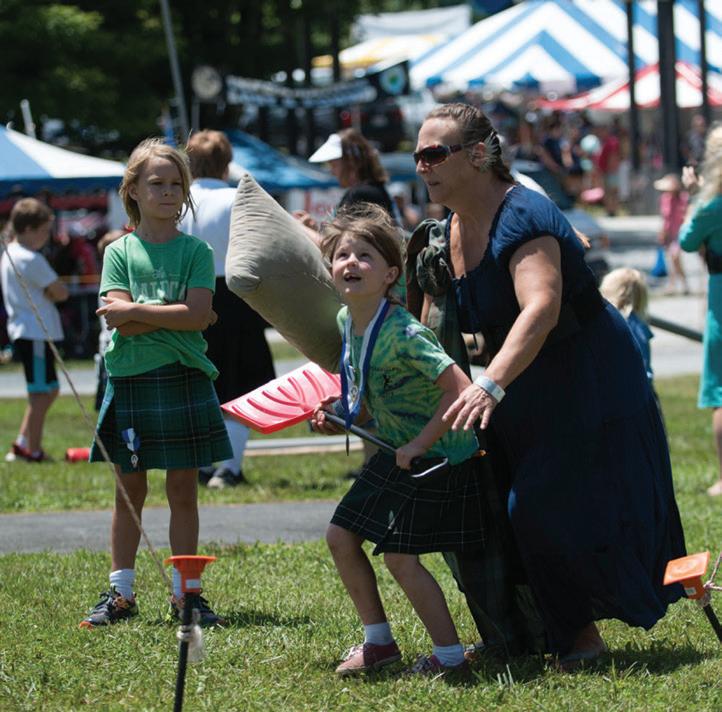
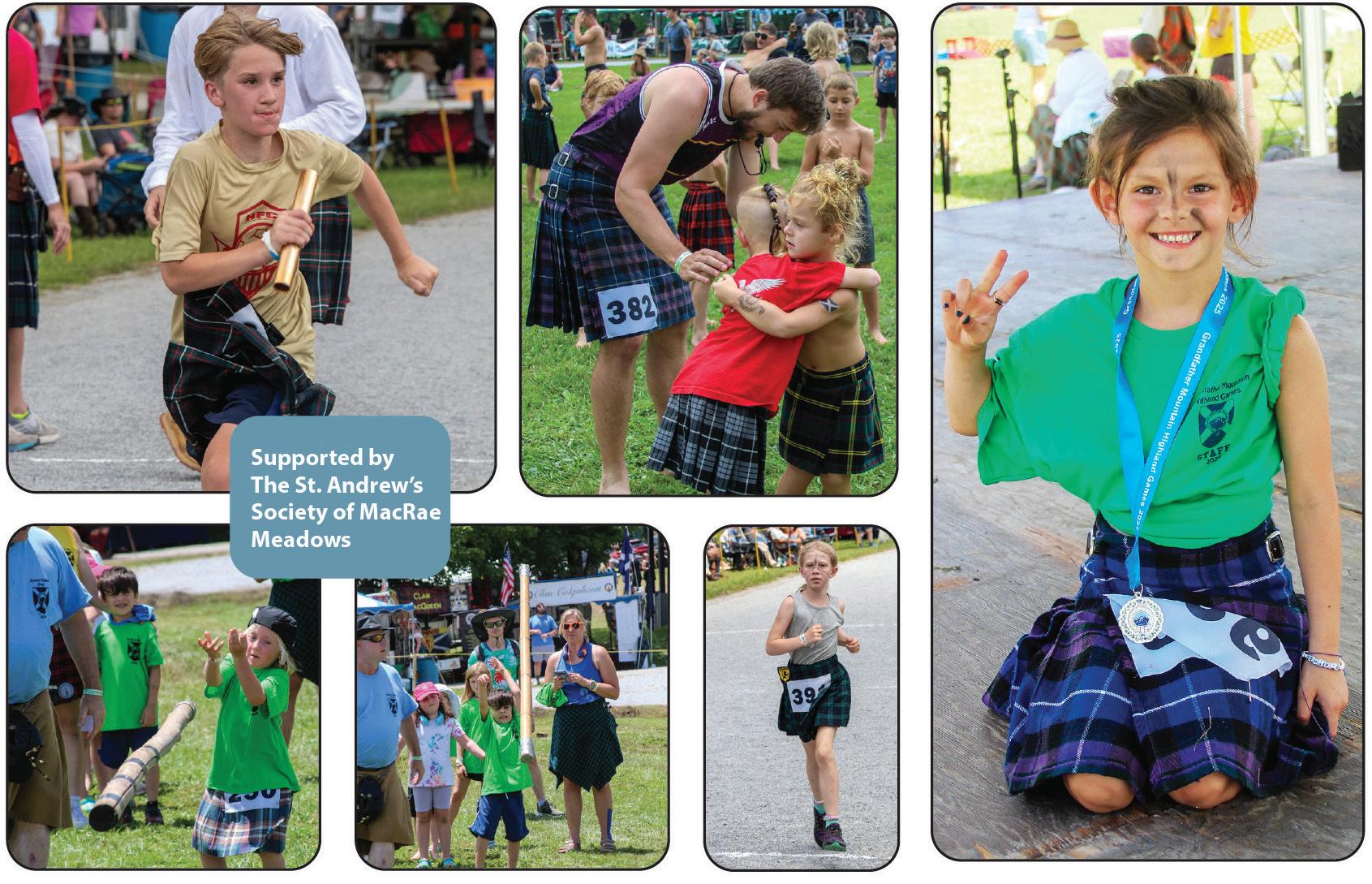
New activities for children are common each year at the Highland Games, including opportunities for youngsters to try their hand at some of the traditional athletics of the festival.
heavyweight athletics competition that closely resembles the shot put throw in track and field events. Athletes, in traditional Highland fashion, will hurl a large stone across the field in hopes of reaching maximum distance. The stones can weigh anywhere from 8 to 26 pounds, depending on the class.
The various clans can also compete in traditional warrior fashion in a Clan TugO-War sponsored by Clan MacLaren. For those quicker on their feet, the Grandfather Mountain Highland Games hosts a kiltedmile, an homage to the royal roots of the Games.
“We get guys from California, Nebraska and all over the place,” said Steve Quillin, president of the Grandfather Mountain Highland Games. “One of the things that distinguishes the Games in our mountains is that we require athletes at Grandfather Mountain to have passed certain hurdles and have been required to make minimum achievements, even in the amateur ranks.”
“When somebody picks up a caber at Grandfather Mountain, we’ve gotta make sure they throw it the right way,” added Quillin.
Children’s athletics are hosted at 1 p.m. on Sunday, the final day of the Games. These events will allow mini-warriors to
compete in the traditional caber toss, sheaf toss, tug-o-war and more. Children’s wrestling remains a fan favorite at the events, beginning with a clinic to teach children the sport. All interested children and parents are welcome to attend the clinics, with no pre-registration required. Athletic events will take place
throughout the day on Friday, Saturday and Sunday. Whether you’re looking to conquer the Clachneart or watch the victors take home the gold, the Grandfather Mountain Highland Games are guaranteed to bring you an action-packed weekend. For more information and athletic schedules, visit www.gmhg.org.
Throughout the history of Avery County, there have been a handful of influential individuals who have left behind legacies that will benefit generations to come. Among these people include the likes of Rev. Edgar Tufts, Hugh Morton and Agnes MacRae Morton. The community lost another one of these rare spirits on Feb. 18, 2021, with the passing of Donald Frank MacDonald at the age of 94.
MacDonald’s passion for Scottish culture and abundance of energy helped create the lasting tradition that is the Grandfather Mountain Highland Games.
MacDonald’s story, as told by current GMHG President Stephen Quillin, began in Clio, S.C. MacDonald served in the Navy and went on to study journalism at the University of North Carolina at Chapel Hill. After completing his education at UNC, where he crossed paths with Andy Griffith and other influential North Carolinians, he began his career working for the Charlotte News.
In 1954, MacDonald’s interest in his Scottish ancestry led him to attend the Braemar Gathering in Scotland, which Queen Elizabeth II attended every year and was crowned around this time period. MacDonald not only took advantage of the games to see the Queen in person, but more importantly, he brought back a program from the games that he used as the basis for writing several articles in the Charlotte News about Scotland.
Agnes MacRae Morton, who lived in Linville at the time, thoroughly enjoyed MacDonald’s articles in the Charlotte News and reached out to him to begin planning a similar Scottish event at MacRae Meadows, which she owned, in 1955. MacDonald hit the ground running fundraising, and even brought the Black Watch Regimental Pipe Band, of the third infantry battalion of the Royal Regiment of Scotland, to perform at the Charlotte Coliseum. MacDonald would don his kilt outside of the Charlotte News and sell tickets to the event which brought in enough money for the duo to hold what would become the first Grandfather Mountain Highland Games on Aug. 19, 1956.
MacDonald’s vast knowledge of Scottish history was apparent during the first GMHG, as the date of Aug. 19 also coincided with the historical date of Scotland’s 1745 rising, also known as the Jacobite Rising. It was on this date that Bonnie Prince Charlie, who considered
his father to be the rightful king of Great Britain, raised his standard in rebellion to the crown and King George II, which led to a march on Edinburgh and the Jacobites’ final defeat at the Battle of Culloden.
Leading up to the first GMHG, Morton and MacDonald held a media campaign through interviews in newspapers throughout the state, leading the first GMHG to be an instant success.
“They began the task of planning for the Games back in 1955, and they used all of their connections to be interviewed in state newspapers in Wilmington, Raleigh, Charlotte, all over the place. By the time the Games rolled around in 1956, they drew a crowd beyond their wildest dreams. They had 1,000 people. As Donald used to say, ’Boy, we struck a nerve.’ They really tapped into all the Scottishness that was in North Carolina at the time,” Quillin said. MacDonald served as the first president of the GMHG. He held the post from 1956 to 1961 before getting married in 1961. In fact, MacDonald and his wife’s wedding took place at the Presbyterian church in Linville and was covered by Life Magazine, as it was held in Gaelic fashion complete with a pipe band and kilts worn by the couple and those in attendance.
Life magazine sent photographers and reporters to interview those in attendance. However, the article never ran in the scheduled edition, since the Nixon and Kennedy debates took precedent in the news cycle. After they wed, MacDonald and his wife moved to Scotland where he lived until 2015 before returning to the United States for health reasons.
“He never lost touch with the Games,” Quillin said. “He wasn’t able to attend every year throughout the years, but beginning again in 1990 or so he attended religiously until his health prevented him from attending every year.”
Quillin noted that MacDonald’s passion for Scottish culture “gave legs” to a lot of interest present throughout the state. During MacDonald’s life, he would not only found the GMHG but also the Robert Burns Society in Charlotte and the Clan Donald Society. This love and vast knowledge of history was present at the GMHG as well. As Quillin points out, there are many Scottish games held throughout the
country, and the GMHG is by no means the largest, but it does feature a unique focus on the gathering of Scottish family societies, of which the festival hosts the most of in the world every year during the second weekend in July.
“That was very much keeping with the vision that Donald and Agnes had right from the getgo,” Quillin said.
Also significant for MacDonald throughout his life has been the friendships he formed, especially with Agnes MacRae Morton, as it pertains to the GMHG. Agnes was the mother of Hugh Morton, who was the developer of Grandfather Mountain. On his mother’s side, Hugh’s great-grandfather Donald MacRae first bought the development rights around Grandfather Mountain in 1889 from Walter Waightstill Lenoir, who was the grandson of Revolutionary War officer General William Lenoir. Agnes was older than MacDonald, and played a critical role in providing MacRae Meadows as the site for the Games to be held. Agnes was also responsible for the construction of the Invershiel stone church at the corner of Highway 105 and Tynecastle.
Quillin also held a dear friendship with MacDonald and recollected his personality, as well as memories together as MacDonald traveled back and forth between Scotland and the United States.
“Donald was a large man, six-foot-three or six-foot-four. He was very gregarious, knowledgeable, friendly, outgoing, very charismatic. That, and the fact that he could run those articles in the newspaper, he was kind of a pied piper of sorts. He really drew people to the things he was promoting,” Quillin said. “I knew him extremely well. I considered him a good friend, as did my wife. We stayed with him in his home, and he stayed with us in our home in the mountains and our home in Durham. Losing Donald will take a big (chunk) out of our lives for sure. He was really a special man to us.”
Furthermore, Quillin shared the story of MacDonald’s Christmas tradition, one which provided quite a spirited celebration of the holiday.
“He was nearly unaffected by age until he was about 90. He was a vigorous man both physically and mentally,” Quillin said. “His Christmas tree each year was decorated with
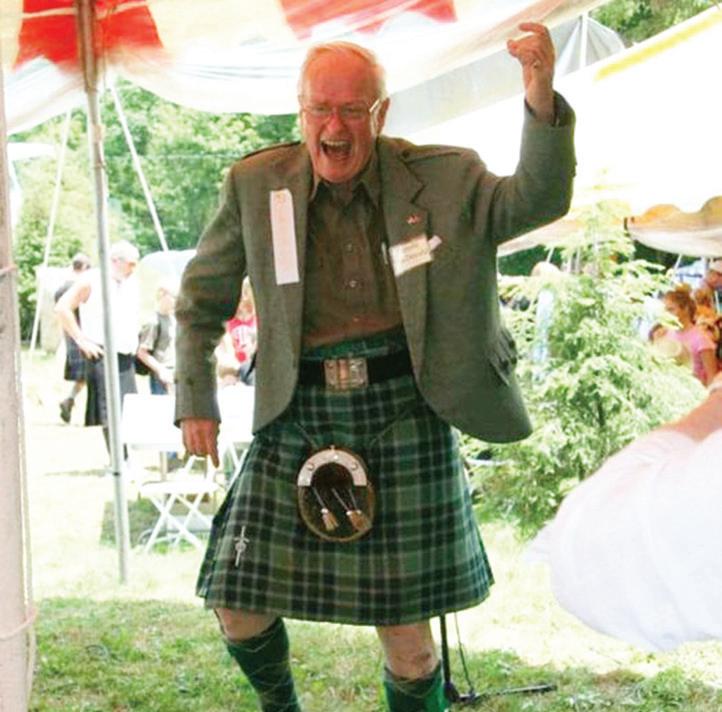
Donald MacDonald was instrumental in the staging of the first-ever Grandfather Mountain Highland Games in 1956 and was a frequent participant in the festival prior to his passing in 2021
mini-bottles, so that was his tree decoration. He would leave that tree up and leave those bottles on it, and then when he got ready to take the tree down, he would invite all of his neighbors over and they’d take down the tree, and taking down the tree meant you had to drink the bottle that you took off the tree.”
While MacDonald was certainly known for his lively celebrations among friends, he was also accomplished within his chosen profession, both in the US and abroad. MacDonald was awarded the Order of the Long Leaf Pine, the highest civilian honor one can earn in North Carolina. During his time in Scotland, MacDonald worked for the Scottish newspaper The Scotsman, for which he wrote several dozen authoritative articles on the history of the Scottish clans, and he taught journalism at Napier University in Edinburgh. He also wrote a book about the GMHG called “America’s Braemar.”
Among all of his accomplishments, Quillin says that MacDonald’s achievement co-founding the GMHG was the one of which he was most proud, and it is through MacDonald’s effort that people from across the state, nation and world are able to experience the joy the Games brings for generations to come.
“The Games are important to Avery County, and Donald was certainly important to Avery County,” Quillin said. “He had a lot of interests and he was a really great guy. A great guy.”
BY HOPE DAVIS
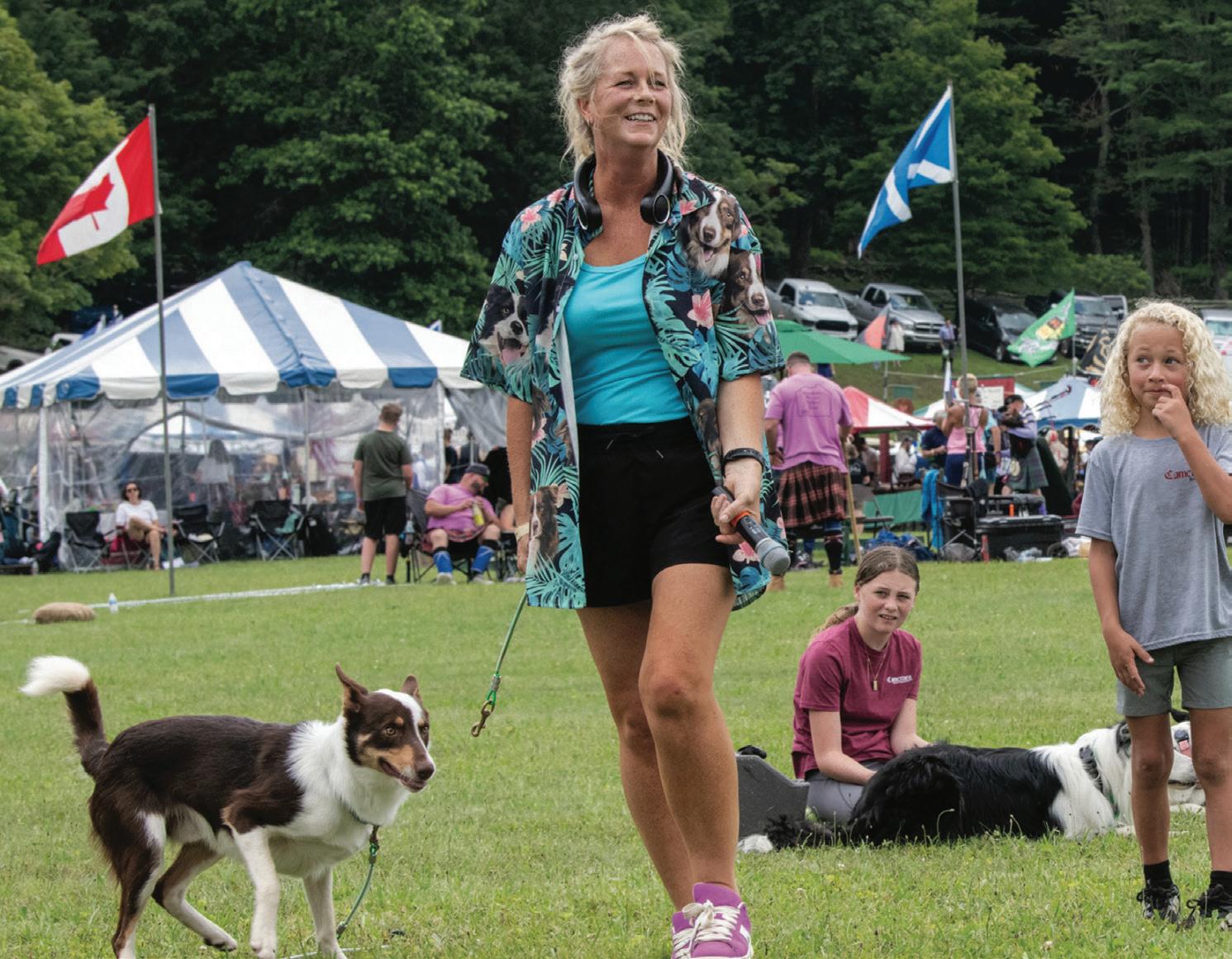
LINVILLE — While many travel far and wide to see humans compete for the gold at MacRae Meadows, it is Shona O’Kane’s furry friends who seem to steal the show at the Grandfather Mountain Highland Games.
O’Kane and her border collies have become one of the most anticipated performers at the Games, drawing crowds of all ages to watch their graceful movements in a sheepherding demonstration. O’Kane’s close communication with her dogs seems almost telepathic, but the secret lies in the selective breeding and training of these collies that took place hundreds of years ago in the rugged Scottish hills.
While a shepherd may stand on a hill with a whistle calling his livestock, it is the border collie miles away who carefully corrals the flock, quietly and
with intense focus. The collies, who can run up to 30 miles per hour, work closely with their handlers, harmoniously following hand signals, body language and verbal commands with ease.
O’Kane and her border collies have traveled across the country to showcase their talents, returning to MacRae Meadows for the 2026 Grandfather Mountain Highland Games.
“I, along with my dogs Preacher, Lass, Texas, Beans and Ned, am so pleased to join the 2026 Grandfather Mountain Highland Games,” said O’Kane. “I have been fortunate enough to be able to travel all over North America with my wonderful Border Collies, competing and working in film and television production. But our favorite opportunity remains entertaining people and making new friends at herding demonstrations, where we offer spectators a glimpse into
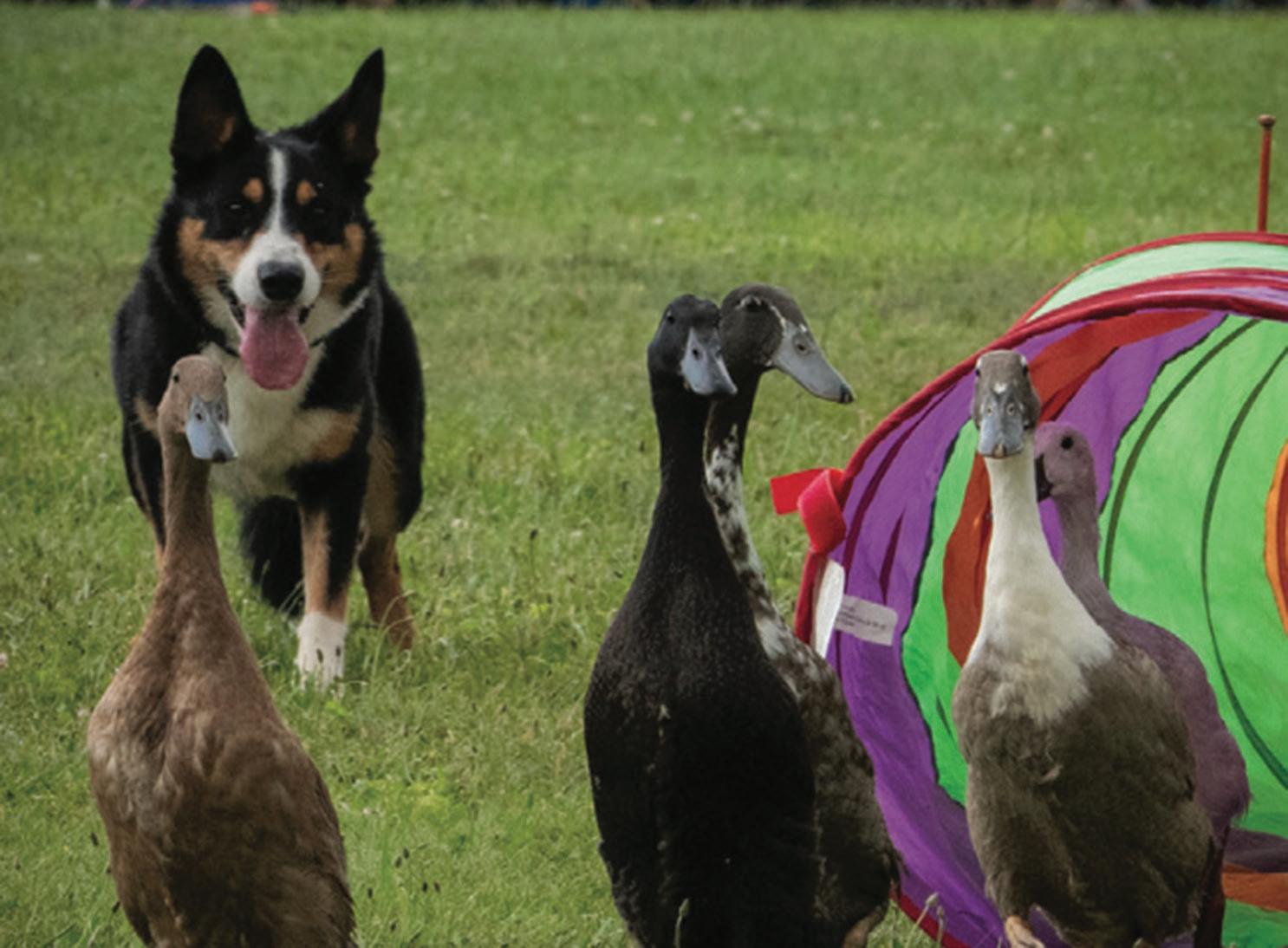
the working life of these amazing dogs.”
The sheepherding demonstrations are beloved by both adults and children alike. O’Kane and her collies even hold a workshop called “Top Dog” at the Children’s Celtic Cultural Tent at 9:30 a.m. Friday and Saturday.
“Shauna is delightful,” said Steve Quillin, the president of the Grandfather Mountain Highland Games. “When we used to do surveys about what was the most popular event for spectators, the sheepherding exhibitions usually ranked first or second.”
Sheepherding demonstrations take place multiple times throughout each day of the Games, held July 9 to 12. Visitors can gather to watch the showcases of agility, intelligence and pure working instinct as O’Kane’s collies take center stage alongside flocks of sheep and ducks. You may even catch a glimpse of her infamous “duck washing machine” performance, which has
become a crowd favorite throughout the years.
“You can tell the dogs love it,” added Sally Warburton, Vice President of the Games. “There’s a hillside where you can come in and bring a chair or just sit on the ground. You can always find a spot and watch.”
Whether you’re headed to the caber toss or on your way to get an enormous turkey leg, make sure not to miss O’Kane and her posse of furry (and sometimes muddy) counterparts throughout the weekend for a showcase of strength, agility and more than 300 years of Scottish culture.
“Please feel welcome to visit the dogs and myself between demonstrations and throughout the day,” said O’Kane. “I would love to meet you, and the dogs would love a belly rub!”
For more information on O’Kane’s sheepherding dogs and demonstration schedules, visit www.gmhg.org.
LINVILLE —The long and storied tradition that is the Grandfather Mountain Highland Games returns to MacRae Meadows on Thursday, July 9, continuing through Sunday, July 12.
This marks the milestone 70th year for the beloved and historic celebration of Scottish ancestry and heritage, with the popular festival once again bringing a “wee bit o’ Scotland” to the High Country of North Carolina.
“This year’s games are a great reason for folks to travel to the North Carolina High Country,” said Stephen Quillin, president of the Grandfather Mountain Highland Games. “Not only are we excited for the lineup this year, but we can’t wait to see the mountains full of visitors again for such a special occasion.”
Throughout the weekend of events, guests can take in the awe-inspiring spectacle of traditional Scottish athletic competitions, which includes Scottish heavy athletics, track and field competitions, Highland wrestling and more.
Additionally, guests can enjoy signature Scottish cuisine, cultural enrichments, traditional and contemporary Scottish music, dancing competitions, the Parade of Tartans and the ever-popular sheep dog herding demonstration. The Highland Games offer
a unique experience for the whole family that guests will enjoy regardless of their lineage.
Grandfather Mountain offers a distinct backdrop to these games that is not so different from the original Braemar Gathering that inspired the founders of the Grandfather Mountain Highland Games decades ago.
Operated and organized by Grandfather Mountain Highland Games, Inc., the festivities begin Thursday, July 9, with border collie sheepherding demonstrations and Celtic entertainment.
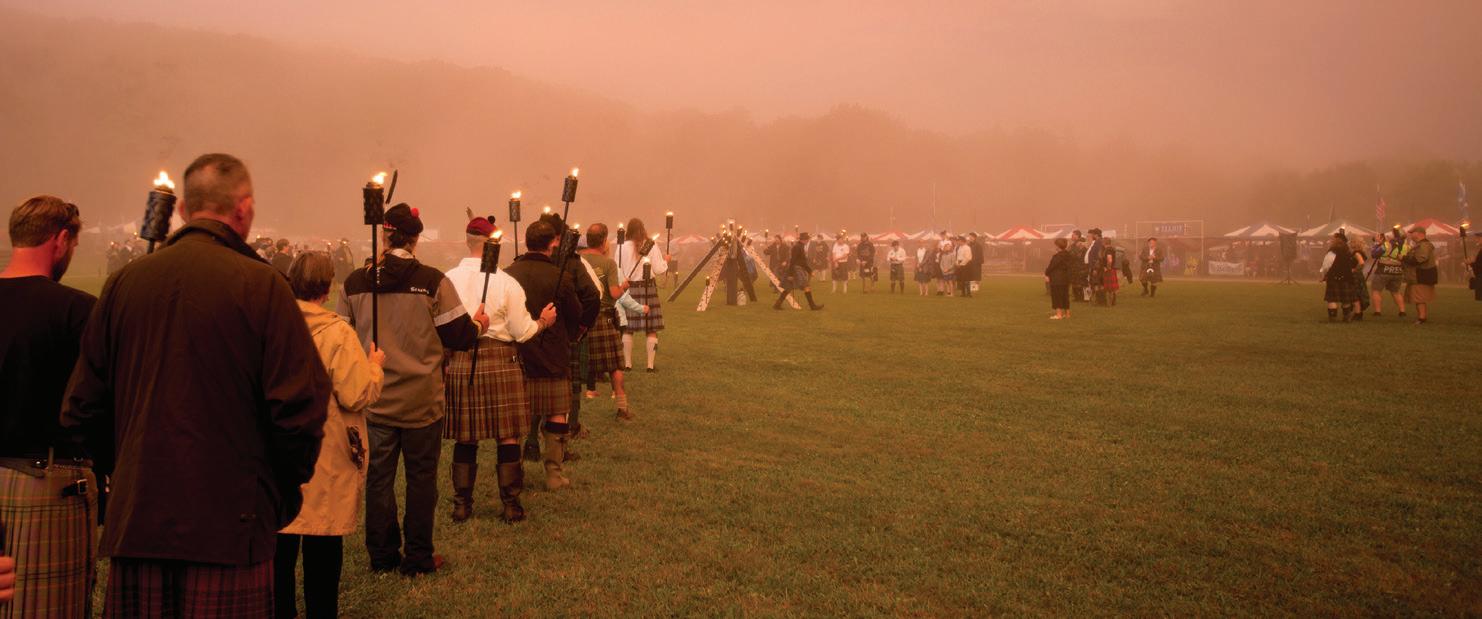
Shortly thereafter, the games officially get under way with the Torch Light Ceremony on Thursday evening, where representatives from all clans — many of whom travel from across the country and world to attend the games each year — announce their families’ participation in the gathering. Truly a sight to behold, the “raising of the clans” proclaims that they have convened to celebrate their heritage.
This year, 108 clans will be represented on the field, as well as 26 educational and cultural societies. This includes Clan Gunn as “Honored Clan.” John Gunn, Chieftain of Clan Gunn, will be serving as the Chieftain of the Games.
The “Distinguished Clan” is Clan
Lamont. Their chief is Scott Turner of Lamont, 28th Chief of Clan MacLeod.
Friday offers a full day of activities with Highland dance competitions, Celtic Grove music performances, a children’s caber toss clinic, amateur heavy athletics and the Celtic Rock Concert that night.
Saturday sees the start of both the “Elite” Women Heavy Athletics Qualifying and the “Professional” Class Heavy Athletics, including such feats of strength as the caber toss, the sheaf toss, the hammer throw and others.
During the day, piping, harp and fiddling competitions will take place, as well as additional musical entertainment, culminating in the much-anticipated nighttime Celtic Jam Concert.
Among this year’s musical talent is Seven Nations as the lead Celtic rock band. Additionally, the lead traditional Celtic band is the Seán Heely Band, as well as Brothers McLeod, Mari Black, Voices of Valverda, Strathspan and Ed Miller Trio.
Cultural experiences will be offered in the award-winning Scottish Cultural Village Tent over the course of the
weekend, which is celebrating more than a decade on the mountain. The 2026 Village programming includes topics such as A Journey Through the Hebrides, Scottish Immigrants & the Birth of American Whiskey, The Great Kilt: How to Wear It /, Burned at the Stake: Scotland’s Dark Trials and Executions, Dressing the Stones: Outlander’s Stunning Costumes, Highland & Island Clearances and more. Athletic events are repeated on Sunday for amateurs and athletes 40 and older, in addition to the Parade of Tartans, kilted running events, children’s events and the Clan Tug of War. The weekend’s programming concludes Sunday afternoon with the closing ceremonies. To learn more about admission to the 2026 Grandfather Mountain Highland Games, including parking and shuttle bus information, call 828-733-1333 or visit www.gmhg.org. For lodging and travel information, contact the N.C. High Country Host Regional Visitor Center at 800-438-7500 or visit www. highcountryhost.com.