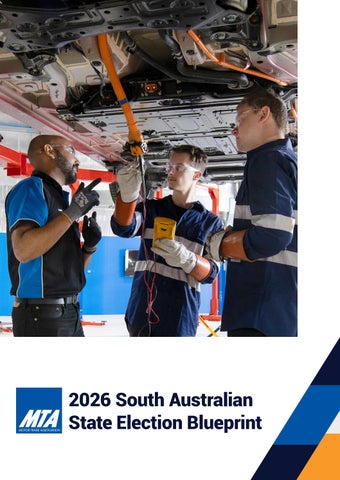
2026 South Australian State Election Blueprint
South Australian Automotive Retail, Service & Repair Sector Overview* *Source:
$2.16B
1,444,960 Economic Contribution
27,380 Vehicles
4,825 Employees
Businesses
1,200 MTA members in SA







15,000+
Employed by MTA members
MTA Training and Employment
We currently have over 1,100 apprentices in training.
We directly employ 450 apprentices hosted through our group training organisation to more than 240 businesses








Cleve
Royal Park
Summary of Recommendations
Automotive Industry: Policies and Programs
1. Enshrine a legal right to choice of repair for South Australians
2. Introduce a change of ownership vehicle inspection scheme
3. Increase the speed limit past emergency service vehicles, towing and roadside assistance operators to 40km/h
4. Introduce a licensing regime for all towing operators in South Australia.
5. Return trade priority to in-person Service SA and Department for Infrastructure and Transport customer service locations
6. Launch a $1 million industry EV preparedness fund
7. A digital modernisation project for automotive trade services
8. The Department of Infrastructure and Transport collects and reports data on location and fuel type for vehicle transfers
9. Reduce stamp duty on non-commercial motor vehicles to 3 per cent
10. Raise the payroll tax annual wage threshold from $1.5 million to $2.5 million
11. Introduce a payroll tax exemption for apprentice and trainee wages
12. Mandatory training program for newly licensed vehicle dealers
13. A requirement for newly licensed vehicle dealers to operate from a commercial premises
14. An additional RiderSafe training facility for Adelaide’s Southern Suburbs
15. Do not mandate pre-pay fuel pumps
16. Support businesses to implement new vehicle monitoring systems that log, detect, alert and mitigate fuel theft
17. Modernise the Unclaimed Goods Act 1987
18. Undertake a tyre safety education and awareness campaign
19. Lobby the Commonwealth Government for a 20 per cent reduction to the Temporary Skilled Migration Income Threshold (TSMIT) through South Australia’s Designated Area Migration Agreement (DAMA)
Skills, Training and Employment
20. Permanently fund industry not-for-profit training providers separately to for-profit training providers
21. Continue the Equipment and Capital Grants program for industry not-for-profit training providers
22. Reinstate the training subsidy calculators on the Skills SA website
23. Return the GTO Training Boost (GTO Boost) funding program to full strength
24. Fully subsidise EV safety training for automotive technicians
25. Deliver an apprenticeships and traineeships retention and completions grants program
26. Help MTA Training and Employment double its School Pathways Program

Foreword

South Australia’s automotive industry is moving towards a critical juncture. The introduction of the Commonwealth Government’s New Vehicle Efficiency Standard (NVES) is now in place and has set in motion a period of profound change for automotive businesses and skilled technicians, through to everyday South Australian motorists.
Ambitious targets under the NVES will challenge some of our most trusted and beloved brands, who must expand their offerings of zero and lowemission vehicles or face significant penalties. Simultaneously, we will see a wave of new brands entering our market, adding to what is already one of the world’s most competitive automotive environments.
This transition is about more than just the cars we drive. The rapid pace of change is transforming heavy vehicle transport, motorcycles and personal mobility devices, farm machinery and mobile plant.
What is not yet fully understood are the far-reaching downstream impacts on our automotive retail, service, and repair supply chain. While new car dealers and collision repairers are on the frontline of this evolution, we must equally prepare our independent mechanical repair workshops, service stations, and the entire ecosystem, right through to dismantlers and recyclers.
Automotive is an essential service, and this was reinforced during the challenges of COVID-19. We are the enablers of daily life, supporting everything from freight and emergency services through to the everyday mobility of ordinary South Australians. Our industry contributes over $2 billion to the state’s economy, is comprised of nearly 5,000 businesses, and employs more than 27,000 people. The skills and expertise of these businesses and employees are the lifeblood of our state’s mobility and economic health.
We have skin in the game, with MTA Training and Employment training more than 1,100 apprentices and directly employing 450 through our group training organisation. Accountable to our members and industry, we continue to innovate in areas such as our Australian first automotive dual trade apprenticeships with recognition as Large Training Provider of the Year at the 2025 SA Training Awards.
As we approach the 2026 South Australian State Election, the automotive industry is looking for strong partners throughout the halls of Parliament. We are not just seeking support; we are asking for a collective vision for the future.
We urge all political parties and candidates to reflect on the priorities and recommendations outlined in this document. These are not just the expert insights of the members and businesses who make up our association; they are an investment in the state’s future prosperity.
Unlocking the opportunity within automotive is a powerful multiplier for all sectors and for South Australia as a whole.
On behalf of South Australia’s automotive industry, we welcome your engagement, your leadership, and your commitment to working alongside us to drive our state’s future.
Motor Trade Association SA/NT
Chief Executive Officer
Darrell Jacobs
Recommendation
for South Australians Choice of Repair
Enshrine a legal right to choice of repair
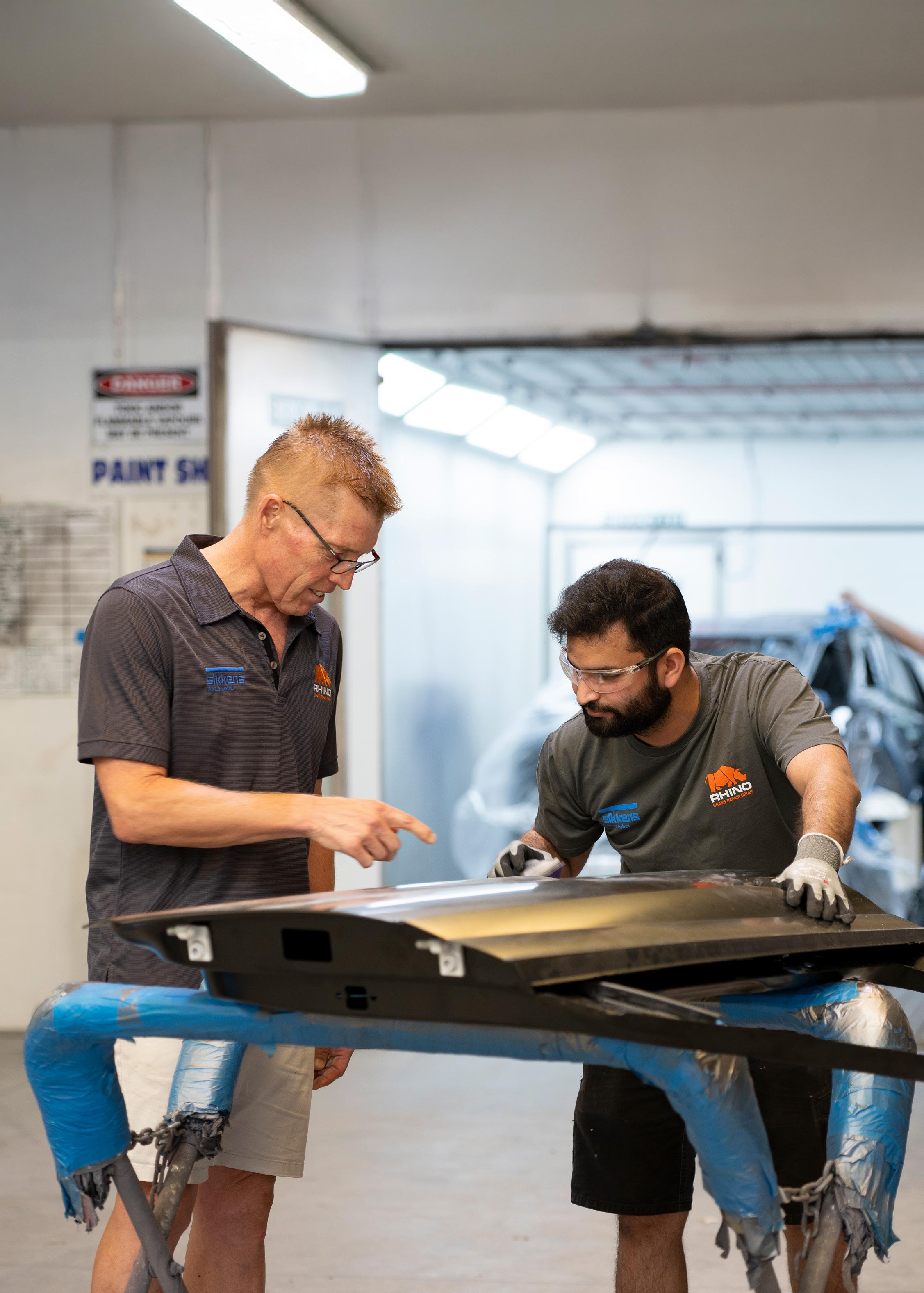
South Australia is a nation leader in reforms which support local motorists and businesses through collision repair and insurance.
For example, in South Australia, insurers are legally required to disclose to policyholders if they have choice of repairer and whether they have a financial or contractual relationship with a repairer they refer a policyholder to. In addition, South Australia is the only jurisdiction in the country which mandates the national Motor Vehicle Insurance and Repair Industry Code of Conduct with penalties for breaches.
Following the 12 June 2025 announcement that the ACCC would grant Allianz permission to acquire RAA Insurance, South Australians have been left with an even more concentrated insurance environment with fewer and more restrictive choice of repair insurance products expected. Left unchecked, the MTA is concerned of a wave of small business closures in the collision repair industry.
The MTA has heard from South Australian motorists who have expressed frustration that their insurer will not allow them to choose or will restrict their ability to choose their preferred repairer. Small, medium and family run businesses in the collision repair industry also experience the practice of ‘steering’ in which insurers actively dissuade or make it difficult for policyholders to choose their preferred repairer.
It is reasonable for a policyholder to be able to choose their preferred repairer for reasons including:
Proximity to their home or work.
Distance to a repairer for regional motorists.
Business reputation for quality repairs and workmanship.
Repairer specialisation or expertise in a vehicle brand or country of manufacture.
A desire to support a local business.
Although choice of repair exists within certain insurance products, they often come with conditions and potentially misleading behaviours such as:
The policyholder must pay the cost difference between their preferred repairer and the insurer’s.
The insurer requires the policyholder to get a second quote from a repairer, often in their network, to exert control over independent repair expertise.
The policyholder is told that their vehicle will be repaired quicker if they go to the insurer’s repairer of choice.
The policyholder can only choose from repairers selected by the insurer.
The insurer manages the claims process in a manner which avoids policyholder input into choice of repair.
Excessive and unjustified price differentials between choice and non-choice insurance products.
MTA members have also noted that network repairers (repairers under ongoing contracts with an insurer or insurers) are often pressured by insurers to lower the cost of repairs by using third-party parts (even in new vehicles), applying unrealistic estimation practices (i.e. funny time, funny money), and using sub-standard repair methods. The insurance industry calls this “competitive pricing” while ignoring comparisons on a like for like basis.
In response, the MTA is recommending that the next State Government make it a legislated right that all South Australian motorists can choose their repairer, regardless of which insurer or insurance product they have.
Vehicle Inspections
Recommendation
Introduce a change
of ownership
vehicle inspection scheme
In South Australia, over the past three years, only one in four used vehicles, 178,492 total, were sold by a licenced vehicle dealer. That means that the remaining 501,612 used vehicles did not receive the consumer protections of statutory warranty, roadworthiness, Australian Consumer Law and the Second-hand Vehicle Dealers Compensation fund.
The need for a vehicle inspection scheme will only increase in the future with the proliferation of advanced driver-assistance systems (ADAS) and computer-controlled components within vehicles. These include critical safety features such as autonomous emergency brakes, forward collision mitigation and lane departure assistance.
Vehicle inspections will also become more important as the New Vehicle Efficiency Standard (NVES) results in more hybrid, plug-in hybrid and fully electric vehicles sold in Australia. With the battery of a new fully electric vehicle comprising up to 40 per cent of its value, second-hand electric vehicles place consumers at risk of replacement costs in excess of the vehicle’s value.
Ensuring these vehicles are routinely inspected with the appropriate diagnostic and calibration tools to verify these systems are operating effectively is of paramount importance. It is not possible to inspect these components with the naked eye and a specialised scanning tool, with the expertise of an experienced automotive technician is required.
The MTA proposes that South Australia adopts a regime of vehicle inspections at change of ownership for privately sold vehicles, as is done in Victoria and Queensland. Inspections would be
conducted by both the Department for Infrastructure and Transport, as well as appropriately qualified, trained, and fit and proper industry operators who are governed by the department under an authorised inspector program.
The inspection proposed for SA not only incorporates safety and roadworthy requirements but also undertakes a further inspection of the vehicle to identify current or potential issues with the vehicle. This will provide consumers greater knowledge of the vehicle they are purchasing to understand the known defects of the vehicle and address information asymmetry currently abused by unscrupulous private vehicle sellers.
The preferred model by the MTA is for privately sold vehicles over a certain age and odometer reading are required to be inspected prior to transfer. This would be paid for at expense of the seller. The preference is for the system to be digitally integrated with the EzyReg platform to ensure ease of use and system integrity for buyers.
The MTA recommends that the Personal Property Securities Register (PPSR) is integrated into these inspections as a mandatory step.
Including the PPSR in change of ownership vehicle inspections will benefit buyers by giving awareness of whether:
A vehicle has been written off
A vehicle has been subject to flood damage
A vehicle has finance owing on it
A vehicle has been stolen
In discussions with MTA member businesses that already undertake voluntary assessments, a fee of between $100 to $150 would be suitable for an inspection that incorporates a roadworthy check as well as a mechanical condition assessment to inform the purchaser of the actual condition of the vehicle. This price range is consistent with the table below which details costs for inspections interstate.
State
Cost
Light vehicle $51.00 (safety) yearly after 5 years, $85 (interstate trans.)
Light vehicle market rate average $250 – change of ownership (safety).
Light vehicle $99.35 - change of ownership (safety)
Light vehicle $223.75 (initial), $152.80 (re-inspection)
Light vehicle $68.20 at 5 years of age and then annually after 10 years of age
Light vehicle $85.90 (safety)- change of ownership
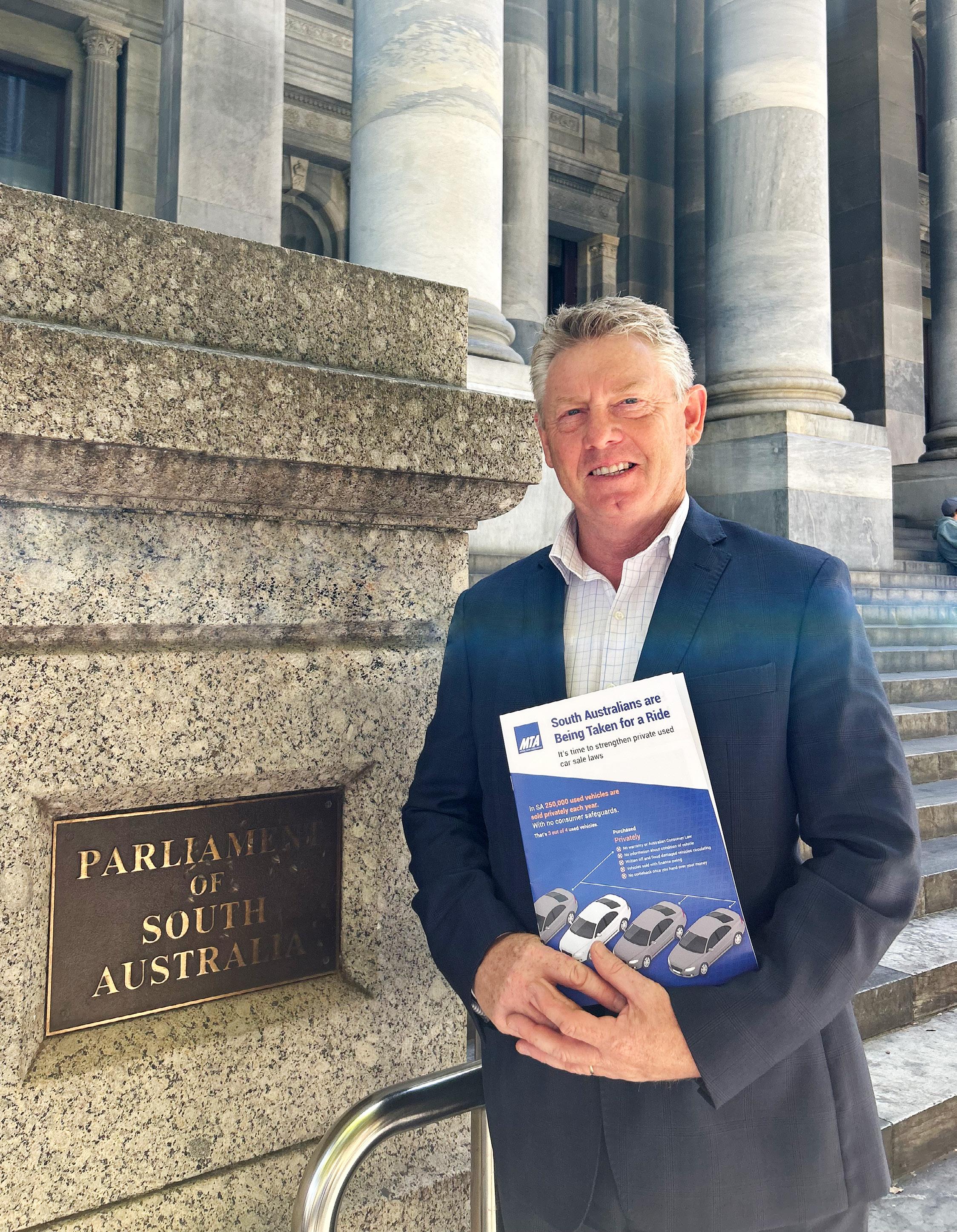
In SA, more than 150,000 used vehicles are sold privately each year. With no consumer safeguards. That’s 3 out of 4 used vehicles.
Purchased Privately
No warranty or Australian Consumer Law
No information about condition of vehicle
Written off and flood damaged vehicles circulating Vehicles sold with finance owing
No comeback once you hand over your money


Towing and Roadside Assistance
Recommendation
Increase the speed limit past emergency service vehicles, towing and roadside assistance operators to 40km/h
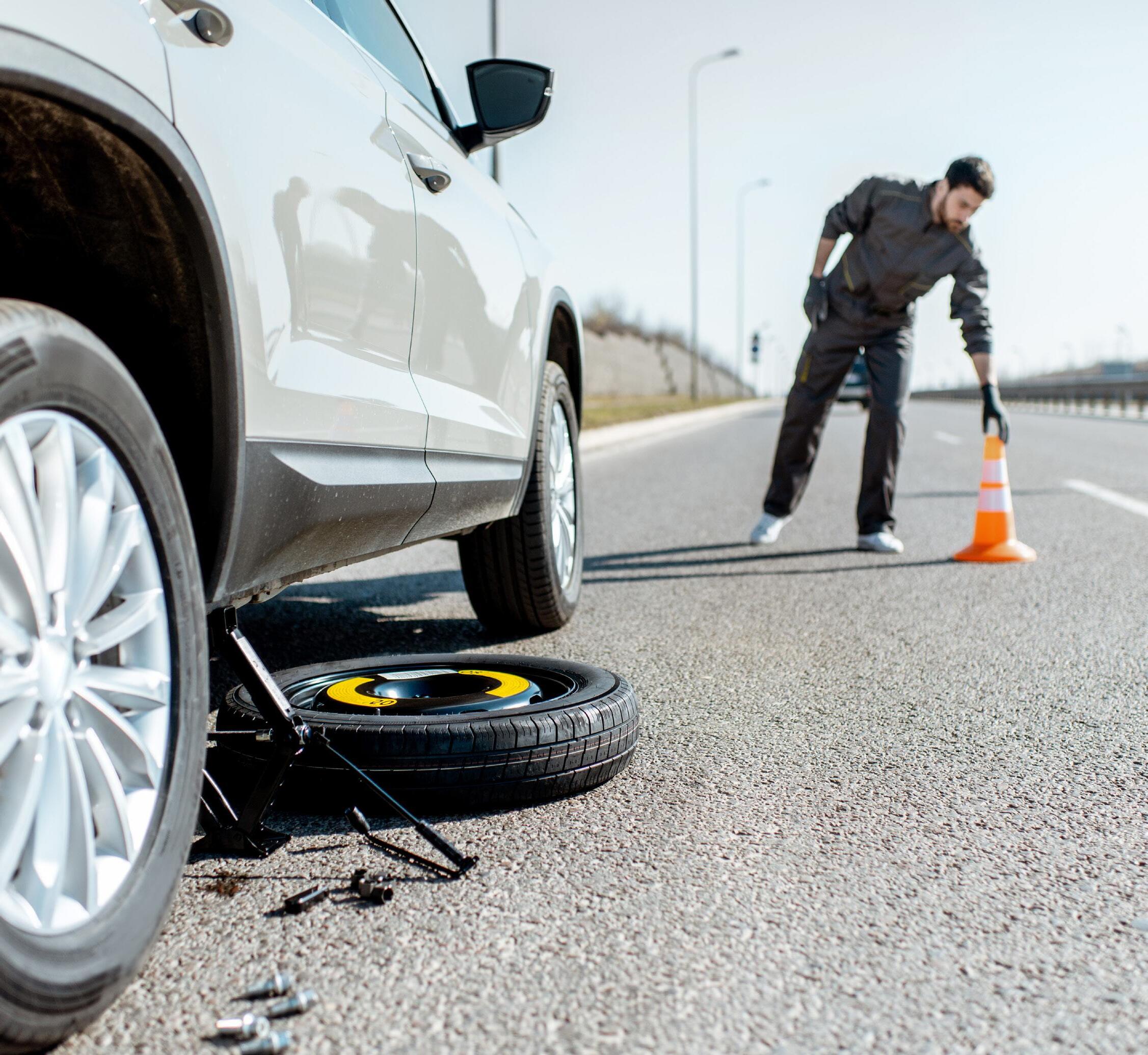
The MTA supports recent reforms which have added towing operators and roadside assistance vehicles to the rule to slow down when they are displaying flashing lights, as is the case with emergency services vehicles.
While the MTA supports this policy, there are still concerns with the speed
limit of 25 km/h, particularly in highspeed road environments. This speed is considered by the MTA to be too low and causes significant safety issues for all parties on the road.
For the safety of all those working on the side of the road, the MTA recommends the speed limit past
emergency services, towing operators and roadside assistance operators is increased from 25 km/h to 40 km/h.
Recommendation
Introduce a licensing regime for all towing operators in South Australia.
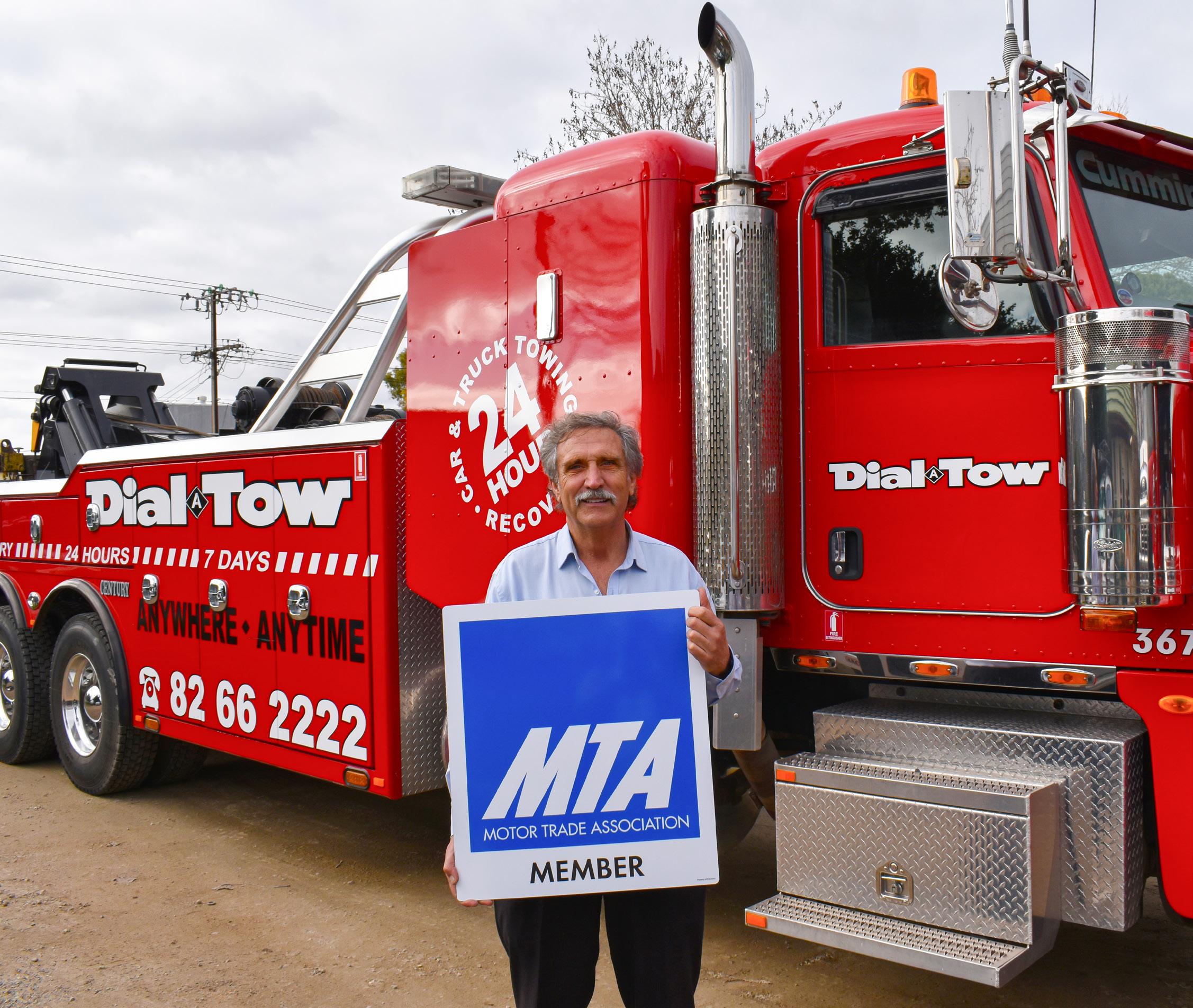
In South Australia, tow truck operators in the gazetted areas are required to hold a tow truck or accident tow truck certificate. For the latter certificate, holders are placed into the accident towing rosters for the respective Adelaide metropolitan zone they are operating in. This system has ensured that the accident towing industry is not impinged by bad faith operators who chase accidents or extort crash victims for their vehicles as has occurred in
Western Australia and the Gold Coast.
However, in areas outside of the gazetted towing areas there is no such requirement to hold a towing certificate and in border communities, interstate towing operators have a competitive advantage over local South Australian businesses. This puts local towing operators at a competitive disadvantage to those in New South Wales and Victoria who
can undertake jobs in South Australia, but South Australian towing operators, who cannot get interstate recognition, cannot operate on the other side of the border.
In response, the MTA proposes that all towing operators in South Australia are required to be registered to operate a towing truck for the purposes of proving a commercial towing service.
Trade Services
Recommendation
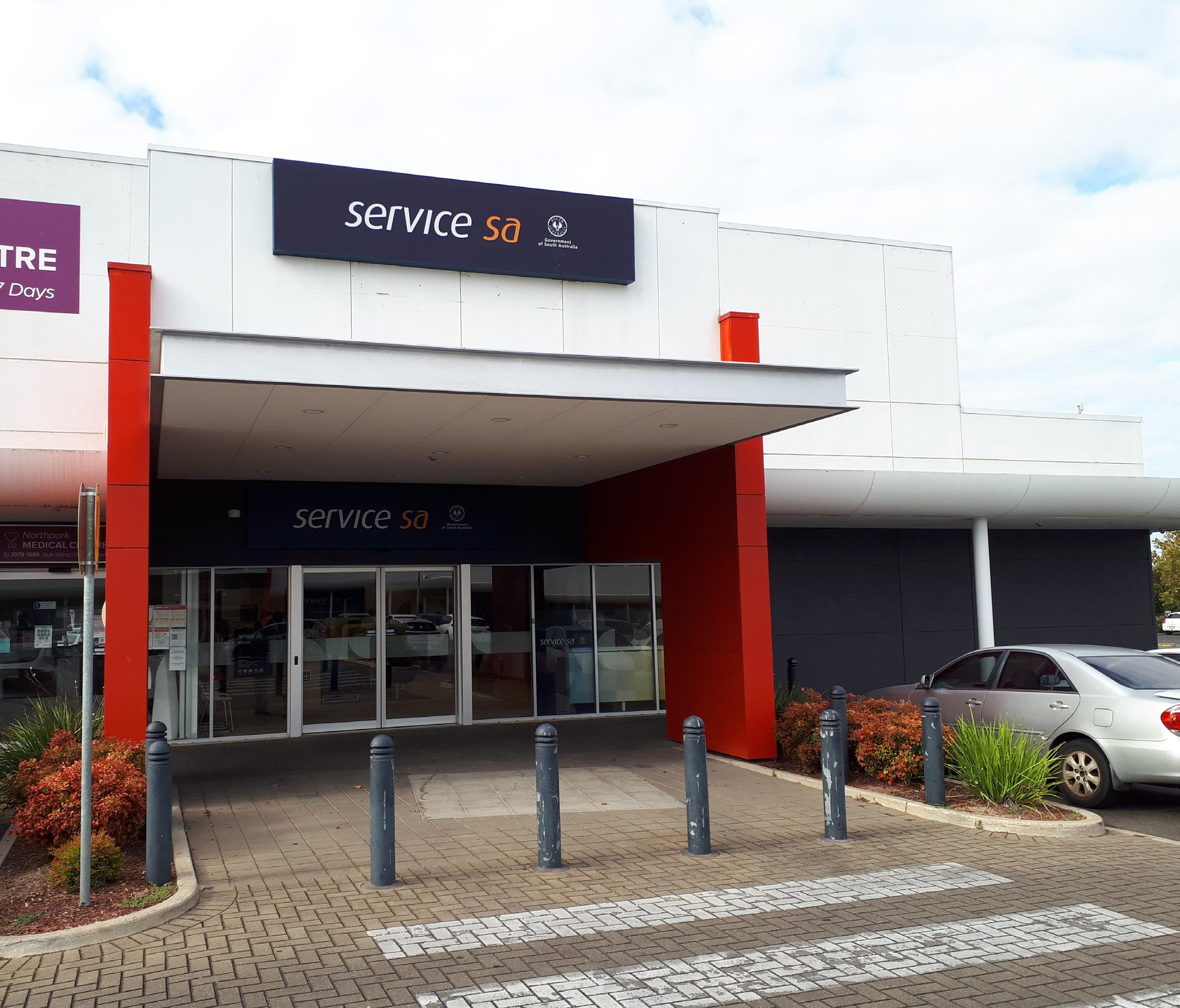
Return trade priority to in-person Service SA and Department for Infrastructure and Transport customer service locations
Automotive business owners and their employees are always more productive in their place of business.
While many routine and daily transactions can be conducted digitally over platforms such as EzyReg, such as through dealer delegate privileges, many transactions require physical attendance at government service
locations such as Service SA and the Department for Infrastructure and Transport.
In the past, Service SA customer service locations delivered customer service ticketing systems which allowed for trade customers to receive appropriate priority, noting that their time out of the business during
business hours is a handbrake on productivity.
The MTA’s request is simple.
Return trade priority to Service SA and Department for Infrastructure and Transport in-person customer service locations.
Industry Transition and Support
Recommendation
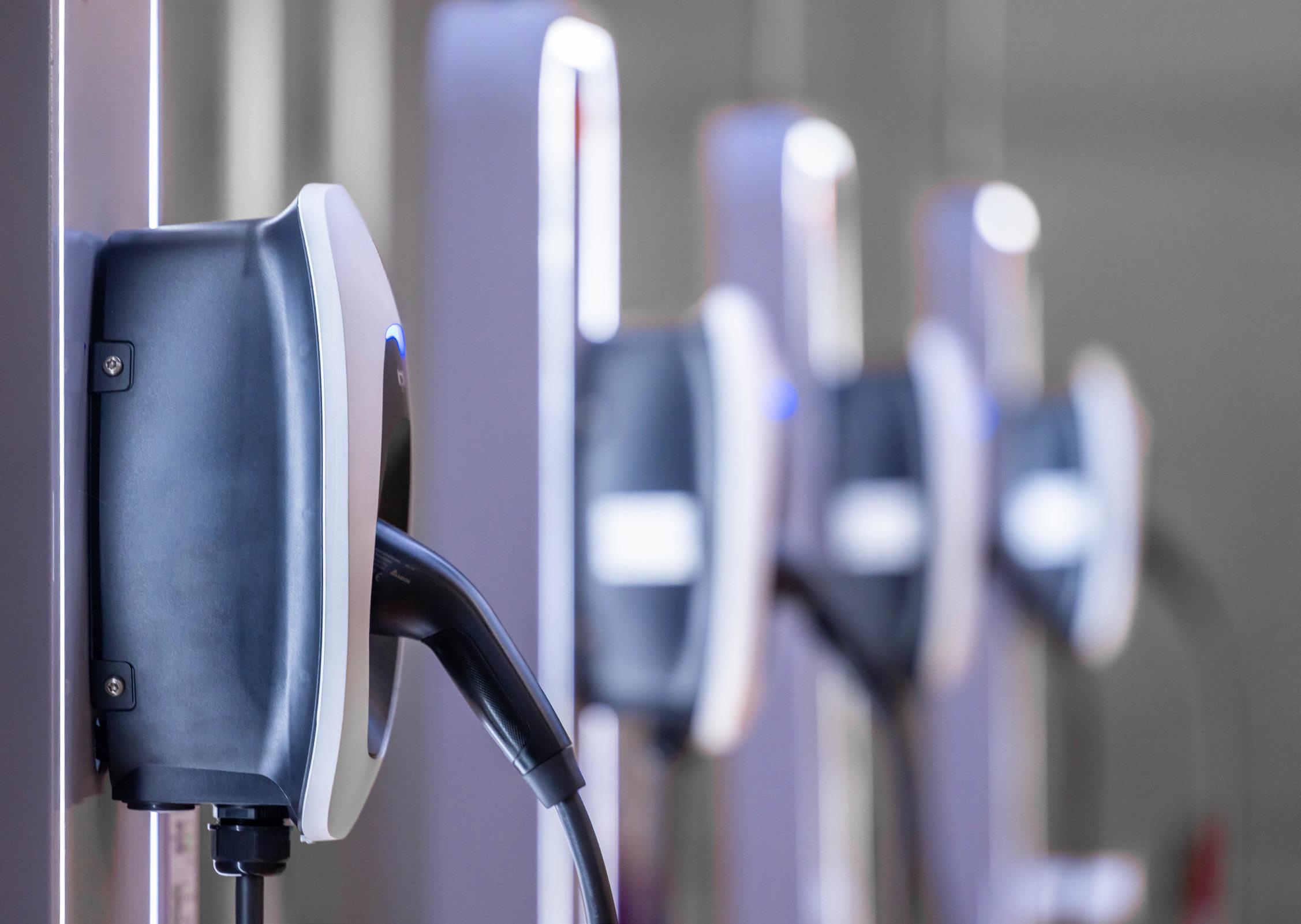
Launch a $1 million industry EV preparedness fund
The introduction of the Commonwealth Government’s New Vehicle Efficiency Standard (NVES) on 1 January 2025 is seeing growth in zero and low emission vehicles (ZLEV) further accelerate as global manufacturers prioritise more electric vehicles, plug-in hybrids and hybrids for Australia.
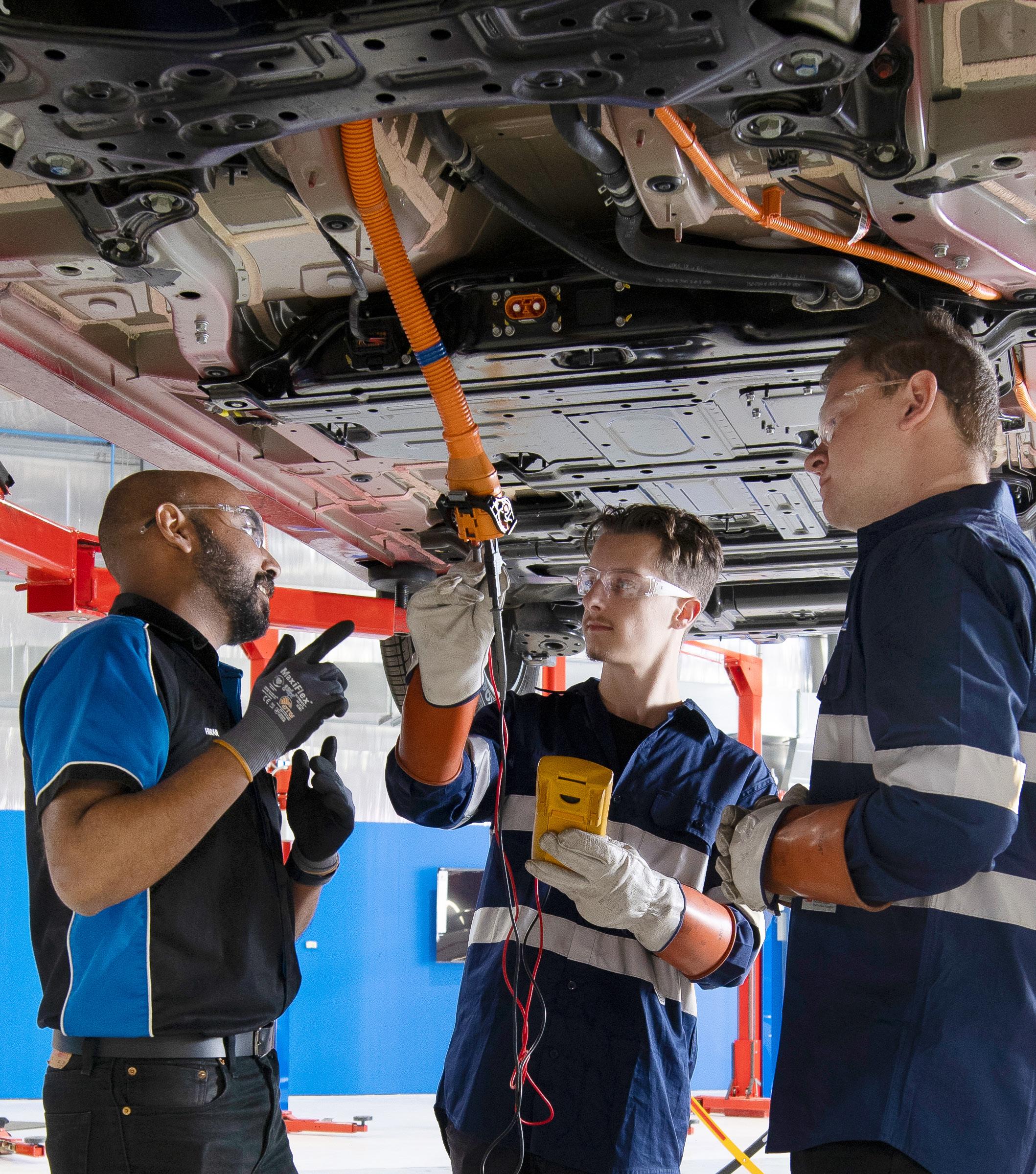
To meet local demand and ensure that the South Australia’s workforce of around 10,000 automotive technicians can competently and safely service and repair these vehicles, there is a need for specialised toolsets, safety equipment and charging infrastructure.
Modern toolsets for vehicles with an electrified drivetrain are insulated and specifically rated for high voltage applications. They are not present in most workshops and have a higher purchase value when compared to ordinary automotive tools of the same function.
Similarly, there are additional associated costs relating to personal protective equipment that is rated for high voltage applications. For example, gloves need to be rated for high voltage work and replaced regularly to ensure their insulating properties are
maintained to specification.
In response, the MTA is requesting that $1 million in funding is allocated to a grants program to support more than 200 automotive businesses to access up to $5,000 in a 50:50 co-contribution funding for the purchase of ZLEV specific tools and technology, and to provide the necessary safety training for working on these vehicles.
Co-contribution grants will support businesses to get ahead of the curve before the expected rise in battery electric vehicle uptake.
Service Digitisation and Data
Recommendation
A digital modernisation project for automotive trade services
Despite the MTA’s desire to restore trade priority at in-person government service locations, it is acknowledged that government and industry should be working more closely together to digitise services and transactions wherever possible.
Feedback from MTA members is that processes have regressed to being completed in-person rather than in bulk or submitted electronically.
MTA members have advised they are now required to attend a Service SA centre to process motor vehicle registrations one at a time when the option existed to send electronically in bulk and allowing Service SA to process during the day. This represents an unnecessary time impost when automotive businesses are experiencing labour shortages and high workshop loads.
In recent years, the MTA contributed to a modernisation project led by Service SA which aimed to improve digital services for industry users of the EzyReg platform. Disappointingly and despite the MTA’s input and enthusiasm, it appears as though the project has been shelved in favour of alternative agency priorities.
The MTA therefore recommends a revitalisation of this reform project.
Recommendation
The Department of Infrastructure and Transport collects and reports data on location and fuel type for vehicle transfers
The vehicles we are driving are changing. As at the end of September 2026, electric vehicles make up 6.8 per cent, plug-in hybrid vehicles make up 4 percent, and hybrid vehicles make up 16.9 per cent of all new cars sold in South Australia.
This means that one in every four new cars sold is zero or low emission.
Despite visibility of new car sales being
high, not nearly as much is known about the used car market.
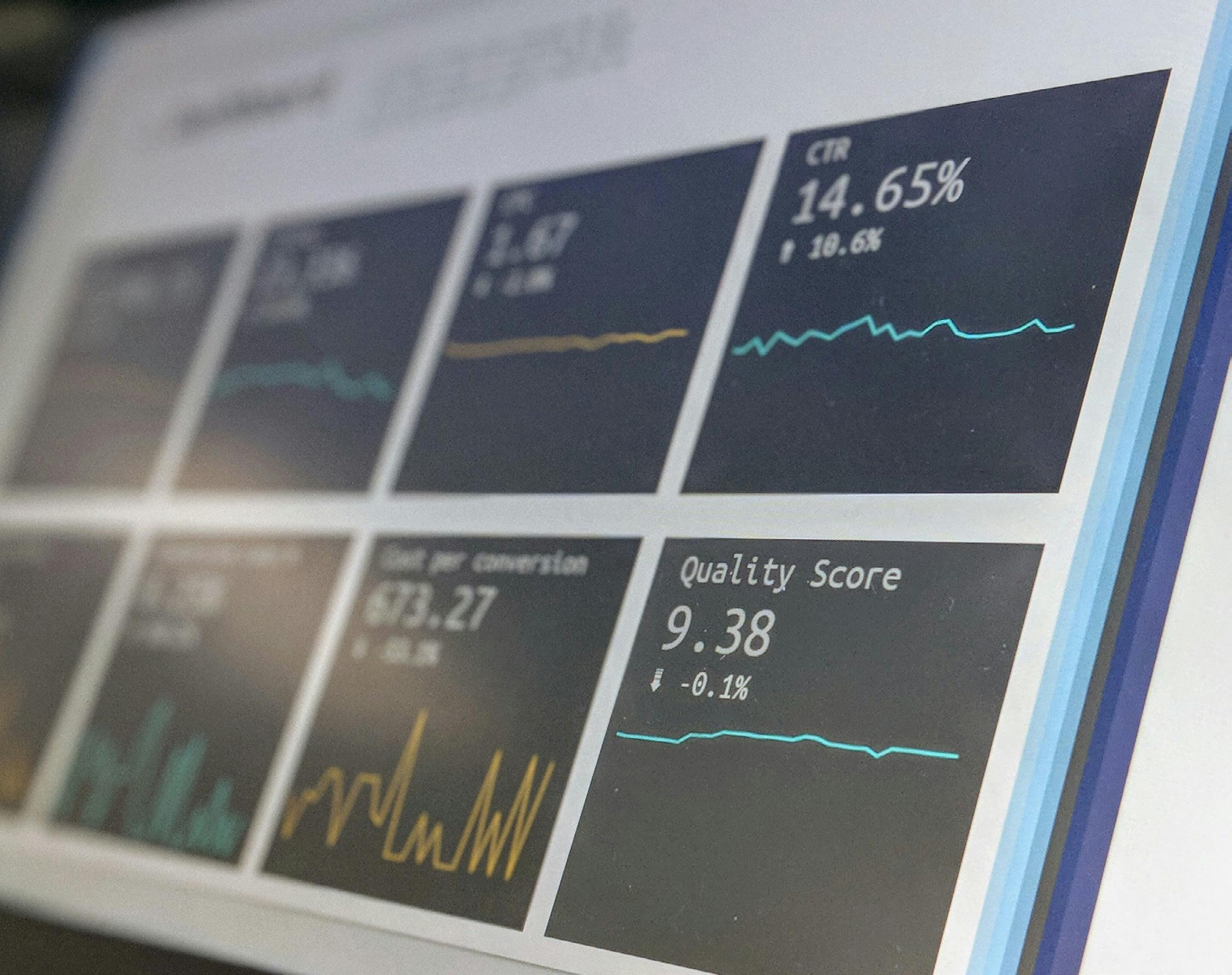
In addition to improving services through digitisation, the Department should also reform its data management and storage of data collected from these automotive processes. For example, the MTA receives registration data from the Department to understand the trends in used car sales.
The MTA therefore recommends that data is collected and reported on second-hand sales to include postcode and vehicle fuel type data. This would help to understand where these vehicles are being sold, and the shifts in automotive vehicle technology such as increasing used car sales of zero and low emission vehicles.
Stamp Duty
Recommendation
Reduce stamp duty on non-commercial motor vehicles to 3%
A reduction of stamp duty payable on the transfer of new motor vehicles would assist in boosting new vehicle sales at a local level in support of local businesses and those they employ.
South Australia’s average passenger vehicle age is the second oldest in the
Current Stamp Duty Rates
nation at 12.83 years. Lowering the level of stamp duty will have the added benefit of lowering the age of South Australia’s vehicle fleet, leading to more vehicles on our roads with enhanced safety performance, reducing the risk of fatalities and serious injuries on our roads.
A reduction in stamp duty on noncommercial motor vehicles to 3 per cent would put South Australia amongst the lowest rates in the nation, leading to increased sales activity and an overall increase in our share of stamp duty tax revenue.

Payroll Tax
Recommendation
Raise the payroll tax annual wage threshold from $1.5 million to $2.5 million
Introduce a payroll tax exemption for apprentice and trainee wages
With rising costs brought on by domestic and international economic factors, such as inflation and supply chain constraints, small and medium automotive businesses in South Australia deserve taxation relief to continue to grow and compete.
To achieve this, the MTA recommends that the SA Government raise the annual wage threshold to $2.5 million. This threshold has not been
adjusted for several years. This would also signal to all other businesses a competitive taxation environment in South Australia.
Furthermore, to encourage businesses to employ more young people and address the persistent skills shortages in the automotive sector, an exemption should be introduced for apprentice
and trainee wages from payroll tax calculations.
By increasing the threshold and introducing an exemption for apprentice and trainee wages, it would give automotive businesses in South Australia much needed relief and enable them to develop and grow locally, and reinforce our state as the place to do business.

Licenced Vehicle Dealers
Recommendation
Mandatory training
program for newly licensed vehicle dealers
A requirement for newly licensed vehicle dealers to operate from a commercial premises
It has come to the attention of the MTA that a number of newly licensed vehicle dealers may not fully understand their rights and obligations under the Second-Hand Vehicle Dealers Act (the Act) and Australian Consumer Law. Motivations in the worst instances include individuals who are seeking to avoid stamp duty, access trade plates, or who wish to use their dealer license to market their credibility while actively avoiding their regulated responsibilities.
With the new reforms to the SecondHand Vehicle Dealers Act 1995 and associated regulations, there is a corresponding need for new licensees to undertake a short course that details the rules, obligations, and processes needed to operate a motor vehicle dealer business appropriately. This would be similar to the licensing process for firearms licences where the licence holder must undertake a short course before they are issued with their licence.
This has the dual benefits of ensuring that all licence holders are aware of their rights and obligations, and that for government enforcement of licence conditions the removal of any doubt as to the understanding of the licence holder. The MTA can be placed as one of the providers of such training utilising our expertise in automotive dealing through staff and industry connections. Similar to the ‘Buying a Used Car’ marketing campaign that Consumer and Business Services partnered with the MTA to develop, this education program could be funded from the Second-hand Vehicle Dealers Compensation Fund.
In South Australia, licensed vehicle dealers are not currently required to operate from a commercial premise. With the rise of vehicle sales through online platforms such as Facebook Marketplace and Gumtree, a growing
number of licensed vehicle dealers are turning to selling from home or residential locations.
While in some instances this can be appropriate, such as the limited trading of prestige and garaged vehicles, Adelaide suburban streets and verges are increasingly becoming virtual car yards.
As such, the MTA proposes that regulation is amended to only provide new second-hand vehicle dealer licenses to individuals or organisations operating from a commercial premises. This would be supported by grandfathering existing licensees, as well as for licence applicants who can provide a letter of support from their local council for operating second-hand vehicle sales in a noncommercial location.

Recommendation
An additional RiderSafe training facility for Adelaide’s Southern Suburbs
On average in South Australia there are 18 Motorcycle rider fatalities and 189 serious injuries in a year. Proportionally motorcycle riders make up 2.5 per cent of all registered road users but 20.5 per cent of total fatalities and 25.9 per cent of total serious injuries (SAPOL 2025). It is therefore paramount that new and returning riders are given the skills and knowledge to operate their motorcycles safely on the roads.
It has been brought to the MTA’s attention by members in the motorcycle retail sector that there is a lack of adequate training facilities in the southern suburbs of Adelaide. With the efforts to improve rider safety and provide accessible training there needs to be allocation for a facility in Adelaide’s south. While the RiderSafe policy the government has introduced expands the training regime for learners, it does not provide
accessibility for Southern Adelaide residents.
For example, a new rider in Aldinga must choose between a more than one hour journey in one direction to attend either the St Agnes or Murray Bridge Rider Safe training locations. The MTA strongly recommends that an additional training location is provided for residents in Adelaide’s southern suburbs to ensure RiderSafe training is accessible for all.

Fuel Retailing
Recommendation
Do not mandate pre-pay fuel pumps
Support businesses to implement new vehicle monitoring systems that log, detect, alert and mitigate fuel theft
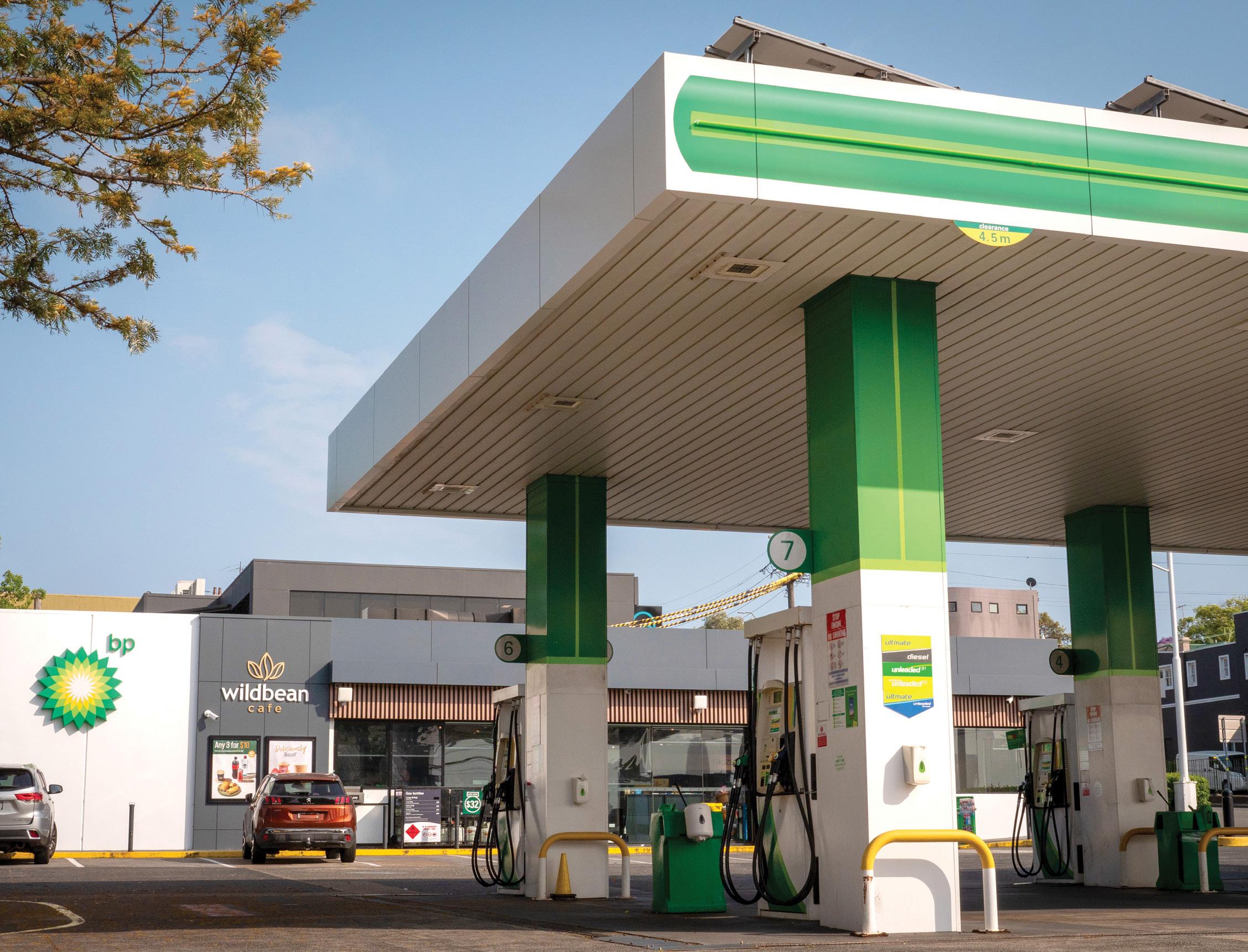
Fuel theft remains a key concern of the MTA Service Station Division. The MTA has been engaging across the Government, including Consumer and Business Services, the Premier’s Retail Crime Working Group, and South Australia Police. Fuel theft through drive-offs is still a major issue for service station owners.
The MTA represents medium and small fuel station operators both in the Adelaide metropolitan and regional areas. These operators have reported
to the MTA that they lose tens of thousands of dollars of fuel per year due to theft.
In response, South Australia Police have advocated to mandate pre-paid fuel pumps.
This solution is unworkable for South Australian fuel operators as the business model they all have adopted is both that of a fuel retailer and convenience store operator. By adopting a pre-pay model, the
convenience business will be impacted negatively.
To support independent fuel retailers the MTA recommends that all candidates at the 2026 South Australian State Election commit to not introducing pre-pay fuel pumps and continues to work collaboratively with the industry and South Australia Police on new technology such as vehicle monitoring systems that log, detect, alert and mitigate fuel theft.

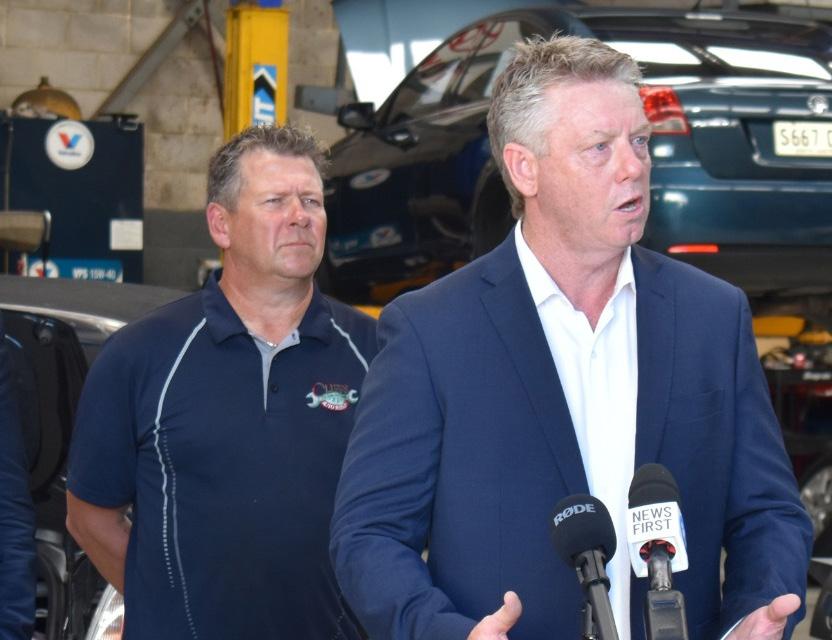
Graham Crawford Owner of Cliffs Auto Repairs with MTA SA/NT CEO Darrell Jacobs
Tyre Safety
Recommendation
Undertake a tyre safety education and awareness campaign
Tyres are one of the most important safety items on a vehicle. Ensuring tyres are inflated, have adequate tread remaining, and are not stored for long periods in UV sun light are essential to keeping them operating at a safe and optimal level.
Major tyre manufacturers all recommend that road users inspect their tyres if they are more than 5 years old and replace them if they are beyond 10 years. For most motorists this is not a problem as continual wear
will ensure they are rotated prior to manufacturer recommended dates. However, for tyres on caravans and trailers which only receive occasional use, there are heightened risks to their safety and structural integrity.
Furthermore, basic maintenance items such as keeping tyres inflated at recommended levels and checking for tread are widely misunderstood by the general motoring public.
MTA members in the tyre industry experience daily vehicles with tyres
that are underinflated, wearing irregularly, and reaching the recommended manufacturer end of life dates. Every tyre is marked with a manufacturing date, and vehicles come with inflation values in the door arches.
The MTA recommends that the government undertake a tyre safety awareness campaign to inform the South Australian public of tyre maintenance, how to inflate their tyres, how to identify potential issues with their tyres and how to identify tyre age.

Skilled Migration
Recommendation
Lobby the Commonwealth Government for a 20% reduction to the Temporary Skilled Migration Income Threshold (TSMIT) through South Australia’s Designated Area Migration Agreement (DAMA)
While local employment and apprentice training remains a central pillar to addressing skill shortages in the automotive industry, the role of skilled migration must not be overlooked.
Recent data from Deloitte shows that the average automotive occupation regional fill rate (jobs filled versus advertised) is 33 per cent compared to the metropolitan average of 41 per cent. This is well below the Jobs and Skills Australia skills shortage threshold of 67 per cent. In the case of
panel beaters, automotive electricians and vehicle body builders it is below 20 per cent.
Federal changes to the Temporary Skilled Migration Income Threshold (TSMIT), which now stands at $76,515, has put a handbrake on the ability for automotive businesses to access skilled migration. This is supported by the study undertaken by Deloitte for the Motor Trades Association of Australia which found all automotive occupations fall below the TSMIT.
In response, the MTA recommends the State Government lobby the Federal Government for a regional concession to the Designated Area Migration Agreements (DAMA) program for a 20 per cent reduction in the TSMIT. The 20 per cent reduction would still place skilled migrants under the DAMA program as above award wages while reducing employer pressure to remunerate them above existing local technicians in their workforce.
Sustainable support for industry not for profit training providers
Recommendation
Permanently fund industry not-for-profit training providers separately to for-profit training providers
Continue the Equipment and Capital Grants program for industry not-forprofit training providers
Reinstate the training subsidy calculators on the Skills SA website
The introduction of the not-for-profit and industry based grant program is vital to support ongoing operational costs of running a registered training organisations (RTO) which demonstrate high quality training. This is reinforced by the three finalists for Large Training Provider of the Year at the 2025 SA Training Awards being MTA Training and Employment, PEER and ATEC who are all industry not-for-profit.
The strength of this program is that it specifically targets not-for-profit training providers who are motivated by industry connection and community benefit over owner or shareholder profit. Industry not-for-profit training providers are also committed to attracting, retaining and completing apprenticeships at a high standard.
The MTA has advocated for not-forprofit industry-based training providers to receive the same training subsidy payment as government providers of VET. Historically and prior to the industry not for profit training provider
grant program, MTA Training and Employment received on average half the training subsidy payment compared to TAFE SA as illustrated in the table below from 2022.
This data was gathered through the training subsidy calculator that is available on the Skills SA website. It provided a transparent comparison of subsidy rates, however it now only shows visibility of non-government providers.
The $28 million not-for-profit grant program provides much needed funds to ensure these not-for-profit training providers can remain sustainable. The funding has assisted the MTA Training and Employment to continue to provide nation leading automotive training in future automotive technologies, as well as to enhance the training workforce, develop innovative training models for regional learners, and ensure apprentices have access to the latest and future technologies.
In addition, the Equipment and Capital Grants program delivered by Skills SA has been vital to supporting MTA Training and Employment to modernise its training facilities and showcase the latest automotive technology to apprentices and the industry. Prior to this program, most grant opportunities had explicit restrictions on funding for equipment and capital items.
This funding has enabled MTA Training and Employment to grow apprentice capacity, address automotive skills shortages and ensure apprentices are learning using the latest technology in modern workshop environments. As the sole provider of paint and panel training in South Australia, the funding has also enabled MTA Training and Employment to install an Australian first paint booth facility that has the potential to be fully zero carbon in operation.
It is essential that industry not for profit training providers are supported beyond 2027 when these grant funding programs conclude.
Recommendation
Return the GTO Training Boost (GTO Boost) funding program to full strength Group Training Organisations
Throughout 2020, the Federal and State Government provided significant support for the retention and increased employment of apprentices. While JobKeeper and Boosting Apprentice Commencements programs at a Federal level represented some of the most significant measures in maintaining apprentice/employer connections throughout the worst impacts of COVID-19, the economic rebound provided unexpected opportunities for businesses to take on brand new apprentices, often above and beyond their pre-COVID-19 requirements.
The Government of South Australia’s GTO Boost program which offered $5,200 over six months was a
significant driver in new employment, making it easier for an automotive business to take on a new apprentice. Group Training Organisations (GTOs) play a vital role in growing apprentice employment opportunities by generating employment opportunities with employers that prefer or have different requirements to those that choose to take on apprentice directly.
They also provide benefits thorough continuity of employment of apprentices that ensures their training is progressed without major interruption. Additionally, completions are higher by 5 to 9 percentage points for GTO apprentices than ones hired by SMEs.
The recent strategic review of the Australian apprenticeship incentive system recommended that high performing GTOs are rewarded through programs like GTO Boost that meet certain criteria such as mentoring apprentices, on-the-job training, meeting employer obligations such as Respect@Work, and support apprentice mobility between SMEs to avoid unsafe workplaces.
As such, the MTA requests that the South Australian Government returns the GTO Boost to full strength to support industry based GTOs attract and retain apprentices to alleviate a critical skills shortages.
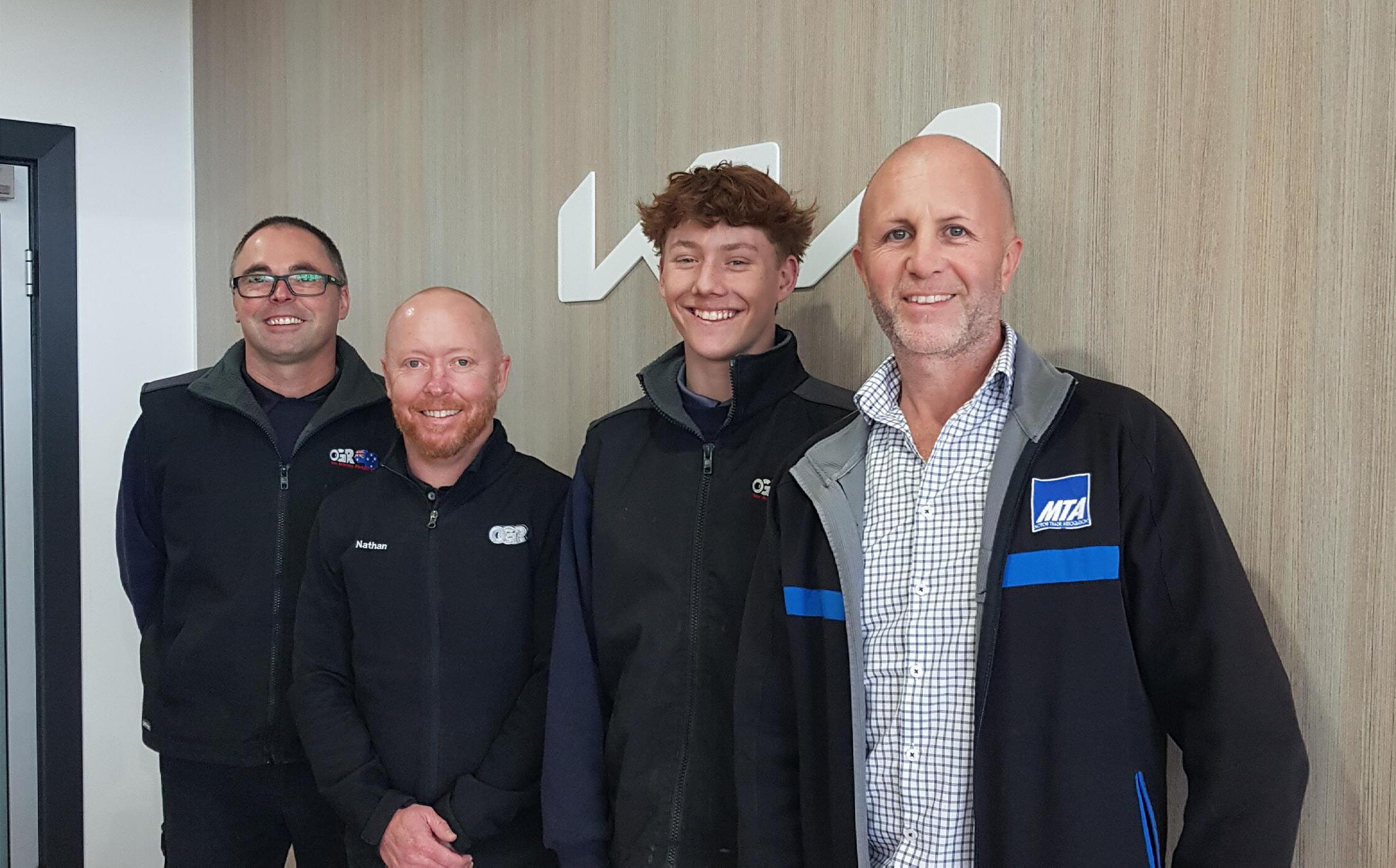
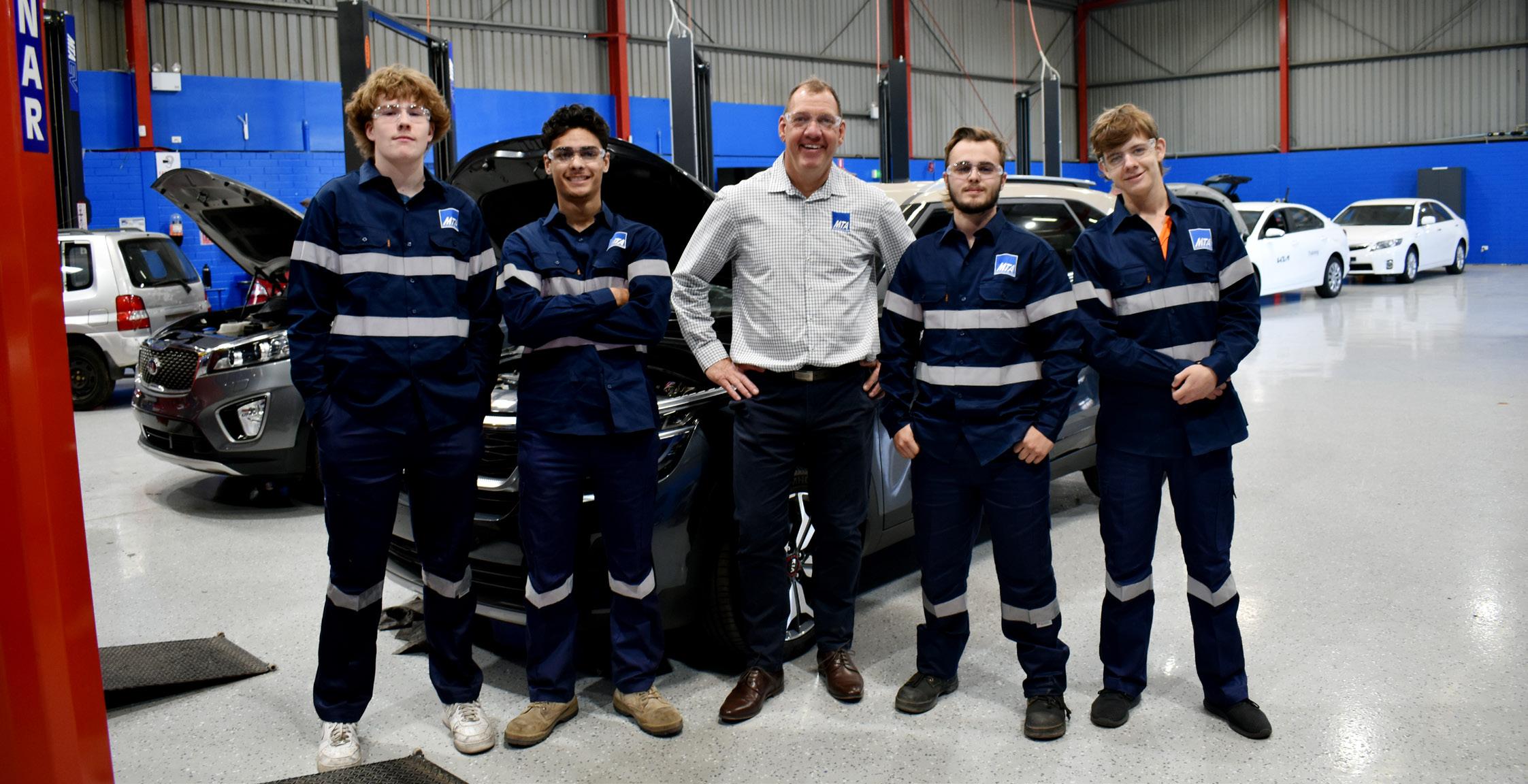
L - R: Workshop Foreman Daryl Watson, Service Manager Nathan McEachern, first-year light vehicle apprentice Oliver Balkin, and Apprentice Employment Officer Franco Albuino
EV Safety Training
Recommendation
Fully subsidise EV safety training for automotive technicians
South Australia’s 10,000 automotive technicians have predominantly worked on internal combustion engines and will require additional training to service growing numbers of hybrids, plug-in hybrids and battery electric vehicles being sold and driven locally.
While the transition from combustion to electric is expected to take decades, automotive businesses such as dealerships, collision repairers and mechanical repair workshops are
already starting to see these vehicles.
Importantly, high voltage batteries and drive train systems and wiring extends throughout these vehicles which pose an emerging safety risk of serious injury or death.
One of the most important and foundational skill sets for automotive technicians is to learn how to safety depower an electric vehicle to make it safe prior to being worked on.
This includes knowledge of how regenerative braking works to recharge a battery even after it has been depowered.
In response, it is recommended that the next State Government make $500,000 in funding available for automotive technicians to be able to undertake accreditation hybrid and battery electric vehicle – depower and reinitialise training.
Mentoring and Apprentice Completions
Recommendation
Deliver an apprenticeships and traineeships retention and completions grants program
MTA Training and Employment commenced an apprentice mentoring program in 2022 with the support of the South Australian Government. This program built on existing successful programs that aimed to improve apprentice wellbeing and retention.
Through two years of the program MTA Training and Employment has mentored more than 700 apprentices in their first and second years, while maintaining contact as they navigate their third and fourth years. The profound impact of this program is demonstrated in the feedback received from apprentices, their employers, and families which highlight the positive impact this program has had. These have been detailed in reports to Skills SA.
MTA Training and Employment has witnessed challenges with mental health, family, workplaces, training, and
finances. Without the MTA Automotive Industry Careers Mentor, these issues would have resulted in apprentices withdrawing from their careers and training. This is demonstrated in the exemplary retention rates MTA Training and Employment has achieved in this program.
Of all apprentices in the period of the program’s operation, only 14 had withdrawn over the two years demonstrating an overall retention rate of 97.9 per cent. The impact of this program on overall retention rates is demonstrated in the retention rates of apprentices that commenced in 2021 (pre-program), 2022 (start of program), and 2023. These were 58.6 per cent, 75.3 per cent and 91.6 per cent respectively.
This is especially significant when compared to the national average of 54.8 per cent for all qualifications
and 57.6 per cent for Automotive and Engineering Trades Workers. MTA Training and Employment has demonstrated a proven pathway to shift apprentice retention rates from national averages of 5 in every 10 completing to 9 in every 10 completing an apprenticeship.
MTA Training and Employment is a proven delivery partner of a program that puts its apprentice’s wellbeing first to ensure they remain in a rewarding career in Automotive trades. However, the program funding from the SA Government concluded on 30 June 2024.
As such, it is requested that the next State Government commit to an Apprentice Mentor Funding Program out of the National Skills Agreement’s $13.4 million program to support students’ mental health and well-being to increase completion rates.
Recommendation
Help MTA Training and Employment double its School Pathways Program School and Career Pathways
MTA Training and Employment currently employs a dedicated School Pathways Coordinator who works with all secondary schools in South Australia to promote opportunities in the automotive industry and ensure automotive trades are attractive to school leavers.
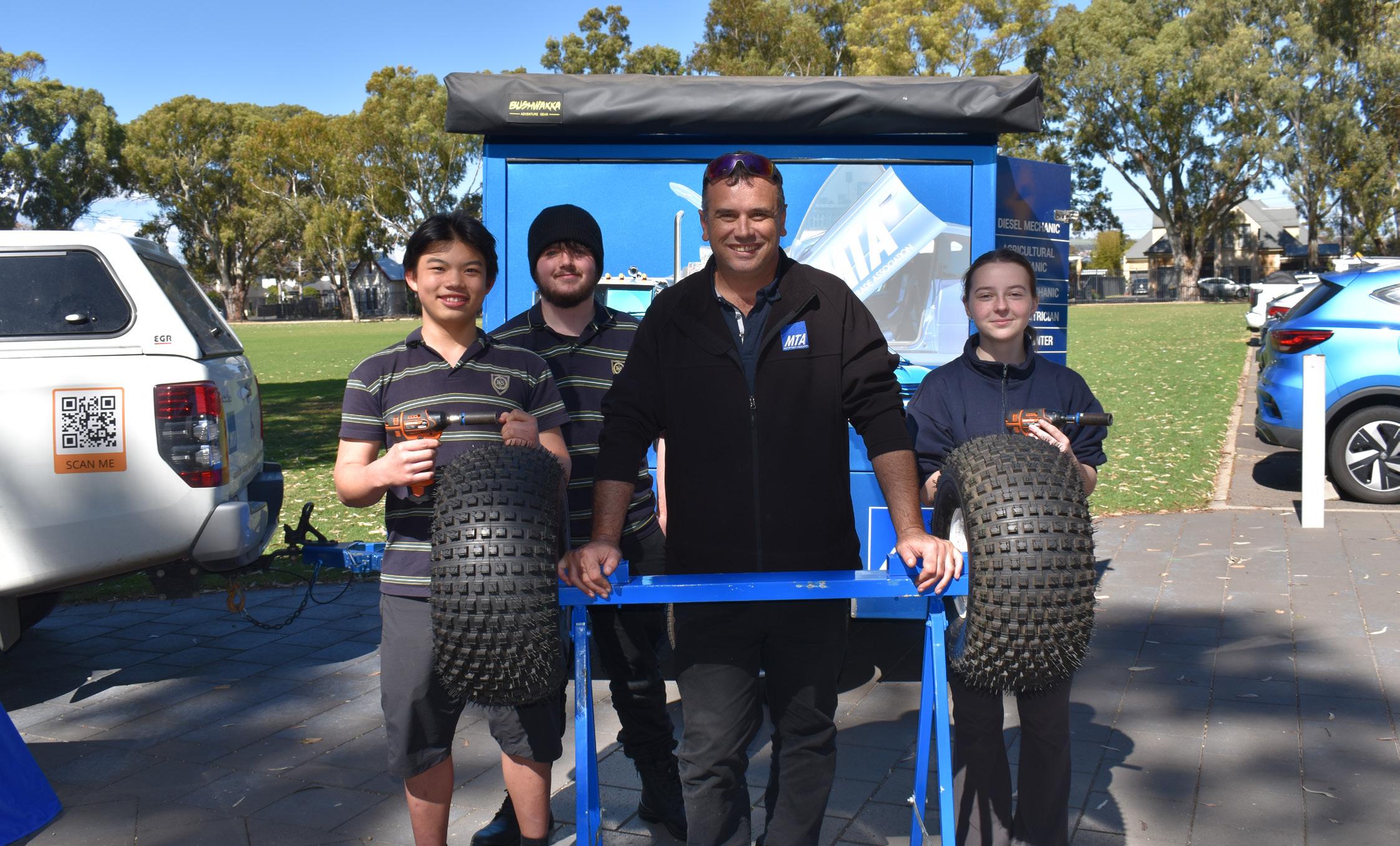
A key part of this has been developing and delivering engaging programs, such as our School Pathways Trailer equipped with more than a dozen interactive and hands on automotive activities. In the past year, MTA Training and Employment visited more than 100 schools which is a significant investment of resources primarily focussed on metropolitan Adelaide
In addition to the 100 school
engagements, in 2024, MTA Training and Employment:
Recruited 32 school-based apprentices
Provided 71 students with a variety of work experience placements
Saw over 680 registered attendees for the Automotive Careers Days in August.
MTA Training and Employment is seeking grant funding to further grow this program by employing a second school pathways coordinator. The second coordinator would support MTA Training and Employment to reach more schools, particularly in regional South Australia, as well as targeting female, indigenous, neurodiverse, and
culturally and linguistically diverse students to consider work experience and/or school-based apprenticeships in the automotive industry.
This funding could also allow MTA Training and Employment to procure and modernise a range of classroom training aids, such as those related to automotive electrical and electric vehicles.
Finally, the funding would be used to grow student, school and parent/ guardian awareness of the MTA Training and Employment School Pathways Program and the diverse and exciting opportunities in automotive. This would be through a new website and other marketing material.
MTA School Pathways & Engagement
Officer, David Warren visiting Brighton High School


General Manager – Media, Marketing and Policy
kcillessen@mtasant.com.au 0400 811 632
deckermann@mtasant.com.au 08 8291 2033