
INTERESTED IN BECOMING A MEMBER OF MTA QUEENSLAND? CLICK HERE
INTERESTED IN BECOMING A MEMBER OF MTA QUEENSLAND? CLICK HERE
MTA QUEENSLAND hosts quarterly industry meetings for:
› AUSTRALIAN AUTOMOTIVE DEALER ASSOCIATION (NEW CAR DEALERS)
› AUTOMOTIVE ENGINEERS DIVISION (MECHANICAL REPAIRERS)
› AUTOMOTIVE PARTS RECYCLERS DIVISION (PARTS RECYCLERS)
› USED CAR DIVISION (USED CAR DEALERS)
› ENGINE RECONDITIONERS ASSOCIATION OF QUEENSLAND (ENGINE RECONDITIONERS)
› NATIONAL AUTO COLLISION ALLIANCE (PAINT & PANEL / TOW TRUCKS)
› QUEENSLAND FARM & INDUSTRIAL MACHINERY DEALERS DIVISION (FARM & INDUSTRIAL MACHINERY)
› QUEENSLAND MOTORCYCLE INDUSTRY DIVISION (MOTORCYCLES)
› RENTAL VEHICLE INDUSTRY DIVISION (RENTAL VEHICLES)
› SERVICE STATION & CONVENIENCE STORE ASSOCIATION OF QUEENSLAND (SERVICE STATIONS)
› TYRE & UNDERCAR DIVISION OF QUEENSLAND (TYRES, BRAKES, SUSPENSIONS)
The Agenda topics include:
› robust discussions around the priorities of the Division,
› issues that need to be directly presented to government and submissions,
› skilling needs,
› membership representation,
› technical and educational updates, and
› innovation opportunities.
The industry meetings can be attended in-person at MTA Queensland or online. The meetings are open to members and non-members, but we strongly encourage membership to ensure all member benefits are available.

CLICK
Official Publication of the Motor Trades Association of Queensland
HEAD OFFICE
Building 8, 2728 Logan Road, Eight Mile Plains, Qld 4113
P.O. Box 4530, Eight Mile Plains, Qld 4113
Tel: 07 3237 8777
Fax: 07 3844 4488
Toll Free: 1800 177 951
Email: publications@mtaq.com.au Website: www.mtaq.com.au
EDITOR
Jonathan Nash
ART DIRECTOR
Marco Ilinic
INDUSTRIAL RELATIONS
Evangeline Kannis
POLICY
Kellie Dewar, Deputy CEO MTA Queensland
ADVERTISING ENQUIRIES
Email: jonathann@mtaq.com.au
EDITORIAL
Editorial submissions are welcomed but cannot be guaranteed placement. For more information email the Editor at publications@mtaq.com.au
SUBSCRIPTION RATES
Subscribing to the Motor Trader e-magazine is free. Click here to subscribe
MOTOR TRADER PUBLISHING POLICY
Motor Trader is the official publication of the Motor Trades Association of Queensland. The role of Motor Trader is to inform members of current issues and legislation affecting the industry. As such it can be regarded as the business magazine for the Queensland motor industry. The role of Motor Trader is not to be in competition with the technical magazines already on the market. It will advise of new vehicles being released and of the latest technology incorporated into them; it will advise of latest technology affecting members in each of the MTA Queensland Divisions; it will keep members abreast of the latest in motor industry training and industrial affairs; and it will keep members informed of the latest technical aids available through MTA Queensland Member Services, which will assist members in staying ahead of the technological revolution presently being encountered within the motor industry. The publisher reserves the right to omit or alter any advertisement and the advertiser agrees to indemnify the publisher for all damages or liabilities arising from the published material.
MTA QUEENSLAND ABN: 74 028 933 848
CORPORATE PARTNERS










JONATHAN NASH EDITOR
HELLO AND WELCOME to the April 2026 edition of Motor Trader
We are living through an unsettling time right now, and there is no way of knowing what will transpire as the conflict in the Middle East continues. We do know that the resulting fuel crisis has been painful, and this month we take a look at what has happened so far and what may develop.
That aside, we do have lots of rather less anxiety-inducing
content inside. This includes a look at the Australian F1 Grand Prix, held at the beginning of March and which I was lucky enough to attend. Suffice to say, it was a fabulous event and one any motorsport fan should try and attend at some point. Also inside, we have reports from the Performance Pulse Expo, held in Brisbane in March, and the latest Auto Women social, also held in Brisbane.
As always, we have our regular features including the Member Q&A and our Auto Women Behind the Wheel profile which this month puts the spotlight on Carolyn Rimmer from the DMH Group in Brisbane.
I hope you enjoy this edition, and if you have some news you'd like to share, get in touch.
Cheers
Jonathan Nash, Editor jonathann@mtaq.com.au
MTA Queensland welcomes its new members
POINT QLD 4160
Macadamia Drive LACEYS CREEK QLD 4521 AED
Varsity Lakes Mechanical 5/8 John Duncan Crt VARSITY LAKES QLD 4227 AED Volks Centre Cairns
Hartley Street PORTSMITH QLD 4870 AED Volks Centre Smithfield
Captain Cook Highway SMITHFIELD QLD 4878 AED Wheelchair Vehicle Sales & Rentals
Wideland Trucks & Equipment Pty Ltd
Robinson Road East GEEBUNG QLD 4034 UCD
QLD



FULL THROTTLE: AN AUSSIE FORMULA 1 EXPERIENCE

22
BRISBANE EVENT SHOWCASES GROWTH OF AUTO WOMEN MOVEMENT
CONCEPT CORNER: HYUNDAI BOULDER CONCEPT

ROD CAMM CHIEF EXECUTIVE OFFICER MTA QUEENSLAND
crisis is a stark reminder of just how exposed Australia is to global forces, and I’ve been hearing from our members just how challenging conditions have become. Service station operators - particularly smaller, independent businesses - are facing rising wholesale fuel costs, tightening supply access, and shifting consumer purchasing behaviour. For our members in Far North Queensland, there’s the added headache of the impact of Cyclone Narelle.
Against this backdrop, I welcome the Federal Government’s decision to halve the fuel excise. It is a necessary step to provide some relief at the bowser and ease pressure on both the public and businesses. However, we believe the excise reduction should be applied to existing fuel stocks those service stations may hold. This will ensure the benefits will be passed on immediately to consumers, and for small businesses that often operate on tight margins, it means they don’t have to sell fuel they already have at below cost - a situation that simply isn’t viable.
At the same time, we are calling for government support for small business service stations that are struggling to finance the higher upfront cost of fuel purchases. When the cost of fuel stock rises sharply, the capital required to fill tanks increases just as quickly, which is an enormous strain.
Backing businesses and the community during challenging periods is a fundamental responsibility of government, and the times do not get much more challenging than right now.
Adding to the pressure on service stations, and indeed any small retail business, is the recent decision by the Fair Work Commission to phase out, over four years, junior pay rates for 18 to 20-year-olds. While well-intentioned, this decision will likely have a devastating impact on small businesses already under financial stress. It will increase costs at a time when they can least afford it and may well lead to a reduction in hiring, job losses, and higher prices for consumers.
These are undeniably tough times, with the most recent challenges driven largely by global events beyond our control. We’ll trust that things will calm down and return to some semblance of normality sooner rather than later but, in the meantime, we will, as always, work together to navigate our way through. Remember, you can keep up to date with events through our newsletter, online channels and Motor Trader.

KELLIE DEWAR DEPUTY CEO | GENERAL MANAGER MEMBER SERVICES
ADVOCACY IN THIS industry can often feel like a slow, incremental process, but every so often a real breakthrough comes along. The Queensland Government’s response to the e-mobility inquiry is one of those moments. Last month, you may recall, the inquiry revealed its final report into e-mobility safety and use and outlined 28 recommendations aimed at improving safety, strengthening regulation, and addressing the growing number of illegal and unsafe e-mobility devices operating in Queensland.
MTA Queensland had proposed a number of recommendations - as laid out in our submission to the parliamentary inquiry - and seeing these accepted is a win for our members and the broader industry. These measures will help create a more equitable environment for legitimate businesses while also ensuring consumers are safer. You can access our submission to the Inquiry by clicking HERE.
Closer to home, we also had the opportunity in March to host a session with the Department of Transport and Main Roads to walk members through the new AIS Business Rules. These rules are critical for Approved Inspection Stations, setting out the requirements businesses must meet to remain authorised to carry out vehicle inspections. As the regulatory framework evolves, it’s vital that members understand the requirements and are confident in applying them.
Looking ahead, there are exciting opportunities on their way to connect with the global automotive industry. MTA Queensland is organising a combined study tour to Automechanika Shanghai - one of the world’s leading automotive trade shows. It’s a chance to see firsthand where the industry is heading and to bring those insights back to your business. I encourage members to register their interest and complete the EOI to be part of what promises to be a highly valuable experience. You can read more about the tour HERE and complete the EOI HERE.
Whether it’s helping to shape policy, showcasing the industry to government, or creating opportunities for professional development and industry connection, MTA Queensland is focused on giving members the support you need to succeed.


Discover simple, flexible cover through your super
Protects you and the people who matter most when life doesn’t go to plan.
Fees are deducted directly from your super, not your take-home pay.
Flexibility to change your cover anytime to match your needs and budget.
See how insurance through super can work for you
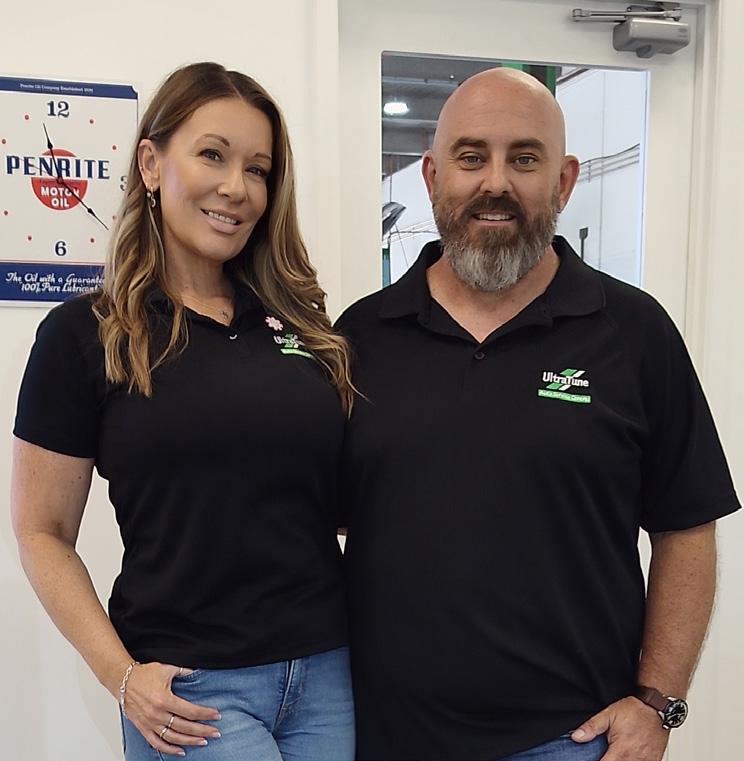
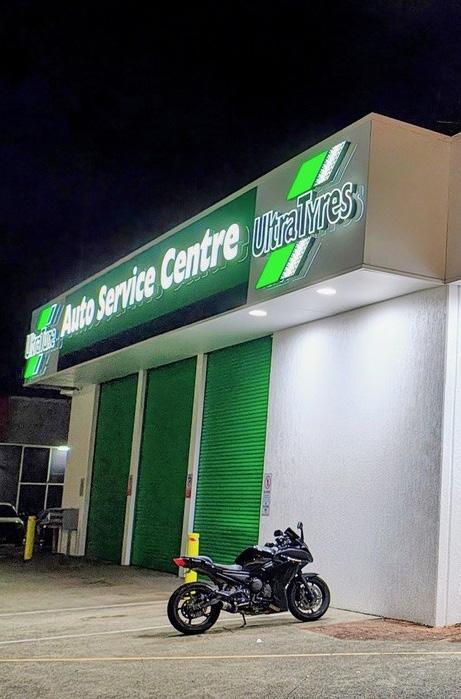
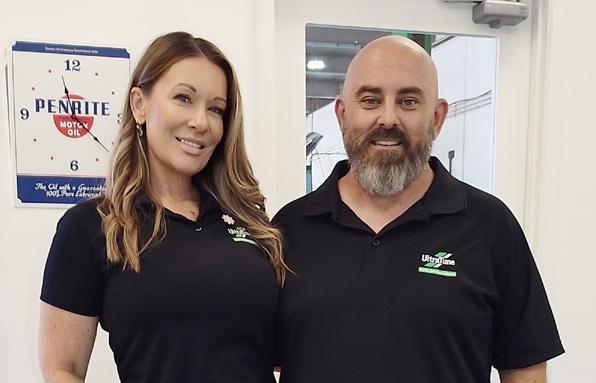
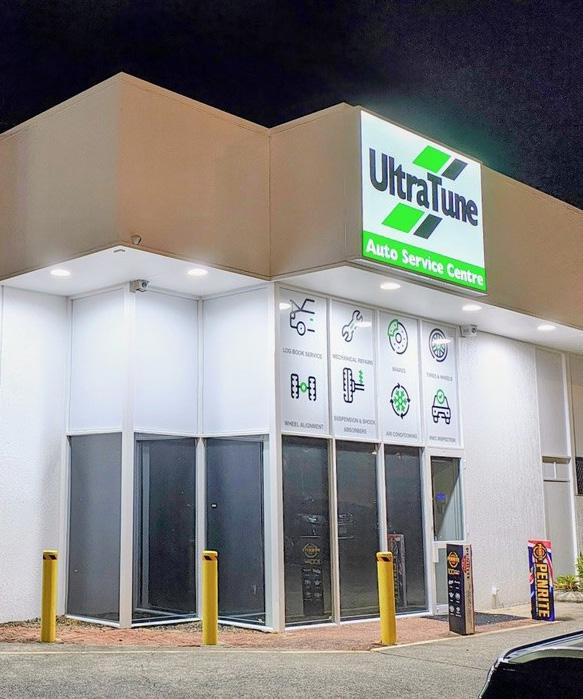
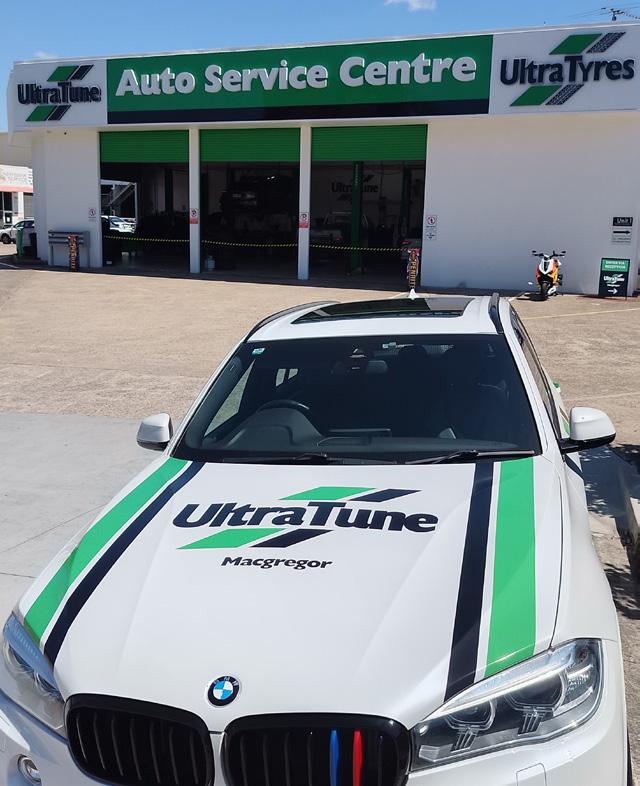
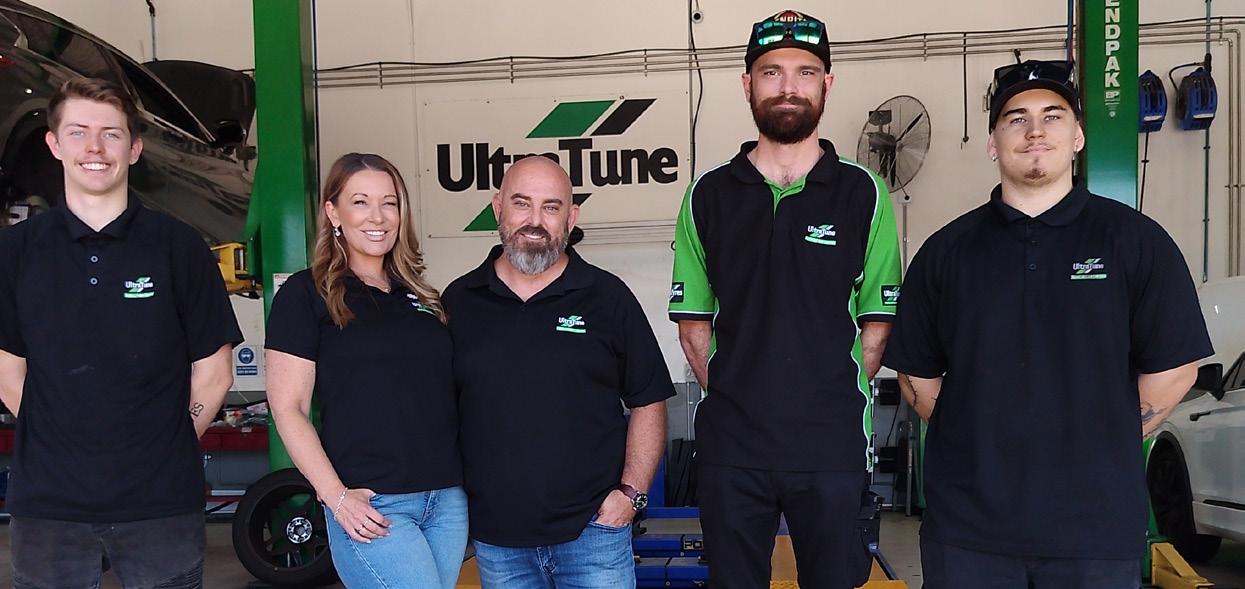
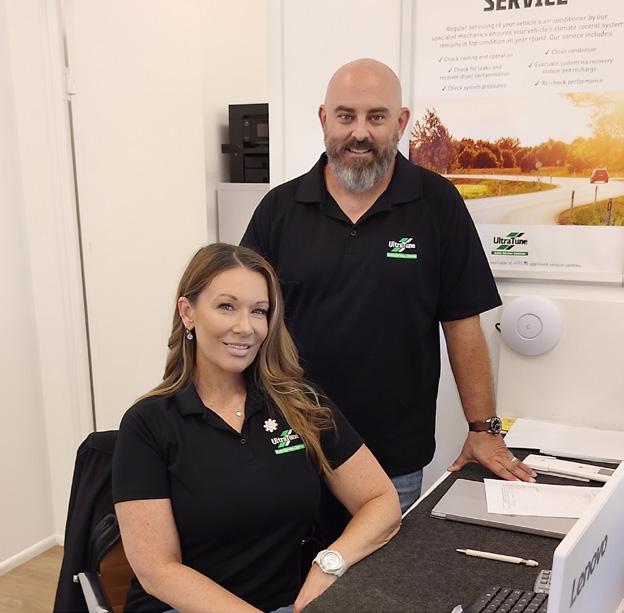
In mid-2025, Jesse and Angela Thornton took over a workshop in the Brisbane suburb of Macgregor. It had been unused for some time but Jesse and Angela saw potential in the site and the chance to create a workshop that reflected the standards, values, and ambition they wanted to bring to the automotive industry. Today, Ultra Tune Macgregor is a pristine, cutting-edge business - a fullservice workshop offering everything from logbook servicing to diagnostics, electric vehicle work, and complex mechanical repairs.
WHAT PRODUCTS AND SERVICES DO YOU PROVIDE AT ULTRA TUNE MCGREGOR?
JT: We do mechanical repairs top to toe. Anything from a big end to a logbook service. And we have worked on a fair range of vehicles - from a 2025 BMW X5 in for its first service to a 1967 Mercury

in for a suspension rebuild and control arm bushes. We can work on anything, including electric vehicles.
AT: We are a one-stop shop. If you want to drop your car off for a service, we’ve got you covered. If you need tyres, wheel alignments, or complex diagnostics - we can go in and
“WE ARE A ONE-STOP SHOP. IF YOU WANT TO DROP YOUR CAR OFF FOR A SERVICE, WE’VE GOT YOU COVERED. IF YOU NEED TYRES, WHEEL ALIGNMENTS, OR COMPLEX DIAGNOSTICS - WE CAN GO IN AND DO A DEEP DIVE AND HAVE A LOOK AT THAT.”
do a deep dive and have a look at that too.
JT: We do pretty much everything, except paint and panel. That’s the one thing we don’t do!
HOW DID YOU EACH GET INTO THE AUTOMOTIVE INDUSTRY?
AT: My career didn’t start directly in automotive although I did grow up around cars. My parents were heavily involved in early Fords – my dad, Trevor Poulsen, was President of the Early Ford V8 Club and editor of Restored Cars Magazine – so I was always surrounded by that culture.
Professionally, I spent many years in male-dominated industries. I worked for 10 years in mining where I headed up a consultancy firm that mobilised white-collar staff into major shutdowns in the iron ore sector. That involved a lot of contract negotiation and work around compliance, rates, and operations.
After that, I moved into waste management and was State Administration Manager for Cleanaway’s industrial waste division. That taught me a lot about reporting, systems, accountability, regulation and leadership.
Then I moved into a small civil firm as a field service scheduler, helping coordinate technicians who were working with GPS systems on excavators. That role bridged the gap between corporate administration and hands-on operational support.
JT: I finished school in Dalby and had originally got into electrical engineering at uni but when I went to the open day I thought, “This isn’t for me.”
So I left school and got an apprenticeship as a carpenter. My dad, who had been in

the construction industry, said I’d wreck my body doing that so, when an apprenticeship opportunity came up, I began working at the local Ford dealership. I was 17.
At the time, I was car mad. Dad built hot rods, so we were always out in the shed tinkering around, and I already had seven cars, including one that I had bought when I was 13 and which was ready for when I got my licence!
I actually did my apprenticeship through MTA Queensland and dual traded in light vehicle mechanical and auto electrical. After I qualified, I moved to Brisbane in 2002 and worked briefly at Brian Byrt Ford. It was a big dealership and a big workshop, and I realised pretty quickly I preferred a smaller, more connected shop.
I joined RACQ in roadside assistance and spent 14 years growing my career through a variety of operational and leadership roles. During that time, I progressed from frontline support into supervisory and management positions, eventually overseeing large teams of patrols across Brisbane’s south side and the Ipswich region.
I later moved into a national motoring organisation ‘Club Assist’, taking on senior responsibilities within roadside operations for five years before returning to RACQ. My most recent work there saw me rotate through various roles in towing and incident management, metropolitan
“. . . ULTRA TUNE MADE SENSE FOR A FEW REASONS. FIRST, THE HISTORY MATTERED. PEOPLE KNEW
THE SITE
AS AN ULTRA TUNE. SECOND, THE
SUPPORT
AND FLEXIBILITY THAT ULTRA TUNE OFFERED REALLY MATTERED.”
roadside operations, fleet operations and automotive training.
The corporate life really wasn't for me - it was a bit ‘square peg, round hole’ - which is a shame in some ways because when you think about what success in a career looks like, you might think about being an executive at a company like that. But it just wasn’t for me. So I took a career break, then did some consulting work with Transport and Main Roads while we were getting this shop up together.
WHY DID YOU CHOOSE TO TAKE OVER THIS SITE AND JOIN ULTRA TUNE?
JT: This site had been an Ultra Tune since 1992, but it had gone into administration and was closed. I thought it might be an opportunity for us to do our own thing, so we got the lease, bought the equipment from the administrators, painted the

building white, and then started looking seriously at what the next step would be.
We did speak with other groups - everyone could see the value in the location and the building - but Ultra Tune made sense for a few reasons. First, the history mattered. People knew the site as an Ultra Tune. Second, the support and flexibility that Ultra Tune offered really mattered.
JT: They’ve been very good to work with. They’re not in here every day with a clipboard telling us how to run the business. They trust us as owners. That means we’ve been able to set our own rates in a way that reflects our market and location, and we’ve had the creative freedom to put our own stamp on the business.
And that creative freedom is really important. Some franchise models are extremely rigid, but Ultra Tune have given us room to bring our own flair. We were able to customise the store, the signage, the website landing page, and our local marketing, and now other stores are copying some of what we are doing.
Importantly, the Ultra Tune brand is really established and there is a great national support network. If one of our customers has an issue while travelling interstate we can work with the closest franchisee, so that network coverage for

warranties is really important.
There are also some really successful store owners who are happy to share how they achieved that success, so there is a really good network and we all talk.
AT: Also, the people at head office are actually really passionate about what they do. They care not only about us as the business owners but about our customers. And that is great.
WHO IS ON YOUR TEAM AND WHAT ARE THEIR ROLES?
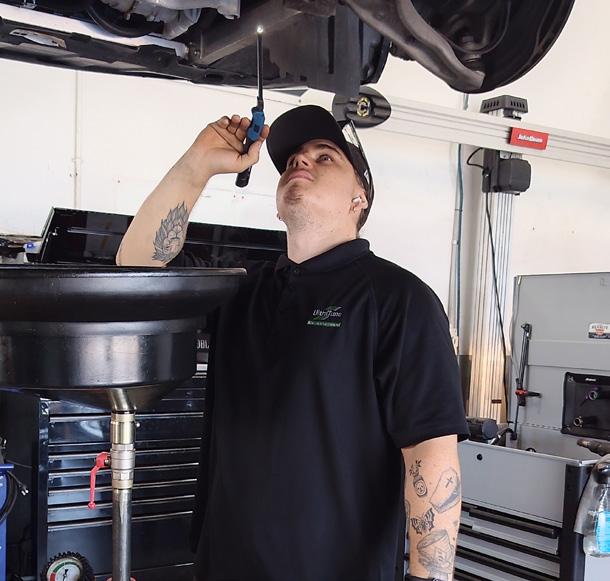
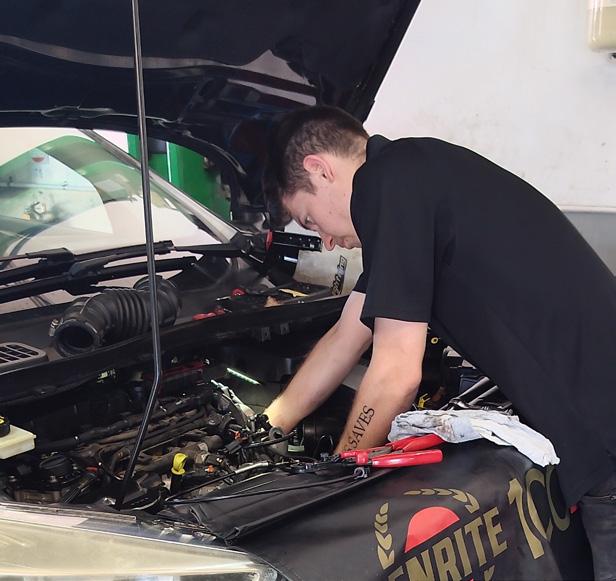
JT: Jack is our manager and also a technician. He’s young but brilliant, incredibly advanced for his age and has a lot of experience across different areas. He was an integral part of setting up the shop and he now manages the day-to-day workshop operations. And that frees Angela up to manage the business.
Then we’ve got Max, who is a qualified technician and came through an independent workshop in Ipswich. He’s young and very capable and we want to invest in him and expose him to bigger jobs and more diagnostic work.
We’ve also got Rhett, who is our matureage, third-year apprentice. He came to us through Jack - which shows the value of having good people in your network.
AT: You’ll notice that we say ‘technician’ not
‘mechanic’ when talking about our staff. That’s because this isn’t a mechanical role . . . we’re talking about computers and software and highly technical work - these guys are automotive technicians.
WHEN HIRING STAFF, WHAT MATTERS MOST?
JT: Attitude and aptitude. It’s about whether someone fits in culturally with us, whether they align with our values, and whether they show the sort of lateral thinking and problem-solving ability that we can develop. I don’t believe the best person is always the ‘master tech’ - we can train the role.
AT: We also do what we call the 'vibe check.'
Jack will assess a potential employee’s technical side, and then I’ll have a conversation with them and get a feel for who they are. We work as a very close team, almost like a family, so the vibe really matters.
JT: I’m not on the tools day to day and my role is really to solve problems and work on the business. That means strategy, opportunities, staffing, marketing, workshop support, equipment, technical escalation, helping with the occasional tricky technical job - whatever the business needs. If I was in the workshop all day, I wouldn’t be able to do the things
needed to grow the business.
It’s a shame that when you’re a technician in the shop and full time on the tools, it’s really hard to run a business. That’s something I underestimated when we started here - the business side of things occupies a lot of my time.
AT: I do all the things people don’t necessarily see. I’m front of house with customers, I manage the financial side, supplier relationships, and customer relationships generally.
One thing that matters a lot to me is being here when customers pick up their cars. I want to know who they are and build a relationship. There’s nothing worse for someone when spending their own money on servicing or repairs than feeling like they’re just another number.
OUTSIDE OF THE MARKETING THAT COMES WITH BEING PART OF ULTRA TUNE, HOW DO YOU MARKET THE BUSINESS?
AT: Google ratings are important. When people are looking for a technician, one of the first things they do is check Google reviews. We’ve worked hard to improve our standing there, and our reviews come from genuine customer experiences. Community presence matters too. I’m involved with the local P&C [Parents & Citizens Association] and we support local businesses. We build relationships and network wherever we can. That all feeds into brand trust.
JT: Angela also does a lot of SEO and backend optimisation work through Google and our web presence. We’ve customised our Ultra Tune landing page – we were the first store to do that and Ultra Tune were happy for us to do that – and added ways for customers to contact us directly. We've also invested in boosting visibility through channels like Instagram.
HOW DO YOU VIEW THE TECHNOLOGICAL DEVELOPMENTS IN THE INDUSTRY – SUCH AS ELECTRIFICATION – AND THE IMPACT THEY WILL HAVE?
JT: We do work on EVs, and we have the

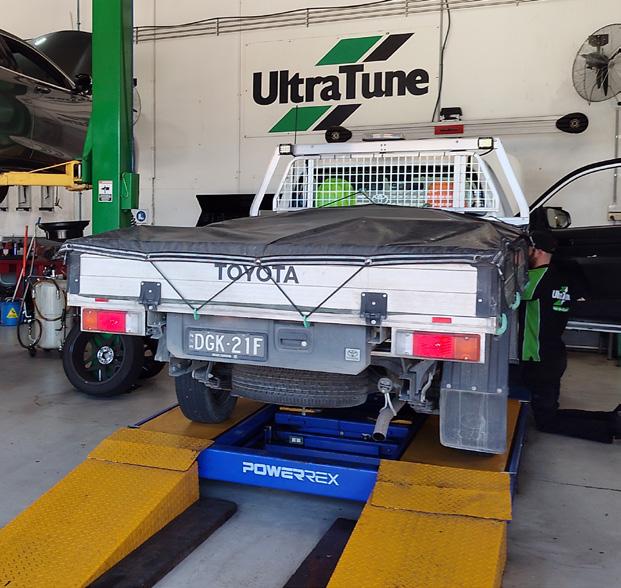
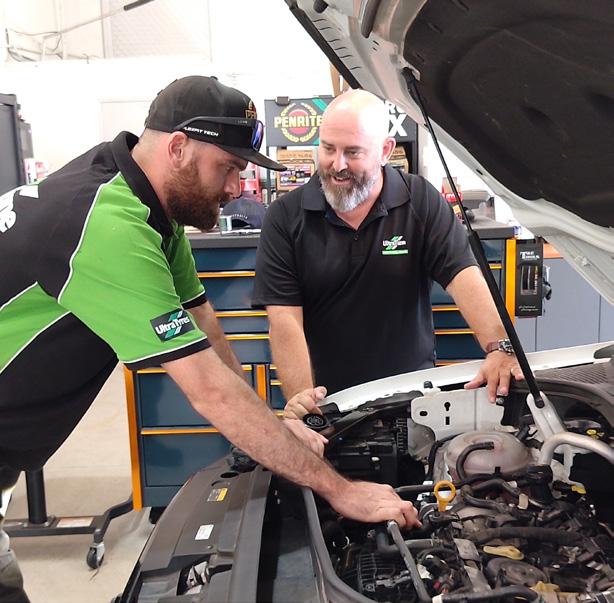
capability to power up, power down, and diagnose EV issues safely. I don't think there's any anything mystical about them, although I think there’s still a lot of mystery around EVs for the public. They’re just another technology that technicians need to understand properly.
With ADAS, some problems are very obvious and we can don’t necessarily need calibration boards as a lot of calibration can be done on a drive. However, it’s different when you get into major smash repair and so on and, for us, we don’t play in that space.
HOW DO YOU APPROACH TRAINING?
JT: Training is very important and we’re looking at it strategically. We are currently planning for the next year, and that includes planning for training. There are some obvious things for Max, who is 12 months out of his apprenticeship, including A/C and safety certificates. We will book those with MTA Queensland who, incidentally, I did my apprenticeship with, as did Jack and Max.
For Jack, we’re looking at deeper diagnostic training and more advanced technical opportunities through providers like Bosch. Meanwhile, Rhett is progressing through his
apprenticeship, so that’s ongoing.
For me, there's a lot of self-education –reading and keeping up to date with what’s happening in the industry.
WHEN DID YOU JOIN MTA QUEENSLAND AND WHAT HAVE BEEN THE BENEFITS OF MEMBERSHIP?
JT: We joined around July last year and went straight onto the website for resourcessignage, trade plate holders and training information. Training is a major benefit for us too, especially knowing the high-quality standard that is delivered.
AT: We’ve also leaned heavily on MTA Queensland for HR matters and compliance support, particularly around apprentices. That has been really valuable.
WHAT ADVICE WOULD YOU GIVE YOUR YOUNGER SELVES?
JT: I probably wouldn’t change much - my path has been good - but I would say to ask questions. There are no stupid questions. If you don’t ask, you don’t learn!
AT: Mine would be to absorb everything you can from the smartest people around you. I’ve met and worked with some fantastic leaders and I soaked everything up. So, learn from them and ask questions. We are all here to improve ourselves.

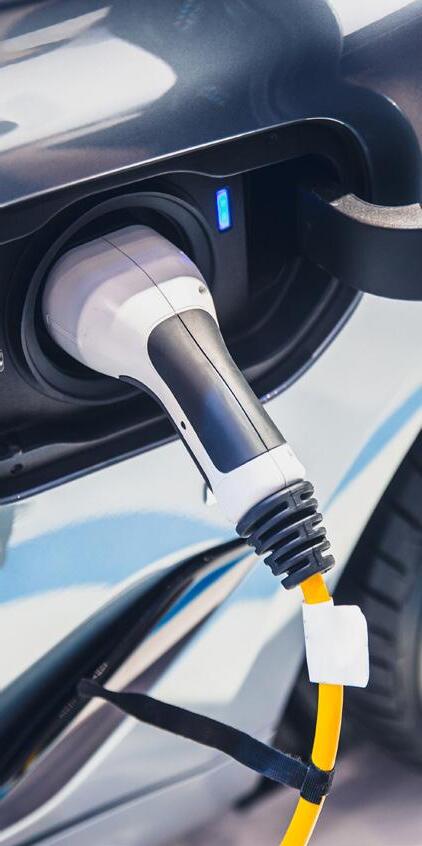
MTA Queensland made sure that automotive workshops remain the only place EVs can be serviced and repaired.
Following a review of the Electrical Safety Act, which recommended that only licensed electrical workers service EVs, MTAQ successfully protected the industry’s right to service and repair these vehicles.
Our new EV Ready program is your industry-backed, no-nonsense way to get informed, equipped, and connected — without the noise.
Stand out as a qualified and EV-safe service provider
Demonstrate your commitment to safety, professionalism, and innovation
Future-proof your business

ELECTRIC VEHICLES (EVS) are rapidly becoming a fixture on Queensland roads, with more than 58,000 EVs registered as of March 2025 - a number that continues to grow each year. As the market shifts, workshops must be equipped to safely and professionally work on these vehicles.
In 2023, the Queensland Government released a Review into the Electrical Safety Act 2002, which included a recommendation that the servicing and repairs of EVs be carried out by licensed electrical workers.
MTA Queensland successfully protected the industry’s right to service and repair these vehicles by demonstrating that automotive businesses already have the capability –including a sufficiently trained workforce, as well as the tools, equipment and electrical safe work procedures - to undertake EV servicing and repairs in a safe and compliant manner.
As a result, the Government has not pursued the recommendation and supports an industry-led compliance framework - a significant outcome for automotive workshops.
In response, MTA Queensland has established EV Ready - a program designed to set a minimum standard for automotive businesses that service and repair electric vehicles. It aims to ensure the automotive industry continues to demonstrate to the Queensland Government that it is the most capable and appropriate sector to perform this work.
EV Ready recognises automotive businesses that are:
• Properly equipped to handle EVs,
• Formally trained to depower and reinitialise EVs,
• Committed to industry best practice.
Businesses that become EV Ready will be acknowledged as safe and trusted providers for EV servicing and repairs.
Participants will receive an official EV Ready sign to display in their workshop, along with digital assets to help promote their accreditation and build trust with customers.
As EV adoption accelerates, workshops must not only keep pace but lead the way in safety, expertise, and innovation. By joining EV Ready, you will:
• Stand out as a qualified and EV-safe service provider.
• Future-proof your business as the EV market grows.
• Demonstrate your commitment to safety, professionalism, and innovation.
Joining EV Ready is more than just an accreditation - it’s a strategic investment in your business’s long-term success in an evolving automotive landscape.
To become EV Ready accredited, businesses must demonstrate they are appropriately trained, equipped, and operating in line with national safety standards for EV servicing.
This includes having at least one technician who has completed nationally accredited training for the depowering and reinitialising of EVs, or access to a qualified provider, along with meeting appropriate Australian Standards, workplace health and safety requirements, having the correct tools and PPE, and maintaining an EV-appropriate workshop environment.
Accreditation is valid for three years and includes an assessment process to confirm compliance. Ongoing accreditation requires businesses to maintain these standards and participate in periodic reviews if requested.
The initial accreditation fee is $280 (+GST) for MTA Queensland members and $675 (+GST) for non-members, with a re-accreditation fee of $90.
Getting EV Ready is simple. Businesses interested in becoming accredited can begin by completing a short Expression of Interest form.
Once submitted, MTA Queensland will be in touch to guide you through the next steps — including the assessment process, documentation requirements, and any support needed to help your business meet the EV Ready standard.

An extraordinary wave of talented women is making impactful contributions across all levels of the automotive industry — from visionary executives and entrepreneurs leading global brands, to industrious and dynamic owners of businesses across all industry sectors, to apprentices and skilled technicians reshaping workshops from the ground up.
The Behind the Wheel: Celebrating Women in Auto project is dedicated to celebrating the stories and journeys of these remarkable women, putting the spotlight on their achievements, resilience, and innovation, providing a platform that highlights their diverse roles, and encouraging a new generation of women to pursue careers in this dynamic industry.
IT’S EASY TO think about the automotive industry as one that is all about horsepower, performance, engines, tyres, panels, batteries and all the myriad components and technologies that make the vehicles on our roads such fantastic pieces of machinery to drive in and work on. However, the industry is, of course, much more than that and it can be easy to overlook the human engine - the men and women who keep those vehicles ticking along and the industry itself ticking over.
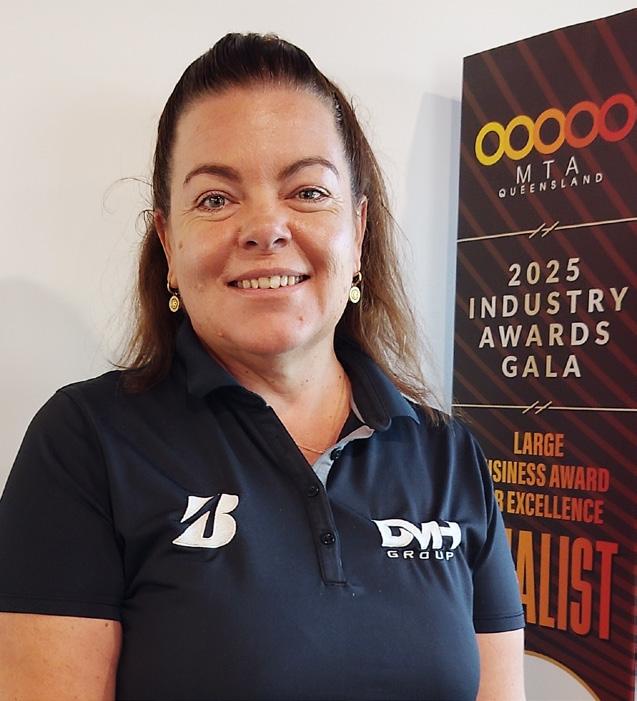
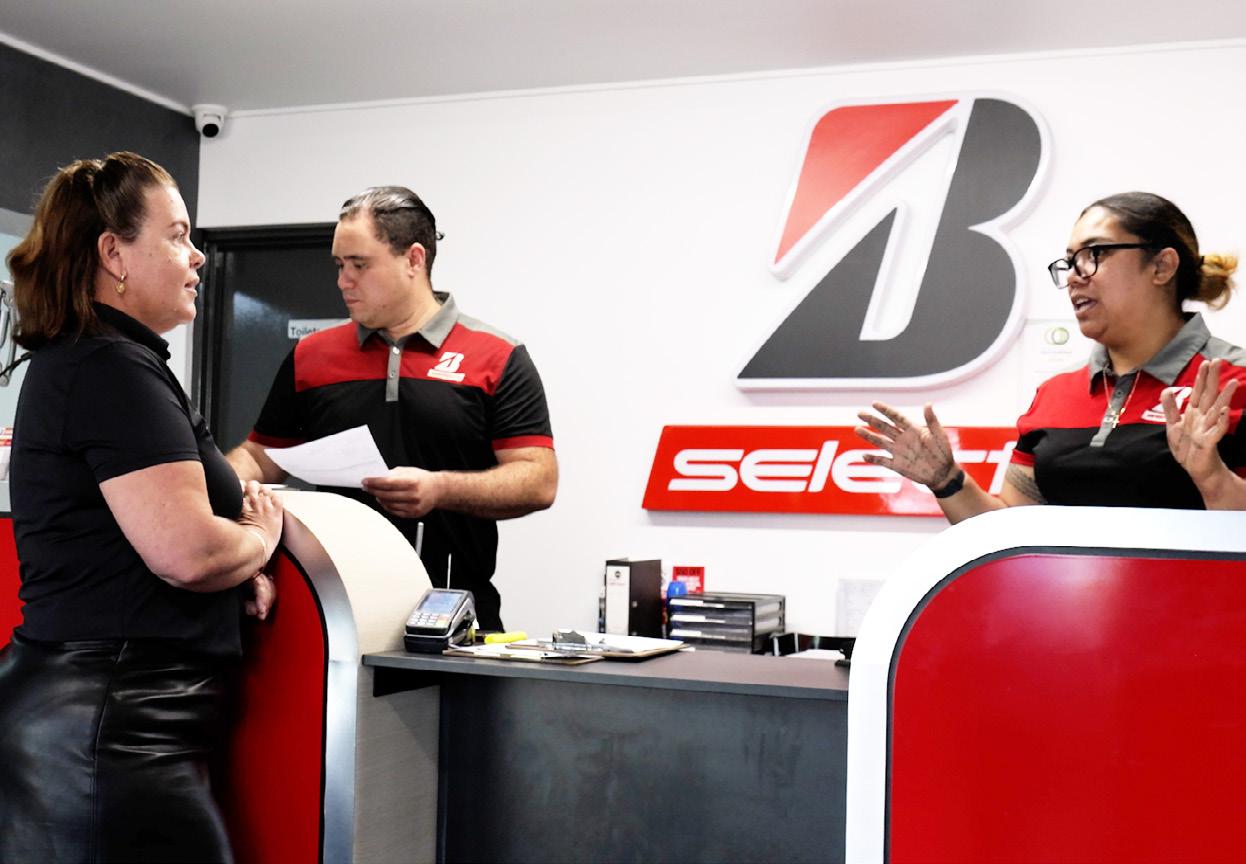
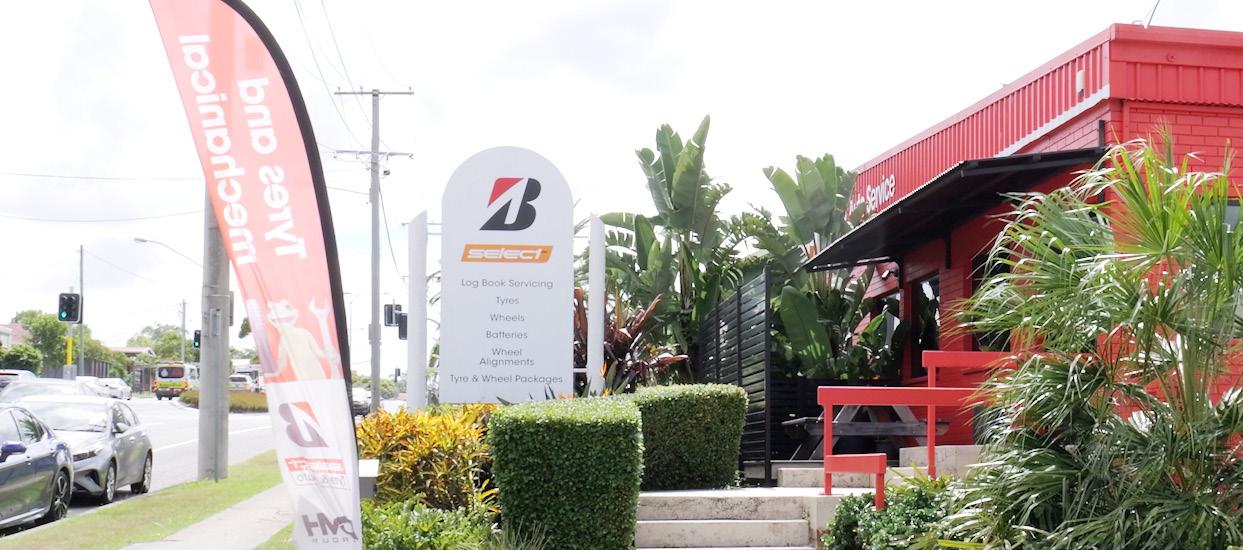
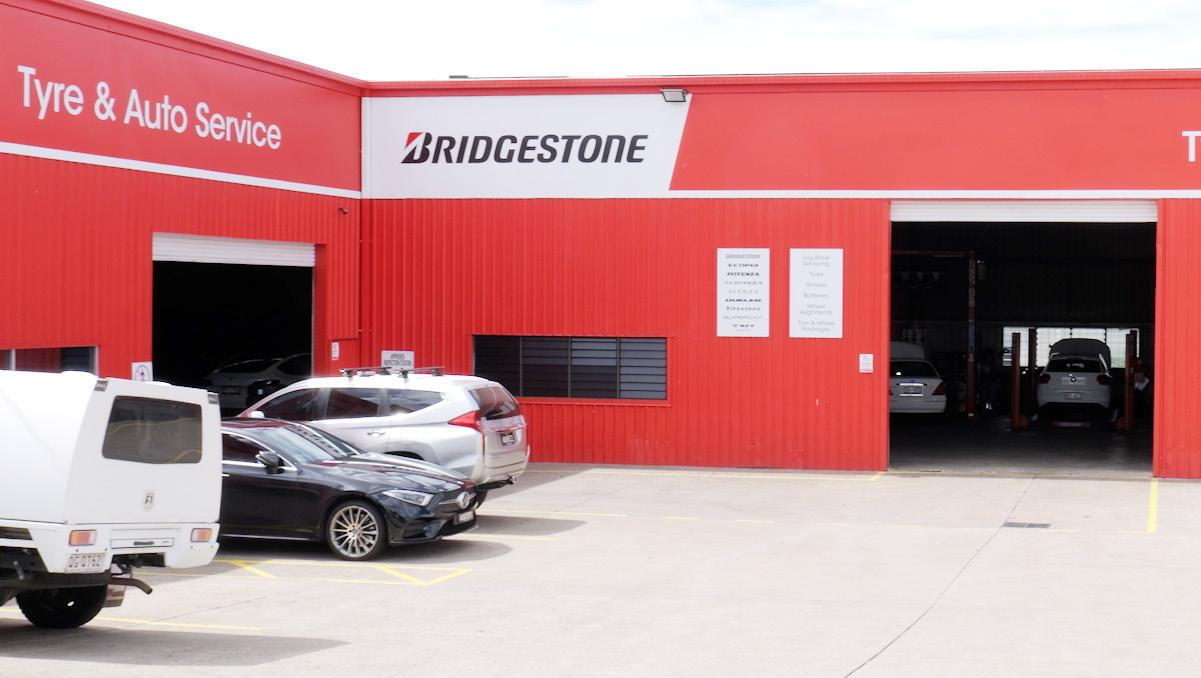
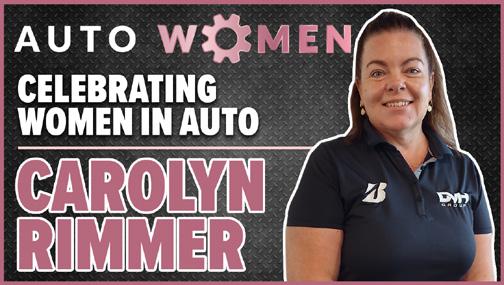
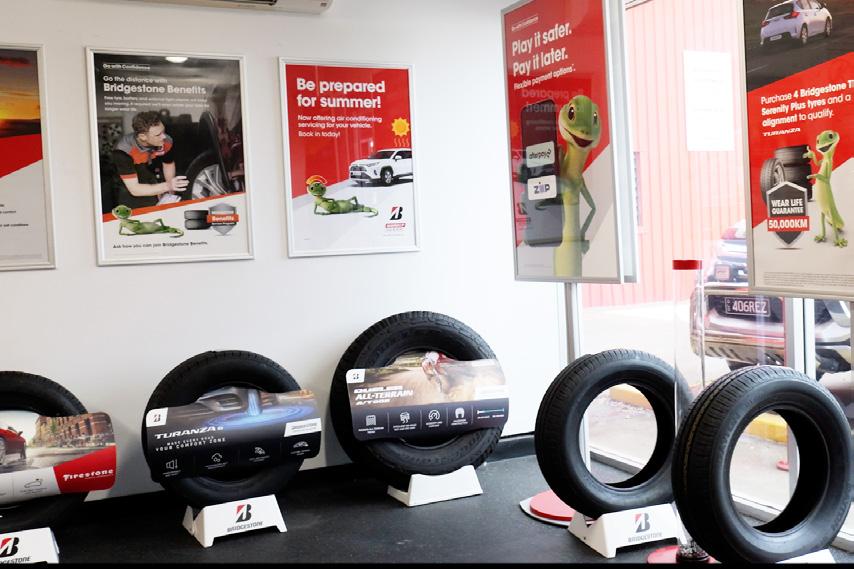
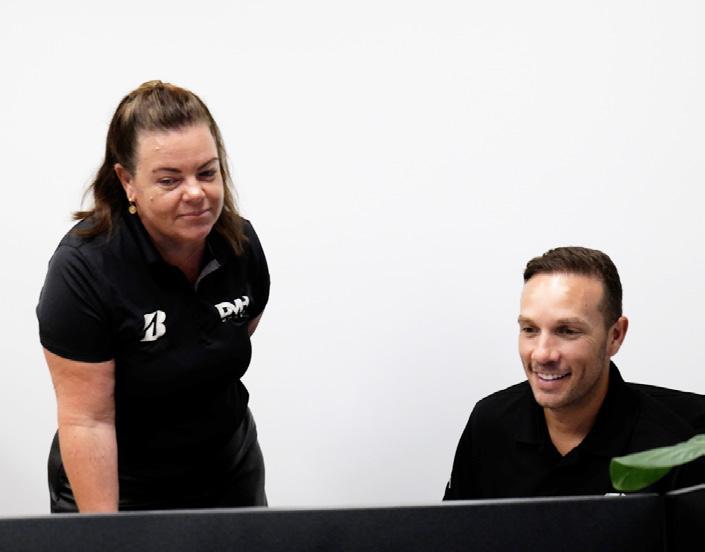
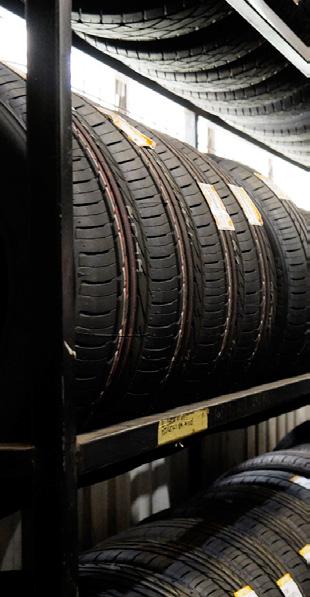
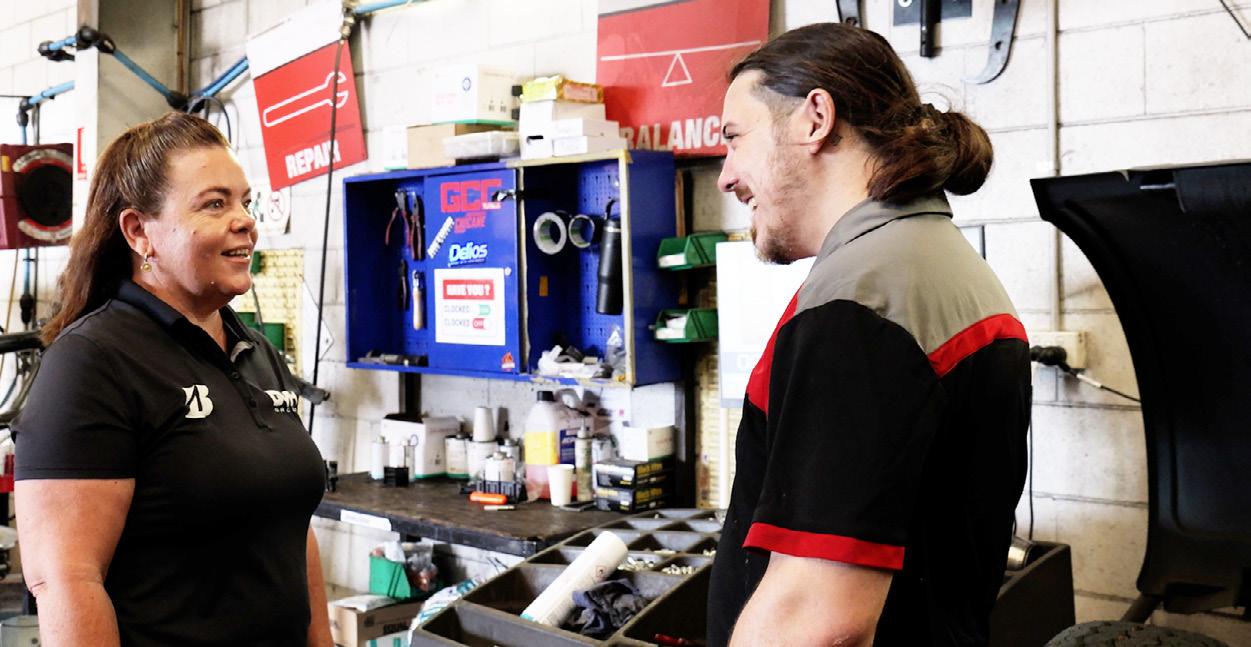
At Queensland-based DMH Group, which operates multiple Bridgestone tyre stores in the southeast of the state and employs 100 staff, that human engine is maintained by Carolyn Rimmer, a woman whose automotive career journey is as unconventional as the title of the role she now occupies.
Carolyn is DMH Group’s Company
“WE HAVE EVENTS, AWARDS, RECOGNISE ACCOMPLISHMENTS, AND ANYTHING TO DO WITH THE TEAM MEMBERS’ JOURNEY IN THE DMH GROUP FALLS UPON ME. SO, I HAVE 100 FRIENDS THAT I LOOK AFTER DAY IN AND DAY OUT!”
Culture Coordinator – aka ‘Triple C’. It’s a title that might sound like a modern corporate invention, but it actually properly reflects the responsibilities she has, for hers is a role that revolves around relationships, growth, and the understanding that it is people, not processes, that ultimately define business success.


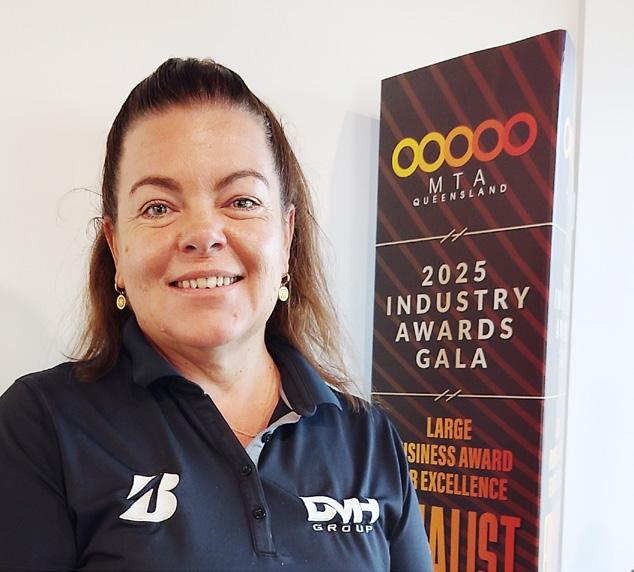
Carolyn Rimmer
It’s also a role that reflects the broader shift in an industry that is seeing an increasing focus on workforce retention, skills development and wellbeing, particularly as businesses tackle the dual challenges of technician shortages and rapid technological change.
For Carolyn, the philosophy underpinning her work is quite personal.
“Most people think it's HR [Human Resources], but it's actually not,” she

says with a smile as she explains the ‘Triple C’ role.
“My main responsibility is all about our teams. So, I do the recruitment, the learning and development . . . we have events, awards, recognise accomplishments. Anything to do with the team members’ journey in the DMH Group falls upon me. So, I have 100 friends that I look after day in and day out!”
Carolyn’s journey to the automotive industry began in an entirely different sector, and for three decades she worked within the pharmacy industry, building a career in customer service, training and operations.
“I loved every minute of it,” she says of this part of her career. “I started as a junior at a pharmacy and worked there for nearly 20 years with the same owner.
“Then it was just time to grow, and I haven't put a ceiling on my career since.”
Carolyn then went on a journey that saw her move through roles and organisations, developing an invaluable skill set.
“I've had wonderful opportunities training for a dermalogical company; I've worked for the Pharmacy Guild of Australia . . . and then got to work for Sigma, which is one of Australia's largest wholesalers in the national training sector,” she explains. “I met amazing people in my career in pharmacy and am still very good friends with many of them . . .”
“I DID KNOW DAMIEN... AND I'D LISTENED TO HIM FOR YEARS TALKING ABOUT HIS VISION FOR THE DMH GROUP... AND THEN HE MENTIONED THIS ROLE AS THE COMPANY CULTURE COORDINATOR. I DIDN'T REALLY BAT AN EYELID TO THE FACT THAT I WAS LEAVING PHARMACY AND ENTERING AUTOMOTIVE.”
Her time with the Pharmacy Guild of Australia and Sigma Healthcare exposed Carolyn to training systems, workforce development strategies and the dynamics of large organisations, and these skills would translate well into her work with DMH Group and the Company Culture Coordinator role.
Shifting from the pharmaceutical industry to the automotive industry does not sound like a natural switch, but it was the opportunity to take on interestingsounding ‘Triple C’ role that caught Carolyn’s attention and made the decision to move an easy one to make.
That opportunity came via DMH Group owner and Managing Director Damien Meneguzzo, whose vision for a peoplefocused business model resonated strongly with Carolyn.
“I did know Damien . . . and I'd listened to him for years talking about his vision for the DMH Group,” she says. “And then he mentioned this role as the company culture coordinator. I didn't really bat an eyelid to the fact that I was leaving pharmacy and entering automotive.”
For many, such a move might have been daunting - particularly given the automotive industry’s reputation as being male-dominated. For Carolyn, it was simply the next challenge. However, while it may have been the role, not the industry
“My dad was employed in the automotive industry, particularly at Nissan,” she says. “And I used to love it when he’d bring home the new cars that had come out - the Urvan van, Nissan 300 ZXs, Skylines - and I loved getting in them and seeing what they were about.”
Those childhood memories have ensured that Carolyn has a genuine appreciation and love for the industry.
Ask Carolyn what a typical day looks like for her, and the answer is there isn’t one.
“You never know what is going to happen . . .’ she says. “Some days can be challenging, some days can be very rewarding, and I'd like to say that the rewarding days outweigh the challenging ones!”




Advocate for women across all levels of the industry Promote diversity and career opportunities Host events and mentoring programs
Support career growth through training and scholarships


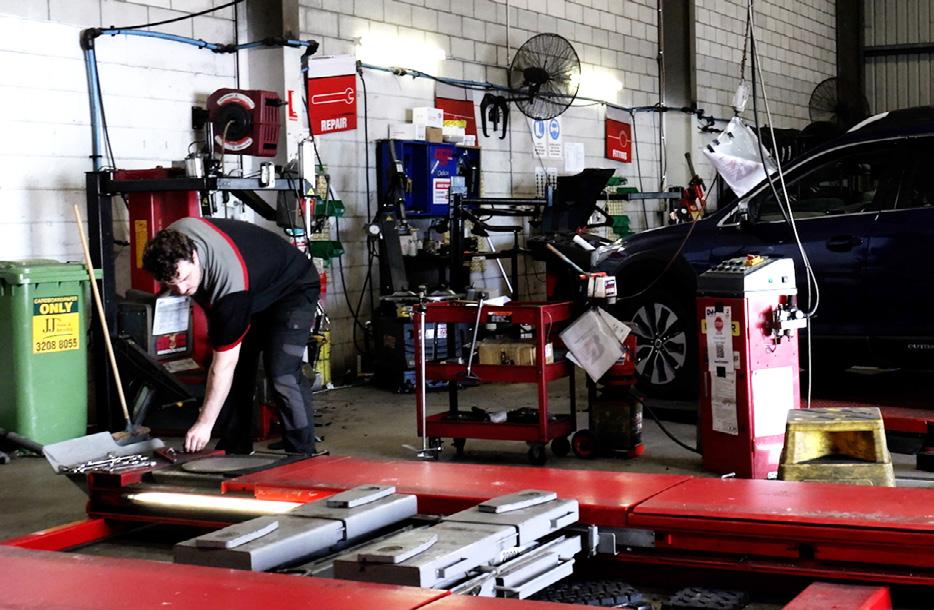
One day she may be conducting an employment interview, or signing someone up for an apprenticeship, or recognising the accomplishments of a team members, or perhaps announcing to the Group some news about the birth of a team member’s child or grandchild. And although it’s very unlikely you’ll find Carolyn changing a tyre or performing a wheel alignment, there is the chance, from time to time, of finding her behind the counter at one of the DMH Group’s 11 Bridgestone shops.
“That is where my skill set ends,” she says with a chuckle. “But I can make sure the customers are happy and, on those days, I get to spend time with team members, which is really invaluable.”
It is this hands-on approach that defines her role, and the impact she makes within DMH Group. The auto industry is one in which everyone is critical to customer satisfaction, and Carolyn ensures that everyone knows that every role matters.
“. . . I think that mechanics, tyre fitters, store managers, are very undervalued in what they bring to the community,” she says. “We would all be in unsafe, unreliable cars without these guys . . . They are really great at what they do . . . and we really need these people to make our cars reliable and safe every single day.”
Recognising the skill and dedication of the DMH Group team members through a commitment to internal progression is a crucial part of Carolyn’s role, and there is a note of pride in her voice as she speaks about those whose careers are evolving within the company.
“The thing that I love the most is watching team members grow and develop through our system,” she says. “Two of our area managers were mechanics who became store managers and we have tyre fitters who are now customer service advisors.”

“SOMETIMES IT TAKES US MONTHS TO MAKE THAT INTERNAL MOVEMENT HAPPEN, BUT THE FEELING THAT WE ALL GET SEEING THAT PERSON GROW AND DEVELOP IN OUR GROUP IS INDESCRIBABLE.”
This internal mobility is not accidental.
“Whenever we recruit, the first place I go is internally,” says Carolyn. It's my responsibility to know and be on top of everyone's journey and where they want to go in the group.
“Sometimes it takes us months to make that internal movement happen, but the feeling that we all get seeing that person grow and develop in our group is indescribable. It's a definitely a dopamine hit that we selfishly grab at!”
Carolyn’s transition from the pharmacy industry to automotive offers some insight on gender diversity.
The pharmacy industry is, she says, one where women lead in many roles, but leaving that behind and taking on a job in a male-dominated industry didn't bother her.
“I just thought it could be fun,” she says.
And her experience with the DMH Group
has proven that to be the case.
“I have been completely embraced by everyone on board here . . . They have been extremely respectful and open to my ideas.”
Her message to other women who are perhaps considering a career in automotive is unequivocal.
“To young women entering the automotive industry, I wouldn't be worried about it,” she says. “There's nothing stopping you entering the male sector.”
If there are threads that run through Carolyn’s career, it is a commitment to learning and being prepared to 'have a go.'
It is a mindset that has enabled her to navigate roles and her own development with confidence, and have a sharp insight into what makes a great business tick.
For example, she says that management can be either a challenge to keeping staff or be one of the major reasons for them staying in a workplace, and her advice to business leaders is direct.
“To any manager, I would say to you, consider the importance that you play in people's day-to-day life - you can make or break the decision to stay in a role.”
It is a reminder that leadership is about people as much as it is about performance metrics, and it's what her 'Triple C' role is all about.
She is also a strong advocate for professional networks, recognising that they can be important in opening up opportunities, and enabling the development of skills and crucial relationships.
“TO YOUNG WOMEN ENTERING THE AUTOMOTIVE INDUSTRY, I WOULDN'T BE WORRIED ABOUT IT... THERE'S NOTHING STOPPING YOU ENTERING A MALE SECTOR.”
“Networking is the greatest tool you can ever learn in life,” she says.
“It is where you meet people, where you grow. It's just where you learn so much.
“And the Auto Women Initiative is a fantastic tool going forward to secure women in the automotive industry - no doubt about it.”
In fact, Auto Women has played a role in Carolyn's career. in 2025 she was awarded the Executive Ready Scholarship - a Women & Leadership Australia career accelerator designed to propel women in mid-level positions towards executivelevel performance.
The program saw Carolyn work alongside women who were not part of

the automotive industry and develop processes that, she said, would be truly beneficial as her career developed further.
"It was great to meet and work with women from other corporate sectors, and I got a lot of tools out of the program," she said. "All learning is great learning and this was no different - and it is definitely something that has been very advantageous and added to my skillset."
With the Executive Ready scholarship valued at nearly $10,000, Carolyn said it reflects the strong commitment placed on advancing women in the industry.
“It is very generous of MTA Queensland
and Auto Women to support that leadership development and provide that opportunity.”
While Carolyn may have only moved into the automotive industry relatively recently, she has long had a love of cars, and her move to work with DMH Group has seen that develop into a genuine passion. Her current daily driver – as well as the dream car she would love to own – reflect a taste for performance.
“I have learned since being in the auto industry that I am a closet car enthusiast,” she says with a smile. “My daily car is a Hyundai N Line - I love something with a little bit of sport in it. However, if I'm going to go for my dream car, it's going to be a Ford Mustang V8. There’s nothing like a V8. The sound, the rumble, everything about it!”
Owning a V8 Mustang is not about playing it safe. It’s bold and aspirationala decent metaphor for a career which now sees Carolyn, as the ‘Triple C’, aim to help her team pursue those goals too. In an industry undergoing rapid transformation her role serves as a reminder that success still hinges on human connection and that culture is not a buzzword but a strategy.

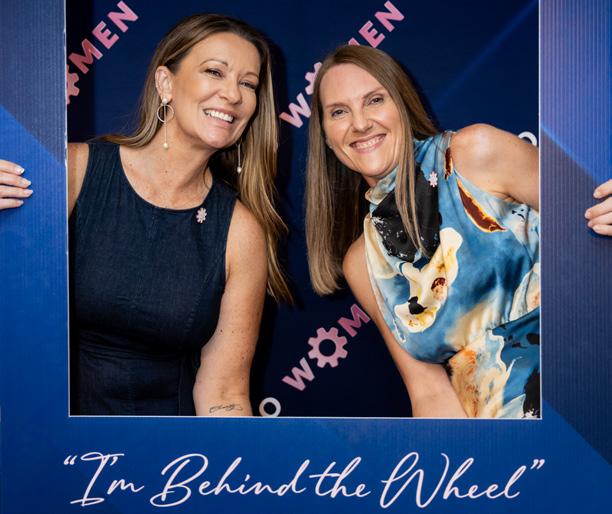
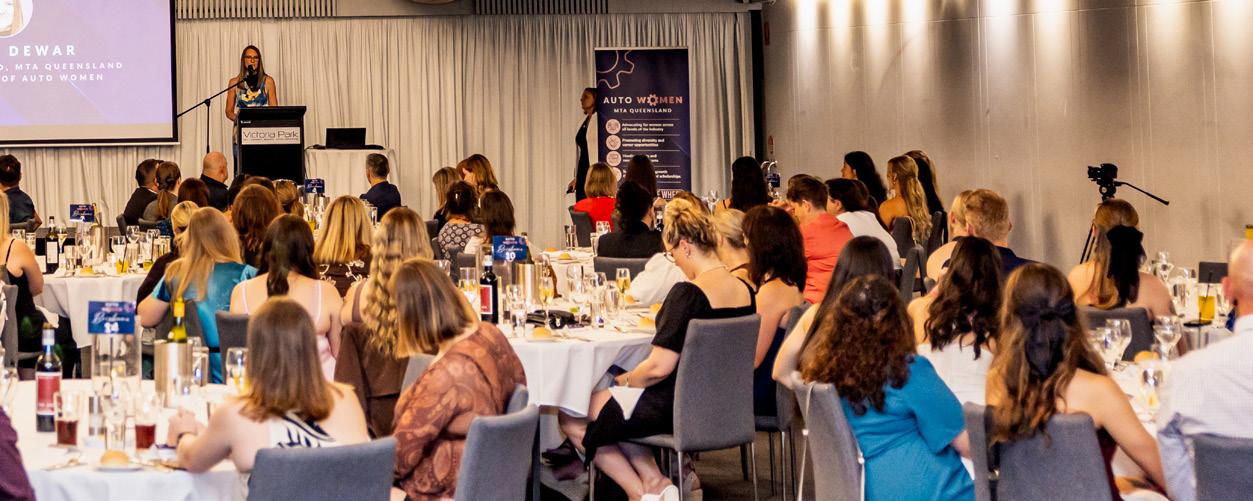
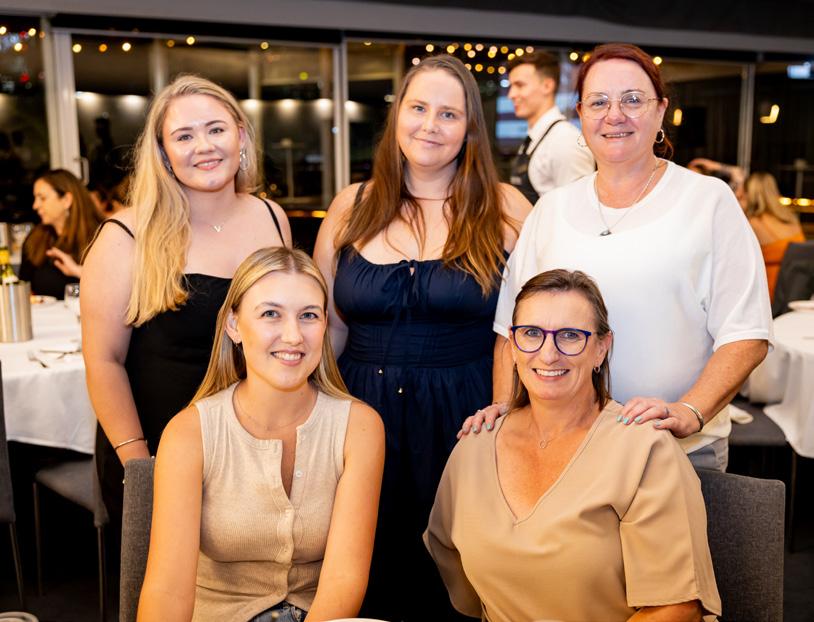
ONE OF QUEENSLAND’S most effective automotive initiatives continued its momentum in March with the Auto Women project bringing together 138 attendees to an event at the Victoria Park Marquee in Brisbane for an evening of connection, inspiration and celebration.
Guests enjoyed a two-course dinner, live
“WHEN WE FIRST STARTED LOOKING AT THIS PROJECT IT WAS BASED ON THE VERY COMPLEX THEORY OF IFWE BUILDIT,THEYWILLCOME. . . AND THANK GOODNESS PEOPLE DID.”

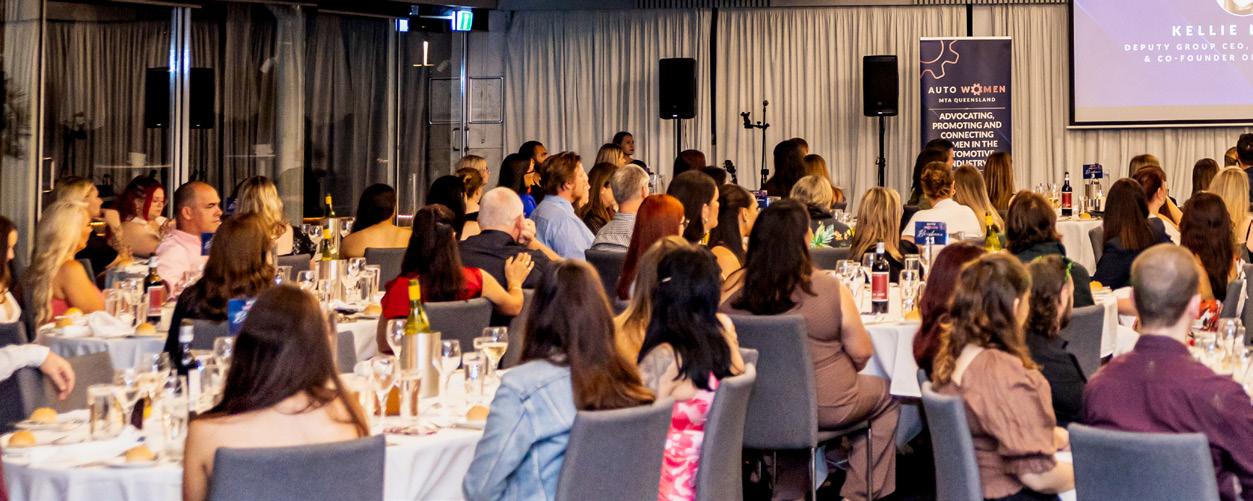


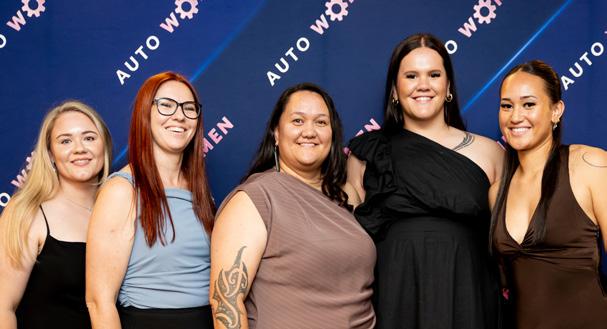
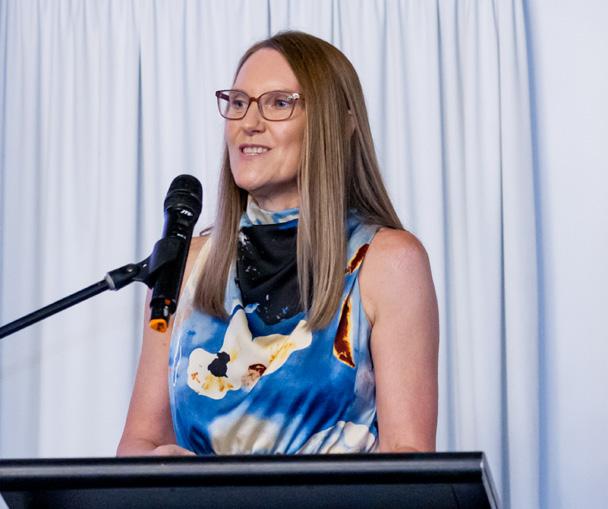
music, and an inspirational presentation from guest speaker and Supercars engineer Romy Maye. The event, expertly hosted by Fiona Cullen of Performastery, showcased the growth and impact of the Auto Women initiative, now in its fourth year.
Opening the evening, Kellie Dewar, MTA Queensland Deputy CEO and co-founder of Auto Women, reflected on the program’s

origins and evolution.
“When we first started looking at this project it was based on the very complex theory of if we build it, they will come . . . and thank goodness people did,” she said. “I completely underestimated the support we would get for this, and I am grateful every day for the support we continue to receive.”

Kellie highlighted the program’s expanding national footprint, noting events across the country.
“We have recently launched Auto Women nationally with a dedicated website . . . and there is another Auto Women event happening today . . . a lunch event was hosted in Western Australia, and we can’t wait to see more of them being hosted around the country.”
Central to the evening was keynote
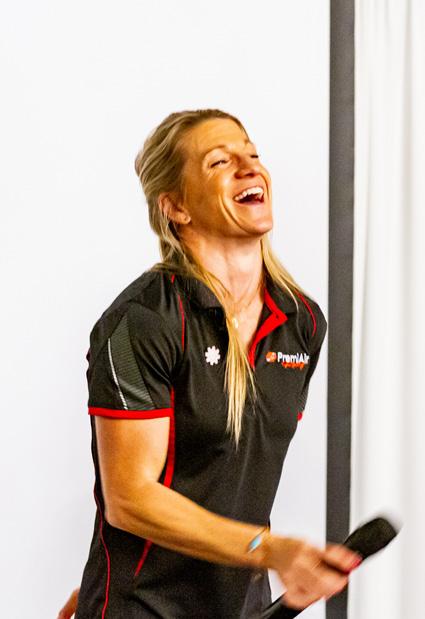
“AUTO WOMEN IS A PLACE WHERE YOU’RE ALL WELCOME - WOMEN FROM EVERY CORNER OF THE INDUSTRY ACROSS EVERY ROLE, EVERY INDUSTRY SECTOR AND NOW ACROSS EVERY STATE.”


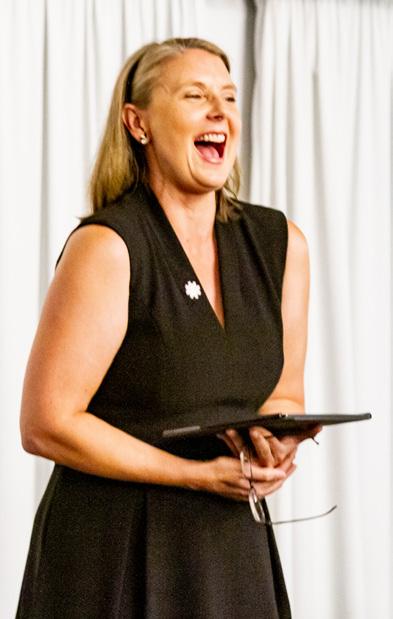
speaker Romy Mayer, one of the most respected race engineers in the Supercars motorsport series. With an international career spanning Red Bull Racing and Mercedes Motorsport, Romy delivered powerful insights into high-performance environments, drawing parallels between motorsport and business through themes of decision-making, communication and data-driven success.
The event also highlighted new partnerships, including a collaboration with Women’s Network Australia, and ongoing initiatives such as its support of scholarships, mentoring programs and the upcoming Shifting Gears for Change masterclass series.
Attendees received thoughtfully curated gift bags, provided by Yarn, which

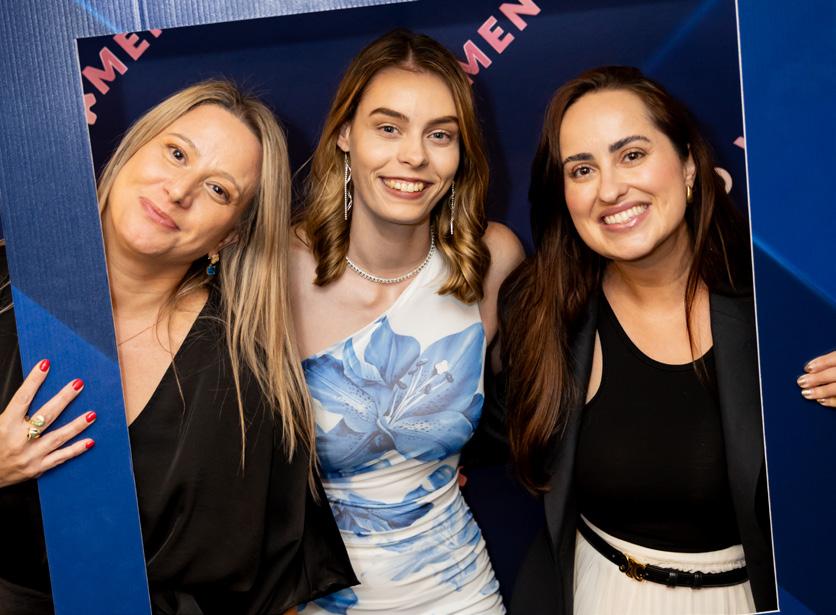
Beauty, and Outback Armour. Sponsors of the event included BUSY Sisters, Capricorn, CareSuper, CarBiz and National Quality Consulting.
The Auto Women initiative is proving to be a huge success, and it continues to grow in reach and impact as it connects women across the automotive industry.
“Auto Women is a place where you’re all welcome - women from every corner of the industry across every role, every industry sector and now across every State,” said Kellie. “For all apprentices, technicians, administrators, sales service and parts staff, business owners and leaders, our male allies and champions, industry professionals and everyone
WEBSITE
IN SOMETHING OF a significant move for Australia’s automotive sector, the Australian Automotive Dealer Association (AADA) and the Motor Trades Association of Australia (MTAA) have formalised their collaboration through the signing of a new Memorandum of Understanding (MoU).
The agreement reflects a shared recognition that alignment across automotive has never been more important, and with the sector navigating the impacts of electrification, evolving emissions standards, new technologies, and shifting consumer expectations, both organisations acknowledge that a coordinated voice is essential.

In an official post to its social media channels, the MTAA said that ‘The agreement formalises the strong working relationship between our organisations and provides a framework for closer cooperation on policy development, advocacy and industry engagement.’
In the same post, MTAA Interim Executive Director Peter Jones said the agreement represents a logical next step in strengthening national collaboration, while AADA CEO James Voortman said collaboration between key industry bodies is critical as the sector navigates new technologies, evolving regulations and changing market dynamics.
The move comes a year after MTA Queensland signed an MoU with AADA.
‘THE AGREEMENT FORMALISES THE STRONG WORKING RELATIONSHIP BETWEEN OUR ORGANISATIONS AND PROVIDES A FRAMEWORK FOR CLOSER COOPERATION ON POLICY DEVELOPMENT, ADVOCACY AND INDUSTRY ENGAGEMENT.’
The MoU recognised MTA Queensland as the peak body representing franchised Dealers in Queensland and the AADA as the peak industry body representing franchised Dealers nationally. It committed both associations to closer cooperation and sharing of resources and paves the way for Queensland Franchised Dealers to be represented by one voice.










MTA QUEENSLAND HAS welcomed the State Government’s decision to adopt all e-Mobility reforms proposed in its submission to the Parliamentary Inquiry into e-Mobility Safety and Use in Queensland.
E-mobility devices have been involved in a number of very serious incidents and to make the community safer and curb the number of illegal devices, MTA Queensland had called for a range of measures, including around better enforcement and import controls, anti-modification measures, and public education around safety campaigns and training. These form part of the 28 recommendations from the parliamentary inquiry that the government has accepted, or accepted in principle.
MTA Queensland CEO Rod Camm said the Government’s response to the inquiry reflects the practical solutions put forward by MTA Queensland.
“This is a significant win for MTA Queensland and the automotive industry we represent,” said Mr Camm. “Our members have been on the front line of this issuedealing with unsafe products, inconsistent standards and growing safety risks - and we have been clear about what needs to change.
“The reforms announced closely reflect the recommendations MTA Queensland put forward in our submission.
“From stronger product standards and better control of non-compliant imports, through to clearer definitions and tougher enforcement - this is exactly what industry has been calling for.”
Mr Camm added that the reforms are critical to improving safety for riders, pedestrians and the broader community.
“THIS IS EXACTLY WHY MTA QUEENSLAND EXISTS - TO ADVOCATE FOR OUR MEMBERS AND DELIVER OUTCOMES THAT PROTECT BOTH INDUSTRY AND THE COMMUNITY.”
“We are seeing too many unsafe, noncompliant products entering the market and putting Queenslanders at risk,” he said.
“This package of reforms is about restoring confidence - for consumers, for industry and for regulators.”
Mr Camm said the Government’s response demonstrates the importance of MTA Queensland’s advocacy on key issues.
“This is exactly why MTA Queensland exists - to advocate for our members and deliver outcomes that protect both industry and the community,” he said.
“We’ve worked constructively with Government throughout this process, and this result shows that when industry is listened to, you get better policy.”
MTA Queensland is urging the Government to fast-track the reforms and ensure they deliver real-world results.
“The job isn’t finished - implementation will be critical,” said Mr Camm. “We need clear guidance for retailers, strong enforcement on non-compliant products, and national alignment on safety standards.
“MTA Queensland stands ready to continue working with Government to ensure these reforms deliver safer outcomes for all Queenslanders.”
Bunnings Trade has MTA QLD members covered.


Bunnings Trade and MTA are delighted to announce a partnership which gives you the opportunity to join the Bunnings Trade PowerPass program or link your existing PowerPass account to access a range of exclusive benefits.
From build and fit out, to maintenance and cleaning - we've got you covered. And if we don't stock it, we'll do our best to find it.
Manage quotes, invoicing and transactions online through our PowerPass portal app.
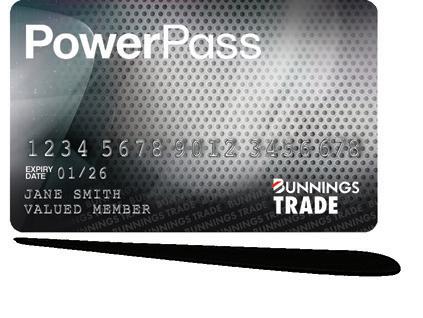
Through PowerPass, we'll add you to your organisations price list that's better than the baseline.
With locations near you, we offer convenient payment, pick-up and delivery options.
To opt in, scan the QR code
*Terms and conditions apply. See trade.bunnings.com.au/powerpass for full details
ALANDMARK FREE TRADE
Agreement (FTA) between Australia and the European Union has been finalised.
Announced in March by Prime Minister Anthony Albanese and European Commission President Ursula von der Leyen, the agreement is designed to strengthen bilateral trade, remove tariffs and deepen economic cooperation between Australia and the EU’s 27 member states and its market of around 450 million people.
AT ITS CORE, THE FTA WILL ELIMINATE TARIFFS ON MANY GOODS TRADED BETWEEN THE TWO MARKETS, IMPROVE ACCESS
EXPORTERS
At its core, the FTA will eliminate tariffs on many goods traded between the two markets, improve access for exporters and establish new frameworks covering services, investment and regulatory alignment. Both governments have framed the agreement as a strategic response to global economic uncertainty.
In an official joint statement, the leaders said the agreement would “strengthen bilateral trade and investment” and support economic growth, while reinforcing a shared commitment to open and rules-based trade.
For Australia, the deal opens access to the massive EU market and is expected to deliver significant economic benefits.
The Government said that the EU was Australia’s second largest source of foreign investment in 2024, with total investment stock worth $869.3 billion, and Australian companies, including small and medium-sized enterprises, will have better access to bid for European government contracts, which are worth around $845 billion annually.
The automotive industry is among the sectors set to be directly affected. Under the agreement, the current 5 per cent tariff on European-built vehicles imported into Australia will be removed, potentially lowering prices in the local market.
The deal also includes reforms linked to Australia’s Luxury Car Tax (LCT). Changes are expected to lift thresholds, meaning a broader range of European models may become
more affordable.
Currently set at 33 per cent on the value of vehicles above defined thresholds (in 2025-26 this is $80,567, or $91,387 for fuel-efficient vehicles) the LCT has long been criticised as an outdated measure introduced to protect a domestic manufacturing industry that no longer exists. Under the FTA, the threshold for electric vehicles is expected to rise substantially - reportedly to around $120,000meaning many European EVs will no longer attract the tax.
While a positive move, the tweaks to the LCT were a point brought up by industry stakeholders.
“The change to the Luxury Car Tax is incremental and leaves in place an outdated measure that no longer reflects the structure of the Australian automotive market,” said Tony Weber, CEO of the Federal Chamber of Automotive Industries (FCAI), in a statement.
James Voortman from AADA also referenced the move on the LCT in a statement, saying, “This was a clear opportunity for the Government to implement meaningful reform by either abolishing the tax entirely or ensuring it only applies to genuinely luxury vehicles.
“Instead, we’ve seen a partial measure that leaves many everyday vehicles, including those commonly used by small businesses and regular Australians, still captured by the tax.”
The agreement follows many years of negotiations and will now be put through the respective processes in both Australia and the EU before coming into force.
“I am proud that we have been able to secure this deal, which will deliver benefits for both Australia and the European Union for generations to come,” said Prime Minister Anthony Albanese in a statement.
“This deal creates major new opportunities for Australian exporters in the European Union’s massive $30 trillion economy and will reduce costs for Australian consumers.”







A conflict thousands of kilometres from Australia has sent shockwaves straight to the nation’s fuel pumps, with the war involving Iran triggering a surge in global oil prices and, in turn, a rapid rise in petrol and diesel costs. Australian motorists and businesses felt the impact as bowser prices climbed, and the flow-on effect of this crisis may have a lasting impact.
AFEW WEEKS AGO, if you were in southeast Queensland and looking to splash a few drops of diesel into your ute, you’d be looking at a price of around $1.85 per litre. As of the writing of this article, on the evening of March 30, a price of over $3 per litre is the norm. By the time you read this, even that price might be but a distant memory and $4 could be the benchmark.
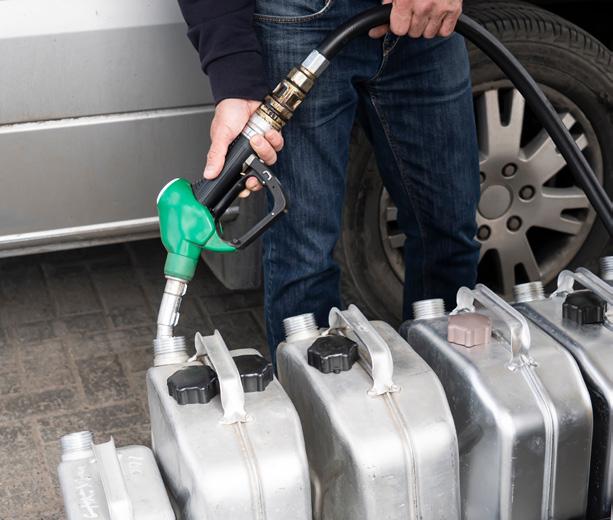
If social media and news broadcasters are to be believed, this dramatic price increase has prompted some people to stalk servo forecourts and fill every jerry can and suitable container they can get their hands on, apparently in the belief that some sort of Mad Max-like apocalypse is imminent.
What on earth happened? How did this situation come to be? How is it that some servos are running out of diesel? What are we doing about it?
Well, like everyone else, Australia is grappling with the consequences of hostilities that began on February 28 as the U.S. and Israel launched military operations against Iran.
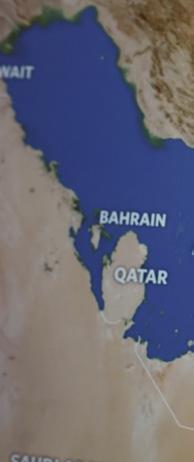
The escalating conflict has led Iran to disrupt and partially close the Strait of Hormuz – a narrow but critical waterway through which roughly 20 per cent of the world’s oil supply passes daily from countries including Saudi Arabia, UAE, Kuwait and Qatar.
Even limited disruption to the Strait of Hormuz chokepoint can cause severe problems and, in this case, the


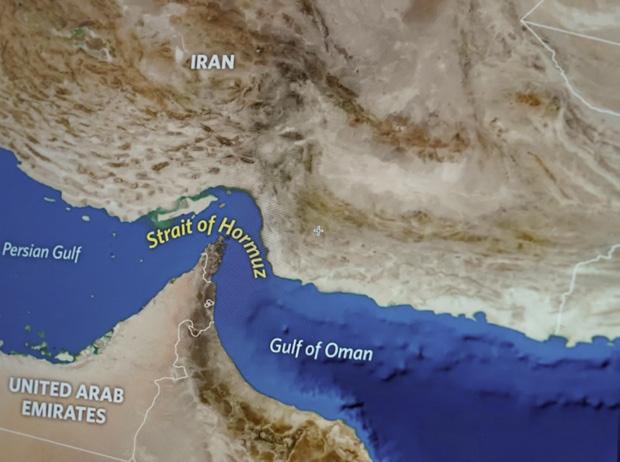
combination of military escalation and heightened risk has driven the rapid increase in oil prices and, consequently, the price at the bowser.
Australia, perhaps, is in a more precarious scenario than some. There are currently just two operating refineries in the country – one in Brisbane and one in Victoria – and according to the Australian Institute of Petroleum (AIP), these two
refineries produce about 20 per cent of the country’s fuel demand. That means around 80 per cent of the refined liquid fuels we need are imported, and those products come largely from refineries in Asia. With much of the crude oil processed by those refineries coming from the Middle East and through the Strait of Hormuz, the problem becomes clear.
The unfolding crisis is highlighting how interconnected energy markets are and in countries around the world it has prompted emergency government interventions as well as heated debates about energy security.
Prior to the conflict, crude oil had been trading at around US$70 per barrel. By the beginning of April, they had climbed to around US$110. That surge flowed rapidly through to Australia and prices began to rise at the bowser quickly, but the impact has not been confined to regular motorists.
Fuel is not just another consumer good but actually a vital plank that supports industries across the Australian economy. For example, road freight dominates logistics, and agriculture relies heavily on diesel-powered machinery, as do other industries such as mining. And, unfortunately, the pressure put on those industries through higher fuel prices will inevitably flow on to the public through higher prices for food and other goods.
When the cost of living is already testing the limits of a budget, any price rise in fuel very bad news.
The scale of the issue prompted action from the Australian Government which included changing the diesel standard - lowering it from 10ppm ultra-low sulfur diesel to the broader 50ppm - a move that opens access to more suppliers and shipping routes; and reaffirming an agreement with Singapore on energy security that includes that the two countries ‘. . . are committed to working together to strengthen energy supply chain resilience . . .’ READ THE JOINT STATEMENT HERE
On March 30, with the crisis ongoing, the Government held a National Cabinet meeting - which brings together the Prime Minister and all state and territory premiers and chief ministers - to further address the emergency.
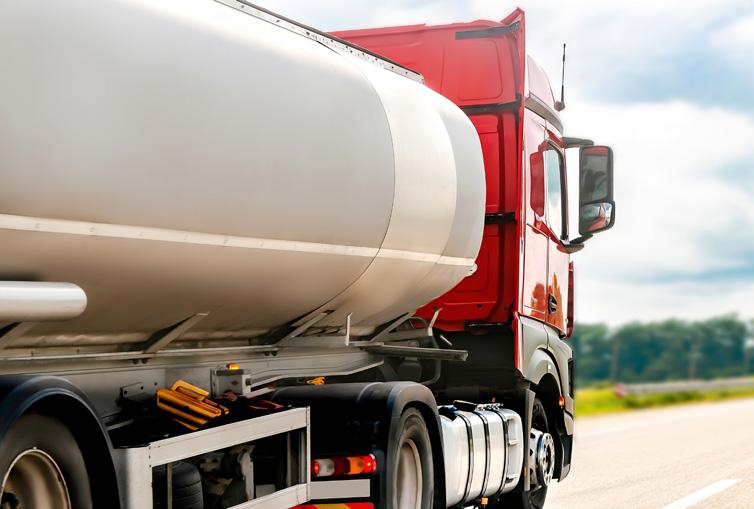
The outcome was a package of measures that centred on halving the fuel excise for three months (cutting prices by about 26.3 cents per litre) and scrapping the heavy vehicle road user charge to ease pressure on freight and supply chains.
The fuel excise reduction, while welcome, did highlight how governments, rightly keen to move quickly to ease pressure, can sometimes ignore the input of industry. MTA Queensland and other industry bodies were quick to point out that the excise reduction should be applied to existing fuel stocks. Not only would this allow the benefit to be passed on immediately to consumers, but it would mean service stations would not have to sell fuel they had already bought at below cost.
The nation’s political leaders also agreed to implement a four-stage National Fuel Security Plan, with the immediate focus on maintaining supply, securing additional fuel imports, managing reserves and encouraging reduced consumption.
The plan outlines escalating interventions if conditions worsen, including targeted controls and potentially the prioritising of fuel for critical services.
READ MORE ON THE NATIONAL FUEL SECURITY PLAN HERE
By April 1, the federal government had passed the Export Finance and Insurance Corporation Amendment (Strategic Reserve) Bill 2026 - designed to enable governmentbacked financing support to help secure the nation’s strategic fuel reserves.
READ MORE ABOUT THAT HERE
On April 2, a further step was disclosed regarding fuel prices, with the federal government announcing an agreement with states and territories that would see them forgo increased GST revenue on fuel sales. Together with the cut to fuel excise, the combined measures are expected to deliver a reduction of around 32 cents per litre at the bowser.
READ THE GST REVENUE ANNOUNCEMENT HERE
On April 3, Chris Bowen, the Minister for Climate Change and Energy announced in Parliament that “more than 55 ships on their way to Australia laden with fuel” and that 3.7 billion litres were expected to arrive during April.
THE OUTCOME WAS A PACKAGE OF MEASURES THAT CENTRED ON HALVING THE FUEL EXCISE FOR THREE MONTHS (CUTTING PRICES BY ABOUT 26.3 CENTS PER LITRE) AND SCRAPPING THE HEAVY VEHICLE ROAD USER CHARGE . . .

As of the time of writing, this was how the broader situation stood, but in the short time between then and publication of this edition of Motor Trader, it is quite likely that the landscape has shifted once again.
To be fair to decision-makers in Australia, the measures being implemented are being shaped by events beyond their direct control. Decisions made on the global stage regarding events in the Persian Gulf and Iran are forcing Australia to respond. As the conflict continues to unfold, governments and industry alike can only prepare for further disruption.
Australia is not alone here, of course. The crisis is a global one and out of the control of almost everyone. Each nation is approaching its potential effects in their own way and at their own speed. The International Energy Agency -which provides data, analysis and policy advice on global energy markets – launched an Energy Crisis Policy Response Tracker to follow what those approaches are and, so far, they are mostly of the light-touch variety – encouraging people to travel less, allowing government employees to work from home or shift to shorter weeks, publish guidance becoming more energy efficient . . . and so on. No doubt, should the crisis continue, this tracker will show more stringent responses being introduced.
For the automotive sector, the implications of the crisis are significant, in the short and long term.
Rising fuel costs may reduce driving to that which is necessary for work, potentially impact servicing and aftermarket spending, and shift consumer behaviour to the new car market and more efficient vehicles.
In Queensland, while the fuel network is holding, the pressure is building. Many
consumers will have noticed that some service stations have run out of diesel for short periods over the past month
While Australia continues, for now, to receive enough fuel, the realities on the ground make things complicated.
“The international environment has had a serious impact on fuel pricing and consumer behaviour. Australia is still receiving its normal supply, however increasing demand is impacting on the availability of fuel to some of our independent service stations,” said Rod Camm, CEO of MTA Queensland.
For many operators, particularly those outside major branded networks, the issue is not whether there is fuel, but whether they can get it when they need it, and at a price they can sustain.
For regional Queensland, where supply chains are more fragile and distances are vast, the risks are even more pronounced. Disruptions to transport routes - the far north of the state is still reeling from the effects of Cyclone Narelle - and uncertain access to supply are combining to create a situation where some service stations face the real prospect of running out of fuel.
“The combination of flooded roads in parts of north Queensland and lack of access to reliable fuel supply for independent regional service stations is creating a real risk of that,” said Mr Camm.
Even worse, the flow-on from stock shortages and/or high wholesale prices means there’s a danger that some service stations may fail altogether. They are, basically, small businesses, and when the product they sell runs out or their costs spike, the impact can be severe.
“Stock is a big issue,” said Tim Kane, Chairman of MTA Queensland’s Service Station and Convenience Store Association of Queensland division (SSCSAQ), which represents operators in the fuel retailing industry. “Some consumers complain about how much more it's costing to fill a tank. Well, we're in the same dilemma,
and there are service stations out there that are struggling to find finances to buy stock and fill tanks.”
This issue saw MTA Queensland move once more to call on the government to support small business service stations on capital requirements.
The price boards at the servo make the operators wince as much as it does those who pull up to the bowser, but while there has been some grumbling of discontent directed at the servo operators, for the most part, the public’s response has been measured, and motorists appear to appreciate that service stations are not the source of the problem but are caught in the middle of a global storm.
“The customer base is actually very good,” said Mr Kane. “You've always got your ‘two percenters’ – those who will whinge about your toilet paper not being thick enough or your windscreen washers not having enough soap in the water –but, generally, the public has been very understanding. They understand that we are the meat in the sandwich with this.”
However, while consumers are showing some solidarity with servo operators, their behaviour is most definitely shifting in response to rising prices. And that shift is both in the small and big decisions – some of which are not always good choices.
For example, panic buying could lead to some unsafe storing of fuel - keeping gallons of a flammable liquid at your home is not a clever idea. Fuel also has a shelf life and after a few months of sitting around it won’t be very healthy for an engine.
For those who are not panic buying and purchasing and storing colossal amounts of fuel, they are going the other way, adopting a more cautious approach to manage sudden price spikes.
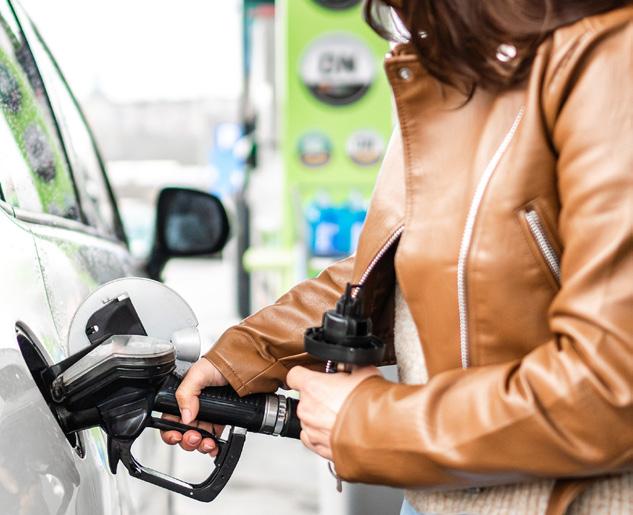
“They are actually topping up instead,” said Mr Kane. “Normally, people will wait until their tanks are near empty and then fill up. What they're doing now is topping up every two or three days . . . They are

“. . . GENERALLY, THE PUBLIC HAS BEEN VERY UNDERSTANDING. THEY UNDERSTAND THAT WE ARE THE MEAT IN THE SANDWICH WITH THIS.”.
trying to stay on top of it and we're finding that they are making smaller purchases more often.”
The ‘when and how much’ decisions of fuel purchasing are on the smaller side of the decision ledger. On a bigger scale is the ‘what vehicle should I buy’ decision.
With diesel and petrol underpinning virtually every supply chain, when prices rise those costs ripple outward, adding to existing cost-of-living pressures.
“We are part of the broader economy. Fuel prices impact on all other prices,” said Mr Camm. “This will mean consumers who are already experiencing cost-of-living pressures will experience more pain. We can expect to see consumers try and reduce expenditure across all parts of the industry, including car purchases and servicing.”
Such a move is already being noted.
According to a national fuel survey of more than 1000 Australians by consumer finance comparison site Savvy, of those in the market and considering a new car,
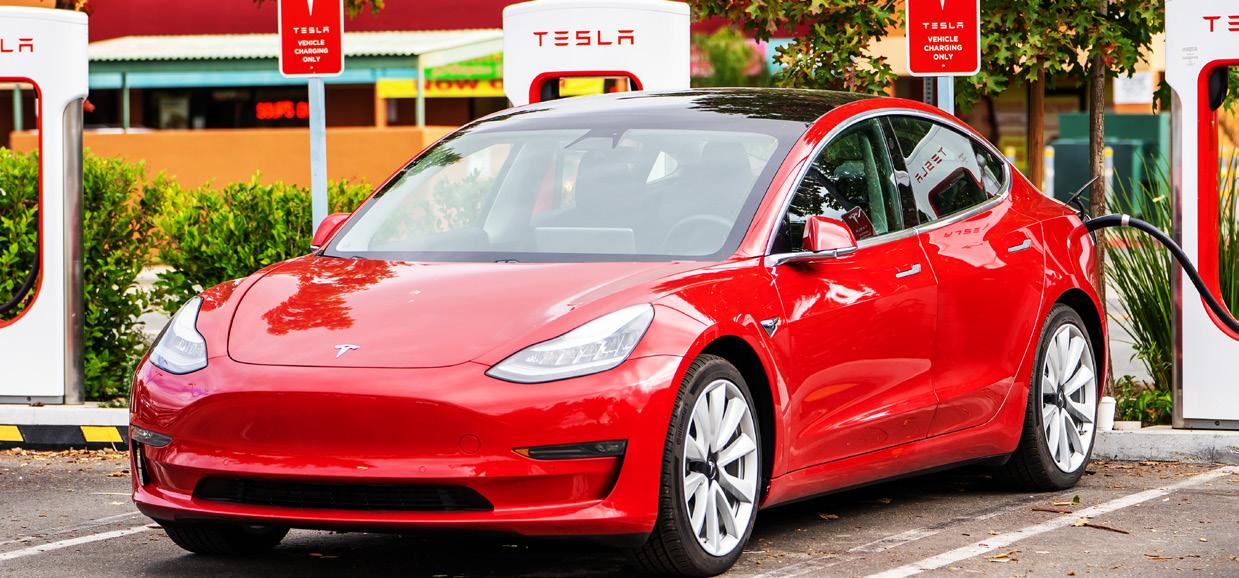
some 78 per cent would look for a more fuel-efficient vehicle. According to data from the Electric Vehicle Council, which reports sales data from Tesla and Polestar, in March those two companies sold a combined 3,645 new vehicles with sales for the month growing 21.1 per cent year-onyear. The EVC also said that second-hand EV sales in March for Pickles were up 60 per cent on February and EV searches on the Pickles website jumped 163 per cent month on month. It has also been reported that Google search data is showing Australians are hunting in record numbers for electric cars online.
The clearest evidence, perhaps, comes from the new vehicle sales VFACTS data released by the Federal Chamber of Automotive Industries (FCAI) at the beginning of April. That data showed a total of 15,839 battery electric vehicles from all sources were sold in March, accounting for 14.6 per cent of total sales. By comparison, battery electric vehicles accounted for 7.5 per cent of sales in March 2025.
It could prove to be that the current crisis will do more for the uptake of electrified vehicles than any government subsidy could do.
For the moment, the focus of the crisis remains on maintaining supply, supporting

operators, and encouraging responsible consumer behaviour. The message to motorists is clear - buy what you need and no more, plan ahead, and avoid adding unnecessary pressure on the system.
MTA Queensland and other industry bodies will be pushing hard for both state and federal governments to support the industry, and the wider community, through the crisis. However, it is quite possible that, should the war continue and the fuel crisis worsen, Australians will once again be asked to pull together in a time of upheaval.
Of course, planning and community solidarity are great, but there is one thing that would make all the difference and bring this crisis to an end.
‘The single most important solution is opening up the Strait of Hormuz,’ said Dr Fatih Birol, the Executive Director of the International Energy Agency in an interview with the ABC in March.
Whatever your politics, and whatever your position on global relationships and power, peace is always preferable to war and, in this case, that would lead to the opening of the Strait and the restoring of the flow of oil shipments and easing of supply constraints.
We’ll hope that happens soon.
As someone once wrote: 'The only thing more expensive than fuel is running out of it.'
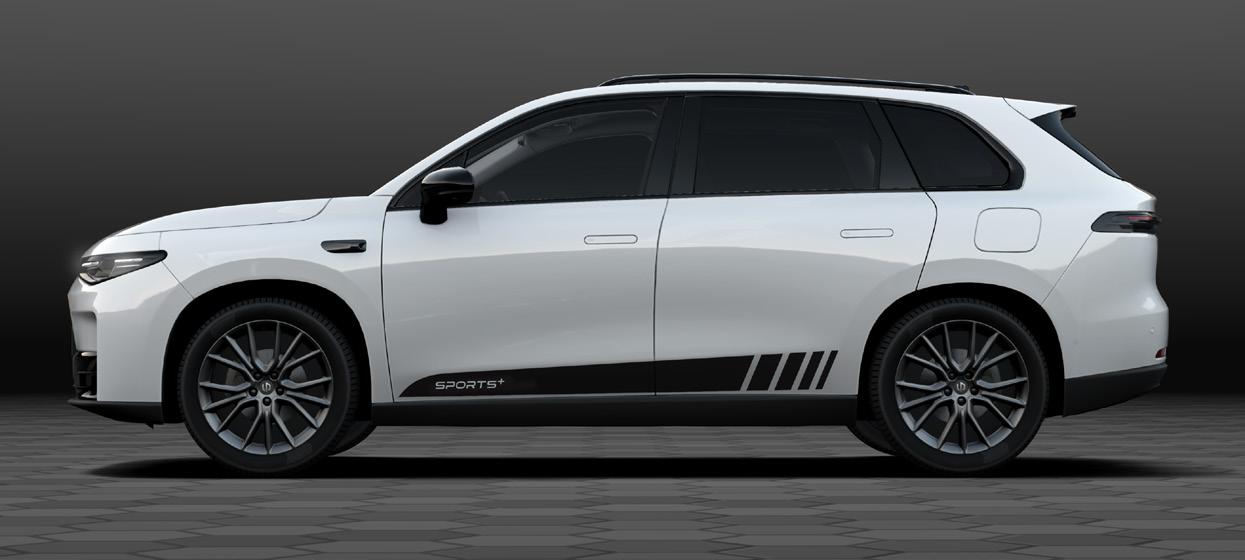
LEAPMOTOR AUSTRALIA HAS announced a high-performance addition to its growing EV range, with the C10 AWD Sports+ Special Edition set to arrive in Australia from this month.
Positioned as a flagship variant of the C10 line-up, the Sports+ Special Edition features a dual-motor, all-wheel-drive system producing 440kW and 760Nm. This enables a 0–100km/h sprint in 4 seconds. The model incorporates an intelligent AWD control system, capable of switching between single and dual-motor operation depending on driving conditions. This allows for improved traction and efficiency across a range of surfaces.
Underpinned by an 800-volt electrical architecture, the C10 Sports+ is equipped with a larger 81.9kWh lithium iron phosphate battery, delivering a claimed driving range of up to 510km (NEDC), or 437km on the WLTP cycle. Fast-charging

capability of up to 180kW allows the battery to be recharged from 30 to 80 per cent in around 22 minutes.
The Sports+ Special Edition introduces unique styling elements, including exclusive badging, side decals and interior touches such as red-stitched cabin and cargo mats.
Equipment includes a 14.6-inch central touchscreen, 10.25-inch digital instrument cluster, panoramic glass roof, wireless charging, a 12-speaker audio system and a full suite of advanced driver assistance systems under Leapmotor’s LEAP Pilot technology.
The model will be offered in two exterior colours – Pearl White and Metallic Black – each paired with contrasting Sports+ detailing and is priced from $53,888 (MSRP).
Unlimited support through our expert team of Workplace Relations Advisors, helping you navigate any staffing issues and ensure you are paying the correct award rates.
Insurance review conducted through our expert Corporate Partner will ensure you have the best cover for your automotive business, at the right price.
Complimentary EFTPOS comparison to ensure you are getting the best deal from your payment terminals, potentially saving money on every transaction.
Complimentary Workplace Health & Safety audit conducted by our experienced industry Corporate Partner to ensure all employer responsibilities are met.
Up-front energy audit to determine the most cost-effective utility provider for your business. Available in select locations.



Exclusive member business pricing on a select range of everyday office supplies, print, furniture and tech accessories.
Discounted professional development and training on a select range of courses. Delivered through MTA Institute (RTO No. 31529), the largest independent provider of automotive apprenticeship and training in Queensland.
Industry representation and advocacy to government on the big issues affecting your business and sector.
Publications and resources that keep you ahead of the competition, including Motor Trader e-Magazine, the Weekly Industry Bulletin, and a self-service Member Portal.
EXPLORE OUR FULL RANGE OF MEMBER BENEFITS HERE.






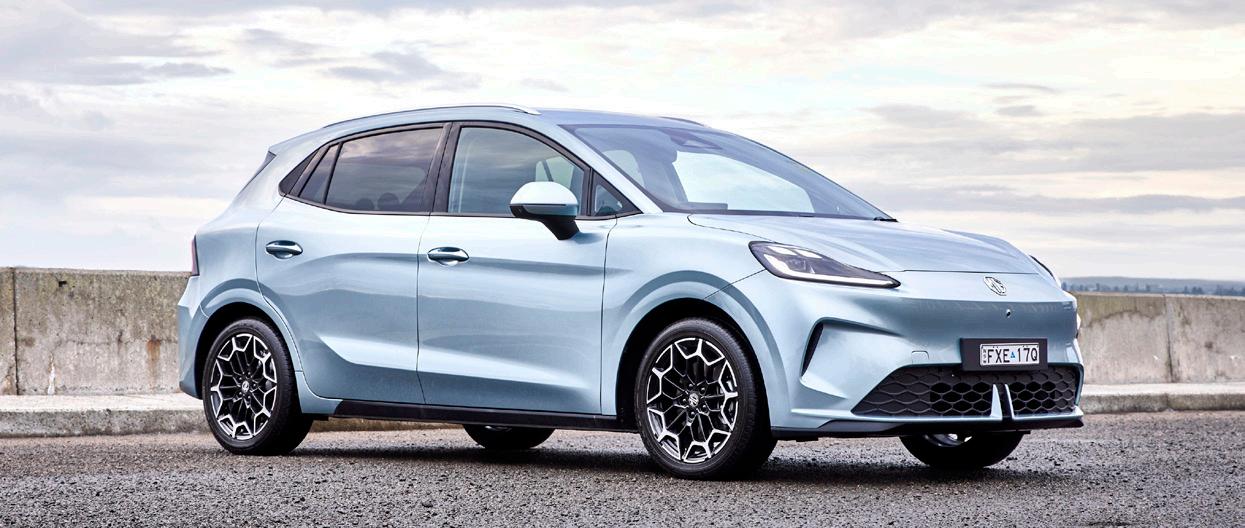
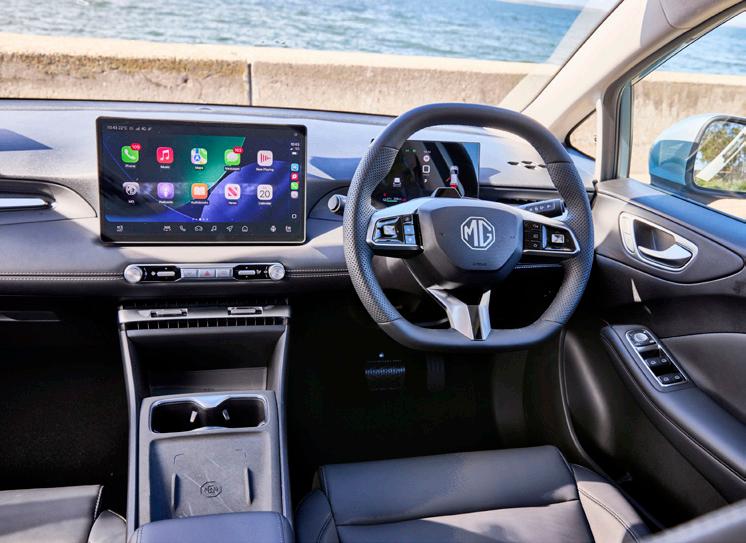
THE NEW MG4 EV Urban has been unveiled for the Australian market.
The Urban will be offered in 43kWh and 54kWh battery configurations and will start from $31,990, positioning it as one of the more accessible EVs on the Australian market.
Fast-charging capability enables a 10 to 80 per cent recharge in approximately 30 minutes using a 150kW DC charger.
Underpinning the MG4 EV Urban is MG’s 6-in-1 electric drive system, a compact front-wheel-drive architecture that integrates multiple components into a single unit. MG says the system reduces weight while improving packaging efficiency, delivering up to 20 per cent more usable interior and luggage space compared with previous configurations.
A high-efficiency heat pump further enhances performance, achieving more than 65 per cent electrical system efficiency.
The Urban features compact dimensions, a spacious
cabin for up to four adults and MG Pilot advanced driver assistance systems.
“The MG4 has been a strong performer in Australia and the UK, showing there’s real demand for practical, affordable EVs, and the MG4 EV Urban builds on this by giving even more local drivers a way into electric mobility,” said Dimitri Andreatidis, Marketing Director at MG Motor Australia. “Given current world events and skyrocketing local fuel prices, we are seeing a new cohort of motivated drivers wanting to explore what an EV could look like in their life.”


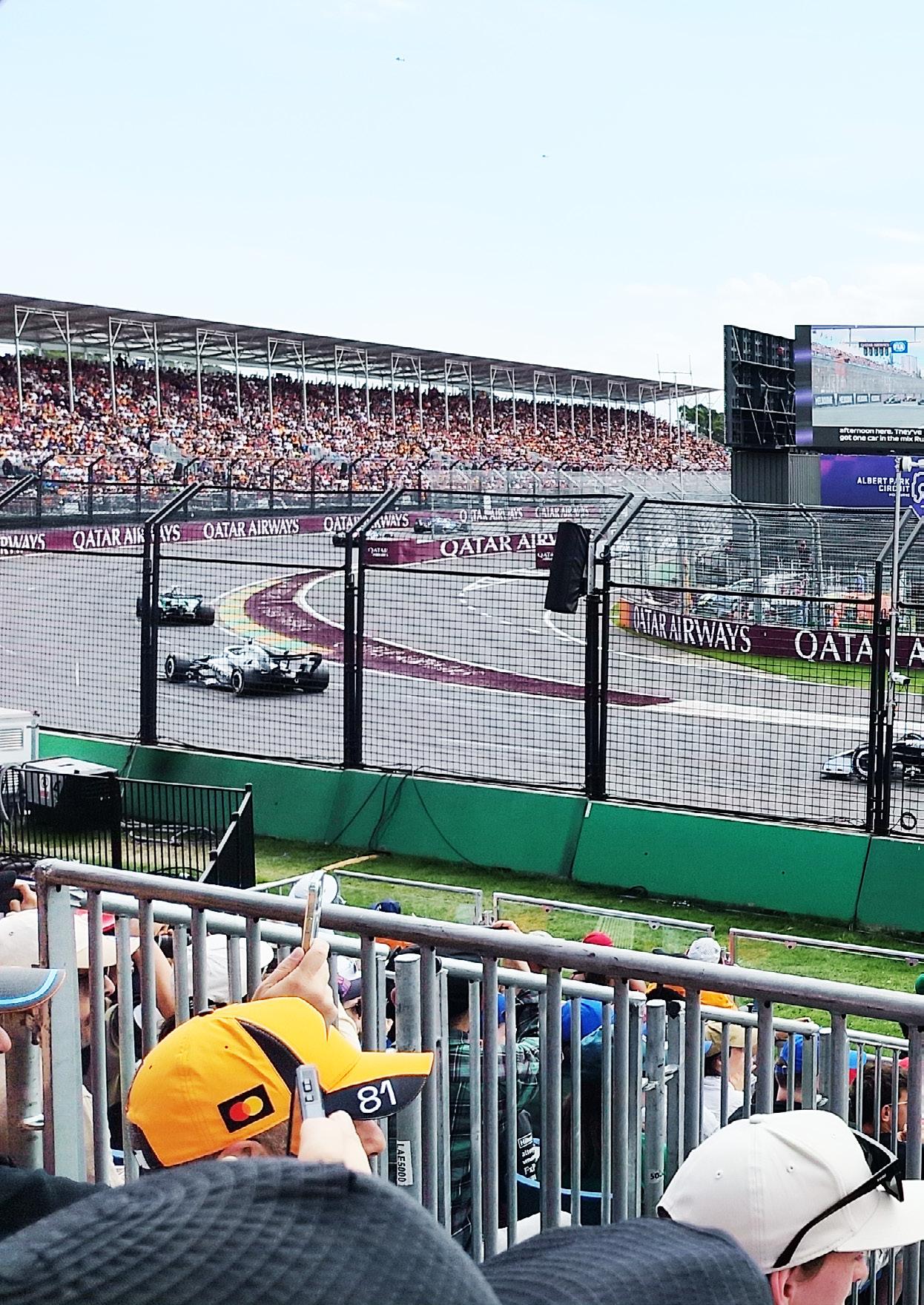
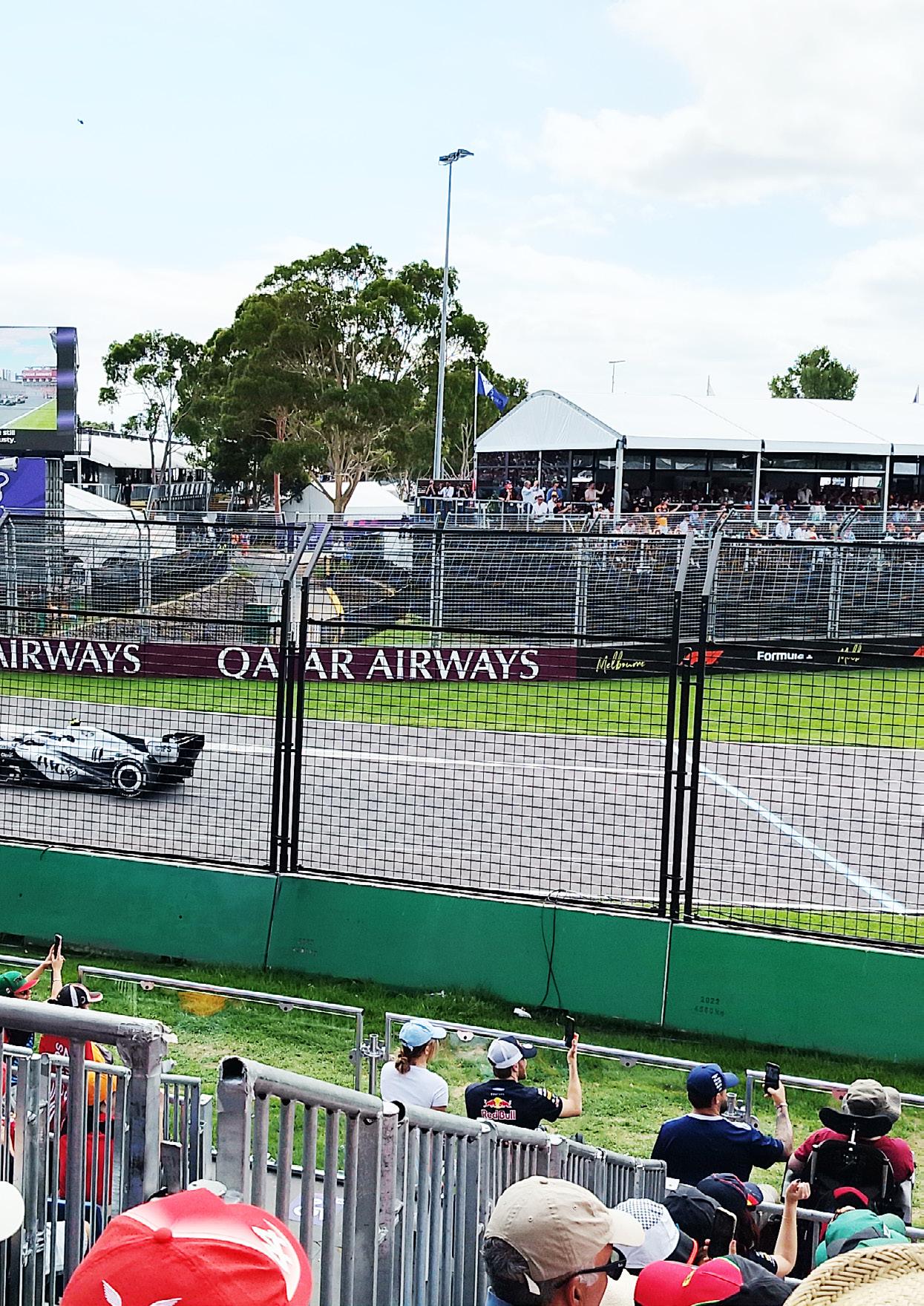
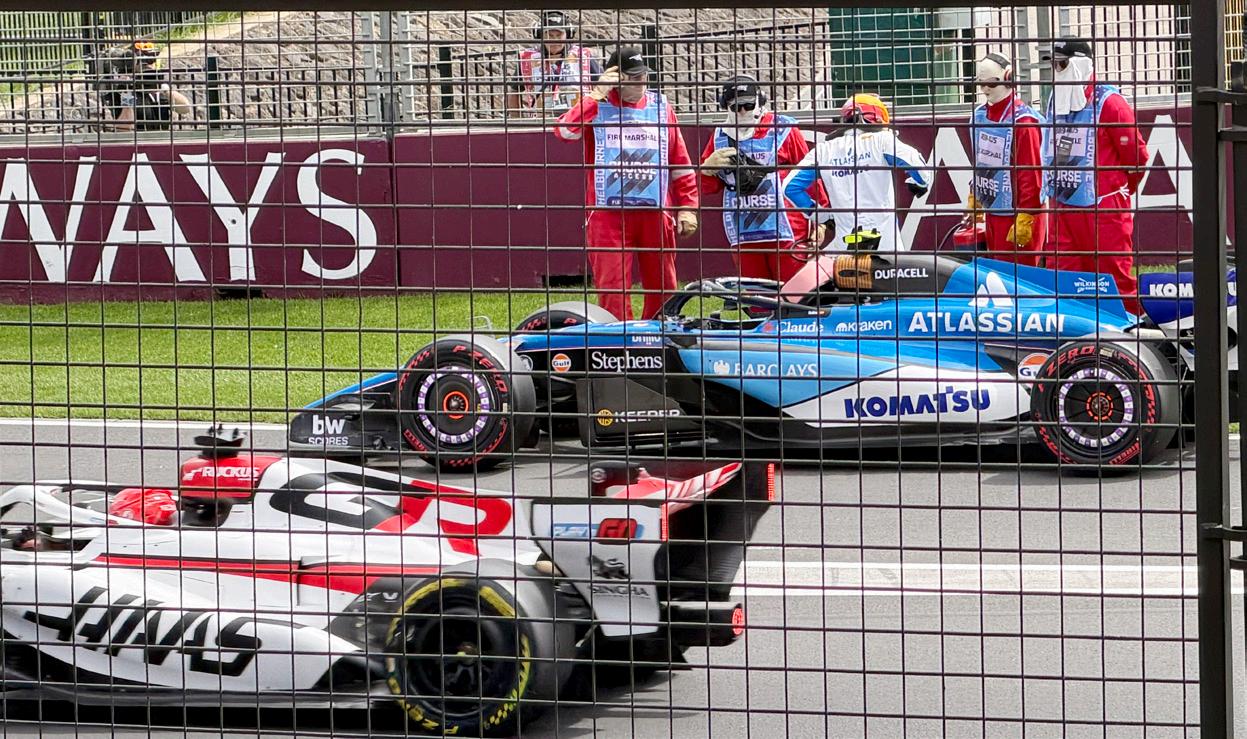
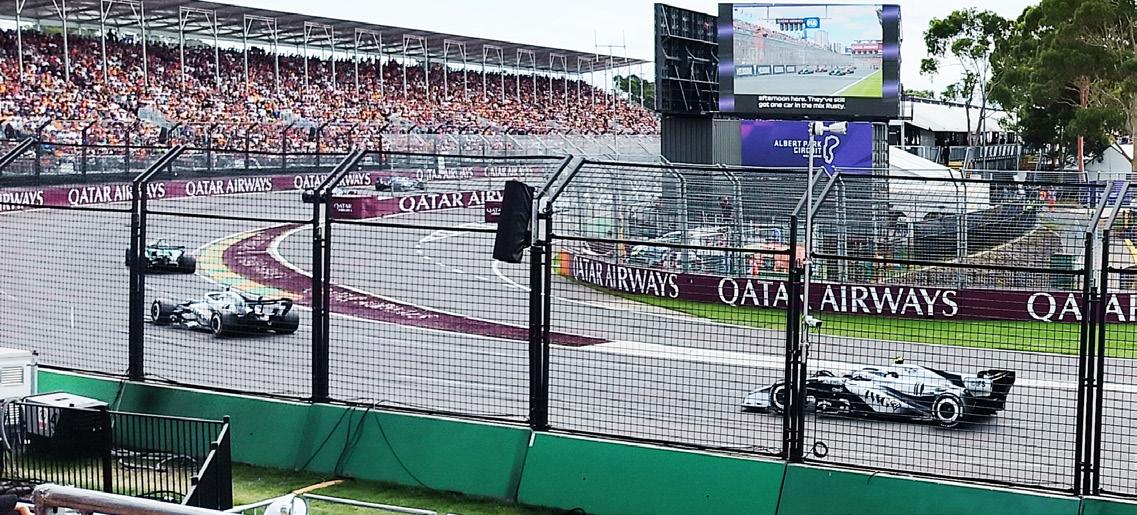
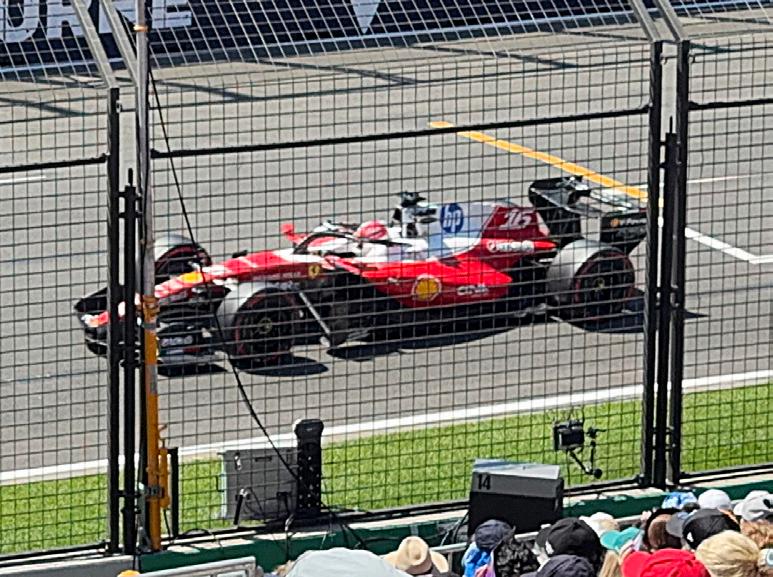
Few events on the motorsport calendar deliver quite like Melbourne’s F1 Grand Prix, and this year’s edition was no exception. Across four action-packed days at Albert Park, the racing was relentless - from Formula 1’s headline drama to some epic Supercars battles - all wrapped in a brilliant festival atmosphere. Jonathan Nash, editor of Motor Trader, was fortunate enough to attend, and it was a rare opportunity to experience firsthand the speed and spectacle of the F1 circus.
THERE ARE SPORTING events that feel big, and then there is Formula 1.
The pinnacle of motorsport, F1 is the category where engineering brilliance, driver skill and relentless innovation converge at the highest level and, over the decades, it has built a rich and compelling history, shaped by legendary drivers, iconic teams and spectacular races and individual moments.
It is this blend of heritage, prestige, speed and performance that ensures an F1 event is high up on any motorsport fan’s bucket list.
This year, together with one of my best mates, I was lucky enough to attend the Australian Grand Prix, held in Melbourne

from March 5 to 8, and it was every bit the experience for which I had hoped.
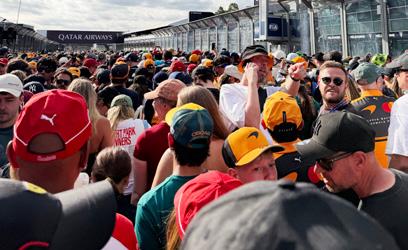
The enormous scale of an F1 event is something to behold. A record four-day crowd of 483,934 packed into the Albert Park circuit venue - with around 140,000 squeezing in on Sunday’s big race day - and Melbourne wholeheartedly embraced the madness of it all.
Organisers ensured things could not have gone easier for visitors. For example, if you had a ticket for the big show, then travelling the tram system to get from the city to Albert Park was free, and there were plenty of hi-vis-clad attendants on hand to assist bemused-looking visitors find their
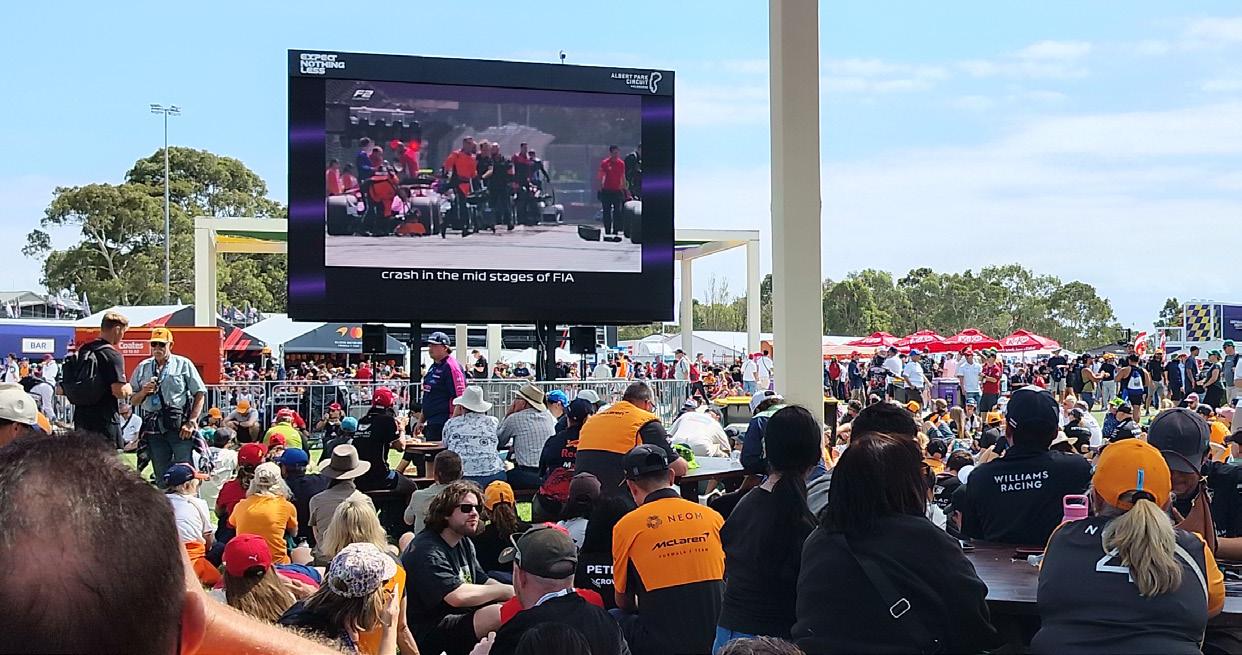
THE ENORMOUS SCALE OF AN F1 EVENT IS SOMETHING TO BEHOLD. A RECORD FOUR-DAY CROWD OF 483,934 PACKED INTO THE ALBERT PARK CIRCUIT VENUE - WITH AROUND 140,000 SQUEEZING IN ON SUNDAY’S BIG RACE DAY . . .
way around. For an event nudging halfa-million attendees across its four days, the movement in and out of the venue felt remarkably smooth, which is perhaps the greatest compliment you can pay any major-event operation.
Inside Albert Park, things were just as well organised and one must give a tip-ofthe-hat here too. Multiple precincts, each with its own flavour, made the place feel like a rolling carnival and there was no danger of going hungry or thirsty or getting bored between races.
There was no danger of missing out on

merchandise either. The decision must have been made at some point to ensure that no matter where you went you were never more than a short wallet-throw away from somewhere that could sell you a branded t-shirt, jacket, hat . . . and so on and so on.
Nothing wrong with that, of course. However, should you be overcome with a desire - as this writer was - to buy some merch, first ensure that your bank manager and wife/husband/partner has given the OK, because the price of some items was credit card-meltingly huge.
But what of the racing? That was, after all, the point of this glorious circus.
Well, that was top notch.
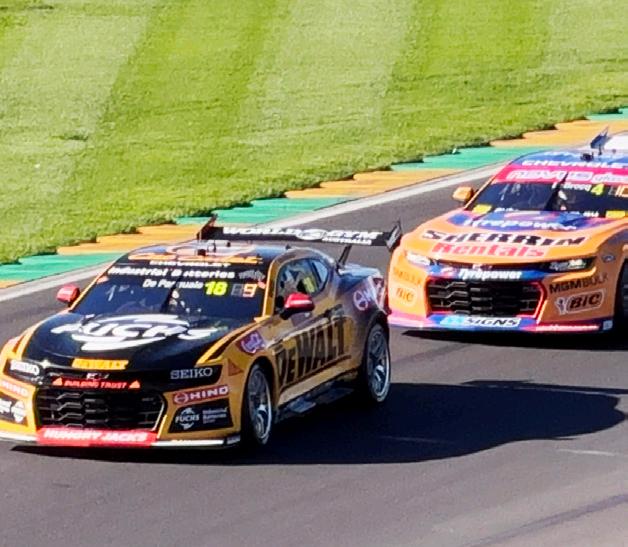
As well as F1, the event hosted a round of the Supercars series, and also featured F2, F3 and the Porsche Carrera Cup. There was always something screaming around the track and it seemed, at least to me, that every driver, conscious of the stage upon which they were performing, gave it something a little extra.
That meant some really awesome racing. F1 might have been the big attraction, but the Supercars races were particularly fun and action packed. With four races (plus practice sessions) held across the four days, Supercars enthusiasts had
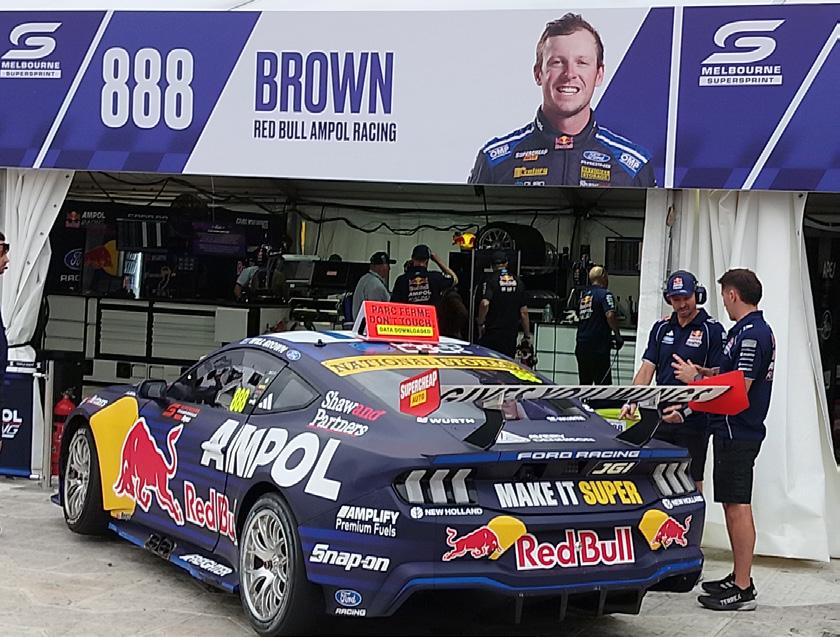
plenty to enjoy. For fans of Brodie Kostecki and the Shell V-Power Racing team (Dick Johnson Racing), it was particularly fun. Kostecki had an absolute blinder – winning three of the four races and driving like an absolute demon. Broc Feeney from the Red Bull Ampol team (Triple Eight) won the other race but what really stood out about the Supercars races was how bustling and chaotic they seemed to be. There was bumping and clashing and accidents and brawling and near misses and the whole thing was spectacularly fun to watch.
As for F1, it was, of course very special. There was much curiosity about how the teams would perform during this, the first race of the season. New cars and new regulations represented, it was said, one of the most substantial changes in the sport’s long history and quite how it would all play out was anyone’s guess.
ATTENDING THE AUSTRALIAN F1 Grand Prix is a magnificent, sun-soaked test of endurance, finances and strategic thinking, so plan accordingly. Here are some tips should you ever find yourself with the chance of enjoying this rather special event:
1: If you have the money, buy tickets high up in the roofed grandstands. This should mean you’ll always be sat in the shade and occasionally be the recipient of a rather lovely, cooling gust of wind!
2: A baseball cap probably won’t cut the mustard when it comes to battling the sun, so invest in a wide-brimmed hat. Your neck will thank you.
3: Ensure your credit card is fully charged and ready for action – and you have permission to use it!
4: Aim to buy food and/or drink when
One thing that was not in question was who the locals were there to support.
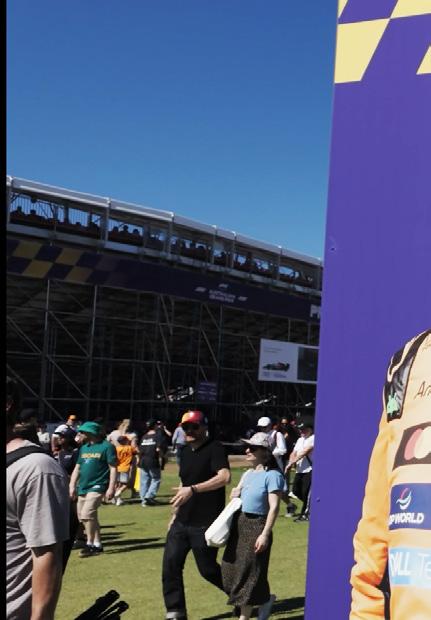
Tens of thousands of fans were decked out either in the papaya orange and black colours of McLaren or the green and gold of the Oscar Piastri brand, and the homegrown superstar - who had come
racing is on. Queues for anything during pauses in the racing action can be spectacularly long.
5: And that goes for using the toilet facilities too. The last thing you want is to be caught in a monstrous queue when you're bursting! And on the subject of using those facilities, they are not exactly luxurious. With half-a-million people attending the event . . . well . . . you get the idea.
6: Get a ‘race radio’ if you can. Listening to live commentary as you’re watching the race is an excellent way to keep up with everything that is going on.
7: When the action is over and you have a few hours spare in the evening, try some of Melbourne’s Indian restaurants. As a curry fanatic, I ate at a different restaurant in the city each night and can attest to the superb - and fiery - quality of the chicken vindaloo at each splendid location!
close to securing the world champion title in 2025 - received thunderous roars of support every time he or his McLaren whipped past or appeared on the giant screens dotted along the track. While the analysts were looking at the Mercedes of George Russell and the young
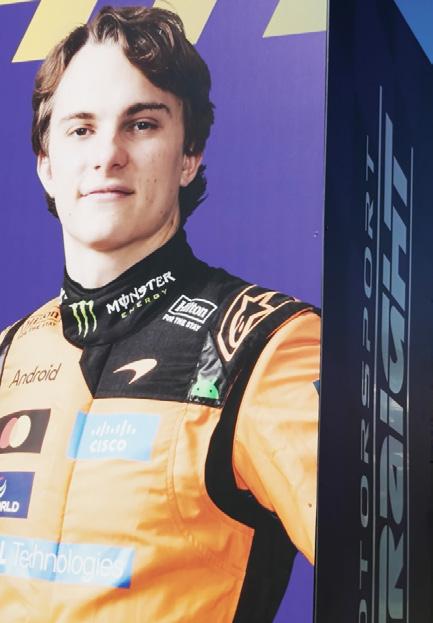
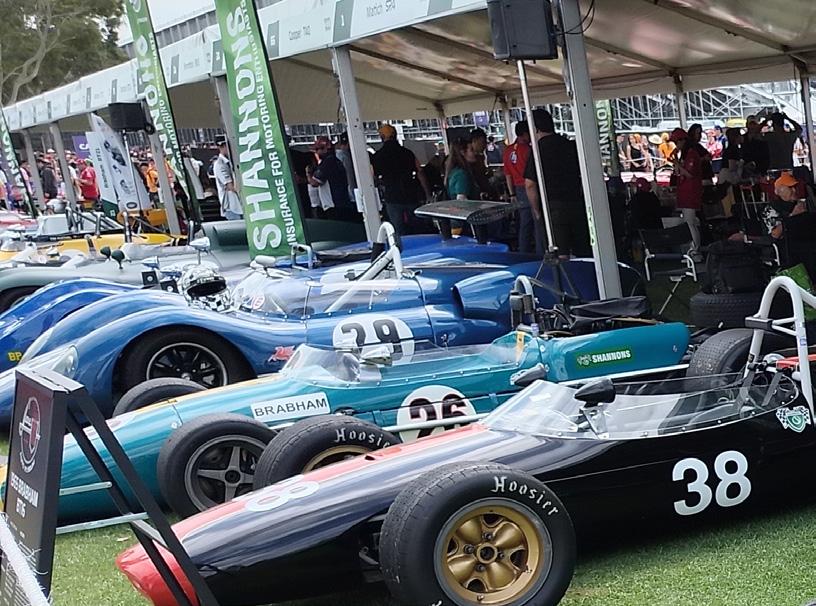
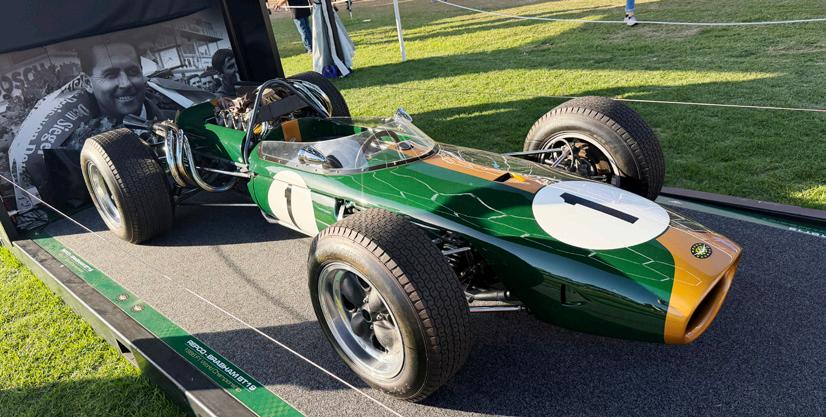
Italian driver Kimi Antonelli as the drivers to beat, Piastri seemed to be riding the waves of support and was good enough to be fastest in the free practice 2 session and to qualify in fifth behind the two Mercedes, the Red Bull Racing car of Isack Hadjar and the Ferrari of Charles Leclerc. Reigning world champion Lando Norris - Piastri’s teammate at McLaren - was sixth and Lewis Hamilton, now in a Ferrari, seventh. On paper, qualifying had set up the
THE 2026 AUSTRALIAN Grand Prix was the first race of F1’s new regulations era, and the changes are substantial. The cars are smaller, narrower and lighter than the previous generation, and the aerodynamics are different too.
Long ground-effect tunnels have gone in favour of flatter floors and revised aero surfaces, while the front and rear wings are now active. On straights, drivers can open the wing elements into a low-drag setting for more speed; in corners, the wings return to a closed, higher-downforce configuration for grip. This active aero system effectively replaces the old-style DRS (Drag Reduction System) of previous cars.
The powertrain change sees F1’s 2026
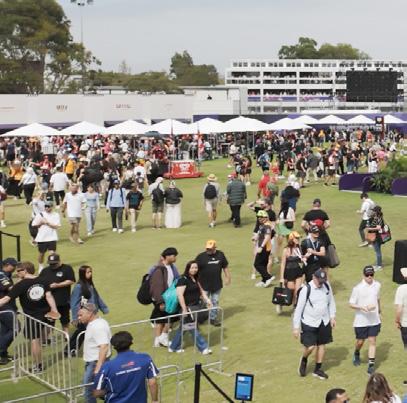
possibility of a fascinating first race of the new car and powertrain era.
What none of us expected was the emotional punch in the gut before the Grand Prix had really begun.
Melbourne clearly wanted one of its own to do something special and there was the sense that Piastri could do just that.
In a sense, he did, although not in the way anyone was hoping for - he crashed on the formation lap just minutes before
cars use a revised hybrid package with roughly a 50-50 split between internalcombustion and electrical power. They also run on advanced sustainable fuels.
The electrical side is far more important than before and means drivers must think much more carefully about when they harvest and when they deploy energy.
A Boost Mode function lets them manually choose how to deploy stored electrical energy when attacking or defending, while an Overtake Mode gives a chasing driver extra electrical potential if they are within one second of the car ahead at a designated point.
In practical terms, the 2026 cars ask drivers to juggle more variables - when to open the aero, when to recharge, when to spend battery energy, and when to use attack modes. The aim is to make the racing closer. Melbourne was the first real glimpse of how that all looks when used in anger.
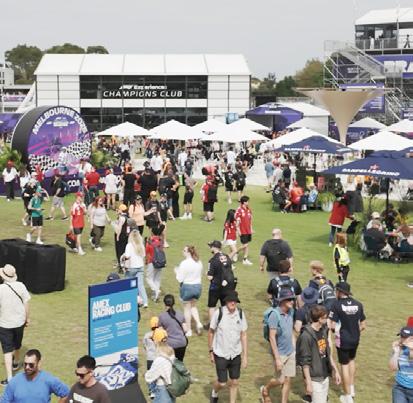
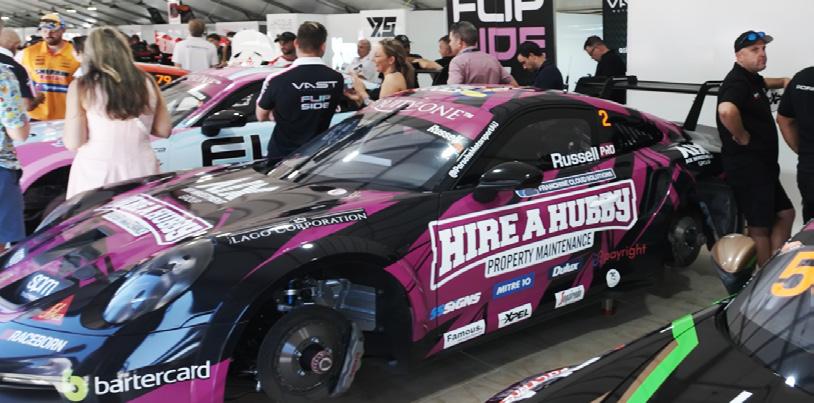
THE RACE ITSELF, HOWEVER, STILL DELIVERED GENUINE ACTION AND EXCITEMENT. THERE WAS PLENTY OF OVERTAKING AND TENSION IN THE OPENING PHASE, WITH FERRARI BRIEFLY TAKING THE FIGHT TO MERCEDES.
the race was due to begin!
The mood changed instantly. It was one of those strange live-sport moments when a crowd that had arrived crackling with anticipation suddenly deflated as one. People were stunned, then disappointed, then resigned. It felt cruel, and because it happened just before the start of the race proper, it somehow felt even more so.
The race itself, however, still delivered genuine action and excitement. There was plenty of overtaking and tension in the opening phase, with Ferrari briefly taking the fight to Mercedes. However, as the race developed, Mercedes’ pace and control became obvious. Russell managed the pressure best and led home Antonelli for a 1-2 Mercedes finish, with Leclerc third and Hamilton fourth. Norris managed fifth in his McLaren.
Hamilton’s performance was one of the more interesting subplots. Starting seventh and finishing fourth in Ferrari colours, he looked increasingly comfortable as the weekend unfolded, and if the Scuderia can find something to bring its cars closer to
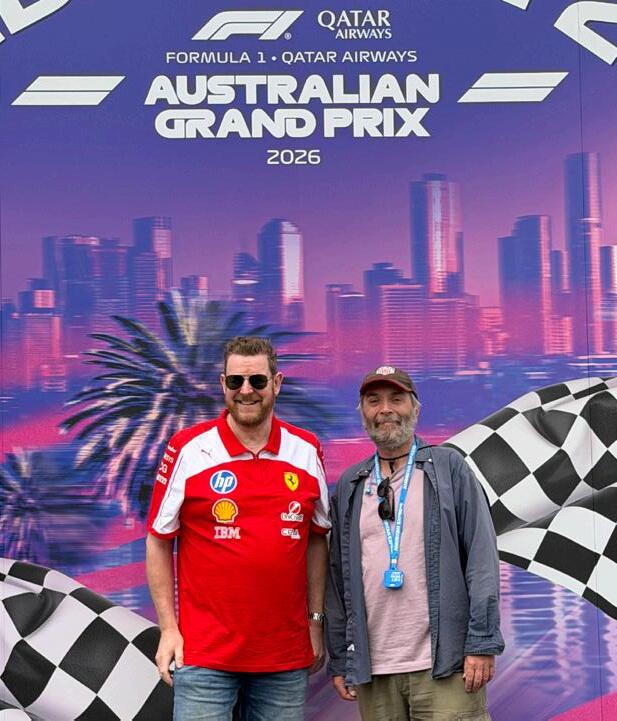
the Mercedes, he might challenge for some honours this year.
Less than 24 hours after the chequered flag had fallen in Melbourne I was headed back to Queensland, somewhat lighter in the wallet but with a smile on my face.
For those motorsport fans who have not yet been to an F1 event, it's worth going if you can. Someone once wrote, 'Formula 1 is not just a sport, it’s theatre at 200 miles an hour,' and that is sort of true - the racing is outstanding, the cars amazing, the drama compelling, the history of the teams captivating, and it is all packaged and organised with precision.
It's quite an experience and one that is, I suspect, tough to beat.

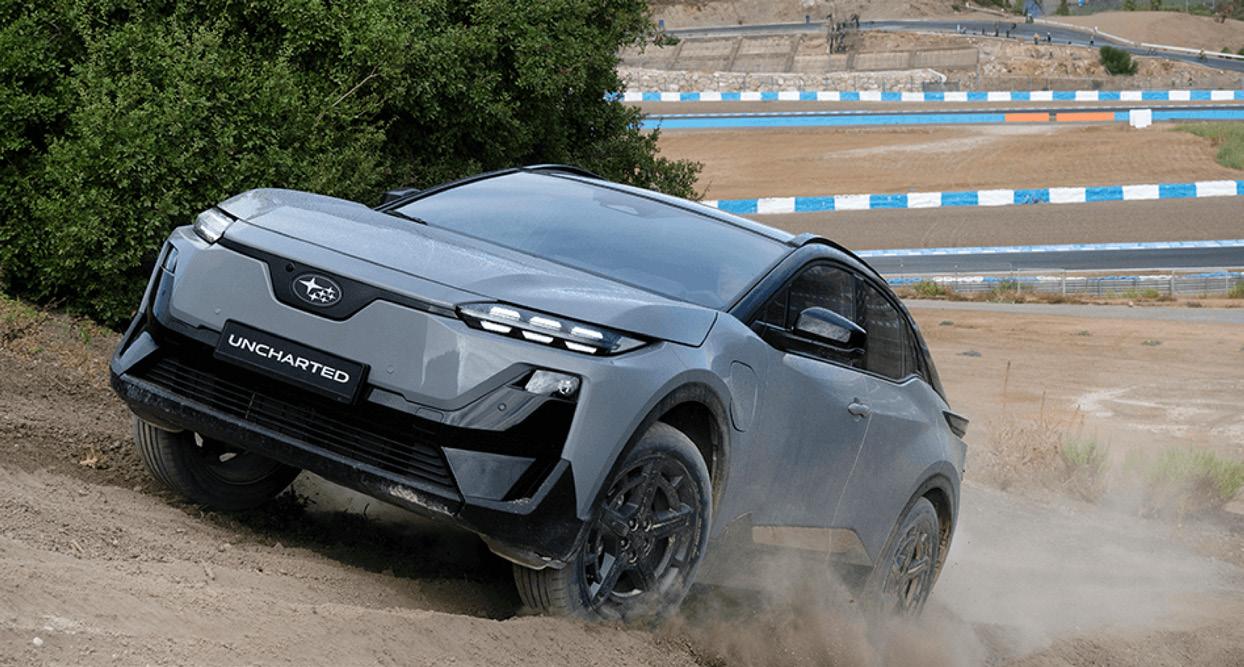
SUBARU AUSTRALIA HAS revealed its all-new Uncharted Sport Electric Vehicle (SEV) ahead of a mid-2026 Australian launch.
Power for the Uncharted comes from a dual-motor setup producing 252kW, driving all four wheels through Subaru’s Symmetrical All-Wheel Drive system. The result is an estimated 0–100km/h time of around five seconds.
A 74.7kWh battery provides a claimed driving range of up to 522km, while DC fast charging at up to 150kW allows a 10 to 80 per cent recharge in approximately 30 minutes. There’s 22kW three-phase AC charging availability, while vehicle-to-load (V2L) capability enables the Uncharted to power external devices.
The Uncharted features 211mm of ground clearance and a suite of off-road technologies including X-Mode and Downhill Assist Control, reinforcing its ability to handle varied terrain.
Visually, the Uncharted adopts a sporty
fastback silhouette with a sloping roofline, wide stance and 20-inch alloy wheels, complemented by bold LED lighting. Inside, the cabin is centred around a 14-inch touchscreen with wireless smartphone connectivity and dual wireless charging, while retaining physical controls for key functions.
Safety features include Subaru Safety Sense and Vision Assist systems including blind-spot monitoring, a 360-degree camera and driver monitoring technology.
The Uncharted joins the Solterra and upcoming Trailseeker as part of Subaru’s growing electric SUV family.
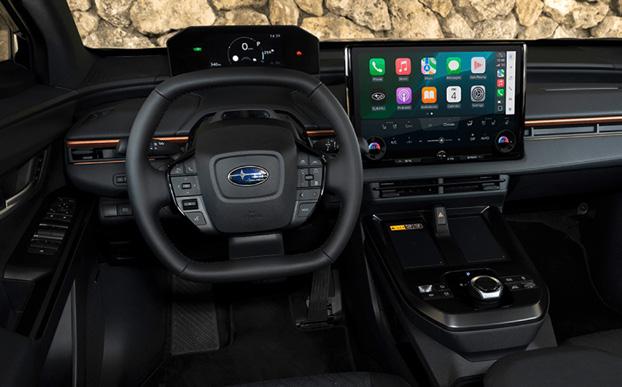
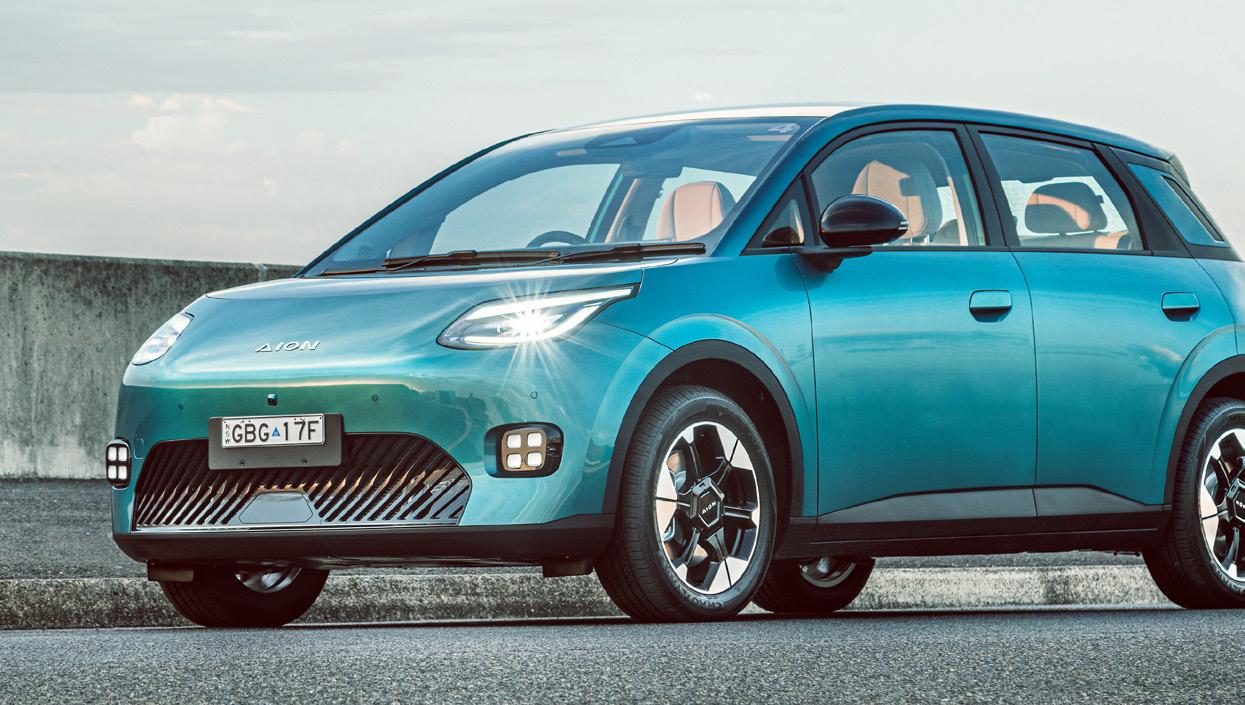
GAC AUSTRALIA HAS confirmed local specs and pricing for its latest compact electric vehicle (EV) - the new AION UT - positioning it as a valuefocused contender in Australia’s growing EV market.

The AION UT will be offered in two grades - Premium and Luxury - with introductory drive-away pricing set at $30,990 and $35,990 respectively.
Power comes from a 60kWh lithium iron phosphate battery delivering up to 430km of WLTP driving range. The front-wheeldrive system produces 150kW and 210Nm, enabling a 0 – 100km/h time of 7.3 seconds. GAC says fast charging from 30 to 80 per cent can be achieved in under 24 minutes.

The AION UT is aimed at the urban market, and has a 2,750mm. Boot capacity stands at 321 litres, expanding to 689 litres with the rear seats folded.
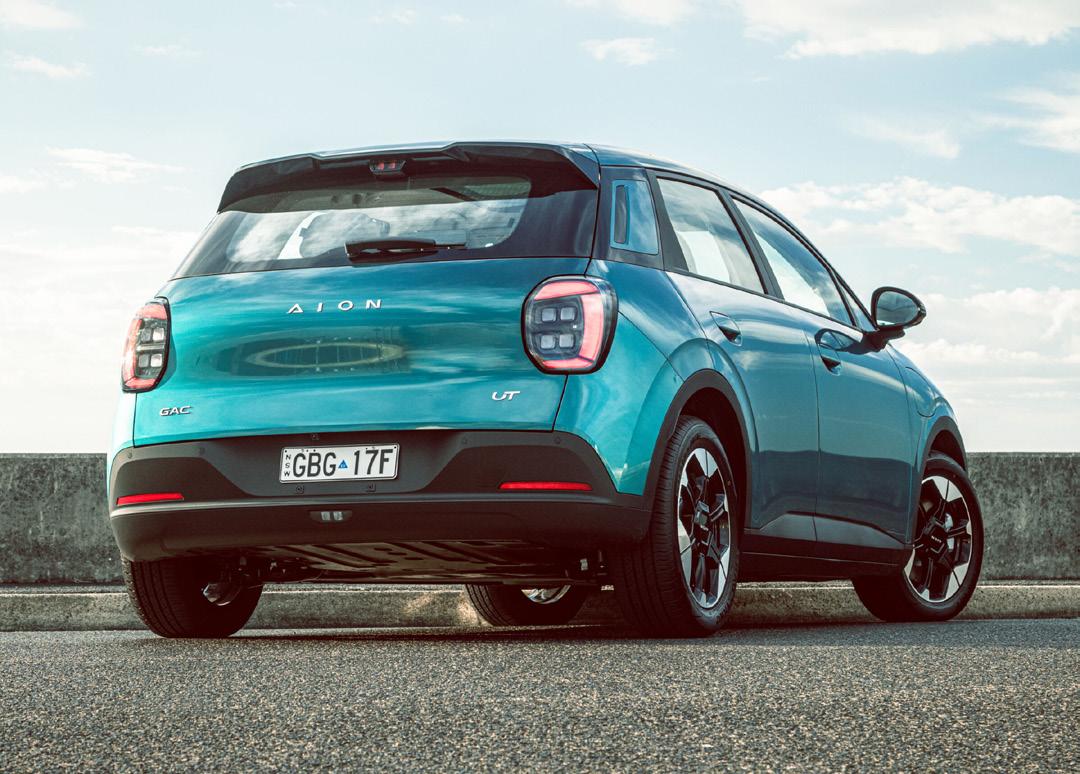
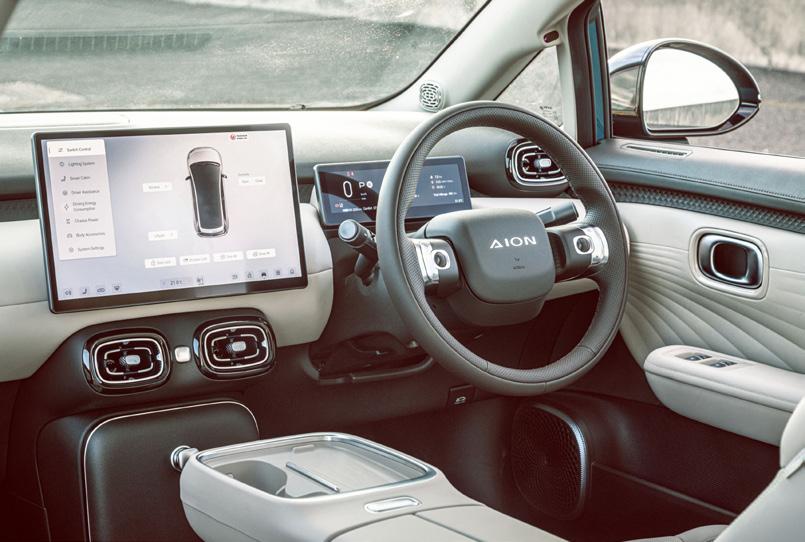
The hatch features a sleek, modern aesthetic with a wide range of customisation options. Inside, the vehicle is equipped with an 8.8-inch digital driver display and a 14.6-inch infotainment screen, supported by wireless Apple CarPlay and Android Auto. The Luxury trim model includes a powered tailgate, panoramic sunroof with electric sunshade, and wireless phone charging.
Technology is a key focus, with a mobile app allowing owners to remotely monitor vehicle status control climate settings and locate the car. A full voice control system and proximity-based automatic locking functionality add further convenience. Safety is comprehensive, with Level
2 advanced driver assistance systems standard across both variants. Features include adaptive cruise control, lane keeping assistance, blind spot monitoring and rear cross-traffic alert. Notably, the AION UT introduces reverse autonomous emergency braking, alongside detection for pedestrians and motorcyclists.
Backed by an eight-year unlimited kilometre warranty, the AION UT shapes as a compelling new entrant in Australia’s EV market.
The pulse of performance was heard in Brisbane in March at the Performance Pulse Expo 2026. More than a showcase of high-powered machinery, the event was a meeting point for industry professionals, car enthusiasts, apprentices and families alike - each drawn by a shared passion for all things automotive.
WORDS LARA WILDE | PHOTOS: COURTESY OF CHRIS MORRIS
ON SATURDAY, 7TH of March, Brisbane played host to one of the most energetic gatherings of automotive culture and industry seen in Queensland in recent years, with the Performance Pulse Expo - presented by Growl Racing - drawing an impressive 19,000 attendees through the gates of the Brisbane Showground.
Among those visitors were many families and young enthusiasts, underscoring the powerful role events like this play in inspiring the next generation of
“WE WERE WORRIED THAT THE WEATHER MIGHT KEEP THE CROWDS AWAY, BUT THE SUPPORT WE HAVE FROM INDUSTRY IS UNMATCHED AND WE ARE PROUD TO WORK SO CLOSELY WITH EXHIBITORS TO SHOWCASE THE VERY BEST.”

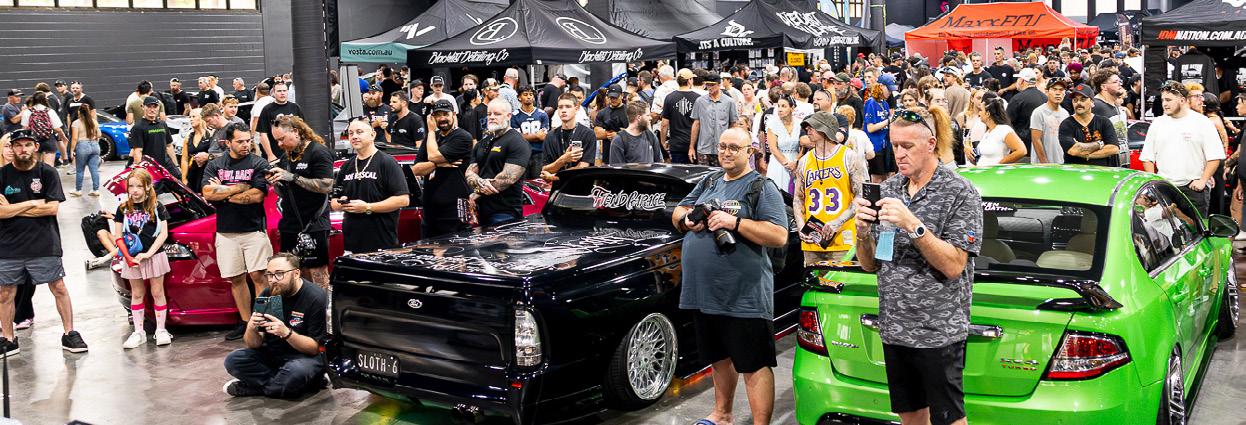

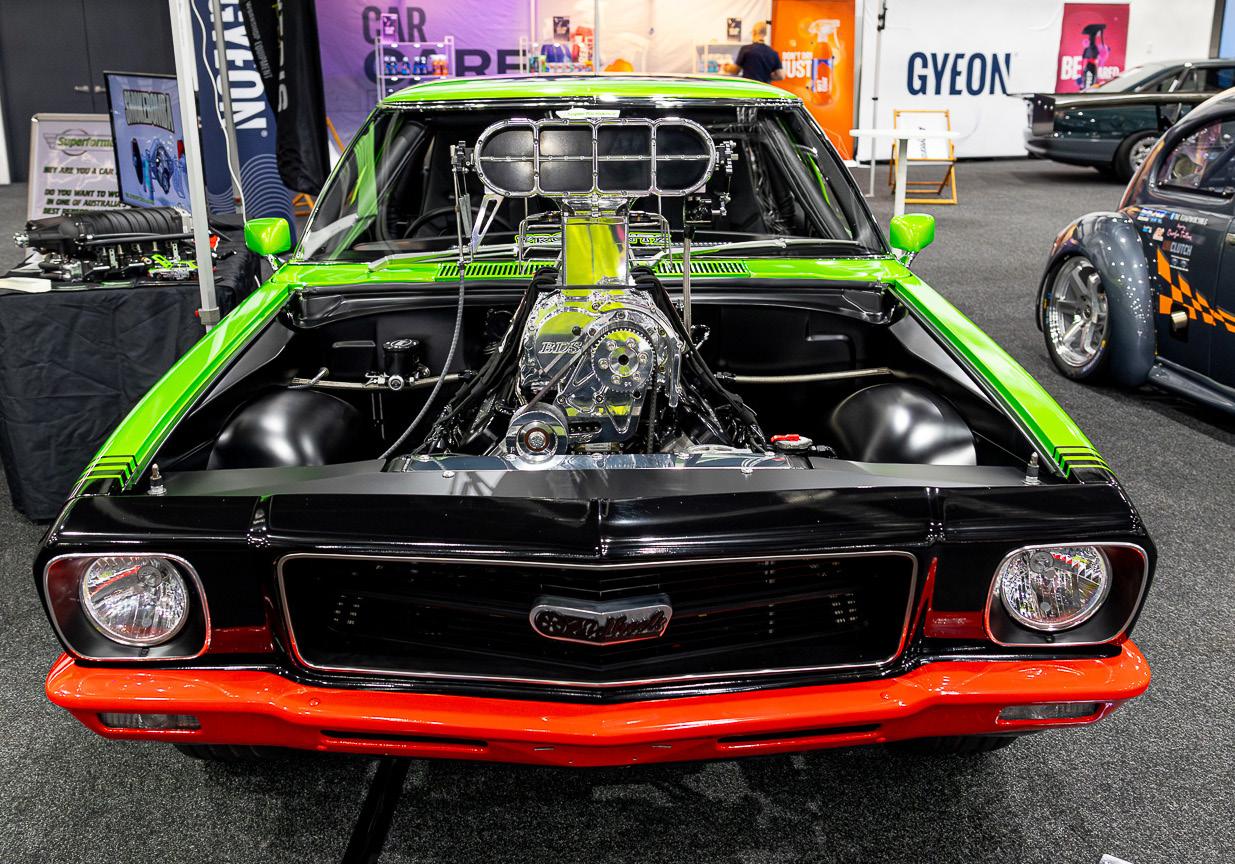
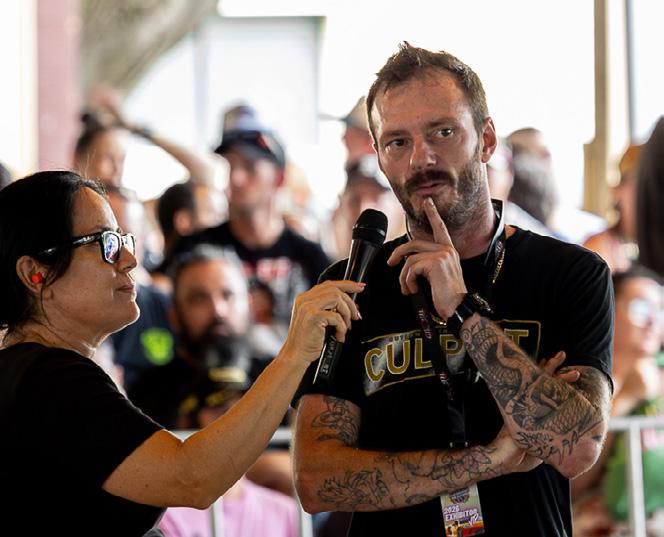
showcase the very best,” said event promoter Chris Morris.
For the automotive sector, the event represented more than a spectacular day of horsepower and entertainment. It was an example of how enthusiast culture, trade expertise and business opportunity can intersect to strengthen the broader automotive ecosystem.
From the hotly contested Moustache and Mullet competition, through to the Dyno display – at which 2,284hp was put out of a turbo 6-cylinder Barra – every aspect of the Australian automotive culture was on display.

automotive professionals and customers.
“We were worried that the weather might keep the crowds away, but the support we have from industry is unmatched and we are proud to work so closely with exhibitors to
More than 80 exhibitors, representing a wide cross-section of the automotive and performance industries, took part in the expo. From specialist workshops and performance parts suppliers to tool manufacturers and automotive service providers, the exhibitor lineup reflected the depth and diversity of the sector.
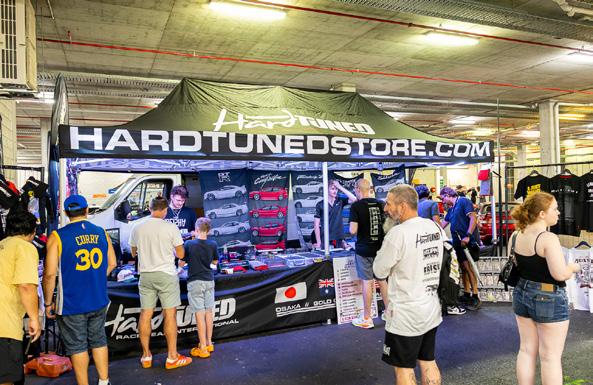
For many businesses, the expo provided a rare opportunity to engage directly with their end users. In a world where so much commerce now takes place online, the ability to speak face-to-face with enthusiasts, explain products, demonstrate technology and answer technical questions remains invaluable.
Visitors travelled significant distances to attend, with enthusiasts making the journey from Cairns, Melbourne and Sydney. That interstate draw demonstrates both the national interest in Australia’s performance automotive scene and Brisbane’s growing role as a hub for industry gatherings. For exhibitors, that reach translated into valuable exposure beyond the local market.
A major highlight of the expo was the sheer scale and diversity of the machinery on display. More than 250 vehicles filled the venue, each representing a different facet of automotive passion and expertise. Race cars from a variety of disciplines
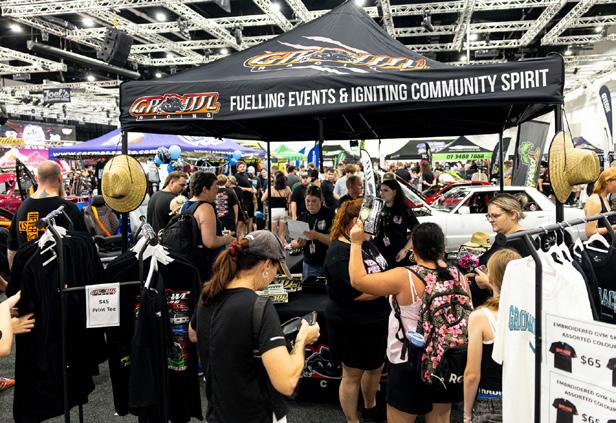
demonstrated the technological edge of motorsport engineering. Drift cars, built for spectacle and precision driving, illustrated craftsmanship and mechanical innovation, while elite show cars provided a glimpse into the artistry and attention to detail that define Australia’s world-class custom car scene. Collectively, the vehicles served as a rolling showcase of the skills and services that underpin the automotive trade. Beyond the static displays and exhibitor stands, the expo delivered a
A MAJOR HIGHLIGHT OF THE EXPO WAS THE SHEER SCALE AND DIVERSITY OF THE MACHINERY ON DISPLAY. MORE THAN 250 VEHICLES FILLED THE VENUE, EACH REPRESENTING A DIFFERENT FACET OF AUTOMOTIVE PASSION AND EXPERTISE.
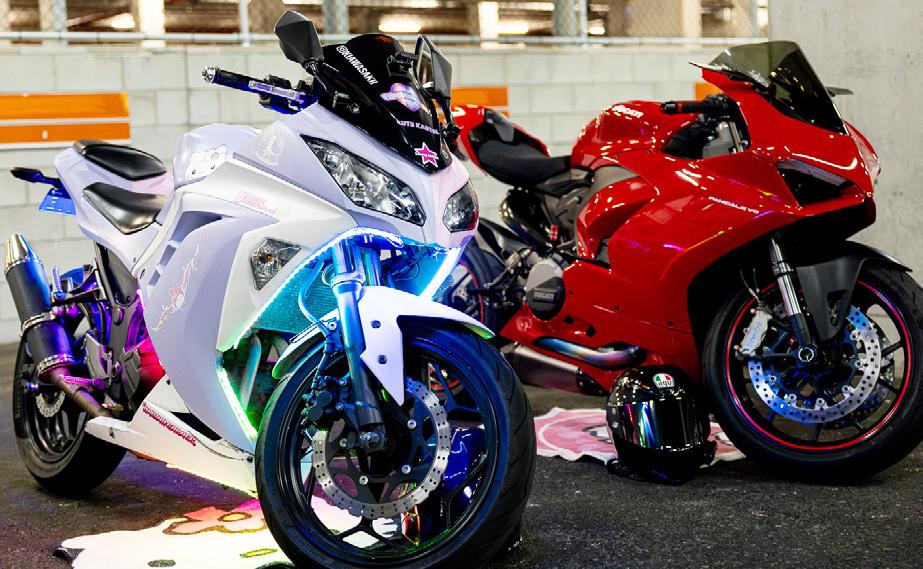
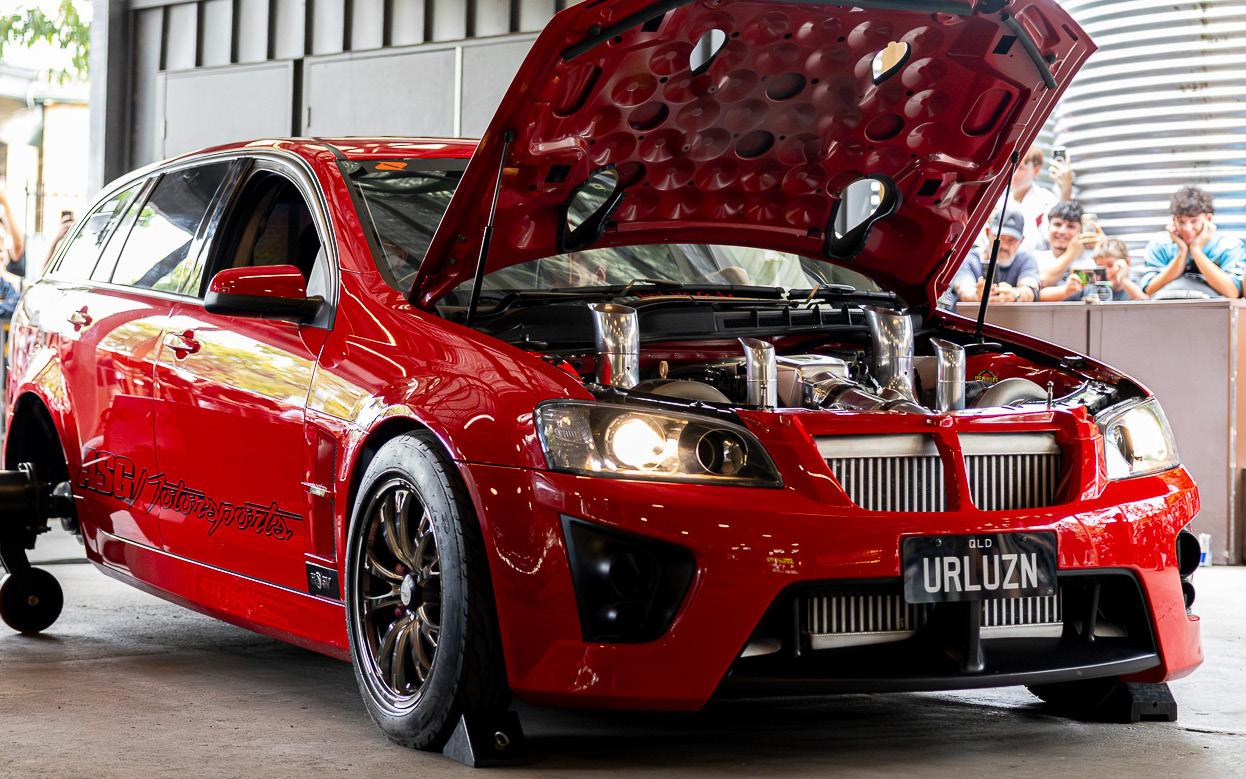
full day of high-energy demonstrations that kept crowds engaged from start to finish. Freestyle motocross riders launched high above the arena in gravity-defying performances, while burnout demonstrations delivered the thunder of high-revving engines and clouds of tyre smoke that have become synonymous with Australia’s performance culture. While these spectacles provide entertainment, they also showcase the extraordinary mechanical preparation
and engineering that underpin highperformance machines. Every stunt rider and burnout competitor relies on carefully built equipment, precision tuning and robust safety systems, areas where skilled automotive professionals play a vital role.
For the thousands of young people in attendance, these displays offered an unforgettable introduction to the excitement of automotive technology. For the industry, they serve as an important reminder that today’s spectators may become tomorrow’s apprentices, technicians or engineers.
Perhaps the most significant outcome of the Performance Pulse Expo lies in its ability to bring people together. Automotive enthusiasts, industry professionals, suppliers and businesses all shared the same space, creating opportunities for collaboration that simply do not occur in day-to-day business operations.
Trade shows have long played a vital role in the growth of automotive industries around the world. Internationally, events such as the SEMA Show in Las Vegas and

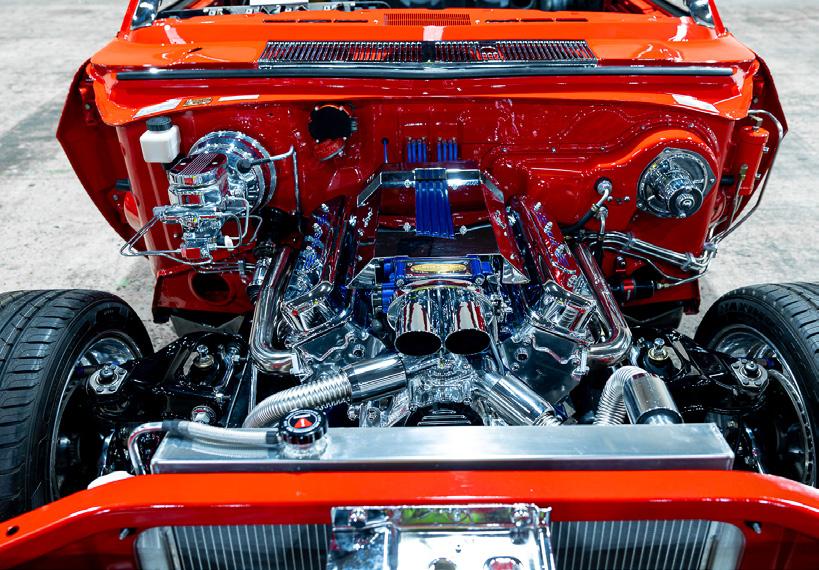
the Performance Racing Industry (PRI) Trade Show demonstrate how powerful these gatherings can be in driving industry innovation and commercial growth. While the Performance Pulse Expo operates on a smaller scale, the enthusiasm seen in Brisbane suggests there is strong appetite for events that bring together Australia’s performance automotive community.
Remarkably, the event was delivered by Chris Morris and his wife Amanda and a core team of just 10 people. Pulling together an expo of this scale, with
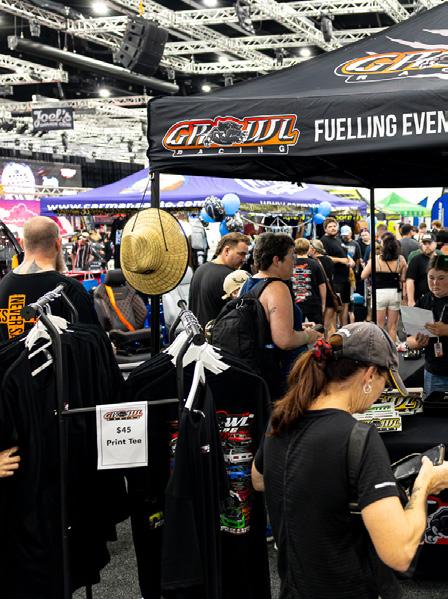
WITH 19,000 PEOPLE SHARING A PASSION FOR CARS UNDER ONE ROOF, THE PERFORMANCE PULSE EXPO
PROVIDED A VIVID REMINDER THAT THE AUTOMOTIVE INDUSTRY REMAINS A VIBRANT, INNOVATIVE AND DEEPLY CONNECTED COMMUNITY.
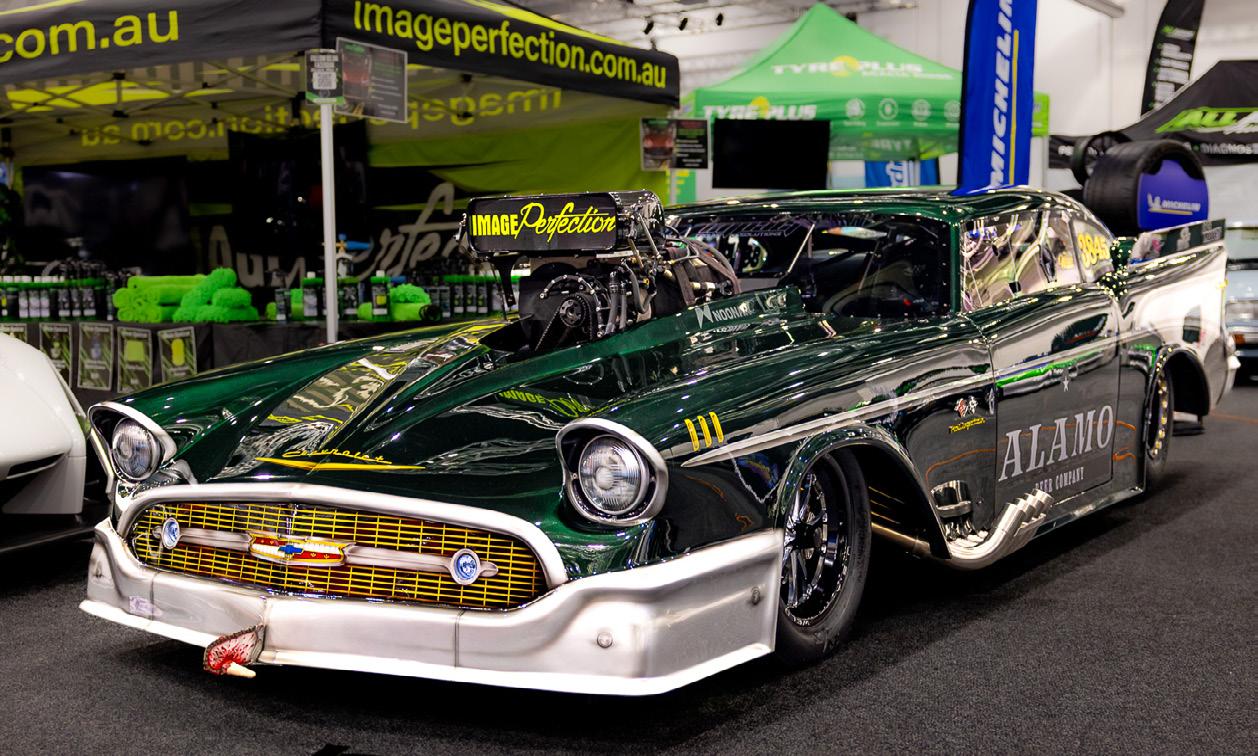
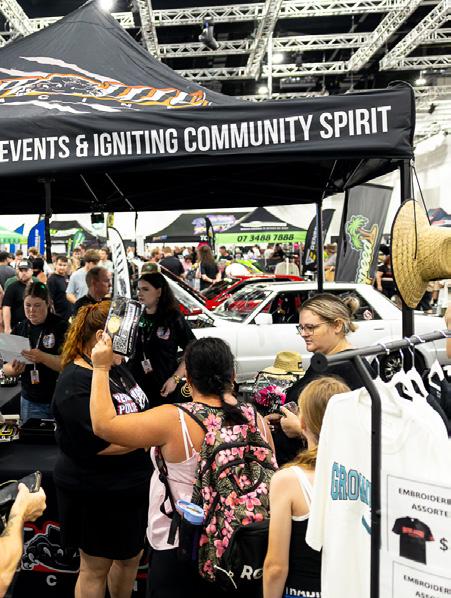
thousands of attendees, hundreds of vehicles and dozens of exhibitors, is a significant logistical undertaking.
Chris Morris is obviously proud of his close-knit team.
“With less than a dozen core team members, we rely on plenty of volunteers and industry stakeholders such as sponsors to pull together the promotions in the lead up to the event, the bump in, a huge day of exhibits and demonstrations, and the smoothly orchestrated bump out; all without incident,” he said.
By bringing together businesses, competitors, enthusiasts and spectators, the event team created a platform where everyone involved in the automotive world could share their passion. As well as offering exhibitors the chance to showcase their craftsmanship, demonstrate their latest tools and technology, and build relationships with both customers and industry peers, these events provide a broader service. In an era where the industry faces ongoing challenges in attracting skilled workers, they play a vital role in promoting career pathways. Young attendees who see the creativity, technology and excitement involved in building performance vehicles may be inspired to pursue apprenticeships and technical training within the sector.
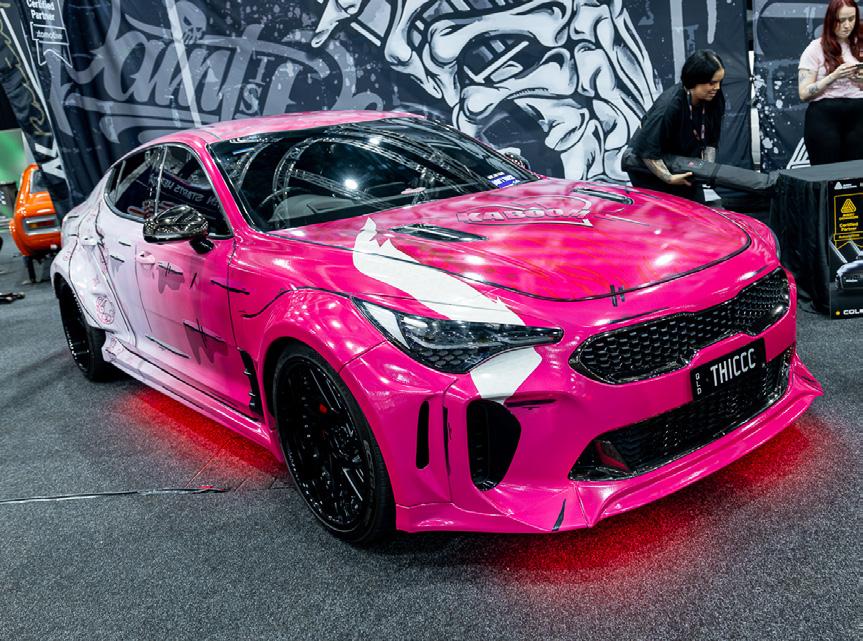
response to the Performance Pulse Expo suggests demand for automotive industry events remains strong. As Queensland’s automotive sector - and the industry more widely - continues to evolve, gatherings like this will play an increasingly important role in connecting businesses with their customers, their communities, and each other.
With 19,000 people sharing a passion for cars under one roof, the Performance Pulse Expo provided a vivid reminder that the automotive industry remains a vibrant, innovative and deeply connected community.
“Amanda and I feel so grateful for all the support and amazing turnout of people on the day,” said Chris. “We had a vision three years ago to put on a show for all motoring enthusiasts and to support the performance industry, giving them a platform to grow their business and showcase what they do to in front of the general public. We are looking forward to seeing what the future holds.”
If the energy seen in Brisbane is any indication, the future of Australia’s automotive culture, and the businesses that support it, looks very bright indeed.
The 2027 Performance Pulse expo is already booked in for March 6th next year.
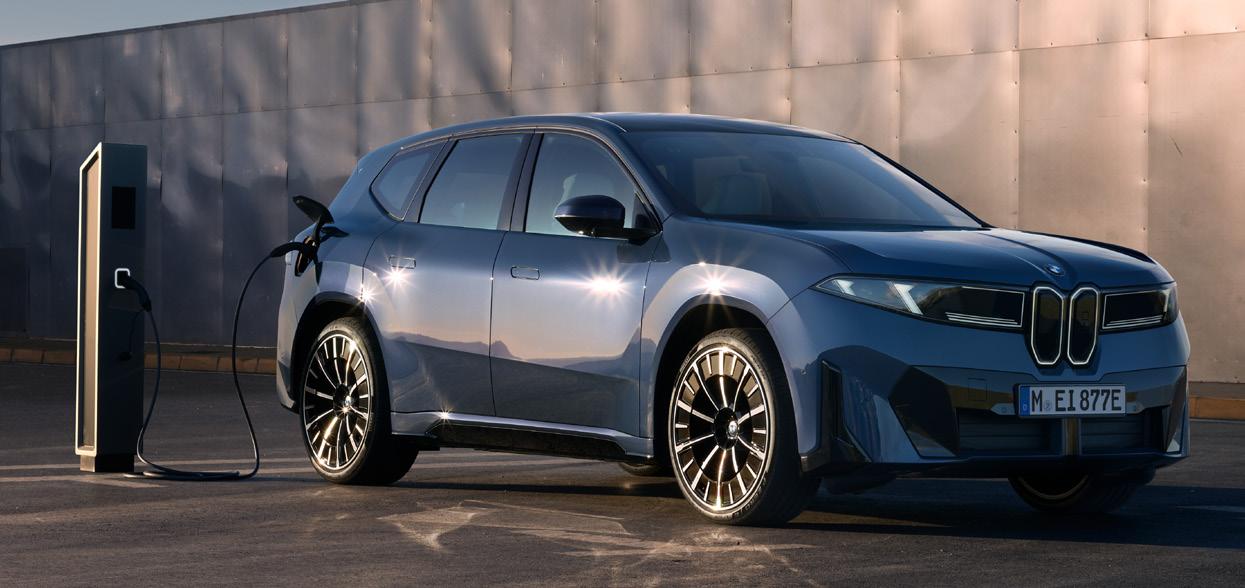
BMW GROUP HAS outlined the next phase of its electrification strategy, confirming Australian details for the all-new iX3 electric SUV while also unveiling the fully electric i3 sedan as part of its next-generation Neue Klasse line-up.
Leading the charge is the iX3 50 xDrive, set to arrive in Australia in mid-2026 priced from $109,900. Built on the Neue Klasse platform, the iX3 signals a major technological leap for BMW, combining new battery architecture, digital systems and performance-focused engineering.
The iX3 is powered by a dual-motor all-wheel-drive system producing 345kW and 645Nm, enabling a 0 to 100km/h
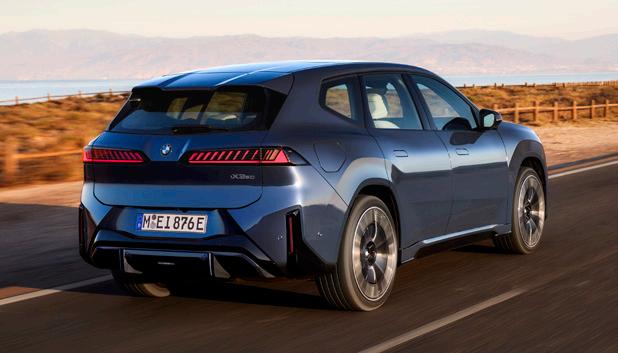
sprint in 4.9 seconds. Its 108kWh battery incorporates sixth-generation BMW eDrive technology with cylindrical cells and an 800-volt electrical system, delivering a claimed driving range of up to 805 kilometres (WLTP).
Fast-charging capability is a key highlight, with up to 400kW DC charging allowing the iX3 to add more than 350


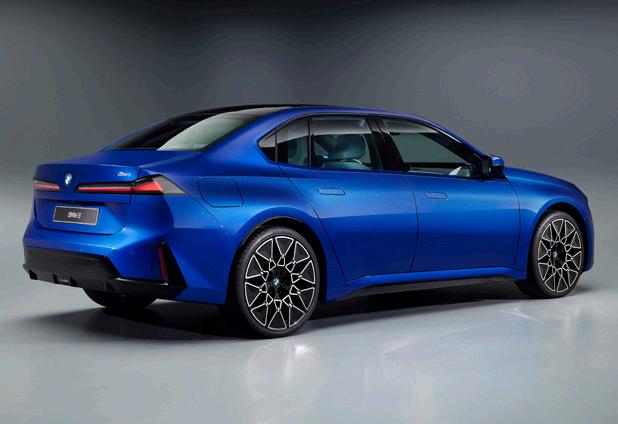
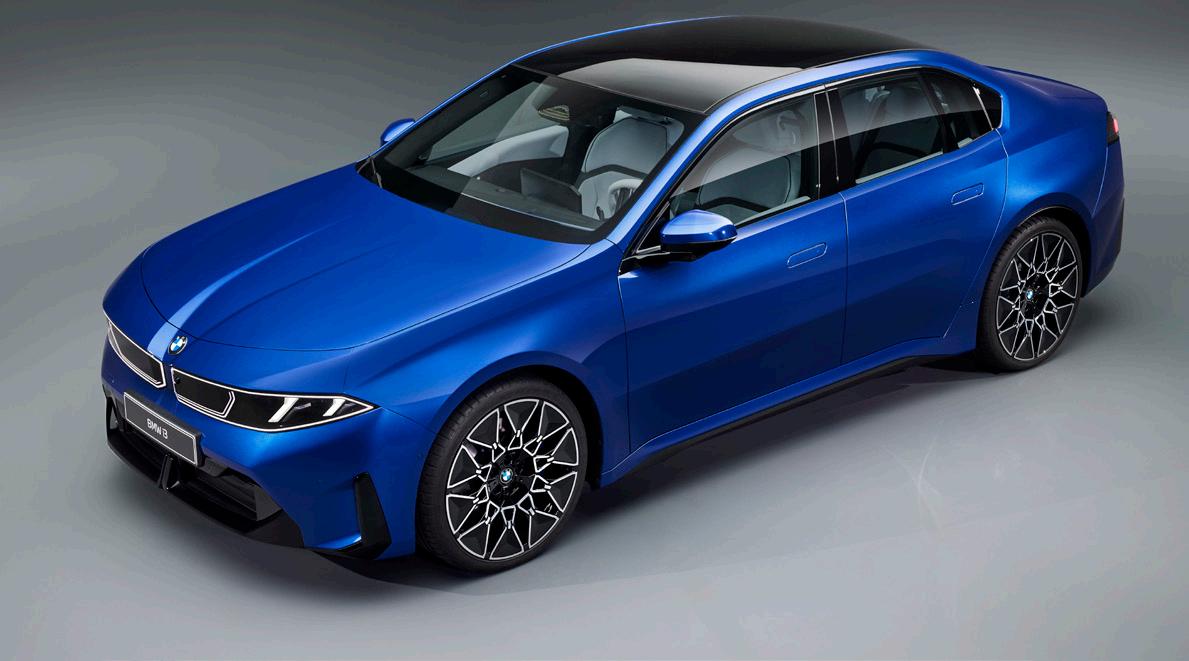
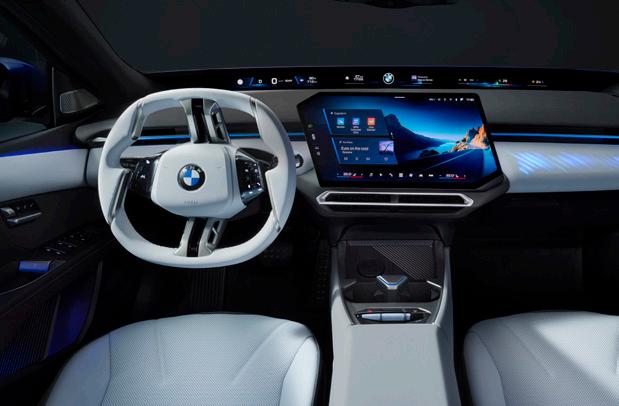
kilometres of range in around 10 minutes, while a 10 to 80 per cent recharge can be completed in approximately 21 minutes. A 22kW AC charging system is standard for Australian buyers.
Inside, the iX3 introduces BMW’slatest digital ecosystem, centred on Panoramic iDrive and BMW Operating System X. A standout feature is BMW Panoramic Vision, which projects key information across the full width of the windscreen. The vehicle is also underpinned by a new electronic architecture featuring four high-performance “superbrain” computers managing driving dynamics, infotainment and automated driving functions, as well as BMW’s “Heart of Joy” driving dynamics system.
Following the iX3, BMW has also
revealed the i3 sedan, the first fully electric version of its iconic 3 Series and the second Neue Klasse model. Due in Australia in early 2027, the i3 continues the platform’s focus on performance, efficiency and advanced technology.
The i3 50 xDrive shares a similar dualmotor setup producing 345kW and 645Nm, alongside the same nextgeneration eDrive system. However, BMW claims an even greater driving range of up to 900 kilometres (WLTP), supported by ultra-fast charging capability that can add around 400 kilometres of range in just 10 minutes.
The sedan also introduces and bidirectional charging capability, including vehicle-to-load, vehicle-to-home and vehicle-to-grid functions.
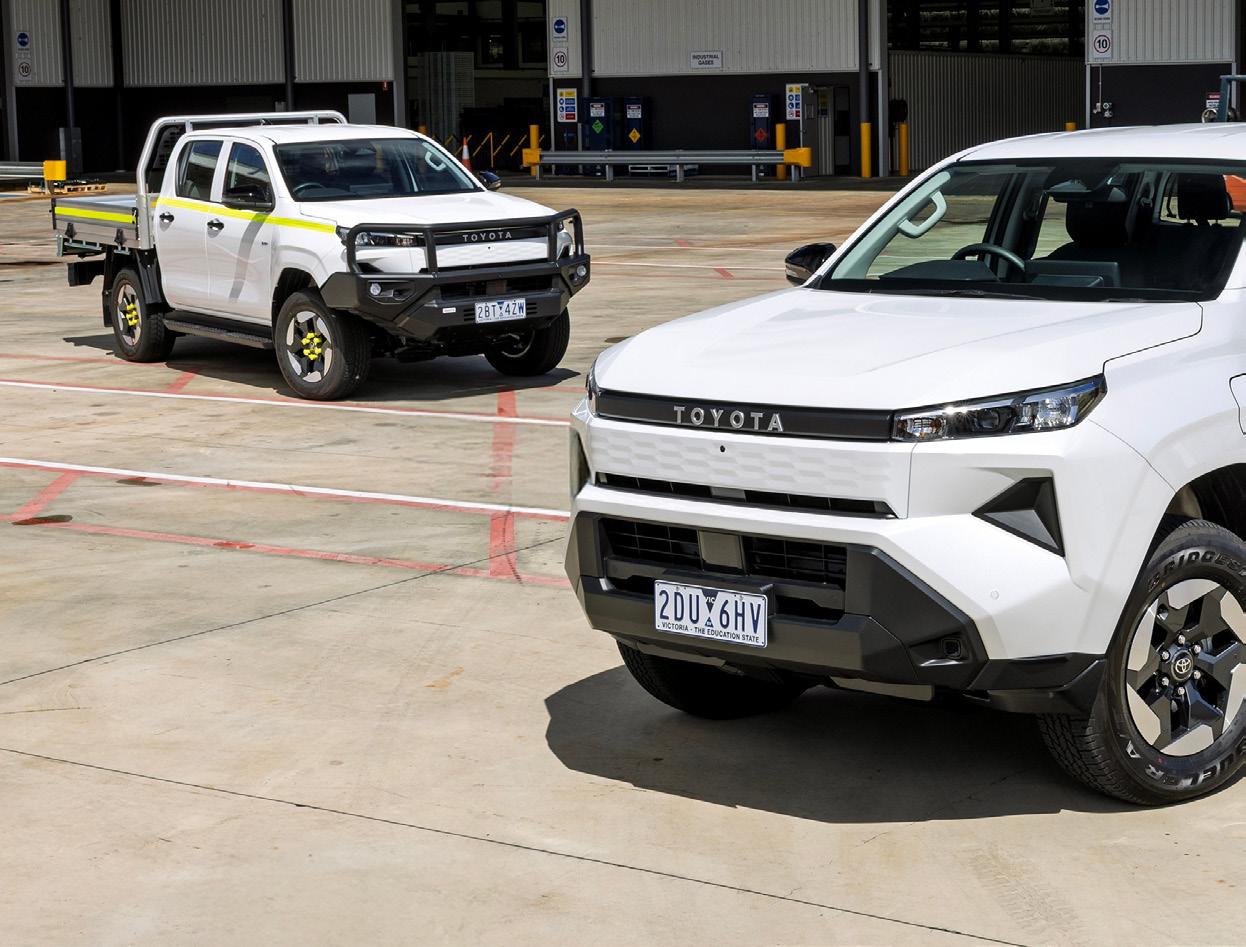
THE FIRST FULLY electric Toyota
HiLux is to be available to Australian customers from May.
Marking a significant milestone for the brand, the battery-electric ute joins the recently launched turbo diesel HiLux range, and the HiLux BEV will be offered exclusively in dual-cab configuration with a dual-motor all-wheeldrive system, available in mid-spec SR and flagship SR5 grades.
Under the skin, the HiLux BEV features a 59.2kWh lithium-ion battery paired with front and rear electric motors producing a combined 144kW. The system
delivers full-time all-wheel drive with variable torque distribution, while Toyota’s Multi-Terrain Select system offers six drive modes to optimise traction across different surfaces.
Driving range is up to 315km (NEDC) for pick-up variants, with the cab-chassis offering up to 245km. DC fast charging of up to 150kW enables a 10 to 80 per cent recharge in around 30 minutes, while a 10kW three-phase AC system can complete a full charge in approximately 6.5 hours.
To accommodate the electric drivetrain, Toyota has introduced a revised suspension setup featuring reinforced
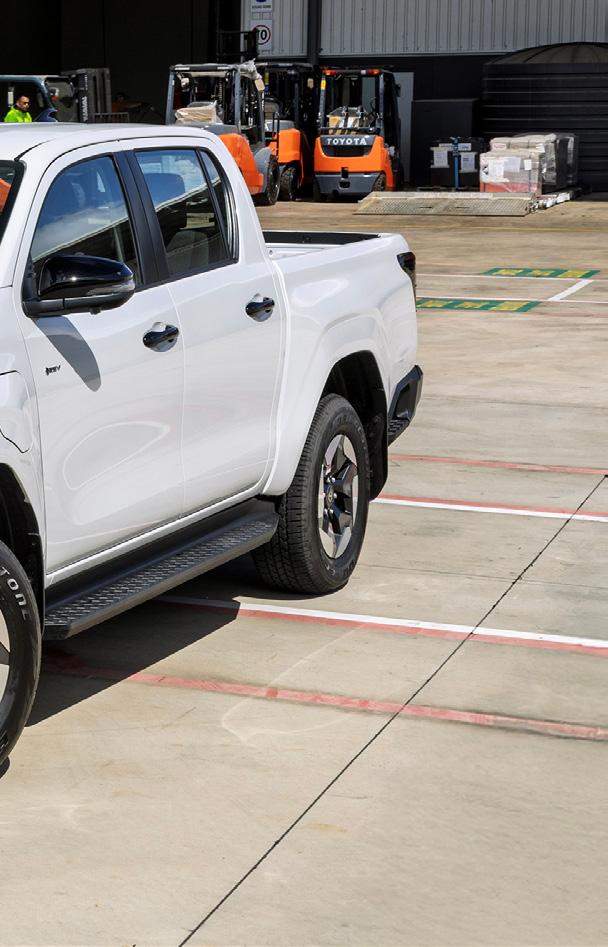
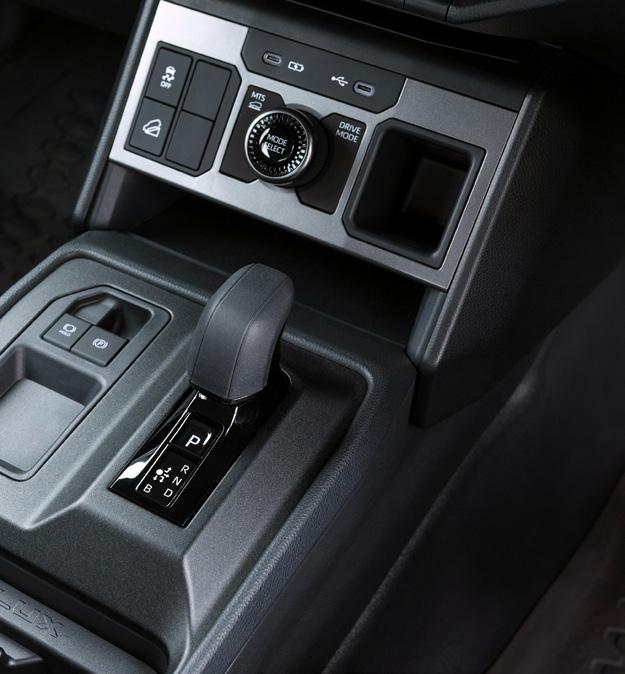
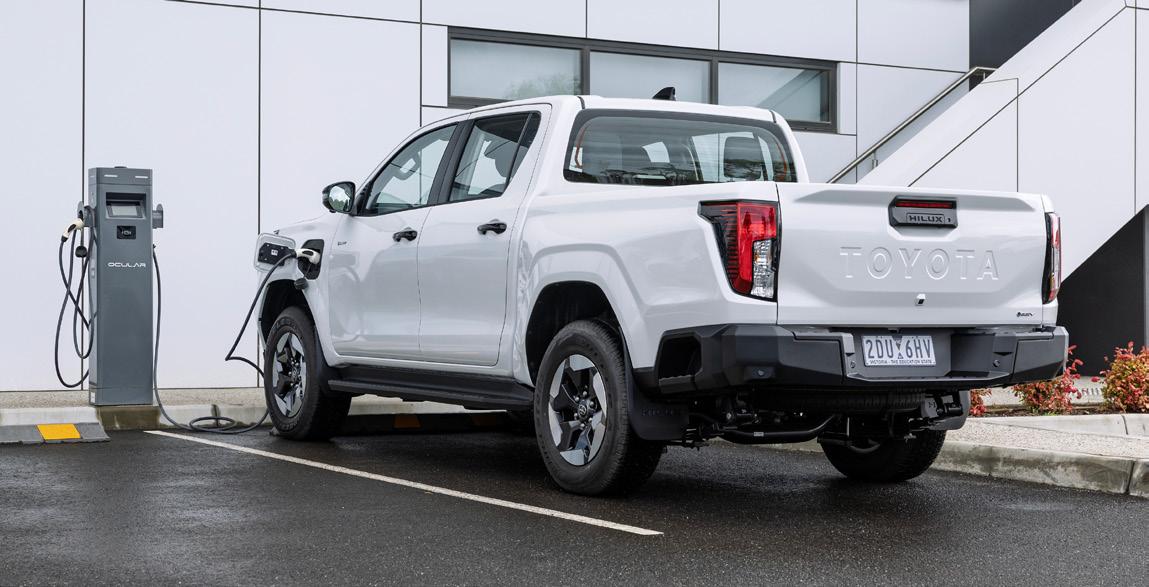
chassis components, MacPherson strut front suspension and a De-dion rear arrangement. The model offers a 2000kg braked towing capacity.
Inside, the HiLux BEV mirrors its diesel equivalent, with a 12.3-inch touchscreen, wireless smartphone connectivity and Toyota Safety Sense active safety systems standard across the range. The SR5 adds premium features including leather-
accented upholstery, heated seats and an upgraded audio system.
Toyota Connected Services and a complimentary 7kW home wallbox charger are available for private customers.
Pricing for the Hilux BEV, before on-road costs – will see the SR double cab-chassis come in at $74,990, the SR double-cab pick-up at $76,490, and the SR5 double-cab pick-up at $82,990.
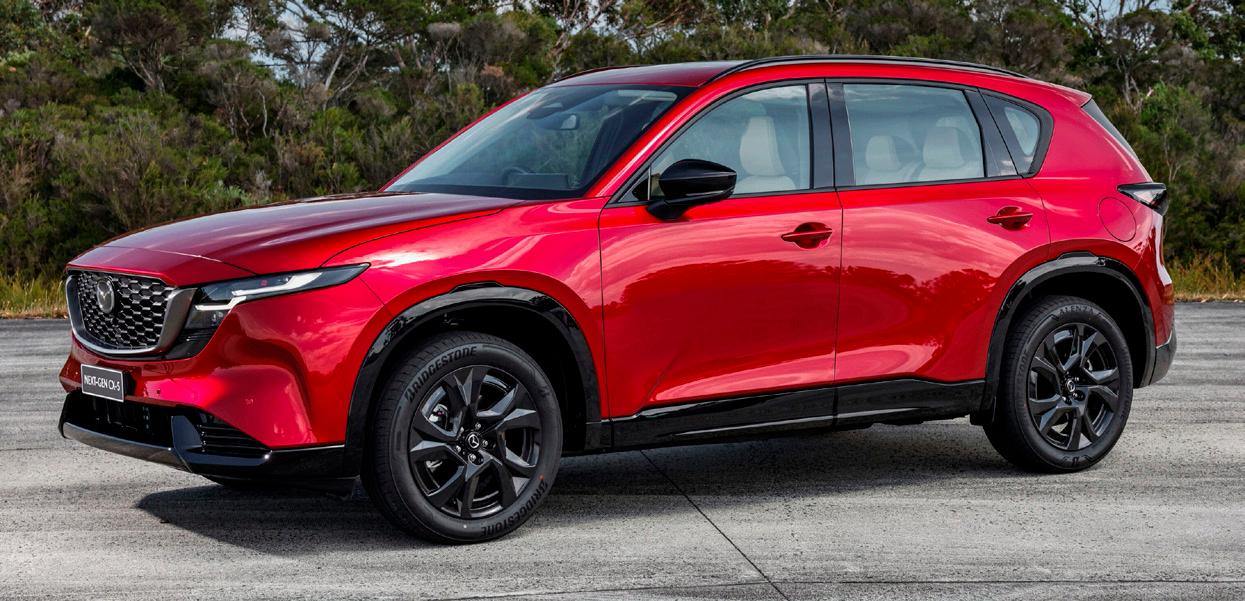
MAZDA AUSTRALIA HAS revealed pricing and specifications for the all-new third-generation CX-5, with the popular mid-size SUV set to arrive in local showrooms in mid-2026 from $39,990.
The new CX-5 will be powered exclusively by Mazda’s 2.5-litre Skyactiv-G petrol engine, producing 132kW and 242Nm, paired with a six-speed automatic transmission and all-wheel drive as standard across the range. Fuel consumption is rated at 7.4L/100km.
Five model grades will be offered: Pure, Evolve, Touring, GT SP and Akera. Every grade features a strong specification, with the Pure including a 12.9-inch infotainment display, digital instrument cluster, adaptive cruise control and a suite of safety technologies.
The new Evolve grade adds features such as heated front seats, wireless smartphone connectivity and a wireless charger, while
the Touring introduces larger wheels, a powered driver’s seat, heated steering wheel and a power tailgate.
Higher-spec GT SP and Akera variants bring premium upgrades including Bose audio, leather upholstery, ambient lighting and a 360-degree camera system, with the flagship Akera adding a panoramic sunroof, ventilated seats and a larger 15.6inch infotainment screen.
Safety remains a priority, with a comprehensive suite of driver assistance technologies and Mazda Connected Services standard across the range.
With competitive pricing and a broad specification list, the new CX-5 is expected to continue its strong sales performance in Australia’s highly competitive SUV market.
Pricing sees the Pure come in at $39,990, the Evolve at $42,990, the Touring at $47,490, the GT SP at $51,990 and the Akera at $54,990.



increased significantly in March, reaching their highest share of the Australian market to date, according to the latest release of VFACTS sales data from the Federal Chamber of Automotive Industries (FCAI).
A total of 15,839 battery electric vehicles from all sources were sold in March, accounting for 14.6 per cent of total sales. By comparison, battery electric vehicles accounted for 7.5 per cent of sales in March 2025.
Overall, 108,703 vehicle sales were recorded by the FCAI and the Electric Vehicle Council in March 2026, down more that 2 per cent on March 2025.
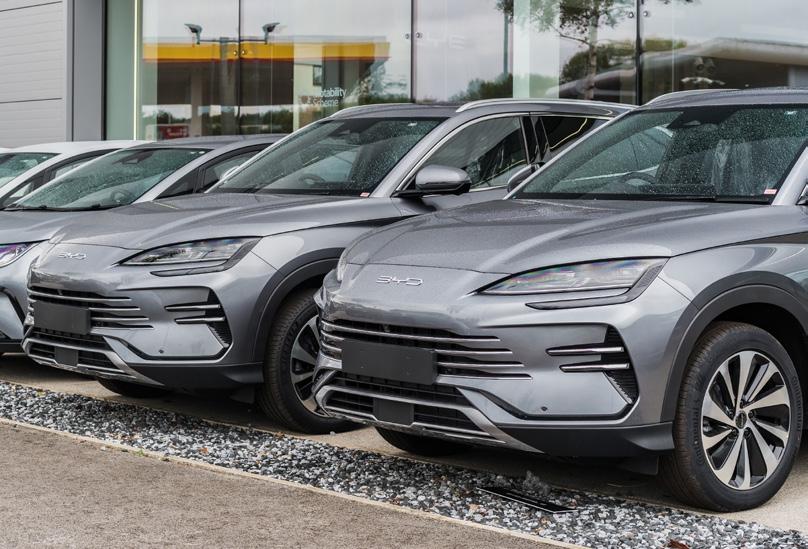
Image: Vivid Brands / Shutterstock.com
Federal Chamber of Automotive Industries chief executive Tony Weber said the March report showed strong growth in EV demand but cautioned that the increase may reflect short-term influences.
“It is too early to determine whether this represents a structural shift in the market. More consumers are considering EVs due to the disruption to fuel supply caused by conflict in the Middle East, along with the review into the fringe benefits tax concession for EVs,” said Mr Weber.
“The automotive industry would welcome a sustained shift to EVs, given its substantial investment in bringing more than 100 EV models to the Australian market and the industry’s efforts to meet ambitious NVES targets.
“A long-term shift to EVs will require Australian governments to sharpen their focus on public charging infrastructure, particularly in regional areas and locations where home charging is not practical.
“Ensuring infrastructure keeps pace with consumer demand will be critical to enabling sustainable growth in EV adoption beyond short-term influences.”
Queensland saw 22,812 sales recorded for March, up from 21,954 for the same month last year. The ACT was down on
“ENSURING INFRASTRUCTURE KEEPS PACE WITH CONSUMER DEMAND WILL BE CRITICAL TO ENABLING SUSTAINABLE GROWTH IN EV ADOPTION BEYOND SHORT-TERM INFLUENCES.”
March 2025, selling 1,579 vehicles compared to 1,657 a year ago. NSW recorded 31,513 sales (down from 33,491); NT sales fell to 795, down from 961; South Australia recorded 6,622 sales, down from 7,143; Tasmania recorded a small dip of 1,744, down from 1,774; Victoria dropped to 28,791 sales from 29,541; and Western Australia sales fell to 11,202 for March this year against 12,085 in March 2025.
Toyota was the market leader in March with sales of 16,574, followed by Kia (7,320), BYD (7,217), Mazda (7,156) and Ford (7,149). The top models were the Ford Ranger (4,452), Toyota HiLux (4,167), Nissan X-Trail (2,438), Mitsubishi Outlander (2,318) and Hyundai Kona (2,316).


BEN SWAN DIRECTOR WORKPLACE RELATIONS
Commission (FWC) Full Bench decision handed down on 31 March 2026 will progressively lift minimum wages for many 18 to 20 year old employees in award reliant sectors, and it is likely to echo well beyond the general retail industry.
In its decision in the Junior Rates application brought by the Shop, Distributive and Allied Employees’ Association (SDA), the Full Bench determined that adult junior employees (18 and over) should move to 100 per cent of the adult award rate after six months with their current employer, while under-18 junior rates remain unchanged and the existing percentage rates remain for adult juniors with less than six months’ service.
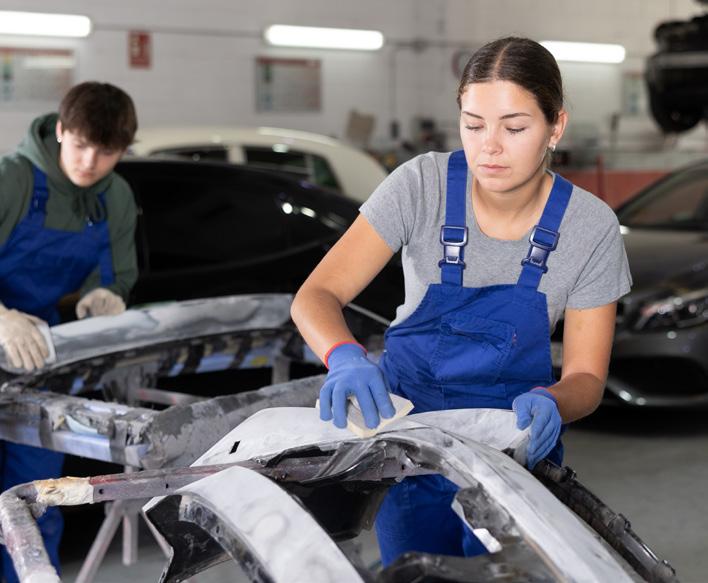
The ruling applies to three modern awards - the General Retail Industry Award 2020, the Fast Food Industry Award 2020, and the Pharmacy Industry Award 2020.
The FWC has indicated a provisional implementation pathway, commencing with a phase in from 1 December 2026, with the final step occurring from 1 July 2029.
Historically, junior rates in many awards have worked on the idea that younger
“FOR MANY MTA QUEENSLAND MEMBERS, JUNIOR EMPLOYEES ARE NOT A “DISCOUNT LABOUR STRATEGY”. THEY ARE AN INVESTMENT, THROUGH INDUCTION, MENTORING, SUPERVISION, REWORK RISK, AND REAL TIME COST FROM EXPERIENCED STAFF.”
employees are more likely to be new to work, require additional supervision and training, and have less experience. Awards have therefore set age based percentages of the adult rate, stepping up each year until adulthood.
The Full Bench’s ruling changes that approach for adult juniors in the three affected awards.
Under the approach adopted:
• 18 to 20 year olds will no longer remain on an age discounted award wage indefinitely.
• Once an adult junior has six months’ experience with their current employer, their minimum wage will be set at 100% of the adult rate for their classification.
• Adult juniors with less than six months’ service will remain on the existing junior percentages.
• Nothing changes for employees under 18.
Although the decision directly concerns retail, fast food and pharmacy, there is a real prospect that it could become a template for similar claims elsewhere. This is particularly relevant for employers in the automotive industry where they rely on entry level roles to build capability and succession; train young people in safety critical environments; and use junior rates as one of several levers to make it commercially viable to offer a first job.
For many MTA Queensland members, junior employees are not a “discount labour strategy”. They are an investment, through induction, mentoring, supervision, rework risk, and real time cost from experienced staff. In smaller workshops and dealerships, the business owner or a senior technician is often the trainer.
When entry level labour costs rise quickly, employers will do what employers always do under pressure - they adjust staffing models. That can mean fewer hours, fewer positions, greater reliance on fully productive staff, or changes to rostering and job design.
Whilst the policy intention of the FWC decision is to lift pay for young adults, the unintended consequence could be fewer
opportunities for the very cohort the change is designed to help, particularly in smaller businesses with limited capacity to absorb cost shocks.
The Full Bench decision is specific to three awards and to adult juniors. However, it has clear signalling value. In practice, it may:
1. Encourage similar award variation applications in other industries where junior rates apply to adult employees, including the automotive industry.
2. Influence enterprise bargaining outcomes, where unions seek to align agreements with a new “norm” of adult rates after a short experience period.
3. Create pressure for award harmonisation across comparable entry level classifications, especially where industries compete for the same young workforce.
For Queensland employers, modern awards like the Vehicle Repair, Services and Retail Award 2020 and the Clerks - Private Sector Award 2020 are obvious points of focus, because they cover many roles within the automotive ecosystem.
While no decision has yet been made about the awards applying to the automotive industry, there is a real prospect of possible flow-on effects within our industry.
Young people’s first jobs matter - for confidence, skills, independence and the development of a work ethic. For many, award covered roles are the on ramp.
But hiring and training young workers is not cost neutral, for the following reasons:
• Safety and supervision: New entrants often require close supervision and structured safety systems - particularly in workshop environments.
• Productivity ramp up: It takes time to become fully productive, and that ramp up varies significantly by role.
• Turnover risk: Entry level roles can have higher turnover, especially where young workers are balancing study and family commitments.
Businesses can manage these factors - and many do - but only if the overall employment model is sustainable. When minimum wage settings move substantially, the critical question for employers is whether they still have the capacity to offer the same number of entry level jobs? In a tight economic cycle, the honest answer may be “not without trade offs.”
Even though the operative changes are expected to begin from December 2026, employers should treat the decision as an early warning and begin planning, with the following factors in mind:
1) Map your exposure
Identify where junior rates apply in your business and what proportion of your workforce is aged 18-20.
2) Review classifications and progression pathways
Clear, documented progression - skills acquired, competencies achieved, and expected supervision levels - becomes more important when wage steps compress.
3) Budget for staged increases
If the phase in proceeds as proposed, the cost impact will build over several years. Modelling different scenarios now can avoid rushed decisions later.
4) Invest in retention
If an adult junior moves to the adult rate after six months, it becomes even more important to keep trained staff. Improved onboarding, mentoring, and predictable rosters can reduce churn.
5) Watch for flow on claims
Employers covered by other awards with adult junior rates should monitor whether similar applications are filed. The
“. . . BUSINESSES - PARTICULARLY SMALL BUSINESSES - OPERATE IN THE REAL ECONOMY. EMPLOYMENT DECISIONS ARE MADE IN THE CONTEXT OF CASHFLOW, DEMAND UNCERTAINTY AND THE CAPACITY TO MAINTAIN VIABLE STAFFING LEVELS.”
arguments, evidence and reasoning in the retail case may be deployed elsewhere.
MTA Queensland recognises the real cost of living pressures affecting young workers and their families. At the same time, businesses - particularly small businesses - operate in the real economy. Employment decisions are made in the context of cashflow, demand uncertainty and the capacity to maintain viable staffing levels. There is a practical risk that steep, structurally mandated increases for a cohort of entry level employees will reduce hours or opportunities, even if unintentionally. The best outcome for young Queenslanders is not simply a higher hourly rate for some - it is a system that supports more people getting a first job, staying in work, building skills and progressing in their careers.
MTA Queensland will continue to monitor potential flow on effects to awards relevant to the automotive sector.
Members should watch for further updates as the FWC issues directions on the transition timetable and as other industries assess their own junior rates settings.
The information in this article is general and does not constitute legal advice. For more information, or any other workplace relations advice and assistance, contact MTAQ on 07 3237 8777.

EVENTS & PROGRAMS
• Golf Day
• Auto Women
• Carmageddon
• Industry Awards Gala
• Workplace Health & Safety Audit
• Workplace Relations Consultation
• Insurance Review
• EFTPOS Comparison
• Energy Audit
BESPOKE MEMBERSHIP FEE
EXTENSION & TRAINING
• MTA Institute (RTO31529) provides leading industry training
• Online industry courses
• Webinars
UNLIMITED WORKPLACE SUPPORT SERVICES
INDUSTRY REPRESENTATION TO GOVERNMENT

INDUSTRY is undergoing a structural shift driven by sustained fuel price volatility, changing consumer behaviour, and accelerating adoption of hybrid and electric vehicles (EVs).
Australians are increasingly driving less, particularly in metropolitan areas, while preferring vehicles with lower running costs and greater energy efficiency. These trends are fundamentally reshaping revenue models and workforce requirements across manufacturing, retail, servicing, and aftermarket operations.
As a child of the ’70s, I recall Australia’s Mad Max films famously depict a society reshaped by fuel scarcity. While fictional, the lesson is timely: industries built around abundant fuel must adapt quickly when energy becomes constrained.
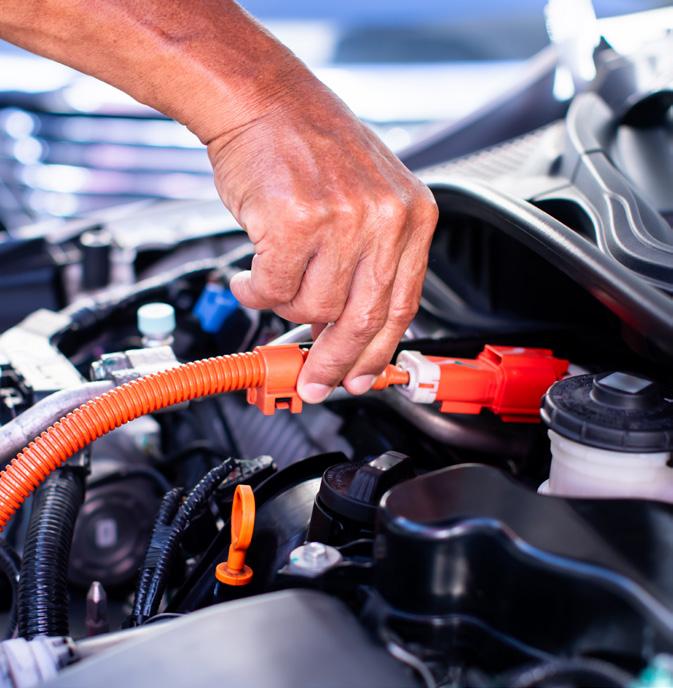
Fuel volatility is structural, not cyclical. Australia’s reliance on imported refined fuels exposes consumers and businesses to ongoing price instability. This has led to reduced discretionary driving and heightened focus on total cost of ownership.
Australia’s transition is characterised by strong uptake of hybrids and plug in hybrids as a bridge technology, particularly outside capital cities. EV volumes are growing rapidly, but mixed drivetrains will dominate the market for decades.
Reduced mechanical demand and lower kilometres travelled, coupled with simpler electric drivetrains reduce traditional mechanical servicing demand, placing pressure on ICE centric service business models.
Emerging skilling priorities are around electrical and high voltage capability, high voltage safety, battery systems, and power electronics are becoming core competencies, not niche skills. Electrical knowledge is now foundational for technicians. EVs are software defined vehicles so skills in digital diagnostics, networked systems, and remote fault resolution are increasingly critical. Battery Lifecycle Management is key and battery health assessments, reuse, and recycling represent a significant new skills frontierparticularly given Australia’s renewable energy and regional deployment opportunities.
EMERGING SKILLING PRIORITIES ARE AROUND ELECTRICAL AND HIGH VOLTAGE CAPABILITY, HIGH VOLTAGE SAFETY, BATTERY SYSTEMS, AND POWER ELECTRONICS ARE BECOMING CORE COMPETENCIES, NOT NICHE SKILLS.
Skills misalignment is increasingly a materqial business risk, particularly for organisations with disproportionate investment in legacy internal combustion engine (ICE) competencies, which face long term relevance and viability challenges. In contrast, early and targeted investment in electrical, digital, and advisory capabilities can establish a sustainable competitive advantage. While effective operators continuously assess workforce capability requirements, there is now a heightened need to align existing skills with current operational demands while systematically building capacity for emerging future work profiles.
The MTA Institute Apprentice of the Month is proudly sponsored by CareSuper
APPRENTICE:
JAMES CAMERON
APPRENTICESHIP:
AUTOMOTIVE BODY REPAIR TECHNOLOGY WORKPLACE:
LIPKE MOTORS, BRISBANE
JAMES CAMERON IS the MTA Institute Apprentice of the Month for March 2026.
The 22-year-old, fourth-year apprentice body repair technician works at Lipke Motors in Brisbane and is carving out a reputation with his skill and passion for the job.
According to his MTA Institute trainer Alfio Rotolone, James is a standout apprentice.
if he wanted to jump back into the trade. He said ‘yes’, and now works with me here,” said James with a chuckle. “We work well together and have a good bit of chemistry - I will ask him his opinion on things and sometimes, even though I'm an apprentice, he'll ask my opinion too.”
“His dedication to understanding the intricacies of OEM standards ensures every vehicle is restored with absolute precision,” said Alfio in nominating James for the award. “He has transitioned from a keen beginner to a confident technician who leads by example.”
“ I ENJOY THE BIGGER JOBS, LIKE PUTTING THEM ON THE RACK, WORKING ON THIS BIG HUNK OF METAL AND SLOWLY PULLING IT OUT AND BRINGING IT BACK TO SHAPE.”
While he is proving to be a gifted panelbeating tech, that was not job or career that James had originally envisaged he would pursue. After school, and while working in retail, it was wrapping that caught his attention.
“I was looking for something exciting, and I was really into cars,” said James. “I started wrapping my car and my mates’ cars and was looking at making that into a business.”
However, his interest in wrapping sparked a curiosity in painting, which led James to consider a painting apprenticeship after a chance opportunity saw a friend put him onto an opportunity at Lipke Motors. A minor mix up would see James land in panel repair for a time – a twist of fate that completely changed his plan.
“I actually did that for a few weeks and found out I actually enjoyed it, so just kept going,” he said.
That twist of fate connects nicely with others that are part of James’ journey. For instance, his father, Jason, is also a panel beater. He did his apprenticeship a few years ago and had, for a time, left the trade to run his own business. However, today, both father and son are sharing the workshop floor at Lipke Motors!
“They were looking for another panel beater, and I asked dad
In a further twist of fate, the mentor who helped train Jason also played a role in shaping James’ career. The father of the friend who first encouraged James to pursue an apprenticeship was himself a panel beater - and the very person who had originally introduced James’ father to the trade.
“So, the guy who trained my dad ended up training me!” said James.
One of the most appealing aspects of working at Likpe Motors is the variety of work and now he is a fourth-year apprentice, James is trusted with a wide range of tasks.
“We work on everything from regular passenger cars to vans and trucks and caravans,” he said. “There’s always something different going on.
“And I get to do pretty much everything - quarters, replacement panels, pulling, straightening. I enjoy the bigger jobs, like putting them on the rack, working on this big hunk of metal and slowly pulling it out and bringing it back to shape.”
Keen to stay ahead of industry changes, James has undertaken additional training, including electric vehicle courses with both the MTA Institute and Bosch. And he’s committed to pursuing additional training opportunities whenever they arise.
“I love giving everything a crack and trying new things. I find it all fascinating,” he said.
Looking ahead, James remains open to where his career might take him. For now, he’s firmly grounded in the panelbeating trade and working at Lipke Motors, though there’s a chance he would look at doing the painting trade, and perhaps even mechanical, down the track.
“I enjoy working here and I always like to continue learning,” said James. “It’s exciting to think about.”
• Are you employing an apprentice who is excelling in the workplace?
• Do you have a high-achieving apprentice colleague?
If the answer is ‘yes’, then nominate them for the MTA Institute Apprentice of the Month Award.
• Are they training with MTA Institute? CLICK HERE FOR MORE INFORMATION







THE MTA INSTITUTE is the largest independent provider of automotive apprenticeships and training in Queensland and it is always a proud moment when its
APPRENTICE
Dean Drury
Braedyn Di Bella
Joshua Hoy
Lynden Schafer
Jaxon Schmidtke
Simon Richmond
Kodey Luscombe
Lachlan Handford
Daniel Debattista
Nelson Rowlingson
Keegan Berg McCormack
Mason Buckley
Jordan Martin
Charlie Stinson
Declan Hoar
Mark Wood
Kahli Storken
Christopher Hird
Ainsley Johnson
Lachlan Moohin
Isaak Geiger
Ben Reid
Will Purser
Henry Bowler
Scott Shults
Michael Warren
Gary Cutting
Waldo Meyer
Benjamin Tyssen
Peter Grosvenor
Dylan Cordery
Boston Page
Joshua Griffiths
Sam Evetts
Jaspar Kowitz
William Jennings
Xavier Le Gonidec
Caleb Stuart-Stracey
Byron McVicar
Keanu Bowen-Wilson
Caleb Larcombe
Cooper Burt
Alexander Bradford
Zachary Smith
Kirby Richards
Jared Tomlinson
Thomas Piercy
Joseph Field
Phoenix Mendelson
Jorji Nicholson
Bradley Mason
Tia Chalker
Izac Mollet
Jose Mecael Rosanto Grande
Jacob Reinke
Joel Sheridan
Jett Foxwell
students complete their trade qualification. Congratulations to everyone who was issued a qualification in March 2026. It's a fantastic achievement!
QUALIFICATION
Certificate III in Agricultural Mechanical Technology
Certificate III in Agricultural Mechanical Technology
Certificate III in Automotive Body Repair Technology
Certificate III in Automotive Body Repair Technology
Certificate III in Automotive Electrical Technology
Certificate III in Automotive Electrical Technology
Certificate III in Automotive Electrical Technology
Certificate III in Automotive Electrical Technology
Certificate III in Automotive Electrical Technology
Certificate III in Automotive Electrical Technology
Certificate III in Automotive Electrical Technology
Certificate III in Automotive Electrical Technology
Certificate III in Automotive Refinishing Technology
Certificate III in Automotive Refinishing Technology
Certificate III in Automotive Refinishing Technology
Certificate III in Automotive Refinishing Technology
Certificate III in Automotive Sales (Parts Interpreting)
Certificate III in Automotive Sales (Parts Interpreting)
Certificate III in Automotive Sales (Parts Interpreting)
Certificate III in Heavy Commercial Vehicle Mechanical Technology
Certificate III in Heavy Commercial Vehicle Mechanical Technology
Certificate III in Heavy Commercial Vehicle Mechanical Technology
Certificate III in Heavy Commercial Vehicle Mechanical Technology
Certificate III in Heavy Commercial Vehicle Mechanical Technology
Certificate III in Heavy Commercial Vehicle Mechanical Technology
Certificate III in Heavy Commercial Vehicle Mechanical Technology
Certificate III in Heavy Commercial Vehicle Mechanical Technology
Certificate III in Heavy Commercial Vehicle Mechanical Technology
Certificate III in Heavy Commercial Vehicle Mechanical Technology
Certificate III in Heavy Commercial Vehicle Mechanical Technology
Certificate III in Heavy Commercial Vehicle Mechanical Technology
Certificate III in Light Vehicle Mechanical Technology
Certificate III in Light Vehicle Mechanical Technology
Certificate III in Light Vehicle Mechanical Technology
Certificate III in Light Vehicle Mechanical Technology
Certificate III in Light Vehicle Mechanical Technology
Certificate III in Light Vehicle Mechanical Technology
Certificate III in Light Vehicle Mechanical Technology
Certificate III in Light Vehicle Mechanical Technology
Certificate III in Light Vehicle Mechanical Technology
Certificate III in Light Vehicle Mechanical Technology
Certificate III in Light Vehicle Mechanical Technology
Certificate III in Light Vehicle Mechanical Technology
Certificate III in Light Vehicle Mechanical Technology
Certificate III in Light Vehicle Mechanical Technology
Certificate III in Light Vehicle Mechanical Technology
Certificate III in Light Vehicle Mechanical Technology
Certificate III in Light Vehicle Mechanical Technology
Certificate III in Light Vehicle Mechanical Technology
Certificate III in Light Vehicle Mechanical Technology
Certificate III in Light Vehicle Mechanical Technology
Certificate III in Light Vehicle Mechanical Technology
Certificate III in Light Vehicle Mechanical Technology
Certificate III in Light Vehicle Mechanical Technology
Certificate III in Light Vehicle Mechanical Technology
Certificate III in Motorcycle Mechanical Technology
Certificate III in Motorcycle Mechanical Technology
TRAINER
Gavin Jacobs
Damien O'Connor
Shane Palmer
Ronil Datt
Gareth Hartley
Gareth Hartley
Samuel Lawson
Dennis Shaw
Samuel Lawson
Keith Minchin
Keith Minchin
Samuel Lawson
Ronil Datt
Keiran Charters
Patrick Cranitch
Alfio Rotolone
Terry Palfrey
Antony Joslin
Keiran Charters
Wayne Fitzgerald
Frank Crause
Terry Palfrey
Wayne Fitzgerald
Sol Layland
Scott Buckley
Gavin Jacobs
Andrew Keys
Steve Adams
Steve Adams
Steve Adams
Steve Adams
Antony Joslin
Colin Crichton
Colin Crichton
Steve Cameron
Antony Joslin
Phillip Liebel
James Ortiz
Colin Crichton
Antony Joslin
David Twidale
Phillip Liebel
Gareth Hartley
Lloyd Cross
Steve Cameron
Adrian Renton
Stephen Blaauw
Stephen Baker
Jens Puder
James Dixon
John Harrison
Jens Puder
Dennis Shaw
Jens Puder
Dennis Shaw
Turlough (TeeKay) Khabibulin
Ivan Aird
At MTA Queensland, our Industry Initiatives Team works alongside automotive businesses across Queensland to help them grow, diversify, and future-proof their workforce.
Whether you’re looking for entry-level staff, eager new apprentices, or to establish longterm workforce planning in your organisation, we deliver tailored, practical solutions to help your business thrive – and ensure the industry stays competitive, diverse, and future-ready.
Providing tailored solutions to small and medium employers, helping to address challenges, diversify their workforce, and support productivity growth.
Collaborating with Industry and Government to create sustainable career pathways into the automotive industry.
Promoting automotive careers to young people and job seekers through events, engagement programs, and hands-on industry experiences.
IN THE MOST recent episode of the Engine Bay Podcast, Nigel Palmer, the Technical Training and Development Officer at the MTA Institute, chatted with Motor Trader about training experiences with OEMs and how the MTA Institute is well-positioned to support both emerging and established automotive brands in Australia.
A key focus of the conversation was Nigel’s recent trip to Mahindra’s training facility in Bangalore, India, where he undertook the company’s highest-level CoTek training program.
“They invited me over . . . to learn, to see what they train and how they train,” he said. “And it was a great experience . . . they have a beautiful facility . . . it is absolutely stunning!”
The training itself covered a broad spectrum of technical content, beginning with core fundamentals and progressing into advanced systems.

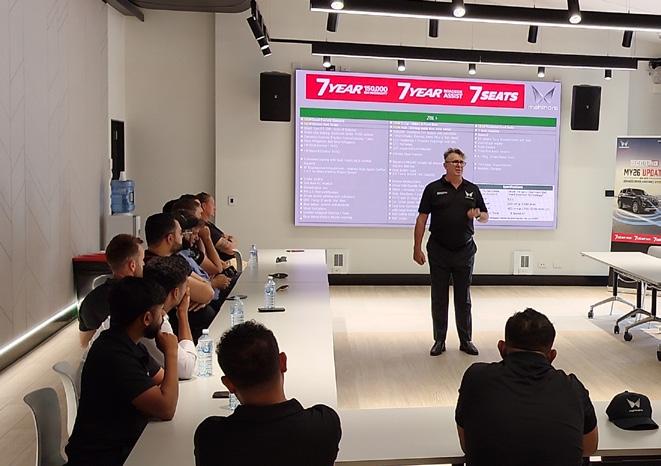
“It covered a lot of very basic information,” explained Nigel. “ . . . and then they went into Euro 6.2 diesel emissions, they went into CAN bus . . . as the week went on, we got deeper and deeper.”
While his trip to India was about training with Mahindra and learning more about their products, processes and technologies, Nigel has already been working with the company. Earlier this year, he delivered a training course for dealership sales staff on the updated Scorpio - now equipped with Level 2 ADAS. Held at the RACQ Mobility Centre at Mount Cotton, the staff were given the opportunity to test the Scorpio in a variety of real-world conditions.
The conversation about Mahindra training led to a chat about how the MTA Institute can be a training partner for OEMs operating in Australia.

Nigel Palmer, the Technical Training and Development Officer for the MTA Institute recently travelled to India to train with Mahindra. Nigel has been working with the company in Australia, including delivering training to dealership sales staff on the new Mahindra Scorpio.
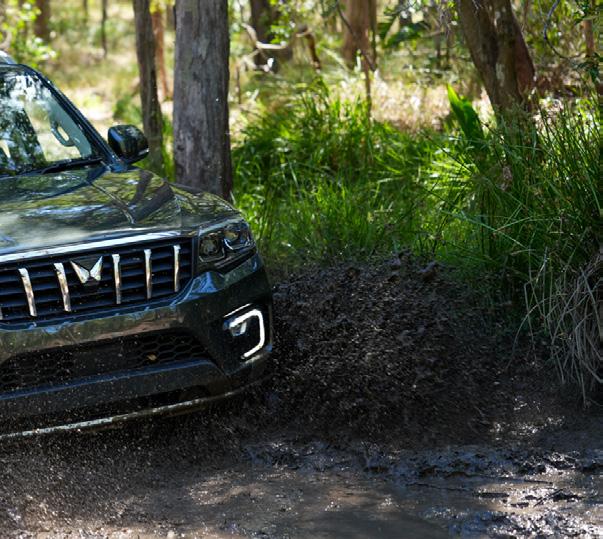
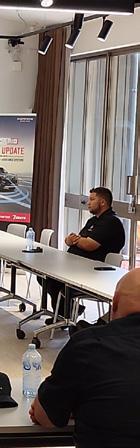

With a growing number of new brands entering the market - alongside established manufacturers continuing to evolve their product lines - Nigel made it clear that the need for structured, high-quality training has never been greater.
“If you’re just coming into Australia now or you’re an importer bringing in a vehicle, you’re behind the eight ball if you think any technician can fix it,” he said. “Every vehicle has its own idiosyncrasies . . . and every manufacturer has their own way of doing things.”
It is here that the MTA Institute is carving out a distinct role not just as a training provider but as a comprehensive partner capable of supporting OEMs at every stage of their Australian journey.
“We've become a one-stop shop for training,” said Nigel. “We can do technical training for you. We can do parts training for you. We can do sales training for you. We can do managerial training for you. We can do it all.”
This capability is particularly valuable for new entrants to the local market that may not yet have the infrastructure or resources to establish their own training networks. Rather than investing heavily in facilities, staff and course development, OEMs can leverage the MTA Institute’s existing expertise and footprint.
WORKING WITH OEMS - WITH NIGEL PALMER
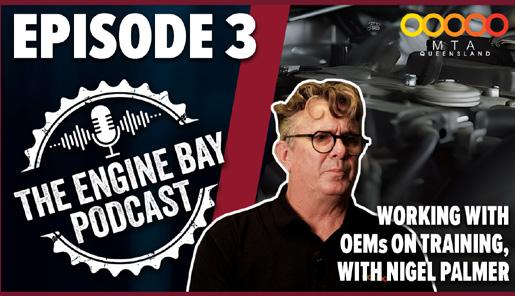
At the same time, the Institute’s offering is equally relevant for legacy brands already operating in Australia. As vehicles become more complex - particularly with the rise of electrification, advanced driver assistance systems and connected technologies - ongoing training is essential to ensure technicians remain up to date.
That capability is already being demonstrated through partnerships with brands such as MG Motor, with whom the MTA Institute has also been working, particularly around electric vehicles.
Nigel emphasised that the Institute’s strength lies in its ability to translate complex manufacturer information into practical, accessible knowledge for the workshop floor.
“If the manufacturer gives us the information, we can turn that into knowledge,” he said. “That’s what we do.”
As the Australian automotive market continues to evolve, with new brands arriving and existing players adapting to new technologies, the role of the MTA Institute in equipping them to be successful in the local market is becoming increasingly compelling.
Whether supporting global OEMs entering the market or helping established manufacturers upskill their workforce, the message from Nigel was clear: effective training is no longer optional, it is essential.
IN AUGUST 2024, MTA
Queensland launched the Women in Trades Apprenticeship Mentoring Program (WITAMP) – an initiative designed to support the recruitment and retention of female apprentices.
Since its launch, the program has delivered one-on-one mentoring to more than 200 female apprentices throughout Queensland, helping them stay strong, engaged, and able to progress confidently through their apprenticeship journey and beyond.
In October 2025, WITAMP was expanded to support women at every stage of their journey, and it now welcomes female school students, jobseekers, and women reentering the workforce.
Amongst those who have found support via WITAMP is Taylor Deeth, now a service advisor with Daimler Trucks in Toowoomba.
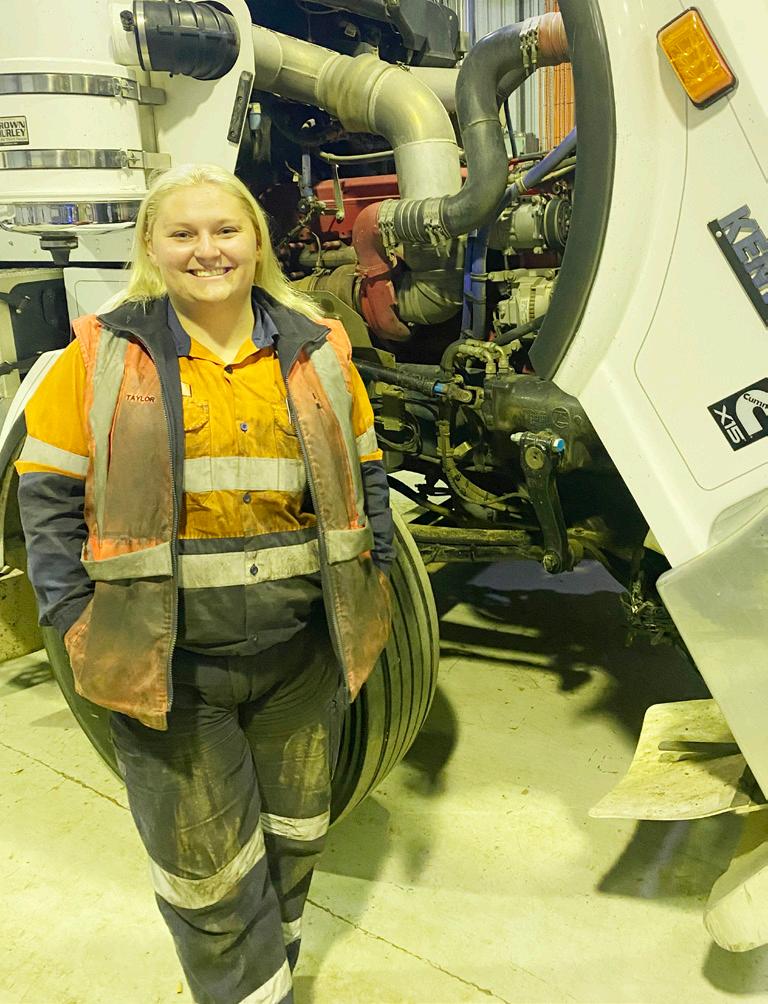
The 23-year-old grew up in and around workshops and machinery, spending time with her dad, a diesel fitter, learning about engines and parts. This sparked an interest in automotive as a potential career and would lead Taylor to a stint of work experience with Cummins while she was at school.
That experience would subsequently lead, after a couple of false starts, to an apprenticeship with Cummins during which she also managed to complete a Diploma of Leadership and Management. Having now completed her apprenticeship, Taylor is also currently on track to complete her Certificate IV in
Training and Assessment, and said she is focused not only on developing her technical skills, but also her leadership capabilities in the pursuit of becoming an example and mentor to women in the sector.
Part of that focused journey saw take on the service advisor role – a move that sees her dealing directly with drivers and owners, allowing her to further develop her skills in areas such as communication and customer service, while utilising her technical knowledge and proving that skills on the tools are transferable.
“I decided to step into the Service Advisor position to broaden my skill set and gain a better understanding of the industry from a different perspective. And it has shown me how many different opportunities a trade qualification can open within the industry,” she said.
“WHAT REALLY PUSHED ME THROUGH THOSE CHALLENGES WAS MY DETERMINATION TO PROVE TO MYSELF AND OTHERS THAT I COULD SUCCEED IN THIS INDUSTRY, ESPECIALLY AS A WOMAN. I DIDN’T WANT THE DOUBTS OF OTHERS OR THE FEAR OF FAILING TO DEFINE MY PATH.”
The opportunities are there, but being a woman in automotive can add another layer of challenges, and Taylor is open about some of those that she has overcome. These include a false start in a light vehicle apprenticeship.
“Early on, I had people close to me say they didn’t think I would make it in the industry and that I should consider pursuing a university career instead,” she said.
“What really pushed me through those challenges was my determination to prove
to myself and others that I could succeed in this industry, especially as a woman,” she added. “I didn’t want the doubts of others or the fear of failing to define my path.”
With challenges can come rewards, and there is satisfaction to be had in overcoming hurdles and pushing through difficulties.
“One of the most rewarding parts of my journey in the automotive industry has been seeing my hard work pay off and the skills I’ve developed come to life,” said Taylor.
“Standout moments include completing my first solo engine rebuild and seeing it run perfectly for the first time. And I also loved rebuilding my Holden Colorado with my dad during my first year.
“Ultimately, the most rewarding part has been proving to myself that I can succeed, grow, and make a career out of something I truly love.”
In an industry that is male dominated, Taylor is building a career through skill and determination and helping to shift perceptions along the way.
“Some people assume that being a mechanic or working in heavy vehicles is only for men,” she said. “The truth is that the work is more about knowledge, problem-solving, and persistence than anything else. Women are just as capable as men, and we bring a lot to the trade . . . being a woman in the automotive industry is not a limitation, it’s just another perspective that strengthens the field.”
Mentoring has also become one of the more rewarding aspects of Taylor’s career. Through programs with local schools and TAFE, she has visited classrooms to share her story and highlight the many opportunities available within the automotive industry.
And mentoring programs have been a big factor in her own development. The WITAMP program, developed by MTA Queensland, sees the BUSY Sisters mentoring service deliver a support system that pairs female apprentices with experienced tradeswomen who guide
them through the critical early stage of their career. They provide practical advice on workplace expectations, technical learning, communication and dealing with challenges such as isolation or confidence issues, while also acting as a trusted, independent support.
“TRADES ARE CHALLENGING, REWARDING, AND FULL OF OPPORTUNITIES. YOUR DETERMINATION AND PASSION WILL CARRY YOU FURTHER THAN ANYONE’S DOUBTS EVER COULD.”
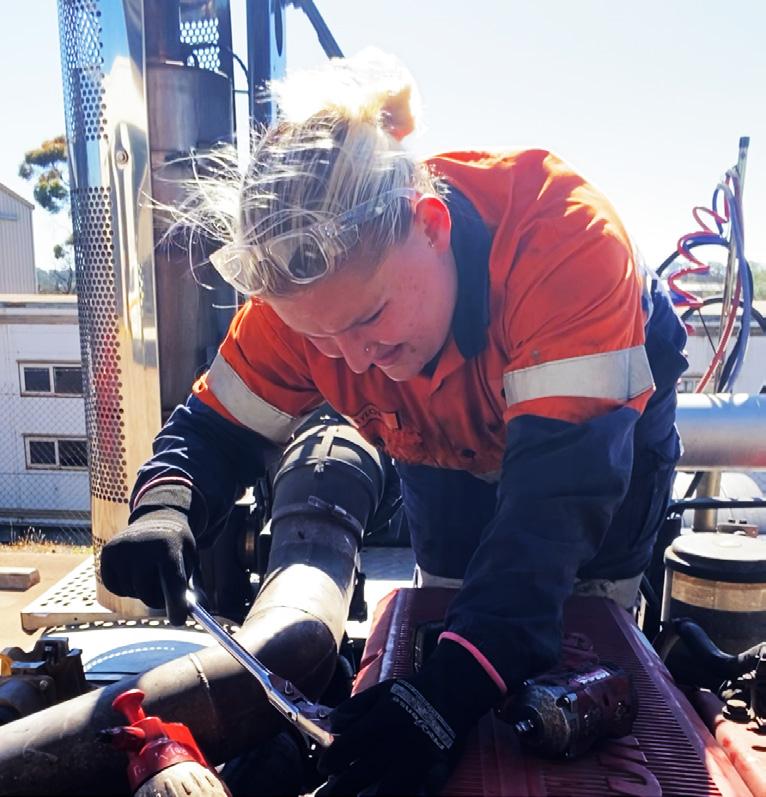
The program played an important role in helping Taylor through some tricky times as she pursued her apprenticeship goal.
“Programs like BUSY Sisters have been a massive help, mentoring me through many challenges, especially towards the end of my apprenticeship, and showing me how to navigate and overcome obstacles,” said Taylor.
Along with the WITAMP service, Taylor added that support had also come through joining a local women’s trade group and, of course, through friends and family.
“It’s inspiring to connect with other women who understand the challenges and can share advice, encouragement, and practical guidance,” she said.
“And my parents and my partner have always encouraged me to keep pushing forward, celebrated my achievements, and helped me stay focused during the tougher times.”
Today’s automotive industry is evolving rapidly, creating a wide range of career
pathways that value skill, problem-solving and innovation. While the industry may indeed be male dominated, women bring fresh perspectives, are equally skilled and capable, and are increasingly recognised as essential to modern workshops and businesses. With growing support networks, mentoring programs like WITAMP, and a clear industry push toward greater diversity and inclusion, there has never been a better time for women to consider automotive as a career.
For Taylor, now well on her way to establishing her career in the industry, the advice to others who want to do the same and pursue an automotive industry career is simple.
“Never give up, and don’t listen to anyone who tells you that you can’t do it,” she said.
“Trades are challenging, rewarding, and full of opportunities. Your determination and passion will carry you further than anyone’s doubts ever could.”
◆ This program is proudly supported by the Queensland Government.
Solve your labour shortage with Automotive
Jobs Queensland... your direct line to a wider pool of active job-seekers
Automotive Jobs Queensland is a jobs marketplace where Queensland automotive employers can find, attract and hire local and international job-seekers with greater ease and impact.
Powered by WorkinAUS, whose market-leading technology matches thousands of local and international jobseekers to employers each month, Automotive Jobs Queensland makes it easier for automotive employers to connect with talent and fill roles.
Find the talent you need now, with streamlined hiring tools, industry-first compliance tools and features such as video to attract more talent to your job ads.
APPLICANT TRACKING SYSTEM (ATS) INTEGRATION – post directly to WorkinAUS from your ATS
MULTI-POSTING – post to WorkinAUS and other national job boards, including Workforce Australia, in a single step, backed by easy labour market testing (LMT) reports
AI INTEGRATION - save time writing your job post by inputting key criteria for the AI Job Writing Tool to create a job ad in seconds
BUILT-IN VIDEO – record simple, authentic job profiling videos with the help of the teleprompter tool
A SIMPLE WORKFLOW – manage each step, from posting to application processing, via a simple dashboard
A COMPANY JOB BOARD – create your own video-enabled job board featuring your logo, brand colours and more
30 days per ad
Stay while you love it
Exit when you need
Options include: Pay as you go Subscription Enterprise account

DEBUTING AT THE New York International Auto Show, Hyundai’s Boulder Concept offers a preview of the brand’s first body-onframe vehicle platform - and hints at a ute to follow. The company says the new platform will underpin a production midsize pickup to be delivered by 2030.
Designed by Hyundai’s North American studio in California, the Boulder Concept adopts an upright two-box silhouette underpinned by the brand’s ‘Art of Steel’
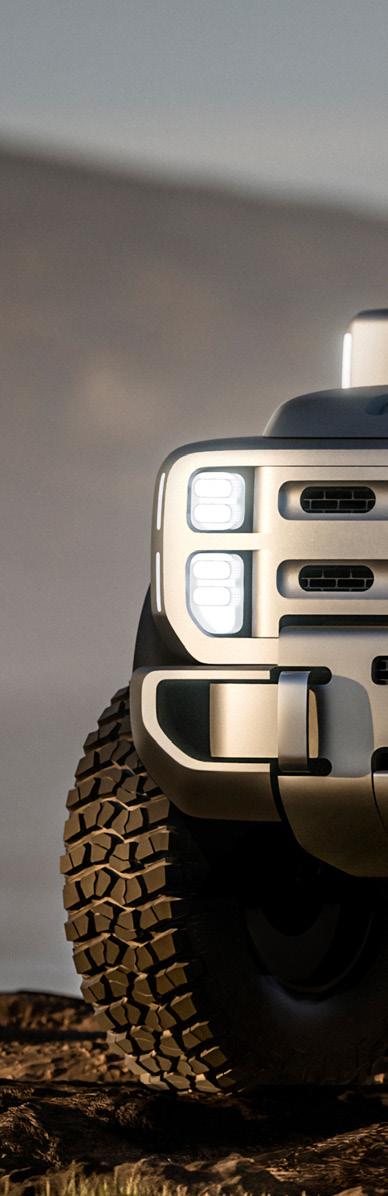
design philosophy. The exterior has a Liquid Titanium finish, pronounced proportions, dual safari-style roof windows, and coach-style doors.
A low-profile roof rack with integrated steel webbing allows for expanded cargo carrying, while a double-hinged tailgate can open from either side. A power drop-down rear window accommodates longer items.
Off-road capability is a clear priority. The Boulder rides on massive 37-inch

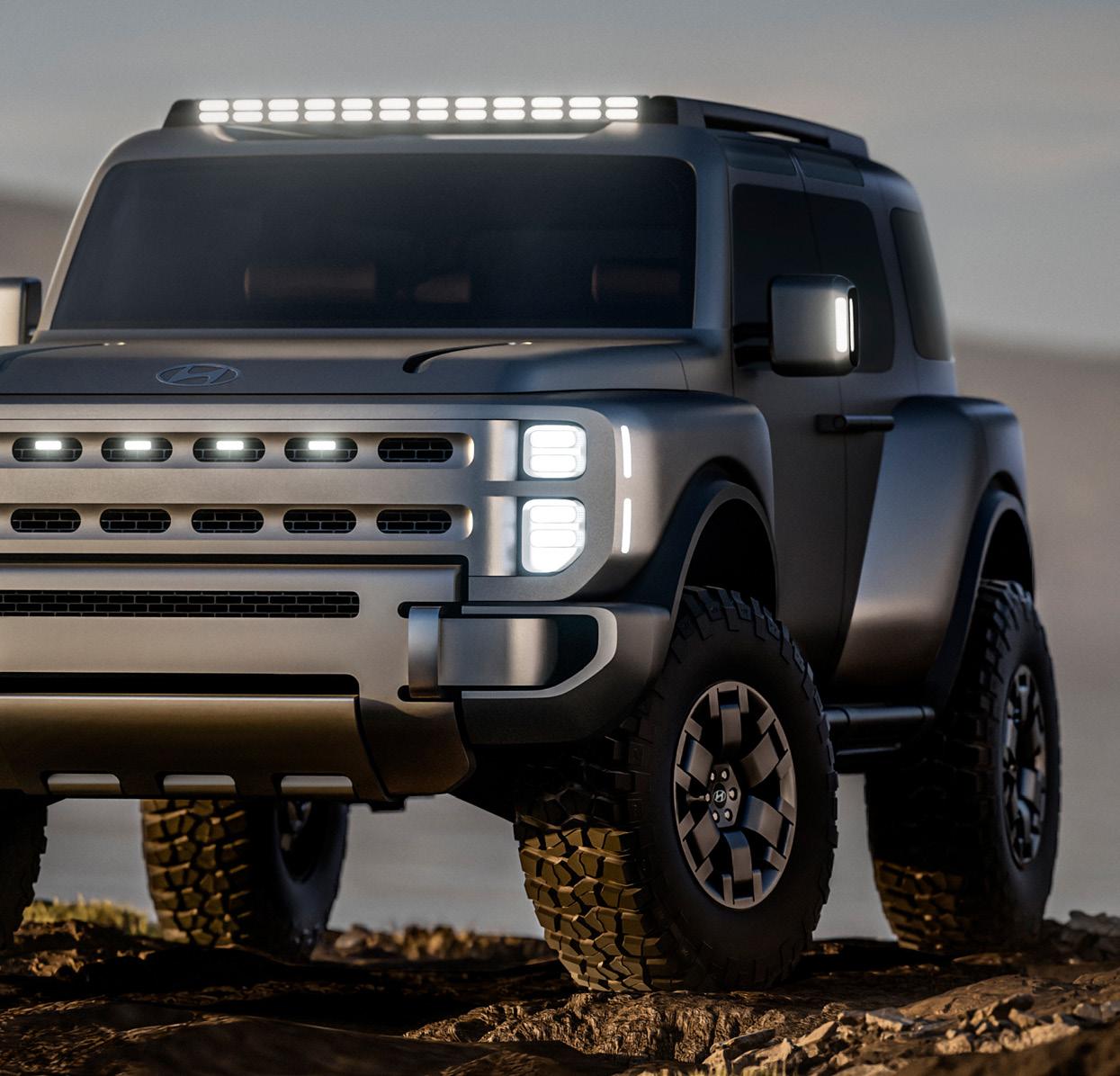
THE COMPANY SAYS THE NEW PLATFORM WILL UNDERPIN A PRODUCTION MIDSIZE PICKUP TO BE DELIVERED BY 2030.
mud-terrain tyres, supported by generous ground clearance and aggressive approach, departure and breakover angles. A full-size spare is mounted at the rear.
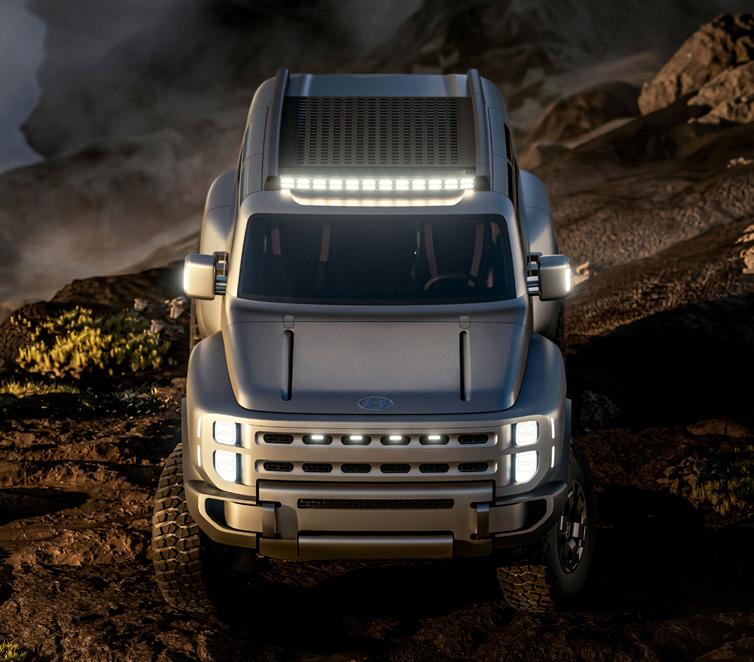

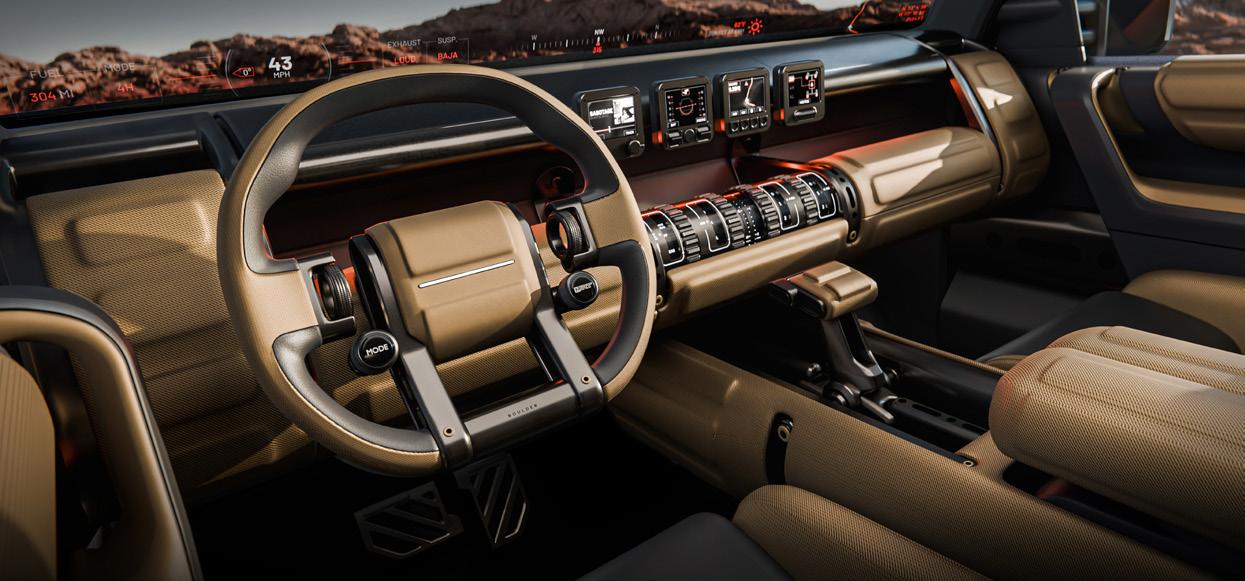
The concept also introduces a softwaredriven, real-time off-road guidance system, acting as a digital spotter to assist drivers over challenging terrain.
Inside, the cabin is designed for durability and practicality, with heavy-duty materials, prominent grab handles and
tactile physical. A configurable interior layout includes fold-out tray tables, catering to both worksite tasks and outdoor recreation.
In a media release, Hyundai and Genesis Global Design head SangYup Lee described the vehicle as a “four-wheeled love letter” to off-road enthusiasts, while Hyundai Motor North America CEO Randy Parker said that “Developing a robust midsize pickup is a significant growth opportunity for Hyundai in the United States.”
While still a design study, the Boulder Concept lays the groundwork for some exciting work from Hyundai.”

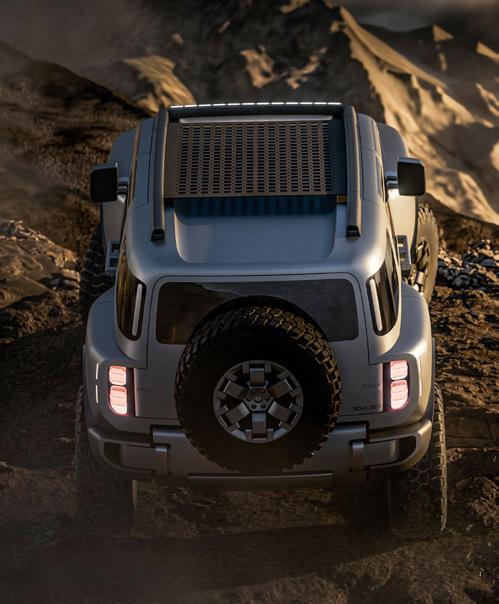








Protects you and the people who matter most when life doesn’t go to plan.
Fees are deducted directly from your super, not your take-home pay.
Flexibility to change your cover anytime to match your needs and budget.
See how insurance through super can work for you