
THE ROAD TO PROSPERITY
How the next Government and the Automotive Industry can drive economic growth.
THE ROAD TO PROSPERITY
OUR ROADMAP FOR A STRONGER AUTOMOTIVE INDUSTRY AND ROBUST ECONOMIC GROWTH.
The automotive industry keeps New Zealand moving forwards. It drives growth, productivity and employment for thousands of New Zealanders.
A strong industry is fundamental to the strength of the country. Without it, communities would come to a standstill.
The Motor Trade Association (MTA) is the voice for the automotive industry. We represent more than 4000 businesses across the sector, from the smallest workshop to multinational companies.
Each one of them enables New Zealanders to travel for work, leisure, and essential purposes. Most importantly, each one contributes to our economic wellbeing and our financial future.
The automotive industry is a cornerstone to the growth of the country. Growth that will expand the economy through enterprise and innovation.
Growth must be at the forefront of the next government’s agenda. The automotive industry is poised not only to support that growth, but drive it by working with the next government.
And the industry is strong. The sectors represented by MTA employ over 65,000 people and have close to 16,000 separate geographic business units. Together they produce $6.8 billion of gross domestic product (GDP), representing 1.9% of New Zealand’s total GDP.*
But strong as the industry is, it is operating under restraints and challenges that we can address together. Once done, we will grow the industry and the economy and build resilience to shocks and changes both seen and unforeseen.
New Zealand is poised for growth. The automotive industry is ready to work with government to deliver it.
On these pages, we outline how the next government, through a series of reforms and innovations, can create a stronger industry for all New Zealanders.
That is the road to prosperity.

Full page image (to come)
DRIVING THE NUMBERS
DRIVING THE NUMBERS
INDUSTRY INSIGHTS
65,830 employees in automotive industry 11% fall in GHG emissions per vehicle kilometre travelled over last 10 years
apprentices in training every year
$6.8B contribution from automotive sectors to GDP (1.9%) 13% of fleet expected to be electrified by 2035
15,969 Business Units
kilometres travelled by fleet in 2025
4.75M vehicles in national fleet
Source: NZIER
The Road to Prosperity
PRESSING START ON PROSPERITY

STURROCK SAUNDERS
MTA President
PRESIDENT’S INTRODUCTION
IT GIVES ME GREAT PLEASURE TO INTRODUCE THE ROAD TO PROSPERITY , THE MOTOR TRADE ASSOCIATION’S ROAD MAP FOR WORKING WITH THE NEXT GOVERNMENT TO ACHIEVE GROWTH AND PROGRESS.
MTA has a long and productive history of collaborating with government, ever since MTA was established in 1917.
Even then, both MTA and the government of the day faced familiar challenges: building a well-trained workforce; leveraging incoming new technology; lifting the standard of the industry; and vehicle safety. In fact, safety was the founding principle of MTA.
In the years since, MTA has worked with governments to rebuild and move forward after two world wars, fuel shocks, labour shortages and more recently the Covid pandemic.
Through our work with government in that time, MTA has firmly established itself as the voice of the automotive industry. We represent all businesses, big and small, that keep New Zealand moving.
As the numbers opposite illustrate, the automotive sector is a significant contributor to the country and the economy.
But numbers alone do not tell the full story. The automotive industry’s value runs far wider. Every New Zealander, every business, depends on it.
Successive governments have recognised this contribution and value to the nation’s wellbeing. We have no doubt the next government will too.
This year, political parties of every hue are rightly focused on delivering growth and prosperity. MTA, MTA members and the wider automotive industry share that vision.
But we can do more than that. We can drive it. We can deliver it.
This publication is the start button for creating a better New Zealand. Let’s press it together.
DELIVERING A BETTER NEW ZEALAND
WELCOME TO THE ROAD TO PROSPERITY – THE MOTOR TRADE ASSOCIATION’S STRATEGIC PLAN FOR HOW THE NEXT GOVERNMENT AND THE AUTOMOTIVE INDUSTRY CAN COLLABORATE TO CREATE GENUINE ECONOMIC GROWTH.
The sectors that MTA represents contribute some 1.9% of GDP. Yet numbers alone do not tell the full story. Every workshop, dealership, parts distributor, collision repairer, and service station plays a vital role in enabling the nation: getting people to work, goods to market, families to their destinations, and connecting communities.
Vehicular transport is deeply embedded in how we live, work, and build prosperity — and it will remain so for decades to come. Our dependence and enjoyment of private vehicle transport show no sign of going anywhere.
Drawing on recently conducted research commissioned by MTA, The Current and Future State of the New Zealand Vehicle Fleet and Industry, our advocacy calls are
based on extensive data and the insights of industry experts and leaders.
The results of the research challenged conventional thinking in several areas but landed on two overarching conclusions: the automotive industry is integral to our country – not only as a significant contributor to the economy, but as a key component of successful government strategy, business enterprise, and people’s daily lives; and the industry, strong as it is, faces headwinds that government and the sector must work together to overcome in order to support economic growth and a better New Zealand for all. These conclusions have underpinned this manifesto and its title.
MTA holds unique licence and authority to represent the automotive industry. Sector-
based Expert Advisory Groups give us real-time insight from businesses; our Industry Leaders Forum brings together the leaders of the largest companies and organisations in our sector; and our stakes in AUXO Software and VTNZ also give us an unparalleled window into vehicle maintenance and compliance.
Accordingly, MTA is truly the voice of the entire industry — from the smallest independent workshop to the largest multinational.
MTA’s vision is simple yet ambitious: a thriving and progressive automotive industry. That means a skilled workforce that can meet tomorrow’s demands, a safer and cleaner fleet that protects our people and our environment, a fair regulatory playing field that rewards
innovation and entrepreneurship, and a serious focus on the rising tide of crime that is undermining service stations and, by extension, community safety.
We also call for parties to work together for the productivity, safety, environmental, and enablement outcomes industry needs. A polarised approach by government that seeks only to reverse the policy of its predecessors serves no one.
The industry is facing the biggest step change in its history as it transitions to low-emissions technology, complex safety systems, and a greater dependence on vehicle software than ever before. It is a challenge, but one that brings unique opportunities for collaboration beyond any three-year electoral cycle.
The Road to Prosperity sets out a clear, practical, and cost-effective set of proposals across four priority areas.
Each one is grounded in evidence, shaped by consultation with the most successful and innovative leaders in the automotive sector, and designed to deliver measurable gains for the wider economy. This is not just MTA’s roadmap; it is the industry’s roadmap. We are proudly an apolitical organisation, ready to work with whoever the next government may be to remove roadblocks and accelerate progress.
The automotive industry is ready. We have the people, the data, the technology, and the will. What we need now is a government that shares our ambition and is prepared to partner with us.
The Road to Prosperity is our invitation to that partnership. Let’s build the stronger, safer, more prosperous country every New Zealander deserves.
CEO’S OVERVIEW

LEE MARSHALL MTA CEO

THE ROADMAP
THE ROADMAP
THERE ARE FOUR ROUTES FOR INDUSTRY AND GOVERNMENT TO GROWTH AND PROSPERITY.
A SKILLED WORKFORCE
People make the automotive industry strong. A growing industry needs people with skills and experience. Employers need support in taking on new workers, from here and overseas. Innovation and enterprise will futureproof industry and position New Zealand for growth.
A SAFER FLEET
All New Zealanders deserve safe vehicles, safe roads, safe air. A new approach is needed to transition our fleet to one that supports government targets for better population health, road safety and harmful emissions.
A FAIR PLAYING FIELD
Regulations and rules must keep pace with progress. Government and industry can work together to streamline process and relieve unproductive pressure points and increase competition, especially for small-medium enterprises.
A FOCUS ON CRIME
Service stations provide the essential fuel to connect people for work and play. Yet they are the most vulnerable businesses in our communities for crime. Industry, government and police can work together to keep hardworking New Zealanders and communities safe.
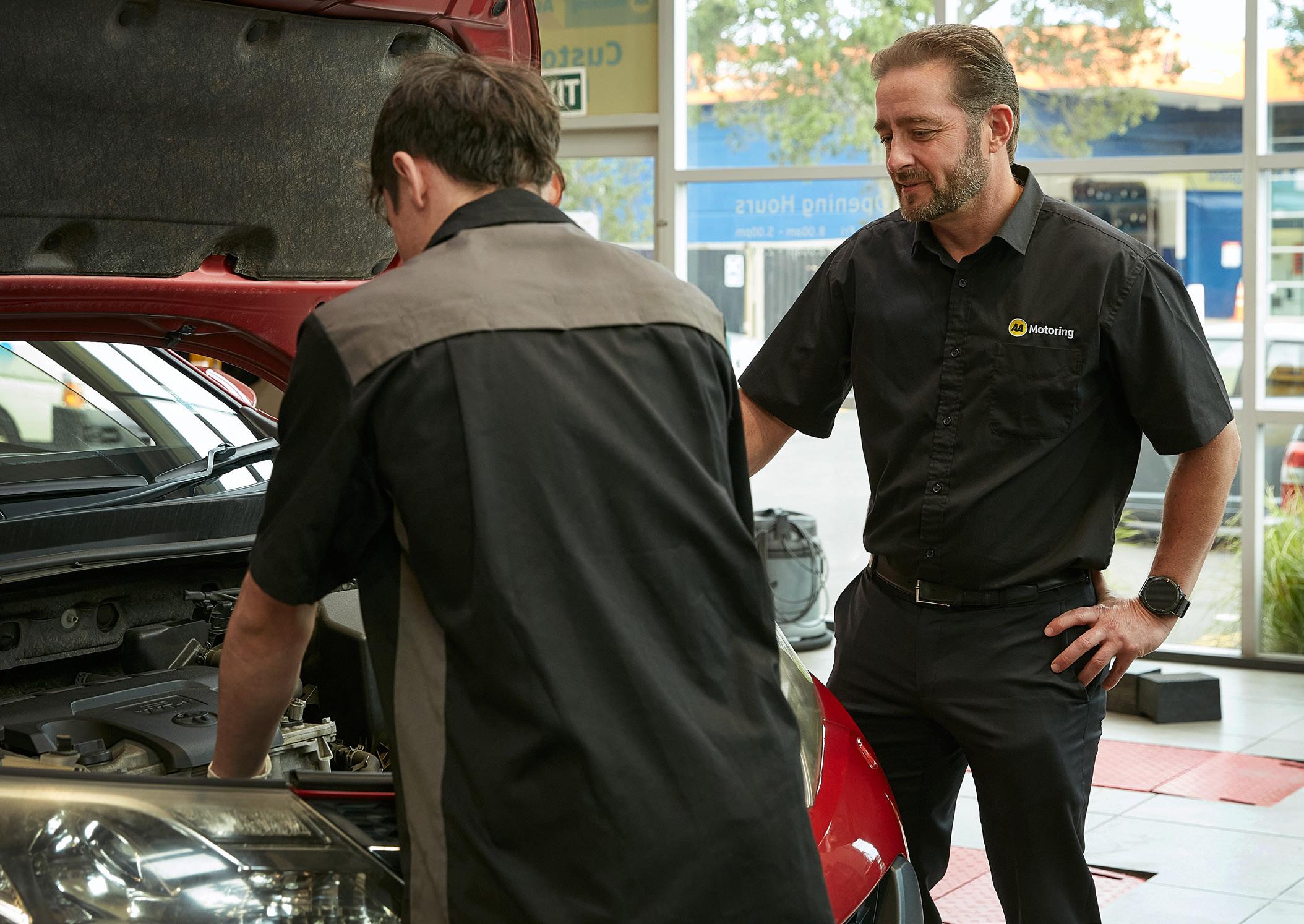
The Road to Prosperity
A SKILLED WORKFORCE
INDUSTRY-LED GREEN LIST ROLES
A SKILLED WORKFORCE 08
THE FAULT: Green List settings can significantly lag real-time shortages, creating delays, repeated lobbying cycles and uncertainty for employers and migrants.
THE FIX: Introduce an industry-led quota model where approved peak bodies manage a fixed annual allocation of priority roles, with Immigration New Zealand (INZ) retaining oversight and enforcement powers.
WE PROPOSE:
• Approved peak bodies receive an annual skills quota and can swap roles in and out as needs change by notifying INZ.
• Role changes would be supported by evidence (workforce data, vacancy duration, training pipeline).
• INZ retains authority to suspend roles, impose conditions, and bar non-compliant employers from hiring migrants.
• Fixed quotas are administered by accountable organisations such as MTA — this is not an open-ended expansion of access.
EXPECTED IMPACT:
• Faster response to genuine shortages and less bureaucratic churn and politicisation of roles.
• Clearer accountability for industry and better stewardship of settings.
• More predictable access to skills where domestic pipelines cannot meet demand.
• Less pressure on government to administer.
SAFEGUARDS AND ACCOUNTABILITY:
• Eligibility criteria for approved peak bodies (standards-based membership, compliance capability, complaints mechanism).
• Independent audit and regular reporting to maintain system integrity.
• Sanctions for misuse, including removal from the scheme and INZimposed hiring prohibitions.
A SKILLED WORKFORCE 09
LESS COMPLIANCE, MORE AGILITY FOR MEMBERS OF APPROVED PEAK BODIES
THE FAULT: The Accredited Employer Work Visa (AEWV) process can be slow and duplicative where some peak bodies already provide established standards and oversight, diverting INZ resources from genuine risk.
THE FIX: Streamline AEWV settings for members of approved standards-based peak bodies by removing the need for employer accreditation and job checks, while maintaining strong enforcement.
WE PROPOSE:
• Members of approved peak bodies can skip employer accreditation, recognising existing oversight and standards.
• Skip the job-check requirement for these employers and focus INZ effort on risk-based monitoring and enforcement.
• Simplify job mobility: allow migrants to move between member businesses covered by the same approved peak body, requiring only a simple notification to INZ.
• Peak bodies refer concerns or complaints to INZ. INZ retains full authority to prohibit a business from hiring migrants and may recommend removal of that business from the peak body.
EXPECTED IMPACT:
• Reduced delays and lower compliance costs for trusted employers.
• Better targeting of INZ resources to higher-risk activity.
• A more agile labour market response while maintaining standards.
• Less INZ-created labour shortages, leading to a more competitive industry with better outcomes for consumers.
SAFEGUARDS AND ACCOUNTABILITY:

• Peak bodies have a vested interest in doing the right thing in order to maintain their ability to administer for the industry they serve.
• INZ retains enforcement and prohibition powers.
A SKILLED WORKFORCE 10
SKILLED MIGRANT CATEGORY — TRADES AND TECHNICIANS PATHWAY
THE FAULT: The forthcoming pathway is a positive step but must keep pace with changing shortages and training pipelines. It is also difficult for INZ to identify and maintain a list of the necessary roles within a given trade; this should be industry-led.
THE FIX: Give approved standards-based peak bodies a more prominent role in recommending additions and removals of eligible roles, backed by industry-supplied evidence.
WE PROPOSE:
• Establish a shared-management process between INZ and approved peak bodies to update eligible roles on an ongoing basis.
• Require workforce evidence for changes and publish the rationale to maintain transparency.
• Maintain INZ control over visa integrity settings and final decisions.
EXPECTED IMPACT:
• A pathway that remains aligned with actual industry demand.

• Greater certainty for employers and migrants.
• Better alignment between migration settings and domestic training pipelines.
A SKILLED WORKFORCE
REPLACE APPRENTICESHIP BOOST WITH A NATIONAL TRADES TRAINING FUND
THE FAULT: New Zealand’s ambition is limited by shortages of tradespeople and technicians. Major roading and construction projects need people to deliver them, with NZIER estimating each apprentice costs a business $80k–$100k per year after supervision and inefficiencies — only negligibly offset by Apprenticeship Boost.
Budget 2026 scrapped the ineffective Final Year Fees Free; we support redirecting the $150m–$200m annual savings to trades via a credible delivery mechanism.
THE FIX: Consolidate employer apprenticeship support into a single NTTF. Ensure we invest in the graduates we need tomorrow, today.
WE PROPOSE:
• Establish the National Trades Training Fund as the consolidated funding stream for trades and technical apprenticeships, replacing Apprenticeship Boost.
• Remove barriers to young people starting and completing apprenticeships, including tools, PPE and supervision support where appropriate.
• Target trades and technical roles that underpin transport delivery, infrastructure, and fleet resilience (construction, civil, mechanical, electrical, heavy automotive, and fleet maintenance).
• Make access simple for employers and providers, with clear eligibility and quality requirements.
• Build in regular review of in-scope occupations so the Fund tracks genuine workforce demand rather than legacy lists.
EXPECTED IMPACT:
• Significantly lower barriers for employers to take on apprentices and invest in training.
• More capacity to deliver the roading and transport programme, maintain the vehicle fleet, and keep the country moving.
• A stronger, more reliable domestic skills pipeline and reduced reliance on migrant labour over time.
• Lower youth unemployment. Less reliance on immigration. A durable solution to skills shortage.
‘INVEST IN THE fuTuRE’
THE COUNTRY NEEDS TO SUPPORT THE FUTURE OF TRADES, AND TO DO THAT TRADES HAVE TO BE ATTRACTIVE FOR YOUNG PEOPLE. IT’S NOT LIKE THE IMPORTANCE OF TRADES IS GOING AWAY.
In fact, it’s increasing. You can’t have a growing economy with a growing population without putting an emphasis on the trades that keep people housed and moving.
People in the industry are well aware there needs to be a future for the industry. The sentiment is there, the positivity is there — but there are barriers that are just a little bit too much to overcome at the moment.
A business carries the cost of an apprentice. When an apprentice comes on to the floor, the business is really not getting much out of it. That business is doing it for the sake of the industry and that person, to give them a career. You have to cover an extra wage. And an extra headcount to your wage bill is always a massive shift.
You have to supervise an apprentice, nurture them, foster them. You need to give them work, but this is considerable time investment and cost in training and supervision. Go unchecked, if they get it wrong you can lose a customer or create safety issues.
The employer and industry shouldn’t carry the majority of the cost for doing that. It also pushes cost on to the customer. Apprenticeship Boost helps, and we appreciate it, but with limited investment we have limited development.
Government funding needs to be ramped up significantly. The concept of a national trades training fund is a means to build for the future. We need to have everybody on board to create our mechanics for the future. It truly is an investment in the country.
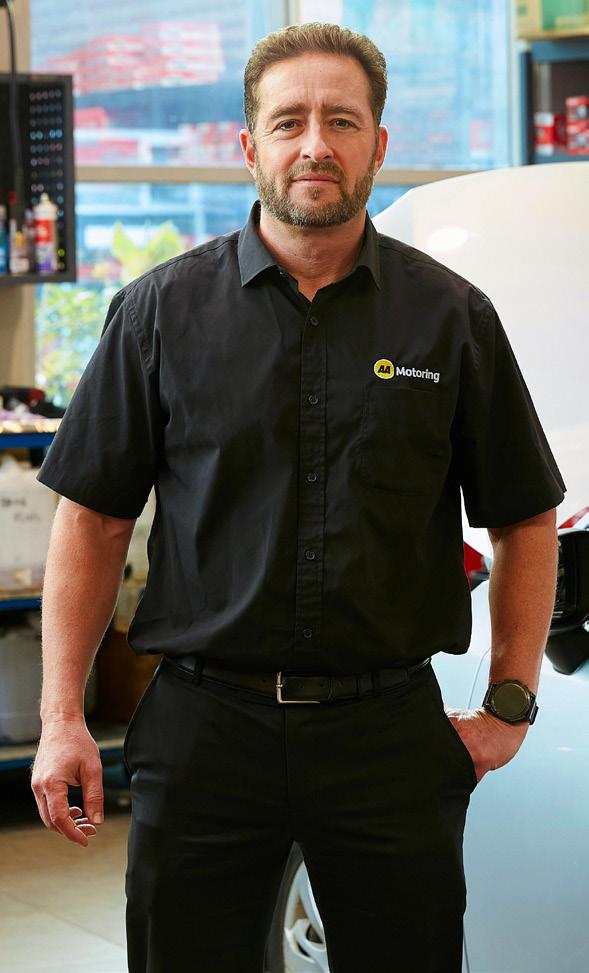
DAMIAN HOORN
Managing Director AA Auto Centre

Rivi Leiua began his automotive career studying MITO micro-credentials at high school. Now he aims to open his own workshop.
A SKILLED WORKFORCE
INSPIRE SECONDARY SCHOOL STUDENTS WITH WORKPLACE EXPERIENCE
THE FAULT: Vocational learning in secondary schools is still too classroom-based. Students miss the chance to experience first-hand the excitement and rewards of the industry, as well as seeing the essential functions of the workplace. The result is a gap between what employers see at the school gate and what an apprentice needs to quickly become a valuable asset. The design of the new qualifications system is a once-in-a-generation opportunity to embed real workplace learning as the default for trades pathways, rather than treating it as an optional extra.
THE FIX: As part of the replacement of NCEA, require all secondary trades programmes to include a mandated workplace component delivered in real workplaces.
WE PROPOSE:
• Ignite learner interest and workplace readiness with 50% hands-on workplace training.
• Allow polytechnic, digital and classroom-based components to complement workplace learning, not replace it — covering theory, foundational skills, and assessment that genuinely needs a controlled environment.
• Provide a clear funding mechanism that supports both schools and host employers, recognising the time and supervision cost employers absorb when taking on a school-based learner.
• Include workplace readiness in the pathway: communication, timekeeping, customer interaction, and professionalism.
EXPECTED IMPACT:
• Students leave school with practical, demonstrable skills — backed by qualifications.
• Smoother, faster transitions from school into apprenticeship, with less drop-out in the first year.
• Progress on youth unemployment and long-term reduction in immigration reliance.
• A more credible vocational pathway as NCEA settings are replaced, helping shift the cultural perception that ‘academic’ and ‘vocational’ are a hierarchy rather than parallel routes.
A SAFER FLEET
A SAfER FLEET
FLEET UPGRADE SCHEME: A NEW LEVER FOR SAFETY AND EMISSIONS
THE FAULT: New Zealand needs a practical lever to lift fleet safety and reduce transport emissions. The Clean Car Standard only influences the emissions profile of newly imported vehicles. It does nothing about the legacy fleet already on the road, which is where safety risk and emissions intensity are most concentrated.
The average age of a vehicle in the light passenger vehicle (LPV) fleet in 2024 was 15.2 years, compared to 14.3 years in 2015. In comparison, the average age in the European Union in 2023 was 12.5 years, up from 12 years in 2021.
THE FIX: Pilot a targeted Fleet Upgrade Scheme as a complementary safety and emissions lever: a $2000 allowance for motorists who surrender and permanently scrap a registered vehicle aged 20 years or older, redeemable towards a newer replacement vehicle.
WE PROPOSE:
• Position the scheme as a complement to whatever import-side settings remain in place, targeting the part of the fleet where safety risk and emissions intensity are concentrated — without penalising newer vehicle purchases.
• Use a rolling 20-year threshold to keep the scheme focused on the oldest end of the fleet.
• Require the replacement vehicle to be 10 years old or newer, with no powertrain bias — a newer ICE vehicle is still meaningfully cleaner and safer than a 20+ year-old one.
• Fund a time-limited pilot via the National Land Transport Fund (for example, 1%). Illustrative scale: if NLTF investment is approximately $5.72 billion (2024/25), 1% would be around $57 million per year, supporting approximately 28,000 vehicle upgrades annually at a $2000 voucher.
• Require proof of scrappage and enforce anti-fraud settings.
EXPECTED IMPACT:
• Accelerates removal of the oldest, least safe, and highestemitting vehicles.
• Improves road safety outcomes and supports emissions reductions through targeted fleet renewal.
• A relatively cheap route to transport emissions reductions with practical support geared towards the most disadvantaged in society.
A SAFER FLEET
A MORE BALANCED WARRANT OF FITNESS REGIME
THE FAULT: Recent Warrant of Fitness (WoF) reforms extend to two-yearly inspections of vehicles up to 14 years old (phased from November 2026). Significantly, given the aging fleet, this is not supported by safety evidence. WoF fail rates rose from 37% in 2017 to 41% in 2024 — a figure that includes retests and understates unsafe vehicles on the road. The reforms stand to significantly reduce national fleet safety.
ADAS checks are sensible but should not justify materially longer inspection intervals, as they do not replace core roadworthiness checks (tyres, brakes, steering, suspension).
THE FIX: The next government does not automatically proceed with the second phase of the reforms — the extension of biennial WoFs to vehicles aged seven to 14 years. At minimum, delay the second tranche by two years so that data from the first tranche can be assessed.
WE PROPOSE:
• If the next government intends to proceed with the second phase, it should be delayed from November 2027 to November 2029. A two-yearly WoF cycle takes two years; the second tranche is currently timed to arrive before even one full cycle has played out under the first. A two-year delay allows that cycle to complete and provide actual evidence — real vehicles, real defects, real data — before the next set of changes lands.
• Maintain a simpler regime for pre-2000 vehicles, provided complementary road safety measures support fleet renewal.
• Commence public consultation on mileage-based inspections alongside the move to digital and universal Road User Charges (RUCs). As digital RUC infrastructure matures, mileage data could support a shift towards inspections tied to usage rather than age alone — a more targeted and evidence-based approach.
EXPECTED IMPACT:
• Inspection effort remains targeted to higher-risk vehicles, including the older end of the fleet where defects are most concentrated.
• Evidence-based decision-making on further reform, rather than compounding settings before any data is available.
• A credible platform for future mileage-based approaches as digital RUC capability expands.
The Road to Prosperity
‘PEOPLE wON’T PREPARE fOR THE COST’
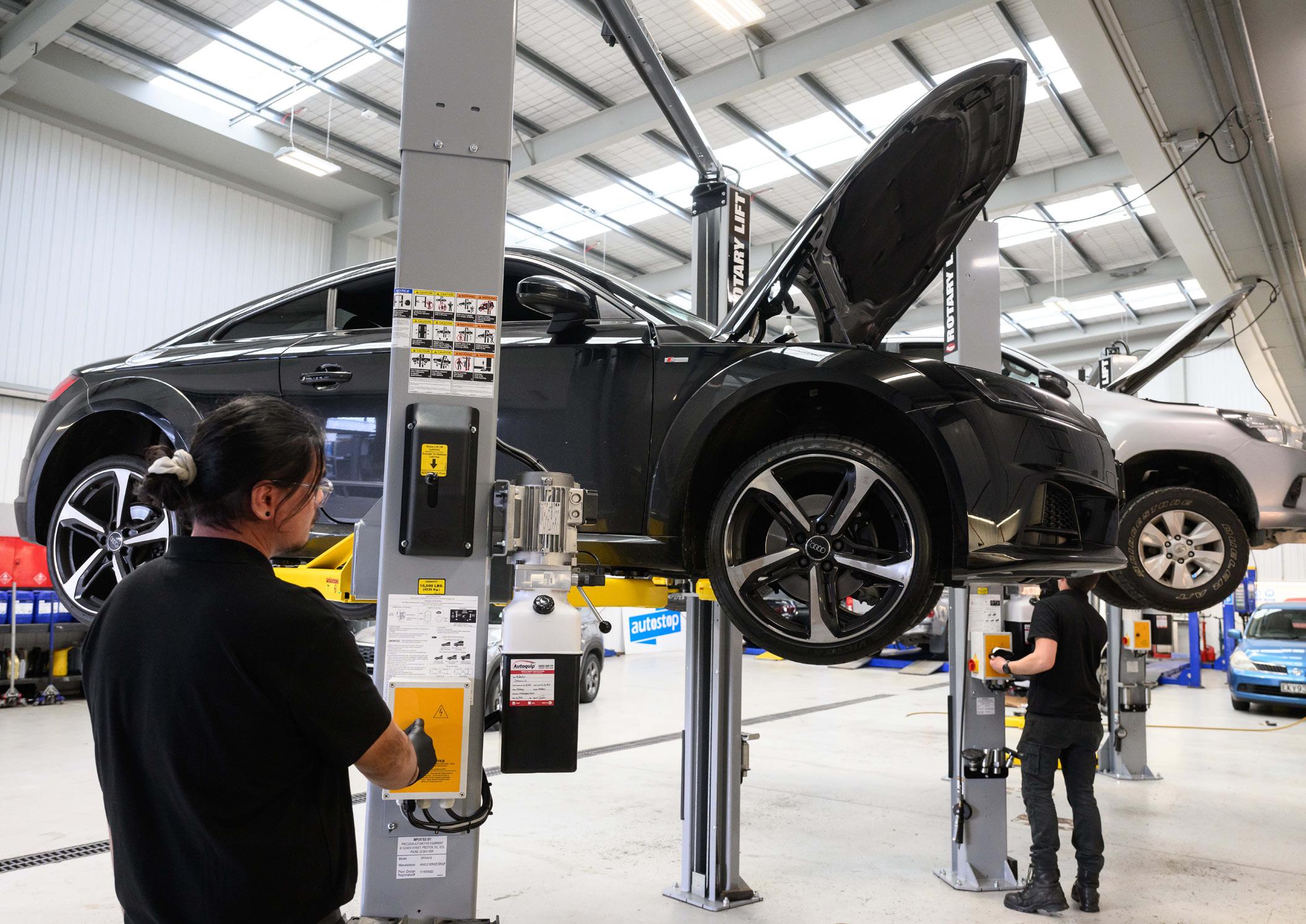
WE DO ABOUT 100 WARRANTS OF FITNESS A MONTH. EVEN UNDER THE CURRENT RULES, WE SEE TYRES WITH CORDS HANGING OUT, BRAKE PADS WORN DOWN, HEADLIGHTS NOT WORKING, STOP LIGHTS OUT.
Under the new regime, there are implications for safety and cost that we need to work on together.
The two-year warrant needs to stop at seven years. That’s two of them, that’s enough. After that a vehicle needs more frequent inspections to make it safe. There’s still time to fix this, if the change planned next year for cars eight to 14 years old is dropped.
Two years between warrants potentially means two years driving on bald tyres over two winters, more chance of sliding off the road, more crashes. Especially if the brakes aren’t as good as they should be.
The four-year warrant for new cars was going too far. A brand new car on a four-year warrant can easily do 100,000km. It could need two sets of tyres and new brakes — so someone who knows what they’re doing has to be checking it, to catch it.
Your car should be serviced annually too and many people do that at warrant time, so a lot of drivers are going to put off their service. So if it doesn’t go in for the annual service, no one’s going to be checking for safety.
You can’t rely on people to know if there’s something wrong with their car. It might look ok but you don’t know until it’s on the hoist. If the car’s going fine, people just drive it until it’s not going fine, and sometimes that’s too late.
Putting off work like replacing brake pads or tyres is just going to make it more expensive when you do – double the cost at least. And people won’t prepare for that cost.
The automotive industry will do its best to keep everyone safe, like we always do. But it’s essential the government teaches and supports people to look after their vehicle safely too.
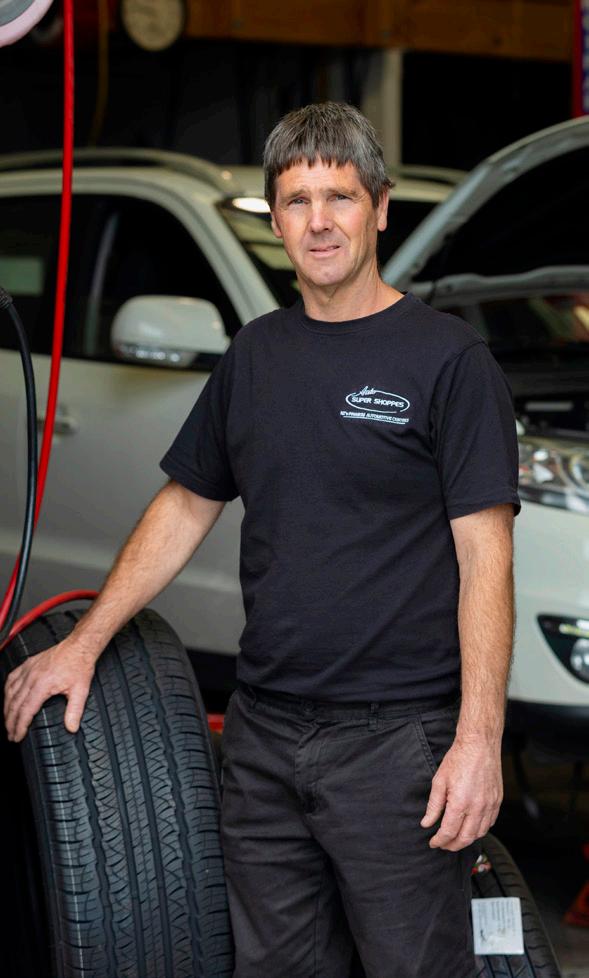
DAVID COX
Auto Super Shoppe New Plymouth MEMBER’S
A SAFER FLEET
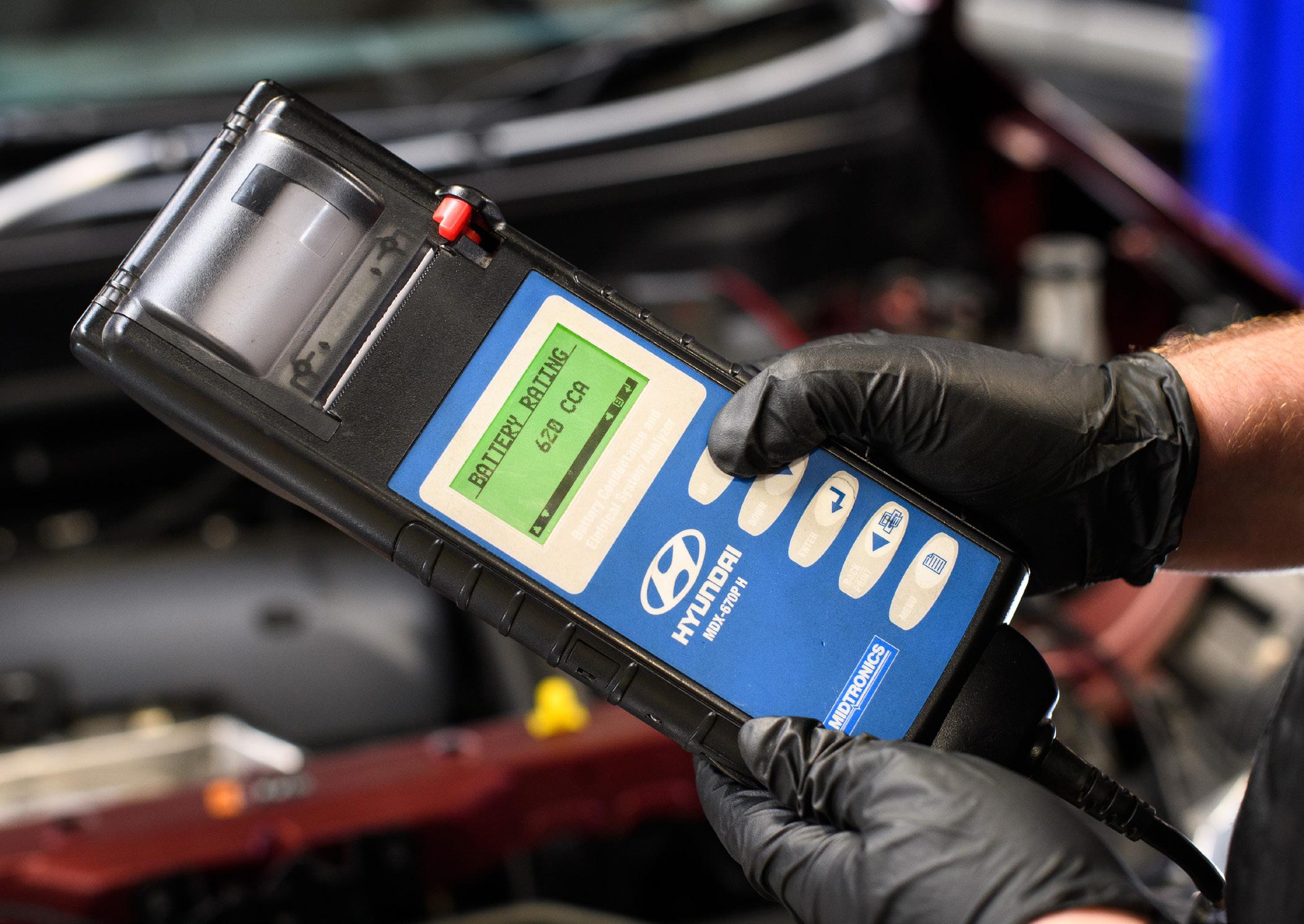
BATTERY PRODUCT STEWARDSHIP USING TYREWISE AS THE MODEL
THE FAULT: Electrified vehicles look set to drastically reduce transport emissions, but the absence of any system to appropriately manage end-of-life batteries poses a large environmental risk. Tyres now have a working regulated product stewardship scheme under the Waste Minimisation Act 2008 (Tyrewise), but batteries do not, despite the existence of organisations already set up to govern it and it being declared a priority product by the Ministry for the Environment some years ago.
THE FIX: Direct the Ministry for Cities, Environment, Regions and Transport (MCERT) to complete and gazette battery regulations under the Waste Minimisation Act 2008, modelled on the Waste Minimisation (Tyres) Regulations 2023, so the scheme can be accredited and made operational — and result in improved environmental outcomes.
WE PROPOSE:
• Use Tyrewise as the regulatory template — same legislation, same 2020 priority product declaration, same PSO (Auto Stewardship New Zealand), same industry co-design model.
• Costs of future processing are captured at the point of border entry, weighted by battery type, capacity, and end-of-life handling cost.
• Require all importers, sellers, transporters, repairers handling end-of-life batteries, and processors to register with the scheme and operate under an audited code of practice.
• Set recycling and recovery targets under the Waste Minimisation Act 2008, with the PSO reporting to the Secretary for the Environment.
EXPECTED IMPACT:
• A working, regulated, industry-funded scheme in place ahead of the projected end-of-life battery wave — not after it.
• Reduced fire and contamination risk across workshops, scrap yards, transporters, landfills, and council facilities.
• Clearer liability and chain-of-custody arrangements for repairers, dismantlers, and dealers handling damaged or endof-life packs.
• Cost burden shifts from the back end (councils, ratepayers, emergency services) to the front end (point of import), consistent with the principles of regulated product stewardship.
A SAFER FLEET
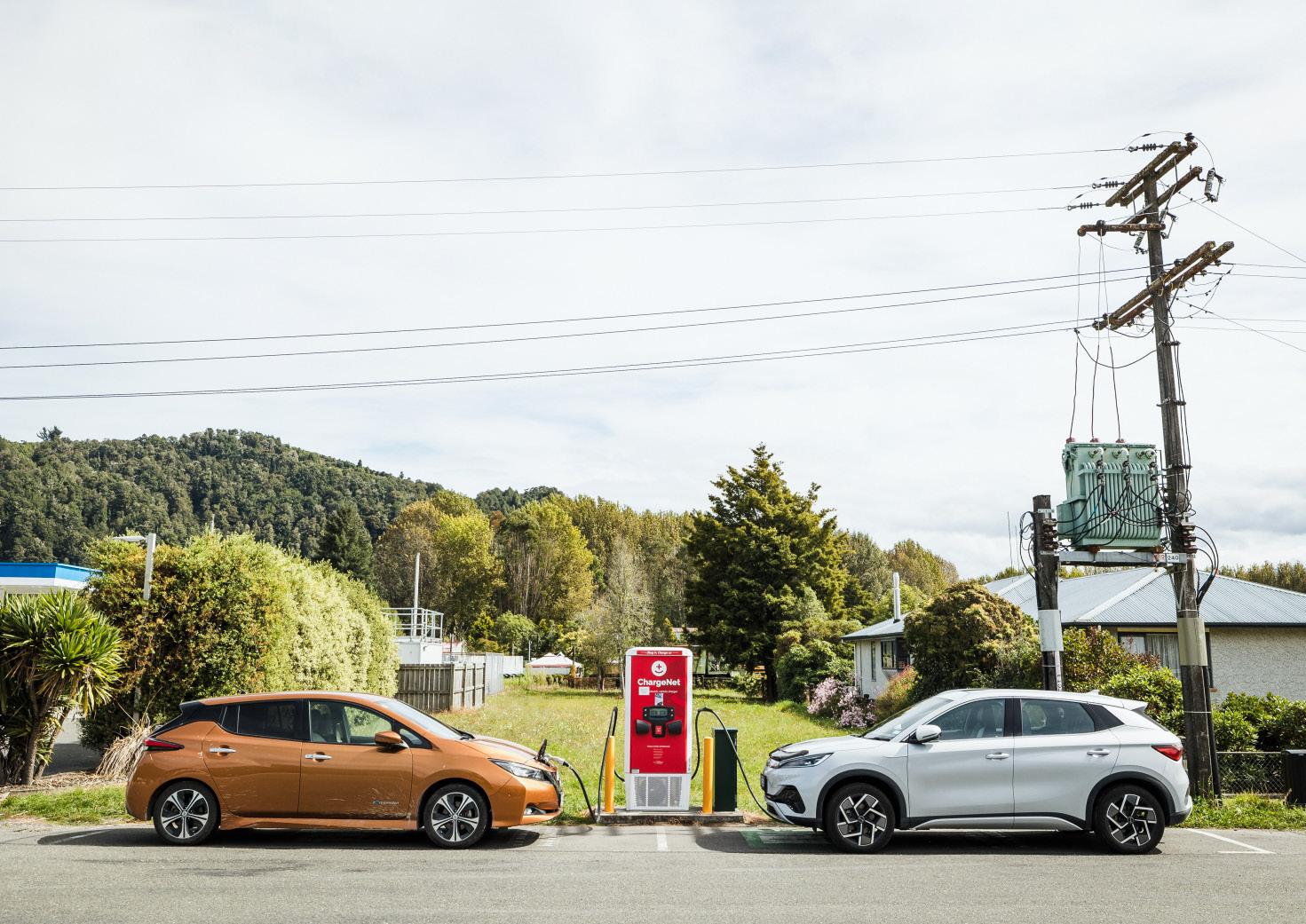
INVESTMENT BOOST EV UPLIFT — ACCELERATING FLEET ELECTRIFICATION
THE FAULT: Business fleets are the dominant entry point for new vehicles, which later become sought-after ‘NZ New’ used vehicles for households. The current tax framework treats business vehicle investment uniformly, with no mechanism that recognises the national fleet safety, productivity, and decarbonisation benefits a business causes when it acquires an EV. The Investment Boost scheme, introduced in Budget 2025, provides a ready-made framework to recognise this through the same productivity logic the government has already endorsed for capital investment generally.
THE FIX: Through Investment Boost, allow electric vehicles double the current depreciation rate to 40%. Legal structure already exists. Result: No new programme, no new compliance regime, no new spending line.
WE PROPOSE:
• Eligible vehicles: battery electric vehicles purchased as new business assets on or after the policy commencement date.
• Enhanced rate: 40% upfront tax deduction in the year the asset is first available for use, in addition to ordinary depreciation on the remaining 60% of the cost base.
EXPECTED IMPACT:
• Lifts business EV uptake at the point where the majority of new vehicles enter the fleet, with flow-on transport decarbonisation benefits.
• Supports a strong second-hand market within three to five years, increasing EV availability (and potentially lowering cost) for households, without a direct consumer subsidy.
• Accelerates fleet renewal at the productivity-driven entry point — business purchase — with flow-through to fleet-wide operating cost and emissions outcomes.
• Aligns with the government’s own productivity framing — fleet renewal as a productivity and capital-investment outcome.
A FAIR PLAYING FIELD 24
A fAIR PLAYING FIELD
DEBANKING: THE NEED FOR SURETY TO INVEST
THE FAULT: In the drive to decarbonise bank lending portfolios, businesses in the automotive sector are increasingly finding themselves locked out of services or unable to finance necessary business improvements. This is perpetuating a consolidation of small Kiwi-owned businesses into large externally financed corporates — moving profits offshore, reducing local business ownership, reducing competition, and blocking local investment.
THE FIX: Establish basic monitoring of debanking activity so that regulators, government, and affected sectors have visibility of the issue. This is a transparency and data ask, not a new regulatory regime on bank exit decisions.
WE PROPOSE:
• Banks are required to report anonymised data on business banking exits to an appropriate regulator (e.g. the Commerce Commission), including sector, reason category, and notice period given.
• The regulator publishes an annual summary, so patterns of sector exit are visible to government, Parliament, and the public.
• Affected sector bodies (such as MTA for fuel retailers) have a clear channel to raise systemic concerns and request closer regulatory attention where patterns emerge.
• Government consideration is given to how nationally important local businesses can be supported through the era of debanking
EXPECTED IMPACT:
• Better visibility of systemic issues for regulators, government, and affected sectors.
• An evidence base to inform any future policy response, rather than acting on anecdote.
• Preserves bank risk management while shining a light on patterns that warrant attention.
• Local businesses can have some courage to invest, knowing the struggles are recognised and monitored.
A FAIR PLAYING FIELD 25
LEVEL THE PLAYING FIELD IN COMMERCIAL CONTRACTING
THE FAULT: Small businesses — including franchisees and SME suppliers — routinely contract with much larger parties under standard terms with little ability to negotiate. New Zealand has no franchise-specific regulation, so franchisees are exposed if relationships deteriorate or brands restructure. Unfair contract terms protections exist in the Fair Trading Act, but enforcement has been modest and little has been done around terms that are inherently unfair.
THE FIX: Introduce a mandatory franchising regime and actively enforce existing unfair contract terms protections, so smaller parties are better informed at the outset and better protected if things go wrong.
WE PROPOSE:
• Establish a mandatory franchising regime (standalone Act or code) with standardised pre-contract disclosure (fees, renewal rights, termination grounds, key risks), a cooling-off period, and a low-cost specialist dispute resolution pathway (mediation first, then fast-track determinations).
• Fund a Commerce Commission programme of sector enforcement and contract audits, prioritising sectors where small firms contract with dominant parties (including supply chain and platform contracts).
• Publish guidance on high-risk terms (unilateral variation, termination at will, excessive indemnities, automatic renewal traps), with measurable annual enforcement outcomes.
EXPECTED IMPACT:
• Better-informed investment and contracting decisions by small businesses.
• Fairer renegotiations, renewals, and exits.
• Lower transaction and litigation costs.
• Greater confidence for investment.


The Road to Prosperity
A BETTER PERFORMING FUEL MARKET
A FAIR PLAYING FIELD 28
THE FAULT: The Fuel Industry Act 2020 provides fuel intermediaries with important relief from long-term sole-supply wholesale supply contracts — but those protections do not extend to independent retailers. As a result, many independent fuel retailers remain locked into single-supplier contracts.
THE FIX: Amend sections 17 and 18 of the Fuel Industry Act 2020 by replacing ‘distributor’ with ‘reseller’ — a term already defined in the Act to include dealers and independent retailers — extending the existing five-year contract cap and 80% exclusivity cap to all resellers.
WE PROPOSE:
• Extend the FIA’s five-year contract cap and 80% exclusivity cap to all resellers, including dealer/independent retailers, by replacing ‘distributor’ with ‘reseller’ in sections 17 and 18.
• Provide an opt-in mechanism allowing bulk fuel providers who genuinely require longer-term or 100% supply to retain it (e.g. recovery of investment in site infrastructure).
• Allow fuel retailers accessing the wholesale market to source the basic fuel component from an alternative wholesaler while their main contracted supplier continues to provide brand-compliant additives and delivery, against a reasonable handling charge.
• Add an ‘undesirable trading situation’ release valve allowing fuel retailers to access more than 20 per cent of fuel from the wholesale market in clearly defined, extraordinary circumstances such as inability to supply, or extreme lack of market competitiveness.
EXPECTED IMPACT:
• Levels the playing field between large national or regional resellers and fuel retailers buying in the same wholesale market.
• Extends the contestable wholesale share from approximately 10% to 16% of total wholesale fuel volume, stimulating a more competitive market.
• Improves fuel pricing competition and reduces average fuel costs for the public.
A FAIR PLAYING FIELD
CGA: ALLOW REASONABLE DEPRECIATION IN LONG-USE CASES
THE FAULT: The Consumer Guarantees Act 1993 provides important protections, but in motor vehicle disputes its remedy rules do not meaningfully account for depreciation. Consumers can reject a vehicle after two or three years and travelling tens of thousands of kilometres, and recover the full purchase price, while traders receive a materially depreciated asset. This disproportionate and arguably unbalanced outcome creates open-ended exposure for traders, inflates business costs, and encourages rejection over earlier negotiated remedies.
THE FIX: Amend the CGA’s motor vehicle remedy settings to allow tribunals to make a principled allowance for depreciation where a vehicle is rejected after significant time and use, while preserving full-refund protections for serious, concealed, or safety-critical faults.
WE PROPOSE:
• Introduce a clear statutory mechanism for tribunals to make a deduction for reasonable depreciation when ordering a refund, considering the age and condition of the vehicle at the time of sale, kilometres driven, fault type, repair history, and whether the defect was concealed or safety-critical.
• Preserve full-refund protections where faults are serious, repeated, concealed, or safety-critical — depreciation deductions do not apply in those cases.
• Consider a schedule or formula approach to depreciation that gives parties and tribunals a clear, predictable starting point that can be adjusted for the circumstances of each case.
• Consider introducing a vehicle band system with clear guidelines for limitations of the CGA based on vehicle age. For example, a brand new vehicle might have five years; a 15-year-old vehicle with 200,000km on the clock might have three months.
EXPECTED IMPACT:
• Fairer, more proportionate outcomes for consumers and traders, with rejection remedies that better reflect the actual position of both parties.
• Reduction in the incentive for frivolous disputes that waste the time and resources of businesses and the MVDT.
• Encourages earlier negotiated remedies, with parties more willing to settle when the framework is predictable.
• Preserves strong consumer protection for genuine quality failures while closing the gap between purchase price and value-on-return in long-use cases.
‘IT’S TImE TO HAVE A LOOK AT mAKING IT bETTER’
THE DISPUTES TRIBUNAL LOOKS FOR A SOLUTION THAT’S A COMPROMISE FOR BOTH PARTIES, RATHER THAN GETTING TO THE TRUTH OF THE MATTER.
The problem with that is they aim to make everyone happy, but you end up with a situation where neither side wins.
The whole process takes a long time and if you want to take it further, it’s even longer and gets expensive.
Many automotive businesses will tell you the Disputes Tribunal will just look for an outcome that’s good for both parties, rather than saying ‘you’re wrong and you’re right’, which really it should be.
The Disputes Tribunal moderator might not have the technical expertise to make an informed decision either. They’re not vehicle specialists.
Most businesses will put their hand up if they’ve made an honest mistake and cover it. So it’s disappointing when they present their case and it gets misunderstood or ignored.
The Disputes Tribunal and the Consumer Guarantees Act might work in other cases but they’re not really fit for purpose when it comes to cars.
It’s good that the Disputes Tribunal is basically a cheap service but if it’s not working for either party, it’s time to have a look at making it better.
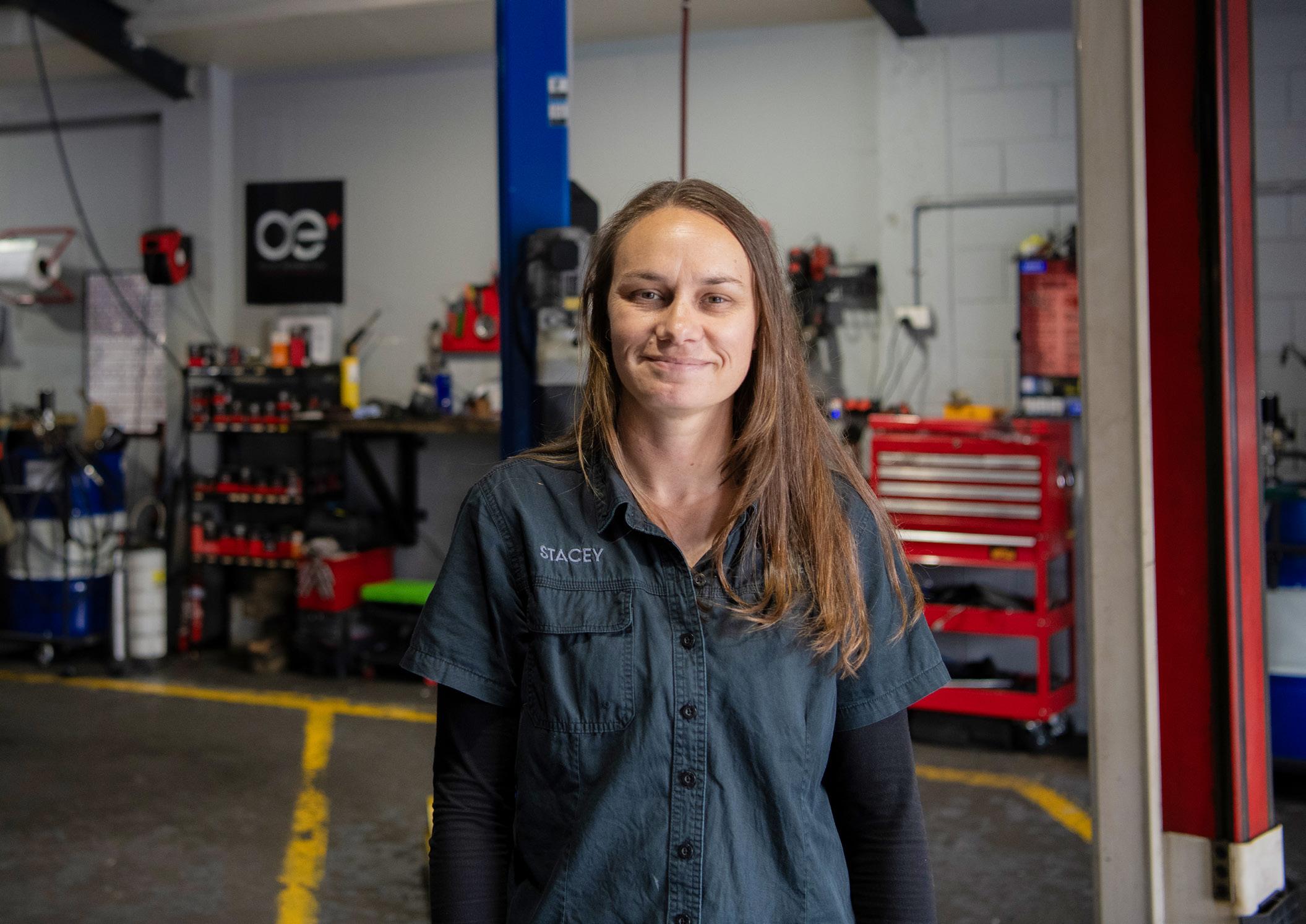
Lower Hutt workshop co-owner Stacey Crooks supports automotive industry involvement in the Right to Repair issue.
The Road to Prosperity
A FAIR PLAYING FIELD
RIGHT TO REPAIR — A FAIR AND REASONABLE LEGISLATED SOLUTION
THE FAULT: The Consumer Guarantees Act already ensures consumers have the right to choose where their vehicle is serviced — but that right is becoming increasingly theoretical when skilled repairers cannot access the diagnostic tools, software, and repair data needed to service modern vehicles. At the same time, manufacturers have legitimate interests in ensuring safety-critical software is applied correctly, cybersecurity is maintained, and brand standards are upheld. The current lack of a framework acknowledges neither reality adequately — with consumers being caught in the middle. The law has simply not kept pace with how quickly vehicle technology has evolved.
THE FIX: A legislated tiered-access framework that considers what is best for consumers, vehicle importers, and the repair sector in a fair, balanced and reasonable way. The Australian Motor Vehicle Service and Repair Information Sharing Scheme demonstrates that fair access and appropriate safeguards can coexist and shows a sensible start point for discussion — though this needs adapting to ensure consumer rights are equally considered for used vehicle imports — a unique aspect of the New Zealand market.
WE PROPOSE:
• Engage with MTA, which has convened a cross-industry workforce to broker a solution that caters to consumer and industry needs, and considers our unique market.
• Translate, don’t transplant. Benchmark against Australia’s Motor Vehicle Service and Repair Information Sharing Scheme, the EU Block Exemption Regulation, and US state-level right to repair laws — taking what works and adapting it for the New Zealand market.
• Address the technical issues head-on rather than legislating around them: data access, cyber security, EV high-voltage and ADAS tooling, IP protection, dispute resolution, and cost recovery.
• Ensure select committee processes set aside genuine time for technically-informed industry submissions.
EXPECTED IMPACT:
• Legislation that works in New Zealand workshops, on the vehicles New Zealanders drive.
• Qualified repairers get real access to the data, parts, and tooling they need — not access tied up in dispute.
• Manufacturers, distributors, and dealers retain protection for legitimate IP, brand standards, cyber security, and investment recovery.
• A durable cross-industry settlement that doesn’t need to be relitigated every Parliament.
• Consumers get choice, and the confidence their vehicles can be repaired at a wide variety of repair workshops.
A FAIR PLAYING FIELD
SME COLLECTIVE BARGAINING SAFE HARBOUR
THE FAULT: In concentrated markets, SMEs can face competition-law uncertainty and high legal costs when seeking to negotiate baseline terms with powerful buyers. Australia has addressed this gap through a small business collective bargaining regime under the Competition and Consumer Act 2010; New Zealand has not.
THE FIX: Create a simple, notification-based safe harbour for eligible SME collective bargaining arrangements with clear eligibility thresholds and public-interest safeguards.
WE PROPOSE:
• Allow eligible SME groups to notify the Commerce Commission and proceed unless the Commission objects within a defined period.
• Provide template documents and clear thresholds to reduce cost and complexity.
• Include safeguards to prevent exclusionary conduct and limit scope to bargaining objectives, with an off-ramp if competition risks emerge.
EXPECTED IMPACT:
• Enables SMEs to negotiate fair baseline terms without prohibitive cost.
• Maintains competition safeguards while improving market balance.
• Supports the productivity and viability of small firms.
A FAIR PLAYING FIELD 34
EXPAND THE MOTOR VEHICLE DISPUTES TRIBUNAL
THE FAULT: Vehicle disputes often involve technical issues and can be costly and slow when the Disputes Tribunal or courts are the default pathway.
THE FIX: Expand the Motor Vehicle Disputes Tribunal (MVDT) so it can hear repair and workmanship disputes — not only sale disputes — supported by access to technical expertise.
WE PROPOSE:
• Extend jurisdiction to include repair and workmanship disputes and related motor trade disputes (including diagnostic disputes and scope disagreements).
• Support decision-making with technical assessors where appropriate.
• Modernise settings so the tribunal operates as a specialist, accessible, one-stop shop.
EXPECTED IMPACT:
• Faster, lower-cost resolution of disputes.

• More consistent, technically informed decisions.
• Improved confidence for consumers and traders.
• Improved court timeliness and access to justice.

A FOCUS ON CRIME
A fOCuS ON CRIME
SUPPORT AN INDUSTRY-POLICE FUEL RETAIL CRIME GROUP
THE FAULT: Fuel theft and associated offending — particularly drive-offs — creates staff safety risks, significant financial cost, and undermines the viability of small retailers. It is often linked to wider offending, including vehicle theft and organised crime. To date, engagement between the fuel sector, government, and police has been ad hoc and dependent on political will rather than a standing structure. In 2025 there were 28,095 instances of theft reported to police. This figure understates the true number, as many thefts are unreported.
THE FIX: Establish a small, industry-recognised Fuel Retail Crime Group, convened by MTA and fuel sector representatives, with a commitment from parties to support the group and provide regular, structured engagement with the Minister of Police and senior police representatives.
WE PROPOSE:
• MTA convenes a focused industry group comprising fuel retail operators, sector peak bodies, and relevant security or technology advisers.
• The group sets its own work programme around drive-offs, staff safety, prevention technology, enforcement gaps, and data quality.
• Parties commit to supporting regular engagement (at least biannual) between the group and the Minister of Police, with senior police representatives in attendance.
• The group provides a standing channel for industry intelligence, policy advice, and operational coordination — replacing ad hoc engagement with a durable, structured forum.
• The group tracks trends, interventions, and outcomes, and reports publicly on progress.
EXPECTED IMPACT:
• A durable, industry-driven forum that ensures fuel retail crime remains visible to government and police regardless of the political cycle.
• More coherent national response and better alignment between operational settings and industry experience.
• Improved staff safety and reduced harm to affected communities.
• A stronger evidence base for future interventions and policy development.
A FOCUS ON CRIME
INCLUDE FOCUS ON RETAIL CRIME IN LETTER OF EXPECTATIONS TO POLICE COMMISSIONER
THE FAULT: Fuel theft is linked to broader offending, including vehicle theft, burglary, and organised crime. Despite this, fuel retail crime is not consistently prioritised in policing, and the most common complaint from fuel retailers is that reported incidents are simply not followed up. This discourages reporting, erodes deterrence, encourages repeat offending, and undermines retailer confidence in the system.
THE FIX: Ensure that the next Minister of Police’s letter of expectations to the Police Commissioner explicitly identifies fuel retail crime as a focus area and sets a clear expectation that reported incidents will be actively followed up.
WE PROPOSE:
• Recognise the link between fuel theft and wider offending, and the value of early intervention and disruption of prolific offenders.
• Set an explicit expectation that police will follow up on reported fuel theft incidents — not that every incident requires attendance, but that reports are actioned, intelligence is built, and repeat offenders are actively targeted.
• Support intelligence-led policing in high-risk locations and against repeat offenders, including through improved data sharing between retailers and police.
• Require transparent national and district-level reporting on fuel retail crime response and outcomes, to support accountability, resource allocation, and continuous improvement.
• Encourage consistent national treatment of fuel retail crime, so the quality of response does not depend on which district a retailer operates in.
EXPECTED IMPACT:
• A clear mandate for police to treat fuel retail crime seriously and follow up on reported incidents.
• Improved retailer confidence that reporting crime is worthwhile.
• Stronger deterrence through visible, consistent enforcement.
• A better intelligence picture over time, enabling more effective targeting of prolific and linked offending.
• Transparent reporting that supports the work of the industry Fuel Retail Crime Group.
‘GIVE uS THE PRIORITy wE DESERVE’
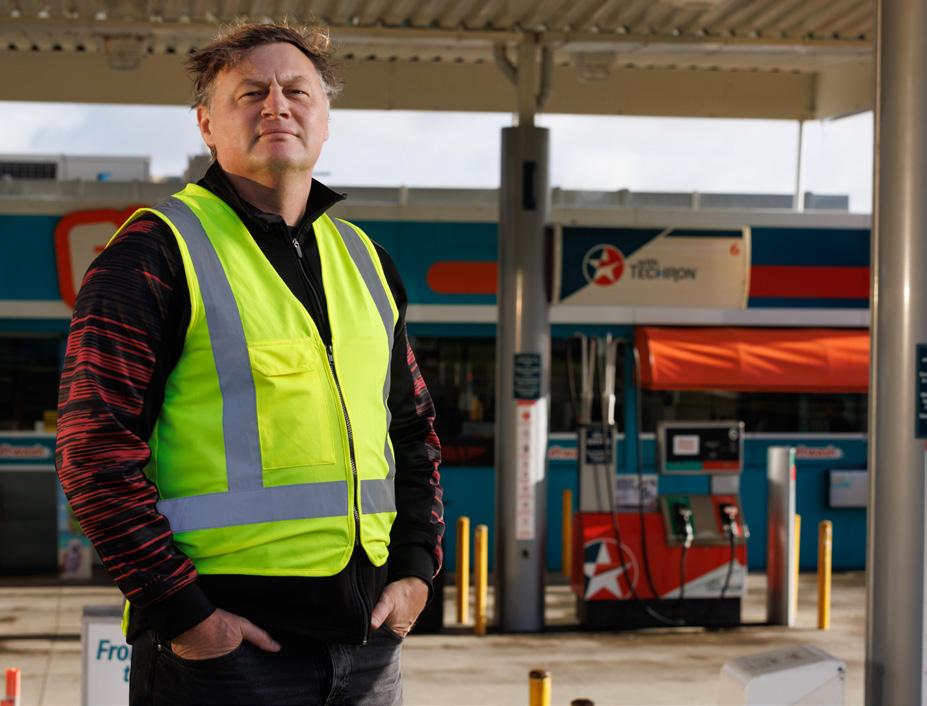
WE’VE HAD HUNDRED OF INSTANCES OF THEFT OVER THE LAST FIVE YEARS.
I’m not alone. Retailers from all over New Zealand, especially in higher-than-average crime areas, are telling the same story.
One known repeat offender targeted our site 10 times in six weeks. Each time, stock was stolen, staff were threatened, and paying customers were abused. We called 111 every time and in each instance, we were told there were no units available due to higher-priority incidents.
It was only after this individual committed a more serious violent offence that police reached out to us. If he’d been stopped after the first offence, the damage and harm of his future crimes could have been avoided.
We’ve installed steel and concrete reinforced bollards, steel-plated doors with reinforced hinges, and upgraded our CCTV systems, all at our own expense. These measures are not ‘extras’, they’re necessities, forced on us by an
environment where the police simply cannot respond in time or choose not to respond at all.
It feels increasingly like the burden of law enforcement, and protection, has shifted from the state to the shop owner
Retailers are doing their part. We’re investing in security, training staff, sharing evidence, and reporting incidents. But we shouldn’t have to, and can’t, do it alone.
What we are asking — what we need — is that the government gives the police the resources they need to investigate thefts, even low-value ones. And police need to give fuel station theft the priority it deserves.
If government thinks the problem will just go away, it won’t — it’s getting worse.

JARROD BLUNDELL
Owner of a Caltex service station based in the Bay of Plenty.
The Road to Prosperity
A FOCUS ON CRIME 39
100% TAX DEDUCTIBILITY FOR CRIME-PREVENTION CAPITAL EXPENDITURE
THE FAULT: Small retailers face disproportionate costs to invest in prevention measures that reduce harm and downstream costs to police, insurers and communities.
THE FIX: Allow 100% tax deductibility in the year of purchase for eligible crime-prevention capital expenditure (for example, bollards, security film, ANPR cameras, fog cannons, and staff-protection measures).
WE PROPOSE:
• Define eligible asset classes clearly to avoid ambiguity.
• Ensure the incentive is accessible to small retailers and aligned with prevention outcomes.
EXPECTED IMPACT:
• Accelerates adoption of proven prevention infrastructure.
• Reduces incidents, harm, and downstream public costs.
• Supports staff safety and business viability.
TECHNOLOGY FUND FOR SMALL TO MEDIUM-SIZED FUEL SECTOR BUSINESSES
THE FAULT: Technology to assist with crime prevention can be expensive for small businesses but plays an important role in role in both crime prevention, detection and enforcement.
THE FIX: Create a capped fund specifically to assist small to medium-sized businesses with the purchase of approved technology.
WE PROPOSE:
• Similar to the Fog Cannon Subsidy, funds would be available to businesses owning a small number of sites and meeting other criteria, directing funds to vulnerable businesses who need it the most.
EXPECTED IMPACT:
• Assists police in the investigation and resolution of crime, thereby facilitating better use of limited police resources.
• Supports government targets for reduction in victims of crime.
• Reduction in theft at vulnerable sites.
• Reduction in loss and disruption at vulnerable sites.
• Increased staff security and resolution.
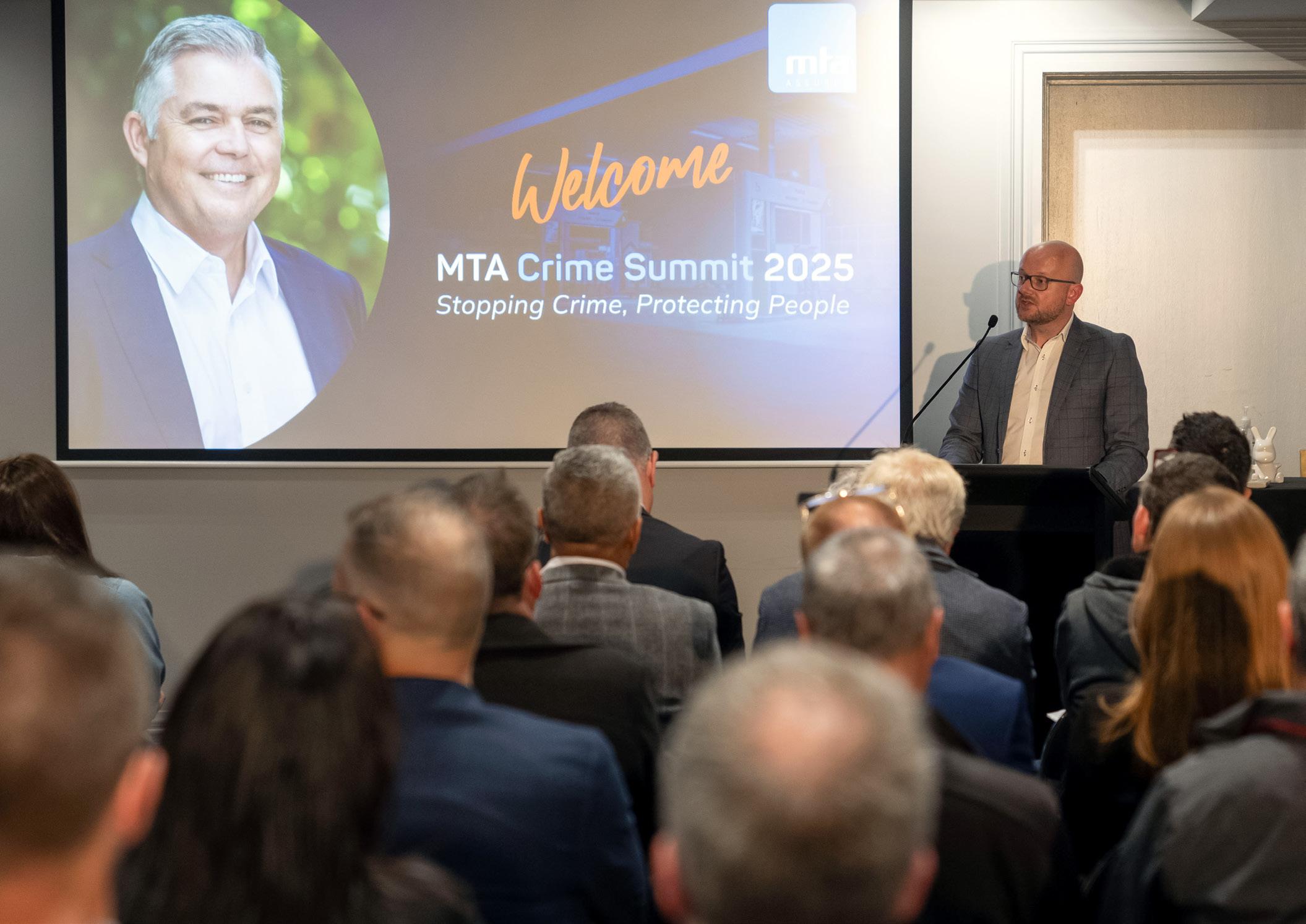
MTA works with government, industry and NZ Police to keep service stations safe.
SummARy OF CALLS
A SKILLED WORKFORCE
08. Introduce an industry-led, quota-based model for Green List roles, with clear accountability and INZ oversight.
09. Streamline AEWV settings for members of approved standards-based peak bodies by removing unnecessary accreditation while maintaining strong enforcement powers.
10. Give approved standards-based peak bodies a more prominent role in recommending additions and removals of eligible roles.
11. Invest in learners and lower barriers for businesses by consolidating employer apprenticeship support into a single National Trades Training Fund.
14. Require real-world workplace learning as a core feature of secondary trades programmes, with at least 50% of handson learning on the job.
A SAFE FLEET
16. Pilot a targeted Fleet Upgrade Scheme as a safety and emissions lever: a $2000 allowance for motorists transitioning to cleaner vehicles.
17. Postpone the second phase of WoF reforms — the extension of biennial WoFs to vehicles aged seven to 14 years.
20. Use Tyrewise as a model for a battery (and other) product stewardship scheme.
21. Accelerate fleet electrification through Investment Boost, by allowing electric vehicles double the current depreciation rate.
SUMMARY OF CALLS 43
A FAIR PLAYING FIELD
24. Establish basic monitoring of debanking activity so that regulators, government, and affected sectors have visibility.
25. Introduce a mandatory franchising regime and actively enforce existing unfair contract terms safeguards, to benefit smaller parties.
28. Improve fuel pricing competition and reduce average fuel costs for the public by amending relevant law.
29. Amend the CGA’s motor vehicle remedy settings to allow tribunals to make a principled allowance for depreciation.
32. Right to Repair: engage with MTA, who has convened a crossindustry workforce to broker a solution that caters to consumer and industry needs and considers our unique market.
33. Create a simple, notification-based safe harbour for eligible SME collective bargaining arrangements.
34. Expand the Motor Vehicle Disputes Tribunal so it can hear repair and workmanship disputes, with access to technical expertise.
SUMMARY OF CALLS
A FOCUS ON CRIME
36. Support an industry-led Fuel Retail Crime Group with a commitment from parties to regular engagement with the Minister of Police and NZ Police.
37. Ensure addressing fuel theft, and retail crime, is an explicit focus in the Minister’s Letter of Expectations to the Police Commissioner.
39. Provide 100% tax deductibility for crime-prevention capital expenditure.
39. Establish a technology fund to help SMEs invest in technology, such as Facial Recognition Technology or Artificial Intelligence to prevent or combat crime.