
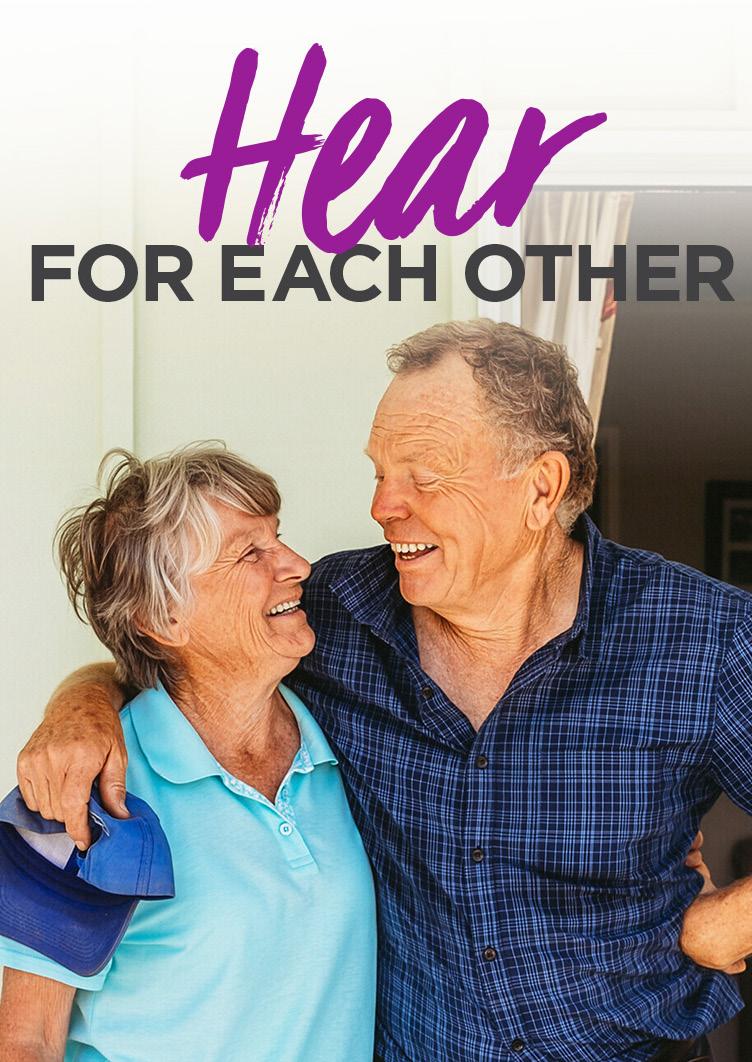
Hearing is rarely just about ourselves. It is about the people we show up for every day — our children, partners, friends and colleagues. It is the conversations around the dinner table, the banter on the worksite, the quiet chats in the car and the laughter shared over coffee. When hearing begins to decline, it often happens gradually: a missed punchline, a half-heard instruction, the TV volume creeping higher. Many people adjust and dismiss it as minor.
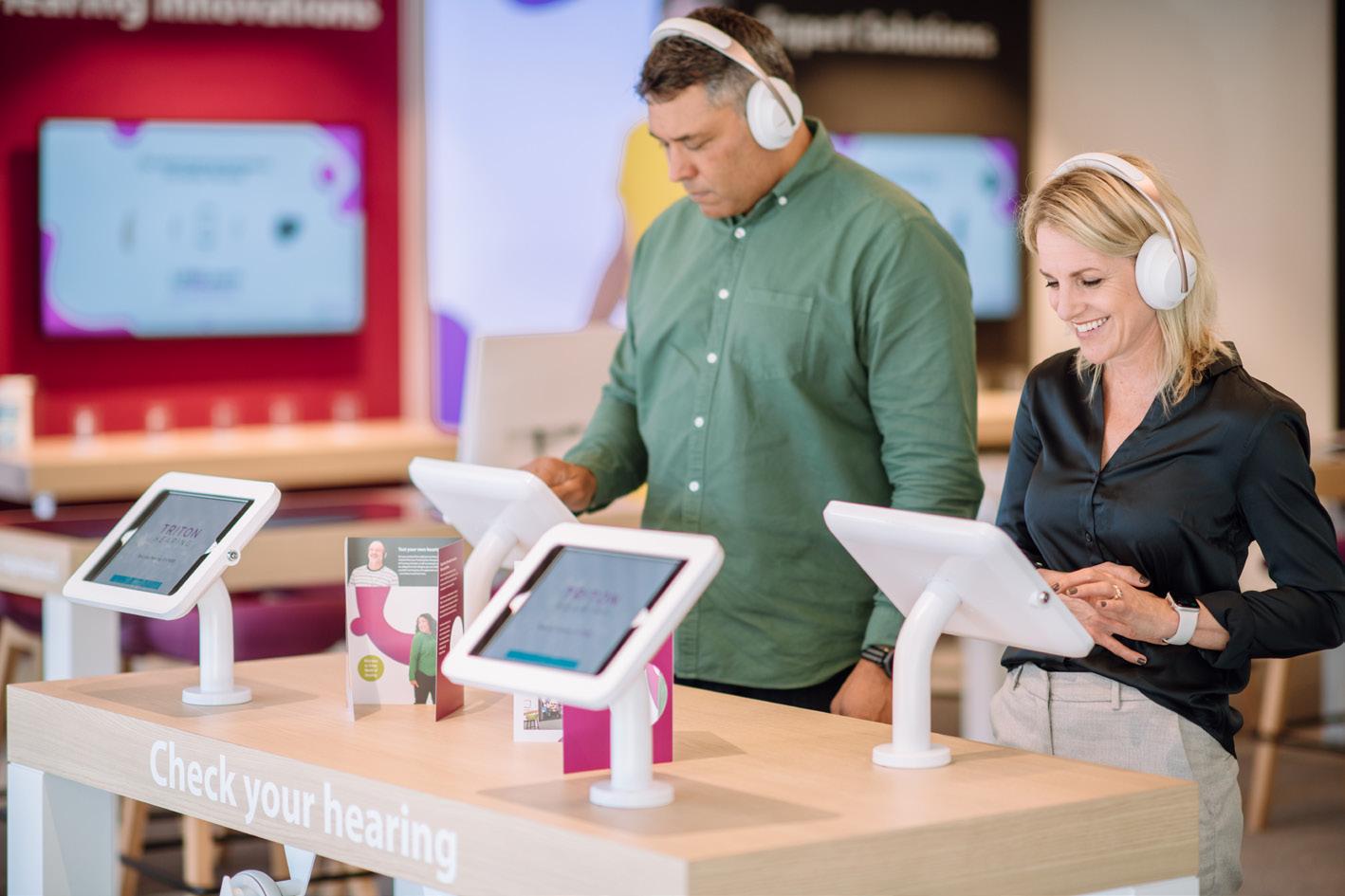
As part of New Zealand Hearing Awareness Month this March, New Zealanders can complete the free, four-minute hearing check online at GreatBigHearingCheck.
co.nz, or at a Triton Hearing Check Kiosk at selected Unichem and Life Pharmacies, Farmlands stores, and at Triton Hearing clinics nationwide. The hearing check is quick, accessible and designed to help New Zealanders better understand their hearing.
Since 2019, more than 40,000 New Zealanders have taken part in the Great Big Hearing Check Now in its seventh year, the Great Big Hearing Check has become a nationwide event. For many, taking action has been life-changing.
“With my new hearing aids I am enjoying not saying ‘I beg your pardon’ or second guessing what people are saying to me. My family are thrilled they don’t have to repeat themselves.” one participant shared.
Another client from Triton Hearing Rotorua, a mechanic with nearly 20 years in the motor industry, said prolonged exposure to loud workshop environments gradually affected his hearing.
“Not until recently at the age of 39…
I noticed I was asking people to repeat things to me when they were next to me. So I took a hearing test with Triton Hearing. It was fast and easy to get an appointment for a quick 15-minute test. I showed up to the clinic - very friendly staff and technician.”
This year, participants who complete the check during March will go in the draw to win a share of more than $10,000 in prizes, including the latest AI hearing technology from Triton Hearing or a $2,000 Luxury Escapes gift voucher. In addition, for every check completed online or at a Triton Hearing kiosk, $1 will be donated to the Deaf & Hard of Hearing Foundation to support its School Screening Programme.
Managing Director Ben Green says this year’s message centres on connection.
“We know people are more likely to act when they think about who they’re doing it for,” Green says.
“A hearing check takes just a few minutes, but it can open the door to clearer conversations and stronger relationships. At the same time, every check helps support Kiwi kids through our donation to the Deaf and Hard of Hearing Foundation.”
The call to action is simple: take the free Great Big Hearing Check this March and hear for the people who matter most, visit greatbighearingcheck.co.nz.
*Complete a Triton Hearing check between 1–31 March 2026 and go in the draw to win a share of $10,000 in prizes. Open to NZ residents aged 18+. T&Cs apply visit tritonhearing. co.nz/promotion-policies
MTA Comment: How MITO came home
Mel's Mission: Changing the narrative
Smoko Stumpers
Sustainability: Growing a greener future
What you're telling us Road
Subaru Outback stands
HR Advice: Rebalancing employment relations
Repairer: Music, licensing and the workshop
Advocacy: Crime remains a priority
Dealer: Is double the price really worth it?
Training & Development: A new era for skills
Collision Repair: Where to from here?
Fuel & Heavy Vehicle: Licensing changes set for 2027
Market stats: February 2026
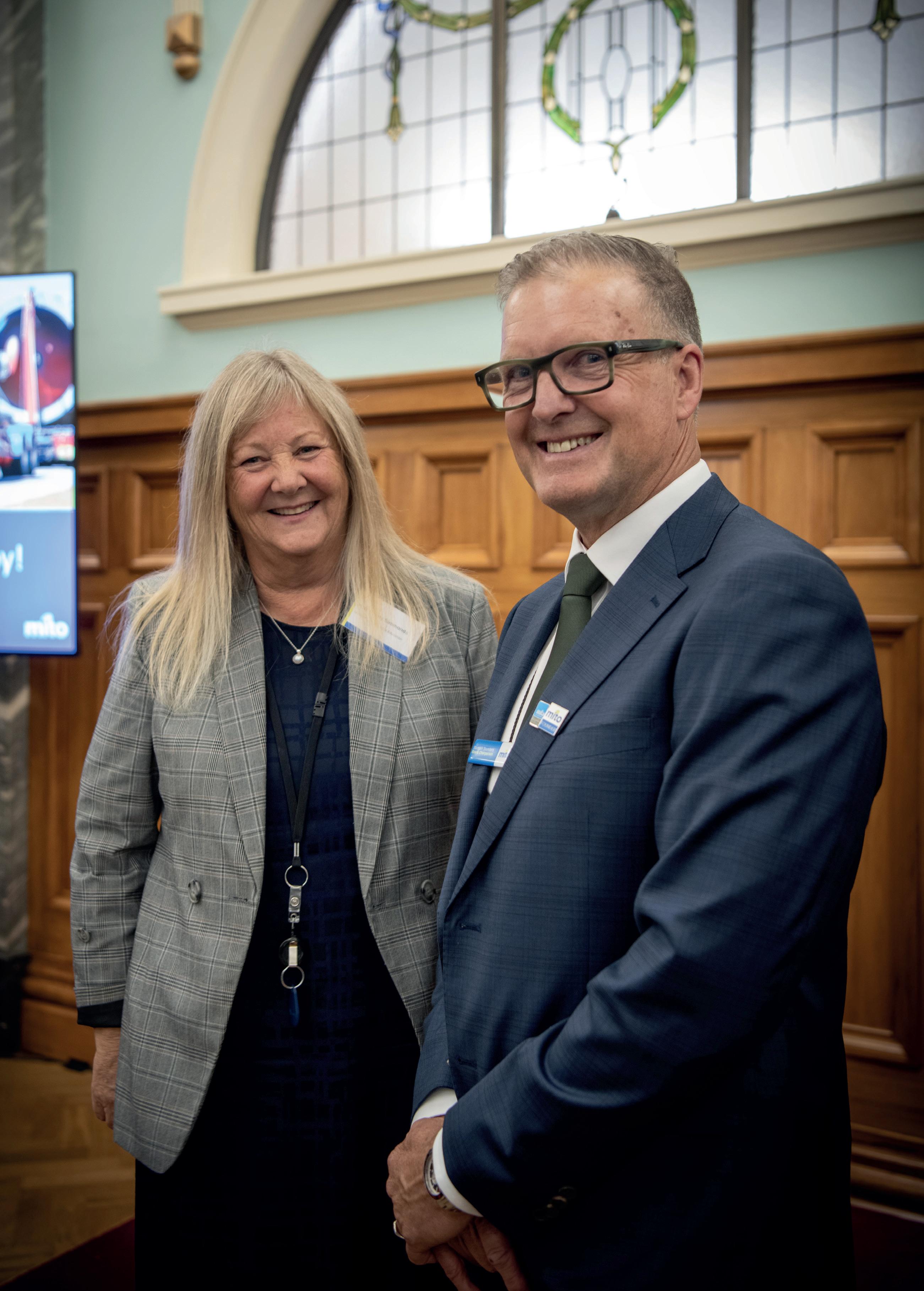
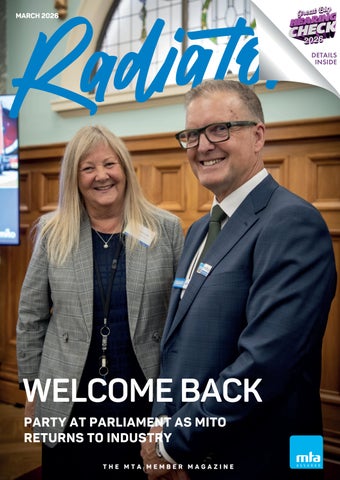
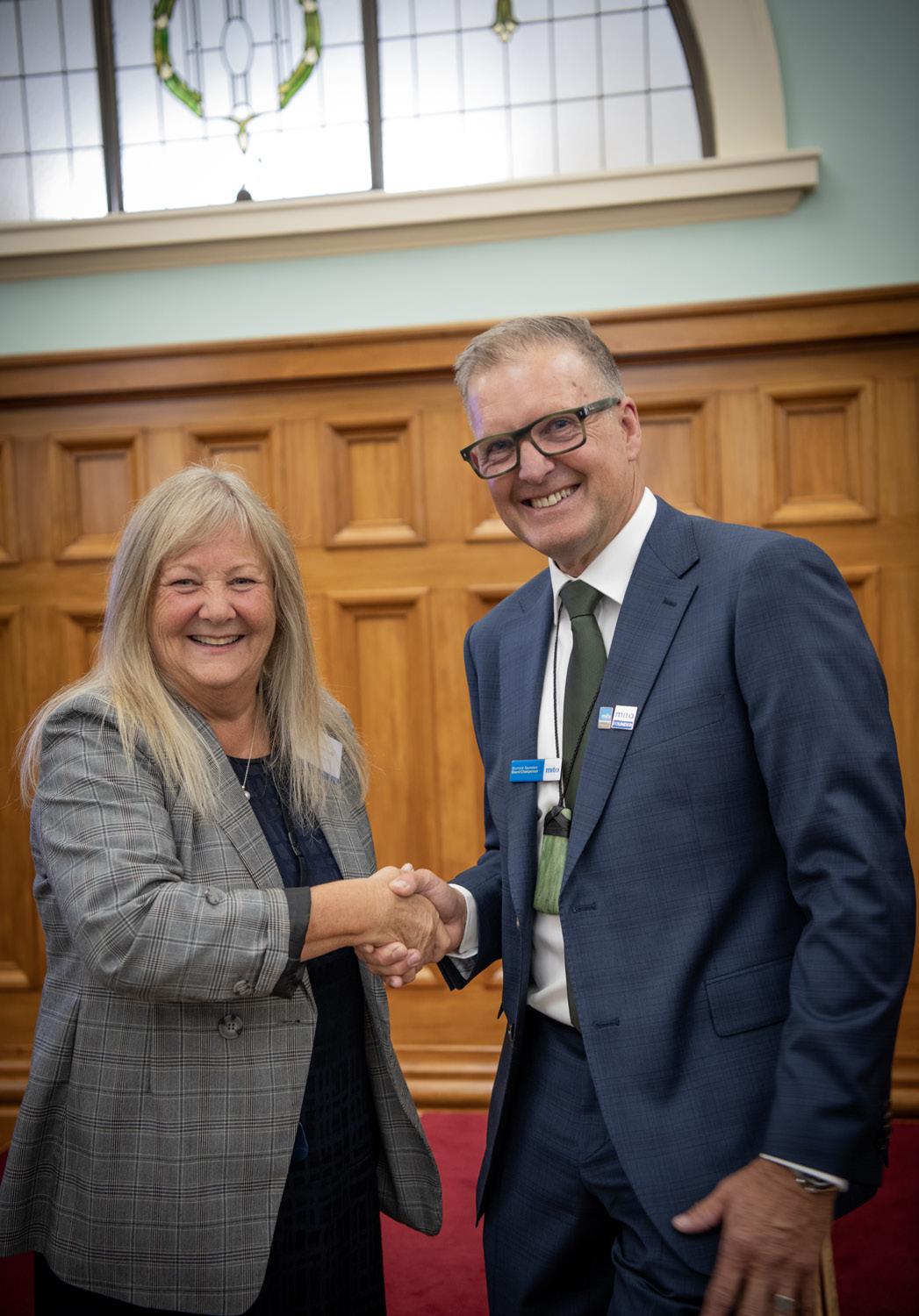
The return of MITO to industry was celebrated with a function at Parliament this month, and MTA was there to capture the moment.

Editor
Gerald Rillstone
027 252 3229
gerald.rillstone@mta.org.nz
Postal address PO Box 9244, Marion Square, Wellington 6141
Physical address
Level 5, AIA House
34 Manners Street, Wellington 6011
E: mta@mta.org.nz
W: www.mta.org.nz
Printing & Production
Vertia, Wellington Mailhouse
Orange Box, Wellington
Radiator Magazine ISSN 1179-7800
The Motor Trade Association (Inc) (MTA) is not responsible for statements, opinions or factual matters published in Radiator magazine, nor do they necessarily reflect the views of MTA, its Board of Directors or its advisory/specialty committees, unless expressly so stated, and does not endorse advertisers.
Radiator magazine is available free to all members of MTA. Information on products and services contained in the editorial and advertising pages of this magazine is published as a service and no responsibility will be taken for inaccurate information.
Radiator magazine does not imply the endorsement of any product or service.
The publisher reserves the right to refuse advertising and editorial at any stage.
Copyright: No part of Radiator magazine may be reproduced in part or in whole without the written permission of the publisher.
When I joined MTA in early 2024, getting MITO back into industry hands was already a big-ticket item on the advocacy agenda. It was one of those issues that everyone agreed mattered, but nobody quite knew how it would play out. The new coalition Government had committed to disestablishing Te Pūkenga – it was right there in the coalition agreement priorities – but the direction of travel was clearer than the road itself.
Te Pūkenga had absorbed the Industry Training Organisations – the likes of MITO, BCITO, Connexis, and others – entities that were performing well and, dare I say it, helping to slow down the sinking of the Titanic by propping up larger institutions that were not financially viable. Most of the polytechnics were struggling. The little guys, the ITOs that had been doing the job for decades, were caught inside a beast that was never really designed for them.
In those early months, the possible outcomes were genuinely uncertain. Ultimately, it could have gone two ways: let the entities out cleanly, or absorb them into polytechnics and create some sort of continuation of Crown-owned work-based learning –a Te Pūkenga 2.0, as we called it. The coin was in the air, and for a while, we did not know which way it would land. What followed was a sustained piece
of advocacy that I am proud to have been part of. We built the necessary relationships with Ministers and a range of officials across several agencies. We worked alongside other former ITOs who shared our objectives.
Critically, we assembled an automotive industry taskforce that brought together a coalition of organisations to present a united industry voice: MTA, CRA, MIA, VIA, NZ Trucking Association, Bus and Coach Association, National Road Carriers, TAMA, Transporting NZ, NZ Auto Electrical Group, Rental Vehicle Association, Hire Industry Association of NZ, I-CAR NZ, Heavy Haulage, Log Transport Safety Council, WasteMINZ, Minex, and the NZ Drillers Federation –alongside employers including Collins Automotive, European Motor Distributors and the Giltrap Group, Rutherford & Bond, AMI MotorHub, CablePrice, Norwood, and Tandem Smash Repair.
There were milestones along the way that felt like turning points at the time. The letter to the Minister in early 2024 setting out what MITO needed; our opening salvo. The automotive taskforce. The drafting and passing of the Education and Training Amendment Bill through Select Committee, which MTA
alongside Warren Flowerday, Jason Land, Kim Milne, Warwick Wilshier, and Dean Eggers – was in place and operational. Verna Niao was confirmed as Chief Executive. MITO was back where it belonged: in the hands of industry.
james.mcdowall@mta.org.nz
noting the legislation was opposed by all opposition parties, underscoring the urgency of getting the job done before the next general election. The establishment of MITO Limited as a company. The big shareholder resolutions, each passed unanimously, that gave the transition its mandate and structure.
There were harder moments too. The Government understandably didn’t really want to let profitable entities go, and fair enough. TEC didn’t always move at the pace we wanted. There were negotiations over funding, over the terms of exit, over what a clean transition actually looked like in practice. The Inspiring Futures Foundation stepped in with bridging support when TEC didn’t quite make this as smooth as they could have. Every step forward required persistence, and there were days when the outcome felt far from guaranteed.
But we got there. On 1 January 2026, MITO completed its one-day transition into and out of the Transport Industry Skills Board and into private ownership as MITO Limited. The TEC Board had approved the transition at its December meeting – all very ‘eleventh hour’. Charity status was finally confirmed by the Department of Internal Affairs. A Transition Board – chaired by Sturrock Saunders,
On 3 March 2026, we gathered at Parliament to mark the occasion, hosted by Stuart Smith MP with Hon Penny Simmonds delivering the keynote. The following day, shareholders and the MITO Board sat down to chart the course ahead. It was a moment to pause and take stock of what had been achieved.
Looking back, this was never just about organisational structures or governance arrangements. It was about ensuring that the people who train our automotive technicians, our heavy vehicle mechanics, our collision repair specialists, are accountable to the industries they serve – not to a Wellington bureaucracy that had lost its way. The motor industry needs a training organisation that understands its workforce, responds to its needs, and evolves with its technology. That is what MITO was built to do, and that is what it can do again.
This journey took the best part of two years. It involved more than a
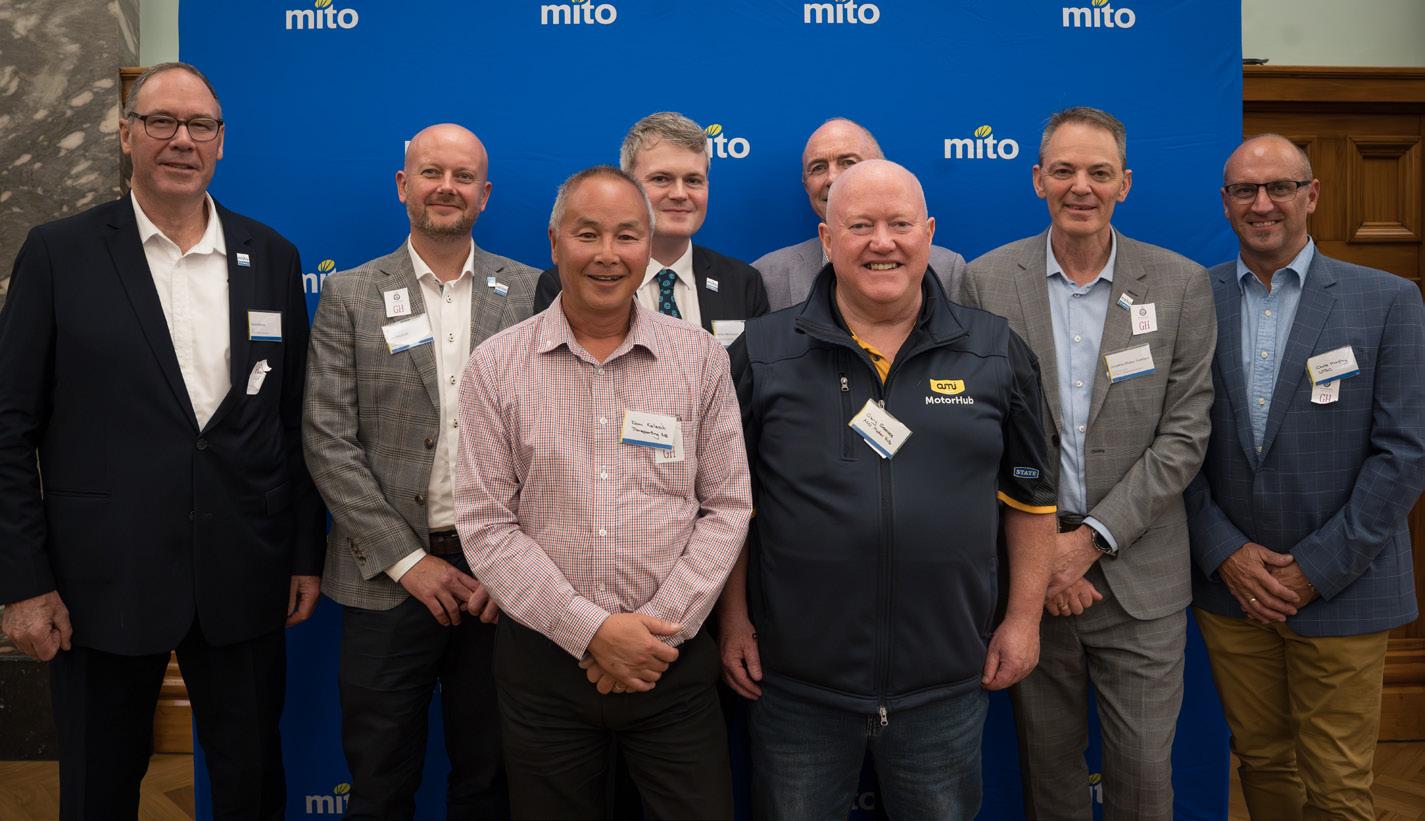
James McDowall, centre, MITO Shareholder Convenor with representatives from some of the MITO shareholding associations: David Boyce (CEO, NZ Trucking Association), Lee Marshall (CEO, MTA), Dom Kalasih (CEO, Ia Ara Aotearoa Transporting NZ), James McDowall, Stewart Gibb (GM, Collision Repair Association), Gary Geeves (Collision Repair Association Life Member and CEO AMI Motorhub), Jonathan Bhana-Thomson (CEO, NZ Heavy Haulage Association), Chris Murphy (Executive Member, Log Transport Safety Council).
few meetings, phone calls, letters, submissions, with a sprinkling of political persuasion. I want to acknowledge everyone who played a role – the taskforce organisations who came together without hesitation, the MITO staff who kept going strong despite all the uncertainty, the Government officials who ultimately made the right call, and the MTA team who backed this work from day one. MITO is home. Now the real work begins.
James McDowall MTA Head of Advocacy
A warm welcome to our newest MTA members
We’re delighted to have the following businesses join the MTA whānau:
Franz Alpine Mechanical Ltd
Silverdale Mechanical
Harray Motors
Franz Alpine Mechanical Ltd
Jones Motoring Ltd
Napier South Mechanical 2026
Absolute Motors Morningside
Tonys Auto Engineering Limited T/A Glen
Eden Automotive
Panel Pro Panel & Paint
Contour Brakes & Mechanical
Hymark Central
Tasman Epsom
BP 2go Carlyle
Test
Elite Diagnostics
Mossy Motors
Surge Autotech
Fitzroy Automotive
Spec Performance Limited
Z Te Atatu
Z Massey North
Z Kumeu
Z Silverdale
Spurdle
Hokonui Suzuki
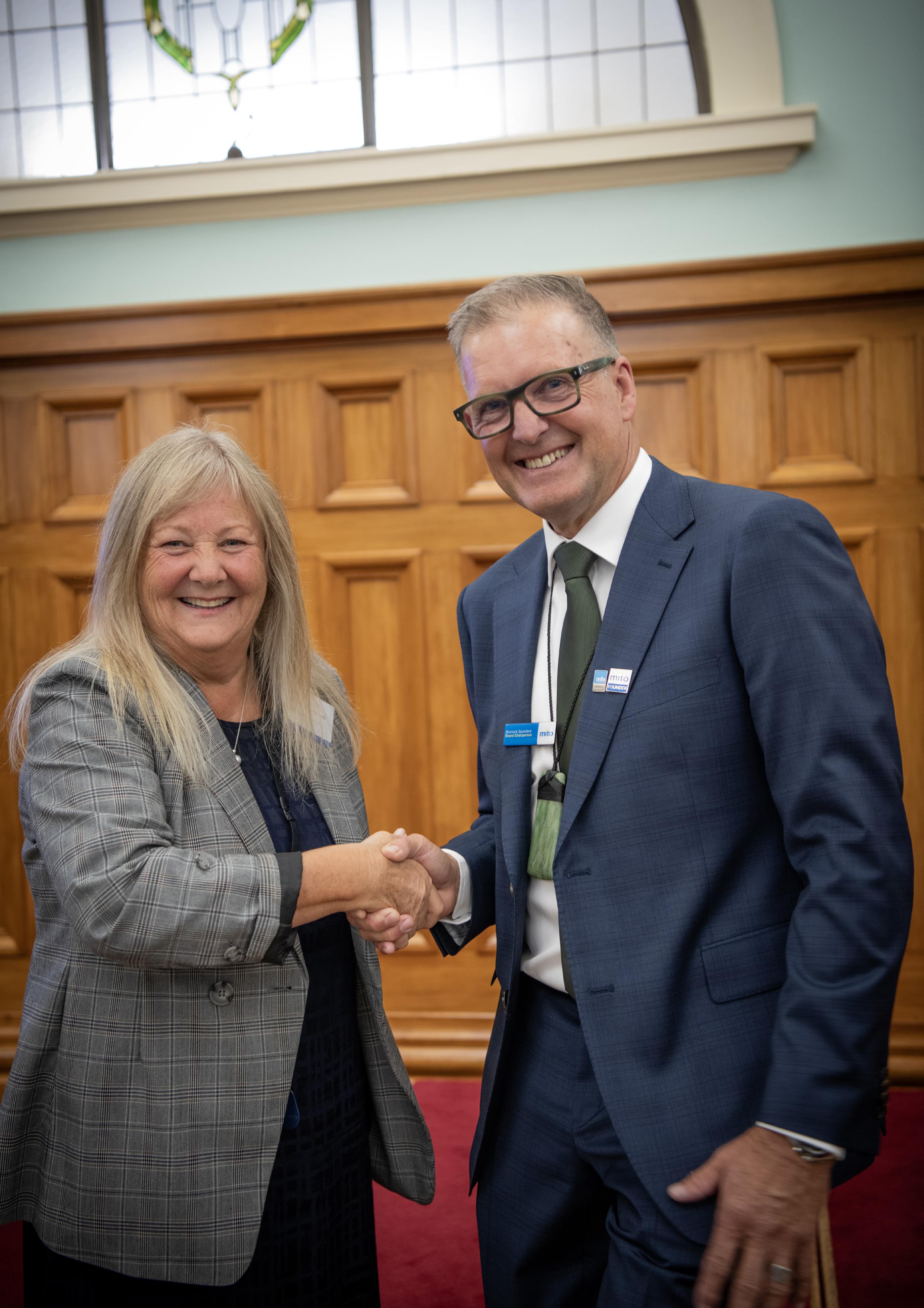
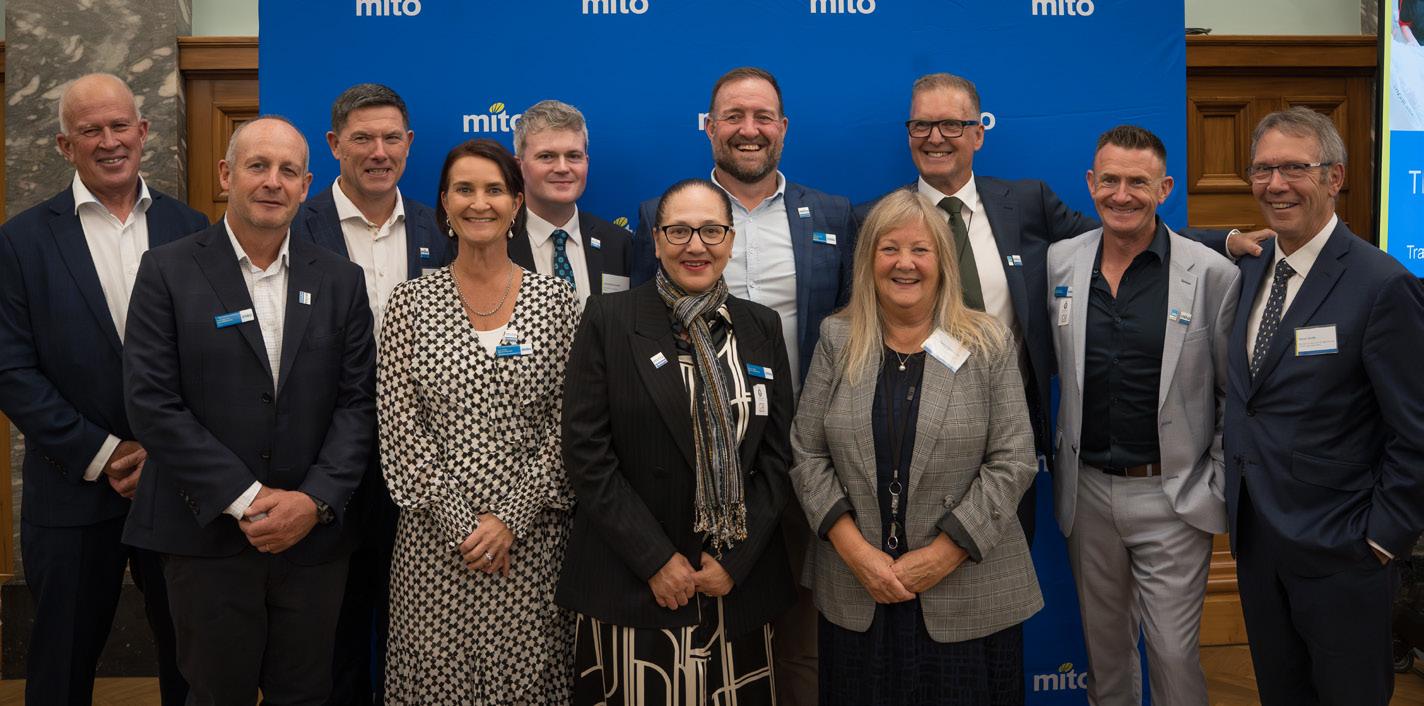
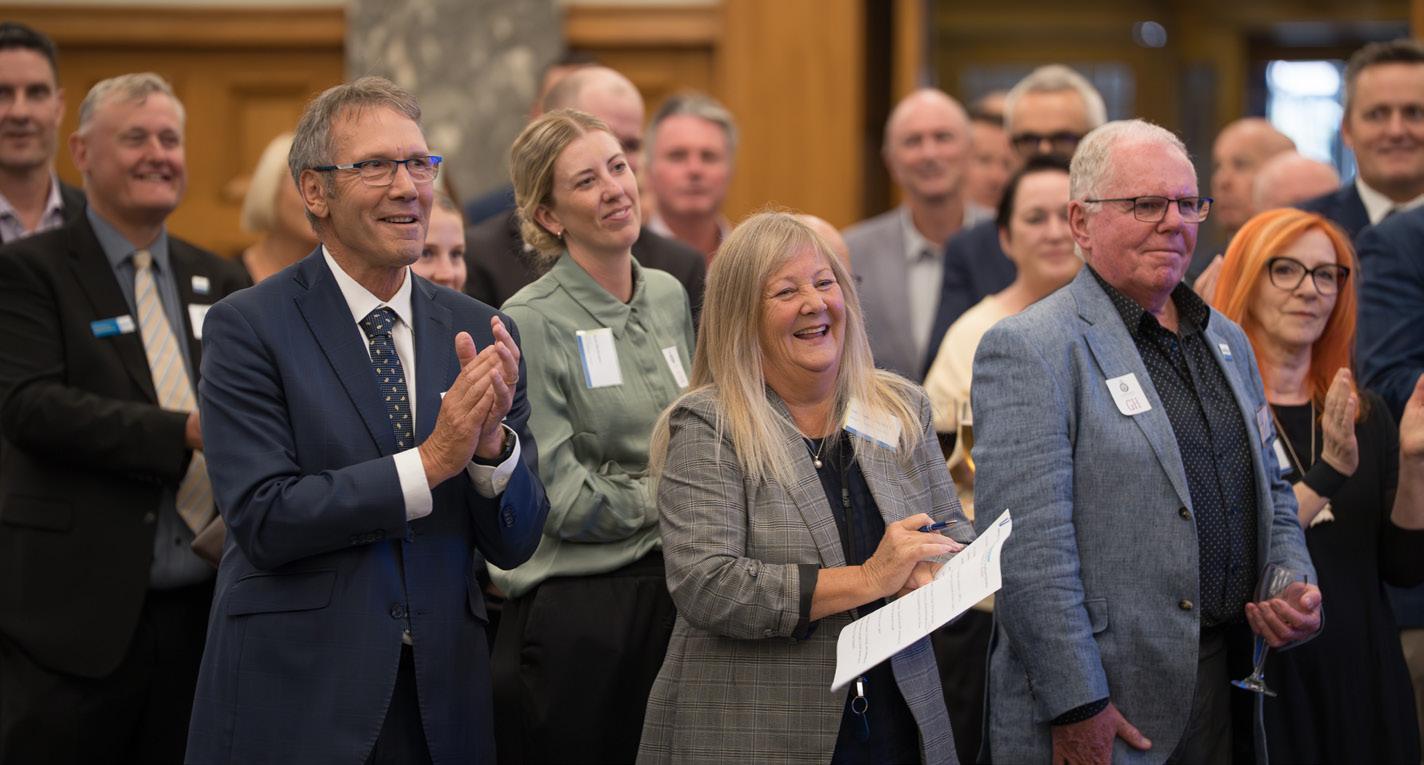
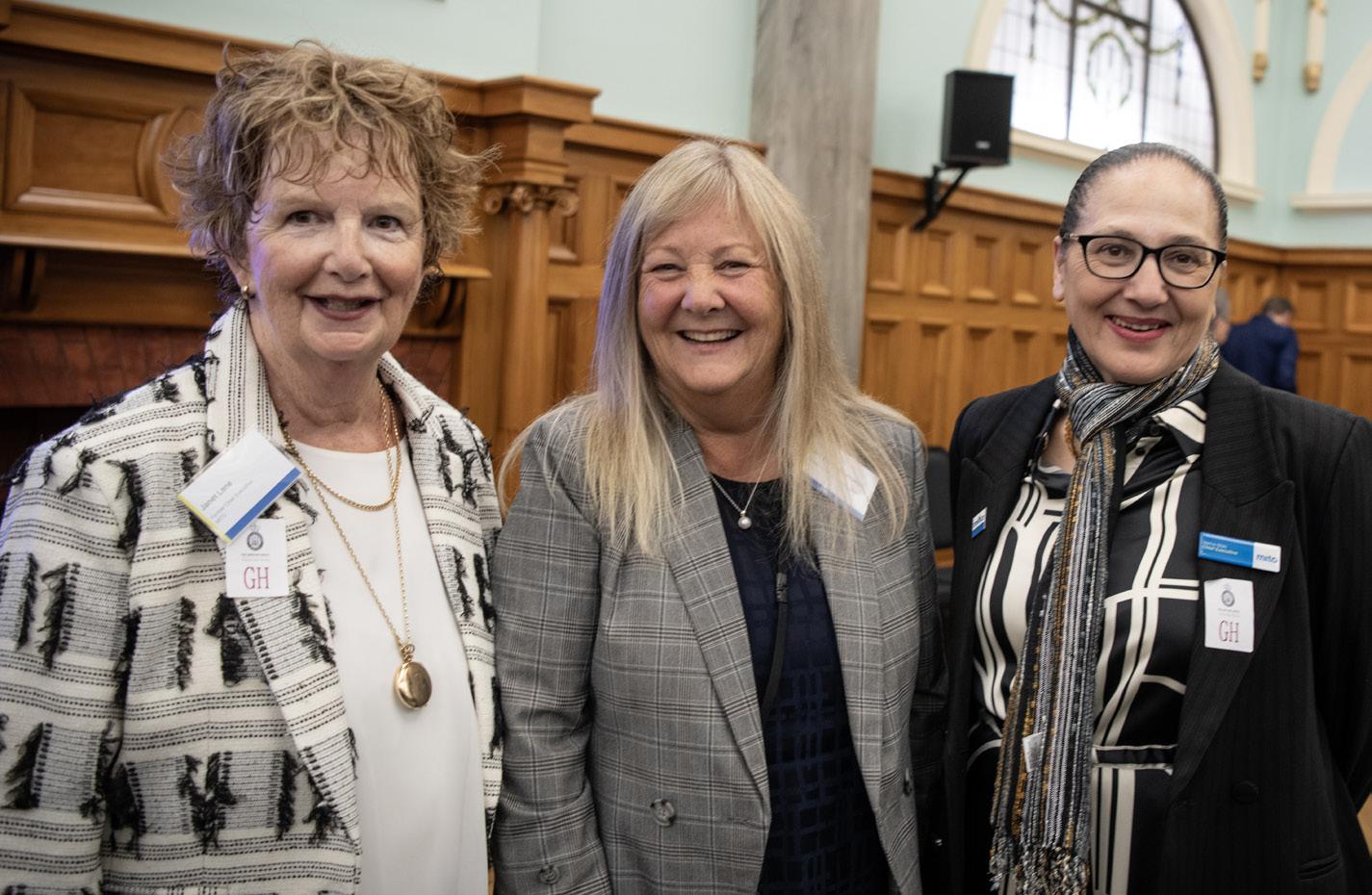
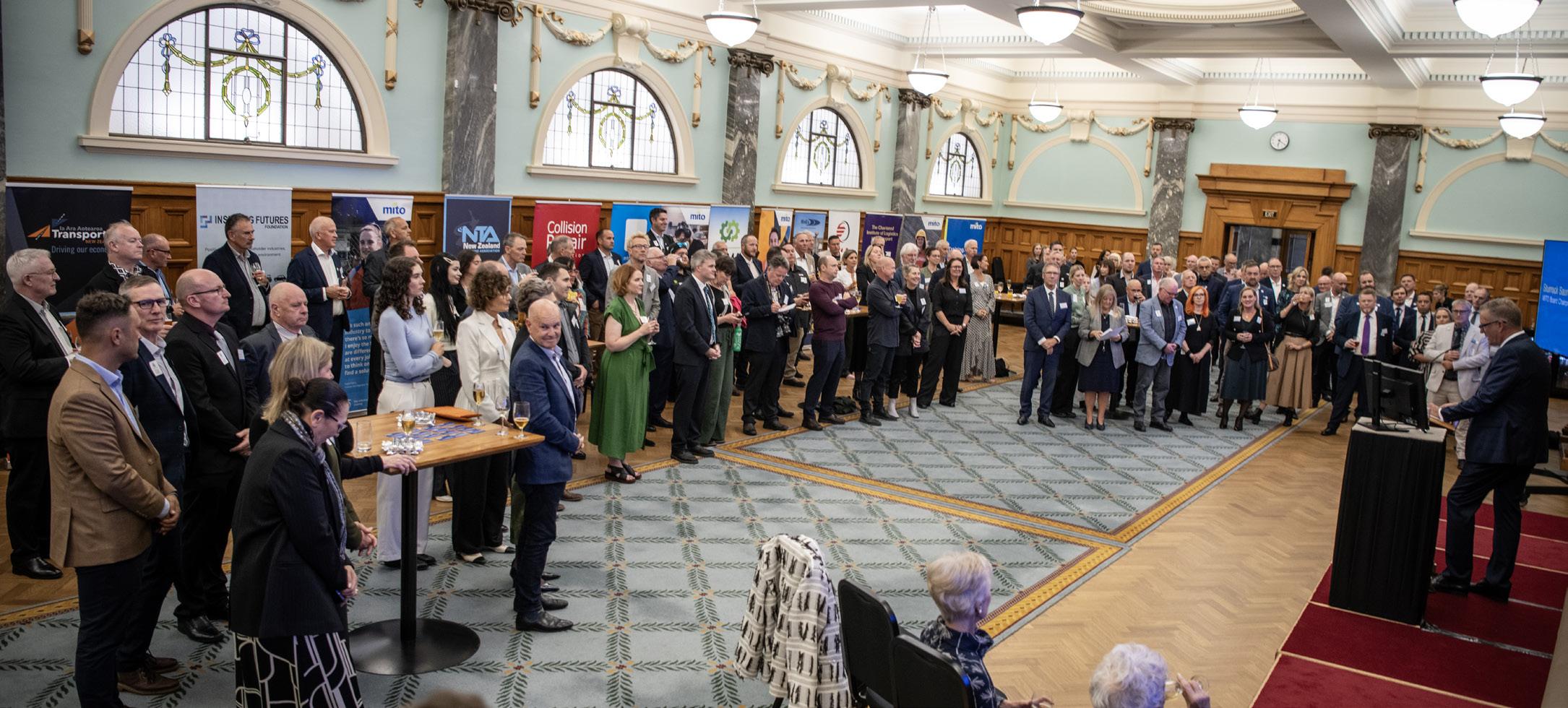
Automotive industry leaders, MTA members, MPs and apprentices –all turned out for a Parliamentary party celebrating the return of MITO to industry.
The Great Hall at New Zealand Parliament was the venue this month as glasses were raised to mark the milestone.
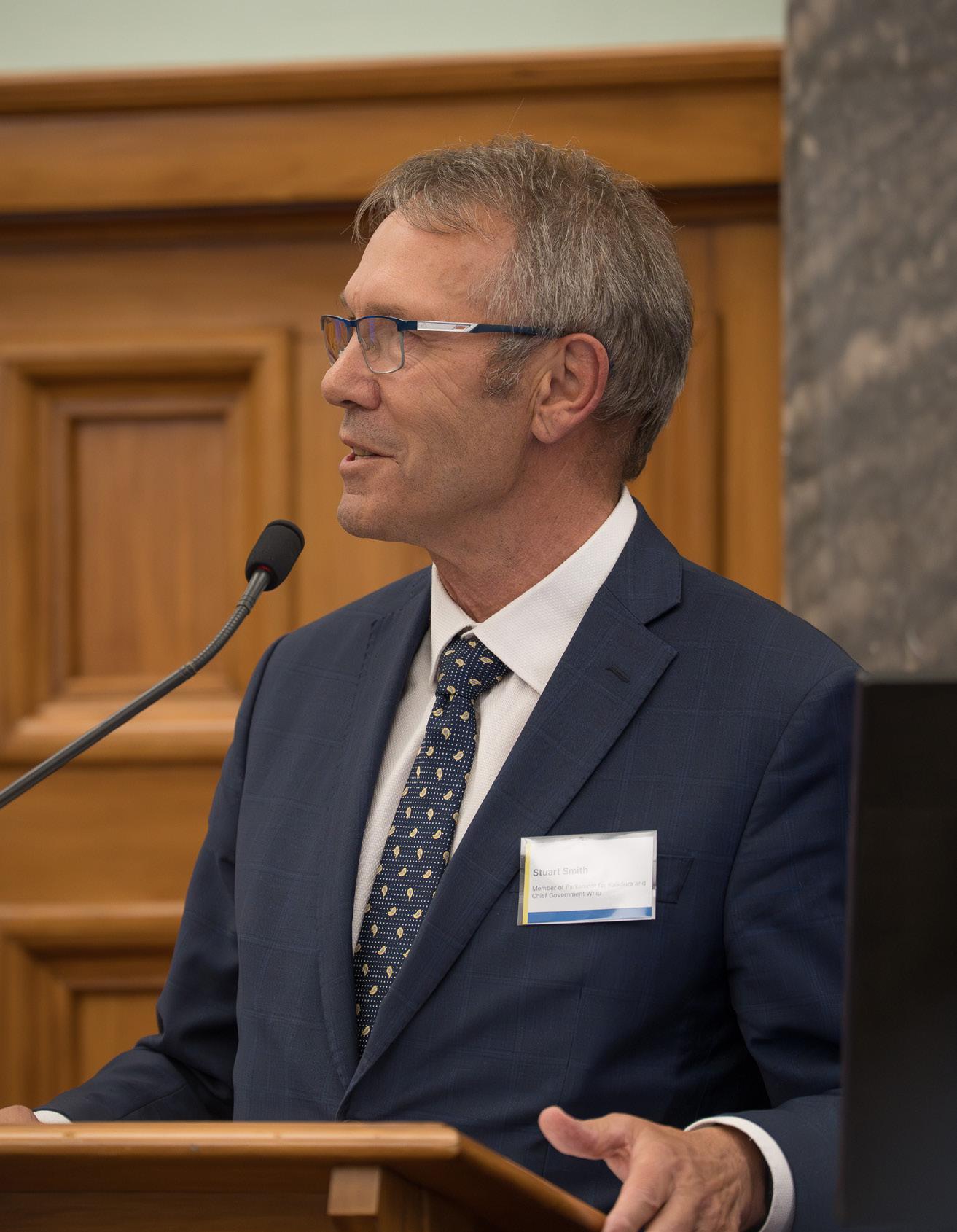
Hosted by Stuart Smith, MP for Kaikōura and Chief Government Whip, the evening brought attendees together to acknowledge what many see as a pivotal reset for vocational education.
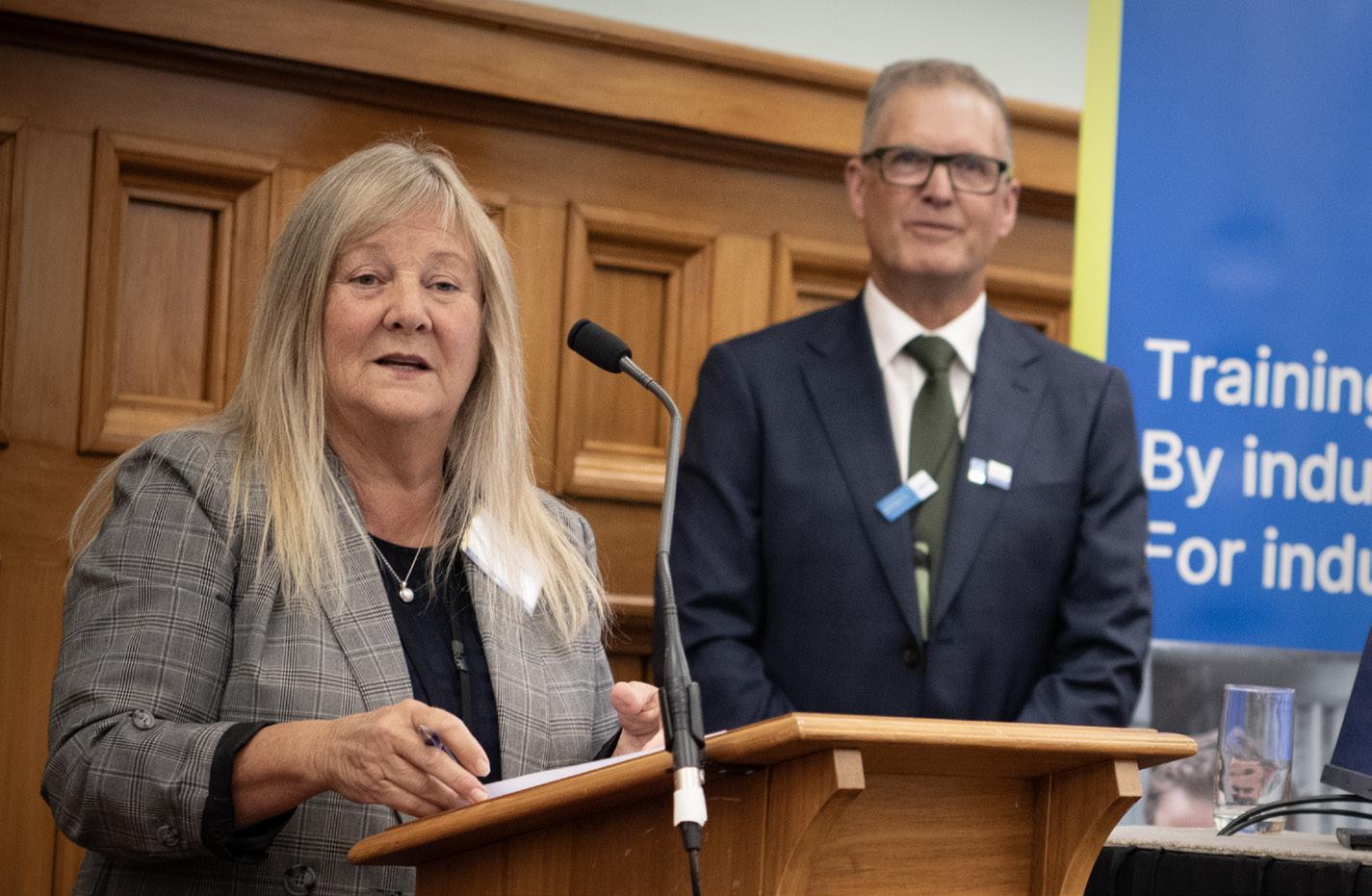
Delivering the keynote address, Penny Simmonds, Minister of Vocational Education, described the transition as an important milestone in the Government’s wider reforms of New Zealand’s vocational education and training system.
For more than 50 years, MITO has supported apprentices, trainees and employers across the automotive, commercial road transport, mining, quarrying, drilling, gas and logistics sectors, she said.
Collectively accounting for around six per cent of New Zealand’s GDP, these industries underpin supply chains, infrastructure and the day-to-day movement of people and goods across Aotearoa.
Simmonds said the moment was about more than governance structures.
“MITO supports apprentices and learners across some of New Zealand’s most critical industries,” she said.
“This evening is about recognising
a significant moment of change, acknowledging the work that made it possible, and looking ahead to what comes next for vocational education and training in New Zealand.
“At its heart, this reflects the Government’s focus on fixing the basics and building the future –removing what wasn’t working and putting in place settings that deliver long-term value for the motor industry.”
MTA was instrumental in returning
MITO to industry after the dismantling of Te Pūkenga. Head of Advocacy James McDowall assembled and led a taskforce of more than 20 industry associations and groups to present a united front and strong case to Government.
At the heart of their message was a “For industry, by industry” approach that persuaded the Minister that MITO belonged in industry, not central government, control.
McDowall was acknowledged by the Minister in her speech for his dogged efforts to convince her.
The announcement was welcomed more widely than just by those in attendance – a video compiled heartfelt messages of congratulations from around the country.
Smith pointing out that strong industry partnerships are central to business success and economic growth.
“It’s great to see MITO once again delivering training in a ‘by industry, for industry’ model,” he said.
“Fit-for-purpose training that better supports employers is key.”
Turning point
Newly appointed MITO board chair and MTA president Sturrock Saunders said the event marked a decisive turning point.
“As part of the Government’s vocational education reforms, industry has stepped up to lead the way,” he said.
“Our associations were united in their view that industry must lead its own vocational education and training to ensure agility, responsiveness and future-focused
development. I’m thrilled that we can now begin shaping the future of industry training directly in line with industry skills and training requirements.”
MITO Chief Executive Verna Niao reinforced that the organisation’s focus remains unchanged: supporting employers to grow new talent and meet workforce demand.
“MITO remains fully focused on supporting the investment of our employers,” she said. “Our coverage will remain nationwide, reaching regional and remote communities as well as larger centres, and all our current qualifications and micro-credentials will remain available.”
MITO has long been the bridge between employers and trainees, arranging training agreements, supporting apprentices, working alongside providers and ensuring national qualifications remain relevant.
For MTA members, this it was more than a ceremonial moment in the Great Hall. It was a practical shift that places MITO is back where it belongs.


want more Kiwis in these careers, and we're doing everything we can to make that happen. With MITO back in industry ownership, the ship is heading in the right direction. But we can't leave businesses short-staffed in the meantime, James says.
"Immigration and domestic training aren't an 'either-or'. We need both; they don't cancel each other out. Bringing in skilled migrants addresses the immediate pressure, while investing in apprenticeships and upskilling builds the workforce we'll need over the coming years.”
The year appears to have started with a sharp uptick in job vacancies across the automotive industry.
That’s certainly been the case with classified advertising in Radiator, and it’s backed up by an industry expert. Where MTA might typically receive two or three job advertisements a month for Radiator and the MTA website, February 2026 saw 17 vacancies advertised.
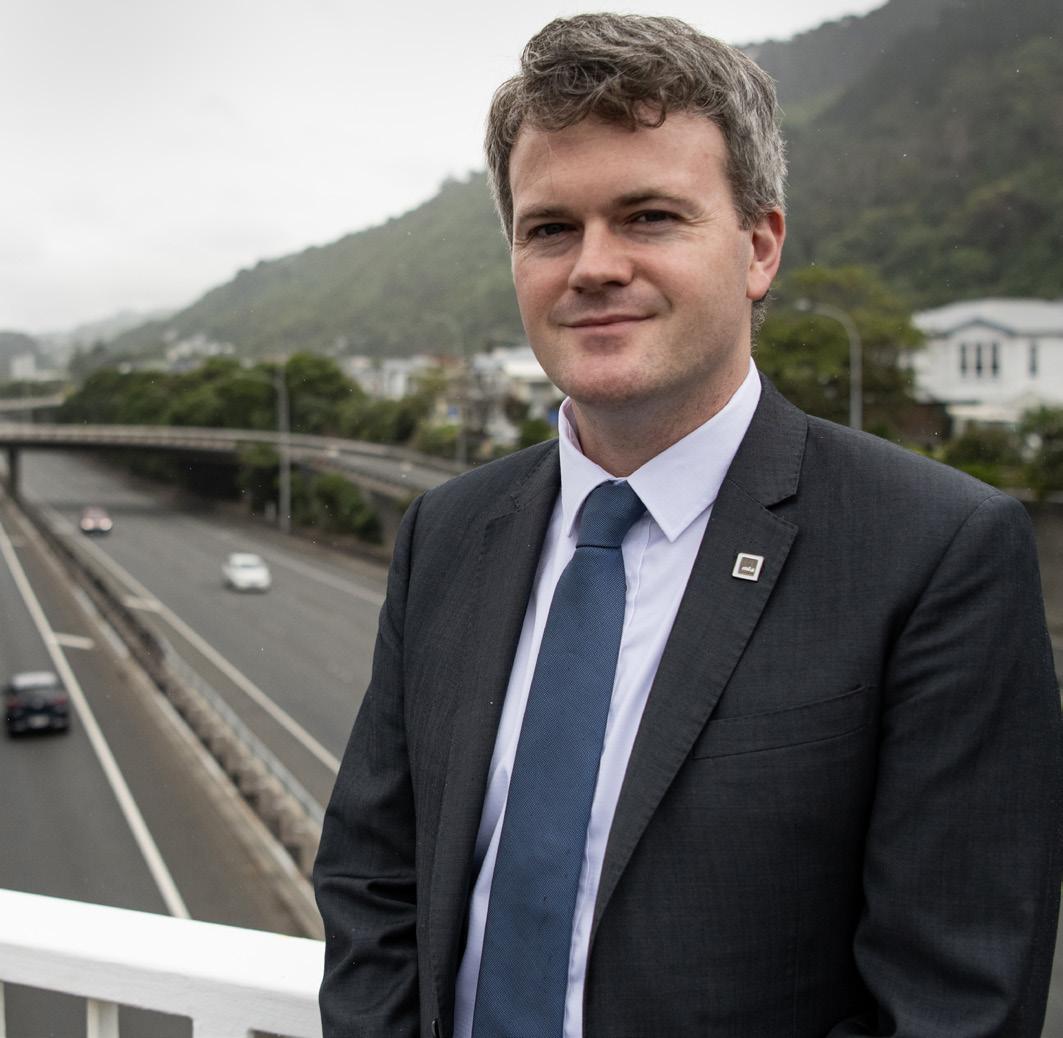
Industry employment specialist Muster Recruit managing director Matt Twiselton [pictured above] says it was the busiest January he has seen in several years.
He says the increase has been most visible among franchise dealerships.
“It could be... because of lower interest rates and a bit more demand from businesses for vehicles and for the servicing of vehicles. Workshops are getting busier and new car numbers have been positive after a few years of pain and misery for dealership owners and employees,” Matt says.
“It seems to be getting a bit more positive and there’s a bit more confidence back in the market.”
During tougher times, many businesses cut back to the bare minimum, he says,
sometimes operating with just two or three service advisors instead of five. Now, as activity lifts, those decisions are catching up with them.
“We’re seeing pressure on staff and all of a sudden companies are in a bit of a hole because they haven’t replaced people and we’re seeing a lot of that.”
Money talks
Money remains a decisive factor for job candidates, with cost-of-living pressures still front of mind. Relocation is also shaping recruitment decisions, as workers look beyond their home regions, Matt says.
“We seem to see a lot of people moving from one part of the country to another.
“But I don’t believe it’s a migration issue from the regions to the main centres, it is more the overall skills shortages.
“The number of quality skilled migrants coming into the country has reduced and we need to increase that to satisfy demand.”
MTA Head of Advocacy James McDowall says the rise in job advertising can be seen as encouraging. "A rise in vacancies can reflect labour shortages as much as growing business confidence –
and we think what we're seeing is a combination of the two. It's one of the clearest signs yet that the economic recovery is starting to show up in our industry.
"But to sustain momentum, we need immigration settings that actually work for employers. The new Trades and Technicians pathway under the Skilled Migrant Category is a step in the right direction, but Immigration New Zealand needs to get the settings right – there's a real risk it won't cover all of our industry's roles and needs from day one. We're working on that. We're also advocating for a better mechanism for the Green List and a refresh of the Accredited Employer Work Visa that recognises and rewards good employers with less compliance burden. The jobs are there – we need the system to stop working against the businesses trying to fill them,” James says.
Matt says improving the apprentice retention rates is key, which I know MTA are involved with. It’s a dual thing, but getting more New Zealandqualified staff takes time and I believe at present, to meet the shortfall more businesses need to open to bringing in migrants.
MTA is working on both fronts – we
While filling vacancies is challenging, Matt says keeping skilled staff is becoming just as critical as recruitment itself. That means meeting the market on pay, investing in people, and having regular, structured conversations about career progression.
“You have to meet the market with salaries and investment in staff,” he says. “Sit down every six or 12 months and find out what their goals are. Do they want to do further training, maybe a WoF qualification?”
Immigration and apprenticeships remain key parts of the long-term workforce solution — but only if handled well.
He says the industry needs migrants who see their future in New Zealand and employers who actively support apprentices once they are on board.
“We want immigrants that are going to bring their families here and be part of the New Zealand future,” he says.
“There’s also a link between apprenticeship support and long-term retention. What isn’t so common in the industry is putting apprentices into different jobs.”
Giving young staff broader exposure can help them see a long-term future in automotive, rather than viewing their first role as a dead end.
“If someone is coming in as a technician, they could sit on the service desks or with the sales team, not to sell cars, but to give them a broader view of their career options in the industry.”
Regions struggle
Despite current immigration settings for skilled migrants, members in the regions continue to struggle to fill vacancies.
In Oamaru, Riteway Paint and Panel
owner Warren Smith has one position to fill and the potential for another, but finding qualified staff is proving difficult.
“We are having a lot of trouble finding the right person and we are getting a lot of overseas applicants,” he says.
“The trouble with the overseas applicants is a lot of their qualifications have been made up and if they do have them, they are not up to our standards.
“I have already tried employing someone from overseas, a mechanic, and he turned out to be bloody useless.
“I could take two more panel beaters on at the moment,” he says.
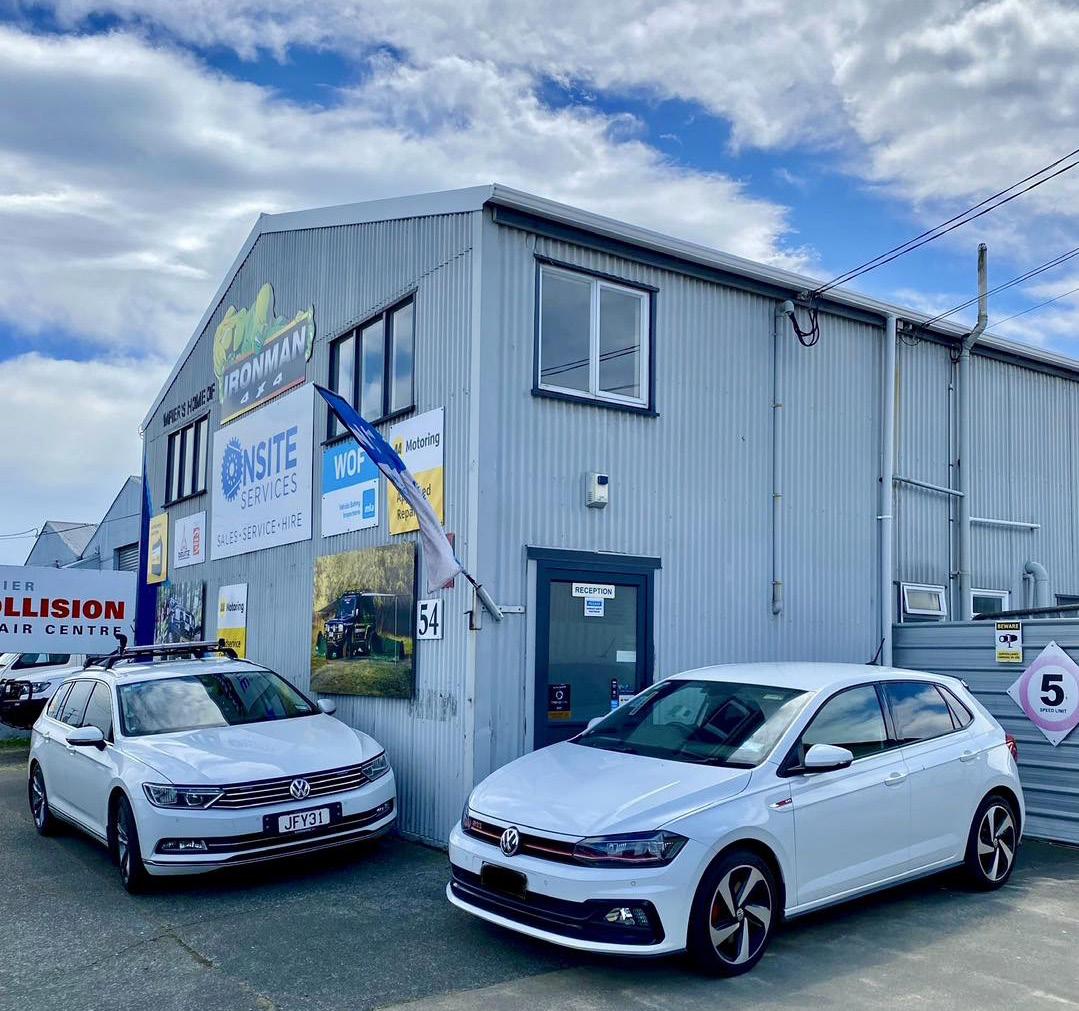
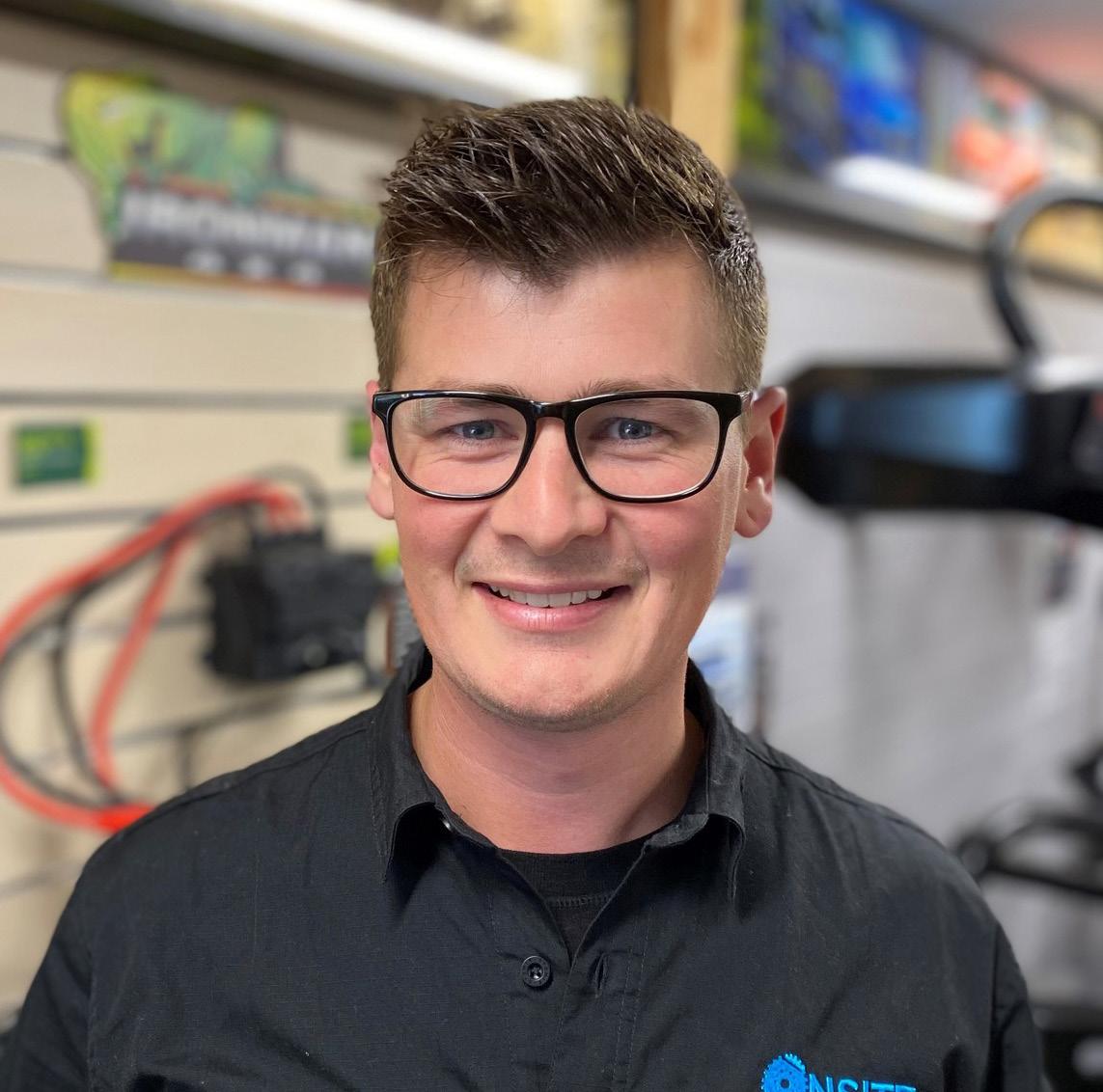
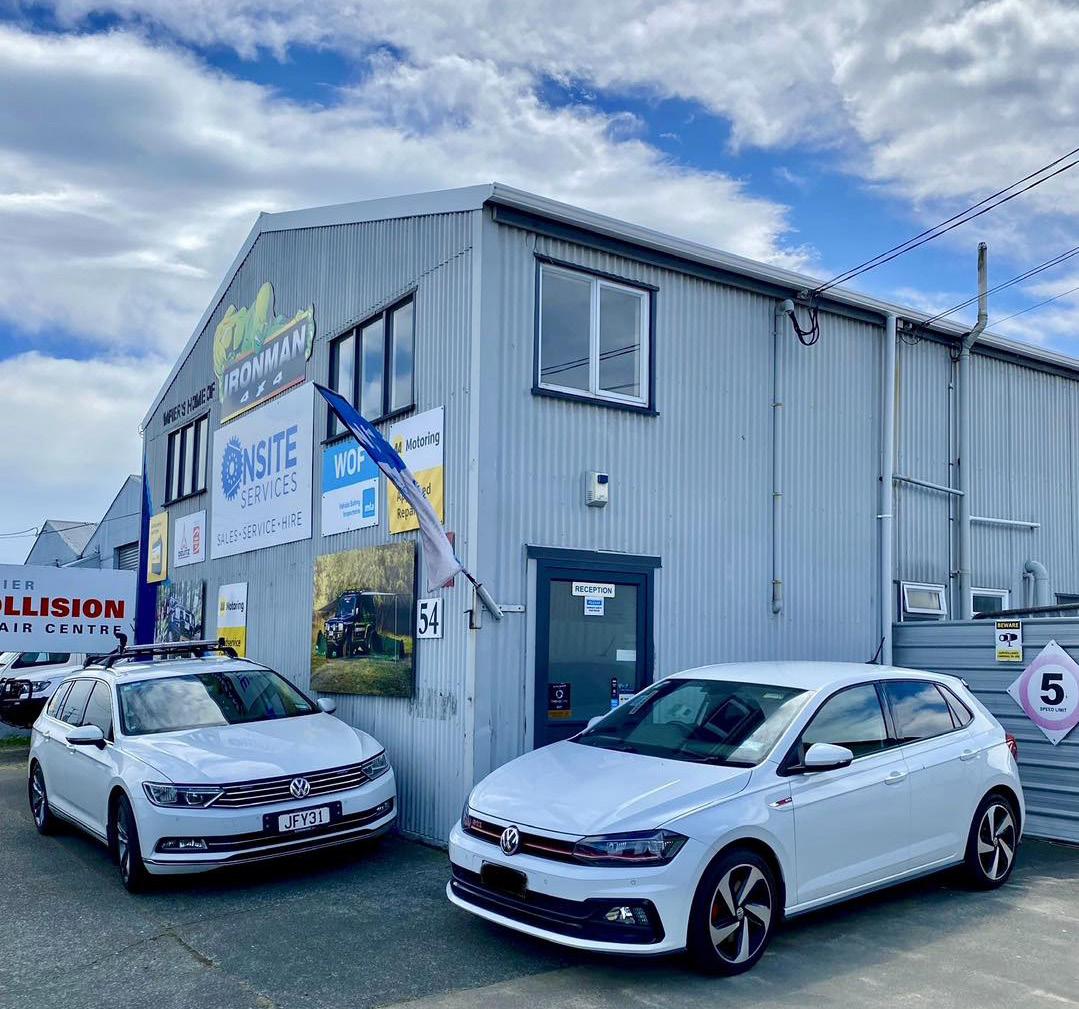
In Napier, Logan Campbell at Onsite Services recently filled a mechanic’s role after searching for five months.
“Finding someone was pretty hard to be fair, and I found someone local which was just the luck of the draw in the end,” he says.
“Trying to find someone that is fully qualified and is half decent as a mechanic is the key issue.
“I had tonnes of applicants from overseas but I couldn’t bring myself to bring someone in.
“There are plenty of guys out there applying that have got no experience and no trade cert — you need quality in the workshop.
“On top of that you have to pay a premium for the right person.”
* Want to have your say on staff movements? Inform our advocacy work by emailing James.mcdowall@mta.org.nz
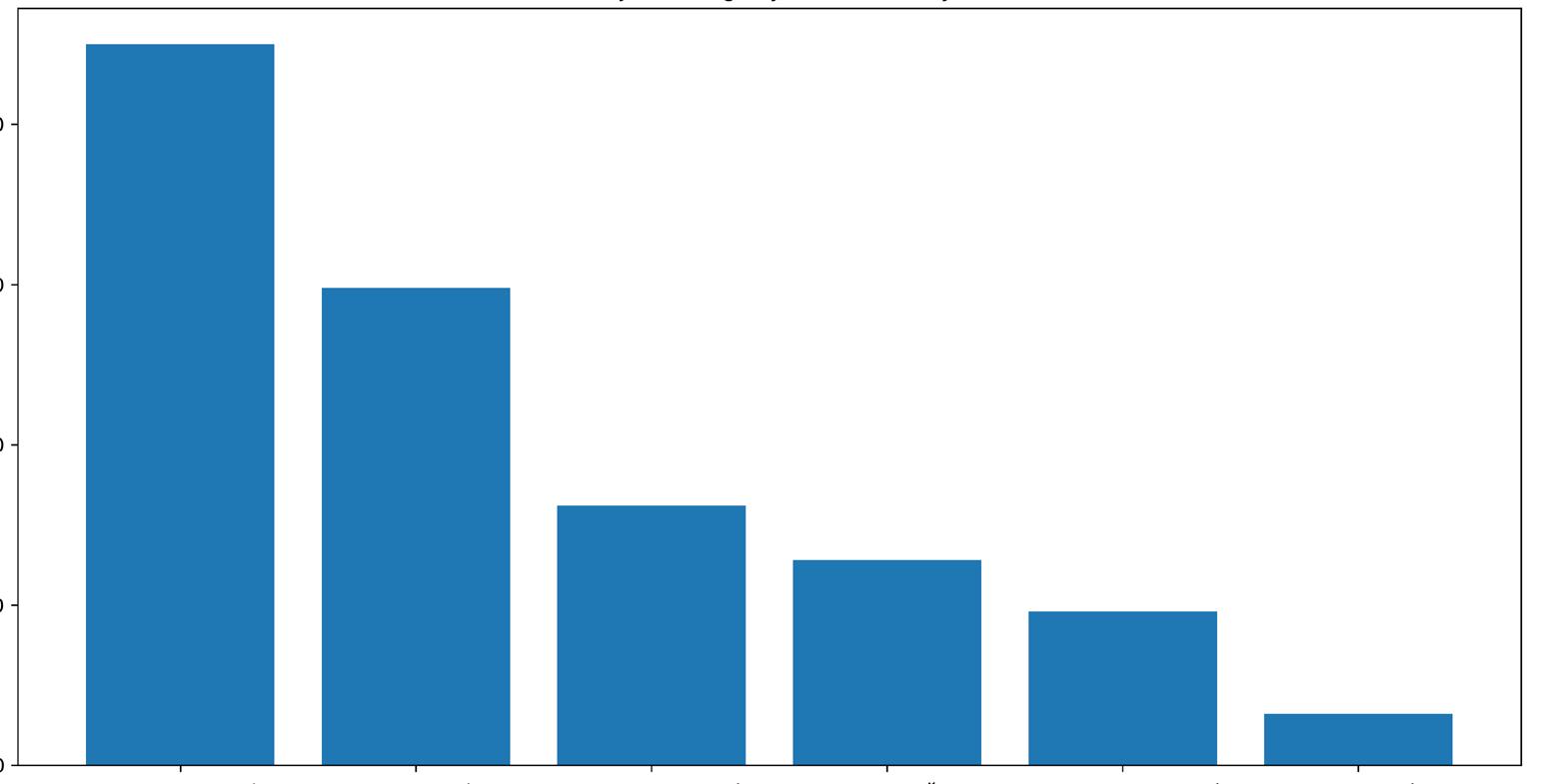
Job market snapshot: Trade Me vacancies (February 2026) The latest listings on Trade Me highlight the continued demand for skilled staff across the automotive industry, with 583 roles advertised nationwide.
Breakdown by role:
•Automotive Technicians: 225
•Diesel Mechanics: 149
•Sales, Operations and Parts: 81
•Panel and Paint: 64
•Groomers and Other Positions: 48
•Service Managers: 16
Source: Trade Me job listings, February 2026.
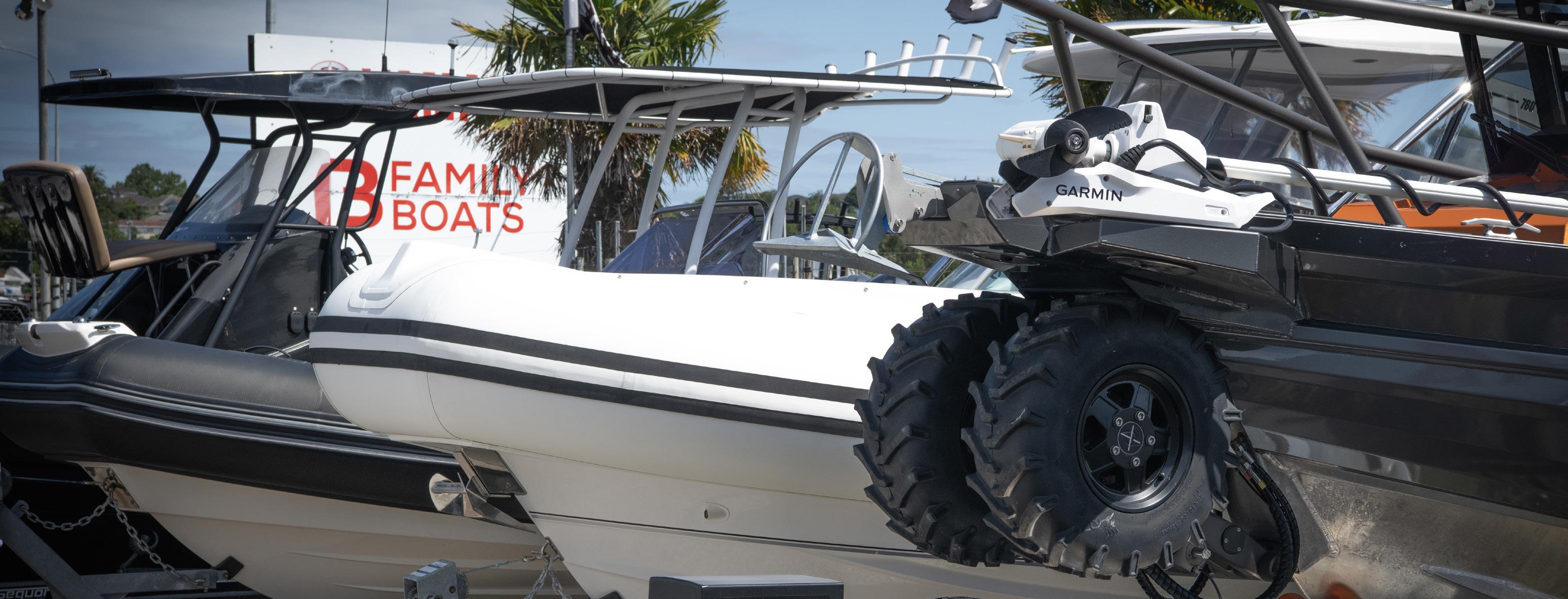
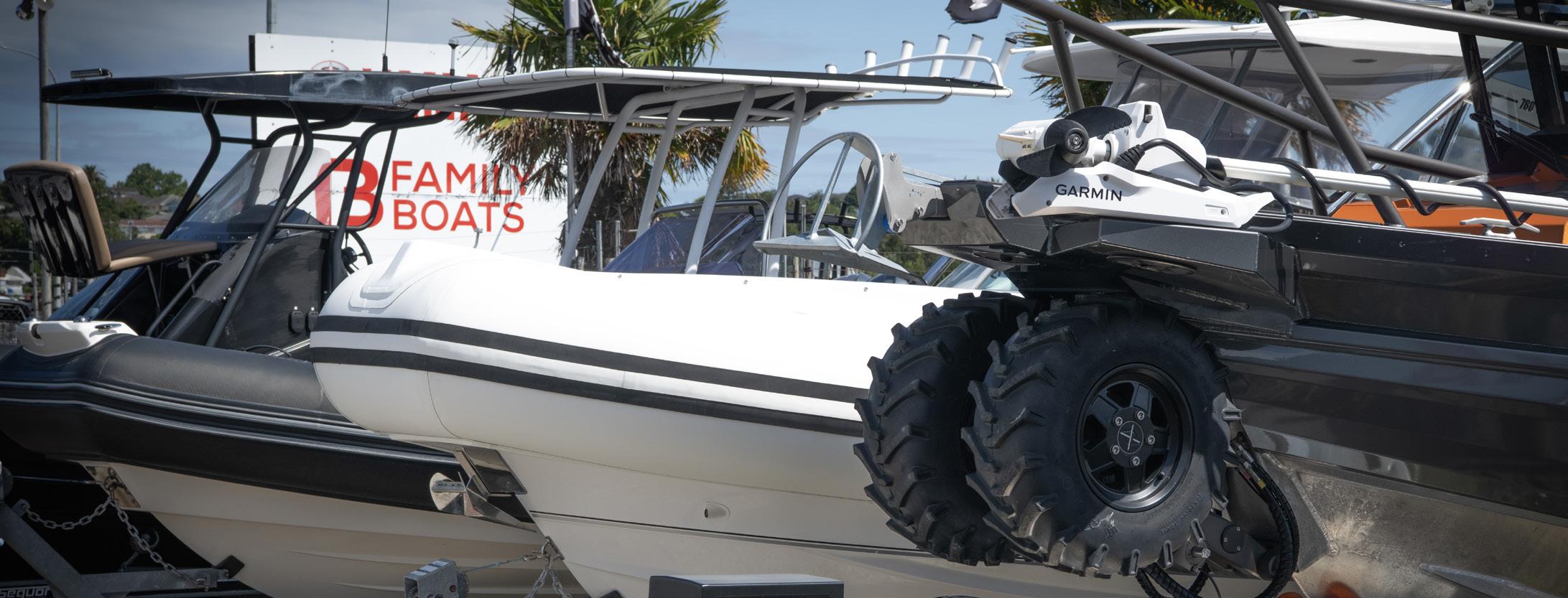
It might come as a surprise to some readers, but alongside MTA’s automotive membership are some marine business members.
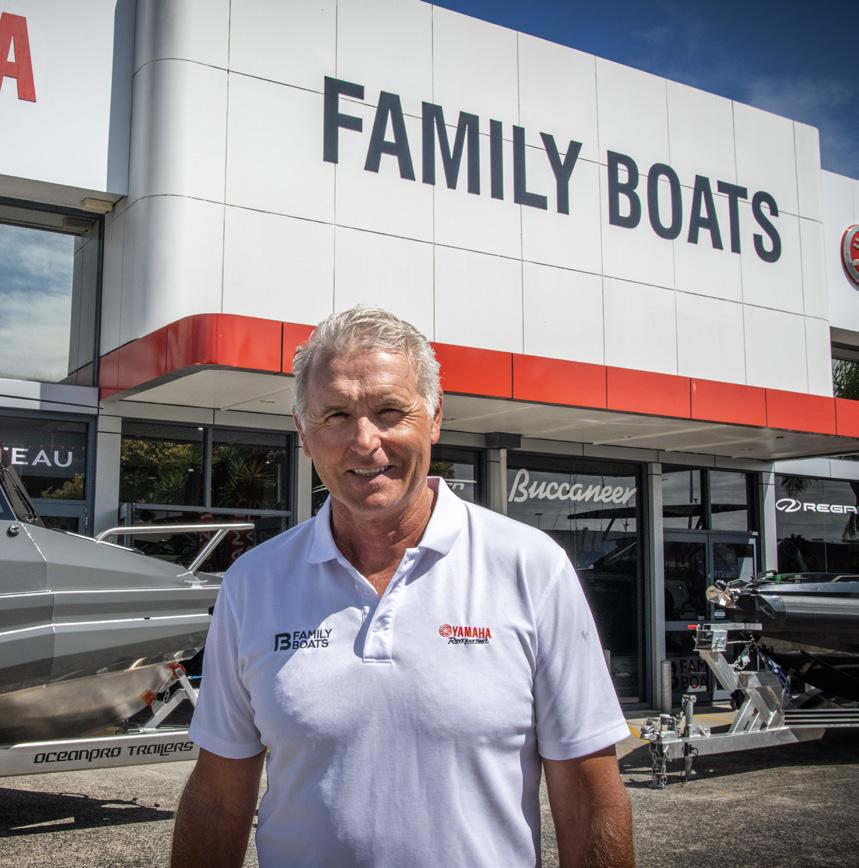
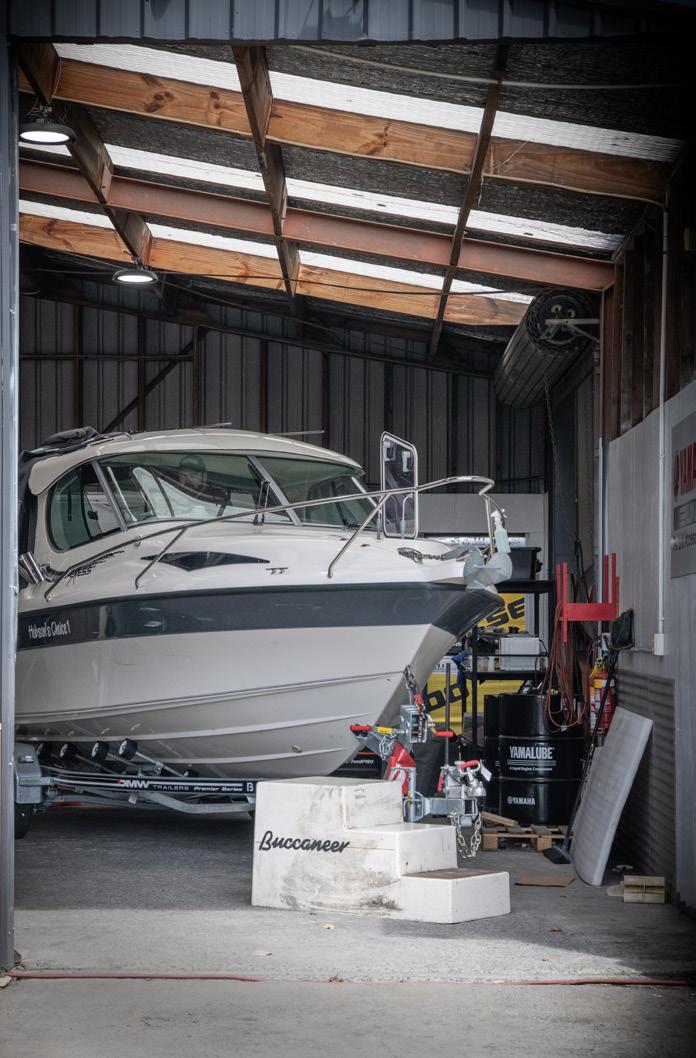
Peter Carlson [pictured right] is one – he's spent his life on the water and sailed into a successful business along the way.
Thirty years ago, Peter bought a small, struggling marine business in Auckland.
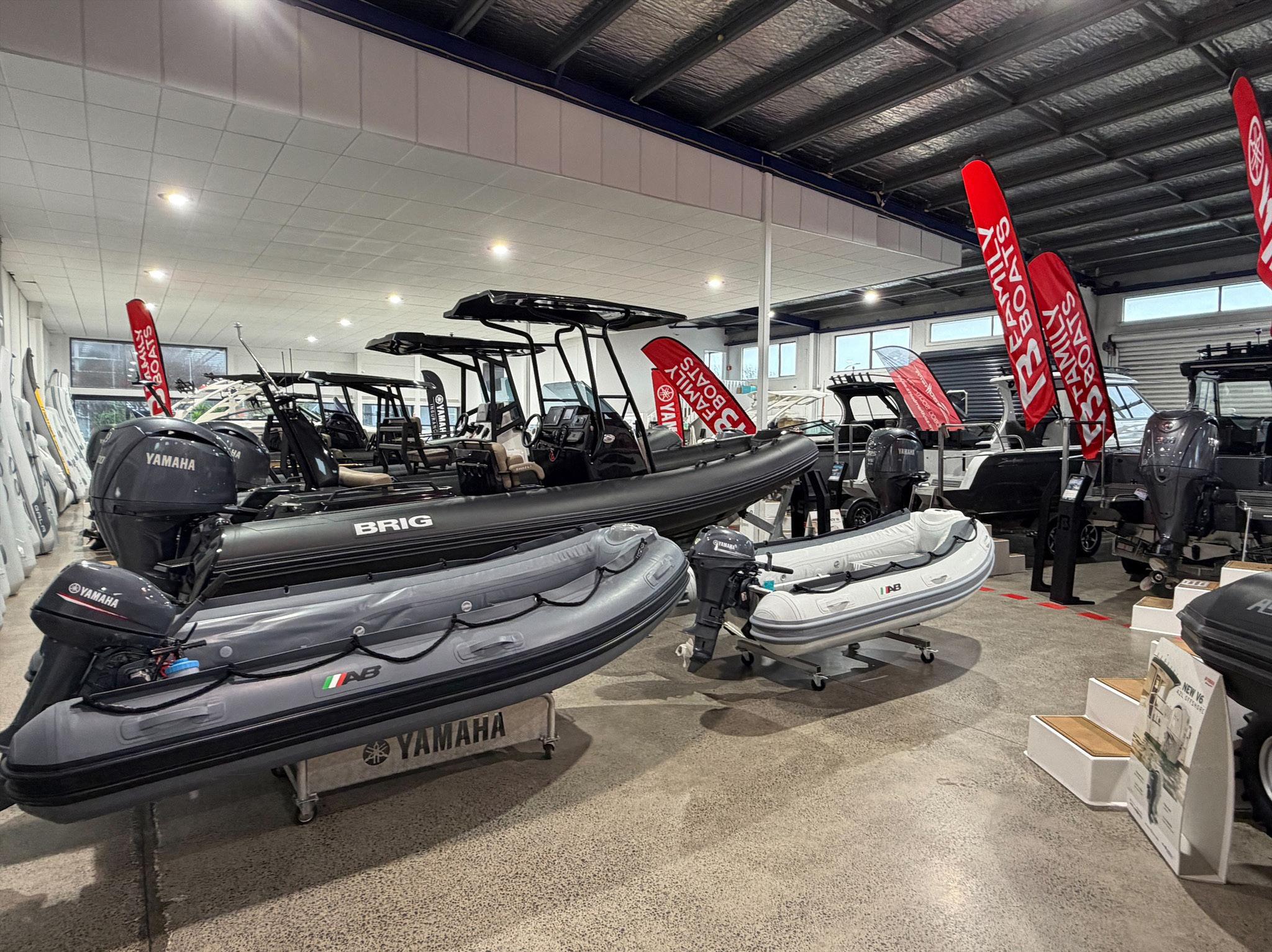
Over three decades he’s built Family Boats into a significant multimillion, multi-brand dealership and manufacturing operation.
But he didn’t navigate a conventional route to ownership though.
“Originally, I was an employee. It
was owned by the Spencer family who were rich listers, and it was a small business they couldn’t make it work because it was run by corporate,” Peter recalls.
“They fired my boss and came to me and said I could run it. I was 24.”
Then came a bold suggestion.
“The old boss suggested we make an offer for the business. I didn’t have any money so we asked if they would fund us into the business and they did.”
In 1996, Peter bought out his business partner and took full control. At that point the company employed just two staff members –one of whom is still with him today.
“We built it from there. We now have 25 staff and have expanded the footprint of the site, accumulating a lot of buildings.”
‘Seat of our pants’
Growth in the early years was fast and, by Peter’s own admission, instinctive.
“We built the business by the seat of our pants and tried to get as much volume as possible as quickly as possible.”
At one point, Family Boats was growing at around 20 percent a year, reaching a peak turnover of $30 million. Expansion included not only broadening the Auckland site but opening a boat shop in Pauanui on the Coromandel and
have been tested.
investing in manufacturing business.
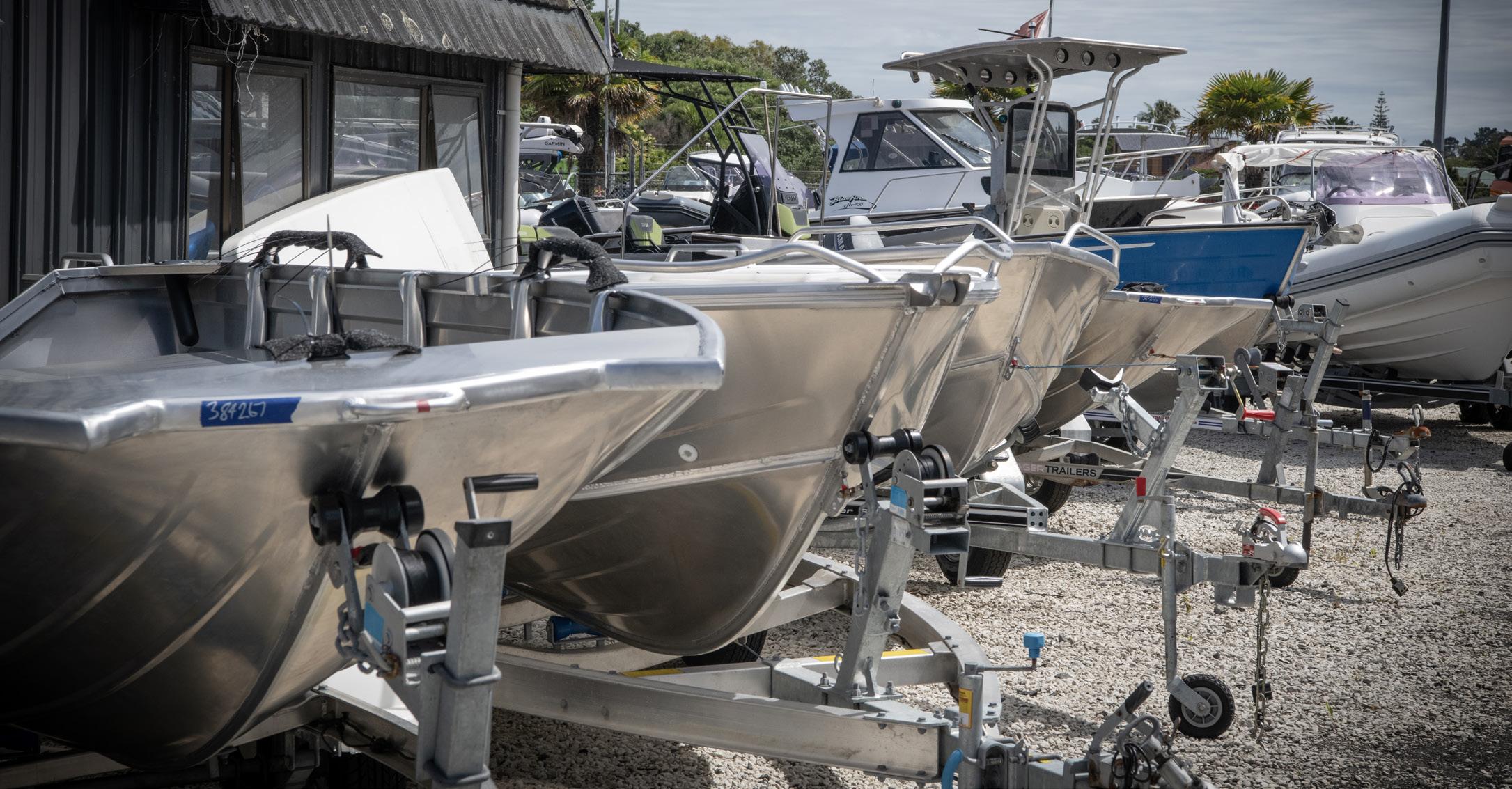
“We bought in brands from overseas as well as supporting New Zealand ones,” Peter says. Including acquiring Southern, an aluminium boat manufacturing company in Dunedin, which he says has been built it up to a reasonable size business.
Peter developed a reputation for backing strong products and building brands rather than simply retailing them.
“We got into manufacturing amphibious boats that are the high end of the market at around $450,000. We make it look pretty sharp, and in doing so we have accumulated or made brands.”
Like the automotive sector, marine retail rides economic cycles, but often with sharper peaks and troughs.
“It has been decades of a constant cycle. When there is a downturn, it is a slow crawl out of it, but I generally do better than most,” he says.
But lately, even seasoned operators
It's a bit different than servicing cars. You can't just plug a boat in a fi nd out what the problem is. “
“This latest downturn has carried on for a long time. It has been more than two years and a lot of guys who have been in the business longer than me say this is the longest it has ever been.
“A car is something people need. A boat is something they want.”
When consumer confidence tightens, discretionary spending is often first to go. That reality demands careful stock management, strong supplier relationships and a diversified revenue stream.
Boats v cars
For MTA members, Peter’s insights into workshop operations in the marine sector will resonate, but there are some key differences.
“It’s a bit different than servicing cars. You can’t just plug a boat in and find out what the problem is.
“We have boats coming from one manufacturer, motors from another manufacturer, and trailers from somewhere else.”
Diagnostics and repairs can be complex and time-consuming. Testing often requires getting the vessel back on the water.
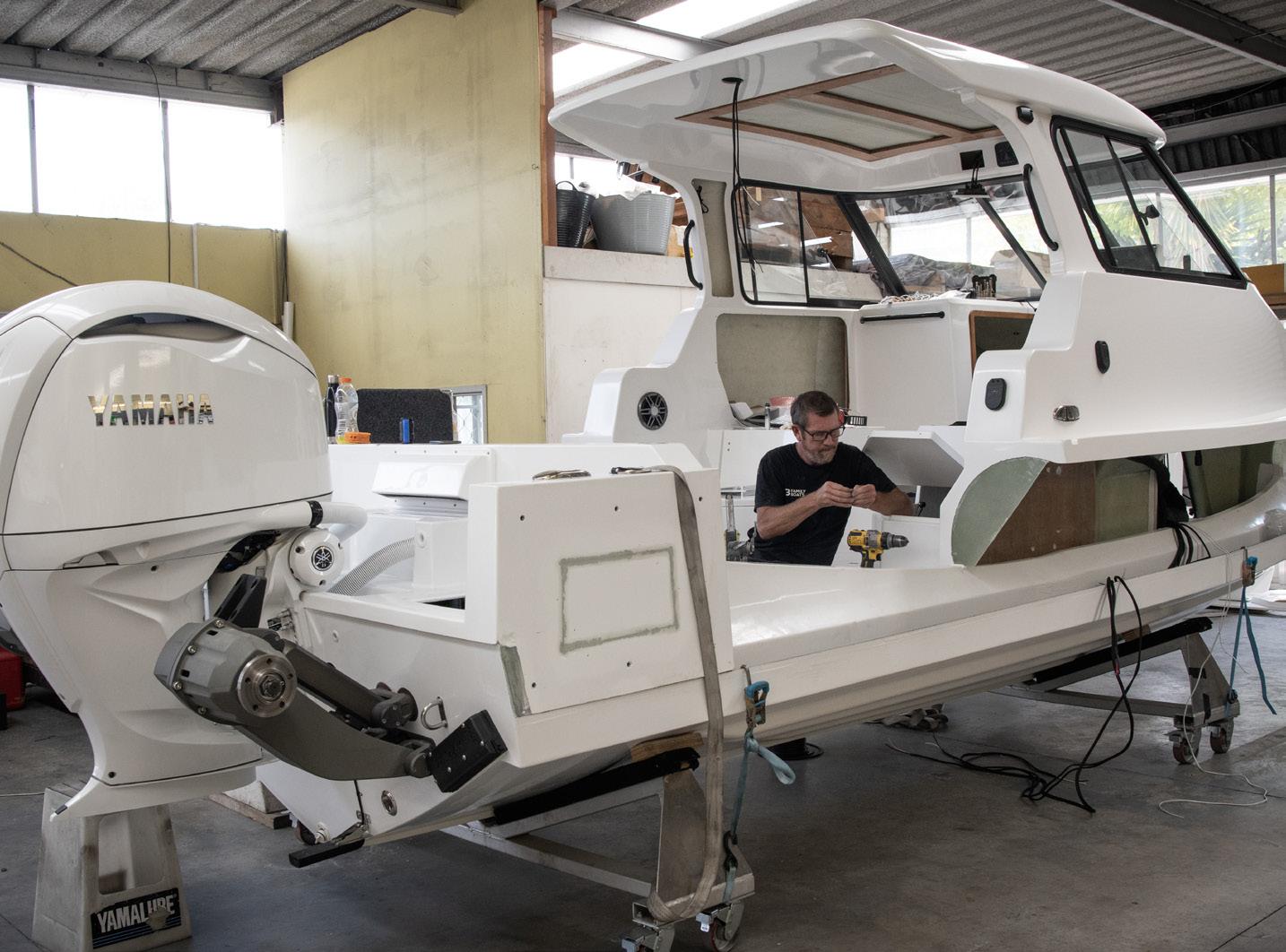
While margins on new units can look attractive, aftersales in the marine space presents its own challenges.
“Workshops in a marine environment aren’t super profitable. There isn’t enough turnover and if a boat or a jet-ski has a fault you have to take it to the water – it is hard to justify the labour sometimes.”
Now Peter is beginning to look to the future.
“My kids aren’t that interested in the business. They are both in the car industry. They probably look at me and see how hard I work and don’t want to do it.”
Despite the company’s name, there’s no succession plan waiting in the wings. Instead, Peter expects
to find the right buyer when the time is right.
He’s already built a house in Queenstown and has his sights set on moving south – swapping the daily demands of running a large marine operation for a different pace of life.


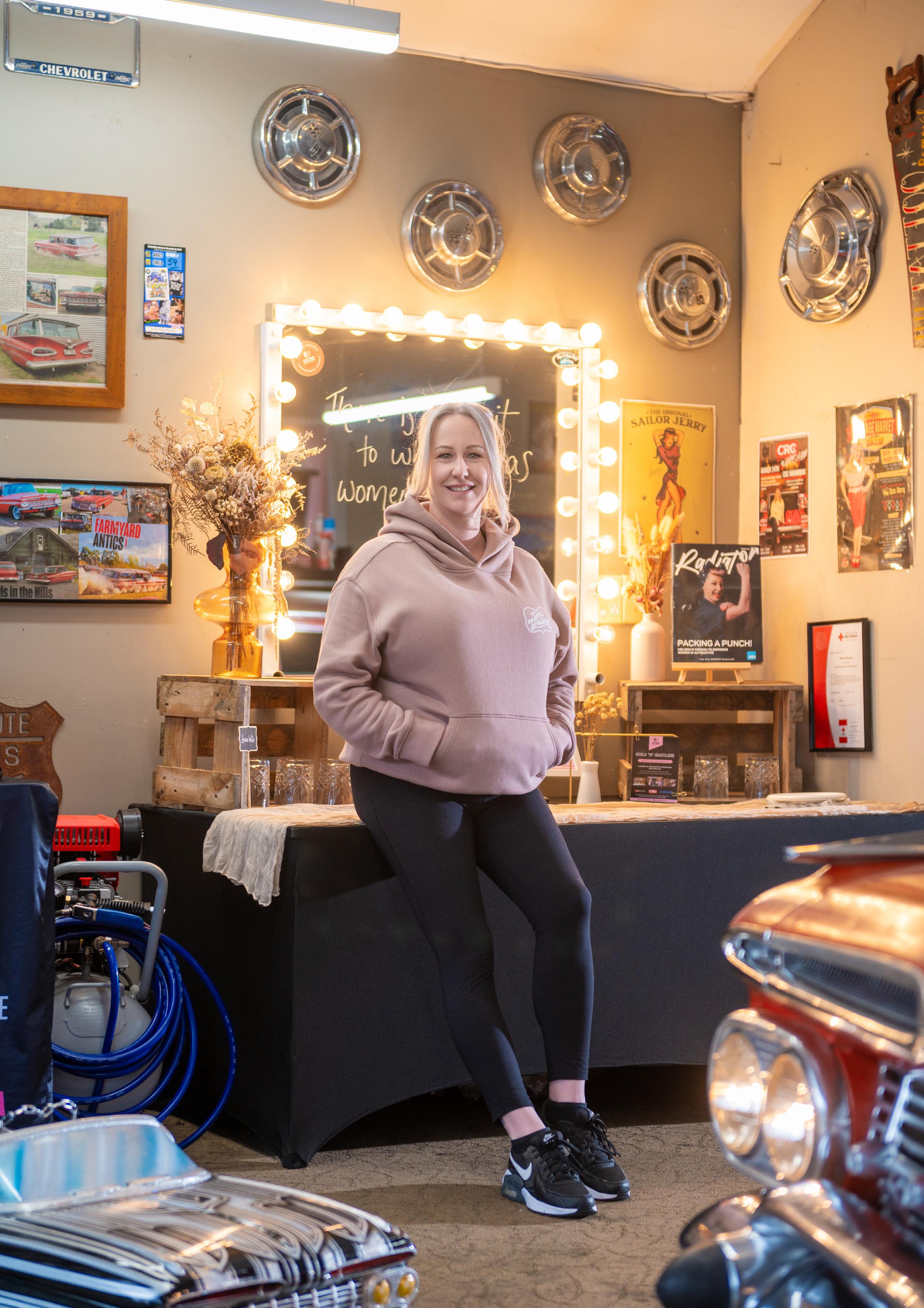
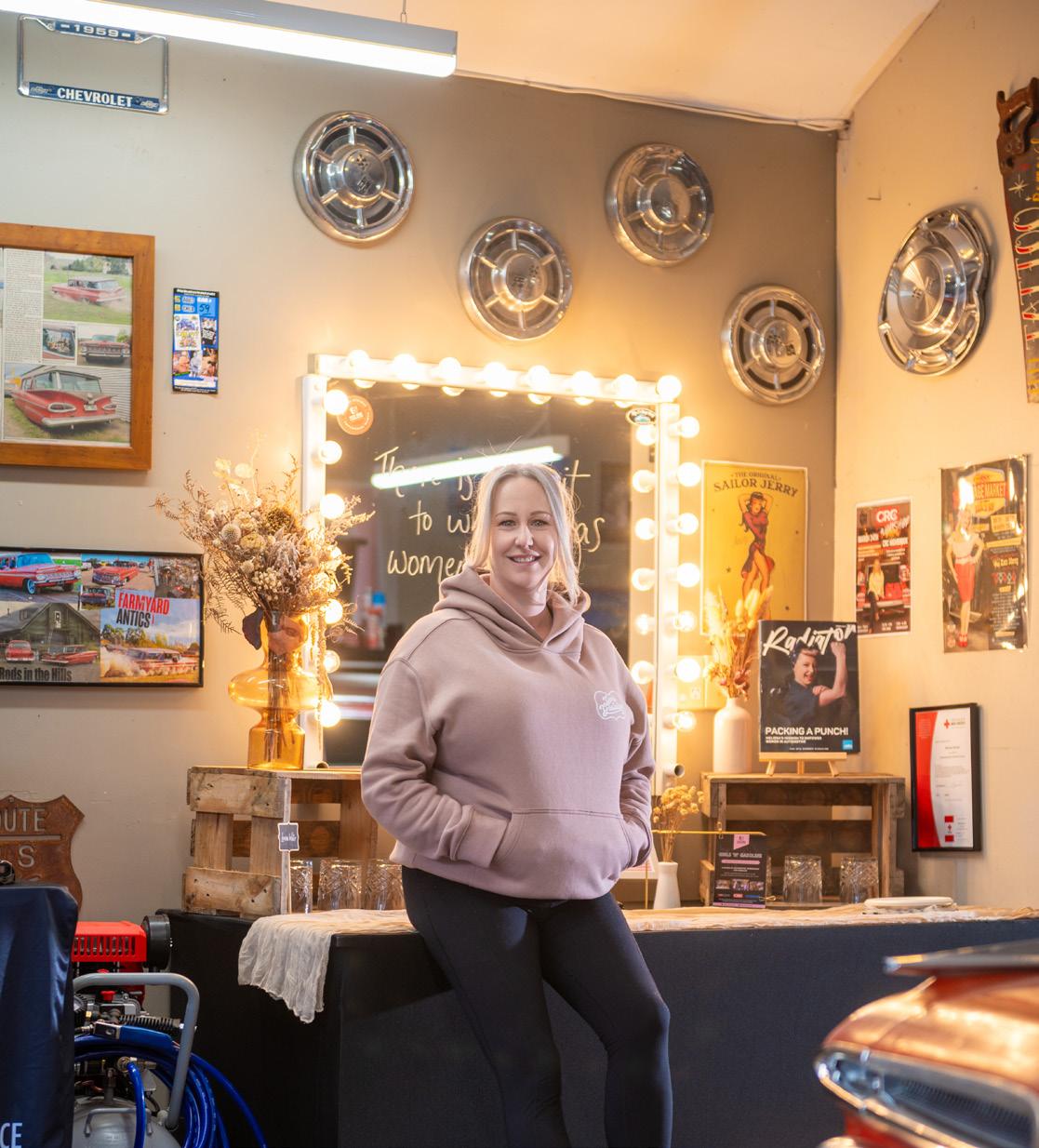
Radiator columnist Melissa Hannan is on a mission to change the way women see their place in the automotive industry. With 17 years’ experience as a motor mechanic, she knows her way around an engine bay, but more importantly she understands the confidence gap that stops many women from picking up the tools in the first place.
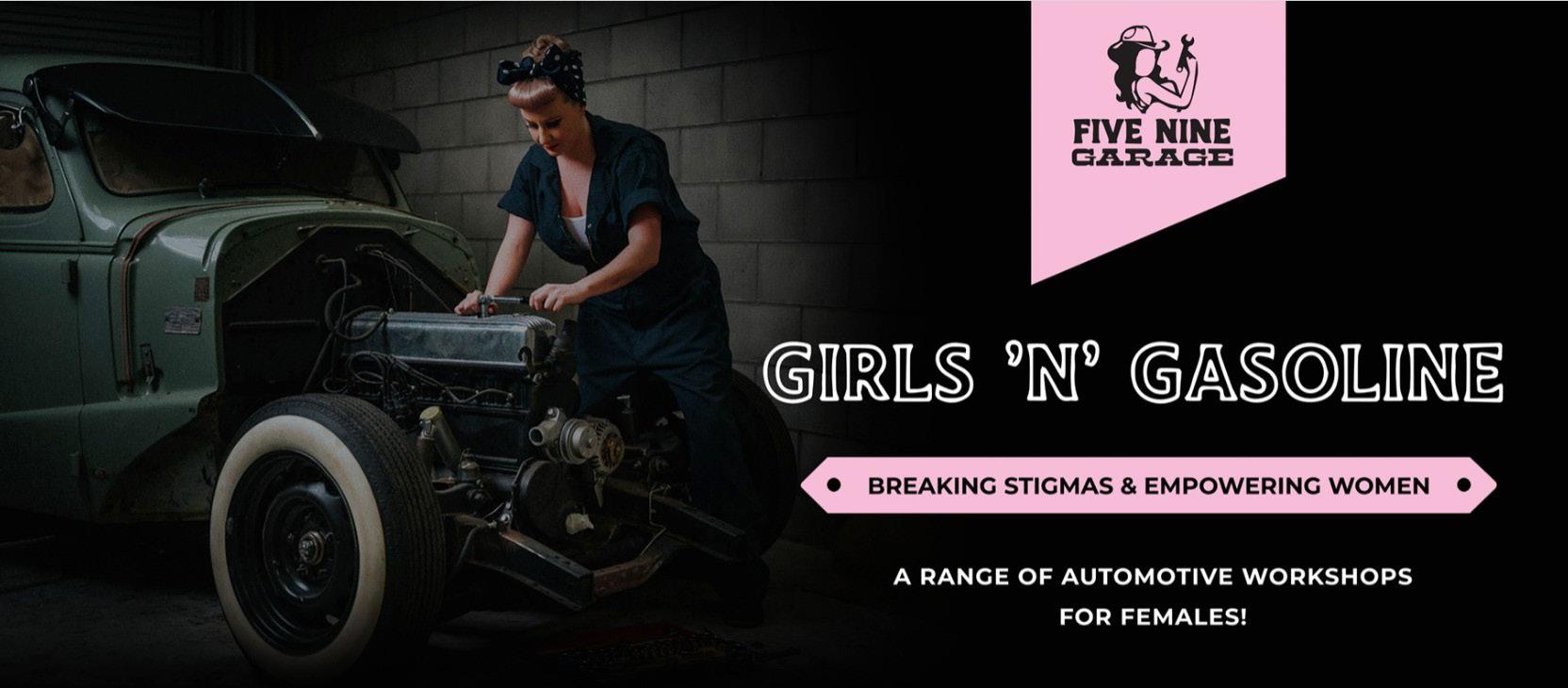
Melissa also runs the highly successful Girls 'N' Gasoline programme that helps women learn more about vehicle maintenance.
So many women I meet would leave everything to their partnernot because they weren’t capable, but because no one had ever taken the time to teach them in a way that felt comfortable. I was lucky enough to start my apprenticeship early and learn about vehicles from the ground up. I didn’t grow up in a family that was into cars. My dad and family weren’t mechanically minded at all, so everything I know came from learning on the job.
The idea for my workshops came from friends and family. Flatmates would ask me to check their oil, friends would call when a warning light came on, or when they needed help changing a tyre, even my dad would call me up to work on his Hiace van.
I realised there wasn’t a space where women could learn the
This industry has long been male-dominated, but I am starting to see and hear more females entering the industry which I think is amazing! “ ˮ
basics of vehicle maintenance without fear of being judged.
These weren’t skills being taught in schools either - yet they’re skills I believe everyone, not just women, should have. What this is really about is confidence. Not just confidence with a vehicle, but confidence walking into workshops, asking questions, and not feeling intimidated in
automotive spaces. This industry has long been male dominated, but I am starting to see and hear of more females entering the industry which I think is amazing!
While my female-focused workshops are at the heart of what I do, vehicle maintenance isn’t just important for women. I also offer one-on-one sessions, group bookings, private classes and
corporate workshops. Whether it’s a mum and son booking a private lesson, a business wanting to upskill their staff, or a community group looking for practical education - I offer it all.
For as long as I can remember, cars have been part of my life. I’ve spent 20 years now in the automotive industry, all that time working in workshops where I was the only woman on the tools. At the time, I didn’t think much of it - it was just how things were. But over the years, I noticed something that stayed with me: how many women rely on their vehicles every day, but yet know very little about how to look after them.
Two years ago, I started Girls 'N' Gasoline to help women around NZ how to correctly maintain their vehicles. “ ˮ
Two years ago, I started Girls ’N’ Gasoline to help women around New Zealand learn how to correctly maintain their vehicles.
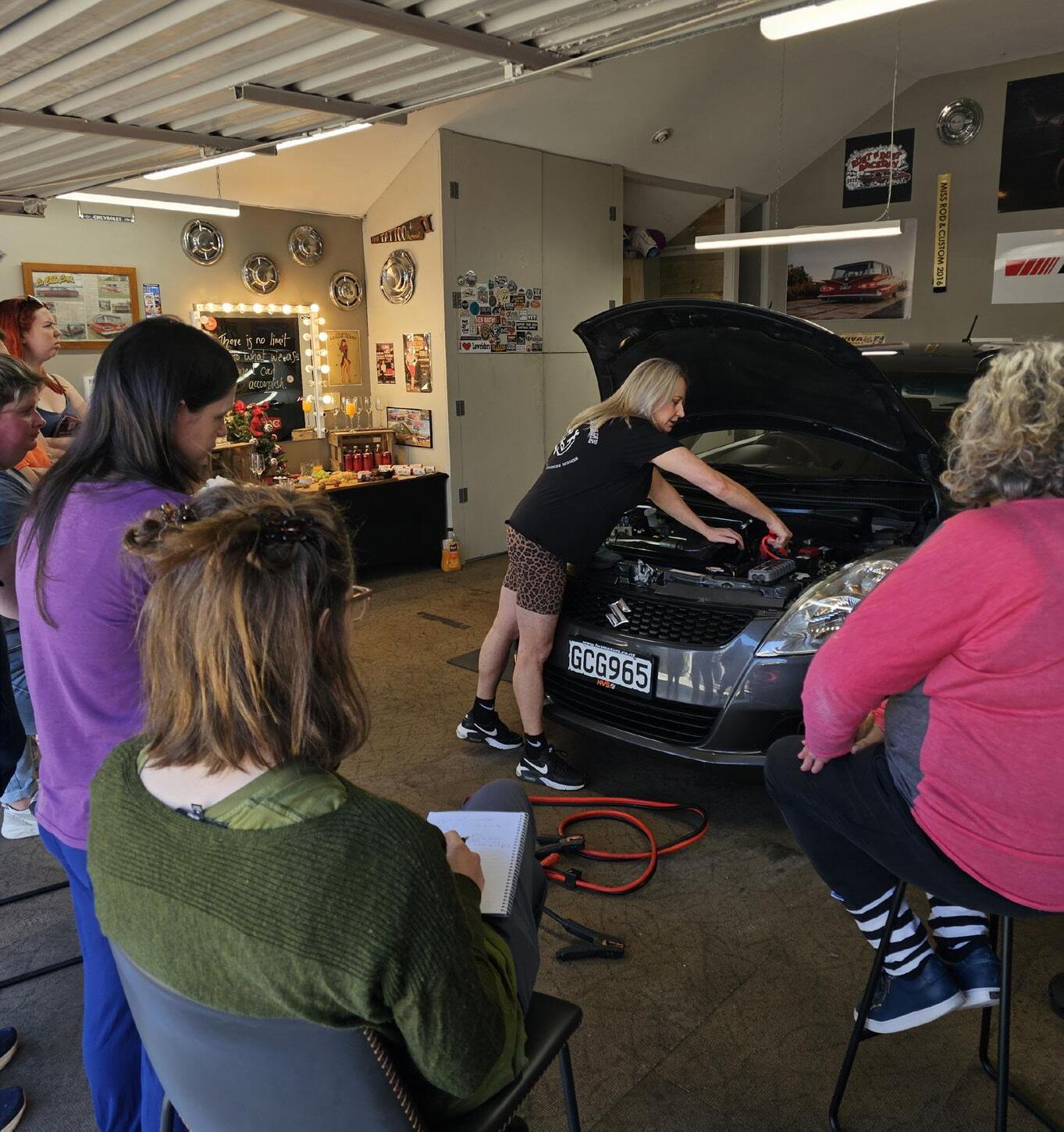
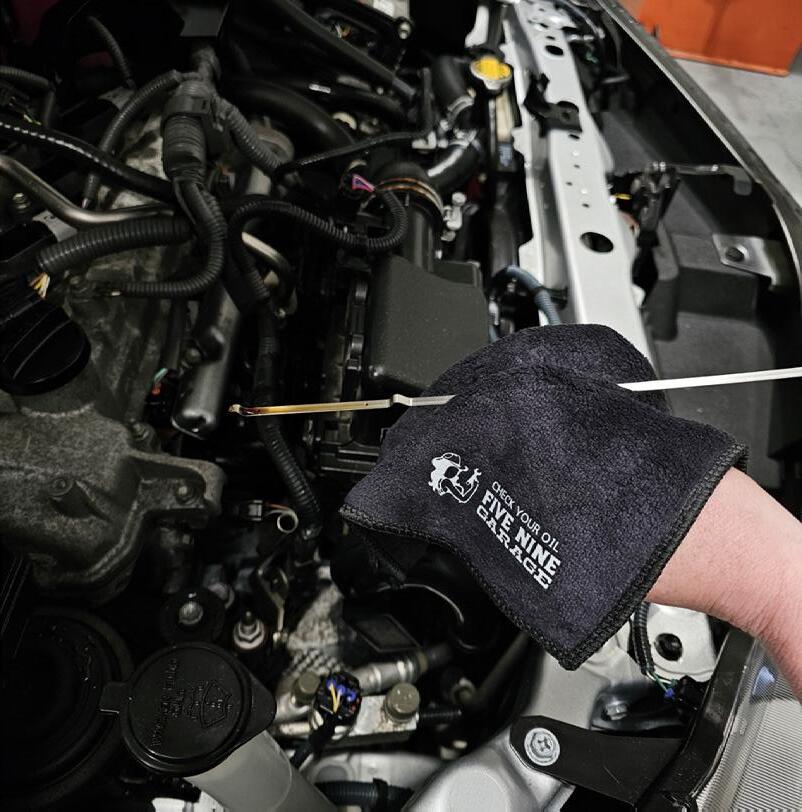
I began by running workshops in my shed in Christchurch, creating a relaxed, supportive environment where no question was ever a silly question. We focus on the fundamentals - what’s under the bonnet, how to check and top up oil and coolant, understanding different fluids, changing wiper blades, checking tyre pressures,
correct jacking points, changing a spare wheel, and the correct jumpstarting sequence.
We rely so heavily on our vehicles - for work, school runs, family life and everything in between - and having even basic knowledge about how to look after them can make a huge difference. Simply knowing how and when to check your oil or water can sometimes help you spot a problem before it becomes a major repair.
One of the highlights of every workshop is the tyre-changing challenge. For many women, it’s the first time they’ve ever jacked up a car and removed a wheel themselves. Watching the moment it clicks when they realise “I can actually do this” never gets old. Every participant completes the challenge, and the confidence that comes with it is far more important than the time on the clock
More than just cars What I didn’t fully expect when I started was how powerful the feedback would be. The women
who attend often keep in touch with me, and I regularly hear from them when they’ve used what they learned. Whether it’s confidently checking their fluids, changing a tyre on their own, or walking into an automotive store knowing exactly what to ask for. Hearing those stories is what drives me to keep going.
I’ve had women attend whose partners are mechanics and they still want to learn for themselves.
That says everything.
Since starting Girls ’N’ Gasoline, I’ve hosted over 40 workshops and worked with around 300+ women across New Zealand. I’ve run sessions for the Deaf Centre, youth centres, corporate teams, private groups and community organisations. I’ve had attendees as young as 12 and as old as 65, which proves that learning has no age limit.
At the end of the day, this is
about independence, knowledge and empowerment. If I can help people feel more confident about something they rely on every single day, then I know I’m doing exactly what I’m meant to be doing.
Check out my FacebookGirlsngasoline or Instagramfive_nine_garage to see what I get up too.
If you want your staff to look clean and professional and save your company money with the least amount of hassle, talk to Apparelmaster. We buy any kind of workwear and rent it back to you, professionally launder and repair it and make sure you get the right gear where and when you need it.
If you want your staff to look clean and professional and save your company money with the least amount of hassle, talk to Apparelmaster. We buy any kind of workwear and rent it back to you, professionally launder and repair it and make sure you get the right gear where and when you need it.
NEW ZEALAND, COVERED AT WORK
To find out more, call 0800 808 820 or visit online at apparelmaster.co.nz
NEW ZEALAND, COVERED AT WORK
To find out more, call 0800 808 820 or visit online at apparelmaster.co.nz
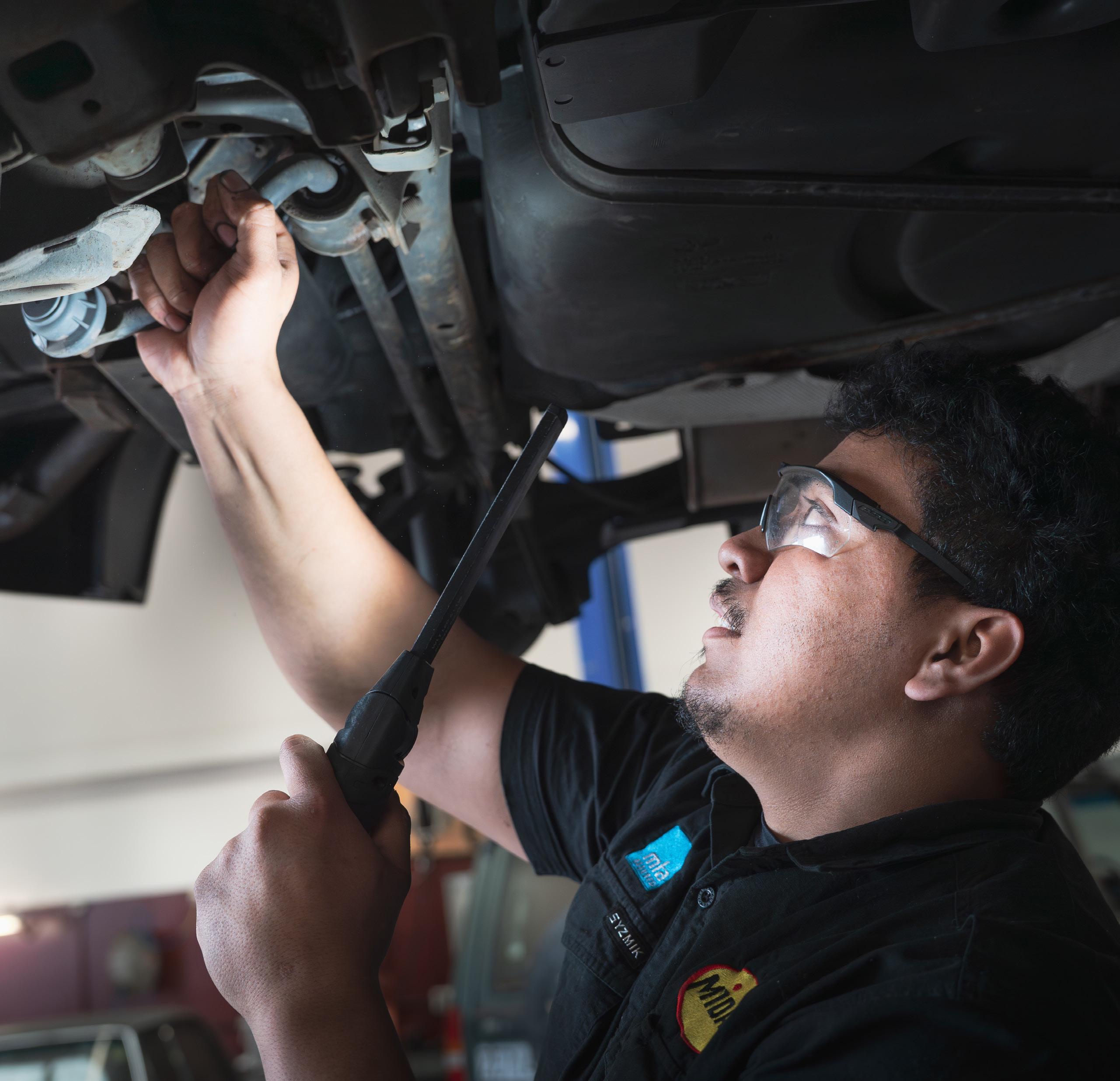
Level up your team and lift workshop capability with MITO’s industry-leading Light Vehicle Engineering training programme.
Trusted qualifications that keep your business moving forward.
Find out more at mito.nz/lv

Test your knowledge with our five-minute monthly motoring quiz.
Ratings:
1/5: Put your L plates back on.
2/5: Hit the books, rookie.
3/5: Middle of the road.
4/5: Close but no cigar.
5/5: Congratulations, you’ve outrun The Chaser.
1. What does SUV stand for?
2. Who made New Zealand's first police vehicle — Ford, Holden or Toyota?
3. How loud can a car exhaust be under New Zealand law — 75 decibels, 85 decibels, 95 decibels?
4. Under a recent Government propsal, up to what age can children ride their bike on a footpath?
5. Which former football star has the licence plate 7 DB?
Gisborne
Gas Guzzlers Breakfast
This event is on the first Sunday of every month rain, hail or shine.
Reads Quay Gisborne 8:30 am to 11:00 am.
American, Aussie, Kiwi, European, open to anything of interest.
Meremere
Nostalgia Drags
If you love V8’s, Drag Cars, Hot Rods & Classic Cars and the smell of tyre smoke and want to see them battle it out on the 1/4 mile Drag Strip to see who is the fastest, head to Meremere Dragway April 4th –5th.
Enjoy a bit of old school muscle with countless cars from the 30s to 70s and beyond.
Punish the Pad
Burnout competition
April 25, 2026, the competition kicks off at 10 am.
Ruakaka
Classic and Custom Car Show
Marsden Bay Christian Camp Saturday 11th April, 10am to 2pm.
Show cars and under 15 free.
$10 entry fee.
Raffles, prizes, food vending machines, live music.
Ashburton
Wheels Week Tractor Pull
14th – 15th April, two days of horsepower heroes sorting the operators from the seat warmers.
Open to all brands of tractors, old and new, big, small, modified and super modified.
Franz Joesf
Franz Josef Glacier Country Car Show, 9th May, 10am to 1pm.
Gold coin entry with funds going to Saint John South Westland Ambulance.
Franz Josef TOP10 Holiday Park.
Mangakino
Mangakino Lake Hop 2026
A show like no other, celebrating everything horsepower - Cars, Trucks, Boats, Bikes and much, much more.
Saturday September 19th, Lake Maraetai,
Mangakino.
Wellington
Capital Cruise
A four-day car event full of activities, car runs and fun, with a poker run, a mystery cruise, social get-togethers and a car show to top it all off. If you are into Hot Rods, Muscle Cars, Modern Classics or Cars of Special Interest, then this is the event for you.
Car, the driver and a passenger, $249.00. Each additional passenger is $35.00per person.
Entry Fee includes:
Nibbles at the Entrant Welcome Gathering on Thursday evening.
A Poker Run Cruise on Friday, which includes 5 activities we have planned for you to do as you collect your cards.
A Mystery Cruise on Saturday through the four great cities that make up Wellington. Entry to the Capital Cruise Park Up on Sunday, with food trucks, stalls and kids entertainment, this is where the public get to enjoy your ride.
Thursday 26th to Sunday 29th November
Training. By industry. For industry.
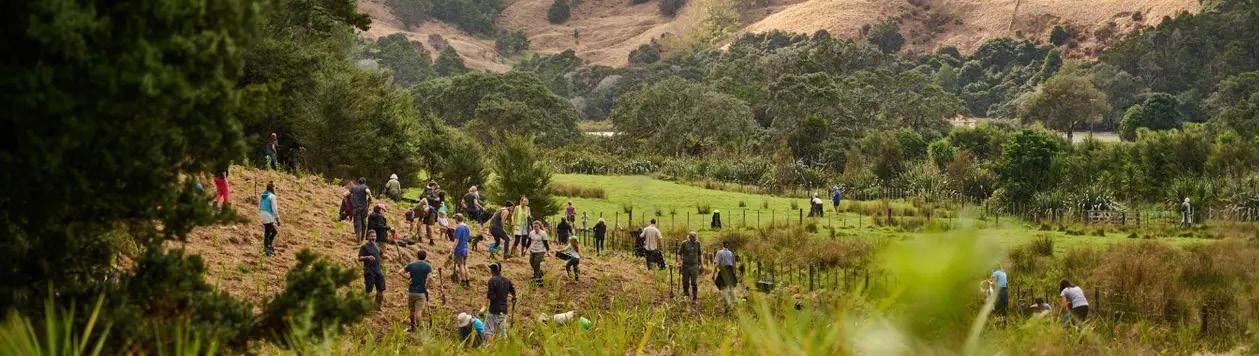
Across New Zealand, workshops are reducing waste, improving recycling, upgrading lighting and equipment, and thinking more carefully about their environmental footprints.
For some the question remains: what is a practical, industry-specific way to make a positive environmental impact?
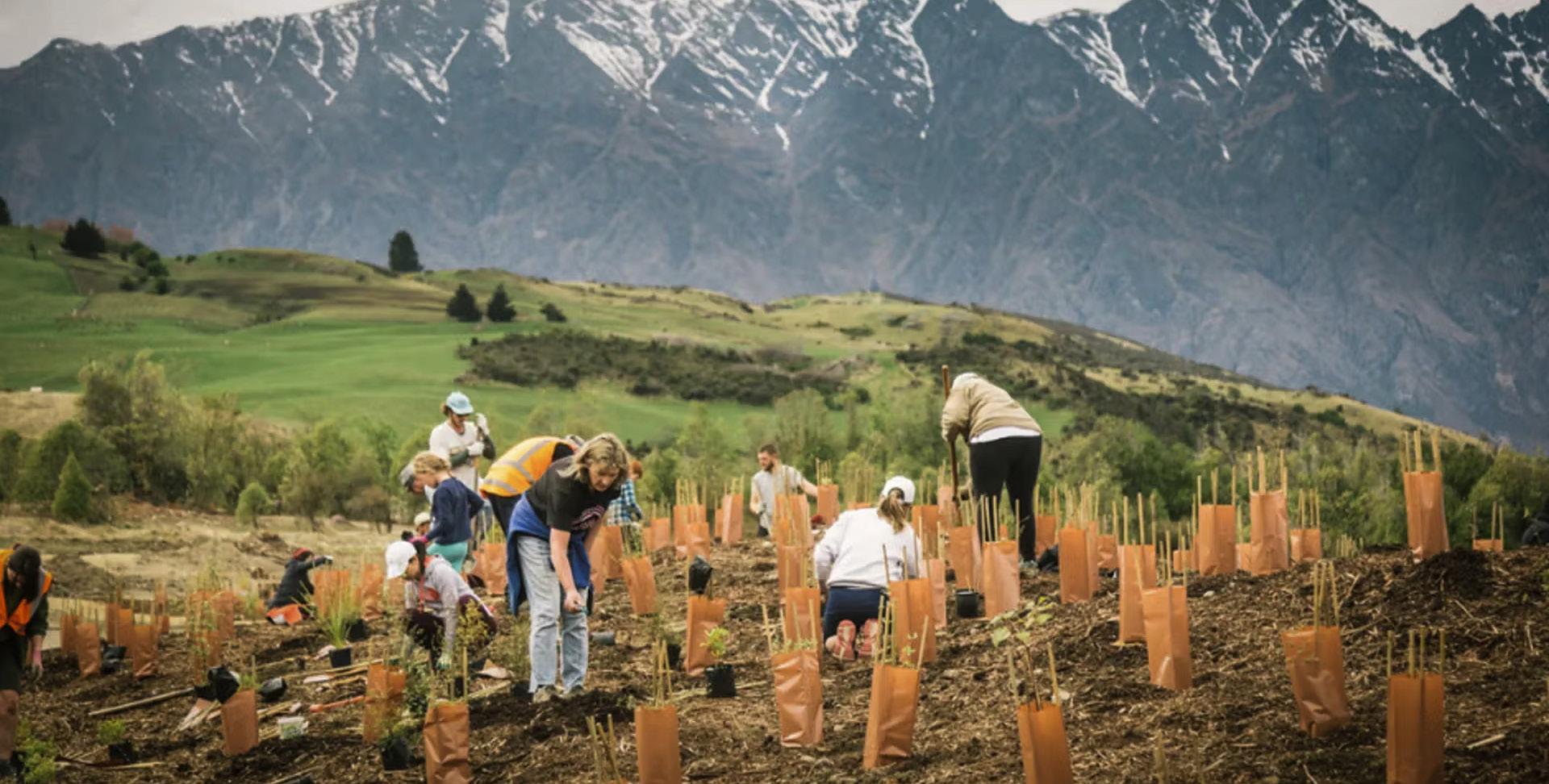
One answer is taking root through Trees for Transport.
An industry-backed initiative
Trees for Transport was launched by Ando Insurance back in 2022 to fund the planting of native trees along walking and cycling trails throughout the country.
Dion Henderson, Ando Insurance National Transport Business Development Manager, says it was established to give the transport and
automotive sectors a direct way to contribute to native tree planting and ecological restoration projects around the country.
“The concept is simple: the industry helps offset part of members’ environmental footprints by funding the planting of native trees in partnership with community and conservation groups,” he says.
Rather than being a generic offset scheme, Trees for Transport is designed with the transport sector in mind, recognising both the essential role vehicles play in New Zealand’s economy and the environmental responsibilities that come with that role.
Funds raised go towards planting native species that restore waterways, stabilise erosion-prone land, increase
biodiversity and contribute to carbon sequestration.
Why this matters to members
He says, the motor trade sits at the heart of New Zealand’s transport system amd transport also accounts for a significant share of national emissions.
For workshops, dealerships and repairers, supporting native planting through Trees for Transport offers a tangible sustainability action, something customers can see and understand.
Dion says it is also important to remember tree planting is not presented as a silver bullet.
It works best when combined with practical in-house changes: improving recycling systems, managing hazardous waste carefully, reducing

energy use, and supporting lowemissions vehicle technologies.
From vehicles to vegetation
For members, involvement can be scaled to suit the size of the business.
Some may choose to link a tree contribution to every vehicle sold or serviced. Others may make annual donations or integrate support into broader ESG reporting. The strength of Trees for Transport lies in its collective impact. Individually, a workshop might fund dozens or hundreds of trees, and across the industry, that can translate into thousands.
A sector stepping up
Customers, suppliers and regulators are increasingly focused on environmental performance.
Businesses that can demonstrate genuine action, rather than simply good intentions, will be better positioned in a changing market.
Dion says it give MTA members an opportunity to be part of a coordinated, sector-wide response to sustainability challenges.
Battery supplier steps up
Century Yuasa Batteries (CYB) is one of many industry suppliers showing a commitment to environmental sustainability through a new partnership with Trees That Count.
Over the past decade, the company has invested more than $172,000 to support 19 restoration projects,
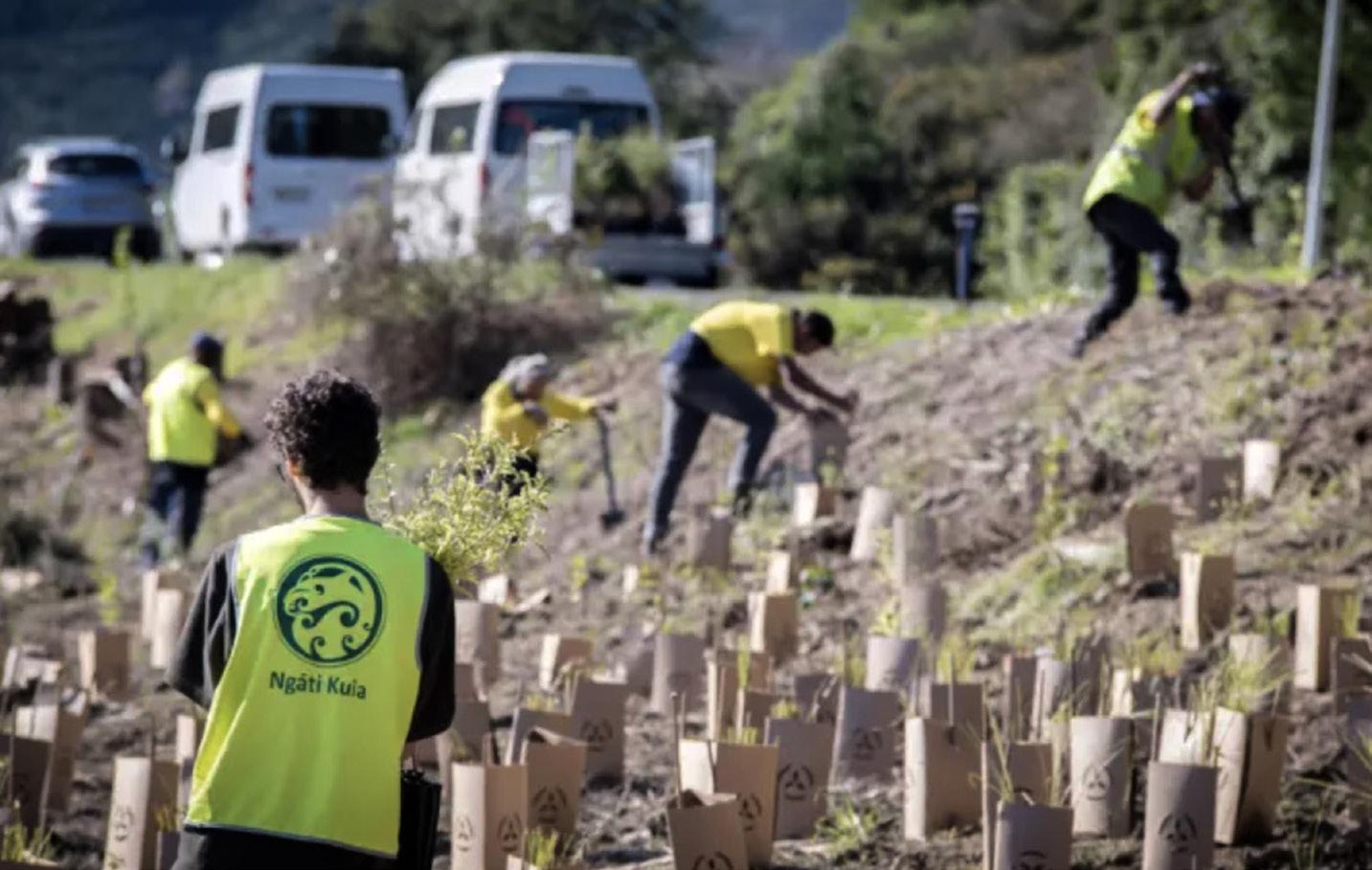
helping to fund the planting of over 23,000 native trees and plants throughout New Zealand.
Shaun O’Brien, General Manager of Automotive Sales for Australia and New Zealand
at CYB, says the initiative builds on the company’s existing environmental impact and commitment to drive sustainable change across the industry.
“Every tree we plant in the ground represents more than just a contribution to nature – it’s an investment in the future of New Zealand,” he says.
For more information go to treesthatcount.co.nz
What is Trees for Transport?
Trees for Transport was launched by Ando Insurance back in 2022 to fund the planting of native trees along walking and cycling trails throughout the country.
They provide insurance for a number of private and commercial vehicles – an industry that contributes significantly to New Zealand’s energy sector CO2 emissions (43 percent*).
Planting native trees offered a practical, long-term solution to help reduce transport emissions, while also restoring ecosystems and creating nature trails that communities across the country can enjoy.
Every month we reply to members’ questions and comments drawn from conversations with the MTA team. Do you need advice or an answer on something? Radiator would love to hear from you. Please email simon.bradwell@mta.org.nz.
Are the WoF courses still being run by DEKRA and when will there be new/refresher courses?
WoF courses are no longer being run by DEKRA. Reshaping how the training is done is a work in progress and we will let members know as soon as a decision has been made.
It is a constant struggle to find good staff, even with the immigration settings changed. Where can I find good staff and what can be done to encourage staff to stay?
There is always the option to recruit internationally. NZQA can assess and align overseas qualifications with New Zealand standards (fees apply, though applicants can arrange this themselves). It’s often a good way to gauge a candidate’s commitment to working in New Zealand.
Here a few resources that may be helpful.
•SLGTI – Sri Lanka German Training Institute: Known for producing well-trained candidates, with several MTA members reporting positive outcomes.
•Australia: AUTOrecruit and Australia Trade Connections.
•South Africa: MoToRecruit
•UK: InAutomotive and Autotech Recruit
What does the change for MITO to an ITO mean for training in the future?
For years, members have told us that the shortage of skilled tradespeople is limiting automotive businesses in New Zealand. The problem, at its core, is that the centralised system failed to produce the right number of graduates with the skills that industry needs.
In the short term, it means it’s business as usual for MITO learners and employers. We will keep members informed on future developments.
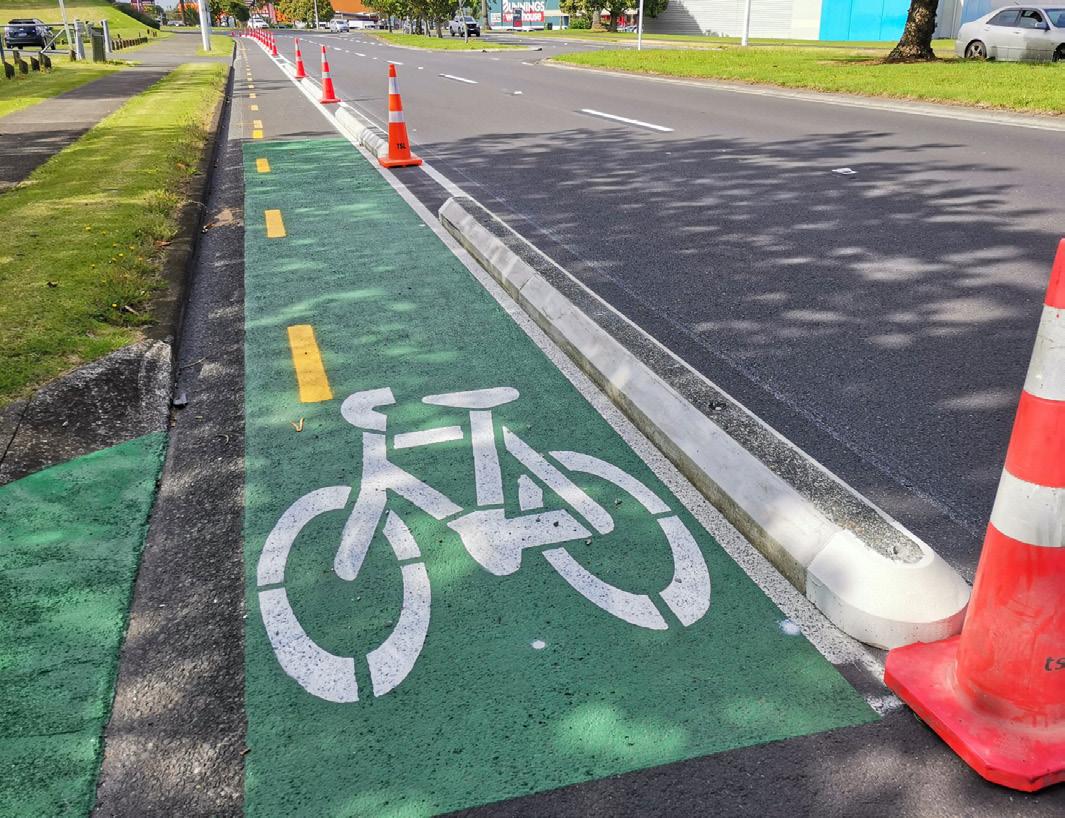
What can be done if a local council puts a cycleway or bus stop in that encroaches over a business driveway?
The first thing to do is engage in formal consultations with your local council, lobby local board members, or formally object during the planning stages.
You can also leverage local chambers of commerce to help with the problem.
What is the process when closing my MTA membership when there’s a new owner?
The best place to start is getting in touch with one of MTA’s member support officers; they can help you through the process. MTA’s membership advisors can help with onboarding the new owner of the business. Contact details are at the back of this magazine.
Where do I find the MTA stationery store and what is available for a member to promote their MTA membership?
You can find the stationery store if you log into your MTA Toolbox. There are signs, flags and vouchers also available through this link.
Clarifi cation
In our February article A Widow’s Tale, we reported that Paul and Annette McGrath were married for 27 years. They were together 27 years, and married in 2011.
Make the most of your membership and take advantage of the value on offer from our business partners. For more information visit the MTA Toolbox or give us a call on 0800 00 11 44.
Afterpay
Offer Afterpay at a special MTA rate and attract more customers with Buy Now Pay Later convenience.
ASURE Accommodation
10 percent off 40 ASURE Accommodation Group properties throughout New Zealand.
AUXO Software
Increase profits with leading comprehensive solutions for automotive dealers and workshops.
Boost
Ready-made employee benefits package in a simple phone app.
Cardlink
Save thousands with transaction fee discounts for Service Stations.
DebtorInfo
Makes getting paid easy, effective and affordable. Members get a highly preferential rate.
Eftpos NZ
25 percent off terminal rental and free credit card surcharging.
Employment Advice
Our HR team are on hand to help you with staff and employment issues. Access a host of free HR resources and templates on our Toolbox.
Gallagher Insurance
A business insurance solution designed specifically for MTA members.
Gift Products
These MTA products have been designed to keep the MTA brand in front of consumers and encourage spend back to MTA members.
mta.org.nz/toolbox
We offer tools that help your business stay compliant and safe. Support is available for members and their staff dealing with life’s challenges.
Interislander Ferries
10 percent off the best available fare when you cruise between islands.
Just Water
Keep staff hydrated with 15 percent off water coolers and supplies.
Mediation Advice
Our free mediation service can help you handle issues with customers before they escalate.
MTA have partnered with MTF Finance to provide a finance solution aimed to help your customers pay for repairs, maintenance, parts and accessories that exceed $1500.
Free access for members. Last year members saved an average of $7,566 using n3 suppliers.
Our Auto
Service repair data and diagnostics at great rates.
Regional Opportunities
MTA hosts over 500 training and social events per year for members and staff.
Scenic Trains
Enjoy great journeys of New Zealand with 10 percent off the best available fares.
Triton Hearing
Free hearing checks and an extra 10 percent off hearing devices and protection.
*All business partner offers are subject to their own individual terms and conditions.
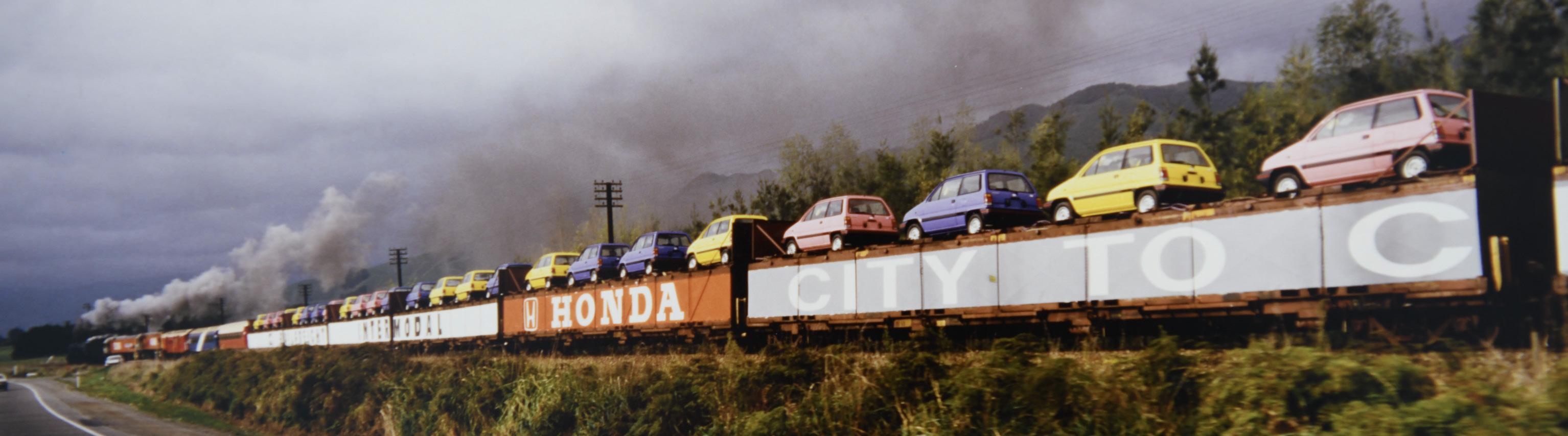
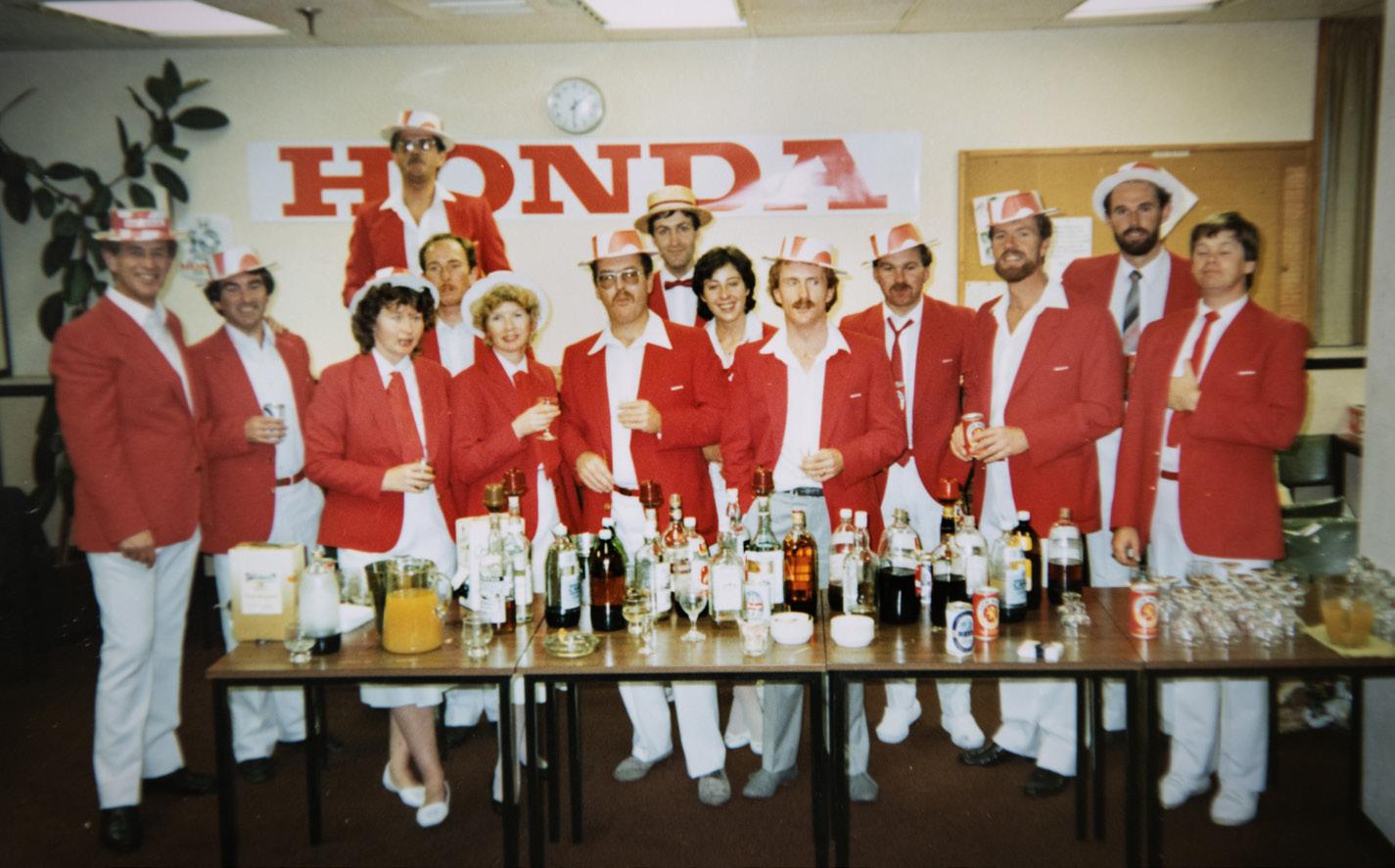
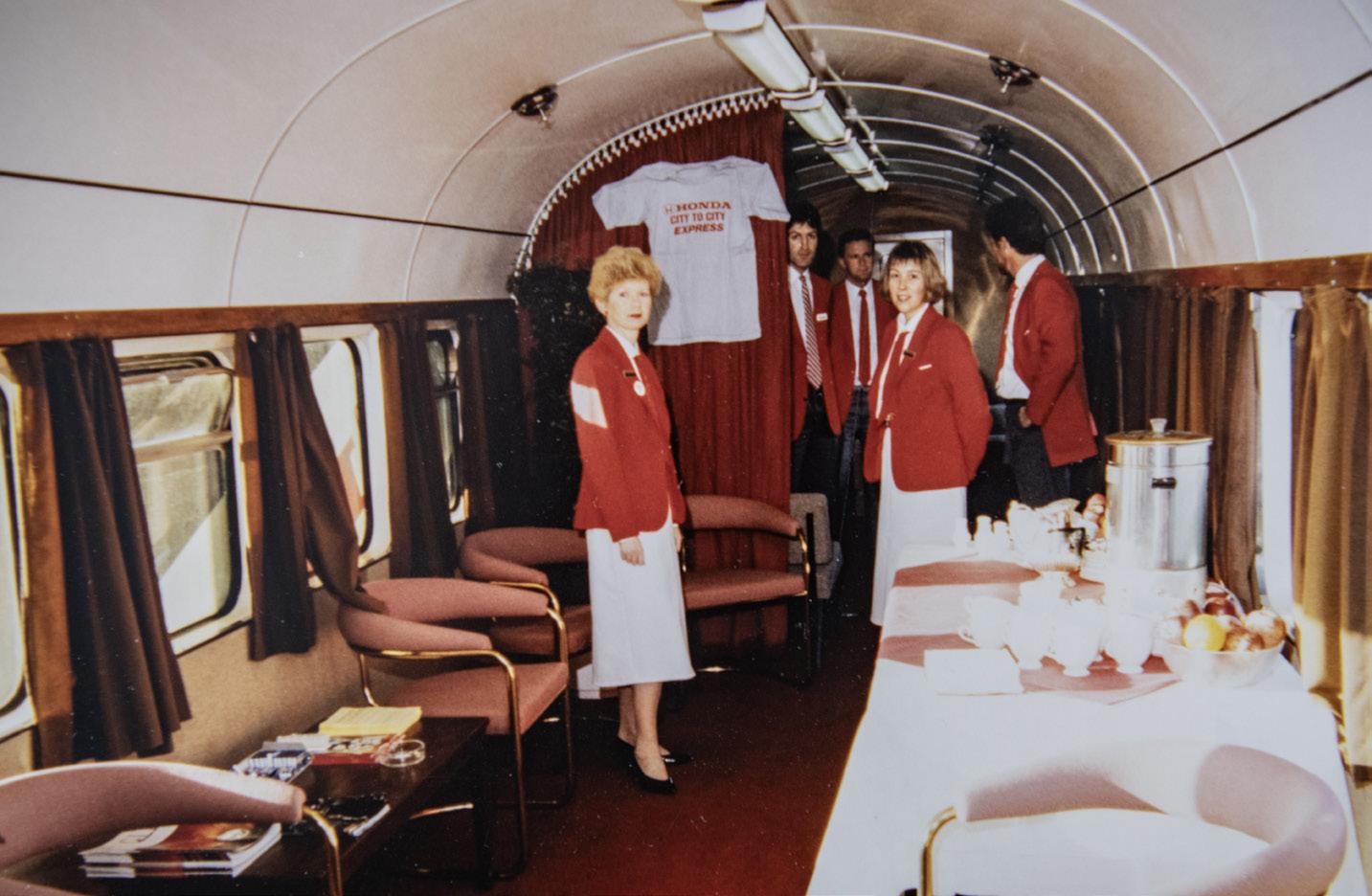
It’s been almost 40 years since the last Honda City rolled off the New Zealand production line – an occasion marked in memorable style with a rolling celebration known as the 1987 Honda City to City train.
It was a promotional event that would be hard to replicate today; between 56 and 60 brand-new Honda City cars were loaded on to flat rail wagons in Wellington and transported north to Auckland over three days.
The journey was as much spectacle as it was logistics; the wagons were hauled by an eclectic mix of motive power, including majestic Ka steam locomotives and diesel engines.
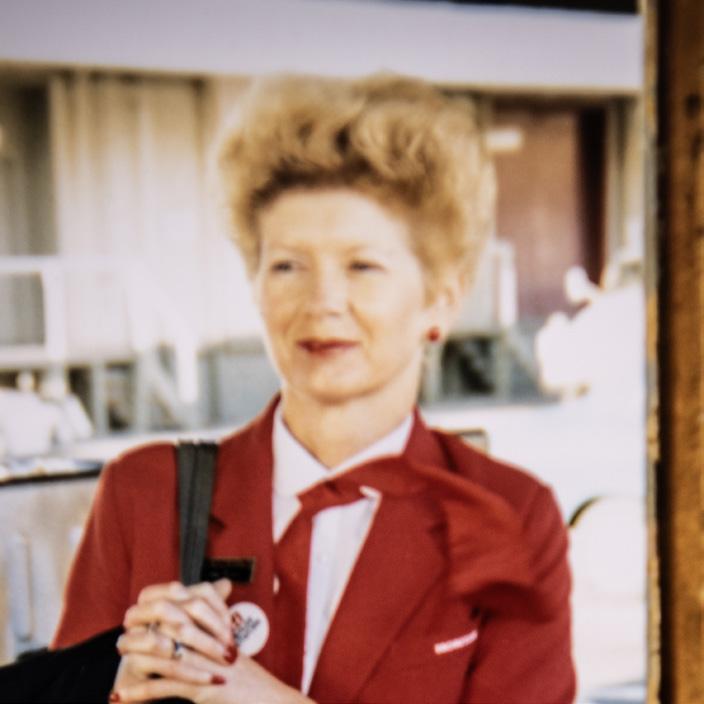
Among those on board was Linda Young, [pictured above] mother of MTA Membership Support Officer, Jenny Foy. At the time, Linda worked in the head office marketing team at the New Zealand Motor Corporation (NZMC).
“We were so excited to be involved,” she recalls. “Those of us in the head office marketing team – especially the administration staff like the secretaries and myself as the accountant – didn’t often get to take part in events like this. It felt like a holiday from the office.”
As Dealer Accountant, her dayto-day work was grounded in numbers.
Each month she received financial results from independent dealers operating outside the core NZMC dealer group, collating the figures and benchmarking their performance against combined averages.
In the early days of spreadsheet accounting and floppy discs, she would post letters to dealers commenting on their results – a far cry from today’s instant reporting.
And the City to City train was a rare opportunity to meet those dealers in person.
“We’d only ever known each other by phone and mail. Suddenly we were travelling the country together,” says Linda.
The idea was conceived by the heads of NZMC’s motoring franchises – Honda, Austin, Morris, MG, Rover, Range Rover and Jaguar – who planned a three-day journey north, with scheduled stops and overnight stays along the way.
At each station, the train was met with fanfare.
“Local dealers gathered with schoolchildren, retailers, mayors and dignitaries.”
There were balloons and flags,
sometimes live music, and plenty of curious onlookers.
The children were fascinated by the steam locomotives, watching drivers shovel coal into the furnace, building pressure the old-fashioned way.
“It all had to be meticulously timed,” says Linda. “Dealers were kept informed of our progress north so they could prepare their welcome. The organisers were constantly coordinating.”
The sight of dozens of Honda City cars in every available colour lined up on flat wagons was striking enough, but the departure from Wellington Railway Station added theatre.
Pulled out by a steam engine from another era, the train chuffed and whistled its way past Plimmerton, tracking alongside State Highway 1 with the ocean shimmering to the left.
With the accompanying fine weather, the spectacle of steam, sea and shiny new metal made for a uniquely Kiwi promotional moment.
“Heading up the marketing division at the time was George Hickton, who would later go on to lead
Tourism New Zealand and play a key role in establishing the internationally recognised ‘100% Pure New Zealand’ brand.
“He died last October after a long and influential career across several industries, but for those on the train he remains part of a particularly colourful chapter in New Zealand’s automotive marketing history.”
The journey north included the engineering marvel of the Raurimu Spiral, which captivated many on board as the train climbed through the central North Island.
When the convoy finally pulled into Auckland Railway Station on a sunny afternoon, another festive welcome awaited: motoring industry figures, bright banners and a jazz band dressed in vivid colours.
After three days of steam, speeches and celebrations, the group was transported to the airport for the flight back to Wellington.
“It was an unusual treat for us all,” Linda says, “something completely different from our normal working week – and something I’ve never forgotten.”
Auxo Workshop does need a bit of tweaking with a couple of things, but nothing compared to what SAM was. I just find it’s so much easier to work with and I’m still learning.
“With SAM I could only go back so far.”
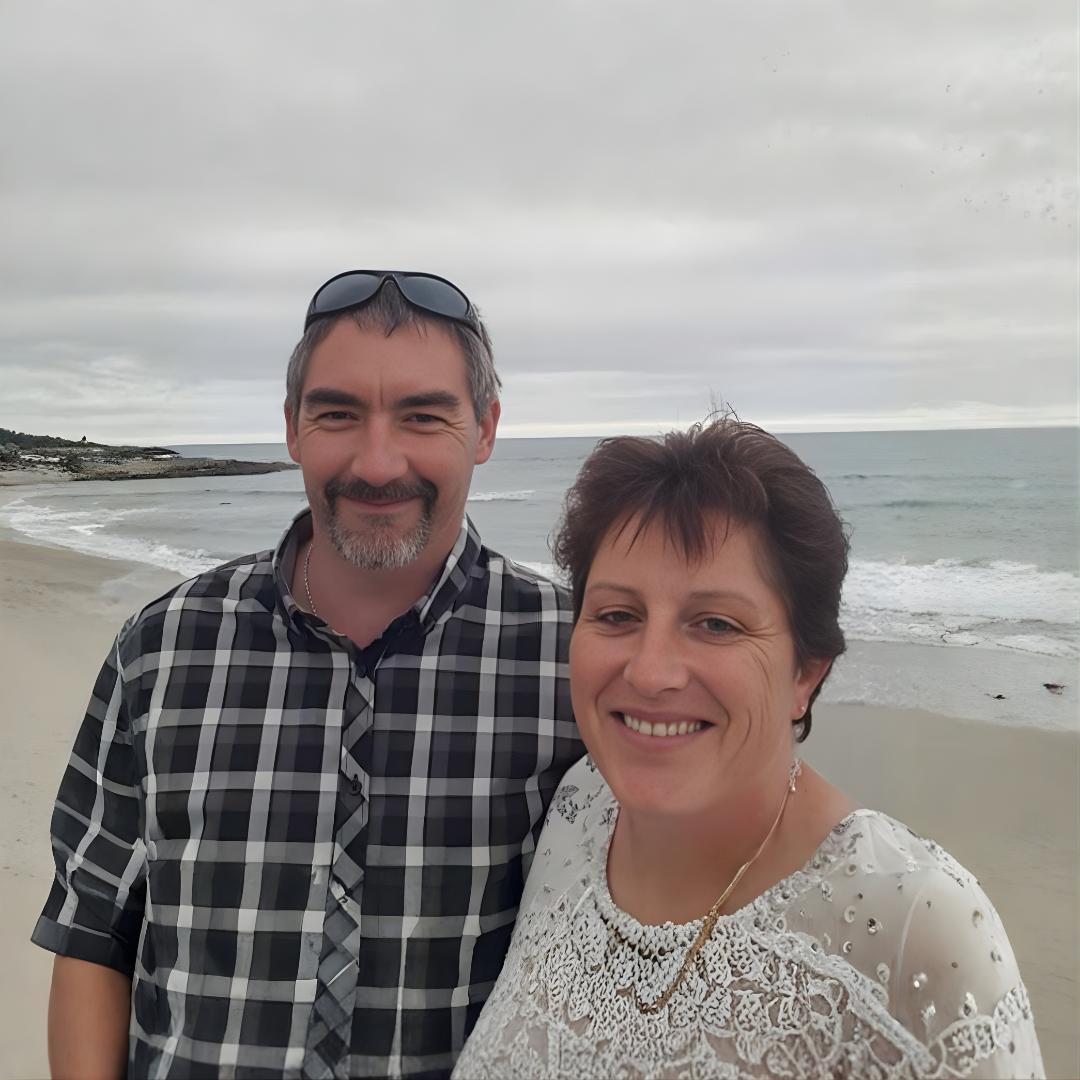
When you’ve been using the same system for years switching isn’t something you do lightly.
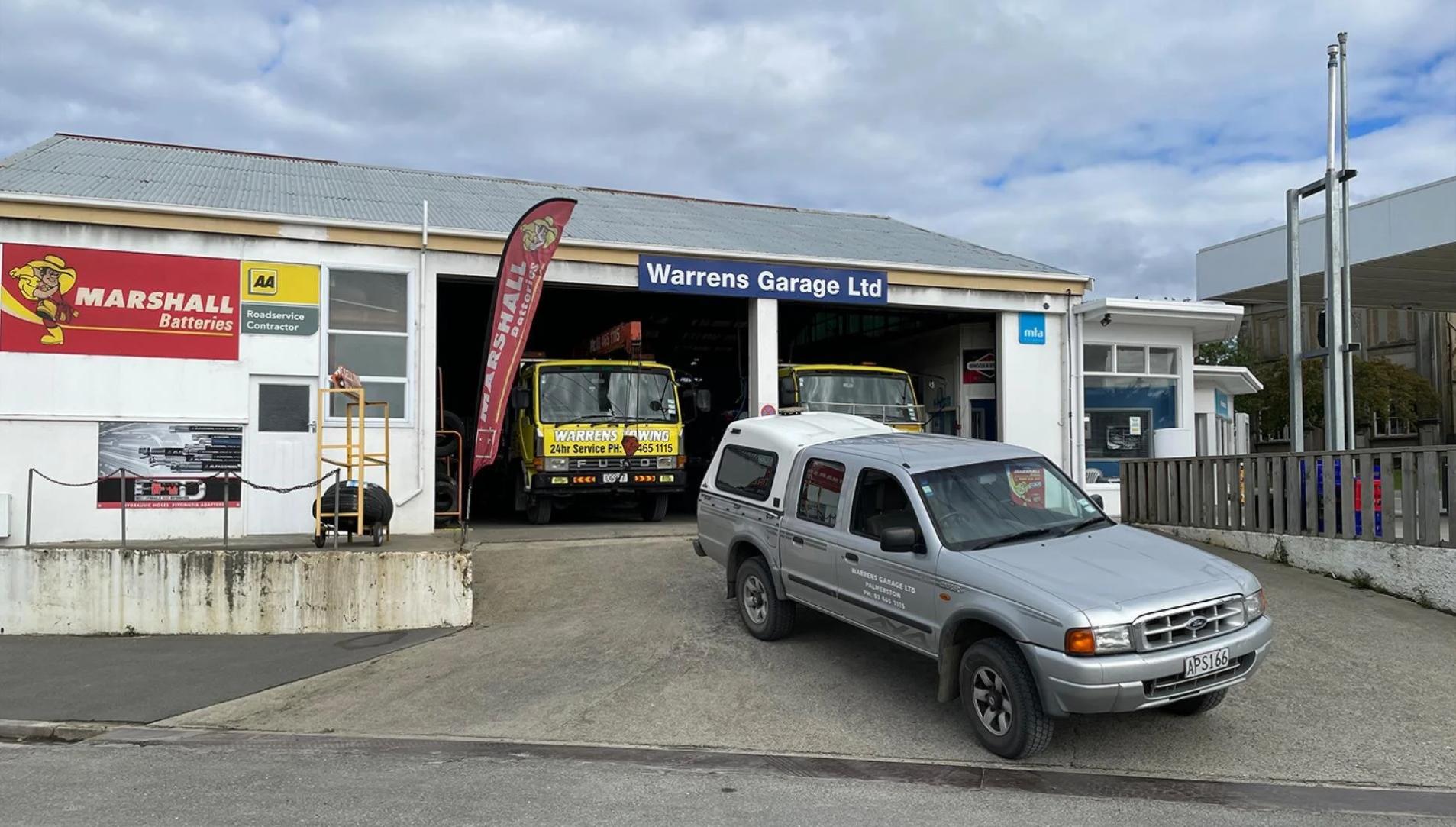
For Warren’s Garage & Towing - a husband-andwife team running a busy workshop and towing operation - SAM X was familiar It worked. They knew where everything lived. But when they were invited to trial Auxo Workshop, they decided to take a look.
“We got asked if we would like to trial it and we had a look at it. And we just liked the way it was set up ” They didn’t move because they had to.
They moved because everyday tasks started to feel simpler.
One of the biggest differences for Jenny, who manages the administration side of the business, was how parts were handled “We found SAM was quite lagging…putting in my parts and stuff, I found that was a real mission ” With Auxo Workshop, that friction disappeared “I can just click on my purchase list and put in my part to my job.”
It s a simple change in workflow, but in practice it’s
become her favourite feature.
The purchase order functionality - and the way it flows directly into the jobhas made a noticeable difference to her day
The improvement hasn’t just been in parts management Warren’s Garage & Towing also handles a high volume of tow jobs which are often entered at the end of the month once remittances are received
Under SAM X, Jenny was limited in how far back she could navigate when entering those jobs.
Now, she can simply click back through the calendar to the exact date she needs It’s a small detail, but it’s made month-end processing easier and more flexible.
“It just seems to make my job so much quicker.”
The transition itself wasn’t instant “To begin with, I found it very frustrating but that was because I was unlearning SAM to learn Auxo ” That adjustment period is real. After years of doing things one way, change requires patience
What helped most was guided onboarding, with someone walking her through the system visually. Being shown how it worked on screen made the difference Over time the frustration faded and the efficiency became clearer
So far I’ve found the experience very good.”
Support has also felt different
Instead of relying solely on phone-based helpdesk support, Jenny began using Axel inside Auxo Workshop
She found it surprisingly helpful - especially for smaller questions she might previously have felt hesitant to call about
“I actually found it really good… sometimes I felt really embarrassed ringing for something really basic ”And when Axel couldn’t resolve something, someone followed up directly “He said you need a human… and they rang me back the next day.”
Compared to waiting a couple of days in the past, that responsiveness stood out.
The move to Auxo Workshop has also coincided with growth in the business.
Warren’s Garage & Towing has recently brought on a new technician as they’ve become busier He’s already downloaded Auxo Workshop on his tablet and started typing notes directly into the system - a practical
Thinking of making the switch to Auxo Workshop?

improvement for the office
Instead of trying to decipher handwriting or walking back out to the workshop for clarification, Jenny can simply open the notes and enter them into the job “I don’t have to go and ask, ‘Is this 7 or is this 9?’”
For now, they’re still running some paperwork alongside the system, largely because her husband prefers it. But the direction is clear Over time, they plan to move further toward using phones or tablets on the workshop floor
Online bookings are also in use, with customers responding positively It’s another step toward a smoother front-of-house process
Jenny is honest that Auxo Workshop isn’t perfect “Auxo does need a bit of tweaking with a couple of things but nothing compared to what SAM was.”
But overall, her view is consistent. “I just find it’s so much easier to work with and I’m still learning ”
For Warren’s Garage & Towing, the move wasn’t about dramatic change It was about removing frictionfewer steps to enter parts, easier navigation through past jobs, clearer workshop notes, and faster support when needed
After trialling Auxo Workshop, they chose to switch. And today, the overall feeling is simple: it’s easier.

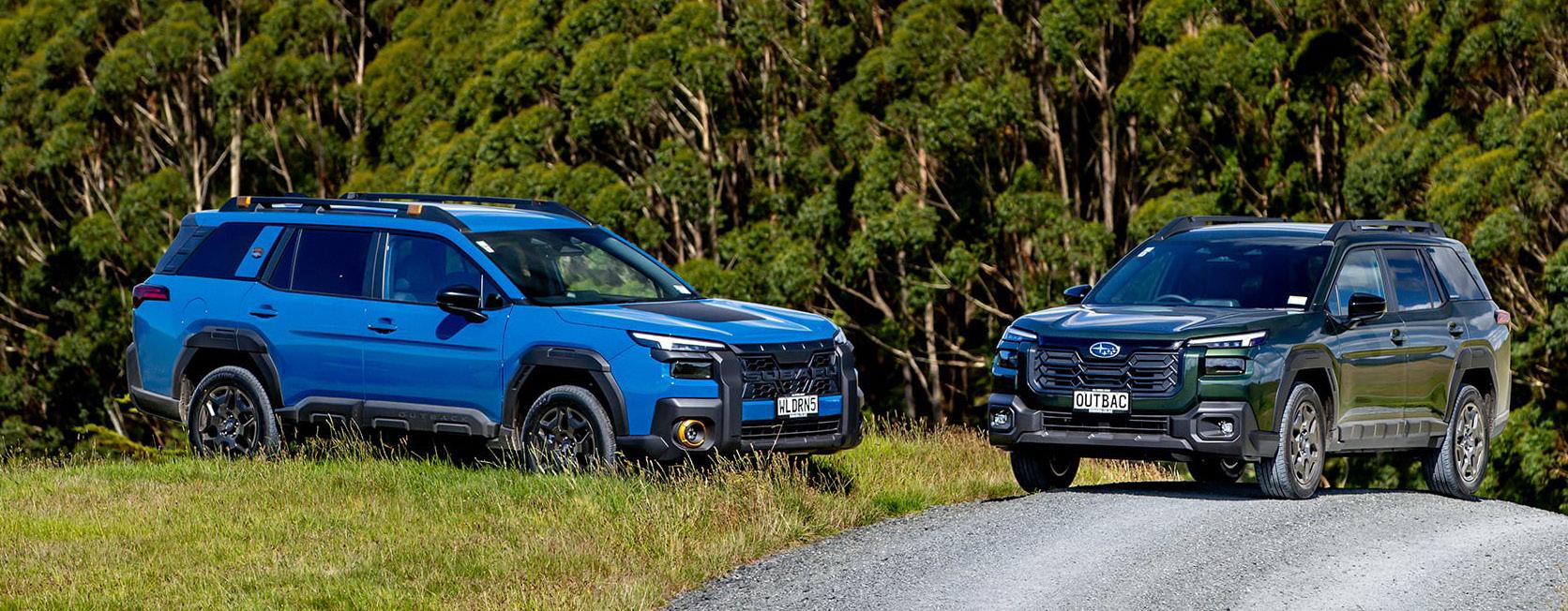
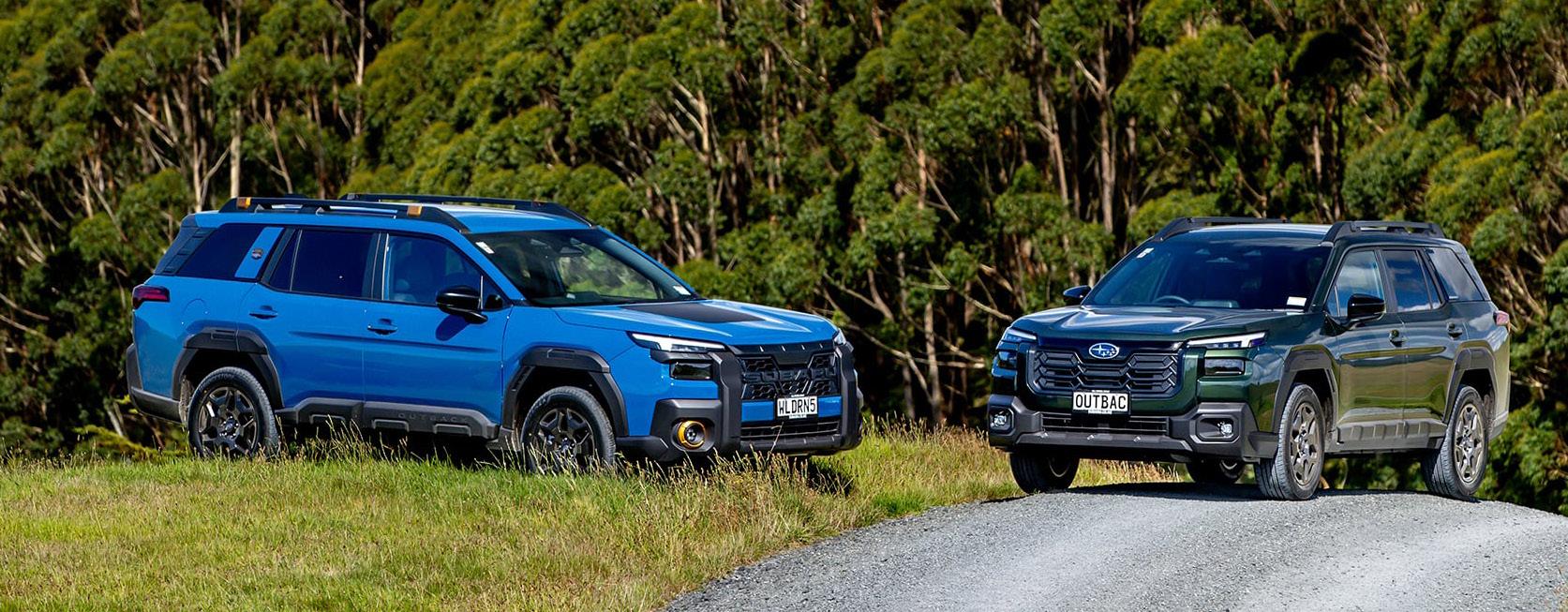
The Subaru Outback is a popular vehicle on New Zealand roads, and the latest seventh-generation version has just landed. It looks a bit different this time around, more like a crossover-type SUV than the jacked-up wagon we’ve grown accustomed to.
It’s said to have been redesigned as a ‘purpose-built SUV’ and rides on a ‘further-evolved’ Subaru
Global Platform underneath. It stands taller, and as Subaru says, adopts ‘more traditional SUV-style proportions’ with increased height and width, and a more upright front end.
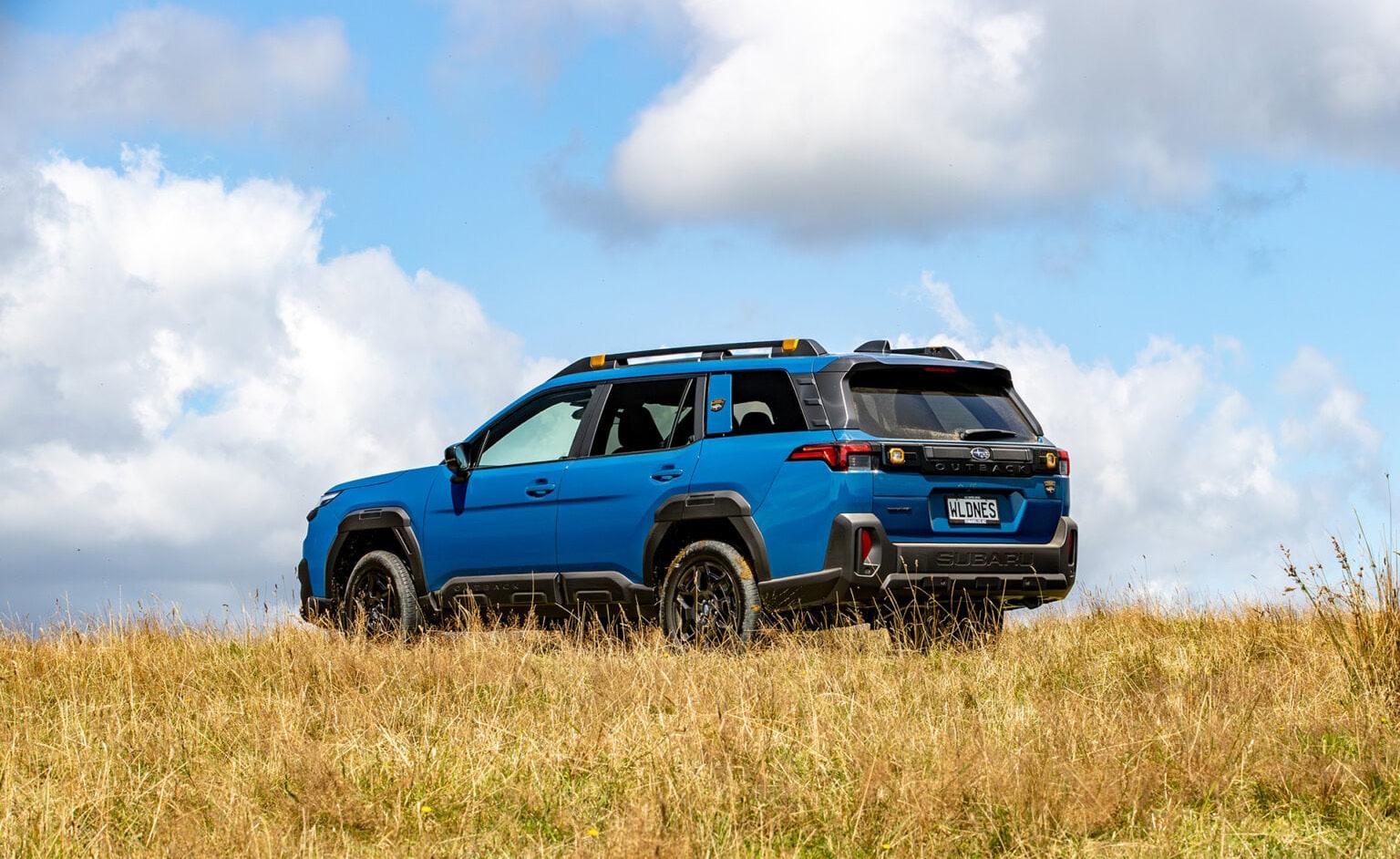
Wilderness model added It comes in two distinct guises this time around with the Outback Wilderness making its New Zealand debut. The brand would
What is the NZ price of the 2026 Subaru Outback?
As to pricing, the line-up starts at $54,990, the Premium is $59,990 and the Touring is $64,990. The Wilderness is $69,990 while the Wilderness Apex is $74,990. More of everything
like you to think of it as the ‘most adventure-ready and capable Subaru ever produced’. It comes with 240mm of ground clearance, better approach and departure angles and distinctive ‘tough’ styling. You’ll notice it wears quite a distinctive front end treatment too. Along with a 2.4T engine, it has Wilderness-spec suspension with electronically controlled dampers.
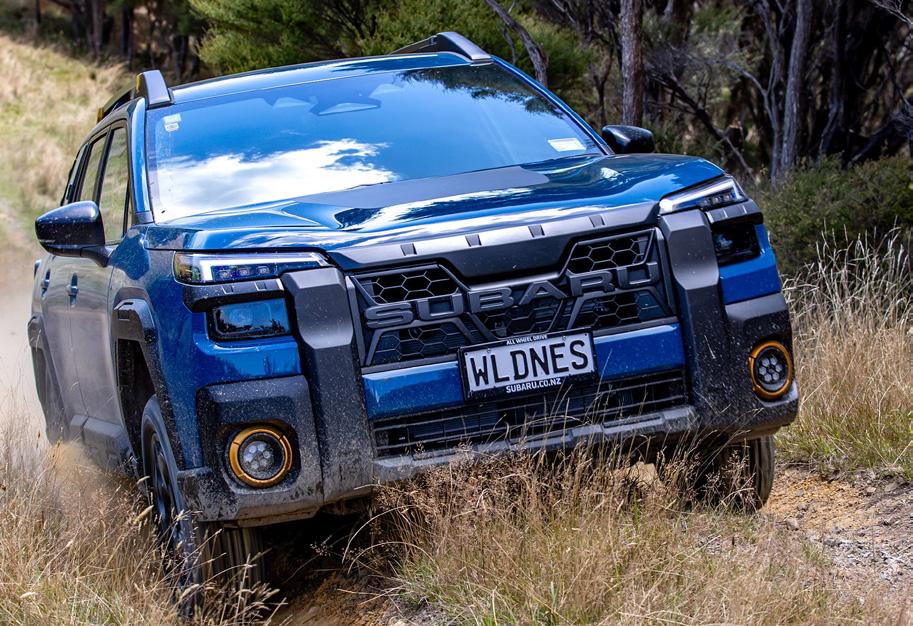
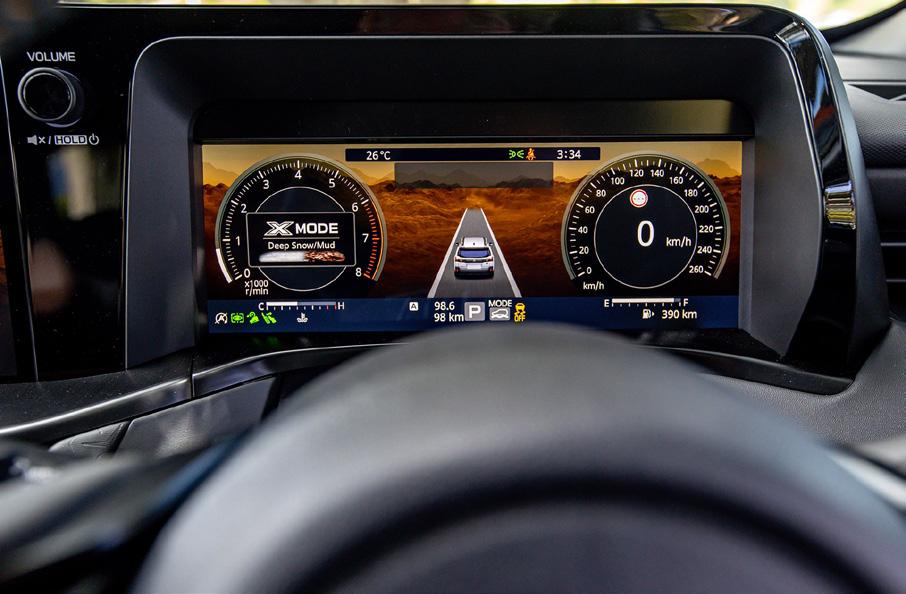
Inside, the interior gets a new 12.1-inch horizontal infotainment touchscreen, which replaces the previous, all-encompassing vertical display. Good to see it has big touchpoints, a logical layout for the widgets and they say the processing speed is 2.5 times faster than the old one. It supports wireless Apple CarPlay and Android Auto. Perhaps the best bit about the new layout is the return of buttons for more functions including the ventilation. Thanks Subaru. There’s also a 12.3-inch digital instrument cluster with a few different views to choose from.
Seat materials are model specific, you get Nappa leather in the Touring for instance, while the Wilderness variants feature ‘hard-wearing, easy-to-clean hydrophobic synthetic leather’. There’s more headroom all round, while legroom increases in the rear.
Being larger and better equipped, it has also grown in weight, the base Outback coming in at 1705kg, while the top Wilderness is 1802kg.
ˮ
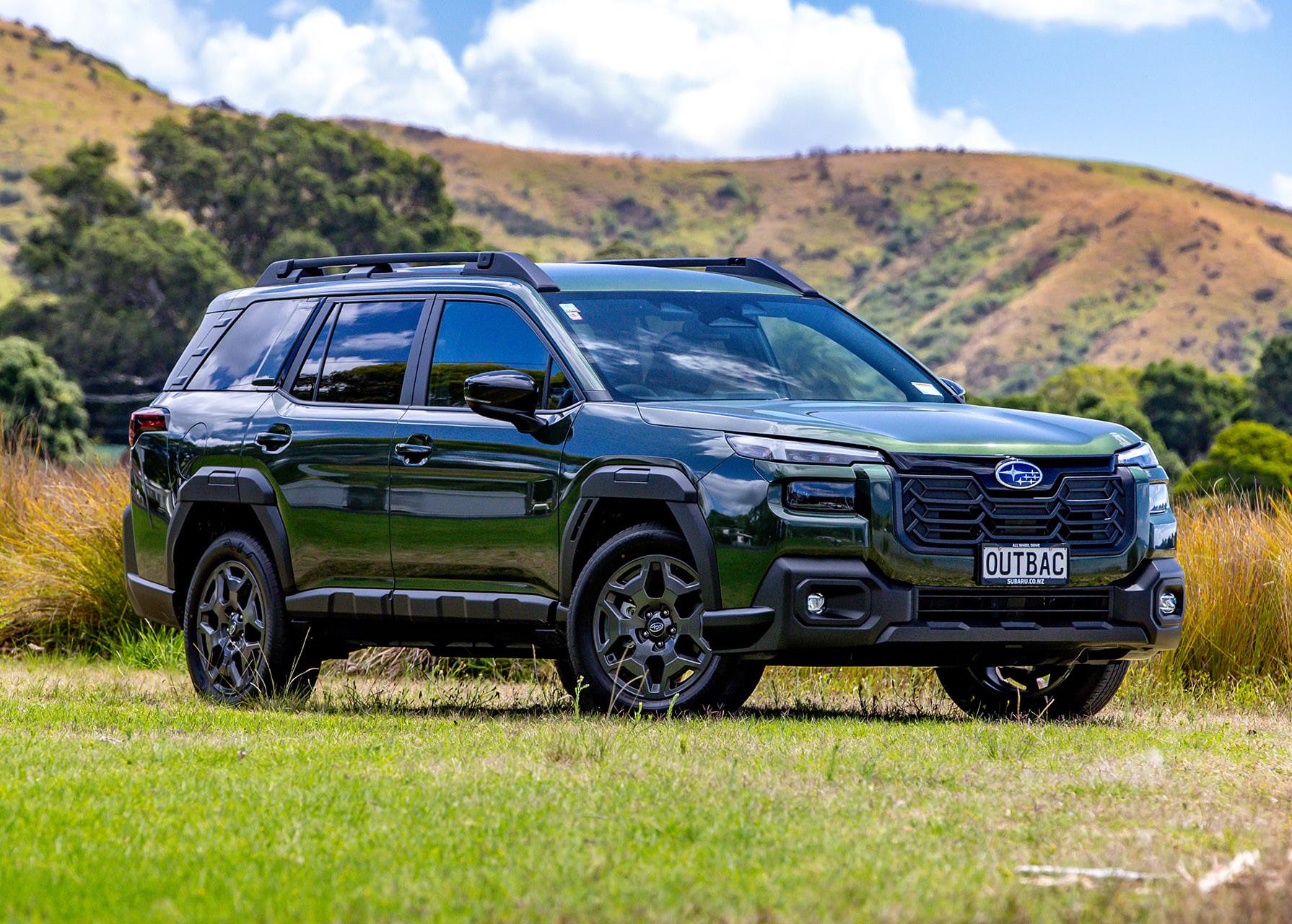
The boot load level is 50mm higher and generally bigger all around, while the integrated roof rails return, now with a 363kg static load capacity.
Turbo power available
The Outback comes with a 137kW/254Nm 2.5-litre naturally aspirated flat four with attention paid to improving ‘useable torque’ while reducing noise. The Wilderness gains access to the 2.4 turbo with 194kW and 382Nm.
As to gas use, the 2.5 averages 8.1L/100km, the 2.4T at 9.7.
Both operate via the firm’s CVT, but don’t worry it’s a smooth operator yet responsive too. We couldn’t find any drive modes, not that they will be missed by actual owners. And you can paddle the action along if you want to take control through eight-programmed ‘gears’.
The Wilderness driver will like the low-end torque, it’s noticeably stronger than the atmo engine, which needs a few more revs to get going. Being larger and better equipped, it has also grown in weight, the base Outback coming in at 1705kg, while the top
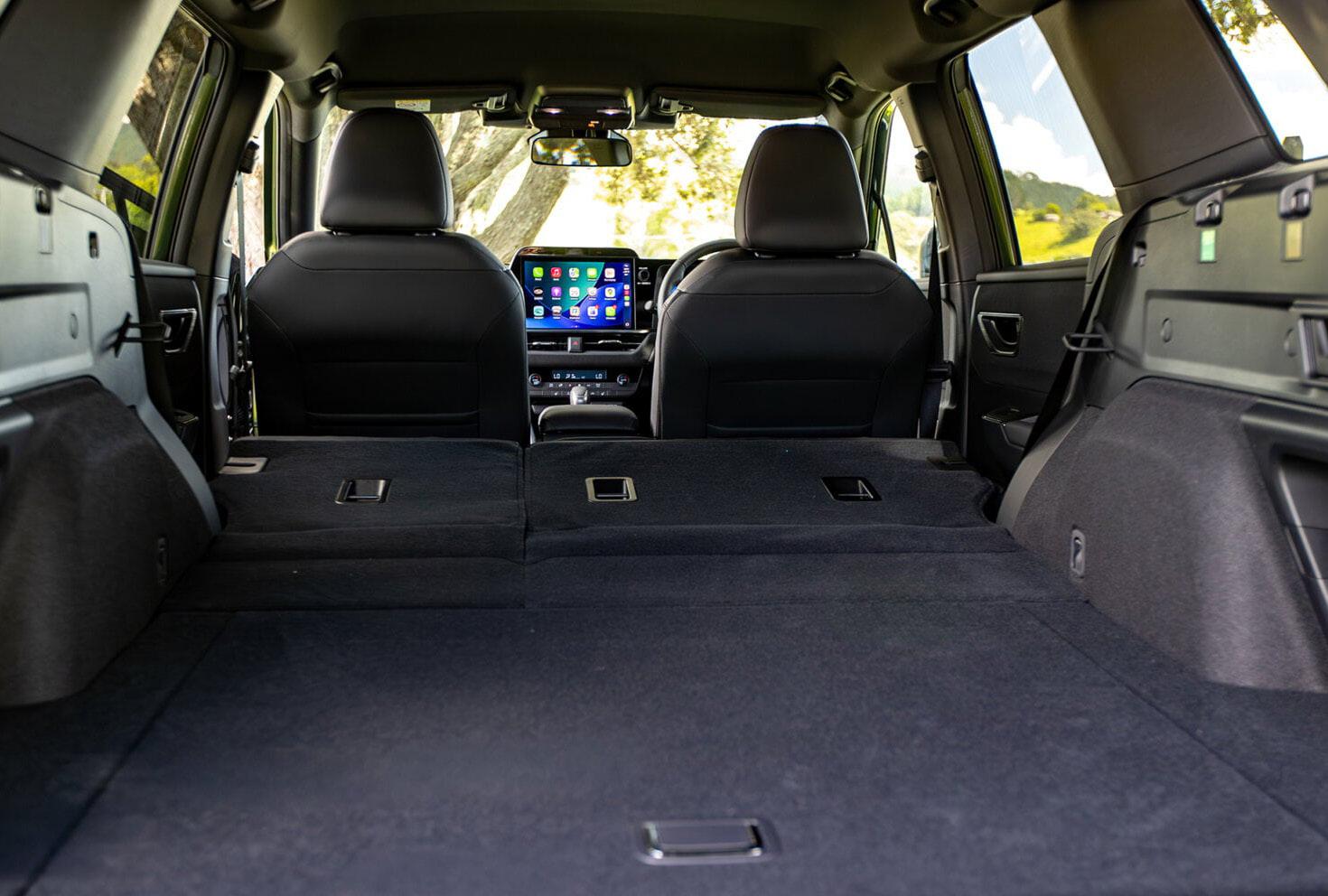
Wilderness is 1802kg.
The turbo can also haul a little more, its braked capacity set at 2100kg, 100 more than the 2.5.
As to the electric Trailseeker model, that’s still ‘under consideration’ at this stage, Subaru NZ with nothing newsworthy to say there.
AWD remains
Back to the Outback, and permanent AWD remains, of course. This time around they reckon the Active Torque Split control is improved for more precise power delivery. Hard to comment on that, but it seems as sure footed and stable as ever on road.
X-Mode is still present, helping lowspeed, off-road driving, and a bit more ground clearance helps too, now up to 220mm on the Outback, and 240mm on Wilderness.
The new ‘dual-pinion’ electric power steering is a highlight. It’s smooth, well weighted yet responsive with a decent feel for the action.
Safety is well covered with another update for the EyeSight Driver Assist system. It gets an improved camera for better detection of danger ahead, and an updated Driver Monitoring System. This was far less nagging than we have experienced in the past. The lane keeping function was also better behaved, still issuing pertinent warnings, but not so intent on interfering with the actual action of the wheel. If it all goes pearshaped, there are now nine-air bags waiting to be deployed. There is no ANCAP rating yet.
Refined nature
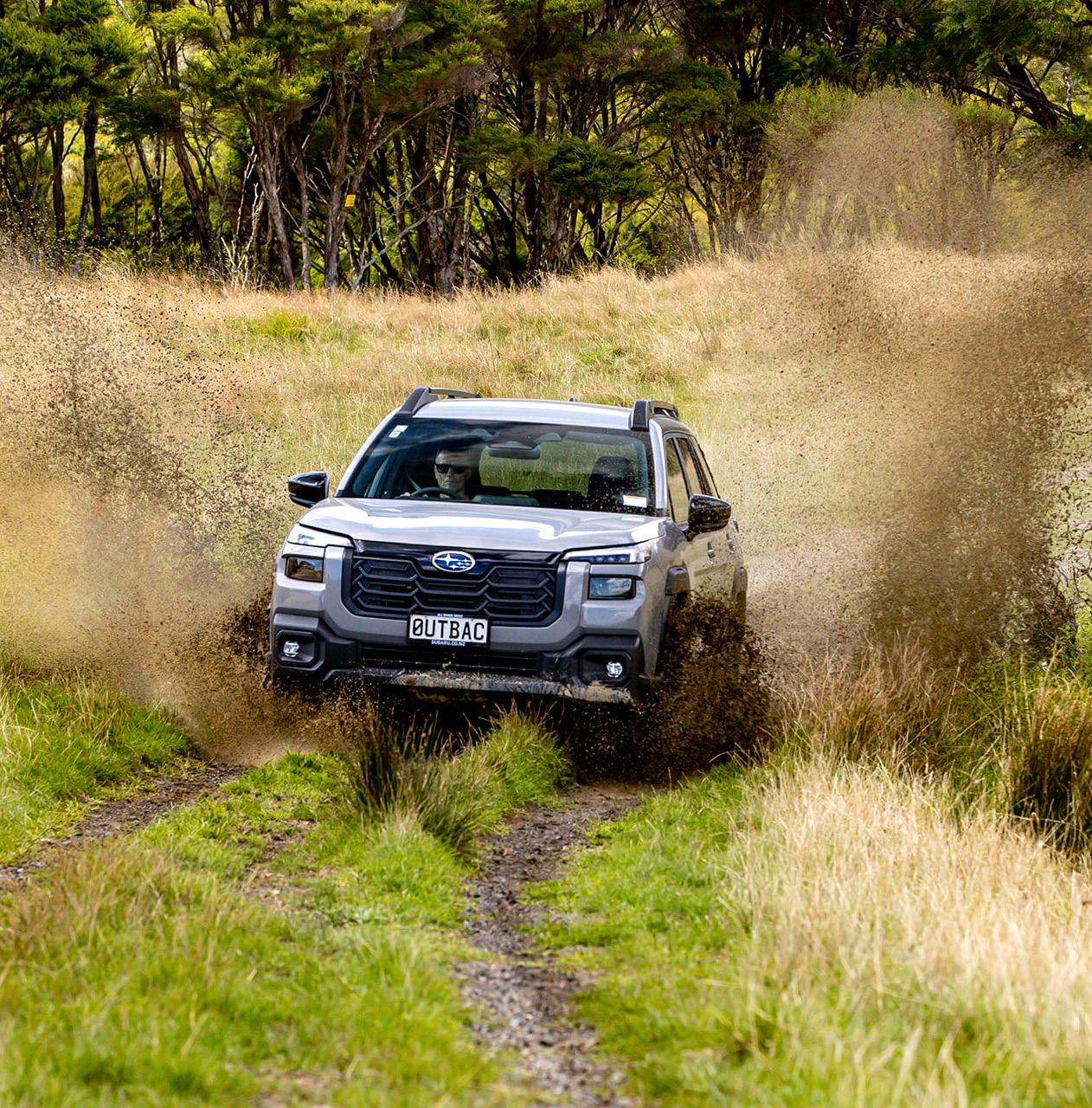
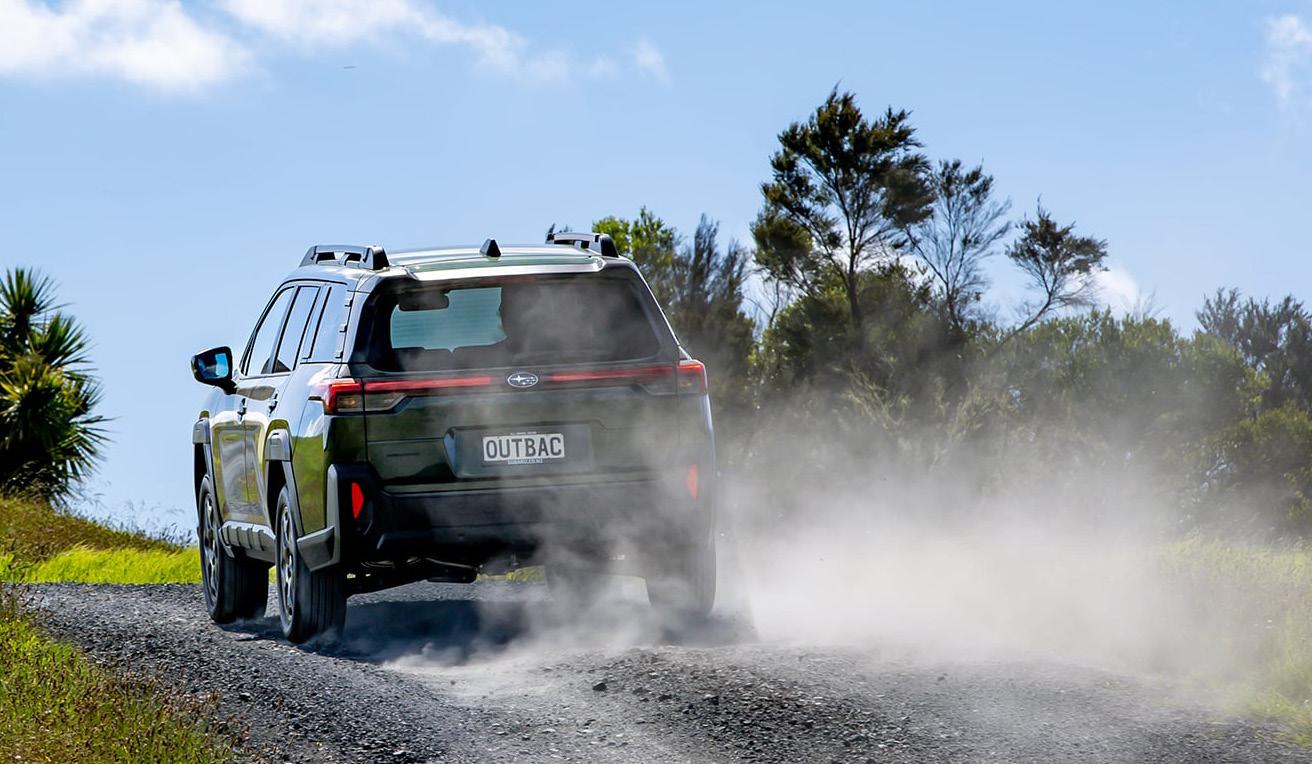
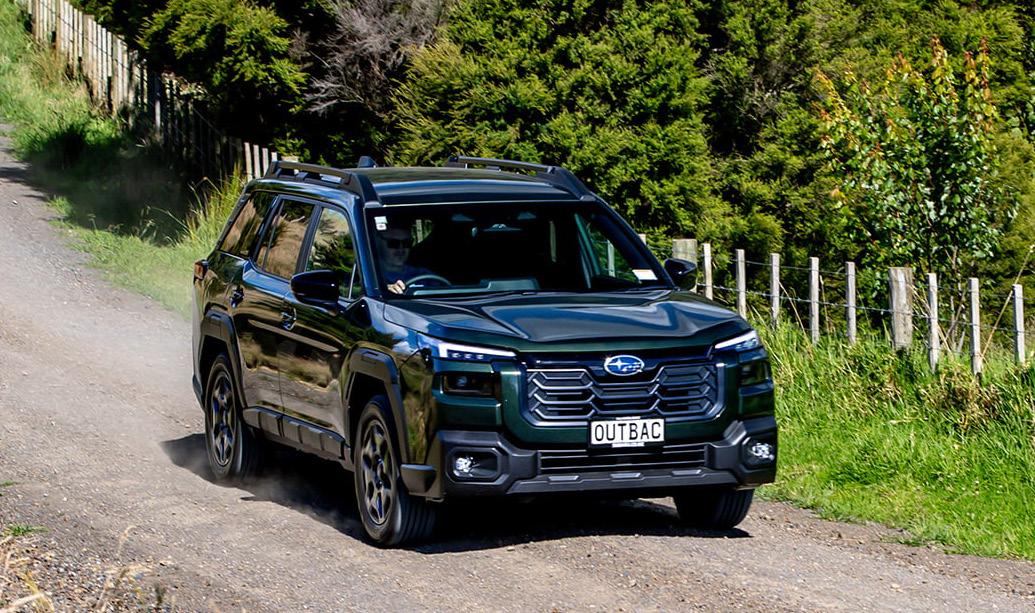
If there was one aspect that impressed us most on the drive programme, it was the Outback’s overall refinement levels. The engines are quiet and the ride is impressively compliant over both highway and gravel roads. Road noise is well suppressed too. While it rides a bit higher now, it still has a fair degree of roll control for what is a reasonably capable crossover off road.
Speaking of, the Outback tackled a few farm tracks to show its capability. Out here, progress is comfortable on gravel trails, the added ground clearance helping where ruts are concerned. The hill descent works well too when you are X-mode.
There was one rutted incline that the Outback took a few attempts to climb, but it managed to conquer the hill. Which was impressive considering the road-biased Bridgestone Alenza H/L all the Outbacks are shod with. You might be wondering where the chunky rubber is for the Wilderness? All Outback models wear the same rubber in New Zealand, which is due to Australian compliance issues (and we take the same spec as they do). But we are told your local dealer will happily fit some chunky rubber for you, if that’s what you are looking for.
2026 Subaru Outback NZ specifications
Outback AWD
•2.5-litre naturally aspirated Boxer engine
•Subaru Symmetrical AWD
•X-Mode
•Minimum 220mm of ground clearance
•12.1-inch infotainment screen
•12.3-inch digital instrumentation
•Wireless Apple CarPlay and Android Auto
•Driver Monitoring System
•Latest generation EyeSight technology
•Nine SRS airbags
•Subaru Vision Assist, including Blind Spot Monitor, Rear Cross Traffic Alert, Reverse Automatic Braking and Front Side Radar
•Powered tailgate
•Powered driver seat with adjustable lumbar support
•Heated front seats
•Ladder style roof rails
•Synthetic leather seat trim
•18-inch alloy wheels in a dark metallic finish
Outback AWD Premium adds:
•Heated steering wheel
•Eight-way powered front passenger seat
•Panoramic 360-degree view monitor
•Satellite navigation
•Electric sunroof
•Premium 12 speaker Harman Kardon sound system
Outback AWD Touring adds:
•Premium Nappa leather accented seating including the addition of the new optional Brown trim (exclusive to this variant)
•Ventilated front seats
•Heated rear outboard seats
•Wireless phone charger
•Active Lane Change Assist added to EyeSight features
•Auto fold door mirrors with passenger side auto
dipping functionality on reverse
•Driver Monitoring System with driver seat and door
mirror adjustment functionality
•18-inch machined alloys with a gloss finish
OutbackAWD Wilderness (over Outback AWD features):
•2.4-litre turbocharged Boxer Engine
•Subaru Symmetrical AWD
•Dual mode X-Mode
•Electronically controlled dampers linked to X-Mode
•Minimum 240mm of ground clearance
•Wireless phone charger
•Heated rear outboard seats
•Heated steering wheel
•Auto dimming rearview mirror
•Robust water repellent seat trim with Wilderness logo embossed into the front headrests
•Uniquely designed LED fog lights
•18-inch alloy wheels in matte black finish
•Dual tailpipes
Outback AWD Wilderness Apex adds:
•Electric sunroof
•Satellite navigation
•Panoramic 360-degree view monitor
•12 speaker Harman Kardon audio system
2026 Subaru Outback New Zealand pricing
•Outback AWD – $54,990
•Outback AWD Premium – $59,990
•Outback AWD Touring – $64,990
•Outback AWD Wilderness – $69,990
•Outback AWD Wilderness Apex – $74,990
Every month we revisit pages from Radiator's history.

There’s a recurring story that goes around social media every so often, which goes along the lines of ‘my car needed to go for cert, and they made me change lots of things that it was already certified for’. Cue everyone piling on in the comments about how the system is broken, it’s all about money, etc. Like anything on social media though, it needs to be taken with a grain of salt. As part of any LVV certification, the certifier needs to look over the entire vehicle to establish what’s modified, and which modifications need to be assessed to current requirements. Any previously certified modifications will get a quick look to make sure they’re still safe, but that’s usually it. The certifier isn’t going to reassess them to current requirements, despite what some people might think.
What people often don’t get is that modifications to a car often don’t exist in isolation – modifying one part of the car will usually have an effect on other parts. If those parts are no longer safe because of the new modifications, the certifier may ask for them to be improved or brought up to current requirements. However, if the new mods don’t have an effect on any existing mods, then the certifier can leave them as they are. For instance, let’s take a Falcon that was certified back in the 1990s for a V8 conversion, and the driveshaft loops fitted to it at the time don’t meet today’s requirements for size and material specification. If the car was then LVV certified for a power steering conversion, the LVV Certifier could leave the undersized driveshaft loops as they are, because the new modifications the certifier is assessing don’t have an effect on the previously certified modifications. The certifier simply needs to make sure that the old mods are still safe and show no signs of deterioration.
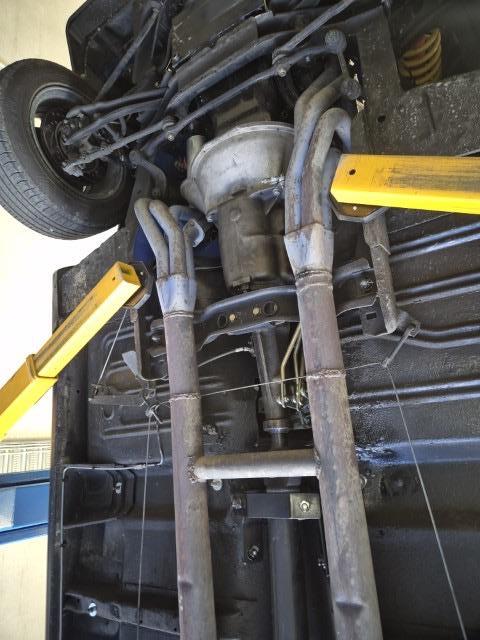
over 50% is fitment of driveshaft loops, so it would need to have driveshaft loops fitted that meet current requirements.
Upon closer inspection, the certifier finds the steering shaft adaption has over time started to fatigue and crack. Even if the vehicle was being certified for something unrelated (like adjustable suspension, for example), the certifier can’t let that go – it’s dangerous. The certifier would require that steering connection to be re-done to meet current requirements, and they would inspect and sign it off as part of the
modifications do affect the old modifications, or the old modifications are unsafe, the LVV Certifier may ask for them to be improved, or brought up to current requirements. Because above all else, an LVV Certifier needs to make sure that any vehicle they’re looking at is safe.
If that Falcon was being certified for a supercharger as well as the power steering conversion though,
The only other time old modifications need to be revisited is if a car with previously certified mods is found to be unsafe – in which case the LVV Certifier will ask that the previously certified mods are brought up to current requirements. Let’s say an LVV Certifier is presented with a car that was LVV certified in the 1990s for a power steering conversion, and this incorporated a welded steering shaft connection.




MITO, together with the Inspiring Futures Foundation (IFF), is excited to share that 182 individuals have been awarded a 2026 scholarship.
Each year, this partnership helps motivated people take their next step— whether they’re new to the trades, recently qualified, or experienced workers looking to upskill.
MITO’s scholarship programme supports businesses by helping their teams grow and develop, strengthening our industries for the years ahead.
“Every year, we’re amazed by the drive and determination shown by our scholarship applicants,” says Verna Niao, Chief Executive of MITO.
“Their dedication to learning is exactly what keeps our industries moving forward. I’m excited to see how they continue to grow, and we’re proud to support them in their journey.”
Louise Sixton, Trust Convenor of the
IFF, adds, “The Trustees of the Inspiring Futures Foundation are proud to once again support the MITO scholarship programme. These scholarships open doors for motivated learners across the country, and we congratulate every recipient on their fantastic achievement.”
The 2026 scholarship recipients are as follows.
The Janet Lane MNZM scholarship is awarded to:
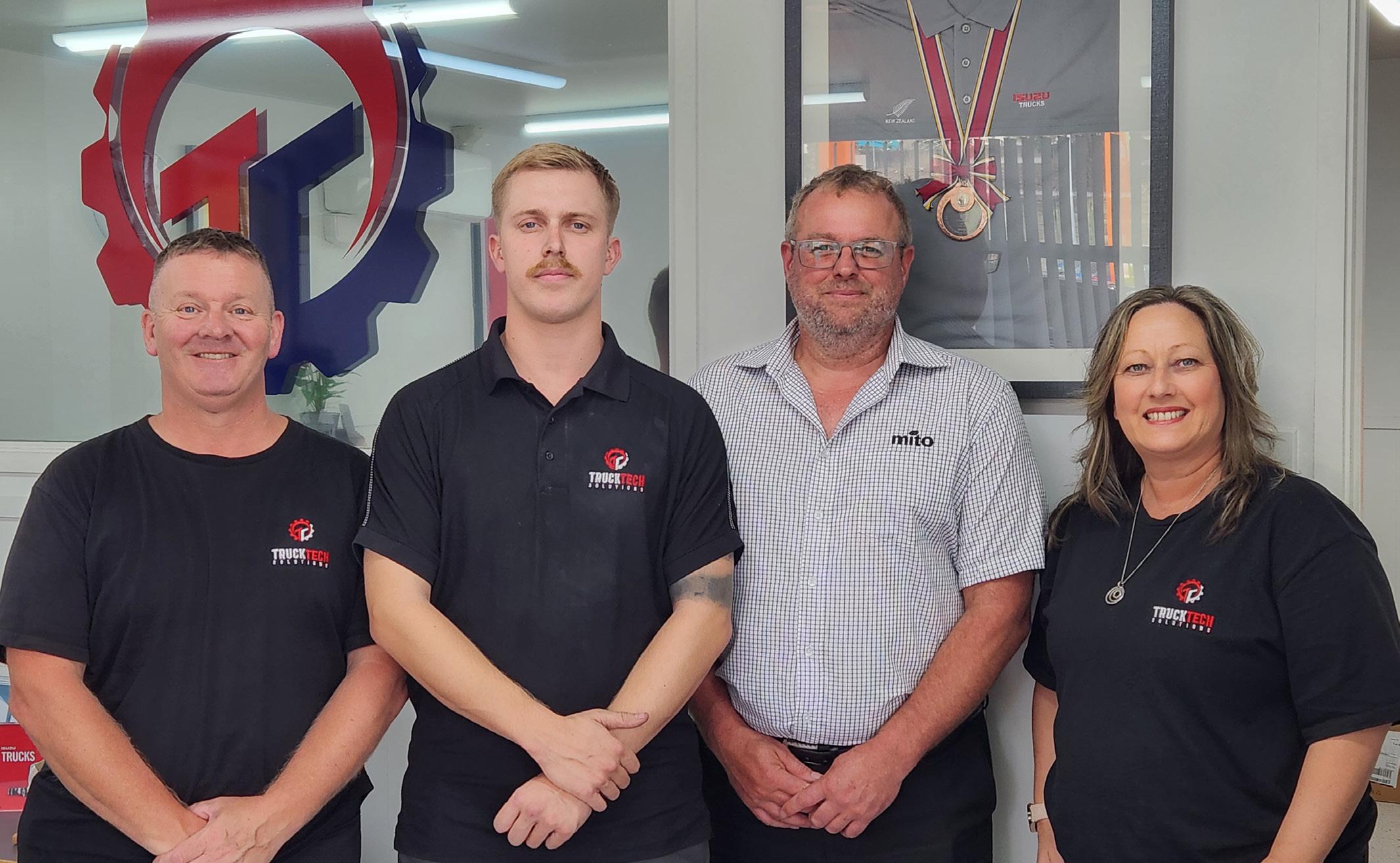
Harry Shaw, Truck Tech Solutions
The Clyde Cunningham QSM Memorial scholarship (Hawke’s Bay region) is awarded to:
Alexander Michael Jones, Bay Ford Napier
•Blake Lars Mickleson, RS Automotive
•Bruce Alexander McIntyre, H. W. Richardson Driver Training
•Calum Ottey Mackay, Kaiapoi
Automotive Services Limited
•Chieh Lo, Booths Logistics
•Dane Thomson-Procter, Access Specialties Ltd
•Daniel Bernard Hunter, AB Equipment Limited
•Danielle Amanda Couchman, Big Daves Mechanical Services
•Demi Harland, Booths Logistics
•Dionne Gainard Davie, Transport Services
•Emily Jane Dyson, Qualitat European Motors
•Grant McRae Goodwin, Giltrap Motors – North Shore
•Hadley James Brown, MIMICO
•Hannah Rattray, Booths Logistics
•Henry Michael Mallett, Tandem Smash Repairs
•Jack Bridgman, Hawkes Bay Toyota Hastings
•James Murray Graeme Booth, Road Metals Co Ltd – Rolleston Quarry
•Jennifer Brogan, Booths Logistics
•Jordan Aaron Henderson, Elite Transport Refinishers
•Jordan Connor Marshall, Icon Logistics
•Jordon Mackie, Drummond & Etheridge Ltd – Blenheim
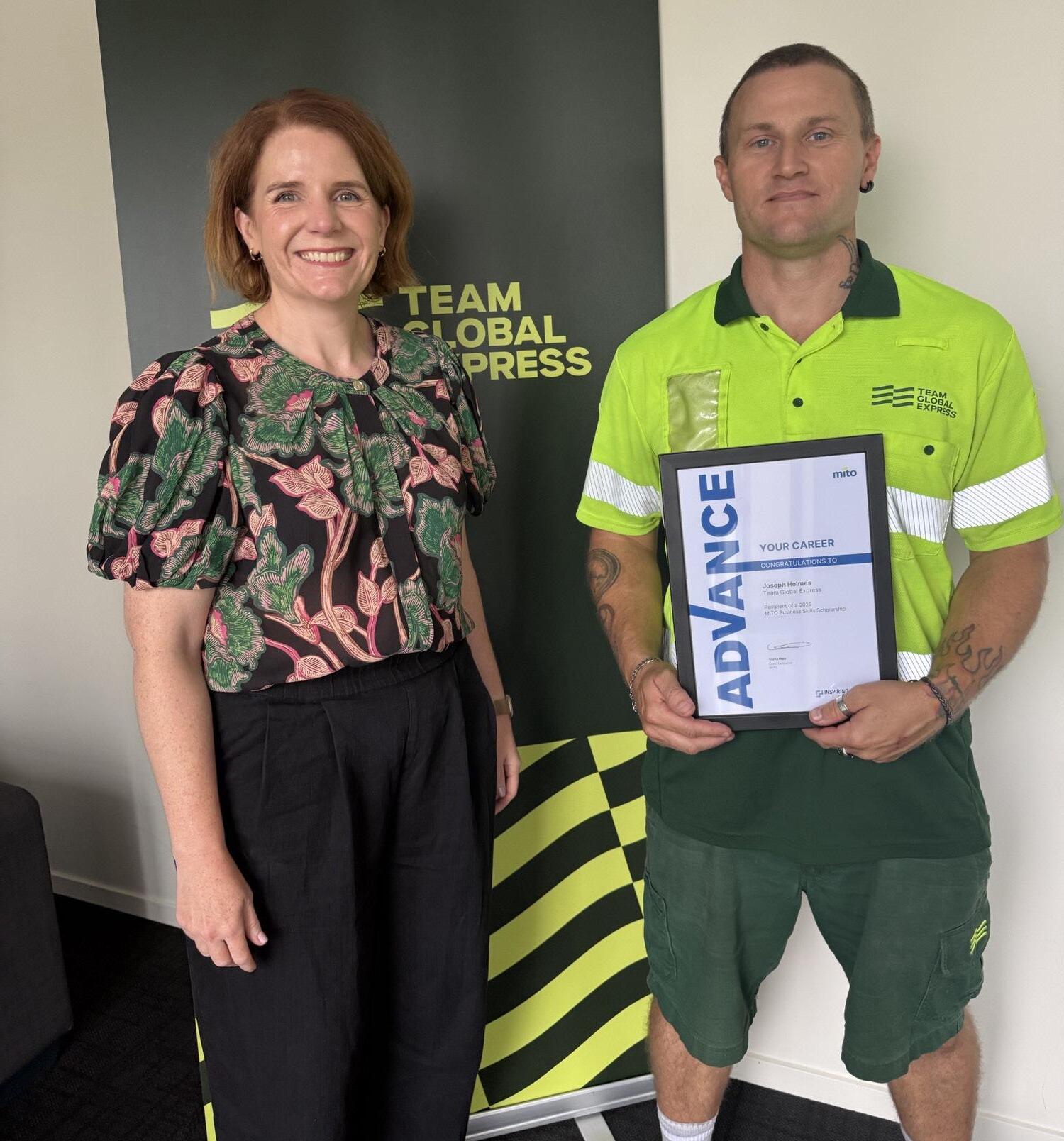
•Joseph Holmes, Team Global Express
•Kelly Dyason, Booths Logistics
•Kendra Thomson, Team Global Express
•Kerry Suter, Tasman Autos Ltd
•Lauren Natasha Morris, Tractor Repairs & Spares Ltd
•Leon Justin Birchall, Wirtgen Group NZ
•Lichen Rose Sumaoang – Betinol, Pacificomm Group Ltd
•Luke James Balsillie, MIMICO
•Luke Raymond Hadland, Hadland Truck Services
•Mac McCall, Booths Logistics
•Mathew Gray, Booths Logistics
•Melissa Thornton, AB Equipment Limited
•Michael James Woodham, Aztec Forestry Transport Developments Limited
•Michael Rio Urbano Bondoc, Komatsu - Whangarei
•Michelle Julie Segetin, Aztec Forestry Transport Developments Limited
•Mitch Mudgway, AB Equipment Limited
•Paul Maxwell Squire, Aztec Forestry Transport Developments Limited
•Peter Bredesen, New Zealand Defence Force
•Pheonix O'Loughlin, Booths Logistics
•Philip John Gasnier, Southpac Trucks
•Pranay Ramlugan, Brendan Foot Supersite
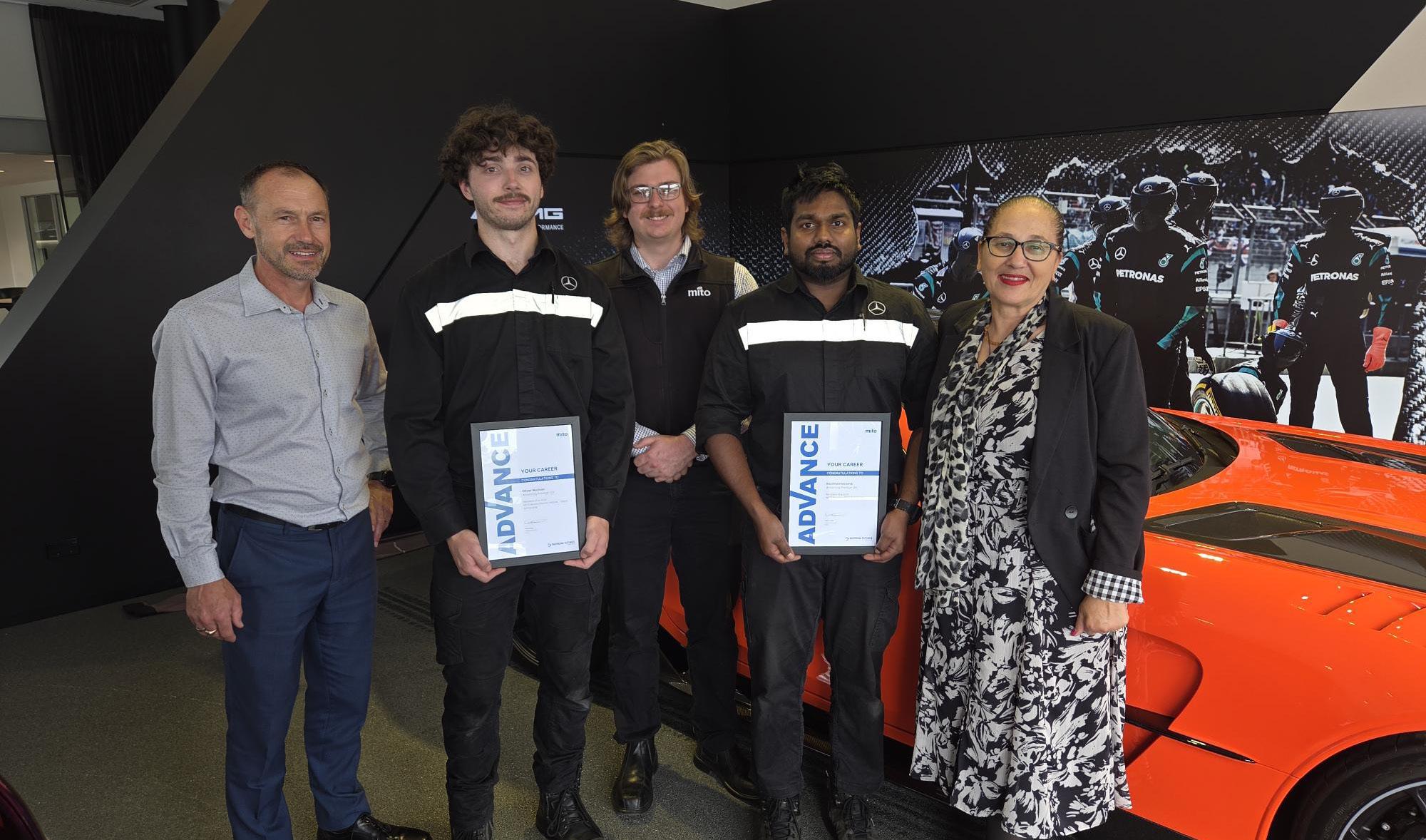
•Rasitha Imbulana, Mercedes Benz Christchurch
•Renee Catherine Beasley, Lockheed Martin New Zealand
•Richard John Jones, AB Equipment Ltd
•Robert Breach, Team Global Express
•Ronald Arnott, Booths Logistics
•Samual Lawrence Hammond, Lockheed Martin New Zealand
•Shané Engelbrecht, Lexus of Auckland City
•Shane Turner, AB Equipment Limited
•Stephen Alan Whitehead, H. W. Richardson Driver Training
•Stephen Barker, JJ Limited –Mosgiel
•Stephen Smith, Booths Logistics Ltd
•Tara Annette Schuster, Transport Services
•Thorne Daniel Du Plessis, Kingsford Motor Bodies (2016) Limited
•Troy Harris, Booths Logistics
•William Shortus, AB Equipment Limited
The Duncan “Sandy” Fraser Memorial scholarship (Wellington region) is awarded to:
Pacey Johnston, Scania NZ
The MITO Business Skills scholarship is awarded to:
•Abby Boniface, Rick Armstrong Motors
•Adam Clatworthy, Heagney Bros Ltd
•Adam Ryland, Roy Turner Automotive Ltd
•Aluth Duwage Lahiru Samanga, Continental Cars – Audi
•Alyse Ludlow, Booths Logistics Ltd
•Andrew Fredrick Jacobus Page, August Panel & Spray Ltd
•Austin Pepperell, Giltrap Agrizone
Ltd – Cambridge
•Ben Love, Brandt – Forestry Hastings
The MITO Business Skills – Māori scholarship is awarded to:
•Isabella Pierce, All Auto Electrical
•Matthew Clarke, Farmgard Ltd
•Rana Albert, Booths Logistics
•Sarah-Jane Taylor, Southern Automobiles Invercargill
•Selwyn James Kirikino, Williams & Wilshier Transport Ltd
•Sheldon Stevenson, Booths Logistics
•Tania Hetaraka, Booths Logistics
•Valda-Anne Ihipera Shadbolt, Team Global Express
The MITO Business Skills – Pacific Peoples scholarship is awarded to:
•Marquis Cedric Arona-Tupou, Lockheed Martin New Zealand
•Salman Khan, CAL Isuzu
The MITO Alumni Advanced Technical scholarship is awarded to:
•Christopher James Logan, Liebherr New Zealand
•Connor McFetridge, Lyttelton Port Company
•Curtis Lee Dunkley, Edwards Panel & Paint
•Jake Robert John Hovenden, Tractor Repairs and Spares
•Javier Westerink, Northern Collision Centre
•Jonathan Ward, Blackwell Motors Ltd
•Karl Davin William Harrison, Sparks Auto Electric
•Kyle Jacob Mikkelson, Commercial Vehicle Centre
•Nicholas Denton-Giles, Birkenhead Super Shoppe
•Stanislav Yermolenko, Winger Motors Hamilton
•Travis James Dinan, Regional Ford
The MITO Alumni Advanced Technical – Māori scholarship is awarded to:
Brenden Piripi Taiaroa, Deakin Trucks
The MITO Alumni Advanced Technical – Women scholarship is awarded to:
•Kate Elizabeth Vandermeer, Drummond & Etheridge
•Emma Shahida Anderson, North Harbour Mazda
The MITO New Start Advanced Technical scholarship is awarded to:
•Jaun Smit, Deakin Trucks Isuzu
•Phillip Herbst, AutoCity Panel & Paint
•Wallambage Pushpajeewa Malinga Silva, Tasman Auto Electrics
The MITO Alumni Electric Vehicle scholarship is awarded to:
•Bryden Dion Soper, Tranzit Group
•Callum Eric Thomas Whyte, Neil Park Motors/Auto Super Shoppe Botany
•Chi Feng, Etrucks Ltd
•Daniel Joseph Faets, Hillside Automotive Services
•Dylan Robert Bennett, Diesel Specialists Ltd
•Ethan David Oliver, Auto Super Shoppe Birkenhead
•Joseph Axl Olszewski, Tranzit Group
•Julio De Sousa, Autohaus
•Patrick McGahan, Fieldair Engineering
•Phillip Andrew Downs, Tranzit Group
•Rinu Abraham, Crown Equipment Limited
•Stephen Gray, Tranzit Group
•Tanzeel Hussain, Tony Allen Auto Services
•Troy Matthew Shotter, Tranzit Group
The MITO Alumni Electric Vehicle –Māori scholarship is awarded to:
•Iranui Hunt, Tranzit Group
•Nathan Joshua Osborne, Tauranga Motor Company Ltd
•Oliver Norman, Mercedes Benz Christchurch
The MITO Alumni Electric Vehicle
– Pacific Peoples scholarship is awarded to:
•Bartoria Selwyn Patolo Tuisea, Tranzit Group
•Isaiah Thomas Letoa, WD Motors Ltd
•Wally Hillary, Elite Service Centre (2007) Ltd
The MITO Alumni Electric Vehicle –Women scholarship is awarded to:
•Hannah Marie Bashford, Tasman Toyota
•Lily Davies, Go Bus Transport
The MITO New Start Electric Vehicle scholarship is awarded to:
•Darshana Namal Karunarathne, Ilam Toyota
•Krishna Chand, Landex 2008 Limited
•Priyantha Hema Kumara, Ingham Motor Group
•Shashank Reddy Gunna, Auto Super Shoppe Enterprise
•Stevanus Petrus Muller, Tranzit Group
The MITO KickStart scholarship is awarded to:
•Aaron John Caldwell, Hollands Suzuki Cars
•Ahmad Sahil Farhat, Bakerfield Place Panelbeaters
•Alexander Bray, Southern Motorcycles Ltd
•Andre Alexander Monks, Motordrome Tyre & Auto Services
•Anthony Stewart Munnings, Cranefields Automotive and Tyres Limited
•Anton Pennell, The Lakes Automotive Ltd
•Arnov Ashvir Verma, Tai Bob’s Auto & Tyres Ltd
•Ashley Morrison, Allen’s Auto Services
•Ashton Thomas Timms-Mooney, Wanganui Exhaust and Service Centre
•Caelan Dowdall, Prestige International
•Coby Bruce Mitchell, Ingham Mitsubishi
•Conner Norman Nash, Sparks Auto Electric
•David John McRae, de Brouwer Log Haulage Limited
•Declan Robinson, Power Farming West Coast
•Dylan Brent Horne, Capital Smart
•Dylan Michael Thomas, Russell Keeler Automotive
•Ethen Jon Gilbert, Lake Side Paint and Panel
•Ezra Gage-Brown, Collins Automotive Ltd
•Grant Mantel, TerraCat
•Jack William Lowe, Frews Transport
•James Chisnall, Sawyers Arms Automotive
•Jonte Connor Strowger, Southern Screenworks Ltd
•Kane William Kennedy, The Honda Shop
•Leon Shepherd, Prestige Collision Repair
•Levi Ivor Wilson, Winton Motorcycles
•Liam Eion Thomas Farrell, Isaac Construction
•Logan Lindsay James, Barry Armstrong Motors
•Lyric Jvarn Dunnett, Captial Coast Harley-Davidson
•Madilyn Anne Harmer, Power Farming
•Max MacDonald, Cromwell Service and Repair
•Max Samuel Ballard, K-Tech Automotive LTD
•Miguel Enrique Gutierrez Deveraturda, Hamilton Cylinder Head & Engine Reconditioning
•Nichoals Peter Harris, Kaitaia Tractors Limited
•Nicholas William Maddren, Power Farming Ashburton
•Niko Keith Harford Kimura, Auto Super Shoppe Eurotech
•Oscar Green, Snells Beach Motors
•Oscar Zheng Hea, Surge Autotech
•Phillip John Cowie, Parks Garage Limited
•Riley Aiden Price, James Marshall Motorsport
•Riley Satherley-Shea, CLAAS
Harvest Centre - Southland
•Ryan Alex Mackay, AB Equipment Limited
•Sean Takumi Griffin, Tasman Toyota
•Sebastian Hickman, CLAAS Harvest Centre - Invercargill
•Taine Nathaniel Minifie, Wairarapa Mitsubishi
The MITO KickStart – Māori scholarship is awarded to:
•Caleb Tohu, Clements Contractors Limited
•Hiria Grant, One Stop Servicing and Repairs
•Jade Manaia Paenga, Performance Panel and Paint
•James Andrew Lightbourne, Webbline Agriculture ltd
•Jayden Herewini, Newdane Motors
•Lukan Grant-Knap, Emmetts Truck Services
•Malakai William Russell Eade, Automotive Solutions Cambridge
•Nixon Daniel Lott, Drummond & Etheridge Ltd
•Zhoel Campbell, Gisborne Honda
The MITO KickStart – Pacific Peoples scholarship is awarded to:
•Nathan Ivar Lamberg, Overbridge Service Centre
•Nixon John Beare, Ingham Motor Company
The MITO KickStart – Women scholarship is awarded to:
•Alyssa Anne Hills, Agricentre Ltd
•Brooke Katalin Kennedy, Honda Store Christchurch
•Jasmyne Whitney Squire, Tranzit Group
•Kassidy Grace Anderson, Showgrounds Auto Ltd
•Katie King, The Honda Shop
•Laura Akyilmaz Ureta, Experience Motorcycles
prabha.raman@mta.org.nz
yulene.knight@mta.org.nz
The Employment Relations Amendment Bill officially became law on 20 February 2026, marking one of the most significant shifts to workplace legislation in recent years. The changes are designed to bring greater certainty for businesses as they plan and manage their workforces, while still protecting opportunities for workers across the country.
The four key changes are:
1. Clarity on contractor relationships through a new gateway test. The new gateway test helps determine whether someone working in your business is truly a contractor or should legally be considered an employee. This is particularly relevant in the automotive sector, where contracting arrangements are common.
Here is an example: A dealership contracts a mobile auto-electrician who works only for them, uses the dealership’s diagnostic tools, and is expected on-site for set daily hours. Under the new test, this person is more likely to be classified as an employee, meaning they would be entitled to annual leave, sick leave, and other employment protections.
By contrast, a genuine contractor – such as a specialist panel beater who runs their own workshop, brings their own gear, and services multiple dealerships –would still meet the contractor
definition.
2. Ending personal grievance remedies that reward poor behaviour (eg serious misconduct). Remedies like reinstatement or lost wages will no longer be available when the employee’s own serious misconduct contributed to the dismissal outcome.
This aims to avoid situations where poor behaviour is indirectly rewarded.
Here is an example: A technician repeatedly ignores lock-out/tag-out procedures, creating safety risks in the workshop. When challenged, they verbally abuse a supervisor. The business dismisses them but makes small procedural errors in the process.
Under the amended rules, even if the dismissal is found to be technically unjustified due to process issues, the employee cannot receive lost wages or be reinstated because their own serious misconduct was a major factor. This creates a clearer and fairer outcome for employers managing safety-critical environments like workshops.
3. New income threshold for unjustified dismissal claims. Employees earning above $200,000 may no longer be eligible to bring an unjustified dismissal claim. This is most relevant for senior automotive roles.
Here is an example: A high-earning service manager or dealership
general manager is terminated due to performance concerns. Their income exceeds the new threshold. Under the amendment, they may not be able to pursue an unjustified dismissal claim, reflecting their greater negotiation power and seniority.
For customer service representatives, technicians, parts advisors, apprentices, and most mid-level roles, the change is unlikely to apply – protections remain unchanged.
4. Removing the 30‑day rule. No longer must new employees start on the collective agreement by default for their first 30 days when a collective exists in the workplace.
Here is an example: A new apprentice joins a workshop covered by a union collective agreement. Previously, they would automatically be placed on the collective terms for their first month.
Under the new law, they can now start straightaway on an individual employment agreement that suits their role, as long as it meets minimum standards.
They can still choose to join the union and shift to the collective agreement if they prefer – this simply removes the automatic assumption.
Please contact MTA HR for assistance.
Towards the end of last year I was contacted by one of our members for some advice around an email and phone call they had received.
The messages were from a group called OneMusic New Zealand and they were inquiring about their licence. Now at first I thought this sounded like a bit of a scam, so I advised the member I would look into it and come back to them. As it turns out, it is a legitimate thing.
Now if you agree with this policy or not – and I will hold my personal opinion back for the sake of this article – there is important information that you need to know and be made aware of. The first question would be: what is a OneMusic New Zealand licence?
OneMusic New Zealand was established in 2013 as a joint licensing initiative founded by APRA AMCOS NZ and Recorded Music NZ. It was created to simplify the process for businesses to obtain legal permission to play music, representing both the songwriters (APRA) and the recording rights holders (Recorded Music NZ) in one agreement.
Its core purpose is to (and I am quoting here) “streamline licensing for playing music in retail, hospitality, and other commercial spaces”. Where?
The next thing that needs to be cleared up is the where. According to the Copyright Act 1994, using music or playing the radio in a business or public setting is considered a “public performance”. This would include in your service area, waiting rooms and also the workshop area in which your techs are comfortably operating, listening to the radio.
All this applies if you are listening to any form of copyright protected music, and the platform from which you are sourcing it does not matter. What this means is that any radio station you tune into, music streaming service (like Spotify) you subscribe to, or any online video hosting service (like YouTube) can be classed as copyright protected music being played within business.
Even if you purchase a CD of your favourite artist, this can only
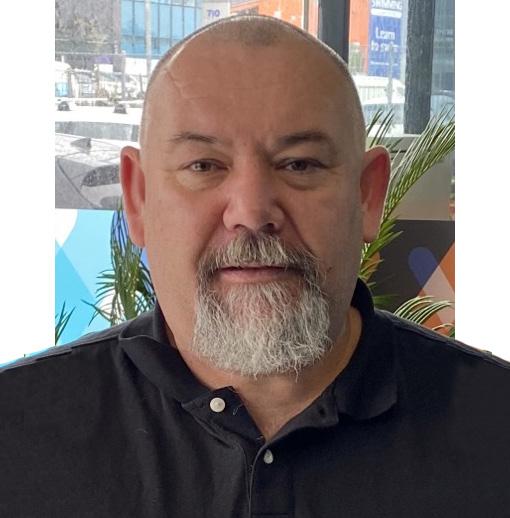
be played at your home as is intended for personal use, so you are not able to buy a whole lot of CDs, tapes or vinyl and become your own workshop DJ. Now if you are looking at this and thinking, ‘wow, really?’, yes, it is the current situation. The only thing that can be broadcast that is not copyright protected (as far as I am aware) is talkback radio and classical music. I’m not sure how happy your techs are going to be listening to Mozart instead of Motorhead, or making the hard choice between listening to Mike Hosking or Mike and the Mechanics, but this is something you need to look at as a business and decide the best option for you and your staff, as well as your customers entering your service area.
Part of my job is to keep our members informed and up to speed with things that would not normally get in front of them, but to be clear, in the words of the American guitarist John Scofield, "Don't shoot the messenger".
MTA is currently devising its election years calls to the next Government. These are published in a manifesto around mid-year – an exercise we carried out successfully in 2023. It involves a bit of a temperature check and a bit of crystal ball gazing (apologies for the mixed metaphors).
The first part is consulting with members and wider industry on the issues that they see as needing attention.
This covers a wide range, from issues such as the Warrant of Fitness to workplace training.
The crystal ball part is looking ahead to what we want Government to do about it, to address the problem and make things better for industry and the public.
Naturally all members have various issues specific to their sector, and one of our main goals is to ensure that the membership as a whole benefits from advocacy.
For fuel members, we know that crime is still a big problem for many of you, and an area we have devoted a lot of advocacy effort in the last two years. And will continue to do so. First of all, credit where it’s due.
The Government, spearheaded by Police Minister Mark Mitchell and Justice Minister Paul Goldsmith, have made some big gains on crime this term. The introduction of police patrols,
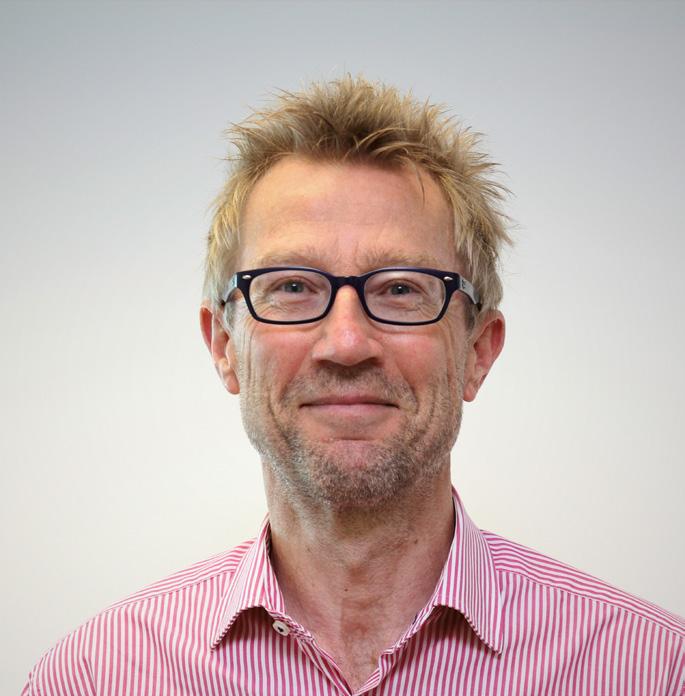
simon.bradwell@mta.org.nz
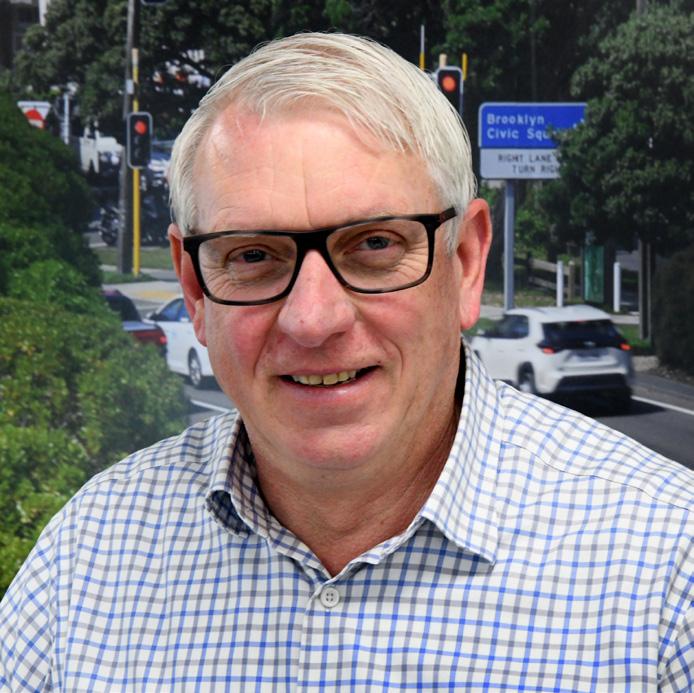
Larry.fallowfield@mta.org.nz
review of trespass law, move on orders and other measures have all had a noticeable effect.
They’ve taken a hardline approach, and in the short-term at least, that’s definitely had a positive impact.
There’s been a sharp drop in victims of crime, as we’ve been reminded regularly. Note: that’s personal victims of crime though, not business.
But there is a gap in the good news, and that’s around service station crime.
While other indicators are positive, theft from service stations has remained constant – around 30,000 reported cases a year.
Yes, ramraids and violent robberies appear to have slowed – and that’s great. We’re also hearing from members who have noticed a considerable lift in police response. Heartening, as we’ve been banging on about that since the last election.
But we are still hearing from a lot of members for whom theft – whether fuel or shoplifting from the retail outlet – is a major problem.
That’s why crime remains a major focus for us going into the election.
As I write this, I’ve just seen this feedback from a member, which underlines why we can’t ease up on crime:
From a safety POV many servos are having to hire two staff to do one person’s job during the danger times
for support when one would do if there wasn’t such a crime issue. Not a productive way for small businesses to make money.
It illustrates perfectly the impact of crime on service stations: on the bottom line, on staff retention, and on the threat to personal safety. It also illustrates why we won’t be letting up on crime this election year. Improving police response and attitude to service station theft is our goal. Too often, members tell us police don’t turn up or investigate, even when CCTV or other details are given to them. Particularly galling, when service stations regularly help out police by providing CCTV for other inquiries. It’s one-way traffic when it comes to data sharing, it seems.
We’ve come up with some new ideas that we think could make a big change, and I hope to run them past Police Minister Mark Mitchell – who has a genuine interest in our sector –soon.
I’ll keep you posted on this important issue. As they say, crime doesn’t sleep. And when it comes to finding ways to stop it, neither do we.
•Simon Bradwell is MTA’s Head of Communications and leads our advocacy work on crime.
Is the cost of servicing and repairs under factory warranty worth every hard-earned dollar? It’s the question that keeps popping up like a can of Tui at your backyard BBQ, and it’s driving the push for right-to-repair legislation.
As every car owner knows, there’s one universal truth –sooner or later, something’s going to need fixing, and in an election year, who knows what will end up on the government’s to-do list?
A real-world scenario that got me thinking
Two cars, same job: service, front and rear pads and rotors.
Car one: a trusty Japanese workhorse, eight years old, 160,000km under its belt. Work done at a reputable local mechanic using high-quality aftermarket parts.
Car two: a shiny European number, just 18 months old with 60,000km. Same job, but done at the dealership. And the bill? Nearly double.
Both workshops were flash enough to feature in a lifestyle magazine: coffee machine,
waiting area, comfy chairs and shiny painted workshop floors. Both sent polite emails and texts for approval before turning the spanner.
Why the big difference?
Dealerships have costs that independents don’t: factorytrained technicians, genuine parts requirements, fancy tools that just arrive on your floor with an invoice that probably cost more than your first car.
The golden ticket for your customer is keeping the factory warranty intact, and for many, there’s also that warm fuzzy feeling of ‘peace of mind’. Their car is in the hands of specialists who know it inside out.
Here’s the thousand-dollar question: does that peace of mind come at too steep a price? And if right-to-repair becomes law, what happens then?
Why do customers stick with your dealership? Is it loyalty, fear of losing warranty, friendly staff or just the free coffee in the waiting area?
The future could look very
different if independents can legally service and repair cars without voiding warranties. So, how are you selling your service sizzle – is it like that can of Tui at a BBQ or is it more like a chilled bottle of Daniel Le Brun Méthode Traditionnelle, classy but not Moet pricing, or is it like a bottle of Dom Pérignon! What perception do you want your customers to have of your business in 2026? Remember, sometimes peace of mind is priceless, other times it feels like buying expensive bottled spring water when there’s a perfectly good tap at home.
The launch of Industry Skills Boards (ISBs) aims to mark a defining shift in how New Zealand builds and sustains the skills our industries urgently need. Rolled out from 1 January 2026, ISBs place industry at the heart of vocational education and training, with the intention to ensure that what is taught in classrooms and in work-based settings matches what employers genuinely need in the real world. What are ISBs?
They are industry-led governance bodies established under the redeveloped Vocational Education and Training System. Their core purpose is to ensure vocational education aligns with workforce demand, making qualifications meaningful, robust and responsive to technological, regulatory and business change.
ISBs aim to give employers a seat at the table. These boards lead standards-setting, endorse programmes, quality-assure assessments, oversee the moderation of skills, and provide strategic advice on workforce priorities, giving industries genuine influence over the training pipeline.
There are eight ISBs covering key sectors, including transport, manufacturing, construction, services, food and fibre, energy and infrastructure, health and community,
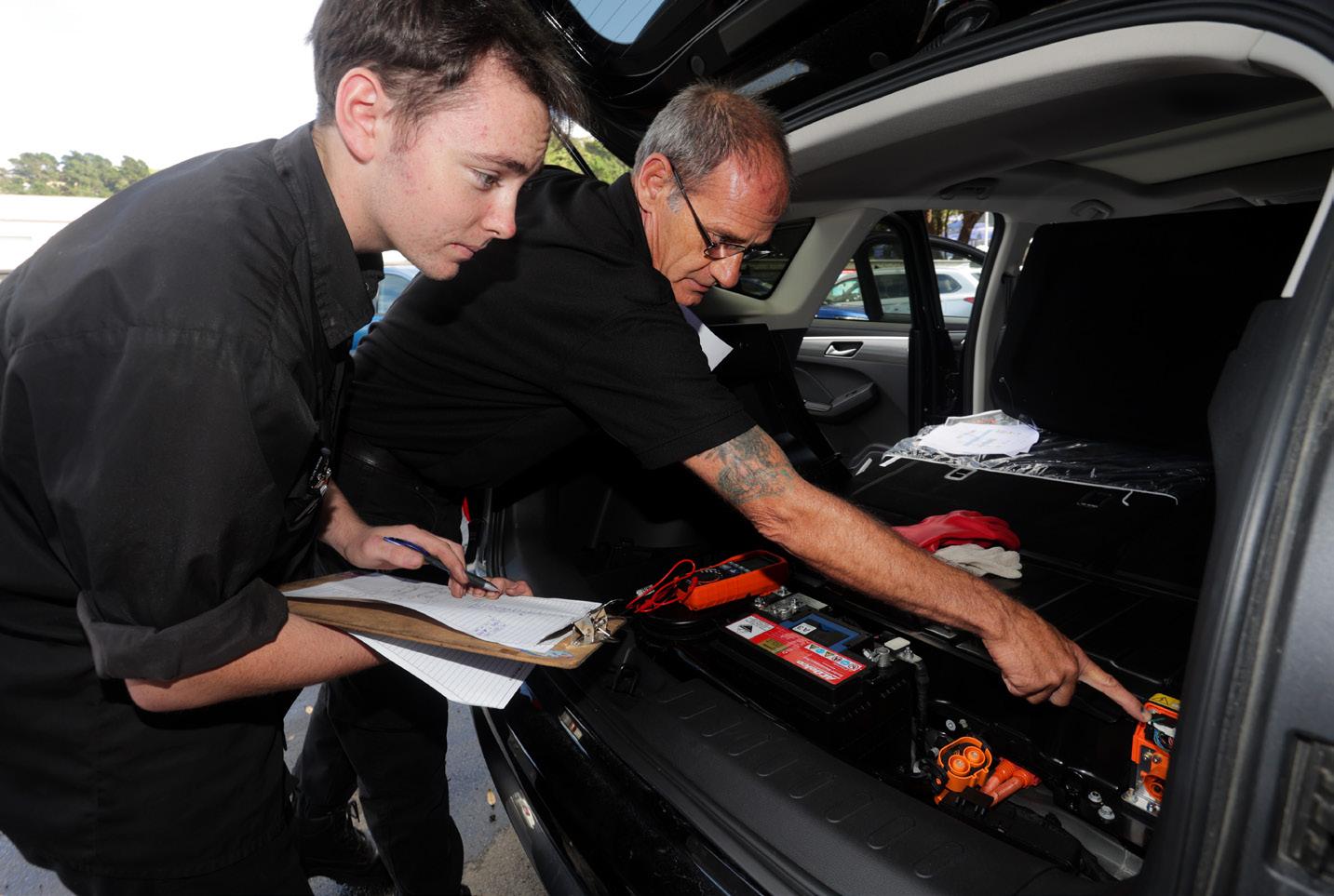
and electrotechnology/IT. Importantly, during the transition from the former NZIST system (including Te Pūkenga and the Workforce Development Councils), ISBs are temporarily responsible for managing work-based training arrangements to ensure continuity for both learners and employers. However, MITO is a vocational trailblazer and is now a registered Private Training Establishment (PTE) operating independently without having to transition into the Transport ISB.
Far from being a limitation, this positioning creates a significant commercial opportunity. With deep industry credibility, MITO as a PTE
the automotive industry is the Transport ISB. This board represents vehicle-related trades and the wider transport sector, including freight, logistics, aviation support, maritime, rail services, and passenger transport sectors where workforce skill shortages and rapid technological change are particularly acute.
At the helm as CEO is Samantha McNaughton, bringing decades of vocational education and industry engagement experience to the role. Her background includes senior leadership positions across training and standard-setting organisations, with the most recent appointment being deputy CEO within the Hanga-Aro-Rau Workforce Development Council, giving the confidence that the automotive
voice won’t be overshadowed amid broad transport priorities.
Inclusivity and sector confidence across ISBs
The introduction of ISBs also brings reassurance to other critical sectors. For the fuel sector and related services, industries are now represented within the Services ISB.
All ISBs have launched their websites; for automotive we will work with the Transport and Services ISBs:
transportisb.nz
servicesisb.nz
What this means for MTA members
For members, the establishment of the Transport ISB means greater influence over training standards and industry expectations and a
closer alignment between industry needs and what apprentices and trainees learn.
We anticipate strong workforce planning, including workforce data and trends feeding directly into national training priorities, and most of all, confidence that vocational education is not abstract but grounded in employer reality. In a competitive economy where skills shortages bite, technological change accelerates and safety remains paramount, the Transport ISB and the wider ISB network should provide a framework for better industry-driven training. That’s good for workers, good for employers, and essential for sustainable growth.
is uniquely placed to pivot into commercially responsive education solutions that directly meet evolving industry needs.
While the Transport ISB focuses on standards-setting and qualification endorsement, MITO can move with agility, designing, packaging and delivering targeted upskilling commercial programmes – such as WoF, ADAS, Advanced Diagnostics, Aircon Systems, as examples –aligned to immediate workforce demand, in addition to supporting the existing vocational programmes they’ve always offered.
it matters
One of the most crucial for
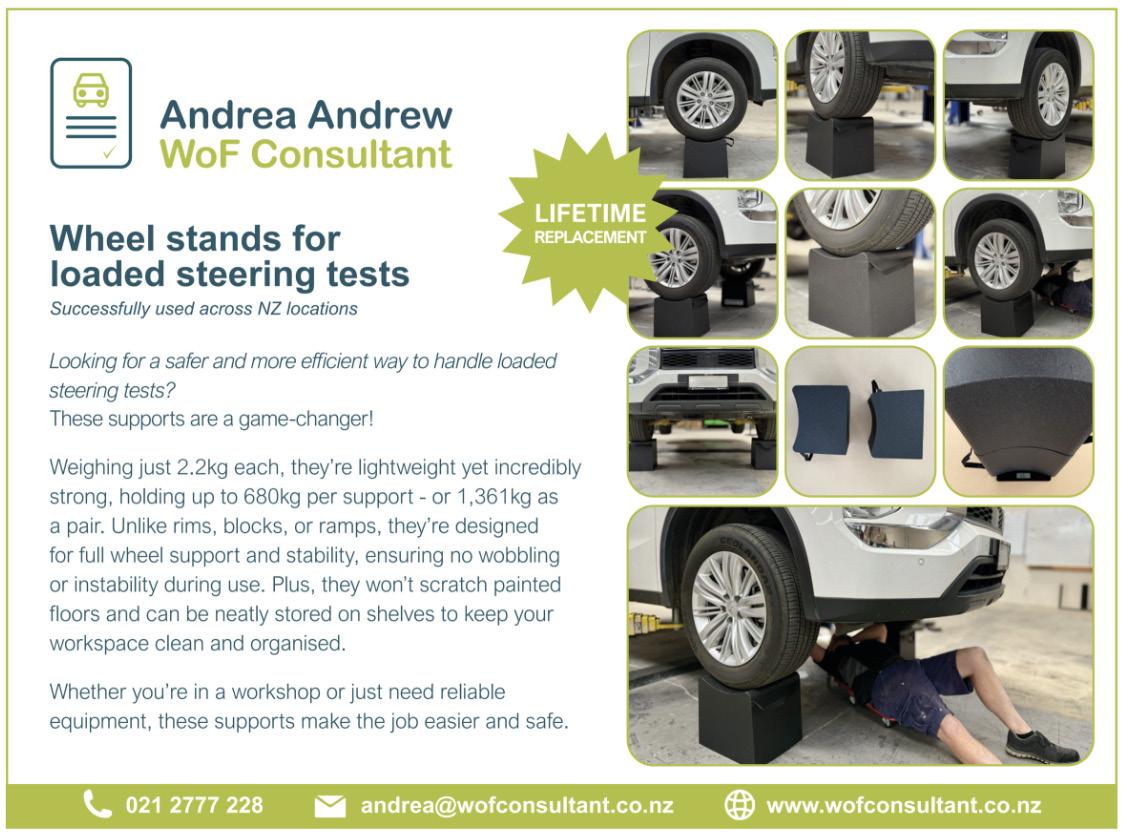
Where are we heading?
Do you as an individual know? What about your business and the industry you are part of?
This isn’t a ‘What is the meaning of life?’ question. It’s a question you can answer and provide steps to take to get to the answer. In other words, it’s one of the things you can control or influence.
Recently the CRA spent time asking this question and then planning what is needed to get where we want to head. First in this process is focusing on the controllables; it may seem obvious, yet often we encounter teams that are trying to change the world – they are focusing on things they can’t control.
A quick diversion for a moment: when MITO was being established, one of the most evident features of the New Zealand automotive sector was its collaboration. All sectors came together to help create a new MITO run by industry. Speaking as one, it was a powerful voice when heard by the government.
This is a great example of a controllable within the industry. Other sectors in New Zealand show how difficult this is to achieve; some industry sectors have three or four bodies representing the sector, effectively in competition with each other. Back to controllables in the CRA planning. Following on from the controllables is a calculation of what
stewart@collisionrepair.co.nz
Mathew.alderdice@mta.org.nz
resources we have and where they can best be used. This includes options of working with others to achieve our goals, without the CRA driving or owning the task.
The CRA working with MTA is an obvious example of this. The MTA Advocacy Team has the skills and knowledge to promote ideas and change our industry needs with governing bodies, skill and knowledge that the CRA doesn’t have. Utilising this advocacy resource on things of interest to the CRA and collision repair sector means we are more effective and able to focus our resources on those things that the CRA does well.
With the controllables and resources questions answered, we need to prioritise the objectives. This is where the collective voice of the eight regional branches in the CRA is used to select what will matter most in where we want to go.
Finally, we simplify objectives into short and clear targets that allow all members to easily see where we are going. We also add a short sentence to describe what success looks like: a simple example could use the priority ‘A successful CRA conference in 2026’, and we provide a descriptive sentence as ‘Financially viable with a high level of member and industry engagement’.
In 2026 the CRA has six key priorities; behind each of these are details on
what we measure and what is needed to achieve them. This is where the CRA is going in 2026, presented in an easy-to-understand way with our focus described in the six points following.
All CRA activities in 2026 will be held up against these priorities. If it’s not listed in the priorities, we either will not do it or we will look carefully to decide what we should be using our resources for. A small team can deliver big things but only if it is focused on what really matters and is consistently following the priorities.
These priorities have been agreed by the CRA governing body made up of representatives of all eight branches and these are what we will focus on.
Where is the CRA heading in 2026? These six priorities provide the answer.
CRA Six Priorities 2026
(These are the core priorities; details are on the CRA website.)
1. Conference 2026.
2. CRA standard.
3. MTA & CRA.
4. Promotion of collision repair careers.
5. New Zealand statutory requirements for collision repair registration.
6. Financial priorities.
•Stewart Gibb, Collision Repair Association General Manager
Significant amendments for the driver licensing system are on the way and MTA members should be aware of what the changes are.
The government says the driver licensing changes will make it much cheaper for those looking to get their driver’s licence.
Making the announcement in Auckland on 3 February 2026, Transport Minister Chris Bishop said the current system was "expensive, outdated and no longer works as well as it should".
The changes include no longer needing to sit a second practical driving test to get a full licence, an increased learner period for those under 25, fewer eyesight screenings, and an expanded zero-alcohol rule.
Bishop said the changes will mean it's "significantly cheaper" to get a full driver’s licence. Under the current system, the total cost of getting a Class 1 car licence is $362.50. Under the new system, the total cost will be $282.50, a saving of $80. He also said New Zealand was an outlier in requiring a second practical driving test when moving from a restricted licence to a full licence.
"Removing the second practical test reduces costs and makes it easier to progress to a full licence, provided drivers demonstrate safe
driving behaviour while on their restricted licence.
"We're making practical, commonsense improvements to the driver licensing system to ensure it is accessible, efficient and affordable, while keeping road safety front and centre."
Bishop said the shake-up was the first major change to the driver licensing system since 2011, when the learner licence age was increased from 15 to 16. The changes were informed by public consultation last year.
He said the proposal was refined to "ensure the system strikes the right balance between access and safety”.
These licensing tweaks include extending the learner period, extending the restricted period by six months for drivers who get demerit points rather than resetting it entirely, and keeping the existing demerit threshold for licence suspension for restricted drivers.
Key changes
•No more full licence test: Drivers will no longer need to sit a second practical test to move from the restricted to full licence, saving time and money. This applies to Class 1 (car) licences only.
•Longer time spent on learners for under 25 years of age: There will be a 12-month learner period for
under-25-year-olds, an increase of six months.
•Option to reduce learner period: There will be an option for under-25-year-olds to reduce their 12-month learner period to six months by recording practice hours or completing an approved practical course.
•New restricted periods: The restricted period will be 12 months for under-25-year-olds and six months for over-25-year-olds , with no option to reduce it with a defensive driving course.
•Cheaper to get a full licence: The total cost of getting a Class 1 (car) licence will reduce by $80 under the new system.
•Encouraging safe driving: Drivers on their restricted licence will face a further six months on their restricted if they get demerits.
•Fewer eyesight screenings: Eyesight screenings will only be required at the first licence application and at each renewal. This applies to Class 1 and Class 6 (motorcycle) licences.
•Zero-alcohol rule expanded: All learner and restricted drivers, regardless of age, will be subject to a zero-alcohol limit.
•Stronger oversight of training providers: NZ Transport Agency (NZTA) will gain new powers to monitor and suspend driver training
course providers.
•The removal of the full licence test will apply to Class 1 (car) licences only.
•Changes to eyesight screenings apply to Class 1 and Class 6 (motorcycle) licences.
•NZTA will review the existing learner and restricted tests to ensure they are fit for purpose.
The hazard perception part of the current full licence test will be moved to the restricted licence test.
•There are no changes to licence processes and requirements for overseas drivers or senior drivers.
Removing the full licence test
•Most changes will take effect from 25 January 2027. The expanded zero-alcohol limit will be progressed separately.
•More information is on the NZTA website: nzta.govt.nz/car-licencechanges
There are no changes to licence processes and requirements for overseas drivers or senior drivers.
NZTA will review the existing learner and restricted tests to
•The Ministry of Transport will undertake a review three years after implementation to assess the impact of the changes on road safety, employment and economic outcomes.
ensure they are fit for purpose.
The hazard perception part of the current full licence test will be moved to the restricted licence test.
People must continue to adhere to the current system until the new system takes effect from 25 January 2027. The expanded zeroalcohol limit will be implemented separately.
A review will be undertaken by the Ministry of Transport after three years to assess the impact of the changes on road safety, employment and economic outcomes.
Once a driver has completed their restricted licence period, they will be able to apply for their full licence without needing to sit another test.
The hazard perception part of the full test will move to the restricted test to make sure drivers are tested on this important skill.
Increasing the learner licence period for under 25s
The learner licence period for under 25s will increase from six to 12 months, giving learners more time for supervised driving practice. Drivers can reduce their learner period back to six months by completing a specified number of practice hours or an approved driving course.
Setting standard restricted licence periods
The restricted licence period will be 12 months for under 25s and six months for over 25s, with no option to reduce it with a defensive driving course.
Encouraging safe driving
Drivers who receive demerit points while on their restricted licence will have their restricted period extended by six months. Demerit offences are infringements issued by a police officer. Currently, infringements issued by safety cameras do not have demerits attached.
Introducing a zero-alcohol limit for all learner and restricted drivers
The current zero-alcohol limit for drivers aged under 20 years will be extended to include all drivers on a learner or restricted licence, regardless of their age.
Reducing the number of eyesight tests
Currently drivers have their eyesight checked at every licence application (learner, restricted and full) and every licence renewal. Drivers will now only need their eyesight checked when they apply for their learner licence and then each time they renew their licence (typically every 10 years). Requirements for drivers over 75 years old remain the same.
Improving NZTA’s oversight of approved driving course providers
NZTA approves driver training courses that help people get licence endorsements or let them move through the system quicker. The changes will give NZTA more ability to consider whether the providers of these courses are suitable.
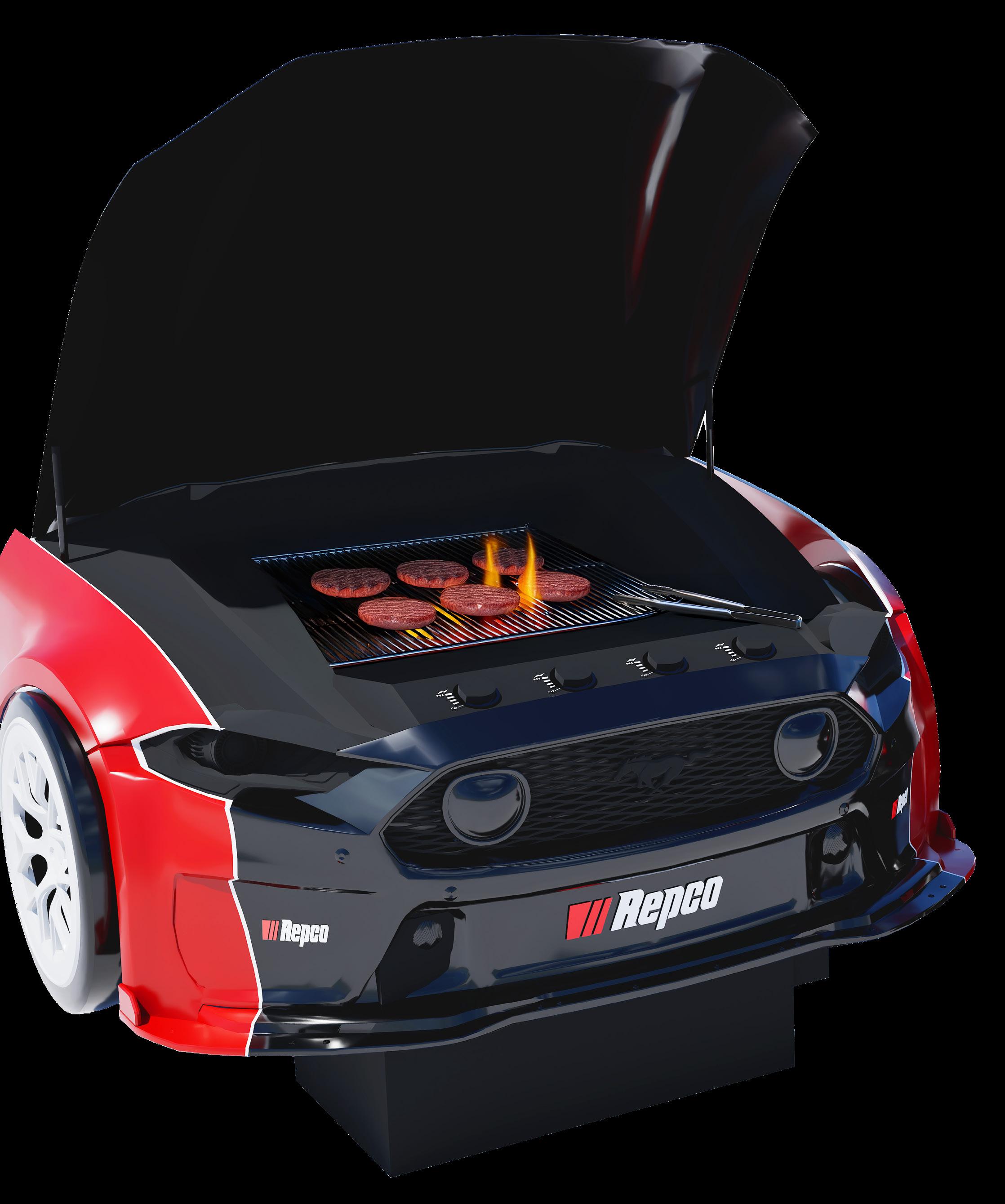


Spend $1,000* on participating brands through March and receive one entry
Every subsequent $100* spent earns an additional entry into the draw


In February 2026 new passenger vehicle registrations totalled 7,138, an increase of 1.9 percent or a 130-unit increase over February 2025, albeit down on January 2026 by 1,900 unit registrations or a 21 percent decrease.
New commercial registrations are up year-to-date (YTD) by 4 percent or 226 units, and up 9.2 percent or 256 units on February 2025; the sector is also up on January 2026 by 283 units or 10.2 percent.
The combined total new passenger and commercial vehicle market saw 10,190 unit registrations; this was up 6.5 percent or 1,335 units YTD
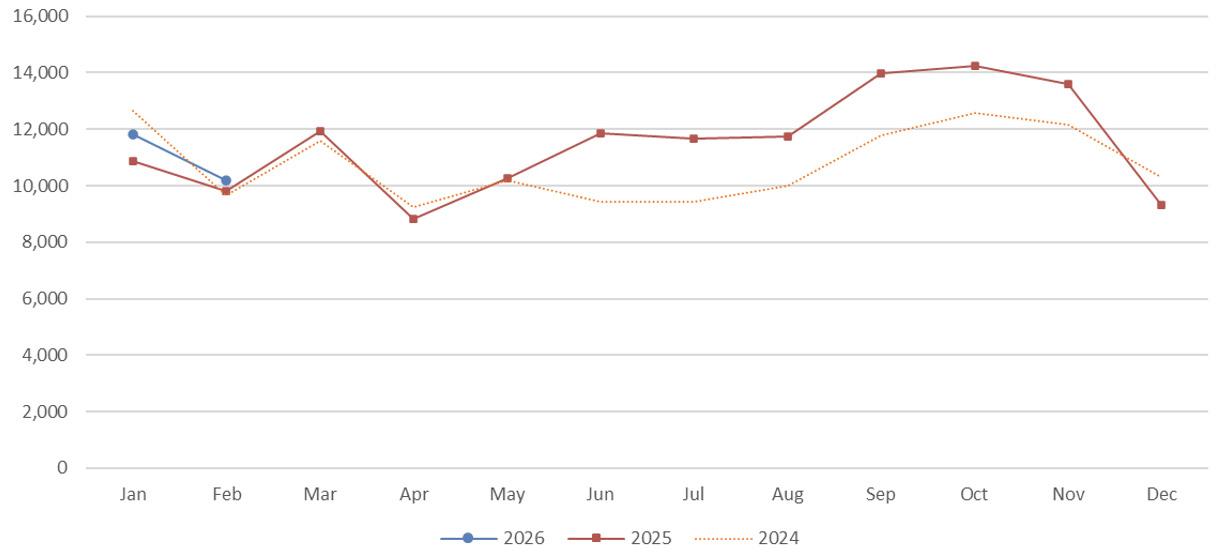
and up 386 units or 3.9 percent on February 2025, albeit down by 13.7 percent or 1,617 units on January 2026. Hyundai jumped back into the Top 10 brands for February 2026 with a 257-unit or 90.8 percent increase over January, whilst Ford and Nissan were the only other brands to have positive increases over January 2026 with 71 units or 5.8 percent and 45 units or 8.3 percent, respectively. The Top 10 controlled 68.8 percent (7,007 units) of the registrations, whilst suffering a nearly 18 percent drop (down 1,508 units) on January. The 72 remaining brands secured 3,183 units. In early 2026 the Ford Ranger is stamping its mark on the leaderboard: with February’s 761 units, it now has a 439unit increase over the Toyota RAV4. Hyundai Tucson, with a 263-unit increase over January 2026, held second on the leaderboard for the month; this was helped by 271 making their way into the rental fleet.
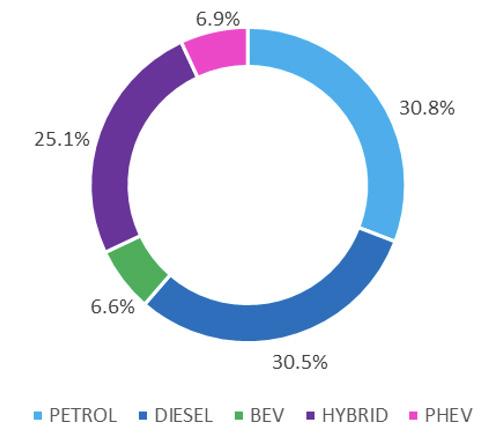
The 6,956 passenger vehicle registrations in February 2026 was up 2.4 percent or 163 units on February 2025; it was also up by 386 units and 2.7 percent YTD, albeit down 648 units or 8.5 percent on January.
In the commercial vehicle space, the 353 units registered were down 36 units or 9.3 percent on January 2026 and down 3.3 percent or 12 units on February 2025.
The total 7,309 units was a 2.1 percent or 151 unit registrations increase that allowed February 2026 to keep the sales worm above February last year for the combined used import passenger and commercial vehicle sector, albeit down on January 2026 by 684 units or 8.6 percent, whilst having a 2.7 percent or 400-unit increase over 2025 YTD.
The top three brands in February 2026 dominated with 63.5 percent of the total registrations. Of the total combined units sold by the top three brands, 0.9 percent were over 20 years old, 2,208 units or 47.5 percent were aged between 11 and 20 years, 30.1 percent or 1,396 were six to 10 years, and only 997 units were under five years of age. The Top 15 models accounted for 53.1 of the total February registrations. The top-selling models by year were the 2012 Toyota Prius with 111 units, followed closely by the 2014 Toyota Aqua. Rounding out the top three was the 2013 Toyota Aqua with 109 and 101 units, respectively. Toyota dominated with five models in the Top 15, controlling 23.7 percent or 1,734 units from its overall monthly market share of 34.7 percent or 2,538 units.
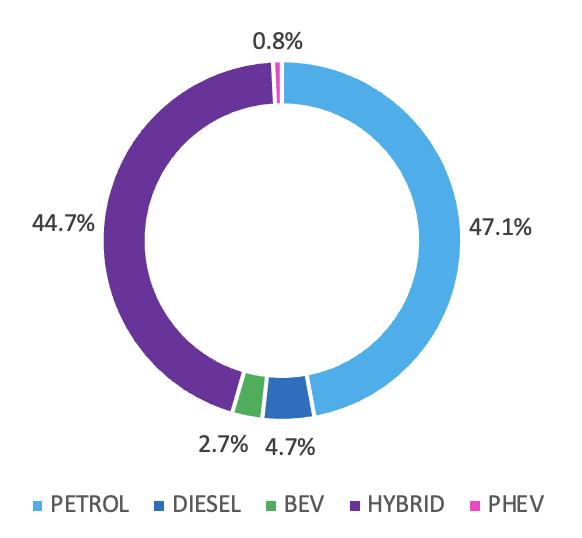
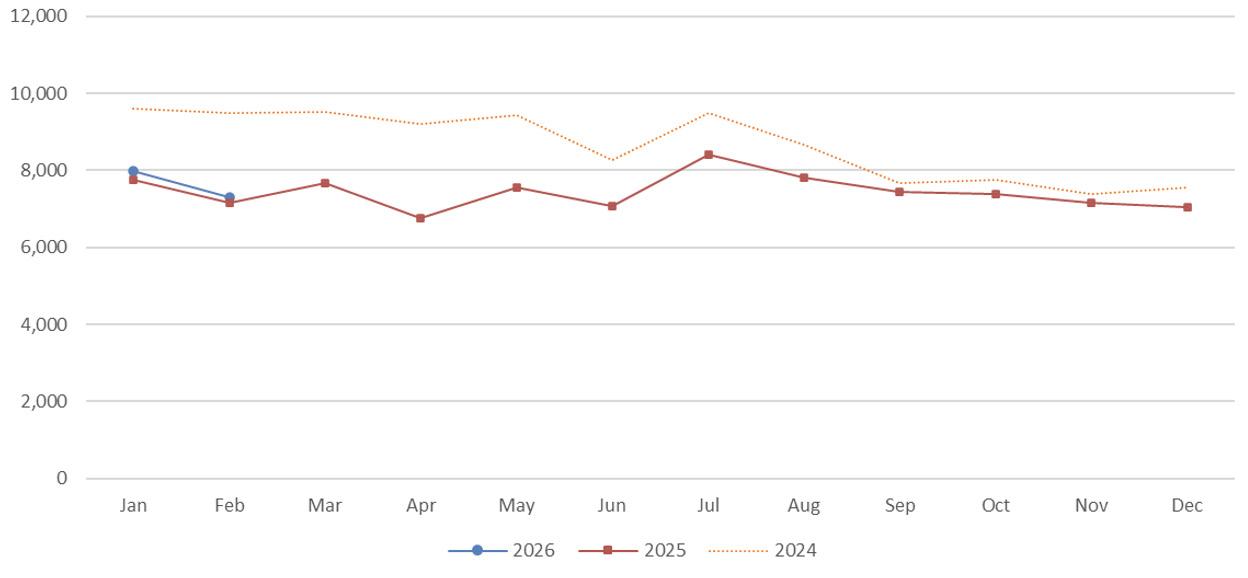
It’s hard to find some positives here; 2026 is still feeling the effects of discretionary spending that is being pressured by flat house prices, unemployment being over 5 percent and consumers’ ongoing uncertainty around job security.
The combined new road motorcycle and scooter market was 647 units; sales were down 9 percent or 64 unit registrations on January 2026. With a small fiveunit decrease on February 2025, the worm needs to spike up if the sector is to not have a repeat of last year.
Suzuki topped the brand podium again in February with 80 unit registrations or 12.4 percent of the total volume; this was down 31 units on January. Yamaha jumped three places to finish 14 units up on January, with CF Moto dropping into third, albeit down four units on January.
The over-60cc class saw 562 units, down from January’s 644 units; the 85 units in the under60cc category was up 18 units on January’s 67 units.
The used space saw a combined
Motorcycle
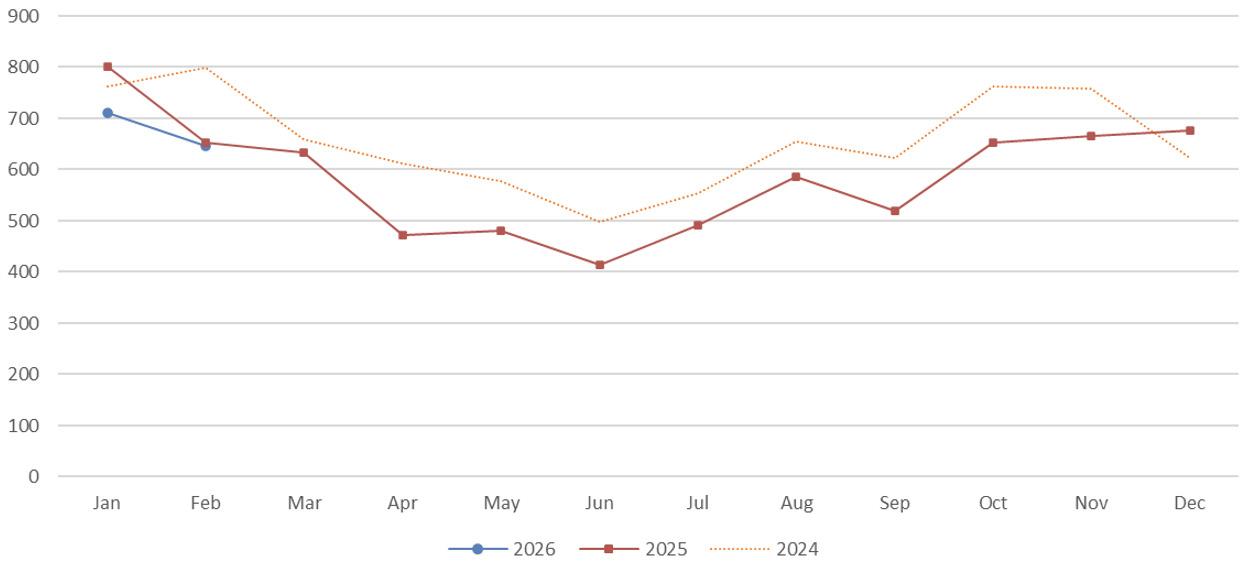
101 unit registrations, up 22 units on January 2026 and down 12 units on February 2025. The over60cc class was up 11 units at 79 registrations and the under-60cc sector also registered an 11-unit increase to finish the month with 22 units.
CF Moto MT450, with 32 units, held the top spot, albeit down five units on January. Forza Ciclone came in second, up two units on January, and the Kawasaki Ninja 500 jumped 10 places to round out the top three, also with a fiveunit increase.
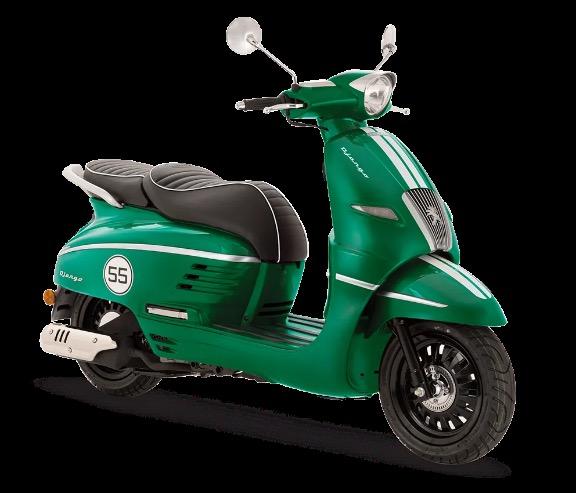
Automotive technician
AUCKLAND
We are seeking a service technician to join our well-established workshop shop at West Euro Auto. Applicants must be certified to issue Warrant of Fitness, able in both manual and scanned diagnostics, have knowledge and a high standard of work on a variety of makes and models. Email nick@westeuroauto.co.nz Text or phone 021591113. Applicants for this position should have NZ residency or a valid NZ work visa.
WoF Inspector
AUCKLAND
Torbay Service Station
We are looking for a part-time WOF Inspector to join our small team. We run a 4 Day Work Week, Monday - Thursday 7am - 6pm. The hours can be flexible and we would be happy to discuss this further.
Phone: 02102645644
Email: tammyh.tss@gmail.com
Tow-bar Fabricator & Accessory Installer
CHRISTCHURCH
Blackwell Loadmaster
Day-to-day work will include fabricating custom tow bars, fitting and wiring tow bars and accessories, installing vehicle accessories including winch and bull bars, nudge bars, roof racks.Would suit auto mechanics with welding or fabrication experience, custom fabricators with automotive experience If you have hands-on skills and love working on vehicles. Phone: 021 201 9090
Email: tony@loadmaster.co.nz
Office Administrator
CRESWICK GARAGE
Creswick Garage is looking for a reliable and organised Administrator to join our team. This is a part-time, on-site role. As our Administrator, you will play a key role in the day-to-day operations of the workshop. You will need a full driver’s licence strong organisational skills and good communication skills. Part Time. Email: admin@creswickgarage.co.nz
Towsafe Towbars
CHRISTCHURCH
Auto Electrician - Team Leader
We're seeking an experienced Auto Electrician you be responsible for leading a small team of wirers within our busy tow bar business, this hands-on leadership role involves both technical work and team management. You will be qualified Auto Electrician with proven hands-on experience.This is an opportunity to shape and grow the electrical division. Phone: 021 201 9090
Email: tony@towsafe.co.nz
Heavy Diesel Automotive Tech
GREYMOUTH
At Doug Thomson Mechanical Ltd, we are looking for someone with the following qualities: -Have a broad range of knowledge with servicing and repairs to most heavy vehicles - Be able to complete tasks to a high standard in a timely manner - Be confident with a scan tool or be open to learning - A solid work ethic, reliable and punctual -Self motivated and the ability to work unsupervised - A full drivers license including Classes 2-5 or the ability to gain them. - Looking for a qualified or nearly qualified heavy diesel automotive technician. Contact Phone: 027 361 7570 Email applicants should go to: office@dtmechanical.co.nz
Aj Motors Repair Hub
HAMILTON
AJ Motors Repair Hub is seeking a skilled, detailoriented mechanic to join our high-volume workshop. Key Responsibilities are comprehensive fleet maintenance and servicing. Pre-purchase inspections and oil changes, service checks and WOF repairs. Requirements: Qualification: NZQA Level 4 or
above (Essential). Join a supportive team where your technical expertise is valued. Contact: Ryan 021 0240 6180
Automotive technician
HAMILTON
Looking for a change? Want to work in a great team environment? Applicants must have at least level 3 qualification. Wof inspector not necessary but preferred. *General repairs on all makes and models, petrol and diesel. *Servicing. *Tyres, fitting and balancing/wheel alignments. *Electrical diagnosing and repairs.Contact Mark Walters 07 856 3571 for more information. Email info@motavation.co.nz
Senior Automotive Technician
HAWKES BAY
We are on the hunt for a Senior Automotive Technician.We can accommodate this role at either our Napier or Hastings branch. We offer lifestylefriendly hours – no weekend work, competitive remuneration & overtime opportunities also full factory training towards Toyota Diagnostic Master Technician status and career development across our wider Hawkes Bay Toyota Group. Phone: 0223609792
Email: snash@hbtoyota.co.nz
Mechanic
KUMEU, RODNEY
Small busy workshop seeking a mechanic with recognised qualification. WoF authority a bonus. Great communication skills and ability to work under pressure. Email Mike: admin@manukaautomotive.co.nz.
Automotive Technician
KIHIKIHI GARAGE
We are looking for a qualified or experienced technician with strong diagnostic ability WOF authorised a bonus Comfortable working unsupervised and owning your bay Confident across a diverse range of vehicles. Send CV to office@ kihikihigarage.co.nz with the Subject Line Technician Application. Contact Phone: 078716710
WoF Technician
KIRWEE
Looking for Person/Mechanic with WOF Authority
This position could be full time or part time This position could be solely doing WOF's or could be a mixture of WOF's & Repairs/Servicing Busy Workshop with a variety of vehicles coming through for WOF, Repairs & Servicing. Phone: 0273263083 Email: vanessa@kirweechallenge.co.nz
Mechanic/WoF inspector
KAIKOHE
Looking for a qualified automotive technician with WoF authority servicing and mechanical repairs. Clean New Zealand driver licence. Phone Richard 09 401 0155 or email CV to office@kaikohepanelbeaters.co.nz.
Qualified Technician
KAIKOHE
At Petersen Motors we are seeking a qualified technician to join our team. This will be a full-time position. WoF ticket certification is a bonus but not necessary, so long as the applicant is capable and willing to get it. Email applicants should send their CV to: p.motors2024@gmail.com
Automotive Technician
LOWER HUTT
Capital City Motors is looking for a technician for their flagship Ford Lower Hutt workshop site and also out in their Kapiti Coast site. The ideal candidate will be a qualified and knowledgeable mechanic with good communication and teamwork skills. You will have a proven background in servicing, maintenance repairs, diagnostics, fault finding and repairing and either have or be working towards becoming
an Authorised Warrant of Fitness Inspector. Email applicants should go to: HR@capitalcitymotors.co.nz
Auto Electrician
MATAMATA
Onsite Auto Electrical Matamata are looking for a qualified auto electrician to join our team. We work on a variety of vehicles both in our workshop and onsite.Email office@onsiteae.co.nz or 078887579
Automotive Technician
MATAMATA AUTO SERVICES LTD
We are looking for a fully trained Automotive Technician to join our friendly team. You will need to be a qualified Light Vehicle Mechanic with a current driver's licence. If you are an experienced mechanic looking for a stable role in a busy, professional workshop where your skills are valued and rewarded, we would love to hear from you. Email: office@matamataautoservices.co.nz
Product Support Engineer
MASTERTON
AECS Equipment and Technical Support supplies equipment and support to the Automotive Industry across NZ. We are looking for someone to grow into our technical support team. The role could be based anywhere and includes travel and flexible hours. If you want to have passion for what you do, get in touch! For more information on the role please email jodie@aecs.co.nz
Workshop Manager NGAIO
Motor Doctors Ngaio
We are seeking an experienced and motivated Workshop Manager to lead the day-to-day operations of our workshop in Ngaio.In this role, you will oversee a team of skilled mechanics, ensuring the efficient repair and servicing of a variety of vehicles. We Offer competitive remuneration, working Monday-Friday an opportunity to be part of a growing and forward-thinking company. Email: accounts@motordoctors.co.nz
Qualified Automotive Technician/2IC NAPIER
We are looking for a qualified Automotive Technician/2IC to join our busy service & repair workshop in Pandora, Napier. We’re an AA and MTA approved centre, Hawke’s Bay AA road service contractor, Ironman 4x4 & Yakima premium dealer. You'll need to have an Automotive trade qualification WoF certification (or eligible to gain authority) and a clean full NZ driver's licence. Contact Logan: 027 644 2210 or send your CV to: logan@onsiteservices.co.nz
Qualified Automotive Technician NAPIER
We are looking for a qualified Automotive Technician Join our busy service & repair workshop in Pandora, Napier. We’re an AA and MTA approved centre, Hawke’s Bay AA road service contractor, Ironman 4x4 & Yakima premium dealer. We pride ourselves on top service for a wide customer,commercial & fleet client base. You'll need to have an Automotive trade qualification, WoF certification (or eligible to gain authority) and a clean full NZ driver's licence. Contact Logan: 027 644 2210 or send your CV to: logan@onsiteservices.co.nz
Panel Beater OAMARU
Riteway Paint and Panel are seeking an experienced Panel Beater. Proven experience as a Panel Beater (qualified preferred but not essential). Ability to work independently and as part of a team. Full NZ Drivers Licence preferred.We offer a competitive pay based on experience, a steady workload and job security in a modern workshop and quality equipment. Contact Phone: 0272759391 Email riteway@xtra.co.nz
Want a job by the sea? We’re looking for a qualified auto technician. Great remuneration and relocation support. E: brian@boiam.co.nz or call 029 238 4088
Qualified mechanic PORIRUA
Join our busy, friendly team at Porirua Motors. Contact Murray Phone: 04 237 4975 or directly to our workshop. Phone: 04 237 7979
Qualified Automotive Technician RG AUTOMOTIVE LTD
We are looking for a qualified Automotive Technician to join our busy, well-established workshop in Motueka.We carry out a wide range of work including diagnostics, repairs, WoF inspections and servicing. This role will suit someone who enjoys variety and takes pride in delivering quality workmanship. Phone: 027 753 3273 Email: accounts@rgautomotive.co.nz
Senior Automotive Technician RANGIORA
Driven Automotive. Bring your skills in diagnostics, repairs, and vehicle maintenance to a supportive, growing team. Trade Certified with WoF authority, and automotive electrical skills preferred. Enjoy career progression, modern tools, and a strong, inclusive culture. Excellent work–life balance with beaches, ski fields, and outdoor activities nearby. Make an impact, grow your career, and be part of a company that values your contribution.
Email: hamish@drivenautomotive.co.nz
Automotive technician
SOUTH CANTERBURY
South Canterbury Honda service centre, after hours AA roadside contractor and carry out salvaging throughout the district. Must hold a full driver’s licence, have excellent diagnostic skills, time management and be a team player. Call Alan on 027 228 9584 or email alan@vaughanmotors.co.nz
Auto Electrician TAURANGA
P&R Automotive & Electrical. Looking for a qualified automotive electrician with strong diagnostic and repair capability. High-level auto electrical knowledge and proven hands-on experience. Mechanical knowledge is highly advantageous.This is a rare opportunity to join a growing company with a strong reputation for quality, trust, and innovation.A fully equipped mobile workshop vehicle, stocked with the equipment you need. Phone: 0221003202
Email: info@pandrauto.co.nz
Windscreen Glazier TAIHAPE
Bell’s Diesel Truck & Tractor Limited - Central North Island. We are looking for an experienced auto glass technician to carry out repairs and replacements of automotive windscreens along with recalibration. You will have at least a 3-year experience in a similar role. Full time – Part-time hours can be considered for the right person. Phone: 06 388 0449 or 027 279 199 or 027 256 4027. Email applicants should go to: bellsdieseltruckandtractor@gmail.com
Experienced Mechanic TAIHAPE
Please email us for further information bellsdieseltruckandtractor@gmail.com or call 027 332 2471
Our work is interesting and varied, servicing –retail, commercial and industrial clients. Work can be in our workshop or out in the field. Join our fun dynamic team! Contact Dawn on 027 432 3171 Email: sales@auto-electrical.co.nz
Automotive technician TAURANGA
Welcome to Automotivated - we are a busy Automotive workshop in sunny B.O.P Tauranga. Looking for a motivated full time technician to join our team, We specialize in fleet servicing all vehicle make/model repairs/wof s MTA approved all the latest workshop/equipment and diagnostic scan tools, preferable WOF authorized or able to achieve authority, possibility to grow within role. Job type: Full Time - Contact Phone: 0275710548.Email applicants should go to: admin@automotivated.co.nz
Automotive tech/WoF Inspector
TE AROHA
Immediate start. Qualified or equivalent experience and WoF authority are required. We offer excellent working conditions. Please email CV to: service@summitmotors.co.nz or call Garth on 021511911.
Qualified Mechanic
TE AROHA
We are seeking an automotive mechanic with their WOF ticket. Job includes, WOF tests, diagnostics, assessments, repairs and servicing on a variety of vehicles. Maintaining accurate records. Ability to work independently. Must be currently living in, and legally allowed to work in New Zealand. Must have a current and full NZ driver licence. Option to be on call out roster. Contact AgPlus Ltd 28-32 Lawrence Avenue, Te Aroha, 3320. admin@agplus.co.nz 07 8849901.
Qualified Mechanic
TE AWAMUTU, WAIKATO
We are seeking a Qualified Mechanic with their current WOF certificate or be willing to complete a course to obtain WOF Certificate for our busy workshop in Te Awamutu.Hours of work 8am - 5pm Monday to Friday. The successful candidate will need to be reliable with a good work ethic and a can-do attitude, pay attention to detail and be fluent in English both written and oral. A full NZ driving licence is essential along with a keen interest in the automotive trade. Please apply to: admin@totalautomotiveltd.co.nz
Automotive Technician
TE PUNA, TAURANGA
Seeking qualified mechanic for full time or job share role in busy, well established workshop. Email Adrian: service@tepunamotors.co.nz
Yamaha Motorcycle Technician
WAIKATO
Join our team at Blackwood Yamaha in the mighty Waikato! Excellent customer service and communication skills both written and verbal. A full NZ Driver’s Licence and Motorcycle class 6 Licence (or willing to get one) A competitive pay will be based depending on your skills and experience. We also offer other staff benefits. Phone: 07 827 7066 Email applicants should go to: sales@blackwoodyamaha.co.nz
Senior mechanic/ diagnostician
WAIPU
We are on the hunt for an Experienced/ Intermediate mechanic to carry out vehicle and Trailer WOF inspections. Service, repair work and diagnostics on all makes and models of vehicles. No two days are the same. The ideal candidate must have a WOF inspection certificate ,4 or more years
experience and a level 4 Certificate in Automotive Engineering. Adapting to paperless job cards through MechanicDesk and basic computer skills is essential; An excellent knowledge of vehicles of all makes and models, In particular, European vehicle knowledge would be beneficial. Please note: this is not a trainee or apprenticeship position. Good hours Monday to Friday 8:00 to 4:30. Car-pooling available from Whangarei. Contact Phone: 09 4320301 Email applicants should go to: accounts@ waipumotors.com
Mechanic & WOF Inspector
WHANGANUI
Experienced mechanic wanted Full Time, MondayFriday. Fun, friendly team working in busy Rural Garage on all automotive/ farm machinery & equipment. Contact Ross 06 342 7827 or email fordellgarage@inspire.net.nz
Automotive Technician
WHANGAREI
This is a wonderful opportunity if you are looking for a positive change in a rural environment surrounded by a wonderful community. Full-time or part-time considered. Please email: chevaun@gasmgk.co.nz Auto electrician
WHANGAREI
Bindon Auto is a specialist Auto Electrical workshop located in central. We work on a large variety of vehicles and equipment including Passenger, transport, forestry, recreational and Marine. We are a fun team of 8 with a high level of expertise. Must be Trade certified automotive electrical engineer with experience in the commercial sector. Current New Zealand Drivers license Experience with Air Conditioning an advantage. Excellent remuneration with tool allowance and overtime paid. Diesel mechanic WYNDHAM
Enthusiastic diesel injection technician with common rail experience to join a thriving rural garage with a fully equipped diesel fuel injection facility. Generous package to reflect experience, with possibility for future investment into the business. Email: redbarron222@gmail.com or phone 0272 417 614
Businesses for sale
Automatic Transmission Specialist NEW PLYMOUTH
Current owner for 40 years. A very successful family business now for sale so owners can retire. Automatic transmission repairs, Power steering and general servicing and repairs. Currently working out of two workshops with the capability of reducing to one. SAM computer system and Excel run through the accountant. All hoists, specialist tools. Grant: 0275 320 611 Email: automatics@xtra.co.nz Automotive Workshop/Station TASMAN.
Situated in Mapua in the middle of the Tasman Bay. Lots of opportunity to grow an already very busy business. All equipment has been replaced over recent years. 20k invested this year alone. AA roadside contractor. Owner prepared to assist with transition. For information call Chris 021 540 286 or email chris.perrysauto@gmail.com.

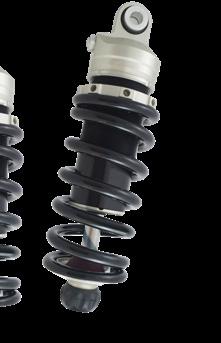
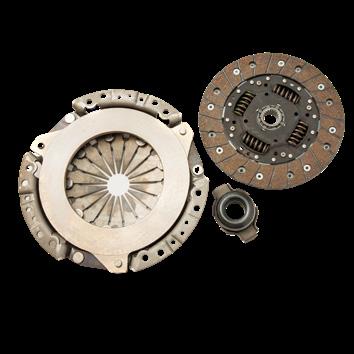
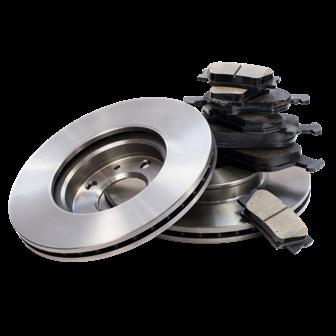















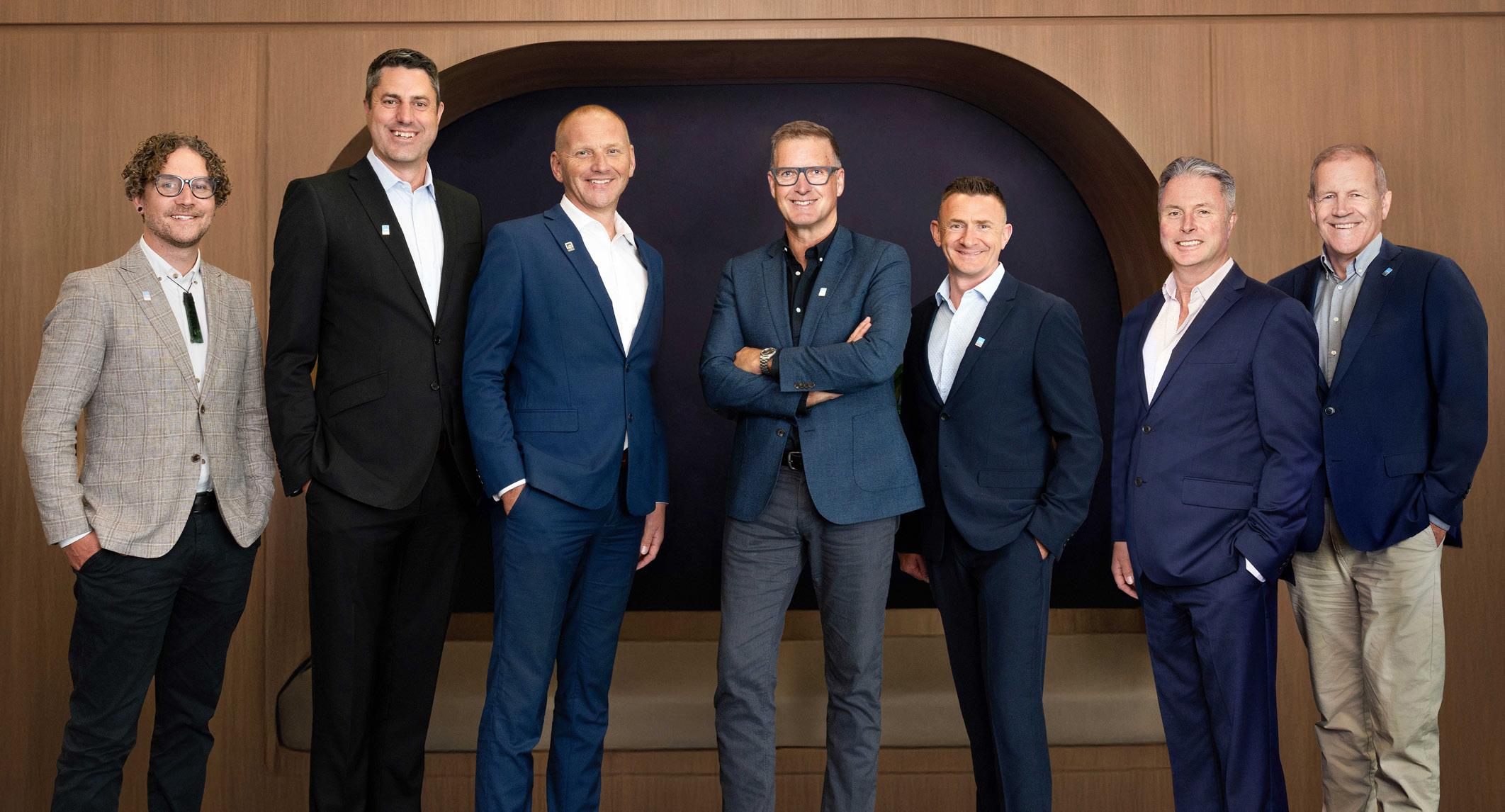
UPPER NORTH ISLAND
MIKE BURD Team Leader 027 539 4010 mike.burd@mta.org.nz
SOUTH AUCKLAND
MARK MOWBRAY 027 270 2665 mark.mowbray@mta.org.nz
LOWER NORTH ISLAND & UPPER SOUTH ISLAND
DANNY GARRICK 027 478 0593 danny.garrick@mta.org.nz
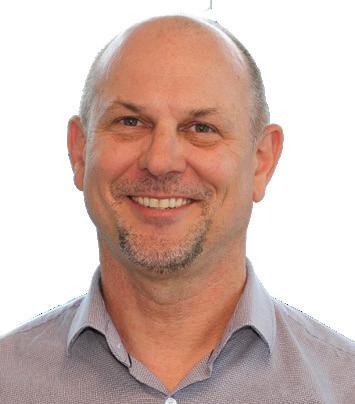
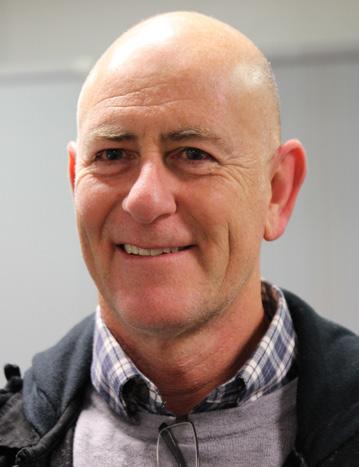
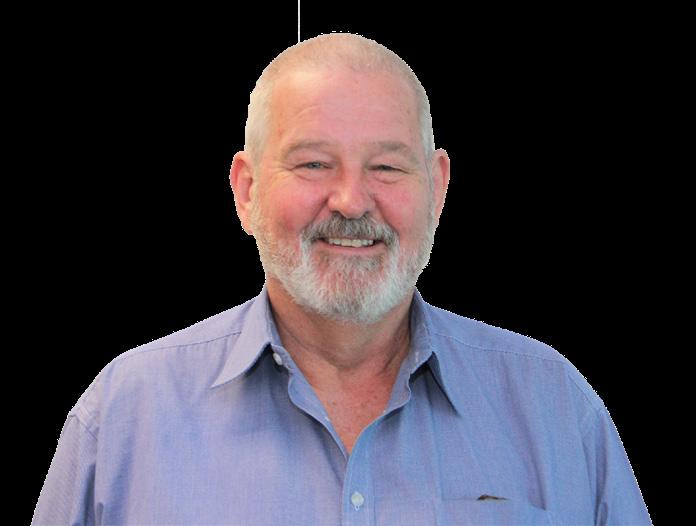
CENTRAL NORTH ISLAND NICK MILLS 027 2099 494 nick.mills@mta.org.nz
LOWER SOUTH ISLAND
SHELLEY CARTER 027 497 1568 shelley.carter@mta.org.nz
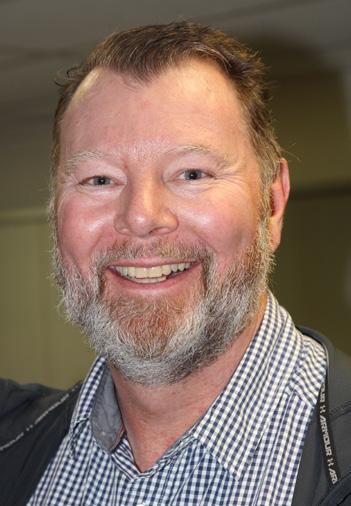
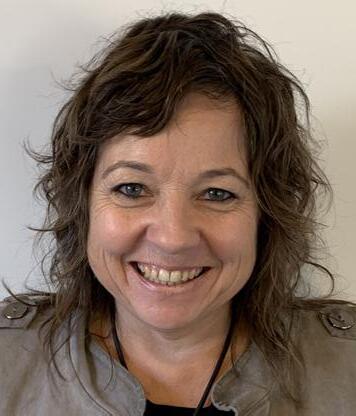
Member support team: 0800 00 11 44 mta@mta.org.nz
We encourage all members to attend the training courses, professional development opportunities or networking events taking place in their areas. Our region coordinators will let you know what’s on and when. They are also keen to hear your ideas for other training or get‑togethers that you’d like to take part in.
The more you get involved, the more you can benefit from membership. Just contact your coordinator to check the dates of the meetings in your region.
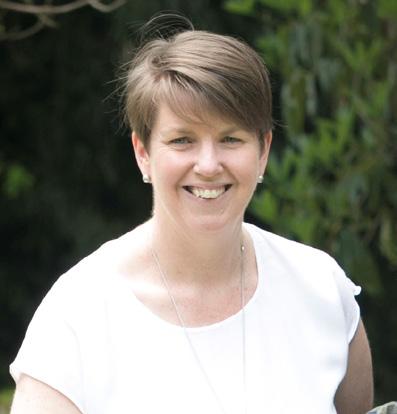
natalie.campbell@mta.org.nz
natalie.campbell@mta.org.nz
Morbey Region Coordinator 021 031 0075 shannon.morbey@mta.org.nz
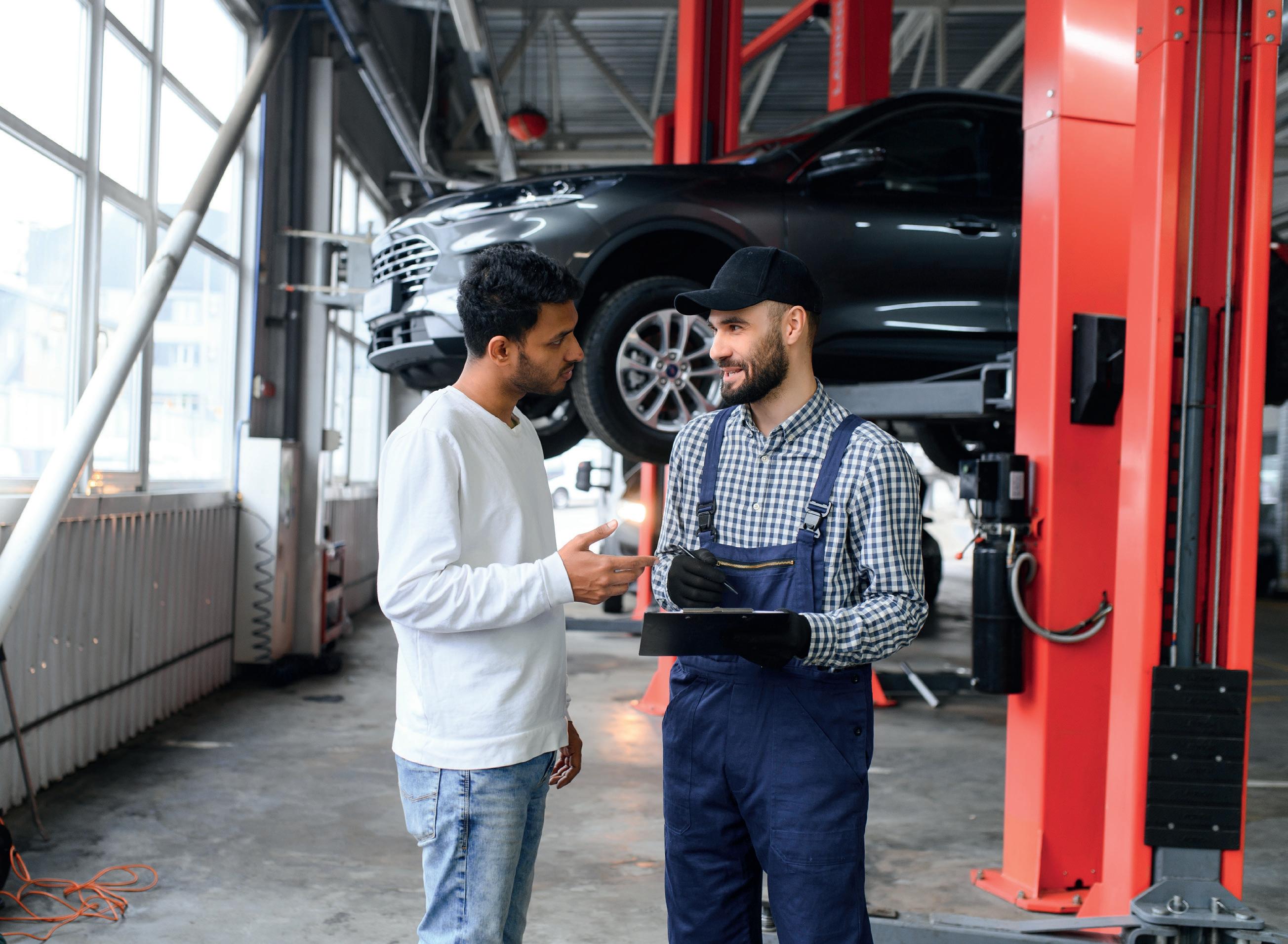
“Let us help fix
Get your customers back on the road faster and get paid for your hard work. With over 50 MTF Finance offices nationwide, simply jump on mtf.co.nz , choose your nearest office and ask them to help your customer, pronto.
Your local MTF Finance office can offer same-day approval without phone queues or middlemen.
mtf.co.nz