
A YEAR OF MISSION MOMENTS
In the spirit of our unwavering commitment to our members, this year’s annual report serves as a testament to the transformative experiences we crafted through new initiatives and enhancements to our outstanding financial products and services.
Throughout 2023, our focus has been on elevating the Michigan State University Federal Credit Union (MSUFCU) member experience, turning every interaction into a mission moment As we navigate the financial landscape together, we’ve embraced change and actively sought ways to enhance our products and services, making them more accessible, personalized, and impactful for each member.
Within this report, you’ll discover the stories that define our mission moments — moments of empowerment, support, and financial well-being. From innovative digital solutions that simplify your banking to community outreach initiatives that amplify our shared values, we’re excited to share the many amazing experiences that embody the heart of our Credit Union.
Join us as we reflect on the past year’s achievements by exploring the positive impact we’ve made to help our members achieve their financial goals, and ultimately, their dreams
Thank you for your continued membership and trust in us. Here’s to another year of shared mission moments.
OUR MISSION
To provide superior service while assisting members and employees to achieve financial security, their goals, and ultimately, their dreams.
OUR VISION
To create a world-class omnichannel member experience, utilizing personalized digital and human service to deliver accessible financial solutions.
OUR CORE VALUES
Demonstrate Integrity and Honesty
Give Back to the Community
Provide Superior Service
Encourage, Embrace, and Drive Change
Pursue Growth and Development
Build a Positive Environment
Be Passionate and Determined
Cultivate Diversity, Equity, Inclusion, and Belonging
A MESSAGE FROM THE BOARD CHAIRPERSON AND PRESIDENT/CEO
Dear Members,
In 2023, we marked our 86th year of creating mission moments by providing outstanding products and services to our members. Since our beginning in 1937, operating out of a desk drawer on MSU’s campus, MSUFCU has been committed to empowering our members to dreamBIG and achieve financial security and their dreams.
Credit Union employees embody our mission every day, creating impactful mission moments for our members. Whether it’s a reassuring conversation, approving a loan for a dream car or home, guarding against fraud, or supporting families in need, our actions mirror the trusted connections we’ve fostered with our membership and the communities we serve.
As the Credit Union expands its reach across the state with additional branches in locations with a significant number of members, our dedication to delivering excellent service remains steadfast. The power of in-person connections with our branch employees remains a key component of our goal to provide superior service and ensure our members have every opportunity to dreamBIG. In 2023, we welcomed 38,461 new members who joined the Credit Union because of our superior member service and convenient digital and branch access, bringing our service reach to over 357,000 members globally
In 2023, the Credit Union’s assets grew to $7.68 billion and we achieved $667,849,980 in members’ equity. Across the financial sector, many peer institutions recorded net losses due to the constricting net interest margin, increasing regulatory requirements, inflation, rising cost of cybersecurity protections, and other economic factors. Despite these challenges, MSUFCU invested in the future through people and technology to ensure our service continues to meet the evolving needs of our membership. Even in these challenging times, MSUFCU chose to eliminate most fees, including courtesy pay fees, for the benefit of our members, which impacted and reduced our annual earnings. While modest compared to years past, MSUFCU was proud to record $4.8 million in net income. MSUFCU remains well capitalized with a net worth of 9.12%, a strong and important indicator of a financial institution’s safety and soundness that exceeds the NCUA requirement of 7% by $162,650,781. MSUFCU will continue to focus on various revenue streams throughout 2024 and, with others across the financial industry, anticipates a return to typical revenues in 2025.
In addition to investing in people and technology, MSUFCU increased convenient in-person service for members by opening new branches across Michigan and announcing an expansion into Illinois. We celebrated the opening of the Congress Street Branch in downtown Detroit, the Kentwood Branch in the Grand Rapids area, and a branch in our new 311 Abbot building in downtown East Lansing. Each of these branches has a contemporary, open design, providing a warm welcome to members and visitors. The layout features desks that encourage more meaningful and engaged interactions between employees and members by facilitating the seamless completion of all personal and business-related transactions. Additionally, MSUFCU announced plans for three new branches in Michigan and five new branches in Chicago.
To assist our growing membership, MSUFCU welcomed 296 new hires last year — while filling 197 replacement positions and 99 newly created or budgeted positions — bringing our total workforce to 1,274. It’s our employees’ expertise and dedication that enable MSUFCU to maintain its reputation for superior member service. Additionally, the Credit Union continued to expand the intern program, hiring and training 36 interns throughout 2023. Our commitment to our team’s well-being and professional
growth has earned us numerous accolades, including being named a Best Credit Union to Work For® by American Banker for the seventh consecutive year and a Top Workplace by the Detroit Free Press for 13 years running. The Credit Union was also recognized as an Inclusive Workplace by Best Companies Group and COLOR Magazine, and received an honorable mention for the 2023 Michigan Healthy Worksite Awards through the Michigan Department of Health and Human Services.
Our dedication to enhancing the financial wellness of the communities we support continued throughout 2023. We organized 1,542 financial education events — in-person, virtually, and hybrid — educating more than 31,000 individuals. Our commitment to our core value, Give Back to the Community, extends beyond financial education as we supported 272 local nonprofit organizations through corporate grants totaling nearly $800,000 throughout the regions we serve. Annually, MSUFCU commits $10 per member through corporate giving, allowing us to support our Michigan State University (MSU), Oakland University (OU), and community partners.
Our employees passionately supported several community organizations including the New Day Foundation, the Allen Neighborhood Center The Davies Project the Women’s Resource Center, and the American Cancer Society as well as our long-standing charity partner, United Way of South Central Michigan (formerly Capital Area United Way), through personal philanthropy, fundraising, and volunteerism. Their collective efforts amounted to 737 volunteer hours and grants totaling more than $205,000.
We take pride in our ongoing partnerships with MSU and OU, supporting students through corporate grants, sponsorships, financial education initiatives, and volunteerism. This past fall, we had over 230 employee volunteers work alongside MSU staff during move-in week to create a positive and welcoming experience for students and their families. For the third year, MSUFCU entered into Name, Image, and Likeness (NIL) contracts with MSU women’s basketball players for the 2023-24 season. Additionally, OU Athletics and Oakland University Credit Union (OU Credit Union) agreed to a 10-year, $5 million naming rights partnership to name their flagship athletic facility the OU Credit Union O’Rena.
On behalf of the Board of Directors and the Credit Union Executive Team, thank you for your membership and trust in us as your financial partner. Your support is the cornerstone of our shared history and the driving force behind our continued success. Let’s continue to grow, achieve, and dreamBIG together for years to come!
Sincerely,

Gregory Deppong Board Chairperson

April M. Clobes President/CEO
BOARD OF DIRECTORS








EXECUTIVE TEAM











Gregory Deppong Board Chairperson
Steven Kurncz Secretary
Janet Lillie Vice Chairperson
Quinetta Roberson Connally Board Member
Michael Hudson Board Member
Ernest Betts Board Member
Bill Beekman Board Member
April Clobes President/CEO Chief Operating Officer Resources Officer
Ben Maxim Chief Digital Strategy & Innovation Officer
Tim Mielak Chief Information Officer
Steve Owen Chief Legal Counsel
Ami Iceman-Haueter Chief Research & Digital Experience Officer
Rob Johnson Chief Internal Auditor
DREAMING BIG TOGETHER
Since 1937, MSUFCU has provided a safe place for members to borrow and save money when they need it most. From our humble beginnings operating out of a desk drawer on the MSU campus to today, we’ve remained true to our mission: To provide superior service while assisting members and employees to achieve financial security, their goals, and ultimately, their dreams.
Over the years, our growth has been driven by our dedication to providing better products, services, and experiences to our members and community partners. Our employees live our mission every day — creating personal connections with each interaction and helping members achieve financial freedom and security as they purchase their first cars and homes, launch their own business ventures, save for their children’s futures, and navigate other significant milestones in their lives.
As of 2023, MSUFCU was the second largest credit union in the state of Michigan and has now expanded to include 24 branches located throughout Mid-Michigan, West Michigan, Southeast Michigan, and Northern Michigan.
Looking ahead to 2024, we are excited to extend our footprint into Illinois where we can better serve our current members in Chicagoland while welcoming new members seeking the support and benefits of joining our Credit Union.
GROWTH
Full financial report begins on page 26.

OUR NEW MANTRA
You may have noticed the logo on our billboards, in our commercials, and used in many of our communications throughout the past year. What does it mean? It’s more than just a logo, it’s our new mantra, a call to action, evoking our mission of “building dreams together.”
The dreamBIG theme ignites the imaginations of our members and local communities, inspiring them to picture a brighter future and strive for their most ambitious financial goals.
Whatever your dream, MSUFCU is here to help.
SUPPORTING MEMBER DREAMS THROUGH SUPERIOR SERVICE
In 2023, MSUFCU stayed true to our mission of helping members achieve their financial dreams. We’re proud to have saved our members $28,357,685 in interest by refinancing their high-rate loans from other financial institutions to MSUFCU at lower rates. We also helped them earn $24,590,539 in dividends by making deposits into high-earning savings accounts. Through our educational efforts on smart saving strategies and effective use of financial tools, we empower our members to realize their financial dreams every day.
$28,357,685

1,020,793 Member2MemberSM Transfers
754,510 Call Center Calls
IN 2023, WE HELPED 1,491,629 Branch Transactions 1,558,969 ATM Transactions
1,066 TransPerfect Interpretation Interactions August — December 2023
423,300 eMessages and Live Chats
228,669 Fran Chat Messages
95,686 Video Teller Interactions
42,246,775 Mobile App Logins 8,048
8,828,012 ComputerLine® Logins
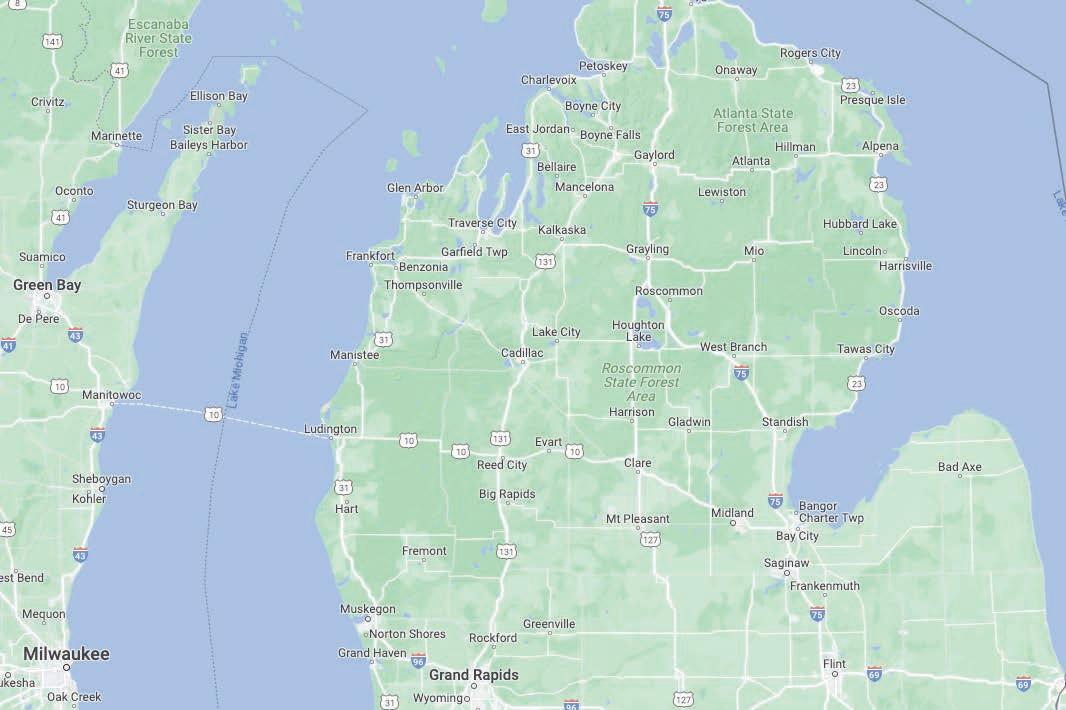
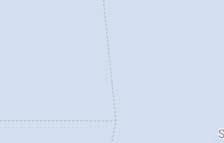


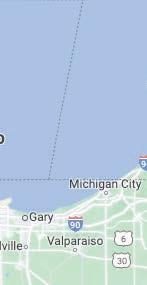
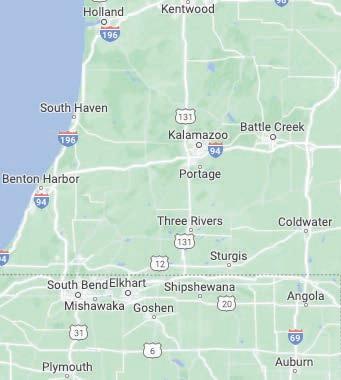
Branches
Branches Opened in 2023
Branches under Construction
Merger Branches*



*Merger completed 2024




















EXPANDING OUR NETWORK
At MSUFCU, our focus remains steadfast on serving our members and strengthening our community ties. While many transactions happen digitally, our branches play a vital role in embodying our values and ensuring our members receive the support they need for their financial decisions. We invest in branches where our members live and work, aligning our long-term growth strategy to meet the needs of our expanding membership while contributing to local job creation.
In 2023, we opened three new branches — two in new markets (Detroit, Kentwood) and one in East Lansing, respectively. We also broke ground on seven new locations — five in Illinois and two in Southeast Michigan — and continued to enhance our existing branches to provide superior service to all.
Ribbon cutting for 311 Abbot building in East Lansing, MI.
Exterior of Halsted Street Branch in Chicago, IL.
GRAND OPENINGS
Congress Street Branch: MSUFCU opened a branch in Detroit in April 2023 to provide existing members living downtown with accessible financial services while connecting with local residents and welcoming them as members. The branch is located at 243 W. Congress St., in the historic Marquette Building, and includes a beautiful community room for use by nonprofit organizations and other community partners.
Kentwood Branch: The Credit Union opened its second full-service branch in West Michigan in June 2023, located at 4580 28th St. SE in Kentwood. Combined with our Monroe Center Branch, the new Kentwood Branch helps serve MSUFCU members who live in the Grand Rapids area.
311 Abbot: In July 2023, MSUFCU opened 311 Abbot, a new seven-story landmark in downtown East Lansing that symbolizes the Credit Union’s long-standing commitment to the city that has been our home since 1937. This multifunctional space includes the new East Lansing Branch and serves as a hub for community engagement, offering leasable space, a community room for various events, and a demo area for The Lab at MSUFCU, our innovation center. This building establishes a welcoming environment that fosters connections between the local and campus communities where MSU faculty, staff, and students can conduct business and alumni can work remotely while visiting campus.
GROUNDBREAKINGS
Brighton and Novi: In November 2023, the Credit Union hosted a joint groundbreaking event for the planned opening of two branches in Brighton and Novi, MI, which will connect MSUFCU’s Lansing-area and Southeast Michigan members through the Interstate 96 corridor.
The Brighton Branch, the Credit Union’s first location in Livingston County, will be built at 8510 W. Grand River Ave. The Novi Branch will be located at 43420 Grand River Ave., one block from the landmark Twelve Oaks Mall. Construction is tentatively scheduled to be completed in the fall of 2024.
ILLINOIS EXPANSION
MSUFCU is expanding its footprint to Chicago, a major step in our growth strategy to serve our members. The Credit Union will open five branches in the Windy City in 2024, strategically located in the Gold Coast, Lakeview, Lincoln Park, Old Town, and Wicker Park neighborhoods. This expansion will strengthen services for existing Chicago-based members while reaching out to new members.
With Chicagoland home to one of the largest and most active MSU alumni populations — more than 20,000, including 5,000 MSUFCU members — this move aligns with our mission to be where our members are, fostering greater connection and support.

MISSION MOMENT
Created by artist Shinique Smith, the east side of 311 Abbot features a beautiful, abstract “MSU” calligraphy art installation that symbolizes our commitment to and celebration of our local community.
CREDIT UNION ENHANCEMENTS
At MSUFCU, our commitment to enhancing our members’ financial well-being inspires us to continually refine and enhance our products, services, and overall experience. In 2023, we introduced and expanded several new solutions and partnerships designed to help our members better engage with their finances and achieve their dreams.
FRAN — LEARNING AND GROWING
MSUFCU introduced Fran, our virtual assistant powered by artificial intelligence, in October 2019 to elevate our online member service experience. In 2023, Fran expanded her capabilities beyond helping members through our website — she now offers assistance over the phone, too. With Fran, members can simply express their needs and she will promptly connect them to the appropriate representatives. Furthermore, Fran now offers a “Courtesy Call Back” feature and proactively engages with members visiting the MSUFCU website, offering helpful information. Continuously evolving, Fran learns through member feedback, ensuring she is always improving the member experience.
TRANSPERFECT INTERPRETATION SERVICES
In 2023, the Credit Union partnered with TransPerfect to offer interpretation services over the phone in more than 170 languages including Spanish, Swahili, Arabic, Chinese, Korean, and Cantonese, for members who have a preferred language other than English, with the goal of increasing financial access for all members. In the first 10 days after launch, we handled 68 calls in 10 different languages for a total talk time of over 24 hours.
OPENING DOORS TO HOMEOWNERSHIP
Building on our effort to offer stable and affordable homeownership, MSUFCU launched several mortgage and home loan product and service enhancements in 2023 including:
• A partnership with Affiliated Moves that offers cash back rewards on a real estate agent’s commission when a member buys or sells their home, access to experienced agents, and VIP services to connect homeowners with local service providers.

• Vacant Land Loans that allow members to purchase land to build a new home or use recreationally.
• Partnering with the Federal Home Loan Bank of Indianapolis to provide homeownership grants through the Neighborhood Impact Program This initiative allows members to enhance or repair existing homes within our communities.
• Expanding loan term options for conventional mortgages, introducing new fixed- and adjustablerate terms tailored to better meet the diverse needs of our members.
MSU AND OU ATHLETICS EXPERIENCES
Utilizing sponsorships and partnerships with MSU and OU Athletics and athletes, MSUFCU has created exclusive experiences for our members to promote increased access and involvement with their favorite college sports teams. These include meeting and interacting with NIL athletes at Credit Union events, ticket giveaways for MSU basketball games, free gifts at our athletic events booths, and much more.
OUR COMMITMENT TO FINANCIAL EDUCATION
In addition to our extensive range of products and services, MSUFCU is deeply committed to equipping members with the knowledge and tools they need to achieve financial success. We provide free financial seminars, programs, events, and digital tools that are designed for all ages. Through these outreach efforts, we foster a solid understanding of financial concepts, empowering individuals and contributing to the overall well-being of our community.
FINANCIAL EDUCATION SEMINAR SERIES
Every year, our Financial Education team hosts virtual and in-person presentations through our Financial Education Seminar Series. These informative seminars focus on topics such as budgeting, retirement planning, credit report awareness, and more. Attendees learn from subject-matter experts, ask questions, and gain a thorough understanding to apply in their personal lives.
LANSING SAVE
Lansing SAVE, a collaborative effort between the City of Lansing, the Lansing School District, and MSUFCU, celebrated its 10th year in 2023. This program offers K-9 students in the Lansing School District access to in-person financial education courses and MSUFCU savings accounts, nurturing a culture of saving for higher education, be it college or trade school, from an early age.
4.0
The Credit Union collaborated with Ever Green by Reseda Group to revamp and reintroduce our Financial 4.0 website and mobile app. This platform serves as a valuable tool for educational outreach, financial literacy, and engagement with MSU, OU, and local high school students.
WALLET WATCH
Our Wallet Watch podcast is another extension of our educational outreach, with 3,971 downloads last year. Featuring insightful discussions with experts, the podcast empowers listeners to make informed decisions about their financial well-being and covers a diverse range of topics.
1,542
Financial Education Presentations
31,714
Financial Education Attendees

1,047
Lansing SAVE Lessons Taught
13
Wallet Watch Episodes Produced
Through active engagement with our members and in-depth research, we recognized the necessity for a more inclusive financial literacy initiative that eliminates obstacles for underrepresented and unbanked populations, establishes trust, and provides equitable access to financial education. Envisioned and created internally by the Credit Union, The Culture of Finances, a community outreach program, launched in October 2023.
The Culture of Finances offers several cohorts during the year to ensure everyone has the opportunity to improve their financial literacy.
Hear from The Culture of Finances graduates (pictured above) about the program!
Scan QR code or visit qrs.ly/trfntz8 to watch the video.
Scan the QR code or visit msufcu.org/walletwatch to tune in!
MISSION MOMENT
“This [class] was one of the best things that has happened for me.” — Angela, Fall 2023 Culture of Finances Graduate
ACCELERATING INNOVATION
The Lab at MSUFCU identifies, creates, and executes opportunities for innovation at the Credit Union. Our innovation center turns ideas into advanced financial technologies that benefit members, employees, and other credit unions.
Members who volunteer to test The Lab’s innovative products play pivotal roles in bringing innovation to life by participating in research and pilot programs. Their feedback on these pilots helps us determine which new technologies to offer our full membership.


Our CUSO hosted its inaugural Reseda Summit in early October in downtown Detroit. This event brought together a select group of credit union executives and industry experts for two days of learning, innovation, and collaboration. Attendees had the opportunity to network and witness live demonstrations from over 20 Reseda Group investment and fintech partners, gaining invaluable insights into the emerging financial technologies that are revolutionizing the credit union movement and enhancing the member experience. The event provided a unique platform for knowledge sharing, fostering meaningful connections, and further solidifying Reseda Group’s position as a leader in driving innovation and advancement within the credit union industry. 14 Pilots Completed 21 Pilots Initiated

Reseda Group, MSUFCU’s wholly owned CUSO, grew significantly in 2023, earning prestigious recognition as the recipient of the 2023 New CUSO of the Year Award from the National Association of Credit Union Service Organizations (NACUSO). The award recognized Reseda Group for its innovative approach to helping credit unions gain access to fintech partners through discovery and investment in cutting-edge fintech solutions.
Christen Wright, Reseda Group’s Head of Product, presenting at the inaugural Reseda Summit.



INVOLVED AND INVESTED
Our mission is centered on prioritizing the communities we serve, recognizing them as the heart of our mission and the bedrock of our foundation. With the support of our members and communities, the Credit Union is able to contribute to the overall well-being of the community through grants to local organizations dedicated to creating positive change. This symbiotic relationship forms a circle of investment and support that uplifts everyone involved Our unwavering commitment to serving and positively impacting the lives of our members, friends, and neighbors is ingrained in the very essence of our institution.
MSUFCU employees volunteering at Habitat for Humanity in Traverse City, MI.
Members enjoy Pay It Forward week benefits at the Detroit Institute of Arts.
COMMUNITY GIVING
The Credit Union supports many charitable organizations each year through monetary and in-kind grants to drive change and build a better and more vibrant community.
Our grants, sponsorships, and initiatives have helped organizations such as the Ronald McDonald House of Mid-Michigan, the Girl Scouts Heart of Michigan WKAR Public Media, the Detroit Institute of Arts and more. We are proud to be part of the positive change our community partners make.
• Detroit Free Press Marathon: Became the presenting sponsor for the 2023 marathon, furthering our commitment to the Detroit community and the economic benefit the race weekend brings to local businesses.
• MSUFCU Ovation Music and Arts Center: Pledged $1 million over a five-year period to sponsor the new live music and performance arts building in downtown Lansing opening in early 2025.
• Pay It Forward Week: Celebrated our annual, weeklong opportunity to give back to the community through acts of kindness by providing unique experiences at local establishments and events across Michigan.
• Kids’ Day: Welcomed more than 1,500 community members to our headquarters campus in East Lansing for an afternoon of fun and financial education, featuring games, interactive exhibits, and educational booths.
DESK DRAWER FUND
MSUFCU’s charitable foundation, the Desk Drawer Fund (DDF), continued its philanthropic endeavors in 2023 by supporting community organizations through member and employee donations. The vision of the Desk Drawer Fund is to strengthen lives in our local communities through grants, with a focus on our five pillars: Arts & Culture, Empowering Youth, Financial Education, Fostering Entrepreneurialism and Stable Housing
In the four-plus years since its founding, the DDF Board has approved $2.17 million in meaningful grants to more than 40 nonprofit organizations throughout Michigan. In 2023, thanks to generous support from MSUFCU employees, members, and other organizations, the Foundation awarded 20 grants to nonprofits totaling $605,212.
Members also participated in the quarterly Desk Drawer Fund Raffle throughout the year, purchasing more than 6,700 raffle tickets that raised $68,450 in support of the Foundation. Four lucky members won $66,370 in raffle prizes. Due to its success, the Foundation will expand the raffle dates in 2024, creating more opportunities for participation.
$792,605 Community Grants
272 Community Organizations Supported
$605,212 DDF Grants
20 DDF Organizations Supported
$2,700,000 University Grants
To learn more about DDF’s charitable grants and community support in 2023, scan the QR code or visit deskdrawerfund.org/annualreports


UNIVERSITY GIVING


Our Credit Union has maintained a deep connection with MSU and OU over many decades. Our gratitude for their enduring partnerships has moved us to support their students, faculty, staff, and alumni with a variety of signature sponsorships and financial education.
• MSU and OU Student Membership Donations: Donated $5 for every MSUFCU or OU Credit Union student account opened between June and October 2023 to a local organization on the student’s behalf. This initiative raised $8,905 for the MSU Student Food Bank and $1,170 for the Oakland County Animal Shelter.
• OU Credit Union O’Rena: Entered into a 10-year, $5 million naming rights partnership with OU Athletics, which will benefit their sports programs and allow the Credit Union to expand our member experiences.
• Meadow Brook Amphitheatre: Secured a multiyear agreement with OU to serve as the exclusive partner of the venue, facilitating increased access to live music and entertainment for the local community.
MISSION MOMENT
“As an MSU alum, I love working with MSUFCU. I love knowing my money is going back into the community and university.” — MSUFCU Member
An MSUFCU employee helps an incoming MSU freshman move into their dorm room.
OUR CULTURE
An organization is only as strong as its employees. At MSUFCU, we value the diverse experiences and unique perspectives among our team, enriching our workplace and elevating the services we provide to our members.
Our team members live our mission every day and are dedicated to fostering growth among each other and our community that goes beyond banking. Through initiatives such as community giving, volunteerism, and programs promoting diversity, equity, inclusion, and belonging (DEIB), they contribute to creating a vibrant, collaborative organization that positively impacts our community.
COMMUNITY GIVING AND VOLUNTEERISM
Each year, Credit Union employees select local organizations to support through our internal charitable giving program, CU Involved. Employees fundraise and volunteer their time and talents to help these organizations provide invaluable services. Our 2023 charity partners were the New Day Foundation the Allen Neighborhood Center, The Davies Project, the Women’s Resource Center the American Cancer Society, and United Way of South Central Michigan
MSU FALL WELCOME PARTICIPATION
One of our most notable volunteer efforts in 2023 came during MSU Fall Welcome. Over 230 MSUFCU employees volunteered across MSU’s campus to assist the university in welcoming more than 10,000 incoming students and their families.
Our team assisted with parking, recycling, and carrying student belongings to their new rooms, giving families an opportunity to capture the memory of move-in day at our photo booths and offering chances to win prizes at our trivia wheel tables all around campus and at our three campus branches.
CREATING A CULTURE FOR ALL
To promote a positive environment where all employees and members have equal opportunities for success and advancement, our employees have built a corporate culture that empowers everyone to bring their full authentic selves as meaningful contributors.
Our employee-run Affinity Groups offer outlets for networking and personal and professional development based on employees’ interests and identities to help strengthen our entire organization.
$264,636
Employee Donations

AWARD-WINNING WORKPLACE
MSUFCU has a national reputation for excellence and received many top industry and workplace awards in 2023, some for several consecutive years. These honors serve as a celebration of efforts to make our Credit Union the best possible place for our employees to work and our members to do business.
Great Place to Work® — Great Place to Work CertifiedTM
American Banker’s Best Credit Unions to Work For® — Ranked No. 12
Detroit Free Press Top Workplace — Ranked No. 4 in Large Employer Category
• 2023 Top Workplaces USA
• 2023 Top Workplace in the Financial Services Industry — Ranked No. 40 out of 121
• Recipient of 10 Culture Excellence Awards
Best and Brightest Company Awards
• National Best and Brightest Companies to Work For®
• Michigan’s Best and Brightest in Wellness
• West Michigan Best and Brightest Companies to Work For®
Training Magazine APEX Award — Ranked No. 13 out of 100
Best Companies Group and COLOR Magazine — Inclusive Workplace
Mental Health America’s Bell Seal for Workplace Mental Health — Gold
Michigan Breastfeeding — Friendly Workplace
Michigan Healthy Worksite Award — Honorable Mention
Finalist in three Outstanding Security Performance Awards (OSPA):
536
Employee Affinity Group Members
• Outstanding Security Team
• Outstanding Security Team Training
• Outstanding In-House Security Manager/Director
2023 FINANCIAL REPORT
INDEPENDENT AUDITOR’S REPORT
To the Board of Directors — Michigan State University Federal Credit Union
Opinion
We have audited the consolidated financial statements of Michigan State University Federal Credit Union and its subsidiaries (the “Credit Union”), which comprise the consolidated statement of financial condition as of December 31, 2023, and the related consolidated statements of income, comprehensive income, members’ equity, and cash flows for the year then ended, and the related notes to the consolidated financial statements.
In our opinion, the accompanying consolidated financial statements present fairly, in all material respects, the financial position of the Credit Union as of December 31, 2023, and the results of its operations and its cash flows for the year then ended in accordance with accounting principles generally accepted in the United States of America.
Basis for Opinion
We conducted our audit in accordance with auditing standards generally accepted in the United States of America (GAAS). Our responsibilities under those standards are further described in the Auditor’s Responsibilities for the Audit of the Consolidated Financial Statements section of our report. We are required to be independent of the Credit Union and to meet our ethical responsibilities in accordance with the relevant ethical requirements relating to our audit. We believe that the audit evidence we have obtained is sufficient and appropriate to provide a basis for our audit opinion.
Emphasis of Matter
As described in Note 3 to the consolidated financial statements, the Credit Union has changed its method of accounting for credit losses effective January 1, 2023, due to the adoption of Accounting Standards Codification 326: Financial Instruments - Credit Losses (ASC 326). The Credit Union adopted the new credit loss standard using the modified retrospective method such that prior period amounts are not adjusted and continue to be reported in accordance with previously applicable generally accepted accounting principles. Our opinion is not modified with respect to this matter.
Report on Prior Year Consolidated Financial Statements
The consolidated financial statements of Michigan State University Federal Credit Union and its subsidiaries as of December 31, 2022, were audited by other auditors, who expressed an unmodified opinion on those statements on March 21, 2023.
Responsibilities of
Management for the Consolidated Financial Statements
Management is responsible for the preparation and fair presentation of the consolidated financial statements in accordance with accounting principles generally accepted in the United States of America and for the design, implementation, and maintenance of internal control relevant to the preparation and fair presentation of consolidated financial statements that are free from material misstatement, whether due to fraud or error.
In preparing the consolidated financial statements, management is required to evaluate whether there are conditions or events, considered in the aggregate, that raise substantial doubt about the Credit Union’s ability to continue as a going concern within one year after the date that the consolidated financial statements are issued or available to be issued.
Auditor’s Responsibilities for the Audit of the Consolidated Financial Statements
Our objectives are to obtain reasonable assurance about whether the consolidated financial statements as a whole are free from material misstatement, whether due to fraud or error, and to issue an auditor’s report that includes our opinion. Reasonable assurance is a high level of assurance but is not absolute assurance and, therefore, is not a guarantee that an audit conducted in accordance with GAAS will always detect a material misstatement when it exists. The risk of not detecting a material misstatement resulting from fraud is higher than for one resulting from error, as fraud may involve collusion, forgery, intentional omissions, misrepresentations, or the override of internal control. Misstatements are considered material if there is a substantial likelihood that, individually or in the aggregate, they would influence the judgment made by a reasonable user based on the consolidated financial statements.
In performing an audit in accordance with GAAS, we:
• Exercise professional judgment and maintain professional skepticism throughout the audit.
• Identify and assess the risks of material misstatement of the consolidated financial statements, whether due to fraud or error, and design and perform audit procedures responsive to those risks. Such procedures include examining, on a test basis, evidence regarding the amounts and disclosures in the consolidated financial statements.
• Obtain an understanding of internal control relevant to the audit in order to design audit procedures that are appropriate in the circumstances but not for the purpose of expressing an opinion on the effectiveness of the Credit Union’s internal control. Accordingly, no such opinion is expressed.
• Evaluate the appropriateness of accounting policies used and the reasonableness of significant accounting estimates made by management, as well as evaluate the overall presentation of the consolidated financial statements.
• Conclude whether, in our judgment, there are conditions or events, considered in the aggregate, that raise substantial doubt about the Credit Union’s ability to continue as a going concern for a reasonable period of time.
We are required to communicate with those charged with governance regarding, among other matters, the planned scope and timing of the audit, significant audit findings, and certain internal control-related matters that we identified during the audit.
/s/ Plante & Moran, PLLC
Plante & Moran, PLLC February 21, 2024
CONSOLIDATED STATEMENT OF FINANCIAL CONDITION
See
CONSOLIDATED STATEMENT OF INCOME
Cash and cash equivalents
Time deposits with other financial institutions
Investment securities - Available for sale (Note 4)
Investment securities - Marketable securities (Note 4)
Other investments
Loans to members - Net (Note 5)
Premises and equipment - Net (Note 6)
9,596,732 1,207,302 239,452,536 31,112,260 16,785 9,599,278 40,728,323 198,724,213 21,933,794 176,790,419 21,954,908 41,106,780 2,426,191
Members’ share and savings accounts (Note 7)
Nonmembers’ deposits (Note 7)
Borrowings (Note 8)
Postretirement benefit obligations (Note 10) Accrued expenses and other liabilities Total liabilities
CONSOLIDATED STATEMENT OF COMPREHENSIVE INCOME
See notes to consolidated financial statements.
Postretirement benefit plan:
Net gain arising during the year
(loss)
CONSOLIDATED STATEMENT OF MEMBERS’ EQUITY
See notes to consolidated financial statements.
Cumulative effect of change in
1,998,144
(1,672,236)$ $ 639,019,052 73,379,138 (50,220,393) (580,655) 661,597,142 (7,518,218) 4,809,484 13,739,281 (3,105,473)(1,672,236) 667,849,980
(325,908)
CONSOLIDATED STATEMENT OF CASH FLOWS
See notes to consolidated financial statements.
Cash Flows from Operating Activities
Consolidated net income
Adjustments to reconcile consolidated net income to
net cash and cash equivalents from operating activities:
Depreciation and amortization
Provision for credit losses
Net amortization of securities
Net realized (gains) losses on marketable securities
Net unrealized (gains) losses on marketable securities
Net loss on sale of available-for-sale securities
Loss (gain) on disposal of premises and equipment
Earnings on employee benefits funding assets
Actuarial gain on postretirement benefit liability
Net change in: Other assets
Accrued expenses and other liabilities
Net cash and cash equivalents provided by operating activities
Cash Flows from Investing Activities
Net change in loans
Activity in available-for-sale securities:
Proceeds from sales
Maturities, prepayments, and calls
Purchases
Activity in other investments - Purchases
Purchases of split-interest life insurance
Proceeds from the sale of premises and equipment
Proceeds from surrender of business owned life insurance
Additions to premises and equipment
Proceeds from time deposits with other institutions
Purchases of time deposits with other institutions
Increase in NCUSIF deposit
Purchases of marketable securities
Proceeds from sale of marketable securities
Purchases of employee benefit funding assets
Loss (gain) on exit from CUSO
Proceeds from CUSOs
Investment in CUSOs
cash and cash equivalents used in investing activities
Years Ended
December 31, 2023December 31, 2022
CONSOLIDATED STATEMENT OF CASH FLOWS (CONTINUED)
See notes to consolidated financial statements.
Proceeds
6,470,000 1,055,000,000 (745,000,000)519,200,337 (136,097,393) 375,444,539 239,347,146 40,147,550 192,689
NOTES TO CONSOLIDATED FINANCIAL STATEMENTS
December 31, 2023 and 2022
Note 1 - Nature of Business
The consolidated financial statements include the accounts of Michigan State University Federal Credit Union (the “Credit Union”); Reseda Group LLC, a wholly owned holding company for investments in credit union service organizations (CUSOs); and Desk Drawer Fund (DDF), a charitable foundation in which the Credit Union is the sole member. Intercompany accounts and transactions were eliminated in consolidation.
Michigan State University Federal Credit Union is a federally chartered credit union regulated by the National Credit Union Administration (NCUA) and insured by the National Credit Union Share Insurance Fund (NCUSIF). The Credit Union operates branches in the metropolitan Lansing, Detroit, Grand Rapids, and Traverse City areas; and Oakland County.
The Credit Union grants consumer loans (including credit card loans), various types of mortgage loans, and business loans to its members. The Credit Union’s primary field of membership includes students, alumni, and employees of Michigan State University and Oakland University. Oakland University is served under the registered trade name Oakland University Credit Union. The majority of member loans are secured by collateral, including, but not limited to, members’ shares, vehicles, real estate, and other consumer assets. Deposit services include interest-bearing and non-interest-bearing checking accounts, savings accounts, money market accounts, certificates, and IRAs. Other services include mobile applications and computer and phone transactions, as well as automated teller machines.
The Desk Drawer Fund (DDF) is a charitable foundation formed in 2019 under Section 501(c)(3) of the Internal Revenue Code to support the Credit Union’s communities. The DDF provides members and employees with a source to perform charitable giving that makes a visible difference in the community that focuses on five philanthropic pillars: arts and culture, stable housing, empowering youth, financial education, and fostering entrepreneurialism.
Verte Investments LLC is a single-member limited liability company formed in 2023 to support a minority investment in the redevelopment of the Fisher Building in Detroit, Michigan, and recognition of associated historic tax credits. The DDF is the single member of Verte Investments LLC.
Reseda Group LLC is a single-member limited liability company formed in 2021 to support the Credit Union’s investments in CUSOs. Reseda Group LLC makes investments in, or creates, CUSOs that will complement the products and services available to members across the credit union industry and enhance operational efficiencies through investments in
our supply chain and strategic partnerships with fintech companies.
Ever Green 3C LLC is a single-member limited liability company formed in 2021 to provide consulting services related to financial education; community development and corporate philanthropy; and diversity, equity, and inclusion.
Reseda Group LLC is the single member of Ever Green 3C LLC. In 2023, Ever Green 3C LLC was dissolved as a separate entity and the products and services are now offered through Reseda Group LLC.
Foresight Group LLC is a single-member limited liability company formed in 2021 to provide commercial printing, direct mail services, and promotion items to credit unions and various other industries. Reseda Group LLC is the single member of Foresight Group LLC.
Spave LLC is a limited liability company formed in 2021 to provide a financial application that allows users to use everyday spending to fuel savings growth and charitable giving. Reseda Group LLC is the majority owner of Spave LLC. The ownership interests of other parties in Spave LLC are presented as noncontrolling interest in the consolidated financial statements. In 2023, Spave LLC was dissolved, and the minority interest was divested. Reseda Group LLC retained the intellectual property to continue the financial application as a product line rather than a separate entity.
M3 Group LLC is a limited liability company formed in 2022 to provide public relations, branding, and advertising agency services. Reseda Group LLC is the single member of M3 Group LLC.
Note 2 - Significant Accounting Policies
Use of Estimates
The preparation of consolidated financial statements in conformity with generally accepted accounting principles requires management to make estimates and assumptions that affect the reported amounts of assets and liabilities and disclosure of contingent assets and liabilities at the date of the consolidated financial statements and the reported amounts of revenue and expenses during the reporting period.
Estimates that are particularly susceptible to significant change in the near term relate to the determination of the allowance for credit losses, the fair value of investments, and the expense and related liabilities for postretirement benefits. Actual results could differ from those estimates.
NOTES TO CONSOLIDATED FINANCIAL STATEMENTS
December 31, 2023 and 2022
Cash and Cash Equivalents
For the purpose of the consolidated statement of cash flows, cash and cash equivalents include cash on hand, funds on deposit with other financial institutions, federal funds sold, and interest-bearing deposits with other financial institutions with original maturities of 90 days or less. Net cash flows are reported for member loan and share accounts.
Time Deposits with Other Financial Institutions
Time deposits with other financial institutions consist of certificates of deposit with contractual maturities of five years or less.
Investment Securities
Securities are classified as available for sale when they might be sold before maturity. Securities classified as available for sale are carried at fair value, with unrealized holding gains and losses reported in other comprehensive income and as a separate component of members’ equity. Interest income includes amortization or accretion of purchase premium or discount. Premiums and discounts on securities are amortized or accreted on the level-yield method without anticipating prepayments, except for mortgage-backed securities where prepayments are anticipated. Certain premiums on callable debt securities are amortized over the period through the call date or maturity date, whichever is earliest. Gains and losses on sales are recorded on the trade date and determined using the specific identification method.
The Credit Union evaluates available for sale securities for impairment each reporting period. When evaluating available for sale securities for impairment, the Credit Union first considers if the fair value of the security is less than its amortized cost. If the fair value is less than the amortized cost, the Credit Union next evaluates whether it intends to sell, or if it is more likely than not it will be required to sell the security before it recovers it amortized cost basis. If either criteria is met, an impairment loss is recognized through earnings. If neither criteria is met, the Credit Union then assesses whether the decline in fair value is due to credit losses or other factors. If the Credit Union determines a credit loss exists, the Credit Union compares the present value of the cash flows expected to be collected to the amortized cost basis. An allowance for credit loss is recognized for the amount the amortized costs basis of the security exceeds the present value of the expected future cash flows, limited by the amount of the unrealized loss on the security at that date.
Investments in marketable securities are reported at fair value, with unrealized gains and losses included in earnings.
Other Investments
The Credit Union, as a member of the Federal Home Loan Bank (FHLB) of Indianapolis, is required to maintain an investment in the capital stock of the FHLB. The Credit Union held $29,830,400 and $27,848,900 of FHLB capital stock at December 31, 2023 and 2022, respectively. The stock is redeemable at par by the FHLB and, therefore, is carried at cost and periodically evaluated for impairment. The Credit Union records cash and stock dividends in interest income - investment securities on the consolidated statement of income.
Other investments also include the Credit Union’s investment in Alloya Corporate Credit Union’s (Alloya), Corporate Central Credit Union’s (Corporate Central), and Corporate One Federal Credit Union’s (Corporate One) permanent capital base, which is required to be maintained for full participation as a member of the corporate credit unions. The Alloya deposit was $1,069,300 as of December 31, 2023 and 2022. The deposit is not insured by the NCUSIF. Interest on the deposit is paid quarterly based on available earnings at interest rates approved by Alloya’s board of directors. In the event a member credit union withdraws from Alloya, the deposit would be repaid in one installment three years after notice of withdrawal is given. The Corporate Central deposit was $2,000,000 as of December 31, 2023 and 2022. The deposit is not insured by the NCUSIF. Interest on the deposit is paid quarterly based on available earnings at interest rates approved by Corporate Central’s board of directors. The deposit is not callable except during optional call periods specified by Corporate Central’s board of directors and is subject to prior written approval by the NCUA. The Corporate One deposit was $900,000 as of December 31, 2023 and 2022. The deposit is not insured by the NCUSIF. Interest on the deposit is paid quarterly based on available earnings at interest rates approved by Corporate One’s board of directors.
In 2020, the Credit Union became a member of the NCUA Central Liquidity Facility, which required a stock purchase determined by asset size. The Credit Union held $16,665,597 and $14,713,090 of stock at December 31, 2023 and 2022, respectively. The Credit Union has the ability to borrow money from the NCUA via the Central Liquidity Facility, which is an instrument of monetary policy that allows eligible institutions to borrow money from the NCUA to meet temporary shortages of liquidity. The interest rate for advances will be the borrowing rate in effect on the date of the borrowings. The Credit Union has no borrowings outstanding as of December 31, 2023 or 2022.
NOTES TO CONSOLIDATED FINANCIAL STATEMENTS
December 31, 2023 and 2022
Note 2 - Significant Accounting Policies (continued)
Loans
The Credit Union grants mortgage, commercial, and consumer loans to members. A substantial portion of the loan portfolio is represented by loans throughout the State of Michigan. The ability of the Credit Union’s debtors to honor their contracts is dependent upon the real estate and general economic conditions in this area.
Loans that management has the intent and ability to hold for the foreseeable future or until maturity or payoff are reported at their outstanding unpaid principal balances adjusted for charge-offs, the allowance for credit losses, and any deferred fees or costs on originated loans. Interest income is accrued on the unpaid principal balance. Loan origination fees, net of certain direct origination costs, are deferred and recognized as an adjustment of the related loan’s yield using the interest method.
The accrual of interest on loans is discontinued at the time the loan is 90 days delinquent unless the credit is well secured and in process of collection. In all cases, loans are placed on nonaccrual or charged off at an earlier date if collection of principal or interest is considered doubtful.
All interest accrued but not collected for loans that are placed on nonaccrual or charged off is reversed against interest income. Any interest payments received on nonaccrual loans are accounted for as a reduction to the unpaid principal balance of the nonaccrual loan for financial reporting purposes. If a loan is returned to accrual, the interest payments previously received continue to be reported as a reduction of the unpaid principal balance until the loan is paid off, at which time the interest payments are recognized in interest income.
Allowance for Credit Losses
An allowance for credit losses is established for amounts expected to be uncollectible over the contractual life of the loans. The Credit Union collectively evaluates notes receivable to determine the allowance for credit losses based on portfolio performance, collateral values, and remaining lives. The Credit Union elected not to include accrued interest receivable in the calculation of expected credit losses.
Loans that do not share similar risk characteristics with other loans are evaluated individually. When repayment of collateral is expected to be dependent on the operation or sale of the collateral, expected credit losses are based on the fair value of the collateral as of the reporting date.
using an expected loss model that considers the Credit Union’s actual historical loss rates adjusted for current economic conditions and reasonable and supportable forecasts. The Credit Union considers trends in unemployment rates, housing values, and member behavior when making adjustments for reasonable and supportable forecasts. Uncollectible amounts are written off against the allowance for doubtful accounts in the period they are determined to be uncollectible. Recoveries of amounts previously written off are recognized when received. Notes are considered delinquent if the repayment terms are not met.
For 2022, the Credit Union’s allowance for loan losses was evaluated on a regular basis by management and was based upon management’s periodic review of the collectibility of the loans in light of historical experience, the nature and volume of the loan portfolio, adverse situations that may affect the borrower’s ability to repay, estimated value of any underlying collateral, and prevailing economic conditions. This evaluation was inherently subjective, as it required estimates that were susceptible to significant revision as more information became available. The allowance consisted of both specific and general reserve components. The specific component related to loans that were classified as impaired. A specific allowance was established for impaired loans when the discounted cash flows (or collateral value or observable market price) of the impaired loan was lower than the carrying value of that loan. The general component covered nonimpaired loans and was based on historical loss experience adjusted for qualitative factors.
Foreclosed Assets
Assets acquired through, or in lieu of, loan foreclosure are held for sale and initially recorded at the fair value of the real estate, less estimated costs to sell, through a charge to the allowance for loan losses, if necessary. Subsequent to foreclosure, valuations are periodically performed by management, and writedowns required by changes in estimated fair value are charged against earnings through a valuation allowance and reported in other noninterest expenses. The carrying value of foreclosed assets, included in other assets on the consolidated statement of financial condition, was $329,803 and $700,181 as of December 31, 2023 and 2022, respectively.
Premises and Equipment
Land and land improvements are carried at cost. Buildings and equipment are carried at cost, less accumulated depreciation, computed on the straight-line method over the estimated useful lives of the assets. The cost of leasehold improvements is amortized using the straight-line method over the shorter of the lease term or the life of the leasehold improvements.
NOTES TO CONSOLIDATED FINANCIAL STATEMENTS
December 31, 2023 and 2022
Goodwill
The recorded amounts of goodwill from prior business combinations are based on management’s best estimates of the fair values of assets acquired and liabilities assumed at the date of acquisition. Goodwill is not amortized but rather is assessed at least on an annual basis for impairment.
No impairment charge was recognized during the years ended December 31, 2023 and 2022.
Employee Benefit Funding Assets
The Credit Union has purchased life insurance policies on certain key officers. Business-owned life insurance is recorded at its cash surrender value or the amount that can be realized upon immediate liquidation. Additionally, the Credit Union carries certificates at cost plus accrued interest.
NCUSIF Deposit
The deposit in the National Credit Union Share Insurance Fund is in accordance with NCUA regulations, which require the maintenance of a deposit by each insured credit union in an amount equal to 1 percent of its insured shares. The deposit would be refunded to the Credit Union if its insurance coverage is terminated, it converts to insurance coverage from another source, or the operations of the fund are transferred from the NCUA board.
NCUSIF Insurance Premium
A credit union is required to pay an annual insurance premium equal to one-twelfth of 1 percent of its total insured shares, unless the payment is waived or reduced by the NCUA board. The NCUA board waived the 2023 and 2022 insurance premiums.
Other Assets
The Credit Union has entered into an agreement and granted loans to fund life insurance premium payments for certain key employees. The loans are nonrecourse and are collateralized by the assignment of the respective life insurance policies. The policies are owned by the executive, and the key employee has sole control over the listed beneficiaries. The total value of the loans included in other assets was $18,159,363 and $1,649,906 at December 31, 2023 and 2022, respectively. The key employees may use other funds to pay back the loan; however, the split death benefit of the life insurance policy is intended to be the primary source of repayment. At December 31, 2023 and 2022, the cash surrender value of the life insurance contracts securing the loan totaled $18,159,363 and $1,649,906, respectively.
Members’ and Nonmembers’ Share and Savings Accounts
Members’ shares are subordinated to all other liabilities of the Credit Union upon liquidation. Interest on members’ share accounts is based on the available earnings at the end of an interest period and is not guaranteed by the Credit Union. Interest rates on members’ share accounts are set by management and approved by the board of directors based on an evaluation of current and future market conditions.
Nonmembers’ shares include negotiated brokered certificates of deposits. The brokered certificates of deposits issued through the Primary Financial SimpliCD program are issued in a variety of amounts, although always less than or equal to $250,000.
Members’ Equity
The Credit Union is required by regulation to maintain a statutory reserve. This reserve, which represents a regulatory restriction of retained earnings, is not available for the payment of interest. The Credit Union elected to transfer the statutory reserve to undivided earnings during 2023.
Income Taxes
The Credit Union is exempt, by statute, from federal and state income taxes.
The Desk Drawer Fund is a not-for-profit corporation and is exempt from tax under the provisions of Internal Revenue Code Section 501(c)(3). Accounting principles generally accepted in the United States of America require management to evaluate tax positions taken by DDF and recognize a tax liability if DDF has taken an uncertain position that more likely than not would not be sustained upon examination by the Internal Revenue Service (IRS) or other applicable taxing authorities. Management has analyzed the tax positions taken by DDF and has concluded that, as of December 31, 2023 and 2022, there are no uncertain positions taken or expected to be taken that would require recognition of a liability or disclosure in the financial statements. DDF is subject to routine audits by taxing jurisdictions; however, there are currently no audits for any tax periods in progress.
Reseda Group LLC is a wholly owned limited liability company and is considered a disregarded entity for tax purposes.
NOTES TO CONSOLIDATED FINANCIAL STATEMENTS
December 31, 2023 and 2022
Note 2 - Significant Accounting Policies (continued)
Other
Comprehensive Income (Loss)
Accounting principles generally require that recognized revenue, expenses, gains, and losses be included in net income. Certain changes in assets and liabilities, however, such as unrealized gains and losses on available-for-sale securities and amounts recognized related to postretirement benefit plans (gains and losses, prior service costs, and transition assets or obligations), are reported as a direct adjustment to the equity section of the consolidated statement of financial condition. Such items, along with net income, are considered components of comprehensive income. For the year ended December 31, 2023, accumulated other comprehensive losses were attributable to $43,280,078 of unrealized losses on available-for-sale securities and $10,468,398 of unrealized gain on the postretirement benefit plan.
Loan and Other Commitments and
Related Financial Instruments
Financial instruments include off-balance sheet credit instruments such as commitments to make loans and business letters of credit, issued to meet member financing needs. The face amount for these items represents the exposure to loss before considering member collateral or ability to repay. Such financial instruments are recorded when they are funded. The Credit Union maintains and allowance for credit losses on unfunded loan commitments. The allowance is determined using a methodology similar to that used to determine the allowance for credit losses on loans, modified to include an estimation of the probability of funding.
Reseda Group LLC has an outstanding commitment of $2,850,000 to fund future capital calls in relation to a certain CUSO investment. Additional capital calls have not been made by the fund as of December 31, 2023.
Loss Contingencies
Loss contingencies, including claims and legal actions arising in the ordinary course of business, are recorded as liabilities when the likelihood of loss is probable and an amount or range of loss can be reasonably estimated. Management does not believe there are such matters that will have a material effect on the consolidated financial statements at December 31, 2023 and 2022.
Reclassification
Certain 2022 amounts have been reclassified to conform to the 2023 presentation.
Subsequent Events
The consolidated financial statements and related disclosures include evaluation of events up through and including February 21, 2024, which is the date the consolidated financial statements were available to be issued.
The Credit Union merged in Gabriels Community Credit Union effective January 1, 2024. The primary reason for the merger was the proximity of the branches acquired to current credit union members, as well as the potential growth opportunities. The acquisition will add approximately $29.56 million in assets acquired and liabilities assumed. The Credit Union will gain a branch location in Jackson, Michigan, and the existing Gabriels Community Credit Union field of membership.
Note 3 - Adoption of New Accounting Pronouncement
As of January 1, 2023, the Credit Union adopted Accounting Standards Update (ASU) No. 2016-13, Financial Instruments - Credit Losses (Topic 326): Measurement of Credit Losses on Financial Instruments. The ASU includes increased disclosures and various changes to the accounting and measurement of financial assets, including the Credit Union’s loans and available-for-sale debt securities. Under the standard, each financial asset presented on the statement of financial condition has a unique allowance for credit losses valuation account that is deducted from the amortized cost basis to present the net carrying value at the amount expected to be collected on the financial asset. The amendments in this ASU also eliminated the probable initial recognition threshold and, instead, reflect an entity’s current estimate of all expected credit losses using reasonable and supportable forecasts. The ASU was applied using a modified retrospective transition method to the beginning of the first reporting period in which the guidance is effective. The standard resulted in a cumulative effect of change in accounting principle adjustment of $7,518,218 to undivided earnings, a $4,866,046 increase to the allowance for credit losses, and a $2,652,172 increase to other liabilities to establish a reserve for unfunded loan commitments on January 1, 2023.
NOTES TO CONSOLIDATED FINANCIAL STATEMENTS
December 31, 2023 and 2022
The fair value of marketable securities at December 31 is as follows:
20232022
,547,604
For the year ended December 31, 2023, there was a total of $902,423 of net gains on marketable securities, recognized in the consolidated statement of income, which includes $897,054 of net unrealized gains and $5,369 in realized gains. For the year ended December 31, 2022, there was a total of $10,753,586 in net gains on marketable securities recognized in the consolidated statement of income, which includes $1,026,710 in net unrealized losses and $11,780,296 in realized gains. The realized gain of $11,780,296 as of December 31, 2022 was a result of the sale of 44,811 VISA Class B common stock shares with $0 cost basis.
The amortized cost and fair value of securities available for sale and gross unrealized gains and losses recognized in accumulated and other comprehensive loss at December 31 are as follows:
512,543,474 339,186,916 153,876,531 42,265,886 17,059,604 3,474,680 555,863,617
Note 4 - Investment Securities
NOTES TO CONSOLIDATED FINANCIAL STATEMENTS
December 31, 2023 and 2022
Note 4 - Investment Securities (continued)
At December 31, 2023 and 2022, securities with a carrying value of approximately $170,605,000 and $41,347,000, respectively, were pledged as collateral to secure borrowed funds, and a security with a carrying value of approximately $5,000,000 was pledged to the discount window.
The amortized cost and fair value of investment securities by contractual maturity at December 31, 2023 are as follows:
NOTES TO CONSOLIDATED FINANCIAL STATEMENTS
December 31, 2023 and 2022
Note 4 - Investment Securities (continued)
Information pertaining to investment securities with gross unrealized losses at December 31, 2023 and 2022, aggregated by investment category and length of time that individual securities have been in a continuous loss position, is as follows:
Due in one year or less
Due in one through five years
Due in five years through ten years
Total
Mortgage-backed securities — Residential SBA loan pools
Total $ $
Proceeds from sales of investment securities were $1,741,478, gross realized gains were $115,161, and gross realized losses were $109,792 for the year ended December 31, 2023. Proceeds from sales of investment securities were $2,931,521, gross realized gains were $113,156, and gross realized losses were $239,228 for the year ended December 31, 2022.
2023
Available for Sale:
U.S. government and federal agency obligations Mortgage-backed securities — Residential SBA loan pools Other debt securities
Subordinated debt
Total 2022
Available for Sale:
U.S. government and federal agency obligations
Mortgage-backed securities — Residential SBA loan pools
Other debt securities
Subordinated debt
3,474,680
$ $ $ (15,604,144) (24,246,490) (1,172,087) (1,200,526) (704,202) (42,927,449) (26,526,618) (25,953,004) (140,533) (1,440,818)(54,060,973) $ $ $ $ 321,944,277 134,321,742 22,039,492 15,327,288 3,295,798 496,928,597 319,638,336 131,869,842 11,199,593 11,208,876473,916,647
Unrealized losses on investment securities have not been recognized into income because the issuers’ bonds are of high credit quality, the Credit Union has the intent and ability to hold the securities for the foreseeable future, and the declines in fair value are primarily due to increased market interest rates and market volatility. The fair values are expected to recover as the bonds approach their maturity dates. There are 321 and 341 investment securities in an unrealized loss position at December 31, 2023 and 2022, respectively.
NOTES TO CONSOLIDATED FINANCIAL STATEMENTS
December 31, 2023 and 2022
Note 5 - Loans and Allowance for Credit Losses
A summary of the balances of loans follows:
In the ordinary course of business, the Credit Union has granted loans to principal officers and directors and their affiliates amounting to $3,136,000 and $3,164,000 as of the years ended December 31, 2023 and 2022, respectively.
The Credit Union’s activity in the allowance for credit losses for the years ended December 31, 2023 and 2022, by loan segment, is summarized below:
NOTES TO CONSOLIDATED FINANCIAL STATEMENTS
December 31, 2023 and 2022
Note 5 - Loans and Allowance for Credit Losses (continued)
NOTES TO CONSOLIDATED FINANCIAL STATEMENTS
December 31, 2023 and 2022
Note 5 - Loans and Allowance for Credit Losses (continued)
Credit Quality Disclosures
The Credit Union categorizes each loan into credit risk categories based on the contractual aging status of the loan and payment activity. Such assessments are completed at the end of each reporting period.
The following tables present the amortized cost basis of loans, which for 2023 includes net deferred loan costs, evaluated by contractual aging at December 31, 2023 and 2022. Performing loans are less than two months past due and nonperforming loans are greater than 60 days or more past due at December 31, 2023 and 2022.
NOTES TO CONSOLIDATED FINANCIAL STATEMENTS
December 31, 2023 and 2022
Note 5 - Loans and Allowance for Credit Losses (continued)
Substandard
Loans classified as substandard are inadequately protected by the current net worth and paying capacity of the obligor or of the collateral pledged, if any. Loans so classified have a well-defined weakness or weaknesses that jeopardize the liquidation of the debt. They are characterized by the distinct possibility that the institution may sustain some loss if the deficiencies are not corrected.
Doubtful
Loans classified as doubtful have all the weaknesses inherent in those classified as substandard, with the added characteristics that the weaknesses make collection or liquidation in full, on the basis of currently existing facts, conditions, and values, highly questionable and improbable.
Business credit cards and commercial vehicle loans are not risk rated.
The following tables present the amortized cost basis of business loans by credit quality indicator as of December 31, 2023 and 2022:
The Credit Union has certain nonperforming loans considered to be collateral dependent. The amortized cost of these loans are approximately $5,700,000 at December 31, 2023, and are secured by commercial or residential real estate.
For business loans, the Credit Union also categorizes each loan into credit risk categories based on current financial information, overall debt service coverage, comparison against industry averages, collateral coverage, historical payment experience, and current economic trends. The Credit Union uses the following definitions for credit risk ratings for business loans: Acceptable
Credits not covered by the below definitions are pass credits, which are not considered to be adversely rated.
Loans classified as special mention, or watch credits, have a potential weakness or weaknesses that deserve management’s close attention. If left uncorrected, these potential weaknesses may result in deterioration of the repayment prospects for the loan or of the institution’s credit position at some future date.
NOTES TO CONSOLIDATED FINANCIAL STATEMENTS
December 31, 2023 and 2022
Note 5 - Loans and Allowance for Credit Losses (continued)
Age Analysis of Past-due Loans
The Credit Union’s age analysis of the amortized cost basis and unpaid principal balance of past-due loans at December 31, 2023 and 2022, by loan segment and class, is summarized below:
NOTES TO CONSOLIDATED FINANCIAL STATEMENTS
December 31, 2023 and 2022
Note 5 - Loans and Allowance for Credit Losses (continued)
Nonaccrual Loans
The Credit Union’s amortized cost basis and unpaid principal balance of loans on nonaccrual status at December 31, 2023 and 2022, by loan segment and class, are summarized below:
Nonaccrual
Loans with No ACL Total Nonaccrual Loans Interest Income Recognized During the Period on Nonaccrual Loans
Consumer: Secured Unsecured Other Mortgage: First mortgages Home equity Business: VISA and commercial vehicle Other business loans Total $ $
1,030,227 3,519,872 404,814 22,614 444,463 24,585,144
Nonaccrual Loans
There were no loans past due greater than 90 days and accruing interest as of December 31, 2023 and 2022.
Troubled Debt Restructurings
Prior to the adoption of ASC 326, a modification of a loan constitutes a troubled debt restructuring (TDR) when a borrower is experiencing financial difficulty and the modification constitutes a concession. The Credit Union offers various types of concessions when modifying a loan; however, forgiveness of principal is rarely granted. As of December 31, 2022, the Credit Union had 16 loans with an unpaid principal balance of approximately $1,541,000 considered to be troubled debt restructurings.
There were no loans modified as troubled debt restructurings within the previous 12 months that became 30 days or more past due during the year ended December 31, 2022.
NOTES TO CONSOLIDATED FINANCIAL STATEMENTS
December 31, 2023 and 2022
Note 5 - Loans and Allowance for Credit Losses (continued)
Modifications
The following table presents the amortized cost basis as of December 31, 2023 of the loans modified to borrowers experiencing financial difficulty disaggregated by class of financing receivable and type of concession granted during the reporting period:
DECEMBER 31, 2023
NOTES TO CONSOLIDATED FINANCIAL STATEMENTS
December 31, 2023 and 2022
Note 5 - Loans and Allowance for Credit Losses (continued)
The following table presents the financial effect by type of modification made to borrowers experiencing financial difficulty and class of financing receivable:
-
Consumer - Unsecured
Provided 3- or 4-month payment deferrals through standard deferral program, up to twice within the year. The deferred payments were added to the end the loan term. Some deferrals still required interest-only payments, while others deferred the full monthly payment amount.
Alternatively, provided reduced monthly payment amounts and extended the term of the loan up to 12 months, as part of a debt management plan with the borrowers.
Consumer - Other -
Provided 3-or 4-month payment
through standard deferral program, up to twice within the year. The deferred payments were added to the end the loan term. Some deferrals still required interest-only payments, while others deferred the full monthly payment amount.
Alternatively, provided reduced monthly payment amounts and extended the term of the loan up to 12 months, as part of a debt management plan with the borrowers.
Provided 3- or 4-month payment deferrals through standard deferral program, up to twice within the year. The deferred payments were added to the end the loan term. Some deferrals still required interest-only payments, while others deferred the full monthly payment amount.
Alternatively, provided reduced monthly payment amounts and extended the term of the loan up to 12 months, as part of a debt management plan with the borrowers.
Provided 3- or 4-month payment deferrals through standard deferral program, up to twice within the year. The deferred payments were added to the end the loan term. Some deferrals still required interest-only payments, while others deferred the full monthly payment amount.
Alternatively, provided reduced monthly payment amounts and extended the term of the loan up to 12 months, as part of a debt management plan with the borrowers.
Provided for reduced payments for up to 6 months, with the current reductions required at final maturity date.
Home equity
Business - VISA and commercial vehicle
Other business loans
Provided for reduced payments for up to 7 months, with the current reductions required at final maturity date.
Provided for reduced payments for up to 3 months, with the current reductions required later in the term of the debt, in some cases still requiring interest-only payments during the deferral period.
Provided for reduced payments for up to 3 months, with the current reductions required later in the term of the debt, in some cases still requiring interest-only payments during the deferral period.
Provided for term extensions up to 12 months, deferring either the required regularly monthly payments to be added to the end of the contractual loan term, or deferring the balloon payment at scheduled maturity up to 12 months.
NOTES TO CONSOLIDATED FINANCIAL STATEMENTS
December 31, 2023 and 2022
Note 5 - Loans and Allowance for Credit Losses (continued)
The following table presents the period-end amortized cost basis of financing receivables that have had a payment default during the period and were modified in the 12 months before default to borrowers experiencing financial difficulty:
DECEMBER 31, 2023
The following table presents the period-end amortized cost basis of loans that have been modified in the past 12 months to borrowers experiencing financial difficulty by payment status and class of receivable:
DECEMBER 31, 2023
Current30-89
NOTES TO CONSOLIDATED FINANCIAL STATEMENTS
December 31, 2023 and 2022
Note 6 - Premises and Equipment
A summary of the cost and accumulated depreciation of premises and equipment is as follows:
2023 2022
Land
Buildings and building improvements
Furniture, fixtures, equipment, and software
Leasehold improvements
Construction in progress
Leased space - Right of use
Total cost
Accumulated depreciation
Net premises and equipment
$ $ 21,347,232 234,695,728 52,059,737 4,476,533 15,085,149 15,243,695 342,908,074 (51,905,835) 291,002,239
$ $ 21,317,065 197,003,858 42,006,911 1,477,253 36,209,457 7,035,355 305,049,899 (50,701,328) 254,348,571
The Credit Union had outstanding contract commitments as of December 31, 2023 for planned construction of new branches and offices totaling approximately $25,926,000.
Depreciation and amortization expense for 2023 and 2022 totaled approximately $19,905,000 and $15,739,000, respectively.
The Credit Union enters into leases in the normal course of business primarily for office operations, locations, and branches. The Credit Union’s leases have remaining terms ranging from 3 to 20 years, some of which include renewal or termination options to extend the lease for up to 20 years and some of which include options to terminate the lease within 1 year. The right-of-use asset and related lease liability have been calculated using discount rates ranging from 1.51 percent to 5.34 percent.
The land on which a branch is located is leased from Michigan State University for $1. The lease expires in 2110.
As of December 31, 2023 and 2022, the Credit Union recognized right-of-use assets of $15,243,695 and $7,035,355, respectively, related to operating leases within property and equipment on the consolidated statement of financial condition. As of December 31, 2023 and 2022, the Credit Union recognized lease liabilities of $15,507,168 and $7,064,014, respectively, related to operating leases within other liabilities on the consolidated statement of financial condition. The Credit Union had no finance leases as of December 31, 2023 and 2022.
Rental expense for the years ended December 31, 2023 and 2022 for facilities leased under operating leases totaled $1,296,093 and $962,638, respectively.
NOTES
TO
CONSOLIDATED FINANCIAL STATEMENTS
December 31, 2023 and 2022
Note 6 - Premises and Equipment (continued)
Pursuant to the terms of noncancelable lease agreements in effect at December 31, 2023, pertaining to premises and equipment, future minimum rent commitments under various operating leases are as follows:
NOTES TO CONSOLIDATED FINANCIAL STATEMENTS
December 31, 2023 and 2022
Note 7 - Members’ and Nonmembers’ Share and Savings Accounts (continued)
At December 31, 2023, scheduled maturities of members’ share certificates and nonmembers’ deposits are as follows:
Years Ending Members’ Share Certificates Nonmembers’ Deposits
Note 7 - Members’ and Nonmembers’ Share and Savings Accounts
A summary of members’ and nonmembers’ share and savings accounts at December 31 is as follows:
In the normal course of business, the Credit Union’s directors, supervisory committee members, and executive officers maintain share accounts. The total amount of these shares at December 31, 2023 and 2022 was approximately $3,873,000 and $3,211,000, respectively.
Note 8 - Borrowings
The Credit Union has advances from the Federal Home Loan Bank of Indianapolis totaling $590,000,000 and $595,000,000 at December 31, 2023 and 2022, respectively. The advances require monthly interest payments based on the rate offered at the time each advance was taken. The interest rates range from 0.68 percent to 5.48 percent on balances outstanding, with a weighted-average interest rate of 3.56 percent at December 31, 2023. The interest rates ranged from 0.68 to 4.71 percent on balances outstanding, with a weighted-average interest rate of 3.47 percent at December 31, 2022. The advances are collateralized by mortgage loans and investment securities of approximately $1.22 billion as of December 31, 2023. The advances are subject to prepayment penalties and the provisions and conditions of the credit policy of the FHLB.
The Credit Union has $1,711,246,900 and $1,486,427,600 in additional borrowing capacity with the Federal Home Loan Bank of Indianapolis at December 31, 2023 and 2022, respectively.
The Credit Union established access to the Federal Reserve Bank Term Funding Program in 2023. The Bank Term Funding Program was created to provide access to liquidity and offers terms up to one year. As of December 31, 2023, advances totaling $100,000,000 were outstanding. The advances accrue interest at a rate of 4.85 percent, due at repayment or maturity. The advances are collateralized by investment securities of approximately $135,000,000 as of December 31, 2023. There are no prepayment penalties.
The Credit Union has $35,000,000 in additional borrowing capacity with the Bank Term Funding Program at December 31, 2023.
Future obligations of the advances are as follows at December 31, 2023:
Years EndingAmount
The NCUSIF insures members’ shares and savings accounts. For the years ended December 31, 2023 and 2022, legislation provides minimum NCUSIF coverage of $250,000 on member share accounts. This includes all account types, such as regular share, share draft, money market, money management, business, and certificates of deposit. The aggregate amount of time deposit accounts in denominations of $250,000 or more at December 31, 2023 and 2022, were approximately $530,114,000 and $353,080,000, respectively.
NOTES TO CONSOLIDATED FINANCIAL STATEMENTS
December 31, 2023 and 2022
Note 9 - Lines of Credit
Under a line of credit agreement with Alloya Corporate Credit Union, the Credit Union has available borrowings of $53,465,000 at December 31, 2023 and 2022. There were no amounts outstanding on the line of credit at December 31, 2023 and 2022. Alloya has a blanket pledge on all credit union assets as collateral for borrowings on this line of credit. Alloya rescinds any rights to qualifying assets pledged as collateral on the Federal Home Loan Bank of Indianapolis advances.
As of December 31, 2023, the Credit Union has available borrowings of $60,000,000 at Corporate Central Credit Union. This line of credit is secured by the Credit Union’s deposits held at Corporate Central Credit Union. There were no amounts outstanding on the line of credit at December 31, 2023 and 2022.
The Credit Union also has access to discount window borrowings from the Federal Reserve Bank of Chicago. There is no specific borrowing limit or maturity/expiration date for the relationship. The amount that can be borrowed is subject to full collateralization by the acceptable pledging of assets acceptable to the Federal Reserve Bank of Chicago. The interest rate for any discount window borrowings will be the published discount borrowing rate in effect on the date of the borrowing. The discount window borrowings are governed in accordance with the terms and conditions established in an agreement between the Credit Union and the Federal Reserve Bank of Chicago. There were no outstanding borrowings under this agreement at December 31, 2023 or 2022.
In 2020, the Credit Union established the ability to borrow money from the NCUA via the Central Liquidity Facility, which is an instrument of monetary policy that allows eligible institutions to borrow money from the NCUA to meet temporary shortages of liquidity. The interest rate for advances will be the borrowing rate in effect on the date of the borrowings. The Credit Union has no borrowings outstanding as of December 31, 2023 or 2022.
NOTES TO CONSOLIDATED FINANCIAL STATEMENTS
Note 10 - Postretirement Benefit Plans
In 2020, the Credit Union amended the postretirement benefit plan to provide a stipend as reimbursement for health and dental insurance to eligible retirees and their existing spouses in addition to a $5,000 death benefit to a designated beneficiary. Employees hired before December 31, 2009, and their existing spouse, are eligible for these benefits after retiring at age 62 with at least 15 years of service or at least 25 years of service without regard to age. Employees hired after January 1, 2010, will not be eligible for postretirement benefits. The Credit Union records postretirement benefits that require the accrual of expected costs of retiree benefits during the years that the employees render the necessary service to be entitled to receive such postretirement benefits of the plan.
Obligations and Funded Status
Amounts recognized in accumulated other comprehensive income (loss) consist of the following:
Components of net periodic benefit cost and other amounts recognized in other comprehensive income (loss) are as follows:
NOTES TO CONSOLIDATED FINANCIAL STATEMENTS
December 31, 2023 and 2022
Note 10 - Postretirement Benefit Plans (continued)
The service costs were included as a component of salaries and employee benefits on the consolidated statement of income. The other components of net periodic benefit cost are insignificant.
The estimated net loss for the postretirement benefit plan that will be amortized from accumulated other comprehensive income (loss) into net periodic benefit cost over the next fiscal year is $1,394,305. The estimated prior service credit for the postretirement benefit plan that will be accreted from accumulated other comprehensive income (loss) into net periodic benefit cost over the next fiscal year is $5,209,439.
Weighted-average assumptions used to determine benefit obligations and net periodic benefit cost for the years ended December 31 are as follows:
NOTES TO CONSOLIDATED FINANCIAL STATEMENTS
December 31, 2023 and 2022
Note
11 - Retirement Plans
All full-time and part-time employees ages 18 or older are eligible to contribute to the Credit Union’s 401(k) plan. Employees were required to have been on staff for at least 12 months and have worked at least 1,000 hours to be eligible for the Credit Union’s matching contribution for the 2022 plan year. Effective January 1, 2023, employer contributions began upon hire with a vesting element tied to hours worked. Employees may contribute up to 100 percent of their compensation (subject to IRS limits). During 2022, the Credit Union contributed 200 percent of the first 5 percent of base compensation that a participant contributed to the plan. Effective January 1, 2023, the Credit Union will contribute 2 percent of base compensation, regardless of participant contribution status, as well as 200 percent of the first 4 percent of base compensation that a participant contributes to the plan. The 401(k) plan expense was approximately $7,970,000 and $5,451,000 for 2023 and 2022, respectively. The administrative costs of the plan are paid from plan assets.
The Credit Union also has a 457(b) plan for certain key employees to allow these employees to defer income in excess of the 401(k) plan contribution limits. The Credit Union does not make any contributions to this plan.
The following benefit payments, which reflect expected future service, as appropriate, are expected to be paid. Expected contributions from the Credit Union are substantially the same as projected benefit payments.
NOTES TO CONSOLIDATED FINANCIAL STATEMENTS
December 31, 2023 and 2022
Note 12 - Off-balance Sheet Activities
Credit-related Financial Instruments
The Credit Union is a party to credit-related financial instruments with off-balance sheet risk in the normal course of business to meet the financing needs of its members. These financial instruments include commitments to extend credit, standby letters of credit, and commercial letters of credit. Such commitments involve, to varying degrees, elements of credit and interest rate risk in excess of the amount recognized in the consolidated statement of financial condition.
The Credit Union’s exposure to credit loss is represented by the contractual amount of these commitments. The Credit Union follows the same credit policies in making commitments as it does for on-balance sheet instruments.
The Credit Union maintains an allowance for credit losses on unfunded loan commitments. The allowance is determined using a methodology similar to that used to determine the allowance for credit losses on loans, modified to include an estimation of the probability of funding. On January 1, 2023, the Credit Union recorded an adjustment to record a liability for credit losses for unfunded loan commitments of approximately $2,652,000 with the adoption of ASU No. 2016-13. For the year ended December 31, 2023, the Credit Union recorded a provision recovery for credit losses for unfunded commitments of approximately $456,000. At December 31, 2023, the liability for credit losses on unfunded loan commitments included in other liabilities was approximately $2,196,000.
As of December 31, 2023 and 2022, the following financial instruments whose contract amounts represent credit risk were outstanding:
2023 2022
Commitments to grant mortgage and consumer loans
Commitments to grant business loans
Unfunded commitments under lines of credit
Unfunded commitments under overdraft protection programs
$66,623,800 16,679,000
Commitments to extend credit are agreements to lend to a member as long as there is no violation of any condition established in the contract. Commitments generally have fixed expiration dates or other termination clauses and may require payment of a fee. The commitments for lines of credit may expire without being drawn upon. Therefore, the total commitment amounts do not necessarily represent future cash requirements. The amount of collateral obtained, if it is deemed necessary by the Credit Union, is based on management’s credit evaluation of the member.
Unfunded commitments under overdraft protection agreements are commitments for possible future extensions of credit to existing members. These lines of credit are collateralized and usually do not contain a specified maturity date and may not be drawn upon to the total extent to which the Credit Union is committed.
NOTES TO CONSOLIDATED FINANCIAL STATEMENTS
December 31, 2023 and 2022
Note 13 - Minimum Regulatory Capital Requirements
The Credit Union is subject to various regulatory capital requirements. Failure to meet minimum capital requirements can initiate certain mandatory, and possibly additional discretionary, actions by regulators that, if undertaken, could have a direct material effect on the Credit Union’s financial statements. Under capital adequacy regulations and the regulatory framework for prompt corrective action, the Credit Union must meet specific capital regulations that involve quantitative measures of the Credit Union’s assets, liabilities, and certain off-balance sheet items, as calculated under generally accepted accounting practices. The Credit Union’s capital amounts and net worth classification are also subject to qualitative judgments by the regulators about components, risk weightings, and other factors.
Quantitative measures established by regulation to ensure capital adequacy require the Credit Union to maintain minimum amounts and ratios (set forth in the table below) of net worth (as defined) to total assets (as defined). Credit unions are also required to calculate a riskbased net worth requirement (RBNWR) that establishes whether or not the Credit Union will be considered complex under the regulatory framework. The minimum ratio to be considered complex under the regulatory framework is 6 percent.
On January 1, 2022, the Credit Union adopted the Complex Credit Union Leverage Ratio (CCULR). This final rule provides a simplified measure of capital adequacy for federally insured, natural-person credit unions classified as complex. Under the final rule, a complex credit union that maintains a minimum net worth ratio, and that meets other qualifying criteria, is eligible to opt into the CCULR framework if they have a minimum net worth ratio of 9 percent. A complex credit union that opts into the CCULR framework need not calculate a riskbased capital ratio under the NCUA Board’s October 29, 2015, risk-based capital final rule, as amended on October 18, 2018. A qualifying complex credit union that opts into the CCULR framework and maintains the minimum net worth ratio is considered well capitalized. The final rule also makes several amendments to update the NCUA’s October 29, 2015, risk-based capital final rule including addressing asset securitizations issued by credit unions, clarifying the treatment of off-balance sheet exposures, deducting certain mortgage servicing assets from a complex credit union’s risk-based capital numerator, revising the treatment of goodwill, and amending other asset risk weights. The Credit Union’s CCULR ratio as of December 31, 2023, includes the CECL transition provision, a phase-in of the CECL day-one adjustment over a three-year transition period, in accordance with Section 702.703 of the NCUA regulations.
Management believes, as of December 31, 2023 and 2022, that the Credit Union meets all capital adequacy requirements to which it is subject. As of December 31, 2023, the most recent call reporting period, and December 31, 2022, the Credit Union was categorized as well capitalized under the regulatory framework for prompt corrective action. There are no conditions or events since the notification that management believes have changed the Credit Union’s category.
NOTES TO CONSOLIDATED FINANCIAL STATEMENTS
December 31, 2023 and 2022
Note 14 - Fair Value Measurements
Accounting standards require certain assets and liabilities be reported at fair value in the consolidated financial statements and provide a framework for establishing that fair value. The framework for determining fair value is based on a hierarchy that prioritizes the inputs and valuation techniques used to measure fair value.
Fair values determined by Level 1 inputs use quoted prices in active markets for identical assets that the Credit Union has the ability to access.
Fair values determined by Level 2 inputs use other inputs that are observable, either directly or indirectly. These Level 2 inputs include quoted prices for similar assets in active markets and other inputs, such as interest rates and yield curves, that are observable at commonly quoted intervals.
Level 3 inputs are unobservable inputs, including inputs that are available in situations where there is little, if any, market activity for the related asset. These Level 3 fair value measurements are based primarily on management’s own estimates using pricing models, discounted cash flow methodologies, or similar techniques taking into account the characteristics of the asset.
In instances where inputs used to measure fair value fall into different levels in the above fair value hierarchy, fair value measurements in their entirety are categorized based on the lowest level input that is significant to the valuation. The Credit Union’s assessment of the significance of particular inputs to these fair value measurements requires judgment and considers factors specific to each asset.
The following tables present information about the Credit Union’s assets measured at fair value on a recurring basis at December 31, 2023 and 2022, and the valuation techniques used by the Credit Union to determine those fair values:
NOTES TO CONSOLIDATED FINANCIAL STATEMENTS
December 31, 2023 and 2022
Note 14 - Fair Value Measurements (continued)
Available-for-sale securities: U.S. government and federal agency obligations Mortgage-backed securities — Residential SBA loan pools Other debt securities
Subordinated debt
Total available-for-sale securities
6,547,604 339,186,916 153,876,531 42,265,886 17,059,604 3,474,680 555,863,617 562,411,221
NOTES TO CONSOLIDATED FINANCIAL STATEMENTS
December 31, 2023 and 2022
Note 14 - Fair Value Measurements (continued)
The Credit Union also has assets that, under certain conditions, are subject to measurement at fair value on a nonrecurring basis. These assets include individually evaluated loans and foreclosed assets. The Credit Union has estimated the fair values of these assets based primarily on Level 3 inputs. Collateral dependent individually evaluated loans are generally valued using the fair value of collateral provided by third-party appraisals. These valuations include assumptions related to cash flow projections, discount rates, and recent comparable sales. Fair value of foreclosed assets is primarily based upon appraised value or management’s estimate of the value. The numerical range of unobservable inputs for these valuation assumptions is not meaningful.

“I
MISSION MOMENT
