What an amazing time to be a Bulldog! The excitement over the success of our football team this past fall has been contagious. The amount of positive exposure and publicity surrounding our team and our institution has been overwhelming. As a result, our University and its programs have been introduced to an even wider, national audience. For those of us fortunate to work on campus, this time has only reinforced our pride in Mississippi State.
The College of Arts & Sciences continues to flourish and grow. Our college remains the largest on campus in student enrollment with over 5,000 majors and graduate students. We also have a very large and diverse faculty, which I am pleased to report is growing in order to keep up with student and research demand. This academic year we welcomed 33 outstanding faculty to the College. These faculty members represent nearly every academic field of study within our College and are already off to an amazing start. For example, Dr. Heather Jordan, a new assistant professor of biological sciences, just received a major grant from the National Institute of Justice to better understand biological processes for forensic investigations in criminal justice. And, Dr. Adam Skarke, a new assistant professor of geosciences (featured in this issue of Vision), has identified new methane gas reserves on the seafloor of the Atlantic Ocean. Skarke’s discovery may suggest new and additional energy sources.
The theme of this issue of Vision is discovery. Discovery is a fundamental part of learning and producing knowledge. We are very proud that our students benefit from the scientific, humanistic, and creative discoveries of our own faculty, but we are even more proud that we can provide an educational environment where our students can participate in making their own discoveries. I sincerely hope you will enjoy reading about some of the incredible work that is being done by our students and faculty. I know you will be impressed.
As always, thank you for your continued support of the College of Arts & Sciences at Mississippi State University. I wish you the very best in the new year.
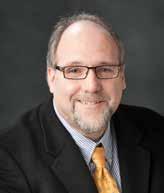

R. Gregory Dunaway Dean



ARTS & SCIENCES STAFF
DR. R. GREGORY DUNAWAY - Dean
DR. GISELLE THIBAUDEAU MUNN - Associate Dean for Research & Graduate Studies
DR. RICK TRAVIS - Associate Dean for Academic Affairs & Student Services
KARYN BROWN - Director of Communication
ALEX MCINTOSH - Director of Development
SHERYL KINARD - Business Manager
DR. CARLY CUMMINGS - Assistant to the Dean - Research
LAURA DUNN - Admissions Coordinator
TRACY BRITT - Academic Coordinator
BARBARA STEWART - Academic Coordinator
ALISA WHITTLE - Administrative Assistant to the Dean
SIMONE COTTRELL - Administrative Assistant
WHITNEY PETERSON - Administrative Assistant
JOY SMITH - Administrative Assistant
Student Workers:
DAMARIUS HARRIS - Student Worker
ADAM SIMONTON - Student Worker
MARCY SLOWIK - Student Worker
FEI FEI ZENG - Student Worker
Editors: KARYN BROWN
LAURA DUNN
HANNAH RINEHART
Writers: Audra Gines
Erin Patterson
Hannah Rinehart
Designer: Eric Abbott
by Leah Barbour
The College of Arts & Sciences is dedicated to research and discovery. Both faculty and students are encouraged to breach the realm of the unknown in order to make enlightening discoveries that can change entire fields of research. Whether it is undergraduate students, graduate students, or faculty, the College of Arts & Sciences supports its researchers in their incredible endeavors.
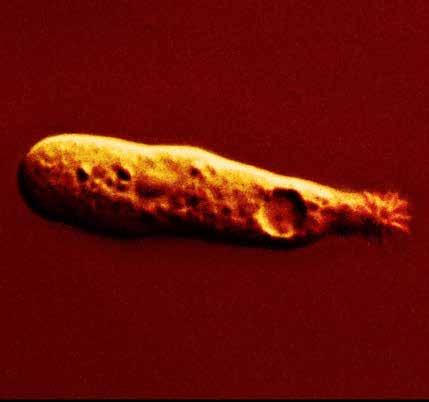
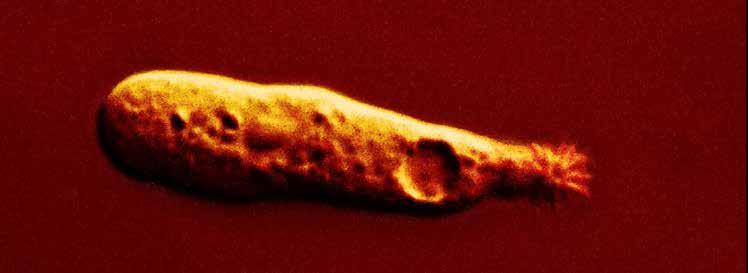
Just outside Harned Hall, the home of the College of Arts & Sciences’ Department of Biological Sciences, a never-before identified unicellular microscopic protist was scooped from a courtyard mud puddle. In September 2013, three undergraduates
By: Kayleigh Swisher
found Ptolemeba bulliensis and a second, closely related protist, Ptolemeba noxubium, collected from the Sam D. Hamilton Noxubee National Wildlife Refuge, located approximately 15 miles south of campus.
Both of these organisms were collected, isolated and classified by the small team of undergraduates in the Department of Biological Sciences. Dr. Matthew Brown, an MSU biological sciences assistant professor at and head of the Evolutionary Protistology Laboratory in Harned Hall, was the advising faculty member.
Pamela Watson of Murfreesboro, Tennessee, a junior microbiology major, became lead author of the scientific paper about the protist discovery, which was recently published in the Journal of Eukaryotic Microbiology. Watson is also responsible for the name of the new protist that honors MSU’s first bulldog mascot.
“I learned that the first ‘Bully’ was named Ptolemy, and I thought that would be fitting for us to name the genus for something about
the campus…it highlights the history of Mississippi State,” Watson said.
She, along with senior medical technology major Stephanie C. Sorrel of Warner Robins, Georgia, and junior chemistry major Nicholas R. Lee of Brandon, Mississippi, were working in Brown’s laboratory when the samples were collected. They participated in documenting and classifying the protists, though Lee was unable to continue the project through the completion of the scientific paper.
Since the students collected the organisms, Brown said they deserved the opportunity to experience the entire scientific process of organism discovery, from isolating samples to isolating the protists’ DNA, to drafting the highly technical journal submission.
Watson said Brown’s interest in unicellular creatures and their position on the evolutionary tree inspires her own passion for science and research. Not only did she switch her academic major from biochemistry to microbiology, she also changed her intended career track.
“While the paper process was one of the most stressful experiences of my adult life, it changed what I wanted to do,” she said. “I was pre-med, but now I’ve found my niche. I want to go to grad school, get my Ph.D. and do research. I want to be a professor.”
Brown said the students’ report of their discovery constitutes the first independently published manuscript produced by his MSU
lab. Brown was recently awarded a Henry Family Research Fund in the College of Arts & Sciences initiation grant to increase his laboratory’s efforts in clarifying the relationships among amoeboid microbes.
“I was showing the students the morphological and molecular techniques to identify the organisms and place them on the phylogenic tree,” the University of Arkansas doctoral graduate explained. “The ‘aha moment’ came in early November (2013) when all three of the students were working in concert. Each isolated an organism, and each did the gene sequencing analysis, and all the organisms were so closely related.”
Brown said he hopes the students’ groundbreaking achievement will alert the larger scientific community to the commitment of MSU Biological Science research and the future discoveries of MSU biological sciences students and researchers.
How do you examine the inside of a fossilized egg without opening it?
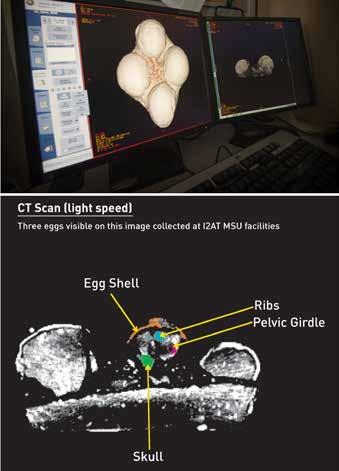
This research question drives John Paul Jones, a doctoral graduate of earth and atmospheric sciences at MSU. After he discovered a fully-intact clutch of fossilized dinosaur eggs in Montana in 2002, he’s worked to answer that question using Mississippi State resources.
To avoid destroying the precious discovery, Jones, with the support of grants from the MSU graduate school and the Department of Geosciences, traveled to the United Kingdom where there is a highresolution 3D x-ray scanner in Oxfordshire. He collaborated with the Amgueddfa Cymru-National Museum Wales to dissect the eggs virtually to discover the genus and species of the dinosaurs.
The dinosaurs contained in the eggs may be a type of hadrosaur, a duck-billed dinosaur with a hollow crest on its head. However, Jones needs more information before coming to any definite conclusions. The virtual images, particularly of the dinosaur’s skull and pelvis, will help him make the final identification.
“I’m reluctant to say exactly what type of hadrosaur, but it looks like, from the lower resolution scans we already have, that there is a crest on the skull, which narrows it down to just a couple of species,” said Jones. “If the imaging in the U.K. is good enough, we may even be able to tell what sex it was.”
Dr. Rinat Gabitov, assistant professor of geosciences at MSU, explained that the synchrotron-imaging technique is made for examining structures as small as one-tenth of the diameter of human hair. This high-power technology in Oxfordshire did not, however, provide Jones with his first glimpse inside the eggs.
“In 2012, Jones’ MSU research team generated more than 10,000 scans when the dinosaur eggs were X-rayed by the LightSpeed VCT
64-Slice CT Scanner,” Gabitov explained.
These initial viewings were made possible by MSU’s Institute for Imaging and Analytical Technologies and Premier Imaging in Starkville.
“One of the CT scans we did shows a definite and complete articulated embryo. I also found one egg was partially hollow… but in the other two eggs, the resolution just wasn’t high enough,” Jones said.
Along with the eggs he found in 2002, Jones also examined another clutch of similar eggs he found in 2013 near the same site in Montana.
“It’ll be the first time anyone’s ever identified an embryo using the synchrotron method,” he said.
After the eggs were scanned, the Amgueddfa Cymru-National Museum Wales displayed the eggs in accordance with their collaborative agreement with Jones. When the eggs return to the U.S. , they will be displayed by the Smithsonian Institution in Washington, D.C.
Jones said, “If I can, in fact, document that I’ve found a nesting site where dinosaurs came back and nested en masse, then that tells us more about the behavior of these animals.”
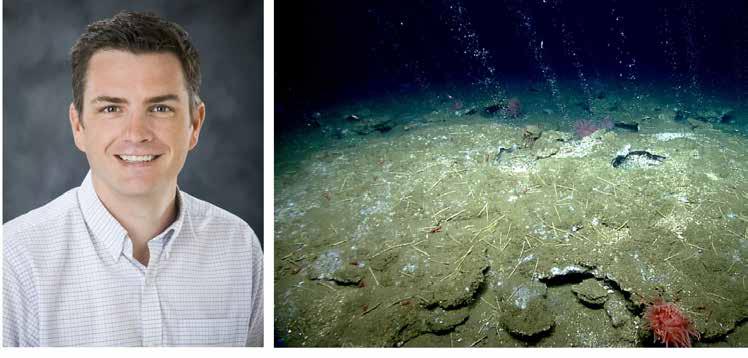
Dr. Adam Skarke, an assistant professor in the Department of Geosciences in the College of Arts & Sciences, is lead author of a study that’s raising new questions about geology, oceanography and seafloor ecosystems. Skarke’s scientific team discovered methane seeps in unlikely places along the seafloor on the northern part of the U.S. Atlantic margin. The group’s scientific paper, “Widespread methane leakage from the sea floor on the northern U.S. Atlantic margin,” was published online on Aug. 24 by the peer-reviewed journal Nature Geoscience.
Before he joined the faculty in the Department of Geosciences, Skarke worked as a physical scientist at the National Oceanic and Atmospheric Administration’s (NOAA) Office of Ocean Exploration and Research (OER). As part of a large team of scientists and technicians, Skarke participated in many cruises on the NOAA ship Okeanos Explorer as it mapped the Atlantic Ocean floor between North Carolina and Cape Cod.
“The discovery of gas plumes in the water column over the seafloor, detailed in the new publication, used data the ship collected starting in 2011,” Skarke said.
He and his colleagues found 570 methane seeps in this area, compared to only three formerly known sites.
To analyze the NOAA OER data and locate the positions of the
plumes, which correspond to places where methane gas is seeping out of the seafloor, Skarke worked closely with Brown University undergraduate and NOAA Hollings Scholar Mali’o Kodis during the summer of 2013.
“Methane often naturally leaks from the seafloor, particularly in petroleum basins like the Gulf of Mexico or on tectonically active continental margins like the U.S. Pacific Coast,” Skarke said.
However, the geologic characteristics of the U.S. Atlantic margin suggest the seepage was not necessarily expected there because the tectonically passive area lacks an underlying petroleum basin.
“Although methane, or natural gas, is used as an energy source worldwide, the type of methane leaking at most of the seep sites is probably produced by micro-organisms digesting organic matter in the shallow sediments,” he said.
None of the evidence compiled by the scientists suggests the seeps tap into deep natural gas reservoirs that can be used for energy.
“Methane is a strong greenhouse gas, but nearly all of the seeps described in the new study leak at such deep ocean depths that methane does not reach the atmosphere directly,” Skarke emphasized.
Instead, micro-organisms in the water column transform most of the methane into carbon dioxide, making ocean waters more acidic, which can harm some types of marine life.
“The NOAA OER program used its remotely operated vehicle to visit about one percent of the seeps in 2013, and it found welldeveloped communities of chemosynthetic mussels thriving near the methane plumes. Two years ago, no human had ever seen these seafloor communities that have now been found at the seep sites,” Skarke said
He said additional research questions for deep sea ecologists include determining how separate seeps are colonized with new life, as well as understanding the structure of the communities and the relationships among bacteria, small fauna and larger organisms, like mussels.
“A cornerstone of the NOAA OER program is the collection of data that can lead to new discoveries for the scientific community,” he said. “One unique aspect of the program that made it so enjoyable to work there was the fact that we collected many types of data about U.S. oceans and made the data immediately available to the scientific community for studies that could not otherwise have been completed.”
Skarke said he appreciates the support of MSU administrators, especially those in the Department of Geosciences of the College of Arts & Sciences, as he and his collaborators readied the research for publication in a top-tier, peer-reviewed journal.
By encouraging research at every level of education and supporting those researchers every step of the way, the College of Arts & Sciences helps its faculty and students make their mark on modern academia.
By Hannah Rinehart
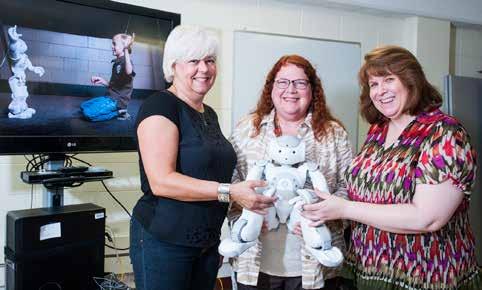
Could robot interviewers help communicate with children who have been bullied or abused?
This question drives a project titled “Use of Robots as Intermediaries to Gather Sensitive Information from Children” being funded by the National Science Foundation. It is a collaboration between researchers in Mississippi State’s College of Arts & Sciences and Bagley College of Engineering.
“The idea for this project originally happened when I was in graduate school, but it became more fully developed during my postdoctoral position as an NSF Computing Innovation Fellow at Yale University,” explained Dr. Cindy Bethel of the Department of Computer Science and Engineering. “While there, I began this research with a published study titled ‘Secret-Sharing: Interactions between a Child, Robot, and Adult.’”
Bethel directs the Social, Therapeutic and Robotic Systems Laboratory and is a Research Fellow with the Human Factors Group of the university’s Center for Advanced Vehicular Systems. Since joining the MSU faculty, she has worked with Dr. Deborah Eakin of the Department of Psychology.
“She and I started looking at the differences between a human versus a robot interviewer on eyewitness memory in college-aged students,” Bethel said. “We published a paper together titled ‘Eyewitnesses are Misled by Human but Not Robot Interviewers.’”
In time, the two researchers decided to combine their collaboration with a student-led project headed by sociology graduate student Megan Stubbs Richardson of Starkville titled “Developing a Robot Application for Bullying Intervention.” It was this faculty-student effort that was chosen for full NSF funding in July.
Bethel is the principal investigator, while Eakin is a co-principal investigator. Also working on the project as co-principal investigators are Dr. David May, associate professor of criminology, and Dr. Melinda Pilkinton, associate professor of social work.
The project’s research, which is divided into four stages spanning four years, will be conducted at the Institute for Imaging and Analytical Technologies (I2AT) in the Premier Medical center in Starkville.
Bethel said the project will also include her STaRS Lab and Eakin’s Memory and Metamemory Laboratory.
“Dr. Eakin’s lab is currently developing and hosting a database of children in the area between the ages of eight and twelve that would be interested in participating research studies that our labs are conducting,” Bethel said.
“We are in the early development stages and plan to begin the first data collection involving eyewitness memory in children beginning in January 2015,” she continued. “We are currently ordering robots, setting up and building the interview space at I2AT, designing the interfaces and programming the robots.”
May said future phases of the project “will compare robot interviewers with human interviewers to determine whether robots elicit higher levels of comfort, understandability and likeability than human interviewers when interviewing children about bullying victimization and other scenarios designed to examine their ability to recall factual information.”
May said he, Eakin and Pilkinton will then compare the robots and human interviewers in the first two years of the project. “We will compare robot interviewers with human interviewers to determine if robot interviewers develop better rapport with children who have been victimized by traumatic events.”
In the final part of the project, the team will explore whether “socially intelligent” robots and humans—those who have been programmed or trained in techniques, mannerisms and strategies designed to build rapport and enhance communication in interview settings—are able to gain more factual information and build better rapport with interviewees than robots and humans who have not been programmed or trained in those techniques.
Bethel, trained as a forensic interviewer for children by the Huntsville, Alabama-based National Child Advocacy Center, will use forensic interviewing skills to examine these questions in the third and fourth years of the project.
“By the end of the project, we hope to know whether robot interviewers are better than human interviewers in obtaining factual information from children that have been bullied or abused and whether these children feel more comfortable disclosing that information to robot or human interviewers,” May said.
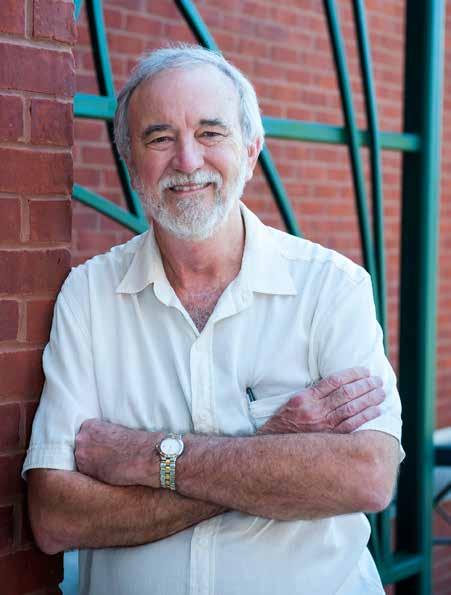
Dennis Mitchell, a professor of history and chair of the Division of Arts & Sciences at Mississippi State University-Meridian, is playing a major role in the rediscovery and updating of the Magnolia State’s travel from pre-history to the 21st century.
Released earlier this year by University Press of Mississippi, his book entitled “A New History of Mississippi” includes more than 600 pages of photos and narratives. Containing both familiar and untold stories that have marked Mississippi’s past, it is the first of its type compiled since the 1976 bicentennial history over four decades ago.
Mitchell, who grew up just across the state line in Florence, Alabama, said he developed a love of history and biography early in life.
“From elementary school, I loved reading history and biography,” he said. “The history that I was taught back then was approved by the (United) Daughters of the Confederacy.”

By Audra Gines

He said it did not take long for him to realize he was only getting part of the story. As an avid reader who frequently used the town library, he came to realize discrepancies between the UDC-approved texts and other books available beyond the school grounds.
That realization ultimately led to a personal distrust of what teachers were telling him and, he added, helped launch his path toward discovering history on his own.
After completing a bachelor’s degree at Florence State University (now University of North Alabama), Mitchell began advance studies in history at the University of Mississippi, where he would receive a master’s degree in 1973 and a doctorate in 1976.
As he was finishing graduate school, the Magnolia State found itself in the midst of controversy about the content of public school textbooks. As it turned out, Mitchell would serve in 1980 on a state committee that was helping set the history curriculum for schools.
He is proud to say that the committee was successful in getting a new history adopted, adding, “We co-authored a textbook, which was the most widely used,” and “is just now being phased out.”
For Mitchell, undertaking the writing of a 21st century edition of the state’s history was the culmination of 30-plus years of teaching the subject, as well as an appreciation of the need for an updated view of the past.
Also, feeling there are many lessons still to be learned, a fresh look back should give all who love Mississippi an opportunity to reflect anew upon the past and hopefully learn from it, he said.
“Mississippi can’t make all the changes it needs to until Mississippians understand the past,” he said. “People still believe in the myths about Mississippi’s history.”
He continued: “One of the points I make in the book is that for a hundred years, Mississippi had a black majority. Most Mississippian’s are shocked to hear that. That simple fact explains a lot.”
Mitchell said his “big hope” is that by appreciating this “simple fact,” some residents “would behave differently.”
In his new history, Mitchell purposefully included stories about Native Americans, women and minorities that traditional histories either marginalized or left out. Mitchell uses the new book as his classroom text and at least one indicator of his success in making it as well-rounded as possible came during the fall semester. As he tells it, a young African American man told him he “was pleased by that part of the story.”
After having spent more than three years of hard work and dedication, Mitchell said it can be difficult to pinpoint exactly which part of the book can be regarded as his favorite.
“It’s hard to choose; it is like choosing a favorite child,” he said, with a laugh. “If I had to choose, it might be the period of the 1970’s.”
He admitted that covering this period caused him to resort to a novel titled “The Rock Cried Out.” Set in 1970s Mississippi, the book was written by Mississippi native Josephine Haxton (1921-2012), known to most by the pen name Ellen Douglas.
“I struggled a bit, and then I went to her novel and used the characters out of her novel to illustrate that period,” he said. “That was a challenging piece.”
If he has any advice for budding historians or writers in general, Mitchell said the key is learning to love what you do. For a lover of teaching and history, this marriage of the two couldn’t have been a better fit for him.
“I enjoy it; it’s fun! I can’t imagine retiring and not doing it anymore,” Mitchell said.
As he looks back to the three-year labor of love, Mitchell said his accomplishment would not have been possible without the help of others.
“I did this book in Meridian, and the library (staff there) was incredibly supportive,” he said. “They found everything I needed: obscure articles, dissertations, theses, inter-library loans and electronics.
“I did it all from Meridian, so I appreciate all their help.”

“ MISSISSIPPI CAN’T MAKE ALL THE CHANGES IT NEEDS TO UNTIL MISSISSIPPIANS UNDERSTAND THE PAST”
By Erin Patterson
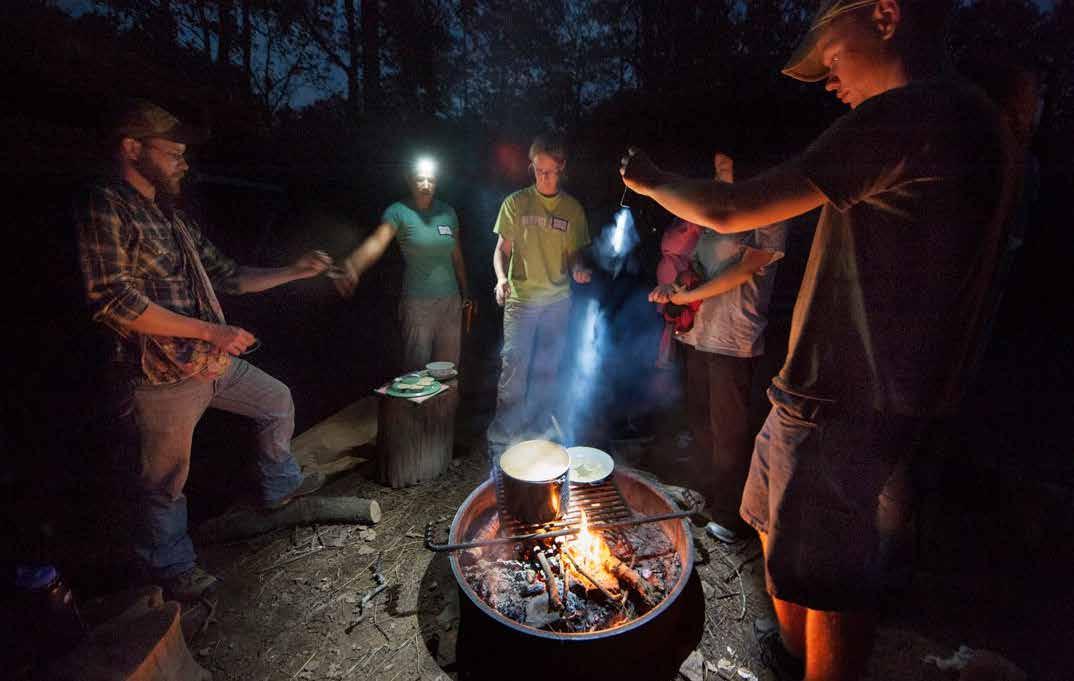
To incorporate new and innovative directions involving some unlikely partners in the field of social science, the Department of Philosophy and Religion has updated its fields of study.
“Philosophy and religion have undergone major changes in the past 50 years to become more contemporary and interdisciplinary fields of study,” explained Dr. John Bickle, department head. “They no longer are studies of ancient philosophers and their way of thinking, but they have now grown into fields of research, teaching and application.”
As a result, Bickle said the department is revolutionizing the way students will be taught to apply the skills of these subjects.
One way is research in applied ethics, where Bickle said a partnership has begun with the Office of Research and Economic Development to work on external grants for exploring questions that arise in the field. In particular, this involves the attitudes of students from different cultural backgrounds toward research ethics, especially in terms of legitimate authorship and mentorship.
Through collaborations with the Department of Sociology, College of Business and the Social Science Research Center, he said the department seeks to employ its findings. The goal is to better develop educational programs in authorship and mentorship and research into the way students think about ethical research and what it means to them, he added.
Another partnership with other departments in the social sciences seek to research and discover new ideas and
techniques of asking philosophical questions through the lens of science. Dr. Robert Thompson, an associate professor, has been investigating the development of children’s minds. Seeking to learn at what age children become aware that other humans have minds, he has utilized a series of different tests that psychologists and cognitive scientists use to explore this question even further.
Bickle said Thompson’s research shows a direct intersection between traditional questions in the philosophy of language and work in developmental psychology with a regard to language learning and mind attribution.
Bickle said the department also has launched curriculum changes and revisions to incorporate the new trends, ideas and techniques. Classes now will focus on how philosophy applies to everyday life instead of focusing just on the wise words of ancient philosophers.
Students will continue to work closely with advisers to tailor their education in areas of interest and receive attention needed to be well-rounded within their discipline. In addition to traditional strengths of reading and writing, students will graduate from the program with a background in sciences and other disciplines.
Bickle said the goal is to produce graduates with a philosophy background to tackle abstract questions, as well as a background in related disciplines to ground that abstract knowledge.
By Audra Gines
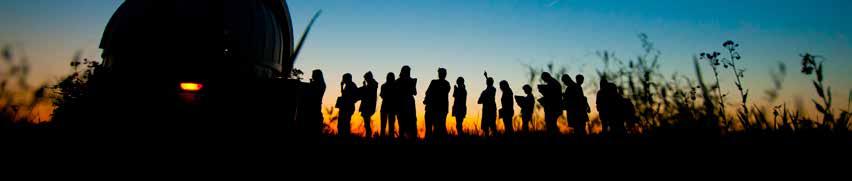
Mississippi State’s Howell Observatory has long been a place for observing and studying the solar system, constellations and other planets—and, if the timing is right, spotting the International Space Station and other spacecraft passing high overhead.
Operated by the university’s Department of Astronomy and Physics and open to the public 12 times a year, the facility currently is located south of main campus on grounds of the H. H. Leveck Animal Research Center, known to most as the South Farm.
Dr. Angelle Tanner, assistant professor of astrophysics, said visitors may view some spectacular sights through the lens of the observatory’s highly light-sensitive telescopes, including an eight-inch Schmidt-Cassegrain, 10-inch Newtonian reflector and 14-inch Schmidt-Cassegrain.
“It is the size of the telescope that decides the faintness you can observe and the amount of detail you can observe,”
she explained. “They are good for observing planets, the Andromeda Galaxy and the constellations” and “there are lasers to show off the constellations.”
Tanner added: “Viewing Saturn should be on everyone’s bucket list.”
In addition to Saturn, she said “the moon and Jupiter are the most beautiful” to observe, noting that “you can even see the bands on Jupiter in the early morning” while “Mars looks like a tiny red dot.”
Tanner and Dr. Donna M. Pierce, a departmental colleague and astrophysics associate professor, coordinate public events held at the observatory.
One major activity takes place around the end of October when “Halloween at the Howell” often attracts long lines of visitors waiting to view the solar system on clear fall nights.
Tanner said increasing visits by members of the campus and Golden Triangle communities is a major observatory goal. Typical patrons include parents who enjoy astronomy and bring their children to, hopefully, continue that interest. Also, MSU’s Astronomy Club sponsors programs so students may learn how to use the viewing equipment and possibly peak their interest.
“It’s a nice way to show people some of what astronomers do, in regards to viewing the solar system,” Tanner said.
Because of a new public-access road being built through the South Farm that will link Poorhouse Road to the MSU campus, Tanner said the observatory is seeking a new location.
While the roadway will be convenient for many, the light pollution caused by required roadway illumination potentially will make night viewings difficult. “It needs to be moved to a location that is dark, but close,” she observed.
To keep up with upcoming observatory events, visit the department’s website at www.physics.msstate.edu.
By: Erin Patterson
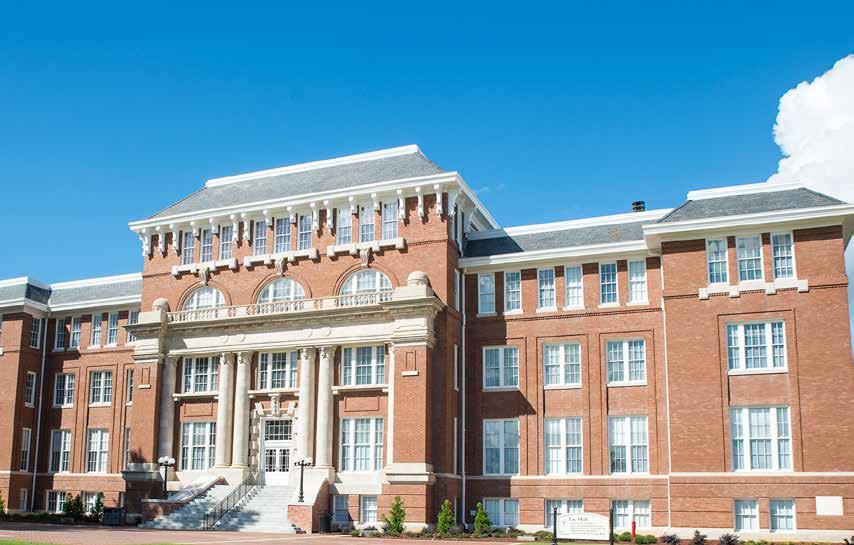
“THE SPACE IS WONDERFUL; HIGH CEILINGS, PERIOD COLORS AND MODERN SYSTEMS”
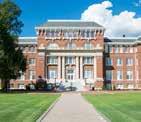
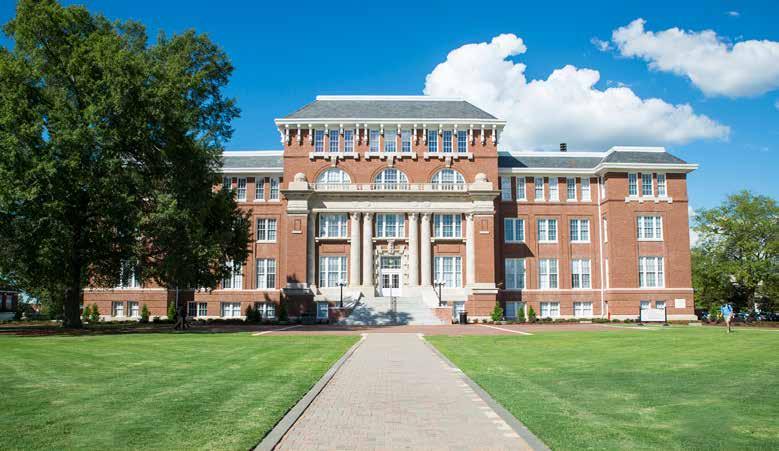
The historic anchor on the north end of the equally historic Drill field, Lee Hall has reopened after undergoing a multi-million dollar renovation over the past two years.
The four-story brick Beaux Arts building and designated Mississippi Landmark is among campus memorials to Stephen D. Lee, the 136-year-old land-grant institution’s first president. Built in 1909, it initially served as an academic building and campus chapel.
The recent renovation was not the first remodeling project. Probably the most extensive followed a 1948 fire that destroyed most of the third and fourth floors with damages estimated around a million dollars.
For decades, the venerable structure has been home to the College of Arts & Sciences’
Departments of English and Classical and Modern Languages and Literature (formerly Foreign Languages). Classical and modern languages is on the first floor; English is on the second.
Dr. Lynn Holt, interim department head, said he and others in classical and modern languages “have been energized by the move back to a renovated Lee.
“The space is wonderful; high ceilings, period colors and modern systems,” he added. “Our faculty, of course, are overjoyed about their offices and teaching spaces, both in terms of their central location on the Drill Field and just the clean, bright, open internal spaces.”
Dr. Rich Raymond, department head of English, said he and his colleagues are especially excited about new seating options that will better enable
students to participate in small-group work, as well as major technological upgrades available in new “smart” classrooms now located in the basement.
Both agreed the improvements enable teachers to enjoy a more interactive learning environment in more comfortable surroundings where students may better express their thoughts and ideas.
Another major change for Lee Hall is found on the third and fourth floors that were damaged so heavily in the 1948 conflagration. The entire fourth floor now is home to offices of President Mark E. Keenum, while the third has the offices of Dr. Jerry Gilbert, provost and executive vice president, and David Shaw, vice president for research and economic development.
By Hannah Rinehart
Many students are able to choose a major that is specific to their future career goals, but it is not always so easy for others.
“ I am just forging my own path,” said Lisa T. Boney of Brandon, Mississippi. Boney is a senior microbiology major pursuing a chemistry and economics double minor while planning a career in public health, a path she decided on as a sophmore.
“There aren’t many schools that offer an undergraduate degree in public health; it’s a field that many people do not know much about,” the daughter of Jeb and Linda Boney explained.
Even at her young age, Boney has gained considerable experience in leadership and research, two areas critical in the public health field. Last spring, she interned with MSU’s nationally recognized Social Science Research Center, studying early infant feeding behaviors among teen mothers.
“I traveled around the state compiling data and wrote the report over the summer,” she said.
Additionally, Boney also has completed an internship at a Baltimore, Maryland, HIV clinic operated by the Johns Hopkins School of Medicine. Part of a program sponsored by the national Centers for Disease Control and Prevention, her work there involved helping adolescents and other patients cope with recent HIV diagnoses.
“It was more about the emotional needs than the medical ones,” said Boney, alluding to the leadership aspect of the public health field. The program did not focus so much on the medical treatment as enabling those effected to better deal with their health issues, she noted.
Boney also was a part of—and continues to work with—the Baltimore-based Kennedy Krieger Institute’s Project Picnic. A program designed to combat food insecurity, it operates on the basic premise that doctors will prescribe certain healthy foods for patients who then purchase those foods through stores participating in the project.
After graduation, Boney plans to seek a master’s degree. Because so few schools offer graduate degrees in public health, she will have to leave Mississippi, but not indefinitely.
While she would consider a position with the CDC, her plans currently lie closer to home. Through her graduate work and future career, Boney wants to continue focusing on nutrition-based health disparities.
“I grew up in Jackson, Mississippi,” Boney said. “I have a lot of respect for the state, and I plan to return here.
“Yes, Mississippi has problems related to public health, but we can solve them,” she emphasized.
By Audra Gines
During the 2014 spring semester faculty meeting, Dean R. Gregory Dunaway unveiled a new College of Arts & Sciences recognition of top faculty members in Mississippi State’s largest academic unit.
Dunaway said the Legacy Award was created with one particular individual in mind, Dr. Robert E. Wolverton Sr., longtime professor of languages.
Wolverton was the first to receive the honor that now carries his name. The three others receiving the inaugural university award include:
• Dr. Walter Diehl, emeritus associate dean and a professor of biological sciences.
• The late Dr. William P. “Bill” Henry, associate professorof Chemistry
• Dr. John F. Marszalek, giles distinguished professor emeritus, director and mentor of Distinguished Scholars and executive director and managing editor of the Ulysses S. Grant Association.
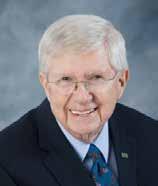
Wolverton is one of MSU’s most senior faculty members and a John Grisham Master Teacher. In 1977, he came to campus as vice president academic affairs in the administration of President James D. McComas. He later left administration to teach classics in the Department of Foreign Language, now the Department of Classical and Modern Languages and Literatures. An earlier selection for Starkville’s Education Hall of Fame, he has held many campus positions over the years, including head of his department and president of the Robert Holland Faculty Senate.
“I came to MSU as vice president of academic affairs with a new university president,” Wolverton said. “I moved into the Department of Foreign Languages as the only classicist, then served six years as department head and went into fulltime teaching in 1987.”
At 89, Wolverton constantly amazes colleagues and students with his unprecedented commitment to the classroom. In addition to being named a Grisham Master Teacher, he has been honored with, among others, the MSU Alumni Association Award for Undergraduate Teaching, Outstanding Humanities Faculty Member Award and Mississippi Blue Cross/Blue Shield Ageless Hero Award for Creativity. During the 2006-07 school year, he was MSU’s selection for an outstanding faculty member honor given annually by the Mississippi Legislature. He also is the author of In Other Words: A Lexicon of Sports for Winners and Losers (2005).
Wolverton said he is most appreciative of having the Legacy Award carry his name. “It was quite an honor really,” he said.
Over the years, Wolverton has positively affected many community lives through his love and appreciation for the arts through involvement in art activities and participation in local theatrical performances.
As he continues to make a difference in the lives of the students he teaches, Wolverton remains humble and appreciative of what they give back to him.
“Unless you’ve been teaching, you don’t know what an inspiration the students are,” Wolverton said. “Happiness is having students like this.”
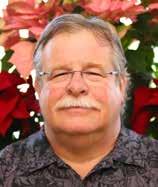
Before retiring in June, Diehl had a 28year career at the university. He is a 1976 College of William and Mary graduate who went on to receive master’s degree and doctoral degrees in biology from the University of South Florida in 1978 and 1983, respectively. He joined the MSU faculty in 1986.
“I was hired in biological sciences and came up through the faculty ranks as assistant professor to associate professor, then full professor,” Diehl said. Of his time in the dean’s office, “I served one year as interim associate dean, and then I became associate dean in 2008.”
While teaching in biological sciences, Diehl served as the department’s undergraduate coordinator. He also was president of the Robert Holland Faculty Senate for two years and served as interim department head of the Department of Anthropology and Middle Eastern cultures for one year.
“I’ve enjoyed being a faculty member of biological sciences; it is a good department and faculty,” he said. “I also enjoyed my time on the faculty senate, and I’ve enjoyed my time at the dean’s office”.
He said the key to having positive multi-role work experiences “is recognizing they have been three different jobs and not trying to make one of those jobs fit the other. They inform each other, but they don’t fit each other.”
Diehl said he greatly appreciated opportunities he had to work with students. As a young faculty member, he led a freshman biology course that many students, no matter their majors, were required to take.
“I enjoyed teaching that class; it was an opportunity to interact with students, often the first semester that they are on campus,” he said. He described the experience as “a unique situation,” explaining that, “In fact, it is a very difficult
course for some of the students.”
Considering challenges students in the class faced, Diehl said he chose to deliver the course content with the philosophy that “I can’t make you a good biologist or a good biology student, but if you work with me, I can make you a better biology student.”
He is proud to say that more than a few thanked him for what they learned in the entry-level course. For a young faculty member who could only have minimal interaction with students due to the large class size, the comments meant a great deal, he added.
As he gained seniority, Diehl began teaching graduate-level courses, which he describes as a completely different experience.
“You know those students; you get involved in subject matter in a very different way with those students than you do in an entry level class,” he said. “I had a very satisfying experience seeing graduate students doing their own research and getting their own work published.”
Throughout his tenure, Diehl said he was continually impressed with the quality of MSU students with whom he interacted. He also openly challenges any other institution of higher learning to compare their students with peers at MSU.
As both a teacher and administrator, Diehl said he has witnessed MSU’s continuing attraction of promising students that recognize the land-grant university as a top-tier school.
“The students that are coming to MSU are very good students, and I put our best students up against the best in any other university” .
BILL HENRY
Henry, who died in February 2014, was a 1979 University of Notre Dame graduate who went on to earn a doctorate in 1986 from the University of Nebraska-Lincoln. He then began post-doctoral research at Nebraska in organometallic chemistry under the direction of Dr. Reuben Rieke. He also earned a postdoctoral fellowship in the laboratories of Dr. Russell Hughes at Dartmouth College and Dr. John Oliver at Wayne State University before coming to MSU in 1988 as an assistant professor.
Henry’s Legacy Award was accepted by his widow, music professor Jackie Edwards-Henry. She told those attending the presentation ceremony that “research was a critical aspect of his professional career, and ultimately what drew him to MSU.” While he also had an opportunity to accept a faculty position in New Orleans, “he came here because he knew he could get his research done,” she added.
Edwards-Henry described her husband as “a real people person” that “loved his students and was excited about chemistry.” She emphasized that the passion and dedication he had for teaching was shared alike with undergraduate and graduate students.
“I didn’t get the sense that Bill had a time frame, for him it was an adventure,” she said, “Bill was one to embrace whatever experiences life brought him.”
As for being among the first to receive a Legacy Award, she said, “I think he would be very humbled by it. It would mean a lot to be recognized.”
In remembering his late colleague, Dr. Stephen Foster, an associate professor of physical chemistry, said it was an “honor to work with Bill for the last 20 years.
“He was friendly and welcoming to all,” Foster continued. “He always was engaged and would unfailingly volunteer to help,” which meant “he was an ideal professor, happy to spend time with undergraduates and graduate students. He maintained very high standards in the classroom but, even so, was almost universally loved by his students.”
Foster said one of Henry’s biggest impacts in the department was his love of undergraduate research. “Many, many students spent time in ‘Doc’s’ research lab, and large numbers were inspired to head to graduate school in chemistry. When alumni are asked about their experience in the chemistry department, they almost universally talk about Bill Henry and the influence he had on their career.”
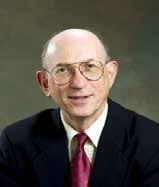
When Marszalek joined the MSU history department, he taught Civil War, Jacksonian America and basic American history survey classes before, in time, leading graduate seminars. Of special note, he is credited with introducing the first classes in sports history, and he also taught black American history for a time.
In 2008, Marszalek came out of retirement to become the acting executive director and managing editor of the Ulysses S. Grant Library. It was at this time that the extensive Grant archival material was coming to campus from its previous home at Southern Illinois University.
Since becoming the full-time executive director and managing editor, Marszalek said the Ulysses S. Grant Library Association has acquired a significant amount of material relating to the famed general who led Union Army forces to victory in the Civil War and was elected in 1869 to the first of two terms as U.S. president.
“We believe we have a copy of every letter Grant ever wrote in his life, or any letter ever written to him,” Marszalek said. “You come here, and you can look at as good a collection of Grant material as anywhere in the world.” Marszalek said he was humbled and honored to receive an award that carries Wolverton’s name.
“I have the highest respect for Dr. Wolverton, and I’m thrilled to be recognized by the college and by the university as having some sort of impact on the place,” he said. “I’m just thrilled, I really am. It’s one of those things that doesn’t always happen.”
Marszalek thanked Frances Coleman, dean of libraries and others on the library staff with whom he works. He also expresses appreciation to MSU President Mark E. Keenum, Provost and Executive Vice President Jerry Gilbert and Dean Dunaway for their support.
“That feeling I had when I first came here, the feeling of acceptance, I still feel it now,” he said. “It’s not something they say, but do.”
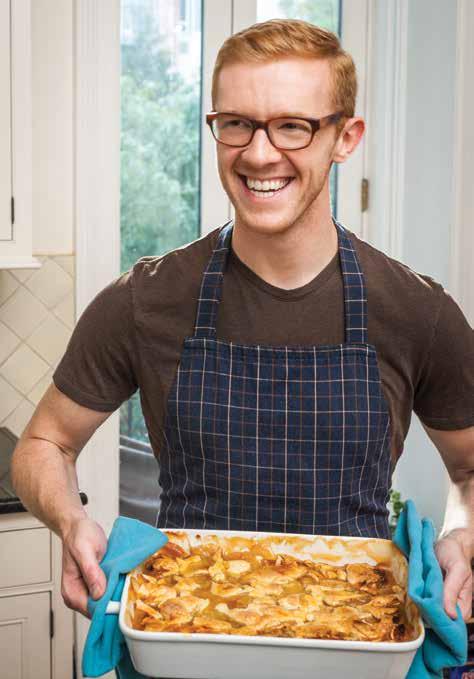
By Erin Patterson
Finding a career centered on their interests may prove difficult for some people but not for Ben Mims. He has found a career that incorporates two of his passions, cooking and writing. Shortly after entering Mississippi State in 2003 as a freshman from Kosciusko, he changed his major to communication/ journalism with plans to pursue a career in writing and liberal arts. To enhance his classroom training, he also served for three years as a writer and copy editor for The Reflector. He also became involved in several other campus organizations, including Pi Kappa Alpha fraternity, MSU Roadrunners, Alumni Delegates and Interfraternity Council.
During the summer prior to his senior year, Mims first was introduced to the art of food writing while working at the Vicksburg Post. The experience led him to seek a career writing about food and cooking.
“My natural affinity for cooking and writing produced the perfect storm, especially after the recommendation from the food editor in Vicksburg to pursue it as a viable career,” he recalled. Following graduation in the spring of 2007, Mims decided to move to New York City, one of world’s food capitals, and enroll in the highly regarded French Culinary Institute. “I wanted to attend a great culinary school and be in the center of journalism, so there was really only one choice,” he said.
His culinary training led to a writing position at Saveur, an award-winning New York magazine known for indepth stories on various world cuisines. In time, he was named associate food editor. In the publication’s test kitchens, he now could research, develop and test recipes while composing recipes and stories for both the print and online editions.
During five years at Saveur, Mims’ writing included an essay about Southern layer cakes that caught the eye of an editor at Rizzoli, a leading publishing company in culinary arts, which led to the offer of a cookbook publishing deal.
Released in September, Sweet & Southern: Classic Desserts with a Twist is a 224-page exploration of the art of Southern baking. “Well written, great updates to classics and for a non-baker, easy to follow recipes!,” was the response of one purchaser on an online site.
Of all those he included, Mims said the coconut cake recipe is his favorite, “because it is a family recipe and is so quintessentially ‘Southern’ in spirit.
“It gets the best reactions from everyone who tries it, even coconut haters,” he added.
Mims said he found work on his first cookbook to be very gratifying.
“I loved getting to develop my own recipes,” he said. “Thankfully, I had already done that with many recipes in my own spare time, so I had a good list to pull from already. Getting to share my viewpoint and feel like I can help people become better cooks was the best part.”
If Sweet & Southern does well commercially, Mims said he is prepared to do a second, but in a different way.
“I shot the whole [first] book in one week, 80 pictures, which was way more difficult than I could ever have imagined,” he explained. “If I do a second book, I’ll definitely make sure to hire several assistants to get all the work finished without having to lay in bed for three days afterward like this one.”
However he might have enjoyed the generally balmy California climate, it was the offer of an associate food editorship at Food &Wine magazine, a Time Inc. publication, that would draw Mims back to New York in May 2014.
Looking back on his student years at MSU, the now much-travelled and experienced Mims said he appreciates the many important careerenhancing lessons he learned while on campus.
“I learned the fundamentals of journalism, how to pitch a story, and how to network to get a job,” he said. “As a journalist, I learned to always question everything to make sure it’s true. That way of thinking has helped more than anything to produce my best work, be it writing or developing a recipe.”

Completion of the cookbook led to another major change in Mims’ life. He left the Big Apple and travelled across the U.S. to begin as a pastry chef in San Francisco, another world food capital. A few months back in the kitchen, however, led him to change position again, this time becoming a freelance recipe developer and food writer.
Specifically, he added:
“(Communication department instructor) Frances McDavid was definitely my biggest influence. She was very honest and helpful in offering real world advice and critiques to make the work of every student she taught better.”
Beyond his communication training, Mims said his favorite classes “were the fun ones that interested me or dealt with my hobbies: geography, geology, horseriding, contemporary dance and philosophy, which goes to show how important liberal arts courses are to the college experience.”
Asked what advice he would pass on to current students, Mims said, “I would tell them
to learn as much as they can while they’re in school: take as many different classes as you can manage to get a well-rounded experience, take what you learn to heart and follow it, but when you graduate, set it all aside and welcome new experiences.
“Remain skeptical about everything that comes your way so you can be discerning and make decisions wisely, and work harder than the person next to you,” he continued. “A lot of people have talent or a personality, but the one that gets the job is the hardest worker, and that’s a quality that’s not easily taught.”
Dear alumni and friends,
Every day, our faculty and students are investigating the problems and challenges of the world, seeking new knowledge and ways to improve our lives and surroundings. In each issue of Vision, you see a small slice of how the College of Arts & Sciences progresses on this mission of discovery. You have the opportunity to partner with us in that mission. Two of our goals for the Infinite Impact campaign (www.infiniteimpactmsu.com) are to create endowed funds to support undergraduate research and to initiate and expand the research done by our faculty and students.
The opportunity to conduct research as an undergraduate student adds tangible value. Students learn how to conduct quality research in an area of interest, and also build a valuable relationship with the supervising professor to create an experience that distinguishes them from fellow applicants for jobs and graduate or professional schools.
Endowed funds for research would broadly support the research efforts of the College of Arts & Sciences. These funds could, among other things, provide seed money to kick-start projects and strengthen applications for external funding, upgrade equipment to maintain state-of-the-art research environments and premiere laboratories, and engage additional undergraduate and graduate students in research projects.
What did you discover during your time at Mississippi State? You likely discovered new friends and relationships. You probably discovered new and fascinating information about the world around you and the people who live in it. Maybe you had the opportunity to engage in research that has impacted this current generation of students. Perhaps you discovered a career path and a new trajectory for your life.
Would you join us in this effort? If you are interested in creating support for these, or other areas in the College of Arts & Sciences, please contact me at amcintosh@foundation.msstate.edu or 662325-3240. Thank you for all that you do for the College of Arts & Sciences and MSU.
4 County Electric Power Association
Dr. Ty Abernathy
Mr. James W. Abernethy, Jr.
Mr. J. Harry Adams
Airgas USA, L.L.C.
Dr. Ralph W. Alewine, III
Alpha Kappa Delta
Ms. Eugenia O. Alsobrook
American Chemical Society
American International Group
Anadarko Petroleum
Dr. Lester Andrews
Applied Biochemists
Aquatic Ecosystem Restoration Foundation
Dr. James D. Ashmore
Autumn Ridge Dental
Ms. Sonya M. Aycock
B P. America
Mrs. Jennifer L. Berscheidt
Mr. Stanley E. Blackmon, Jr.
Dr. Ernest W. Blakeney, Jr.
Mrs. Anita Bologna
Dr. R. D. Boswell, Jr.
Mr. John M. Boulware
Mr. Robert B. Boykin
Mr. Earl B. Brand, Jr.
Mr. Richard R. Brann
Braun & Gresham
Mr. Stanley K. Breaux
Mrs. Peggy A. Brecheisen
Mrs. Angela T. Brewer
Bristol-Myers Squibb
Mr. Frank L. Brooks
Mr. Demitrius L. Brown
Mr. Larry N. Brown
Dr. James R. Bryson

Hail State, Alex McIntosh (Class of ’07, ’12) Director of Development College of Arts & Sciences
Mrs. Keely S. Baca
Ms. Francie O. Bala
Mr. Gregory A. Barrick
Dr. Thomas L. Baumann
Dr. Christopher L. Behr
Mrs. Patsy B. Bell
Mrs. Pennie Berk
Dr. Mitchell E. Berman
Mrs. Nancy Burdine
Dr. Joel A. Butler
Mr. Eric B. Byrd
Dr. Kermit L. Carraway
Mr. Dorsey R. Carson, Jr.
Mrs. Beverly A. Carter
Dr. Ferita P. Carter
Ms. Karen E. Carter
Dr. Nathaniel Carter
Center for Open Science
Mr. Derrick L. Chandler
Mr. William R. Chandler
Charitable Gift Fund
Charles Stewart Mott Foundation
Mr. Xiaoyan Chu
Clark Beverage Group, Inc.
Mr. Charles B. Cliett, Jr.
Dr. Edward J. Clynch
Mr. John A. Cohen
Mr. Gus W. Colvin, Jr.
Dr. Leon L. Combs
Ms. Judy G. Conaway
Mr. Robert L. Conn
Mrs. Mildred R. Conrad
Mr. Ricky L. Cooke
Ms. Bethany B. Cooper
Dr. Fred G. Corley, Jr.
Dr. William B. Cornell
Mr. Brent J. Cox, III
Mrs. Macy S. Craft
Mr. Tom Crain, Jr.
Creek Run L.L.C. Environmental Engineering
Ms. Elizabeth A. Creekmore
Ms. Wendy L. Creel
Mr. Curt J. Crissey
Dr. W. Lawrence Croft
Dr. Brittain A. Cross
Mr. Danny A. Cross
Mr. Everett T. Culpepper
Mrs. Ida L. Cunetto
Dr. Robert A. Dale, Jr.
Dr. Jerry W. Dallas
Mr. Casey V. Dare
Dr. Joseph Davenport, III
Mrs. Ruth M. De La Cruz
Mr. Chafen S. DeLao
Mrs. Karen Defore
Mrs. Patricia S. Dennis
Mrs. Page D. Dickerson
Mr. Lloyd G. Digby
Diversified Energy Services, LLC
Dr. Paul G. Dixon
Dr. Natalie J. Dollar
Mr. Byron R. Dong
Dr. Philip D. Doolittle
Mrs. Jackie Downer
Mrs. Katherine M. Driskell
Mr. S. Elliott Dubuisson
Ms. Eleanor Dudley
Dr. Gregory Dunaway
Eagle Transportation, LLC
Mr. Michael F. Edwards
Dr. Matthew Egbe
Mr. Richard R. Ellington
Mr. John P. Elliott, III
Dr. John P. Elliott, Jr.
Ernst & Young Foundation
Mr. Richard T. Estes, Jr.
Dr. William H. Evans
Exxon Education Foundation
Farmer UAS Products, LLC
Ms. Nancy P. Farmer
Ms. Deborah L. Farrar
Dr. Michael W. Fazio
Mr. Lavert Fitzpatrick
Ms. Julie S. Fleming
Flight Attendant Medical Research Center
Dr. Jerry W. Fly
Dr. John D. Foote
Mr. Joseph L. Ford, Jr.
Dr. John E. Forde
Mrs. Letitia D. Fortier
Dr. Emogene Fox
Mrs. Nancy C. Frederick
Mr. William A. Friday
Mrs. Becky R. Gardner
Dr. Howell C. Garner
Dr. Teena M. Garrison
Mr. Alan C. Geolot
Dr. Jerome A. Gilbert
Dr. Nina L. Glasgow
Mrs. Amberly Glover
Mr. Karl D. Godwin
Mr. Stacey W. Goff
Mrs. Anna Goldsby
Rev. Prentiss M. Gordon, Jr.
Mr. Wesley P. Gordon
Mrs. Melanie S. Gousset
Ms. Ann Gray
Mr. John W. Green, Jr.
Mr. Ray A. Greene
Mr. Philip A. Griffin
Mr. Theron V. Griffin
Mrs. Misty Webb Griffith
Ms. Anna Minor Grizzle
Mr. Carlton K. Guillot, Jr.
Mrs. Nita Gunter
Dr. Charles L. Guyton
Mr. Samuel P. Guyton
Dr. Steven R. Gwaltney
Dr. Donald L. Hall
Mr. Reggie V. Hambrick, Jr.
Mr. George C. Hamilton, III
Mr. Nicholas J. Hansen
Ms. Laura Hardin
Mr. Jeffrey W. Hardy
Dr. Guy A. Hargrove
Dr. Sandra H. Harpole
Mr. Marcus T. Harris
Mr. Joseph W. Harvey
Mr. Richard W. Hatch
Dr. Ruth J. Haug
Mr. Chip Hawkins
Mr. Rickey L. Haynes
Mr. Keith Heard
Mrs. Joan M.Henning
Mr. F. Ewin Henson, III
Dr. Barry W. Herring
Miss Lee M. Hilliard
Mr. Richard E. Hobgood
Mr. Wesley J. Holland
Dr. Jeremiah H. Holleman, Jr.
Mr. Thedford K. Hollis
Mr. Kenneth R. Holloway
Dr. Richard E. Holmes
Ms. Donna L. Holton
Dr. Warren F. Housley
Mrs. Paula N. Hubbard
Mr. Theodore G. Huffman
Mr. John E. Hughes, III
Dr. Karen D. Hulett
Dr. Donald R. Hunt
Dr. Zachary M. Hutchens, Sr.
IBM Matching Grants Program
International Foundation
Ireland Family Partnership
Dr. William J. Ireland, Jr.
Mr. John P. Jaap, Jr.
Jay Murphy Properties, Inc.
Mr. White G. Jee
Ms. Felisa Johnson
Dr. Ray E. Johnson
Ms. Sandra H. Johnson
Mr. Chad M. Jones
Dr. Gordon E. Jones
Mr. Hunter Jones
Mr. Thomas N. Jones
Mrs. Rebecca Harbor Jones
Ms. Sarah J. Jones
Dr. Terrell E. Jones
Mr. Wayne A. Kauchak
Mr. Russell B. Kegley
Mr. John P. Keisman
Mr. Everett B. Kennard
Mr. Andrew E. Kirk
Mrs. Julitta T. Kirkova-Pourciau
Dr. Stephen B. Klein
Mr. Paul A. Kosko
Mr. Robert W. Krueger
Ms. Marsha LaBeaume
Mrs. Melinda L. Laird
Ms. Kathryn A. Lake
Dr. James D. Land
Mrs. Christine S. Lauderdale
Law Office of Emil Holiner
Mrs. Jamie W. Lee
Dr. Edwin A. Lewis
Dr. Kentrell M. Liddell
Mr. Michael S. Little
Lockheed Martin Corporation
Mr. James W. Long
Lonza America, Inc.
Mrs. Helen C. Love
Mrs. Jamie Thomason Love
Ms. Nell J. Ludwig
Dr. Myrtis L. Lunsford
MSU Donor-Advised Fund Program
Mr. David P. Madison, Jr.
Mrs. Mary P. Madison
Dr. Charles V. Magee
Ms. Kay M. Maghan
Mrs. Jennifer M. Mahne
Mr. George A. Manning
Mr. George E. Marion
Mrs. Cecelia P. Marquart
Mr. Aubrey S. Massey
Mr. Harmon O. Massey, Jr.
Dr. Terrence L. Mathers
Mrs. Genevieve L. Maxon-Stark
Dr. Byron C. May
Mr. Cinclair May
Mr. Will E. May
Mr. Steven L. Mayo
Dr. Robert T. McAdory, Jr.
Dr. Nancy G. McCarley
McClaren Resources Inc.
Ms. Kimberly Anne McElroy
Mr. Thomas L. McHaney
Mrs. Debra W. McIntosh
Mr. R. Jeremy McLaughlin
Mr. John A. McMillin
Mrs. Mary J. McWherter
Mr. Eric P. Meitzler
Microsoft Corporation
Ms. Deatrice D. Middlebrook
Ms. Katherine R. Miller
Mr. W. Tom Miller
Ms. Audrey Taneka Milliner
Mississippi Coalition for Progress
Mississippi Tourism Association
Mr. Charles D. Mitchell
Mr. Edwin Mitchell, Jr.
Mr. Leonard B. Mitchell, Jr.
Mrs. Marcia E. Mixon
Dr. Todd E. Mlsna
Dr. Harsha N. Mookherjee
Mr. Thomas E. Moore
Ms. Sara Morris
Dr. Ian Munn
Dr. George G. Murphy
Mr. R. David Murrell
Mrs. Margarita A. Myers
Mr. Tracy K. Naylor
Mr. David E. Neaves
Mr. John W. Nelson
Mr. Charles P. Newell, Jr.
Mr. Charles H. Nicholas
Mr. Dwayne Nicholson
Mr. Victor S. Nickels, Jr.
Mrs. Kim Nolen
Dr. Dennis S. Nordin
Mr. David R. O’Brien
Dr. Kelly R. O’Neal, Jr.
Ms. Emilie Whitehead Odom
Mr. Buster E. Orr
Ms. Susie Overstreet
Mr. F. R. Owens
Mr. Michael C. Pace
Mr. James N. Paisley
Ms. Susan Palmer
Ms. Sheri A. Pape
Mrs. Valerie Musick Park
Partnership for a Healthy Mississippi
Mr. Ercolani D. Pauline
Mr. Evan Peacock
Pearson Education
Pelican River Watershed District
Mr. Marcus N. Perkins
Dr. Gary L. Permenter
Ms. Mary S. Perry
Mr. Bruce W. Peterson
Mr. Melvin R. Peterson, Jr.
Dr. Melinda W. Pilkinton
Mr. Ronald C. Porter
Ms. Jill Powell
Psi Chi International Society in Psychology
Mr. Harry H. Puryear
Mr. Larry O. Putt
Mr. Junrji H. Qian
Dr. Peter W. Rabideau
Dr. Deborah D. Rabinowitz
Mr. John B. Rada
Mrs. Sandra R. Ragland
Ranmar Holdings, LLC
Raymond James Charitable Endowment
Fund
Dr. Richard Carl Raymond
Mr. Bryant A. Reed, Jr.
Mr. Keith H. Remy
Dr. Harris B. Renfroe
Tracy Richmond
Mrs. Patricia K. Rigdon
Ms. Priscillia Rivera
Dr. M. Diane Roberts
Hon. James L. Roberts, Jr.
Ms. Lydia S. Roberts
Mr. Mark R. Roberts
Mr. Robert R. Roberts, Jr.
Mrs. Patty A. Robertson-Gajewski
Ms. Tamaal A. Rodgers
Mr. Charles C. Rooker
Mr. James D. Rowe
Mr. James S. Rowles
Mr. James H. Rule
Mr. Donald M. Rushing
Mrs. Deborah Rutherford
Ms. Katrice D. Rutherford
Mr. Chess Rybolt
Dr. Charles Sallis
Mrs. Kara L. Sanders
Dr. Benjamin F. Sanford, Jr.
Mr. Clifton W. Sawyer
Mr. Wallace H. Scoggins
Dr. Joe D. Seger
Mr. Curtis L. Sessions
Dr. Stephen D. Shaffer
Mrs. Daphne C. Shannon
Shell Oil Company Foundation
Mr. Gary L. Shelton
Mr. G. Richard Sheridan
Dr. Wahnee J. Sherman
Dr. Kathleen M. Sherman-Morris
Shimadzu Scientific Instruments, Inc.
Dr. Howard E. Shook, Jr.
Mrs. Virginia W. Shurlds
Mr. Jason M. Simpson
Dr. Rich L. Simpson
Mrs. Lib Sistrunk
Mr. Arville O. Slaughter
Mrs. Caitlin C. Smedema
Mrs. Ann Ardahl Smith
Ms. Cailin Smith
Dr. Hugh C. Smith
Southern Ionics, Inc.
Mr. Benson P. St. Louis
Mr. David A. Stampley
Starkville Area Arts Council, Inc.
Starkville Civitan Club Inc.
Starkville Pediatric Clinic
State Farm Insurance
Statewide Federal Credit Union
Mr. Robert A. Stephenson
Ms. Cynthia M. Stevens
Mr. Kyle T. Steward
Mr. Barry T. Stewart
Ms. Bobbie S. Stone
Dr. Randolph Stone
Student Affairs Administration in Higher Education
Dr. Arthur D. Stumpf
Dr. Martha H. Swain
Mr. Chester A. Tapscott, III
Mr. Charles H. Tardy
Ms. Brenda F. Tate
Mr. Kevin M. Tate
Mr. David P. Taylor
Dr. Douglas H. Taylor
Mrs. Leslie M. Terrell
Ms. Lynda G. Terreson
The Annie E. Casey Foundation
The Benevity Community Impact Fund
The Bower Foundation
The Brinks Company
The G. V. Sonny Montgomery Foundation
The MidSouth Aquatic Plant Mgt Society
The Steve Azar St. Cecilia Foundation
Col. Jerry A. Thomas
Dr. Timothy N. Thomas
Mr. J. Wilmot Thomson, Jr.
Mr. John Thornton
Ms. Catherine A. Thrash
Mrs. Amanda Jones Tollison
Ms. Amy Tuck
Mr. J. R. Tucker
Mr. Joe G. Tuggle, Jr.
Dr. James S. Turner
Ms. Sharon D. Turner-Davis
Mr. Kevin D. Veal
Vicksburg Hospital Medical Foundation
Mr. Britt Virden
Dr. Ben M. Waggoner
Mr. Harold D. Walker, III
Dr. Diane E. Wall
Mr. Scott Waller
Mrs. Jean W. Ferguson
Mr. John D. Wax
Mr. Tom Webb
Dr. Richard Weddle
Mr. John P. Weir
Wells Fargo & Company
Mr. Graham M. Wells
Dr. Marion R. Wells
Wenner Gren Foundation
Miss Julie L. West
Mr. Christopher A. White
Dr. A. Randle White
Mr. John P. Whitecar, Jr.
Dr. David E. Wigley
Ms. Ladonnal Wiley
Dr. Thomas L. Wiley, Jr.
William Winter Institute for Racial
Reconciliation
Dr. Clyde V. Williams
Mr. John C. Williams, III
Mrs. Laurie R. Williams
Mr. Lee B. Williams
Dr. James F. Williamson, Jr.
Mr. Homer F. Wilson, Jr.
Mr. Phil B. Wilson
Dr. David O. Wipf
Dr. Perisco A. Wofford
World Health Organization
Mr. Mark A. Worthey
Mr. James A. Yarborough
Mr. Fuchang Yin
Mrs. Camille Scales Young
Dr. Judy K. Young
Dr. Dongmao Zhang
By Audra Gines

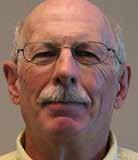
Dr. William P. Henry, or “Doc” as he was affectionately called by many of his students, was a Mississippi State University chemistry professor who died in February at his home.
Though born in Delaware, he lived much of his early life in Toronto, Canada, where his father was a chemist for a chemical company. He was a 1979 University of Notre Dame graduate who went on to receive a 1986 master’s degree from the University of Nebraska-Lincoln. His UN-L doctorate in organometallic chemistry was completed under the direction of Dr. Reuben Rieke, and he was a postdoctoral fellow in the laboratories of Dr. Russell Hughes at Dartmouth College and Dr. John Oliver at Wayne State University. Henry, who joined the MSU faculty in 1988 as an assistant
professor, is survived by wife Jackie Edwards-Henry, a professor of applied piano, group piano and piano pedagogy, coordinator of group piano and MSU’s music department curriculum chair.
“Bill was a real people person,” she said, reflecting on her late husband’s career. “He loved his students and was excited about chemistry.” She also noted that a memorial service in Chicago where much of Bill Henry’s family currently resides drew one of his early graduate students at Nebraska.
This and other personal testaments to his dedication help illustrate how greatly he will be missed by the many whose lives he touched over a 28-year teaching career.
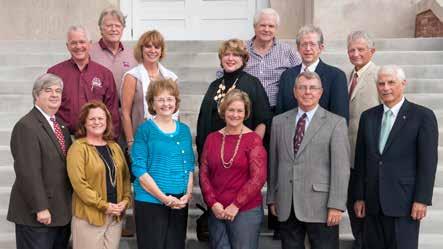
From left, front: Bill Gillon, Adrienne Pakis-Gillon, Dr. Karen Hulett, Kitty Henry, Hank Johnston, Dr. Ralph Alewine
Center: Hunter “Ticket” Henry, Llana Smith, Laurie Williams, Dr. Tom Wiley, Dr. Bill Hulett
Rear: Dr. John Rada, Dr. Don Hall
FACULTY
New Faculty as of August 1, 2014
Air Force ROTC
Lt. Nicholas Charney
Anthropology and Middle Eastern Cultures
D. Shane Miller
Army ROTC
Maj. John Carter, Maj. Bradley
Hollingsworth and Maj. Terrance Seals
Biological Sciences
Heather Jordan, Victoria McCurdy and Robert Outlaw
Chemistry
Charles Edwin Webster
Classical and Modern Languages and Literatures
Salvador Bartera and Karina Zelaya
Communication
Melody Fisher, Meaghan Gordon and John Nara
English
Daniel Austin, Katie Doughty, Amy
Mallory-Kani, Eric Vivier, and Abigail Voller
Geosciences
Adam Skarke, Chris Fuhrmann and Lindsey Morschauser
History
Marsha Barrett, Brandon Byrd and Andrew Lang
Mathematics and Statistics
Tung-Lung Wu
Philosophy and Religion
Kristin E. Boyce, Alicia A. Hall, William Kallfelz, David C. Spewak, and Danielle J. Wylie
Physics and Astronomy
Lamiaa El Fassi and Mark Worthy
Political Science and Public Administration
James Chamberlain, Daniel Fay, Kyle Kattelman and Jiahuan Lu
Psychology
Arazais Oliveros
Sociology
Rachel Allison, Margaret Hagerman and Margaret Ralston

Simply send an e-mail or letter to:
Karyn Brown Director of Communication Mississippi State University College of Arts & Sciences P.O. Box AS Mississippi State, MS 39762 kbrown@deanas.msstate.edu
Walter J. Diehl, College of Arts & Sciences ......................................... 6/30/2014
Janet Rafferty, Anthro. & Mid. Eastern Cultures 6/30/2014
Dwayne Wise, Biological Sciences 5/15/2014
Peter Rabideau, Chemistry ....................................................................... 8/15/2014
Betty J. Durst, Communication 5/15/2014
Godfrey N. Uziogwe, History 12/31/2013
Marjorie Crittenden, Mathematics & Statistics 7/7/2014
Betty Scarbarough, Mathematics & Statistics 12/31/2013
Marty Wiseman, Political Sci. & Public Admin 12/31/2013

VISION magazine is the newsletter for alumni, students, faculty and friends of the College of Arts & Sciences. We want to showcase the great things the College has to offer, and to do that, we need your help. Past issues have featured pretigious awards won by professors, organizations making a difference in the community and impressive faculty projects. If you have anything that you feel would fit in with what we do, please send it to us!
Each day, Mississippi State University’s faculty and students are finding success through opportunities both inside and outside the classroom. Thanks to the financial support from our many alumni and friends, students like Kaitlyn can gain valuable real-world experience while at MSU.
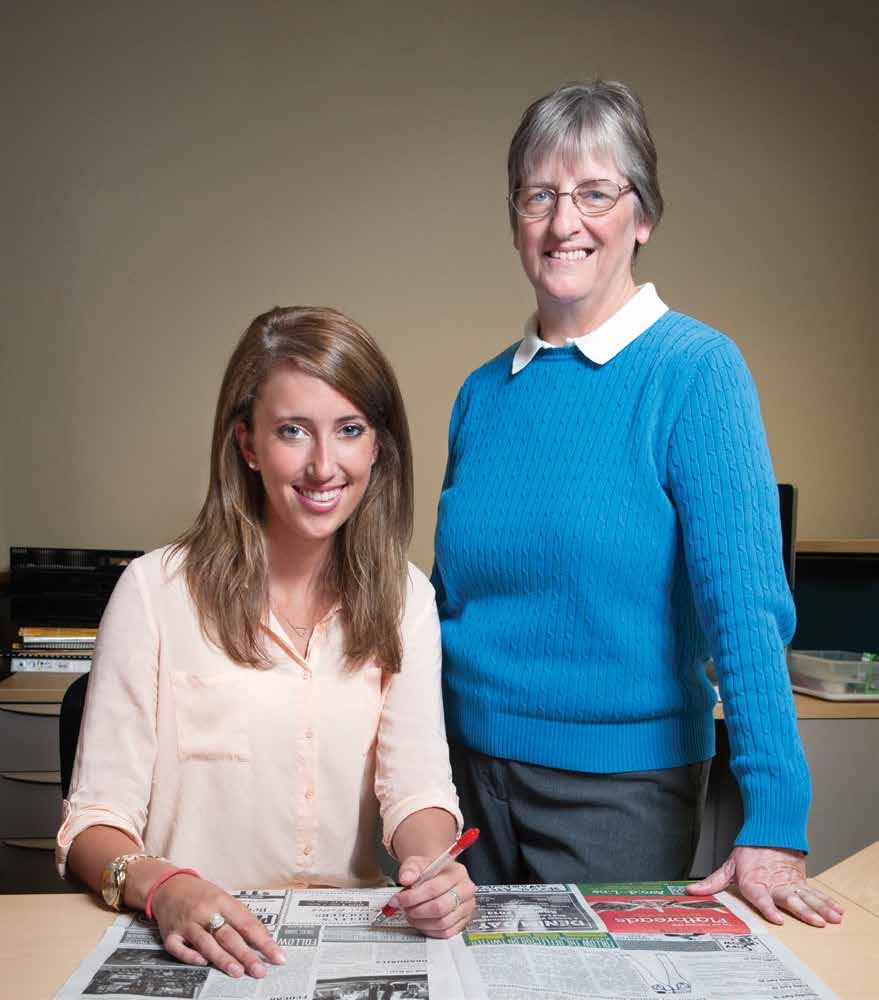
REFLECTOR ADVISER, JOURNALISM INSTRUCTOR
KAITLYN BYRNE CLASS OF 2014 REFLECTOR EDITOR-IN-CHIEF, SCHOLARSHIP RECIPIENT, FOUNDATION AMBASSADOR