
From Cowbells to Wedding Bells
The MSU Alumni Association would love to celebrate your big day with you. If you’re a soon-to-be-wed Bulldog, send us your wedding announcement or invitation, along with your email address and graduation year. We’ll send you a special gift to add some Maroon-and-White flair to your celebration.
The gift includes:
• 2 champagne flutes
• 2 mini cowbells
• 2 luggage tags for your honeymoon
• 2 cocktail napkins for that first bite of wedding cake
• Information on the MSU Young Alumni programming
• A personal congratulatory note from the MSU Alumni Association
MAIL YOUR ANNOUNCEMENT TO: Mississippi State University Alumni Association | 600 Russell St. | Starkville, MS 39759




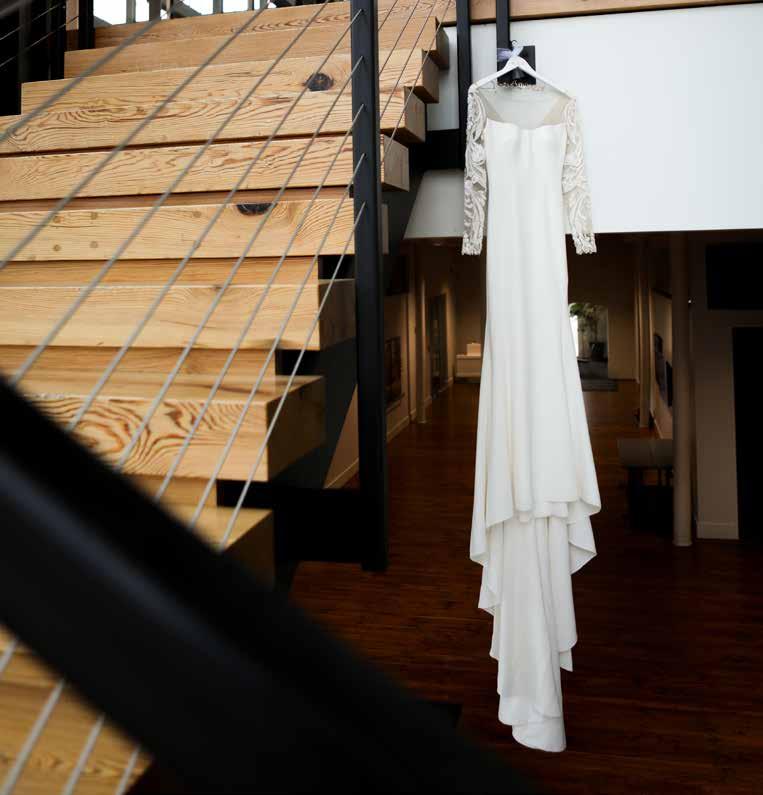
Bells are Ringing

Named to M-List as a top historic wedding venue
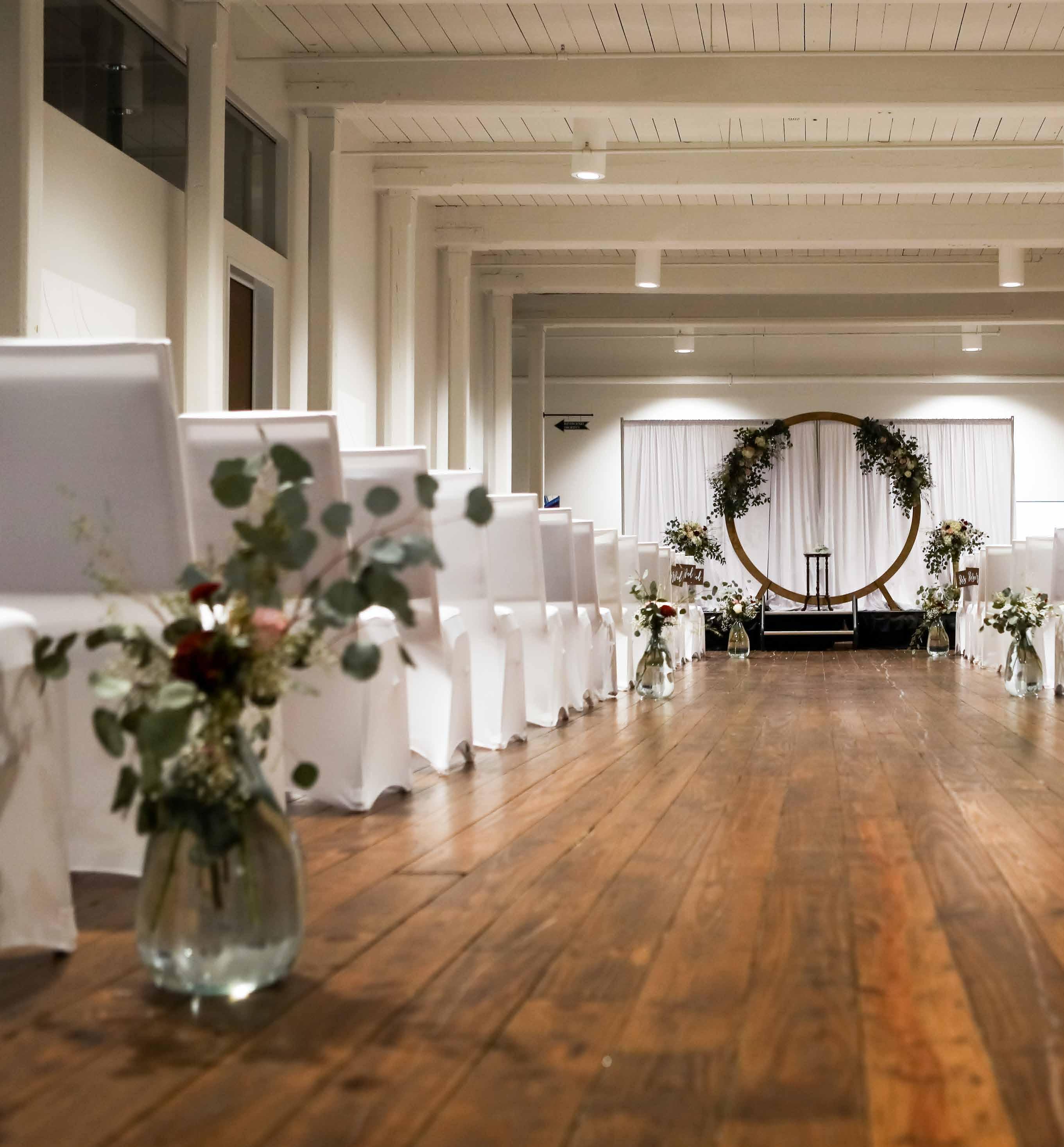
While cowbells dominate the atmosphere during home football games, it’s wedding bells gaining attention for The Mill at MSU. The fully renovated 124-year-old building ranks among the Top 5 historic wedding venues on Mississippi Magazine’s 2026 M-List.
Reopened in 2015, The Mill has quickly become an event destination for those wanting a venue with a historic look and feel but all the modern conveniences needed for a comfortable experience.
Exposed beams, original brick and hardwood flooring showcase the building’s century-long history. Since its renovation, The Mill at MSU has hosted nearly 700 gatherings, including weddings in every season.
Home to the Mississippi State University Division of Development and Alumni since early 2024, The Mill features more than a dozen distinctive meeting areas and 10,000 square feet of flexible event space, making it ideal for anything from 1,000 guests to an intimate gathering.
The Mill offers an on-site, 300-car parking garage and is conveniently located near both the Courtyard by Marriott and Hampton Inn. The hotels deliver 170 guest rooms and another 15,000 square feet of flexible meeting space.
Located at 600 Russell St., The Mill is within walking distance of Starkville’s bustling downtown and Cotton District. A convenient trolley service provides a connection between The Mill, the hotels and campus locations like The Chapel of Memories.
Call 662.325.7300 to see how The Mill at MSU can host your big day or other big event.
24 Owned
Mississippi State’s Office of Technology Management protects Bulldog intellectual property while sharing innovations with the world.
29 Common Ground
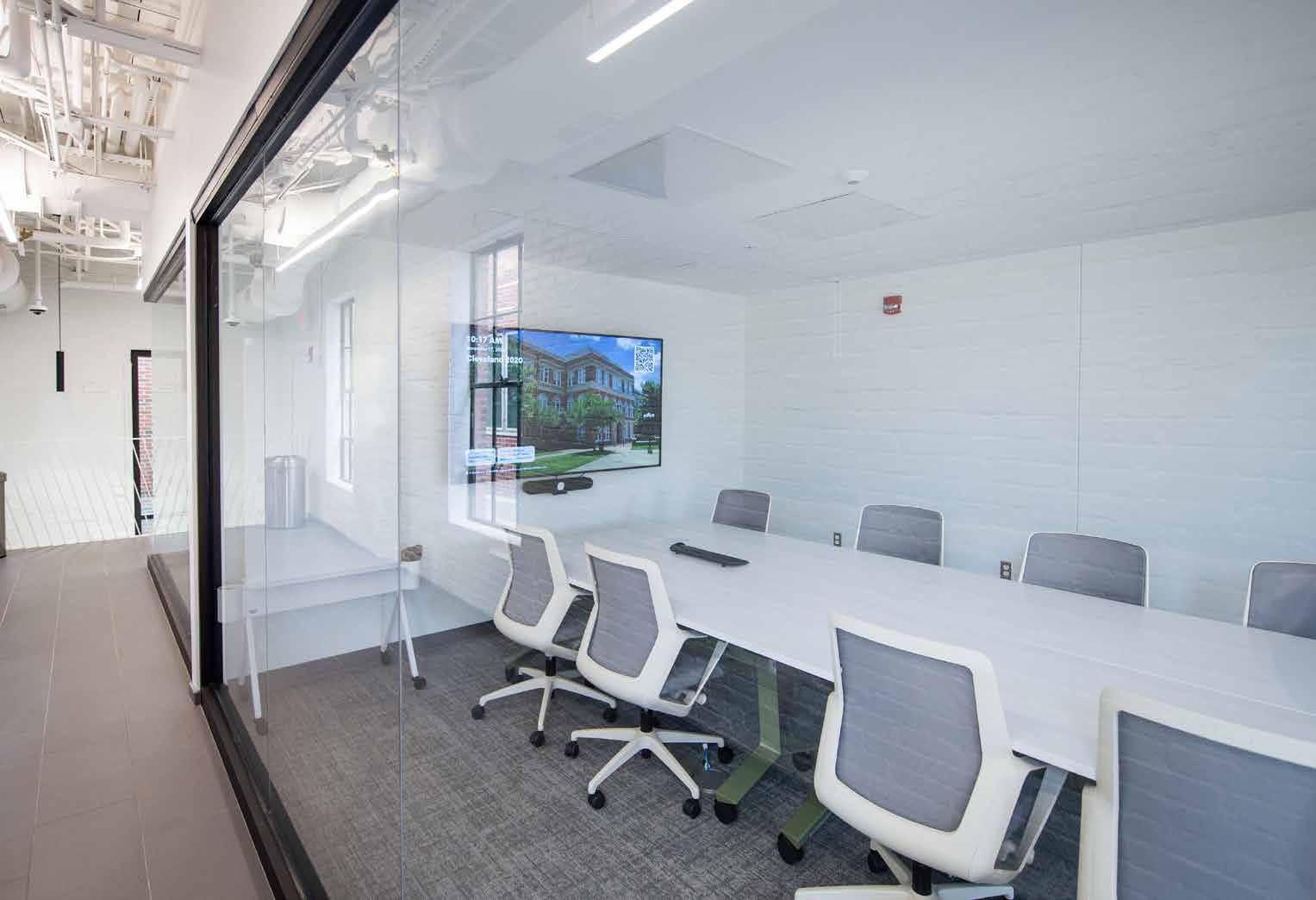
MSU’s Randy J. Cleveland Engineering Student Center strengthens collaboration, community and students.
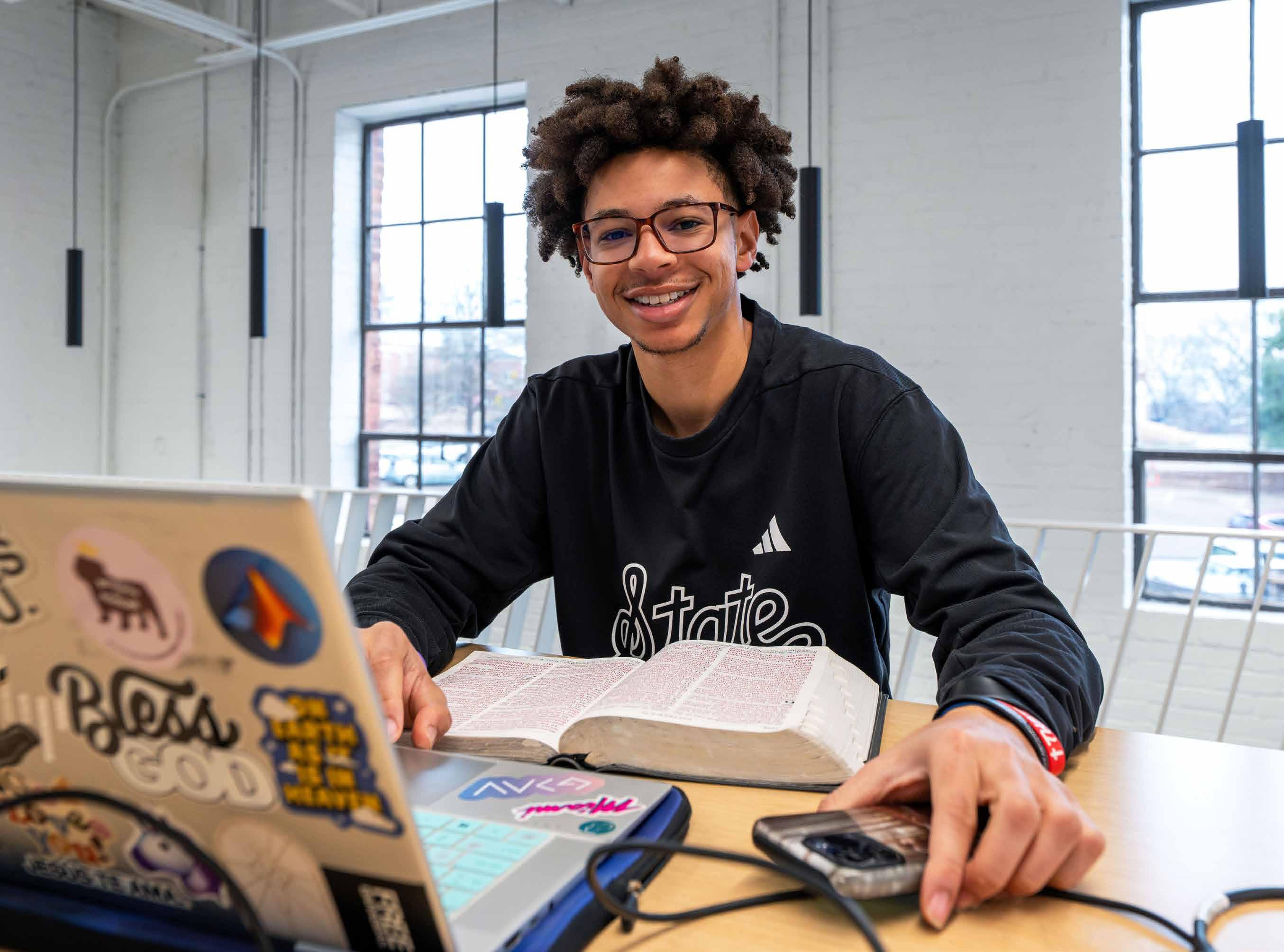
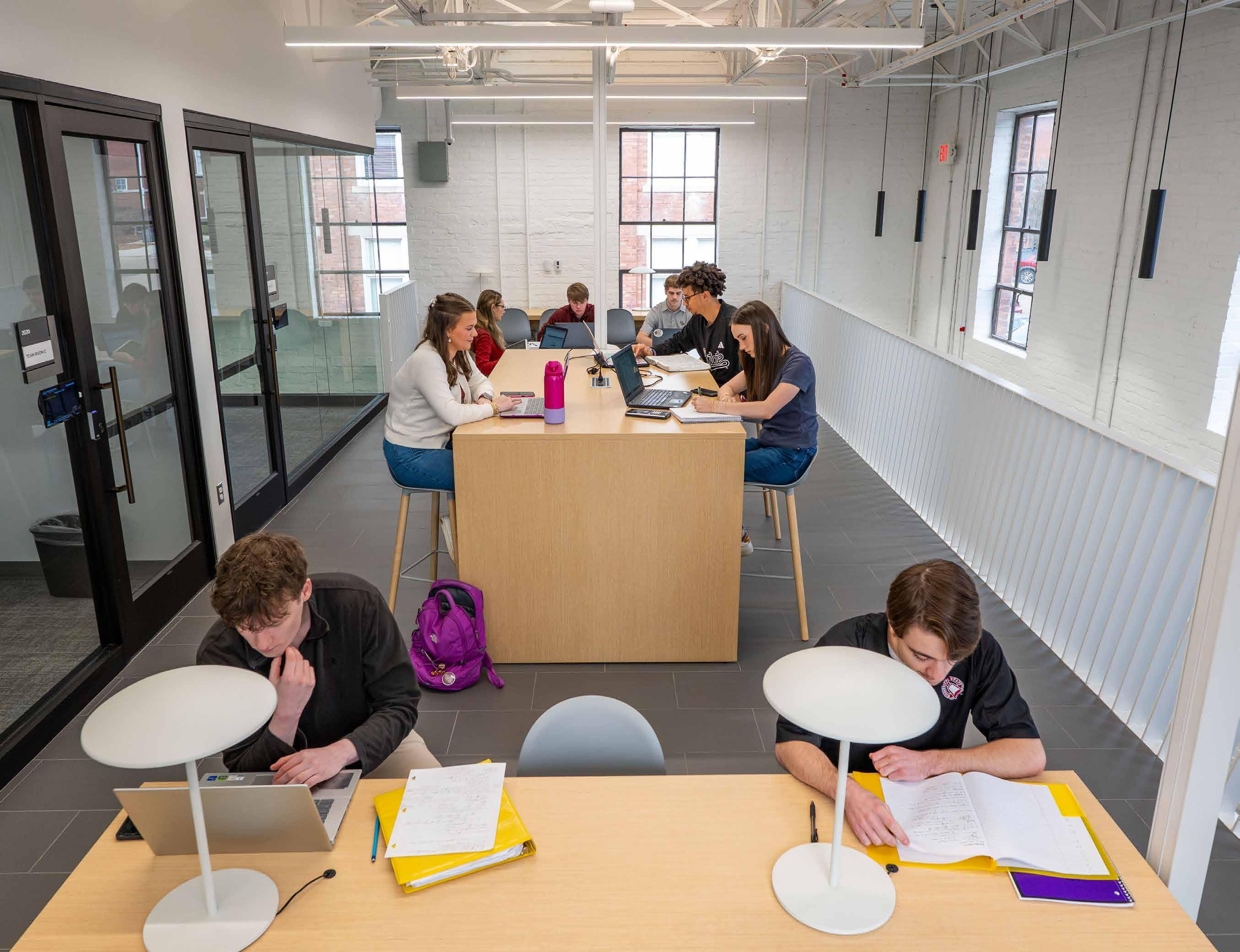
Electrical engineering senior Andric Knott, a recipient of the Dr. George Adebiyi Memorial Endowed Scholarship from Hattiesburg, studies in the Randy J. Cleveland Engineering Student Center. Made possible by a gift from its namesake, 1983 petroleum engineering alumnus Randy Cleveland, and his wife Nina, the center brings renewed life and a new purpose to a historic campus building.
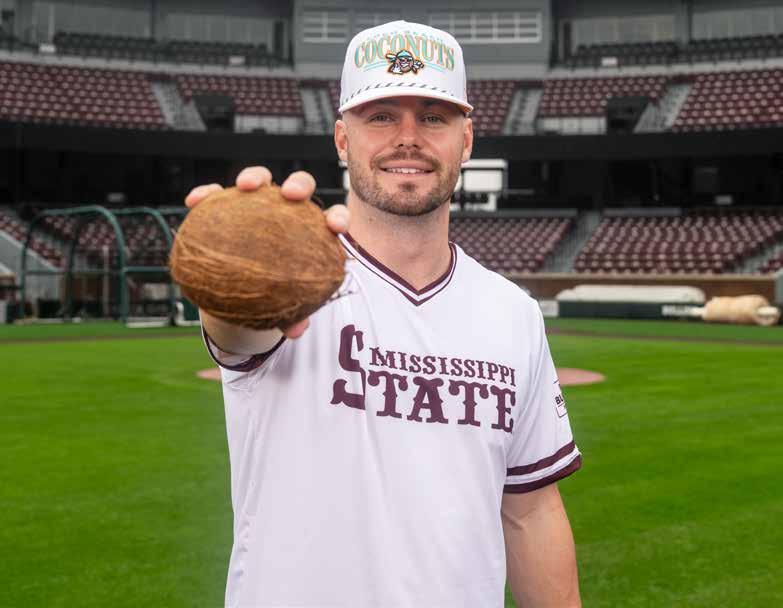

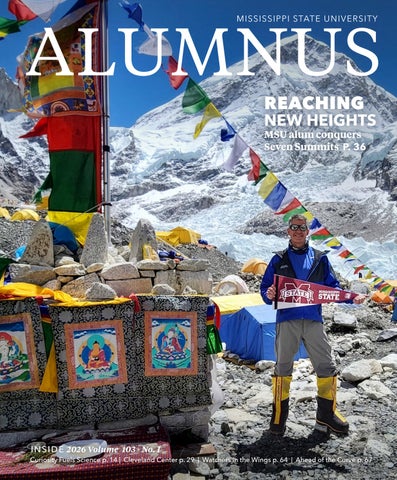
Steve “Duke” Pigott, a 1994 aerospace engineering graduate, stood at the peak of Mount Everest last year, completing a yearslong campaign to climb the Seven Summits—the highest peak on each continent. He is one of approximately 400 climbers to ever complete the task and the first to play a guitar at the Everest summit. Now, he’s on to his next Indiana Joneslike feats, still pursuing knowledge and adventure. Pg. 36 (Photo submitted)
PRESIDENT
Mark E. Keenum, ’83, ’84, ’88
VICE PRESIDENT FOR DEVELOPMENT AND ALUMNI
John P. Rush, ’94, ’02
ALUMNI ASSOCIATION
EXECUTIVE DIRECTOR
Jeff Davis
VICE PRESIDENT FOR STRATEGIC COMMUNICATIONS AND DIRECTOR OF PUBLIC AFFAIRS
Sid Salter, ’88
EDITORS
Susan Lassetter, ’07
Harriet Laird
WRITERS
Vanessa Beeson, ’19
Camille Carskadon, ’12
Aspen Harris, ’26
Susan Lassetter, ’07
Mary Pollitz, ’16
Shunecy “Shun” Pounds, ’14, ’18
Bethany Shipp, ’08
Carl Smith, ’10
Kevin Tate, ’94
DESIGNER
Heather Rowe
PHOTOGRAPHERS
David Ammon, ’08
Grace Cockrell
Emily Grace McCall, ’23, ’24
Beth Wynn
EDITORIAL OFFICE
P.O. Box 5325
Mississippi State, MS 39762
662.325.0630 slassetter@opa.msstate.edu
ADVERTISING
Jeff Davis
jdavis@alumni.msstate.edu 662-325-7000
Mississippi State University’s Alumnus magazine is published three times a year by the Office of Public Affairs and the Mississippi State University Alumni Association. Send address changes to Alumni Director, P.O. Box AA, Mississippi State, MS 39762-5526. Call 662.325.7000, or email cturner@advservices.msstate.edu
SPARKING IMAGINATION

MSU ignites young minds through new STEAM discovery center
By Bethany Shipp, Photos by Beth Wynn
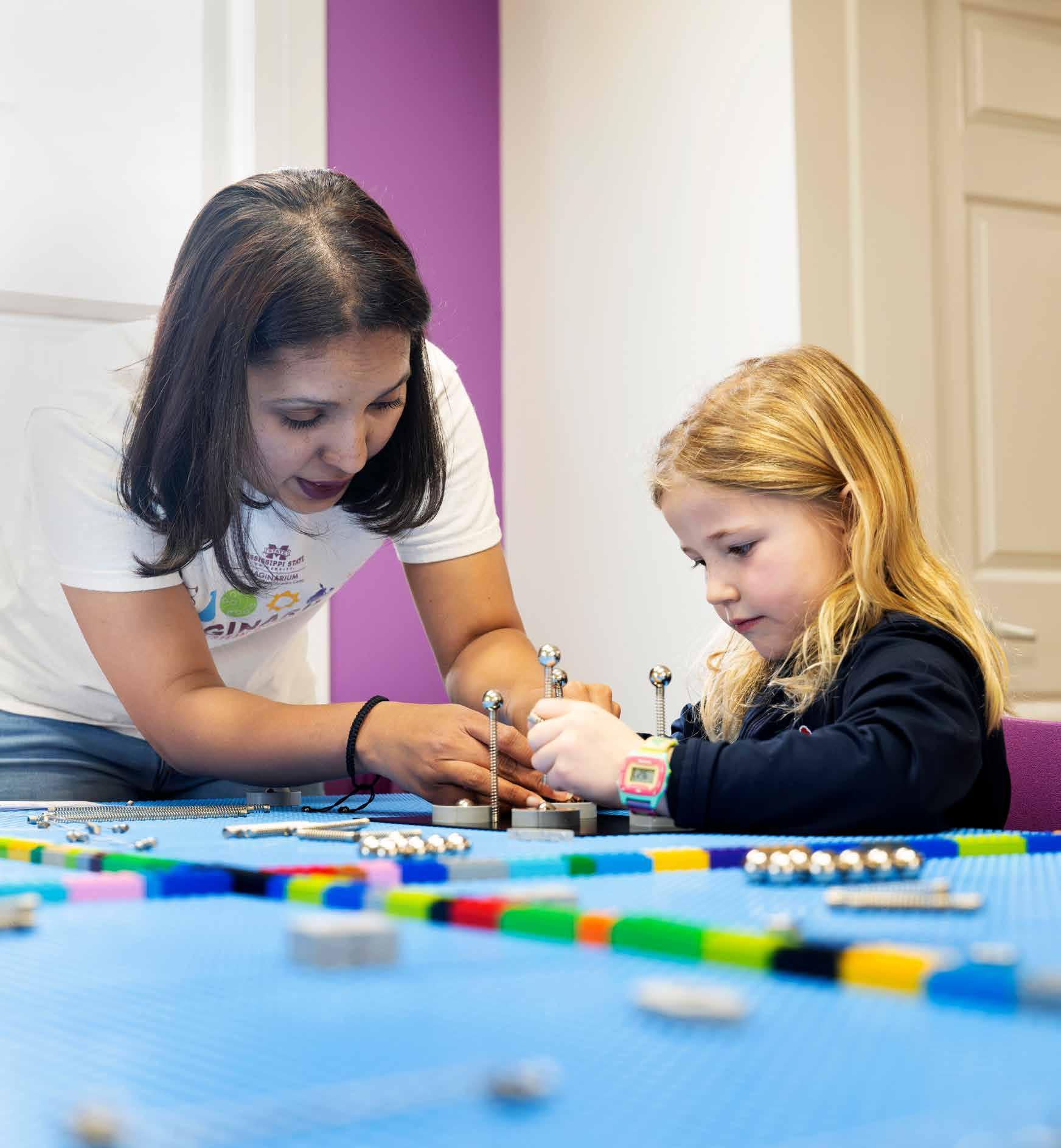
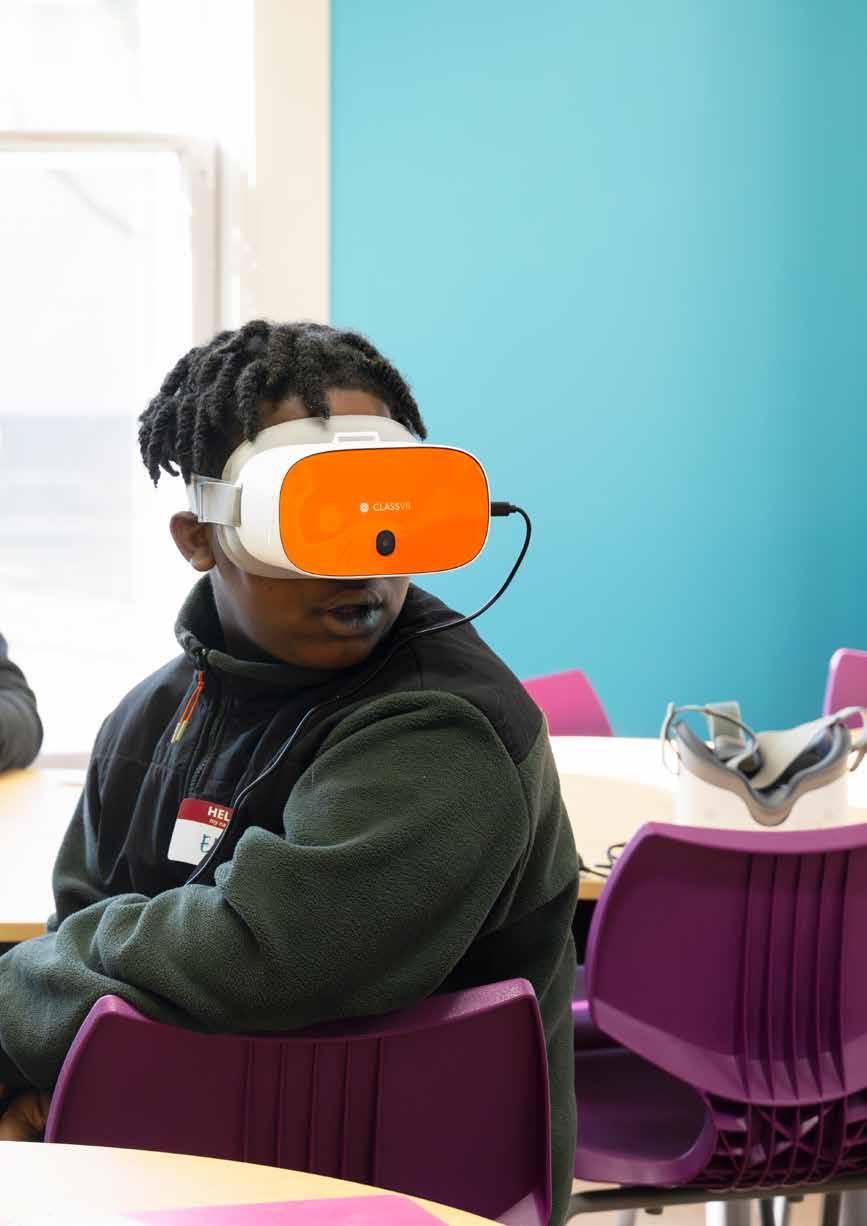
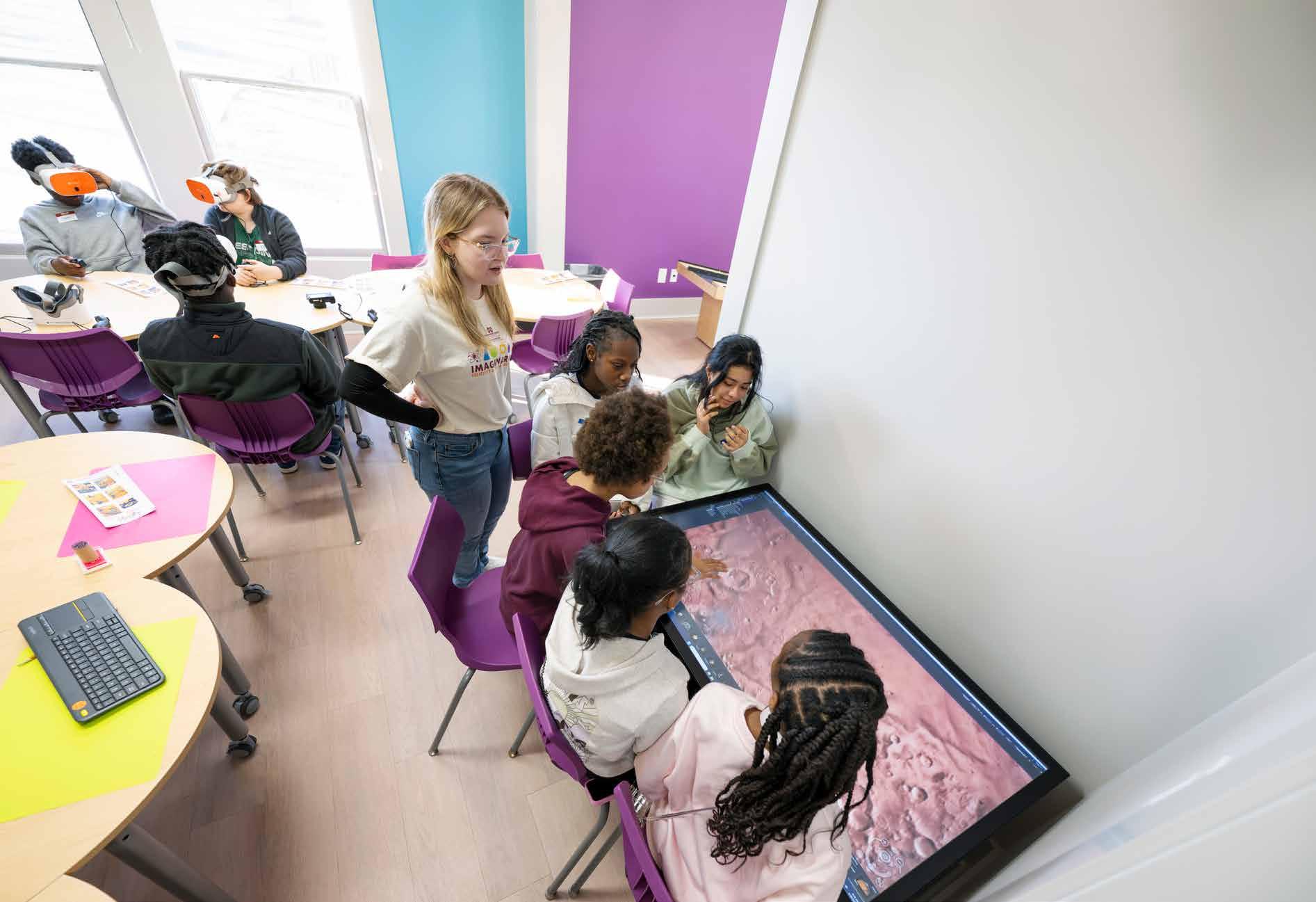
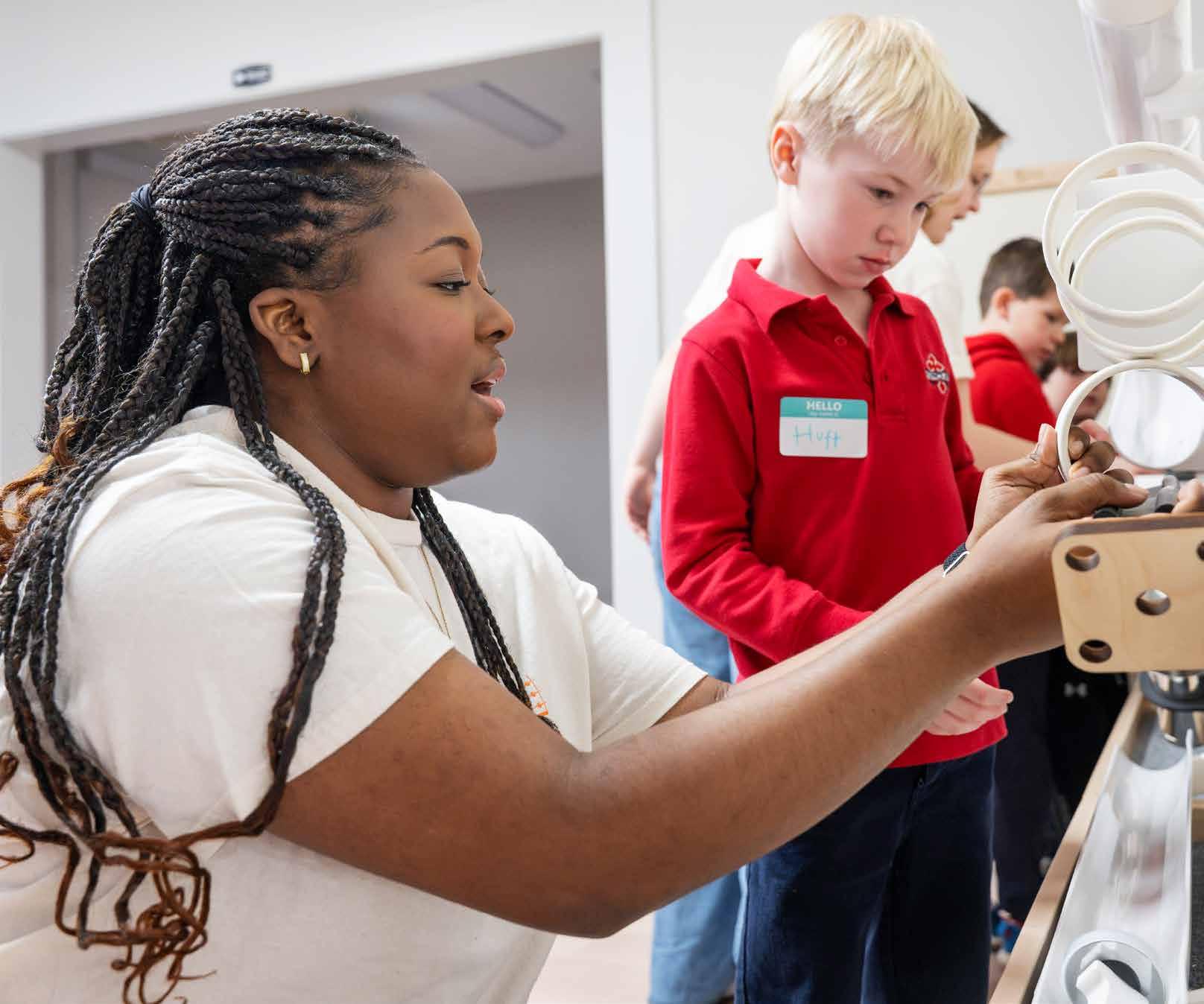
Above left: Akshaya “Maya” Godavarthi, a master’s student in educational psychology from Vijayawada, India, helps a young visitor explore hands-on STEAM activities at Mississippi State University’s Imaginarium: Creativity and STEAM Discovery Center.
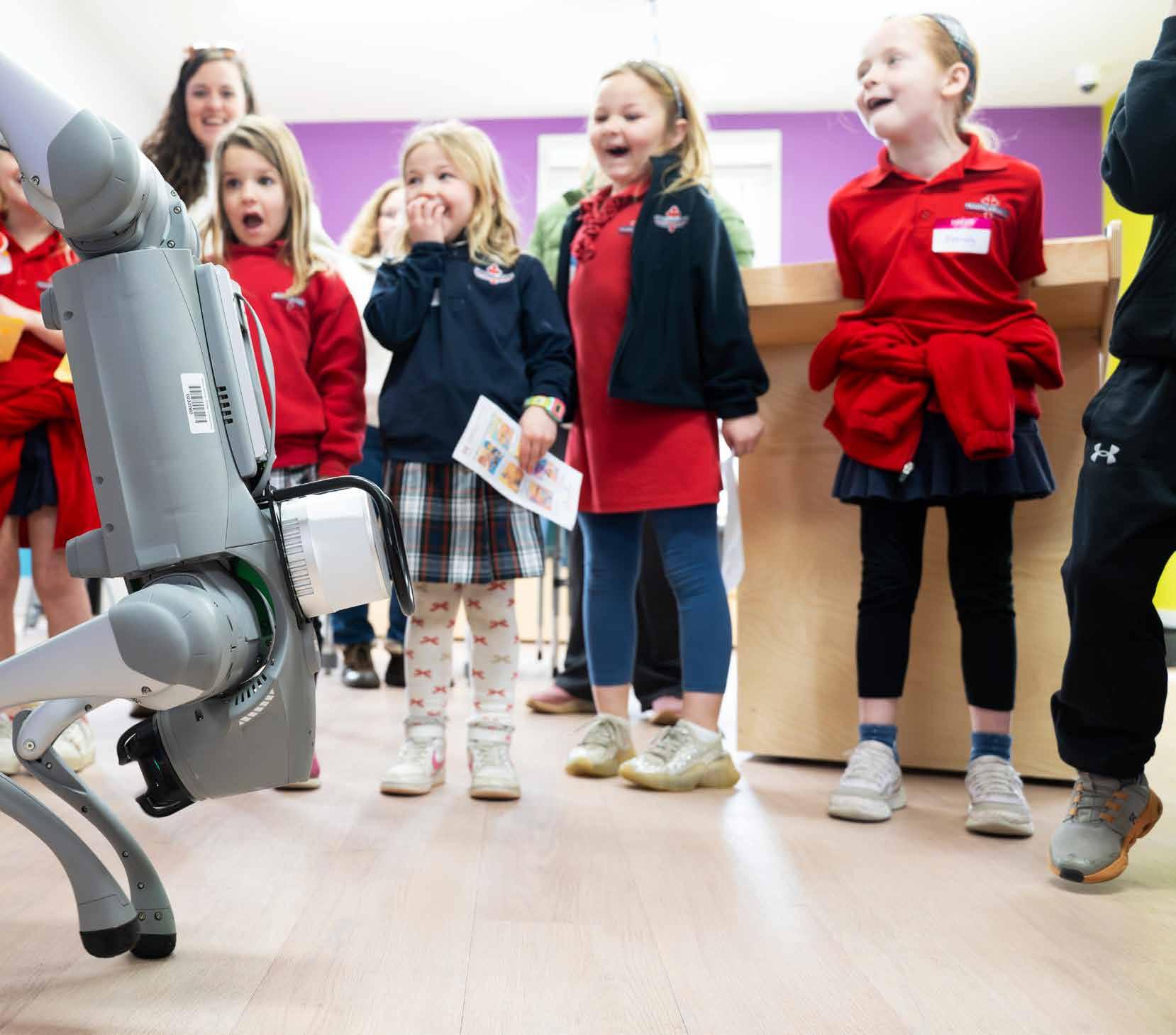

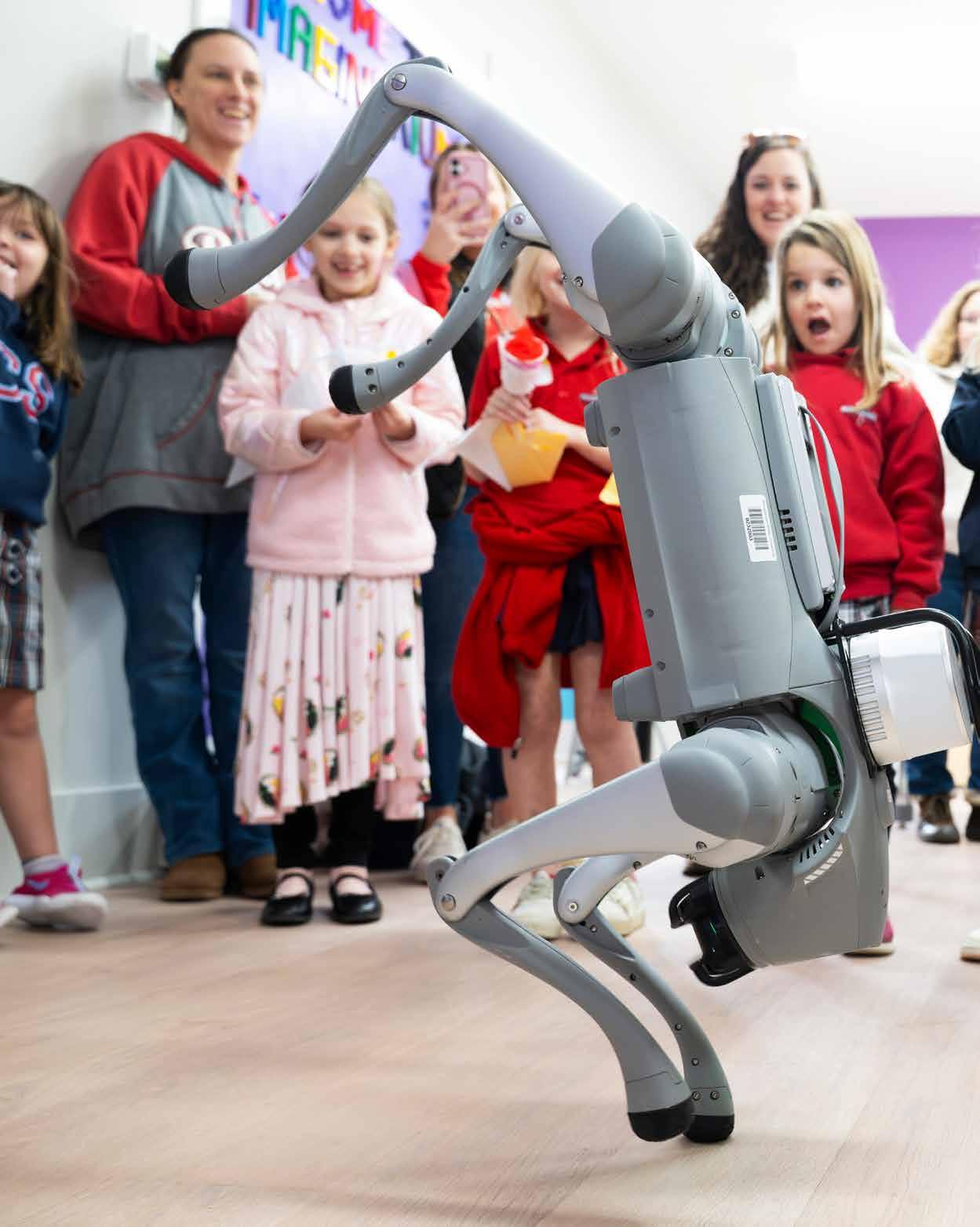
What do constellations, a wind tunnel and a robotic dog have in common?
All three are part of the hands-on learning and exploration taking place at Mississippi State University’s new Imaginarium: Creativity and STEAM Discovery Center.
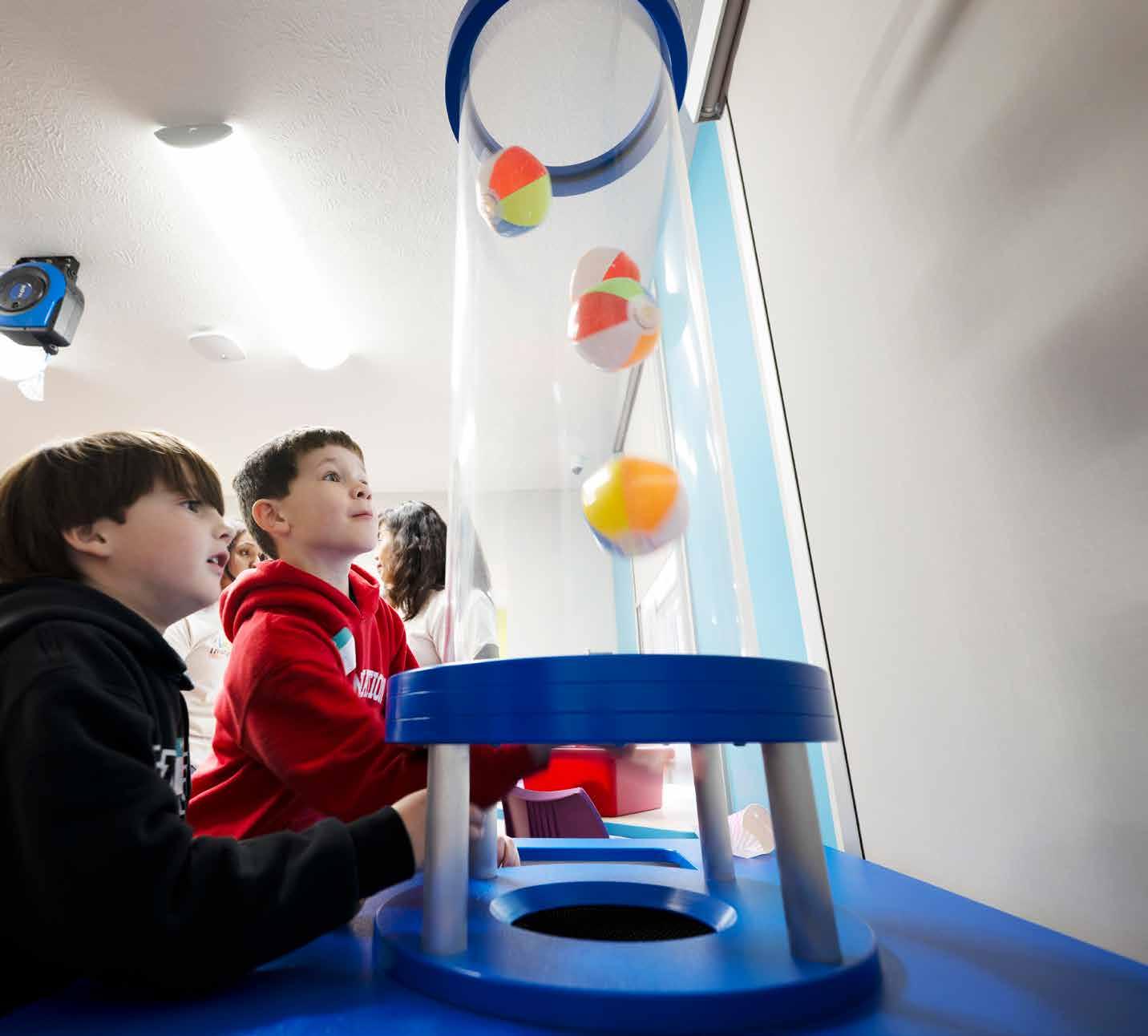
With a name that stands for science, technology, engineering, art and math, the STEAM center is more than a science center—it’s a creative laboratory that encourages children to become problem-solvers, designers and innovators. From building earthquakeresistant structures to watching drawings come alive on an interactive wall, the center features guided activities for children in kindergarten through eighth grade.
Now open on MSU’s campus, the Imaginarium also serves as a dynamic teaching and research space, providing valuable experiential learning opportunities for students and paving the way for collaborative partnerships across the nation.
A DREAM COME TRUE
The Imaginarium was cofounded by Sareh Karami and Mehdi Garemani, educational psychology faculty members in MSU’s College of Education. When the couple moved to Starkville, they noticed the absence of a local science center and dreamed of filling that void. Karami said they loved taking their daughter to science centers and wanted other families to experience the value of immersive-learning.
In fall 2025, that dream became a reality with the opening of the Imaginarium, which gives children in Starkville and other areas of the Magnolia State access to hands-on STEAM activities that foster curiosity, learning, creativity and criticalthinking skills.
“We created the Imaginarium so every child in our community could experience the excitement of discovery, regardless of where they live or what resources they have,” Karami said. “Not every family can travel two hours to a STEAM center, but now they can have
that same opportunity right here.”
Featured exhibits include a car track, magnet wall, earthquake simulation table, creative coding station, virtual reality and much more. It is open for field trips and private events with plans to offer regular public hours in the future.
The center is the expansion of the Imaginarium Express, a traveling makerspace initiated by Karami and Garemani in 2023. The mobile unit continues to serve schools, libraries and rural communities throughout the state, with the goal of reaching children who may not otherwise have access to STEAM learning opportunities.
LEARNING AND GROWING
As children are learning at the Imaginarium, so are the MSU students working with them. The center provides educational psychology students with meaningful hands-on experiences as they develop collaborative activities for children, lead them through those exercises and collect data for research purposes.
Above right: Grace Austin, an educational psychology graduate student from Eupora, guides a visitor through an interactive exhibit at MSU’s Imaginarium, where university students help lead hands-on learning experiences for visiting children.

Grace Austin, a graduate student from Eupora, said the Imaginarium has helped her tremendously, especially with learning how to adapt exhibits for children with a wide range of learning needs. But her favorite parts are the light-bulb moments she gets to witness.
“Sometimes kids come in and say, ‘I don’t know if I can do this,’ or ‘I don’t understand this.’ Seeing that aha moment when they finally get it and grow from it—that has been one of my favorite experiences,” Austin said. “I love seeing the joy on their faces when they complete the activities.”
For Akshaya “Maya” Godavarthi, a master’s student from Vijayawada, India, the best part is what takes place behind the scenes.
“Before a field trip, we brainstorm ideas, have planning sessions and test out new activities,” Godavarthi said. “After the field trip, we discuss
what worked and what didn’t. We give each other suggestions and try to eliminate what is not working. I really enjoy the behind-the-scenes process of brainstorming, testing and refining activities.”
Godavarthi said the Imaginarium has helped her grow as a researcher, leading her to further her education at MSU by pursuing a doctoral degree.
While the Imaginarium is anchored in educational psychology and greatly benefits students like Austin and Godavarthi, other MSU programs—such as industrial engineering, architecture and secondary education—are seeking to collaborate with the center. Institutions outside the state are also taking notice and reaching out to the Imaginarium team to join forces. From research to activity development, collaborations are already underway with the University of Alabama,
Ball State University and the Da Vinci Science Center in Allentown, Pennsylvania.
THE POWER OF POSSIBILITY
As Karami and Garemani fulfill the university’s mission of teaching, research and service through the Imaginarium, their hope is future generations—perhaps even future Bulldogs—are inspired by what they learn at the center and empowered to choose a STEAM field one day.
“At the Imaginarium, we want every child to leave feeling curious, confident and excited to learn,” Garemani said. “Whether it’s their first time using robotics or building a tower that finally stands, they learn it’s OK to make mistakes and try again. Creative problem-solving teaches us learning isn’t about getting it right the first time—it’s about being brave, trying new things and growing through each step.” n
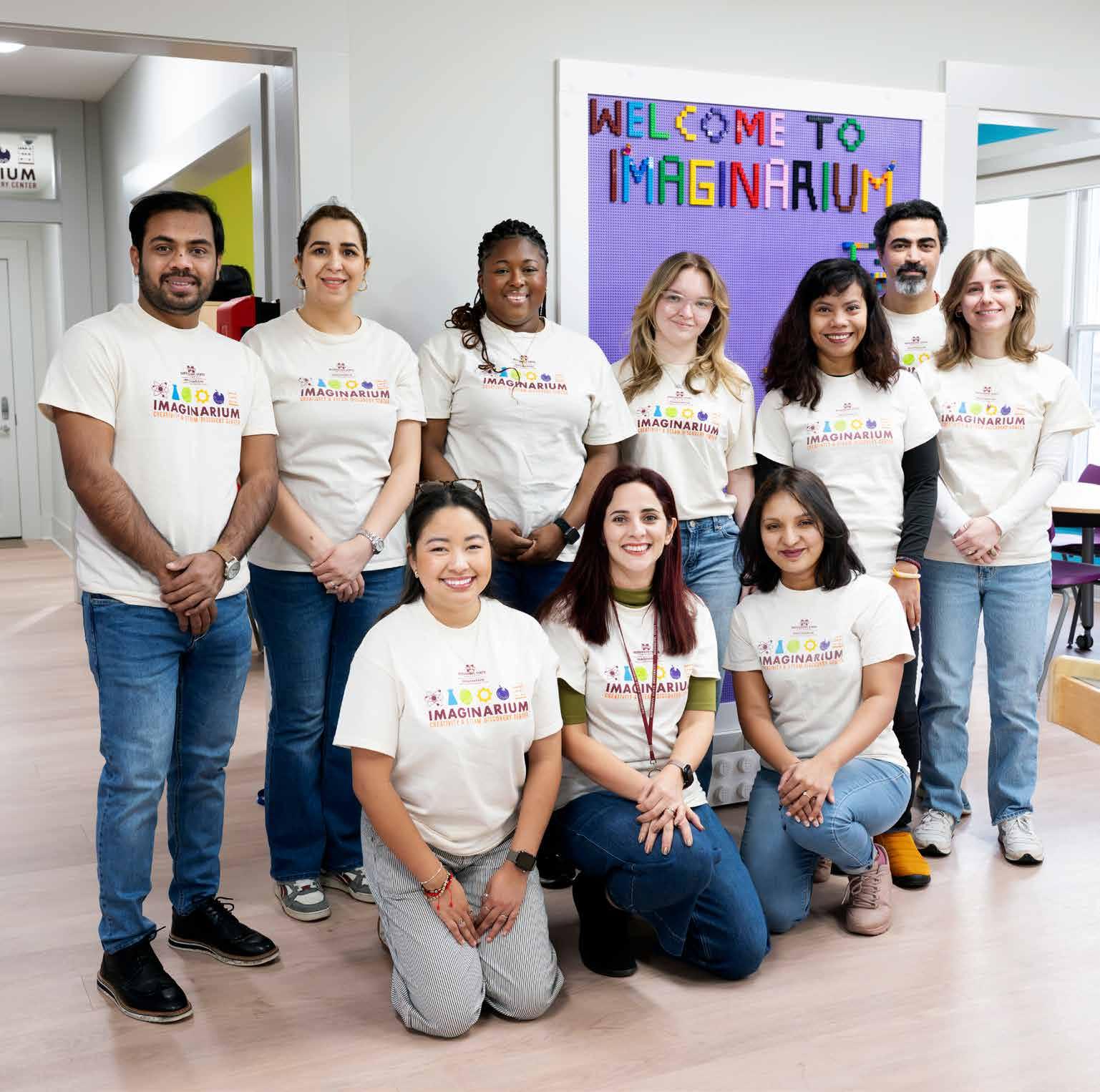
Children explore interactive exhibits while Mississippi State University students lead hands-on activities at the Imaginarium: Creativity and STEAM Discovery Center. At right, members of the Imaginarium team pose inside the center, which provides experiences for visiting students while offering MSU students valuable teaching and research opportunities.
STEA M AT HOME PAPER CUP ROCKET
Using simple craft materials, you can build a paper cup launcher and a rubber-band-powered paper rocket. When you launch it, you’ll see how force and motion work together to make the rocket fly.
MATERIALS
• 2 paper cups
• 2 rubber bands
• Scissors (adult help recommended)
• Glue stick
• Decorative paper, pencils, markers or paint
STEPS
1. Decorate the launcher. Start with one paper cup, which will be your launcher. Decorate it using markers, colored paper or drawings—anything you like.
2. Trim if needed. If you glued colored paper onto the launcher cup, carefully cut off any extra so the edges are neat and smooth.
3. Prepare the rocket. Take the second paper cup. Using scissors, make four small cuts near the rim—two on one side and two on the opposite side (adult help recommended). This cup will become the rocket.
4. Link the rubber bands. Take the two rubber bands and loop them together to make one longer rubber band.
5. Add the rubber bands to the rocket. Pull the linked rubber bands through the cuts in the rocket cup, following the pattern shown in the picture.
6. Secure the bands. Tie the rubber band ends on both sides so they stay firmly in place inside the rocket cup.
7. Hide and decorate the rocket. Cover the outside of the cup to hide the rubber bands but leave the opening of the cup uncovered. Decorate the sides using colored paper, drawings or designs.
LAUNCH TIME!
Place the rocket cup upside down on top of the launcher. Gently push the rocket down, then release to watch it fly into the air!

















What’s Old is New Again
MSU’S 104-YEAR-OLD STATE FOUNTAIN BAKERY MAKES RETURN TO ORIGINAL, NEWLY RENOVATED SITE
By
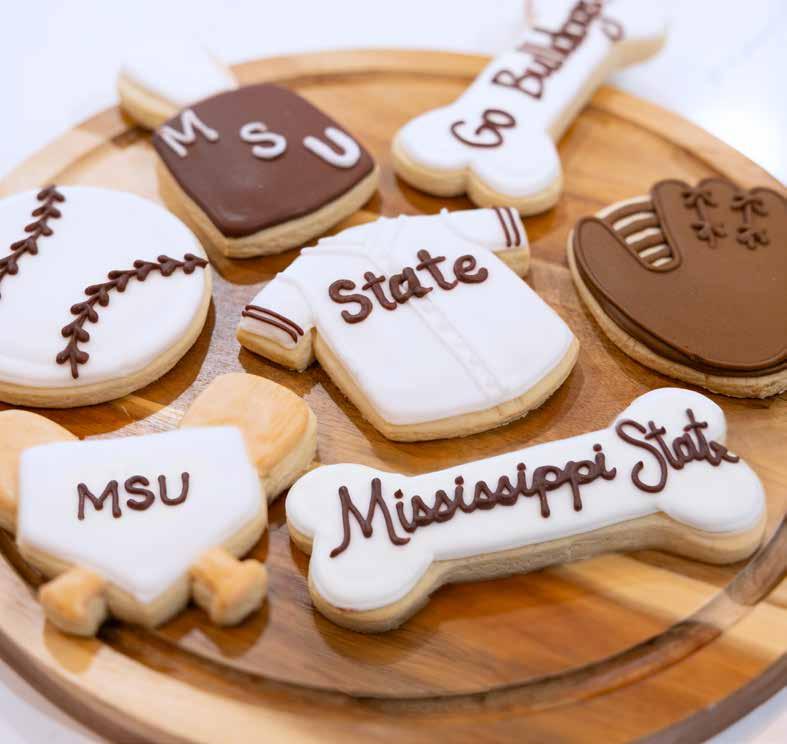
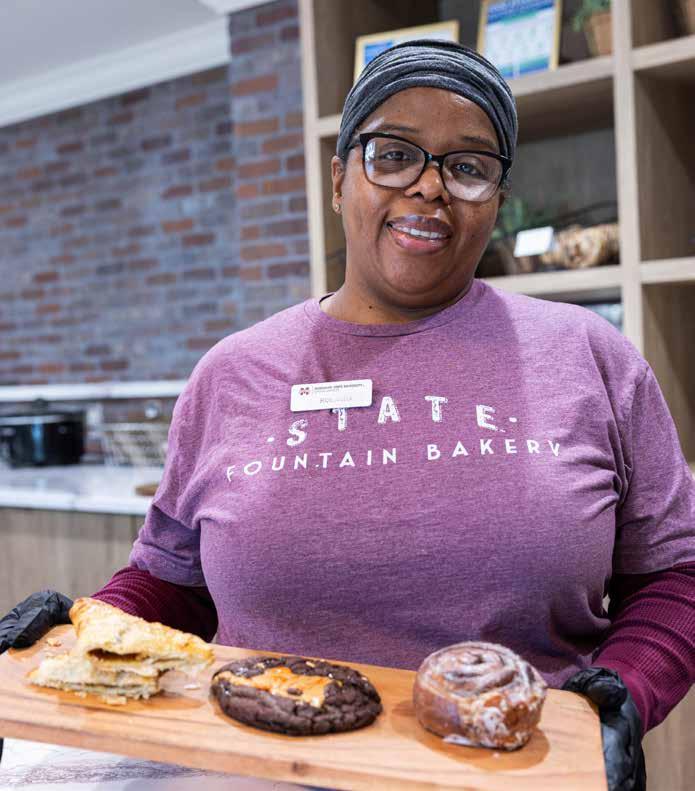
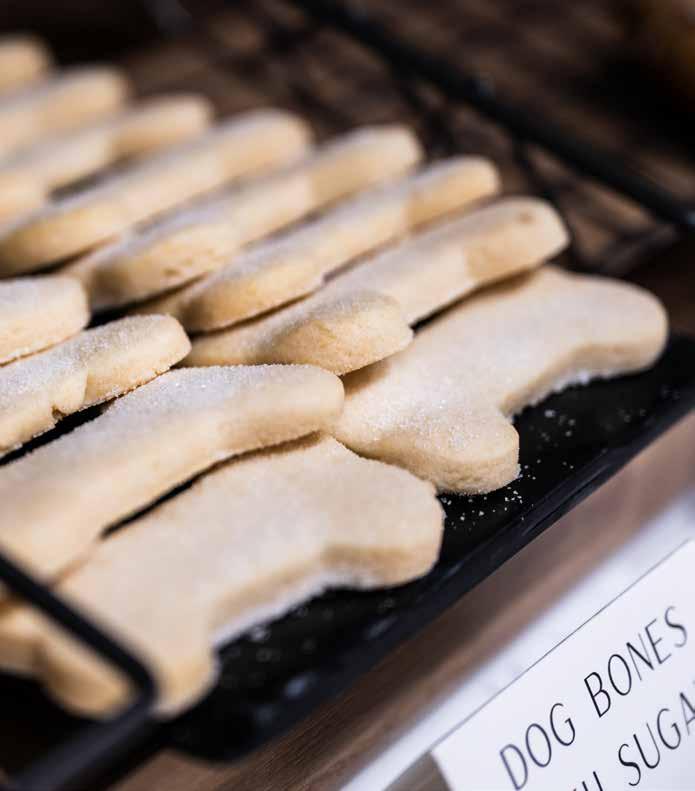
State Fountain Bakery has been preparing desirable delicacies like dog bone cookies, chess pies and caramel cakes at Mississippi State University for more than 100 years—a feat many businesses might envy. The essential ingredient: community. It’s past, present and future are shaped by the Bulldog family.
While the bakery’s size has fluctuated through the years and
an early morning of hungry students, employees, alumni and visitors.
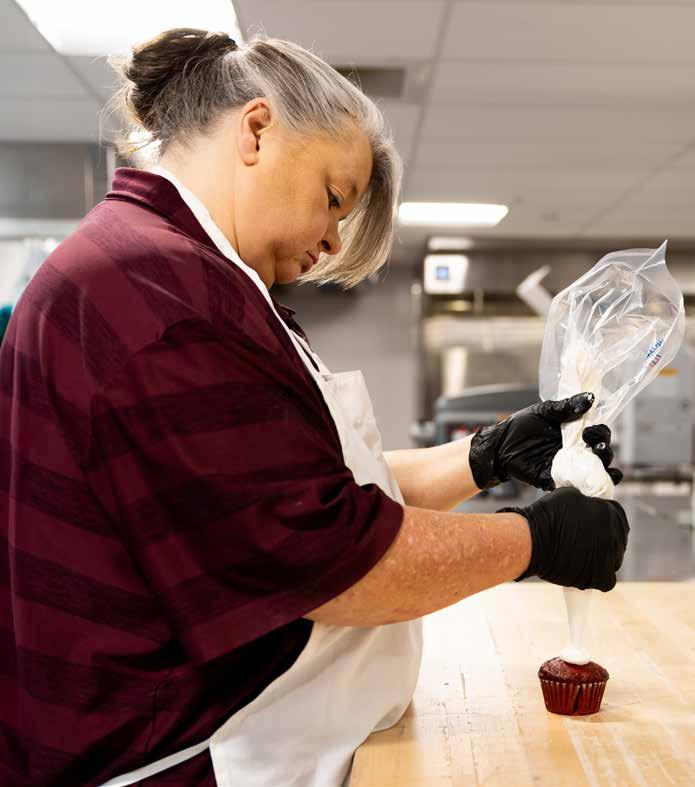
Jennings, a cake decorator with Aramark, the university’s food service provider, has been rising before the roosters for 27 years to prepare chocolate creme pies, chocolate chip cookies, fruit bars and more. Her work is driven, she said, by the time-honored baked goods and the bakery itself.
“I’ve been here for a long time now
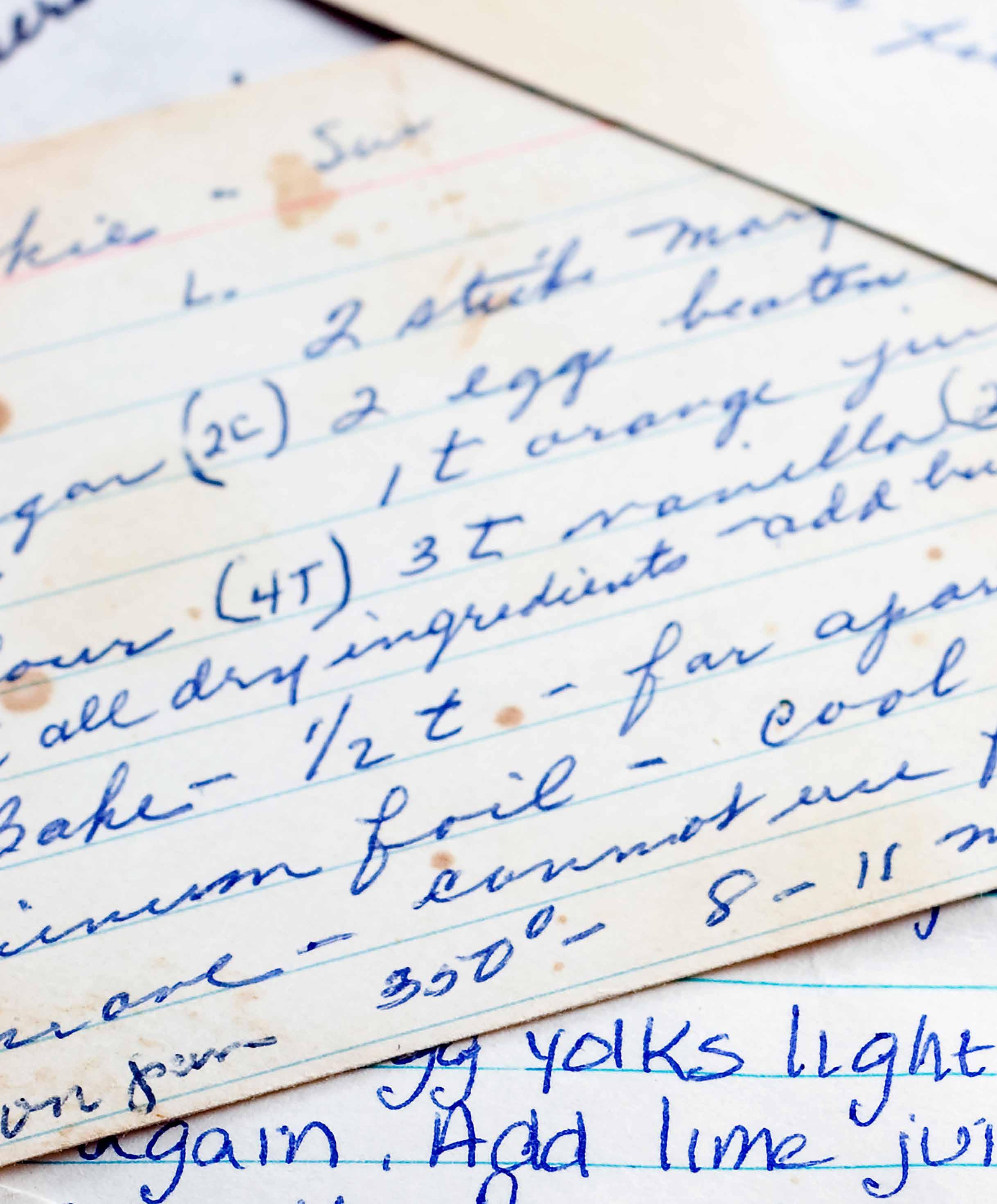
and enjoy the tradition involved— especially visiting with alumni and taking their orders, which usually include some of our oldest recipes,”
Regina Hyatt, MSU vice president for student affairs, agreed.
“The recipes are certainly important—the dog bone cookies of today taste like the ones from decades ago," she said. "But it’s the nostalgia and feeling you get from eating these treats that bring people back time and time again.”
Hyatt recently was at the center of seeing State Fountain Bakery make a
Harriet Laird, Photos by Grace Cockrell, Beth Wynn, Landon Scheel with Aramark and MSU Archives
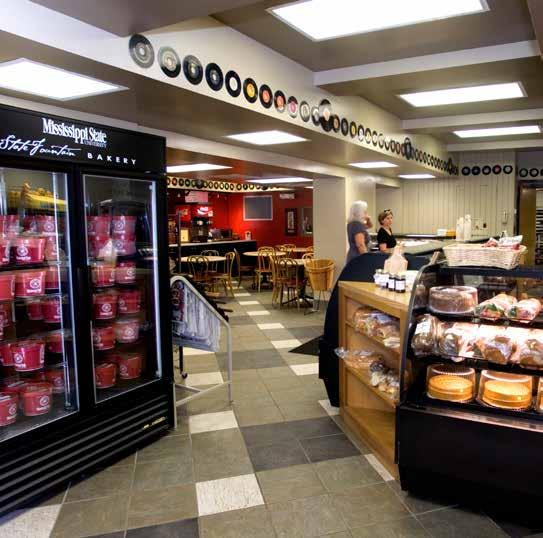

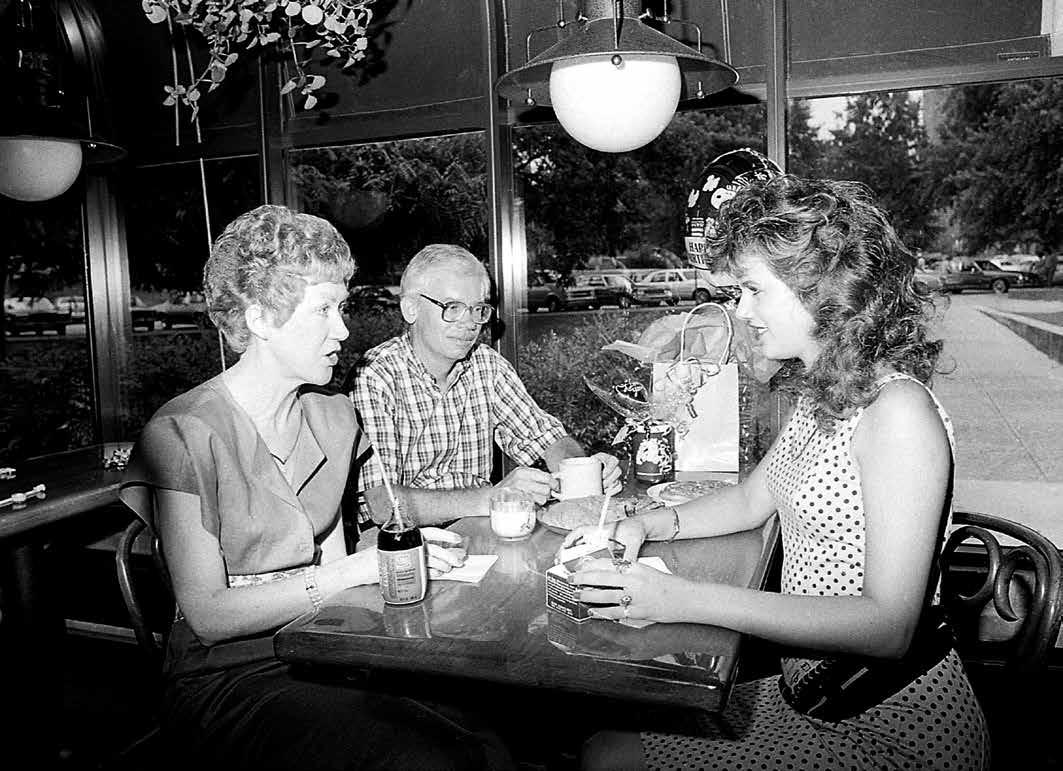
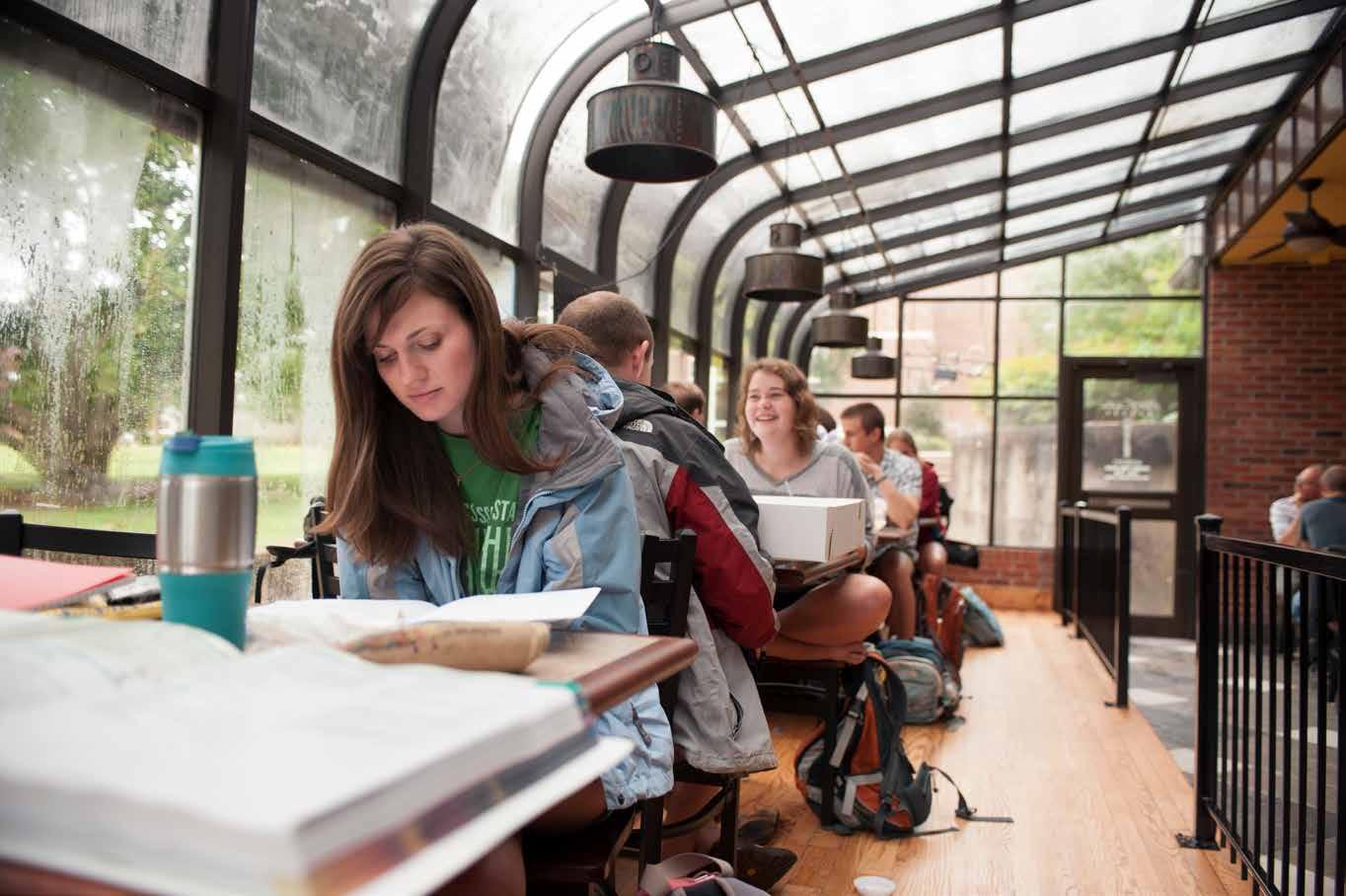
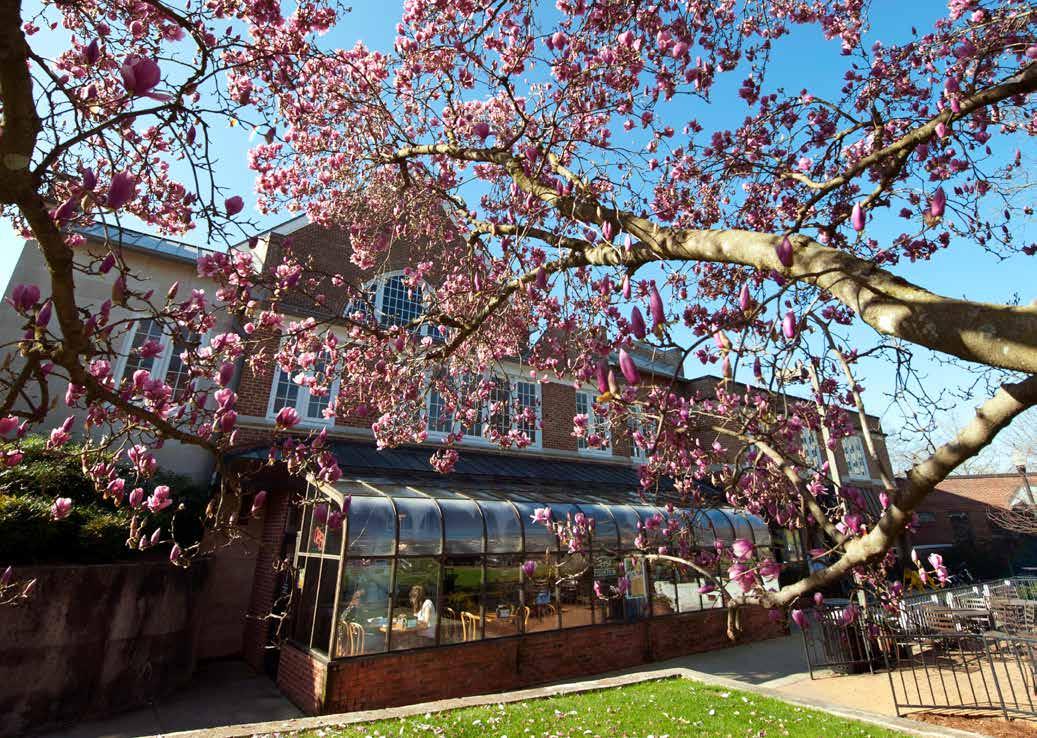
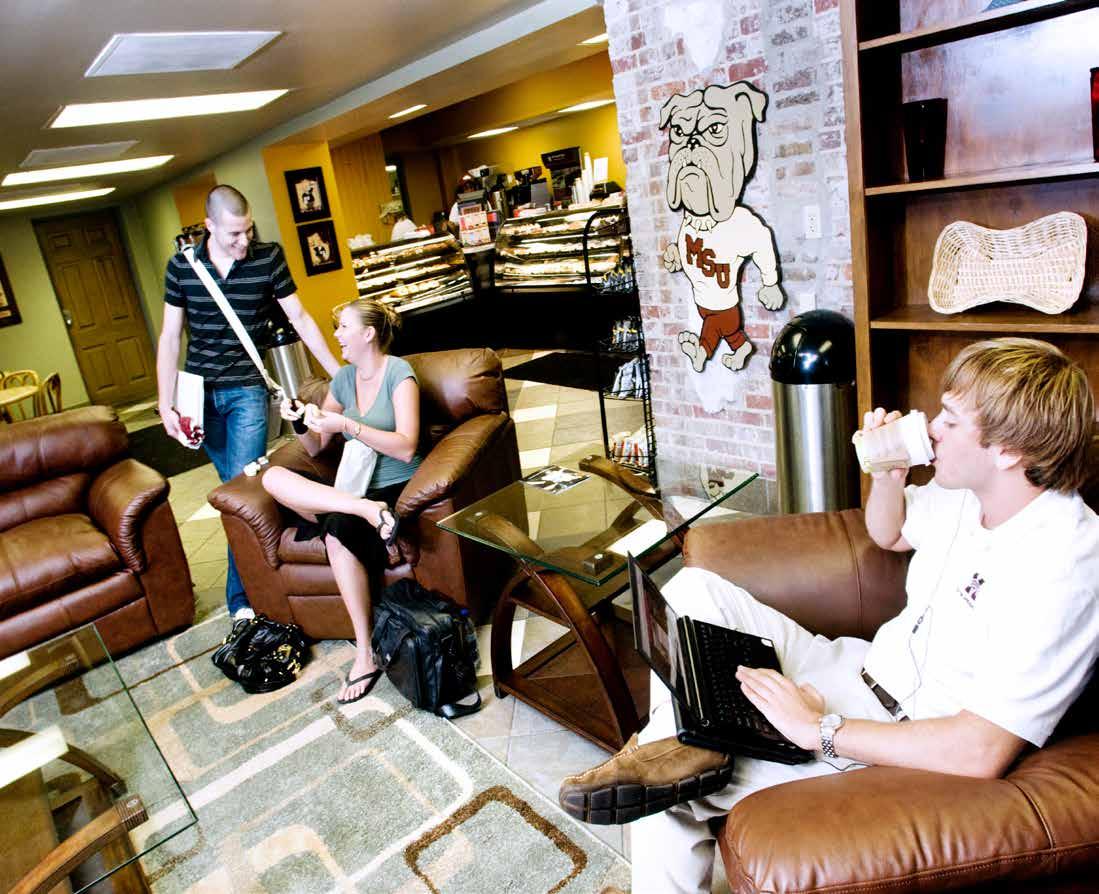
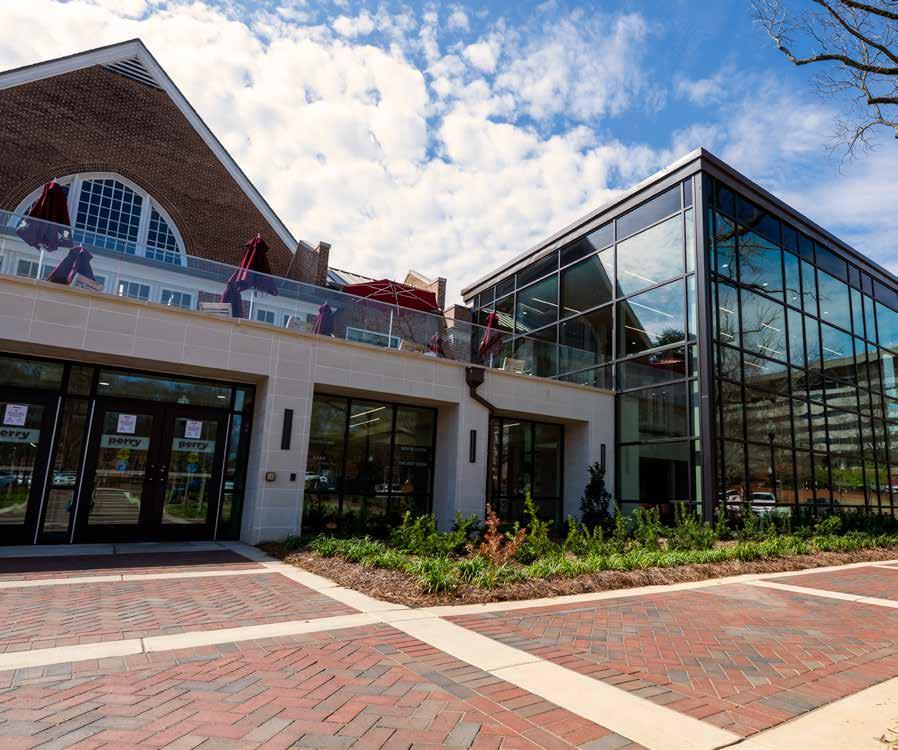
on the first floor of Perry Food Hall, which was completely renovated over the past two years. Prior to the cafeteria upgrade, the bakery had two stints in Colvard Student Union. In the mid-1990s, all cafeteria operations— including the bakery—were temporarily relocated to the Union during the food hall’s first complete makeover, made possible by benefactor Jane Perry in memory of her late husband and MSU alumnus, George.
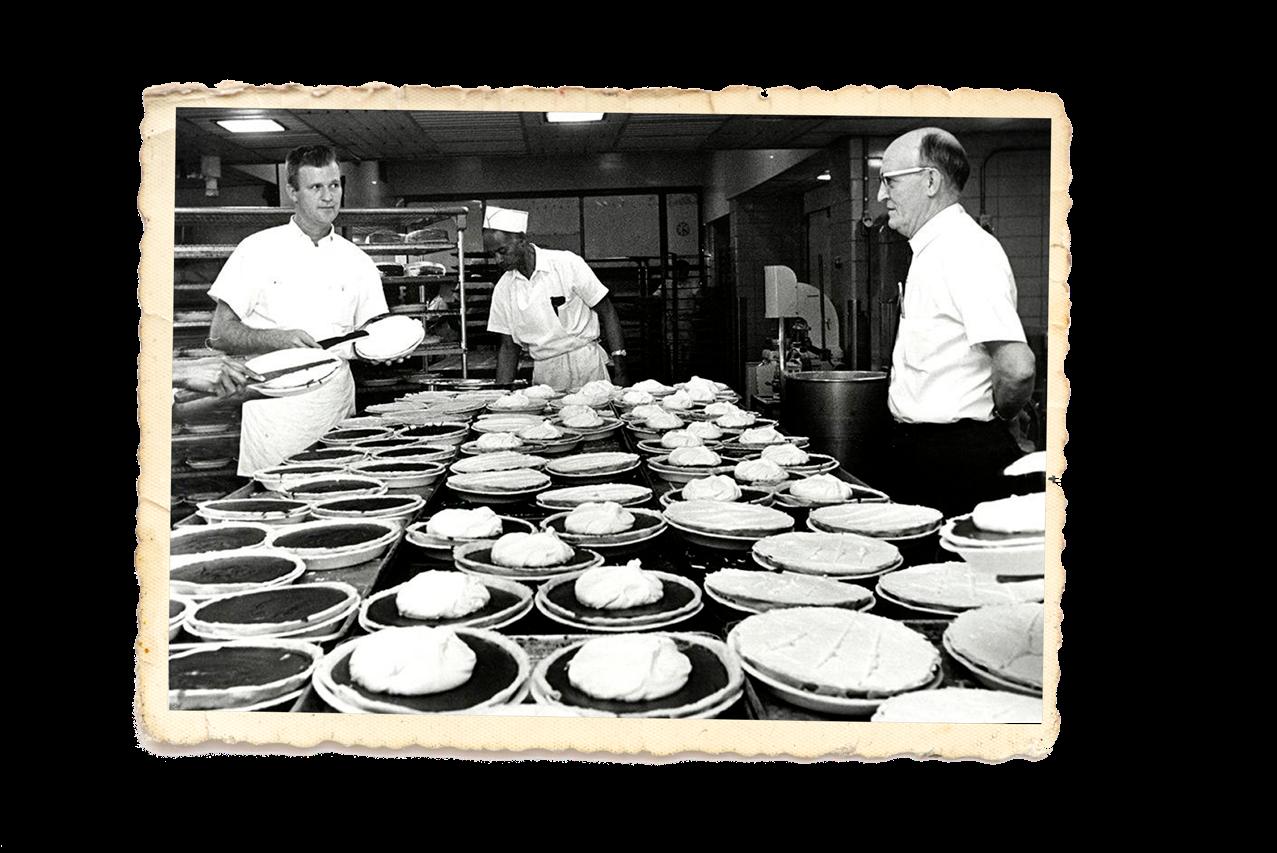
The first mention of State Fountain Bakery in the student newspaper, The Reflector, was when a 1922 article
“The recipes are certainly important— the dog bone cookies of today taste like the ones from decades ago. But it’s the nostalgia and feeling you get from eating these treats that bring people back time and time again.”
~ REGINA HYATT
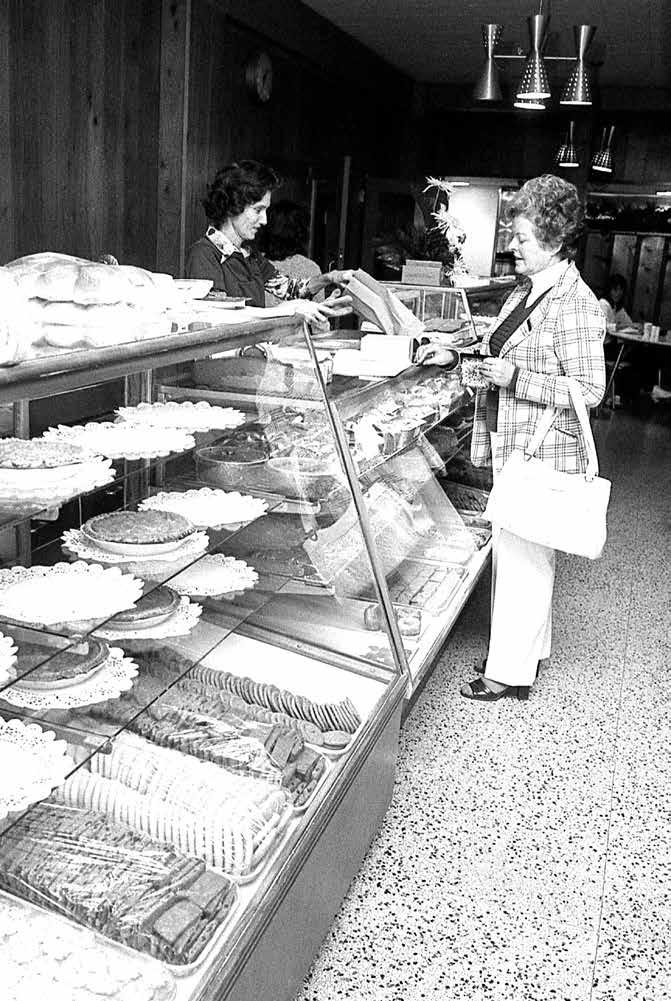
on the new and expansive cafeteria referenced the “bake shop.” Another early story lists breakfast there for 15 cents in the mid-1930s.
It certainly didn’t hurt State Fountain’s reputation in the early years to be included in the historic cafeteria, constructed through an $800,000 appropriation from the Mississippi Legislature. Once completed, the structure was considered the largest university cafeteria in the country and became known as an architectural showplace.
Its majestic look can be attributed to the architect commissioned for

the work, Theodore Link, who is best known for his 1904 World’s Fair buildings and Union Station in St. Louis, and the Mississippi State Capitol. Early descriptions of what was then State Cafeteria point out its massive stone walls, cathedral-like interior and timber hammerbeam ceiling, all elements in Link’s use of the Richardsonian Romanesque style popular in the early 1900s. The Mississippi Department of Archives and History named the facility a “Mississippi Landmark” building in 1984.
Fast forward 100 years, and today’s
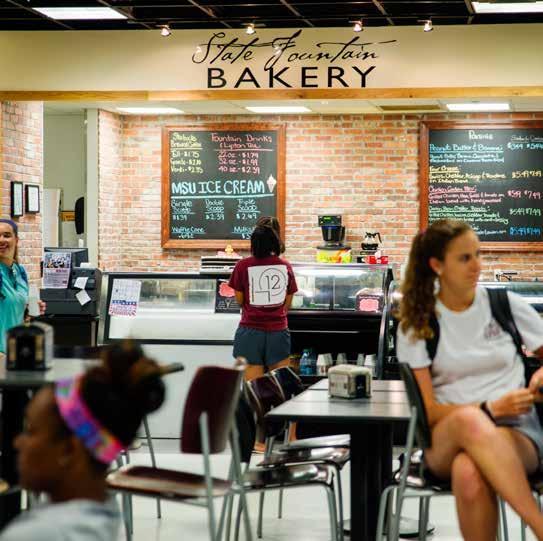
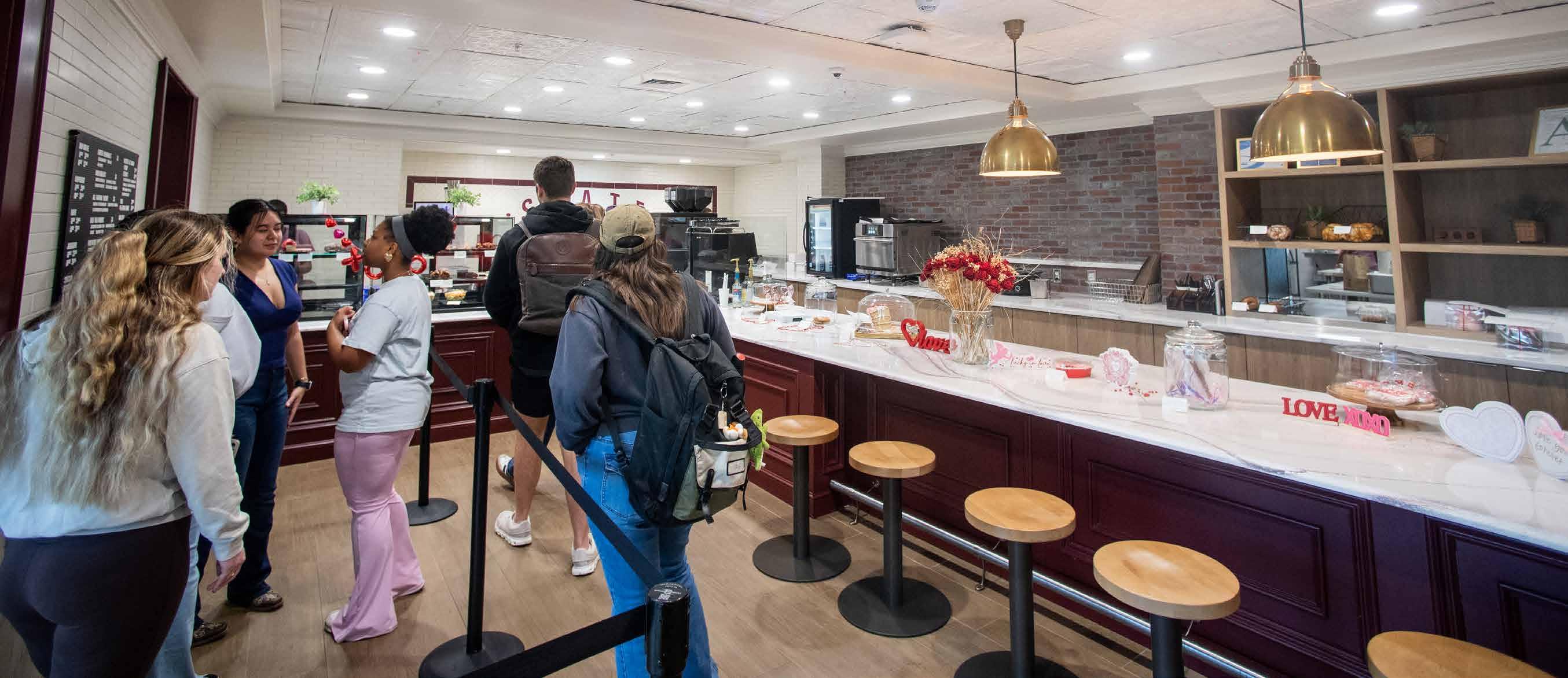
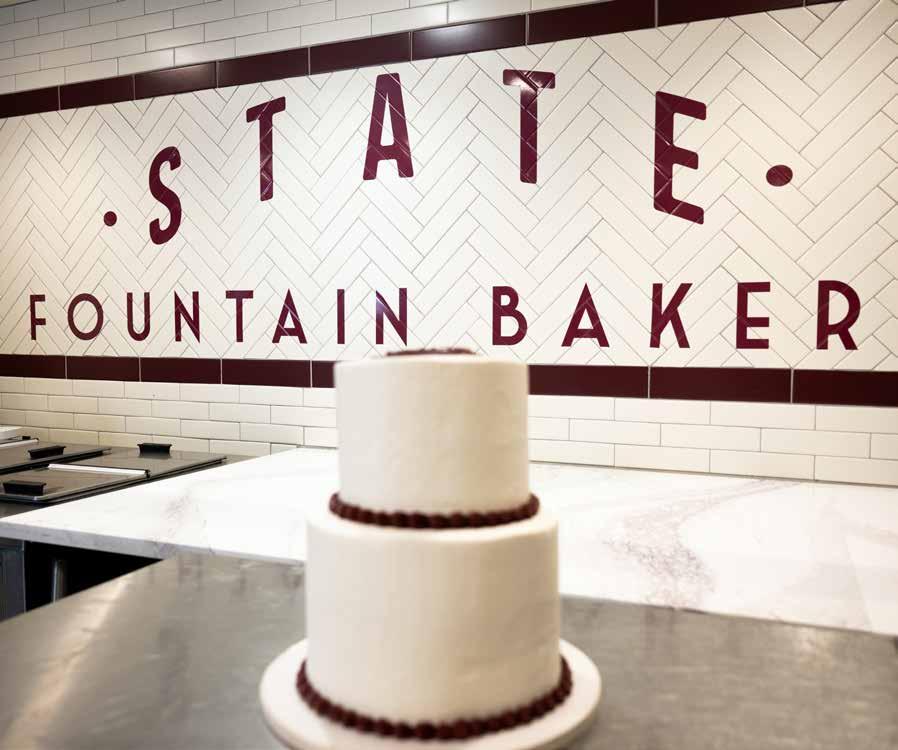
bakery—inside that same building— reflects the original brown wood look and even boasts a soda fountain bar and stools much like those used in the Roaring ’20s.
“Its history definitely lent itself to the design choices we’ve made there. It’s a strong nod to tradition, but in a fresh, fun way,” Hyatt said.
Also fresh are the milk and eggs delivered from the university’s Bearden Dairy and South Farm poultry unit, just as they were more than 10 decades ago, according to the 1922 Reflector story. While still used in many memorable munchies and

drinks that have endured over the years, they are also in newer provisions like the muscadine ripple milkshake and Edam pimento cheese croissant.
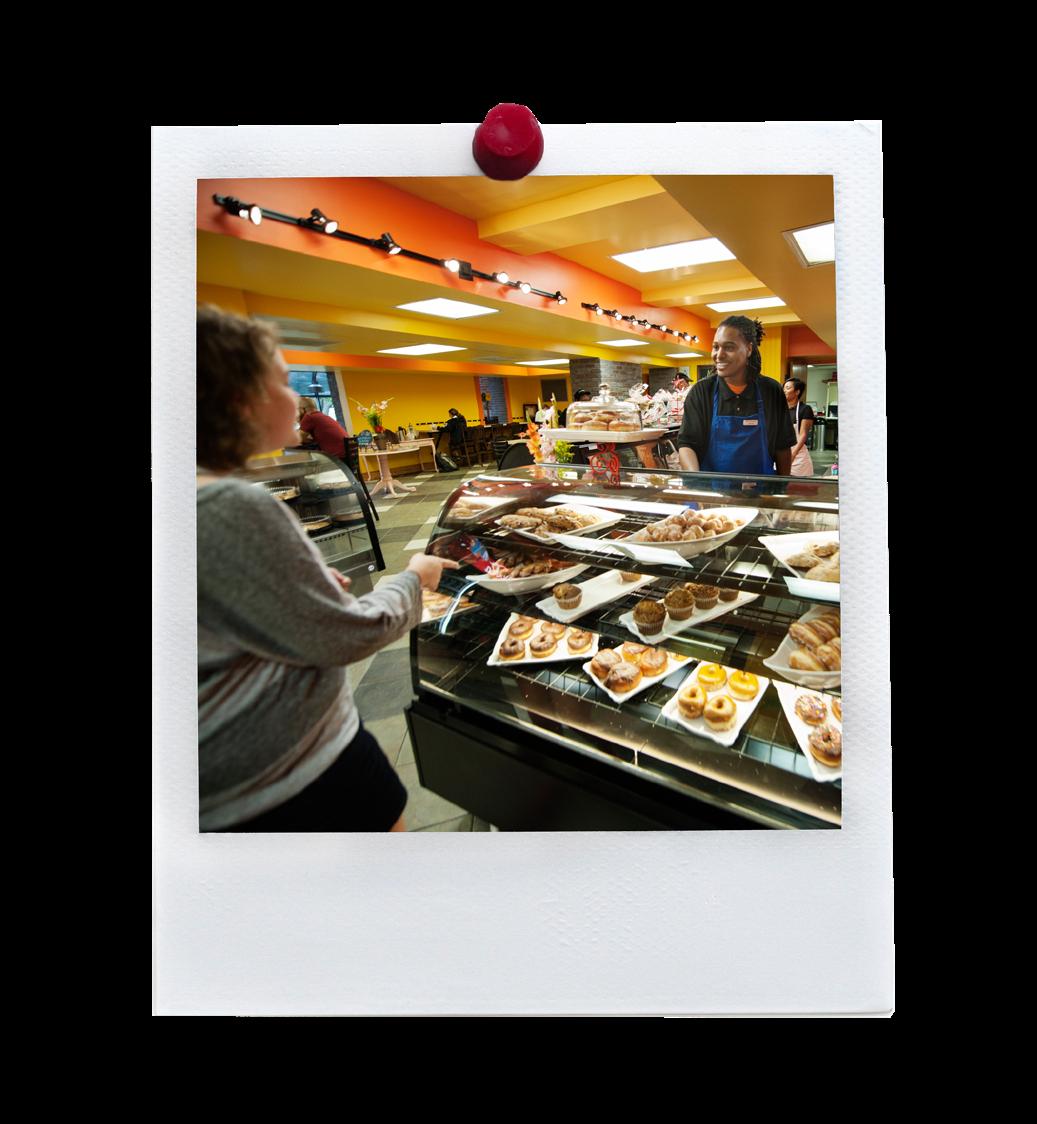
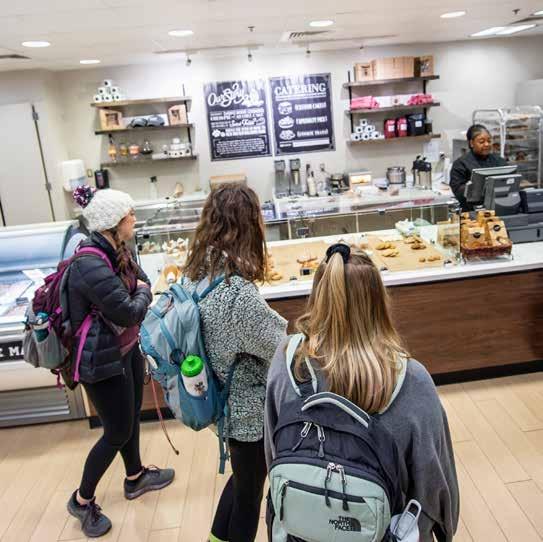
Approximately 250 visitors frequent the bakery each day and find a rotating menu filled with trendy boba or “bubble” teas, frozen drinks, tiramisu croissants, Nutella-stuffed donuts and peach coffeecake.
Gamedays at MSU are even busier, with alums hurrying to the bakery for tailgate goodies their families have purchased for years and new offerings like a beignet or breakfast sandwich filled with John Rosson’s “Awesome
Customers gather inside the newly renovated State Fountain Bakery in Perry Food Hall, where refreshed interiors, a restored counter and updated display cases greet students, employees, alumni and visitors picking up cookies, cakes and other baked favorites throughout the day.
“I’ve been here for a long time now and enjoy the tradition involved—especially visiting with alumni and taking their orders, which usually include some of our oldest recipes.”
~ ANGEL JENNINGS
Sauce” jams, jellies and preserves made in Starkville. On cold days, fans warm up with the local Southbound Coffee made in Columbus.
Aramark Manager Donna Robinson, who recently began supervision of the bakery, said, “Some of the young kids may have never seen dog bone cookies until they come in on game day, but once they see them in the display they already love them.
“The bakery may be new to me," she explained, “but I see the items that Angel and others are creating here every day and how good it all looks. I take pride in it because everybody knows where it is and customers love it.” n
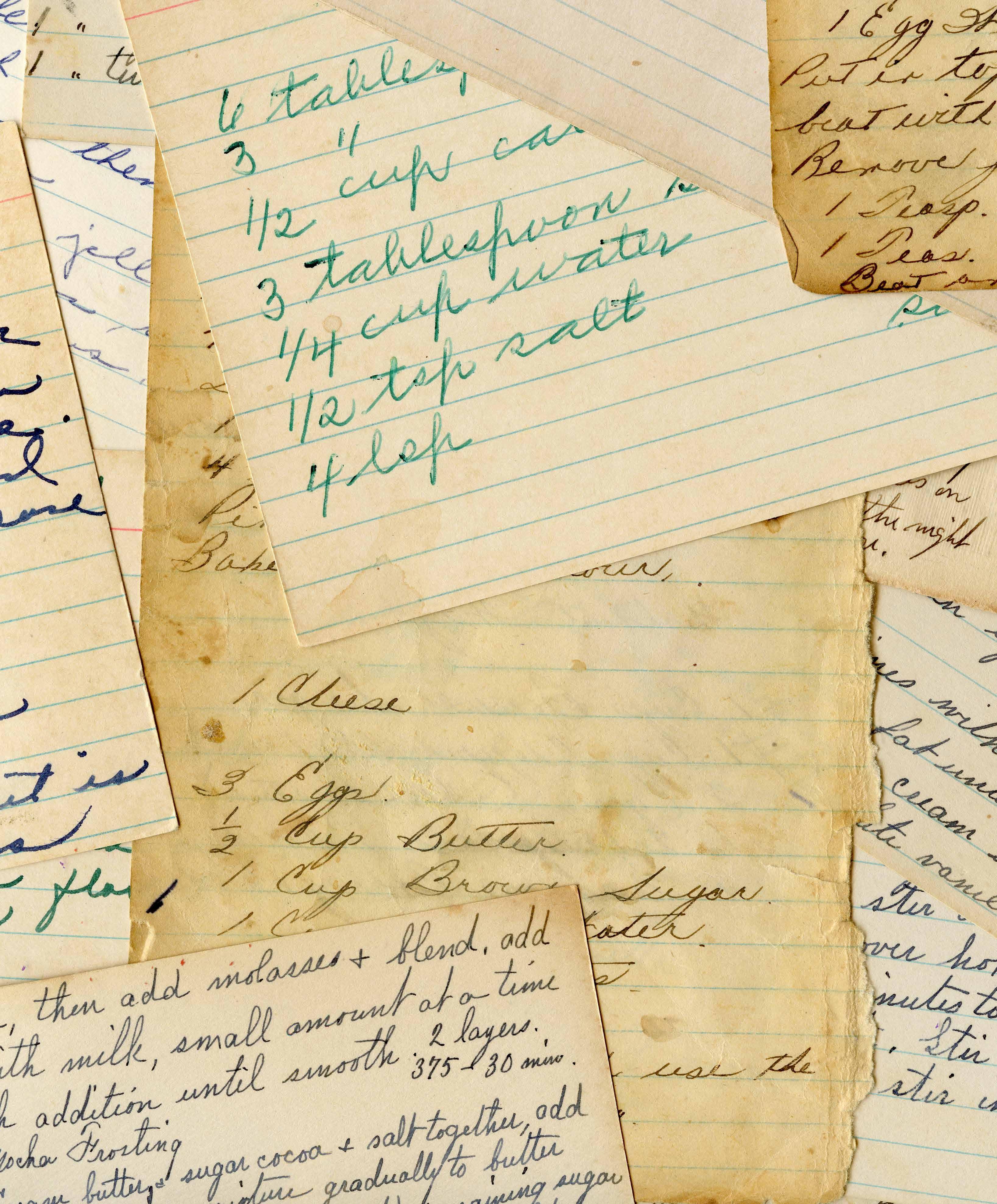
While no one knows for sure how old this State Fountain-staple recipe is, baker Angel Jennings knows it’s been in use since before she joined the bakery more than 30 years ago. Now, she’s helping share it with you so you can have a taste of MSU wherever you are.
Ingredients
1 cup softened, salted butter
1 cup shortening
1.5 cups granulated sugar
1.5 cups packed light-brown sugar
1 Tablespoon vanilla
4 large eggs
4.5 cups self-rising flour
2.5 cups chocolate chips
Cream the first four ingredients for 5 minutes on medium speed. Add vanilla and eggs. Beat on medium speed until light and fluffy. Add flour and mix on a low speed until blended. Add chocolate chips and blend on low until evenly mixed in.
Portion dough with a No. 40 cookie scoop and place 2 inches apart on a parchment-lined cookie sheet. Bake at 325 F for 8-12 minutes.
Yields 5 dozen, 3 inch cookies.


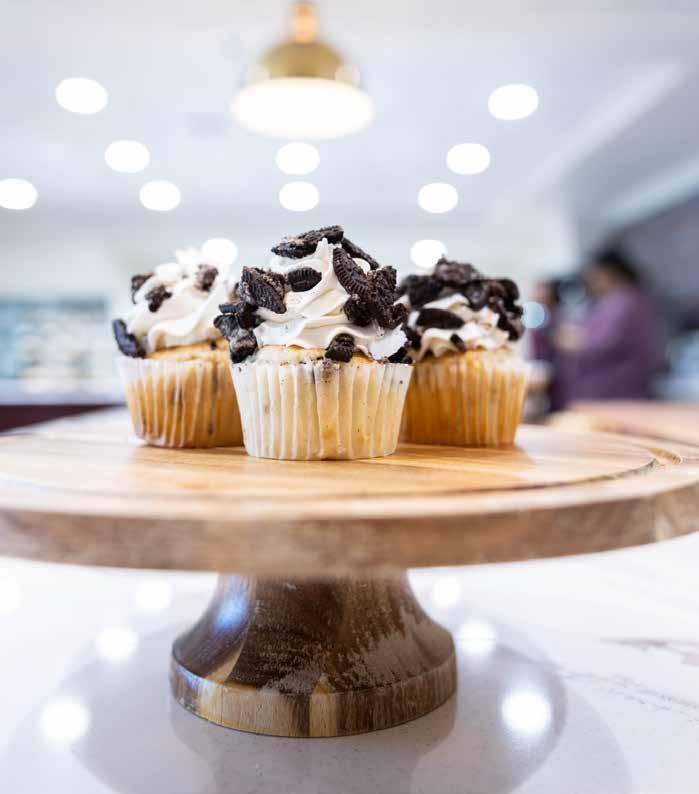
Top Right: Baker Rolanda Smith is one of the smiling faces behind the sweet treats served at the State Fountain Bakery. Bottom Left: Angel Jennings, a cake decorator, ices a cupcake—one of the many baked goods served daily at the bakery.
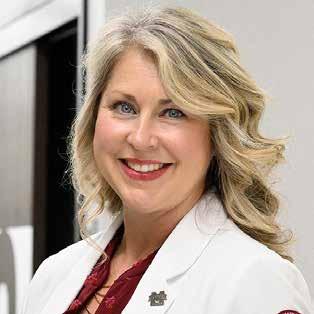
MORGAN DUDLEY is now executive director for MSUMeridian operations. In her new role, she will oversee all nonacademic functions in Meridian, manage facility operations and marketing and communication efforts, as well as serve as community liaison for MSU in Meridian. She also will continue her supervision of the Riley Center. David Buys, who served as the interim head of the Meridian campus during the transitional period, continues to serve as the associate vice provost for health science partnerships.
EMILY
Mississippi State University has named PAMELA VAYDA department head and program director for the Meridian-based Master of Physician Assistant Studies program.
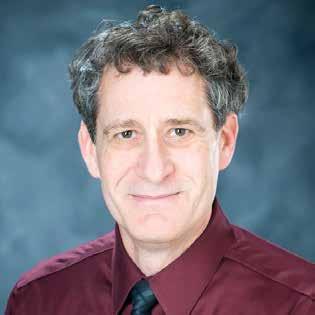
Mississippi State’s JAMES FOWLER has been named head of the Department of Electrical and Computer Engineering. He returns to MSU after four years with the National Science Foundation.
Mississippi State forensic anthropologist
JESSE R. GOLIATH is the 2026 recipient of the American Academy of Forensic Sciences Community Connections Mosaic Award, a national honor recognizing those who advance advocacy and positive change in the forensic sciences. The annual Mosaic Award celebrates outstanding contributions that strengthen community and belonging within forensic teams and research groups.
WAYNE “DUR” DURST and BETTY

STAFFORD, associate clinical professor in Mississippi State’s Department of Psychology, has earned an inaugural national award for Best Clinical Foundations Course in a clinical psychology doctoral program. Presented by the Council of University Directors of Clinical Psychology, the honor recognizes excellence and innovation in doctoral-level clinical psychology education.
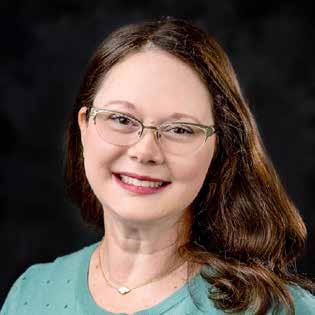
Mississippi State’s JADA JOHNSON was named the 2025 Mississippi Field Educator of the Year, earning the recognition at the 53rd annual Alabama-Mississippi Social Work Education Conference at Auburn University. A sociology instructor and licensed social worker, Johnson joined MSU in 2012 as a member of the social work faculty and assumed the roles of field coordinator and assessment coordinator in 2013.
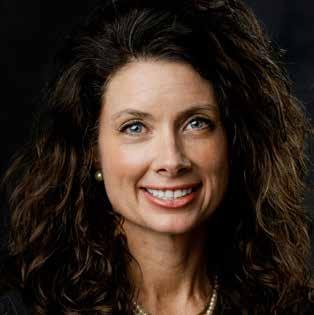
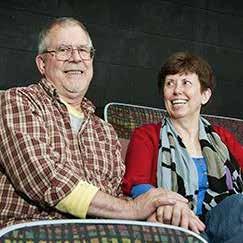
“JO” DURST are being honored by the Mississippi Theatre Association, which renamed two of its annual DramaFest awards for the longtime Mississippi State faculty members. The Betty “Jo” Durst Directing Award and Wayne “Dur” Durst Award for Technical Achievement recognize the couple’s decades of teaching, mentorship and leadership in Theatre MSU, where they shaped generations of students and strengthened theatre education.
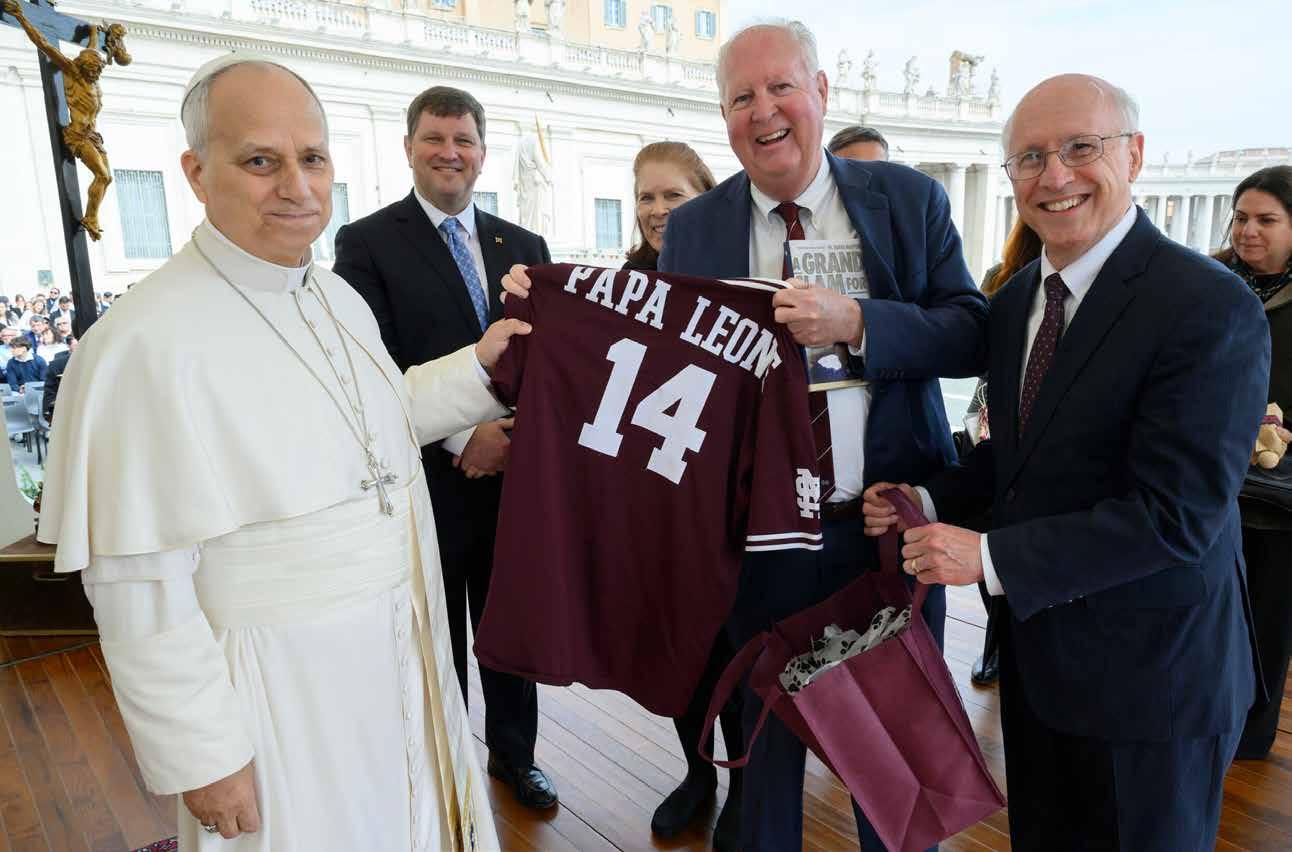
Mississippi State University officials recently visited Rome to strengthen the university’s growing partnership with the Pontifical University Antonianum and participate in an international conference focused on the ethical use of artificial intelligence. The gathering also highlighted the newly launched International Observatory for Integral Intelligence, Ethics and Public Value, a collaborative initiative bringing together academic and research partners to explore responsible development of emerging technologies.
The partnership also supports MSU’s plans for a new Rome Center that will provide a residential home for students studying abroad in Italy. Renovation of the historic facility is expected to begin this summer, with the center designed to host 36 students at a time and as many as 150 each academic year.
During a personal audience with Pope Leo XIV in Rome in March, Mississippi State University officials presented the first American-born pontiff in history with a personalized MSU baseball jersey. University participants in the gift-giving were, from left, MSU Vice President for Development and Alumni John Rush; MSU Benefactors Laura McDaniel and Mike McDaniel, also an MSU Foundation board member; and MSU Provost and Executive Vice President David Shaw. The McDaniels made possible a new Rome center, owned by the Vatican through Pontifical University Antonianum, to house MSU students studying in Italy. (Photo by © Vatican Media)
Associate Teaching Professor

ASWATHY RAI in the Department of Biochemistry, Nutrition and Health Promotion, was awarded a 2025 Excellence in College and University Teaching Award for Food and Agricultural Sciences from the Association of Public and Land-grant Universities and the U.S. Department of Agriculture’s National Institute of Food and Agriculture. She is one of six nationwide recipients awarded for their innovative teaching methods and service to students. She is receiving a $2,000 stipend for advancing classroom instruction.
KARYN BROWN, a longtime Mississippi State educator and assistant dean for communication and media in the College of Arts and Sciences, now is serving a prestigious second term on the board of directors for the national Council of Colleges of Arts and Sciences. CCAS board members are elected by the full membership. Earlier this year, she also earned recognition from the Alabama Public Relations Society of America, which presented her the Outstanding Educator Award—one of the organization’s highest honors recognizing excellence and influence in public relations education.
Mississippi State’s GREGG
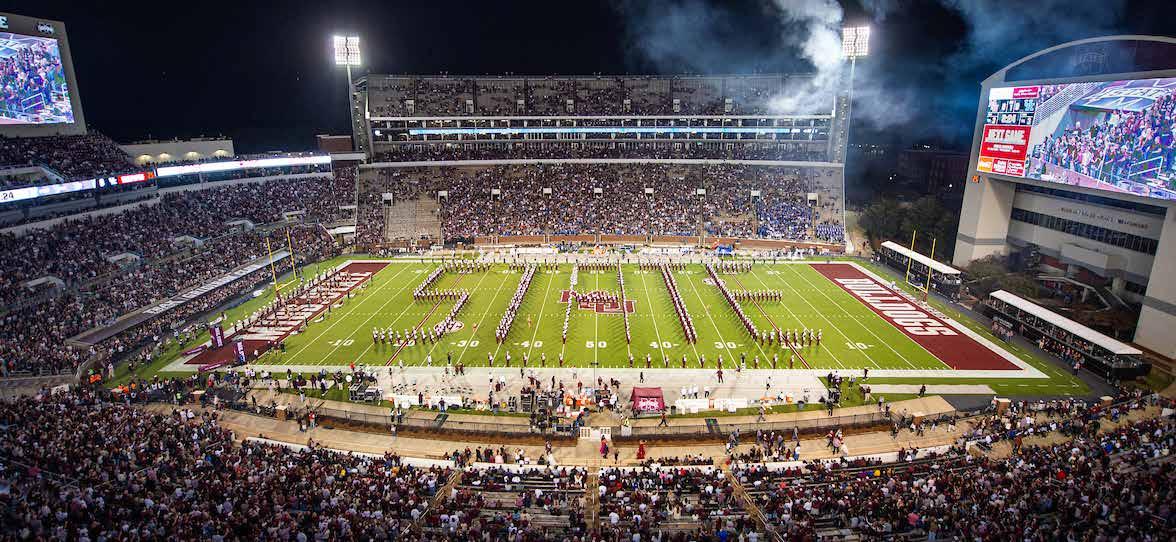
Mississippi State’s Famous Maroon Band is marching to the beat of a new accolade as the 2026 recipient of the prestigious national Sudler Trophy—considered the highest honor a collegiate marching band can receive. Given biennially by the John Philip Sousa Foundation, the trophy is awarded to a college or university marching band demonstrating “the highest of musical standards and innovative marching routines and ideas, and which has made important contributions to the advancement of the performance standards of college marching bands over a number of years.” Regarded as the “Heisman Trophy of the collegiate band world,” the Sudler Trophy can only be won by a band program once, recognizing the program’s history of excellence, tradition and national respect.
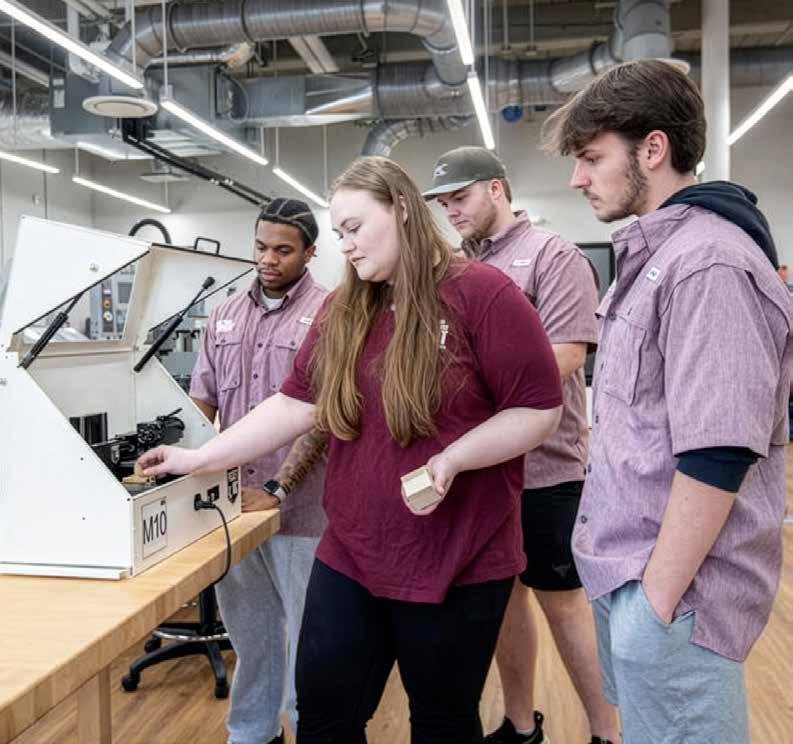
Mississippi State is introducing a new online industrial technology master’s degree to equip students with industrydriven managerial and technological skills, positioning them for career advancement. The new Master of Applied Science in Industrial Technology will prepare students for industrial management positions while providing a pathway for technical educators to pursue leadership roles. Housed in the College of Education’s Department of Technology, Leadership, and Design, the new program builds on the success of MSU’s existing industrial technology bachelor’s degree.
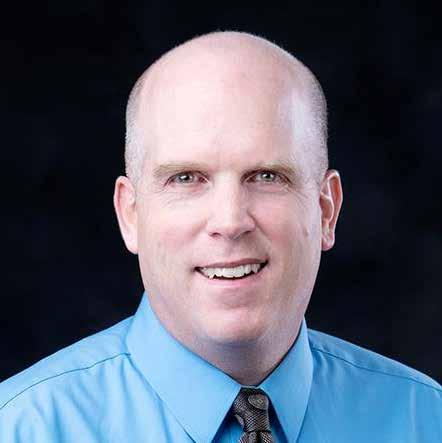
TWIETMEYER is the recipient of the 2026 Distinguished Scholar Award from the National Association of Kinesiology in Higher Education. An associate professor of kinesiology, Twietmeyer was selected for this prestigious honor for his significant contributions to the field through scholarly pursuits in the philosophy of sport, sport ethics, and sport and religion.
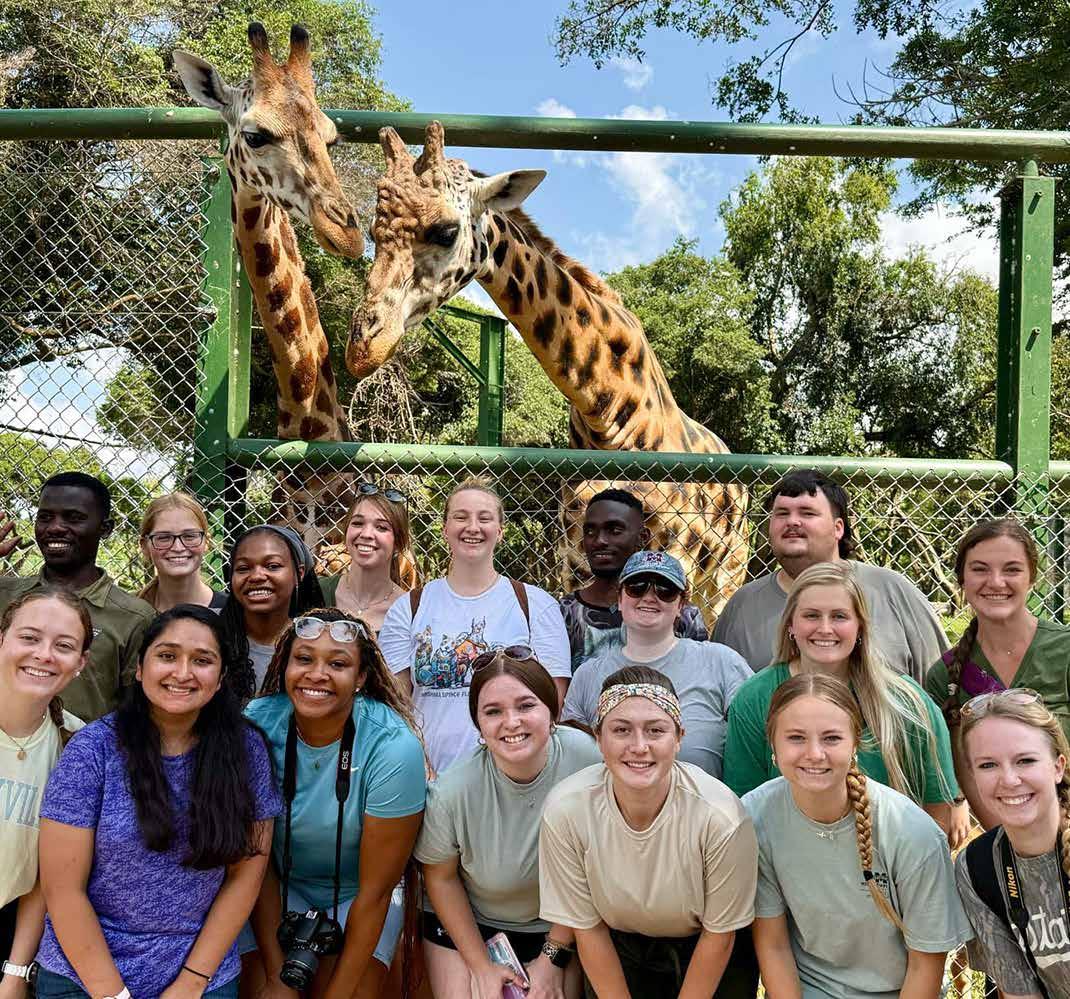
Mississippi State, a longtime leader in One Health principles, is offering two new graduate programs focused on the public health approach linking animal, human and environmental wellbeing. Through the College of Veterinary Medicine, MSU now offers a Master of Science with two tracts and a graduate certificate for professionals seeking to expand their expertise. The programs are offered in collaboration with the College of Agriculture and Life Sciences and the College of Forest Resources. One Health promotes collaboration across medicine, veterinary science and environmental science to detect, prevent and respond to health threats worldwide.
Discoveries Curiosity Fuels Science
MSU PROFESSOR’S BACKYARD DISCOVERY PUTS MISSISSIPPI ON THE ASTEROID MAP
By Mary Pollitz, Photos by Emily Grace McCall
When Jean-Francois Gout missed discovering an asteroid by just a few days, the Mississippi State computational biology professor didn’t get discouraged. He used the near-miss to improve his focus.
“At first I was worried that it was just an artifact, dust on my lens or a reflection, but it was in fact an asteroid,” he said. “It was observed by a professional telescope in Hawaii first, so I didn’t get credit. Still, it made me realize what was possible. There was a chance I could discover something.”
Since then, Gout has kept his eyes toward the sky from his home observatory in the Oktoc community south of Starkville, searching for unidentified celestial bodies just waiting to be discovered.
His efforts paid off in January 2025 when he became the first person in Mississippi to identify an asteroid.
“I knew the odds were slim, and it felt like winning the lottery,” he said. “I was the discoverer, but it took a lot of time for it to become official. For me, this was a big deal.”
Gout has submitted another 10 observed objects since the 2025 find. The amateur astronomer and avid astrophotographer is awaiting final confirmation to determine if he will be credited for those discoveries as well.
A SENSE OF WONDER
There may not be a straight line between his academic career in computational biology and his hobby of astronomy, but Gout says the relationship
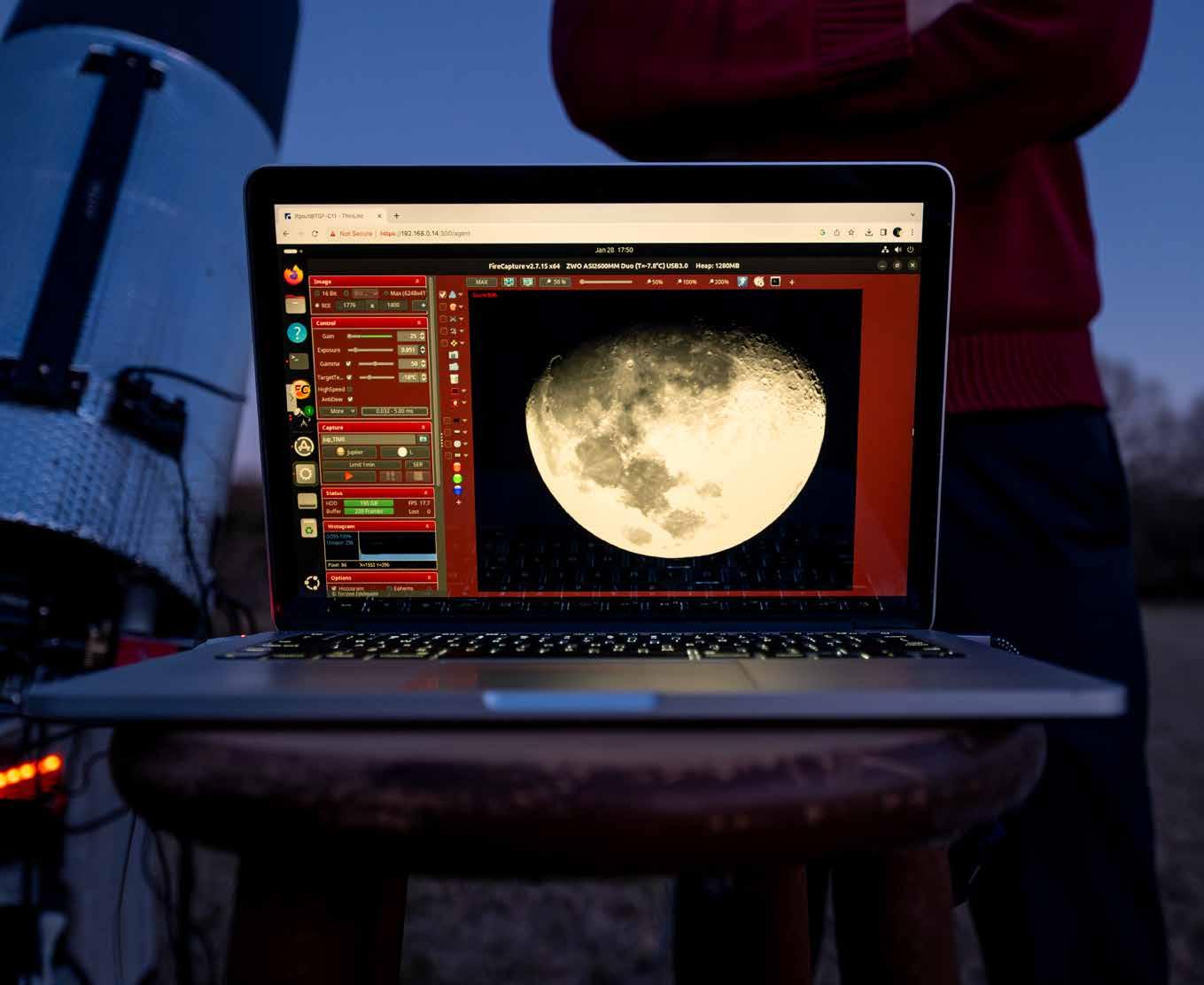
is actually two-fold. Approached practically, the computer coding he writes to operate his telescopes allows him to practice and refine the code he uses in his research. On a more theoretical side, the two sciences satisfy—in different ways— his curiosity about the world.
“Curiosity connects us all,” said Gout, who is originally from rural France. “It’s good to stay curious and live that way.”
Recognizing how a sense of wonder has fueled and amplified his scientific endeavors, Gout created an astrobiology course at MSU that combines his love for astronomy with his work in biology.
“There are two big questions we try to answer in this class: How did life get started on Earth? And is there life elsewhere in the universe?” he explained. “No one knows the answer to these questions, but through this class, we can make an educated guess. I really love teaching that class.”
THE RIGHT PLACE FOR A HISTORIC DISCOVERY
When Gout and his wife, a fellow MSU computational biology professor, settled in Starkville, he had a couple of nonnegotiable requirements.
“I told my Realtor, ‘I want to live within 15 minutes of work, but far enough away to see the night sky without lights or trees blocking the view,’” he said with a laugh. “Where we live is perfect.”
His front yard has created the ideal environment to track celestial bodies.
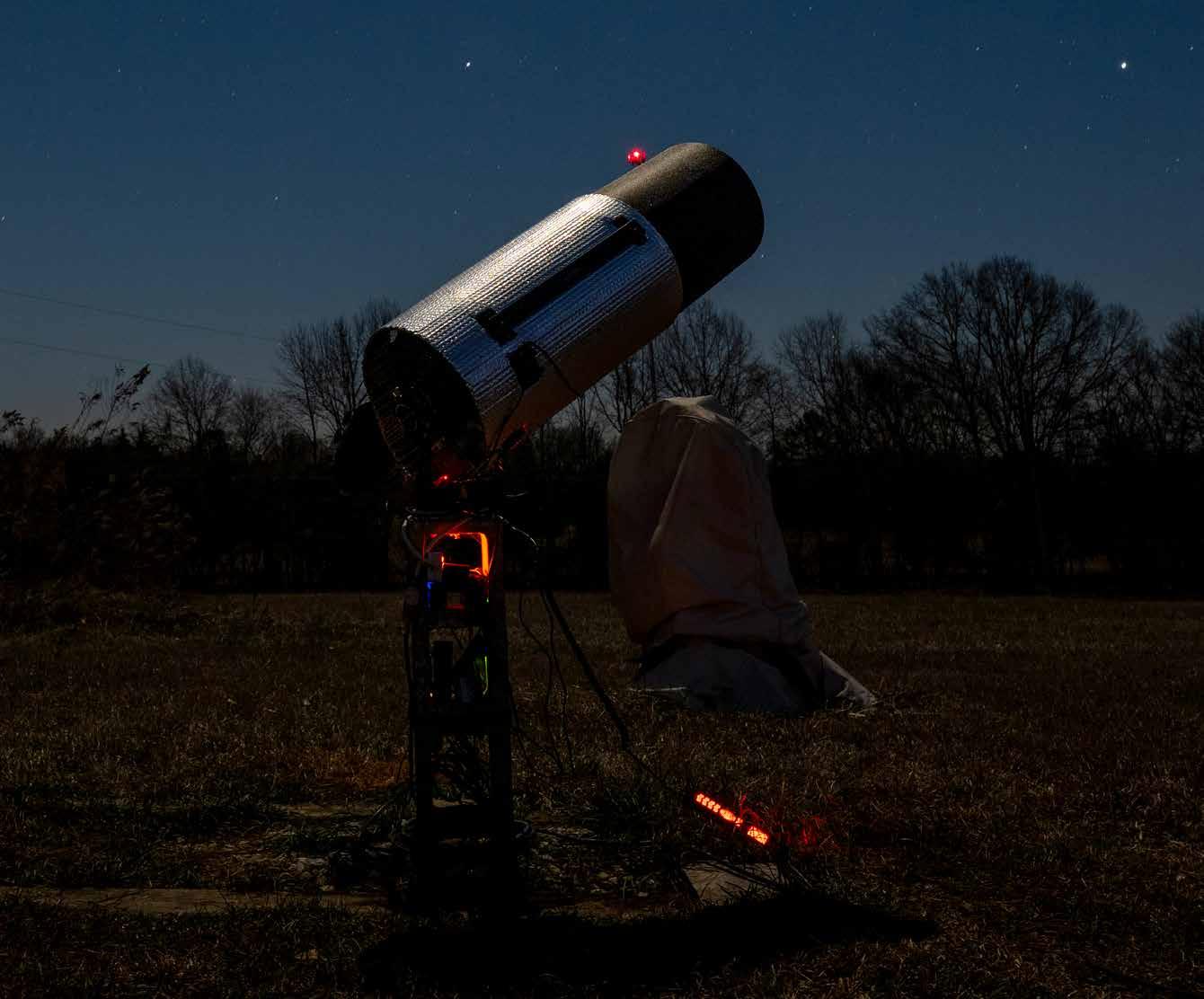
“I program my telescope to take images of the sky every clear night while I’m sleeping,” he said. “With my breakfast
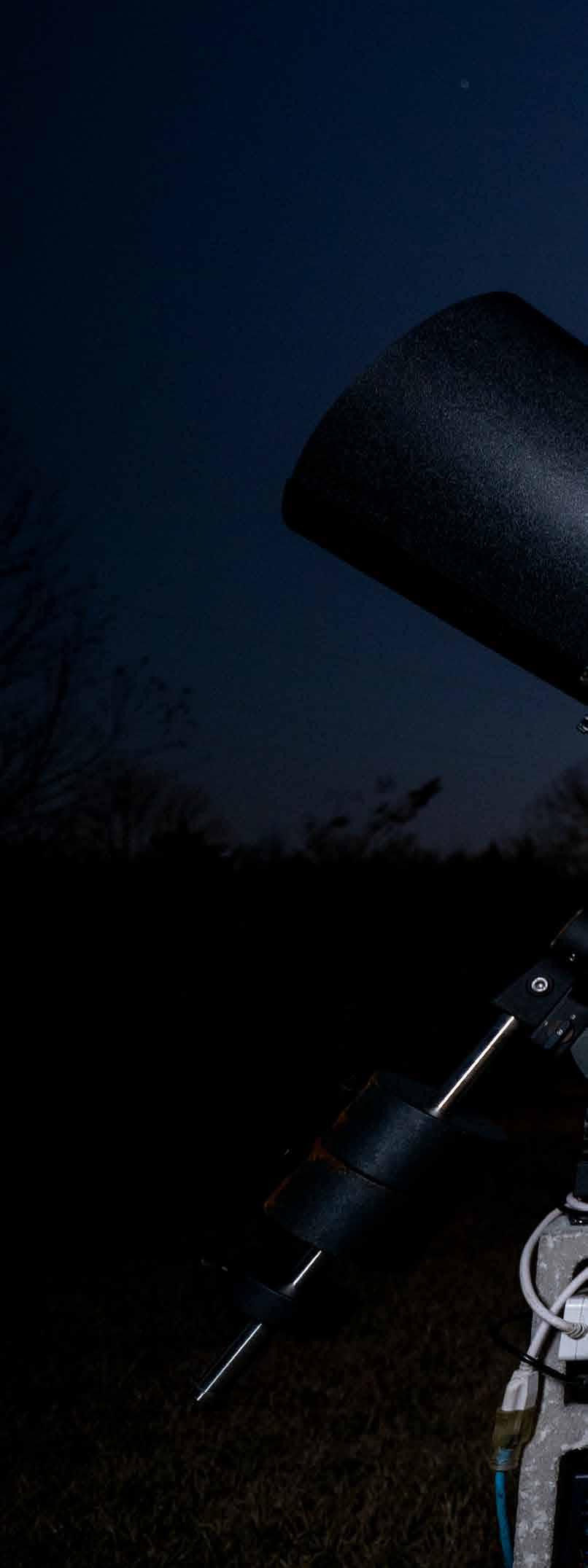
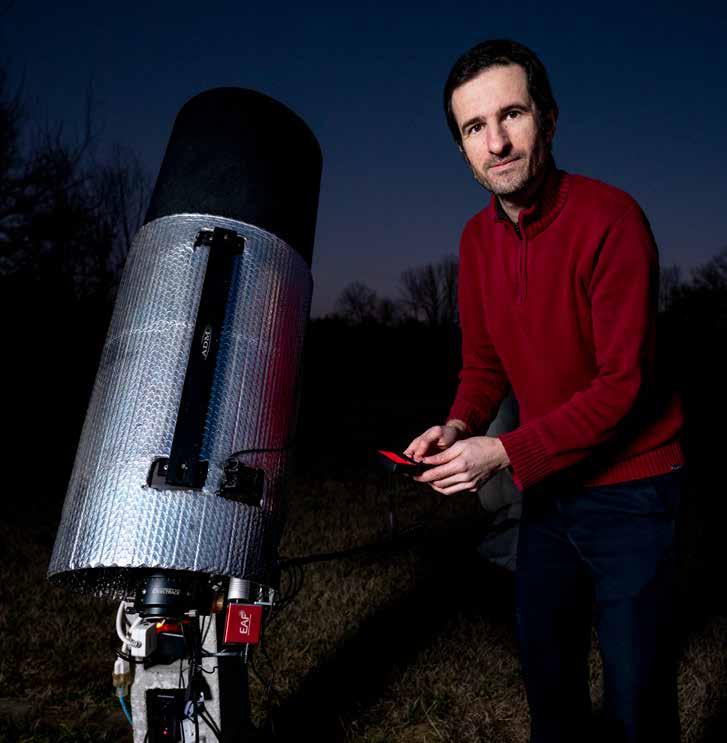
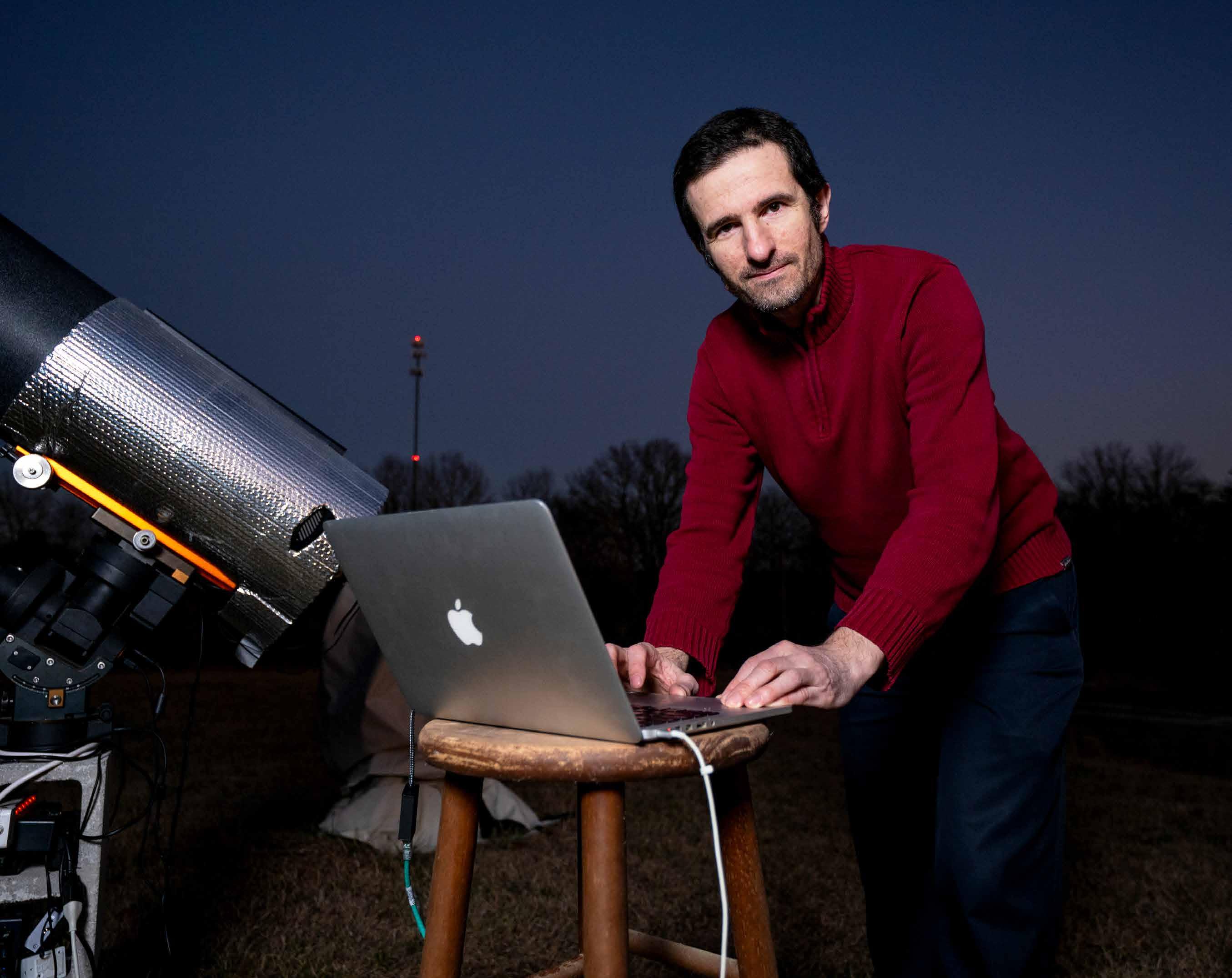
Jean-Francois Gout, a Mississippi State computational biology professor, photographs the night sky from his backyard observatory in the Oktoc community south of Starkville. A native of France, he carefully analyzes images for faint, undiscovered objects. In January 2025, he discovered the asteroid, a member of Jupiter’s Trojan family.
“I hope, in the end, to discover 30 or 40 more asteroids. It’s a crazy goal, but it’s my target.”
~Jean-Francois Gout
Discoveries
the next morning, I pore through the images and data."
It was this dedication that led to his first credited discovery: an asteroid of the Jupiter Trojan family, a rare group of objects sharing Jupiter’s orbit around the sun. Of the roughly 1.5 million known asteroids, only about 7,000 fall into this category. The discovery was confirmed by the Minor Planet Center, the world’s authority for verifying asteroid findings, operated by the Smithsonian Astrophysical Observatory.
Once the discovery was official, Gout proposed a permanent name to the International Astronomical Union. Because it belongs to the Jupiter Trojan family, the organization stipulates it can only be named after a Trojan war hero or an Olympic or Paralympic athlete.
The asteroid is now officially designated (826856) Commodorecochran in honor of the late Commodore Shelton Cochran, a 1923 MSU alumnus and the university’s first Olympic gold medalist. It is also a
nod to Gout’s home country, which is where Cochran earned his gold medal at the 1924 Paris Games.
“I wavered between a couple of different options, but this being the first discovery from the state of Mississippi, I thought it would be cool if it was named after an athlete from Mississippi who also completed a first for the state," he said. “It’s a really nice connection.”
RACING THE FUTURE OF ASTRONOMY
Gout’s achievement comes at a pivotal moment for amateur astronomy. With the Vera C. Rubin Observatory in Chile coming online with an advanced telescope scanning the entire sky every three days, future discoveries will become impossible for amateurs.
Still, he continues searching, hoping once again to spot something unique.
“I want people to see that I’m serious—that I’m legitimate,” he said. “I hope, in the end, to discover 30 or 40
more asteroids. It’s a crazy goal, but it’s my target.”
A CHILDHOOD SHAPED BY DARK SKIES
Gout grew up about 100 miles south of Paris, far enough from city lights to experience a true night sky and for a fascination with astronomy to take hold.
“When I was 8, my grandfather bought me my first little telescope—a 60 mm refractor from a department store,” he recalled. “It was a good enough telescope that I could see the rings of Saturn and craters of the moon.”
The experience left a permanent mark. It’s what shaped Gout’s career and mindset of pursuing greatness— the same values he instills in his students.
“It changed my whole life,” he said. “That gift was such an important thing in my life. I hope everyone finds that—something that sparks their curiosity and gives them the courage to chase it.”n
Part of the Trojan group that shares Jupiter’s orbit, asteroid (826856) Commodorecochran is the first asteroid discovered in Mississippi.

MSU DEER LAB CELEBRATES 50 YEARS
National leader studying South’s most significant wildlife species celebrates milestone
By Vanessa Beeson, Photos by David Ammon & Russ Houston
Deer hunting may happen in the fall, but any hunter will tell you it’s a year-round pursuit. Spring means post-harvest survey analysis and timber stand improvement. Summer includes prescribed burns and construction on blinds. Early summer and early fall are dedicated to deploying trail cameras and planting food plots. Late fall through January finds hunters spending as much time as possible in the woods, focusing on harvest.
The work of the Mississippi State University Deer Lab follows a similar
rhythm. A unit of the Forest and Wildlife Research Center and the MSU Extension Service, the lab recently celebrated 50 years of continuous research, teaching and outreach dedicated to white-tailed deer—work that informs landowners, hunters and legislators while training a new generation of wildlife biologists.
For Steve Demarais, professor emeritus and former Taylor Chair in Applied Big Game Research and Instruction, the MSU Deer Lab represents a lifetime of work and a
mission that has remained constant for five decades.
“Our mission is to address the informational needs of private landowners, hunters, state wildlife agencies and nongovernmental organizations oriented toward whitetailed deer,” he said. “How we share that information has evolved, but the mission remains the same."
Demarais explained that whitetailed deer are the South’s most significant wildlife species.
“White-tailed deer hold immense
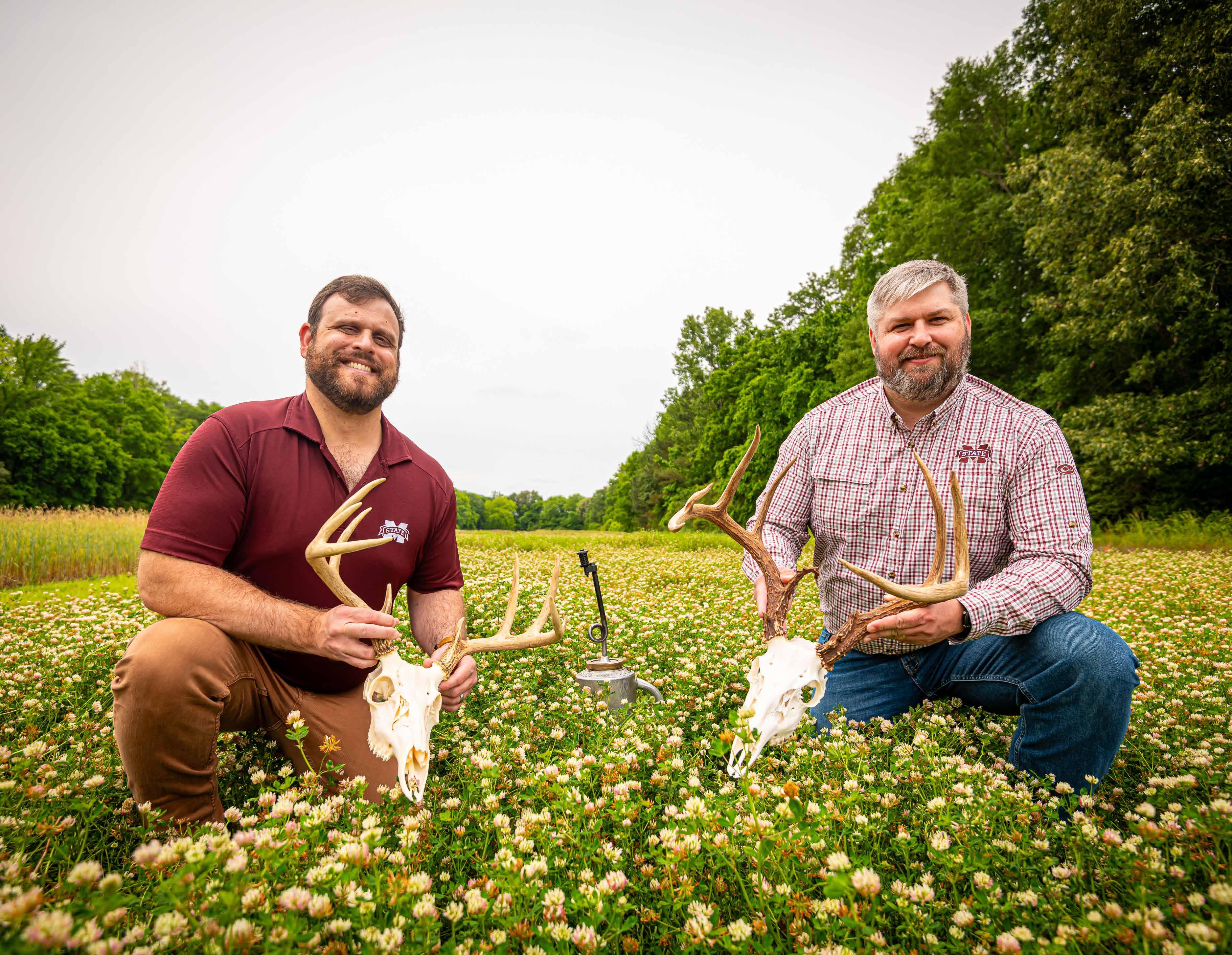
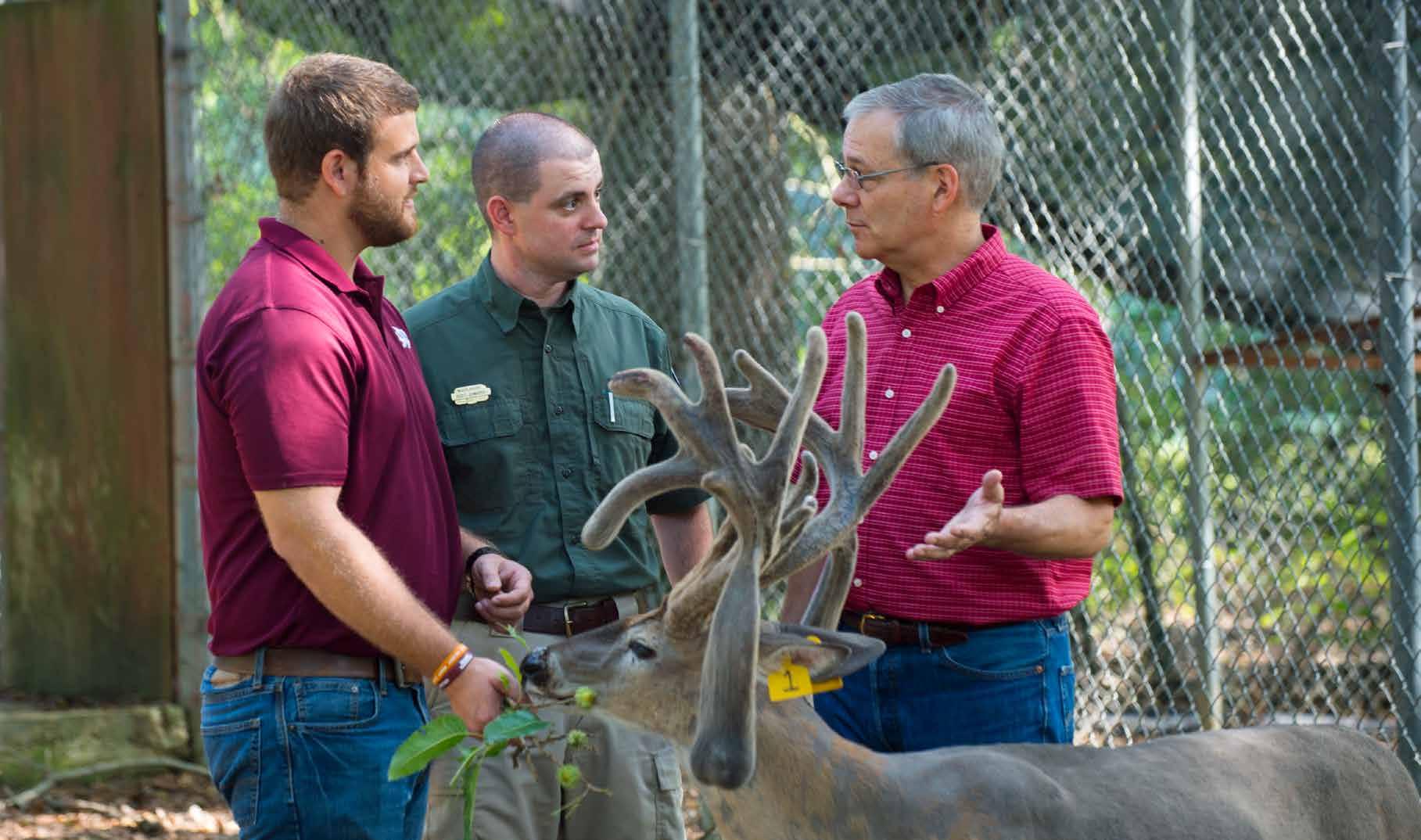
Eric Michel, left, and Jacob Dykes lead Mississippi State’s Deer Lab, a nationally recognized research program in the Forest and Wildlife Research Center celebrating 50 years of studying white-tailed deer. (Photo by David Ammon)
cultural, recreational and economic value,” he said. “Deer hunting is one of the few activities where multiple generations of a family participate together. Hunting also pays for conservation, and nearly everyone who hunts participates in white-tailed deer hunting.”
HOMEGROWN LEADERSHIP
The lab’s leadership reflects a rare continuity built through mentorship. Demarais, who retired in 2025 after nearly 30 years, studied under founding director Harry Jacobson, earning his master’s and doctoral degrees in the 1980s. Bronson Strickland, the retired St. John Family Endowed Professor of Wildlife Management, studied under Demarais in the early 2000s before leading the program alongside him for 25 years. Today, Eric Michel, a former student of Demarais, and Jacob Dykes, who studied under Strickland, carry that legacy forward. Together, they lead the lab’s research and outreach efforts and serve as coordinators associated with the Taylor and St. John Family endowed positions.
While the lab is one of the premier deer research centers in the U.S.,
Michel said all the unit’s research has roots in benefiting the Magnolia State’s outdoors enthusiasts and its more than $1 billion annual deer-hunting industry.
“All the research we do is applicable to Mississippians,” Michel said. “We work closely with the Mississippi Department of Wildlife, Fisheries, and Parks as their research arm to deliver usable products that can be implemented directly into deer management.”
Dykes said the work reflects Mississippi State’s land-grant mission.
“One of the university’s core goals is ensuring education reaches beyond the classroom,” he said. “Knowing our research is applied and used across the state and beyond motivates us.”
A THRIVING HABITAT FOR RESEARCH
FWRC scientists have produced some of the nation’s most influential deer research of the last 50 years, including pioneering the Deer Management Assistance Program and redefining how genetics, nutrition, age and habitat interact to shape antler development, behavior and breeding in white-tailed deer. Long-term studies have also advanced understanding of
“HOW WE SHARE THAT INFORMATION HAS EVOLVED, BUT THE MISSION REMAINS THE SAME.” ~ STEVE DEMARAIS
deer movement, dominance, multiple paternity and chronic wasting disease, including early environmental detection methods and findings that highlight the risks of artificial congregation at feeders.
In addition to studying the health, habitat and harvesting of deer, the lab also explores how to protect the state’s cash crops. One study evaluates repellents meant to reduce deer-related damage to soybeans, one of Mississippi’s most valuable crops.
TRAINING TOMORROW’S LEADERS
Student training remains central to the lab’s mission. Graduate students gain hands-on experience that extends well beyond the classroom, from prescribed fire and habitat management to field sampling and data analysis. The lab currently hosts two doctoral students, six master’s students and five undergraduate researchers. The team strives to ensure students have unique research opportunities.
“Experienced students often mentor newer ones in the field, exposing them to the full suite of habitat management tools used in the Southeast,” Michel said.
Collaboration also extends into
Professor Emeritus Steve Demarais (right, in the archival photo above) devoted nearly 30 years to advancing white-tailed deer research at Mississippi State. (Photo by Russ Houston)
To support white-tailed deer research at Mississippi State, contact Jeff Little at jlittle@foundation.msstate.edu.
outreach. Dykes holds an appointment with MSU Extension, helping translate research into practical guidance. Through nationally recognized outreach efforts, the lab shares its science widely via social media, videos, web resources and a top-ranked podcast, “Deer University,” that reaches millions each year.
The lab’s impact has earned national recognition, including the Boone and Crockett Club Conservation and Stewardship Award, as well as multiple lifetime achievement and applied research honors for faculty leadership.
ON THE HORIZON
The Deer Lab’s next chapter includes modernizing its 1970s-era facility to expand research and training capacity. Supported by a $1 million appropriation from the Mississippi Legislature in combination with private gifts, updated deer pens, improved handling systems and expanded workspaces will support advanced research in genetics, herd health, disease management, reproduction and technology-driven wildlife monitoring. To date, $750,000 in competitive funding has been secured, and the team has submitted an additional $2.5 million in grant applications to support the upgrades.
Looking ahead, Michel said collaboration remains the lab’s defining strength.
“Jacob and I work closely together across research, teaching and outreach. That teamwork is what moves us forward,” he said. “We also plan to extend our reach by collaborating more with researchers in other regions of the country. For example, bringing a Southeastern perspective on deer management to the Midwest and learning from their approaches in return can strengthen our work.”
Dykes said collaborating with constituents is also key.
“When we listen to landowners, producers and hunters, they tell us what problems they’re facing,” he said. “Those conversations shape our research. All we have to do is listen.” n
ANNUAL DEER MANAGEMENT AND HUNTING CALENDAR
While deer hunters spend most of the fall in the woods, effective deer management takes place year-round. This seasonal guide outlines key activities hunters and land managers can use to support healthy deer populations and improve hunting success during the fall.
FEBRUARY / MARCH
• Address closed-canopy forest conditions. Dense canopies limit forage availability. Hack-and-squirt or girdle-and-spray herbicide applications to select overstory trees can help open the canopy and encourage nutritious understory growth.
• Collect postharvest deer data. Review camera surveys and stand observations to assess herd composition and identify opportunities to improve habitat and management strategies.
APRIL / MAY
• Eliminate perennial grasses competing with desirable forage species.
• Establish warm-season food plots. Plant cowpeas and soybeans to support fawn growth and antler development during peak nutritional demand.
• Prepare for summer prescribed burns:
• Cut and clean fire lanes to bare soil and remove excess fuel
• Protect or remove equipment and clearly mark hazards
• Finalize burn plans, permits, weather conditions and crew availability
JUNE / JULY
• Contract with a certified prescribed burn manager to conduct prescribed burns when conditions allow.
• Address seasonal nutritional stress by promoting high-protein forage through food plots and habitat management.
AUGUST / SEPTEMBER
• Deploy trail cameras
• Analyze population data and identify management bucks
• Finalize harvest plans
• Conduct preseason surveys
• Assess antler development
• Estimate fawn recruitment
LAST WEEK OF SEPTEMBER / FIRST WEEK OF OCTOBER
• Plant fall-season food plots
OCTOBER – JANUARY
The deer-harvest season offers opportunities for hunters of all ages and skill levels. Visit www.mdwfp.com/wildlife-hunting for current regulations and season dates.
Discoveries
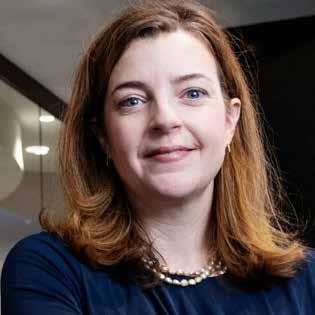
Anne E. Marshall, Mississippi State Department of History professor and executive director of the Ulysses S. Grant Presidential Library, is a finalist for the 2026 Gilder Lehrman Lincoln Prize, one of the most significant honors for scholarship in the field of American history. Marshall is being recognized for her book “Cassius Marcellus Clay: The Life of an Antislavery Slaveholder and the Paradox of American Reform,” published by the University of North Carolina Press. It examines the complex life of Cassius Marcellus Clay and explores the contradictions at the heart of 19th-century American reform and antislavery politics.
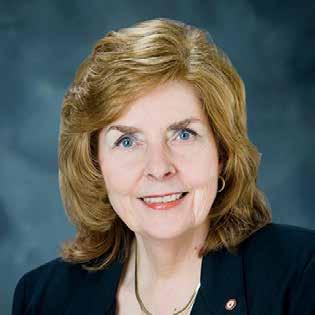
Mississippi State University’s Janice E. Chambers, a longserving College of Veterinary Medicine faculty member, is this year’s recipient of one of the toxicology profession’s highest honors. The international Society of Toxicology is honoring her with its Founders Award at the organization’s annual meeting. The honor is given to members for their exceptional leadership in advancing toxicological science and strengthening the role of toxicology in safety decisionmaking.
journals in the world. Zuckerman and Bailey’s piece examines new evidence from ancient DNA that pushes the origins of diseases closely related to syphilis back more than 5,000 years and strongly supports an American rather than European origin for a close relative of the disease. Drawing on recent paleogenomic discoveries from Colombia and Mexico, the article demonstrates how advances in ancient DNA research are transforming longstanding debates about human disease, evolution and global health.
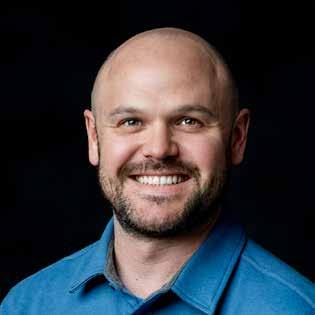
Mississippi State biologist Matthew W. Brown, the university’s Donald L. Hall Professor of Biology, is part of an international research team whose groundbreaking discovery is featured in Nature—one of the world’s most prestigious scientific journals. The published research unearths a new organism and phylum, reshaping the tree of life. The study “Rare Microbial Relict Sheds Light on an Ancient Eukaryotic Supergroup” describes the discovery of Solarion arienae, a previously unknown unicellular organism that provides new insight into the earliest stages of complex life on Earth. This microscopic protist—a tiny, single-cell organism seen only via a microscope—was discovered through collaboration between Brown’s lab at MSU and Ivan Čepička’s laboratory at Charles University in the Czech Republic. The organism displays two distinct cell types and a unique predatory structure unlike any seen before.
An article by Mississippi State Professor of Anthropology Molly Zuckerman and her graduate student
Lydia Bailey has been published in “Science,” one of the foremost scientific
John J. Green, director of the Southern Rural Development Center at Mississippi State University and professor in the Department of Agricultural Economics, has been named a Community Development Research Fellow with the Federal
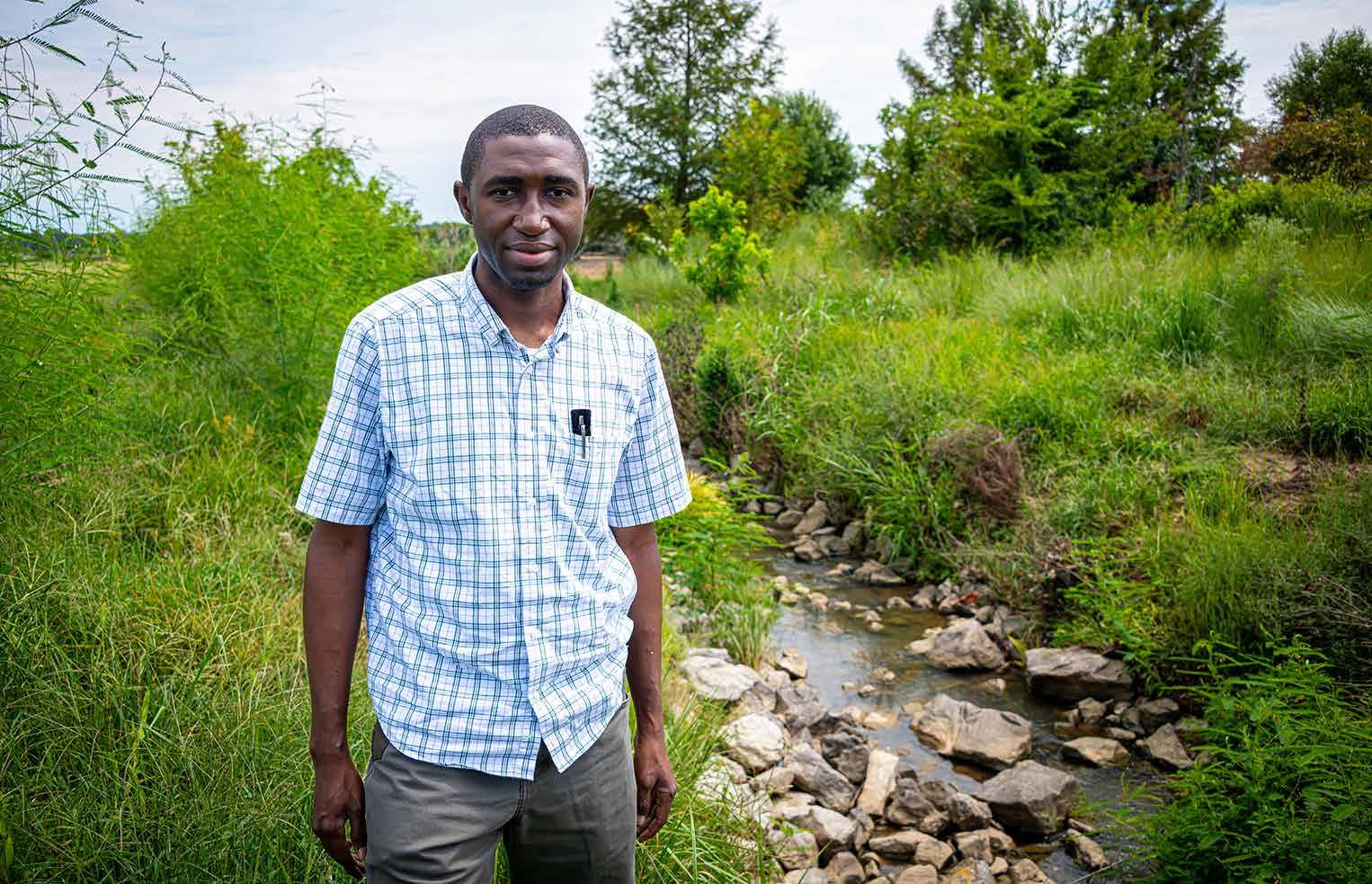
Wildlife, fisheries and aquaculture doctoral student Daniel Egerson of Imo, Nigeria, has been selected for the Soil and Water Conservation Society’s Emerging Leaders Program. He will spend a year in an immersive leadership training program that includes formal coursework, mentorship and hands-on learning through virtual activities and in-person sessions in St. Louis, Missouri. The experience will culminate with Egerson planning and hosting a conservation event.
Reserve Bank of St. Louis, a part of the Federal Reserve System’s network of regional banks that help promote a healthy U.S. economy. In this role, Green will engage with the Federal Reserve Bank of St. Louis’ Community Development department, conducting research and sharing insights on economic conditions and mobility affecting households and communities across the Eighth Federal Reserve District, a 15-million-person region covering Arkansas and parts of Missouri, Illinois, Indiana, Kentucky, Tennessee and Mississippi.
Building on a growing energyrelated research portfolio, Mississippi State University is launching the Energy Resilience and Innovation Hub to foster collaboration and innovation that will support the Magnolia State’s future
energy needs. Led by Narcisa Pricope, associate vice president for research and economic development, the unit will serve as a thinktank and collaborative hub working to catalyze economic growth, strengthen community and institutional energy resilience, foster policy alignment, and promote access to energy resources.
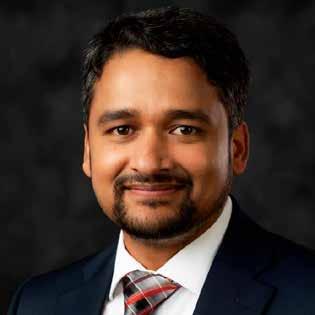
MSU assistant research professor Madhav Dhakal received the Soil and Water Conservation Society’s 2025 Conservation Research Award, one of the field’s most respected national honors. The award recognizes Dhakal as a leading conservation innovator whose breakthrough research addresses some of the most pressing challenges in soil and water sustainability. Dhakal is affiliated with both the university’s WRRI and Department of Plant and Soil Sciences.
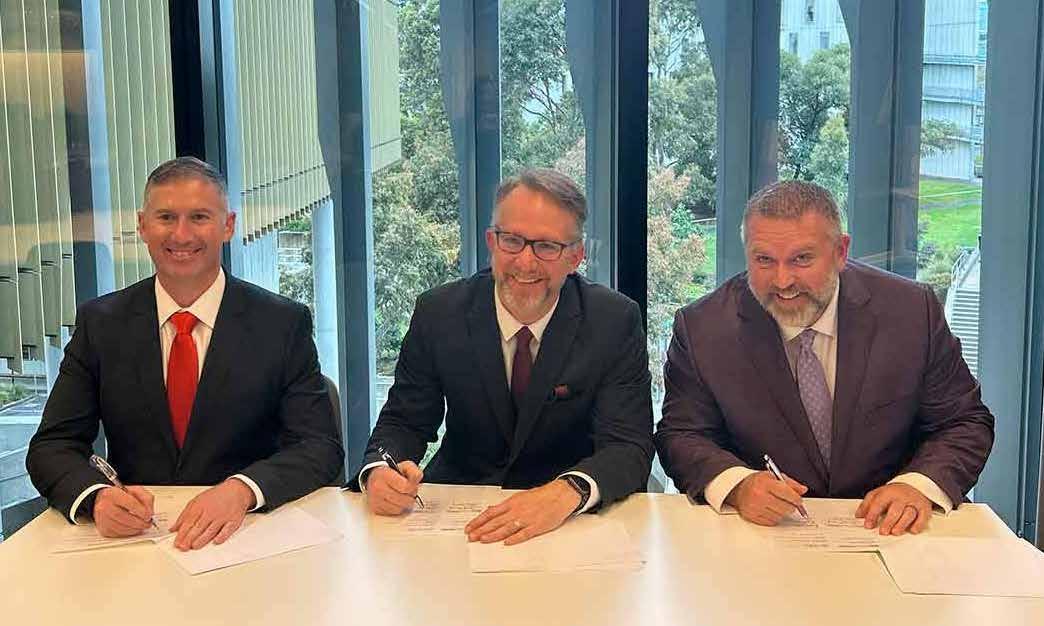
Mississippi State University, Texas Christian University and Australia’s Deakin University signed a memorandum of understanding establishing the Athlete Engineering Consortium, the first international partnership of its kind dedicated to advancing human performance, technology integration and workforce innovation across athletic, tactical and industrial domains. The agreement was formalized during a ceremony at Deakin that included representatives from the three universities. Under the consortium, the three institutions will collaborate on academic exchange, joint research projects and proposals and outreach events that facilitate scientific and industry exchanges.
Two Mississippi State University graduate students and an alumnus earned top recognition at the 2025 Society of American Foresters national convention for their research posters highlighting advancements in forestry and natural resources. Simran Pandey, a forestry master’s student from Nepal, earned first place for her research poster, while Bipin Paudel, also a master’s student in the Department of Forestry from Nepal, placed second. Maxwell Schrimpf, an MSU alumnus from Ohio who completed his master’s in forestry in 2023, placed third.
Mississippi State UniversityMeridian’s Division of Education is receiving a $1.75 million grant from the National Science Foundation’s Robert Noyce Teacher Scholarship Program to prepare highly qualified STEM educators for elementary and secondary classrooms.
With renewed support from two major national grants, Mississippi State University’s National Research and Training Center on Blindness and Low Vision, or NRTC, will continue changing lives by expanding research, training and technical assistance that improve employment, independence and quality of life for individuals who are blind or have low vision. The NRTC, housed in MSU’s College of Education, received the Rehabilitation Research and Training Center on Employment Among People Who Are Blind or Have Low Vision grant. It is sponsored by the National Institute on Disability, Independent Living and Rehabilitation Research, a federal organization housed within the U.S. Department of Health and Human Services.
Faculty and students in MSU’s Department of Sustainable Bioproducts received the George Marra Award from the Society of Wood Science and Technology for their peer-reviewed publication investigating how wood grain angle influences structural performance. This is the second consecutive year for scientists in MSU’s Forest and Wildlife Research Center to receive the recognition.
State SNAPSHOT
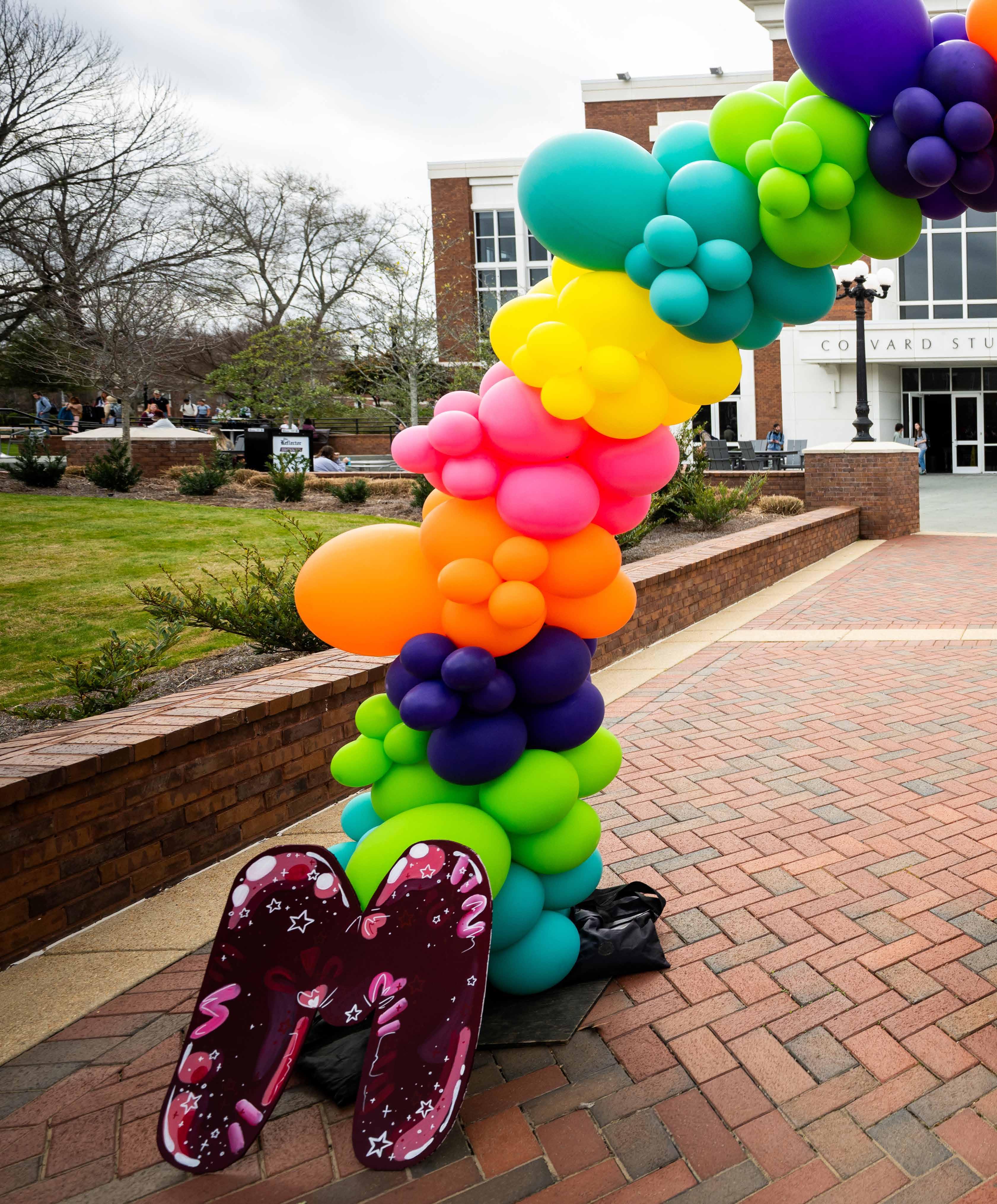
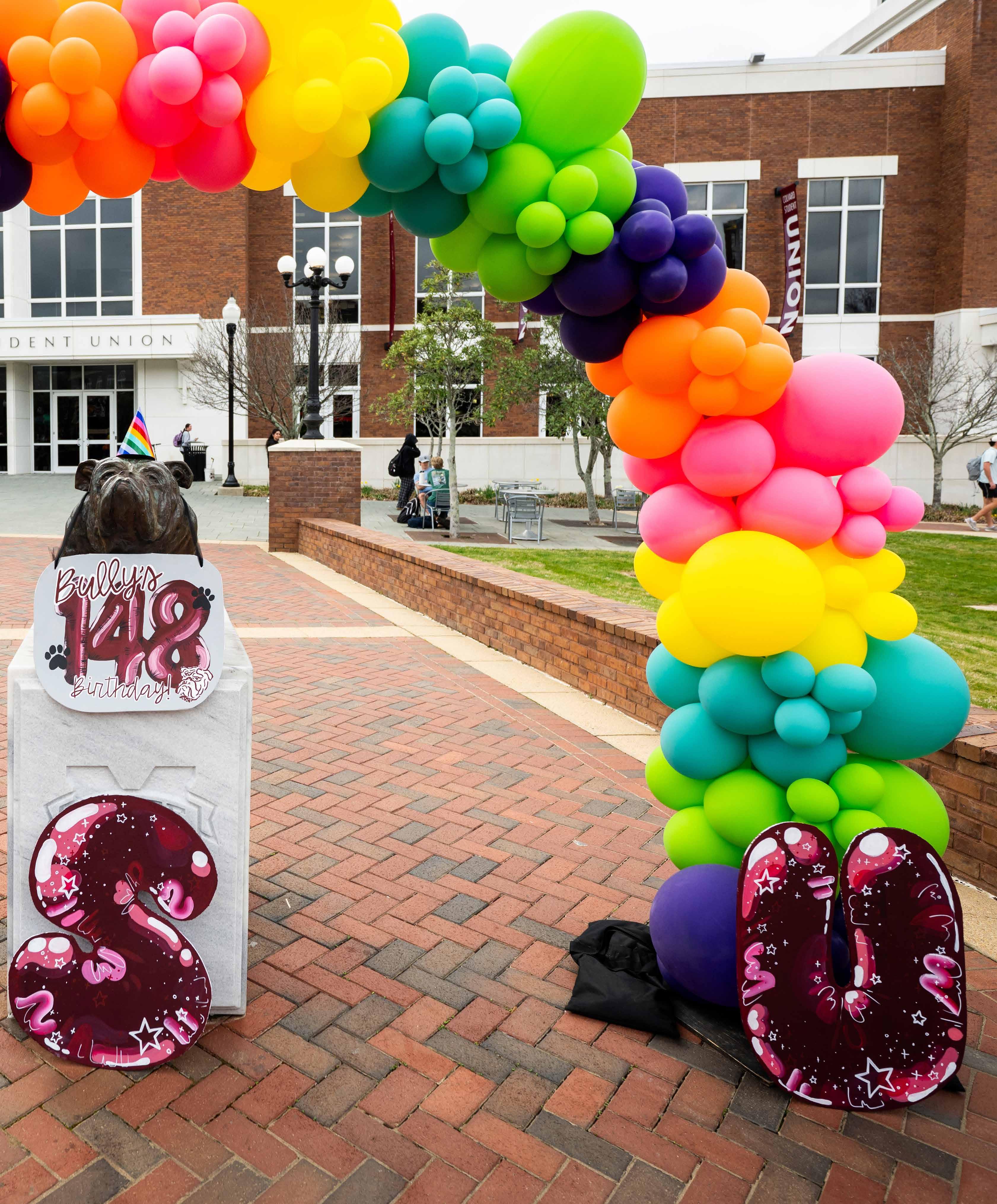
ANOTHER YEAR WISER
Mississippi State University celebrated its 148th birthday in February with campus festivities near the Colvard Student Union. As the land-grant university approaches its sesquicentennial, it's still evolving and changing to meet the needs of tomorrow. Continual growth and development with an eye toward the future ensures that MSU’s next 148 will be just as impactful as the last.
Photo by Grace Cockrell
OWNED
MSU OFFICE OF TECHNOLOGY MANAGEMENT HELPS TAKE BULLDOG IDEAS FROM LABS
By Carl Smith, Photos by Grace Cockrell
When you eat catfish, touch grass or watch a space vehicle take flight, you’re likely benefiting from the application of Mississippi State University intellectual property. From catfish vaccines and their delivery systems to popular Bermuda grass or software supporting NASA, Blue Origin and SpaceX, Bulldog ideas are found everywhere from under your feet to heavens above.
MSU is known across the globe for its cutting-edge research, and overseeing the idea-to-impact pipeline for students and faculty looking to change the world is the university’s Office of Technology Management. This unit and its dedicated staff handle
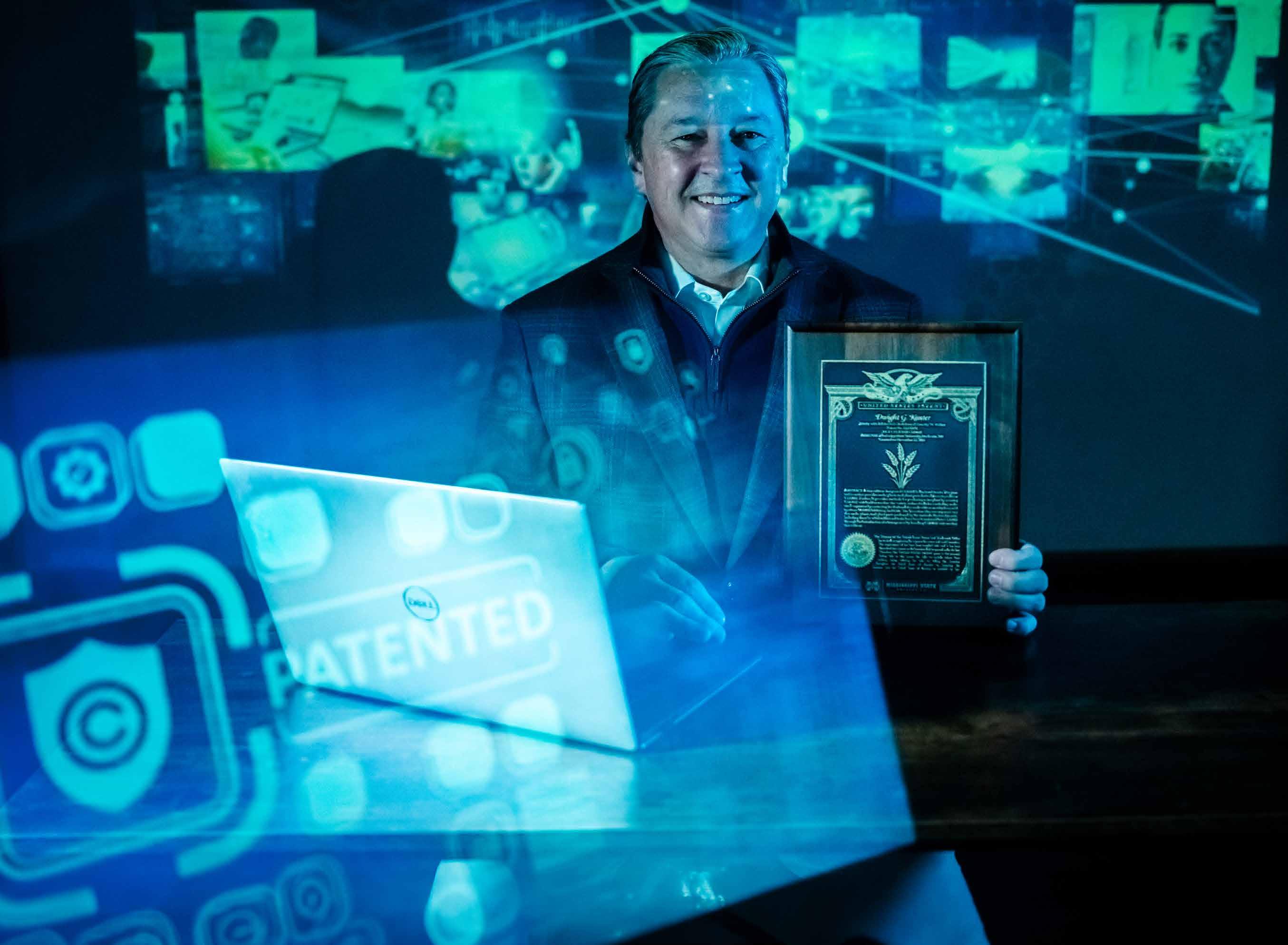
For John Walters, helping researchers protect their discoveries is deeply rewarding. As director of MSU’s Office of Technology Management, he celebrates each milestone. “One of my favorite things about this job is delivering patents,” he said.
TO MARKET
all facets of taking innovation from laboratory to market. From helping acquire funding and securing patents to managing licensing agreements and royalty distributions, OTM works with researchers to ensure their ideas come to fruition.
“Everybody working at MSU has an impact on the world that can’t be overstated, whether that’s working toward ending food insecurity or helping protect our country and explore space. All of this has an enormous impact now and will for the foreseeable future,” said John Walters, OTM director. “MSU is focused on intentional, translational research like that. This isn’t just theory. These are
practical, useful products that affect life as we know it.”
Currently, MSU has almost 300 active technologies, from patented blueberry and cotton varieties to an automated precision-hole poly pipe deployment system for field irrigation and metal additive manufacturing control software. Fiscal Year 2025 was historic for MSU innovation, as OTM helped facilitate a record 48 invention disclosures—one of the first steps needed to patent an idea. The office also helped file 20 patents and had four previous filings approved, marking the completion of what can be a yearslong process.
All of that intellectual property pays
BULLDOGS HELPING BULLDOGS
Want to help MSU researchers and students take their ideas to the next level? Mississippi State has many ways for alumni to support Bulldog innovation.
Direct gifts to academic departments, research centers or specific initiatives provide the critical spark allowing faculty to pursue larger external grants and generate technologies with realworld impact.
Alumni companies can partner with MSU through sponsored research agreements, which align university expertise with industry-defined challenges. In addition, businesses may engage MSU through service agreements and work-for-hire arrangements with academic departments or university service centers.
Partnership opportunities with the College of Business’ Center for Entrepreneurship and Outreach also are available. The E-Center, which helps entrepreneurs make their business ideas a reality, distributes more than $100,000 each year through equity-free startup grants, competition prizes, student internships and other supports funded by a small endowment and private contributions.
Additionally, opportunities exist through the Bulldog Angel Network—a private group that invests approximately $1 million each year in early-stage companies that are majority owned by MSU students, faculty or alumni—and the North Mississippi Angel Fund—another

dividends for both the inventors and the university, which then uses it to spur future innovation.
“One of my favorite things about this job is delivering patents,” Walters said, “but another is when I can look at the accounts register and see those distribution checks going out to the inventors and their departments because those make a difference in their lives and help the university continue its missions of service and research.”
Walters explained OTM serves the university’s missions by taking some of the worry and red tape off the shoulders of campus innovators. By handling the procedural aspects of developing
intellectual property, OTM enables researchers and scientists to focus on what they do best—creating innovative solutions to today’s and tomorrow’s problems.
As researchers work through their discoveries in the lab, OTM staff members begin the idea-protection process through disclosures and provisional patents. The office then initiates marketing and connection efforts in anticipation of licensing the product after the intellectual property is fully secured. In addition to billing royalties and collecting fees from companies licensing Bulldog inventions, OTM also assists researchers who take on the business
privately managed investment fund contributing to early-stage companies.
Established professionals looking to share their time and experience with aspiring Bulldogs may volunteer as mentors, too.
Innovation is part of the Bulldog DNA, and alumni help keep it moving forward. However you choose to engage, your involvement fuels the ideas, talent and technologies that start at MSU and change the world.
For more information on how to engage through gifts or sponsored programs, email the MSU Foundation at info@advservices. msstate.edu. To support Bulldog innovation and the MSU E-Center, contact info@ecenter.msstate.edu.
side of their creations through spin-off companies.
“The metaphor I like to use for the entire process is based around a flywheel. Our researchers and research funding get the wheel spinning, and it’s our job at OTM to ask how we can help it spin even faster,” Walters said. “Once we get that momentum going, steel sharpens steel—others want to be at MSU because that’s where the cuttingedge research is happening.
“Alumni—especially those with their own companies—even take notice of what we’re doing, and that spurs more contributions, which in turn could lead to the next big discovery,” he added.
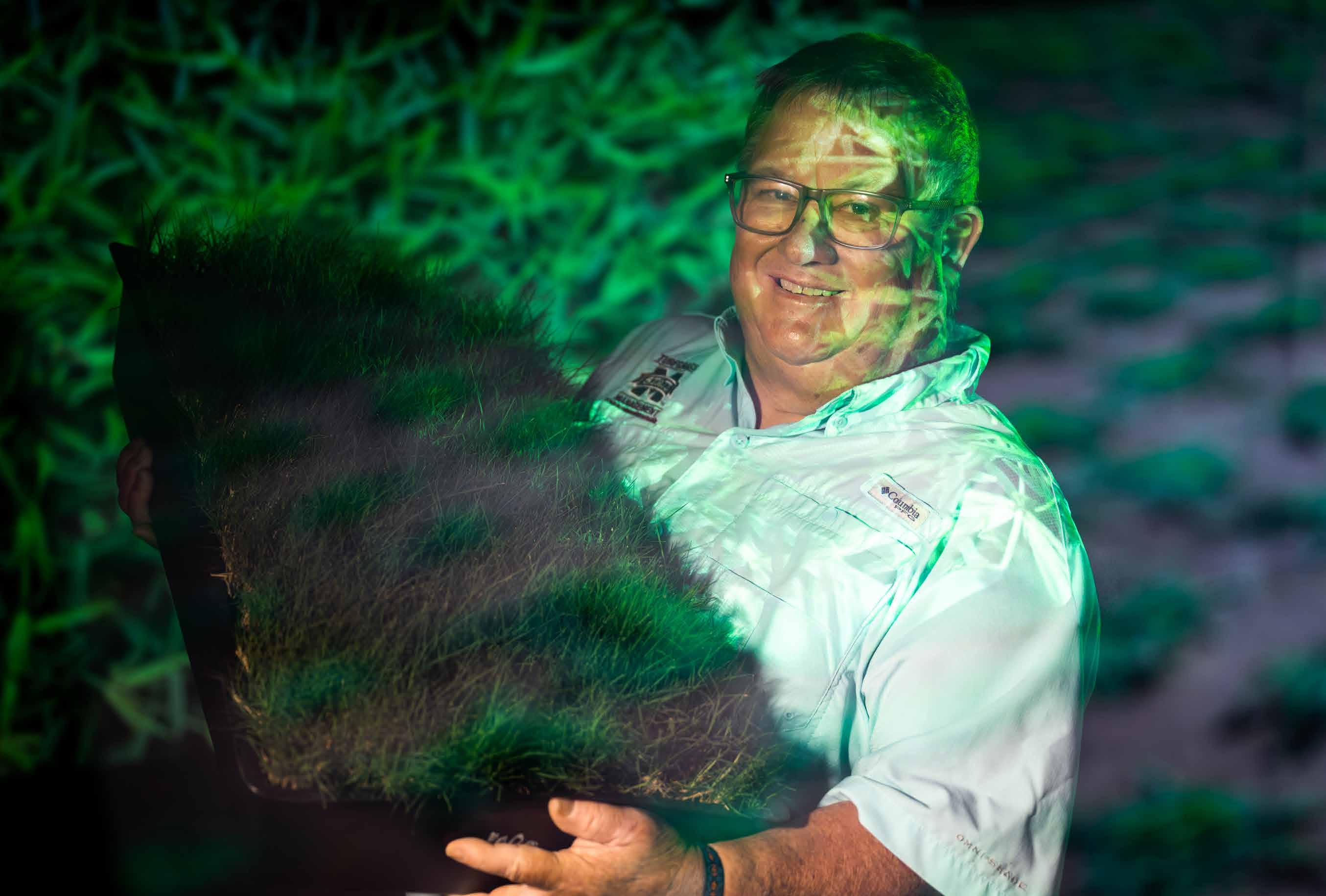
“THE STORY GOES NICK SABAN CAME HERE AND LOVED THE GRASS SO MUCH, HE HAD TO HAVE IT RIGHT THEN.”
~ BARRY STEWART
‘GROWN ALL OVER THE WORLD’
When football fans think of MSU, they’re likely to imagine four quarters of hard hits and ringing cowbells. But those who manage sports facilities’ playing surfaces know MSU is synonymous with exceptional Bermuda grass.
Some of MSU’s most visible and well-known licensed intellectual properties of the last 50 years are varieties of grass found on home lawns and sporting venues across the globe— including Southeastern Conference foe Louisiana State University.
“The story goes Nick Saban came here and loved the grass so much, he had to have it right then. They built a little sod farm just to service Tiger Stadium,” said MSU Department of
Plant and Soil Sciences Professor Barry Stewart.
That grass was MS-Choice Bermuda, which was known for its deep green color, canopy density and lateral growth. Many of the variants developed by MSU researchers show hardiness, resiliency and the ability to bounce back in tough conditions, Stewart said. In the West, where MS-Choice was marketed as Bullseye Bermuda, the grass found homes at Petco Park, the home of the San Diego Padres; Chase Field, the home of the Arizona Diamondbacks; and Rose Bowl Stadium in Pasadena, California.
From there, the grass took off like a weed. At one time, Stewart said, Bullseye was the No. 1-selling lawn grass in Phoenix, Arizona. Sod companies took notice and began working with the university on
other Bermuda grass projects. For example, MSU and turfgrass research, development and marketing company Sod Solutions began a partnership in 2014 breeding new cultivars by crosspollinating Celebration Bermudagrass with genotypes collected and maintained by the university. Celebration Hybrid Bermudagrass, the first cultivar from this project, debuted at the 2022 Turfgrass Research Field Day.
“MSU remains on the cutting edge when it comes to development of Bermuda grasses that not only do well here but beyond,” Stewart said. “It just goes to show the ideas grown here are grown all over the world.”
‘BALANCING RISK’
As an MSU doctoral student, Ed Luke created a virtual wind tunnel that would
produce significant real-world impact.
Luke, a three-time MSU graduate, is the architect behind the opensource software Loci, which allows supercomputers to run a computational fluid dynamics solver known as CHEM. The Loci framework—logic programming for parallel computation field simulations—is used by NASA and SpaceX—among many others— to analyze rocketry and model vehicle components. NASA’s use of Luke’s work is extensive, as 30% of its Ames Research Center’s recent supercomputing hours used Loci codes.
Although his work was already in use at NASA, the space agency leaned heavily on Luke’s work following the 2003 Space Shuttle Columbia disaster. Supercomputers worked better with his software than others, he said, so NASA engineers began using it more for simulations as they worked toward reactivating the shuttle program.
“Wind tunnels are expensive
and often can’t give you the exact information you’re looking for. That’s why we introduced a virtual model," Luke explained. "There are errors we can eliminate from that virtual wind tunnel model that you can’t really eliminate from the actual tunnel, and vice versa.”
Eight years after the Columbia disaster, Luke’s Loci/CHEM software would again feature in a battery of NASA studies determining if Space Shuttle Endeavor sustained heat shield damage after launch debris struck the craft. Engineers wanted quick analyses, and his software was up to the challenge.
“Engineering is all about balancing risk,” he said. “Decisions are never based on one thing or test, but it helped narrow uncertainty when time mattered.
“I’ll go to a conference and see results from others using my code. Sometimes that’s how I find out how big it’s gotten,” Luke continued. “I’ve seen
plenty of resumes from applicants who list knowledge of my software as a bullet point, and I see a lot of presentations at aerospace conferences using my code to do analysis. It’s pretty cool.”
Although the open-source software hasn’t generated licensing revenue from commercialization, Walters said it’s helped bring significant sponsored research funding and services revenue to the university through the years. Its widespread use has made it a highly impactful MSU-developed intellectual property.
“We want to build on that success, so the university is creating a sustainability plan from an open-source ecosystem perspective, so the software can continue to grow and live on,” he said.
SUPPORT FOR IDEAS
When a graduate student working under the supervision of Colleen Scott accidentally spilled a bit of slightly altered synthetic polymer known for
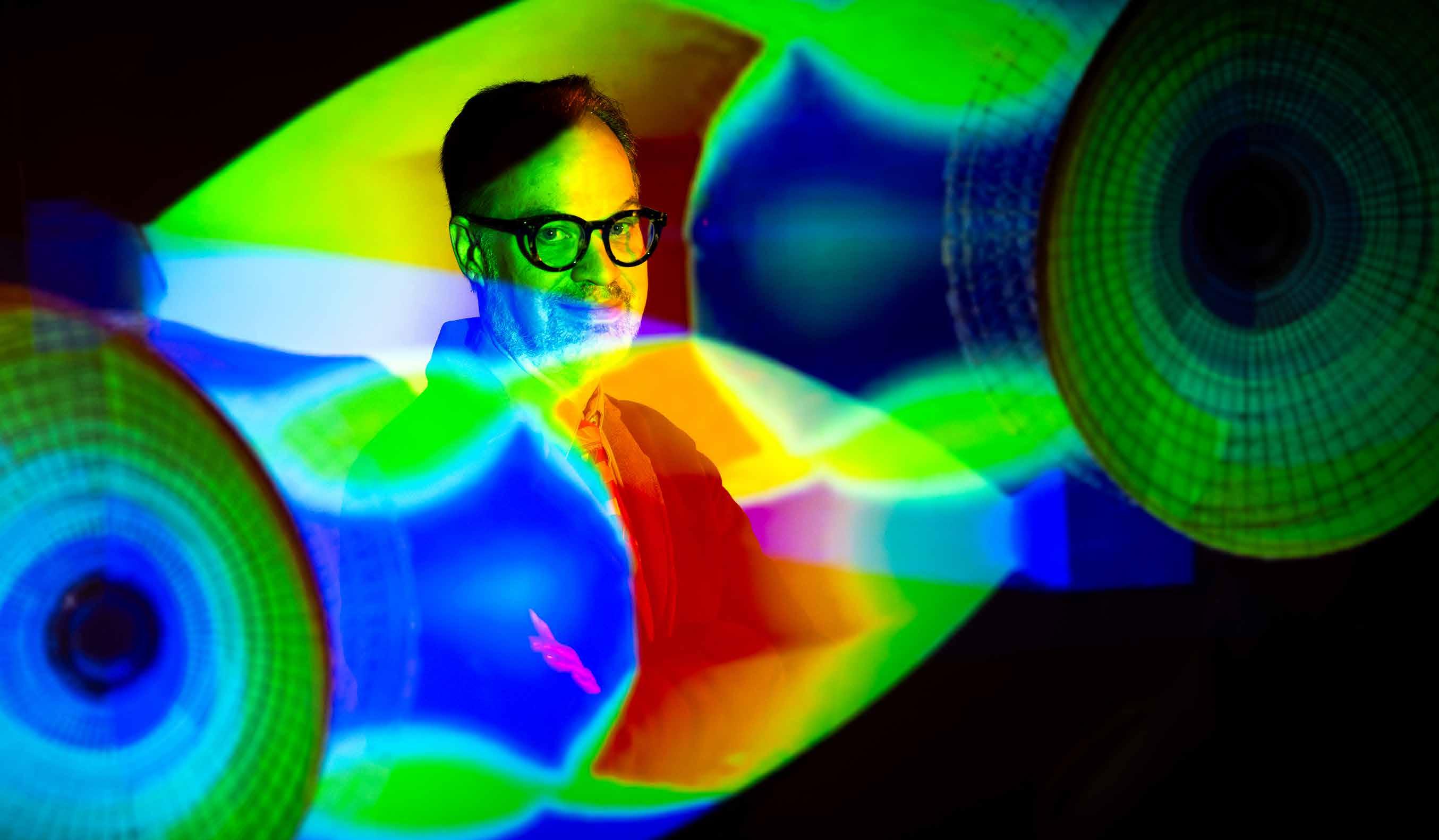
“I’LL GO TO A CONFERENCE AND SEE RESULTS FROM OTHERS USING MY CODE. SOMETIMES THAT’S HOW I FIND OUT HOW BIG IT’S GOTTEN.”
~ ED LUKE
its durability and strength, he spurred what might be the commercialization of a new, bio-based adhesive.
“He came back, and the container was stuck to the table,” explained Scott, an associate professor of chemistry who researches the synthesis and characterization of organic materials. “He figured out how to remove it and ran tests on it.
“That’s when we realized it had a reversible bond, meaning that if you glue something together, you can break it apart, put it back together, reheat it, and it heals itself—the bond reforms,” she continued.
The research lay dormant for years after the graduate student left, but a conversation with OTM facilitators is giving it new life. Thanks to the office, Scott is receiving funding through Strengthening Mississippi Academic Research Through Business Act, also known as the SMART Act, to hire another graduate researcher and continue the project.
“I always knew the project was a good one, but I just didn’t have the bandwidth for it without some help,” she said. “It addresses a niche area. While it may not revolutionize the industry per se, there are people out there who want it because it’s a plantrelated creation, not fossil-fuel based.”
The SMART Act serves three principal goals: stimulate private investment in research and development through partnerships with Mississippi’s public colleges, increase the competitiveness of Magnolia State companies and improve the statewide economy.
While the SMART Act provides tax rebates to private investors who fund qualified research, its Accelerate Initiative gives direct disbursements of up to $150,000 to researchers performing validation testing necessary to transition state-owned intellectual properties into viable products and services.
OTM handles the selection and management of SMART Act funding and will assist Scott in preparing her research for commercialization as her testing works to replicate the accidental results.
“I’ve always dreamed of seeing the stuff I do in the lab translated to the market for people,” Scott said. “It’s not about money for me; it’s always about science. That’s why I’m so grateful for OTM and how they come in and help with the business side.
“Researchers have ideas—that’s what we do. But for translation to happen, we need support, from OTM on the business side to our departments believing in what we’re doing," she continued. "Having this ecosystem in place is invaluable, and that’s what’s helping me pursue my endeavors in terms of translational science that benefits society.” n
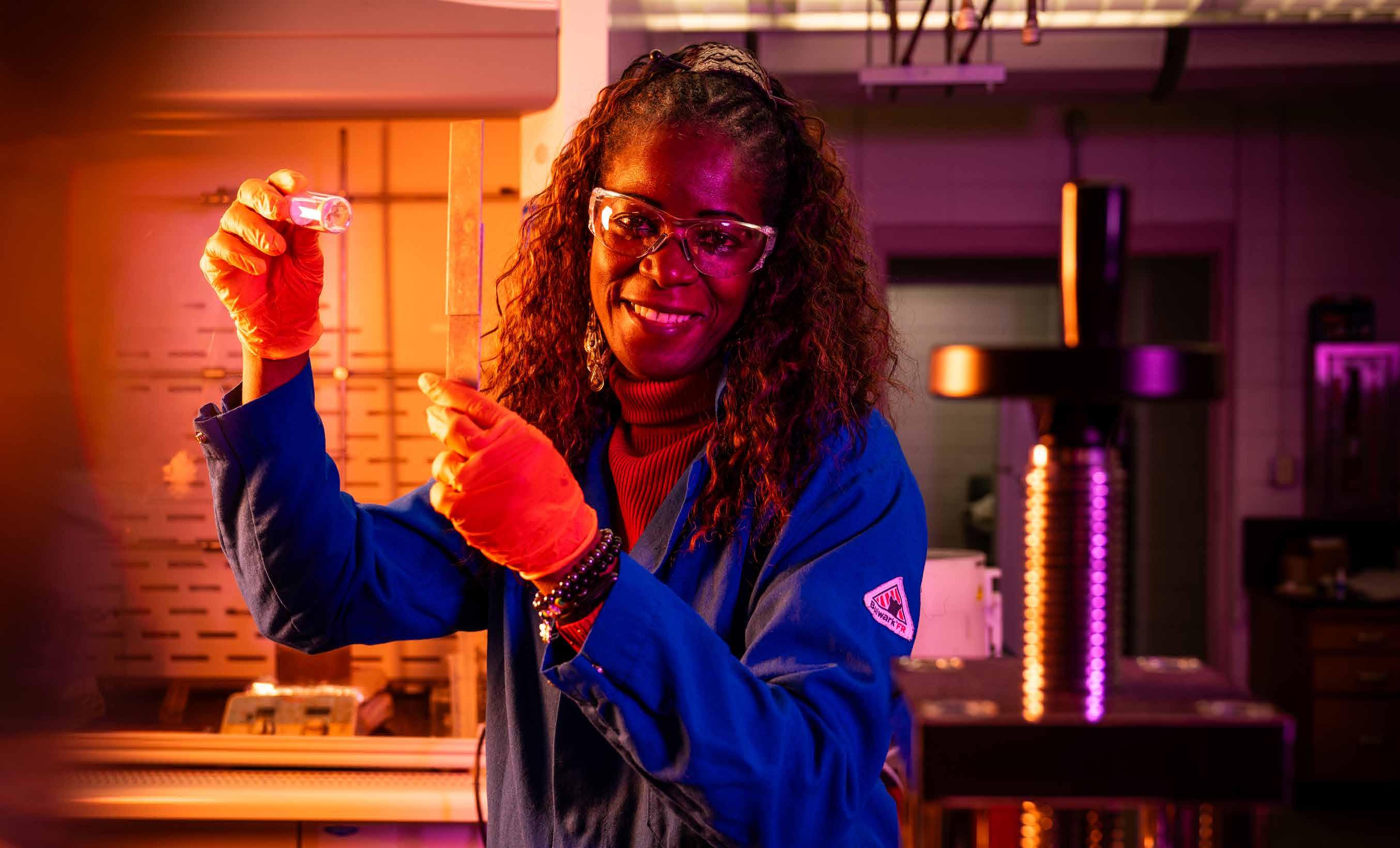
“I’VE ALWAYS DREAMED OF SEEING THE STUFF I DO IN THE LAB TRANSLATED TO THE MARKET FOR PEOPLE.”
~ COLLEEN SCOTT
RANDY J. CLEVELAND CENTER
gives Bulldog Engineers common ground
By Camille Carskadon, with additional reporting by Aspen Harris; Photos by Emily Grace McCall
Bagley College of Engineering students from all backgrounds and disciplines now have common ground to call home. A historic building with a renewed life and a new purpose, the Randy J. Cleveland Engineering Student Center offers Bulldog Engineers a place to study,

collaborate and ask questions and, just as importantly, belong.
Designed as a central hub for engineering students, the Cleveland Center unites dedicated study spaces, meeting rooms and a makerspace under one roof, supporting students academically while strengthening
CARTER CULVER, a junior in aerospace engineering from Madison, is a recipient of the Randy and Nina Cleveland Loyalty Scholarship.
ELIZABETH CORNWELL, a senior petroleum and chemical engineering double major from Katy, Texas, is a recipient of the Randy and Nina Cleveland Endowed Scholarship.
,
recruitment, retention and a sense of community within the Bagley College of Engineering.
“Spaces like the Cleveland Center turn student support into something tangible, something students can see, experience and belong to,” said Dave Ford, dean of the Bagley College of Engineering.
A NEW PURPOSE
Built in 1906 as a materials testing lab, the building that is now the Cleveland Center stands between McCain Hall and Walker Engineering.
In its early years, the building supported the foundational work of the university’s young engineering program, but as decades passed it became overshadowed by newer, grander and more advanced buildings.
A 2021 gift, from 1983 petroleum engineering alumnus Randy and Nina Cleveland of Fort Worth, Texas, gave Mississippi State the chance to change that by reimagining the historic building.
With the Clevelands’ support, one of MSU’s oldest buildings—designated a Magnolia State Landmark by the
REED YATES, a sophomore in biomedical engineering from Louisville, receives support through the Randy and Nina Cleveland Loyalty Scholarship.
MATTHEW WUBBEN, a senior majoring in civil engineering from Starkville, is a Randy and Nina Cleveland Loyalty Scholar.

Mississippi Department of Archives and History—was given new life while preserving its history.
The building’s namesake was on hand in November to celebrate the grand opening of the transformed space.
“In the business and engineering worlds, there are so many things that enable success that aren’t necessarily taught in a classroom, like the ability to communicate effectively and work with others as part of a team,” Randy Cleveland said. “MSU is unique in many regards, but especially in the
HANNAH NOELLE COCHRAN
a senior in biomedical engineering from Lucedale, is supported by the Randy and Nina Cleveland Loyalty Scholarship.
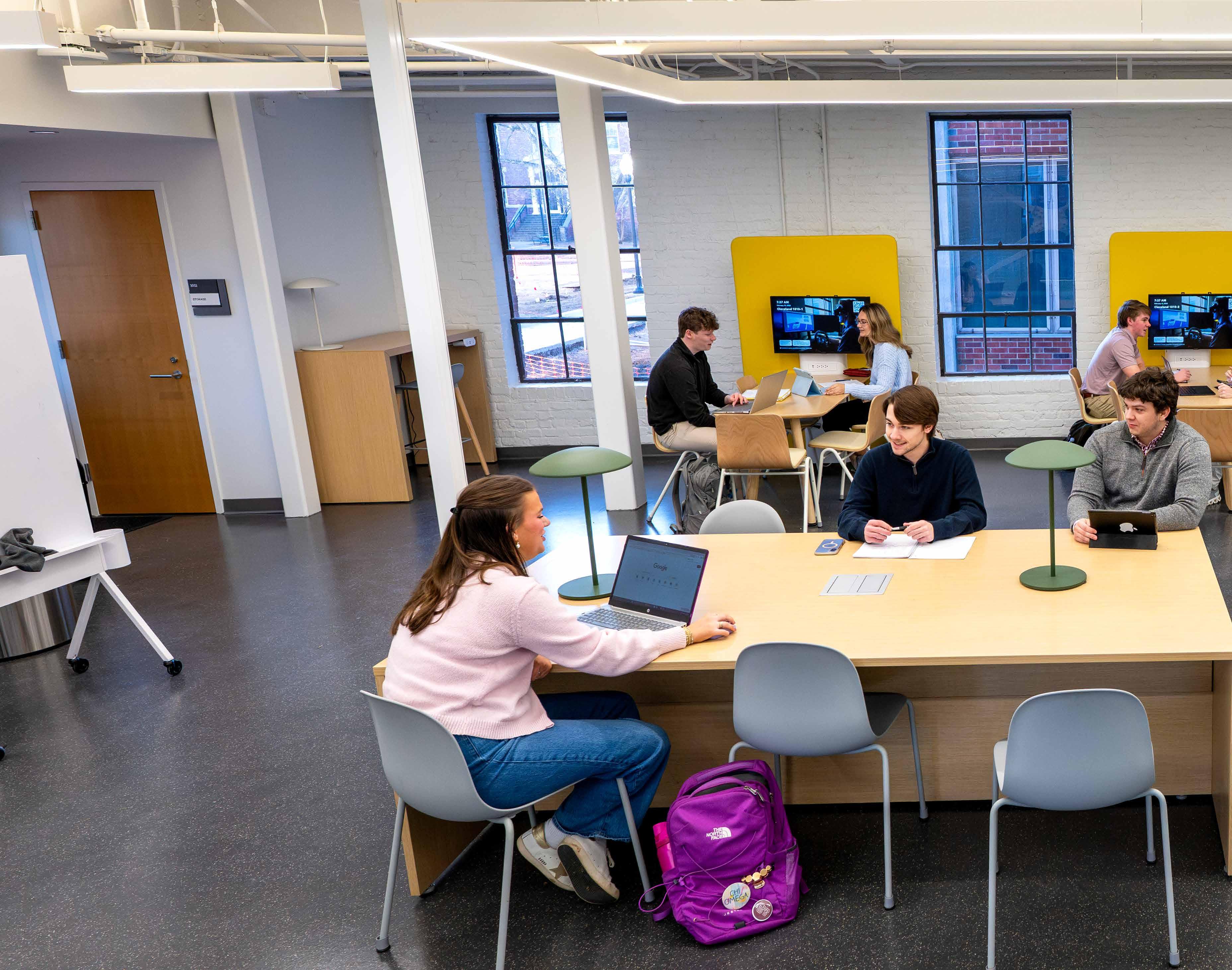
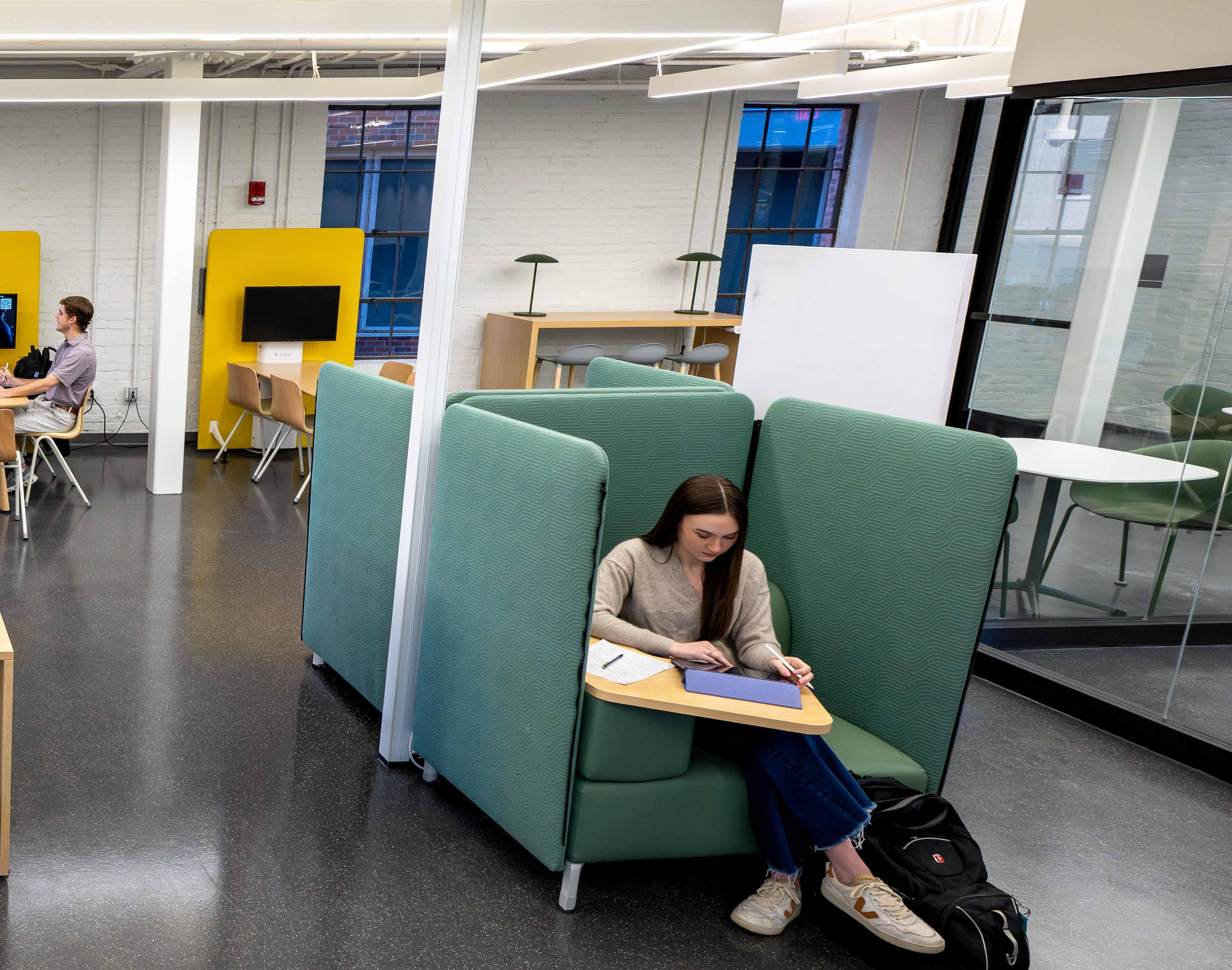
Students gather to study and collaborate inside the
CENTER, where dedicated spaces for group work and quiet study give Bulldog Engineers a place to connect, share ideas and support one another.
welcoming feel embodied across campus. That environment encourages collaboration and networking, which translates well into the professional industry.
“This building will provide space to further opportunities for students to grow and explore their potential,” he explained.
A CONNECTION
The renovation added a second floor to the original structure and completely redesigned the interior. Now 7,870 square feet, the space is
dedicated to project-based learning and innovation to meet the needs of today’s engineering students.
For Robert Green, who served as interim dean during the renovation, preserving the building was as important as modernizing it. Historic spaces, he said, create a tangible connection between past and present, reminding students they are part of a long line of MSU engineers who have passed through the same doors.
A three-time alumnus himself, Green knows firsthand that life as an MSU engineering student is

“Spaces like the Cleveland Center turn student support into something tangible, something students can see, experience and belong to.”
~ Dave Ford
ANDREW SCHROEDER, a junior in biomedical engineering from Benton, Arkansas, is supported by the Randy and Nina Cleveland Loyalty Scholarship.
GRAYSON COATES, a senior in chemical engineering from Wesson, is among the students benefiting from the Randy and Nina Cleveland Loyalty Scholarship.
SARAH BETH USEY, a senior in electrical engineering from Madison, is supported by the Joseph and Annie Barrier Engineering Scholarship.
RANDY J. CLEVELAND ENGINEERING STUDENT
about more than what happens in classrooms and labs; it’s also the life that happens in between.

“When I step back and think about my time on campus, I realize what I gained at MSU was so much more than just an education—it was the building blocks of how to be truly successful.”
~ Randy Cleveland
“We talk a lot about the sense of family we have at MSU, and this building provides a connection to the engineering family members who once walked these halls,” Green said. “As students gather in the center to study and work, they can sense the history in the building. They were not the first, nor will they be the last engineering students to pass through these doors, but they’re an important part of our story and our legacy.”
Green, now back in his role as associate dean of academics, explained students don’t become engineers in a vacuum.
“At its core, the field relies on collaboration and the sharing of ideas, which is something Randy knows firsthand,” he said. “The Cleveland Center was created as a space to allow MSU’s future engineers to connect with their fellow students who will one day be their colleagues.”
Sarah Beth Usey, a senior in electrical engineering and Joseph and Annie Barrier Engineering Scholar
from Madison, often drops by the Cleveland Center between classes to study, meet with classmates or simply to reset before her next class. In the short time since the center opened, she said spending time there has become part of her routine.
“During finals week especially, this became my go-to spot,” Usey said. “It’s a place where you can find people in your classes and work together. I come here when I want to collaborate, talk through problems, meet between classes or focus on something. It’s a designated space for engineering students, and that makes a big difference.”
A LASTING IMPRESSION
Jean Mohammadi-Aragh, director of the Office of Student, Faculty and Staff Professional Development, said the Cleveland Center helps tell MSU’s story of student support. When prospective students and their families visit, she said the center helps them see firsthand the university’s commitment to student success— both in the classroom and out.
Bagley Ambassadors President Tyler Reeves, a junior cybersecurity major, said the center is a cornerstone of the engineering tour experience for potential students. A beneficiary of the Bob G. Roberts Scholarship Fund, she said the building does more than show potential engineering students that they will have an “amazing and dedicated study space.” It also reassures parents.
“First impressions can be impactful,” she said, “and the center shows them this is a place where they will belong.”
A LEGACY
The development of the Cleveland Center also reflects the commitment
of Mississippi State alumni to supporting students of today and tomorrow. It’s a highly visible sign showing that Bulldog graduates continue to invest in the betterment of the university and their support has meaningful and immediate impact.
“We are grateful to have advocates like Randy and Nina Cleveland who not only see and understand the needs of today’s students but also offer their generous support to bring impactful changes to campus,” said Bennett Evans, director of development for the Bagley College of Engineering.
The Randy J. Cleveland Engineering Student Center reflects the long-standing connection between Randy and Nina Cleveland—one rooted in engineering education and student success. Randy Cleveland has remained closely involved with the university, supporting initiatives that strengthen academic programs and expand opportunities for students, including an endowed professorship, several scholarships and support for undergraduate research.
The couple’s contributions have consistently focused on creating opportunities for students to be challenged, supported and prepared for life beyond graduation. With this latest endeavor, they have created a place where those things come together to shape how students learn and who they become in the process.
“When I step back and think about my time on campus, I realize what I gained at MSU was so much more than just an education—it was the building blocks of how to be truly successful,” Randy Cleveland said. “It’s always been important to us to give back in support and recognition of those things that helped us be successful.” n
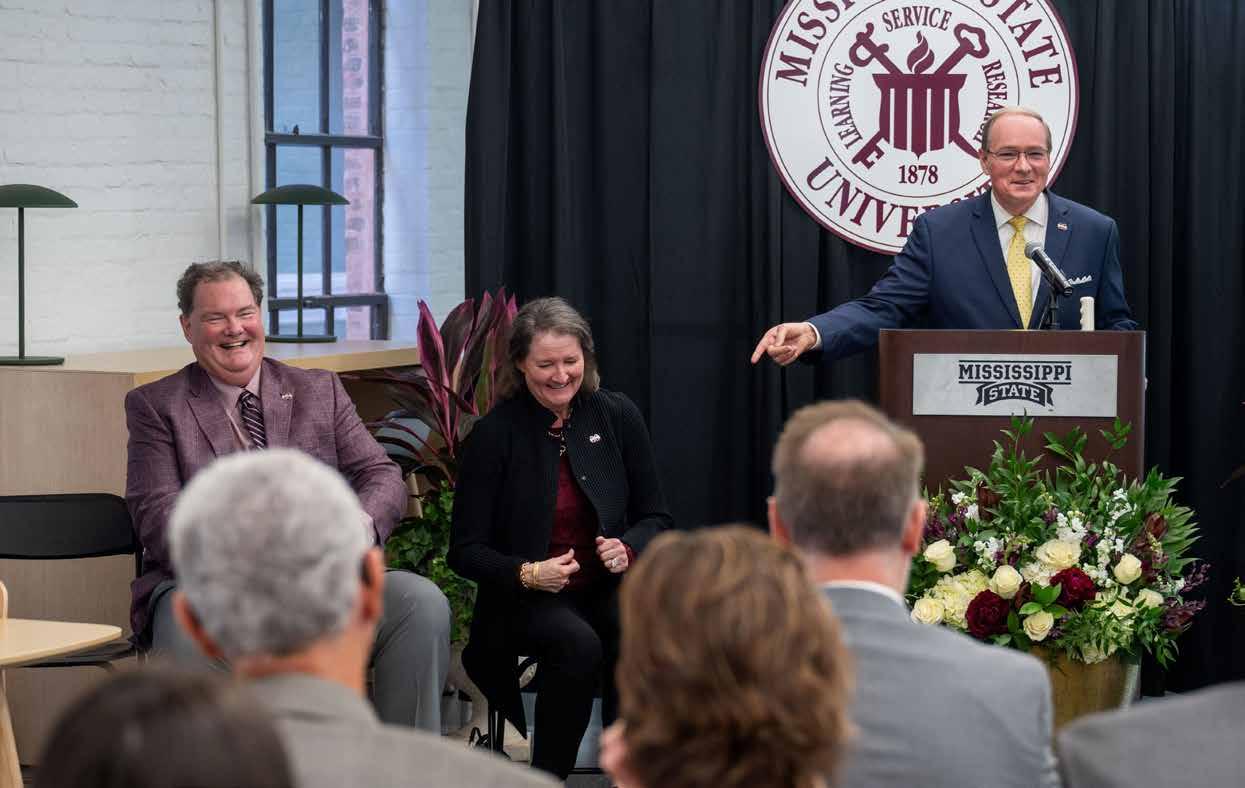
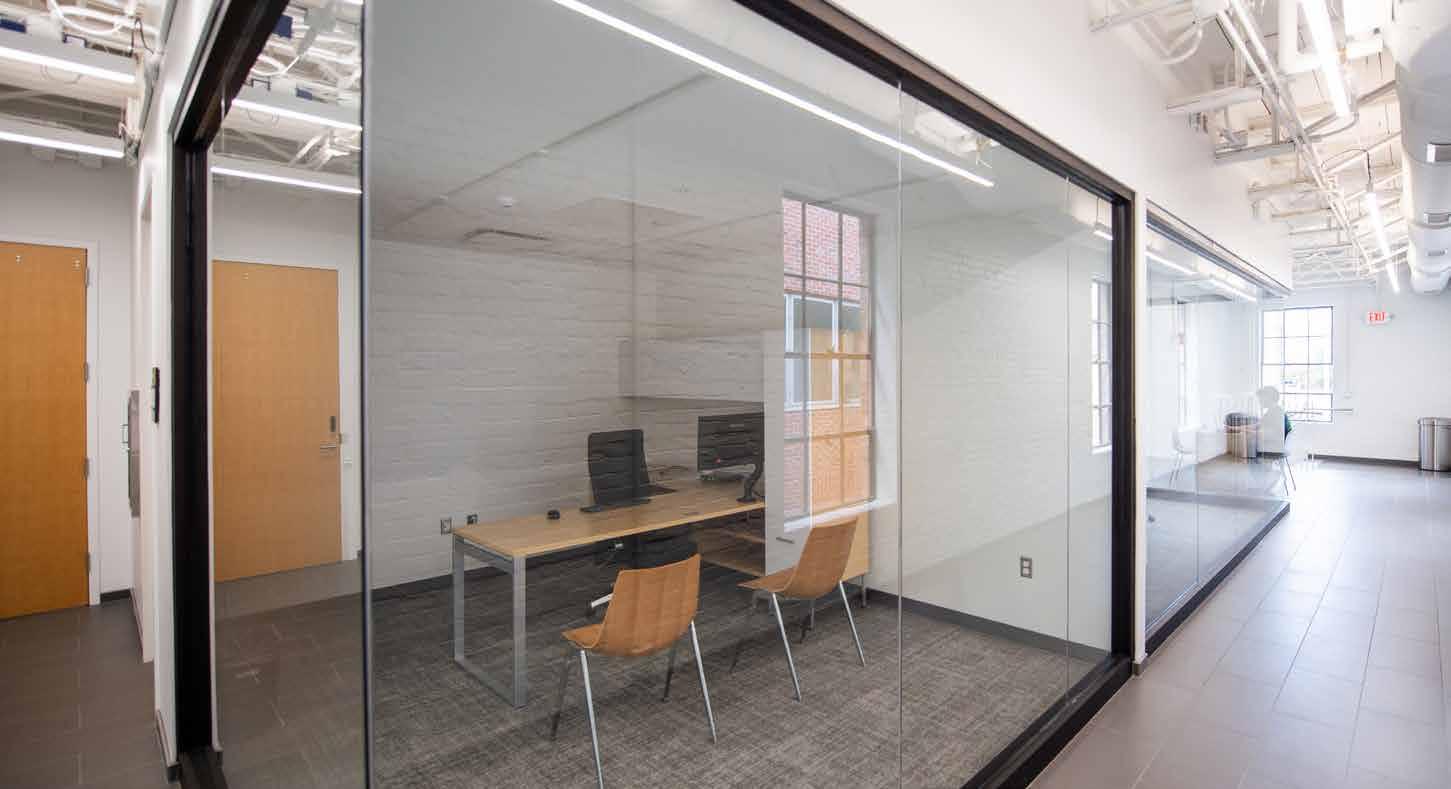
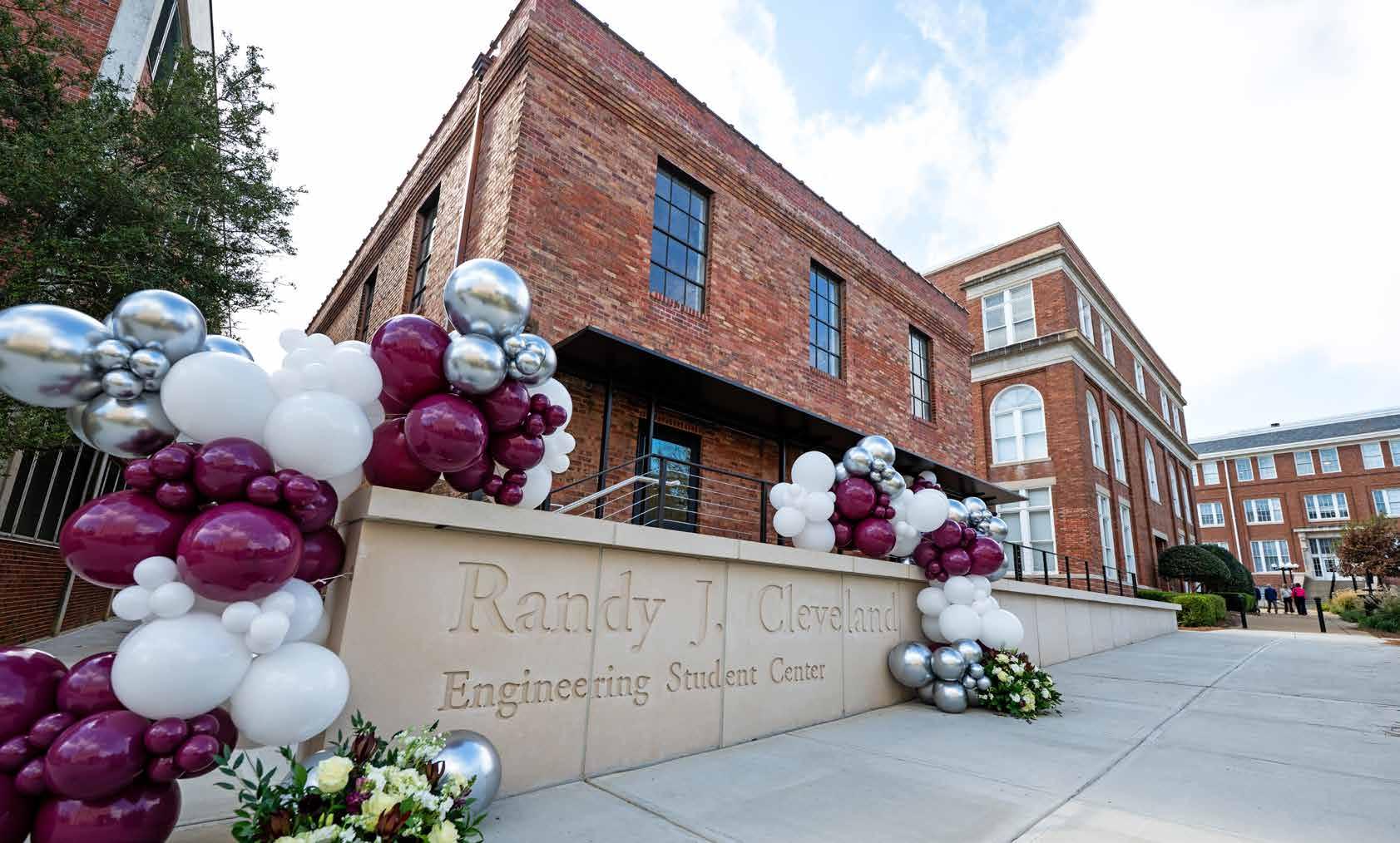
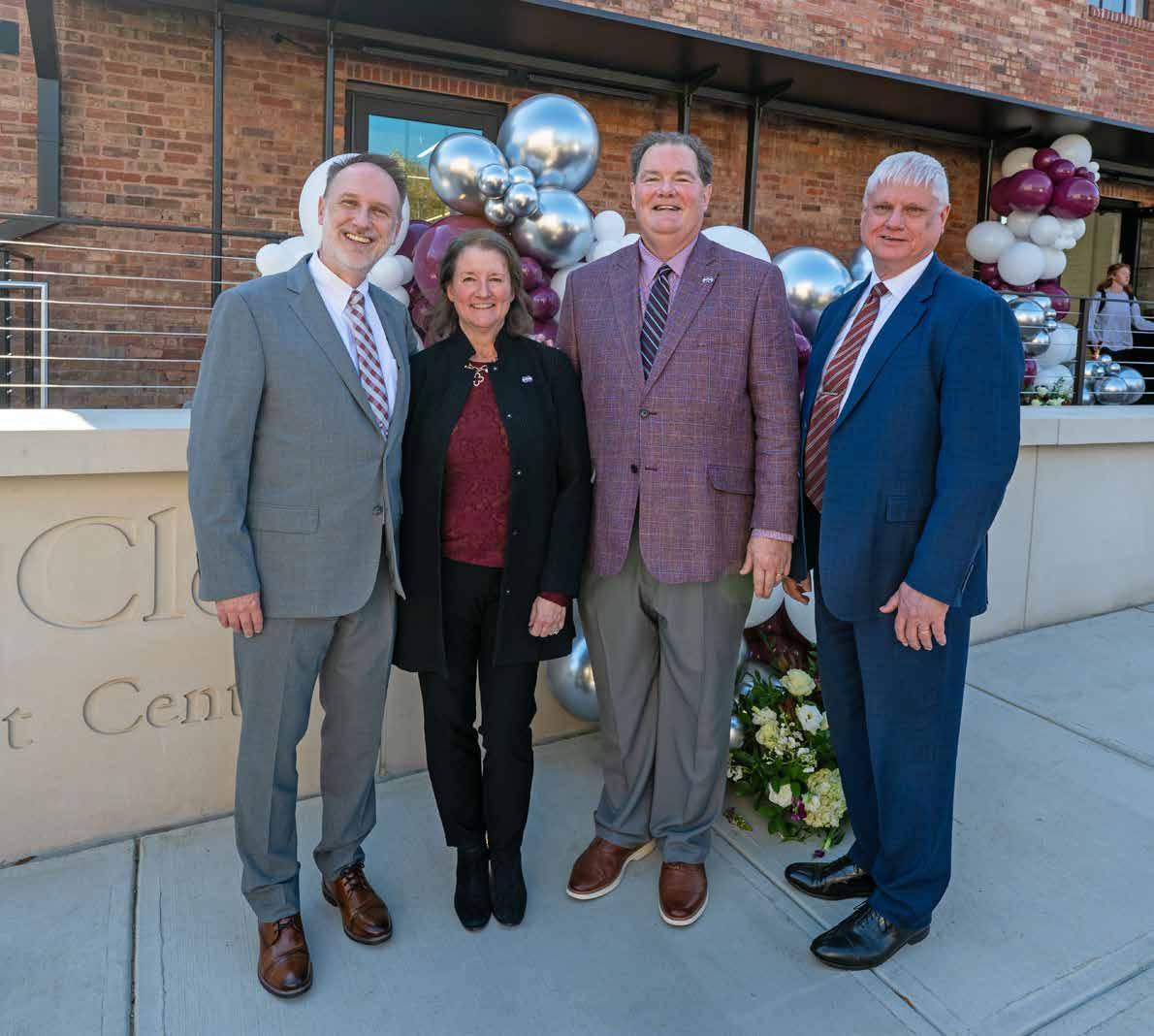
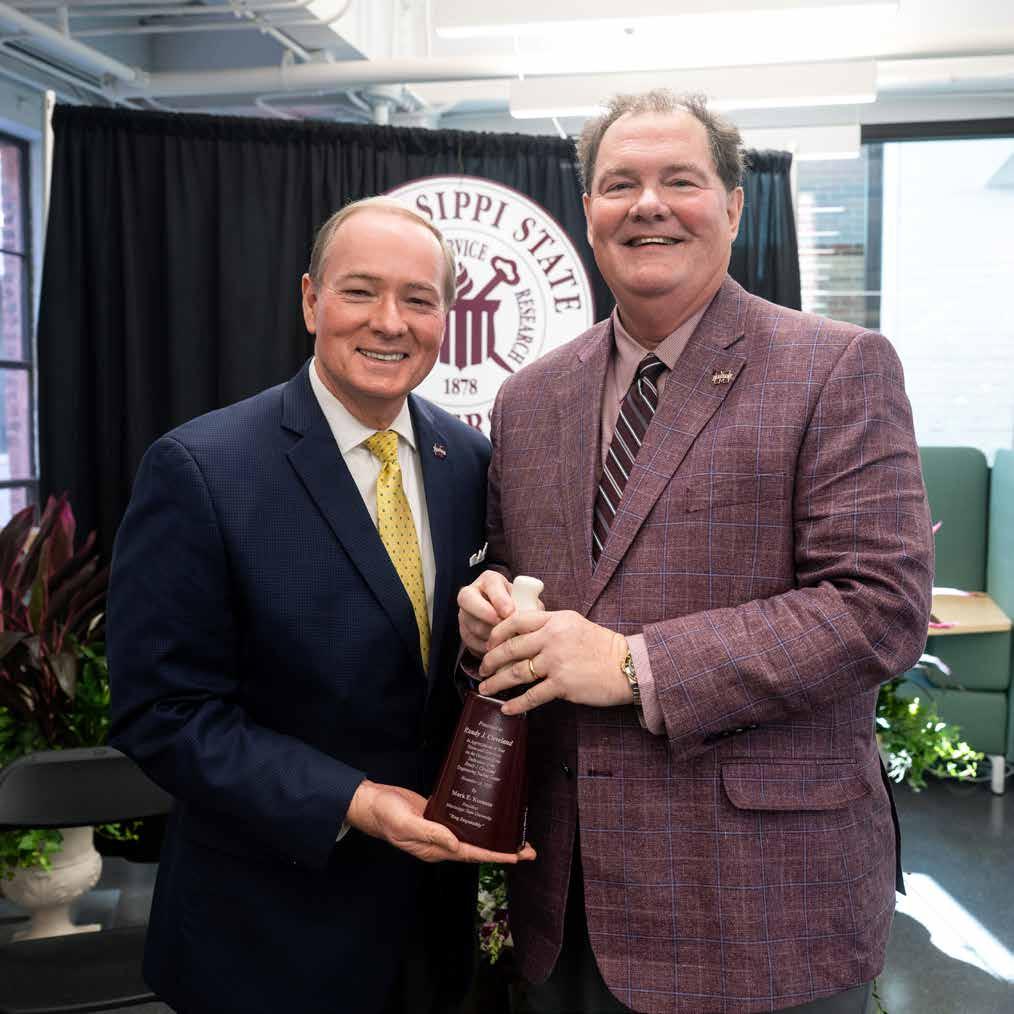
Mississippi State celebrated the opening of the Randy J. Cleveland Engineering Student Center in November, marking the transformation of one of campus’ oldest buildings into a modern hub for Bagley College of Engineering students to study, collaborate and connect. Top left: MSU President Mark E. Keenum speaks during
the dedication ceremony honoring Randy and Nina Cleveland. Middle right: Keenum and Randy Cleveland following the event. Bottom left: Bagley College of Engineering Dean Dave Ford joins Nina and Randy Cleveland and Robert Green, associate dean of academics for the college, outside the newly opened facility.
FROM COUNTRY TO COUNTRY
Robinson’s life, success built on family, Bulldog values
When Kenneth “Ken” Robinson left his family farm outside Eupora to attend Mississippi State in the 1970s, he had no idea the education, values and lessons begun at home, nurtured in high school and refined in Starkville would launch him on a multidecade business career taking him to almost 70 countries—and back to the same patch of land from which he came.
The 1977 banking and finance graduate says he’s lived a very blessed life filled with opportunities not experienced by many. In a 40-year career with Procter & Gamble and time with other global companies, he has experienced corporate career success of the highest levels, which enables him to give back both financially and through his time to causes he supports. However, he says one of his life’s biggest capstones came when he purchased his father’s Webster County property, ensuring it remains in the family.
“It’s a point of pride being able to come back home to the place that made it all possible,” he said. “I committed to keeping it in the family years ago, and I’m fulfilling a vision my father wanted for us. No matter where I go, I always know I can come back to my little place here on the farm and embrace the peacefulness and quietness of it.”
The youngest of 11 children, Robinson was born to John and Jimmie one year after his father purchased the 80-acre homestead for $900 in the 1950s. There, Robinson said his father taught him what it meant to be a leader and the value of hard work, determination, integrity and credibility.
By Carl Smith, Photo Submitted
His large family—including his sister, Emma, whom Robinson describes as a second mother—also taught him the importance of relationships.
“Dad used to say credibility is about being reliable and if you say something, you do it,” Robinson said. “Reflecting on it now, the way he cared
“No matter where I go, I always know I can come back to my little place here on the farm and embrace the peacefulness and quietness of it.”
~ Kenneth Robinson
for his family and was respected by his community—he was one of the most effective leaders I’ve ever seen even though he only had a fifth-grade education.
“He really was the embodiment of something else he taught me: The most educated person in the room might not be the smartest,” he added.
At MSU, Robinson focused on his love of numbers and studied finance, which opened the doors to opportunities beyond the farm: markets, banking and the mechanics behind financial decision-making and risk. He credits two professors—one who taught finance and another who taught statistics—for giving him the “motivation and drive to succeed."
“They couldn’t have been more
different in their personalities. One was loving, caring and thoughtful; the other, frankly, was a hard-ass who I found to be amazingly effective in both testing and molding my determination,” he said. “They were tough but fair, and they helped me learn nothing was going to be easy—that when you fail, you get up and keep moving forward.”
After graduating from MSU, Robinson joined P&G and later earned an MBA from the University of Memphis. At P&G, he earned prestigious roles including vice president for global diversity and inclusion; chief audit executive and global risk and compliance leader; chief financial officer for both global personal beauty care and global customer development finance; and the director of finance for its Arabian Peninsula-based businesses. He now shares his knowledge and experience as an independent director with other companies including Occidental Petroleum, Abercrombie & Fitch, Paylocity and Morgan Stanley.
“When I first came to State, I was worried about being accepted, but being there taught me how to build relationships and a support network of caring people,” Robinson said. “I quickly recognized the power of working with people across cultures, backgrounds and experiences.
“Fast forward to my time in the corporate world and overseas, and I got to truly understand the power of broader diversity and what it means to support each other,” he explained.
He calls it the “power of people”— specifically, the power of working with people whether at home in Webster
County, a corporate boardroom or any of the far-flung countries he’s had the opportunity to visit.
“Traveling around the globe reinforced this belief about the power of people—the power of working with people—and building strong relationships, maintaining credibility and being humble in what you do as a leader,” Robinson said. “These fundamental beliefs didn’t just show up, though. I learned them back home, in high school and at Mississippi State.”
International Reporting Standards Foundation, his church and a number of other organizations.
Nonprofit engagement, he said, is a core component of his passion and sense of responsibility to give back to his community and others.
“There are so many foundational experiences that are instilled in you early and play a critical role in your ability to be successful,” he said. “I want people to always think about the value of hard work, determination,
“Traveling around the globe reinforced this belief about the power of people— the power of working with people—and building strong relationships, maintaining credibility and being humble in what you do as a leader.”
~ Kenneth Robinson
Through all of his success and travels, Robinson has maintained connections to MSU—the place he credits with jump-starting his career. The 2015 College of Business Alumni Fellow and 2025 Alumnus of the Year has served on the College of Business’ Executive Advisory Board for almost a decade and for multiple years on the MSU Foundation board.
In addition to passionately supporting all-things Maroon and White, Robinson said he takes pride in his work with the National Underground Railroad Freedom Center—a Cincinnati, Ohio-based museum that offers insight into the struggle for freedom for which he was chairman of the board; the
curiosity and the willingness to explore new things; to see the value of breadth, depth and diversity of experience; and to work hard and maintain humility.
“MSU was a continuation of those lessons I had on the farm and an introduction to new ones that shaped me to be the leader I would become. For that, I will always be grateful.” n
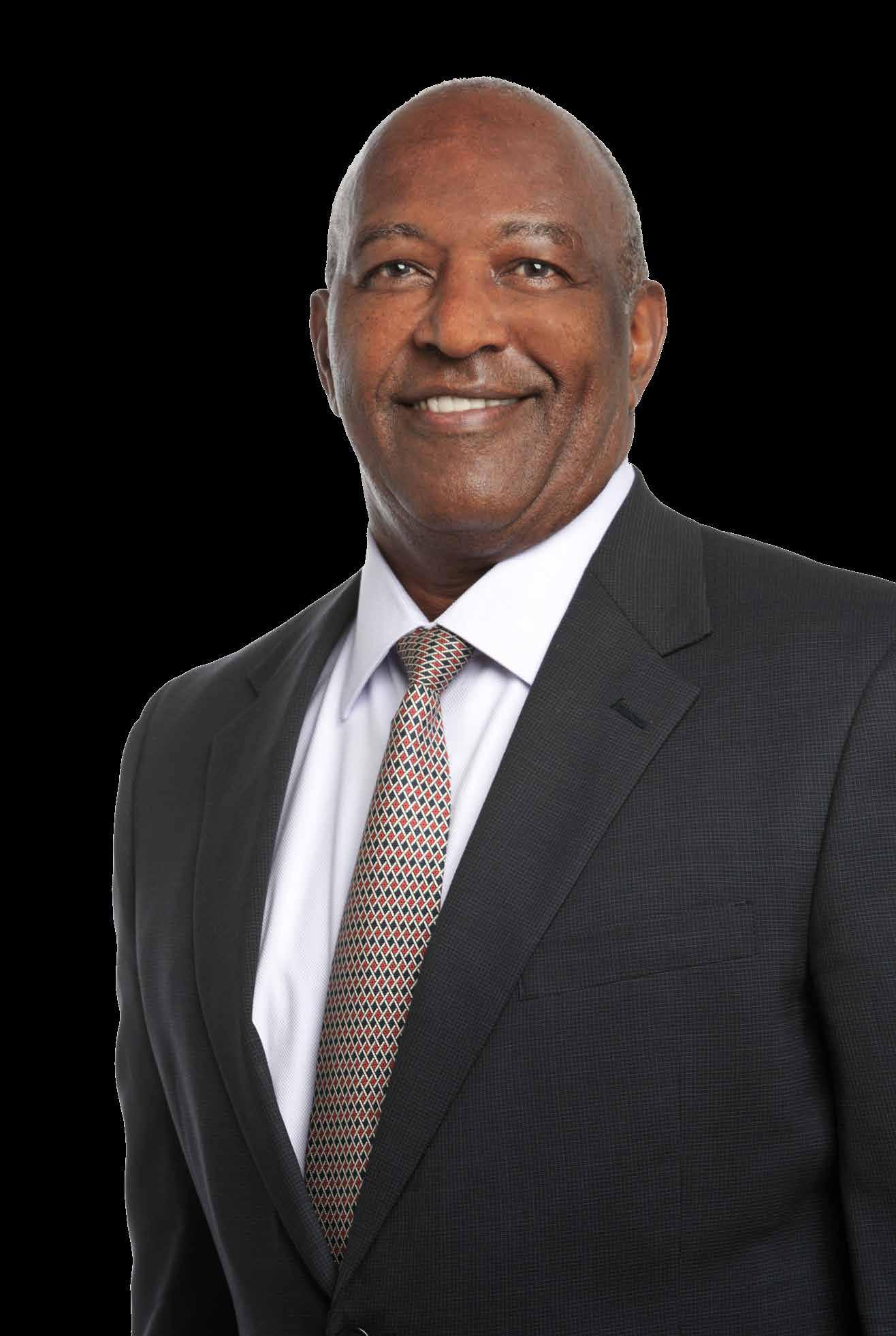
A BULLDOG ON TOP OF THE WORLD
MSU alum conquers
Seven Summits
By Mary Pollitz, Photos by Michelle Douglas
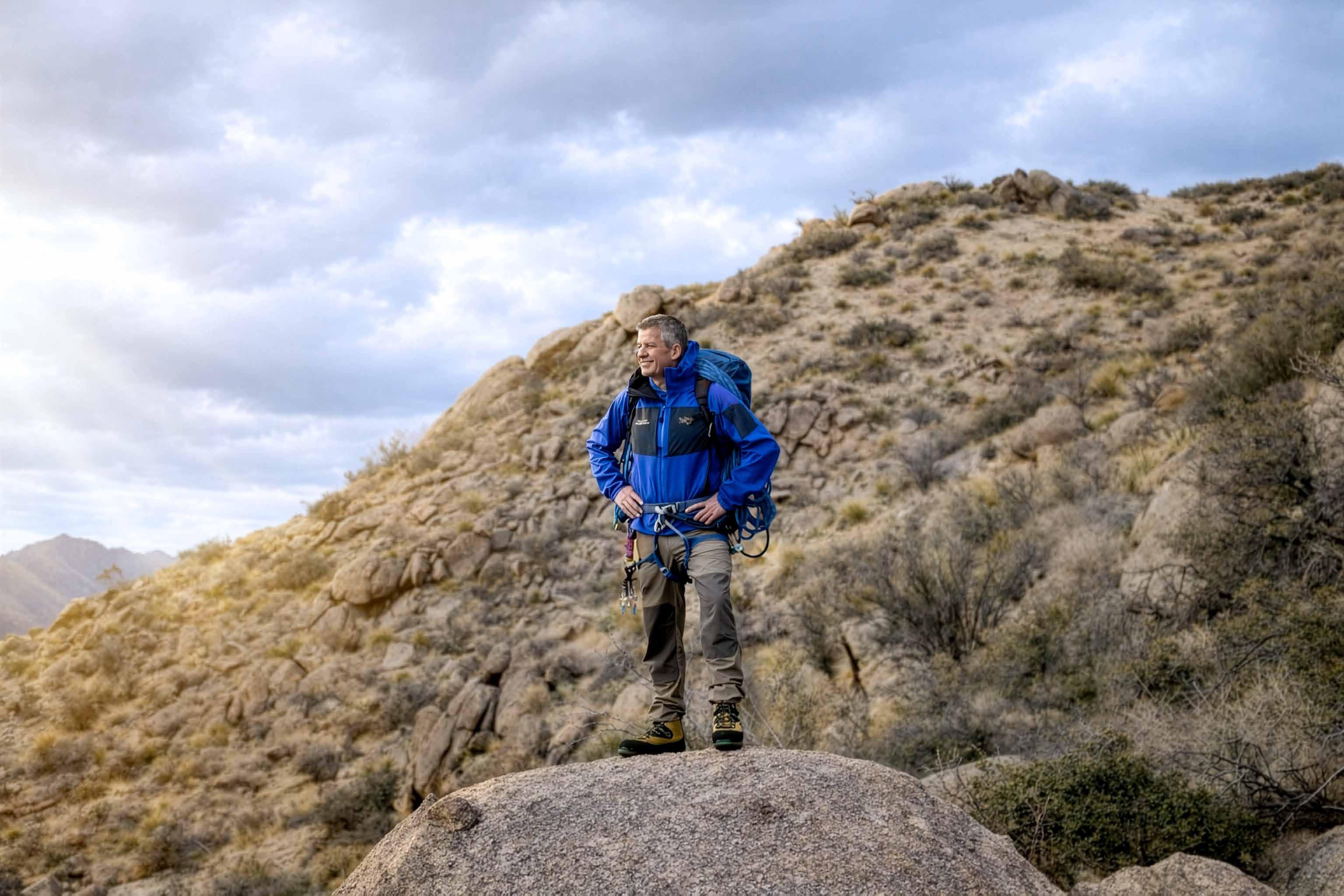
Steve “Duke” Pigott stood on the roof of the world. Then, true to his form, he started looking for the next peak.
When the Mississippi State alumnus summited Mount Everest in May 2025, he joined an elite group of roughly 400 climbers to ever complete the Seven Summits—reaching the highest peak on each continent.
“I’m glad it’s behind me now,” Pigott said with a laugh. “There were always obstacles in the way, so it feels good to say I’ve done it. It was a humbling moment there. And it’s cool to be a part of such a small group.”
ALWAYS CLIMBING HIGHER
A 1994 graduate of MSU’s Bagley College of Engineering with a degree in aerospace engineering, Pigott has always been drawn to high places—both literally and figuratively.
“Ever since I was a kid, I wanted to build airplanes,” the Jackson native said. “I had always been fascinated by aerospace engineering and Mississippi State has such a great aerospace program, so for me, it was just a nobrainer. That’s what took me to State.”
From there, he launched an
Indiana Jones-like career that spanned engineering, international exploration, firefighting, archaeology and some of the most extreme mountaineering on Earth.
Pigott spent years at Lockheed Martin, working on major defense programs including the C-130 Hercules and the F-35 Lightning II, while also serving in leadership roles overseeing Asia, Africa and Middle East initiatives. In the midst of that, he became a volunteer firefighter—because when most say they don’t have time, Pigott simply finds it.
“Lockheed Martin was a demanding
"I wanted to spend my life climbing mountains and digging in the desert.”
~ Steve Pigott

Mississippi State alumnus Steve “Duke” Pigott stands at the Piedra Lisa Canyon Trailhead in Albuquerque, New Mexico, where he trains in the Sandia Mountains. The 1994 Bagley College of Engineering graduate built a career in aerospace engineering, firefighting, exploration and archaeology, while pursuing extreme mountaineering.
job—60 to 80 hours a week,” he said.
“When I became chief of the volunteer fire department, that added another 30 or 40.”
RAISING AWARENESS AT 5,000 METERS
When he took on a mission to promote firefighter fitness, Pigott added it to his already bursting schedule—and tackled the task with his customary sense of adventure and need to go to extremes.
In 2008, he traveled to Africa to climb Mount Kilimanjaro, achieving that feat in full firefighter gear—75

pounds of nonbreathable fabric, bulky tools and unwieldy safety gear.
“I thought to myself, ‘What’s a good way to encourage firefighters to get out and do stuff in their gear?’” he said. “I said, ‘I’ll see if I can climb a mountain in firefighter gear.’ And I did. Things really took off from there.”
The climbs kept coming. Mount Elbrus in Russia followed in 2009, also accomplished while sporting firefighter gear. Then came South America’s Aconcagua in 2014, Denali in 2018, Antarctica’s Mount Vinson in 2019, Carstensz Pyramid in Oceania in 2025— and finally, Mount Everest later that year.
“After the first two, I don’t think I was even thinking about doing all seven,” Pigott said. “But I really loved mountain climbing. Once I climbed Denali, I figured I would keep going.”
After climbing to the world’s tallest peak, Pigott sat on top of the mountain, holding the MSU pennant. Then he added another accomplishment to his list: the first person to play guitar at the Mount Everest summit.
“I played the guitar, and my friend played the harmonica on the summit of Denali,” he said. “On Everest, I started playing guitar at base camp and kept it with me. I kept carrying it to each


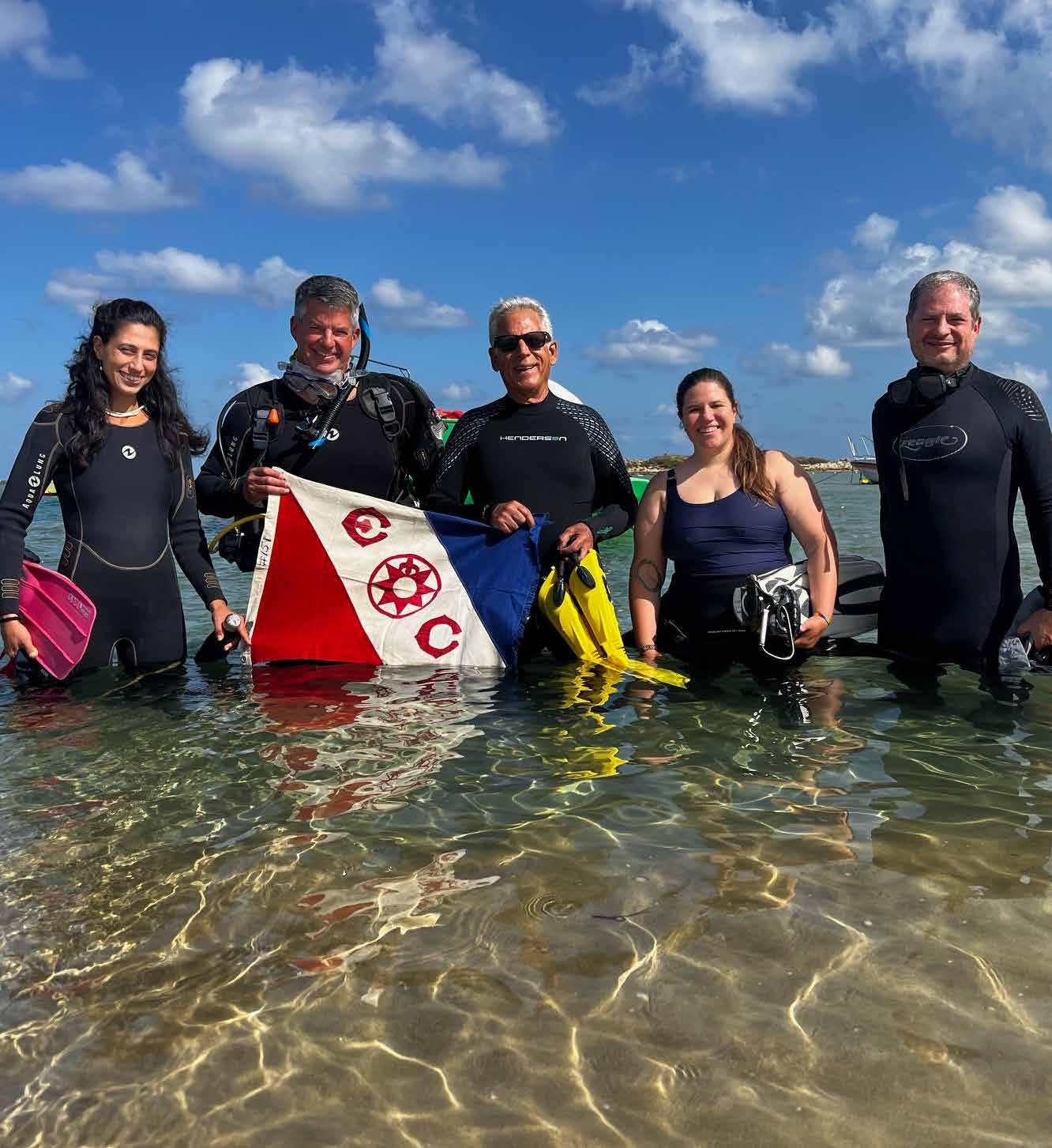
Mississippi State alumnus Steve “Duke” Pigott stands at Mount Everest Base Camp shortly before summiting the world’s highest peak in May 2025. Pigott completed the Seven Summits, reaching the highest mountain on each continent, and now continues his exploration through archaeological fieldwork, shipwreck excavations and international digs in the Middle East.
camp on the way, and by the fourth, I decided I had to take it to the summit. I wrote a song on the way up, climbed to the peak and played it, which had never been done before.”
After his descent, Duke signed the guitar and donated it to the Hard Rock Cafe in Kathmandu, Nepal—a town right next to the mountain.
Now living in New Mexico, Pigott says MSU is the foundation that has supported every step of his journey, whether it was crossing Engineering Row, jumping into a fruitful career or ascending to the world’s greatest heights.
“Mississippi State provided me all the opportunities to do the things I love,” he said. “My time at State was wonderful—every bit of it was fantastic.”
RETIRING TO A NEW PASSION
For years, Pigott used vacation days to climb mountains and
volunteer in archaeological digs— feeding his passions for both adventure and history. Eventually, the pull became too strong to relegate to the sidelines.
“There were always obstacles in the way, so it feels good to say I’ve done it. It was a humbling moment there.”
~ Steve Pigott
“That’s the reason I retired,” he said. “I wanted to spend my life climbing mountains and digging in the desert.”
Now, at 54, Pigott is continuing his academic journey, working toward a doctoral degree in archaeology while preparing for upcoming excavations—
one at an underwater Phoenician shipwreck in Israel and several landbased digs in the Middle East.
Pigott also serves as vice president of Albuquerque’s mountain rescue team. In this role, he volunteers for the wilderness search and rescue team, using his mountaineering, backpacking and medical skills to serve the community by keeping climbers safe.
And, of course, he’s still climbing.
With the Seven Summits complete, Pigott has turned his sights to the Swiss Alps, aiming to summit all 82 of its peaks that rise above 4,000 meters. He’s already nearly a quarter of the way there.
Though Pigott has traveled the world and stood atop every summit he’s set his sights on, he knows his journey will lead him back home.
“Mississippi State was such a huge part of my life,” he said. “Mississippi is my home, and I plan to return there when it’s all said and done.” n
A LEAGUE OF ITS OWN
MSU Legend Tanner Allen Takes His Game to Banana Ball
By Mary Pollitz, Photos by Emily Grace McCall

Trading maroon pinstripes for tropical prints, former Mississippi State standout Tanner Allen now brings his energy to Banana Ball with the Loco Beach Coconuts, blending his love of baseball, the beach and fan entertainment.

Before every Friday night game at Dudy Noble Field, Tanner Allen had a ritual.
The former Mississippi State outfielder would walk into the empty stadium, close his eyes and picture it packed with rowdy Bulldog fans. Then, he’d catch a few rays while the game-day activities slowly ramped up around him.
“I had a routine when I came onto this field. You can even ask the groundskeeper,” Allen said with a laugh. “I would lay out my towel and tan on the field. I love the beach, and laying there in the sun, it felt like home.”
A native of Theodore, Alabama, just outside of Mobile, Allen has always enjoyed water, sand and baseball. Now, he’s combined those loves into a new chapter as the first MSU Bulldog drafted into the Banana Ball league. The 2021 MSU national champion joined the Loco Beach Coconuts, one of the newest teams in the wildly popular Savannah Bananas organization.
Allen, who built his reputation on clutch hits and leadership, said Banana Ball feels like a natural next step.
Earning worldwide fame for its one-of-a-kind version of America’s favorite pastime, Banana Ball features a fast-paced, highenergy version of baseball blending competition and entertainment to the enjoyment of sold-out crowds across the nation.
“If I can take an opportunity to do what I love on the baseball field and be able to act like myself and put a smile on somebody’s face,” he said, “I’m going to do it.”
DISCOVERING BANANA BALL
Allen’s introduction to Banana Ball came as a fan—sitting among thousands of Banana fanatics when the league’s
Party Animals and Texas Tailgaters faced off at The Dude in 2025. He said he quickly realized this was a game he wanted to play rather than just watch.
“I loved that there’s music nonstop. Just immaculate vibes all around,” he said. “The players were hanging out with fans and making them part of what’s going on. That’s what I love about it: The players are all engaged.”
The league’s emphasis on entertainment, fan interaction and
“If I can take an opportunity to do what I love on the baseball field and be able to act like myself and put a smile on somebody’s face, I’m going to do it.”
~ Tanner Allen
personality resonated with Allen, whose own MSU career unfolded on some of college baseball’s biggest stages.
At Dudy Noble Field, where crowds regularly reach more than 10,000 fans, he thrived under the stadium lights. Even with pressure mounting, it never phased No. 5. In 2021, facing the University of Virginia, the Bulldogs were down 4-2 when Allen got to the plate. At the top of the eighth inning and with the weight of the entire MSU fanbase on his shoulders, Allen rocked back and forth. He watched the first pitch sail past him on the outside. Without hesitation, he swung at his next pitch and barreled a three-run homer to give the Bulldogs the lead and the win in the quarterfinals in Omaha.
“I’ve played in front of huge crowds my entire career at State,” he said. “I’m comfortable in that environment, and I’m excited to play in packed places around the country.”
A FAMILIAR TRIPLE
Though he’s years removed from his last college game, baseball never stopped being part of Allen’s life. Professionally, he spent the 2022 season in the High-A Midwest League and 2023-24 with the Pensacola Blue Wahoos. In the offseason, he regularly hosted baseball clinics, sharing both his skills and his love for the game with the next generation.
Recently, Allen returned to his alma mater for the Bulldogs’ Legends Game alongside icons Jake Mangum and Mitch “Two-Bags” Moreland. During the game, Allen barreled a triple alongside familiar Bulldog cheers—an echo of the countless clutch hits that defined his collegiate career.
“I hit the ball in the left-field gap and thought, ‘This is easy,’” Allen said. “Once I hit second base, the oil pressure started leaking. My knees weren’t getting as high as they normally do.”
Known for his timely triples, Allen said that one felt different.
“When I had that triple against Ole Miss in college, it felt like it went by in a flash,” he said. “This one felt like I ran to Tupelo and back. I felt every single step, but it was special to do it again at The Dude.”
BANANAS ALL AROUND
Weeks later, when he got the call to join Banana Ball, Allen said it felt meant to be. It isn’t the first time he has been associated with the bright yellow fruit.
During MSU’s improbable run to the semifinals of the 2019 College World Series, bananas became a lucky symbol for the Bulldogs.
“Jordan Westburg put a banana on his head, and we just started winning,” Allen recalled. “Now, it just feels full circle.”
That year, the “rally banana” became synonymous with Bulldog wins until a semifinal loss to eventual national
champions Oregon State. Now, a different Banana is giving Allen another chance to play the game he loves, this time in a league that celebrates individuality as much as performance.
Completing Allen’s “full-circle” feeling is former Bulldog pitcher Keegan James, who was picked in the ninth round and joins Allen on the Coconuts lineup.
“I love Keegan, and he likes hunting and fishing like me, so I’ll have somebody on the team able to do that with,” Allen said. “Keegan is a great competitor and a really good pitcher. I know he’s been working hard.”
LEAGUE OF ITS OWN
Known for choreographed dances, flaming bats, fan participation and nonstop music, Banana Ball has sold out every home game at Savannah, Georgia’s, Historic Grayson Stadium since its 2016 inaugural season.
With more than 11.1 million followers on TikTok—a figure outnumbering every franchise in Major League Baseball and all teams in the NFL, NBA and NHL—the Bananas have become a cultural phenomenon. Behind all the popularity and viral success, Banana Ball is about keeping the fun in the national pastime, which to Allen—a ballplayer who loves the game and
loves people—makes the move feel right.
“Banana Ball is a lot of entertainment, but it is also competitive,” Allen said. “I can just be myself and be around those guys— free to be me and do my own thing. That’s a breath of fresh air in today’s world. Everybody in Banana Ball has unbelievably immaculate vibes.”
Even though he now takes the field wearing the tropical prints of a Loco Coconut, Allen still bleeds Maroon and White.
“I’ll even be playing with some Ole Miss guys, and I’m actually excited,” he said with a laugh. “But that doesn’t mean that I won’t be rubbing in their face that I was 14-2 against them.” n

“I can just be myself and be around those guys—free to be me and do my own thing. That’s a breath of fresh air in today’s world.”
~ Tanner Allen
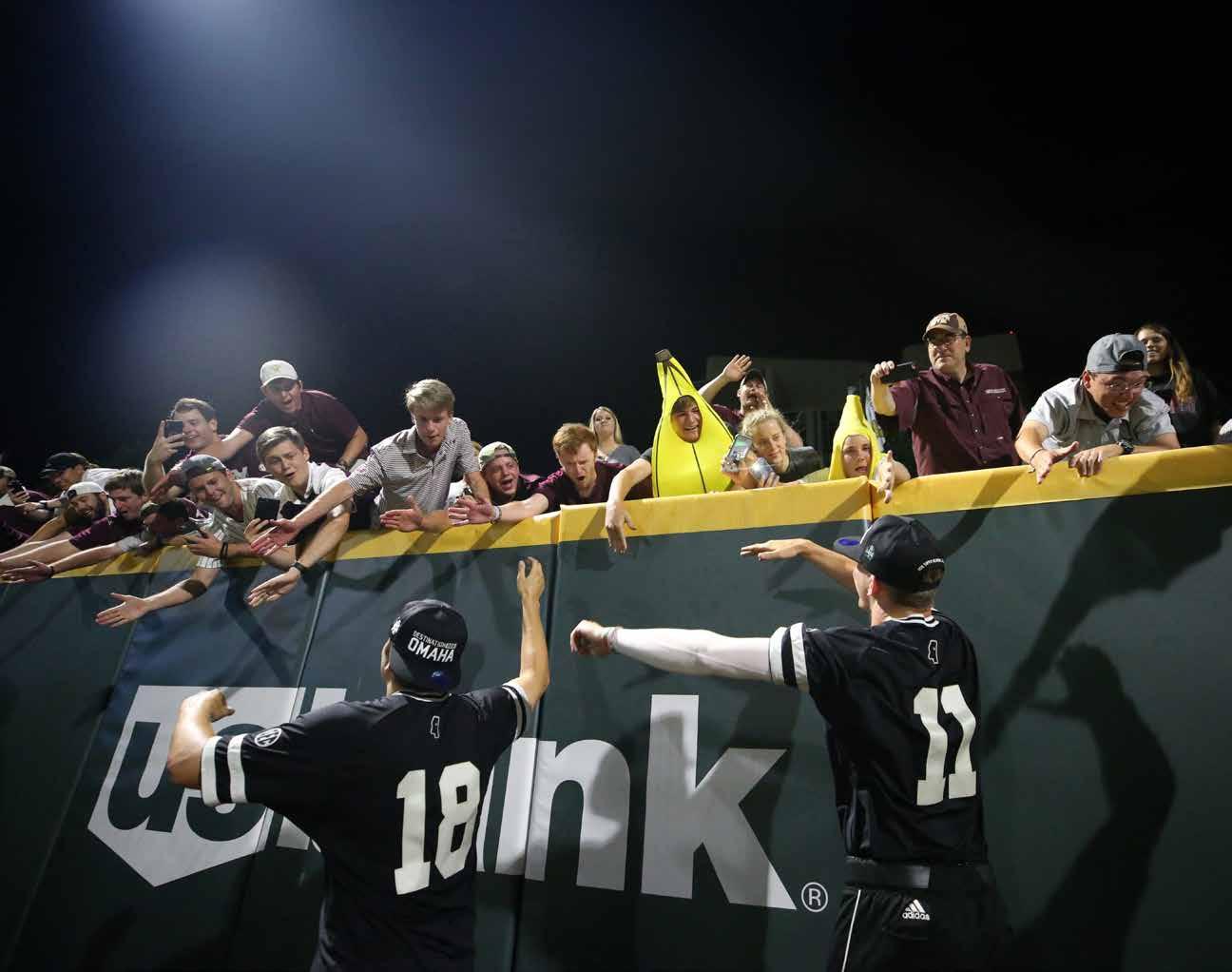
In the world of sports, few things unite a fan base like an unlikely comeback.
They become a thing of legend; a lore that unites generations and spawns countless “I was there when” stories.
The chronicle of Mississippi State’s 2018 baseball season is one of those tales of revival that Bulldog faithful know as a program-defining rebirth.
A preseason College World Series favorite, the Diamond Dawgs’ season quickly unraveled. A rocky start and early-season leadership change sent the Bulldogs spiraling, leaving them at the bottom of the Southeastern Conference standings—a place unfamiliar and uncomfortable for one of college baseball’s most consistent and prestigious programs.
Miraculously, halfway through the season, the team rallied, making their way to the Tallahassee Regional.
With their backs against the wall, a potassium-filled comeback was in the making. With Elijah MacNamee at the plate, down to his final strike and the team’s final out, sophomore shortstop Jordan Westburg quietly sat in the dugout. Then, he took one of the bananas being passed around as a snack and placed it on his head, aiming another toward the baseball as a radar gun.
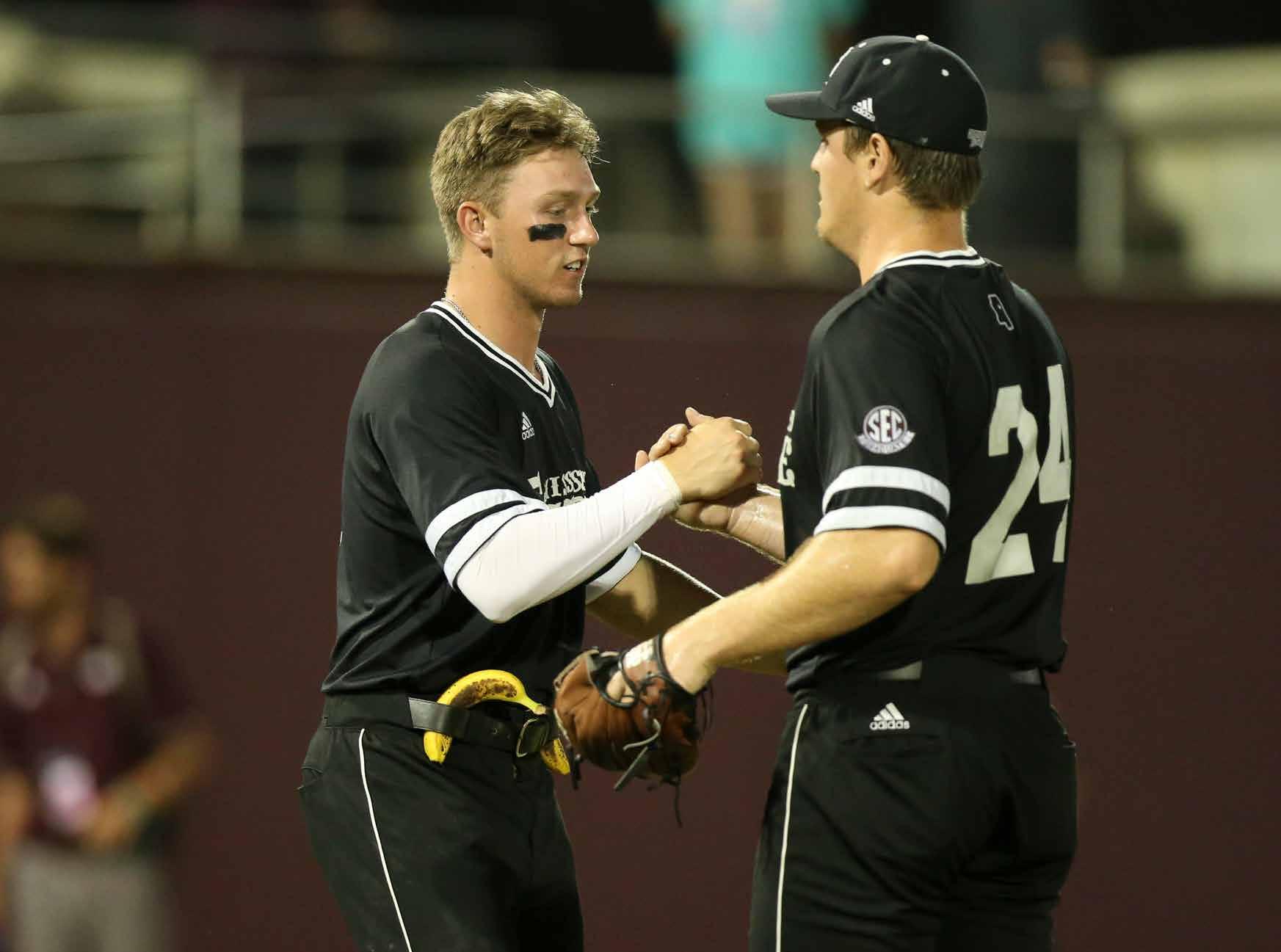
superstition, MacNamee hit a gameending, three-run, walk-off home run. Bulldogs in the dugout and across the country went, well, bananas.
Armed with what became known as the “rally banana,” Mississippi State caught fire.
The Bulldogs surged through the Tallahassee Regional, captured the Nashville Super Regional and punched their ticket to Omaha. What once felt improbable was suddenly very real.
In baseball, superstition is sacred. If it’s not a banana, it’s a ballcap turned inside out or only drinking purple Gatorade when you really like red. It’s doing anything and everything to make sure the wind blows the perfect way to let that walk-off homerun get over the wall. And in 2018, for some reason, that single banana fueled a nationwide surge in love for everything banana as the fan base embraced a superstition that, along with Bulldog grit, brought them to the College World Series.
With the Dawgs coming to Omaha, MSU 1987 banking and finance graduate De Lone Wilson knew he had to do his part. Since 2014, he has served as president of Cubby’s, a convenience store chain with locations across Nebraska, Iowa, and South Dakota, and since he had the connections, he felt a responsibility to “Dole” out support for his Bulldogs.
“We didn’t have a whole lot of time to
he recalled.
So they did. With a Cubby’s location conveniently located next to CWS home Charles Schwab Field, Wilson purchased thousands of bananas to arm Maroon and White faithful with the full-“Del Monte.”
“We ordered way too many bananas,” Wilson said with a laugh. “But I told my manager to give away bananas to anybody with a Mississippi State hat, shirt, jacket or whatever. We gave away a ton and then donated the rest to area homeless shelters.”
While Mississippi State has made plenty of trips to Omaha, few teams have embodied grit quite like the 2018 Bulldogs. The Diamond Dawgs won two early games and nearly made it to the championship—farther than any fans anticipated. They battled through adversity, weathered leadership changes and refused to let a brutal start define them.
It may not have ended with a title, but it came remarkably close. And just three seasons later, several of those key players helped capture the university’s first baseball national championship.
Fans will always remember 2018 as the season of the banana, but it wasn’t really about the fruit. It was about a group of college kids trusting each other, absorbing every punch and delivering fans back home an unforgettable ride. n
EMBARK ON AN
ADVENTURE
Traveling Bulldogs 2026 & 2027 Trips

Whether by land or sea, explore the world with the MSU Alumni Association through the Traveling Bulldogs program. We have partnered with trusted travel providers to offer a variety of exciting, educational destinations and seamless travel experiences. These tours are open to alumni and friends of the university. Visit alumni.msstate.edu/travel for more information or contact us at 662.325.7000. We would love to help you start planning your next adventure!
BOOKING TRIPS FOR 2026 & 2027*
JUNE 2026
Swiss Alps & the Italian Lakes
National Parks & Lodges of the Old West
Kenya Safari: The Big Five Battle of Normandy and the Liberation of Paris
JULY 2026
Majestic Vistas & Wildlife
Scandinavia and the Baltic Sea
Discover the Canadian Rockies by Rail
AUGUST 2026
Northern Italy
Exploring Iceland
African Expedition by Private Train
SEPTEMBER 2026
Scotland: Highlands and Islands
Landscapes & Lighthouses of Coastal Maine
Great Trains & Grand Canyons
OCTOBER 2026
Rivieras of France & Italy
Intriguing India
Bali, Singapore, Thailand & Angkor Wat
Bordeaux to Lisbon
NOVEMBER 2026
Macy's Thanksgiving Day Parade
DECEMBER 2026
A Royal English Christmas Holiday Markets
Montreal & Quebec City Christmas
2027 TRAVEL COMING SOON
The next chapter of adventure is already taking shape. The 2027 trip lineup will be available on our website in May—secure your spot early and travel with fellow Bulldogs around the world.
*All trips and dates are subject to change. Visit our website for the most current information.


SCAN ME
A Weekend of LEADERSHIP, RECOGNITION AND BULLDOG SPIRIT
MSU Alumni Association Honors Outstanding Volunteers
By Shun Pounds, Photos by Emily Grace McCall,
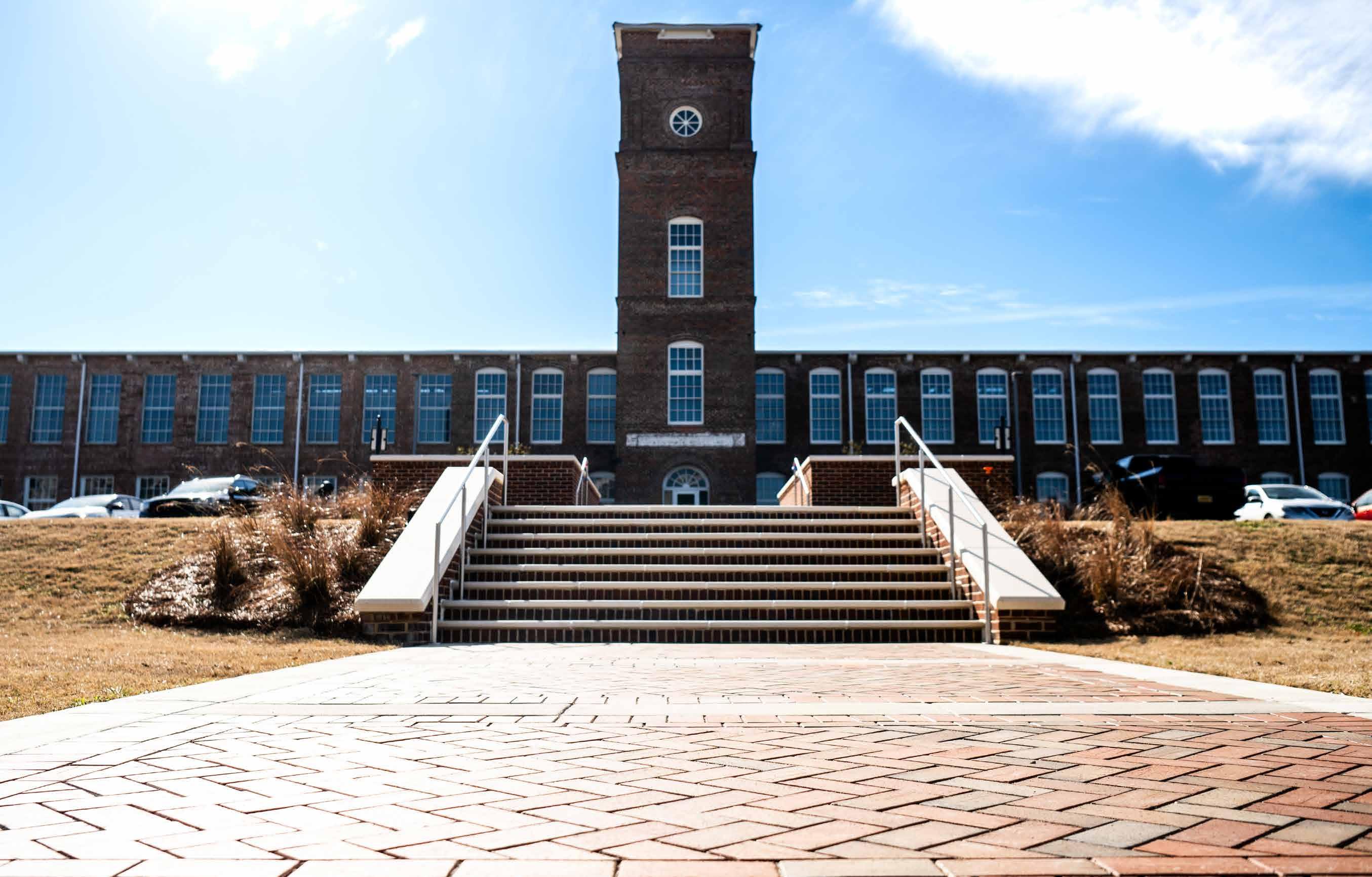
Mississippi State University’s Alumni Volunteer Leadership Weekend, held Feb. 27-28 at The Mill at MSU, gathered alumni volunteers from across the nation to recognize outstanding chapters and individuals and offer networking and learning opportunities to enhance future alumni engagement..
The weekend’s events, including the Chapter and Volunteer Awards Reception and the Alumni Leadership Conference, showcased the robust MSU alumni network, founded on steadfast dedication, lasting traditions and a persistent drive to support others.
Gold, Silver and Bronze Cowbell distinctions were awarded to the top three chapters in each of the association’s five categories, and honor awards were presented to qualified, high-achieving chapters. Out of 87 chartered chapters within the MSU Alumni Association, 52 received awards.
In addition to chapter recognition, several individual alumni volunteers were honored for their exceptional dedication to MSU:

Distinguished Service Award Winners
RANDY ALLEN of Olive Branch – A 1987 business graduate, he has served the DeSoto County Chapter as vice president, secretary, volunteer coordinator and treasurer. He has chaired the DeSoto County Chapter’s scholarship fundraiser golf tournament for the past 25 years.
LATOYA W. BLEDSOE of Columbus – A psychology, counseling education and education specialist graduate of 2000, 2003 and 2012, respectively, she has played a pivotal role in the Lowndes County Alumni Chapter, serving as a bridge between Mississippi School of Math and Science students and MSU.
RUSS BRADFORD of Nashville, Tennessee – A 2009 wildlife and fisheries graduate, he joined the Nashville Alumni Chapter in 2013 and has served as vice president and president. He is now the chapter’s community outreach chair and will return as president in 2026.
CHANDRA HARMOND BRANDEL of Sugar Hill, Georgia – A 1992 banking and finance graduate, she has been a leader in the Lowndes County Alumni Chapter and the Atlanta, Georgia, Alumni Chapter. Since joining the Atlanta chapter board in 2018, she has served as scholarship chair, vice president and president.
Illustrations by Sarah-Anne Murphy and Jadalyn Johnson
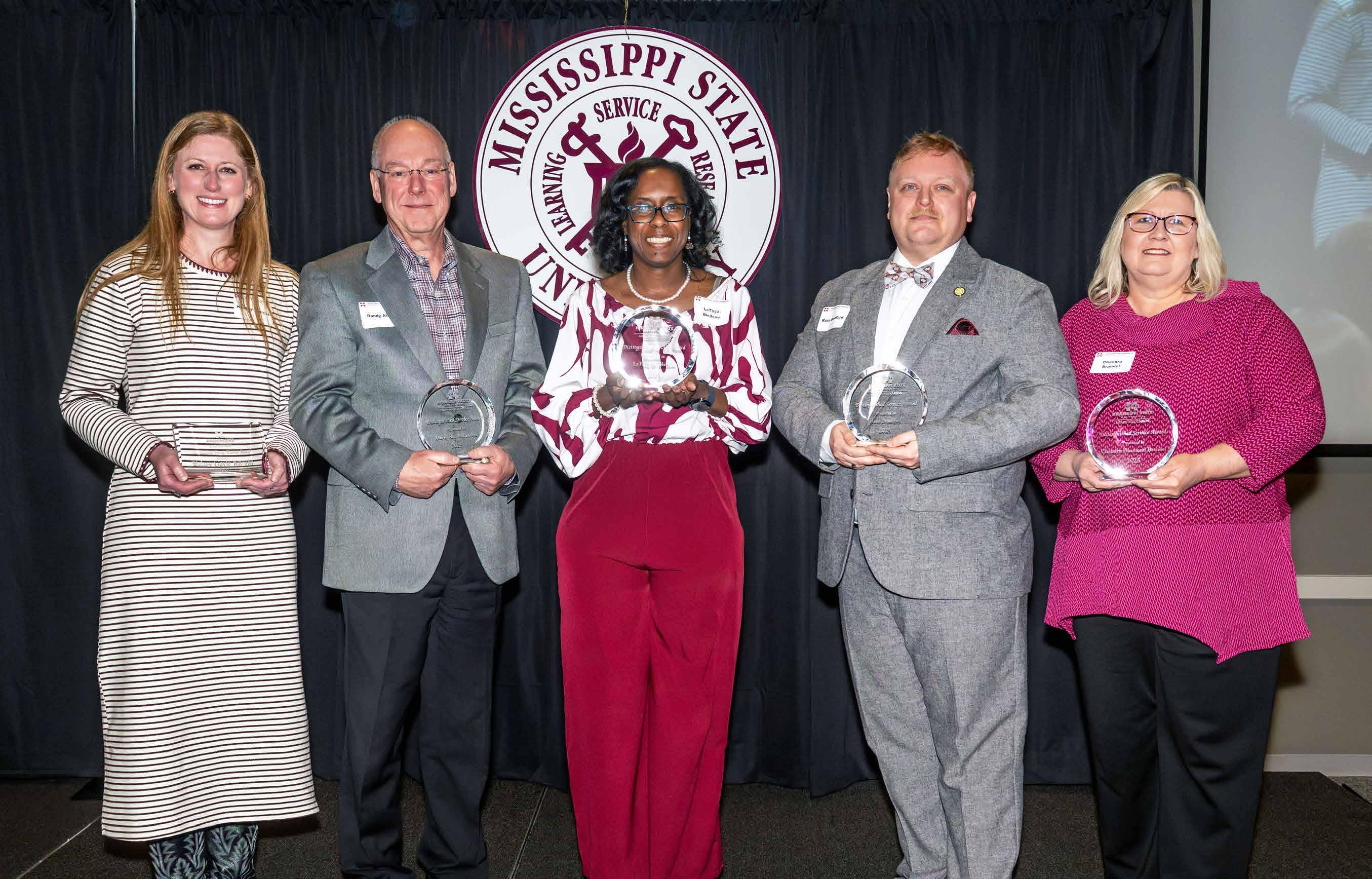
Outstanding Young Alumna
The association also honored the university’s 2025 Outstanding Young Alumna Volunteer of the Year, KELSEY KNECHT of Houston, Texas. She graduated from MSU with bachelor’s and master’s degrees in accounting in 2017 and 2018, respectively. She has helped lead communications efforts, was instrumental in launching the chapter’s new website, hosted game-watch gatherings and represented MSU at area college fairs.
Saturday’s Alumni Leadership Conference provided volunteers with the tools, updates and inspiration needed to further MSU’s mission, including training, collaboration and an MSU birthday celebration. Participants received updates from key university representatives, including:
• Alumni Association National President Lynn Burwell
• Alumni Association staff

• MSU Foundation Head of Real Estate Strategy Jud Skelton
• Associate Vice President for Enrollment Services John Dickerson
The MSU Alumni Association staff celebrated the past year’s collaboration within its valued network of volunteers and highlighted ways for volunteers to advance the organization’s mission and inspire support through meaningful engagement and outreach events. Participants also learned from peers about successful programs and best practices.
Founded in 1885 by the first three graduating classes of Mississippi Agricultural and Mechanical College, the MSU Alumni Association serves the university’s more than 174,000 living alumni and includes nearly 100 chapters and clubs. For more information, visit www.alumni. msstate.edu.
L-R: Kelsey Knecht, Randy Allen, Latoya W. Bledsoe, Russ Bradford, Chandra Harmond Brandel
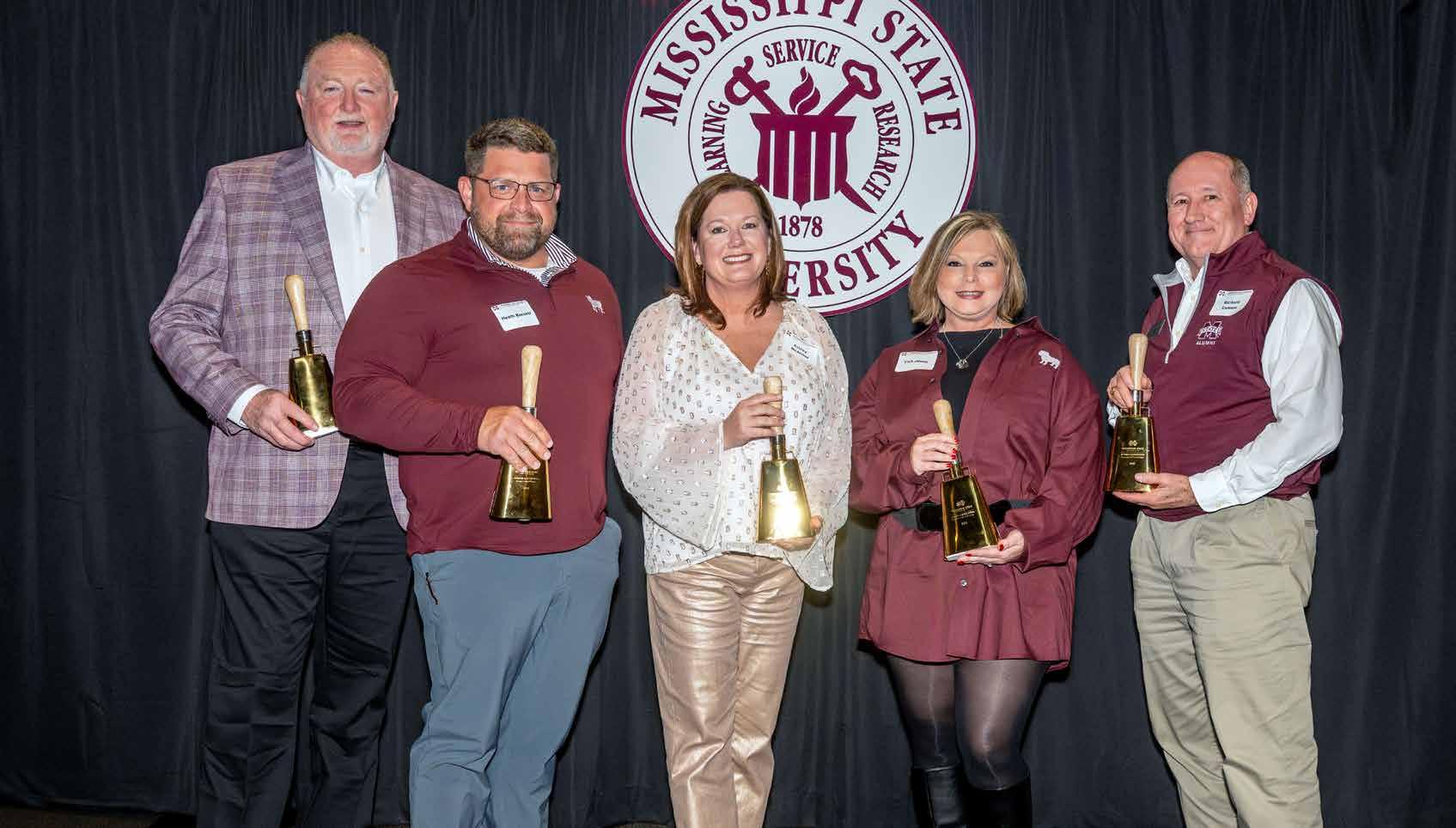
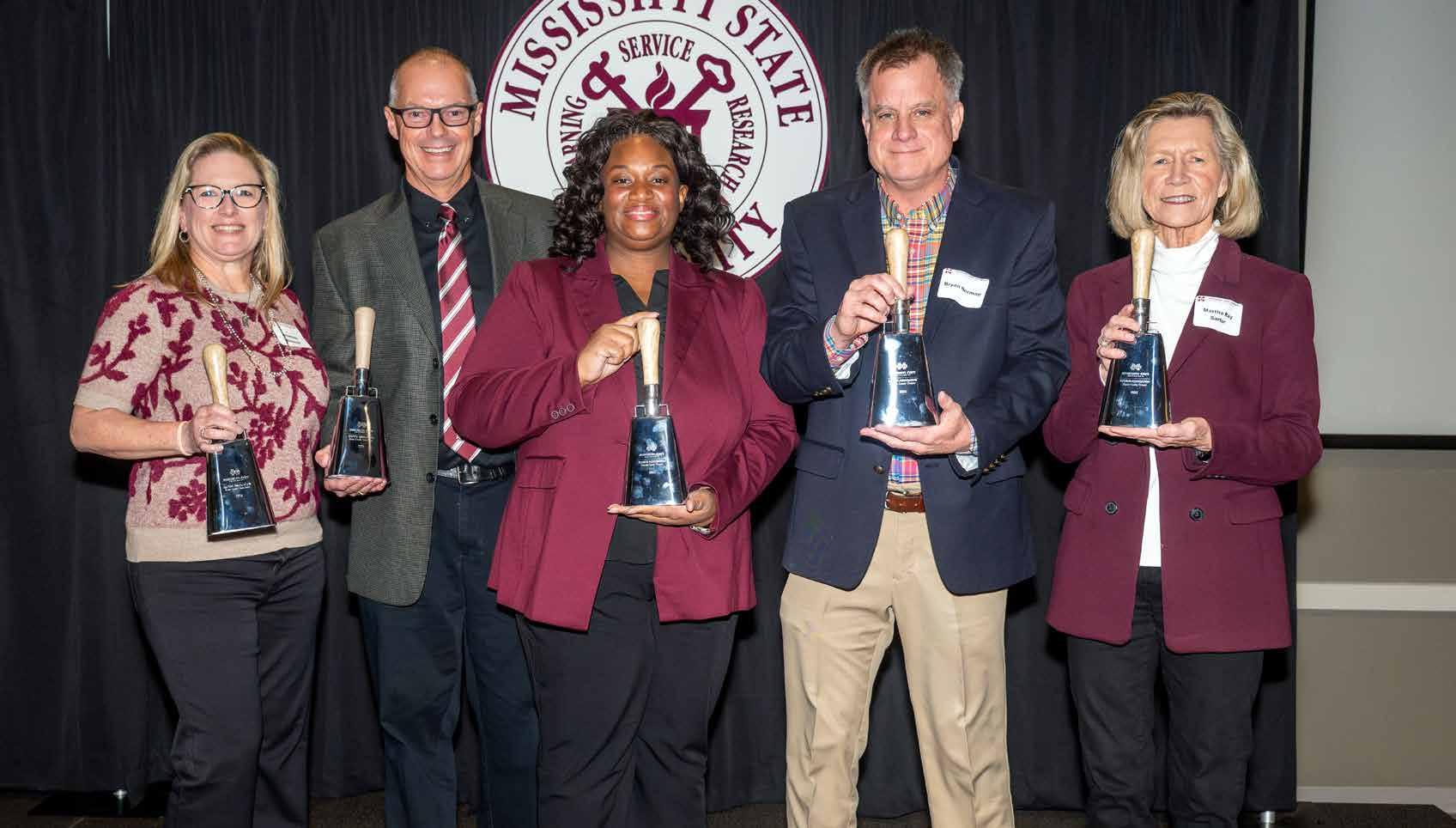
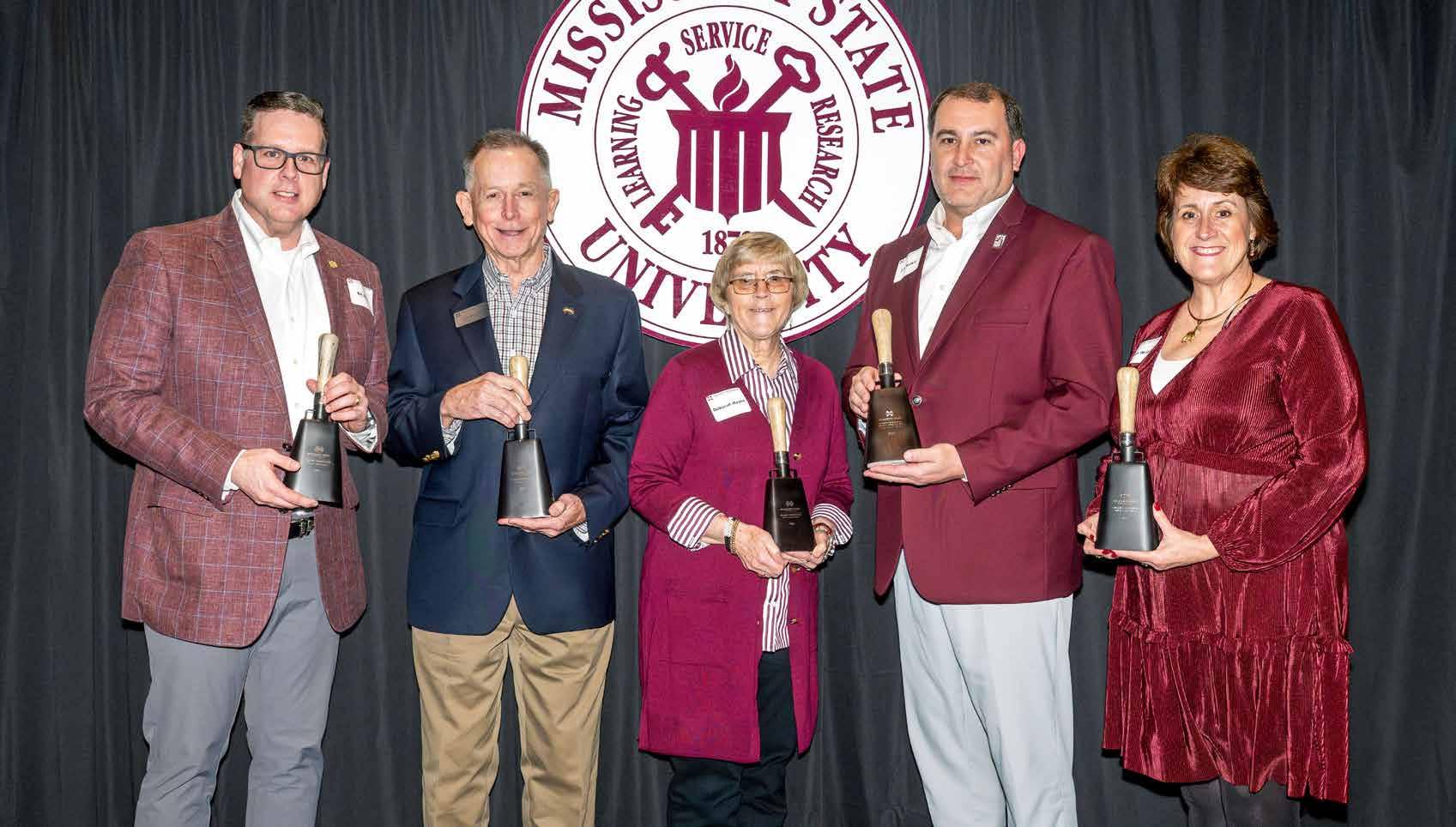
Gold Cowbell Chapters:
Alcorn County; George-Greene; Mississippi Gulf Coast; Atlanta, GA; Greater Cincinnati-Dayton, OH
Silver Cowbell Chapters: Lowndes County; Newton County; Tippah County; Greater Houston, TX; Greater Orlando, FL
Bronze Cowbell Chapters: Leake County; Oktibbeha County; Sharkey-Issaquena; East Texas; Dallas, TX
IN-STATE CHAPTERS HONORED:
The in-state chapters receiving honor chapter status at the February program include the following: Adams-FranklinWilkinson, Central Mississippi, Clarke County, Clay County, DeSoto County, Grenada-Montgomery, Jones County, Lafayette County, Lauderdale County, Lee County, Lincoln-Copiah, Monroe County, Pine Belt, Pontotoc County, Southwest Mississippi, Tate-Tunica, Union County, Warren County and Washington County.
OUT-OF-STATE CHAPTERS HONORED:
Out-of-state chapters receiving honor chapter status at the February program (by state): Alabama— Birmingham, Huntsville-Decatur, Mobile and Tuscaloosa; Colorado— Rocky Mountain Colorado; District of Columbia—Washington D.C.; Florida— Northeast Florida (Jacksonville), Northwest Florida (Panhandle), Louisiana—Baton Rouge and Greater New Orleans; New York—New York; North Carolina—Greater Charlotte; Greater Raleigh-Durham; Tennessee— Greater Chattanooga, Memphis and Nashville; Texas—Greater Fort Worth, and South Texas.
Gold Cowbell
Silver Cowbell
Bronze Cowbell

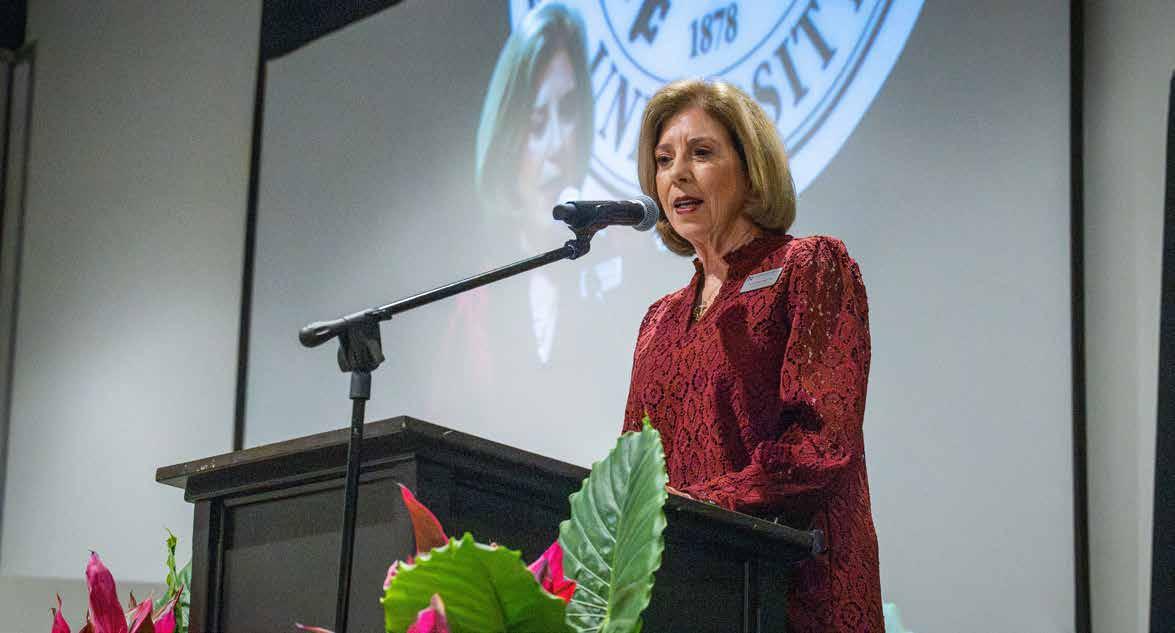
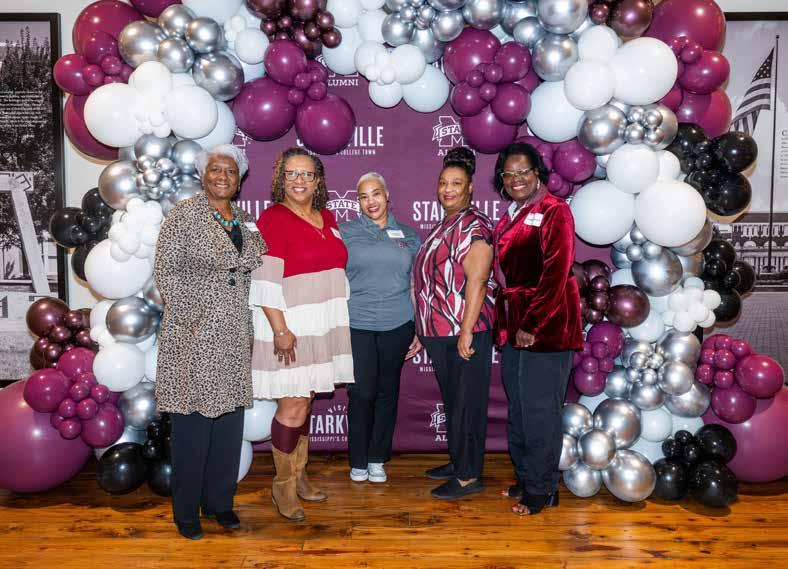
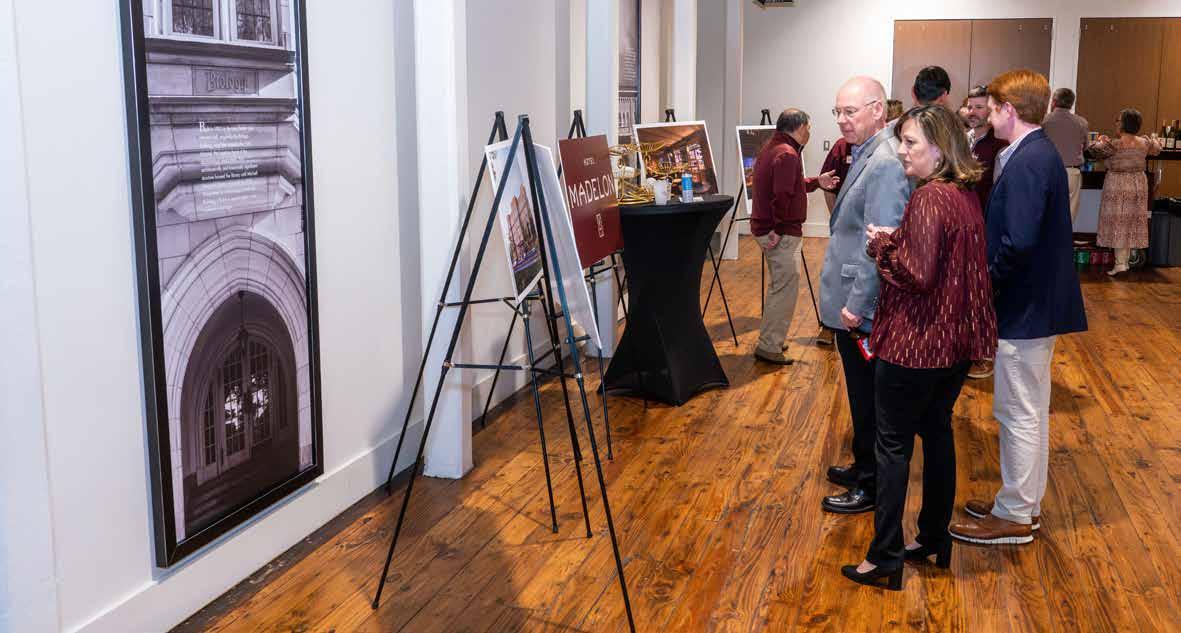
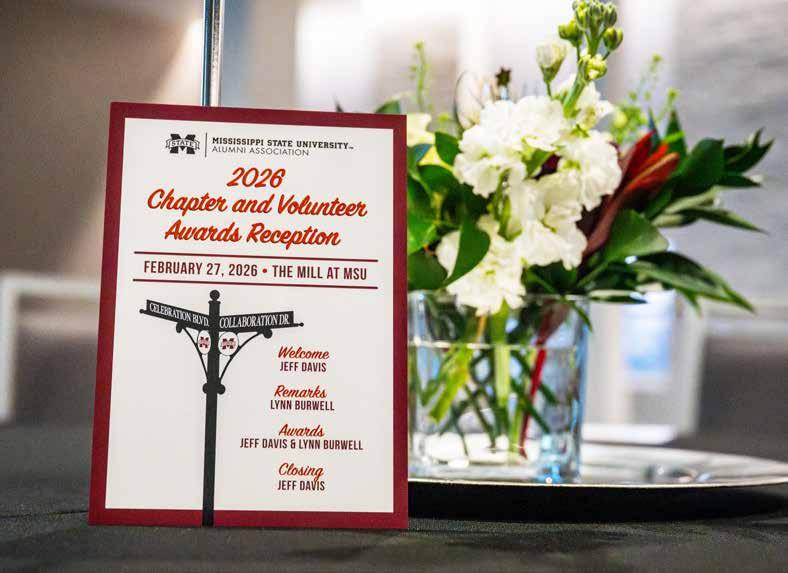
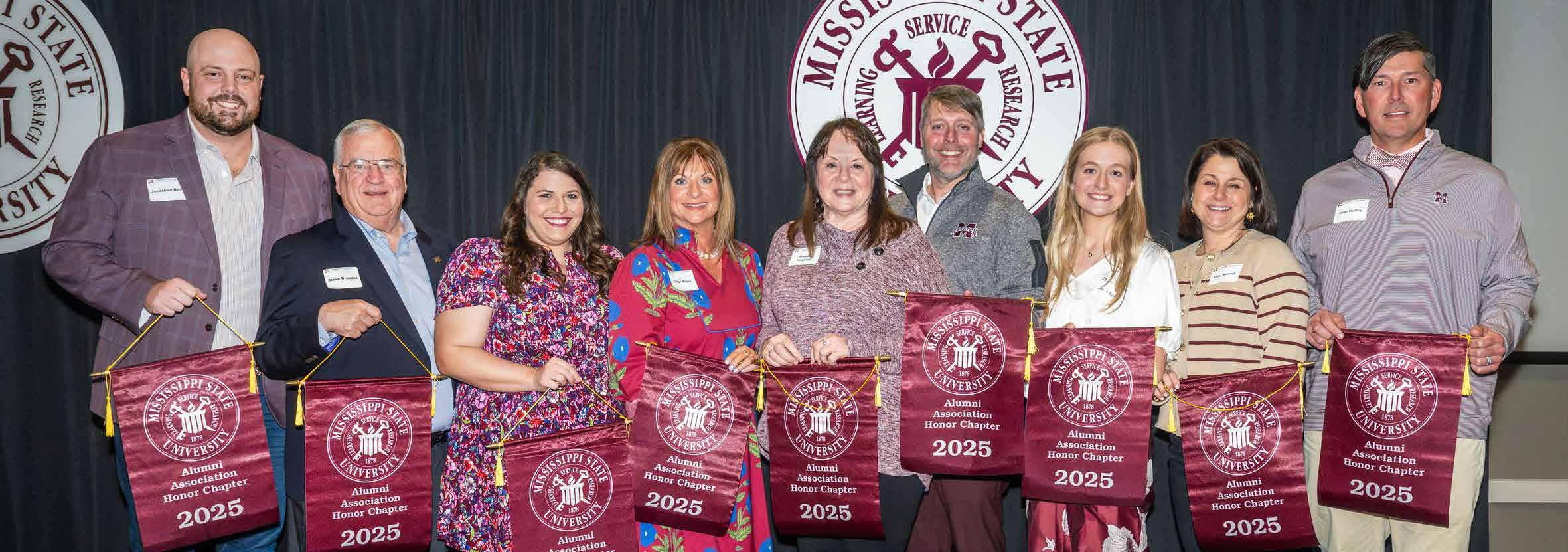
In-State
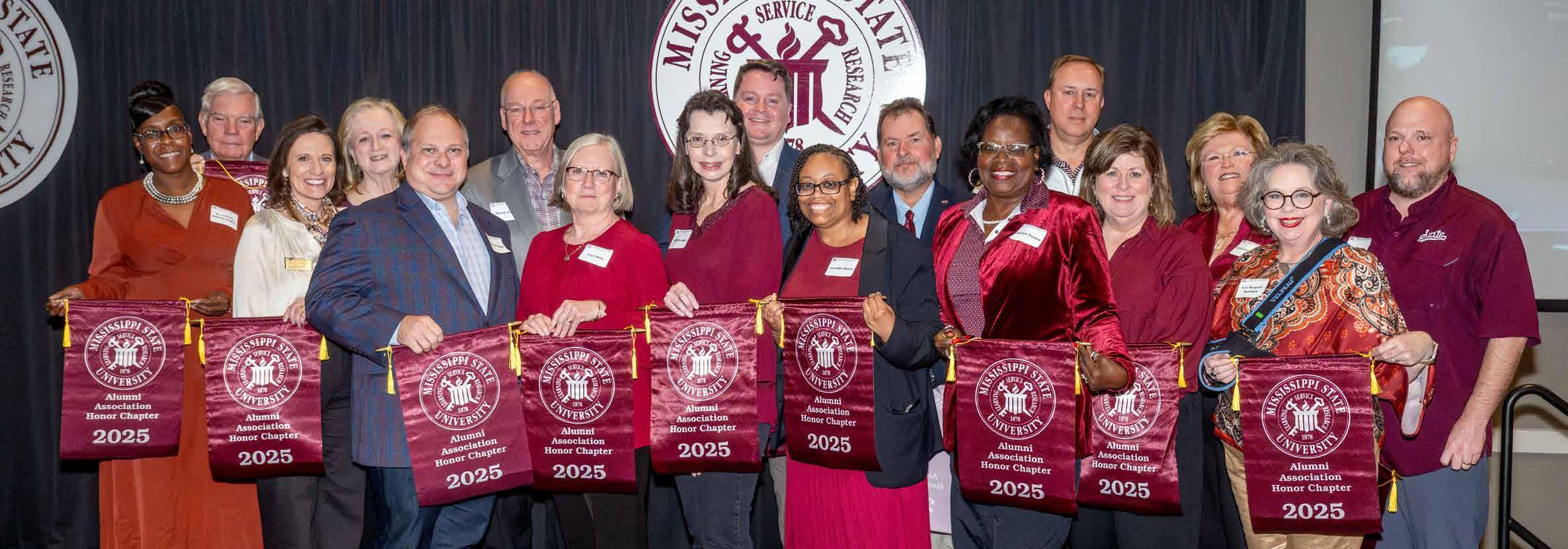
Out-of-State
YOUR STADIUM SEAT
JUST GOT AN UPGRADE
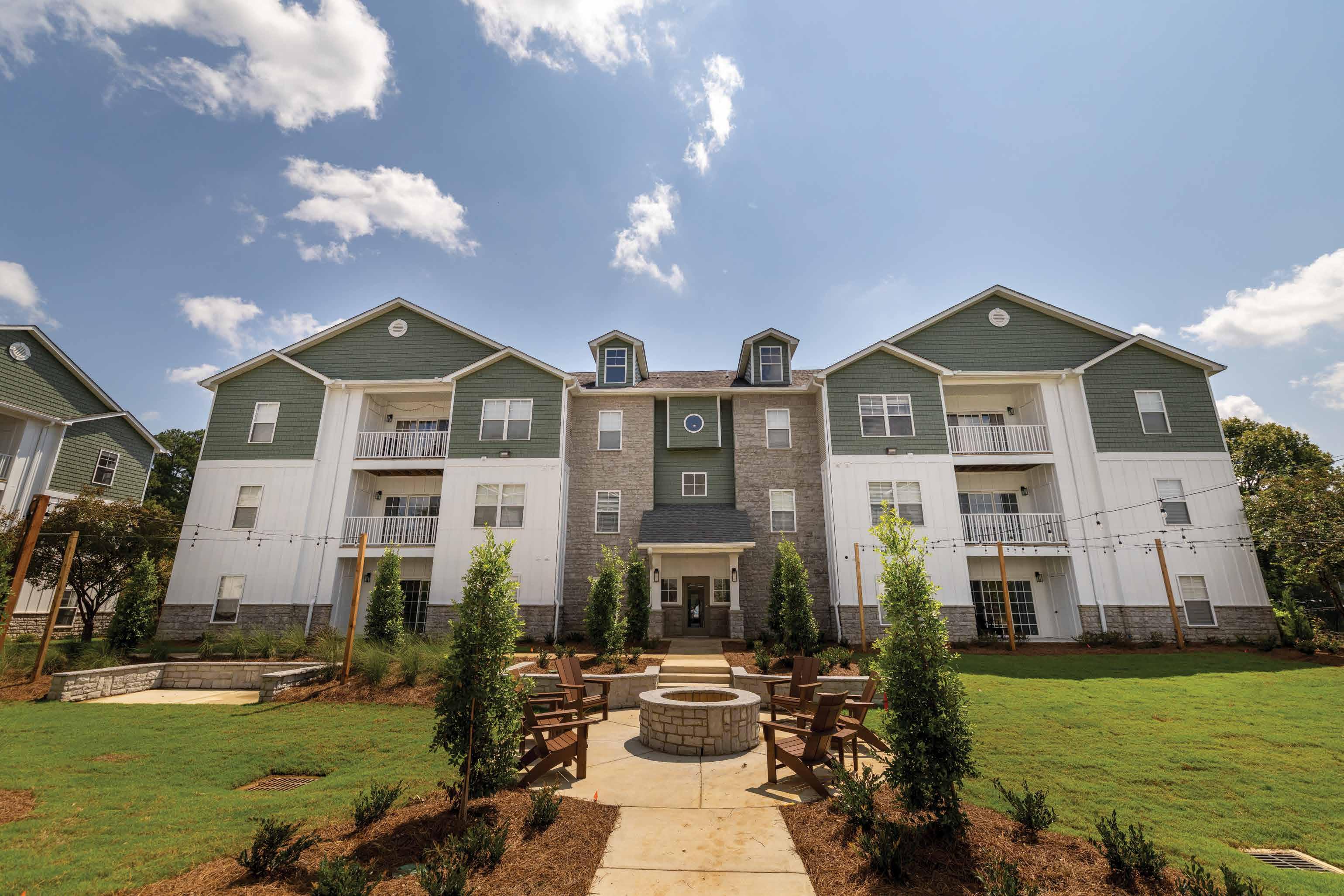
COMPLETELY TRANSFORMED LUXURY CONDOS MAKE EVERY WEEKEND HOMECOMING
Just a 5-minute walk to the Drill Field and 10 minutes to Davis Wade. Zero reasons to fight for parking ever again!
At Five Points Starkville, your State story isn't over—it's just getting its own front door.
All Units Include:
Expansive Primary Suite
9-foot Ceilings
Quartz Countertops
New GE Stainless Steel Appliances
New Full-size Washer/Dryer
Private Balcony
3 Parking Spaces


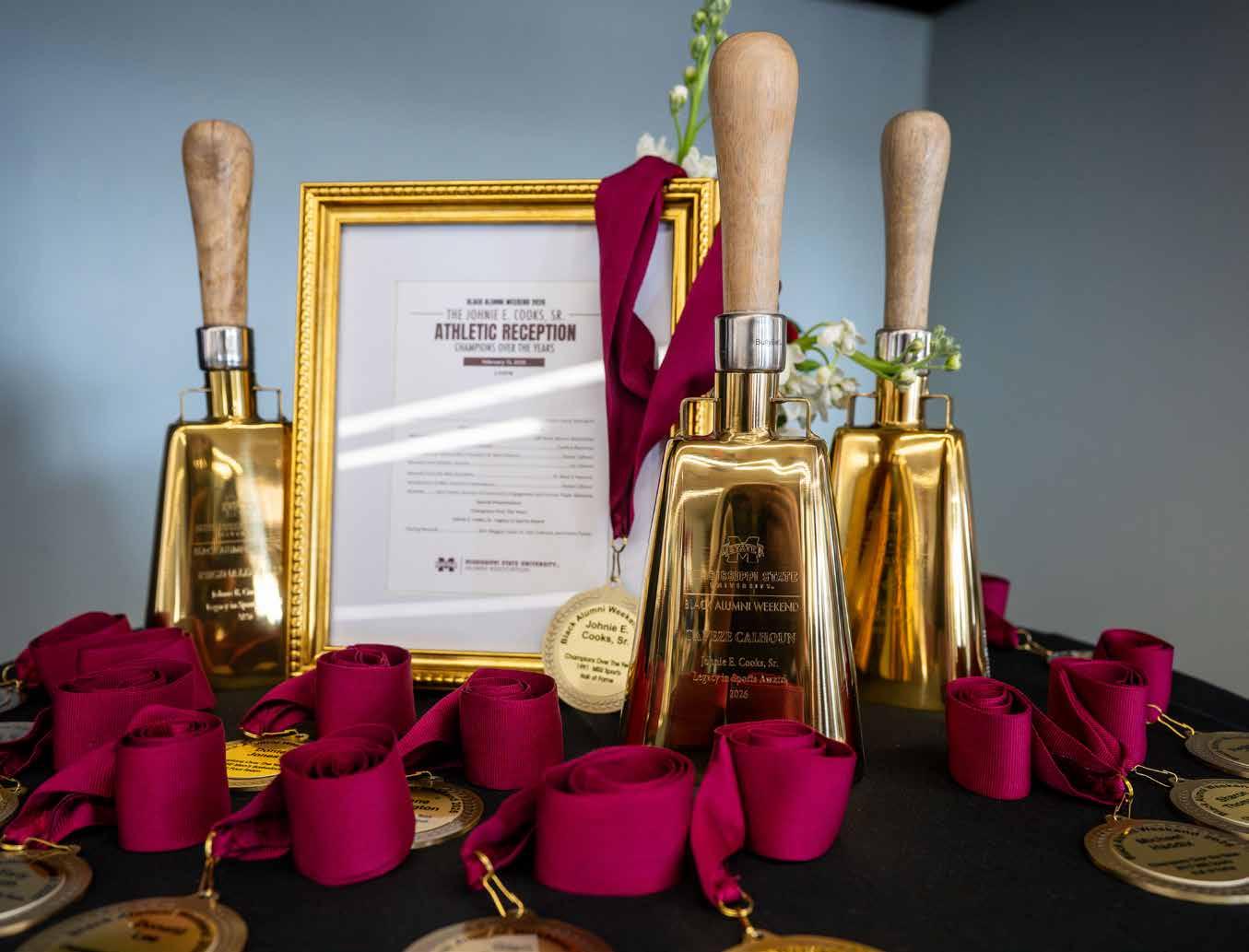
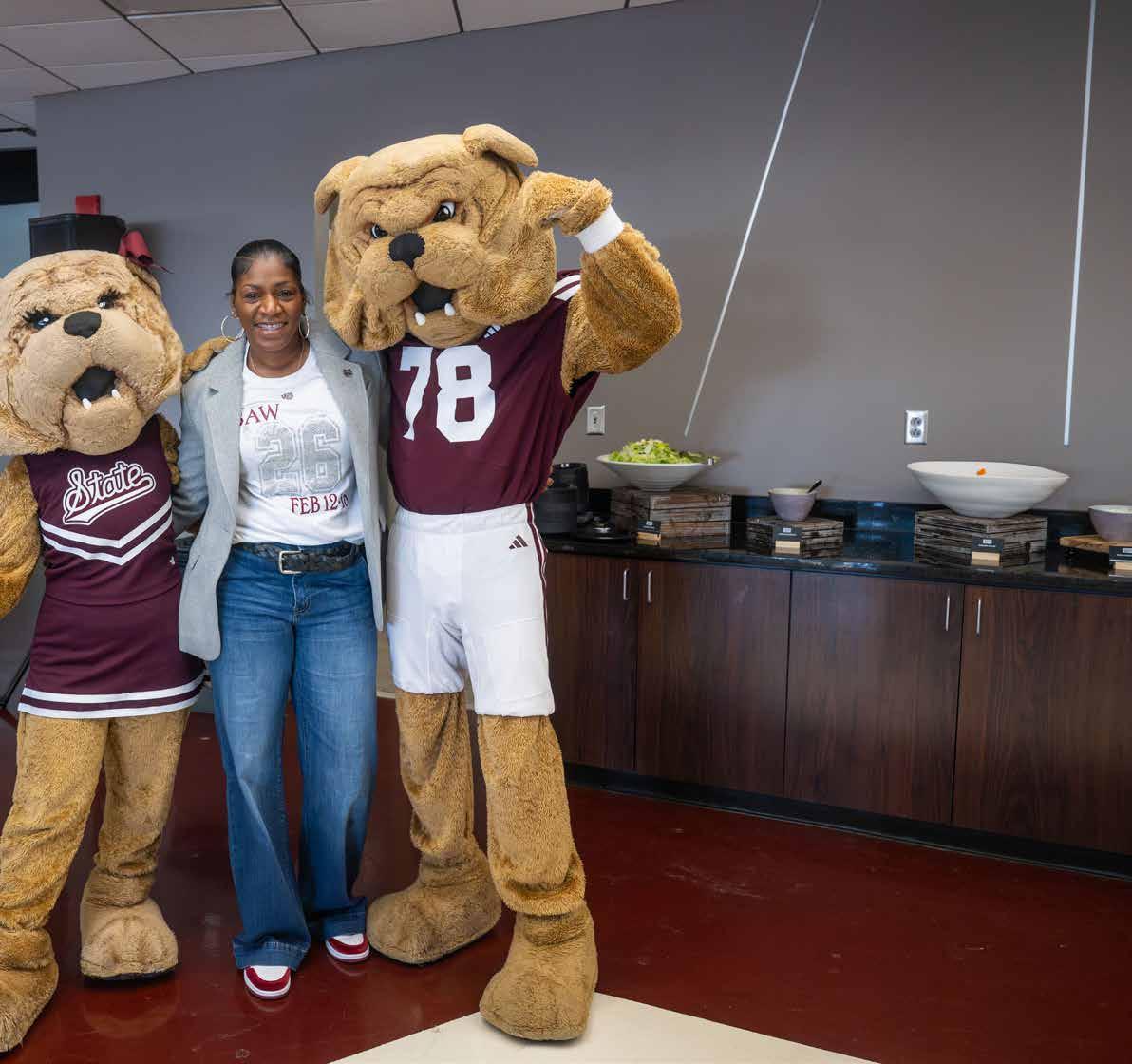
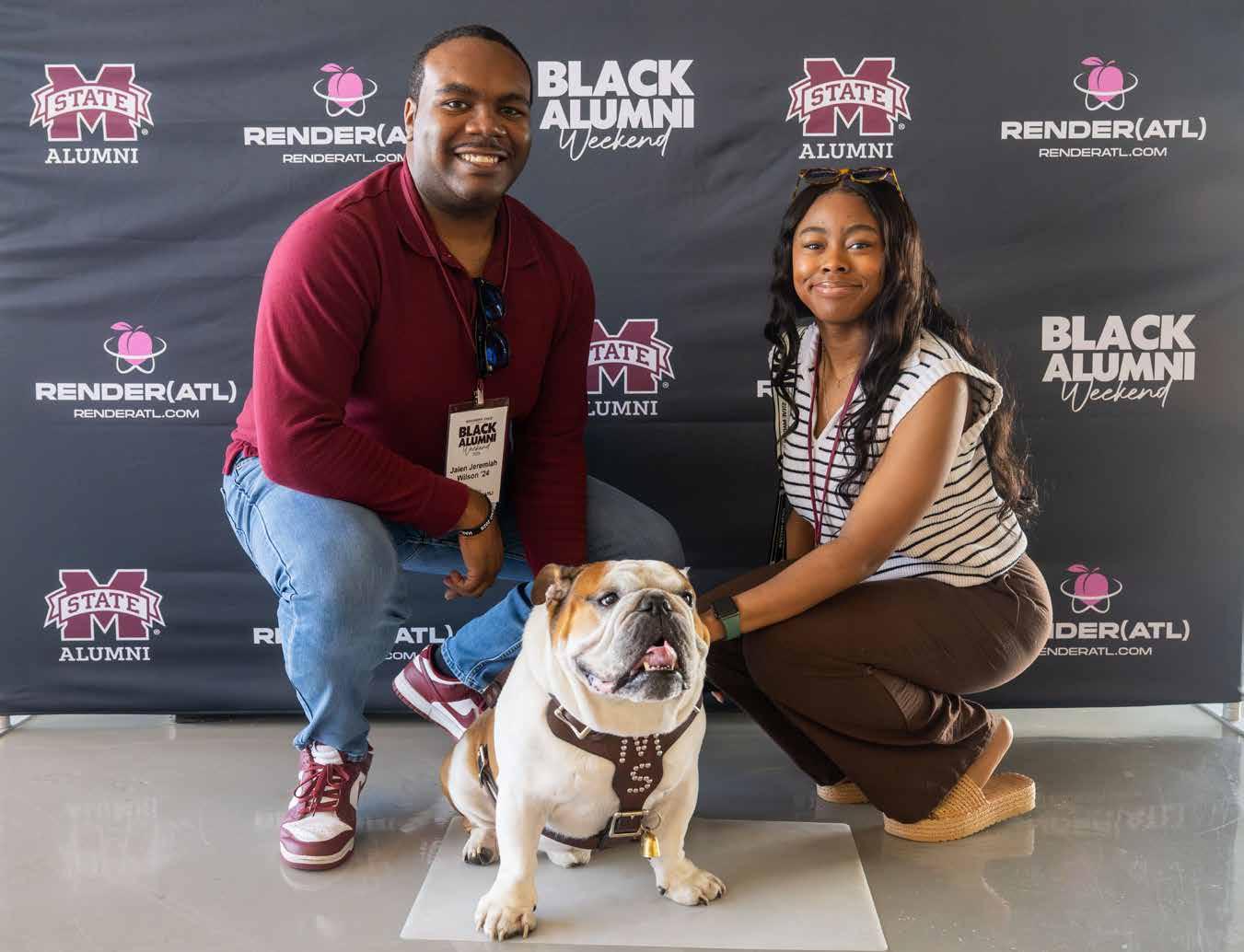
CELEBRATING 60 YEARS OF BLACK HISTORY AT MSU
Bulldogs from across the country returned to Starkville for Black Alumni Weekend Feb.12–15. Anchored by community-building and career-focused programming, BAW26 featured a career networking event, a campus program spotlighting 60 Years of Black History, an anniversary gala, and a Sunday gospel brunch, along with social gatherings across campus and at The Mill, as well as athletic events. Entertainment highlights included a BAW26 concert featuring Courtney Little and Jamal Roberts.
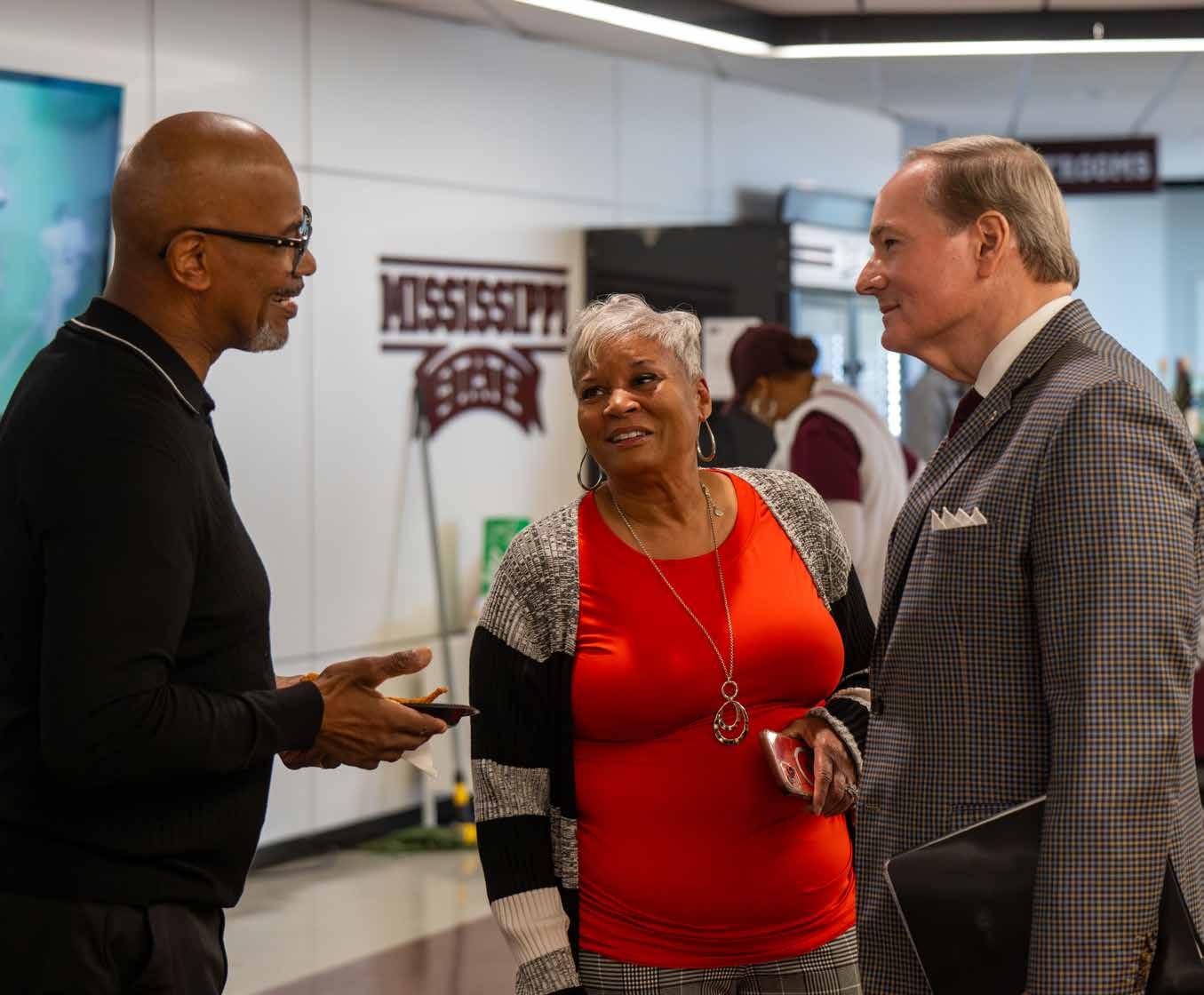
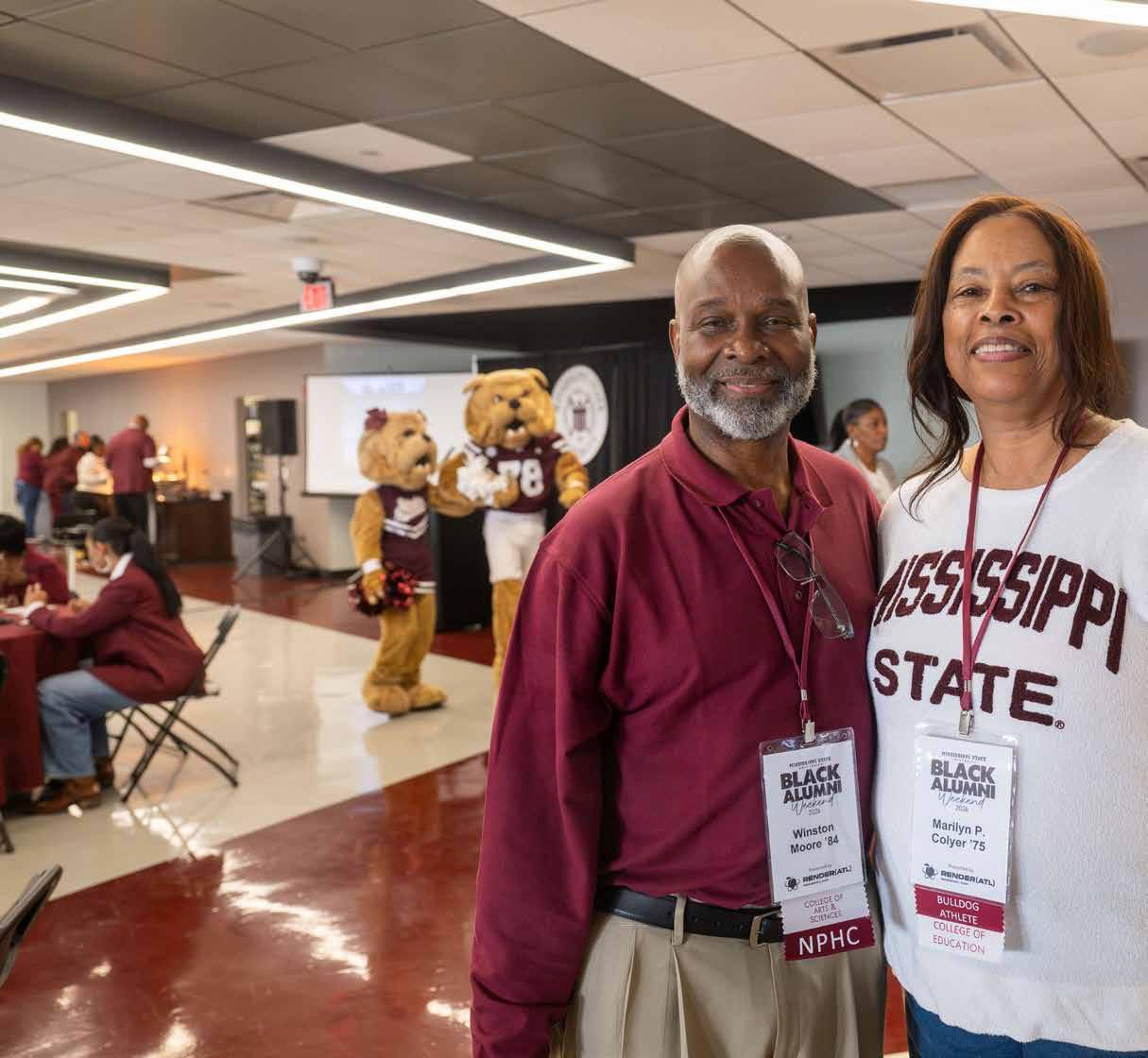
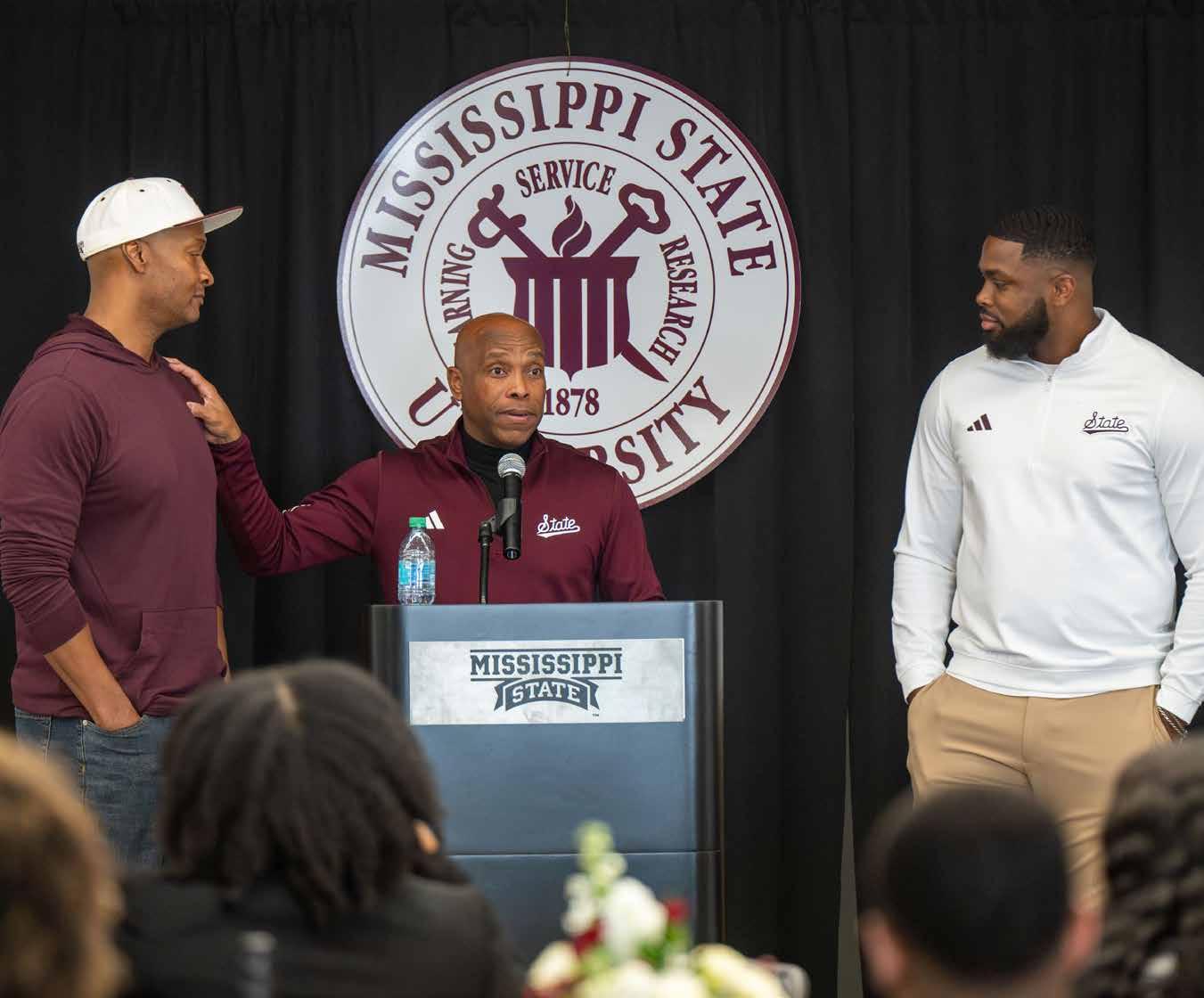
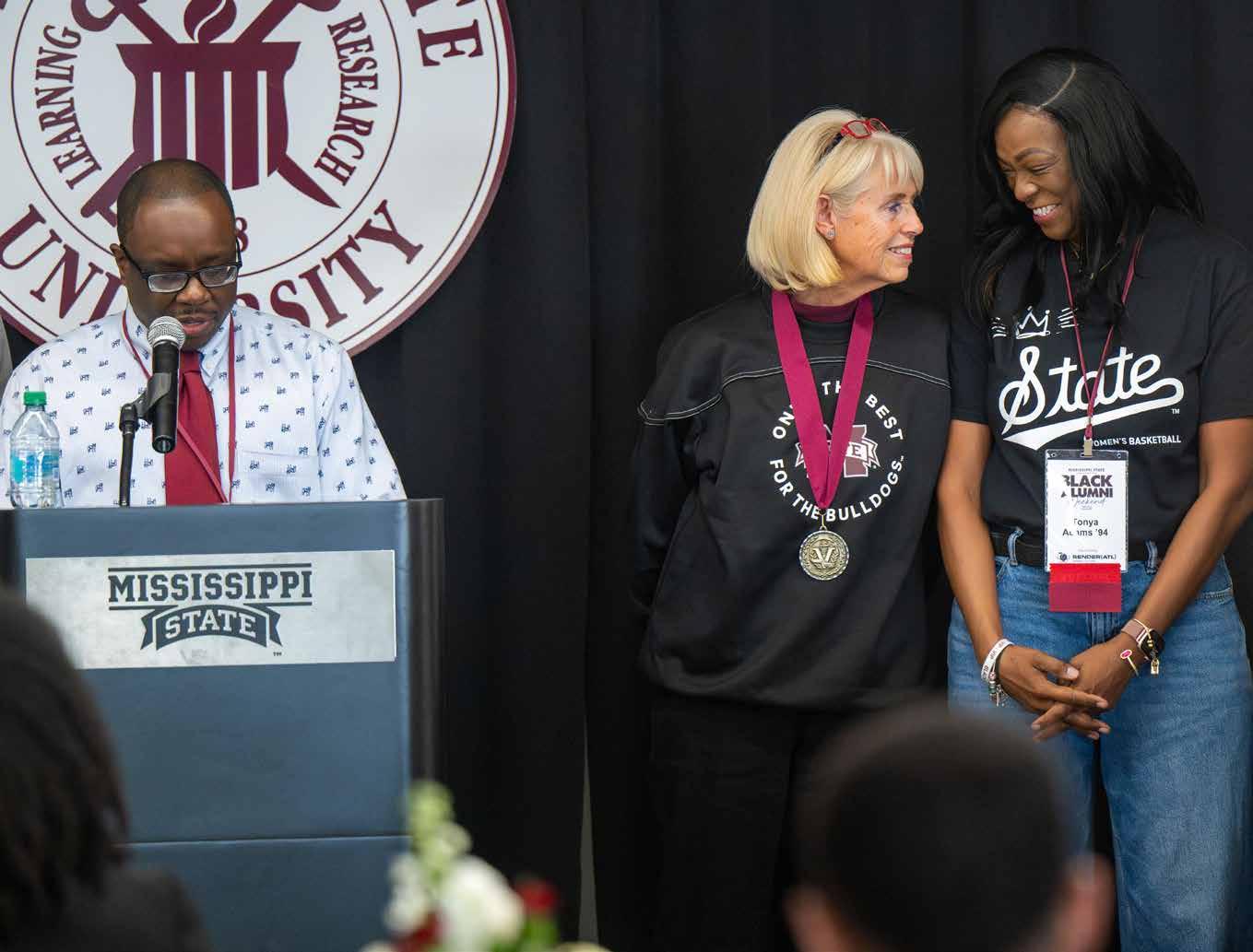
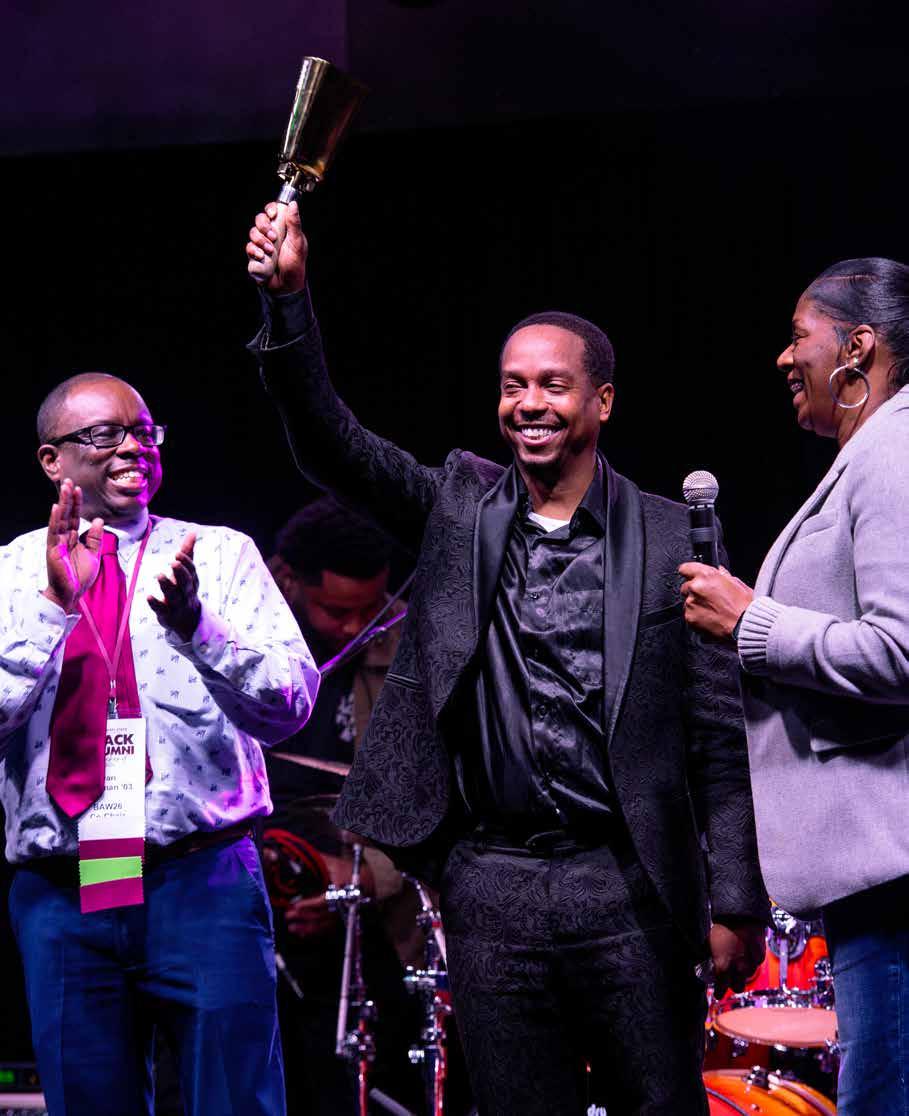
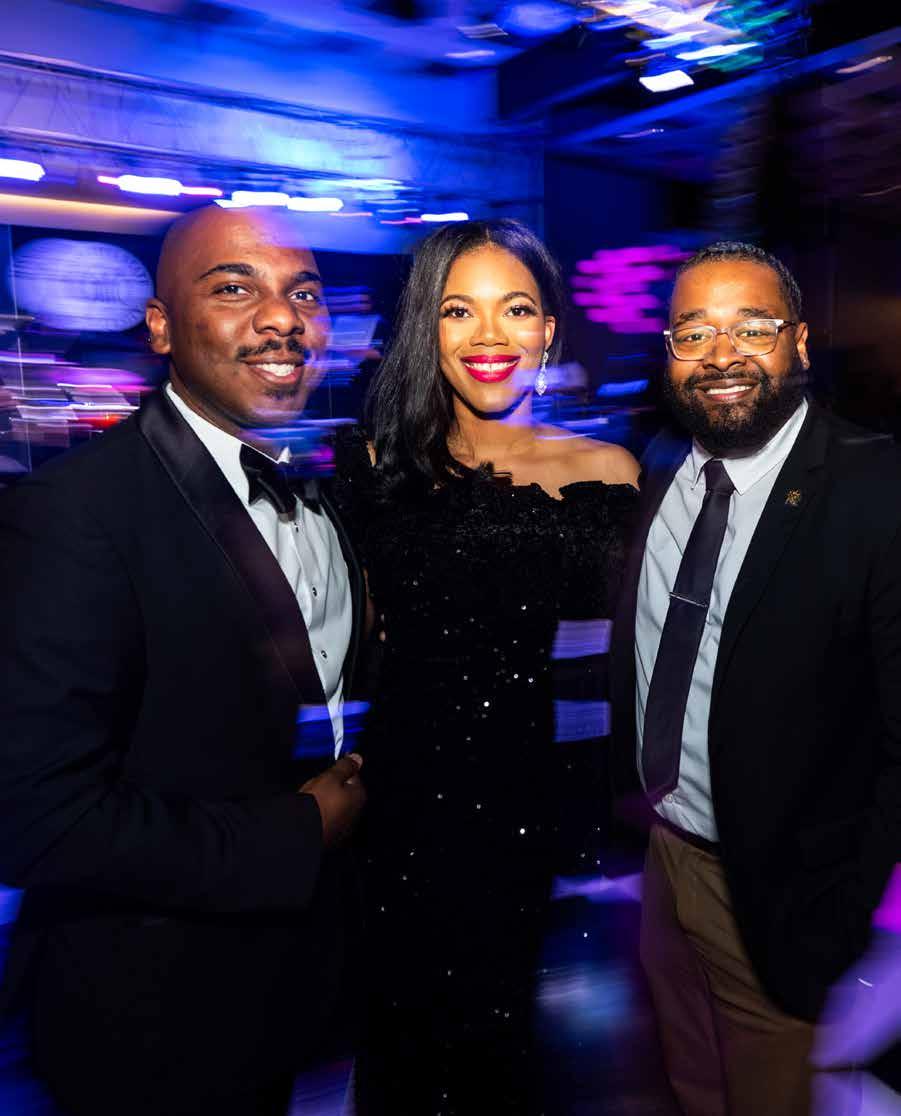
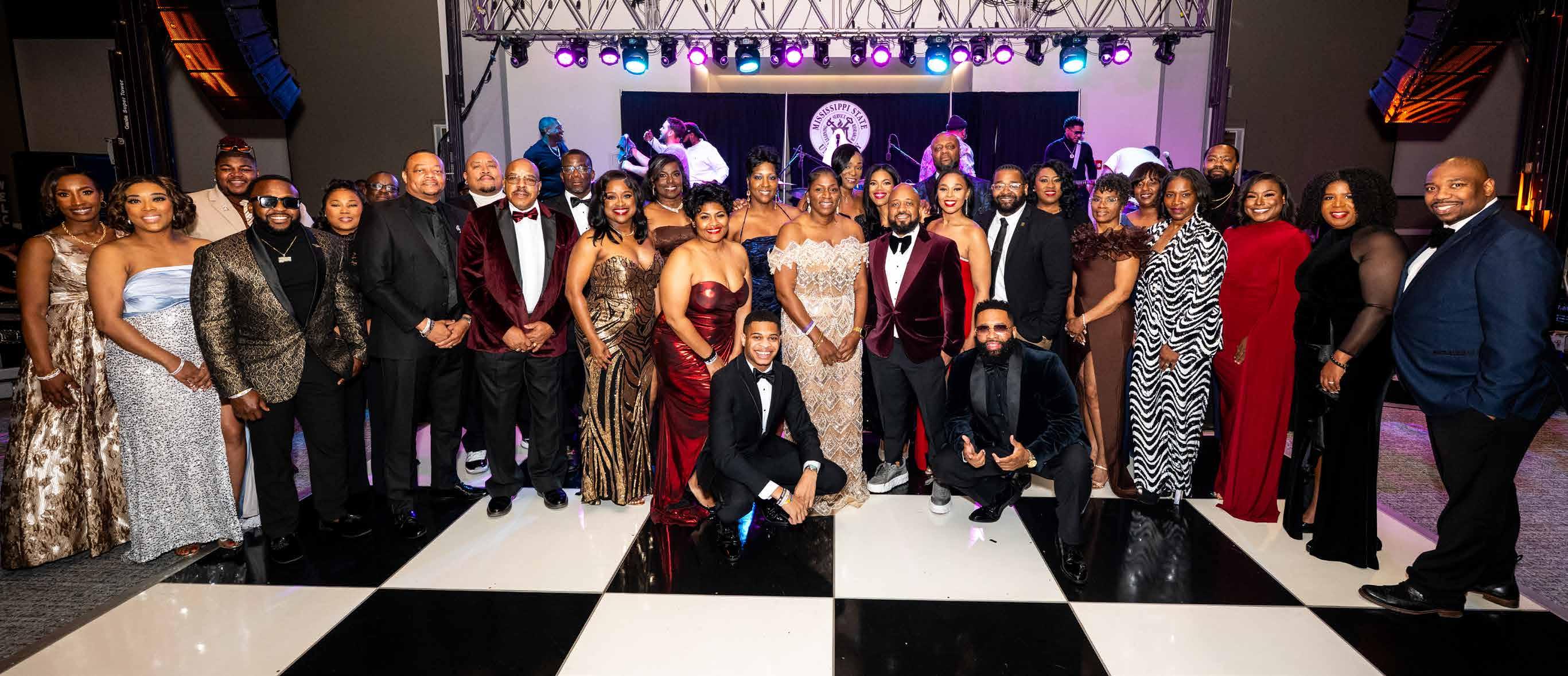
INSPIRED BY BULLDOGS
Celebrating the 2026 Reveille 25
By Shun Pounds
Every year, Mississippi State University welcomes thousands of new graduates into its alumni community. Many quickly make a significant impact, becoming leaders in fields such as business, medicine, education, engineering and the arts. Some pioneer new developments in their industries, while others dedicate their careers to service. All embody the Mississippi State spirit—a blend of excellence, determination and generosity.
Since its fall 2021 launch, the Reveille 25 honors exceptional young alumni who reflect these core values. Selected from a highly competitive applicant pool, this esteemed award annually recognizes 25 graduates under 40 who are actively fulfilling MSU’s mission by making a meaningful and lasting impact in their careers and communities.
Named after MSU’s former yearbook, The Reveille, the program honors Bulldog traditions while envisioning the future. It highlights trailblazers and changemakers who continue to enhance MSU’s reputation nationwide and beyond.
“The Reveille 25 program is a great way to honor young alumni who are making a positive impact in their careers and communities. These inspiring individuals truly represent the best of Mississippi State University and exemplify the ongoing commitment to excellence that is at the heart of our mission,” said Orly Hardin, associate director of the MSU Alumni Association.
The 2026 honorees were recognized during a ceremony March 21.
KELSEY BARNES , raised on a family farm in Union City, Tennessee, has built a distinguished career blending agriculture, national security and public service. A 2015 graduate of Mississippi State University’s College of Agriculture and Life Sciences with a bachelor’s degree in agriculture science, she also earned a Master of Agriculture in International Development from Texas A&M University. Barnes serves as senior advisor to the Secretary of Agriculture at the U.S. Department of Agriculture, advising on national security, rural development, biofuels, pesticides and agricultural research. She crafts policies that link agriculture to national security and economic strength, focusing on farm security, rural prosperity and expanding market access for farmers.
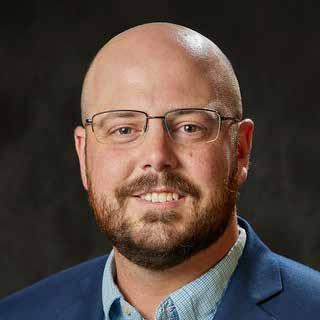
JONATHAN BOYD , a Pearl native now living in Birmingham, Alabama, serves as the regional manager for consumer banking in the Mid-South for Cadence Bank, which is now part of Huntington Bank. He oversees retail and small-business banking across multiple states, including Louisiana, Arkansas, Missouri, Tennessee and parts of Mississippi and Georgia. He oversees deposit portfolios exceeding $8 billion and loan portfolios exceeding $4 billion, while also coaching, recruiting , and developing a team of more than 550 colleagues. A 2012 graduate of the College of Business, Boyd earned a Bachelor of Business Administration in management.
JACK CHOPE , a native of Pensacola, Florida, now residing in Royal Oak, Michigan, is a manufacturing engineer at Ford Motor Company whose work helps bring all-new vehicles to market. He earned a degree in industrial and systems engineering from the Bagley College of Engineering in 2019 and completed a Master of Engineering Management at the University of Nebraska–Lincoln in 2024. At
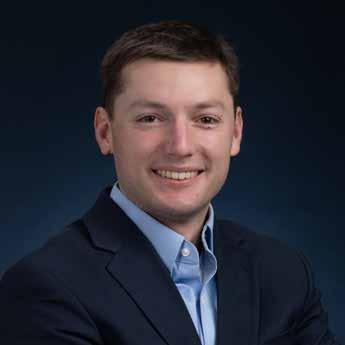
Ford, Chope is responsible for the tooling that forms the lower sheetmetal structure of an upcoming 2027 vehicle and is leading the build and launch of approximately $60 million in specialized manufacturing tools for the assembly plant.
CRISTA COOPER
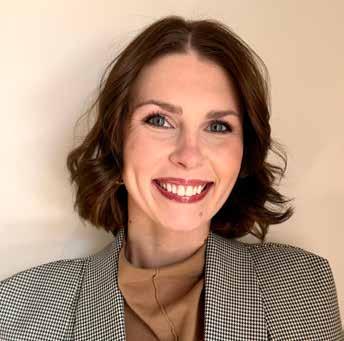
of Greenville is a community development leader whose work strengthens smalltown vitality through collaboration, placemaking and strategic engagement. She earned a bachelor’s degree in English from MSU in 2020 and completed a Master of Education at Mississippi College in 2021. Cooper now serves as director of Main Street and Community Development for the Cleveland-Bolivar County Chamber of Commerce, where she leads initiatives that support downtown revitalization, local business growth, student mentoring, and town-andgown partnerships, including major community events such as Octoberfest and 50 Nights of Lights.
DEMONTERIUS
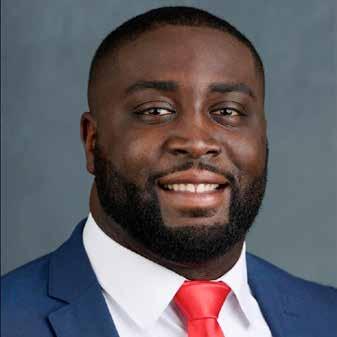
DORSEY of Flora, now based in Dallas, Texas, is a principal and educational leader who transforms underperforming schools by improving culture, instruction and student achievement. He earned a bachelor’s degree in interdisciplinary studies with concentrations in education and psychology from Mississippi State University in 2018, followed by a Master of Education in educational leadership and a Doctor of Education in school leadership. As principal in Winona ISD, he leads comprehensive school improvement planning, applies research-based instructional strategies, uses data to drive decisions, and builds teacher capacity through coaching and
professional development, creating safe, equitable, high-expectation learning environments that foster measurable academic growth.
AUSTIN FLINT
, a Kosciusko native now residing in Huntsville, Alabama, is a geospatial analyst whose work blends scientific precision with a commitment to community impact. A two-time MSU graduate, he earned a 2015 bachelor’s degree in history and a 2017 bachelor’s degree in geosciences. He later completed a master’s in geospatial technology from Delta State University and is now pursuing an MBA in project management at Louisiana State University. At Resolution LLC, he manages and analyzes geographic data, transforming satellite imagery and complex datasets into clear, actionable insights through advanced spatial modeling and mapping.
MARISSA LANDON
FOLLIN , a Leakesville native, earned a bachelor’s in communication with a concentration in public relations and a minor in agriculture from Mississippi State University in 2016. Follin currently serves in a dual role as human resources manager at the Claxton Poultry Sylvania, Georgia, plant as well as corporate director of communications and human resources for the company. Prior to joining the company, she spent nearly 10 years with the nation’s third-largest poultry producer, Wayne-Sanderson Farms, as a communication specialist on the company’s award-winning corporate communications team. In that role, she developed and managed internal communication programs supporting more than 26,000 employees across 23 processing facilities.
PARKER GLASS , a native of Yorktown, Virginia, earned a Bachelor of Business Administration in finance from Mississippi State University in 2018 and an MBA in business analytics from MSU in 2022. He currently lives in Melbourne, Florida. Glass serves as a lead management and program analyst at NASA’s Kennedy Space Center, supporting the Artemis program. In his current role, he works closely with the engineering teams to understand technical challenges and deliver solutions through cost, schedule, and risk integration. He delivers accurate, actionable data to Artemis program management, NASA headquarters and supports Congressional inquiries to ensure informed decision-making at all levels.
DONAE GOODEN
, a Jackson, Tennessee, native now residing in Memphis, is a human resources leader whose career reflects a strong commitment to organizational excellence and people-centered impact. She earned a Bachelor of Business Administration in management from MSU in 2012. Gooden serves as human resources manager for The J.M. Smucker Company, where she drives talent strategy, organizational development, and culture-building initiatives, including an award-winning employee retention plan that reduced turnover by 20% and helped secure the largest hourly wage increase in her site’s history.
BREE HESTER , originally from Southaven, is an advancement professional based in Birmingham, Alabama, whose career centers on strengthening nonprofit impact through strategic growth and community engagement. She earned a bachelor’s degree in psychology at MSU before completing a Master of Social Work at Columbia University in 2021. Hester now serves as director of advancement at Mitchell’s Place, where she leads all fundraising, communications and external relations to support children with autism, driving organizational visibility and revenue through strategic development, community partnerships and missionfocused advocacy.
DR. EMBERLY “KATELYN”

delivered patient education, earning the University of Mississippi Medical Center Scholars Travel Award.
MATTHEW KIMBROUGH
earned a bachelor’s in agribusiness with a minor in general business administration from Mississippi State in 2008. He lives in Tupelo and serves as vice president and branch manager of the Tupelo branch of Mississippi Land Bank, ACA. In his role, he oversees branch operations and generates and manages agricultural, land and equipment loans. Under his leadership, the Tupelo branch has experienced growth in loan volume while maintaining excellent credit quality and achieving record net income.

JACKSON , a Brandon native now based in New York City, is a pediatric resident physician dedicated to advancing child health through clinical care, research, and service. A 2020 graduate of the College of Arts and Sciences, she earned a bachelor’s in biological sciences as a Shackouls Honors College and Phi Beta Kappa scholar. She earned a medical degree from the University of Mississippi School of Medicine in 2024 and now trains at New York-Presbyterian/Weill Cornell Medicine. As a pediatric resident, Jackson provides comprehensive care to infants, children and adolescents while mentoring medical students and advocating for child health policies as her program’s delegate to the American Academy of Pediatrics. Her global health work includes medical outreach in Kenya, where she supported surgical procedures, provided care to underserved communities and
KATIE KRONK , a Franklin, Tennessee, native, is an entrepreneur and marketing leader known for her creativity, strategic vision and passion for mentoring future business owners. She earned a bachelor’s in marketing with a concentration in integrated digital marketing in 2021, followed by an MBA in 2022 from the College of Business. Founder and CEO of Ignite Digital Marketing LLC, Kronk launched the company during graduate school amid the uncertainty of COVID-19. What began as a solo venture has grown into a multistate agency serving more than 70 clients from Franklin, Tennessee, and Ridgeland. Ignite specializes in social media management, Google Ads, branding, website design, email marketing and search engine optimization for service-based businesses and private practices.
KARLY MCCOY , a Laurel native now residing in Madison, is a communications leader known for her expertise in storytelling, brand strategy and community engagement. A 2017 graduate of the College of Arts and Sciences, she earned a bachelor’s in communication with an emphasis in public relations. She later completed a Master of Professional Studies in design management and communication from Georgetown University in 2021. She serves as social media and public relations manager for Howard Industries, leading the company’s digital presence and communications strategy. She manages social platforms, develops integrated campaigns, writes press releases and maintains media relationships to highlight the company’s innovation and community impact.
RACHEL MCFALLS-
BROWN , a native of Brandon earned bachelor’s and master’s degrees in aerospace engineering in 2014 and 2016, respectively. She is a senior flight test engineer at Joby Aviation, where she serves as the Avionics Flight Test lead, overseeing the planning and execution of testing for critical aircraft systems of the new electric air taxi. In the role, she has led flight test operations at Edwards Air Force Base, coordinating daily flight activities with NASA Armstrong and U.S. Air Force partners and currently supports aircraft qualification and realtime safety monitoring in the control room while mentoring junior engineers.
JUSTIN E. SAMUELS , a Bridgeport, Connecticut, native now based in Atlanta, Georgia, is a software engineer and technology entrepreneur advancing innovation while expanding inclusive pathways into the tech industry. A 2015 Bachelor of Business Administration in management information systems graduate, he pairs his early passion for technology with an entrepreneurial mindset shaped by watching his father run a business. Founder and CEO of RenderATL, an Inc 5000 Fast Growth Company, Samuels leads one of the nation’s fastest-growing developer conferences. Through strategic partnerships and community engagement, he convenes more than 10,000 technologists annually and drives over $40 million in economic impact for the Atlanta region each year, including through initiatives like Atlanta Tech Week.
PHILIPPE
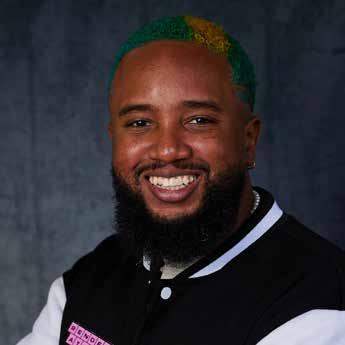
IAN SCROUBELOS
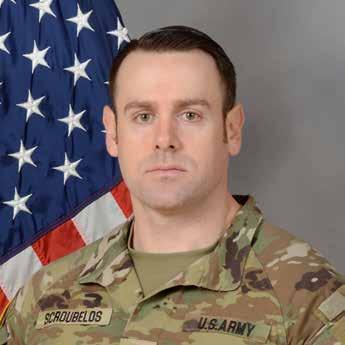

SCHICKER , a native of Hamburg, Germany, graduated in 2021 with a bachelor’s in mechanical engineering. He previously earned associate degrees in physics and mathematics from Citrus College. In 2023, he earned a master’s in public policy, management and data analytics from Carnegie Mellon University and currently lives in New York City. Schicker serves as senior associate and team lead for power and capacity at Noreva, where he leads power market forecasting and translates energy data into insights for investors and utilities.
of Jackson, now residing in Gulfport, is a major in the Mississippi Army National Guard whose 16-year career reflects a deep commitment to service and leadership. He enlisted in 2009 and earned a bachelor’s degree in communication studies in 2012. He was commissioned through officer candidate school prior to earning his degree, grounding his military service in strong communication and leadership skills. With a primary concentration in field artillery and as the range management authority at Camp Shelby Joint Forces Training Center, he oversees safe, realistic and resource-sustainable training across 138,000 acres of ranges and training areas, including restricted airspace, for training at Camp Shelby. As commander of the Mississippi Army National Guard Officer Candidate School, he leads the development of confident, disciplined and resilient officers, drawing on two overseas deployments in support of Operations Spartan Shield and Inherent Resolve.
MARI MICCI
SHANNON , a native of Cleveland, is an assistant professor of nursing and the undergraduate program coordinator at Delta State University. She graduated in 2014 with a bachelor’s in biological sciences. She earned a Master of Science in Nursing from the University of Alabama at Birmingham in 2019 and a Doctor of Nursing Practice degree from the University of Texas at Arlington in 2022. Shannon brings extensive clinical experience to the classroom, having practiced as a registered nurse and family nurse practitioner in medical, surgical and cardiovascular settings
across Mississippi, Tennessee and Texas. She now focuses on educating and mentoring the next generation of nurses and nurse practitioners.
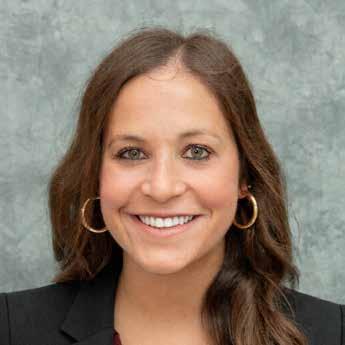
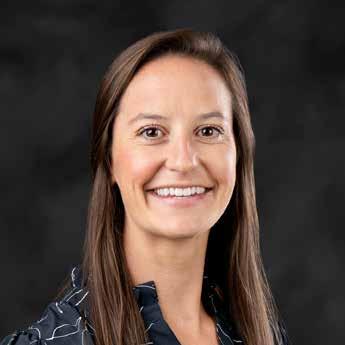
MEME STAGGERS , a native of Meridian who lives in Starkville, is an assistant professor in the Applied Behavior Analysis program at Mississippi State University. She earned a bachelor’s in educational psychology in 2018, a master’s in psychometry in 2020, and a doctoral degree in school psychology in 2023. She completed a predoctoral internship at the Kennedy Krieger Institute and Johns Hopkins University School of Medicine. Staggers teaches undergraduate and graduate courses, supervises student fieldwork and conducts research on evidence-based behavioral practices. She supervises graduate students providing behavior support services in the Starkville Oktibbeha Consolidated School District, contributing more than 1,500 hours of support, and serves as the principal investigator on a grant that provides free services to adults with intellectual and developmental disabilities across Mississippi.
LEE THORNE , a native of Iuka now living in Jackson, is a respected legal leader dedicated to agriculture, public service and the state. He earned a political science bachelor’s in 2010 and a Juris Doctor from the University of Mississippi School of Law in 2013, graduating in the top 25% of his class and joining the Order of the Barristers. Thorne serves as general counsel for First South Farm Credit, overseeing legal, regulatory, transactional and litigation matters for the agricultural lending
cooperative serving Mississippi, Alabama and Louisiana. He develops policies upholding integrity, acts as the standards of conduct official, and leads legislative affairs to support rural communities.
KELLY
TURNER , a Columbus native, has dedicated her career to improving health outcomes across Mississippi. She earned a 2011 bachelor’s in kinesiology and a 2012 master’s in food science, nutrition and health promotion. She is a registered nurse case manager with the Mississippi Department of Health, leading the Healthy Moms, Healthy Babies program. She provides personalized care for at-risk mothers and infants, coordinating care teams and connecting families to vital resources. In three years with the agency, she has supported more than 100 families toward safer births and healthier development, addressing both clinical needs and social determinants of health. She also serves as nurse manager at Garden Hill Assisted Living, where she develops long-term care plans, mentors staff and ensures compliance while fostering a respectful environment for seniors.
AMONI
WASHINGTON , a Tchula native now residing in Ridgeland, has built a meaningful career in health promotion and compliance, drawing on her passion for holistic wellness. She earned a 2021 kinesiology bachelor’s and a 2023 master’s in food science, nutrition and health promotion. She now serves as regional compliance coordinator for the National Council on Alcoholism and Drug Dependence, overseeing compliance and operational
standards for 10 mental health and rehabilitation centers across Mississippi that receive federal support through the State Opioid Response Grant.
BROOKE B. WILLIAMS
of Vicksburg is a strategist and community-focused entrepreneur whose work strengthens nonprofits, public service organizations, and small businesses through mission-driven marketing and brand development.
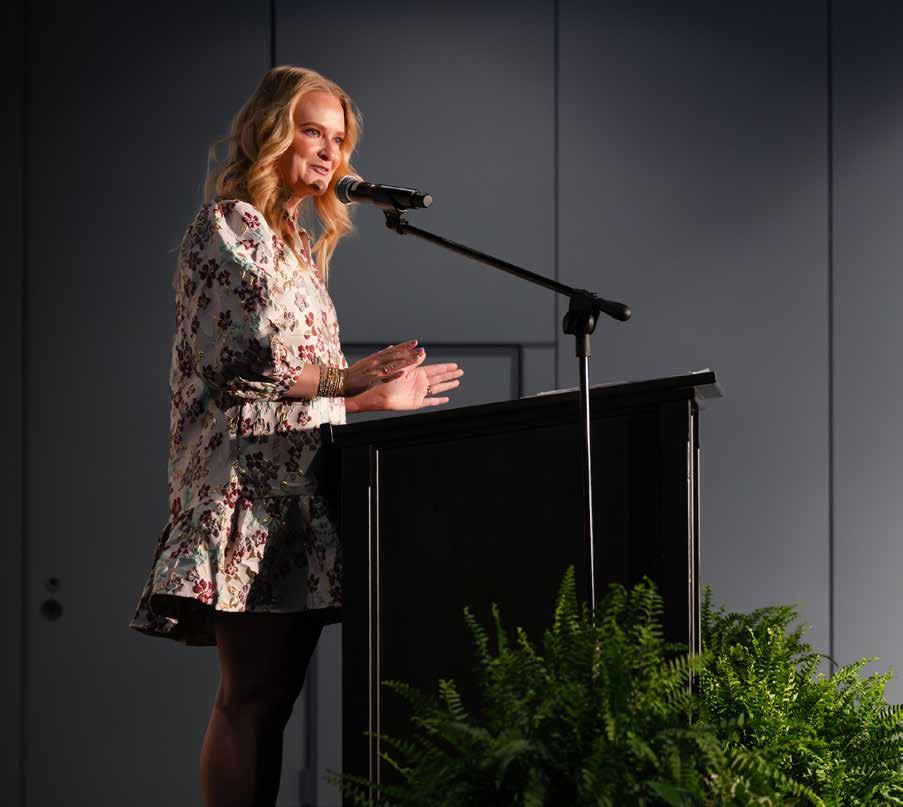
A 2016 graduate with a Bachelor of Business Administration, she is pursuing a Master of Public Policy and Administration and holds an MBA from Belhaven University. She is the founder and chief strategist of Creative Attitude, where she leads strategy, creative planning and execution to help organizations, particularly those serving Black communities, clarify their message and amplify their impact.
DR. JAMES
YATES of Olive Branch, now residing in Tupelo, is an associate veterinarian at Tupelo Small Animal Hospital, where he provides comprehensive medical, surgical and preventive care for companion animals while mentoring future veterinary professionals. He earned a Doctor of Veterinary Medicine in 2020. At Tupelo Small Animal Hospital, he not only cares for dogs and cats but also supervises a team of technicians, receptionists and kennel attendants and regularly teaches and mentors students who shadow in the clinic.
To learn more about The Reveille 25 program, visit www.alumni.msstate. edu/reveille25 or contact Orly Hardin at 662.325.3444 or OHardin@alumni. msstate.edu
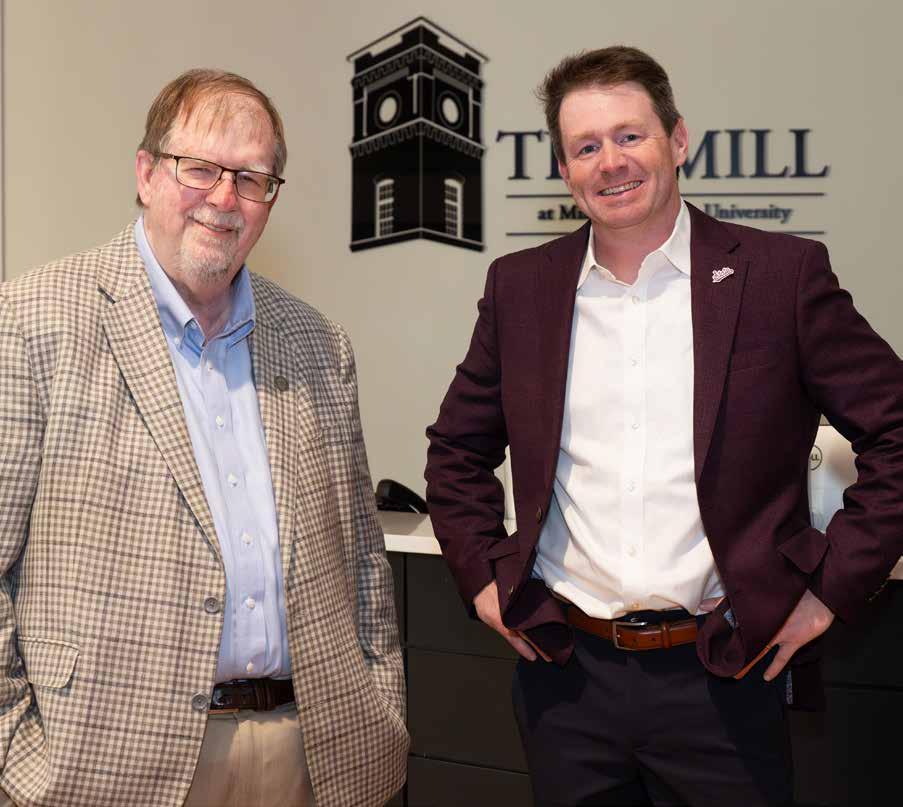
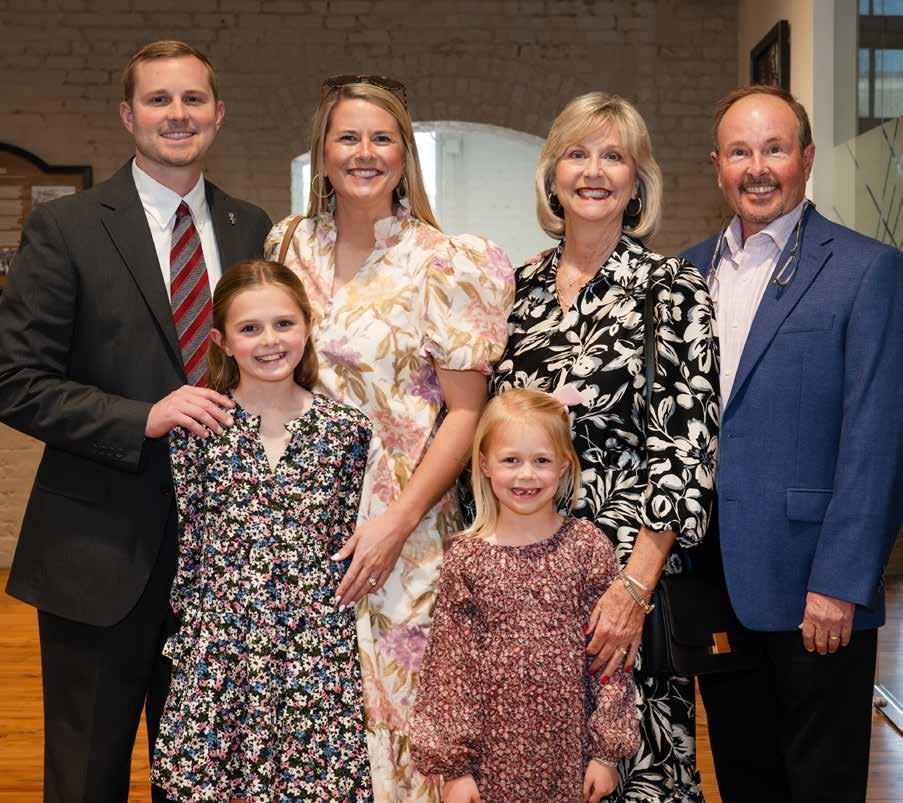
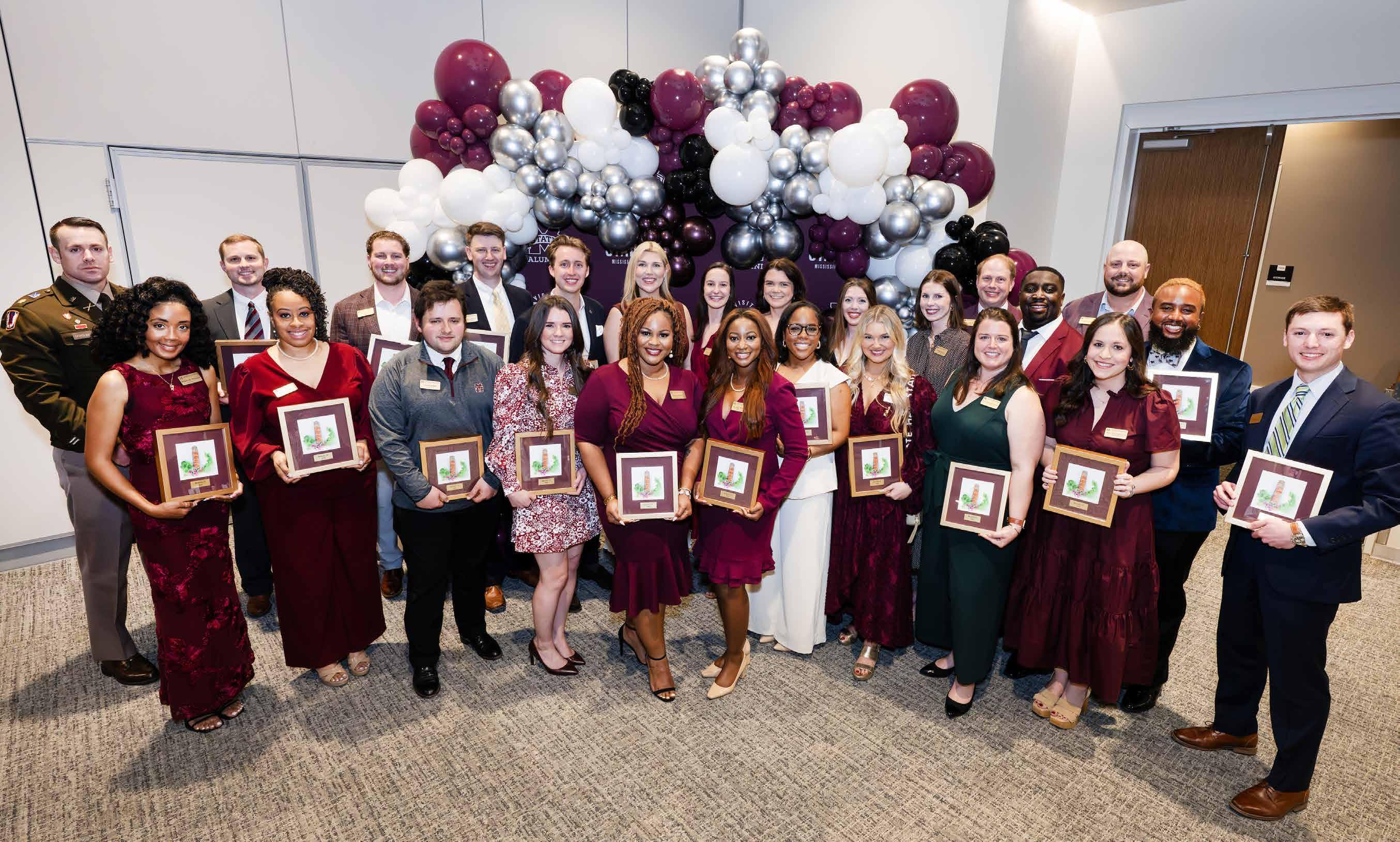
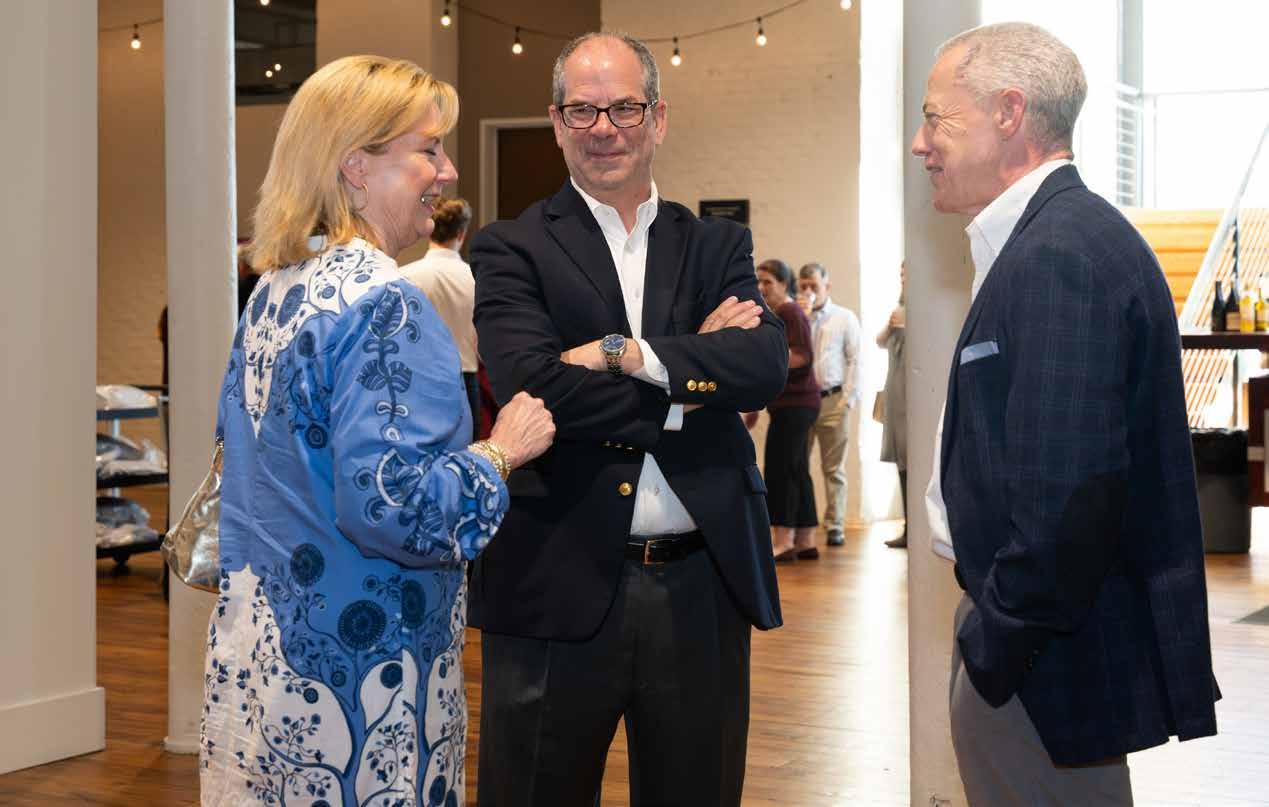
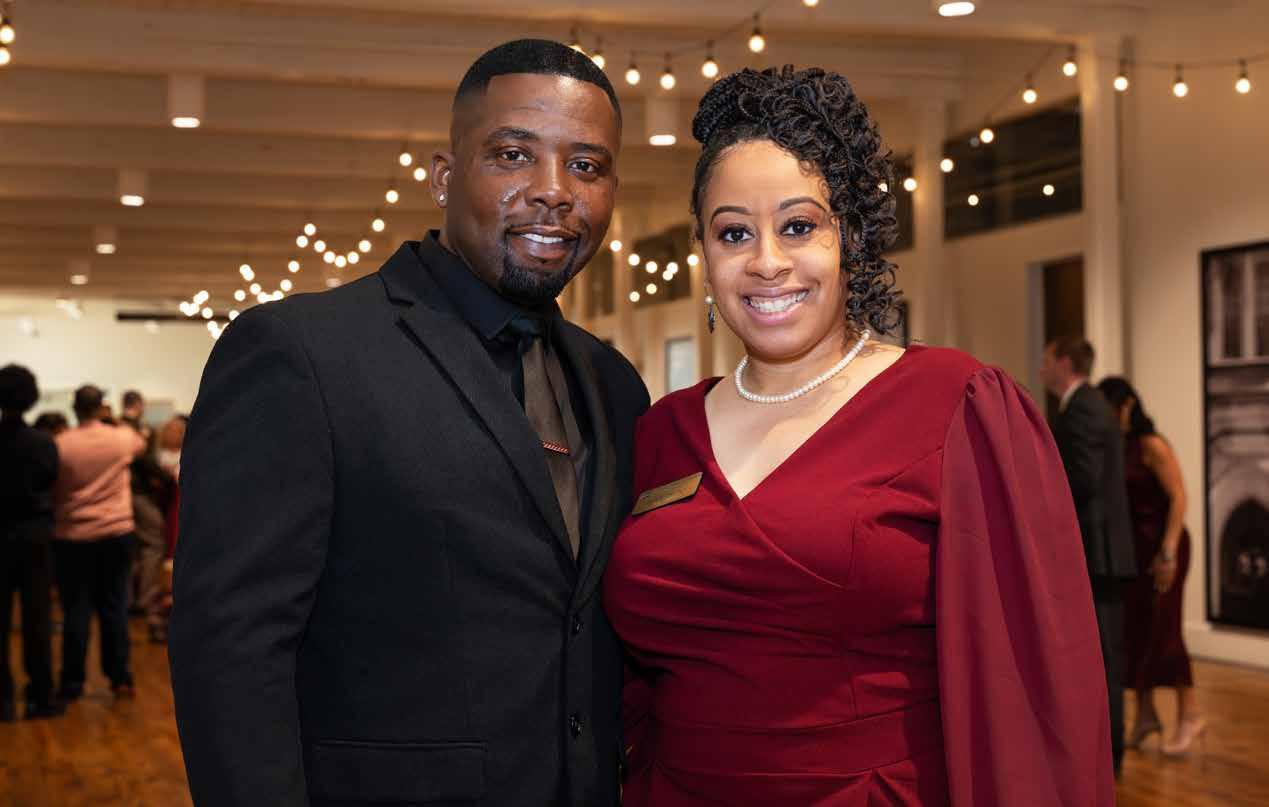
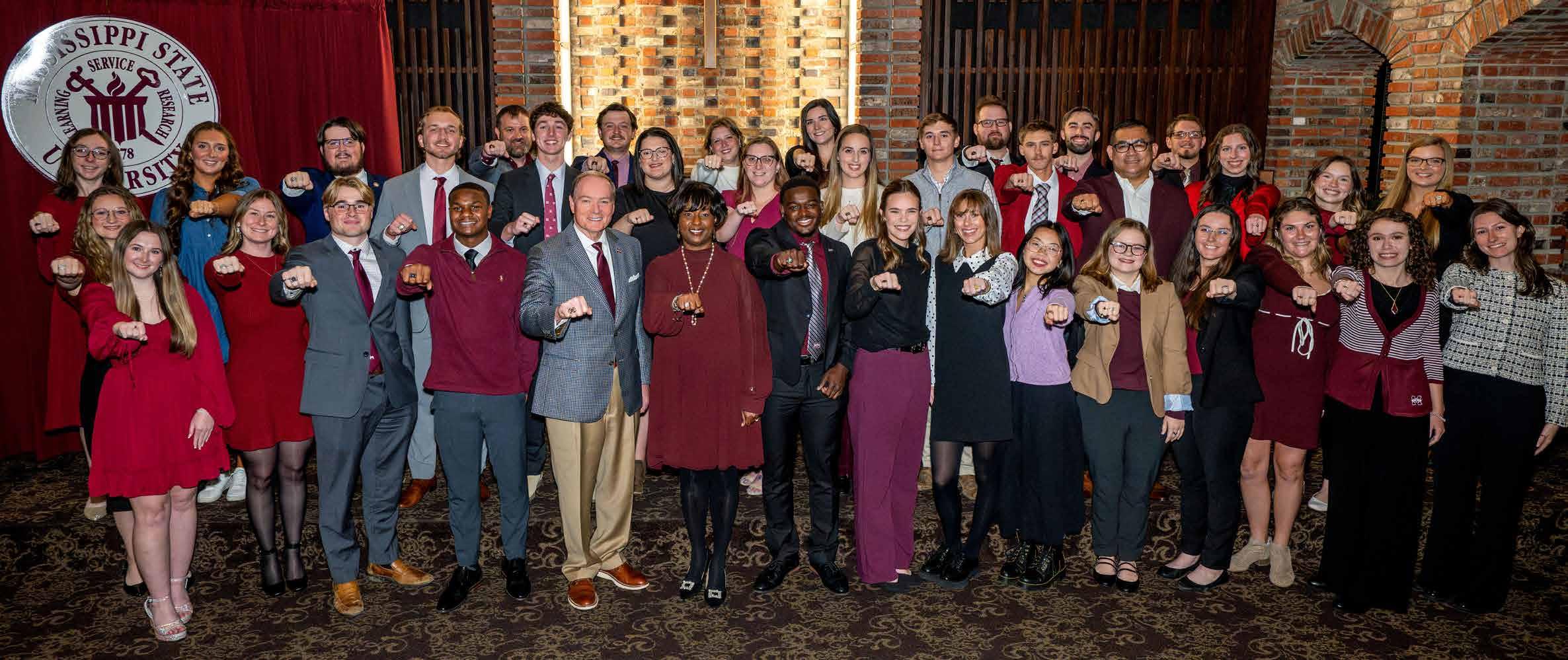
HONORING THE RING TRADITION
Mississippi State students received class rings during a special ceremony in the Chapel of Memories in December 2025. Hosted by the MSU Alumni Association, the Fall Ring Ceremony kicked off fall graduation celebrations and honored a distinguished Bulldog graduate. The event featured university President Mark
E. Keenum, first row, center, and two-time MSU graduate Camille Scales Young, right of Keenum. A principal and director at Cornerstone Government Affairs in Jackson, Young is a former MSU Alumni Association national president and a College of Agriculture and Life Sciences Alumni Fellow.
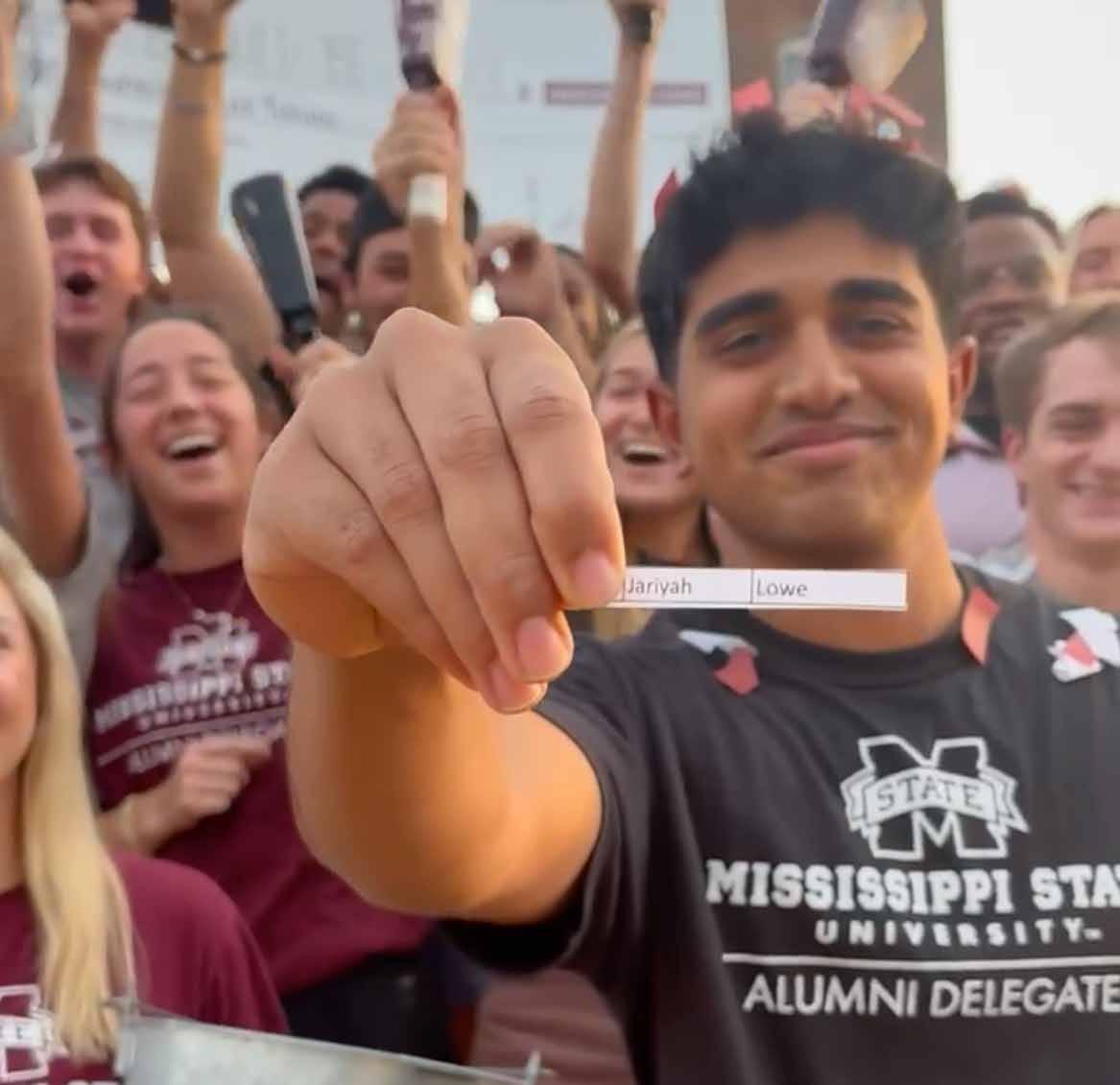
Fall 2025 Tuition Drawing
Congratulations to the 2025 Fall Tuition Drawing Winner, Jariyah Lowe. Founded in 1980, the Alumni Delegates is a diverse group of 40 students who serve as liaisons between Mississippi State University students and alumni. The group volunteers at alumni events throughout the year and is active with service programs across campus and the community.
As an organization committed to improving the experiences of all alumni and students, the Alumni Delegates, with support from the MSU Alumni Association, are excited to continue this Tuition Drawing to directly and positively influence the student experience. We hope you will join us in raising additional funds to support programs and scholarships at Mississippi State.
Spring 2025 Alumni Board
3rd: J.P. Walker, Terry Boyd, Bradley Garrison, Immediate
Front: Jonathan Jackson, Taylor Flowers, National President Lynn Twitty Burwell, Paige Roper, Kim Correro Fandel, Janelle Finley Adams,
2nd: Richard Cannon, John Shappley, Mary Ann Latham, Stephen Woo, Belvia Giachelli, Adrienne Morris
Former
National President Terri Russell, National Vice President Riley Nelson, Nathan Cummins
Back: Josh Thompson, Bo McKinnis, Executive Director Jeff Davis, Michael Criswell, Student Association President Cameron Cummings, Zwan Landfair, Strat Karatassos, Tony James
L-R: Audrey Jenkins, vice president of public relations; Ronnie Charles Jr., vice president of member education; Prasanna Guduru, secretary; Hayes Henry, president

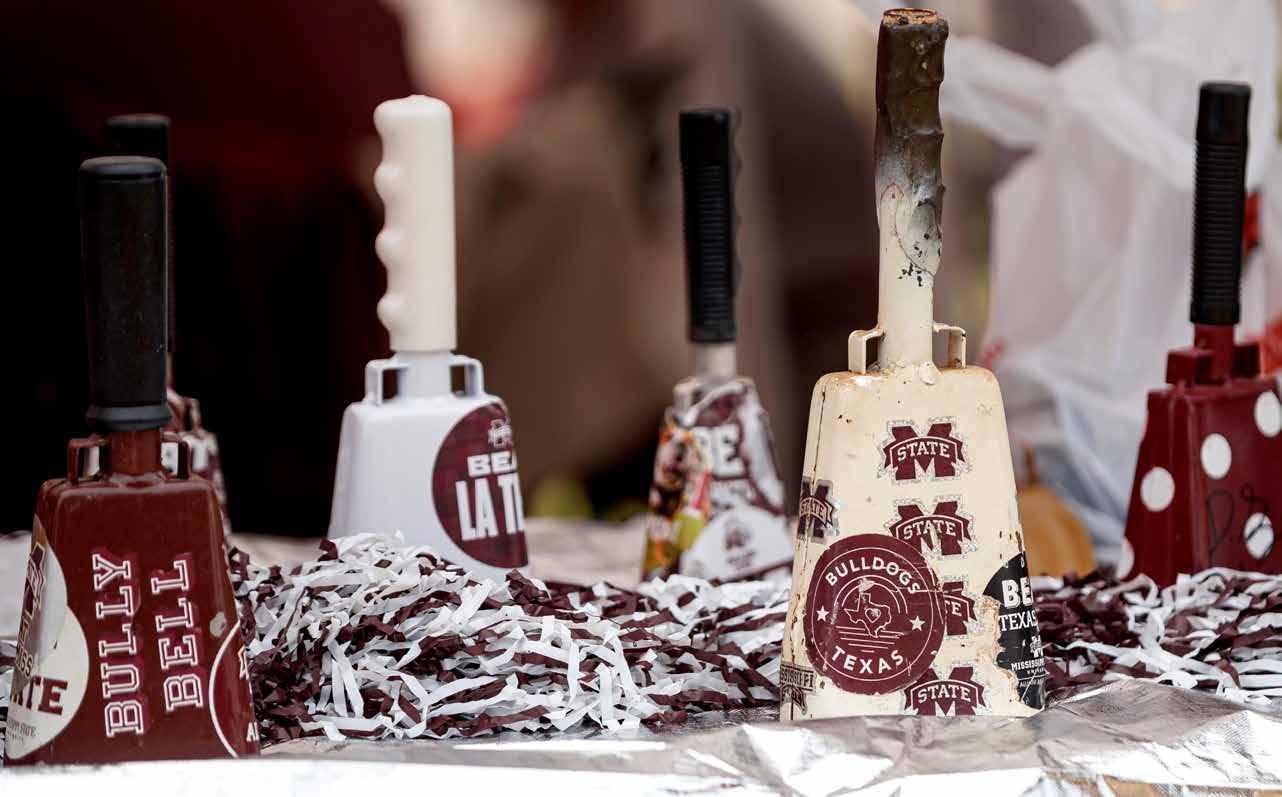

WAYS TO PARTNER
The Mississippi State University Alumni Association hosts events and offers programs and services which are directly supported by our partnerships. We can create a customized package to help your organization maximize its resources and strategic goals.
ADVERTISING OPPORTUNITIES
PRINT - Alumnus Magazine, event signage, and event promotion
ALUMNUS MAGAZINE DISTRIBUTION
l 2x/year Print, 1x/year Digital
l Reaches more than 55,000 active alumni association members
l Print Audience - Active alumni and supporters
l Digital Audience - All addressable alumni
DIGITAL - E-newsletters, social media, web, email and mobile app
ENGAGEMENT OPPORTUNITIES
Engagement opportunities through events and programs:
l Tailgates (home and away)
l Reunions and Alumni Gatherings
l Awards Banquet
l Reveille 25
l Senior Celebration
l Traveling Bulldogs
l + Other Annual Events
MAROON REACH & IMPACT
1,160 Globally
144,001 Digital
161,172 Contacts Active Members † 55,219 100+ Alumni Chapters & Clubs
ALUMNI BY COLLEGE
College of Arts & Sciences (38,819)
College of Education (36,075)
College of Business (35,563)
Bagley College of
(28,240)
College of Ag. & Life Sciences (20,087)
College of Forest Resources (4,428)
College of Arch, Art & Design (3,233)
College of Veterinary Medicine (2,249)
Other (1,880)
Watchers in the Wings
LIVINGSTON GIFT SUPPORTS BUSINESS AND EDUCATION STUDENTS
By Shun Pounds, Photos submitted & MSU Archive
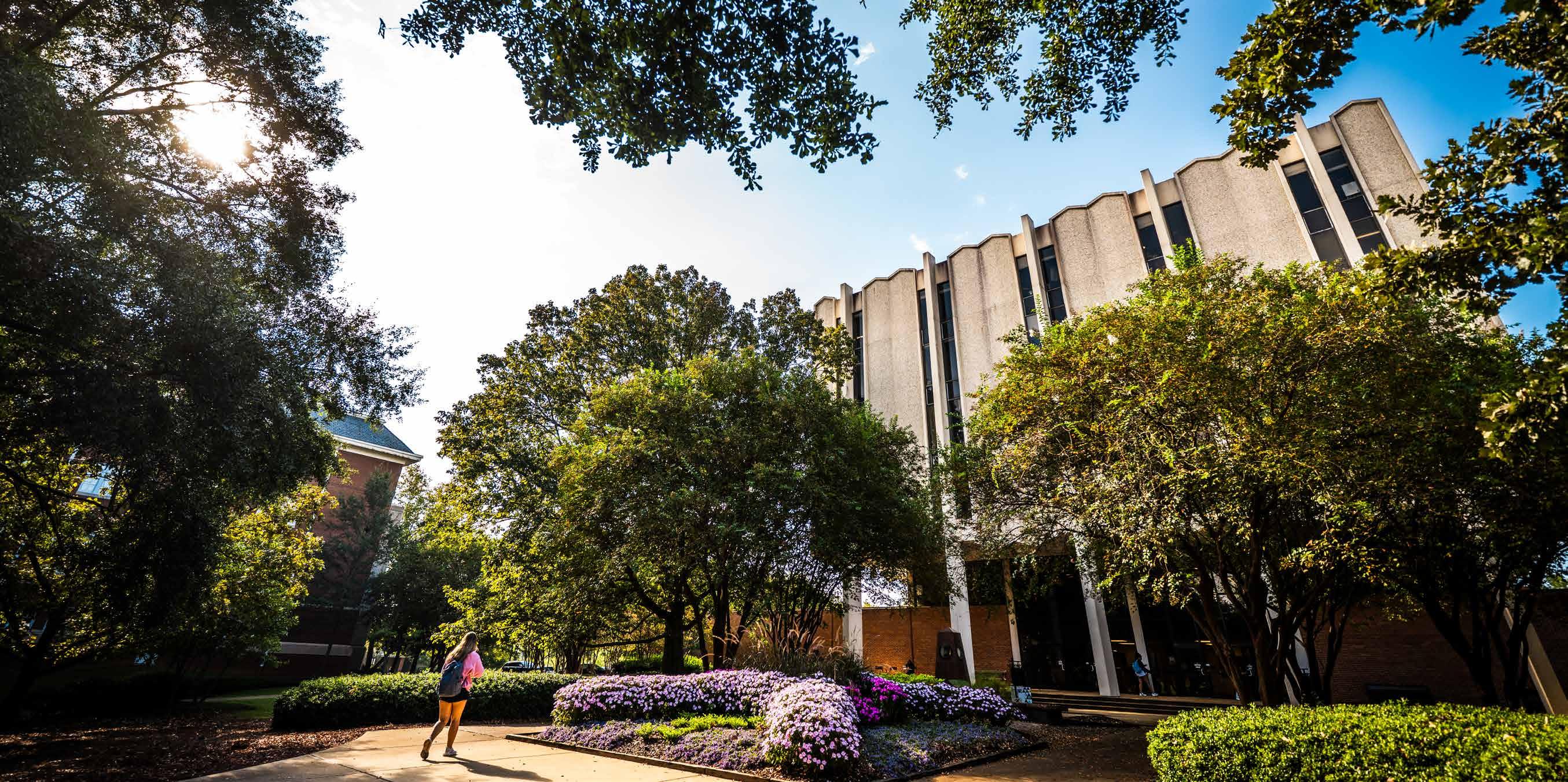
Coy Livingston was a hardworking teenager in the early 1960s. When high school days ended in Booneville, other students went home while he worked odd jobs around the school for pay. Afterward, he worked at a local grocery store, and on weekends, while other classmates sought adventures, he mowed yards for the public and painted his family home.
But there was a reason behind his work ethic: his father died of a stroke when Coy was 12, leaving Coy’s mother, Coy, and an older sister in desperate straits. His meager earnings helped them and kept alive his dream of one day attending Mississippi State University.
After two years at Northeast Mississippi Community College, he saved enough to pay for Mississippi State tuition, supplemented by summers spent working for the Mississippi Highway Department by day and managing a small convenience store by night. Content to make it in the door, he and his high school sweetheart, now wife Phyllis, were surprised when he received a grant from an anonymous watcher in the wings—a tremendous boon giving him the flexibility not only to work hard but also to live.
More than 50 years later, the Livingstons are providing students from similar financial straits the same opportunity. Through two scholarships—a presidential endowed scholarship and an endowment
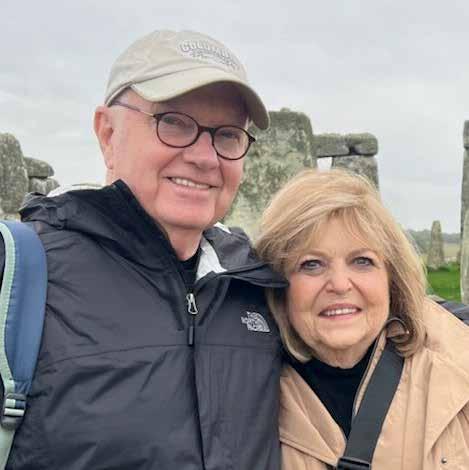
“In recent years, we’ve felt society has put academic achievement in the backseat when compared to something like athletics. We want to reward a hardworking student since they can be as talented as someone who excels in the athletic arena.” ~ Coy Livingston
benefiting business and education students—and a study abroad fund, the couple is watching over future generations of students, ensuring hard work is rewarded.
The Coy and Phyllis Livingston Presidential Endowed Scholarship
will reward the highest-achieving high school graduates by covering tuition and providing mentorship and service opportunities. The endowment, part of MSU’s Presidential Scholars program, reflects the Livingstons’ dedication to education and their desire to highlight academic achievement.
“In recent years, we’ve felt society has put academic achievement in the backseat when compared to something like athletics,” Coy said. “We want to reward a hardworking student since they can be as talented as someone who excels in the athletic arena.”
Although they have high expectations for scholarship recipients, the Livingstons’ primary hope is for students to reinvest in Mississippi.
“We don’t expect the recipient to win the Pulitzer Prize or become chairman of the Federal Reserve board, but we do hope they remain in the state and invest in our people,” Phyllis explained. “Perhaps they become a teacher and mesmerize a classroom with tales of Odysseus. Maybe they go into business and invest in a young entrepreneur who presents a comprehensive business plan. We hope they invest in Southern values and build up our state.”
The Southern value of hard work
is a central theme in the lives of both Livingstons. Both grew up in Booneville and attended MSU before settling in Tupelo. Coy graduated from the College of Business in 1969 with a Bachelor of Science in general business. He dedicated his career to banking, retiring in 2012 as executive vice president at BancorpSouth.
Phyllis graduated from the College of Education in 1970 with a degree in English and spent the next three decades teaching ninth-grade English in the Tupelo Public School District. After retirement, she helped develop, organize and teach an ACT preparation curriculum to improve Mississippi students’ scores. Her impact in the classroom earned her recognition as Outstanding Teacher in a Tupelo School in 1989, Who’s Who Among America’s Teachers in 1996, and Mississippi’s Star Teacher in 2005.
Phyllis jumped at the idea of establishing a presidential scholarship with Coy in full agreement.
“I loved teaching young, bright minds, and I am excited to continue helping these gifted students with this scholarship,” she said.
The couple’s second endowment— the Coy and Phyllis Livingston Endowed Scholarship—honors the Livingstons’ time as Mississippi State students
by supporting students who enroll in either the College of Business or Education, with preference given to those from Prentiss or Lee counties, who demonstrate financial need, have work experience in high school or college, and are committed to community service.
The couple’s travel experiences during retirement and exposure to diverse cultures and practices inspired
“We don’t expect the recipient to win the Pulitzer Prize or become chairman of the Federal Reserve Board, but we do hope they remain in the state and invest in our people.”
~ Phyllis Livingston
the creation of the Coy and Phyllis Livingston Endowed Study Abroad Fund within the College of Education. The fund will support students who take advantage of study abroad opportunities and bring those experiences back home.
“Our time at MSU allowed us to be successful in our careers, and now we realize that the best way to invest in tomorrow is to invest in young people with worthy aspirations today,” Coy said.
These endowments are driven by a firm belief in hard work and the importance of passing opportunities forward. Their giving now positions them as the “watchers in the wings,” guiding the next generation of dedicated students by providing the resources they need to succeed. By giving, they also honor their families, communities, teachers and mentors who aided them on their journey. Coy’s generosity is a tribute to the person who helped him when he needed support most.
After receiving the grant that eased his financial burden, he discovered his anonymous supporter was none other than a mentor he idolized—Phyllis’s uncle Vernon W. Barrow, a mechanical drawing professor at MSU. Having seen his work ethic and character, Barrow extended a kindness to the young man, changing Coy forever.
“He was my hero,” Coy said. “He was the perfect Southern gentleman— refined, honest and caring. He helped when we needed it. Now, we want to do the same for others.”
In their quiet, thoughtful way, Coy and Phyllis Livingston have become like those who invested in them. Their support is a promise; no matter who you are, someone believes in you. Your story matters. And at Mississippi State, generosity is worth carrying forward. n
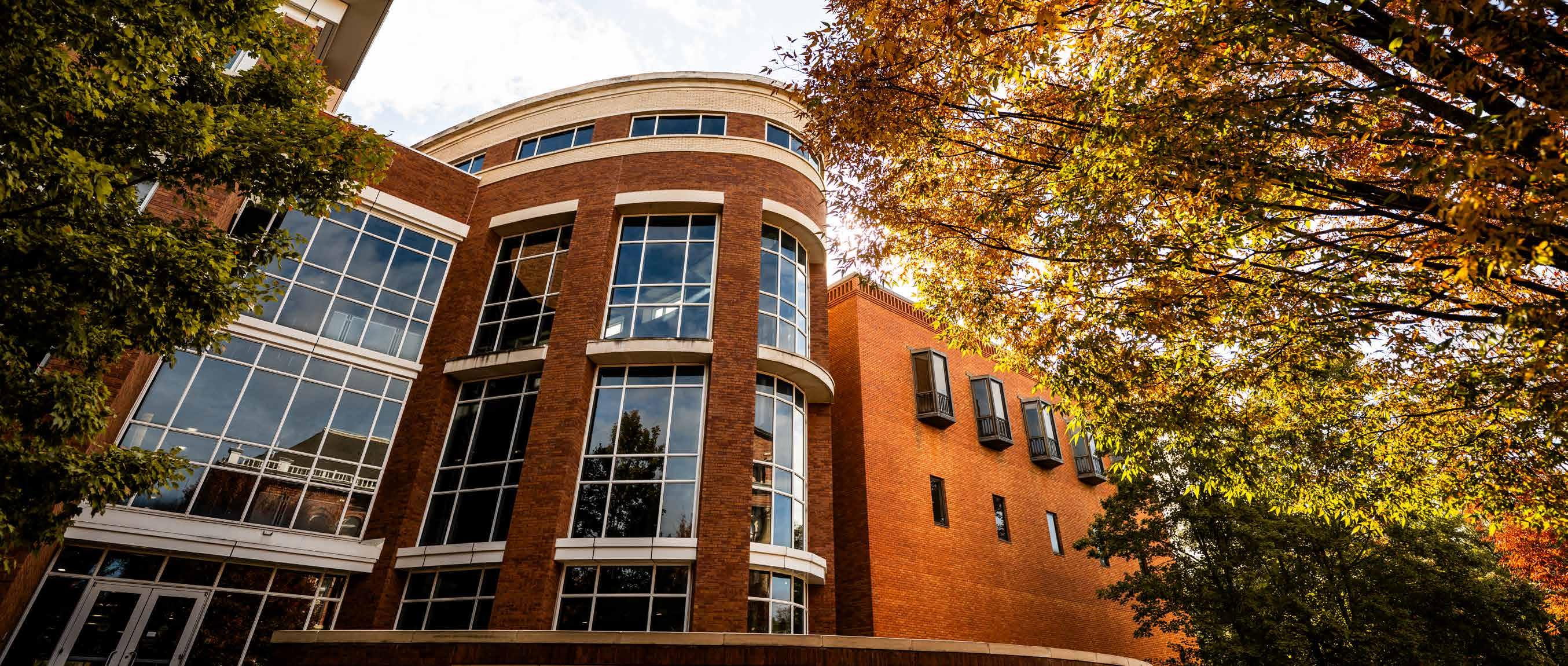
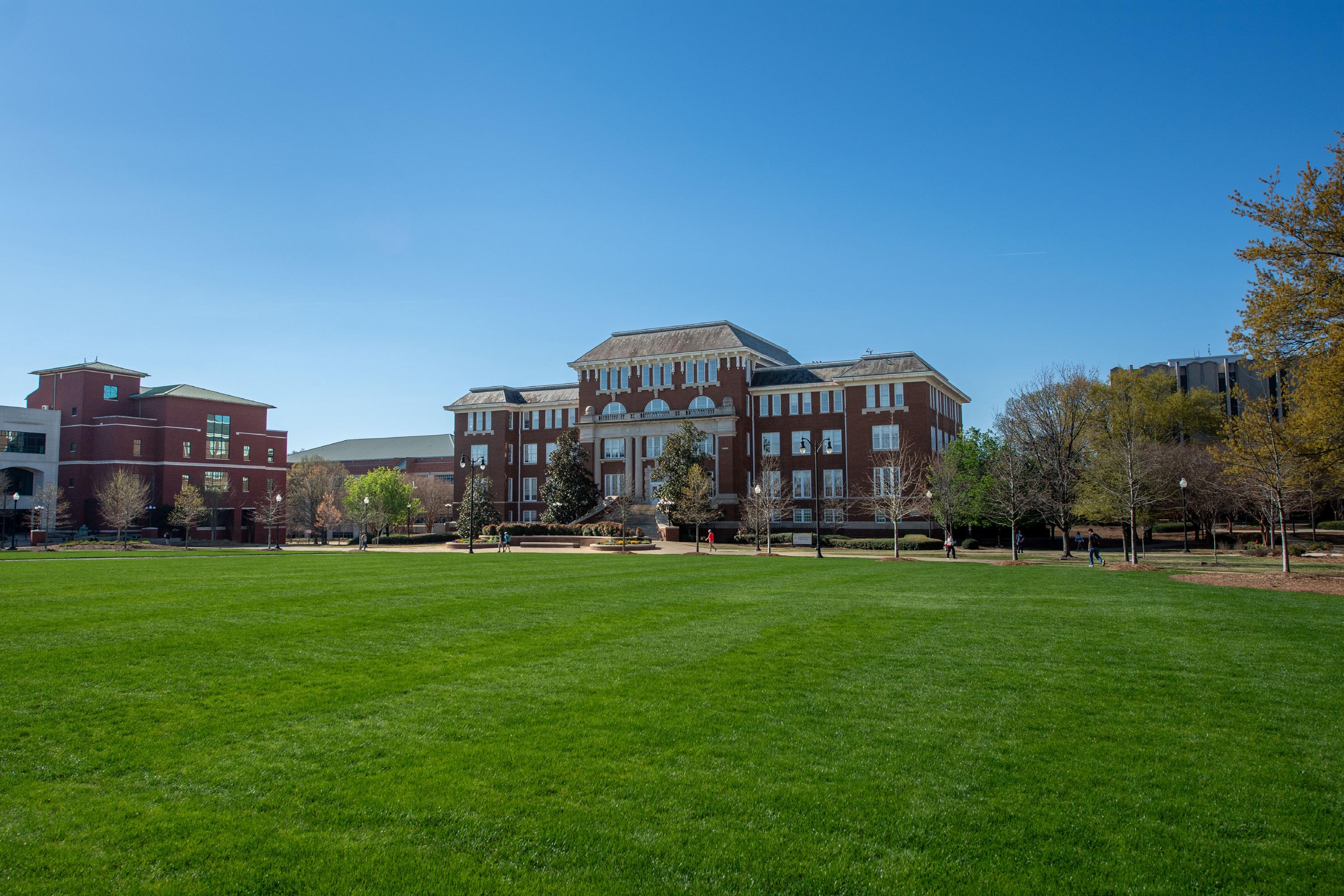

Ahead of the Curve
ALUMNI HELPING DIRECT TRANSFORMATIVE CAMPUS PROJECTS
By Kevin Tate, Photos by Grace Cockrell & Emily Grace McCall
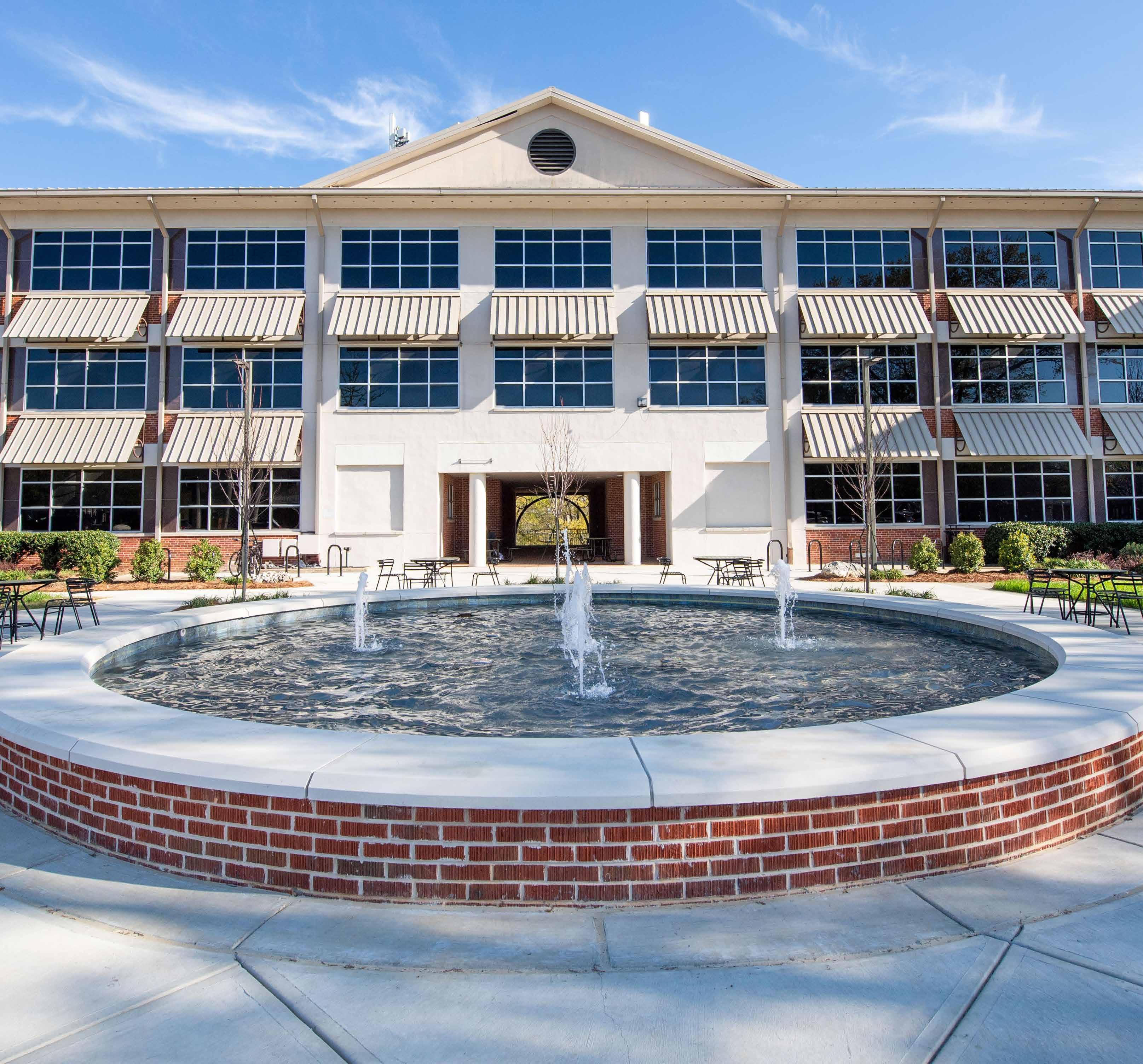
With 1,400 acres comprising its main campus, Mississippi State University knows the importance the environment can play in shaping a college experience. Spaces need to be inviting, memorable and, above all, functional for the students who use the area every day.
By supporting enhancements to MSU’s shared outdoor spaces,
alumni can ensure improvements have broad impacts not only to the functionality of campus but also the lasting impressions they leave on both those who call it home and others just passing through.
Dean and Lauran Wingo, along with Dr. Edward P. Scott and wife Claudia, made such an impact through the beautification of the south face of Hilbun Hall. Through the creation
of a fountain and enhancements to the surrounding landscape, they have helped amplify MSU’s welcoming atmosphere.
“They will be part of the heartstrings and memories of tomorrow’s alumni,” said Saunders Ramsey, executive director of Campus Services. “When families participate in the beautification of campus through work that makes campus
“Making the campus pedestrian-only is not a grand goal, but progress in that direction reflects a change in priorities, and we do want to be proactive.”
~
Saunders Ramsey
more useful to students, we have a cycle of success that’s a joy to share.”
The 40-ton rock garden and 5,600-gallon fountain—dubbed Shipley’s Water Bowl for the Wingos’ four-legged friend—lie at the eastern end of one of the university’s key corridors bridging the area from Hilbun, west to Fraternity Row through a series of pedestrian lanes and plazas creating a connection that includes historic Harned and Lee halls, Colvard Student Union, the YMCA building, Chapel of Memories, Junction and amphitheater.
Not long ago, this area—that was once part of Highway 12—was dominated by automobile traffic. Through long-range planning, the MSU Foundation and the campus services department helped make the area more pedestrian-friendly to meet the needs of today’s campus community.
The transformation was intentional and made with longevity, functionality and accessibility in mind, and it was all supported by the philanthropy of students past, for the benefit of current and future students.
“The core of everything we do is for present students,” Ramsey said. “A lot of that is occurring because campus is being made more functional.”
Among the enhancements making campus more functional are numerous projects aimed at enhancing pedestrian access and safety. These improvements include the ongoing transformation of Hardy Road, known to generations of Bulldogs as Engineering Row. Growth toward the south end of campus, along with consistent foot traffic along the thoroughfare, highlighted a need to rethink the area’s function.
The current project will turn the area of Hardy Road from Lee Boulevard to Morrill Road into a green space—a pedestrian corridor enhancing usability and safety.
“Making the campus pedestrian-only is not a grand goal, but progress in that direction reflects a change in priorities, and we do want to be proactive,” Ramsey said. “When it comes to work, we want to always be ahead of the curve.” n


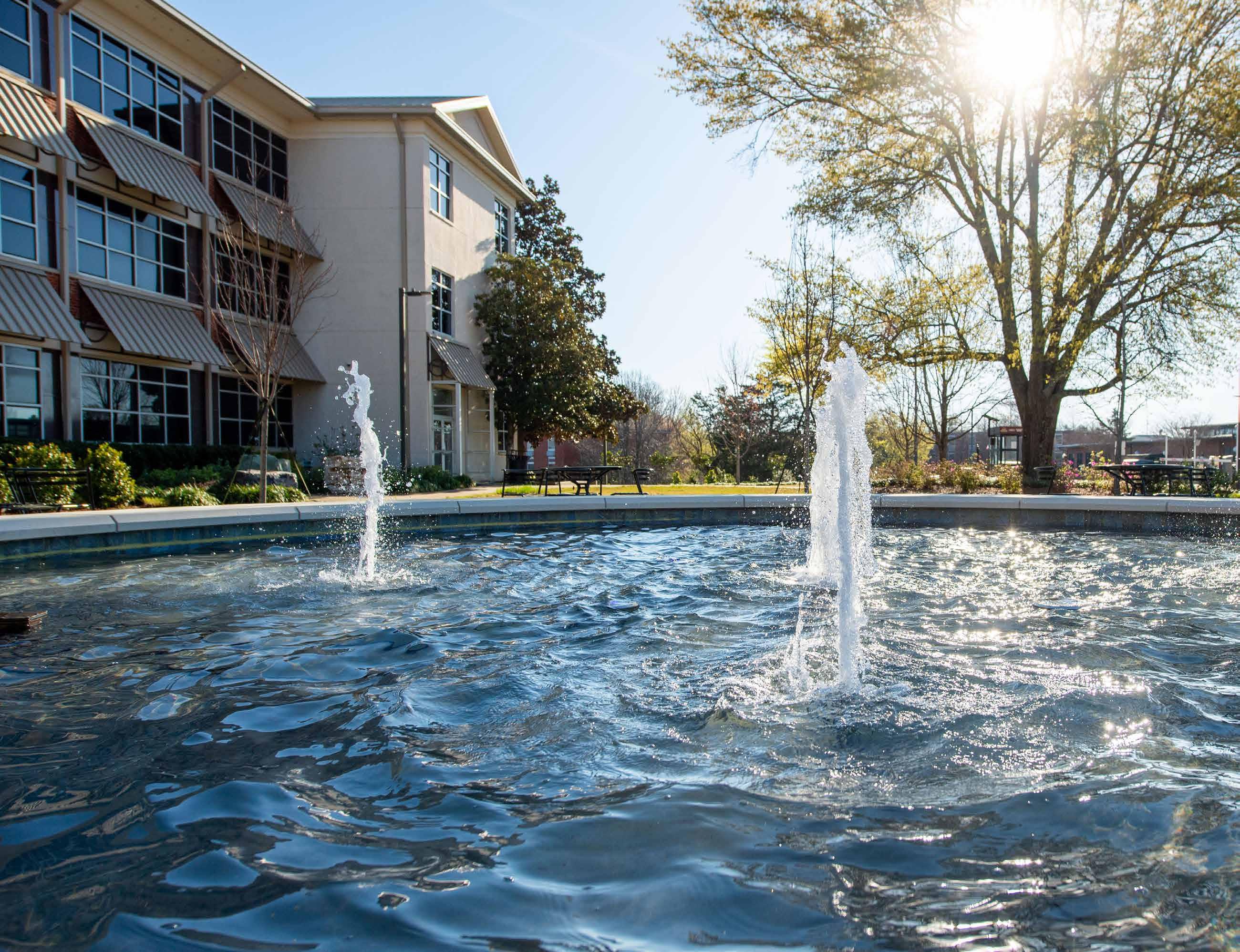

New faces strengthen the Bulldog family
The Division of Development and Alumni at Mississippi State University welcomed a wealth of new talent to its ranks in 2025 and early 2026. These individuals bring diverse skills and Bulldog spirit to their roles, advancing MSU’s mission with energy, creativity and dedication.
KEVIN TATE – Assistant director for communications
Kevin Tate of Tupelo joined the division in March 2025 as assistant director of communications. A 1994 MSU graduate with a Bachelor of Arts in history, Tate brings more than 30 years of experience in feature writing, photography and videography. His career has included roles in television production, newspaper editing and multimedia storytelling, and his strong editorial perspective has enhanced the division’s content development and communications strategy.
MARY
DADE FORD – Assistant director of development, Bagley College of Engineering
Mary Dade Ford of Columbus joined the MSU Foundation in August 2025 as assistant director of development for the Bagley College of Engineering. A 2017 MSU graduate in human development and family sciences, Ford previously served as manager of donor relations at The Baddour Center in Senatobia. Her background in fundraising and relationship management supports Bagley’s continued growth and donor engagement.
KEVIN BURCHFIELD – Computer support specialist
In June 2025, Kevin Burchfield of Starkville entered the role of computer support specialist, succeeding longtime staff member Steve Roberts, who retired June 30. A 1997 Mississippi State graduate in landscape architecture, Burchfield previously served as a key member of MSU’s ITS desktop support team. His technical expertise and institutional knowledge strengthen the division’s information services group.
JOHN PAUL WALLACE – Stewardship coordinator
John Paul Wallace of Petal joined the MSU Foundation as a stewardship coordinator in June 2025. He graduated from MSU in 2024 with a degree in communication and previously worked in the Office of Research and Economic Development, where he supported projects in research security and the Advanced Composites Institute. His project coordination and campus engagement experience support the division’s growing stewardship efforts.
GRETA ALLEN – Communications specialist
In July 2025, Greta Allen of Olive Branch became the division’s newest communications specialist. A May 2024 MSU communication graduate, Allen brings experience in digital media, social media management, photography and videography. She previously worked for the MSU Department of Communication, Office of Research and Economic Development and Greater Starkville Development Partnership.
JANA LAWYER – Director of development for special projects
The MSU Foundation welcomed Jana Lawyer of Vicksburg as director of development for special projects in July 2025. A 2015 MSU marketing graduate, Lawyer brings more than a decade of development experience, including recent service as director of development for Russian Riverkeeper in California. She also spent seven years with the Sharpe Group, advising nonprofits on major gifts and planned giving. At MSU, she oversees fundraising for MSU–Meridian, the Judy and Bobby Shackouls Honors College, and the Ulysses S. Grant Presidential Library and Museum.
BRITTANY NASON – Accountant III
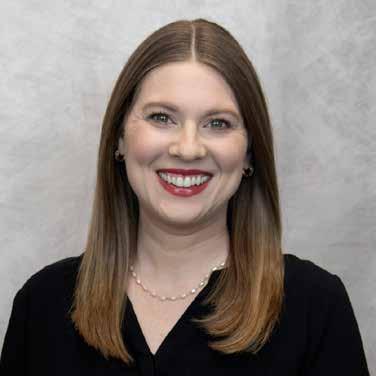
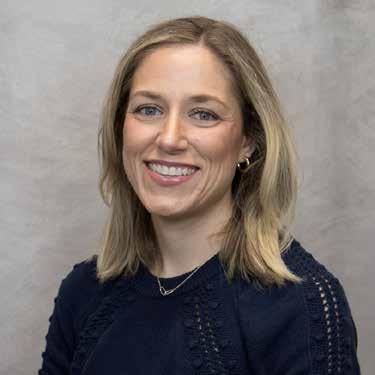
In November 2025, Brittany Nason of Starkville joined the division’s business office. A 2012 MSU MBA graduate, she brings more than a decade of financial experience, most recently serving as business manager for MSU’s School of Human Sciences. Her analytical expertise and knowledge of university operations enhance the division’s financial management capacity.
NOAH BERRY – Assistant director of development, MSU Extension, CALS and MAFES
Noah Berry of Jackson joined the MSU Foundation in January 2026 as assistant director of development for MSU Extension, the College of Agriculture and Life Sciences, and the Mississippi Agricultural and Forestry Experiment Station. A 2023 MSU graduate in agribusiness and agricultural economics management, Berry previously worked as an agricultural lender. His professional background, coupled with his recent student experience, gives him unique insight into MSU’s mission and its supporters.
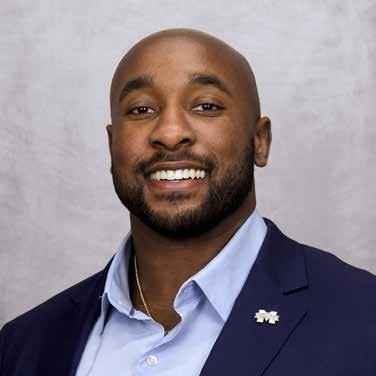

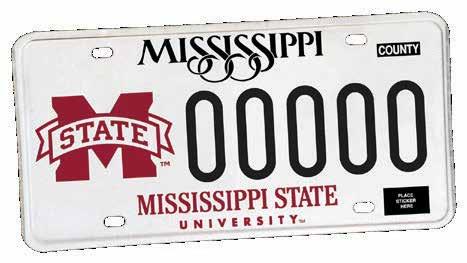
Convenient Location
REGISTER & RECEIVE ONE GIFT EACH YEAR ON THEIR BIRTHDAY!
Scan QR code to learn more about the Alumni Legacy Program and see all gifts. Legacy gift recipients will receive one age-specific gift per year. Gifts are not retroactive. Please maintain an active membership with the MSU Alumni Association to ensure your Legacies receive their yearly gift.
1960s
JOHN RANKIN (B.S. electrical engineering, ’65) has donated his career artifacts to the University of Alabama-Huntsville’s Special Collections for a temporary display. Spanning 30 years, his career as an electrical engineer included work on the Apollo program, including the moon landing. He has been included in the documentary “When We Were Apollo” and is part of the official Apollo Roll of Honor book at the Smithsonian Institute and in a special monument at Cape Canaveral. In addition to working on American space flight, he was also instrumental in international space projects, including building the International Space Station, leading to widespread career recognition throughout the world.
1970s
TERESA “TERRY” ESTES

(B.S. home economics, ’76) has published “Out of the Shadows: A True Story of Finding Myself and Guatemala.” Available on Amazon, the book chronicles 24 years of leading more than 30 medical missions to the Central American country.
also recognized by the Jackson Chapter of the Mississippi Engineering Society as Engineer of the Year for 2024-25. He is vice president at Michael Baker International in Ridgeland, where he leads the Mid-South offices in Ridgeland; Ocean Springs; Mobile, Alabama; and Baton Rouge, Louisiana.
1990s
BRIG. GEN. DAMON FELTMAN
(B.S. business administration, ’91) is now CEO of the Space Force Association, the premier professional organization supporting the U.S. Space Force. He has more than 30 years of senior leadership experience across military operations, space strategy and cross-sector collaboration. As CEO, he will guide the association through its next phase of growth and expand its impact as a hub for space power.
2000s
BARRY WHITE
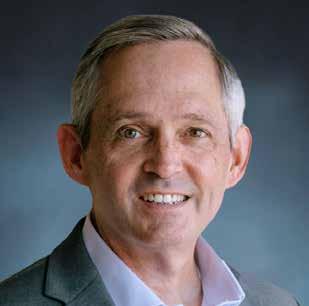
RAY BALENTINE (B.S. civil engineering, ’78) was recognized by the Mississippi Senate for contributions to the engineering profession and community involvement. He served as president of the Ridgeland Chamber of Commerce. He was recognized as the Secretary Ray LaHood Man of the Year in 2024 by the Women in Transportation Seminar Mississippi Chapter. He was
(B.B.A. business administration, ’01, M.S. applied anthropology, ’13) will become executive director of the Mississippi Department of Archives and History following Katie Blount’s retirement this year. White has been director of the department’s Historic Preservation Division since 2020. He is also part of the leadership team for the partnership between Archives and History and MSU to turn Historic Jefferson College near Natchez into a regional hub for education, research and workforce development.
CASSIE CHANCE (B.A. communication, ’06) graduated as a member of the Greater Boston Chamber of Commerce’s Boston Future Leaders Class of 2025. The 10-month leadership development experience is designed for emerging professionals poised to shape the future of the Greater Boston region. As part of the class, Chance earned a certificate in executive leadership from Harvard Business School. She is an award-winning associate director of marketing for Zoo New England, overseeing marketing and advertising strategy for Franklin Park Zoo in Boston and Stone Zoo in Stoneham, Massachusetts. She also serves the National Football League, Harvard and the Massachusetts Institute of Technology as a freelance sports statistician—a skill she learned as a student worker at MSU. She previously worked in marketing and communications for the Federal Reserve Bank of Atlanta, the Oklahoma Education Television Authority and the state of Oklahoma tourism department.
ROSS DELLENGER (B.A. communication, ’06) earned 2025 National Sportswriter of the Year honors from the National Sports Media Association. The senior college football reporter for Yahoo Sports was honored during a ceremony which also recognized well-known sportscasters James Brown of CBS and the late Greg Gumbel. Dellenger, who got his start with MSU’s student newspaper, The Reflector, also contributes to On3. He previously wrote for Sports Illustrated and is the winner of numerous awards from the Associated Press Sports Editors and Football Writers Association of America.
2010s
An editor and Pulitzer Prize-winning reporter for Mississippi Today, ANNA WOLFE (B.A. communication, ’14) will join the staff of the newly formed Deep South Today Investigative Reporting Center, created in collaboration with The New York Times and Big Local News. She joins as an investigative reporter covering Mississippi and will remain based in the Mississippi Today newsroom. Her work will be published in Mississippi Today and The Times.
SAWYER M. TAYLOR (B.S. agricultural economics, ’16) is now president of the Escambia County division of Community Bank. He was first hired by Community Bank as a farm lender before being named president of the Jones County Division.
WARN WILSON JR. (B.S. electrical engineering, ’16) has released an animated film based on his children’s book “Brown Money.” The film, “Brown Money: The Movie,” premiered in December and is available exclusively on VonduTV.com. Both the film and the book introduce children to the concepts of financial literacy, entrepreneurship and career readiness. “Brown Money: The Movie” has earned four international film festival selections including a finalist placement. It was named Best Animation Short Film at the HOME Arts and Shorts Film Festival. Wilson also is launching a national classroom outreach initiative giving teachers free access to the movie, along with activities kids designed to make money lessons relatable and inspiring.













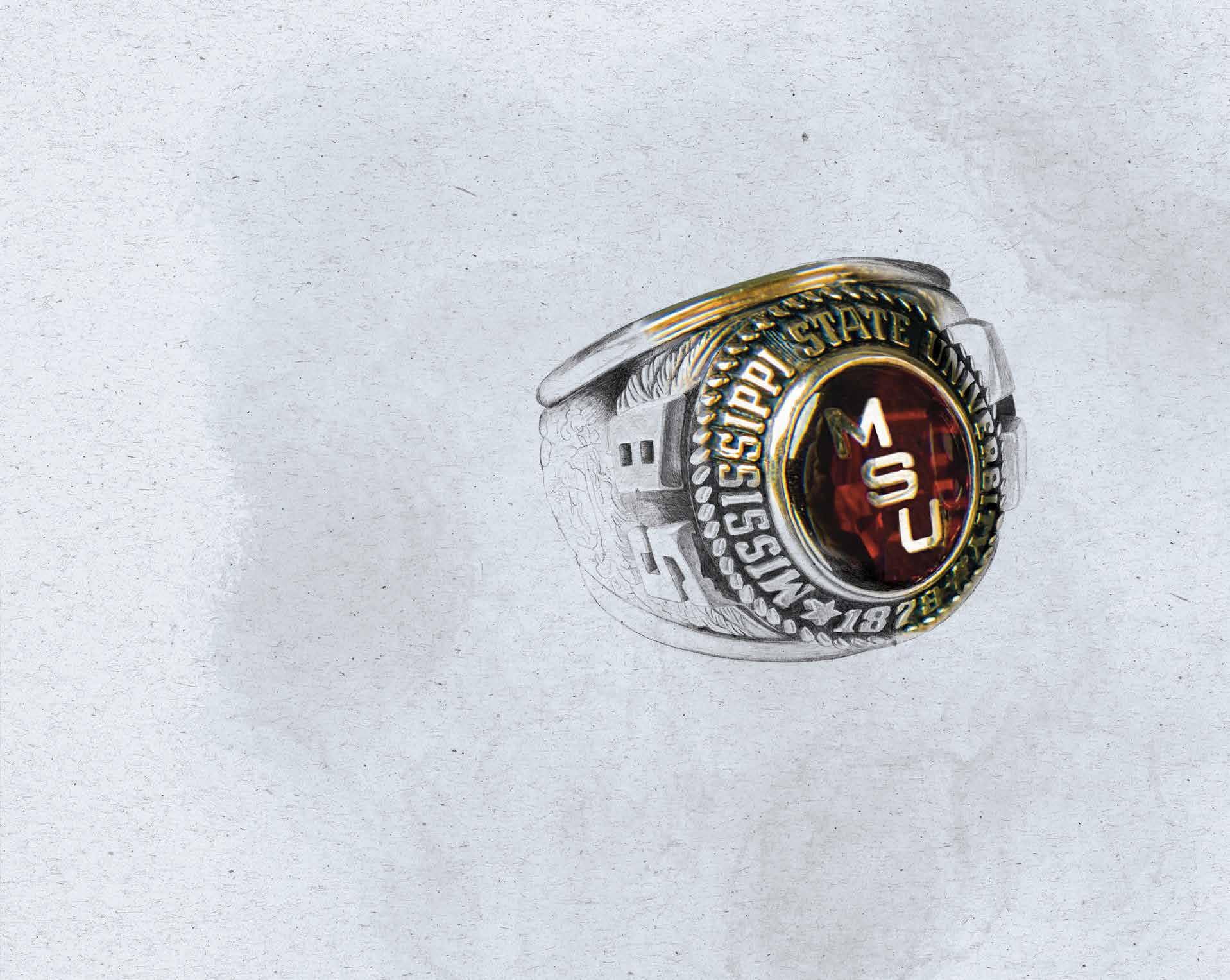

SCAN ME & SHARE
Forever MAROON
Harry Glenn Hughes (B.S. forestry, ’75; retired Extension faculty) 72, Starkville — Following his graduation from MSU, he earned a master’s from the University of Wyoming and a doctoral degree in wildlife and fisheries from Texas A&M. He spent 19 years at Penn State University where he earned the rank of full professor. He later served as an Extension forestry professor with the MSU Extension Service. — Dec. 27, 2025
Paul Wayne Kincade (B.S. chemistry, botany, ’66, M.S. animal physiology, ’68) 80, Nichols Hills, Oklahoma — A world-renowned immunologist, Kincade died less than a week short of his 81st birthday. He spent more than three decades at the Oklahoma Medical Research Foundation, where he held the William H. and Rita Bell Chair in Biomedical Research. He was founder of the organization’s Immunobiology and Cancer Research Program. With bachelor’s and master’s degrees from MSU, and a doctoral degree from the University of Alabama at Birmingham, he joined the faculty of the Sloan-Kettering Institute for Cancer Research following a pair of postdoctoral fellowships. He was an internationally recognized stem cell biologist whose career focused on studying the development of the immune system. He is credited with discovering that marrow stem cells possess receptors that recognize bacteria and viruses, which contradicted accepted understanding at the time. Most recently, his team at OMRF established a connection between chronic infections, stem cells and aging. His work garnered many honors, including a Research Career Development Award from the National Institutes of Health and an NIH M.E.R.I.T Award. He served as the 86th president and a Distinguished Fellow of the American Association of Immunologists. He also served as president of the Federation of American Societies for Experimental Biology, the nation’s largest association of biological scientists. He credited his love of immunology to Bruce Glick of
MSU, who not only taught him scientific fundamentals but also the importance of asking the right questions. — Oct. 5, 2025
Winfred Randolph Strickland (B.S. general science, ’54 ) 91, Ellisville—He graduated from Jones County Junior College before continuing his education at MSU. He later earned master’s and doctoral degrees in science education and administration from the University of Southern Mississippi. He spent two years in the U.S. Army in Europe and devoted 44 years to education in Mississippi. For 17 years, he served Copiah-Lincoln Community College as an instructor and chairman of the Mathematics and Science Division. He then spent 27 years at JCJC as a chemistry instructor, dean of academic affairs and vice president of instructional affairs. During his career, he also served as chairman of the Mississippi Academic Deans Association for two-year colleges. He further embodied a dedication to education by establishing multiple scholarships in honor of his family at Jones, where he was named Alumnus of the Year in 2009. He was a deacon and long-time Sunday school superintendent of First Baptist Church of Ellisville. Also devoted to community service, he was a 50-year leader of the Lions Club, which he served as president, and was chair of Ellisville’s zoning board and financial manager of the Jones County Council on Aging. — Oct. 5, 2025
B. Michael Thorne (retired faculty) 83, Starkville — A native of Shreveport, Louisiana, he held a bachelor’s in sociology and master’s and doctoral degrees in psychology from Louisiana State University. He joined MSU’s psychology faculty in 1970. His research focused on brain damage and aggression in rats and he authored more than 80 scientific articles and encyclopedia entries. Following his animal research, he authored textbooks in statistics, biological psychology and the history of psychology. He was the department’s graduate coordinator for a decade and
served for 20 years as executive editor of a psychology journal. He was a member of Phi Kappa Phi, Psi Chi, Sigma Xi and several professional organizations. Thorne retired in 2002, but continued to teach until 2009, wrapping up a 40year career in education. In retirement, he penned several short stories and published two novels in addition to writing and speaking on health topics. Dedicated to education even in death, he donated his body to University of Mississippi Medical Center and is remembered through the Dr. B. Michael Thorne Endowed Scholarship in Psychology through the MSU Foundation. — Oct. 12, 2025
James “Dale” Thornton (B.S. mechanical engineering, ’63) 85, Little Rock, Arkansas — He began his career at Redstone Arsenal in Huntsville, Alabama, and later helped send a man to the moon with the Apollo program at Cape Canaveral. He then worked for Boeing in California before transitioning into the field of nuclear energy for the remainder of his career, which he spent with the Tennessee Valley Authority. He served as a deacon at Dallas Bay Baptist Church. — Oct. 31, 2025
Marianne Ulmer (B.S. secondary education, ’80; M.S. psychology, ’92, retired faculty) 70, Starkville — A native of Meridian who was raised as an “Army brat” including a stint in Germany, Ulmer spent most of her career as a teacher— first in the Starkville public school system then in the MSU Department of Communication, Media and Theatre, where she taught public speaking, voice and articulation, and acting, and helped lead Theatre MSU. Ulmer was also an active member of the Starkville Community Theater. She is remembered as helping countless students and fellow actors find their voices and moments in the spotlight and was a woman of many talents, including sports, music, cooking, sewing and hostessing. — Oct. 29, 2025
Kenneth “Red” Vance (B.S. business information systems, ’85) 61, Olive Branch — Following his graduation from MSU, he was hired by Sunburst Bank in Grenada. He later transferred to Bank of Mississippi in Tupelo before ultimately moving to International Paper in Memphis, Tennessee, where he was a programming analyst. An active member of his church, he was a Sunday school teacher, superintendent and a deacon. — April 24, 2025
Charles Thomas Williams Sr. (B.S. industrial engineering, ’55) 98, Ooltewah, Tennessee — Prior to
becoming a Bulldog, he served in the U.S. Army during the occupation of Germany after World War II and in the Korean War before being honorably discharged in 1952 as a sergeant first class. Postgraduation, he joined Armstrong Tire and Rubber Company in Natchez before moving to Summerville, Georgia, to join Riegel Textile Corp. He subsequently held jobs at Atlas Chemical and Cone Mills before starting a 22-year career at Dixie Yarns in Chattanooga, Tennessee. He retired in 1993 as chief industrial engineer for the company. Always civic minded, he served as chairman of the Chattanooga
In Memory of Wallace A. Murphree
Wallace Allgood Murphree II, a professor emeritus of philosophy who is remembered as a mentor and ally to the first generations of Black students at Mississippi State, died March 3. He was 87.
A native of Wedowee, Alabama, he served in the U.S. Army before completing his education which culminated in a doctoral degree in philosophy from Vanderbilt University. He joined the MSU philosophy faculty in 1967 ultimately serving as head of the Department of Philosophy and Religion.
During his career, he also served as vice president and president of the Mississippi Philosophical Association. Following his retirement in 2001, he returned to Randolph County, Alabama, and built a cabin at the site of his parents’ old homeplace.
Col. Robert Barnes, an active MSU alumnus, remembers Murphree as a mentor and friend both to himself and many other Black students during the turbulent 1960s and ’70s. He is credited with hosting the “first truly integrated social event” between Black students and MSU faculty when he invited students to his home for a viewing of Super Bowl VII.

“He befriended a group of us Black students at a time when there were no Black faculty members at Mississippi State,” Barnes said. “He treated us as equals. His example taught me that quiet courage, hospitality, and listening can be just as powerful as speeches and titles.”
Murphree’s first-hand recollections of that time, as well as the personal stories of MSU’s early Black alumni are chronicled in the MSU Television Center-produced documentary “Ring Your Bell and Tell Your Tale.” Scan the QR code to view the program.
County Hospital Authority, president of the Summerville Elementary PTA, president of the Summerville Little League, district administrator of Little League, cubmaster of Summerville Pack 73 and district commissioner of Cub Scouts in addition to being secretary of the American Institute of Industrial Engineers. He was a member of the Lions Club, Gideon’s International and the Chattanooga Linebackers Club and was deacon chairman of Summerville First Baptist Church. In 2025, the church recognized his 30 years of service by naming him deacon emeritus. — Jan. 17, 2026
REMEMBERING FRED SMITH
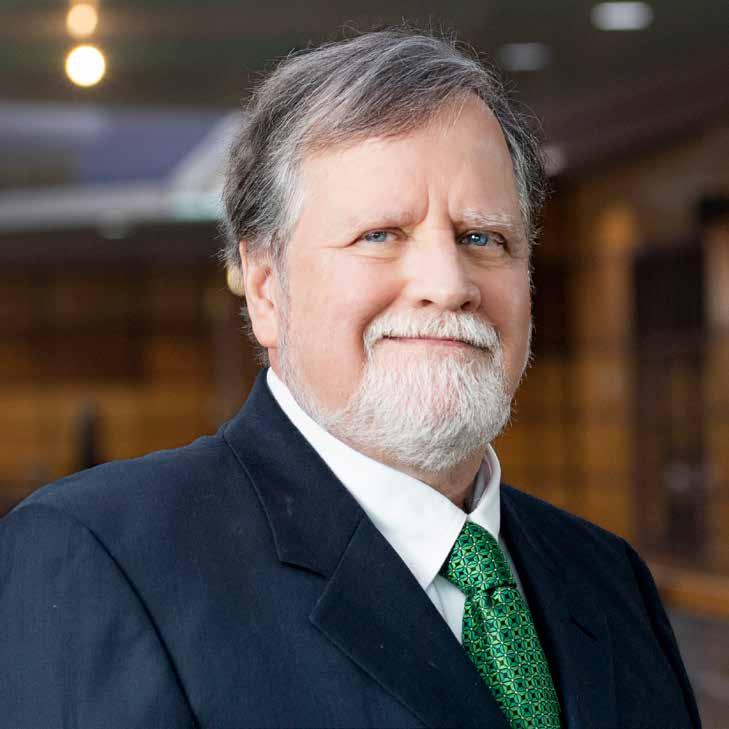
Smith
Starkville
Longtime rare books coordinator for MSU Mitchell Memorial Library, Smith was known across the Magnolia State for his enthusiasm for and knowledge of literature and history. Prior to coming to Mississippi State, he worked alongside his father at the family’s wellknown, historic bookstore Choctaw Books in Jackson. The store specialized in Mississippi and Southern history and literature, and he used that knowledge to help strengthen MSU’s Special Collections and serve as an inspiration to those around him. — Feb. 28, 2026
Fred
(faculty) 72,
–
CELEBRATING THE LIFE OF BILLY W. HOWARD SR.
Billy W. Howard Sr., a manufacturing icon and three-sport letter winner at MSU, died Jan. 28. He was 99.
A native of Laurel, Howard came to Mississippi State on a football scholarship and graduated with a degree in electrical engineering in just three years while lettering in football, as well as basketball and track.
He earned the nickname “Iron Man” after being the first player to complete a full 60 minutes in one afternoon under Coach Allyn McKeen. In basketball, he made varsity as a freshman at MSU. During his track career, he competed in shot put, discus, javelin and high jump.
His athletic prowess earned Howard the National Football Foundation Distinguished American Award and a place in MSU’s Hall of Fame. Following his graduation, he turned down offers to play in the National Football League, and instead briefly returned to Laurel High School to teach chemistry and coach the sports he lettered in before joining Mississippi Power Company. He later put his engineering career on hold to serve as a first lieutenant in the U.S. Air Force during the Korean War.
Following his service, he joined General Electric where he built a storied career before founding Howard Industries Inc. He secured more than $4 million in transformer orders before the company’s first plant was even completed. Working with his family, Howard grew the Laurel-based company into a billion-dollar enterprise and global leader across multiple industries.
Howard was also devoted to the success of his community. He was a member of many service organizations and invested in the success of education in Laurel and Jones County. He also established a formal partnership with Mississippi State to provide practical experience and job training at his manufacturing plant.
He earned the Mississippi State University Outstanding Alumni Award and the MSU Engineering Award. He served as national president of the MSU Alumni Association and was a member of the MSU Foundation and engineering boards.
In June 2025, MSU’s new 110,000-square-foot indoor Billy Howard Indoor Practice Facility was
Remembering Billy C. Ward
Billy C. Ward, who served as Mississippi State’s vice president for institutional advancement, died Feb. 6. He was 84.
Ward joined the Mississippi State faculty in 1977 as a founding member of the College of Veterinary Medicine. He served as CVM dean from 1983-87 when he became the university’s chief development officer. He played a key role in MSU’s first comprehensive major gifts campaign, which garnered
commitments of more than $143 million before he left to head the Swalm Foundation in Houston, Texas, in 1998.
He remained proud of his accomplishments as a Bulldog and retained a great respect for Mississippi State and the Maroon and White family.
A native of the Texas Panhandle region, Ward was a graduate of Texas A&M University and the University of California at Davis.
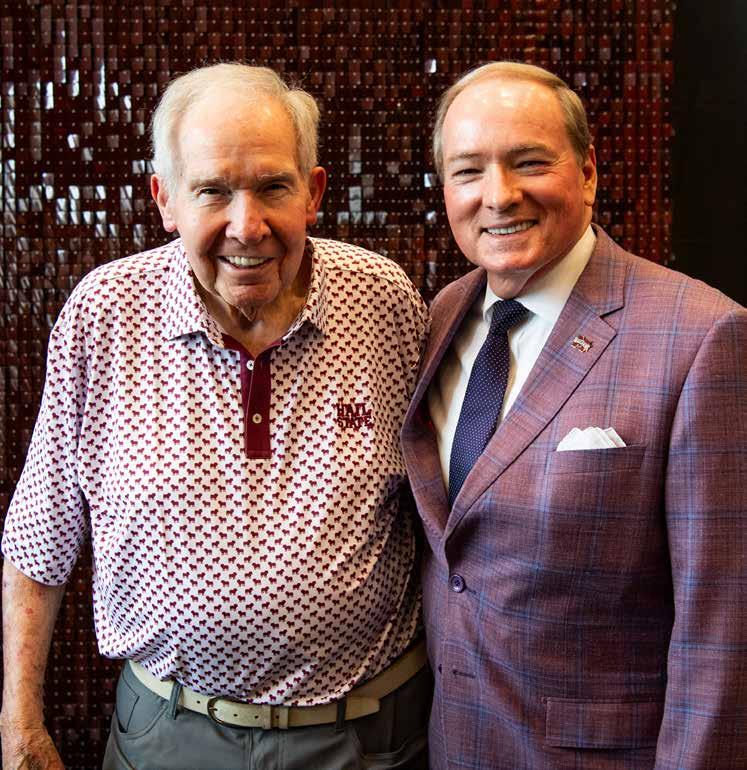
named in his honor after Howard Industries made the lead gift for its naming. It is expected to enhance the Mississippi State football program by providing top-tier resources and fostering player development.
Howard was also honored throughout his life with numerous awards recognizing his impact, including the Governor’s Bronze Glove Award, Junior Auxiliary CoHumanitarian of the Year, Entrepreneur of the Year honors, induction into the Mississippi Business Hall of Fame, and many others.
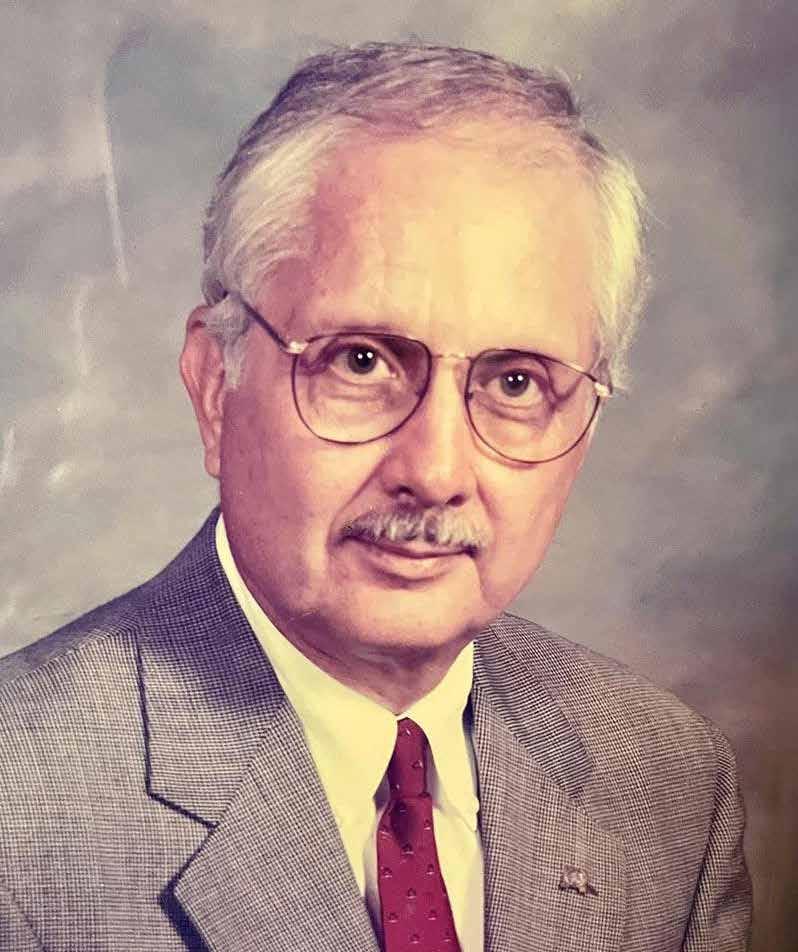
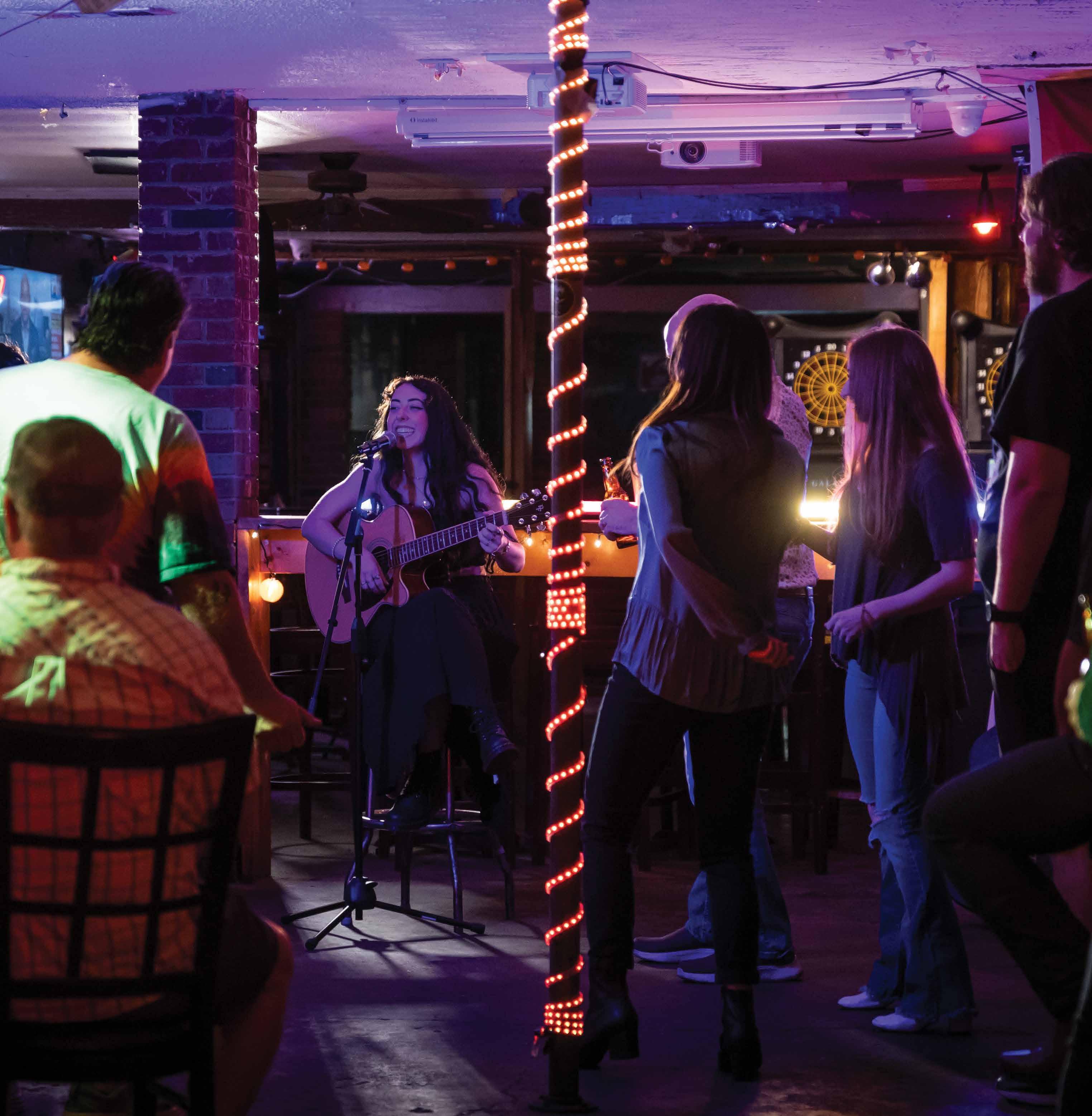
with AMY ADKERSON
There’s an old saying: “You can’t go home again.” But when home is Mississippi State University, you can. In my case, it’s happened not once but twice.
When I transferred from Duke to join Jeff—my high school sweetheart and now husband—at State in 1996, I had no idea how much I would grow to love this special community. The quiet beauty of the Drill Field, sound of the Famous Maroon Band and way everyone on campus seemed so down to earth and friendly made MSU feel like home.
When I graduated in December 1998 with a degree in communication, I was hopeful life would bring me back for visits. Then in 2003, Jeff was offered a position in MSU’s Professional Golf Management program. While we loved the life we were building in Nashville, Tennessee, the opportunity was very enticing, and we made the move. I took a job as the catalog editor and class schedule coordinator in MSU’s Office of the Registrar. Thankfully, I enjoy jigsaw puzzles and games like Tetris because building a class schedule for a growing university is a puzzle by every definition of the word.
When I was a student, we waited anxiously for class schedules printed on newsprint to appear in Allen Hall’s lobby. When registration day came, my friends and I may or may not have skipped class to register for the next semester by phone—usually getting a busy signal multiple times before finally getting through to the registration system.
Thankfully by 2003, students could register online and didn’t rely on the printed schedule. In my first years back, we continued to make online tools more user-friendly and became less reliant on printed resources. But whether it is
printed or online, compiling the class schedule each semester is difficult— never more so than in fall 2020.
COVID-19 sent the university into remote operations in March of that year, but all were hopeful we could return to in-person class by August. That meant creating socially distanced classrooms, identifying nontraditional spaces to use as classrooms and reworking the puzzle of classroom assignments.
While most university staff worked from home that summer, our scheduling team—including Emily Owen and Lynn Palmer Purnell— was visiting each classroom with tape measures and painter’s tape, determining new capacities of each space. We set up a “war room” to see what spaces were available—from traditional classrooms to Humphrey Coliseum—how many students they could safely hold and in what combination they could be best used so we could still provide all the classes our students needed.
That project in 2020 will always be one of the most challenging and rewarding tasks I have managed. During that chaos, our family decided to move to Kentucky so Jeff could pursue a career opportunity. I was fortunate to stay in Starkville to help our staff overcome the COVID-19 obstacles and then to continue to work part time remotely. Then in 2024, Registrar Emily Shaw asked me to come home again and rejoin the team full time. Since our oldest daughter was graduating high school and Jeff was working remotely, it was a great time to return to MSU.
Everyone says MSU is like a family, and it really is. I can’t imagine anywhere else where you could be away for four years yet feel like you never left. Starkville keeps drawing us back because no matter where a Bulldog goes, it is always home sweet home.
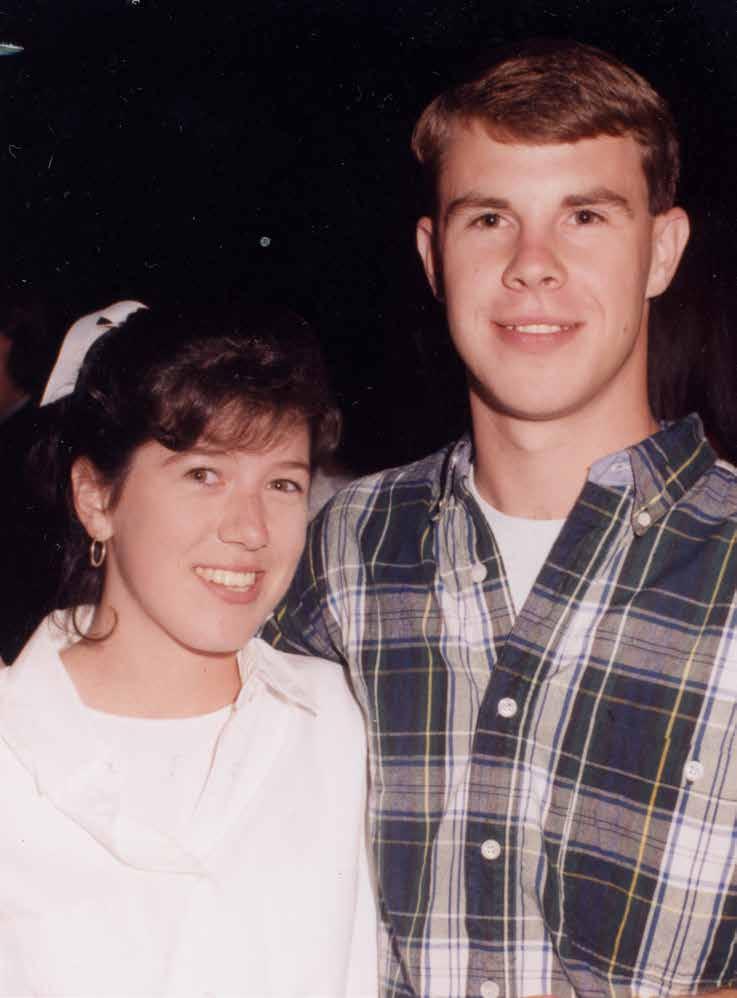
Amy & Jeff Adkerson
Jackson, Tennessee, native Amy Adkerson holds a 1998 bachelor’s in communication and a 2009 master’s in instructional technology, both from Mississippi State. Since 2024, she has served the university as associate registrar. Her husband Jeff also holds two MSU degrees, having earned a marketing bachelor’s in 1999 and an MBA in 2005. He is also a former director of MSU’s PGA Golf Management and Golf Operations program. The couple has two daughters: Emily, a sophomore in kinesiology, and high schooler Lauren.
This undated photo from the University Archives shows Mississippi State students registering for classes inside Humphrey Coliseum. At the time, signing up for courses meant long lines, paper forms and a little patience. Do you have memories of registering for classes? Maybe you were racing against time to get the perfect schedule with no 8 a.m. or Friday classes? Share your story by emailing alumnus@msstate.edu. Be sure to include your name, major(s) and graduation year(s). Your memory could be featured in a future issue.